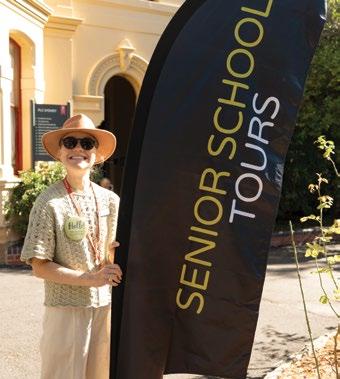
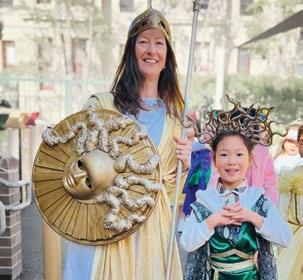
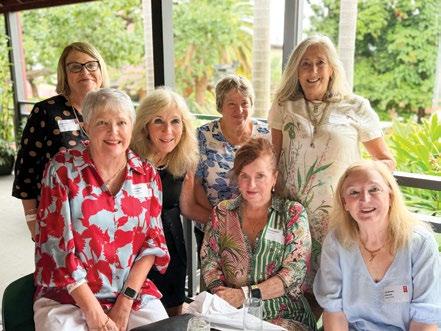
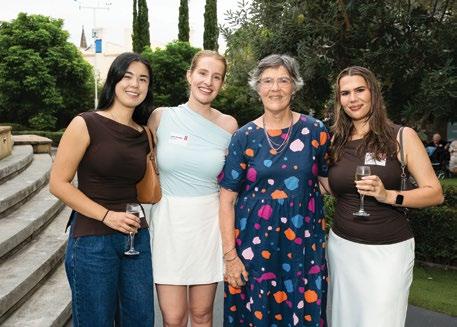
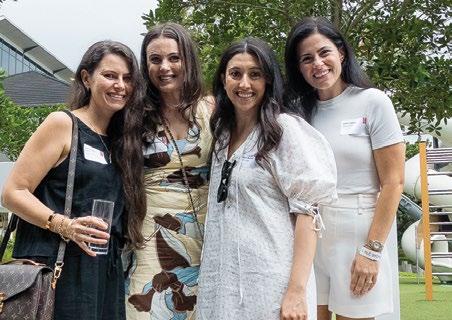
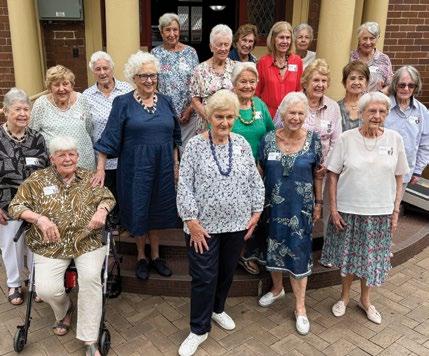
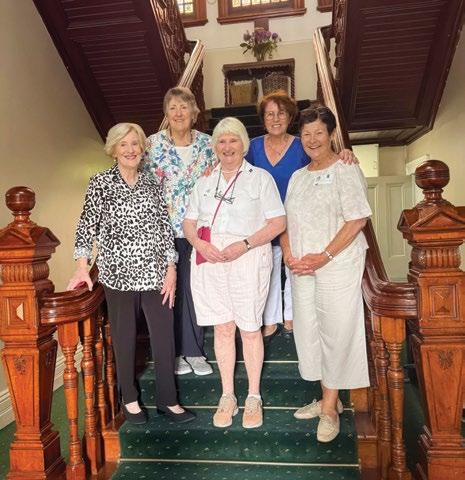
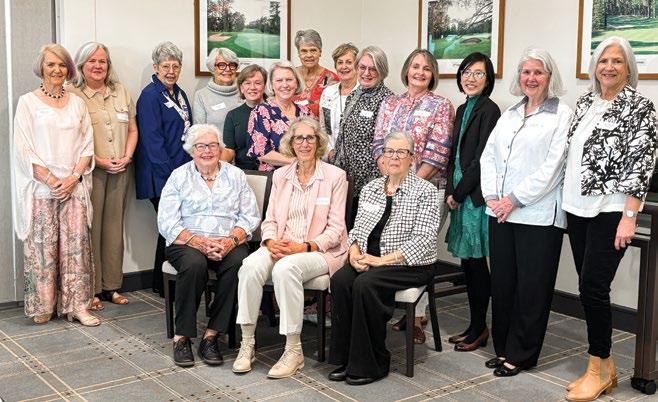
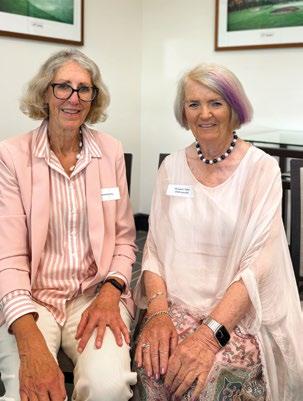
and teachers return to explore the college’s rich history
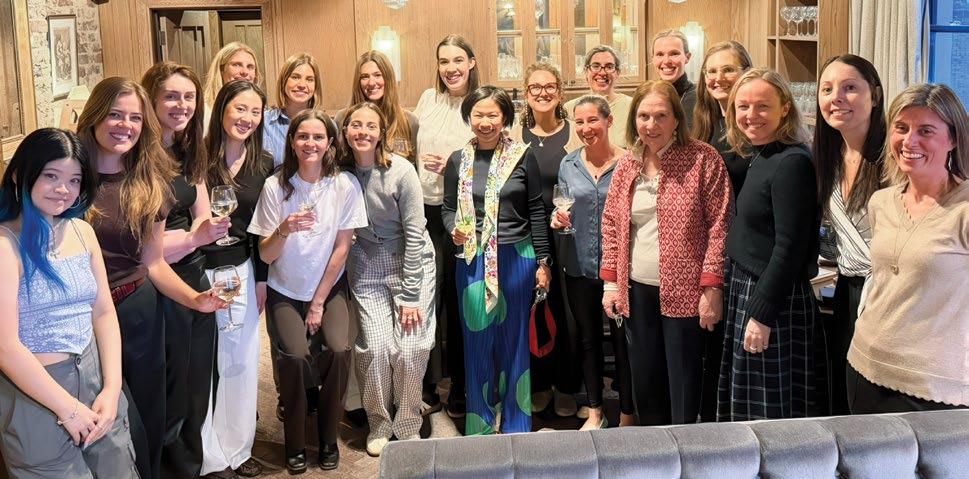
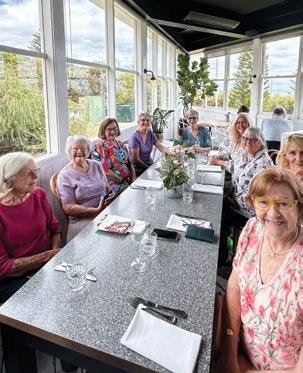
brings ex-students together abroad
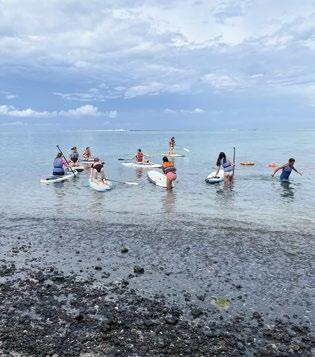
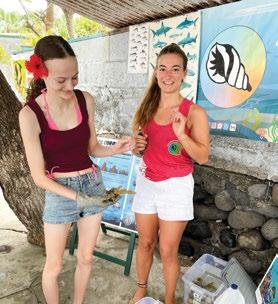
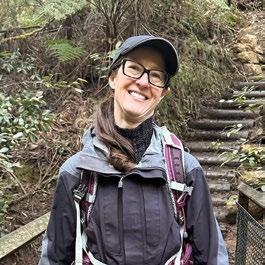
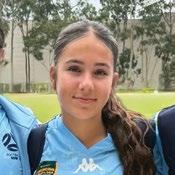
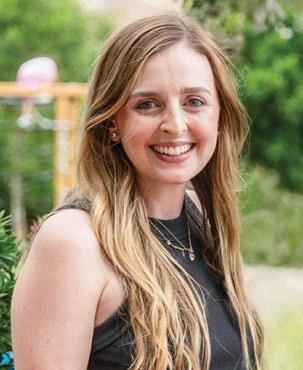
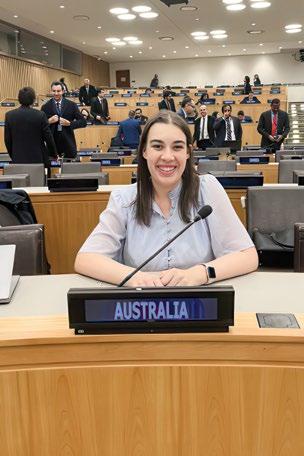
conversation with Emma Lukabyo (2015)
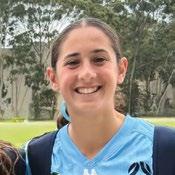
conversation with Katie Higgins (2012)
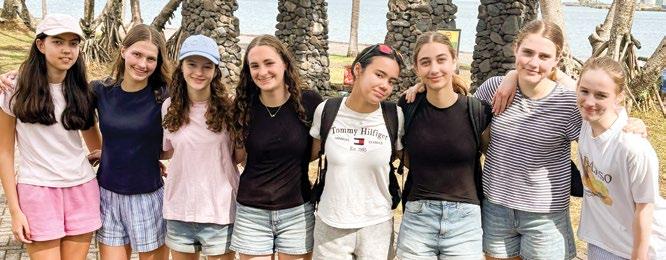
Ex-Students come together in May
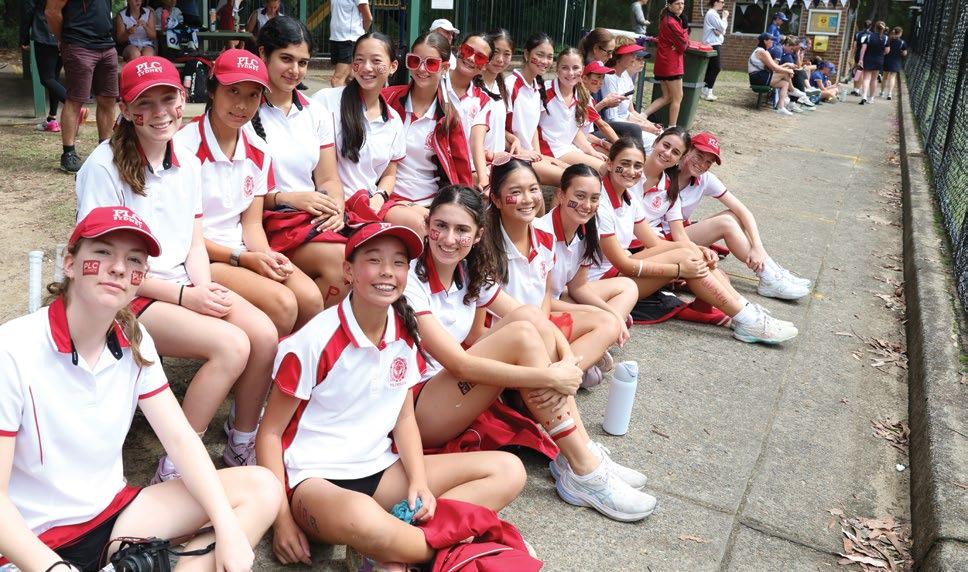
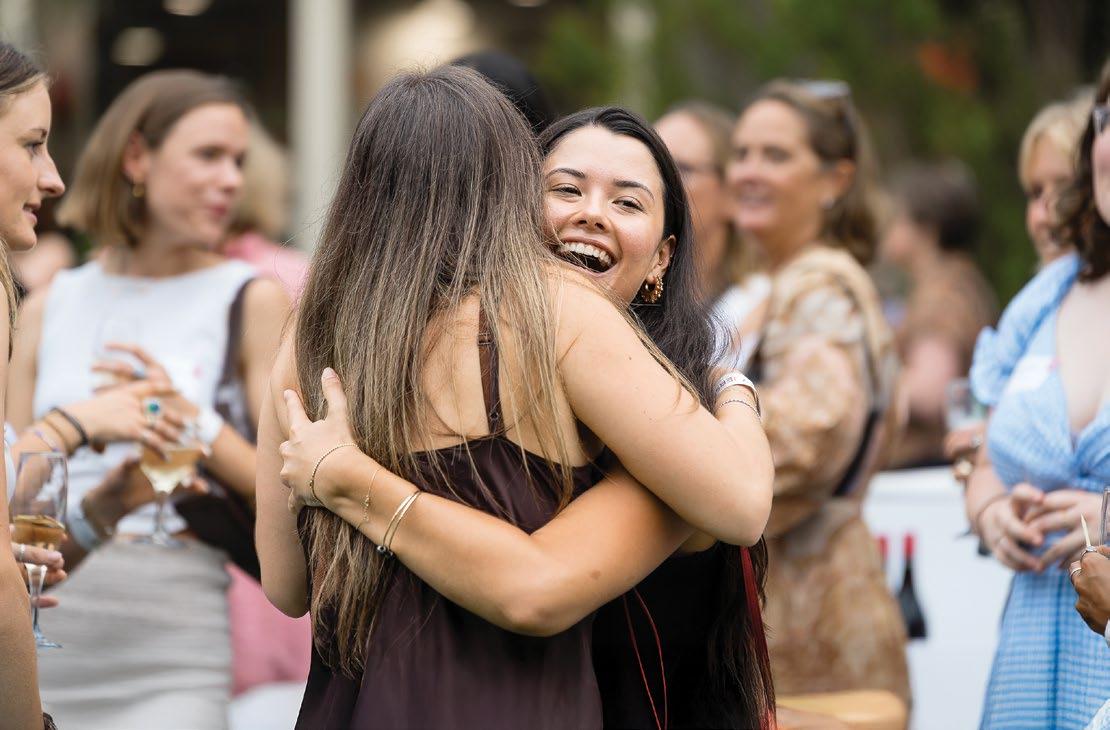
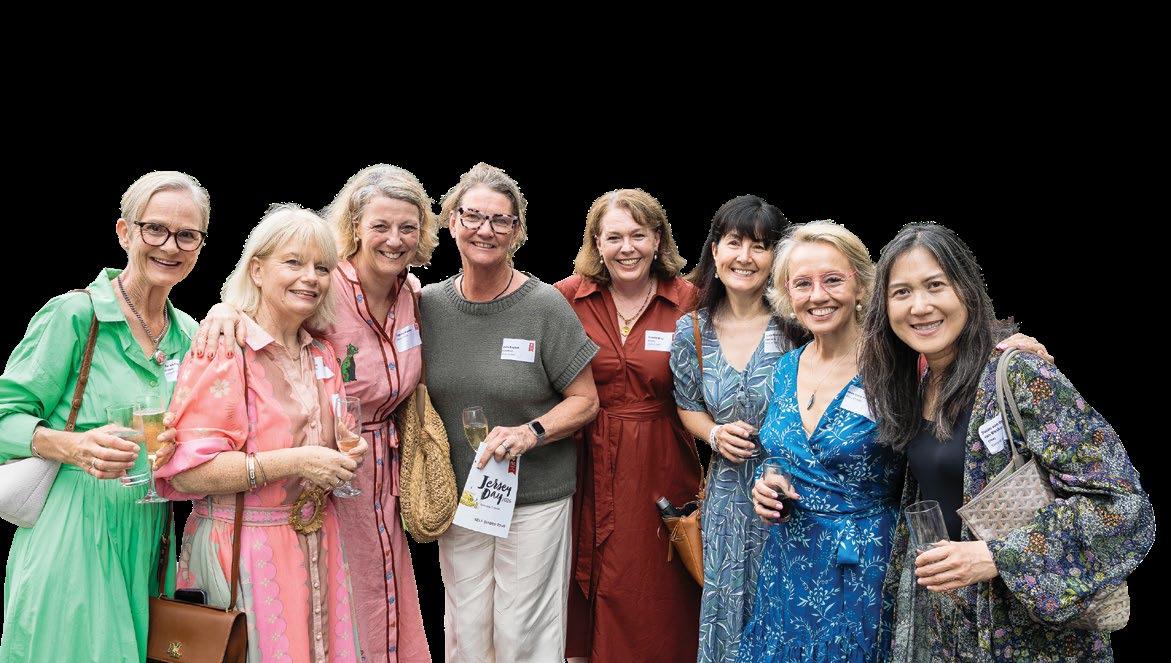
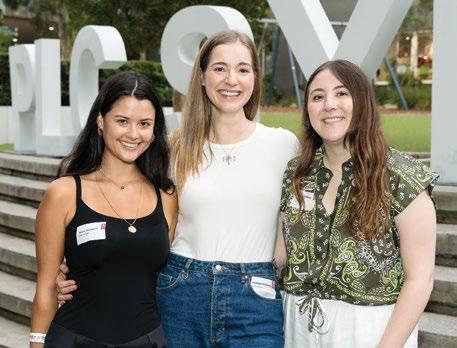
Ex-Students reunite on Jersey Day 2026
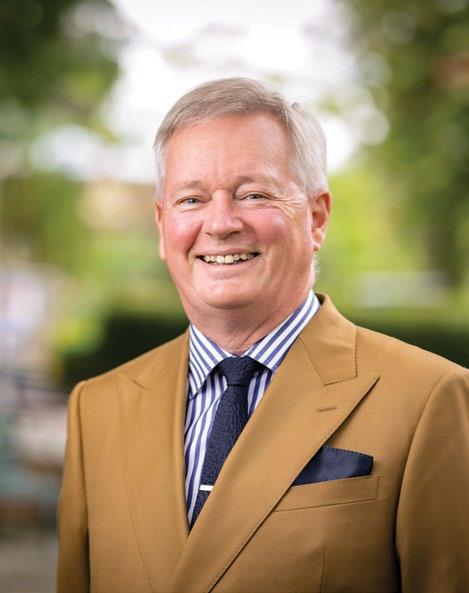
From the Principal
Schools are first and foremost human institutions. One generation passes on the torch of knowledge and understanding to the next; we seek to build confidence and creativity; we are looking for young people who can solve problems.
Thus, young people get to know their teachers very well. PLC Sydney is a highly organised and professional institution, and it is a domestic space. Any place seeking to raise young people well needs to be like this.
This edition features valuable insights from our Deputy Principal, Dr Golsby-Smith, and our Head of Learning and Teaching, Mr Archer.
We also have articles focusing on the growth of technology and science education at our school, as well as real-life examples of the magnificent work of our students. In addition, there are articles on individual staff, students, and ex-students.
I commend Camphora to you.
Dr Paul Burgis Principal
Thank you to all the ex-students and their families who have contributed to this edition of Camphora Magazine. We encourage all ex-students to contact us and share news for inclusion in the Ex-students' News section. Email us at exstudents@plc.nsw.edu.au
EDITOR
Mrs Renee Jones
COVER
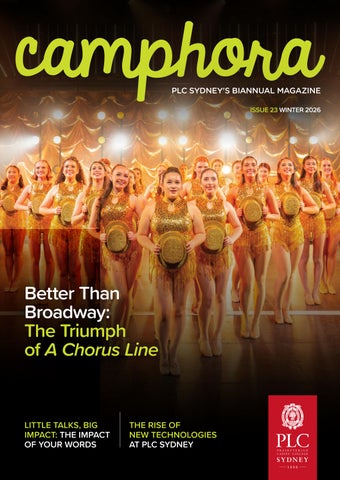
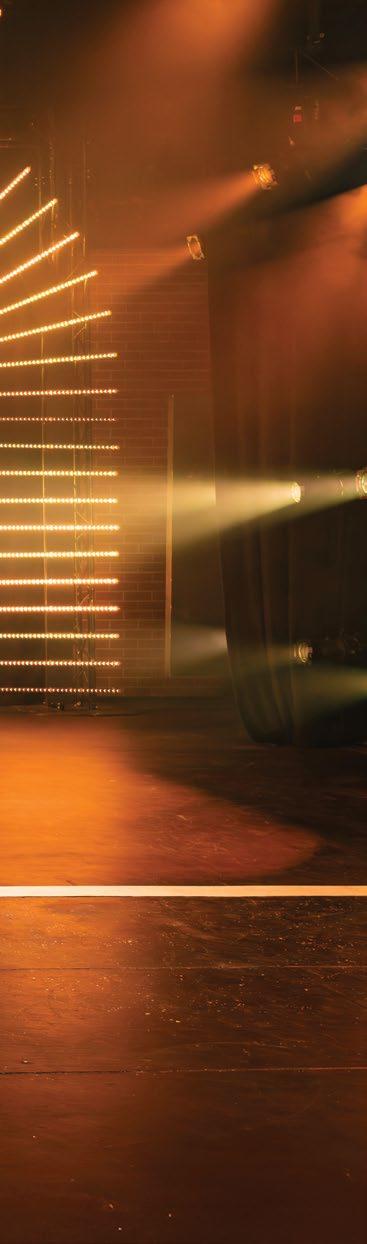
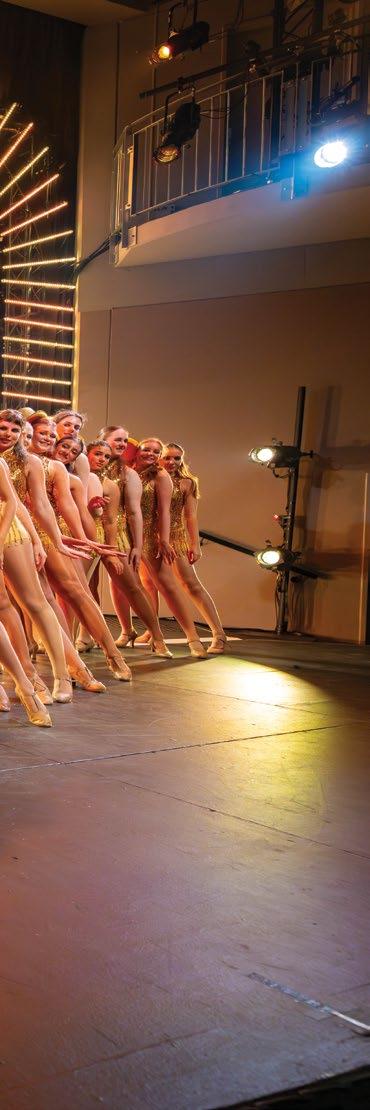
PLC Sydney’s production of A Chorus Line
CONTRIBUTORS
OUR MAGAZINE TEAM
Dr Paul Burgis, Kristy Genc, Dr Sarah Golsby-Smith, Bronwyn Amy, Isabella Hayek, Jo McGrouther, Dr Maria-Luisa Gutierrez, Garry Barker, Tim Archer, Angus McFarlane, Janet Leechman, James McFarlane, Dr Chris Brunner, Duncan Kendall, Kate Wheatley, Rebecca Nichols, Will Caldwell, Ava Moran, Isabella Guo, Giselle & Ava (Year 9), Abigail & Georgia (Year 10), Isabelle & Ella (Year 10), Zoe Taylor, Zooey Lee, Suyi Ren, Helena Tuo, Madeline Papadopoulos, Sherry Zou, Evangeline McGrath, Selina Chen.
Ex-Students's News: Hannah Kesby (2009), Carol Lyons (Schiess, 1956), Margaret Atkin (McCormack, 1964), Katie Higgins (2012) Emma Lukabyo (2015) Thank you to all the exstudents and their families who contributed.
Photographers: Dr Des Chu, Molly Davies, Nat Sports Media
Design: Boheem
PLC Sydney’s was “Better than Broadway”
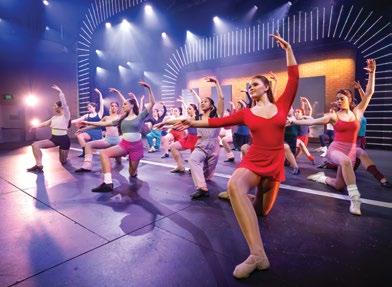
Audiences were blown away by the incredibly professional, moving and spectacular 2026 musical, A Chorus Line.
The beautiful vocals, committed acting and powerful choreography combined to create a show that most are calling “better than Broadway.” This was PLC Sydney’s biggest production build to date, and the cast and orchestra matched the spectacle with their brilliant performances. One great aspect of this show is that it enabled so many performers to really shine.
The show is a love letter to theatre people. It recognises the tenacity needed to face the brutality of rejection and celebrates the joy in being part of a production family. I am so proud of the way this cast and orchestra have come together to tackle such a challenging show. Most did not leave the stage or stop playing for the full two hours—a herculean feat!
Student Reflections
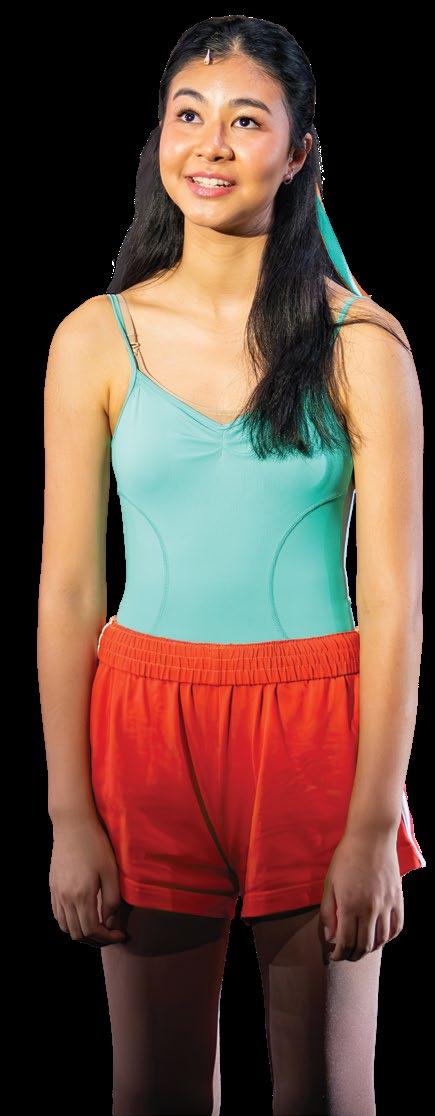
A Chorus Line is the culmination of the great determination of all teachers and students. I will treasure this experience forever. This musical acts as a reminder of why we dream, why we struggle, and why we push on. It is the greatest message to be left with in my final year- may we all follow our dreams even if the world tells us otherwise.
Rafaela Lee, Billy, Year 12
Caitlyn Quach, Connie, Year 11
Being a part of the cast of A Chorus Line was truly an amazing experience. This show allowed the whole cast to connect and build friendships that will last forever. Everyone was made to feel welcome, and we always encouraged each other. A Chorus Line was not just a show filled with lots of amazing talent, but a show that brought so much joy to performers and audiences alike.
Bronte Allen, Diana, Year 11
A Chorus Line truly was a memorable show that felt very real and unfiltered. When the set was bumped in, and we were able to rehearse in costume with sound, lights, and our live orchestra, the magic of the show became truly evident. This production has been such a different and rewarding experience!
Lulu Catalano, Paulina, Year 12
Some of my favourite moments from the show were the times right before the performances, when we would all share moments of wisdom and encouragement. Being in a cast where you can truly connect with people from different year groups makes the experience all the more worthwhile.
Georgina Smith, Pam, Year 12
My greatest passion in life is dancing. One of my favourite aspects of A Chorus Line was training in the style of 1930s Broadway Jazz. Learning to act and working alongside so many talented students who share a passion for performing has been such an incredible and rewarding experience. The production team is unmatched, so for my final PLC Sydney Musical, this was the perfect conclusion of time with the performing arts team.
Mims Clarke, Lucy, Year 12
I loved having the privilege of being part of A Chorus Line and working alongside such an incredibly talented cast. Making connections with girls from different year groups has been my favourite part of being in the musical. I will forever cherish the friendships I got the opportunity to strengthen through our shared love for theatre. I have never been involved in something that has felt so safe and supportive. Getting to take my final bow with these girls is a moment I will never forget.
Thank you to our staff team for creating such a worthy experience for our students.
I am so grateful to our: Producer Jodi McCarthy; Choreographer Marnie Taeiloa; Vocal Director Casey Allen; Musical Director Phil Harper, and Repetiteur Andrew Basile. Thank you to Dr Paul Burgis and the College Council for their continued support of the Performing Arts. It is so important that our students can express their creativity, practise empathy and learn to be strong collaborators. This is what theatre offers us. In a contemporary world that so often focuses on the singular pursuits of the individual, productions like A Chorus Line remind us that greater value lies in a common goal. Both hardship and joy feel better when shared.
Celebrating our community at the 2026
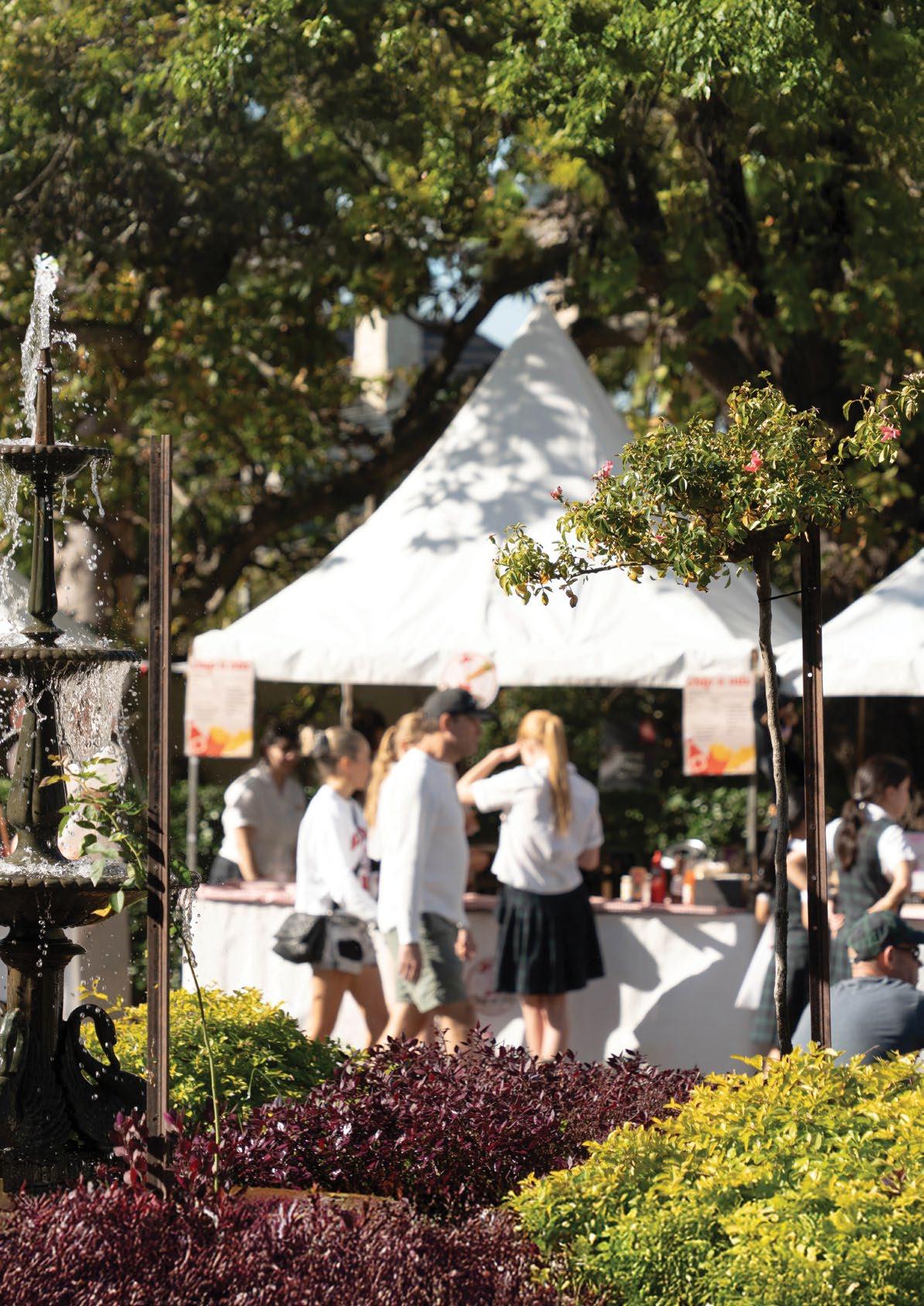
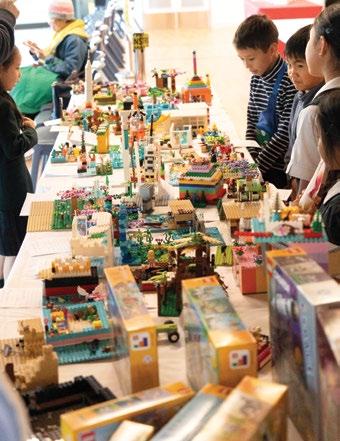
Open Day and Fair on Saturday, 9 May, was a resounding success. It is marvellous to see our students having so much fun and celebrating their school! It is also wonderful to see visitors on campus enjoying everything PLC Sydney has to offer.
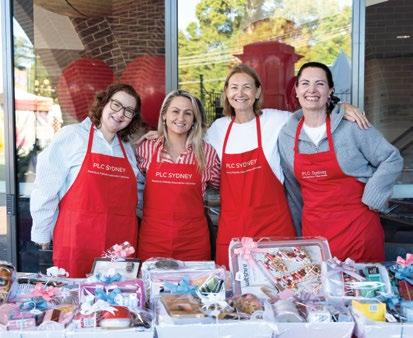
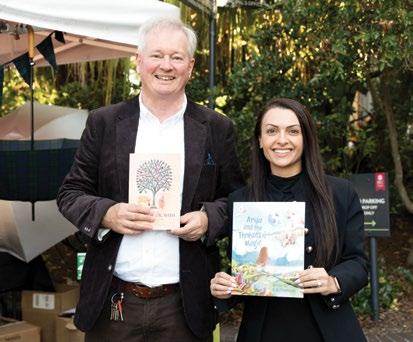
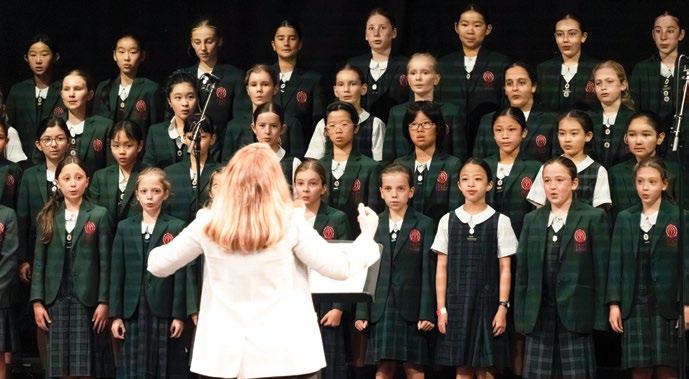
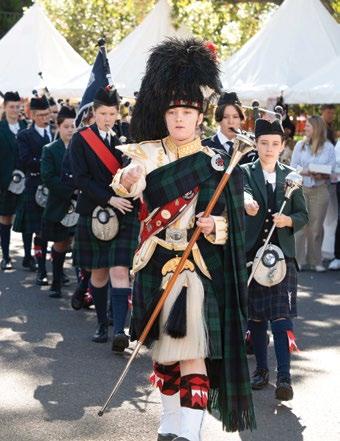
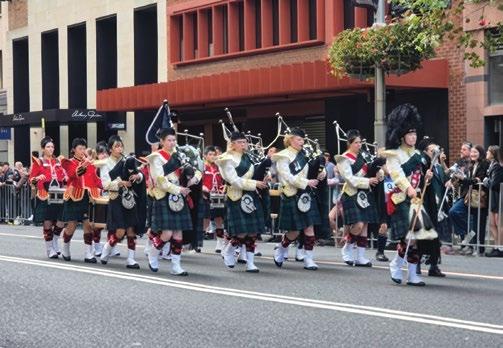
We celebrate our Pipes and Drums marching through the gates to open the Fair. We celebrate the sporting games, the gymnastics displays, and the musical extravaganza. We love that the aroma of food fills the air, that there are curriculum displays, rich conversations, and performances across our campus. We thank our talented students who led tours, presented academic work, and shared their creative arts. We thank our incredible volunteers running sausage sizzles, managing stalls, and selling gift baskets, books, prizes, and treats; every contribution played a vital part in the success of the day.
A heartfelt thank you to our exceptional 2026 Fair Committee, Jaclyn Buono, Helen Colantonio, Jason Elson, Peter Erken, and Trevor O’Neill, for your calm leadership and
Our goals are to:
tireless work, supported so generously by the P&F Association. The various stalls, including the gift baskets, food stalls, and the Silent Auction, were magnificent. People spend months planning for this one big day!
To our students: your leadership, pride, and warmth were deeply appreciated. You were outstanding ambassadors for our College.
To our parents, staff, ex-students, and friends: thank you for volunteering your time and talents, and for your generous donations.
We are so grateful to our Maintenance, Cleaning, Catering, and Security teams, and to our Academic, Enrolments, Finance, IT, Marketing, and Administration staff, for your work and expertise. This event is about more than fundraising.
Celebrate our community, students, and programmes
Welcome new families
Raise funds for educational projects and equipment
Little Talks, Big Impact: The Impact of your Words
By Dr Sarah Golsby-Smith Deputy Principal
I recently spoke at assembly about the book of Proverbs, which gives us advice on words and their impact. You will know that at PLC Sydney, we talk regularly about love as a verb, not a noun, about all the ways we can lean into curiosity as a kind of love and so flourish in the process. Cultivating our language carefully is one of these ways of learning to love.
I told the girls a story of when I was in Year 9. My parents sent me to a brand new school. I was 14, eager to make new friends and start a new life at this school. Like many teenagers, I was fairly keen to melt into the walls, make some decent friends and get on with my life. I was sitting in maths, and working through some algebra. I was in the back row, near the window. We had a casual teacher. I do not remember her name or one single other person in the classroom that day. I do remember, with astonishing clarity, that the casual teacher turned around to me and said, “You. You with the freckles and the braces. Shoosh”.
I don’t remember what I said or didn’t say. I only remember the quiet dying inside, because - and I have no idea how - that teacher picked the two things about me that I would be happy to consign to the dustbin of history.
Now, I am absolutely positive that this teacher just wanted me to shoosh. I’m sure she just wanted to get on with things. But my goodness, how those words stuck with me. Now that I am older, I often have this thought: I remember that moment with quivering clarity. I am fairly sure that no other
person on the planet remembers it. And so my next thought is this one: what have I said, in casual or quick ways, that have hurt someone, and I know nothing about? What history have I created that is walking out there in the world, that I do not know I have authored?
These words from Proverbs give us wise ways to live. Whether or not you have decided that the God of the Bible is the Creator whom you could believe in doesn’t prevent you from accessing these brilliant nuggets of advice for how to live your life. And the words we just read help us with how we use our words. Words can kill, as we saw with my 14-year-old confidence. I’m sure we all have a memory like that, whether the speaker is a friend, an enemy, a family member or a colleague.
As you know, I am an English teacher. I spoke to the girls about the play Macbeth, which is all about words and what they can do. As you might know, no actor will call it “Macbeth”. They will call it “The Scottish play”. Why? Because, so the story goes, if they utter the word “Macbeth”, bad things will happen. Actors will break legs. Fires might break out in the rehearsal spaces. Sets may break apart. Why? The play Macbeth is about the way words don’t decorate reality, but make it. Lady Macbeth says, at a critical point in the play: “Come, you spirits, that tend on mortal thoughts. Unsex me here, fill me from the crown to the toe top full of direst cruelty. Make thick my blood”. These words absolutely terrified Renaissance audiences. Why? Because Renaissance audiences believed that words don’t decorate reality, they make it. So, when the actor says these words, “come you spirits”, they came, actor or not. And, as I said to the girls, I actually
Here are some ways to cultivate love borne of language at home:
• Speak intentionally about each others’ loveliness, especially the things we cannot see in ourselves.
• Teach your daughter to express herself when she is angry, but to remember to find ways to speak about her frustration that does not become bitterness. “I am angry right now” is different to “I am angry and you always hurt me”. “I am finding homework tiring right now” is different to “I hate homework and I hate school”.
think that Renaissance audiences were right about language and its power, and it is we who are backwards. Words make things.
If words can do these terrible things, it stands to reason that words can also, as the Bible says here, bring healing, light, and life. Words can make things. Words can offer hope. Words can give life. In this verse, the Bible tells us that “a gentle answer turns away wrath”, and that “the tongue of the wise brings knowledge”, and “the soothing tongue is the tree of life”. Just as I will never forget the words of the casual teacher who casually hurt me, so I will never forget the words of people who told me I was better than I knew, that I could live into a future I never thought possible. Their words have grown me into the person I am today.
A friend told me that one day I would lead something.
I had a teacher who once told me that, although I didn’t know all the big words, I had smart ideas.
My mother once told me that freckles are like God’s stars sprinkled on my face. And recently, after I admitted to someone I absolutely hate going to the dentist, this person said, “That’s funny, because I was just thinking about what a shiny smile you have”.
When I spoke to the girls, I asked them to remember that when you speak to someone, you are helping to shape the future. Remember not to hurt people, casually or otherwise. Remember to speak truth in love, kindness and hope. You never know. The words we utter, we may never remember. But others may remember them forever. I challenged the girls: Make sure those words count for good.
• Speak hope into your daughter’s life. Teenagers often don’t know that they will be ok. Tell them the vision you have for them. They will live into it, because words make things.
• Say grace before meals; gratitude turns us outward to the world instead of inward.
• Apologise quickly after our inevitable mistakes.
Students find shared humanity in Vietnam
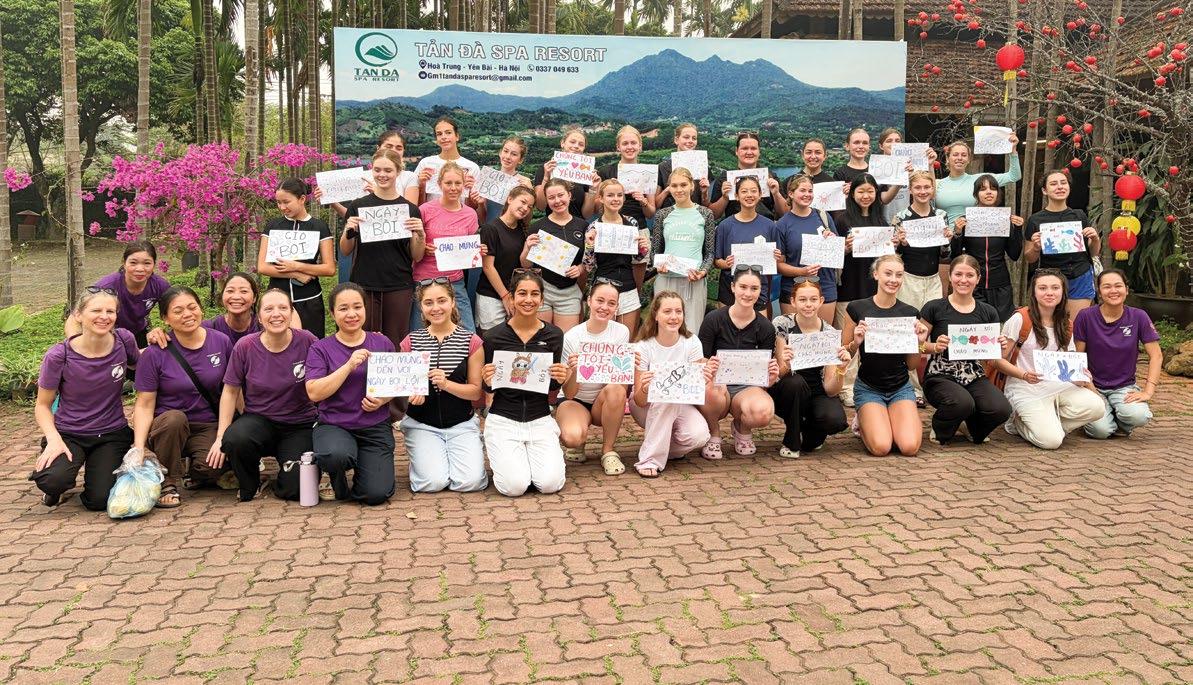
During the April holidays, 34 Year 11 students and six staff embarked on an unforgettable journey to Vietnam, guided by the everknowledgeable Uncle Leo.
By Ms Isabella Hayek Service Learning Coordinator
It was far more than a school trip; it was a deeply enriching experience shaped by vibrant culture, breathtaking landscapes, and the warmth and generosity of the Vietnamese people.
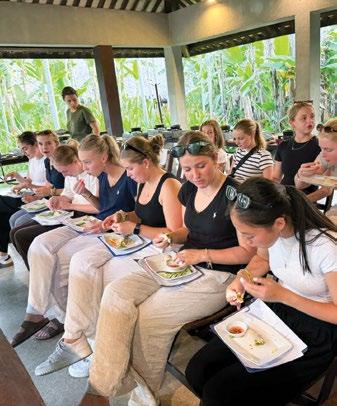
From bustling streets filled with the aroma of incredible local cuisine
to serene countryside vistas, every moment offered something new to discover. Yet, among all these highlights, one experience stood above the rest.
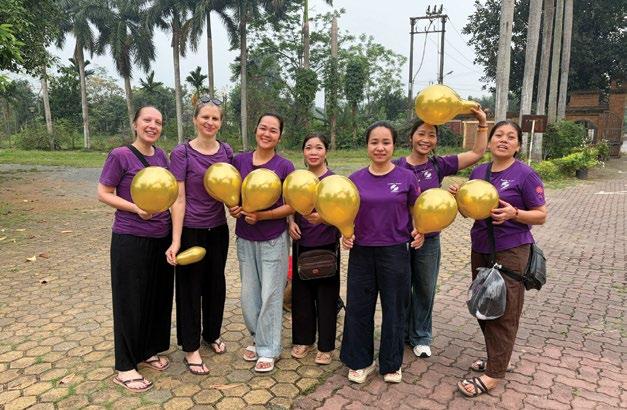
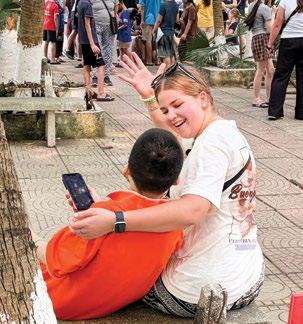
A visit to the Ba Vi Centre, an organisation PLC Sydney proudly supports, left a lasting impression on every student. Time spent with the residents was described unanimously as the most meaningful part of the trip. It was a powerful reminder that
connection, empathy and shared humanity transcend language and borders.
PLC Sydney is incredibly grateful for its ongoing relationship with Ba Vi. While we continue to support the centre, it is clear that the lessons and perspectives our students gain in return are just as significant. This special place continues to shape our community in profound ways.
Bridging borders through Science: Global Exchange in Taiwan Science in Focus
Science at PLC Sydney is more than a subject; it is a passport to the world. This term, we follow our students as they represent the college at the highest levels of academic excellence. From the expansion of our Science Extension program to international collaborations in Taiwan and national accolades at ANU, these articles highlight the dedication, intellect, and "problem-solving" spirit that define our scientific community.
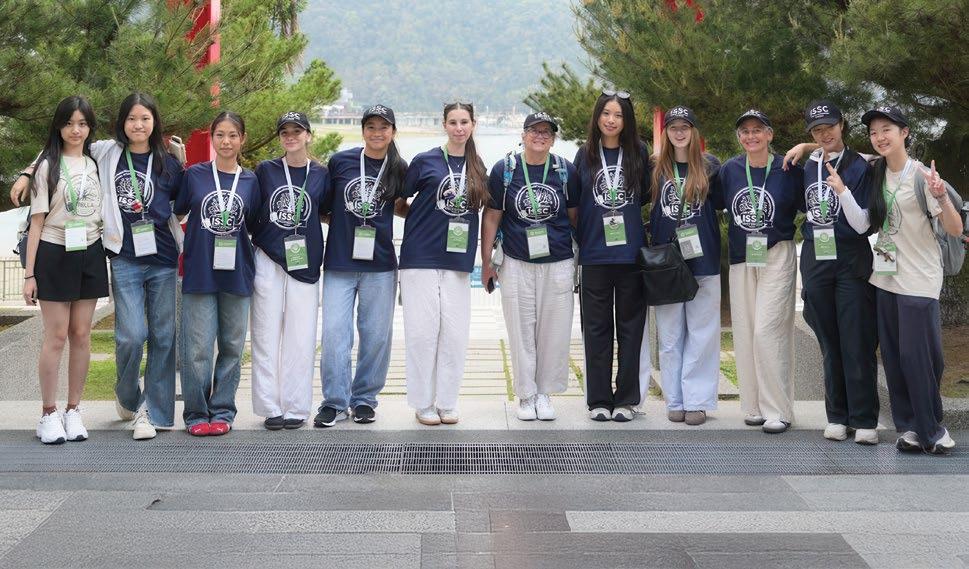
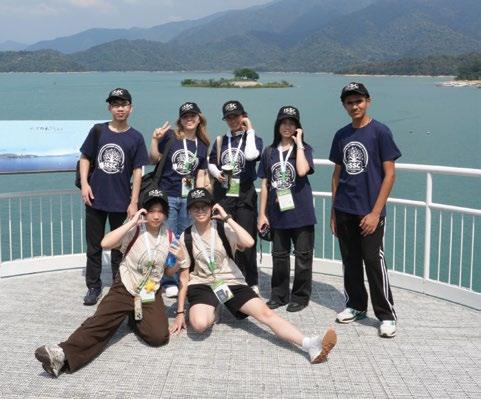
The International Students’ Science Conference (ISSC) is an annual event that celebrates the innovations and scientific achievements of students worldwide.
By Zoe Taylor, Zooey Lee, Suyi Ren, Helena Tuo, Madeline Papadopoulos, Sherry Zou, Evangeline McGrath, Selina Chen
The ISSC provides students with an opportunity to share their scientific findings and ideas with peers. This year, the event was hosted by Stella Matutina Girls’ High School in Taichung, Taiwan, where six schools from around the world gathered to share their projects on futuristic solutions to pressing problems.
With her significant findings of the correlation between resonance frequencies and skin abnormality masses, Zoe Taylor represented PLC Sydney with her project ‘ResoDerm’,
an investigation that proposes the use of a handheld non-invasive diagnostic device for the monitoring of benign skin tumours.
The other schools presented inspiring projects on sustainability and futuristic technologies that bridge the gap between science and people. From the Artificial Intelligence glasses of Hong Kong to harnessing tidal current power to light up the bricolas of Venice, the seeds of new scientific ideas were planted.
Beyond student projects, two professors delivered keynote speeches on topics related to the conference theme, “The Roots of Tomorrow”. They discussed relevant issues, such as the application of AI to address climate change and the development of Metal-Organic Frameworks, a leading
“From Artificial Intelligence glasses in Hong Kong to harnessing tidal power in Venice, the seeds of new scientific ideas were planted.”
innovation that may change the future of scientific research and enable efficient reductions in greenhouse gas emissions.
Exploring the 921 Earthquake Museum and the National Museum of Natural Science exposed us to the effect that science plays on people’s daily lives. Along the way, we encountered various learning opportunities that made us more aware of Taiwan’s culture and the sciences that support it. For example, we discovered that a large metal ball suspended in Taipei 101 can be explained by the nation’s seismic activity, and the nature of ancient Chinese medicine relates to the remedial effects of ancient Chinese herbs.
The experience was pivotal and enlightening, exposing us to the perspectives of students in other nations and with varying concerns, all working to better the world around us. Relationships between nations were built, supported by interactive, specialised events curated to uncover the knowledge we have today.
The Problem Solvers: three students using science to fix the future
The Science Research Project (SRP) is a rite of passage in the first term of Year 10. Students find skills they did not know they had: determination, resilience, creativity and problem-solving.
By Mrs Jo McGrouther Head of Science
Kitty Liu (Year 11): Australian Science Teachers Association (ASTA) I3 Excellence Award – Intermediate Inquiry and Category Award –Sustainability & Climate Change
Perhaps the trickiest aspect is asking the right question, one that explores a problem with something often mundane but with a significant impact. Three students have produced award-winning research. They have written their research stories.
Zoe Taylor (Year 10): Co-recipient of the 2026 Dr Burgis Award for Excellence in Science Research
Have you ever found yourself staring at a random spot on your arm, wondering if it’s just a harmless beauty mark or the beginning of something more concerning? You are certainly not alone.
Current medical procedures require subjective palpation, imaging or invasive biopsies that can be expensive and unavailable in rural areas. These problems provided the driving force for my SRP, a study to determine whether resonance frequency can be used to monitor the rate of growth of a subsurface non-cancerous tumour. My apparatus tested the relationship between the mass of a tumour (modelled with gelatin masses in pig skin stretched over a speaker) and its resonant frequency. A class 2 laser was reflected off the pig skin stretched over a speaker. Using an audio oscillator, I increased the frequency until the laser reached maximum displacement, and that’s when I knew I had reached the mass’s resonant frequency. My results confirmed the hypothesis that a heavier mass requires a higher input frequency. My proposed device, ResoDerm, would provide accurate data on changes in the mass of subsurface tumours, enabling faster, cheaper, and easier monitoring of lumps and bumps.
Diya Laurence (Year 10): Co-recipient of the 2026 Dr Burgis Award for Excellence in Science Research
Reapplying lip balm is almost automatic, but what if it’s a habit that isn’t as innocent as it seems?
When I was 12, I remember watching a video where a girl rated her skincare products out of one hundred based on ingredients. And, to my surprise, one of my favourite lip balms, Summer Fridays Butter Balm, was rated a zero. These lip balms had one common ingredient, butylated hydroxytoluene (BHT). I remember researching BHT and trying to find out more about my favourite lip balm, but I couldn’t find any answers. I wanted to find out how much BHT was in these lip balms and whether using them could harm one’s health. I used thin-layer chromatography to separate the BHT from the rest of the lip balm, and ImageJ software to analyse the amount of BHT in the lip balm. I also measured how much lip balm my friends used in a day, calculated their BHT exposure, then compared it to what’s considered a ‘safe’ amount.
I tested three lip balms. The measured concentrations were well below the maximum allowable level of BHT in cosmetics; however, some participants still exceeded safe levels. I also found that you are likely to be exposed to more BHT on a hot day, as more lip balm dispenses at higher temperatures.
Why does this matter? Because almost everyone uses lip balm, in fact, one of the brands I tested is the cosmetic store Mecca’s most popular lip balm. The amount of BHT in the lip balm isn’t the only thing that matters; it ultimately comes down to how much is being used.
Up to 30% of people worldwide are allergic to grass. Artificial grass is therefore becoming increasingly popular, also because of its lowmaintenance. Much of the Hamilton and Evandale playgrounds is covered in artificial grass. Playground and park areas are also frequently surfaced with wet pour rubber to provide cushioning should kids fall over.
However, whenever I sat on those materials in the playground, I would always feel some parts of the surfacing material come off under my hand. This prompted me to ask why and how this happens. Alarmingly, I found that artificial grass and wet pour rubber photo-oxidise when exposed to UV radiation, a process that is continuously amplified by climate change, breaking down into microplastics and eventually nanoplastics. Microplastics, defined as plastic particles smaller than 5 mm, pose serious risks to ecosystems, the environment, and human health.
Nanocoatings are commonly used in the automotive industry to protect surfaces from UV damage. This study aimed to: (1) test whether applying a SiO2-based nanocoating to artificial grass and wet-pour rubber reduces microplastic release, and (2) investigate whether increasing the number of nanocoating layers provides additional protection.
My tests showed that UV exposure significantly increased microplastic release from both materials. For artificial grass, applying nanocoating reduced microplastic release in a dose-dependent pattern. Applying nanocoating reduced microplastic release, with increased layers providing further protection for artificial grass. It might be time for a renovation of the Evandale and Hamilton playgrounds, don’t you think?
Australia’s brightest minds: four top science students selected for ANU summer schools
At the Australian National University in Canberra, our brightest science students are competing for a spot on the Australian international teams. These summer schools prepare them for the International Science Olympiads (ISO) in Biology, Chemistry, Earth and Environmental Science, and Physics— global competitions held in various host nations throughout the year.
Mrs Jo McGrouther Head of Science
The ISO pushes students to explore scientific concepts at a depth comparable to universitylevel coursework. The competitions demand not only theoretical understanding but also creative reasoning, excellent practical skills and teamwork. Summer Schools is ISO boot camp. It is rigorous and demanding. For the 24 students selected from across Australia to attend each of the four Summer Schools, the material is more challenging than these talented students have ever encountered, the workload is quite significant, but the challenge is exhilarating.
PLC Sydney students achieved something quite extraordinary last summer. As a consequence of their performances in the Olympiad qualifying examinations, four Year 12 students were invited to the 2026 Summer Schools: Tiffany Yi for Biology; Kelly Sun for Chemistry; Chrysty Salla for Earth and Environmental Science; and Sophie Pan for Physics. Extraordinary. And they had an amazing time. They were captivated by the practical experiences, they treasured the friendships, and, as students attending an inner-city school, they were fascinated by the wildlife of the more rural ANU campus.
Tiffany Yi, Biology
The routine of college life at ANU Biology Summer School allowed me to focus solely on science, even during post-dinner lectures! It was interesting to do finger-prick tests to measure our blood sugar before and after eating various foods, and glucose solution; something that would not be allowed in schools. We sectioned plants to observe cube-shaped starch crystals and Gramstained bacteria.. We also visited the Kioloa Field Station, where we dissected shrimp and observed marine life in tidepools. Spending the week with students as passionate about Biology as I am was a great opportunity.
Kelly Sun, Chemistry
Chemistry Summer School was a unique experience where I made great friends. My favourite aspect was the practicals, specifically synthesising a ‘green imine.’ It was incredibly green (approximate hex code #E37602!).
Coming from urban Sydney, I also loved the ANU wildlife; seeing ducks in the fountain and kangaroos nibbling grass in the courtyard brought me joy every day.
I never thought I’d be so emotionally invested in sedimentary rocks and deep ocean currents! The camaraderie among EES students was unmatched. A highlight was our field trip to outcrops around Canberra, where we practised our skills on actual rock samples. We also had a blast practising our 2026 EES dance to Bastille’s ‘Pompeii’, a fun way to memorise terminology! Whether it was the impromptu karaoke on our daily walks or the deep intellectual stimulation, it was an amazing experience.
Sophie Pan, Physics
Physics Summer School was a rewarding, jam-packed experience that allowed me to flourish. The lectures and labs covered a vast scope of Physics I would never have encountered at school. The highlight for me was the Rubens tube in the fluids lab. We pumped gas through a copper pipe and lit it, creating a row of tiny flames that reacted to music from a speaker. The fire literally shaped itself into sine waves, rising and falling with the sound’s compressions and rarefactions. Seeing sound turned into fire was an incredible way to watch physics in action!
Science Extension 2026bigger and better than ever!
The one-unit Year 12 Science Extension course turns seven years old this year. This course has been offered at our College since it was opened in 2019 as an HSC option for science students in NSW.
By Dr Maria-Luisa Gutierrez Science Teacher and Scientist in Residence, Biology
Each year, a group of enthusiastic science-loving students has thrived in completing this course, always obtaining the highest extension bands of E3 and E4.
Science Extension is a unique course that gives students the opportunity to develop their own research question and develop a project, following their curiosity and scientific interests. Under the careful supervision of the classroom teacher, myself, scientific mentors and our scientists in
This course is a great way to develop a research project similar to the Year 10 SRP, but with the freedom to choose your own topic. My project focuses on Formula 1 performance, specifically 3D printing a range of track-specific rear wings to enhance aerodynamics. I’ve thoroughly enjoyed the challenge of balancing complex theory with handson practical work.
Jasmine Civardi
residence, students design and carry out experiments to test their hypothesis. Students produce a scientific report written to publication-quality standards. Several of our students’ projects have been accepted for publication in the Young Australian Science Journal and have won national and international awards (AUSSEF and ISEF) over the years.
2026 has seen an increase in popularity among our student cohort, inspiring seven passionate students to embark on exciting, creative and interesting research projects, summarised below.
I am investigating the environmental impact of synthetic turf, specifically how rubber crumb infill leaches pollutants into soil, and whether native Australian plants can mitigate this through phytoremediation. I’ve always loved SRPs, and this subject is incredibly engaging because it reveals the hidden environmental costs of what appear to be sustainable on the surface.
Alice Swinburn
My project uses EGCG, a compound found in Matcha, to explore reducing drug resistance in cancer cells using yeast as a model. I wanted to see if a drink so ingrained in pop culture can have real medical benefits. I’ve loved researching science questions since Year 7, and this course finally lets me find the answers.
Ally Eland
I am conducting a meta-analysis on the neuroprotective benefits of creatine and how it may support brain function in relation to neurodegenerative conditions. While usually associated with physical performance, its impact on brain health is fascinating. This project has sharpened my skills in evaluating scientific literature and data analysis across biology and chemistry.
Amelia Barry
Continuing my Year 10 SRP, I am investigating how different Native Australian fruit powders tenderise meat and determining the ideal marination time. Science Extension offers the liberty to research anything you are interested in. Dr Gutierrez is a supportive mentor who helps bring our ideas to life. I highly recommend this course!
Sienna Colosi
My project explores whether UV-treated waste cooking oil can be used to produce PHAs (biodegradable plastics) with Pseudomonas putida. Science Extension is a fantastic opportunity to explore personal interests, such as bioplastics, while learning to navigate the challenges of scientific research, statistics, and ethics.
Emily Purbrick
Collaborating with Alice Swinburn, I am studying how soil microbes and native plants work together to remediate rubber crumb leachate. I’ll be using genetic sequencing and our brand-new PCR machine (thank you to the P&F!) to analyse bacterial profiles. I’ve loved learning about the history of science and the depth required for a high-level research project.
Emily Barrett
A whirlwind start for the Pipes and Drums
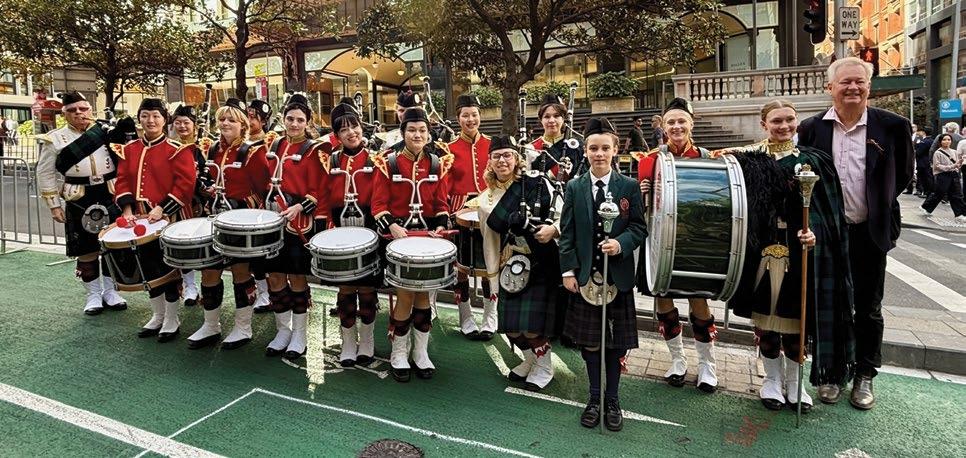
It has been a whirlwind start to Term 2 for our Pipes and Drums, marked by two significant public engagements that have tested our students’ skills and showcased their dedication to excellence.
By Mr Garry Barker Coordinator Pipes and Drums Program
From the vibrant atmosphere of the Southern Highlands to the solemnity of the city streets, our students have represented PLC Sydney with incredible distinction.
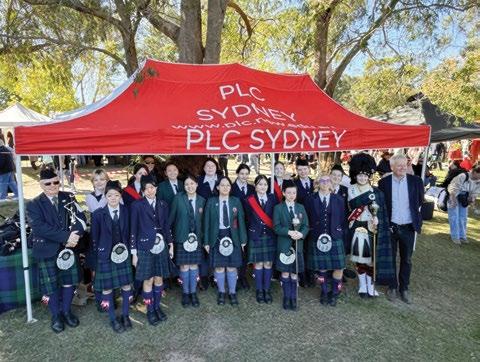
Our term began at the Bundanoon is Brigadoon Festival, a spectacular event drawing over 10,000 spectators and 29 pipe bands from as far away as Tasmania. Surrounded by the sights of Highland dancing, heavy games, and the iconic caber toss, our band held their own among seasoned performers from across the country. It was a particular joy to introduce Hayley (Year 6) in her debut outing as Drum Major, assisting Chiara (Year 11) in leading the ensemble. Their combined leadership, alongside the band’s crisp musical display, drew numerous compliments from the
crowd. We were also delighted that Dr Burgis could join us, offering his steadfast support throughout the morning and witnessing the band’s impressive, massed performances.
The momentum carried us directly into the ANZAC Day March just one week later. Navigating the highpressure environment of a televised march along Elizabeth Street, our students demonstrated remarkable poise. Performing demanding musical brackets entirely from memory while maintaining strict formation is no small feat, yet they handled it with ease. Once again, Chiara and Hayley provided exceptional leadership at the front of the formation as the band marched past the ABC cameras.
A truly poignant highlight occurred as the band passed the Hyde Park Memorial; the students marched
in solemn, reverent silence, eyes turned toward the memorial as the Drum Majors saluted, a moment that captured the deep respect and maturity of the ensemble.
Professionalism has become the hallmark of this group, and as they continue to be occasionally bolstered by the growing Ex-students Pipe Band, the future of the program looks brighter than ever. The College has every reason to be proud of how these students represent our community in the public eye.
Beyond the script: why great lessons are like great movies
Life can be seen as a pattern of interconnected moments. Sometimes we plan and shape them, but most of the time we need to know what to do with them.
By Mr Tim Archer Head of Learning and Teaching
It is often the choices we make in unexpected moments that define our path. We see this every day in the classroom. It is often the unplanned moments in the classroom that yield the deepest, most impactful and memorable learning.
From my perspective, best practice occurs when abstract theories are brought down into the lived experience of the classroom. I see it as my responsibility to transfer ways of thinking into pragmatic tools that can enhance teaching and learning at PLC Sydney. Best practice should never be entirely top-down. I consider myself a teacher first and prefer to begin from the ground up, and there is nothing more “ground up” than a moment in the classroom!
Last year, I had the privilege of teaching pre-service English teachers in the final year of their university studies. They were an engaged, thoughtful and ethical group with an innate passion for education. The future is very much in safe hands! My intention for the tutorials was to find a bridge between the evidence-
based theory in their studies and the lived reality of classroom life. In doing so, I presented an analogy about learning and moments that resonated with them.
As an English teacher, I intuitively conceive of my lessons as stories with a “narrative arc” that builds to the learning objective. But in some ways, a lesson is more like a movie. When we watch movies, we are often more likely to remember the actors’ names than the characters they portray. We often forget the intricacies of the plot and the finer details. Instead, it is the key moments that stand out, whether they are scenes, lines of dialogue or images. The great films are defined by these moments, whether it is the shower scene in Hitchcock’s Psycho, the revelation that Darth Vader is Luke Skywalker’s father in The Empire Strikes Back or the home invasion scenes from Home Alone. We don’t need to remember every detail of these moments to truly appreciate their impact.
A good lesson is like a movie. It is punctuated by memorable moments that rest in students’ long-term memory. Understanding this is an important strategy for effective teaching. We cannot expect our
students to recall everything covered in a lesson, but we want the key learning objectives to stand out like memorable moments in a film. I asked these teachers-in-waiting to consider the “story” or “big scenes” from their lessons and to structure their planning around them. This advice resonated more than anything else. When I began teaching in the early 2000s, a buzzword was “teachable moment”, a somewhat vague term to refer to something unplanned and “in the moment”. While this is partially true, I believe that if we think of our lessons as a bit like a story or film, we can incorporate these moments into a larger story, acting like directors who anticipate the big scenes that will live in their audience’s minds. We can anticipate what students will recall when they walk out the door as the bell rings.
Spanish cognitive scientist and teacher Hector Ruiz Martin posits that critical thinking and deep learning occur when information in working memory interacts with prior knowledge stored in long-term memory. The stronger the retrieval of long-term memory, the higher the quality of learning.
As teachers, we need to make this happen in key moments and understand how those moments unfold. When students leave our classrooms like moviegoers walking out of the cinema with lasting memories, we have done our jobs.
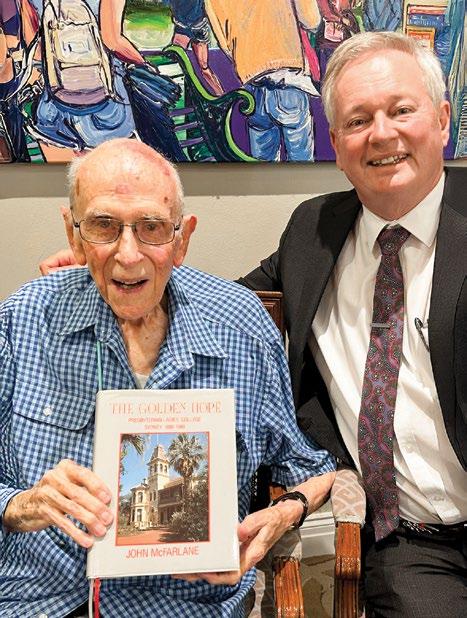
Vale John Dunlop McFarlane (1939 - 2026)
John McFarlane wrote PLC Sydney’s centenary publication, The Golden Hope, Presbyterian Ladies’ College
Sydney 1888-1988 John was a College Council member from 1975 to 1991 and was also a former parent, with his daughter Janet attending the college from 1984 to 1989. John’s sister Margaret was also a student from 1946 to 1948. Here, his children pay tribute to him.
By Angus McFarlane, Janet Leechman (McFarlane, 1989) & James McFarlane
John Dunlop McFarlane was born on the 10th January 1939 to Victor George McFarlane and Letitia Jean Dunlop, the younger brother of Margaret. He was born and raised in Eastwood, NSW, attending Eastwood Public School before attending High School at Fort Street, Petersham. John had an unplanned gap year before taking up his scholarship to Armidale Teachers College, graduating in 1959 and returning to Sydney to take up his first appointment at Carlingford, before moving to Bathurst and returning to Armidale in 1964 to complete a Bachelor’s Degree in Arts, majoring in History.
It was in Armidale that he met the love of his life, Helen Wynter McCully, while boarding with her aunt, and they married on 11 May, 1968, at St. Stephen’s Presbyterian Church, Sydney. His marriage coincided with a transition to becoming a college lecturer, a role he would fulfil for the remainder of his career.
His first son, Angus John, was born in 1970, while John was at North Sydney Demonstration School. This was followed by a move to Goulburn, where his daughter Janet was born in 1971. John then moved back to Sydney, taking up an offer to lecture at Balmain Teachers College, and residing at Pennant Hills when his second son James was born in 1974.
As John continued his career as a Lecturer at KuringGai Teachers’ College, later to become the University of Technology, Sydney, which included annual trips to Thailand with final-year students every July for 16 years, he remained active in the local Beecroft-Cheltenham community where he lived until 2006. He played an active role in the Beecroft Presbyterian Church Session, serving as session clerk for many years. He had a similar role in the local lodge, was part of Beecroft Rotary, a loyal, lifelong member of the Liberal Party and a member of the Sydney Male Choir.
“John was the proud grandfather of 9 grandchildren and great-grandfather to 4 greatgrandchildren. During his retirement years, he remained connected to the many friendships he had formed over the years...”
John was the proud grandfather of 9 grandchildren and great-grandfather to 4 great-grandchildren. During his retirement years, he remained connected to the many friendships he had formed over the years and continued to serve in roles such as the residents committee at Alan Walker village into his 80’s. During his last 10 years, as his health declined, John was loved and tended by his wife Helen, whose sudden passing in June last year he continued to grieve until his final days.
John passed away on the morning of 30 January at Wahroonga House, surviving a long struggle with throat cancer, amongst other things, for longer than we expected. We will miss him deeply, yet have much gratitude for his life and the blessing it has been to us and so many others.
Imagination meets reality: the rise of new technologies at PLC Sydney
The 2026 school year has marked a significant milestone for innovation at the College. Thanks to a generous $40,000 contribution from the P&F Association, the foundation for future technologies has been firmly established, most notably through the launch of the Emerging Technology Club.
This funding has already created a ripple effect of curiosity across the campus, providing our students with direct access to the tools shaping our modern world.
The
Emerging Technology Club: For the Makers and Pioneers
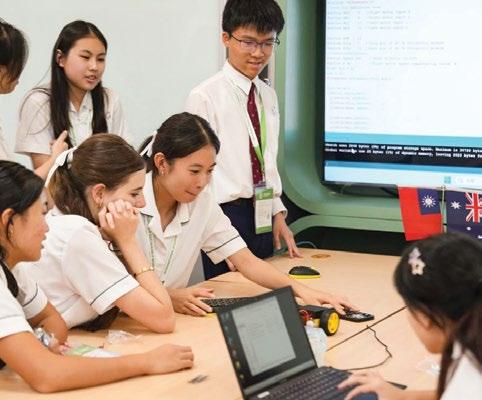
Designed specifically for the makers, the thinkers, and the digital pioneers, the Emerging Technology Club officially kicked off in Term 1. The club aims to bridge the gap between imagination and reality. This term, student members have immersed themselves in:
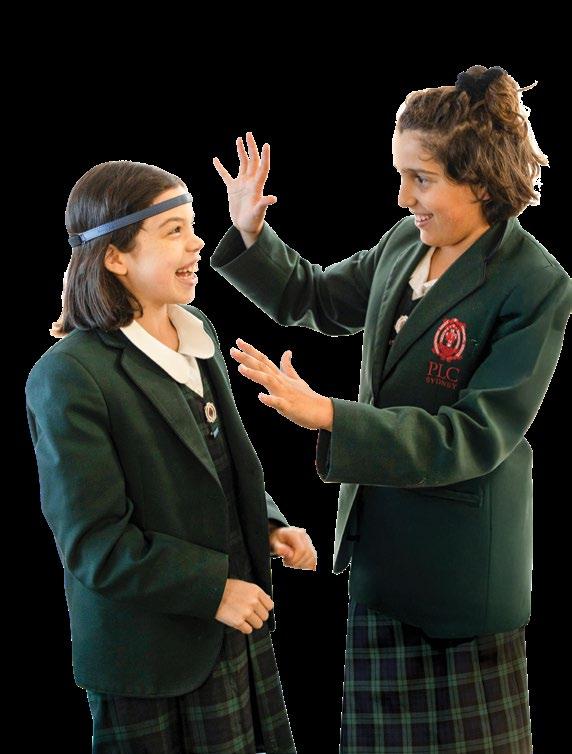
• Soldering and Robotics: Building and learning to control small robotic devices including with brain scanners.
• 3D Printing: Designing components and understanding additive manufacturing.
• Agricultural Innovation: Exploring the future of farming and drone applications in agriculture with Mr Duncan Kendall.
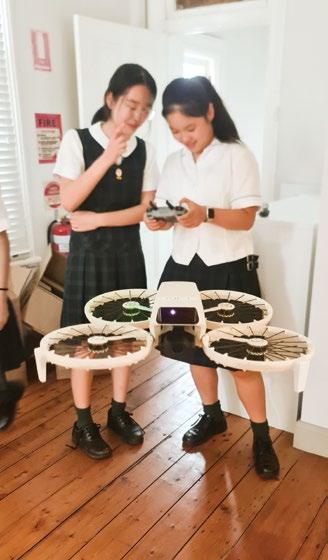
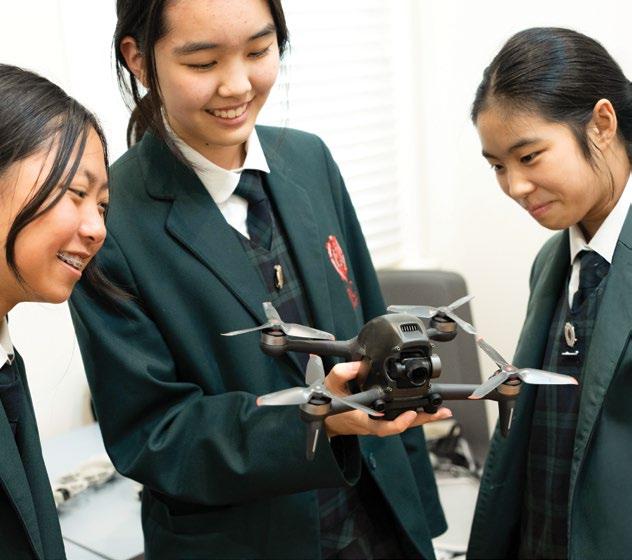
• Drones: remote controlling around obstacle courses and learning the basics of autonomous control.
A Cross-Curricular Future
The Science Faculty has fully embraced these new resources. Our Year 12 Physics students recently completed an in-depth study using 3D-printed rockets launched from an in-house-built launcher. Furthermore, we are seeing the “silos” of education break down as Geography and History departments begin to incorporate 3D printing into their own curriculum.
Science and the SRP: High-Tech Investigation
The impact of this new equipment extends deep into the classroom. Brain-scanning technology has been a major point of engagement of some of our Year 10 students as part of their Student Research Projects (SRPs), while a select group of Junior School students have begun exploring its potential for their Young Scientist entries.
In Year 8 "Morning Connections," a student-led initiative is currently using our 3D printers to create products to raise funds for Allawah Hospital, proving that technology and social responsibility go hand-in-hand.
Innovation in the Playground
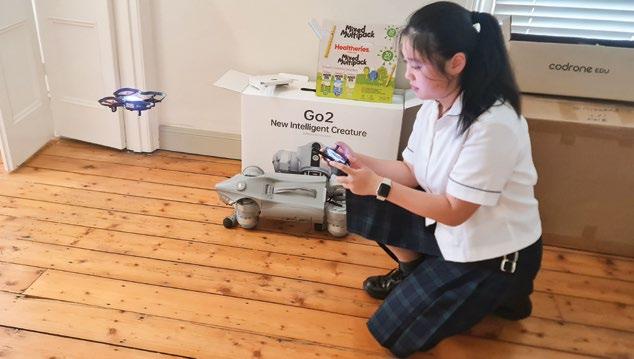
If you have walked past the sunken lawn during recess or lunchtime this term, you likely witnessed the future in action. Students have been busy piloting drones through the air, while our resident “robo-dog” has become a playground highlight, drawing strong interest across all year groups.
Beyond the fun, these sessions serve as an accessible introduction to complex systems. By interacting with these devices, students are learning the fundamentals of sensors and how robotics and drones perceive and navigate their environments.
Only Just Getting Started
While it has been a remarkably productive first term, we are truly only just beginning.
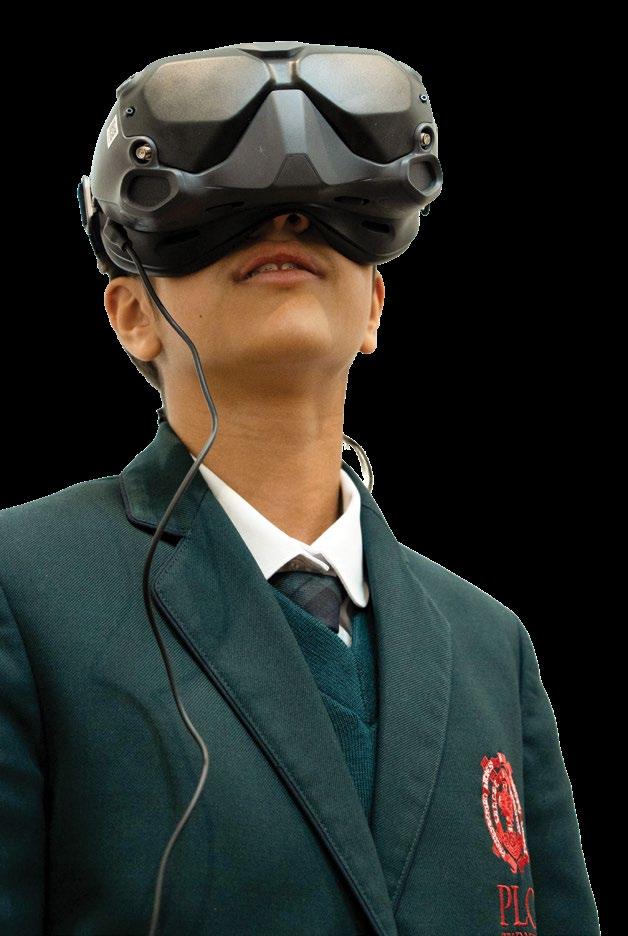
The foundation is now in place. In the coming terms, we look forward to expanding our scope even further, incorporating Virtual Reality (VR) headsets, 3D scanning, and more sophisticated drone programming. We are incredibly grateful to the P&F and the wider community for supporting this vision, and we look forward to seeing our students continue to push the boundaries of what is possible.
Who’s leading our initiatives?
Dr Christopher Brunner, Physics Teacher
What do you enjoy most about being involved in education?
The moments when curiosity and problem-solving take over. When a student stops thinking about whether something is "school" and just gets absorbed in figuring something out. I see this most often when students are confronted with real-world problems they can relate to and have to combine scientific investigation with the application of new and interesting technologies.
What drives me is something I've built my whole teaching career around: the belief that every student deserves to see themselves in STEM. I've spent years creating programs specifically designed to make girls feel like they belong in this space; with clubs, electives, and industry partnerships. Now, at PLC Sydney, I feel like I can bring so much of these experiences to promoting STEM to this new generation of young women.
What is it about science and technology that you find most interesting?
The fact that it's never finished. Science and technology are living, evolving fields. What is cutting-edge today becomes foundational tomorrow. What I find fascinating is the intersection of disciplines. With a background in robotics, I love exploring the overlaps where physics meets biology, engineering meets ethics, or technology meets art. I am a strong advocate for getting out of our teaching silos and finding relationships between teaching key learning areas.
As a teacher, how do you manage the tension between using AI as a powerful tool for efficiency and ensuring it doesn't erode a student’s critical thinking?
Honestly, this is one of the most difficult questions in education right now, and I don't think any teacher has a complete answer, myself included. What I do believe is that avoiding AI entirely isn't realistic or even desirable. But in other contexts, it can be unreliable, prone to presenting false information with complete confidence, and students need to understand that. We want to build
learning experiences that encourage students to question and test what AI produces rather than simply accept it.
Is there a field of technology that isn't in the syllabus yet, but you think will be essential in five years? The intersection of artificial intelligence and augmented reality. We are moving toward a world where the boundary between the digital and the physical is blurring in ways that will fundamentally change how people work, learn, and experience everyday life.
AI is already reshaping what information we see and how we interact with it, and as augmented reality matures, that shift will become spatial and constant. For teachers, this raises genuinely profound questions: what does all this mean for how we teach critical thinking, perception, or even basic scientific observation?
Neurotechnology is another area worth watching. Students who've encountered brainscanning technology this term have shown a level of curiosity and engagement that tells me it's going to matter.
“ Science and technology are living, evolving fields. What is cuttingedge today becomes foundational tomorrow.” Dr Christopher Brunner
What are some of the challenges in this space?
The pace of change is the most exciting thing about technology and one of its greatest challenges in education. By the time a curriculum is written and resources are developed, the field has often already moved.
There’s also the challenge of integration. Having exciting technology available is only the beginning; the real work is connecting it meaningfully to learning across different subjects and year groups. Teachers need time and support to integrate technology meaningfully into learning.
In your experience, is there a program or initiative running at PLC Sydney that you haven't seen anywhere else?
What strikes me most at PLC Sydney is the sheer breadth and depth of
genuine scientific opportunity available to students at every level; from the rich primary school program that Mr Kendall runs, through to the Year 10 Student Research Projects, the competitions, the overseas trips, Cambridge A-level opportunities, the exceptional teachers, and the many other high-level pathways
Mr Duncan Kendall, Head of Junior School Science
What do you enjoy most about being involved in education?
Seeing students grow in confidence, knowledge, and their belief in what they can achieve. I love empowering students of all abilities to be the best they can be through meaningful education that supports their individual strengths and potential.
What is it about science and technology that you find most interesting?
In a primary school setting, science and technology serve as the ultimate catalysts for natural curiosity, turning the classroom into a laboratory of "what ifs." These subjects provide a unique platform where children can transition from passive observers to active creators of their own knowledge. What makes this so compelling is the way it validates a child’s innate desire to question, take things apart, and understand the mechanics of the world. By introducing complex concepts through play and experimentation, we strip away the intimidation factor often associated with STEM.
that exist across the school. Most schools do one or two of these things well. PLC Sydney does all of them, at every stage of a student's education. That kind of culture is not easy to produce, and I found it remarkable to walk into a school where it already exists so deeply and so naturally.
Is there a field of technology that isn't in the syllabus yet, but you think will be essential in five years?
While current curricula cover general materials, I believe Nanotechnology will be an essential pillar needed for an efficient and prosperous future. This field is transforming medicine, where nanoparticles act as precision vehicles to deliver treatment directly to cancer cells while sparing healthy tissue.
Introducing these concepts in schools allows students to explore the fascinating intersection of physics, biology, and environmental ethics. It shifts the focus from simply using technology to understanding the molecular building blocks that drive global solutions. In the near future, "nano-literacy" will be just as vital as digital literacy is today. By teaching this now, we prepare the next generation to responsibly design the invisible technologies that will sustain our future.
Postcards from Papeete: looking back at the 2025 French immersion
One of the hallmarks of a PLC Sydney education is the opportunity to step outside the classroom and into the world.
For the students who travelled to French Polynesia in late 2025, the rewards came in the form of improved fluency, cultural connection, and a few brave encounters with sharks! We are delighted to share these reflections, stories that remind us of the lifelong memories made when we embrace new cultures.
Gisele + Ava (Year 9)
Tahiti was truly a once-in-a-lifetime experience that gained us so many lifelong lessons and memories we will never forget. Throughout this week-long trip, we both became more confident in speaking and listening in French by attending French classes almost every day, communicating with locals at the markets and during activities, and conversing with our host families.
We immersed ourselves in Tahitian culture by learning traditional dances, eating local foods, and picking up a few words of the Tahitian language. Our homestay families were amazing and made us feel more confident about practising our French. The highlight of our week was the last day of the trip, when we travelled to Moorea Island for a full-day excursion. We communicated with the locals, swam with stingrays and sharks, and ate delicious food, making many memories we will never forget! C’était une expérience incroyable!!
Abigail + Georgia (Year 10)
Visiting Tahiti was the most incredible experience that we will not forget! From late-night games with our host families to swimming in crystal clear water with stingrays, the week was unforgettable. We spent a lot of time at the local markets, practising our speaking skills, talking to the vendors, and counting the French Pacific Franc (Tahitian currency) to ensure we had the right amount. Every day, we would go on an excursion to explore the island and see more of the beautiful forests and ocean.
Our Homestay families were incredibly generous and caring. They cooked us amazing meals every night and taught us to make lasagna, which we ate during the week. By introducing us to new foods, they helped us to overcome our fears of trying new things. The highlight of our week was the safari trip into the heart of the island, an ancient volcano, where we travelled in 4-wheel drives through the dense forest, in the back of the jeep and viewed over 400 waterfalls in the hills, finishing the safari with delicious fresh fruit from the island. We enjoyed every minute of the trip!
Isabelle + Ella (Year 10)
Our trip to Tahiti was an unforgettable experience. From cooking dinner with our host family to exploring the beautiful island alongside our teachers and peers, this trip was a life-changing experience we are extremely grateful for. We spent the week with a homestay family and got to experience what a traditional Tahitian household is like. They were extremely caring and friendly and showed us around their favourite places, like Pointe Vénus and Place Vai’ete.
Every day we attended French lessons where we improved our speaking and listening skills, learnt about Tahitian and French culture, and were even taught a few Tahitian words. Throughout the week, we had the opportunity to participate in various fun activities, including stand-up paddleboarding, coral workshops (where we adopted our own baby coral plant!), and visiting local markets. Our highlight of the week was the day trip to Moorea island, where we swam with stingrays and sharks and ate traditional Tahitian ‘poisson cru’ (raw fish in a coconut and lime sauce).
60 seconds with... KATE WHEATLEY
Junior School Teacher
Have you always worked as a teacher or have you had other careers?
For most of my life, yes! I’ve loved being a primary school teacher, but I briefly dabbled in law at the start. After watching too many legal dramas as a teenager, I thought that might be fun, but it turns out that I much prefer working with kids and their families.
What is the most rewarding thing about working with students?
So many things! I love helping students to learn about the world and their place in it. The girls’ different perspectives and responses help me to develop my teaching strategies, and I learn all sorts of things from them every day. They are also my only hope of keeping up to date with technology!
What is the one value or ‘life lesson’ you hope every student takes away from your classroom?
I hope that every student of mine will take away the message that learning is important and joyful - even (especially!) if it’s grammar! And there is a song for every learning occasion.
What has been your greatest challenge at school?
My greatest challenge, I think, was setting up new systems and learning to manage school remotely and online when COVID broke out. It was challenging for everyone and hard to know what was best for students, families and teachers. We were all in that learning pit! I was super thankful for the incredible Junior School team, who really worked together to share the load.
Do you have a most memorable career point to date?
Every year, I love the first day of school when I meet new students and families and look forward to the journey ahead. I enjoy the community of PLC Sydney and all of the people that I have had the privilege to know over the years.
Who has been your greatest influence?
My grandmother, who we called Nana, was a kind and constant influence in my life till I was 40! She left school at 12 to become a seamstress in a factory but she taught me about the value of love and support no matter what. She encouraged me all through my education and knew how to walk alongside me when things went wrong. She taught me to start afresh every day and how to play a mean hand of cards!
What does a perfect Saturday morning look like for you?
A perfect Saturday morning is an early walk / run at the local National Park with my husband and sometimes my kids. Afterwards I love to have a cup of coffee in the garden and do the Sydney Morning Herald quiz. I’m good at literature and political questions and hopeless on the Sport!
If you could travel anywhere in the world tomorrow, where would you go and why?
I have been trying to walk the ancient Kumano Kodo trail in Japan since COVID first interrupted, and I’ve never quite made it. I adore long hiking holidays out in nature, exploring the world, and I am super keen to experience this one.
REBECCA NICHOLS
Head of Social Science
Have you always worked as a teacher or have you had other careers?
Teaching was my first career, but I had several other jobs before commencing full-time teaching. These ranged from working for the family business in logistics to undertaking promotions for a radio station. I even worked as an extra on an Academy Award-winning film. Unfortunately, my scenes didn’t make the final cut. But I did get to rub shoulders with some Hollywood stars.
What led you to a career in education?
At the time, it felt like I stumbled into a teaching career by accident, but looking back, I can see there was some quiet providence in it. I have always loved learning - I enjoyed all my subjects at school, particularly science and languages. My goal at school was to be a research scientist or pursue a career in nuclear medicine. I began studying for a medical science degree, but, as often happens in your 20s, my direction shifted. I transferred to economics and finance, where I discovered a real interest in economic theory and policy. When I finished my undergraduate studies, the university offered a 1-year Diploma of Education, which seemed like a practical next step. But after my very first teaching prac, I knew I had found the perfect fit.
What has been your greatest challenge at school?
The greatest challenge at school is reconciling the fact that there is always more than you can do! Refine that lesson plan or activity, update a learning program, provide a student with some further one-on-one support, and mark a few more essays. Balancing my commitment to my job with my sense of self and commitments to family is the biggest challenge. COVID was also a real challenge. I never want to do Zoom lessons again!
What do you enjoy most about being involved in education?
The relationships that I have forged with students and their families, colleagues and the teaching community. I am always gobsmacked when people outside of education question my career choice and make comments such as “Oh, how do you put up with all of those teenagers?!” Watching students entering Year 7 and growing into young adults is an extraordinary privilege. Teenagers are fantastic, and the students I teach are all talented, creative and curious individuals. They also keep me feeling young. Education, like parenting, takes a village, and the relationships established with colleagues are vital as well. We rely on each other, and many of my “teacher friends” that I have made over the years are now my best friends outside of school, too.
Do you have a most memorable career point to date?
There are honestly too many to count! Recently, though, I was stopped on the street by a former student who had just launched their own business. They were so excited to tell me how much they still relied on what they learned in my Business Studies classes. It is incredibly rewarding to watch your students, especially those who may have faced challenges during their school years, become leaders in their fields, and then take the time to come back and share their success stories.
On a much lighter note, fronting up to my Saturday netball competition with my team of 40-something mums and beating a team of Year 12 students (which happened to include the school sports captain!) is definitely up there.
I was also introduced to my husband by a colleague after Speech Day back in 2005. It might not strictly be a "career" milestone, but it’s undoubtedly one of my most memorable PLC Sydney moments!
Who has been your greatest influence?
It’s hard to name just one person, as different people have shaped different chapters of my life. Personally, my parents and grandparents have been my grounding force, influencing who I am today and how I parent. Now, my daughters are my biggest daily inspiration, driving me to make the world a better place for them to grow up in.
Professionally, I constantly draw inspiration from the educators who came before me. When I was a student at PLC Sydney, my Indonesian teacher, Miss Erna Tan, an absolute legend, was profoundly influential. She dedicated her life to teaching with such unwavering commitment. I actually bumped into her at the shops recently. She must be in her 80s now, yet she is still teaching adult language courses! Amazingly, she remembered my name instantly, even though it has been 30 years since I sat in her classroom.
More recently, I’ve been shaped by an incredible network of colleagueseducators like Margaret Hinchcliffe, Christine Ryan, Adam Bold, Linda Chiba, not to mention the current Social Science team, who have all left a lasting mark on my teaching practice.
What does a perfect Saturday morning look like for you?
Cuddles with my dog, Pepper, a leisurely stroll and shop at the local farmers market and then watching my daughters have big wins at their netball or water polo games.
If you could travel anywhere in the world tomorrow, where would you go and why?
Paris is always a good idea. But equally, my secret south coast spot with John, Ruby, Olivia and Pepper. Anywhere with my family and friends is where I want to be.
AROUND THE GROUNDS
Term 1 Sports Wrap Up
The 2026 sporting year began with a strong Term 1 featuring impressive team results and standout individual performances.
In Senior School Saturday sports, students competed in tennis, badminton, water polo, and AFL. Nine teams played in the Grand Finals, with another 20 competing in the third place play off.
In Tennis, nine PLC Sydney teams played in the third-place play-off, and five competed for their division titles in the Grand Final. PLS03 and PLS15 both emerged victorious, winning 6-2 and 7-1, respectively.
In Water Polo, three teams competed on the last weekend of the finals, one in the Grand Final and two in the thirdplace play-offs. All three won their games, with our Senior thirds and Year 7 A teams placing third. Our Senior firsts won their Grand Final 9-8 in a very competitive match.
In AFL, PLS05 progressed to the Grand Final and fought hard to finish runnersup in a very tough game.
Our Junior School students also enjoyed a fantastic term of football and water polo in the IPSHA Saturday sport competition.
The 2026 Tildesley Tennis competition is always a highlight of the sporting calendar. This year, our team finished in a fantastic fifth place. The highlight of the tournament was our doubles pair, who put up an amazing fight to take their semi-final to a tiebreak.
In Football, we saw early success in both the NSWCIS Cup. Our NSWCIS Cup team also had a strong start, defeating Danebank in Round 2.
The PLC Sydney Swimming and Diving teams delivered a strong IGSA performance, both finishing in second place. Eleven Senior School and six Junior School swimmers progressed to CIS via their respective IGSA and IPSHA carnivals. Nine Senior School divers
Representative Team Selections - Term 1
Aria Hamilton: IPSHA
Basketball
Eden Hamilton, Aria Hamilton: IPSHA AFL, CIS AFL
Audrina Ucchino: IGSA
Water Polo
Emily Barrett: IGSA Rowing
Jessica Steventon, Amelia Steventon, Ava Moran: IGSA
Rugby 7s
Emilia Watson: CIS Cricket
qualified for the CIS carnival, alongside five Junior School qualifiers from the IPSHA competition.
Our Junior Cross Country team performed well, with 21 students competing at IPSHA and six qualifying for CIS.
In February, 15 students represented PLC Sydney in the NSW All Schools Triathlon Championships at the Penrith Regatta Centre.
There is no greater success than to achieve your best
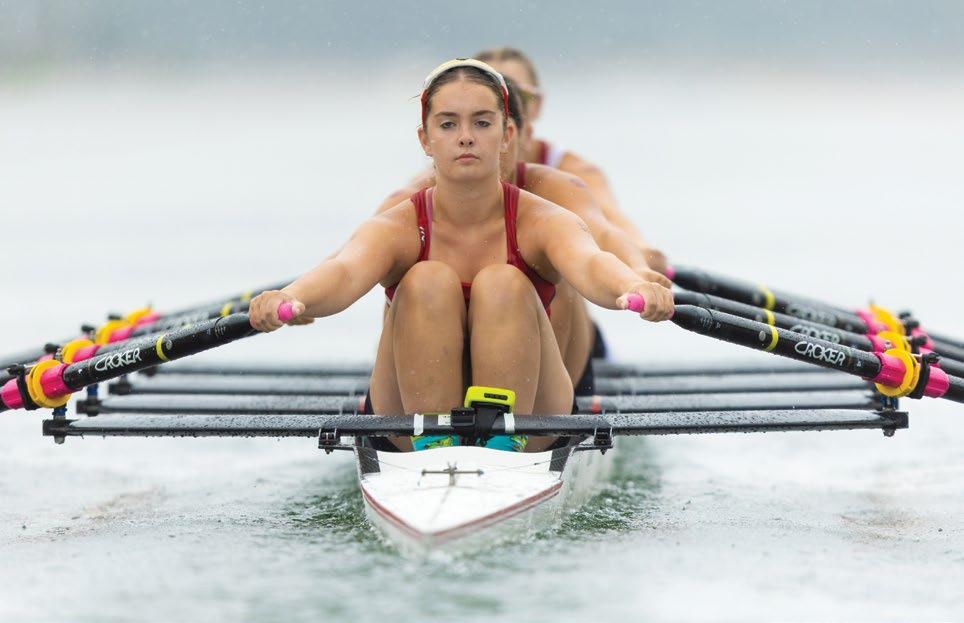
By Mr Will Caldwell Head of Rowing
There are many ways to measure student success, and many of these qualities will not be fully recognised until years after students leave school. However, the goal for all PLC Sydney rowing crews is to achieve a personal best every time they race.
At the NSW Schoolgirls’ Head of the River, all crews did just that. They executed everything they had practised over months of training, maintaining the same drive and intensity from the pre-season small-boat camp in October to the final training session in March. It was this determination that ensured all crews posted personal bests when it mattered most, with all Para, Year 9, Year 10, and Senior crews qualifying for the final in their events.
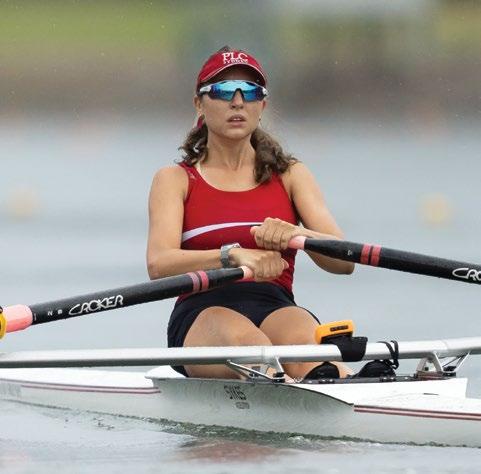
All three Year 10 Quad Sculls set the course alight to achieve podium finishes, Emily Barrett showed real grit to claim a Silver medal in the Schoolgirl Single Scull, and Michelle Ly continued to inspire, narrowly edging out Rachel by one second to secure the Bronze medal in the Para Single Scull. As a school, PLC Sydney placed 11th out of 49 schools, narrowly missing the top ten by 1 point, and placed 9th in the Senior Pointscore trophy.
On the back of this success, two PLC Sydney crews competed in the Australian Rowing Championships at Lake Barrington in Tasmania. Emily Barrett raced in the Schoolgirls Single Scull. The event was heavily subscribed, making for intense racing in the preliminary rounds. Emily fought hard both physically and mentally to scrape into the A Final, where she rowed superbly to place 5th against the best schoolgirls in Australia.
The PLC Sydney Year 10 1st Quad of Ava Lane, Lara Rathjen, Zoe Leesha, Sophie Moore and Talia Kinlyside (cox), raced the Under 17 Schoolgirls Coxed Quad Scull event, progressing through to the A Final. They led the field after 500 metres and held 3rd place at 1500 metres, narrowly missing out on a podium finish by 0.08 seconds. It is cruel and devastating that after 9 minutes of racing, such a small margin can separate 2 crews; however, it is these experiences that forge character. The girls are victims of their own expectations; however, in time, they will appreciate the enormity of what they have accomplished. These successes and disappointments will fuel their desire to achieve more and provide the impetus for future PLC Sydney crews to follow in their footsteps.
IN PROFILE
Ava Moran
Year 12
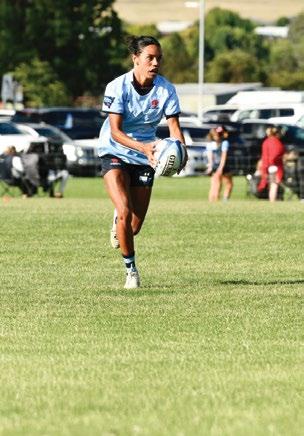
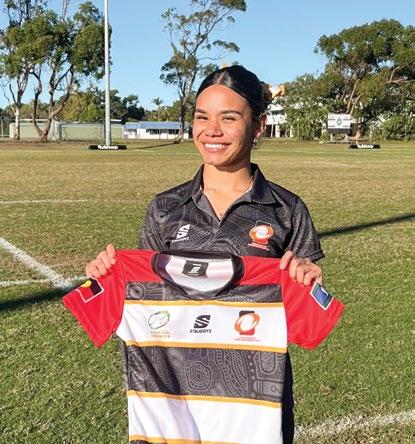
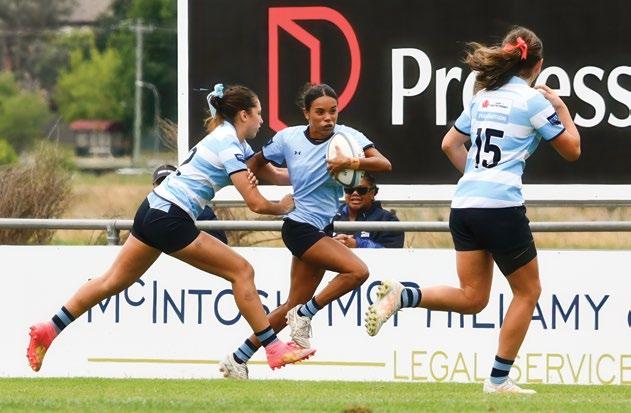
In this edition, we chat to Ava Moran, Boarding Prefect and senior Djurumin Gal, about her sporting achievements and her ambition to play rugby on the National stage.
What have been your proudest sporting achievements?
Throughout my sporting endeavours, I believe my proudest moment was last July. I had the opportunity to participate in the Rugby 7s Australian Schoolgirls National Championships for the Under 18s Indigenous Team (The Lloyd McDermott team), which was an amazing experience.
The championships were held on the Sunshine Coast, QLD. It was a week of memories, training, and playing that I will always cherish because I was able to play for my people, the Dhughutti and Biripi mob, my friends, my family, and myself. Playing for the Lloyd McDermott team alongside my sisters allowed me to play with pride and passion; we were connected not just by a jersey, but by who we are as Aboriginal People. The experience brought together those who are still discovering their identity and those who have always known who they are. This was definitely my proudest moment and my greatest achievement.
“For me, rugby is an outlet for stress; when I’m on the field, I’m focused only on the game and can play without worry.”
“Playing rugby gives me a unique type of joy, something different from the happiness I find with family and friends.”
What/who inspires you on the sports field?
Whilst playing rugby, I am always proud to run on and play for my family, especially my father and older sister. Their tough love and support throughout my rugby journey will always be cherished, as they have helped me achieve my sporting endeavours and get to where I am today.
Someone who inspires me on the field is Faith Nathan, an Australian Rugby 7s player. Her incredible speed and skill are things I aspire to achieve if I ever reach her level.
Why do you love rugby?
Playing rugby gives me a unique type of joy, something different from the happiness I find with family and friends.
What do you hope to do when you finish Year 12?
When I finish school, I hope to play Rugby 7s professionally while studying Sports Science and Medicine.
How has being at PLC Sydney enabled/supported you to achieve your goals?
PLC Sydney has enabled me to do what I do because of the people I’ve met. Friends I have met through the school who play rugby have taken me under their wing and treated me like family, helping with the long and short drives to training and games, and with overnight stays at their houses. Being able to feel loved and appreciated by another family willing to help me with my rugby journey showed me the kind of people PLC Sydney has to offer and what its community is like.
Isabella Guo
Year 7
What musical instrument/s do you play?
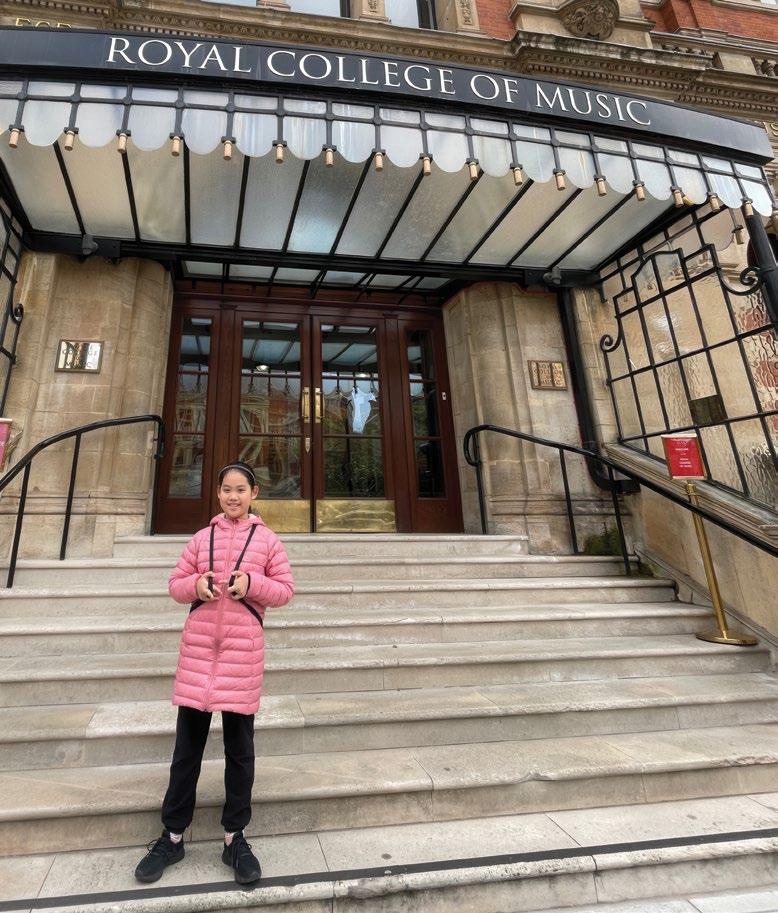
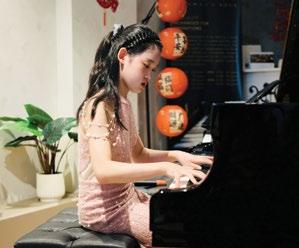
I play four instruments: piano, drums, harpsichord and the pipe organ.
Do you remember the very first time you sat down at a piano? Was it love at first sight, or did it take a little while to click?
At first, it seemed like a toy with melodic noise, but as I started to learn pieces and notes, my passion infused it.
What was the first song you learned to play that made you think, ‘Wow, I’m actually a pianist’?
The first song I learnt to play that made me think I’m a pianist was actually Cover Me In Sunshine. It’s a simple song, but I did the drums, vocals, and piano by myself. From that, I felt I could combine multiple instruments to create unique interpretations.
What are some of your biggest musical achievements?
• Successfully completed my solo recitals in 2026 and 2025 at the Steinway Gallery, which were both full-house events
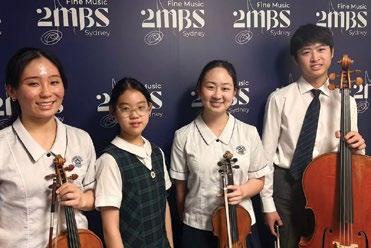
• Recording at 2MBS Fine Music and was broadcast on Sunday Special on 10 May 2026
• Won third prize at the 2025 Australia National Piano Competition for Children, and was the only person from NSW to get into the final, while being the youngest among the senior group
• Won top prizes at the International Youth Piano Competition in Lithuania in 2024
• Selected to represent Australia’s young talents to perform at the Sydney International Piano Competition in 2023
• Selected to participate in masterclasses at Juilliard
“I want to combine pop music that are popular and well-known together with classical pieces”
Do your music commitments ever interfere with school, and if so, how do you manage both?
My music commitments sometimes do interfere with school. I have to prioritise my tasks according to urgency and importance. If I miss any subjects, I would ask the teacher to post the class resources and homework online, so I wouldn’t fall behind.
What are your dreams for the future when it comes to music?
My dream for the future in music is to become a concert pianist. I want to combine well-known pop music with classical pieces, as this might make me more popular in modern society.
Who has been your biggest influence or inspiration with your music?
The biggest influence on my music would be my mum and my teachers. My mum was a musician when she was young, who played the clarinet and piano. Another big inspiration/influence is my teachers, who have taught me both now and before. They are full of knowledge and unique experiences, which I want to build on. I am really grateful to have these supporters throughout my journey.
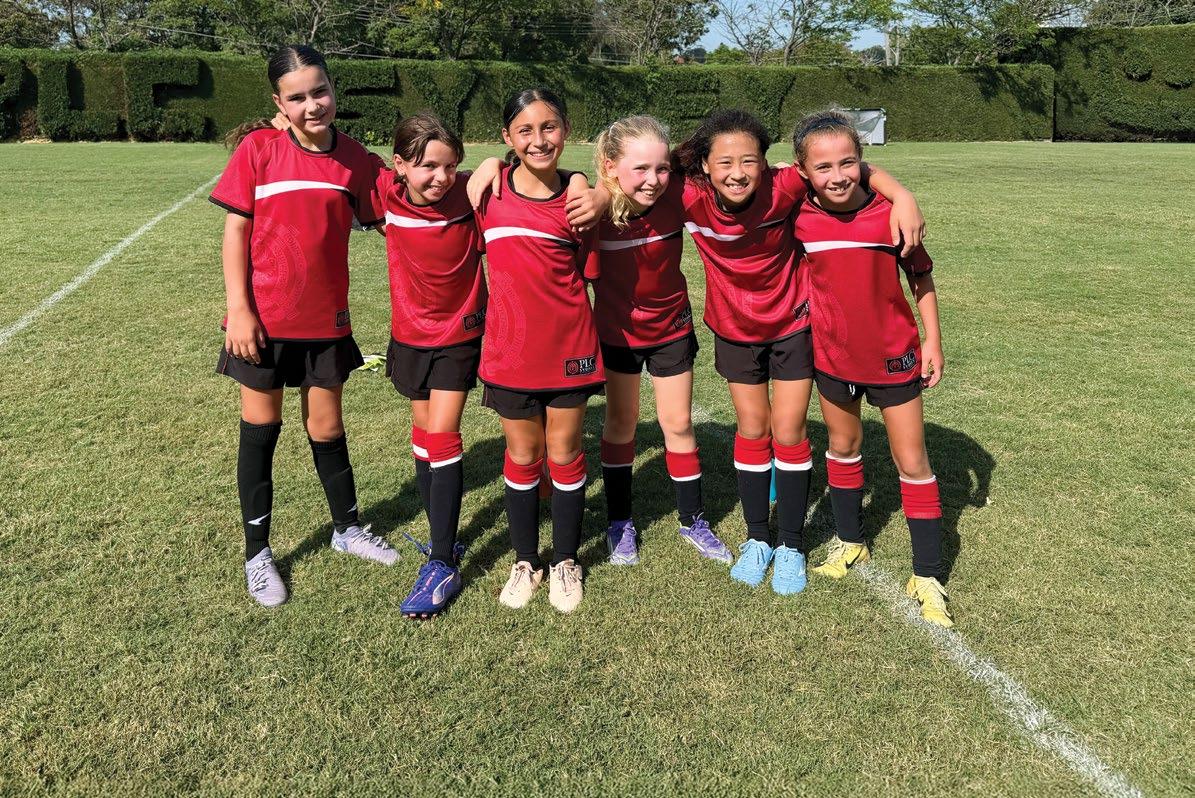
Our footballers are making their mark
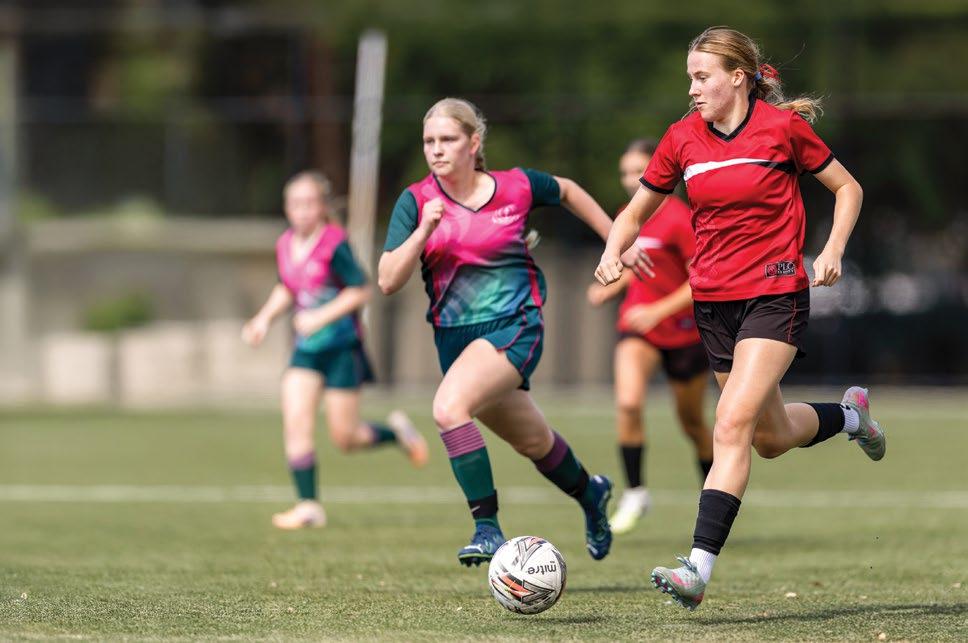
PLC Sydney footballers are getting noticed in the 2026 football season.
By Ms Kristy Genc, Director of Sport
In the Term 1 IPSHA Saturday Football competition, our Year 4A team was the ‘talk of the town’. Sophia Abrahamian, Georgette Ajami, Eleanore Dann, Alba Graham, Marysara Moussa, Clover Ng and Isabelle Robinson the season undefeated and finished most matches with a score These girls are definitely a team to watch, and we look forward progress through the years ahead in PLC Sydney Sport.
Across the Senior School, we have seen the highest number of students to date playing in Girls Youth League teams through their clubs at NPL1 and NPL2 levels. In 2026, PLC Sydney Football Captain, Asha Sutton (Year playing 1st Grade for Sydney University in the Women’s National Premier League. Asha has made an impression, already scoring her first 1st-grade mentioned in the Football NSW Women’s team of the Week.
Madena Moussa (Year 10) continues to shine at the Wanderers, team. At only 15 years of age, Madena is showing skill and maturity
Our girls have shone on the National and International stage in 2026. Sara Karnib was selected in the U17 Lebanese National team and competed at the U17 Asia Football Cup in China. Sara scored an outstanding goal in her match against Australia, scoring the equaliser to finish with a very important draw with Australia.
PLC Sydney was well represented at the 2026 Emerging Matildas Championships. As the pinnacle of the national Talent Identification Development Pathway, this tournament brings together the best U15 and U16 players from across Australia. This year’s competition was held at the prestigious ‘Home of the Matildas’ in Melbourne during April school holidays.
The students enjoyed terrific tournaments across various squads.
Across the Senior School, we have seen the highest number of students to date playing in Girls Youth League teams through their clubs at NPL1 and NPL2 levels.
Madena Moussa (Year 10) U16 NSW Sky
Madena delivered a series of high-quality performances throughout the tournament, helping the U16 NSW Sky team secure a strong 4th-place finish. As a versatile and hardworking midfielder, Madena was consistently breaking down opposition plays and transitioning the ball forward.
Sara Karnib (Year 10) U16 NSW Sky
Playing as a standout midfielder in a highly competitive U16 field, Sara was instrumental in her team’s 4th-place finish. Her tournament highlight was a display of composure and precision, where she netted the decisive winning goal in a hard-fought 1–0 victory over a resolute South Australian side.
Rose Selimiotis (Year 9) U15 NSW Sky
Crowned National Champions after an undefeated campaign! Rose’s crowning moment was a brilliant long-range goal to put NSW ahead 2-1 in the Grand Final, guiding NSW Sky to a 3-1 victory over Queensland White.
Lilah Ajami (Year 9) U15 NSW Navy
Bronze Medallists after an impressive week culminated in a 4-1 victory over Northern NSW. Lilah scored to put NSW Navy ahead 2-1 in the 3v4 match.
Mariyah Hammoud (Year 9) Charles Perkins XI Team
This team comprises the top Aboriginal and Torres Strait Islander youth talent from across Australia. With only three days of preparation, the team performed very well against highly talented opponents. Mariyah enjoyed a great tournament and embraced the opportunity to perform on the national stage.
This is a phenomenal milestone for these young footballers. On behalf of the entire school community, we congratulate Sara, Madena, Rose, Lilah, and Mariyah on representing NSW with pride at the Emerging Matildas championships. We are excited to watch them develop their football in the future!
PLC Sydney's Emerging Matildas
EX-STUDENTS’ NEWS
President’s message
I wanted to thank all of those who celebrated their milestone reunion on Jersey Day this year. Despite some threatening-looking weather, the classes of 2016, 2006, 1996, 1986, 1976 and 1956 all came together around Hamilton Green to celebrate with their classmates.
A particularly special moment was the gathering of the Class of 1956 for their 70-year reunion, a remarkable milestone marked by a joy-filled lunch.
Another highlight in our calendar was the much-loved Generations Breakfast in May, which celebrates the unique and meaningful connections shared across PLC Sydney families. It is always a joy to see mothers, daughters, grandmothers, and extended family come together, reinforcing the strong sense of belonging that defines our community.
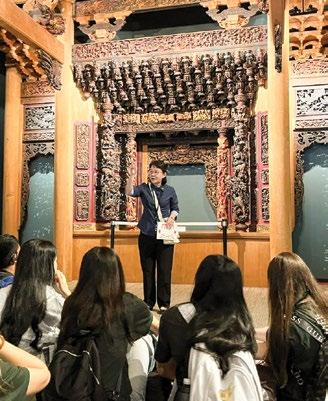
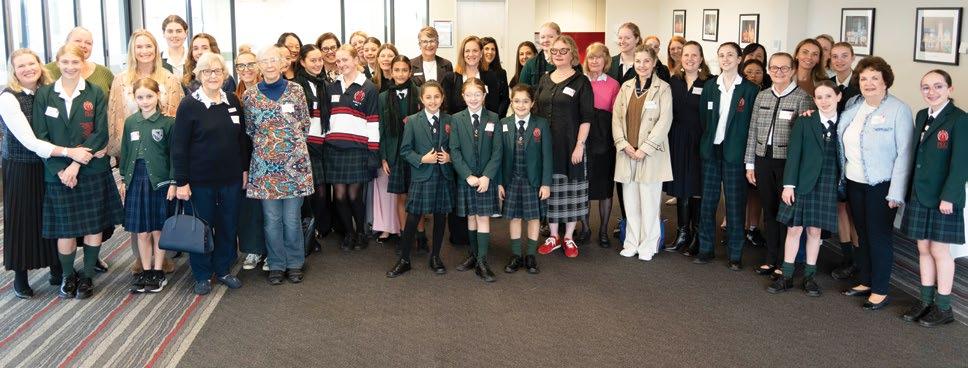
It has been wonderful to see our community connecting in new ways. Our History & Heritage Tour in March
welcomed ex-students and former staff back through the green gates, with Archivist Nicole Rawson bringing to life more than 135 years of College history. We look forward to welcoming more of our community to the next tour in September.
Our global community continues to thrive, with a recent reunion in London bringing together ex-students from the Classes of 1962 to 2022. Thoughtfully hosted by Ally Holmes (2002), the evening was a powerful reminder that the PLC Sydney connection extends far beyond our campus.
If you would love to see PLC Sydney come to your city, please let me know!
As always, we are incredibly grateful for the continued support and generosity of our ex-student community. Whether you are attending events, reconnecting with old friends, supporting current students, or simply staying connected to the College from afar, your involvement helps keep the spirit of PLC Sydney strong for future generations. We look forward to welcoming many more of you back through the green gates in the months ahead and continuing to celebrate the lifelong connections that make our community so special.
Hannah Kesby (2009) Ex-Students’ President
2026 Ex-Students’ Committee
Founded in 1905, a dedicated group of alumnae came together to establish the Ex-Students’ Union with the purpose of raising funds for the Marden Library, built in honour of PLC Sydney's first Principal, Dr John Marden.
Today, the Ex-Students’ Committee is a volunteer group of ex-students who represent most decades of the College's history. The Committee provides advice, counsel and financial support while working closely with the College to create new opportunities to re-engage ex-students with the school, classmates, and the extended PLC Sydney community.
Please contact esupresident@plc.nsw.edu.au for more information.
INTERSTATE CONTACTS
Adelaide
Are you our next Ex-Student contact in Adelaide?
Brisbane and Sunshine Coast
Jane O’Hare (Provan, 1970) 0448 003 895 jane.ohare@bigpond.com
Canberra
Margaret Atkin (McCormack, 1964) 0409 924 047 margaret.atkin@gmail.com
Gold Coast
Jeni Bone (Payne, 1987) (07) 5526 0092 jeni@edit-it.com.au
Mid-North Coast NSW
Jennifer Dignam (Clark, 1979) jennifer@thrd.com.au
Mary Hookey (Holder, 1968) 0431 842 712 mhookey@iinet.net.au
If you would like to volunteer to coordinate a reunion or be the key contact for PLC Sydney ex-students in your area, please contact the Ex-Students’ Office on 02 9704 5635 or exstudents@plc.nsw.edu.au for more details.
IN MEMORY
Since the last edition of Camphora Magazine, we have learnt of the passing of the following ex-students and valued community members.
We send our sincere condolences to their extended families and hold them in our memories and prayers.
26.05.2026
Leonie Joy Robson (2007)
08.11.2025
Dorothy Lewis (Harris, 1941)
COMMITTEE AND OFFICER BEARERS
Patron Gwendoline Bosler (Stuart, 1949)
President
Hannah Kesby (2009)
Vice President
Mia Joseph (Illias, 2009)
Secretary Michelle Gorzanelli (2000)
Treasurer
Elizabeth Ryu (2000)
Committee Members
Philippa Zingales (Harris, 1998)
Elizabeth Gregory (Cornish, 1961)
Lesley Meldrum (Morgan, 1955)
Catherine Marvell (Davidson, 1975)
Robyn McBride (Hailey, 1976)
Sara Keli (Thorp, 2001)
Amanda Bentley (1978)
Head of Community Engagement & Committee Member
Philippa Zingales (Harris, 1998)
19.12.2025
Margaret Mitchell (Davies,1956)
16.12.2025
Ruth Thomas (Cocks, 1956)
A celebration of connections
Jersey Day was a wonderful celebration of the enduring connections within the PLC Sydney community, bringing ex-students together for milestone reunions spanning the decades.
With mostly dry weather and plenty of sunshine, Hamilton Green was filled with smiling faces, laughter, and the joy
afternoon was further enhanced by the much-loved Pipes and Drums performance, which brought everyone
ful opportunity to return to the College and celebrate shared memories. We look forward to
PLC SYDNEY / CAMPHORA
1975 Reunite again
A lovely Jersey Day success story!
The Class of 1975 had such a great time reconnecting at their 2025 reunion that they’ve since started their own annual tradition. This year, the group got together at the Paragon on 14 March, continuing the friendships and connections.
The class of 1956 reunite for their 70th reunion
70 years since walking out of the green gates, the class of 1956 reunited on Jersey Day.
Eighteen ex-students attended, including several former boarders and guests who travelled from interstate and overseas to reconnect and celebrate lifelong friendships formed through their years at the College. Held in Marden Library, the day was filled with warmth, conversation and treasured memories, with guests enjoying old photographs, a school tour, a beautiful lunch and the opportunity to reconnect with one another and the College community.
The group also generously raised $1,000 towards the restoration of the Young Street School Gates. It was a privilege to welcome the Class of 1956 back to PLC Sydney and to witness the enduring connection they continue to hold for the College and each other.
Ex-Students and teachers return to explore the college's rich history
It was wonderful to welcome ex-students and ex-teachers alike back to the college for our very first History & Heritage Tour in March.
Stepping inside the green gates, our guests experienced more than 135 years of history that have shaped generations of remarkable women. Guided by our Archivist, Nicole Rawson, the tour brought to life the people, places and traditions that have defined the College since 1888.
We look forward to welcoming more of our community to the next Heritage Tour in September.
London reunion brings ex-students together abroad
Ex-students gathered in London on Thursday 16 April for a special evening of connection, bringing a touch of the green gates to the heart of London.
Held at The Ox in Clapham, the reunion welcomed 30 attendees from class groups of 1962 to 2022. While Head of Community Engagement, Philippa Zingales and Principal, Dr Paul Burgis, were unable to attend, the evening was expertly hosted by Ally Holmes (2002), whose generosity and enthusiasm made the event truly memorable.
The response from those in attendance was overwhelmingly positive, with many expressing how meaningful it was to reconnect with fellow alumnae while living abroad. The evening highlighted the strength of the community and the enduring bonds that extend well beyond the school gates.
Following the success of this year’s event, there is strong interest in establishing the London Reunion as an annual gathering, an exciting opportunity to continue fostering connections for our ex-student community around the world.
IN CONVERSATION WITH:
Emma Lukabyo (2015)
Diplomat (Second Secretary at the Australian High Commission in London), Department of Foreign Affairs and Trade
Take us back to when you graduated from PLC Sydney. What were your plans, and how did they evolve over the years?
I graduated from PLC Sydney in 2015. My plan was to study International Relations at Sydney Uni, and this evolved into studying Law as well. I also planned to live overseas, which I have done, with some time in Canberra along the way!
How did you decide to follow a career in Diplomacy and Law?
I had always been interested in global affairs and was determined to translate this interest to my career. I studied a double degree, a Bachelor of Laws/ Bachelor of International and Global Studies, and while at Uni, worked parttime with lawyers who encouraged me to explore a career in Government.
I worked as a paralegal at the AttorneyGeneral’s Department and, upon becoming professionally qualified, applied to work as a lawyer at the Department of Foreign Affairs and Trade. DFAT has provided me the opportunity to combine my legal skills with my interest and background in International Relations, which I have loved. In Canberra, I worked in DFAT’s Legal Division as an International Lawyer. I have also served overseas with DFAT. In 2023-2024, I worked at the Australian Mission to the United Nations in New York and represented Australia as a delegate to the UN General Assembly. Currently, I am posted to London at the Australian High Commission. It’s a privilege to represent Australia overseas. Diplomacy is endlessly fascinating, intellectually challenging and allows me to meet new people every day.
What are some of the biggest challenges you have faced in your career journey?
Throughout my career, I have had to remain adaptable in an ever-changing, high-pressure global environment. Remarkable opportunities have also meant packing up and travelling or moving overseas at short notice!
How did your time at PLC Sydney shape you personally or professionally?
My time at PLC Sydney shaped me profoundly. I was a student from Year 5 to Year 12. I was empowered to think boldly and encouraged to try many activities. I signed up for everything from Rowing to Debating to Wind Ensemble! I also had the opportunity to meet students from around the world, including through the Exchange program, which certainly impacted the career I chose to pursue. At PLC Sydney, I also met some of my closest friends!
Were there any particular teachers, subjects or experiences at PLC Sydney that had a lasting impact on your outlook or career choices?
My favourite subject at school was History, particularly Modern History and History Extension in Years 11 and 12. My study of History with Mr Peter McHugh absolutely fostered an interest in geopolitics and statecraft, which had a lasting impact on my decision to pursue a career in Foreign Affairs. In all my subjects, I was taught to think critically and encouraged by my teachers to form my own worldview!
In school, I was an avid debater and public speaker and mentored by many teachers to foster these skills, including Suellen White in Junior School and Lisa Tabuteau in Senior School. I also did Model UN with Jo Golotta! These experiences proved to be invaluable. In my professional life, I have never lacked confidence to think quickly on my feet or pursue an argument. I have been lucky enough to work in negotiating environments where these skills are crucial, including the United Nations in New York.
The exchange program at PLC Sydney had a lasting impact on my global outlook. My exchange certainly gave me an itch to travel and live overseas. At University, I also did an exchange program, which I attribute to the confidence I gained from school. As International Captain in Year 12, I was provided the opportunity to interact with the exchange students visiting Australia from all around the world, which sparked my curiosity and drew me to a global career.
Looking back, is there anything you wish you had known when you first left school that might have helped you along your journey?
It’s often easy to look at someone’s career path and think it’s all been planned, but careers often feel more bumpy along the way. It’s important to remain open to unexpected opportunities; small steps can build to something bigger. In my career, I have rarely said no to an opportunity to meet new people or work in new environments! This has served me well so far!
What does a typical day look like for you?
My days are quite varied; no two days are the same, which keeps my work interesting! Foreign Affairs is a rapidly changing environment, so my job is to follow developments closely and engage in discussions on key issues. I’m always proud to represent Australia.
Finally, how important has community and connection been in your career journey and what advice would you give to fellow Ex-Students inspired by your career path?
Community has been essential in my career. It is so important to have a support network in your corner, which is what the PLC Sydney Community can offer even beyond school!
Connections are crucial for professional development. The connections you may make through networking can lead to paths you never imagined.
I would encourage ex-students to follow their interests. If there is a career you wish to pursue, you will get there if you’re open to all opportunities, even those that appear to go around the traditional path.
IN CONVERSATION WITH: Katie Higgins (2012)
Officer Commanding Charlie Company, 51 Far North Queensland Battalion, Australian Army
Tell us about your recent achievement:
I recently posted in as the first female Officer Commanding of Charlie Company. Charlie Company’s primary role is to conduct reconnaissance and surveillance tasks in support of border security operations. The company has a long history, in WWII, almost every man across the Torres Strait Islands volunteered to join the battalion to defend their homes and their nation. Today, it is the Australian Army’s largest primarily Indigenous sub-unit, with more than 90 per cent of serving personnel originating in the Torres Strait Islands. The area we operate shares an international border with Papua New Guinea, so many government agencies work closely together. As Officer Commanding, I get the privilege of leading the Company.
Can you share a little about your journey since leaving PLC Sydney?
I joined the Australian Army straight after school and went to the Australian Defence Force Academy in Canberra. Here, I studied a Bachelor of Engineering (Civil) before undertaking Army Officer Training and Military Engineer Officer Training. All in all, this took six years, but I graduated as a Lieutenant in the Corps of the Royal Australian Engineers with my Engineering degree.
My first two postings were to Engineering Units in Brisbane, then Townsville. I worked as a troop commander, leading Army construction
projects in remote indigenous communities, and as an operations officer, organising training and exercises for soldiers.
After that, I deployed as Australia’s youngest ever United Nations Military Observer in Israel and observed the treaty between Israel and Syria. I served as the team leader of a multinational team of officers for 6 months.
I then moved back to Canberra and worked in the Army’s Strategic Infrastructure Cell, instructed at the Officer Training College and was Aidede-Camp to the Governor-General of the Commonwealth of Australia.
What inspired you to pursue this path?
I wanted a job that would challenge me both mentally and physically. The Australian Defence Force Academy offered a way for me to receive a free degree, be paid to study and then get on-the-job experience as a Troop Commander. The Army invested a lot of time in my training and then gave me leadership of a Troop at a pretty young age.
Looking back, were there any experiences at PLC Sydney that helped shape your interests or career?
I played lots of sport, was in a few bands, but also enjoyed maths and sciences. The sports and music programs taught me the value of working hard for a team. I have to thank Mr Harper, Ms Harden, and Mr Broadhead for the impact they had on me as teachers.
What do you enjoy most about the work you do today?
Getting the opportunity to lead Charlie Company is incredible. In this role, I also get to work with the soldiers, Government Agencies, the community, the council and different parts of the Defence Force. It’s incredibly diverse but everyone is working towards very similar goals.
Have you faced any challenges along the way? What helped you overcome them?
I joined to face challenges. The satisfaction I get from a problem solved or a task completed motivates me to keep seeking out more complex challenges.
What advice would you give to current students who may be interested in a similar path?
Work hard for the people around you, don’t burn bridges and enjoy what you do.
What’s next for you?
While I’m up in the Torres, I have bought a boat, so learning how to use that is high on my priority list. I also want to learn to spearfish, catch some fish and make fish tacos.
I’m not sure what the future holds, and I’ve never really had short-term career goals. What I have done is take advantage of opportunities when they come up, and so I’m going to keep doing that.
Canberra Ex-Students come together in May
Ex-students based in the Canberra region gathered on 2 May at the beautiful Royal Canberra Golf Club, and the setting provided a wonderful backdrop for an afternoon of reconnection and shared memories.
New faces were warmly welcomed, bringing the group to 16 attendees, with graduating years spanning from 1955 to 1999, representing women in their 40s through to their 80s. The breadth of experiences across generations sparked lively conversation, with attendees reflecting on the many different principals, teachers and eras of PLC Sydney they each remembered so fondly.
A highlight of the gathering was hearing from Rosemary Laing, who spoke about her distinguished career working for the Senate and her role as the first female Clerk of the Senate. Rosemary reflected on some of the most significant and emotional moments in Australia’s parliamentary history, including the final passage of the Mabo legislation and marriage equality laws. Interwoven throughout her stories were fond
memories of PLC Sydney, particularly the enduring value of service for the greater good, a principle she recognised both within the school community and throughout her professional life. Rosemary was generous with her time, insight and humour, and it was inspiring to hear how her journey began within the classrooms and community of PLC Sydney.
A sincere thank you to Canberra Region Representative Margaret Atkin (McCormack, 1964) for her wonderful organisation of the day and for bringing together such a warm and memorable gathering for our Canberra ex-student community.
Perth Ex-Students reunite on Jersey Day 2026
PLC Sydney has a strong, longstanding cohort of ex-students based in Perth, now in its 46th year of gathering.
In March, the group marked Jersey Day with a very enjoyable lunch at The Shorehouse in Swanbourne, overlooking the beautiful Indian Ocean.
The event was organised by Mary Hookey (Holder, 1974), and attendees were encouraged to bring memorabilia from their time at PLC Sydney.
A highlight was a Cash’s name tag from a school uniform, brought in by Katrina Downes (Campbell, 1987), which sparked many fond conversations and
memories, including trips to David Jones to purchase school uniforms.
In attendance were, Frances Veltman (1986), Katrina Downes (Campbell, 1987), Mary Hookey (Holder,1974), Ros Kruger (Bonnette, 1964), Anne Lawson (McConnell), 1960), Jo-Anne Kramer (Ferguson, 1978), Julia Hewson (Webster, 1968), Sylvia Mills (1968), Pene Wood (Longshaw,1964), Heather Wilson (Ainsworth, 1951).
ACHIEVEMENTS
Jennifer Lim (2005)
Warm congratulations to Jennifer Lim (2005) on the recent completion of her PhD, an extraordinary achievement. Jennifer’s thesis, titled “Precision Medicine in Immunotherapy and Lung Cancer”, represents an incredible contribution to medical research and innovation. We are so proud to celebrate this significant milestone and all that Jennifer has accomplished.
Ellie Cole (2024)
Congratulations to Ellie Cole for breaking the NCAA platform record in March to become Stanford’s first national Diving champion in over a decade. What a huge achievement.
Sophie Montague (2019)
Congratulations to Sophie 'Montie' Montague (2019) for their performance in the lead role of Emma in The PROM, which played in March at the Italian Forum in Leichhardt. This is the first time the show has been performed outside the US and was a huge success.
Celebrating the amazing achievements of our ex-students
Ruby Blinkhorn (2016)
Bravo to Ruby Blinkhorn (2016) for publishing her short play ‘Milk Bottle Challenge’ as part of the Australian Theatre For Young People 2025 Intersection Festival. Up next, Ruby has created ‘100 ways to tame a bedtime monster’ inspired by her time as a professional clown in a children’s hospital, performed at Randwick Town Hall and supported by Randwick City Council.
Rosemary Laing (1972)
Congratulations to Dr Rosemary Laing (1972) on the publication of her book, Baker’s Brainchild: Sir Richard Chaffey Baker and the Foundations of the Australian Senate. Baker’s Brainchild is a compelling biography and was conceived from Rosemary’s own distinguished career as the first female Clerk of the Senate, a role she held from 2009 to 2017.
Sophia Gaukrodger (2024)
Congratulations to Sophia Gaukrodger (2024) and current PLC Sydney AFL coach, who has recently been drafted into the GWS Giants team to play in the AFLW this year. In the first-ever AFLW preseason draft, Sophia was pick #10 for the Giants, who she’s played for in the Academy side the last few years. Well done to Sophia on this magnificent achievement. We look forward to watching you on the big screen and at AFL grounds this year, with the season kicking off in August.
Margaret Bain (1969)
Margaret is celebrating the publication of her first book, A Portrait of Howard Hinton, released in November 2025. Howard Hinton was a major Sydney patron of the arts in the first half of the twentieth century, whose donations to Armidale Teachers’ College later formed the foundation of what is now the New England Regional Art Museum (NERAM). Congratulations Margaret.
Generations Breakfast 2026
Our much-loved Generations Breakfast once again brought together members of our community to celebrate the enduring bonds that span across families and generations.
This special annual event recognises the unique connections shared by ex-students and their families, from mothers and daughters to grandmothers, aunts, godmothers and beyond. It is a meaningful opportunity to honour the legacy of a PLC Sydney education and the role it continues to play across generations.
The morning provided a warm and welcoming space for guests to gather, reconnect and reflect on their shared experiences of the College.
Events such as the Generations Breakfast highlight the depth and strength of our community, where connections are not only maintained but continue to grow over time. They also offer a unique opportunity
for current and future students to feel part of something much larger, a network of women and families connected by shared values and experiences.
We look forward to welcoming many more members of our community to future Generations Breakfasts as we continue to celebrate the ties that make PLC Sydney so special.
Why stay connected with PLC Sydney?
Exclusive Career and Mentorship Opportunities
Our ex-student community is here to help you succeed. Join our social media, LinkedIn and Facebook groups for access to Job Openings, Internships, Mentorships and networking opportunities.
Events
PLC Sydney Ex-students events aren’t just about nostalgia. They’re about building meaningful connections with people who share your journey.
Support
The PLC Sydney ex-student network is full of former students who’ve been in your shoes and are ready to share their advice, experience and wisdom
Make an Impact
Help guide the next generation and give back to the PLC Sydney community, whether through mentoring current students, volunteering or contributing to ex-student initiatives.
Update your details to stay connected
Follow PLC Sydney Ex-Students on Instagram
Join our official Facebook Group
Expand your LinkedIn Network
Get in touch with the Ex-Students Office: Phone: 0297045636