






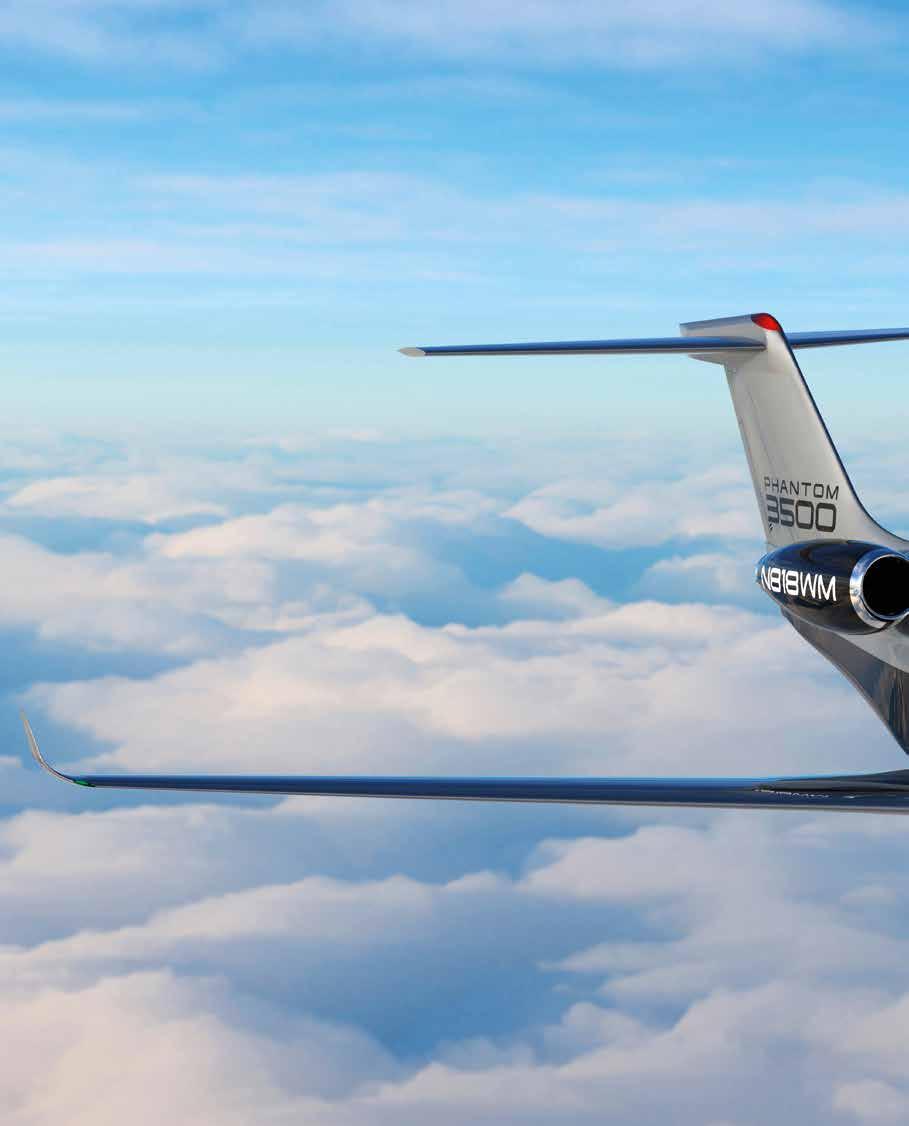
The Phantom 3500 business jet promises to offer revolutionary levels of performance and consumption, winning the title of the most ecologically-aware business aircraft ever built, thanks to refined aerodynamics and solutions no other manufacturer has ever dared use
Sergio Barlocchetti - Ph. Otto Aerospace

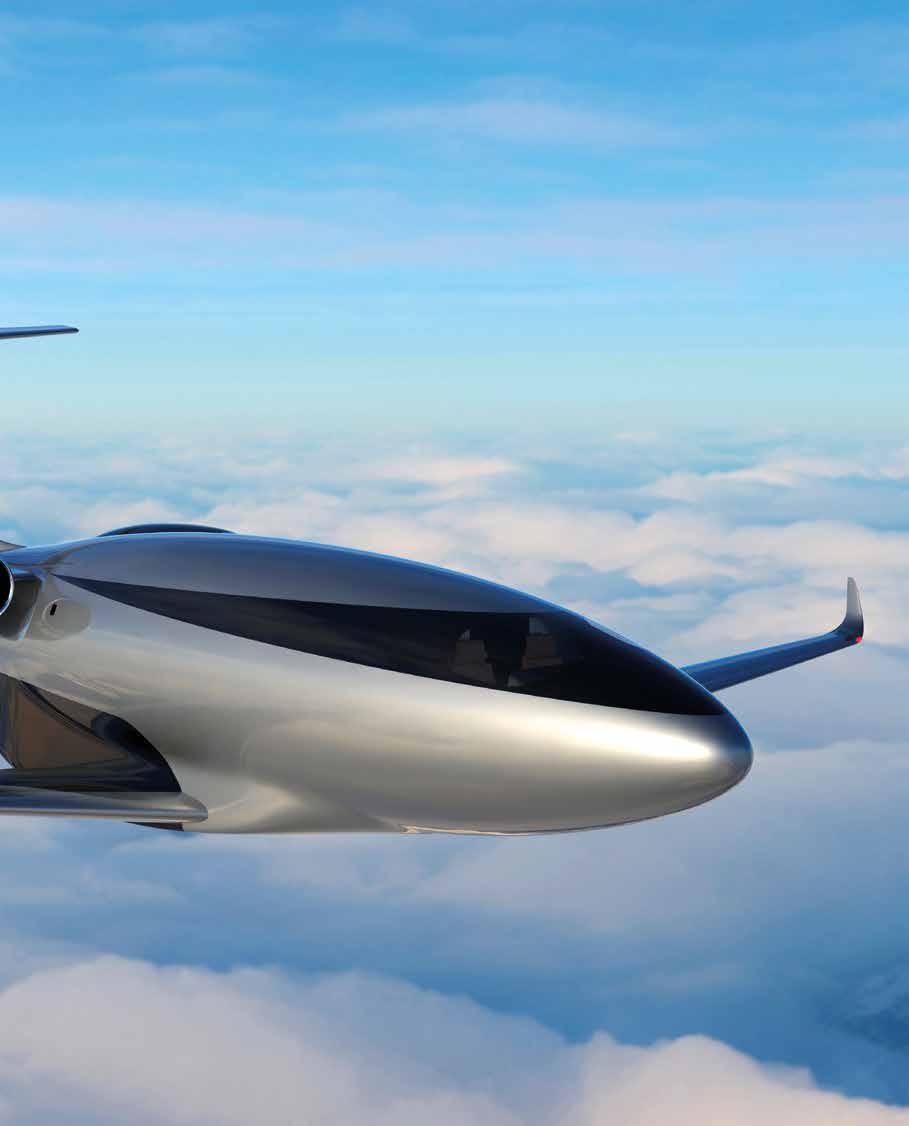
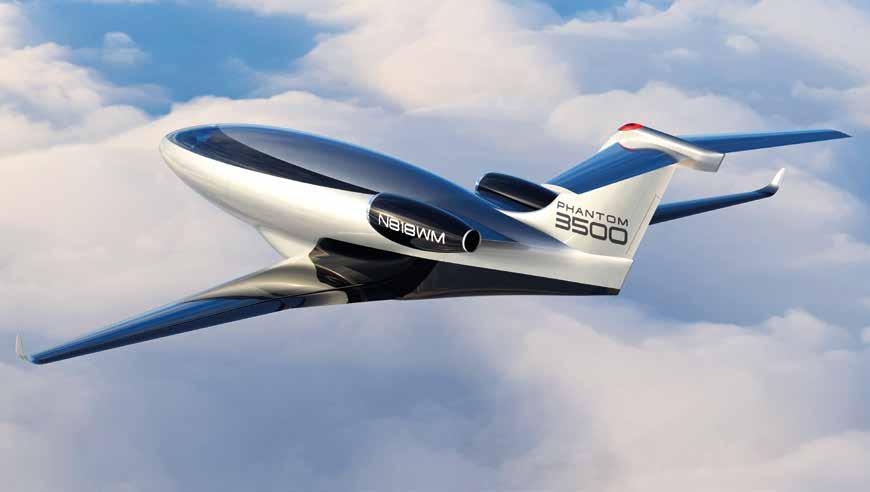
Aerodynamic research has driven every decision shaping the new Phantom 3500. Laminar flow is maintained across the entire surface – fuselage and wings produce no vortices that would generate drag. Flexjet will be Otto Aerospace’s launch fleet client for this advanced business jet
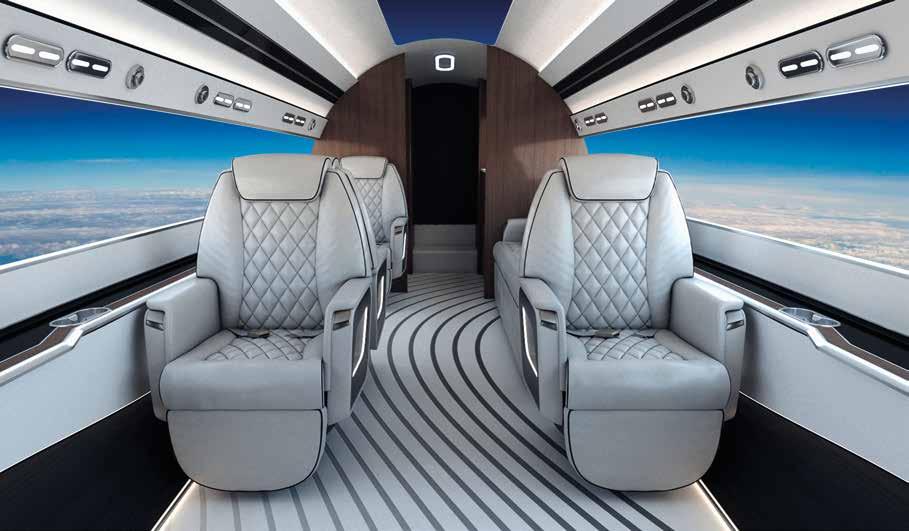
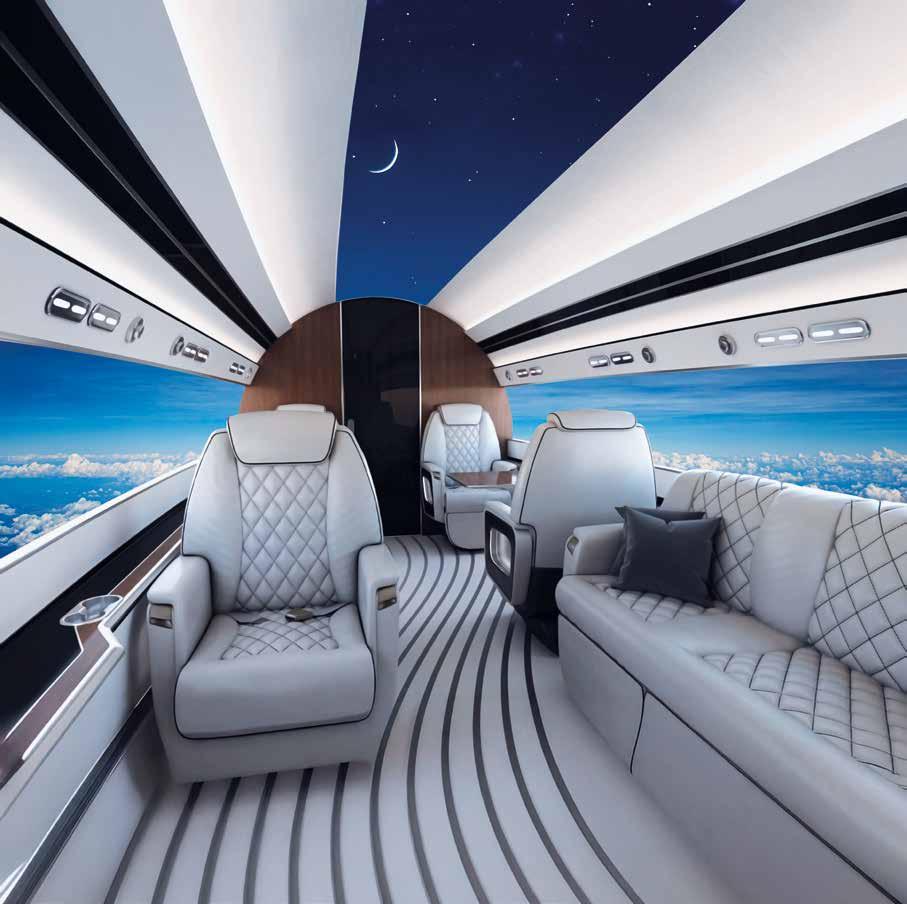
Ireally can’t say if I’ll ever get used to flying on a business aircraft with virtual windows, even if it’s simply a weight-saving solution.
But it hasn’t deterred some clients, like the Flexjet company, which will be Otto Aerospace’s first client for the new Phantom 3500, an advanced business jet currently under development that benefits from unprecedented compromises that will enable it to achieve record levels of efficiency and sustainability. Initial images immediately reveal that aerodynamic research has guided every choice. Laminar flow has been maintained across the aircraft’s entire surface – in other words, the fuselage and wings produce no vortices that would generate drag. The use of carbon fibre plays a crucial role in this. According to CFD analyses (computational fluid dynamics, a process also used to create the hull lines for fast vessels), this shape cuts fuel burn by 60% compared to jets of similar size and weight. As a result the jet is
designed to outdo its rivals in terms of range, performance and savings. Flexjet executives who saw the design and projections must have been convinced, because the company has placed options and orders with Otto Aerospace for 300 aircraft. The first should fly in 2027, followed by two more prototypes and delivery from 2030. Flexjet will handle organisation of maintenance services for Otto Aerospace, which is based in Fort Worth, Texas, and is run by managers from Textron, Lockheed, Boeing, General Dynamics and Lockheed. Several Italian companies are also involved, from Leonardo, which will build the fuselage, to Secondo Mona for fuel systems and Mecaer for the landing gear and flight control actuation system. There is also the decision not to include windows not to instal any windows, but rather to use images captured by a series of video cameras, displaying them in the interiors. It will be crucial that this occurs without any time lag, or the passengers may
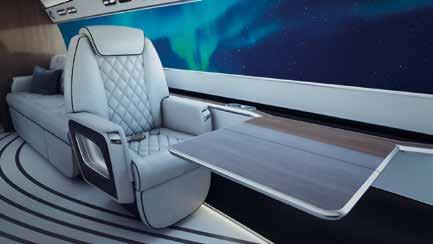
Inside a cabin with a volume of 800 ft3 and height of 6’5”, six passengers can fly for around 3,500 nautical miles at an altitude of 51,000 feet. Interior comfort and luxury is reflected in the choice to replace windows by displaying images from a series of video cameras. If Otto succeeds in its intentions, it will usher in a revolution in the aeronautical sector
experience unpleasant feelings of nausea. If the lack of windows is a successful feature for Otto it will usher in a revolution in the aeronautical sector.
Inside a cabin with a volume of 800 ft3 and height of 6’5”, six passengers can fly for around 3,500 nautical miles at an altitude of 51,000 feet (15.4 km), the same flight ceiling reached by top category business jets like the Falcon 7X and 10X and the largest Gulfstreams, departing from runways just over 1,000 metres in length, such as those offered by Milano Bresso, Roma Urbe and LaMole-Saint Tropez. This makes it possible to make use of a
The aircraft is powered by a pair of Williams FJ44-4 turbofans, engines that have proved to be among the most reliable and adaptable currently available. The Phantom 3500 will have a length of 23 feet and a width of 7’6”
network of thousands of small airports where touching down is much cheaper than landing at the most illustrious business traffic airports.
The aircraft is powered by a pair of Williams FJ44-4 turbofans, engines that have proved to be among the most reliable and adaptable currently available. The Phantom 3500 will have a length of 23 feet and a width of 7’ 6”, but the definitive overall dimensions are not yet available. For now, it’s possible to invest in the project and reserve an example. At the moment, the estimated price is 20 million dollars. ottoaerospace.com