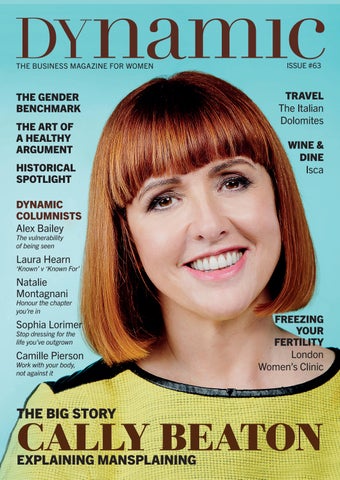
16 BIG STORY CALLY BEATON: THE SCOURGE OF MANSPLAINING
News
4 Upfront: The top international news stories involving women in business
12 In the Right Direction: Good news stories from around the world
Regulars
8 The Alex Bailey Column
The vulnerability of being seen
10 The Laura Hearn Column
The modern day culture of ‘Known v Known For’
14 The Natalie Montagnani Column Honour the chapter you’re in
32 The Camille Pierson Column
Work with your body, not against it
38 The Sophia Lorimer Column
Stop dressing for the life you’ve outgrown
Features
22 Investing in Women Code
Six years of evidence proving that backing women works
24 DMH Stallard
How to outpace the legal sector gender benchmark
PLATINUM MEDIA GROUP
26 Spotlight
Focusing on two women who are not getting the recognition they deserve
28 Jo Irving
What the hair industry taught me about leadership
34 Georgina Vass
The art of a healthy argument
42 Historical Spotlight
Focusing on two women whose past achievements have been overlooked, forgotten or erased from the history books
Wellbeing
6 London Women’s Clinic
Freezing your fertility: your eggs, your timeline, your choice Events
21 Her Future Self
Spaces are open for a groundbreaking seminar aimed at giving women more control over their lives
Further Reading
30 Kate Pearlman-Shaw
Why employees don’t leave companies, they leave threat states
Review
36 Harmonise & Rise
An idyllic retreat to unwind, reset, re-focus and relax - in central Hove
In the
beginning, my journeys feel, at best, ludicrous; at worst, insane.”
–
Kira Salak, American writer, adventurer, and journalist
Art
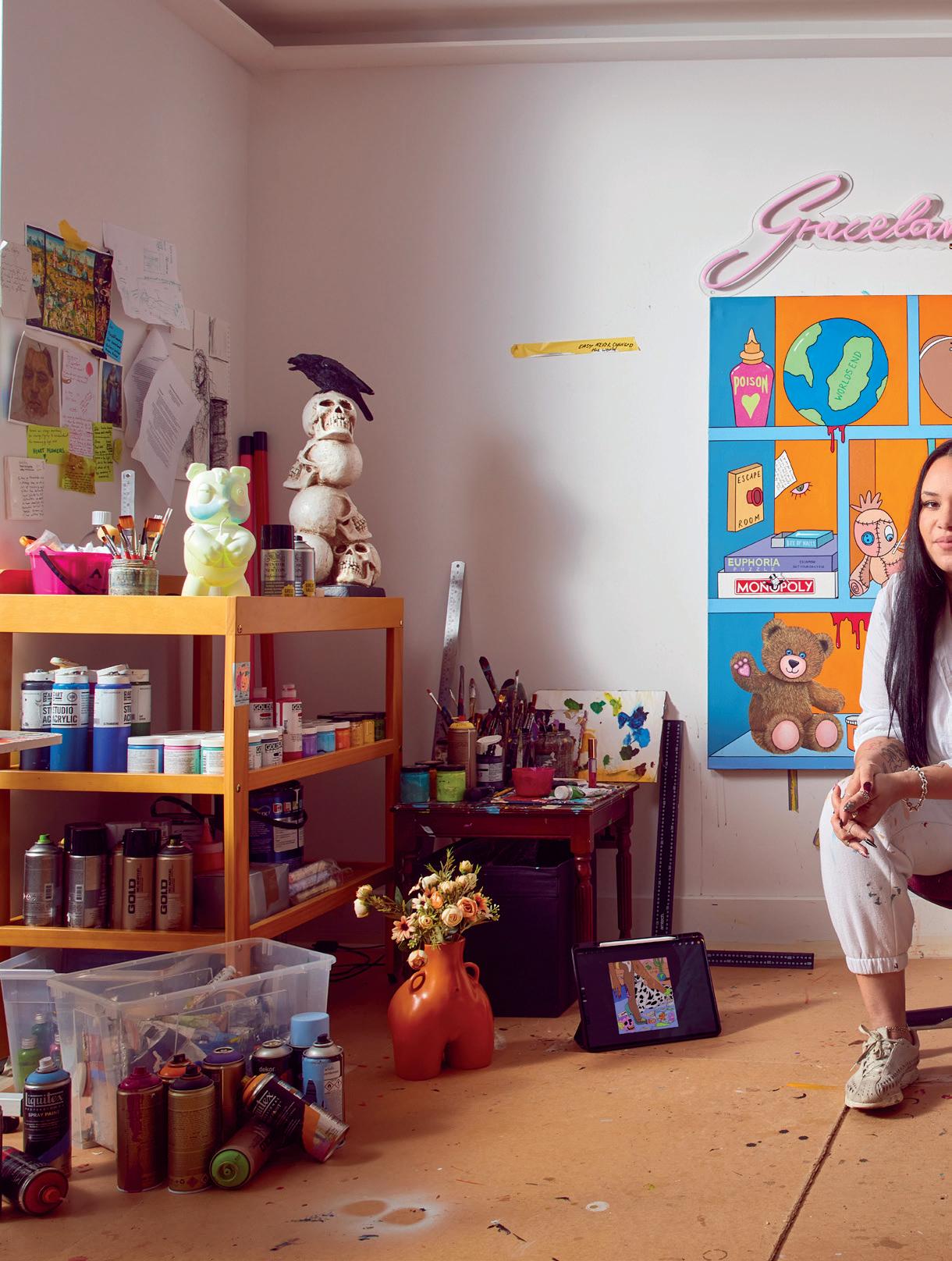
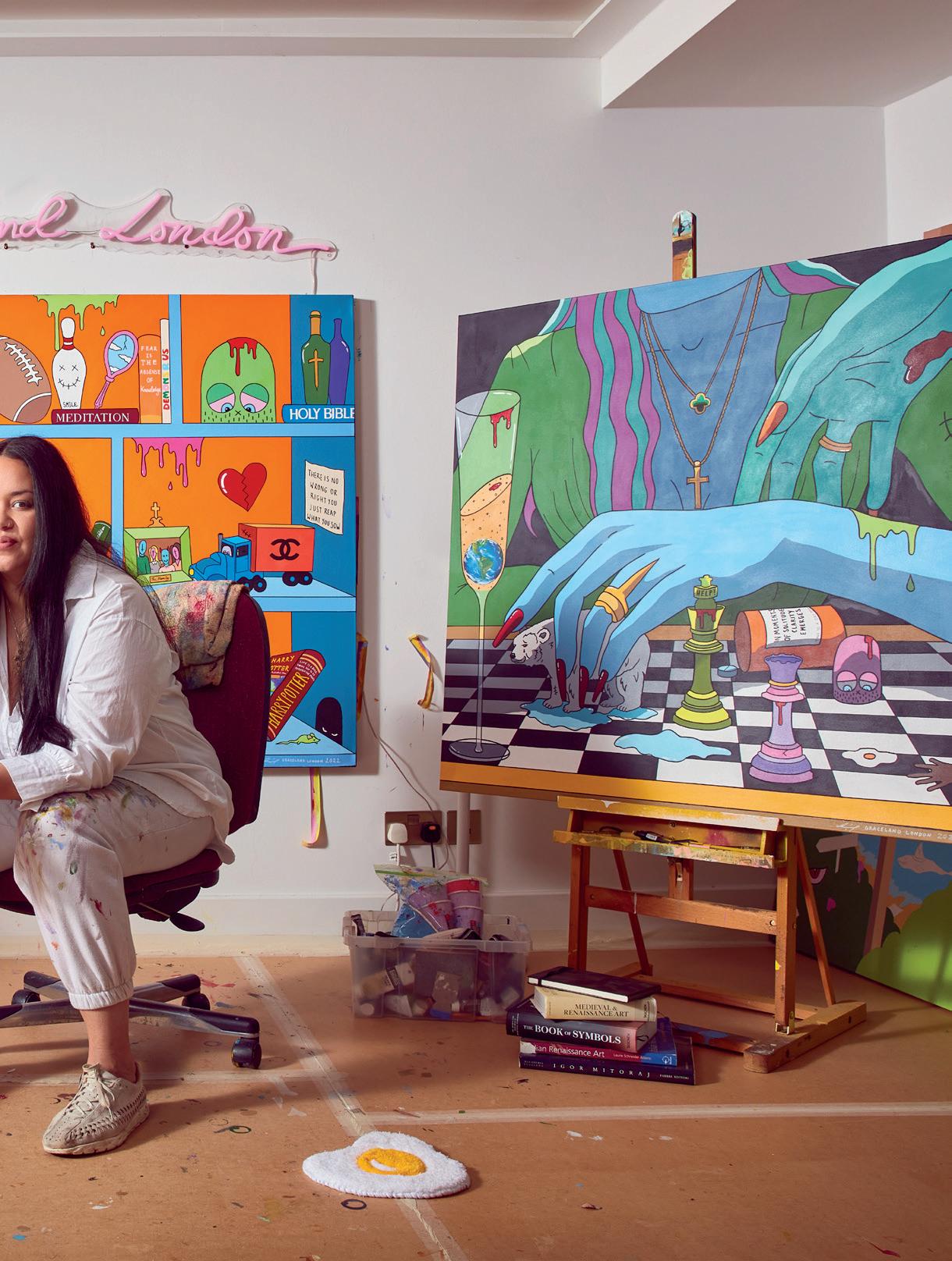
40 London Graceland
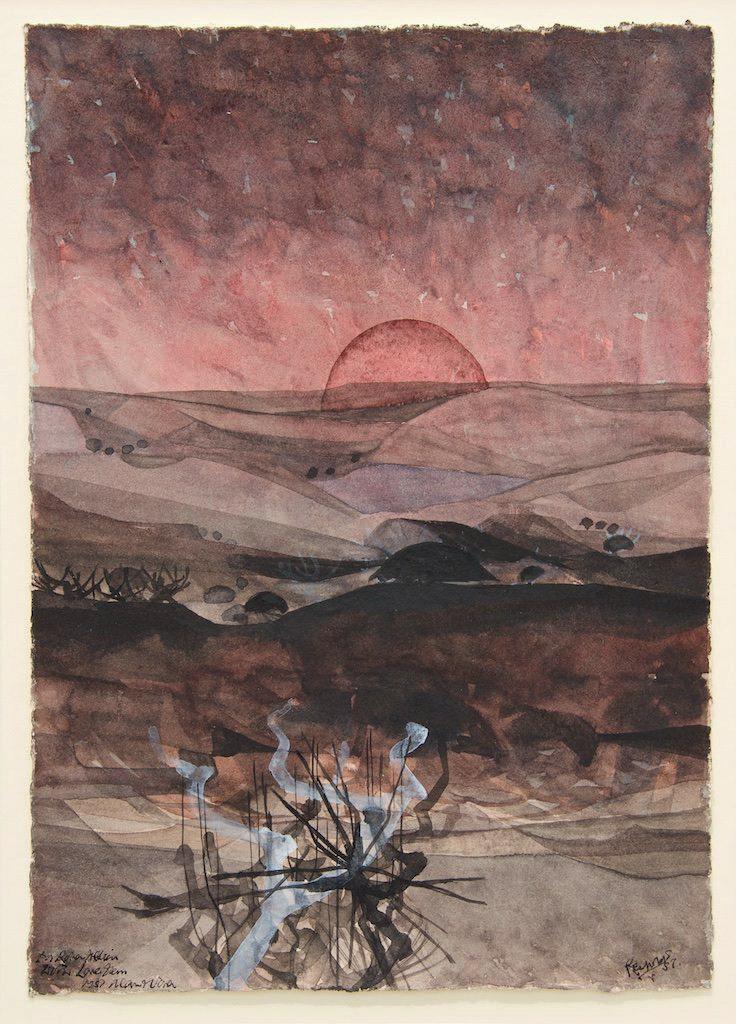
A review of the artist’s latest collection, ‘Spotlight on the Shadows’
Travel
44 The Long Way Round
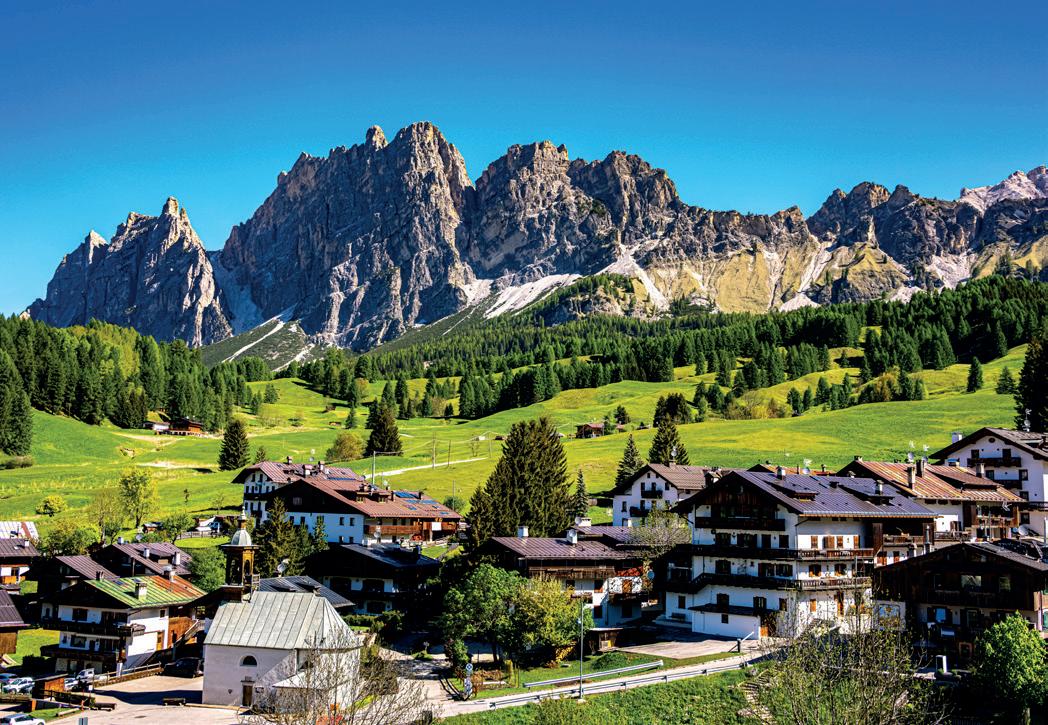
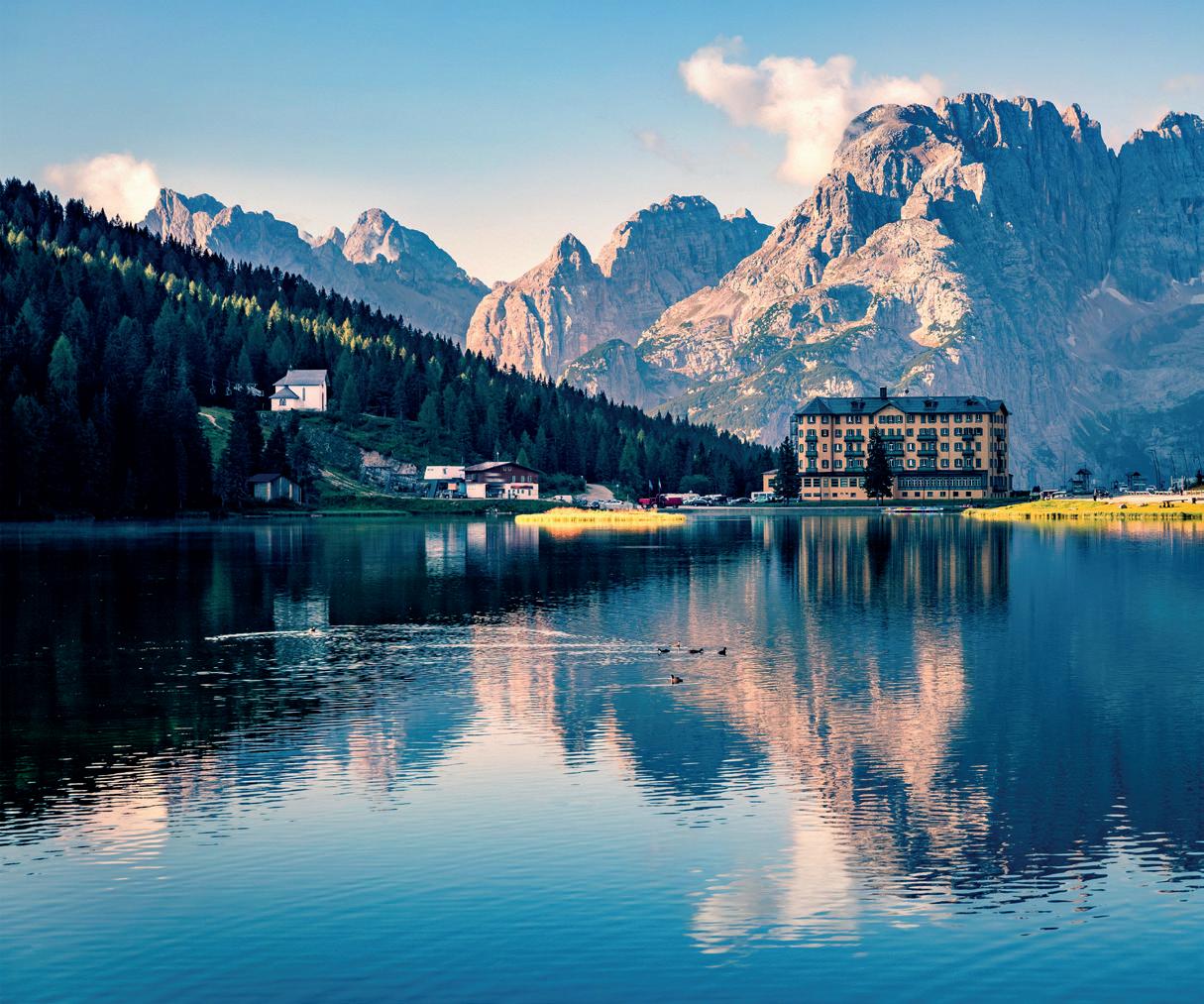
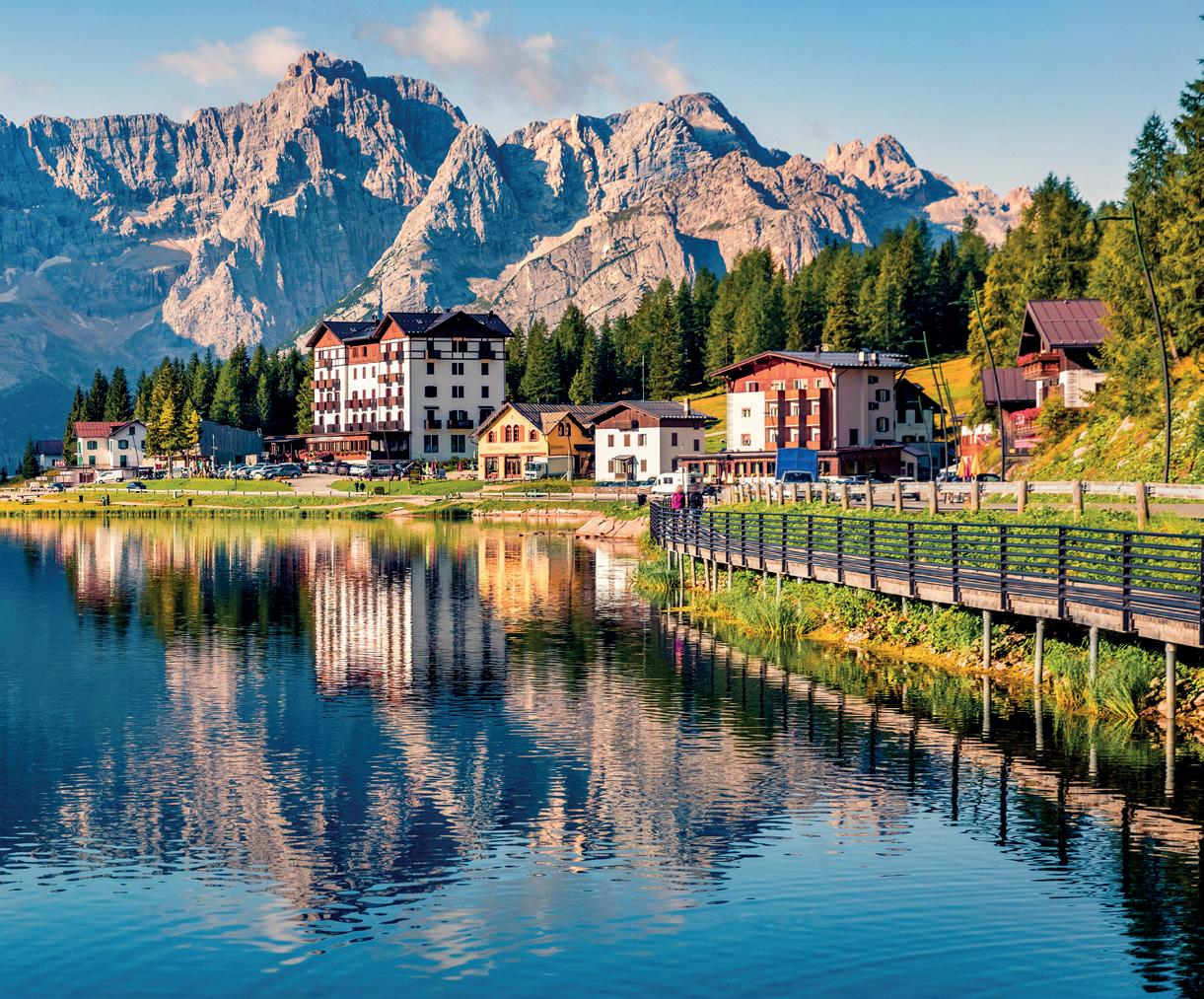
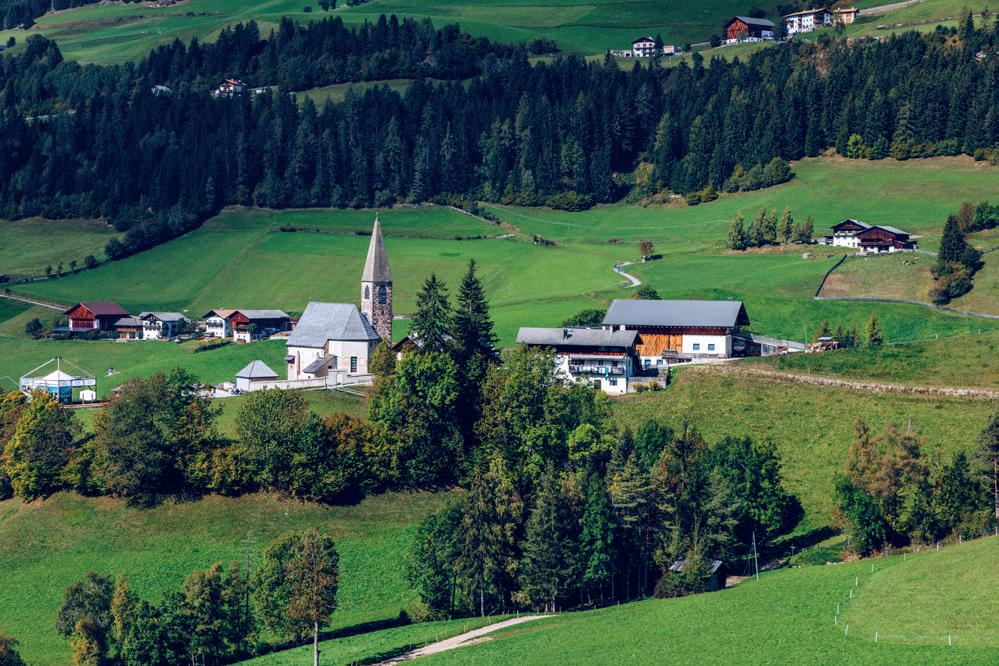
Exploring the wonder of the peaks and villages of the Italian Dolomites
Wine & Dine
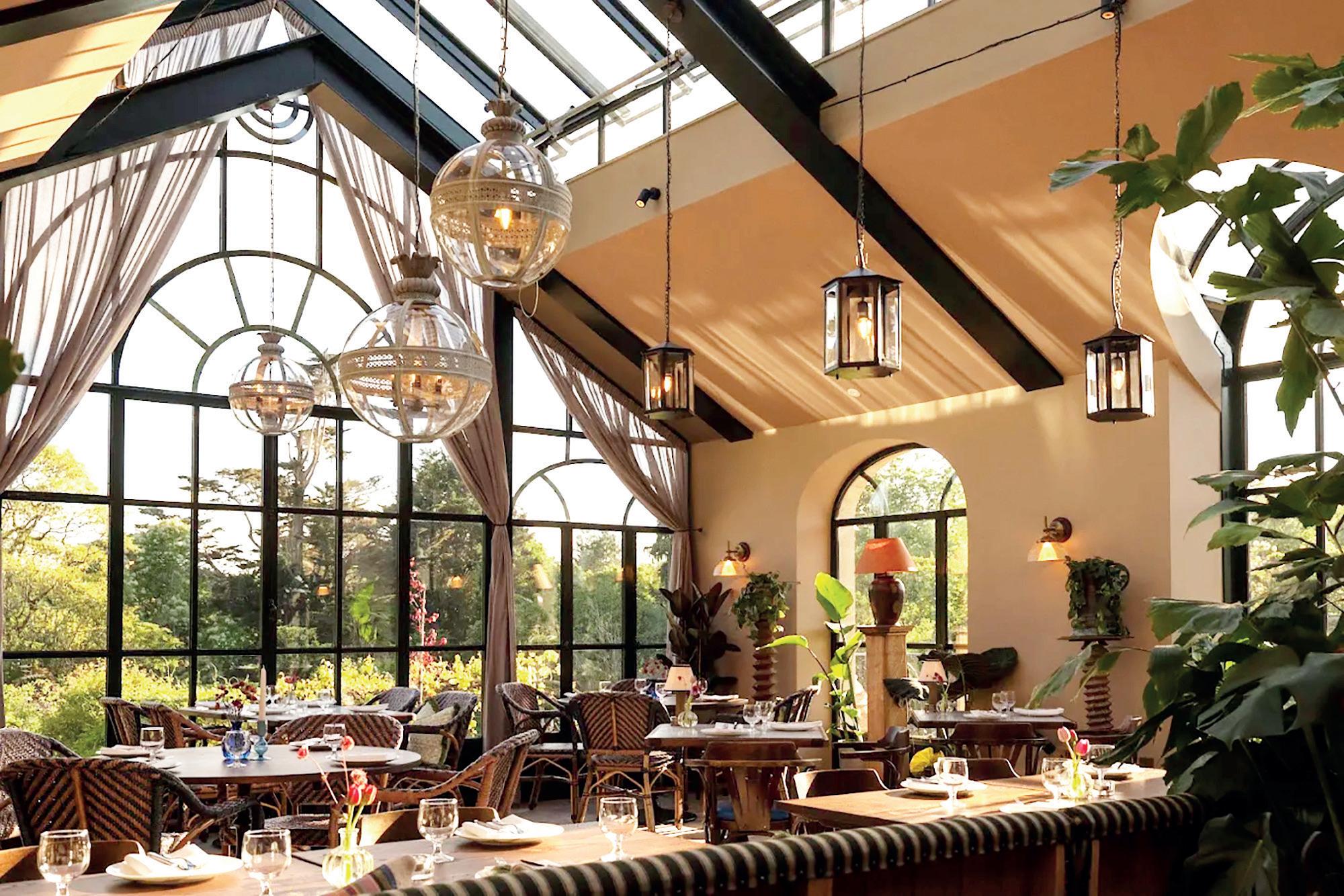
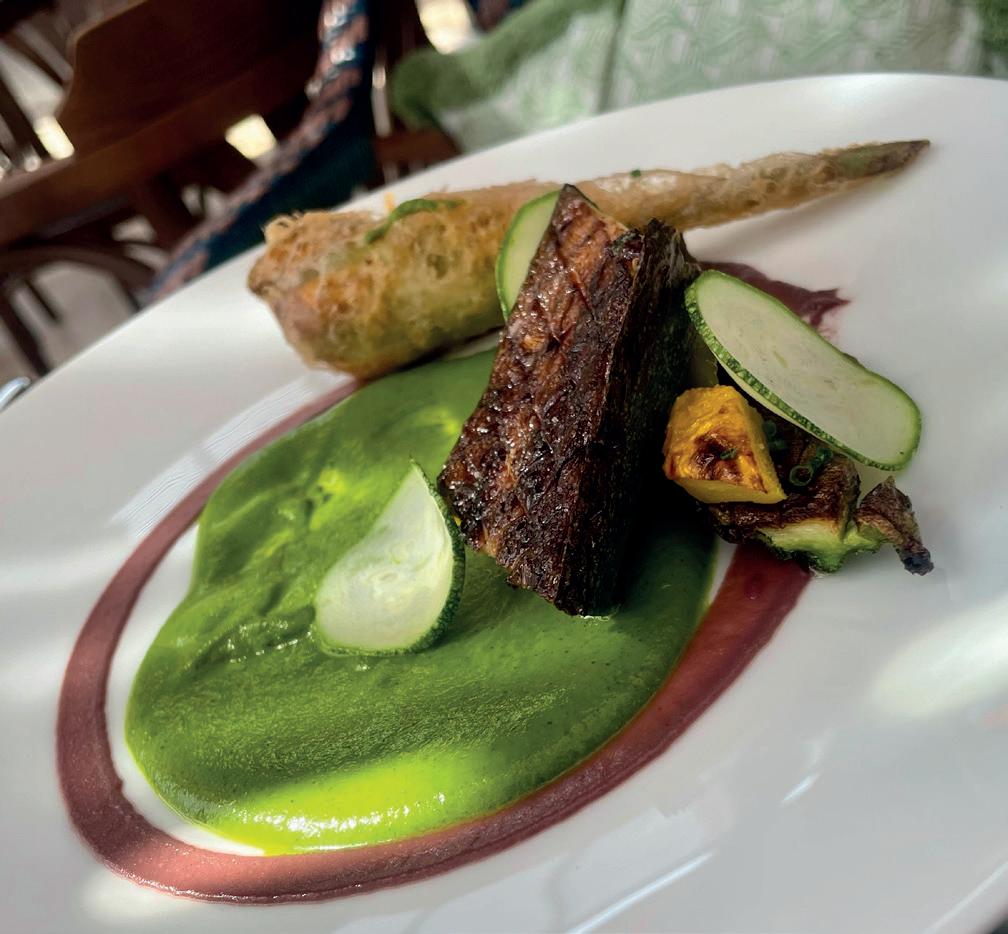
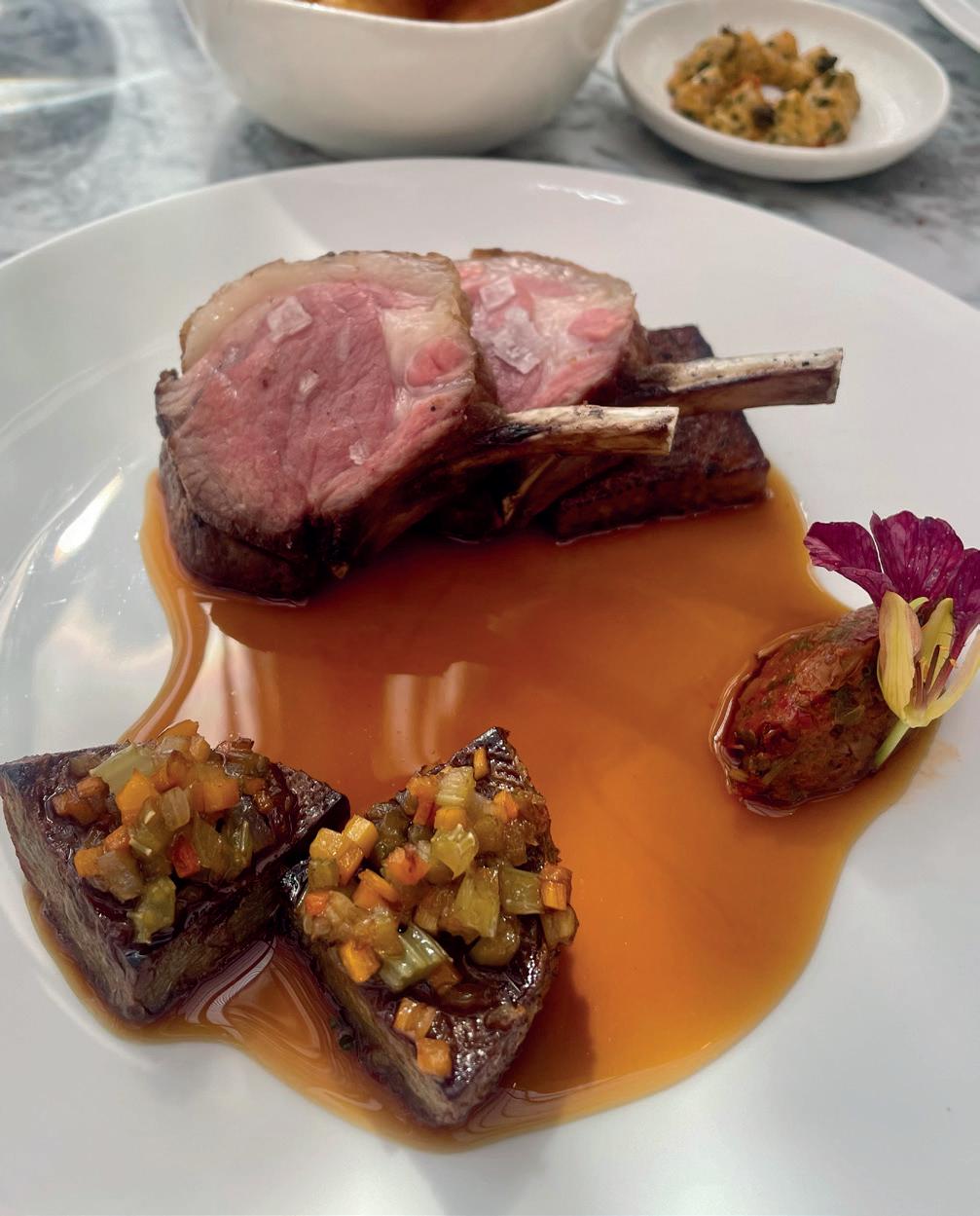
48 Restaurant Isca, Borde Hill
A review of an excellent spot located in the idyllic Sussex gardens
Girl Torque
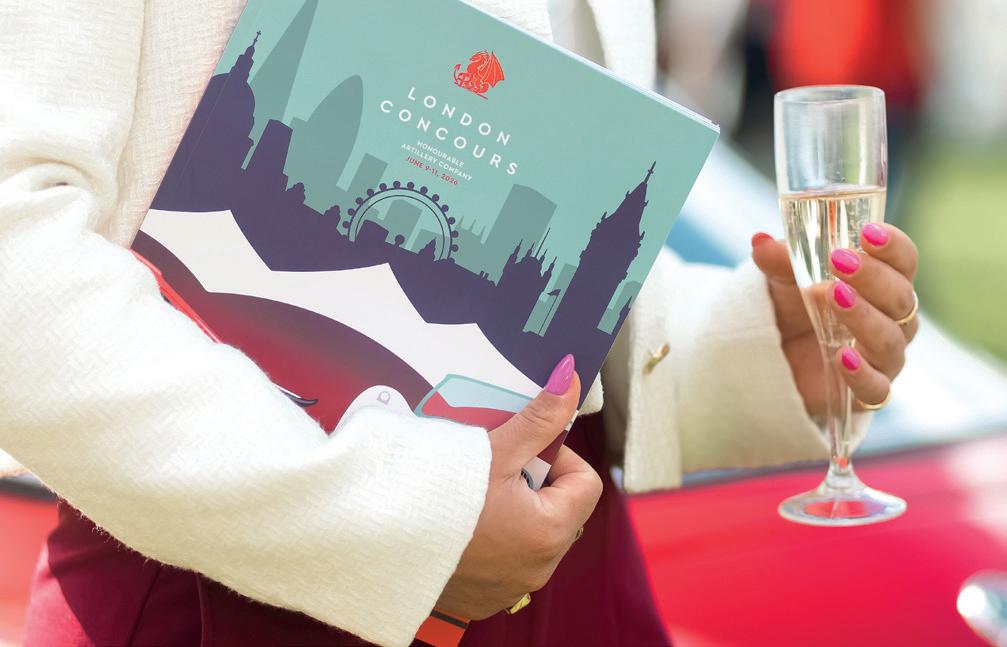
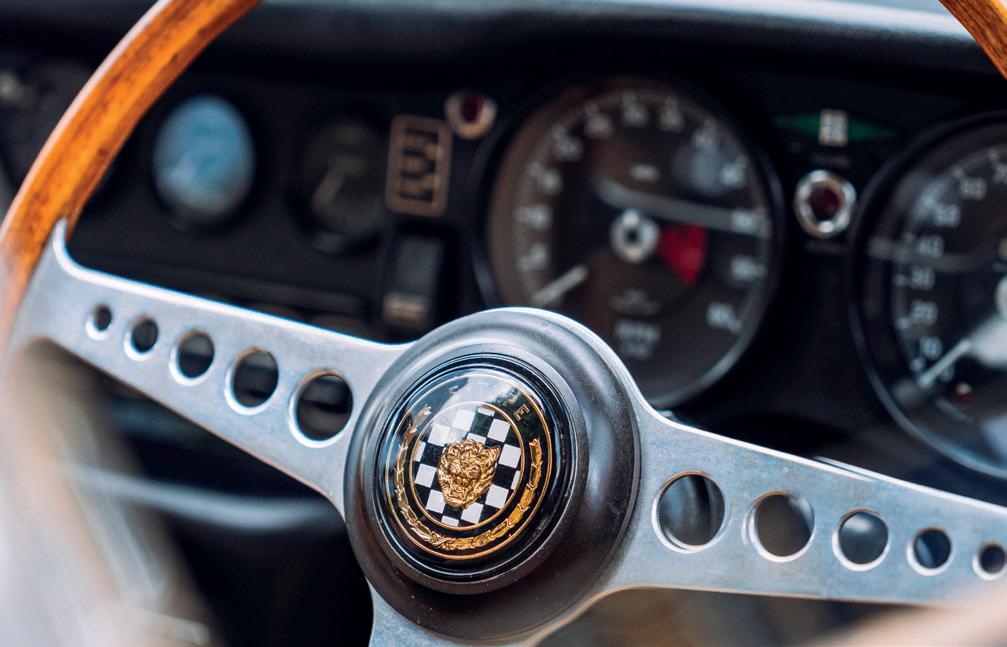
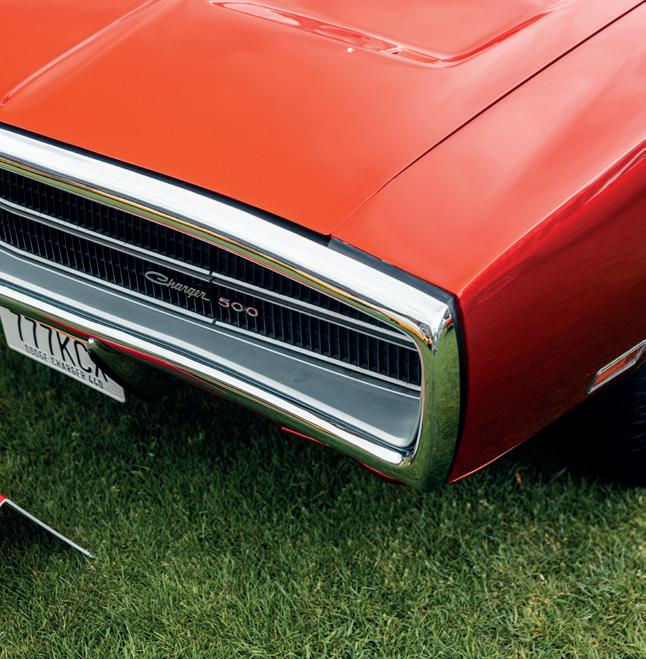
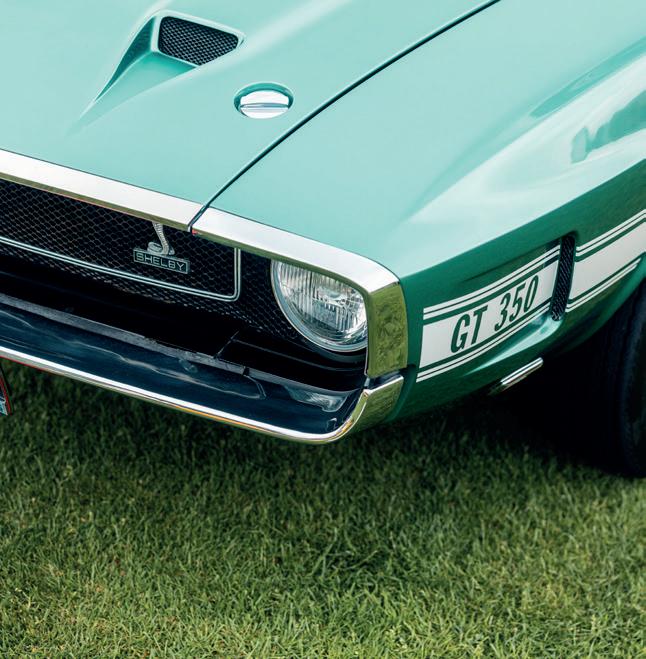
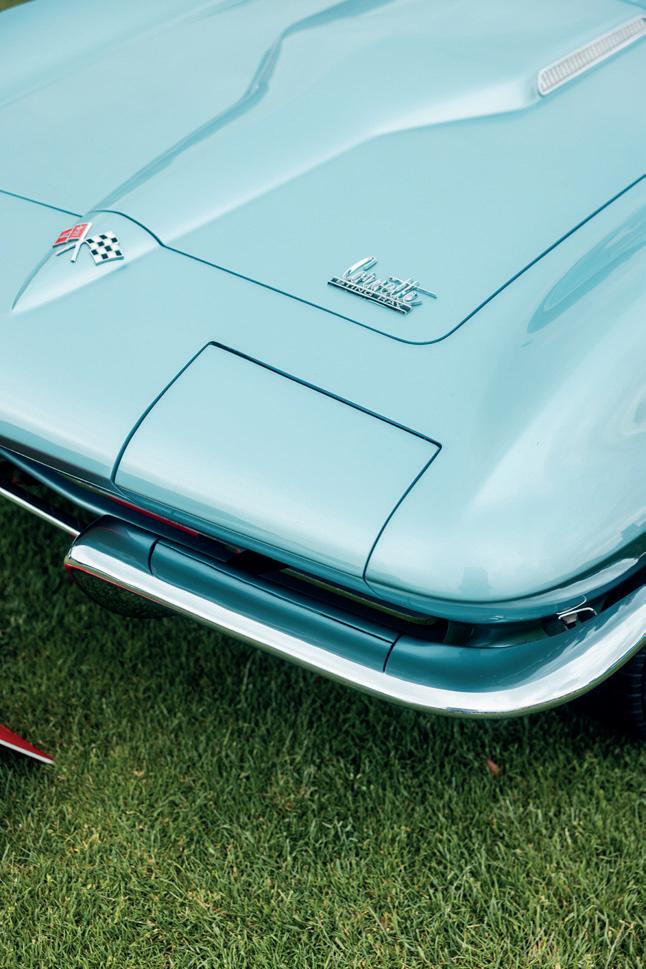
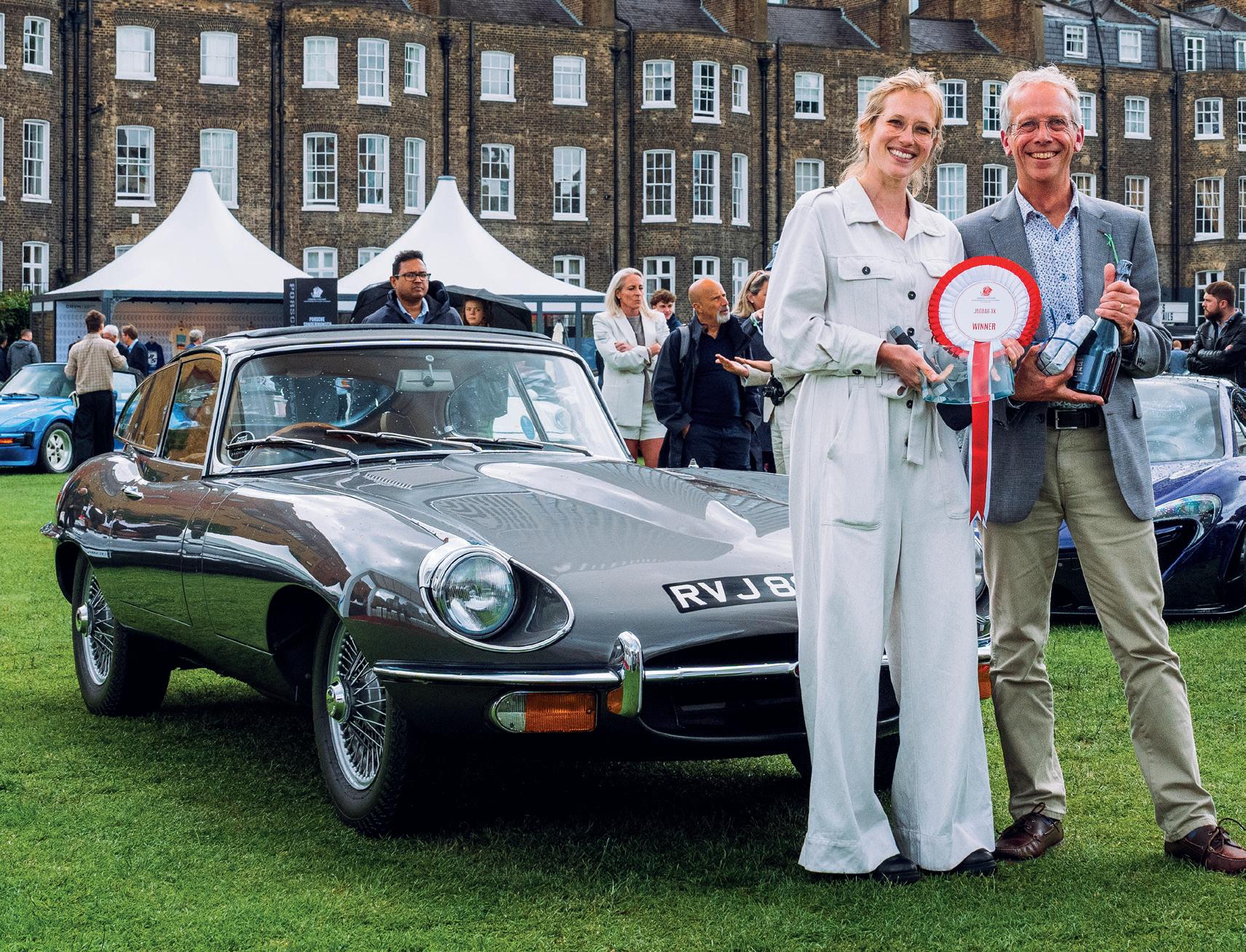
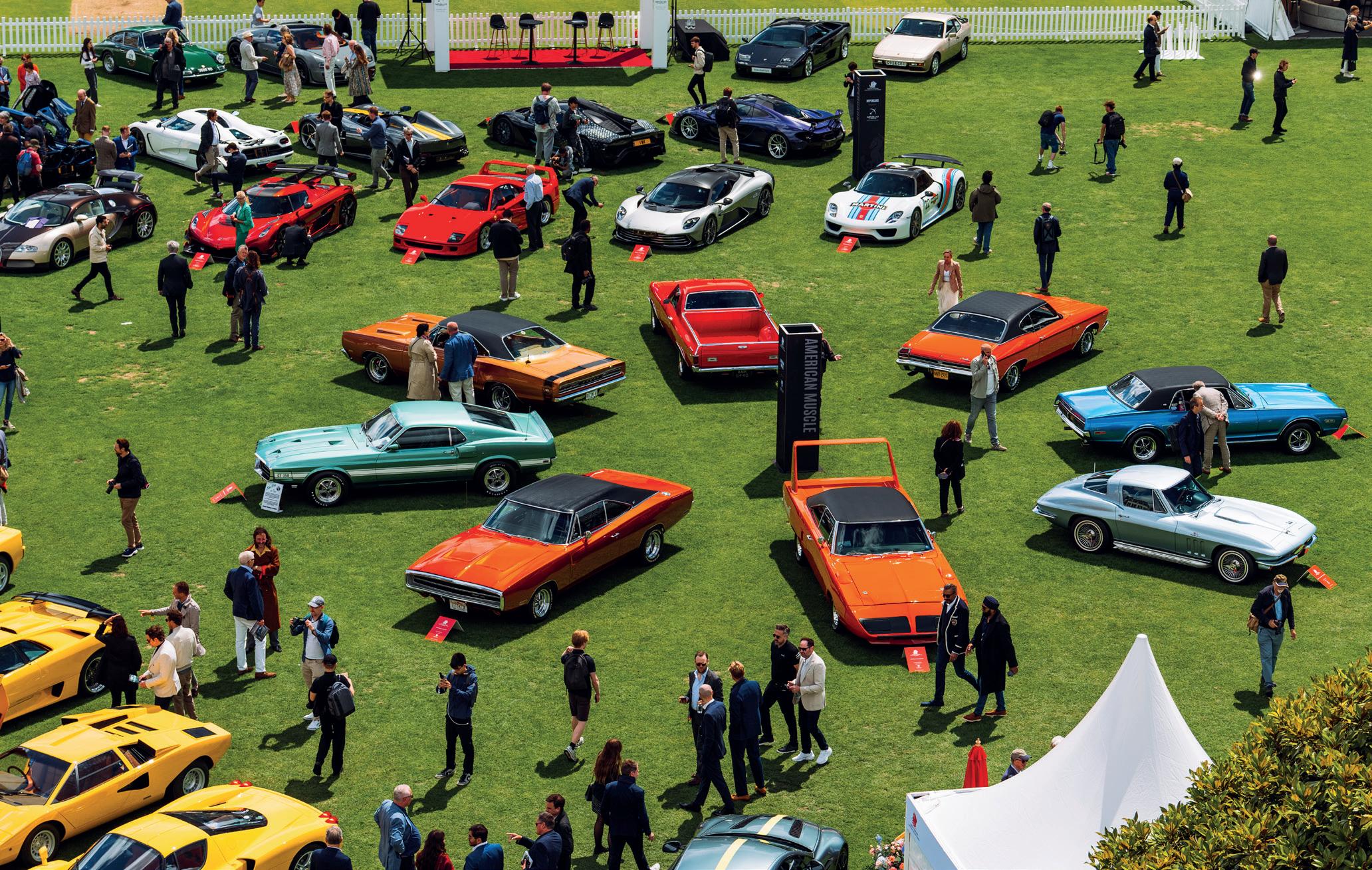
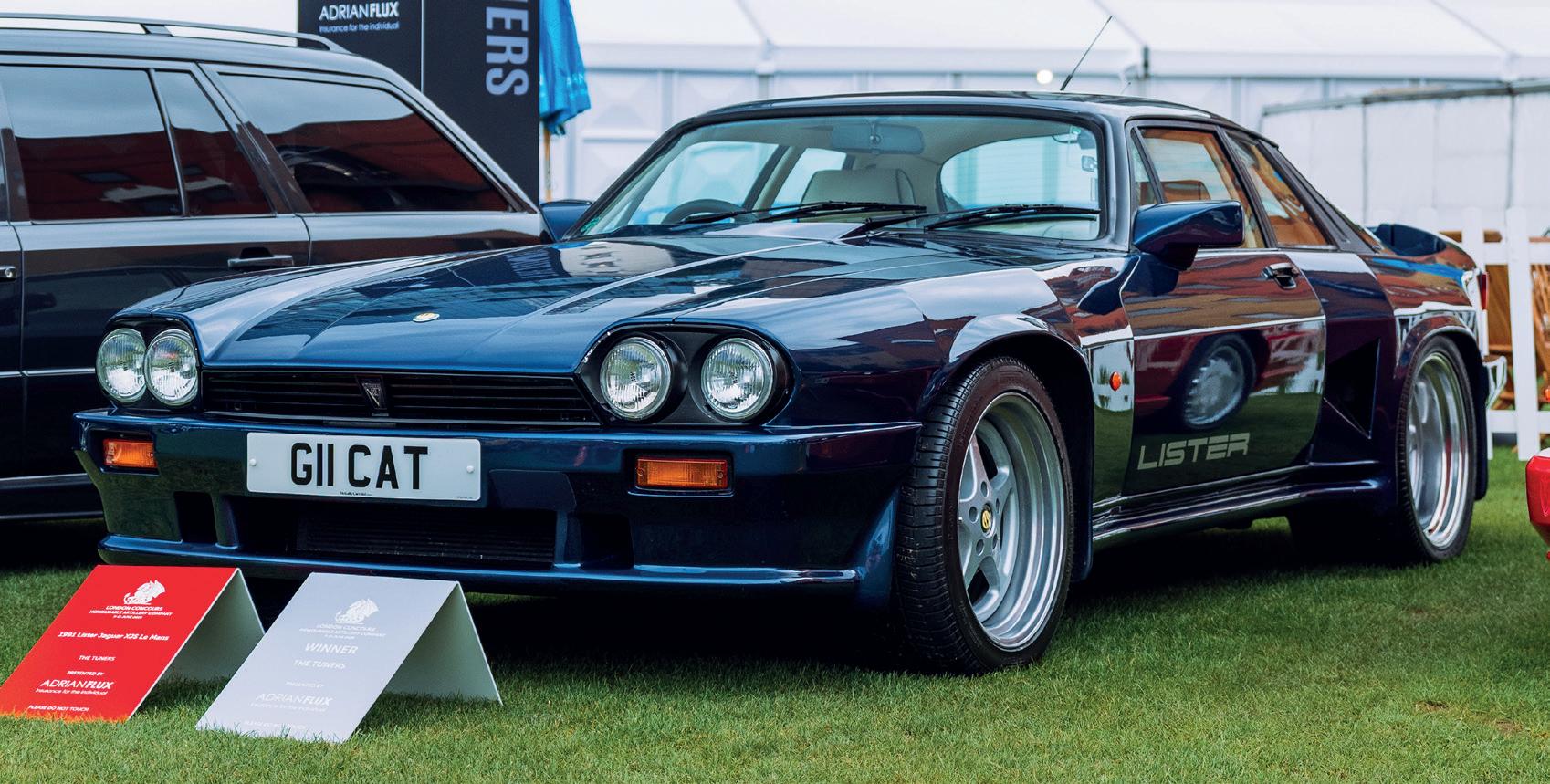
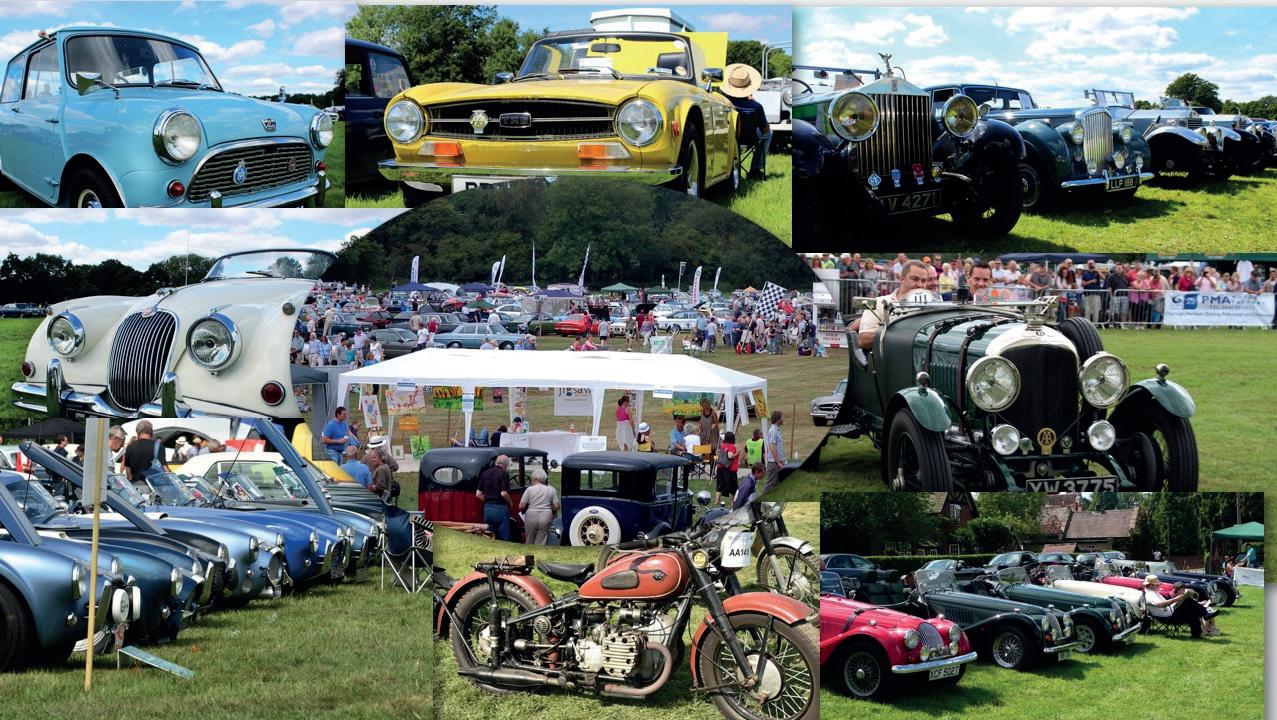
50 The world’s most beautiful cars
MDHUB Managing Director, Fiona Shafer spent a day at London Concours 2026, showcasing some of the finest vintage cars still around What’s On
54 A brief snapshot of what’s on in the South East
EDITOR’S NOTE
Welcome to our edition for sunny August
In our Big Story this month, read how comedian Cally Beaton tackles mansplaining with the wit you’d expect and rather more nuance than the word usually gets. Elsewhere, Laura Hearn asks a question I suspect many of us need to sit with – are we chasing being known, or being known for something? If you’ve ever felt worn down by the pressure to be more visible, her piece is worth paying close attention to.
And do not skip Camille Pierson’s column. Her guide to working with your body’s natural rhythms rather than against them is genuinely useful – the kind of practical, judgement-free advice that makes you wonder why nobody told us this years ago.
There’s plenty more besides. Georgina Vass explains why conflict in a relationship isn’t the problem – it’s what happens afterwards that counts. We look at how DMH Stallard is outpacing the legal sector’s gender benchmark, our Historical Spotlight continues to celebrate women the history books forgot, and we explore the realities of freezing your fertility.
For something altogether more indulgent, join me hiking through the Italian Dolomites, or Charlin at a table at Isca, the Borde Hill Estate restaurant that thoroughly charmed her.
However you spend your August, I hope there’s something in these pages that makes you think, laugh or book a table.
HEAD OF DESIGN / SUB EDITOR: Alan Wares alan@platinummediagroup.co.uk
ENTREPRENEUR CLARIFIES CONTROVERSIAL REMARKS
Millionaire businesswoman Emma Grede has clarified comments she made earlier this year about women working from home, which she was criticised for. Grede has appeared on BBC’s Dragons’ Den and also cofounded the denim brand Good American in 2016.
“What I think is that work-from-home culture is a career killer for women. Careers require proximity and visibility. You want a pay rise, you want the next promotion, you want the big corner office. You need to be there.”
Clarifying her stance in a BBC interview, she stated, “Nobody’s saying that it’s a bad idea to work from home, but what you can’t do is have ambition that is sky high and keep yourself out of visibility.”
WOMEN PROMINENT IN BUSINESS BANK FUNDING
The British Business Bank is backing 10 first-time venture capital fund managers with up to £90 million, creating a group that stands out in the UK investment scene. More than half of the general partners are women, and 43% are from ethnic minority backgrounds. These funds are the first investments from the Bank’s £400m Investor Pathways Capital initiative, which aims to make institutional venture capital more accessible to underrepresented managers. Each fund will get a cornerstone commitment from the Bank, ranging from £10 million to £20 million. The funds will focus on pre-seed and seed investments in the technology, deep tech, artificial intelligence, climate, defence, and consumer sectors.
UKRAINIAN/BRITISH WOMAN WINS EUROPEAN BUSINESS AWARD
Katerina Spranger, founder and CEO of Oxford Heartbeat, is one of the winners of the 12th edition of the European Prize for Women Innovators, revealed by the European Commission at the European Innovation Council
(EIC) Summit in Brussels. The prize is awarded to women from the EU and Horizon Europe-associated countries whose disruptive innovations deliver tangible benefits to society and the planet, drive progress and strengthen Europe’s competitive edge in the global economy. The prize showcases the remarkable achievements of winners and runners-up across three categories: EIC Women Innovators, EIC Rising Innovators, and EIT Women Leadership.
UPFRONT
THE LATEST BULLETINS FROM AROUND THE WORLD
LAW FIRM SIGNIFICANTLY AHEAD ON SECTOR GENDER AVERAGE FRAUDULENT COVID BUSINESSWOMAN JAILED
Leading law firm DMH Stallard has revealed that female representation within its partnership has reached 49.5%, significantly outpacing the wider UK legal sector average of just 29%*. The firm credits this milestone in part to the work of its internal Women in Law group. Meeting quarterly, the group champions women across the firm’s six offices London, Brighton, Gatwick, Guildford, Horsham and Hassocks - offering support, mentoring and a strong sense of community. This progressive approach
to talent development is reflected in the firm’s exceptionally strong internal sentiment. In its latest staff survey, an overwhelming 100% of people named DMH Stallard a “great place to work,” while 95.7% reported an excellent work-life balance and 97.6% expressed absolute confidence in leadership. Data from McKinsey confirms that top-quartile companies for gender diversity show a 39% greater likelihood of financial outperformance over their bottom-quartile peers. Read the full story on page 24.
A businesswoman who fraudulently claimed about £200,000 in Covid loans because of a “messy divorce” has been jailed. Rupali Wagh, 51, from Cardiff, fraudulently claimed the money from the UK government-backed scheme designed to support businesses through the pandemic between May and September 2020.
She inflated the value of her businesses and used the money to invest in stocks and shares, as well as clearing credit card debts. She pleaded guilty to five counts of fraud in November and was jailed for two years and three months at Merthyr Tydfil Crown Court on Friday. Wagh secured £216,250five Bounce Back Loans and also two other loans - for her companies, when businesses were only entitled to one. Judge David Wynn Morgan said “it was wholly dishonest for personal gain”.
WOMEN’S RURAL BUSINESS NEED MORE HELP
A report from the National Innovation Centre for Rural Enterprise (NICRE) has highlighted the support needs of women-led businesses and identified opportunities to strengthen innovation, enterprise and business growth in rural areas. The findings are based on a series of Rural Women in Enterprise events held across northern England in March this year.
The events brought together women running a wide range of rural businesses
to discuss the challenges they face and the support they need to develop and grow. The report also highlighted wider barriers affecting rural womenled businesses, including poor digital and transport connectivity, limited business premises, childcare challenges, remoteness and access to tailored business advice. Participants also pointed to the importance of peer support networks in tackling isolation and building confidence.
MOTOR BODYSHOP OWNER PRAISED BY MP
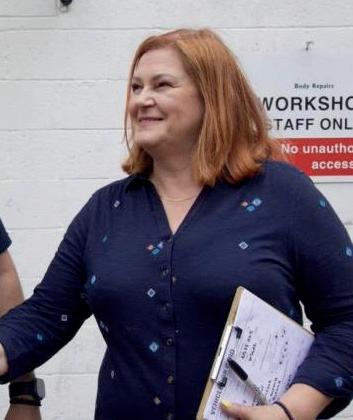
A businesswoman has been honoured in a national scheme celebrating female entrepreneurs. Katarzyna “Kat” Kolosowska, co-owner of Romsey Vehicle Bodyshop, was named this year’s MP HERo for Romsey after being nominated by MP Caroline
Nokes. The scheme, organised by Savvitas in partnership with NatWest, recognises women running successful businesses across the UK. As part of the honour, Ms Kolosowska will visit Parliament on November 18th to join other MP HERoes at a roundtable celebration
LATEST UK GENDER PAY GAP FIGURES REVEALED
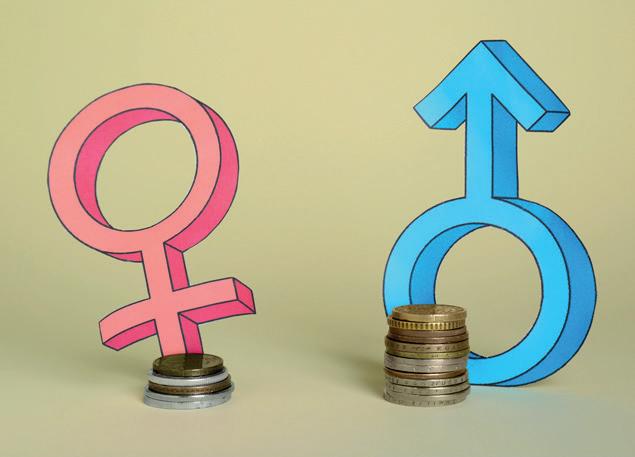
Forbes has revealed the latest gender pay gap information, courtesy of Office for National Statistics figures. The headline figure is that the gender pay gap among full-time workers was 6.9% in April 2025* (down slightly from 7.1% in April 2024). Additionally, compared with lower-paid employees, higher earners experience a much larger pay gap between the sexes.
According to the ONS (October 2025), the median weekly pay of men working full-time outstrips that of women at every age. Women tend to be more likely to take career breaks and reenter the workforce in lower-paid roles. The median annual salary of men aged 50 to 59 in full-time work is £43,940 – 8% higher than that of women of the same age.
❛
Even a stopped clock is right twice every day. After some years, it can boast of a long series of successes.”
— Marie von Ebner-Eschenbach, Austrian writer ❛
A man’s got to do what a man’s got to do. A woman must do what he can’t.”
- Rhonda Hansome American comedian, writer and director
and reception. Romsey Vehicle Bodyshop is a family-run business based at Budds Lane Industrial Estate and managed by Ms Kolosowska and her husband Przemek. Operating since February 2025, the business has already earned more than 50 five-star reviews.
MANCHESTER BEST UK CITY OUTSIDE LONDON FOR FEMALE START UPS
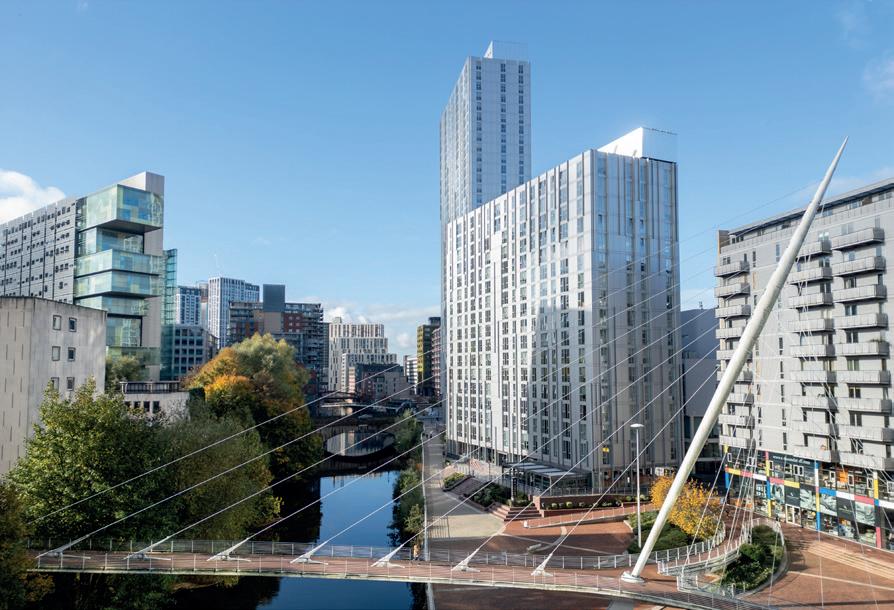
Manchester has been named the leading UK city outside London to start a business, according to new research from National Women’s Enterprise Week, in findings that point to the growing pull of regional ‘hidden hubs’ for women building companies away from the capital.
The survey of 1,000 female entrepreneurs found that 41% named Manchester as either the best or second-best UK city outside London to launch a venture, with 27% putting it in the top spot. Birmingham followed on 14%, with Liverpool on 5%.
The picture that emerges is of founders of women-led enterprises citing lower costs, greater flexibility and stronger regional opportunity as reasons to stay put.
FREEZING YOUR YOUR EGGS, YOUR TIMELINE,
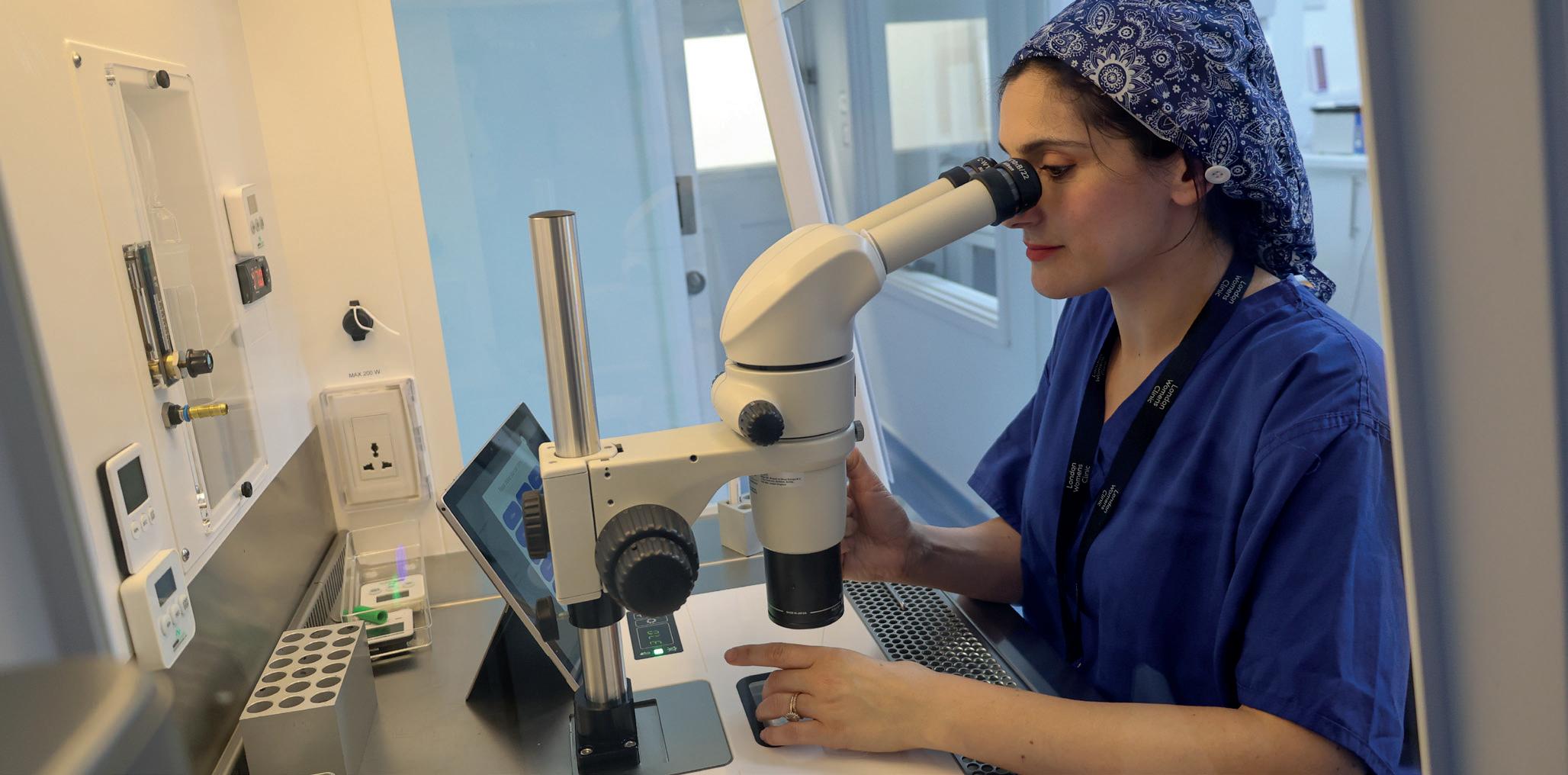
For many women, egg freezing isn’t about certainty. It’s about keeping the door open. It’s often assumed that egg freezing is mostly for career-focused women, but that’s rarely what patients tell Dr Vanessa Ross, Fertility Specialist at London Women’s Clinic. Far more often, it’s about timing that hasn’t yet come together, whether that’s not having found the right partner, or simply wanting more time to prepare.
Research by Dr Ellen Davenport-Pleasance, Research Fellow at London Women’s Clinic, based on interviews with London Women’s Clinic egg freezers, backs this up. Many women were clear that their decision wasn’t driven by panic, as one participant put it; she didn’t want “the window to close.” Egg freezing gives you a real opportunity to preserve your eggs at their current age and quality. It’s not an insurance policy. It’s an additional option that gives you the tools to make decisions about your future family on your own terms.
TIMING MATTERS
Dr Davenport-Pleasance’s research found that many women wished they’d known about egg freezing sooner. Reflecting after freezing her eggs at 39, one participant said: “I wish I’d done this earlier... but 10 years ago the information out there about this was quite scarce.” A personal fertility health assessment is the best place to start evaluating ovarian reserve, discussing goals, and helping determine whether egg freezing is right for you.
WHAT ACTUALLY HAPPENS
“For many women, egg freezing isn’t about certainty. It’s about keeping the door open.”
The process itself is more straightforward than people expect. Treatment begins with around 8–10 days of hormone injections, helping the ovaries produce several eggs instead of the usual one. Regular ultrasound scans monitor how the follicles, which contain the eggs, are developing. Once ready, an egg collection procedure is carried out under light sedation.
Age is the most important factor influencing fertility. A woman’s chances of conceiving and having a healthy baby gradually decline with age, primarily because both the number and quality of her eggs decrease over time. “The best window to freeze is between your mid-20s and early 30s, while egg quality is strongest,” explains Dr Ross, “though at London Women’s Clinic, women can freeze up until their 43rd birthday.”
It’s often the logistics, not the medicine, that prove the bigger challenge, which is exactly why every patient is supported by a dedicated coordinator and nursing team throughout the process.
THE NUMBERS BEHIND OUR RESULTS
London Women’s Clinic has the only dedicated egg freezing department in the UK, performing over 1,000 egg freezing cycles routinely every year. Data scientist Jemma Garratt explains: “Partnered with one of the UK’s largest
YOUR FERTILITY
TIMELINE, YOUR CHOICE
egg banks, London Egg Bank, our laboratories have frozen over 135,000 mature eggs, and warmed over 47,000 mature eggs for treatment.
“Research at our centre has shown that live birth rates with frozen own eggs are comparable to rates seen using fresh own eggs in IVF (Garratt et al., 2025). In 2024, live birth rates were 44% per single embryo transferred for patients under 35 using their frozen own eggs in treatment. After three embryo transfers, this reached up to 60%.”
“As one woman summarised, ‘It is so empowering as women to have just an extra layer of choice around fertility.’ ”
A WEIGHT LIFTED
For many women, the greatest impact of egg freezing isn’t medical; it’s emotional. Dr Davenport-Pleasance’s research captured this recurring theme throughout: “It did take that pressure off,” one participant said, describing how she felt more able to simply get on with her life. Another explained that freezing her eggs meant she was no longer “appraising someone” she was dating as a potential father and could instead “just live in the moment.”
As one woman summarised, “It is so empowering as women to have just an extra layer of choice around fertility.” It doesn’t guarantee a future pregnancy, but it does offer something valuable: the knowledge that you’ve taken a proactive step, on your own terms.
CLOSER TO HOME
“Egg freezing should be accessible, affordable, and convenient,” says Dr Ross. That’s why London Women’s Clinic developed its Freeze Local programme, enabling patients to see an experienced egg freezing specialist closer to home, making the process simpler, more convenient, and less overwhelming, wherever you live.
ABOUT LONDON WOMEN’S CLINIC
London Women’s Clinic has twenty clinics across the UK, with Freeze Local available in the South East, including at LWC Brighton, based at 169 Preston Road, Brighton.
Visit www.londonwomensclinic.com to find out more.
London Women’s Clinic 169 Preston Road Brighton, BN1 6AD
A PATIENT’S STORY
Egg freezing isn’t about delaying motherhood. It’s about creating choice
‘‘
Like many women, I imagined that by now my life would look different. Instead, I’m still building that future — creating a career I love and embracing the uncertainty of not knowing how life will unfold. That is why I chose to freeze my eggs. Not to delay motherhood, and not to put my career first, but to create space for life to happen without feeling that biology was making the decision for me.
People often assume egg freezing is something career-focused women do instead of having children. That’s the biggest misconception. Most of us aren’t choosing work over family — we’re waiting because life hasn’t unfolded as we imagined. Egg freezing is rarely about postponing motherhood. More often, it’s about preserving the possibility of it.
What surprised me most was realising that knowledge doesn’t make you immune to emotion. I understood every stage of the treatment practically, yet living it was different. I thought less about the injections and more about time, identity, and the future I hoped for. I wasn’t just undergoing a medical procedure — I carried an entire life story into the clinic.
I want to be honest, too: egg freezing isn’t an insurance policy. It’s an opportunity, not a promise — medicine can preserve eggs, but it can’t guarantee future pregnancy. Women deserve conversations that are hopeful without false reassurance.
My advice is simple. Don’t decide based on fear or social pressure — decide because you’ve understood your options and what feels right for your life. Seeking information isn’t committing to treatment.
More than anything, I hope women reading this feel less alone. Fertility journeys often happen quietly, carried privately behind everyday life. If this encourages even one person to ask questions earlier, sharing it has been worthwhile.”
To find out more about egg freezing and the London Women’s Clinic Freeze Local programme, visit ww.londonwomensclinic.com
By Alex Bailey
AThe
Alex Bailey Column
COMPANY OF THE YEAR 2022
We are delighted to have and CEO of Bailey & French, She founded leadership team delivering work across large blue chips as well
The vulnerability
few days ago, I held my first published book in my hands. After more than 20 years of working with leaders around the world, building a business, speaking on stages and helping organisations navigate change, I thought I knew what that moment would feel like. As the founder of Bailey & French and co-author of Rapid Reculturing, I’d spent years thinking deeply about leadership, culture and what it means for people to thrive at work.
I did feel pride and relief, but also a sense of responsibility and vulnerability.
Not because I didn’t believe in the book, but because for the first time, years of thinking, questioning, researching and believing were no longer sitting safely in notebooks, presentations or conversations. They were out in the world publicly for other people to read, challenge and judge.
Publishing a book has reminded me of that lesson all over again.
Ironically, much of my work focuses on helping organisations create cultures where people feel able to speak up, contribute ideas and bring more of themselves to work. The concepts behind Rapid Reculturing are grounded in helping organisations build a stronger sense of purpose, healthier mindsets, greater human energy and deeper human connection.
But there is an important truth I’ve been reflecting on: I cannot create cultures of courage if I’m unwilling to practise courage myself.
“It struck me that achievement and vulnerability often arrive hand in hand, and I wonder how often we talk about that.
Particularly as women.”
It struck me that achievement and vulnerability often arrive hand in hand, and I wonder how often we talk about that. Particularly as women.
We’re encouraged to celebrate promotions, share good news and mark milestones. We post photos of awards, announce new roles and talk openly about success, particularly on professional platforms like LinkedIn.
Yet we rarely discuss what happens beneath the surface: the doubt and uncertainty, the voice in our head asking, “Is it good enough?” I guess I thought that one day I would wake up feeling completely certain of myself, but in my experience, that moment never comes.
Over the years, I’ve realised that bravery has very little to do with feeling fearless but is more about acting through uncertainty, speaking before you’re ready, leading before you feel qualified… writing before you’re convinced anyone wants to read what you have to say.
And courage is rarely glamorous and heroic as I had assumed; it’s admitting you don’t have the answer, it means changing your mind, and sometimes it means launching something that matters deeply to you, knowing it may not resonate with everyone.
As I held the finished book, I found myself thinking less about publication and more about permission.
Permission we often wait for; permission to begin; permission to contribute; permission to share an idea; permission to stop striving for perfection. I suspect many women leaders know this feeling.
We become experts at meeting expectations; we work hard, prepare thoroughly and strive to get things right.
Yet somewhere along the way, many of us quietly convince ourselves that we need one more qualification, one more achievement or one more success before we’re truly ready.
What if we’re already ready? What if the thing holding us back isn’t capability but the belief that confidence must come before action?
Looking back, some of the most important decisions in my career happened before I felt prepared, knowing I would
have Alex Bailey contributing to Dynamic. She is an organisational psychologist, author, French, and a global expert in humanising leadership, culture, and the world of work. leadership and culture consultancy Bailey & French which has grown organically to a global across 155 countries, in all markets and industries and trusted by the board/execs of as those at the most senior levels of central government.
vulnerability of being seen
face whatever the outcome, even if that meant failure. Starting a business.
Speaking on bigger stages; taking opportunities that stretched me; writing a book.
None of those decisions was accompanied by certainty or any safety net. They were accompanied by possibility and passion. The book is a great example; we wrote it and finished all 74,000 words before we had a publisher. We wrote it as if it was going to be a bestseller, perhaps some call it blind faith, others call it courageous, but we were prepared to write the whole thing and put in the hours without knowing it would ever be printed.
“Growth doesn’t happen when doubt disappears, but when something becomes more important than the doubt.”
And perhaps that’s one of the biggest lessons leadership continues to teach me. Growth doesn’t happen when doubt disappears, but when something becomes more important than the doubt.
Today, as this new chapter begins, I’m not feeling the sense of completion I thought I would feel. Instead, I’m feeling curiosity and gratitude and yes, a little vulnerability. Because putting your ideas into the world is always an act of courage.
But perhaps that is the point. Maybe success isn’t arriving at a place where you no longer feel exposed.
Maybe success is caring about something enough to show up anyway. And if that’s true, then holding this book in my hands didn’t mark the end of a journey; it marked the beginning of another one.
Laura Hearn is a former BBC journalist, now storytelling consultant and founder of Flip It - a podcast and platform helping people and businesses use storytelling as a tool for clarity, connection and change. This month, for Dynamic, Laura looks at the notion that ‘personal brand is everything’, when the truth is it really isn’t.
“I’m not even sure what a personal brand looks like. I just feel like I ought to be doing it, as I’m worried my business won’t grow.”
That was all I heard...
THE MODERN ‘Known’
By Laura Hearn
It has never been easier to make yourself visible. Everywhere we turn, we’re encouraged to share more, say more, build an audience and become known. Somewhere in the middle of all that, I keep hearing the same sentence: “You need to build your personal brand.”
Recently, sitting on one of my favourite spots on the beach with my dog, I overheard it again. I only caught part of the conversation, but it was enough to make me wonder if being ‘known’ had replaced being known for something… anything.
“All my friends keep telling me I need a stronger personal brand to support the business, but just thinking about adding more to my diary right now feels exhausting.” Her friend then asked what she meant.
“I honestly don’t know. I’m not even sure what a personal brand looks like. I just feel like I ought to be doing it, as I’m worried my business won’t grow.”
for was and
That was all I heard, but it was enough to inspire this month’s piece, because the more I thought about it, the more I realised I’d been asking myself the same questions not so long ago.
Yet, I have come to believe it’s a trap that many of us fall into unconsciously. Most of what gets called ‘personal branding’ is really just an effort to be known, full stop, regardless of what you’re known for. Say something often enough, post consistently enough, show up in enough feeds, and visibility starts to feel like proof you’re doing something right. It isn’t. It’s just proof you’re visible. Two very different things, easy to mistake for one another when the algorithm rewards the fi rst and takes years to reward the second.
Whether it’s podcasts, conferences, business books or social media, building a personal brand has become the accepted wisdom of modern business. If you want to grow your company, people need to know who you are. And there’s
MODERN DAY CULTURE OF
v ‘Known For’
some truth in that. People buy from people. We connect with faces before logos, stories before strategies. But knowing who you are and knowing what you stand for are not the same thing, and I think we’ve started confusing the two.
After more than 20 years as a journalist, I’ve learnt that attention and trust are very different currencies. Attention can happen in an instant. Trust rarely does. In journalism, your reputation is everything, and it’s never built on one interview or one programme. It’s built over years, by turning up prepared, checking facts, treating people fairly and doing what you said you’d do. Nobody ever talked about building a personal brand. They talked about earning trust, story by story, until your name meant something specific rather than something familiar.
“Visibility might open the door. What you’re actually known for is what keeps it open.”
I’ve come to believe business works much the same way. Visibility might open the door. What you’re actually known for is what keeps it open. Today, I spend much of my time helping founders articulate who they are and how they communicate: messaging, positioning, thought leadership, media opportunities. Those things matter because if people don’t know you exist, they can’t choose to work with you. But they’re only the foundations. The harder, slower part is building something people believe in – something with substance.
That’s where I think we’ve become distracted. We’ve started treating founders as though they are the business, encouraged to become content creators, personalities, the centre of every conversation. But what happens if the founder becomes bigger than the business? When every client wants to deal with you, every decision depends on you, and every opportunity begins and ends with your name? Growth gets difficult because the business can’t outgrow its founder, and being known becomes the whole strategy rather than a by-product of one.
“There’s a difference between being known and being known for something, and only one of those is worth chasing”
The strongest organisations I’ve encountered aren’t built like that. They’re built on shared values, exceptional people and cultures that inspire. The ones that endure all seem to have one thing in common: people believe in far more than the person at the top. They believe in the colleague who solves the problem, the person who steps in when someone needs help. Culture is what people remember, not the volume of the founder’s voice.
That’s why I fi nd the phrase personal brand slightly uncomfortable. Not because founders should hide, your story matters, your voice matters. But there’s a difference between being known and being known for something, and only one of those is worth chasing. A personal brand can be built on noise. A reputation can’t. It’s earned one conversation at a time, one promise kept, one client who recommends you to someone else, until your name starts opening doors before you’ve even arrived.
Back on the beach, I resisted the urge to add to her confusion. But I wanted to turn around and tell her she didn’t need a stronger personal brand. That she probably already knew exactly what she wanted to be known for. The exhausting part wasn’t the answer. It was everyone insisting she needed to look for one.
You can listen to Laura’s podcast, Flip It, wherever you get your podcasts, and you can connect with her at www.flipitglobal.com
GLOW-WORMS RETURN TO THE SOUTH DOWNS
Glow-worms are set to make a welcome comeback in South Downs National Park following a carefully managed conservation project. The insects, which have declined because of habitat loss and light pollution, have been reintroduced as larvae and are expected to begin glowing next year. The park’s famously dark skies offer ideal conditions for the species to thrive. Ranger Paul Bushell said the location is “the perfect area for a reintroduction”, adding that conservationists hope the wait will be well worth it.
IN THE RIGHT DIRECTION
AMBITIOUS REWILDING PROJECT SECURES FUNDING
A landmark conservation project in Northumberland is set to restore 3,000 hectares of degraded land after securing almost £9 million in funding. The initiative will revive damaged peatlands, increase biodiversity, reduce flood risk and support sustainable grazing, creating one of England’s largest dedicated nature restoration sites. Restore founder Benedict Macdonald believes the estate will become
“a biosphere-level reserve where nature itself is the driver”, placing wildlife at the heart of long-term land management.
AMAZON DEFORESTATION REACHES DECADE LOW
Brazil has recorded its lowest level of Amazon deforestation in 10 years, with rainforest loss dropping 38% in the first half of 2026 compared with the same period last year. The figures are being hailed as evidence that government action can make a measurable difference. President Luiz Inácio Lula da Silva, who pledged to curb deforestation, has made environmental protection a priority. “This is evidence that deforestation is not an inevitable process,” said scientist Ane Alencar.
“An overnight success after 25 years is delicious.”
Hannah Waddingham, award-winning actor
ROAD DEATHS FALL DESPITE RISING TRAFFIC
Global road deaths have fallen by 21% since 2011, even as more than one billion additional vehicles have taken to the roads. New World Health Organisation figures show major progress in road safety, although traffic accidents still claimed 1.16 million lives in 2025 and remain the leading cause of death among people aged 5–29. Countries have now pledged to halve road deaths by 2030. As WHO director Dr Tedros Ghebreyesus said, “We’ve made real progress”, but there is still much more to do.
HUNGARY BEGINS REBUILDING PUBLIC TRUST IN MEDIA
Hungary’s new government has begun dismantling what critics described as a state-run “disinformation machine”. Viewers tuning in to public broadcaster services were greeted with an apology acknowledging that public media “should not lie,” before news programming was temporarily suspended for reform.
SCIENTISTS LAUNCH INDEPENDENT CLIMATE PLATFORM
After widespread funding cuts and job losses under the Trump administration, former US government climate scientists have launched an independent website to keep trusted climate information publicly available. The new platform, ‘climate.us’, has been funded through thousands of private donations and aims to provide reliable scientific data free from political influence. Managing director Rebecca Lindsey said, “Trusted climate information should not disappear when politics change,” underscoring the importance of accessible evidence for communities, educators and policymakers alike.
The overhaul fulfils a key election promise by Prime Minister Peter Magyar following years of political interference under the previous administration. While journalists have welcomed the move, many say the true test will be creating an independent and trustworthy public broadcaster.
PSILOCYBIN OFFERS HOPE FOR ANOREXIA CARE
Psilocybin, the active compound found in magic mushrooms, may become a valuable new treatment for anorexia nervosa when paired with talking therapy. In a small Imperial College London study, almost half the participants showed symptom scores similar to someone without an eating disorder after three months. Researchers stress the findings are preliminary, but encouraging. Lead therapist Jennifer Danby said the treatment helped participants “explore their relationship with the illness and gain some new perspectives”.
BLOOD TEST COULD TRANSFORM WOMB CANCER DIAGNOSIS
A pioneering blood test powered by artificial intelligence could spare thousands of women from undergoing invasive investigations for suspected womb cancer. In a study of more than 16,000 women, the PinPoint test achieved 99% accuracy in detecting or ruling out gynaecological
cancers. Researchers believe it could speed up diagnosis for high-risk patients while reducing unnecessary procedures for others. The team said the technology could lead to “a better diagnostic experience” and be introduced quickly without the need for additional equipment.
Lean in, speak out, have a voice in your organisation, and never use the word, ‘sorry’.
– Trish Bertuzzi, Founder, The Bridge Group
By Natalie Montagnani
Ibelieve we should live our lives by design, not default. But there are inevitably times, or chapters of our lives, where our choices may be limited. For the past couple of years, I have poured my heart into events: networking brunches, workshops and masterminds. Bringing brilliant women together, watching friendships form and collaborations happen, genuinely became one of the greatest privileges of my work.
Natalie Montagnani is a Business & Leadership Coach for founders and leaders strengthen self-leadership, commercial Natalie is on a mission to advance a new era of female leadership.
Honour the
Something had to give, so I stopped trying to do everything and paused all of my events this year. Because leadership is sometimes about having the courage to say, “This isn’t what this chapter needs from me or what I can handle.”
THE LESSON I NEVER EXPECTED
What surprised me most wasn’t the relief of having more space in my diary; it was what I discovered once that space appeared. I’d been so busy the last couple of years that I hadn’t stopped to ask myself an important question: where do I create the greatest transformation?
I’d spent so much time trying to work out how I could best serve my community that I’d unintentionally drifted away from my own zone of genius. My superpower has never been organising the room; it’s what happens inside it.
“Leadership is sometimes about having the courage to say, ‘This isn’t what this chapter needs from me or what I can handle.’ ”
But running events as a onewoman business is enormous, and this year I’m helping to launch an exciting new PropTech business which deserves focus, energy and commitment during these early stages. At the same time, I’m a mum to two young daughters, looking after an elderly relative and like many women, balancing family life, work and trying to look after my own wellbeing too.
It’s the conversations that change how someone sees themselves; it’s helping women make brave decisions they never thought they were capable of making, enabling them to think differently about themselves, their leadership and what’s possible.
The transformations I’ve witnessed have been extraordinary because I finally gave that part of my business and myself room to breathe, and I genuinely feel like I’m living my purpose. Ironically, had I continued filling my calendar with events, I may never have discovered it. I was too busy doing good work to fully recognise my greatest work of all.
BUSY DOESN’T ALWAYS MEAN ALIGNED
As women, we’re often praised for juggling and making everything happen, but capability can become a trap. We end up saying yes to things because we know we can do them, rather than asking whether we should.
Commercially, my events were never the strongest part of my business. After I’d invested weeks of planning and execution, I’d be lucky to break even. Meanwhile, the same amount of time invested in coaching and corporate workshops creates transformational results for clients while also building a more sustainable business.
That was a difficult truth to admit, but an important one. Sometimes the bravest business decision isn’t adding
Speaking at one of my POWERHOUSE strategy days
Women and Founder of Ignite. Drawing on 25 years of commercial experience, she helps female commercial confidence and influence. Through her coaching, workshops and curated leadership rooms, leadership.
the chapter you’re in
another service; it’s letting go or pausing one that no longer represents the highest and best use of your time.
STOP COMPARING CHAPTERS
Every week, I speak to women navigating completely different chapters, and one of the biggest shifts I’ve made this year has been letting go of comparison.
Do I still see others delivering events I’d love to host? Absolutely. But comparison ignores context. It compares someone else’s chapter with your own, and that’s never fair. Your chapter might be about building. Someone else’s might be about healing. Another woman’s might be about starting again. None of those chapters is more valuable than the others; they’re simply asking different things of us.
MAKE THE MOST OF WHERE YOU ARE
So ask yourself a simple question about what you’re doing in this chapter of your life: Is this the highest and best use of me? That one question has changed the way I lead, let go of guilt and make peace with saying no. Most importantly, it has helped me stop trying to be everything to everyone and instead become more of who I’m actually meant to be.
“ ‘Is this the highest and best use of me?’ That one question has changed the way I lead, let go of guilt and make peace with saying no.”
I am excited for when my events can return, new ideas and different opportunities. But right now, this chapter deserves my full attention. Because when you stop resisting the season you’re in and start honouring it instead, something remarkable happens. You stop trying to become everything, and you fi nally become exactly who you’re meant to be right now.
Natalie Montagnani Founder of IGNITE Women
in
Business
07900 153503
ignitewomeninbusiness.com
Connect with Natalie on LinkedIn or drop her an email to natalie@ignitewomeninbusiness.com
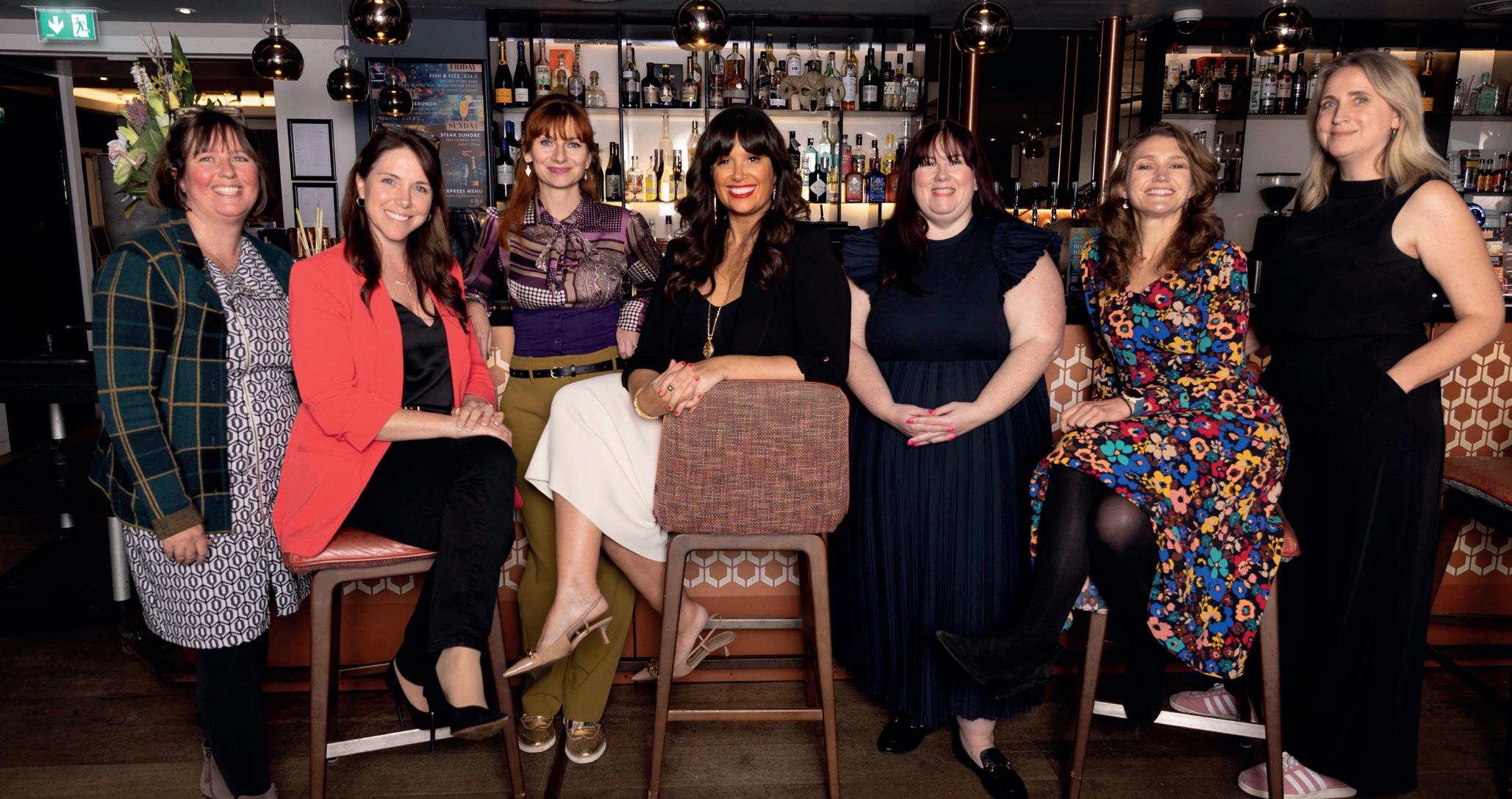
The incredible women of my 2024/25 Mastermind.
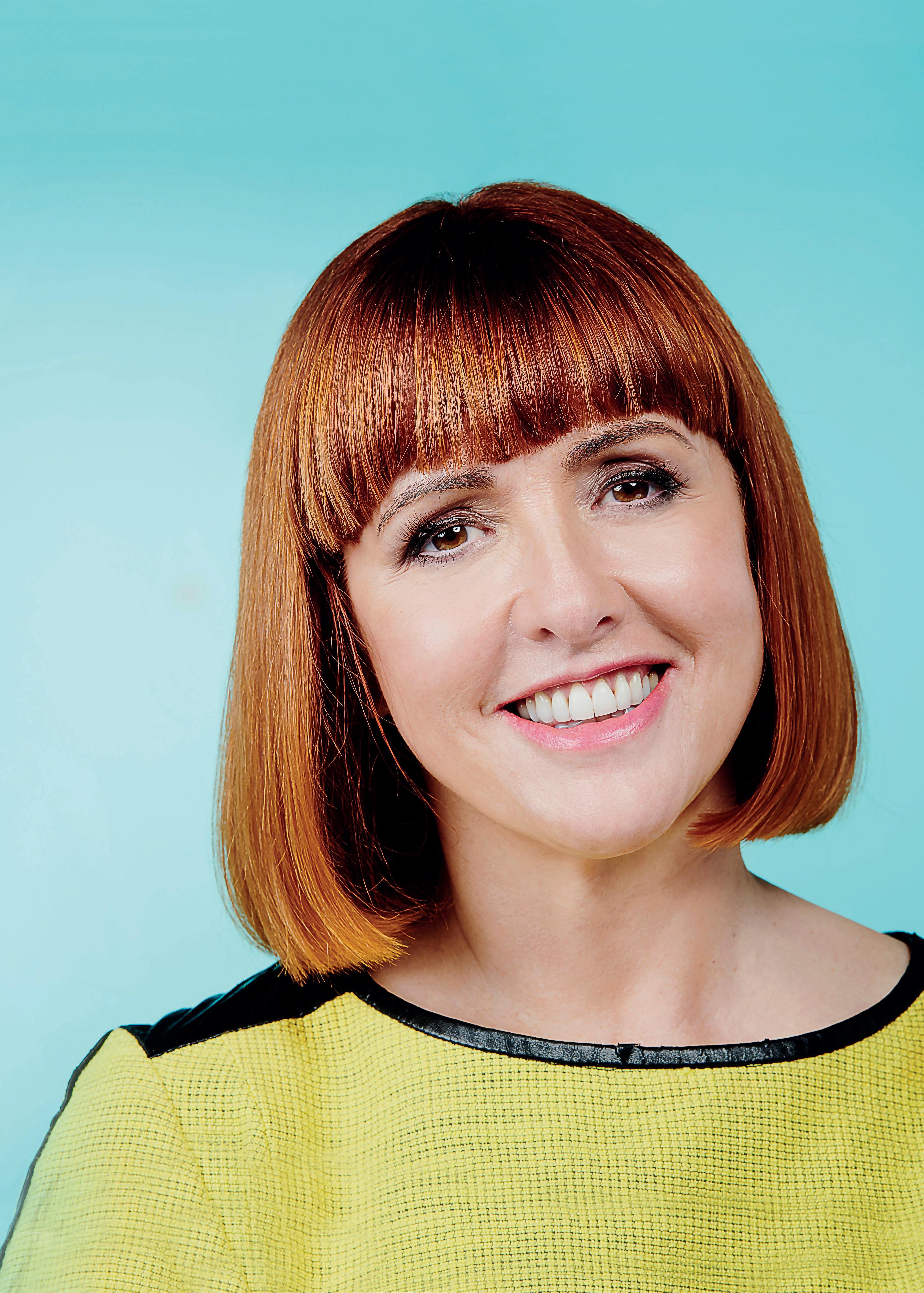
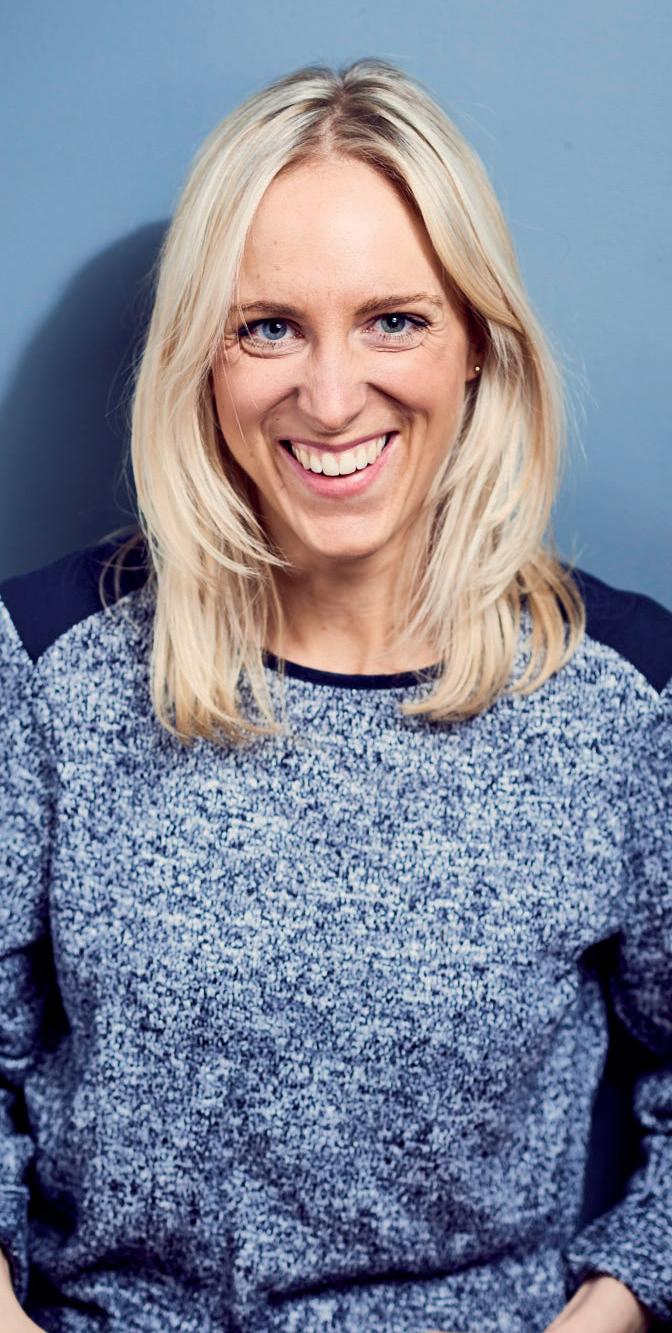
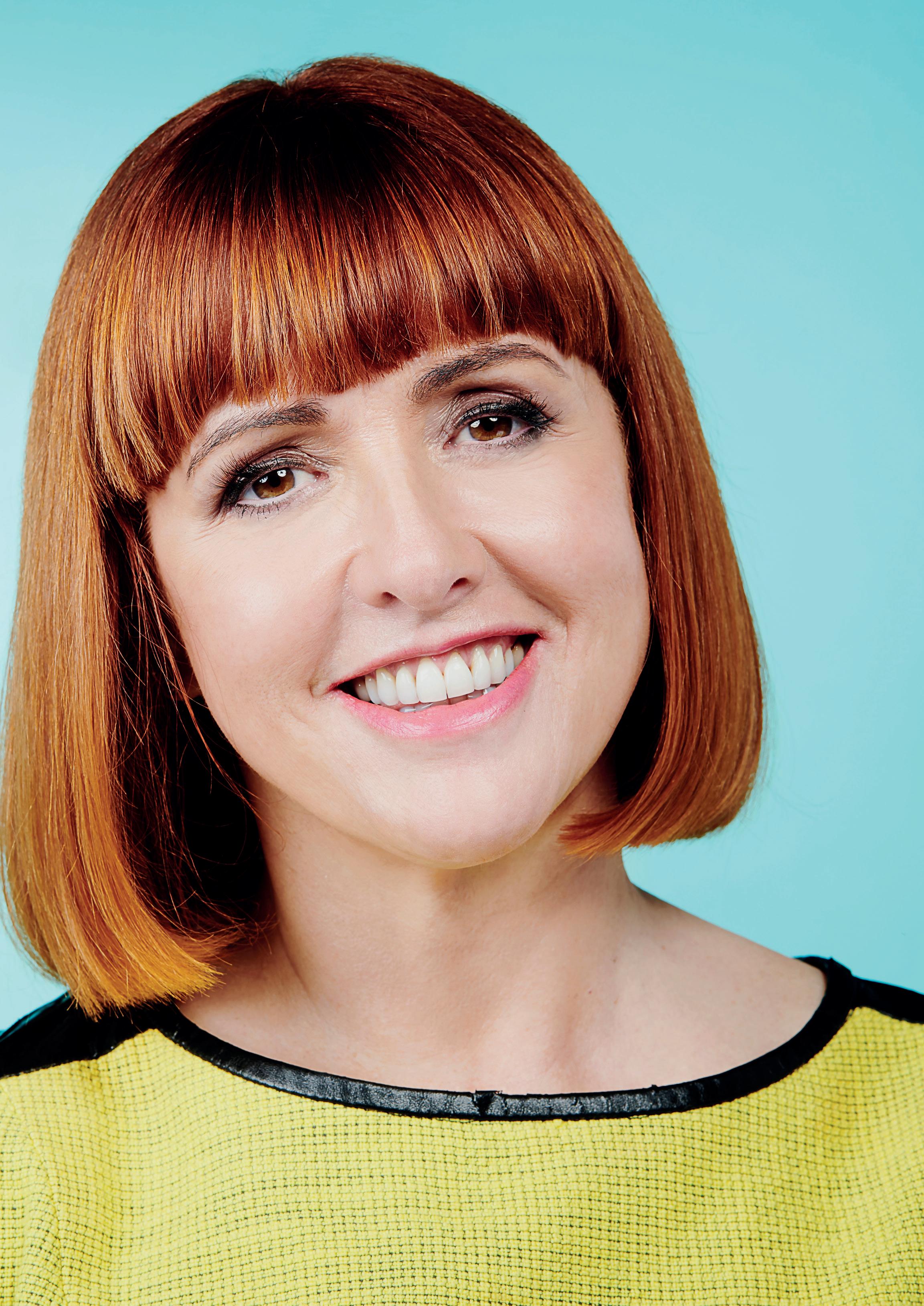
CALLY BEATON Countering the scourge of mansplaining THE BIG STORY
Mansplaining, the portmanteau word combining ‘man’ and ‘expla…’ Oops, just about to go down that same road myself. It is the bane of just about every professional woman – scratch that – it is the bane of every woman to have the arrogant, self-important man assume you’re an inferior person on a technical, intellectual and emotional level.
Alan Wares looks at a practice that has no place in civil society
The unsolicited advice, the condescending tone, the ignored or overlooked expertise, based on… well, pick one. Ignorance. Arrogance. Stupidity. Excess confidence. Self-entitlement. The patriarchy. If this magazine has sought to achieve one thing (several, really), it’s that women have every bit as much intellect, business acumen, knowledge, and inalienable right to challenge all of the proxies that have gone before them. And some men don’t like that.
Certain men are now feeling so downtrodden at the thought of women doing – and doing well – what they considered was ‘their job’, challenging their power and status, contradicting their word, that they feel like an endangered species. It’s the same across many aspects of culture, whether gender, race, sexual orientation or nationality, so when
women outperform them, they start whining. Something about ‘woke’ or ‘positive discrimination’. Naturally, Dynamic is not interested in this status quo.
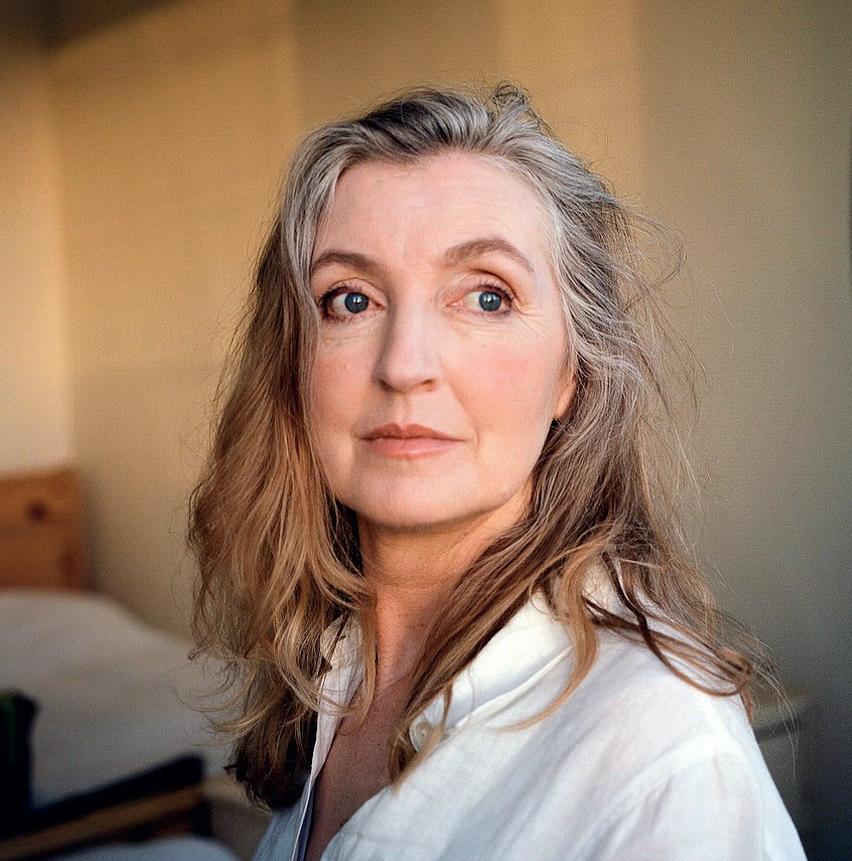
The cultural roots of the word gained widespread attention after author Rebecca Solnit published her 2008 essay “Men Explain Things to Me,” even though she did not use the actual word ‘mansplaining’ in the text.
In broader terms, while Solnit originally meant to describe a gender-based power dynamic, the term is more often used today to refer to any overconfident or patronising explanation given to someone, regardless of gender.
Certain men are now feeling so downtrodden at the thought of women doing – and doing well – what they considered was ‘their job’
Rebecca Solnit, creator of the realisation of ‘mansplaining’
In 2014, Solnit told the Guardian in an interview about how she felt being the creator of the word ‘mansplaining’, “A really smart young woman changed my mind about it. I used to be ambivalent, worrying primarily about typecasting men with the term. (I have spent most of my life tiptoeing around the delicate sensibilities of men, though of course the book ‘Men Explain Things to Me’ is what happens when I set that exhausting, doomed project aside.) Then in March a PhD candidate said to me, ‘No, you need to look at how much we needed this word, how this word let us describe an experience every woman has, but we didn’t have language for.’
“And that’s something I’m really interested in: naming experience and how what has no name cannot be acknowledged or shared. Words are power. So if this word allowed us to talk about something that goes on all the time, then I’m really glad it exists and slightly amazed that not only have I contributed about a million published words to the conversation but maybe, indirectly, one new word.”
“Do men still explain things to you?”
“Do they ever! Social media are to mansplainers what dogs are to fleas, and it has brought them out in droves. But more than anything since I wrote ‘Men Explain Things to Me’, the public conversation offers up a dramatic uptick in guys mansplaining feminism and women’s experiences. Worse, they’re just denying that we even need feminism.
“If there were awards to be handed out, I’d offer one to the man who told a woman friend that – one, women actually like catcalls from, two, a man who’s only spent time in men’s locker rooms. So according to him, we like street harassment, because we’re just crazy that way. How do we know? Just ask an expert. Obviously one who is not a lady.”
“‘Do men still explain things to you?’
‘Do they ever! Social media are to mansplainers what dogs are to fleas’”
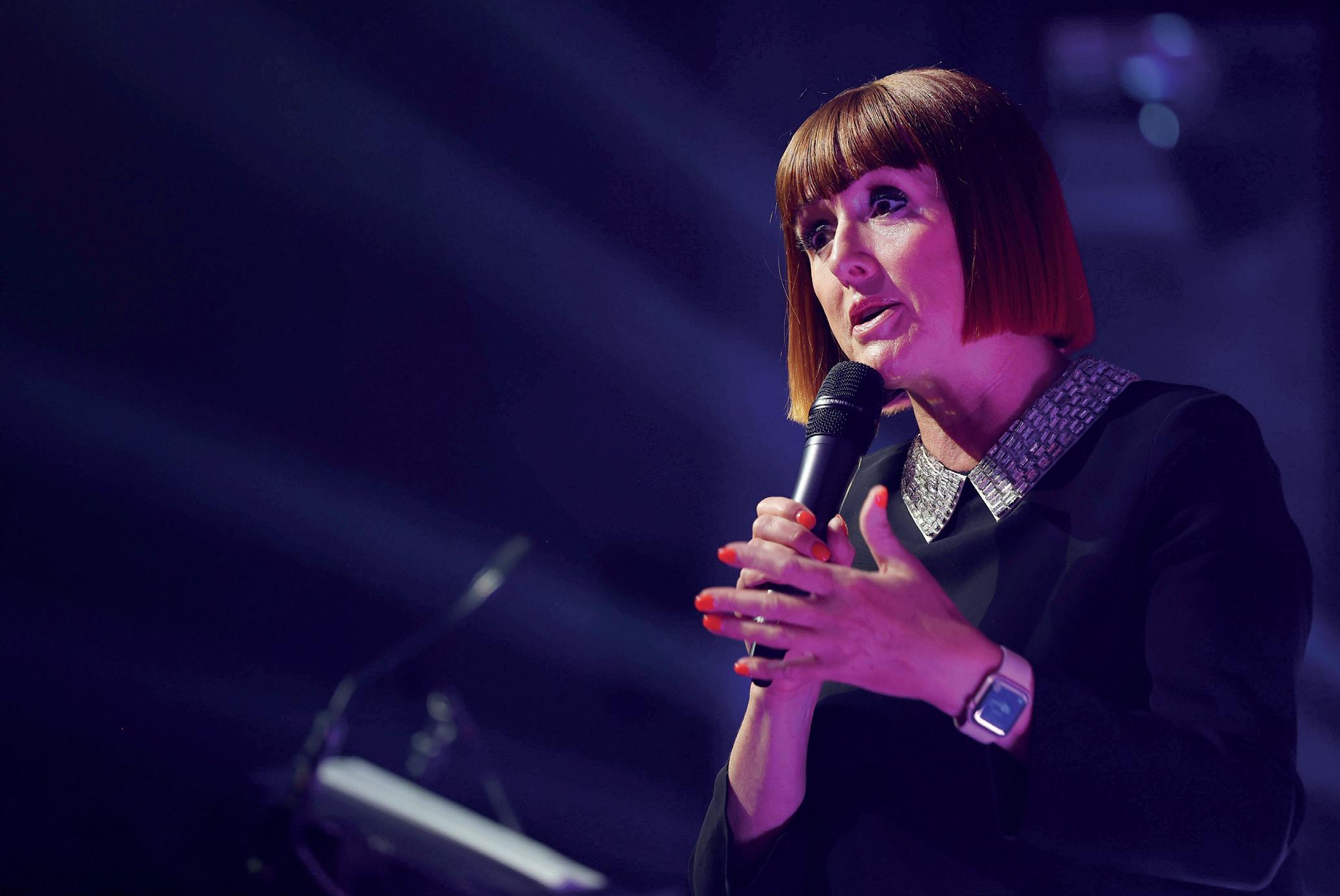
Back in the UK, and more recently, one of the most frequent recipients of mansplaining is comedian, writer and TV producer, Cally Beaton. She spent 25 years in boardrooms and in TV production before leaving to tread the boards. Her expertise is exemplary and wide-ranging. Until she meets a non-expert, it would seem, one of whom was more than happy to say how her time and experience have been wrong.
Beaton is also mansplaining’s main protagonist and, over the past couple of years or more, has taken to posting short videos on social media, describing how she has been on the receiving end of persistent mansplaining either during, before or after her stand-up shows.
Actually, for ‘describing’, it’s more ‘brutal takedown’. If you can tear yourself away from this august magazine, head to TikTok and YouTube and type ‘Cally Beaton mansplaining’. There are myriad examples of her exasperation, brilliantly told, usually while taking her dog ‘Jeff’ for a walk.
“Not every man is a mansplainer, but every mansplainer is a man”
Trent Davis Bailey
As Newsweek reported in May 2024, “Cally Beaton explained in a video that she was due to speak at an event earlier this month when she noticed that her name card wrongly listed her as Carry. She asked for it to be corrected, but instead of changing it, the man she spoke to insisted that Carry was correct, despite her protestations that she wasn’t.
“It was extremely frustrating for Beaton, who lives in London. She told Newsweek that it’s all too common for people to “doubt a woman’s credibility.” She feels that this wouldn’t have happened if she were male, but because she’s a woman, the man chose to mansplain her own name. Since she shared the “ultimate mansplain” experience on TikTok, the clip has been viewed over 425,200 times (now 493,000) and gained more than 54,900 likes (now 63,000) in just days.
Beaton, a comedian and podcaster, said: “I’m a very experienced speaker, and I feel that a woman probably would not have said that to me. She’d have tried to help. Also, if I were a male speaker, I don’t think that guy would have said, “No, that’s not your name.”
It wasn’t the only time she had been mansplained over her name. She was in a ‘well-known coffee chain, noted for its green and white logo’, when the barista (alright, bloke behind the counter) pointed out that she was spelling her name wrong. “Cally is spelt ‘C-A-L-I’” he unwisely decided
to mansplain to her. Your forehead hurts after a while with all the facepalming.
As a result of the first video being posted, Beaton was inundated with examples from TikTok viewers describing their experiences of being mansplained. “What an embarrassment of riches,” she commented in a follow-up post. One thing specifically asked for was what was the best response to this ignorance; what is the thing she’d wished she’d said at the time when thinking about it later?. Her favourite at the time was, “Please don’t confuse your Google search with my PhD.”
In another post, she references a conversation about a book by Caroline Criado Perez called ‘Invisible Women’, which a clueless male in the meeting she was part of kept talking over her. Or at least, the male was trying to reference it; Beaton was helping him with what he was on about, and he wouldn’t listen.
Soon after these first videos, Beaton continued to post more content, further explaining how men would talk over her and tell her things about herself or her profession (usually incorrectly).
In fact, if one is so minded, a deep dive into Beaton’s TikTok posts will leave you open-mouthed at the breathless ignorance of some men. “It isn’t gender
“Beaton was in a ‘well-known coffee chain’, when the barista pointed out that she was spelling her name wrong. “Cally is spelt ‘C-A-L-I’” he unwisely decided to mansplain to her.”
Cally
neutral,” Beaton posted, “because women still have some trouble getting themselves heard. Not all men are mansplainers, but all mainplainers are men.”
A series of these behaviours is writ large in the caricatures in the 2026 film ‘Ladies First’, starring Rosamund Pike and Sasha Baron Cohen. Billed as a ‘comedy’, it is instead a fist-gnawing look at overt misogynistic tendencies at a London PR firm, most of whose practices are outlawed now.
As to the entertainment quality of the film, that’s up for a separate debate, but what the film does do is cast light on heinous sexist practices - hopefully exaggerated, but not totally - in City businesses. There is a Hollywood ending (of course there is), but one fear highlighted by a reviewer is that mansplainers might use this film as an instruction manual for these ongoing practices.
believe a woman when she is on the receiving end of violence or abuse from their partner.
“If one is so minded, a deep dive into Beaton’s TikTok posts will leave you openmouthed at the breathless ignorance of some men.”
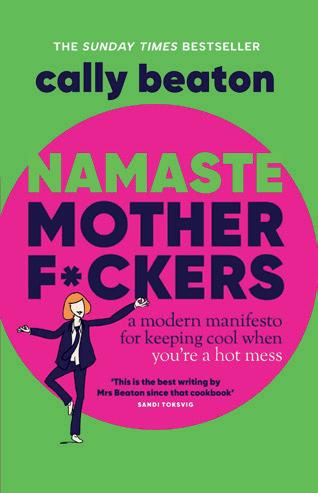
Meanwhile, in 2025, Cally Beaton wrote a top ten best-selling book ‘Namaste Motherf*ckers: A modern manifesto for keeping cool when you’re a hot mess’. As Amazon wrote, “Part memoir, part stereotype-defying manifesto, Namaste Motherf*ckers is a funny, empowering, practical book that takes an irreverent look at the author’s own story of radical midlife reinvention - taking her from meetings in the boardroom to becoming a stand-up comedian - thanks to a chance conversation with the late, great Joan Rivers encouraging her to make change happen.”
There is a more serious, chilling side to this. It’s one thing to be disregarded by an entitled man – an act that leaves eyes rolling in your head like a slot machine; it’s another thing to be ignored by a man in authority. Doctors who won’t listen to women, or worse, who say there’s nothing wrong. Police officers who won’t
Beaton uses her platform to gather other real-life stories from members of the public. She draws on these, along with her own real-life experiences with mansplaining, in her live shows. Oddly enough, there are certain - male, obviously - members who get so triggered that they heckle her on this very subject, as if to prove her point. “Oh, to have the confidence of a mediocre man…” comes the sharp riposte. Unsurprisingly, the irony goes way over their heads. The ocean of these stories and experiences is, sadly, vast.
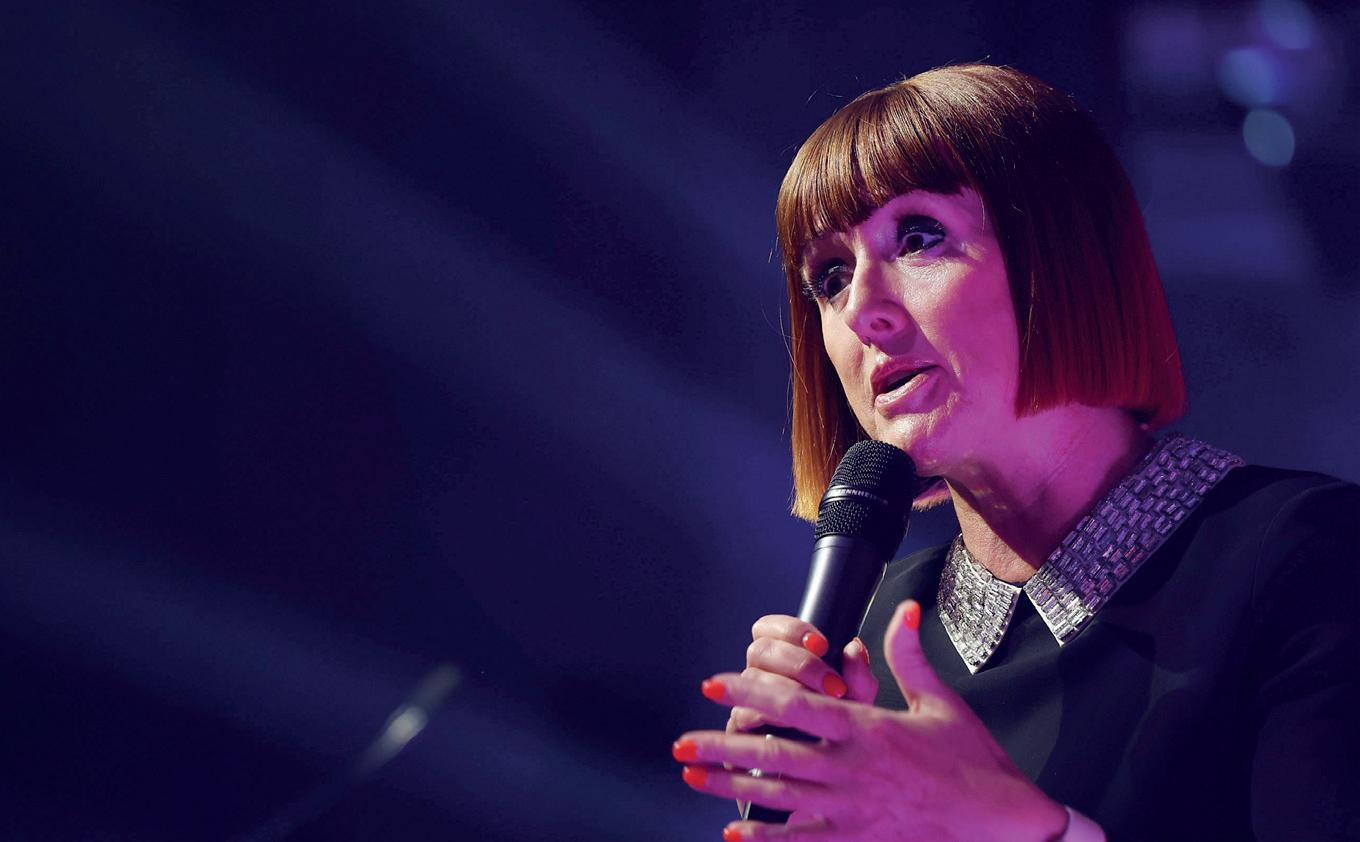
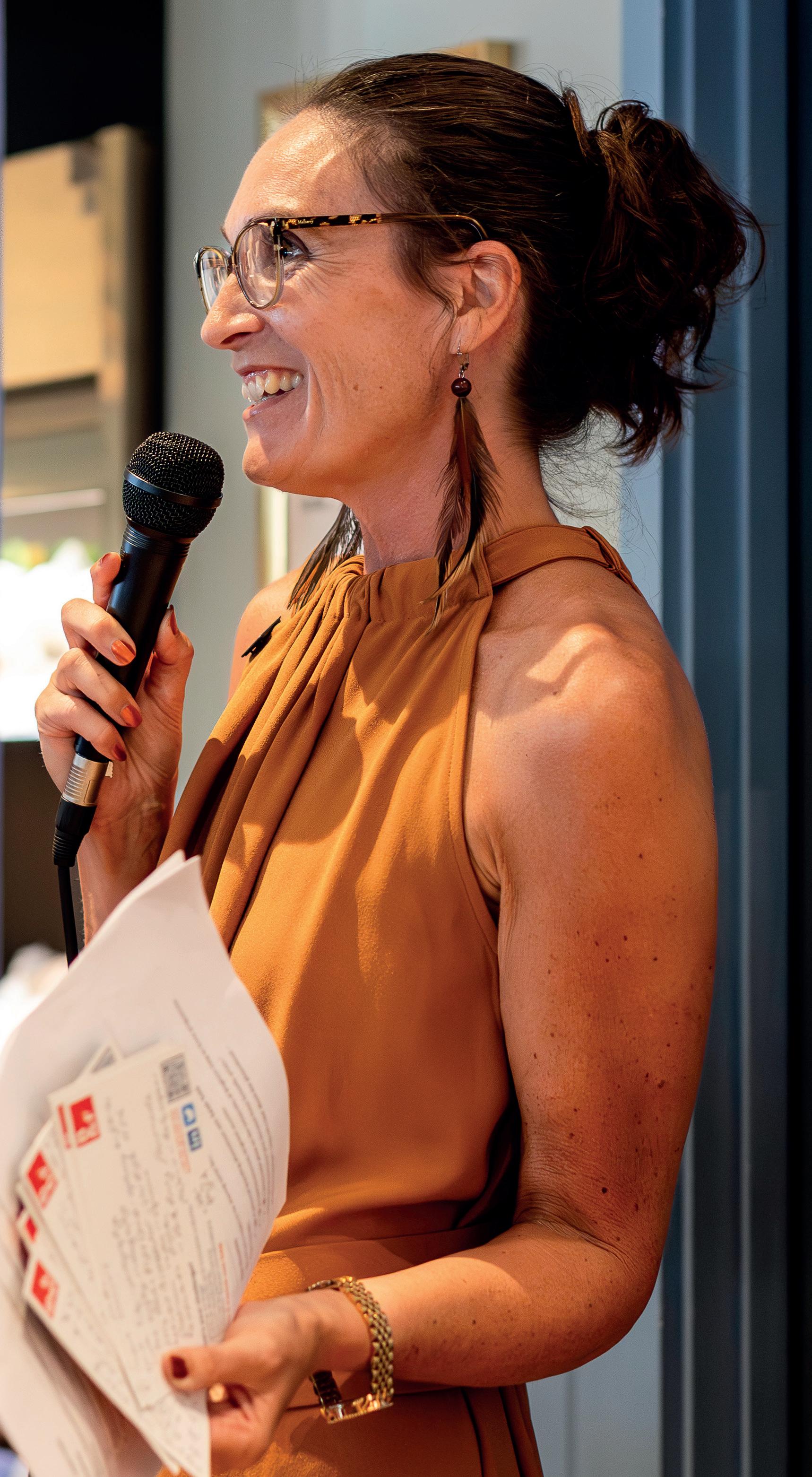
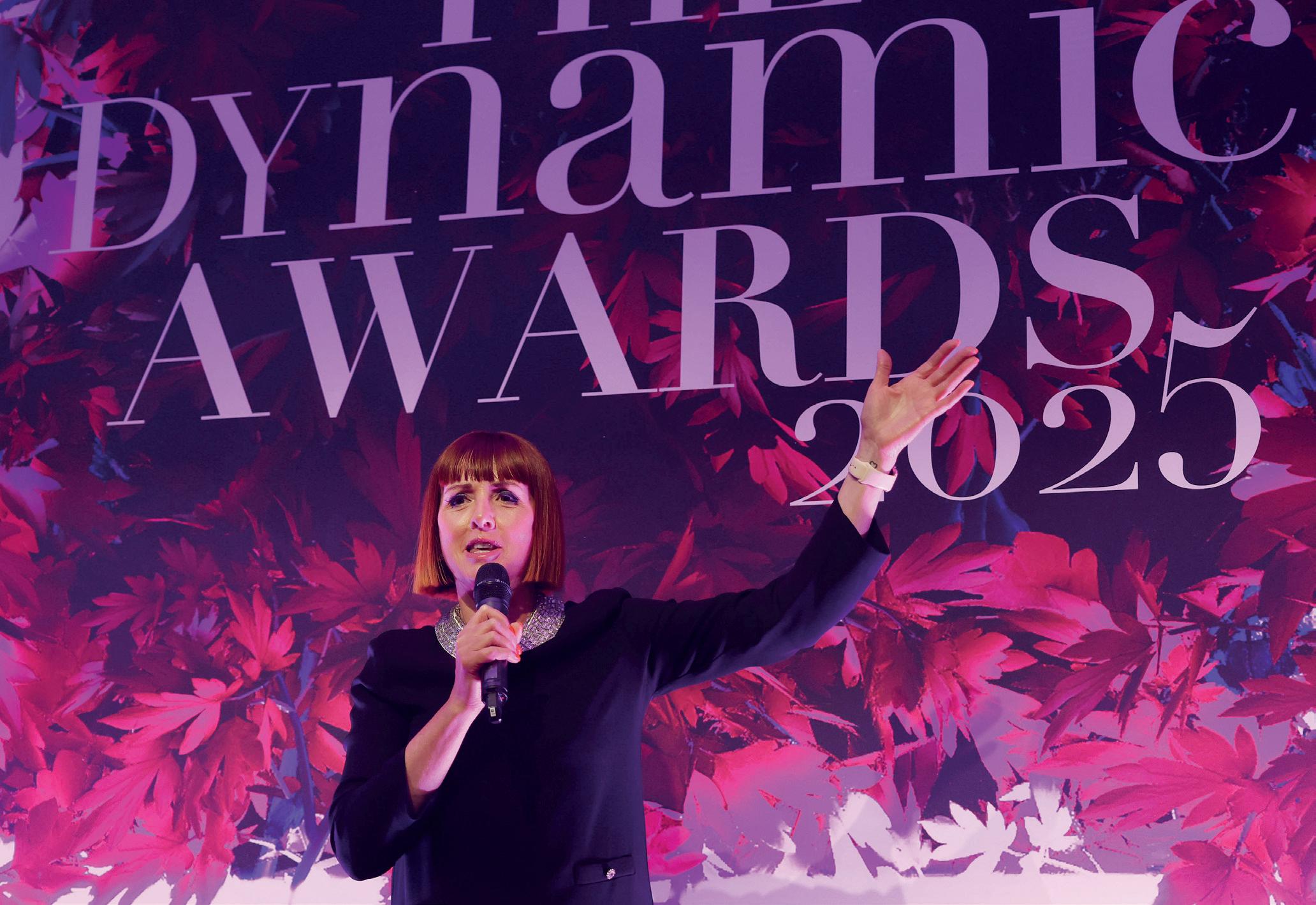
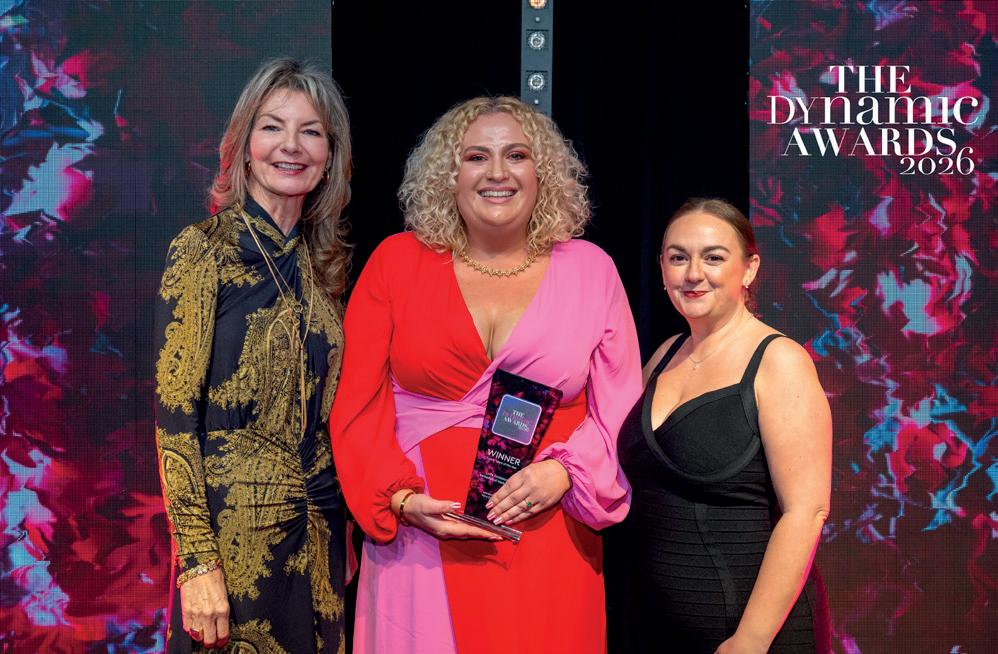
Cally Beaton is no stranger to Platinum; she hosted the Dynamic Business Awards in 2025 and will present both the Brighton & Hove Business Awards and the Surrey Business Awards later this year.
Beaton at the Dynamic Business Awards, 2025
TAKE CONTROL OF YOUR FINANCES
HER SELF FUTURE
Women, Wealth & Wellness
FEEL MORE IN CONTROL YOUR MONEY, YOUR WELLBEING, YOUR FERTILITY AND YOUR NEXT CHAPTER
POWERFUL, EXPERT-LED MORNING FOR WOMEN WHO WANT CLARITY, CONFIDENCE AND MOMENTUM
REDUCE STRESS AND REGAIN MENTAL CLARITY
THIS EVENT IS FOR YOU IF YOU’RE
✔ Navigating career pressure or burnout
✔ Managing family and nancial responsibilities
✔ Considering starting a family now or in the future
CAMILLE PIERSON
UNDERSTAND YOUR BODY, HORMONES AND FERTILITY
MONDAY SEPTEMBER 7TH 9.00AM – 1.00PM THE GRAND BRIGHTON KINGS ROAD BRIGHTON BN1 2GR
WALK AWAY WITH A CLEAR PLAN
★ ONLY 120 SEATS AVAILABLE is will sell out! EARLY BOOKING STRONGLY RECOMMENDED FROM THE TEAM
Stress and Recovery Specialist PROFESSOR NICK MACKLON
✔ Read for a fresh start or wondering “what’s next?’ JUST £25 PER TICKET
Women’s Health Expert
MEET OUR EXPERT SPEAKERS IN ASSOCIATION WITH
ANYA SIZER Hormone and Wellbeing Insight SAMANTHA KAYE Financial Clarity and Con dence
RESERVE YOUR PLACE TODAY
Scan to book in under 60 sec ds
SIX YEARS OF EVIDENCE BACKING WOMEN WORKS
For the sixth year running, the organisations that signed the Investing in Women Code have put a greater share of their funding behind female founders than the market as a whole. A commitment that began with twelve signatories now has more than 330 – and a growing body of proof behind it.
There is a familiar argument made in rooms where funding decisions are made, and it goes roughly like this: backing women is the right thing to do. It is, but being right has never been especially good at moving capital on its own. Evidence helps.
The sixth annual report from the Investing in Women Code, published on July 8th, offers a decent amount of it. For the sixth consecutive year, signatories to the Code have directed a greater proportion of their funding to female-founded businesses than the wider market has. Six years is long enough to stop calling something a trend and start calling it a pattern.
The Code is a government-backed commitment to improve access to finance for women-led businesses, and its growth tells its own story. In 2019, it had twelve signatories. Today it has more than 330, including most of the major UK retail banks, venture capital fi rms, angel investors and lenders. Nationwide and Innovate U signed up this year.
“There is a familiar argument made in rooms where funding decisions are made, and it goes roughly like this: backing women is the right thing to do.”
Blair McDougall, Minister for Small Business and Economic Transformation, said signatories had outperformed the wider market for the sixth year in a row, showing that backing female founders is ‘good for business and good for growth’. The Code matters, he added, because it helps more women start, scale and succeed – unlocking talent, creating jobs and strengthening the economy along the way.
WHAT THE MONEY ACTUALLY DOES
Percentages are useful. Founders are more persuasive. Kate Heath is the founder and chief executive of Gaia Learning, the UK’s leading online school for neurodivergent learners. She joined the Baltic Ventures Accelerator in 2023 and came away with mentoring, business support and a £50,000
pre-seed investment. That early backing helped Gaia Learning speed up product development and go on to secure more than £600,000 in follow-on funding. In 2025 she was named Great British Entrepreneur of the Year.
She is honest about the difficulty of the fundraising itself. ‘Securing funding is not easy, whichever path you take,’ she said, describing it as one of the hardest parts of building a business. What changed things for her was a shift in how she thought about it - ‘When you stop seeing it as just raising money and start seeing it as finding people who genuinely believe in your mission, it becomes more rewarding’
Working in education, and specifically with children with SEND, meant investors tended to connect with the work
EVIDENCE THAT WORKS
personally. The funding allowed the school to grow. But Heath is clear that it brought something else too – a community of people who share the belief that every child deserves an education that works for them.
WIDENING THE CIRCLE
The report is candid: women-led businesses still receive a smaller share of overall investment than they should, and there is plenty of work underway to close that gap. The Invest in Women Taskforce has deployed more than £70 million from its £635 million pool in its fi rst year. The British Business Bank’s £400 million Investor Pathways Capital Initiative is designed to support emerging fund managers and widen who gets access to investment opportunities in the fi rst place. Last week the Bank committed
£90 million through that programme to ten new funds, with women making up more than half the General Partners in the cohort.
That last detail is easy to skim past and probably matters most. Who writes the cheques shapes who receives them.
Kristen McLeod, chief strategy officer at the British Business Bank, described the findings as evidence that the Code is gradually shifting the dial while making it plain that there is much more to do. The Bank’s focus, she said, is on widening access to finance and knocking down barriers so that more female founders can reach their full potential.
“Women-led businesses still receive a smaller share of overall investment than they should, and there is plenty of work underway to close that gap.”
A HABIT WORTH FORMING
What the report describes is a habit taking hold across a few hundred organisations that have agreed to count what they fund and publish the answer.
That sounds administrative, but measurement is what turns a good intention into a commitment, and commitment is what moves money. Six years of data is making an argument that no amount of advocacy could make on its own.
Somewhere in those numbers is a woman with an idea and a spreadsheet, sitting across from someone deciding whether to believe her. Six years on, the odds of that conversation going well are better than they were.
THE CODE, IN BRIEF
Signatories to the Investing in Women Code commit to three things:
• Adopting best practice to improve female entrepreneurs’ access to finance
• Nominating a member of the senior leadership team to be responsible for supporting equality in all interactions with entrepreneurs
• Providing annual funding data broken down by gender to the Department for Business and Trade.
The Sixth Investing in Women Code Annual Report is available at www.gov.uk/government/publications/ investing-in-women-code-annual-report-2026
Organisations wishing to sign up can do so here: www.british-business-bank.co.uk/ investing-in-women-code
Leading law firm DMH Stallard has revealed that female representation within its partnership has reached 49.5%, significantly outpacing the wider UK legal sector average of just 29%*
How to outpace the legal sector gender benchmark
The fi rm credits this milestone in part to the work of its internal Women in Law group. Meeting quarterly, the group champions women across DMH Stallard’s six offices – London, Brighton, Gatwick, Guildford, Horsham and Hassocks – offering support, mentoring and a strong sense of community.
For HR Director Amanda Smith, the figure reflects
something more deliberate than good fortune. “The milestone is a very positive leap forward,” she says, “one strongly attributed to providing a platform where women are genuinely supported to progress into senior leadership.” The quarterly meetings, she adds, are what keep that platform from becoming an abstraction: they ensure career growth, work-life balance and wellness remain 'continuous actions, not just policies on a page'.
“For HR Director Amanda Smith, the fi gure reflects something more deliberate than good fortune”
That approach is reflected in the fi rm's exceptionally strong internal sentiment. In its latest staff survey, an overwhelming 100% of people named DMH Stallard a great place to work, while 95.7% reported an excellent work-life balance and 97.6% expressed absolute confidence in leadership. “It is a foundation of inclusion that explains 'exactly why 100% of our people value our workplace culture so highly,” Smith adds.
The commercial argument is well established. Data from McKinsey** confi rms that top-quartile companies for gender diversity show a 39% greater likelihood of financial outperformance over their bottom-quartile peers.
A BROADER CULTURE OF INCLUSION AND WELLBEING
The success of the Women in Law framework serves as the blueprint for a rapidly expanding portfolio of diversity and wellness initiatives across the fi rm, including:
• The Launch of PRISM: Alongside its gender diversity milestones, DMH Stallard has formally established PRISM (Pride, Respect and Inclusion, across the Spectrum and More).
or them); enhanced maternity and paternity leave benefits above statutory minimums; the option to buy an additional week's holiday, supporting wellbeing and helping everyone to balance childcare and other personal commitments; and a Partner Coaching Programme offering confidential one-toone sessions throughout the year.
“Organisations that prioritise genuine inclusion consistently outperform their peers”
The group gives LGBTQIA+ colleagues and allies a visible, supportive space to collaborate and shape day-to-day policy.
• GP-Led Parent Support: Recognising the complex realities of modern working families, the fi rm's Learning & Development team partnered with Stretching the City to deliver specialist 'Digital Wellbeing' webinars. Th is included a dedicated session delivered by a practising GP focusing on children's digital habits and screen-time strategies for working parents.
• Gold-Standard Development: Backed by a Gold accreditation from Investors in People, the fi rm has achieved a 100% trainee to NQ retention rate over consecutive years. It has recently launched a pilot mentoring programme for junior lawyers, with plans to roll this out across the fi rm, alongside formal coaching programmes for all Partners.
Rebecca Thornley-Gibson, Partner in Employment, sees the effect reaching well beyond the fi rm's own walls. Organisations that prioritise genuine inclusion, she says, consistently outperform their peers – and the 49.5% figure 'isn't just a proud milestone for DMH Stallard; it directly influences how we support our clients'. Where flexible working, mentoring and robust family support are part of the DNA rather than the marketing, she argues, the fi rm isn't 'just talking about modern workplace trends – we are living them'. Her conclusion is a simple one: it makes for better advisors, and a truly progressive place to build a legal career.
That thinking runs through the fi rm's benefits package too, which includes Volunteer Days (two paid days per year to volunteer for registered charities that matter to the fi rm
Th is internal success coincides with an exceptional period of external growth. DMH Stallard was recently crowned Regional Law Firm of the Year by Chambers UK and swept three major categories at the Insider Media South East Dealmakers Awards, including Corporate Law Firm of the Year.
Sources:
*The Solicitors Regulation Authority (SRA) Diversity Data
** 'Diversity Matters Even More: The Case for Holistic Impact'
ABOUT DMH STALLARD
DMH Stallard is an award-winning full-service law firm with offices across London and the South East, including Brighton, Gatwick, Guildford and Horsham. The firm advises businesses, individuals and families across a broad range of legal services, including corporate law, real estate, employment, dispute resolution and private client matters.
Recognised by leading legal directories including Legal 500 and Chambers UK, DMH Stallard is known for delivering clear, commercially focused legal advice and building long-term client relationships. The firm supports clients ranging from owner-managed businesses and entrepreneurs through to large organisations. Contact us at enquiries@dmhstallard.com www.dmhstallard.com
In our exclusive Spotlight feature, we highlight women who are doing good things in their community. They’re not always seen but we think they should be.
SP OTLIGH T
Shazia David
Shazia David’s business, Caremark Spelthorne & Runnymede, won Dynamic Awards Medium Business of the Year
My grandmother’s entrepreneurial spirit inspired my journey from corporate leadership in Dubai to the founding and building of an award-winning care business in Britain.
People often ask what gave me the courage to leave a successful career in Dubai and start again in a completely different country. The truth is, I believe my story began long before I was born.
My grandfather was a pastor in a small village in Pakistan, and my grandmother was an extraordinary entrepreneur long before the term existed. As a pastor’s wife, she recognised the hardships faced by women in her community and established a knitting enterprise that trained local women and young girls to produce beautifully handcrafted knitwear. Their work became so highly regarded that it was exported to the United Kingdom and the United States.
my work, I longed for a greater sense of purpose.
In 2017, I left behind a prestigious government career and moved to the UK. Two years later, I acquired Caremark Spelthorne & Runnymede, then a small home care business supporting just five clients.
“Success isn’t always about following the path you imagined. Sometimes it’s about having the courage to embrace the one you never expected.”
For those women, it meant far more than an income. Young girls saved for their dowries, mothers sent their children to school, and families enjoyed a better quality of life. Long before “women’s empowerment” became a global movement, my grandmother was quietly transforming lives. Looking back, I realise I inherited not only her entrepreneurial spirit but also her belief that business should create opportunities for others.
Growing up in Dubai, I dreamed of becoming a doctor. Instead, my path led me to management studies and into the corporate world, where I built a successful career in leadership and organisational development. As Senior Manager in Learning and Development with the Government of Dubai, I was responsible for developing future leaders. Although I loved
Today, we deliver over 1,500 hours of care each week, employ 30 local people and have grown into an award-winning business generating more than £1.1 million in annual revenue. Our achievements include Dynamic Awards Medium Business of the Year 2026, Caremark Regional Winner 2026, Best Town Centre Business 2025 and recognition in several employer, leadership and business excellence awards.
Although I never became a doctor, I still found my calling. Today, I lead an organisation that enables vulnerable people to live independently with dignity in their own homes while creating meaningful, long-term careers for the local workforce.
If my journey has taught me one thing, it is this: never be afraid to rewrite your story. The road you never planned may become the one that leads you to your greatest purpose. Success isn’t always about following the path you imagined. Sometimes it’s about having the courage to embrace the one you never expected.
Medium Business of the Year
Lydia Eccleston
Lydia is the Founder an Director of Brightonbased Remarkabull Marketing, and winner of the Future Talent of the Year category at this year’s Dynamic Awards
Growing up in the Midlands, if you’d told the 16-year-old me that one day I’d be running my own marketing consultancy on the South coast, I never would have believed you.
My marketing journey started at 16, when I created social media posts as part of a Saturday job. I had no idea then that I’d found something I’d spend the next 14 years loving. From there, my career took me through agency and in-house marketing roles across the UK, working with everyone from universities and manufacturers to charities and hospitality businesses. Along the way, I completed my degree in English Language and Literature, achieved my CIM Level 6 qualification and eventually settled in sunny Brighton in a Head of Marketing role.
As much as I loved my career, I kept seeing the same problem. Brilliant small business owners were either trying to juggle their marketing themselves or paying for support that lacked real strategy. They deserved access to experienced, director-level marketing, just delivered in a way that was honest, approachable and affordable.
County Hospital, I found myself sketching out ideas for what Remarkabull could become. At the time, it simply felt like hope. Looking back now, it’s incredible to think that’s where the business really began.
“Remarkabull has supported more than 60 businesses across Sussex, and expanded into Surrey and Kent...”
At the same time, I was navigating life with endometriosis. After years of surgeries, hospital stays and trying to fit my health around a traditional 9-5, I reached a point where I knew something had to change. I didn’t want to work less; I wanted to work differently. During one particularly long stay at the
Sixteen months later, it’s been a whirlwind. Remarkabull has supported more than 60 businesses across Sussex, expanded into Surrey and Kent, working with everyone from independent retailers, cafés and wellness brands to manufacturers, professional services, charities, hospitality businesses and construction companies.
We’ve expanded our team, won both the Brighton Girl Awards New Business of the Year and the Dynamic Awards Future Talent of the Year, and achieved more than I ever imagined possible in such a short space of time.
But if you asked me what I’m most proud of, it wouldn’t be the awards. It would be the community we’ve built. Running a business can feel incredibly lonely, and I’ve always wanted Remarkabull to be more than just a marketing consultancy. I meet with my clients face-to-face, use their services as a client where I can, and get to know them as people. Through donating hundreds of hours of support to charities and community organisations, creating free networking opportunities, mentoring local founders and becoming a genuine extension of our clients’ teams, we’ve built something based on relationships rather than transactions.
Remarkabull has never been about becoming the biggest agency. It’s about proving that expert marketing doesn’t have to feel corporate or out of reach. Every business has a story worth telling, and I feel incredibly lucky that I get to help passionate people tell theirs every day.
Future Talent of the Year
By Jo Irving
What the hair industry taught me about leadership
After spending more than 25 years in the hair industry, I genuinely believe it’s one of the most underestimated leadership schools in business. Most people think hairdressers cut hair. That’s part of what we do, but it’s probably the smallest part of the job.
What we really do is understand people. Every client who walks through the salon door is different. One arrives full of excitement because they’ve just got engaged. Another has had the worst week of their life. Someone else sits down quietly and tells you they’re going through a divorce, caring for a parent with cancer or have completely lost their confidence.
As hairdressers, we don’t get to choose who walks through the door. We simply have to meet them where they’re at. Within minutes, we’re reading body language, listening to tone of voice, picking up on their energy and deciding how they need us to show up.
Do they need someone to listen? Do they need to be distracted? Do they need confidence? Or do they simply need an hour where they don’t have to think about everything else going on in their life?
At the very same time, we’re think- ing about colour formulas, face shapes, grey coverage, timings, the next client arriving and how to deliver incredible work within the time we’ve got. That requires an enormous amount of emotional intelligence.
“People aren’t all the same. So why would we lead them as if they are? Just as every haircut is bespoke to the person sitting in front of us, so should leadership be. “
industry leadership
It’s also one of the greatest leadership skills an entrepreneur can develop. One of the biggest mistakes I see leaders make is expecting everyone to be motivated by the same things, communicate in the same way or perform at the same level every day.
People aren’t all the same. So why would we lead them as if they are? Just as every haircut is bespoke to the person sitting in front of us, so should leadership be. Some people need encouragement. Others need stretching. Some need clear direction. Others simply need to know you believe in them.
The best leaders don’t lead everyone in the same way. They understand the individual in front of them, adapt their approach and meet people where they’re at.
someone leaves the salon loving their hair, they don’t just leave with a new hairstyle. They stand taller. They smile more. They walk differently. They walk into meetings with more confidence. They bump into someone they haven’t seen for years and feel excited rather than self-conscious. That confidence doesn’t stay in the salon. It ripples into every conversation, every relationship and every opportunity that comes afterwards.
Great leaders create exactly the same ripple effect. They don’t simply manage people or improve performance. They help people believe in themselves. When people feel confident, they contribute more. They share ideas. They have difficult conversations. They take ownership. They innovate because they feel safe enough to do so.
The impact of great leadership is never confined to the workplace. It ripples into families, friendships, communities and every person that employee goes on to meet.
Finally, the hair industry taught me something every entrepreneur eventually learns. You can’t continually give your energy away without looking after yourself.
“The second lesson the hair industry teaches is that relationships will always outperform transactions.”
The second lesson the hair industry teaches is that relationships will always outperform transactions.
Clients don’t drive for two hours because nobody else can cut a bob. They do it because of how that person makes them feel. They feel listened to. They feel understood. They feel safe. They feel valued.
As entrepreneurs, we spend a lot of time talking about marketing, but I’ve always believed your greatest marketing strategy is the experience people have after spending time with you. People remember how you made them feel long after they’ve forgotten exactly what you said.
That’s why trust is one of the most valuable assets any business can build. Perhaps the greatest leadership lesson the hair industry has taught me is this: confidence ripples.
If you’ve ever had a haircut you hated, you’ll know it affects far more than your appearance. You may avoid mirrors, cancel plans, question yourself and spend days wishing you looked different. The opposite is equally true. When
Hairdressers spend all day giving. Listening. Creating. Problemsolving. Supporting. Entrepreneurs do exactly the same. If you’re exhausted, overwhelmed or disconnected from yourself, it affects every decision you make, every conversation you have and every person you lead. Leadership starts with self-leadership. Looking after your wellbeing isn’t a luxury. It’s one of the most important leadership responsibilities you have.
People often ask me how I went from hairdressing into coaching entrepreneurs and leaders. The truth is, I don’t think I changed careers. I’ve always been helping people build confidence, navigate change, communicate better and see what’s possible in themselves. The chair was simply my first coaching room.
Looking back, I don’t think the greatest lesson the hair industry taught me was how to cut hair. It taught me how to understand people. And in business, I can’t think of a more valuable leadership skill than that.
Jo is a leadership, business and performance coach, facilitator and speaker.
joirving.com
FURTHER READING… WHY EMPLOYEES DON’T LEAVE THEY LEAVE THREAT STATES
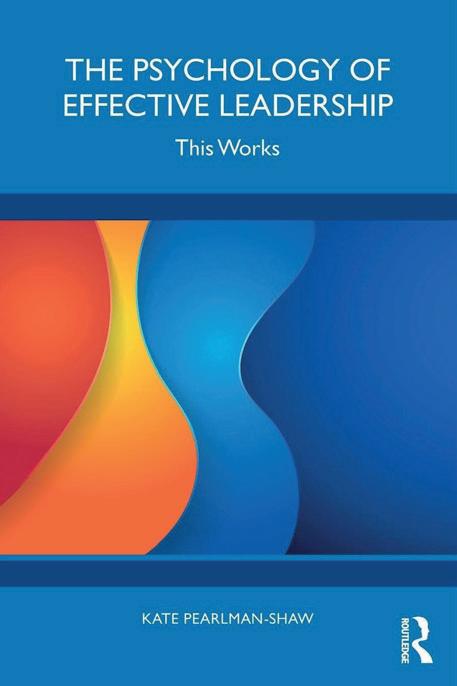
Kate Pearlman-Shaw is a Chartered Psychologist with the British Psychological Society and is the author The Psychology of Effective Leadership: This Works, published by Routledge.
There are three well-known reasons why people leave their jobs: better pay and benefits, poor leadership and management and lack of development opportunities. Behind all of these is some serious neuroscience, the science of ‘threat’ and ‘reward.’
A threat state occurs when the limbic system, the brain’s alarm and reaction centres, becomes overstimulated. The amygdala, hypothalamus and thalamus comprise the brain regions receiving so many distress signals that we are unable to think properly. Areas of our prefrontal cortex, particularly those running our analytic and empathic systems, the mechanisms to solve problems and attend to those around us, don’t work as well as usual. Consequently, we experience emotional arousal, cognitive and behavioural changes and feel stressed.
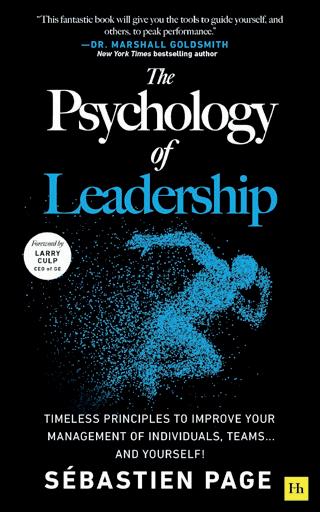
THE PSYCHOLOGY OF LEADERSHIP: TIMELESS PRINCIPLES TO IMPROVE YOUR MANAGEMENT OF INDIVIDUALS, TEAMS... AND YOURSELF!
By Sébastien Page (Harriman House, 2025)
T. Rowe Price’s chief investment officer looks beyond finance into positive, sports and personality psychology to explain what actually makes leaders effective. Page blends research, humour and real stories into eighteen practical principles covering selfmanagement, motivation and reading the people around you. It’s less about hierarchy and more about mastering the mental game of working well with others.
The more we are in this ‘threat state,’ the more intense this becomes as we produce cortisol, our stress hormone, sending even more distress signals to the limbic system.
There are multiple causes of workplace threat states: being overloaded, too many competing demands, not being heard or included, unwanted change, goalposts constantly changing, disagreements with colleagues, a task or project gone wrong, not being adequately recognised and rewarded, and many, many more. It’s easy to see that in this environment we can’t see our career progressing and we’ll see the people around us as being part of that problem, most often our leaders and managers.
The neuroscience answer is to create the opposite: a ‘reward
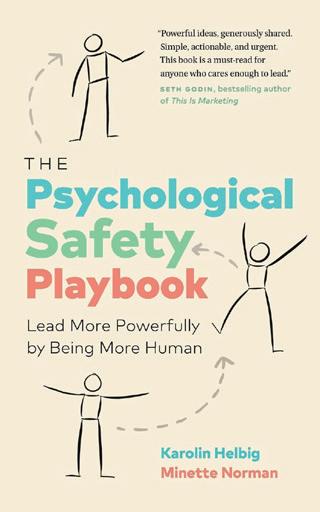
THE PSYCHOLOGICAL SAFETY PLAYBOOK:
LEAD MORE POWERFULLY BY BEING MORE HUMAN
By
Karolin Helbig and Minette Norman (Page Two, 2023)
Written by a former McKinsey consultant and a veteran tech leadership advisor, this playbook offers twenty-five concrete actions for building teams where people feel safe to speak up, disagree and admit mistakes. Organised around five core leadership skills, it favours specific, repeatable moves over abstract theory, making it a handson companion for anyone trying to shift a team’s culture in practice.
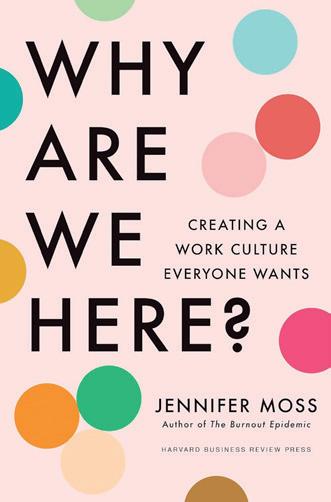
WHY ARE WE HERE?: CREATING A WORK CULTURE EVERYONE WANTS
By Jennifer
Moss (Harvard Business Review Press, 2025)
Workplace expert Jennifer Moss investigates the quiet unease many employees feel post-pandemic, asking what has fundamentally shifted in our relationship with work. Drawing on extensive interviews with leaders and staff across industries, she identifies what separates organisations people want to stay in from those they’re desperate to leave, offering research-backed guidance for rebuilding purpose, trust and belonging at work.
COMPANIES,
state’ in which the limbic system is calmer and the prefrontal cortex can do its job. We’ll be able to solve problems, stay calm and communicate well. Most of all, we’ll feel engaged, attached, inspired and motivated, and we’ll use our discretionary effort – we’ll go the extra mile.
“A threat state occurs when the limbic system, the brain’s alarm and reaction centres, becomes overstimulated. ”
Workplaces that are great places to work, that keep their workforce, are good at creating reward states. They are friendly; our colleagues will be supportive and helpful, and when we encounter problems, we’ll be heard and understood. We’ll be challenged for sure, but we’ll be recognised for what we’ve done. We’ll have the satisfaction of achieving something that’s meaningful for us.
THE CURE FOR BURNOUT: HOW TO FIND BALANCE AND RECLAIM YOUR LIFE
By Emily Ballesteros (The Dial Press, 2024)
Organisational psychologist and burnout coach Emily Ballesteros identifies three distinct types of burnout, then offers a structured path out through five key areas: mindset, personal care, time management, boundaries and stress management. Practical rather than theoretical, the book pushes back firmly against hustle culture, arguing that sustainable balance is built through habits, not occasional bursts of self-care.
Recent studies have demonstrated the fundamental importance of belonging and ‘mattering,’ where we are recognised and valued for doing something that matters to others. Knowing we matter and belong creates huge reward states.
So, if you love your job and notice you are slipping into a threat state, look for your purpose, calm your limbic system, find your focus and social support, key activities to create reward states. And if you are management and you want to keep your employees, work on creating rewards, not threat states for them.
THE FRICTION PROJECT: HOW SMART LEADERS MAKE THE RIGHT THINGS EASIER AND THE WRONG THINGS HARDER
By Robert I.
Sutton and Hayagreeva ‘Huggy’ Rao (St. Martin’s Press, 2024)
Two Stanford organisational psychologists spend seven years studying why some workplace obstacles quietly destroy morale and productivity while others are genuinely useful. They teach leaders to become ‘friction fixers’: people who treat colleagues’ time as precious, cut needless bureaucracy and jargon, and know precisely when slowing down actually produces better decisions and outcomes.
LEADING FOR WELLNESS: HOW TO CREATE A TEAM CULTURE WHERE EVERYONE THRIVES
By Patricia Grabarek and Katina Sawyer
(Wiley, 2025)
Based on two original studies, this book by two industrial-organisational psychologists argues that employee wellbeing has far less to do with perks and wellness programmes than with everyday leadership behaviour. The authors introduce the idea of the ‘Generator’ leader, someone whose daily tone and actions cultivate trust, and offer a science-backed framework for building genuinely thriving teams.
Work with your body, not against it
Camille Pierson is a wellness entrepreneur, founder of Float Spa, and a qualified naturopathic health coach specialising in behaviour change and nervous system regulation. With over a decade of experience in the wellness industry and a background in marketing, Camille brings a unique blend of science, strategy and real-world insight to her work.
Following her own personal health challenges, she has developed a deep understanding of stress, resilience and sustainable wellbeing. Camille is passionate about helping individuals and organisations move from burnout to balance through practical, accessible tools that create lasting change.
By Camille Pierson
In the previous issue, we talked about stress, and I mentioned in passing that men and women handle it differently. I want to stay with that thread for a moment, because it points to something much bigger than stress management. It points to the fact that women’s bodies operate on an entirely different biological calendar from men’s, and almost nobody tells us this.
Men run on a 24-hour hormonal cycle. It resets daily, like clockwork. Women of reproductive age run on a cycle of roughly 21 to 35 days, four distinct hormonal phases, each one creating a different version of you in terms of energy, mood, focus, appetite, and physical capacity. Not better or worse versions. Different ones.
The problem is that we live and work in a world designed around the male 24-hour cycle. The same energy is expected every day with the same output around the same availability. And so women spend a significant portion of their lives wondering why they can’t seem to be consistent, not realising that consistency was never the point. Cyclical was always the design.
Understanding your cycle doesn’t require a science degree. It requires a simple reframe. Instead of fighting the rhythm, you learn to work with it. I use the four seasons as a framework with my clients, and once you see it, you genuinely cannot unsee it.
WINTER - MENSTRUATION
(ROUGHLY DAYS ONE TO FIVE)
Th is is your lowest hormone phase, and counterintuitively, the phase where your body is physically most similar to a male hormonal profi le. You can actually divert more energy towards exertion during this phase, with less muscle pain and faster recovery. But mentally and emotionally, this is a time for inward reflection, not outward performance. Avoid scheduling important meetings or difficult conversations if you can. Rest is not laziness here; it is strategy.
“Men run on a 24-hour hormonal cycle. The problem is that we live and work in a world designed around the male 24-hour cycle.”
Eat: iron-rich foods to replenish what you’re losing, lean meats, fish, spinach, lentils. Add magnesium through leafy greens and complex carbohydrates for steady energy.
Move: gently. Walking, yin yoga, slow stretching. Your body is doing significant work already.
SPRING - FOLLICULAR PHASE
(ROUGHLY DAYS SIX TO 12)
Oestrogen begins to rise, and with it comes a shift in energy that is almost impossible to miss once you’re paying attention. Motivation increases, verbal fluency improves, and there is a genuine appetite for newness. Th is is the best time in your cycle to start a new project, pitch an idea, plan ahead, or begin a new habit. Your brain is primed for learning, and your body is stronger.
body is burning more calories even at rest. Th is is not a weakness. Th is is physiology.
Eat: increase protein to stabilise blood sugar. Add an extra 100 to 300 calories, ideally through complex carbs in the evening. Th is is not comfort eating; it is smart fuelling.
Move: yoga, pilates, walking. Save the high intensity for next month’s Spring.
“Your body has always been trying to tell you something. This month, try listening to the season you’re in.”
Eat: lighter, fresher foods. Increase healthy fats to support hormone production. Appetite will be naturally lower, so follow that lead rather than fighting it.
Move: this is the phase for weights, running, hiking, anything that challenges you. Your body can handle it and will respond well.
SUMMER
If you don’t currently have a cycle, whether due to contraception, perimenopause, or any other reason, you can still work with this framework by syncing loosely to the lunar cycle, or simply by tuning into your own natural energy rhythms across the month. The principle remains the same: you are not designed to be the same every day, and the sooner you stop expecting yourself to be, the better you will feel.
Your body has always been trying to tell you something. Th is month, try listening to the season you’re in.
- OVULATION (ROUGHLY DAYS 13 TO 15)
Peak oestrogen. Peak energy. Peak everything, frankly. Communication skills are at their sharpest, confidence is higher, and research suggests that even facial symmetry improves at this point in the cycle (the body doing its evolutionary best). Th is is the time to ask for the pay rise, have the important conversation, present to the board, or meet someone new. Your nervous system is as settled and outward-facing as it will be all month.
Camille x www.camillepierson.co.uk www.thefloatspa.co.uk
Eat: add cruciferous vegetables such as broccoli, cauliflower, and raw carrots to support healthy oestrogen detoxification as levels begin to shift.
Move: HIIT, group classes, dancing, anything high-energy and social. You have the reserves for it.
AUTUMN - LUTEAL PHASE (ROUGHLY DAYS 16 TO 28)
Th is is the phase that trips most women up, because it’s the one where the world’s expectations and your body’s needs are most at odds. Progesterone rises, energy drops, body temperature increases, and the brain genuinely functions differently, with poorer spatial awareness and concentration, particularly if blood sugar is out of balance. Cravings increase for a good biological reason; your
By Georgina Vass, Relationship & Sex Therapist
THE ART OF A HEALTHY
Acommon misconception is the belief that healthy relationships don’t have confl icts. In fact, relationships are as unique as the people in them, and there are no relationships without confl icts or compromises. When it comes to disagreements, often the frequency is less concerning than the quality of communication during them and the repair that follows. In all relationships, arguments are an important form of communication. They can create opportunities to understand people more deeply, as opposed to being a battle to be won.
The skills below promote couples fighting for each other by choosing connection rather than fighting with each other.
THE MIND BODY CONNECTION
Arguments trigger a powerful physiological response. When a disagreement arises, it can be helpful to identify the physical cues and where you notice physical tension through emotional regulation. Emotional regulation is the ability to monitor, manage, and respond to emotional experiences in an adaptive way.
When a person experiences overwhelming emotions during a confl ict, the body undergoes a physiological response known as ‘flooding’ that can make it difficult to communicate effectively. Th is challenge to empathic communication is why a break is recommended when an argument has veered into unhelpful terrain. The amount of time to dedicate to the break varies; 20 minutes is usually the minimum, but what must be agreed upon is that both people will return.
ZOOM OUT
When you’re in a challenging situation, your vision narrows. By zooming out and detangling yourself from this automatic stress response, you can transcend to the big picture, which may be more aligned with your values. Gaining an alternative perspective by zooming out can help rise above ego battles and focus on shared goals. It may also help to
“When a disagreement arises, it can be helpful to identify the physical cues and where you notice physical tension through emotional regulation.”
“Confl ict without repair can be damaging. A repair is a gesture that bridges the gap following a rupture.”
HEALTHY ARGUMENT
contemplate what lies beneath the argument, beyond automatic thoughts, to the root cause of the emotional cycle that provoked it. When couples stop seeing each other as opponents to defeat and start seeing the confl ict as a shared issue to solve together, a helpful shift can occur.
Voice of the relationship. Relationships are like living and breathing ecosystems that couples exist within. In a committed relationship, there are the needs of each partner and then the needs of the relationship. When you’re having an argument, it may be helpful to externalise the couple from the issues by contemplating what the voice of the relationship would say, and what the relationship needs from this argument. Personifying the
relationship with its own voice may lower defensiveness and reduce a tendency to blame.
I STATEMENTS
Patterns are learned, and almost anything learned can be unlearned. One pattern that is useful to break is employing critical language during arguments, and a helpful technique to do this is using ‘I statements’. ‘I statements’ focus on asserting one’s own thoughts, feelings or needs and are most effective if done respectfully and specifically in a timely manner. To effectively communicate during an argument, true ‘I statements’ focus on genuine emotions and are not disguised as ‘you’ statements like, “I feel like you“….
MEET YOUR NEEDS
Helpful arguments will unlikely occur when you’re starving, in an inconvenient location, needing the loo, in front of other loved ones, tired, in a noisy place, in a rush, in a crowd or in the middle of doing something else. Environmental factors conducive to a useful argument are those that promote emotional regulation and effective communication, such as quiet, private spaces with comfortable surroundings.
REPAIR
Confl ict without repair can be damaging. A repair is a gesture that bridges the gap following a rupture. It can manifest itself in a variety of ways, from an official apology to an extended hand or even a knowing glance. The gesture doesn’t matter so much as whether the receiving partner accepts the attempt. Each time you repair the relationship after an argument, you demonstrate that the relationship is sturdy and can withstand friction, which promotes trust and emotional safety. Over time, arguments may feel less threatening and more productive.
Georgina is a relationship and sex therapist with over 15 years of academic and professional experience in sex education and mental health services. She offers a sex-positive approach to individuals and couples.
georginavass.com
I recently attended the inaugural Harmonise & Rise event in Hove. And I’m so glad I did. That one day reset my nervous system, creativity and level of joy. By Tess de Klerk
HARMONISE
We don’t always notice our underlying base level of stress, the subconscious feeling of pressure, nearly inevitable in our modern life. The stretch of our nervous systems that, in me, leads to muscle tension or less-than-ideal sleep quality. Even if my own life is chugging along nicely, the awareness of the world never escapes my consciousness.
Like many of us, I do what I can to take care of myself –yoga, downtime, etc., but even that can start to feel like routine work! Without really realising it, I needed something different, and I found it in a day spent with a group of women, letting our guards down, getting creative, enjoying good food, laughs, and connection.
Harmonise & Rise was co-created by mindfulness teacher Paula Seabourne Gordon and Charlie, the founder and Creative Coach Charlie Doodle, with the intention of creating a space where people can step away from the pressures of life, strip away the masks we so often wear and reconnect with who we truly are.
Our day started in the lovely, leafy garden at The Flamingo House in suburban central Hove, in
the morning sunshine, as Paula led us on a profound mindfulness journey. Later, an exceptional sound bath by Mimi Banks (Into Being) guided us all down a path of utter relaxation and nervous system reset. A beautiful lunch followed, with bubbly and conversation flowing in a way that was genuine and effortless – women who were strangers just a few hours previously were now friends – that is what happens in a non-judgmental space where we feel safe enough to be vulnerable, and that is what Paula and Charlie have created with Harmonise & Rise.
Next was our creative session, which truly distinguished the day from other wellbeing days. Charlie led us through candle-making and oyster shell decorating, which ignited such joy and creativity in us all that, looking around the table, I
“No perfection. No pretending. Just real people, real conversations, shared experiences and the freedom to simply be. That is the heart of Harmonise & Rise.”
– Paula Seabourne Gordon
&
RISE
could see the inner child in each of us. It was pure fun and happiness all around that table.
Rounding off the day were more bubbly moments, more laughter, and a very interesting and insightful presentation by gemmologist and jeweller Rosie Odette. I left the lovely Flamingo House that evening with my cup overflowing. Th rough creativity and genuine connection with the souls of others, I had reconnected with my powerful inner self. Ready for the world once more.
Join Harmonise & Rise on September 27th for an expertly curated day of wellbeing, creativity and pleasure. harmoniseandrise.com
“What a truly memorable wellness day with Paula and Charlie. The day provided a wonderful opportunity to step away from the pace of everyday life & reconnect with ourselves through creativity, mindfulness & shared experiences. Each activity encouraged us to slow down, be present and embrace creativity.
“The delicious food, along with the wine and champagne, was an added treat and helped create a warm, relaxed atmosphere where everyone could connect, laugh and enjoy each other’s company. It was a perfect reminder of the importance of self-care, reflection, taking time to nature our wellbeing.” - Mandie
“We become different versions of ourselves in these moments; they change how we see ourselves and the world around us”
FEMALE
Stop dressing for
By Sophia Lorimer
Have you ever found something in the back of your wardrobe only to fi nd it still had the tags on? And not to alarm you, but according to WRAP, there are 1.6 billion items of clothing sitting unworn in UK wardrobes.
Now, sometimes that’s not because you don’t like it or because it doesn’t fit, but because it doesn’t fit the version of who you are. It belonged to a version of you that no longer exists, or maybe even a version of you that belonged to other people.
I often refer to our lives as seasons or chapters, and different chapters require us to show up differently. From navigating motherhood, a promotion, starting a business, divorce, menopause, weight changes or simply wanting to up-level your life. All of these things create huge shifts, not only physically but mentally too. We become different versions of ourselves in these moments; they change how we see ourselves and the world around us, so why do we think we can still live in the same identity that got us to this point?
The strange thing is, we expect our wardrobes to evolve without ever intentionally evolving them.
Maybe your wardrobe isn’t the problem; maybe it hasn’t failed you, and the shift is actually you. You are no longer the person you once were, and I am here to say that is okay. Accepting that we have changed is one of the fi rst steps to growth and fully stepping into our own. When you grow from this space, you give yourself the agency to go for what you want, not only in business but in your personal life, too.
Because somewhere along the way, we have been taught that successful women should dress a certain way. Don’t be too bold, you don’t want to be a distraction, neutrals are best... the list goes on. But something I want to challenge is: says whom? Why should we conform if it doesn’t align with how we want to show up? Th is goes back to that version of you that belonged to other people.
Dynamic Magazine is pleased to have Sophia Lorimer as its columnist for Female Style at Work. A sustainable stylist and founder of Fine-Tuned Wardrobe, Sophia helps people feel confident in what they wear while making more conscious choices. She has spoken at the House of Lords, spoken at Channel 4 and been featured in Forbes Magazine, Good Housekeeping and The Sun. She was also named Sustainability Champion of the Year at The Dynamic Awards.
STYLE AT WORK:
for the life you’ve outgrown
Now I’m not saying throw everything away and start again, because that’s not what we do around here. What I am inviting you to do is something I help women all over the world with. Creating a wardrobe that truly represents who they are and where they are going, often just by spending time creating outfits using what they already have. Sometimes it’s an alteration, sometimes it’s wearing something in a completely different way, and sometimes it’s accepting that an item no longer belongs in your chapter and allowing it to serve someone else.
Before you get dressed every morning, instead of just grabbing what is clean, ask yourself how you want to feel and how you want to show up that day. Maybe you need to feel powerful for a meeting, magnetic at an event or simply more like yourself. Your clothes don’t create your expertise, ambition or personality because all of that is already there, but they can absolutely help you connect to it.
going, and that is due to the disconnect that can happen when we go through different chapters of our lives. Our lives move forward; we grow and change, but so often our wardrobes stay exactly where they were.
We keep clothes for the person we used to be, the life we thought we would have or because we feel guilty about letting them go. But growing doesn’t mean rejecting the woman you were. Every version of you got you here, and there is something really powerful in accepting that while also giving yourself permission to move forward.
Don’t be too bold, you don’t want to be a distraction, neutrals are best... the list goes on. But something I want to challenge is: says whom?
So the next time you open your wardrobe, I don’t want you to think about trends, what everyone else is wearing or whether you’re getting it “right”. I want you to think about who you are now and whether your wardrobe has been given the chance to meet her yet.
The goal is not to dress like the women on the commute, the women on your Instagram feed or someone else’s idea of what success should look like. The goal is to dress like the woman you are becoming.
One thing almost every client says to me is that they feel their clothes don’t represent who they are or where they are
Maybe your wardrobe hasn’t failed you at all; you have just outgrown it because it’s there to support your future, not to cling on to the past.
www.finetunedwardrobe.com
Graceland London’s Spotlight on the Shadows
Graceland London’s work mirrors the age we live in through an animated fantasia. Creating images of decadence and vice through candy colours and playful form, she presents the perfect balance between the beautiful and the dark, reflecting the social and economic climate with a supernatural scepticism.
AN ALTERNATIVE REALITY
Birth name Grace McCalla, her art truly transports you to a world of its own; hence, Graceland London. She sees her paintings as faceless self-portraits, highlighting the strength, darker beauty and resilience of women, whilst tackling emotions and themes that everyone can connect with, no matter who they are.
The collection’s title, Spotlight on the Shadows, reflects her interest in the natural duality of life and the idea of ‘sonder’, the realisation that everyone you see has a life as full and complex as your own.
With an assorted melting pot of inspiration, from Italian Renaissance, surrealism and fifteenth-century Flemish paintings to street art, B-movies, Americana and the continued saturation of pop culture, her artwork is created to be explored and dissected by the viewer.
SYMBOLIC STORYTELLING
Her worlds are furnished with an array of objects and phrases, creating a treasure trove of cryptic clues and characters. The skull, the egg, the leading femme fatale; all familiar iconography seen throughout art history, from the old masters to contemporary pop art, but Graceland London uses them differently. While whole eggs have traditionally been featured to represent optimism and new life, she inverts this
tradition by presenting surrealist-style fried eggs with golden yellow or acid green yolks as a poignant metaphor for how identities and perceptions are moulded by society’s expectations and norms.
Drawing from art history’s biblical tapestry and blending it with modern-day digital techniques, Graceland London creates something unique, bridging the gap between ageold and modern techniques.
“I want to flood the viewer’s brain with the world I created. I believe it’s crucial to embrace both the positive and negative aspects of existence.”
Her complex worlds are represented in a 2D universe using acrylic paint and bold black lines. She carefully removes brushstrokes to create a completely flat plane, before adding a single oil-painted motif to each piece. With careful use of shading and meticulous attention to detail, she renders this individual object in almost photorealistic depth, appearing in stark contrast to the rest of the scene.
“What I’m interested in is making people look closer. I want them to be caught off guard. I want them to ask ‘What does that mean?’
Graceland London’s artworks can be viewed at Castle Fine Art Brighton, across their nationwide network of galleries, and at www.castlefineart.com
In our new Historical Spotlight feature, we highlight women whose achievements in the past did not get the
HISTORICAL
Margaret Calvert
The South African-born British design guru whose work has been seen on Britain’s roads every day for nearly 70 years
Have you ever stopped to consider the typography or signage on the UK highways? Unless you’re an artist or graphic designer, it’s highly unlikely. These staples of British everyday life were designed, for the most part, by Margaret Calvert. In 1957, a designer named Jock Kinneir was appointed Head of Signs for British Roads (what a job title). He, in turn, hired Calvert to redesign the entire British road sign system.
She came up with simple, easy-to-understand pictograms, including ‘farm animals’ (based on a cow named Patience that lived on a farm near to where she grew up), and ‘schoolchildren nearby’ (a girl leading a boy by the hand, which she said were actually modelled after herself), and arguably the most famous and lampooned sign for ‘Men at Work’ (a man digging, or a man having trouble with his umbrella – a viewpoint that still annoys her).
In addition to the road signs, Calvert is also a typographer. Most famously, from 1957 to 1963, and under the management of Kinnier, she designed one of the most recognisable typefaces, still in common use nearly 70 years later. Transport is the typeface used on all of Britain’s road signs (with the exception of the narrow lettering used on motorways, called Motorway, and also designed by Calvert).
Born in South Africa in 1936, Calvert moved to England in 1950, where she studied at St Paul’s Girls’ School and the Chelsea College of Art. Kinneir, her tutor there, had asked her to help him design the signs for Gatwick Airport.
The one road sign Calvert wishes she could change
She and Kinneir also created Rail Alphabet in 1965 – very similar to Helvetica – which was used by British Rail for its standard signage until its fragmentation 30 years later.
Margaret Calvert designed this typeface called ‘Transport’ in 1957, with modifications, until 1963. It is still in use on the roads of Britain today and, more recently, on the website of the UK government
Dynamic Magazine
The primary route sign system designed by Kinneir and Calvert between 1957 and 1967 entered the design collection of the Museum of Modern Art in New York. The same system remains the legal basis of road signage in the UK, the Crown Dependencies and several British Overseas Territories today. A retrospective exhibition of her work, Margaret Calvert: Woman at Work, was held in 2020 at the Design Museum in London.
Calvert was awarded an honorary degree by the University of the Arts London in 2004. She was made a Royal Designer for Industry for Graphic Design in 2011. In 2015, she was presented with the D&AD President’s Award. She was appointed OBE in the 2016 Birthday Honours for services to typography and road safety.
Although this series is intended for the women who have been forgotten, overlooked or erased from the history books, Calvert’s legacy ought to be celebrated as one that will endure thanks to her vision for safety, simplicity and clarity.
Margaret Calvert OBE RDI (b. South Africa, 1936)
the recognition they deserved or who were completely overlooked at the time or have simply been forgotten
SPOTLIGHT
Rosalind Franklin
A pioneering researcher into the structure of DNA, whom many have argued was robbed of her rightful posthomous Nobel Prize
In 1952, King’s College research scientist Rosalind Franklin famously took an image using X-ray crystallography, entitled ‘Photograph 51’. The image was the first sight of the shape of DNA - the famed ‘double helix’. Shortly afterwards, she left King’s for Birkbeck to commence research into plant life.
In April 1953, the scientific journal Nature published three back-to-back articles on the structure of DNA, the material our genes are made of. Together, they constituted one of the most important scientific discoveries in history.
The first, purely theoretical, article was written by James Watson and Francis Crick from the University of Cambridge. Immediately following this article were two data-rich papers by researchers from King’s College London: one by Maurice Wilkins and two colleagues, the other by Franklin and a PhD student, Ray Gosling.
Several years later, while on a trip to meet with scientists in the US, Rosalind Franklin fell seriously ill. She was diagnosed with ovarian cancer. She fought the disease for a year and passed away in April 1958, at the age of 37.
In 1962, Crick, Watson and Wilkins were awarded the Nobel Prize for Physiology or Medicine for ‘discovering’ the spiralling staircase structure of DNA. None of them credited Franklin’s research as the original basis for their work, nor was she mentioned in the citation. In short, she received no credit for her crucial contribution to this discovery until years after her death.
In 1968, Watson published his memoir, revealing that Rosalind Franklin was the scientist who contributed the crucial X-ray crystallography photograph. In 1962, when the three men were awarded the Nobel Prize, the rules stated that only three people could be awarded a single Nobel Prize, but allowed that an additional person could be awarded the prize posthumously.
Sadly, this rule allowing a posthumous award was eliminated in 1974, making it impossible for Rosalind Franklin to
be awarded the Nobel Prize despite new evidence about her crucial contribution.
There is great controversy about this history; was Rosalind Franklin robbed of the Nobel Prize? Was she denied recognition because her contribution to unlocking the structure of DNA was not essential … or because she was a woman?
Many believe that Franklin should have been credited for her X-ray crystallography research and deserved to be recognised with a Nobel Prize. Historian Kiona Smith argues that Franklin was an essential contributor to the discovery of DNA’s structure; her X-ray crystallography was the final piece of the puzzle that unlocked scientists’ understanding of DNA.
She views Franklin as an equal to her male colleagues and worthy of being honoured at the same level.
The science community has since recognised her contribution to DNA research, including eponymous schools and research laboratories across several academic and scientific establishments around the world. In 2004, Finch University of Health Sciences/The Chicago Medical School changed its name to the Rosalind Franklin University of Medicine and Science.It also adopted Photograph 51 as its logo.
Rosalind Franklin (b. London 1920, d, 1958)
MRC Laboratory of Molecular Biology
“I’ve returned a number of times and now know enough to confidently suggest a loose seven-day itinerary that will leave you with a renewed sense of wonder”
Seven places, seven days and a good deal of wandering
Cortina d’Ampezzo
By Tess de Klerk
Growing up, there was this photo amongst my family’s huge collection of photos of my father, then in his twenties (in bellbottoms), standing in front of three huge, jagged, cutting grey monoliths. These monoliths clearly showed what I had been learning in geography – how tectonic collisions shaped mountains – and brought home to my young mind how varied and magnificent the earth must be. That may well be where my unquenchable wanderlust ignited.
Many years later, I found those peaks – Tre Cime Di Lavaredo Dolomiti – and discovered the spectacular
THE LONG WAY ROUND
wandering off-plan in the Italian Dolomites
Dolomites in northeastern Italy. Famed for jagged peaks, glowing pink hues at sunset and glacial lakes, it spans 16,000 square km across five provinces and is a UNESCO World Heritage site blending Austrian and Italian cultures. Since then, I’ve returned a number of times and now know enough to confidently suggest a loose seven-day itinerary that will leave you with a renewed sense of wonder and a soul fi lled to the brim.
DAY 1: CORTINA D’AMPEZZO
Take it easy on your fi rst day. Th is quintessential Alpine town is a lovely place to hang out and enjoy. Cortina has been fashionable since the 1930s, and the recent Winter Olympics brought it back into the public eye. There are pricey furs and jewels in the windows along the Corso Italia,
but sit outside long enough, and you’ll see the other Cortina going about its evening: schoolchildren, dogs, hikers coming off the hill, still muddy at the knees, and nonnas stopping every few meters for a chit-chat.
Walk the Corso, order casunziei, the beetroot-stuffed ravioli that stain the plate deep pink and watch the light move around the Tofane mountain while you eat.
DAY 2: TRE CIME DI LAVAREDO AND CADINI DI MISURINA
Forty-five minutes north of town, a toll road climbs to Rifugio Auronzo, and from that one car park, you can reach two of the finest views in the Alps.
The Tre Cime are the three peaks that made these mountains famous. There’s a loop around them about 10km long on a wide, well-signed path, rated a moderate hike that will likely take three or four hours for most people – and well worth it. The first time I visited, I hadn’t expected to find a remarkable historical sight. I was surprised to find the lingering evidence of war in the rock, riddled with tunnels and trenches from the First World War, when Italian and Austrian troops fought over these summits at altitude in winter for years. It’s a memory that lingers for me, eating my sandwich in an old gun emplacement with that view in front of me.
A short spur off the same path leads to the Cadini di Misurina viewpoint, a narrow ledge overlooking a cathedral of spires. If you dislike heights, skip it. If you don’t, it is one of the most dramatic views you’ll ever experience.
DAY 3: LAGO DI BRAIES
Set an alarm. Everybody says so about Lago di Braies, and everybody is right, because by mid-morning the coaches arrive and the lake belongs to many. I am no morning lark, but the beautiful Lago di Braies is worth it. At 7am, it is a sheet of green reflecting glass, with an old wooden boathouse at one end and a wall of limestone rising straight out of the water at the other, and almost nobody about. Alternatively, arrive late afternoon, early evening-ish, when many people would have left.
You can hire one of the wooden rowing boats from mid-May to the end of October, around €20 for half an hour, or walk the flat four-kilometre path around the shore, an easy hour that keeps revealing a better angle than the last. The locals call this exquisite lake Pragser Wildsee. Everything in the area has two names and often three, in Italian, German and Ladin, the old language still spoken in these valleys.
DAY 4: THE PASSES
way as I did. The road climbs and drops through one pass after another, and every second bend opens onto something spectacular that you have to stop for. I suggest buying bread and speck before you leave Cortina, finding a bench somewhere breathtaking and eating your lunch there.
Your new base is Val Gardena, with Ortisei at its centre, a working town of woodcarvers and church spires with cable cars strung up the slopes on either side.
“Set an alarm. Everybody says so about Lago di Braies, and everybody is right...”
On paper, this is a ninety-minute transfer west to Val Gardena. In practice, it will eat most of your day, and I’d suggest planning for that rather than discovering it the hard
DAY 5: SECEDA
The lift goes up from the middle of Ortisei, and what waits at the top is one of the closest to Tolkien’s Middle-earth landscapes I’ve ever stood in. The ridge tilts out of the meadow like a wave about to break, then stops dead in a row of jagged fins that drop clean away into the valley. There aren’t barriers or viewing platforms, only grass and then suddenly, the grass runs out, and all there is is the sky and the view of the valley below.
Misurina village, National Park Tre Cime di Lavaredo
Val Gardena
Go up late in the afternoon if the weather allows. The day-trippers have gone by then, the rock turns apricot and gold as the sun drops and, with a touch of luck, you can sit there for an hour with hardly anyone about.
DAY 6: VAL DI FUNES
Day 6 is the day to explore that valley. Val di Funes is the definition of picture-perfect with the onion-domed church of Santa Maddalena alone in its meadow, the serrated wall of the Odle behind it, cowbells drifting across from somewhere you can never quite pin down.
The best way to experience the area is by walking the Panoramaweg trail, an easy-to-moderate loop of approximately 8km. Not one for walking that much? Then leave your vehicle at the nature park house parking in Santa Maddalena village and walk the roughly 20-minute walk up to the famous Val di Funes viewpoint above the church.
Carezza is small, no more than three hundred metres long, and it glows. Its Ladin name is Lec de Ergobando, the rainbow lake, after a story about a sorcerer who fell for a water nymph, built a rainbow down from the Latemar to lure her out, bungled the business and smashed the rainbow into the lake in a temper. Stand at the railing on a clear morning with the peaks doubled in the surface, and the story seems perfectly plausible.
Stay behind that railing, by the way. The colour comes from fine silt on the lake bed and very low algae, both easily disturbed by people climbing down for a photograph.
A FEW PRACTICAL THINGS
September beats October. Aim for mid or late September. The air is crisp, the crowds have thinned, parking is manageable, and the larches are just turning. October is riskier: many of the Cortina lifts shut between September 20th and October 6th, and one closed cable car can quietly remove a day from your trip. Seceda is the exception; its Ortisei–Furnes–Seceda line is running until November 2nd, 2026.
Hire a car. The buses are excellent, but leaving at half five for an empty lake is worth every euro.
Where to sleep in the west. Moseralm sits practically on top of Lago di Carezza, which makes that final morning effortless and shortens the run back to Venice or Verona. Cyprianerhof is the five-star choice, with more comfort and slightly quicker drives north to Seceda and Val di Funes.
“September beats October. Aim for mid or late September. The air is crisp, the crowds have thinned, parking is manageable, and the larches are just turning.”
Don’t try to drive directly to it, even if your satnav insists, because vehicle access is severely restricted. After enjoying the view, head further down the valley to visit St. Johann in Ranui, a stunning 1744 Baroque chapel standing in a private meadow. You won’t be able to enter the chapel but can enter the grounds for €5; I found that my best pictures were taken from the nearby viewing platform.
Stay for sunset, if you can. Standing in a field with the light going gold on those peaks and the cows heading home will be well worth it.
DAY 7: LAGO DI CAREZZA
Save this one for the last morning, on the way south to the airport. It’s exactly the right place to end.
As a frequent visitor, I come home from the Dolomites every time with a car full of muddy boots, a phone full of photographs that don’t come close, and the odd, useful feeling of having been made very small for a week, which is, I think, most of what I go anywhere for.
Most likely, you would have arrived here after travelling from one of Venice’s airports. It’s an easy 2-hour drive by car. Bus and train travel are options, but I highly recommend hiring a vehicle. This way you’ll be able to visit popular tourist spots early in the morning or late-ish afternoon when you’re much more likely to have peace and quiet.
Val di Funes, with chiesa de Santa Maddalena standing prominent
Restaurant Isca Borde Hill, West Sussex
By Charlin Thompson
Lovely, just lovely. We arrived at Isca through the walled garden’s original wrought-iron gates and followed a garden walkway towards the glasshouse that is the restaurant. But by the time I reached the door I had more or less stopped thinking about lunch, distracted by flowers, bees and butterfl ies!
Restaurant Isca opened in spring 2026 at Borde Hill, the 2,000-acre family estate near Haywards Heath, in a glasshouse built into the 1906 Victorian stables. It’s named after a rare magnolia in the garden, magnolia x veitchii ‘Isca’, which tells you something about the owner’s priorities and focus. The one-acre walled kitchen garden it overlooks has been redesigned and divided into four elemental quadrants of earth, wind, fi re and water, planted with what Isca calls ‘edimental’ species - plants that are both ornamental and
“Restaurant Isca opened in spring 2026 at Borde Hill in a glasshouse built into
the 1906 Victorian stables.”
Magnolia x veitchii ‘Isca’
edible. Is edimental really a word? Honestly, I don’t know and don’t want to look it up because it covers the concept so perfectly.
The dining room is all light. Glass above, garden on every side, magnolia grandiflora and greenery brought indoors by interior designer Nicola Harding, marble tables and things that catch the light just so. There are tables outside, too, which looked perfect, but the weekend we visited was hot, and service was only inside. Not that I minded, as it was cool and bright and beautiful inside.
Executive Chef Jack Hazell, formerly of Marcus at The Berkeley and Bibendum, leads the kitchen with Head Chef Philip McEnaney, who comes from Trinity and Boath House. Their menu changes at every solstice and equinox and adapts mainly to what the garden has to offer. Much of it grows within sight of the table; the rest comes from the estate’s biodynamic market garden 400 metres away, or from Sussex producers. Isca talks about food metres rather than food miles! Cooking aims to be root-to-tip and nose-to-tail, so that less is wasted and food is fresh.
mascarpone, broad bean and nettle in a faultless tempura batter. Beautiful to look at and beautiful to eat. My only niggle in the entire meal is that I could have done with a little more of it.
My guest’s South Downs lamb with globe artichoke and magnolia harissa was tender and full of flavour, the harissa a nice nod to the tree the restaurant is named after. A side of crispy potatoes with Café de Paris butter was excellent and disappeared quickly.
“Isca will have broad appeal and would suit a special occasion or a romantic dinner just as well as a family lunch with the little ones”
The wine list deserves its own paragraph. It is organised not by country but by the terroir the wines come frommaritime, river, mountain and plateau. Many are organic or biodynamic, and several come from neighbouring Sussex vineyards. It is a genuinely interesting read and a treat to order from.
To the food. My cured chalkstream trout with labneh and walled garden flowers arrived as two generous chunks rather than the wafer-thin slices I had expected, and it was all the better for it. Delicate, delicious and beautiful with the tiniest flowers adding flavours new to me. For my main, I chose the courgette flower stuffed with black olive,
Dessert was cherry with cacao sorbet, woodruff and cherry granita - rich and refreshing at the same time, which is not an easy thing to pull off.
About the bathrooms (because I always notice) - they are beautiful and add an air of care and luxury. Bathrooms are often neglected, and I think that’s a real shame.
Isca will have broad appeal and would suit a special occasion or a romantic dinner just as well as a family lunch with the little ones, especially in good weather when they’d be delighted to roam around the garden.
I am already planning my next visit and next time I will make a day of it in the extended Borde Hill gardens and estate. It sure does look lovely.
££
Isca, Borde Hill Lane, Haywards Heath RH16 1XP 01444 441102
www.iscabordehill.co.uk
The world’s most LONDON CONCOURS 2026
By Fiona Shafer, MD, MDHUB
It’s not every day that the headquarters of one of the oldest military organisations in the world lets a beautifully curated collection of legendary supercars onto their immaculate front lawn for a few days, but this is exactly what the good folk of the Honourable Artillery Company did.
Based in the very heart of the City, London Concours celebrated its spectacular 10th anniversary from June 9th – 11th with this prestigious event, widely regarded as one of the most luxurious automotive garden parties in Europe. It showcased over 80 of the world’s most precious and rare cars drawn from collections around the UK and beyond, selected for their rarity and provenance.
trucks and pop-up Pimms and Champagne bars. However, scratch beneath the surface and it is likely a dream destination event for serious car enthusiasts. And maybe because it had more of a festival vibe with very reasonable ticket prices, it did in fact encourage and attract a mixed demographic of visitors – the torrential downpours amidst the hot sunshine produced more than one beige anorak and emergency poncho in and amongst the corporate umbrellas, pink socks and chinos.
“London Concours showcased over 80 of the world’s most precious and rare cars drawn from collections around the UK and beyond”
For the uninitiated in such things (as I was), I thought it looked like a very posh event before I arrived, with posh people at an expensive garden party supported by vintage food
As with most things that I don’t feel entirely comfortable with, I like to explore its reason for being, from the meaning of the word Concours to the history behind the event.
Concours is a French noun most commonly translating to ‘competition’ or ‘competitive examination.’ It typically refers to high-stakes, merit-based evaluations or contests. In English, the word is most famously used in the automotive world as short for Concours d’Elegance—a prestigious event where luxury and classic cars are judged on appearance.
most beautiful cars
Behind these prestigious events lies the impressive Concours House, which has formed a partnership with Salon Privé and permanently houses its car collection in Bradford-on-Avon.
Concours House describes itself as “more than just a premier luxury storage facility but a vibrant hub for the UK’s automotive community. Discover a new standard of automotive lifestyle at Concours House. Whether you are a local resident seeking a stunning atmosphere or a petrolhead on a Sunday drive, our dining options and facilities are designed to keep you fuelled”.
“I went along on the Wednesday and was treated to a carefully curated selection tracing the evolution of Jaguar’s legendary sporting models”
This all made me feel a whole lot more comfortable, plus they even have Bobbie’s Diner on site too. Arguably, it all looks like another level to your average café, but I really liked the ambitious concept and vision.
Concours London was curated over three days from June 9th to the 11th. The first day, Tuesday, was the VIP Preview and Porsche Perfection; Wednesday was Jaguar XK Day, and the Supercars concluded the event on the Thursday.
I went along on the Wednesday and was treated to a carefully curated selection tracing the evolution of Jaguar’s
legendary sporting models, from elegant XK 120s through to beautifully preserved E-Types, highlighting the marque’s enduring influence on sports car design. Among the Jaguars on display were painstakingly restored classics sitting alongside cherished original examples, each with its own fascinating history. Owners were on hand throughout the day, enthusiastically sharing stories of restoration, preservation and motoring adventures.
Proud moments came for the Winner: Tuners – 1991 Lister Jaguar XJS Le Mans, with Highly Commended for the 1991 Jaguar Sport XJR-S 6.0 and the 1997 AC Schnitzer ACS3 / BMW 328i E36.
Although Wednesday’s focus was firmly on Jaguar, visitors
“My absolute favourite was the Winner of the Icons Remastered Award, the absolutely exquisite Limited Edition R33 Stradale”
also enjoyed the wider concours displays featuring Alfa Romeos, American muscle cars, hypercars, remastered classics and dream cars that had been judged during the opening day of the show. Standing proudly as the overall Best in Show for the event was the magnificent 1976 Lamborghini Countach LP400 Periscopio, while the 2024 Gordon Murray Automotive T.50 received the Chairman’s Award after winning the Hypercars class.
My absolute favourite was the Winner of the Icons Remastered Award, the absolutely exquisite Limited Edition R33 Stradale – a Britishbuilt homage from Automotive Artisans to the Alfa Romeo Tipo 33. It is not a rebodied donor car but a new vehicle shaped around the proportions of the 1960s original.
Only 33 have been made, and I was discreetly informed that there were only four left, and I got the distinct impression –in the nicest and most understated way from a “man in the know” – that they were going to curate who they would sell them to. It was such a thing of beauty that it would have been impolite to have asked the price. So I Googled it on the way home – of course I did. So can you.
HASTINGS HASTINGS OLD TOWN CARNIVAL WEEK
A proper slice of seaside tradition, running since 1968. Expect pram races down cobbled lanes, a gurning championship and a carnival procession that ends in fireworks over the castle. It’s unpolished, unpretentious and entirely local — the kind of week that reminds you what a community festival should feel like.
August 1st-8th
Hastings Old Town oldtowncarnivalweek.co.uk
EASTBOURNE AIRBOURNE: EASTBOURNE INTERNATIONAL AIRSHOW
Europe’s biggest free seafront airshow returns for its 32nd year, with the Red Arrows leading a line-up that includes rare MiG-17 and Sabre jet displays. Best watched from Beachy Head with the sea and lighthouse as a backdrop — four days that draw hundreds of thousands to this stretch of coast.
August 13th-16th
Eastbourne seafront visiteastbourne.com/ airshow
WHAT’S ON...
A brief snapshot of art and culture in the region
PLUMPTON PLUMPTON REVIVAL – SUMMER OF LOVE
Over half a century after Pink Floyd and The Who played this quiet racecourse, Plumpton reclaims its forgotten chapter of festival history. Tribute acts, live blues, vintage funfair rides and a pop-up cinema screening Woodstock-era footage bring the spirit of 1969 roaring back for a psychedelic weekend in the Sussex countryside.
August 8th-9th
Plumpton Racecourse plumptonrevival.uk
CRANLEIGH CRANLEIGH LIONS CLASSIC CAR FESTIVAL
Around a thousand beautifully kept classic cars — from beloved family runabouts to genuine exotica — fill the showground for the South East’s largest one-day car show. There’s an autojumble,
live music and a food village too, all in aid of the Cranleigh Lions’ local charity work.
August 9th
Cranleigh Showground, Surrey cranleighlions.org
ARUNDEL ARUNDEL FESTIVAL OF THE ARTS
Ten days of music, drama and street performance spill through Arundel’s medieval streets, beneath the castle. Gallery trails, theatre and food and drink events knit the whole town into one continuous celebration — an easy festival to wander through slowly, discovering something new at every turn.
August 22nd-31st Arundel, West Sussex arundelfestival.co.uk
HAYWARDS HEATH BORDE HILL SUMMER SERIES
A brand-new run of open-air concerts in Borde Hill’s heritage parkland, with Nile Rodgers & CHIC, McFly and Becky Hill headlining across four nights. Rolling lawns and rare trees make a natural amphitheatre — a rather glamorous new addition to the Sussex summer calendar.
August 13th-16th
Borde Hill Garden, Haywards Heath bordehill.co.uk
LINGFIELD EDENBRIDGE & OXTED AGRICULTURAL SHOW
A proper old-fashioned country show, dating back to 1837, where farming communities from Kent, Surrey and Sussex gather. Livestock judging, equestrian displays and knights on horseback in the main ring sit alongside local food stalls — a warm, unhurried way to spend the Bank Holiday weekend.
A major exhibition tracing how British artists — Nash, Ravilious, Sutherland, Hepworth among them — reimagined the countryside and coastline between 1910 and 1970. It moves from pastoral revival through Surrealism to postwar abstraction, asking what landscape meant to a nation in flux.
Until November 1st Pallant House Gallery, Chichester pallant.org.uk