WOMEN

Alex Bailey
What lifts you?
Laura Hearn
Tell your story before someone else does
Natalie Montagnani
Stop trying to be perfect
Sophia Lorimer
Make your wardrobe your friend
Camille Pierson
No need to be so busy
GIRL
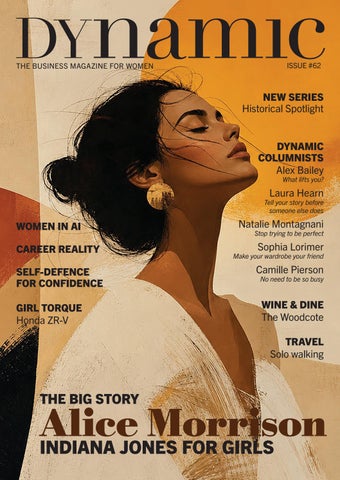
WOMEN
Alex Bailey
What lifts you?
Laura Hearn
Tell your story before someone else does
Natalie Montagnani
Stop trying to be perfect
Sophia Lorimer
Make your wardrobe your friend
Camille Pierson
No need to be so busy
GIRL
News
4 Upfront: The top international news stories involving women in business
10 In the Right Direction:
Good news stories from around the world
Regulars
6 The Alex Bailey Column
What lifts you?
8 The Laura Hearn Column
Tell your story before someone else does
12 The Natalie Montagnani Column
Why women need to stop trying to be perfect
36 The Camille Pierson Column
‘The busy badge’ and what to actually do instead
42 The Sophia Lorimer Column
Make your wardrobe your friend, not a battleground
Features
18 Spotlight
Focusing on two women who are not getting the recognition they deserve
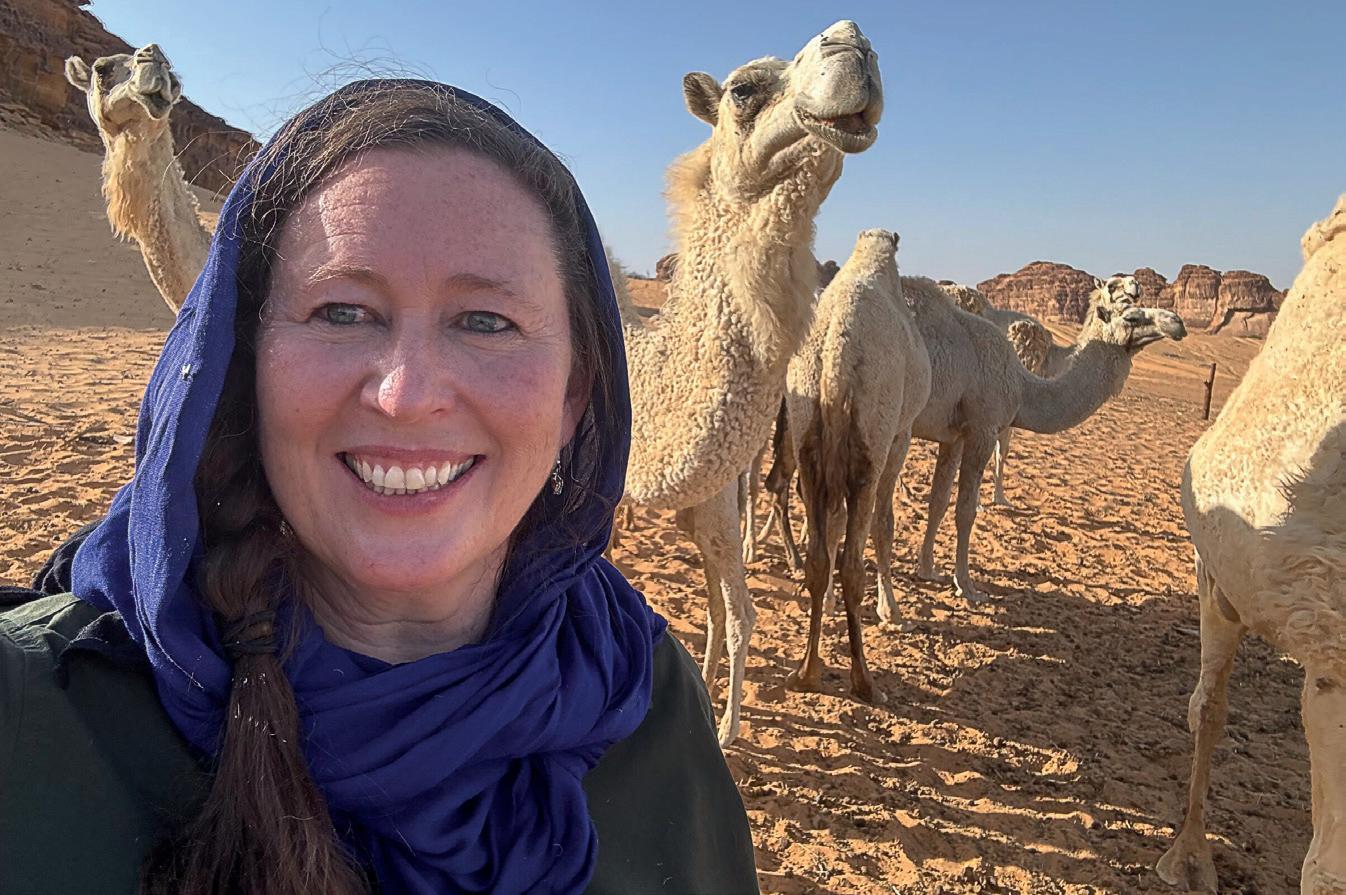
20 NEW SERIESHistorical Spotlight
Focusing on two women whose past achievements have been overlooked, forgotten or erased from the history books
22 Cat Paterson
Looking into the reasons why women have such a role to play in AI
24 Patty Azzarello
Why no one cares how hard you work
28 David Freeman
Self defence isn’t about fighting, it’s about confidence
30 Mothers, babies and the system that failed them
Tess de Klerk looks at the recentlypublished damning reports into failed maternity services at Nottingham University Trust hospital
38 Georgina Vass
Questions you should be asking your partner
Further Reading
34 Alex Bailey
The most overlooked culture?
Energy
In the beginning, my journeys feel, at best, ludicrous; at worst, insane.”
– Kira Salak, American writer, adventurer, and journalist
26 London Women’s Clinic
Your fertility journey: finding the balance between life and work
40 The wanderer within
A deep dive into the human body’s vagus nerve
Events
33 Her Future Self
Spaces are open for a groundbreaking seminar aimed at giving women more control over their lives
Art
44 The works of Shazia Shazia’s memory in light and shadow
Travel
46 Top tips for solo walking
Holly Robertson suggests ways to get the most out of a walking holiday
Wine & Dine
48 The Woodcote Restaurant, West Sussex
A review of the cottage restaurant in an idyllic setting
Girl Torque
50 Honda ZR-V
MDHUB Managing Director, Fiona Shafer, test drives the latest offering from Honda, something she refers to as a ‘car of two halves’
What’s On
52 A brief snapshot of what’s on in the South East
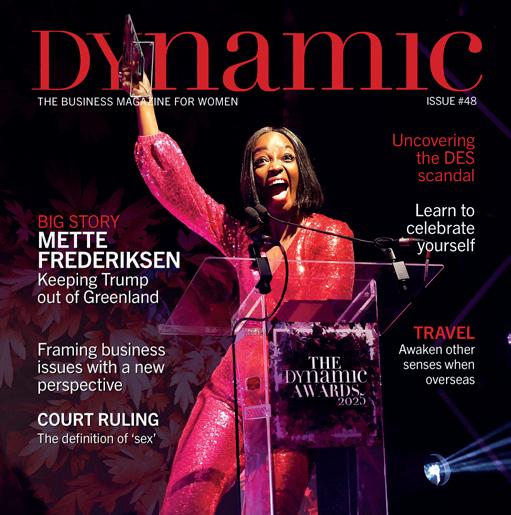
One of the privileges of editing Dynamic is seeing the unexpected connections between stories that, on the surface, have little in common. As we were putting together this month’s issue, I found myself reflecting on just how rarely fulfilling careers follow the path we imagine they will.
This month’s Big Story star, Alice Morrison, is perhaps the perfect example. After a successful career in journalism and broadcasting, she swapped boardrooms and newsrooms for deserts, mountains and some of the world’s most demanding expeditions. Her story is extraordinary and a reminder that reinvention is always an option, albeit not always the easy option.
Elsewhere in this issue, Patty Azzarello questions the long-held belief that working harder is the key to getting ahead, while Natalie Montagnani challenges the pressure so many women place on themselves to excel at everything. Alex Bailey writes on the importance of rediscovering what energises us, Laura Hearn explores why owning our own story has never mattered more, and our new Historical Spotlight series celebrates women whose contributions deserve far greater recognition.
There is, of course, much more to discover in our diverse magazine, from AI and tech to wellbeing, self defence and an education on the Honda ZR-V.
We hope that you enjoy Dynamic this July.
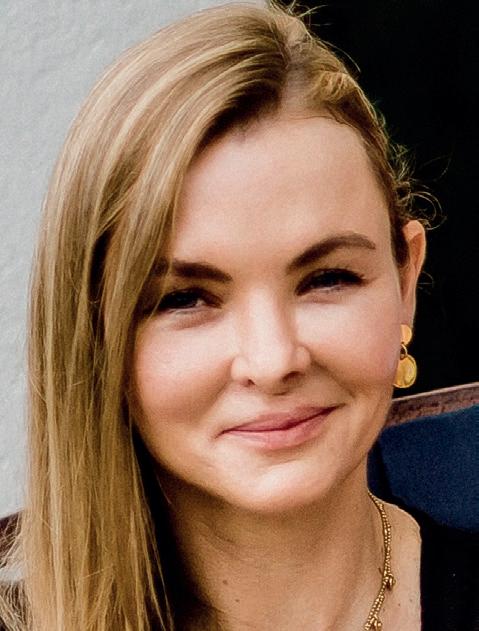
Editor, Dynamic Magazine tess@platinummediagroup.co.uk
PUBLISHER: Maarten Hoffmann maarten@platinummediagroup.co.uk
EDITOR: Tess de Klerk tess@platinummediagroup.co.uk
MOTORING EDITOR: Fiona Shafer fionaas@platinummediagroup.co.uk
COMMERCIAL MANAGER: Imogen Hunt imogen@platinummediagroupco.uk
EVENTS DIRECTOR: Fiona Graves fiona@platinummediagroup.co.uk
HEAD OF DESIGN / SUB EDITOR: Alan Wares alan@platinummediagroup.co.uk
Brighton-based City Girl Network has announced a new partnership with Starling Bank, which will become the headline partner of its Business Connections programme. As part of the partnership, the City Girl Network and Starling will deliver a year-round programme of activity, including events, practical digital resources and expert-led content designed to address the unique challenges and needs facing SMEs. This content will cover key topics including business budgeting, VAT, productivity, AI and marketing. Over 100 local business owners are expected to celebrate the launch on July 8th at PLATF9RM. This event features local business owners Carolynn Bain and Alice DewarMills, as well as the CMO of Starling, Michele Rousseau and the Head of SME Expenses, Vicki Bracey.
Women’s Super League and WSL2 clubs can permit supporters to drink alcohol in view of the pitch from next season, after a change to the leagues’ regulations on the back of a successful trial over the past 18 months.
Not all clubs will necessarily take up the opportunity. Clubs will be expected to inform their fans whether they will allow the practice and in which areas of the stadium it will be permitted.
Drinking alcohol in view of the pitch is banned across English men’s football’s top five leagues, in accordance with the Sporting Events Act of 1985. The WSL was not tied to that legislation but opted to follow suit.
Lisa Nandy, the Culture Secretary, may intervene in Paramount Skydance’s takeover of Warner Bros Discovery, which could hold up the $110 billion deal and present one of the first big tests for relations between Andy Burnham and President Trump.
She has written to Paramount Skydance — led by David Ellison, whose father Larry is one of the world’s richest men — and Warner Bros Discovery to inform them she is “minded” to intervene in the transaction on public interest grounds. These include the need for “sufficient”
plurality of views in the news in the UK, as well as media ownership. Grounds for intervention do not currently cover streaming, but Nandy said on-demand services were relevant.
The UK government has cancelled a major higher education programme aimed at keeping a million girls in school across Africa, Asia, and the Middle East. The project, called SHEFE, was scrapped just two years into its rollout due to deep cuts to the UK foreign aid budget.
Sector leaders and cross-party MPs have condemned the decision. They call it a betrayal of global education goals that will ultimately harm the world’s most vulnerable women. However, the Foreign Office defended the decision by explaining that the funds were diverted to prioritise an increase in national defence spending.
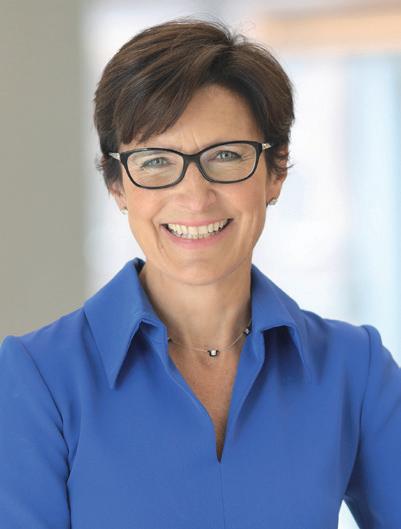
Women at the top of British business have been recognised in force in the King’s Birthday Honours List 2026, with a cluster of female financial services chiefs among the most prominent recipients.
Jane Fraser, the first female Chief Executive in Citigroup’s history, and Helen Gordon, Chief Executive of property firm Grainger, both receive DBEs. Diana Brightmore-Armour, who was the first female CEO of private bank C. Hoare & Co since its founding in 1672, received a CBE for services to women and diversity in financial services. Charlotte Tilbury, founder and Chief Creative Officer of cosmetics giant Charlotte Tilbury Beauty, also received a CBE. Cabinet Office figures released alongside the list show 49% of recipients at CBE level and above are women.
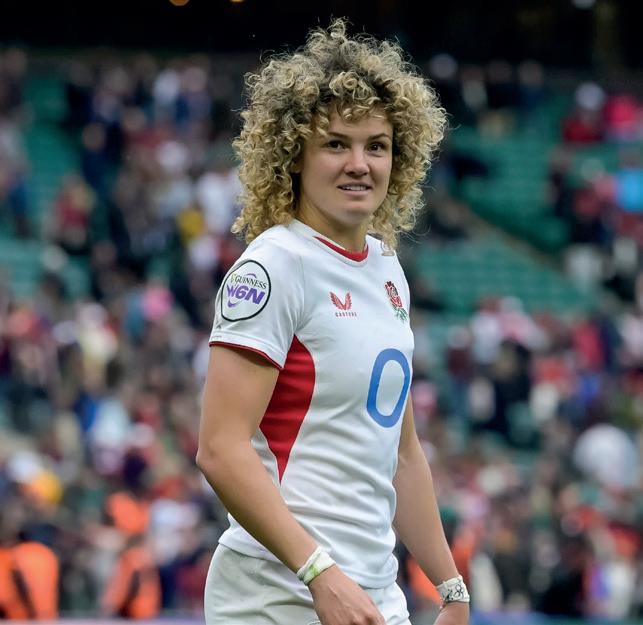
The Women’s T20 Cricket World Cup has been taking place in England during the second half of June, though it has been somewhat overshadowed by the men’s FIFA World Cup.
12 nations took part, with Australia Women running out as winners for the sixth time in 10 tournaments. Hosts England were

runners-up, for the fourth time, in a final which took place on the hallowed Lord’s Ground in London on July 5th.
In the end, Australia were the comfortable winners by a margin of seven wickets, having passed the below-par 150 total set by England in their innings, with 22 balls to spare.
❛ ❛
Expect the unexpected, and whenever possible, be the unexpected.”
- Lynda Berry, Cartoonist and Writer
Staying with sport, the city of Brighton & Hove is aiming to build on the legacy of the Women’s Rugby World Cup, after hosting games during the 2025 competition. The local council has held rugby-themed activities, with hundreds of local women and girls now playing the sport each week, stating it wants to build on the legacy created and increase female participation in the sport.
Almost 100 academy trust bosses are paid eye-watering salaries exceeding £200,000, prompting calls from governors for an NHS-style executive pay framework.
Schools Week’s annual investigation into chief executive pay –which analysed almost 1,100 trusts – also found that 90% of those above the £200,000 threshold were given rises and that six trust chiefs were paid more than £300,000 in 2025.
Only a quarter of the top earners were women.
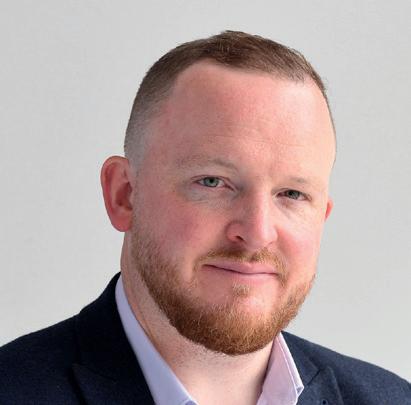
Sam Henson (left), the Deputy Chief Executive of the National Governance Association, said the findings reflected a “stubbornly entrenched” gender pay gap at the top and a “widening disparity” between the earnings of CEOs and their workforces.
❛
I have learned over the years that when one’s mind is made up, this diminishes fear.”
- Rosa Parks
The city hosted two sold-out World Cup games, including the would-be champions England versus Australia, with crowds also watching on screens erected around the city centre. The authority said more than 2,600 women and girls aged 16 or over engaged in rugby activities throughout the legacy project, with support from more than 20 clubs.
A senior engineer helping to drive the decarbonisation of Britain’s rail network has been recognised among the UK’s leading female engineers.
Sarah Foster (right), Technical Engineering Lead at Turntide Technologies in Gateshead, has been named in the Women’s Engineering Society (WES) Top 100 Women in Engineering Awards 2026.
The annual awards celebrate women making an outstanding contribution to engineering across the UK. This year’s theme, Engineering Intelligence, recognises individuals demonstrating exceptional innovation, leadership and problem-solving in tackling complex engineering challenges.
Sarah was recognised for her work developing advanced battery technology that is helping transform the future of sustainable rail transport.
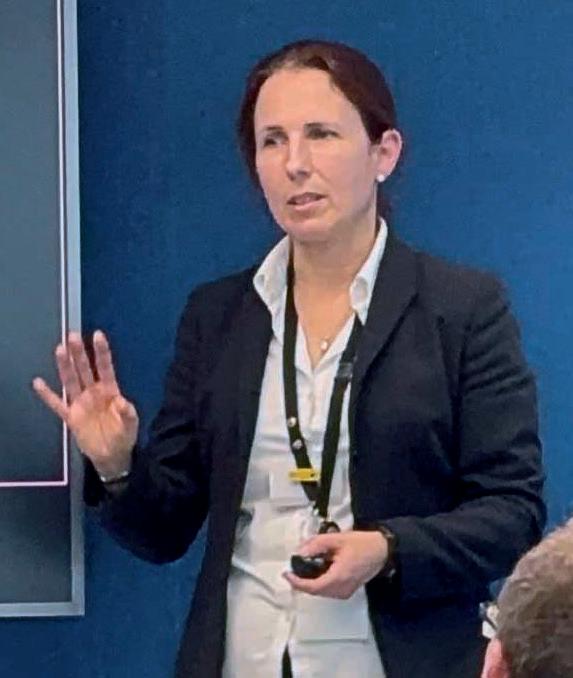
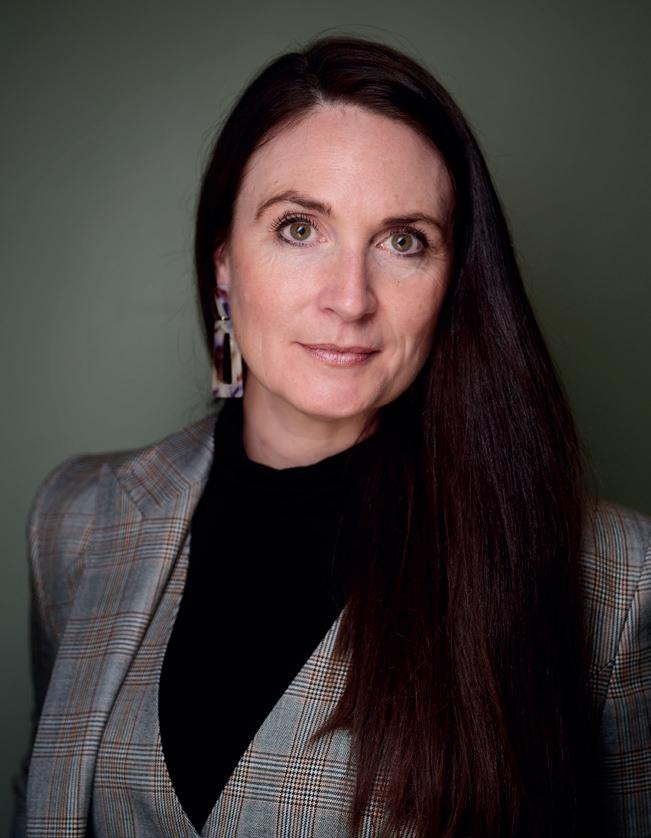
By Alex Bailey
COMPANY OF THE YEAR 2022
We are delighted to have and CEO of Bailey & French, She founded leadership team delivering work across large blue chips as well
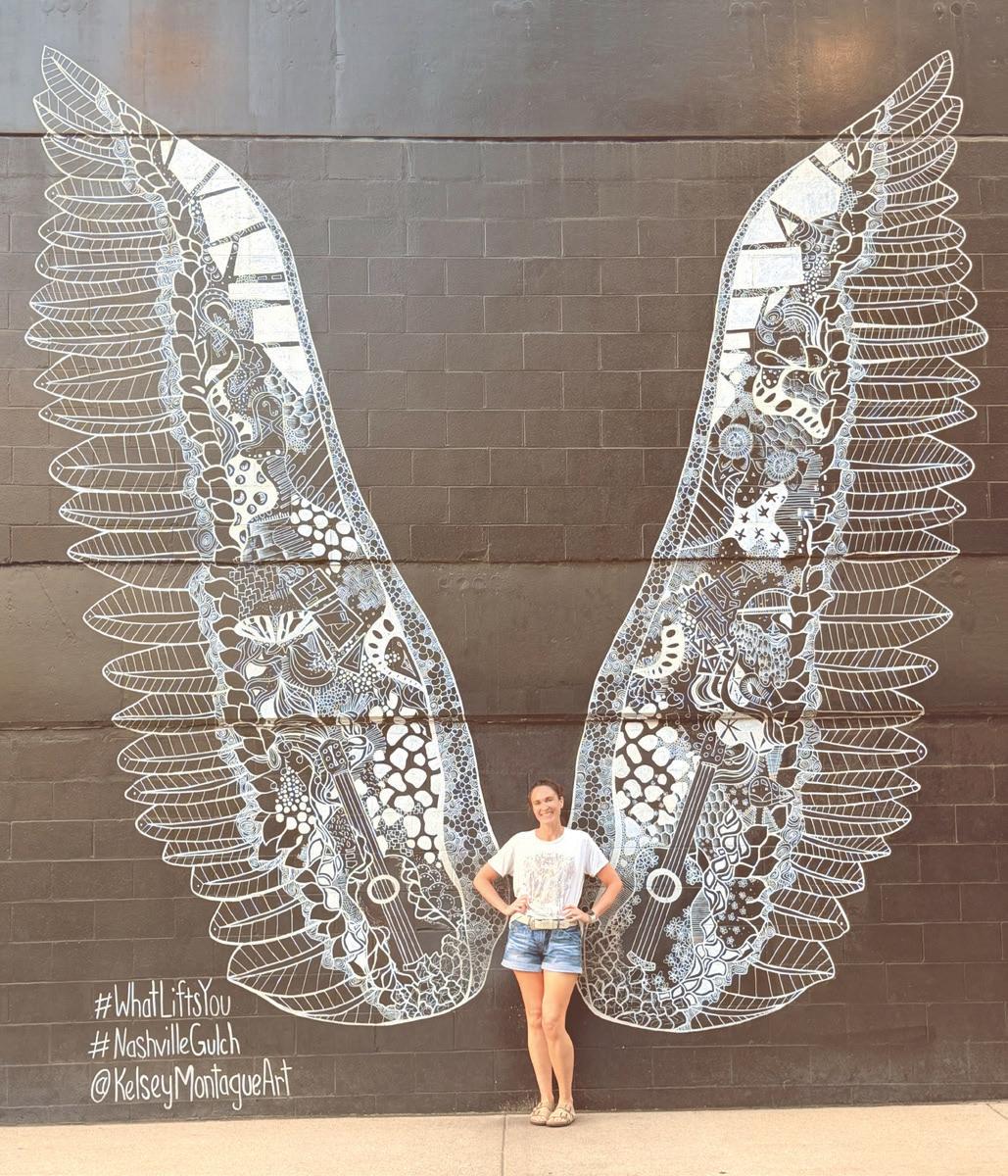
’ve just come back from a few days in Nashville. It was a mix of work and time with my daughter, who was there recording music (Beau Bailey – Spotify/ITunes/ Apple Music), but like so many trips that take you out of your usual rhythm, it stayed with me in a way I hadn’t quite expected.
There’s something about that place. Music feels woven into everything. Creativity is visible and alive, not something hidden away or saved for the ‘right moment.’ People seem to express something of themselves more openly, without overthinking it.
You feel it in the streets, in small venues, in passing conversations. There’s a sense of identity that is present, and on show, not something held back. And it took me out of my usual work mindset in a way I hadn’t realised I needed.
I felt re-energised. More awake. More alive. It was as if I was noticing colour, depth and tone in everything around me again — without quite realising that this had dulled slightly in the background of my working life.
It made me think about what actually lifts us, not just outside of work, but within it. That shift made me pause.
Because it brought into focus something I often see in organisations but don’t always stop to reflect on. How much of that aliveness, that awareness, that sense of being fully present, gets left behind when we come back to work.
Not deliberately. Not in a conscious, declared way. But gradually, over time.
Somewhere along the line, many people learn to bring a more contained version of themselves to work. We become more measured, more careful, more focused on output than expression. We adapt to what is needed, what is expected, and what gets results.
In many ways, that serves us. It allows organisations to function, goals to be met, performance to be maintained, but there is often a cost.
When I sit with leadership teams, I see capable, experienced people who are delivering, but who also describe something harder to articulate. Energy that feels inconsistent. Weeks that feel full but not always meaningful. A sense that something important has thinned, even if it hasn’t disappeared entirely.
“There’s
something about Nashville. Music feels woven into everything. Creativity is visible and alive”
have Alex Bailey contributing to Dynamic. She is an organisational psychologist, author, French, and a global expert in humanising leadership, culture, and the world of work. leadership and culture consultancy Bailey & French which has grown organically to a global across 155 countries, in all markets and industries and trusted by the board/execs of as those at the most senior levels of central government.
And I don’t think this is about individuals losing something. I think it is about the environments we are asking people to operate in.
Work has become faster and more fragmented. Time together is reduced. Days are filled with backto-back calls, constant input, and an ongoing sense that there is more to get through. In that kind of context, it becomes harder for the parts of us that feel most energising — creativity, curiosity, reflection, genuine connection — to find space.
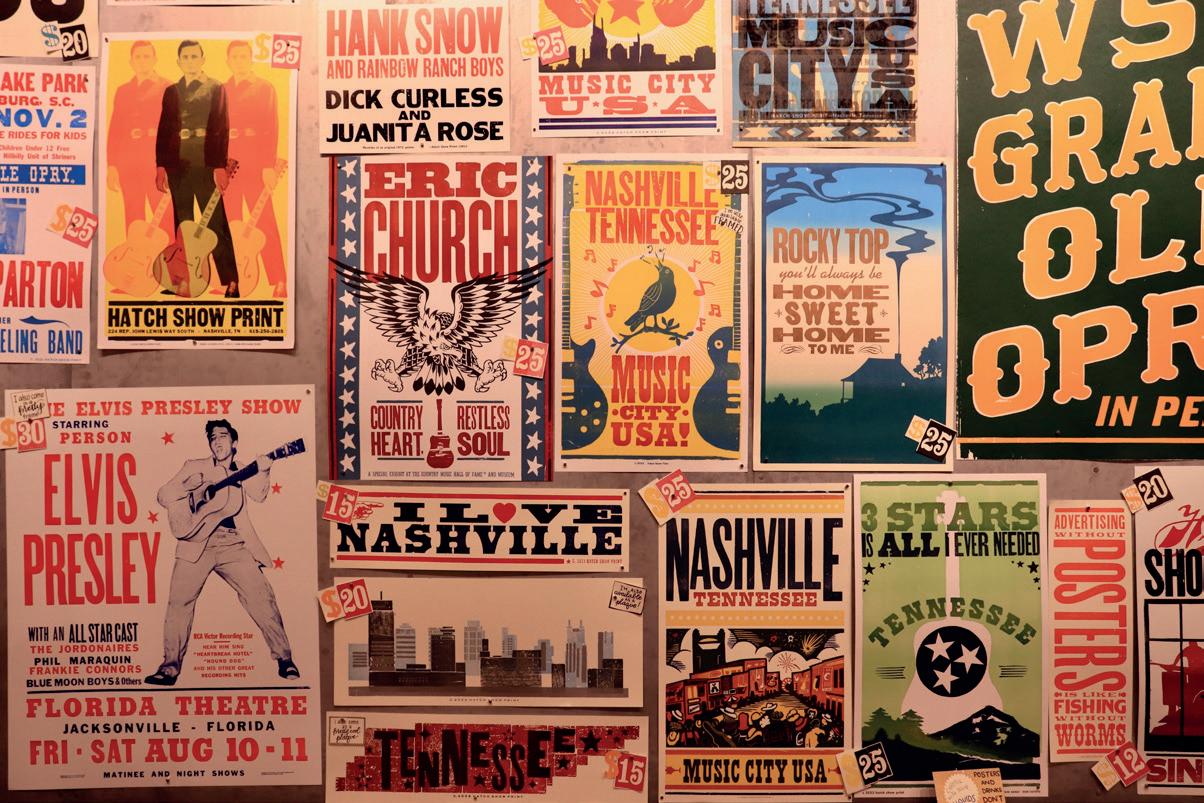
In Nashville, those elements weren’t separate from the work. They were the work. Creativity, identity and expression weren’t something extra; they were central to how people showed up. That contrast stayed with me.
It asks whether there is space to think, rather than simply react. Whether conversations allow for challenge and exploration, not just updates and decisions. Whether people can express ideas without over-filtering, and connect to something beyond immediate tasks.
In other words, it asks us to pay attention to the lived experience of culture, not just how we describe it.
We cannot recreate Nashville in an office, and that isn’t the point. But we can notice what comes alive in us in environments like that, and question why it feels so separate from our working lives.
“We cannot recreate Nashville in an office. But we can notice what comes alive in us in environments like that, and question why it feels so separate from our working lives.”
Because as work accelerates and technology advances, those human elements are not optional. They are where energy comes from. They are where creativity sits. They are what sustain people over time.
Because in many organisations, we have unintentionally designed work in a way that squeezes those elements out. We talk about performance, productivity and engagement, but we spend far less time considering whether people feel connected to themselves in the work they are doing.
There is a question to ask ourselves: when do I feel most like myself in my work — and what actually lifts me in it?
And it isn’t something that will be solved through another initiative or a new set of values. It asks something more fundamental of how we shape the everyday experience of work.
And perhaps one of the most important questions for leaders now is not just how we improve performance, but how we create environments where people feel lifted by their work — not just depleted by it — and don’t feel they have to leave the most vital parts of themselves outside when they come to work
alex@baileyandfrench.com www.baileyandfrench.com www.rapidreculturing.com
Laura Hearn is a former BBC journalist, now storytelling consultant and founder of Flip It - a podcast and platform helping people and businesses use storytelling as a tool for clarity, connection and change. This month, for Dynamic, Laura looks at the need - and the obligation - for your story-telling to be trusted
“The strongest reputations are almost never built through polished marketing campaigns. They are founded on consistent evidence that words and actions are in alignment”
By Laura Hearn
One of the first things I learned as a journalist was that being first to break a story should never be prioritised over telling the truth. Accuracy before speed is non-negotiable.
In a newsroom where stories break by the minute, and competitors are chasing the same headlines, there is enormous pressure to move quickly. I was trained to check every inch – and check again. To double down on facts, call out untruths - because journalists know more than anyone that trust with your audience is paramount.
Over more than twenty years at the BBC, I spent countless hours checking facts, confirming sources and asking the same question in three different ways, to make sure I understood what was really going on. Journalism is never perfect - we are human, and humans make mistakes. But there was a process. I gathered the facts, did my due diligence on my sources and always explored every angle before a story reached an audience.
Today, that process feels increasingly rare and echoes the findings from the latest Reuters Institute Digital News Report - an annual snapshot of how people consume information and who they trust. The findings were pretty stark, although perhaps not surprising. Increasingly, we are receiving our information from social media, podcasts, creators,
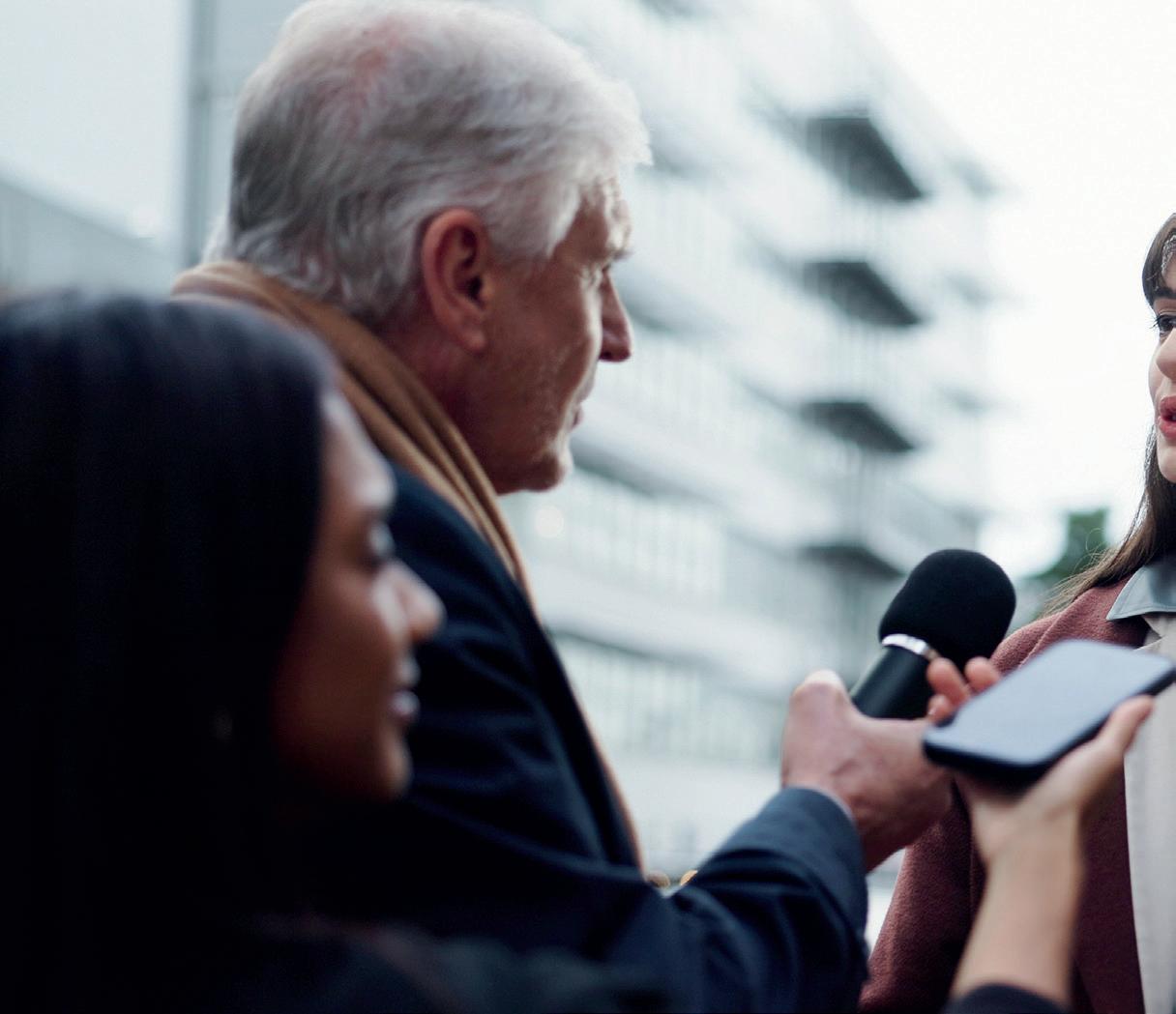
influencers and AI-powered tools. Traditional news organisations are fighting for our attention.
For the first time in human history, information is effectively unlimited. As someone who spent much of their career trying to establish what was true, I too admit that no matter how hard we try to present a balanced argument, there is no such thing as unbiased reporting.
But when every major event now arrives in countless interpretations and competing versions of reality, we can build an information environment that reinforces what we already believe. And when conflicting messages feed our appetite for endless consumption, certainty becomes more valuable. This is where the conversation becomes relevant for business.
Think about the recommendations you value most. They’re rarely from strangers, but from people whose judgment you’ve come to trust over time. A friend, colleague or mentor. Their reputation acts as a filter through which you assess new information. The same principle applies to organisations.
“I was trained to check every inch – and check again”
The companies that will thrive in the coming decade are unlikely to be those producing the most content. They’ll be the ones earning the most trust. The ones demonstrating competence, transparency and integrity consistently over time. As artificial intelligence becomes increasingly embedded in our everyday lives, this will inevitably take precedence.
For years, reputation was often treated as a communications exercise. Something managed through branding, marketing campaigns or public relations activity. Today, reputation is one of the primary ways people decide who and what to trust.
When we don’t have the time or expertise to verify every claim we encounter, we look for signals instead. We ask ourselves whether a person or organisation has been consistent. Whether they do what they say they will do. Whether others speak well of them. Whether their actions match their words. Trust essentially becomes a shortcut for decision-making.
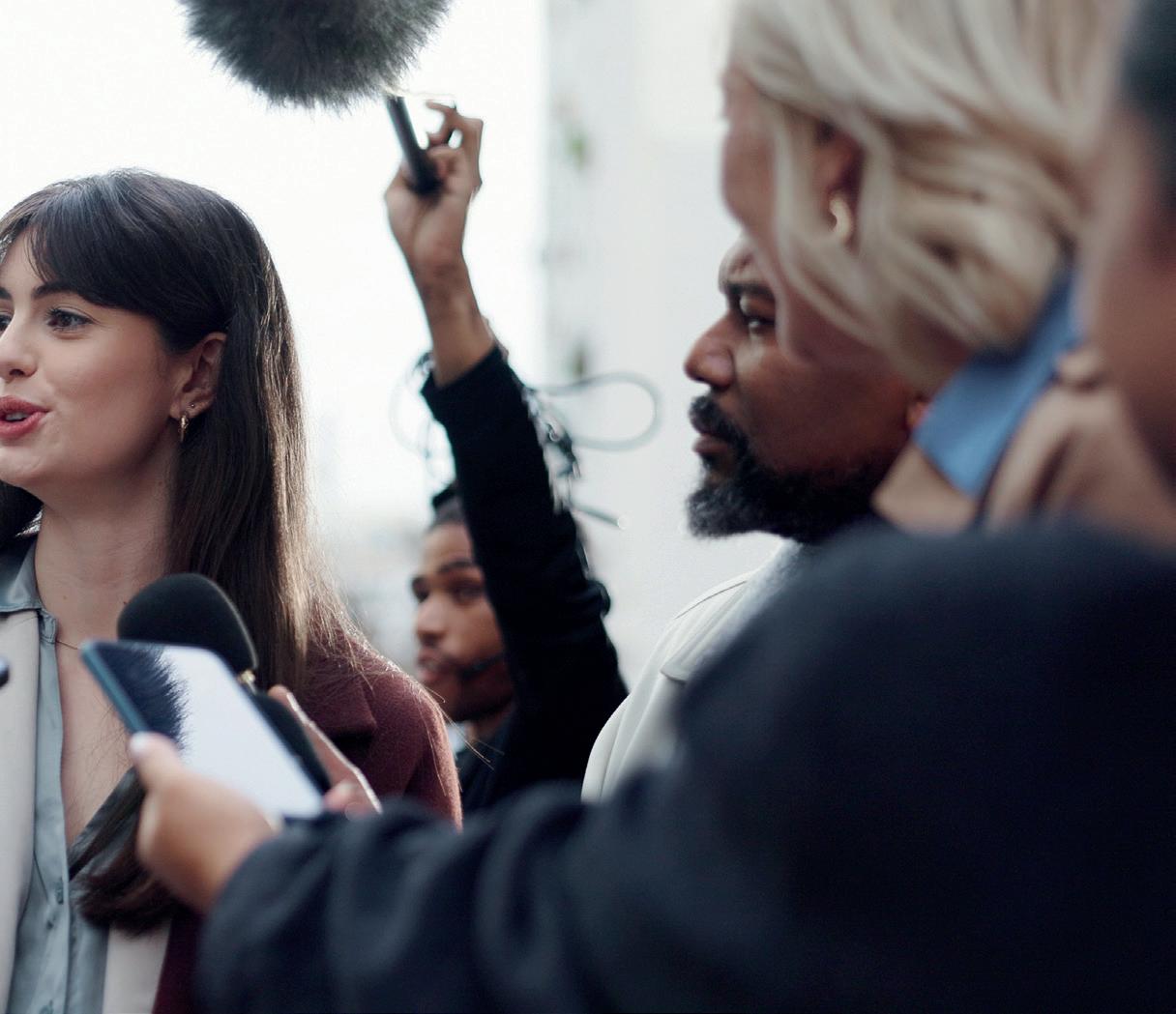
AI can write articles, generate videos and summarise complex reports in seconds. It can produce information at extraordinary speed. But there is a difference between information and trust. AI can generate content, but it cannot generate credibility. This belongs to humans.
Whether you’re a founder, a business owner or a leader, stories are being told about you every single day. Your employees are telling stories. Your customers are telling stories. Former colleagues are telling stories.
Reviews, LinkedIn posts, articles, podcasts, conversations and increasingly AI systems all contribute to the narrative surrounding your organisation.
Whether you like it or not, a story about you exists. It’s whether you’re helping shape it. The strongest reputations are almost never built through polished marketing campaigns. They are founded on consistent evidence that words and actions are in alignment.
When information becomes abundant, trust becomes scarce. And when trust becomes scarce, reputation becomes your biggest asset. The world is big, and with the backdrop of digital and AI platforms, anyone can tell a story about you or your business. I encourage you to ensure you’re telling your own story first.

You can listen to Laura’s podcast, Flip It, wherever you get your podcasts, and you can connect with her at www.flipitglobal.com
The UK government has announced a social media ban for children under 16, describing it as an effort to restore healthier childhood experiences. The move follows concerns about harmful content and the influence of algorithms on young minds. While supporters believe it offers children more time to develop before entering online environments, critics argue restrictions may be difficult to enforce and fail to address the responsibilities of technology companies themselves.

The UK’s National Literacy Trust’s Annual Literacy Survey, which gathered responses from 125,375 children and young people aged eight to 18, found a modest but encouraging increase in reading enjoyment. More than one in three respondents said they enjoyed reading in their spare time, marking the
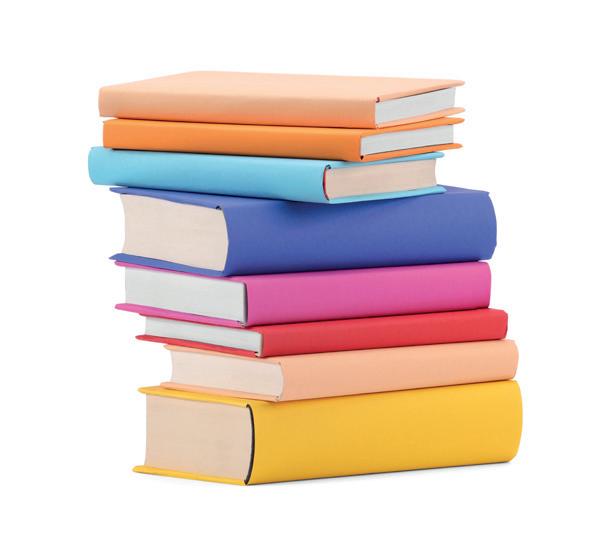
first rise since 2021. Daily reading also increased, with teenagers showing the biggest gains. However, progress was less evident among children from disadvantaged backgrounds, underlining the need to ensure every young person has access to books and reading experiences that inspire them.
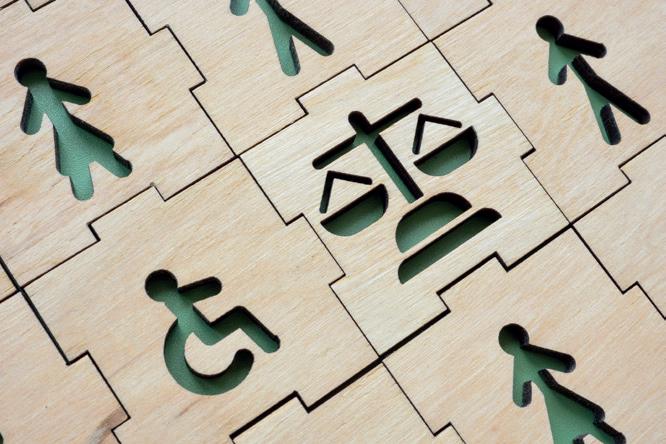
More than 90% of countries now have laws protecting the rights of people with disabilities, according to the United Nations. The milestone reflects two decades of international effort following a global agreement to uphold and promote disability rights. Despite the gains, the UN warns that progress remains too slow and that countries are falling behind on development goals relating to inclusion and accessibility. Leaders are calling for renewed efforts to build societies designed for everyone.
❛ ❛
There are many things you can do overnight, but there is no overnight success.”
Tory Burch, fashion designer, businesswoman and philanthropist
Colombia is poised to ban female genital mutilation (FGM), a practice that still occurs within parts of the Indigenous Embera community. The legislation awaits presidential approval and could mark a significant step in protecting girls and women from severe physical and psychological harm. Enforcement may prove difficult because the practice often takes place in remote areas. The move reflects broader global progress, with the World Health Organisation reporting a sharp decline in FGM rates in countries where the practice persists.
A new gene test may allow millions of breast cancer patients to avoid unnecessary chemotherapy. The test, called Prosigna, assesses the activity of genes linked to cancer growth and estimates the likelihood of the disease returning. An international study
Researchers have identified proteins in the blood that may predict a person’s risk of developing lung cancer years before symptoms appear. Scientists analysed blood samples from more than 48,000 people and identified 14 protein signatures associated with future diagnoses. Rather than coming from a tumour, the proteins appear to reflect early changes in the lungs associated with inflammation. Experts believe the findings could eventually help prevent lung cancer through earlier intervention and targeted monitoring.

found that many patients with low-risk scores achieved excellent outcomes using hormone therapy alone. Researchers say the approach could spare patients the physical and emotional burden of chemotherapy while ensuring treatments remain evidencebased and highly effective.
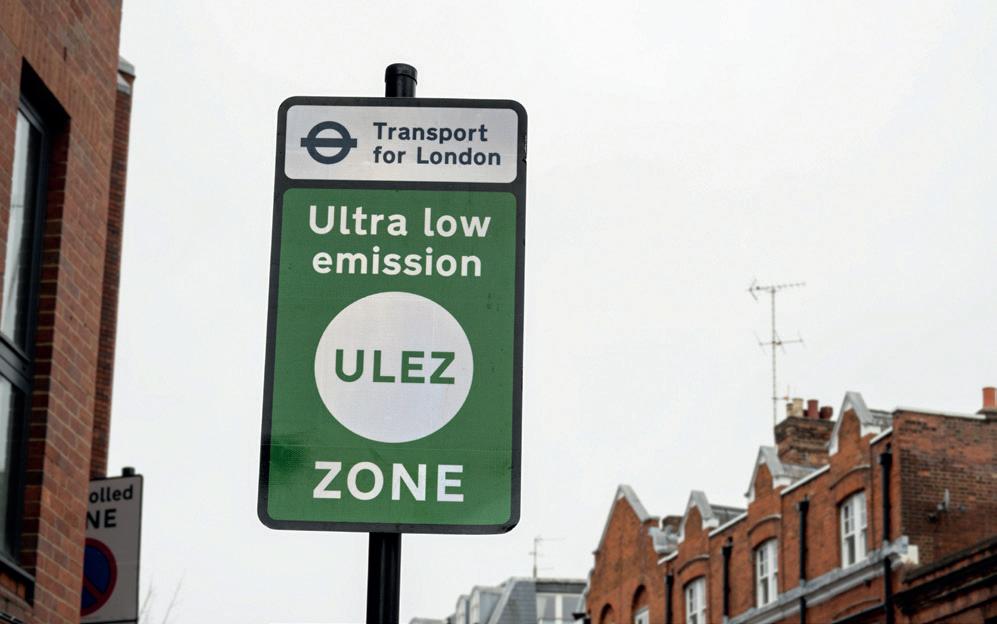
London’s Ultra Low Emissions Zone (ULEZ) is being linked to notable health improvements. Research from Imperial College London found reductions in hospital admissions for cardiovascular and respiratory conditions, along with a decline in overall admissions in central London. Introduced to tackle air pollution, Ulez charges older, higher-emission vehicles to enter the capital. Researchers say the findings suggest that similar clean-air policies could deliver significant public health benefits in other cities.
Europe removed a record number of dams and river barriers, reconnecting more than 2,300 miles of waterways. Sweden, Finland and Spain led the effort, while other countries
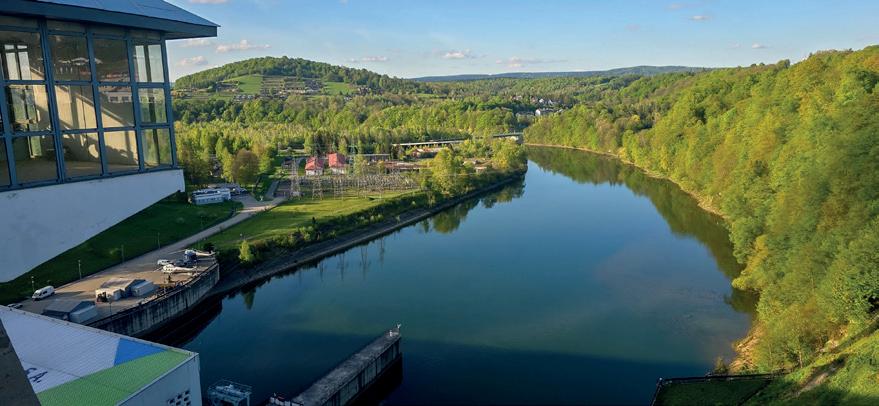
dismantled barriers for the first time. The work is already benefiting biodiversity, reopening migratory routes for fish and improving river habitats. Conservationists report signs of species recovery in several locations. Despite the progress, thousands of obsolete barriers remain, highlighting both the scale of the challenge and the growing momentum for river restoration.
We realise the importance of our voices only when they are silenced.”
– Malala Yousafzai, Pakistani female education activist,
film
and television producer, and Nobel Peace Prize laureate
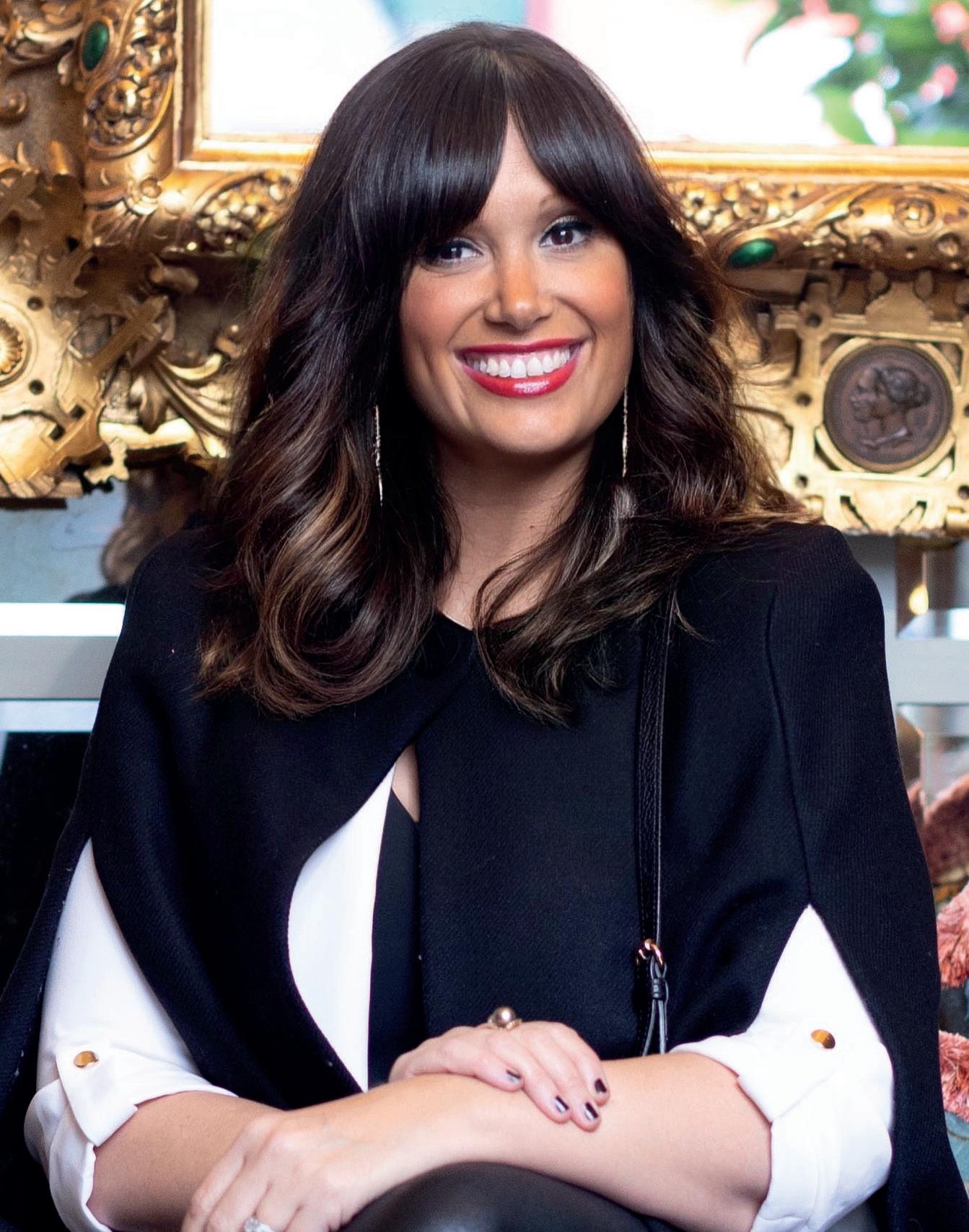
Natalie Montagnani is a Business & Leadership Coach for Women and Founder of Ignite. Drawing on 25 years she helps female founders and leaders strengthen self-leadership, commercial confidence and influence. Through workshops and curated leadership rooms, Natalie is on a mission to advance a new era of female leadership.
By Natalie Montagnani
“Wstop trying to be perfect
hat are you – stupid?” The whole class laughed, and I wanted the ground to swallow me whole. I was sitting in a maths lesson at secondary school, and instead of answering my question, my teacher humiliated me in front of the entire class. Needless to say, I never asked him another question again.
As a creative person, I never found numbers came naturally to me, while English was a different story. I loved writing, storytelling and communication, so not surprisingly I pursued a career in marketing.
For years afterwards, however, I carried a quiet belief that I should somehow be better with numbers. That I should find them easier. And I see the exact same thing happening with women in business every day. Not necessarily with maths, but with everything.
Women often carry an exhausting expectation that they should be good at absolutely everything and look fabulous at the same time. A brilliant employee or entrepreneur. The perfect wife or partner, mother, daughter and friend.
All while staying in shape, ageing backwards, keeping up with trends and drinking matcha. The reality? Nobody can do all of that. Yet we’re constantly being sold the fantasy that we should, and a lot of people are getting very rich off the back end.
Despite this impossible standard, so many of us try to keep up, while putting ourselves down.
Recently, a client shared that she had an employee who was excellent at spotting mistakes, identifying gaps and creating processes. Skills my client openly admitted weren’t her natural strengths. I asked her why she was struggling with
“Despite this impossible standard, so many of us try to keep up, while putting ourselves down.”
this, and she said. “Well, because I’m the CEO,” she replied. “Surely I should be good at everything?” I had to stop myself from laughing, because in front of me sat an accomplished, successful and driven woman.
Somewhere along the way, so many of us have picked up the belief that leadership means perfection, and we need to put that one out with the bins. Being in charge doesn’t mean having all the answers, and asking for help is not weakness.
If somebody in your team knows more than you do about something, amazing! Congratulate yourself for hiring someone to fulfil that need in the business. Because the best leaders I’ve ever worked with aren’t the people who can do

years of commercial experience, Through her coaching, leadership.
everything; they’re the people who know what they do exceptionally well and have the confidence to let others shine in areas where they don’t.
When I started my fi rst business over 20 years ago, hiring an accountant was non-negotiable. Could I have learned everything myself? Yes, probably. Did I want to spend my time buried in spreadsheets, tax regulations and fi nancial reporting? Absolutely not.
I wanted to focus on strategy, marketing, clients and growth – my areas of strength. So I sought support from the very start. That’s not weakness; it’s leadership.
Perfectionism often disguises itself as high standards, but they’re not the same thing. High standards say, “I want to do this well.” Perfectionism says, “I must do everything well.” One drives growth, the other drives exhaustion. So do yourself a favour and get off that hamster wheel before you burn yourself out.
People don’t trust leaders because they’re perfect; they trust leaders because they’re authentic. Because they’re self-aware.
Because they know their strengths and aren’t threatened by the strengths of others.
Several prominent female founders have built hugely successful businesses by focusing on their strengths and trusting others to fi ll the gaps. Whitney Wolfe Herd didn’t build Bumble by becoming an expert in every aspect of the business. She focused on what she does best, which is brand, marketing and customer experience and relied on technical experts to handle the rest. She’s frequently spoken about the importance of knowing your limitations and hiring people who are smarter than you in your areas of weakness.


“Several
prominent female founders have built hugely successful businesses by focusing on their strengths and trusting others to fi ll the gaps.”
And that’s the lesson for all of us. Success isn’t about becoming good at everything; it’s about becoming brave enough to stop trying. Because the moment we let go of perfectionism is often the moment we create space for excellence. Lean into your strengths and let go of the rest. That’s where the magic happens…
Natalie Montagnani Founder of IGNITE Women in Business
07900 153503
ignitewomeninbusiness.com
Connect with Natalie on LinkedIn or drop her an email to natalie@ignitewomeninbusiness.com
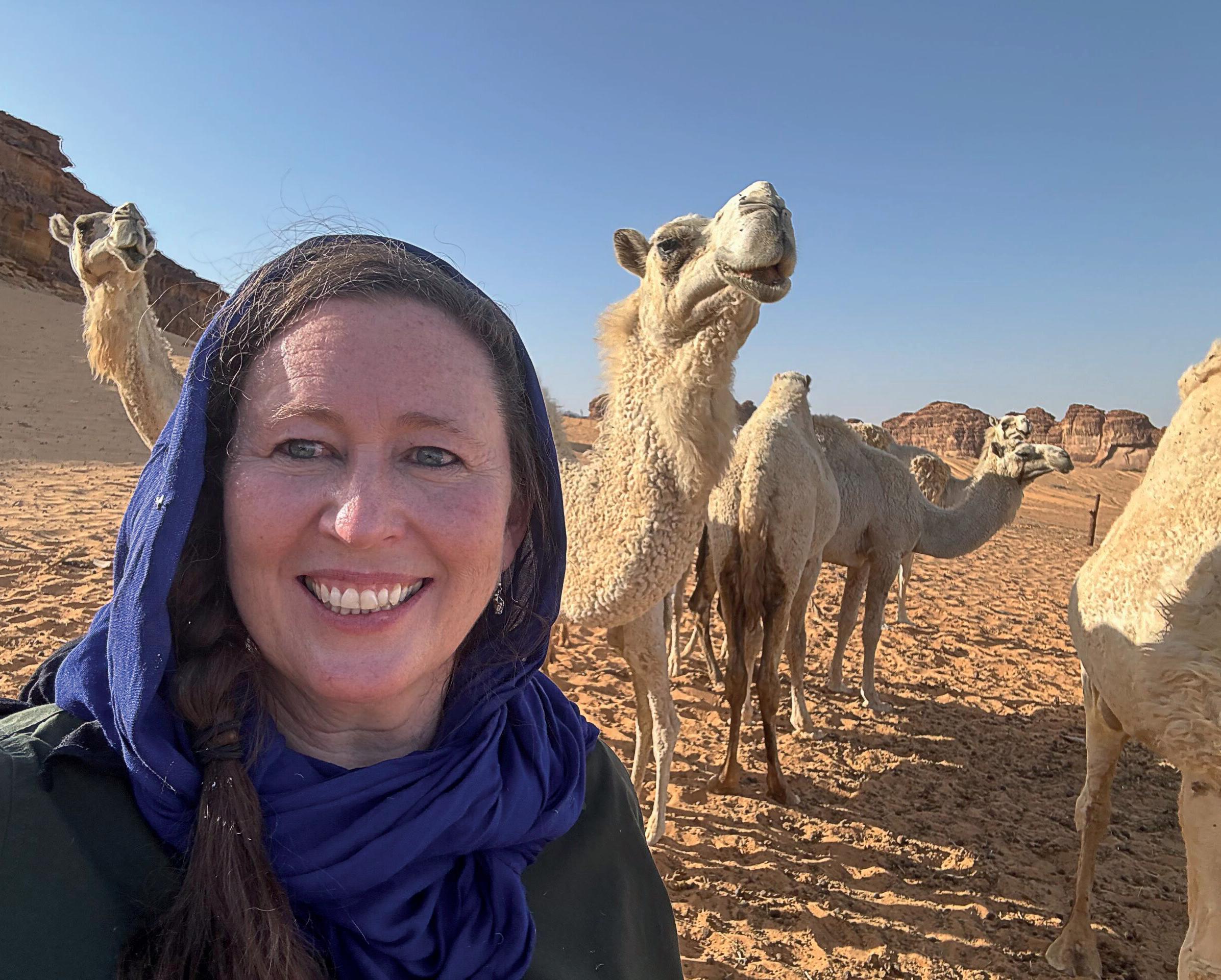
Alice Morrison is an adventurer, a TV presenter and writer. She has accomplished a world-first, becoming the first recorded person to walk north to south across Saudi Arabia – every step.
Here, in her own words, is her remarkable story
“Itravel to the furthest places on earth and walk through its toughest habitats. I have been described as ‘Indiana Jones for girls’ (which I liked!) We live in a time when the world is in crisis in so many ways. I want to bear witness to what is happening to the planet as our climate and our society change, and I want to tell the stories that bring us humans together rather than the ones that drive us apart. Together, we can strive towards solutions and a happier world. What better place to start than with the places and people that are furthest away?
I was born in 1963 in the Edinburgh Infirmary. After moving to London after university, I pursued a career in journalism, which had begun in Dubai at “What’s On in Dubai”. My first job was with Technical Review Middle East (there is nothing I don’t know about concrete decay). From there to Middle East Broadcasting, the original Arabic Satellite News Station, with my first assignment being to produce coverage in the USA.
News Channel, where I went on to become co-Editor of the daytime hours, meaning I was in charge of all BBC News Channel output between 10 am and 8 pm.
I was one of only three female news editors in the corporation at the time. My speciality was managing the complexities of live, breaking stories in the news gallery. One of my abiding memories is causing higher ups to almost have cardiac arrests when I threw live to the George Michael arrest press conference in the USA when the details of his cottaging were revealed – apparently that was not what the British news-watching public wanted to watch at teatime with the kids.
“One of my abiding memories is causing higher ups to almost have cardiac arrests when I threw live to the George Michael arrest press conference”
My next step was to BBC News with jobs on BBC World TV and then BBC Arabic TV. I rose through the ranks at BBC News and was recruited to help launch the BBC
In 2002, I plunged into public service when I was appointed as CEO of Vision+Media, a quango dedicated to growing the creative industries in the Northwest and remained there for nine years. I am proud that I managed – with my Board and my Team – to build the company from a modest start of £830k in annual funding to £10 million, move it into brand-new premises in Salford’s MediaCity, work closely with the BBC Move North team, and deliver 10x value to funders.
However, following government cuts in 2011, we were no longer viable, so I merged the company into Creative UK and cast off my pinstripes for lycra.
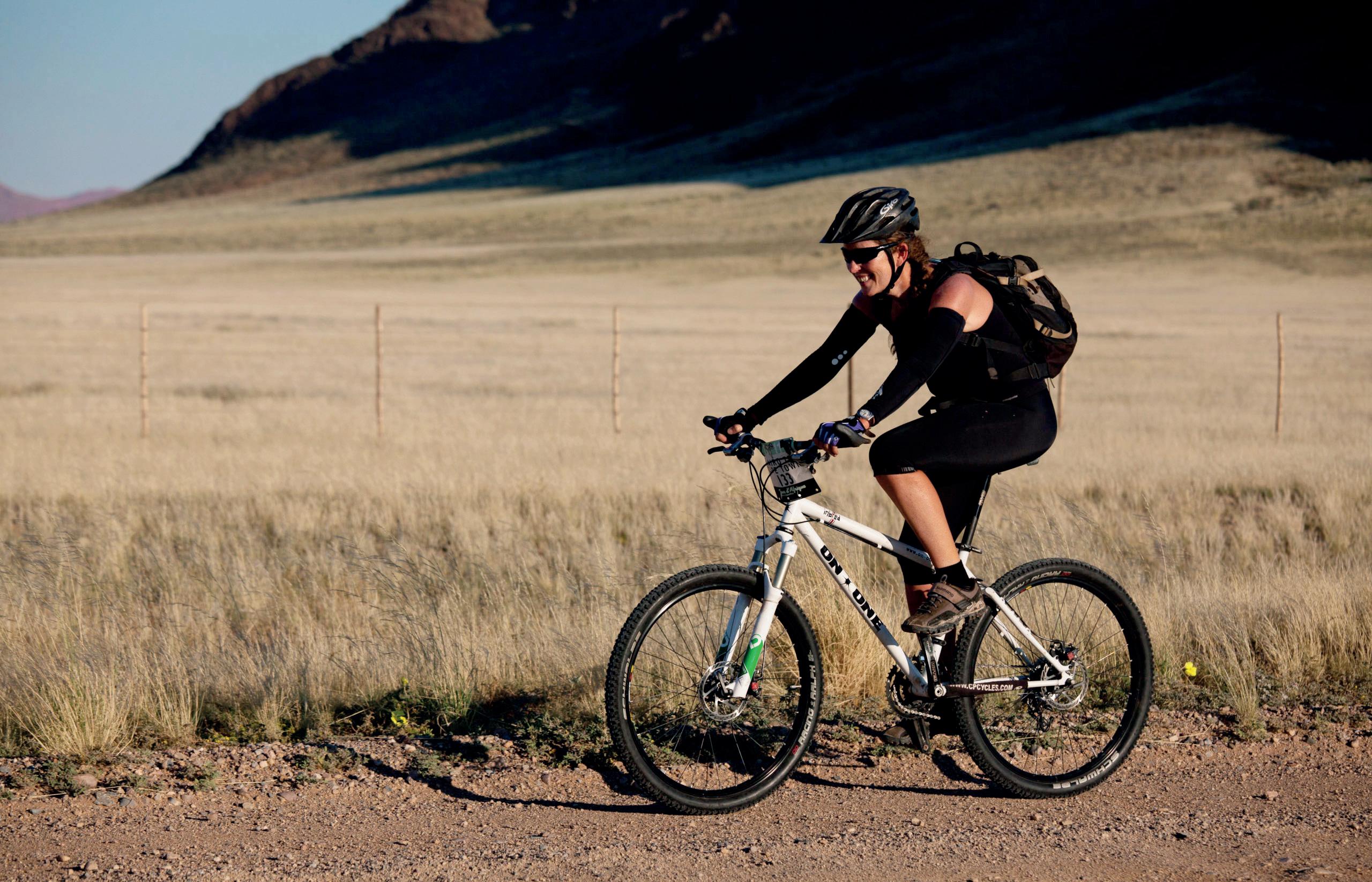
I left the rat race for a bike race, and the adventure started here.
I decided to turn the negative experience of my company closing into a positive liberation and to follow my dream of cycling across Africa. I entered the Tour d’Afrique and raced my bike from Cairo to Cape Town: 12,500km through 10 countries in 100 days, with 20 days’ rest. I survived close encounters with charging wild elephants and very nasty toilets.
Atlas Mountains to train. I successfully completed the race and consider it one of the major achievements of my life. It was so difficult for me that I felt overwhelming relief at the finish line, rather than my default of overwhelming joy.
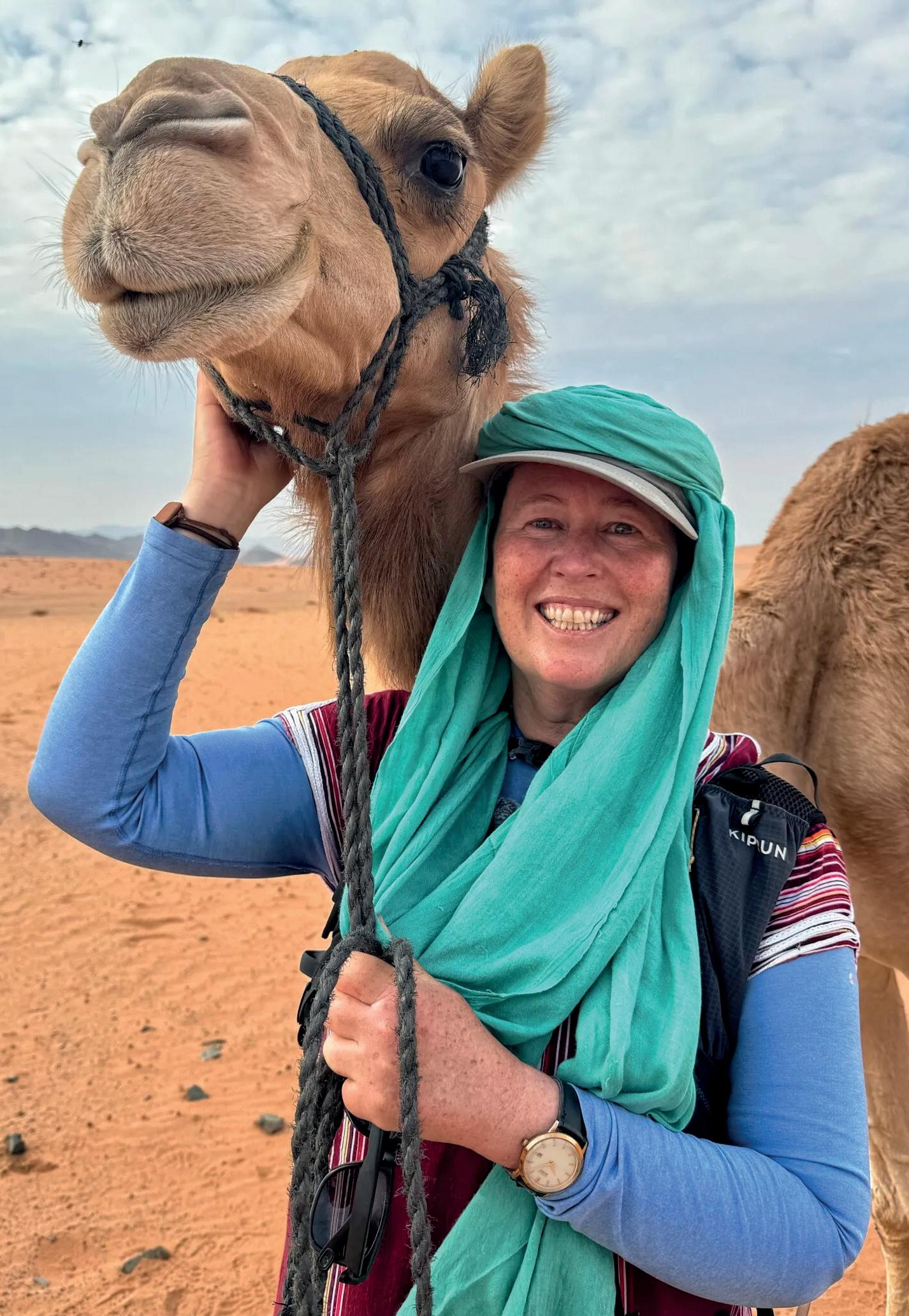
The following year, I became the first Western woman to walk the Draa River in Morocco. 1500km across the desert and the mountains with my three Amazigh guides and five camels. It was real “Indiana Jones for Girls!” stuff. I was exploring rather than just taking on a big physical feat, and I had time to discover the environmental, social and cultural effects of climate and social change. This is one of the oldest settled areas on planet Earth, but now much of it is a barren wasteland.
After that expedition, I decided to keep walking and cross the whole of Morocco by doing two further legs: the Sahara and the Atlas. I walked around 1000 miles with my three Amazigh (Berber) companions and six camels from where we left off the Draa at Oued Chbika to Guerguerat on the Mauritanian Border. We started on November 26th 2019 and finished at the end of February 2020.
“In 2019, I became the first Western woman to walk the Draa River in Morocco.”
Then COVID struck, and I spent lockdown in my home in Imlil in the Atlas Mountains with my adopted Amazigh family, the cow, the chickens and Squeaky the Cat. Lockdown was really tough in Morocco, and I longed for freedom.
Bitten with the adventure bug, I entered the Marathon Des Sables, the toughest footrace on earth, six marathons across the Sahara in six days, carrying all my own food and equipment. To up the challenge, the middle marathon is a double at 80+ kilometres.
In 2015, I did my first ‘world first’ with the Atlas-to-Atlantic Trek. My expedition guide, Rachid Aitelmahjoub, and I became the first people ever to hike from the highest point in North Africa, Mount Toubkal (4167m), to the Atlantic Ocean (Agadir) straight across the Atlas Mountains.
We lived off the land as we went and relied on Amazigh (Berber) hospitality in villages so remote that they had never seen a European before.
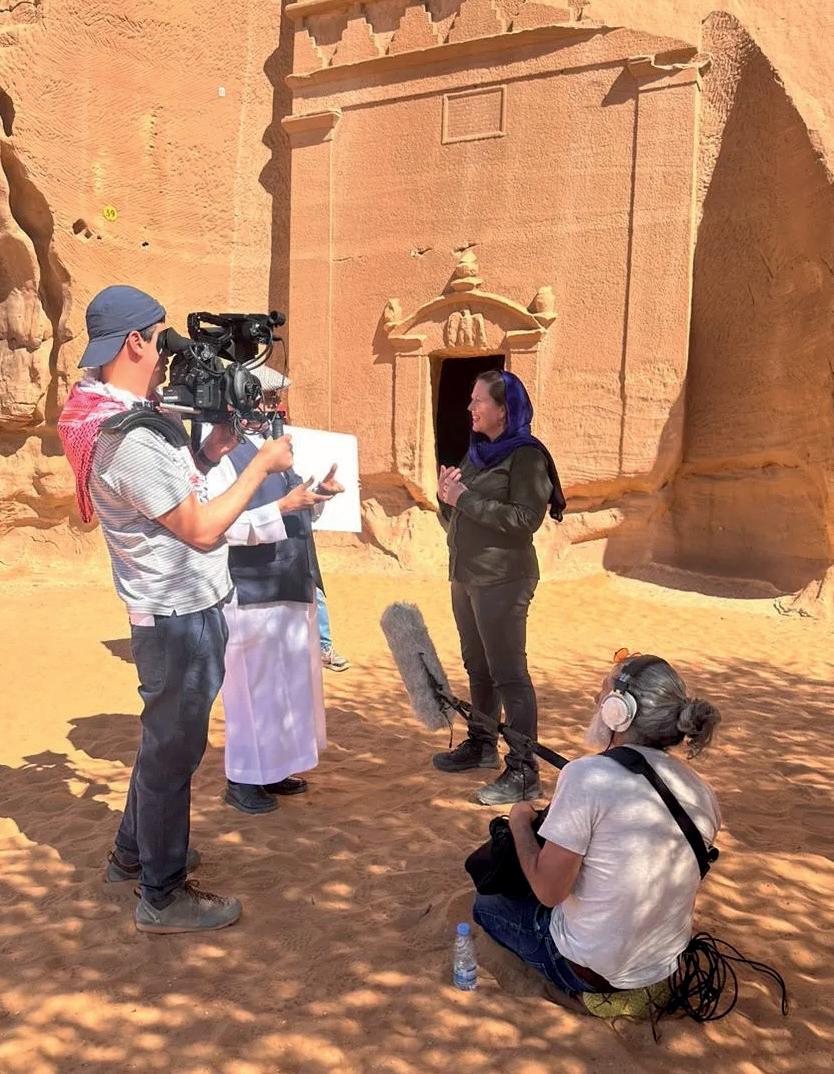
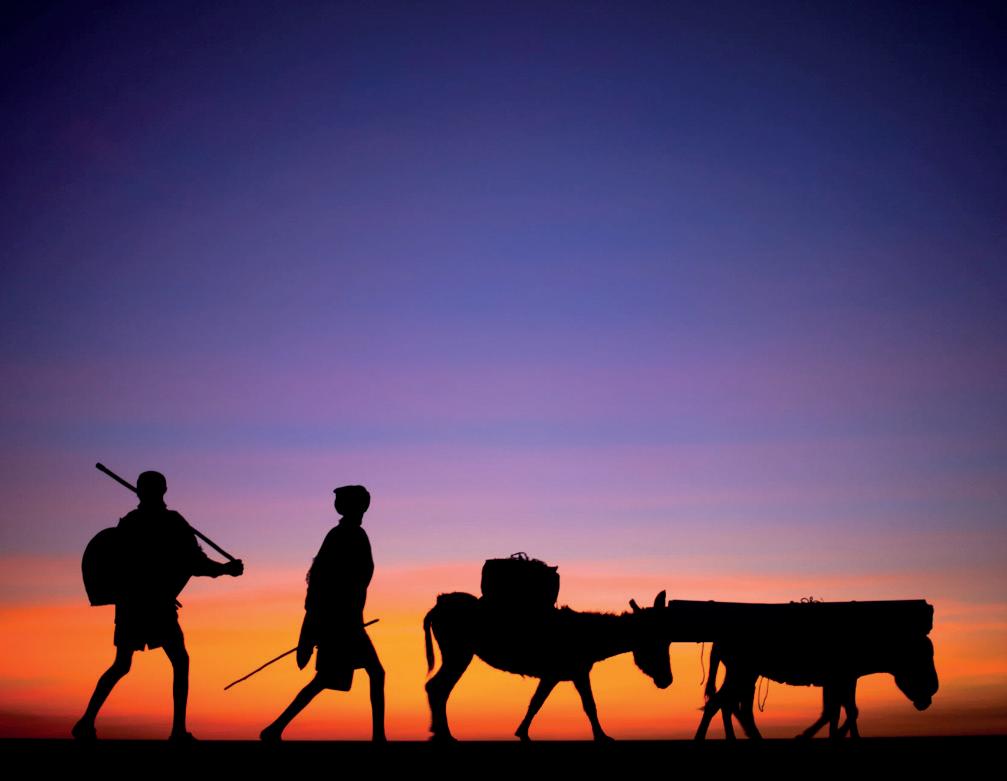
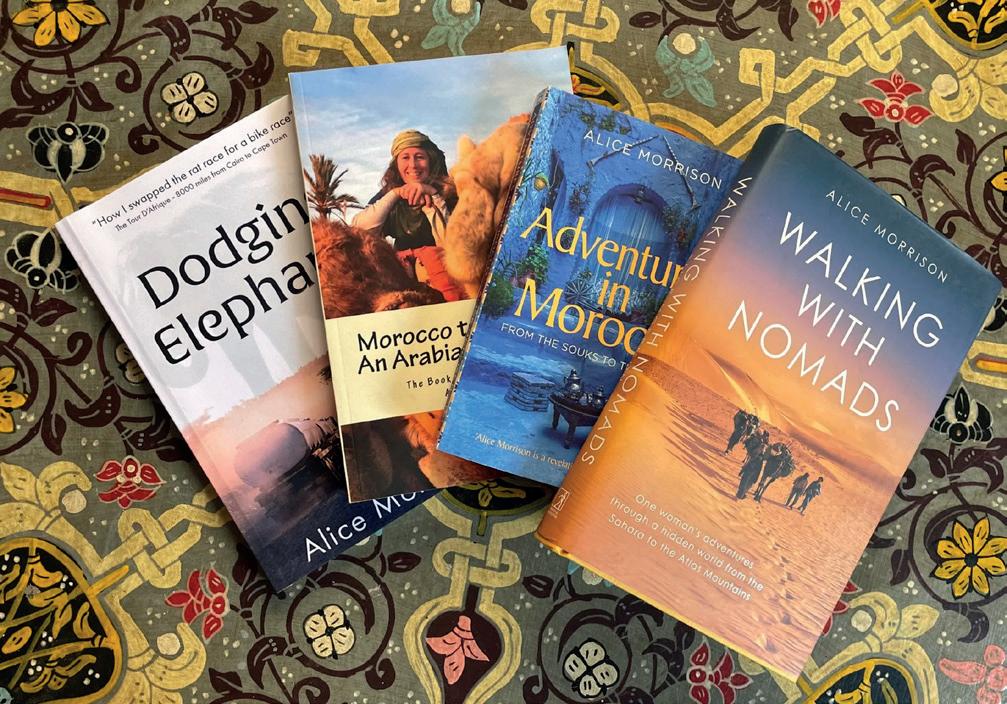
BBC Two asked me to film a documentary in 2016 and 2017, “From Morocco to Timbuktu: An Arabian Adventure” It was a dream come true for me. My quest for the “farthest place on earth” was an epic journey along the ancient salt roads, over the snow-covered Atlas Mountains and across the Saharan sands. I mined for gold, risked death in a donkey cart and spent hours up to my thighs in pigeon poo. All in a day’s work.
In November 2018, I took on another big challenge – one that was a bit beyond me in many ways. I ran the Everest Trail Race ultra marathon – 150km around Everest in 6 days, and to make sure I was ready, I moved to Imlil in the
“I left the rat race for a bike race, and the adventure started here.”
At the end of August 2020, thanks to the unflinching efforts of my Expedition Organiser, Jean-Pierre Datcharry, Addi, Brahim, Ali, our six camels and I set off on the last part of our Moroccan trilogy, the Atlas Expedition and walked 1400km from Nador on the Mediterranean to Ouarzazate, where we had started in January 2019. It was an incredible experience to walk during COVID.
every step of the way. It took me 112 days over 2,195km with an amazing backup crew from Saudi Arabia, Yemen, Sudan and Ireland. I succeeded on December 15th 2024.
“Travelling: it leaves you speechless then turns you into a storyteller.”
– Ibn Battuta
I then wrote a book about the Draa Expedition, the Sahara Expedition and the Atlas Expedition – Walking with Nomads – runner-up for the Edward Stanford Travel Book of the Year 2023.
September 2023 brought catastrophe when an earthquake devastated the Atlas Mountains. I was here and petrified, and then the next day I got on my bike and cycled round the valleys to report what I saw to the BBC, CNN, Al Jazeera and as many outlets as wanted to hear the story. My aim was to tell the truths I was seeing and raise as much awareness and funding as possible to help communities here.
The next year, I filmed a new series for BBC News. Arabian Adventures: Secrets of the Nabataeans. In it, I try to learn more about this fascinating civilisation that has remained hidden for so long.
CROSSING SAUDI EXPEDITION
My biggest challenge yet was to mount an expedition to become the first recorded person to walk the length of the Kingdom of Saudi Arabia (founded in 1932) north to south,
I currently live in Imlil in the Atlas Mountains. My third book, Adventures in Morocco (first published as My 1001 Nights), is the story of my life here in Morocco so far, which is sometimes hard, sometimes hilarious and always interesting.
You can catch up with Alicce’s adventures on her YouTube channel, and on social media. She also does public talks of her stories and adventures.
Email alice@alicemorrison.co.uk
In our exclusive Spotlight feature, we highlight women who are doing good things in their community. They’re not always seen but we think they should be.
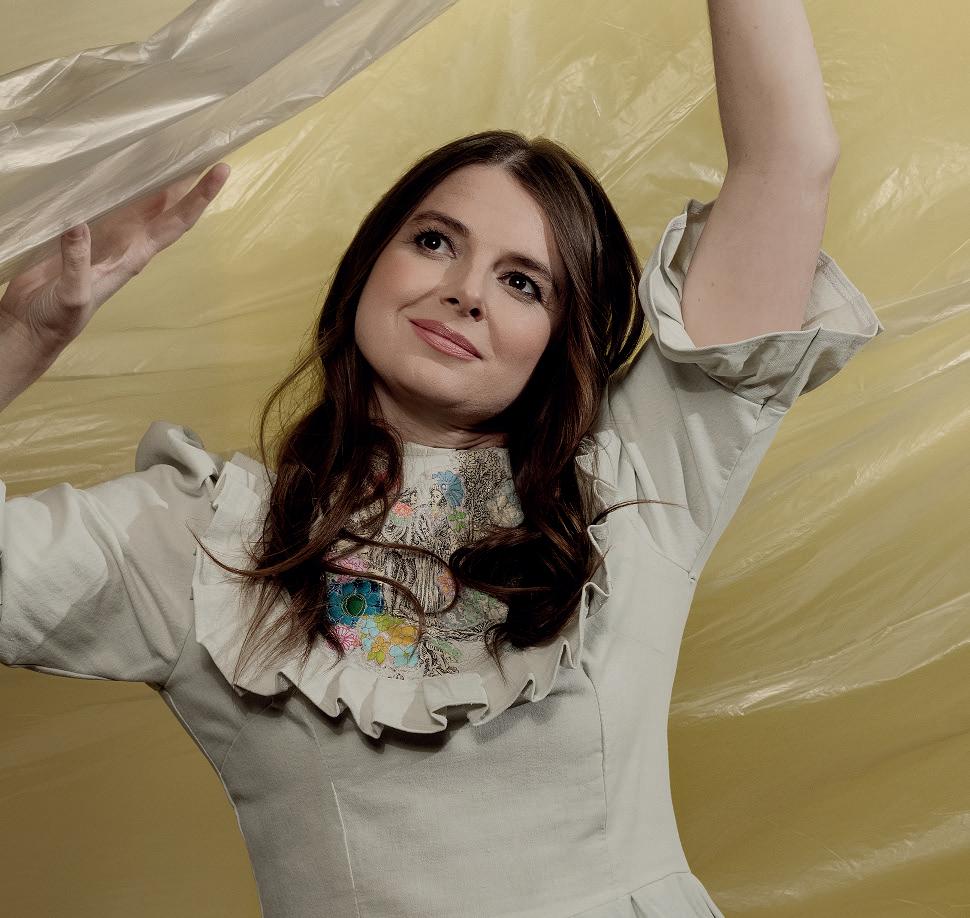
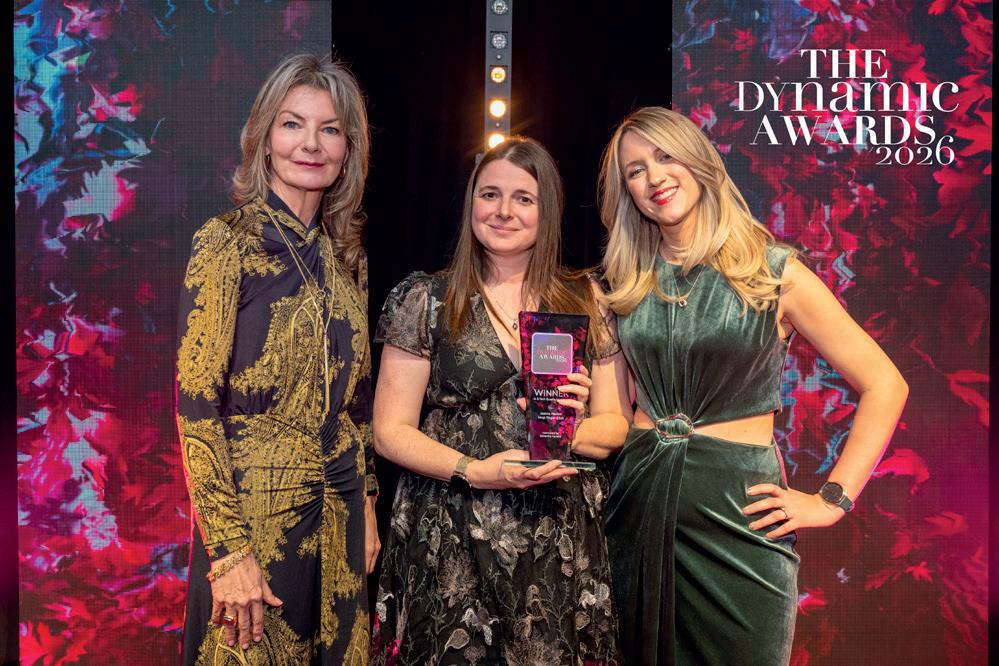
Joanna is the Design Director at Snap Finger Click and Operations Lead at Limit Break, recently recognised at the Dynamic Awards for AI & Tech Excellence.
Throughout my career, I’ve always believed that technology should bring people together, not isolate them. As Design Director at Brighton & Hove -based video game developer Snap Finger Click, my goal is to turn the living room into a shared social space.
I didn’t initially plan to work in games. I actually started out wanting to be a journalist! But joining the industry in 2008 to work on the BAFTA-winning Buzz! quiz franchise changed everything. I fell in love with making games for people who wouldn’t necessarily call themselves ‘gamers’. Back then, women made up just 4% of game developers, though my studio at the time was pleased to have 17%. It could be isolating, but it taught me the unique power of being the underdog. It gives you the space to innovate, take risks, and ultimately surprise people.
in 2017. For years, we were a small indie studio championing this frictionless approach. Now, watching entertainment giants like Amazon and Netfl ix recognise the potential and enter this exact space feels incredibly validating. Using smartphones breaks down barriers, making gaming accessible to millions who previously felt excluded by the complexity of traditional consoles.
“I didn’t initially plan to work in games. I actually started out wanting to be a journalist!”
We founded Snap Finger Click to build multiplayer party games where your phone is your controller, letting you play together seamlessly. We released our fi rst smartphone-controlled game
But if you ask me what I am most proud of, it isn’t a game release—it’s the culture we’ve built. The games industry is notorious for burnout and a lack of diversity. As a woman in tech, I feel it’s important to push for change. Our studio has always operated on a flexible, remote-fi rst model. Working a rigid 9-to-5 isn’t an option for me as a mother, and inflexible hours have driven far too many talented women out of tech. Today, our studio proudly boasts a 54% female workforce.
You don’t need a toxic crunch culture to build world-class tech. I feel a deep responsibility to support the next generation, which is why I also volunteer on the committee for Limit Break, a mentorship programme for underrepresented developers. While the tech industry will keep reinventing itself, I want to ensure the people building that future are as diverse as the people experiencing it.
www.snapfi ngerclick.com
Vanessa Lanham-Day is a Co-Founder and Chair of Greenhub Project for Teens. Green Hub won Small Business of the Year at the Dynamic Awards.
After a lifetime in marketing and business mentoring, starting a charity had not been on Vanessa’s radar. But a combination of COVID, health issues and an absolute need for purpose changed all that.
Following a few years in corporate marketing, Vanessa started her consultancy, Communications Project, in 1988. It turned out to be the start of the 1990s recession, and business was tough. Following advice from a friend to stop looking elsewhere for the magic bullet, Vanessa dug deep and thought about her options.
A chance connection from a friend led to an insurance company asking her to edit and publish a quarterly newsletter for IFAs. In a lightbulb moment, Vanessa decided to specialise in regular comms and began a journey that would lead to her agency employing a dozen folk and working with household names like Colgate, Zeneca and BOC.
In the early 2000s, with the internet taking over where printed comms had led, Vanessa chose to work one-on-one with selected clients, transitioning naturally around 2015 into a business mentor role.
“My mentoring style was very much about helping my clients be super-effective with their time and understand what their barriers and blockages were. I became known as The ButtKicker for a good reason!”
Her work led her to running mastermind groups, alongside her engineer husband Steve. Together they offered a great practical double act, with strong technology skills to back up helping small businesses build powerful marketing machines.
friend – and Client – asked Vanessa if she was interested in becoming a charity trustee for a new idea; a teenage mental health charity that would get young people out in nature. Despite having chosen not to be a parent and having no obvious green-fi ngered skills to add to the mix, Vanessa was intrigued enough to have the conversation.
She realised that, whilst lacking the mental health, teenage and horticultural background that others had, she had all the skills needed to turn ‘Green Hub’ into a reality. She and her friend decided to share the Founder role, both bringing very different skills to the charity.
“It’s like everything that has gone before led me to this. It feels like the most important thing I have done in my life, and I hope it will be my legacy.”
In 2019, Vanessa was diagnosed with a heart condition. Shortly after, COVID struck and face-to-face mentoring and masterminding were no longer options for her, whilst also protecting her health.
With considerable sadness, Vanessa contemplated ‘retirement’. However, in the way serendipity often works, an old
Now, five years on, the charity boasts 80+ volunteers and six employees. It has supported around 300 local families with teens experiencing stress and anxiety. Vanessa’s reputation for ‘getting stuff done’ precedes her and has been an important part of the charity’s success.
As Vanessa puts it, “It’s like everything that has gone before led me to this. It feels like the most important thing I have done in my life, and I hope it will be my legacy.”
www.greenhub.org.uk/teens
In our new Historical Spotlight feature, we highlight women whose achievements in the past did not get the
British rights activist and novelist known for her advocacy on behalf of both men’s and women’s rights and for her work against domestic violence
November 1971, Chiswick, West London. Erin Pizzey is 32 years old. She is not a lawyer, politician or doctor. She is a someone who talked Hounslow Council into lending her a cold, rundown building on Belmont Road, which was once a community hall, for almost nothing. Her original plan was modest. Somewhere for mothers with young children to simply get out of the house.
Then the door opened, and a woman stood in the entrance. She was covered, head to foot, in bruises, holding two small children. She was shaking. She needed somewhere to hide. So Erin let her in. She didn’t turn her away. She didn’t tell her to call the police, as she had already done so. They told her the same thing they told every woman in the UK at the time: they could not enter a private home over a “domestic dispute.” That was the law back theņ.
When Erin contacted a female civil servant to report what she was seeing, the response was astonishing. The woman said flatly: “There wasn’t a problem of battered wives until you made one.”
Erin put down the phone. Then she went back to her residents and made sure they were fed. Within weeks, 40 mothers and children were sleeping in four tiny rooms. There was no funding, no staff and certainly no legal authority. But that didn’t stop her.
In 1973, Erin hosted the first National Women’s Aid Conference in the UK. Women from across Britain arrived, and they all recognised the same thing at once: what she had built needed to exist everywhere.
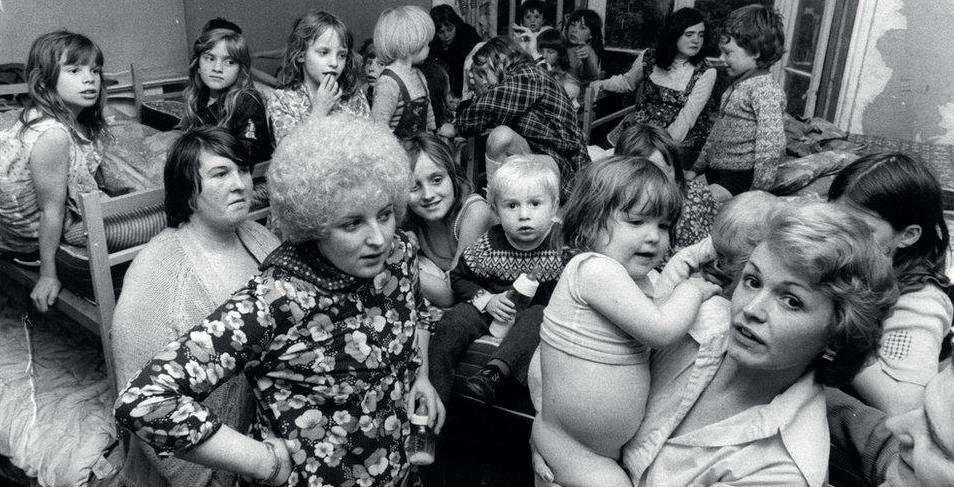
In 1974, the council set a maximum of 36 residents. Ignoring this and seeing a greater need than any council bureaucracy could offer, at peak times 150 women and children were living inside those walls — sleeping on floors, on chairs, in hallways. The building smelled of cooking, fear, and something else entirely: relief. She was taken to court for overcrowding. She appealed all the way to the House of Lords. The doors stayed open.
That same year, she wrote a book entitled, ‘Scream Quietly or the Neighbours Will Hear’. It was the first published account of domestic violence in British history. It used real stories from real women inside the shelter. Overnight, a problem that had had no official name was on front pages from London to New York.The movement spread. Refuges opened across the UK. Then Australia, Canada and the US.
MP Jack Ashley stood up in Parliament and said: “It was she who first identified the problem, who first recognised the seriousness of the situation and who first did something practical.”
She received a CBE in 2024 for services to victims of domestic abuse. The charity she founded — Chiswick Women’s Aid, which became Refuge — grew into the largest domestic violence charity in the United Kingdom, with over 460 employees and annual donations of more than £33 million.
The journey all began with one woman, one borrowed building, and an absolute refusal to say no. Forty women and children showed up with nowhere to go, so she made room.
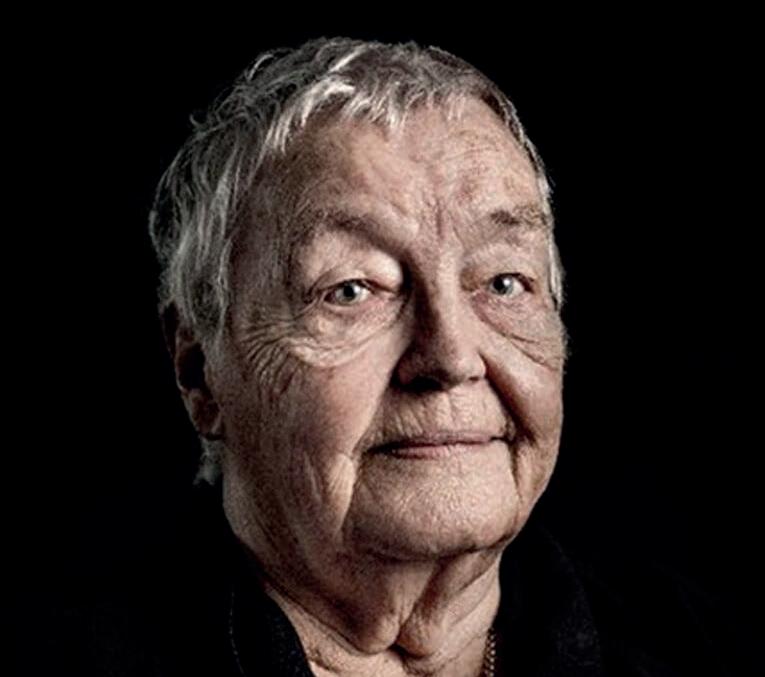
Erin Pizzey CBE b. Qingdao, China, 1939
the recognition they deserved or who were completely overlooked at the time or have simply been forgotten
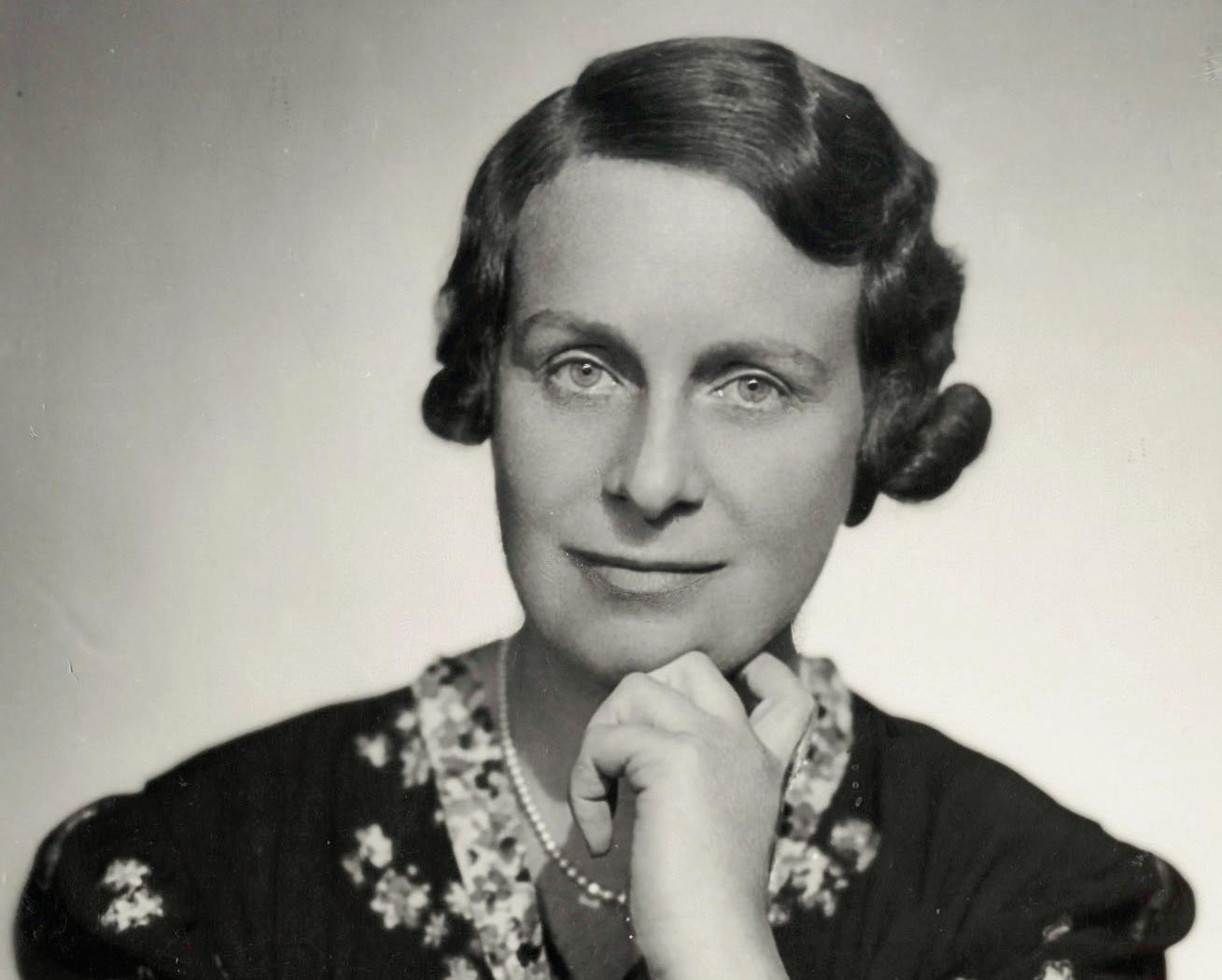
A pioneering electrical engineer whose work on safety in the home led to worldrenowned household design, still used 80 years later
Initially starting her working career at Cochran Boiler Company in 1914 as a clerk, a dissatisfied Haslett, who had recently joined the suff ragette movement, soon asked to be transferred to the shop floor to learn the technical aspects of engineering. During World War I, her wish was granted. She undertook a basic apprenticeship and was trained in boiler manufacturing.
In 1919, she responded to an advertisement and left Cochran Boiler Company to become the fi rst secretary of the Women’s Engineering Society and the founding editor of The Woman Engineer magazine, which she worked on until 1932.
In 1920, she helped form an engineering fi rm for women, Atalanta Ltd; in 1924, she co-founded and became the inaugural director of the Electrical Association for Women (EAW), as well as the fi rst editor of the EAW’s journal, The Electrical Age. The EAW was a feminist and educational organisation focused on emancipating women from the drudgery of housework by introducing the use of electricity in working- and middle-class homes.
Caroline Haslett believed that all women should benefit from engineering, not just those who pursue it as a career. As such, she continued to serve as director of the EAW and editor of The Electrical Age. At the time of her retirement from the EAW in 1956, the association had 14,000 members across 160 branches.
During the Second World War, the Institute of Electrical Engineers commissioned a twenty-person committee to determine the requirements for electrical installations in


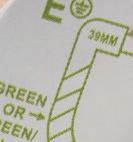
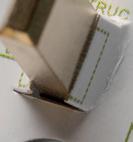
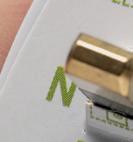
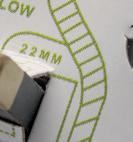
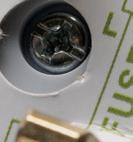


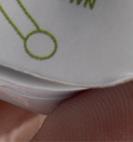
The UK 3-pin plug, first introduced in 1947, and considered a world-leader in design and safety

post-war Britain. Haslett was the only safety expert and the only woman on the panel.
One of the criteria Haslett and the committee focused on was ensuring safety. In their report, they stated that: “To ensure the safety of young children it is of considerable importance that the contacts of the socket-outlet should be protected by shutters or other like means, or by the inherent design of the outlet.”
They went on to advise that the revised design of plugs and sockets should be flush-fitting, switchless, offer bottom cable entry, have a contact design, be easy to withdraw, include a fuse, and be impossible to insert incorrectly. The committee also detailed terminal requirements and recommended ring circuit systems. Th is led to the publication of the BS 1363 standard in 1947, of which Haslett, as the committee’s safety expert, played a major part.
All of the elements remain in use across Britain today, and the UK three-pin plug is considered a genius of modern design around the world. This means that every individual in Britain continues to be protected by Dame Caroline Haslett’s legacy.
Haslett was awarded an OBE in 1931 for services to women and was made a DBE in 1947, in recognition of her work for the Board of Trade and the Ministry of Labour. She has her name given to a street in Crawley, West Sussex, a primary school in Milton Keynes, Buckinghamshire, and the Women’s Engineering Society has named a lecture series in her honour.
Dame Caroline Haslett OBE b. Worth, Sussex, 1895, d. 1957
By Cat Paterson, Behavioural Intelligence Strategist
Here’s something most people don’t know about AI: every time you use it, you’re training it. Every question you ask, every answer you refine, every conversation you have, all feed back into the systems that shape what AI understands about the world and how it responds. Which means right now, while women in business are still deciding whether AI is “for them,” the technology is being shaped almost entirely by the people who are already using it.
This isn’t a comfortable message. And there’s a legitimate counter-argument - women don’t have to adopt every technology on someone else’s timeline, there are real ethical
concerns about AI worth taking seriously, and “embrace AI” has become its own kind of pressure. Those objections are fair, but they don’t change the underlying dynamic and its consequences.
Deloitte UK research found that 28% of women use generative AI compared to 43% of men. A meta-analysis drawing on 18 studies covering 143,000 people worldwide found a 25% gap in adoption between men and women.
That usage gap is a missed career opportunity. But more than that, because AI systems learn from the data and

interactions they receive, the underrepresentation of women’s voices and perspectives produces technology with a significant blind spot. AI hiring tools have been found to disadvantage women, and AI trained on historically biased data doesn’t just reflect those biases, it amplifies them, because each new interaction validates and reinforces the last. This is a feedback loop that compounds over time.
Ask an AI tool to write almost anything, and you’ll start to notice familiar habits - it urges you to explore, delve and unlock your potential. That repetition reflects the human feedback, preferences and patterns that shape how these systems learn to speak.
time, lose the muscle we stop using. The biggest AI risk for business leaders is outsourcing their judgment and not recognising it until decisions start to feel like they belong to the process rather than to them.
So what’s the answer? It’s not to avoid AI. In fact, used well, AI can amplify human thinking. So, use it to research, synthesise, and draft, but always apply your own judgement before anything goes out. Feed it your expertise, your sector knowledge, and your client insight. Remember, your years of experience are the ingredient that AI cannot generate on its own. And regularly ask yourself, “Am I thinking more clearly with this tool, or less?
“…because AI systems learn from the data and interactions they receive, underrepresentation of women’s voices and perspectives produces
technology with a significant blind spot.”
The point isn’t that one group or one country is “responsible” for how AI sounds. It’s that AI is built through countless human decisions, and those decisions leave a mark. Whoever is most represented in the process helps shape what the system treats as normal, useful and authoritative.
That matters in business. If only some voices feed the machine, the machine will tend to mirror those voices back. The result is not just a bias in content but also in tone, emphasis and perspective.
There is a risk in AI adoption that receives far less attention than bias or data privacy, and it may be the most consequential for business leaders. That risk is losing the habit of thinking for yourself and not noticing it until the habit is already gone.
Research published in 2025 found a significant negative correlation between frequent AI use and critical thinking scores, which researchers call “cognitive offloading,” in which we delegate mental effort to external tools and, over
The patterns being set now will determine what AI looks and sounds like for the next decade. I truly believe that women in business have something irreplaceable to offer by bringing different questions, different contexts and different definitions of what a good outcome looks like.
This isn’t about pressure to adopt a technology on someone else’s terms. It’s about ensuring that women’s expertise shapes how AI is used, and how the technology develops into the future.
Sources: Deloitte UK Digital Consumer Trends Survey (2024). Otis, Delecourt, Cranney & Koning, Harvard-Berkeley meta-analysis (2025). Global Evidence on Gender Gaps and Generative AI.
Cat Paterson is a Behavioural Intelligence Strategist, a former government intelligence analyst, and the creator of behavioural intelligence methodologies that help founders, business owners, and senior leaders identify the hidden patterns shaping decisions, performance, and change. Find out more at catpaterson.com
By Patty Azzarello
One of the biggest reasons careers stall is that people are simply too busy to do the things it takes to get promoted. It’s an easy trap to fall into because being busy can make you feel important. “No one can live without me!”
So you end up working long hours to project the image of a highly committed, competitive top performer who comes in early and is the last to leave. You do everything that is asked of you without fail, including fixing problems you didn’t cause and picking up the slack for others.
Women tend to fall victim to this more than men because many of us have been raised to believe that our most valuable role in life is to serve. The more you take care of others, the more “valuable” a woman you are perceived to be.
But, ladies, know this: you don’t get promoted for cleaning the kitchen.
Think about how much time it takes to clean the kitchen—every day, over and over again. It’s work that needs to be done, but nothing ever moves forward because of it. The work simply resets after the next meal.
advancing the business, is “office housework.” This is cleaning the kitchen.
Yes, these things need to get done, but it’s important not to mistake them for the work that gets you promoted. The reward for picking up everyone else’s slack, getting everything done, and making it look nice isn’t a promotion— it’s more work.
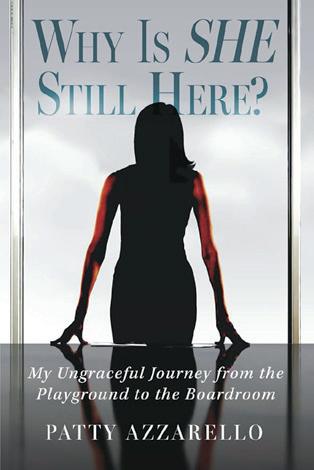
In my book, ‘Why Is SHE Still Here?: My Ungraceful Journey from the Playground to the Boardroom’, I tell the story of my career and how I first learned this lesson. At one point, after working myself to death, I asked for a raise. My boss told me, “No. I could fire you and replace you for less.” In that moment, I realised I needed to learn how to equate myself with value, not with the amount of work I could do.
“...ladies, know this: you don’t get promoted for cleaning the kitchen.”
Now think about your work. What tasks do you find yourself doing over and over again? They need to get done, but they don’t move the business forward. Redoing templates, interviewing peers for input on the business plan, or serving as the keeper and distributor of team information are all examples. This type of work, along with other reactive, chaotic, low-value activities that demand your time without
The other problem with trying to distinguish yourself by simply working hard is that it wears you out. Just because you can muscle through a huge amount of work doesn’t mean you should. The most important lesson I learned—and the one that led to promotion after promotion—was to identify the one or two things that would have the greatest impact on the business and make sure those got done, no matter how busy I was, instead of trying to do everything and take care of everybody.

“Focus on adding business value and become known for that.”
Once I finished those priorities, I would choose the next two. I was always asking questions and learning which activities added the most value to the business, and I used that knowledge to prioritise my work. I also made a conscious effort not to wear myself out by taking on too much office housework.
By the way, it’s much easier to say no to office housework when people see you working on something that is critical to the business. When you become associated with projects that others recognise as important, you naturally deflect more low-value work.
Focus on adding business value and become known for that.
No one ever got promoted simply for being a hard worker.
Patty Azzarello became the youngest general manager at Hewlett-Packard at age 33, ran a billion-dollar software division at 35 and became a CEO at 38. From entry-level engineer to head of a company, Patty has navigated sexism, imposter syndrome, introversion and fear, as she learned that embracing her humanity would be her biggest asset as a leader.
Patty Azzarello is the author of Why is SHE Still Here? She is a CEO, Business Advisor, Keynote Speaker. Her latest book Why is SHE Still Here? talks about her own journey as human (and a female) and lessons learned about how to lead other humans, while building her corporate executive career.

Whether you’re just beginning to think about starting a family journey, it’s natural to wonder how to give yourself the very Nick Macklon, Medical Director of the London Women’s Clinic, Business Development Manager, offer their expert advice
PREPARING YOUR BODY
1
Embrace a Mediterranean diet
One of the kindest things you can do for your body is to nourish it well. “There’s good evidence that a Mediterranean diet improves egg and sperm quality,” says Professor Macklon. Think colourful vegetables, fruit, fish, chicken, dairy and eggs — wholesome, enjoyable food that supports your whole body.
2 Don’t overspend on supplements
It’s easy to feel overwhelmed by the range of fertility supplements on the market but try not to worry. If you’re eating well, you’ll be getting most of what you need. Three are genuinely worth adding: folic acid, omega-3 and vitamin D.
3 Quit smoking — and vaping too
We know that giving up smoking isn’t easy, but it’s one of the best things you can do for your future family. Smoking affects both egg and sperm quality, and while vaping is less harmful, the nicotine still has an impact. Every step towards cutting down is a step in the right direction.
4 Aim for a healthy BMI
Our bodies are wonderfully complex, and weight can play a role in fertility in different ways. Being significantly over or underweight — a BMI below 19 — can sometimes affect ovulation. “Your body wants to feel like it’s ready to invest in somebody else so that it can carry a pregnancy by having all the right nutrients. If not, then your body is not going to be ready to conceive.” Professor Macklon explains. Small, sustainable changes to your lifestyle can make a real difference.
5 Reduce your alcohol intake
Try to be mindful of how much you’re drinking, but don’t feel you have to be perfect. The occasional glass of wine is absolutely fine — and if it helps you unwind and reduces your stress levels, that matters too. “It’s when you’re drinking more than eight or nine units a week that it might have a detrimental effect on your fertility,” says Professor Macklon.
WHEN YOU’RE ACTIVELY TRYING
6 Time it right — but not too precisely
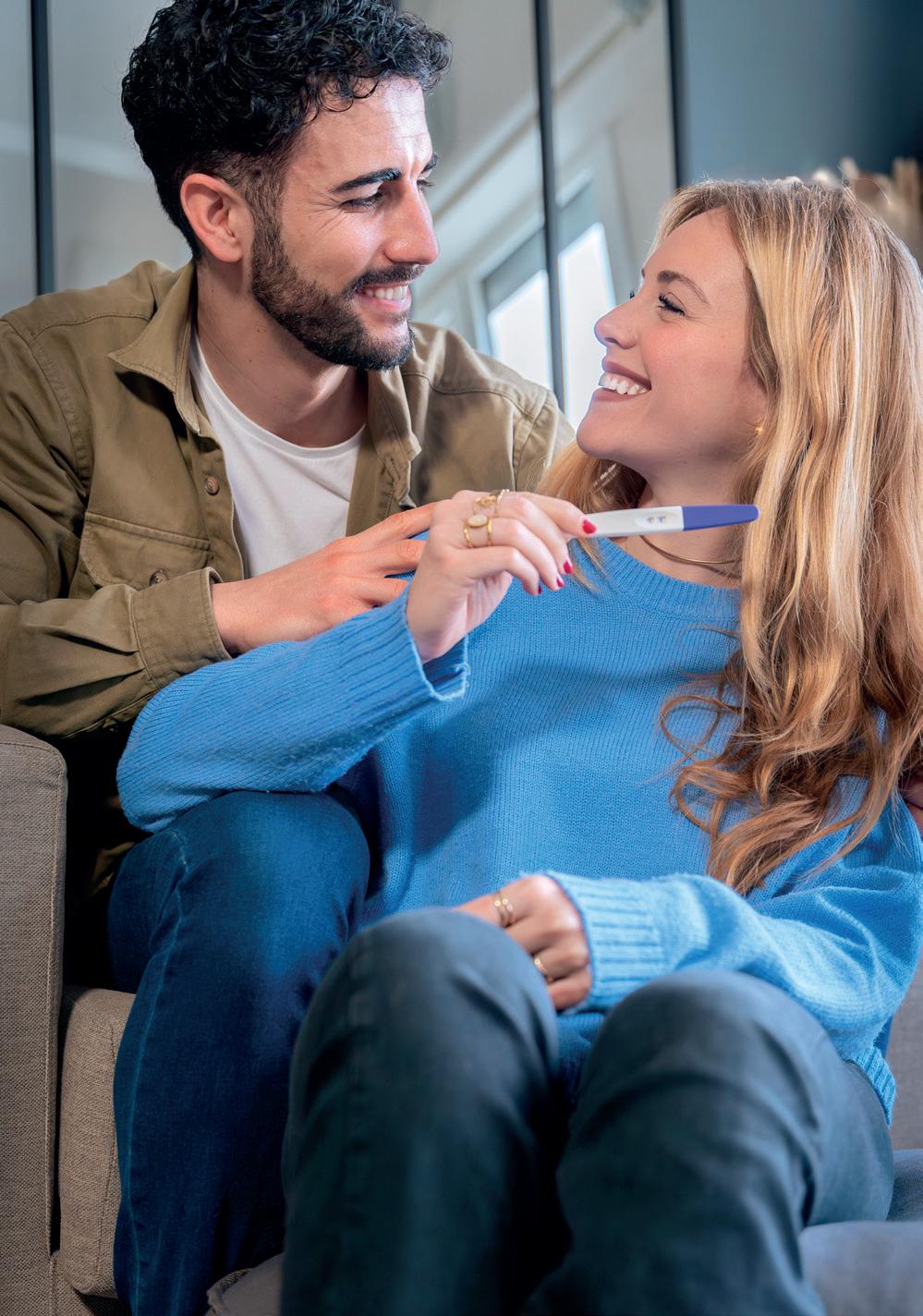
Many people find ovulation kits a helpful and reassuring guide. They measure LH to predict when you’ll ovulate — but there’s a helpful insight worth knowing. “The most fertile day is actually two days before ovulation. When your test turns positive, you’ll ovulate in around 36 hours — and that’s when most pregnancies occur,” says Professor Macklon.
7 Keep intimacy enjoyable
Trying to conceive can sometimes feel like it takes over, and that’s completely understandable. But Professor “There’s good evidence that a Mediterranean diet improves egg and sperm quality,”
family or already on the very best chance. Professor Clinic, and Camilla Ferrari, advice
Macklon offers some reassuring advice: “Don’t make it a chore — once on your fertile days is genuinely enough.” Protecting the warmth and connection in your relationship is just as important as anything else.
8 Know when to seek help
Please know that reaching out for support is always the right thing to do. If you’re under 37, the general guidance is to see a specialist after a year of trying; over 37, after six months. But as Professor Macklon says: “If you’re anxious, seek help any time.”
HR team,” encourages Camilla. “You may be surprised and reassured by what’s available to you.”
12
Partners need support too
A fertility journey touches everyone involved, and partners deserve support too. “Th is is a shared experience,” says Camilla. “If your partner needs time to attend appointments or simply to be there for you, it’s absolutely worth raising that with their employer too. You shouldn’t have to face any of this alone.”
“For many women, one of the quieter challenges of a fertility journey is managing it alongside work”
For many women, one of the quieter challenges of a fertility journey is managing it alongside work. Research by Fertility Matters at Work found that 69.5% of employees take sick leave during treatment rather than feel able to tell their manager, and 36% have considered leaving their job due to a lack of support. But with the right conversations, things can be so much easier.
9 You don’t have to share everything
You are never obliged to share more than you feel comfortable with, and there is no pressure to explain your full situation. “How much you disclose is entirely your choice,” says Camilla Ferrari. “But even a broad conversation with your manager can open the door to the support you deserve.” If that feels like too big a step, a trusted colleague or HR contact can be a gentle starting point.
10 Ask about flexibility
Fertility appointments don’t always fit neatly into a lunch break, and that’s okay. “There is often far more flexibility available than people realise,” says Camilla. “Adjusted hours or working from home on certain days can take so much pressure off an already demanding time.”
11 Know your leave options
On days when treatment or its side effects make work simply impossible, please be kind to yourself. Standard sick leave applies, but annual leave, special leave or unpaid leave may also be available. “Do have a conversation with your
A Fertility Health Assessment at LWC includes an AMH (Anti Müllerian Hormone) blood test to check ovarian reserve, a pelvic ultrasound scan, and — for male partners — a semen analysis. Each assessment concludes with a one-to-one consultation with a fertility specialist to discuss your results and any next steps.
londonwomensclinic.com
ABOUT
Established in 1985, London Women’s Clinic (LWC) has spent over four decades walking alongside people on their path to parenthood — and has helped more than 40,000 families along the way.
The only UK fertility clinic with a research licence, LWC’s 20 clinics across England and Wales, including their warm and welcoming Brighton clinic, offer every possible pathway to parenthood in a space designed to feel safe, inclusive and full of hope.
London Women’s Clinic 169 Preston Road Brighton, BN1 6AD
By David Freeman
Let’s start with some good news. Despite what social media and rolling news channels might sometimes have us believe, Britain remains one of the safest countries in the world. The chances of becoming the victim of a violent crime are still relatively low. Yet many women (and indeed men) can probably relate to that feeling of unease.
“In many cases, self-defence starts long before any physical contact occurs.”
Perhaps you’ve walked back to your car after dark with your keys in your hand. Maybe you’ve crossed the road to avoid someone approaching. Perhaps you’ve felt uncomfortable on public transport or walking home alone.
Those feelings should never be trivialised or treated as irrational. While most people will never become victims of violent crime, official figures show that violence against individuals has risen by 40% over the last decade, while sexual offences have increased by 75% and there has been a sharp rise in theft against the individual. It is therefore understandable that many people feel more aware of their personal vulnerability than ever before.
The reality is that most people will never need to physically defend themselves. Statistically, you have just a 1.2% chance of being involved in an unprovoked violent attack. Confidence, however, doesn’t come from hoping nothing bad will happen. Confidence comes from knowing that, if the worst should happen, you have options.
That’s what good self-defence training is really about.It’s not about becoming aggressive. It’s not about becoming a fighter, and it’s certainly not about spending years earning black belts or learning hundreds of martial arts techniques.
At its heart, self-defence is about awareness, confidence and having a simple set of skills that could help you create an opportunity to get away from danger. In many cases,
self-defence starts long before any physical contact occurs. Something as simple as being aware of your surroundings, recognising potentially risky situations, maintaining confident body language and trusting your instincts can significantly reduce the chances of becoming a target in the fi rst place. For instance, know how to get to where you are going before you start out; standing on a street corner, scouring maps or staring at your phone for directions screams ‘target’ to the wrong type of people.
How we carry ourselves also matters.
Walking with purpose, making eye contact and appearing aware of what’s happening around us sends a very
“I have thoroughly enjoyed David’s lessons! And I genuinely feel that I now have a decent chance of defending myself if needed. Plus, I’m fitter, stronger and more confident for it.”
– Jasmin
different message from walking with our heads down, distracted by a phone or trying to make ourselves appear small or insignificant, which actually increases the chance of us becoming a victim of crime. Vulnerability reads as ‘victim’ to a certain section of society; people who are intending to take advantage, physically or otherwise, against another individual know exactly what to look for.
Confidence itself can be a powerful deterrent. Of course, there may be situations where awareness alone isn’t enough. There may come a moment when you need to act. The good news is that many effective self-defence skills can be learned surprisingly quickly.
Drawing on more than 40 years of experience in kickboxing, jujitsu and boxing, I have developed a practical 12week self-defence programme designed specifically to help ordinary people learn straightforward techniques they can apply in real-life situations.
The techniques focus on creating opportunities to escape rather than engaging in prolonged confrontation. Using an attacker’s momentum against them, manipulating aggressive efforts to control you, and targeting vulnerable areas of the body, whilst creating distance between you and an assailant are all taught in a controlled, managed environment in preparation for what could happen in everyday life.
Alongside the physical techniques, participants often discover something unexpected: increased confidence. Many people begin training to learn self-defence. They continue because they enjoy feeling stronger and more empowered.
That confidence often extends far beyond the training environment and into everyday life. The programme is suitable for women and men of all ages and fitness levels, including complete beginners with no previous martial arts experience. Training is available on a one-to-one basis or in small groups of up to six people, ensuring a supportive and personalised learning environment.
Ultimately, self-defence isn’t about expecting the worst. It’s about being prepared for it. It is better to have the tools and not need them than to not have the tools and need them.
Just as we wear seat belts without expecting to crash, or helmets without expecting to come off our bikes, learning self-defence is simply another way of taking responsibility for our personal safety and wellbeing. It doesn’t mean punching someone in the throat just because they have approached you with a genuine question.
If you’d like to feel stronger, more confident and better prepared, I offer both one-to-one coaching and small-group self-defence courses for up to six people, helping keep training accessible while ensuring every participant receives individual attention and support.
David Freeman is an experience personal trainer with a genuine passion for teaching self-defence. To discuss the course, ask any questions, or reserve your place, please don’t hesitate to get in touch.
Tel: 07977 688213 davidfptraining@gmail.com
By Tess de Klerk
Two reports were released in June, six days apart. Between them, they say something that many British women have been trying to make heard for a long time: when they told someone in a maternity ward that something was wrong, they were too often not believed. I've been mulling that over all week because it's such a basic, human thing to ask forto be heard when you’re afraid for you and your baby.
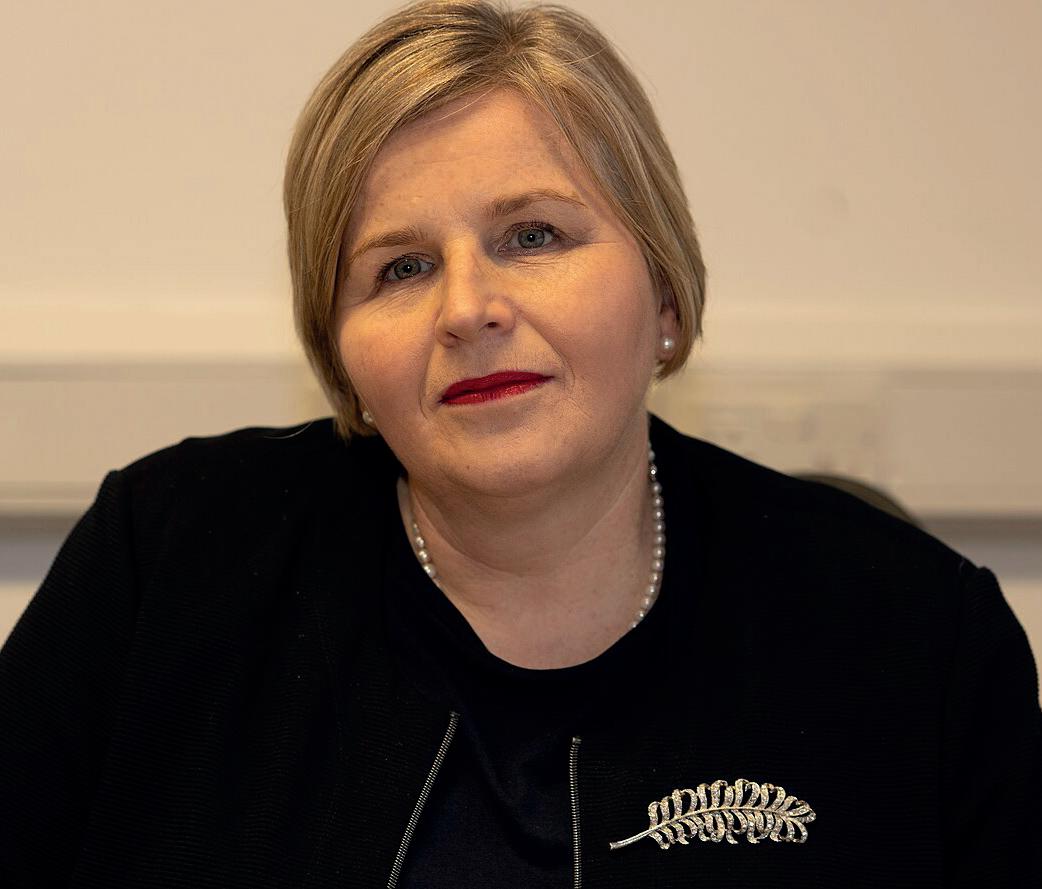
The fi rst of these was the biggest maternity inquiry the NHS has ever seen, released on June 24th. Donna Ockenden, the senior midwife, led a review of Nottingham University Hospitals NHS Trust which went back to 2012 and covered some 2,500 cases involving families.
changed things by what might have been better care. Some 162 of those deaths, 156 of them babies and six mothers, were deemed to have been potentially avoidable. In this, a fi rst-world country.
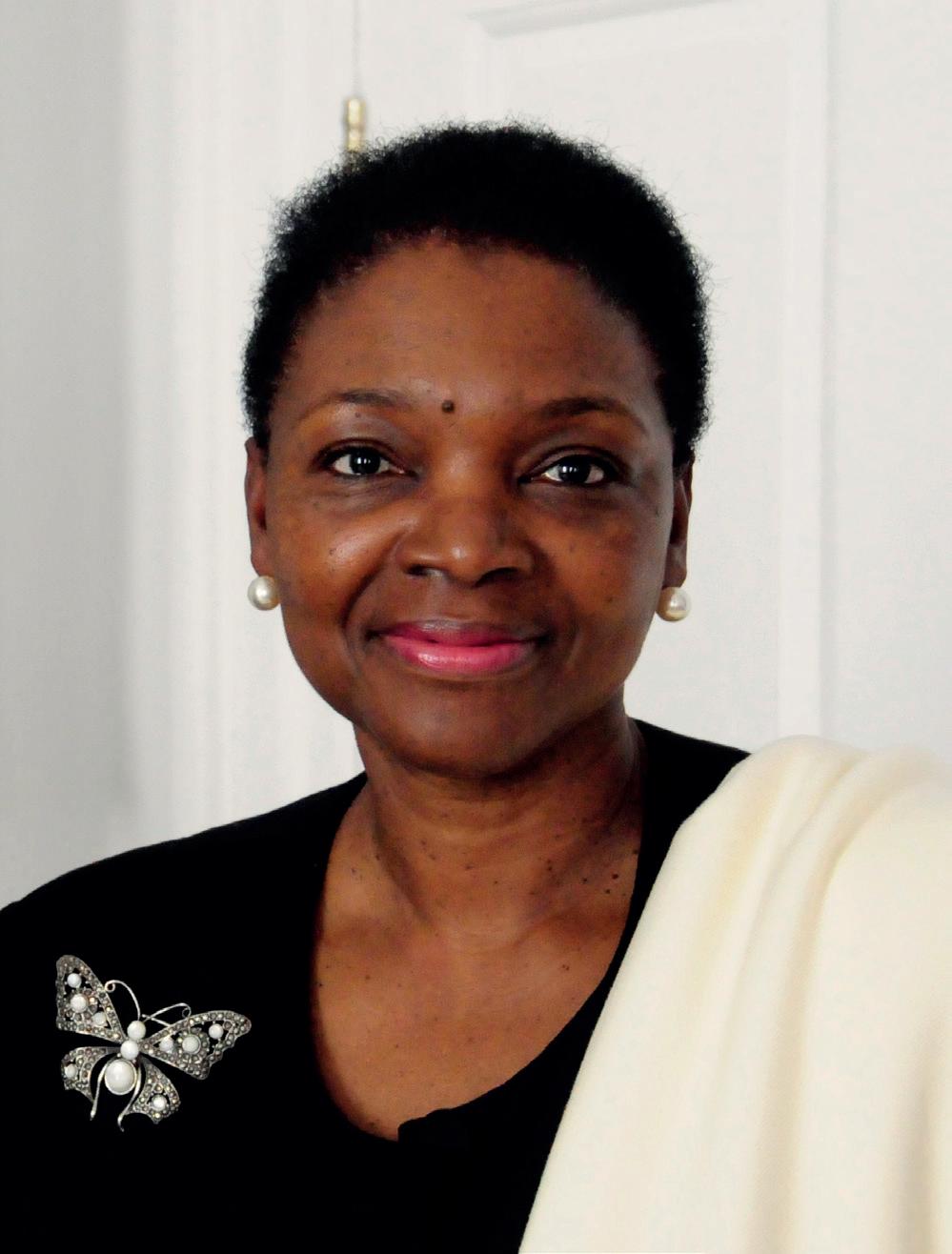
Then, on June 30th, we had the national reckoning. Baroness Valerie Amos put forward her Independent National Maternity and Neonatal Investigation. She drew on evidence from 10,500 public responses, over 9,000 members of staff and 450-odd families. If Ockenden’s work was a mirror to one trust, Amos held one up to the entire system and exposed a pattern.
“The Nottingham fi ndings are stomach-turning and infuriating. Ockenden talks of a ‘toxic culture’ being permitted to run rampant, ‘infected’ by a few people with power.”
The numbers are stark: more than 500 mothers and babies had been harmed or had died when better care might have
The Nottingham findings are stomach-turning and infuriating. Ockenden talks of a ‘toxic culture’ being permitted to run rampant, ‘infected’ by a few people with power. In that unit, bullying was just part of the way things were, and your job was at risk if you spoke up. Governance was more about shielding reputations than looking after patients. Staff told her team the incident review panel was intimidating and male-dominated, ‘quick to dismiss anyone who wasn't a doctor’.
The report makes it plain that the trust had been aware of these issues for years. That’s the part that’s hardest to swallow. They were not problems in hiding; they have been in plain sight for a decade or more. And when it came time for the review, almost half the senior directors at the trust would not participate.
Nottinghamshire Police are now running a criminal investigation looking at possible corporate and gross negligence manslaughter. The trust has apologised 'unreservedly' and says it accepts the findings in full, but words are cheap, and families have heard apologies before. The trust itself acknowledged that it will ultimately be judged by what it does next, not what it says now.
Nottingham was a terrible failure but not an isolated one, as Amos found it echoed all over the country. Her report describes a maternity system that's fragmented, far too complicated, slow to learn and wildly inconsistent in how it responds when a woman raises the alarm. At the centre of it sits the thing women have been saying for years: they aren't listened to, heard or believed. And Amos is clear that this isn't just upsetting but a clinical problem that costs lives.
When something went wrong, families hit a wall. They described internal investigation teams 'marking their own homework’, resulting in reviews that contradicted what had actually happened or played down the failings. Some families were told there was no need to investigate at all, because staff had already decided nothing had gone wrong. There's a huge imbalance of power, the report says, between an institution and a grieving family, and that imbalance keeps the answers out of reach.
Amos was just as direct about racism. The evidence showed discrimination shaping the care women received and which symptoms were dismissed, with women from minority ethnic backgrounds let down most badly. Staff described facing racism too, sometimes from colleagues, sometimes from the families they were caring for. The report wants racism and inequality treated as a safety issue, named plainly in board papers and inspections, not brushed aside as a matter of manners.
The report didn’t mention the row. Dr Bill Kirkup, the 2015 investigator who shone a spotlight on the failings with maternity care in Morecambe Bay, had been an expert adviser for the Amos review. He resigned on June 22nd, just two days ahead of Ockenden’s Nottingham verdict.
“When something went wrong, families hit a wall. They described internal investigation teams ‘marking their own homework’, resulting in reviews that contradicted what had actually happened.”
What they could not agree on was the so-called ‘normal birth ideology’, the kind of hard line on vaginal delivery that insists on natural birth and delays intervention when the mother or the baby needs it. For some time now, Kirkup has made the case that you cannot let such a philosophy trump safety without costing lives, and Ockenden is of the same mind; she put the harm in Nottingham down to this quest for ‘normal birth’.
Then there were the conditions themselves. Midwives and doctors working long shifts without breaks, units shortstaffed, buildings poorly maintained and sometimes unsafe. None of that excuses what happened to families. But it does help explain how a system wears people down until the warning signs start to look like background noise.
And yet Amos came to a different conclusion, saying that her team found no evidence that the ideology is widespread at present. As a man who has been deconstructing these sorts of tragedies for years, he would not have his name attached to it.
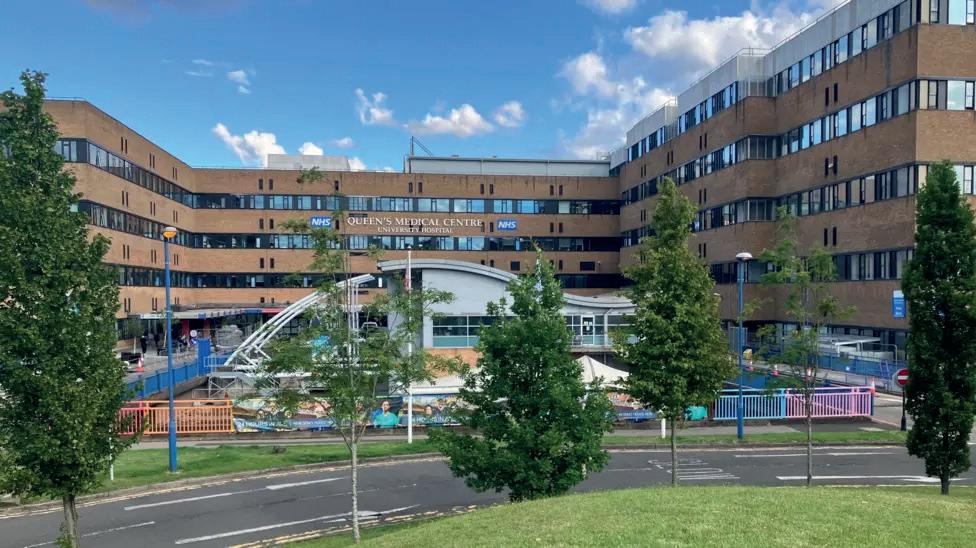
The big response is the appointment of England's fi rst Maternity and Neonatal Commissioner, an independent figure answerable to Parliament, tasked with redesigning the service and holding it to account. With it comes £41 million in extra safety funding, a national action plan due in December, new national standards for triage within a year, a perinatal equity and anti-discrimination programme and around 1,000 transitional posts to help newly qualified midwives enter NHS practice.
James Murray, who took over as Health Secretary in June, made his typical politician’s speech, saying, 'For too long women, babies and families have been failed by a system that didn't listen,' calling the review 'a turning point'. Let’s hope his words have weight. Baroness Amos made the case for getting on with it rather than forever declaring shock and debating. She made it clear that change should start now, instead of disappearing into years of another inquiry that tells us what we already know.
plan “fundamentally dangerous”, saying anyone in that role could not be “meaningfully independent” from the system they are supposed to be overseeing. What the families are after is a proper statutory public inquiry, something with the legal clout to force out evidence and hold people to account. The Birth Trauma Association has been equally clear in calling the review “a huge missed opportunity” and “disappointing for families”.
One might be tempted to dismiss their views as the reaction of people in pain, but they have been down this road before and know the way it plays out. It is old hat. Take Donna Ockenden’s 2022 review of Shrewsbury and Telford, for instance; she put forward 101 recommendations, having identified over 200 deaths of mothers or babies that better care might have prevented.
Or Dr Bill Kirkup’s work at Morecambe Bay, where an eleven-strong tally of babies and one mother were lost. Findings were made, recommendations were given and accepted with due solemnity. Yet the very same shortcomings would surface in some other place as though nothing had been learned.
“The women in these reports by the thousands needed to be heard while there was still time for it to make a difference.”
Ockenden herself noted that the Amos report held few surprises given the years of prior investigations. That is the rub. There is no shortage of evidence of what is amiss in maternity care in this country; you could fi ll shelves with it. The deficiency has always been the will and ability to use that evidence to provide safer care.
There are those who would question whether one appointment is really up to the task. The Maternity Safety Alliance, with its membership of bereaved families, had no such reservations and was more blunt: it branded the commissioner’s
There's one inarguably effective change from Nottingham that's being rapidly rolled out. Martha's Rule is being extended to every maternity and neonatal unit, giving any parent the right to request a swift review by an independent team when they believe a mother or baby is deteriorating and no one is listening.
Strip away the new job titles and the funding figures and the well-crafted apologies, and you get to the heart of it: the right to be believed. To have parents’ fears regarded as information rather than an annoyance. The women in these reports by the thousands needed to be heard while there was still time for it to make a difference.
A commissioner and a public inquiry may be of use, but they won’t amount to much unless the underlying culture shifts. The next woman who voices a concern needs to be taken at her word the fi rst time around. Amos stopped short of saying so, but I'll add it: that also must mean an end to the pressure on women to have a 'normal birth' when what they and their baby actually need is help.
We'll know it's working when women no longer have to fight to be heard. Until then, the least the rest of us can do is to refuse to look away.

























FEEL MORE IN CONTROL YOUR MONEY, YOUR WELLBEING AND YOUR NEXT CHAPTER




TAKE CONTROL OF YOUR FINANCES REDUCE STRESS AND REGAIN MENTAL CLARITY
THIS EVENT IS FOR YOU IF YOU’RE
✔ Navigating career pressure or burnout
✔ Managing family and nancial responsibilities
✔ Experiencing perimenpause, menopause or health shifts
✔ Read for a fresh start or wondering “what’s next?’


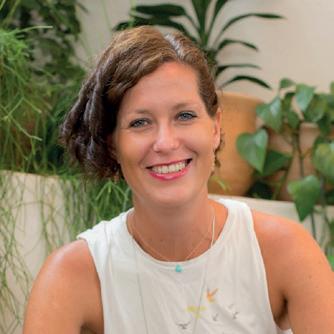

CAMILLE PIERSON


POWERFUL, EXPERT-LED MORNING FOR WOMEN WHO WANT CLARITY, CONFIDENCE AND MOMENTUM

UNDERSTAND YOUR BODY, HORMONES AND LONG-TERM HEALTH
MONDAY SEPTEMBER 7TH 9.00AM – 1.00PM THE GRAND BRIGHTON KINGS









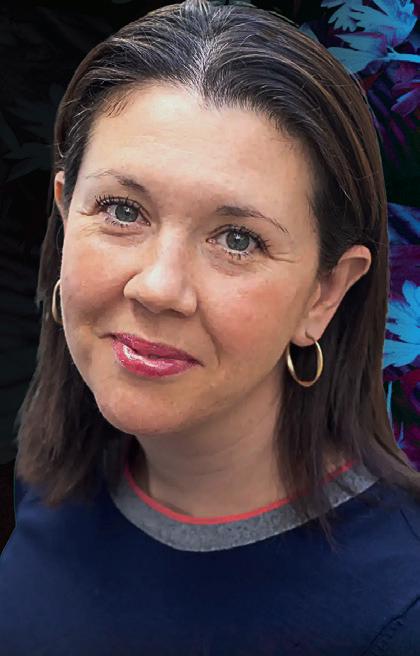




WALK AWAY WITH A CLEAR PLAN
★ ONLY 120 SEATS AVAILABLE is will sell out! EARLY BOOKING STRONGLY RECOMMENDED FROM THE TEAM BEHIND



Stress and Recovery Specialist PROFESSOR NICK MACKLON
Women’s Health Expert



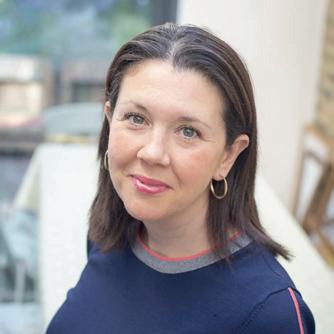


MEET OUR EXPERT SPEAKERS IN ASSOCIATION WITH

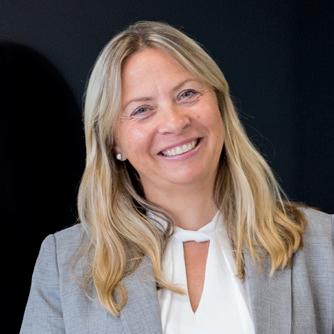


ANYA SIZER Hormone and Wellbeing Insight SAMANTHA KAYE Financial Clarity and Con dence


RESERVE YOUR PLACE TODAY
Scan to book in under 60 sec ds


JUST £25 PER TICKET

Co-authored by organisational psychologist Alex Bailey and transformation leader Kerri O’Neill, Rapid Reculturing approach to intentionally redesigning culture at scale through shared purpose, mindsets, energy, and connection. change models, the book challenges leaders to shape the real-time evolution of workplace experience,
We tend to talk about culture in quite abstract terms: values, behaviours, purpose. But when you walk into a team, you don’t feel a value statement. You feel the energy.
You can sense it immediately. Is there momentum, curiosity, openness? Or is there hesitation, fatigue, and a sense of just going through the motions?
diagnosed through engagement scores or behaviours, when the more immediate signal is energy. When energy drops, everything else follows. Decision-making slows. Collaboration becomes harder. Even the most capable people start to feel less effective.
“That energy is not accidental. It is created and often depleted by how work is structured every day.”
That energy is not accidental. It is created and often depleted by how work is structured every day. What I see across organisations is that culture is often
MAKING ORGANIZATIONAL CULTURE GREAT: MOVING BEYOND POPULAR BELIEFS
By Jennifer Chatman and Glenn Carroll (Columbia University Press, 2026)
Drawing on decades of research and examples from companies including Apple, Disney, Google, and Netflix, the authors challenge simplistic assumptions about culture. They demonstrate how leaders can deliberately shape cultures that support strategic objectives while remaining adaptable, making a rigorous case for culture as a driver of organisational performance and competitive advantage.
And yet, energy is rarely treated as something leaders are responsible for shaping. Instead, we normalise depletion. Full diaries, back-to-back meetings, and constant context-switching are all accepted as the cost of performing at pace. Over time, this becomes cultural. Not because anyone intended it, but
LEADING BEYOND FEAR: THE FORMULA FOR PSYCHOLOGICAL SAFETY, ADAPTABILITY, AND GROWTH
By Neil Pretty (John Wiley
& Sons, 2026)
Pretty argues that psychological safety is the foundation of high-performing cultures. The book shows leaders how trust, curiosity, and open communication create environments where innovation and adaptability flourish. It presents culture as a daily practice built through relationships and behaviours rather than a set of corporate values displayed on office walls.
By
Andrew McAfee (Little, Brown and Company, 2023)
Named among The Economist’s and the Financial Times’s business books of the year, The Geek Way explores the cultures that underpin highly innovative organisations. It argues that openness, experimentation, evidence-based decision-making, and psychological safety are cultural attributes that consistently outperform hierarchy and bureaucracy. The book makes a persuasive case that culture is central to innovation and organisational adaptability in fast-changing industries.
Reculturing offers a science-backed, urgent connection. Moving beyond traditional, slow fostering adaptability and performance.
because it is consistently reinforced.
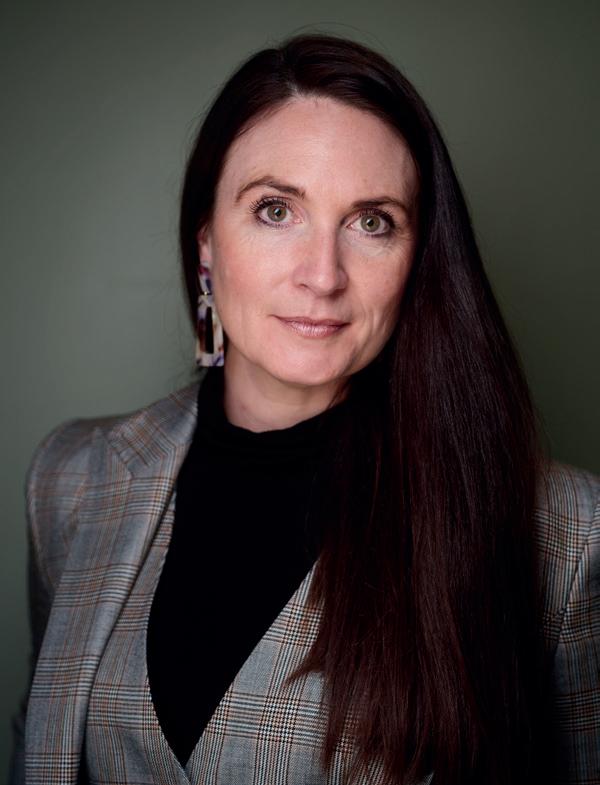
The shift occurs when leaders begin to pay attention to energy as a core condition for performance. That doesn’t mean removing pressure or lowering expectations. It means being more intentional about how energy is created and sustained. Where do people have space to think? Where do they feel momentum? Where are they drained, and why? In my work, energy tends to show up through three signals: vitality, enthusiasm, and resilience. When those are present,
teams don’t just perform; they adapt, collaborate, and move forward with purpose. When they are missing, culture starts to feel like harder work than it should be.
“Culture isn’t just what people believe. It’s what we have the energy to do something about.”
THE RESILIENT CULTURE: HOW COLLECTIVE RESILIENCE LEADS TO BUSINESS SUCCESS
By Liane Stephan and colleagues (Kogan Page, 2024)
The authors contend that resilience is embedded in culture rather than individual personality. Using examples from business and sport, they show how trust, adaptability, and shared purpose enable organisations to navigate uncertainty. The book argues that resilient cultures are better equipped to innovate, collaborate, and sustain high performance during periods of disruption.
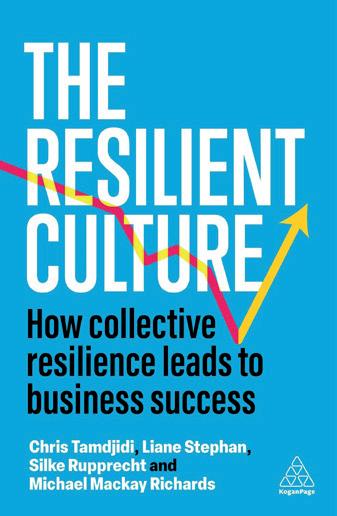
The organisations making the biggest shifts are not necessarily the ones investing in more programmes, but the ones noticing these patterns and adjusting the conditions around them.
Because culture isn’t just what people believe. It’s what we have the energy to do something about.
HBR’S 10 MUST READS ON BUILDING A GREAT CULTURE, UPDATED AND EXPANDED
By Harvard Business Review with contributions from Amy C. Edmondson and others (Harvard Business Review Press, 2026)
This updated collection brings together influential thinking on psychological safety, purpose, inclusion, and organisational transformation. Through essays by leading management thinkers, it examines why strong cultures outperform weak ones and provides practical guidance on creating environments where people feel valued, connected, and motivated to perform.
CARELESS PEOPLE: A CAUTIONARY TALE OF POWER, GREED, AND LOST IDEALISM
By Sarah Wynn-Williams (Flatiron Books, 2025)
Part memoir and part corporate critique, this book examines the internal culture of Facebook and the consequences of leadership decisions made within highly influential organisations. Wynn-Williams explores how culture shapes behaviour, ethics, accountability, and power dynamics, offering a compelling case study of why organisational values and leadership norms have consequences far beyond company walls.
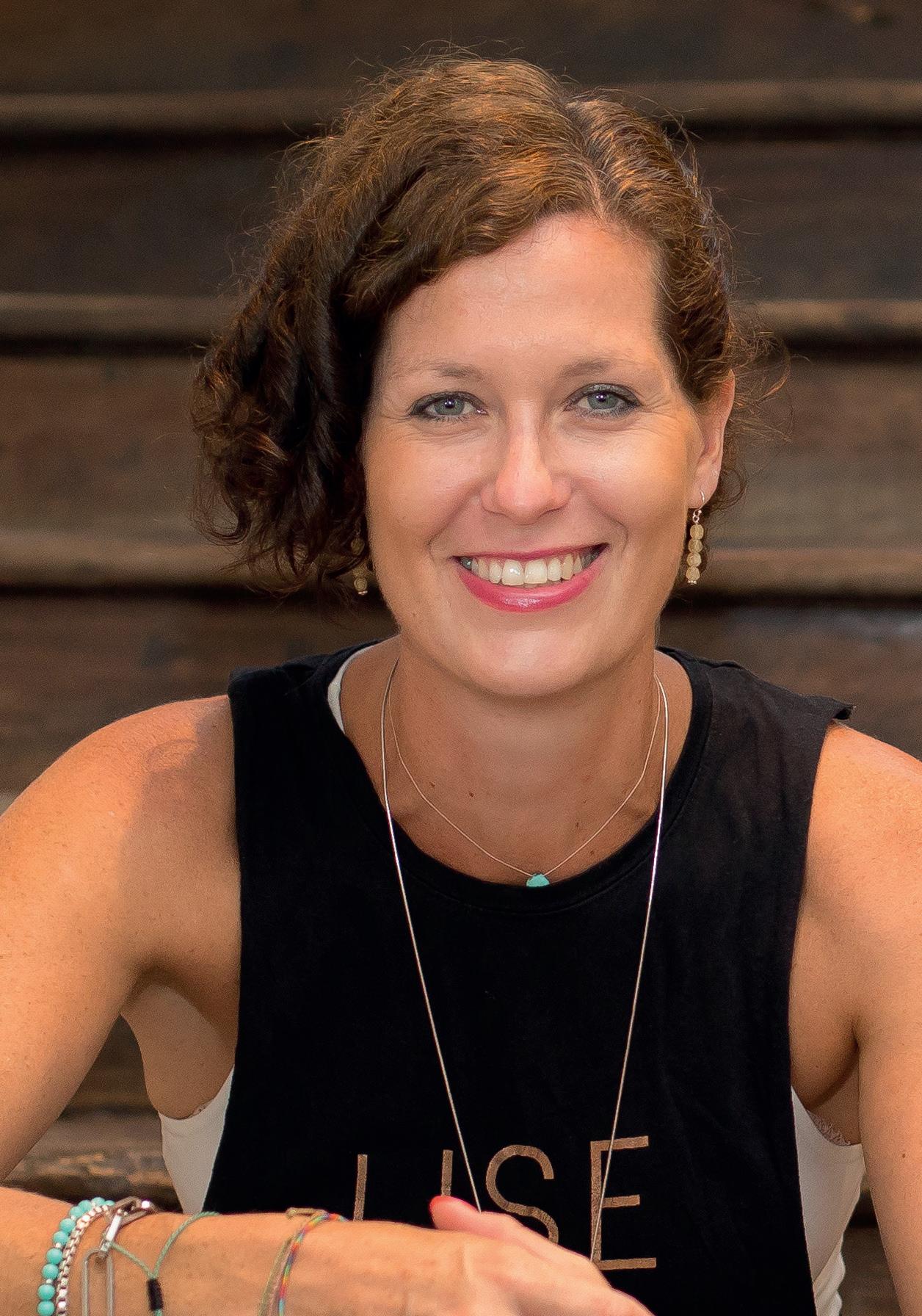
Camille Pierson is a wellness entrepreneur, founder of Float Spa, and a qualified naturopathic health coach specialising in behaviour change and nervous system regulation. With over a decade of experience in the wellness industry and a background in marketing, Camille brings a unique blend of science, strategy and real-world insight to her work.
Following her own personal health challenges, she has developed a deep understanding of stress, resilience and sustainable wellbeing. Camille is passionate about helping individuals and organisations move from burnout to balance through practical, accessible tools that create lasting change.
By Camille Pierson
In the previous issue, I promised we’d come back to something. That thing people say, usually with a slight air of pride: “I actually work better under pressure.” I hear it constantly. In corporate rooms, from clients, at dinner parties. And I understand it, I really do. There is something seductive about the idea that stress is your secret weapon, that the tighter the deadline, the sharper you become. Busy has become a badge of honour, and stress its uniform. Wearing it signals importance, output, relevance.

But here’s what I need you to consider. That version of you, the one fi ring on all cylinders under pressure, sharp and fast and laser-focused? That is your stress response doing exactly what it was designed to do. A short, purposeful surge of cortisol and adrenaline to get you through a moment. It is clever, it is effective, and it is absolutely not designed to be your permanent operating setting.
When we live in that state continuously, we aren’t thriving. We are simply so adapted to the noise that we’ve forgotten what quiet feels like. That is not high performance. That is a nervous system that has stopped asking for help because it’s given up being heard.

So before we talk about what to do, I want to talk about something simpler. Acknowledgement.
Not analysis. Not a forty-five-minute journalling session. Not identifying as a stressed person or building a whole narrative around how overwhelmed you are. Just a quiet, honest moment of: this is here. Stress loses some of its grip the moment we stop pretending it isn’t present. We don’t need to hide behind it, perform it, or wear it as proof that we’re working hard enough. We just need to see it clearly.
And then we need a few tools that actually work in real life, during a real working day.
THE MICRO RESET
Th is is the foundation of everything I teach. A Micro Reset is not a mindfulness practice; it is not meditation, and it will not require you to close your eyes at your desk and invite your colleagues to judge you. It is a 5- to 10-second intentional pause, designed to interrupt the stress cycle before it compounds. A deliberate breath. A moment of stillness between one task and the next. Done consistently throughout the day, these small interruptions begin to regulate your nervous system in real


time, rather than leaving all the recovery work to a weekend that never quite delivers.
Specifically, making the exhale longer than the inhale. A four-count in, six to eight-count out. Th is single shift activates the parasympathetic nervous system, the body’s rest-and-digest response, and begins moving you out of fight-orfl ight. You can do this in a meeting, in a car, at traffic lights. It takes no equipment and no explanation to anyone nearby.
“Physical movement metabolises stress hormones in the body, which is what they were designed for: physical action”
Not a gym session. A two-minute walk around the office. Ten shoulder rolls. Standing up and sitting down five times. Physical movement metabolises stress hormones in the body, which is what they were designed for: physical action. Even a tiny amount of movement signals to the nervous system that the threat has passed.
Splashing cold water on your face or wrists activates the dive reflex, a physiological response that rapidly slows your heart rate. It sounds almost laughably simple. It works.
Before you reach for your phone, before the day pulls you under, try this. Th irty seconds. Feet on the floor, one deliberate breath, and one honest question: how am I actually feeling this morning? Not a wellness ritual, not a practice. Just a moment of contact with yourself before the noise begins. That small act of acknowledgement, done daily, begins to change your relationship with stress in ways that nothing else quite replicates.
None of these is revolutionary. That’s precisely the point. We don’t need dramatic interventions. We need small, consistent moments of honesty and regulation woven into the fabric of an ordinary day.


Stress isn’t going anywhere. But you get to decide whether you’re running it, or it’s running you.
Camille x
www.camillepierson.co.uk www.thefloatspa.co.uk






The strongest relationships are built on curiosity, communication and connection. Relationship and sex therapist Georgina Vass shares key questions couples should be asking to deepen understanding, strengthen intimacy and stay aligned as they grow together.
What do you dream of doing, and what’s preventing you from doing it?
People are dynamic, and over time, it’s possible that your partner’s dreams or hopes may have shifted. Asking this question gives you insight into what they want now, invites vulnerability and can transform their hope into actionable goals. Th rough this conversation, you can identify any challenges, manage future expectations, build accountability and promote a united front
What makes you feel loved, and what’s a recent example of when you felt fond of me?
We’ve all heard of the love languages, the idea popularised by Dr Gary Chapman that people have different ways of expressing and receiving love. Th is question invites your partner to consider what that looks like for them, which may or may not align neatly with Dr Chapman’s five core types. Talking about this can help prevent misunderstandings and ensure that both couples feel valued. Using recent examples is a helpful tool for combating vagueness and overgeneralisation in facts.
How could we improve our physical intimacy?
People are often not skilled at communicating their sexual desires. Generally, we are supposed to communicate what we don’t want sexually; however, sharing our sexual desires and what arouses us tends to be harder for people. Th is question allows for a strengths-based approach, reflecting on what is functioning for you two, as well as avoiding a narrow construct of penetrative sex being the only form of physical intimacy.
How would I know that you were fi nding something difficult, and how could I support you with it?
Similarly to love languages, people cope with challenging situations differently. Asking this allows access to your partner’s unique blueprint and may help prevent miscommunication. In some cases, it may even act as an opportunity for them to reflect and become aware of it themselves. Whether it’s advice, empathy, active listening or a hug, inviting this conversation can help you identify the right support for difficult moments and prevent mind-reading.
“People are dynamic, and over time, it’s possible that your partner’s dreams or hopes may have shifted.”
By Georgina Vass, Relationship & Sex Therapist
Therapist
What values do you think it’s important for us to share?
Core values are the guiding beliefs that direct our actions, decisions, and priorities and lay the groundwork for how we live our lives. Th is can be a loaded question, and there are helpful free resources online that provide a framework for identifying them, but ultimately, having compatible values will likely persist while attraction, shared interests, or desire may ebb and flow.
What does ‘enough’ money mean to you?
Money is a common source of tension for couples because most people relate to money differently. Interpretations of money-spending behaviours and the meanings people hold about finances vary based on ideas about gender roles, cultural expectations, or personal history. Asking this question can promote mutual understanding and hopefully prevent confl ict.
How do you see our future together?
With the combination of human fluidity and the endless lifestyle options available, asking your partner about their ideas for your future can be a useful way to gauge their commitment, manage expectations, and even
reassure you about where you stand. Equally, avoiding this topic or question provides useful information.
What advice did you receive about relationships that you hold on to?
Th is is a way to read your partner’s ‘rulebook’ and give you some insight into their subconscious. We often don’t reflect on, or may have difficulty pinpointing, why we form certain scripts or create rules around our relationships. Th is question may also invite playfulness or laughter and open a broader conversation about your partner’s family or loved ones, promoting relational depth and bonding.
“Money is a common source of tension for couples because most people relate to money differently”
What are three things we have in common?
Have you ever heard your partner describe you? In the beginning stages, this may occur more often when you’re meeting each other’s loved ones, but over time, it may occur less frequently or may only identify traits that they find challenging about you. Th is question not only invites them to reflect on how they see you, but also on how they view themselves.
Who is an example of a successful relationship?
Observation is often how we learn to love. Shifting from abstract concepts to identifying a couple can be illuminating.
Georgina is a relationship and sex therapist with over 15 years of academic and professional experience in sex education and mental health services. She offers a sex-positive approach to individuals and couples.
georginavass.com
The vagus nerve has become something of a wellness celebrity. But before you buy the gadget or follow the influencer, here’s what science actually says.
By Tess de Klerk
It has been called the body’s superhighway, the physical manifestation of the soul, the master switch for anxiety and the key to unlocking your best self. The vagus nerve - once generally ignored - now has its own merch and more YouTube tutorials than I could ever have imagined any nerve could ever withstand. What is the deal with the vagus nerve?
We’ll start with the name. Vagus is Latin for ‘wandering’, and it is a type of biological pathway. It is the tenth cranial nerve. Or rather, a pair of nerves starting from the medulla oblongata at the base of the brainstem, then travelling down through the neck, chest and abdomen in a long, branching path that touches the heart, lungs, oesophagus, stomach, liver, kidneys and intestines. No other cranial nerve comes close to this range. It is the primary nerve of the parasympathetic nervous system, easier to remember as ‘rest and digest’, the opposite of the adrenaline-fuelled ‘fight or fl ight’ response
What makes the vagus nerve so interesting is the direction of its traffic. Roughly 80% of its fibres are afferentmeaning they carry information upward, from your organs to your brain, not the other way around. Your gut, your heart and your lungs are constantly reporting back to the brain via the vagus nerve.
Th is is why the gut-brain axis is real science, not wellness fluff. It is also the explanation for why emotions can produce physical sensations such as a stomachache from stress, the feeling of blood running cold when hearing bad news, and a tightening of the chest when anxious.
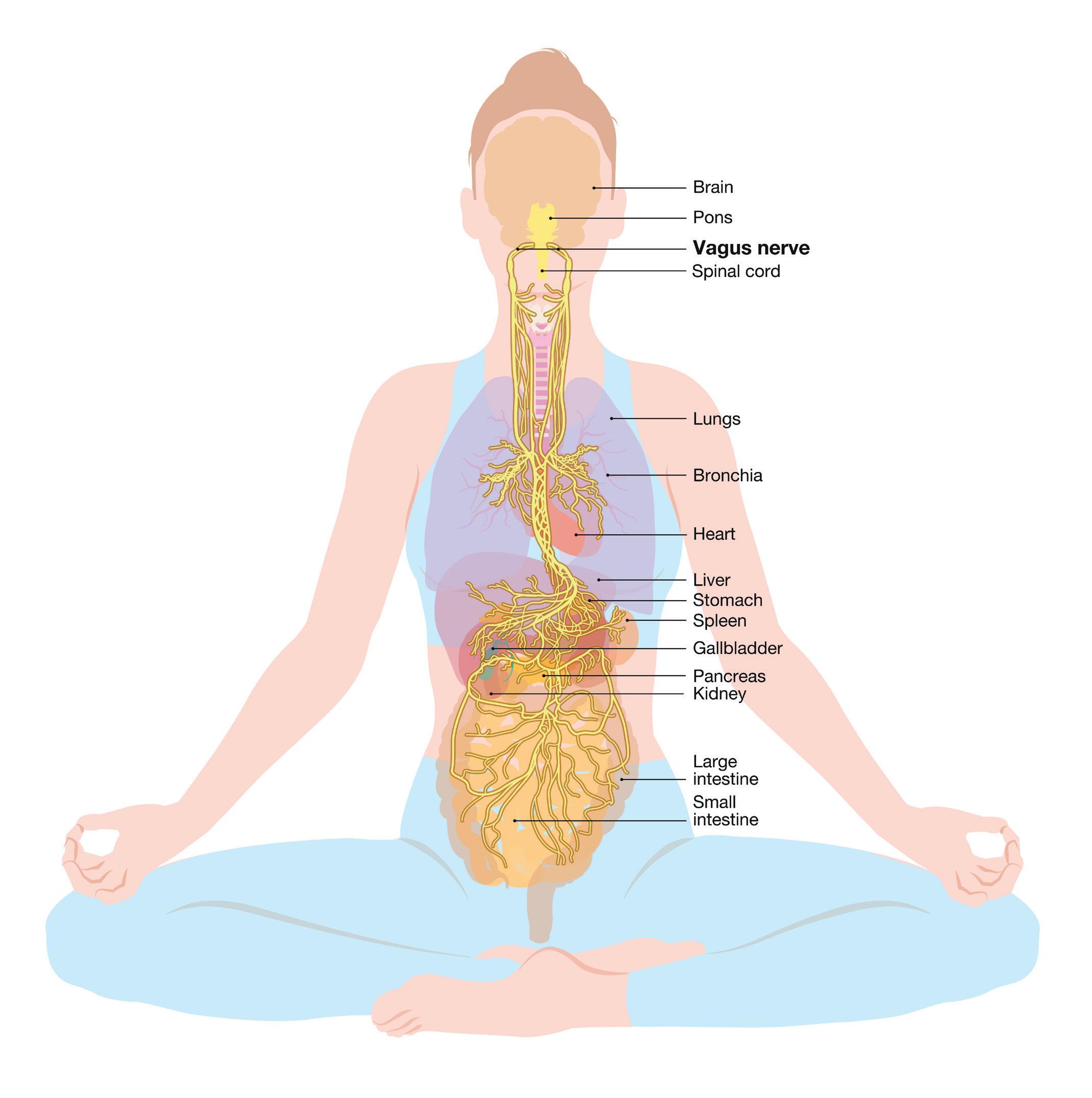








“Clearly, the vagus nerve packs a punch and research in this area is serious and ongoing.”
In medical settings, vagus nerve stimulation has been used for decades. Surgically implanted devices that deliver electrical pulses to the nerve have been approved for drug-resistant epilepsy and treatment-resistant depression. It is also being investigated, and already used in some settings, for stroke rehabilitation and infl ammatory conditions such as rheumatoid arthritis.
Clearly, the vagus nerve packs a punch and research in this area is serious and ongoing. Scientists at
Columbia University’s Zuckerman Institute have identified the precise circuit through which the vagus nerve monitors infl ammation and signals the brain - work that may one day allow infl ammation itself to be controlled without medication.
So, the science is real. But the rest is not so clear.
Scroll through social media, and you will fi nd the vagus nerve apparently responsible for anxiety, sleep issues, brain fog, digestive problems, low mood and chronic fatigue. And its stimulation as the cure for all of them, it would seem.
Dr Kevin Tracey, a neurosurgeon and one of the world’s leading researchers on vagal function, has been watching this trend with a mixture of interest and concern. The vagus nerve, he has noted, sits in an unusual position: supported by substantial science yet still mysterious enough to invite exaggerated claims.
As for the devices and clips you see online – the science behind them is still catching up, and not all of them are backed by solid research yet. Devices are largely unregulated. But that does not mean they’re complete nonsense. Non-invasive stimulation is a genuinely active area of study, and some at-home versions are pretty much gentler cousins of the medical-grade tools already used in hospitals.
The polyvagal theory, much loved in therapy circles and self-help books, has had some of its fi ner details questioned by neuroscientists this year too, but the broader idea that drives it - that we can consciously shift our nervous system from stressed to settled - still holds up rather well.
In other words, don’t throw out that gadget or roll your eyes at vagus nerve advice; rather, be selective. Conveniently, the things that help most are also easily accessible, and many of them you’re probably already doing. Slow, deep breathing - especially long exhales - has been shown in multiple studies to increase vagal tone and heart rate variability, a measurable indicator of how well the nervous system regulates itself.
Breathing at around five to six breaths per minute appears to be particularly effective. Humming and gargling activate the throat muscles directly innervated by the vagus nerve and have been shown to increase heart rate variability.
“The vagus nerve is rather lovely. It is proof that your body is always listening”
Cold water on the face triggers the mammalian diving reflex, producing an immediate vagal response. Regular aerobic exercise, good sleep, social connection and a diet that supports gut health all keep the whole system humming along nicely.
None of this is a hack, exactly. It is simply good care, dressed up in slightly more interesting language. The vagus nerve is not a switch to simply fl ip, and it will not single-handedly resolve deep anxiety or a difficult diagnosis. But it is a willing and responsive part of you, and the wellness world, for all its overreach, has at least got people paying attention to something worth paying attention to.
The vagus nerve is rather lovely. It is proof that your body is always listening, that calm is something you can invite and influence rather than wait for, and that you have more say over how you feel than it sometimes seems.
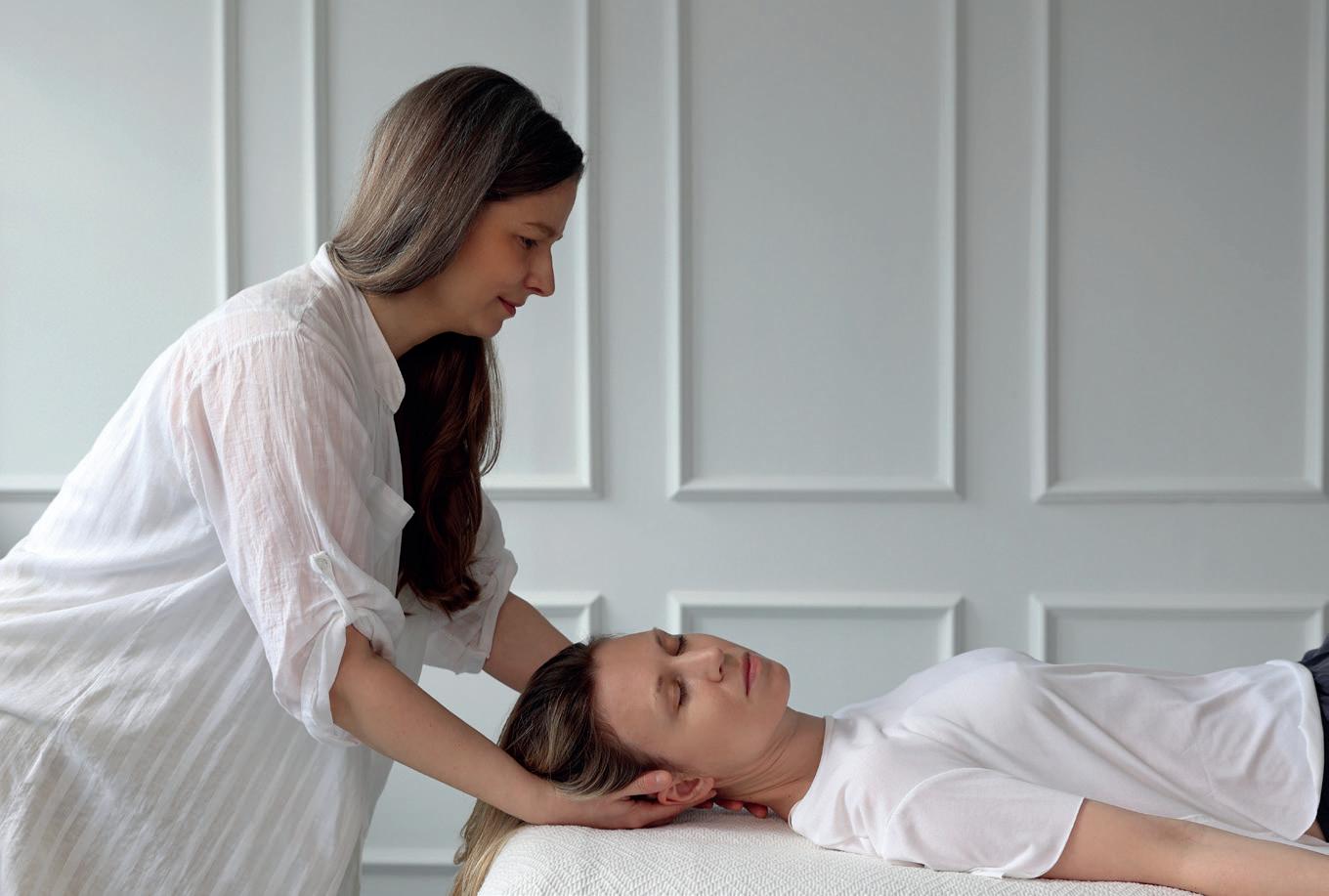
“What seems like a small frustration quickly becomes an everyday stress that quietly sits in the background.”


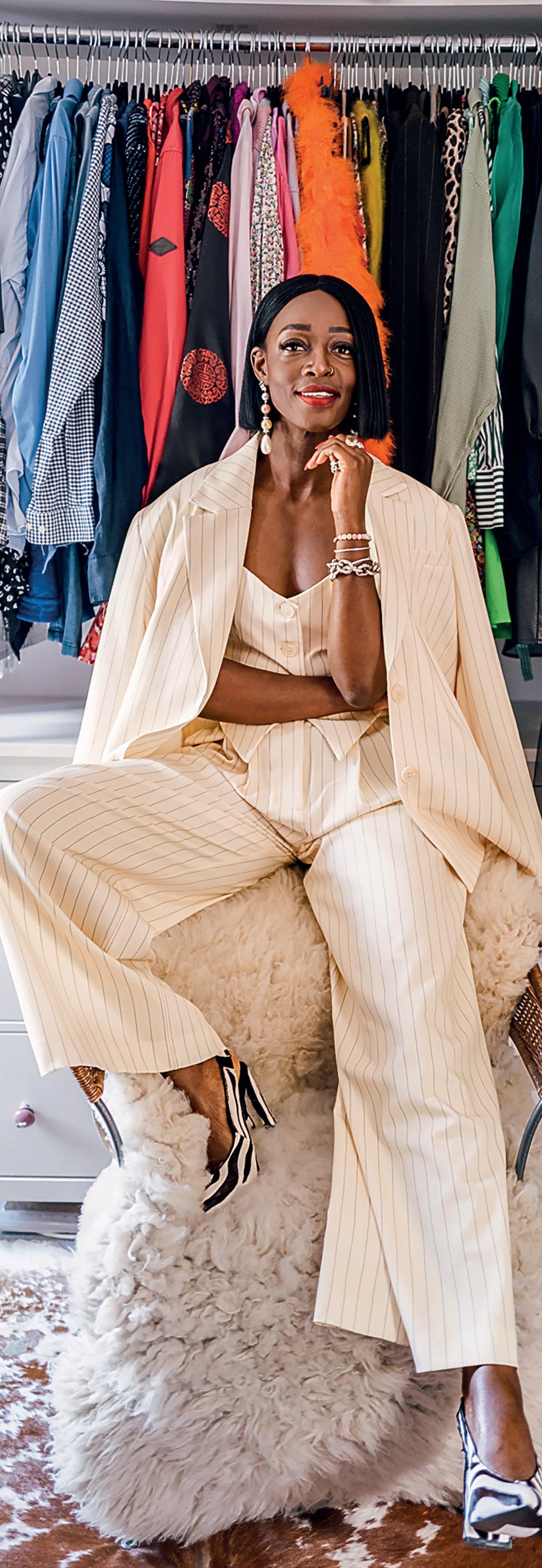
Have you ever changed your outfit three times before leaving the house?
By Sophia Lorimer
Or perhaps you’ve been invited to an event and, after saying yes, instantly felt that sense of dread creep in as you thought, “What on earth am I going to wear?”
You spend hours, sometimes even days, agonising over the perfect outfit, and yet what most people don’t realise is that their wardrobe isn’t just costing them money. It’s costing them time, mental energy, confidence and, in some cases, opportunities.
Your time is one of your greatest assets, and as business owners, professionals and women juggling multiple responsibilities, there never seems to be enough of it. Yet so many of us are spending precious minutes every morning standing in front of a wardrobe full of clothes trying to work out what feels right, what fits and what will help us feel confident enough for whatever the day has in store.
What seems like a small frustration quickly becomes an everyday stress that quietly sits in the background. I’ve seen this time and time again with the women I work with. Women who are incredibly talented, experienced and capable, yet find themselves overwhelmed by getting dressed because their wardrobe no longer reflects who they are today or where they want to go next.
Over time, this creates decision fatigue. The mental load of making yet another choice becomes too much, so they retreat to the same ‘safe’ outfits on repeat, not because they love them, but because making another decision feels exhausting. Instead of walking into a room feeling prepared and present, they shrink into the background rather than taking up the space they deserve.
Then there’s the mental energy that comes with it all. Constantly feeling frustrated by your wardrobe and how you’re showing up can be draining, and over time it leaves
Dynamic Magazine is pleased to welcome Sophia Lorimer as its new columnist for Female Style at Work. A sustainable stylist and founder of Fine-Tuned Wardrobe, Sophia helps people feel confident in what they wear while making more conscious choices. She has spoken at the House of Lords, spoken at Channel 4 and been featured in Forbes Magazine, Good Housekeeping and The Sun. She was also named Sustainability Champion of the Year at The Dynamic Awards.
you feeling disconnected from yourself and uncertain about the image you’re projecting to the world.
Now tell me this: how can you walk into a networking event, an important meeting or a room full of opportunity feeling focused and ready to make an impact when you’ve already spent the morning battling with your wardrobe?
And that brings me to missed opportunities. Have you ever turned down an opportunity because you didn’t feel confident enough to attend? Perhaps it was the networking event you decided not to go to, the speaking opportunity you talked yourself out of, or the promotion you never quite put yourself forward for.
The irony is that many women spend more time preparing what they’re going to wear than preparing for the opportunity itself.
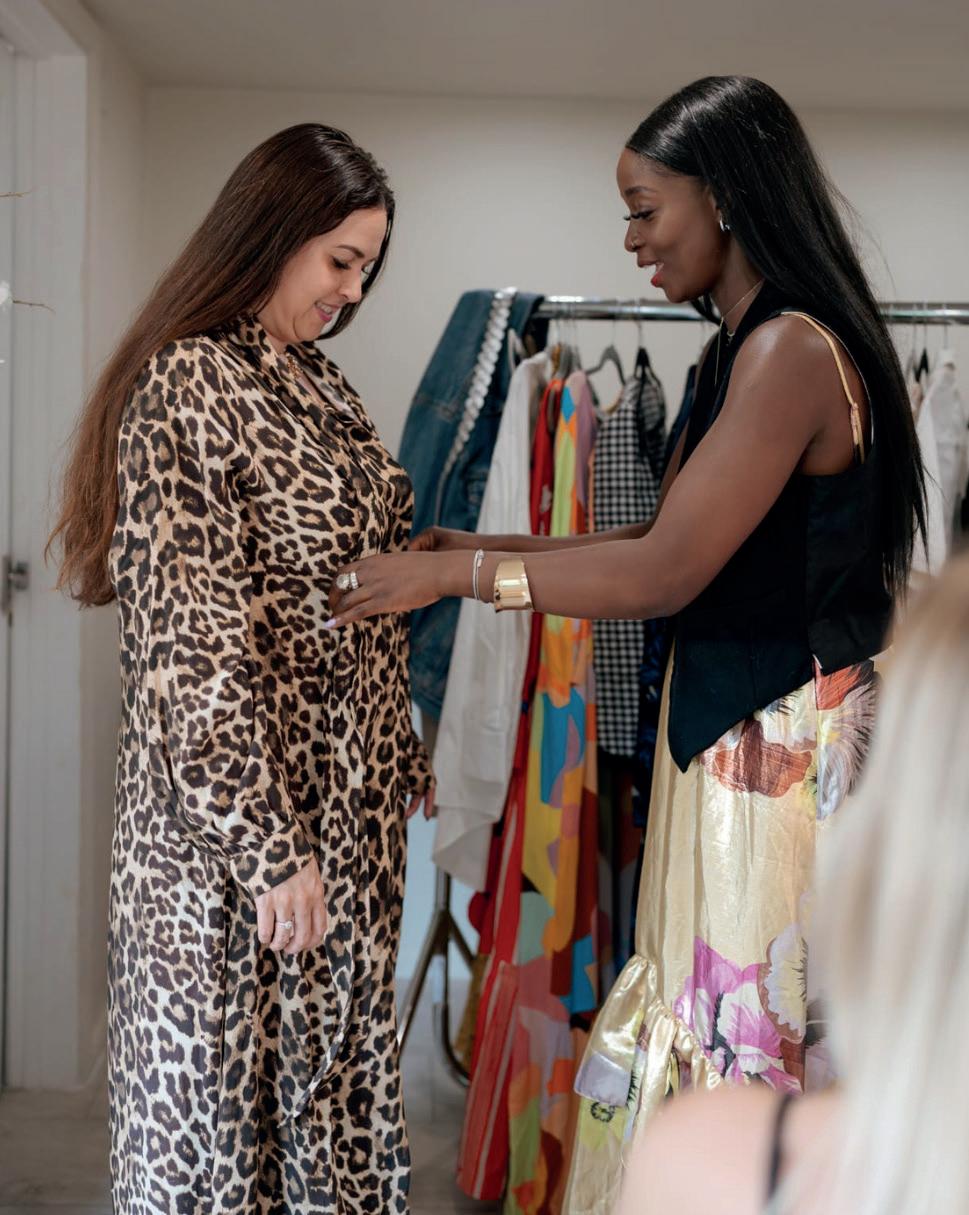
“The irony is that many women spend more time preparing what they’re going to wear than preparing for the opportunity itself.”
I’ve yet to meet a woman who has said to me, “I wish I’d spent more time worrying about my outfit and less time focusing on the conversation I was there to have.” This isn’t because clothes make you better at what you do. Most of the women reading this are already highly skilled, experienced and knowledgeable in their field. They don’t need an outfit to make them more capable.
What clothing can do, however, is help close the gap between how capable you are and how confidently you feel able to show up. When you know your subject inside out, confidence tends to come naturally because you’re focused on the client, the presentation or the opportunity in front of you. But when you’re distracted by what you’re wearing, part of your attention remains fixed on yourself. And that’s energy that could be spent sharing your expertise, building relationships and making an impact.
The truth is that most people don’t have a clothes problem. They have a clarity problem.
Most women don’t know exactly how they want to show up in this chapter of their lives, and that’s completely understandable because life isn’t static. We move through different seasons, and each one asks something different of us. The
challenge is that our wardrobes don’t always evolve with us.
You’re no longer the person you used to be, but you’re not quite the person you’re becoming either. You’re standing at a crossroads, and your wardrobe often reflects that uncertainty.
As I shared in my first column, our clothes can be a powerful tool. But for them to work for us, they first need to support the life we’re living now, not the life we were living five years ago.
So let me leave you with a simple exercise.
If your wardrobe was built to support the next chapter of your life and career, what would stay and what would go?
Take a moment to think about these three things:
• Which pieces make you feel confident, capable and ready to be seen?
• Which items are keeping you tied to an older version of yourself?
• What is missing from your wardrobe that would support the next chapter of your life and career?
Creating clarity around these three areas can completely change the way you get dressed each day. Once you have that clarity, getting dressed takes less time, decisions feel lighter, and your wardrobe starts working with you rather than against you.
The most successful women I work with don’t necessarily have the biggest wardrobes. They have wardrobes that work for them and support not only the chapter they are in now, but the one they are moving towards.
Because the goal isn’t to own more clothes. It’s to have the right clothes supporting the life, career and opportunities you want to create.
Your wardrobe shouldn’t be another thing on your to-do list. It should be the tool that helps you get on with everything else.
www.finetunedwardrobe.com
With a unique ability to capture the essence of those she has encountered throughout her life, Shazia paints images from memories and dreams, weaving an ethereal and mesmerising narrative in her latest collection.
Much of Shazia’s inspiration stems from her childhood recollections. Whether reflecting on fond memories or dreams, she paints each figure with distinct qualities to create deeply emotive portraits. Each figure she paints possesses a palpable presence suggesting a deeper story lies beneath the canvas.
With an acute awareness of subtle details in both appearance and personality, Shazia instils the very essence of a person into each of her paintings. The unfaltering gaze of her characters has an almost haunting quality, locking eyes with the viewer and drawing them into their world.
Shazia’s gift for storytelling allows her to paint
children with immense character. She recreates the characters with an ethereal quality that captures the viewer’s imagination. Although Shazia paints people from her personal experiences, she understands that the paintings take on new meaning when shared with the viewer.
“I did start painting them to tell their story, but the piece becomes the story of the person who buys the artwork.”
The signature luminosity of Shazia’s almost dreamlike aesthetic is achieved through the ancient egg tempera technique – a painting method that dates back to the Ancient Egyptians. By mixing egg yolks with powdered pigments and a little water, she creates a medium renowned for its durability, luminosity and beautiful, glowing quality. More durable than oil paint, egg tempera’s transparent nature offers it a radiance akin to watercolour.
Drawing inspiration from Renaissance masters and employing chiaroscuro - the dramatic interplay of light and dark – Shazia ensures that the central figure remains the focal point, their expression infused with mystery and depth. Her work often features her signature vibrant figures set against moody, shadowed backgrounds.
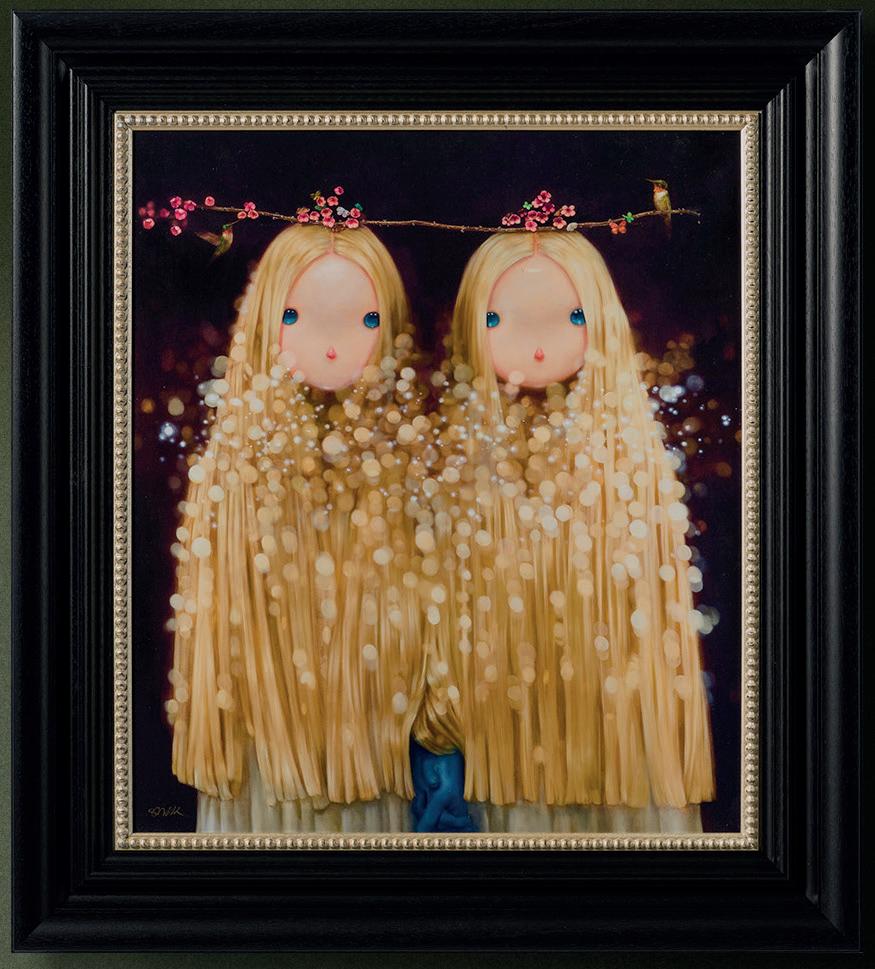
“I definitely think there’s a Renaissance influence in my work, with the dark background like Dutch paintings.”
Shazia’s latest collection is a testament to the enduring power of memory, artistry, and human connection. It is an invitation to step into a world where the past and present merge in a symphony of light and shadow.
Shazia’s artworks can be viewed at Castle Fine Art Brighton, across their nationwide network of galleries, and on www.castlefineart.com

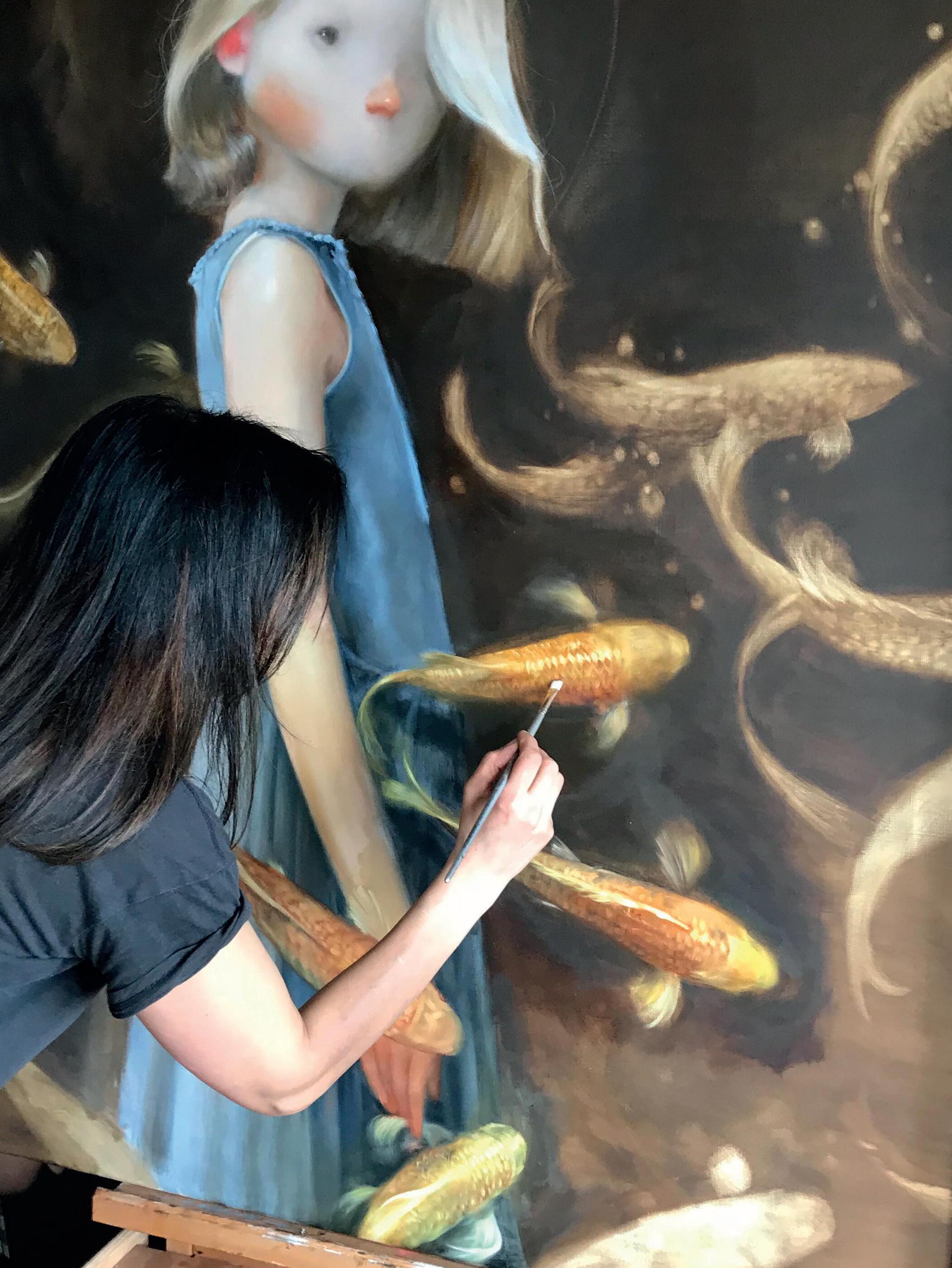
Holly Robertson has clocked hundreds of miles on foot across the UK and says solo walking is far safer than people think. This year, Holly, who lives in Hertfordshire, set off from Nether Stowey in Somerset to complete the Coleridge Way with her dad, a 51-mile walk through the rolling countryside of the Quantock Hills and Exmoor.
A month later, she was in the Scottish Highlands, tackling the Great Glen Way, a 73-mile route following the geological fault line from Fort William to Inverness, this time with her partner.
Holly says that while completing long walks with someone else can feel very rewarding, walking on her own initially made her quite apprehensive.
“As a woman, there is always that thought in the back of your mind saying, ‘Is this safe?’ she says. “But as long as you take safety precautions, you’re unlikely to run into any issues.”
“I don’t actually encounter lots of people on my solo walks, but those I do meet are very approachable. People come and talk to you, and
the vast majority you meet out there are genuinely friendly,” she adds.
Holly works as a Walking Specialist for walking holiday provider, Celtic Trails and wants to encourage more people to take up solo walking. She has provided her top practical tips for anyone looking to get into walking this summer.
Making sure that your boots are comfortable before you set off is one of the most important things to do. Holly advises doing the ‘insole test’ before you walk to make sure your boots are the right size.
“Start by removing the insoles of your walking boots and standing on them. You should aim to have between 1cm and 2cm distance between your big toe and the top of the edge of the insole. If your toe reaches or hangs over the edge of the insole, it’s worth investing in a bigger pair of boots.”
“As a woman, there is always that thought in the back of your mind saying, ‘Is this safe?’”
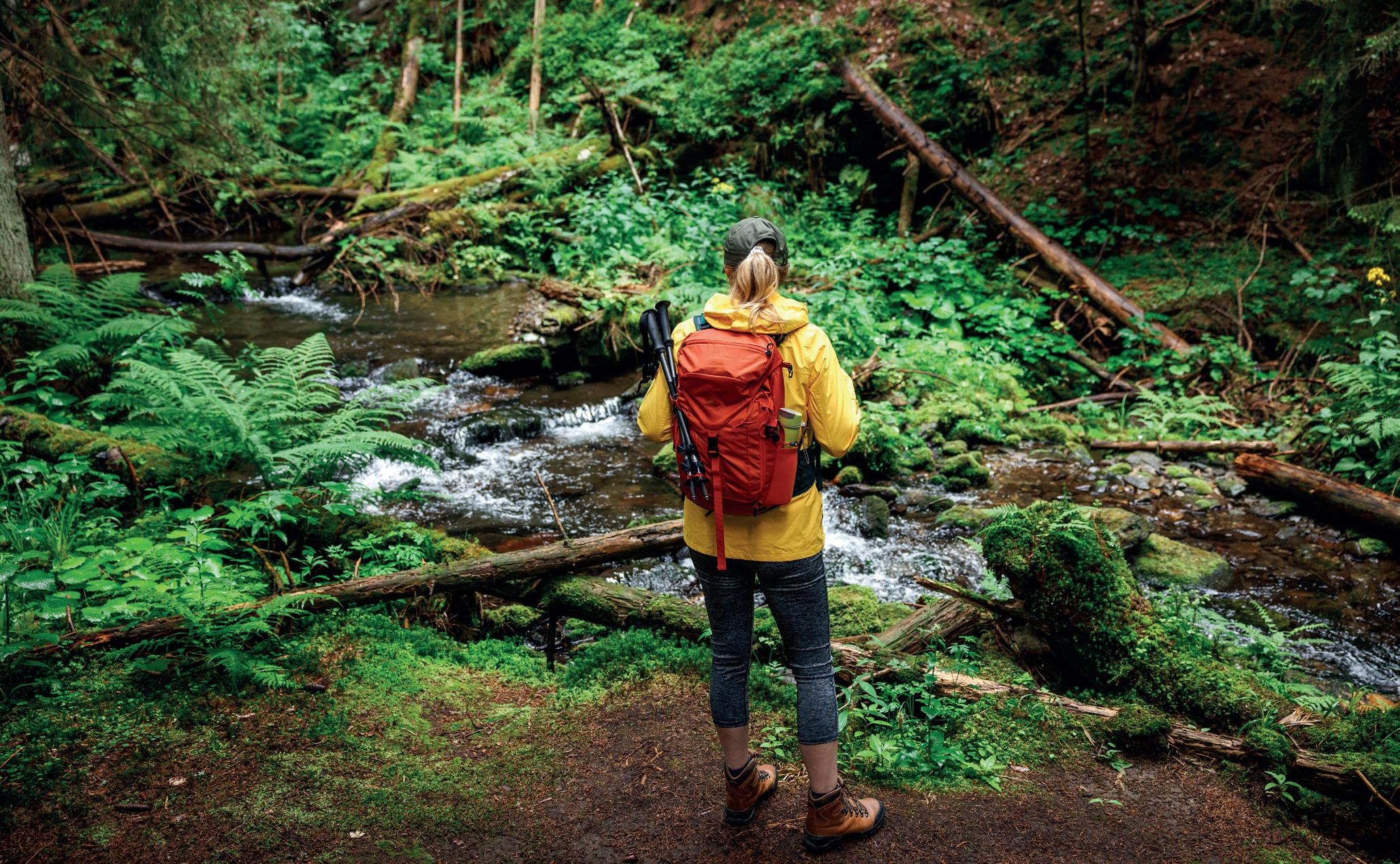
“If your boots feel too loose or tight from the start, you’re likely to develop blisters or end up with bruised toenails during longer walks. It sounds quite obvious, but it is something people often get wrong,” she says.
Holly is clear that preparation matters, but that you should avoid over-packing. “Don’t try to pack too much, aim to stick to the essentials. I always bring a fi rst aid kit, enough layers, plenty of water and a portable phone charger. There’s the temptation to carry lots of extra items, but the more weight you carry, the harder the walk becomes, and the less you’ll enjoy it.”
SAVE MAPS OFFLINE
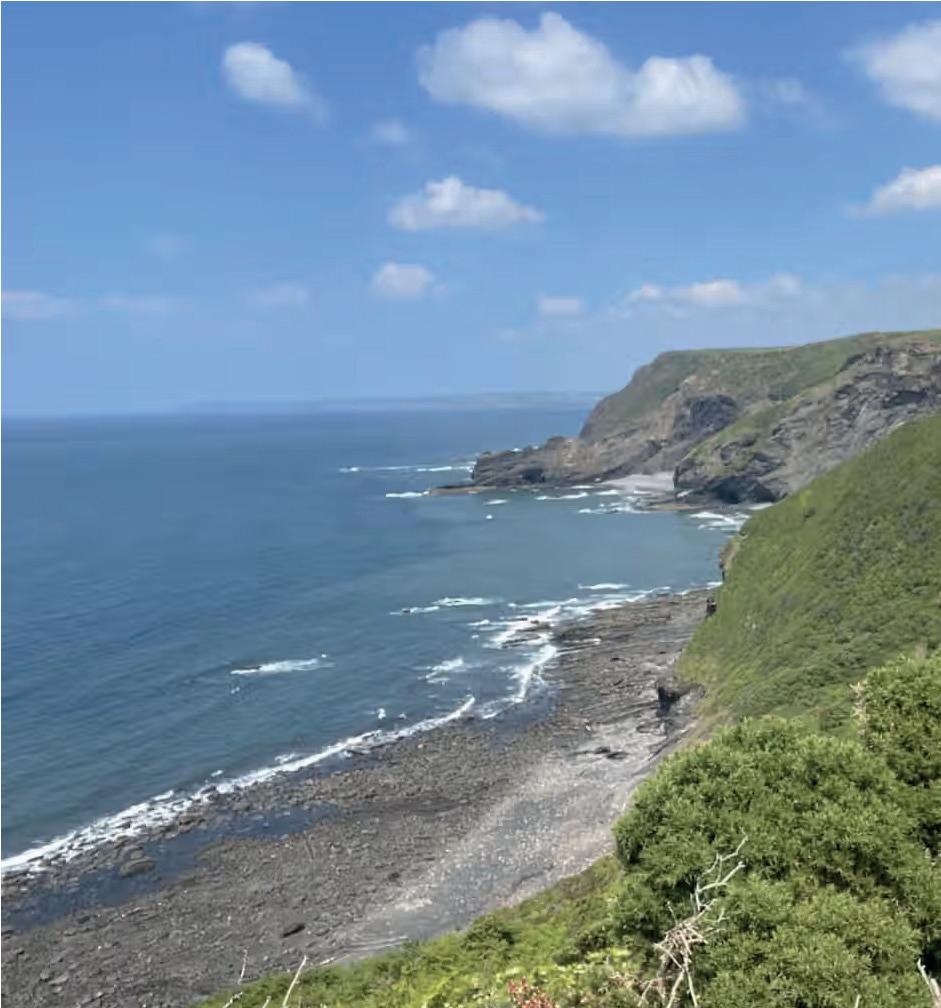

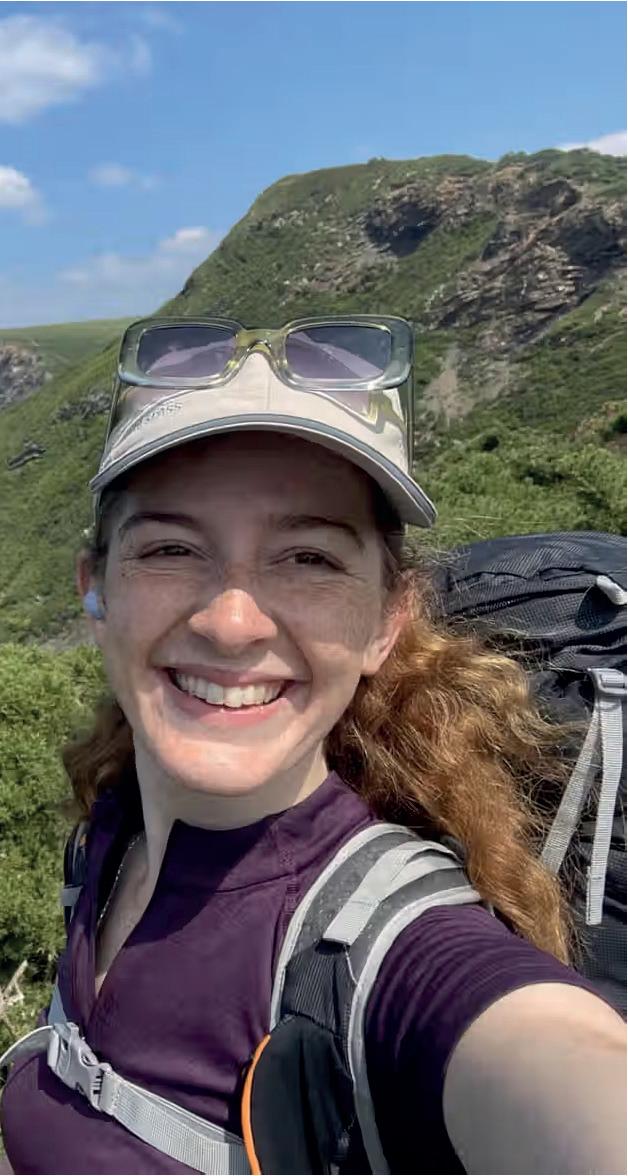
“Holly advises saving an offl ine map of your route to your phone, for when the phone signal isn’t available.”
Holly advises saving an offl ine map of your route to your phone, for when the phone signal isn’t available.
“Walking apps like OS Maps or Komoot are worth downloading offl ine before you set off, as in my experience, phone signal on remote routes tends to be unreliable. Having the map cached locally gives me the confidence that I’m on the right track.”
If you’re planning a solo walk, Holly recommends having an accountability partner you can let know when you set off and when you expect to reach your destination.
“I send a quick message to a friend or family member before setting off, saying that I’m doing X route and should be at Y by a certain time. It costs nothing and provides real reassurance if you’re walking alone. You can also share your location on ‘Find My’ on iPhone, but remember your location accuracy will depend on how good your signal is.”
For older walkers or those new to longer distances, Holly recommends investing in a pair of walking poles. “Despite what some may say, using walking poles isn’t cheating, and I advise people to invest in a decent pair if you plan to tackle longer routes.”
“I use a pair of Leki walking poles, which are on the pricier side, but you can pick up a pair for as little as £20. They really do make a difference to how you feel by the end of the day, and are really helpful on descents.”
STEP’ TECHNIQUE
When tackling an uphill stretch on a walk, Holly advises using the ‘rest step’ technique to shift weight from your muscles to your bones, helping reduce leg fatigue on long walks.
“Start by moving your forward foot up to a solid position on the incline. As you plant your forward foot, straighten your rear leg that is still on the ground and lock your knee. Then relax the muscles in your upper body and the leg that isn’t locked. Then repeat the motion with the other leg to continue moving upwards.”
“Th is really helps to shift tension and fatigue from your quads and helps to regulate your heart rate,” she adds.
DON’T WORRY ABOUT WHAT PEOPLE THINK
Holly says to anyone who has been thinking about taking up walking, not to care what other people think. “Try not to compare yourself to other people and ignore the noise you see on social media. It can feel difficult to get started, but starting off with small distances can really help build your confidence. Walking doesn’t have to be extreme to be rewarding.”
“When you stop and look back along the route you have just walked, that feeling is hard to describe,” she adds.
You can fi nd Holly at www.celtictrailswalkingholidays.co.uk
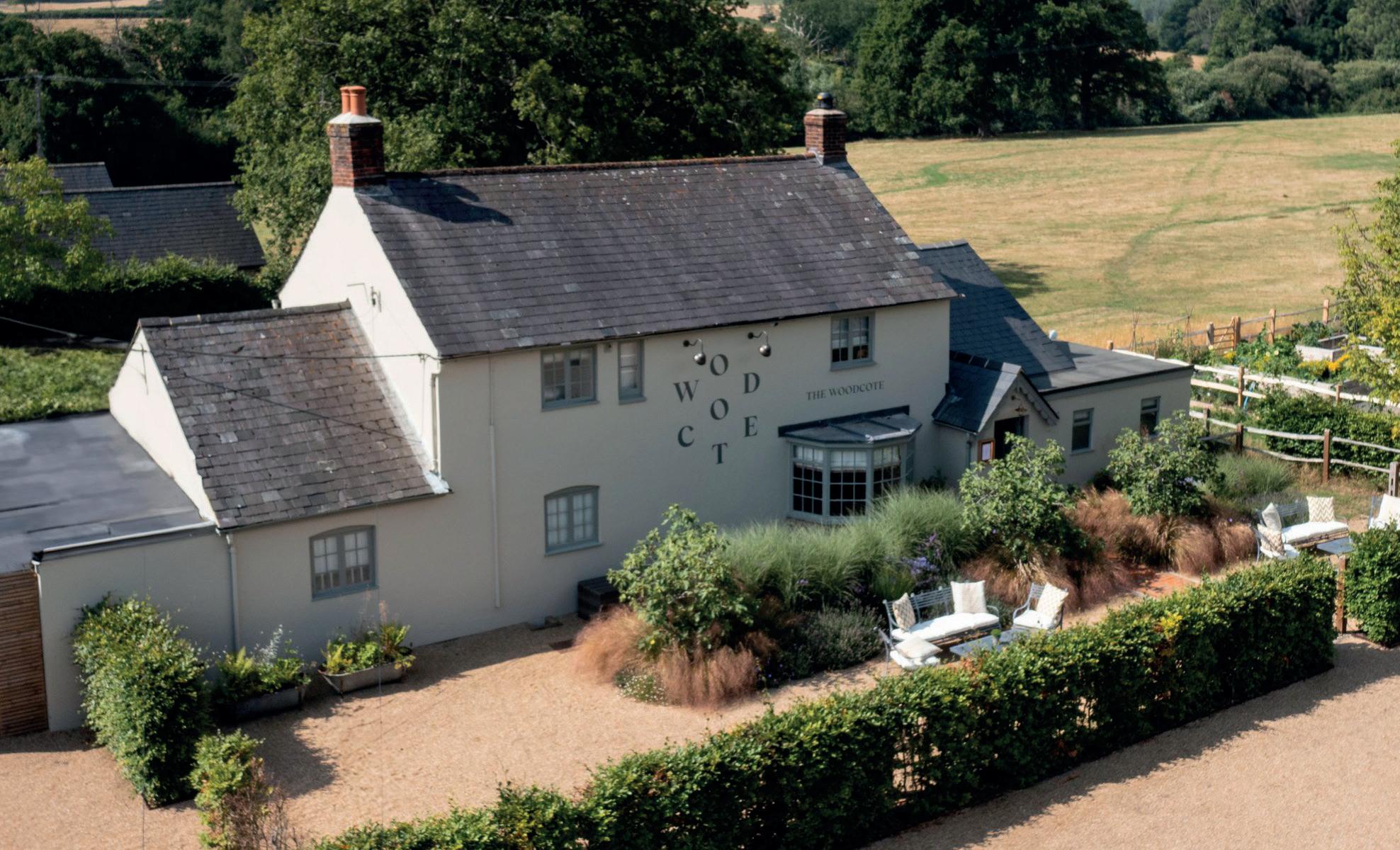
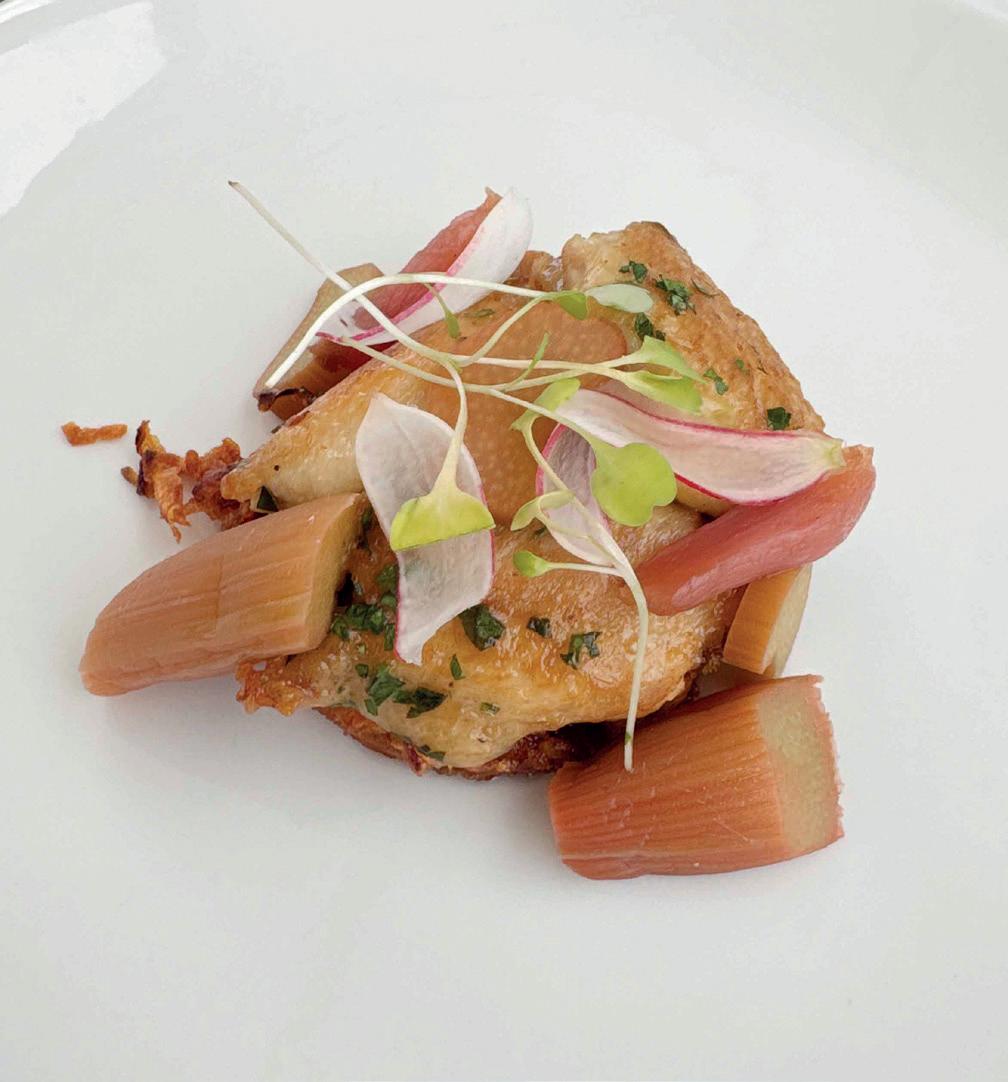
By Charlin Thompson
West Sussex’s sleepy Graffham is the location of chef Matt Gillan’s latest labour of love. And it is lulling, and it is lovely. And I wish I could add laudable, but, to my disappointment, some of the cuisine was simply lacking.
As a big fan of Matt’s cooking, this isn’t said lightly. In fact, my partner and I looked for reasons why much of our food tasted bland and homogenous. Were we perhaps coming down with colds? Was the regular team not in the kitchen? We asked and were told that Matt and his team were in. Perhaps they were the ones coming down with colds.
It’s not that the food was bad. Not at all. The dishes were all beautiful, tiny works of art. Clearly, quality ingredients
“It’s not that the food was bad. It simply wasn’t flavourful enough.”
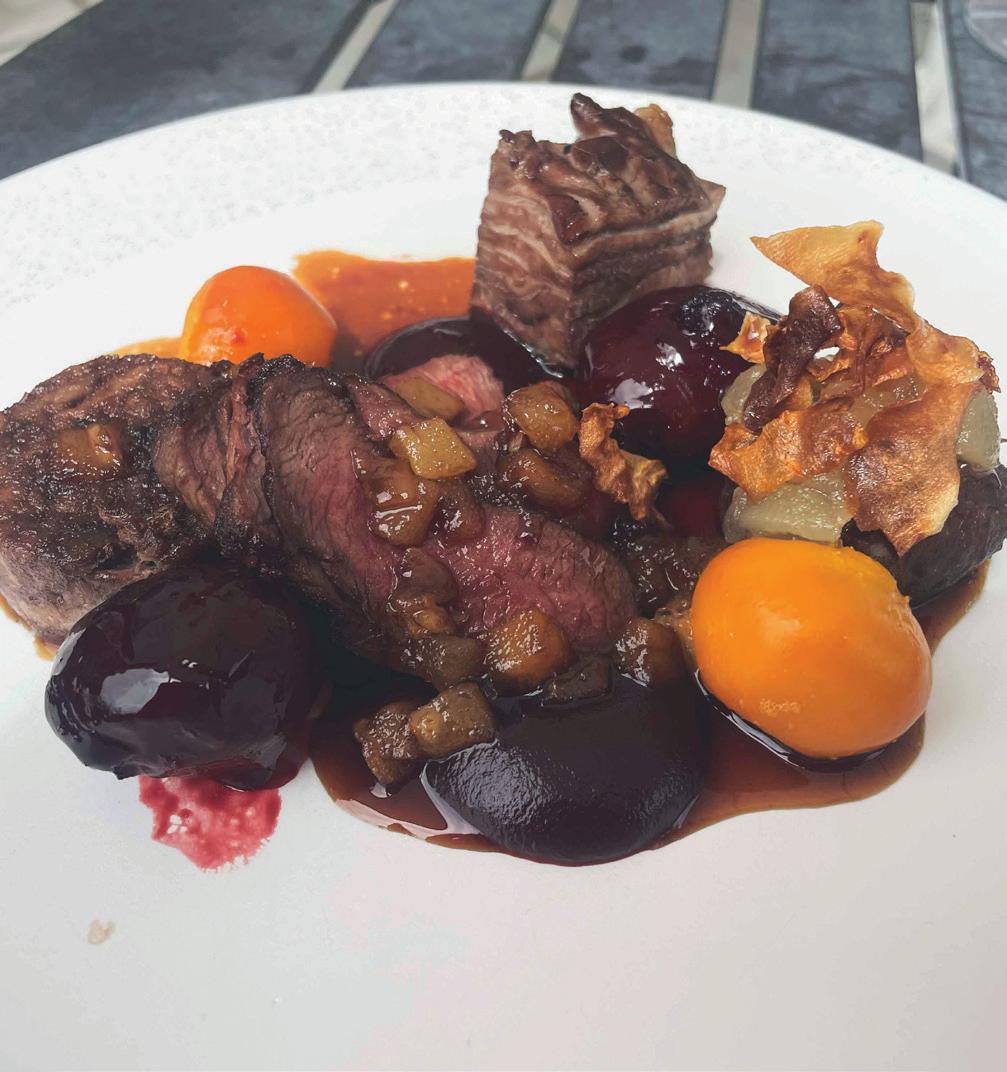
must have been used since The Woodcote goes to great lengths to support local, sustainable suppliers and ensures freshness throughout its supply line. It simply wasn’t flavourful enough.
The amuse-bouche was an indicative entry to our meal –pretty bites but lacking taste.
“All
Things improved with our starters. The glazed chicken wings with potato rösti, chicken liver parfait and rhubarb hoisin were good, with the tangy rhubarb adding contrast to the profile. My crab tartlet with cucumber and hazelnut served over lobster bisque was the star of the meal – the delicate crab meat was beautifully complemented by the decadent lobster bisque and cheese beignets.
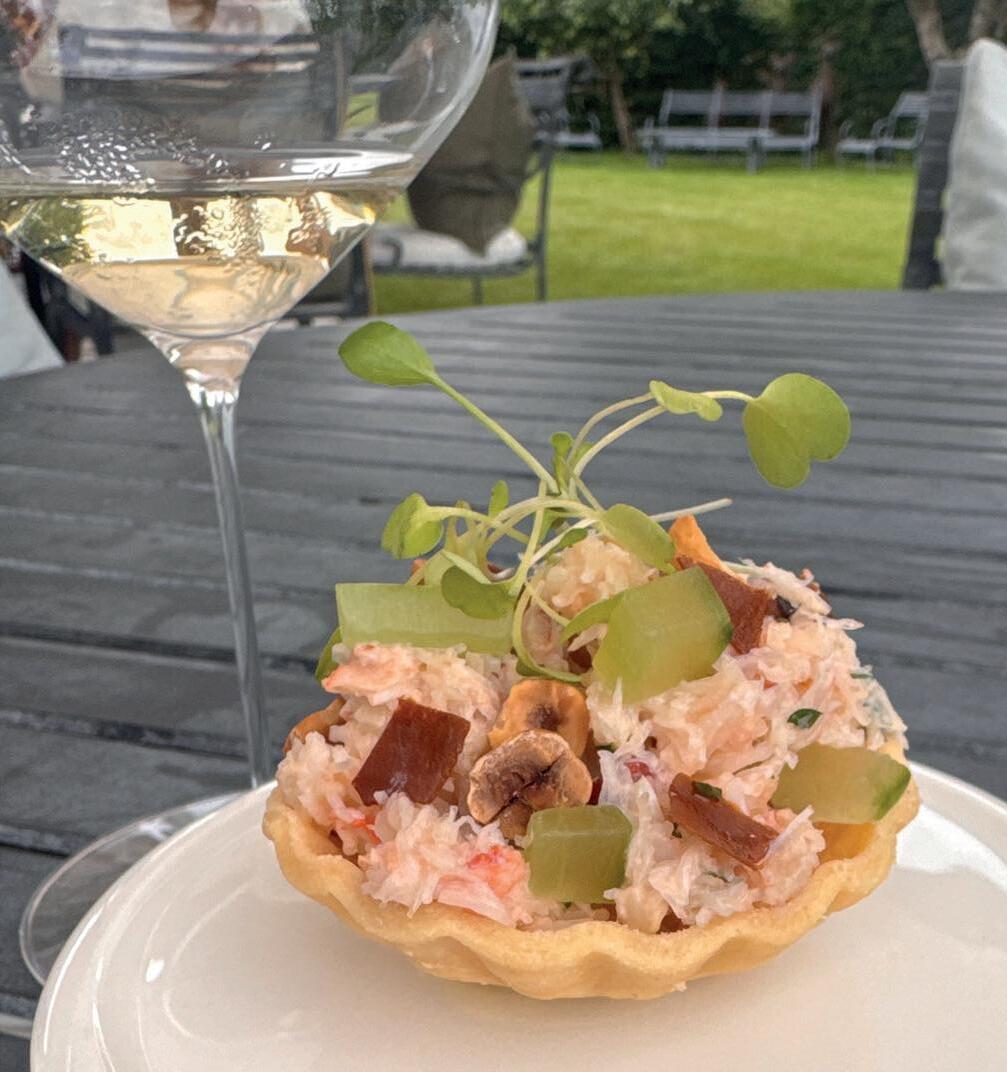
flavour, but this time it was missing the smoky, garlicky taste that we would have wanted.
On to dessert. I sincerely wish this hadn’t been the case, but my pistachio Bakewell tart was unpalatable. The cake base was so dry that I couldn’t stomach it. I ordered the gluten-free version and must trust that the non-glutenfree version would have been a thousand times better. But gluten-free is no excuse, not from a highly rated kitchen. It was surprising too, since the gluten-free bread I had earlier was excellent.
things considered, The Woodcote Restaurant has a lot going for it – an idyllic countryside location, elegant yet breezy indoor and outdoor spaces, lovely staff and a very satisfying wine menu.”
However, we were delighted by the chocolate crémeux with caramelised banana, local elderflower sorbet, and a macadamia nut crunch. Truly delicious.
My South Downs venison main was creatively prepared to include loin, shoulder and kofte served with various forms of red and yellow beetroot. An overwhelming amount of beetroot, but this wasn’t the main issue for me. The problem was that my venison lacked flavour entirely. This may be a sought-after skill – minimising the gamey taste of venison –but this was to such a degree that my dish tasted of beetroot with the texture of meat. The kofte tasted solely of cumin.
The multi-cut Suffolk lamb main was, unfortunately, bland. Again, creatively put together to include a shoulder and a pressed lamb terrine, served with an aubergine caviar-stuffed zucchini. Aubergine caviar is usually full of
All things considered, The Woodcote Restaurant has a lot going for it – an idyllic countryside location, elegant yet breezy indoor and outdoor spaces, lovely staff and a very satisfying wine menu.
But, regrettably, none of that made up for the lack of flavourful punches that day, and we drove away disappointed.
££
Woodcote Lane, Graffham, West Sussex, GU28 0NT 01798 867331
www.thewoodcote.com

By Fiona Shafer, MD, MDHUB
Iwas mightily relieved when the Honda’s radiant red premium Sports SUV ZR–V Advance 2.0 1-MMD Hybrid e-CVT landed at the start of the May heatwave.
Rather selfishly, I was rather looking forward to the snazzy panoramic roof and great air conditioning that was on offer with the ZR–V, alongside all of its eagerly awaited attributes (of course), as it was proving too hot to drive my own convertible with the roof down during daylight hours despite being wrapped up like Lady Penelope – yet another worrying sign of our changing climate.
driving ), but if you are not in the least bit bothered and just view cars purely as a means to get from A to B, then maybe read no further.
If I had not known that it was a Honda in advance and had arrived with the car insignia all covered, it would have been hard to identify. A great shame, especially as historically, Honda is known for their recognisable and, one could even now say, iconic design with their early Civic.
“If you are looking for a hugely economical and practical car, then this is most definitely worth looking at.”
This is a review of a good but quite contrary car. Don’t get me wrong, I actually liked it, but the overall design and performance seemed rather incongruent with one another, and that appears to be a growing pattern with many mid-range crossover cars coming off today’s production line.
If a recognisable design and brand of car is important to you (as I would suggest it is with most people who really enjoy
However, if you are looking for a hugely economical and practical car (and let’s face it, which of us normal mortals isn’t these days) then this is most definitely worth looking at.
Where it lacks any real sporty feel, it more than compensates with a really quick, smooth, effortless drive on motorways and is nippy and agile around town. The steering is precise, and it feels very safe and predictable, with sharp brakes, which, in a world of way too many distractions, is particularly welcome.
Ironically, maybe the lack of a sporty feel is no bad thing as the Honda is not very forgiving on our tough old roads due to its pretty rigid suspension. If you are considering buying or test-driving one, it might well be worth setting aside
TECH STUFF
Model Tested: ZR-V Advance
Engine: 2.0 litre
Power: 143 bhp
Speed: 0-62 7.9 secs
Top: 107 mph
Economy: 48.7 combined
Price from: £36,280 - £40,595
“With a whopping range of 621 miles, I would suggest that, for many, this Honda may well be a keeper.”
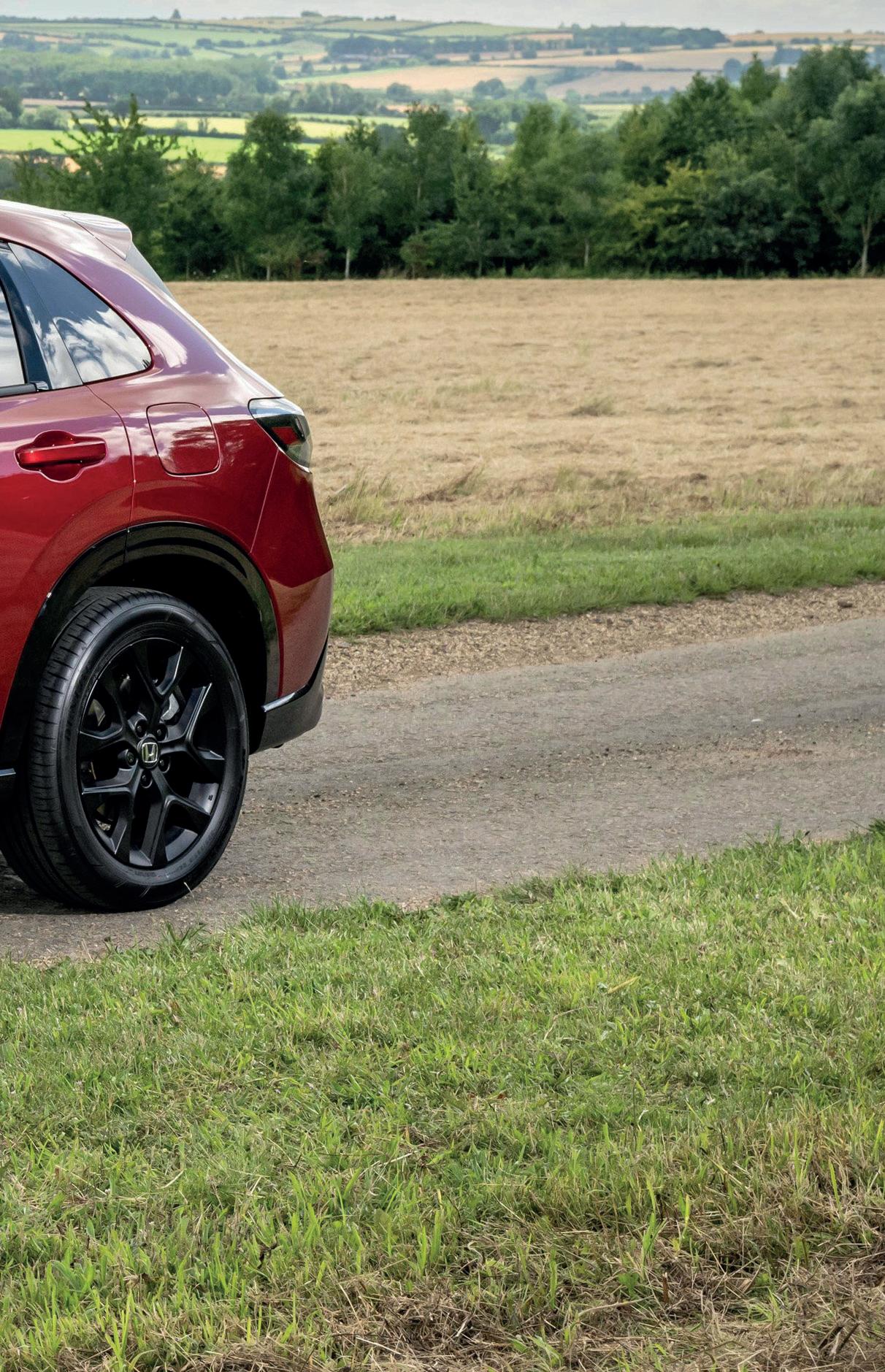
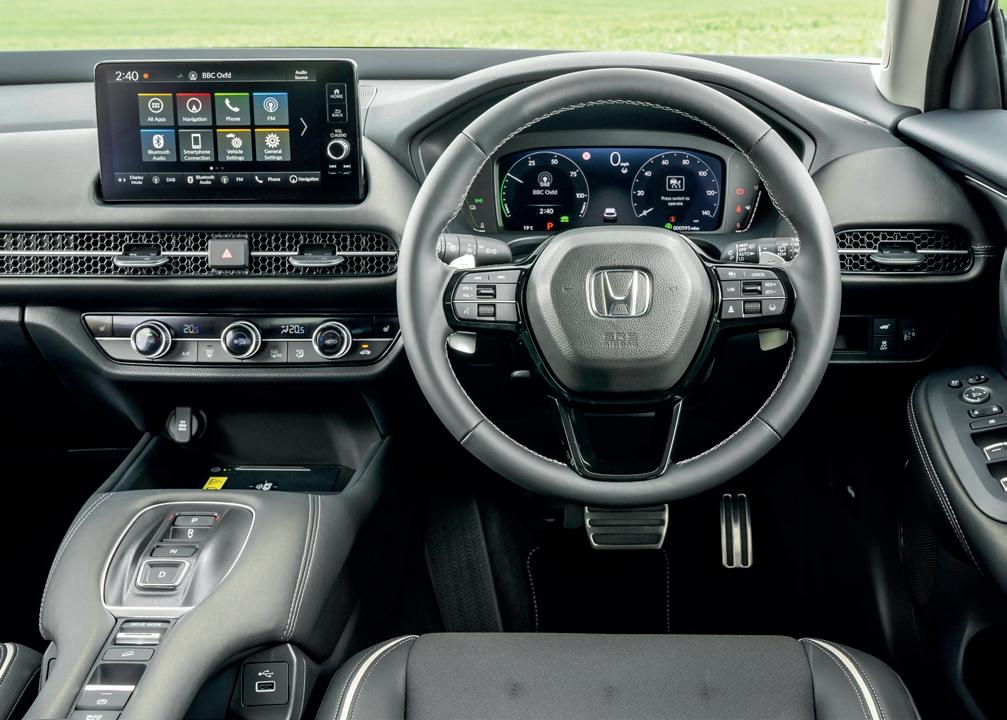
some time to compare it with a Nissan Qashqai e-power, Kia Sportage or Toyota C-HR before parting with your cash, as this will set you back around £39,375 as a starting price.
The only real irritation in the overall driving experience for me was the gear shifting. They are a little confusing at fi rst and took a while to get used to. The gear layout features a push-button shift-by-wire system which replaces traditional mechanical levers with distinct buttons and a toggle. While it frees up the central console space, it does mean you have to look down at the console to ensure you have pressed the right button.
I thought it might just be my menopausal brain at fi rst, just ‘not getting it,’ but it appears not, and this is a common criticism.
Ultimately, it is the technology of this car’s Hybrid System that will set it apart. An SUV that sits between the HR-V and CR-V, the system is built on the acclaimed Honda Civic platform and pairs a 2.0-litre petrol engine with two electric motors to deliver 184PS responsive, electric-like performance and impressive fuel efficiency without the need for plugging in.
With a whopping range of 621 miles with no recharging thanks to its long-range Hybrid engine, I would suggest that, for many, this Honda may well be a keeper.






• Economical
• Very comfortable at speed


7.5 /10


• Knobs for climate control rather than a touchscreen
• Very easy to drive
• Bose sound system
• Non slip floor to the 1,322 lt boot space
• Heated seats front and back
• Plenty of USB’s for all of the family throughout
• It has a complete Handbook in the glove compartment

• And a little clearly labelled box with locking wheel nuts in – hurrah !
• Rear windows do not go all the way down – some people like this for safety, others won’t
• Space is a bit of a squash in the back for three adults and the headroom is reduced by the panoramic roof
• No 360º camera
• The interior finish on the doors marks quite easily, and I had a devil’s own job getting some sun cream off it after leaning against the door. Don’t tell the Press Office!
BRIGHTON BRIGHTON PRIDE 35TH
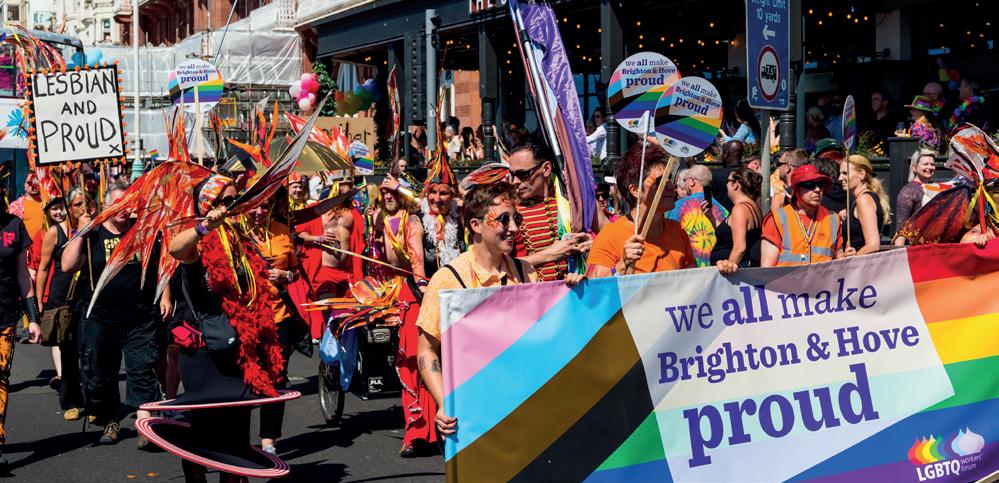
Celebrate the 35th anniversary of the UK’s biggest LGBTQ+ festival with an unforgettable weekend of live music and community celebrations in Preston Park. The legendary Fabuloso main stage features a spectacular, star-studded lineup of global talent, headlined by the sensational singer-songwriter RAYE on Saturday and the iconic global superstar Diana Ross on Sunday.
Preston Park, Brighton August 1st & 2nd brighton-pride.org
LINGFIELD THE ELEMENTAL FESTIVAL – SOUNDS OF IBIZA
Set within the surroundings of Lingfield Park, Elemental Music Festival is a high-energy celebration of dance music, atmosphere and unforgettable live entertainment. Expect a day of DJs, live musicians and performers, spread across multiple stages, alongside a vibrant selection of street food and bars to keep the party flowing. From classic Ibiza anthems to today’s biggest dance tracks, Elemental delivers the ultimate soundtrack for festival-goers who love both throwback favourites and current chart-toppers.
Lingfield Park Racecourse, Lingfield July 11th tickettailor.com/events/elementalmusic/2091263

CHICHESTER GOODWOOD FESTIVAL OF SPEED
PETWORTH PETWORTH FESTIVAL
This respected arts festival presents an impressive programme of classical music, jazz, literary events and performances in venues throughout the historic market town of Petworth. Internationally renowned artists appear alongside emerging talent, creating an elegant and varied programme that has become one of Sussex’s most celebrated summer cultural events.
Venues across Petworth July 16th – August 1st petworthfestival.org.uk
The action-packed weekend showcases iconic drivers and historic vehicles tackling the famous hill climb. F1 team Williams has confirmed attendance, with the restored Williams FW18 car that Damon Hill drove while clinching the1996 World Championship. He will be sharing driving duties with James Vowles,
Luke Browning, and Jamie Chadwick. Spectators can also explore immersive tech zones, witness global car launches, and enjoy brand-new fan zones.
Goodwood Estate, Chichester July 9th-12th goodwood.com/motorsport/ festival-of-speed/
GUILDFORD GUILDFORD CASTLE OPEN AIR THEATRE
Enjoy a classic evening of entertainment under the summer stars within the beautiful ruins of Guildford’s medieval castle. Local theatre companies bring dramatic tales and Shakespearean comedy to life in this unique outdoor setting. Audiences are warmly invited to bring along their own low-backed deck chairs, warm blankets, and a luxury evening picnic.
Guildford Castle Grounds, Castle Street, Guildford Ongoing throughout summer guildford-shakespeare-company. co.uk/2026-programme/
PARK


RICHMOND HENRY MOORE AT KEW
Kew Gardens has welcomed a once-in-a-generation presentation of artworks by Henry Moore, one of the most influential and internationally recognised artists of the 20th century. Discover towering sculptures and smaller-scale artworks across Kew’s iconic landscapes and botanical collections. The sculptures are purposefully placed to be in dialogue with Kew’s trees and historic landscapes, revealing how sculpture can both respond to, and reshape, the space it inhabits.
Kew Gardens, Richmond
Up until January 21st 2027 kew.org/kew-gardens/whats-on/henry-moore

Get a duck’s-eye view of Sheffield Park this summer when you take to the water on a paddleboard! Moxie Unleashed are offering fun-filled SUP sessions for complete beginners through to experienced paddlers. SUP is a peaceful yet active way for all the family to enjoy the water whilst following in the footsteps of the Third Earl of Sheffield, who loved nothing better than using the lakes for sport – he even held diving displays for the public to enjoy.
Uckfield, East Sussex
July 1st – September 17th nationaltrust.org.uk/visit/sussex/ sheffield-park-and-garden/events
This much-loved arts festival fills Chichester with an eclectic programme of theatre, music, literature, exhibitions, talks and guided walks. Performances take place across a variety of venues, from historic churches to community spaces, creating a lively atmosphere throughout the city. The programme combines acclaimed artists and local talent, making it one of West Sussex’s most accessible and engaging summer cultural celebrations.
Venues across Chichester June 13th - July 19th festivalofchichester.co.uk