Sport’s greatest gifts have nothing to do with winning Pippa Moyle
Resilience was my renaissance
Natalie Montagnani
Who is holding you together?
IN CONVERSATION WITH...
JULIE KAPSALIS
CONTENTS
22 IN CONVERSATION REGIONAL BUSINESS LEADER AND GURU, JULIE KAPSALIS MBE
News
4 Upfront: The top international news stories involving women in business
12 In the Right Direction: Good news stories from around the world
Regulars
8 The Alex Bailey Column If AI can be you, who decides who ‘you’ are?
10 The Laura Hearn Column
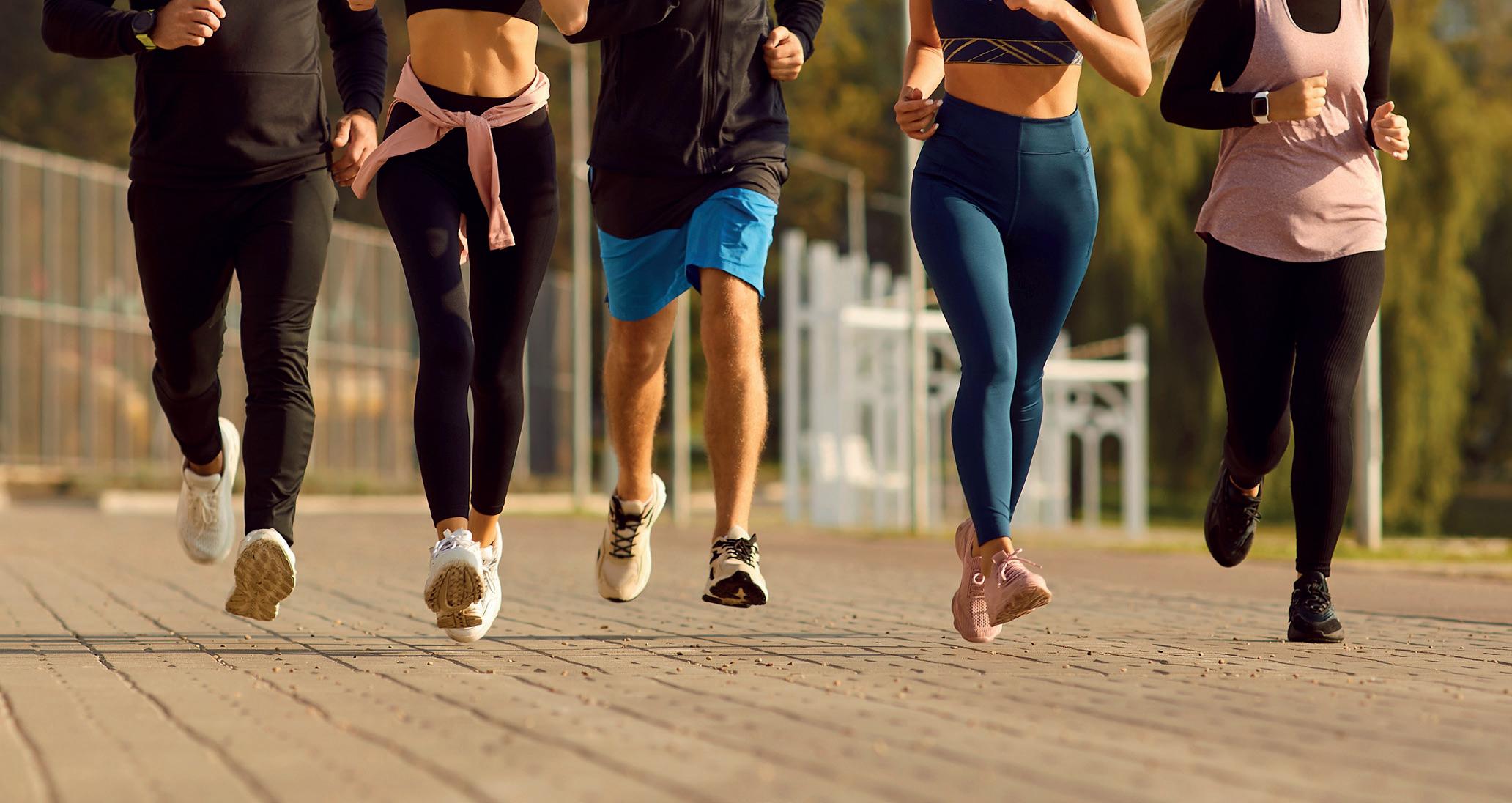
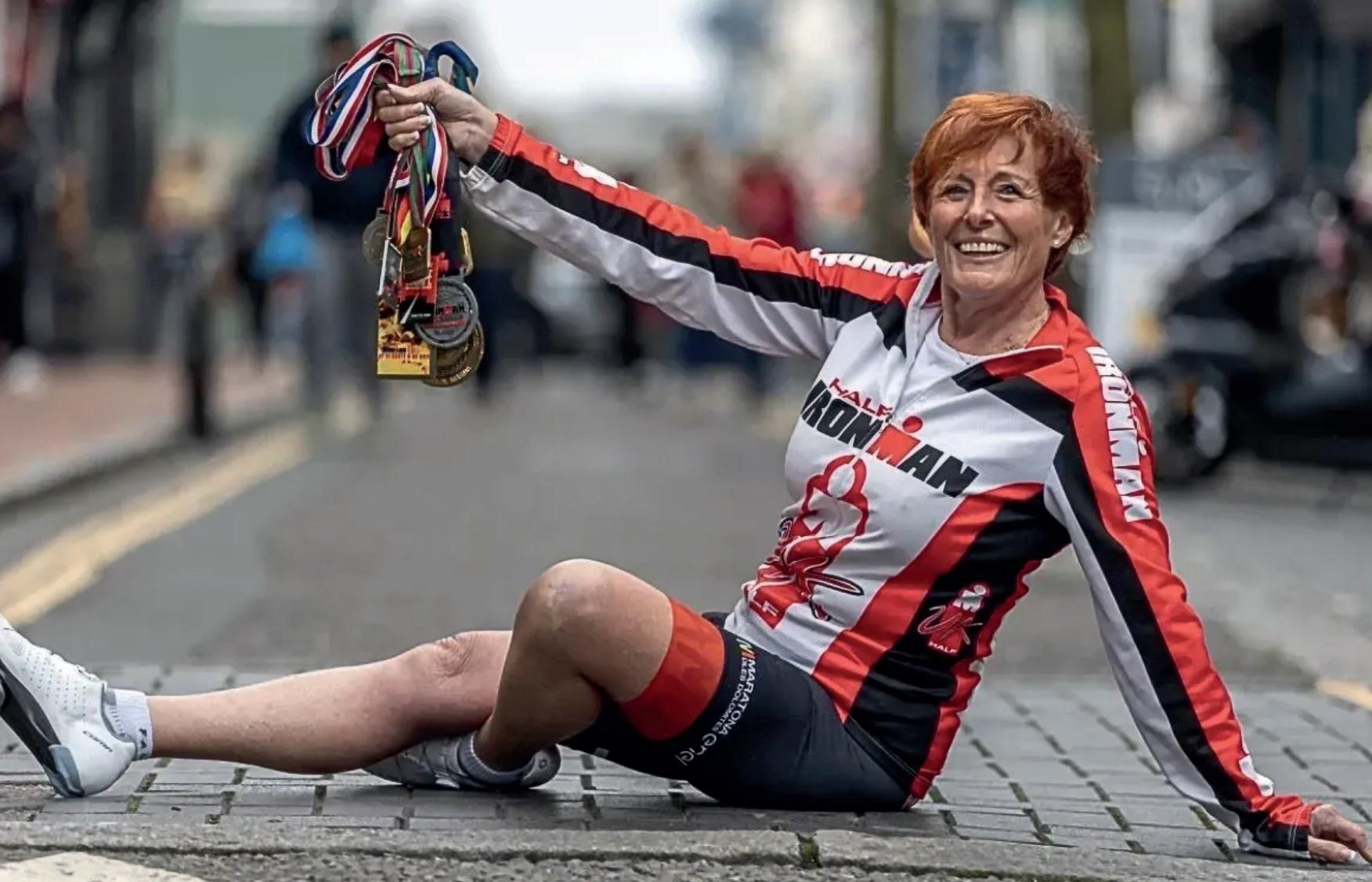
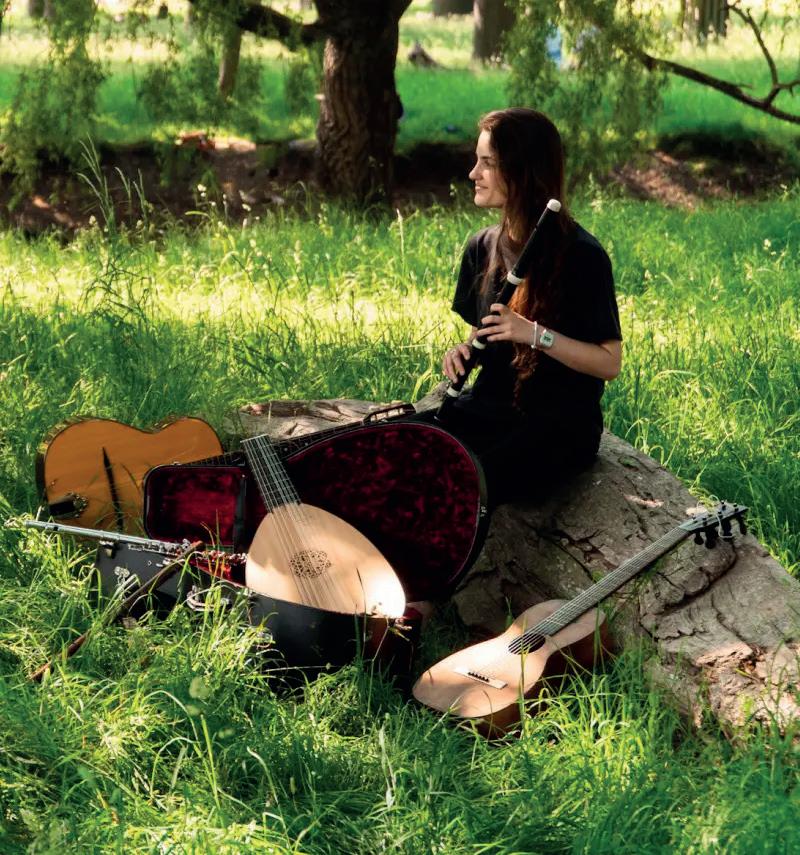
Why sport’s greatest gifts have nothing to do with winning
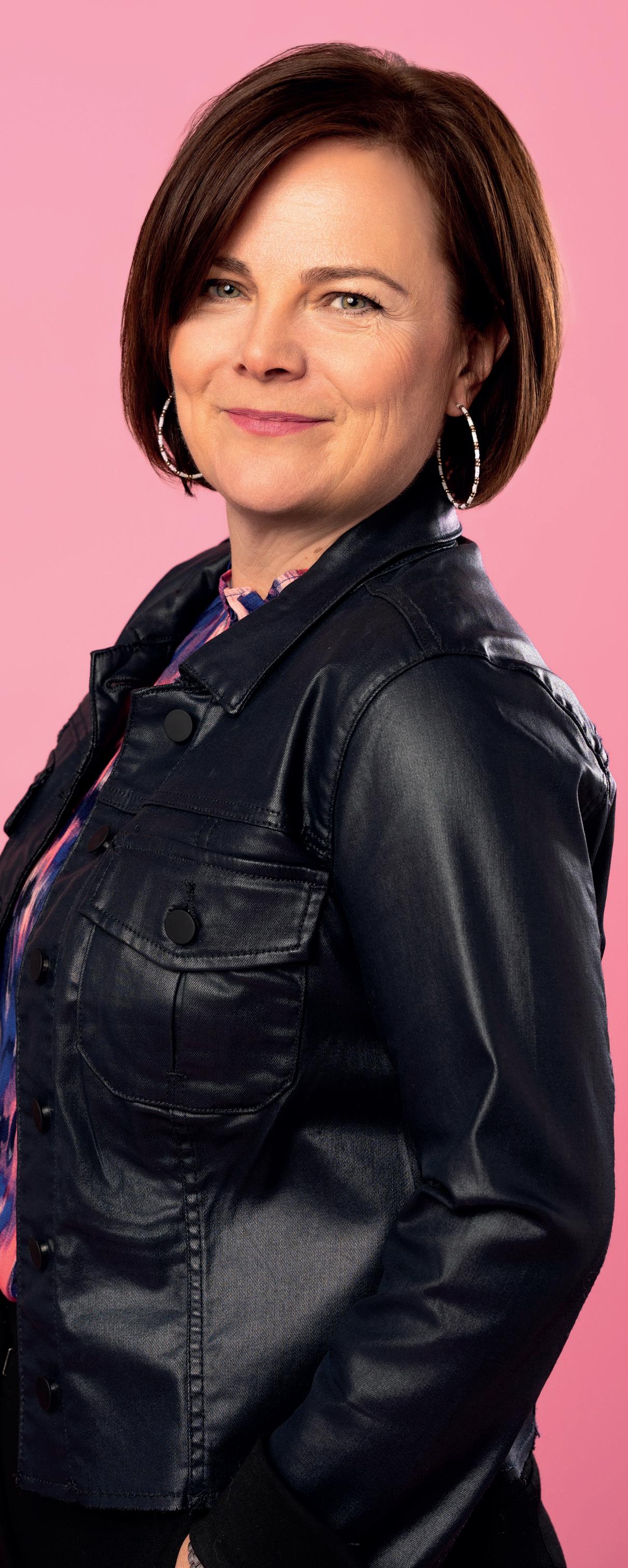
16 The Pippa Moyle Column Resilience was my renaissance
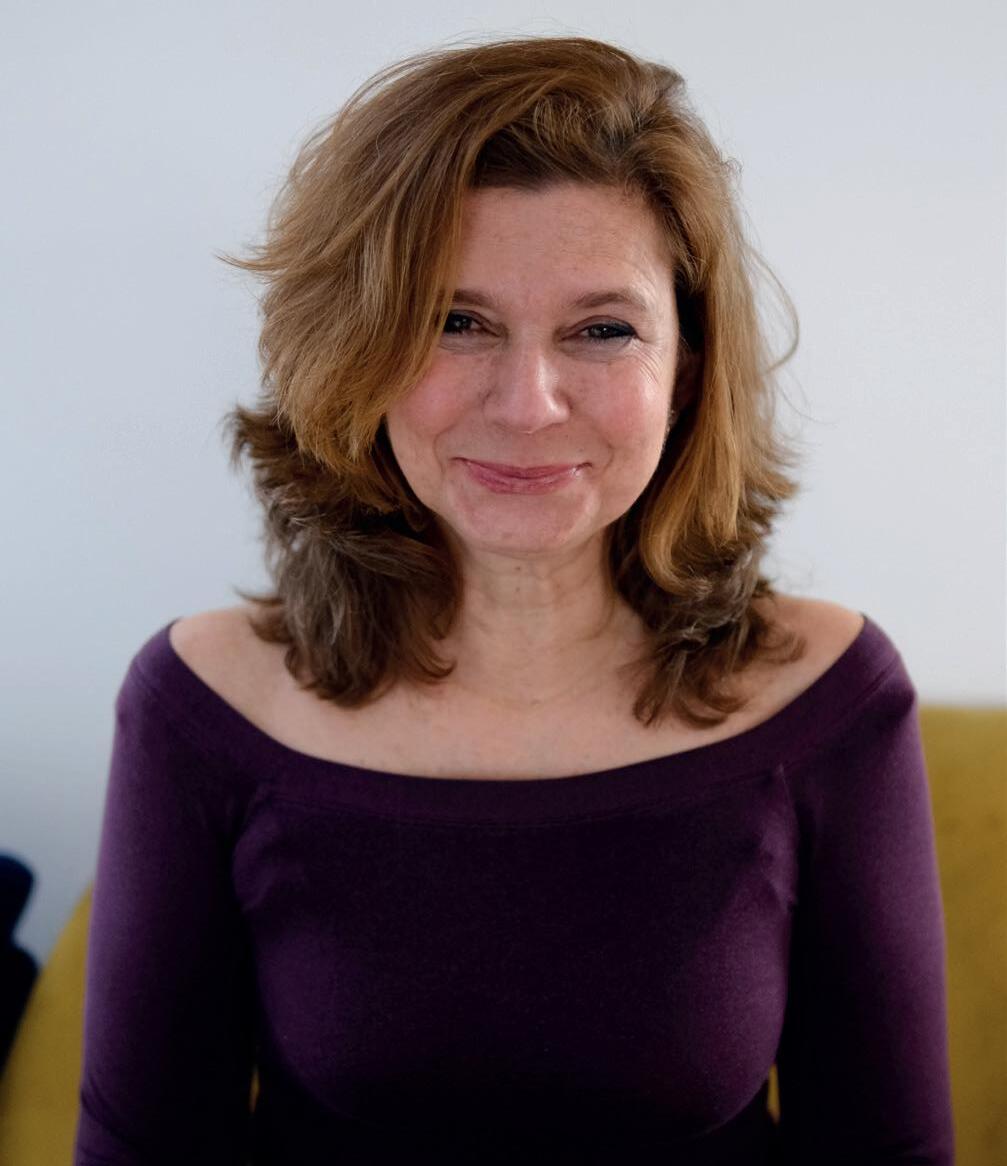
20 The Natalie Montagnani Column
You’re holding it all together, but who’s holding you?
PLATINUM MEDIA GROUP
“I am thankful for my struggle because, without it, I wouldn’t have stumbled across my strength.”
Alex Elle
Author and Wellness Educator
Finance
6 Kreston Reeves
Why female founders should make more noise about success
18 The Untapped Strength of Female Founded Businesses
Beth Warner of FRP Corporate Finance on the reluctance of women to put themselves out there
Features
14 Toy Story
Chatting with Jan Etches, General Manager at the Brighton Toy and Model Museum
36 Laura Best
Reshape your work, reclaim your career
38 Spotlight
Focusing on two women who are not getting the recognition they deserve
40 The Loneliness of the LongDistance Triathlete
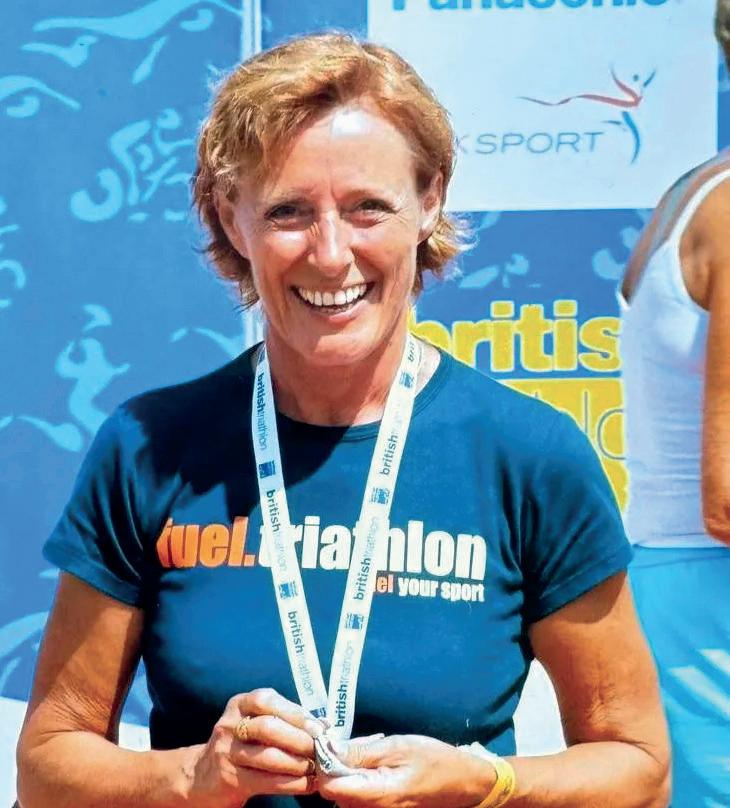
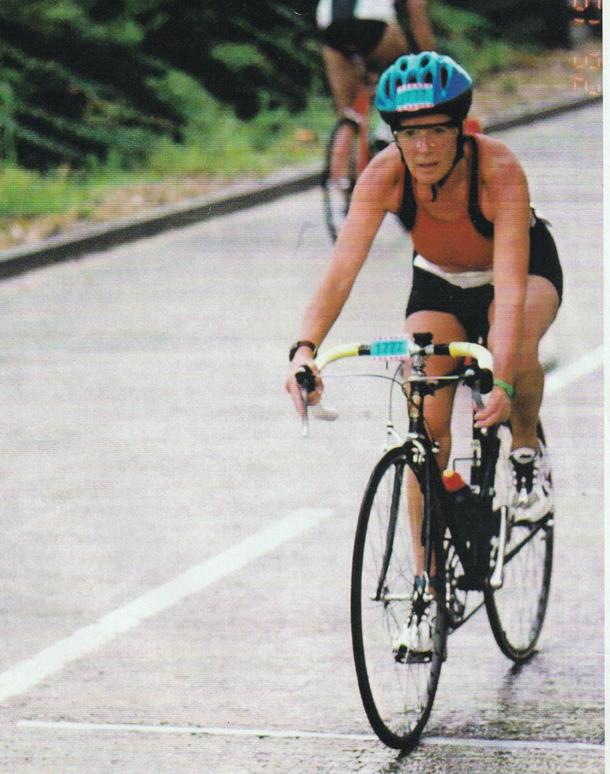
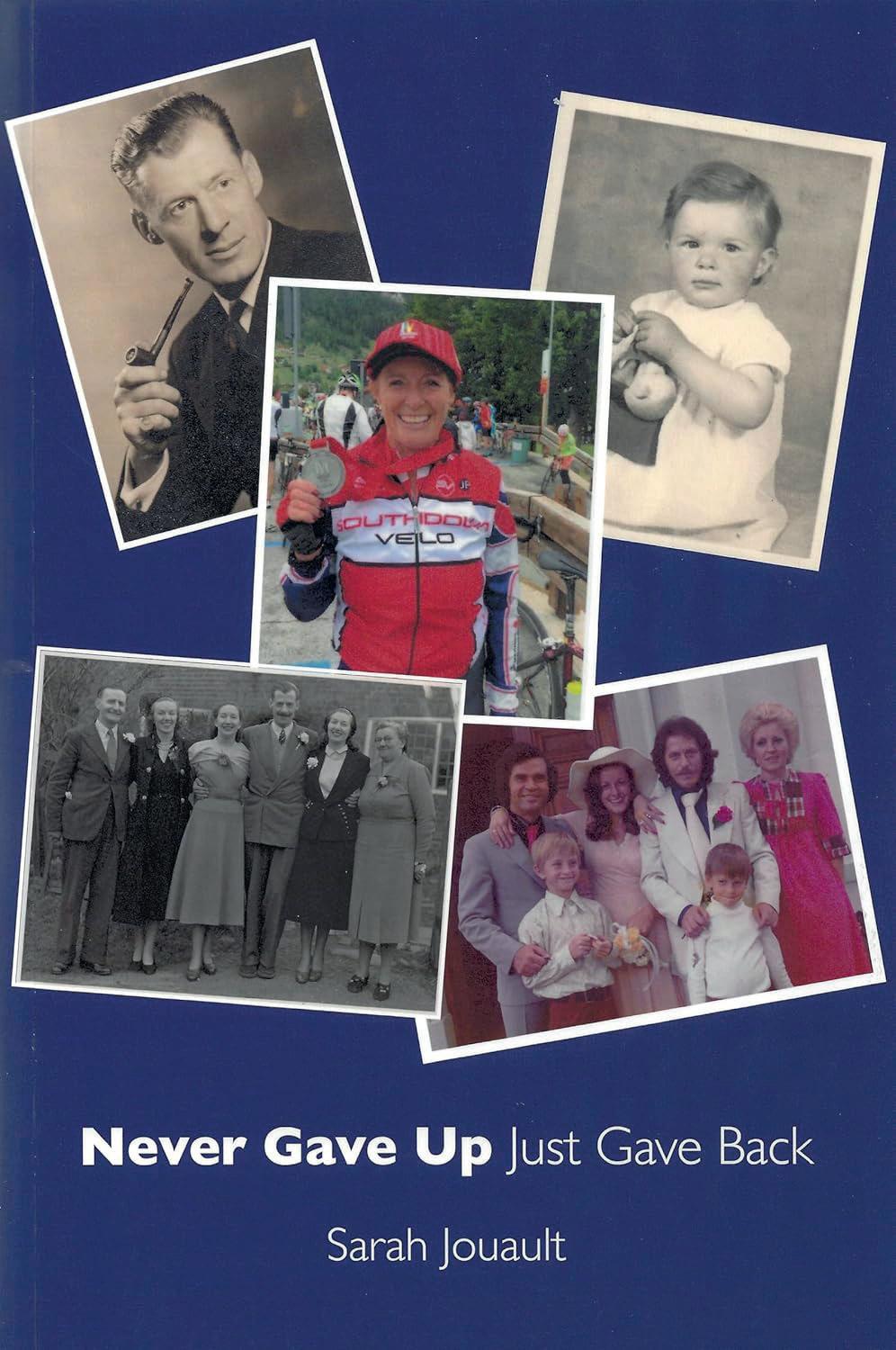
Read the remarkable, ongoing story of Sarah Jouault, the victim of a sexual assault, who took back her own life in order to help others
44 Dr Bernice Wright
Encouraging more women into science
46 Cornelia Lucey
Leadership is work; so why are so many women struggling?
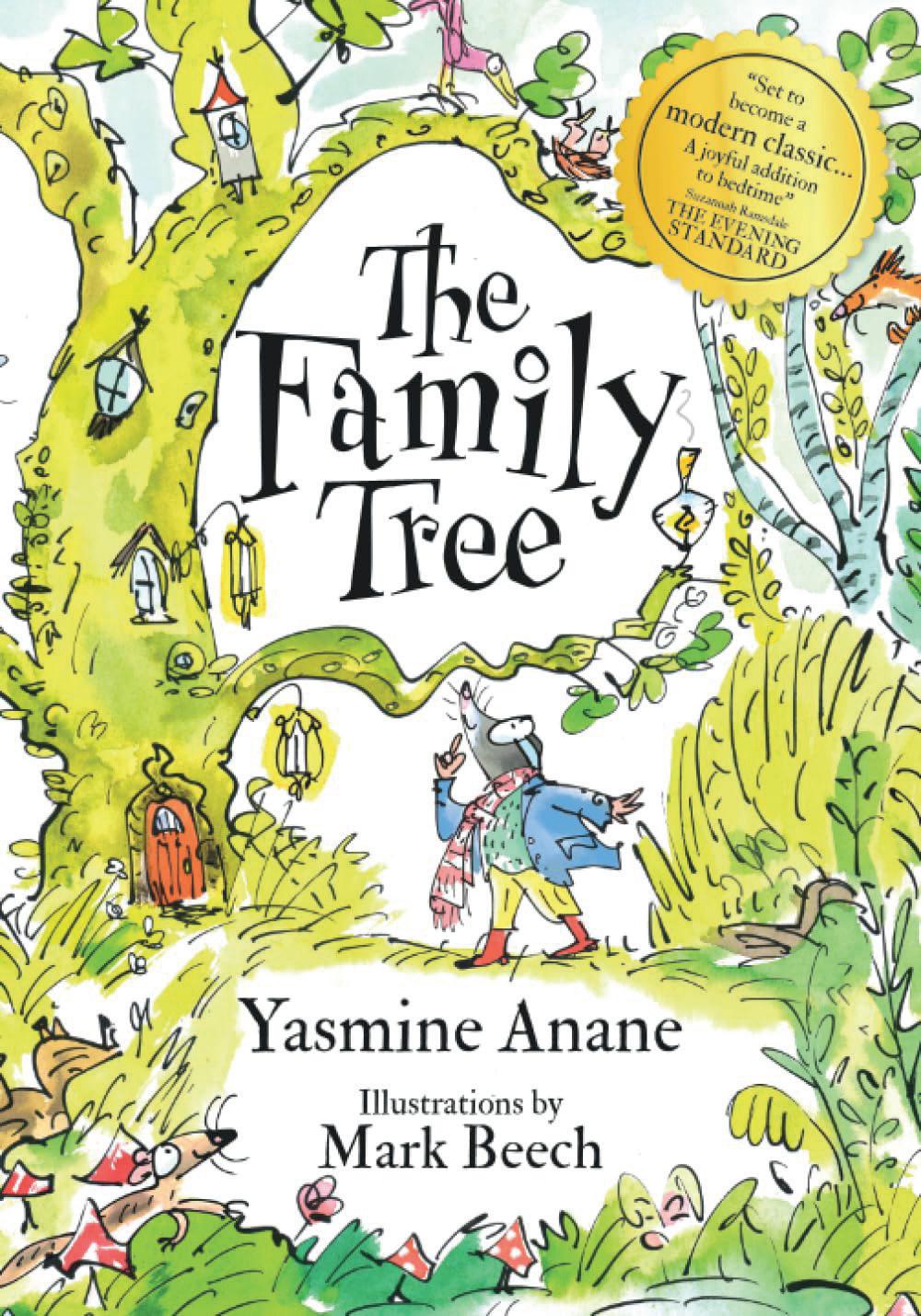
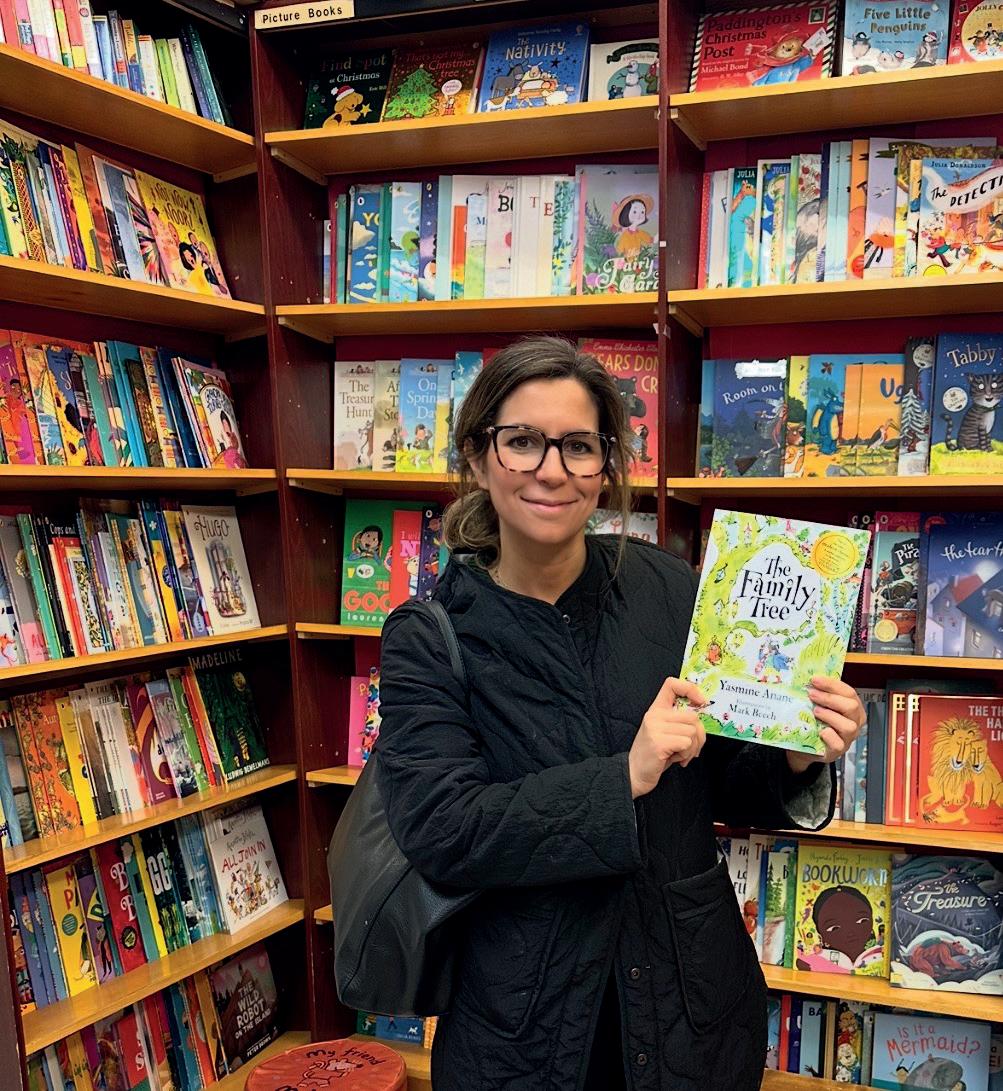
48 Yasmine Anane
The commercial reality of being a modern author
Further Reading
50 Zoë Arden
Why stories are your best sauce
Wellbeing
52 The Plastic Problem
The need for proactive measures to stop us ingesting so much plastic
Travel
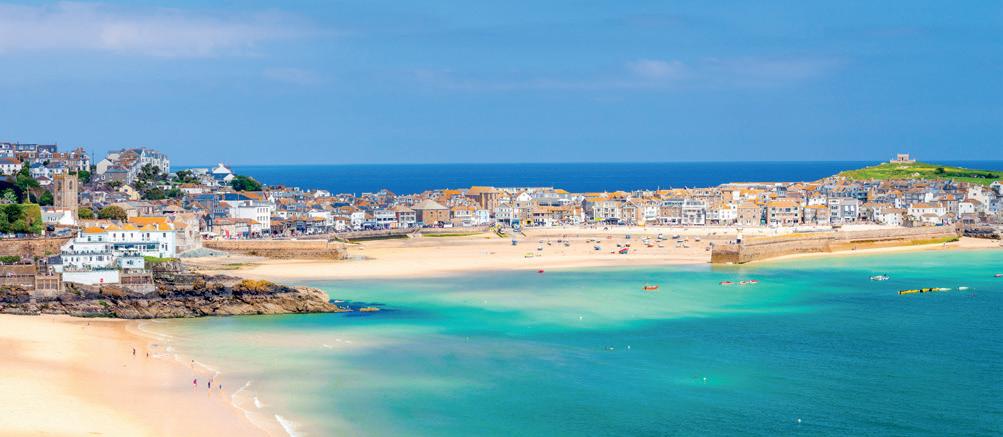
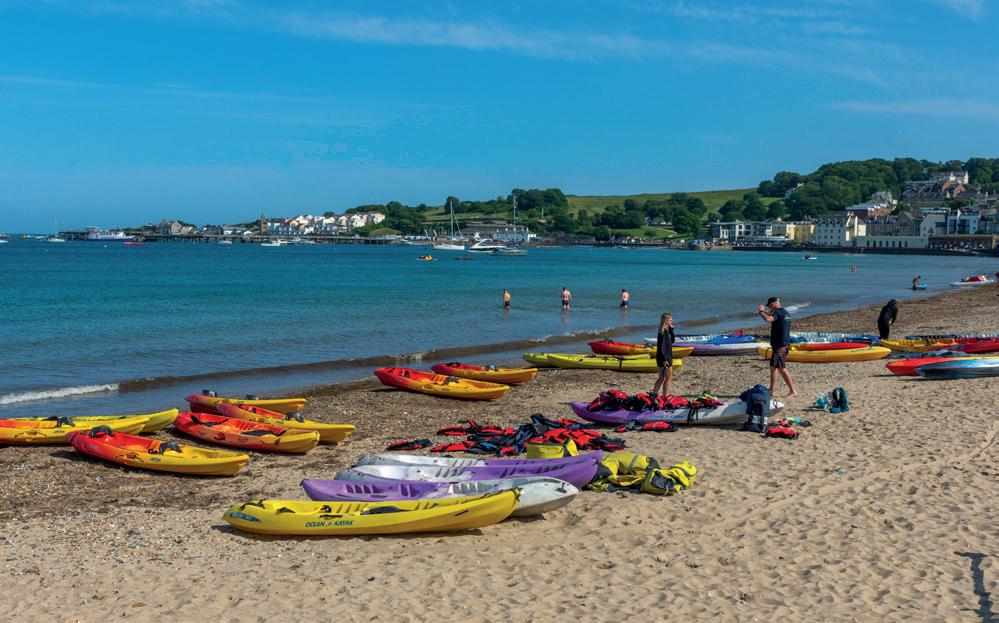
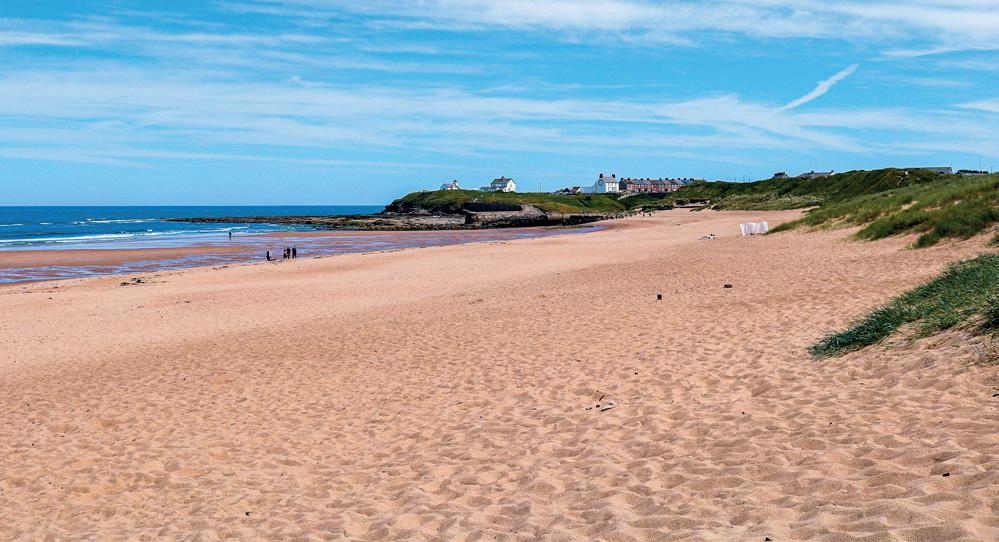
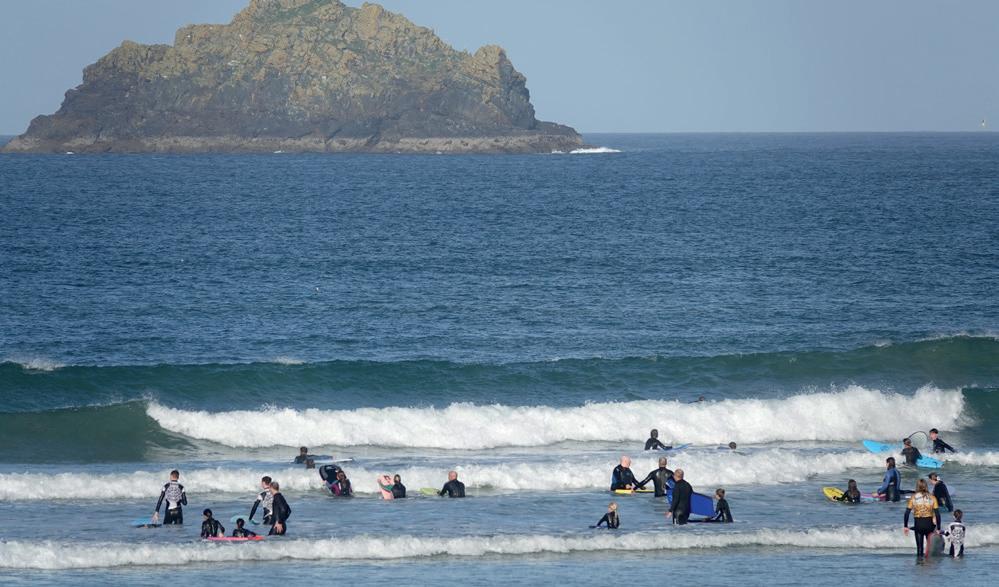
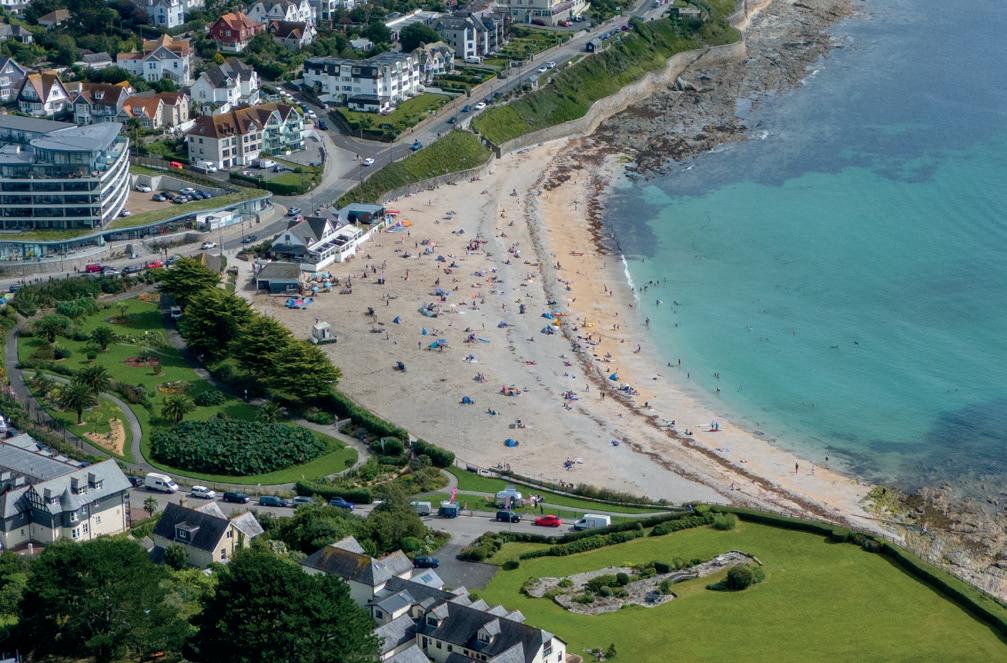
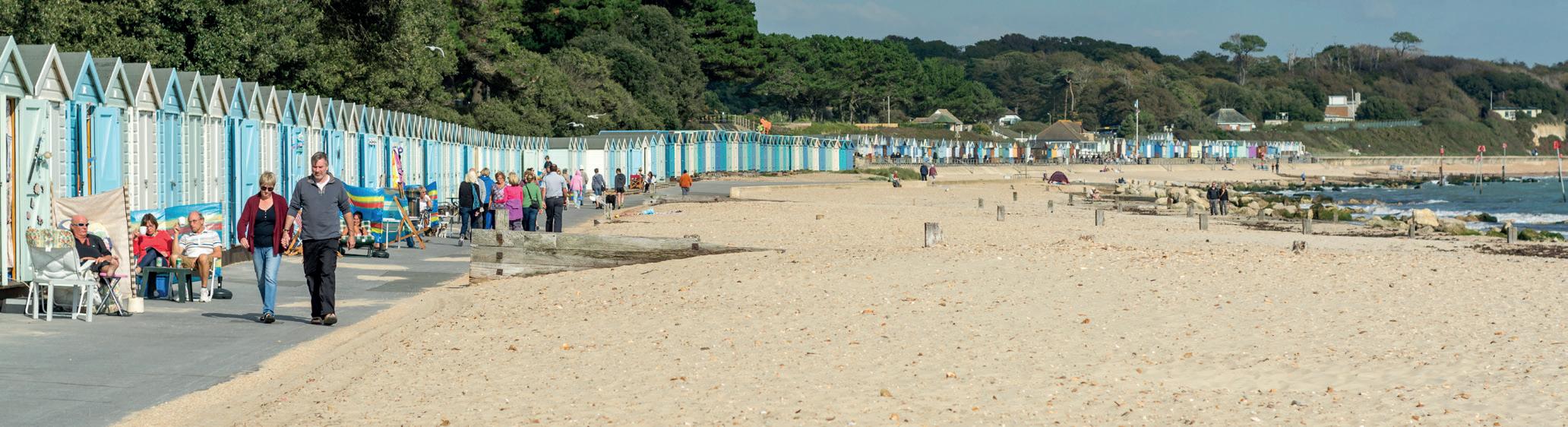
54 England’s Cleanest Beaches
The top 10 rundown of where you’ll find England’s cleanest bathing spots
Wine & Dine
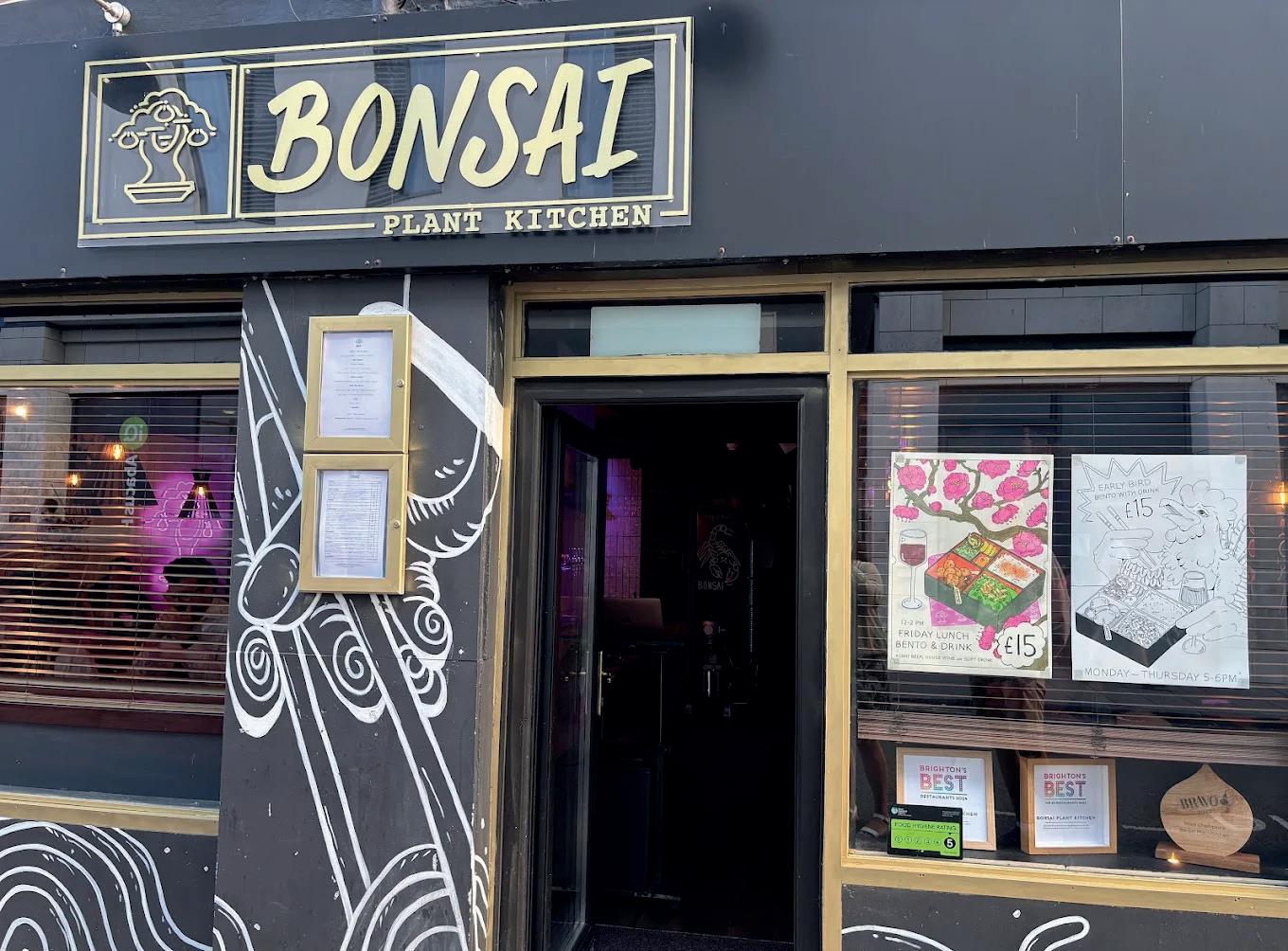
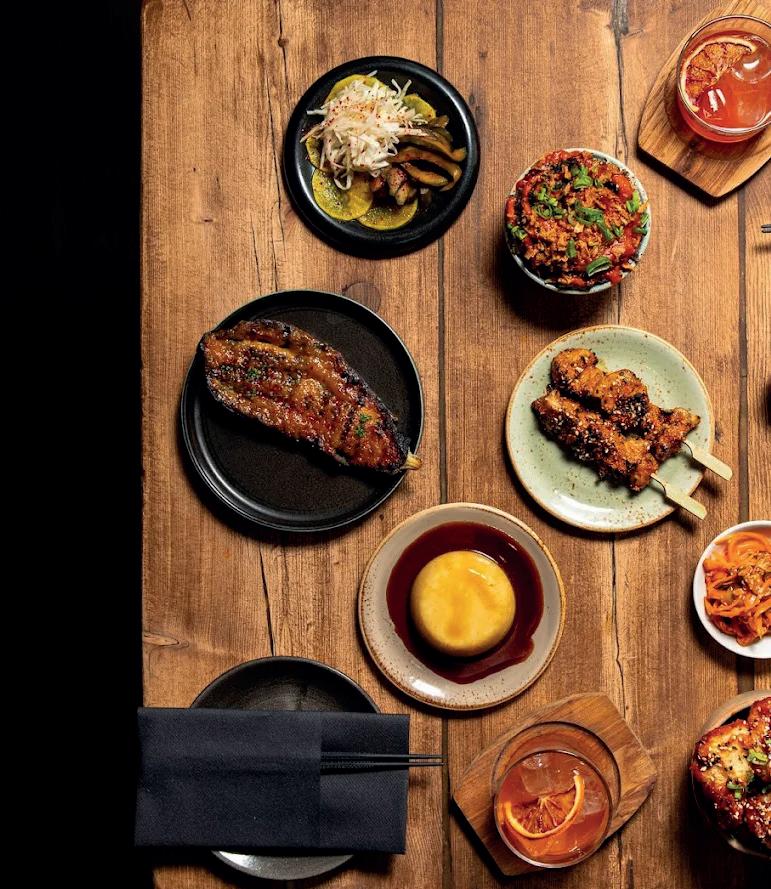
58 Bonsai Kitchen, Brighton
A vegan’s delight - for everybody
What’s On
60 A brief snapshot of what’s on in the South East
EDITOR’S NOTE
Welcome to Dynamic
At the centre of this issue is our Big Story with Julie Kapsalis MBE - an insightful conversation with one of the South East’s most influential leaders. From her work in education and economic development to her views on ambition, disruption and creating lasting change, Julie offers a compelling perspective on leadership with purpose.
We also shine a light on women driving transformation in diverse spaces, from Jan Etches’ impressive work reshaping Brighton Toy and Model Museum to powerful discussions around resilience, entrepreneurship and passion.
Amongst our regular contributors, Alex Bailey explores the growing influence of AI on leadership identity, while Natalie Montagnani examines the hidden pressures so many women in business continue to carry. Laura Hearn, meanwhile, reflects on value of sport and its powerful lessons to be learnt.
You’ll find plenty more inspiration in our regular sections too, from Frederique and Cheryl in Spotlight to Yasmine’s journey to becoming a children’s author.
HEAD OF DESIGN / SUB EDITOR: Alan Wares alan@platinummediagroup.co.uk
SERUM ADVERTISEMENT BANNED FOR MISLEADING
An advert for a £49 face serum has been banned over misleading claims that it made users look up to five years younger. The billboard poster claimed the Eucerin Hyaluron-Filler Epigenetic Serum was “clinically proven” following a study of 160 people who used the product for four weeks before being asked how much younger they thought they looked.
The advertising watchdog said it had concerns about the study’s methodology and that selfreporting made the results subjective. The ASA report said: “We had concerns about the study’s methodology, including that there was no control group, nor was there information about how participants were recruited.”
AI WILL PUT WOMEN’S JOBS AT RISK
At least a million jobs done by Londoners are either “highly or significantly exposed” to the impact of AI, a report published by City Hall says.
More than 300,000 administrative roles face the highest levels of exposure and risk of automation, “as their clerical tasks align most closely with GenAI capabilities”, the 71page Greater London Authority report states. It said a further 748,000 roles in areas such as IT, data analysis and secretarial
work are at risk, but it “varies across tasks”.
Women, who are overrepresented in administrative and clerical roles, young people and those with higher educational levels are among the most exposed, the report states. Brokers, web designers, telephone salespersons and journalists are also vulnerable. Jobs least at risk from AI include architects, barbers, chefs, chief executives, driving instructors, florists and undertakers.
CHARITY CALLS FOR EARLIER WOMEN’S HEALTHCARE PRIORITY
Giving women access to specialised care after their first miscarriage could prevent about 10,000 pregnancy losses a year across the UK, according to a study. Currently, women in England, Wales and Northern Ireland are eligible for specialist care on the NHS for early baby
losses after they have had a minimum of three miscarriages.
The charity Tommy’s has called for women to be eligible after one miscarriage, stating this could reduce the risk of future miscarriages and
improve health outcomes for mothers.
The graded model of miscarriage care proposed by Tommy’s is already available in Scotland, and the charity is calling for its implementation across the whole of the UK.
UPFRONT
THE LATEST BULLETINS FROM AROUND THE WORLD
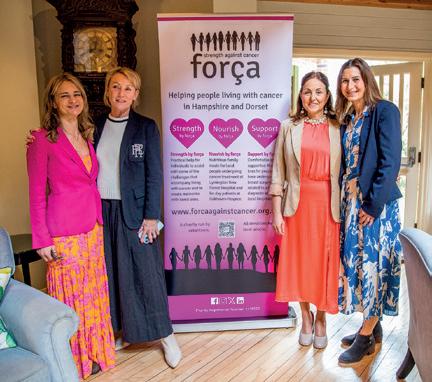
NEW FOREST BUSINESSWOMEN GATHER FOR FUNDRAISER
WOMEN GAINING GROUND IN LEADERSHIP ROLES
Businesswomen from across the New Forest gathered at Careys Manor in Brockenhurst to celebrate International Women’s Day while raising funds for the local charity força – Strength Against Cancer. Let’s Talk Communications hosted the lunch, bringing together women for an afternoon of networking, inspiration and fundraising. Held on a not-for-profit basis, the event raised funds for the charity, which supports families in the New Forest affected by cancer.
força was founded by a group of women from Lymington following the diagnosis of incurable metastatic breast cancer for one of its founders, Carla Whitbread. Speaking at the event, she shared her personal story and highlighted the charity’s work supporting individuals and families across the New Forest living with cancer.
Alison Bladh, an award-winning women’s health and menopause expert who has helped hundreds of women globally to navigate menopause with wellness in mind, has been announced as a finalist for the prestigious Business Book Awards with her bestselling book ‘Have a Magnificent Menopause: A straightforward Guide to Looking Good and Feeling Great’.
The Business Book Awards, in association with Pathway Group, holds the annual ceremony to honour authors who have imparted their industry knowledge and experience in book format. Bladh offers women over 40 a ‘no-nonsense’ guide to thriving through perimenopause, menopause and beyond with or without Hormone Replacement Therapy.
SENIOR ROLES ELUDING FEMALE PROFESSIONAL ACCOUNTANTS
Very few women reach senior roles in accountancy firms, despite parity at more junior levels. Sarah Beale, AAT CEO, has said in an article on how to improve the situation from mentorship to balancing pay and flexible working.
Women make up nearly half of the accounting workforce in the UK, but
few ever make it to the top. 12% of the UK’s top 100 accounting firms have female leaders, according to a 2024-25 Women in Leadership survey by LinkedIn, a staggering 20% drop from the previous year. This comes as the proportion of women being appointed to leadership roles in the UK overall has declined for the third consecutive year.
A man’s got to do what a man’s got to do. A woman must do what he can’t.”
- Rhonda Hansome
VENTURE FUNDING STILL NOT GETTING TO WOMEN-LED BUSINESSES
In yet another confirmation of an issue that Dynamic often highlights – that women are controlling more wealth than ever, but the money still is not flowing evenly back into women-led businesses.
That imbalance is helping drive fresh attention to gender-lens investing, a strategy that directs capital into women-led funds, female-founded
companies and businesses built around women’s economic advancement. A new UBS report found women control about 33% of retail financial assets in the United States and Europe, yet 53% of those assets remain outside professional investment management. At the same time, just 1.3% of venture capital funding in the U.S. and Europe goes to companies founded entirely by women.
‘WOMEN BACKING WOMEN’ REACHES FUNDING MILESTONE
The flagship fund of a UK government-backed initiative addressing the shortage of equity capital for women building businesses has reached a £130m first close.
The “Women Backing Women” fund aims to raise £250m in total to invest in female fund managers backing female-led businesses. The initiative is a key part of the UK governmentbacked Women Taskforce, which aims to address the longstanding challenge of women’s difficulty in securing investment capital.
Just 2p of every £1 of equity funding in the UK goes to femalefounded businesses. Bootstrap4F, which is managing the funds, said it had reached the £130m first close of its £250m raise, with investment from Barclays, the British Business Bank, M&G and Nationwide and will now begin investing in fund managers.
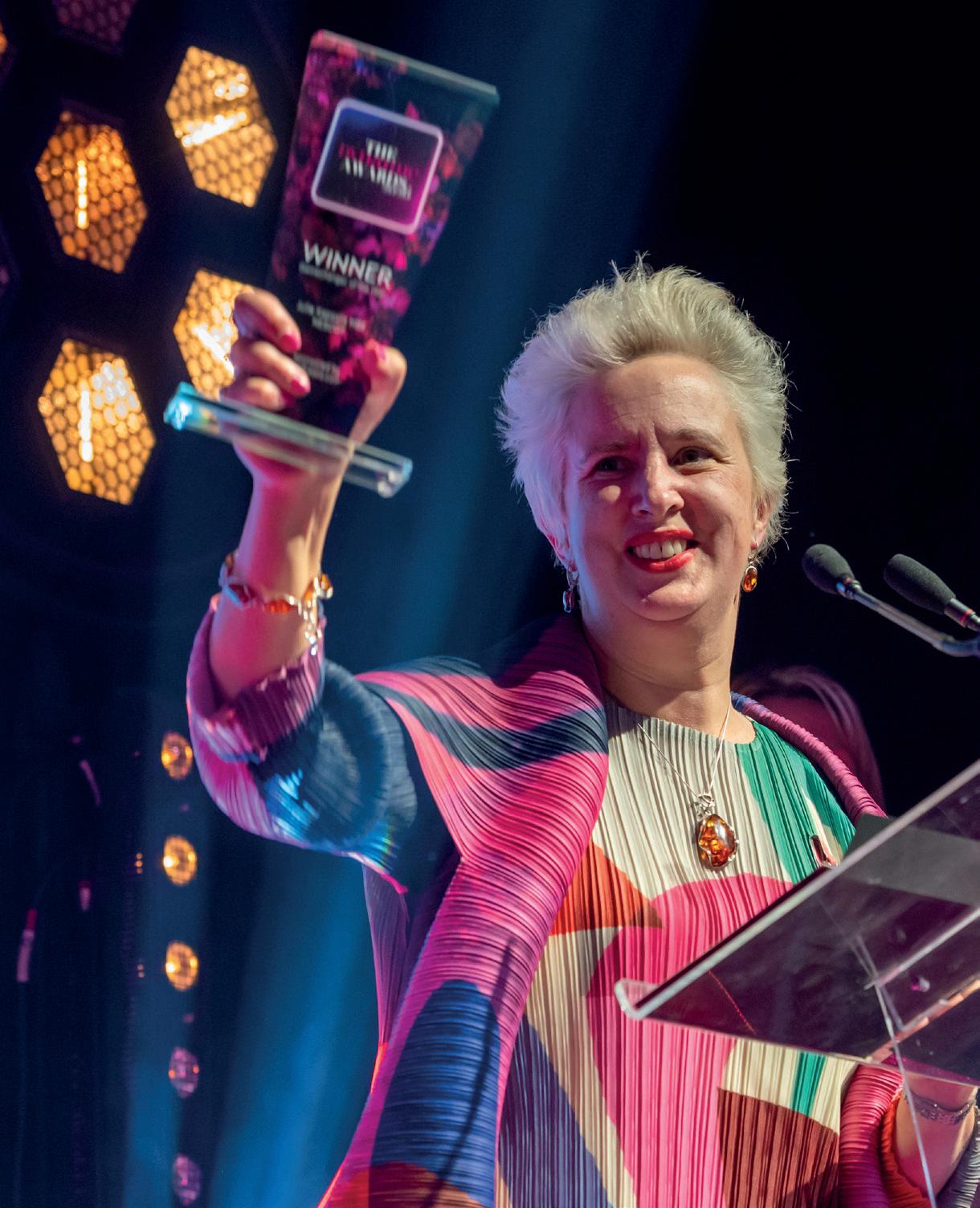
SOPHIA LORIMER ANNOUNCED AS WINNER - AGAIN
Crawley-based Sophia Lorimer, founder of Fine-Tuned Wardrobe, has been named the Gold Winner in the Women in Personal Services category at the 2026 Women Changing the World Global Awards, held in Paris.
The Women Changing the World Global Awards celebrate and recognise women achieving outstanding success in areas such as sustainability, humanitarian work, leadership, advocacy, education, health and innovation. The awards are designed to recognise the growing number of women leading the way in making the world a better place and inspiring others to make a difference.
Sophia Lorimer is a multi-award-winning Sustainable Stylist and the founder of Fine-Tuned Wardrobe, a business dedicated to helping individuals reconnect with their wardrobes in a way that builds confidence while reducing fashion waste.
Stop telling girls they can be anything they want when they grow up... it would have never occurred to them that they couldn’t.”
- Sarah Silverman
We are delighted to announce that Sophia will be a brand-new Dynamic columnist from next month giving fantastic advice on how to dress for work.
By Alison Jones, Partner, Kreston Reeves
Why female founders should make more noise about success
Running a business can be exhilarating, demanding, messy and deeply rewarding, sometimes all in the same week. For many female entrepreneurs, business growth rarely follows a neat or predictable path. It’s built through a mix of instinct, resilience, support from others and the confidence to keep going, even when the next step feels uncertain.
That was the clear mood at our recent International Women’s Day event for female entrepreneurs and business leaders, who shared honest reflections on what helps women build successful businesses and sustain them over time.
While every story in the room was different, the themes were strikingly familiar: backing yourself, building trusted relationships, creating strong systems, taking opportunities when they come and remembering that success is not only about turnover or profit, but also about impact.
weight of responsibility are part of the reality for many founders. Yet so too is the excitement of seeing something take shape. Growing a business often means learning at speed, solving problems on the move and developing a level of resilience you never knew you had.
One of the strongest messages from the event was that no one builds a business alone. Trusted partners, supportive clients, advisers, mentors and peers all play a role. Sometimes that support is formal, but often it comes through relationships built over time; the client who takes a chance on a smaller supplier, the contact who makes an introduction, the mentor who asks the right question at the right moment, or the fellow business owner who reassures you that the wobble you are experiencing is perfectly normal.
“One of the strongest messages from the event was that no one builds a business alone.”
For some founders, the start of the journey was not so much a grand plan as a decisive moment. A recognition that something needed to change in their life, and that waiting for the perfect time was not an option.
The challenge, of course, comes in those early months and years. Cashflow pressure, long hours and the emotional
That is one reason networking still matters so much. Done well, it is not about awkward introductions or collecting business cards. It’s about creating a circle of people who understand the pressures of leadership, offer support and perspective and sometimes help you spot opportunities you might otherwise miss. For female entrepreneurs in particular, there can be real value in spaces where experiences are shared openly and ambition is not downplayed.
That willingness to step forward matters. Too often, women wait until they feel completely ready before pitching for work or applying for a new role. It’s the same for speaking publicly or putting themselves forward for recognition. In business, that can mean missed opportunities.
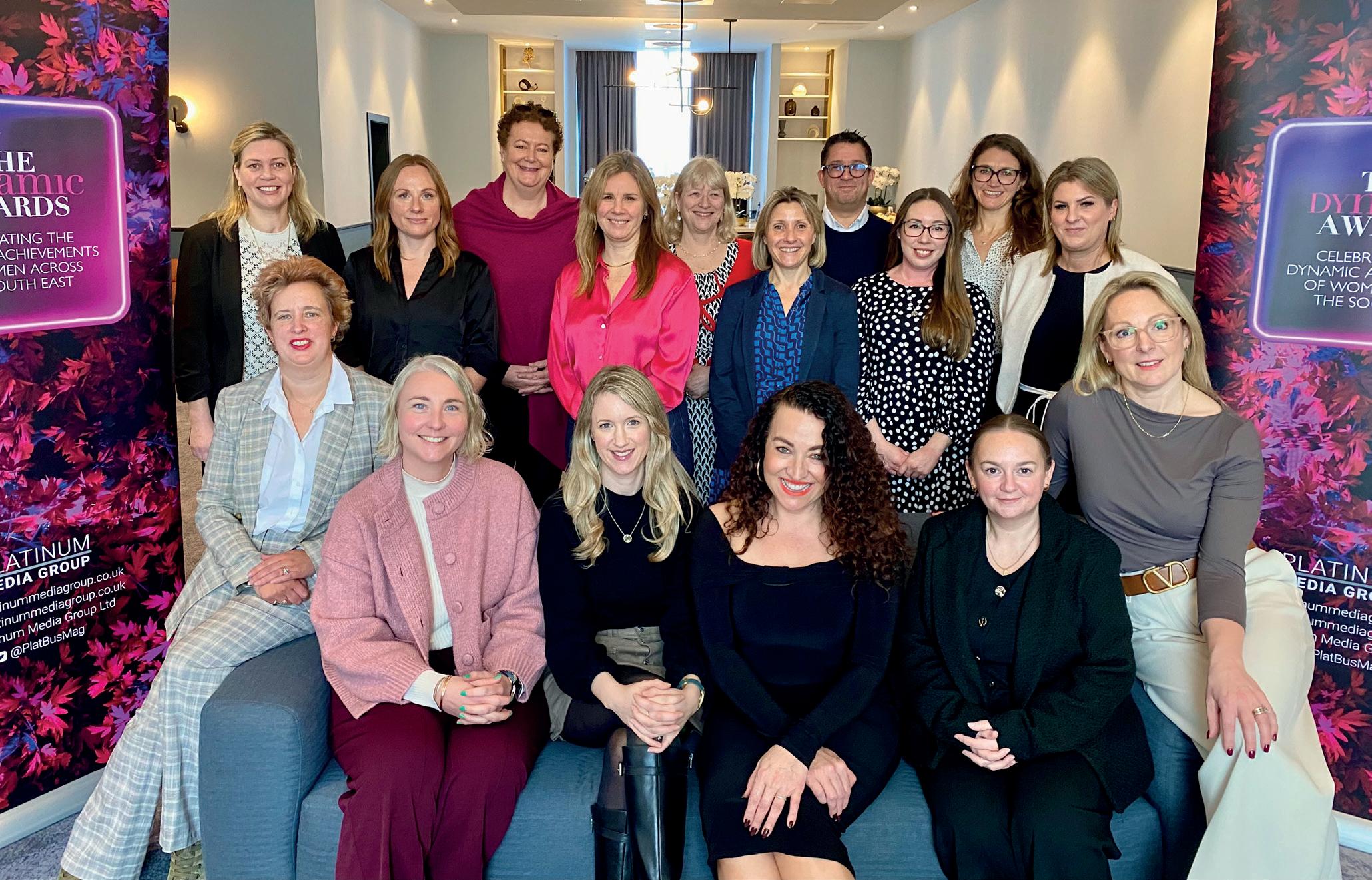
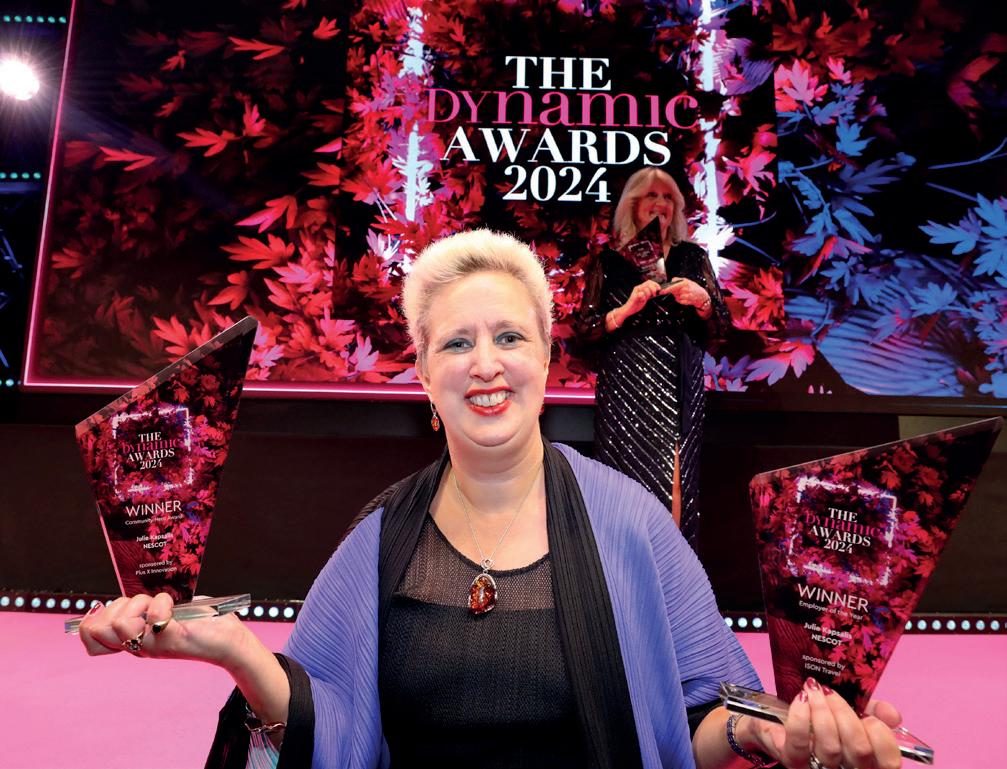
And that brings us to awards and, of course, the Dynamic Business Awards, which took place on March 26th, which we were delighted once again to support.
For many female entrepreneurs, entering business awards can feel slightly uncomfortable. There can be a temptation to dismiss them as self-promotion or assume the business is not quite ready yet. But awards can be hugely valuable. They provide a reason to pause and reflect on what the business has achieved, articulate its story clearly and identify what makes it different.
Success does not have to look one particular way. It can mean scaling fast, or growing steadily and sustainably. It can also mean building a brilliant team, creating opportunities for others, supporting the local community or building a business that reflects your values and ambitions.
For female entrepreneurs, that is a useful reminder. Business success is not only something to build. It is also something to recognise, talk about and, yes, sometimes celebrate.
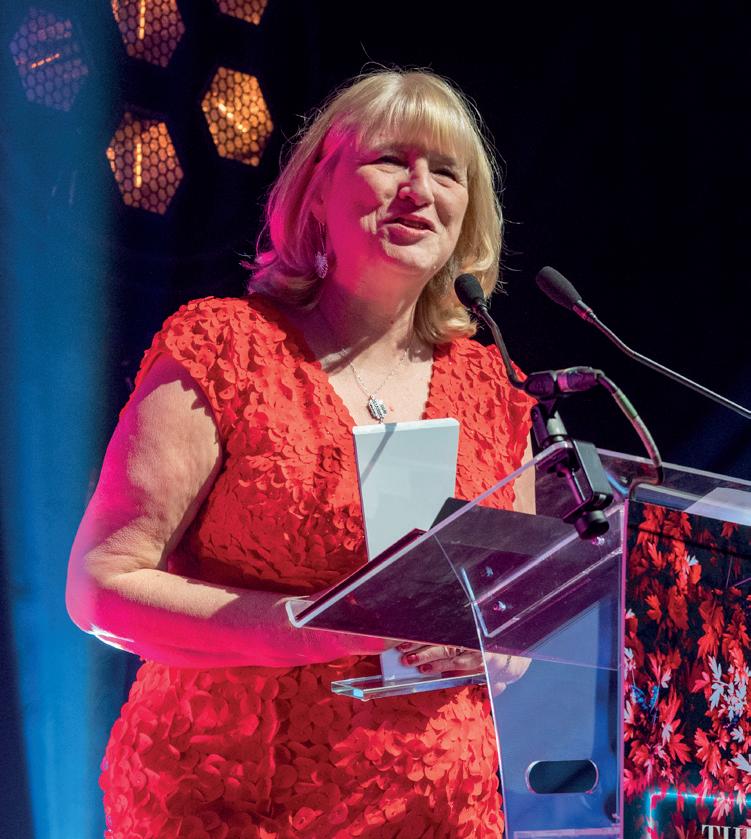
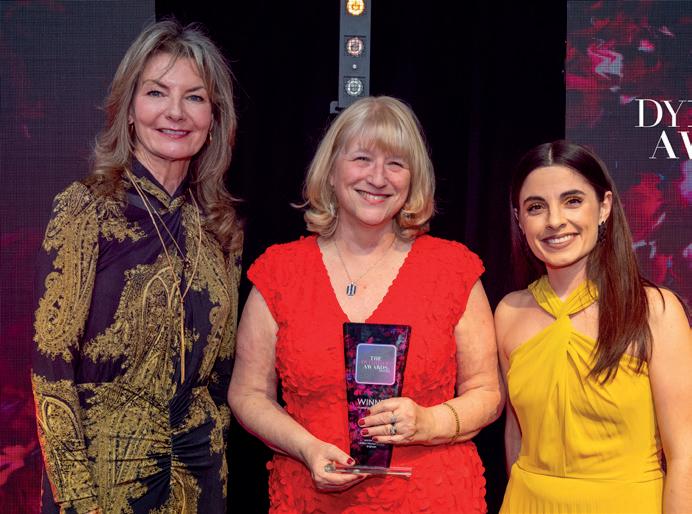
Awards are also a way of saying thank you. On a personal note, I was very honoured to receive Dynamic’s Outstanding Contribution to Business Award. I’ve had a career spanning over 40 years in the accountancy profession here in Brighton, and in May, I’ll be retiring from Kreston Reeves and focusing on some charitable projects.
“In May, I’ll be retiring from Kreston Reeves and focusing on some charitable projects.”
That process alone can be useful. An award entry forces you to think like an outsider looking in. What progress have you made? What challenges have you overcome? What do your clients value? How has the business grown? What impact have you had on your team, customers or community? These are powerful questions, and not just for judges.
Awards can also sharpen your marketing, strengthen team pride and boost credibility with clients and prospects. A strong entry is not about boasting. It is about presenting evidence of progress, clarity of purpose and the substance behind the brand.
In many ways, the women at our event had already described the foundations of a compelling awards story. Growth is built through determination. Opportunities seized. Teams developed. Communities supported. Setbacks overcome. Strong values maintained. These are exactly the things that set strong businesses apart.
I’m incredibly passionate about supporting women in business. I believe that by supporting each other, we can all progress in our careers and professions and ultimately achieve equality. All I’ve ever wanted is for women to be treated equally, not more, not less, but equal. I’ve always championed the voices of other women in business and will continue to do so.
So, make sure you champion yourselves. Reach out, network and use your advisers well. Make some noise and celebrate your success, and that of the inspirational business women around you. I look forward to seeing you next year, celebrating your success.
Call: +44 (0)33 0124 1399
Email: alison.jones@krestonreeves.com
Visit: www.krestonreeves.com
Alex Bailey Column The
We are delighted to have Co-Founder, with 20+ years organisational change. delivering impactful programmes
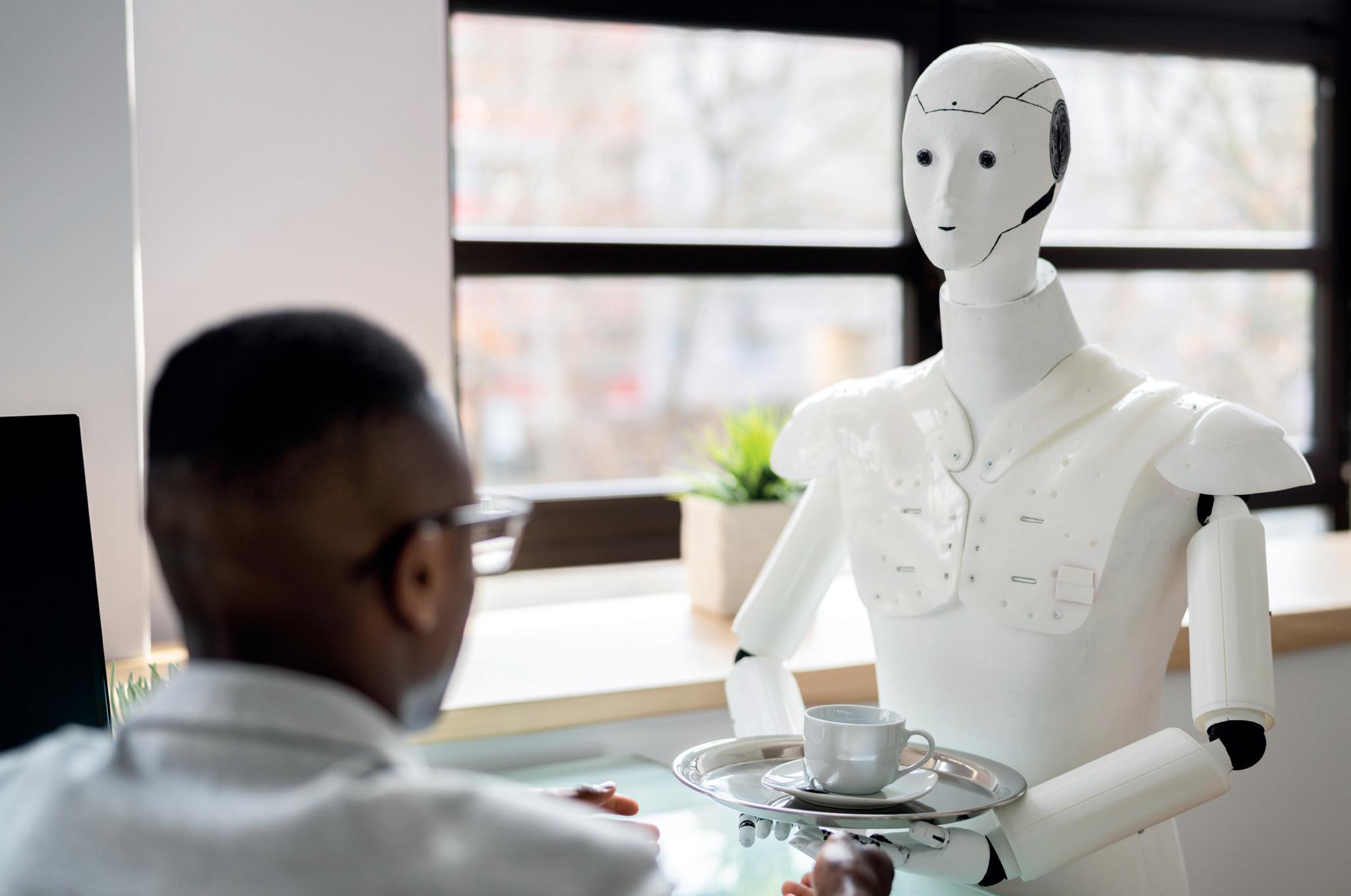
If AI can be you, who
By Alex Bailey
I’ve been lucky enough to have support from Executive Assistants at various points throughout my career, starting over 20 years ago at Aviva and, at times, throughout building and running my own business.
When it works well, every leader knows just how powerful that relationship can be. Exceptional EAs don’t just manage diaries or inboxes; they reduce cognitive load, anticipate needs and create the conditions for leaders to focus on what really matters. For me, it worked best when there was deep trust: when my assistant knew my strengths, weaknesses and priorities almost as well as I did. It ensured nothing
important was missed and, on many occasions, allowed me to continue eating and sleeping.
So I’ve never had an issue with someone I trust representing me in email responses or managing conversations on my behalf. Which raises an interesting question as we move deeper into the age of AI: why would that suddenly become problematic if the “someone” is a digital twin?
A digital twin is a data-trained representation of how someone communicates, decides, prioritises and responds. Unlike AI tools that assist with tasks, digital twins stand in for decision-makers. They don’t just support work; they represent judgment, tone and intent.
For many leaders experiencing cognitive overload, decision
“A digital twin is a data-trained representation of how someone communicates, decides, prioritises and responds.”
have Alex Bailey contributing to Dynamic. She is a Global CEO and years of expertise in HR leadership, psychology, coaching and She specialises in cultural evolution, leadership and performance, programmes globally while speaking at international events.
who decides who ‘You’ are?
fatigue or burnout, this is immensely appealing, and it’s something I’m exploring personally. But before jumping in, there’s a crucial question to consider.
What differentiates me from my digital twin — and how do I maintain my identity? As a psychologist, I’ve spent years exploring the relationship between internal voice and external expression, helping leaders find their voice, articulate their wisdom and build confidence to be seen and heard. Identity, in this sense, lives in between what we think, what we feel, what we choose and how we are experienced by others.
• So, if a system can mimic me very closely, where is the line?
• Who am I if a system speaks for me?
• Who am I if my reasoning is inferred, but I didn’t consciously choose it?
• Who am I if my tone is replicated, but not truly felt?
If identity is fundamentally relational, we also need to ask where a digital twin fits within that dynamic and whether, over time, it could subtly erode leadership presence if it isn’t held with intention.
There’s a useful parallel here that most senior leaders already recognise. When Executive Assistants are exceptional and deeply trusted, their roles often expand into operations, HR, strategy or major organisational projects. Similarly, many CEOs work hand-in-glove with a Chief of Staff or Business Director who carries a significant portion of the cognitive and relational load of leadership.
In those situations, I’ve occasionally sensed negative perception: silent, but felt ever so subtly.
IS THE CEO TOO REMOVED? WHO IS REALLY LEADING HERE?
What’s interesting is that this judgment rarely reflects reality. These leaders are often more focused, more intentional and more effective precisely because of that support. But perception matters in leadership, and trust is built as much through visibility as it is through outcomes.
Digital twins risk amplifying this tension. Unlike human proxies, they don’t visibly question, challenge or
contextualise. If a system can respond, decide or act on our behalf at scale, the boundary between support and substitution becomes harder for others to read.
And this matters particularly for women leaders. Research consistently shows that while women are closing the AI usage gap, a trust gap still exists. Women are more likely to be second-guessed, more closely scrutinised for credibility and more exposed to reputational risk when authority is perceived as diluted.
When you’re already operating within narrower margins of trust, being absent from how AI systems are shaped is not neutral. Adopting late often means inheriting norms shaped by others’ assumptions about voice, authority and leadership presence.
SO WHAT CAN WE DO?
First, be explicit about how you’re using AI for support, not leadership. Be explicit about what is being supported, accelerated or triaged with AI and what remains firmly human: judgement, accountability, values-based decisions and relationships.
Second, maintain your visible leadership presence. Presence doesn’t mean doing everything yourself; it does mean being seen thinking, sensing and making decisions. Visibility remains one of the strongest trust signals leaders have.
Third, experiment now and intentionally shape your use of AI. The leaders who will be most trusted in the era of digital twins won’t be those who adopt quietly or resist entirely. They will be those who experiment consciously, name the risks, articulate intent and help others understand why and how AI is being used.
And lastly and most importantly, if AI can pretend to be you, you have to know who you are and keep being your uniquely brilliant and imperfect self on purpose.
Alex Bailey styled by Gresham Blake Email: Alex@baileyandfrench.com www.baileyandfrench.com Insta @alexbaileybackstage Follow me on LinkedIn: www.linkedin.com/in/ alex-bailey-26562b2/
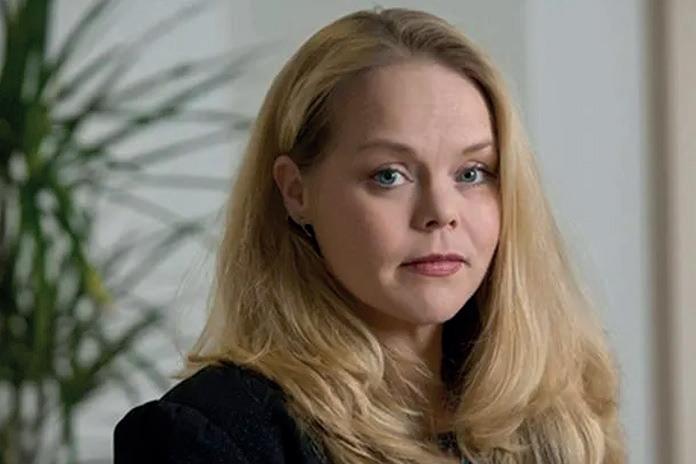
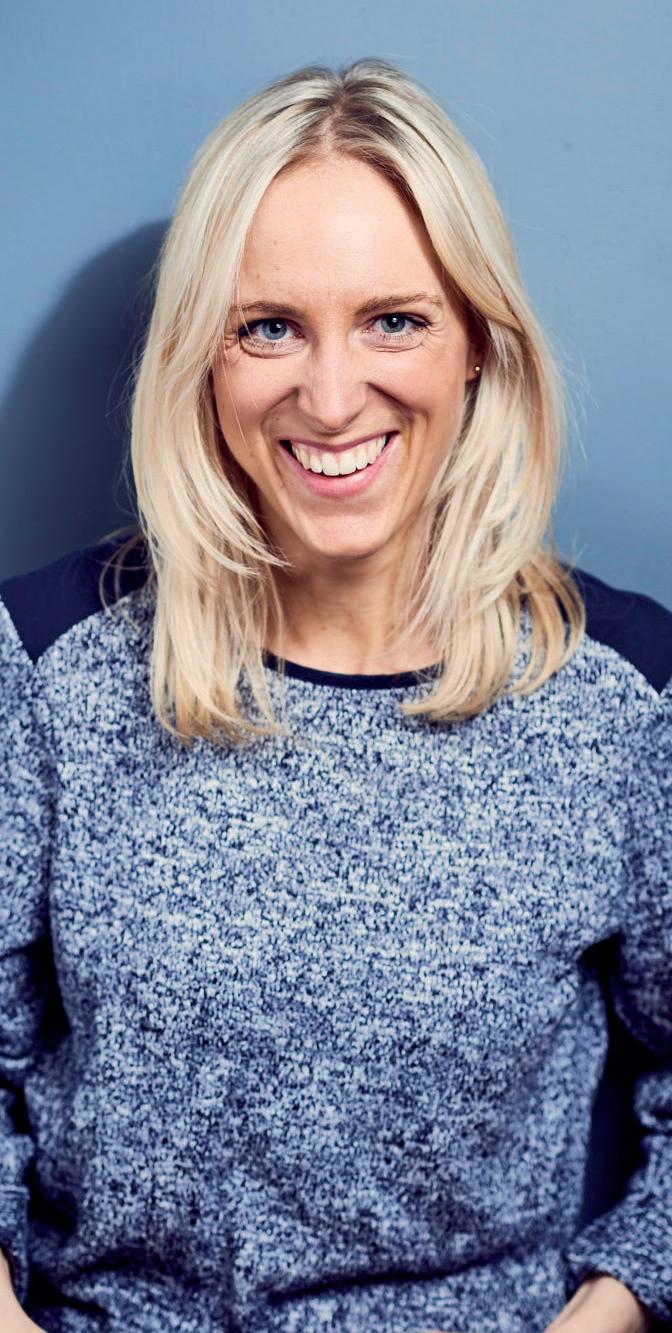
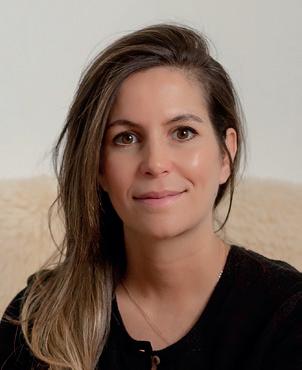
Laura Hearn is a former BBC journalist, now storytelling consultant and founder of Flip It - a podcast and platform helping people and businesses use storytelling as a tool for clarity, connection and change. This month, for Dynamic, Laura looks at how partaking in sports activities isn’t only about winning and losing...
“Sport has an extraordinary capacity to foster unity in places where division might otherwise take hold.”
BEYOND Why sport’s greatest
By Laura Hearn
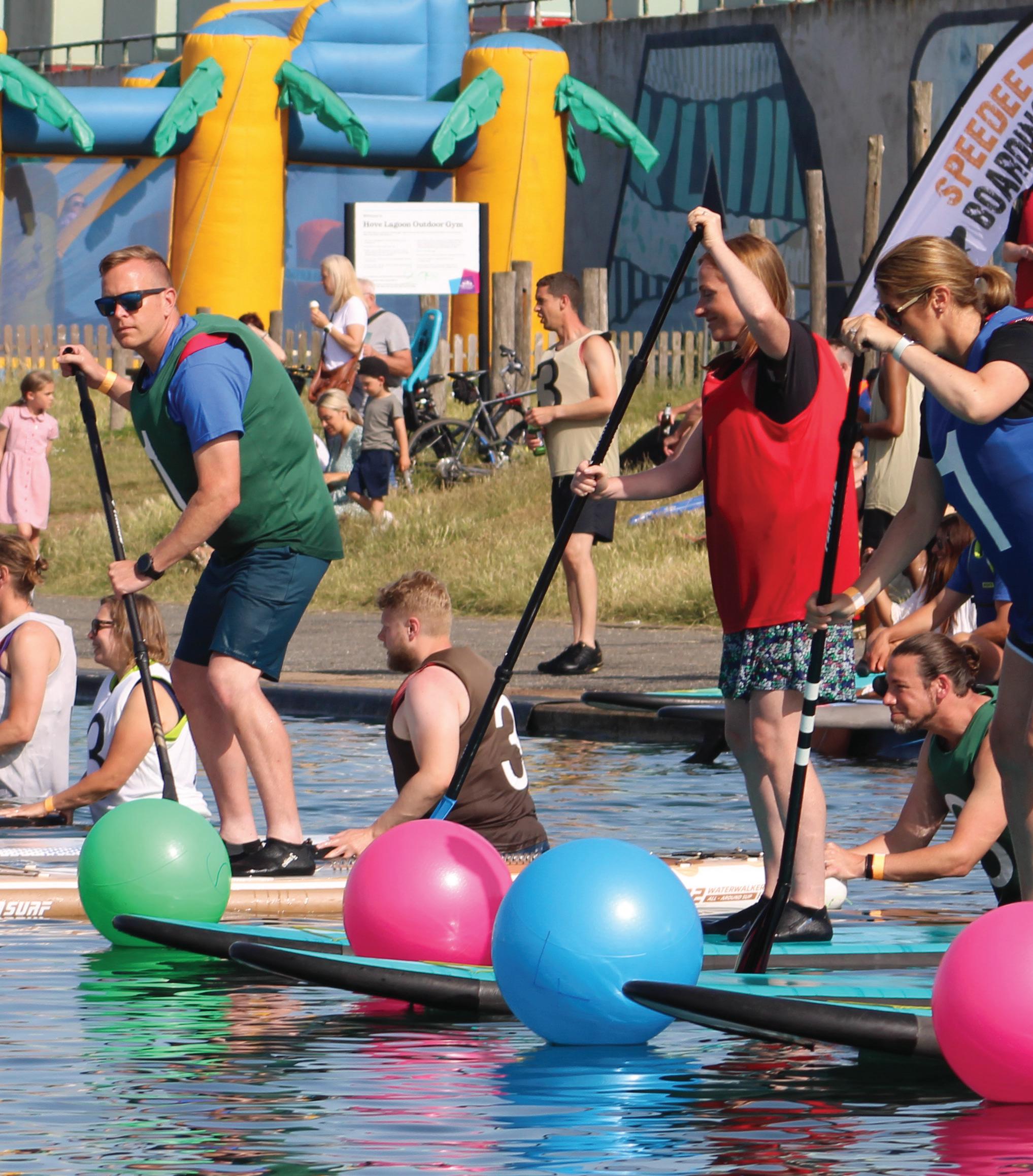
There was one day in the school calendar I dreaded more than any other - more than exam season and more than parents’ evening. Sports day. I was not what anyone would call a natural athlete. Reasonably competent at the high jump, perhaps, but nowhere near a winner. It wasn’t such a big deal at primary school when it was all about the egg and spoon race, but at secondary school, it bothered me. In team sports, I always felt like the weakest link - the one parents and teachers politely didn’t mention when recounting the highlights afterwards.
And yet, sport now plays a much more meaningful and welcome role in my life. I am a passionate equestrian, an enthusiastic (but amateur) skater, a wannabe runner and a follower of Formula 1. This week alone, I’ve had more conversations than I can count - with friends, with clientsabout what sport gives us. Not just those of us who compete or train or ride. All of us. Even those who have never laced up a pair of trainers in their lives.
Because winning, it turns out, is only a fraction of what sport is actually about.
Sure, if you’re pursuing a professional career, results matter enormously. The margins are brutal, the competition relentless, the exhaustion real. But for the vast majority of us - the recreational riders, the park runners, the Sunday League players, the fans glued to a screen at midnight - something else entirely is at work. Something that has nothing to do with a podium or a trophy.
Sport transforms us. Not immediately, but in time - often without us noticing until we look back. Last year, a lovely client took up rowing in her fifties and described it as the first time in her adult life she felt truly present with herself. When she was moving freely with the water, she felt alive. I have a friend who started watching his son play football every weekend this year. He told me that standing on a muddy - and often wet - sideline with strangers has given him the most connection he’s felt in years. I am lucky enough to live by the sea, where a friend runs a local running club. Whether you run or not, we have all become friends and champions of one another.
This is what sport does when we stop measuring it exclusively by wins and losses. It builds character in ways that are hard to manufacture elsewhere. The discipline of showing up when you can barely drag yourself out of bed. The humility of being a beginner. The particular resilience that
BEYOND THE PODIUM gifts have nothing to do with winning
comes from pushing through something physical - discovering that your body and mind are capable of more than you believed. These are the parts of ourselves that are discovered and shape how we move through every other area of our lives.
“Winning, it turns out, is only a fraction of what sport is actually about.”
There’s also something profound in what sport does to communities. On a global stage, it’s a familiar story - the way a World Cup, an Olympics, a championship run can create shared identity among people who have nothing else in common. But it doesn’t have to be a worldwide eventthe power of sport is felt every day, much closer to home, in our own back yards.
In the local club that offers our young people a place to belong. In the gym class, where someone finally feels at home in their body. In the small victories that nobody outside that room will ever know about, but which matter more than most headline moments.
Sport has an extraordinary capacity to foster unity in places where division might otherwise take hold. Not because it resolves anything - it doesn’t - but because it gives people a reason to stand next to each other, to cheer for the same thing, to share a moment of genuine connection that only humans can feel in real time. It’s analogous by nature.
And then there’s what it does to individuals over time. The
champions that sport nurtures aren’t only those who make it to the professional level - they’re the people who learn, through years of participation, how to lose without being destroyed by it, or how to win without losing perspective. How to keep going when the odds are against them. How to be part of something bigger than themselves.
I was never a winner on sports day in any conventional sense. But, as an adult reflecting back, sport has given me more than winning ever could - discipline, community, presence, joy, and a relationship with my own resilience that I couldn’t have found any other way.
Whether you’re a dedicated athlete or someone who simply loves the spectacle, the lesson is the same. In sport, as in life, the possibilities are endless - and the lessons, for those willing to receive them, are limitless.
The trophy is never the biggest prize. The transformation always is.
You can listen to Laura’s podcast, Flip It, wherever you get your podcasts, and you can connect with her at www.flipitglobal.com
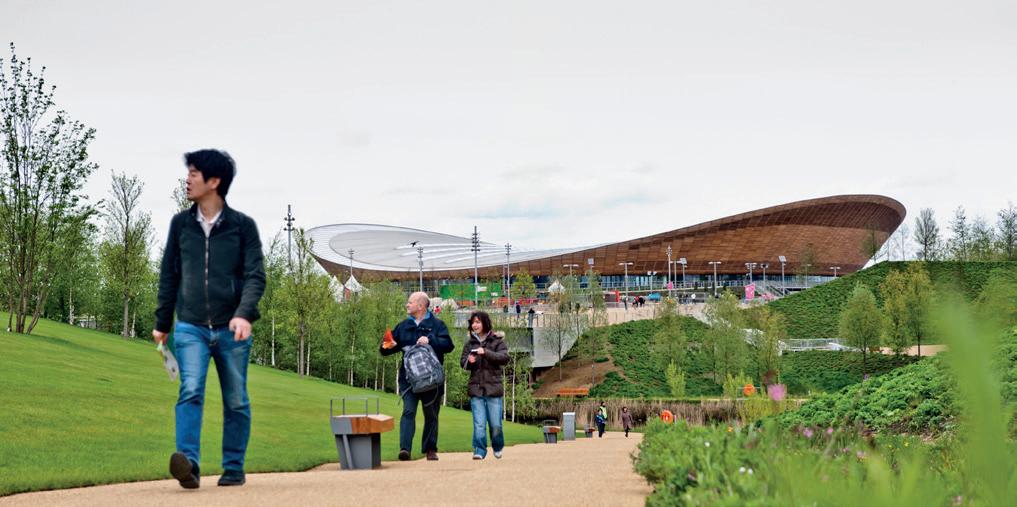
V&A EAST OPENS AS CULTURAL HUB
A major new museum has opened in London’s Olympic Park, combining large-scale exhibitions with a strong community focus. V&A East offers free permanent galleries alongside temporary shows, with local young people involved in shaping its direction. Designed as
an open and accessible space, it aims to go beyond traditional museum roles, encouraging interaction between visitors, artists and the surrounding area. The project reflects a broader rethink of cultural institutions as places for shared experience as much as display.
IN THE RIGHT DIRECTION
SCHOOL FOOD STANDARDS TIGHTENED
School meals in England are set for their first major update in over a decade, with new rules aimed at
improving nutrition. Daily sugary desserts will be replaced with healthier options such as fruit, while deep-fried items and quick, processed foods will be limited. The changes follow concerns from parents about food quality. A consultation is under way, with implementation planned for 2027. Ministers say the goal is to reset expectations around school food, though funding pressures remain a concern.
MODERATE COFFEE LINKED TO MENTAL HEALTH BENEFITS
Drinking coffee in moderation may be associated with better mental health, according to a large-scale study tracking more than 460,000 adults over 13 years. Researchers found that consuming two to three cups a day was linked to lower rates of certain mental health conditions, particularly among men. The effect is thought to relate to caffeine’s anti-inflammatory properties. However, the findings also suggest that both low and high consumption offer fewer benefits, reinforcing the idea that balance matters.
❛ ❛
If you’re creating anything at all, it’s really dangerous to care about what people think.”
Kirsten Wiig
WOMEN’S HEALTH STRATEGY GETS RESET
England’s women’s health strategy is being updated after concerns that progress has stalled since its launch in 2022. A recent review found ongoing gaps in menstrual and gynaecological care, as well as long waits for diagnosis. The revised plan will include improved standards for pain management, stronger mechanisms for patient voice, and action on conditions such as endometriosis. Campaigners have welcomed the renewed focus but stress that delivery, not intention, will determine its impact.
CLITORIS MAPPING ADVANCES MEDICAL UNDERSTANDING
Scientists have created the first detailed 3D map of the clitoral nerve network, addressing a long-standing gap in medical knowledge.
The research, led in the Netherlands, builds on earlier anatomical work and could improve surgical outcomes,
PSYCHEDELIC RESEARCH GAINS POLITICAL MOMENTUM
Long-stalled research into psychedelic drugs could accelerate following a new US directive to review their medical use. Substances such as psilocybin and LSD are being studied for conditions including depression and PTSD, but strict legal controls have limited progress for decades. The move signals a shift away from prohibition-era policy, reopening a field largely dormant since the 1960s. Researchers say the renewed attention could help unlock treatments, though scientific and regulatory hurdles remain.
FLOATING WETLANDS TRIAL AIMS TO RESTORE COASTS
particularly in reconstructive procedures following female genital mutilation.
The development marks a shift in how female anatomy is studied and understood, with implications for both healthcare and education after decades of neglect.
OCEANS PROTECTION PASSES 10% MILESTONE
More than 10% of the world’s oceans are now under protection, following a significant expansion of marine conservation areas in recent years. Around 5 million square kilometres have been added since 2024 alone. While the milestone marks real progress, it remains well short of the global target to protect 30% of land and sea by 2030. Experts also warn that designation alone is not enough; enforcement and effective
A new environmental trial is testing floating wetlands as a way to revive degraded coastal ecosystems in the UK. Installed in Portsmouth, the structures are designed to support marine life while improving water quality. The approach responds to the loss of much of the country’s marine vegetation over the past few decades. Researchers will monitor biodiversity and ecological impacts to develop a scalable solution for restoring fragile coastal habitats.
It’s good to be able to laugh at yourself and the problems you face in life. A sense of humour can save you.”
Margaret Cho
TOY STORY
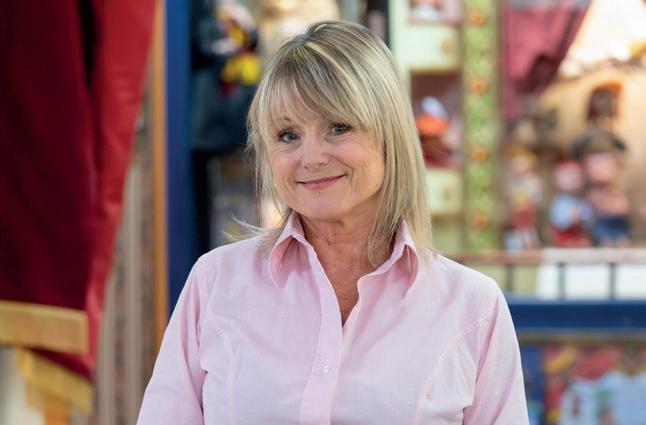
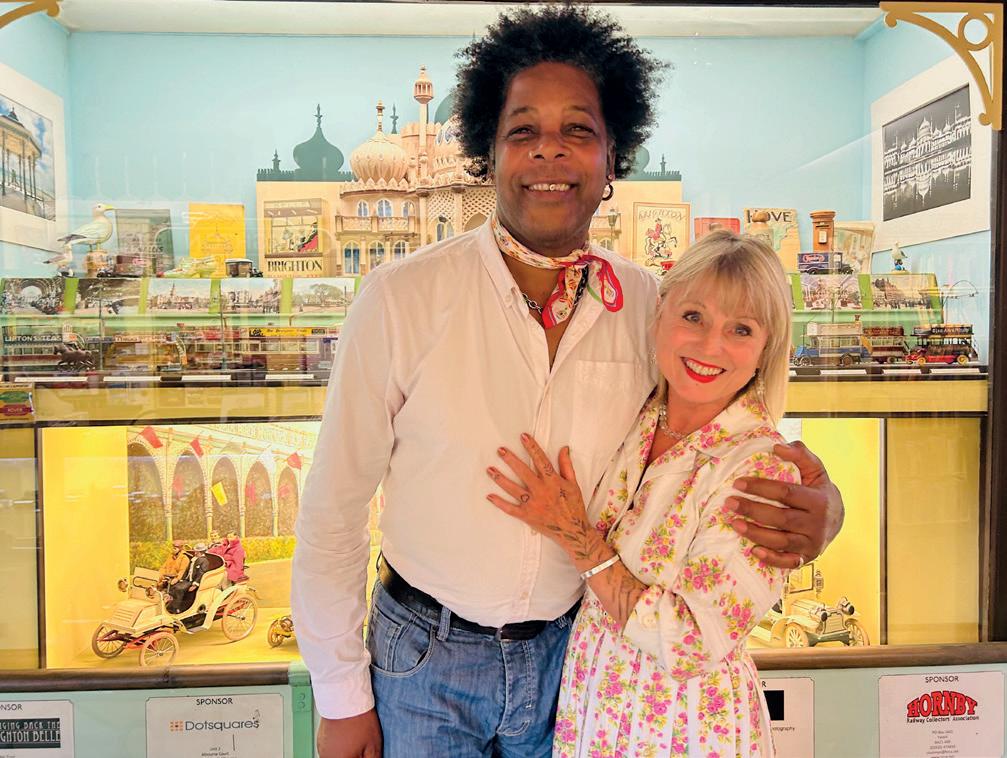
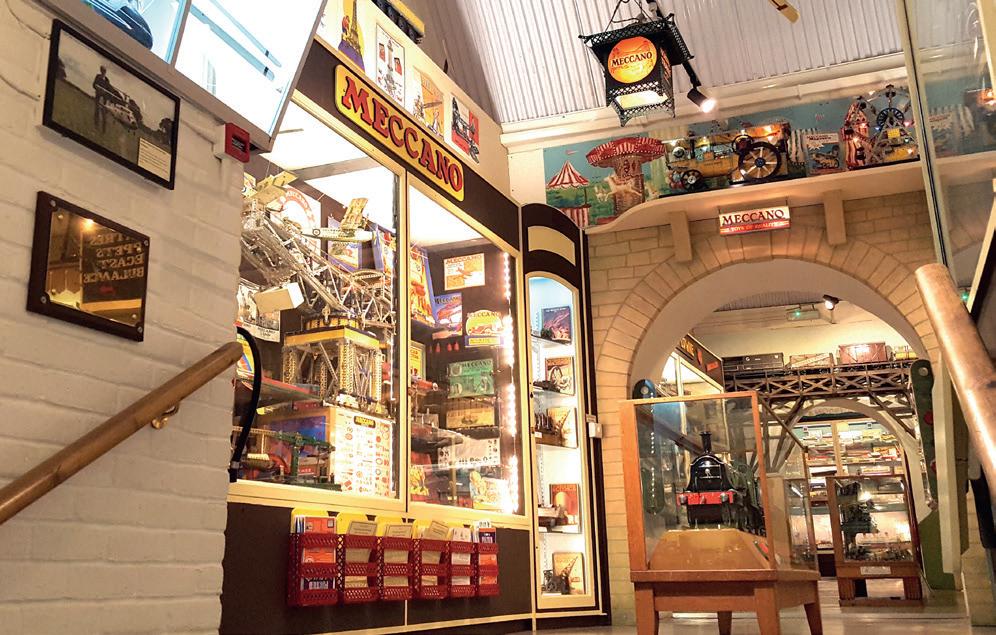
Meet Jan Etches, the General Manager of the Brighton Toy and Model Museum.
Managing a museum full of toys may seem like child’s play, but that is far from the case. Since joining the Brighton Toy and Model Museum in 2017, Jan Etches has helped transform the museum’s fortunes, doubling visitor admissions and leading a major redevelopment that has quite literally opened the museum up to the public. With her business acumen and a deep understanding of storytelling, Jan has successfully preserved a Brighton institution and created a forward-looking tourist attraction. Read on to discover what drives Jan and why you should visit the wonderful museum.
A CAREER IN MUSEUMS
I have worked in museums for 18 years. I started working for Lancashire Cultural Services delivering educational workshops across Lancashire in 20 different museums and castles. In 2011, to help improve my career prospects, I completed a Master’s in Heritage Interpretation with a focus on how to make cultural attractions more visitor-friendly. I had always wanted to move to Brighton, so I was delighted when I got the job at the Toy Museum in 2017.
WHY THE BRIGHTON TOY AND MODEL MUSEUM IS UNIQUE
The museum is a treasure trove of 12,000 toys and models from the ‘golden age of toy making’ – the late Victorian era through to the early 60s. Largely pre-plastic, it was a time when toys were made by hand and built to last. It helps to preserve childhood memories and nostalgia. No two days are ever the same - I love hearing people’s stories about their favourite toys and memories when they visit the museum.
It is unique because many of the toys we have on display are one of a kind, or best of kind – there are items in our collection you won’t be able to see on public display anywhere else in the world. If they exist, they are in a private collection. These include the early history of Lego with the largest collection of wooden Lego toys outside of Denmark, 400 prewar Dinky toys, 70% in their original shop display boxes and Steiff’s rarest but least collectable soft toys.
There is something for the whole family to enjoy, from model trains and die-cast vehicles to teddy bears and doll’s house furniture. One of the most popular activities for visitors of all ages is our Lego mini-figure hunt - you are never too old to be a big kid!
STORY
JUST BOYS’ TOYS?
Model railways and mechanical toys are still largely seen as ‘boys’ toys’, but we get lots of women visiting too. Many of them remember their brothers having diecast vehicles or model trains and how frustrated they were with their brothers getting the ‘cool toys’, such as Meccano and chemistry sets, whilst they were given a doll!
A WOMAN CHALLENGING TRADITIONAL VIEWS
Being a woman managing a museum such as this has had its challenges. As a registered charity, some of the key stakeholders were men of a certain age with traditional views on how the museum should be run. Also, when I started at the museum, I was the only contracted female member of staff, so I was expected to clean the museum, public toilets and staff kitchen because the existing male staff were not prepared to do those jobs.
Thankfully, we now have a more diverse working environment where responsibilities are delegated appropriately, and I have the autonomy to make operational decisions.
I have now worked at the museum for nine years and have made significant improvements, which have doubled visitor admissions income. I couldn’t have achieved this without having confidence in my decisions, being assertive and diplomatic in equal measure, and building a great team around me. Being thickskinned at times helped, too!
35TH YEAR CELEBRATIONS
The museum opened in 1991, so we are celebrating our 35th anniversary this year. We have been described as a hidden gem because the entrance was a tiny door in a bricked-up arch, so people couldn’t tell that inside we are an Aladdin’s cave of toys and models. After finally getting planning permission on a listed building and fundraising for four years to raise £200,000, we now have a spectacular, fully glazed 20 ft entrance, completely transforming the front of the museum.
THE FUTURE
To help secure the museum’s future, it is important that we continue to increase our visitor numbers. Having recently created an exciting new entrance, we are already working on our next project to expand the museum. Th is will allow us to display more contemporary collectables to attract new visitors –things like Barbie and Star Wars.
“I have now worked at the museum for nine years and have made significant improvements, which have doubled visitor admissions income.”
The museum is located underneath Brighton Railway Station. Immediately behind us are what used to be the historic ladies’ toilets, which were closed to the public in the early 2000s. The floor is actually listed. It is the largest intact example of Jesse Rust mosaic tiling in the country and can be seen only on rare occasions during guided tours.
We are currently negotiating with Govia Thameslink Railway (GTR) to explore ways we could knock through to expand into this area. Th is will be a huge project and an exciting new chapter for the museum - one that will allow us to rebrand as the National Toy and Model Museum, as there is no other museum that displays toys and models of this standard in the country!
Contact Jan to fi nd out more about venue hire: jan@brightontoymuseum.co.uk
www.brightontoymuseum.co.uk
Jan with Danny Sebastian - presenter of Bargain Hunt
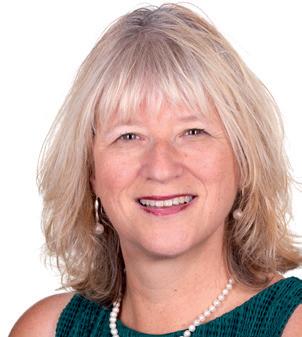
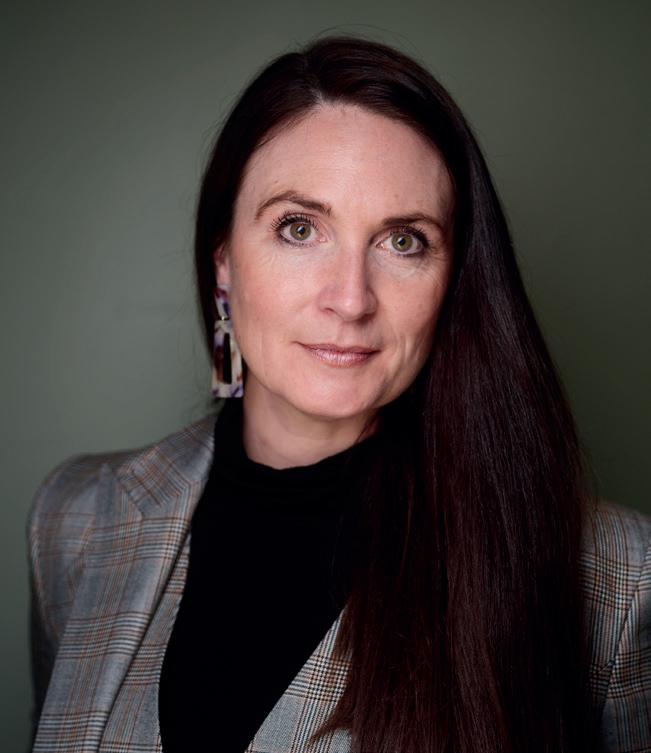
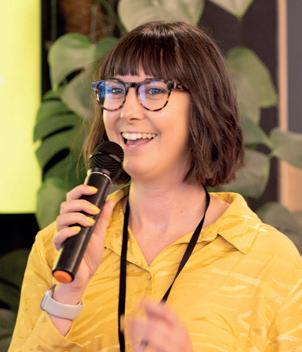
Pippa Moyle is the CEO and founder of the City Girl Network, a mission-driven business dedicated to empowering and supporting women across the UK. Since launching in March 2016, the network has built a vibrant community of over 150,000 women, facilitating new friendships, business connections, job opportunities, housing solutions, and valuable life advice.
Resilience was my renaissance
By Pippa Moyle
I’m entering a new chapter as a business leader. One where I’m VAT registered, hosting larger-scale events, partnering with a major fi nancial institution, flying across the world for work, and attending national awards ceremonies as a fi nalist.
The projection of the City Girl Network looks very different to how it did 11 months ago, when I spent a three-hour car journey in floods of tears at the very real prospect that I may have to shut it down.
I think back to that car journey often. A pile of tissues to my right; my boyfriend’s consoling words to the left. I sliced his kind words with all the ways that I’d failed and desperately grasped at the question: “What am I going to do now?”
The next morning, I sat at my desk with a strong coffee, a clean sheet of paper and a blank spreadsheet. I restructured the business; cancelled subscriptions, paused projects, agreed on a payment plan and made my one employee redundant.
I then shared everything that I’d just been through over a bottle of wine with a few other business owners I admire., only to discover that they’d had similar experiences; that one bottle of wine turned into two. Eight months later, the City Girl Network reached its 10-year milestone, had doubled its turnover and was shortlisted for a national award I’ve been applying to for the last three years. When I reached that decade mark, someone asked me for my “superpower”; that one skill that helped me to keep this business afloat through so many social, economic and political changes.
It’s resilience.
For a long time, I’d demoted my resilience muscle to “blind naive optimism”. There was no Plan B because my Plan A was going to work. It simply wasn’t possible for it to fail. The
truth is, by passing those thoughts off as naïve, I was selling myself short. Behind that facade was a young woman constantly adapting to the ever-changing landscape.
I didn’t want to label it as ‘resilience’, because I didn’t want anyone to think I was incapable of running a business. ‘Resilience’ has had a bad reputation over the years, notably the “lack of it” among Millennials and our younger generational siblings. I hadn’t considered that the only part of me
that lacks resilience is the place other people put me on the resilience scale.
A ridiculous thought when written down, but one I know many readers will share.
“Resilience isn’t an iron suit. It’s a muscle, built through lived experiences.”
“I then shared everything that I’d just been through over a bottle of wine with a few other business owners I admire, only to discover that they’d had similar experiences; that one bottle of wine turned into two..”
renaissance
According to the Harvard Business Review, resilience in business is to be described as the following: “The ability to recover from setbacks, adapt well to change, and keep going in the face of adversity.”
I think that defi nes my superpower perfectly.
To bring in other voices to this discussion, Lydia Eccleston from Remarkbull Marketing won both ‘Future Talent’ in the Dynamic Awards and ‘New Business’ in the Brighton
“Resilience is probably the best skill I’ve developed since becoming a business owner,” she shared. “For me, I remember why I started the business and why I am doing this.”
She continues: “On a personal level, it’s about proving you can run a successful business while living with a chronic health condition. Every day I stay out of hospital is proof that it’s possible. From a work perspective, it’s about continuing to provide honest, affordable support to SMEs who wouldn’t usually have access to that kind of help. These help me to stay resilient and keep going through those hard days!”
Mo Kanjilal, TEDx Speaker, Author and Director of the DEI Consultancy, Edge of Difference, has faced her fair share of challenges over the years, too, navigating grief, loss and racism throughout her career. Her resilience has been built through her network. “I think the biggest thing I have learnt is to connect with and stay connected to supportive people and to move away very quickly from people who do not support you. Your business network will get you through those tough times if you are connected to the right people.”
I concur with Mo’s point there. She was part of the aforementioned wine therapy session.
Resilience isn’t an iron suit. It’s a muscle, built through lived experiences. In my case, it’s the buckets of tears shed in the car that day, the 50 failed attempts at awards entries over the years, and the payment plans from making the wrong decision.
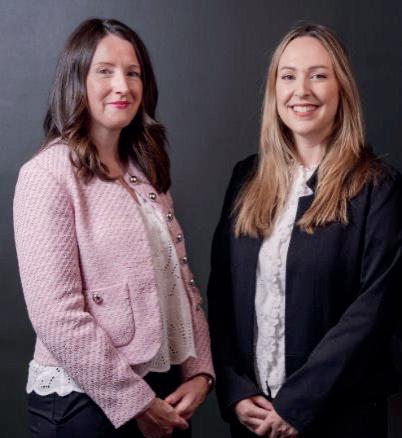
By Beth Warner, Associate Director, FRP Corporate Finance
THE UNTAPPED STRENGTH of female-founded businesses
Beth is a trusted adviser to business owners, guiding them through succession planning and managing the full sales process to maximise value and deliver successful exits
It was a real privilege to be part of this year’s Dynamic Business Awards and celebrate the remarkable businesswomen driving innovation across the South East. Yet despite the wealth of talent we were able to recognise, less than 4% of UK private equity funding reaches female-led businesses - a striking mismatch between capability and capital.
This funding gap came through clearly in conversations I had with finalists during judging. I spoke with the leaders of large, multi-million-pound businesses that had never received this type of funding, and this wasn’t entirely down to a lack of appetite from investors. In fact, the opposite was often true: these businesses had characteristics that made them highly attractive.
around bringing in external support, with concerns about losing control or having to answer to someone else’s agenda. Many owners will only go through an M&A transaction once in their lives, bringing a wide range of emotions to the fore.
Risking someone else’s capital rather than their own can feel very different for founders, who often naturally worry about letting other people down. Any reluctance around seeking investment is often rooted in this added sense of responsibility.
“Despite the wealth of talent we were able to recognise, less than 4% of UK private equity funding reaches female-led businesses”
But many of the reasons founders choose not to seek external investment are precisely what make their businesses attractive. The steady, disciplined growth they have achieved independently has created more stable businesses with stronger cash flow.
Many had grown through reinvestment, disciplined cost control and strong customer relationships - creating a significant personal investment that shapes not just the numbers, but the culture. This is sometimes referred to as the ‘Matriarch Effect’, in which businesses naturally centre on the founder’s leadership values, culture and hands-on involvement.
This deep personal investment creates businesses with strong culture, cohesive teams and loyal customers - all highly valued by investors. Yet it can also create a natural hesitation
In today’s uncertain economic climate, investors are increasingly looking for the predictability, defensibility and operational discipline that many of these businesses offer. The ‘Matriarch Effect’ also helps foster cohesive teams and a strong culture that investors can buy into.
The benefits work both ways. Selling part, or all, of a business can be a strategic move that provides a strong platform for future growth. The right investment partner can bring additional resources, specialist talent and access to
new markets to accelerate growth at a quicker rate than is possible through reinvestment alone.
It also secures the business’s future beyond its founder. Succession planning can be a tricky topic to navigate, but the earlier founders engage with it, the stronger a position they can leave their businesses in when the day comes to step away.
“Many of the reasons founders choose not to seek external investment are precisely what make their businesses attractive.”
For many founders with a significant portion of their net worth tied up in their business, finding the right investor or buyer can help to de-risk personal finances, while unlocking wealth that is currently only ‘on paper’.
It was clear from my conversations throughout this judging process that there are some brilliant businesses across the region that represent strong investment opportunities. Their stability, sustainability and stewardship make them stand out rather than being a barrier to investment.
So what’s holding the market back? Often, the real barrier isn’t appetite; it’s communication. Many founders haven’t explored exit options because they’re focused on building – and that focus is exactly what makes their businesses valuable. As advisers, our role is to bridge that gap.
From the outset, advisers can offer an impartial view. We benefit from being one step removed from the process and can offer a more objective perspective, which can be hard to achieve when you’re understandably so personally invested in your business.
Open and effective communication is critical. Building an honest relationship with founders puts us in a strong position to clearly convey the benefits– whether that’s partial investment, a full exit or a strategic partnership – and can help unlock new growth opportunities for the exciting female-founded businesses the South East is home to.
The Dynamic Business Awards showcased businesses that embody exactly what investors are looking for in uncertain times: stability, strong fundamentals and proven leadership. The challenge now is to help bridge the gap between these exceptional businesses and the investment opportunities they deserve.
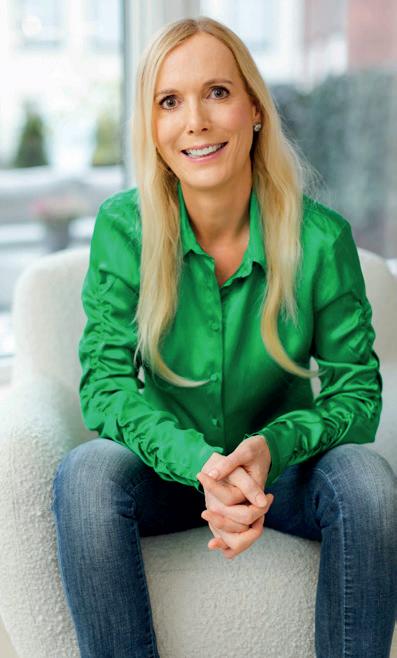
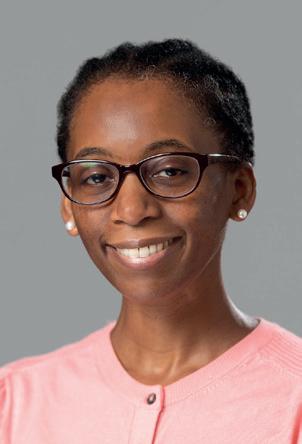
Natalie Montagnani is a Business & Leadership Coach for Women and Founder of IGNITE. Drawing on 25 she works with female leaders to strengthen self-leadership, make clear, confident decisions, and lead with Through her 1:1 coaching, workshops and curated rooms, Natalie is on a mission to advance a new era of
You’re holding it all But who’s holding
By Natalie Montagnani
The saying “It’s lonely at the top” has got to be one of the biggest understatements, and in my experience, one that is particularly true for women. There’s a version of you that almost no one sees, because you’ve become the one who holds everything steady, the one who can ‘handle it’, who doesn’t drop the ball, who people instinctively turn to. And the weight of that can feel incredibly heavy.
The responsibility of being a leader doesn’t just sit neatly within your role or your job description, or within the confines of working hours. It goes home with you, and it wakes up with you.
You carry the decisions, knowing they will have consequences that reach far beyond you and the pressure of needing to get it right, or at the very least, to keep things moving forward. Not to mention the weight of what happens next, even when there is no clear or easy answer.
And even if you have people around you, a team, colleagues, a partner, friends, there are still parts of that experience that don’t feel easy to share, because everyone is used to you being the capable one, and perhaps you don’t want to burden others or sound like you’re moaning.
Alongside the demands of leadership, there is the invisible mental load of life beyond work. Perhaps you’re on a mission to not only be a businesswoman extraordinaire, but also the ‘perfect mum’ (completely impossible btw), great
“This intense mental load is not to be underestimated.”
years commercial experience, with greater influence and impact. female leadership.
together… holding you?
wife, good friend and perhaps you’re now having to look after elderly parents too.
This intense mental load is not to be underestimated. The constant thinking, caretaking, planning, remembering, all while your own body may be moving through perimenopause or menopause. And self-care, or ‘me-time’ – what the hell is that? That’s a joke right?
I’ve spoken to women who have stepped into the bathroom at work just to have a good cry, not because they’re not capable, but because they are holding so much internally. Then, a few minutes later, they straighten their shoulders, take a breath, and walk back into the room as if nothing has happened, because that is what’s expected of them. Women who are making decisions that affect other people’s livelihoods while quietly questioning themselves in ways they would never say out loud.
decision to swapping notes on magnesium supplements for peri-menopause symptoms, what quickly becomes clear is that experiences and the weight that comes with them are shared. And in that moment, something quietly shifts.
“Staying vulnerable is a risk we have to take if we want to experience connection.”
This is the part of leadership that is rarely spoken about, because the very women experiencing it are often the least likely to give it a voice. Somewhere along the line, we’ve internalised the belief that needing support is a sign of weakness.
I always encourage clients to meet me off-site when possible. So they can let their guard down, take a breath, have a cry, swear (that’s a popular one), and sometimes just say what’s really been on their mind without filtering it or packaging it neatly.
This is also why I care so deeply about creating spaces for women to come together, as it very quickly moves beyond surface-level networking chit-chat into something far more real. And at the end of an event, without fail, a woman will come up to me and say, “I thought it was just me.” And it never is.
From the pressure of navigating a complex commercial
The isolation softens, the pressure feels lighter, the need to hold it all quite so tightly begins to ease, because when you are met at your level, not just professionally, but as a whole woman navigating all of the layers that come with leadership and life – you realise that you can be capable and supported, decisive and held, successful and still human.
As the Brené Brown powerfully puts it, “Staying vulnerable is a risk we have to take if we want to experience connection.” And perhaps that’s the real shift here, allowing yourself to be seen, not just as the leader, but as the woman behind it. If, as Simon Sinek suggests, emotional intelligence is what makes the best CEOs, then perhaps it’s time we truly owned that.
True strength is not found in carrying it all, but in knowing when you don’t have to. Because you were never meant to do this alone.
Natalie Montagnani Founder of IGNITE Women in Business
07900 153503
ignitewomeninbusiness.com
Connect with Natalie on LinkedIn or drop her an email to natalie@ignitewomeninbusiness.com
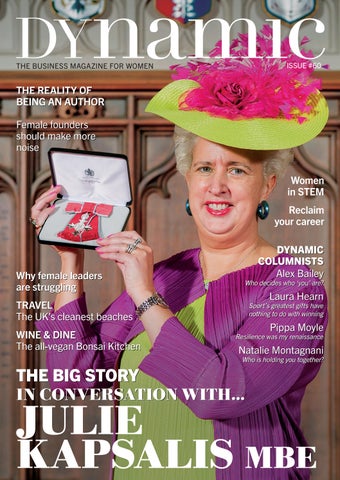
In conversation with...
JULIE KAPSALIS MBE
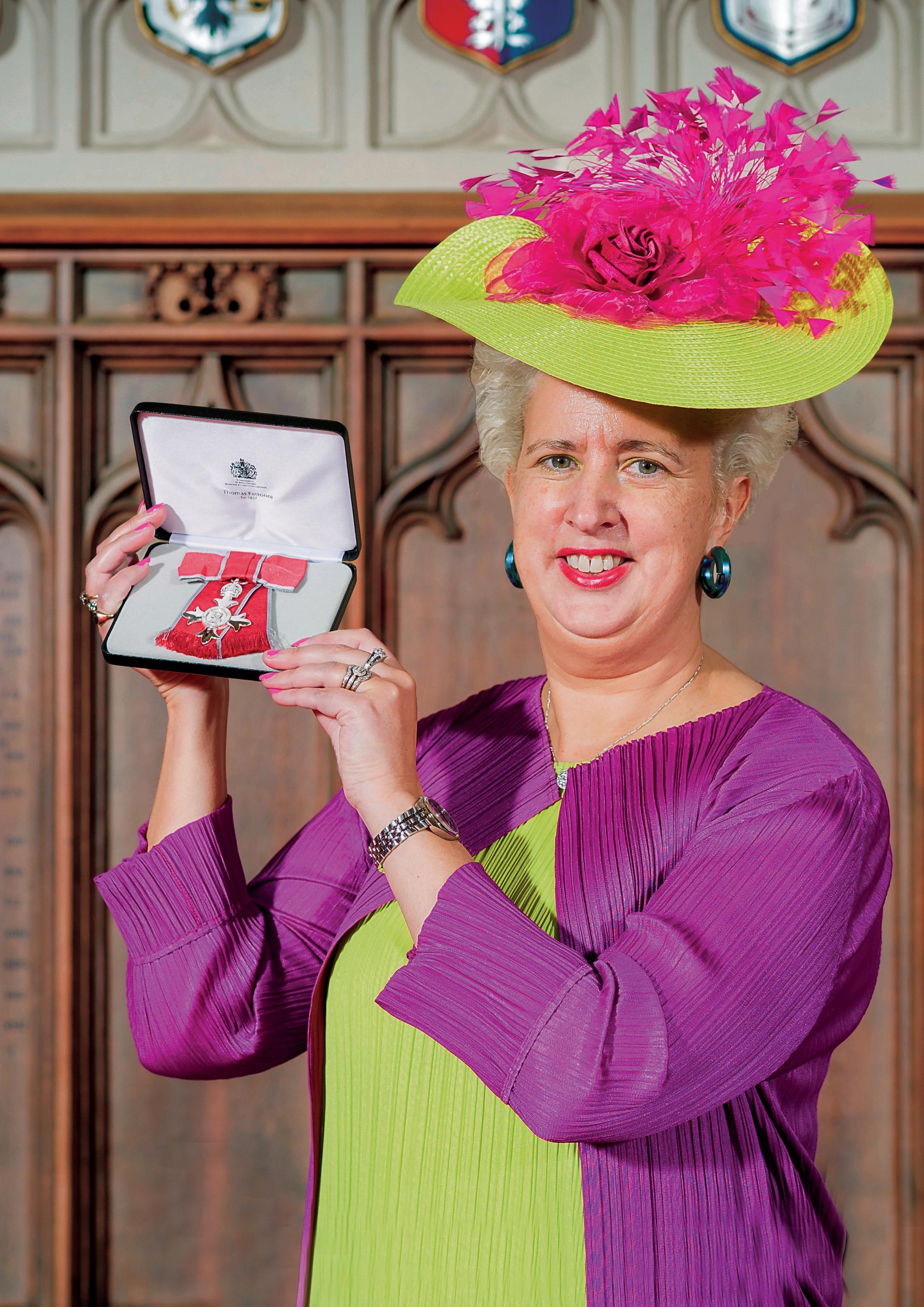
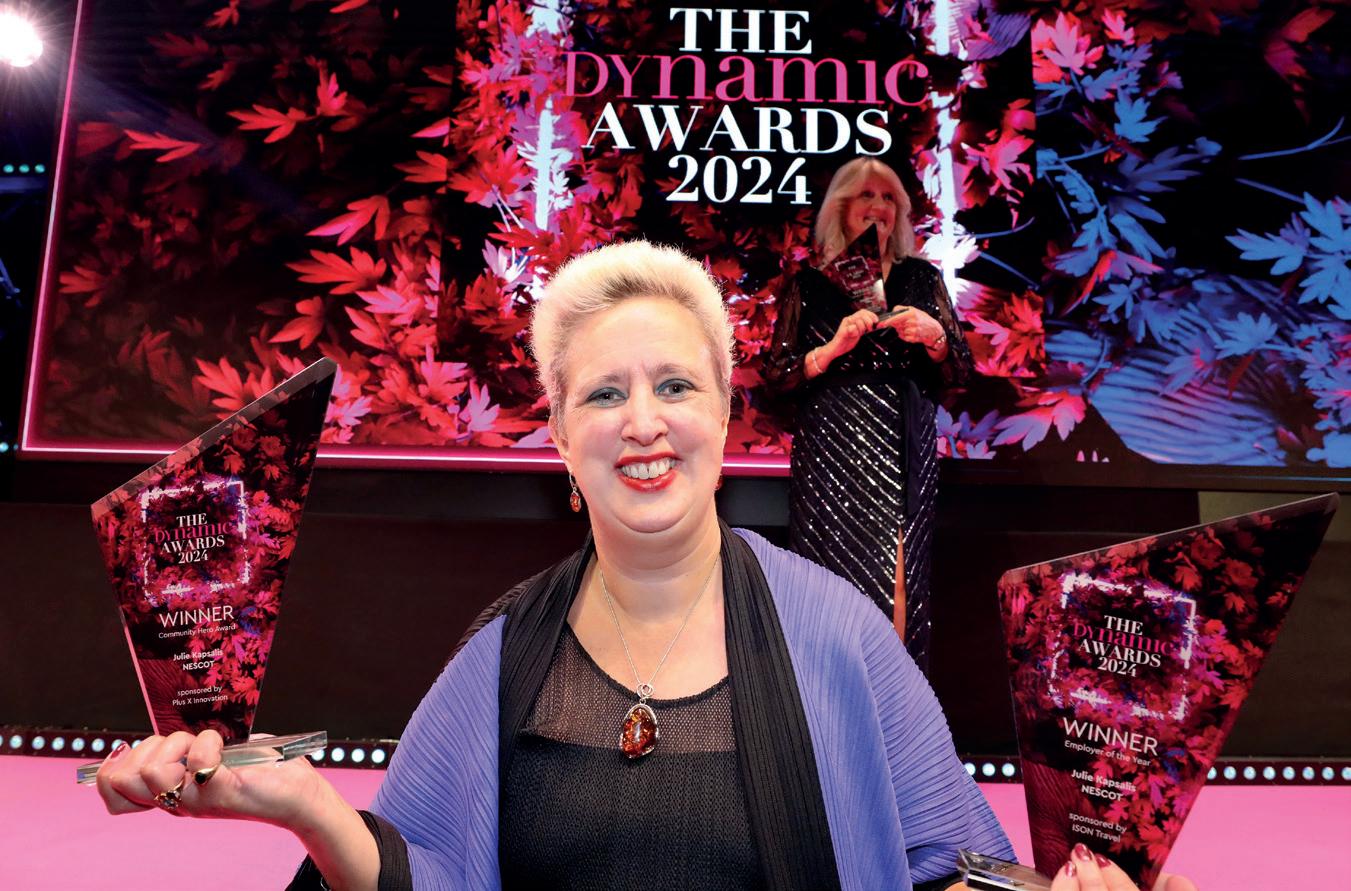
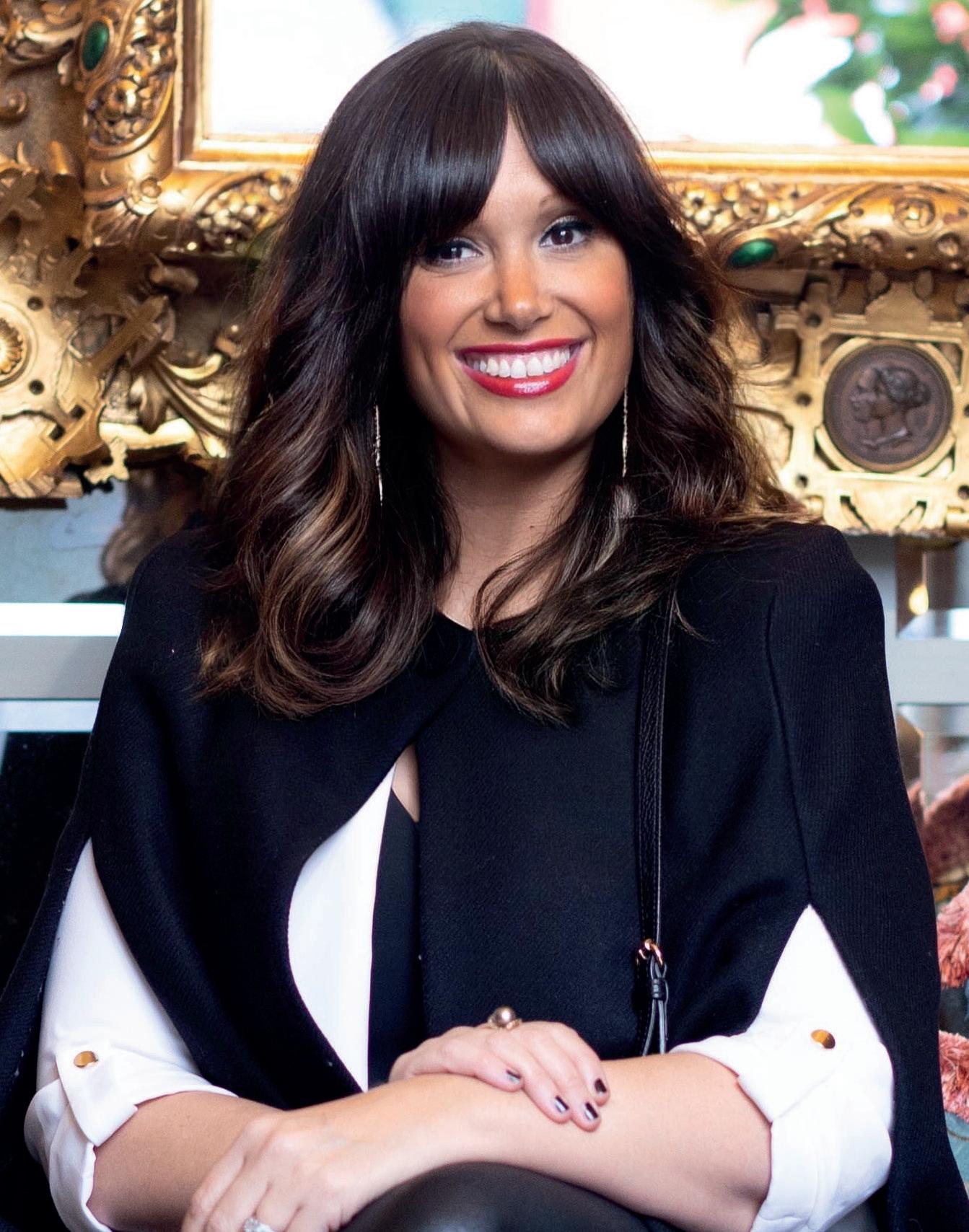
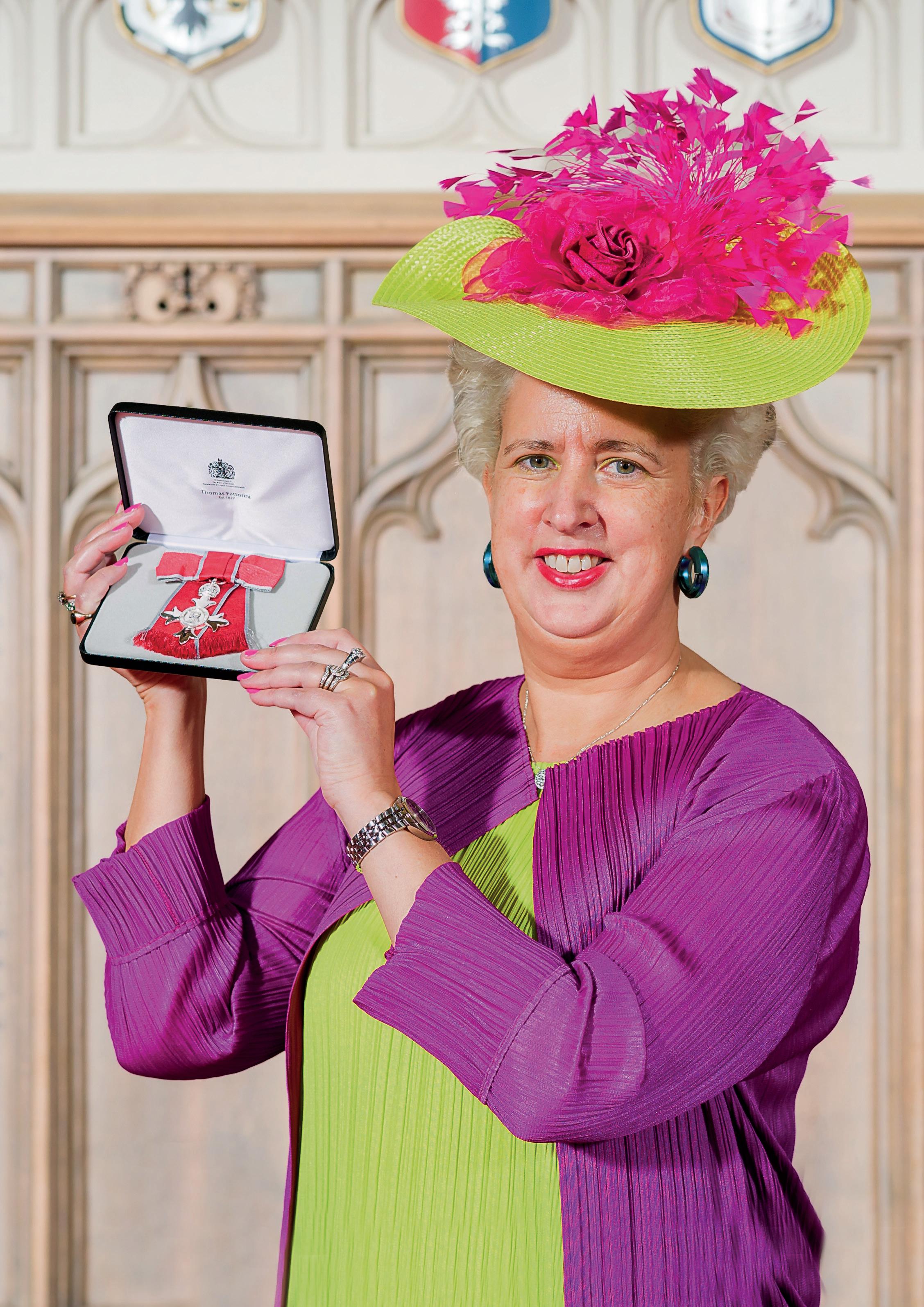
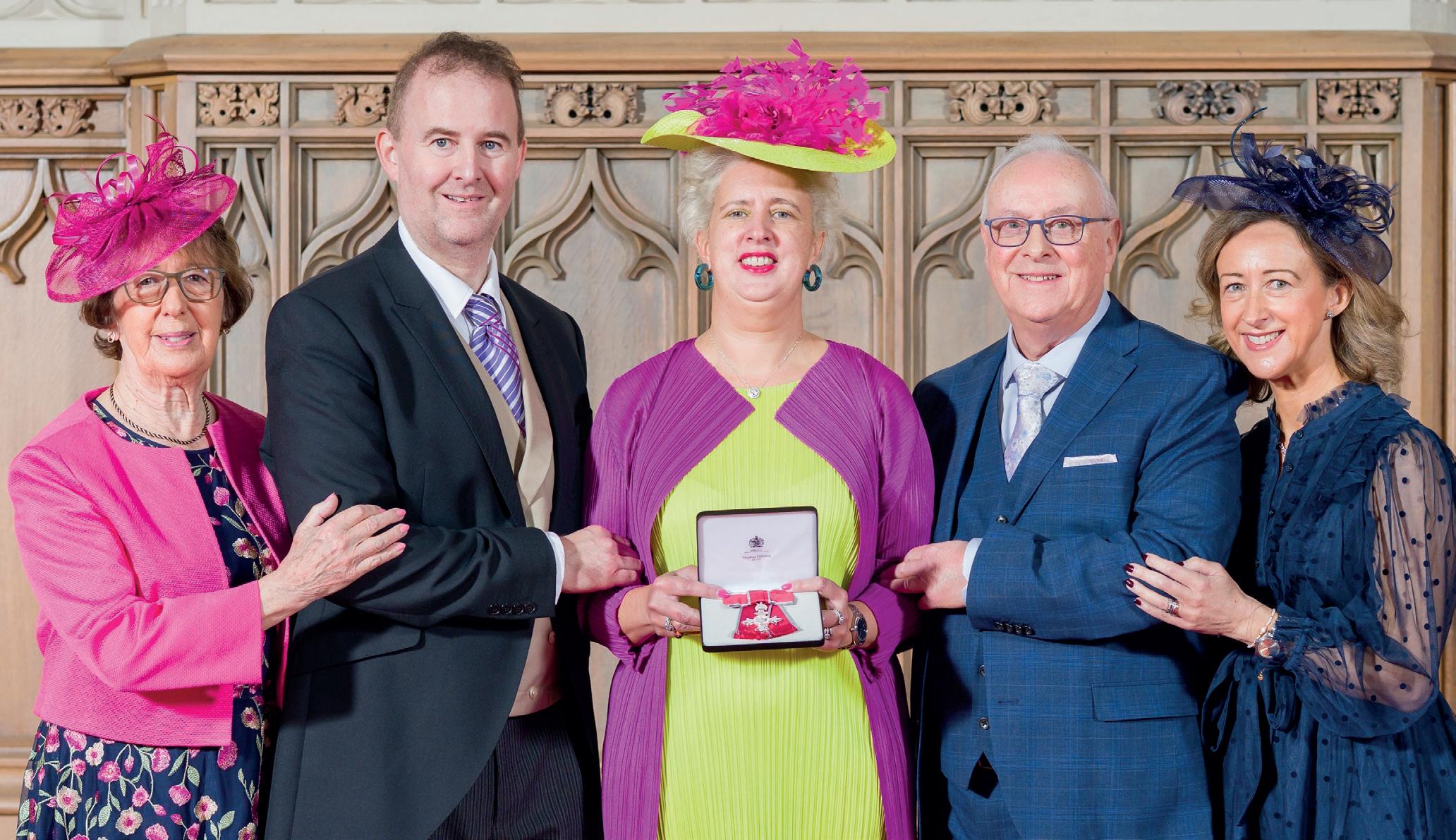
Julie Kapsalis is a force of nature. Having held down an array of highly prestigious posts during her career, she is a tremendous supporter of women in business and stands as an example to women of how to get things done. As l consider her to be a dear friend, it was my honour to interview her for the very first time on the occasion of the awarding of her MBE. By Maarten Hoffmann
Maarten Hoffmann: Julie, you’ve been Principal and CEO at Nescot since 2022. Tell us about your role and what Nescot is.
Julie Kapsalis: Nescot is the North East Surrey College of Technology. It's a college that's actually very close to my heart, in that I grew up two minutes from there. So whilst I didn't attend Nescot, it was my local college.
It is a Further and Higher Education college. We train around 6,000 students every year, that’s adults and young people. But we have the same number of adult learners. We train in everything from hair and beauty, construction, business, travel and tourism, and all points in between.
I came in originally as a director, became Chief Executive on an interim basis about four months later, and then permanently about seven months later.
MH: Is that not a slight contradiction of the ‘technical’ side of the name?
JK: I'm proud of having the word ‘technology’ in the title, because the college was set up in 1953, and colleges that were set up then were at the forefront of technology in the 1950s. Further education nowadays occupies a unique place in terms of vocational and learning technology. When you bring that together successfully, you're giving young people and adults the skills to enter jobs, including technology relevant to the era we live in.
But right now, there’s no timeframe on this, especially as I genuinely believe I have the best job in the world.
MH: Tell us about Julie, the child growing up.
JK: I grew up in Banstead, very close to Epsom Downs and the racecourse. I'm the youngest of three children. I've got a sister who's five years older, and a brother who's four years older. My dad was an estate agent, and my mum was a teacher.
And I went to City of London Freemen’s School in Ashtead. I didn’t particularly like school. I did OK, but I never felt like I fitted in – I was a bit too much of a rebel. Looking back, I can probably define my rebellious streak as the feeling that school and education weren't moving fast enough for me.
MH: What form did your rebellious streak take?
“Looking back, I can probably define my rebellious streak as the feeling that school and education weren’t moving fast enough for me.”
JK: I’d love to tell you outrageous stories, but the truth is there aren’t any. It was more of an inner rebellion, which I now see, in later life, as a driver of my desire to succeed in my career. It’s driven me to prove that I can achieve and deliver. It’s also driven me to be a bit different; I’ve been called a disruptor, which can be a good thing. I probably didn’t have an outlet for my rebellion, but I was not one of the bad girls.
MH: Where do you think that came from? Was it something bred into you by your parents?
MH: What made you want to join?
JK: I was at Chichester College Group before, and I was looking to move. I wasn't looking to just go anywhere; it had to be a place that I was passionate about. I grew up just down the road in Banstead, so this is a place full of memories. I also worked with many businesses and organisations as chair of the local enterprise partnership, and I'm confident my skills and network can make a difference here. I'd like to think I could have made a difference elsewhere, but having this local connection was important.
MH: Do you see a limit on how long you'd stay, or will it just be when you think you've achieved all that you can?
JK: I love this place. I could work at Nescot forever. I don't always think it's healthy to stay in one place for too long. But sometimes there comes a point where you feel you've done everything you can, and you've got a brilliant team in place that can take over from you when that time is right.
JK: I think it's being the youngest of three. I had to have a louder voice. I'm really close to my brother and sister. My sister is the quieter, more sensible one. I'm the maverick.
MH: Your list of achievements is as long as it is impressive. There are your organisational development and management skills, the government's Women's Enterprise Task Force, Chair of Chichester Chamber, GDP, Executive Council and Aurora Academies. Given the finite amount of hours in the day and days in the week, where do you find the time?
JK: If you love something that much, you find the time. I am a workaholic, and that won’t change. That's not for everyone, and I know work-life balance is very important, but I get so much pleasure and reward from what I do. It requires meticulous planning as well as having a great PA. But I do also know when my downtime is. Holidays and travel are important to me because when I'm away, I'm away.
MH: How do you manage to fit in family time with a roster that would make Margaret Thatcher look tired? How does it all fit together?
JK: Some things are non-negotiable. For example, sport is very important to him to my youngest son, particularly football and rugby. I have not missed a single Saturday rugby or football fixture, as I consider that to be my red line for support and participation.
I take huge pleasure in watching him play, possibly because I was never any good at sport myself. I love watching sport; any opportunity, whether it's horse racing, darts, football or rugby. So I have a huge sense of pride seeing him give his all - win or lose. I do like shouting from the sides - but only in a good way!
My husband and I made a deal when I was pregnant with my eldest that one of us would always be at home to put them to bed every night. In that time, we’ve only made one mistake, which happened when I was travelling back from Japan and he was travelling to the US because of the time zone difference. So my parents helped out that night.
There have been moments when it was hard. There have been moments where I've been driving from one thing to the next, but I am proud of the balance we’ve achieved.
MH: But to be able to achieve all this, you do need the support of a willing partner who is prepared to support you in all of this?
JK: True. I couldn't have done it without my husband. For all he drives me mad quite a lot of the time – but then, he would probably say that about me. We live very different lives. We don't really talk about our work with each other. We might both be at home working at the same time, but when we’re not, we never really discuss work. Although that was never planned, it is actually quite helpful.
“ ‘Do you think you’ll ever stop leaning?’ ‘No, and if I do, that will be a really sad day.’ “
MH: Your desire to take all of the previously mentioned posts – was that desire there because you so firmly believed in the cause of the organisation?
JK: They’ve all been for slightly different reasons. Most of them have been because there was somebody on the board whom I have respected enormously, and I felt I'd really like to work alongside. Or maybe it’s an organisation or a charity that I also admire and respect, and feel I could help out with.
Only once have I stepped down from a board before my term of office was done, and that was because I felt I wasn't adding value. There was too much talking and not enough doing, and I like to get things done.
MH: Do you think you’ll ever stopped learning?
JK: No. And if I do, that would be a really sad day,
MH: Moving on to Coast to Capital. I know you’re proud of your work there, but why do you feel Local Enterprise Partnerships (LEPs) have disappeared?
JK: That form of economic development is quite cyclical within government. So you had regional development agencies, then LEPs, and you've now got devolution to local authorities. Historically, over the last 40 years, things have followed a 10- to 15-year cycle, and then there's been a shift.
Change isn’t necessarily a bad thing. You do need to change to keep them refreshed, particularly those quasi-public-private-sector organisations, to ensure they're innovative and business-focused. And that's what appealed to me. It was inevitable, given changes in politics and government, that they would consider doing something else, and with the government's focus on devolution to local authorities, a view that economic development as a function should sit with them.
MH: My ongoing concern here is that sometimes governments will change these programmes just to stamp their own authority. To get rid of things that were working doesn’t sit right.
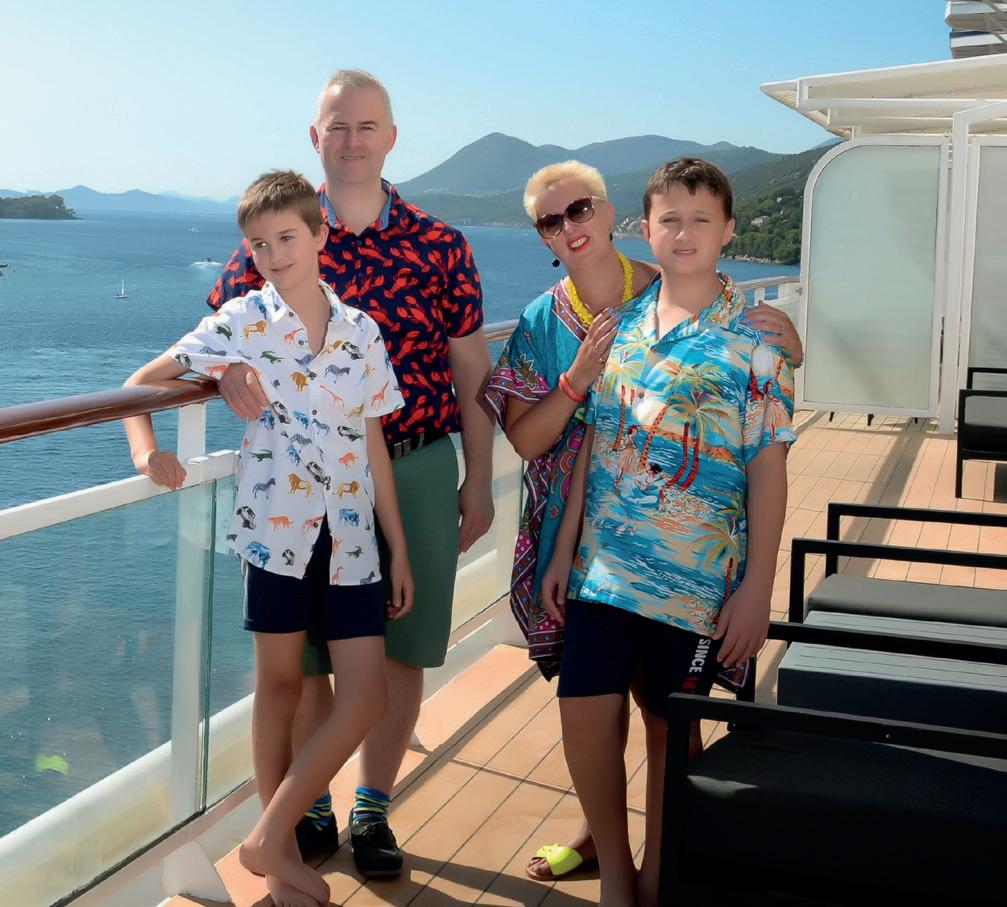
The family Kapsalis. “Sport is very important to my youngest son. I’ve not missed a single Saturday rugby of football fixture”
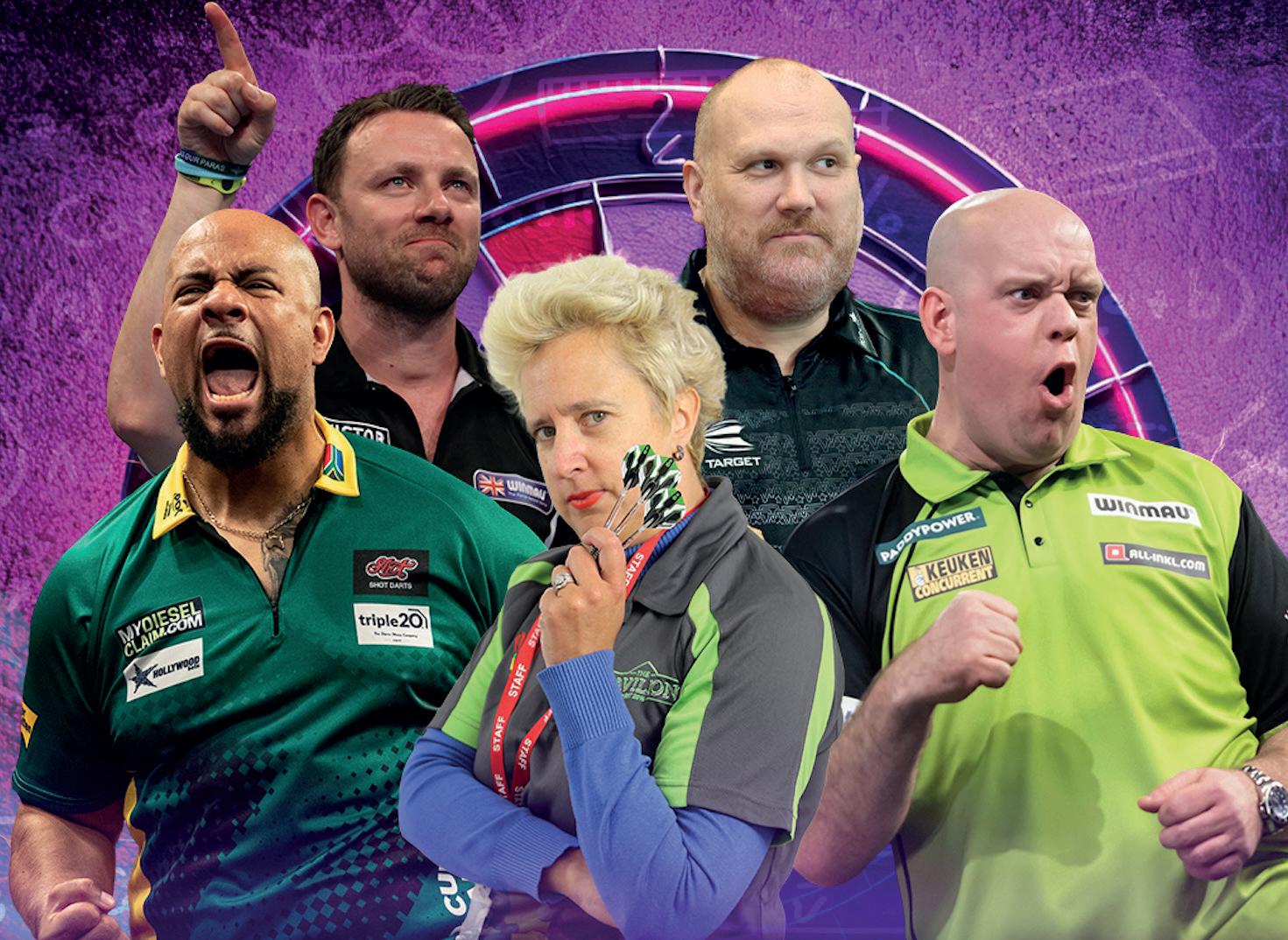
Two of Julie’s loves – work and arrows – combined when some of the leading players in the world visited Nescot. See PBM 132
JK: I do believe that the way that LEPs were ended was not the right way to go about it. For an announcement to be made in a Chancellor's (Jeremy Hunt) speech that we are “minded” not to continue funding genuinely hurt, especially as we were not given forewarning.
I think that's a terrible way for people to learn about the status of their jobs. What LEPs did really well, that I will always be proud of, is that we invested where the private sector wouldn't invest. Our role wasn't to be banks. Indeed, we had very senior bank executives on our boards. It was to invest where there was market failure or to seed invest, to encourage confidence on the table for others to come in behind it.
There are some brilliant examples of that. For instance, there is the School of Nursing and Allied Health at the University of Chichester. It was so bold of Professor Jane Longmore, who was the Vice Chancellor there at the time, to go into lockdown and to make a decision to open a school of nursing.
funded Brighton Gin, the wonderful Kathy Caton MBE, during COVID, to pivot from making gin to hand gel. It was a small grant, but it enabled her to keep her business going and avoid furloughing all her staff.
It was that level of innovation and speed to market that is much harder for local authorities to achieve. I'm really proud that we were able to make those decisions. You do have some really good people working in local authorities, undertaking economic development, but they are driven by geographical council boundaries. The world of business doesn't work like that.
“Without the LEP, some projects might still have gone ahead, but they would have taken two or three years longer to come online.”
It was hugely needed because, if there was never a time we needed to do this, it was ‘now’. But they needed a backer to come in and say, “We’ll back you.” So we put around a million pounds into that, which then gave the project a foundation for others to come in and support it.
It was the same with the refurbishment of Gatwick railway station. We were the first backers, and then others came in. There are so many other projects that I am so proud of. We would acquire land that unlocked other land for development, which had been sitting idle for years. We helped out in the food and drink sector, allowing Ridgeview to scale up, Hepworth Brewery to acquire a new site near Pulborough. Without the LEP, some projects might still have gone ahead, but they would have taken longer to come online.
We funded a mix of grants and loans, but I think we made a huge difference with small business grants of £20,000. We
The area I'm really passionate about is the Gatwick Diamond. Looking at the geography and where its workforce comes from. Because of the structure of local government, you are then relying on politicians and officers across a multitude of local authorities agreeing on a common purpose. And that is not easy, if not nigh-on-impossible.
To this end, I am proud to be a founder member of the Gatwick Region Airport Economic Zone Taskforce and am now working with the Airport to establish a Strategic Advisory Board that will bring together key leaders from the public and private sectors to capitalise on the Northern Runway project with a focus on trade, investment and the visitor economy. This is hugely exciting and will be the largest infrastructure investment in our region for decades – creating thousands of jobs and stimulating innovation and economic growth.
MH: Were the LEPs removed purely from a political basis of the new government coming in to make a change, or do you think they saw something fundamentally wrong with the LEPs? Or do you think they couldn't afford the LEPs?
JK: I think it was a political decision. They were brought in by Vince Cable and Eric Pickles (the coalition dream team!) in 2012. Theresa May, when she
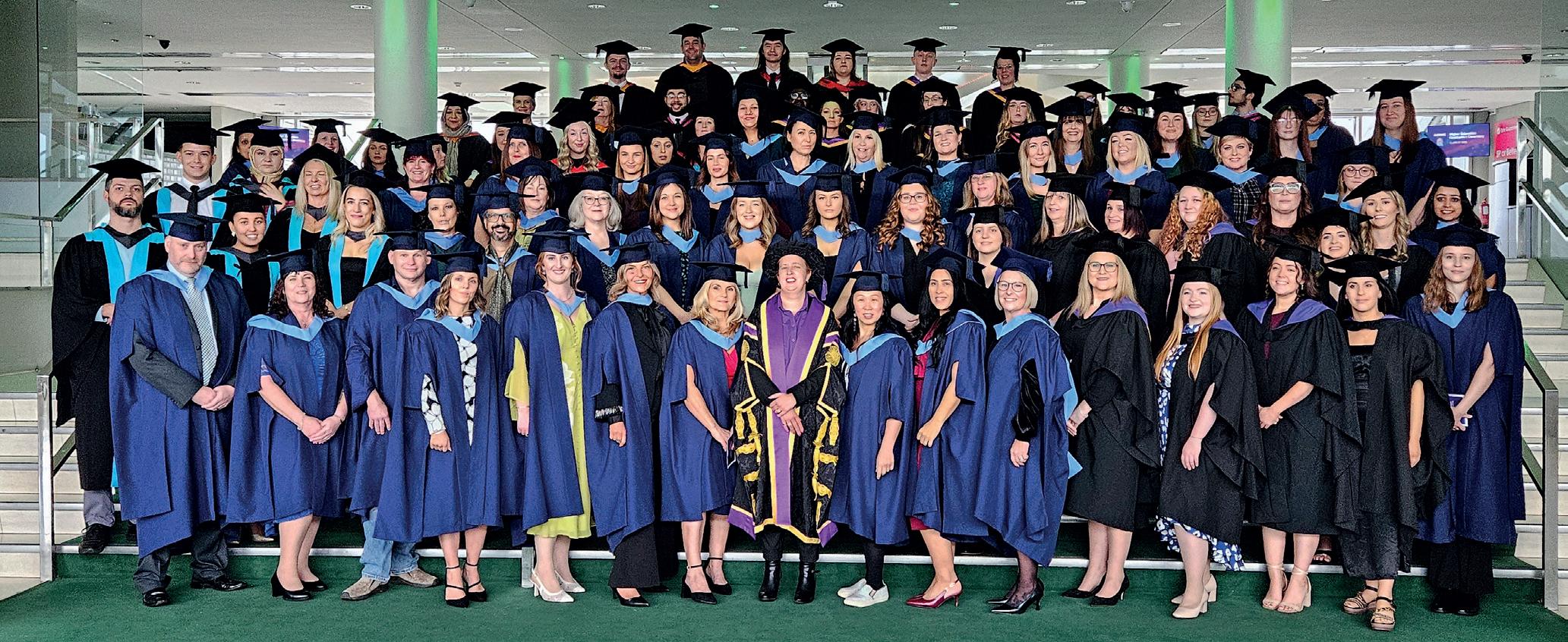
Graduates at Nescot, with Julie front and centre
was Prime Minister, was actually very behind the LEPs in the industrial strategy. But you had so many changes in leadership in the previous government that maintaining policy continuity was quite difficult. I feel a lot of it was pressure from local authorities who wanted to control funding in their own patches, and I can understand that. We had the leader of West Sussex County Council and the deputy leader of Surrey County Council on the LEP board. And they made a valuable contribution as directors of the LEP.
It's a shame we no longer have 15 or 16 brains around a table, including Vice Chancellors, key sector leaders, with a shared objective of creating jobs and sustainable economic development. That's quite powerful.
MH: What have the local authorities done since LEPs disappeared?
JK: There has been some really good work going on. The challenge at the moment, if I just look at Surrey, is that on May 7th, there are elections for East and West Surrey, potentially leading to another period of change.
As in any job, it comes down to people: the continuity, those who know the area, and those with business connections. We want people who can pick up the phone and get things done. And there are some really good people. I hope that they stay in the new world going forward.
published every year. It probably would have happened anyway, but again, as LEPs, we played a role in giving this data a platform and credibility, and I'm really proud we were able to do that.
MH: What happened to all of Coast to Capital’s finances when it closed?
JK: It was transferred to the local authorities, who are using it for economic development. It is good to see that things like the Business Surrey using LEP money to continue to offer services to businesses.
MH: Is this operating anywhere near the scale of LEP?
JK: It’s not really about comparing scale; it's slightly different. LEPs were running business grant schemes and major infrastructure investments. This is now much more focused on supporting business growth and business support.
MH: I presume that the end of the LEP was very frustrating.
“The danger is, if you’re set up as part of a political manifesto, you’re always at the behest of another politician.”
JK: It was, especially as I don’t like to leave a job unfinished. The key thing was that some of the people that I've worked with, some of them for eight years; brilliant directors. Everyone from Tim Wates of Wates Construction, who was chair before me; Karen Dukes, Amanda Jones, Richard Hopkins of Fargro and Claire Mason of Man Bites Dog.
MH: That's my point of disbanding the LEPs. Just as things are starting to gel, they find their feet and, before you know it, it’s gone.
JK: It was the same with the regional development agencies; there was a much larger scale. Our region was from Milton Keynes down to the Solent and across to Kent.
The people I worked with there, their knowledge and skill sets, they’re people who get things done. What I worry about now, particularly in the current economic climate, is where those skill sets are going to come from. It requires people to convene colleges, universities, job centres, charities and businesses at the same time.
MH: Catalyst South was six LEPs operating together, sharing ideas. Did that work well?
JK: We did some great stuff, particularly around women's enterprise. We used a tool that could gender-disaggregate business ownership in the region. That's good to do locally, but we wanted it to run nationally. So that was a really good example where I could suggest to the other LEP chairs, look to pilot it themselves. It was a real shame, because we were getting some really groundbreaking data on disparities in women-owned businesses, and the lack of finance that was going to particularly affect women with growth businesses. But that was a really quick way to convene people with a common cause.
This led to the establishment of the Gender Index. It is
There were some real heavy hitters in the region. Mike Leroy of American Express, Daryl Gayler of NatWest. We've had some amazing directors and really great local authority leaders. When I think of who sat around that table, I feel very privileged to have served on a board with those people.
MH: What was the government's Women's Enterprise Task Force?
JK: This was set up when Gordon Brown was Chancellor, in Tony Blair’s government, in the New Labour heyday. I was working at the South East England Development Agency (SEEDA). And I was working for the most incredible woman, who I learned a lot from, a lady called Pam Alexander, who was the Chief Executive. She literally told me one day, “Right, I'm going to be co-chairing this Women's Enterprise Task Force. I need you to run the Secretariat and work with me on it. We need to recruit for the task force. We're going up to see Treasury tomorrow. OK, do it”.
And when I look back, that was the days when there was money to be spent. So we assembled a task force, again, of some really great leaders and great thinkers, predominantly from the private sector. And it culminated in a report called GROWE (Greater Return On Women's Enterprise), where we made a number of recommendations to the government, which were around investment in women-owned businesses, bespoke business support.
Funding was a mix of private sector money; we worked very closely with the banks. In many ways, it was the forerunner of the Rose Review, though there was quite a gap between
the two. But the work that Alison Rose, when she was Chief Executive at NatWest, led was the bank’s in recognising women as customers, which was absolutely key to their growth and their client base.
I've always found it's about 50/50, between women who say, “I don't need to be treated differently. I don't want to go on a women-only business course, or I won't enter a women-only business awards. But there's another 50% for whom that is the difference between them getting support or not.
You have to cater to both. You don't say one is more important than the other. I've got a huge amount of time and respect for Alison Rose. When you look at what she did, not just for NatWest, but what she did for the whole finance and banking sector, in actually saying, “this is an economic imperative.” And if you looked at closing the gap in certain areas, it was about investing in women-owned businesses and for the good of the general economy.
MH: Do you think this is indicative of politics in general, not wanting to keep going with something that was brought in by the previous administration? Or do you think it is the politicians’ lack of understanding of what women can bring to the economy?
JK: It's a bit of both. I think it takes a brave politician to continue the policy of their predecessor from another party – or even, if you look at the previous government, how many education secretaries did we have? Everyone wants to make their own mark, and I get that. But actually, if something is working, I think it's a noble and right politician who indulges in principled politics and keeps a good thing going.
“It [the Women’s Enterprise Task Force], in many ways, was the forerunner of the Rose Review”
MH: Rightly or wrongly, you can probably get more done in the private sector than you can in politics. There’s a little more freedom to make changes in the private sector, whereby you're completely restricted with politics down to what the boss is saying.
JK: Can you imagine a Chief Whip trying to tell me what to do?
It wasn't a case of helping people who happened to be women, as much as look at what this sector can bring to the whole economy. The work we did back then, and NatWest were a key part of that.
Then Gordon Brown became Prime Minister, Alistair Darling was the Chancellor, and I have to say they were so supportive of the work. But then changing government was a shame, because you then lost momentum until the Rose Review came along. And since Alison left, I've seen nothing until the Women Backing Women Fund launched in April this year.
MH: Do you believe that any of our three female prime ministers have really done anything more towards women's rights? Isn't that a great lost opportunity? Or were they so trapped in the political world when they got there that, actually, they didn't have the freedom to do these things?
JK: They had some degree of freedom. Thatcher was the first female Prime Minister, but the political system was very different then. The fact that she was elected leader of the Conservative Party, let alone became prime minister, was extraordinary, and she ran nearly three terms.
“Amazing. I’m proud because it was for economic development...”
It’s interesting that she didn’t really promote female politicians in her party to seats of office - I can think of three in her 13 years – and they were all potentially very able people. While people should always be appointed on merit, you should also offer a platform for others to prove themselves. It's a shame that more wasn't done.
MH: After those prime ministers, the next person of note who did anything towards it was Alison Rose, who didn’t have to do it, but it needed to be done.
JK: It was key to the entire productivity gap we had in the country.
MH: I always call the review a seminal piece of work on women in business. Sadly, her downfall was in part down to her making a fundamental mistake, but the Establishment really went for her. As a result, the attempt to raise women’s significance and visibility took another hit.
And we - you, I, and countless others - work so hard to try and build it up again, but when a government doesn’t support the promotion of women in business, it’s soul-destroying. And I find that soul destroying, absolutely soul destroying. I love doing the Dynamic Awards, but I don’t want to feel that they need to exist. But I can’t see that changing any time soon.
JK: Nor do I.
MH: Even though women starting new businesses is the UK’s fastest-growing sector, obtaining funding is still a major stumbling block. Do you have any answers for this?
JK: If only there were a magic wand. For a start, I would like to see the government take the role of the Minister for Women & Equalities much more seriously.
I would like to see data and research used to inform decisions. Procurement is a powerful tool the public sector can use to support women-owned businesses. Some of the stuff that we’ve done over the years has been powerful.
Jacqui Smith did some brilliant stuff when she was Minister for Equalities. I was part of an organisation called Prowess that promoted the importance of women-owned businesses. We could get a meeting with her, and then she would go knock on Treasury's door to try to get things moving. She didn’t always win, but that’s politics for you.
[Jacqui Smith served under Patricia Hewitt as a Junior Minister in the department in 2003. She is now back - as Baroness Smith of Malvern - as the Minister for Gender Policy in the department under Bridget Phillipson. She also holds the role of Parliamentary Under-Secretary of State for Apprenticeships and Skills within the Department for Education. - ed.]
MH: It sounds like you’re missing that political advocate who can avoid being chopped down by men.
“Can you imagine a Chief Whip trying to tell me what to do?”
But I think it’s about role models like Helen Cannon. Nothing gives me more pleasure than looking on LinkedIn and seeing where ISON Travel is going next, the latest company that she's acquired. And she is doing that while being a mother to five children; she is one of the kindest, most authentic people you could ever meet. She's kicking ass on that business, and she's incredible. I'm just in awe of her, but that shouldn't be seen as an exception to the rule.
MH: If we stopped to think about it, we could probably name another 20 women doing great things… Yes, but I’d like to see the Minister for Women & Equalities being a much higher profile role in Government. It is currently undertaken by Bridget Phillipson, alongside her role as Secretary of State for Education – that’s a huge portfolio. I think it should be a standalone Ministerial role. I also admire the work Claire Coutinho is doing as Shadow Minister for Women & Equalities especially given her previous experience at The Treasury.
JK: The Treasury is key. I would like to see a chancellormale or female - who would stand up and say, “This is not just a nice thing to do, this is an economic imperative. We are investing. We are investing in businesses, and we need to re-establish the Rose Review.” Let’s not do silly things like take her name away from it. I mean, really? It’s debasing something so important.
MH: We now have a female Chancellor. But the promotion of women doesn’t seem to be on her radar. If you can't get a female senior politician to take up the cause of women, who will?
JK: Oddly enough, it was Gordon Brown who set up the Women’s Enterprise programme. He’s not the first name you’d think of to do that, but he was incredibly supportive. So too was Alistair Darling when he became Chancellor under Brown.
MH: Moving on, how do we ensure that female-run businesses have exactly the same opportunities as male-run businesses?
JK: Some of it comes right down to the source of funding. It’s not as bad as it used to be, but I still hear horror stories; banks or financial advisors asking, ‘Does your husband know you’re here?’ It still happens.
A founding supporter of the Dynamic Awards
MH: One of the worst things about the entire issue is that female-run PE companies are half as likely to invest in females as men. I just don’t understand that. Is it because they’re afraid that female-run businesses are more risk-averse, and they think in business, you need to take risks? But that’s not actually true. It’s a stereotype with little factual basis.
JK: I heard about two years ago, a woman who set up a business, and the only way she could get funding was she rang up one of those loan companies to borrow £20,000 to fit a kitchen. Just consider the level of debt she's taken on and the interest. She's set herself up to fail before she's even started. I know that banks will talk about how they have systems and algorithms in place so they can’t distinguish, but that’s never going to progress; all the while, AI has gender stereotypes built into it.
MH: AI programmed by men.
JK: You need access to the right funding at the right time. If you set up your whole business on the wrong basis, you're creating a problem before you've started.
It’s the same if you want to scale up, too. Do you want to remortgage your house, or would you rather not have that on the table? Is it about bringing in external investors, but then understanding that will change the whole dynamic of the business?
MH: Alison Rose was starting to solve the access to funding by putting a billion into an account specifically for female businesses. That’s the kind of incentive you need. I just wonder what the default rate was. Was it the same as men? I expect less unless the lack of risk-taking means they didn’t grow the company as much.
JK: It depends on your definition of risk.
MH: True. But there's only one definition of failure. What was the failure rate on all those loans? It can’t have been that bad, since she put in another billion. She’s a banker, we’d have heard if something had gone wrong. She wouldn't have been allowed to put another billion in if the default rate on the billion was excessive. Where are those schemes now?
So it's not that they've always had a burning desire to do this. It’s more that they've had to. And they might start out doing something quite small, but they recognise they're pretty good at it. You have seen this seed of enterprise often born by necessity. From these times, some really good businesses have emerged because people had to pivot and think differently.
“It’s not as bad as it used to be, but I still hear horror stories; banks or financial advisors asking, ‘Does your husband know you’re here?’ It still happens.”
I mention this a lot, but my daughters will not put up with this nonsense as they get older. Because women now have as many rights as anybody else, whether it's in 20 years now or 20 years in the past, to succeed if they've got the ability and the wherewithal to do it. Something's got to change. So what’s going to facilitate that change?
JK: Given the economic challenges that we're facing at the moment, and looking at certain points in history, quite often when there have been those kinds of challenges, women have had to pivot. They've lost their job, or they weren't working, and their partner, on their own, might have done so, and now they've become necessity entrepreneurs.
It is about those seeds of ideas and businesses, how the right support and finance can be got to them. My plea would bewhoever the new Mayor of Sussex might be, they have some potential to say, “I'm going to make this part of my cause, and I'm going to stand up.”
Andy Burnham in Manchester has given his sense of place. He’s used the power of personality, his position as one of the first mayors to do that. I would love to see whoever becomes mayor in Sussex make this one of their plans.
MH: The only way this is going to work is if the private sector does it and doesn’t rely on government.. If the head of NatWest can make the sensible fiscal decision to put two billion into this account, there’s got to be a way for others to follow suit.
Another Dynamic award. Julie may well be in the market for a new sideboard soon
JK: All of the professional services, not just the banks, the lawyers, the accountants, the auditors, they all benefit. You grow yourself out of an economic impact. There's no other way to do it. You can only make cuts for so long. Meanwhile, women remain a key part of it.
MH: We did a lot of roundtables and surveys with women last year, and the two main issues that emerged were access to funding and access to female mentors. One of them is not difficult to fix. There are plenty of women with extensive experience who are prepared to give their time. But access to funding, that’s a really difficult one.
question of why do I give my time to other women? Plenty of people have given me a lot of their time over the last 30 years. It's the least I can do to give some of it back.
MH: Do you find it difficult to bring businesses into the education system? I’ve heard it from business: they've tried to work with a university, but academia couldn't quite get their heads around it. Do you think there's a problem?
JK: There’s always more we can do. It's one of the things I'm most proud of that we've done here at Nescot. Over the last four years, we've established deep relationships with some large employers.
It comes down to people. It's about finding the right person in a company and finding the right balance. Neither you nor the business can say, “This is how we work.” You have to find a way to make business and education work for everyone.
For example, Ringway cannot find enough young people willing to work on highways. It's a great career, but you don't get many young people saying, “I want to work on the roads.” So Ringway can't just sit there and complain. They've got contracts to fulfil. They need to come and work with us, but that means they need to invest, and it also means we need to work slightly differently. It's about finding that common purpose.
I've found in the cruise industry that some senior executives recognise that someone gave them a break years ago, and they wouldn't be where they are today without it. And they don't see many young people coming through their path, so they want to come in and open those doors for a group of people.
MH: Are they all also recognising that a lot of kids coming out of university tend not to be work-ready?
“You need access to the right funding at the right time. If you set up your whole business on the wrong basis, you’re creating a problem before you’ve started.”
JK: When I was at SEEDA, I did quite a lot of work out in the US and the philanthropic culture out there. The number of women investing in other women's businesses is streets ahead of the UK.
It was a privilege to see some of the work, particularly in San Francisco and New York, where women who had made vast amounts of money then made it their life's mission to give back. And that wasn't necessarily just giving their money back. It was their time, access to their networks, access to their political connections. And it was so powerful.
And it’s on the back of that experience that answers the
JK: I can't talk as much about university. I think the students who graduate from Nescot are work-ready. Nothing beats the first six months of actually working, living it, breathing it. We need to change the language a bit. We all have to shift a bit. My definition of ‘work-ready’ might not be the next person’s. I'm old-fashioned and wear a suit to the office every day, but providing you didn't wear cut-off jeans, if somebody is a bit more casual, is that really the greatest issue in the world?
It has to be a halfway house. The world has moved on, and depending on what sector you work in, if your customer base is of that younger generation, I'd be welcoming the views of others rather than just challenging it.
MH: I hear from corporates who are saying, “They're just not work-ready.” Even down to the most basic social skills. I'm very proud of you for saying it's not an issue, because it means you recognised it and you helped to do something about it through Nescot.
JK: I like to flip it by saying, rather than making out it's a barrier, let's work with employers before the students leave college, with the leaders from the cruise companies, mentoring my students in a very gentle, not a confrontational way.
I like to hear them say, “Great presentation you just gave. Do you know the only thing that just didn't quite work? You didn’t make eye contact with us, and that made us think you weren't talking to us.”
MH: How was it to receive your MBE?
JK: Amazing. I’m proud because it was for economic development, and I’d stayed true to my principles at Coast to Capital in some difficult decisions over the years, in the closing down of the LEP function. That doesn't always make you popular, but I like to think I stood my ground for what was right, and to be recognised for that, and for a body of work that a group of us did was amazing.
I think the thing that really made the day at Windsor Castle so special was that my Mum and Dad were there too.
MH: What are the biggest barriers you think women are facing in business right now?
JK: For those women wanting to set up a business, given the economic situation, the cost of living and so on, would you risk leaving paid employment to set up in business right now?
When I chaired the LEP, and we were funding early-stage businesses, I’d want to see a really good business plan. It sounds obvious, but sometimes that just doesn't have the thought behind it. For example, what is your product or service? Who are the customers? How are you going to fund it? Who's going to do the marketing?
One of the hardest things for anyone starting a business is that in the early days, you're everything. You’re sales, you’re marketing, you’re everything. And there aren’t many people who have all of those skills. And then, equally, you see, once a business scales, the founder has to let go of elements because they're in a position to employ a marketing director or a sales director.
It might well be a marker of success, but you often see it's really hard for them to let it go. So having a really good business plan, taking on really good advice, whether that's financial advice, legal advice, depending on what your business is, patents, that side of it, getting all those ducks in a row right at the start.
“I think the students who graduate from Nescot are work-ready. Nothing beats the first six months of actually working, living it, breathing it.”
So the next time they give a presentation, they’ve learned something. It's about working with the students rather than starting with the thought that ‘they're not work-ready.’
I think if you can, knowing what you want out of the business. Is it that you want to set something up, scale, grow or sell? Is it a ‘lifestyle business’; something that you'd be very happy just running it on your own, or with one or two other people? Or, as Helen Cannon challenges us, do you want to be 10% braver? Both are just as valid and brilliant.
Those questions need to be asked, and the budding businessperson needs to be challenged on them. Also, have they done their research on their customers, their pricing and their routes to market? If we were
Never a truer signpost
having this conversation 20 years ago, and you wanted to set up a retail business, the first part of the conversation would be about where you could have premises. Now, some of the most successful retail businesses are online.
MH: Those rules could apply to men equally as women. Given that, as we’ve ascertained, women are already starting at a statistical disadvantage, is there anything more women could be doing?
“Dream big. 10% bigger. No, 20% bigger, but dream big.”
JK: Get into networking. I'm generalising terribly, because some women are brilliant at it, and talk to people whom you need to talk to.
Some of the best contacts and leads we get are through people we know who make recommendations. From my own experience, when I had my children and took only six months off, my networking profile went from huge to zero. The only people I was talking to were other playground Mums.
They were lovely people, though ironically, some of them had incredible careers prior to that. But it wasn’t networking. It took someone saying to me, "Get yourself back out there. Hook back up with your network.” And that's how I got a foot back in.
MH: Any final thoughts?
JK: One piece of advice to any given woman, whether they're running their own business or they're a senior businesswoman, is that you learn so much from being a non-exec director or sitting as a trustee on a charity.
I couldn't do my job as I do it today if I hadn't learned from other roles in other sectors. It isn't just about giving back; it’s more about what you take back to your day job. And there are a fair number of senior women who aren't doing anything like that. I suggest to them that they do, as it’s a career route in itself.
The person you're sitting next to at a school governing body, a trustee or a board, will have a day job. That person will have expertise, and it's a small old world out there. I can probably name eight people who have changed my life through meeting them in these scenarios. If you have a seat at the table, make use of it.
MH: Final, final question - what advice would you give to your 18-year-old self?
JK: Dream big. 10% bigger. No, 20% bigger, but dream big. Growing up two minutes from Nescot and driving past Epsom Downs Racecourse – home to the Epsom Derby –every day on my way to school. This was in the heyday of the Derby, where hundreds of thousands of people went; it was the pinnacle of society. Everyone was there.
Last year, I stood in the Royal Box with my mum and dad as my guests. And I still have imposter syndrome – how can I be on the committee for the racecourse that hosts the greatest horse race in the world?? To now serve on the Committee of this prestigious racecourse is an honour and a privilege and something I love.
That, getting my MBE and getting the job here, my first CEO role, I’ve thought, “Am I entitled to the slightest hint of complacency?” But then my head always goes to, “Right, what’s next?”
MH: Prime Minister?
JK: Hold my wine…
RESHAPE YOUR RECLAIM YOUR
By Laura Best
Raise your hand if, as a woman, you’ve been automatically asked to organise an office gift, party or lunch. Yep, me too! With that “yes”, we have a new set of tasks, deadlines, and a reinforcement of our status in the workplace. Th is is the unspoken maths of many women’s working lives: extra admin, note-taking, emotional temperature-checking and mentoring that never quite makes it into a performance review. Researchers call this “non-promotable work”, and studies show that women are asked to do more of it and say yes more often when they are.¹
Th is is one of the reasons we can feel, despite our best efforts, that our jobs (and our careers) are being shaped for us.
However, there is a way that we can begin to reclaim that control: job crafting – the practice of shaping your role around what you love through the tasks you execute, the relationships you build and the mindset you bring to your work.
may lay out important expectations for us, but we get to decide how to connect those tasks to our purpose and values.
Done well, job crafting honours our responsibilities to the business whilst bringing more of who we are into our work.
SO, WHERE DO WE BEGIN?
Start by taking an energy audit of your work. Write down the larger tasks you did last week and mark which parts genuinely energised you, which drained you, and which were just… part of the job.
In this exercise, high performers can realise that what they excel at or are in demand for isn’t always what they love. That can feel uncomfortable, but try not to worry. No one is saying you need to abandon your career, or that you’ve made bad decisions: this is where job crafting will help.
“There is a way that we can begin to reclaim that control: job crafting – the practice of shaping your role around what you love”
Developed by organisational psychologists Jane Dutton and Amy Wrzesniewski, job crafting is based on the idea that we can be active shapers of our working lives. It plays out in three ways: We can craft the tasks we take on, executing those often mundane activities using our unique expressions or skills – think of the school caretaker who mops the same floor multiple times a day, but turns it into a competitive game with his coworkers.
We can craft our relationships, showing up to build trust and collaboration by using the energy and ideas we may have previously left at home. Th is can be as simple as offering up one of your favourite coffee shops as a new place to network.
And finally, we can craft our mindset, changing how we think about the meaning of what we do. Our job descriptions
Next, be honest about what you want to feel more of at work. For example, are you missing that creative flow, the buzz of solving a complex challenge or the fulfi lment of helping others? What passions outside of work do you miss when you’re on the job?
Then, try to explain why this is important to you, why you love this feeling, and its impact. How is it changing your energy or contribution? Or maybe, how might it inspire others?
Then comes the big step: sharing your reflections and ideas with your leader. The goal of this fi rst conversation is to show that you care about your job and team, and that you want to enhance your contribution to help create success. Hopefully, your leader responds well and brainstorms how you can explore this together.
“Job crafting is often a series of small, deliberate choices that, over time, create more satisfaction, fulfi lment and enjoyment.”
WORK, CAREER
Try not to think about this as dressing up your passions in corporate language; it’s more about recognising how you can create opportunities for your organisation in a way that feels good to you. The finance knowledge you geek out about outside work might be exactly what your team’s next project needs. The community you’ve built on LinkedIn might be a ready-made talent pipeline. When you show your leader the overlap between what you love and what the business needs, you’re offering them something valuable, not asking for a favour.
Job crafting is often a series of small, deliberate choices that, over time, create more satisfaction, fulfi lment and enjoyment. We might not be in a position to say “no” as often as we’d like; however, for women especially, it’s one of the most powerful tools we have to take back our careers.
References: Babcock, L., Recalde, M. P., Vesterlund, L., & Weingart, L. (2017). Gender Differences in Accepting and Receiving Requests for Tasks with Low Promotability. American Economic Review, 107(3), 714–47. Wrzesniewski, A., & Dutton, J. E. (2001). Crafting a Job: Revisioning Employees as Active Crafters of Their Work. Academy of Management Review, 26(2), 179–201.
Laura Best is a keynote speaker helping organisations cultivate passion as a performance driver, the author of Born to Buzz: How to Spark Your Passions (Without Quitting It All), and founder of Passion Collective, a global community for professionals harnessing their passions to create success.
www.passioncollective.co
In our exclusive Spotlight feature, we highlight women who are doing good things in their community. They’re not always seen but we think they should be.
SP OTLIGH T
Frederique Lambrakis-Haddad
Frederique is the Co-Founder of Flourish Mentors, rooted in empowering young women to “believe, belong and become.”
Ihave made three wishes in my life. My first came at six, walking to school past charity boxes in shop windows. I silently wished for world peace and, moved by the conviction of a child who takes herself very seriously, began donating my pocket money. A year later, my parents gently suggested the shop owner might have been keeping it. (I admit some had already been redirected to sweets. We were both, it seems, quietly helping ourselves.)
My second came at 18, during a part-time job in a local school. There I met a mother who would not allow her daughter to interact with male teachers; a woman clearly shaped by her own history of trauma, fiercely protective, yet in need of support herself. I was moved by her love and her pain in equal measure. It stayed with me, and I made a quiet commitment: that before I died, I would work alongside those who had suffered in these ways.
My third wish came in my early 20s. As a young woman navigating the 80s and 90s, I encountered female role models who, to put it kindly, were products of their time. One told me she was “toughening me up” for a man’s world. I promised myself that, when I was older, I would mentor younger women rather differently.
Two of these wishes became Flourish Mentors.
“Our mission
Our mission is simple: to make sure no young woman is invisible. Cofounded with Cathy Chesson, whose calm empathy and artistic eye balance my fire, Flourish Mentors supports young women (LGBTQIA+ inclusive) aged 16 to 25 in Brighton & Hove. Today, over 60 mentors support more than 70 mentees with free, one-to-one, therapeutically matched support for up to two years.
is
simple: to make sure no young woman
I have been a psychotherapist for over 30 years, specialising in trauma and adolescent mental health. By 14, I had lived in 6 countries and changed schools 9 times. That experience taught me how deeply change shapes us, and how skilfully young women can mask their struggles. I have seen this often: distress quietly internalised, invisibility disguised as “being fine.”
is invisible.”
Flourish Mentors supports young women to: Believe. Belong. Become. We welcome anyone who would like to be involved: as a mentor, supporter, or ally. Come check us out!
As for my first wish? I’m afraid world peace remains a work in progress.
flourishmentors.com
Cheryl Probin
Cheryl is the Founder of Horsham Sports Injury Clinic & Elevate Reformer Pilates, and a Dynamic Business Awards winner
Cheryl Probin founded Horsham Sports Injury Clinic with a simple but powerful belief: that everyone deserves access to the same level of care as elite athletes.
Born and raised in Horsham and educated at Millais School and Collyer’s Sixth Form College, Cheryl began her career working in elite sport, including supporting Formula 1 driver Jolyon Palmer. It was here that her standards were shaped, but also where she recognised a gap; the level of treatment available to athletes simply wasn’t accessible within the wider community. Determined to change that, she launched her first clinic in 2014 from a small attic room above Horsham Golf & Fitness.
Twelve years on, that vision has evolved into two distinct but closely connected businesses: Horsham Sports Injury Clinic and Elevate Reformer Pilates. Now based at Graylands Business Park, the two work together to offer a truly integrated approach, guiding clients from injury treatment through to rehabilitation, strength and longterm performance.
In January 2025, Cheryl made the bold decision to personally invest in launching Elevate Reformer Pilates. It was a significant risk, but one rooted in conviction. Since then, the studio has expanded its offering, introducing a more diverse range of services designed to support both recovery and long-term physical health.
philosophy has been recognised regionally, most notably with her recent win of the Business Growth Award at the 2026 Dynamic Awards, as well as her being named a finalist at the Sussex Business Awards.
“Never chasing scale at the expense of quality, Cheryl has built a business grounded in trust, consistency and care.”
One of the defining moments in Cheryl’s journey came in 2020, when she expanded the clinic during the uncertainty of the pandemic. Navigating that period required resilience, adaptability and belief, qualities that continue to shape how she leads today.
Her approach to growth has always been intentional. Never chasing scale at the expense of quality, Cheryl has built a business grounded in trust, consistency and care. That
At the heart of everything Cheryl does is a simple belief: “I started with no real business background, just a belief that people deserved better care. My goal was never just to build a business, but to build something people could truly rely on.”
With a strong foundation, a growing team and a clear sense of purpose, Cheryl continues to evolve both businesses. Always focused on raising standards and redefining what long-term health and recovery can look like for the community she serves.
www.sussexsportsinjury.co.uk
Business Growth Award
Business Growth Award Businesswoman of the Year
The loneliness of the long-distance runner, swimmer and
Selsey-based Sarah Jouault is a remarkable woman whose life exemplifies the power of transforming adversity into triumph. At 73, she continues to compete in triathlons at world championship level while inspiring others through her speaking and charitable work.
From surviving childhood displacement, domestic violence, and a brutal assault in Africa, to building a successful business empire and conquering her paralysing fear of water to become a world class athlete, Sarah’s journey proves that no matter how challenging your start in life, extraordinary achievement is possible.
Her authentic voice, warm nature, and hard earned wisdom make her both an accomplished athlete and a powerful advocate for resilience, mental health, and the transformative power of turning pain into purpose. Here is her story...
“The injustice stayed with me for many years, changing how I saw authority, trust, and my own worth.”
My early childhood was an important and special time for me, living in seven different homes with five families. Most of the time, I lived with my Nana and Grandad, who were survivors of the Second World War. They showed me courage, and I still wear my Grandad’s watch. He taught me how to grow my vegetables, and to this very day, I still grow my own vegetables - especially onions.
I, too, became a survivor. By the age of nine, I was living with my parents and younger siblings. What followed were years shaped by trauma, feeling different from the others, asking questions that were not answered, and the choices I made to keep going when life felt unfair.
At the age of 17, I discovered that ‘Daddy’ was not my father. Suddenly, I found out I had eight half-brothers and sisters, four that I had never met, and this man called Edward, who
long-distance cyclist
was my biological father. I looked like him, and I could relate to him. This discovery was a great shock, and I just wanted to get away. I felt I needed to care for others rather than myself. So, I went to Africa and took up nursing.
As a young woman there, I experienced a brutal attack and rape — an event that destroyed my beliefs, my sense of safety and belonging in my own body. What followed was not justice, but a second trauma. The court process in Africa all those years ago existed within a male-dominated system that questioned me, rather than the crime itself. I felt exposed, disbelieved, and profoundly alone. The perpetrators were only charged with the Immorality Act.
COPE, NOT HEAL
The injustice stayed with me for many years, changing how I saw authority, trust, and my own worth. Shame was imposed where it did not belong, and silence felt like the only way to survive, though I did think about telling my story when I finally returned to England, but it was just too much to relive.
I think family trauma and sexual violence influenced the choices I made. I had three alcoholic husbands who were controlling and abusive. I learned to endure rather than say anything, to cope rather than heal. Fear became a quiet companion — not always visible, but always present. Yet even in those years, I was determined.
I worked hard to raise four children and continued to give to others, often placing my own needs last. Children were always in my life, a source of meaning and purpose that helped me through difficult times. I never once turned to drugs or alcohol.
RUNNING THERAPY
After my husband’s death, I was left with huge financial debts, and that is when running came into my life. It was a turning point.
It gave me something that I had never fully experienced before: control over my body in a way that felt safe. Running helped me release years of stored fear, anger, and grief; I always ran with my little Jack Russell.
Jouault wedding, 1952
Edward Jouault: my real father, 1955
“The pain in my legs was so bad, I stood there crying, but then I realised that there was a little girl waiting at the fi nish line who was dying. I did not give up...”
SETTING MY GOALS
I had managed to raise £5,500 for Harriet. However, at 23 miles, I had to stop. The pain in my legs was so bad, I stood there crying, but then I realised that there was a little girl waiting at the finish line who was dying. I did not give up, and I finished in 3h’57”. My reason to run became raising money for children. I would set myself goals that once would have felt impossible. Fundraising allows me to channel my energy into something bigger than myself. Each race, each challenge, became an act of purpose into something where I could help others.
Then one day, someone suggested I try a triathlon! “Are you crazy? I can’t swim, I’m terrified of the water.” As a teenager, I almost drowned. And as for riding a bike? I didn’t remember if I could, but they would say, “You can run fast.”
But I found I could not run for no reason. While out running one day with my accountant, he said,” I have to go home, you can’t leave me here. I don’t know the way home!”
We came across two runners from Worthing Striders, who said they would look after me. One was a plumber, and the other a milkman called James Bond! And he wore a toupee! After 16 miles, the next day, I could hardly walk, but then I was told about Harriet, a little girl dying of a rare disease called leukodystrophy. I went to see the family and asked if I could help, and said I would run a marathon for her.
Dublin was the only Marathon I could get into. I remember standing at the start line, thinking the furthest I’d run was 16 miles. How was I going to do 26!
My very fi rst triathlon was awful. The pool was 50m long, and I had to swim over the deep part in the middle, 14 times, crying most of the way. It reawakened a deep-seated fear that I had no control over, and my body reacted before my mind could reason. (That fear did not disappear until I was in the world Ironman Championships in Kona at the age of 57, swimming with 3,000 athletes. Suddenly, the fear just went.
When I finally got out of the pool, I had to change my clothes because I wasn’t going to ride in wet ones. When I’d only been on the bike for five minutes, the chain came off ! I sat at the side of the road crying again. I was super last, so I fi xed my chain, and then it came to the run. My legs did not want to get off the bike, let alone run. When I finished, I said, “That was it. I was never doing another triathlon again.” WRONG!
Harriet, the girl whose story set me off on this amazing journey
L-R: Post-New York Marathon 2018; post-triathlon smile; cycling in a triathlon, something I wrongly said I’d only ever do once
RACING FOR MY COUNTRY
For the next four years, I entered many races, even though I was swimming breaststroke with my head out of the water, and most times I was last out of the pool or the river. But I was winning all my races, completing over 20 triathlons. Then I qualified for two races. One was the World Olympic distance triathlon in Hawaii.
I can’t explain how it felt to be racing for my country, but I only came 34th. I was so worried about going home, as everyone expected me to win. The next race was The Great Escape from Alcatraz triathlon in San Francisco, I had to qualify out of 100 and had to finish in the top 20. In the swim, I was 98th, and on the bike, 47th. Would I make it? Alcatraz seemed a long way off. I ran with everything I had in me and came fi rst in my age group, finishing 12th overall. Now all I had to do was learn front crawl in eight months.
My fi rst attempt at front crawl was disastrous. I panicked, drank more of the water and then one day I could swim one length. My brother, Julien, who had come to watch me, said, “You need to do 90 lengths. Any time I had off, I spent it at the pool. I don’t remember how it happened, but one day I could swim two miles. The other thing was that I was out of breath most of the time, as I am asthmatic.
Then The Great Escape from the Alcatraz triathlon was here. I’ve never been so petrified in my whole life, but I did it and completed the race and came in fourth place in my age group. I was 52.
GIVING HOPE
I started winning all my races and each year was a new challenge - not only in the racing but in fundraising as well. Fundraising was never just about sport; it was about hope, giving children opportunities I did not always have myself. My life became one of giving back as much as survival. One thing that comes up a lot is what motivates me, to make myself go out every day, what inspires me to get out of bed or run when it’s wet and cold, what drives me, and sometimes I feel down and alone, maybe it’s my strong mental strength, it’s hard.
I think about how lucky I am to be able to do these things and that my children have children. I was the second-highest
At Rockinghorse HQ
You can purchase a signed, personalised copy of Sarah’s book, “Never Gave Up, Just Gave Back” by emailing sarah@jouault.uk £14.95 paperback or £24 hardback+p&p
fundraiser in 2012 for the Olympics, so I ran in the Olympic stadium, and I was made a Paul Harris Fellow for my fundraising. Made the Sportsperson of the Year. After all my years of fundraising, I was to be named as one of “The 100 People in Sussex” who had given back, inspiring others and made a real difference.
Trauma remains part of my history, but it no longer defines my limits. Th rough sport, compassion, and perseverance, I reclaimed my strength. And my story is still unfolding;
“Trauma remains part of my history, but it no longer defi nes my limits.”
at 73, I have not finished racing. On April 26th, I did the London Marathon in 6’38”. It was hard, but there was no way I was giving up. I have not finished raising money for children.
To date, I have raised over £165,000. My courage grew with age. It took a long time to love myself. Always giving to others and overcoming my fear of the water remain the greatest achievements of all.
I never gave up, I just gave back.
Sarah is still raising funds. If you want to know more, or help her on her journey, both athletic and in fundraising, go to www.jouault.uk
Dr. Bernice Wright PhD, lecturer in cell and gene therapy at UCL
Encouraging more women
While more women than ever before are entering into STEM fields, progress is slow, and women still comprise just one quarter of the STEM workforce in the UK. The number of women in mid-level life science roles is slightly more optimistic, but as we move towards leadership positions, the numbers drop, with women making up only 32% of senior executives and 26% of chief executives in biotech.
Despite research that shows girls outperforming boys in STEM subjects at GCSE and A Level, women are still vastly underrepresented in engineering and the sciences once they reach working age. It’s no secret that more women need to be encouraged into engineering, but we need to find more realistic and effective ways to do so.
ABOUT RESILIENCE
Resilience is the UK Medicines Manufacturing Skills Centre of Excellence; It is funded by the Office for Life Sciences, part of the UK Government’s Department for Science, Innovation & Technology, and managed through Innovate UK. It is a £4.3 million, two-year programme. The programme, which started in April 2024, has so far delivered:
• 1,950+ trainees attended industry-relevant training events led by Resilience partners
• 21,000+ students from across the UK participated in training and outreach activities through 310 events
• 150 future sector leaders from 23 organisations developed skills through leadership accelerator programmes
• 66% of future leaders across the leadership accelerator programme identified as female
• 45% of future leaders across the leadership accelerator programme came from BAME backgrounds
Professor Ivan Wall of the University of Birmingham and Professor Gary Lye of UCL are co-directors.
www.resilience-skills.com
UNDERSTANDING THE RANGE OF OPPORTUNITIES
One of the major challenges in recruiting for the life sciences sector is helping people understand the vast range of opportunities available. There are an estimated 9.4 million people working in STEM fields across all industries in the UK –that’s about 12% of the entire population.
There’s a misconception that you have to be really clever to work in any field of science, but you just need to be interested and curious. There’s such a diverse range of roles, many of which involve skills that can be taught, as long as there is that curiosity and interest.
Of course, some roles in science require a deep understanding of complex topics, and you need exceptionally high grades to study them; the problem is that, although many
“Misconceptions about the barriers to entry in STEM careers could be a major cause of the low numbers of women entering the fields”
women into science
women pursue scientific careers, they struggle to attain leadership positions. For those with a passion for science but concerned about the intellectual barriers to a career as a research scientist, there are many achievable STEM careers with much lower barriers to entry.
ADDRESSING THE CONFIDENCE GAP
Whilst all of this is true for men pursuing a career in science, I teach many women and find that even the most intelligent among them lack self-confidence. The women I teach often feel more scared of making mistakes, believe they must fully succeed in anything they attempt, and may perceive their ability as lower than it actually is.
Men, on the other hand, are more willing to try anything, can bounce back from mistakes more quickly, and are less
likely to hold themselves back. Of course, we should also encourage women to pursue complex roles with high barriers to entry, but we must highlight the range of opportunities available so that all women, not just the highest academic achievers, can realise a career in engineering and the sciences if they are interested.
If more women knew about the range of careers in STEM fields, including those with lower barriers to entry, they might feel more confident about pursuing them.
AN OPPORTUNITY IN MEDICINES MANUFACTURING
Medicine manufacturing is experiencing a significant skills shortage, and it is a great example of an area in science where skills can be taught.
The RESILIENCE programme, launched by the UK government in April 2024, is raising awareness of careers in medicines manufacturing and giving students experience of the job through virtual reality (VR) technology that simulates real-world labs and manufacturing facilities. VR is a great way to inspire young people, not just because it’s exciting technology, but because it actually lets them have a go at the job and see that they can really do this.
We’ve now reached over 21,000 students across the UK, opening up the conversation about lesser-known career paths in life sciences.
CONCLUSION
By helping women understand the vast range of opportunities available to them in STEM fields, and specifically in the life sciences sector, we can both address skills shortages and encourage more women into the field.
Misconceptions about the barriers to entry in STEM careers could be a major cause of the low numbers of women entering the fields, but by opening the conversation and creating clearer opportunities for women of all academic abilities, we can realise a more equal workforce, while also helping more women achieve leadership roles too.
About Bernice
Bernice Wright conducts research on the development of cell-secretome therapeutics and manufacturing bioprocesses. She teaches pharmacology and commercialisation of cell and gene therapies as well as core lab skills on a variety of postgraduate modular and vocationally oriented courses.
Bernice’s research interests are influenced by her working experience in pharmacology, tissue engineering, cell therapy, drug delivery, and cell bioprocessing. Before joining UCL in late 2022 she was a senior lecturer in Therapeutic Pharmacology at the University of Wolverhampton. Bernice Wright obtained a BSc in Biochemistry at Kingston University, Surrey, and a PhD in Nutrition and Th rombosis at the University of Reading.
By Charlotte Brown & Cornelia Lucey
LEADERSHIP IS WORKING
So why are leaders struggling?
Across sectors, leadership is becoming more complex and more demanding than ever before. Hybrid working, constant change, rising expectations and ongoing uncertainty now shape everyday decisions. The instinctive response is familiar: work harder, push through, carry more.
Yet despite these efforts, something isn’t adding up. Performance may be holding, but the cost of sustaining it is rising - and becoming harder to ignore.
Gallup’s recently published State of the Global Workplace 2026 brings this into sharp focus. Global employee engagement has now fallen to around 20%, the fi rst time Gallup
has recorded two consecutive years of decline. Th is is not a short-term blip. It points to a growing disconnect between how work is being led and the reality leaders and employees are experiencing.
What stands out, and what we see consistently in our work, is that this is not a question of commitment or care. Most leaders are deeply invested in their roles, their teams and their organisations. Gallup’s data highlights a striking paradox. Leaders report higher levels of engagement and a strong sense of purpose compared to their teams, yet they also experience significantly higher levels of daily stress, anger, sadness and loneliness.
“Leadership can look effective on the outside while becoming increasingly costly on the inside.”
WORKING struggling?
Leadership can look effective on the outside while becoming increasingly costly on the inside.
Th is gap between performance and well-being is not a personal failing. It reflects leadership models and behaviours developed for a more stable and predictable environment. Traditional leadership development still emphasises control, problem-solving, and performance metrics, often with little attention to the psychological demands placed on leaders. These approaches can produce results in the short term, but often do so by steadily draining energy, trust, innovation and resilience.
innovation and sustainable performance. People are more likely to contribute fully when they feel trusted, valued and connected to something meaningful.
In practice, Positive Leadership invites a shift in emphasis and mindset. Instead of asking how to extract more from people, leaders can begin to consider what conditions enable sustained contribution, learning and growth. Th is change shows up in everyday behaviour, in the quality of conversations, in the way decisions are made, and in how success is defined and recognised.
Leaders themselves are a critical leverage point. Findings show that manager engagement has declined sharply in recent years, eroding what was once a consistent engagement advantage. When leaders are depleted, isolated or operating in survival mode, the effects ripple outwards. Energy, mood and behaviour shape team dynamics and organisational culture.
“Seen through this lens, Positive Leadership offers a timely reframe.”
The consequences are now clear. Burnout is rising, engagement is falling and organisations are investing heavily in managing symptoms rather than addressing the underlying causes. Deloitte reports that a significant proportion of executives now feel burned out, with many acknowledging that this affects their ability to lead well. When leaders are stretched beyond capacity, the impact is felt beyond the individual.
Seen through this lens, Positive Leadership offers a timely reframe.
Positive Leadership brings a psychologically grounded perspective to leadership, recognising the close relationship between performance and wellbeing. Drawing on evidence from positive psychology, behavioural science and coaching psychology, it focuses on the inner resources leaders rely on. Purpose, emotional agility, strengths awareness and the quality of relationships at work shape how leaders respond under pressure - and how their teams experience work, without lowering expectations or avoiding challenge.
When these resources are intentionally developed, leaders are better placed to create conditions where people can perform well and remain healthy over time. Research consistently shows that clarity of purpose, psychological safety and strengths-based ways of working support higher engagement,
Positive Leadership, therefore, places appropriate attention on the leader’s own development and humanity as a strategic priority. Capacities such as emotional regulation, resilience, self-awareness and relational sensitivity are not fi xed traits. They are developable, and when strengthened, can better equip leaders to navigate uncertainty, make sound decisions and lead with greater confidence and care.
It can be helpful to pause and reflect. Where are you currently operating as a leader? Are you surviving, striving or thriving? And what does your leadership energy create for those around you?
In a world defined by turbulence, relying on yesterday’s leadership logic is an increasing risk. Positive Leadership offers a credible, evidence-based way forward. One that recognises that thriving people build thriving organisations, and that how we lead matters just as much as what we deliver. When leaders choose to reflect and develop themselves, new ways of leading become possible - ways that sustain energy, strengthen relationships and create lasting impact.
Charlotte Brown and Cornelia Lucey are Chartered Psychologists and leadership development experts specialising in Positive Leadership. They work with organisations and individuals to integrate psychological insight, coaching and behavioural science into leadership practice, enabling high performance without compromising wellbeing.
www.cornelialucey.com
By Yasmine Anane
The commercial of being a modern
For many people, the image of an author is still a romantic one. A quiet desk, a notebook, perhaps a cup of tea (or, in my case, a hot chocolate) nearby, and a story slowly taking shape on the page.
That moment of writing is still at the heart of everything. But the reality of being an author today looks very different. Writing the book is only the beginning.
Th is shift has even given rise to a new term in the industry: the ‘authorpreneur.’ It describes authors who combine creativity with entrepreneurship. They write the stories, but they also think about audience, partnerships, community and how their work reaches the world. For many modern writers, that role is becoming part of the job.
BUILDING A WORLD AROUND THE STORY
Readers discover books in many different ways now. Bookshops remain incredibly important, but social media, schools, events and communities all play a role in how stories travel.
In today’s publishing landscape, authors increasingly have to think not only as storytellers but also as builders of communities around their work. With thousands of new titles published every year, the challenge is no longer simply writing a great book; it is helping that book to find its readers.
“In today’s publishing landscape, authors increasingly have to think not only as storytellers but also as builders of communities around their work.”
When I wrote my fi rst children’s book, The Family Tree, the idea was simple. I wanted to create a story that celebrated the beauty of our differences and reminded children that family is not defined by what we look like, but by the love and connections we build around us.
At its heart, the story carries themes of kindness, inclusion and belonging. Those messages felt important to me as a parent, and even more important in the world children are growing up in today.
What I did not fully realise at the beginning was how much of the journey would happen beyond the manuscript itself. Since publishing The Family Tree, much of my time has been
“The commercial reality of being a modern author may look different from the traditional image many of us grew up with, yet it also offers something powerful.”
reality modern author
spent outside the writing process. Visiting schools. Hosting readings in bookshops. Working with retailers. Connecting with parents online. Building relationships with communities that care about the themes in the book.
Each of those moments helps the story travel a little further. There is something incredibly powerful about seeing a room full of children listening to a story together. They laugh at the same lines, recognise parts of themselves in the characters and begin to understand the message behind the story. Those moments bring the book to life in a way that simply placing it on a shelf cannot always achieve.
PARTNERSHIPS THAT EXTEND THE MESSAGE
Partnerships can also play an important role in helping stories reach new audiences and explore meaningful themes.
Recently, I partnered with Biffa to create a new children’s book called Whitney the Wasteater. The story builds on many of the same ideas that sit behind The Family Tree. At its core is the theme of caring for others, but this time extending that idea to caring for our planet.
Th rough Whitney’s story, children begin to understand the importance of recycling and how small everyday actions can make a difference. The book introduces ideas about sustainability in a playful, accessible way, helping young readers see that protecting the world around them starts with simple choices.
What I find most exciting about projects like this is that they allow stories to step beyond the page and into real conversations. When children connect with characters, they often absorb the message naturally. A story can help them
understand ideas that might otherwise feel abstract. In that way, storytelling becomes a powerful tool for learning.
MORE THAN WRITING THE BOOK
The commercial side of authorship can sometimes surprise people. There are school visits, events, social media posts, collaborations and countless conversations behind the scenes. Much of the work happens after the book is written.
But this work is not separate from the storytelling. It is part of how stories reach the readers they were written for. The role of the modern author has evolved. Alongside the writing itself sits the work of building connections between stories, readers and communities. And when that connection happens, something special follows.
Stories move beyond the page and into classrooms, bedtime routines and family conversations. They shape how children see themselves, how they understand others and how they begin to think about the world around them.
The commercial reality of being a modern author may look different from the traditional image many of us grew up with, yet it also offers something powerful. It gives authors the opportunity not only to write stories, but to help those stories travel into the places where they can make the greatest difference.
Yasmine is a best-selling children’s author of The Family Tree & Whitney the Wasteater and the Wrong Bite.
www.yasmineanane.com
FURTHER
READING… Culture eats strategy for breakfast:
WHY STORIES ARE YOUR SECRET
Zoë Arden is a purpose-led leadership expert, Fellow at the University of Cambridge Institute for Sustainability Leadership and author of Story-Centred Leadership: Crafting Cultures of Change (Routledge, 2026).
You’ve heard the phrase a thousand times: Culture eats strategy for breakfast. But here’s the twistculture doesn’t just nibble at your plans; it devours them whole if you don’t feed it the right stories.
The best strategy in the world looks flawless on paper. It’s data-driven, meticulously planned and future-focused. Yet, without a culture that embraces it, that strategy is dead on arrival. Why? Because culture is the invisible operating system of your organisation. It shapes behaviours, decisions and, most importantly, beliefs. If your people don’t believe in the story behind the strategy, they won’t live it.
THE POWER OF NARRATIVE
Old, ‘stuck’ stories are powerful. They preserve the status
SITUATED: FIND THE PEOPLE AND PLACES THAT BRING OUT YOUR BEST
By Angela Duckworth (Scribner, 2026)
Rather than focusing solely on individual drive, Duckworth turns outward — exploring how the environments we choose shape how we perform, grow, and lead. From workplace dynamics to team culture, she shows that success is often situational. The right setting doesn’t just support talent; it amplifies it, making culture a decisive force in who thrives and why.
quo, entrench resistance and suffocate innovation. When organisations cling to outdated narratives, they create a corporate numbness - a passive state where change feels impossible. And it’s not just organisations that have stuck stories. As individual women leaders, too, we can carry around stuck, self-limiting stories that hold us back from achieving the change we are looking for in ourselves as well as our teams.
Stories like “People don’t listen to me” or “I’m not a great storyteller”. To shift stuck stories in ourselves and our culture, you need new stories that reframe what’s possible, spotlight progress and celebrate the behaviours you want to see. As Philip Stiles of Cambridge’s Judge Business School puts it, “To change anything in an organisation, you have to have a very strong story to tell - there has to be a narrative
CULTURAL EXCELLENCE:
A LEADER’S GUIDE TO STRENGTHENING THE HEART OF YOUR ORGANIZATION
By Michele Herlein (Forbes
Books,2025)
A practical leadership guide that positions culture as a strategic driver rather than a byproduct. Herlein outlines how organisations can intentionally shape values, behaviours, and systems to improve performance, engagement, and innovation. Drawing on decades of experience, the book demonstrates how strong culture directly influences results and long-term organisational resilience.
HUMANOCRACY
(UPDATED EDITION)
By Gary Hamel & Michele
Zanini (Harvard Business Review Press, 2025)
A powerful critique of bureaucratic corporate culture, advocating for more human-centred organisations. The authors argue that traditional hierarchies suppress creativity and engagement, and propose a model where autonomy, trust, and innovation define culture. It’s a compelling case for redesigning organisations around people rather than processes.
breakfast:
SAUCE
of the current and future state.” In a nutshell, stories help us make sense of the world and help build healthy, productive workplaces and communities.
STORIES AS BRIDGES
Think of stories as cultural bridges. They connect where you are to where you want to be. They make abstract strategies tangible and human. A well-told story can turn a dry objective like ‘increase market share’ into a rallying cry about empowering customers or redefining an industry. Stories don’t just inform - they inspire action.
CREATING A STORY-SHARING CULTURE
Here’s the catch: stories only work in environments where people feel safe to share them. Psychological safety, the
CULTURE CHANGE MADE EASY: SEE YOUR HIDDEN WORKPLACE PATTERNS AND GET UNSTUCK
By Jamie
Notter & Maddie Grant (Think Twice Books, 2024)
We talk about culture as if it’s elusive — slow to shift, hard to define. Notter and Grant suggest otherwise. Beneath every organisation lie patterns shaping how people work, connect, and perform. Change those patterns, they argue, and culture follows. Grounded in data and lived experience, this is a smart, quietly reassuring guide to building workplaces that work — for people and performance alike.
belief that you won’t be punished for speaking up, is the bedrock of a story-sharing culture. Without it, voices go silent and innovation stalls. Building this safety takes work: clarity, candour and a willingness to listen and ask questions as much as you speak. In my book Story-Centred Leadership, I call this ‘story-listening’.
BOTTOM LINE
If you want your strategy to survive breakfast, serve it with stories. Stories that make people active participants, not passive observers. Stories that shift the “mood music” of your organisation from “we can’t” to “we will” and, at an individual level, “I choose to”. Because in the end, culture doesn’t just eat strategy - it digests the stories that feed it and they change what your culture looks like.
THE PSYCHOLOGICAL SAFETY PLAYBOOK
By Karolin Helbig & Minette Norman (Wiley,
2023)
Focusing on one of the most critical cultural elements, this book shows how psychological safety drives innovation and team performance. It provides leaders with practical tools to foster environments where employees feel safe to speak up, challenge ideas, and take risks — making culture a direct enabler of creativity and organisational learning.
THE POWER OF COMPANY CULTURE: HOW ANY BUSINESS CAN BUILD A CULTURE THAT IMPROVES PRODUCTIVITY, PERFORMANCE AND PROFITS (2ND EDITION)
By Chris Dyer
(Kogan Page, 2023)
A practical, evidence-based guide linking culture directly to business outcomes. Dyer demonstrates how transparency, recognition, and employee experience shape performance. The book offers clear strategies for leaders to diagnose and improve culture, showing how even small shifts can significantly impact productivity and retention.
We need to be proactive with the plastic problem
By Tess de Klerk
You may have seen the headline claiming we consume a credit card’s worth of plastic every week. Thankfully, scientists have since debunked that figure, but do not let the myth’s collapse fool you into thinking the problem is smaller than you thought. Microplastics are in our bodies, our food and our water. The scale is simply harder to visualise than a credit card. But there is good news; scientists are learning how to fight back, and practical strategies are emerging that can meaningfully reduce your plastic burden.
THE SCALE OF THE PROBLEM
Microplastics, fragments smaller than five millimetres, and their tinier cousins, nanoplastics, are now found virtually everywhere on Earth. They have been detected on the summit of Everest, in the depths of the Mariana Trench and in the brains of newborns. A landmark 2024 study published in PNAS found an average of 240,000 plastic particles in a single litre of bottled water, with around 90% of them nanoplastics small enough to cross cell membranes and enter the bloodstream. Yes, that bottle on your desk right now.
A new documentary, Nanoplastics: Th reat to Life, produced by the ALLATRA Global Research Center, pulls together the latest science on what this contamination is doing inside us. Associations have been found between microplastic accumulation and inflammation, hormonal disruption, cardiovascular risk and reproductive health issues. A 2024 study in the New England Journal of Medicine found microplastic particles embedded in artery plaques of patients who subsequently faced higher rates of heart attack and stroke. Not great reading, but important to know.
THE ELECTROSTATIC ANGLE
One of the most fascinating aspects of the documentary is its focus on the electrostatic properties of nanoplastic particles. Nanoplastics can accumulate and retain electrical charge over long periods, and the fi lm argues that this may be a key mechanism behind their disruptive effects, interfering with the bioelectrical signals that cells and neurons use to communicate.
Th ink of it as static interference on a radio signal, except the signal is your body. Th is could help explain why the harmful effects of nanoplastics span so many different biological systems at once, from gut health and the nervous system to cardiovascular function and fertility. It is still an emerging science, but exactly the kind of original thinking the field needs.
CAN I SWEAT IT OUT?
Let us get to the question that has been asked a lot lately. Can a sauna session actually help clear microplastics from the body?
The honest answer is: partly. The solid particles are generally too deeply embedded in tissue to exit through sweat glands. However, the toxic chemicals that plastics release inside the body, compounds like BPA, phthalates and brominated flame retardants, may be quite another matter. A 2023 study from the University of Birmingham found that human sweat can actively leach these chemicals from microplastic particles, with elimination rates of up to 39% for some compounds. A separate study found BPA in participants’ sweat, even though they had no detectable levels in their blood or urine, suggesting that sweat can carry toxins that other systems cannot.
Biohacker Bryan Johnson made headlines in 2025 claiming a daily sauna session had measurably reduced his microplastic levels. Experts urge caution about one person’s experiment but the broader picture is encouraging. Research in Mayo Clinic Proceedings links regular sauna use to improved cardiovascular health and lower blood pressure, benefits worth having regardless.
SO, WHAT DOES HELP?
Dietary fibre is one of the most promising tools we have. A 2025 Japanese study found that a specific fibre, chitosan, helped rats excrete significantly more microplastics than those that did not receive it. Fibre appears to form a gel-like barrier in the gut that binds to plastic particles before they reach the bloodstream. Leafy greens, broccoli, cauliflower and whole grains all fit the bill.
When it comes to hydration, the source matters enormously. Bottled water is consistently one of the highest sources of microplastic exposure. Filtered tap water is better, and reverse osmosis systems can remove up to 99.9% of plastic particles. In the kitchen, using glass or ceramic instead of plastic when heating food is an easy habit change with a meaningful payoff.
None of this is a silver bullet, and it would be wrong to suggest that individual choices alone can solve a crisis of this scale. But with the right knowledge, we can reduce what comes in and increasingly help what is already there find its way out. That feels like a story worth telling.
Find the documentary on Youtube: Nanoplastics: Th reat to Life (ALLATRA Global Research Center)
proactive problem
England’s cleanest, safest beaches
cleanest,
By Tess de Klerk
Astaycation may be your best bet this summer. With Lufthansa already cancelling 20,000 scheduled ights through to October, jet fuel prices having more than doubled since February, and the European Commissioner of Transport warning that jet fuel shortages would most likely qualify as “extraordinary circumstances”, meaning no compensation from airlines.
Some good news: early indications suggest a long, hot English summer ahead. at and the fact that England has some world-class beaches with clean water, lifeguards on duty and crime rates that many y-to destinations simply cannot match.
I’ve compiled a list of Top Ten English beaches by considering, not only my own experiences, but also scouring review sites, Blue Flag awards and crime stats.
THE BLUE FLAG STANDARD
e Blue Flag - administered by Keep Britain Tidy on behalf of the Foundation for
Environmental Education - is the gold standard for beach quality. To qualify, a beach must meet 33 criteria covering water quality (the EU Bathing Water Directive’s top ‘excellent’ grade), environmental management, safety and services and environmental education. at means no sewage discharge, RNLI lifeguards, on-site rst aid, and clean facilities. In 2025, just 76 English beaches made the cut.
SAFE AS WELL AS CLEAN
According to ONS data for 2024/25, Cornwall records just 40 crimes per 1,000 residents - the lowest in the South West - while Dorset posts 65.6, well below the UK average of 93.1. Devon and Cornwall Police ranked sixth lowest out of 42 forces nationwide, placing in the top ve for seven of 14 crime categories. North Yorkshire, home to Scarborough, is also among England’s safest places. Good news if you worry about your phone being nicked while you’re out for a swim.
THE TOP 10 e 2026 Blue Flag results are due in May. Based on 2025 awards and each beach’s long-standing record, plus areas with the lowest crime rates.
Poole
1
SANDBANKS BEACH, POOLE, DORSET
The UK’s most decorated beach; Blue Flag every year since 1987, 38 consecutive years. Soft golden sand, crystal-clear water with a beautiful blue-green tint on sunny days and a gentle slope with no sudden drop-offs. I recall the views towards Studland and Old Harry Rocks and an easy ferry trip to Brownsea Island, the largest island in Poole Harbour and protected habitat for red squirrels and summer-nesting birds.
2
ODDICOMBE BEACH, TORBAY, DEVON
Oddicombe shares Sandbanks’ unbroken 38-year Blue Flag record. It’s tucked beneath impressive red sandstone cliffs on Devon’s English Riviera. I suggest taking the 1926 funicular to get there – it’s fun and the alternative is a very steep pedestrian path. Calm, sheltered water perfect for kayaking, paddleboarding and sea swimming.
4
PORTHMINSTER BEACH, ST IVES, CORNWALL
A golden south-facing sandy beach close to the town centre and St Ives station. It’s familyfriendly with calm shallow waters, ideal for swimming and young children. Plus, the acclaimed Porthminster Beach Cafe where you can enjoy fantastic seafood from a whitewashed terrace overlooking the bay.
3
CARBIS BAY, ST IVES, CORNWALL
Host to the 2021 G7 summit and consistently praised as one of Cornwall’s finest family beaches. The sheltered bay keeps the water unusually calm and a small freshwater stream runs onto the sand - reviewers love it for little ones who want to splash without going in the sea. Seals are occasionally spotted just offshore.
5
SWANAGE BEACH, DORSET
A quintessentially English Victorian seaside town that’s earned the Blue Flag and Seaside Award every year since 200 - 24 in a row. Gently shelving golden sand, clear unpolluted water and a promenade lined with beach huts, fish and chip shops and seafood restaurants. Reviewers love the steam railway trips from the pier, the kayak hire and the easy walks to the Jurassic Coast at Studland. Compact, friendly and genuinely peacefuleverything Bournemouth wishes it still was.
6
WHITLEY BAY, TYNE & WEAR
I haven’t been myself, but it has been recommended. Millions of pounds have been spent on the town’s regeneration over the last decade. The beach is wide and well-kept with postcard views of St Mary’s Lighthouse - one of the most photographed landmarks on the north-east coast. Reviewers praise the wide promenade, great fish and chip shops nearby and the fact that it rarely gets as crowded as southern beaches. It seems a genuinely underrated beach.
8
SCARBOROUGH NORTH BAY, NORTH YORKSHIRE
The quieter, less commercial of Scarborough’s two bays, with excellent water quality and a classic English seaside feel that reviewers say takes them back to childhood holidays. Backed by green headland, the castle ruins on the horizon and a good choice of traditional cafes and amusements nearby.
10
AVON BEACH, CHRISTCHURCH, DORSET
7
POLZEATH, NORTH CORNWALL
Vast sands at low tide, reliable Atlantic swell for beginner and intermediate surfers, and a nice laidback vibe. Several surf schools operate from the beach, making it ideal for first-timers and the two-mile proximity to Padstow makes a seafood dinner a natural end to the day.
9
GYLLYNGVASE BEACH, FALMOUTH, CORNWALL
Just ten minutes from Falmouth’s excellent restaurants, galleries and maritime museum, Gyllyngvase, known locally as Gylly, is a wide sweeping sandy beach, good for watersports, rockpooling and generally lazing in the sun. Good views across to Pendennis Castle and the Lizard Peninsula incl
Locals consistently recommend Avon Beach over busier Bournemouth as the go-to for a peaceful day out. Colourful beach huts, wide open sands, great wave-watching and clear views to the Isle of Wight. A cafe, bakery and ice cream parlour sit right behind the beach - it’s the kind of place you tell people about and then immediately regret it.
Can vegan restaurant Bonsai satisfy my omnivorous family?
By Lee-Ann McNicoll
Ihave two daughters. One bows at the altar of protein and seems to require a constant flow of animal products. While my youngest hasn’t allowed animal flesh to cross her lips in over five years. She used to be a vegetarian but is now vegan – making cooking for our family a minefield and taking much joy out of eating out. It’s not that restaurants don’t have vegan options these days – of course they do – but finding somewhere that doesn’t leave one child sighing over a dish that looks like an afterthought to the menu while the other grins over a prize-winning steak, is a different story. The fair solution? Find a vegan restaurant that would satisfy the whole family.
And I think we did in Bonsai Kitchen. I vividly remember my eldest (the near carnivore) tasting the Karaage Mushrooms and saying, ‘This is what I wish chicken tasted like!’ I nearly fell from my seat! And she was right – the coated mushrooms reminded me of KFC but so much better, a more refined taste, without all the obviously added salt. They must’ve been deep-fried but without a hint of greasiness. Accompanied by sriracha sauce, the little morsels were to die for.
The Karaage Mushrooms were everyone’s favourite. Bonsai Kitchen does mostly small, sharing plates, and we sampled most of the dishes on the menu (the menu is not extensive, but they also do a Bento box during the week and regular specials). Another standout was the Tempura Cauliflower, as well as the Handmade Thai Sausage, but we genuinely enjoyed everything we sampled. One criticism, if I must, the kimchi was lacking in flavour.
Bonsai Kitchen family?
Drinks were very good too. I’ll confidently recommend the Lychee Ice Tea any day of the week.
I didn’t order dessert because there were only two options, both of which I felt would disappoint without dairy, but my daughters ordered the chocolate mousse with caramelised coconut ice cream and the coffee crème caramel. Both desserts were delicious - better than many similar non-vegan ones I’ve ordered in the past.
I don’t know why I was surprised. Bonsai Kitchen is a multiaward-winning, chef-owned restaurant. Their ethos is: blend the old with the new, using the traditional bincho grill and Japanese techniques to bring Tokyo’s street food culture to Brighton. Outside is unassuming, but step inside and you’ll appreciate the dark interior, with neon-pink lights that give off a soft glow and hand-painted wallpaper. Space is used well with a separate izakaya den to boot.
Service was good, but more than that, the chefs (seen through the open kitchen) and other staff all seemed laid back in a way that you knew they had everything in hand. I liked that – no frantic running around.
Clearly, Bonsai Kitchen has the cool factor, and both my daughters want to go back. A win.
Bonsai Plant Kitchen
44-45 Baker Street , Brighton BN1 4JN bonsaiplantkitchen.co.uk
“Clearly, Bonsai Kitchen has the cool factor, and both my daughters want to go back. A win. “
HIGHLY-RATED PLANT BASED RESTAURANTS
Terre à terre
A long-standing destination for experimental vegetarian and vegan fine dining in Brighton.
Purezza
Brighton’s Purezza was the UK’s first plant based pizzeria back in 2015. Since thenit has gone on to win numerous awards nationally and locally and grow with additional restaurants in Hove, London, Manchester and Bristol.
Oowee Vegan
Oowee started in Bristol, delivering 100% vegan fast food. They’ve since expanded south to Brighton where you can eat in and order out.
GUILDFORD SHYNEFEST 2026
A well-established independent music festival showcasing a mix of rock, indie and tribute acts. With a strong community feel, family-friendly activities and a varied line-up, it offers a lively yet accessible festival experience that blends grassroots music culture with a relaxed outdoor setting.
Merrist Wood College, Worplesdon, Guildford May 29th-30th shynefest.co.uk
BRIGHTON THE GREAT ESCAPE FESTIVAL
One of Europe’s leading new music festivals, The Great Escape showcases hundreds of emerging artists across dozens of Brighton venues. Combining live performance with a respected music industry conference, it offers both audiences and professionals a dynamic opportunity to discover future talent and engage with the evolving music landscape.
Across Brighton May 13th-16th greatescapefestival.com
WHAT’S ON...
A brief snapshot of art and culture in the region
STANSTED PARK SOUTH DOWNS FOOD FESTIVAL
A celebration of regional produce, independent makers and local food culture, this festival brings together artisan producers, street food vendors and live demonstrations. With a relaxed outdoor setting and strong community feel, it offers an engaging way to explore Sussex’s thriving food and drink scene.
Stansted Park June 6th-7th southdownsfoodfestival.com
BRIGHTON & HOVE BRIGHTON FESTIVAL AND BRIGHTON FRINGE 2026
England’s largest curated multi-arts festival transforms the city through theatre, music, dance, visual art, literature and large-scale outdoor experiences. With internationally acclaimed artists alongside emerging voices. Running parallel to Brighton Festival, Brighton Fringe offers an expansive programme of comedy, cabaret, theatre, spoken word and experimental performance. Known for its accessible, eclectic and often unexpected programming, it creates a city-wide celebration of creativity, drawing performers and audiences from across the UK and beyond.
Brighton & Hove May 4th-31st brightonfestival.org brightonfringe.org
ACROSS SUSSEX ARTISTS OPEN HOUSES FESTIVAL
Artists Open Houses Festival
A distinctive Brighton tradition, Artists Open Houses invites visitors into private homes, studios and gardens transformed into temporary galleries. Combining art, design and local culture, it offers a uniquely immersive way to explore Brighton’s creative community while enjoying neighbourhoods often overlooked by mainstream tourism
Brighton & Hove, East Sussex Weekends throughout May 2026 aoh.org.uk
WOKING
TOM DAVIS: SPUDGUN
Popular comedian and actor Tom Davis brings his latest stand-up tour to Surrey, delivering fresh material rooted in everyday life, sharp observations and his signature larger-than-life style. This performance offers strong mainstream comedy appeal within one of Surrey’s major entertainment venues.
New Victoria Theatre, Woking June 4th atgtickets.com
A lively night of stand-up featuring leading circuit comedians and television favourites. With a varied lineup and accessible atmosphere, this monthly showcase offers a strong mix of mainstream comedy and live entertainment within one of Surrey’s best-established regional venues.
Epsom Playhouse, Epsom, Surrey May 15th epsomplayhouse.co.uk
WEST HORSLEY WEST HORSLEY PLACE CULTURAL EVENTS SERIES
This heritage estate continues to host concerts, guided walks and seasonal cultural programming as part of Surrey’s expanding arts landscape. Combining architecture, history and live experiences, it offers great days out.
West Horsley Place, Surrey May https://www.westhorsleyplace.org