Why Thick Butchers Block Chopping Boards
Last Longer in Busy Kitchens
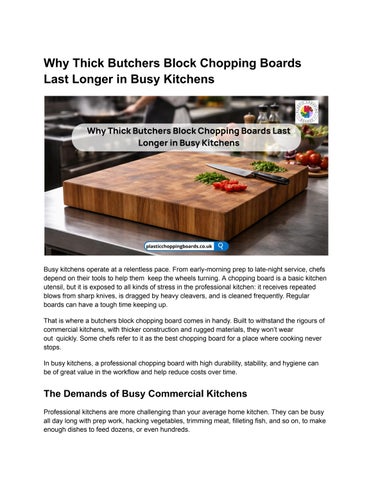
Busy kitchens operate at a relentless pace From early-morning prep to late-night service, chefs depend on their tools to help them keep the wheels turning. A chopping board is a basic kitchen utensil, but it is exposed to all kinds of stress in the professional kitchen: it receives repeated blows from sharp knives, is dragged by heavy cleavers, and is cleaned frequently Regular boards can have a tough time keeping up.
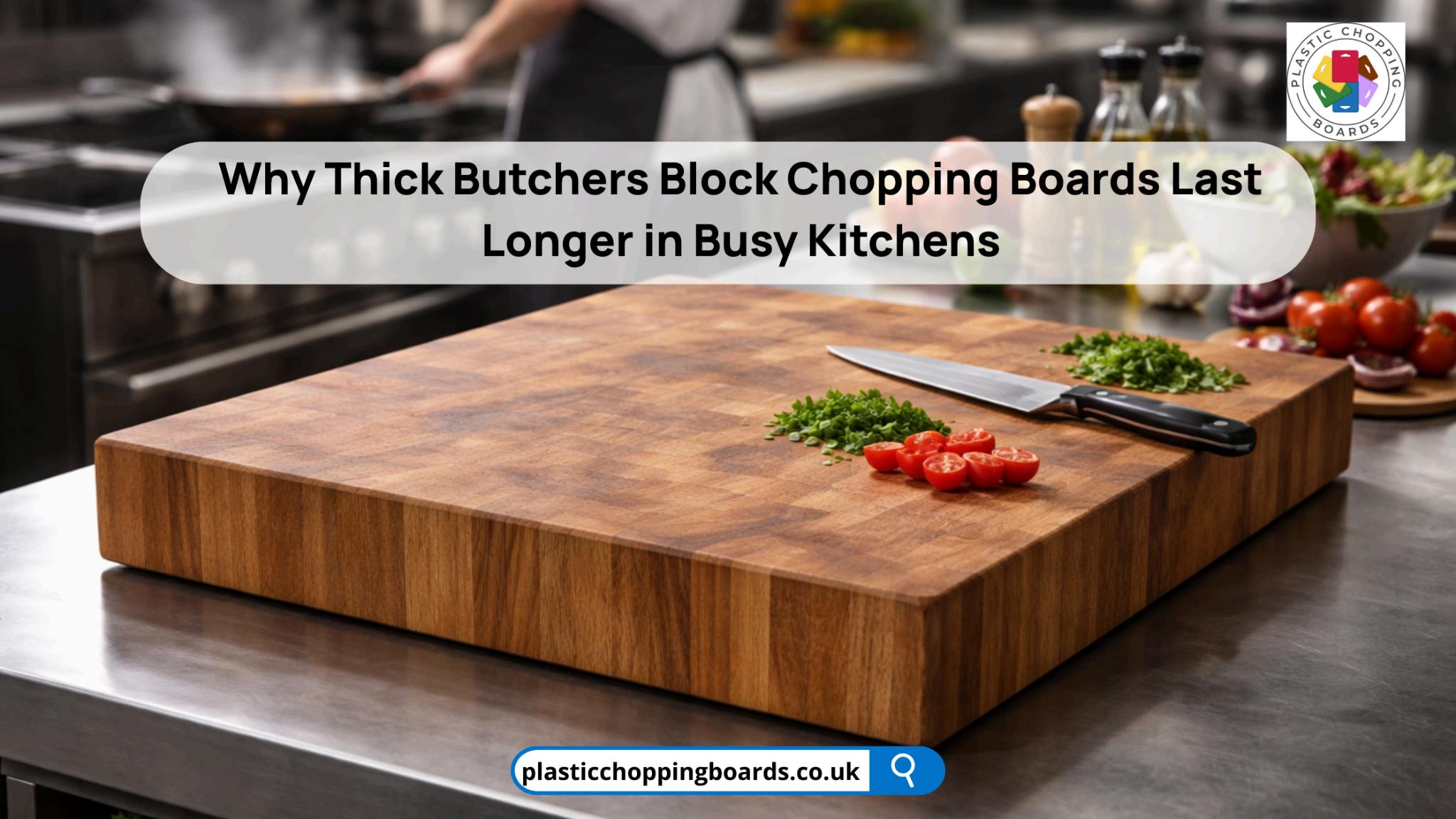
That is where a butchers block chopping board comes in handy Built to withstand the rigours of commercial kitchens, with thicker construction and rugged materials, they won’t wear out quickly Some chefs refer to it as the best chopping board for a place where cooking never stops
In busy kitchens, a professional chopping board with high durability, stability, and hygiene can be of great value in the workflow and help reduce costs over time
The Demands of Busy Commercial Kitchens
Professional kitchens are more challenging than your average home kitchen They can be busy all day long with prep work, hacking vegetables, trimming meat, filleting fish, and so on, to make enough dishes to feed dozens, or even hundreds
In these fast-paced spaces, kitchen chopping boards must handle repeated knife impacts without cracking, splitting, or becoming unstable. Heavy cleavers used for cutting through bones can create significant force, which weaker boards struggle to absorb
Another problem is the ongoing cleaning to ensure hygiene standards are maintained. Commercial kitchens wash and sanitise boards regularly and are subject to water, heat, and cleaning agents These eventually destroy even the strongest cutting boards
This is why most chefs use a professional chopping board designed with heavy kitchen use in mind A heavier board is stronger, more stable and less prone to erosion than ordinary boards
Why Thickness Makes a Structural Difference?
An end-grain construction also makes for a less punishing chopping board for your knives Rather than dulling blades with blunt impacts, the fibres absorb them and shield the cutting edge This is why a butchers block chopping board with this design is the favourite of many chefs
Since the surface is less prone to deep scoring, it lasts longer and remains more hygienic, making it a very good option for a busy kitchen
Thicker boards act like shock absorbers. Instead of allowing the impact to concentrate in one area, the additional material helps spread the pressure evenly This reduces the risk of cracks forming and prevents premature damage.
For example, many standard kitchen boards are around 20mm thick While suitable for light use, they may struggle in commercial environments In contrast, boards that measure 40mm or more offer greater density and durability, making them a more practical option for demanding kitchens
The added thickness also increases stability. A heavier board stays firmly in place on the countertop, reducing movement during intense food preparation For professionals seeking the best chopping board, this combination of durability and stability makes a butchers block chopping board an ideal choice.
Warping and Moisture Damage Resistance
One of the largest threats to kitchen facilities is moisture exposure. Boards in commercial environments are often washed, sanitised and dried throughout the day Thin boards tend to absorb water unevenly, leading to warping or splitting over time
This is where the butchers block chopping board durability is especially useful This additional thickness and heavyweight construction help the board retain its structural capacity despite numerous exposures to water and cleaning agents.
The changes in temperature also contribute Kitchens are usually exposed to heat from cooking appliances and cooler storage facilities. Under such conditions, thin kitchen chopping boards swell and shrink, which ultimately causes bending or cracking
A thicker board is more resistant to such changes and stays level on its flat surface. When chefs need a steady surface to prepare their food, a durable butcher's block chopping board ensures they can depend on it even in the harshest kitchen conditions
The Hidden Longevity Factor Construction on End-Grain
Another reason thick butcher blocks are durable is the way they are built Many of the fine boards incorporate end-grain wood, with the fibres at right angles to one another.
This design provides the surface with a special self-healing capability When a blade cuts through the board, the wood fibres split a bit before closing again. This makes deeper knife cuts appear less often and contributes to a smoother overall surface
An end-grain chopping board is also kinder to knives. Rather than wearing off blades quickly, the fibres absorb the impact and protect the cutting edge. That is why so many chefs like a professional chopping board constructed this way
The surface has a long life and is also more hygienic, making it a great option in high-volume kitchens, as less deep scoring is required
Long-term Cost Effectiveness (ROI Perspective)
It might seem that boards with increased thickness are more expensive than usual However, in the long term, they are usually a more favourable investment
Thin boards can quickly wear out in busy kitchens and need to be replaced more than once a year The more replacements, the higher the cost to the company and organisation A good quality board for professional use can last far longer than that.
For cooks and food-service professionals, the best chopping board is the strongest and most affordable option. A strong chopping board = less frequent replacement = you save more.
Another advantage is knife protection Boards that are good at absorbing impact also tend to inflict less damage on the edge of the blade, so knives stay sharper for longer and are not re-sharpened or replaced as frequently.
Also, many thick boards can be resurfaced Some sanding and polishing will repair the surface and extend the life of the product. That is why a professional chopping board is a good investment in the case you want to maximise your efficiency and minimise your kitchen expenses
Feature Standard Thin Boards Professional Thick Boards
Lifespan High turnover; often replaced annually.
Multi-year durability; built for heavy use.
Maintenance Disposable; cannot be repaired once scarred
Resurfacable; can be sanded and polished
Knife Health Harder surfaces dull blades quickly
Impact-absorbing; preserves edge sharpness
Total Cost Low upfront, but high cumulative expense.
Higher upfront, but maximum long-term ROI.
Applications of Thick Butcher's Block Boards
● Designed for Scale: These boards provide the necessary surface area and durability for large-scale food preparation and high-volume service
● Built for Heavy Impact: Their extreme rigidity allows them to withstand the force of heavy cleavers, making them essential for butcher shops and steak restaurants
● Operational Endurance: Engineered to survive the rigours of long service days in high-pressure environments like hotel and commercial production kitchens.
● Enhanced Productivity: The combination of weight and strength creates a stable, reliable, large butcher block chopping board for quickly and efficiently dividing large portions
● Specialised Versatility: Often used as a primary heavy-duty station alongside a standard commercial chopping board for specific, delicate cutting tasks.