Signs
It’s Time to Replace Your Plastic Chopping Board
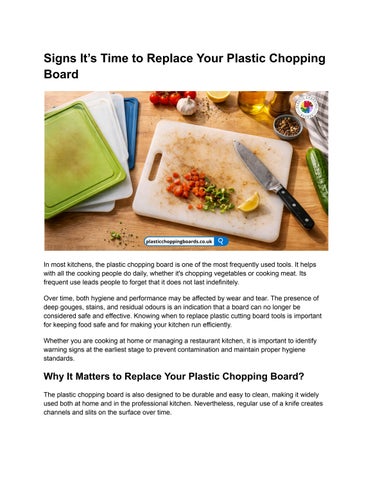
In most kitchens, the plastic chopping board is one of the most frequently used tools It helps with all the cooking people do daily, whether it's chopping vegetables or cooking meat. Its frequent use leads people to forget that it does not last indefinitely
Over time, both hygiene and performance may be affected by wear and tear. The presence of deep gouges, stains, and residual odours is an indication that a board can no longer be considered safe and effective Knowing when to replace plastic cutting board tools is important for keeping food safe and for making your kitchen run efficiently.
Whether you are cooking at home or managing a restaurant kitchen, it is important to identify warning signs at the earliest stage to prevent contamination and maintain proper hygiene standards.
Why It Matters to Replace Your Plastic Chopping Board?
The plastic chopping board is also designed to be durable and easy to clean, making it widely used both at home and in the professional kitchen. Nevertheless, regular use of a knife creates channels and slits on the surface over time
Though these small cuts might not appear to be a big issue, they can trap food particles and bacteria. Even routine washing may be insufficient to clean the surface when it is worn out to a great extent
This brings out another question: Are plastic cutting boards safe after years of usage? The solution is heavily reliant on their state Plastic boards are also a safe and clean choice, provided the board is well-maintained and replaced when needed
Modern kitchen chopping boards are designed to handle daily food preparation tasks, but, like any other kitchen appliance, they must be replaced once they begin to show signs of damage
6 Clues that your Plastic Chopping Board Needs Replacement
Being aware of the onset signs can prevent food safety problems and maintain your kitchen in a healthy condition.
Deep Knife Grooves
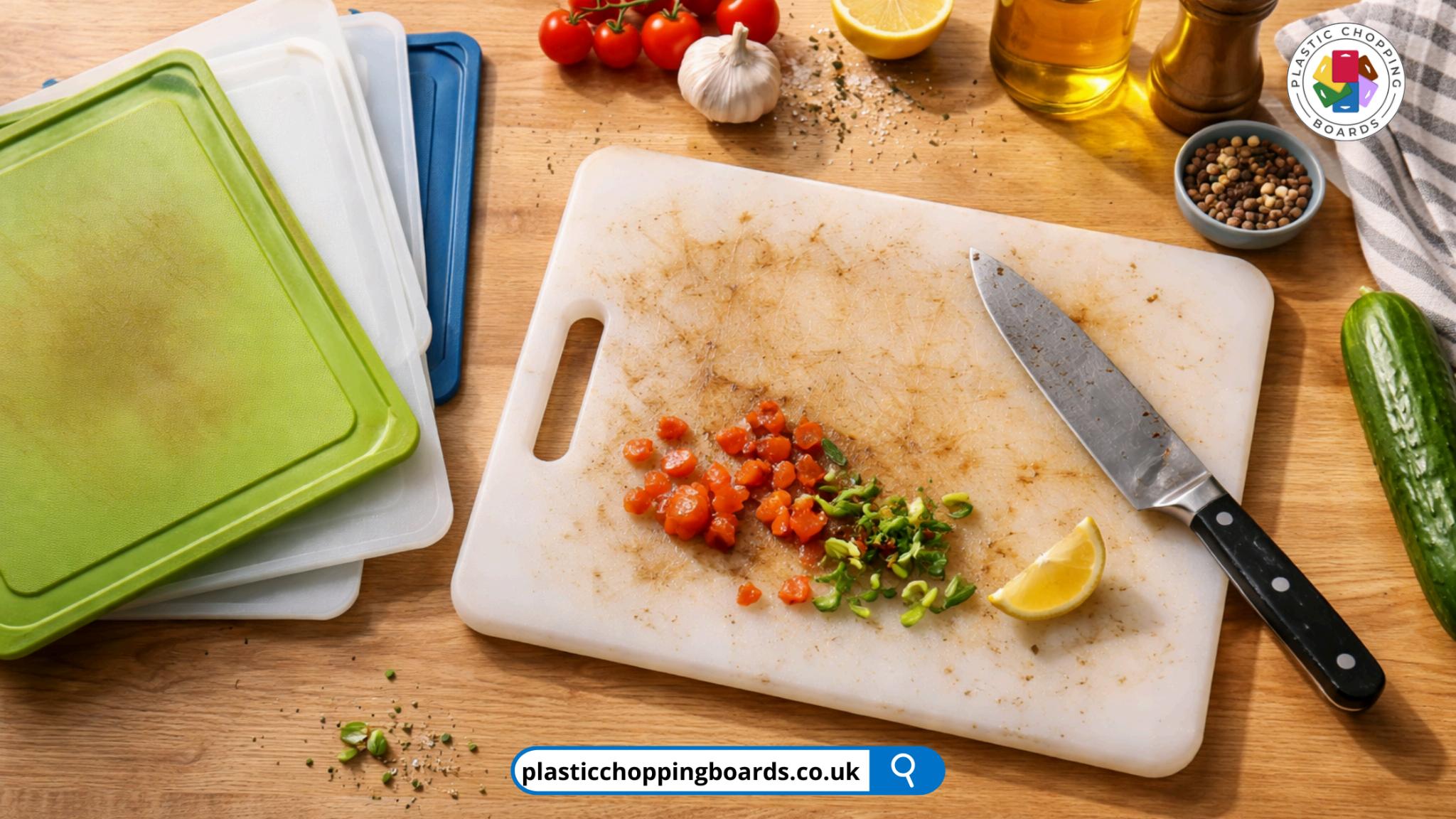
Deep knife marks are one of the most visible pieces of evidence. Each slice you make cuts a small groove in your plastic chopping board Over time, these grooves get deeper and do not clean well. These cuts can harbour bacteria, making them more difficult to clean. When your board appears very scratched or rough, it is probably time to consider replacing it
Persistent Stains
After cutting foods such as beetroot, turmeric, or tomatoes, plastic boards tend to have stains Light stains are normal, but continuous discolouration may indicate that food residues have been absorbed by the board. This may also affect hygiene and the appearance of your working area, particularly if your goal is to have one of the best chopping board setups in the kitchen
Lingering Odours
Another red flag is a strong smell that won't wash off easily Fish, meat, garlic, and onions may leave odours in the crevices of a board When cleaning and disinfecting no longer help eliminate the smell, the board may have reached the end of its life.
Warping or Bending
Some boards might also warp due to heat, moisture and frequent washing. A deformed chopping board will not lie flat on the counter, making food preparation harder and even dangerous. Unstable cutting may also occur due to uneven surfaces, which pose a risk of accidents
Rough or Peeling Surface
When the top of your board starts to feel coarse or has small plastic chips, it's a clear sign that it is wearing out Preparing food requires a smooth surface, especially in a busy kitchen
Cracks or Structural Damage
The most important alarming sign may be visible cracks or splits Once cracks develop, bacteria can reside deep within the material of the board. The safest choice at this point is to change the board
Also Read: From Prep to Presentation – How Coloured Cutting Boards Are Redefining Kitchen Style
How Often Should You Replace a Plastic Chopping Board?
The most commonly asked question by home cooks and chefs is how often to replace cutting board tools.
It does not have a generic timeline, as usage levels differ Nevertheless, there are general rules indicating that a board should be replaced after 12-18 months if used frequently.
● Boards might require more frequent replacement in high-traffic places like restaurants
● A commercial chopping board can last longer when properly maintained; however, it should be checked regularly for wear.
● Finally, the easiest solution is to periodically examine your board with the warning signs mentioned above.
How to Make Your Plastic Chopping Board Last Longer?
Though it is inevitable that you will replace it, good maintenance can make your board last much longer The best thing to do is to learn how to sanitise plastic cutting board surface properly
● The first step is to wash the board with hot water and soap immediately after use. This helps eliminate food particles before they settle in knife grooves
● Clean the board occasionally with diluted vinegar or other safe food-safe products.
● It is also important to leave the board fully dry to prevent bacterial growth
● Another helpful tip is to switch between boards
● Most families use different kitchen chopping boards when handling meat, vegetables, and prepared foods
● The variety of boards will also help prevent wear and tear on one surface and promote appropriate food safety practices.