How to Select the Best Chopping Board for Different Food Types
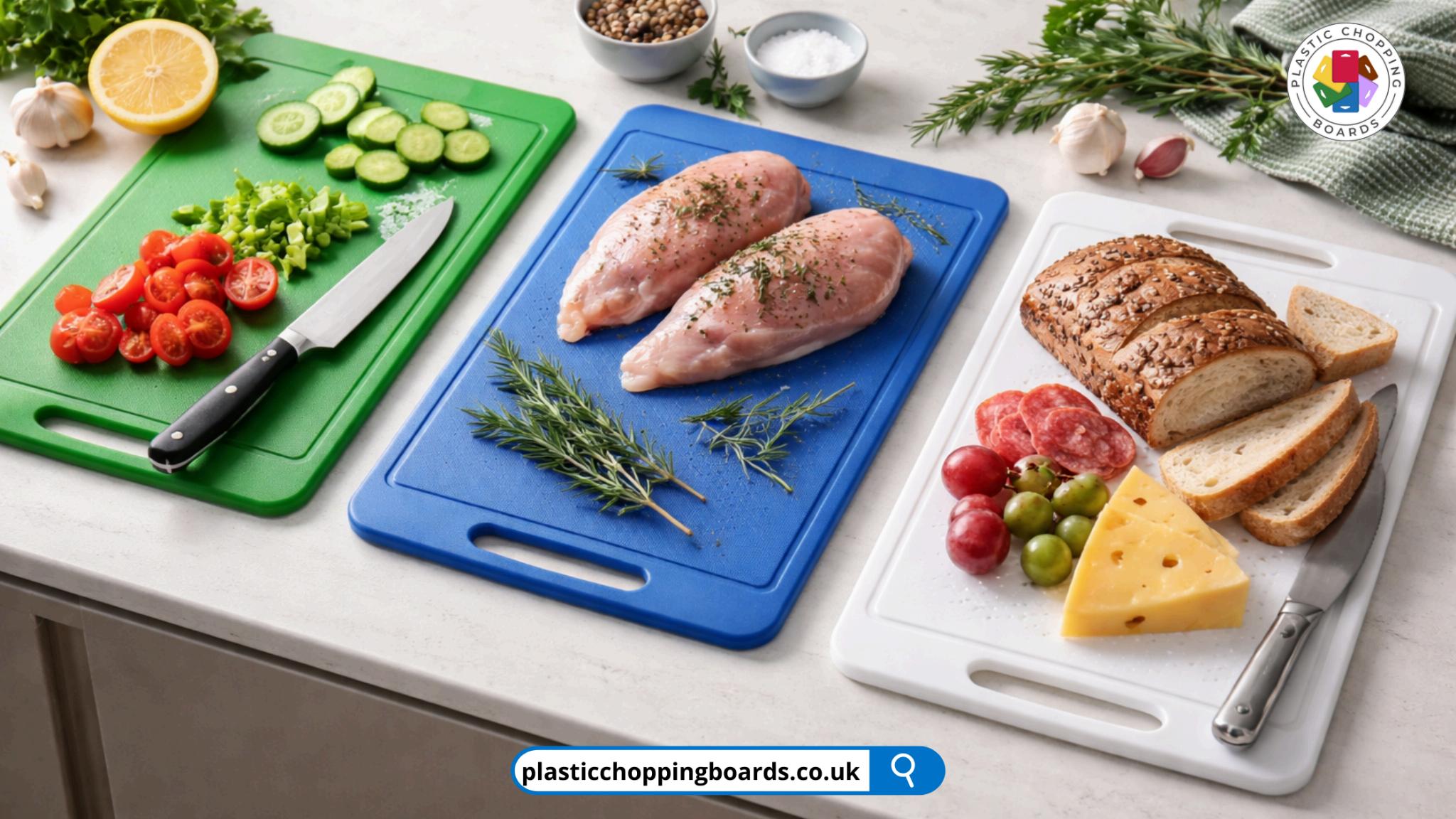
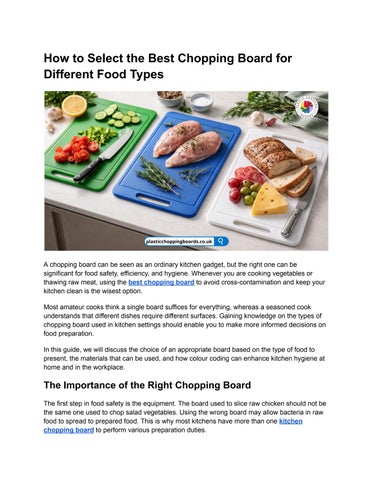
A chopping board can be seen as an ordinary kitchen gadget, but the right one can be significant for food safety, efficiency, and hygiene. Whenever you are cooking vegetables or thawing raw meat, using the best chopping board to avoid cross-contamination and keep your kitchen clean is the wisest option
Most amateur cooks think a single board suffices for everything, whereas a seasoned cook understands that different dishes require different surfaces Gaining knowledge on the types of chopping board used in kitchen settings should enable you to make more informed decisions on food preparation
In this guide, we will discuss the choice of an appropriate board based on the type of food to present, the materials that can be used, and how colour coding can enhance kitchen hygiene at home and in the workplace
The Importance of the Right Chopping Board
The first step in food safety is the equipment. The board used to slice raw chicken should not be the same one used to chop salad vegetables Using the wrong board may allow bacteria in raw food to spread to prepared food This is why most kitchens have more than one kitchen chopping board to perform various preparation duties.
Durability is another factor to consider An effective plastic chopping board should withstand frequent knife use and be easily cleaned and sanitised. The selection of the best chopping board is not merely a matter of convenience but also an issue of preserving food quality and promoting safe kitchen behaviours.
Why Using the Right Chopping Board Matters?
The next important factor to consider when choosing a chopping board is its material Every material has its advantages over the other when it comes to preparing a particular type of food
Plastic Chopping Boards
Plastic boards are among the most famous to use in a home or commercial kitchen They are easy to wash, tough and light.
A plastic chopping board would come in handy, especially when dealing with raw meat and fish, since it can be easily disinfected and used most of the time in the dishwasher. This will make it a viable option for maintaining hygiene
Composite or Professional Boards
High-density composite boards are designed to withstand high-traffic areas, such as restaurants and catering areas These boards are constructed to withstand heavy usage Even at work, chefs tend to use a professional chopping board, which provides a steady surface and performance
When it comes to answering questions like, "What is the best type of cutting board material?" the answer lies in your cooking habits Most kitchens combine materials to perform various tasks
Also Read: How to Set Up a Colour-Coded Chopping Board System in Your Kitchen
Understanding Chopping Board Colours
A common system in the professional kitchen is colour coding It helps separate food preparation activities and prevents cross-contamination.
The types of chopping board colour coding commonly used in the UK include:
● Red – Raw meat
● Blue – Raw fish and seafood
● Green – Fruits and vegetables
● Yellow – Cooked meats
● Brown – Root vegetables
● White – Bakery or dairy products
This system enables chefs and kitchen staff to know immediately which board to use for each operation.
Coloured chopping boards are becoming a common practice among home cooks who want to maintain better hygiene in their daily cooking. This method can go a long way in minimising food contamination
Selecting the Appropriate Size and Thickness
In addition to material and colour, it matters as well how large and thick your board is
● Small boards are easy to use for simple tasks such as chopping fruit or herbs, but not for cooking larger meals
● Bigger boards have more space to work with and can help hold ingredients in place during chopping This is especially helpful for cutting vegetables or meat
● Thickness also matters A heavier piece of board is more stable and not prone to warping. Thus, professional kitchens usually have heavier boards that are used repeatedly
When you cook regularly or prepare large meals, it is better to invest in a high-quality chopping board with the right dimensions to enhance comfort and efficiency
Best Chopping Boards by Type
The cutting surfaces of different foods differ slightly Knowing the types of chopping boards and their applications can help you keep the kitchen hygienic while remaining efficient.
Raw Meat
Raw meat needs to be prepared on a special board. This is in order to avoid bacterial proliferation in other ingredients A heavy-duty plastic chopping board is common in many kitchens due to its ability to be fully cleaned and sanitised afterwards.
Fish and Seafood
The preparation of seafood requires a board that is easy to clean and does not absorb odours. The best option here is normally non-porous boards
Vegetables and Fruits
Vegetables and fruits are generally cooked on boards dedicated to plant-based products This blocks contamination of raw meat
Using the optimal chopping board with every type of food can ensure proper kitchen hygiene and make the preparation process more productive