











MONTANA NURSERY & LANDSCAPE ASSOCIATION



PRESIDENT
John Spray
The Good Earth Works Co. Billings, MT
1st VICE PRESIDENT
Aaron Mihelish Caras Nursery Missoula, MT
2nd VICE PRESIDENT
Ali Zackheim Gardenwerks Helena, MT
3rd VICE PRESIDENT
Kendra Hinojosa Solstice Landscaping Bozeman, MT
MEMBER-AT-LARGE
Joe Sansone Oldcastle Polson, MT
PAST PRESIDENT
James Hoiland
Green Up Lawn & Landscape Sprinklers Great Falls, MT
SECRETARY
Pat Appleby
Compost Happens Gardening Florence, MT

Summer has arrived, and across Montana our industry is in full swing. From Whitefish to Billings, from Kalispell to Bozeman, crews are installing landscapes, maintaining properties, managing irrigation systems, caring for trees, and helping customers create and maintain beautiful outdoor spaces. Long days, early mornings, changing weather conditions, and demanding schedules are all part of what makes this season both challenging and rewarding.
One of the privileges of serving as President of MNLA is the opportunity to see firsthand the tremendous talent, professionalism, and dedication that exists throughout Montana’s green industry. This summer, as I visit with members around the state, I am reminded that our industry is made up of people who take great pride in their work and the communities they serve.
Whether it’s a landscape crew installing a new project, an irrigation technician keeping systems running efficiently, a maintenance team caring for commercial and residential properties, an arborist preserving the health of our urban forests, or nursery staff helping customers select the right plants for Montana’s unique climate, I continue to be impressed by the commitment and craftsmanship demonstrated every day by our members.
Mike Sheets, CPP
North Grounds Prop. Maintenance Bozeman, MT
NORTHERN ROCKIES TREE SCHOOL CHAIR
Mike Garvey
Garvey’s Urban Forest Billings, MT EDUCATION COMMITTEE CHAIR
EXECUTIVE DIRECTOR
Gina Albaugh
MNLA Billings, MT
MT DEPT. OF AG LIAISON
Frank Etzler
MDA Helena, MT
While summer is our busiest season, it is also one of the most exciting times of the year for MNLA. I am looking forward to our Summer Tour in the Flathead Valley, where members will have the opportunity to explore Whitefish, Kalispell, and Columbia Falls. The Flathead region showcases some of Montana’s most impressive landscapes, thriving communities, and successful green industry businesses. Beyond the educational opportunities, the Summer Tour allows us to strengthen relationships, exchange ideas, and learn from one another. I encourage all members who can attend to take advantage of this outstanding event.
We are also actively planning for the Northern Rockies Tree School this fall in Bozeman. This educational program represents an important investment in the future of our industry by providing training and professional development opportunities for arborists, landscape professionals, and others who work with trees throughout our region. I appreciate the efforts of the volunteers and industry leaders helping bring this program together and look forward to sharing additional details as plans continue to develop.
Our local chapters remain active as well. Both the Billings and Bozeman chapters are preparing for their annual fundraising golf tournaments. These events provide a great opportunity for members to connect outside of the workplace while supporting the educational and networking programs that strengthen our association. Thank you to the volunteers, sponsors, and participants who help make these events successful year after year.
Cont. on page 4
As we move through the heart of the season, I encourage each of you to take pride in the work you do. The days are long, the schedules are demanding, and there is never a shortage of challenges to solve. Yet every project completed, every tree planted, every irrigation system installed, and every landscape maintained contributes to stronger communities and a better Montana.
When the season gets busy and the days get long, remember that the work we do matters. The landscapes we build and maintain today will be enjoyed by Montana families, businesses, and communities for years to come.
Thank you for your continued support of the Montana Nursery & Landscape Association and for the work you do every day to improve our communities. I hope to see many of you at the Summer Tour and our upcoming events as we continue building a strong future for Montana’s green industry.
Have a safe and successful summer. Sincerely, John Spray President
Montana Nursery & Landscape Association


Ihope this season has been productive and successful for all of you. While you have been hard at work, we have been putting the finishing touches on a lineup of Summer events designed to help you connect, pick up a few new ideas, and enjoy a well-earned break from the demands of the season. Be sure to check out the Calendar of Events in this Leaflet for details.
We have a lot to look forward to over the coming months. From chapter meetings and the Summer Tour to our annual fundraising golf tournaments, there’s no shortage of ways to get together with others in the industry. Whether you’re looking to catch up with old friends, make new ones, or simply spend a day surrounded by people who understand what you do, we hope you’ll join us. Registration information for all our events can be found in this Leaflet and on our website.
If you’ve been thinking about becoming a Certified Plant Professional, or have employees who are ready to take the next step, don’t forget that the CPP exam will once again be offered before the Summer Tour on July 23rd in Kalispell, MT. It’s a great opportunity to build your team’s knowledge and then enjoy one of our favorite events of the year!
As the season rolls on, be sure to snap plenty of photos of the projects you’re working on. The Best of Montana Landscape Competition and Container Planting Contest will be here before we know it, with the intent-to-enter deadline on October 15th. We can’t wait to celebrate the incredible work you and other members are doing across the state!
I hope to see many of you at our events in the next few months. As always, I’m just a call or email away if you have questions, ideas, or just want to check in: 406-755-3079 or gina@ plantingmontana.org. Here’s to a safe, successful, and fun-filled season!
It’s renewal season! Membership renewals are a vital part of our annual budget and allow us to not only keep the lights on, but continue providing advocacy, resources, and education for Montana’s horticulture industry. We appreciate each and every individual and company that is part of the greater MNLA community. You are the reason we exist.
Renewal is a great time to look over your contact information and business description to update anything that may have changed over the past year. This information is used in our “Find-a-Member” tool on our websites and used by our office for referrals. Having accurate information about what products and services you offer helps consumers and fellow members find you.
While updating your membership profile, be sure to take advantage of the membership bundles that were rolled out last year. You now have the option to add up to 25 staff members to your membership bundle. Adding team members to your membership grants them access to registration discounts, members-only website content, and subscribes them to The Leaflet online newsletters. This new bundle format is a great way to easily share your membership perks across your company.
July 23, 2026
July 23-24, 2026
August 14, 2026
August 20, 2026
September 17, 2026
October 15-16, 2026
Memberships can be renewed online at any time at www. plantingmontana.org and are due annually on July 1st. If you did not receive a renewal invoice, or need assistance with your renewal, please contact our office. We would be happy to help!
Certified Plant Professional Exam - Kalispell, MT
Summer Tour - Whitefish, MT
13th Annual Billings Chapter Golf Tournament - Billings, MT
3rd Annual Bozeman Chapter Golf Tournament - Bozeman, MT
Field Day - Billings, MT
Northern Rockies Tree School - Bozeman, MT
Find event registration on our webpage: www.PlantingMontana.org
Photos by Doreen Wynja; Story by Emily Reeves
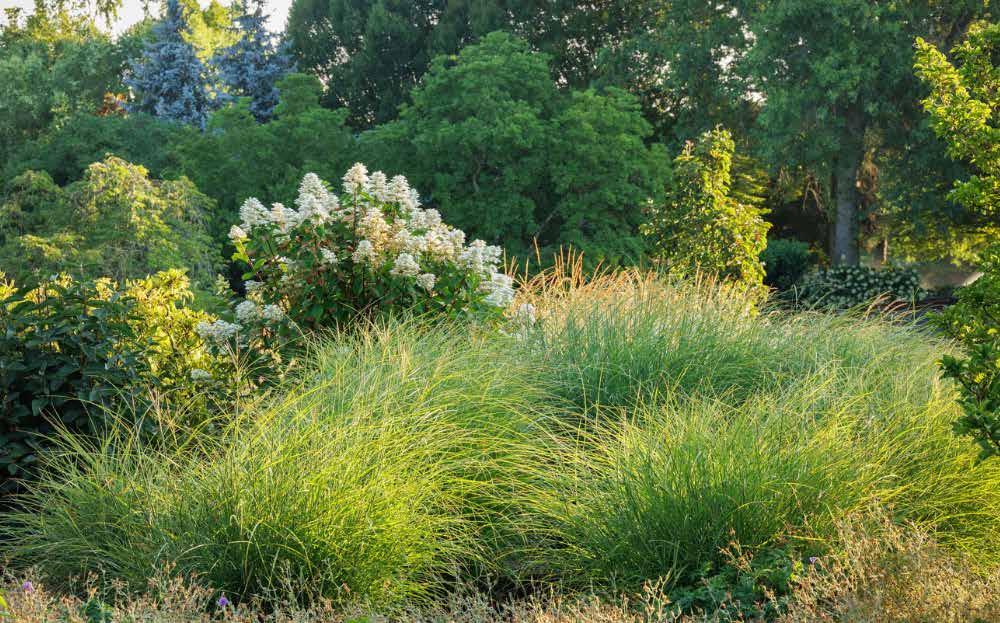
Have you ever witnessed ornamental grasses catching the last light of the day? It’s a magical sight; seed heads glow as they sway and rustle in the breeze, a gentle invitation to slow down and pay attention. Nearby, you likely saw pollinators buzz and drift over swaths of flowers, moving from bloom to bloom. In this dreamy garden or naturalized area, nothing feels rigid or overly manicured. The entire space moves, breathes, and hums with life.
This is the kind of garden people dream about: a landscape that feels connected to nature and welcoming to wildlife. But when they set out to create it, the results can sometimes feel harder to manage than expected. Certain plants grow more aggressively than planned. Some blooms appear only briefly before fading. Taller perennials flop, and the overall look can veer from naturalistic to chaotic.
That’s where a design approach we call “Wild Meets Refined” comes in.
Rather than choosing between a polished garden and an ecological one, this approach blends the two. By pairing native plants with carefully selected cultivars and ornamental grasses, you can create a garden that supports pollinators while maintaining structure, beauty, and longlasting seasonal interest. The result is a landscape that feels relaxed and alive, yet still thoughtfully composed.
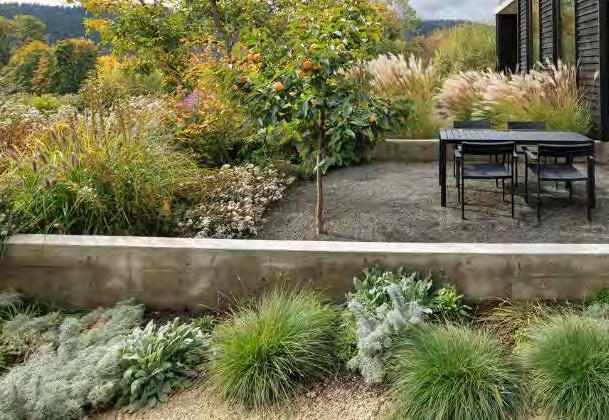
The “Wild Meets Refined” garden draws inspiration from natural plant communities like meadows, prairies, and open woodlands, while incorporating the structure and reliability of cultivated garden plants. Think of it as a middle ground between formal garden beds and fully wild prairie plantings.
These gardens tend to feel loose and flowing, but they’re still guided by clear design principles. Plants are repeated in drifts rather than scattered randomly, and structure plays an important role in keeping the planting cohesive.
Key elements of the style include:
• Ornamental grasses for movement and structure
• Long-blooming perennials that carry color through the season
• Climate-appropriate cultivars chosen for reliability
• Repetition and rhythm throughout the planting
• Seasonal interest that extends well beyond peak bloom Instead of a brief midsummer peak, a modern meadow-style garden evolves throughout the year.
Native plants play an essential role in supporting pollinators and wildlife. When designing a home garden, a few thoughtfully chosen cultivars can make your garden easier to maintain and more visually cohesive.
Many modern cultivars are selected specifically for garden performance.
These improvements often include:
• Longer bloom duration
• Stronger stems that resist flopping
• Controlled growth habits that fit better in residential landscapes
• Predictable mature size for easier planning
• Improved disease resistance
• Enhanced flower color or repeat blooming
Cultivars suited to your region can still support pollinators while offering dependable garden performance. When combined with native species and other climate-appropriate plants, they help create a landscape that is both ecological and manageable.
Rather than replacing native plants, cultivars often act as a design partner, adding stability and extending the season of color.
In a wild yet refined garden, ornamental grasses provide the structure that holds everything together.
They act as the architectural backbone of the planting, softening the space while creating visual rhythm and movement.
Grasses serve several important roles:
• Anchors that define planting areas
• Seasonal transition plants that look good even when perennials fade
• Soft privacy screens when planted in drifts
• Winter interest through seed heads and dried foliage
Designers often use grasses to fill 30–40% of the planting, creating a framework that keeps the garden cohesive throughout the year.
For the most natural effect, plant grasses in drifts rather than single specimens. Combining upright forms with mounding varieties creates layered texture and movement. Airy grasses also pair beautifully with bold blooms like echinacea and rudbeckia, allowing flowers to float above a soft, flowing base.
Perhaps best of all, grasses continue to shine in fall and winter, an important feature for homeowners who want their landscape to look beautiful even when flowers are gone.
Blackhawks
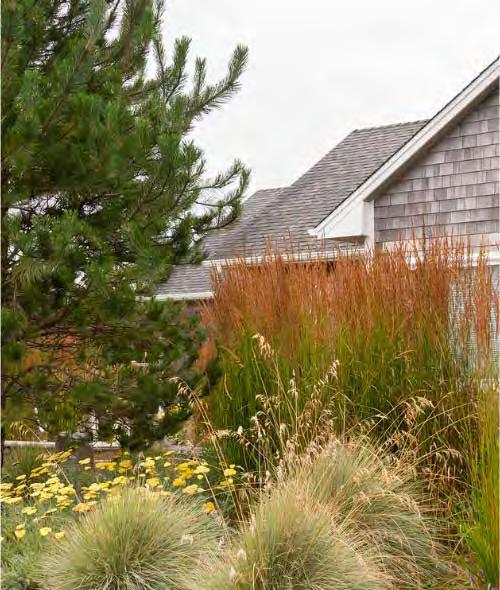
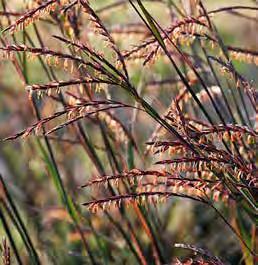
Big Bluestem
A dramatic vertical accent that changes color throughout the growing season. Full sun. Up to 8’ tall, 2’ wide. Zones 3-9.
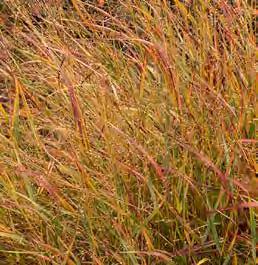
Switch Grass
Prized for its unmatched foliage color and airy reddish-pink flowers in summer. 4’ tall, 3’ wide in bloom. Zones 4-9.
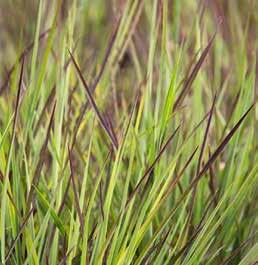
Little Bluestem
Narrow, upright foliage emerges blue, develops pink and burgundy hues in late summer, and turns a rich copper in fall. Up to 4’ tall, 3’ wide. Zones 3-10.
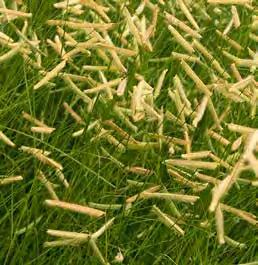
Blue Grama Grass
Provides cool-season interest with long-lasting blond seedheads that remain through winter. Up to 3’ tall and wide. Zones 4-9.
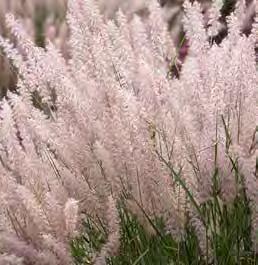
Rose Fountain Grass
The showy, super-frothy plumes and deeply arching foliage make this a winner for massing. Up to 5’ tall. Zones 5-10.
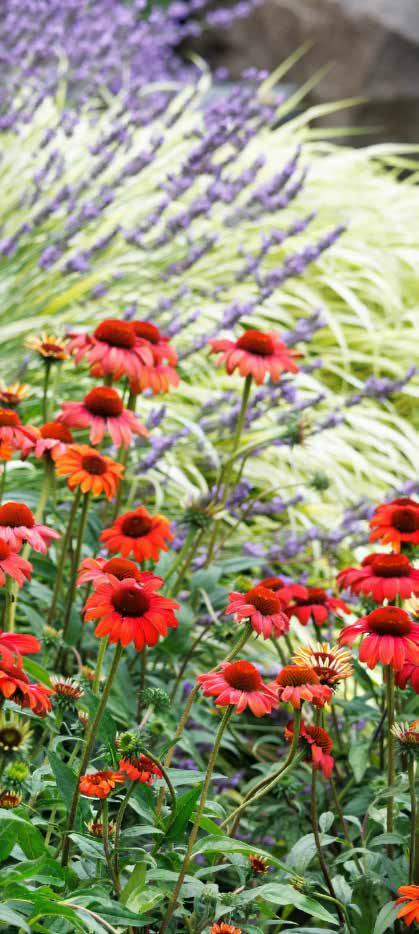
Once the grassy framework is established, long-blooming perennials bring color and pollinator activity into the garden. Choosing plants known for extended flowering periods helps keep the landscape lively from late spring through fall.
Some excellent options include:
• Salvias with vibrant spikes of color that pollinators love
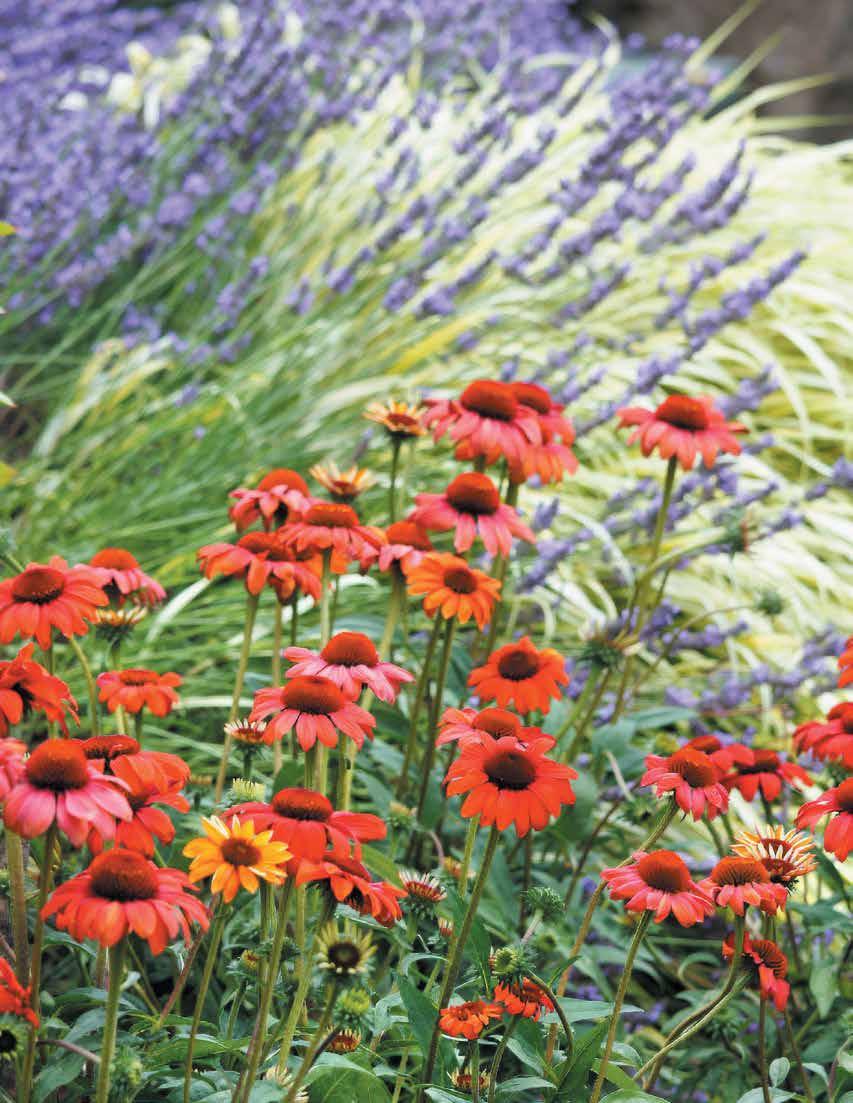
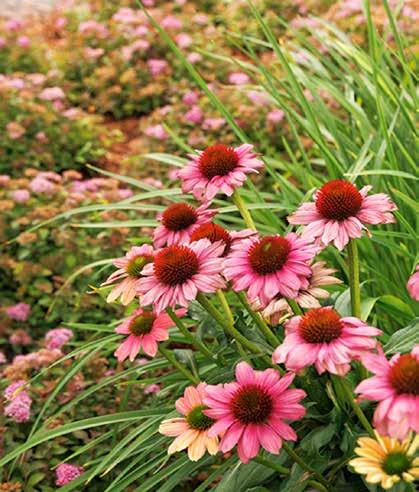
• Refined coneflower varieties with strong stems and rich tones (Evolution™ Fiesta Coneflower pictured here)
• Nepeta (catmint) for clouds of lavender-blue flowers
• Rudbeckia cultivars with bold golden blooms
• Compact agastache for hummingbirds and heat tolerance
• Lavender for fragrance and silvery texture
• Gaillardia for bright, sun-loving color
• Gaura for airy movement and delicate blooms
These perennials are often selected for:
• Longer bloom windows
• Controlled plant size
• Sturdy stems
• Reliable seasonal color
• Excellent heat tolerance
Planting them in groups of three, five, or seven creates visual impact while still maintaining the relaxed look of a naturalistic garden.
Goldsturm
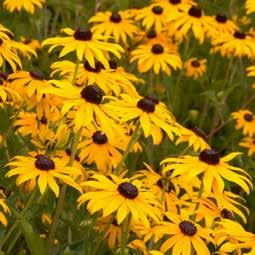
Black-Eyed Susan
Native bees, honeybees, wasps, hoverflies throng to the abundant flowers and seed-filled heads. Full sun. Up to 26” tall, 24” wide. Zones 3-9.
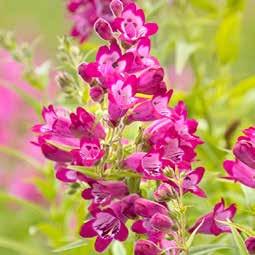
Beardtongue
This disease-resistant pollinator plant features a compact habit and long bloom period, thriving even in poor, dry soils and full sun. Up to 22” tall, 16” wide. Zones 5-9.
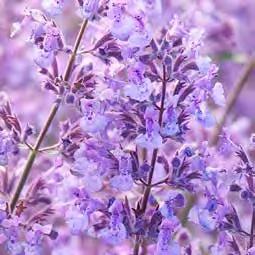
A favorite pollinator-friendly and waterwise perennial that features lavender flower spikes and fragrant foliage. Full to part sun. Up to 16” tall, 36” wide. Zones 5-9.
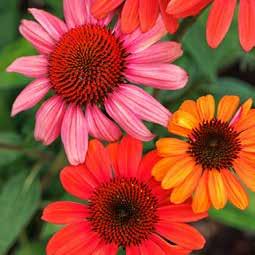
Coneflower
This beautiful coneflower is perfect for pollinator gardens. Spicy coral-pink flowers age to softer shades. Full sun. Up to 20” tall, 18” wide. Zones 4-9.
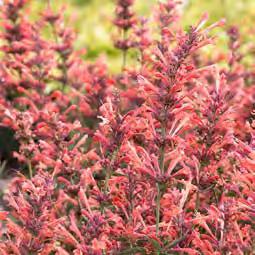
Kudos Coral Dwarf Agastache
A hummingbird favorite with a tidy habit, increased hardiness, improved disease resistance, and tolerance of wet, cold soils. Full sun. Up to 20” tall, 16” wide. Zones 5-10.
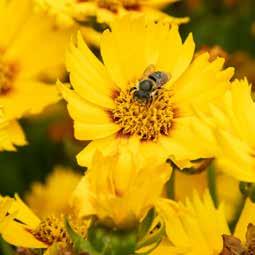
Coreopsis
Offers easy-care, low-water color from late spring through fall. Provides continuous bold color and nectar for bees. Up to 18” tall and wide. Zones 4-9.
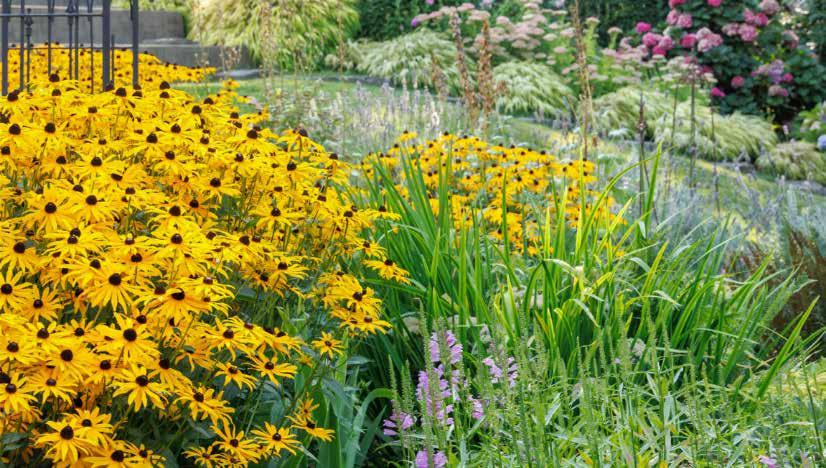
Designing a refined naturalistic garden is surprisingly approachable when you break it down into a few simple steps.
1.Start with a Grass Backbone
Plan for ornamental grasses to make up roughly 30-40% of the planting. This creates a structural framework that carries the garden through every season. Plus, grasses add movement, structure, and forage for birds.
2.Layer in Long-Blooming Perennials
Choose perennials with overlapping bloom times to create a steady flow of color and pollinator activity.
3.Repeat Key Plants
Keep your plant palette relatively simple, and focus on repeating masses of plants throughout the garden to create cohesion and a sense of rhythm.
4.Add Structural Shrubs
Structural shrubs can help ground the planting and create visual anchors within looser meadow-style beds.
5.Leave Breathing Space
Naturalistic plantings look best when plants have room to move and spread slightly over time.
A few design principles help keep the look polished:
• Limit the plant palette for a more sophisticated effect
• Think in drifts instead of dots
• Allow movement while maintaining clean edges
• Plan for bloom succession from spring through fall
Gardeners working in warm or dry climates can also prioritize heat-tolerant, drought-tolerant, and water-wise plants, which contribute to both sustainability and longterm success.
Check out the climate-specific My Plantfinder tool and the water-wise gardening guide; they are great tools for choosing plants suited to your region.
The Wild Meets Refined garden proves you don’t have to choose between ecological awareness and elegance.
With the right structure, ornamental grasses, long-blooming perennials, and thoughtfully selected cultivars, your garden can feel alive, effortless, and beautifully composed all at once. It’s nature-inspired gardening with intention.
Article originally appeared on www.monrovia.com/be-inspired/ wild-meets-refined-balancing-beauty-and-ecology.html

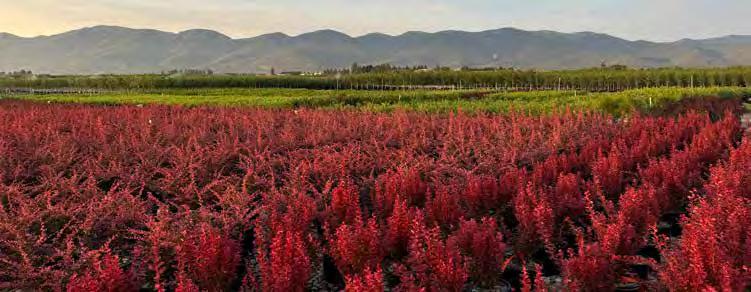
Over 900 varieties of trees, shrubs, evergreens and perennials.
We ship in Montana every week throughout the entire planting season! No minimum order amount required.
Timely deliveries to your yard or job on refrigerated trucks. Minimum freight charges range from $275-400.
Check inventory availability and order online
March 2026 The MNLA Board stayed busy during its March meeting, approving the February financials and adopting a preliminary budget for the upcoming fiscal year. The new budget includes small increases to Summer Tour and Green Expo fees to help support operations. Board members also discussed the possibility of transitioning the Executive Director position from an independent contractor to an employee model and will continue exploring that option next month. An in-depth conversation focused on updating our mission statement and website, with the Board identifying these as top priorities for strengthening the Association’s brand and member experience. Planning for the Green Expo and Summer Tour continues to move forward, with new educational opportunities in the works and booth sales now open. The Board also received updates on the Japanese beetle quarantine, discussed the Community Beautification Fund grant program, and continued collaboration with MUCFA on workforce development efforts.
April 2026 The MNLA Board covered a full agenda, including approving an annual membership dues increase to keep up with inflation, with future dues to be reviewed each year during the budgeting process. Following up from the April meeting, the Board approved transitioning the Executive Director position from an independent contractor to an employee position beginning June 1. Further discussion followed about plans to add additional staff members to support the Association’s growing programs and membership. The Board also approved funding for three Community Beautification Fund projects submitted by MNLA members, received updates on Expo planning and speakers, discussed future Northern Rockies Tree School workshops, and reviewed the latest information on the Japanese beetle quarantine. Looking ahead, the Board is focused on a busy Summer of fundraising and educational events.
May 2026 – No Meeting: Spring Recess
June 2026 – No Meeting: Spring Recess

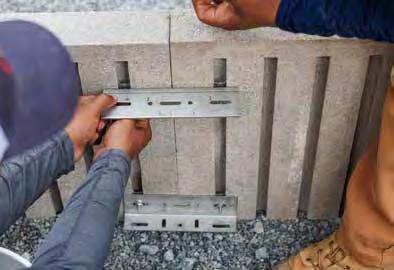
ESP-2WIRE is a new approachable platform for 2-Wire projects up to 50 stations
Accommodates up to 50 stations plus master valve without the need for additional modules or costs
Automatically detects and assigns decoders connected to the 2-Wire path to station numbers for significant time savings
Standard direct burial wire, standard wire connectors, and no special field grounding requirements means lower costs and quick installation





By Patrick Alan Coleman
Photos: Rob Cardillo, courtesy of Thomas Rainer/Phyto Studio
An uncomfortable ideological divide has separated native plants from cultivars. But the message is changing as designers and environmentalists look for a middle ground in aesthetics.
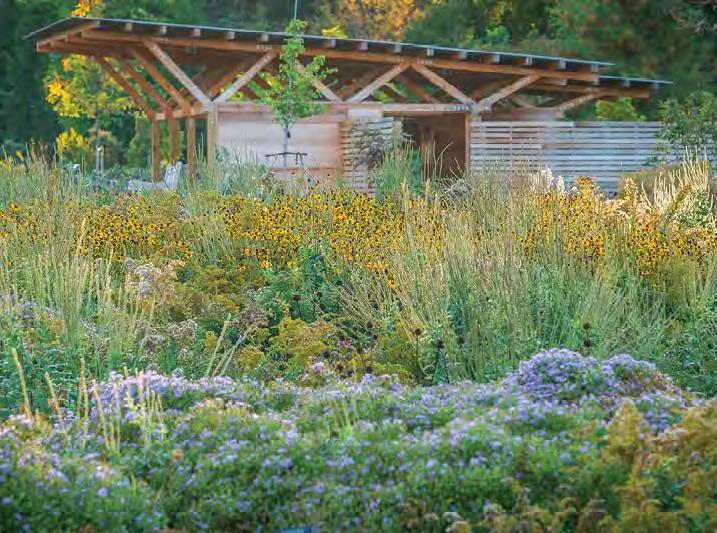
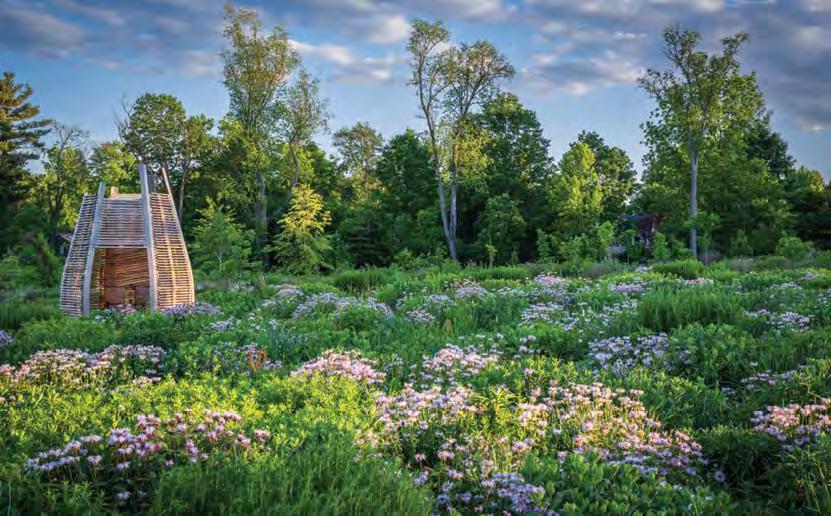
Rudbeckia hirta was known as a “wildflower” long before a “native plant” sign hung above the pots of black-eyed Susans in the local garden center. Saying the word wildflower creates an immediate agreement on what is being communicated. They are wild in the sense that they grow, often prolifically, where it is most optimal. They eschew the tidy mannered places of the world and thrive with the animals they co-evolved to feed. They are associated with meadows and Laura Ingalls Wilder cavorting down a grassy prairie hill with her dog.
It’s important to note not every wildflower is a native plant, and not every native plant is a wildflower. Still, many one-time wildflowers have become better known as “native plants,” and in the reclassification have lost some of their cultural luster, according to Thomas Rainer, principal landscape architect at Phyto Studio.
“My first experience of natives, very personally, intimately, was joyful. It was hedonic,” he says, recalling his childhood in the Georgian woods, where outcroppings of granite rock harbored colorful flora throughout the year.
That fauna became one of the core subjects of his studies. Rainer attended the University of Georgia, where famed landscape architect and professor Darrel Morrison had been incorporating wildflowers into his designed spaces since the 1960s — a practice Rainer describes as almost heretical in those days.
“He took us to some of the wild places,” Rainer says. And his love for native plants grew.
But once he started his professional career, Rainer noticed polarization of the conversation around cultivars and natives. A gulf had formed in the plant world between the big showy flowers of cultivars, which drove Mother’s Day sales in spring, and native plants that were for the “need to do something ecological.” One for pleasure; the other, utility.
“I think I’ve always been a little mystified why native plants being sustainable has to be such a sacrifice,” Rainer says. “Why can’t it be more pleasurable?”
So, he designs for the pleasure of wildness. His landscapes feature indigenous plant communities that thrive together and work to both touch the human soul and support the ecosystem.
Rainer is in the vanguard of landscape architects and designers, activists and ecologists who are trying to shift the way Americans in particular think of native plants. It’s a community looking to break through the polarization that pits the eye-popping, branded and bred world of cultivars against the feel-good, environmentally friendly subtlety of native species.
The classification of native or indigenous plants has been around since long before Charles Darwin suggested the coevolutionary link between plants in an ecosystem and the fauna that thrived around them. British naturalists used the term freely as they sought to catalog and collect the interesting across the ever-sprawling empire. But it’s that history of colonization and the “othering” of non-Anglo populations by condescendingly calling them “natives” that is partly to blame for complicating the term “native plant” in our modern times.
“The word native unfortunately has a lot of different meanings to a lot of different people. It can be a polarizing topic,” explains Sarah Jayne, educator and author of “Nature’s Action Guide: How to Support Biodiversity and Your Local Ecosystem.”
But the polarization is more than just what some might describe as “PC culture run amok.” Apart from social implications, the term native is also scientifically problematic. The fact is that ecosystems are far more dynamic and complicated than we give them credit for. A plant that is indigenous to a vast swath of the country may
be more or less beneficial in certain small micro-climates due to unique topography and atmospheric conditions.
And who gets to decide when exactly a plant becomes an indigenous species? Is it plants that were growing before human intervention? And which humans, exactly? After all, the Indigenous people of North America were consummate managers of the plants and landscapes they lived in.
Jayne recommends removing the term altogether and divorcing the concept from human intervention and history. “One way to circumvent the whole topic is to refer to plants as eco-beneficial,” she says. “I know when I started out, I thought that you planted native plants because that was the right thing to do, rather than really understanding that we plant natives because they have the interrelationships with other flora and fauna. So that we’re not just planting for natives’ sake. And I sometimes think that gets lost in the conversation.”
Jayne is aware of the power of semantics, and changing terms for things isn’t necessarily an easy process. Gardeners know generally what a native plant is, so she still uses the term. But she will also use the term ecologically beneficial or eco-beneficial to describe plants that work to support the creatures that live in or adjacent to a particular landscape.
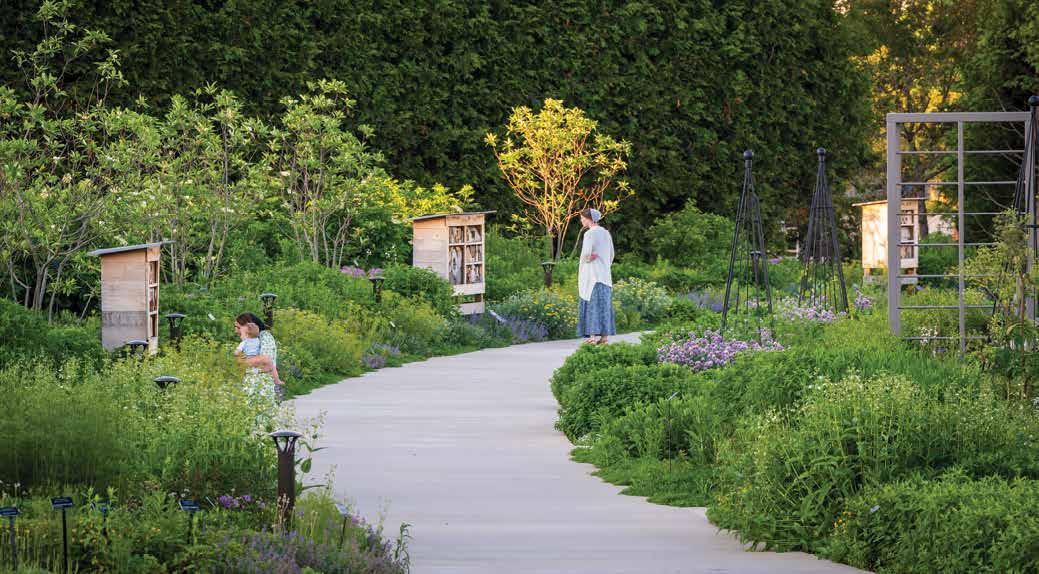
The idea, Jayne says, is to work with gardeners to help them understand that there are plants, certain “keystone species,” that to do the most good for the ecosystems by supporting the most animals. Any increased planting of these species is a huge step forward in slowing the loss of birds and insects that have seen the destruction of their habitats.
And it’s an important issue. A 2019 study published in the journal Science by the Cornell Laboratory of Ornithology and a raft of research partners found that Canadian and North American bird populations declined by nearly 3 billion since the 1970s, with the biggest losses (more than 90%, or more than 2.5 billion) in common bird species such as sparrows, blackbirds, warblers and finches.
A new study looking at U.S. butterfly populations published in Science this March found that “Between 2000 and 2020, total butterfly abundance fell by 22% across the 554 recorded species. Species-level declines were widespread, with 13 times as many species declining as increasing.”
Champions of eco-beneficial plants often have ideological concerns that drive their gardening behavior. That may not be the case for the average gardener.
In a recent survey of American gardeners, Axiom Marketing found that 39% desire plants that produce more blooms, fruits and vegetables. That need for “more” from nearly half



of the gardening population doesn’t necessarily align with ecologically beneficial plants. It does, however, align with the goals of plant brands working with breeders selecting genetics that lead to more prolifically blooming plants with bigger and more interesting flowers.
The problem, Jayne says, is that when flower morphology is changed to meet consumer demands, the beneficial characteristics are often lost. For instance, an echinacea with a double blossom may be visually stunning, but it loses any ability to support the species that rely on the plant’s central disc floret for food.
So, is there no place for cultivars? Are they “bad” plants? Jayne avoids using that kind of moralistic language because it’s unhelpful and demotivating.
“It’s a real gut-punch,” she says. “I think we don’t need to paint all plants as ‘bad unless they’re good’ because that’s too harsh of a brush, and we won’t get as many people as we need if we have that kind of real hard line.”
While Jayne would prefer gardeners and growers focus on straight species (those naturally reproducing in the wild) grown from seed, there is still room for cultivars. She points to a study by students of Doug Tallamy, the TA Baker professor of agriculture and natural resources at the University of Delaware and co-founder of the Homegrown National Park movement.
For over 100 years we have seen the cycles, weathered the storms and adapted with the times, steadfast in our commitment to support producers and rural communities alike. Because some things should never change.
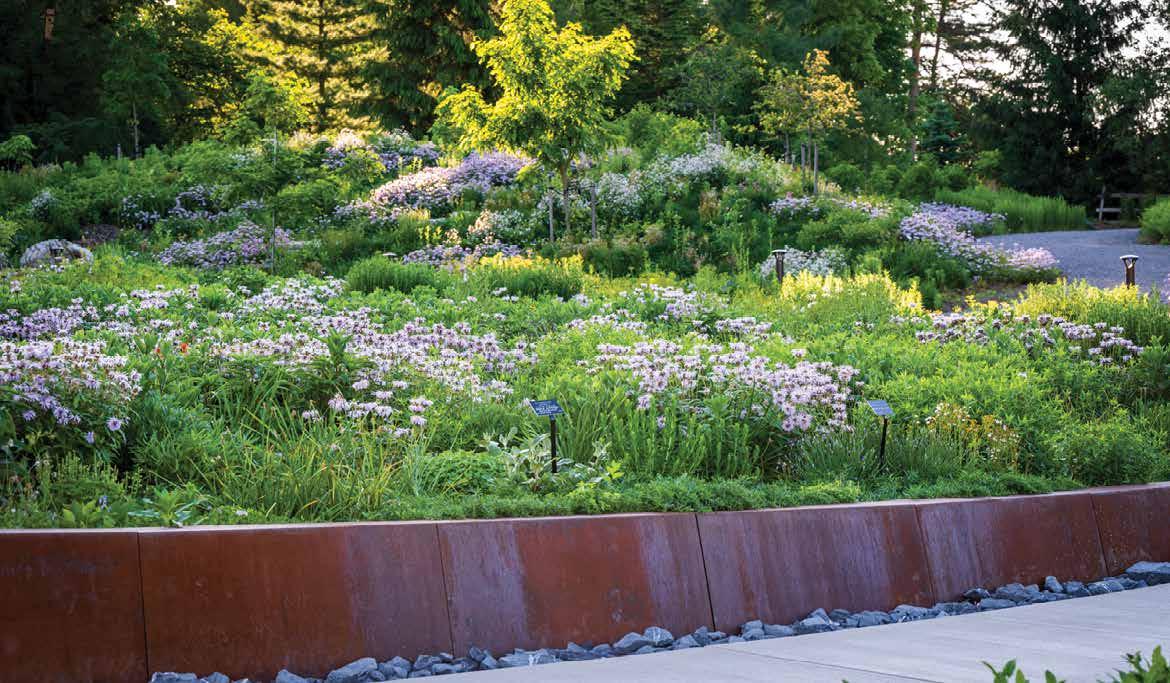
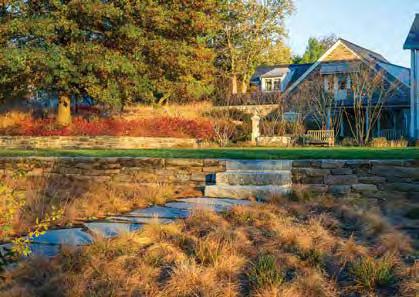
landscapes feature indigenous plant communities that work to both touch the human soul and support the ecosystem.
They found that a landscape planted with at least 70% eco-beneficial plants is enough to support wildlife, leaving room for 30% of the garden to be a showcase for wild and interesting cultivars that may be less beneficial.
Landscape designer Julie Moir Messervy has seen colleagues put the concept into practice with good results. “With a butterfly bush, for instance, in theory you’re not supposed to plant them,” she says. “But they actually attract the butterflies, and then you can have all sorts of really important useful plants around them that then can feed them and take care of them.”
Messervy, who worked with Yo-Yo Ma to create the Toronto Music Garden, didn’t start her career with a focus on ecobeneficial plants. But she says she’s learned over the years how important they are to combating species loss and supporting ecosystems. Having watched the conversation shift, she notes that polarization and dogmatic perspectives aren’t helpful.
“I think that the mix of plants is the way to go,” she says. “I think the purists are creating a tough environment and not seeing the big picture, which is we should just plant any way we can plant. All plants are good … or at least they’re good somewhere. And if we need to mix it all up, great. It would be good to become more and more sophisticated.”
For Jayne, there is really only one moral issue when it comes to plants. “The only time you won’t want a plant is if it’s invasive,” she says. “You really have the moral, ethical responsibility to remove all the invasives.”
Rainer’s landscapes feature indigenous plant communities that work to both touch the human soul and support the ecosystem.
The National Gardening Association’s research division, Garden Research, has been tracking the purchasing trends of gardeners buying native species or plants beneficial to birds, bees and butterflies. Since 2019, they have noted between 2% and 3% annual compound growth in those purchases. Despite that slow growth, there has been a worrying decline. Between 2022 and 2023, purchasing trends for eco-beneficial plants showed a nearly 10% decline, which, according to Garden Research, represents a loss of close to 23 million adults who purchased based on ecological motivations. It’s possible that some of that loss could come from consumers simply not being able to understand what a native plant is, or their benefits to the landscape. It’s also possible that the prospect of planting eco-beneficial may be too confusing, or the results may not be showy enough for homeowners.
Messervy is looking to combat some of these issues with the release of the Home Outside app, a 3D landscape and garden designer with a unique augmented reality tool. The plant catalogue for designs is comprised of eco-friendly plants.
“I’ve been trying to democratize landscape design the last 12 or so years,” Messervy says. “The hardest thing for people is to say, well, what am I going to do in the first place?”
The Home Outside app allows users to place highly accurate models of single plants or pre-made plant collections and then visualize the design in their landscape. It’s a cuttingedge way to see the beauty of an eco-beneficial garden in their own space. They can also print out a plant list to shop from and print out the design so they know where to place the plants in their yards.
“So, we’re visualizing for them. They don’t have any training, and it’s expensive to hire designers,” Messervy says. “We’re trying to make it really simple and just show you how to do it.”
Being able to visualize a lush space the way a designer would helps to increase the pleasure principle around ecobeneficial plants. And Rainer is certain that native plants can have the same kind of feel-good wow-factor that a planter filled with showy annuals can create.
Messervy notes that most plants are good, depending on their use and where they are placed in the landscape.
“I wish it was just more of a hedonism around native plants. I think there could be, especially when they’re designed in ways that evoke wild spaces,” he says. “We do a lot of urban sites, especially in the Northeast. And the craziest thing to me is that clients in these urban sites want it as wild as possible. Sometimes it surprises me how wild their aesthetics are.”
He knows there is a market for more eco-beneficial plants, but he hopes that native plant lovers can make peace with big brands and breeders and recognize that genetically modified plants may also have a place in supporting ecology.
“We could use the tools of selection for ecological quality, for pollen content for nectar,” Rainer says. “This is one of the things where I think it’d be more useful for the American public to drop its polarized views of natives as righteous and exotic as evil and just look more scientifically and optimistically at what we could be doing with these.”
Jayne feels that big growers can be influential, too. She notes that one of the major problems for consumers interested in eco-beneficial plants is that they are hard to source at garden retailers in the same way bedding plants are sold and marketed. She encourages growers to consider creating mixed packs of plants ready to go in the ground, with a plan of how to plant them.
“Set up say an eight pack that had Carex in it, forbs, different perennials and one accent plant that could be a tall grass, which had the same growing conditions,” she suggests. “Here we are, plant people who want to spend money on plants, but there’s just nothing that’s available. And I see that as low-hanging fruit.”
Rainer is certain that cultivars and eco-beneficials can co-exist for both growers and consumers.
“Find the win-wins,” he says. “Find the ones that are both beautiful and tick your Mother’s Day impulse-buy moment and have some kind of ecological role. There are more than we think there are, and we could be breeding for a lot more than that. And I think it would be nice to market beyond just the word native and pollinator,” he says. “So, it’s kind of a fullness of message, getting beyond buzzwords and really selling plants for a perfect fit.”
Patrick Alan Coleman is editor of GIE Media’s Greenhouse Management magazine. Contact him at pcoleman@gie.net. This article originally appeared in the September 2025 print edition of Nursery Management under the headline “Changing the native narrative.”
If you are frequently frustrated by having to constantly answer questions that your team members should be able to address on their own, you could be dealing with the pitfall of inadvertently teaching employees to be passive, rather than proactive.
“Time is money, and employees who can’t or won’t proceed because they are waiting for direction from above are not generating profit,” says Roger Phelps, owner of Roger Phelps Consulting, LLC.
Phelps argues that employee independence directly increases a company’s ability to grow because it removes the owner as the bottleneck and distributes decision-making across the organization.
“Autonomy is a growth multiplier,” Phelps says. “I have always believed that the group that learns faster wins, and true innovation cannot come from a single voice. When employees are empowered to think critically and take ownership, the company will experience faster problem solving, more innovation from diverse voices, reduced turnover (since ‘culture is king’ and autonomy increases engagement), and greater capacity to scale because the owner is no longer the only decision-maker.”
Phelps compares owner bottlenecks to how ocean waves will eat away at a sandcastle’s foundation. It’s very gradual, but eventually the structure falls as this dependency slows down
decisions, prevents scalability, increases turnover and leads to burnout.
When clients want answers now, delayed response times can impact customer satisfaction, trust and retention.
“There are numerous examples of hotels and restaurants empowering their employees to immediately respond and address customer needs,” Phelps says. “Landscaping is not the hospitality industry, but customer care is the same in any business.”
It is also impossible to scale the business when everything is routing through one person.
“Owners should be setting the vision for the company, but ideas for executing on that vision should come from everywhere in the organization,” Phelps says. “We should be hiring people not only their ability to do the job, but for their ideas and then encouraging them to contribute. When this doesn’t happen, the owner is basically the jockey getting in the way of the horse.”
Additionally, when employees feel micromanaged or undervalued, they are far less likely to stay at an organization long term. Allowing them to feel they actually have a part in growing the business will keep you from losing team members to ‘quiet quitting’ or outright resignations.
Lastly, when owners opt to maintain this level of control in their company, they often find themselves enjoying their work less as they only have the bandwidth to address all the constant
small fires cropping up.
Phelps says he encountered this personally in his role with STIHL.
“I was acting like a thermometer, reacting to situations, instead of a thermostat and setting expectations for the team,” Phelps says. “When I started empowering my people, I found that not only did they perform better, but we all were all enjoying our work more.”
No one sets out to train their team members to be passive. Rather, it comes about when an owner’s instinct is to solve the problem for their employees instead of asking, ‘What do you think we should do?”
Phelps says he experienced this firsthand when he started the social media program at STIHL, and he hired a social media manager to stay on the cutting edge. However, he quickly found they weren’t staying ahead of trends, and his social media manager was unhappy.
“I finally realized that my passion and sense of ownership in this area was forcing him to clear everything through me,” Phelps says. “In a way, I was training him to be incompetent and not only was I not getting the benefit of his expertise and creativity, but I was also slowly killing his motivation and initiative. When I empowered him to lead the program, we immediately saw improvement.”
Phelps says this can also occur when leaders opt to promote individuals without developing them first. While they may have been exceptional in one role does not guarantee they’re ready for the next step.
“Owners need to be sure that there is training and development in place, and that we are teaching critical thinking and providing ownership-based projects,” Phelps says. “Otherwise, we are setting our employees up for failure. Since no one wants to fail, these employees will take the ‘safe’ route and wait for the owner to tell them what to do.”
If you want to encourage more proactive contributors in your organization, you have to encourage critical thinking.
“It requires a deliberate choice that when approached by an employee we as leaders a) ask open ended questions like “What do you think we should do?”, b) guide the discussion with “Have you considered…?” questions, c) before providing feedback determine if the planned response is making the idea better, or just different, d) let them run with their plan unless there are ‘serious issues’ that would create damage to the company’s operation or brand image,” Phelps says.
Phelps notes that while everything may feel very important and very immediate, this isn’t the case in reality and you do have the time to develop your employees in this way without sacrificing operational efficiency.
One key to empowering employees is assigning low-risk ownership projects that let them practice their decisionmaking. This task will vary based on the individual and the situation but having them run a meeting, provide customer follow-ups, identify a process improvement and take the lead in rolling it out or having them represent the company at an industry event are all examples of where an employee can
rise to a challenge.
Phelps says 30-60-90-day growth plans can also help employees become more comfortable and confident with autonomy. He adds that when team members understand what a company stands for culturally, they are better able to exercise independence as they know what boundaries to operate within.
“Use recognition systems to reward initiative,” Phelps says. “These can be tangible employee recognition and reward programs, but often I find that a sincere moment of appreciation from leadership is more impactful.”
Seek out employees’ ideas on a regular basis. During your one-on-ones, start with the questions “What do you think we should do?” and “What do you need from me to make it happen?”
“This single shift builds critical thinking, reduces dependency, reveals hidden talent, sets the tone for ownership, and costs nothing,” Phelps says. “For me, it’s the simplest lever with the biggest cultural impact.”
One fear that may hold you back from empowering your employees is how to handle instances of mistakes while holding employees accountable.
“Accountability is essential but should feel like a partnership, not policing,” Phelps says. “It starts with clearly defined and mutually agreed upon objectives and guidelines. Then regular communications that allow for updates and feedback, and avoid surprises.”
How you deliver your feedback matters as well. Treat mistakes as a learning opportunity instead of something an employee should be punished for.
“People are inherently afraid of failure, but it is essential to growth and development,” Phelps says. “The idea is to acknowledge the failure, identify the reasons for it, and engage the employee in the corrective actions.”
Phelps says you should also avoid taking the task back unless absolutely necessary, as this builds accountability, resilience and confidence.
“People follow leaders they know care about them,” Phelps says. “Passive teams often reflect leadership attitudes and habits, not employee limitations. Change the habits, and the team will rise to the challenge.”
Article originally published April 10, 2026 on www.landscapeprofessionals.org

Who is eligible?
To register for the exam, you must meet the following requirements:
Exam Date:
July 23, 2026
Register online:

Certified Plant Professionals must be knowledgeable in a wide variety of horticultural subjects including plant identification, soils, fertilization, turfgrass management, proper planting techniques, landscape design and more.
Minimum of 1 year experience working in the horticulture industry
Certification identifies you as a professional, and provides instant credibility with your clients. It increases your opportunities for advancement with many employers, and qualifies you to do expert work and give expert advice.
Gina Albaugh, MNLA Executive Director
I’m happy to report that the Billings and Bozeman Chapters are both going strong. We invite anyone who is interested to join us at our monthly meetings. Meeting attendance is free, and includes time to network, enjoy some food, and take part in an educational presentation. Both chapters have been bringing in new speakers and fresh topics this year. The chapter planning committees vary topics so there’s something for everyone. Presentations this year have covered: Early Season Planting Production, Mental Health in the Green Industry, Right Plant Right Place, Japanese Beetle Quarantine Changes, AI, Watering Regulations, Compost, and more!
We have lots of great things planned for the remainder of the year, including the ever-popular Golf Tournament fundraisers in both Billings and Bozeman, Field Demo Days, and monthly meetings.
August 14 – Billings Chapter Golf Tournament
August 20 – Bozeman Chapter Golf Tournament
September 9 – Bozeman Chapter Lighting Demo
September 17 – Billings Chapter Field Day
Get Involved!
We would love you have you join us at these meetings. Sign up for meeting announcements and reminders using the QR Codes on this page. We hope to see you there! If you’re interested in starting a chapter in your area, reach out to any of the Board Members for guidance. Attending a Billings or Bozeman chapter meeting is a great first step



www.plantingmontana.org/ www.plantingmontana.org/ Golf_Scramble Golf_Scramble
www.plantingmontana.org/ www.plantingmontana.org/ Golf_Scramble_Bozeman Golf_Scramble_Bozeman