Rappoort 2023 - Anticiper et détecter le trafic d'espèces sauvages
PREVENTING AND DETECTING WILDLIFE TRAFFICKING ON MARITIME, AERIAL AND POSTAL/COURIER TRANSPORT CHAINS
An analysis of innovative solutions with the potential to support law enforcement and compliance efforts
About WWF
WWF is one of the world’s largest and most experienced independent conservation organisations, with over 5 million supporters and a global network active in more than 100 countries. WWF’s mission is to stop the degradation of the planet’s natural environment and to build a future in which humans live in harmony with nature, by conserving the world’s biological diversity, ensuring that the use of renewable natural resources is sustainable, and promoting the reduction of pollution and wasteful consumption.
Since 1973, WWF France has worked on a constant stream of projects to provide future generations with a living planet. With the support of its volunteers and 220,000 donators, WWF France leads concrete actions to safeguard natural environments and their species, ensure promotion of sustainable ways of life, train decision-makers, engage with businesses to reduce their ecological footprint and educate young people. The only way to implement true change is to respect everyone in the process. That is why dialogue and action are keystones for the WWF philosophy.
Monique Barbut has been President of WWF France since January 2021, and Véronique Andrieux was named Chief Executive Officer in 2019.
To learn more about our projects and actions, go to: http://projets.wwf.fr
About GOHA
The Global One Health Alliance (GOHA) fosters international collaboration that promotes the “One Health” concept, recognizing the interconnectedness of human, animal, and environmental health. GOHA enhances research and operationalization efforts by facilitating interdisciplinary approaches and collaboration among scientists, researchers, policymakers, and organizations from various sectors. Through research, GOHA generates evidence-based knowledge on zoonotic diseases, environmental health, and ecosystem connections. Additionally, GOHA focuses on translating scientific findings into practical actions and policies to strengthen health systems and biodiversity globally and locally. By raising awareness and fostering collaboration, GOHA aims to address emerging infectious diseases, antimicrobial resistance, climate change impacts, and sustainable food systems, ultimately contributing to improved overall health and well-being. Furthermore, GOHA recognizes the urgent need to tackle the issue of illegal wildlife trade, which poses significant threats to both biodiversity and public health. By working with law enforcement agencies, conservation organizations, and communities, GOHA aims to strengthen surveillance, disrupt trafficking networks, and promote sustainable alternatives, protecting biodiversity and mitigating the risks of zoonotic disease outbreaks. Through these comprehensive efforts, GOHA strives to enhance the shared health of humans, animals, and the environment, creating a more resilient and sustainable future for all.
Publication date
July 2023
Report development
The development of this report has been coordinated and supported by Lorélie Escot (WWF France).
Authors: Dr. Georgia Kate Moloney (GOHA), Dr. Anne-Lise Chaber (GOHA), Lorélie Escot (WWF France)
WWF France and GOHA would like to thank all interviewees for offering their time, expertise and insights: Brett Matthews (Australian Border Force Detector Dog Program), Ezra Steinvoorte, Jasper Mutsaers and Jurgen Staal (Schiphol Airport Security and Innovation), Europol Innovation Lab, Jean-Luc Pujol (OCLAESP), Alejandro Trujillo-González (University of Canberra, Australia), Marc Lefebvre (CMA CGM), Maiken Ueland (University of Technology Sydney, Australia), Ian Cruickshank (United for Wildlife), Anton Huitema (UNODC-WCO), and Vanessa Pirotta (Rapiscan Systems).
WWF France would also like to thank Vinciane Sacré (TRAFFIC) for her contributions and Marie Philippe (intern, WWF France) for organising the interviews as well as WWF colleagues John Dodsworth (WWF UK), Brian Gonzales (WWFHong Kong), Nelly Akhmedzhanova (consultant, WWF-Hong Kong) and Stéphane Ringuet (WWF France) for their inputs and support to this work.
LIST OF ABBREVIATIONS AND ACRONYMS
EXECUTIVE SUMMARY
NOTE TO READERS
INTRODUCTION
PART 1: TOOLS AND TECHNIQUES
1.1 Tools and Techniques described in the literature
Methods
Results
Discussion
1.2 Additional tools to support IWT detection and investigation
Environmental DNA (eDNA)
Information sharing tools
Applications
Training resources
PART 2: STAKEHOLDER PERSPECTIVES AND CHALLENGES: CASE STUDIES
Detection dogs
Computed Tomography (CT)
Artificial Intelligence (AI) for 3D scanning systems
Environmental DNA (eDNA)
Smart containers
Electronic nose (eNose) and mass spectrometry
Europol Innovation Lab
PART 3: CONCLUSION AND RECOMMENDATIONS
LIST OF ABBREVIATIONS AND ACRONYMS
Aerodynamic Assisted Thermodesorption Mass Spectrometry
Australian Border Force
Atmospheric Flow Tube Mass Spectrometry
Artificial Intelligence
Centre for Advanced Defense Studies
Chemical, Biological, Radiological, Nuclear and Explosives
Container Control Programme
Customs Enforcement Network
Customs Enforcement Network Communication Platform
Cargo Incident Notification System
Cargo Incident Notification System Network
Convention on International Trade in Endangered Species
Convention on the Conservation of Migratory Species of Wild Animals
Crime Stoppers International
Computed Tomography
Direct Analysis in Real Time Mass Spectrometry
Department of Environment and Natural Resources
Cantilever Enhanced Photoacoustic Spectroscopy and Quantum Cascade Laser
Environmental DNA
Environmental Investigation Agency
Electronic Nose
Europol Tool Repository
European Union Agency for Law Enforcement Cooperation
Fast Neutron Activation Analysis
Fast Neutron and Gamma Radiography
Fast Neutron Resonance Radiography
Fast Neutron Scattering Analysis
Fast Neutron Transmission Spectroscopy
Gas Chromatography
Global Positioning System
Gamma Resonance Technology
International Air Transport Association
International Atomic Energy Agency
International Fund for Animal Welfare
International Law Enforcement Academies
International Maritime Organisation
Ion Mobility Spectrometry
International Criminal Police Organisation
Intergovernmental Science-Policy Platform on Biodiversity and Ecosystem Services
Infrared
Illegal Wildlife Trade
Law Enforcement Management Information System
Multi-Detector Computed Tomography
Molecular Property Spectrometer
Mass Spectrometry
Megavolt Computed Tomography
Non-Governmental Organisation
Nuclear Quadrupole Resonance
Nuclear Resonance Fluorescence
Product Acoustic Signature System
Pulsed Fast Neutron Analysis
Pulsed Fast Thermal Neutron Analysis
Prompt Gamma-ray Neutron Activation Analysis
Pulsed Photonuclear Assessment
Parts per billion
Paper Spray Mass Spectrometry
RASCO
RFID
ROUTES
SADC
SAW
SERS
SHERLOC
SIENA
SMART
SORS
SPAMS
SPME
TD-ESI/MS
TNIS
TRAFFIC
TWIX
UNDP
UNEP
UNEP-WCMC
UNODC
USAID
VOC
WCO
WCS WEN
WildALERT
WiTIS
WWF
Remote Air Sampling for Canine Olfaction
Radio Frequency Identification
Reducing Opportunities for Unlawful Transport of Endangered Species
Southern African Development Community
Surface Acoustic Wave
Surface Enhanced Raman Spectroscopy
Sharing Electronic Resources and Laws on Crime
Secure Information Exchange Network Application
Spatial Monitoring and Reporting Tool
Spatially Offset Raman Spectroscopy
Single Particle Aerosol Mass Spectrometry
Solid Phase Microextraction
Thermal Desorption Electrospray Ionisation Mass Spectrometry
Tagged Neutron Inspection System
Trade Records Analysis of Flora and Fauna in Commerce
Trade in Wildlife Information Exchange
United Nations Development Programme
United Nations Environment Programme
United Nations Environment Programme World Conservation Monitoring Centre
United Nations Office on Drugs and Crime
United States Agency for International Development
Volatile Organic Compound
World Customs Organisation
Wildlife Conservation Society
Wildlife Enforcement Network
Wildlife Agency and Citizen Law Enforcement Reporting Tool
Wildlife Trade Information System
World Wildlife Fund
EXECUTIVE SUMMARY
The illegal wildlife trade (IWT) is one of the largest organised transnational crimes and presents a severe risk to species conservation, biosecurity and public health. Wildlife is trafficked through maritime, aerial, vehicular and postal/courier transport routes, however detecting the presence of wildlife products (including their parts and derivatives) concealed amongst the large quantity of goods and people moving globally remains a challenge. The role of technology and informationsharing has become pivotal for both companies and law enforcement agencies to meet this challenge and disrupt wildlife trafficking efforts. Innovative solutions have been pilot-tested and deployed in major transport hubs to counter wildlife trafficking, such as canine units or specific scanning tools, providing successful results. These new and/or innovative approaches have the potential to increase the prevention and detection of wildlife trafficking, often with limited supply chain or cross-border movement disruption.
Screening tools to counter wildlife trafficking efforts provide enhanced detection capabilities and facilitate the rapid inspection of goods with minimal disruption. The application of successful tools also increases detection rates while limiting human error and the requirement for manual inspection. Tools must be carefully selected based on their suitability to different port environments to prevent bottlenecks and maintain standards for screening in a high-paced environment. The most commonly used technologies assist in the detection of concealed contraband unable to be detected by humans, such as scanning equipment, artificial intelligence and trace detection techniques. Other technologies facilitate information and knowledge sharing between stakeholders and enforcement agencies to coordinate or document intercepted trafficking efforts, such as through the use of mobile applications or information-sharing platforms. Training of front-line personnel is also important to enable identification of high-risk persons or practises for resource prioritisation and to ensure the appropriate handling of goods and samples for identification and evidence collection for prosecution.
This report begins with an introduction to the IWT and current limitations in screening capabilities, highlighting enforcement challenges. To address these challenges, first there is an analysis of the tools described in the scientific literature and publicly available government, non-governmental and other reports which are either currently used, or under investigation, for contraband detection. In conjunction with this, relevant stakeholders were interviewed to provide their expertise and experience surrounding the use of select screening tools, highlighting shortcomings, advantages and gaps. The report concludes with a summary of the key technologies and techniques available or adaptable to screen for wildlife contraband. The features of these tools are summarised with the intention that this report will serve as a practical guide for stakeholders to assist in their decision to invest in screening technologies and initiatives to enhance their current capabilities and support law enforcement efforts.
SOME OF THE TECHNOLOGIES WHICH HAVE BEEN EXPLORED IN THIS REPORT INCLUDE THE FOLLOWING:
Scanning-based equipment including bulk detection, through x-ray, computed tomography (CT), millimeter wave, infrared and passive radiation detection, and trace detection techniques, including volatile organic compound detection, mass spectrometry and ion mobility spectrometry, form the mainstay of detection modalities in most ports. Radiology tools can be used to distinguish organic from inorganic materials, meanwhile trace detection methods can use air or surface particle samples to confirm the presence and identity of trace compounds. Some of these screening modalities have already been successfully adapted for wildlife trafficking.
Artificial intelligence (AI) facilitates automated detection of contents screened by x-ray, CT and other scanning-based equipment based on pre-programmed image databases, thereby enhancing the capabilities and accuracy of these technologies. Databases have been developed for a range of contraband including wildlife, resulting in improved detection rates. These programs not only flag suspicious items for manual inspection, but can also enable the identification of objects. AI is also adapted for risk-based analysis to identify suspicious patterns of behaviour and trafficking routes; therefore, they can further assist with the efficient distribution and utilisation of resources.
Detection animals including canine and rodent mammalian olfaction models are highly sensitive. Animals can be trained to detect multiple types of contraband, including wildlife, and can detect distinct particles even at concentrations of parts per billion (ppb). They do however require investment in training and may not be suitable for all port environments.
Environmental DNA detection is a promising innovation which has not yet been applied to the detection of wildlife contraband, but has been used to detect animal DNA present in air and dust samples. Trace DNA detection could help to identify the presence and species of trafficked wildlife.
Smart containers are installed with technology which enables real-time analysis of cargo contents. Data which may be collected using these devices includes location, temperature fluctuations, door status (whether opened or closed) and any unusual activity, which could indicate wildlife trafficking.
Information sharing tools are essential to facilitate knowledge sharing, thereby promoting coordination and collaboration within and between stakeholders. Secure platforms are important to ensure data, trends, expertise, intelligence and seizures are shared amongst law enforcement and regulatory authorities for coordinated cross-border investigations and resource management.
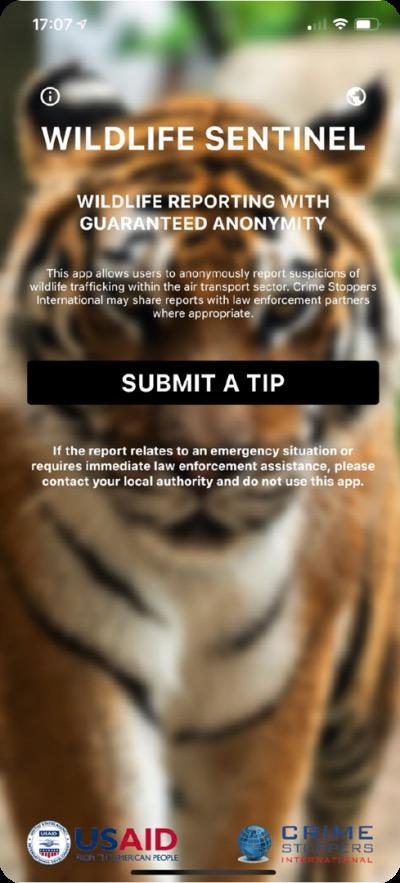
Applications enable instantaneous anonymous reporting of suspicious activities or alleged possession of wildlife contraband. Various apps are currently available for either authorities, the private sector and/or the general public, effectively enhancing enforcement capacity through realtime incident reporting.
Training programs and resources for front-line personnel equip them with the knowledge to operate screening tools and identify high-risk behaviours. Both initial and ongoing training is important to maintain standards by equipping personnel with the most up-to-date knowledge to ensure continued operational efficiency and ability to identify IWT trends. Training may involve practical demonstrations, information sessions or resources, and/or simulations of real-world situations where they are required to identify wildlife contraband. Personnel should also be familiar with the protocols for the preservation of samples as evidence for prosecution, detainment of offenders and communication channels with law enforcement.
This report aims to analyse existing and potential screening tools available to counter wildlife trafficking at international ports of entry. It is expected that not all screening technologies will be suitable in every situation, however there are a variety of options available which should suit most stakeholders based on their technical, financial and personnel capacity. The primary goal of the final report is to support law enforcement, government agencies (including customs and border authorities) and the private sector in the selection of screening tools best suited to their needs, whilst encouraging collaboration and information-sharing between sectors to support regulatory and law enforcement efforts to prosecute wildlife crime offenders and disrupt IWT activity.
NOTE TO READERS
The following report has been developed to assist the private sector, government authorities including customs and border forces, and other relevant stakeholders in understanding the IWT and the screening tools which are currently available, under development, or may be adapted to detect wildlife products, including fauna and flora. The primary aim of this report is therefore to support industry and government bodies in the selection of screening tools best suited to their financial and technical needs, whilst considering their main priorities and operational requirements.
The report is divided into three main parts, including 1) tools and technologies currently available for contraband screening, 2) stakeholder perspectives including the challenges, benefits and gaps associated with tools currently in use or under investigation, and 3) a conclusion and recommendations regarding the development of innovative solutions to tackle the IWT.
Part one (“Tools and Techniques”) consists of two major sections, with the first being a scientific literature review of publications detailing the use or development of detection tools for contraband screening in airports, mail facilities, vehicle border checkpoints and maritime ports. The aim of this section is to identify the tools and technologies either currently available or under development to provide a broad understanding of existing capabilities. In addition to the scoping review on screening tools, the second part takes into consideration the grey literature to gather publicly available information related to tools not captured by the review, including non-governmental organisations’ (NGO) reports, discussion with relevant stakeholders and information available on the world wide web.
The second part of the report (“Stakeholder perspectives and challenges: case studies”) aims at gathering knowledge from experts and stakeholders actively developing or implementing tools which show promise for IWT detection. Here, we explore the gaps and challenges encountered with the implementation of select screening tools based on the analysis of questionnaires conducted in April 2023 and interviews in April-May 2023. A secondary aim of this report is to therefore encourage collaboration between private industries, NGOs, government agencies, law enforcement and other stakeholders to improve information-sharing capacity and to strengthen the use of technologies to support compliance and law enforcement efforts. It is hoped this report will promote the importance of knowledge, technology and expertise sharing between these sectors to better improve detection efforts and legislative enforcement.
The final part (“Conclusion and recommendations”) is aimed at offering solutions to tackle the IWT, with consideration of the screening tools explored in this report and challenges highlighted by stakeholders. Here, we combine knowledge obtained through the literature review in part one and interviews conducted in part two to offer a summary table comparing screening tools, by assessing associated technologies, costs and resource requirements. This final part also reflects on the findings of this report to draw recommendations.
A multi-sectoral approach is required to tackle the IWT; hence, we aim to highlight that stakeholder engagement and collaboration is essential to ensure success. Our report provides practical solutions and information designed for direct application by public and private stakeholders.
The IWT is a multi-billion-dollar industry and major transnational environmental crime (GFI, 2017). IWT is an all-encompassing term for the illegal movement of flora and fauna which can take many forms. Animals can be traded live or are poached for their various parts, including bones, scales, meat, horns, skin, teeth, bile or blood. The raw materials themselves can be altered into powders, liquids, or other forms. These products are used for a wide range of applications including traditional medicines, clothing and accessories and some products hold cultural or spiritual significance (Uddin et al. 2022; UNODC, 2020). Plants are also traded as certain species are highly valued for their timber, cultural, medicinal, or ornamental properties (Margulies et al. 2019).
Whilst there is a legal wildlife trade governed by international, regional and national guidelines and regulations, the illegal trade enables the over-exploitation of highly endangered fauna and flora, even sometimes to the point of extinction. The trade is a transport intensive activity as products are moved worldwide through a series of complex, established routes by organised criminal networks. Legal transport chains distributing goods are consistently exploited by these networks as a means to distribute wildlife products to consumers globally. The modern trade is facilitated by the internet and social media, as well as heightened demand and wealth in some regions, thereby accelerating the decline of target species populations. The IWT is further facilitated by limited resources, lack of political will, corruption, non-compliance within the transport sector and weak governance in source regions. With enhanced accessibility to the sale of wildlife products and an increasingly interconnected society, additional safeguards must be implemented to prevent wildlife trafficking.
CONSERVATION CONSEQUENCES
The unregulated, over-exploitation of vulnerable species facilitated through the IWT poses a threat to species populations. The United Nations Intergovernmental Science-Policy Platform on Biodiversity and Ecosystem Services (IPBES) Report estimated that one million species are at risk of extinction due to human causes, including IWT activity (IPBES, 2019). Many targeted species are endangered or threatened with extinction, such as African elephants, pangolins, rhinoceros, helmeted hornbill, rosewood, and many others. Unfortunately, the scarcity of these species also increases their value. Each year, thousands of tonnes of wildlife products are trafficked worldwide, making wildlife crime one of the largest drivers of biodiversity decline. The loss of biodiversity disrupts ecosystems and has a major impact on human health and quality of life. Not only are there severe consequences due to biodiversity loss, but this imbalance and movement of wildlife in itself is a risk to human health through the close interactions facilitated between humans and wildlife, thereby providing an opportunity for novel emerging infectious diseases and zoonoses to spread. Invasive or alien species may also be introduced through these practices, as well as the diseases or pathogens they harbour, which can have devastating impacts on local wildlife populations, livestock or agricultural practices, therefore destabilising ecosystems and generating novel biosecurity risks. As the international IWT heavily relies on exploiting pre-established transport routes, transit points must be sufficiently monitored to deter wildlife trafficking networks and protect national biosecurity.
TRANSPORT ROUTES
Every year, millions of passenger flights, postal/courier packages and shipping containers are in transit globally, providing a multitude of opportunities for traffickers to conceal wildlife products amongst the legal commercial carriage of goods or persons. Smugglers have been known to move animals using an assortment of techniques, including concealed on their body or in luggage during air transport, smuggled in postal/courier packages or items of mail, or hidden amongst shipping cargo. Wildlife crime syndicates typically use organised, coordinated, well-established routes and practices designed to evade detection. The maritime sector presents a particularly important route for traffickers with more than 800 million containers being transported globally each year. It is estimated that up to 90% of the IWT is trafficked via maritime routes, however less than 2% of
containers are physically inspected, meaning wildlife products can be easily concealed (UNODC, 2012; Zavagli, 2021). As such, legal transport chains are being exploited as a loophole for the illegal trade to occur. It is therefore vital to effectively monitor these routes to ensure compliance with transport sector regulations, public health and biosecurity guidelines, and ensure effective prosecution of actors to disrupt the IWT distribution chain.
CONCEALMENT TECHNIQUES
A variety of concealment methods have been used by wildlife traffickers in an attempt to smuggle products while avoiding detection. The techniques are constantly changing to evade detection by enforcement agencies and must be taken into consideration when using screening tools. Some techniques are aimed at changing the shape or appearance of the product, while others may mask their scent or ability to detect trace components. In packages or cargo, the choice of “filler” is dictated by the cost, legality of the filler, ease of obtainment and whether it is of similar shape and size of the contraband (EIA, 2020). A variety of other techniques are used to hide the identity of wildlife products including, but not limited to, falsified or fraudulent documentation, transhipping or the use of transit countries, failure to declare contents, or concealment amongst other goods. There is a known connection between the techniques and networks used for the trafficking of wildlife and other illicit substances, such as narcotics, where it has even been shown that the IWT, notoriously a low-risk high-reward crime, has been used by criminal networks to test routes and methods before they are used for higher stakes products (van Uhm et al. 2021).
CHALLENGES TO ENFORCEMENT AND LEGISLATION
One of the main challenges to the detection and control of the IWT is the availability of funding and resources to enable sufficient enforcement of relevant regulations and legislation. The Convention on International Trade in Endangered Species (CITES) enforced in 1975 and signed by 184 parties is an international treaty to regulate the international trade in wildlife products, especially to avoid the over-exploitation of vulnerable or endangered species. The CITES permit system is in place to control the international movement of vulnerable species, thereby ensuring the conditions for authorising the trade are fulfilled. Countries signatory to this agreement have incorporated policies into their local legislation in order to uphold the requirements of CITES, however these must then be adequately enforced to prevent the overexploitation of wildlife and ensure products are authorised for export or import. Without sufficient enforcement, the legislation is effectively useless. Non-CITES species, particularly those whose populations have not been recently assessed, are also in demand and could be of concern. Even where permits have been provided, fraudulent and falsified documentation is common and loopholes in legislation are often exploited.
The United States Agency for International Development (USAID) Reducing Opportunities for Unlawful Transport of Endangered Species (ROUTES) Partnership was implemented between 2015 and 2021 in an effort to disrupt wildlife trafficking activities. This initiative brought together transport and logistics companies, government agencies, development groups, law enforcement, conservation organisations, academia and donors, with a particular focus on improving data analytics, engaging corporate leadership, improving staff training to assist law enforcement, strengthening policies and protocols, and increasing collaboration between the transport sector and law enforcement. This partnership focused mainly on strengthening air transport routes (ROUTES, 2022). Similarly, in 2022, the International Maritime Organisation (IMO) ‘guidelines for the prevention and suppression of the smuggling of wildlife on ships engaged in international maritime traffic’ were adopted to complement recommendations previously provided by relevant organisations and assist with reducing wildlife trafficking through the maritime sector (IMO, 2022). These initiatives highlight the awareness raised for wildlife trafficking and the need for a multisectoral, collaborative approach. One of the deficiencies identified by these initiatives was the lack of screening tool availability, but also a desire to improve these capabilities across sectors as the impacts of the IWT are recognised.
IMPORTANCE OF CONTRABAND SCREENING
Resource availability is a key challenge to upholding IWT regulations. With a multitude of people and goods passing through borders on a daily basis, the ability to control and manage, searching for and accurately identifying contraband can be overwhelming and authorities need to be sufficiently supported. Efficient and effective screening tools are essential in order to mitigate the risk for transport chains to be exploited by wildlife crime syndicates. It is also vital to enable enforcement of local and international legislation, including CITES, and to support the implementation of the IMO guidelines for the prevention and suppression of the smuggling of wildlife on ships engaged in international maritime traffic. Customs and border force agencies play an integral role in the detection and reporting of wildlife seizures and are reliant on efficient tools and technologies for efficient screening of high-risk consignments and persons. There have been significant developments in the transport sector for the capability of screening tools and technologies, particularly for highly valued contraband such as drugs and weapons. Considering the widespread impacts of the IWT, the adaptation of standardised protocols is vital to equip authorities with the tools and knowledge required to tackle the trade.
The ability to confiscate and report items, and later share this information with the relevant authorities, is crucial to disrupt the wildlife distribution chain. Due to the globalisation of the trade, collaboration and coordination is imperative between local and international authorities and other stakeholders to understand trade dynamics. Unfortunately, too often inappropriate tools and ineffective communication between authorities hinder their capacity to detect wildlife trafficking and secure the chain of custody of evidence required to successfully prosecute offenders. There needs to be established protocols and real-time communication and coordination between the relevant authorities. This coordination is also essential to determine whether seizing the product is best, or rather triggering an investigation in an attempt to follow the chain to a higherlevel arrest. Information, expertise and experience sharing amongst the relevant authorities, customs and the private sector is crucial to enable a multi-faceted, transdisciplinary approach to enhance capabilities.
This study aims to summarise the screening tools and techniques currently available or under development for the IWT. The report will therefore consist of three main sections:
1. Literature review to assess scientific publications detailing screening tools for wildlife and other contraband detection.
2. Stakeholder perspectives regarding accessibility and adaptability of screening tools currently in use, including their benefits, disadvantages and limitations.
3. An overview of selected tools which are deemed most appropriate for wildlife contraband screening based on parts 1 and 2, designed to assist the private industry, customs authorities and other stakeholders in making a decision on which technologies are worth investing in based on their needs and resource availability, as well as recommendations regarding the development of innovative solutions to tackle the IWT.
Part one of this report consists of a scoping review of screening tools available for contraband detection and how they may be adapted for wildlife. Following this review is further information on additional tools and technologies which are available, but were not captured in the literature.
1.1 TOOLS AND TECHNIQUES DESCRIBED IN THE LITERATURE
Without the application of efficient screening tools at international ports, wildlife smugglers will continue to evade authorities with potentially devastating consequences. Many screening tools have been developed for the detection of other illicit contraband, however the efforts devoted to designing or adapting tools for wildlife detection are limited. Therefore, we aimed to investigate the literature for tools and technologies which are currently available for the detection of illegally trafficked wildlife contraband at international ports, including postal/courier services, airports, vehicle border checkpoints and shipping ports. For the purposes of this review, we have categorised the detection tools explored based on their mode of action and properties, divided amongst:
IONISING RADIATION
These techniques may be relevant for border control authorities, in particular customs, security and biosecurity agencies, and even the private sector. Where deficiencies were evident, literature describing tools either developed or investigated for the detection of other illicit contraband was assessed. Advantages as well as limitations and shortcomings of the tools described and their adaptability potential for wildlife trafficking detection have also been explored.
METHODS
A scoping review was conducted across six online databases to capture the literature (including scientific reports, reviews and conference proceedings) published between 1990 and 2023 detailing screening methods and tools which have either been investigated, or are currently in use, for wildlife trafficking or other illicit contraband at international ports. Only four articles detailed methods for IWT detection. In accordance with the selection criteria, we then focused on a total of 145 articles, consisting of 59 peer-reviewed scientific articles and 86 conference proceedings, related to techniques and tools used to detect other types of illicit contraband rather than IWT specifically.
RESULTS
64 different inspection systems, or system variations (including AI), divided across six categories based on their mode of action were identified through this literature review (Table 1). Detection methods described were applicable for a wide variety of contraband including narcotics and other drugs, weapons, human trafficking, nuclear waste, special nuclear materials, explosives, chemical warfare agents, organic and inorganic materials, radiological materials and other hazardous substances. A description of each of the 64 different tools is included in Appendix 1 of this report.
TABLE 1.
Inspection systems for illicit contraband detection described in selected peer-reviewed articles and conference proceedings published between 1990 and 2023 inclusive.
IONISING RADIATION
High energy [transmission] x-ray
Medium energy x-ray
Continuous wave x-ray
Dual-energy x-ray
Dual-angle x-ray
Energy dispersive x-ray
X-ray backscatter imaging
Artificial intelligence and x-ray
Gamma radiation
Gamma resonance technology (GRT)
Computed Tomography (CT)
Multi-Detector Computed Tomography (MDCT)
Megavolt Computed Tomography (MVCT)
Passive gamma radiation detection [K-40]
Passive radiation detection
PHOTON AND NEUTRON INTERROGATION TECHNIQUES
Tagged neutron inspection system (TNIS)
Pulsed fast thermal neutron analysis (PFTNA)
Pulsed fast neutron analysis (PFNA)
Fast-neutron resonance radiography (FNRR)
Fast neutron activation analysis (FNAA)
Neutron backscatter detection
Neutron radiography (with CT and AI)
Integrated photon and neutron radiography
Fast neutron scattering analysis (FNSA)
Fast neutron transmission spectroscopy (FNTS)
Fast neutron and gamma radiography (FNGR)
Fast neutron and x-ray cargo scanner
NUCLEAR TECHNIQUES
Photoneutron induced gamma analysis / Photoneutron based prompt gamma-ray neutron
activation analysis (PGNAA)
Photofission system
Cosmic ray muon tomography
The nuclear car wash scanning system
Nuclear quadrupole resonance (NQR)
Nuclear resonance fluorescence (NRF)
Low energy nuclear reaction imaging
Pulsed Photonuclear Assessment (PPA) inspection system
NON-IONISING RADIATION
Active millimeter wave imaging
Passive millimeter wave imaging
Ultra-wide band 3D microwave imaging scanner
High frequency ground penetrating radar
Terahertz spectrometry
Infrared imaging (IR)
Short-wave infrared imaging
TRACE DETECTION TECHNIQUES
Electronic nose (eNose) and volatile organic compound (VOC) detection
The surface acoustic wave and gas chromatography (SAW/GC) system
Single particle aerosol mass spectrometry (SPAMS) system
Aerodynamic assisted thermodesorption mass spectrometry (AATD-MS)
Atmospheric flow tube mass spectrometry (AFT-MS)
Ion mobility spectrometry (IMS)
Paper spray mass spectrometry (PS-MS)
Direct analysis in real time mass spectrometry (DART-MS)
Solid phase microextraction with explosive and ion mobility spectrometry (SPME-IMS)
Combined molecular property spectrometer (MPS) and gamma spectrometer
Container inspection system: Chemical (hand-held ion mobility spectrometer) and radiological (dual scintillation counter)
Detector dogs
Thermal desorption electrospray ionisation mass spectrometry (TD-ESI/MS)
Laser-induced immunofluorometric biosensor
Continuous flow immunosensor
Raman spectroscopy
Spatially offset Raman spectroscopy (SORS)
Surface enhanced Raman spectroscopy (SERS)
High-throughput trace-explosives detector
ACOUSTIC
Cantilever enhanced photoacoustic spectroscopy and quantum cascade laser (EC-QCL)
Acoustic/ultrasonic imaging
Smart containers
Desirable detection tool properties compared with the features demonstrated by the tools described in the literature. Additional information was derived from the world wide web to assist in the classification of these tools where the literature was scarce or did not explicitly describe some of these features. Similar tools (i.e. different variations of x-ray) have been grouped for the purposes of this table if they feature the same properties. The colours represent ‘yes’ (green), ‘maybe’ (yellow) and ‘no’ (red), unless otherwise indicated.
Techniques which have been used in wildlife trafficking detection.
Techniques which could be applicable for wildlife trafficking detection, but more research is required.
INSPECTION SYSTEM
IONISING RADIATION
X-ray
Gamma radiation/GRT
CT
Passive radiation detection
PHOTON AND NEUTRON INTERROGATION TECHNIQUES
TNIS / PFNA / PFTNA
Neutron backscatter detection
Neutron radiography
Photon and neutron radiography
FNAA
FNRR / FNSA / FNTS
FNGR
Fast neutron and x-ray scanner
NUCLEAR TECHNIQUES
PGNAA
Photoneutron induced gamma analysis
Photofission system
Cosmic ray muon tomography
The nuclear car wash
Nuclear quadrupole resonance
Nuclear resonance fluorescence
Low E nuclear reaction imaging
PPA inspection system
NON-IONISING RADIATION
Millimeter wave imaging
High frequency radar
Terahertz spectrometry
Infrared imaging
TRACE DETECTION TECHNIQUES
Vapour sampling / eNose
SAW/GC system
SPAMS system
AATD-MS / PS-MS
AFT-MS
IMS / SPME-IMS
DART-MS
Detector dogs
TD-ESI/MS
Biosensors
Raman spectroscopy
SORS
SERS
Screening tools specific to wildlife were severely lacking in the literature despite the scale of the trade. However, some of the techniques and technologies already available for other contraband may be adapted for the detection of wildlife, with consideration of the characteristics associated with these tools and the properties of wildlife products traded. Desirable detection tool features were identified across publications, including portability, non-invasiveness, efficiency and safety. These features were evaluated against each of the detection tools identified (Table 2). TABLE 2.
Trace-explosives detector
ACOUSTIC
C-QCL
Acoustic/ultrasonic imaging
Smart containers
*Safety of the technique itself, not the targeted material, not considering safety measures such as shielding. It is also important to consider the Inverse Square Law for radiation safety.
^Efficiency refers to the time taken for the screening tool to analyse a sample. In this instance, green indicates seconds, yellow between one and five minutes, and red greater than five minutes.
DISCUSSION
For each of the techniques described below, the following pictograms identify whether it may be used in the context of the carriage of goods or persons and which sector it may apply to. If crossed, it means the technique does not apply.
CONTAINERISED CARGO
1. IONISING RADIATION
Techniques utilising ionising radiation are typically the most widely used for contraband detection. The techniques described here enable determination of the internal properties and contents of objects including shape, density, location, relative atomic number and effective nuclear charge (Zeff). These machines provide a visual interface for operators and can distinguish between different materials. Ionising radiation scanning systems are versatile and have been deployed in various environments including airports, postal/courier facilities, vehicle border crossings and maritime ports. One of the main disadvantages with these systems however is the health and safety concerns for personnel, as ionising radiation removes electrons from molecules and leads to the formation of oxygen-derived free radicals which damage cellular DNA (Borek, 2004). Therefore, repeated or prolonged exposure beyond certain thresholds can impair tissue and/or organ function (WHO, 2016). Radiation sources are controlled worldwide by the International Atomic Energy Agency (IAEA) safety standards, under which companies and users are required to hold a license prior to operation and all radiation sources must be registered (IAEA, 2014). Operators must also adhere to standards of operation, where in turn training and licensing effectively means the health and safety concerns are reduced through correct operation. In terms of visualisation, high-energy x-rays, gamma-rays and neutrons are those which have the required penetration capabilities for screening cargo containers (Liu et al. 2008). The two main systems utilising ionising radiation are x-ray radiography and computed tomography, meanwhile gamma or passive radiation detection may be employed in certain circumstances.
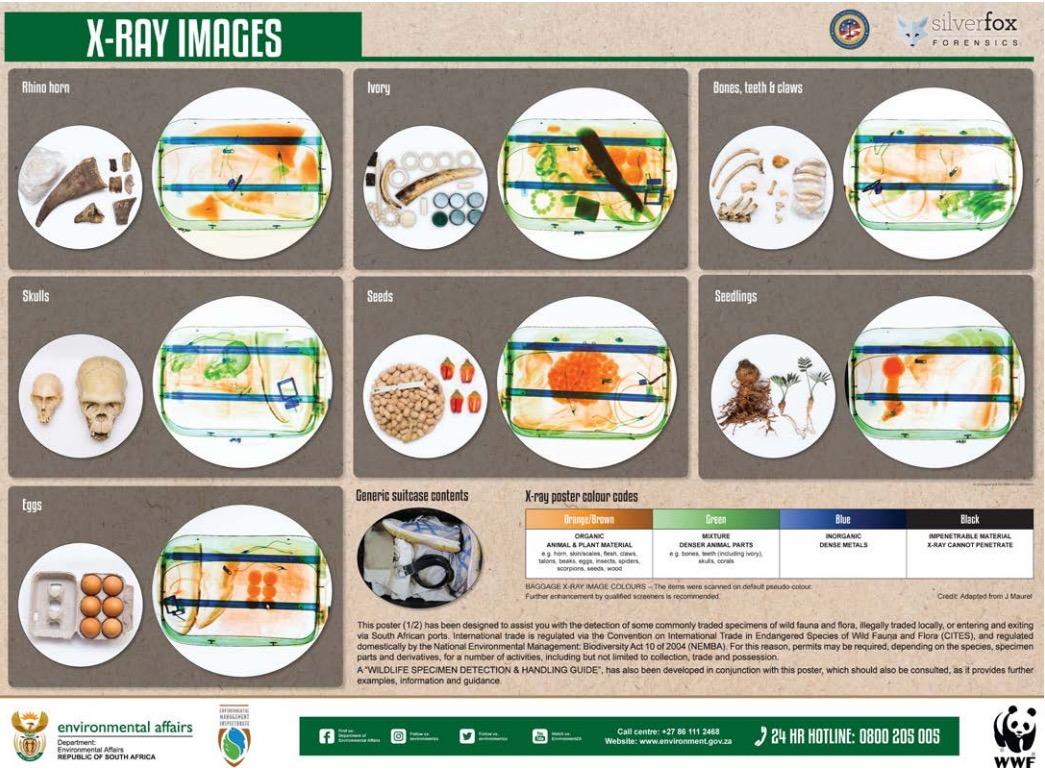
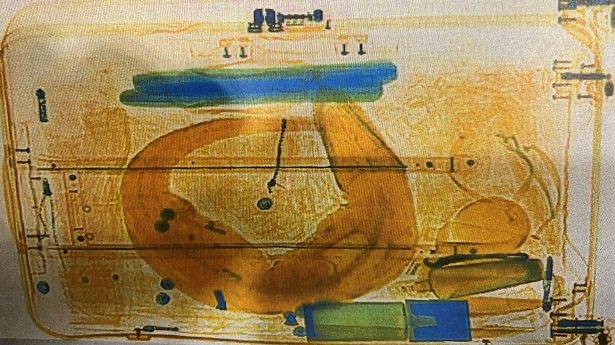
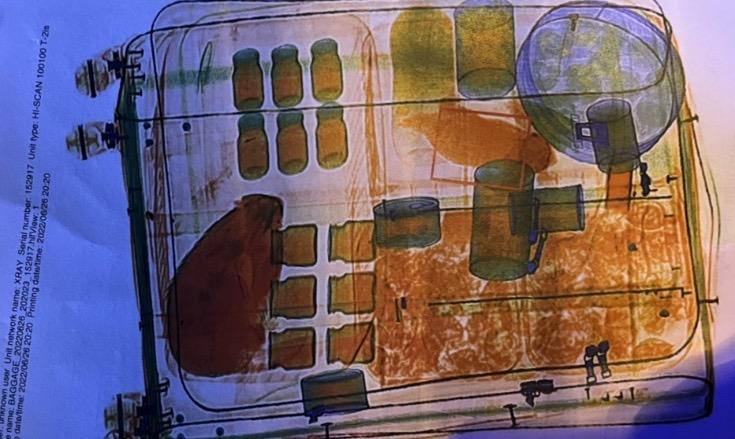
X-ray radiography involves the generation of high-energy photons which are directed through the object of interest, such as a vehicle, cargo container, luggage or item of mail. The degree to which these photons are absorbed or reflected provides an indication of the density of the material (for example, photons pass through lower density materials but are absorbed by higher density materials). The varying degrees of absorption detected are used to generate an image which is then interpreted by trained personnel to identify concealed items (Khan et al. 2020). Variations in x-ray systems have been employed for the detection of contraband in luggage at airports, postal/courier facilities, vehicle inspection and cargo containers. X-ray systems explored through this review include high energy conventional transmission imaging (Armistead 1999; Arodzero et al. 2019; Kolkoori et al. 2015), medium energy x-ray (was under development for cargo container screening; Kwak et al. 2002), continuous wave (Van Liew et al. 2016), dualenergy (Bogowicz et al. 2020; Chang & Nguyen, 2010; Liu et al. 2008), dual-angle (Lim et al. 2021), energy dispersive (Drakos et al. 2017; Koutalonis et al. 2009) and backscatter (Arodzero et al. 2021; Arodzero et al. 2019; Dinca et al. 2008). X-ray systems can either provide single or dual views in pseudo-colours which facilitate material differentiation, for example metals and organic materials, based on density and atomic number (Abidi et al. 2006; Khan et al. 2020).
Conventional transmission x-ray systems have been widely used in the aviation industry for luggage scanning with the advantage of rapid inspection. However, these systems lack discrimination power between similar density objects and only provide simple one-view images which prevent acquisition of 3D information (Khan et al. 2020). These systems have largely been replaced by dual energy x-ray inspection systems, which use low and high energy x-rays to enable better material discrimination. This system enhances the functionality of single energy x-ray systems by providing two 2D images, one obtained from the top and the other from the side, to better facilitate object discrimination (Khan et al. 2020; Lim et al. 2021). Backscatter technology is another popular alternative widely used in luggage, postal/courier, vehicle, cargo container and personnel scanning, wherein the low energy x-rays reflected from the target are detected. Backscatter may be used on its own or in combination with the transmission image obtained from conventional systems. This technique is ideal for inspecting organic (low-Z) materials, such as humans or wildlife (Dinca et al. 2008; Khan et al. 2020).
AI and image optimisation software (i.e. adaptive neuro-fuzzy classifier for weapon detection, deep learning detection of threats, lobster eye objective, angle-energy space analysis, post-processing of images) can be applied to assist with automated image recognition based on a database of learnt images and enable the production of high-quality images, respectively (Askari et al. 2021; Lopez et al. 2013; Jaccard et al. 2016; Speller et al. 1996; Xu et al. 2016). AI software for the automated detection of weapons, explosives and other dangerous goods have been developed to improve the accuracy and efficiency of security inspections where employed (Al-Najdawi, 2014; Cui & Oztan, 2019; Kaur & Kaur, 2016; Petrozziello & Jordanov, 2019; Pourghassem et al. 2011; Song et al. 2022; Ye et al. 2020).
Depending on the application, x-ray systems have the added benefit of portability and ability to produce high-quality images useful for characterising a wide range of contraband. While these systems are adaptable, they are not specific and typically require trained operators to distinguish between objects. They can however be paired with other detection methods to enhance screening capabilities. Airports may use the dual-view x-ray scanners, or rarely the single view x-ray scanners, to detect wildlife if operators are adequately trained or software is applied to assist with automated detection. X-ray systems are appropriate for investigating animal anatomy, particularly bones, horns, ivory and teeth, but can also enable detection of other products through the distinction of organic materials. However, many modern airports use more advanced screening methods, such as CT.
1.1 X-ray radiography
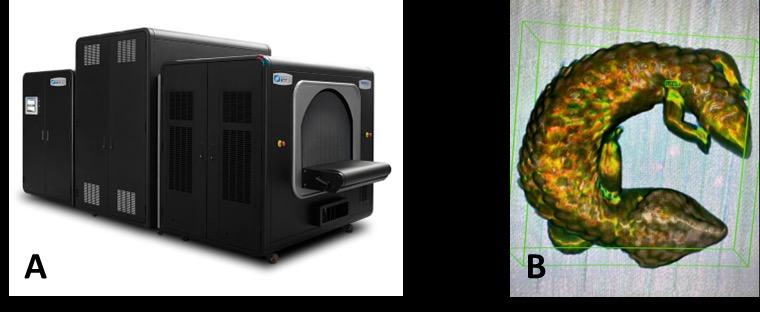
CT scanners, including multi-detector and megavolt variations, are used to produce high resolution images of cargo or luggage with the advantage of characterising more complex objects and providing positioning information. A series of x-ray generators rotate around the object, producing multiple cross-sectional images which are compiled to create a 3D image. Therefore, these systems provide enhanced imaging capabilities (in comparison to the conventional x-ray scanners previously described) and are widely used to screen luggage and cargo containers. However, these systems are not portable or hand-held, are typically more expensive than 2D x-ray scanners and some units may require a longer scanning time. This technique is also non-specific and has been applied to the detection of narcotics, weapons, explosives, nuclear material and other contraband with very high accuracy (Armistead 1999; Arodzero et al. 2019; Arunachalam et al. 2005; Bendahan & Garms, 2008; Grabherr et al. 2008). CT systems were developed and implemented in airports in the late 1990s to scan carry-on luggage and are still currently being used for advanced screening (Runkle et al. 2009). While not described in the literature cited, AI software has been developed specifically for the automated detection of wildlife contraband in luggage, mail and cargo. Project SEEKER developed by Microsoft enables scanning of 3D images of baggage to automatically detect the presence of animal products (Haines, 2022). Similarly, Project Vikela from United for Wildlife utilises enhanced technology to scan images of luggage and cargo for the automated detection of rhino horn, a highly valued and trafficked commodity from Africa (United for Wildlife, 2023). Artificial intelligence and machine learning are currently being explored to train software already implemented to automatically recognise a wide range of wildlife products. Australian researchers have also trialled the implementation of innovative technologies including 3D X-ray CT technology using Real Time Tomography with an algorithm for the automated detection of wildlife, which has shown promise for identification of products in mail and luggage (Pirotta et al. 2022).
1.3 Gamma radiation
Gamma radiation technology uses higher-energy electromagnetic radiation compared with x-rays and has primarily been considered for cargo container, postal/courier and vehicle screening. It can distinguish between low- and high-density materials based on the photoelectric effect and Compton scattering produced due to the atomic number of the material of interest (Hussein et al. 1997; Molder, 2009). It is occasionally used for contraband detection, particularly for radioactive materials, such as nuclear weapons or radioactive isotopes, by measuring the amount of ionising radiation emitted by an object. Gamma resonance technology (GRT) is a non-destructive method of analysing cargo contents which avoids the issue of induced radioactivity whilst providing high penetrability and identification of elemental composition through combined absorption and fluorescence capabilities. The unique atomic and molecular structures of different materials cause them to interact with the gamma radiation emitted from the detector in different ways and produce unique energy spectra (Brondo et al. 2003; Hussein et al. 1997; Molder, 2009). This technology has been used for the detection of hidden contraband including explosives, drugs and weapons. While no case studies for wildlife are available, it is possible that GRT could be used to analyse the unique anatomic and molecular structures of these products.
1.4 Passive radiation detection
In contrast to the active gamma radiation methods described previously, passive gamma radiation detection has been described as a potential non-intrusive technique for the detection of drugs, such as tobacco and marijuana, in cargo containers (via radiation portal monitors) or in the post. These passive detection systems use specialised equipment such as gamma-ray spectrometers or passive dosimeters to identify the presence of the radioactive isotope potassium-40 (K-40) which
is concentrated in the leaves of plants due to their role in photosynthesis (Arendtsz, 1996; Myers & Hussein, 2007). The detection of other forms of radiation emitted by fissionable materials has been proposed, with passive sensors explored for installation in shipping containers to identify nuclear weapons or explosives during transit (Janssens-Maenhout et al. 2009). Passive detection techniques are however susceptible to interference from background radiation and feature a strong dependence on the cargo and packaging type used (Arendtsz, 1996; Myers & Hussein, 2007). Passive radiation detection is a technique that can be used to detect wildlife by measuring the natural background radiation emitted by living organisms, which is mostly due to the presence of radioactive isotopes such as carbon-14, potassium-40, and radon-222 in plant and animal tissues. Therefore, this technique may prove beneficial in the detection of illegal logging and other related activities whilst avoiding the safety concerns or costs associated with active ionising radiation techniques. However, this technique would not enable sensitive detection of wildlife materials and likely prompt excessive manual inspections to confirm the material present.
2. PHOTON AND NEUTRON INTERROGATION TECHNIQUES
Photon and neutron interrogation techniques enable contraband detection through the determination of elemental composition or ratios of interrogated materials. Ionising radiation is used in these methods where most employ pulsed or fast, thermal or non-thermal, neutrons or photons. Various photon and neutron ionising radiation interrogation techniques were uncovered throughout the review and are commonly used to screen for chemical, biological, radiological, nuclear or explosive materials (CBRN&E materials) and other hazardous substances. However, these inspection techniques are not used for wildlife detection and are unlikely to be useful for this application as they provide information about the elemental composition of materials. Whilst these methods are useful for cargo inspection, their applicability to wildlife products is questionable, particularly where organic materials cannot be differentiated. There are no known examples of these technologies being used for wildlife or similar materials, despite their widespread use in ports.
3. NUCLEAR MATERIAL DETECTION SYSTEMS
Nuclear based methods, which also use photon and neutron interrogation techniques, compare elemental information for material detection, such as nitrogen content for explosives. Nuclear material detection systems can be passive, wherein the radiation emitted from cargo is quantified (to see if it exceeds background radiation levels), or active, which detects secondary radiation emitted following neutron irradiation. An alternative to investigating nuclear materials in cargo containers and vehicles is through the use of cosmic ray muon tomography, which generates 3D images of cargo containers based on the Coulomb scattering of muons (Anghel et al. 2010; Armitage et al. 2009; Burns et al. 2016; Hohlmann et al. 2009; Thomay et al. 2012). Nuclear resonance fluorescence (NRF) further enables non-destructive inspection of cargo containers to determine the composition of threats such as narcotics, explosives, fissile materials, toxic materials and weapons of mass destruction based on their molecular structure (Alamaniotis et al. 2009). However, these techniques are unlikely to be appropriate for wildlife detection, especially where there is a reliance on detecting fissionable material. While organic materials may be detectable, distinguishing wildlife from other products would be difficult. However, a combined bulk detection method (used to determine the size and shape of suspicious objects) and trace detection method (detects trace contaminants and chemicals, with higher selectivity than bulk detection) may be suitable.
4.1 Millimeter wave and terahertz spectrometry
Non-ionising radiation techniques are also popular and avoid the safety concerns associated with ionising radiation, therefore they can be used for the inspection of people. Active and passive millimeter wave technology is employed to scan luggage, footwear and passengers passing through airports for the detection of concealed weapons, narcotics and other threats. Active millimeter wave scanners consist of two rotating transmitters which produce a special type of microwave (30 to 300 GHz) which passes through clothing but is reflected by skin and any concealed threats, wherein the receivers detect these waves and transmit images to an operator station. Alternatively, passive millimeter wave scanners rely on the detection of microwaves emitted by objects to create an image. Two- or three-dimensional images can be produced, however are minimally detailed and must be taken at short range (Harmer et al. 2020; Lang et al. 2000; Li et al. 2016; Liang et al. 2021; Salmon, 2020; Sheen et al. 1996; Sheen et al. 2001; Zech et al. 2011).
Image fusion technology has been explored to combine visual with millimeter-wave images to improve detection efficiency (Zhu et al. 2010). An ultra-wide band 3D microwave imaging scanner is used in the same way, for the detection of concealed contraband on persons or in luggage, and may address some of the shortcomings of the standard millimeter wave systems, such as image resolution, and can be used in combination with automated target recognition software (Carrer & Yarovoy, 2014; Rezgui et al. 2015; Suryana & Siregar, 2011). An alternative method described for imaging passengers and postal/courier items is terahertz spectrometry. Terahertz electromagnetic frequencies occupy the region between the infrared and microwave bands and have been demonstrated in passive and active detection systems. The shorter wavelengths compared with microwave technology generate greater spatial resolution and have been used to actively uncover concealed threats in mail, such as weapons, explosives and powdered or liquid illicit substances, or passively detect concealed contraband on persons (Hiromoto et al. 2016; Kawase et al. 2003; Kowalski et al. 2014; Lu et al. 2006; Murrill et al. 2004; Sasaki et al. 2007; Shchepetilnikov et al. 2020; Shen et al. 2005; Yamzaki et al. 2015). These technologies, both millimeter wave and terahertz spectroscopy, have been deployed in airports and mailrooms worldwide. While they have not been used to detect wildlife products, they could potentially be adapted to detect wildlife hidden on persons, but this would require modifications and additional testing to ensure their effectiveness.
4.2 Infrared imaging and radar
Infrared imaging is a non-invasive method which uses electromagnetic radiation of a higher frequency and has been applied to the detection of concealed weapons, explosives and narcotics in packages or concealed on persons in real-time. Infrared imaging relies on the difference between body temperature and the temperature of the concealed object, but can also detect heat signatures emitted by living organisms and the thermal signatures of inanimate objects. Whilst it has proven a fairly reliable method with minimal false detections and the added benefit of portability, the visibility of a concealed object decreases over time as the temperature difference between the object and the human body decreases (Cho & Tin, 2010; Kowalski et al. 2014; Nelson et al. 2020; Schweitzer et al. 2018). This could be used to detect wildlife products smuggled on persons, or alternatively may be able to detect body heat signatures of live animals, but will be ineffective where temperature variations are minimal.
Meanwhile, high frequency ground-penetrating radar has been investigated as an interesting innovation for the detection of contraband in cargo containers, such as drugs hidden amongst icefilled containers of fish. However, further investigation would be required to make this a viable method of detection beyond this application (Pile et al. 2014). All of these non-ionising methods typically require trained human operators to interpret images, however investment in AI and automated detection software could enhance their reliability. These technologies could provide promising alternatives for the detection of concealed wildlife products, either smuggled on persons or in packages, but have not yet been explored.
5.
TRACE DETECTION TECHNIQUES
5.1 Ion mobility spectrometry and other spectroscopic techniques
Trace detection refers to the detection of materials which cannot be seen with the naked eye, such as particles on surfaces, odours or volatile organic compounds (VOC). Ion mobility spectrometry (IMS) is one of the most popular methods for trace detection of volatile and semi-volatile compounds and has been used to uncover explosives, illicit drugs and chemical warfare agents. Vapour samples are converted to ions at atmospheric pressure, after which these ionised molecules are accelerated by an electric field and characterised by their gas phase mobilities. Surface sample particulates can also be collected and vapourised by thermal or laser desorption or solid-phase microextraction (SPME) techniques. Vapour samples can be collected non-invasively, but solid samples may require more invasive sampling. IMS exists as hand-held or desktop system variations, where the in-field devices are desirable given their rapid scanning time, low detection limits, portability and ease of use. However, limitations may include the possibility of false positives and the need for a reference library of known compounds for accurate identification. These devices are employed in airports, but may be broadly applied to postal/courier services, cargo containers and other transport modalities (Ehlert et al. 2013; Ewing et al. 2001).
Multiple other spectrometry systems have been also used, particularly to characterise traces of chemicals and explosives, but potentially also for CBRN&E materials. The single-particle aerosol mass spectrometry system (SPAMS) (Steele et al. 2008), thermal desorption electrospray ionisation mass spectrometry (TD-ESI/MS) (Huang et al. 2013), solid-phase microextraction with explosive and ion mobility spectrometry (SPME-IMS) (Perr et al. 2005), and aerodynamic assisted thermodesorption mass spectrometry (AATD-MS) (Zhao et al. 2017) methods all analyse aerosolised particles by time-of-flight and mass spectrometry, which may be derived from air or surface samples of people, packages, luggage and potentially even cargo containers. Aside from the desorption of solid samples, little sample preparation is required. All four methods provide fast, non-contact and sensitive screening but work best in a controlled environment with minimal airflow. SPME-IMS also features the advantage of being able to detect homemade explosives without taggant, even in containers or large enclosed spaces (Perr et al. 2005). Despite their benefits, it is unclear if some of these systems are currently deployed at border crossings. These tools are not currently used for wildlife detection; however, it is possible that VOCs associated with various wildlife products could be detected through these methods.
Atmospheric flow tube-mass spectrometry (AFT-MS) uses air or surface samples and therefore could be applied to the detection of explosives or drugs, such as fentanyl, in a variety of settings. Samples can be analysed directly (vapour detection) or by thermal desorption in real time, where vapour concentration is determined in accordance with the flow and collection time. This method has been shown to detect part-per-quadrillion levels for explosives, drugs and other chemicals (Ewing et al. 2022). Paper spray mass spectrometry (PS-MS) is an alternative method which can analyse both solid and liquid samples. It does however require more sample preparation, as a sample must be applied to the paper and dried, after which a spray solvent is added before electrospray-like soft ionization occurs. A proof-of-concept has been developed using commercially available mass spectrometers, which could be applied for the detection of chemicals, explosives or drugs on surfaces at all types of ports and would be suitable for in-field applications. To detect the chemicals of interest however, standard calibration curves would first need to be developed and input into the system (Nguyen et al. 2021). Direct analysis in real time mass spectrometry (DART-MS) applies an electric potential to create a glow discharge plasma to enable ionisation of the desorbed sample. Ions are then analysed by the mass spectrometer to provide a characteristic spectrum for the material being analysed, from which chemicals can be identified. DART-MS is capable of analysing trace solid, gaseous or liquid materials on surfaces, including luggage, clothing, and others in real-time. Sample integrity is maintained and minimal or no sample preparation is required, decreasing the limit of detection and analysis time required compared with other methods (Gross et al. 2014; Nilles et al. 2009). Meanwhile, the high-throughput trace-explosives detector automatically collects particulates and analyses them through an ion-trap mass spectrometer. Compressed air detaches particles from the surface of the target before the particles are vapourised by heating. A prototype boarding gate has been trialled in airports to detect explosives particulates from passing people and tickets (Takada et al. 2016).
Therefore, while this technique is specific to explosives detection, the concept of particle detachment and rapid scanning system as people move through the airport may be useful for other applications to determine wildlife smuggled on persons, for example.
The surface acoustic wave and gas chromatograph (SAW/GC) system enables the analysis of gas composition and VOCs for the detection of drugs, explosives and other harmful chemicals associated with persons, luggage, vehicles or other modalities. The SAW/GC detection process consists of two main steps. Firstly, the sample gas is collected and preconcentrated in an enrichment tube. A carrier gas (He) and large current pulse is applied to the tube to rapidly heat and desorb the sample before it flows with the carrier gas into the column. The column is heated to separate the mixed target gases and as each compound exits the column, it is temperaturecontrolled and condensed/adsorbed onto the surface of the SAW device. The oscillation frequency shift induced is detected and analysed to identify and quantify the target species present. The system is highly sensitive, non-selective and features a rapid response time (He et al. 2013). It is possible that variations of all spectroscopy methods explored in this review could be used to detect traces of wildlife products in various forms, provided the appropriate method is used for sample collection and a database of known signatures is created and made available for identification purposes.
However, these methods have not yet been investigated for the detection of wildlife products. It is recommended that, given how widespread these technologies are, the use of these techniques for wildlife contraband detection should be investigated.
5.2 Detection animals
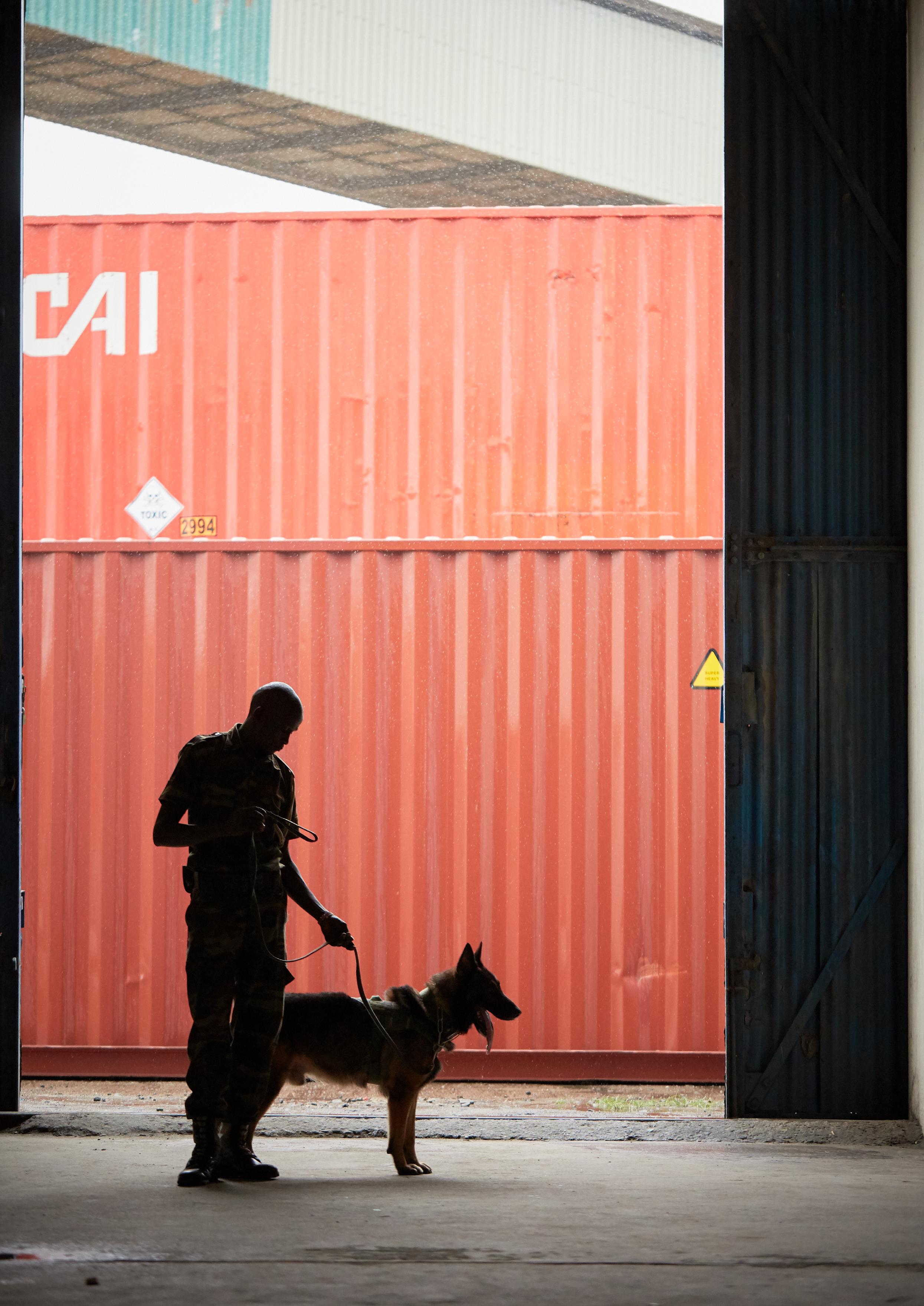
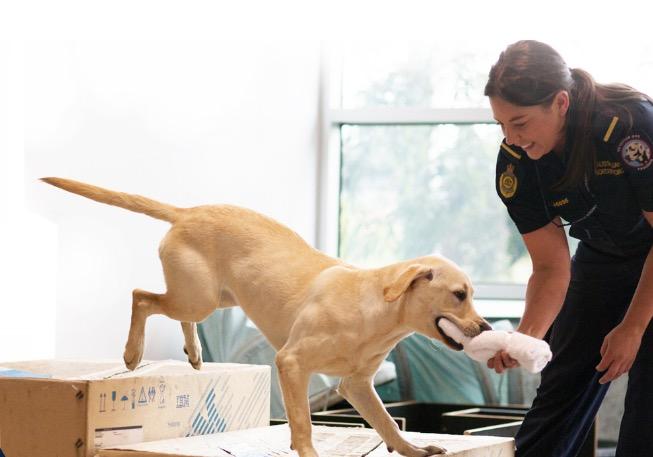
Detection animals have proven invaluable in olfaction-based applications, such as the detection of chemicals, explosives, pathogens and missing persons. While not captured in the literature, animal olfaction models also include pigs, rats and honey bees (To et al. 2020). Animals such as dogs can be trained to target specific scents, even multiple at a time, and indicate the presence of these scents to their handler with high accuracy and fast detection. Dogs are highly selective and can even detect target odours in the presence of background or distracting odours (Furton & Myers, 2001). Detector dogs have been successfully trained to detect commonly trafficked wildlife contraband, such as ivory, rhino horn and pangolin scales, and are employed at border checkpoints (Braun, 2013; Conservation South Luangwa, 2022; IFAW, 2021; Narayanasamy et al. 2023; Scent Imprint Conservation Dogs, 2023; TRAFFIC, 2017). The Remote Air Sampling for Canine Olfaction, commonly known as RASCO, detection system has successfully been deployed to detect the presence of wildlife contraband in cargo containers through canine examination of air samples (Wickens, 2001; WWF, 2018).
Despite their accuracy, there are limitations with the implementation of detector dogs, largely associated with the large investment in training required and constraints of use under certain environmental or operating conditions, for example overheating and excessive panting can reduce dog and handler performance (Gazit & Terkel, 2003), while the sensitivity of canine detection to wildlife may be lowered by strong-smelling obfuscation items (Narayanasamy et al. 2023). Meanwhile, other animal models have shown promise for wildlife trafficking detection, where African giant pouched rats have been trained to detect trafficked smuggled hardwood timber and pangolin parts in shipments between Africa and Asia (The Guardian, 2016).
5.3 Electronic nose
Mammalian olfactory systems have been mimicked in the form of electronic nose (eNose) which can detect one or multiple vapour targets or VOCs. This technology first requires extraction of an air sample or vapours followed by real-time analysis, often in combination with gas chromatography or IMS technologies. Specific markers can be detected and associated with contraband, such as drugs, chemicals, or even entrapped people (Harries & Bruno, 2019; Hendrick et al. 2022; Holland et al.
1994; Mochalski et al. 2018a; Mochalski et al. 2018b; Neudorfl et al. 1996; Rudzinski et al. 2010; Staples & Viswanathan, 2008). Volatilomes of wildlife and confiscated wildlife products have been characterised using 2D gas chromatography coupled with time-of-flight mass spectrometry, therefore it is possible to apply VOC detection methodology to the development of wildlife screening tools (Brown et al. 2021; Ueland et al. 2020). The technique is non-destructive and offers a minimally invasive, rapid and safe option which can be applied to the detection of contraband without needing to open the container or luggage being inspected. Artificial intelligence enables automated detection of contraband based on the VOC signature detected.
The efficacy of this technology is limited by other cargo contents acting as diffusion barriers and the requirement to detect very small concentrations of vapours, especially in large volumes. Environmental conditions inside and outside the container may also impact the volatility of compounds (Harries & Bruno, 2019; Holland et al. 1994; Mochalski et al. 2018a; Mochalski et al. 2018b; Neudorfl et al. 1996; Staples & Viswanathan, 2008). These technologies are safer than those requiring radiation for operators and provide a high probability of detection. However, as effective as eNose technology is, it is yet to rival the abilities of detection animals. eNose technology is currently being developed with the hope it will be able to replicate detection dog abilities (Zhang et al. 2020).
5.4 Immunosensors
Immunosensors are biosensors which have been used for the trace analysis of substances based on the specificity of molecular recognition of antigens by antibodies. Antibody-antigen conjugations are pertinent to the function of immunosensors, wherein laser-induced (Paul et al. 2021) and continuous flow (Kusterbeck et al. 1996) variations were described in the literature. The amount of fluorescently-labelled, unbound substrate is measured to provide an indication of the presence of the target of interest, such as drug or explosive residues. Samples are collected via air or surface wipe sampling. This technology has been explored for application in airports and potentially in cargo containers with large volumes of contraband. Monoclonal antibodies for the target of interest are used, therefore providing high sensitivity and specificity with quantitative and qualitative detection of even part per billion (ppb) levels of the material. The drawback is the need for direct samples and therefore contact with contaminated surfaces (for surface-wipe sampling). While there are no reported applications of immunosensors for the detection of wildlife, it may be useful if a particular antigen could be isolated as a marker and therefore detected.
5.5 Molecular property spectrometer
Molecular property spectrometer (MPS) subsystem is a chip-based technology to detect thermodynamic and electrostatic molecular properties of vapours and particles. While there is no published research on the use of MPS for wildlife detection, it has the potential to be used in this field, especially for the detection of illegal wildlife products containing organic compounds. MPS can be combined with a gamma spectrometer to measure emission of high energy gamma radiation and/or neutrons emitted from nuclear weapons or dirty bombs. The combination of these two systems enhances threat detection in shipping cargo containers and can be installed inside the container itself to enable monitoring over a long period of time. This technology is largely targeted towards the detection of CBRN&E materials (Rogers et al. 2013). An alternative cargo inspection system consists of a chemical (hand-held ion mobility spectrometer) and radiological (dual scintillation counter) component (Harden & Harden, 2012). This system is also used to detect CBRN&E contraband while in transit. The system consists of one part on the inside and one on the outside the container, so the difference between the two measurements provides an indication of radiation presence.
Real-time detection and constant monitoring also reduce container inspection requirements at ports. It has the added advantage of notifying if any breaches in the container occurred, for example any unexpected door openings. Real-time cargo monitoring (‘smart containers’) is currently installed in some containers, as described in subsection 6.2.
Raman spectroscopy is a technique which uses scattered photons to measure molecular vibrations. It enables detailed analysis of the chemical structure of molecules to allow identification and quantification of samples. Light is directed towards the sample and the scattered light that returns, which is of different wavelengths, corresponds to an energy shift (vibrational mode) of the molecule. Therefore, this technique relies on inelastic scattering of radiation by the molecules (Ali & Edwards, 2013; Izake, 2010; Moore & Scharff, 2009; Penido et al. 2015). Automated database recognition algorithms and chemometric techniques can be applied to rapidly identify unknown samples, while fibre-optic Raman spectroscopy can be applied to the acquisition of Raman spectra of drugs of abuse. Raman is advantageous due to the fast-screening time, non-destructivity, limited to no sample preparation required and the ability to analyse samples in the gaseous, liquid or solid phase.
Common variants of Raman spectroscopy include surface-enhanced Raman spectroscopy (SERS) (Izake, 2010; Penido et al. 2015) and spatially offset Raman spectroscopy (SORS) (Olds et al. 2011; Penido et al. 2015), both of which feature their own advantages and can be applied to the detection of illicit drugs and explosives, as well as other biological and chemical warfare agents to counter terrorism efforts. SERS utilises a technique based on the nanostructure of particles and excitation of the sample in contact with a plasmonic surface, enhancing the Raman signals of the analyte and overcoming the low sensitivity associated with conventional Raman spectrometry. The signal enhancement and capability for single-molecule detection makes SERS a promising approach for explosives detection, however the limitation lies with signal reproducibility (Izake, 2010; Penido et al. 2015; To et al. 2020). Meanwhile, SORS features the advantage of penetrating opaque or semi-transparent materials. However, is limited in the ability to probe thin layers. These systems have been deployed in airports for the screening of liquids (Olds et al. 2011; Penido et al. 2015; To et al. 2020).
Raman spectroscopy has been applied to wildlife forensics to enable differentiation between samples, such as blood, ivory or horns (Doty & Lednev, 2018; Edwards et al. 1998). Therefore, there is a potential for Raman spectroscopy to be used for wildlife detection, or at the very least identification of plants and animals following detection.
6. ACOUSTIC
6.1 Acoustic technologies
Acoustic or ultrasonic pulses can be used to determine the physical properties of a material and feature advantages over x-ray inspection systems as they are able to penetrate dense materials and liquids. Pulses are launched into a material or container and the returning echoes are analysed for time-of-flight and frequency to determine the physical properties of the object, namely acoustic velocity and attenuation coefficient, and therefore identify the contents. These methods have been used to uncover concealed explosives and other contraband in containers (Diaz et al. 2003; Lopez & Lorenzo, 2017; Sheen et al. 1996; Wild et al. 2000). Respiration of concealed persons in cargo containers can also be determined using this method through measurement of time-varying phase shift of the returning acoustic wave using high-power ultrasonic transducers (Wild et al. 2000). While this application has not been explored for wildlife, it would be reasonable to assume that live animals may be detected using the same methodology. Alternatively, reflections produced by discontinuities in containers may be detected and indicate hidden compartments which warrant further investigation (Lopez & Lorenzo, 2017).
Systems such as the Product Acoustic Signature System (PASS) platform is used to non-invasively inspect and classify bulk solid materials, liquids or compartments within sealed containers using an acoustic velocity measurement approach (George et al. 2008). However, it is unlikely to be able to detect wildlife products on its own. An alternative method known as Cantilever enhanced photoacoustic spectroscopy and quantum cascade laser (EC-QCL) uses photoacoustic detection methods, wherein light absorbed by a sample results in the production of heat and therefore pressure.
The increase in pressure is converted to sound energy which is detected by a microphone, where the frequency corresponds to particular molecules in the sample. This technique can help to determine the properties of vapours (via their ‘acoustic fingerprint’) already programmed into the library, particularly for drug precursors, narcotics and explosives in vehicles, cargo containers or luggage (Uotila et al. 2012). Therefore, it is possible that this system could detect certain wildlife products if they respond appropriately, however would require additional research.
6.2 Smart containers
Smart containers, also known as intelligent or connected containers, are cargo containers that are equipped with sensors and communication technologies to enable real-time monitoring and tracking of their contents and conditions. Smart containers are an innovation currently being commercialised which enable real-time monitoring of cargo contents and container status. These containers are fitted with specialised sensors and other technologies which enable a variety of information to be directly transmitted to operators for constant monitoring. This does require specialised containers which may be more costly, hence clients are encouraged to consider the cost of the added security vs the value of the contents (Craddock and Stansfield, 2005; Whiffen and Naylor, 2005). The benefit of this system is that it can be applied to various contraband types, where for example tampering of the door seal or unusual weight or location detected could indicate suspicious activity related to the IWT. Other features of smart containers include: GPS tracking, temperature and humidity monitoring, security features (i.e. alerts to suspicious door openings or unexpected stops), condition monitoring (i.e. notifications about vibration, shock or tilt inside the container which may impact goods), and are equipped with real-time communication technologies (Traxens, 2023).
The use of smart containers can help improve the efficiency and security of supply chain logistics, as well as reduce costs associated with lost or damaged cargo, despite being more costly than a regular container. For example, real-time monitoring of temperature and humidity levels can help to prevent spoilage of perishable goods, while GPS tracking can help to prevent theft or loss of cargo. Additionally, condition monitoring can help to identify potential issues with cargo before they become major problems, allowing for prompt corrective action. This technology is listed here for the purposes of this report as for example, acoustic sensors have been programmed to identify different sounds which may be associated with an attack (i.e. grinder) and help to reduce false alarm rates (Whiffen and Naylor, 2005). While providing non-specific indications of illicit activity, this technology could be used to indirectly monitor wildlife trafficking. At present, companies such as MAERSK, MSC and CMA CGM have deployed smart containers, with the expectation that many other companies will also consider the technology (ANL, 2021; Traxens, 2023).
The IWT is one of the largest and most lucrative organised crimes, however publications detailing wildlife detection methods are scarce as this remains an under-researched area. There are a number of detection tools either currently in use or under investigation for other contraband types such as narcotics, weapons or special nuclear materials, some of which may be adapted for the detection of wildlife. Techniques such as CT or detection animals have already been used to detect wildlife with great success at international ports. Other techniques which show promise include radiography, passive radiation surveillance methods, trace detection techniques and electronic nose. However, it is also evident that certain techniques, particularly those related to the detection of radioactive isotopes or nuclear materials, would not be appropriate for wildlife. There is likely not one solution or tool which can be universally applied, but a combination of methods may be required to enhance detection capacity, dependent on the known risk factors, transport routes and composition of wildlife products traded. Physical detection tools should also be coupled with a risk-based approach to screening, particularly where high volumes of goods are involved, to enable the adequate allocation of resources to optimise performance. There is a dire need to strengthen our borders from the threats posed by the IWT and this should be reflected in the funding available for this research.
1.2 ADDITIONAL TOOLS TO SUPPORT IWT DETECTION AND INVESTIGATION
ENVIRONMENTAL DNA (eDNA)
Environmental DNA (eDNA) is genetic material (DNA) which is collected from environmental samples such as water, dust, soil, air or snow rather than being directly sampled from an organism. Every living animal constantly sheds traces of DNA which accumulates in the environment as they interact with their surroundings. Common sources of DNA include waste products (urine and faeces), hair, skin cells, scales, or other bodily secretions. eDNA detection has been used in biodiversity and conservation studies to determine which species are present in a given environment, with the advantage of enabling detection without the need for visual identification. It also provides the advantage of screening for a variety of species-rich taxa which may otherwise be excluded in conventional surveys, such as invertebrates.
The methodology begins with the collection of a representative environmental sample. Samples are either frozen or preserved in media (i.e. ethanol), depending on the sample type collected, to prevent sample degradation prior to DNA extraction. The samples are then transported to the laboratory where the DNA is extracted, amplified and sequenced. Depending on whether a particular species is being targeted or the overall biodiversity present in a sample is being investigated, the genetic sequences obtained are used to identify the type of organisms or species which can be detected based on traces present in the sample. Genetic databases are therefore required to cross-reference the sequences obtained with those known to be associated with particular taxa (Beng & Corlett, 2020; WWF, 2023).
Exotic pest species are a serious concern and could have a devastating impact on native ecosystems and livestock industries if introduced via cargo containers being unloaded in international ports. Australian researchers have been investigating eDNA portable technologies with successful detection of Khapra beetle (Trogoderma granarium) genetic material in dust samples vacuumed from shipping containers, despite not visually identifying the pest itself (Trujillo-González et al. 2022). Recent studies have demonstrated that eDNA can be obtained from air samples and accurately used to identify mammalian diversity (Clare et al. 2022; Lynggaard et al. 2022) and even improve plant diversity surveys (Johnson et al. 2021). Such proof-of-concept studies provide confidence that this technology could be adapted for the non-invasive investigation of suspicious containers, which would be highly valued in the fight against wildlife crime.
DNA technology is still a relatively new area of research for this context and requires further exploration. It will likely complement rather than replace any of the technologies which are currently available.
INFORMATION SHARING TOOLS
Information sharing tools play a critical role in combatting the IWT by improving enforcement, promoting collaboration and enhancing the monitoring and evaluation of enforcement efforts. Law enforcement agencies have access to platforms and databases wherein information can be shared on secure channels to improve monitoring of criminal activities.
Information sharing tools are crucial in combatting the IWT for several reasons:
1. Rapid identification and response: The IWT is a complex and constantly evolving criminal enterprise that often involves transnational networks. Therefore, sharing information in real-time among countries and agencies is essential for the rapid identification and response to IWT activities.
2. Enhanced enforcement: Information sharing tools help law enforcement agencies to identify key players in the IWT, their modus operandi and emerging trends. This information can help agencies to conduct targeted investigations, improve surveillance and intercept wildlife contraband before it reaches its final destination.
3. Improved collaboration: Information sharing tools promote collaboration and coordination among different agencies and countries involved in wildlife law enforcement. This collaboration helps to create a united front against the IWT, share resources and expertise, improve the effectiveness of enforcement efforts and support investigation of transnational cases.
4. Better monitoring and evaluation: Information sharing tools provide a platform for monitoring and evaluating the results and effectiveness of enforcement efforts. This information can be used to identify weaknesses in the system, adjust enforcement strategies, measure the impact of enforcement efforts, and draw long term assessment of wildlife trafficking through seizure data analysis.
Trade in Wildlife Information Exchange (TWIX)
Europe, Africa, Southern African Development Community, and Eastern Africa Trade in Wildlife Information eXchange’s (EU-TWIX, AFRICA-TWIX, SADC-TWIX, Eastern Africa -TWIX) are online tools developed to facilitate information exchange and international cooperation between law enforcement and management agencies across Europe and Africa. Each platform consists of two main components: a centralised website which holds records on wildlife seizures, and a mailing list which allows enforcement and management officials to communicate, seek assistance and alert one another about relevant enforcement actions. TWIX websites also contain various resources such as identification guides, training materials, legal texts and useful directories including listings for animal rescue centres for seized specimens. The TWIX projects have triggered numerous seizures and investigations to date. An application is currently being developed to give access to the TWIXs via a mobile device.
EU-TWIX: Created in 2005, it currently gathers 39 participating countries (27 European Union member states and 12 neighbouring European countries), accounting for more than 1400 connected officials.
AFRICA-TWIX: Created in 2016, it currently gathers 8 participating countries (Burundi, Cameroon, Central African Republic, the Democratic Republic of Congo, Gabon, the Republic of Chad, the Republic of the Congo, and Rwanda), accounting for more than 420 connected officials.
SADC-TWIX: Created in 2019, it currently gathers 13 participating countries (Angola, Botswana, Comoros, Eswatini, Lesotho, Madagascar, Malawi, Mauritius, Mozambique, Namibia, South Africa, Zambia, and Zimbabwe), accounting for more than 540 connected officials.
EASTERN AFRICA-TWIX: Created in 2020, it currently gathers 5 participating countries (Djibouti, Ethiopia, Kenya, Tanzania and Uganda), accounting for more than 260 connected officials.
A fifth system is currently being planned for the Western African region.
Cargo Incident Notification System
Another important tool, specific for the maritime industry, is the Cargo Incident Notification System (CINS) used for tracking and managing the movement of cargo containers. It is designed to enhance security and efficiency in the international trade of goods. The CINS Network (CINSNET) has been developed in order to analyse global operational information on all cargo and container related activities. The intention is to allow seaborne carriers to share data in order to establish areas of concern and trends in order to improve safety in the transport chain.
CINS typically includes a range of technologies, such as radio frequency identification (RFID) tags and global positioning system (GPS) tracking, to monitor the location and status of containers as they move through the supply chain. The system may also incorporate other features such as secure messaging, data analytics and real-time alerts to enable more effective communication and decision-making among stakeholders. The goal of CINS is to improve the security and transparency of global trade and to help prevent the movement of illegal or dangerous cargo. By providing better visibility into the movement of containers, CINS can help reduce the risk of theft, smuggling, and terrorism-related activities, while also increasing the efficiency and reliability of international trade.
Additional resources
In addition to the TWIX platforms, CINS and company-specific information sharing tools, there are several other tools available for accessing and sharing information related to wildlife trafficking, such as databases and networks.
DATABASES:
• Inter-governmental organisation databases (e.g. World Customs Organisation Customs Enforcement Network – WCO-CEN –, WorldWISE, United Nations Office on Drugs and Crime –UNODC – Sharing Electronic Resources and Laws on Crime – SHERLOC –, etc.)
• Governmental databases (e.g. Law Enforcement Management Information System –LEMIS – from the United States Fish and Wildlife Services, TWIXs, etc.)
• NGOs’ databases (e.g. TRAFFIC Global database of wildlife seizures – WiTIS –, TRAFFIC Wildlife Trade Portal, Environmental Investigation Agency’s – EIA – database and Global Environmental Crime Tracker, Centre for Advanced Defense Studies – C4ADS – database and Wildlife Seizure Dashboard, etc.).
NETWORKS:
• Government networks
• Law enforcement networks (e.g. WCO-CEN Communication Platform – CENcomm –, International Criminal Police Organisation – INTERPOL – I-24/7, Secure Information Exchange Network Application – SIENA –, etc.)
• Multistakeholder networks, including public-private cooperation initiatives (e.g. United for Wildlife Taskforces and their regional chapters, UNODC-WCO Container Control Programme –CCP –, ContainerComm, AircargoComm, etc.)
• Other (e.g. WILDLABS network).
These tools are important for companies and government agencies to share information on wildlife trafficking because they help to identify and disrupt illegal trade routes and networks and can lead to the apprehension and prosecution of wildlife traffickers. These tools can help facilitate the sharing of information between different stakeholders and support efforts to combat wildlife trafficking. Unfortunately, current barriers to information sharing include a lack of trust between stakeholders, the absence of authority or mandate to share information, accessibility, time zone and language barriers, staffing or technological resource limitations, and/or timeliness of information dissemination. Promoting a collaborative approach and trusted networks remain imperative to combat international wildlife trafficking.
APPLICATIONS
Applications are widely available and accessible to all with a mobile device. This medium can aid in the fight against wildlife trafficking as it provides users with the ability to contribute to identifying and reporting IWT activity whilst disseminating IWT information and raising awareness. There are several mobile and open-source applications available to law enforcement officers and/or the general public. Unfortunately, one of the biggest limitations with implementing this technology is a lack of awareness, even though the apps are free to download on most smartphones. Governments and NGOs should strive to continue their support and raise awareness for the use of these apps, and possibly even contribute to enhancing the capabilities provided by these platforms. Below are some of the main applications available, however this list is non-exhaustive.
1. APPS SUPPORTING IWT REPORTING BY THE GENERAL PUBLIC
The availability of apps for the general public effectively helps to increase IWT enforcement efforts as they provide all members of the public an equal opportunity to report suspicious activities and raise awareness for the IWT.
Wildlife Witness
Wildlife Witness is a mobile app developed by the Taronga Conservation Society Australia and TRAFFIC to help combat the IWT. Wildlife Witness was launched in 2014 and has been widely used by tourists and locals alike in Australia and Southeast Asia. The app allows users to report sightings or incidents related to suspected wildlife trafficking incidents by taking a photo, geotagging the location and providing additional relevant information to authorities. It also provides information on the IWT, including species identification and legal requirements for trading, in addition to the reporting feature. The app is part of a larger campaign by Taronga Conservation Society Australia to raise awareness about wildlife trafficking and engage the public. Wildlife Witness is available for free on both the App Store and Google Play (TCS, 2023).
Wildlife Guardian
Developed by Wildlife Conservation Society China, Wildlife Guardian uses computer-guided species identification and expert-assisted species identification to assist users in the identification of wildlife based on the physical features of the animal or image uploaded, which is then assessed by WCS staff. If a protected species is identified, the app provides the names and phone numbers of local law enforcement agencies. There is also information provided related to the local and national laws and regulations for wildlife species in China (He, 2015).
The Wildlife Agency and Citizen Law Enforcement Reporting Tool (WildALERT) app was designed for the situation in the Philippines, a biodiversity and IWT hotspot. It is intended for use by Department of Environment and Natural Resources (DENR) frontline staff, enforcement officers and citizens to report suspected wildlife trafficking activity and identify species. The app provides information such as common and scientific names, description, geographic distribution, CITES appendix and conservation status on commonly traded animal and plant species in the Philippines through the inclusion of a comprehensive species library. The application is publicly accessible online and the app is even available in an offline mode. Reports made through the app are monitored by the Biodiversity Management Bureau (DENR, 2019).
While not specific to the IWT, this app was developed by the World Resources Institute and allows users to monitor and report illegal deforestation, which can contribute to wildlife trafficking by destroying natural habitats and increasing hunter access to wildlife. It connects with the online Global Forest Watch forest monitoring and alert system dashboard (GFW, 2014).
2. APPS AVAILABLE TO LAW ENFORCERS AND OTHER PROFESSIONALS
Applications have also been designed to suit the specific needs of law enforcement officials at ports of entry or security checkpoints or for professionals to report suspicions and incidents. Many of these officials are under immense time pressures and do not have the training required to handle IWT cases. These apps provide an easy system which can guide the officer through the reporting process, aiding in species identification and providing the information required to determine whether to stop or allow cargo to pass through. They also represent a technology which is available for the private sector, including mail facilities, airports and shipping ports. The platforms are designed for ease of use and require no specific training. The applications listed below are available for frontline officers and stakeholders to assist in identification of protected species or specimens which may be trafficked through the IWT.
The recently launched Species+ app developed by United Nations Environment Programme World Conservation Monitoring Centre (UNEP-WCMC) provides up-to-date information on species protected by two major multilateral environmental agreements: the Convention on International Trade in Endangered Species of Wild Fauna and Flora (CITES) and the Convention on the Conservation of Migratory Species of Wild Animals (CMS). The app makes the online Species+ platform more easily accessible and can be downloaded on both Apple and Android devices. The app contains information on over 40,000 recognised species across the two Conventions and is designed to aid frontline officers enforce wildlife trade legislation (UNEP-WCMC, 2022).
WildScan
WildScan is a mobile application developed by USAID, Born Free USA and Freeland to provide a user-friendly identification guide to help combat the IWT. It is designed for use by frontline enforcement officers, customs officials, border patrol officers and others who may come into contact with illegally traded wildlife products in West Africa. It provides information on identifying species and understanding local animal protection laws and trade regulations. The app includes information on a wide range of species including mammals, birds, reptiles and amphibians, and it provides users with high-quality images, physical descriptions, and notes on identifying features. It also includes information on the legal status of each species, trade regulations and common trade names and uses. There is an in-built instant reporting feature to alert law enforcement personnel of suspected wildlife trafficking activity. WildScan is available for free on both iOS and Android devices in English, French and Portuguese and can be used offline, making it a useful tool for enforcement officers working in areas with limited connectivity. The app is constantly updated with new species and information to ensure it remains a valuable resource (Born Free USA, 2023).
Spatial Monitoring and Reporting Tool (SMART)
The Spatial Monitoring and Reporting Tool (SMART) was developed by the Wildlife Conservation Society in 2014. SMART Mobile launched in 2020 provides rangers and law enforcement officers with a mobile data collection tool to monitor and manage protected areas, track wildlife populations, upload observation data and identify and respond to illegal activities. SMART Collect is another version of the application designed with citizen science in mind and enabling users worldwide to collect data related to IWT activities (SMART, 2023).
The International Air Transport Association (IATA) Wildlife Reporting App is a mobile application developed by a consortium of NGOs and released by Crime Stoppers International (CSI), in collaboration with the USAID ROUTES Partnership. The app is designed to empower frontline aviation sector employees and law enforcement officers with a userfriendly tool to anonymously report and respond to IWT incidents in real-time. Using the app, aviation personnel can also safely report their concerns without fear of repercussions from corrupt officials. The app works by allowing users to quickly and easily document and report suspected IWT activities, including suspicious passengers, baggage and cargo. Users can disclose information through the app including what aroused suspicion, the location, details of the person(s) involved and flight details. This information is then sent to a central database, where it is reviewed by CSI and passed onto the relevant law enforcement officers to help them track and intercept IWT networks. The app is available in English, Spanish and Portuguese and can be downloaded from the Apple App Store and Google Play Store (TRAFFIC, 2021).
It is imperative to consider the accessibility and encryption requirements for these applications to ensure they are being used appropriately. Additionally, to prevent dilution of the information collected, one or few applications should be devoted to a given purpose rather than creating more applications which essentially record the same information as others which are already available.
TRAINING RESOURCES
Training resources are crucial for law enforcement personnel and the private sector to effectively combat wildlife trafficking for several reasons:
1. Knowledge: Training resources provide personnel with knowledge on the laws and regulations related to wildlife trafficking, the methods and techniques used by traffickers, as well as the stateof-the-art knowledge on investigation and detection tools and techniques.
2. Detection and identification: Wildlife trafficking involves the transportation of animals or their parts and derivatives across borders, and customs and law enforcement personnel need to be able to detect and identify these species and their products. Training resources can help personnel become familiar with the physical and biological characteristics of different species, as well as the common methods used to conceal them during transportation.
3. Investigation: Successful investigation of wildlife trafficking cases requires specialized knowledge and skills, including interviewing techniques, evidence collection and preservation and the use of forensic science techniques. Training resources can help personnel acquire these skills and knowledge.
4. Collaboration: The IWT is a transnational crime and collaboration among different agencies and countries is necessary to effectively combat it. Training resources can facilitate this collaboration by providing a common framework of knowledge and skills.
While screening technologies and information sharing is important, front-line personnel are the first line of defence and need to be equipped with the appropriate training to not only implement the tools provided effectively, but also identify any suspicious activity. Personnel should be knowledgeable of risk-indicators, common routes and methods of concealment associated with IWT activity. The success of counter-trafficking efforts relies heavily on trained personnel. While there are various methods which have been developed, we will focus on the provision of training resources and risk management strategies which can be deployed.
It must also be noted that it is important to hire the right personnel to fill these positions, especially given corruption is a key factor in the facilitation of illicit activities. All personnel should undergo comprehensive screening including a police check, occupational background and reference check before being hired. Any uncertainties should be scrutinised before a final decision is made.
There are several organisations that provide training, resources and/or assistance for customs and law enforcement personnel to combat IWT:
• Inter-governmental organisations (including CITES, IMO, INTERPOL, WCO, UNODC, UNEP, United Nations Development Programme – UNDP –, etc.)
• Government agencies
• Regional cooperation organisations and agencies (i.e. European Union Agency for Law Enforcement Cooperation – Europol –, International Law Enforcement Academies – ILEA –, etc.)
• Non-governmental organisations (WWF, TRAFFIC, WCS, International Fund for Animal Welfare – IFAW –, United for Wildlife, Freeland Foundation, etc.)
• Private sector (professional organisations, companies, e.g. IATA)
• Multisectoral (e.g. ROUTES)
• Other stakeholders such as development organisations
These organisations provide a range of resources including training courses, technical assistance, workshops, webinars and other capacity-building initiatives to enhance the knowledge and skills of law enforcement officers, customs officials and other stakeholders in combatting the IWT. These are just a few examples; there are many other organisations that provide similar training and resources.
PART 2 STAKEHOLDER PERSPECTIVES AND CHALLENGES: CASE STUDIES
Interviews were conducted between April and May 2023 with technicians, customs and border force authorities, private industries and researchers to understand what tools are currently available or under development and how they may be used. Questionnaires (Appendix 2) were also sent to select stakeholders in France in April 2023 to identify their priorities.
Through case studies, Part 2 of the report aims to reflect on the experience and knowledge of selected experts and stakeholders actively using screening tools. Below are a series of perspectives from stakeholders regarding some of the technologies that are currently being used which have been, or could be, adapted for wildlife trafficking.
Stakeholders questioned identified the features listed below when considering a screening tool (their relative importance, according to the stakeholders interviewed, is reflected in figure 1):
• Compatibility and adaptability: The tool should be compatible with existing technologies and infrastructure to enable seamless integration into current conservation and law enforcement practices. These tools should also be easily accessible for stakeholders.
• Versatile: The tool or technique employed should be able to detect multiple targets or contraband types (broad application), or have the ability to be trained on additional targets.
• Non-invasive: The tool should be non-invasive to minimize potential harm to wildlife, avoid interfering with sensitive cargo and to avoid disrupting transport chains.
• Automated: Limited or no reliance on personnel, or enhancing detection probability through image [or other] recognition.
• Efficient: The tool should provide rapid results, ideally in real-time, to enable quick decisionmaking and response to wildlife trafficking incidents.
• Cost-effective: The tool should be cost-effective and scalable to enable widespread use in conservation and law enforcement efforts. If possible, innovations should be aligned with current infrastructure to avoid additional installation costs. This takes into consideration costs associated with staff training, equipment installation, maintenance and ongoing operation.
• Sensitive: The tool should be highly sensitive to detect even small amounts of illegal wildlife products, such as DNA, without generating false positives.
• Specific: The tool should be highly specific to detect only the targeted species or genetic markers of interest, without detecting closely related species or genetic variations.
• Portable: The tool should be portable and easy to use in a range of field and laboratory settings, without requiring extensive technical expertise.
• Ease of operation and sample collection: Tools should be easy to use and ideally require minimal staff training or experience for successful operation.
Interviewees agreed that a physical tool must suit the context, requirements and future goals of the stakeholder and should also be coupled with a risk analysis prior to application.
Detection dogs are trained to use olfaction to detect illicit and illegal contraband. Science is yet to determine the exact composition of many illicit and illegal substances, however, detection dogs are efficient in their operation and are able to be rapidly trained to detect multiple substances of concern. The main priorities which the detection dogs are currently trained to detect include narcotics, currency, tobacco, firearms and explosives. There are a range of substances the dogs are trained to detect within each of these categories. While many organisations are not currently using their detection dogs to search for wildlife, detection animals have been used for this application and are able to be successfully trained to detect illegal wildlife products.
The main advantages of detection dogs are:
• They are mobile
• Accurate; can detect even small amounts of hidden contraband
• Can screen large quantities/areas quickly
• Non-invasive
• Dogs can work for long periods under the right conditions if they have the right drive
• Dogs do not discriminate based on human paradigms; they make a decision based on target odour only
• They act as a force multiplier and provide a physical presence (deterrence)
• Can be trained to accurately detect a range of illicit and illegal substances
• Training is relatively simple (if done correctly)
• Benefit for public relations purposes; dogs are generally well received by the community.
The main challenges to implementing a detection dog program are:
• Need a supply of suitable dogs (may need to consider setting up a breeding program)
• Affected by climatic and environmental conditions
• They must be effectively deployed to enhance efficiency
• Must be trained in different real-world contexts
• Suitable housing, veterinary care and sustenance must be provided
• The initial costs for an operational detector dog capability can be significant; however, ongoing maintenance costs are much reduced.
Some of the limitations associated with detection dogs include:
• ABF Detector Dog Program methodology advocates the use of true material (real illicit or illegal substances) for the training of an effective detector dog. Pseudo materials can be used to train detection dogs but should be supplemented with true material to validate detection capability. Unfortunately, true material is not always legally available or safe to use for the training of detector dogs.
• Dogs can be trained to detect multiple target odours, however, the maintenance training on these target odours requires time and is the biggest limitation on how many odours a dog can be trained to detect. Dogs have a good memory of odour, but training the dog under different contexts with that odour (different areas, different concealments and different thresholds) is a demanding and challenging component of the maintenance training to ensure a detector dog is a proficient sensor.
• Some substances may be harmful to the dogs
• The use of detection dogs must suit the aims of the stakeholder – they may not be effective in all contexts (i.e. if exposed to harsh climatic conditions)
• Any positive identifications require trained officers to screen the goods thoroughly, often requiring the use of additional screening tools
• Different dogs have different strengths or operational limitations
• Science is still to determine the exact compound/VOC the dog is detecting with a number of
FIGURE 1:
The top 10 screening tool features considered important by stakeholders.
In 2008, TRAFFIC-India and WWF-India pioneered the wildlife sniffer dog training programme in India, commonly known as TRAFFIC’s Super Sniffers. In 2022, the tenth batch of dogs commenced training as part of the hugely successful programme to join the 88 dogs already trained to sniff out wildlife. So far, 21 states have deployed trained sniffer dog squads, with the programme quickly becoming the largest in the country. Training is conducted using positive reinforcement techniques and exposure to real-life search scenarios. Dogs are trained to detect various illegal wildlife products including ivory, live birds, star tortoise, tiger and leopard skins, pangolin scales, bones and other body parts, bear bile and red sanders and have helped authorities make over 250 seizures (TRAFFIC, 2022; 2023).
EXAMPLE OF SEIZURE
Singapore
Singapore authorities confiscated their largest ever seizure of rhino horn in October 2022, worth an estimated USD 830,000. The National Parks Board of Singapore K-9 Unit detected the contraband in the luggage of a passenger travelling from South Africa to Lao People’s Democratic Republic through Singapore. Two pieces of luggage containing 20 pieces of horn wrapped in plastic weighing 34kg were discovered at Singapore Changi Airport. Following genetic testing to determine the rhinoceros’ species, the horns were destroyed to prevent them from re-entering the market (CNA, 2022).
COMPUTED TOMOGRAPHY (CT)
CT scanners are used to scan outgoing luggage at many airports, but their primary focus is to screen for security concerns, such as firearms and explosives, in hold and cabin baggage.
The main benefits of CT scanners are:
• Provide more information than conventional x-ray machines (3D image, 360 degrees)
• Can detect even small volumes of an illicit substance
• Better service for passengers (for example, they do not need to remove laptops and there are less restrictions on liquids)
• Can be automated
• Can implement machine learning algorithms to enhance detection and accuracy; therefore, it could be trained to detect a large variety of contraband types
• Can be sourced and installed from various companies
• Trained operators can screen bags in under 30 seconds
• User-friendly.
The main challenges and limitations associated with the use of CT scanners are:
• Costs associated with the machine and large power requirements
• Possibility for human error as images must be interpreted by operators quickly
• Algorithms must be certified to an appropriate level of detection before implementation
• Databases of known [wildlife] contraband must first be created to enable automation
• More research is required to improve databases and automated detection algorithms
• Require trained operators, who in turn must undertake regular training.
There are various projects currently being developed, such as Project SEEKER, to enable automated detection of wildlife products based on 3D imaging. As such, this technology, which is already being trialled in various airports worldwide, can be adapted to detect the IWT. Given that CT scanners are widely used, it is a viable option to adapt the use of these machines for this application.
ARTIFICIAL INTELLIGENCE (AI) FOR 3D SCANNING SYSTEMS
AI is quickly becoming an important part of the repertoire of screening tools available. Two particular AI algorithms which have been developed in association with United for Wildlife are Project Vikela and Project SEEKER. Project Vikela was developed in response to the illegal trafficking of rhino horn and has been deployed efficiently to detect wildlife products without compromising airport security. Meanwhile, Project SEEKER is an algorithm, developed with Microsoft to identify even small amounts of wildlife products hidden in luggage based on 3D images obtained from CT scanners. Rapiscan systems are also in the process of developing an algorithm based on 3D X-ray CT technology using Real Time Tomography for the automated detection of wildlife and have developed a database containing fish, bird and reptile specimens. This system is currently used for security screening and explosives detection, but has recently been applied for biosecurity purposes including screening for fruits and vegetables – searching for illegal wildlife seemed like the next logical step in expanding the capabilities of this tool. Both initiatives feature similarities in regards to the advantages they offer for IWT and challenges to their implementation.
The main advantages of these projects are:
• Very accurate
• No new equipment required – uses existing infrastructure already installed in ports
• The algorithm can be trained to detect other contraband of concern in addition to wildlife
• Can be updated as new research is undertaken and more products are added
• Detection of wildlife may help to uncover other illicit trade networks who use the same routes
• Opportunity for information sharing between sectors to enable a collaborative approach to tackle the IWT
• The algorithms may be offered for free or can be included with some systems (‘open architecture’)
• Able to detect any wildlife product it is trained for, such as pangolin scales, bones, horns, tusks
• Does not interfere with safety screening processes
• Minimal training required before use
• Does not replace human operators, but rather is complementary
• The suspicious item is surrounded by a bounding box for identification.
The limitations are:
• Possibility of false positives
• Not all airports or ports have access to 3D screening technology or the requirements to install this technology, which is required for these particular algorithms
• Currently does not look for plant-based materials
• Currently does not work with container scanning systems (but trials are underway)
• More research and funding is required to explore these solutions
• Sample data is required to train the algorithms – need enough representative samples.
There are no detection rates available for these systems as they are still under development. However, while these projects are still in the early stages of development, they are providing promising results for improving the detection of IWT products.
EXAMPLE OF DETECTION
Research and development in Australia
A screenshot taken from the user interface of the Rapiscan Real Time Tomography system demonstrating the detection of a shingleback lizard (Tiliqua rugosa) via the wildlife algorithm. The green bounding box alerts the operator of a successful wildlife detection. This case was directly derived from Pirotta et al. (2022).
EXAMPLE OF SEIZURE
Germany
Customs officers at Munich International Airport, Bavaria discovered an unusual x-ray image while performing routine luggage security checks in September 2022. An American tourist was caught attempting to smuggle a live rare albino alligator from Germany to Singapore. X-rays revealed the reptile curled up and stuffed inside the suitcase. The alligator was almost completely wrapped in cling film, with only a small hole so it could breathe through its nostrils. The reptile was seized and taken to a reptile sanctuary in Munich, meanwhile the offender faced criminal charges for allegedly violating animal welfare laws (Hagan, 2022)
EXAMPLE OF SEIZURE
Thailand
In June 2022, two women were arrested at Bangkok’s Suvarnabhumi Airport after x-ray inspection of their luggage (left). Thailand’s Department of National Parks, Wildlife and Plant Conservation revealed they were attempting to smuggle 109 live animals in their two suitcases. Wildlife officials discovered two white porcupines, two armadillos (right), 35 turtles, 50 lizards and 20 snakes. The women were reportedly charged with violating the Wildlife Conservation and Protection Act of 2019, the Animal Disease Act of 2015 and the Customs Act of 2017 (CNN, 2022).
eDNA has been used for conservation purposes previously, meanwhile researchers are investigating its use for biosecurity purposes. There is a strong possibility for this technology to be adapted for the detection of wildlife trafficking, given all animals shed DNA in their environment.
The main advantages of the use of eDNA technology include:
• Can be detected in a range of samples (soil, air, water, dust)
• The process can be automated
• Easy to collect samples
• Very accurate
• Can be used to detect and identify particular species
• Assays can be developed to screen for multiple species types
• Overcomes the limitations of requiring visual identification of contraband (i.e. pest species which are difficult to see)
• Technology is commercially available; however, a protocol is required for effective implementation.
The current limitations associated with this technology include:
• Requires reliable quality control standards
• Can only detect items which shed DNA (i.e. living organisms)
• Sample collection may be invasive
• Possible false negatives
• Requires trained laboratory technicians
• Requires laboratory access
• Improvement required to increase sample throughput
• Possible inhibition of the molecular matrix
• Results are currently expected within a week (not real-time)
• Samples taken must be representative of the container or item being investigated, which may require lots of samples if the wildlife item is small.
Further research is required before this method is implemented for wildlife trafficking. Testing under field conditions (within the context it is intended to be used for) is also important to ensure it will be appropriate for the intended application.
SMART CONTAINERS
Smart containers are being deployed by shipping companies to enable better monitoring of their containers and contents. While they provide non-specific information, they are able to detect indicators of illicit activity, therefore they could have a wide range of applications.
There are various benefits to the use of smart containers, including:
• Equipped with various technologies, including GPS monitoring, humidity and temperature monitoring, acceleration detection and indication if there is any tampering or door-opening
• Real-time monitoring can help protect the value of goods
• Containers can be used by any shipping company
• Enables better control over the transfer of goods
• All data is recorded and transmitted via mobile networks
• The technology is continually improving to include more features
• Battery life is 5-8 years
• Automated system
• The customer will be alerted in real-time if the goods are tampered with
• Improves safety and customer confidence.
Currently, the limitations include:
• Only certain containers are fitted with this technology
• The network is not available at all points during transport as satellite connection is not used; the containers are vulnerable during this time
• The technology is still under development and new features are being explored.
While this is a fairly new area of innovation, companies which have invested in this technology have already reported positive results. The information provided is not necessarily specific to any particular illicit trafficking activity, however could be used for the IWT. Companies have reported positive results from the use of this technology already and intend to expand their smart container fleet.
ELECTRONIC NOSE (eNOSE) AND MASS SPECTROMETRY
The benchtop mass spectrometry instrument will tell you every single compound that is in the volatile profile as a whole and it is very sensitive. eNose, however, is a targeted system which can look for certain compound groups or biomarkers rather than the whole volatile profile – it looks for specific patterns in the compounds and then uses these to identify species or a type of animal. These technologies have been used in a range of applications and are being explored for the IWT, but are more commonly used to determine the species of wildlife products which have already been uncovered.
The main benefits of these tools are:
• eNose is portable, easy to use and has been used in field situations
• Mass spectrometry is a powerful tool which can help determine the entirety of volatilome signatures within a sample
• Has been used to detect a wide range of contraband types, including wildlife
• Can be trained to detect anything with a distinctive volatile signal
• Can use different samples, such as surface wipe sampling or air samples
• Non-invasive sampling
• Non-destructive
• eNose can provide real-time visual data
• Can be used as soon as installed, as long as trained personnel are on-site
• Can sample from a distance (i.e. air sampling)
• Versatile – can look for multiple targets. The limitations identified included:
• Obtaining enough replicate samples to analyse and build up a library
• More research is required to develop a library for wildlife products
• Trained personnel are required to operate mass spectrometry equipment
• Mass spectrometry equipment and laboratory facilities can be expensive and very specialised
• eNose can detect limited compounds
• eNose equipment can be cheap, but not all have been field-tested
• The sensors and sampling techniques used may need to be adapted specifically to each scenario to enhance efficiency
• Benchtop systems may take around 30 minutes per sample
• Sampling may be influenced by environmental conditions in the field.
eNose technology would be more suitable in field scenarios, however mass spectrometry technology is important to determine the signatures of targets and validate the testing regime. Both demonstrate potential in the detection of IWT products, however researchers need more input from industry and end users regarding what targets they want and what configuration would work best for them.
EUROPOL INNOVATION LAB
The Europol Innovation Lab was established in 2019 to support law enforcement in leveraging technology and innovation to combat evolving forms of crime. It provides a structure to facilitate connections between EU Member States and bring capabilities or technologies which are being developed to create awareness for the research being undertaken. They support innovative projects designed to aid law enforcement and provide the appropriate connections within the EU to further develop or expand the development. In essence, they embrace an opportunistic approach and support research already being undertaken as opposed to commercialising or instigating their own investigations.
The lab operates based on four pillars. Firstly, it manages projects that address the operational needs of EU law enforcement, transforming research outcomes into practical tools and solutions. Secondly, it collaborates with the European Commission’s Joint Research Centre and the Interpol Innovation Centre to monitor and analyze technological developments relevant to law enforcement. This helps identify risks, threats, and opportunities associated with emerging technologies. Thirdly, the lab maintains networks of experts from various sectors to provide valuable input and expertise. Lastly, Europol hosts the secretariat of the EU Innovation Hub for Internal Security, a collaborative network of innovation labs from multiple EU agencies that coordinate projects in areas like border management, criminal justice, and migration.
To facilitate information sharing and prevent duplication of efforts, the lab established the Europol Tool Repository (ETR), an online platform exclusively accessible to law enforcement agencies. The ETR allows sharing of non-commercial, cost-free software developed by law enforcement and research organisations. This repository empowers police forces across Europe to benefit from innovative tools, enhancing their efficiency and improving the protection of EU citizens. There are currently 22 tools available on the ETR which have already supported successful operations, leading to the arrest of organized criminals and the rescue of victims of human trafficking.
Through its work, the Innovation Lab aims to embrace technological advancements, respect fundamental rights, and promote collaboration among law enforcement agencies. By harnessing innovation, Europol seeks to empower law enforcement in tackling the challenges posed by technology-driven crime (Europol, 2023).
PART 3 CONCLUSION AND RECOMMENDATIONS
IWT is a complex and widespread issue that poses a significant threat to public health and global biodiversity. Wildlife traffickers use various methods to transport their products across international borders, often relying on tactics to evade detection by customs officials and law enforcement agencies and to disrupt companies’ due diligence processes.
Screening tools provide an opportunity to not only enhance enforcement capacities, but improve detection efficiency. This report highlights several tools currently or soon available, which will need to be selected based on the risk profile and context of each specific situation. Several techniques have been explored to monitor incoming goods and may be adapted to combat IWT, including detection animals, 3D scanning equipment, ‘smart’ shipping containers, environmental DNA (eDNA) and DNA databases, and gas chromatography to profile volatilomes. While these methods have been successful, there is currently no universally employed screening tool to detect wildlife products.
To tackle the IWT, a multi-pronged approach is needed that includes the use of physical tools coupled with a risk analysis. It is important that each stakeholder considers their operational capacity and requirements when selecting the most suitable tools for them. Each tool is associated with their own strengths and weaknesses that need to be taken into account when deciding which technologies they should invest in. There are a number of technologies already being employed at ports which may be adapted for wildlife trafficking, which may present a viable option for stakeholders.
On the basis of the literature review and experiences shared by stakeholders, Table 3 attempts to provide a comparison of screening tools which have the potential to enhance IWT detection. Please note that the table provided acts as a quick reference guide to enable comparison of these tools based on the information obtained through this report, therefore it may be subject to change based on further research and development, or variations in systems between different suppliers.
3.
Comparison of screening tools and technologies costs and resource requirements.
Start-up costsa Operational costsb Time to implement Training required Staff requirements
Adaptability to other commodities
Intelligence
Artificial intelligence*
Smart containers
Training resources
Scanning equipment
X-ray
Computed tomography
Electronic nose (eNose)
Mass spectrometry
Environmental DNA
Detector dogs
Information sharing
Mobile applications
CINS
a Estimated costs as of June 2023 in Euros associated with the initial purchase and set up of the equipment. up to 50k, up to 500k, up to 1 million euros.
bEstimated costs as of June 2023 in Euros for one machine, piece of equipment or one trained detector dog.
*Can vary considerably depending on the source. Many are free, low cost or are already programmed into the machines. Alternatively, some companies may be working on their own AI models.
In order for relevant tools and technologies to be developed, the impact of the IWT and its associated risks (including in relation to conservation, safety and biosecurity) must be recognised and therefore prioritised. Knowledge sharing and education amongst and between government agencies and transport operators is critical, so they can adopt a comprehensive approach, make the informed decision and prioritise resources and efforts accordingly. There is an overwhelming amount of research and effort assigned to searching for other security concerns such as illicit drugs or weapons, however the literature reflects that the IWT has only recently been identified as a priority.
In addition, one of the key themes highlighted throughout the literature and interviews was the need for a risk analysis prior to deploying a tool, as only then can it be used effectively. There was also a resounding call for improved information sharing capacity and a multi-sectoral approach to tackle IWT. As wildlife traffickers exploit a range of transport routes and concealment methods across the globe, sharing of information is essential to truly put an end to wildlife and environmental crime. Research and development in this field is still ongoing; our scoping review demonstrated that there is currently limited scientific research and funding available to develop suitable and efficient inspection systems able to detect IWT.
In parallel, adequate training and resources should be provided to frontline personnel to assist in the recognition of suspected IWT activities, how to approach a trafficking incident (i.e. how to detain and handle products safely) and who to report suspected violations to (including recognition of relevant national and international legislation).
Cooperation between governments, law enforcement agencies, organisations representing transport operators as well as companies and NGOs will be essential to combat this global issue and ensure adequate tools are made available to disturb the activities of organised crime groups involved in the IWT.
BASED ON THE FINDINGS FROM THE LITERATURE AND DISCUSSIONS WITH VARIOUS STAKEHOLDERS, THE FOLLOWING RECOMMENDATIONS ARE PRIMARILY ADDRESSED TO GOVERNMENT AGENCIES IN CHARGE OF BORDER CONTROLS AND OF THE REGULATION OF TRANSPORT OPERATIONS, AS WELL AS TO PROFESSIONAL ORGANISATIONS AND COMPANIES INVOLVED IN MARITIME, AERIAL AND POSTAL/COURIER TRANSPORT CHAINS:
Some of these recommendations are also addressed to IGOs, public donors, NGOs and academia, considering their role in developing policies and regulations, convening relevant actors for the development and promotion of innovative solutions, catalysing cooperation and knowledge-sharing, and in mobilising funding on research and development for tools and techniques with the potential to prevent and detect IWT.
THERE IS NO ONE-SIZE-FITS-ALL APPROACH
Many of the tools and techniques described in this report can be used, but it is the responsibility of all law enforcement agencies and transport sectors to define what is required to suit their current situation and priorities. There is no one tool or strategy which is suited to all contexts for IWT monitoring. An approach whereby a risk analysis framework coupled with one or more physical tools should be considered to maximise success. Relevant government agencies and companies (e.g. airport, port and facility operators, shipping companies, terminal operators) should create an IWT taskforce within their organisation to initiate strategies and monitor their effectiveness against IWT.
THE IWT IS A GLOBAL ISSUE THAT REQUIRES MULTI-STAKEHOLDER COOPERATION AND COLLABORATION
Cooperation and collaboration should be enhanced in the research and development process, but also in gathering and sharing information, and developing intelligence, which should be done at both the national and international level. This may be achieved by relying on existing information sharing frameworks and initiatives such as wildlife enforcement networks (WEN) or the United for Wildlife Transport Taskforce and its Regional Chapters. We should also draw from the experiences of successful counter terrorism and drug trafficking efforts to develop similar coordination and cooperation networks for the IWT.
THE USE OF PHYSICAL DETECTION TOOLS SHOULD BE COUPLED WITH A RISK ANALYSIS
As there are time restraints and efficiency criteria associated with each transport sector, a risk analysis approach is essential to ensure the efficient deployment of a physical screening tool. Artificial intelligence and automated algorithms which can screen documentation is highly beneficial in this context and can greatly improve the screening process. Law enforcement and border force personnel should also be adequately trained to identify suspicious patterns of behaviour so they may focus their efforts accordingly.
ENHANCE SCIENTIFIC RESEARCH ASSOCIATED WITH THE USE OF SCREENING SYSTEMS TO PREVENT AND DETECT IWT, AND TAKE PART IN PILOT PROJECTS
Additional support should be devoted to the research and development of tools and technologies dedicated to the IWT, and also to assessing the adaptability of techniques which are currently implemented for other forms of illicit trafficking. Leading actors from government agencies in charge of border controls and from companies, such as those which have already taken public commitments and implemented counter-IWT measures, shall respectively develop projects aimed at pilot testing tools in real-world scenarios, supported by cooperation and collaboration with NGOs and academia.
FUNDING MECHANISMS TO COUNTER IWT NEED TO BE FULLY EXPLORED
Countering IWT is currently globally under-resourced. Allocating adequate funding to support comprehensive strategies and initiatives aimed at countering IWT should become a priority for public donors, IGOs, governments, companies and NGOs, in order to ensure sustained financial support for long-term efforts in combatting IWT.
BRINGING EXPERTISE TOGETHER REQUIRES BUILDING A COMMUNITY OF INTEREST, ABLE TO SHARE KNOWLEDGE AND DEVELOP COLLABORATIONS
To develop suitable tools and technologies aimed to enhancing the prevention and detection of the IWT, expertise shall be developed and made accessible. A collaborative platform should be established for stakeholders such as academia, law enforcers, compliance managers, safety experts, engineers, developers, conservationists, donors and end users to share knowledge, access resources and learn from a community of interest. Such a platform will help to catalyse innovation. The use of WILDLABS for this purpose shall be explored.
APPENDIX 1: INSPECTION TOOLS
INSPECTION SYSTEM DESCRIPTION REFERENCES
High-energy x-rays are produced and directed through an object. The x-rays are detected as they pass through the object to produce a high-resolution 2D image. A digital detector array is employed for data acquisition and x-ray imaging. Imaging processing methods are employed for material discrimination.
A prototype of a mobile cargo container inspection unit has been investigated for the detection of contraband. The x-ray technology employs 450kVp medium-energy x-ray generator which produces pulsive 120Hz x-ray, PIN photodiode-based detector, data acquisition system and image construction system.
High quality x-rays are produced using a continuous wave 9MeV electron generator, producing a 3D image which can help to localise threats in regions of interest in cargo containers. The system is able to discriminate and identify fissionable materials, specific chemical isotopes, and other materials based on atomic number and density.
Compares the attenuation of a high- and low- energy x-ray beam transmitted through an object to create a 2D image, wherein colour coding is used to differentiate between metal and organic materials (materials of different Z but same mass thickness). Dual-energy mode provides both attenuation contrast and effective atomic number of the scanned objects.
A dual x-ray system for cargo container screening to enable acquisition of two images from different angles, therefore ensuring high speed, continuous screening.
Energy dispersive x-ray diffraction is used to investigate parcels for narcotics, using the powder diffraction profiles of materials. The refracted wavelengths create a fingerprint of the substance being investigated and can be programmed to detect specific atomic compositions associated with narcotics. The analytical technique is used for elemental analysis or chemical characterisation of a sample. This has also been demonstrated in combination with the multivariate analysis technique of partial least squares regression for drug identification.
Armistead 1999; Arodzero et al. 2019; Kolkoori et al. 2015
Van Liew et al. 2016
Lim et al. 2021
Backscatter x-ray imaging is a technique which involves detection of x-rays scattered from an object of interest in a backwards direction.
Lobster eye and x-ray backscatter: The lobster-eye objective is used to detect x-ray backscatter and improve image resolution. Organic and inorganic materials can be distinguished based on the intensity of x-ray scattering.
Enhanced digital imaging processing techniques including automatic image recognition to assist in the identification of weapons, explosives and other dangerous goods, including the provision of reference datasets, for x-ray images of luggage.
Adaptive neuro-fuzzy classifier for weapon detection:
An automated weapon detection method for luggage x-ray screening systems which utilises zernike moments, connected component analysis and shape context descriptor-based feature extraction methods for adaptive neuro-fuzzy classifier.
Angle-energy space analysis: A ‘tuned’ system approach to adapt the use of scattered radiation to rapidly detect the presence of explosives. A combination of x-ray energy and scattering angle information is used to create an energy-angle space diagram.
Connected Component Analysis is applied to weapon detection algorithm for dual-energy x-ray images based on shape and edge features. The framework proposed features high accuracy for detection of various weapons.
Deep learning detection of threats: Convolutional Neural Networks (CNNs), a type of Deep Learning, is a representationlearning method which has been demonstrated to enable detection of small metallic threats in x-ray cargo images.
Post-processing of x-ray and gamma-ray images:
Algorithm generated based on mathematical analysis of the image matrix for the post-processing of images obtained from x-ray or gamma-ray detection systems for the identification and localisation of radioactive materials in vehicles.
Photons in the energy range of gamma rays interact with matter and produce a photoelectric effect and Comptom scattering, which is influenced by the atomic number of the encountered material. This can distinguish between high- and low-density materials.
et al. 2020; Chang & Nguyen, 2010; Liu et al. 2008
Brondo et al. 2003 INSPECTION
GRT provides imaging as well as elemental discrimination for the positive detection and identification of threats. Relies on the identification of elemental composition, particularly nitrogen, but also oxygen, chlorine and other elements of interest. It uses the combined capability of absorption and fluorescence.
Arodzero et al. 2021; Arodzero et al. 2019; Dinca et al. 2008; Xu et al. 2016
Al-Najdawi, 2014; Askari et al. 2021; Cui & Oztan, 2019; Jaccard et al. 2016; Kaur & Kaur, 2016; Lopez et al. 2013; Petrozziello & Jordanov, 2019; Pourghassem et al. 2011; Speller et al. 1996; Song et al. 2022; Ye et al. 2020
Hussein et al. 1997; Molder, 2009
Kwak et al. 2002
Bogowicz et al. 2020; Chang & Nguyen, 2010; Liu et al. 2008
Bogowicz
IONISING RADIATION
TABLE.
Inspection systems for illicit contraband detection described in selected peer-reviewed articles and conference proceedings published between 1990 and 2023 inclusive.
X-ray backscatter imaging
INSPECTION SYSTEM DESCRIPTION REFERENCES
Computed Tomography (CT)
Multi-Detector
Computed Tomography (MDCT)
Megavolt Computed Tomography (MVCT)
A collimated x-ray beam is passed through the object and measured by a linear array of detectors. The object is then rotated and translated so that additional x-ray attenuation measurements can be made, creating a 3D image.
Armistead 1999; Arodzero et al. 2019; Arunachalam et al. 2005
A form of CT scanning used to produce 2D images. MDCT utilises a 2D array of detector elements rather than the conventional linear array of detector elements.
INSPECTION SYSTEM DESCRIPTION
Pulsed Fast Thermal Neutron Analysis (PFTNA)
Grabherr et al. 2008
Passive gamma radiation detection [K-40]
The MVCT system generates high-resolution 3D images of cargo containers with using a high-energy x-ray source and supports step-and-shoot and helical operation modalities. MVCT scanning also enables determination of atomic number for the materials screened for material identification.
A passive, non-intrusive technique to detect the naturally occurring radioactive isotope K-40 (concentrated in plant leaves due to its role in photosynthesis) gamma ray (for large quantities) or beta particle (for smaller quantities) emissions from plant contraband.
Bendahan & Garms, 2008
Arendtsz, 1997; Myers & Hussein, 2007
Passive radiation detection
Passive detection of neutron irradiation by fissionable material as a via passive sensors installed in shipping containers.
JanssensMaenhout et al. 2009
Pulsed Fast-Neutron Analysis (PFNA)
PFTNA is a neutron-based technique which uses a sealed-tube deuterium-tritium neutron generator to produce microsecond pulses of 14 MeV neutrons. Fast neutrons incident on the object of interest induces inelastic scattering with elements including C, O and N. The combination of fast inelastic neutron scattering and thermal neutron capture enables elements contained within an object to be measured in a continuous mode. Gamma ray spectra produced by nuclear reactions from the fast neutron, thermal neutron and activation reactions are analysed and used to determine the elemental composition of an object. Expected and measured elemental ratios are used to identify the object.
PFNA uses fast (nanosecond) pulses of monoenergetic neutrons produced by accelerating deuterons onto a deuterium gas target. A movable collimator scans the cargo container with a neutron beam vertically, while the length of the container is scanned by moving the container horizontally. Time-of-flight is measured based on the time taken for the detection of gamma rays at the NaT detectors (outside the container) following the accelerator pulse and can be used to obtain information about depth. The signatures obtained provide an indication of the elemental make up of a material, where the presence of illicit substances (i.e. cocaine) may be based on the ratio of concentrations of C/O.
Al-Bahi et al. 2014; Barzilov et al. 2003; Smith et al. 1995; Womble et al. 1999
Grabherr et al. 2008
Fast-neutron resonance radiography (FNRR) [originally named PFNTS]
FNRR considers the in-depth elemental composition of samples and exploits the characteristic cross-section structures (resonances) of isotopes within the energy range of 1-10 MeV. Time-of-flight spectrometry is required to determine neutron energy. The object of interest is irradiated with neutrons of a broad spectral distribution within this energy range. The methodology shows promise for the identification of a broad range of explosives as it is able to determine the identity and density distribution of the principal elements featured in explosives, such as C, O and N, based on the transmission spectrum obtained.
Vartsky et al. 2010
Tagged neutron inspection system (TNIS/TNM/TNA)
TNIS utilises 14 MeV ‘tagged’ neutrons produced via the D reaction and emitted gamma-rays to detect concealed explosives or organic substances (such as narcotics). A neutron generator produces 14 MeV neutrons and alpha particles from deuteriumtritium interactions. Each neutron is accompanied by a 3.5 MeV alpha particle emitted in the opposite direction, hence they are ‘tagged’ neutrons, where the coordinates of the alpha particle detected enable the determination of time and direction of the escaping neutron. The fast neutrons induce characteristic gammaray spectral signatures (from the neutron-irradiated object) which can be used to determine the elemental composition of a material and therefore enable contraband identification. Only elements for which fast neutrons induce specific gamma rays are detectable, such as C, N, O, Cl, Fe, Al, but not H. Thus, the discrimination between organic substances only relies on C, N and O proportions. Gamma ray detectors (NaI(Tl) scintillators) are placed around the container or object of interest.
Batyaev et al. 2015; El Kanawati et al. 2010; Perot et al. 2006; Perot et al. 2008; Sardet et al. 2021 (RRTNIS); Shaw et al. 2005 (SPEDS); Sudac et al. 2008; Sudac et al. 2010
Fast neutron activation analysis (FNAA)
FNAA is used to determine the quantity and composition of elements in a sample. The neutron beam creates radioactive isotopes of the elements present in the sample, which then return to a stable state and emit charged particles and gamma rays characteristic of that isotope through radioactive decay.
Meert et al. 2022
Neutron backscatter detection
Neutron backscattering is an inelastic neutron scattering technique. Significant neutron backscatter is observed from materials with a large hydrogen content, such as narcotics, where the rate of backscatter is detected and analysed by a microprocessor. The backscattered neutron rate can be displayed in real time. As neutrons and gamma rays have quantitatively different backscatter signatures (since neutrons scatter from nuclei and gamma rays generally scatter only from electrons), these signals can be combined complementary and when analysed simultaneously the two independent signatures help to uncover concealed objects.
Tumer et al. 1996a; Tumer et al. 1996b
Neutron radiography (with CT and AI)
Integrated photon and neutron radiography
A system which utilises a collimated beam of neutrons to generate an image of an object. In this technique, the neutrons interact with the nucleus of the target atoms as opposed to the electrons.
Fast neutron scattering analysis (FNSA)
Photon-to-neutron interactions are assessed and transmission ratios are calculated and used to identify the presence, shape and material composition of particular objects. Use of the two different radiation sources enables enhanced material evaluation, where photons have a higher sensitivity to high-Z materials and neutrons are more sensitive to low-Z materials.
Fast neutron transmission spectroscopy (FNTS)
The scattering of a beam of fast monoenergetic neutrons is used to evaluate the elemental composition of a sample, with a particular focus on the concentrations of the elements C, N, O, H (the main constituents of explosives and narcotics). Characteristic scattering signatures for different elements are derived based on time-of-flight and pulse height measurements, then used to identify a material.
Fast neutron and gamma radiography (FNGR)
Time-of-flight techniques are used to measure the energy spectrum of emitted neutrons from a collimated continuum source, both before and after transmission through an object (i.e. luggage/cargo). Elemental areal densities can be determined for objects in the line-of-sight and can be used to determine the presence of contraband.
Fast neutron and x-ray cargo scanner
Utilises beams of fast neutrons and gamma rays to penetrate cargo containers and provide rapid high-resolution images detailing material composition. Creates a 2D image based on density and material composition. Can distinguish between inorganic vs organic materials and evaluate the R value of substances to aid in their identification.
Ferreira et al. 2010
Combination of x-ray radiography and fast-neutron and highenergy gamma-ray scanners. Some models incorporate binocular steroscopic x-ray radiography to provide dual-view x-rays. The data obtained from x-ray and fast neutrons is combined to provide composition information. Where a dual-energy x-ray scanner is used, organic materials and metals can be discriminated.
A photoneutron interrogation system using a 7MV LINAC source and high neutron yield. Bremsstrahlung photons are produced, producing thermalised neutrons which are collimated and used to irradiate the object under inspection, thereby creating gammarays via the radiative capture reaction. Concurrent use of both bremsstrahlung x-ray imaging and photoneutron induced gamma ray analysis (with Compton scattering) is used to derive both images and elemental information (Cl, H, Fe, N) to demonstrate the detection of concealed narcotics and explosives.
Buffler et al. 2001; Gokhale & Hussein, 1997
Cosmic ray muon tomography
An active photon interrogation system based on the use of a linear electron accelerator (LINAC) where high energy photons are generated to irradiate a suspicious area of cargo. If there is special nuclear material present, the particles emitted following photofission will be detected (detection of delayed neutrons and gamma rays).
Cui et al. 2020; Yang
Cosmic ray muons are used to generate 3D images of containers based on the Coulomb scattering of the muons to detect high atomic number (high-Z) materials. High density materials will more likely interact with muons, hence less will pass through these regions while more muons will pass through regions of lower density.
Agelou et al. 2009; Sari et al. 2019
Anghel et al. 2010; Armitage et al. 2009; Burns et al. 2016; Hohlmann et al. 2009; Thomay et al. 2012
Micklich et al. 1995
Concealed fissionable material is detected through the use of a 3-7 MeV pulsed beam of neutrons, which produces fission events. The beta-delayed high energy neutrons or beta-delayed high-energy gamma-radiation is detected.
Slaughter et al. 2007
Eberhardt et al. 2005
Cutmore et al. 2010 INSPECTION
NQR is a chemical analysis technique where the observation of nuclei having nuclear quadruple moments occurs in the absence of a static magnetic field. The technique also uses non-ionizing (radiofrequency) radiation. One- and two- dimensional mapping through the use of spatially selective radio-frequency coils is possible. The NQR frequencies obtained depend on the molecular structure of the substance, therefore revealing a ‘fingerprint’ which aids in material identification. Piezo-electric materials (based on their chemical structure) under particular circumstances create a distinctive Piezo-Electric Resonance (PER) signal which aids in non-invasive detection of these materials. Interpretation of NQR signals can be optimised through the application of detection algorithms, artificial intelligence and deep learning to improve the accuracy of detection.
Barras et al. 2004; Flexman et al. 2004; Garroway et al. 1994; Iana et al. 2019; Ionita and Iana, 2017; Monea, 2021; Rayner et al. 1997; Robert & Prado, 2004
Photoneutron
Nuclear quadrupole resonance (NQR)
Photofission system
The nuclear car wash scanning system
et al. 2013
NRF reactions are induced by nuclear absorption and the subsequent emission of high-energy photons (gamma rays). Photons are generated and directed towards the object of interest, then the nucleus of all isotopes in the beam become excited before decaying towards their ground state and releasing a high energy photon at different discrete energy levels. Spectroscopy is used to quantify the photons emitted and produce a distinct pattern of NRF emission peaks. The spectrum of fluorescent photons produced from the irradiated sample provides an identification of the isotopes present.
A technique which could be used to identify the presence of shielded special nuclear material via low-energy nuclear reaction imaging. This method measures the material’s areal density and effective atomic number and observes beta-delayed neutron emission to confirm the presence of fissionable material. This system uses a dual-particle approach, where the photons are used to locate high-atomic nuclear materials, whereas the highenergy photons and neutrons confirm the presence of fissionable material.
PPA utilises pulsed energetic photons which induce photofission in shielded nuclear materials. The system comprises of a pulsed electron accelerator (photon source), a neutron and gamma-ray detection system, and a grey scale mapping system for cargo loading characterisation.
Alamaniotis et al. 2009
A whole-body imaging device, wherein a 3D image is constructed from reflected millimeter waves. Two rotating transmitters produce the special type of electromagnetic wave (microwave) required. A modified commercial millimeter wave imaging system may be used for thermographic inspection of shoes.
A UWB 3D microwave imaging scanning apparatus using FMCW stepped frequency in the K and Q bands to screen suspicious luggage and footwear [frequency signals between 15 to 40 GHz]. The object for inspection is placed on an xy stage paired with a single transceiver horn to create a synthetic 2D appeture array. 3D Synthetic Aperture Radar (SAR) techniques were applied to the post-processed data to focus the 3D reconstructed microwave image of the target. Automated target recognition software using SIFT can be applied for the detection and classification of 3D objects.
Ground-penetrating radar utilises radar pulses (microwave band electromagnetic radiation) directed through the medium of interest, and ‘listens’ for the reflected signals. The electromagnetic wave propagates through the medium and is either reflected from subsurface objects, or by changes in the electromagnetic properties of the media. Reflection hyperbola or other anomalies may be visualised where contraband is hidden.
INSPECTION SYSTEM
et al. 2016
Terahertz spectrometry
High frequency THz waves (1011 to 1012Hz) are produced and directed through the object. THz time-domain spectroscopy is the standard method which is then used to detect the THz signals which are transmitted, reflected, refracted or deflected from an object. The transmission (‘fingerprint’) spectra of an object or chemical is evaluated. Spatial patterns of objects/substances can be extracted and used to generate an image matrix. Passive THz systems utilise naturally emitted radiation by the human body and objects to detect hidden objects (i.e. weapons hidden under clothing). Imaging systems may utilise Terahertz or subTHz frequency ranges. A passive/active radiometer system has been proposed whereby an active noise generator and passive radiometer are used simultaneously to record two images, after which an algorithm processes them both.
Hiromoto et al. 2016; Ivashov et al. 2013; Kawase et al. 2003; Kowalski et al. 2014; Murrill et al. 2008; Sasaki et al. 2007; Shchepetilnikov et al. 2020; Lu et al. 2006; Shen et al. 2005; Yamzaki et al. 2015
Infrared imaging (IR)
Short-wave infrared imaging
Harmer et al. 2020; Li et al. 2016; Liang et al. 2021; Sheen et al. 1996; Sheen et al. 2001; Zech et al. 2011
Electronic nose (eNose) and volatile organic compound (VOC) detection
Infrared radiation emitted by the body is detected to form an image. The relative temperature of [concealed] objects and the human body are measured. IR spectroscopy for chemicals is based on the amount of IR radiation emitted or absorbed through a sample as a function of wavelength. Thermal IR imagers are passive and generate an image based on differences in heat.
The surface acoustic wave and gas chromatograph (SAW/GC) system
Short-wave infrared uses electromagnetic radiation within a subset of the infrared band (wavelength 900 to 2500nm) and is based on vibrational overtones. Photons are reflected or absorbed by the object and interpreted to produce high-resolution images.
TRACE DETECTION TECHNIQUES
The detector is composed of a sampler and an analyser, to first extract the vapours (via suction pumps) then analyse them. Enables real-time accurate analysis of odours from contraband. Has been used in combination with gas chromatography and ion mobility spectrometry for the identification of specific markers
Cho & Tin, 2010; Kowalski et al. 2014
AW/GC is an organic gas analyser based on the surface acoustic wave gas sensor and gas chromatography for detecting VOCs.
GC separates the organic compounds into pure components, meanwhile SAW is used for quantitative analysis.
Nelson et al. 2020; Schweitzer et al. 2018 Harries & Bruno, 2019; Hendrick et al. 2022; Holland et al. 1994; Mochalski et al. 2018a; 2018b; Neudorfl et al. 1996; Rudzinski et al. 2010; Staples & Viswanathan, 2008
He et al. 2013
system Low energy nuclear reaction imaging
Pile et al. 2014
Jones et al. 2006
Rose
Single-particle aerosol mass spectrometry system (SPAMS)
Aerodynamic assisted thermodesorption mass spectrometry (AATD-MS)
Aerosols are generated by chemical, biological, radiological, nuclear and explosive materials. The SPAMS instrument analyses aerosolised particles by time-of-flight mass spectrometry. When an unknown particle is analysed, it is compared to a reference library and identified as the most closely related reference vector pair.
Direct analysis in real time mass spectrometry (DART-MS)
Atmospheric flow tube-mass spectrometry (AFT-MS)
Heated air is used to thermally desorb particles from the surface of an object of interest (i.e. luggage), then the sample is blown in the direction of a mass spectrometer inlet. A gas collector is used to transfer the sample molecules to the mass spectrometer for analysis. Mass spectrometry is an analytical tool used to identify molecules present in a sample based on their mass-tocharge ratio.
Solid phase microextraction with explosive and ion mobility spectrometry (SPME-IMS)
DART-MS consists of an enclosed ionisation source and a reaction zone from its exit through the open atmosphere to the sample. The ionization source delivers electronically excited helium atoms (generated via a corona discharge) which ionise the surrounding atmosphere and analyte material after emission. Ions from the analyte are produced and transferred into the MS inlet.
Ion mobility spectrometry (IMS)
The ion source of a triple quadrupole mass spectrometer was removed and replaced with the atmospheric flow tube. The sample is either suctioned and detected directly or by thermal desorption, carried by a carrier gas carries to the detector. The signal intensities obtained are compared with the standard curve previously generated for that compound to quantify the sample. The vapour concentration is determined in accordance with the flow and collection time.
IMS converts vapour samples to ions at atmospheric pressure. These ionised molecules are accelerated [and separated] by a constant [weak] electric field in a drift gas to a detector, thus they are characterised by their gas phase mobilities. The technology is widely used for the detection of nitro-organic explosives in luggage. Multiple techniques may be used for sample collection, such as the use of wipe pads to collect surface samples and transfer to a measurement system combined with a thermal desorption unit, solid-phase microextraction (SPME) techniques or laser desorption are used for transferring solid substances into the gas phase.
et al. 2022
Combined molecular property spectrometer (MPS) and gamma spectrometer
Solid Phase MicroExtraction (SPME) is a technique which is used to rapidly sample and isolate volatile and semi-volatile compounds from an explosive, meanwhile ion mobility spectrometry (IMS) is a rapid analytical detection technique used to separate and identify ionised organic molecules based on their mobility. SPME has been coupled with IMS as a sample pre-concentration device to improve the detection of concealed explosives.
The MPS subsystem is a chip-based technology which is able to measure thermodynamic and electrostatic molecular properties of sampled vapours and particles. The second subsystem proposed is the gamma spectrometer, which measures high energy gamma radiation and/or neutrons emitted from hidden nuclear weapons or dirty bombs. These two subsystems combined enable enhanced threat detection in shipping containers.
Container inspection system: Chemical (handheld ion mobility spectrometer) and radiological (dual scintillation counter)
A system used to identify the presence of chemical and radiological contraband whilst the containers are in transit. Both chemical detectors (hand-held ion mobility spectrometers) and radiological detectors (dual scintillation counter) are used. The dual scintillation counter is composed of two parts: one which detects radiation from outside the container and the other from both the inside and outside of the container, where the difference between the two measurements indicates the radiation inside the container.
Detector dogs
Canine olfaction is used to detect trace quantities of particular odour chemicals. Dogs can be trained to target specific scents, such as those associated with common explosives.
Paper spray mass spectrometry (PSMS)
Paper spray mass spectrometry involves the use of a triangular piece of paper which is placed directly in front of the mass spectrometer inlet and connected to a high-voltage source to produce ions. Solid and liquid samples can both be analysed. The sample is applied to the paper and dried, after which a spray solvent is added to encourage the analyte to move towards the tip of the paper. Here, electrospray-like soft ionization occurs. The paper itself can be modified chemically or physically to enhance analyte detection.
Nguyen et al.
Thermal desorption electrospray ionisation mass spectrometry (TD-ESI/MS)
TD-ESI is a technique used to sample surfaces and analyse thermally stable chemical compounds through ambient ionisation. The analytes are thermally desorbed and ionised by electron impact to achieve rapid characterisation of thermally stable chemical compounds in solid or liquid states for detection of trace compounds of explosives or narcotics.
Steele et al. 2008
Ewing
2021
Zhao et al. 2017
Ehlert et al. 2013; Ewing et al. 2001
Gross et al. 2014; Nilles et al. 2009 Rogers et al.
Laser-induced immunofluorometric biosensor
Continuous flow immunosensor
The immunosensor is based on a [benzoylecgonine-conjugated] monolithic affinity column with immobilised hapten. In the absence of the target compound (i.e. cocaine), fluorescently labelled antibodies are trapped. However, if the target is present, antibody binding sites will be blocked, therefore there will be a breakthrough of the labelled protein detectable by highly sensitive laser induced fluorescence. Wipe samples are taken from a surface and analysed.
Continuous flow immunosensor technology relies on antibodyantigen binding. It uses monoclonal antibodies which bind to a fluorescently labelled analyte in a column. A sample is then placed into the column, where the amount of displacement of the fluorescent analyte is proportional to the concentration of the analyte, detected using a fluorometer.
Raman spectroscopy
Spatially offset
Raman spectroscopy (SORS)
Raman Spectroscopy is a technique which uses scattered light to measure the vibrational energy and enables detailed analysis of the chemical structure of molecules (dependent on bond lengths, bond strengths and masses) and provides a structural fingerprint for identification. Light is directed towards the sample and the scattered light which returns, which is of different wavelengths, corresponds to an energy shift (vibrational mode) of the molecule [thus relies on inelastic scattering of radiation of molecules]. Automated database recognition algorithms and chemometric techniques can be applied to rapidly identify unknown samples.
A technique used to obtain subsurface Raman information (vibrational modes of molecules and information on the metal ligand bond) from diffusely scattering media, where the signals are collected from a series of points along the surface which are spatially offset from the point of illumination.
Surface enhanced
Raman spectroscopy (SERS)
High-throughput trace-explosives detector
A highly sensitive technique based on the nanostructure of particles which enables detection of low-concentration analytes as the Raman scattering of molecules is enhanced by several orders of magnitude. SERS overcomes the weaknesses of standard Raman spectroscopy by exciting the sample in contact with a plasmonic surface.
The explosives detector consists of an automated sampler for collecting particulates and an ion-trap mass spectrometer to enable the analysis of these particles. The sampler uses compressed air to detach particles from the surface of the target and a pre-concentrator to separate these particles from the airflow. The separated particles are vaporised by heating and analysed by the mass spectrometer.
ACOUSTIC
EC-QCL uses photoacoustic detection. Light is directed into a sample and the energy is absorbed based on the molecules present in the material, exciting molecules to higher energy levels. As energy is absorbed, the material heats up and expands the surrounding gas, thereby increasing the pressure within an enclosed space. As the light is modulated with a particular frequency, the pressure variation within the space creates an acoustic wave of the same frequency, thereby the light is converted to pressure variations which propagates away from the source. A microphone detects these pressure variations (i.e. sound energy) and converts them to an electrical signal.
Ultrasonic/acoustic pulses are launched into a material/ container, then the echoes which return are analysed for timeof-flight and frequency to determine the physical properties of the object, namely acoustic velocity and attenuation coefficient, and therefore identify the material. High-power ultrasonic transducers (which transmit and receive modulated acoustic pulses) are used to locate persons within cargo containers (metallic or non-metallic ‘enclosures’). Respiration of a person can be detected through measuring the time-varying phase shift of the returning acoustic wave. Alternatively, reflections produced by discontinuities in containers which represent hidden compartments is an application.
Smart containers are cargo containers fitted with technologies / sensors which allow continuous monitoring of containers and their contents during transit, with the ability to notify where containers have been attacked or interfered with. Generic smart container systems are equipped with sensors, processors for low level analysis of sensor data and communication capabilities to send and receive information. Different sensors may be equipped in the container, including door opening sensors; volume intrusion alarms; passive infra-red sensors; microwave radar; ultra-wide band radar; sound, light and temperature sensors; ultrasound sensors; visible light and infra-red cameras; gas sensors; chemical, biological, radiological, nuclear and explosive sensors; electronic tag readers; depth gauges; GPS receivers and inertial sensors.
Paul et al. 2021
Ali & Edwards, 2013; Izake, 2010; Moore & Scharff, 2009; Penido et al. 2015
Izake, 2010; Penido et al. 2015
Kusterbeck et al. 1996
Olds et al. 2011; Penido et al. 2015
akada et al. 2016
Cantilever enhanced photoacoustic spectroscopy and quantum cascade laser (EC-QCL)
Smart containers
Acoustic/ultrasonic imaging
Uotila et al. 2012
Craddock and Stansfield, 2005; Whiffen and Naylor
Diaz et al. 2003; Lopez & Lorenzo, 2017; Sheen et al. 1996; Wild et al. 2000
APPENDIX 2: QUESTIONNAIRE
The following questionnaire was provided to participating stakeholders:
This questionnaire is designed to gain an overall understanding of the stakeholder knowledge and requirements associated with screening technologies available for the detection of illicit contraband. We would greatly appreciate your contribution to the development the proposed WWF guidelines, so we can tailor the deliverables to best suit your needs.
1. What screening tools are you currently using for contraband detection?
SCREENING TECHNOLOGY
Radiography (x-ray)
Computed Tomography (CT)
Millimeter wave
Passive radiation detection
Infrared imaging
Ion mobility spectrometry
Detection animals
Volatile Organic Compounds (VOC) / electronic nose (eNose)
Environmental DNA (eDNA)
Mass spectrometry
Information sharing tools
Artificial Intelligence (AI)
Training and resources for staff
Smart containers
2. What technologies have you seen or heard of (but are not currently using) which would be of interest and why? Please list these technologies.
3. What criteria would be most beneficial when considering a screening tool? Please rank the criteria provided in order of importance, from 1 being the most important to 10 being the least important.
• Adaptability (i.e. ability to detect multiple types of contraband)
• Automated detection (i.e. no operator involvement)
• Cost of equipment
• Cost of ongoing operation (i.e. including number of operators required)
• Cost of staff training
• Ease of operation
• Efficiency (i.e. time taken to screen each item)
• Operator safety
• Portability
• Suited to different environmental conditions
4. How do you intend to use these guidelines? What information needs to be included for these guidelines to be useful?
5. Please provide the most relevant contacts to answer technical and operational questions regarding screening and information tools currently in use.
REFERENCES
Abidi, B.R., Zheng, Y., Gribok, A.V., Abidi, M.A., 2006. Improving Weapon Detection in Single Energy X-Ray Images Through Pseudocoloring. IEEE transactions on systems, man, and cybernetics—part c: applications and reviews, 36(6).
Agelou, M., Dore, D., Dupont, E., Carrel, F., Gmar, M., Ledoux, X., Poumarede, B., Perot, B., Bernard, P., 2009. Detecting Special Nuclear Materials inside cargo containers using photofission, IEEE Nuclear Science Symposium Conference, 936, United States.
Al-Bahi, A.M., Soliman, A.Y.A., Hassan, M.H.M., Mohamed, N.M.A., 2014. Concept design of an illicit material detection system. Journal of Radioanalytical and Nuclear Chemistry, 299(1), 351-356.
Alamaniotis, M., Young, J., Perry, J., Xiao, S., Agarwal, V., Forsberg, P., Gao, R., Choi, C., Tsoukalas, L.H., Jevremovic, T., 2009. Engineering Solution to Nuclear Material Detection at Ports; Introducing the Novel iMASS Paradigm. 21st IEEE International Conference on Tools with Artificial Intelligence, 679-682, United States.
Ali, E.M.A., Edwards, H.G.M., 2013. Screening of textiles for contraband drugs using portable Raman spectroscopy and chemometrics. Journal of Raman Spectroscopy, 45, 253-258.
Al-Najdawi, N., Ieee, 2014. A Concealed Ammo Detection System for Passengers Luggage Screening. International Conference on Multimedia Computing and Systems, 159-164, Morocco.
Anghel, V., Armitage, J., Botte, J., Boudjemline, K., Bryman, D., Charles, E., Cousins, T., Erlandson, A., Gallant, G., Jewett, C., Jonkmans, G., Liu, Z., Noel, S., Oakham, G., Stocki, T.J., Thompson, M., Waller, D., 2010. Cosmic Ray Muon Tomography System Using Drift Chambers for the Detection of Special Nuclear Materials. IEEE Nuclear Science Symposuim & Medical Imaging Conference, 547-551, United States.
Australian National Line (ANL), 2021. SMART containers. Available at: https://www.anl.com.au/services/smart-containers (accessed 05/05/23).
Arendtsz, N.V., 1996. Contraband detection with natural K-40 gamma-ray emissions: Numerical analysis of experimental gamma-ray signatures. Conference on Physics-Based Technologies for the Detection of Contraband Boston, 2936, 63-74, United States.
Armistead, R.A., 1999. Advanced X-ray systems for nondestructive inspection and contraband detection. Conference on Penetrating Radiation Systems and Applications Denver 3769, 98-105, United States.
Armitage, J., Bryman, D., Cousins, T., Gallant, G., Jason, A., Jonkmans, G., Noel, S., Oakham, G., Stocki, T.J., Waller, D., 2009. Cosmic Ray Inspection and Passive Tomography for SNM Detection. 10th International Conference on Applications of Nuclear Techniques Crete, 1194, 24, Greece.
Arodzero, A., Alreja, V., Boucher, S., Burstein, P., Kulinich, P., Lanza, R.C., Palermo, V., Tran, M., 2021. X-ray Backscatter Security Inspection with Enhanced Depth of Effective Detection and Material Discrimination. IEEE Nuclear Science Symposium and Medical Imaging Conference (NSS/MIC), Japan.
Arodzero, A., Boucher, S., Burstein, P., Kutsaev, S.V., Lanza, R.C., Palermo, V., 2019. Security X-ray Screening with Modulated-Energy Pulses. IEEE International Symposium on Technologies for Homeland Security (HST), United States.
Arunachalam, K., Udpa, L., Udpa, S.S., Ieee, 2005. MEMS based computed tomographic scanner for border security. IEEE International Conference on Electro/Information Technology (EIT 2005) Lincoln, 68-72, United States.
Askari, M., Beigzadeh, A.M., Taheri, A., 2021. A new method for detecting the radioactive materials using X or gammaray cargo inspection systems. Nuclear Instruments & Methods in Physics Research Section a-Accelerators Spectrometers Detectors and Associated Equipment, 1003.
Australian National Line (ANL), 2021. SMART containers. Available at: https://www.anl.com.au/services/smart-containers (accessed 05/05/23).
Barzilov, A.P., Womble, P.C., Vourvopoulos, G., 2002. NELIS - A neutron inspection system for detection of illicit drugs. 17th International Conference on the Application of Accelerators in Research and Industry Univ N Texas, Denton, 680, 939-942, United States.
Batyaev, V.F., Belichenko, S.G., Bestaev, R.R., Gavryuchenkov, A.V., Karetnikov, M.D., 2015. Tagged neutron capabilities for detecting hidden explosives. Conference on Detection and Sensing of Mines, Explosive Objects, and Obscured Targets XX Baltimore, MD, 9454, United States.
Bendahan, J., Garms, W., Ieee, 2008. Megavolt computed tomography for air cargo container inspection. IEEE Conference on Technologies for Homeland Security Waltham, United States.
Beng, K.C., Corlett, R.T., 2020. Applications of environmental DNA (eDNA) in ecology and conservation: opportunities, challenges and prospects. Biodiversity and Conservation, 29, 2089-2121. doi: 10.1007/s10531-020-01980-0.
Bogowicz, J., Chabera, M., Dziewiecki, W., Kaimierczak, K., Klimaszewski, J., Kosinski, T., Lubian, A., Matusiak, M., Wasilewski, A., Wojciechowski, M., Wronka, S., Zakrzewski, T., 2020. Development of X-ray scanning system Sowa.
Nukleonika, 65(4), 229-232.
Borek, C., 2004. Antioxidants and Radiation Therapy. The Journal of Nutrition, 134(11), 3207S-3209S. doi: 10.1093/ jn/134.11.3207S.
Born Free USA, 2023. Wildlife Trade: WildScan. Available at: https://www.bornfreeusa.org/campaigns/wildlife-trade/ wildscan/ (accessed 05/05/23).
Braun, B., 2013. Wildlife detector dogs—A guideline on the training of dogs to detect wildlife in trade. WWF Germany. Available at: <https://www.traffic.org/site/assets/files/2272/wwf-wildlife-detector-dogs-guidelines.pdf> (accessed 16/03/2023).
Brondo, J., Wielopolski, L., Thieberger, P., Alessi, J., Vartsky, D., Sredniawski, J., 2003. Explosive Detection Systems Using Gamma Resonance Technology, AIP Conference Proceedings, 680, 931-934.
Brown, A.O., Frankham, G.J., Stuart, B.H., Ueland, M., 2021. Reptile volatilome profiling optimisation: A pathway towards forensic applications. Forensic Science International: Animals and Environments, 1, 100024.
Buffler, A., Brooks, F.D., Allie, M.S., Bharuth-Ram, K., Nchodu, M.R., 2001. Material classification by fast neutron scattering. Nuclear Instruments & Methods in Physics Research Section B-Beam Interactions with Materials and Atoms, 173(4), 483502, Netherlands.
Burns, J., Steer, C., Stapleton, M., Quillin, S., Boakes, J., Eldridge, C., Grove, C., Chapman, G., Lohstroh, A., 2016. Portable Muon Scattering Tomography Detectors for Security Imaging Applications. IEEE Nuclear Science Symposium, Medical Imaging Conference and Room-Temperature Semiconductor Detector Workshop (NSS/MIC/RTSD), France.
Carrer, L., Yarovoy, A.G., Ieee, 2014. Concealed Weapon Detection Using UWB 3-D Radar Imaging and Automatic Target Recognition 8th European Conference on Antennas and Propagation (EuCAP) Hague, 2786, Netherlands.
Chang, C.L., He, M., Nguyen, M.H., 2010. Computational model for automatic cargo container inspection systems Proceedings of the 2010 IEEE International Conference on Technologies for Homeland Security (HST 2010), Waltham, MA, USA, 8–10 November 2010, 556-561, United States.
Cho, S.Y., Tin, N.P., 2010. Using Infrared Imaging Technology for Concealed Weapons Detection and Visualization. IEEE Region 10 Conference on TENCON 2010 Fukuoka, 228-233, Japan.
Chouai, M., Merah, M., Sancho-Gomez, J., Mimi, M., 2020. A machine learning color-based segmentation for object detection within dual X-ray baggage images. Proceedings of the 3rd International Conference on Networking, Information Systems & Security, 50, 1-11, Morocco.
Clare, E.L., Economou, C.K., Bennett, F., Dyer, C.E., Adams, K., McRobie, B., Drinkwater, R., Littlefair, J.E., 2022. Measuring biodiversity from DNA in the air. Current Biology, 32, 693-700. https://doi.org/10.1016/j.cub.2021.11.064.
CNA, 2022. Rhinoceros horns worth S$1.2 million seized at Changi Airport, largest such haul in Singapore. Available at: https://www.channelnewsasia.com/singapore/rhinoceros-horns-seized-singapore-changi-airport-nparks-largesthaul-2988641 (accessed 25/05/23).
CNN, 2022. Airport x-ray finds 109 live animals in women’s luggage at Bangkok airport, Thai officials say. Available at: https://edition.cnn.com/travel/article/women-arrested-100-live-animals-luggage-bangkok-airport-intl-hnk/index.html
Conservation South Luangwa, 2022. K9 detection dog unit. Available at: <https://cslzambia.org/detection-dog-unit> (accessed 16/03/2023).
Convention on International Trade in Endangered Species of Wild Fauna and Flora (CITES), 2022. Analysis of CITES Annual Illegal Trade Reports: 2016 to 2020 seizure data. Available at: <https://cites.org/sites/default/files/EST/AITR/ AITR_Analysis_2022.pdf> (Accessed 05/12/2022).
Craddock, R.J., Stansfield, E.V., 2005. Sensor Fusion for Smart Containers. The IEE Seminar on Signal Processing Solutions for Homeland Security, 2005. (Ref. No. 2005/11108), London.
Cui, Y.Q., Oztan, B., 2019. Automated firearms detection in cargo x-ray images using RetinaNet. Conference on Anomaly Detection and Imaging with X-Rays (ADIX) IV Baltimore, 10999, United States.
Cui, T., Yang, Y., Zhang, Z., Zong, C., Ming, S., Wang, D., 2020. An e-LINAC driven PGNAA system for concealed drug inspection. IEEE Nuclear Science Symposium and Medical Imaging Conference (NSS/MIC), United States.
Cutmore, N.G., Liu, Y., Tickner, J.R., 2010. Development and Commercialization of a Fast Neutron/X-ray Cargo Scanner. 2010 IEEE International Conference on Technologies for Homeland Security (HST), 330-336, United States.
Department of Environment and Natural Resources (DENR), 2019. WildALERT. Available at: http://www.wildalert.ph/ (accessed 15/05/23).
Diaz, A.A., Burghard, B.J., Skorpik, J.R., Shepard, C.L., Samuel, T.J., Pappas, R.A., 2003. Non-invasive ultrasonic examination technology in support of counter-terrorism and drug interdiction activities - the acoustic inspection device (AID). Conference on Nondestructive Detection and Measurement for Homeland Security San Diego, Ca, 5048, 34-45, United States.
Dinca, D.C., Schubert, J.R., Callerame, J., 2008. X-ray backscatter imaging. Proceedings of SPIE, 6945, 694516. Doty, K.C., Lednev, I.K., 2018. Differentiation of human blood from animal blood using Raman spectroscopy: A survey of forensically relevant species. Forensic Science International, 282, 204-210.
Drakos, I., Kenny, P., Fearn, T., Speller, R., 2017. Multivariate analysis of energy dispersive X-ray diffraction data for the detection of illicit drugs in border control. Crime Science, 6(1).
Eberhardt, J.E., Rainey, S., Stevens, R.J., Sowerby, B.D., Tickner, J.R., 2005. Fast neutron radiography scanner for the detection of contraband in air cargo containers. Applied Radiation and Isotopes, 63(2), 179-188.
Edwards, H.G.M., Hunt, D.E., Sibley, M.G., 1998. FT-Raman spectroscopic study of keratotic materials: horn, hoof and tortoiseshell. Spectrochimica Acta Part A: Molecular and Biomolecular Spectroscopy, 54(5), 745-757.
Ehlert, S., Walte, A., Zimmerman, R., 2013. Ambient Pressure Laser Desorption and Laser-Induced Acoustic Desorption Ion Mobility Spectrometry Detection of Explosives. Analytical Chemistry, 85, 11047-11053.
El Kanawati, W., Carasco, C., Perot, B., Mariani, A., Raoux, A.C., Valkovic, V., Sudac, D., Obhodas, J., Baricevic, M., 2010. Gamma-Ray Signatures Improvement of the EURITRACK Tagged Neutron Inspection System Database. Ieee Transactions on Nuclear Science, 57(5), 2879-2885, United States.
Environmental investigation agency (EIA), 2020. Wildlife out of Africa: How West and Central Africa have become the epicentre of ivory and pangolin scale trafficking to Asia. Available at: <https://eia-international.org/wp-content/ uploads/2020-Out-of-Africa-SPREADS.pdf> (accessed 24/03/23).
Europol, 2023. Innovation lab. Available at: https://www.europol.europa.eu/operations-services-and-innovation/ innovation-lab (accessed 25/05/23).
Ewing, R.G., Atkinson, D.A., Eiceman, G.A., Ewing, G.J., 2001. A critical review of ion mobility spectrometry for the detection of explosives and explosive related compounds. Talanta, 54, 515-529, United States.
Ewing, R.G., Nims, M.K., Morrison, K.A., Hart, G.L., Avalos, N.M., Denis, E.H., 2022. Vapor detection and vapor pressure measurements of fentanyl and fentanyl hydrochloride salt at ambient temperatures. Analyst, 147, 4888.
Ferreira, F.J., Crispim, V.R., Silva, A.X., 2010. Detection of drugs and explosives using neutron computerized tomography and artificial intelligence techniques. Appl. Radiat. Isot., 68(6), 1012-1017.
Flexman, J.H., Rudakov, T.N., Hayes, P.A., Shanks, N., Mikhaltsevitch, V.T., Chisholm, W.P., 2003. The detection of explosives in airport luggage using the direct nuclear quadrupole resonance method. NATO Advanced Research Workshop on Detection of Bulk Explosives St Petersburg, 138, 113-124, Russia.
Furton, K.G., Myers, L.G., 2001. The scientific foundation and efficacy of the use of canines as chemical detectors for explosives. Talanta, 54, 487-500.
Garroway, A.N., Buess, M.L., Yesinowski, J.P., Miller, J.B., Krauss, R.A., 1994. Explosives detection by nuclear-quadrupole resonance (NQR). Conference on Cargo Inspection Technologies San Diego, 2276, 139-149, United States.
Gazit, I., Terkel, J., 2003. Explosives Detection by Sniffer Dogs following Strenuous Physical Activity. Appl. Anim. Behav. Sci., 81, 149-161.
George, R.D., Gauthier, R.D., Denslow, K.D., Cinson, A.M., Diaz, A.A., Griffin, M., 2008. Contraband detection using acoustic technology. Proc. SPIE 6934, Nondestructive Characterization for Composite Materials, Aerospace Engineering, Civil Infrastructure and Homeland Security, 693415, San Diego, California, United States.
Global Financial Integrity (GFI), 2017. Transnational Crime and the Developing World. Available at: https://gfintegrity.org/ wp-content/uploads/2017/03/Transnational_Crime-final.pdf (accessed 17/05/23).
Global Forest Watch (GFW), 2014. Forest Monitoring Designed for Action. Available at: https://www.globalforestwatch. org/ (accessed 05/05/23).
Gokhale, P.P., Hussein, E.M.A., 1997. A Cf-252 neutron transmission technique for bulk detection of explosives. Appl. Radiat. Isot. 48(7), 973-979.
Grabherr, S., Ross, S., Regenscheit, P., Werner, B., Oesterhelweg, L., Bolliger, S., Thali, M.J., 2008. Detection of smuggled cocaine in cargo using MDCT. American Journal of Roentgenology, 190(5), 1390-1395.
Gross, J.H., 2014. Direct analysis in real time—a critical review on DART-MS. Anal Bioanal Chem., 406, 63-80. Hagan, R., 2022. X-ray reveals rare albino alligator in luggage of traveller trying to board flight. Available at: https://www. mirror.co.uk/news/world-news/x-ray-reveals-rare-albino-28259558 (accessed 31/05/23).
Haines, D., 2022. Project SEEKER: Using artificial intelligence for good. Available at: <https://www.microsoft.com/ en-us/industry/blog/government/gov-ai/2022/01/31/project-seeker-using-artificial-intelligence-for-good/> (accessed 06/03/2023).
Harden, C.S., Harden, J.C., Ieee, 2012. Detection, Tracking and Reporting Chemical and Radiological Contraband in Shipping Containers without Impeding the Flow of Commerce. 12th IEEE International Conference on Technologies for Homeland Security (HST) Waltham, 129-133, United States.
Harmer, S.W., Johnson, C.I., Wheeler, D., Bhabha, H., 2020. Thermography at Millimetre Wavelengths for Security Inspection of Footwear. Progress in Electromagnetics Research, 88, 83-89.
Harries, M.E., Bruno, T.J., 2019. Field demonstration of portable vapor sampling in a simulated cargo container. Forensic Chemistry, 16.
Hartman, J., Barzilov, A., 2015. Computational study of integrated neutron/photon imaging for illicit material detection. 23rd International Conference on the Application of Accelerators in Research and Industry (CAARI) San Antonio, 66, 8594, United States.
He, S., Liu, J., Liu, M., 2013. The SAW Gas Chromatograph and Its applications in the Public Security. IEEE International
Conference on Green Computing and Communications and IEEE Internet of Things and IEEE Cyber, Physical and Social Computing, 1710-1713, China.
He, Q., 2015. Wildlife Guardian APP Version II. Available at: https://china.wcs.org/News/Latest-News/articleType/ ArticleView/articleId/6692/Wildlife_Guardian_APP_Version_II.aspx (accessed 15/05/23).
Hendrick, Humaira, Yondri, S., Afdhal, H., Rahmatullah, D., 2022. Dry Cannabis Detection by Using Portable Electronic Nose. 5th International Seminar on Research of Information Technology and Intelligent Systems (ISRITI), 378-382, Indonesia.
Hiromoto, N., Mori, K., Sato, J., 2016. Study on Material-Classification of Objects Detected by the THz Passive Body Scanner for Security Screening. 41st International Conference on Infrared, Millimeter, and Terahertz waves (IRMMWTHz), Denmark.
Hohlmann, M., Gnavo, K., Grasso, L., Locke, J.B., Quintero, A., Mitra, D., 2009. Design and construction of a first prototype Muon Tomography system with GEM detectors for the detection of nuclear contraband. 2009 IEEE Nuclear Science Symposium Conference Record (NSS/MIC), 971-975, United States.
Holland, P.M., Mustacich, R.V., Everson, J.F., Foreman, W., Leone, M., Sanders, A.H., Naumann, W.J., 1994. Correlated column micro gas-chromatography instrumentation for the vapor detection of contraband drugs in cargo containers. Conference on Cargo Inspection Technologies San Diego, 2276, 79-86, United States.
Huang, M.Z., Zhou, C.C., Liu, D.L., Jhang, S.S., Cheng, S.C., Shiea, J., 2013. Rapid characterization of chemical compounds in liquid and solid states using thermal desorption electrospray ionization mass spectrometry. Analytical Chemistry, 85(19), 8956-8963, United States.
Hussein, E.M.A., Gokhale, P., Arendtsz, N.V., Lawrence, A., 1997. Inspection of cargo containers using gamma radiation. Conference on Physics-Based Technologies for the Detection of Contraband Boston, 2936, 210-218, United States.
Iana, G.V., Monea, C., Oproescu, M., 2019. The use of the clonal selection algorithm for NQR signal detection optimization. 11th International Conference on Electronics, Computers and Artificial Intelligence (ECAI), Romania.
International Atomic Energy Agency (IAEA), 2014. Radiation protection and safety of radiation sources: international basic safety standards. Available at: https://www-pub.iaea.org/mtcd/publications/pdf/pub1578_web-57265295.pdf (accessed 18/05/23).
International Maritime Organisation, 2022. Guidelines for the prevention and suppression of the smuggling of wildlife on ships engaged in international maritime traffic. Available at: <https://wwwcdn.imo.org/localresources/en/OurWork/ Facilitation/Facilitation/FAL.5-Circ..50.pdf> (accessed 09/03/23).
International Fund for Animal Welfare (IFAW), 2021. Dogs can sniff out wildlife. Available at: <https://www.ifaw.org/ international/projects/detection-dogs-benin#:~:text=We%20developed%20a%20wildlife%20crime,disrupting%20 the%20illegal%20wildlife%20trade.> (accessed 16/03/2023).
Ionita, S., Iana, G., 2017. NQR Detector: HW Solutions and Constructive Issues. 9th International Conference on Electronics, Computers and Artificial Intelligence (ECAI), Romania.
IPBES (2019): Global assessment report on biodiversity and ecosystem services of the Intergovernmental Science-Policy Platform on Biodiversity and Ecosystem Services. E. S. Brondizio, J. Settele, S. Díaz, and H. T. Ngo (editors). IPBES secretariat, Bonn, Germany. 1148 pages. https://doi.org/10.5281/zenodo.3831673
Ivashov, S.I., Bugaev, A.S., Turk, A.S., Zhuravlev, A.V., 2013. An algorithm for detection of hidden objects by passive/active radiometer. IET International Radar Conference 2013, China.
Izake, E.L., 2010. Forensic and homeland security applications of modern portable Raman spectroscopy. Forensic Sci. Int., 202, 45139.
Jaccard, N., Rogers, T.W., Morton, E.J., Griffin, L.D., 2016. Automated detection of smuggled high-risk security threats using Deep Learning. 7th International Conference on Imaging for Crime Detection and Prevention (ICDP 2016), Spain. Janssens-Maenhout, G., De Roo, F., Janssens, W., 2010. Contributing to shipping container security: can passive sensors bring a solution? Journal of Environmental Radioactivity, 101, 295-105.
Johnson, M.D., Fokar, M., Cox, R.D., Barnes, M.A., 2021. Airborne environmental DNA metabarcoding detects more diversity, with less sampling effort, than a traditional plant community survey. BMC Ecology and Evolution, 21, 218, https:// doi.org/10.1186/s12862-021-01947-x.
Jones, J.L., Norman, D.R., Haskell, K.J., Sterbentz, J.W., Yoon, W.Y., Watson, S.M., Johnson, J.T., Zabriskie, J.M., Bennett, B.D., Watson, R.W., Moss, C.E., Harmon, J.F., 2006. Detection of shielded nuclear material in a cargo container. Nuclear Instruments & Methods in Physics Research Section a-Accelerators Spectrometers Detectors and Associated Equipment, 562(2), 1085-1088.
Kaur, A., Kaur, L., Ieee, 2016. Concealed Weapon Detection from images using SIFT and SURF. Online International Conference on Green Engineering and Technologies (IC-GET) Karpagam Coll Engn, Coimbatore, India.
Kawase, K., Ogawa, Y., Watanabe, Y., Inoue, H., 2003. Non-destructive terahertz imaging of illicit drugs using spectral fingerprints. Optics Express, 11(20), 2549-2554.
Khan, S.U., Khan, I.U., Ullah, I., Saif, N., Ullah, I., 2020. A review of airport dual energy X-ray baggage inspection techniques: Image enhancement and noise reduction. Journal of X-Ray Science and Technology, 28, 481-505.
Kolkoori, S., Wrobel, N., Hohendorf, S., Ewert, U., Ieee, 2015. High energy x-ray imaging technology for the detection of dangerous materials in air freight containers. IEEE International Symposium on Technologies for Homeland Security (HST) Waltham, United States.
Koutalonis, M., Cook, E.J., Griffiths, J.A., Horrocks, J.A., Gent, C., Pani, S., George, L., Hardwick, S., Speller, R., 2009. Designing an in-field system for illicit drug detection using x-ray diffraction. IEEE Nuclear Science Symposium Conference, 862, United States.
Kowalski, M., Kastek, M., Polakowski, H., Palka, N., Piszczek, M., Szustakowski, M., 2014. Multispectral concealed weapon detection in visible, infrared and terahertz. Conference on Terahertz Physics, Devices, and Systems VIII - Advanced Applications in Industry and Defence Baltimore, 9102, United States.
Kusterbeck, A.W., Gauger, P.R., Charles, P.T., 1996. Portable flow immunosensor for detecting drugs and explosives. Conference on Chemistry-Based and Biology-Based Technologies for Contraband Detection Boston, Ma, 2937, 191-196, United States.
Kwak, S.W., Kim, K.H., Cho, G., Kim, I., Yi, Y., Han, B., Goh, S.M., 2002. Solid-State Detector Design for Mobile Cargo Container Inspection System Using Medium Energy X-ray. IEEE Nuclear Science Symposium Conference Record, 1, 475479, United States.
Kyle, K.E., Allen, M.C., Dragon, J., Bunnell, J.F., Reinert, H.K., Zappalorti, R., Jaffe, B.D., Angle, J.C., Lockwood, J.L., 2022. Combining surface and soil environmental DNA with artificial cover objects to improve terrestrial reptile survey detection. Conservation Biology, 36(6), e13939.
Lang, R.J., Ward, L.F., Cunningham, J.W., 2000. Close-range high-resolution W-band radiometric imaging system for security screening applications. Conference on Passive Millimeter-Wave Imaging Technology IV Orlando, 4032, 34-39, United States.
Li, X., Li, S., Zhao, G., Sun, H., 2016. Multi-polarized Millimeter-Wave Imaging for Concealed Weapon Detection. IEEE International Conference on Microwave and Millimeter Wave Technology (ICMMT), China.
Liang, P., Zhang, C., Qi, X., Yan, Z., Song, T., Wang, W., Zhang, K., Hu, M., Wei, Y., Gong, Y., Liu, D., 2021. Millimeter-Wave Near-Field Holographic Imaging Based on VNA. IET Ph.D Candidates Academic Seminar (China) on Vacuum Electronics (PhASe-VE 2021), China.
Lim, C.H., Lee, J., Choi, Y., Park, J.W., Kim, H.K., 2021. Advanced container inspection system based on dual-angle X-ray imaging method. Journal of Instrumentation 16(8).
Liu, Y., Sowerby, B.D., Tickner, J.R., 2008. Comparison of neutron and high-energy X-ray dual-beam radiography for air cargo inspection. Applied Radiation and Isotopes, 66(4), 463-473. https://doi.org/10.1016/j.apradiso.2007.10.005.
Lo, C., 2020. Hong Kong customs seize nearly 10 tonnes of protected timber in shipping container bound for mainland China. Available at: https://www.scmp.com/news/hong-kong/law-and-crime/article/3105827/hong-kong-customs-seizenearly-10-tonnes-protected?module=perpetual_scroll_0&pgtype=article&campaign=3105827 (accessed 23/05/23).
Lopez, A.D., Kollialil, E.S., K, G.G., 2013. Adaptive Neuro-Fuzzy Classifier for Weapon Detection in x-ray Images of Luggages Using Zernike Moments and Shape Context Descriptor. Third International Conference on Advances in Computing and Communications, 46-49, India.
Lopez, Y.A., Lorenzo, J.A.M., 2017. Compressed Sensing Techniques Applied to Ultrasonic Imaging of Cargo Containers. Sensors, 17(1).
Lu, M.H., Shen, J.L., Li, N., Zhang, Y., Zhang, C.L., Liang, L.S., Xu, X.Y., 2006, Detection and identification of illicit drugs using terahertz imaging. Journal of Applied Physics, 100(10).
Lynggaard, C., Bertelsen, M.F., Jensen, C.V., Johnson, M.S., Froslev, T.G., Olsen, M.T., Bohmann, K., 2022. Airborne environmental DNA for terrestrial vertebrate community monitoring. Current Biology, 32, 701-707. https://doi. org/10.1016/j.cub.2021.12.014.
Margulies, J.D., Bullough, L.-A., Hinsley, A., Ingram, D.J., Cowell, C., Goettsch, B., Klitgard, B.B., Lavorgna, A., Sinovas, P., Phelps, J., 2019. Illegal wildlife trade and the persistence of “plant blindness”. New Phytologist, 1(3), 173-182.
Meert, C.A., Panter, A.P., Jinia, A.J., MacDonald, A.T., Clarke, S.D., Pierson, B.D., Pozzi, S.A., 2022. High-fidelity photoneutron detection via neutron activation analysis. Nuclear Instruments and Methods in Physics Research A, 1040, 167116, United States.
Micklich, B.J., Fink, C.L., Sagalovsky, L., 1995. Transport simulation and image reconstruction for fast-neutron detection of explosives and narcotics. Conference on Law Enforcement Technologies - Identification Technologies and Traffic Safety Munich, Germany, 2511, 33-44, Germany.
Microsoft Corporation, 2016. Microsoft Excel. Available at: <https://office.microsoft.com/excel>.
Mochalski, P., Ruzsanyi, V., Wiesenhofer, H., Mayhew, C.A., 2018a, Instrumental sensing of trace volatiles-a new promising tool for detecting the presence of entrapped or hidden people. Journal of Breath Research, 12(2), 27107.
Mochalski, P., Wiesenhofer, H., Allers, M., Zimmermann, S., Güntner, A.T., Pineau, N.J., Lederer, W., Agapiou, A., Mayhew, C.A., Ruzsanyi, V., 2018b. Monitoring of selected skin- and breath-borne volatile organic compounds emitted from the human body using gas chromatography ion mobility spectrometry (GC-IMS). J. Chromatogr. B Analyt. Technol. Biomed. Life Sci., 1076, 29-34.
Molder, C., Bizgan, A., Mieilica, E., Iacobita, A., 2009. Automated non-intrusive cargo inspection system using gammaray imaging (ROBOSCAN 1M). 8th WSEAS International Conference on Signal Processing, Robotics and Automation Cambridge, 91-96, England.
Monea, C., 2021. Nuclear quadrupole resonance response detection using deep neural networks. Expert Systems With Applications, 182, 115227.
Murril, S.R., Jacobs, E., Driggers, R.G., Krapels, K., De Lucia, F.C., Petkie, D., 2004. Terahertz imaging performance model for concealed weapon identification. Conference on Passive Millimetre-Wave and Terahertz Imaging and Technology London, 5619, 98-107, England.
Myers, J., Hussein, E.M.A., 2007, Using natural beta emission for detecting concealed tobacco in parcels. Nuclear Instruments & Methods in Physics Research Section B-Beam Interactions with Materials and Atoms, 263(1), 214-216.
Narayanasamy, S.S., Chong, E., Aziz, S.A., Visscher, W., Jaafar, S.Z.A., Clements, G.R., 2023. PAPERHide-and-sniff: can anti-trafficking dogs detect obfuscated wildlife parts? Conservation Science and Practice, 5, e12886.
Nelson, M.P., Tazik, S.K., Treado, P.J., 2020. Achieving Autonomy and SWaP Reduction in Real-Time Molecular Chemical Imaging Platforms and Applications. Conference on Micro- and Nanotechnology Sensors, Systems, and Applications XII Electr Network 11389, United States.
Neudorfl, P., Hupe, M., Pilon, P., Lawrence, A., Drolet, G., Su, C.W., Rigdon, S., Kunz, T., Ulwick, S., Hoglund, D., Wingo, J., Demirgian, J., Shier, P., 1996. Detection of cocaine in cargo containers by high-volume vapour sampling. Field test at Port of Miami. Conference on Chemistry-Based and Biology-Based Technologies for Contraband Detection Boston, 2937, 26-34, United States.
Nguyen, C.B., Wichert, W.R.A., Carmany, D.O., McBride, E.M., Mach, P.M., Dhummakupt, E.S., Glaros, T., Manicke, N.E., 2021. Pressure-Sensitive Adhesive Combined with Paper Spray Mass Spectrometry for Low-Cost Collection and Analysis of Drug Residues. Analytical Chemistry, 93, 13467-13474.
Nilles, J.M., Connell, T.R., Durst, H.D., 2009. Quantitation of Chemical Warfare Agents Using the Direct Analysis in Real Time (DART) Technique. Anal. Chem., 81, 6744-6749.
Olds, W.J., Jaatinen, E., Fredericks, P., Cletus, B., Panayiotou, H., Izake, E.L., 2011. Spatially offset Raman spectroscopy (SORS) for the analysis and detection of packaged pharmaceuticals and concealed drugs. Forensic Sci. Int., 212(1-3), 69-77.
Paul, M., Tannenberg, R., Tscheuschner, G., Ponader, M., Weller, M.G., 2021. Cocaine Detection by a Laser-Induced Immunofluorometric Biosensor. Biosensors 11(9).
Parrilla, M., Slosse, A., Van Echelpoel, R., Montiel, N.F., Langley, A.R., Van Durme, F., De Wael, K., 2022. Rapid On-Site Detection of Illicit Drugs in Smuggled Samples with a Portable Electrochemical Device. Chemosensors, 10, 108.
Penido, C.A.F.O., Pacheco, M.T.T., Lednev, I.K., Silveira Jr., L., 2015. Raman spectroscopy in forensic analysis: identification of cocaine and other illegal drugs of abuse. Journal of Raman Spectroscopy, 47, 28-38.
Perot, B., Carasco, C., Valkovic, V., Sudac, D., Franulovic, A., 2008. Detection of Illicit Drugs with the EURITRACK System. 20th International Conference on Application of Accelerators in Research and Industry Ft Worth, 1099, 565-569, United States.
Perot, B., Perret, G., Marian, A., Ma, J.L., Szabo, J.L., Mercier, E., Sannie, G., Viesti, G., Nebbia, G., Pesente, S., Lunardon, M., Formisano, P., Moretto, S., Fabris, D., Zenoni, A., Bonomi, G., Donzella, A., Fontana, A., Boghen, G., Valkovic, V., Sudac, D., Moszynski, M., Batsch, T., Gierlik, M., Wolski, D., Klamra, W., Isaksson, P., Le Tourneur, P., Lhuissier, M., Colonna, A., Tintori, C., Peerani, P., Sequeira, V., Salvato, M., 2006. The EURITRACK project: development of a tagged neutron inspection system for cargo containers. Conference on Non-Intrusive Inspection Technologies Kissimmee, FL, 6213, United States.
Perr, J.M., Furton, K.G., Almirall, J.R., 2005. Application of a SPME-IMS detection system for explosives detection. Conference on Sensors, and Command, Control, Communications, and Intelligence (C31) Technologies for Homeland Security and Homeland Defense IV Orlando, 5778, 667-672, United States.
Peters, M.D.J., Godfrey, C.M., McInerney, P., Soares, C.B., Khalil, H., Parker, D., 2020. Chapter 11: scoping reviews (2020 version). In: Aromataris E, Munn Z, eds. JBI Manual for Evidence Synthesis. Joanna Briggs Institute. doi:10.46658/ JBIMES-20-12
Petrozziello, A., Jordanov, I., 2019. Automated deep learning for threat detection in luggage from x-ray images. Conference on Analysis of Experimental Algorithms (SEA2) Kalamata, 11544, 505-512, Greece.
Pile, J., Switzer, A.D., Lee, H.T., Kaur, S.H., 2014. Examination of ice filled fish crates using High Frequency Ground Penetrating Radar - contraband detection. 15th International Conference on Ground Penetrating Radar, 983-988, Belgium. Pirotta, V., Shen, K., Liu, S., Phan, H.T.H., O’Brien, J.K., Meagher, P., Mitchell, J., Willis, J., Morton, E., 2022. Detecting illegal wildlife trafficking via real time tomography 3D X-ray imaging and automated algorithms. Front. Conserv. Sci., 3, Pourghassem, H., Sharifi-Tehrani, O., Nejati, M., 2011. A novel weapon detection framework in high-energy x-ray dualenergy images based on shape and edge features. 3rd International Conference on Software Technology and Engineering (ICSTE 2011), 227-231, Malaysia.
R Core Team, 2022. R Foundation for Statistical Computing, Vienna, Austria. Available at: <https://www.R-project.org/>. Rayner, T., West, R., Garroway, A., Lyndquist, R., Yesinowski, J., 1997. Quadrupole resonance spectroscopic study of narcotic materials. Enabling Technologies for Law Enforcement and Security, United States.
Rezgui, N.D., Andrews, D.A., Bowring, N.J., 2015. Ultra Wide Band 3D Microwave Imaging Scanner for the Detection of Concealed Weapons. Conference on Millimetre Wave and Terahertz Sensors and Technology VIII Toulouse, France, 9651, France.
Robert, H., Prado, P.J., 2004. Threat localization in QR explosive detection systems. Applied Magnetic Resonance, 25(3-4), 395-410.
Rogers, B., Malekos, S., Deal, L., Whitten, R., Adams, J., Ieee, 2013. Combined, Solid-State Molecular Property and Gamma Spectrometers for CBRN&E Detection. 13th IEEE International Conference on Technologies for Homeland Security (HST) Waltham, 607-612, United States.
Rose, P.B., Erickson, A.S., Mayer, M., Nattress, J., Jovanovic, I., 2016. Uncovering Special Nuclear Materials by low-energy nuclear reaction imaging. Scientific Reports, 6.
ROUTES, 2022. The routes partnership: from take off to touch down. Available at: <https://routespartnership.org/ news-room/routes-from-take-off-to-touch-down#:~:text=The%20ROUTES%20Partnership%20has%20released%20 a%20final%20overview,focuses%20on%20four%20primary%20areas%20of%20impact%3A%20Knowledge> (accessed 09/03/23).
Rudzinski, C., Masters, D., Buck, A., Wall, M., Tremblay, D., Wack, E., 2010. Screening Maritime Shipping Containers for Weapons of Mass Destruction. IEEE International Conference on Technologies for Homeland Security (HST), 460-466, United States.
Runkle, R.C., White, T.A., Miller, E.A., Caggiano, J.A., Collins, B.A., 2009. Photon and Neutron Interrogation Techniques for Chemical Explosives Detection in Air Cargo: A Critical Review. Nuclear Instruments and Methods in Physics Research A, 603, 510-528.
Salmon, N.A., 2020. Indoor full-body security screening: radiometric microwave imaging phenomenology and polarimetric scene simulation. Ieee Access, 8, 144621-144637.
Sardet, A., Perot, B., Carasco, C., Sannie, G., Moretto, S., Nebbia, G., Fontana, C., Pino, F., 2021. Performances of C-BORD’s Tagged Neutron Inspection System for Explosives and Illicit Drugs Detection in Cargo Containers. Ieee Transactions on Nuclear Science, 68(3), 346-353.
Sari, A., Carrel, F., Grabowski, A., Laine, F., Espinosa, B., Poli, J.P., Sibczynski, P., Della-Rocca, I., Foster, M., Etile, A., Roig, O., Maitrejean, S., Rogerat, S., Berthelier, T., Gasser, E., Slegt, M., de Goede, R., Groeneveld, J., de Wilde, H., Heerschop, M., Ieee, 2019. Deployment of the first photofission measurement system dedicated to SNM detection in Europe: Outcomes and future prospects. IEEE Nuclear Science Symposium / Medical Imaging Conference (NSS/MIC) Manchester, England.
Sasaki, Y., Hoshina, H., Yamashita, M., Okazaki, G., Otani, C., Kawase, K., Ieee, 2007. Detection and inspection device of illicit drugs in sealed envelopes using THz waves. Joint 32nd International Conference on Infrared and Millimeter Waves/15th International Conference on Terahertz Electronics Cardiff, 266, England.
Schweitzer, R.C., Treado, P.J., Olkhovyk, O., Zbur, L., 2018. Automated chemical imaging identification of illegal drugs in correctional facilities mail. Journal of Chemometrics, 32(10), United States.
Shaw, T.J., Brown, D., D’Arcy, J., Liu, F., Shea, P., Sivakumar, M., Gozani, T., 2005. Small threat and contraband detection with TNA-based systems. Appl. Radiat. Isot., 63(5-6), 779-782.
Shchepetilnikov, A.V., Gusikhin, P.A., Muravev, V.M., Tsydynzhapov, G.E., Nefyodov, Y.A., Dremin, A.A., Kukushkin, I.V., 2020. New ultra-fast sub-terahertz linear scanner for postal security screening. Nuclear Instruments & Methods in Physics Research Section a-Accelerators Spectrometers Detectors and Associated Equipment, 41(6), 655-664.
Sheen, D.M., Collins, H.D., Gribble, R.P., McMakin, D.L., 1996. Comparison of active millimeter-wave and acoustic imaging for weapon detection. Conference on Surveillance and Assessment Technologies for Law Enforcement Boston, 2935, 120128, United States.
Sheen, D.M., McMakin, D.L., Hall, T.E., 2001, Three-dimensional millimeter-wave imaging for concealed weapon detection. Ieee Transactions on Microwave Theory and Techniques, 49(9), 1581-1592.
Shen, J.L., Sun, J.H., Li, N., Liang, L.S., Xu, X.Y., Liu, H.B., Zhang, C.L., Ieee, 2005. Investigation on THz fingerprint spectrum of illicit drugs. Joint 30th International Conference on Infrared and Millimeter Waves/13th International Conference on Terahertz Electronics Williamsburg, 321-322, United States.
Slaughter, D.R., Accatino, M.R., Bernstein, A., Biltoft, P., Church, J.A., Descalle, M.A., Hall, J.M., Manatt, D.R., Mauger, G.J., Moore, T.L., Norman, E.B., Petersen, D.C., Pruet, J.A., Prussin, S.G., 2007. The nuclear car wash: A system to detect nuclear weapons in commercial cargo shipments. Nuclear Instruments & Methods in Physics Research Section a-Accelerators Spectrometers Detectors and Associated Equipment, 579(1), 349-352.
SMART, 2023. SMART 7 release. Available at: https://smartconservationtools.org/Download/SMART-7-Release (accessed 05/05/23).
Smith, R.C., Hurwitz, M.J., Tran, K.C., 1995. System to detect contraband in cargo containers using fast and slow-neutron irradiation and collimated gamma-detectors. Nuclear Instruments & Methods in Physics Research Section B-Beam Interactions with Materials and Atoms, 99(1-4), 733-735.
Song, B., Li, R., Pan, X., Liu, X., Xu, Y., 2022. Improved YOLOv5 Detection Algorithm of Contraband in X-ray Security Inspection Image. 5th International Conference on Pattern Recognition and Artificial Intelligence, 169-174, China.
Speller, R., Malden, C., Ng, E., Horrocks, J., Luggar, R., Lacey, R., 1996. System tuning for x-ray scatter measurements in explosive detection. Conference on Physics-Based Technologies for the Detection of Contraband Boston, Ma, 2936, 191-200, United States.
Staples, E.J., Viswanathan, S., 2008. Detection of contrabands in cargo containers using a high-speed gas chromatograph
Sudac, D., Baricevic, M., Obhodas, J., Franulovic, A., Valkovic, V., 2010. The use of triangle diagram in the detection of explosive and illicit drugs. Conference on Sensors, and Command, Control, Communications, and Intelligence (C31) Technologies for Homeland Security and Homeland Defense IX Orlando, FL, 7666, United States.
Sudac, D., Blagus, S., Valkovic, V., 2005. Inspections for contraband in a shipping container using fast neutrons and the associated alpha particle technique: Proof of principle. Nuclear Instruments & Methods in Physics Research Section B-Beam Interactions with Materials and Atoms, 241(1-4), 798-803, Netherlands.
Sudac, D., Matika, D., Valkovic, V., 2008. Identification of materials hidden inside a sea-going cargo container filled with an organic cargo by using the tagged neutron inspection system. Nuclear Instruments & Methods in Physics Research Section a-Accelerators Spectrometers Detectors and Associated Equipment, 589(1), 47-56
Suryana, J., Siregar, A.P.P., 2011. Design of Human Body Scanner Based on 4-11 GHz Ultrawideband Technique for Airport Security Applications. The 6th International Conference on Telecommunication Systems, Services, and Applications 2011, 1-5, Indonesia.
Takada, Y., Nagano, H., Kawaguchi, Y., Kashima, H., Sugaya, M., Terada, K., Hashimoto, Y., Sakairi, M., 2016. Automated Trace-Explosives Detection for Passenger and Baggage Screening. IEEE Sensors Journal, 16(5), 1119-1129.
Taronga Conservation Society Australia (TCS), 2023. Wildlife Witness. Available at: https://taronga.org.au/conservationand-science/act-for-the-wild/wildlife-witness (accessed 05/05/23).
The Guardian, 2016. Saving the pangolin: giant rats trained to sniff out world’s most trafficked mammal. Available at: https://www.theguardian.com/environment/2016/nov/21/saving-the-pangolin-giant-rats-trained-to-sniff-out-worldsmost-trafficked-mammal (accessed 15/05/23).
To, K.C., Ben-Jaber, S., Parkin, I.P., 2020. Recent developments in the field of explosive trace detection. ACS Nano, 14, 10804-10833.
Thomay, C., Velthuis, J.J., Baesso, P., Cussans, D., Steer, C., Burns, J., Quillin, S., 2012. A novel technique to detect Special Nuclear Material using cosmic rays. IEEE Nuclear Science Symposiwn and Medical Imaging Conference Record (NSS/ MIC), 662-665, United States.
TRAFFIC, 2017. Adding teeth to law enforcement: 13 dog squads commence wildlife detection training. Available at: <https://www.traffic.org/news/adding-teeth-to-law-enforcement-13-dog-squads-commence-wildlife-detectiontraining/> (accessed 16/03/2023).
TRAFFIC, 2021. New mobile reporting app is helping combat corruption and wildlife trafficking in the aviation industry. Available at: https://www.traffic.org/news/new-mobile-reporting-app-is-helping-combat-corruption-and-wildlifetrafficking-in-the-aviation-industry/ (accessed 05/05/23).
TRAFFIC, 2022. India’s wildlife super sniffer dog squad expands: Six young dogs begin training. Available at: https://www. traffic.org/news/indias-wildlife-super-sniffer-dog-squad-expands-six-young-dogs-begin-training/ (accessed 23/05/23).
TRAFFIC, 2023. Wildlife Sniffer Dogs. Available at: https://www.traffic.org/what-we-do/thematic-issues/wildlifeconservation-technology/wildlife-sniffer-dogs/ (accessed 23/05/23).
Tran, K.C., Hurwitz, M.J., Smith, R.C., 1993. Inspection system-design to confirm manifests and detect contraband in shipping containers. Conference on Substance Identification Analytics Innsbruck, 2093, 488-497, Austria.
Traxens, 2023. Easily secure your cargos with reliable data. Available at: https://www.traxens.com/ (accessed 05/05/23).
Tricco, A.C., Lillie, E., Zarin, W., O’Brien, K.K., Colquhoun, H., Levac, D., Moher, D., Peters, M.D., Horsley, T., Weeks, L., 2018. PRISMA extension for scoping reviews (PRISMA-ScR): checklist and explanation. Annals of internal medicine, 169(7), 467-473.
Trujillo-González, A., Thuo, D. N., Divi, U., Sparks, K., Wallenius, T., Gleeson, D. 2022. Detection of khapra beetle environmental DNA using portable technologies in Australian biosecurity. Front. Insect Sci., 2, 795379.
Tumer, T.O., Su, C.W., Baritelle, J., Rhoton, B., 1996b. A three-dimensional container and cargo inspection system. Conference on Physics-Based Technologies for the Detection of Contraband Boston, Ma, 2936, 48-57, United States.
Tumer, T.O., Su, C.W., Kaplan, C.R., Rigdon, S., 1996a. A portable narcotics detector and the results obtained in field tests. Conference on Physics-Based Technologies for the Detection of Contraband Boston, Ma, 2936, 95-101, United States.
Uddin, N., Islam, A., Akhter, T., Ara, T., Hossain, D., Fullstone, C., Enoch, S., Hughes, A.C., 2022. Exploring market-based wildlife trade dynamics in Bangladesh. Oryx, 1-13. doi: https://doi.org/10.1017/S0030605322001077.
Ueland, M., Brown, A., Bartos, C., Frankham, G.J., Johnson, R.N., Forbes, S.L., 2020. Profiling Volatilomes: A Novel Forensic Method for Identification of Confiscated Illegal Wildlife Items. Separations, 7(1), 5.
UNEP-WCMC, 2022. Vital wildlife trade portal Species+ now available as a mobile app. Available at: https://www.unepwcmc.org/en/news/vital-wildlife-trade-portal-species-now-available-as-a-mobile-app (accessed 15/05/23).
United for wildlife, 2023. Transport Taskforce. Available at: <https://unitedforwildlife.org/taskforces/transporttaskforce/> (accessed 06/03/2023).
United Nations Office on Drugs and Crime (UNODC), n.d. Corruption and wildlife and forest crime. Available at: <https:// www.unodc.org/unodc/en/corruption/wildlife-and-forest-crime.html> (accessed 11/05/22).
United Nations Office on Drugs and Crime (UNODC). (2012). “UN drugs and crime office, World Customs Organization make a dent in counterfeit goods and drug shipments.” [Press release]. 29 June 2012. Vienna. Available at: < https://www. unodc.org/unodc/en/press/releases/2012/June/un-drugs-and-crime-office-world-customs-organization-make-a-denton-counterfeit-goods-and-drug-shipments.html> (accessed 11/05/22).
United Nations Office on Drugs and Crime (UNODC), 2020. World Wildlife Crime Report. Available at: https://www.unodc. org/documents/data-and-analysis/wildlife/2020/World_Wildlife_Report_2020_9July.pdf (accessed 04/05/23).
Uotila, J., Lehtinen, J., Kuusela, T., Sinisalo, S., Maisons, G., Terzi, F., Tittonen, I., 2012. Drug precursor vapor phase sensing by cantilever enhanced photoacoustic spectroscopy and quantum cascade laser. Optical Materials and Biomaterials in Security and Defence Systems Technology IX, 85450I.
Van Liew, S., Bertozzi, W., D’Olympia, N., Franklin, W.A., Korbly, S.E., Ledoux, R.J., Wilson, C.M., 2016. Identification and imaging of special nuclear materials and contraband using active x-ray interrogation. 24th International Conference on the Application of Accelerators in Research and Industry (CAARI) Fort Worth, 90, 313-322, United States.
Van Uhm, D., South, N., Wyatt, T., 2021. Connections between trades and trafficking in wildlife and drugs. Trends in Organized Crime, 24, 425-446. doi: 10.1007/s12117-021-09416-z.
Vartsky, D., Mor, I., Goldberg, M.B., Bar, D., Feldman, G., Dangendorf, V., Tittelmeier, K., Weierganz, M., Bromberger, B., Breskin, A., 2010. Novel detectors for fast-neutron resonance radiography. Nuclear Instruments & Methods in Physics Research Section a-Accelerators Spectrometers Detectors and Associated Equipment, 623(1), 603-605.
Wetter, O.E., 2013. Imaging in airport security: Past, present, future, and the link to forensic and clinical radiology. Journal of Forensic Radiology and Imaging, 1(4), 152-160. https://doi.org/10.1016/j.jofri.2013.07.002.
Wickens, B., 2001. Remote air sampling for canine olfaction. Proceedings IEEE 35th Annual 2001 International Carnahan Conference on Security Technology.
Whiffen, J., Naylor, M., 2005. Acoustic Signal Processing Techniques for Container Security. The IEE Seminar on Signal Processing Solutions for Homeland Security, 2005. (Ref. No. 2005/11108), London.
Wild, N.C., Felber, F., Treadaway, M., Doft, F., Breuner, D., Lutjens, S., 2000. Ultrasonic through-the-wall surveillance system. Conference on Enabling Technologies for Law Enforcement and Security Boston, Ma, 4232, 167-176, United States.
Wildlife Conservation Society (WCS), 2015. Mobile app to ID illegal wildlife products. Available at: https://wildlifetrade. wcs.org/WCS-Response/Mobile-App.aspx (accessed 15/05/23).
Womble, P.C., Vourvopoulos, G., Paschal, J., Dokhale, P.A., 1999. Multi-element analysis utilizing pulsed fast/thermal neutron analysis for contraband detection. Conference on Penetrating Radiation Systems and Applications Denver, 3769, 189-195, United States.
World Health Organisation, 2016. Ionizing radiation, health effects and protective measures. Available at: <https:// www.who.int/news-room/fact-sheets/detail/ionizing-radiation-health-effects-and-protective-measures> (accessed 06/03/2023).
World Wildlife Fund (WWF), 2018. New sniffer dog method used in Africa for ivory trafficking. Available at: <https://www. wwf.org.uk/updates/new-sniffer-dog-method-used-africa-ivory-trafficking> (accessed 16/03/2023).
World Wildlife Fund (WWF), 2023. Environmental DNA. Available at: https://www.worldwildlife.org/projects/ environmental-dna (accessed 05/05/23).
Xu, J., Wang, X., Mu, B.Z., Zhan, Q., Xie, Q., Li, Y.R., Chen, Y.F., He, Y.A., 2016. A novel biometric X-ray backscatter inspection of dangerous materials based on a lobster-eye objective. Conference on Optics and Photonics for Counterterrorism, Crime Fighting, and Defence XII, 9995, United Kingdom.
Yamzaki, R., Kato, M., Murate, K., Imayama, K., Kawase, K., Ieee, 2015. Non-destructive inspection of chemicals in mail envelopes using an injection-seeded terahertz-wave parametric generator. 40th International Conference on Infrared, Millimeter, and Terahertz Waves (IRMMW-THz) Chinese Univ Hong Kong, China.
Yang, Y.G., Yang, J.B., Li, Y.J., 2013. Fusion of X-ray imaging and photoneutron induced gamma analysis for contrabands detection. Ieee Transactions on Nuclear Science, 60(2), 1134-1139.
Ye, D.M., Li, Z.Y., Wang, Y.H., Yan, S.H., 2020. An Auxiliary Intelligent Identification System for Contraband of X-ray Machine. Applied Optics and Photonics China (AOPC) Conference - MEMS, THz MEMS, and Metamaterials and AI in Optics and Photonics Beijing, 11565, China.
Zavagli, M., 2021. Red flag indicators for wildlife and timber trafficking in containerized sea cargo: a compendium and guidance for the maritime shipping sector. TRAFFIC, WWF and United for Wildlife.
Zech, C., Hulsmann, A., Kallfass, I., Tessmann, A., Zink, M., Schlechtweg, M., Leuther, A., Ambacher, O., 2011. Active Millimeter-Wave Imaging System for Material Analysis and Object Detection. Conference on Millimetre Wave and Terahertz Sensors and Technology IV Prague 8188, Czech Republic.
Zhang, W., Liu, T., Ueland, M., Forbes, S.L., Wang, R.X., Su, S.W., 2020. Design of an efficient electronic nose system for odour analysis and assessment. Measurement, 165, 108089.
Zhao, Q., Liu, J., Wang, B., Zhang, X., Huang, G., Xu, W., 2017. Rapid screening of explosives in ambient environment by aerodynamic assisted thermo desorption mass spectrometry. J. Mass Spectrom., 52(1).
Zhu, W., Zhao, Y., Deng, C., Zhang, C., Zhang, Y., Zhang, J., 2010. Image fusion based on millimeter wave for concealed weapon detection. Photonics Asia 2010, 785414, China.