RESEARCH SNAPSHOT –LONG-TERM IMPACT STUDY
FUNDED BY CITY BRIDGE FOUNDATION
AND THE ROBINSON FAMILY
ABOUT THE STUDY:
Place2Be are leading on a two-year longitudinal study, exploring the long-term impact of our 1:1 counselling provision, across our partner primary and secondary schools in London.
• 1,183 children and young people who had 1:1 counselling in 158 Place2Be partner schools across London between December 2022 and July 2024, are taking part in the study.
• We are following up with each participant, their parents and teachers (if they are still in a school with Place2Be services) one and two years after they finished counselling and asking them to complete the Strengths and Difficulties Questionnaire (SDQ) which measures their mental health.
• We are also conducting qualitative interviews with about 14 young people and their parents/ carers, each year, to gain deeper insight into their experience of 1:1 counselling and its longer-term impact on their mental health and their lives.
Including the voices of children and young people:
To ensure that our research reflects the voice of young people, we have set up a young people’s consultation group comprising six to eight young people from one of our partner schools in London, to inform the research and discuss the learning.
This group have and will continue to help us to:
1. co-create questions to use in qualitative interviews with other children, young people and their parents/carers,
2. utilise the views of young people from the early stages of research; and
3. ensure this research is meaningful to young people with similar lived experience.
This report presents the key findings at the end of the one-year follow-up phase.
IMPACT OF PLACE2BE’S 1:1 COUNSELLING ONE YEAR LATER
Teachers and parent/carers consider that the mental health of children and young people is significantly better one year after the end of Place2Be’s counselling, compared to before counselling:
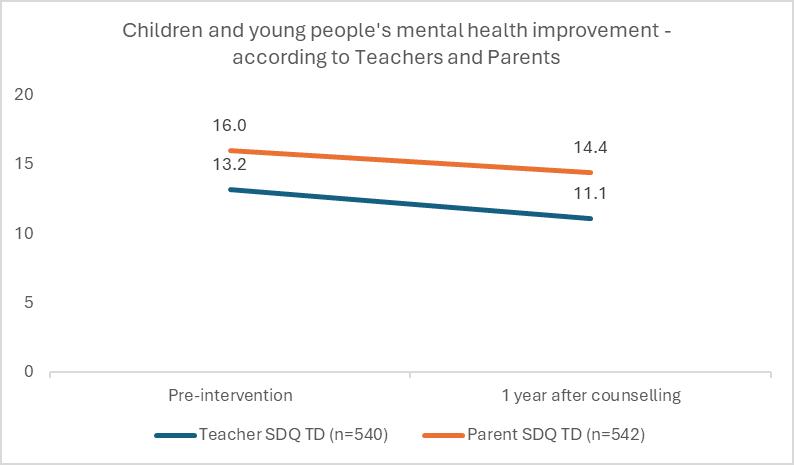
Figure1: Children and young people’s Total Difficulties scores (mean) before counselling and one year after the end of counselling
“Counselling helped me a lot, and loads of other people deserve to have the chance to feel happy and free, and feel like they don’t need to worry or be sad anymore.”
IMPACT OF PLACE2BE’S 1:1 COUNSELLING ONE YEAR LATER
Young people themselves consider their mental health is significantly better one year after the end of Place2Be’s counselling, compared to before counselling:
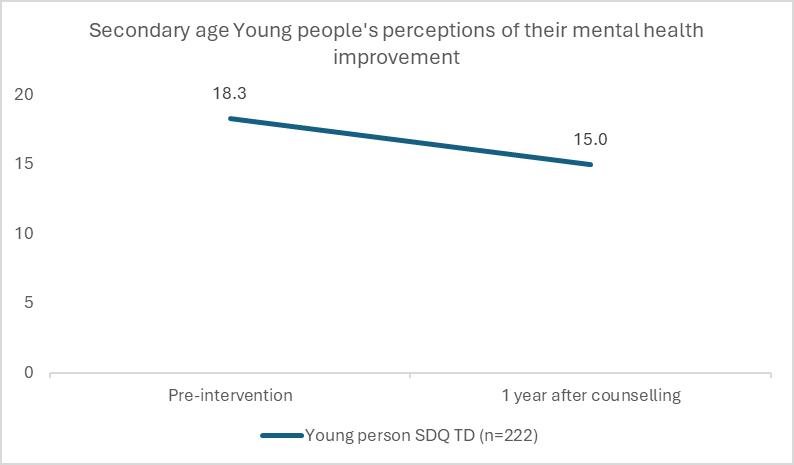
Figure2: Young people’s Total Difficulties scores (mean) before counselling and one year after the end of counselling
“I wouldn’t have most of the friends I made this year if I didn’t have the counselling, I wouldn’t be as confident to be able to go and speak to people and make friends.”
WHY THIS MATTERS?
Using data from the Millenium Cohort Study, our Research Partner, PBE, has linked improvement in children’s mental health improvement with improved academic outcomes.
Thus the long-term outcomes of Place2Be’s 1:1 counselling is associated with higher attainment in GCSEs and reductions in school suspensions - delivering measurable long-term social and economic returns for the individual and society as a whole.
So, not only do we know that Place2Be improves children’s mental health through our targeted 1:1 counselling support, this new research demonstrates:
“I’m able to handle some stuff better, like if I get angry or if I get sad, because I’m able to talk to people.”
Early support works: Children receiving Place2Be counselling show significant reductions in emotional and behavioural difficulties one year later, as reported by both teachers and parents, and young people themselves.
Improvements last: Gains made by the end of counselling are typically sustained into the next school year, supporting better mental health and continued education opportunities.
Attainment improves: Good mental health underpins attainment, lowers the risk of suspensions, and supports smoother transitions to GCSE years.
Socio-economic benefits: Better mental health and education outcomes are linked to higher lifetime earnings and reduced societal costs, including lower demand on health, social care, and justice.
WHAT NEXT?
• This is a two-year follow-up study and we are currently in the final follow-up phase, following up with all children and young people, their parents and teachers (if they are still in a school with Place2Be services) to complete a SDQ.
• In summer 2026, we will be sharing the findings we have so far with our young people’s consultation group, gathering their views and interpretations of the data.
• The two-year qualitative interviews will take place in the autumn term 2026.
• We will continue to update Place2Be’s long-term impact study research webpage with key findings as they develop.
• The study data collection is due to conclude in April 2027.
• The learning arising from this research will be shared with a range of relevant audiences including policy makers, commissioners and funders of mental health services, mental health practitioners and education staff including teachers and pastoral workers and young people.
0207 923 5500 enquiries@place2be.org.uk place2be.org.uk
@Place2Be
Place2BeCharity
Place2Be
@_Place2Be
@_Place2Be