Welcome to the PKD Foundation’s 2025 Impact Report.
The polycystic kidney disease (PKD) community has never accepted the status quo—and that determination continues to drive real progress.
This year brought meaningful advances for people and families living with PKD. Breakthroughs in science, progress in care, and the strength of a passionate community are moving the field forward in powerful ways. None of this work would be possible without the generosity and commitment of supporters who believe in a better future for everyone affected by PKD.
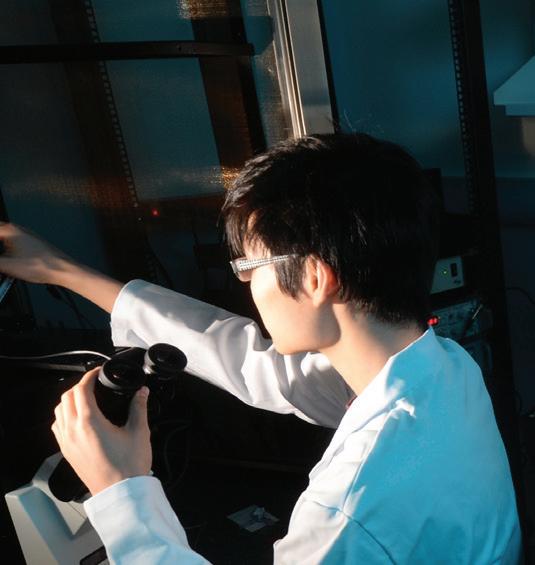
PKD research is entering one of the most promising moments in its history. Scientific discoveries are opening possibilities once thought out of reach, and therapies targeting the genetic causes of PKD are advancing through the clinical pipeline. With your support, the PKD Foundation invested more than $2 million in 2025 to fund innovative research aimed at developing better treatments. Donor generosity also sustained our patient-powered ADPKD Registry and strengthened partnerships that helped move discoveries from the lab to the clinic faster.
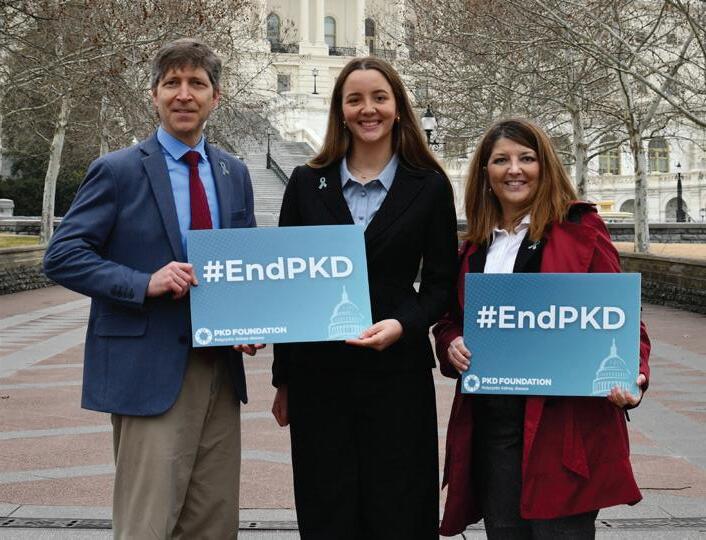
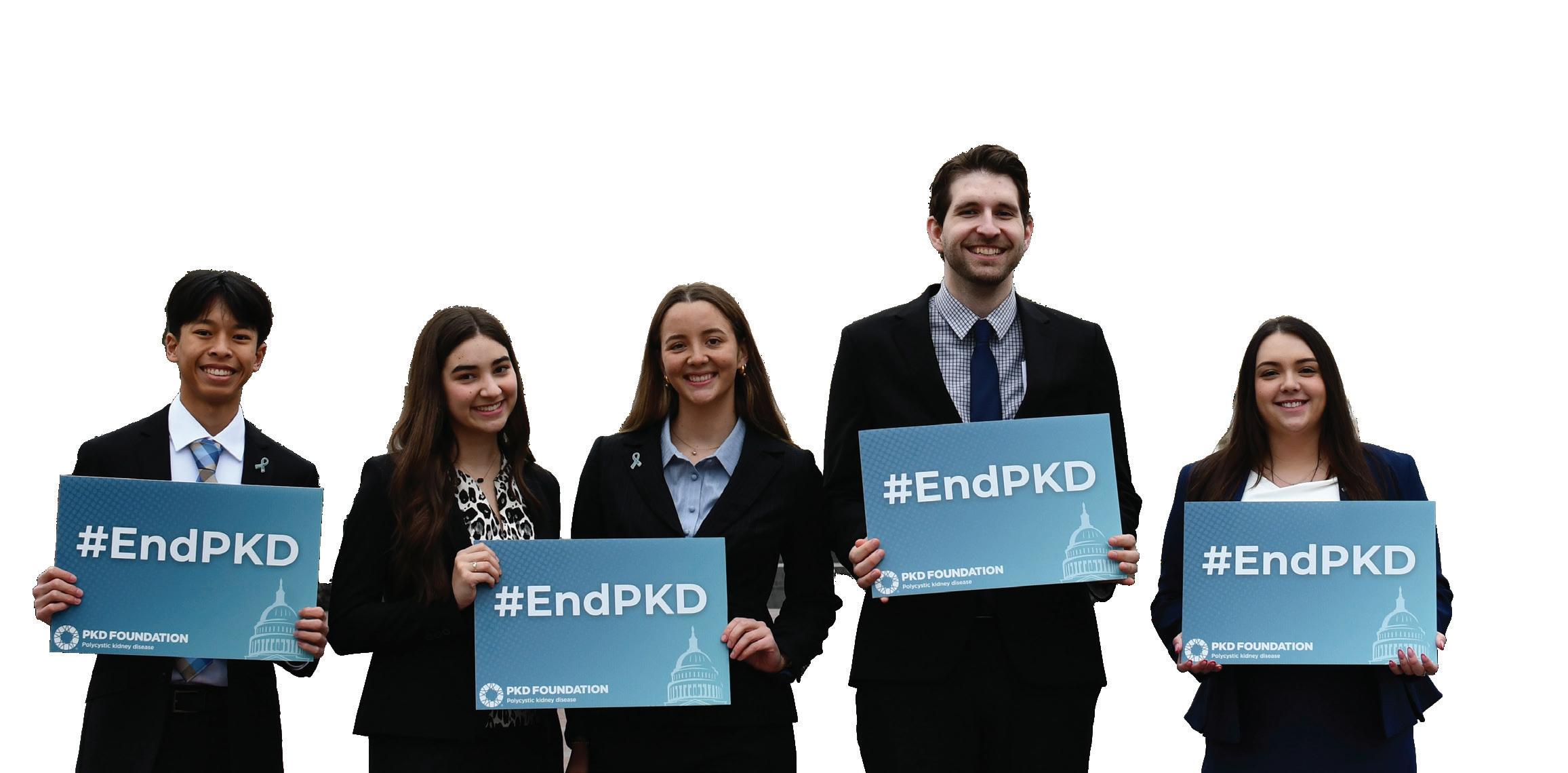
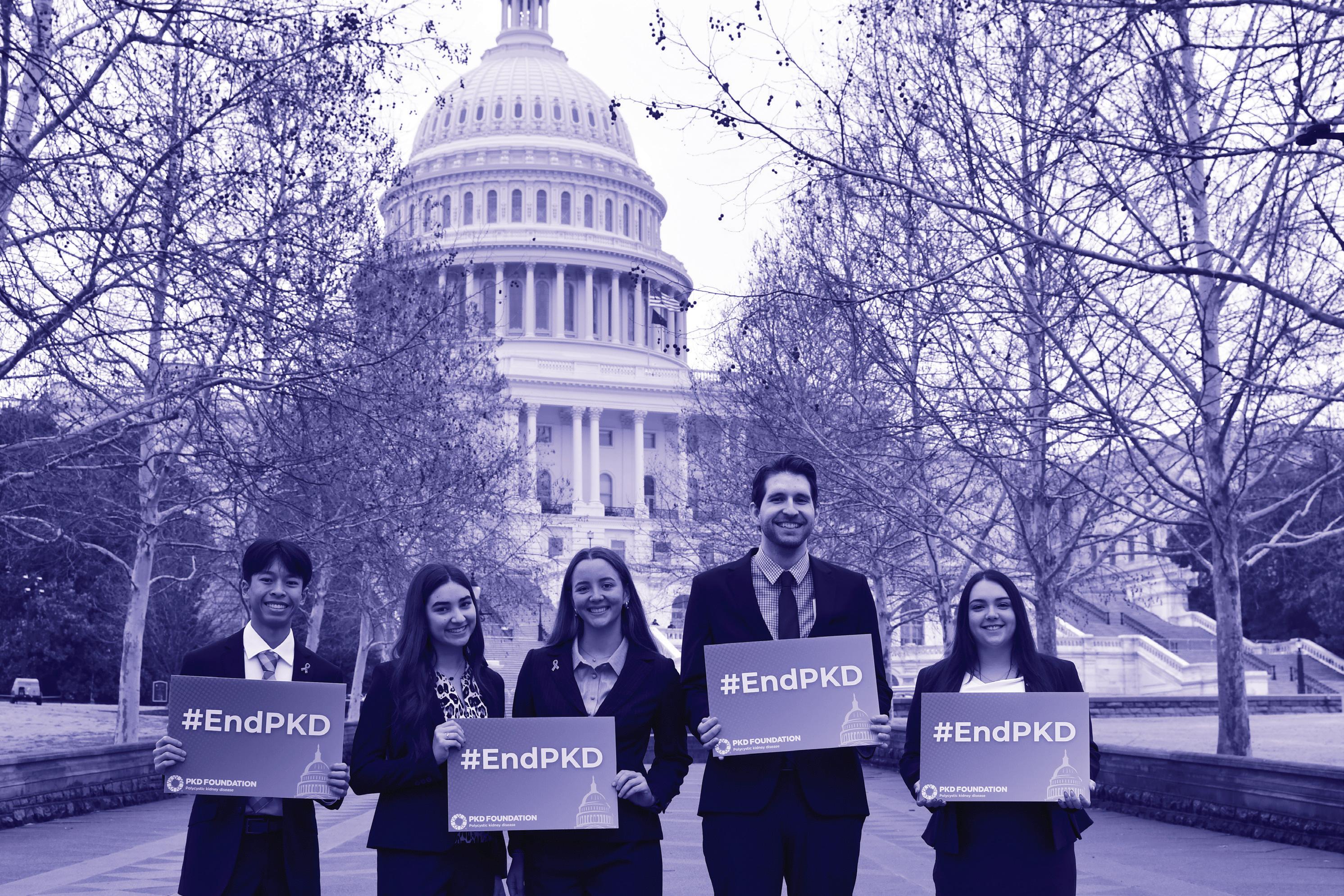
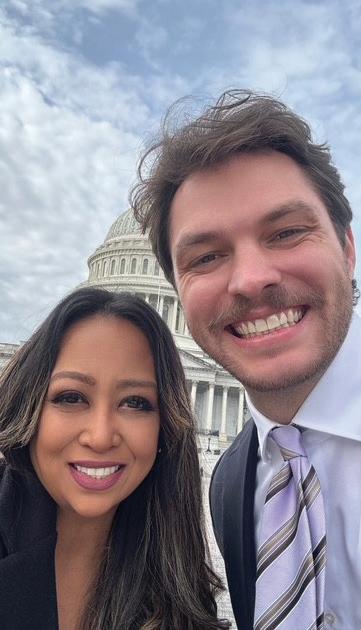
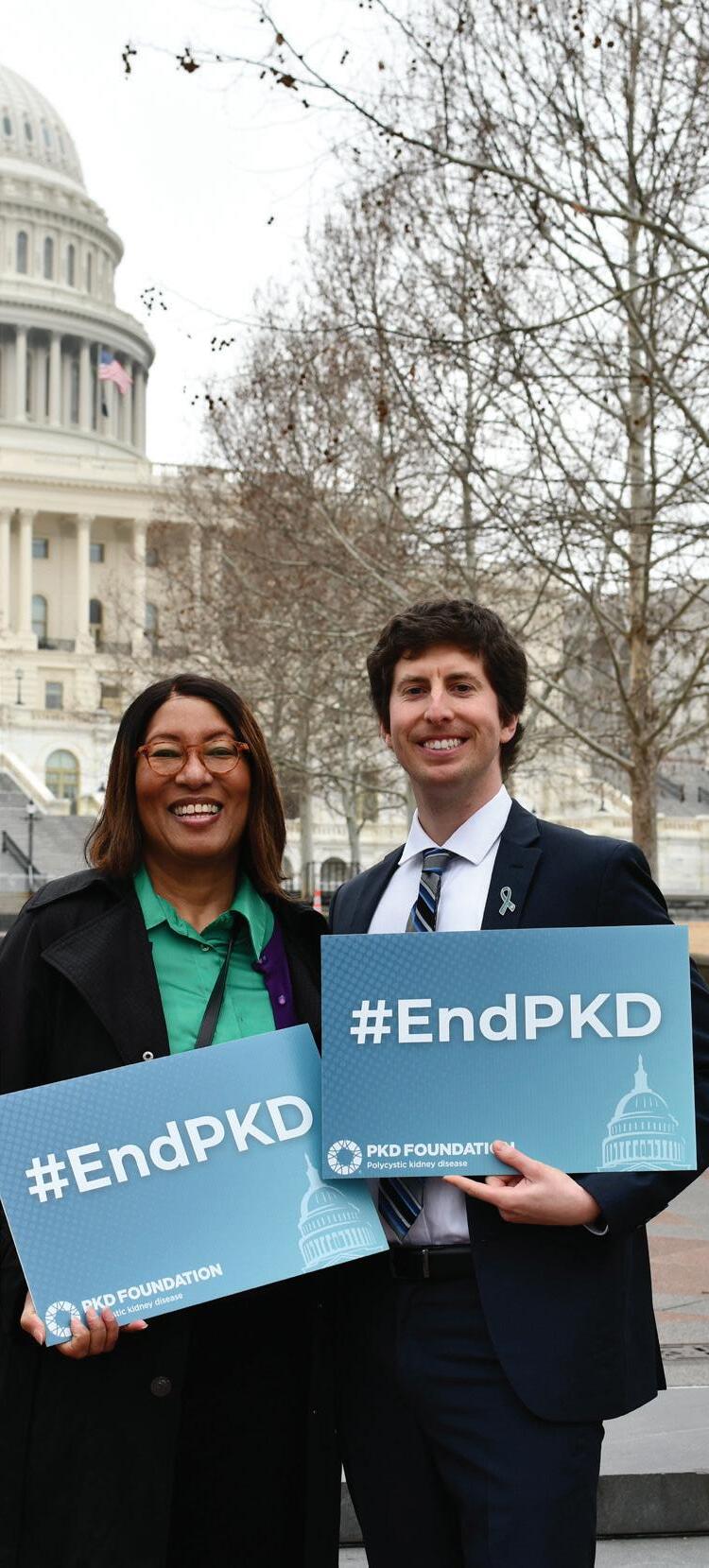
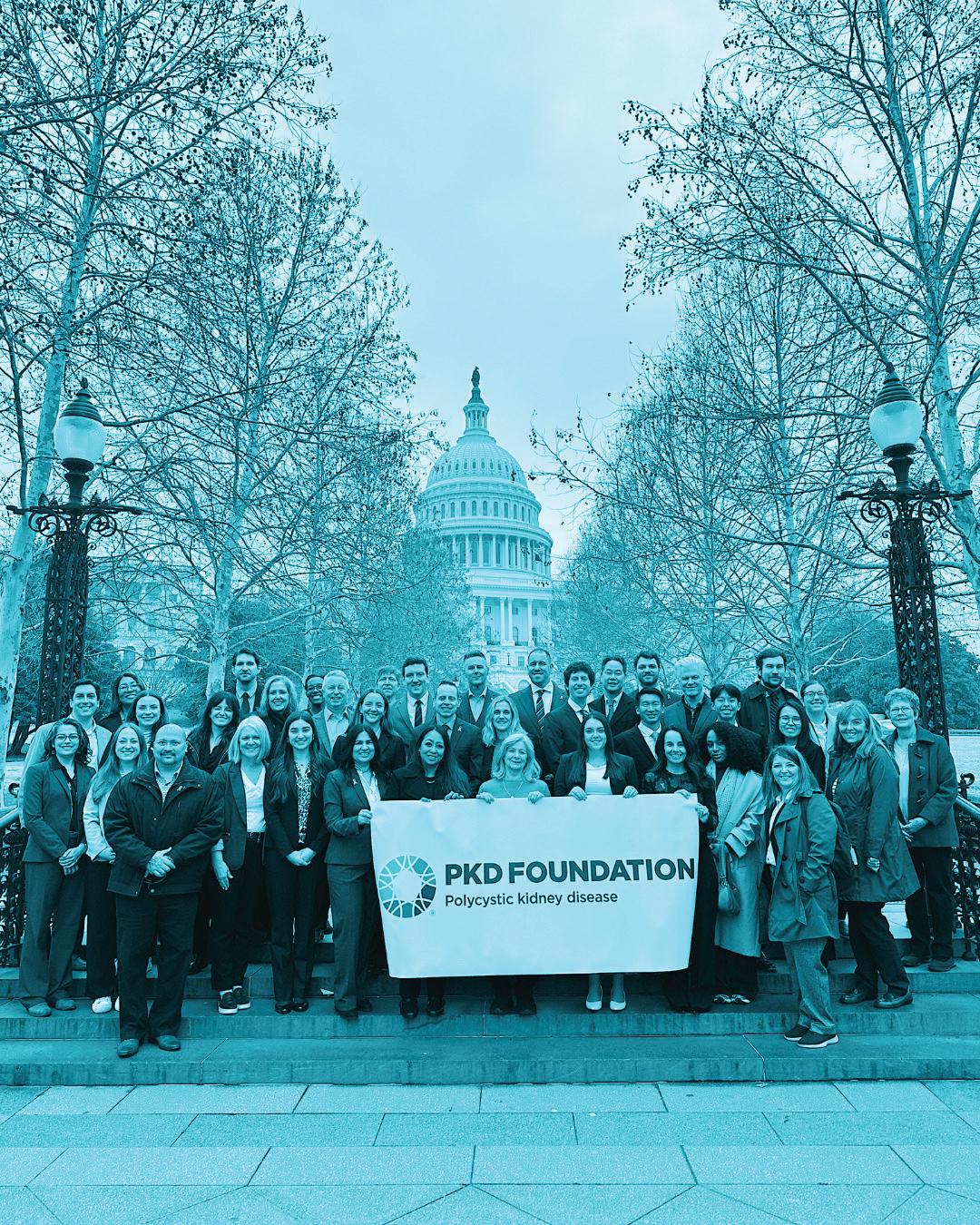
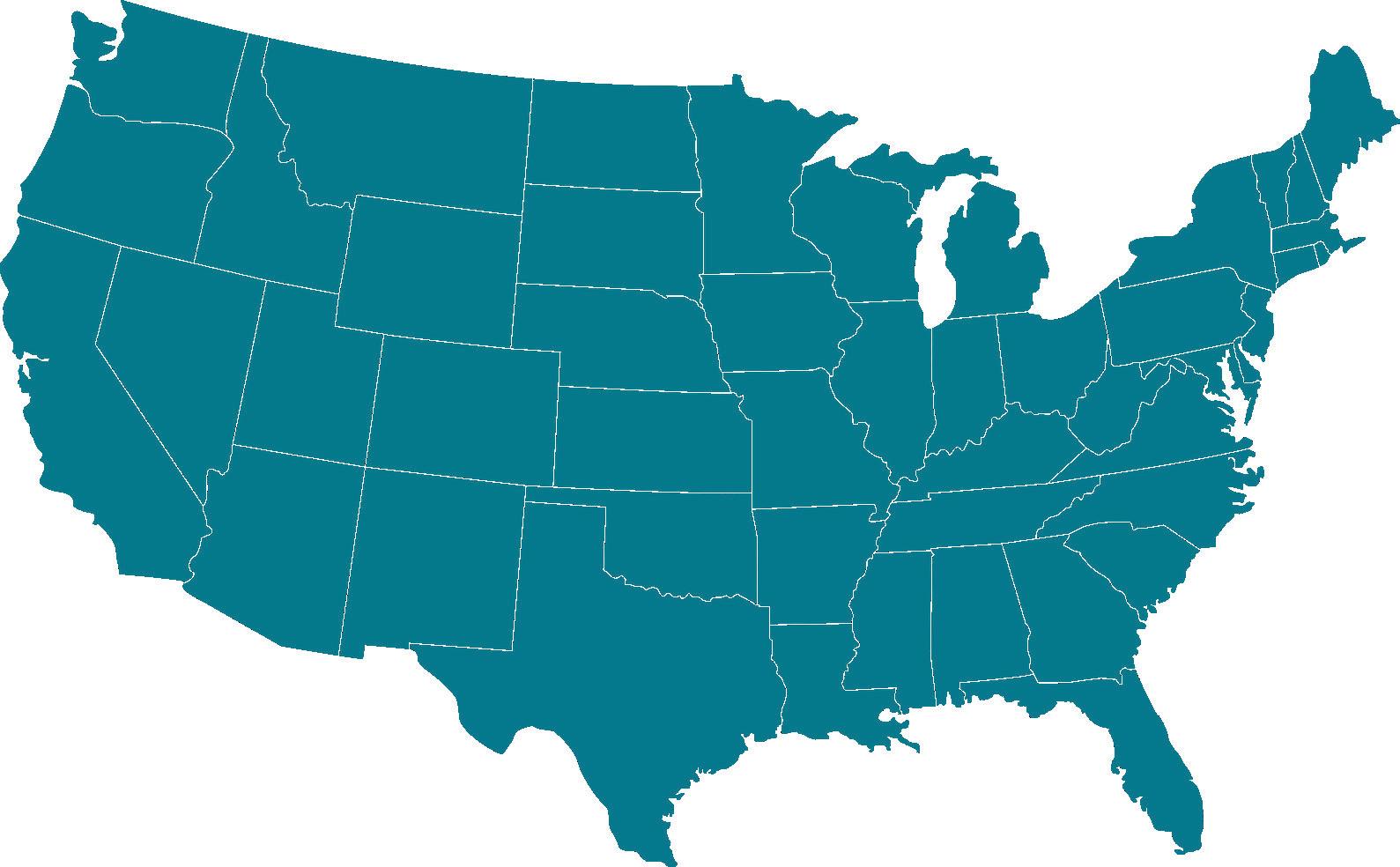
Advocacy also played a critical role this year. During PKD Advocacy Day 2025, more than 100 advocates from 29 states met with lawmakers—on Capitol Hill and virtually—to highlight the needs of the PKD community. Their efforts helped protect Congressionally Directed Medical Research Program (CDMRP) funding, which has provided $80 million for PKD research since 2020, and reinforced the importance of the Living Donor Protection Act in protecting donors and expanding access to life-saving transplants.
Education, care, and community connection also expanded in 2025. We launched PKD Chronicles, a podcast created with support from Otsuka Pharmaceuticals to inform, encourage, and inspire listeners. Educational webinars, including a series on the new KDIGO Guideline, helped patients and clinicians better understand evolving standards in PKD care.
Access to expert care continues to grow through the PKD Foundation’s Centers of Excellence program. Today, 81 pediatric and adult Centers of Excellence and Partner Clinics across the United States provide coordinated, specialized care for people living with PKD.
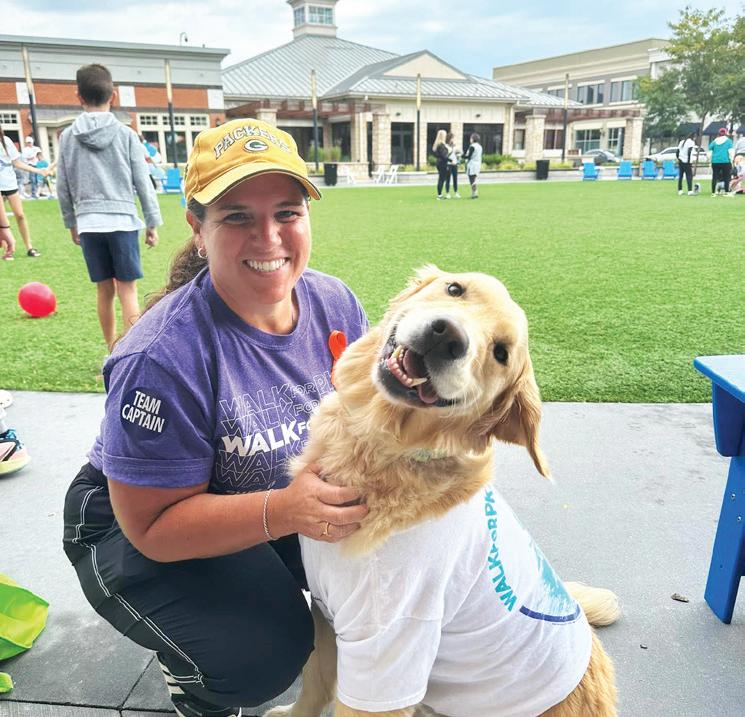
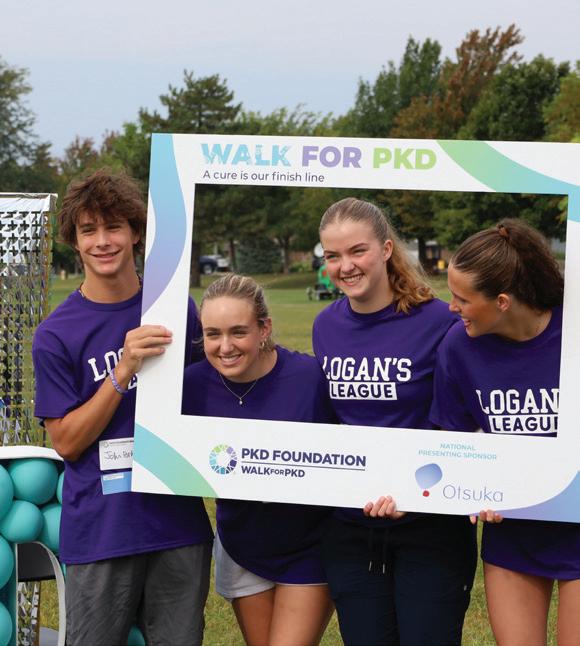
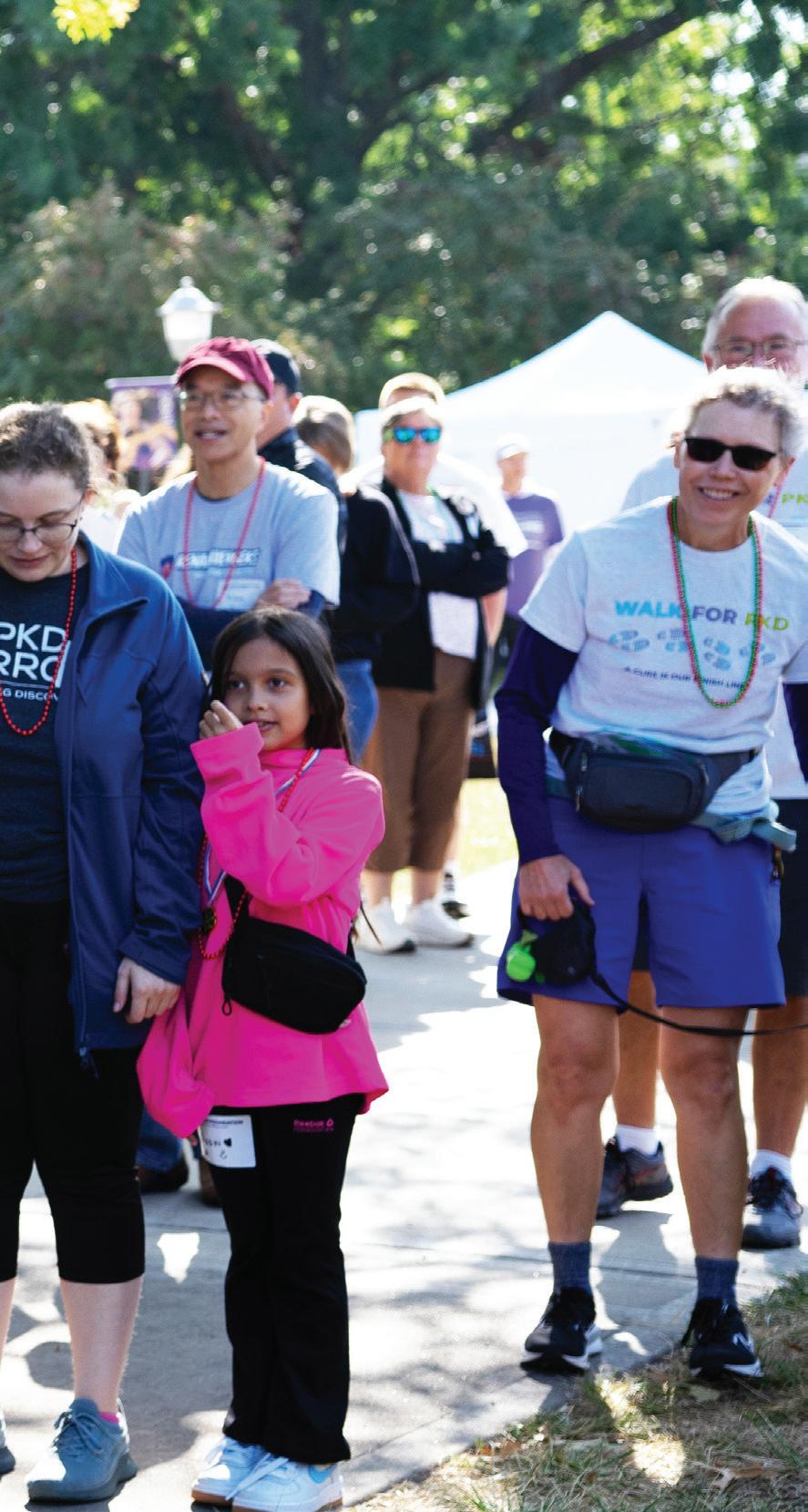
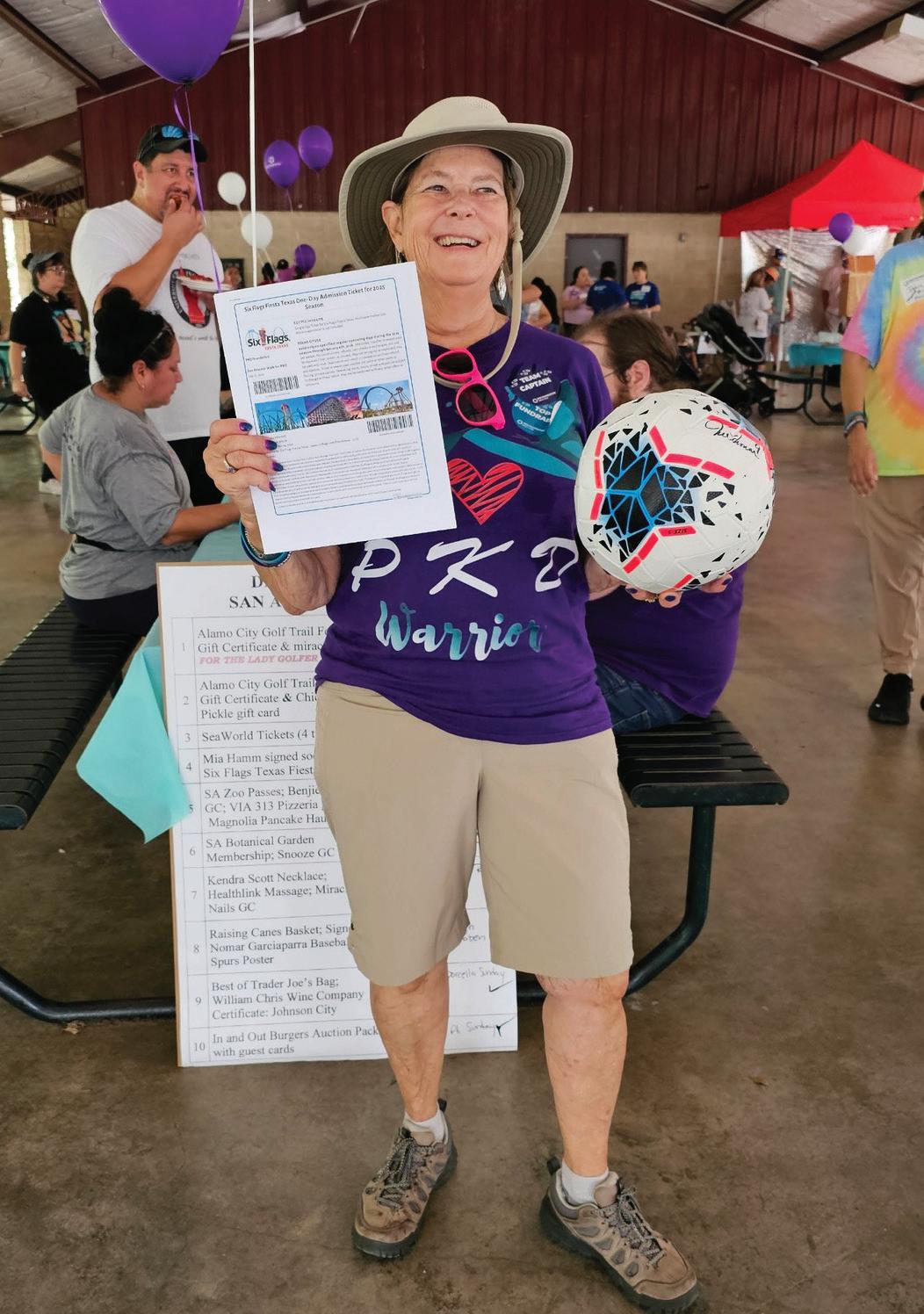
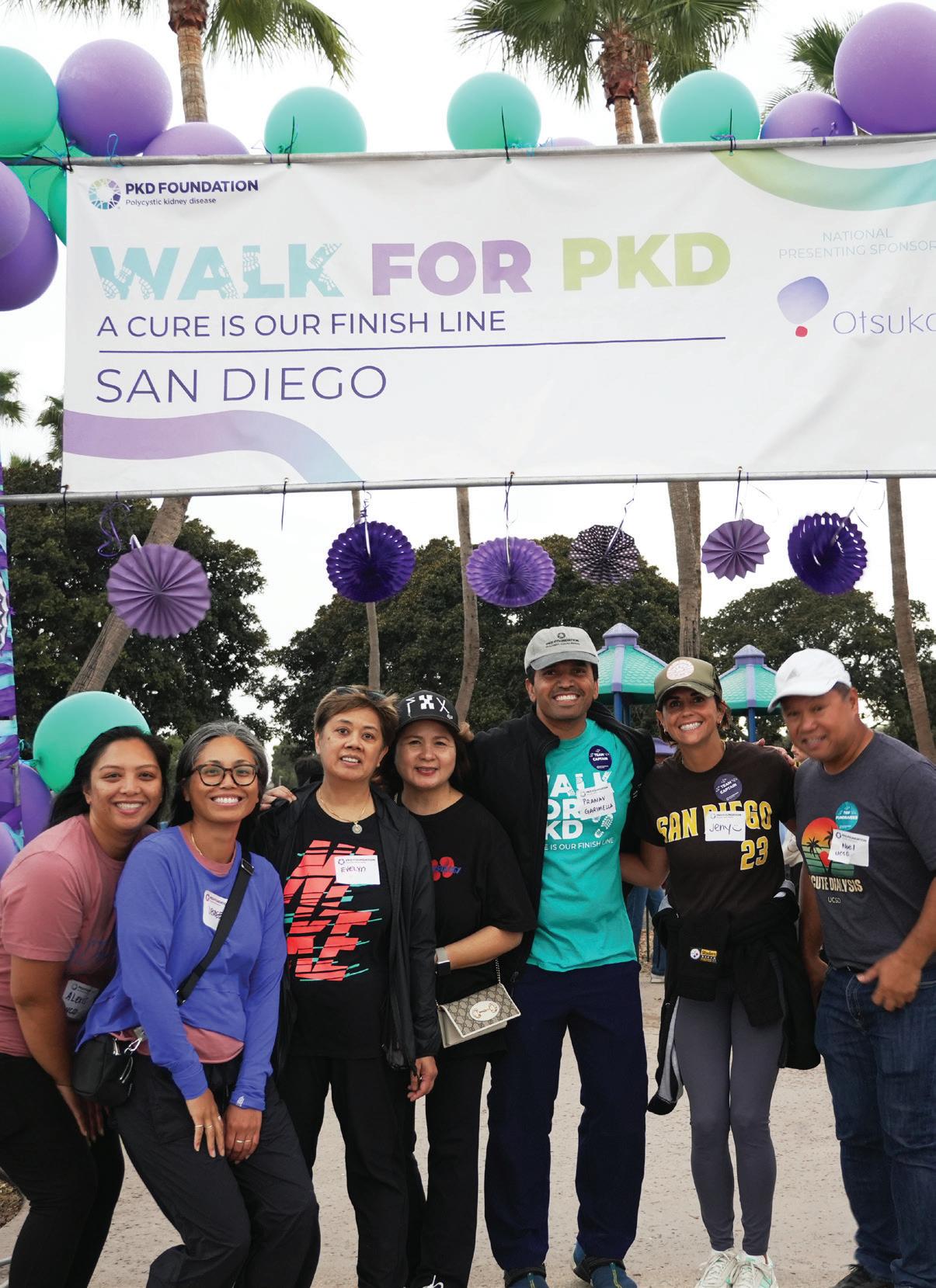
Across the country, thousands of supporters came together through Walk for PKD events and other community efforts. These activities raised more than $1.8 million for research while strengthening connections and reminding families living with PKD that they are not alone.
We are deeply grateful to the donors, advocates, researchers, clinicians, volunteers, and partners who make this progress possible. Every step forward reflected in these pages represents hope for the millions of people and families living with PKD—and moves us closer to a future where better treatments, and ultimately a cure, become reality.
With deep appreciation,
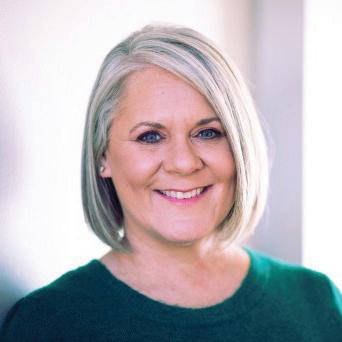
Susan Bushnell
Christopher Wess
SUSAN BUSHNELL PRESIDENT & CEO PKD FOUNDATION
CHRISTOPHER WESS CHAIR, BOARD OF DIRECTORS PKD FOUNDATION
ABOUT US
OUR VISION
OUR MISSION
WE GIVE HOPE. We fund research, advocate for patients, and build a community for all impacted by PKD.
Despite being the fourth leading cause of kidney failure and impacting more than 500,000 people in the U.S., polycystic kidney disease (PKD) is not as widely known as it should be. For more than four decades, the PKD Foundation has worked to remedy this—raising awareness across the country and leading the charge to find better care, new treatments, and a cure for this disease.
This commitment to advancing PKD research is reflected in the Foundation’s crucial programs:
• Over $30 million has been invested in our annual research grant and fellowships program
• Our Centers of Excellence program supports 81 healthcare centers, each evaluated and selected for working at the highest level of PKD care
• Our Walk for PKD program has raised over $36 million
• Advocacy efforts have leveraged more than $1 billion in government funding
The path to a brighter future is only possible through partners like you. Progress—whether it’s in research, education, advocacy, or care—is strengthened by the support of this community. Together, we’ll continue building toward a future without PKD.
UNDERSTANDING PKD
There are two types of PKD: autosomal dominant polycystic kidney disease (ADPKD) and autosomal recessive polycystic kidney disease (ARPKD).
ADPKD is not only the more common type of PKD but one of the most common life-threatening genetic diseases. It’s estimated to affect more than 500,000 Americans and 12.4 million people worldwide.
In ADPKD, fluid-filled cysts develop and enlarge in both kidneys, eventually leading to kidney failure. Over half of those living with this disease will reach this stage by the age
of 60. Currently, dialysis or transplant are the only treatment options available for kidney failure.
ARPKD is a rare genetic disorder occurring in approximately 1 in 20,000 children, equally affecting boys and girls. While death in the first month of life is a possibility, nearly 75% of ARPKD children survive the newborn period. About 25% of these children may need a transplant or dialysis by the age of 10.
Today, over 90% of babies who make it through the newborn stage live to celebrate their 20th birthday, and 50% won’t need dialysis or a transplant by that time.
ADPKD ~1 in 1,000 people
ARPKD 1 in 20,000 children
20% of patients have no family history of ADPKD 20%
OUR FOUNDING
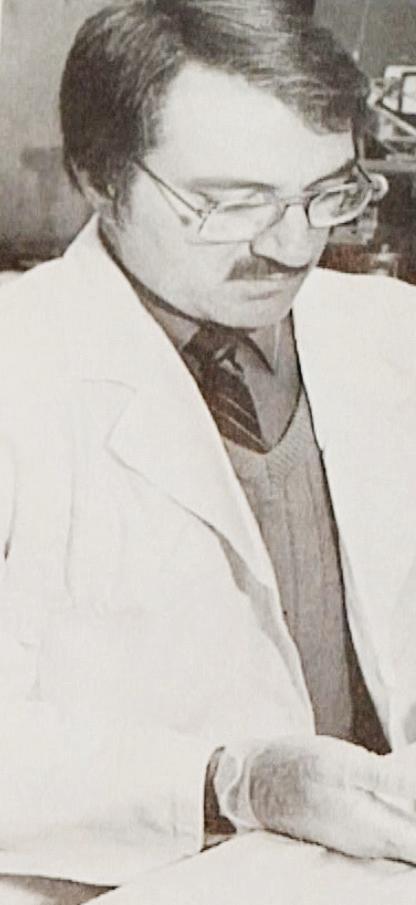
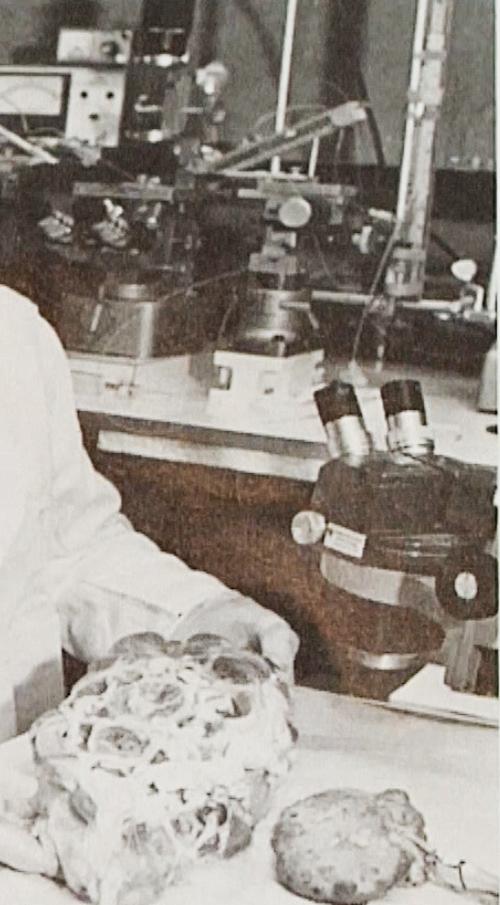
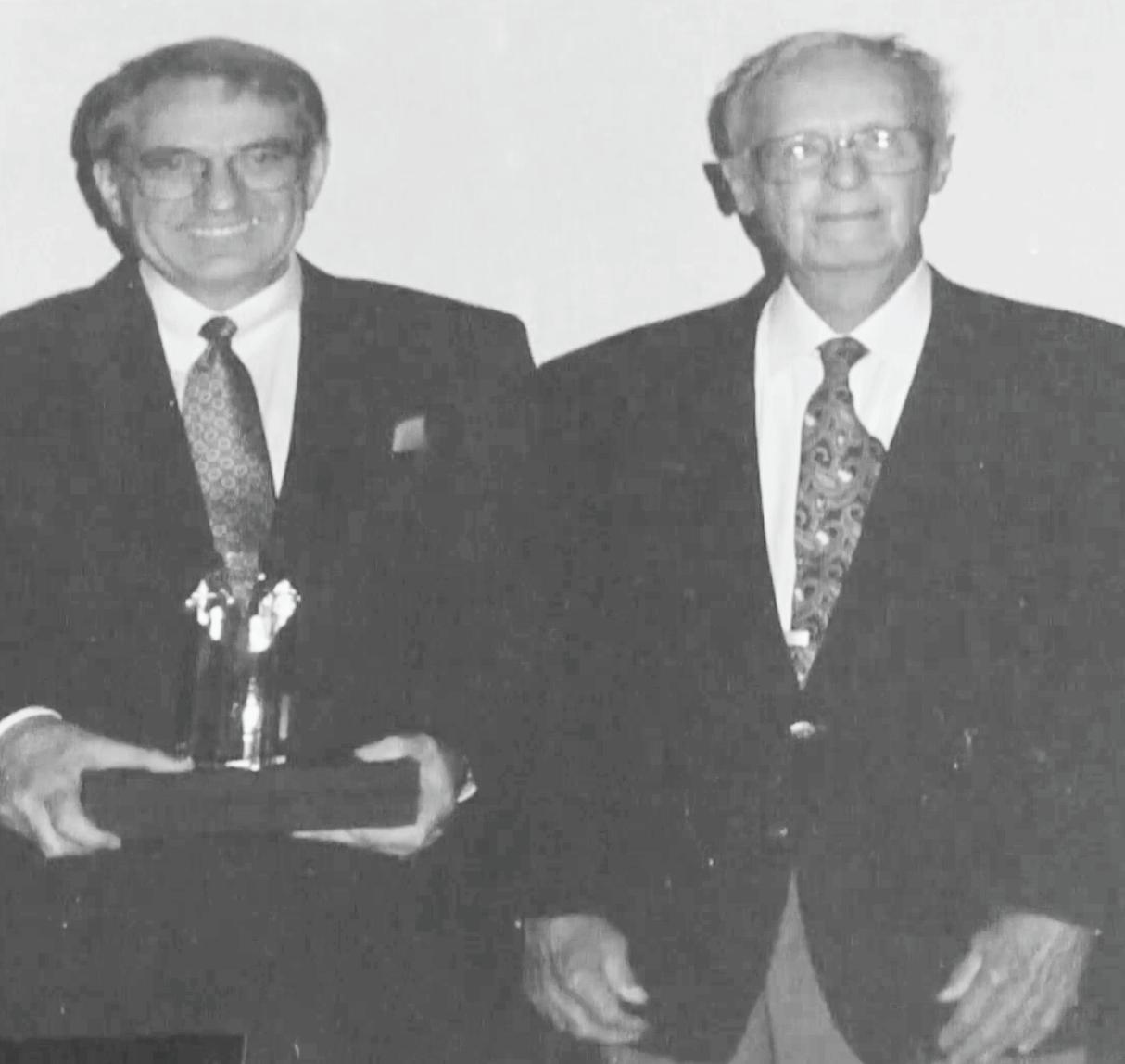
Before 1982, little was known about PKD, and treatment options were extremely limited. Through the strategic partnership of renowned PKD researcher Jared J. Grantham, M.D., and businessman Joseph H. Bruening, the PKD Foundation was created.
At the time, Dr. Grantham was one of the few researchers focused on PKD. His experience combined with Mr. Bruening’s personal connection to the disease and commitment to action sparked the creation of a dedicated nonprofit to support and accelerate research. Together, they united scientists, patients, and supporters to build momentum against a disease that had previously been overlooked.
The passion and persistence of our founders, along with countless families, clinicians, and scientists, have propelled PKD research and care forward. Today, the Foundation is still the only U.S. organization solely dedicated to ending PKD.
Decades of research and collaboration have transformed PKD from a neglected disease into a global area of study with new developments continually emerging. From the Foundation’s early beginnings with modest funding and a small board, the PKD Foundation has grown into the largest private funder of PKD research driving scientific discovery.
Jared J. Grantham, M.D. PKD Foundation Founder
Jared J. Grantham, M.D.
PKD Foundation Founder
PKD Foundation Founder
Joseph H. Bruening
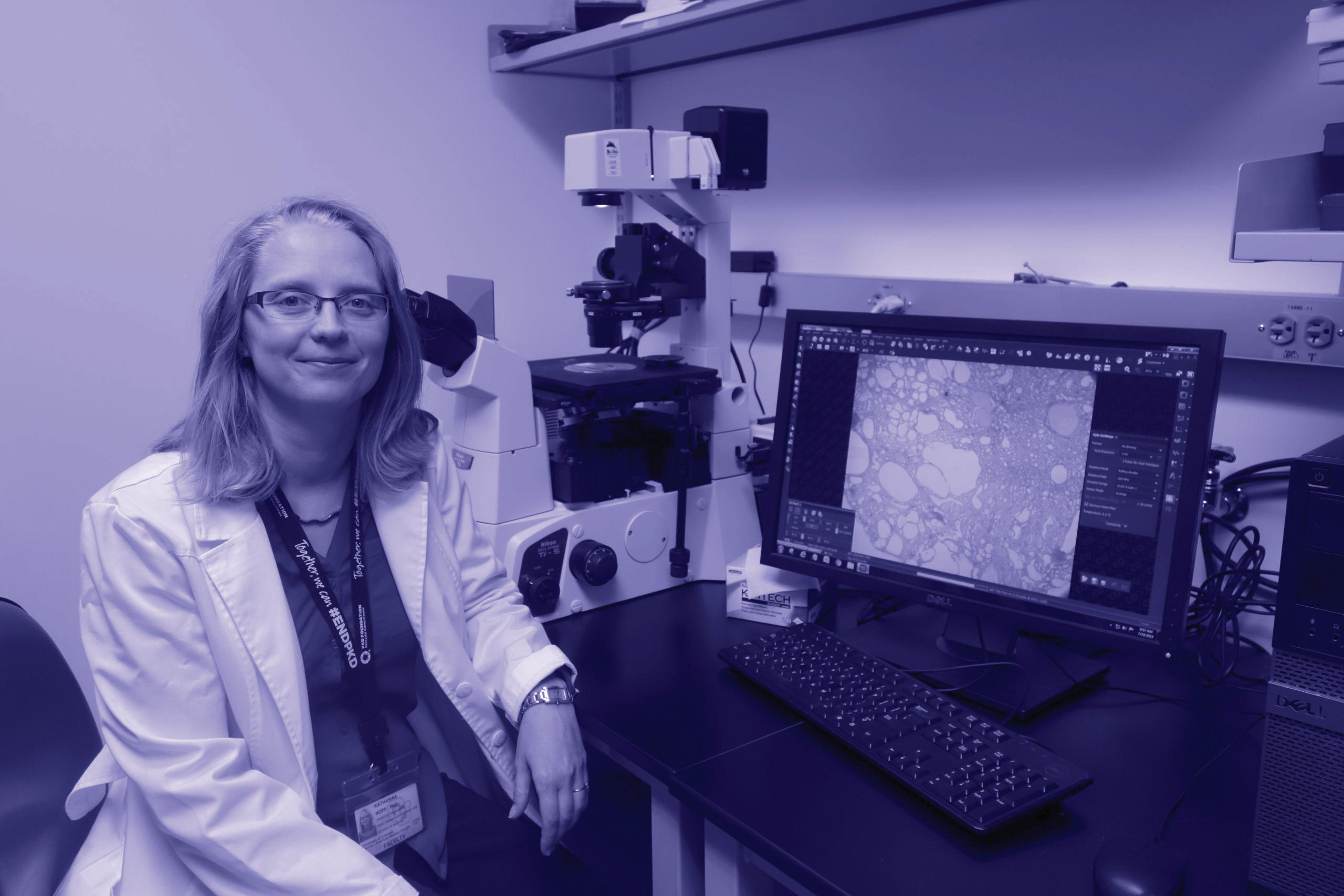
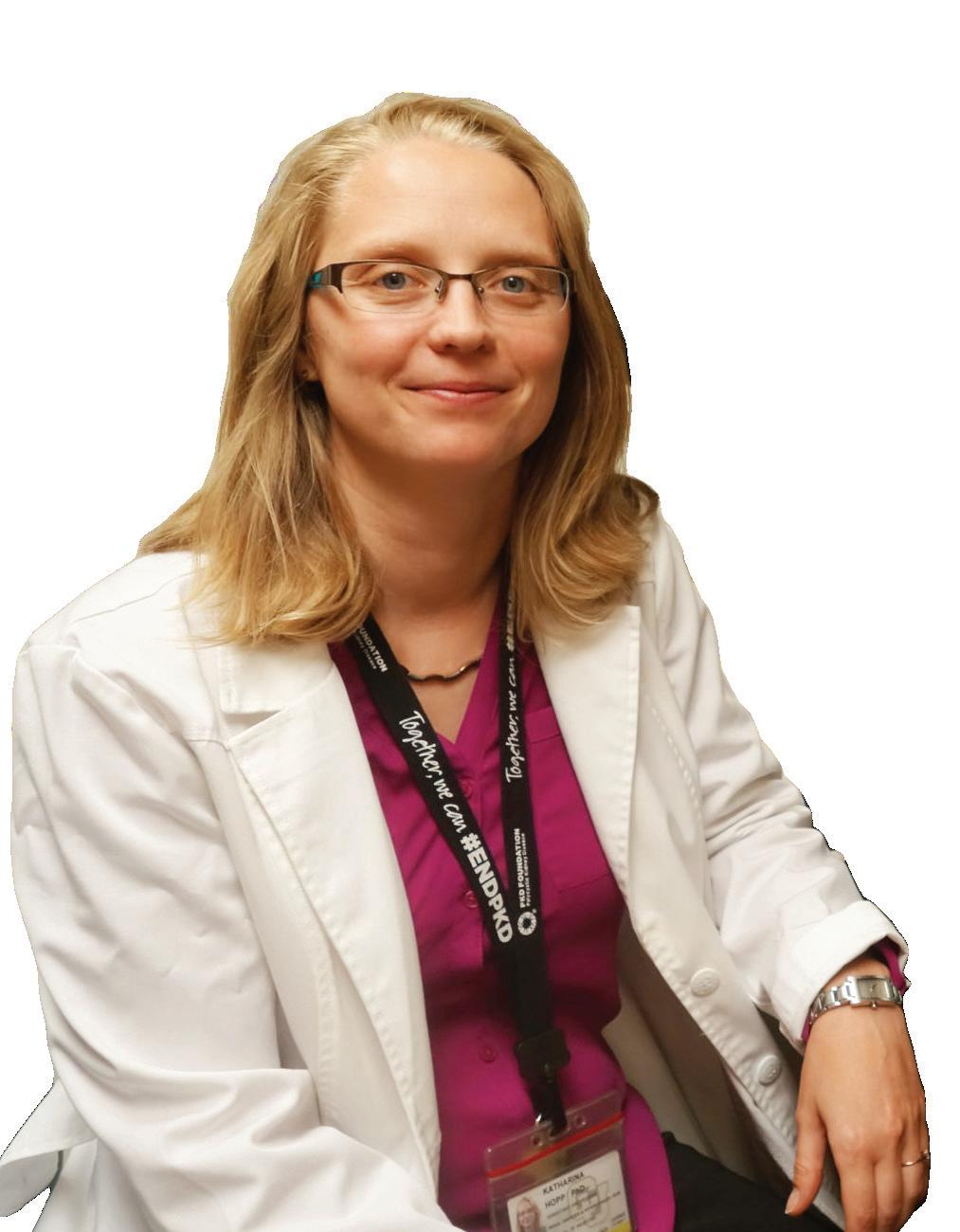
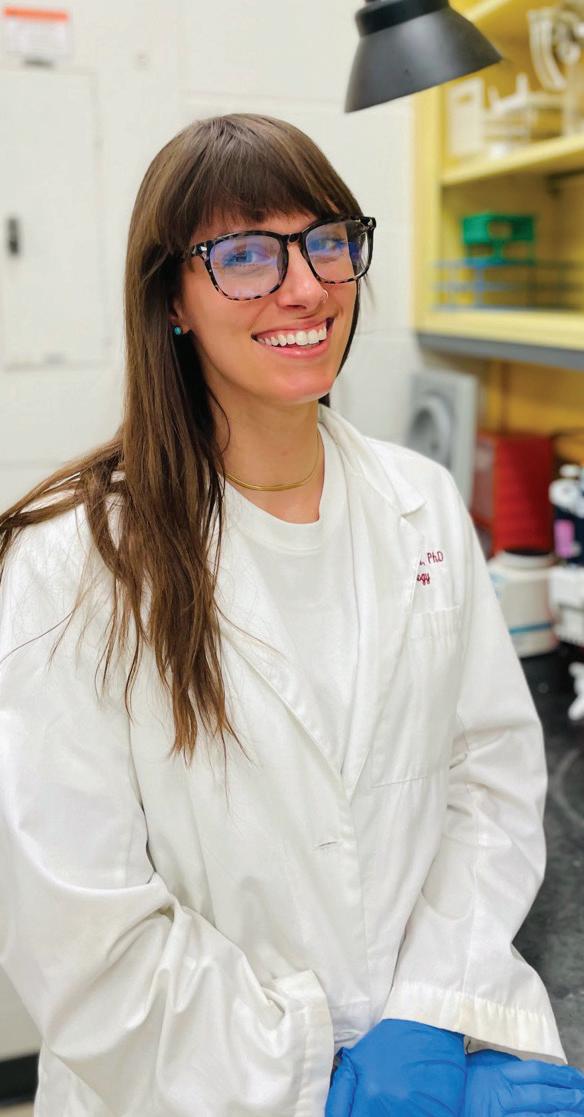
Katharina Hopp, Ph.D.
University of Colorado, Denver, Anschutz Medical Campus
RESEARCH HIGHLIGHTS
When the PKD Foundation was founded in 1982, no one could predict where research would go over the coming decades. The Foundation has championed bold research ideas, supported early-career investigators, and helped scientists secure major funding from the National Institutes of Health and the Department of Defense. Now, after more than $30M in Foundation funding, PKD research is advancing at a rapid pace, marking a pivotal moment in discoveries that will positively impact the lives of people living with PKD.
Thanks to the dedication of generous supporters who are committed to finding a cure, the Foundation invested $2 million in 2025 to fund 20 groundbreaking research projects and six fellowships.
Recipients were selected through a comprehensive and rigorous review process led by the PKD Foundation Scientific Advisory Panel, with critical input from select patient stakeholders, caregivers, and expert PKD researchers. The selected grants and fellowships supported a wide range of high-impact research to improve outcomes for people with PKD.
Sarah Miller, Ph.D. University of Oklahoma, Health Sciences Center
Here’s a snapshot of some of the important research we’re funding and how it could impact generations of families with PKD:
• Drug Repurposing: Exploring new uses for existing drugs, including whether a cholesterol drug can treat PKD and if an existing cancer therapy can treat polycystic liver disease
• Drug Development: Testing a medicine that mimics the benefits of exercise by activating metabolic pathways that could slow cyst growth
• Early Disease Prediction Tools: Developing new prognostic tools to predict PKD progression, including a urine test that may forecast the rate of cyst growth before cysts even form
• Personalized Medicine & Artificial Intelligence (AI): Exploring the use of AI to match treatments to individual patients’ needs
• Disease Modeling: Growing “mini-kidneys” from patient cells to better study the disease and speed up drug testing
• Quality of Life Research: Researching quality of life, including how to treat depression that may be associated with PKD
Our funded researchers aren’t the only ones taking a hands-on approach to ending PKD. Chris Chen, Ph.D., and Vanessa Westerfield, leaders of the PKD Foundation’s research team, contributed to the 2025 scientific manuscript, Emerging Therapies in Autosomal Dominant Polycystic Kidney Disease. This
review of multiple ADPKD studies highlights a shift toward targeted, multi-approach treatments that address the underlying genetic cause of the disease. These findings underscore how treatment strategies are moving beyond slowing disease progression and toward more precise methods that could dramatically improve outcomes and change the trajectory of PKD.
“I have learned from personal experience that these PKD Foundation fellowships and grants really make an impact beyond even their funds, as a way of shaping young careers towards a lasting motivation and trajectory in the PKD field.”
- Whitney Besse, M.D. Yale University School of Medicine, PKD Foundation Scientific Advisory Panel Member
RESEARCH UPDATE
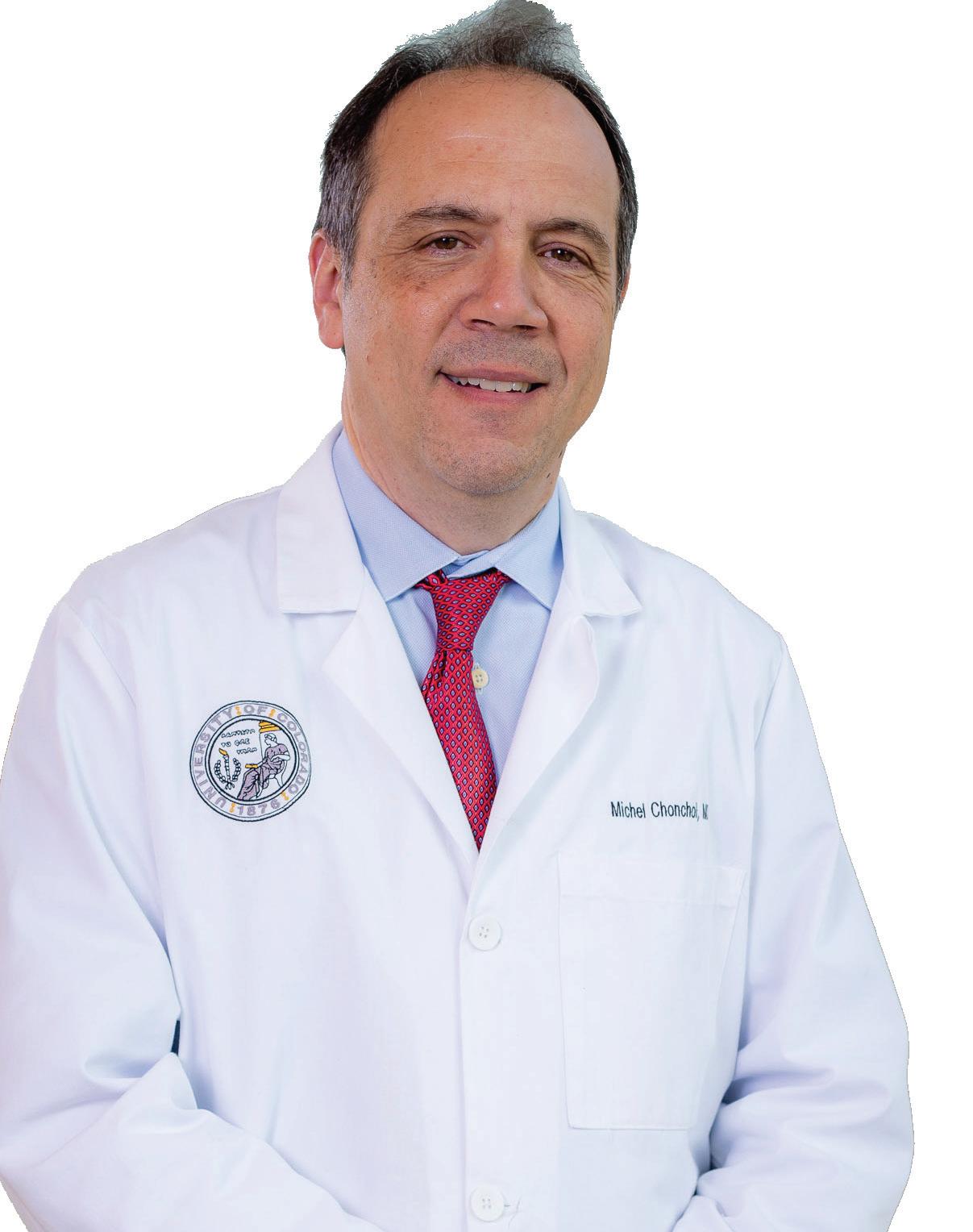
Michel Chonchol, M.D. Head of the Division of Renal Diseases and Hypertension at the University of Colorado Anschutz Medical Campus
In 2022, Michel Chonchol, M.D., was awarded a three-year PKD Foundation drug repurposing grant for his study, “Feasibility Study of Empagliflozin in Patients with Autosomal Dominant Polycystic Kidney Disease.” SGLT2 inhibitors like empagliflozin are a class of medications already approved for diabetes and some forms of chronic kidney disease. They work by helping the kidneys remove excess sugar and reduce stress on the kidneys, which can slow the decline in kidney function.
ADPKD patients were originally excluded from clinical trials assessing the efficacy of SGLT2 inhibitors for treating chronic kidney disease. Dr. Chonchol was interested in testing whether these drugs could specifically benefit patients with ADPKD. While loss of kidney function in ADPKD has a different cause than other chronic kidney diseases, Dr. Chonchol speculated that the benefits of reducing kidney stress, inflammation, and fluid retention could help protect kidney function and slow cyst growth.
This feasibility study led to the first-ever human study to test whether SGLT2 inhibitors are safe and well tolerated for people with ADPKD. Early data is being collected to establish whether the drug could positively affect kidney health, such as slowing kidney enlargement and improving other kidneyrelated health markers. Additionally, this study lays the foundation for larger studies that could determine if SGLT2 inhibitors will become a new treatment option for PKD.
For people with PKD, every new therapy could help delay kidney failure, reduce complications, and improve quality of life. Dr. Chonchol’s work represents a step toward expanding therapies and exploring new ways to protect kidneys of people with ADPKD.
REGISTRY
The PKD Foundation is accelerating progress in autosomal dominant polycystic kidney disease (ADPKD) by turning patient experiences into powerful, actionable data through the ADPKD Registry.
The ADPKD Registry is more than a database. It’s a growing, patient-powered engine for discovery capturing real-world insights from people living with PKD and transforming them into tools that researchers, clinicians, and policymakers can use to better understand the disease and improve outcomes.
The Registry continues to expand. Enrollment increased nearly 13% over the past year with over 3,600 participants providing data across hundreds of care settings. The Registry’s linked electronic health records (EHRs) grew by 24% in 2025 to almost 300 connections. More EHRs mean richer clinical data beyond patient-reported outcomes. This helps researchers and clinicians learn more about disease progression, complications, and treatment responses with greater accuracy.
This continued growth reflects a shared commitment from the PKD community to move research forward and ensure that lived experiences are shaping the future of care.
“One of the Foundation’s most significant contributions is the ADPKD Registry, which serves as a critical resource for connecting patients, researchers, and clinicians. By enabling the collection of real-world data and fostering patient engagement, the Registry will accelerate discovery and support clinical trial readiness. This shared commitment to research will bring us closer to effective therapies and, ultimately, a cure.”
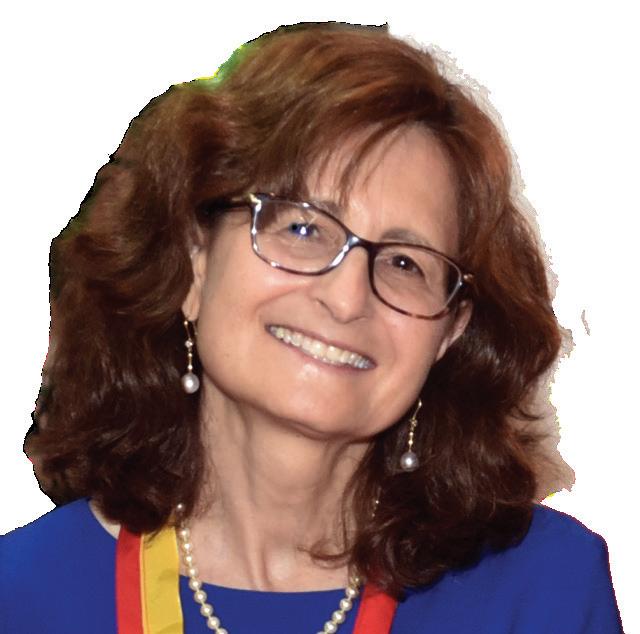
- Terry Watnick, M.D. University of Maryland
In 2025, the Foundation took a major step forward in expanding access to this data with the launch of the ADPKD Registry Researcher Portal. This new platform was designed to make de-identified, aggregated Registry data more accessible to the scientific community. Since its launch, 45 researchers—including representatives from academia, the pharmaceutical industry, and the FDA—have already explored how Registry data can inform their work.
By lowering barriers for patients to share their data and for researchers to access it, the Registry is fostering greater collaboration, accelerating research, increasing clinical trial awareness, and opening new avenues for discovery.
Behind every data point is a person choosing to contribute to something bigger than themselves. Together, Registry participants are helping shape a future where better treatments and a cure are within reach.
45 Researchers Who Used the Registry Research Portal
Over 3,600 Registry Participants
24% Increase in Electronic Health Records
CENTERS OF EXCELLENCE
Finding PKD-specific care and the right healthcare provider are the first steps in a patient’s journey. Access to expert, multidisciplinary, coordinated PKD care is essential for improving outcomes and quality of life for people and families living with PKD. Through the PKD Foundation’s Centers of Excellence (COE) program, we continue to strengthen a nationwide network of clinics dedicated to delivering high-quality, specialized PKD care.
Three years ago, we launched our inaugural cohort of COEs and Partner Clinics. As part of our three-year renewal cycle, clinics from the 2022 cohort underwent a rigorous review process in 2025 to maintain their designation.
The Foundation redesignated 36 clinics, including 27 COEs and nine Partner Clinics, reflecting the sustained high standards of PKD care at these medical centers across the nation. We’re also proud to recognize that one clinic advanced from Partner Clinic to full COE status—an important milestone that highlights the strength and growth this network produces.
With these updates, the PKD Foundation now supports 81 COEs and Partner Clinics across the country, serving both pediatric and adult patients. In 2025, these clinics provided care to a total of 16,600 patients, 1,000 more than the previous year.
Within the Centers of Excellence network, patient navigators play a vital role in delivering coordinated, multidisciplinary PKD care. In 2025, the Foundation invested $470,000 in funding for Care Team Grants, helping to enhance collaboration across health specialties and strengthen the delivery of comprehensive PKD care. This funding helps ensure patients are guided through each step of their journey, connecting them to specialized services, and ensuring timely, seamless access to the expertise and resources they need.
Together, these efforts reflect an unwavering dedication to improving care today while advancing toward better treatments and, ultimately, a cure. Our supporters help power the COE program, ensuring patients can access the highlevel of clinical expertise and support they need to better manage their disease, maintain and improve their quality of life, and plan for the future.
THE STATS
Patients Served
15,200 ADPKD Patients
1,400 ARPKD Patients
Care Centers
CENTERS OF EXCELLENCE NETWORK MAP
KEY
CENTERS OF EXCELLENCE
PEDIATRIC CENTERS OF EXCELLENCE
PARTNER CLINICS
PEDIATRIC CLINICS
For more info, click here for resources.
Did You Know:
• More than 30 COE network care centers participated in investigator-led PKD research in 2025.
• COE network care centers published more than 68 professional papers related to PKD care, management, and treatment in 2025.
“The PKD Foundation care team grant has significantly improved the level of care our clinic provides individuals living with ADPKD. By fully supporting a dedicated patient navigator position, the funding has allowed us to greatly enhance patient education, improve coordination across the entire care process, and reduce delays that often prevent timely treatment.”
- Recipient of a Care Team Grant
ADVOCACY
Ending PKD and improving the quality of life for people with the disease requires persistent and unified advocacy. Alongside passionate community advocates, dedicated lawmakers, and partnerships with other kidney health organizations, we’re changing policies and driving resources forward to build a healthier future for generations of families impacted by PKD.
In our first hybrid Advocacy Days event, PKD Foundation advocates from around the country brought the voices of the PKD community to Capitol Hill, both virtually and in person. Spanning two days, over 100 advocates took part in 104 meetings with lawmakers and legislative staff. Participants used these meetings to champion policies that support people living with PKD and their loved ones.
The Living Donor Protection Act (H.R. 4582/4583), also known as the LDPA, continues to be a key piece of legislation the Foundation advocates for during our Advocacy Days events and beyond. This bipartisan legislation that was introduced in 2014 would establish protections for living organ donors, ensuring they aren’t penalized by insurance companies for their generosity.
At the state level, the District of Columbia joined 35 other states in enacting LDPA laws, an important step toward removing barriers to lifesaving donations. At the federal level, our previous advocacy efforts helped with the LDPA’s reintroduction in the House of Representatives with hopes of the act passing in 2026.
Each year, PKD researchers rely on the Congressionally Directed Medical Research Programs (CDMRP) for funding to move scientific discoveries forward. In 2025, the program was cut by 57%—from $1.5 billion to $650 million—directly impacting current and future PKD research. This activated our community. Many reached out to their representatives through our Advocacy Alert email program to voice their concerns and demand change, while one Advocacy Champion spoke directly to Congress. On November 18, Shandel “Shandy” Atoigue delivered a powerful speech before Congress, sharing her PKD journey and urging lawmakers to restore CDMRP funding.
With every conversation, every meeting, and every advocate who raises their voice, we continue elevating the needs of the PKD community to lawmakers. We will keep championing policies that meaningfully impact the lives of those living with this disease and push for funding that will bring us closer to a cure.
“Thank you for supporting my daughter Dylan’s participation as an Advocacy Champion and state lead. I’ve never been prouder than watching her advocate on behalf of herself and others on the Hill that day. She was excited, empowered, and most importantly, hopeful.
For my part, I share in her renewed energy, enthusiasm, and hope. It’s due entirely to spending a few days in the company of such inspiring people. I’m so grateful for all the Advocacy Champions who came and shared their voices and support, not only on the Hill, but with each other. Thank you again for your part in making this happen.”
- Consuelo Bova PKD Advocate and Parent
58 Advocacy Champions
101 Hybrid Advocacy Days: participants 29 states
104 meetings
EDUCATION
Access to clear, reliable information empowers individuals and families in the PKD community to make informed decisions about their health. In 2025, the PKD Foundation expanded its library of resources to include new educational handouts, webinars, and our first ever podcast. Each resource covers high demand topics, provides the most up-to-date information, and uses language that’s easy to understand across a variety of audiences.
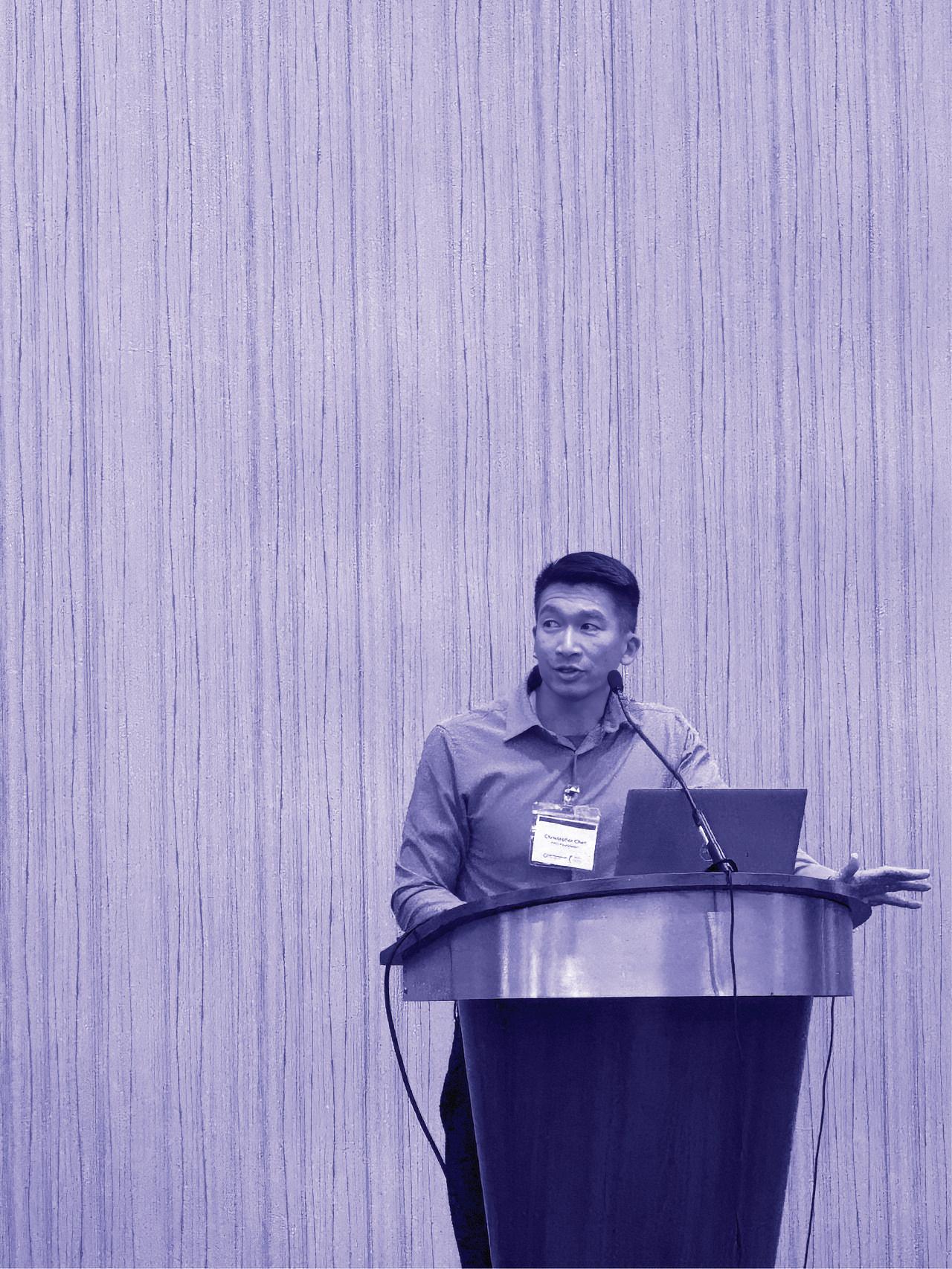
Throughout the year, the Foundation hosted five patient-facing educational webinars designed to help people better understand and navigate life with PKD. In winter 2025, the PKD Foundation hosted the webinar, Research 101: Driving Progress Through Clinical Trials and the ADPKD Registry. Led by Chris Chen, Ph.D., the Foundation’s vice president of research programs, the session explored the latest cutting-edge developments in PKD research, ongoing clinical trials, and the important role of the ADPKD Registry in advancing scientific discovery.
In our four-part webinar series, Confidently Navigating ADPKD: Understanding the New KDIGO Guideline, we brought together expert nephrologists and patient voices to explain the new 2025 clinical practice guideline and what it means for people living with ADPKD. Topics ranged from diagnosis and treatment to whole body impact and special considerations for women and children.
Understanding the KDIGO 2025 ADPKD Clinical Guideline
A Plain Language Guide
Beyond live educational programming, we developed two new publications for individuals living with ADPKD.
Tolvaptan Take-Home Tips walks patients who’ve been prescribed the PKD treatment, tolvaptan, through what to expect and how to manage treatment in their daily lives.
Understanding the New KDIGO 2025 Guideline: A Plain Language Guide translates the complex recommendations of this clinical guideline into plain language so patients and families can better understand and advocate for the latest standards in ADPKD care.
With generous support from Otsuka Pharmaceuticals, we launched a brand-new monthly podcast, PKD Chronicles: Navigating Life with Polycystic Kidney Disease. Each episode offers honest conversations, expert insights, and real stories from the PKD community to help guide, support, and inspire people on their PKD journey.
Looking ahead, the PKD Foundation is developing a comprehensive education strategy to guide future resources and programming. This effort will help ensure that everyone in the PKD community has access to helpful, accurate, and upto-date information at every stage of their PKD journey. New projects are already in development, and we’re excited to carry this momentum into 2026 to further empower individuals and families living with both ARPKD and ADPKD.
2 New Educational Guides
5 Webinars for PKD Families
5,000+ Webinar Views
3,600+ Downloads of the PKD Chronicles Podcast in 2025
“I enjoyed hearing about the research that’s currently being done on potential treatments. It felt hopeful, but also as a person who just learned I have PKD a few months ago, it was interesting to learn more about the biology of what’s actually happening to the kidneys on a molecular level.”
- Research 101 Webinar Participant
COMMUNITIES
When it comes to managing a disease like PKD, it’s especially important to have a strong support system. That’s where PKD Foundation Communities come in.
Across the country, 51 local PKD Foundation Communities bring together patients, caregivers, families, researchers, clinicians, and friends— providing support and showing families they are not alone on their journey.
Beyond local groups, two specialized virtual communities ensure that support reaches everyone in need: PKD Thrive, designed for young adults navigating PKD with courage and camaraderie, and PKD Parents, a safe and empowering space for parents and caregivers of children with ARPKD and ADPKD.
Whether gathering virtually or meeting in person, communities create powerful spaces to share trusted PKD Foundation resources, connect over real-life experiences, and learn from expert voices who bring hope and knowledge to the forefront of PKD care.
PKD Foundation Communities also provide critical resources. They serve as a trusted source of education, sharing the latest information on the rapidly evolving science and management of PKD. Meetings cover a wide range of topics, from understanding the stages of the disease and what to expect, to organ transplantation and living donation. Many communities also welcome specialists from their local PKD Foundation’s Centers of Excellence, giving participants the opportunity to learn directly from experts and ask questions in a supportive setting.
Together, these communities don’t just connect people—they amplify strength, resilience, and hope.
Number of Community Meetings in 2025:
Number of Communities:
PKD COMMUNITIES
are a place where everyone is welcome: PKD patients, caregivers, family members, researchers, clinicians, and friends.
PKD FOUNDATION COMMUNITIES:
Local Communities: communities based in a specific geographic location
PKD Thrive: a virtual community for young adults with PKD
PKD Parents: a virtual community for parents of children with ARPKD and ADPKD
For more info, click here for resources.
“There’s a noticeable sense of relief and reassurance when people can hear directly from physicians and specialists in a more relaxed, accessible setting, like a community meeting. It allows them to ask questions they may not have had time—or felt comfortable asking—during regular appointments.
Having access to knowledgeable speakers also builds trust and confidence, showing that there are doctors and professionals who are accessible and invested in the community. That combination of shared experience and expert guidance can be incredibly empowering for patients and their families.”
- Linda Lebowitz
NYC PKD Connect Ambassador
VOLUNTEERS
Facing a life-long genetic disease like PKD is complex, deeply personal, and affects nearly every aspect of a person’s life. Ensuring no one walks alone with this disease begins with the support of our passionate volunteers.
Whether it’s advocating on Capitol Hill, lending an ear as a peer mentor, organizing a Walk for PKD event, providing resources at community meetings, or helping evaluate PKD research grant applications, each of these leaders makes the PKD community stronger.
In 2025, volunteers dedicated more than 15,000 hours of their time to our research, advocacy, education, awareness, and community programs. Their generosity embodies the mission of the PKD Foundation—it not only inspires hope in their communities but drives real change for those affected by this disease.
Much of the progress we’ve made toward our vision of ending PKD was made possible through the partnership and commitment of our volunteers. The gratitude we have for the nearly 800 volunteers whose dedication and compassion continue propelling us toward a brighter future is immeasurable.
Thank you for all that you do for the PKD community.
Volunteer Leaders: 270
Total Volunteers: 795
Total Volunteer Hours: 15,742
Value of Volunteer Hours:
Nearly $570,000*
*Per University of Maryland’s Do Good Institute’s value estimation.
COMMUNITY DEVELOPMENT
Ending polycystic kidney disease (PKD) requires unwavering commitment—and every step, stride, and act of generosity brings us closer to ending this disease. Each year, fundraising events transform determination into action, powering the research and programs that move us toward lifesaving treatments and, ultimately, a cure.
For 25 years, there’s been one event that unites patients, families, friends, researchers, and physicians across the country—the Walk for PKD. The Walk continues to be the nation’s largest fundraising event for PKD. Last year alone, we raised over $1.1 million toward our vision to end PKD.
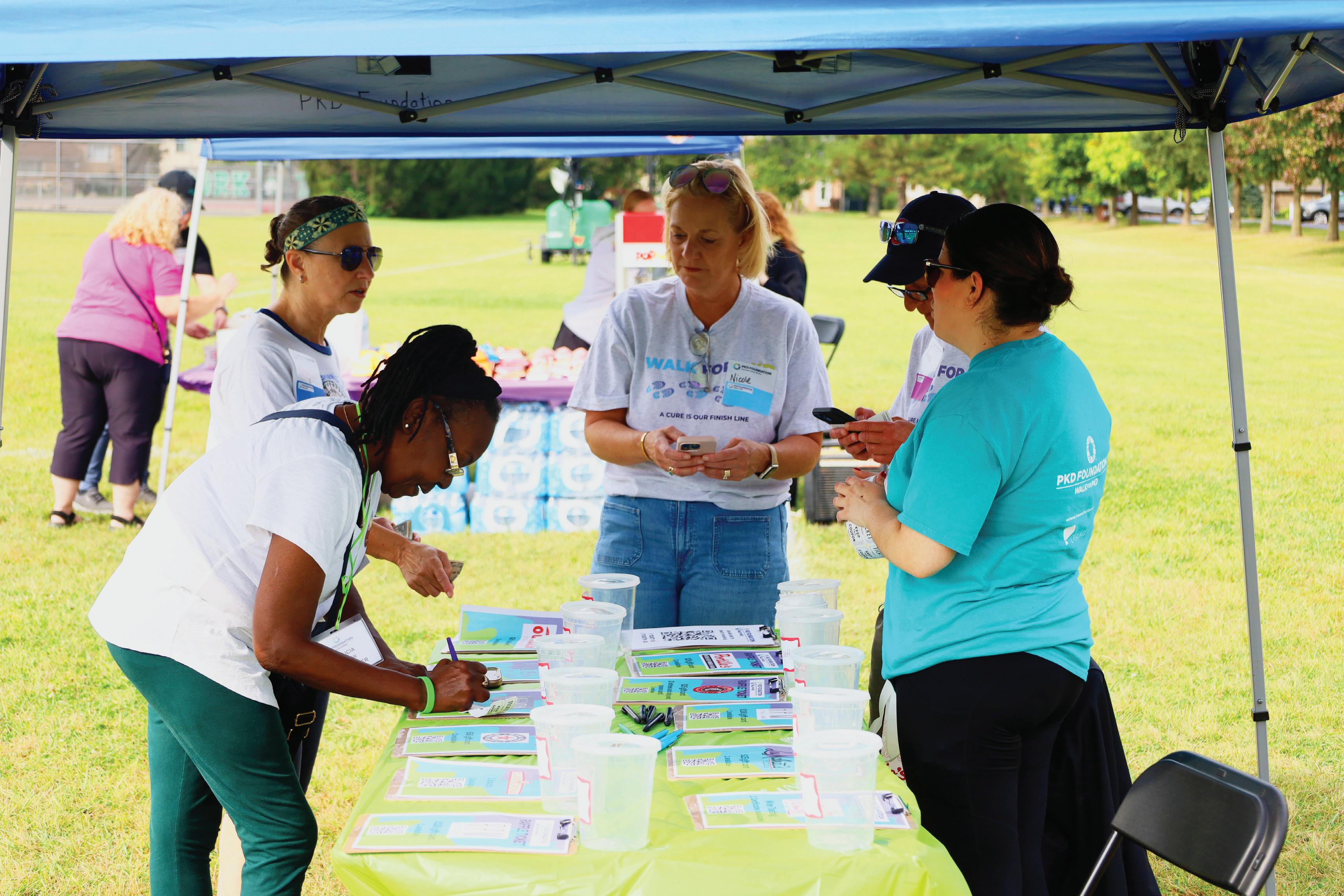
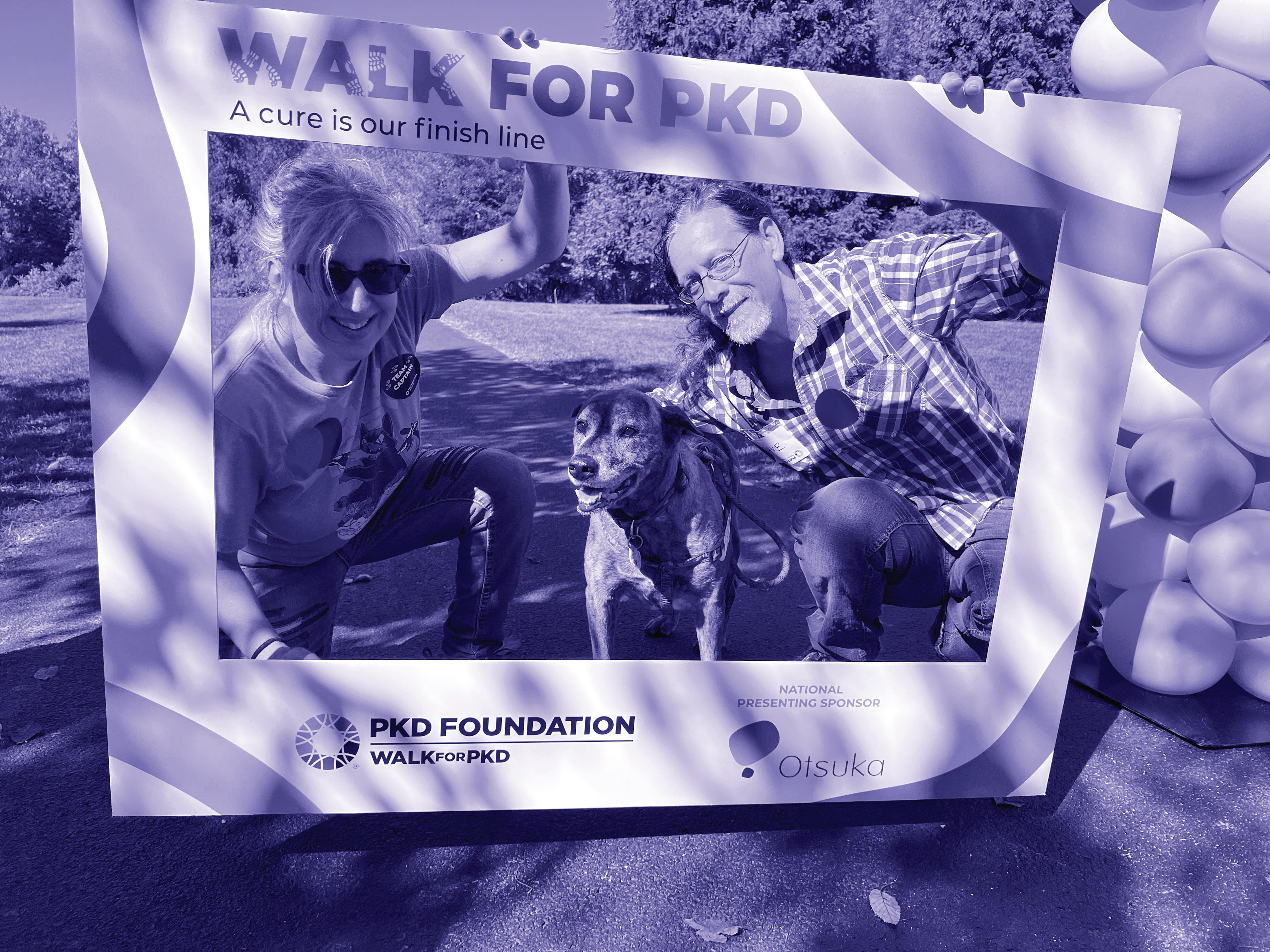
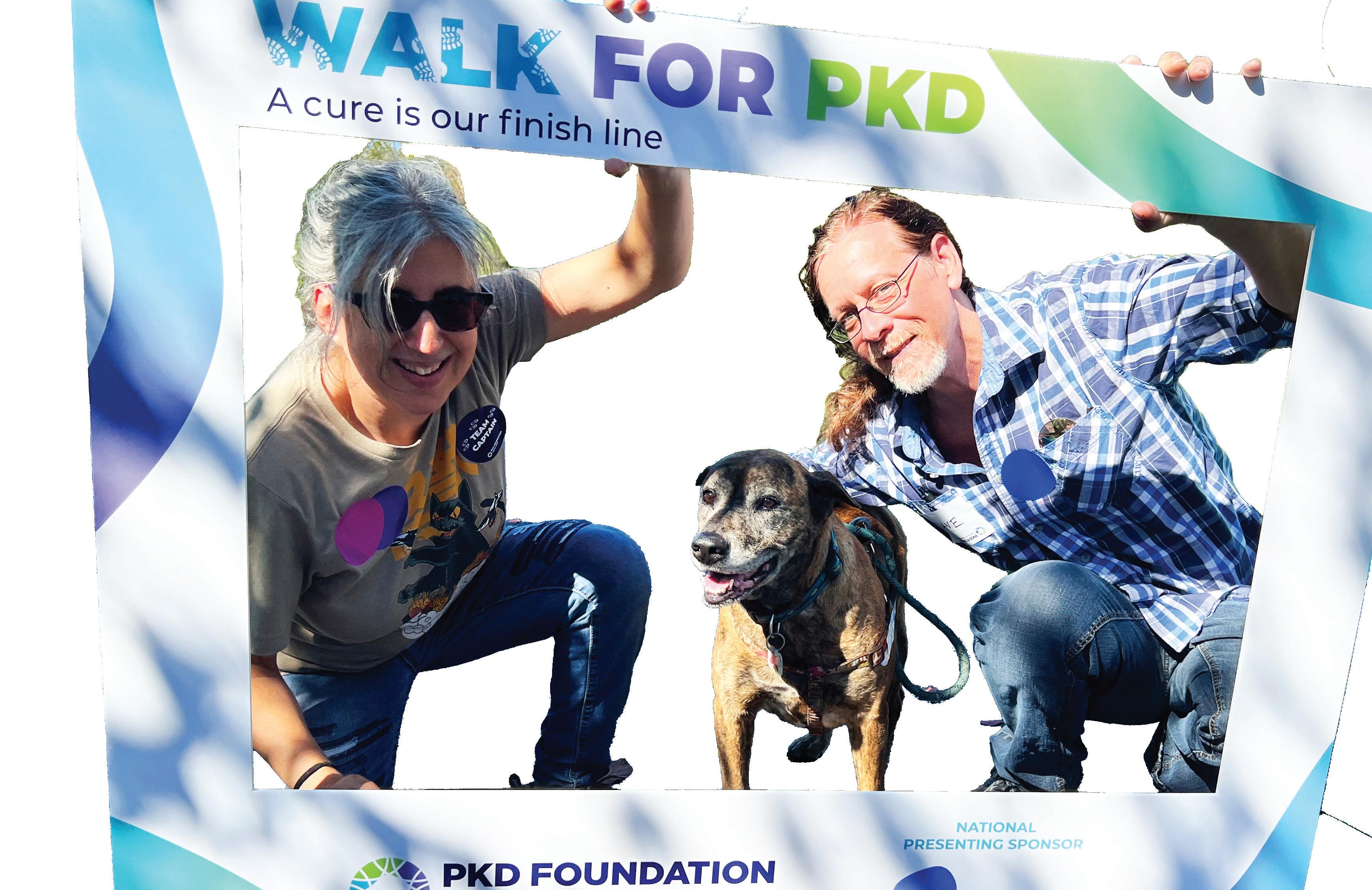
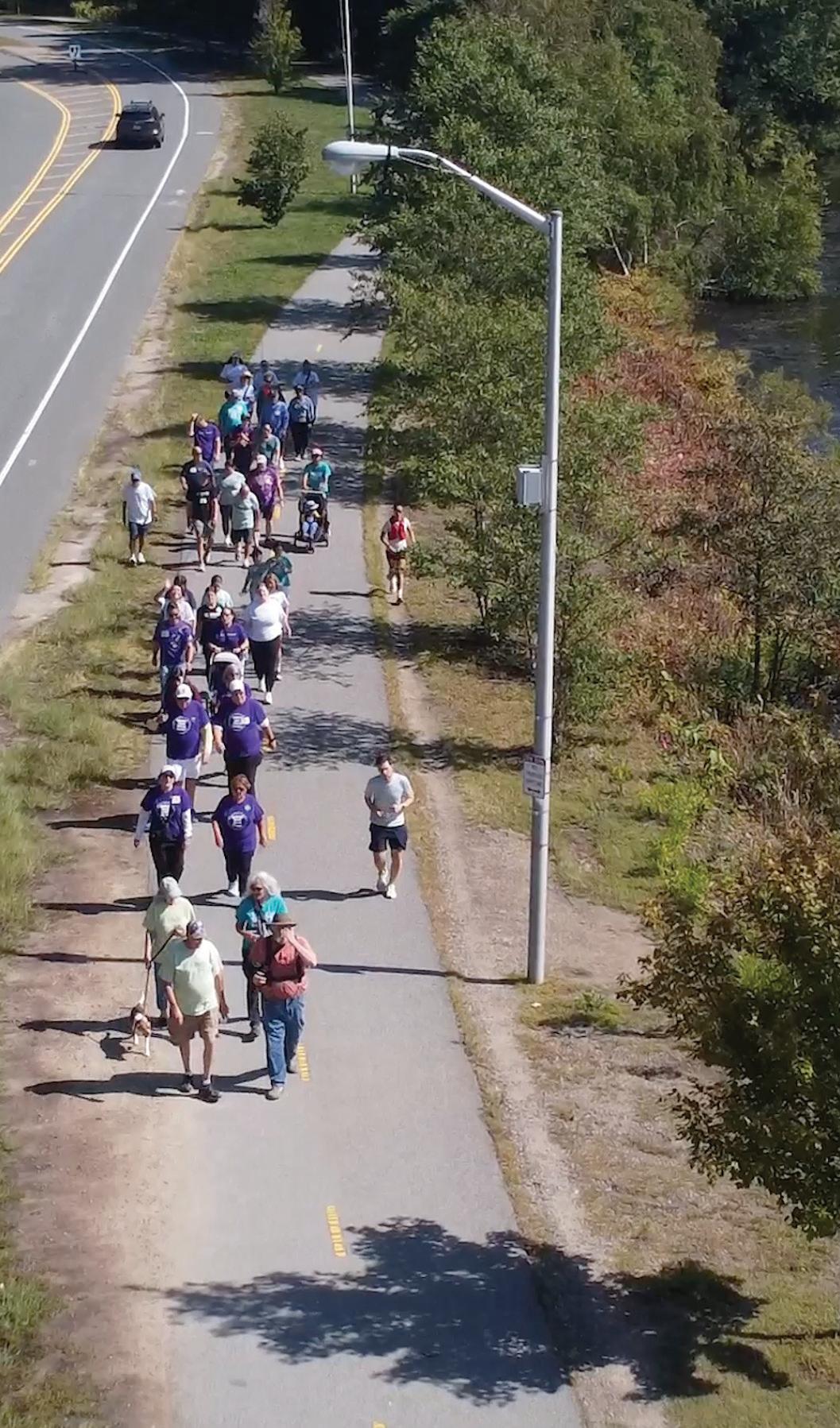
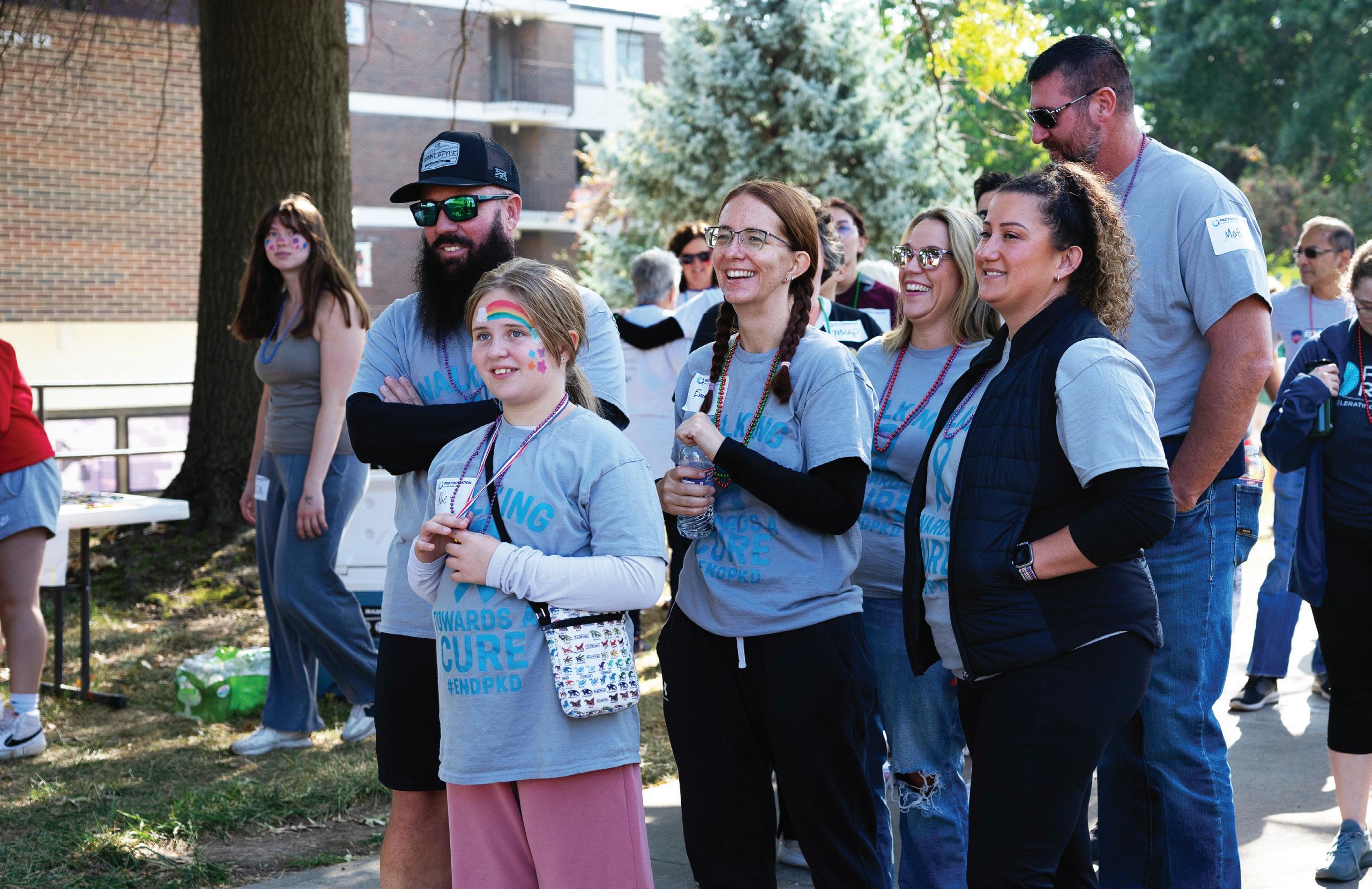
In 2025, 28 communities hosted Walk for PKD events, each one a vibrant expression of support, compassion, and resilience. Many included opportunities for patients to meet physicians from their local PKD Foundation Center of Excellence and other families impacted by PKD. And through our Walk for PKD—Your Way program, supporters across the U.S. found their own meaningful way to join the movement, no matter where they lived. Between local community events and Walk for PKD—Your Way, over 400 teams, totaling more than 4,200 Walkers, hit the pavement with the shared goal of ending PKD.
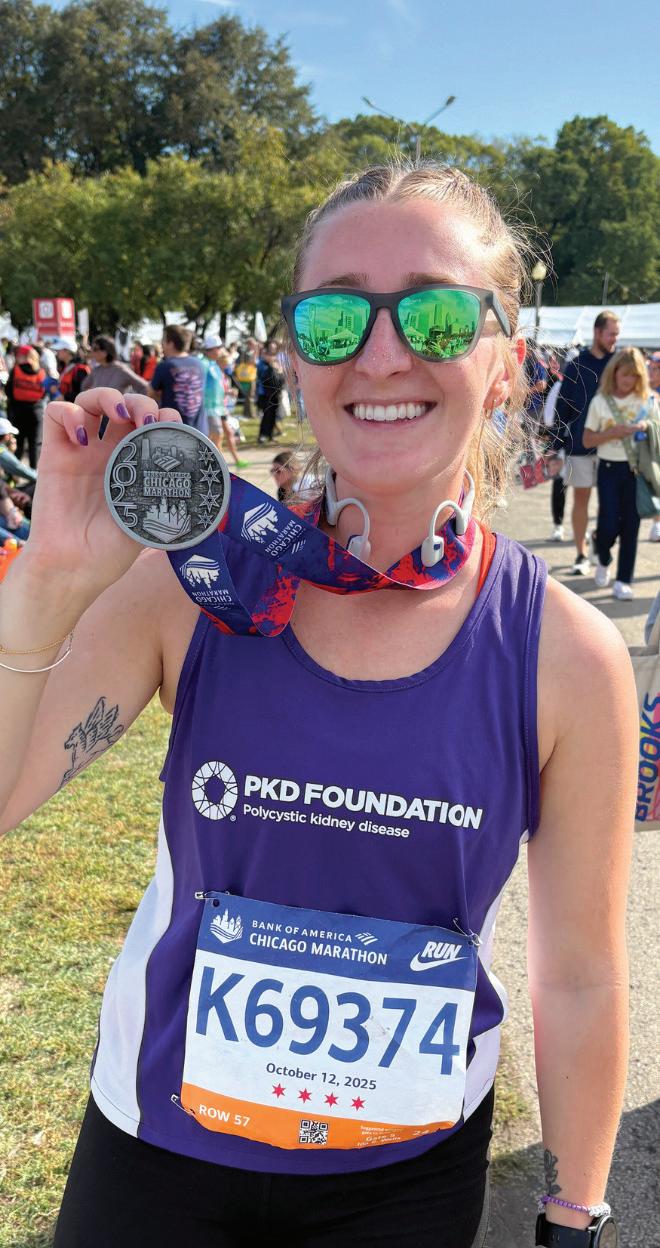
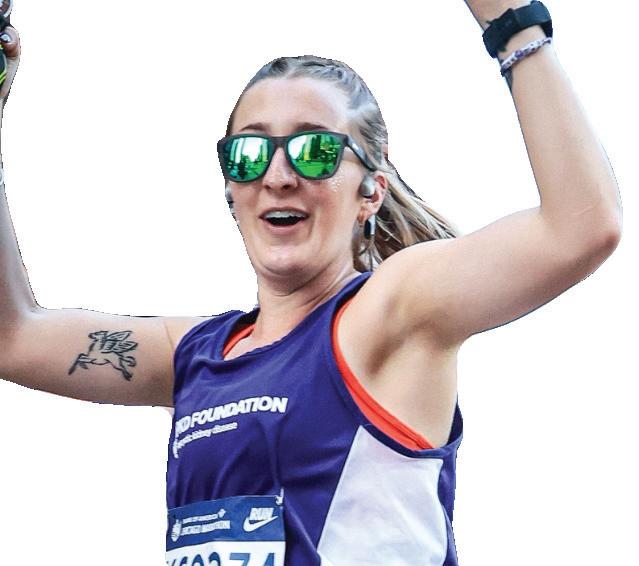
Like the Walk for PKD, spreading PKD awareness through the Bank of America Chicago Marathon is another integral part of our fall fundraising season. In 2025, 19 runners laced up their sneakers and pinned their PKD Foundation racing bibs. Their enthusiasm didn’t just sustain them through the 26.2 miles to the finish line; it ignited incredible generosity. Collectively, last year’s runners more than doubled the donations from 2024, surpassing $66,000.
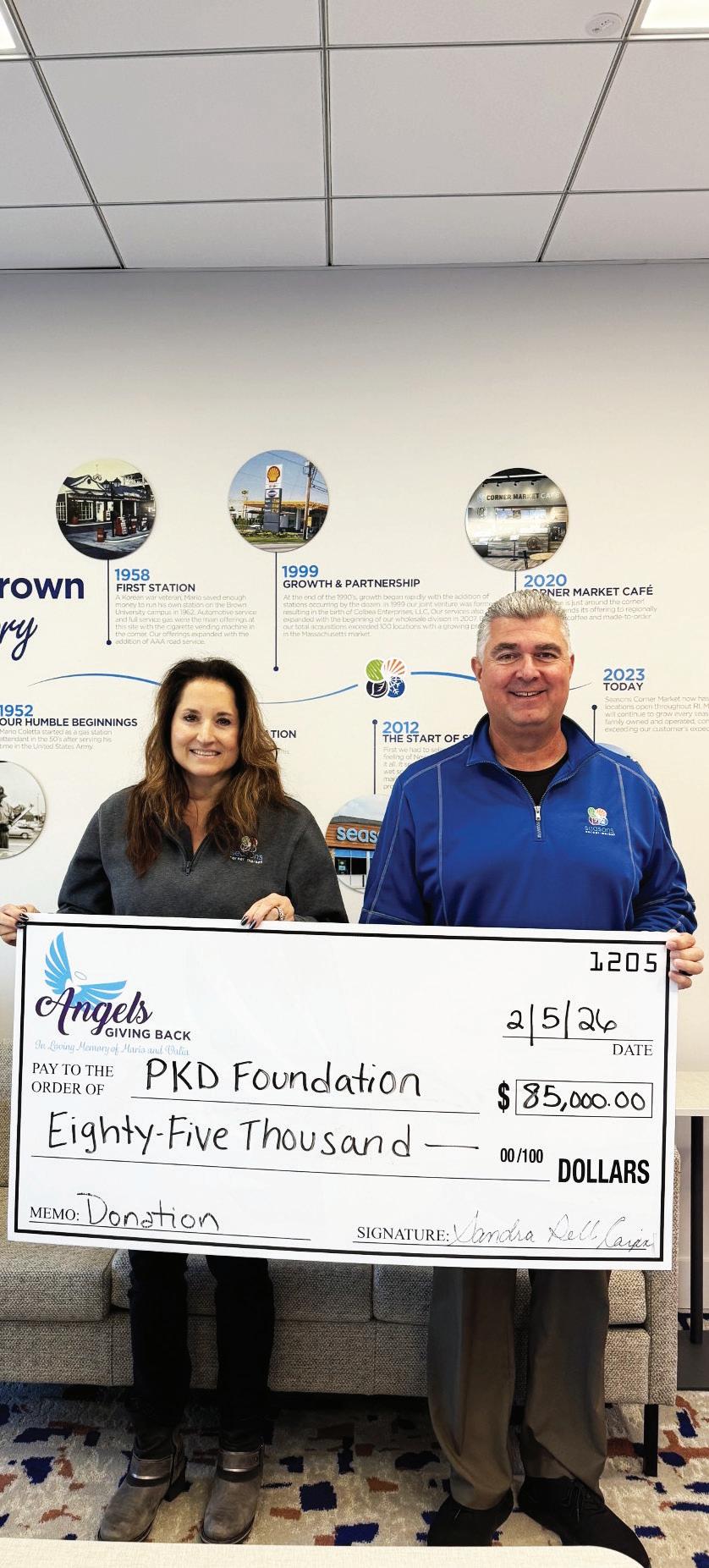
Throughout 2025, other annual events led by dedicated supporters across the country fueled additional funding for the Foundation. Karyn and Jerry Waxman spearheaded the 24th Annual PKD Applied Underwriters Invitational golf tournament, raising over $120,000. Hosted by Toni Stuart, the Las Vegas PKD Social—an afternoon of appetizers, cocktails, and a silent auction—raised nearly $12,000. The 21st Annual Celtic Marketing Golf Outing, hosted by Dan Hughes, added nearly $34,000.The Della Carpini family hosted the Angels Giving Back 5K and golf events, honoring Mario and Valia Coletta, raising $85,000. And in Miami, Bekki and Mike Haggard’s dazzling Kidney Casino for a Cure brought in nearly $360,000 toward our vision of ending PKD.
Fundraising is an “every season” event. With the PKD Foundation’s Fundraise Your Way program, anyone can start a fundraiser and make a difference in the PKD community. Last year, these fundraisers spanned a wide range of events—from benefit concerts and memorials to marathons and birthday celebrations.
All of these fundraising events in 2025 made a substantial impact, raising over $1.8 million toward our mission. As you read about the advances in research, the educational resources provided, and the support extended to the PKD community throughout this report, remember this: every breakthrough is powered by people like you. Your dedication fuels hope. Your generosity accelerates progress. Thank you to the PKD Foundation’s extraordinary volunteers, fundraisers, and event attendees. Your partnership is not just appreciated—it is essential to ending PKD.
SPECIAL EVENTS
All totals are approximate.
Kidney Casino for a Cure: $360,000
Annual PKD Applied Underwriters
Invitational Golf Event: $124,000
Angels Giving Back: $85,000
Bank of America Chicago Marathon 2025: Number of Participants/Runners: 19
Total Raised: $66,000
Celtic Marketing Golf Outing: $34,000
Las Vegas Social: $12,000
2025 Walk for PKD
Total Raised: $1.1 Million
Community Walks: 28
Walk Your Way Events: 16
Total Teams: 407
Total Walkers: 4,245
TOP WALK EVENTS
*Totals as of December 31, 2025
San Antonio Walk for PKD - $165,102
Boston Walk for PKD - $103,621
New Jersey Walk for PKD - $62,406
Milwaukee Walk for PKD - $58,147
Tampa Walk for PKD - $56,185
Twin Cities Walk for PKD - $55,216
Pittsburgh Walk for PKD - $50,618
St. Louis Walk for PKD - $45,138
Houston Walk for PKD - $40,560
Los Angeles Walk for PKD - $38,915
TOP TEAMS
*Totals as of December 31, 2025
1. Patti’s Partners to Find a Cure for PKD$47,435
2. Gilda and Ivan’s Investors for a PKD Cure$34,375
“It was heartbreaking that my dad wasn’t there to cheer me on, and I missed him more than I could ever explain. But I truly felt like I was carrying his torch and doing my part to move the PKD Foundation closer to a cure, which was his dream. Running for the PKD Foundation made the experience of running a marathon even more meaningful.”
- Colleen Andrews
2025 Bank of America Chicago Marathon Runner
APPRECIATION DONOR
OUR GENEROUS DONORS
We are grateful for the individuals, corporations, and foundations whose gifts support our mission to find treatments and a cure for PKD.
Gift period: January 2025 – December 2025
The following individuals/families are currently making transformational gifts to our organization through a pledge commitment.
Catherine Blakley and Owen Harper
Jody Blatman
Susan and Allen Branch
The Dabney Family
Tom and Jeannie Flesch
Gilbert Family
Michael and Bekki Haggard
The Klingbeil Family
Anne Lehker and Sam Slaughter
Jamie Lloyd
David Robinson
Robert and Linda Roth
Jordan and Laura Stolper
The Towey Family
Janice Wightman
$1,000,000+
Tom and Jeannie Flesch
Bruce and Nancy Winn
$100,000 to $999,999
Anonymous
Michael and Bekki Haggard
Otsuka America Pharmaceutical, Inc.
Susan and Andrew Schwartz
Eric Thompson
$50,000 to $99,999
Angels Giving Back
Arthur Cohn
Thomas S. Kaplan and Daphne
Recanati Kaplan Family
The Roger L. Kohn and Kay M.
Gilbert Fund
Amy and Jason Omenn
Robert and Linda Roth
Harriet and Edward Tomlinson
The Towey Family
Vertex Pharmaceuticals
$25,000 to $49,999
Anonymous (2)
The Bialer Family Foundation
Helen Boen
Stephen and Marni Cain
Gail and Paul Fazzina
George Fleck, in memory of Joan Kerr Fleck
Ted Gold
Donald Goldstein
The Shirley and Leonard Goldstein Foundation
Marcia Hindle and Family
The Larsen Foundation
Jamie Lloyd
Amy and Michael Manelli
Navin Manglani
Douglas and Rebecca McCarron
Natera Inc.
Novartis Pharma AG
Patti and Mark Ruffin
Ryan’s Reason
Jane and James Schwendinger
Stephanie and Jim Seaborg
Kevin and Traci Short
Spaulding Trust
Jordan and Laura Stolper
$10,000 to $24,999
Michael Agostino
Anonymous (2)
The Vera B. Arrison Foundation
Beth Israel Deaconess Medical Center
Catherine Blakley and Owen
Harper
Joan and Fred Brengel Family Foundation
Russell and Esperanza Buckhalt
Carylon, Julius, and Marcie
Hemmelstein Foundation
Celtic Marketing Food Brokers, Inc.
Katherine and Fred Cohen
The Lori and Michael A. Cohen
Charitable Fund of the Dallas
Jewish Community Foundation
Daniel and Susan Conway
The Dabney Family
Shirish and Pratima Desai and Family
Jay and Elaine Dolgin
Dale and Tamara Donohoe
Egan Company
Lewis Eisenberg
Cory and Amanda Fite
Glenn and Beth Frommer
Coleen Gee
Gilbert Family
GondolaBio
Gordon Hartman Family Foundation
Becca and Derek Groothuis
William Andrew “Andy” Haggard
Charles and Kathryn Hart
James Hastey
Esther Hill
IGN Foundation
James Avery Craftsman, Inc
JMKJ Laramie Fund
Peggy Katz
Mark and Lori Kempf
Andrea and Richard Kringstein
Florence Lanter-Spesard
Anne Lehker and Sam Slaughter
The Thalia & George Liberatos Foundation, Inc.
Erik Linn
Gail Low-McGillen
Renne C Lu, Bang-woel Lu Foundation
Michael Mack
John Mallard
Mayo Clinic Rochester
Lisa McElroy and Richard Blackshaw
Todd Michaels
Mississippi Polymers, Inc.
Rohan Nirody
Sarah Osborn and Randolph DelFranco
Poly-Cam, Inc
Edith Pulscak
Denis Repa
Sybil Rosenberg
Ross Foundation
Harold and Barbara Saul
Rachel and Eric Shry
Joseph and Gail Skeele
Tracy and Stephan St Amour and Family
Dylan Sumner
Jamie and Rob Taylor
Joseph Traba
Virginia Turba
Upton Foundation
Liliane M Vassberg, Ph.D.
Jeri and David Vick
Karyn and Jerold Waxman
David and Lynne Weinberg
Family Foundation
Alyson and Chris Wess
Maggie White
Shirley and David White
Janice Wightman
Walter Zimmerman
$5,000 TO $9,999
Priscilla Alexander
Dennis Alonso
Laurel Alyea
Gerald and Frances Anderson
Anonymous (6)
Christine and John Bakalar
Shaun Baker
Ashley Barrett
Battier Take Charge Foundation
David and Sharon Bender
Eva & Felipe Blanco
Jody Blatman
Liesl and David Bohan
Gift period: January 2025 – December 2025
Matthew and Jacqueline Bombeck
Susan and Allen Branch
Marc Brumer
Robert and Judith Burgstahler
Barbara and Nicholas Bush
Mary Helen Buttman
Donna Cantalupo
Peter and Alexandria Carney
David Casarotto and Danielle
DeLuca Casarotto
Ken and Lisa Cashin
Vicki and James Chandler
Arnold and Barbara Chonko
Timothy and Grace Clackson
Geoffrey and Andrea Clark
Cole, Scott & Kissane, P.A.
Mary and Frank Condella
Marilyn and Richard Cox
William and Cecille Daniel
Suzanne Dickson & Steve Stautzenbach
Natasha Diemer
David Earling and Maria Nicolo
Pedro Echarte
Thomas Edwards
Melissa Eichman
Krista Endsley
Ann Etergino
The Falsetti Family
Anna and Michael Feiler
Mike Feldman
Adam Finkel
Edmond Fitzgerald and Jennifer Lynch
Brent and Debbie Fredberg
Leslie Gattas
Gayle’s Soldiers
Melody and Mark Gensheimer
John Mark and Bridget Gidley
Sarjit Gil, M.D.
Scott and Christine Giles
Ira and Zari Ginsburg
Philip Gold
Arza and Brian Goldstein
The Greehey Family Foundation
Kim Gronendahl, in loving memory of Holly
Leyes and Terry Valentine
Trevor Harder, in memory of Maureen Harder
William Hardisty
Robin Hayes
Rich & Gerrie Heibel
Eiko Hoduchi
Patricia Hofmann
Lewis Jack
Harold and Lori Johnson
Nancy and Dean Kaminski
Allen Kinkle
Jason and Ann Labuda
Stacy Laffere
Virginia Leech
Tram Le-Nguyen
Dale Lewis
William Lewis
Sue Forese Lienhard
James and Ingrid Lisle
Kevin Lofton and Sabrina Shannon
Catherine and Michael Manning
Mary, David. and Andy Martin in honor of Charles Martin
Erica and Matthew Mazon
Ericka Meeks
Methodist Specialty and Transplant Hospital
Shari McNulty
MKL Foundation, Inc.
Richard Moore
Ned and Michelle Neely
Russell and Sandra Peppet
Meltem and Dan Priest
Antonio Puglielli, in memory of
Abi Seshsdri
Jarrod Rickard and Amanda Yen
Richard Roth
Larry and Tracy Sala
Diane and Thomas Siebrasse
Dorothy Sites
Neal and Deborah Slafsky
Edward and Aida Snyder
Geraldine Specht
Sun Life U.S.
Norm Taffe and Julie Bennett-Taffe
Lisa and Brian Tannebaum
Sidney and Kathryn Taurel Foundation
Barbara and Richard Thompson
Triple H Enterprises, Inc
University Health
Kimberly Wald
Amy and Jon Watkins
Rachel Wilson
Sally and Murrell Wilson
Edward Zebersky
LEGACY GIFTS
The Bloom Charitable Trust
Brennan Family Trust
S. Brower Living Trust
Estate of George Hetley, in memory of Carolyn Hetley and honor of George Hetley
Herbert S. Kipnis and Nancy Tuttle Trusts
KSM Family Trust
Thelma R. Lublin Trust
Doris Mario and Carol Taylor Trusts
Estate of Myrna Socol
Helmut and Auli Ann Will Trust
LEARN MORE ABOUT WAYS TO GIVE PKDCURE.ORG 816-300-1323
DONORRELATIONS@PKDCURE.ORG
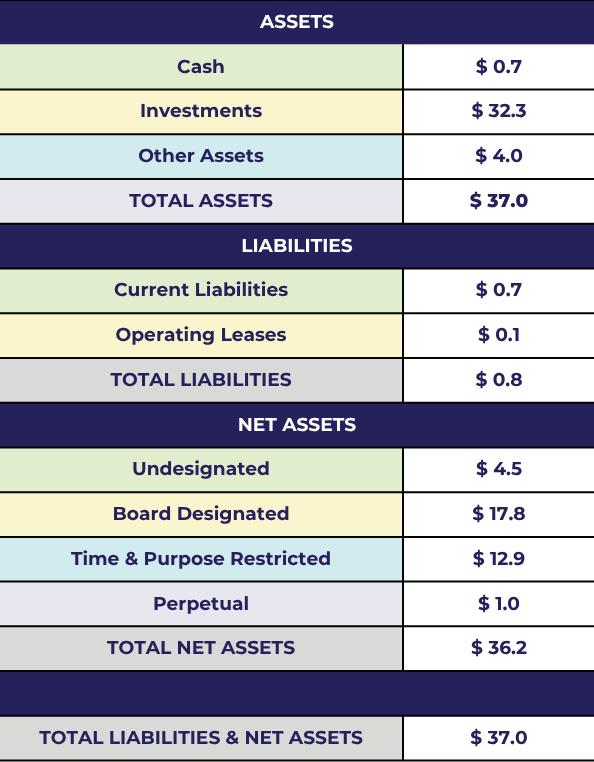
CONSOLIDATED FINANCIAL HIGHLIGHTS
Fiscal Year 2025 Audited Financials
(7/1/24–6/30/25)
FY25 Balance Sheet
(In Millions)
FY25 Total Revenue
FY25 Total Expenses
Contributions: $9.8 Million; 78%
Net Investment Return: $2.5 Million; 20%
Contributions - Non-Cash: $0.3 Million; 2%
Research: $4.8 Million; 47%
Awareness & Advocacy: $1.6 Million; 16%
Administrative: $1.5 Million; 15%
Education & Support: $1.3 Million; 13%
Development: $0.9 Million; 9%
LEADERSHIP
BOARD OF DIRECTORS
OFFICERS
CHRISTOPHER WESS BOARD CHAIR
AMANDA YEN VICE CHAIR
NAVIN MANGLANI IMMEDIATE PAST CHAIR
DIRECTORS
STU CAPLAN
ALIX PICCIRILLI GOVERNANCE COMMITTEE CHAIR
FOUAD T. CHEBIB, M.D., FASN
DEBORA PLUNKETT
SCIENTIFIC ADVISORY PANEL
OFFICERS
MEMBERS
VISHAL PATEL, M.D. CHAIR
WHITNEY BESSE, M.D.
MOE MAHJOUB, PH.D.
LEADERSHIP TEAM
SUSAN BUSHNELL PRESIDENT & CHIEF EXECUTIVE OFFICER
NEERA DAHL, M.D. VICE CHAIR
MICHAEL CAPLAN, M.D., PH.D.
TAKAMITSU SAIGUSA, M.D.
MICHAEL HAGGARD
KEVIN RYAN
GLENN FROMMER TREASURER FINANCIAL OVERSIGHT AND INVESTMENT COMMITTEE CHAIR
GREG MAINOLFI
VICTORIA STONE
SHAWNA WEBB SECRETARY
JULIE MARSHALL
VISHAL PATEL, M.D.
CRISTEN WATHEN
CARMEN GLEASON CHIEF OPERATING OFFICER
PETER HARRIS, PH.D.
ERUM HARTUNG, M.D.
STEPHEN SELIGER, M.D.
PAMELA TRAN, PH.D.
KATHARINA HOPP, PH.D.
OWEN WOODWARD, PH.D.
MAX CHRISTOPH LIEBAU, M.D.
MICHAEL NIEKAMP CHIEF FINANCIAL OFFICER
CRAIG ROBERTSON CHIEF GROWTH OFFICER
RESOURCES & WAYS TO GET INVOLVED
The progress highlighted in this report is made possible by a dedicated community committed to advancing research, supporting patients and families, and driving meaningful change for those living with PKD.
This appendix provides quick access to key resources and opportunities to get involved with the PKD Foundation, from educational tools and support programs to advocacy efforts, events, and ways to give. Whether you’re looking to stay informed, connect with others, or take action, there are many ways to be part of this work.
Together, we can continue accelerating research progress and improving the lives of everyone affected by PKD.
RESOURCES: PKD Handbooks and
Educational Handouts
General information about PKD, links to printable handouts, and PKD Patient Handbooks
Treatment and Clinical
Studies Information
Information and FAQs about ADPKD treatment and ARPKD and ADPKD clinical trials
GET INVOLVED:
Ways to Donate
Options to help accelerate PKD research and care
PKD Foundation
Volunteer Opportunities
Ways to volunteer at the PKD Foundation, both in-person and virtually
ADPKD Registry
Video Learning Library
PKD Foundation on-demand educational videos
PKD Chronicles Centers of Excellence Map
PKD Foundation podcast, produced by the PKD Foundation and presented generously by Otsuka Pharmaceuticals
The nation’s first dedicated ADPKD Registry for patients to provided health records and share their disease experience to power the path to a cure
Advocacy
How to use your voice to increase research funding, bring new treatments to patients, and ensure the best care for people with PKD