
Experience the exceptional connectivity of JetXP from Viasat. Business aviation’s No. 1 satellite Wi-Fi, with expanded capacity (including 5x boost over major US hubs), increased network prioritization and uncapped speeds across the world. Because business at the top never stops.
Experience more than fast

ELITE WINGS MAGAZINE
ISSN 2816-4040
ELITE-WINGS.COM
EDITOR-IN-CHIEF
Abdelmajid Jlioui abdelmajid.jlioui@elite-wings.com
DIRECTOR CONTENT STRATEGY
Viswanath Tata viswanath.tata@elite-wings.com
EDITORIAL DIRECTOR
Jane Stanbury jane.stanbury@elite-wings.com
EDITOR AT LARGE
Claude Draillard claude.draillard@elite-wings.com
BUSINESS DEVELOPMENT
Achraf El Boustani achraf.elboustani@elite-wings.com
CONTACTS
Editorial: editorial@elite-wings.com
General Inquiries: info@elite-wings.com
Advertising: ads@elite-wings.com


Elite Wings publishes timely, structured, validated, unbiased, and relevant business aviation intelligence.
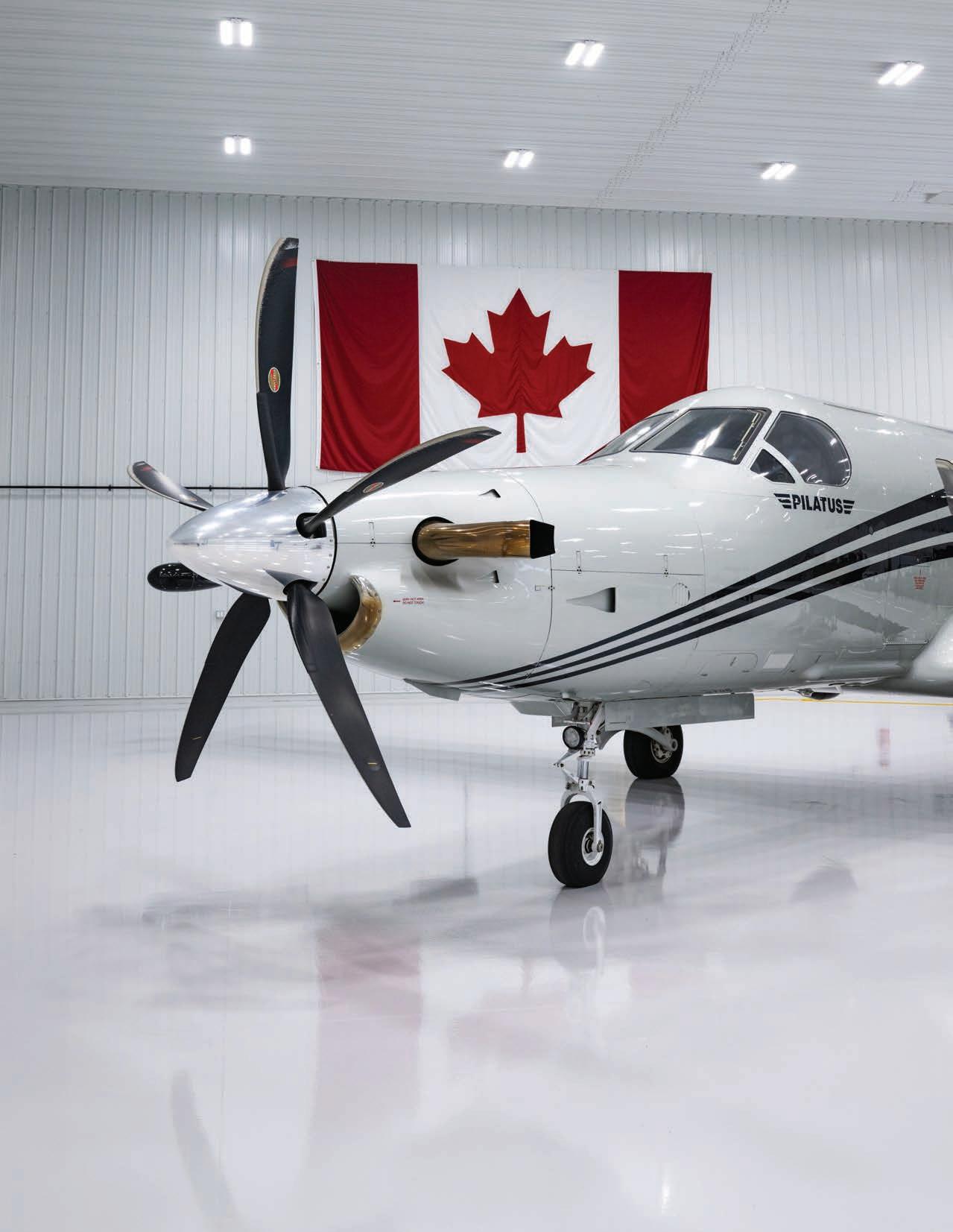
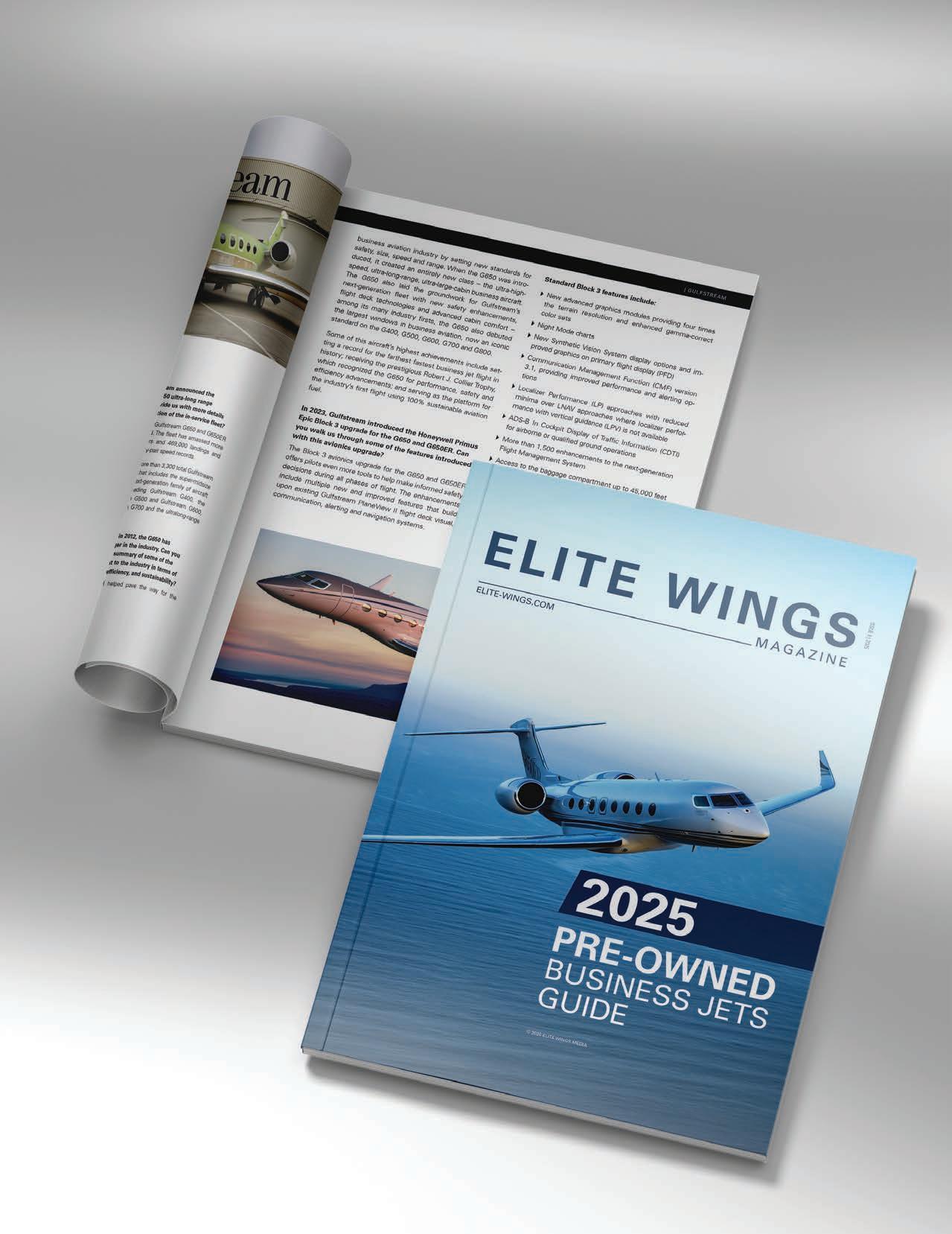
Cover Image: Pilatus PC-12 PRO © Levaero Aviation
ELITE WINGS MAGAZINE (ISSN 2816-4040) IS PUBLISHED BY ELITE WINGS MEDIA INC, MONTREAL, CANADA.
Any information of a technical nature contained in this document may contain inaccuracies and is subject to change and should never be relied upon for operational use.
Copyright © 2026 All rights reserved. Reproduction in whole or in part without permission of Elite Wings Media is strictly prohibited.


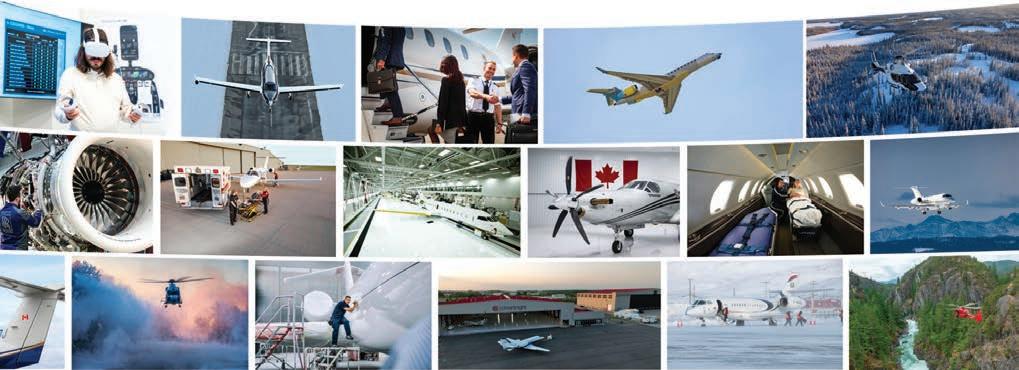
In a country defined by distance, climate, and decentralization, business aviation is far more than a convenience. It is a critical enabler of national cohesion and economic resilience. From connecting resource, manufacturing, and technology hubs to supporting Indigenous, Northern, and remote communities, business aviation provides essential access where scheduled air service is limited or unavailable. This publication brings these realities into sharper focus, documenting how our industry underpins commerce, mobility, and community well being across Canada.
Internationally, the importance of business aviation has been clearly recognized. The International Civil Aviation Organization (ICAO), headquartered in Montréal, affirmed at its 6th Worldwide Air Transport Conference that business aviation is “an important component of a comprehensive international air transport system.” That statement resonates particularly strongly in Canada. Business aviation serves as a lifeline for medical evacuations, disaster response, wildfire management, and humanitarian missions. It enables time critical decision making in sectors such as energy, mining, advanced manufacturing, and aerospace, while allowing Canadian companies to compete globally from regions well beyond major metropolitan centres.
The sector is also a significant contributor to Canada’s skilled workforce. Business aviation supports tens of thousands of high value jobs in flight operations, maintenance, engineering, manufacturing, and training, while
driving innovation throughout the broader aerospace ecosystem—one of Canada’s most strategic industries. These contributions often remain unseen, yet they are foundational to regional development and national competitiveness. This edition of Elite Wings aims to ensure that these stories are told with clarity, evidence, and credibility.
As public policy discussions in Canada increasingly focus on affordability, sustainability, and climate responsibility, it is vital that business aviation’s role and progress are accurately understood. Our industry has long been a leader in safety, efficiency, and technological innovation, and today it is equally committed to environmental stewardship. Canadian operators, manufacturers, and service providers are actively advancing the adoption of Sustainable Aviation Fuel (SAF), improving operational efficiency, and investing in next generation aircraft and systems aligned with national and international climate objectives.
As Canada continues to navigate evolving economic conditions, regional development priorities, and environmental imperatives, business aviation remains a proven partner—connecting communities, supporting jobs, enabling innovation, and strengthening the nation’s link to global markets. In doing so, it upholds the spirit of ICAO’s declaration and reaffirms its relevance to Canada’s future: a future that is more connected, more resilient, and more sustainable.
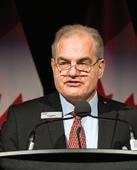
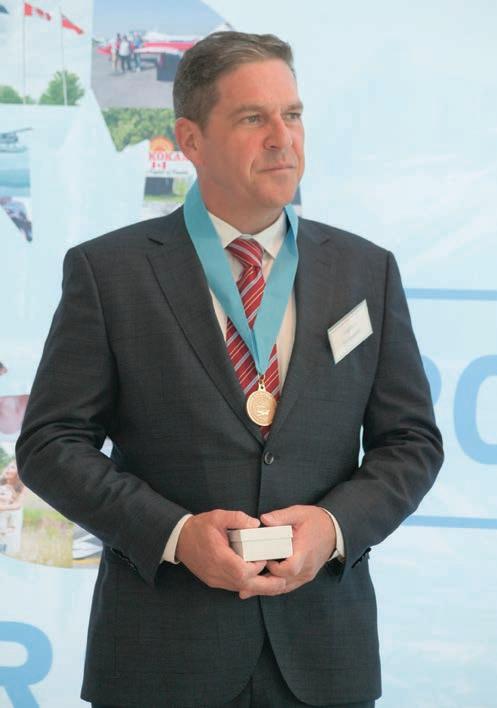
Ahead of the 2026 CBAA Convention and Exhibition in Calgary, Alberta, Elite Wings spoke with Harlan Simpkins, President and CEO of the Canadian Business Aviation Association (CBAA). The conversation explored the essential role of business aviation in Canada’s national transportation network—easpecially in a country defined by its vast geography and many communities lacking reliable scheduled airline service. In this full interview, Simpkins discusses CBAA’s mission and shares his perspective on the key challenges and opportunities shaping the future of Canada’s business aviation industry.
How does business aviation uniquely support Canada’s economic competitiveness and connectivity— particularly for remote, Northern, and underserved communities?
Business aviation is the modern equivalent of the railway. In the late 1800s, Canada invested in a transcontinental rail network to connect British Columbia with Eastern Canada. The objective was to strengthen Confederation, promote national unity, expand economic opportunity, and unlock resource development. The railway helped create many of the towns, cities, and industrial centres that define Canada today.
Canada remains a vast and geographically challenging country, with a relatively small population spread across immense distances. In many regions—particularly Northern, remote, and underserved communities—ground transportation infrastructure is limited, seasonal, or unreliable due to terrain and weather conditions.
Business aviation provides the connectivity needed to overcome these challenges. It allows Canadian companies, workers, medical personnel, technical specialists, and critical supplies to reach communities and economic
projects quickly and efficiently, often where scheduled airline service is unavailable or impractical.
This flexibility is especially important for sectors such as mining, energy, forestry, construction, and Indigenous community development, where time-sensitive access to remote regions is essential to economic growth and operational success.
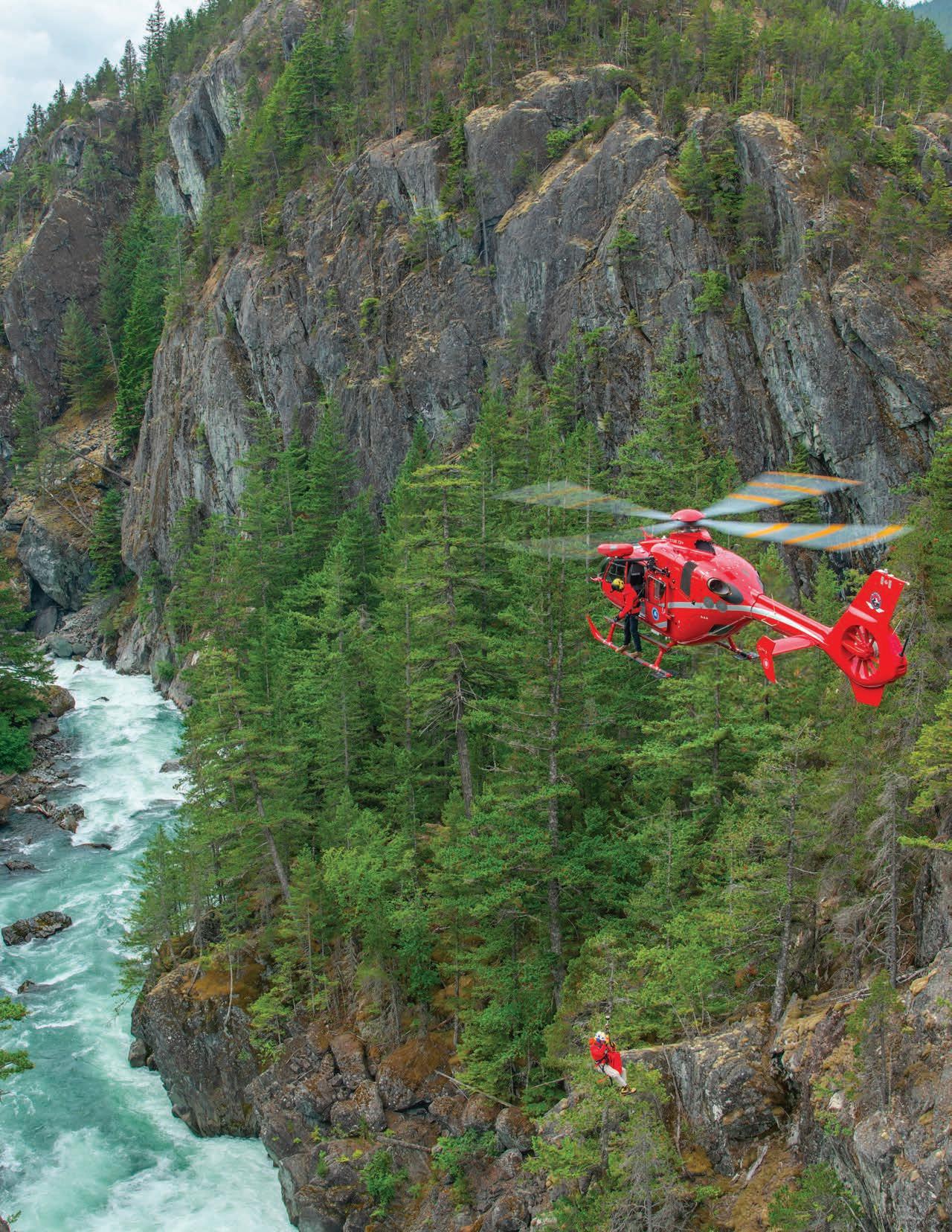
Business aviation also supports emergency response, wildfire management, medical evacuation, and disaster recovery efforts, providing rapid access when other transportation options are limited.
By connecting remote regions to national and global markets, business aviation strengthens Canada’s economic competitiveness, supports national sovereignty, and ensures communities across the country remain connected to opportunity, investment, and essential services.
From CBAA’s perspective, what are the most important economic and societal contributions of business aviation that policymakers and the public should better understand?
First and foremost, the narrative around business aviation needs to change. Business aviation is not simply about luxury travel or corporate convenience — it is an essential part of Canada’s transportation, economic, and emergency response infrastructure.
Business aviation encompasses all non-airline, non-military aviation activities, including helicopters, turboprops, and business jets used for legitimate business and public-service purposes. These aircraft provide safe, secure, and time-efficient transportation for companies, employees, technical specialists, and community support operations across Canada.
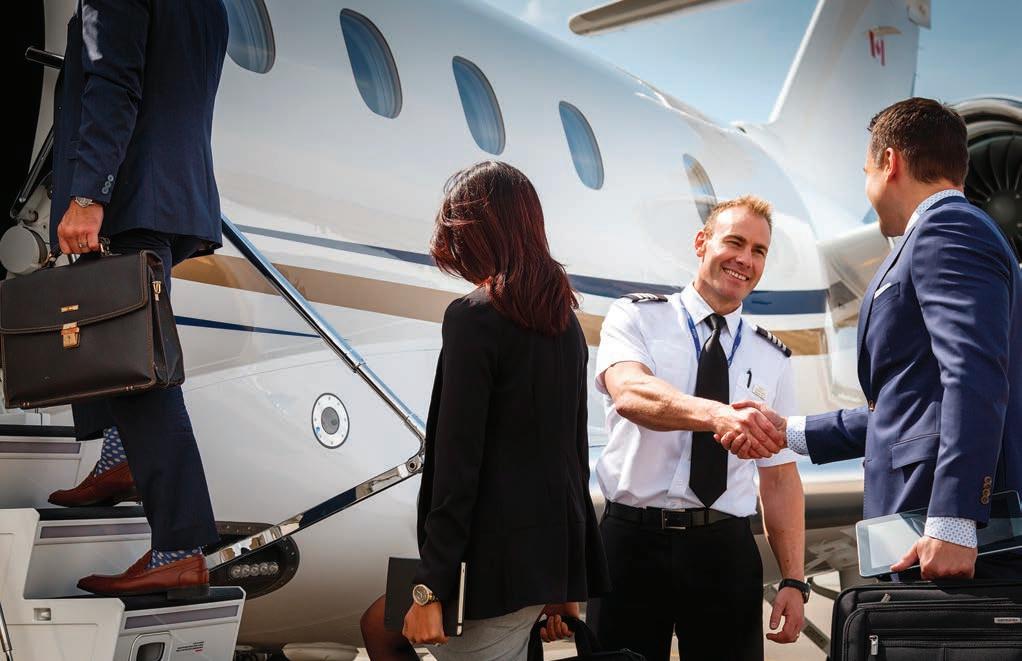
While executive transportation is one component, many business aviation flights support critical societal functions, including aeromedical transport, disaster relief during floods and wildfires, firefighting operations, mail and supply delivery, pipeline and infrastructure patrol, resource exploration, and access to remote and Northern communities.
The industry also represents a significant economic contributor. Business aviation supports more than 60,000 Canadian jobs and contributes over $5 billion in wages annually. These are highly skilled, highly trained positions
— including pilots, engineers, technicians, dispatchers, and manufacturing professionals — with compensation levels well above the national average.
In addition, business aviation contributes approximately $9.2 billion to Canada’s GDP and generates nearly $18 billion in total economic output. The sector strengthens regional economies, supports Canadian productivity and investment, and enables businesses to compete effectively in a global marketplace.
Ultimately, business aviation is a strategic national asset that supports economic growth, public safety, connectivity, and Canada’s long-term competitiveness that other transportation modes often cannot match.
How does business aviation enable growth and decision making in key sectors such as energy, natural resources, advanced manufacturing, technology, and aerospace?
In sectors such as mining, oil and gas, forestry, and energy development, business aircraft are used for remote sensing, aerial surveying, earth mapping, infrastructure inspection, and environmental monitoring. These capabilities help identify and develop natural resources, support project planning, and improve operational safety and efficiency.
Business aviation also provides reliable transportation to remote sites and industrial regions that are not adequately served by traditional airline networks. This allows companies to move employees, engineers, technical specialists, executives, and critical equipment quickly and efficiently, reducing downtime and improving decision-making timelines.
For many Canadian businesses, especially those operating in remote or geographically dispersed regions, the ability to access multiple locations in a single day provides a significant competitive advantage and improves overall productivity.
The sector also drives innovation within Canada’s aerospace ecosystem. Many aircraft are modified or customized for mission-specific specialized operational roles, which supports advances in engineering, avionics, safety systems, and sustainability initiatives. The collaboration between operators and aircraft manufacturers contributes to technological advancement across the broader
Everyone should have the opportunity to travel where they need to be, when they need to be there.
aerospace industry and reinforces Canada’s position as a global leader in aviation and aerospace innovation.
Ultimately, business aviation is not simply a transportation tool — it is a strategic business enabler that supports industrial growth, innovation, investment, and economic competitiveness across Canada.
What concrete steps is the Canadian business aviation community taking to support national climate objectives, and how is CBAA helping members navigate this transition?
The CBAA is a member of Climbing.Fast. (climbingfast. ca) and actively promotes the initiatives. Globally, civil aviation contributes just 2% of total global emissions –and business aviation is only a fraction of this. However, we are fully committed to investing in technology, efficiency and sustainable fuels to build a cleaner future.
The CBAA is a signing member and collaborator to Canada’s Aviation Climate Action Plan 2022-2030 which sets out a vision for greenhouse gas net-zero emissions by 2050.
CBAA has helped operators navigate Carbon Offset programs, supported SAF testing, validation and procurement, and has promoted technological advances and aircraft efficiencies in daily operations.
What are the most pressing regulatory or infrastructure challenges facing business aviation in Canada, and what initiatives is CBAA advancing to address them?
The CBAA is constantly monitoring the level of service and timelines produced by Transport Canada to ensure our members needs are met. We are actively pursuing additional delegation authorizations to increase efficiencies.
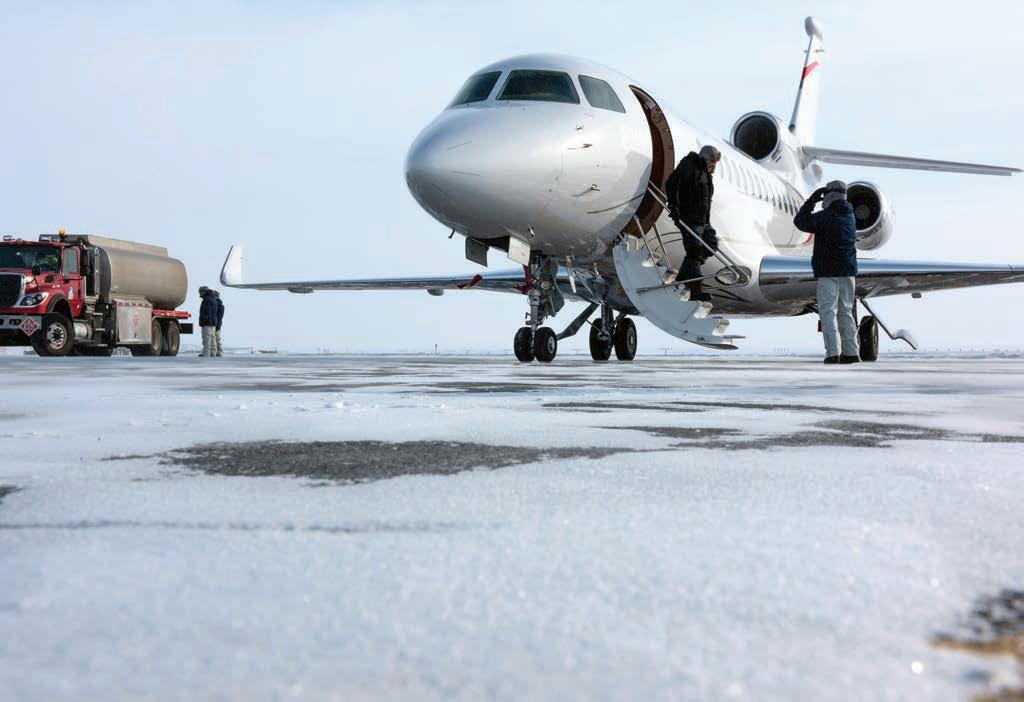
Infrastructure limitations (physical space, capacity or personnel) are the driving mechanisms that result in slot controls at airports. We are actively monitoring current slot allocations and advocating for better use of operations for business aircraft – since we don’t fit into a typical airport structure (ramp/gate allocation, baggage handling, de-icing).
The CBAA are members of a number of industry boards and actively participate in daily, weekly, monthly meetings with different airport authorities across the country.
How is CBAA working to strengthen the pipeline of skilled professionals in flight operations, maintenance, and management to support the long term health of the sector?
The CBAA is actively exploring opportunities for offering advanced courses or diplomas in aviation related subjects. Our members have already partnered with colleges and universities to help promote aviation, and we would like to build on those established programs.
Additionally, our annual compensation study helps to benchmark salaries and benefits in our industry, providing insight into the numerous opportunities available. This information helps our members remain competitive in attracting and retaining talent.
During major events — such as the FIFA World Cup matches in Toronto and Vancouver, the Formula 1 Grand Prix in Montreal, the Calgary Stampede, and other large sporting events and concerts — Business Aviation plays a critical role in supporting the movement of corporate leaders, technical teams, sponsors, government officials, media personnel, athletes, and high-value time-sensitive travellers whose schedules, security considerations, and operational requirements often cannot be accommodated through traditional commercial airline networks.
It is equally important to recognize that these events place Canada on the global stage. Ensuring a seamless experience for visitors — whether arriving on a commercial airline or a private aircraft — is essential to reinforcing Canada’s reputation as a premier destination for international business, tourism, and investment.
Can you speak to the role and impact of the CBAA Safety Management System (SMS) and accreditation programs, and how they elevate standards across the industry?
The adoption of Safety Management Systems (SMS) has had a positive impact on aviation. Embedding a safety culture, in all levels of an organization, with an accountable executive is a change of mindset that allows everyone to be actively engaged and promoting the best practices. Canada continues to be a leader and is currently working on modernizing SMS using several decades of accumulated knowledge and experience.
To support the adoption of SMS by its members, the CBAA offers a Risk Management Tool, which is used in conjunction with an SMS program. This allows operators to input and share data to determine trends, identify potential and actual hazards and risks, along with creating and monitoring safety plans and results. The RMS tool is integrated with the National Aggregate Database which allows for monitoring trends, lessons learned, best practices and mitigation strategies. We can elevate safety outcomes by learning from the mistakes of the past and not repeating them.
What is your vision for the Canadian business aviation sector, and what role will CBAA play in ensuring the industry remains resilient, relevant, and aligned with Canada’s economic and policy priorities?
The CBAA will remain the voice for business aviation – advocating on behalf of our members at the Federal, Provincial and Municipal levels to ensure our industry is understood and receives fair and equitable access to all opportunities.
This would include equitable tax treatment (accelerated depreciation), fair access to airports and slot restrictions, and more timely responses and action to regulation and legislation changes.
The direct, indirect, and induced economic contributions of business aviation in Canada are significant and reinforce the importance of maintaining access and operational flexibility during periods of increased demand.
When business and aviation join together, the result is a powerhouse of economic development, growth and prosperity for the entire country. Advocacy and education are critical in highlighting the extreme importance of this sector.
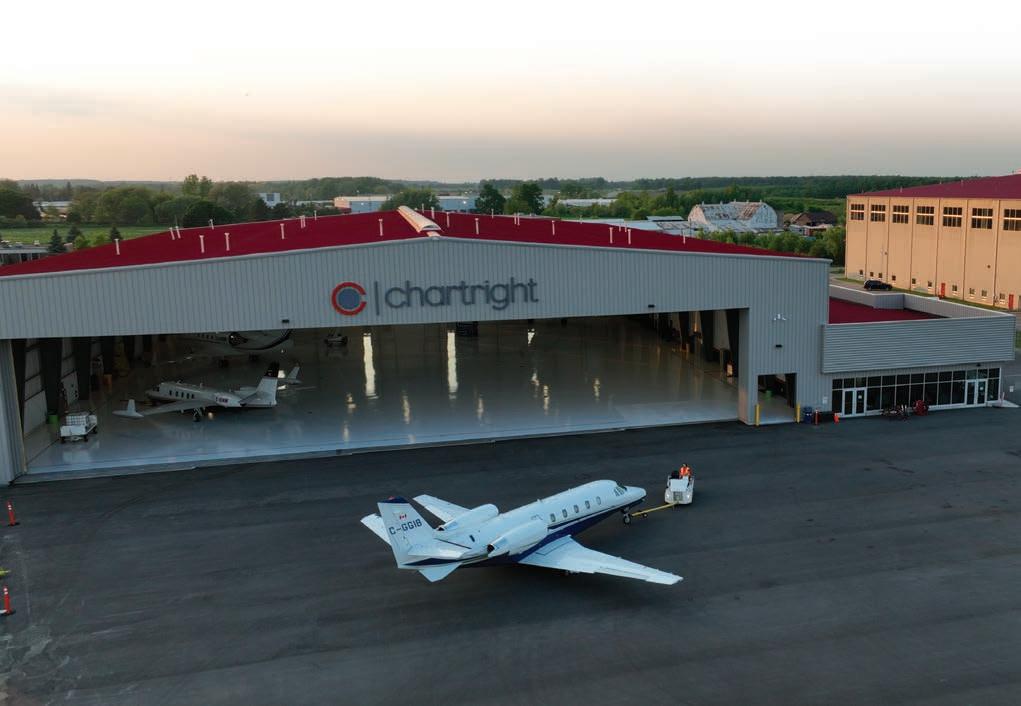
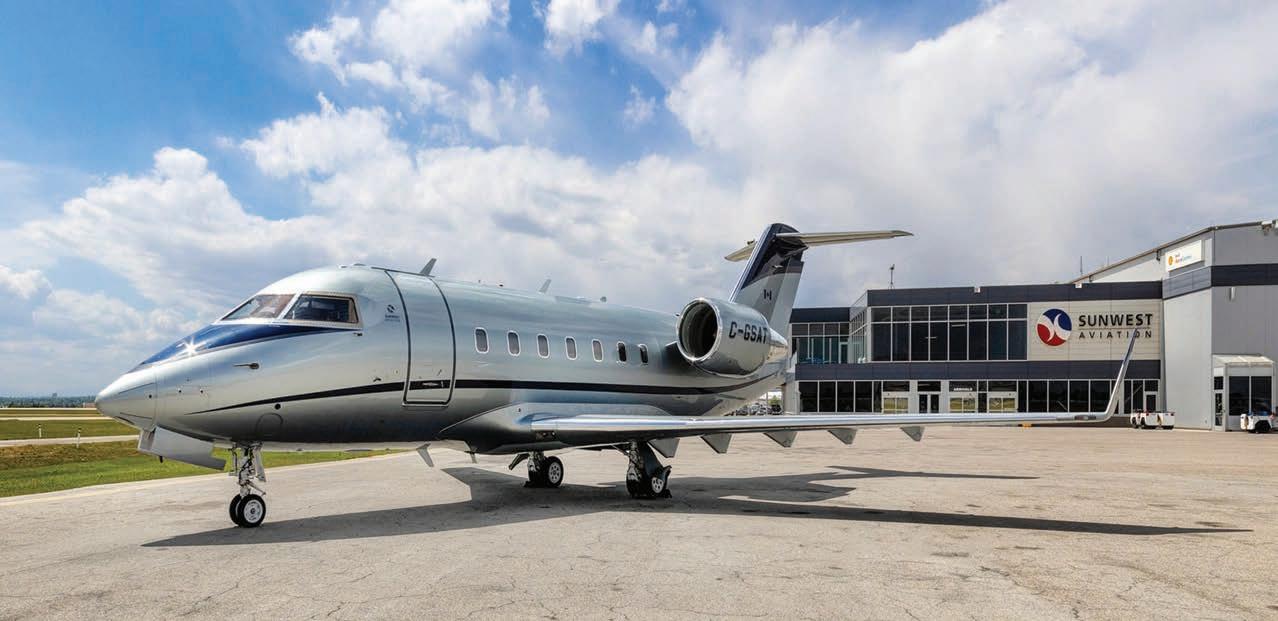

A Conversation with Matthew Cox, President and CEO of Sunwest Aviation, Western Canada’s largest and most diverse business aircraft operator
Sunwest Aviation has built a strong reputation as a diversified business aviation operator. Could you provide an overview of the company’s core services and explain how your operating model differentiates Sunwest in the Canadian market?
Sunwest is a leading Canadian-owned provider of aviation services with extensive domestic and international operational experience. Sunwest Aviation is a complete ecosystem of aviation solutions.
With over 40 years of operational excellence, Sunwest offers a comprehensive suite of integrated services:
Large, diverse aircraft fleet capable of scalable, international operations for industrial, executive, business, cargo, aeromedical, and emergency response travel
Aircraft charter domestically and internationally, including an option for carbon emissions reduction via a Canadian and Indigenous ‘carbon dioxide equivalents (CO2e)’ offsetting program that meets the Carbon Offsetting & Reduction Scheme for International Aviation (CORSIA)
Workforce transportation & logistics with extensive experience in the energy and mining industries
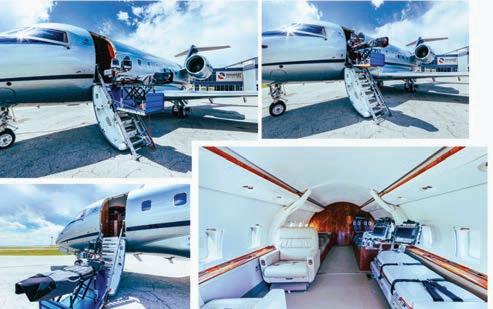
Air ambulance & aeromedical ser vices, inclusive of international rapid response with advanced critical care capability deployed with full medical staffing, equipment, pharmaceuticals, and bed-to-bed logistical planning
AVRO Club Membership that offers flexible and unrestricted access to Sunwest’s fleet of aircraft, providing the customer with real-time scalability to meet their needs.
Empt y legs retail that allows our aircraft owners to optimize their charter return on aircraft ownership by retailing their unoccupied flights
Cargo & hot shot ser vices internationally and domestically
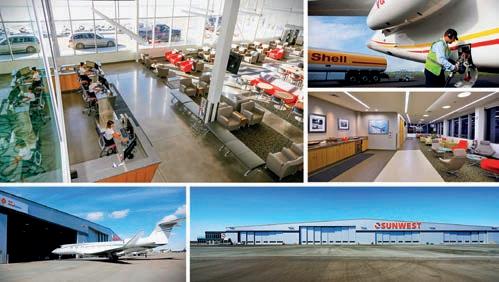
Fixed-Base Operations (FBO) as a Shell AeroCentre providing ground handling with a full suite of services, including de-icing & anti-icing.
Aviation fuel & fluids, including Shell Sustainable Aviation Fuel (SAF) attributes via the digitally robust and secure Book & Claim system.
Aircraft maintenance with extensive maintenance engineering capabilities, including structures, composites, avionics, refurbishing & upholsteries
Aircraft management services of 3rd party owned aircraft, inclusive of robust reporting and ability to run shadow flight departments on behalf of companies
Aircraft sales & acquisitions, including SME advice for projects and missions
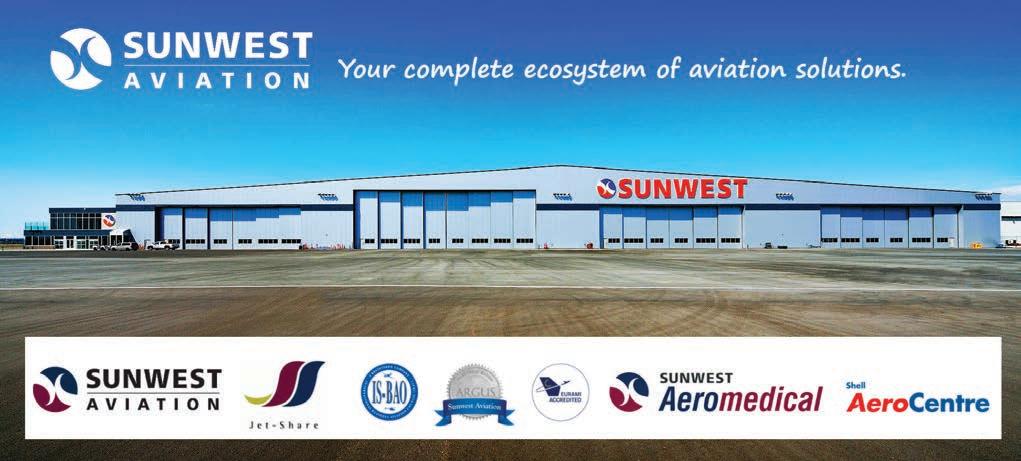
Qualit y, Health, Safety, Security, Environment (Q-HSSE) management system with major accreditations and approvals, including ARGUS Platinum, IS-BAO III, Contrail Aviation Safety, and EURAMI
Our Sunwest Mission gives us a continuous vector towards this success when it says, “To be a safe, diverse and innovative aviation service company respected for integrity and committed to taking care of our customers, our employees, our partners, and our community”.
Humans make a company. It is not the machines, the buildings, or the tools but the people of Sunwest Aviation. It is with admiration of the entire Sunwest team that I serve as the President & CEO. That is our number one differentiator.
We are also privileged as a team to have a large, diverse fleet of jet and turboprop aircraft, from King Air to Dash 8 workforce capacity all the way to ultra-long-range jets, such as the Gulfstream 650ER and the Global 6000. Furthermore, our Calgary facility and FBO operates across 15 acres, with 110,000+ square feet of heated hangarage and 200,000+ square feet of ramp. Toronto is an important part of our evolution in our diverse capabilities. We are very pleased to welcome Jet-Share into our Sunwest Aviation’s ecosystem of aviation services. This acquisition & merger gives our customers another access point into our large fleet that operates domestically and internationally.
Our competitive advantage is focused differentiation across the aviation ecosystem, where a customer can come to Sunwest for a single charter, a managed aircraft, an aeromedical mission, maintenance support, aircraft acquisition advice, or FBO handling and evolve across our offerings. Behind each request is one operating culture, one safety system, and one accountable team. Our people create that differentiated difference.
Sunwest Aviation is well known for its aeromedical operations. Could you elaborate on these services and explain why they are so critical to Canada, particularly given the country’s geography and remote communities?
Yes, we are internationally recognized for our aeromedical operations. This is because we are more than medevac aircraft; we are an end-to-end solution. That means we logistically coordinate and perform the entire, multi-layered process from sending hospital (sending physician) to receiving hospital (receiving physician). We have a very knowledgeable team of doctors, advanced critical care medical staff, and pilots who seamlessly ensure required medical staffing, equipment, pharmaceuticals, and medical oxygen are onboard our very capable aircraft. I am immensely proud of the meaningful missions that our aeromedical teams accomplish around the globe and within Canada.
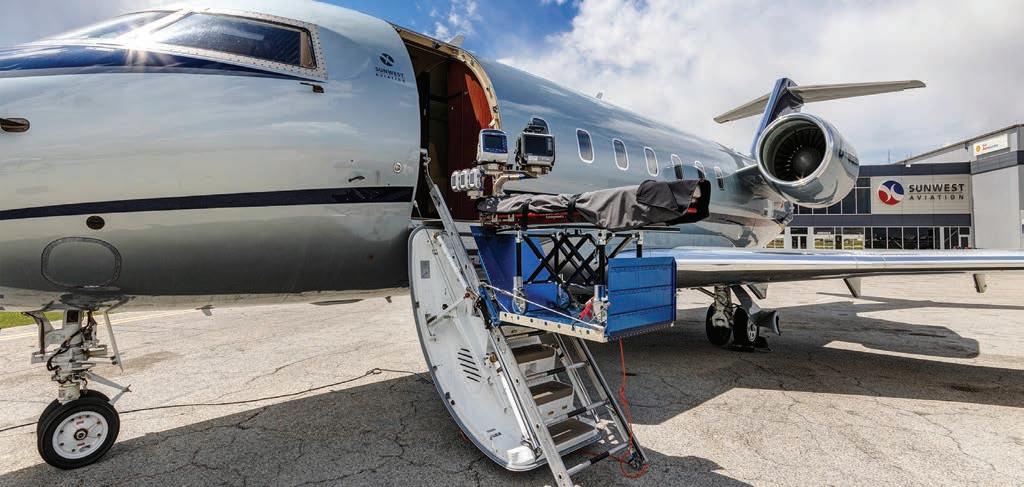
In Canada, we offer air ambulance, organ transfer, and emergency response services via our fleet of scalable aircraft options: King Air 200, King Air 350, Learjet 45, and Challenger 604. This rapid interchangeability allows us to match our aircraft to the mission and deploy a scalable medical team that matches the patient’s needs. Because of Canada’s remoteness, vast distances, limited airport capabilities, and spareness of medical services, our adaptability is called upon often.
Sunwest Aviation delivers award-winning FBO services at Calgary International Airport. What sets your Calgary operation apart?
It is our people, our facility, and our equipment that sets us apart. We understand the full spectrum of FBO service from executive jet flights to high-volume workforce flights. Because we operate our own fleet, our technical ability, equipment, services, and hangars are superior to standalone FBOs. Therefore, a visiting aircraft is assured we have all services, including de-ice and maintenance. Furthermore, we are in an optimal YYC location for aircraft and ground transportation accessibility.
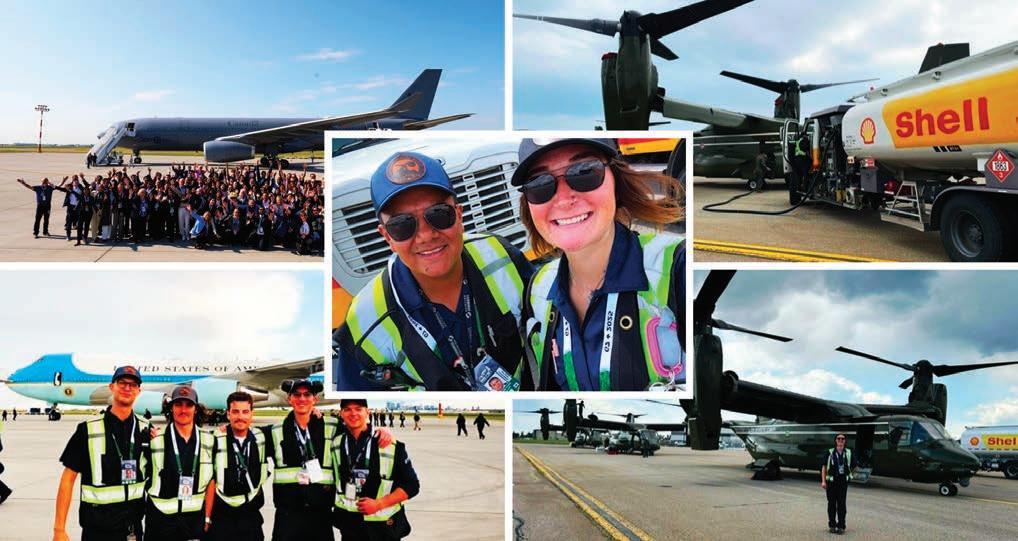
As a testament to our capability, the Government of Canada selected Sunwest Aviation as the arrival and departure facility for the G7 Summit in Kananaskis. Sunwest Aviation’s FBO coordinated and successfully delivered fuel, SAF attributes, ground service & handling to all G7 aircraft and guest countries without a safety or security incident. We received many recognitions from the visiting countries and from Shell for this achievement. I am immensely proud of the FBO team for their hard work and professionalism.
Safety, reliability, and service quality are critical in business aviation. How does Sunwest Aviation ensure consistent operational excellence across its fleet and service lines?
Safety is paramount to all that we do. Safety is the first word in our Mission Statement; hence, our risk management is disciplined, robust, and active. That means we are continuously learning, improving, and mitigating.
We refer to safety, reliability, and service quality as “Excellence”. Dan Maerz and his team tirelessly work on evolving our safety case and the quality mechanisms within it. Sunwest Aviation’s reputation in the industry as a robust leader in safety is a testament to this team’s accomplishments.
Operational Excellence is more than our accreditations of ARGUS Platinum, IS-BAO III, Contrail Aviation Safety, and EURAMI. These are important external validations, but they are not the culture itself. Excellence is created by predictive and continuous learning, disciplined risk management, operational accountability, and a team that is willing to intervene within a just culture before small deviations become accepted practice.
Across our aviation ecosystem, from Calgary to Toronto, and from charter to aeromedical, FBO, aircraft management, and maintenance, consistency comes from one operating culture, one safety case, and one accountable team. Our people create that excellence.
The business aviation landscape is evolving rapidly, particularly in Canada. What key trends are you currently observing, and how is Sunwest positioning itself to respond to changing client expectations and market demands?
Aviation companies in Canada have been battered by the pandemic, are now loaded with rising inflation, and buoyed by an eroded economy. Meanwhile, the marketplace is asking more from aviation at the same time Canada is becoming harder to operate in.
CBAA’s economic impact work shows business aviation supports 53,600 jobs, contributes $9.2 billion to GDP, and generates $17.9 billion in economic output. Globally, demand remains resilient, with Honeywell forecasting 8,500 new business jet deliveries over the next decade. However, Canada is a strained aviation marketplace:
weak GDP growth, high user fees and taxes, high fuel and parts costs, aircraft supply constraints, tariff uncertainty, and a projected shortage of 42,000 to 55,000 aviation workers by 2035.
Because of these realities, the customer trend is towards selective demand, where every dollar a customer spends is disciplined with expectation. Industrial customers want lower total trip cost, predictable pricing, high reliability, scalable capacity, safe service delivery, reduced administration, and transparent operational visibility. Corporate and UHNW customers want privacy, discretion, security, flawless reliability, hyper-personalized service, and a frictionless journey. Put simply, they want us ‘easy to find, easy to book, easy to fly, and easy to pay’.
To predictively stay ahead of our customer needs, the marketplace, our competitors, and society’s expectations, we have been learning, adapting, and changing. We are on multi-year journey of improvements. We are investing in people, excellence, technology, customer touchpoints, and disciplined growth. However, we must never forget the core of what has made us successful – focused differentiation enabled by people. We must protect and nurture that competitive advantage.
Talent development and company culture are often cited as competitive advantages. How do you attract, retain, and develop skilled professionals within Sunwest Aviation, and what values guide your leadership approach?
We are a learning organization, and the talent marketplace is rapidly changing. All companies must adapt to that reality. Therefore, we are in the process of launching an HR strategy for the future that includes a focus on a true Employee Value Proposition (EVP). Our people strategy is called “Empowering People. Elevating Our Future.” Our journey is focused on three elements
First, a valued journey, where employees feel appreciated, recognized, engaged, and fairly compensated across recruitment, employment, and exit.
Second, a supported and enabled workplace, where employee needs, business objectives, and regulatory compliance are balanced.
Third, an innovative future, where succession planning, technology, tools, learning, and development future-proof both the employee and the company.
My leadership approach is to listen, understand, learn, and adapt. That means we must protect what has made us successful while embracing intelligent change. Gordon Laing, one of Sunwest’s founders, wrote in his 1996 communication, “We will create and maintain an enjoyable work environment that listens and responds to our personal and business needs while maximizing service to our customers.” What was true in 1996 is aptly true today in 2026.
Looking ahead, what is your long-term vision for Sunwest Aviation, and how do you see the com-
pany’s role evolving within the Canadian and North American business aviation ecosystems over the next five to ten years?
Our strategic filter is simple: de-risk the business, protect our people, assets, reputation, and sustainability, and grow within the marketplace’s willingness-to-pay. We must maintain a differentiated and defensible market position built on safety, service, convenience, and reliability. If we do not stay differentiate, we become a commodity.
Calgary will remain our operational anchor, with fleet depth, FBO infrastructure, maintenance, and ground handling capability. Toronto is an important springboard into Central and Eastern Canada, the eastern seaboard, and international corridors that we will continue to leverage. We will continue to embrace international opportunities, especially within healthy and emerging economies. Technology will make us easier to find, book, fly, and pay.
I often ask people, what is ‘transportation’? The usual answer is “to move people or goods from A to B.” While correct, I feel there is a deeper emotional motivation. Transportation exists to safely move people towards each other, towards opportunities, and into a shared experience. Even cargo is an exchange between people. Therefore, we are in the business of people. We can never lose sight of that.
If we stay true to our course, flying west, the sun never sets. I look forward to our continued journey of success at Sunwest.
By Viswanath Tata

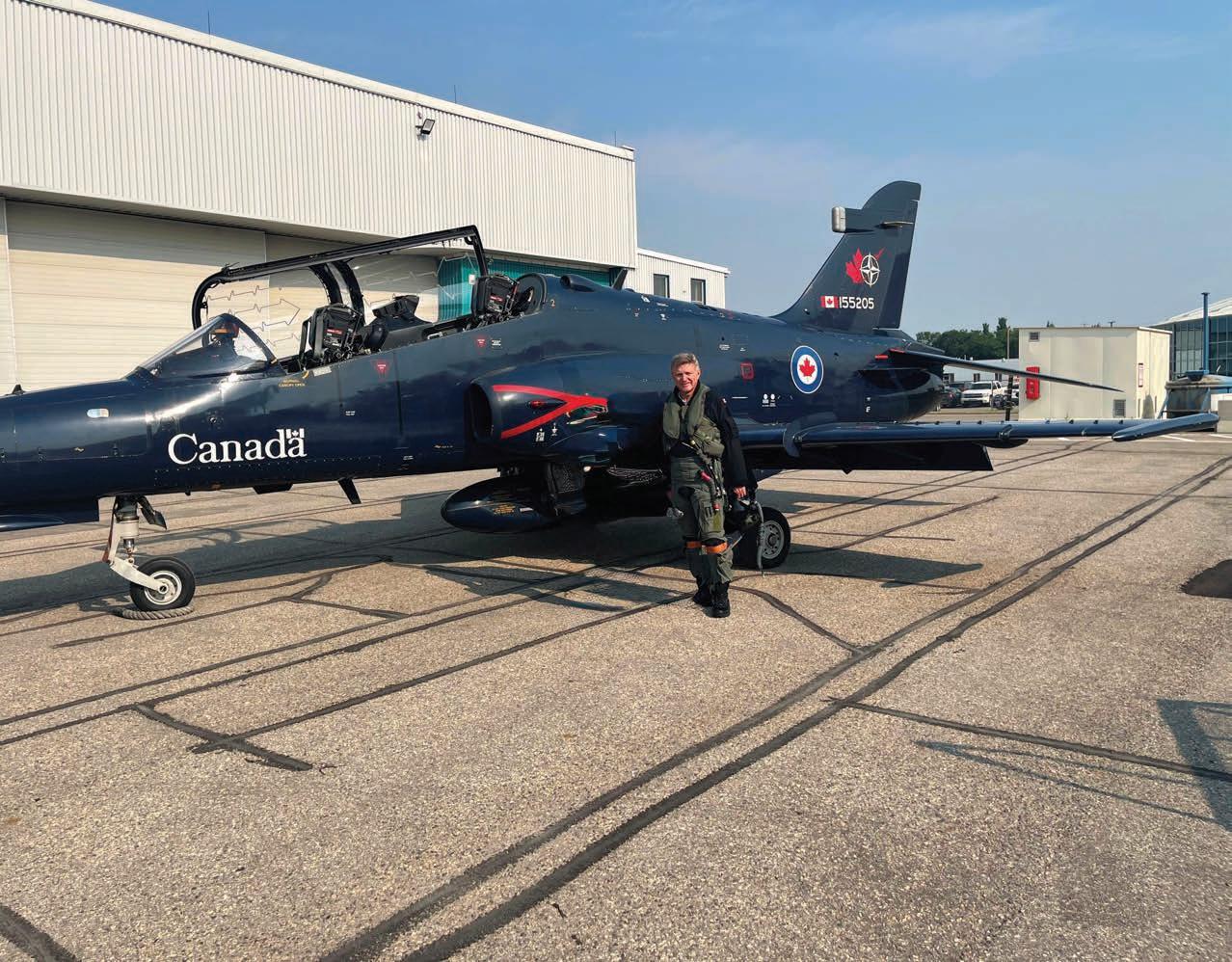
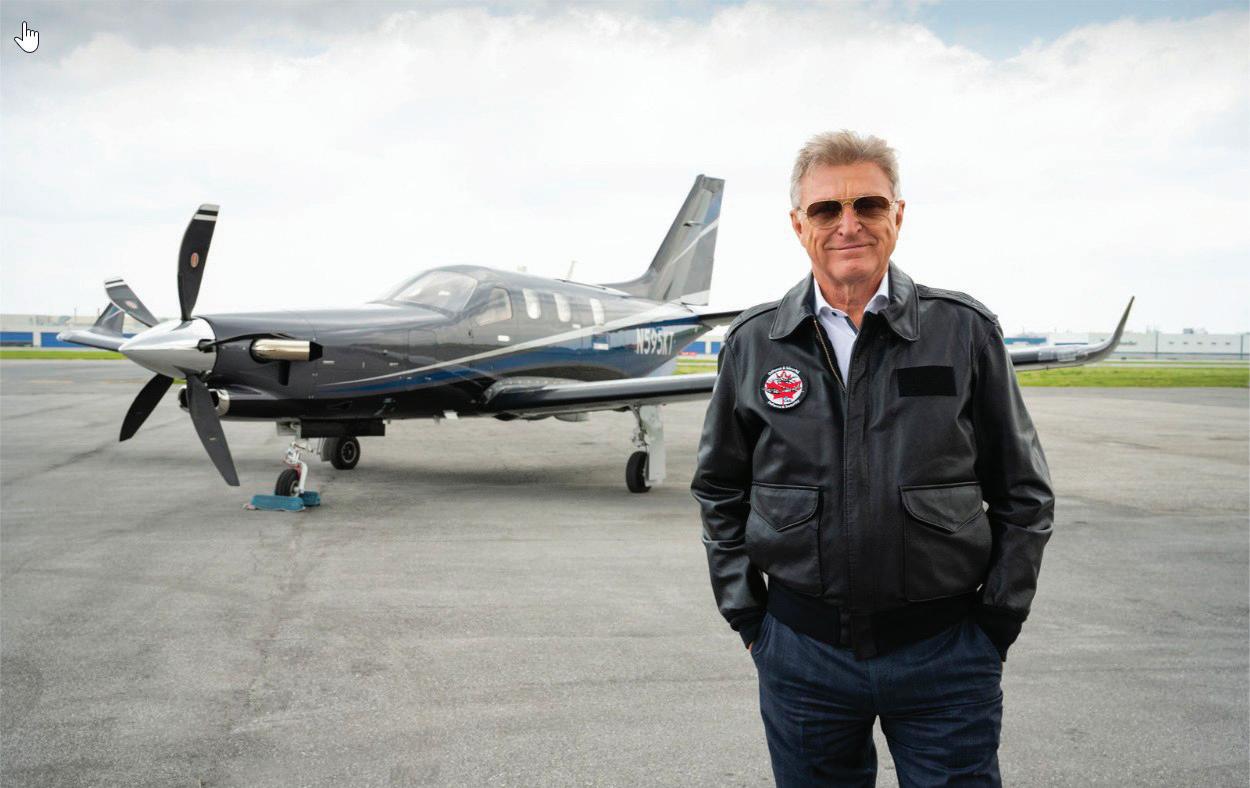
In the world of aerospace, few leaders combine executive vision with hands-on experience quite like Marc Parent. A seasoned pilot as well as a globally respected aerospace and technology executive, Parent brings more than three decades of experience navigating complex, mission-critical environments—both in the cockpit and the boardroom. This dual perspective has shaped a leadership approach grounded in precision, safety, and realworld operational insight.
During his 16-year tenure as President and CEO of CAE, he transformed the nearly C$5 billion company into the undisputed global leader in aviation training—helping redefine how pilots and crews are prepared for an increasingly complex aviation landscape. His leadership not only drove innovation and sustained growth, but also reinforced Canada’s position as a global aerospace powerhouse.
In this Q&A, Marc Parent shares his perspective on the future of aviation, the forces shaping the industry, and the leadership principles required to navigate a sector where technology, safety, and human performance are more interconnected than ever.
As an Air Cadet, you earned your PPL at 17 years old. At that time, were you confident that you would never lose your passion for flying?
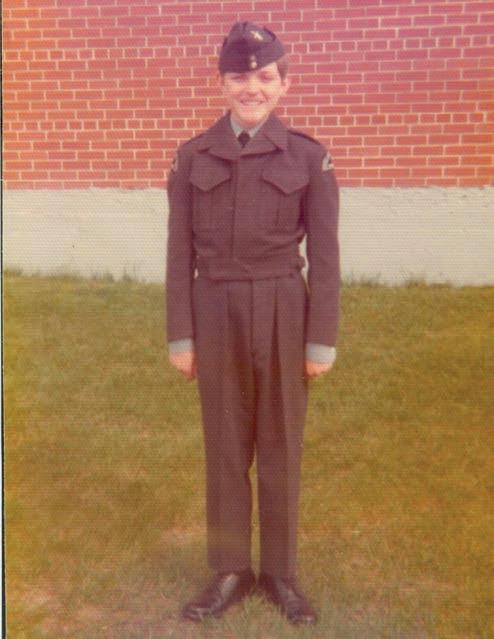
I would say that my passion for aviation started even before I was a cadet. As a boy, my toys were airplanes, I built and flew model aircraft, and one of my favorite activities was going with my mother to Dorval Airport to watch aircraft take off and land. My grandfather also took me to my first air show. By the time I became an Air Cadet and earned my wings, that early interest had already turned into something much deeper.
At the time, I don’t know that I was thinking about it as a lifelong passion. What I did know is that I couldn’t get enough of anything related to aviation. Whether it was flying at every opportunity, working weekends as a lineman at the local FBO, spending summers as an aircraft technician, or flying with a friend from Montreal to Florida and the Bahamas in a Cessna 150 at age 18, aviation was always at the center of it.
From those first experiences, there was something unique about it. The combination of precision, responsibility, freedom, and a sense of adventure. It’s an environment where everything matters, and where preparation and discipline are essential.
Over time, whether flying myself, designing and building aircraft, or leading CAE, I’ve had the opportunity to see aviation from every angle.
So no, I probably didn’t know it at 17, but looking back, it’s clear that the passion was there to stay.
You held several key leadership roles with Bombardier, contributing to the launch of some of the most successful regional and business aircraft. Do you believe that the passion for flight is an essential ingredient for developing and supporting successful aircraft programs?
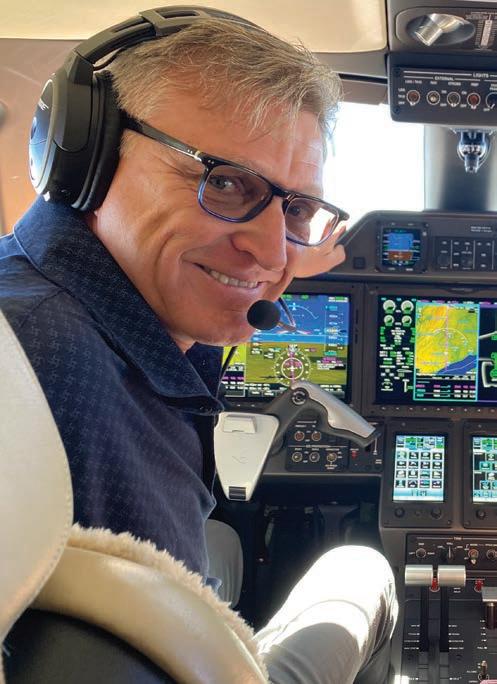
A passion for flying is not essential to developing and supporting successful aircraft programs, but it certainly helps. More than anything, it’s about being passionate about the sector itself.
In my experience, building successful aircraft programs requires deep commitment across a wide range of disciplines, engineering, operations, manufacturing, and customer understanding. That commitment is strongest when people genuinely care about what they are building and the impact it has.
I’ve been fortunate to spend my career in an industry I truly care about. When you’re passionate about something, you pour your heart and soul into it. Work doesn’t really feel like work. In fact, I’ve often said that I never worked a day in my life because I’ve been in aviation, which has always been my passion.
So no, flying itself is not an essential ingredient. It helps, but what really matters is passion for the whole sector. That’s the key.
As CEO of CAE, you decided to earn an Embraer Phenom 300 (EMB-505) type rating and be able to fly the company’s corporate jet. Why did you believe this was important as the CEO of the world’s leading aviation training company?
For me, it was important to stay connected to the operational reality of aviation.
At CAE, our entire business is built around training pilots and supporting safe, effective operations. As CEO, I felt it was important to experience firsthand what our customers experience, whether in the cockpit or in the simulator.
Being able to fly the Phenom 300 allowed me to maintain that connection. It reinforced my understanding of the challenges pilots face, the importance of training, and the role that technology plays in supporting performance.
It also brought a level of credibility. Many of our customers are pilots themselves, and being able to engage with them from a place of shared experience creates a different kind of dialogue. It’s not theoretical, it’s practical and grounded.
More broadly, I believe that in aviation, leadership benefits from being close to the mission. Staying engaged at the operational level helps inform better decisions and keeps you aligned with what really matters.
How often were you able to fly the Phenom 300?
Quite a lot, actually.
In many ways, a business jet is a time machine. With my office located less than five minutes from the FBO where I kept the aircraft, I could be airborne very quickly and make extremely efficient use of my time.
It allowed me to visit employees and customers in a way that simply wouldn’t have been possible otherwise, often reaching multiple locations in a single day.
In the end, I believe that’s what business is all about. Being able to connect directly with your employees and your customers, and have real, face-to-face dialogue, is a true game changer.
The aircraft wasn’t just transportation, it was a strategic tool that enabled those connections in a very tangible way.
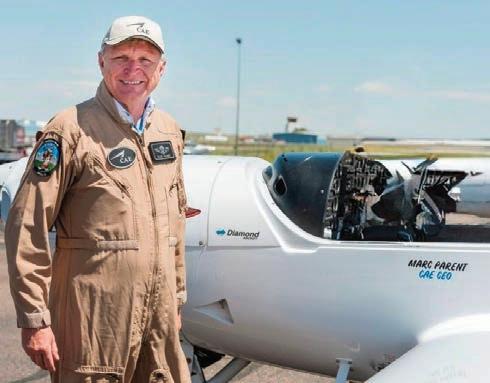
Did you ever pose as an ‘undercover boss’ during your simulator training? If so, how would you describe this experience?
I never actually set out to be an undercover boss.
But by being a customer of our training centers, going through the same training and living the experience exactly as our customers did, it gave me a unique vantage point to assess every aspect of our business, from efficiency to customer experience and the overall quality of what we deliver.
When I went into our training centers, Dallas is a good example, where we had 40 simulators in one building and hundreds of customers at any given time, employees would of course recognize me, but most individual customer pilots would not.
Being there in jeans and a polo shirt, with a customer badge like everyone else, allowed me to engage very naturally at the coffee machine, in the cafeteria, and between sessions with pilots from different programs.
Those informal conversations gave me truly unique insight into our business. It is one thing to receive structured feedback. It is another to hear unfiltered perspectives in real time.
That perspective was incredibly valuable, and ultimately it made us better.
Business aviation is a strategic business tool. Can you provide an example where you felt that your ability to fly as CEO helped to close a business deal?
In many cases, our customers were pilots themselves, whether they were leading a corporate flight department, a chief pilot at an airline, or in some cases, leading an air force.
Being able to arrive at their facility or their base, step out of the aircraft, and engage with them as a fellow pilot created an immediate level of credibility and alignment. It changed the nature of the conversation.
You’re no longer speaking from a purely commercial or technical perspective. You’re speaking from shared experience, from understanding what it means to operate, to make decisions in the cockpit, and to manage real-world constraints.
That connection builds trust quickly. And in our business, trust is paramount.
In the end, customers knew that I didn’t just understand their mission, I lived it. And that made a real difference in building relationships and, ultimately, closing deals.
Corporate aviation is currently challenged in many countries. What do you believe we should be doing better to explain the value of this industry as a key enabler for economic growth and job creation?
I think we need to do a better job explaining the practical value of business aviation and how it enables companies to operate more effectively.
In many ways, business aviation is a productivity tool. It allows organizations to reach multiple locations in a single day, access regions that are not well served by commercial airlines, and make much more efficient use of time.
I experienced that firsthand. The ability to connect directly with employees and customers, often in multiple locations in a single day, simply would not have been possible otherwise.
It also supports a broad ecosystem, from manufacturing and maintenance to training and operations, creating highly skilled jobs across the industry.
So the narrative needs to shift. This is not about luxury, it’s about capability. It’s about enabling businesses to operate, grow, and compete in an increasingly complex environment.
Business aviation often drives major advances in aerospace technology. From your perspective as both a pilot and an aerospace engineer, which recent flight deck innovations stand out as true game changers for improving safety and operational efficiency?
There have been many important advances, but what stands out to me is the integration of systems that reduce pilot workload while enhancing situational awareness.
Modern flight decks bring together navigation, weather, traffic, and aircraft systems in a much more intuitive and integrated way. That allows pilots to make better, more informed decisions, especially in complex or high-workload environments.
Automation has also evolved significantly, including systems like integrated autothrottles and advanced flight management capabilities, which improve precision and consistency in how the aircraft is operated.
What matters most is how these technologies help the pilot stay ahead of the aircraft and the environment.
In the end, the real game changer is the combination of advanced technology and well-trained pilots. That’s what ultimately drives both safety and operational efficiency.
One of the cardinal rules of flying is Aviate-Navigate-Communicate. This implies that any personal and business distractions must be put aside, to ensure flight safety. With the numerous pressures of being a CEO, how did you manage to maintain this discipline?
For me, flying was actually one of the best ways to maintain that discipline.
When you’re in the cockpit, there is no room for distraction. The priorities are very clear, aviate, navigate, communicate. Everything else disappears.
For me, flying is a completely zen experience. No matter what is happening on the business side, once you’re flying, your full attention is on the aircraft, the environment, and the decisions you need to make in real time.
That level of focus is both demanding and refreshing. It reinforces discipline, but it also brings clarity.
I always approached flying with complete focus, preparation, and a constant awareness of the aircraft, the environment, and the conditions around you. That mindset carries over. It keeps you disciplined about what matters and helps you tune out everything that doesn’t.
Many industry reports, including CAE’s annual talent forecast report, are raising awareness about the ongoing talent shortage in the industry. As an aerospace leader who started his aviation journey as an Air Cadet, do you believe the industry is acting enough to attract talent and build passion around this industry?
We’ve made progress, but not enough.
I think we need to do more to extol the magic of this industry. Aviation is still relatively young, and it continues to evolve in exciting ways. It plays a critical role in how we live, connecting people and economies across the world.
Aviation offers something unique. It combines purpose, precision, responsibility, and a sense of adventure in a way very few industries do. But we need to do a better job telling that story.
Too often, we focus on the technical aspects of aviation, which are important, but what really attracts people is the meaning behind it. This is an industry where what you do truly matters, where people rely on you, and where the stakes are real.
We also need to expose people earlier to aviation, just as I was fortunate to experience it at a young age. Whether through cadet programs, education, or simply creating more opportunities to discover the industry, that early connection can be decisive.
Ultimately, attracting talent is about more than filling roles. It’s about inspiring people to want to be part of something meaningful. And once they experience aviation, they tend to stay.
What initiatives at CAE were you most proud of supporting?
There are several, but one that stands out is Women in Flight.
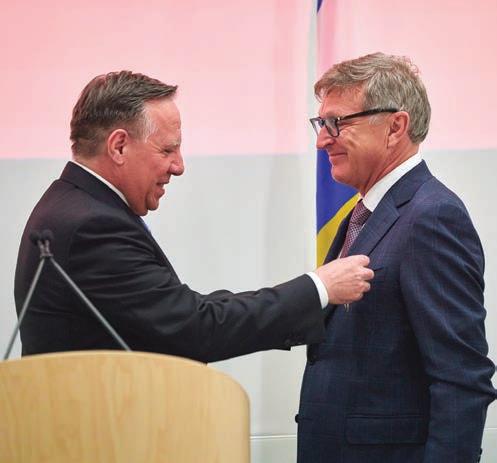
Through this program, we selected deserving young women from around the world, funded their flight training, and in turn they became ambassadors for the program, going on to work with partner airlines.
One of the things that struck me through that initiative is that, even today, there are still deeply rooted perceptions when it comes to gender and careers in aviation.
Through the Women in Flight program, we worked to challenge those perceptions in a very tangible way, by creating opportunities, increasing visibility, and showing that these careers are accessible.
Programs like that matter because they don’t just open doors, they help change mindsets. When more women see themselves represented in the cockpit and across the industry, it creates a virtuous cycle.
More broadly, I’m also proud of the work we did to evolve training, moving toward more data-driven approaches, investing in advanced simulation technologies, and expanding access to training globally. This helps ensure that safety continues to improve and that aviation remains the safest mode of transportation in the world.
But ultimately, it comes back to people. If we can attract a broader, more diverse group of individuals into aviation, and give them the tools to succeed, we will be in a much stronger position as an industry.
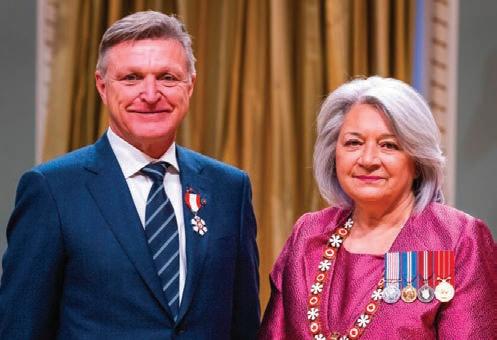
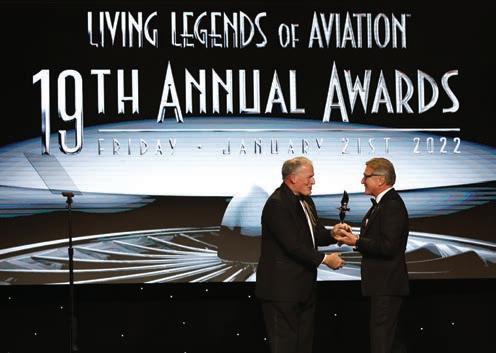
What message would you like to pass to the next generation of aspiring aviation professionals?
Aviation is a remarkable industry. It combines purpose, responsibility, and a sense of adventure in a way very few professions do.
If you’re drawn to it, pursue it. It will challenge you, it will demand discipline, and it will require continuous learning, but it will also be incredibly rewarding.
What matters most is commitment. If you’re passionate about what you do, you’ll invest the time and effort needed to succeed.
It’s also an industry built on people. You’ll meet individuals from all over the world, work in highly collaborative environments, and be part of something that connects people and communities globally.
And once you’re in aviation, you’re part of it for life.

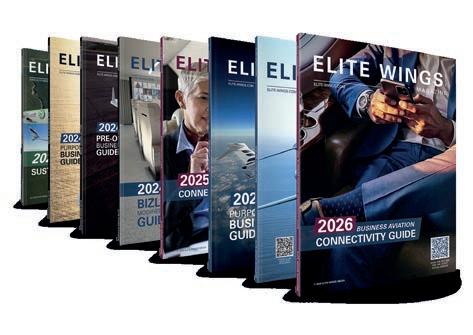
Elite Wings business aviation guides aggregate knowledge from industry leaders, shapers, and analysts to deliver relevant information about the current state of the market and its future direction in each segment of our industry. We identify the key points to consider when selecting solutions, what to ask, and who to ask. Our motivation is to enable readers to make informed decisions when selecting, acquiring, and managing their business aviation strategies and decisions.
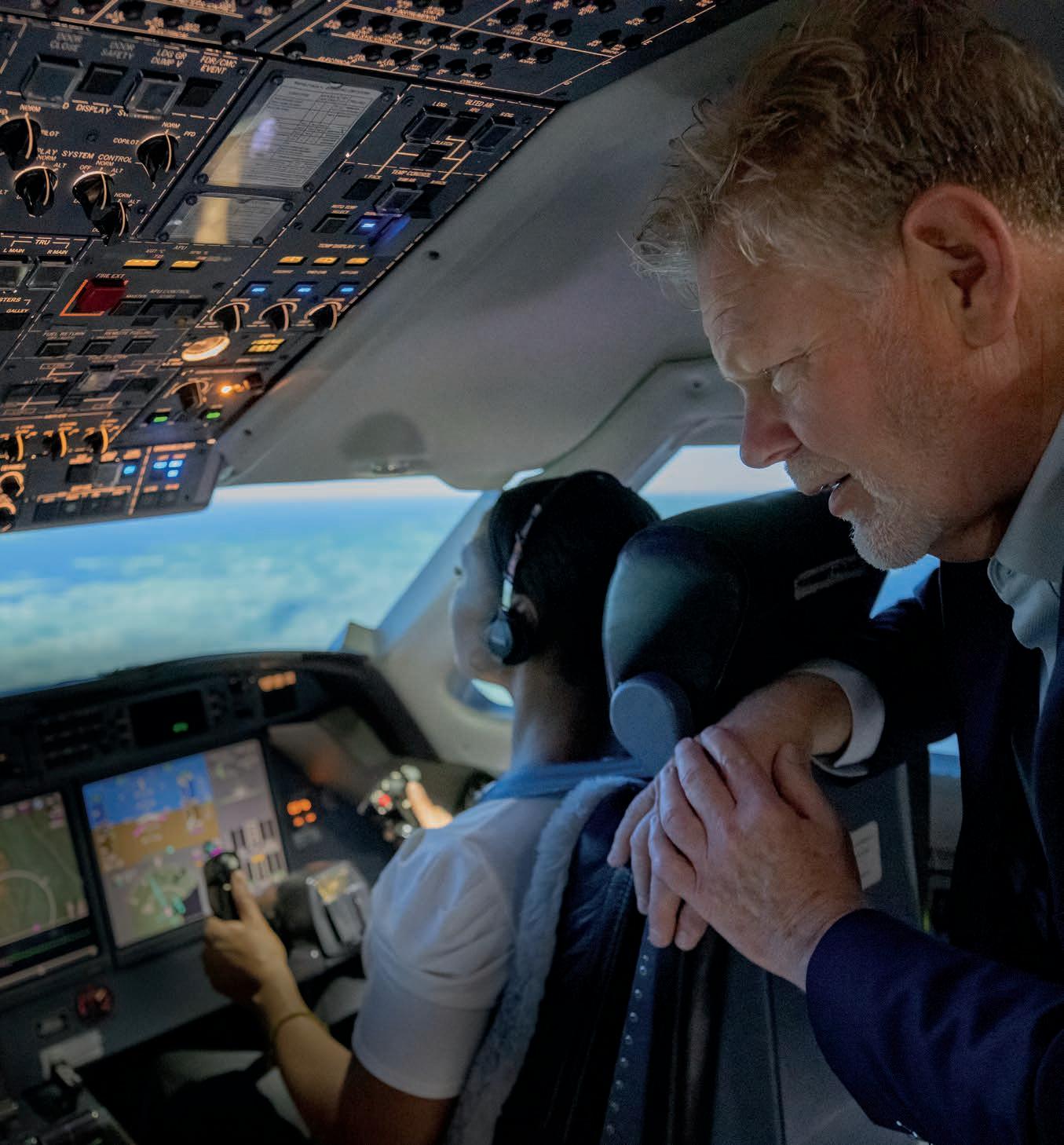

By Viswanath Tata
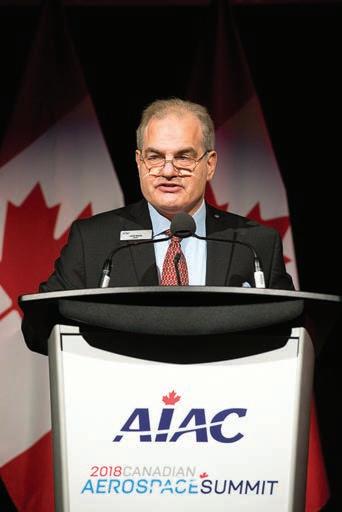
John Maris is a decorated aerospace engineer, test pilot, and entrepreneur whose career spans military aviation, advanced flight systems, and aircraft certification. As President and CEO of Certification Centre Canada, he leads efforts to validate cutting-edge technologies for safe integration into modern aircraft. A former Royal Canadian Air Force test pilot, Canadian Aviation Hall of Fame inductee, and recipient of the prestigious Trans-Canada (McKee) Trophy, Maris has been instrumental in shaping the future of flight through both hands-on testing and strategic innovation.
In this wide-ranging interview, Maris explores how business aviation has consistently served as a proving ground for transformative technologies—from glass cockpits and fly-by-wire systems to artificial intelligence and autonomous flight. His insights reveal not only the technical brilliance behind these innovations but also the human factors and safety imperatives that drive their adoption.
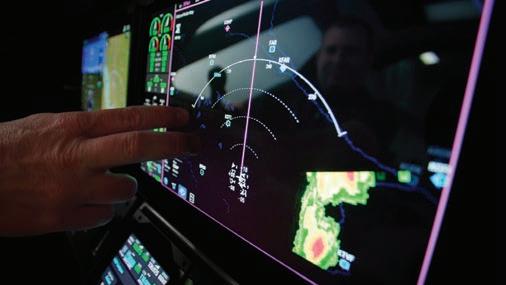
Glass cockpits emerged in the late 1970s and early 1980s, with business aircraft manufacturers like Dassault and Gulfstream leading the way. How have these digital displays improved situational awareness and reduced pilot workload?
Glass cockpits were a quantum leap. Before them, pilots relied on a cluttered array of mechanical instruments— each with its own limitations. You had to mentally synthesize data from disparate sources, which was cognitively demanding and error-prone, especially under stress.
With electronic flight instrumentation systems (EFIS), we gained the ability to integrate navigation, terrain, traffic, and weather into a coherent visual format. Map displays, synthetic vision, and vertical situation indicators became standard. These tools don’t just show you where you are—they show where you’re going, what’s around you, and what to expect.
One of the most underrated benefits is trend awareness. For example, a digital airspeed indicator can show a trend vector, allowing pilots to anticipate whether they’re accelerating or decelerating. That kind of predictive insight wasn’t possible with analog dials. It’s not just about aesthetics—it’s about smarter, safer flying.
Glass cockpits also paved the way for more intuitive human-machine interfaces. Pilots can now customize displays, prioritize alerts, and interact with systems in ways that reduce cognitive load. That’s a huge leap forward in ergonomics and safety.
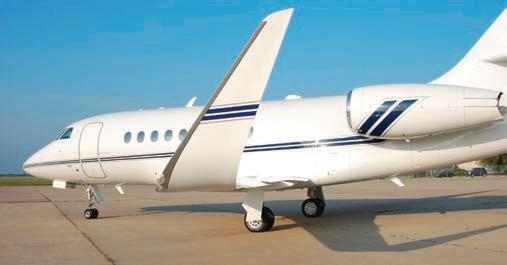
Winglets were pioneered in the 1970s and first adopted by business jets like the Learjet 28. What performance and environmental benefits do they offer?
Winglets are a masterclass in aerodynamic efficiency. Richard Whitcomb, who developed them at NASA, understood that induced drag—caused by wingtip vortices— was a major performance penalty. Winglets mitigate that by redirecting airflow and increasing the effective aspect ratio of the wing.
In practical terms, winglets allow aircraft to cruise more efficiently at high altitudes, reducing fuel burn and emissions. They also improve climb performance and range. For business jets, which often operate at the edge of performance envelopes, these gains are significant.
What’s fascinating is how elegantly winglets solve a complex problem. Extending the wingspan would achieve similar results but introduces structural challenges and gate compatibility issues. Winglets offer a compact, lowdrag solution that’s now standard across aviation—from Gulfstreams to Boeing 737s.
They also contribute to sustainability. By reducing fuel consumption, winglets help lower carbon emissions. That’s increasingly important as aviation faces pressure to decarbonize. Business aviation, often seen as a luxury, is actually leading the way in adopting green technologies.
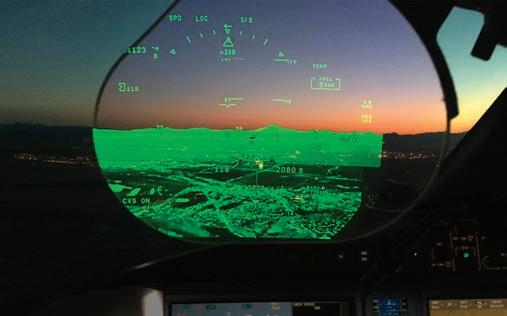
Head-up displays (HUDs) transitioned from military to business aviation in the late 1980s. What safety benefits do they offer, and have you personally benefited from using one?
I’ve flown with HUDs extensively, both in military and civilian contexts. In the Air Force, I was a test pilot for the F-5 Avionics Upgrade Program, which included HUD integration. The advantage is simple but profound: you never have to look down.
HUDs project critical flight data—airspeed, altitude, flight path vector—onto a transparent screen focused at infinity. That means your eyes don’t need to refocus between the instrument panel and the outside world. During low-visibility approaches, this is a lifesaver.
In business aviation, HUDs have evolved to include Enhanced Vision Systems (EVS) and Synthetic Vision Systems (SVS). EVS uses infrared cameras to pierce through darkness, while SVS overlays terrain and runway data from databases. Together, they allow pilots to “see” even when visibility is near zero. It’s like having superpowers in the cockpit.
HUDs also reduce pilot workload during critical phases of flight. By keeping essential data in the pilot’s line of sight with the symbology focussed at or near infinity, they minimize the need for pilots to refocus from the instrument panel to the runway environment. This is particularly significant during approaches in marginal weather conditions, where the visual transition has to be accomplished in a few seconds. The HUD allows the pilot to concentrate on a single integrated view throughout the final approach which eliminates this challenge.
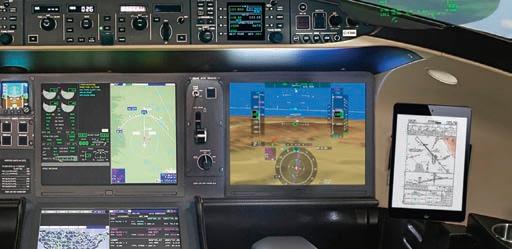
Terrain Awareness and Warning Systems (TAWS) were prototyped in business aviation before becoming mandatory in commercial fleets. Have they helped prevent accidents?
TAWS has been one of the most impactful safety innovations in aviation history. Controlled Flight Into Terrain (CFIT) used to be a leading cause of fatal accidents. These were cases where perfectly functional aircraft were flown into terrain due to pilot disorientation or lack of situational awareness.
TAWS changed that. By combining GPS data with terrain databases, the system alerts pilots well in advance of potential conflicts. It’s proactive, not reactive. And it’s saved countless lives.
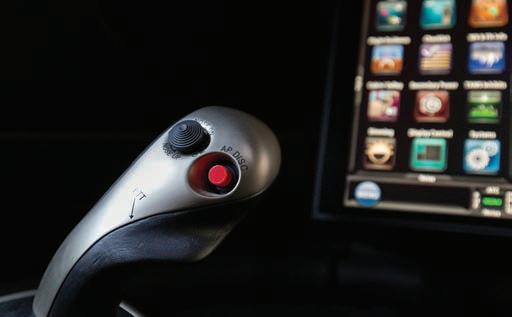
What’s remarkable is how quickly TAWS became standard. Business aviation led the way, but now even small general aviation aircraft have versions of it. It’s a textbook example of how innovation trickles down—and how business aviation often serves as the testbed.
TAWS also integrates with other systems, like autopilot and flight management systems, to provide coordinated responses. That’s part of a broader trend toward automation and system integration, which enhances safety across the board.
Fly-by-wire systems were first adopted in business jets like the Dassault Falcon 7X. How has this technology changed aircraft design and performance?
Fly-by-wire is transformative. In traditional aircraft, control inputs are transmitted mechanically—via cables, pulleys, and hydraulic actuators. That imposes design constraints, especially around center-of-gravity limits and control surface sizing.
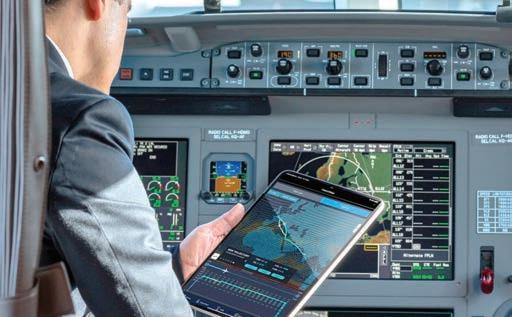
With fly-by-wire, pilot inputs are interpreted by computers, which then command actuators. This allows for more aerodynamically efficient designs. For example, aircraft can be designed with relaxed longitudinal stability which can significantly reduce drag and leads directly to reduced fuel consumption and carbon emissions.
It also enables envelope protection. The system can prevent stalls, overspeeds, and excessive bank angles automatically. Pilots get “carefree handling,” and manufacturers gain flexibility in design. The Falcon 7X was a pioneer, but fly-by-wire is standard in everything from the Airbus A350 to the Gulfstream G700.
Fly-by-wire also supports modularity and scalability. Manufacturers can adapt control laws for different aircraft models, reducing development time and cost. That’s a huge advantage in a competitive market.
Electronic Flight Bags (EFBs) were pioneered in business aviation. You mentioned Jeppesen used to ship 2 billion sheets of paper annually. What impact have EFBs had?
The shift to EFBs was revolutionary. I remember the days of lugging around massive binders filled with charts, performance tables, and regulatory documents. Updating them was a logistical nightmare—and errors could have serious consequences.
EFBs replaced all that with tablets and software. Pilots now have real-time access to charts, weather, NOTAMs, and aircraft-specific data. Updates are automatic, and the information is always current. It’s not just convenient—it’s safer.
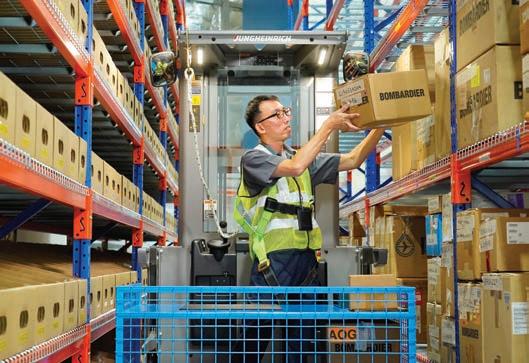
Jeppesen’s transformation is emblematic. They went from being the largest user of the Colorado Post Office to a digital powerhouse. And the integrity of their digital charts is at the same level as the flight management systems that navigate the aircraft! It’s a perfect example of how digital transformation enhances both efficiency and safety.
EFBs also support collaborative decision-making. Pilots, dispatchers, and maintenance crews can share data in real time, improving coordination and reducing delays. That’s a major operational benefit.
Looking ahead, what are your views on artificial intelligence and autonomous flight? Should we be optimistic or cautious?
We should be both—optimistic about the potential, and cautious about the implementation. AI is already transforming aviation in subtle but powerful ways. It’s not just about replacing pilots or automating flight—it’s about enhancing safety, improving decision-making, and supporting human operators in ways that weren’t possible before.
One of the most promising applications is in vigilance monitoring. Humans are notoriously poor at maintaining attention during long periods of inactivity which is a characteristic of today’s highly automated aircraft. AI can monitor pilot behavior, eye movement, and other biometric data to detect fatigue, distraction, or cognitive overload. It can then cue the pilot, suggest actions, or even take corrective measures. That’s not science fiction—it’s already being tested at leading research facilities.
Another area is predictive maintenance. AI can analyze thousands of flight hours’ worth of sensor data to identify patterns that precede component failures. Instead of waiting for something to break, operators can replace parts proactively, reducing downtime and improving safety. This is especially valuable in business aviation, where reliability and dispatch availability are critical.
But when we talk about autonomous flight, things get more complicated. There’s a big difference between automation and autonomy. Automation is rule-based and deterministic—you know how the system will behave. Autonomy, especially when powered by machine learning, is non-deterministic. That means the system might behave differently in similar situations, depending on how it interprets the data. That’s a challenge for certification.
I’ve worked on certification programs for complex systems, and regulators rightly demand traceability and predictability. If you can’t explain why the system made a certain decision, it’s very hard to certify it for safety-critical applications. That’s one of the biggest hurdles for AI in aviation.
That said, we’re already seeing autonomous capabilities in action. Garmin’s Autoland system is a perfect example. If the pilot becomes incapacitated, the system can declare an emergency, select a suitable airport, navigate, descend, and land the aircraft—all without human input. It’s certified and flying today. That’s a huge milestone.
In the military and cargo sectors, we’re seeing large unmanned aircraft operating routinely. These platforms are often remotely piloted, but they include autonomous features like collision avoidance, route optimization, and dynamic mission planning. The technology is mature—it’s the regulatory and societal acceptance that lags behind.
I believe the next step will be single-pilot operations with AI assistance. The AI won’t replace the pilot, but it will act as a co-pilot—monitoring systems, managing communications, and even flying the aircraft in routine conditions. That’s a realistic goal within the next decade, especially for cargo operations where passenger safety isn’t a factor.
For passenger aircraft, the timeline is longer. People want to see a human in the cockpit. There’s a psychological comfort in knowing someone is there to make judgment calls, especially in emergencies. But over time, as AI proves itself and becomes more transparent, that resistance will fade.
Ultimately, AI and autonomy are not about removing humans—they’re about augmenting human capability. Pilots will still be in command, but they’ll have tools that make them smarter, faster, and more resilient. That’s the future I see: a partnership between human and machine, where each complements the other.
And business aviation will continue to lead the way. It always has. Whether it’s glass cockpits, fly-by-wire, or synthetic vision, business jets are the sandbox where new ideas are tested, refined, and proven. AI will be no different. The first truly intelligent flight systems will likely appear in business aircraft—quietly, efficiently, and with the same pioneering spirit that’s driven this industry for decades.
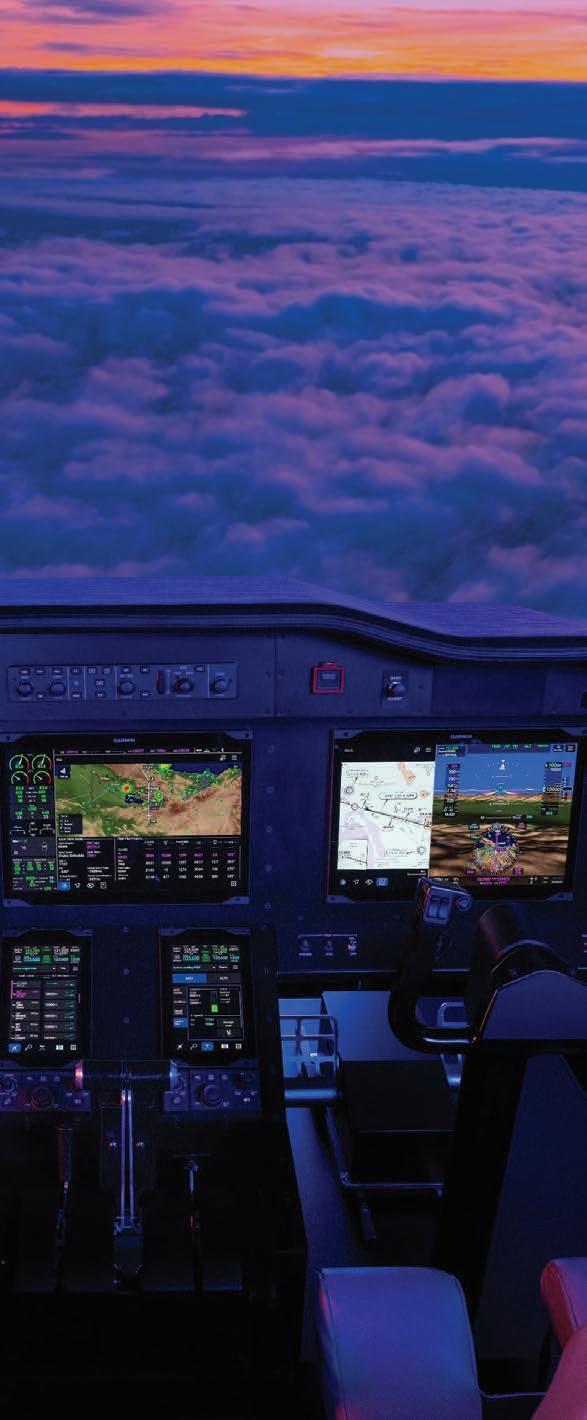
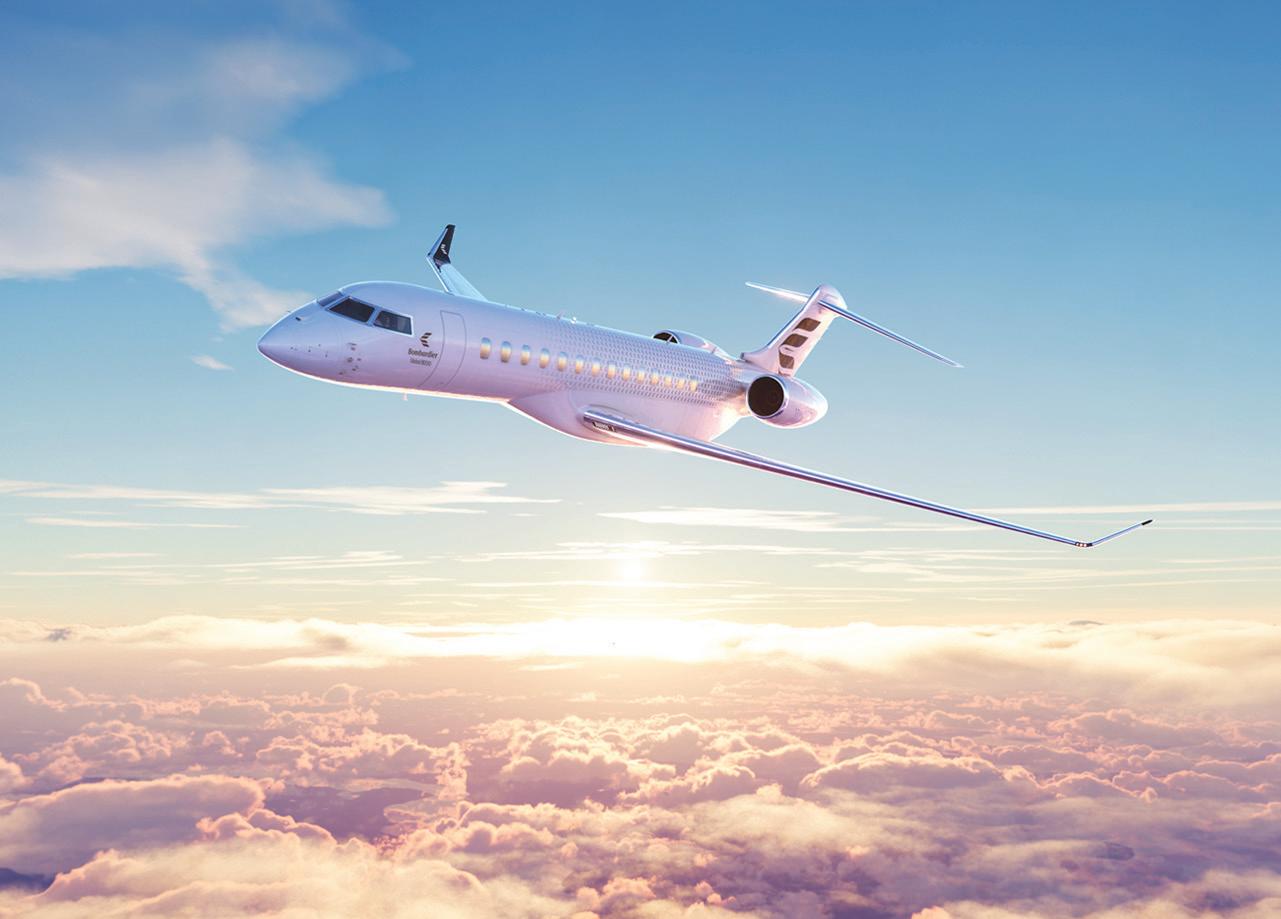
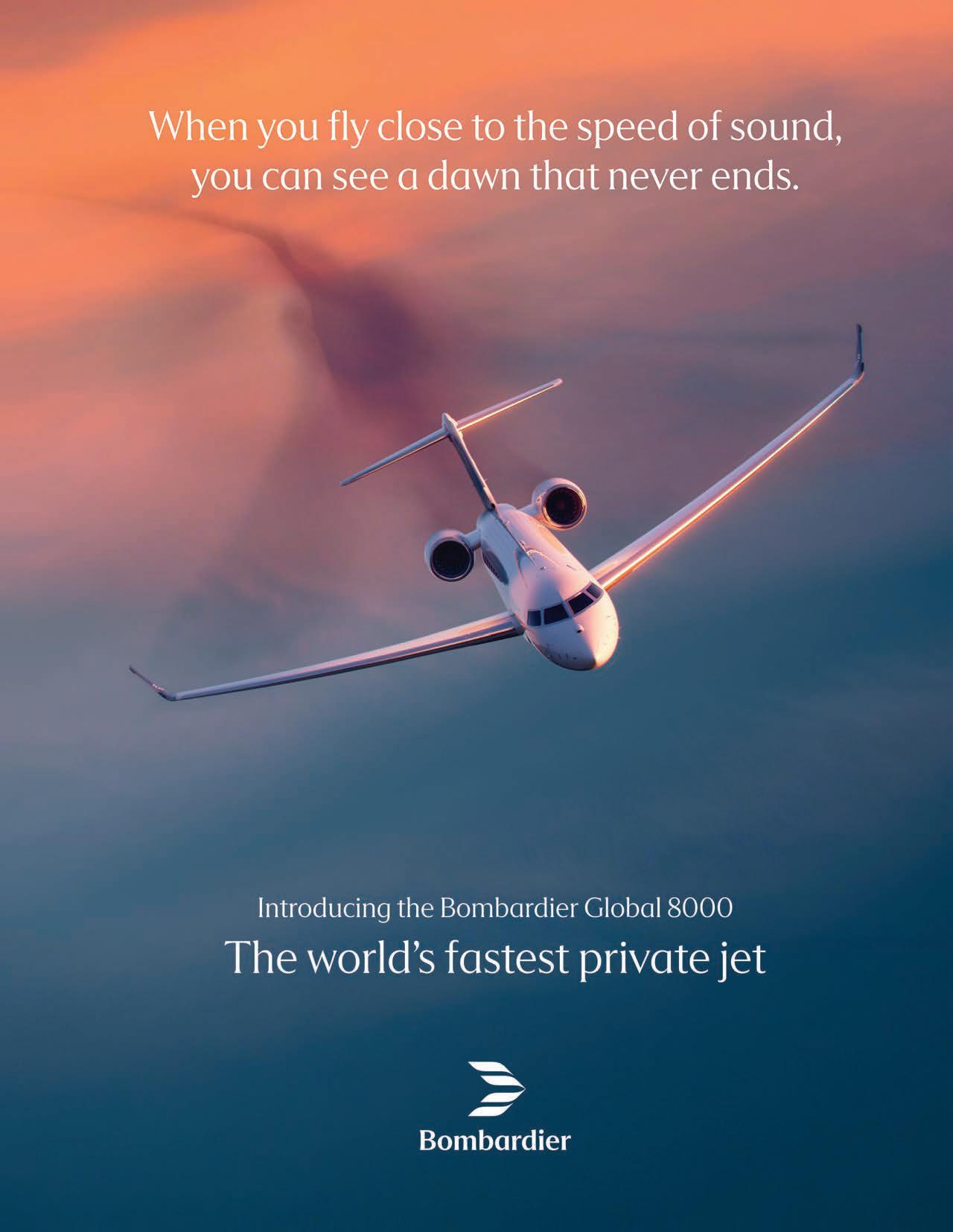
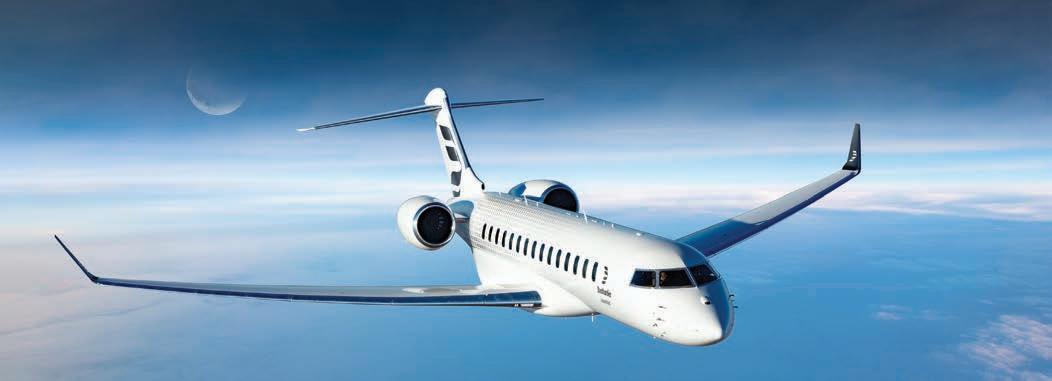
Bombardier’s new Global 8000 business jet is the fastest civil aircraft since the Concorde and a shining example of Canadian aerospace innovation.
Certified by Transport Canada on Nov. 5, 2025, the Global 8000 aircraft sets a new industry benchmark with a top speed of Mach 0.95 and a class-leading range of 8,000 nautical miles. The exceptional 19-passenger Global 8000 has notched several achievements, including becoming the first business jet to go supersonic in testing, and delivering the lowest cabin altitude in production in business aviation of just 2,691 feet while flying at 41,000 feet.
Bombardier’s new flagship aircraft officially entered into service in December 2025, when the first Global 8000 was delivered to customer Patrick Dovigi at the company’s state-of-the-art aircraft assembly centre near Toronto Pearson Airport. The CDN$670 million facility employs more than 2,000 highly-skilled workers.
“Pride and excitement only begin to describe what the entry-into-service of the Global 8000 means for all 18,000 of us at Bombardier,” said Éric Martel, Bombardier President and CEO, at the delivery ceremony. “Every innovation and every detail of the Global 8000 reflects the hard work, creativity and dedication of our teams. This revolutionary aircraft is redefining the business aviation landscape with its innovative design, signature smooth ride, and unmatched performance.”
The Global 8000 went on to earn U.S. Federal Aviation Administration (FAA) certification on Dec. 19, 2025, followed by the European Union Aviation Safety Agency (EASA) stamp of approval on Jan. 23, 2026.
As more aircraft enter into service, the new jet is quickly building a reputation for its remarkable agility, with takeoff and landing performance similar to a light jet. Thanks to its advanced wing design featuring unique leading-edge slats, Global 8000 customers are able to
master up to 30 per cent more airports than the new jet’s closest rival – all while enjoying business aviation’s smoothest ride.
Additionally, the aircraft’s superior range enables such impressive non-stop city pairs as Toronto-Hong Kong or Toronto-Mumbai and Vancouver-Singapore or Vancouver-Buenos Aires.
More than eight decades of craftsmanship and aviation know-how have been leveraged in the creation of the Global 8000. Bombardier has aimed the exceptional aircraft squarely at the world’s most selective travellers – those who value time, flexibility, and an environment designed for maximum comfort and productivity.
With the Global 8000, Bombardier engineers crafted the quietest cabin in its class, with intentional fuselage contouring, engine selection and placement, and superior sound insulation. Its luxurious cabin also sets a new benchmark in comfort. Passengers arrive at their destinations feeling refreshed and ready to perform, thanks to the lowest cabin altitude in production in business aviation. In addition, Bombardier’s Pûr Air system with advanced hospital-grade HEPA filter technology ensures fastest-in-class fresh air replacement throughout the cabin, as well as heating and cooling.
The journey is further enhanced by the Global 8000’s four true living spaces, plus separate crew rest area, which deliver an exceptionally refined travel experience and seamlessly accommodate work, relaxation and social engagement.
Productivity is unmatched, with a six-seat Conference Suite and a stunning cabin boasting many notable
features, including the industry’s first 55-inch 4K OLED TV, Bombardier’s l’Opéra audio system with adjustable sweet spot technology, Soleil circadian-based cabin lighting system and available sound synchronization for an immersive lightshow. Cabin control and connectivity are an intuitive and seamless experience, further enhanced by Bombardier’s unique Touch Dial – another industry first.
Throughout their journey, Global 8000 passengers will delight in fresh, hot foods prepared in one of business aviation’s largest kitchens, and relax in zero-gravity comfort while reclined in Bombardier’s patented Nuage seat – the first completely redesigned business aviation seat in over 30 years, crafted to reduce lower back pressure and improve circulation during flight.
Sitting firmly atop the pinnacle of private aviation, the Global 8000 is tangible proof of Bombardier’s unwavering commitment to excellence and an unparalleled customer experience.
As it continues to design, build, deliver and service the world’s best business jets, Bombardier remains deeply invested in perpetuating Canada’s aerospace legacy. Aside from its impressive assembly facility in Toronto, Bombardier recently announced a new $100 million manufacturing facility at its Dorval, Quebec headquarters, set to open by late 2027.
In the competitive arena of ultra-long-range business jets, Bombardier’s Global 8000 flies alone. Its near-supersonic speed, exceptional range and operational agility are a testament to the passion and expertise of the Bombardier team and suppliers – and a credit to Canadian aerospace.
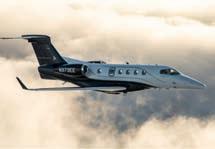
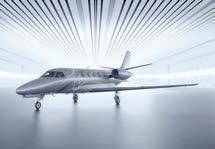

CIRRUS AIRCRAFT
HQ: Duluth, Minnesota
Founded in 1984
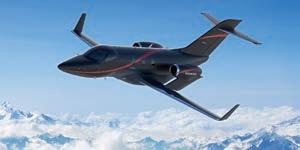
HONDA AIRCRAFT
HQ: Greensboro, North Carolina
Founded in 2006
PILATUS AIRCRAFT
HQ: Stans, Switzerland
Founded in 1939
EMBRAER
HQ: Sao Paulo, Brazil
Founded in 1969
TEXTRON AVIATION
CESSNA
HQ: Wichita, Kansas
Founded in 1927
CITATION M2 GEN3 1992 | 2027 Expected
CITATION CJ3 GEN3 2004 | 2027 Expected
CITATION CJ4 GEN3 2010 | 2026 Expected
CITATION ASCEND 2025
DASSAULT AVIATION
HQ: Paris, France
Founded in 1929
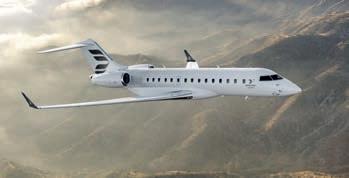
BOMBARDIER
HQ: Montreal, Canada
Founded in 1942
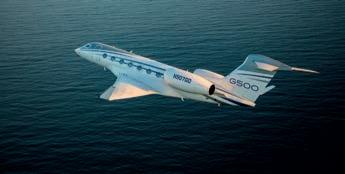
GULFSTREAM
HQ: Savannah, Georgia
Founded in 1958
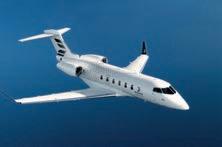
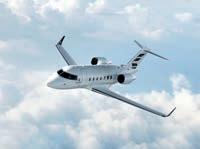


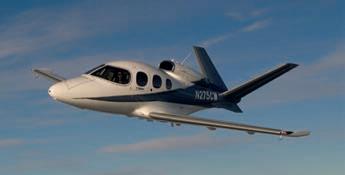
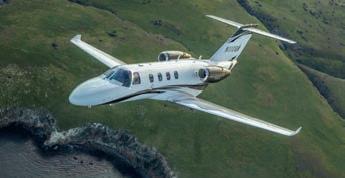
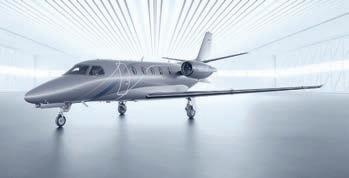
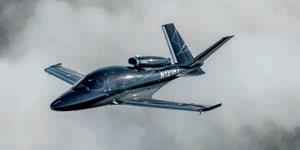
Max Range* 1275 nm
Max Cruise Speed311 KTAS
Takeoff Distance2,036 ft
Landing Distance1,628 ft
Max Cruise Altitude 31,000 ft
Avionics Manufacturer Garmin
Engines manufacturer Williams International
Max passengers6 + 1 Pilot
Cabin Volume 163 cu.ft
* 3 Occupants, 240 ktas, NBAA IFR reserves, Single Pilot
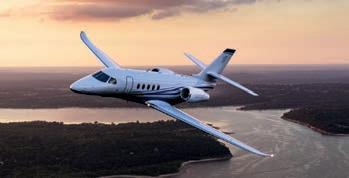
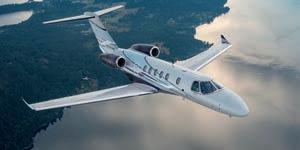
Max Range* 1,547 nm
Max Cruise Speed422 ktas
Takeoff Distance3,639 ft
Landing Distance2,795 ft
Max Cruise Altitude 41,000 ft
Avionics Manufacturer Garmin
Engines manufacturerGE-Honda
Max passengers7 + 1 Pilot
Cabin Volume 238 cu.ft
*4 Occupants, LRC, NBAA IFR reserves
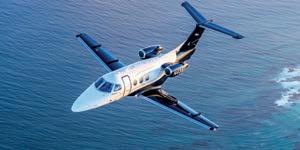
TEXTRON CESSNA | CITATION CJ4 Gen3
Max Range* 2,165 nm
Max Cruise Speed451 ktas
Takeoff Distance3,410 ft
Landing Distance2,940 ft
Max Cruise Altitude 45,000 ft
Avionics Manufacturer Garmin
Engines manufacturer Williams International
Max passengers 10
Cabin Volume 313 cu.ft
*Ferry mission, LRC, NBAA IFR reserves
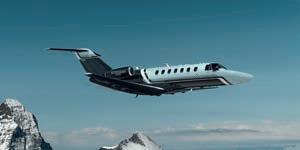
Max Range* 1,178 nm
Max Cruise Speed406 ktas
Takeoff Distance3,190 ft
Landing Distance2,430 ft
Max Cruise Altitude 41,000 ft
Avionics Manufacturer Garmin
Engines manufacturerPratt & whitney
Max passengers7 + 1 Pilot
Cabin Volume 212 cu.ft
* 4 Occupants, LRC, NBAA IFR reserves
Max Range* 2,040 nm
Max Cruise Speed416 ktas
Takeoff Distance3,180 ft
Landing Distance2,770 ft
Max Cruise Altitude 45,000 ft
Avionics Manufacturer Garmin
Engines manufacturer Williams International
Max passengers9
Cabin Volume 284 cu.ft
*Ferry mission, LRC, NBAA IFR reserves
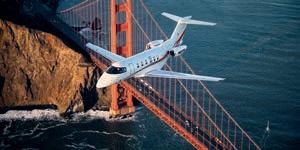
AIRCRAFT | PC-24
Max Range* 2,040 nm
Max Cruise Speed440 ktas
Takeoff Distance3,090 ft
Landing Distance2,410 ft
Max Cruise Altitude 45,000 ft
Avionics Manufacturer Honeywell
Engines manufacturer Williams International
Max passengers11 + 1 Pilot
Cabin Volume 498 cu.ft
*4 Passengers, 1 Pilot, LRC, NBAA IFR reserves
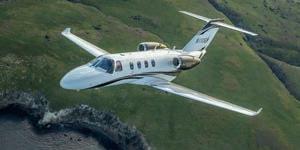
Max Range* 1,550 nm
Max Cruise Speed404 ktas
Takeoff Distance3,210 ft
Landing Distance2,590 ft
Max Cruise Altitude 41,000 ft
Avionics Manufacturer Garmin
Engines manufacturer Williams International
Max passengers7 + 1 Pilot
Cabin Volume 199 cu.ft
*Ferry mission, LRC, NBAA IFR reserves
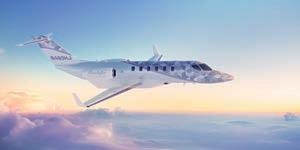
Max Range* 2,625 nm
Max Cruise Speed 450 ktas
Takeoff Distance3,300 ft
Landing Distance2,500 ft
Max Cruise Altitude 47,000 ft
Avionics Manufacturer Garmin
Engines manufacturer Williams International
Max passengers10 + 1 Pilot
Cabin Volume
*1 Crew + 4 Pax, LRC, NBAA IFR reserves
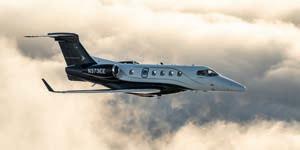
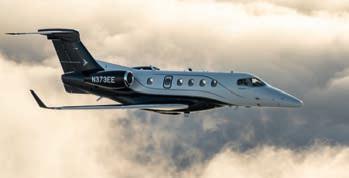
EMBRAER | Phenom 300E
Max Range* 2,010 nm
Max Cruise Speed464 ktas
Takeoff Distance3,209 ft
Landing Distance2,212 ft
Max Cruise Altitude 45,000 ft
Avionics Manufacturer Garmin
Engines manufacturer Pratt & Whitney
Max passengers10 + 1 Pilot
Cabin Volume 324 cu.ft
*5 Occupants, LRC, NBAA IFR reserves
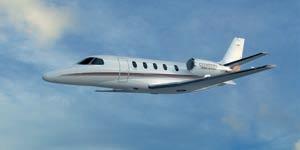
TEXTRON CESSNA | Citation Ascend
Max Range* 1,900 nm
Max Cruise Speed441 ktas
Takeoff Distance3,660 ft
Landing Distance
Max Cruise Altitude 45,000 ft
Avionics Manufacturer Garmin
Engines manufacturer Pratt & Whitney
Max passengers 12
Cabin Volume 501 cu.ft
*4 Passengers, LRC, NBAA IFR reserves
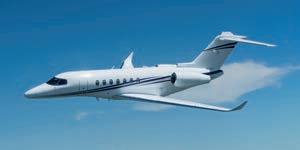
TEXTRON CESSNA | Citation Longitude
Max Range* 3,500 nm
Max Cruise Speed483 ktas
Takeoff Distance4,810 ft
Landing Distance3,170 ft
Max Cruise Altitude 45,000 ft
Avionics Manufacturer Garmin
Engines manufacturerHoneywell
Max passengers 12
Cabin Volume 761 cu.ft
*4 Passengers, M 0.80, NBAA IFR reserves
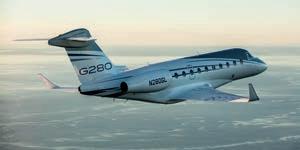
Max Range* 3,600 nm
Max Cruise SpeedM 0.85
Takeoff Distance4,780 ft
Landing Distance2,720 ft
Max Cruise Altitude 45,000 ft
Avionics Manufacturer Honeywell
Engines manufacturerHoneywell
Max passengers 10
Cabin Volume 935 cu.ft
*4 Passengers, 2 Crew, M 0.80 , NBAA IFR reserves

CESSNA | Citation Latitude
Max Range* 2,700 nm
Max Cruise Speed446 ktas
Takeoff Distance3,580 ft
Landing Distance2,480 ft
Max Cruise Altitude 45,000 ft
Avionics Manufacturer Garmin
Engines manufacturer Pratt & Whitney
Max passengers9
Cabin Volume 701 cu.ft
*4 Passengers, HSC, NBAA IFR reserves

Max Range* 4,018 nm
Max Cruise Speed466 ktas
Takeoff Distance4,717 ft
Landing Distance2,165 ft
Max Cruise Altitude 45,000 ft
Avionics Manufacturer Collins Aerospace
Engines manufacturerHoneywell
Max passengers 12
Cabin Volume 826cu.ft
*4 Passengers, LRC, NBAA IFR reserves
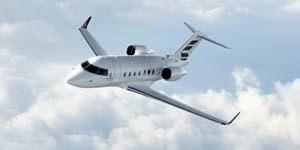
BOMBARDIER | Challenger 650
Max Range* 4,000 nm
Max Cruise SpeedM 0.85
Takeoff Distance5,640 ft
Landing Distance2,402 ft
Max Cruise Altitude 41,000 ft
Avionics Manufacturer Collins Aerospace
Engines manufacturer GE Aerospace
Max passengers 12
Cabin Volume 971 cu.ft
*6 Passengers, LRC, NBAA IFR reserves

Max Range* 3,340 nm
Max Cruise Speed466 ktas
Takeoff Distance4,222 ft
Landing Distance2,086 ft
Max Cruise Altitude 45,000 ft
Avionics Manufacturer Collins Aerospace
Engines manufacturerHoneywell
Max passengers9
Cabin Volume 705 cu.ft
*4 Passengers, LRC, NBAA IFR reserves
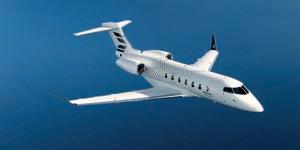
BOMBARDIER | Challenger 3500
Max Range* 3,400 nm
Max Cruise SpeedM 0.83
Takeoff Distance4,835 ft
Landing Distance2,364 ft
Max Cruise Altitude 45,000 ft
Avionics Manufacturer Collins Aerospace
Engines manufacturerHoneywell
Max passengers 10
Cabin Volume 862 cu.ft
*4 PaX, 2 Crew, M 0.77 , NBAA IFR reserves
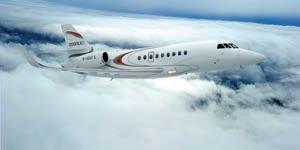
DASSAULT AVIATION | Falcon 2000LXS
Max Range* 4,000 nm
Max Cruise SpeedM 0.86
Takeoff Distance4.675 ft
Landing Distance2,260 ft
Max Cruise Altitude 47,000 ft
Avionics Manufacturer Honeywell
Engines manufacturer Pratt & Whitney
Max passengers 10
Cabin Volume 1,024 cu.ft
*6 Passengers, M0.80, NBAA IFR reserves
Large
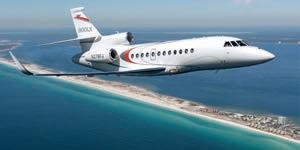
Max Range* 4,750 nm
Max Cruise SpeedM 0.87
Takeoff Distance5,360 ft
Landing Distance2,415 ft
Max Cruise Altitude 51,000 ft
Avionics Manufacturer Honeywell
Engines manufacturerHoneywell
Max passengers 14
Cabin Volume 1,264 cu.ft
*6 Passengers, M0.80, NBAA IFR reserves
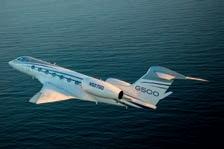
Long Range | 5,000 nm
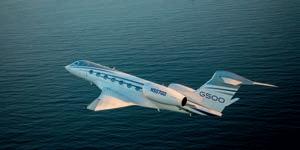
| G500
Max Range* 5,300 nm
Max Cruise SpeedM 0.925
Takeoff Distance5,300 ft
Landing Distance3,100 ft
Max Cruise Altitude 51,000 ft
Avionics Manufacturer Honeywell
Engines manufacturer Pratt & Whitney
Max passengers 19
Cabin Volume 1,715 cu.ft
*8 Passengers, 3 Crew, M 0.85, NBAA IFR reserves
Long Range | 6,000 nm
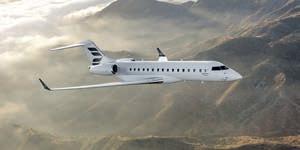
BOMBARDIER | Global 6500
Max Range* 6,600 nm
Max Cruise SpeedM 0.90
Takeoff Distance6,145 ft
Landing Distance2,236 ft
Max Cruise Altitude 51,000 ft
Avionics Manufacturer Collins Aerospace
Engines manufacturerRolls Royce
Max passengers 17
Cabin Volume 1,690cu.ft
*8 Passengers, 4 Crew, M 0.85, NBAA IFR reserves
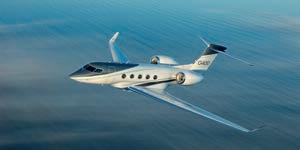
Max Range* 4,200 nm
Max Cruise SpeedM 0.90
Takeoff Distance5,000 ft
Landing Distance3,000 ft
Max Cruise Altitude 51,000 ft
Avionics Manufacturer Honeywell
Engines manufacturer Pratt & Whitney
Max passengers 12
Cabin Volume 1,441 cu.ft
*8 Passengers, 3 Crew, M 0.85 , NBAA IFR reserves
Long Range | 5,000 nm

Max Range* 5,900 nm
Max Cruise SpeedM 0.90
Takeoff Distance5,340 ft
Landing Distance2,207 ft
Max Cruise Altitude 51,000 ft
Avionics Manufacturer Collins Aerospace
Engines manufacturerRolls Royce
Max passengers 16
Cabin Volume 1,589 cu.ft
*8 Passengers, 3 Crew, M 0.85, NBAA IFR reserves
Long Range | 6,000 nm

Max Range* 6,600 nm
Max Cruise SpeedM 0.925
Takeoff Distance5,700 ft
Landing Distance2,900 ft
Max Cruise Altitude 51,000 ft
Avionics Manufacturer Honeywell
Engines manufacturer Pratt & Whitney
Max passengers 19
Cabin Volume 1,884 cu.ft
*8 Passengers, 4 Crew, M 0.85, NBAA IFR reserves
Long Range | 5,000 nm
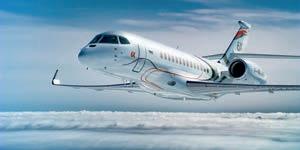
Max Range* 5,500 nm
Max Cruise SpeedM 0.90
Takeoff Distance5,115 ft
Landing Distance2,440 ft
Max Cruise Altitude 51,000 ft
Avionics Manufacturer Honeywell
Engines manufacturer Pratt & Whitney
Max passengers 16
Cabin Volume 1,843 cu.ft
*8 Passengers, 3 Crew, M 0.80 , NBAA IFR reserves
Long Range | 6,000 nm
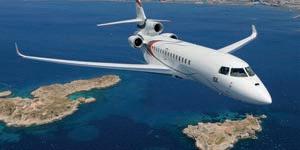
DASSAULT AVIATION | Falcon 8X
Max Range* 6,450 nm
Max Cruise SpeedM 0.90
Takeoff Distance5,880 ft
Landing Distance2,240 ft
Max Cruise Altitude 51,000 ft
Avionics Manufacturer Honeywell
Engines manufacturer Pratt & Whitney
Max passengers 16
Cabin Volume 1,695 cu.ft
*8 Passengers, 3 Crew, M 0.80, NBAA IFR reserves
Long Range | 7,000 nm

BOMBARDIER | Global 7500
Max Range* 7,700 nm
Max Cruise SpeedM 0.925
Takeoff Distance5,760 ft
Landing Distance2,237 ft
Max Cruise Altitude 51,000 ft
Avionics Manufacturer Collins Aerospace
Engines manufacturer GE Aerospace
Max passengers 19
Cabin Volume 2,633 cu.ft
*8 Passengers, 4 Crew, M 0.85, NBAA IFR reserves
Long Range | 7,000 nm
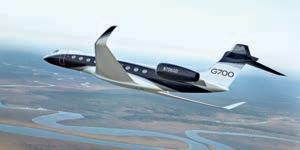
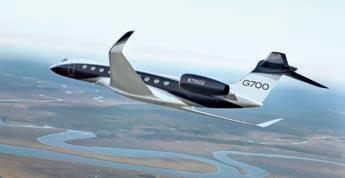
GULFSTREAM | G700
Max Range* 7,750 nm
Max Cruise SpeedM 0.935
Takeoff Distance6,250 ft
Landing Distance3,250 ft
Max Cruise Altitude 51,000 ft
Avionics Manufacturer Honeywell
Engines manufacturerRolls Royce
Max passengers 19
Cabin Volume 2,603 cu.ft
*8 Passengers, 4 Crew, M 0.85, NBAA IFR reserves
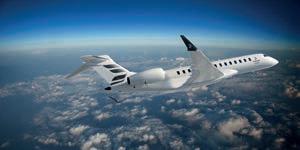
Max Range* 8,000 nm
Max Cruise SpeedM 0.95
Takeoff Distance5,760 ft
Landing Distance2,237 ft
Max Cruise Altitude 51,000 ft

Max Range* 7,500 nm
Max Cruise SpeedM 0.925
Takeoff Distance< 6,000 ft
Landing Distance< 2,500 ft
Max Cruise Altitude 51,000 ft
Avionics Manufacturer Honeywell
Engines manufacturerRolls Royce
Max passengers 19
Cabin Volume 2,780cu.ft
*8 Passengers, 4 Crew, M 0.80, NBAA IFR reserves DASSAULT AVIATION | Falcon 10X
Long Range | 8,000 nm
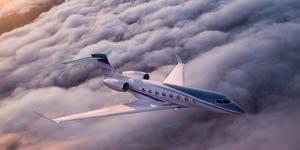
GULFSTREAM | G800
Max Range* 8,200 nm
Max Cruise SpeedM 0.935
Takeoff Distance5,812 ft
Landing Distance3,250 ft
Max Cruise Altitude 51,000 ft
Avionics Manufacturer Honeywell
Engines manufacturerRolls Royce
Max passengers 19
Cabin Volume 2,138 cu.ft
*8 Passengers, 4 Crew, M 0.85, NBAA IFR reserves
Avionics Manufacturer Collins Aerospace
Engines manufacturer GE Aerospace
Max passengers 19
Cabin Volume 2,633 cu.ft
*8 Passengers, 4 Crew, M 0.85, NBAA IFR reserves BOMBARDIER |

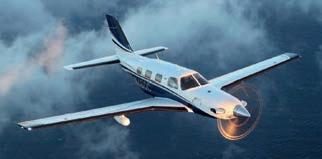
Max
Max
MTOW
Usable
PAX
Number of Engines1
Engine
Engine ModelPT6A-42A
Takeoff Power1,090 eshp
Avionics Manufacturer Garmin
Avionics ModelG1000 NXi
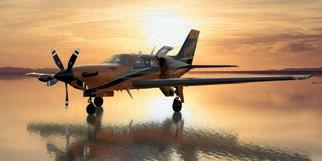
* 5 Occupants Range at LRC Max
Number of Engines1
Engine Manufacturer
Engine ModelPT6A-52
Takeoff Power1,090 eshp
Avionics Manufacturer Garmin
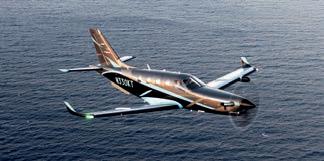
Max
Max
MTOW
Usable
PAX
Number of Engines1
Engine
Engine ModelPT6A-66D
Takeoff Power1,825 eshp
Avionics Manufacturer Garmin
Avionics ModelG3000
*Range at 252 ktas cruise speed
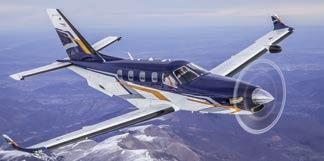
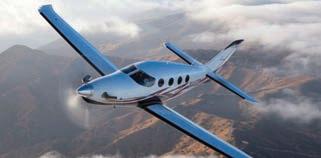
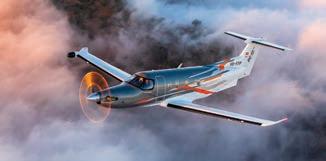
Max
Usable
Engine ModelPT6E-66XT
Takeoff Power1,844 shp
Avionics Manufacturer Garmin
Avionics ModelG3000 PRIME
Avionics
Number
Engine Manufacturer
Engine ModelPT6E-67XP
Takeoff Power1,845 shp
Avionics Manufacturer Garmin
Avionics
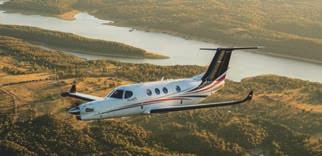
Max Range* 1,600 nm
Max Cruise Speed285 ktas
MTOW -
Usable Fuel -
PAX 10 + 1 Pilot
Cabin Volume 334 cu.ft
Number of Engines1
Engine Manufacturer GE Aerospace
Engine ModelCatalyst
Takeoff Power1,300 shp
Avionics Manufacturer GARMIN
Avionics ModelG3000
* 4 Passengers at LRC, NBAA Reserves
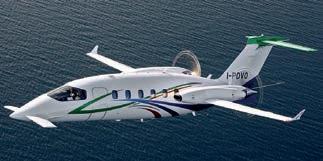
Max Range* 1,770 nm
Max Cruise Speed402 ktas
MTOW 12,100 lbs
Usable Fuel 476 USG
PAX 8 + 2 pilot
Cabin Volume 486 cu.ft
Number of Engines2
Engine Manufacturer Pratt & Whitney Canada
Engine ModelPT6A-66B
Takeoff Power1,844 eshp
Avionics Manufacturer Collins Aerospace
Avionics ModelPro
*

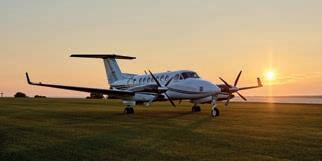
Max Range* 1,720 nm
Max Cruise Speed310 ktas
MTOW 12,500 lbs
Usable Fuel 544 USG
PAX 8 + 1 Pilot
Cabin Volume 283 cu.ft
Number of Engines2
Engine Manufacturer Pratt & Whitney Canada
Engine ModelPT6A-52
Takeoff Power1,346 eshp
Avionics Manufacturer Collins Aerospace
Avionics ModelPro Line Fusion
* Ferry mission at LRC, NBAA reserves
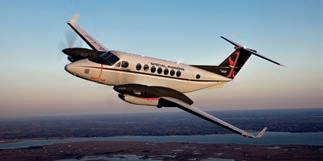
Max Range* 1,806 nm
Max Cruise Speed312 ktas
MTOW 15,000 lbs
Usable Fuel 539 USG
PAX 9 + 1 Pilot
Cabin Volume 331 cu.ft
Number of Engines2
Engine Manufacturer Pratt & Whitney Canada
Engine ModelPT6A-60A
Takeoff Power1,218 eshp
Avionics Manufacturer Collins Aerospace
Avionics ModelPro Line Fusion
* Ferry mission at LRC, NBAA reserves

LIGHT
MTOW < 7,000 lbs
With their large mission versatility and efficiency, Light helicopters are the most popular helicopters in the civil market. The Light category is divided into two sub-categories: single and twin-engine.
The primary differences between single and twin-engine helicopters lie in their power and speed capabilities. Twin-engine helicopters provide greater overall power and speed when compared to their single-engine counterparts. The engine redundancy is especially valuable when flying over water, densely populated areas, or inhospitable terrains.
INTERMEDIATE
7,000 lbs < MTOW < 10,000 lbs
The Intermediate category combines light helicopter versatility with increased cabin size and range capabilities making them perfect for a large number of missions ranging from Emergency Medical Services to Search & Rescue and offshore operations.
MEDIUM & SUPER-MEDIUM 10,000 lbs <
Developed primarily to support the offshore oil and gas industry, the Medium and Super-Medium category helicopters have proven very popular in corporate transportation applications as their large and unobstructed cabins can embody the hallmarks of elegance, style, and sophistication. These helicopters can often be equipped with state-of-the-art telecommunications and entertainment systems, dedicated workspaces, and refreshment and stowage areas.
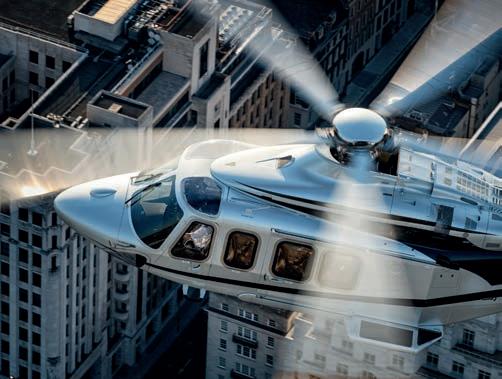
Designed primarily for the long-range offshore oil and gas market, Heavy helicopters are very popular in the VVIP market for government officials and head-of-state transportation.
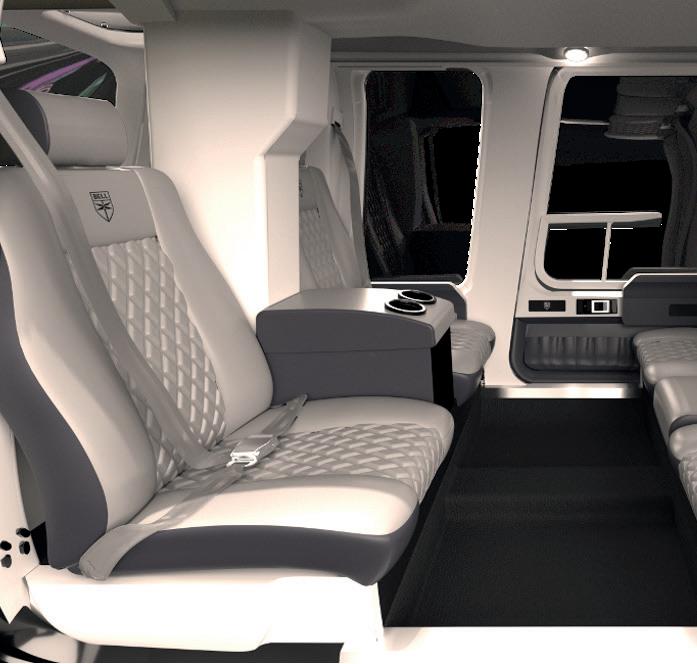
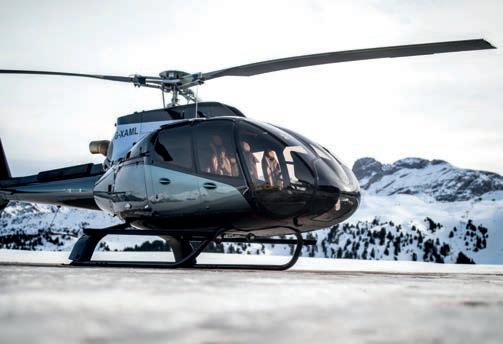
August 2025 - Japanese non-classical hospitality operator NOT A HOTEL placed an order for the country’s first ACH130 Aston Martin Edition, becoming Airbus Corporate Helicopters’ latest customer.
The ACH130 is the hospitality group’s first-ever aircraft purchase and will be used to offer unique aerial experiences for its guests seeking an elevated lifestyle immersion through its NOT A GARAGE mobility service. The new highend service is designed to revolutionise luxury travel by blending ownership with curated experiences across land, sea and air. The service allows users to own and share luxury mobility assets such as helicopters, private jets, luxury cruisers and cars. By purchasing a share in one mobility asset, users gain access to a network of other mobility options managed by NOT A HOTEL.
June 2025 - UAE-based Falcon Aviation Services orders an AW139 for VVIP charter operations.
The aircraft, ordered by Falcon Aviation’s owner His Highness Sheikh Dr. Sultan Bin Khalifa Bin Zayed Al Nahyan, will feature a VVIP 8-seater configuration, hinged doors, and a range of the latest generation on-board comfort and entertainment equipment.
Falcon Aviation has a long-term partnership with Leonardo as a helicopter operator and has played a key role in deploying Leonardo’s cutting-edge rotorcraft technology across the UAE. The company has placed orders for several AW109 GrandNew, AW169, and AW189 for energy support operations both in the UAE and internationally, as well as for passenger transport duties. in 2024, Falcon Aviation placed an order for its first AW139 to support offshore transport.
March 2025 - Bell launched a new Designer Series luxury interior offering for the Bell 407GXi.
Bell launched the first Designer Series interiors in 2022 for the Bell 429. Since then, Bell has completed 25 deliveries of Designer Series aircraft to customers from Japan, New Zealand, and Indonesia, and additional global operators.
The new trim option upgrades all the interior cabin materials with superior leathers and coordinated color schemes featuring updated Black Kydex panels, headliner, and trim, along with custom stitched seats. Leather-wrapped and color-matched armrests and headliner inserts, along with Bell Logo embroidery.
The new series is available in a range of color configurations, in addition to various premium flooring options, to complete the luxury experience for the discerning corporate or private traveler.
Bell has already received several orders for the new interior from global corporate operators.
Range
Max
Max
Number of Engines1
ManufacturerSafran Helicopter
Engines
Model Arrius 2R Takeoff Power505 shp
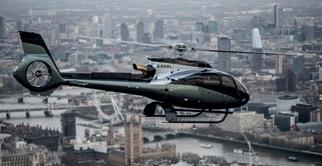
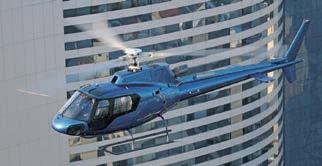
Range
Max
Number of Engines1
ManufacturerSafran Helicopter Engines
Model Arriel 2D
Takeoff Power802 shp
Max passengers5
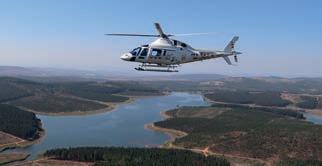
Max
Max
Number
ManufacturerSafran Helicopter
Engines
Model Arriel 2D
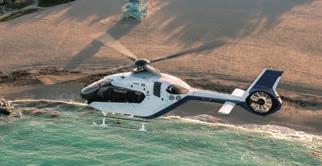
ManufacturerPratt & Whitney
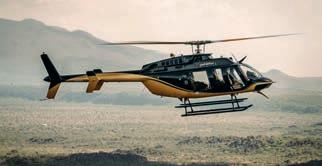
Range
Max
Max
Number of Engines1
ManufacturerRolls-Royce
Model 250-C47E/4
Takeoff Power862 shp
Max passengers6
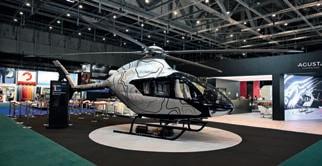
Range
Max
Max Takeoff 6,284
Number of Engines1
ManufacturerSafran Helicopter Engines
Model Arriel 2K
Takeoff Power1,006 shp
Max passengers8
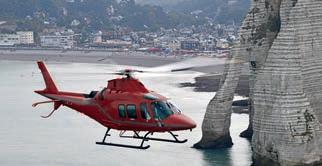
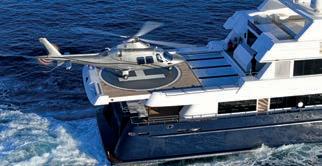
Range
Max
Max Takeoff 7,000 lbs
Number of Engines2
ManufacturerSafran Helicopter
Engines
Model Arrius 2B2 Plus
Takeoff Power633 shp
Number
ManufacturerPratt
Takeoff Power735 shp
Number of Engines2
ManufacturerPratt & Whitney Canada
Model PW207C
Takeoff Power735 shp
Max passengers7
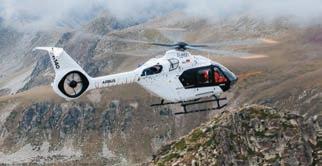
Range
Max
Max Takeoff 7,000 lbs*
Number of Engines2
ManufacturerSafran Helicopter
Engines
Model Arrius 2E
Takeoff
Max
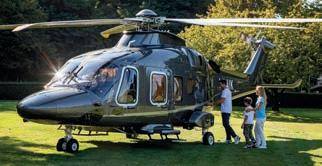
Range
Max
Max
Number of Engines2
ManufacturerPratt & Whitney Canada
Model PW210A1
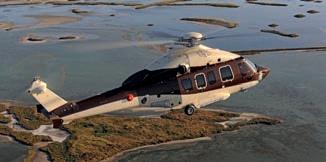
Max
Number of Engines2
ManufacturerPratt & Whitney Canada
Model PT6C-67E
Takeoff Power1,774 shp
Max passengers 12
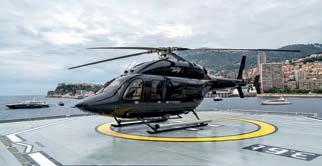
Range
Max
Max Takeoff 7,500 lbs*
Number of Engines2
ManufacturerPratt & Whitney Canada
Max passengers7
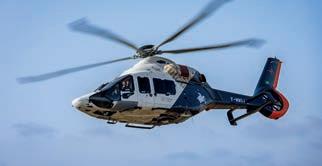
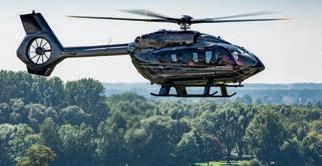
Range
Max Cruise Speed137 kts
Max Takeoff 8,157 lbs
Number of Engines2
ManufacturerSafran Helicopter Engines
Model Arriel 2E
Takeoff Power667 shp
Max passengers9
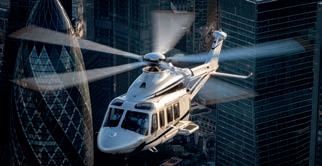
Range
Max Cruise Speed165 kts
Max Takeoff 14,110 lbs
Number of Engines2
ManufacturerSafran Helicopter Engines Model Arrano 1A
Takeoff Power1,280 shp
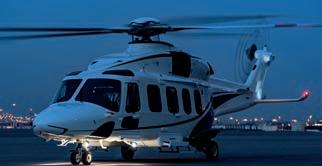
Range
ManufacturerGeneral Electric
Model CT7-2E1
Takeoff Power1,985 shp
Max passengers 10
ManufacturerPratt & Whitney Canada
Model PT6C-67C
Takeoff Power1,679 shp
Max passengers8
Volume 282.52 cu.ft
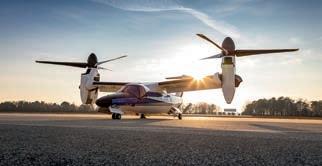
Range 1,000 nm
Max Cruise Speed270 kts
Max Takeoff 18,000 lbs
Number of Engines2
ManufacturerPratt & Whitney Canada
Model PT6C-67A
Takeoff Power1,940 shp
Max passengers9
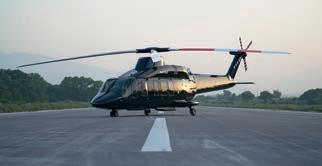
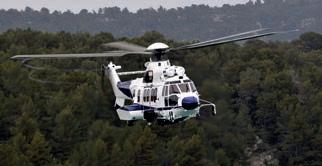
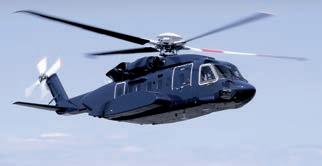
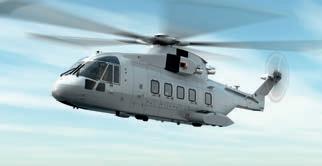
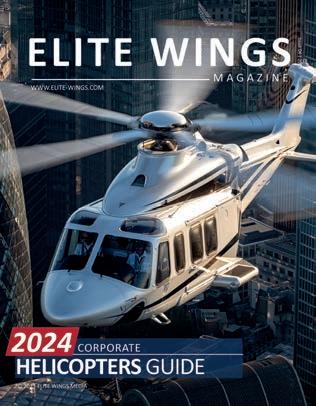

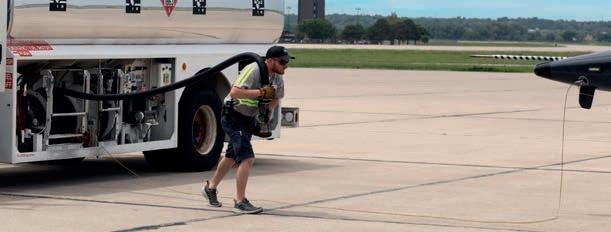

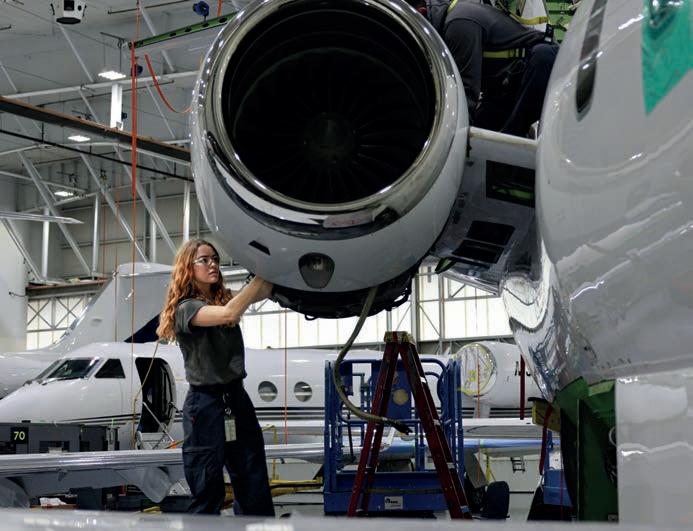
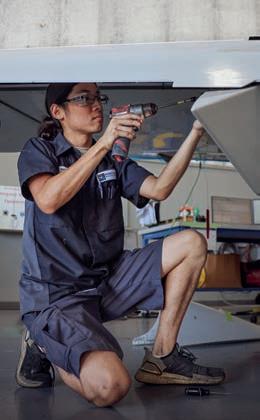
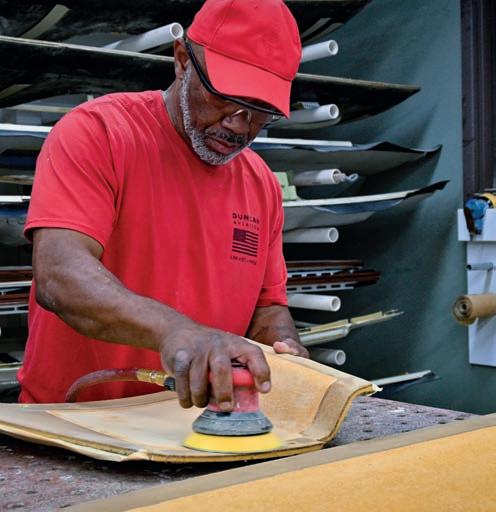
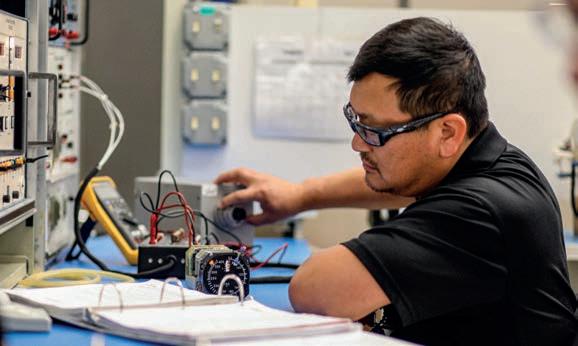
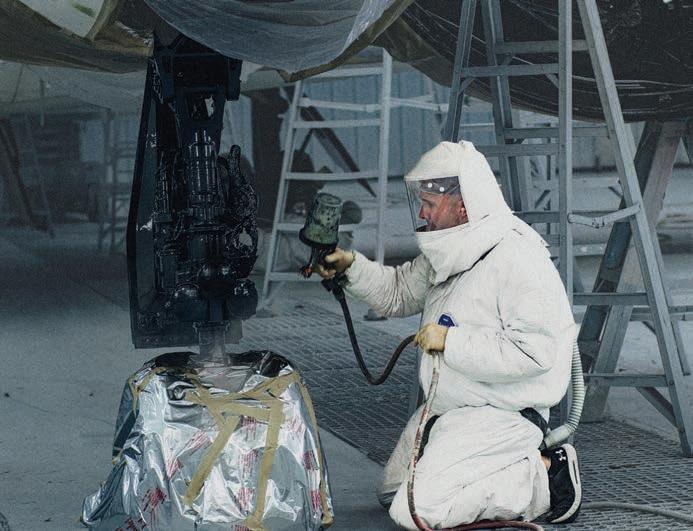
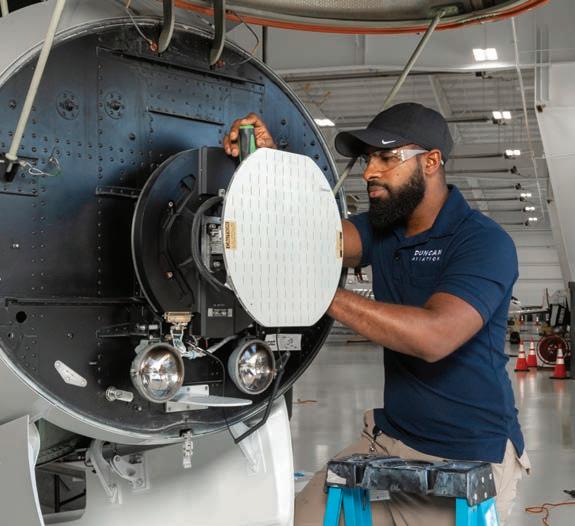
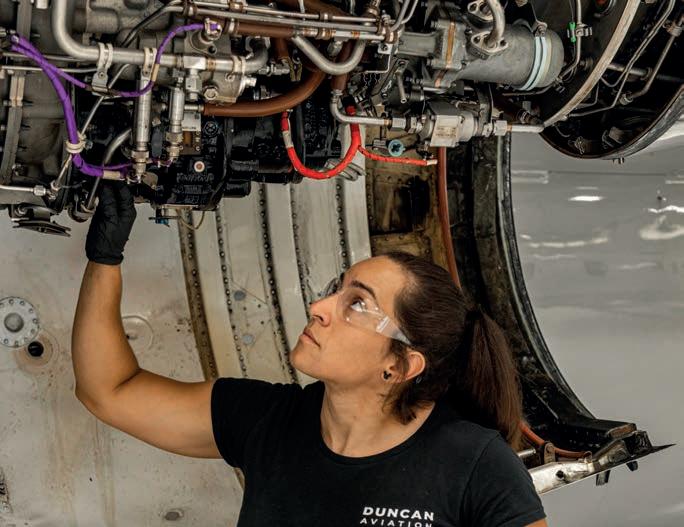
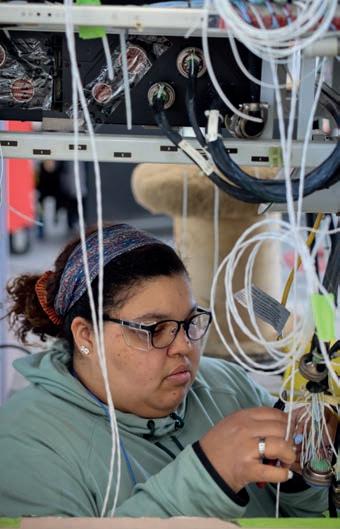
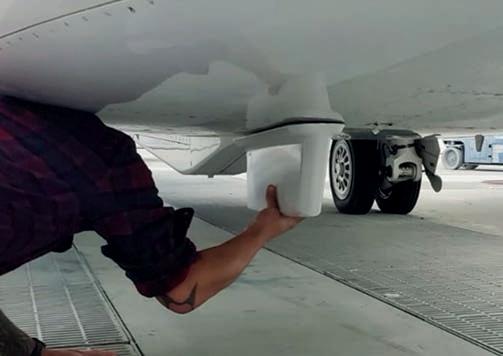
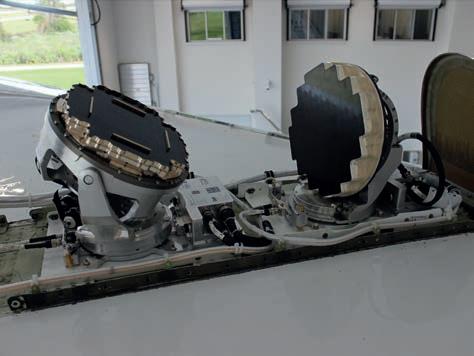

Step into the future of business aviation at the 2026 NBAA Business Aviation Convention & Exhibition (NBAA-BACE).
NBAA-BACE is where you can get up close with the newest business aircraft, meet legendary heroes of flight and witness epic announcements. It’s where business aviation comes together – not just to do business, but to connect, belong and celebrate the shared passion that unites our industry.

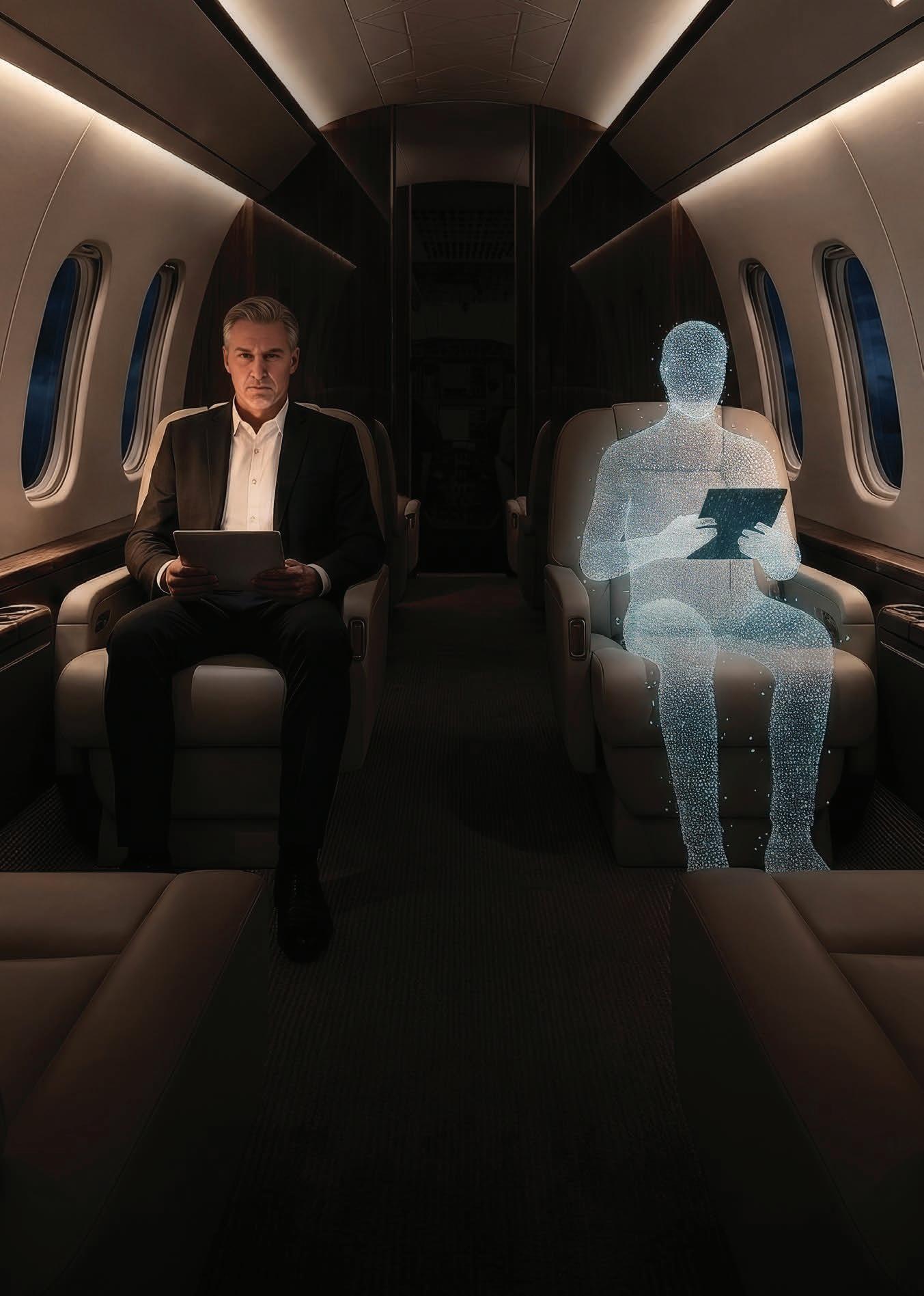
At Gogo, we minimize data retention and protect what’s sensitive. Our philosophy: if it’s not essential to service, it’s not our business.
READ THE FULL STORY


With short run-way capability and long-range reach, the Falcon 2000LXS is the worldwide leader in its class.
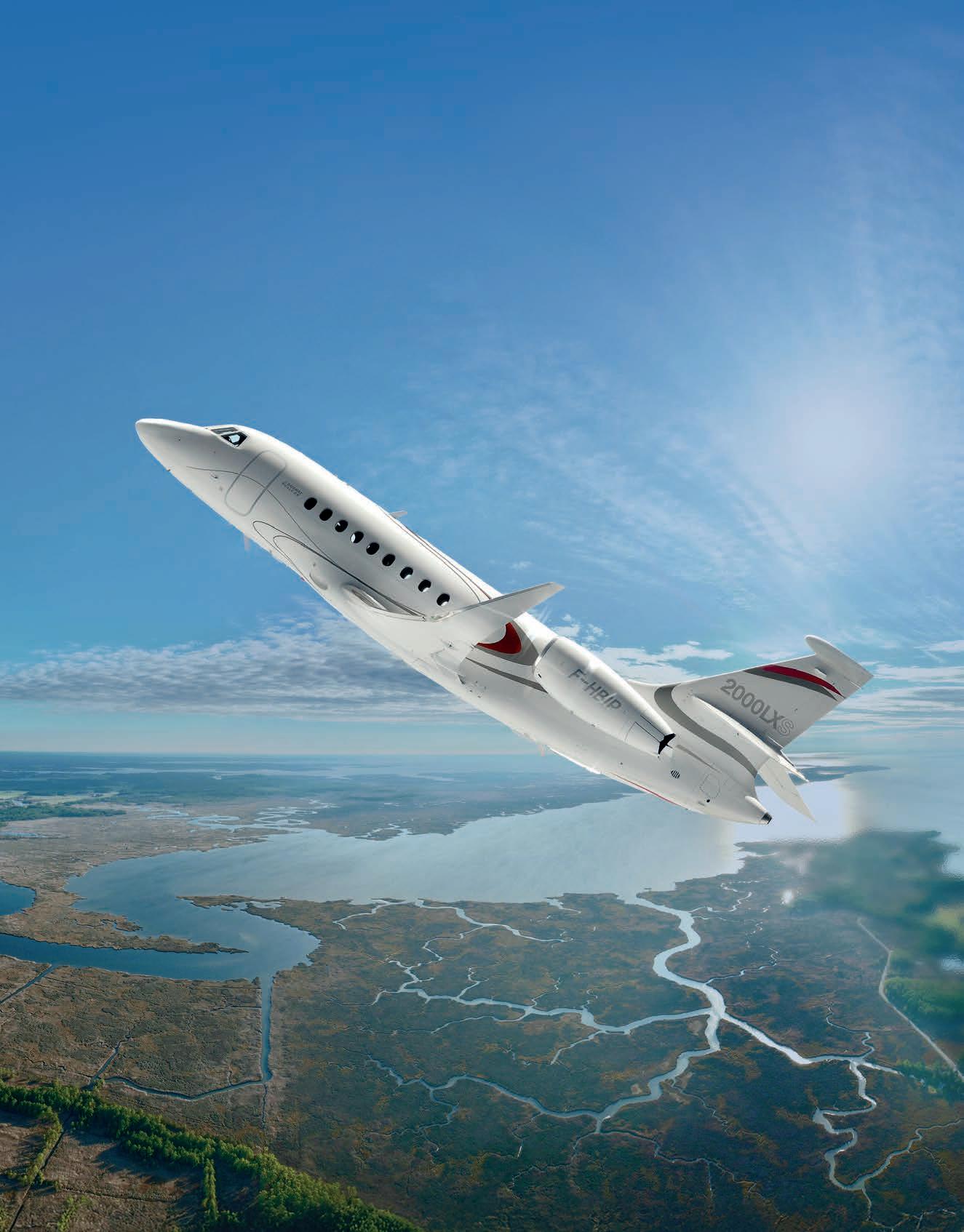


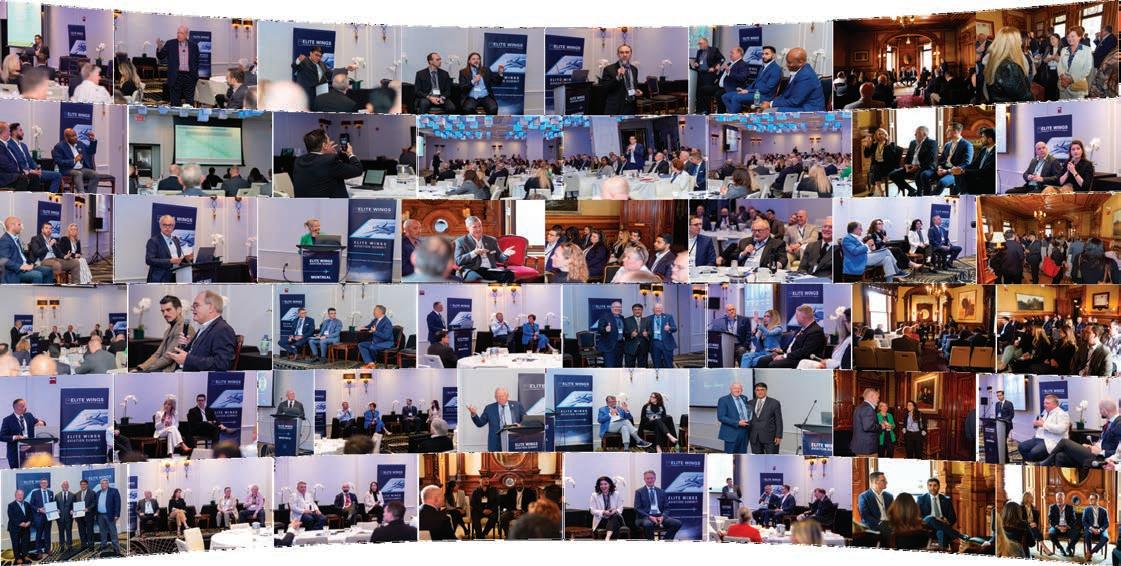
JUNE 16 – 17 | LE MOUNT STEPHEN
The Elite Wings Aviation Summit (EWAS) is a one of a kind gathering that brings together business aviation leaders, experts, and advisors to share insights, perspectives, and visions for the industry’s future. Designed as a platform for meaningful dialogue, EWAS provides an ideal environment to address today’s challenges while uncovering new opportunities for growth.
As technologies continue to advance and solutions become increasingly sophisticated, understanding diverse viewpoints has never been more important. EWAS fos-
ters collaboration and knowledge sharing, transforming industry challenges into innovation-driven opportunities and offering valuable insights for anyone passionate about business aviation.
EWAS 2026 takes place in the vibrant city of Montréal, Canada. Greater Montréal is a key pillar of the global business aviation ecosystem, renowned for its depth of expertise, culture of innovation, and dynamic business opportunities.