



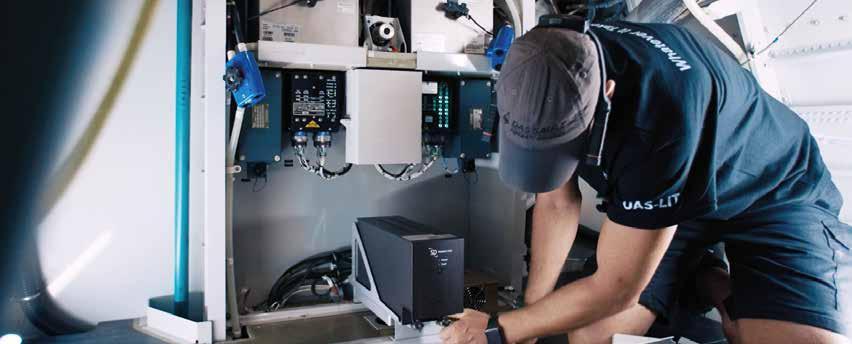
Experience the exceptional connectivity of JetXP from Viasat. Business aviation’s No. 1 satellite Wi-Fi, with expanded capacity (including 5x boost over major US hubs), increased network prioritization and uncapped speeds across the world. Because business at the top never stops.
Experience more than fast

ELITE WINGS MAGAZINE ISSN 2816-4040
ELITE-WINGS.COM
EDITOR-IN-CHIEF
Abdelmajid Jlioui abdelmajid.jlioui@elite-wings.com
DIRECTOR CONTENT STRATEGY
Viswanath Tata viswanath.tata@elite-wings.com
EDITORIAL DIRECTOR
Jane Stanbury jane.stanbury@elite-wings.com
EDITOR AT LARGE
Claude Draillard claude.draillard@elite-wings.com
BUSINESS DEVELOPMENT
Achraf El Boustani achraf.elboustani@elite-wings.com
CONTACTS
Editorial: editorial@elite-wings.com
General Inquiries: info@elite-wings.com Advertising: ads@elite-wings.com

Elite Wings publishes timely, structured, validated, unbiased, and relevant business aviation intelligence.

ELITE WINGS MAGAZINE (ISSN 2816-4040) IS PUBLISHED BY ELITE WINGS MEDIA Inc, MONTREAL, CANADA. Any information of a technical nature contained in this document may contain inaccuracies and is subject to change and should never be relied upon for operational use. Copyright © 2026 All rights reserved. Reproduction in whole or in part without permission of ELITE WINGS MEDIA is strictly prohibited.

Data, connectivity, and communications indisputably power our world, and we recognize that business aviation users want to emulate their terrestrial lives at altitude.
Our motivation is to enable readers to make informed decisions when selecting, acquiring, and managing connectivity solutions. We created this guide to ensure that you have timely, unbiased and valid intelligence collated from the world of connectivity in one trusted resource.
In this edition, knowledge from industry leaders, shapers, and analysts is aggregated to deliver relevant information about the current state of the market and its future direction. We identify the key points to consider when selecting solutions, identify what to ask who and when, and look out to the horizon to discover more about the latest hardware options, the changes coming from advanced satellite technology and how this affects tomorrow’s strategies today.
We know that it’s a changing market, which is why we’ll be publishing this resource annually; however, if you have questions about an article, find information lacking or would like to read more about the subject, please do let us know. These guides are for you, our industry colleagues, and your feedback is most welcome.
Feel free to contact us.




At Gogo, we minimize data retention and protect what’s sensitive. Our philosophy: if it’s not essential to service, it’s not our business.
READ THE FULL STORY

Jane Stanbury, Editorial Director
It’s an exciting time in the connectivity space. The introduction of new satellite networks, upgraded constellation technology, and increased hardware options for more airframe types, is enabling life in the air to replicate life on the ground for more owners and operators than ever before. The ongoing evolution brings more choices, enriched functionality, and flexible, customizable pricing plans for customers.
The days of the one-size-fits-all model have gone, which makes it essential to do your homework when selecting a connectivity solution. The principles remain the same, with connectivity comprising three distinct systems. The cabin and antenna hardware to receive the signals and subsequently distribute the data to the cabin devices, a subscription to a network which is invariably managed by one of the industry’s service providers, and installation either by a reliable MRO or the OEM itself.
With the diversity of options now available to operators, it is essential to define up front who will be using it on what type of airframe, what the connectivity will be used for, and where and how often the airframe flies. For example, the needs of a Cessna Citation X operator in the USA, will be very different from those of a Bombardier Global 7500 passenger in Dubai. Identifying the requirements from the start will save valuable time, money, and management intervention later.
The ‘who will be using it’ refers to how many passengers will regularly require the connectivity. ‘What will it be used for’ refers to video conferencing, gaming, and streaming TV, optimizing the Internet of Things, or simply accessing the internet, mobile device applications, and making calls. ‘Where and when’ the connectivity is used is also key. Is the aircraft operating solely across North America or frequently travelling internationally? Airframes flying regularly may require a monthly alwayson subscription, while a pay-as-you-go option may benefit those that travel less frequently. If an airframe is likely to be owned by the same proprietor for several years, a system that can be easily upgraded to stay current may be more suitable. This differs from a corporate fleet that buys new every three years. Larger airframes may benefit from installing two or more systems to ensure uninterrupted coverage. In contrast, airframes in the light to mid-size category are likely to opt for a single terminal that supports regional travel.
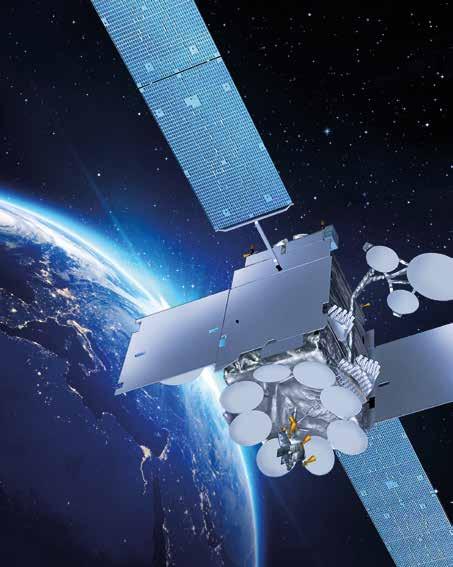

Network selection will be informed by the geographic area of operations. A satellite communication, SATCOM, solution will meet global connectivity needs by connecting an onboard terminal system with one of the increasing number of constellations located either in low earth orbit, LEO, geostationary orbit, GEO or highly elliptical orbit, HEO for polar connectivity. An air-to-ground, ATG, network will support regional activity. As the name suggests, ground stations support the ATG solution using a network of terrestrial towers deployed across the continent that point upwards to enable aircraft connectivity. Offered uniquely in North America, ATG is ideal for those operating only within the continent. For those who travel between North America and the Caribbean or Hawaii, a second system installation could support over-water flight connectivity.
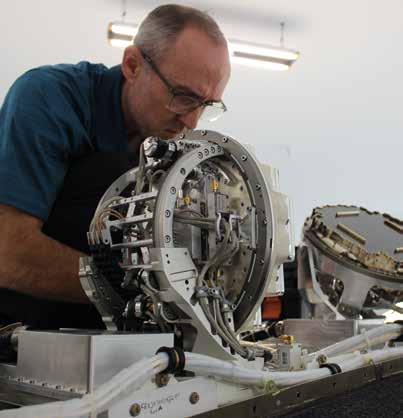

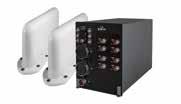
Each network connects with dedicated hardware which can be divided into three main components. The antenna, which, depending on its network connection, will be located in a radome on the aircraft tail or on the fuselage, as a low profile, flat panel antenna. For ATG services the antenna is positioned on the airframe belly. Each antenna has steering electronics and transceivers, which send and receive data from the satellites or towers. The tail-mount antennas move using gimbals to “see” the satellite they connect with and are invariably supported by GEO and HEO constellations. The flat panels are electronically steered with no moving parts and use phased array technology to connect to the LEO networks. Cabin connectivity is enabled by boxes, which will be stowed within the cabin or in the unpressurized fuselage area. These comprise routers, Wi-Fi extension units, and modems that enable the transmission of the received and transmitted signals from and to the digital devices in the cabin. The number and size of the boxes will depend on the system and network selection.
Connectivity is delivered predominantly by dedicated service providers, which will offer plans that suit each operator’s mission profile. Beyond facilitating connectivity, the providers will also manage the billing, customer support and various value-added services to help operators manage their systems. Some will also provide cybersecurity support to mitigate associated risks of data transmission. These value-added services may also include customized apps, network partner management to support uninterrupted coverage and training to ensure optimal connectivity usage. Increasingly, operators and owners will install two systems linking to different networks to ensure continuous coverage, more efficient budgeting, or amplify bandwidth to and from the cabin. This multi-orbit offering will likely become the status quo for airframes circumnavigating the globe to ensure consistent coverage.
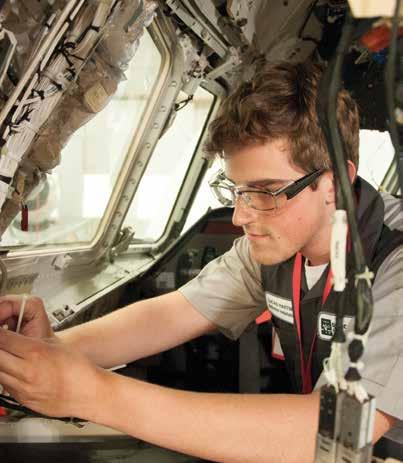
Dependable, high-performance airborne global connectivity is now an expectation, but it is only possible through the installation of the right equipment by skilled avionics professionals. Installation is available from either the aircraft manufacturer and can be selected prior to delivery or from a network of maintenance repair and overhaul companies. MRO facilities act as approved vendors for the hardware and service providers. This retrofit option is made possible through supplemental-type certificates confirming that the equipment is approved to be fitted onto an airframe without compromising safety. The retrofit market typically offers a wider variety of choices in system selection, and in some cases, newly delivered airframes may also have a second system fitted by MRO teams.
Connectivity is about much more than communications, with advanced technology enabling an array of third-party functionality. The right connectivity solutions can also support aircraft health monitoring, maintenance scheduling, flight operations and more. So, choose wisely and choose well, and connectivity installation will enhance the passenger experience, support asset value retention, and future-proof the aircraft even while the technology continues to advance.






Satellite networks have undergone a rapid evolution in the last few years with the introduction of record-breaking high-capacity satellites and new constellations allowing for ground-like connectivity speeds, reduced costs, and highly optimized coverage.
Two key features define SATCOM network technology:
SATELLITE ORBITS
FREQUENCY BAND


GEO satellites operate in a circular earth-centered orbit with an orbital period that matches the earth’s rotation on its axis of 24 hr. The synchronization of rotation and orbital period means that the satellite stays at the same position in the sky where antennas can permanently point to them. The GEO orbit is located at 35,786 km above the earth’s equator. A minimum of three GEO satellites is required to cover the earth. There are currently over 400 active satellites in GEO orbit.
LEO constellations use satellites positioned on an earth-centered orbit at a low altitude of 2000 Km or less. The lower altitude allows for smaller satellites with less powerful amplifiers. However, each satellite is only able to observe and communicate with a fraction of the earth at a time, meaning a constellation of many satellites is required to provide continuous coverage with each satellite continuously communicating with neighboring satellites. The first fully operational LEO constellation was Iridium using 66 active satellites at 781 Km altitude to achieve full global coverage including the poles.
MEO constellations use satellites positioned on orbit which is more than 2000 Km above earth, but below the GEO constellations. The GPS satellite-based navigation system is a good example of a MEO operated constellation.
The L-Band is still the most used frequency in business aviation satellite connectivity. Designed mainly to provide cockpit safety services, the global coverage of L-band SATCOM networks allowed for a large offering of first generation low-speed cabin connectivity solutions.
The Ku-band concentrates the largest number of regional satellite offerings. Developed originally for direct television broadcasting, the performance of Ku-band systems has improved in recent years, with typical speed from 25Mbps and upwards, which is enough to enable standard video streaming.
The Ka-band has more available capacity and is more efficient in its use of bandwidth. The Ka-band can achieve a speed of up to 33 Mbps, which is more than enough to enable live streaming of HD video and exceed the speed of many ground-based Wi-Fi services.
In recent years aircraft antenna technology has advanced significantly, becoming more compact and enabling higher throughput capabilities. However, antennas are often the bottleneck that restrict data connection speeds to aircraft. Different antenna technologies are needed to support linking with the growing number of constellations, multi-orbit offerings and the frequency band the networks support. The most common used in business aviation are the familiar mechanically steered dish antennas, but an increasing number of Electronically Steered Antennas (ESA) are coming to market.
These flat panel antennas are typically fuselage mounted and are often equipped on commercial and executive airliners. As the ESA technology reduces in size they are becoming an option for business aircraft. The tail-mount antenna sits on top of the vertical stabilizer in an aerodynamic radome and are optimized for business jets.
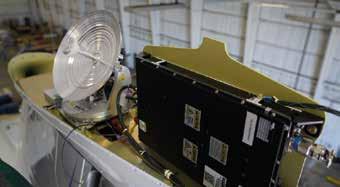

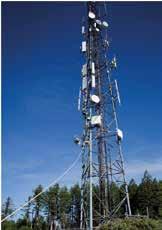
An Air-To-Ground (ATG) network is a land-based connectivity network infrastructure. It’s analogous to how your cell phone connects at (almost) any given point on the ground: a cell tower routes the data from your aircraft to and from the destination device or entity.
This technology is enabled by directing cell tower receivers and transmitters up toward the sky to provide a connectivity solution for aircraft flying overhead. The most extensive ATG systems have been established throughout the continental United States due to the large, continuous geographic region with collaborative aviation and communication governing authorities.
Typically, ATG systems are less expensive to equip and operate than the satellite options due to the lower complexity of the installation and hardware costs. Installing a satellite antenna typically involves a new tail radome which impacts the installation price. ATG antennas are fuselage mounted and are always mounted on the aircraft’s belly to allow for air-to-ground transmissions.


A landmark report from Massachusetts Institute of Technology (MIT) calls for industry evolution, as Viasat launches the In-flight Quality of Experience (iQe) concept for JetXP.
The business aviation industry faces a fundamental ‘disconnect’. While in-flight connectivity providers have traditionally competed on peak network speed, the moments that truly define value - such as joining a board meeting without the connection dropping or watching crucial sporting moments without buffering - remain invisible to this singular network metric. And while these failures don’t register in throughput reports, they ultimately determine how well connectivity delivers on business aviation’s core promise: transforming flight time into competitive advantage.
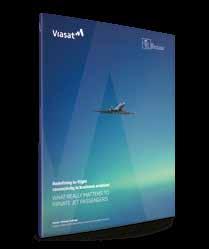
To address this issue, a new report by the MIT Sloan School of Management - titled "Redefining In-Flight Connectivity in Business Aviation: What Really Matters To Private Jet Passengers" – calls for a fundamental shift. At a bare minimum, moving from a singular network metric like speed to a more comprehensive Quality of Service (QoS) approach needs to be accelerated, incorporating a broader range of factors, such as latency, jitter, packet loss and bandwidth. However, while QoS enables baseline measurements and thus remains crucial for service level agreement (SLA) management, it still only serves as a proxy for actual user experience.
“A single, holistic QoE score represents inflight connectivity’s next evolutionary takeoff. It looks beyond what the network delivered to whether users accomplished their objectives without friction,” states Michael Schrage, Research Fellow MIT Sloan School of Management and author of the report, which is sponsored by Viasat. “This would allow connectivity providers to maintain operational continuity with current systems, while building toward a more sophisticated experience measurement.”

The report states that a further step is therefore essential to truly measure human satisfaction. The industry must elevate Quality of Experience (QoE) as its ultimate ‘north star’, analyzing several key metrics to determine technical performance and translating the results into a simple measurement that passengers can instantly understand, similar to how mobile network operators successfully introduced ‘bars’ as a visual indicator of signal strength. Although the bars specifically relate to signal strength, not QoE, the successful introduction of a user-friendly and instantly understood visual is a valuable lesson for business aviation.
Why speed alone isn’t enough: limitations of today’s connectivity KPIs
Peak speed has traditionally been used as the primary measure of both performance and user experience, with service plans based on maximum advertised download and upload rates. MIT’s report found that higher Mbps or Gbps numbers are often equated with superior service, leading customers to believe that these figures alone guarantee a better online experience. Regulators and consumer advocates have pushed for more honest marketing, discouraging exaggerated claims that do not reflect what customers will actually experience, because in practice:
Ì Speed tests often measure performance under idealized conditions, failing to capture the full spectrum of connectivity variables.
Ì ISP traffic prioritization can artificially inflate speed test results, masking underlying issues like throttling, congestion, or suboptimal routing, and therefore misrepresenting true performance.
Ì These methods overlook the real-world variability passengers encounter in flight.
The legacy telecommunications industry already recognized that a high headline speed doesn’t always equate to a great user experience. As a result, traditional metrics such as download speed and ping tests have been replaced with user-centric quality of experience KPIs that focus on overall performance. “In business aviation, where even momentary outages can ruin multi-million-dollar deals, the development of single, simple to understand quality of experience scores for connectivity is a fundamental shift that must be navigated at altitude and speed,“ says Schrage. “In-flight connectivity providers can leverage intuition from mobile network experience, with granularity across all metrics for more insightful analysis.“

The bandwidth trap
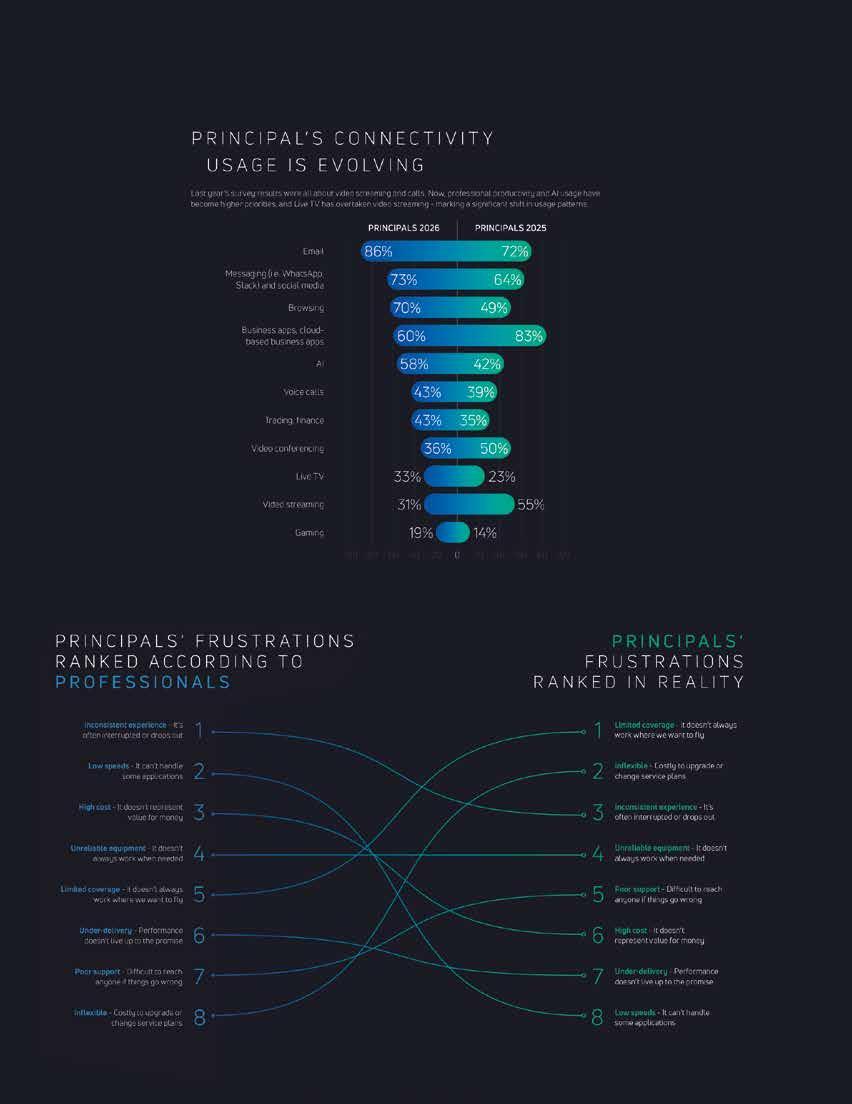
In-flight connectivity usage in business aviation has continued to evolve in line with technological advances, further supporting the need for QoE measurements. Once a convenience, connectivity is now considered essential by 93% of private jet passengers, according to a recent industry survey. While initial demand focused on low-data activities such as email and text-based messaging, new patterns are emerging. As applications for real-time collaboration, video conferencing, artificial intelligence (AI) and live TV become mainstream, pressures on network capacity will intensify further.
“This highlights that greater bandwidth doesn’t reduce connectivity pressure, it explodes user expectations. That’s why measurements really need to be revisited and redefined,” says Schrage. “In the age of satellite abundance, the real innovation is not in connecting people faster, but connecting people to what matters to them the most, with fewer surprises, less friction, and greater confidence.”
Viasat has been at the forefront of in-flight connectivity innovation for almost four decades in business aviation. As a result, it’s uniquely positioned to understand that performance is ultimately measured by the ability of every passenger to use connected applications seamlessly - a view strongly reinforced by the findings of the MIT report.
With this in mind, Viasat recently unveiled a transformative new concept for its JetXP service, named iQe (Inflight Quality of Experience), which has been specifically developed to redefine business aviation in-flight connectivity by focusing on the real-time, end-to-end experience of every passenger. iQe will be available later this year and leverages AI and advanced analytics to monitor a comprehensive range of network performance metrics in real time. These inputs are then distilled into a single, intuitive QoE score, allowing overall connectivity performance to be understood instantly at a glance.
“The business aviation industry is clearly moving beyond peak speed as the sole measure of connectivity, toward a broader focus on overall quality of experience,” says Claudio D’Amico, Viasat’s Vice President of Strategic Market Engagement, Business Aviation. “iQe is our response to that challenge. It gives principals, flight crews, and other stakeholders clear, real-time visibility into JetXP’s performance by combining all relevant network metrics and presenting them in a simple, intuitive format.”
The launch of iQe not only aligns closely with MIT’s research, but also with the 2026 results from Viasat’s long-running in-flight connectivity survey conducted in partnership with Corporate Jet Investor (CJI). This year’s research offered a unique side-by-side comparison of how business aviation professionals and principals think about connectivity - and revealed a clear shift away from speed as the primary benchmark for performance.
Among business aviation professionals, a clear majority of respondents - more than eight in ten - indicated that connectivity should be measured in real time using a broader set of metrics, rather than relying on speed alone. Principals echoed this sentiment, with nearly four in five expressing the same view, reinforcing the growing consensus that traditional speed-based benchmarks no longer reflect today’s in-flight experience.

Just as striking is the level of support for simplification. While performance measurement has become more complex, both audiences strongly favour translating that complexity into an intuitive experience-based indicator. Among principals, more than 90% responded positively to the idea of a single Quality of Experience (QoE) score such as iQe, with no negative responses recorded. Business aviation professionals expressed similarly strong endorsement, with over 95% of respondents expressing positive or neutral sentiment toward a single AI-driven QoE indicator.
“As expectations for in-flight connectivity in business aviation continue to rise, iQe is a market first concept that gives everyone on board - from passengers to flight crews - a clear, shared understanding of how the Wi-Fi is performing, and the confidence that it will support what matters most to them, every time they fly,” concludes D’Amico.
MIT’s report includes three proposed next-generation metrics that can be used as KPIs for the business aviation connected experience. Want to know more? Scan the QR code below to download the report for free.


Article published courtesy of Gogo
An STC from the TCCA, FAA, EASA and ANAC? That’s quite the alphabet soup of acronyms, but when it comes to STC generation, they are as essential to cover as your ABCs. An STC Supplemental Type Certificate represents the official approval from the aviation authorities that allows for modifications or alterations to an aircraft outside the scope of its original type certificate. You may need an STC if you’re going to add technology to your aircraft or if you want to reconfigure your interior using new types of materials. This can be as basic as adding a cup holder to the flight deck or a significant piece of hardware like an antenna.
As Gogo continues developing its purpose-built connectivity terminals for business aviation, it is working closely with its extensive network of dealers, engineering partners and the aviation authorities to source the approvals. The goal? To make the acquisition and installation process more streamlined for customers.
Obtaining an STC requires coordination, collaboration and communication. It takes time, but working with the right partners keeps things moving. That’s why Gogo works with best-in-class MROs and engineering firms to ensure that its hardware can reach its customers when needed.
So how do they happen…well here’s a concise version of the process. Thanks to Jean-Francois Martin, Director of Avionics at SkyService, a Gogo authorized reseller and MRO partner, for helping demystify the intricacies of the process. Want to understand the ABC of STC? Then read on.
1. Start with an airframe. Identify the specific modification or alteration you want to make to the aircraft. This could include changes to the avionics, structure, systems, or interior. It’s essential to thoroughly define the scope of the modification and understand its impact on the aircraft’s performance, safety, and compliance with regulations.
2. There’s always paperwork. Detailed documentation is required to support the proposed modification. This includes engineering drawings, analysis, test plans, and other technical data. The documentation should demonstrate that the modification complies with applicable airworthiness standards and does not compromise the aircraft’s safety or performance.
3. Plan and be prepared. Develop a certification plan that outlines the steps, tests, and analysis required to demonstrate compliance with the applicable regulations and airworthiness standards. The plan should
identify the specific authorities and organizations involved in the certification process.
4. Communicate. One of the significant challenges in the STC process is coordinating with the aviation authorities -- TCCA, FAA or EASA. In addition to documentation, engaging in meetings and discussions and addressing any questions or concerns raised by the authorities is vital.
5. Keep on testing. Tests and analyses may be required to demonstrate compliance and show that the modification does not adversely affect the aircraft’s performance, handling qualities, or safety. These can include ground tests, flight tests, structural studies, electromagnetic compatibility tests, and more.
6. Be compliant. The modification must comply with the applicable airworthiness regulations and standards, such as those outlined in TCCA CARs, the FAA’s FARs or EASA’s CS. Ensuring compliance can be challenging, as it requires a thorough understanding of the regulatory requirements and staying updated with any changes or updates.
7. Seek approval. Once all the necessary documentation, tests, and analysis are completed, the STC application can be submitted to the aviation authorities.
8. Review process. The aviation authorities review the submitted application, including the technical documentation, test results, and certification plan.
9. Communicate again. It is common for the aviation authorities to request modifications or revisions to the submitted documentation or certification plan. This can extend the timeline and add complexity. Close collaboration and effective communication with the authorities are essential during this stage.
10. Being approved. Once the authorities are satisfied with the documentation, testing, and compliance, they will issue the STC. The STC provides the official approval for the modification and outlines any limitations or special instructions that must be followed.
The STC process requires investment of time, effort, and finance. It requires careful planning, allocation of resources, and patience to navigate through the various stages of certification and can vary depending on the specific jurisdiction and authorities involved. Engaging with experienced consultants like Skyservice helps guide the certification process, and provides valuable insight. These professionals are familiar with the specific requirements of the relevant authorities, will often have existing relationships, and can help ensure complete and accurate document submission.
Obtaining an STC is more than a linear process; it is a holistic approach to qualifying what is needed. Gogo is committed to making installing its portfolio of antennas an attractive proposition for all customers seeking out reliable, consistent, genuinely global connectivity.
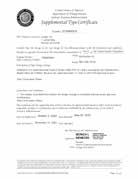
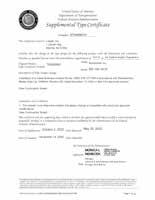
Scan de QR Code to access the latest list of available Connectivity Installation STCs.
As the data demand required by business aviation increases exponentially, so does the risk of cyber events.
A conversation with Josh Wheeler, Senior Director Cybersecurity and Entry into Service at Gogo

Why is cybersecurity so critical, and what role does it play in business aviation?
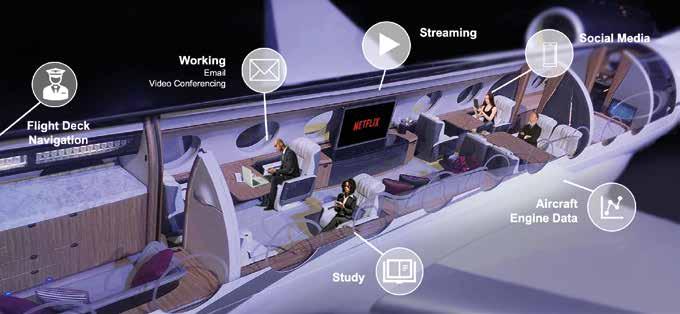
Technological advancements and innovation have made data transfer to and from aircraft an expectation as passengers expect to replicate their digital terrestrial life at altitude. With the increase in data capacity, the ongoing deployment of satellite networks, and the continuous development of hardware and software, it is easier than ever for passengers to work on documents, participate in video conferencing, continue gaming, watch favorite films and movies, and stay productive and entertained. Crews are also connected to improve situational awareness and enhance the passenger experience.
Connectivity is essential, and many passengers will not depart without optimal connectivity, necessitating robust cybersecurity protocols. In 2023, eight billion data records were compromised, and the cost of a cyber data breach averaged around US$4.45 million, which doesn’t include the cost of reputational damage. The average time to detect a violation was nearly four months. While these were not all aviation-related events, there is a clear and present danger. If an airframe is connected to an organization’s internal network or intranet without active cyber protocols, passengers are as vulnerable as if sitting in a coffee shop. If the internet is visible to the aircraft, then the aircraft data is visible to the internet. It’s as simple as that.
How can cybersecurity help, and what actions can mitigate risk and improve data security?
Cybersecurity is the act of ensuring that data being transmitted from an aircraft to organizational networks is always protected to prevent the unauthorized theft of information. The continuous mitigation of risk forms a key component of cybersecurity activity.
Cyber awareness, vigilance, and education drive a good cyber strategy. Organizations and operators must actively educate their staff, suppliers, and passengers about how to reduce cyber events.
Recognizing that the cyber landscape is dynamic and implementing and modifying appropriate technologies, policies, procedures, and controls to implement cyber-specific policies within the SOPs (standard operating procedures) is an effective way of mitigating risks.
The numbers clearly illustrate that business aviation needs to be aware of the implications. What are the greatest threats to business aviation connectivity in the current landscape?
Gogo blocks some 10,000 attempted malware attacks on our customers’ assets every day, and critically, we note that the threats are constantly changing. We also see that flight departments, operators, and owners don’t believe an event will affect them and, consequently, do not focus on developing a security mindset.
A lack of cyber awareness is something that bad actors can easily optimize through social engineering. This
common strategy uses cheaply acquired online software to manipulate user behavior. Phishing is the most wellknown threat, with fraudulent emails used to appropriate personal data giving rise to clickbait scams, giveaway frauds, and cloned accounts. This relies on simplicity, clever tactics, and slick graphics to trick users out of valuable information.
A smartphone or tablet connected to the internet is equally as vulnerable as a laptop. Phones, in fact, provide a new information-gathering platform. Known as Smishing, bad actors use fake texts to extract data that can be collated and used for bad intent. Vishing is also entering the sector using publicly available digital recordings, AI, and a little background research to generate convincing fraudulent phone messages in which voices and speech patterns are emulated. Deep-fake scams are also on the rise. Simple computer viruses and trojan horses have transformed into highly sophisticated ransomware, spyware, and advanced persistent threats (APTs). Malware is designed to disrupt operations and steal data and funds. A notable development in the cyber security sphere is the increase in nation-state-sponsored cyberattacks. Such attacks are carried out for espionage, to sabotage critical infrastructure, and can influence geo-political events.
You mention AI; how is the rapidly developing technology affecting cybersecurity?
Just as AI is creating new ways of sourcing information, resolving problems, and supporting commercial growth, bad actors are optimizing it. We’ve talked about traditio-
nal Phishing, but AI-driven Phishing is adding new techniques into the mix. Previously, detecting a fake email through grammatical mistakes or unnatural language was possible, but generative AI creates flawless and contextually relevant emails. A vocal form enables interactive deceptive conversations with chatbots posing as vendors or regulatory personnel and is hard to distinguish from regular callers.
AI can automatically collect and cross-reference data from flight logs with public profiles, industry databases, and other readily available sources to target attacks. These same bad actors can create Deepfake audio and video impersonations of key personnel (e.g., CEOs, DOAs, DOMs) for fraudulent requests. Automated AI can launch large-scale, efficient attacks targeting entire aviation organizations, create polymorphic malware that evades detection in aircraft systems and ground-based networks, and can find and exploit weaknesses in flight management systems, communication networks, and ground infrastructure, as well as being used for password cracking.
Yet, with each new development comes an equal and opposite development regarding cybersecurity. AI can provide defense and is spawning new cyber management options. It can detect threats early and initiate rapid response and remedial action. Behavioral analytics can be used to identify anomalies in flight data and network traffic. This is a powerful defense mechanism when combined with human knowledge and expertise. The evolution of AI in cybersecurity reflects the constant cat-and-mouse game played between the good and bad actors.
I know that Gogo offers an impressive portfolio of training options. Do any of them exclusively focus on cybersecurity?
Yes, we are strong advocates for training and education in the industry. We run cyber awareness courses that are constantly updated for aviation IT professionals, crew, and passengers. Our Aviation CyberThreat Awareness course is designed specifically for business aviation professionals, owners, and operators. The program navigates the complexities of security and cyberthreat prevention from an aviation perspective. It identifies common risks, defines attack methodology, and describes current cybersecurity concerns within aviation to raise awareness about inherent vulnerabilities. Modules relating to data protection during international travel are complemented by information about using personal digital devices before, during, and after a flight. This human element is a vital foundation for building cyber vigilance.
Does Gogo offer any services other than training to support cybersecurity?
We provide three explicit service levels to support cybersecurity mitigation. The entry-level service provides active threat monitoring by proactively observing live flight data behavior. Human experts work with AI and refined machine reading technology at our NOC to evaluate data transmission. If the system notes discrepancies, remedial activity follows.
Our Advanced Encryption service is purpose-built for business aviation, using our router platforms and infrastructure to apply proprietary technology to optimize a secure, accelerated tunnel through which encrypted,

anonymized data passes from the aircraft to the ground and back. The system effectively protects the entire aircraft network.
The third level creates a Private Network, transforming the aircraft cabin into a secure corporate workspace. The data never touches the public internet, effectively making the aircraft as safe as an office while also giving visibility into the network for threat monitoring.
It seems that cybersecurity needs to be multi-layered. What constitutes a good aviation cybersecurity strategy? What are some best practices for mitigating aviation cyber threats?
Our key recommendation is that aviation organizations, stakeholders, and suppliers be cyber vigilant and employ various tools to mitigate the threat. A combination of human understanding, implementation of tech protocols, and investment in robust cyber management solutions can help protect aviation assets.
Simple actions can also make a huge difference and include:
` Use passwords to protect the cabin Wi-Fi. We know flight departments can be reluctant to create Wi-Fi passwords due to the perceived inconvenience to passengers, yet the inconvenience of learning a password far outweighs the potential risks. QR codes are a simple way to share the password. Don’t use aircraft tail numbers, company names, or principal titles as passwords; make sure to change the default router password set by the OEM.
` When creating a password, length trumps complexity. It is harder for decoders to crack a long password, such as the first line of a favorite song, than it is to figure out a short password that includes numbers, special characters, and letters.
` Always think before connecting to external Wi-Fi. It is better to switch off auto-connect and consciously decide which networks to join. If you’re in a public area such as an FBO or MRO, only log on if access is via a password.
` Secure digital devices with a strong password; don’t use birthdays or pets’ names, for example.
` Don’t plug devices into unfamiliar docking stations; don’t use a USB drive unless you know it is yours.
` If you travel, use a virtual private network, VPN, for
an encrypted connection. This creates another layer of defense when logging on to a hotel, restaurant, or FBO network.
` Equally, when traveling to a new country, ask the IT department to confirm if it is high risk in terms of cyber events. If it is, leave data-rich devices at home and use loaner devices.
` Minimize sharing data with third-party suppliers until you’ve confirmed their cyber protocols. Passenger manifests, for example, contain rich data, but if the catering company or ground transport company does not have cyber protocols in place, the data becomes vulnerable.

Are there any key standards, regulations, or guidelines related to aviation cybersecurity? How is the industry supporting awareness raising?
Awareness of cybersecurity and its potential negative outcomes is being discussed at international levels across the aerospace industry, and we’re aware that guidelines are being created. Still, we would all benefit from further cooperation and knowledge sharing. IATA has prepared a useful document that explores risks and solutions for aviation, and regulatory frameworks are being created at regional levels. The FAA is issuing new mandates to encourage cyber awareness, regular security updates, and implementing network security solutions for aviation. The U.S. National Institute of Standards and Technology (NIST) released version 2.0 of its Cybersecurity Framework in summer 2024. These updated guidelines provide a great template for aviation to follow. This is a joint effort across several nations, all providing guidance. This is worth reviewing for any operator or owner wanting to set up cybersecurity management protocols.
Scan QRCode to learn more:
How the NIST Cybersecurity Framework 2.0 helps protect businesses

By Summer Staninski, Market Research Analyst VALOUR CONSULTANCY
The InFlight Connectivity (IFC) landscape is undergoing a sea change brought about by the emergence of Low Earth Orbit (LEO) networks. They’ve introduced a new level of performance, not just by offering greater speeds than previously seen, but by enabling multi-orbit connectivity.
The ecosystem through which connectivity is delivered is also evolving - Eutelsat, Viasat and SES (now including Intelsat) continue to rely on a well-established network of specialist service providers such as Gogo and Honeywell
Aerospace. At the same time, Starlink is challenging this traditional model and going direct to the customer.
However, in an industry where reliability, availability and support are paramount, service providers play a critical role. This article explores how the IFC ecosystem is evolving and outlines why service providers remain important, even as new technologies disrupt the status quo.

LEO solutions - like Starlink and OneWeb-powered Gogo Galileo – have been the talk of the IFC town the last couple of years. By occupying an orbital shell much closer to Earth, these new LEO networks have redefined ‘normal’ performance, with theoretical speeds exceeding 200Mbps and latency below 100ms – an improvement of around five times what has previously been available. New high-speed solutions, powered by these networks, unlock crucial capabilities for the business traveller such as video calling and live trading.
Currently, there are two LEO broadband players in business aviation – Starlink and Eutelsat. The former was the first to market, with launch customer JSX introducing the solution in 2022. Since then, adoption has grown rapidly and, by the end of 2025, Starlink reported that its solution was flying on over 1,000 business jets with a whopping 800 of these installed that year. This shows immense growth from initial installation figures of around 80 aircraft in 2023 and 450 aircraft in 2024 across all markets. Strong growth can be associated with a healthy pipeline – tails in backlog totalled 400 in 2023 and jumped up to 2,000 in 2024, though this includes the commercial market as well. While it remains unclear whether these figures refer to activated terminals, installed systems or shipped kits (or whether they include the Starlink Mini for that matter), it’s safe to say Starlink has been a popular choice.
Eutelsat entered the aviation market more recently, going live in early 2025, but has been equipped on 100 business jets since. The solution is taken to market by
Gogo which started with its half-duplex (HDX) antenna purpose built for smaller aircraft – midsize and under. This was likely a strategic move, enabling existing customers with legacy Gogo Biz hardware, now only compatible with the sunset 3G network, to upgrade to a LEO solution rather than migrate to an alternative. Whatever the motivation, it has been a successful approach. Gogo even secured a line fit deal before the network was live in 2024. Textron announced that it would install the Galileo HDX as a factory option for the Cessna Citation Longitude, Latitude and Ascend business jets. In 2025, this was expanded to include the Citation CJ4 Gen3, with deliveries poised for 2026. Gogo expects to ship nearly 900 Galileo antennas and sees “a potential path to 700 Galileo aircraft installed” by the end of this year. If successful, Gogo will beat Starlink’s first and second year numbers.
Together, these networks have really shaken up the IFC ecosystem. Historically, IFC solutions were stratified by aircraft size: L-band and ATG for smaller jets, and GEO Ka- and Ku-band for larger jets. LEO solutions mark a distinct step away from this by offering a high-speed solution with near-global coverage (only held back by regulatory hurdles) that can fit on almost any aircraft size. This isn’t to suggest that LEO solutions will fully replace or push out what already exists, however we are certainly moving towards a more competitive landscape which has forced incumbent network operators to evolve, as well as the service providers that support them.
A key distinction between Starlink and OneWeb is their differing go-to-market (GTM) strategies. Eutelsat originally planned to go through two value-added resellers (VARs), Gogo and Satcom Direct (SD) – though since the former acquired the latter, two has become one. Gogo, as a combined entity, is also working with a number of hardware providers that have interest in the business aviation market – Hughes Network Systems which provides the HDX and FDX antennas for Galileo, Gilat Satellite Networks, which is developing terminals for military and Head of State applications, and newcomer Farcast. This demonstrates the many channels through which OneWeb capacity is available which enables tailored solutions offered and supported by distinct service provider business units. Gogo supports smaller aircraft with purpose-built solutions, while SD brings proven experience in the heavy jet market around the globe.
In contrast, Starlink is vertically integrated and in complete control of its solution. It builds and launches its own satellites, defines the end-to-end solution offered to customers, prices it up and selects how it’s marketed and supported. While this has resulted in a highly streamlined offering, it’s one that looks too large on a small King Air turboprop (though it can fit!) and sometimes requires a duplicate if the customer has a large aircraft like a bizliner. This highlights that there is no one-size-fits-all solution in business aviation. The figure below provides a more detailed comparison of each GTM approach:
Figure 1. A Comparison of GTM Strategies: Using a VAR or opting for full vertical integration
Customer Support
Pricing/Packages
VAR Vertical Integration
Ì Proven trust and knowledge of the market
Ì Pre-existing personnel for instant implementation
Ì Add mark ups, but also value added services (VAS)
Ì Can manage multi-network set-ups acting as one centralised point
Ì Leverages existing relationships or own hardware technology
Ì Learning curve – getting to know what business flyers expect
Ì Need to hire the people to do it
Ì Can provide service at lowest cost
Ì More limited options
Ì Less capabilities for VAS
Hardware
Relationships and expertise
Branding
Ì Can work with OEMs and others for line-fit approvals and STCs
Ì Inherit the relationships and expertise that the VAR has spent years building
Ì Wider networks – aircraft OEMs, dealers and MROs, existing customer support
Ì Can be convoluted as to what the product is if too many channels
Ì Disadvantage of creating hardware from scratch for unknown market
Ì Starting from scratch – it takes time to build trust
Ì Risk of tunnel vision – fewer collaborators means less flexibility
Ì Benefit of full control
Ì Very clear and strong brand
While vertical integration offers greater control and cost advantages, using a VAR allows networks to leverage existing expertise which promotes customisation, flexibility and, importantly, support. In a market where troubleshooting needs to be immediate, a service provider’s global support network is invaluable. Service providers like Gogo, Honeywell Aerospace and Collins
Aerospace also enable simple deployment of multi-orbit and multi-network set-ups by bundling capacity from different operators in a centrally-managed service. This is distinct from what we’ve seen previously (see Figure 2) where solutions were comparatively siloed. Now, there is a shift towards interoperability between networks that service providers are key in facilitating.
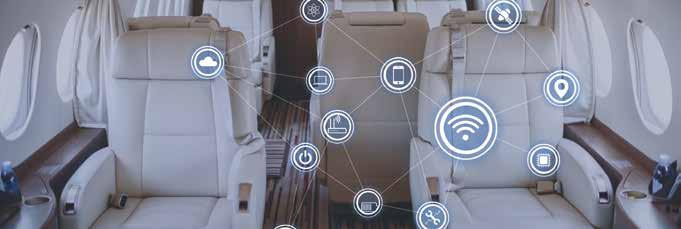
The IFC landscape has arguably already moved towards multi-orbit and multi-network solutions. Partnerships between operators – for example Eutelsat and Intelsat, now SES which has inherited this relationship by default, and Viasat who recently announced it would work with Telesat – evidence this trend. We expect there may be even more merger and acquisition (M&A) activity to come as incumbents work together to offer a fundamentally different product to Starlink: a multi-orbit or multi-network play. Moreover, LEO is certainly a crucial
part of the future so any operators without such assets will have to partner eventually.
Service providers play an important role in managing different services and bundling them together with value added services such as customer support. They coordinate network switching, streamline the billing process and act as a central point of contact for any support needs. For new entrant networks, service providers act as trusted intermediaries, which is important for building a brand new customer base.

Since its acquisition of SD, Gogo has leant into this aggregator-type role even more heavily. Its portfolio now includes almost every solution on the market - the SD business unit has the reach to offer large jet operators around the globe both Galileo and GEO Ka- or Ku-band connectivity for full redundancy, while the Galileo HDX and ATG terminals work for lighter jets. L-band is also available as a back-up option. The addressable market expands, the customer gets the best fit for their needs, and the resources are already set up to quickly deploy whatever solution (or combination of solutions) is required.
Similarly, Honeywell Aerospace, a VAR for Viasat’s Kaband services and the manufacturer of the JetWave terminal for JX, is about to launch the JetWave X (JWX) which is a next-generation antenna that can speak to both ex-Inmarsat and Viasat satellites, bolstering capacity for customers. Enabling Viasat to leverage all of its assets will be key to remaining competitive as Telesat comes online. Another advantage is that partnering with Honeywell Aerospace ensures the terminal is optimised for business aviation, drawing on its deep domain expertise while allowing Viasat to focus resources on broader network and technology developments.
It’s not just technology that’s been evolving in the IFC market, it’s also business models and operations. While LEO connectivity is critical to achieving parity with a passenger’s experience on the ground, it’s just a single component in the multi-orbit and multi-network architecture that we expect to be deployed now and in the future. These setups are targeted to suit the needs of the diverse customers in business aviation.
Service providers are crucial in delivering these services – their ability to integrate and manage networks, offer ongoing support and simplify operational services such as billing will be key to their growth. While Starlink’s brand name and ability to leverage the technology developed across other business units have allowed it to build a presence, for others, working together is optimal. Longevity in this evolving landscape isn’t just about satellite technology – the ability to deliver a complete and reliable solution that suits the customer is what will continue to define success.



By Lisa Gordon
A fast and secure internet connection is a crucial component of modern business aviation and a key determinant of cabin experience.
Whether for business or pleasure, today’s passengers expect in-air connectivity that is on par with on-ground service. Additionally, operators demand robust and future-proof connectivity solutions that can support high-speed Air-to-Ground (ATG), geostationary earth orbit (GEO) satellite, and low-Earth orbit (LEO) satellite connectivity systems.
Bombardier has answered this call for stable and secure onboard connectivity with the new Bombardier Smart Router
More than just a hardware upgrade, the Bombardier Smart Router represents a fundamental shift in how onboard connectivity is managed. Previously, third-party suppliers installed aircraft connectivity systems and paired them with a router. Smart Router is different because it is designed, installed and supported directly by the aircraft manufacturer, which ensures greater convenience through a single, fully integrated solution.
“This critical piece of the cabin experience used to be outside of our OEM support and control capabilities,” explained Alexander Gallo, Manager for Product Planning at Bombardier. “Smart Router was conceived from the realization that we needed a solution aligned with our long-term vision: A connectivity system at the level and
performance of the experience we want to deliver on board of our customer’s aircraft.”
Gallo added that as Bombardier further advances its connected aircraft concept, it also wants to control cyber-security, product integration and quality.
“Smart Router was the keystone to all of that,” he continued. “Bombardier wanted its own router as standard equipment to be installed across all Challenger and Global aircraft.”
Conceptualized in 2021 by Bombardier’s Aftermarket Services team, the router was developed in collaboration with Collins Aerospace, the OEM’s preferred connectivity partner. Today, Smart Router is flying on board new and in-service Challenger and Global aircraft
Unlike earlier routers, Smart Router introduces advanced network switching and multi-path routing capabilities to enable seamless onboard connectivity for passenger devices, while also functioning as the backbone of Bombardier’s cabin health monitoring.
“Compared to older routers, Smart Router offers better latency and speeds so passengers can connect more devices,” said Satinder Sohal, Smart Router Project Manager. “You have seamless and stable switching between WiFi 6 and 5G without dropped connections. Now, moving forward with GEO and LEO, the hardware is essentially future-proof. We like to say the architecture is service-provider agnostic, giving operators flexibility as connectivity options continue to evolve.”
Engineered to prioritize security from the ground up, Smart Router delivers enterprise-level encryption, advanced firewalls, and robust protection against cyber threats.
“We have built in cyber-security features at the architecture level, so vital information on board the aircraft is more secure,” said Sohal.
The Smart Router is subjected to stringent cybersecurity analysis and is designed to meet rigorous network security standards, incorporating encrypted data communications, access protection and authentication, and an internal stateful firewall. The system also offers host-based and network-based intrusion detection, as well as protection from specific attack vectors, such as unauthorized DHCP activity. These measures combine to help safeguard aircraft systems and passenger data in an increasingly connected environment.
When it comes to product support, Smart Router helps customers troubleshoot connectivity issues from the ground or in the air.
“For the first time, customers can call the Bombardier Customer Response Centre (CRC) and get troubleshooting help in real-time,” explained Sohal. “In the past, you had an aircraft problem or you had a connectivity problem. Now, they are the same – and we, as the OEM, provide remote support and fault isolation to resolve issues rapidly.”
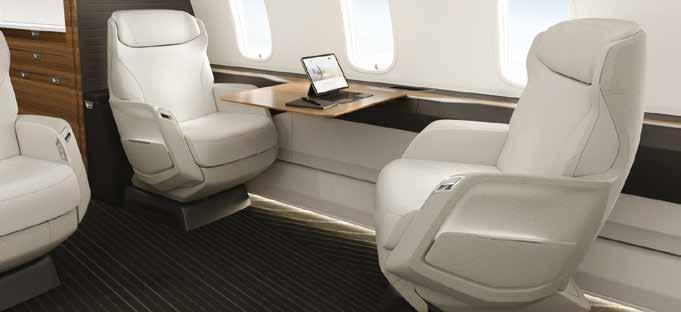

Bombardier’s Smart Router was designed to work in sync with the OEM’s innovative Smart Link Plus aircraft health monitoring system.
As such, the router is typically installed on in-service Challenger and Global aircraft as part of an overall connectivity system upgrade. That work is now being performed at Bombardier’s 10 worldwide service centres, where customers benefit from factory-trained technicians and OEM-approved processes.
Customers are welcome to contact their Bombardier regional service or sales representatives to plan the retrofit, align it with scheduled maintenance events, and ensured compatibility with their onboard connectivity system.
Bombardier’s new Smart Router is now standard equipment on most in-production aircraft, including Challenger 3500 and Challenger 650 models, as well as the Global 5500 and Global 6500. Global 7500 and Global 8000 models will come equipped with Smart Router before the end of 2026.
The Bombardier Smart Router keeps customers connected with around-the-clock support and security at the core of the design, elevating the in-air connectivity experience for passengers, crew and operational support staff on the ground.
“Smart Router is very powerful hardware that is competitive for the long run,” commented Gervais Arel, Bombardier’s Director, Digital Development, Data Science, AI & Connected Aircraft Services.
Smart Link Plus is an advanced health monitoring system that collects crucial aircraft data, enabling flight and maintenance crews to quickly prioritize and proactively troubleshoot essential in-flight alerts.
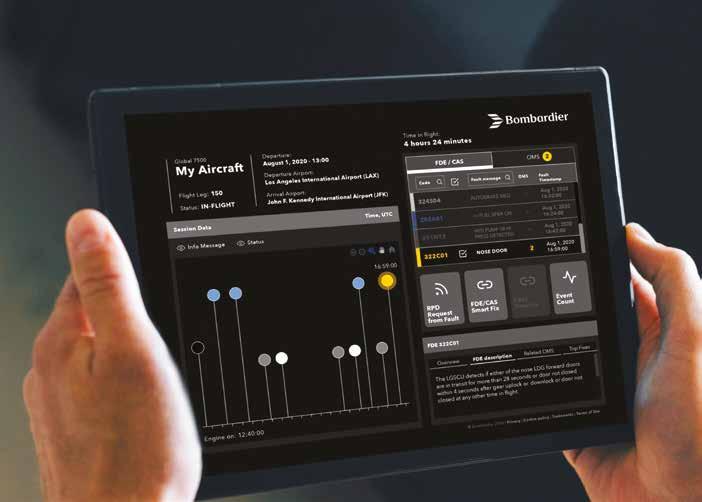
“It integrates with Smart Link Plus, allowing the customer and Bombardier to have an end-to-end view to monitor aircraft health. If ever there are challenges, we can leverage the Smart Router to understand the problem. Plus, it is fully OEM-backed, so you only have to call one place if you need assistance.”
As an 84-year-old company steeped in innovation, Bombardier takes pride in elevating the aircraft ownership experience. By combining seamless connectivity, modern wireless performance and robust security, its new Smart Router creates a cabin environment where passengers can stay productive, entertained and safely connected throughout their journey.
Looking ahead, the Smart Router’s agnostic future-ready platform stands ready to adapt to new networks, higher speeds and expanding digital services. With baked-in OEM integration and support, Smart Router is a foundational element of the connected business jet, helping owners and operators harness today’s high-speed ATG and satellite systems, even as they prepare for what comes next.

Looking ahead, the Smart Router’s agnostic futureready platform stands ready to adapt to new networks, higher speeds and expanding digital services.

By Jane Stanbury

Cabin connectivity and satellite communication (satcom) systems have become mission critical on today’s aircraft, including on business aircraft. Gone are the days of considering these systems a pure luxury: business and special-mission aircraft are expected to operate as flying offices, command centers, and high value transport platforms, making high performance and reliable connectivity a must.
Montreal-based CAE is known as the company that trains the most pilots in the world, but it also trains other aviation personnel, including aircraft maintenance technicians. The company offers comprehensive maintenance technician training on a full suite of OEM programs, including Bombardier, Gulfstream, Dassault, Embraer, and more.
Part of that maintenance technician training is a focus on connectivity and satcom systems, as they have become central to a business aircraft’s airworthiness.
David Bienvenu, Global Leader, Maintenance Training, CAE, sat down with Elite Wings to discuss connectivity and satcom training.
Why are connectivity systems now so crucial to business aviation?
Flight crews, passengers, executives, and special mission operators now heavily rely on uninterrupted connectivity for communication, real time data transfer, flight planning updates, air to ground coordination, and safety enhancing information services. If the connectivity is down for even a few minutes, it can prove to have disastrous effects, be they in lost trades or in mission changes.
Connectivity systems – including Wi Fi routers, airborne network security layers, antennas, broadband satcom terminals, Iridium or Ku/Ka-band systems, and associated cabin server infrastructure – are no longer optional amenities. They are what enable real time operational decision making, secure communication for corporate or government passengers, efficient aircraft dispatch and fleet coordination, passenger productivity and situational awareness, and enhanced safety thanks to a continuous data flow and updated weather/operational information.
Because these systems are deeply integrated into avionics, power, environmental, and cabin networks, even minor misconfigurations or maintenance errors can ripple into major operational disruptions. Technicians must therefore have a working knowledge of multiple complex systems and how they interface to properly return these items to service.
What makes troubleshooting and repairing these systems so complex?
Think of the aircraft as a self-contained unit: everything needs to be operating properly to provide the level of service needed. Cabin connectivity systems combine the domains of avionics, IT, cybersecurity, RF engineering, satellite architecture, and cabin network design. This creates unique challenges.
First, technicians must comprehend hybrid hardware and software architecture. They must understand not only physical components such as antennas, modems, power supplies, and router hardware, but also software configurations, firewalls, encryption, and network topology.
Second, they must have the capability to understand and investigate rapidly evolving technology. Connectivity systems receive constant firmware and software updates — sometimes monthly. These new constellations,


antennas, and bandwidth management solutions require continuous education.
Third, they must have a deep knowledge of the interdependencies with other aircraft systems.
Satcom systems interface with flight decks, cabin management systems, Wi Fi networks, data loaders, and maintenance computers. A problem in one can lead to issues in others.
Fourth, they must stay on top of strict regulatory and safety considerations. Even small deviations from maintenance procedures or changes to the airframe components can lead to signal interference, power misconfiguration, overheating, or incorrect antenna tracking behavior.
Because of this complexity, untrained or undertrained maintenance personnel often face steep troubleshooting challenges, leading to extended downtime, higher operational costs, and potential safety impacts. CAE offers Maintenance Initial, REALcase Update, Electrical Troubleshooting, and Digital Avionics courses that are designed to give technicians the understanding of the systems to see interrelation and likely root-causes when a system is not behaving as expected.
How does proper training reduce aircraft downtime and connectivity issues?
Well-trained technicians are significantly more effective at both preventing and resolving connectivity problems. Technicians who are well trained to troubleshoot directly translates to higher aircraft availability, smoother dispatch reliability, and lower lifecycle maintenance costs.
Proper training enables four main competencies: accurate fault isolation, appropriate corrective action, proactive maintenance, and a reduction in AOG events caused by incorrect handling.
Here is how we tackle all these at CAE:
For accurate fault isolation, technicians learn to differentiate between satellite link issues, cabin network failures, router misconfigurations, or external provider problems.
Appropriate corrective action is based on the concept that to make mechanically correct repairs one requires the understanding of the full system architecture — power, RF paths, LRU interdependencies, and software workflows. During training, technicians practice using OEM manuals and navigating to vendor supplied technical documentation in scenarios based on real-world historical faults.
Proactive maintenance training teaches how to interpret logs, monitor system health, and perform preventive tasks before failure occurs.
Finally, to obtain a reduction in AOG events caused by incorrect handling, we train personnel to avoid common
"The way we see it, CAE trained technicians keep aircraft connected, operational, and ready for critical missions — every time."
errors that create additional faults, such as improper cable handling, incorrect modem configuration, or neglected post upgrade testing.
We firmly believe that technicians need to learn the systems and practice troubleshooting skills during scenario-based training.
What training topics are most essential for technicians working on these systems?
It is important to know what “Right” looks like. When training with CAE, you can expect our training to cover six areas:
1. System Description & Operation
Architecture & Design
Aircraft IFIS (Integrated Flight Information Systems) and IMS (Information Management System)
Interface with avionics and cabin networks
2. Network Fundamentals
Router configuration and management
VLANs, IP addressing, QoS, cyber-hardening basics
3. RF & Satellite Communication Principles
Satellite band differences (L-, Ku-, Ka-band)
Line-of-sight and antenna pointing
Link budgets, signal attenuation, and interference sources
4. Software & Firmware Maintenance
Understanding and executing update cycles
Post-install validation
5. Troubleshooting Frameworks
Use of diagnostic tools and logs
Root-cause identification
Structured fault isolation procedures
6. Regulatory and Safety Protocols
EASA/FAA repair guidelines
Ground test requirements
Equipment handling best practices

The structured curriculum at CAE ensures technicians can support both legacy and next generation systems effectively.
How does proper connectivity maintenance training at CAE support mission readiness?
To be mission ready, the aircraft needs to be airworthy and operationally reliable. Connectivity has become an essential enabler of that readiness. CAE’s training contributes by teaching technicians to avoid delays caused by last minute troubleshooting or misconfigured equipment, resolve issues more quickly with less guess work and without compromising standards, and recognize early warning signs and prevent failures before they impact operations.
Ultimately, properly trained technicians help ensure that the aircraft is always capable of performing its mission — safely, efficiently, and on schedule.
What is the bottom-line impact for flight departments and operators?
We should not think of training as a “one-and-done” event. Investing in structured, system-specific maintenance training for cabin connectivity and satcom systems yields measurable payoff, including higher dispatch reliability, reduced AOG events and downtime, lower maintenance costs over the aircraft lifecycle, increased passenger satisfaction, enhanced operational safety, stronger cybersecurity posture, and continuous mission readiness.

Abdelmajid Jlioui

Claudio D’Amico, Viasat’s Vice President of Strategic Market Engagement, Business Aviation
Viasat’s JetXP has continued to cement its position as a premium business aviation in-flight connectivity service. What makes it so appealing to customers in this market?
We’re delighted that more than 2,100 private jets are flying with JetXP today. The service was developed following extensive consultation with business aviation customers, partners and research agencies, combined with detailed analysis of usage patterns. The feedback made one thing clear: speed alone will never meet customer requirements and beyond a certain bandwidth threshold, higher speed has little impact on actual passenger experience. As the breadth and depth of criteria used to assess connectivity becomes more mature, the days of speed test decision-making are over. Operators are looking at the overall experience and that’s where JetXP really excels.
As our most powerful business aviation in-flight connectivity solution to date, it has been specifically designed to stay ahead of customer requirements, no matter how they evolve. It brings together the key strengths of both Viasat and Inmarsat, which Viasat acquired in 2023, into one harmonized brand for this unique market. This includes reliability, coverage, consistency, value for money and overall experience, in addition to speed.
As always, customers also benefit from our extensive regulatory approvals across key global markets, including India and China, plus concierge support from our trusted distribution partners Collins Aerospace, Gogo, and Honeywell, ensuring a smooth end-to-end experience.
A number of game-changing improvements have also been introduced to JetXP recently. Can you provide some details of these enhancements?
To boost the overall experience, we’ve introduced premium benefits such as increased network prioritization and enhanced capacity, including a recent five-fold increase over key U.S. hubs, a region that accounts for an estimated 65% of global private jet traffic. In addition, uncapped speeds have been rolled out globally across JetXP service plans, enabling customers to fully leverage Viasat’s network without artificial limits. These enhancements represent a major step forward for bu-
siness aviation in-flight connectivity and better support data-intensive applications - such as HD video conferencing, streaming, and generative AI - on multiple devices simultaneously.
Viasat announced a major incentive program for aircraft still using legacy Ku-band systems to upgrade to JetXP Ka-band solutions. Could you provide a summary of these incentives?
Our mission is simple: to empower operators of large-cabin and super-midsized jets with flexible, affordable service plans that unleash the full power and benefits of JetXP on every flight, domestically or across the globe. To achieve this goal, we can’t only focus on linefit. It’s important to also invest in a seamless and cost-effective retrofit path for customers, including those currently using our legacy Ku-band service, which will sunset later this year. This is why we’re offering incentives of up to $140,000 per aircraft – a literal showcase of our investment to ensure all customers are able to access JetXP’s premium standard of connectivity. These major incentives, developed alongside our partners, have been introduced to reward long-term loyalty and help keep operators within the Viasat family of services. We’ve already seen strong uptake from customers and encourage others to contact their preferred MRO for more information about eligibility and fly-away pricing.
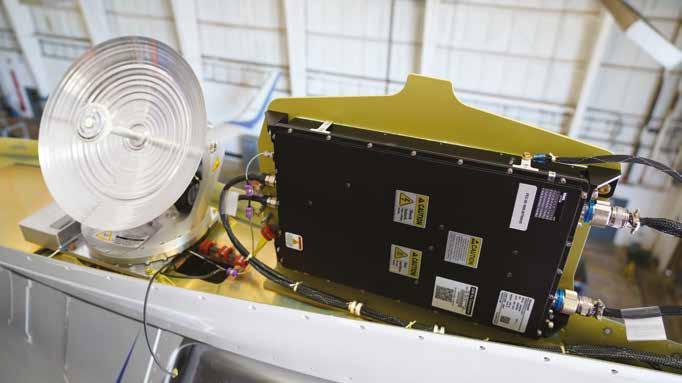
Can you give us an update on the terminals available to support JetXP?
We have curated an expansive and robust portfolio of Ka-band terminals for JetXP, which includes the Honeywell JetWave system, the Gogo Plane Simple Ka-band terminal and our own Viasat GAT 5510 (also known as the G-12). These will be joined by Honeywell’s new JetWave X later this year.
JetWave has been a proven and trusted option for almost a decade, certified across all large-cabin business jets and offering a highly reliable path into our Ka-band network. The Plane Simple Ka-band terminal from Gogo is also now available and brings a modern, lightweight design with few LRUs, which reduces installation time and simplifies maintenance. It already holds STCs for aircraft such as the Gulfstream G650ER, G650, G550, GV and G280, with additional approvals expected soon.
Our Viasat G-12 terminal has been certified across a range of aircraft and is available line-fit on the Gulfstream G280, Bombardier Challenger 3500 and Embraer Praetor family, with retrofit options through our dealer network. We’ve expanded coverage for G-12 customers using capacity from the ViaSat-3 F1 satellite, and thanks to integration with the legacy Inmarsat satellites, the terminal now delivers excellent performance across the Americas, transatlantic routes, Europe, the Middle East, Southeast Asia, the east coast of China, Japan, and major North Pacific corridors.
Looking ahead, JetWave X is a smaller, lighter and more advanced version of today’s JetWave. It is the first terminal to unlock the full capabilities of Viasat’s global network, including existing and future ViaSat-3 and GX satellites. Designed for both super-midsized and large-cabin aircraft, Honeywell has already secured several line-fit and retrofit agreements with OEMs including Bombardier and Dassault. Crucially, JetWave operators upgrading to JetWave X will benefit from a straightforward path that only requires minor structural and wiring changes.
Across all these terminals, customers can be confident that JetXP performance will only continue to evolve as additional capacity is added to the Viasat network. And while new hardware unlocks further capability, we’ll continue to support existing terminals well into the future to protect the long-term investments our customers have made.

The complete ViaSat-3 constellation of ultra-highthroughput satellites is set to enter service in 2026. Can you provide more details on the current satellite’s status and the entry-into-service plan?
We’re on track for the full ViaSat-3 constellation to become online in 2026, marking an important milestone for our company and for the business aviation industry. The groundbreaking impact of these highly advanced satellites are already being felt by customers. Last year our G-12 terminal connected to ViaSat-3 F1, adding capacity over key routes between North America and Hawaii, and furthermore, Honeywell’s JetWave X also achieved over-the-air connectivity on the satellite last summer.
ViaSat-3 F2 launched in early November and is expected to enter service in May 2026, adding more than 1Tbps of capacity over the Americas, which will more than double the bandwidth capacity of our current network. Beyond raw throughput, ViaSat-3 F2 is set to be a major moment for business aviation by bringing far greater flexibility to move and concentrate capacity into the industry’s busiest corridors.
ViaSat-3 F3 is slated to launch soon and has been designed to deliver comparable capacity and dynamic flexibility to the Asia-Pacific region. Its entry into service is expected by late summer 2026.
Together, ViaSat-3 F2 and F3 will materially elevate the overall performance and consistency of JetXP. In addition to delivering a step change in bandwidth capacity, they have been designed to enable a suite of new functional capabilities that translates into higher performance and resilience, which business aviation customers will find particularly valuable for flights in and around high-demand, high-variability environments, ensuring communications remain uninterrupted.

Viasat will introduce Arctic coverage and multi-orbit capabilities for business aviation customers. Could you provide more details on those?
JetXP customers are benefitting from regular enhancements to our capacity and coverage, which ensures their in-flight connectivity performance continues to elevate and stays ahead of their needs.
“Beyond peak speed, what ultimately matters most to business aviation principals and professionals is a connectivity that works, every time, everywhere.”
Our strategic move into multi-orbit connectivity is significant. We recently announced plans to integrate Telesat’s Lightspeed LEO capacity into JetXP, combining our ultra-high-throughput GEO network - including the flexible ViaSat-3 satellites - with LEO coverage. This approach creates a dynamic and resilient architecture that will set a new industry standard, where the JetXP solution can intelligently route data to leverage the capabilities of satellite assets in various orbits to provide the best, most resilient connected experience for each user. The benefits will meaningful particularly for use cases that are data-heavy, such as video streaming, or sensitive to latency or jitter, such as high-definition video conferencing and real-time cloud collaboration.
In addition, the Arctic region has long been one of the most challenging areas for activating a reliable, consistent service, despite growing demand from long-range operators flying polar routes. However, the GX10A and GX10B Highly Elliptical Orbit payloads have extended
our high-speed global network into the far north, starting with government services last year. We’re now preparing to bring those capabilities to business aviation customers over the course of this year.
Finally, Viasat conducted a recent survey that questioned both business aviation principals and professionals about in-flight connectivity. How did the results stand out and what does it mean for services like JetXP?
The definition of a great in-flight connectivity experience has matured - principals and professionals alike are aligned on this sentiment. The data shows both groups now prioritise reliability, coverage, and consistency above everything else. Nearly half of principals and roughly two-thirds of professionals ranked reliability as their top priority, followed closely by coverage and consistency. Notably, peak speed did not feature in the top three factors for either group.
That alignment is important, but so is understanding why those priorities matter. Principals tend to view connectivity through the lens of lived experience - the ability to work, communicate, or switch off without disruption, wherever the aircraft is operating. Professionals, meanwhile, feel the operational and reputational impact when systems don’t perform as expected. For them, reliability and consistency are not simply preferences; they are essential operating requirements.
The survey also reflects a broader shift in how connectivity performance is evaluated. Both principals and professionals are moving away from single-metric benchmarks such as headline speed, recognising that no single number can adequately describe what actually happens in the cabin. Instead, there is growing interest in more holistic, experience-based measurement that reflects stability, predictability, and overall usability across a flight.
That thinking underpins our development of iQe, our In-flight Quality of Experience metric, which will be made available this year. iQe is designed to translate real-world network performance into a clear, intuitive indicator that reflects what passengers actually experience, by flight and by phase of flight. For operators and principals, it provides transparent insight into whether expectations were met; for service providers, it enables more proactive performance optimization across routes and aircraft.
Taken together, the survey findings point to a clear mandate for the industry: invest in dependable, truly global connectivity and deliver a consistent, predictable experience that matches how business aviation is used today. Those insights strongly reinforce the direction of services like JetXP, where enhanced global coverage, multi-orbit capability, and experience-led performance monitoring are designed to move the conversation beyond peak-speed claims and toward what ultimately matters most - connectivity that works, every time, everywhere.

Step into the future of business aviation at the 2026 NBAA Business Aviation Convention & Exhibition (NBAA-BACE).
NBAA-BACE is where you can get up close with the newest business aircraft, meet legendary heroes of flight and witness epic announcements. It’s where business aviation comes together – not just to do business, but to connect, belong and celebrate the shared passion that unites our industry.


By Viswanath Tata

Jason Sperry, Head of Business and Government Aviation, Eutelsat
The past few months have been very active for Eutelsat in business aviation with your OneWeb network, with several OEMs and MROs announcing successful installation and certification of Gogo Galileo systems. Where does offerability stand today, and what milestones have been reached?
Offerability of the Gogo Galileo solution using Eutelsat’s OneWeb network continues to progress at a rapid pace, with now over 38 STCs available across every aircraft manufacturer primarily on the HDX terminal using several OEM and MRO partners. This includes STCs available from the FAA, EASA, ANAC in Brazil and the TCCA in Canada. In addition, the FDX terminal now has STCs for BBJ 737 and Challenger types from the FAA, with more expected by the end of the year. We are wonderfully excited at the roll-out and the feedback so far.
What early feedback are you receiving from operators already flying with OneWeb powered connectivity solutions?
Customers are truly elated with the service. From the beginning we have talked about the true “office in the sky experience” which they are now getting delivered throughout their journey. From the quick installation timelines, the integration and onboarding support from Gogo, and ultimately the passenger experience of the OneWeb LEO network through Gogo Galileo, customer feedback has been exceptional. We have seen several cases where customers have proactively chosen certain aircraft equipped with the service rather than aircraft where it has yet to be installed.
We’ve seen several industry firsts with broadband connectivity being installed on turboprops and light jets. How significant do you believe demand from this segment will be?
This is huge area of opportunity, and there is considerable pent-up demand. This is the first time that true broadband speeds have been made available to this category of aircraft, and they stand to benefit greatly from it. Staying in contact and having the ability to use their devices in flight, regardless of flight time. We’re excited to see this segment continue to grow and expect significant demand to continue.
How do you expect offerability to evolve through 2026, both in terms of aircraft coverage and geographic availability?
We are continuously enhancing our network to be more optimized and more efficient.
We expect demand and installs to continue ramping up and we have the first batches of new OneWeb LEO satellites to be delivered this year, which will ensure continuity and consistency into the future for our customers. A top priority we see in 2026 is customers continuing to want a partner who will be flexible and work with them to implement solutions that make sense for their aircraft size and mission. Aircraft STC availability will continue to grow across all aircraft and fleet sizes. In 2026, we will make the final major strides in geographic availability for our global service coverage.
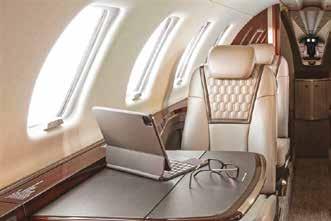
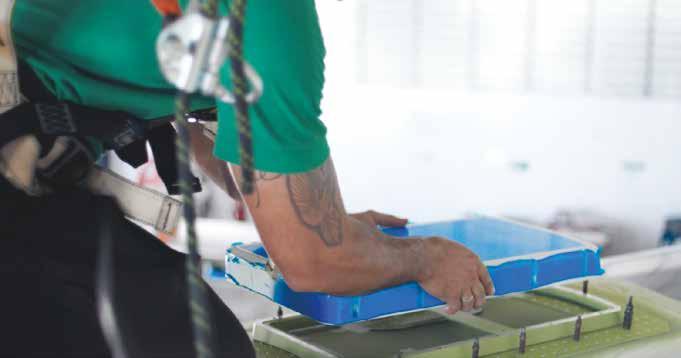
Reliability is often the top decision factor for business aviation connectivity. How is Eutelsat ensuring its solution meets those expectations in real world operations?
We deliver an aviation-grade service model built around robust support structures, proactive monitoring, and clearly defined SLAs. These SLAs guarantee the level of performance that the customer has purchased.
Unlike best-effort consumer models, this ecosystem is designed around the operational and service requirements of operators, with a strong focus on service continuity and Quality of Experience. We continuously monitor aviation demands on our network to ensure the customers service demands are met.
Cost transparency is increasingly important for operators. How does Eutelsat approach the value for money discussion with customers?
Pricing to the end customer is set by our partner, Gogo, and the framework we have set up with Gogo allows them to build service offerings with pricing transparency.
Unlike some other LEO operators, OneWeb has placed strong emphasis on partnerships with OEMs, avionics suppliers, and service providers. Why is this ecosystem based approach so important to your aviation strategy?
We provide the satellite network foundation, while our Distribution Partner, Gogo, contributes deep aviation heritage, certification know-how, integration capability, maintenance support, and program execution expertise.
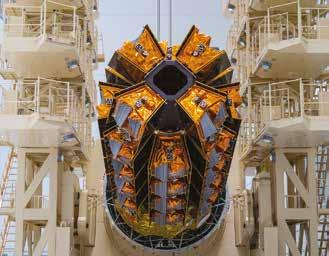
The result is a Go-To-Market model that combines advanced network performance with proven aviation delivery capability, giving operators a strong, flexible, and reliable path to deploy their connectivity solutions.
As LEO constellations grow, concerns around congestion—particularly near major airports—are increasing. How does OneWeb ensure consistent performance for business aviation users in high traffic areas?
Our network ensures a premium user experience; We offer an uncontended service – meaning we do not sell to residential users, and aviation data traffic is prioritized on the network.
OneWeb is already well advanced in planning its second generation satellite constellation. Could you share an update on the network status, and the benefits Gen 2 will bring to aviation customers?
We have a steady roadmap planned and committed for the future, with phases of development.
Our Gen1 satellite constellation will continue to be replenished to ensure continuity of service and optimize performance.
Our NextGen/IRIS² constellation will feature optical inter-satellite links, regenerative payloads, 5G, and beam forming is under consideration. Overall, the second generation will deliver significant increases in performance capability and capacity.
As multi-orbit solutions gain traction, how does OneWeb see its LEO network fitting into broader hybrid connectivity strategies for business aviation?
Depending on the size of the aircraft, there are certain larger platforms that could support a multi-orbit connectivity approach. Overall, we have seen that when our services are on board, they are the primary connectivity solution used. We understand that Gogo’s routers can support multiple networks, and for certain customers and missions they would choose to do so, but largely we are seeing growing consumption and usage of the aircraft equipped with OneWeb services.

Your industry. Your network. All in one place. Last year, the NBAA White Plains Regional Forum set the pace with record-breaking attendance, as thousands of business aviation professionals gathered for the industry’s premier Northeast regional event. Featuring education sessions, an aircraft display and more than 100 exhibits, this is the event to elevate your brand, build meaningful connections and strengthen your presence in an industry where your network drives success. This is an event you won’t want to miss. Register today!


CONNECTING BUSINESS AIRCRAFT TO EUTELSAT ONEWEB’S GLOBAL LEO SATELLITE

By Jane Stanbury
Gogo Galileo is proving highly popular, with multiple STCs across FAA, EASA, ANAC and TCAA jurisdictions and many more in the pipeline. Jane Stanbury asked CCO Gogo, Michael Skou Christensen, what Galileo means for customers and how it fits into Gogo’s multi-orbit landscape.

Gogo Galileo was launched about a year ago, enabling your multi-orbit offering. What does the market for Gogo Galileo look like today, and how have your customers received it?
The market has received Gogo Galileo enthusiastically –by the end of 2025, we had shipped more than 300 HDX and FDX terminals, and Hughes, our antenna provider, recently completed manufacture of the 600th unit, and we expect to ship more than 1000 units by the end of the year.
We currently have 38 HDX STCs available, with more scheduled in the next 6 months; meanwhile, two FDX STCs are available, with another seven scheduled for this year and more to follow.
It is exciting to see our installation partners reacting so positively to their customers’ requests for Gogo Galileo, developing STCs across multiple markets, including North America, Brazil and Europe and, as a result, bringing the broader advantages of the Gogo ecosystem to their operations.
What kind of customers are optimizing the system?
The lightweight and small size of the HDX terminal ensures that operators of smaller jets are realizing the possibilities of high-bandwidth, broadband in-flight connectivity for the first time. Between them, the HDX and FDX terminals offer customers the flexibility to choose an optimized connection based on aircraft size and, especially, passenger numbers. Super mid-size and larger aircraft with more passengers benefit from the larger FDX antenna, ensuring the same quality of connected experience is delivered as on a light jet with three passengers and a super mid-size with ten.
This flexibility has attracted a diverse set of customers, including large fleets, private owners, and charter operators. The choices our customers are making speak volumes about the capabilities Gogo Galileo delivers. Our first HDX installation was on an Embraer Phenom 300 in Brazil, and this was quickly followed by the announcement that UAE-based Falcon, part of the Alex Group, is retrofitting HDX on several of its Bombardier Global aircraft. Late in 2025, we announced that VistaJet had selected Gogo Galileo for installation across its fleet,
bringing high-bandwidth internet connectivity to VistaJet passengers. The first VistaJet installation, an HDX terminal on a Bombardier Challenger 350, was rolled out ahead of the European fleet being equipped from November 2025, with US installations scheduled through 2026.
Illustrating the diversity of Gogo Galileo’s customer appeal, we were proud to announce at the Dubai Airshow that Action Aviation has become the first FDX customer in the Middle East; installing the terminal on a BBJ 737.
How has the STC program rolled out to suit such a wide range of customers?
Our installation partners have already developed multiple STCs covering a wide variety of business aircraft types under several regulatory jurisdictions, while many more are nearing completion or in earlier stages of work.
We are proud of our international network of MRO partners, each carefully selected for having the capability necessary not only to install our solutions, but also to effectively explain the complexities of modern connectivity to their customers. And we work closely with our sales and installation partners, supporting them as they develop Gogo Galileo STCs through every phase of the sales, installation and subsequent entry into service process.
Deciding to develop an STC is a significant undertaking for an MRO and along with our support throughout the process, our partners look to us to provide them with reliable products. That reliability translates into predictable installation requirements and guaranteed support should they hit a snag, or their customer encounter an issue, facilitating STC development, certification and implementation.
What is the difference between and FDX and HDX? Should operators equip both on aircraft?
The HDX terminal includes a half-duplex antenna, which means it switches near instantaneously between transmit and receive modes, delivering high-speed, low-latency connection sufficient for smaller numbers of passengers using multiple devices to enjoy a high-quality broadband experience via a lightweight, low-drag electronically steered array (ESA) installation. It is therefore especially suited to smaller aircraft but also offers useful capability to larger aircraft, depending on mission and typical occupancy. The larger, full-duplex FDX antenna simultaneously transmits and receives, allowing it to deliver the HDX experience to increased passenger numbers, typically on larger aircraft.


This is particularly useful when an aircraft may have a mix of principal, entourage, and crew who all need broadband access. It may be that the crew uses a Galileo system while the principal uses an alternative GEO service so providing extra redundancy. This combination ensures genuine multi-orbit, global connectivity even at the poles.
Gogo Galileo customers appreciate the reliability, continuity, and unbroken coverage the solution delivers through Eutelsat OneWeb’s low-earth orbit (LEO) satellite constellation. Installers and maintenance providers appreciate the system’s simplicity and ease of installation, and all stakeholders benefit from Gogo’s availability for technical and operational support.
In combination with Gogo’s AVANCE platform, Gogo Galileo further unlocks access to additional benefits, including over-the-air support and upgrades, entertainment options, and operational tools, including comprehensive control and monitoring of cabin Wi-Fi usage. And yet there is one essential aspect of all Gogo customer relationships that is not delivered over the air, downloaded or installed – trust.

Every connected device generates data: most of us will have noticed our phones bringing up promotional messages about local amenities and events as we travel. Sometimes these are useful, but none of us wants our privacy compromised, which is why Gogo designs systems that collect only what’s necessary to deliver performance. We minimize data retention and protect your sensitive information because we believe if it’s not essential to the service we deliver, your data is not our business.
How is Galileo supporting Gogo’s multi-orbit strategy?
Gogo remains an agnostic supplier of connectivity solutions. Every customer has expectations, and we focus on the experience they want from their connectivity. In many cases, Gogo Galileo is the ideal solution, but where it is not, we work with them to define their requirement.
Another aspect of the truth we build with our customers is reliability. More than ever, the unavailability of inflight broadband, be it for technical issues or through geographical location or restriction, is untenable. Redundancy is therefore a critical consideration in connectivity requirements, and here, even if it is not chosen as the primary system, Gogo Galileo plays an important back-up role.
It can also enable customers to use the most suitable broadband ‘pipe’ for their current activity, simultaneously with a primary system if required. A Ka-band connection, with Viasat’s Jet ConneX geostationary earth orbit (GEO) service, for example, could be more suitable for video streaming, while Gogo Galileo’s low latency, supported by Eutelsat OneWeb, is better suited to video calling; with both systems installed, passengers may use whichever system better suits what they are doing, fulling realising the benefits of multi-orbit, multi-band capability. The Plane Simple Ku-band option is supported by SES which adds further options to our customers.
Multi-orbit capability also ensures continued service over geographical jurisdictions where national regulation forbids connection to a particular orbit, and options in congested airspace where high numbers of jets attempting to connect to the same network can reduce service availability.
What do customers most appreciate about the Gogo offering?
Our customers appreciate the customization our agnostic offer enables, our unbiased expertise and value-adds. The latter includes cybersecurity, training, and 24/7/365 customer support. Cybersecurity is critically important, safeguarding our customer’s privacy and working to protect their devices and digital infrastructure from hostile players. Training and support are important elements in achieving secure connection. Gogo offers comprehensive training as part of the onboarding process, but also a variety of courses aimed at crews and customers, helping them use their connectivity optimally and safely.



By Abdelmajid Jlioui
Elite Wings spoke with Adam Sheppard, General Manager of Services & Connectivity at Honeywell Aerospace, about the company’s latest connectivity hardware and service offerings.

Since its launch in 2017, the Honeywell JetWave Satcom terminal has set the standard for highspeed, ultra-reliable Ka-band satellite communications. Could you provide an overview of the adoption of these terminals in business aviation?
Honeywell has been the system utilized on all Bombardier, Dassault, and Gulfstream aircraft since 2014. Most customers with an aircraft delivered after that year have a JetWave system onboard.
The new JetWave X multi-network terminal is getting ready to change the game in the business aviation connectivity landscape by bringing speed capability well above 100 Mbps to the GEO Ka-band satcom network. How do you achieve that?
Honeywell’s current JetWave system is actually capable of over 100 Mbps today. Our MCX system, Honeywell’s latest fuselage mounted system, has actually performed a stable connection in flight of over 350 Mbps. Our tail-mounted antenna, TMA, (JetWave X) is actually capable of over 200 Mbps. The achievement of 200+ Mbps is a combination of hardware updates, modem updates and network updates. We updated the TMA from single polarity to dual polarity essentially doubling the throughput and reducing interference, we have modernized our modems to the latest technology and Viasat has launched its latest state of the art satellites which provide significantly better capacity.
In a fast-changing connectivity landscape, why do you believe the JetWave X terminal is the best solution for now and the future?
Honeywell is the best company primed to balance the innovation of connectivity with the often-slow moving evolution of aviation. Our original JetWave system has been the best performing, most reliable system in the market since 2014 and we have built upon that reliability and stability with JetWave X. Our system is designed for aviation and also flexible in architecture. JetWave X brings Aviation SATCOM into the modern environment. While other equipment is locked to a single network, Honeywell offers the ability and flexibility to change networks without a full system / antenna change. Essentially taking the modern cell phone and SIM card architecture; IE the ability to migrate between providers easily, to Aviation.
How complex is it to retrofit JetWave equipped business jet to the new terminal?
Honeywell has designed JetWave X to be backwards compatible. So most, if not all of the wiring and current radomes are reused equating to a simplified upgrade path – reducing downtime and cost for operators.
Can you give us an update on the certification status of the new terminal for new business jets and in the retrofit market?
Our first system was actually shipped in Q1. Each OEM has their own timeline for certification with most occurring in 2026 - we encourage operators to approach their OEM to request the STC availability.
Honeywell is also a key service provider for Business Aviation Connectivity. Could you provide an overview of your service offerings and connectivity service plans?
Honeywell provides all services related to both passenger and pilot communications. Our biggest advantage is that we ensure 24/7 local support and always-on communications.
Honeywell also offers an Iridium Certus terminal designed for Cockpit and Cabin Services. Could you provide more details on these terminals and their typical applications?
Iridium Certus is the perfect upgrade for customers looking for lower cost cockpit services or a higher speed / lower cost back up system to their High-Speed SATCOM. Most operators that we talk to upgrade to Iridium Certus for the pilots and crew as the enhanced internet provides better real time updates such as weather, cabin issue resolution, and/or redundancy for passengers if needed. All this is done at a significantly lower rate than their prior L-band system today.
Connectivity is becoming mission-critical in business aviation with operators, principals and VVIPs expecting the highest level of availability. How do you ensure that level of support?
Outside of the built-in reliability and redundancy with JetWave X - Honeywell has released several enhancements to ensure customers are always connected. Firstly, Honeywell has software called Advanced Data Control (ADC) which, amongst many things, stands up simultaneous connections and ensures that the highest priority data is always communicated. The second is that Honeywell has introduced Machine Learning into our services that helps to predict degradation and outages and helps provide customers with solutions to help mitigate these. Everything we do is designed to ensure resilient communications.



In October 2024, high-performance networks specialist Apcela announced the acquisition of SmartSky’s Air-To-Ground (ATG) assets following the shutdown of SmartSky’s operations earlier that summer. The move surprised many in business aviation—but Apcela CEO Mark Casey believes the underlying technology, paired with the right business model, was simply too strong to walk away from.
Elite Wings caught up with Casey to discuss the acquisition, the shifting dynamics of the ATG market, Apcela’s network redesign, and the role ATG continues to play amid the rise of LEO satellite connectivity solutions.
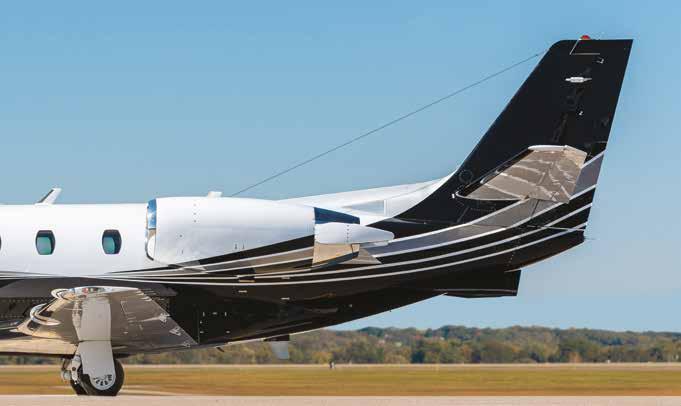
In October 2024, Apcela announced the acquisition of the SmartSky Air-to-Ground network. What motivated Apcela to pursue this acquisition, and what does it represent strategically for the company?
At its core, Apcela is a networking company. For over two decades, we have designed and operated high-performance, mission-critical networks for some of the most demanding organizations in the world — financial trading firms, pharmaceutical manufacturers, defense and aerospace firms, and government. When the SmartSky’s ATG network became available, we didn’t see a distressed asset. We saw the most advanced airto-ground connectivity platform ever built — patented technology, purpose-designed hardware, 60 MHz of broadband spectrum — that simply needed the right network operator behind it.
Apcela built the terrestrial backhaul network for SmartSky, so we were heavily involved from the start. From our perspective, SmartSky’s challenge was never the technology. SmartSky has genuinely created groundbreaking air interface technology, particularly its beam-forming capabilities. What was missing was the operational discipline, network engineering depth, and financial stability that a company like Apcela brings. We recognized that this acquisition would allow us to extend the same enterprise-grade networking capabilities we deliver on the ground — low latency, encryption, software-defined architecture, 24/7 operations — directly
into the sky. For Apcela, it was a natural strategic extension of who we are and what we do.
The integration of new strategic partners in security, avionics, and advanced networking further amplifies the platform. This isn’t just about connectivity — it’s about building an intelligent, secure, high-performance network for business aviation, powered by the same principles that serve Wall Street trading floors and other mission-specific, global enterprise networks on the ground.
Air-to-ground connectivity has faced skepticism in recent years. How confident are you in the long-term role of ATG under Apcela’s ownership?
We’re extremely confident, and I want to address the skepticism directly. The questions the market had were about the previous operator’s business model — not about the underlying technology. The technology itself has always been exceptional, and our results since acquiring the network have proven that.
Let’s talk about what ATG delivers that satellite physically cannot. When you connect through our network, your aircraft gets its own private, dedicated connection. You are never sharing bandwidth with other aircraft or with an airline fleet. That’s a fundamental architectural advantage. Our network operates with ultra-low latency — dramatically lower than any satellite network— which
means real-time applications like video conferencing, cloud computing, and VoIP work the way they do on the ground. With 60 MHz of broadband spectrum, we offer twenty times the capacity of legacy ATG services, and our nearly 30,000 beams with horizon-looking architecture ensure consistent performance even in high-traffic areas.
Since closing the acquisition in early 2025, we’ve upgraded the entire network core and edge infrastructure across more than 300 sites, implemented a fully encrypted software-defined networking platform, restored service to all former SmartSky customers, and begun deploying to new fleet operators. Charter companies like Skyward Aviation and Jet-Ten are equipping their fleets with Apcela. Users are reporting strong performance. This is not a promise — it’s operational reality, and it’s growing every day.
For aircraft operators and partners who may have questions about the network’s long-term stability, what reassurance can you offer today?
The best reassurance is evidence, so let me share some. First, every former SmartSky customer has been seamlessly transitioned to the upgraded Apcela network and is flying today. Mike Dodson, who served as SmartSky’s Chief Network Officer, now leads our ATG operations as CTO — ensuring complete technology continuity and deep institutional knowledge of every aspect of the platform.
Second, the network itself has been comprehensively upgraded. We’ve implemented a new, fully encrypted, software-defined networking platform across all 300plus tower sites with an updated evolved packet core
delivering high throughput, low latency, and improved reliability across the continental United States. This is the same caliber of network architecture we deploy for clients in capital markets and defense — industries where downtime is simply not an option.
Third, Apcela’s ground-based business serves some of the largest organizations in finance, healthcare, biopharma, and government. These relationships generate stable, recurring revenue and demonstrate the kind of operational maturity that business aviation operators should expect from their connectivity provider. We are not a startup burning through venture capital. We are an established, revenue-generating company that has extended its proven platform to the aviation sector.
Finally, look at our forward momentum. We have a growing dealer network, a significant installation backlog extending through 2026, and fleet operators committing multiple aircraft. When companies like Skyward are putting eleven Learjets on the network, and Jet-Ten is equipping eight aircraft across their Citation and Gulfstream fleet — that tells you the market has confidence in Apcela’s future.
Given the momentum around LEO Satellites connectivity, what makes Apcela’s ATG solution particularly compelling for business aviation operators right now?
Satellite has its place — particularly for transoceanic and international missions. But the reality is that the vast majority of business aviation flying in the United States starts and ends within the continental US. For those missions, ATG delivers a fundamentally superior experience across several dimensions.
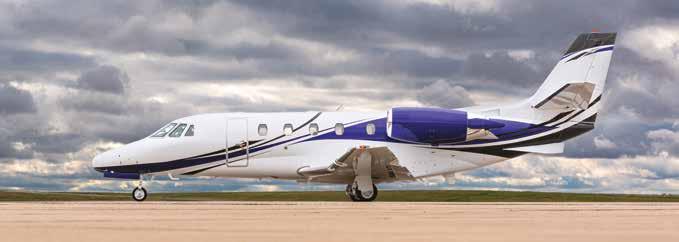
Privacy is first. Every Apcela-connected aircraft receives its own dedicated connection to the network. You never share bandwidth with other aircraft. With satellite, you’re typically sharing a beam with dozens or even hundreds of other users — airlines included. For business aviation passengers who value privacy and consistent performance, this distinction matters enormously.
Then there’s latency. Our ATG network delivers ultra-low latency that satellite solutions simply cannot match, regardless of orbit. That means video calls on Zoom or Teams actually work — no lag, no frozen screens, no dropped audio. Cloud applications respond in real time. Gaming works. Large file transfers complete quickly in both directions. For the executive who needs to be productive at 41,000 feet, the experience is genuinely comparable to what they have in their office.
Our hardware is also lighter, lower-drag, and simpler to install than satellite alternatives. The Apcela ONE system — our single-antenna configuration for light and midsize jets — weighs just 18.6 pounds total. No tail-mounted radome, no complex multi-LRU installations. And with our Sign and Fly financing, the total cost of ownership is significantly lower than satellite, especially for operators who fly primarily within the US.
An ATG network also has a scalability advantage over satellite networks. Increasing ATG capacity is straightforward. The cost of each ground station is only a fraction of that required to deploy additional satellites. When more capacity is needed—such as near an airport—we can simply install additional towers.
I want to be clear: we’re not anti-satellite. We respect what satellite providers deliver. But for the CONUS-based business aviation mission — which represents the vast majority of US private jet flying — Apcela ATG delivers a better experience at a better value.
Apcela recently launched a new ATG dealer network to support its go-to-market strategy in business aviation. Can you share an update on the network and the key marketing initiatives supporting it?
Our dealer network has grown significantly since we launched it at NBAA-BACE in October 2025, and it continues to expand. Onsite at NBAA-BACE in 2025 we showcased three Preferred Dealers — Altus Aerospace, Brunswick Aviation Services, and Davinci Jet Services
— all of whom brought immediate credibility with two of them fleet operators with Apcela ONE and DUAL ATG systems installed on their aircraft. These aren’t just resellers — they fly on our network every day with their own aircraft. That "eat what you cook" credibility has been powerful in the market.
We’re continuing to grow the program, adding premier level dealers like Elliott Aviation, across our tiered dealer structure that supports both national coverage and hightouch local engagement. At AEA Dallas in March 2026, we showcased expanded dealer support and the growth of these programs.
On the marketing side, we’re doing something distinctive with our Xtreme Xperience Tour 2026. We’ve partnered with Xtreme Xperience to co-host supercar racetrack events in 55 tour stops across 35 cities nationwide, co-branded with our Premier Dealers. These aren’t trade show booths — they’re memorable, high-energy experiences where operators drive Porsches, Lamborghinis, and Ferraris while learning about next-generation inflight connectivity and how to leverage it to drive their own growth. It’s a fundamentally different approach to market education, and the response from operators and prospects has been exceptional.
The combination of a growing, credible dealer network with experiential marketing that actually engages operators at a personal level is generating real momentum. We’re building awareness, generating qualified opportunities, and converting them into installations at an accelerating pace.
You also introduced a new financing program to support connectivity upgrades. Can you explain the goals behind the Sign and Fly™ incentives and how they help operators lower the barriers to upgrading their aircraft?
Industry research consistently shows that upfront cost is the number one barrier preventing operators from upgrading their inflight connectivity. More than seventy percent of survey respondents cite hardware and installation costs as their primary concern. Sign and Fly™ was designed to eliminate that barrier entirely.
Through Sign and Fly, qualified operators can upgrade to Apcela ATG broadband with no upfront equipment or installation costs. The program includes incentives, rebates,

and low-interest-rate financing through our authorized dealers, making the upgrade decision straightforward from a financial perspective.
In 2026, we expanded Sign and Fly significantly. The program now covers not just the connectivity installation, but also related avionics and interior upgrades. This means an operator can bundle their Wi-Fi upgrade into a broader aircraft modernization project — paint, interior refurbishment, avionics updates — and finance the entire package through a single, coordinated plan.
A perfect example is ENG Aviation, which recently used Sign and Fly to finance the full cost of ONE ATG installations on two Cessna Citation Excels as part of a complete paint and interior refurbishment with our premier dealer Elliott Aviation. Steve Hofmann, President of ENG Aviation, said the financing structure made the connectivity upgrade an easy add-on decision because there was no major upfront expense.
That’s exactly the outcome we’re driving toward: making it so easy and affordable for operators to upgrade that the question shifts from "can we afford to do this?" to "why wouldn’t we do this?".
ATG solutions can be especially attractive for fleet operators, including those supporting charter and managed services. Are there dedicated programs or offers in place to serve these customers?
Fleet and charter operators represent one of our strongest growth segments, and for good reasons. In the charter market, in-flight Wi-Fi has become a competitive differentiator. Passengers increasingly choose connected aircraft over unconnected alternatives, and charter companies that can offer reliable broadband are winning more bookings. For fleet operators, the economics of ATG are compelling — lower hardware cost, lower installation complexity, and lower monthly service costs compared to satellite, multiplied across every aircraft in the fleet.
We have several fleet deployments underway that demonstrate this momentum. Skyward Aviation is installing Apcela ONE ATG across its Learjet fleet, with plans for eleven aircraft. Jet-Ten is equipping its Citation X, Citation VII, and Gulfstream IV fleet — eight aircraft total. Both Davinci Jet Services and Altus Aerospace support their own managed fleets on our systems. These aren’t pilot programs — these are full fleet commitments by experienced operators.
We offer fleet and multi-aircraft discounts, as well as multi-year term options that further improve the economics. Our Sign and Fly financing works at the fleet level, allowing operators to spread costs across multiple aircraft and align connectivity upgrades with their broader fleet modernization schedules.
We also support Hybrid- and Self-Installation Programs that enables installations at operator maintenance facilities, reducing ferry costs and aircraft downtime. For a charter company operating across multiple bases, this flexibility is important — we come to them rather than requiring them to ferry aircraft to a centralized installation facility.
From a technical standpoint, what improvements or changes has Apcela made — or plans to make — to the ATG network architecture to enhance performance and reliability?
First off, the core technology we acquired is nothing short of groundbreaking – the most advanced ATG wireless networking technology ever developed. So, when we acquired the network, we looked at areas where we could make an impact, and that was around security and performance of the core. We completed a comprehensive upgrade of the entire ground infrastructure — and we completed that before we launched commercially. The upgrade touched every layer of the architecture: expanded backhaul capabilities at tower sites, a new fully encrypted software-defined networking overlay across all 300-plus sites, and an updated evolved packet core delivering higher throughput, lower latency, and improved reliability.
What makes our approach distinctive is that we brought genuine enterprise networking expertise to bear. Apcela’s core competency is designing and managing software-defined networks for mission-critical applications. We applied the same architectural principles we use for financial trading platforms and defense contractors — where security and reliability really matter — to the ATG infrastructure.
Mike Dodson, our CTO for ATG and former SmartSky Chief Network Officer, led this upgrade with deep knowledge of every component of the original system. The fact that we were able to seamlessly onboard all former SmartSky customers alongside new deploy-
ments demonstrates the stability and scalability of the upgraded platform.
The software-defined architecture is particularly important because it enables continuous improvement without hardware replacement. We can push network updates, optimize performance parameters, and add new capabilities remotely — no truck rolls, no aircraft downtime. The Aircraft Base Radio itself is software-defined, meaning we can easily update the airborne equipment as well. This is a platform designed for evolution, not obsolescence.
How does Apcela’s ATG solution perform today in terms of speed and latency, and which use cases or mission profiles does it serve best?
Let me start with the experience rather than the spec sheet, because that’s what operators and passengers actually care about. On an Apcela-equipped aircraft, you can stream HD video, conduct multi-participant video conferences on Zoom or Teams, FaceTime your family, access cloud applications and VPNs, transfer large files, check real-time market data, monitor news and weather — all simultaneously and without interruption. At 41,000 feet, the experience is comparable to broadband at home or in the office. That’s what we mean when we say broadband in the sky.
In terms of specifications, our ONE system — the single-antenna configuration designed for light and midsize aircraft — delivers average throughput of 5 Mbps with peaks up to 20 Mbps. The DUAL system, which adds our High-Performance Blade antenna for mid-tolarge airframes, delivers average throughput of 10 Mbps with peaks up to 30 Mbps. Both systems operate with ultra-low latency — dramatically lower than any satellite solution — which is what enables those real-time applications to work so well.
Importantly, our 60 MHz of broadband spectrum provides twenty times the capacity of legacy ATG services, and our nearly 30,000 beams with horizon-looking architecture ensure consistent performance even in high-traffic areas along busy routes and near major metropolitan airports. Each aircraft gets its own private connection, so performance doesn’t degrade as more aircraft join the network.
The sweet spot for Apcela is the CONUS-based business aviation mission — light jets, midsize, super-midsize, and large-cabin aircraft that operate primarily within the continental United States. For operators who fly domestically, we deliver everything they need at a fraction of the cost and complexity of satellite. For those who occasionally fly internationally, our system pairs well alongside a satellite installation, or the Starlink Mini for comprehensive coverage.
What steps is Apcela taking to ensure operational resiliency — such as redundancy, monitoring, and support — across the ATG network?
Operational resilience is where Apcela’s enterprise networking DNA makes the biggest difference. We don’t treat the ATG network as a standalone product — we operate it with the same rigor, monitoring, and support infrastructure we apply to networks that serve capital markets trading floors and global defense contractors.
Our Global Network Operations Center operates 24/7, providing continuous monitoring, diagnostics, and rapid response across the entire ATG infrastructure. The fully encrypted, software-defined networking platform enables remote management and real-time visibility into network health at every level — from individual tower sites to the evolved packet core to the aircraft connection itself.
The network’s geographic architecture provides built-in redundancy. With more than 300 tower sites providing dense, overlapping coverage across the continental United States, the loss of any individual site does not create a coverage gap. Data flows through our network
infrastructure with multiple redundant paths, ensuring continuity even if individual components experience issues.
On the aircraft side, the software-defined radio in our Aircraft Base Radio enables over-the-air diagnostics and updates. If we identify an issue, we can often resolve it remotely without requiring an aircraft visit — minimizing downtime for the operator.
The bottom line is that we bring operational maturity that comes from twenty years of managing mission-critical networks. Our global enterprise clients don’t tolerate downtime, and we’ve built our entire organization around that expectation. Business aviation operators now benefit from exactly the same standard of operational excellence.
Do you see ATG being used more frequently as part of a hybrid connectivity strategy alongside satellite solutions? How is Apcela enabling that architecture?
Absolutely, and hybrid architectures are where we see some of the most compelling value for operators — not just for coverage, but for reliability. Many business aircraft operate both domestically and internationally, and for those operators, the ideal configuration is ATG as the primary, high-performance connectivity solution when flying over the continental US, complemented by satellite for oceanic crossings and international missions. But even for operators who fly exclusively within CONUS, there’s a powerful argument for dual-system architectures that goes beyond coverage.
Here’s something that surprises a lot of people when they first hear it. Any single wireless connectivity
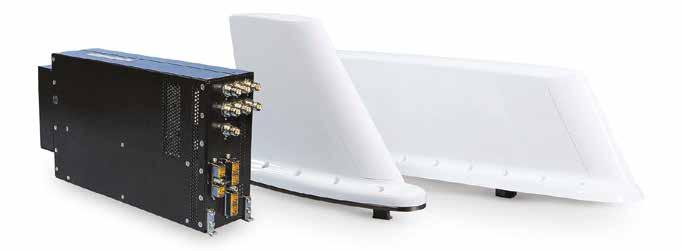
link — whether ATG or satellite — will typically deliver somewhere between eighty and ninety percent reliability. That sounds good until you realize it means your passengers lose connectivity on one out of every five or ten flights, or experience meaningful dropouts during a critical video call or deal negotiation. Now, when you add a second, independent connectivity path — say, pairing our ATG with a satellite system — something almost magical happens mathematically. The probability of both systems losing connectivity simultaneously drops dramatically, pushing your effective reliability toward ninety-nine percent or better. It’s the same principle that drives redundant systems throughout aviation: two independent engines, dual hydraulics, backup flight instruments. Redundancy doesn’t just add capability — it transforms reliability.
The physics also favor hybrid for performance. When you’re over CONUS, ATG delivers superior latency, dedicated bandwidth, and private connections compared to satellite. When you’re over the Atlantic or operating internationally, satellite provides the coverage ATG cannot. With dual systems, your onboard network can intelligently route traffic to whichever link is performing best at any given moment — and if one link experiences a momentary interruption, the other maintains connectivity seamlessly. The passenger never notices.
From an architectural standpoint, Apcela’s software-defined networking expertise naturally supports multi-link and hybrid configurations. Our platform is designed to be technology-agnostic at the network layer — it manages and optimizes connectivity regardless of the underlying transport. The lightweight ONE ATG system can coexist with satellite installations without significant additional weight or drag penalties, making dual installations practical even on midsize aircraft.
For operators who fly exclusively within the continental United States, ATG alone delivers an outstanding experience at a fraction of the cost of satellite. But for those who want the highest possible reliability — or who also fly internationally — we actively encourage the hybrid approach. We work collaboratively with operators and dealers to design configurations that serve their complete mission profile and deliver the kind of always-on, never-drop connectivity that today’s business aviation passengers expect.
Looking ahead, what innovations or enhancements are next on Apcela’s ATG roadmap that customers should be aware of?
Our roadmap is built around a core principle: the platform we’ve deployed is designed for continuous evolution. The software-defined architecture — both on the ground and in the air — means we can deliver new capabilities through software rather than hardware replacement. That’s a fundamental advantage for our customers, because it protects their investment and ensures the system keeps getting better over time.
On the network side, we’re continuing to optimize backhaul capacity, coverage density, and overall throughput. As our installed base grows, we gather more operational data that informs smarter network management and performance optimization. It’s a virtuous cycle: more aircraft on the network means more data, which means better optimization, which means better performance for everyone.
We’re also expanding our dealer network and broadening aircraft type coverage with additional STCs, making Apcela ATG accessible to more airframe types across the business aviation fleet. Our Sign and Fly financing continues to expand — we recently extended it to cover avionics and interior upgrades alongside connectivity, and we expect to continue finding ways to make the upgrade path even more accessible.
Our Xtreme Xperience Tour 2026 represents a continued investment in market education and customer engagement — 55 events in 35 cities, bringing the Apcela story directly to operators in a format they remember.
Looking further out, Apcela’s enterprise networking roadmap — including AI-driven network management, zero-trust security architectures, and edge computing capabilities — has natural applications for aviation connectivity. We’re exploring how these advanced networking concepts can enhance the inflight experience and support emerging operational use cases. Business aviation connectivity is still in its early chapters, and Apcela is positioned to write the next ones.
I’d invite any operator interested in learning more to visit apcela.com, connect with one of our authorized dealers, or join us at an Xtreme Xperience event. We’d love to show you what broadband in the sky actually feels like.
By Abdelmajid Jlioui
As connectivity expectations in business aviation continue to rise, operators face a complex landscape of Low Earth Orbit (LEO), Geostationary Earth Orbit (GEO), and Air To Ground (ATG) solutions. We sat down with Justin Vena, Senior installations sales representative at Duncan Aviation, to discuss real world installation trends, certification hurdles, labour constraints, and where owners and flight departments are putting their money today.
How would you describe the current demand for in-flight connectivity in business aviation? Is the market still as strong as last year?
Yes — and if anything, the momentum has consolidated rather than slowed. Industry wide, Starlink clearly has the momentum right now. Almost every request that comes in includes Starlink, even when customers are asking for Galileo pricing at the same time. Requests that don’t include Starlink are still the exception.
That said, what has changed is that we’re now starting to see Galileo re enter the conversation, at least from a quoting standpoint. A few months ago, it was almost exclusively Starlink. Now, customers at least want to see comparative numbers. And as more and more competitive solutions enter the market, I expect customers to want to see all the options available for their connectivity upgrade.
Why, in your opinion, is Starlink dominating the conversation so strongly?
A lot of this is owner driven demand. Owners talk to other owners, hear how well Starlink performs, and come back asking specifically for it. That kind of peer to peer endorsement is incredibly powerful.
With Galileo, the aviation industry certainly knows who Gogo is, but adoption depends more on owners’ feedback and on becoming more visible in the community. Starlink already has that. Galileo will likely see stronger adoption once more operators publicly share positive performance experiences.
Given the broad aircraft compatibility of LEO based connectivity, how evenly is demand distributed across different business jet categories?
Most of the current demand remains concentrated in the long-range and super-midsize segments. We’re also seeing pent up demand coming online as new STCs are released — Dassault Falcon jets, for example, are starting to see increased activity.
As STCs come to market, there’s usually an initial surge where everyone who’s been waiting jumps in. After that wave, demand stabilizes. We’ve seen this pattern repeatedly across all aircraft types.
On models like the Bombardier Challenger 300 and Challenger 600, and particularly among certain Bombardier fleet operators, we are now seeing more interest in Galileo than we have previously.
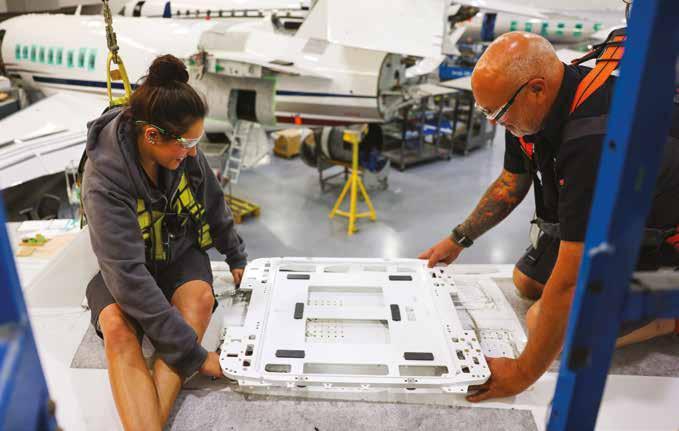
We have seen a few business aircraft manufacturers developing their own alternative installation STCs. How do these OEM STCs compare with third party STCs for installations like Starlink?
If you ask an OEM, they’ll tell you there’s a major difference — and in some cases, there is. Using the Gulfstream G650 as an example, the OEM STC came later but uses a different generation of Starlink hardware than the first solutions that reached the market.
From a wiring and connector standpoint, OEM STCs often have a more traditional aviation grade pedigree. That said, the earlier STCs haven’t shown any widespread issues. The real differences often come down to integration philosophy and certification positioning, rather than day to day operational reliability.
Are these STCs enabling the integration of Starlink with other cabin systems?
Officially, Starlink still says it should be a standalone system. In practice, the industry is integrating them — sometimes directly, sometimes through SDR or SDR G (Satcom Direct Router – Gateway G) architectures.
The main risk is that if Starlink perceives interference with its equipment, they could technically shut the system off. That said, integrations are already happening, even through OEM STCs, and when installations are done properly, the risk appears low; operators just need to be aware of it.
Today’s connectivity upgrades are about more than speed alone—they also involve installation, certification, and long term operational planning. For business jet operators, my advice is simple: plan early.
Supply chain constraints and labour shortages have been ongoing challenges. How significant are they today?
Parts availability really depends on the solution and timing; labour can also be a big constraint, especially structural labour. Starlink and Galileo installations are very labor intensive, and skilled structures mechanics are in extremely high demand.
If a customer plans ahead well, installations can usually be supported smoothly. Last minute requests — especially when an aircraft arrives for maintenance and suddenly wants a Starlink installation — are much harder to accommodate and often come with additional cost.
My advice is simple: plan early.
How is the industry addressing the workforce shortage?
The shortage of skilled mechanics, especially in this case for aircraft maintenance engineers specialized in aircraft structures, is real and projected to last for years. Retirements still outpace new interest in the field.
The industry is responding through partnerships with aviation schools, internal training programs, and proactive recruitment. But there is no single or quick fix; sustained investment in workforce development is essential to support future demand.
Duncan Aviation is very active in educating young adults about business aviation careers and exploring new ways to attract skilled individuals.
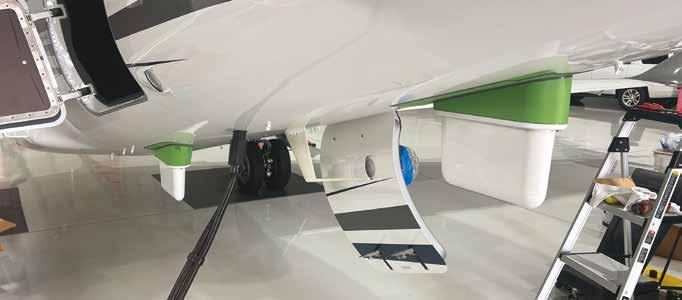
With so much momentum around LEO solutions right now, do operators still show interest in ATG connectivity?
Yes, there is a growing interest, especially in North America. We’re seeing increasing demand for Gogo LX5, particularly as older ATG systems approach obsolescence.
Aircraft already provisioned for 5G antennas can transition to LX5 with relatively modest structural work, which makes it very attractive. For many operators, ATG remains a cost effective solution that meets their typical mission profile.
How do the costs compare between a Gogo LX5 and a Starlink system installation?
Installed costs for Starlink are roughly $150–200,000 higher than those for LX5. On the service side, the difference is narrower than it used to be. Gogo has adjusted pricing, and Starlink’s move to a $10,000 monthly unlimited plan is clearly targeting this market sweet spot.
What about the GEO-based solutions?
On the GEO offering, the Honeywell JetWave X solution looks very promising, particularly for existing JetWave customers. It’s designed to simplify upgrades, reduce hardware, and increase throughput — up to 100 Mbps.
However, no STCs are available yet, so everything remains theoretical until real installations are evaluated. GEO will always have a higher latency than LEO, but for many missions, throughput is more than sufficient. GEO solutions have long been known in the industry for their reliability, and today they’re also catching up in terms of speed and throughput.
With all the rush for broadband connectivity, are basic connectivity solutions still relevant?
Absolutely, especially with budget-conscious operators. Solutions based on Iridium, like Airtext, still make sense for operators who only need voice and text connectivity. They don’t offer internet access by today’s standards, but it keeps people connected at a much lower cost, and for some operators, especially on short flights, that’s more than enough.

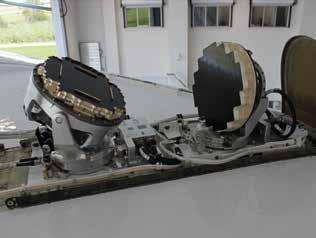

Elite Wings business aviation guides aggregate knowledge from industry leaders, shapers, and analysts to deliver relevant information about the current state of the market and its future direction in each segment of our industry. We identify the key points to consider when selecting solutions, what to ask, and who to ask. Our motivation is to enable readers to make informed decisions when selecting, acquiring, and managing their business aviation strategies and decisions.
THE GO-TO REFERENCE IN BUSINESS AVIATION
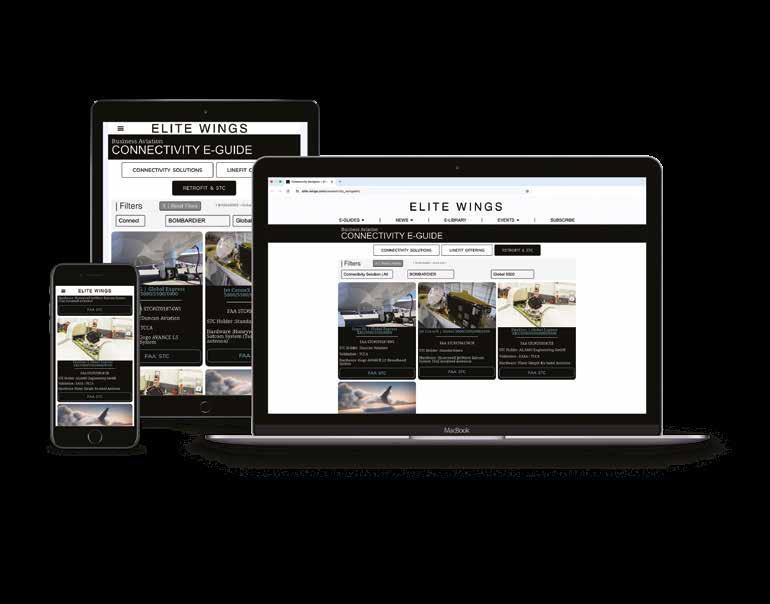
Find the latest connectivity solutions for your business jet with our new interactive E-Guide.
THE GO-TO REFERENCE IN BUSINESS AVIATION

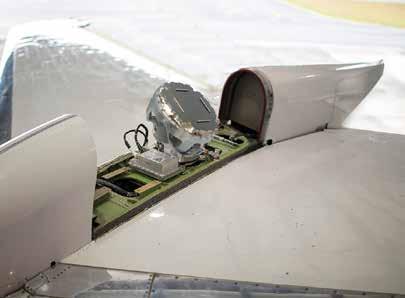
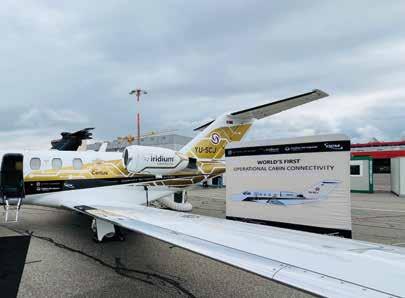

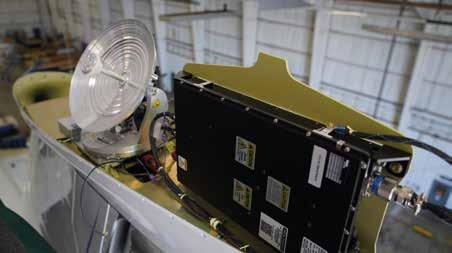
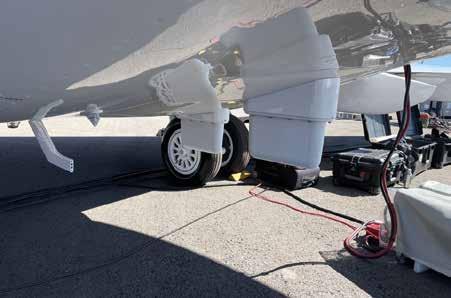
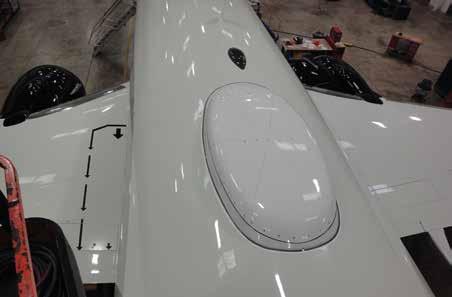
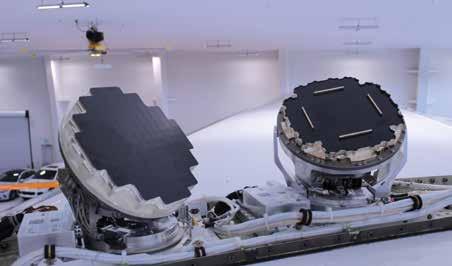
Gogo Business Aviation was launched in 1991 as Aircel, offering analog-based voice communication on private aircraft flying over the continental USA. In 2006, Gogo won a 3 Mhz Federal Communication Commission (FCC) frequency license auction to operate an air-to-ground (ATG) network over the US. Using this frequency license Gogo was able to offer internet connectivity to all major US airlines and develop the most competitive connectivity offering for business aviation.
The Gogo Biz Network offers a 3G Wi-Fi and voice calling service using the light AVANCE L3 system compatible with the majority of turboprop and light jets. The Gogo Biz 4G Network uses the AVANCE L5 system, a backward-compatible improvement to the previous legacy ATG systems (ATG 8000, 5000, 4000, 2000 and 1000) allowing an increase in the downlink speed from 3.1 Mbps to 9.8 Mbps. The improvement is achieved through advanced wireless communications protocols maximizing the network throughput capability.
Gogo offers two system configurations to access its ATG Network. The compact AVANCE L3 is designed for turboprop and light jets. The system is based on a single 3MCU LRU and two fuselage-mounted omnidirectional antennas.
The AVANCE L5 is designed to connect to the Gogo Biz 4G ATG network. The system is based on a single 5MCU LRU and two dual directional fuselage-mounted antennas. The AVANCE L5 also offers a terrestrial modem allowing for complimentary internet on the ground in 200+ countries and Gogo Vision, a wireless in-flight entertainment system.
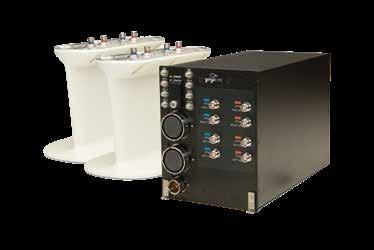
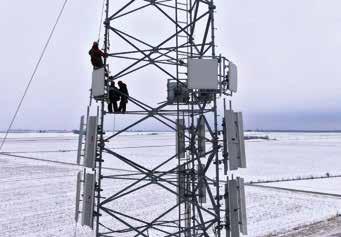
NETWORK CATEGORY: Air-To-Ground (ATG)
Service Launch 2008
Coverage Continental USA + Canada
Speed Up to 10 Mbps
Plan Cost
Hardware Weight 22 lbs
Gogo has more than 250 cellular towers covering the continental U.S, portions of Canada, and Alaska. The stations are connected to two data centers for redundancy.

Since the sale of its commercial aviation connectivity division to Intelsat in 2020, Gogo has focused on building the world’s first 5G network exclusively dedicated to business aviation usage, which it completed in 2022.
The Gogo 5G solution will adopt the same 5G technology that is currently being deployed by other ground operators. The ability to augment 5G with their existing licensed spectrum network, gives Gogo a distinct competitive advantage. The network will rely on the unlicensed spectrum at 2.4GHz and its licensed spectrum at 850MHz.
The Gogo 5G network benefits from a large number of technologies developed by a network of carefully selected strategic partners. Core 5G ATG network components is provided by connectivity solutions leader Cisco. Airspan provides its carrier-grade Radio Access Network (RAN), Air5G OpenRange. This advanced beamforming and tracking technology is a key enabler to connect high-speed jets to the ground network without performance degradation.
Gogo 5G airborne hardware is provided through the AVANCE L5 + X3 LRUs or the AVANCE LX5 single LRU. The AVANCE L5 is an in-service LRU designed to be easily upgradable to 5G with the X3 LRU, or by swapping the AVANCE L5 out with an AVANCE LX5 and swapping of the L5 antennas to the Gogo MB13 antennas. AVANCE L5 can be installed with 5G provisions, including the MB13 antennas, for a simple LRU swap to the AVANCE LX5.
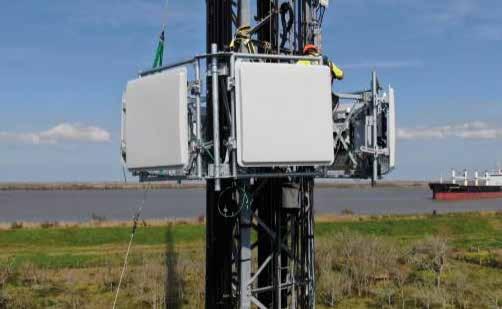
NETWORK CATEGORY: Air-To-Ground (ATG)
Service Launch 2026
Coverage Continental USA + Canada
Speed Up to 80 Mbps
Plan Cost -
Hardware Weight ~27.5 lbs*
Gogo has more than 150 5G cellular towers covering the continental U.S and has begun expanding into Canada. The stations are connected to two data centers for redundancy. Gogo operates a Network Operations Center at its corporate headquarters in Colorado where it monitors the network and the quality of inflight connections.
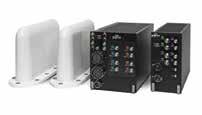
Apcela’s air-to-ground in-flight Wi-Fi network (acquired from SmartSky Networks) integrates the latest 5G technologies for patented, super-fast connectivity reaching 30 Mbps+, with unlimited data and streaming that simultaneously supports well over a dozen passengers across dozens of devices. With more than 300 cell towers, their ONE and DUAL ATG systems are redefining in-flight coverage and performance. They also offer Sign & Fly financing and rebates, lowering the cost of upgrading your in-flight Wi-Fi system.
Today's broadband users want 1-2 Mbps each, not shared across the cabin. The Apcela ATG systems deliver all the functionality you and your passengers are used to having on the ground, while you are in the air. Whether business or entertainment, you get it all from cloud applications and web conference calls, to social media, streaming, and Facetime. Your crews and operations teams can also access the aircraft performance data, and situational awareness tools, they need for safety and performance in real time.
The APCELA ONE ATG system includes the following components:
Ì Aircraft Base Radio (ABR) LRU
Ì Full-Duplex Quad (FDQ) Rx/Tx Antenna
The APCELA ATG DUAL system includes the following components:
Ì Aircraft Base Radio (ABR) LRU
Ì High-Performance Blade Rx Antenna (HPB)
Ì Full-Duplex Quad (FDQ) Rx/Tx Antenna Both can interface through a 1Gbps ethernet to cabin routers and wireless access points.

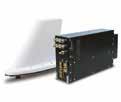
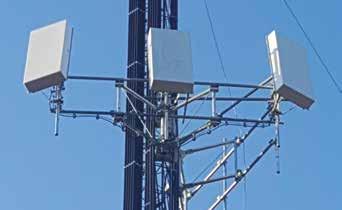
Air-To-Ground (ATG)
Service Launch 2025
Coverage Continental US (CONUS)
Speed 5 – 30+ Mbps; Symmetric Data Rate
Plan Cost $4,495 (ONE ATG), $5,995 (DUAL ATG)
Hardware Weight 19 – 32 lbs
The Apcela ATG network is built on the latest 4G and 5G technologies, including secure beamforming connections to each aircraft, and software-defined radios that deliver seamless upgrades. The network is deployed using 60MHz of radio spectrum in the 2.4GHz band across more than 300 US cell sites providing dense overlapping coverage. It offers unprecedented ATG in-flight broadband speeds and the beamforming connections eliminate degradation in high traffic areas. Each aircraft gets its own private connection, and with more than 30,000 beams nationwide, no bandwidth is shared with other aircraft, so that users enjoy unprecedented performance and privacy.
The Network Operations Center (NOC) is equipped with a Service Monitoring Platform and integrated with Apcela ATG's world-class 24/7 support services.
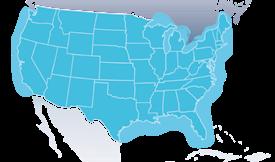
Since launch in 2002, Iridium’s unique constellation of Low Earth Orbit satellites has delivered high-quality voice and data services. The complete constellation upgrade in early 2019 enabled the launch of Iridium Certus, an award-winning advanced multi-service platform with speed capabilities ranging from 22 to 1408 Kbps.
Offering the highest L-Band data throughput, Iridium Certus provides the flexibility to scale device speed, size, and power requirements, both up and down, based on the needs of endusers.
Iridium is the only global network that can deliver reliable broadband connectivity to small form factor, low-profile antennas. With a height of less than 6cm, Iridium antennas produce almost no drag and can be installed just about anywhere on the aircraft. Iridium small form factor hardware is ideal for helicopters, turboprops, and light jets. The system can also offer a very attractive backup system for larger airplanes looking for high availability and fully global coverage including polar routes.

NETWORK CATEGORY: SATELLITE | LEO | Ku-band
Service Launch 2019
Coverage Global
Speed
Plan Cost
Hardware Weight
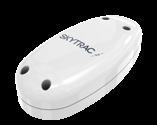
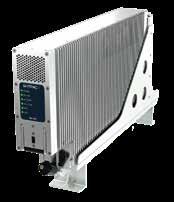
Skytrac SDL-350™ Iridium Certus SDU with HGA Phased Array Antenna
Honeywell Forge Gogo
Skytrac
Up to 704 Kbps
TBD
10 – 14 lbs
The Iridium constellation is based on 66 satellites orbiting in 11 planes. The service’s high availability is achieved by the addition of 15 on-orbit spare satellites.
At only 780 kilometers from the Earth, Iridium’s LEO network means pole-to-pole coverage, shorter transmission paths, stronger signals, lower latency, and shorter registration time than with GEO satellites.

Amazon’s Low Earth Orbit (LEO) satellite initiative, Project Kuiper, now branded Amazon LEO, represents a promising future option for business aviation connectivity by aiming to deliver high-capacity, low-latency broadband on a global scale.
While most announcements to date focus on commercial airlines, Amazon’s latest messaging strongly signals that business and VIP aviation are natural follow-on markets, especially for ultra-long-range aircraft seeking multi-orbit, high-bandwidth solutions. The company’s emphasis on performance, global coverage, and cloud integration suggests that dedicated business aviation offerings and STC activity are likely next steps rather than speculative ambitions.
At Aircraft Interiors Expo (AIX) 2026, Amazon showcased a new aviation antenna designed specifically for commercial aircraft. The new electronically steered antenna promises up to 1 Gbps download speeds and 400 Mbps upload speeds, bringing a new level of performance to onboard connectivity. Amazon announced that the new antenna is suitable for a broad range of aircraft types, from regional jets to large widebody aircraft.

Service Launch 2026 ( Planned Commercial Aviation)
Coverage Global
Speed
Plan Cost TBC
Hardware Weight TBC
Amazon Leo is FCC-licensed for up to 3,236 satellites to be deployed across three orbital shells at altitudes between approximately 590 km and 630 km. This layered approach improves link availability, reduces congestion, and enhances redundancy compared with single-shell LEO systems.

Each Amazon Leo satellite incorporates advanced optical inter-satellite links (OISLs) capable of transferring data at extremely high speeds between satellites, creating a space-based mesh network. This allows traffic to be routed in orbit rather than relying solely on ground stations, improving performance over oceans, polar regions, and remote territories.
Amazon Leo currently has ~210–215 operational satellites in orbit, following multiple Atlas V and Falcon 9 missions since April 2025. This remains far below the FCC requirement of 1,618 satellites (50% of the constellation) operational by July 30, 2026.

Eutelsat OneWeb has deployed a satellite communications network of 634 satellites in 12 synchronized polar orbits operating in Low Earth Orbit (LEO) at an altitude of 1,200km. Each satellite operating in the Ku-band will offer 8 Gbps of bandwidth for a global usable network capacity of over 1.1Tbps. The LEO network promises a low latency of less than 100ms and a truly global coverage including polar routes.With globally consistent performance comparable to terrestrial services, delivering hundreds of Mbps per aircraft and latency of less than 100ms – over every continent, every ocean and even in the polar regions, Eutelsat OneWeb aims to transform the airborne connectivity experience now and for the future by enabling business jet operators to offer their passengers and principals an in-flight connectivity experience that is limited only by their imagination – not bandwidth. Gogo Galileo services are powered by the Eutelsat OneWeb network.
OneWeb is partnering with leading avionics suppliers to create next-generation user terminals and antennas unique to business aviation and unique to OneWeb. These fuselage-mounted electronically steered antennas (ESA) promise to be considerably lighter than traditional mechanically steered antenna technologies, with a significantly reduced profile, reducing drag and fuel burn.The Gogo Galileo OneWeb ESA antenna is manufactured by Hughes Network Systems.
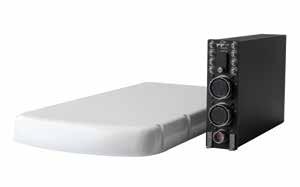

SATELLITE | LEO | Ku-band
to 195 Mbps
$3,500 - $10,500
Hardware Weight 33.9 – 53 lbs*
OneWeb has completed its full constellation of 634 satellites, including the 588 active satellites needed to deliver truly global coverage, plus 46 in-orbit spares for resilience and redundacy. Aviation services are now operational. Eutelsat OneWeb is a subsidiary of the Eutelsat Group, the global leader in satellite communications delivering connectivity and broadcast services worldwide. The Group was formed through the combination of Eutelsat and OneWeb in 2023, becoming the first fully integrated GEO-LEO satellite operator with a fleet of 37 Geostationary satellites and a low Earth orbit earth constellation of more than 600 satellites.

Developed and operated by private spaceflight company SpaceX, Starlink aims to provide low-cost internet to remote locations.
Starlink is a consumer grade satellite network highly promoted for residential service in remote and rural locations and on the road RV installation.
SpaceX branded its satellite-supported inflight connectivity service as Starlink Aviation.
On February 2024, SpaceX dramatically lowered the monthly pricing structure for its Starlink Aviation inflight connectivity service packages for business aviation, offering a 20 GB package at $2,000 and an unlimited data plan package at $10,000. This compares to the $25,000 monthly package previously offered to operators.
The Starlink installation package includes an Aero Terminal Antenna, a power supply unit and two WI-FI access points.
The Aero Terminal Antenna is an electronically-steered phased array antenna operating in the Ku frequency band. The RX channels operate from 10.7 to 12.7 GHz and the TX channels operate from 14 to 14.5 GHz.
Stralink provides a 5-year hardware warranty.


| LEO | Ku-band
Service Launch 2023
Coverage Global
Speed
Plan Cost
Up to 220 Mbps
$2K / 20GB Plan| $10K
Unlimited Plan
Hardware Weight < 60 lbs
In 2018, the FCC granted SpaceX permission to fly up to 12,000 Starlink satellites and as of August 2023, SpaceX’s Starlink constellation had 4500+ active LEO satellites. In 2023, SpaceX also announced the start of its Gen2 network with more capable V2 satellites. Starlink’s LEO constellation operates at an altitude of 342 miles above earth which highly improves the satellite transmission latency. Starlink advertises a latency of less than 99 MS.
Starlink is testing optical space lasers (Optical Intersatellite Links or ISLs) usage on its satellites, which could allow the spacecraft to transmit data without local ground stations, providing truly global coverage.

Powered by Luxembourg-based SES, the world’s leading GEO satellites operator with over 70 satellites, LuxStream promises to deliver an exceptional private jet connectivity experience. The new high-end service capitalizes on SES’s next-generation Ku-based satellite technology – both highthroughput satellites (HTS) and wide beam – and ground infrastructure to bring business aviation customers the fastest broadband speeds available within the United States.
Developed In collaboration with Collins Aerospace, LuxStream secured Vista Global as a launch customer for the service that will be installed on 35 of the company’s Bombardier Global business jets.
The exceptional partnership between Collins Aerospace and SES allows for a turn-key solution offering, combining both hardware and service with flexible pricing models to meet the sophisticated operator’s mission.
Collins Aerospace delivers LuxStream through the KuSAT-2000 tail mount satellite terminal developed with Astronics.
` The system is composed of four aircraft LRUs:
` A Gimbal Antenna Unit (GAU)
` Antenna Control & Modem Unit (ACMU)
` A Block Up Converter (BUC)
` A Block Down Converter (BDC)
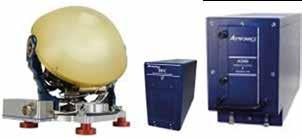

NETWORK CATEGORY: SATELLITE | GEO | Ku-band
Service Launch 2019
Coverage Near Global
Speed 25 Mbps (CONUS) | 15 Mbps (Global)
Plan Cost $7.4K - $23.5K
Hardware Weight 47.3 lbs
Luxstream delivers uninterrupted global connectivity via SES high-throughput satellites (HTS) overlaid with wide-beam coverage
` SES operates three latest generations GEO HTS satellites:
` SES-12: Launched in 2018 providing coverage for MiddleEast and Asia Pacific regions
` SES-14: Launched in 2018 providing coverage for the Americas region
` SES-15: Launched in 2017 providing coverage for North America and the Caribbean

At the 2018 NBAA convention in Orlando, Intelsat, the world’s largest satellite fleet operator, launched its own end-to-end managed service FlexExec dedicated to business aviation.
FlexExec provides dedicated bandwidth not shared by commercial aviation or consumer broadband users.
Intelsat FlexExec is a global, secure, multi-layered broadband satellite connectivity service that delivers consistent, high-performance coverage. The service is designed to offer a reliable and consistent connectivity experience to business aircraft passengers.
Offered exclusively through Gogo, FlexExec offers an industry-first service plan flexibility tailored to meet sophisticated flight department needs.
FlexExec is available with the compact Gogo Plane Simple tail mount antenna system.
The advanced terminal Plane Simple® features only two-Line Replaceable Units (LRUs), simplifying installation and configuration.



| GEO | Ku-band
Service Launch 2018
Coverage Global
Speed
Up to 50 Mbps
Up to 100 Mbps (mid 2026 Planned)
Plan Cost Customized
Hardware Weight 48 Lbs
Intelsat FlexExec is specifically engineered to cover high traffic routes with High Throughput Satellite (HTS) Ku-band coverage, with layers of wide beam capacity for added resiliency and redundancy. FlexExec allows for maximum flexibility, efficient use of bandwidth, and managed services which are critical when routes and passenger requirements shift unexpectedly. The open architecture design of FlexExec allows Gogo to analyze network demand and usage to ensure that capacity is available, with the ability to add additional capacity, as necessary.
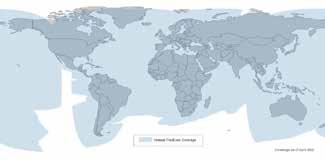
SwiftBroadband (SBB) is Viasat's flagship L-band business aviation services, offering reliable in-flight voice and data connectivity with global coverage to meet the core needs of users. It is a proven, dependable way to stay connected, regardless of which aircraft type is being operated or which route is being flown across the world. This helps to ensure the needs of business aviation passengers and crew are being met, from in-seat mobile phone and text services to emails and web browsing.
With consistency and performance by design, SBB has been the world’s leading L-band service for business aviation since 2009. It is activated on thousands of business jets and offers speeds up to 432Kbps, using smaller antennas that are suitable as primary connectivity for smaller or older aircraft, or a complementary system to Ka-band connectivity.
SBB customers can also upgrade to SwiftJet, Viasat's advanced new L-band business aviation connectivity service that offers maximum speeds of 2.6 Mbps, up to six times faster than SBB. This allows passengers to stay connected with colleagues, friends and family wherever and whenever they fly, with the ability to communicate over email, text, instant messaging and video calls, browse the internet and social media, and even enjoy single device streaming
SBB satcom hardware is available from three avionics manufacturers: Thales-Cobham, Honeywell, and Collins Aerospace. The service data speed is dependent on the category of the installed antenna. Existing SBB customers benefit from a natural upgrade path to Swift Jet for their Honeywell hardware without needing to replace any externally mounted aircraft equipment, while new customers will experience the same ease of installation as with any Viasat L-band terminal.
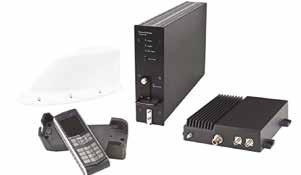

NETWORK CATEGORY: SATELLITE | GEO | L-band
Service Launch 2009
Coverage Global
Speed Up to 432 Kbps
Plan Cost Pay-As-You-Go or Subscription
Hardware Weight 25 - 44.5 Lbs
Viasat owns and operates the world’s most reliable and resilient L-band satellite network, which powers the SwiftBroadband and Swift Jet services using smaller, low-cost terminals.Including Viasat’s award-winning I-4 fleet, each satellite can generate up to 19 wide beams and more than 200 narrow spot beams, delivering seamless, always-on connectivity to every corner of the world. Viasat continues to develop and innovate its secure L-band network to meet the needs of customers, including those from the business aviation industry. The company’s next-generation L-band satellites will support a new wave of capabilities, as well as global safety and mission critical services, for decades to come.

JetXP is Viasat’s most advanced business aviation in-flight connectivity service, delivering the company’s best-ever passenger experience by unleashing the full power of its global Ka-band network and harmonising service capabilities following the acquisition of Inmarsat. JetXP brings together the combined strengths of both organisations (powerful capacity, reliable global coverage, advanced network management, trusted operational expertise, and world-class innovation) into a single, unified offering. It also consolidates Viasat’s legacy Jet ConneX and Viasat Ka services under one streamlined brand.
Today, more than 2,100 aircraft worldwide are flying with JetXP. Recent enhancements include increased network prioritisation and a five-fold capacity increase over key U.S. hubs, which account for approximately 65% of global business jet traffic. Uncapped speeds are now available globally across JetXP service plans, enabling customers to fully utilise Viasat’s network without artificial limits. These enhancements better support data-intensive applications such as high-definition video conferencing, streaming, bulk file transfers, and emerging AI-driven use cases on multiple devices simultaneously.
JetXP is supported by extensive regulatory approvals across key global markets, including India and China, and is complemented by white-glove service and 24/7 support through trusted distribution partners Collins Aerospace, Gogo (Satcom Direct), and Honeywell. Flexible service plans are designed to accommodate a wide range of operational profiles, delivering a consistent, dependable, and predictable connected experience across global business aviation missions.
JetXP service plans are available today using the Honeywell JetWave, Gogo Plane Simple Ka-band and Viasat Global Aero Terminal 5510 (GAT-5510) terminals. In addition, Honeywell JetWave X enters service in 2026 and will deliver a smaller, lighter and more advanced version of the existing JetWave terminal. Suitable for a broad range of aircraft, from super-midsized to large cabin business jets, it offers a simple installation path for operators.



| Ka-band
Service Launch 2024
Coverage Global
Speed uncapped speed with SLA*
Plan Cost
Subscription Pricing
Hardware Weight 40 - 51 lbs
Viasat’s Ka-band business aviation offering is powered by its global Ka-band network, including the GX satellite constellation from its acquired Inmarsat business. This foundation will be further strengthened through Viasat’s technology roadmap, with two additional ultra-high-throughput Viasat-3 satellites entering service in 2026, followed by the next-generation GX7, GX8 and GX9 satellites. Business aviation customers will also begin accessing the GX10A and GX10B Highly Elliptical Orbit payloads for Arctic coverage in 2026. In parallel, Viasat is advancing a multi-orbit strategy by integrating Telesat’s Lightspeed LEO capacity into JetXP, combining the scale and reliability of GEO with the low-latency benefits of LEO. Together, these developments create a resilient, future-ready architecture designed to protect operators’ connectivity investments over the full lifecycle of their aircraft.
Find the latest connectivity solutions for your business jet with our new interactive E-Guide.
THE GO-TO REFERENCE IN BUSINESS AVIATION


When staying connected in-flight is critical, we have options: As an authorized dealer for all of the major connectivity providers, Duncan Aviation can install your system, whether you opt to connect to a GEO (Geostationary satellites), LEO (Low-Earth Orbit satellites), or ATG (Air-to-Ground) network. Contact us to schedule an installation at one of our three full-service MRO facilities or at our Satellite Shops located throughout the United States.