
PARTNERS IN PROGRESS
Stories of Pitt’s Impact Across Our Communities

PITT: A COMMUNITY-ENGAGED ANCHOR INSTITUTION

Lina Dostilio Vice Chancellor for Engagement and Community Affairs

Kevin Washo Senior Vice Chancellor for University Relations
The University of Pittsburgh embraces a strategic focus in how we engage in and with our communities.
Instead of talking, we listen. Instead of just doing, we collaborate. Instead of leading alone, we lead with our communities—as a connector, a team member and a capacity builder.
Pitt understands that people ultimately have relationships with each other, not an institution.
By cultivating relationships with our communities and our region, Pitt serves as an anchor institution that creates spaces for innovation and economic development; that builds employment and housing opportunities; that fosters community, neighborhood and regional connections; that expands pathways that enable historically marginalized residents to participate in success; and that embraces the notion that we are partners in progress—
Progress that belongs to everyone.
A SINGLE PURPOSE... ...TO MULTIPLY IMPACT
Office of Engagement and Community Affairs
The Office of Engagement and Community Affairs (ECA) is the core unit at the University of Pittsburgh with responsibility to advance a community engagement strategy for the University, to ensure that Pitt is a partner and asset to the region, to mobilize the University’s response to communityidentified problems and concerns and to support faculty and staff in delivering sustainable and substantive engagement and outreach activities.
Everything that ECA does ultimately has a single purpose: to make it easier for communities, public leaders, faculty, staff and students to forge meaningful and more effective collaborations.
ECA serves as:

ECA’s Areas of Work
The Engaged Campus
Cross-functional efforts that establish the framework and strategy necessary for the University to mobilize its expansive engagement resources including engaged learning and development, convening capacity, social capital, and public service and volunteerism so that Pitt becomes a partner of choice in regional progress, particularly addressing the social determinants of health
Anchor Institution Initiative
Cross-institutional efforts to advance Pitt’s role as an anchor within the region, harnessing the economic demand of our purchasing, construction and hiring to create paths of economic opportunity for residents in our local communities
Neighborhood Commitments
Pitt’s flagship place-based community partnerships focused on the Oakland, Homewood, Hill District and Greater Hazelwood neighborhoods of Pittsburgh, which provide long-term commitments of staffing, infrastructure and coordination to facilitate mutually beneficial collaborations between Pitt and the local community
Osher Lifelong Learning Institute at Pitt
A dedicated, nurturing intellectual environment for older adults (50 years old or more) that offers hundreds of enriching courses, lectures, tours and other opportunities for social interaction and engagement throughout the year
» A hub and convener for faculty, staff, researchers and community-engaged programs—meeting systemic problems with coordinated, holistic responses.
» A designated listener for Pitt in community and civic conversations across the region.
» A facilitator of partnerships and coalitions based on a shared vision of action.
» A connector for regional economic growth and planning to local educational, workforce and business development opportunities.
» A leader, coordinator and maximizer of Pitt’s expansive commitments in Oakland, the Hill District, Greater Hazelwood and Homewood.
» And an impact multiplier—working with organizations that are working for stronger communities, throughout the city and the region, and sharing the resources and capabilities of Pitt.
2022-23
5,671 volunteers contributed 84,683 hours of service
3,150 HOURS tutored through PittEnrich
$161M in direct construction and non-construction spend with suppliers and vendors from Pittsburgh
94 programs and events offered at the Community Engagement Centers
1,300 active OLLI members
360 faculty and staff participated in ECA-led capacity-building programming
191 full-time staff employees hired from Oakland, Homewood, the Hill District and Greater Hazelwood
7,500 total visitors to the Homewood and Hill District CECs since opening
350+ OLLI courses, lectures, tours and other opportunities offered
THE PLAN FOR PITT
Since its founding in 1787, the University of Pittsburgh has emerged as a global leader in academics, research and scholarship aimed at addressing society’s most complex and urgent challenges.
But as the landscape of higher education continues to evolve, so must Pitt. Guided by the University’s strategic plan—the Plan for Pitt—Pitt has identified how and where we can improve to better the lives of our community and the communities that surround us.
ECA serves as a central point of support, a hub and convener, and an impact multiplier for the work being done within our broader communities and in support of the Plan for Pitt.
PITT’S COMMUNITY ENGAGEMENT STRATEGIC PRIORITIES
Expand opportunities for civic and global engagement.
Cultivate the skills and knowledge to be effective, responsive collaborators with external partners.
Encourage and expand communityengaged scholarly and creative work and strengthen coordination and connection between engagement initiatives.
Develop and sustain relationships with strategic community and international partners.
Prioritize impactful and meaningful global engagement.
Fuel economic development throughout the region and economic growth throughout the commonwealth.
Use our position as an anchor institution to benefit local communities.
Leverage our expertise, capabilities and research to create sustainable economic development locally and regionally.
Embrace innovation in ways that attract investments and equitable opportunities to the neighborhoods and regions around our campuses.
Create places and spaces that support the innovation life cycle, build employment and housing opportunities, foster connections, promote sustainability and ensure a high quality of life.
Expand the pathways to enable traditionally underserved residents to participate in success.
Foster innovation and regional opportunity by connecting local partnerships to global partnerships.
Collaborate with communities, near and far, to improve outcomes and opportunities for their residents.
Ensure communities are at the center of place-based engagements and partnering with us in building equity and opportunities.
Translate our research into concrete solutions.
Leverage global partnerships to solve common and complex challenges.
Include the public sector, industry and social sector in our collaborative efforts.
Strengthen partnerships across all five campuses to leverage the best practices, capacities and strengths of each campus to the benefit of our local communities.

C OMMUNITY
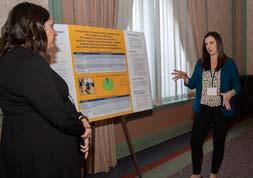
E NGAGED S CHOLARSHIP F ORUM
“Engaged scholarship” seeks to discover new knowledge through activities that collaboratively generate, exchange or apply academic and community knowledge and practices through partnerships between members of the University and members of the broader public.
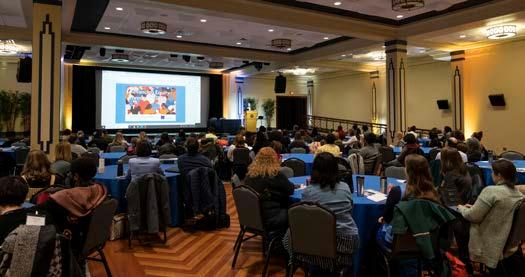
Since 2019, the Community Engaged Scholarship Forum (CESF) elevates, celebrates and reflects on collective approaches to community-engaged scholarship through the development of sustainable partnerships that build deep, reciprocal processes to achieve mutually beneficial, community-identified priorities.
The full-day event features workshops and keynote speakers that exemplify the definition of communityengaged scholarship: exploring and reflecting on the work and research being completed while inspiring and discovering future opportunities to improve our communities’ well-being and accelerate our region’s progress.
Each year at CESF, Pitt celebrates students, faculty and staff who have significantly impacted their communities. Part of these celebrations include awards that recognize outstanding partnerships and individuals that are exemplars of community engagement.
CESF 2023:
296 attendees
16 workshops and speakers
2023 CESF AWARDEES
2023 Partnerships of Distinction

Genius, Joy, and Love Summer Academy
As a student in the Genius, Joy, and Love Summer Academy, Taliah Baldwin believes she learned things during the four-week experience that were not taught to her in formal schooling.
“Something I’ve learned from this program is how to be an educator and how to advocate for myself,” says Baldwin, who graduated from Brashear High School in 2022 and who will be attending the University of Pittsburgh at Greensburg. “I’ve learned how to speak up for myself for what I believe in or what I think is wrong.”
Baldwin was one of 14 students from the Pittsburgh Public Schools (PPS) who took part in the summer academy, which was created and designed by Valerie Kinloch, former Renée and Richard Goldman Dean and professor at the University of Pittsburgh School of Education. The program encourages education as a career path for students of color.
The program, which began in 2022, partners with PPS, The Pittsburgh Promise and the Children’s Museum of Pittsburgh to provide practical lessons on how to navigate college and the teaching profession as well as encourage students to embrace ownership of their spaces, voices and perspectives. Guest speakers from Pitt, PPS and schools around the country also were invited to discuss the importance of teaching with the students.
“Our goal is to ensure that our students—or Genius Scholars—feel inspired, energized and supported as they embark on their journeys to becoming educators,” says Kinloch.
2023 Tracy Soska and John Wilds Outreach and Engagement Leadership Award
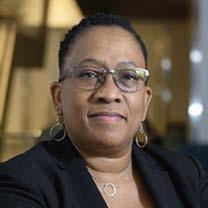

Paula K. Davis, MA, CDE Associate Vice Chancellor for Diversity, Equity and Inclusion Health Sciences
Office of Health Sciences
Diversity, Equity and Inclusion
In This Together Cambria
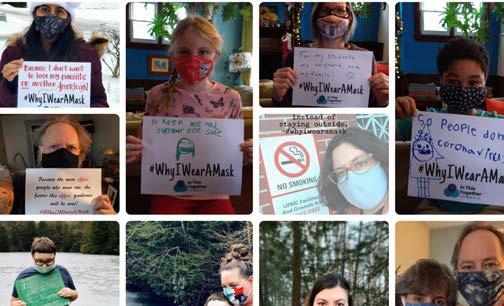
Through advocacy and storytelling, In This Together Cambria has established itself as a proactive and informative resource aimed at helping to stop the spread of COVID-19 in Cambria and Somerset counties.
The nonprofit group of engaged citizens advocating for action by local leaders and fellow community members used a two-pronged approach to pandemic education and outreach: an advocacy committee and a storytelling committee. The group’s advocacy committee engaged with regional leaders, sharing evidence-based community-led solutions to slow the virus’ spread, partnering with organizations like the Community Arts Center of Cambria County, local television station WJAC and local newspaper The Tribune Democrat. The storytelling committee collected and shared testimonials from community members about how the pandemic affected them to promote public health and encourage empathy, action and healing.
Faculty and staff at the University of Pittsburgh at Johnstown have been involved in each step of the multifaceted process, from providing expert knowledge and experience as educators to learning what it means to be science communicators.
In This Together Cambria employed the use of virtual town halls, common terminology, video, social media and a comprehensive website with more than 32,000 page views to engage and interact with the public on the safety and efficacy of vaccinations, share community stories and provide sound scientific information.
2023 CESF Collaboration Champion

Michael Glass, PhD Teaching Professor and Director of the Urban Studies Program
Kenneth P. Dietrich School of Arts and Sciences
Measuring Up: Grading Drinking Water Quality, Affordability and Transparency Practices in Allegheny County Water Systems
When Women for a Healthy Environment (WHE) published “Something’s in the Water: A System Analysis on Quality and Transparency in Allegheny County Community Water Systems” in April 2021, the Pittsburgh Collaboratory for Water Research, Education, and Outreach team partnered with WHE to investigate the report’s findings, which indicated stark inequities in access to affordable and clean water for residents across Allegheny County’s 36 community water systems and the transparency of the community water systems practice to ratepayers.
As a result, WHE and the Water Collaboratory generated a report that quantifies and rates the performance of each of the water systems and provides recommendations for moving forward and driving positive change.
The report cards are a tool that can be used by the public, stakeholders and community water systems to measure advancement and achievement toward a more just, sustainable and equitable water future for the region.
Striving to Be a Partner of Choice
Pitt’s approach to community engagement embraces the notion that partnerships are the vehicle for achieving sustainable impact. And we accomplish this by using Pitt’s tools of learning, research, service, programming and innovation to partner with community collaborators to address systemic challenges that help our partners move forward strategies that lead to thriving communities.
» Our researchers are studying the impact of safe water access in under-resourced communities and providing solutions.
» Our neighbors and community leaders are coming together to enact collective change for affordable housing.
» Our students, staff and faculty are collaborating with community partners to provide easier access to fresh food and healthier living.
» Our communities’ youth and families are being equipped with the knowledge, resources and support to be confident in their identities and successful in life.
In our communities. With our communities.


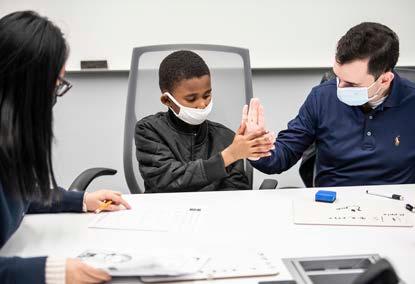
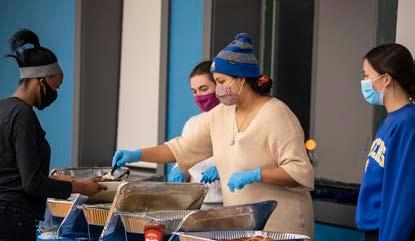
There are no borders or boundaries when it comes to learning from each other and using that knowledge to address community challenges.
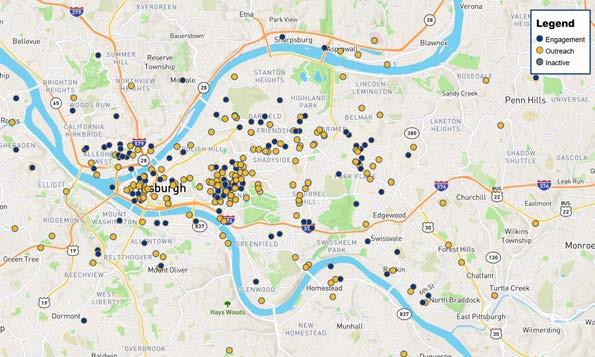
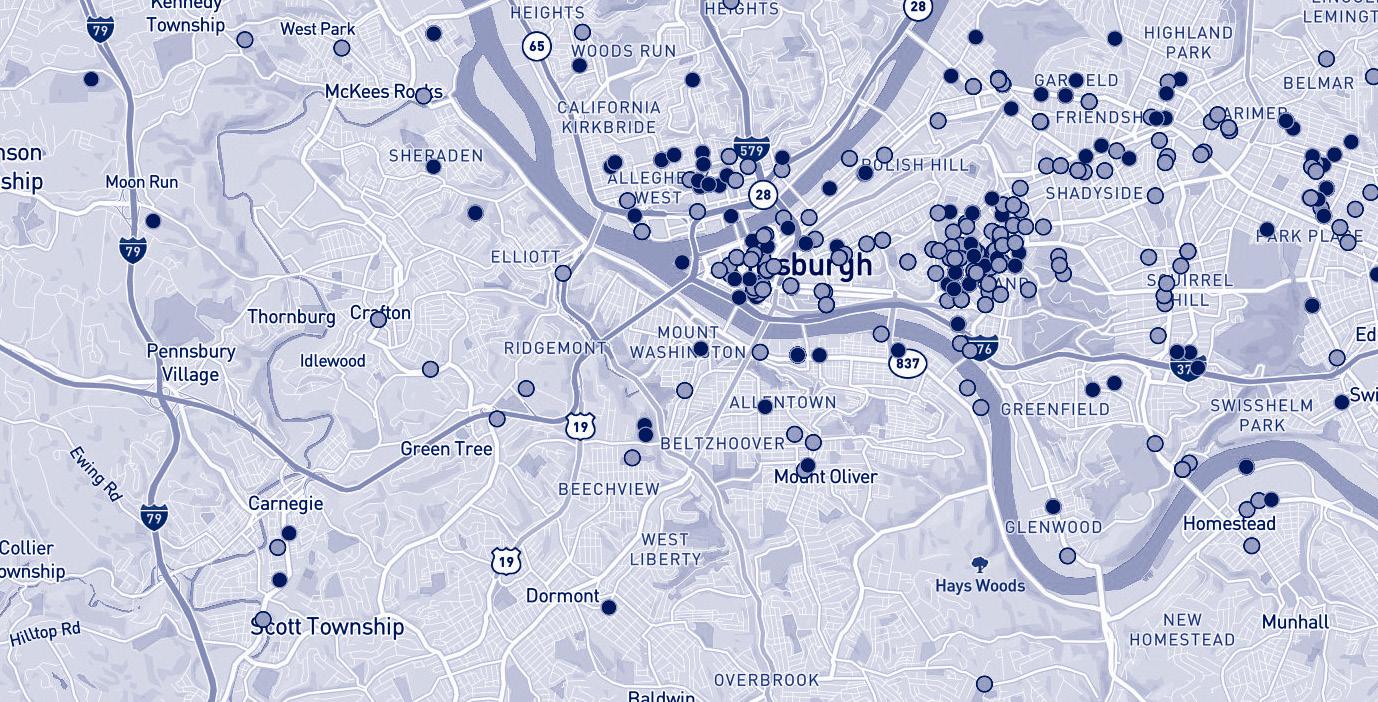
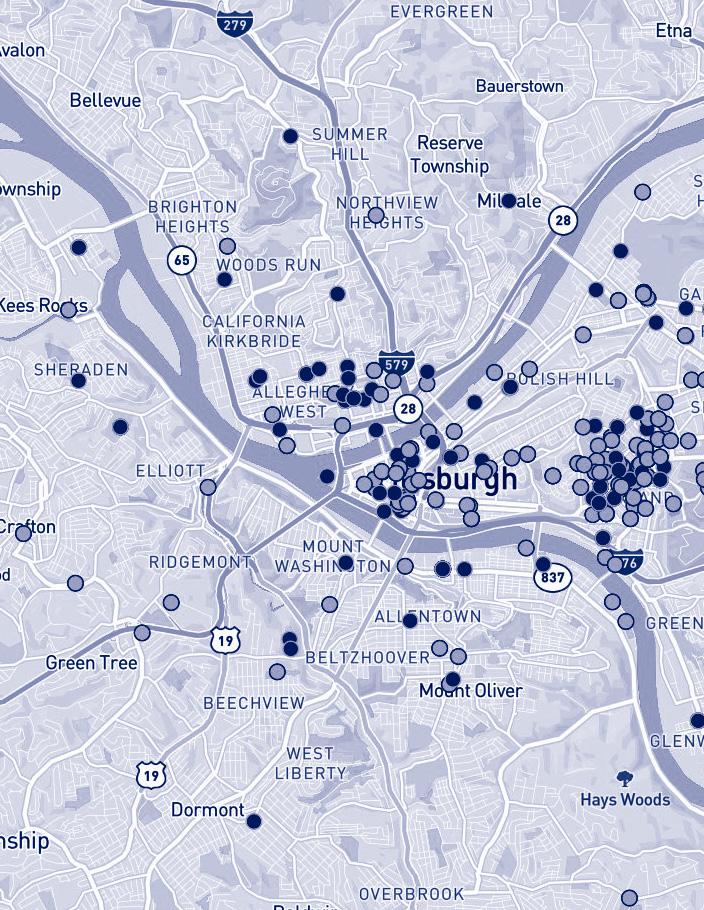
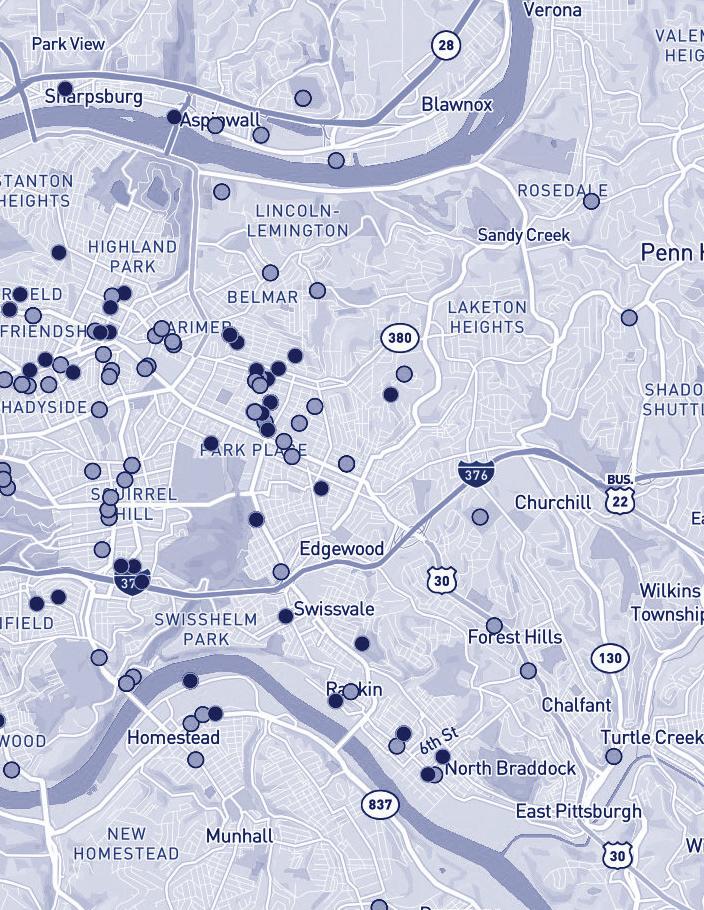
The Engagement and Outreach Map helps coordinate and track the progress of Pitt’s engagement efforts across the University of Pittsburgh system.
The map was developed and is maintained by the Western Pennsylvania Regional Data Center at the University Center for Social and Urban Research.
Since 2018, 447 engagement and outreach activities have been added to the map. Engagement and outreach activities can be found in 43 of the 67 counties in Pennsylvania
For the full scope of Pitt’s community-engaged efforts and to find Pitt in your community, visit Pitt’s Engagement and Outreach Map at engagementmap.pitt.edu.

2022–23 PROGRAM SHOWCASE

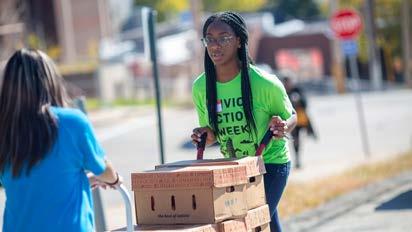
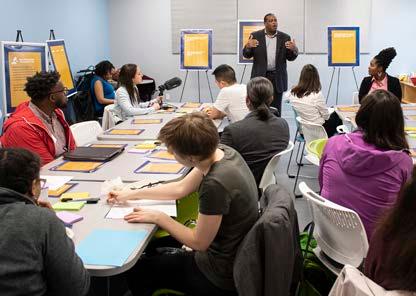
The breadth of community engagement at Pitt is vast and continues to grow.
Our partners work to address challenges and conditions in our environment that have a major impact on people’s health, well-being and quality of life, also known as the social determinants of health where people are born, live, learn, work, play, worship and age.
The 32 programs showcased in this report explore how, with the power of Pitt’s resources combined with meaningful community collaborations, we can partner to help our communities, and our region, succeed.
Some programs have been operating for decades, while others are just getting started. But all have a goal of creating solutions that can take root and build long-term community capacity, that can be more widely shared and that can make a difference in the well-being of our neighbors.

32 COMMUNITY-ENGAGED PROGRAMS HIGHLIGHTED THIS YEAR HAVE INVOLVED OR BENEFITED:
584 PITT FACULTY AND STAFF
5,481 PITT STUDENTS
87,918 COMMUNITY RESIDENTS
Opportunities to START Again
STricklAnd Research Training School of Medicine
From medical assistant students to Pitt-trained clinical research staff. Diversifying the Pitt research workforce. Providing new research career opportunities to underrepresented and second career community members. These are the goals of the STricklAnd Research Training (START) program, a collaboration between Pitt’s Clinical and Translation Science Institute (CTSI) and the Bidwell Training Center.
A free, customized workforce development program, START provides individuals the experience and education necessary to become entrylevel clinical research assistants who perform a range of duties supporting research at Pitt.
“START gives students from the Bidwell Training Center an opportunity they would not otherwise have to improve their knowledge in research and have a career at the University of Pittsburgh,” says Melone Turner, a West Indies native, former entrepreneur and START graduate. “[The program] is committed to helping students attain their educational and career goals and provides opportunities for professional development.”
Turner is now a clinical research assistant for the All of Us Pennsylvania Research Program.
Since it began in 2020, START has trained 59 Bidwell Training Center medical assistant students in the basics
of clinical research and has placed nine research externs within five Pitt research programs. Five of the externs were hired as research assistants.
Two cohorts of 12-14 students go through the START program, which includes coordinating externship-tohire opportunities, each year. Those hired at Pitt can then continue their own education, or the education of their family members, by taking advantage of the education tuition benefits offered by Pitt.
START has demonstrated impact by creating new clinical research career pathways for individuals for whom such options were not previously possible and by bringing diverse perspectives and lived experiences to the Pitt research workforce.
“The heart of what we do at Bidwell Training Center has always been about connecting individuals to careers that bring purpose, meaning and sustaining wages to families,” says Bill Strickland, Bidwell’s founder and the START program’s talent development partner. “Partnering with Pitt’s CTSI means that people who come our way to find meaningful careers now have a wider horizon of possibilities before them.”

~86% of Manufacturing Assistance Center students are hired into local manufacturing jobs as a result of the program
94% of eligible Manufacturing Assistance Students students complete the program at no cost
That’s what it’s about: removing barriers to opportunity to see people discover their potential.
– Bill Strickland, Bidwell Training Center Founder and START talent development partner
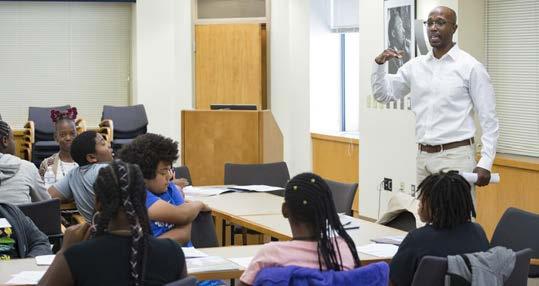
“I like how much it’s pushed me and opened up different opportunities.”
– Kayleigh Lott, MAC student in both the Basic Machining and CNC Programming and Operations programs
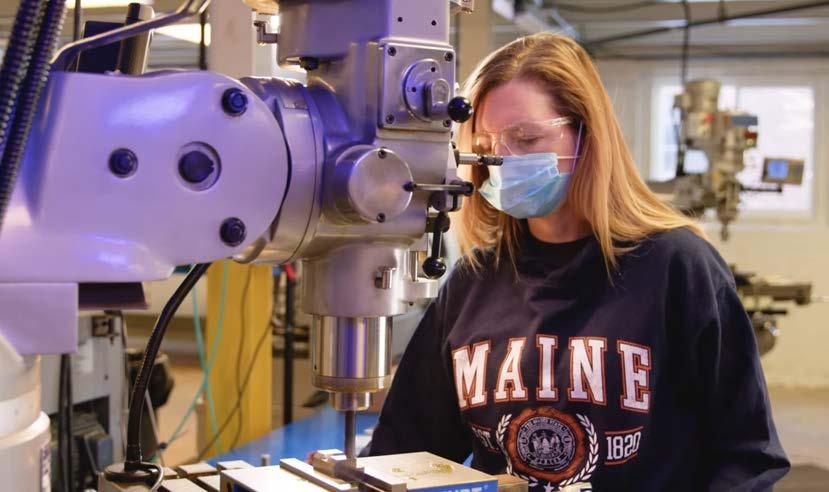
Providing the Tools to Succeed
Manufacturing Assistance Center
University of Pittsburgh at Titusville
Skilled workers are the most critical element of successful companies. But the barriers to entering the manufacturing industry are often a challenge for individuals who may lack the education or experience. The Manufacturing Assistance Center (MAC) has been breaking those barriers since it was established in 1994, providing machinist trade training for those interested in changing careers or entering the manufacturing industry.
The program, which relocated to Pitt-Titusville in 2021, is also offered to engineering students who want to expand their knowledge and get hands-on experience with manual and computer-controlled machines.

Thanks to federal, state, local and scholarship funding sources, 94% of eligible students complete the program at no cost, and grants and scholarships are available to assist with expenses.
Approximately 86% of students who enter the program are hired into local manufacturing jobs as a result of the program. Not only does this build capacity in the region, it also provides highly transferable skills and a solid career trajectory—which often translates into more income—to program graduates.
Changing the Culture of Discipline
Just Discipline Project School of Social Work
What if we changed the culture surrounding school discipline? Would it lead to improved student outcomes and overall school performance? The Just Discipline Project is a research-to-practice initiative designed to both advance achievement for all students and reduce racial discipline disparities by implementing and evaluating school-based relational climate and restorative practice programs across the region.
The project specifically aims to support teachers, students and staff in efforts to enhance relational approaches that reduce the need for exclusionary discipline, such as suspensions and office referrals, in schools. Key to the implementation strategy is the provision of full-time personnel who focus on the relational climate work in schools. This allows Just Discipline to collaborate with students and teachers, rather than simply adding “one more thing to the pile” of initiatives that they are asked to take on year to year.
Recently, the Just Discipline Project expanded both its reach and offering, now operating in more than 25 local schools to provide restorative practices and traumaresponsive programs that will benefit more than 10,000 students across the region.
Since 2017:
20% decrease in students receiving suspensions
28% decrease in students receiving office referrals
Schoolwide gains in math, language arts and science
Continued reductions in suspensions, referrals and racial discipline disparities
Ready-made College Success, Beginning in High School
College in High School
Kenneth P. Dietrich School of Arts and Sciences
“I never would have chosen to major in computer science if I hadn’t [participated in] the College in High School program.”
Emilee Betz, a Pitt computer science graduate, is one of over 200,000 high school students who have participated in the College in High School (CHS) program since it began in 1980.
Housed within the Dietrich School, the CHS program, which is the largest and oldest program of its kind in Pennsylvania and one of only two accredited programs in the state, enables high school students to earn both high school and Pitt credit in courses taught right in their classrooms—within a supportive high school environment and at a fraction of the cost of normal tuition. In the 2021-22 academic year, more than 8,250 high school students participated in the CHS program, and 4,270 students enrolled in 5,373 Pitt courses.
The success of the program stems from close collaboration between Pitt and statewide partner high schools; CHScertified high school teachers work closely with Pitt’s worldclass faculty to ensure course alignment.
Perhaps more importantly, success also stems from the extensive and continuing growth and advancements to support program equity. The CHS program recently partnered with the Justice Scholars Institute within Pitt’s School of Education, which provides a rigorous college preparation experience for high school students who otherwise may not receive opportunities for college exposure. In addition to offering courses for college credit through the CHS program, the Justice Scholars Institute provides high school students
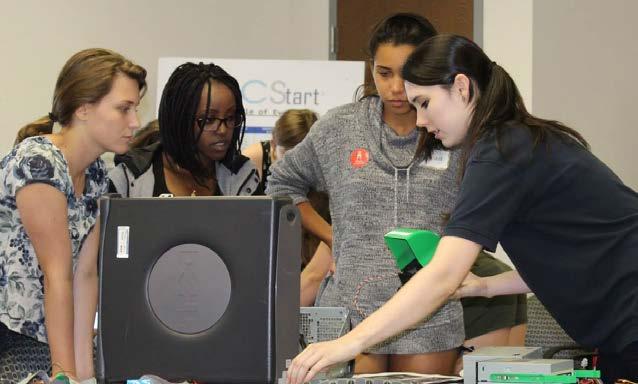
with workshops; real-world learning experiences that engage youth in the students’ communities; and the opportunity to meet with college mentors, visit campus, participate in service learning opportunities and more.
Under the direction of Michael Giazzoni, the CHS program has also expanded the range of course work beyond the traditional Advanced Placement-level courses, increased scholarship support to families in need and developed a deeper relationship with the Pittsburgh Public Schools.
By partnering with high schools, the CHS program helps bridge the gap between high school and higher education, paving the way for students to leave high school and enter college with not just a head start on their credits but also the skills they need to succeed once they are there.
The program, strengthened by scholarship support and partnership with the Justice Scholars Institute, provides opportunities for those students and families for whom college may not have been a reality.
“I came out of high school with an understanding of how to program in Java, take college-level computer science exams and think critically,” said Betz. “Most importantly, I came out with a passion for learning computer science.”
8,250+
high school students participated in the CHS program in the 2021-22 academic year
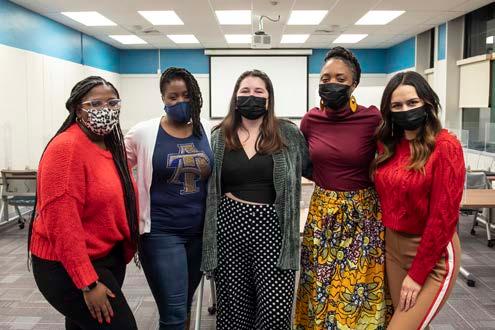
CHS participant and Pitt computer science graduate Emilee Betz (right)
Justice Scholars Institute
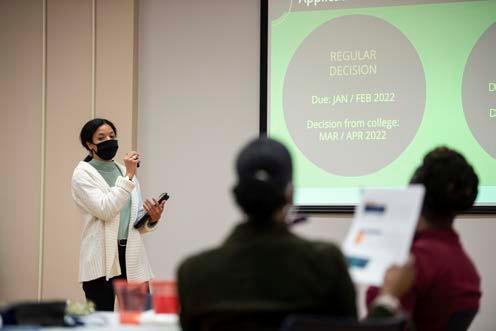
Students from three local high schools attend an open house and college admissions Q&A at the Hill District Community Engagement Center in December 2021.
Fostering Healthy Minds and Positive Mindsets
HealthyCHILD School of Education
If you visit the Office of Child Development’s HealthyCHILD office any day of the week during the school year, you are likely to find an empty space. This is because the program team, which helps early educators and families build their capacity to promote children’s social-emotional development, is out providing support directly in the community.
HealthyCHILD, which began in 1994, aims to build organizational and individual capacity to create safe, supportive and responsive relationships and environments; promote social-emotional development and mental wellbeing; and prevent and respond to challenging behavior that is often the result of trauma, mental health and racial discrimination.
The program also is attempting to close the educational opportunity equity gap by helping teachers to include students in their classrooms who may have otherwise been suspended or expelled from school.
At the end of each school year, assessments and impact surveys are given to teachers, caregivers and children. Data from these assessments have found that nearly all participating teachers agreed that HealthyCHILD instilled greater sensitivity in them of community issues and cultural diversity as well as increased the frequency of positive social behavior among children.
As one Early Head Start teacher noted, HealthyCHILD had
“the largest positive impact I have seen in our classroom in over five years.”
Positive Racial Identity Development in Early Education School of Education
For young children of color, having a positive racial identity means feeling good about one’s physical features, heritage, history and culture. Not only is this important to the healthy growth and development of Black children, but research has also shown that when young Black children are socialized to view themselves in affirming ways, those attitudes can lead to positive outcomes, including improvements in behavior, better recall of factual information and enhanced problem-solving skills.
P.R.I.D.E. is an early childhood program developed in 2017 in the Office of Child Development that supports the positive racial identity development of young Black children aged 0 to 8. The program provides training and learning opportunities for educators and artists, informal learning sessions for parents of young Black children through the Parent Village project, artist residencies and art festivals to immerse young Black children in an Africana art experience that celebrates their Blackness.
All these opportunities focus on ways to anchor Black children in positive racial and cultural experiences to build their resistance to life in a highly racialized society.
These activities also involve engaging with teachers in public, charter, private and laboratory schools; partnerships with local child care programs and sites; and collaborations with family support centers and delivery of programming at Pitt’s Community Engagement Centers.
Consistent assessments of P.R.I.D.E. strategies have indicated that after participating in P.R.I.D.E. training, educators and parents are more aware of the importance of engaging in conversations about race with young children and that they are more confident having those conversations.
One outcome of P.R.I.D.E.’s work is expansion beyond Southwestern Pennsylvania. From 2021 to 2023, P.R.I.D.E. contracted with the Philadelphia-based early care and education program First Up to conduct an environmental scan of positive racial identity development in Philadelphia as well as to deliver professional development to First Up staff, three local child care sites and a small group of early educators through the P.R.I.D.E. Teacher Cohort program.
Annually, HealthyCHILD provides on-site trauma-informed developmental, behavioral and mental health consultation, education, technical assistance and/or direct service to more than
150 preschool classrooms,
300 early education professionals and 3,000 children and families within Allegheny County.
Full S.T.E.A.M. Ahead
S.T.E.A.M. Saturday
Hill District Community Engagement Center Office of Engagement and Community Affairs
Imagine the first time you discovered what happens when you combine vinegar and baking soda. The bubbling and movement often elicits a sense of curiosity that makes the chemical reaction exciting to witness every time it happens.
What if we could take that curiosity and turn it into a lifelong love of learning? With programs ranging from coding to biology, engineering and more, students who participate in S.T.E.A.M.
Saturday at the Hill District Community Engagement Center can explore their interests and gain a passion for science, technology, engineering, arts and mathematics.
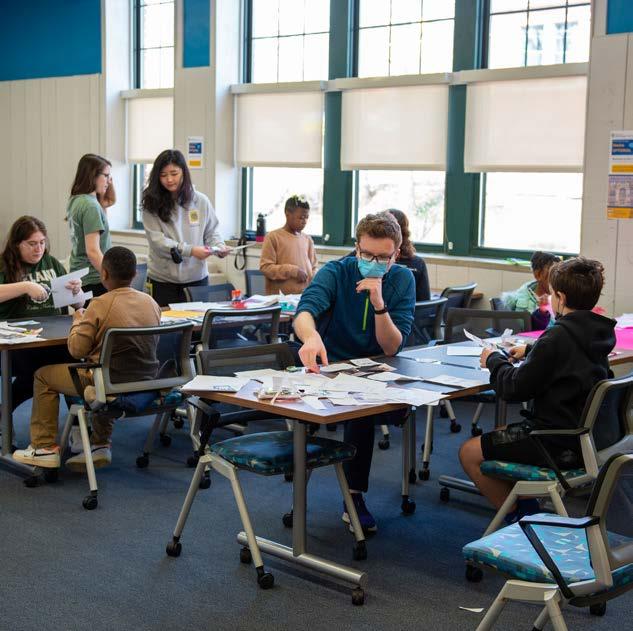
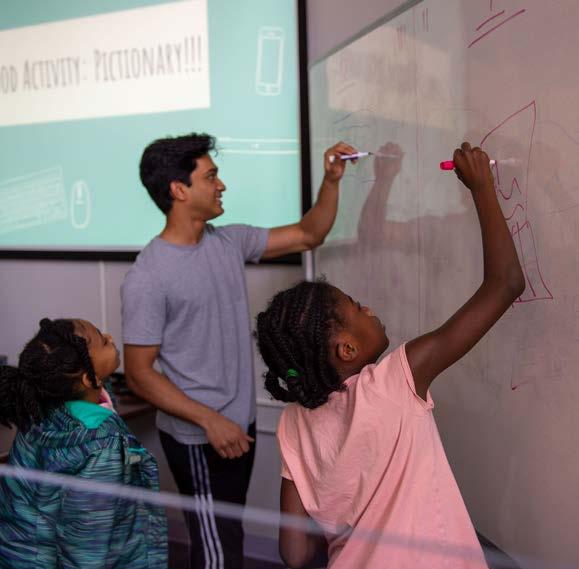
S.T.E.A.M. Saturday is a collection of educational programs delivered by Pitt students and offered to third- through eighth-grade students. The program aims to increase confidence, problem-solving skills, technology skills and interest in STEAM careers through engaging lessons and hands-on experiences.
Since the launch of S.T.E.A.M. Saturday in 2021, session offerings have more than doubled, from three to eight, and more students are able to participate because the eligible grade range has expanded.
Eleven different student organizations and departments help to deliver S.T.E.A.M. Saturday programming. Data from pre- and post-surveys, conducted in collaboration with the student organizations that lead programming, indicate that students who participated in S.T.E.A.M. Saturday experienced growth in STEAM interest, knowledge, skills and confidence.
Pitt Sustainability: The Efficiency Network
Mascaro Center for Sustainable
Innovation
In 2021, the Pittsburgh Public School’s Allegheny Traditional Academy got an energy makeover. With new lighting, updated plumbing features, a solar water heater and more, not only was the school now equipped with the tools to be more energy efficient, but students also were able to power their own minds through a partnership with The Efficiency Network (TEN) and the Mascaro Center for Sustainable Innovation (MCSI).
TEN, which is part of Duquesne Light Company, creates energy retrofits for existing structures to make them more efficient while also reducing energy costs. After the retrofits were made to Allegheny Traditional Academy, MCSI worked with
TEN and an eighth-grade science teacher at the school to develop educational modules for the students about how and why the changes were made in their school. Students gained exposure to engineering concepts while also applying the newfound knowledge to their curriculum on waves and gaining tangible experience with energy conservation.
MCSI faculty and staff also served as science fair judges at the school, taught two in-person modules to the science class and hosted students at Pitt to both continue the conversation and further ignite the students’ STEM pursuits.
Changing Tomorrow by Being Intentional Today
Pitt Prison Education Project
Kenneth P. Dietrich School of Arts and Sciences
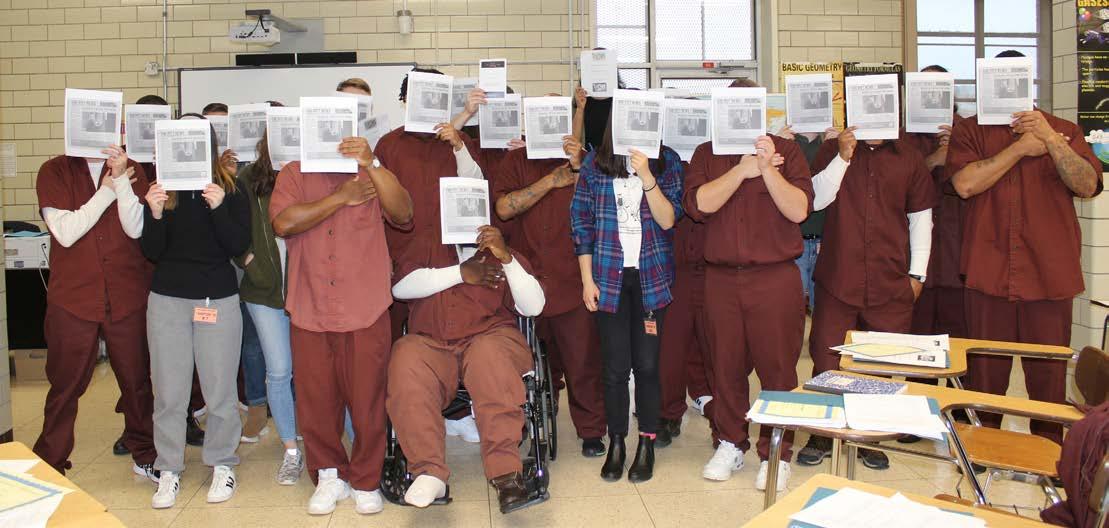
Shalini Puri, a cofounder of the Pitt Prison Education Project (PPEP)—a network of Pitt faculty members across disciplines who teach courses in prisons in the Western Pennsylvania region—believes in the right of all people to an education. Says Puri, a professor in the Dietrich School’s Department of English, “We have seen that, given the opportunity, our inside students excel.”
PPEP’s 20 courses, which feature small class sizes and include both incarcerated students and Pitt undergraduates, are modeled on the Inside-Out prison exchange program that enables incarcerated and nonincarcerated people to encounter one another simply as fellow students.
Since 2016, the program’s emphasis on collaborative learning invites people on both sides of prison walls to learn by applying diverse experiences to a shared topic of study. The classes embody Pitt’s commitment to excellence and are grounded in the pursuit of intellectual rigor, social justice and personal growth.
Course-related programming often includes enrichment activities such as tutoring by graduate students; access to workshops and performances by guest faculty and acclaimed artists; and opportunities to present their work at conferences and City of Asylum, a local nonprofit organization that “provide[s] sanctuary to endangered writers and artists, so that they can continue to create and their voices are not silenced” and offers “a broad range of
free literary, arts, and humanities programs in a community setting to build social equity through cultural exchange.”
In 2018, PPEP was able to grant official Pitt credit to incarcerated students. In the same year, PPEP won a Chancellor’s Seed Grant in recognition of its contribution to advancing the University’s educational mission, equity and diversity. In 2019, “Clear and Present Stranger,” a collection of poetry and fiction written by incarcerated writers, was performed by Pitt outside students to a packed house at City of Asylum. During the pandemic, when all other prison programming was suspended, two PPEP faculty coproduced a 185-page volume of their students’ writing titled “Write Now! A Guide By and For Incarcerated Writers.” This guide was the first of its kind—written not just for incarcerated students but also by them.
Both inside and outside students have felt the tremendous impact the program can and does make, with an outside student describing their experience as “nothing short of the most meaningful class I have taken.”
On the inside, one student noted:
“It has shown me that the commitment that I had made to myself to make the necessary changes while in prison to become a better person is working. It has also shown me that I can succeed at the college level.”
A Love of Learning, No Matter the Age

1,300+ active members
1,100 reside in Allegheny County
350+ courses, lectures and tours each year
Osher Lifelong Learning Institute at Pitt Office of Engagement and Community Affairs
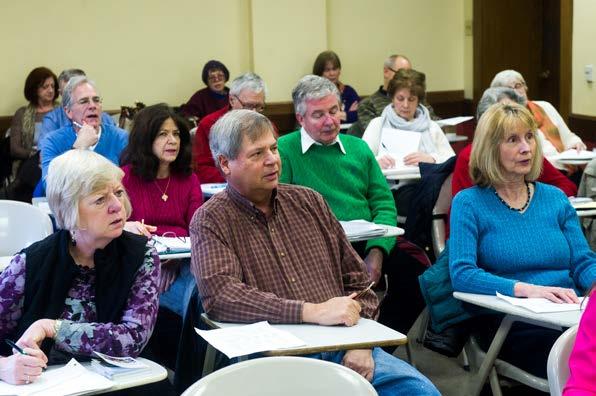
“When I joined Osher, I met a whole new group of people with different interests from different neighborhoods and different parts of the country,” says Leslie Holmes, a member of the Osher Lifelong Learning Institute at Pitt since 2016 and a retired first-grade teacher in the Keystone Oaks School District.
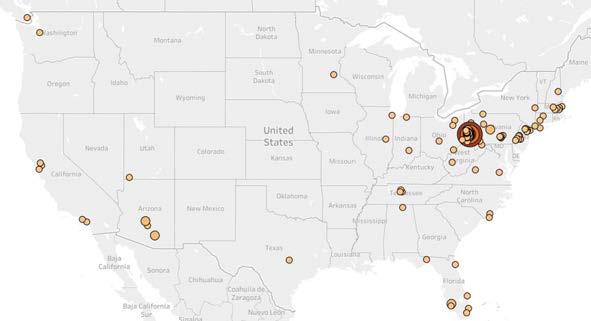
Holmes is one of more than 1,300 members—1,100 of whom reside in Allegheny County—of the Osher Lifelong Learning Institute (OLLI) at Pitt, which serves as a dedicated, nurturing intellectual environment for adults aged 50 or better. Established at Pitt in 2005 and one of 125 OLLIs located on college campuses throughout the United States, OLLI at Pitt offers more than 350 enriching courses, lectures, tours and other opportunities for social interaction and engagement throughout the year.
While COVID-19 shut down in-person activities for many, OLLI at Pitt staff acted quickly to shift the upcoming term to be fully online, becoming early adopters of the new virtual landscape. Not only did this provide an opportunity for more out-of-town members and instructors to participate, but it has empowered OLLI at Pitt members to become more familiar and comfortable with technology.
Today, OLLI at Pitt offers a mix of in-person and virtual courses on topics like current events, arts and culture, history and physical wellness. OLLI also holds many onetime events and lectures, and membership offers students the chance to audit up to two Pitt undergraduate courses each year. Members also have the use of Pitt libraries, campus wi-fi and campus shuttles.
Beyond the breadth of membership offerings, it’s often the instructors, many of whom have loyal fan bases, that make a difference for OLLI members. One such instructor, Jared Day, a former in-person instructor who moved online during COVID-19, maintains an attendance of 150-200 members per class, regardless of what he teaches.
OLLI instructors, who include current and retired Pitt faculty, challenge participants to understand the cultural forces of today, to interact socially and intellectually with one another and to live empowered lives. Instructors also find as much value in learning from the students as the students do with them.
“I find the Osher students to be wonderfully engaged,” says Diane Markowitz, who has been teaching wellness courses with OLLI since 2021. “They are curious, diligent and very warm. Although we meet over Zoom in a large group setting [for my course], I feel like I know many of them well.”
Public Health Science Academy School of Public Health
High school students may not often think about public health, know what it encompasses or know how they can carve out a successful career in the field, but a month-long summer program at the School of Public Health is changing that.
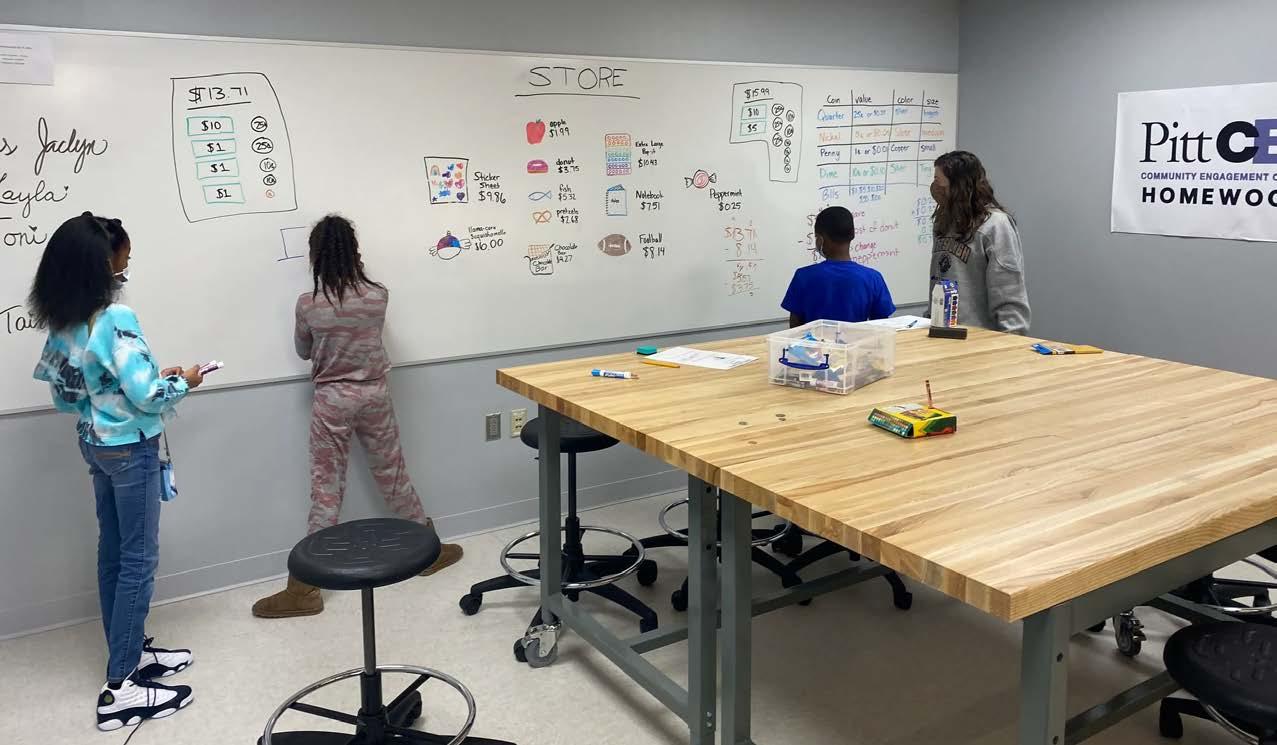
Launched in 2022, the Public Health Science Academy (PHSA) immerses 11th- and 12th-grade Pittsburgh Public Schools students in research projects that address pressing public health issues. Students are matched with faculty mentors who shepherd them through the scientific process, culminating in a research symposium where they present their findings to family members, mentors and educators. Students also experience public health in the real world through field trips.
PHSA is designed to expand access to public health education and careers as well as to help build and strengthen community partnerships with Pitt’s Community Engagement Centers and other local organizations across Allegheny County.
The intention is for these connections to build pathways for PHSA students to enter academic programs in public health research and practice and, eventually, to help improve the health of local communities.
“[PHSA] not only gave me a new outlook on public health, but it showed us many examples of people out in the field doing the work and displaying how public health is an active part in everyone’s life,” noted one student in the program.
For the Fun of Learning
PittEnrich
Homewood Community Engagement Center
Office of Engagement and Community Affairs
The Gismondi Foundation
Loud and lively are the best ways to describe a typical Saturday at the Homewood Community Engagement Center (CEC). As students excitedly puzzle through math problems at a whiteboard and make a game out of reading through a “five-finger retell,” the space almost vibrates with energy, laughter and learning. This is PittEnrich in action.
In partnership with The Gismondi Foundation, PittEnrich uses a unique blend of in-school tutoring and Saturday learning-throughplay sessions to help Homewood students improve their reading and math skills.
Working closely with the principals and teachers at Pittsburgh Faison K-5 and Pittsburgh Lincoln PreK-5 elementary schools, Pitt students provide tutoring in more than 23 Homewoodserving elementary classrooms Monday through Friday. Then, on Saturdays, 50 of the first- through fourth-graders are welcomed to the CEC to extend the learning, but in a fast-paced, fun way.
In addition to reading and math, the program offers enrichment sessions on topics ranging from various forms of the health sciences to fun ways of engaging with the natural sciences and collaborates with several community partners including Homewood Children’s Village and Homewood Community Sports.
Since the program started in 2019, 83% of participating students have experienced growth in math operations, measurement and geometry as well as in reading fluency. This is a positive impact for the students, as this growth contributes to the closing of the educational equity gap with their peers, as well as for teachers. All participating teachers have found the tutors to be helpful in their classrooms and have expressed interest in having a PittEnrich tutor year over year.
631

3,150
2022 students participated hours tutored In 23 23 classrooms reachedtutors

Not Just Surviving but Thriving
The Pittsburgh Study School of Medicine
How do we ensure that every child in our region is healthy, thriving and achieving their academic goals?
That’s the purpose of The Pittsburgh Study (TPS), which works with an alliance of community advocates, practitioners and researchers to learn about child health and well-being and to address the root causes of inequity through developing and testing interventions at different developmental stages for children and families in Allegheny County from before birth through high school.
Currently in its sixth year, TPS serves as a citizen science hub where all aspects of the study design, evaluation, dissemination and outcomes are cocreated with community advocates, practitioners and residents.
During the COVID-19 pandemic, TPS launched the Community Vaccine Collaborative, which focused on diverse and inclusive participation in vaccine trials, resulting in more equitable vaccine distribution in the region. Additionally, nearly 1,000 families enrolled in the Early Childhood Collaborative, which emphasized enhancing parents’ and adult caregivers’ strengths through research-informed interventions that promote parent and child thriving.
One citizen scientist shares, “I can participate and be respected, and everyone is interested in what I say. No one
has ever made me feel that I don’t have a right to be here— that my opinions don’t matter.”
TPS also turns data into action and advocacy. Since it began, TPS has updated its Youth Behavior Study; developed a childhood asthma dashboard to identify and connect with families of children with asthma who may benefit from additional supports and services; and launched an umbrella database, which measures and reports thriving metrics.
“When this started, I thought it was going to be research by the manual. But TPS is different,” says one middle school partner. “We’re allowed to let this be an open and honest and safe space where the kids can bring what they are seeing or going through. They want guidance, and we don’t let curriculum or research get in the way of building relationships with youths or with school. They can deal with what is going on in real life.”
Longterm, TPS’s aspirations are to ensure that children are not just surviving but thriving—in fun and happiness; in feeling and being safe; with vibrant communities; with healthy environments; with strong minds and bodies; with positive self-worth and sense of identity; with caring families and relationships; and with a sense of racial justice, equity and inclusion.
I have found that most of the families I’ve worked with really appreciate the connection we’ve made. That connection empowers them to make changes or just to have more confidence in their parenting.
– Cynthia Milberger, supervisor of positive behavior support at Head Start/Pre-K Counts
Homegrown
Pitt Sustainability: Urban Agriculture
Mascaro Center for Sustainable Innovation
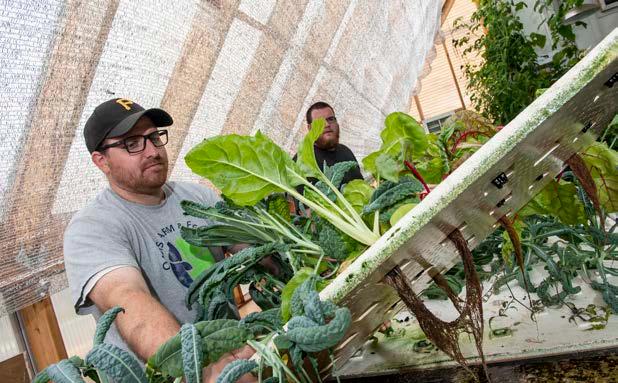
Urban agriculture is the various practices of cultivating, processing and distributing food in urban areas. It’s also the name of a Pitt program that seeks to enhance sustainable urban agriculture in Homewood.
Through the Bible Center Church in Homewood grew an educational initiative called The Oasis Project, whose mission is to create oases— places of peace, prosperity and happiness in the midst of trouble or difficulty. From there came the Oasis Farm & Fishery.
The farm helps to teach and apply urban farming techniques and equip youth and adults to grow their own food and cook healthy recipes using fresh produce. The Urban Agriculture program was established in 2016 by The Oasis Project and David Sanchez in the Mascaro Center for Sustainable Innovation. Through the program, all produce grown at the Oasis Farm goes to Oasis’s Veggie Subscription
program, Everyday Café in Homewood and other community organizations.
Beyond the produce grown and distributed, the long-term community impacts of the program are drawn from the service learning opportunities and project assistance provided by students directly in the community. Pitt students have collaborated with Oasis on specific agricultural projects, such as building the greenhouse where all of the produce is grown, creating raised bed gardens and developing business plans.
The program also inspires students to continue to learn about controlled environmental agriculture in Homewood, which is a core part of Pitt Hydroponics. The Pitt Hydroponics student group organizes regular biweekly service projects in Homewood, where they often are joined by other student groups, including Engineers for a Sustainable World and Engineers Without Borders.
Family Check-Up
Kenneth P. Dietrich School of Arts and Sciences

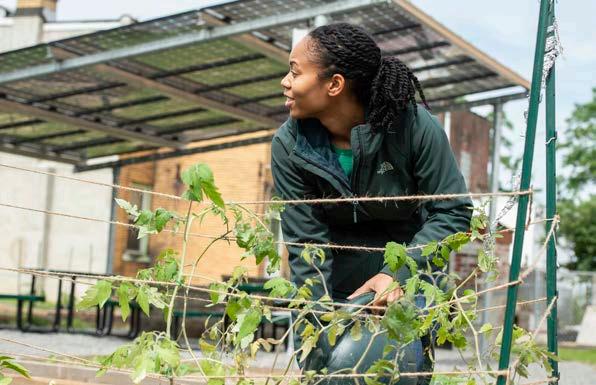
If parents are able to thrive, then their children can thrive. Through brief, strengths-based interventions, Family Check-Up works by helping parents to improve their parenting practices—such as positive behavior support, monitoring and setting limits— and by enhancing the quality of all of their family relationships. The goal? Reduce children’s problem behaviors by improving parenting and family management practices.
Part of the University’s Center for Parents and Children, Family CheckUp, directed by Dietrich School Distinguished Professor of Psychology Daniel Shaw, has been the subject of more than 50 peer-reviewed publications demonstrating positive impacts. Research also has indicated reductions in depression among parents, which, in turn, promotes improvements in child wellbeing.
Since its inception in 2000, more than 2,000 Allegheny County residents have benefited from these interventions. In fact, Family Check-Up has been implemented in 27 U.S. states and five countries outside the United States.
However, the primary focus area remains local. Through support from Pennsylvania’s Office of Child Development and Early Learning and Allegheny County’s Department of Human Services (DHS), the communitybased Early Childhood Collaborative of The Pittsburgh Study and Pitt’s Center for Children and Families offers Family Check-Up through many programs and organizations, including Hello Baby, Early Learning Resource Center, Family Centers, Child Welfare and Children’s Primary Care Oakland. Support from The Pittsburgh Study and, now, DHS also enables Family CheckUp to continue to serve families across Allegheny County.
Nurturing “Communities of the Eager”
Center for Analytical Approaches to Social Innovation Graduate School of Public and International Affairs
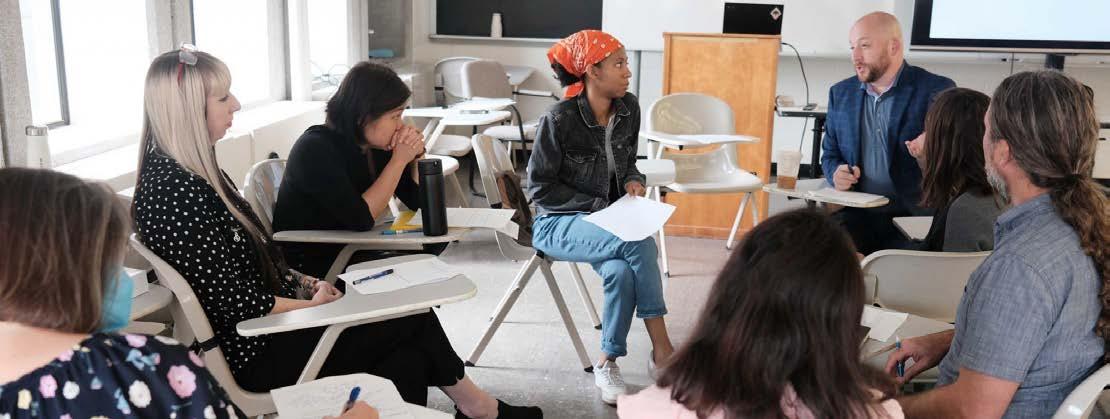
Since George Floyd’s murder in May 2020, the Center for Analytical Approaches to Social Innovation (CAASI) has held weekly open meetings between Pittsburgh grassroots leaders and Pitt students to nurture long-running “communities of the eager” around social justice issues.
The open meetings that began that same month and that are still occurring have led to the creation of several community-engaged projects, including the first hyper-local police contract library with community leaders in police accountability—the Allegheny County Policing Project (ACPP). ACPP is currently used by several community organizations, including Alliance for Policy Accountability, Abolition Law Center, 1Hood Media and Take Action Advocacy Group. The project has also spurred collaboration in platform development with Casa San Jose and pdap.io.
As an incubator for student-driven, community-cocreated data science for social justice projects, CAASI seeks to find innovative solutions to solve community-informed social justice-based challenges by designing and implementing solutions in the data science realm.
As a result of the program’s innovative solutions and community involvement, CAASI has received local and national recognition, including the 2023 University of Pittsburgh Chancellor’s Distinguished Service Award, 2022 Community Engaged Scholarship Forum’s Partnership of Distinction (together with Take Action Advocacy Group) and the Association for Computing Machinery’s New Horizons Bridging Research and Practice Award for the program’s data science work in support of social justice.
CAASI also codeveloped a community asset scavenger hunt called 412Connect with the Riverside Center for Innovation and the Homewood Community Engagement Center. 412Connect has connected almost 400 students with 15 business and organizations that are minority led or in primarily minority neighborhoods. Each platform was developed iteratively over three years, providing engaged learning opportunities for over 150 students from more than 10 classes across the School of Computing and Information, the Graduate School of Public and International Affairs and the Kenneth P. Dietrich School of Arts and Sciences.
By scoping projects with community members and training students to coordinate implementation across multiple capstone projects and fellowships, CAASI ensures that Pitt students have an opportunity to support local movement while bridging disciplinary boundaries and gaining project management skills. This creates a cycle of informed students and informed community members, continually working in support of social justice.
Says Bob Gradeck, director of the Western Pennsylvania Regional Data Center:
“[CAASI is the] most ambitious, passionate and communitycentered student-driven social justice and tech initiative in the United States.”
Community Leisure Learn School of Education
Health. Wellness. Safety. Fun.
These are the focuses of the Community Leisure Learn (CLL) program, created in 1969 to provide outreach activities on the University of Pittsburgh campus for youth to adults from neighborhoods near campus.
CLL offers age-appropriate active movement, swimming, healthy cooking classes and more. Between summer 2021 and spring 2022, more than 180 youth and 105 adults participated in CLL programming. Class attendance in the youth-oriented program was nearly 100%—a clear indicator of engaging and enjoyable offerings.
With more than 50 years of experience, the program is also adept at adjusting to the needs of the community. During the pandemic, to continue outreach while inperson activities were adjusted or suspended, CLL created an online virtual platform geared toward health, wellness and fun. Additionally, the Schools of Education and Health and Rehabilitation Sciences were recently involved in the creation of a new offering to help children with special needs or adaptations learn how to swim.
Pro Bono Legal Advice for Community
Members in Need
Legal Clinics School of Law
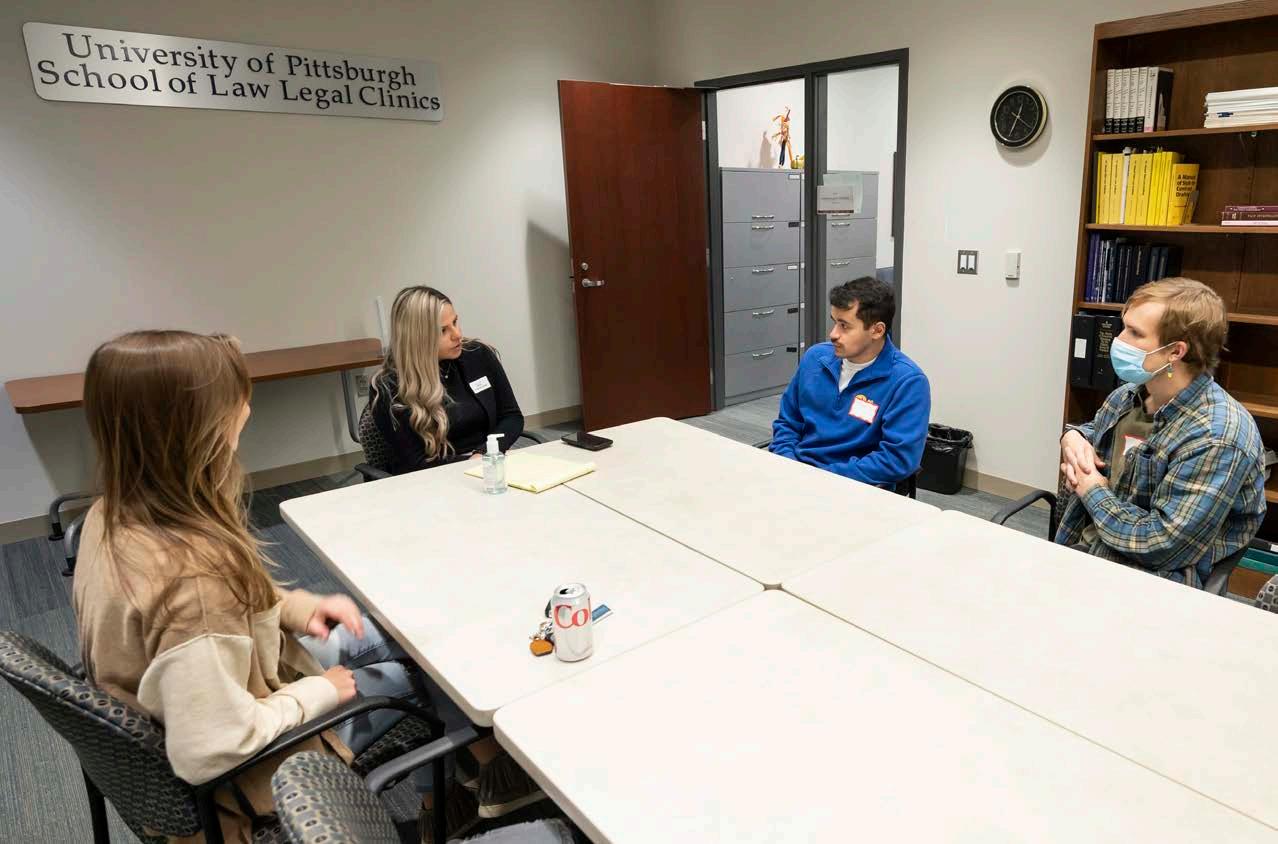
Since 1990, law school and reality have met head on in the Pitt School of Law’s in-house Legal Clinics—for both community members and students.
Under the supervision of full-time faculty who are practicing attorneys, law students offer a wide variety of services, such as data for brief advice, brief services and direct representation, across seven clinics: health law, immigration law, environmental law, elder law, tax law, family empowerment and legal access; and securities arbitration. On average, these clinics serve around 275 people per year.
In addition to the total student hours provided in pro bono client representation, the Legal Clinics regularly evaluate how they can adapt to the changing needs of the community.
In response to growing political tensions around the world, the Immigration Law Clinic and Pitt’s School of Medicine jointly launched the Human Rights Clinic in 2019. The clinic trains health care providers to perform forensic evaluations in cases involving violations of human rights and educates medical students about the legal processes and the role of health care providers in securing justice.
By documenting the physical and psychological complications of human rights abuses and submitting a medical-legal affidavit to court, physicians and law students can make a difference in whether these individuals are granted asylum or other relief under the law.
275 people served each year on average
Feeding the Hungry
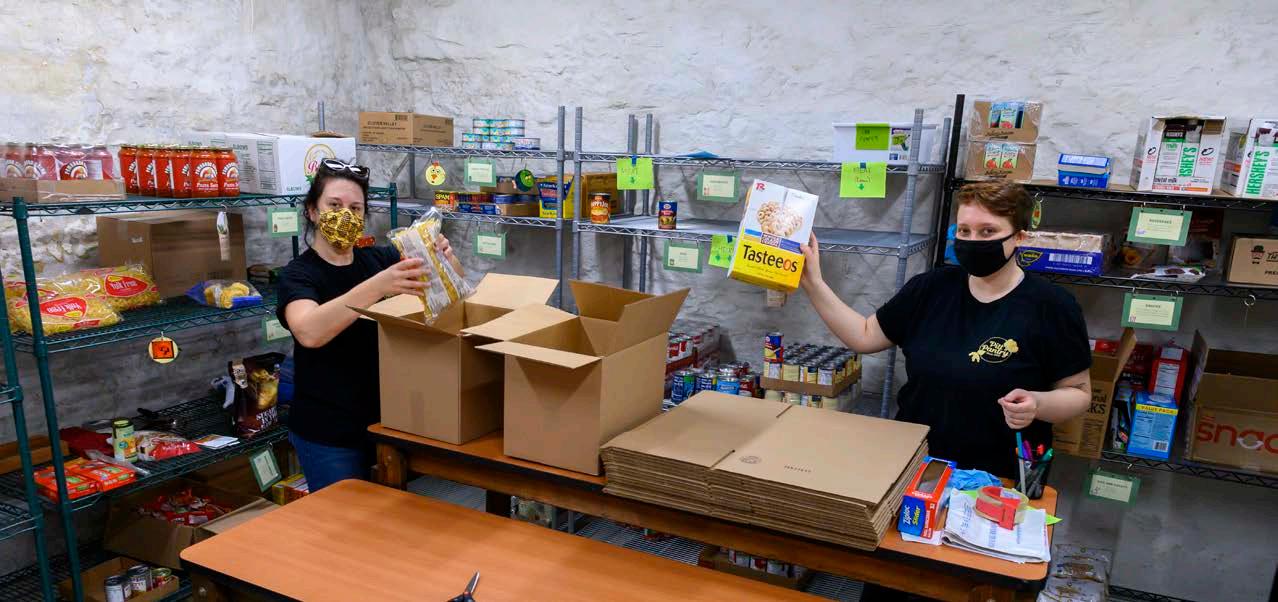
Pitt Sustainability: Food Recovery
Pitt Eats
Each year, nearly 119 billion pounds of food is wasted in the United States. Much of this food could otherwise be diverted to organizations working to fight hunger and food insecurity.
To help fight food waste in the Pittsburgh region, dining staff and student volunteers help to safely recover surplus food from campus dining halls and on-campus restaurants that is then donated to the Pitt Pantry and via 412 Food Rescue to local hunger-fighting nonprofit organizations, including PJ Provides and the Greater Pittsburgh Community Food Bank’s partner network.
Since the start of Pitt’s food recovery efforts in 2014, more than 130,000 pounds of food (approximately 108,000 meals) have been donated from the Pittsburgh campus. In addition to helping fight hunger, Pitt’s food recovery program also helps the University aspire toward zero waste—a major sustainability effort. Pitt’s
food recovery program has received awards for its efforts from the U.S. Environmental Protection Agency and Pennsylvania Resources Council.
Since 2021, Chartwells, the Pitt Eats food service provider and food recovery partner, has donated 1,200 food vouchers to the Pitt Pantry and has awarded the University of Pittsburgh at Johnstown a $10,000 grant to help serve food-insecure students.
Pitt Eats and the University will soon introduce Pitt Pantry Lockers in partnership with the Pitt Pantry and Transact Campus. These smart locker units will provide extra meals accessible by individuals struggling with food insecurity at Pitt. Pitt’s student group, Food Recovery Heroes, will facilitate meal delivery to the lockers, helping them meet their mission to reduce food waste and give back to the community.
130,000+ pounds of food
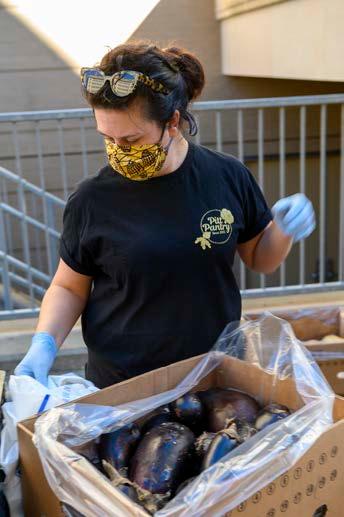
Pitt Pantry is dedicated to ensuring that all members of the Pitt community have regular access to a balanced and nutritious diet.
Open since spring 2015, the pantry hosts regular shopping hours for Pitt community members to obtain food and services.
108,000+ meals donated since 2014
The
Since launching in 2022, CCRRJ has: Conducted 11 educational panels
Awarded seven community scholarships and grants
Been involved in 11 projects aimed at representing people of color
Working for a More Equitable Future
Center for Civil Rights and Racial Justice School of Law
Achieving equity among our communities is a difficult task. Understanding how to do so while inspiring future generations to continue the work can be even more challenging. The Center for Civil Rights and Racial Justice (CCRRJ) within Pitt’s School of Law not only hopes to change that mindset but make it easier for communities to understand and achieve racial equity.
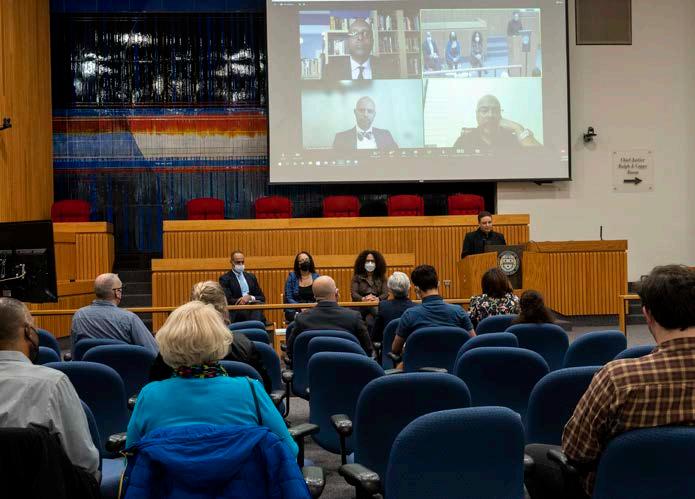
CCRRJ aims to promote racial equity in the Greater Pittsburgh community through a combination of educational panels, community scholarships and grants and legal activism work that focuses on uplifting communities of color.
Since it launched in 2022, CCRRJ has conducted 11 educational panels, has awarded seven community scholarships and grants and has been involved in 11 projects aimed at representing communities of color.
Thinking of those future generations of changemakers, CCRRJ also launched the Student Scholar Fund, which supports Pitt students interested in the study of social justice and racial equity.
LOOKING AHEAD: A soon-to-be-launched CCRRJ-led initiative is an expungement clinic, which will inform the Pitt and Pittsburgh communities on how to remove criminal convictions from a defendant’s criminal record, which will help to improve an individual’s opportunities for achieving gainful employment.
iServe School of Computing and Information
In spring of 2022, the Jewish Community Center (JCC) and Vintage Inc. submitted a proposal for Pitt students to meet with senior members of those organizations and help them navigate technology as “tech tutors.”
The partnership that resulted proved to be so successful that the JCC has provided funding to these student volunteers each subsequent academic term to help their senior members better understand how to use online systems to purchase groceries and protect their privacy.
These student volunteers are part of iServe within the School of Computing and Information (SCI), a communityengaged, project-based program that matches SCI students with external partners in need of technical assistance. Through designing and building websites, creating databases and videos, providing data analytics and maintaining social media accounts, students gain experience—and build confidence—in their technical and project management skills.
The program was developed in 2015 after SCI staff reached out to the Office of PittServes to explore opportunities for skills-based volunteerism with impact. In response, PittServes noted that a critical mass of nonprofits needed technical help but could not afford a full-time staff member or even a consultant.
Recently, students successfully created a digital ordering platform for the residents of the Southwestern Pennsylvania Veterans Center. The platform enables residents to order and pay for items online and have them delivered to their room. iServe is offered every fall and spring term exclusively to SCI students, who can find fulfillment in making an impact in our communities while improving their own skills.
As one iServe student volunteer noted, “The
project has made me feel more confident in my ability to turn my ideas into real web solutions.”
Clean, Affordable, Safe, Equitable, Accessible Water
Pittsburgh Collaboratory for Water Research, Education, and Outreach
Kenneth P. Dietrich School of Arts and Sciences
Equitable access to clean, affordable, safe water is a necessity for living. But research shows that communities that are under-resourced often are those that have the highest levels of unsafe water.
Bridging the gap between academic research and the water concerns of our region is the Pittsburgh Collaboratory for Water Research, Education, and Outreach, or Water Collaboratory for short. Under the previous direction of cofounder Emily Elliott, professor in the Dietrich School’s Department of Geology and Environmental Science, the Water Collaboratory fosters research collaborations and information-sharing activities with communities and key stakeholder organizations that help to advance water resource sustainability.
Since 2018 and through many collaborations, events and research projects, 46 faculty and staff and 27 students have engaged with over 100 community partners and 1,760 residents through direct outreach and engagement.
Water Collaboratory members have successfully obtained more than $6 million in research grants since 2018
and have developed more than a dozen community-engaged research projects designed to study water resources in key communities on the topics of social sciences, public and international affairs and health sciences.
Notably, the Water Collaboratory received a 2020 Pitt Momentum Funds Teaming Grant to support its Transcending Disciplines to Advance Water Equity project. The project has since led to a partnership with Women for a Healthy Environment. This collaborative effort has evolved into report cards for each water system based on an objective evaluation of each system’s practices as they relate to water transparency, affordability and water quality.
The need to research equitable water access and water resource sustainability in the region continues to grow, and with it so does the Water Collaboratory. An outreach coordinator was hired in 2019 to increase capacity and community engagement, and, in late 2022, its first full-time director was hired to help guide the next chapter of work.
Since 2018:
73 faculty, staff and students engaged with
100+ community partners +
1,760 residents
through direct outreach and online engagement, collaborations, events and research projects
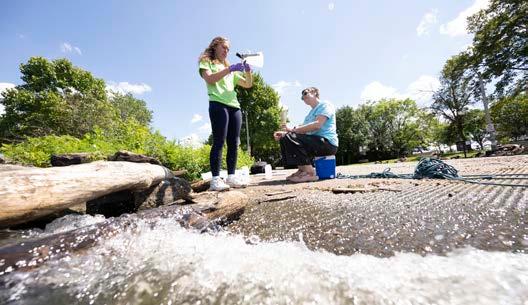
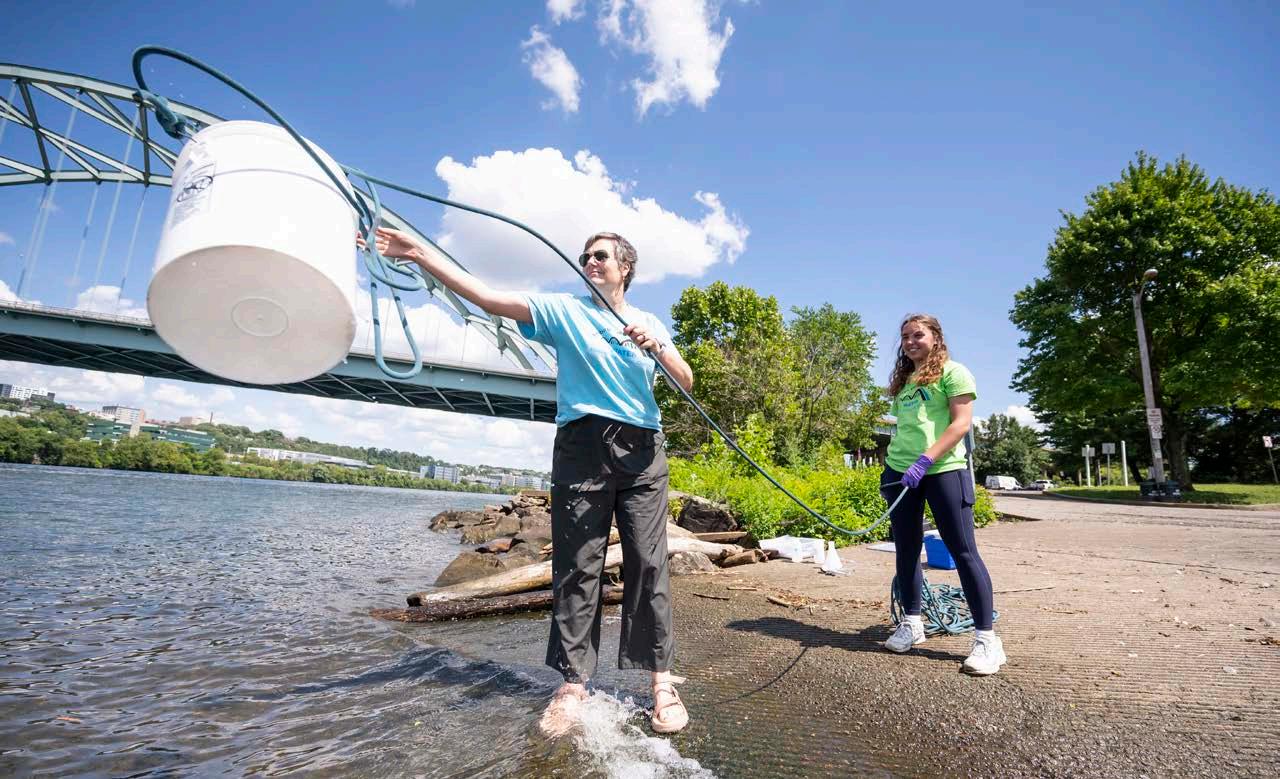
Emily Elliott, cofounder and director emeritus of the Pittsburgh Collaboratory for Water Research Education, Education, and Outreach, with undergrad chemistry major Hailey McGarrity, take water samples from the Monongahela River at Southside Riverfront Park.
5,000 Pennsylvania
residents engaged through policy-based problem solving
With Room to GROW
Pitt Sustainability: Tree Canopy Office of Sustainability
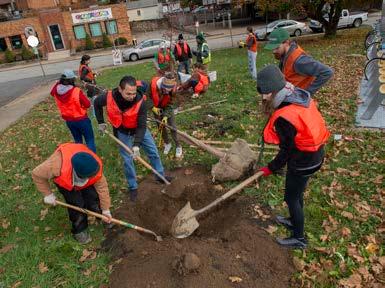
On a casual weekend in Oakland, you may occasionally witness a group of people walking around in bright orange vests, shovels and tree saplings in hand. As they approach an empty plot of land on a street, they’ll start digging, planting young trees of differing varieties that will may one day grow up to be strong, mighty and a significant contributor to the urban tree canopy—which helps to reduce pollutants in the air, including carbon emissions and particulates, and eases urban heat retention.
Congress of Neighboring Communities
Graduate School of Public and International Affairs
When the Congress of Neighboring Communities (CONNECT) launched as an initiative of Pitt’s Graduate School of Public and International Affairs (GSPIA) in 2008, it received national attention for its innovative, voluntary and effective facilitation model, and it still does today.
CONNECT convenes more than 43 neighboring municipalities, including the City of Pittsburgh, that share borders, challenges and opportunities, and its leadership represents nearly 900,000 residents of Allegheny County. Serving as a local government policy and program innovator and incubator, the CONNECT network provides resources, research, relationships and the trust to act together.
Since its inception in 2008, CONNECT has engaged more than 5,000 residents of Pennsylvania through policy-based problem solving. Recently, a fully funded pre-arrest diversion program, which offers wraparound services in several pilot communities, was launched. The first diversions occurred near the end of 2022, with more communities participating in 2023. CONNECT also has helped to develop a 40-government climate action plan that engaged its membership and 1,200 residents. The plan is part of a mid-activator effort with multiple state funding partners.
LOOKING AHEAD: In 2023, CONNECT launched as an independent initiative, and it will continue to build on and expand its work of fostering innovation and crossmunicipal collaboration. While the program will continue to partner with GSPIA, CONNECT’s evolution to an independent think tank further enables the program to be a true community partner in local government innovation.
Among this group of volunteers might be a Pitt Tree Tender who was certified through a partnership between Pitt’s Office of Sustainability and Tree Pittsburgh—an individual with the knowledge and skills to assist key partners in expanding the tree canopy in Oakland and throughout Pittsburgh, offering their expertise to regional community plantings and tree maintenance projects.
The Pitt Tree Tender program offers training so that students and employees can learn tree care techniques and help to grow and maintain tree canopies in Oakland and around the region. To help reach more people, an asynchronous module combines online lessons with an inperson tree identification walk. This flexible schedule increased the program’s accessibility by allowing those interested to participate outside a standard workday and time. More in-person opportunities are anticipated in the upcoming year.
Since the program began in 2022, 76 community members have become certified Tree Tenders. This module grew from Pitt tree planting partnerships with the Oakland Planning and Development Corporation (OPDC), including a 2021 event at which Pitt community members and OPDC helped TreeVitalize Pittsburgh plant 14 new street trees in Oakland.
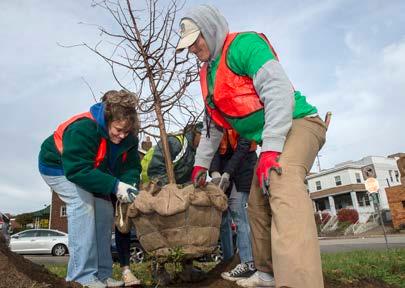
Over time, the impact of how Pitt Tree Tenders’ knowledge is being leveraged and implemented across the region is poised to grow alongside the region’s tree canopy. 76 community members became certified Pitt Tree Tenders in 2022

322,000
Pennsylvania residents have participated in AoUP since 2017
Creating a Better, Healthier World for All of Us
All of Us Pennsylvania School of Medicine
Health care is not a one size fits all. Beyond the differences in each person’s genetic makeup, outside factors like access to education, health care and economic resources—the social determinants of health—have a direct impact on health and wellness that varies from person to person.
With nearly 322,000 residents taking part since 2017, All of Us Pennsylvania (AoUP) is the single largest concerted effort to understand what makes Pennsylvanians sick or healthy.
The mission of AoUP is simple: to speed up medical breakthroughs through health research that is not a one size fits all. Using highly localized communications and engagement strategies, AoUP created an immense, shareable health data resource that may lead to the next medical breakthrough and healthier futures.
An important tenet of AoUP is engaging populations that have historically been omitted from ethical biomedical and behavioral research. In fact, 71% of core participants are identified as belonging to groups that are historically underrepresented in biomedical research.
By considering genetics alongside survey data that indicate the social determinants of health, AoUP researchers can understand how DNA, lifestyle and the environment may interact to affect residents’ lives, all with the goal of improving health outcomes for Pennsylvanians.
A Commitment to COMMUNITY HEALTH
Wellness Pavilion
School of Health and Rehabilitation Sciences
Eating right and working out are the hallmarks of a healthy lifestyle, but for many, sticking to it can be difficult. Busy lifestyles and a lack of accessible resources can make being healthy feel like a chore instead of a way of life.
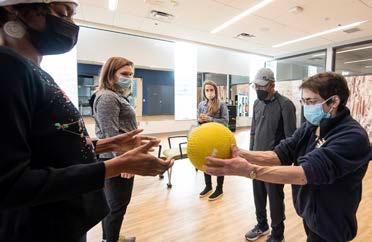
To make it easier for residents of Homewood and the surrounding communities to live healthier lives, the Wellness Pavilion at the Homewood Community Engagement Center provides interactive educational sessions, services, special events and programming to make health and wellness services more accessible.
The Wellness Pavilion’s services have all been student led, faculty supervised and offered free of charge since it was developed by the School of Health and Rehabilitation Sciences in 2020.
In fall 2022, the Wellness Pavilion hosted five programs that involved 33 children and adults. In post-activity surveys, there was strong agreement that the programs improved the participants’ perceptions, outlook and attitude toward health-enhancement activities.
The Wellness Pavilion continues to provide new services for children and adults, such as healthy lifestyle workshops, health certifications and educational enrichment activities, that are not already in place and create new knowledge for youth in the Homewood community.
High School Summer Internship Program
School of Nursing
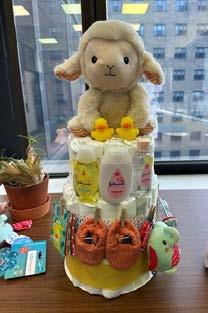
While many high school students spend their summers relaxing, MaryShawntel Obilor, a junior at North Catholic High School, and Sara Laman, a junior at Shady Side Academy, spent their summer tackling the serious topics of maternal morbidity and mortality through the High School Summer Internship (HSSI) program.
Offered since 1995 through the Magee-Womens Research Institute, HSSI is a four-week program that provides biomedical science research-interested high school juniors and seniors with a paid opportunity to participate in basic, translational or clinical scientific research with faculty researcher mentors across the Health Sciences.
While some biomedical research topics can be highly technical, Obilor and Laman, who were placed within the School of Nursing, found a way to bundle some joy in their internship experience.
Grace Lamsam Pharmacy Program School of Pharmacy
If you take daily medications, you know what a hassle it can be to only be prescribed a 30-day supply instead of 90. Now imagine you don’t have reliable access to transportation to pick your medications up. For diabetics or others with serious chronic conditions, this can quickly become deadly.
The Grace Lamsam Pharmacy Program (GLPP) is tackling health care disparities such as these through partnerships around the region. Since 1995, GLPP has improved pharmaceutical access by optimizing the availability of free or low-cost medicines and medication therapy management.
In its work, GLPP has contributed to an improvement in chronic disease clinical measures, such as in conditions like diabetes and hypertension. Through targeted interventions between 2018 and 2020, approximately 8% of GLPP patients with uncontrolled diabetes—that is, those with blood sugar levels over 9% per the A1C test—experienced an A1C improvement for each quarter.
GLPP has also explored other ways to lower medicine costs for patients. In addition to brand name substitution, the program now provides larger supplies of medications with each visit (90 days instead of 30), which results in fewer clinic visits and a lower overall cost in accessing care.
Caring for the individuals in the community is at the forefront of GLPP’s work. Pharmacy students develop structural awareness and are culturally sensitive, compassionate, humble and respectful when working with individuals and communities in resource-limited settings.
Two recent grants awarded to the program also are expanding its impact. Pitt’s Innovations in Education Award aims to engage communities in highlighting the social determinants of health in their community in collaboration with medical and pharmacy students. The American Medical Association’s Accelerating Change in Medical Education Innovation Grant Program seeks to develop and validate an assessment tool to measure the structural competency of graduate medical education trainees.
Working with Pitt Nursing faculty and staff, the students reviewed relevant information and conducted multiple interviews with practicing nurses, doulas and a faculty member in the Department of Africana Studies.
The students’ research highlighted the importance of earlier outreach to nutritionists and social workers as well as continued post-birth follow-up and care. Recognizing the necessity of additional postpartum care for new mothers, they also constructed three “diaper cakes,” which were distributed to moms who live in the borough of Wilkinsburg.
Each cake contained post-pregnancy necessities, like diapers and shampoo, and actionable resources for new mothers. This unconventional, research-based sign of caring is one way the HSSI experience seeks to improve maternal health outcomes and save lives.
Healthy Teeth, Healthy Life
Student Community Outreach Program and Education
School of Dental Medicine
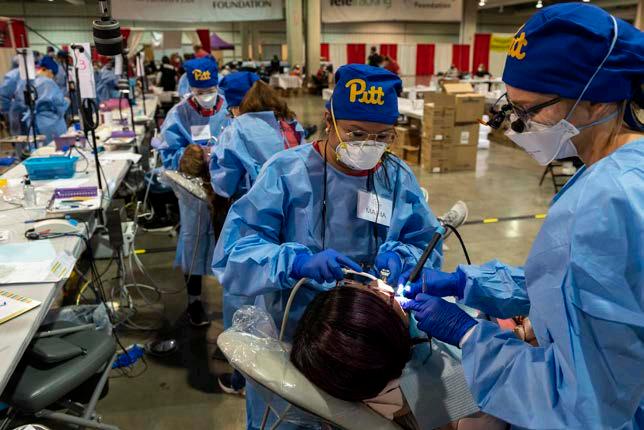
The Pitt School of Dental Medicine’s graduating Class of 2022 provided oral health care to 2,539 patients who could not access or afford the dental care they may have needed.
How did they do it? Through the Pitt Dental Medicine’s Student Community Outreach Program and Education, also known as SCOPE. Created in 2001, SCOPE aims to create a learning environment where students can expand their personal and professional insights, enable development of cultural competencies and gain experience by working in a variety of cultural, community and office settings.
Constructed in two parts—SCOPE I and SCOPE II—the program provides students both nonclinical and clinical community-based service experience during three out of four years at the school.
In SCOPE I, students spend a minimum of 50 hours in a community setting, including with local organizations like the Islamic Center of Pittsburgh, Ronald McDonald House and Jubilee Kitchen, to improve their knowledge of service learning, cultural competency and community needs.
In SCOPE II, students put their newfound community knowledge and their clinical skills into action by providing valuable clinical services at federally qualified health centers and nonprofit community health center dental clinics located in areas designated as dental health professional shortage areas.
More than 30 approved clinics exist throughout Pennsylvania, Ohio and Maryland that provide care to individuals in underserved urban and rural areas. In the Pittsburgh region, this includes the Primary Care Health Services Alma Illery Health Center in Homewood, the Neighborhood Resilience Project in the Hill District and Catholic Charities. Students also provide their services at free clinics through organizations such as Remote Area Medical and Mission of Mercy.
Of their experience, one student shared: “These experiences have given me a new perspective on the challenges that many patients face and allowed me to better understand their hardships. I hope to give back in my future, whenever I can, and be a part of the solution in fighting oral health disparities.”
Financial Stability
One Business, One Job, One Individual
At a Time
Urban and Community Entrepreneurship Program
Institute for Entrepreneurial Excellence
“All small business owners know that, when running a company, it is easy for things to get overwhelming,” says Alexis Russell, cofounder of Russell General Contracting, LLC, and a 2019 Community Power to Prosper (CP2P) certificate holder.
CP2P certification is awarded after the completion of the Urban and Community Entrepreneurship Program’s (UCEP) five-month course, which specializes in assisting businesses in underserved low-to-moderate income communities, helping them to grow and prosper through collaborative partnerships, consulting services and educational workshops.
Developed by the Institute for Entrepreneurial Excellence (IEE) in 2008, UCEP has fostered economic empowerment in the Greater Pittsburgh area by investing in one business, one job and one individual at a time.
Currently hosted at the Homewood Community Engagement Center, UCEP is committed to providing essential resources and training to emerging and established business owners located in the urban environment.
Businesses participating in CP2P often have less than $250,000 in annual revenue and few employees.
More than 200 diverse small business leaders across Pittsburgh have participated in the program, with the majority being Black and/or women business owners.
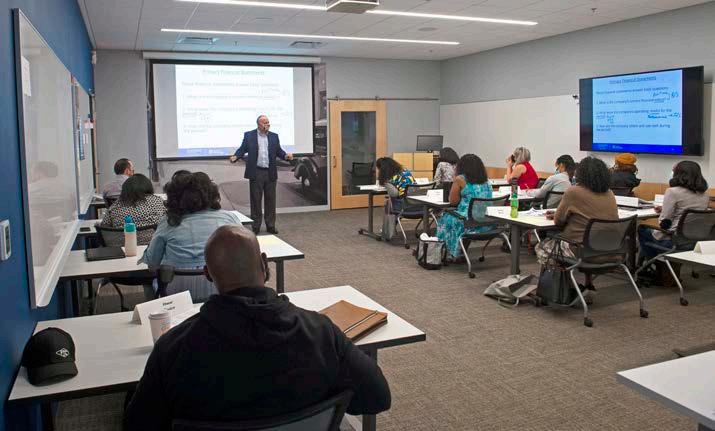
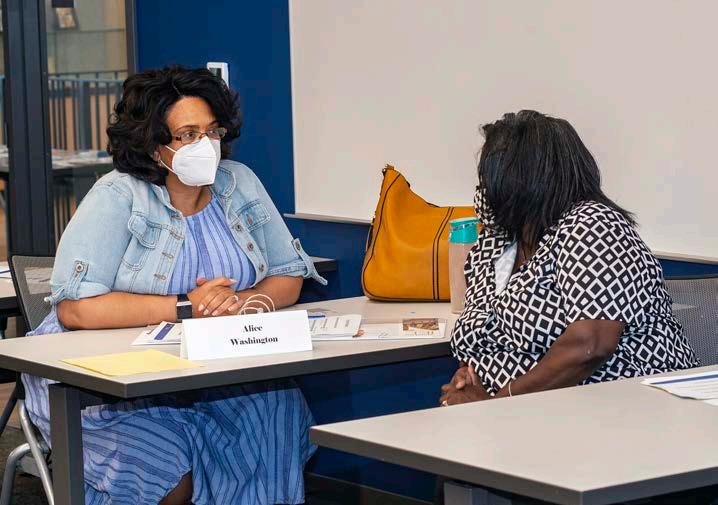
CP2P certificate holders have won contracts with Pitt, UPMC and the City of Pittsburgh and have sought to further their business training in IEE’s Entrepreneurial Fellows Class.
Russell is one such person who has continued their training in the fellows class.
“The course breaks down the information that business owners need to know and feeds it to the participants in bite-sized pieces that are easy to digest. All the main areas of business are focused on to provide a comprehensive view of how to successfully grow your business.”
Across Pittsburgh, 49 Black business owners + 48 Women business owners have participated in the program (as of 2022)
CP2P in Action
Local business owners participate in a Community Power to Prosper class held at the Homewood Community Engagement Center in July 2021.

Creating a Collective Voice
Research for Equity and Power School of Social Work
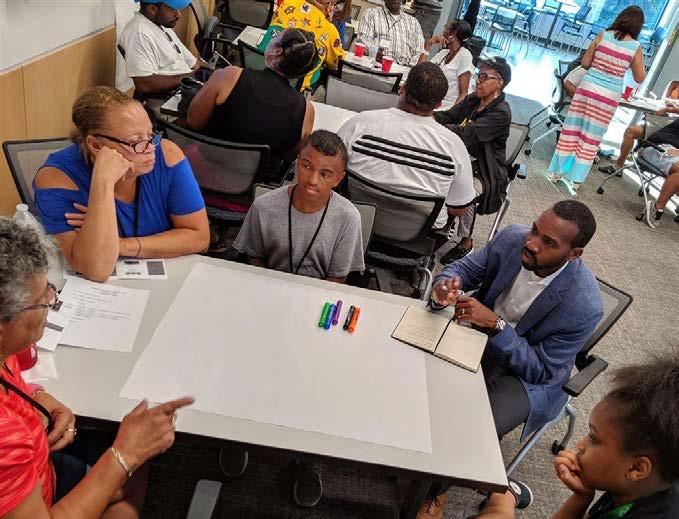
They say there’s power in numbers. With the right resources, communities have the opportunity to enact change for the betterment of their families and fellow residents. Since 2018, the Research for Equity and Power (REP) program has worked with residents to understand the capacity they have to influence upcoming and ongoing changes to their community as well as strengthen residents’ ability to influence neighborhood change.
Led by a partnership among Homewood Children’s Village, the Hazelwood Initiative, Center of Life and Pitt’s School of Social Work, REP actively engaged residents to explore their definitions of civic engagement, agency and activism, particularly around equitable development and resident-driven community revitalization.
After learning about how inclusionary zoning helps to create more affordable housing, Hazelwood residents wanted to make a change. REP mobilized and facilitated meetings to help residents add this issue to their Citizen Training Academy and in the Hazelwood Equitable Development Playbook.
The program invited residents from Lawrenceville to offer advice on how to get an inclusionary zoning policy adopted by the City and supported residents in organizing a housing forum to discuss inclusionary zoning and other affordable housing policies and programs.
This work has resulted in wider recognition. REP, which is funded by AmeriCorps, received another grant in 2022 to expand its work across neighborhoods at the regional level in collaboration with the UrbanKind Institute’s Equitable and Just Greater Pittsburgh. This new project will train 15 residents from across Pittsburgh in advocacy and organizing to address regional equity issues.
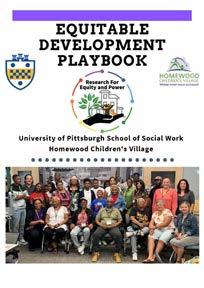
REP has also published Equitable Development Playbooks about Homewood and Hazelwood as well as collected stories and examples of how residents have used the playbooks to influence positive neighborhood change.
270 residents had their taxes prepared free of charge in calendar year 2022
$400,000 in taxpayer refunds secured in calendar year 2022
$1 MILLION+ in taxpayer refunds secured since opening the Oakland service location in 2018
Volunteer Income Tax Assistance Pitt Business
Understanding, preparing and filing your taxes can be confusing and costly. Since 2002, faculty and students from the Joseph M. Katz Graduate School of Business and the College of Business Administration, along with United Way of Southwestern Pennsylvania volunteers, have provided free tax preparation assistance for taxpayers and families with incomes less than $60,000 per year.
The Volunteer Income Tax Assistance (VITA) program is vital to the local taxpayers and families of Southwest Pennsylvania because it connects them to vital social welfare benefits afforded to them under the Internal Revenue Code and supports services offered through the United Way and the University.
Families who participate in VITA also are provided with financial literacy education that focuses on educational opportunities, better work environments and the importance of savings and retirement planning.
The program also helps the student volunteers. While making a difference in the community, Pitt students gain valuable tax preparation experience and a better understanding of the tax policies that can worsen, and occasionally counteract, some of the inequities faced by low-income individuals and families.
Community Engagement Centers: Your FRONT DOOR to Pitt
Pitt’s Neighborhood Commitments are the University’s flagship place-based community partnerships.
The commitments, focused on the Oakland, Homewood, Hill District and Greater Hazelwood neighborhoods of Pittsburgh, provide longterm commitments of staffing, infrastructure and coordination to facilitate mutually beneficial collaborations between Pitt and the local community.
The Oakland neighborhood commitment is anchored

District neighborhood commitments are anchored by Community Engagement Centers (CECs)—vibrant, welcoming spaces that facilitate engaged scholarship and learning, capacity building and economic inclusion.
A third Community Engagement Center is planned for the Greater Hazelwood neighborhood, which will have a priority focus on harnessing the nearby life sciences corridor (and BioForge) for community-scale opportunities in education, workforce development and inclusive community development.

In the heart of
HOMEWOOD
Est. 2018 | 622 N. Homewood Ave., Pittsburgh, PA 15208
Homewood is a neighborhood with deep roots, strong family ties and a common bond based on decades of shared efforts to renew. Pitt’s commitment to Homewood builds on a history of partnership between the University and a network of community collaborators. Together, we’re building a sustainable foundation for the community’s future.
The Homewood CEC is part of a coalition of partners collaborating to support “cradle to career” education, health and wellness. With these partnerships in action, the Homewood CEC offers a slate of free programming in
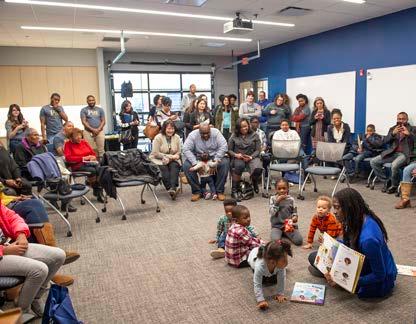
collaboration with all of Pitt’s 16 schools and community partners, including career workshops for young adults, vaccine clinics for residents, health and wellness opportunities for youth to older adults—many through the School of Health and Rehabilitation Sciences Wellness Pavilion—and PittEnrich for elementary school students.
The Homewood CEC continues to expand in both its offerings and its collaborations—creating more opportunity to reach residents, which means the opportunity to make a larger community impact.
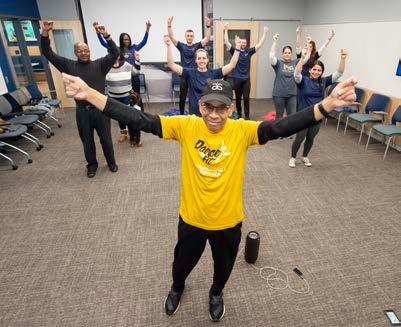
1,549 community members visited the Homewood CEC in 2022-23
156% increase in PittEnrich tutoring hours
33 community-benefiting education and wellness programs offered
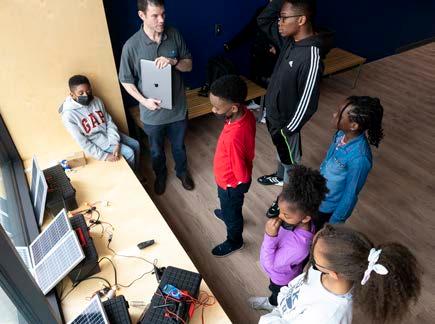
In the heart of the HILL DISTRICT
Est. 2021 | 1908 Wylie Ave., Pittsburgh, PA 15219
The Hill District is the center of the city—a historic community at the crossroads of Pittsburgh’s past and future. Pitt’s commitment to the Hill District is rooted in the space that the University and the neighborhood share in the center of the city. Together, we’re building bridges of exchange and community.
“Here on the Hill, we have a strong emphasis on digital inclusion and STEAM education, because that was the ask from the community,” says Marlo Hall, CEC outreach coordinator. “Folks here are aware these are industries on the rise that have a lot of opportunities, and they want to be prepared for that.”
The Hill District CEC presents a range of free programming from all of Pitt’s 16 schools and community partners, including career fairs, digital literacy courses for adults, technology training and biology courses for high school students and STEAM Saturdays for third through eighth graders. STEAM Saturdays offers classes on coding, engineering, mathematics and biodiversity featuring hands-on lessons taught by Pitt faculty and students.
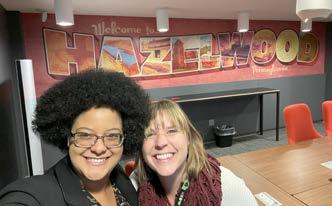
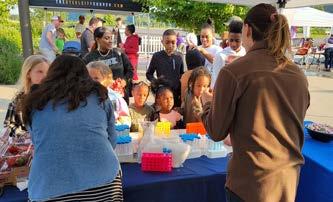
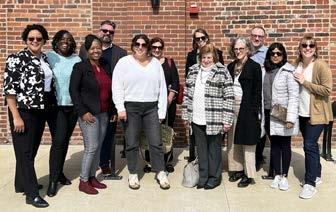
In March 2023, the Hill CEC welcomed Kelly Protho as its new director.
And in May 2023, the Hill Community Development Corporation kicked off the start of its renovation project for the historic New Granada Theater and surrounding spaces with a groundbreaking ceremony.
The New Granada building will be the future home of the Hill District CEC, which is currently based in the Blakey Program Center.
Pitt will serve as an anchor tenant, offering a STEAM studio, classrooms, offices, additional spaces and programming for the Center for African American Poetry and Poetics, the School of Social Work, Jazz Studies and computer literacy efforts.
1,142 community members visited the Hill CEC in 2022-23
209 STEAM Saturday participants
19 new full-time hires to Pitt from the Hill
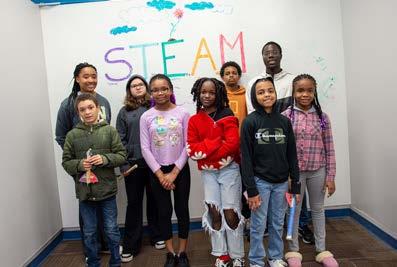
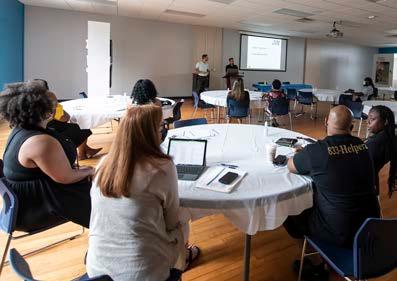
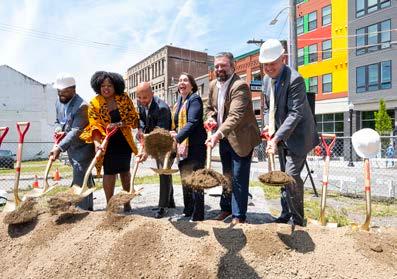
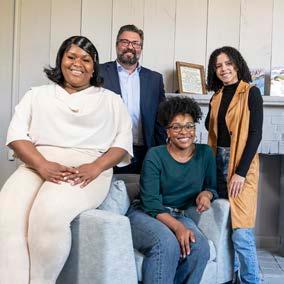
And, soon, in the heart of GREATER
HAZELWOOD
Pitt has been a collaborator in the Greater Hazelwood community for 25 years. Pitt is also a powerhouse in the life sciences.
Combining these two efforts is the next phase of our community commitment to the people of Greater Hazelwood: community-led efforts to identify educational and economic benefits in the emerging life sciences industry, driven by the BioForge development.
Director of Planning Heidi Ward and Project Manager Sierra Mason, alongside nine planning team members, are actively
working with community leaders, Pitt leaders and Greater Hazelwood residents to discover and define opportunities with the biggest benefit to the community.
The result? A forthcoming Community Engagement Center in Greater Hazelwood.
The CEC and BioForge will work together to create life sciences learning opportunities in PreK-12 education, ensure workforce development and promote community development for residents of Greater Hazelwood and beyond.

BECOME A PARTNER IN OUR PROGRESS
»Explore the Engagement and Outreach Map: engagementmap.pitt.edu
»Sign up for ECA’s newsletters: community.pitt.edu/newsletter
»Volunteer with the Pitt community: volunteer.pitt.edu
»Give to Pitt and transform tomorrow: giveto.pitt.edu
»Attend the Community Engaged Scholarship Forum: cesf.pitt.edu
»Visit the Community Engagement Centers: cec.pitt.edu