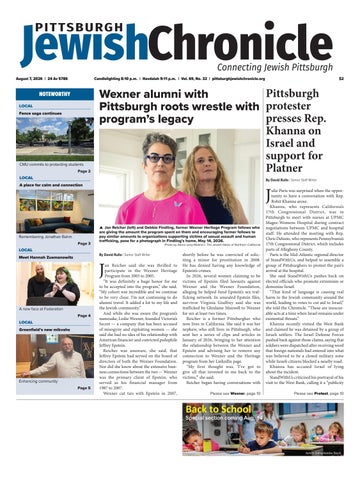
By David Rullo | Senior Staff Writer
Julie Paris was surprised when the opportunity to have a conversation with Rep. Rohit Khanna arose.
Khanna, who represents California’s 17th Congressional District, was in Pittsburgh to meet with nurses at UPMC Magee-Womens Hospital during contract negotiations between UPMC and hospital staff. He attended the meeting with Rep. Chris Deluzio, who represents Pennsylvania’s 17th Congressional District, which includes parts of Allegheny County.
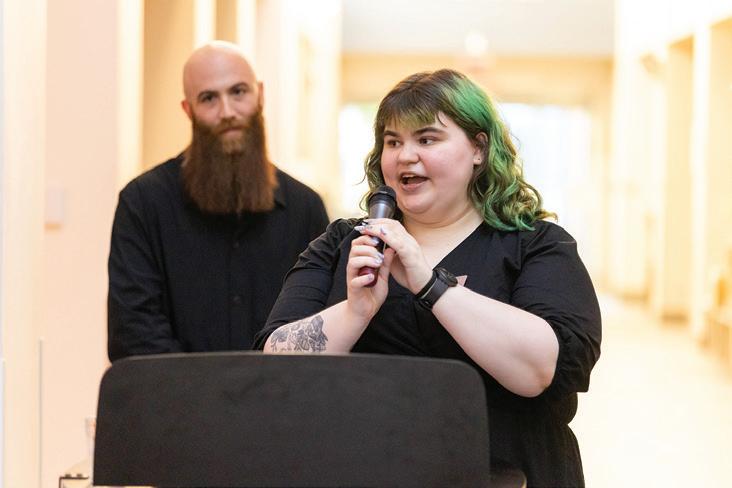
By David Rullo | Senior Staff Writer
Jan Reicher said she was thrilled to participate in the Wexner Heritage Program from 2003 to 2005.
“It was definitely a huge honor for me to be accepted into the program,” she said.
“My cohort was incredible and we continue to be very close. I’m not continuing to do alumni travel. It added a lot to my life and the Jewish community.”
And while she was aware the program’s namesake, Leslie Wexner, founded Victoria’s Secret — a company that has been accused of misogyny and exploiting women — she said she had no idea of his relationship with American financier and convicted pedophile
Reicher was unaware, she said, that Jeffrey Epstein had served on the board of directors of both the Wexner Foundation. Nor did she know about the extensive business connections between the two — Wexner was the primary client of Epstein, who served as his financial manager from Wexner cut ties with Epstein in 2007,
shortly before he was convicted of soliciting a minor for prostitution in 2008. He has denied having any knowledge of Epstein’s crimes.
In 2026, several women claiming to be victims of Epstein filed lawsuits against Wexner and the Wexner Foundation, alleging he helped fund Epstein’s sex trafficking network. In unsealed Epstein files, survivor Virginia Giuffrey said she was trafficked by Ghislaine Maxwell to Wexner for sex at least two times.
Reicher is a former Pittsburgher who now lives in California. She said it was her nephew, who still lives in Pittsburgh, who sent her a series of clips and articles in January of 2026, bringing to her attention the relationship between the Wexner and Epstein and advising her to remove any connection to Wexner and the Heritage program from her LinkedIn page.
“My first thought was, ‘I’ve got to give all that invested in me back to the victims,’” she said.
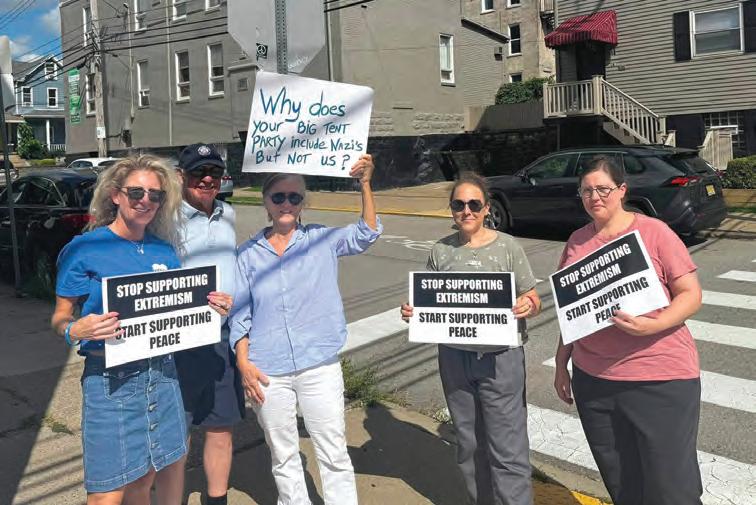
Paris is the Mid-Atlantic regional director of StandWithUs, and helped to assemble a group of Pittsburghers to protest the pair’s arrival at the hospital.
She said StandWithUs pushes back on elected officials who promote extremism or demonize Israel.
“That kind of language is causing real harm to the Jewish community around the world, leading to votes to cut aid to Israel,” she told the Chronicle. “These are inexcusable acts at a time when Israel remains under existential threats.”
Khanna recently visited the West Bank and claimed he was detained by a group of Israeli settlers. The Israel Defense Forces pushed back against those claims, saying that soldiers were dispatched after receiving word that foreign nationals had entered into what was believed to be a closed military zone while Israeli citizens blocked a nearby road.
Khanna has accused Israel of lying about the incident.
StandWithUs criticized his portrayal of his visit to the West Bank, calling it a “publicity

By David Rullo | Senior Staff Writer
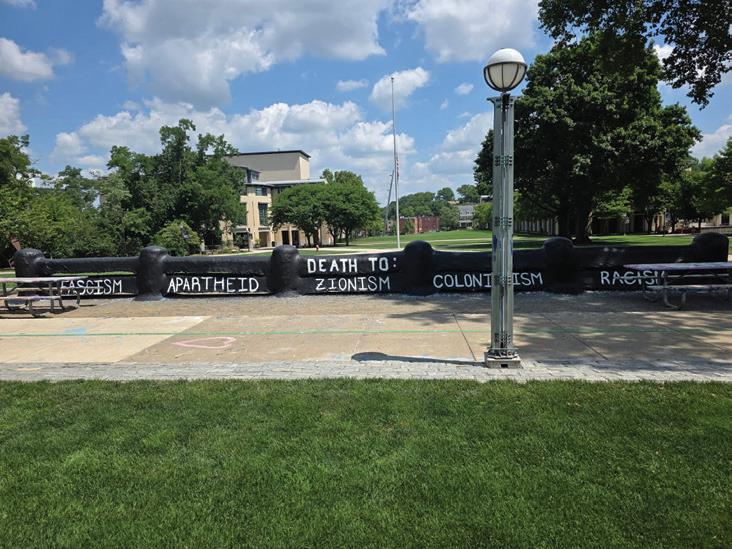
The fallout from anti-Zionist messages painted on The Fence at Carnegie Mellon University continues.
For more than a century, CMU’s Fence has served as a “student-centered” space for expression and community. This summer, a series of anti-Zionist messages painted on The Fence ignited a debate over free speech, student safety and the university’s role in stewarding one of Carnegie Mellon’s oldest traditions.
On July 27, CMU officials issued a statement titled “Safeguarding a CMU Tradition After Acts of Vandalism and Non-Student Paintings at the Fence,” meant to serve as a reminder of the “longstanding traditions and expectations governing the Fence.”
The university, according to the statement, received “multiple reports of vandalism and reports of non-CMU students and individuals unaffiliated with the university participating in painting the Fence.”
It went on to say that officers, who routinely patrol the campus, could request valid CMU identification from those painting The Fence going forward.
A day after CMU’s statement was issued, several far-left groups —including Jewish Voice for Peace, Palestine Legal, Institute for the Critical Study of Zionism, National Faculty and Staff for Justice in Palestine, Concerned Jewish Faculty and Staff, Coalition for Higher Education and the American Association of University Professors — issued a joint letter criticizing the university’s stewardship of The Fence and its handling of anti-Zionist messaging. The letter accused CMU of unfairly disciplining 10 students allegedly responsible for painting messages — including “Free Palestine by any means necessary” and “Death to Zionism” — and stifling free speech.
CMU officials responded to the criticism, saying it “grossly mischaracterized” the
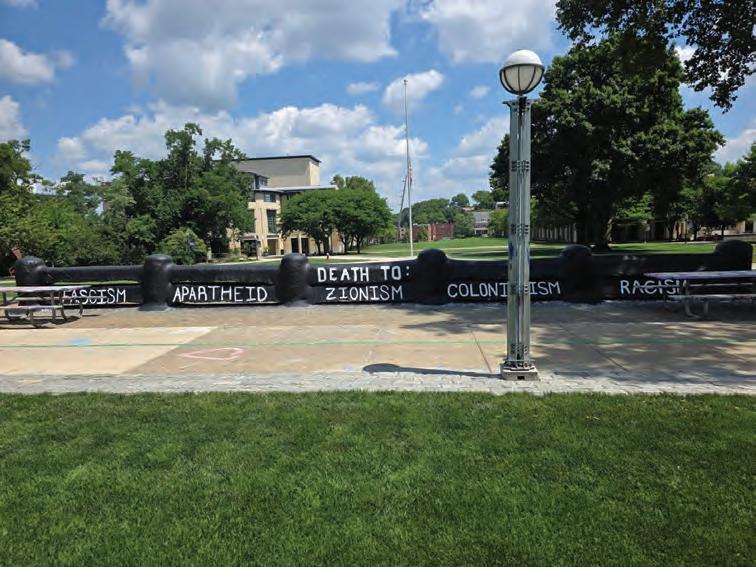
legal obligations and responsibility to ensure the safety and well-being of all members of our community,” while honoring The Fence’s traditions.
The university said it remains “firmly committed” to protecting freedom of expression and “fostering a campus environment that is safe, respectful and welcoming.” It noted that it doesn’t view those commitments in conflict with one another.
CMU’s statement explained that a series of messages on The Fence “crossed the bounds of our community norms” and “threatened to create a hostile environment for members of our Jewish community.” The messages, CMU said, undermined constructive dialogue.
“[R]epeated instances of non-CMU and non-student individuals participating in painting the Fence heightened those concerns and accelerated the need for action,” the university said, adding that language that incites or implies violence “will not be tolerated.”
“We are deeply concerned that these external groups, rather than encouraging civil discourse and constructive dialogue on
our campus, appear to be endorsing rhetoric that has been heard by some members of the CMU community as implying the threat of violence,” university officials wrote.
Recalling the Pittsburgh synagogue shooting, CMU officials said that “history reminds us that words matter and that threats, whether explicit or implied, cannot be viewed in isolation from their broader context.”
On July 29, CMU’s student newspaper, The Tartan, reported that a total of 10 students have been accused of painting the anti-Zionist messages.
Nine of those students, according to The Tartan, were placed on interim partial campus access restriction, and one student may face expulsion.
A CMU spokesperson told the Chronicle in an email that while the university would not comment on the specifics of any individual student’s interim access restriction or any active investigation, any restrictions placed on campus access are “individually determined based on the circumstances of each situation.”
“The goal is always to safeguard the community while preserving, where possible,

SUBSCRIPTIONS subscriptions@pittsburghjewishchronicle.org 412-687-1000, ext. 2
TO ADVERTISE advertising@pittsburghjewishchronicle.org 412-687-1000, ext. 1
EDITORIAL DEPARTMENT
Email: newsdesk@pittsburghjewishchronicle.org
BOARD OF TRUSTEES
Evan H. Stein, Chair
Evan Indianer, Vice Chair
Derek Smith, Treasurer
Gayle R. Kraut, Secretary
Gail Childs, Dan Droz, Malke Steinfeld Frank, Karen Gal-Or, Seth Glick, Judith Kanal, Cátia Kossovsky, Charles Saul, Lynn Zelenski
GENERAL COUNSEL
Stuart R. Kaplan, Esq.
Jim Busis, CEO and Publisher 412-228-4690 jbusis@pittsburghjewishchronicle.org
EDITORIAL Toby Tabachnick, Editor 412-228-4577 ttabachnick@pittsburghjewishchronicle.org
Adam Reinherz, Senior Staff Writer 412-687-1000 areinherz@pittsburghjewishchronicle.org
David Rullo, Senior Staff Writer 412-687-1000 drullo@pittsburghjewishchronicle.org
Octavia Liku, Staff Writer oliku@pittsburghjewishchronicle.org
ADVERTISING Amy Weiss, Account Executive (412) 613-0697 aweiss@pittsburghjewishchronicle.org
PRODUCTION
Jeni Mann Tough
Production Manager
Carl Weigel
Art/Production Coordinator
Subscriptions
subscriptions@pittsburghjewishchronicle.org 412-687-1000, ext. 2
Published every Friday by the Pittsburgh Jewish Publication and Education Foundation 5915 Beacon St., 5th Floor Pittsburgh, PA 15217
Phone: 412-687-1000
POSTMASTER:
Send address change to PITTSBURGH JEWISH CHRONICLE, 5915 BEACON ST., 5TH FLOOR PITTSBURGH, PA 15217
(PERIODICAL RATE POSTAGE PAID AT PITTSBURGH, PA AND AT ADDITIONAL MAILING OFFICES)
USPS 582-740
the opportunity for students to continue academic progress during an ongoing investigation,” the spokesperson said.
David Knoll, the Jewish Federation of Greater Pittsburgh’s associate vice president of public affairs, said CMU’s Fence has been “a significant point of concern for many in the Jewish community over the last year.”
Federation, Knoll said, has worked closely with the university to help ensure the safety and well-being of Jewish students on campus, and strongly opposes any “threats, intimidation, harassment or acts of violence directed at the Jewish community or individuals because of their support for Israel.”
“We appreciate the university’s ongoing commitment to fostering a safe and welcoming environment for all members of its campus community,” Knoll said.
While Jewish community members hold a wide range of views on many issues, including Israel, Knoll said, “the overwhelming majority of mainstream American Jewish organizations and institutions share a fundamental belief in the legitimacy and continued existence of the State of Israel, and oppose boycott, divestment, and sanctions (BDS) campaigns as counterproductive, harmful, and, in many cases, contributing to antisemitic climates.”
While acknowledging Jewish Voice for Peace’s right to advocacy, Knoll said the group’s “support for BDS and its opposition to the existence of Israel place it outside the mainstream of American Jewish organizations and institutions.”
“JVP,” he said, “represents a minority viewpoint within the broader Jewish community.”
Last fall, CMU convened a Fence Working Group to review The Fence’s governance. It engaged with the university’s student government and other campus stakeholders. Its recommendations, the university said, will “inform the implementation plan for The Fence and its protocols and governance this fall.” PJC
David Rullo can be reached at drullo@ pittsburghjewishchronicle.org.
Manuscripts, letters, documents and photographs sent to the Pittsburgh Jewish Chronicle become the property of this publication, which is not responsible for the return or loss of such items.
The Pittsburgh Jewish Chronicle does not endorse the goods or services advertised or covered in its pages and makes no representation to the kashrut of food products and services in said advertising or articles. The publisher is not liable for damages if, for any reason whatsoever, he fails to publish an advertisement or for any error in an advertisement. Acceptance of advertisers and of ad copy is subject to the publisher’s approval. The Pittsburgh Jewish Chronicle is not responsible if ads violate applicable laws and the advertiser will indemnify, hold harmless and defend the Pittsburgh Jewish Chronicle from all claims made by governmental agencies and consumers for any reason based on ads appearing in the Pittsburgh Jewish Chronicle
By Adam Reinherz | Senior Staff Writer
Aroom to connect, and calm, and play is now complete. Situated inside Temple Emanuel of South Hills, Makom Natan has quietly welcomed visitors of all ages since opening June 22.
Constructed and named in memory of Jonathan Bahm, a former madrich at Temple Emanuel, the room represents who he was and what he accomplished, his mother Amy Bahm, told the Chronicle.
“We always knew that he was sweet and kind, but we just never realized the extent to which people’s relationships existed because of him,” she said.
After attending preschool and religious school at Temple Emanuel, Jonathan Bahm became a bar mitzvah at the South Hills synagogue. Later, as a teen, he taught younger students in the same rooms where he once studied. That care for others never ceased, as — even as a young man — he brought high school peers or newfound friends together, his mother said. “He would always make sure that he was connecting with people in any aspect of his life: at school, at Temple, just anywhere he was.”
The Mt. Lebanon High School graduate died in 2022 at age 23 from an act of violence. In the aftermath, his family created a space at Emma Kaufmann Camp and called it “Ha Etz Natan,” which means “The Tree Gives.”
With assistance from Rabbi Aaron Meyer and other Temple Emanuel leaders, Jonathan Bahm’s family perpetuated his memory and continued that trope inside the suburban building by renovating an unused space and establishing an area to meet congregants’ and visitors’ needs.
The room, according to Sarah Mangan, Temple Emanuel’s program and communi cations director, was formerly a gift shop.
we’re really excited that the space is going to be used again.”
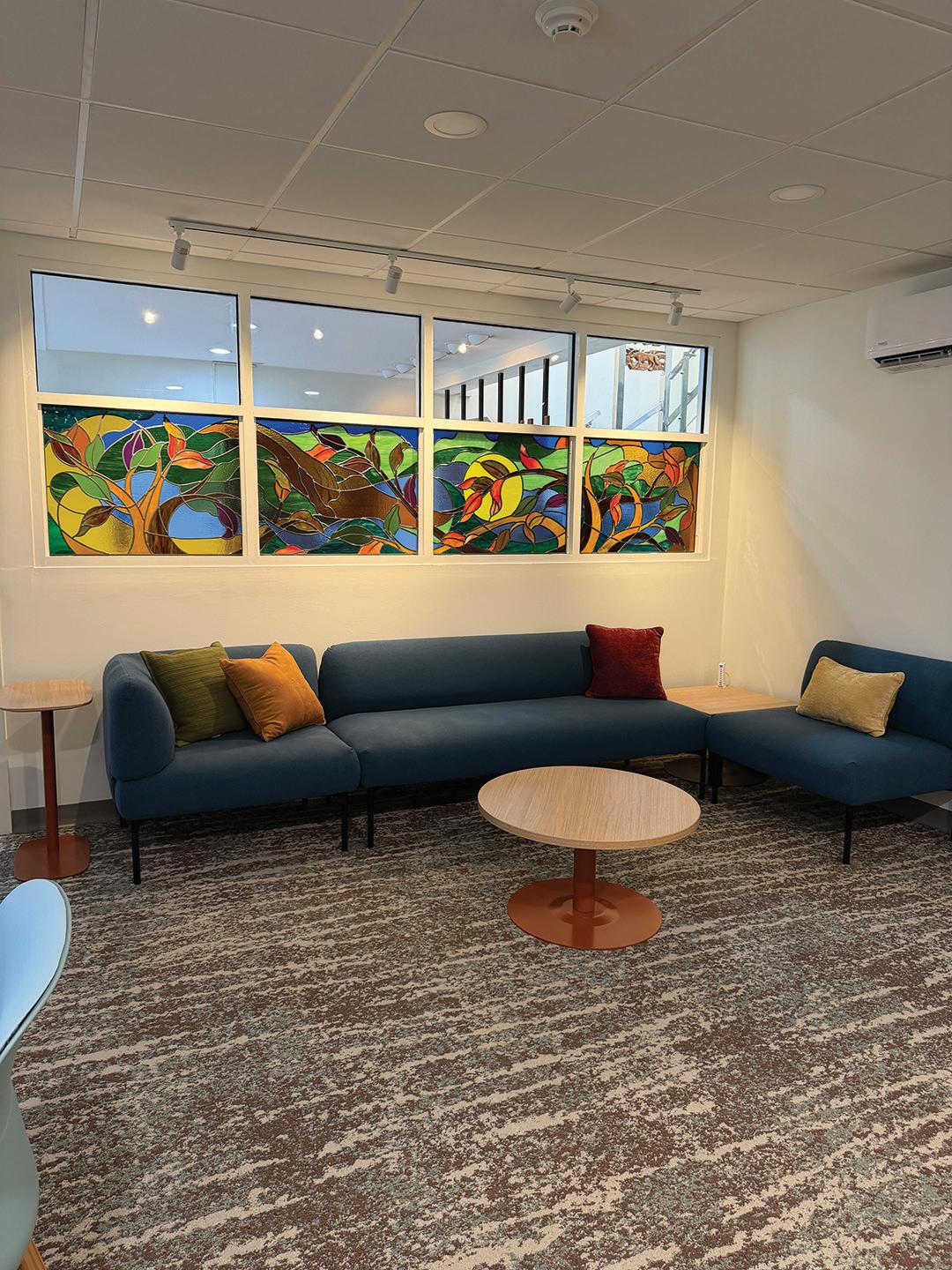
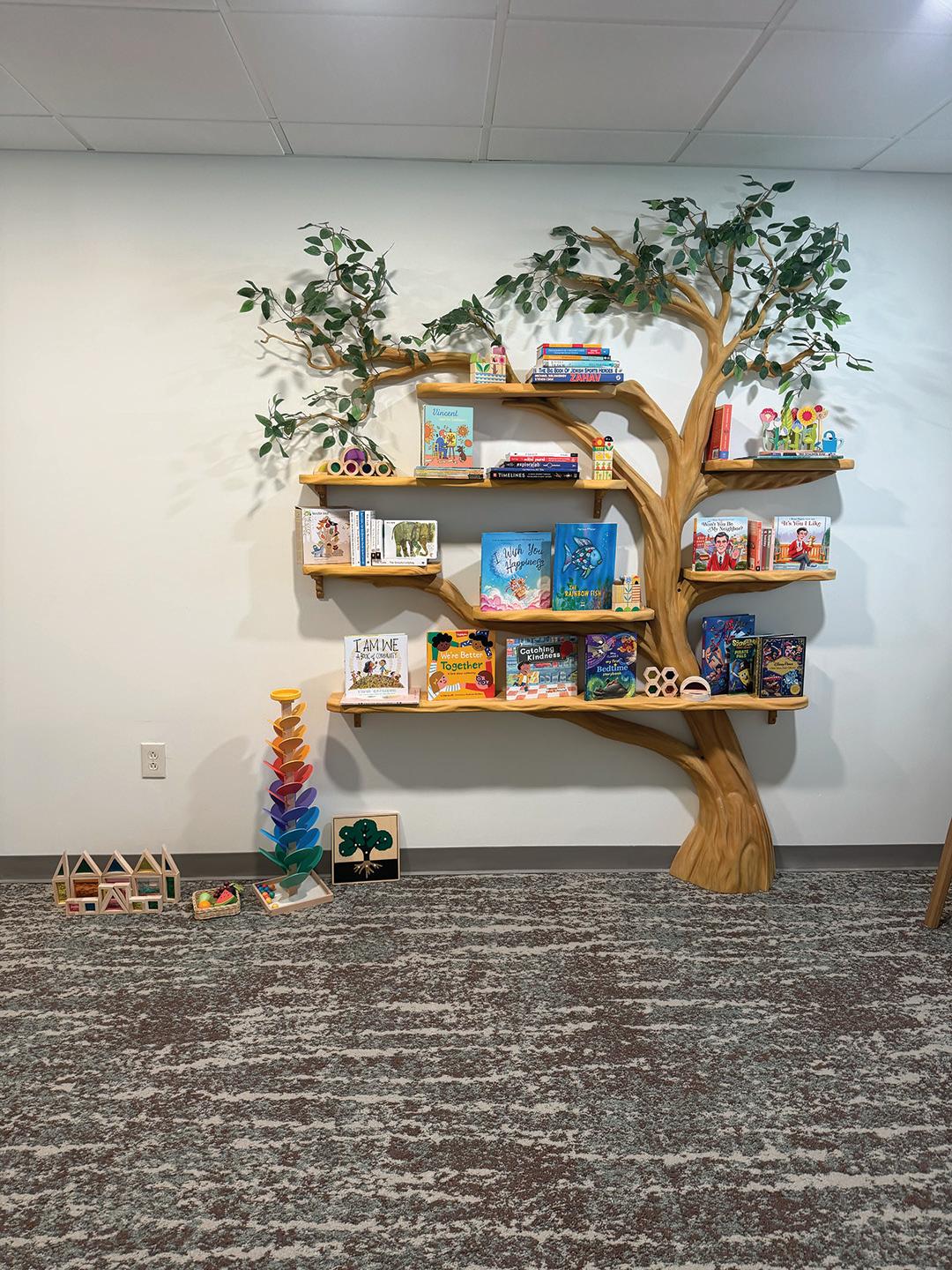
Complete with a television to live stream services, toys and books for children, tables for adults to work at, and even a Keurig machine, Makom Natan was intentionally designed to be “an intergenerational family space,” Mangan said. “It’s very open for lots of different purposes.”
Meyer praised the centrally-located room and said, “Parents with young children can stop to read a book, adults can pause for quiet reflection before a service, everyone can make a new friend in the safety of values-aligned community.”
The project was conceived of and carried forward by various parties, Amy Bahm explained.
towards a career in game design. He wanted to be a teacher eventually.”
Thanks to countless individuals, the room was transformed; in so doing, Jonathan Bahm’s story and commitment to others is clear, his mother said.
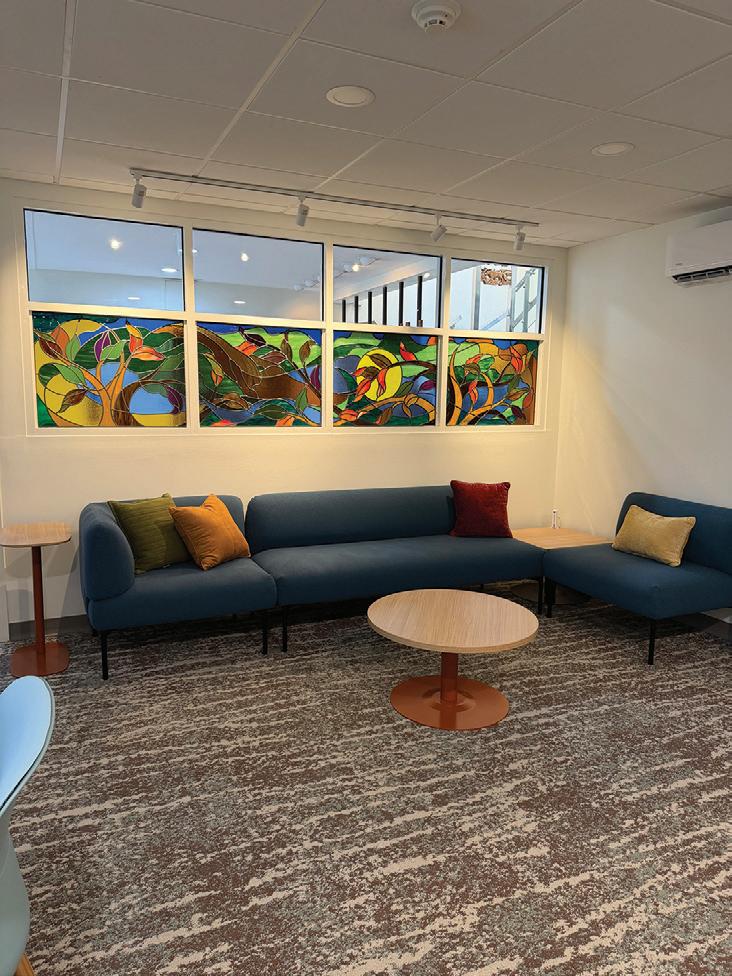
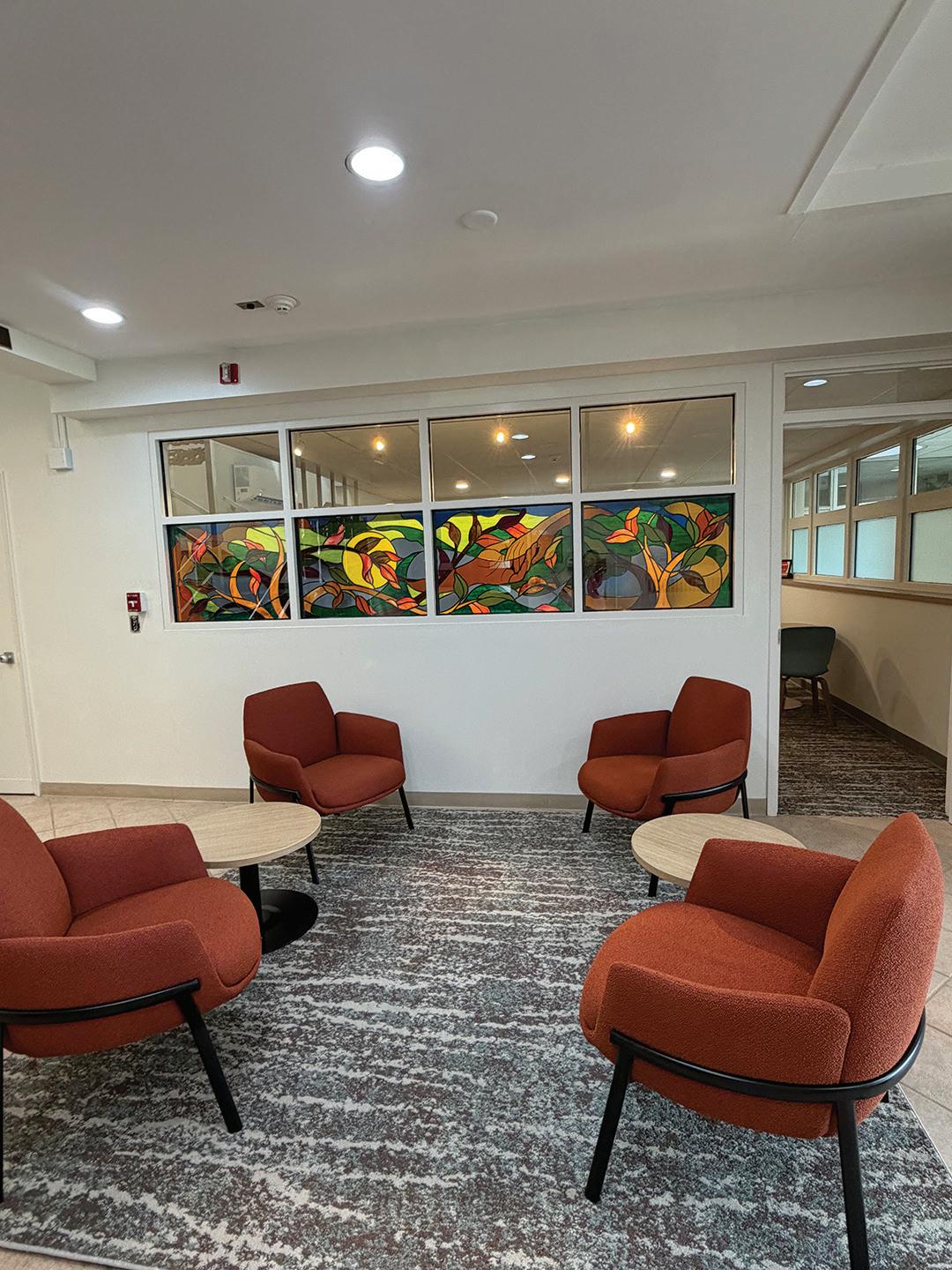
She pointed to a series of continuously lit stained glass windows. Designed by Floridabased artists, the four windows depict trees — a motif tying together Jonathan Bahm’s passions: family, Emma Kaufmann Camp and Temple Emanuel.
“When we created the space at Emma Kaufmann Camp — ‘Ha Etz Natan,’ which is ‘The Tree Gives’ — we wanted to keep that concept of giving,” she said.
Bahm spent his “formative years” at Temple Emanuel. “It’s a place that truly gave to Jonathan, and we wanted it to give to others.”
Makom Natan, which includes a treeshaped bookshelf, has a future-focused quality. As the Talmud teaches, those who plant a tree do so with an intent to deliver fruit for subsequent generations.
“That is the whole basis for why we do anything,” Amy Bahm said. “We wanted to make sure that the goodness that he would have put out there, who he was as a person, lives on.”
Before construction began — when the room was a gift shop — “it was very dark,” she said. “There wasn’t light in there. It was kind of small. It was stuffy. It didn’t feel right.”
Jonathan Bahm loved color, art and vibrancy, she continued. “He was working
Referencing a beautiful explanatory plaque hanging in the room, Amy Bahm told the Chronicle “Makom” means both “place” and is a name for God; “Makom” is a reminder that “sacred presence is found in the communities we build and the care we show one another.”
“Natan,” which is part of Jonathan Bahm’s Hebrew name, she continued, “is a palindrome” and reflects the “enduring connection between giving and receiving.” Jonathan
Throughout Jonathan Bahm’s life, he remained committed to “connection and goodness.” Makom Natan follows those ideals and allows people of all ages to be productive, creative, pause and form relationships.
Jonathan Bahm was able to do that inside Temple Emanuel, his mother said.
“Hopefully others will have that same experience because this space exists.” PJC
Adam Reinherz can be reached at areinherz@pittsburghjewishchronicle.org.

By Adam Reinherz | Senior Staff Writer
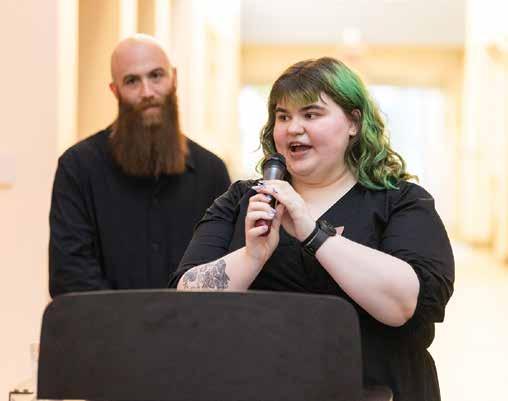
Hannah Zusmanowitz can build a couch. She can also create community.
The South Side resident, who moved to Pittsburgh nearly a year ago, has spent her western Pennsylvanian tenure hosting Shabbat dinners overlooking downtown, trekking with new friends through Frick Park and recreating Jerusalem’s famous shuk in Squirrel Hill.
Bringing people together is at the heart of Zusmanowitz’s work as the young adult programming associate at the Jewish Federation of Greater Pittsburgh. In that role, she strives to create the same sense of connection that shaped her own life. “If I can give someone even a fraction of the Jewish community that I was lucky enough to have growing up and in my life — like, that’s it. That’s what it’s about.”
Zusmanowitz, 24, came to Pittsburgh via Hilton, New York. The village of about 6,000 residents is about 20 miles northwest of Rochester.
“Growing up, me and my brother were the only Jewish kids at the public school that we went to,” she said. “My mom always made it a point that we’re going to synagogue.”
The drive, which Zusmanowitz completed at least twice a week for years, took about 40 minutes each way. In lieu of seeing the shlep as burdensome, however, Zusmanowitz mined its value.
Having a Jewish community, “takes effort, but what you get out of it is so much more,” she said. “The Jewish community is where I found my home, and where I found my people and my family. I just want everyone to be able to experience that.”
Since joining Federation, Zusmanowitz has sought to foster Jewish connections throughout the city.
Every other month, through Federation’s Young Adult Division, she hosts Shabbat dinner.
Part of the purpose is modeling what’s possible, she explained.
“People sometimes feel if they didn’t grow up doing Shabbat, that it’s this big, super intimidating thing where you have to make brisket, and cook it for 10 hours, and this whole to-do,” she said. “I think by us, and having members of the community host it, it really shows people that there is a space for you at the larger Jewish community table, and it also shows all the different ways that you can engage with your Judaism.”
Shabbat, she explained, is a relatively familiar term but understood quite differently.
“The Jewish community is where I found my home, and where I found my people and my family. I just want everyone to be able to experience that.”
–HANNAH ZUSMANOWITZ
Whether experiencing Shabbat means meeting friends for a Friday night meal or “going to shul and doing all the rituals,” however one chooses to engage, Shabbat is a “great way to unwind, meet new people and have deeper connections,” she said.
Community doesn’t spring from the ether, but is built and sustained. That understanding, Zusmanowitz explained, grew from mastering other tools.
For college, she traveled south to Georgia and studied furniture design and industrial design at Savannah College of Art and Design.
“I love building things. I love furniture, but it’s very lonely work a lot of the time. It’s just you and your materials,” she said.
After college, Zusmanowitz was apprenticed to a master upholsterer but decided to return home and take a part-time job at her former synagogue.
“At first, I was just doing marketing for them,” she said. “Then it grew into doing logistic stuff, and then congregant engagement.”
Before long, Zusmanowitz was teaching fourth grade religious school, overseeing the youth group and facilitating programs for young adults in their 20s and 30s.
“I loved the congregant engagement work, and I loved interfacing with the community,” she said. “That’s what really got me out of bed every morning. That’s what got me going to the synagogue like six days a week.”
Zusmanowitz started pondering life as a Jewish communal professional.
“I was like, ‘I could do this as a career. I could actually focus my energy on this and actually make a difference and make it a career as well,’” she said.
While the idea percolated, Zusmanowitz followed another passion: natural history museums.
The U.S. has nearly 90 accredited institutions, according to the American Alliance of Museums.
Zusmanowitz aims to see one in every state — it’s how she ended up in Pittsburgh.
“My partner and I were trying to figure out where to move. We wanted to move out
of Rochester, and we were thinking, maybe Chicago, maybe Toronto, maybe New York City. And while we were kind of in the weeds of all that, we decided to take a trip to Pittsburgh,” she said. “I really wanted to meet Dippy.”
The sculpture, which rests near the Carnegie Music Hall and the Carnegie Museum of Natural History, is a life-size fiberglass model of Diplodocus carnegii Affectionately called “Dippy,” the sculpture depicts what many deem the “most famous single dinosaur skeleton in the world.”
On July 4, 1899, paleontologists — funded by Andrew Carnegie — discovered a nearly complete fossil skeleton of Diplodocus in the badlands of Wyoming. To mark 100 years since the discovery, “Dippy” the 3,000pound sculpture was erected in Oakland in 1999.
Apart from seeing the cherished behemoth, Zusmanowitz and her partner spent a week visiting numerous neighborhoods across Pittsburgh.
“We just kind of fell in love with it,” she said. “Everywhere we went, we just found it very charming and the people seemed genuine — people really, truly, wanted to talk to you.”
When the trip was over, Zusmanowitz Googled “Jewish jobs in Pittsburgh.”
An opening at the Federation appeared. Zusmanowitz applied, accepted the position, found an apartment and relocated with her partner.
Given her desire to cover the country, it’s natural to wonder whether Zusmanowitz may feel tempted to relocate again.
The Jewish professional immediately dismissed the notion.
Before visiting Pittsburgh, “I’d been to quite a few natural history museums,” she said. “None of them made me move.”
As she continues planning events for Jewish Pittsburghers and creating connections through YAD, Zusmanowitz recognizes the perils facing many young professionals.
“I think what everybody is looking for right now — what everyone is saying — is, ‘I want more friends. I want to be part of a community. I want to be part of a village.’”
Achieving those desires is possible, Zusmanowitz said. “All you have to do is be a villager to be part of a village.”
“That’s it. That’s all it takes,” she continued. There’s nothing to be scared about; simply show up, be willing to join, “that’s the big takeaway. You get out what you put in, and it’s not scary. Everyone’s in the same boat.” PJC
Adam Reinherz can be reached at areinherz@pittsburghjewishchronicle.org.

By Adam Reinherz | Senior Staff Writer
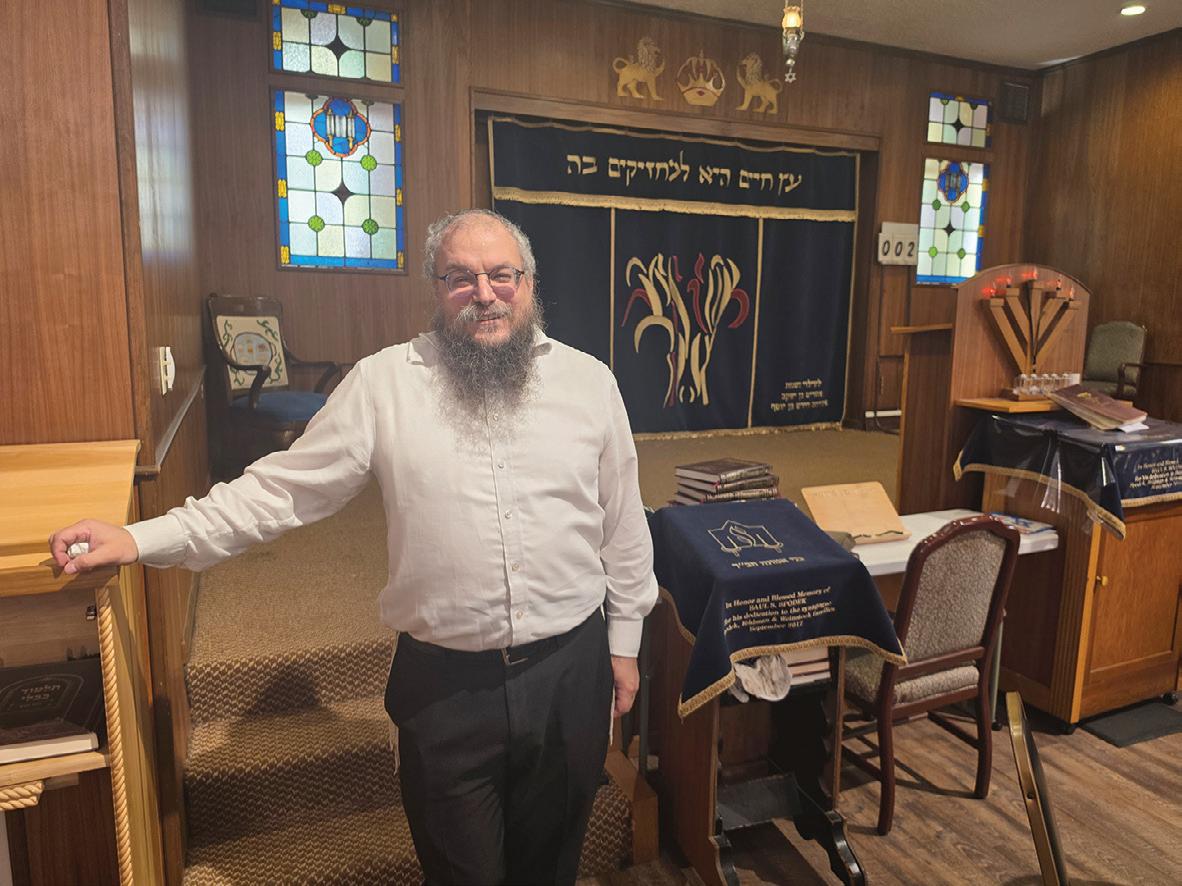
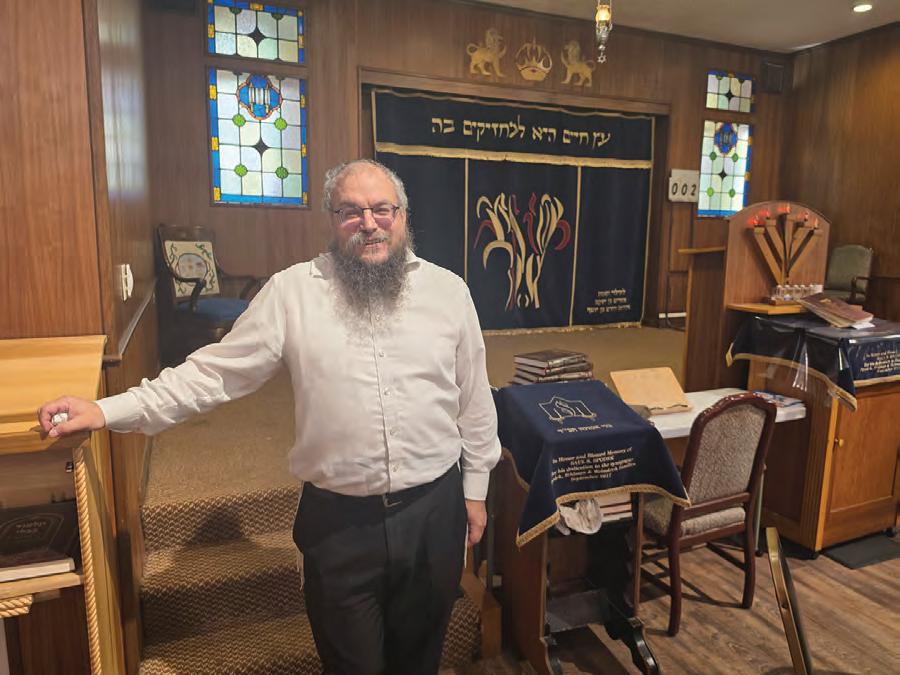
Jewish life is bubbling forth in Greenfield. After nearly five years of construction, two new mikvahs are slated to open in the coming weeks. Located at B’nai Emunoh Chabad, the men’s and women’s ritual baths will enable community members to easily adhere to religious practices, Bnei Emunoh’s Rabbi Elchonon Friedman explained.
Whether for observing family purity laws or marking milestones, including marriage or conversion, mikvah usage is central to Jewish life. A primary mechanism for attaining spiritual holiness and a testament to the sacredness of Jewish families, a mikvah’s importance is touted throughout rabbinic literature, with some authorities claiming its communal necessity surpasses building a synagogue or even buying a Torah scroll.
Until now, Greenfield residents have traveled to Squirrel Hill for mikvah use, but it’s a “little bit of a distance,” Friedman said.
Trekking to the Lubavitch Center, which has a men’s mikvah, or the Denniston Street facility, which has a women’s mikvah, could be a four-mile schlep. Walking to either site from Greenfield on Shabbat is “cumbersome,” Friedman said.
In fact, despite Greenfield’s relatively affordable housing prices and other amenities, the lack of a nearby mikvah has deterred several families from moving to the area, he continued. With the mikvahs slated to open post-inspection, Greenfield becomes “a lot more desirable and accessible.”
Average home values in Greenfield, according to Zillow, are $246,492. In neighboring Squirrel Hill South, average home values are $495,209.
Greenfield boasts a synagogue, yeshiva and rabbinical school, along with about 80-100 Chabad-affiliated or Orthodox families, Friedman said. The mikvahs “add another dimension” to local Jewish life.
“Having both a men’s and women’s mikvah here really brings the community together,” Greenfield resident Zalman Thaler said. “A mikvah is a central part in the purity of any Jewish community, and having one right here in Greenfield feels like this isn’t just a place we go to, but this is a place that’s permanently part of our home.”
Inside B’nai Emunoh, final touches are being made to the mikvahs. Adjacent to the $800,000 two-story construction project, a room for yeshiva students from Pittsburgh Zal is being readied for the start of the school year. Several feet away, new chandeliers hang within the main sanctuary. Friedman is proud of the building’s heritage — B’nai Emunoh will mark 100 years in 2027 — and the community’s quest to create a stronger future.
On a tour of the facility, he pointed out tiles, toilets, plumbing systems and beautiful pools, while praising community members for contributing to the sizable project.
“It is expensive, no question,” he said. “But you have to realize a mikvah is basically the most expensive part of a house.”
Imagine undertaking a 1,500-2,000 square foot bathroom renovation. Factor in the need to build, moderate moisture, filter water and
“A mikvah is a central part in the purity of any Jewish community, and having one right here in Greenfield feels like this isn’t just a place we go to, but this is a place that’s permanently part of our home ”

–RABBI ELCHONON FRIEDMAN
ensure areas are slip-proof, and costs start to climb, he said.
The soon-to-open spaces will be called “Yudi’s Mikvah,” in memory of Yudi Sternfeld, a Jewish man who died at age 31 in 2021 due to complications from COVID-19.
Friedman credited Sternfeld’s widow, Chani Sternfeld, as well as family and friends with recognizing the “importance of a mikvah in the Jewish community.”
“Here was a person who didn’t have any children, and his wife was so excited about the project because of their belief in the Jewish family and Jewish continuity,” Friedman said. A mikvah represents “the sanctity of the Jewish family,” and Sternfeld’s family understood that this is a way to “continue his legacy.”
B’nai Emunoh is continuing to fundraise to meet its $800,000 goal.
“We’re on our way,” Friedman said. “And we’re getting there.”
When the mikvahs open in the coming
weeks, Friedman hopes community members see the broader picture.
What’s occurring isn’t merely about one building or institution. “There’s a whole infrastructure of Jewish life that’s happening in Greenfield,” Friedman said.
The “transformation,” he continued, is being driven by “families who are dedicated, families who are traditional.” The fact that so many “people here in this community are stepping up, and helping to support and build this, and put their sweat, their blood, their money into this, it shows the dedication of what Jews and the Jewish community here — and these young families — really want.”
Building a home is more than finding an affordable residence; it’s also about establishing a community with the right qualities, Friedman said. People want the “spiritual necessities in a community as well.” PJC
Adam Reinherz can be reached at areinherz@pittsburghjewishchronicle.org.
Submit calendar items on the Chronicle’s website, pittsburghjewishchronicle.org. Submissions also will be included in print. Events will run in the print edition beginning one month prior to the date as space allows. The deadline for submissions is Friday, noon.
q SUNDAYS, AUG. 9–DEC. 20
Join Chabad of Squirrel Hill for its Men’s Tefillin Club. Services and tefillin are followed by a delicious breakfast and engaging discussions on current events. 8:30 a.m. 1700 Beechwood Blvd. chabadpgh.com
Join a lay-led online Parashah study group to discuss the weekly Torah portion. No Hebrew knowledge needed. The goal is to build community while deepening understanding of the text. 8:30 p.m. For more information, visit bethshalompgh.org/online-parashah.
q TUESDAYS, AUG. 11–DEC. 22
Join Beth El’s Rabbi Alex Greenbaum and his Bible/Talmud Adult Education class for a thoughtprovoking weekly session of Bible and Talmudic study. This program is available both in person and virtually. Call the office at 412-561-1168 to receive the Zoom link or to make an in-person reservation. 10:30 a.m. 1900 Cochran Road. bethelcong.org
q WEDNESDAY, AUG. 12
Join Shoresh for a Taste of Shoresh. Different educators will teach classes in topics they are passionate about to give a taste of the learning and community they are building. There will be snacks, drinks and childcare for children ages 5 and up. The event will launch Shoresh’s weeklong community fundraiser. No registration or commitments required to attend. 7 p.m. Anderson Park Shelter, Schenley Park
q WEDNESDAYS, AUG. 12–DEC. 23
Explore the weekly Torah portion with the mystical and interpersonal lens of the Hassidic rabbis with Rabbi Mark Asher Goodman. Hassidut for the People is a fun and engaging class taught online and in person meant to help learners find deeper meaning in Torah and in themselves. All levels welcome. 10 a.m. $5. Shoresh PGH, 4300 Murray Ave. Contact rabbimark@shoreshpgh. org for more information. shoreshpgh.org/classschedule-and-events
q THURSDAY, AUG. 13
Join Chabad Young Professionals for its Summer Soirée, an unforgettable evening on the rooftop featuring handcrafted cocktails, delicious cuisine, great music and the opportunity to connect with hundreds of young Jewish professionals from

across the city. Slip into your favorite summer chic look, gather your friends, and join CYP for one of Pittsburgh’s signature nights. 7 p.m. $30. Rooftop Bar in Lawrenceville. cyppittsburgh.com/summer
q WEDNESDAY, AUG. 19
The 10.27 Healing Project presents Town Hall: Tree of Life, an important conversation about the future of the Tree of Life site. Hear directly from those leading the planning and development of the site, including those working on: the memorial honoring the 11 lives lost, the building redevelopment and construction plans, the museum that will be within the building and Jewish life, education and other community programming. Presenters will share updates on the work, the vision taking shape and what is ahead. RSVP requested. 5:30 p.m. Levinson Hall, Jewish Community Center. 1027healingpartnership.org/ event/town-hall-tree-of-life
q WEDNESDAY, AUG. 19; SEPT. 3
Rendezvous in Beit Kulanu’s Biblical Botanical Garden with drinks and hors d’oeuvres for free live musical performances. Apps start at 6:30 p.m. and music at 7 p.m. The concert is free but registration is required. 4905 Fifth Ave. BeitKulanu.org
q SUNDAY, AUG. 30
Join Chabad of the South Hills for a trip to Jewish New York. Visit the Rebbe’s resting place and Chabad world headquarters; take part in a Crown Heights tour. Enjoy shopping and a meal at a delicious kosher restaurant. Fly roundtrip to New York City. 7 a.m. to 7 p.m. $125. chabadsh.com/jny
q WEDNESDAY, SEPT. 2
Join Beit Kulanu for Biblical Garden Open Door Tour: Free, docent-led tour of the congregation’s Biblical Botanical Garden the first Wednesday of the month. 12:15 p.m. Free. 4905 Fifth Ave. rodefshalom.org/garden
q TUESDAY, SEPT. 15-SEPT. 17
Rooted in the aftermath of the deadliest antisemitic shooting in the United States, the Eradicate Hate Global Summit has grown to become the world’s most comprehensive, multidisciplinary conference to prevent hate-fueled violence, convening people committed to building relationships and forging solutions to address this growing issue. David L. Lawrence Convention Center, 1000 Fort Duquesne Blvd. To learn more about the summit, see the full agenda, and register, visit eradicatehatesummit.org. PJC
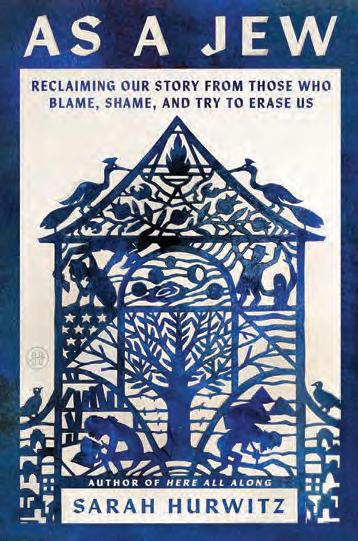
The Pittsburgh Jewish Chronicle invites you to join the Chronicle Book Club for its Aug. 30 discussion of “As a Jew: Reclaiming Our Story from Those Who Blame, Shame, and Try to Erase Us – A Defiant Memoir of Heritage, Identity, and Antisemitism,” by Sarah Hurwitz.
A New York Times bestseller, “As a Jew” is an “urgent exploration of how antisemitism has shaped Jewish identity and how Jews can reclaim their tradition, by the celebrated White House speechwriter and author of the critically acclaimed ‘Here All Along,’” according to Amazon.com.
“In As a Jew, Hurwitz documents her quest to take back her Jewish identity, how she stripped away the layers of antisemitic lies that made her recoil from her own birthright and unearthed the treasures of Jewish tradition. With antisemitism raging worldwide, Hurwitz’s defiant account of reclaiming the Jewish story and learning to live as a Jew, without apology, has never been timelier or more necessary.”
Your hosts
Toby Tabachnick, Chronicle editor
David Rullo, Chronicle senior staff writer
How it works
We will meet on Zoom on Sunday, Aug. 30, at 1 p.m.
What to do
Buy: “As a Jew.” It is available from online retailers, including Amazon and Barnes & Noble, and in some area Barnes & Noble stores. It is also available through the Carnegie Library system.
Email: Contact us at drullo@pittsburghjewishchronicle.org, and write “Chronicle Book Club” in the subject line. We will send you a Zoom link for the discussion meeting.
Happy reading! PJC

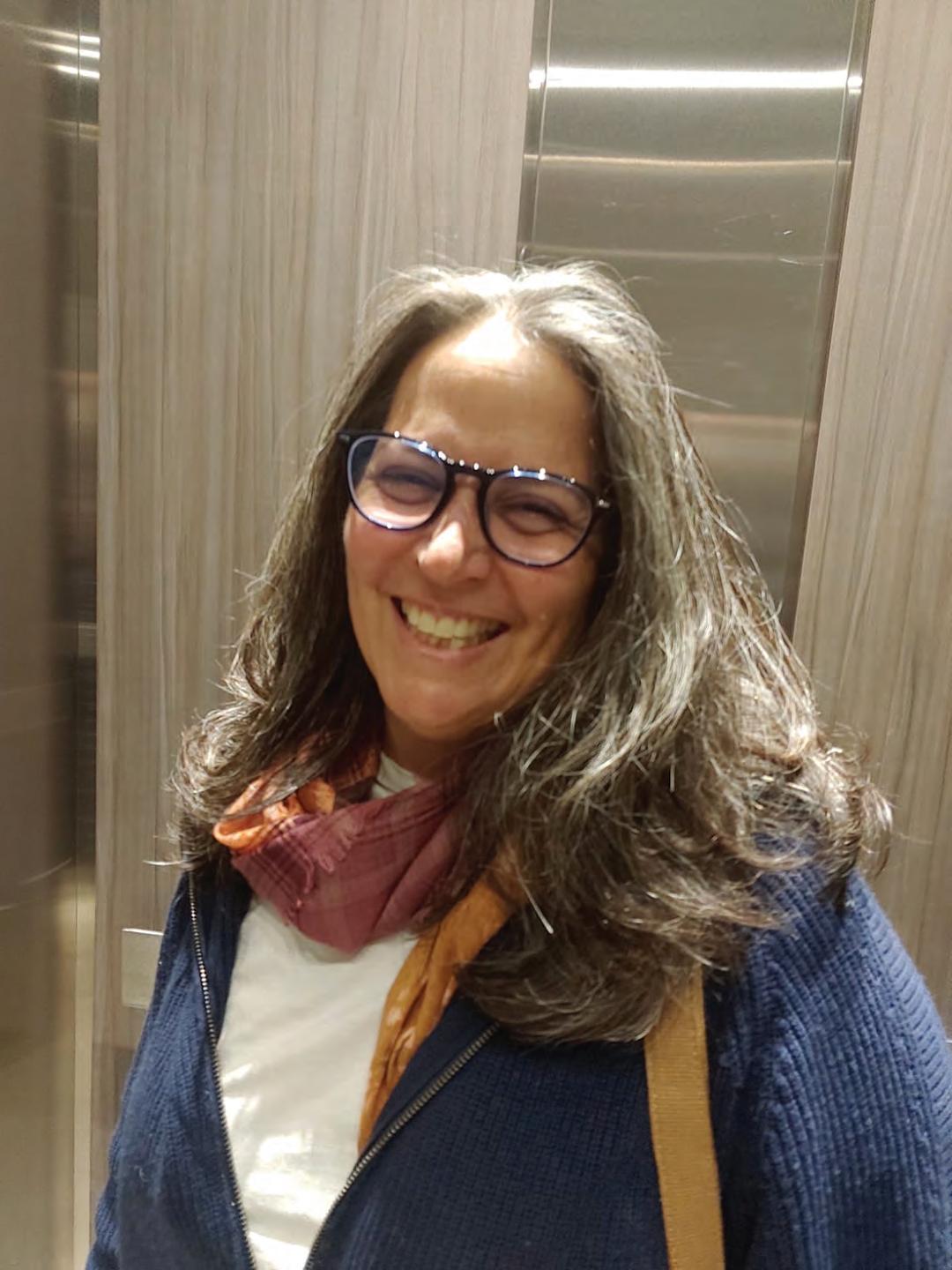
Even before rabbinical school, Rabbi Kara Tav never saw herself on the pulpit. She envisioned herself at people’s bedside, on their doorstep and with them at life’s most difficult moments.
“I’m one-on-one, not one-on-300,” she told the Chronicle, laughing. “I knew I wanted to be a professional, caring person, and I wanted people to feel like Jewish theology, philosophy and communal life could be healing.”
Now, as the first rabbi of spiritual care at Congregation Beth Shalom, Tav will work alongside Senior Rabbi Seth Adelson to meet the needs of the congregation’s nearly 600 families. She succeeds former Assistant Rabbi Mark Goodman, who departed Beth Shalom at the end of June.
Tav’s role, however, represents a different model — one centered on personalized spiritual care.
“We made the decision to hire Rabbi Tav so that we could provide much more than we have ever provided in the past,” Adelson said. “Not only will we be sharing these responsibilities, but because she has more time in her schedule to dedicate specifically to [spiritual care] she will be able to track our members much more effectively. She is truly a talent, and I think that our community will benefit tremendously from having her on staff.”
Tav’s role will ensure that the congregation can “reach deeply” and maintain regular contact with members who are unable to attend synagogue, Adelson added.
“We have an expression in Yiddish — you , so you can only dance at one wedding at a time,” Tav said. “Rabbi Adelson has 100 jobs to do all the time. He’s [the congregation’s] spiritual leader, but he can’t offer direct care to each person’s needs in the way they need because he’s just one human.”
Congregation President Paul Teplitz noted that Tav’s position ensures that “everyone has the ability to connect with Beth Shalom in both a time of need and a time of joy.”
“This is my expertise. I know how to call a stranger and say, ‘I know you’re hurting, and the congregation wants to be able to support you,’” Tav said. “I work to help people to be able to fix themselves — because I firmly believe everyone can, and I think that God and Jewish communal life can be part of that fixing.”
Tav brings more than two decades of experience as an educator, and 18 as a hospital chaplain. Her new role also marks a homecoming: She directed Beth Shalom’s Hebrew School in the late 1990s, before moving to New York. She returned to Pittsburgh in 2024, following the pandemic.
“I saw hundreds of people die. You can’t hold that kind of vigilance for that long,” she said. “It was brutal, and I fell apart. I said to my husband, ‘We gotta go’ ... [Pittsburgh] was the place that was warm and small enough and big enough and green enough and expensive enough and friendly enough and Jewish enough — we were obviously coming back here. We didn’t even have to think about it.”
Tav emphasized that her primary goal is to ensure that the congregation feels
cared for, especially given the weight of recent events.
“This community has been through a lot,” she said. “We lived through the [Pittsburgh synagogue shooting], and then a year later, we were isolated in our homes because of COVID, and then not long after that, there was Oct. 7, and the war in Israel, and the ripples and repercussions of that that are still deeply affecting our community. I think there’s a lot of healing to do, and people are starting to know. They’re starting to say that they need it.”
She also hopes to train members in Jewish traditions of visiting the sick, creating a network of volunteer congregants who are well equipped to support each other in times of need.
“The best thing that can happen is that this community starts to be able to care for itself, but they need to know how to do that,” she said. “I think we should jump in. We should cook a meal and drop it off. We should see if there are library books that can be given back to the library, or dogs that need a walk, or kids that
need to be picked up from preschool — things that make a community care for each other.”
For Tav, spirituality is ever-present, found in the weeds of a garden just as much as in the pages of the Torah. Her goal, she says, is to help congregants recognize the sacred in their own lives.
“I use the expression ‘spiritual care’ because I’m not going to lead services or help [congregants] make their kitchen kosher, or teach their children for their bar mitzvahs,” she explained. “But I might help that same bar mitzvah family see it as more than steps to go through — see it more as something that can change them, that creates a link in a chain.”
When asked if she hopes her work can serve as a model for congregations across the country, she smiled.
“That’s like a dream,” she said. “I don’t even say that out loud. But I know that people need it.” PJC
Octavia Liku can be reached at oliku@ pittsburghjewishchronicle.org.

By Canaan Lidor | JNS
Hours after tens of thousands of people from Morocco stormed into Spain’s Ceuta enclave on July 30, Spanish actor Javier Bardem shared a theory on who was behind this mass breach of his native country’s borders.
The theory reposted by Bardem — a vocal champion of the Palestinian cause who’s publicly accused Israel of committing genocide — blamed Israel, implying it somehow orchestrated the invasion 3,200 miles away from its territory to punish Spain’s government for its anti-Israel policies.
U.S. Ambassador to Israel Mike Huckabee called Bardem’s repost a “laughable new blood libel by another dim-witted actor,” and described Bardem as “‘Dumb & Dumber’ rolled into one person,” referring to the 1994 comedy film starring Jim Carrey and Jeff Daniels.
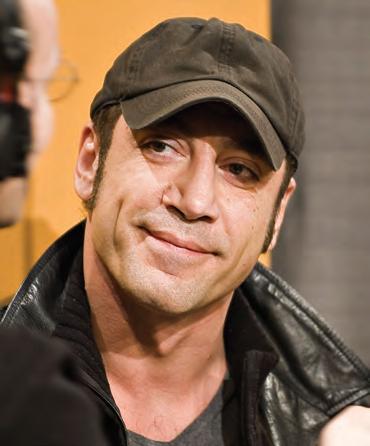
Yet the posts and reposts of conspiracy theories about Ceuta by anti-Israel individuals spread like wildfire, often accompanied by antisemitic rhetoric, demonstrating the demand for this type of content.



On July 30, at least 50,000 people, mostly young men, broke through the fence that surrounds Ceuta as others landed on its shores, overwhelming security forces and flooding the enclave. At least 72 people died because of crowd crushes, clashes and drowning, authorities said, adding
LICENSED LIFE & HEALTH INSURANCE SPECIALIST
412.260.4149 (phone or text) sdvoice18@gmail.com Serving PA and FL
Please contact Medicare.gov, 1-800-MEDICARE, or your local state health insurance program (SHIP) to get information on all of your options.
MEDICARE INDIVIDUAL PHONE NUMBER: 412-790-2881









Protect Yourself and Your Loved Ones – Your Way
We provide expert help with long term care planning, powers of attorney, wills, trusts and special needs. We help you implement legal and tax strategies to protect your wealth during your life and afterwards.



mhm@ahmpc.com 4927 William Flinn Highway Allison Park, Pennsylvania 15101 We make house calls!

that most of those who crossed had been returned to Morocco, whose territory surrounds Ceuta. Spain and Morocco have exchanged accusations for decades over Spanish-held territories in northern Africa.
One post shared by Bardem on Instagram, where he has 1.5 million followers, was a monologue by Indian comedian Sundeep Bhardwaj saying: “If you’re wondering what does the United States or Israel have to do with this: As usual, everything. Spain is the only country that has publicly declined to help the United States and Israel commit their genocide in Palestine. So, in the last year, Israel has been openly threatening Spain.”
Another reshared post by Bardem read: “We don’t know who engineered this crisis, but we know who benefits from a weakened, destabilized Spain: Israel, and the Western far right eager to turn migration into a weapon against Muslims.”
The conspiracies didn’t end with Bardem. Spanish Transportation Minister Oscar Puente retweeted a comment on the Ceuta invasion by Israel’s Ambassador to the U.N., Danny Danon, writing of Danon’s comments: “Well, things are starting to get pretty clear.” Danon had written that “maybe before it continues lecturing us, it’s time [Spain] explained to the world why it still maintains colonial enclaves in Africa.”
The U.S.-based Combat Antisemitism Movement found that 119 influencer accounts were responsible for 173 posts that peddled a “global antisemitic conspiracy,” as CAM called it, in connection with the Ceuta crisis. The posts generated 57.5 million views with an estimated reach of 103.1 million viewers, 1.9 million likes, and 368,400 shares in two days.
Every society “has its share of conspiracy theorists,” Rafael Medoff, an author and director of the David S. Wyman Institute for Holocaust Studies in Washington, D.C., told JNS. “The danger is when insane theories start moving from the margins to the mainstream — and when those theories are aimed at inciting hatred against a minority group.”
Bardem’s “incendiary rhetoric is helping to fuel the flames of anti-Jewish hatred worldwide, at a time when such hatred is already exploding into violence in country after country,” Medoff added. He said it was “the height of irresponsibility for Javier Bardem to use his stature as one of Spain’s most prominent and admired actors to spread hatred of Israel.”
The Ceuta crisis is a major political problem for Spanish Prime Minister Pedro Sánchez’s left-wing government, which Bardem has endorsed. Critics say it exposes a broader laxness on law and order as well as immigration — one of the hottest issues on the political agenda in Spain and throughout Europe.
The breach closely followed the approval by the Sánchez government of a mass regularization decree granting legal residency and work permits to hundreds of thousands of undocumented migrants. Sánchez’s critics argued the regularization incentivized immigrants to break in.
Some of the government’s advocates pointed outward, to Morocco, Israel and the administration of U.S. President Donald Trump. Trump has clashed with Sánchez over the Spanish prime minister’s opposition to the joint U.S.-Israeli military operation in Iran, and his attempts to complicate the use of U.S. air bases in Spain in that operation.
Transportation Minister Puente wrote on X, “Some in Washington, Tel Aviv, and Rabat, and also a few who grow in their shadow in Madrid, wanted images of our security forces and armed forces machine-gunning children on the beaches.”
There is no public evidence connecting Israel or the U.S. to what happened in Ceuta, but some of those seeking to make the connection cited a 2019 tweet by Israeli Prime Minister Benjamin Netanyahu’s son, Yair, who wrote: “Dear Arabs and Muslims. Want to free occupied Arab Islamic lands? Here’s a good start!” referring to a map showing several Spanish enclaves in Africa.
One post shared by Bardem and others read, “Yair Netanyahu publicly called on ‘Arabs and Muslims’ to ‘liberate’ Ceuta and Melilla.” Yair Netanyahu commented on this on Friday, saying he posted the tweet in 2019 to expose Spain’s “hypocrisy” in criticizing Israel’s presence in Judea and Samaria. “I see that antisemitic conspiracy theorists are using this tweet from 2019 as ‘proof’ for their absurd blood libels against Jews and Israel,” Netanyahu wrote on Friday.
Spain is one of several European Union member countries that have intervened in South Africa’s 2023 lawsuit accusing Israel of genocide in Gaza, widely understood as an endorsement of the disputed suit. Sánchez last year called Israel a “genocidal state.” Jerusalem has accused Madrid of fomenting the surge in antisemitic hatred.
On social media, some have connected the Ceuta conspiracy theories involving Israel to the painful Jewish history in Spain, where Jews had been persecuted for centuries after the Inquisition that began in 1492. Angel Mas, the founder of the pro-Israel Action and Communication in the Middle East, a Madrid-based nonprofit, disputed a narrative in which the Ceuta crisis triggered Spanish antisemitism.
“Modern Spain is not an antisemitic society. Medieval history is not an accurate guide to contemporary Spain, just as it would not be for England, France, Germany or Switzerland,” Mas, a vocal critic of the Sánchez government, told JNS. PJC
Fire at Iowa kosher meat processing plant shuts down production ahead of the High Holidays
A major fire at one of the largest kosher meat processing plants in the United States is poised to increase the price of kosher meat ahead of the High Holidays, JTA reported.
Investigators in Postville, Iowa, said last week that the fire that devastated AgriStar Processing started accidentally in the facility’s laundry room. The fire destroyed at least 75% of the plant and has put more than 600 people out of work, Fire Chief Jeff Bohr told the local TV network KCRG.
The fire also interrupted a linchpin of kosher meat production, according to OU Kosher, the oversight agency run by the Orthodox Union.
“The damaged facility means a significant portion of kosher beef and chicken slaughtered and sold in the US will not enter the kosher supply chain,” Rabbi Moshe Elefant, the organization’s CEO, said in a statement last week. “Kosher consumers will feel the impact of the tightening supply with reduction of availability.”
Elefant said OU Kosher was working to “find solutions for ramping up production at other plants.”
California law on antisemitism in schools will be enforced after free speech challenge is defeated
A California law to prevent antisemitism in schools will be enforced after a federal judge dismissed a challenge from teachers and students who said it violated free speech, JTA reported.
U.S. District Judge Noël Wise last week ruled
against a lawsuit opposing Assembly Bill 715, which went into effect in January. The new law introduces measures to curb the “widespread surge in antisemitic discrimination, harassment, and bullying” faced by “Jewish and Israeli American pupils across California.”
As part of the law, California is establishing an Office of Civil Rights with a new statewide antisemitism prevention coordinator for public schools, who has not yet been appointed. The law mandates teachers to provide “factually accurate” instruction rather than “advocacy, personal opinion, bias, or partisanship.”
It requires local educational agencies to take action if they find that instruction or school-sponsored materials are discriminatory.
A group of teachers, students and the American-Arab Anti-Discrimination Committee filed a challenge in November. They said the law was unconstitutionally vague, chilled speech in the classroom about Palestinians and discriminated against Palestinian, Arab and Muslim students and perspectives.
Wise said it was too soon to consider these claims, given the uncertainties still surrounding the new Office of Civil Rights, its leadership and how it will define and respond to antisemitism. She also said that teachers and students did not provide sufficient evidence of infringements on free speech, and teachers could not claim speech rights on the job.
“Teacher Plaintiffs are not acting as private citizens and therefore do not have First Amendment rights while teaching,” Wise said in her ruling.
She also dismissed the claim that the law would discriminate against non-Jewish students. “The existence of an Antisemitism Coordinator does not change the Office’s overarching purpose to stop discrimination generally;
Items are provided by the Center for Israel Education (israeled.org), where you can find more details.
Aug. 7, 1904 — Peace negotiator
Ralph Bunche is born
Ralph Bunche is born in Detroit. He wins the 1950 Nobel Peace Prize for negotiating a series of armistice deals between Israel and its neighbors in 1949 after his U.N. boss, Folke Bernadotte, is assassinated.
Aug. 8, 1984 — Linguist Avraham
Even-Shoshan dies Hebrew linguist and lexicographer Avraham
Even-Shoshan dies at 77 in Tel Aviv. From 1946 to 1958, he worked on the New Dictionary of the Hebrew Language, now known as the EvenShoshan Dictionary.
Aug. 9, 2006
Avraham Even-
— Wider offensive is approved in Second Lebanon War
Israel’s Security Cabinet approves an expansion of the offensive against Hezbollah in southern Lebanon nearly a month into the Second Lebanon War. A U.N.-brokered ceasefire ends the war five days later.
Aug. 10, 1979 — Bank of Israel founder dies
Economist David Horowitz dies at 80.
it merely reflects the State’s decision to accord specific funds to a specific problem,” she said.
2025 was deadliest year for Jews in decades, antisemitism watchdogs in 7 countries conclude
A coalition of leading Jewish organizations from seven countries has released a report confirming that 2025 was the deadliest year for antisemitic violence in the Jewish Diaspora in more than three decades, JTA reported.
More than 20 people were killed in antisemitic violence last year, according to the J7 Large Communities’ Task Force Against Antisemitism report, which confirms an analysis published earlier this year by Tel Aviv University.
The J7 report concludes that it is no longer accurate to say that antisemitism is spiking in the wake of the Oct. 7, 2023, Hamas attack on Israel. Instead, the report says, Jews around the world face an ongoing, sustained trend of antisemitic violence that requires action from their governments.
The findings are from the task force’s second annual report, which documented more than 23,000 antisemitic incidents during 2025 across Argentina, Australia, Canada, France, Germany, the United Kingdom and the United States.
The J7 report identified anti-Zionism as a motivating factor in nearly half of the recorded incidents in Britain and the United States and almost a quarter of the incidents in Germany.
‘If you’re ever confused: I stand with the Jews,’ Boy George sings in new pro-Israel song
The British pop icon Boy George has

The Israeli Finance Ministry’s first directorgeneral, he lobbied for the creation of the Bank of Israel, then served as its first governor from 1954 to 1971.
Aug. 11, 1929 — Jewish Agency globalizes representation
The 16th Zionist Congress ratifies a broadly representative Jewish Agency for Palestine, including non-Zionists. World Zionist Organization President Chaim Weizmann wanted an agency reflecting the views of all Jews.
Aug. 12, 1991 — Nasser friend Yeruham Cohen dies
Yeruham Cohen dies at 75. He was an army intelligence aide, and during negotiations on a truce with a surrounded Egyptian army in the Negev in 1948, Cohen became friendly with opposing officer Gamal Abdel Nasser.
Aug. 13, 1995 — Barak is named head of high court
Aharon Barak, a Supreme Court justice since 1978, is appointed to serve as the court’s president. He expands the court’s power, especially in reviewing government and military actions and protecting civil liberties. PJC
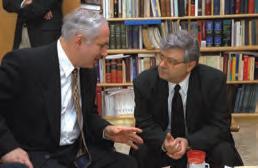
Supreme Court President Aharon Barak welcomes Prime
gone to bat for Israel and its supporters multiple times in recent months, rejecting boycott calls and expressing solidarity after antisemitic violence. Now, he has released a single in the same key, JTA reported.
“We Will Dance Again” defends Israel’s military response in Gaza, criticizes musicians and activists who have publicly supported the Palestinian cause and declares, “If you’re ever confused: I stand with the Jews.”
The song borrows its title from the slogan of survivors of the Nova music festival, where Hamas terrorists killed 378 young people and kidnapped dozens more as part of the Oct. 7, 2023, invasion of southern Israel. The slogan has become a symbol of resilience in the aftermath of Oct. 7.
The singer released the reggae-inspired track, titled “Od Nirkod” in Hebrew, on his social media accounts with a single hashtag: #Shalom.
“You say genocide, I say war / When you’re attacked, that’s what the army’s for,” the song opens. Later, Boy George sings, “You never mention Oct. 7,” in a criticism of those he sings have “selective memory” about atrocities deserving their reprobation. The song ends by repeating the opening lyrics in Hebrew.
Although Boy George is not Jewish, he has become increasingly vocal when it comes to supporting Jewish communities in the wake of Oct. 7.
He rejected calls to boycott this year’s Eurovision Song Contest over Israel’s participation, saying he would not “turn my back” on his Jewish friends. PJC
— Compiled by Toby Tabachnick








Wexner:
Debbie Findling, who took part in the Wexner Heritage Program three decades ago. Both women wanted to do something that would speak to their concerns and raise awareness of the victims. Findling wrote an open letter urging accountability and the two worked together to get signatures — more than 80 Wexner alumni signed on, six of whom are from Pittsburgh.
And while the letter was a good start, Reicher said it wasn’t enough for her. So, the pair created Tikkun Funds — a site that directs donations that are distributed directly to three organizations: World Without Exploitation — which supports Epstein survivors through advocacy, legislative action and public awareness campaigns; Shalom Bayit — a leading Jewish voice on gender-based violence prevention and response; and the Association of Rape Crisis Centers in Israel — the national umbrella organization for Israel’s nine rape crisis centers. The fund has already raised more than $370,000 and the pair have set a goal of $500,000. Reicher and Findling have both donated the cost of the education they received in the program — approximately $36,000, each.
Reicher, who said that she, too, is a victim of sexual abuse, feels that accountability is important, which she believes has not happened to date.
The Foundation, though, is planning to spin off the Wexner Heritage Program. That new program will start with a $40 million grant from Abigail and Leslie Wexner.
Reicher views that grant as problematic.
“That’s why we decided we’re not waiting for them to do the right thing,” she said. “Our education was all about Jewish values, ethics and morals. That’s what we learn tzedakah, teshuva, tikkun [olam], kavod ha’briot — they’re values that called us to action.”
Continued from page 1 Protest:
Continued from page 1
stunt” and noting that body-camera footage and public statements from Israeli and U.S. officials contradict key elements of his account.
The trip came just days after Graham Platner suspended his campaign for the U.S. Senate in Maine. Khanna was a vocal supporter of Platner — who was accused of sexual assault by a former girlfriend — even after it was revealed that he had a Nazi tattoo. Platner has covered up the tattoo.
Both Khanna and Deluzio co-sponsored H.R. 3565, the “Block the Bombs Act,” which would impose unprecedented conditions on arms sales to Israel, including requiring specific authorizations from Congress for every transfer of many types of weapons and guarantees from Israel about their use.
“I wanted to do something,” Paris said.
She didn’t expect Khanna to come out, along with a camera crew and a reporter from the New York Times, to speak with the protestors.
“I did not hold back in questioning his recent ‘political stunt’ in Israel, his support for extremists, and his vote against US aid to Israel,” Paris wrote on Facebook. “Not
Evan Segal is a Pittsburgh native who now lives in California. He was part of the Wexner Heritage Program in 2007 but couldn’t complete it after being asked by then-President Barak Obama to serve as the chief financial officer at the United States Department of Agriculture.
When word came out about the WexnerEpstein connection, Segal wrote his fellow Wexner class members urging them to take the program off their resumes.
time reconciling that.”
Becca Hurowitz and Marla Werner are two long-time Pittsburghers who both took part in the Wexner Heritage Program. Four years ago, they started Givver, a woman-led consulting company that works with philanthropists and nonprofits, helping them to achieve strategic goals.
“Many of our nonprofit clients are in the Jewish and Israel space,” Hurowitz said. “One of our clients is World Without Explanation —
Social justice, Segal said, is a responsibility of the Jewish community.
“It should be a shanda,” he said. “It’s not to take away from the experience that people had together, but the Wexner name should be thought of like Sackler family with OxyContin.”
He said that while he would like to see the Heritage program separated from the Wexner Foundation, he doesn’t think it should use any money from the Foundation.
“That money should be going to survivors because it’s tainted money,” he said. “Wexner built his empire on the backs of women. It started with women in third world countries working in slave-like conditions to make his clothing, then it went to stores where women worked crazy hours and weren’t paid well. Models were treated poorly and then the entire sexualization of women. His entire empire was built by men taking advantage of women.”
Social justice, Segal said, is a responsibility of the Jewish community. He’d like the community to look in the mirror at its own values and beliefs and ask how they reconcile that with inaction when there is injustice.
“The stories of Oct. 7 are very painful,” he said. “I supported the the Civil Commission on Oct. 7 Crimes Against Women and Children. To hear Jews not believing the
World WE — which is one of the recipients of the funds that Debbie and Jan are raising.”
World WE, Werner explained, is working with Epstein survivors. “The organization is representing and convening many of the Epstein survivors,” she said. “They have deep relationships with several survivors and therefore we have created deep relationships with several of the survivors.”
Werner said that allegations against Wexner began to leak when she and Hurowitz were in Israel as part of the program.
“We were there with five other cohorts, and all six cohorts were told the story by Wexner leadership,” she recalled.
And while the two give credit to the program for relationships built in Pittsburgh and across the nation, as well as lessons in leadership, Werner said it was the program’s emphasis on moral clarity that ultimately inspired them to launch the organization.
“We know that some of these survivors have spoken certain alleged perpetrators’ names out loud, but as a society, we are still not believing or accepting it. It’s important to look at the facts that are publicly available and for each person to make informed choices based on them,” Werner said.
we believe women, and we believe these women and want to support them in their pursuit of justice.”
Sue Berman Kress said that the time she spent in the Wexner Heritage Program was a “transformational” learning experience and colleague-building experience.
“We learned from amazing scholars. We built really great relationships, and I thought it was a tremendous asset to my community participation,” she said before adding, “but there’s a lot of pain associated with finding out there’s a lot we didn’t know.”
She thinks the Foundation should transfer funds to the program when it spins off.
“I think the Foundation understands that they can’t just cut ties without giving the new entity a financial runway,” she said. “Without that, it would just crumble because they couldn’t keep staff and wouldn’t have an office. The $40 million will give them enough time to build their own fundraising and an organizational model.”
The Wexner program, she said, taught that one has to prepare for the hardest moments, and this, she acknowledged, is the hardest moment.
Despite that, she said, there’s still worth in the program and the way it operates.
“The concept of going into different communities in different years and building a cohort — a generational cohort of leaders — has value,” she said. “It’s a really worthy goal.”
For Reicher, the future should be about accountability and helping the survivors.
“I’m really motivated by love for the Jewish community and by a belief that we’re all capable of living our highest values,” she said. “I have a lot of faith in people. I’m doing this because I care deeply about the Jewish community. The community has given me so much and I feel the need to live my Jewish values and give back to the victims of these crimes.” PJC
surprisingly, he pushed back and continued to spread dangerous propaganda, including pushing the genocide libel. I explicitly pushed him to define ‘genocide’ and told him this word isn’t a replacement for ‘a war you don’t like.’ I told him that his language is fueling global antisemitism that has caused actual genocide against Jews for thousands of years. I told him that Jews are called ‘genocide lovers’ and ‘baby killers’ when they walk down the street
Hurowitz added: “The bottom line is that
because of people like him pushing this false narrative.”
She told the Chronicle that she also pressed Khanna on his support of Platner, whom, she said, is a known extremist.
When Paris questioned Khanna on his experiences in the West Bank, asking if Israel was aware of his arrival in the country and granted approval for his travel on the day he went, she said the representative told her, “They knew I was there when I got the
David Rullo can be reached at drullo@ pittsburghjewishchronicle.org.
airport,” and “other American politicians have gone there.”
“I definitely felt like he was sidestepping the conversation,” she said.
Asked about his recent vote to cut all U.S. aid to Israel, led by Rep. Thomas Massey, Khanna claimed that Israel has enough weapons.
“I spoke with him extensively about how language is causing significant harm to Jewish communities around the world,” Paris said.
Khanna pointed to the United Nation’s claims that Israel is committing genocide. Paris pushed back.
“I said that the U.N. has been taken over by very anti-Israel voices. I asked if he knew who sits on the U.N. Security Council or the U.N. Council for Women’s Rights,” she said.
Asked if she thinks Khanna internalized her message, Paris said the two will continue their dialogue.
“Only time will tell whether he listened,” she said. “His votes are what matters. We plan to have another conversation. I will continue to hold our elected officials accountable and make sure they understand the perspective of the broader Jewish community.” PJC
David Rullo can be reached at drullo@ pittsburghjewishchronicle.org.
By Andrew Silow-Carroll | JTA
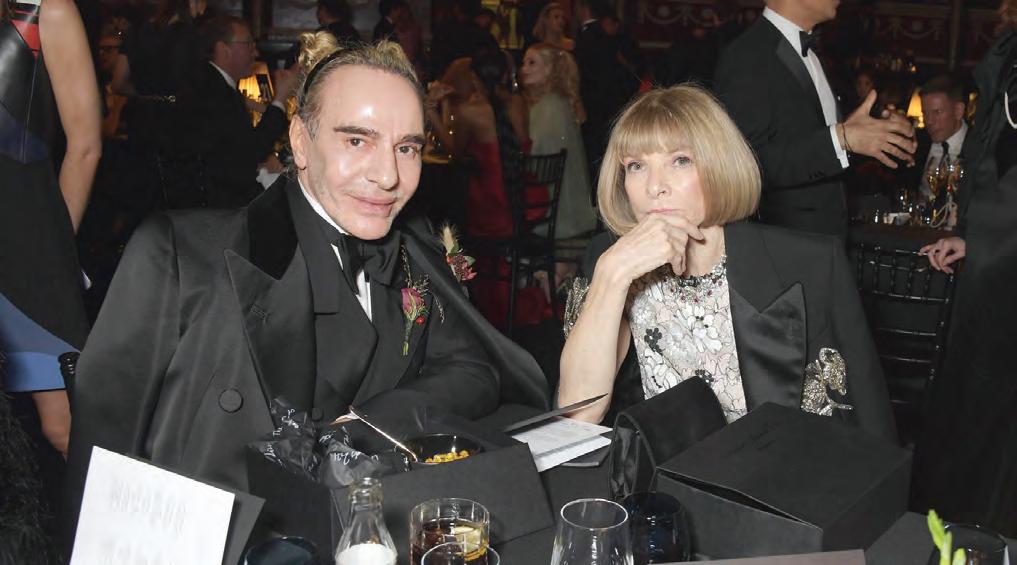
Before the Metropolitan Museum of Art announced that it would honor fashion designer John Galliano with a major Costume Institute exhibition next spring, the museum convened at least two unusual meet ings: a face-to-face with Galliano and a number of prominent rabbis, and a larger meeting with Vogue editor-in-chief Anna Wintour, museum officials and several prominent Jewish leaders.
The unusual collision of fashion and Judaism, first reported in The New York Times, reflected the challenge facing the Met as it prepares to celebrate one of fashion’s most influential designers who was also the perpetrator of one of its most notorious scandals.
Fifteen years after Galliano was fired as chief designer of Dior for praising Hitler and hurling antisemitic abuse at patrons in a Paris café, the fashion exhibition has become a test of what Judaism means by teshuvah — repentance — and whether genuine accountability can coexist with public redemption.
Rabbi Danya Ruttenberg, author of the 2022 book “On Repentance and Repair,” was unconvinced that Galliano has demonstrated the kind ransformation Jewish tradition demands.
She recalled finding Galliano’s original public apology — in which he said he accepted that the accusations had “greatly shocked and upset people” and that “anti-Semitism and racism have no part in our society” — lacking.
“It didn’t appear very sincere or heartfelt or engaged with what he really had e,” she told JTA.
In Jewish tradition, Ruttenberg said, repentance is a multistage process that includes an ology to the harmed party, a sincere and forthright confession and a demonstration in words and deeds that the transgressor has changed for the better.
“The work of teshuvah is the work of humility and the work of care and the work of relationship,” she said. “That’s not what I’m seeing here.”
The Met’s announcement also comes at a time when many Jews see a spike in antisemitism, ostensibly ignited by Israel’s war in Gaza but fanned by anti-Israel rhetoric that is often indistinguishable from antisemitism.
Accordingly, the debate over Galliano’s return to fashion — he recently signed a multi-year deal with the fashion brand Zara — touches on questions that Jewish tradition has wrestled with for centuries: how to repent, and when to forgive.
Jewish authorities, from the medieval sage Maimonides to the 21st-century author Rabbi Jonathan Sacks, have emphasized that teshuvah is not a simple apology or a request for forgiveness. It is a demanding process of acknowledgment, repair and transformation. And crucially, they argue, forgiveness is not something the person who caused harm is entitled to receive on demand.
Galliano has been a touchstone in debates like these since 2011, when a video surfaced online showing the designer, in a lengthy rant, praising Hitler and telling onlookers that they would have been killed by Nazis. Earlier that same year, a Jewish woman and an Asian man accused him of directing slurs at them during an altercation at the same café. A French court later found Galliano guilty in the cafe incident of making public insults based on race, religion or ethnicity and levied a suspended fine.
Dior fired him. His reputation appeared destroyed.
But Galliano’s story did not end there. After entering treatment for substance abuse, Galliano began a long process of rehabilitation. He released a statement of regret, met with Jewish leaders and spoke publicly about confronting his own ignorance and prejudice. In 2013, the Anti-Defamation League said it believed he had demonstrated “true contrition” and that people could change when they accepted responsibility and worked to understand the harm they had caused.
The late Abraham Foxman, then the national director of the ADL and perhaps the last Jewish
leader who could unilaterally grant an accused antisemite absolution, met with Galliano. He arranged for the designer to study with a rabbi and visit Auschwitz, and felt Galliano’s amends were sufficient for him to ask retailers to again stock his designs.
“Mr. Galliano has worked arduously in changing his worldview and dedicated a significant amount of time to researching, reading, and learning about the evils of anti-Semitism and bigotry,” Foxman, who died in May, said at the time.
Jonathan Greenblatt, chief executive of the ADL, echoed Foxman’s approval in an email to The New York Times last week that he subsequently posted to X: “We believe John Galliano has genuinely worked through the issues that led to his antisemitic outburst years ago in Paris, and we have long since accepted his apology,” Greenblatt wrote. “His efforts to repair the damage his words caused and to learn from that incident should be applauded.”
Two of the rabbis who attended the May meeting (a third wasn’t named by participants or reporting on the meeting) also accepted the sincerity of Galliano’s contrition, even as they bluntly described to the exhibit organizers the climate in which the exhibit would be appearing.
In an interview with JTA, Rabbi Rick Jacobs, president of the Union for Reform Judaism, said he also met separately with Galliano in the spring. He came away feeling assured that the designer was “an incredible positive model of a guy who did the work to really earn back his position.”
Jacobs said meeting with Galliano reinforced what he considered a persuasive endorsement by Foxman.
“I was compelled by John Galliano and how he addressed his story. He wasn’t sugarcoating it. He wasn’t mouthing something that he was prepped to share,” said Jacobs. “I felt he was really honest and contrite.”
At the same time, Jacobs made clear to the Met team that the exhibit would be a missed opportunity if it didn’t forthrightly acknowledge the harm Galliano had caused.
Like Jacobs, Rabbi Joshua Davidson of the
Reform Congregation Emanu-El in New York also said at the May meeting that many Jews may reasonably find the tribute painful, given it comes amid a rise in antisemitic incidents and renewed anxiety about Jewish safety. Like Jacobs, he also suggested that they include not just Galliano’s accomplishments but his failings.
“You have the opportunity to use this as a chance to teach about the dangers of antisemitism, the way it metastasizes, and what can be done to fight it,” Davidson told JTA, characterizing his charge to the organizers. “This is a challenging moment to do this sort of exhibition. I think we all acknowledged that, therefore, it places a greater responsibility upon the shoulders of the museum to do what it can to use this in order to push back against antisemitism.”
The Met appeared to hear that message, and says it intends to make Galliano’s transgressions part of the exhibition rather than gloss over them.
“It will directly address the rupture caused by his antisemitic, racist, and anti-Asian conduct in 2010 and 2011, which resulted in his dismissal from Christian Dior and his eponymous label and his conviction by a Paris court for public insults based on race, religion, ethnicity, or origin,” Andrew Bolton, the Costume Institute’s curator in charge, said in announcing the exhibition. “It will also consider his subsequent treatment for substance addiction and his later public acknowledgment of his actions.”
Not everyone, however, is persuaded that Galliano’s rehabilitation — or the Met’s framing of it — satisfies the demands of teshuvah
Hen Mazzig, the pro-Israel writer and activist, argued that the museum’s decision reflects a wider culture that has become inured to antisemitism and dismissive of the concerns of the Jewish community. Noting that the Met abandoned plans to honor Galliano in 2024, Mazzig wrote on Substack this weekend that objections from Jewish donors and allies at the time were “a cost the Met was unwilling to pay.”
Two years later, he continued, the museum appears to have concluded that the “cost had fallen to roughly zero. That is a market read on how much anyone cares when Jews object.”
She also worries that powerful public figures — from President Donald Trump to the comedian Louis C.K. — increasingly earn public absolution in ways unavailable to the average person.
“Our society is delighted to give free passes to people who will give them access to wealth and power,” she said.
Davidson and Jacobs, having spent time with Galliano and being respectful of Foxman’s judgment, said they found the designer to be sincere, and that his example provides a lesson for the Jewish community in how it handles repentance.
“I think all of us present [at the meeting] also recognize the value that Judaism places on teshuvah, and when you do the work, that’s pretty significant,” Davidson said.
Jacobs concurred. “I don’t think you have as many stories of people who were the absolute embodiment of antisemitic behavior and views, who really worked through and took accountability,” he said. “For the Jewish community, I think it’s an underscoring that there’s not only power to teshuvah, but actually it can really bring someone back from a really dramatic fall from grace.”
The fashion world, meanwhile, has already welcomed Galliano back to the literal and metaphorical front row. Wintour, perhaps the most influential figure in fashion, has been one of his strongest champions.
The annual Costume Institute exhibit opens with the Met Gala, a lavish red carpet extravaganza that is one of the highest-profile events in fashion and pop culture. In his statement, Bolton, the curator, said that the show will demonstrate how as a designer for Givenchy and Dior, Galliano “has remapped the world through fashion and how his conduct, its consequences, and changing cultural values have reshaped our understanding of his work.”
Ultimately, Davidson said, there are more important things for the Jewish community to be debating than the rehabilitation of a fashion star.
“I’m certainly immersed in the fight against antisemitism and appreciate the importance of pushing back against it and just the dangers of this moment,” he said. “I think we have bigger issues than what, however bad it was, John Galliano did a decade and a half ago.” PJC
Antizionism has become the domi nant public expression of anti-Jewish hatred at many elite institutions. I have wondered how it is possible that this hatred has become so pervasive, given that our community’s institutions have invested so much in education about Jewish history, espe cially the Holocaust.
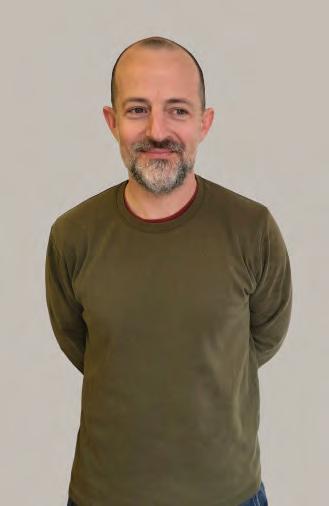
A few months ago, I came face-to-face with an answer when I witnessed an incident where the Holocaust Center of Pittsburgh did not just fail to combat this modern form of Jew hatred, but excused it.
As reported in the Chronicle on June 26, Duquesne University’s Psychology Department has, at a minimum, shown a tolerance for antizionist hatred (“Mental health professionals sound alarm over antisemitism in psychology and social work”). The intellectual roots of antizionism lie in Nazi-Islamist collaboration and Soviet propaganda. Its goal is to mark all Jews for violence and purge them from “polite” society. This century-old movement of antiJewish exclusion and demonization has already destroyed Jewish communities from Russia to Iraq to Poland. Those who deny that modern antizionism is a hate movement must first confront the facts it has left on the ground: Jewish life dies wherever its program takes hold. This hatred now pervades the academic culture around me. One colleague, who takes Duquesne undergraduates on educational trips to Auschwitz, has remained enthusiastically involved in a professional psychoanalytic society that was, until recently, led by a “decolonizing psychologist” notorious for teaching that Zionism is a mental illness. Another colleague collaborates with someone who posted publicly that “the so-called ‘final solution’ was not nearly final enough,” published a manifesto for the “Islamic Marxist Revolutionary Alliance,” and is currently on trial in the United Kingdom for supporting terrorism. A graduate student in my department publicly celebrated Hamas terrorists and Oct. 7 atrocities.
As a result of calling these things out, I have been isolated and harassed.
In response, Duquesne’s Psychology Department mandated a “Countering Antisemitism” training session, provided
by the Holocaust Center of Pittsburgh. The training devoted nearly all of its attention to forms of anti-Jewish hatred that most educated Americans already recognize as bad: medieval religious anti-Judaism (“Christ killer!”) and 20th-century racial antisemitism (“Parasite!”). But it never named the form of Jew-hatred that prompted the training in the first place — antizionism — with its own familiar accusations of “Colonizer!” “Apartheid!” and “Genocide!”
After some hand-waving innuendo about geopolitical dynamics and colonialism, the Holocaust Center’s facilitator explained that just because a Jew says that something is antisemitic doesn’t mean it is. The oppressed group doesn’t get to decide what’s antisemitic. Imagine workplace racism training that concluded by telling Black people they are not reliable authorities on the racism directed at them. Imagine telling gay people they cannot meaningfully identify homophobia.
perhaps the most denied bigotry in the world today. If we want that denial to end, then choosing anti-Jewish bias educators who are trained by antizionists and who are tolerant of antizionism is counterproductive at best, and harmful at worst. That choice reflects institutional judgment, not merely a single educator’s personal opinion.
The Holocaust Center of Pittsburgh’s stated mission is to “connect the horrors of the Holocaust and antisemitism with injustices of today” and to “empower individuals to build a more civil and humane society.” That mission carries a profound responsibility: not merely to teach how Jew-hatred once appeared, but how it evolves and manifests in the present.
A training approach that refuses to name antizionism — and tells Jews they don’t get a say in what counts as anti-Jewish hate — does not prepare participants to recognize the dominant form of hatred confronting many Jewish students and faculty today. That is not a minor omission. It is a direct betrayal of the Center’s founding purpose — and of the community it exists to serve.
If my department were plagued by Spanish inquisitors or neo-Nazi skinheads, the training might have been useful. It is not. I am countering a form of Jew-hatred expressed by ordinary academics using what now passes for acceptable academic language.
Near the end of the session, the colleague who educates undergraduates at Auschwitz but tolerates the celebration of Hamas atrocities by his own graduate student asked how one can criticize state policy without being branded antisemitic.
I expected a thoughtful and straightforward answer from the Holocaust Center’s educator. The educator could have said that criticism of the Israeli government is not anti-Jewish. Indeed, nobody criticizes Israeli governments more passionately than Israelis do. But the educator also should have said that singling out the world’s only Jewish state for standards applied to no other country, denying Jews the right to national self-determination, treating “Zionist” as a category of contamination and psychopathology, or obsessively degrading Israelis as “ethno-supremacist baby killers” are not legitimate policy critiques but modern forms of anti-Jewish bigotry and abuse.
The educator should have said that contemporary antizionism is not political criticism at all, but discrimination directed at Jews through the language of Israel. Instead, what followed truly shocked me.
Either would rightly be regarded as absurd. Yet when the subject was Jew-hatred, the proposition was presented as entirely reasonable. That was the session’s final explicit message: Jews, as a group, do not get to decide what is anti-Jewish.
The unstated message was even more revealing: The facilitator’s apparent priority was to absolve those worried about being accused of antisemitism, not to help them counter the antizionist hatred they were helping to spread.
I later learned that, according to public materials, this Holocaust Center educator was trained by IfNotNow in 2016 and went on to co-found IfNotNow Pittsburgh. IfNotNow’s mission includes ending U.S. support for “the ongoing Nakba” and “Israel’s system of apartheid.” Indeed, IfNotNow’s statement after Oct. 7, 2023, placed blame on the Israeli and U.S. governments, not Hamas, for the massacre.
The Holocaust Center’s educator also is credited as one of the “collaborators and mentors” who peer-reviewed a 2025 guide that recasts Israel as an “ethnonationalist” state aligned with Christian imperialism and American white supremacy.
Why is this harmful?
Antizionist hate — projecting the most hated evils of our age back onto Jews, now recoded as “Zionists” — is not just a problem in Duquesne’s Psychology Department. It is
Watching a train wreck in real time, while mesmerizing, is never fun. It can, however, be educational.
By encouraging New Yorkers to protest against Israeli Prime Minister Benjamin Netanyahu when he next comes to Gotham to address the U.N. General Assembly, New York City Mayor Zohran Mamdani is preparing the
ground for yet another opportunity to showcase anti-Israelism and antisemitism in its most radical forms.
I’ve protested against Netanyahu’s previous visits to the city. But there is absolutely no reason for any of us who want to push for a more just Israel to collaborate in protests next month, and every reason to stay far, far away from them.
Many if not most lifelong liberal Zionists, myself among them, are outraged, bordering on horrified, by the disastrous policies of the Netanyahu government. Our commitment was and is to the simultaneously Jewish and democratic state of Israel envisioned in its Declaration of Independence. While recognizing Israel’s obligation to eliminate Hamas
as an existential threat, we empathize with the continued suffering of the civilian population of Gaza. And we categorically condemn the violence perpetrated by Israeli — read Jewish — settlers against Palestinian civilians in the West Bank.
But for Mamdani, a good number of us would probably have wanted to express our anger publicly on Netanyahu’s next appearance in New York. We’ve done so before. On Sept. 22, 2023, I was among several thousand Jews who rallied in Dag Hammarskjöld Plaza to denounce the Netanyahu government’s crude legislative efforts to undermine the independence and authority of Israel’s judiciary. We did so out of a love for and commitment to
Jew-hatred has never remained static. Like a virus, it mutates to survive, changing its language while preserving its target. Across centuries, it has adapted to new religious, scientific and political contexts, but its core remains the same: casting Jews as the source of whatever is wrong with society and portraying hostility toward them as not merely acceptable, but as good.
In medieval Europe, Jews were condemned as Christ killers who block eternal salvation. In the 20th century, they were condemned as racepolluters who block national unity. Today, they are increasingly condemned collectively through the world’s only Jewish state as racist colonizers who block global peace and harmony. Holocaust education that cannot explain that evolution — and how each mutation gains popular legitimacy by presenting itself in terms of the accepted theology, biological-science, or social-science scholarship of its age — is not merely incomplete. It leaves students, educators and institutions unable to recognize the prejudice unfolding directly in front of them.
An institution that cannot recognize hatred as it evolves cannot protect the community it was built to defend. Pittsburgh’s Jewish community deserves a Holocaust Center that can name the disease in its current form — before it’s too late. PJC
Alex Kranjec is an associate professor of psychology at Duquesne University.
Israel. We did so in solidarity with the hundreds of thousands of Israelis who had been protesting for months against Netanyahu’s autocratic disregard for democracy and the rule of law. Mamdani has made it impossible for me to do so again this year. I have not changed my mind about or my attitude toward Netanyahu, but I will not be drawn by Mamdani into standing alongside or anywhere near antisemites whose declared goal is the destruction of Israel. I suspect I am far from alone in holding these sentiments.
After conceding in his by-now-notorious video that, contrary to his campaign promise,
Last week, the Chronicle asked its readers in an online poll the following question: “Should U.S. political leaders consider the safety of Jews at home when choosing words critical of Israel?” Of the 231 people who responded, 96% said yes and 4% said no. Comments were submitted by 64 people. A few follow.
As we all remember from 10/27, words matter. Our elected leaders would do well to remember that their words carry even more weight than those of some troll on Reddit or Gab, because as leaders, people actually listen to what they have to say.
Our political leaders should consider the safety of everyone, not just Jews, when choosing to be critical. We need to stop focusing on Jews and Israel but everyone struggling for identity and existence. The issue today is the double standard for Jews and Israel. U.S. political leaders should apply one standard for all — then we Jews will be safer.
It depends on how the criticism is expressed. Vociferous condemnation of
Rosensaft:
Continued from page 12
he does not have the authority to order the NYPD to arrest Netanyahu, Mamdani effectively called on New Yorkers to demonstrate against the Israeli prime minister by declaring that “one of the bedrocks of our city is protest.”
(Parenthetically, as a law professor, I must urge the NYC corporation counsel to explain to Mamdani that an indictment brought by a disgraced ICC prosecutor is not proof of anything. By calling Netanyahu a “war criminal” in his video, Mamdani exposed either his willful misuse or his equally willful ignorance of basic legal concepts and terminology.)
The mayor proceeded to double down on his “protest as bedrock” theme at a subsequent press conference, by declaring that, “If
Should U.S. political leaders consider the safety of Jews at home when choosing words critical
Israel often crosses the border to rabid antisemitism. It’s especially dangerous when heard by those already harboring anti-Jewish feelings quietly.
More importantly, should Israeli officials consider the Diaspora Jews’ safety when making bad decisions about what to permit in the West Bank?
anyone feels a level of frustration or opposition, protest is something that we will always respect. I leave it to New Yorkers themselves to make that decision.”
His invitation leaves no doubt whatsoever in my mind that the anti-Israel, antisemitic agitators who screamed “globalize the intifada,” “death to the IDF,” “from the river to the sea,” and “say it loud, say it clear: we support Hamas here” at past demonstrations outside synagogues and on university campuses will show up in force and with likeminded reinforcements and will regurgitate the same vitriol at an anti-Netanyahu rally as foreshadowed by Mamdani. And there is nothing any of us can do to prevent this from happening.
Indeed, Mamdani himself may well give a modulated, carefully drafted, somewhat sanitized speech at the event in which he will take pains to eschew the extremist rhetoric of the
They need to differentiate the Israeli government from the Jewish population; they are not one and the same. They also need to work harder to eliminate the wrong usage of the term “genocide.”
It is a sad commentary on the state of American politics that we are debating whether to prioritize people’s safety over scoring cheap political points.
Political leaders should absolutely avoid antisemitic stereotypes. When discussing the Arab-Israeli conflict, they should avoid demonizing and dehumanizing either side. The right of Israel to exist should not be denied, and neither should the right of Palestinian Arabs to have their own state.
It’s the political leaders who are supporting Israel who are encouraging activities dangerous to Jews in the U.S.
The words one chooses to use are always important, and while U.S. political leaders — including Jews, and maybe especially so — have every right and obligation to call out Israel on its missteps and shortcomings,
mob he incited to begin with. He may even repeat his mantra that he considers himself the mayor of all New Yorkers, even those who disagree with him. The only question for those of us who took part in or spoke at previous anti-Netanyahu demonstrations is whether we will be anywhere near this one. I, for one, will not.
So what can I and liberal Zionists like me do instead to express our continued repudiation of Netanyahu and his policies without joining forces with implacable enemies of Israel who reject its very existence? A separate counter-rally of our own might make us feel good but risks being seen as an irrelevant sideshow.
One option might be a digital declaration signed by as many thousands of us as possible in which we make clear that we stand with Israelis like former IDF Chief of Staff Gadi Eisenkot, former prime ministers Naftali
they must always do so in a way that is balanced, fair and reinforces our nation’s fundamental commitment to its only true ally in the Middle East.
Criticism of Israel is our duty for the benefit of Israel and the Jewish Diaspora, but that must be clearly distinguished from backdoor antisemitism. I donate only to AIPAC now because that is the best way I see to support Jews in America, despite my criticism of Israel. Keep it in the family because our enemies do not ever just hate Israel, they hate us all.
Negative words bring repercussions, antisemitism, hate crimes. They give disturbed people permission to commit acts of violence against others. Ignorance of others, their history and present behaviors intensify the acts of hatred.
PJC
— Compiled by Toby Tabachnick
Chronicle weekly poll question: Are you following primary races in other states? Go to pittsburghjewishchronicle.org to respond. PJC
Bennett and Yair Lapid, and the Democrats’ Yair Golan who are seeking to oust Netanyahu and his coalition partners from power in the forthcoming Israeli elections. Even if we cannot vote for Netanyahu’s political opponents, we can and we should assure them of our support as they try to bring Israel back from the precipice.
But whatever we do, we must do so on our own, unshackled and untainted by Mamdani’s unconcealed hatred not just for Netanyahu but for Israel both as a state and as an integral part of our Jewish identity. PJC
Menachem Z. Rosensaft is a lawyer and human rights activist, adjunct professor of law at Cornell Law School, lecturer-in-law at Columbia Law School, and author of “Burning Psalms: Confronting Adonai after Auschwitz.” This article was first published by JTA.
Fetterman stands his ground
It’s just like Mama Cass Elliot said: “You’ve got to make your own kind of music and sing your own special song — even if nobody else sings along.” And we know that New York City Mayor Zohran Mamdani, fellow Democrats, as well as the left-leaning media are not singing Sen. John Fetterman’s pro-Israel song (“Meeting Netanyahu, Fetterman calls Mamdani ‘worthless,’ online, July 30). Instead, they are on an anti-Israel, pro-Hamas rant.
Score one for Fetterman, who is his own man and will not be coerced into supporting anything which he does not believe in, and who has shown himself time and time again to be a genuine mensch.
JoAnn Lee Frank Clearwater, Florida
Fetterman’s seat belongs to Pennsylvania
John Fetterman has every right to leave the Democratic Party if he chooses (“Fetterman has no right to leave the Democratic Party,” July 31). In many ways, it is the party that is leaving him. Bruce Ledewitz’s commentary underscores a larger problem in American politics: Too many party leaders act as if elected offices belong to the party apparatus rather than to the voters. The Senate seat belongs to Pennsylvania, not to the Democratic Party. Sen Fetterman represents all Pennsylvanians, not just partisan activists. Fetterman’s official Senate materials likewise
emphasize that he serves the people of the commonwealth, and that this is a statewide seat representing Pennsylvania as a whole.
The modern Democratic Party is increasingly dominated by two forces: reflexive Trump derangement and the rise of the Democrat Socialists of America (Communists) who are far outside the political mainstream. That combination is driving the party away from moderation, realism and broad public appeal. Fetterman stands as an inconvenient obstacle to that shift because he is a centrist voice, was elected to represent all Pennsylvanians, and has maintained a pro-Israel position in a party that too often tolerates hostility toward Israel and antisemitism.
Ledewitz also raises an important point about Senate majority control and the consequences of elections. Control of the Senate matters because it determines the confirmation of Supreme Court justices and other nominees. Republicans were able to confirm three justices during Trump’s first term because they controlled the Senate. Democrats, under Harry Reid, changed the rules for most nominations by eliminating the filibuster for all nominees except Supreme Court justices, and that became the precedent that later shaped the Gorsuch fight.
As a lifelong conservative and libertarian, I support Fetterman because he has shown independence, common sense and a willingness to put Pennsylvania ahead of party orthodoxy. He has earned my respect and my support and should do what’s best for Pennsylvania. Andrew Neft Pittsburgh
We invite you to submit letters for publication. Letters must include name, address and daytime phone number; addresses and phone numbers will not be published. Letters may not exceed 500 words and may be edited for length and clarity; they cannot be returned. Send letters to: letters@pittsburghjewishchronicle.org or Pittsburgh Jewish Chronicle, 5915 Beacon St., 5th Floor, Pittsburgh, PA 15217
We regret that owing to the volume of correspondence, we cannot reply to every letter.
By Philissa Cramer | JTA
An unpublished novel has paved the way for the birth of a new Jewish fiction imprint, in the leading edge of a flurry of initiatives to combat antisem itism in the publishing industry by taking hold of the means of production.
Meg Keene had an enthusiastic agent with a long track record of sales when she submitted her novel, a romance with Israeli characters, to publishers in 2024. But she heard over and over that her book seemed too Jewish to publish at a time when the war in Gaza had turned anything that could be perceived as pro-Israel radioactive. As has happened to an untold number of Jewish authors in recent years, her book did not sell.
Now, Keene is the eponymous tastemaker at the helm of a new imprint within Wicked Son Press, a five-year-old publisher that has released mostly nonfiction that leans right.

Meg Keene Books will release four to six novels over the next year that she and Wicked Son’s founders believe will elevate Jewish voices and reconstruct a bygone communal Jewish literary conversation. She’ll also edit a forthcoming literary magazine designed to shape the Jewish book-buying audience.
“My goal is to make Jewish publishing feel really cool,” Keene told the Jewish Telegraphic Agency.
“I’m planning to acquire books across genres — male authors, female authors, romance, thriller, literary fiction — you know, the works,” she added. “I also intend to put everything I have behind each book, and sort of ask the Jewish community to support these books and make the case for them.”
At the same time, she said, she has broad support from Wicked Son’s co-publishers to depart from the conservative and explicitly pro-Israel stance that has characterized most of their recent and forthcoming releases, which include the posthumous memoir of pro-Israel philanthropist and Republican megadonor Sheldon Adelson and a treatise on anti-Israel sentiment on U.S. college campuses by the activist and former professor Shai Davidai.
“I really dislike books that are where you can sort of hear the author tapping the mic to do an op-ed through fiction,” Keene said. She added, “Not only am I not going to publish quote-unquote conservative fiction, I’m not going to publish ideological fiction at all.”
David S. Bernstein, who runs Wicked Son alongside Adam Bellow, said he’s on board — though he notes the openness has limits.
“The one thing that we insist that our authors believe is that they’re Zionists,” he told JTA. But, he added, they also have to be good: “Are we going to do schlocky novels just because they have a Zionist message? Absolutely not.”
Zionist authors — and those perceived,
correctly or not, to be among their ranks — have faced a broad backlash in the literary world since Hamas’ Oct. 7, 2023, attack on Israel and the subsequent war in Gaza. Intense pro-Palestinian activism that left some Jewish writers feeling intimidated and unwelcome in 2023 and 2024 has resulted in “widening cultural isolation,” according to a recent report from PEN America, the free-speech organization, that cited dozens of Jewish industry professionals. Keene, who was mentioned in the report and later critiqued it as being inadequately focused on issues facing Jewish writers, says her research shows that the chill has translated into a declining number of Jewish book deals.
Some efforts have sought to improve the situation within existing institutions, whose decades of cache and power to fill bookstore shelves remain an unassailable draw for many Jewish writers. The Jewish Book Council, for example, has advocated for Jewish authors to speak at industry conferences and launched grants meant to help writers promote themselves to potential agents and publishers.
But an increasing number of initiatives are based on the premise that the situation in the literary world is so dire that Jews need their own publishing houses and distribution pathways. (“I am really tired of us begging for acceptance and it not working,” Keene said.) In addition to Meg Keene Books, there are at least two other imprints on the verge of announcing themselves, one supported by the pro-Israel philanthropist Scott Shay and the other operated by a British publisher and writer named Jacky Klein.
Klein declined to comment about her initiative, which her biography on the website of the Jewish Literary Foundation, a British organization, says is “focused on Jewish and Israeli voices, due to launch in late 2026.”
But Howard Lovy, the editor of the press
that Shay is backing, said he planned to release at least one novel a month starting early next year, sourced from the vast number of manuscripts that writers have sent him following a handful of online callouts and from his own roster of freelance editing clients, whom he has found himself increasingly unable to steer toward publication.
“After I’m done editing their books, the next question is, OK, what now? I really don’t have much to tell them because things are so bad right now for Jewish authors,” said Lovy, who also freelances for 70 Faces Media, JTA’s parent company. “Even if they don’t write about the Middle East at all, agents and publishers are telling them that this is not the time for Jewish voices, and bookstores aren’t selling them.”
Lovy’s press has a name: Canary Publishing. “Jewish voices have long been the canary in the coal mine, the song that signals whether the air is still safe to breathe,” he told JTA in a follow-up email. “When we are silenced, everyone should worry.”
Naomi Firestone-Teeter, the Jewish Book Council’s CEO, said all of the new initiatives have a place at a challenging time. The council has received hundreds of messages to an email hotline launched in 2024 for people in the literary world to raise concerns about antisemitism and anti-Israel exclusion.
“A healthy Jewish literary culture includes many publishers, authors and viewpoints,” Firestone-Teeter said in a statement to JTA. The Jewish Book Council, she said, “welcomes efforts that support readers and authors and contribute to the long-term vitality of Jewish books.”
Shay’s investment is enabling advances to authors, though Lovy declined to share any dollar figures. Meg Keene Books, meanwhile, is following Wicked Son’s profit-sharing model: Rather than being paid upfront for their work, they’ll split any earnings with
their publisher — starting with the first sale. Keene says she herself has taken on the marquee role “not for any financial gains at the moment” but is hoping to rally new investments in Jewish publishing. “We are going to need Jewish donors and investors
Keene is in some ways an unlikely leader for Wicked Son’s new imprint. She has a track record in print and digital publishing — but as the editor of a wedding-planning media company, not of fiction. There, her credentials come mainly from the fact that she has spoken openly, starting on social media, about a demoralizing experience that many aspiring authors prefer to
“It will destroy any remnants of my career that I have left in publishing. There’s really a code of silence,” Keene said this week from Jerusalem, where she traveled from her home in Northern California, of her fears about revealing that she had tried and failed to publish through the “Big Five” publishing houses.
A turning point came earlier this year when she appeared on a podcast produced by the Canadian Jewish News, where she revealed that she had been collecting data that she said showed a marked decline in Jewish fiction deals announced in an industry-standard publication since Oct. 7, 2023. Soon, she was collaborating with the Anti-Defamation League, writing op-eds in the Wall Street Journal and JTA, and fielding calls from Wicked Son.
“It was kind of an instant click across all three of us,” Bernstein recalled. “The immediate response was, ‘Oh well, this is the person we need to kick off our serious literature program.’”
He said her lack of experience in fiction publishing was no deterrent. “She built businesses. She’s a voracious reader. She absolutely understands what readers respond to, which was the main thing that we really loved about her,” he said. “We’re 100% confident that she’s going to be successful in this role, more successful than somebody who has only worked within the structures of a large publishing company would be.”
Keene declined to share specifics about the books she’s already negotiating to publish, which she said would likely include previously unpublished novels as well as works that may have appeared abroad but not in the United States.
But she cited “The Adventures of Kavalier and Clay,” the 2000 novel by Michael Chabon about Jewish cousins in the golden age of comic books, as an example of the kind of thickly Jewish story she hopes to elevate. (Chabon is a staunch critic of Israel who has described Israel’s operations in Gaza as a “genocide.”)
“We have moved away from the days of ‘Kavalier and Clay,’ where every sentence on the page feels Jewish, and we’ve been in this moment where the best we’re allowed is representation,” Keene said. “Jewish fiction is incredibly cool, and I want to make us all proud and excited of our tradition.”

Mazel tov, and thank you, to our 2026 18 Difference
Lifetime Achievement Award, Karen Wolk Feinstein
Outgoing president and CEO of the Jewish Healthcare Foundation
Rabbi Yisroel and Chani Altein
Co-directors of Chabad of Squirrel Hill a
Dean Aseef Shaliach at the Jewish Community Center of Greater Pittsburgh a
Michael Bernstein
The Tree of Life board chair a
Nina Butler
Director of Bikur Cholim Pittsburgh a
Debra L. Caplan
Jewish Healthcare Foundation, board of trustees and volunteer, and WHAMglobal (Women’s Health Activist Movement Global), founding chair

Avi Cohen Community volunteer a
Rebecca Elhassid Community volunteer a
Meyer “Skip” Grinberg Community volunteer a
Tsipy Gur
Classrooms Without Borders, founder and executive director a
Rachael Heisler Pittsburgh City Controller a
Jeff Herzog Community volunteer a
The Rev. Jonathon Jensen Calvary Episcopal Church a
Rona Kaufman
Associate professor at Thomas R. Kline School of Law of Duquesne University
Eric Lidji Director of the Rauh Jewish History Program & Archives at the Heinz History Center a
Fraidy and Dovie Nadoff Community volunteers a
Julie Paris
Mid-Atlantic regional director of StandWithUs a
Rabbi Chezky and Bassie Rosenfeld Co-directors of Our Giving Kitchen a
Kelly Schwimer
Executive director of the Jewish Cemetery & Burial Association

Look for a special section on Sept. 4 celebrating the honorees!
To inquire about individual or corporate sponsorship packages, placing congratulatory ads or for any other questions, please contact Amy Weiss at 412-613-0697, or aweiss@pittsburghjewishchronicle.org.



— ISRAEL —
By Sharon Altshul | JNS
Can science and faith coexist? Is humanity guided by reason, revelation or both?
For more than a thousand years, scholars from Jewish, Christian and Muslim traditions wrestled with those questions.
Thanks to an exhibit that opened on July 31, visitors to the National Library of Israel can explore that shared intellectual journey through a major new exhibition featuring rare manuscripts, scientific writings and religious texts, many of them on public display for the first time.
“The Quest of Questions—Unlocking the Secrets of the Universe” spans more than a millennium of human inquiry, bringing together treasures from the library’s collections to examine the questions that have united civilizations across cultures and generations.
Rather than presenting a chronological history, the exhibition is organized around enduring questions that have occupied humanity for centuries.
“We wanted to make the display inclusive of Jewish, Christian and Arabic works,” co-curator Noa Menhaim told JNS during a press preview on July 22. “It was important to show the multicultural religious and philosophical schools of thought. There were many more options possible, but limited space.”
Journey through ideas
Visitors move through two dimly lit galleries where black walls focus attention on priceless manuscripts opened to carefully selected pages.
Jewish, Christian and Muslim traditions are presented alongside scientific discovery, philosophy and mystical exploration, illustrating how generations of scholars often pursued the same fundamental questions through different lenses.
Drawing on the National Library’s extensive collections, the exhibition explores astronomy and astrology, algebra and geometry, theology and Kabbalah, medicine and alchemy. Rather than separating science from faith, it shows how many of history’s greatest thinkers regarded them as complementary paths toward understanding the universe.
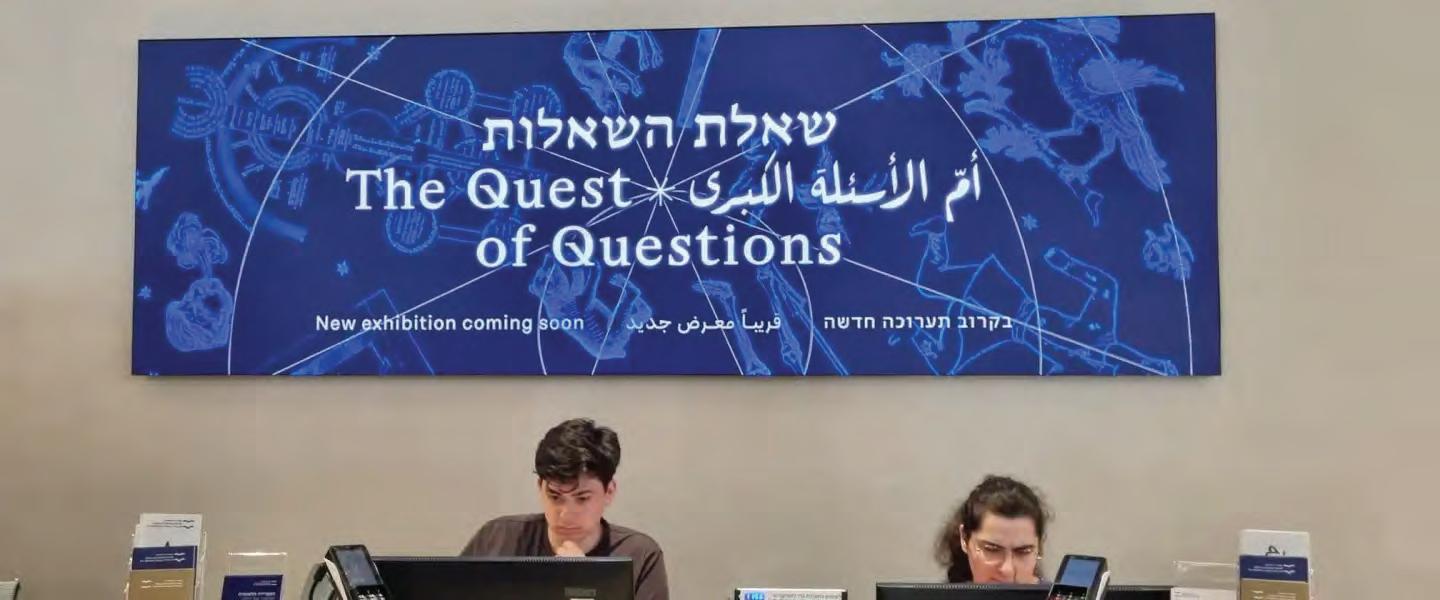
Display texts appear in Hebrew, Arabic and English, highlighting centuries of intellectual exchange among Jewish, Muslim and Christian civilizations.
Among the first works visitors encounter is the magnificent Nuremberg Chronicle, published in Germany in 1493 and considered one of the finest illustrated examples of early European printing. Open to one of its more than 1,800 woodcut illustrations, it introduces visitors to humanity’s attempts to understand creation and history.
Nearby is an illuminated manuscript of Maimonides’ Mishneh Torah, representing the richly illustrated Hebrew manuscripts that helped shape Jewish scholarship throughout Europe and the Middle East.
Newton beyond physics
One of the exhibition’s most surprising sections reveals a lesser-known side of Sir Isaac Newton.
Alongside manuscripts documenting the physicist’s revolutionary scientific discoveries are papers exploring biblical prophecy, the dimensions of the Temple in Jerusalem, ancient civilizations and calculations concerning the End of Days.
The exhibition recounts the remarkable journey of Newton’s papers to Jerusalem. After
Cambridge University declined to acquire them in 1875, nearly 8,000 handwritten pages eventually reached the National Library with the support of Albert Einstein, who recognized the importance of Newton’s theological writings as well as his scientific legacy.
Another centerpiece is The Canon of Medicine by the Persian physician and philosopher Avicenna (Ibn Sina), one of history’s most influential medical texts. The exhibition explores how Avicenna sought to reconcile Greek philosophy with Islamic thought while grappling with questions of morality, fate and human responsibility.
Additional highlights include Persian manuscripts, Armenian biblical illustrations, astronomical works by Johannes Kepler and Galileo Galilei, and writings by Saadia Gaon, Gersonides and Ibn Rushd.
Asked why the exhibition resonates particularly today, National Library CEO Oren Weinberg said it offers an opportunity to step back from the relentless pace of current events.
“At times like these, which appear to be pivotal moments in human history, it is important to step back from the constant stream of daily events and reflect not only on the immediate concerns that occupy our attention, but also

on the enduring questions that have challenged humanity across civilizations and generations,” Weinberg told JNS.
“While the circumstances of each era and place differ, these fundamental questions remain remarkably constant. This exhibition offers visitors precisely that opportunity for reflection,” he said.
Audio guides will be available in multiple languages, and family programming will accompany the exhibition throughout its run. During the summer, younger visitors can participate in “To Infinity,” an interactive activity designed for families.
To help preserve the fragile manuscripts, curators said that many of the displayed pages will be rotated approximately every three months to minimize exposure to light and air.
Founded in 1892, the National Library of Israel serves as the country’s premier research library and repository of the Jewish people’s cultural heritage. Since moving into its award-winning Jerusalem campus in 2023, it has expanded its role as a public cultural destination through a growing program of major exhibitions.
“The Quest of Questions—Unlocking the Secrets of the Universe” runs through March 2027 in the Helen Diller Family Rotating Exhibitions Gallery and the Djanogly Gallery at the National Library of Israel in Jerusalem. PJC
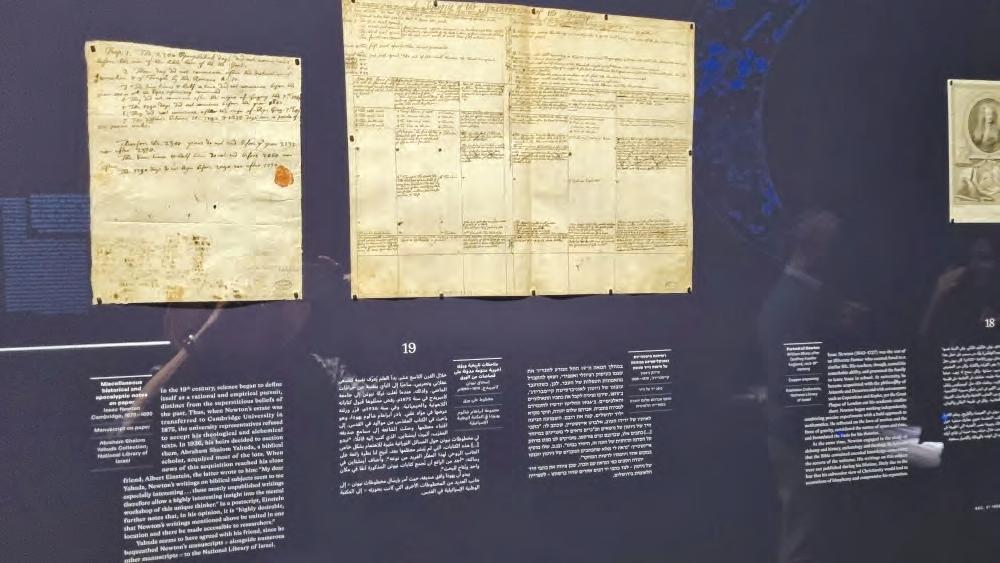





will celebrate her bat mitzvah on Aug. 8, 2026, at Congregation Beth Shalom. She is the daughter of Cary Marchal and Manola Handler Marchal, the sister of Arlo Handler-Marchal, and the granddaughter of Beryl Handler Rosenberg of Pittsburgh, and Robin and Faith Marchal of Chelmsford, England. Sadie is entering eighth grade at Community Day School, where she is a dedicated and hardworking student. She has studied ballet for many years and loves ading, exploring her many creative interests and spending time with friends and family. Sadie is known and loved for her warmth, humor, and ability to connect with people of all ages.
s family lovingly remembers her late great-grandfather, David Handler, z”l, whose lifelong
Art Dickter and Lisa Uram Dickter of Allison Park are delighted to announce Noah, to Olivia , daughter of the late Neal Henry and the late Tammie Cordes. Liv and Noah were married in Stroudsburg, Pennsylvania, on June 27, 2026, and currently reside (with their dog
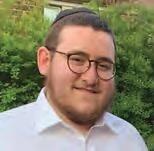
MRabbi Yossi Feller Parshat Re’eh
Deuteronomy 11:26 – 16:17
y great-grandfather Tzvi Meir Steinmetz was a Holocaust survivor. Born in Budapest in 1915, he was 29 years old when the Nazis invaded Hungary. While Hebrew poetry was his forte, he posed as a non-Jewish electrician during the Nazi occupation of Budapest, while his wife and three daughters, including my grandmother, were hidden by righteous gentiles. Thank G-d, they survived.
After the war, they emigrated to the United States and settled in Brooklyn. While he did not come from a Chabad background, he became a disciple and ardent follower of the Rebbe, Rabbi Menachem Mendel Schneerson.
In 1989, he was surprised to see a poem he had authored in 1941 printed in the Hamodia newspaper. It was about the month of Elul.
This Shabbat is Shabbat Mevarchim Elul — the Shabbat on which we bless the coming month, in this case Elul. Elul is the last month of the Jewish year, and the one that precedes the month of the High Holidays of Rosh Hashanah and Yom Kippur, as well as the joyous festivals of Sukkot and Simchat Torah.

In the poem, he compared the Jewish people facing the Day of Judgment to lazy people sweeping rubbish under the beds. “The one who transgressed faces the wall and covers his eyes, hoping that You, too, will not see it.”
The poem ends with a plea for forgiveness: “Kindness is your attribute, Merciful G-d.”
As was his custom, my great-grandfather shared his poem with the Rebbe, noting, however, that he wrote it “before the light of Chabad touched my creative spirit.”
The Rebbe was quick to reply, sending one of his aides to hand my great-grandfather the Rebbe’s written response in person.
The Rebbe thanked him for the poem, but promptly requested that he write another: “Since we are at the end of the month of Elul, and we are going to dress in white because we are sure that we are meritorious in judgment. ...”
The Rebbe was quoting the Tur, Rabbi Jacob Ben Asher, a 14th-century rabbi who wrote a monumental work on Jewish law.
In his laws of Rosh Hashanah, he writes that “generally, one facing judgment dresses in black and is unkempt, for he doesn’t know what his ruling will be.”
rejoicing on Rosh Hashanah, for they know that G-d will perform a miracle for them.”
So the Rebbe wanted him to write another poem that more accurately portrayed the month of Elul, when G-d’s 13 Attributes of Mercy shine forth.
My great-grandfather shared the Rebbe’s reply with his daughters, explaining that the Rebbe was reprimanding him for speaking harshly of the Jewish people when they had surely repented already. “The Rebbe has urgently requested another poem, he explained, to ‘fix’ the first one. And it’s not easy to write a poem on demand … .”
Nonetheless, that is exactly what he did. Over the next five days, he worked on a new poem. As soon as he submitted it to the Rebbe, which was on a Friday afternoon close to Shabbat, the Rebbe immediately sent his aide to transmit his thanks and appreciation. But what are these 13 Attributes of Mercy that shine in Elul?
The founder of Chabad, Rabbi Schneur Zalman of Liadi, presented a parable for this:
The king’s usual place is in the capital city, in the royal palace. Anyone wishing to approach the king must go through the appropriate channels in the palace bureaucracy and gain the approval of a succession of secretaries and ministers. He must journey to the capital and pass through the many gates, corridors and antechambers that lead to the throne room. His presentation must be meticulously prepared, and he must adhere to an exacting code of dress, speech and mannerism upon entering into the royal presence.
However, there are times when the king comes out to the fields outside the city. At such times, anyone can approach him; the king receives them all with a smiling face and a radiant countenance. The peasant behind his plow has access to the king in a manner unavailable to the highest ranking minister in the royal court when the king is in the palace.
The month of Elul, says Rabbi Schneur Zalman, is when the king is in the field.
As Elul approaches, let’s tap into this once-a-year opportunity, when G-d is more accessible to each and every one of us.
As this week’s Torah portion begins: “See, I set before you today the blessing … to motivate you to heed the commandments of G-d …”
May each and every one of us be blessed with a ketivah v’chatima tovah, l’shanah tovah umetukah, a good inscription and sealing for a good and sweet year! PJC





“But unlike this are the Jewish people,” continues the Tur. “They dress in white and are well-groomed, eating, drinking and



Rabbi Yossi Feller is the rabbi of the Chabad Jewish Center of Cranberry. This column is a service of the Vaad Harabonim of Western Pennsylvania.


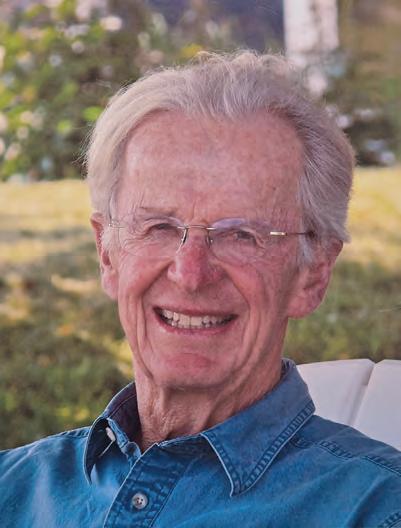
BRUSH: Dr. Alan H. Brush, of Stonington, Connecticut, an evolutionary biologist who specialized in feather proteins and taught generations of pre-med, nursing and allied health students during 30 years as professor at the University of Connecticut-Storrs, died on Sunday, July 12 (28 Tamuz 5786), after a brief hospitalization for ischemic stroke. Alan was born in Rochester, New York, on September 29, 1934, to Martin and Rebecca Elizabeth “Betty” Brush (née Trott). He grew up in Los Angeles, California, with his younger brother, the late Richard (Sharlene) Brush, and was educated in LA public schools and at the University of Southern California. His Army service included work tracking the persistence of radiation fallout for the Atomic Energy Project, at the then-new UCLA campus facility for nuclear medicine and at the Mercury, Nevada, test site. His graduate degrees in zoology were both conferred by UCLA, and Alan cheered college football and men’s and women’s basketball for both the Trojans and Bruins as well as the UConn Huskies. He held a post-doctoral appointment at the Cornell Ornithology Lab. Alan was a creative researcher and lab director in molecular biology whose interest in the evolution of feathers involved him as a member of the “Dream Team” that visited China in 1997 to study the then-recently discovered fossils of feathered dinosaurs. He was a caring and supportive colleague and doctoral and post-doctoral adviser as well as an informative and charismatic speaker — in the lecture hall, at professional meetings of scientific societies, on board voyages co-organized by the Museum of Natural History in New York and Discovery Tours, and at the Mystic Historical Association. He brought broadminded discernment to editing The Auk and the Council of Biological Editors Views. Adventures in retirement included a 2000-2001 voyage aboard their 33-foot sailboat Mokita, with his wife Mary Jane Brush, sailing from Maine south to the Florida Keys. Part of the voyage retraced the path of the early naturalist Mark Catesby. They examined the state of nature then and now and published a volume with Alan’s words and Mary Jane’s watercolors (M.J. Brush and Alan H. Brush. 2018. “Mark Catesby’s Legacy: Natural History Then and Now,” The Catesby Commemorative Trust.). Among Alan’s many superpowers was a life-long talent for forming and maintaining loving friendships. He was generous, thoughtful and curious, qualities that drew people of all ages and walks of life to him all the way from high school through a long and productive retirement. Alan had a fundamentally happy disposition and amplified joy in the lives of family, neighbors, friends, colleagues and members of many communities. Alan is survived and celebrated by his wife of 37 years, Mary Jane (née Spring) Brush of Stonington, Connecticut; his first wife, Nancy (née Carter) Rohner of Storrs, Connecticut; his children, Dr. Lisa (Olivia Bloechl) Brush of Pittsburgh, Matthew (Nicole Skoda) Brush of Wilton, Connecticut, Christopher (Gail) Gallo of Chaplin, Connecticut, and Matthew Gallo of Breckinridge, Colorado; a cousin, Dr. Ruth Messinger; three nieces and four nephews; and four grandchildren and two great-grandchildren, to whom he was a patient, gentle and loving Pops.

There will be a Celebration of Life at “The Hounds” in Stonington, Connecticut, (thehoundsstonington.com) on Thursday, Aug. 13, gathering at 11:30 a.m. and service at noon. Donations in Alan’s memory can be directed toward Pittsburgh’s Reconstructionist Congregation Dor Hadash (dorhadash.net/donations), where daughter Lisa is a longtime member, for tikkun olam — repair of the world — after the mass shooting on Oct. 27, 2018.
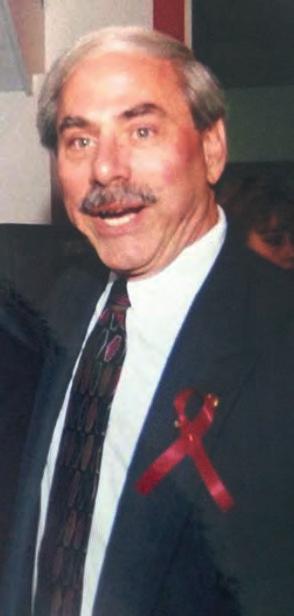
CHILDS: Jay M. Childs, on Aug. 1, 2026. Son of the late Bernard and Florence Childs. Brother of the late Jordan Childs. Brother-in-law of Sheila Hauer. Cherished uncle of Norman (Gail) Childs, Scott Childs and Brad (Linda) Childs. Survived by cousins Susie and Andy; greatnephews Jeremy (Alli) and Daniel (Phebe); great-great-nephew George Alvin; great-greatniece Willa Marie. Also survived by dear friend Bob Meisner. Jay was a lover of the arts, proudly telling everyone about his time as an actor for The Knickerty Knockerty Players. He was the manager of Dollar Bank in Squirrel Hill. Jay was an avid supporter of the Pitt Men’s Study. Services and interment private. Contributions may be made to The Michael J. Fox Foundation for Parkinson’s Research (michaeljfox.org/ donate). Arrangements entrusted to Ralph Schugar Chapel, Inc. schugar.com
Jewish Association on Aging gratefully acknowledges contributions from the following: In memory of...
Samuel Krasik
Ethel Perer
Hinda Kuhl Rubenstein
Edith Flom Schneider
Eileen E Snider & Family .
Peter Michael Oresick
. Alisa N Chotiner
Sharon Snider Alisa Snider Chotiner
Dr Susan Snider & Family Alisa Chotiner
Joyce Unitan . . . . . . Aaron Zwick
Jeffrey Kwall
Isadore Louis Sigal
Sunday August 9: Andrew Cohen, Minnie Drosnes, Lena K Friedman, Benjamin Heller, Elenora Soupcoff Heller, Hyman Herman, Norma Kalmenson, Rose Kress, Phillip Lerner, Bessie Mallinger, Shirley Markowitz, Molly Pollock, David Rabinovitz, Meyer Maier Talenfeld, Jacob Wells, Joan Elise Ratowsky Whitley
Monday August 10: Marion Jessica Blumenfeld, Helen Finkel Eger, Esther Fried, Max Hadburg, Lottie Heller, William Katz, Rose Lieber, Louis Olitzky, Bettie Olender Polak Tanur, Anita Ohringer Ruslander, Gabrielle Heliene Segall, Sam Weinberger, Aaron H Zwick
Tuesday August 11: Hazel R Dickler, Sam Garfinkel, Samuel Goldenson, Philip Goodman, Abraham Katz, Samuel Krasik, Jack Morris, Abraham S Robins, Albert Shapiro, Fay Oppenheim Stein, Mollie E Swartz, Fannie Cohen Weiner, Saul H Weissman, Myers L Zacks
Wednesday August 12: Ruth E Bell, Esther Streng Finegold, Harry Gottesman, Eugene I Hilsenrath, Frank Kress, William S Mason, Rosa Perlstein, Dorothy Miller Ryave, Gertrude Siegel, Lillian Linder Silverman, Frank Solomon
Thursday August 13: Judge Samuel J Feigus, Sherman Hershman, Stuart Irwin Holtzman, Joseph Kossis, Celia S Landay, Simon Miller, Peter Michael Oresick, Ruth Pattak, Morris Rosen, Ann F Schwartz, Benjamin Schwartz, Isadore Louis Sigal, Dorothy B Solomon, Harry M Solomon, Bessie Stein, Maurice Louis Swartz
Friday August 14: David Bass, Gertrude Chotiner, Leopold Diamond, Louis Farber, Sadie Friedlander, Louis Friedman, Milton S Gordon, Md, Rose Grace Halpern, Alihu Klein, Raschel (Ray) Levine, Anna Rabinovitz, Hinda Kuhl Rubenstein, Alisa Snider Chotiner, Samuel Verbin, Adolph Wirtzman
Saturday August 15: Joseph Cooper, Max Eger, Louis Eisenfeld, Meyer Fiman, Pearl Greenfield, Abraham Pittler, Charles Shapiro
Contact the Development department at 412-586-2690 or development@jaapgh.org for more information. THIS WEEK’S YAHRZEITS — Join the Jewish Cemetery & Burial Association of Greater Pittsburgh as we honor those laid to rest this past year at the Chesed Shel Emeth Cemetery (Free Burial)



























“Human

David Patrick Hughes a/k/a David Hughes, deceased, of Pittsburgh, PA, No. 02-26-04145 of 2026, John B. Dunn, Executor, c/o David J. Slesnick, Esq., 310 Grant Street, Suite #1220, Pittsburgh, PA 15219


Obituaries:
Continued from page 19
KIKEL: John Andrew Kikel, Nov. 22, 1947 – Aug. 1, 2026. It is with deep sorrow that we share the news of John Andrew Kikel’s passing on Aug. 1, 2026. The loving husband and best friend of Lee Diane (Goldman) Kikel, with whom he recently celebrated their 35th wedding anniversary. Loving and cherished father of Jason Adam Kikel, with whom he loved to laugh and spend time. John was born on Nov. 22, 1947, in McKees Rocks, Pennsylvania. He was the son of the late John G. Kikel and the late Elizabeth (Pello) Kikel. He was the son-in-law of Melvin and Mildred Goldman, who adored him as if he were their own son. Brother of Raymond (Arlene) Kikel, Joyce (John Kotler), and Suzanne Kikel (John Stauffer). Also survived by many nieces, nephews, cousins and dear friends. Best friend to the ever loyal Emily and Bryce. John graduated from Point Park College in 1973 and enjoyed a three-decade career in the mental health field, where he met his wife, Lee. He used his unyielding kindness and empathy in counseling to help others overcome their obstacles and limitations. A true mensch, he could strike up an enjoyable conversation with anyone. John shared a love of travel with his family. His adventures took him to nearly every U.S. state, numerous national parks and forests, and various countries on five continents. He especially appreciated his time spent in northern New Mexico. The family wishes to thank Dr. Jennifer Fierle and the teams at UPMC Hillman Cancer Center and the Jewish Association on Aging, notably Stacey Tabanli, for their compassion and remarkable care. Funeral services private. Interment Adath Jeshurun Cemetery. Call the funeral home at (412) 621-8282 for shiva details. In lieu of flowers, contributions in John’s memory may be made to the Holocaust Center of Pittsburgh (hcofpgh.org/) or Classrooms Without Borders (cwbpgh.org/). “The ideas that have lighted my way have been kindness, beauty and truth.” —Albert Einstein Arrangements entrusted to Ralph Schugar Chapel, Inc. schugar.com
SMITH: Elayne Smith, on Wednesday, July 29, 2026. Beloved wife of the late Philip Smith; beloved mother of Jamie (Jeffrey) Harris and Bruce Smith; sister of Sandy Weinstein and the late Robert Weinstein and Rita Seltman; grandma of Rachel (Benjamin) Berg, Daniel (Karly) Harris, and Ore, Yoaz, Tagelle and Chen Smith; great-grandma of Emily Berg. Graveside service and interment were held at Temple Sinai Memorial Park. Contributions may be made to the Jewish Association on Aging, 200 JHF Drive, Pittsburgh, PA 15217, jaapgh.org. Arrangements entrusted to Ralph Schugar Chapel, Inc. schugar.com
WEITZ: Shirley Jean Weitz (née Lacov), of Pittsburgh and Palm Beach, Florida, passed away on Tuesday, June 16, 2026. Born in Pittsburgh, Shirley was the daughter of the late Rose Lacov and Samuel Lacov. She was preceded in death by her beloved husband, Dr. Harold Weitz, in 2009, and by all of her siblings. Shirley was an original — ageless and timeless. She was full of style and was blessed with a passion for a life well lived. She was a cherished friend with many relationships spanning multiple decades, a woman who loved deeply and reserved the strongest place in her heart for her family. She worked alongside her husband and daughter in the family’s optometry practice. She was thrilled by the success of others as much as her own, and she loved to laugh — a joy she passed on to her grandchildren, who could always count on her to make them laugh. Only a few months ago, she was dancing until the early morning hours in New York City at the engagement party of her eldest granddaughter. She was a devoted daughter to her dear mother and she remained a wonderful mother who guided and supported her own children in every path they chose. She is survived by her children Heidi Weitz, Scott and Audrey Weitz; her grandchildren, Anya and fiancé Nathaniel, Bear, Mali and Eli Sheer, Maya, and Tess Weitz; as well as her great-granddaughter, Bayla Sheer. A graveside service was held June 17 at Beth Shalom Cemetery. Contributions in her memory may be made to Chabad of South Palm Beach. PJC









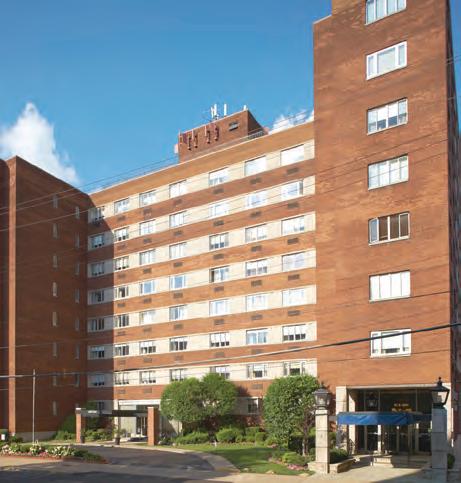


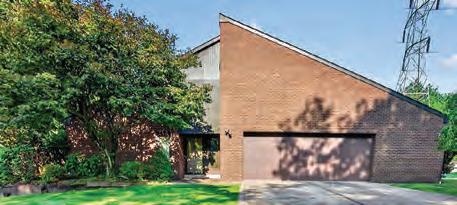



By Simone Saidmehr | Forward
In 1940s Baghdad, a little girl named Na’ima tries desperately to stay awake all night for Shavuot. In wartime Libya, a young boy embarks on a supernatural quest to find a lost city. In 19th-century Morocco, a father’s frustration with his son’s teacher leads him to a rabbinical court.
Until recently, none of those stories would have been likely candidates for mainstream American Jewish children’s books. Now, they are among the first titles slated for publication through PJ Library’s Sephardic Stories Initiative, a fellowship launched in 2024 to support authors writing tales that reflect Sephardic, Mizrahi and Ethiopian Jewish traditions.
For more than two decades, PJ Library has mailed free Jewish children’s books to families around the world. Today, it distributes roughly 670,000 books monthly in more than 40 countries. According to Alisa Koyrakh, the organization’s director of books, those stories have historically reflected a familiar slice of Jewish life.
“There are just a lot of Ashkenormative stories out there — a lot of stories about

Yiddish, the Lower East Side and immigration from Eastern Europe,” Koyrakh said. “Those are all really important stories. But we saw gaps. It was kind of obvious.”
The Sephardic Stories Initiative intends to fill those gaps, bringing together Sephardic and Mizrahi writers for a year of workshops, editorial mentorship and critique from their peers.
Arnon Z. Shorr, whose first foray into children’s literature was a fiction book

about Ladino-speaking Jewish pirates (yes, those were actually a thing), described his forthcoming graphic novel, “Pedahzur and the Quest for the Hidden City,” as a supernatural adventure set in Libya in the mid-1940s.
Knowing 1940s Libya is more often associated with Fascist persecution of Jews in North Africa — not talking cats and magical quests — Shorr laughed.
“I just got a kick out of it because it’s so not what anybody ever expects,” he said.
For Shorr, it was important to write a story connected to his family’s Libyan heritage. He spent hours digging into North African Jewish folklore to draw inspiration.
“There are historians and academics who do fantastic work looking into these things,” he said. “But their work doesn’t necessarily get read by 10-year-olds. I try to channel some of that into a fun genre — a desert adventure with genies and grumpy demon cats.”
Israeli author Rinat Hadad Siegel also found inspiration in an unlikely place: the Farhud, the violent pogrom that erupted in Baghdad during Shavuot in 1941, killing scores of Jews.
Her book, “Na’ima’s Shavuot Eve,” follows a little girl determined to stay awake all night alongside the adults celebrating the holiday that marks when God gave the Torah to the Jewish people at Mount Sinai.
For Siegel, writing about a place she has never been to — and cannot visit — posed a challenge. Once home to one of the world’s oldest and largest Jewish communities, Iraq today is believed to have only a handful of Jews remaining, and travel there by Israelis like Siegel is effectively impossible.
She worked to piece together the Baghdad her family inhabited by interviewing relatives — including an aunt who survived the Farhud — and digging through Iraqi Jewish archives.
“I would go to different libraries and find books about it, and you can see the amount of dust,” she said. “Nobody has touched them for years.”
Although the book doesn’t mention the Farhud directly, it contains subtle nods to the tragedy, including an illustration of a
memorial for family members who perished and decorative amulets that Iraqi Jewish children typically wore on Shavuot.
Siegel hopes children will connect with the story’s universal moments — wanting to stay up all night with the grown-ups — as well as its distinctly Iraqi Jewish setting, from sleeping on rooftops overlooking the Tigris River on warm nights to eating kahi, a flaky Iraqi pastry traditionally served on Shavuot.
But expanding the offerings of Jewish children’s literature beyond Ashkenazi narratives is not merely a creative endeavor. It’s also a way to broaden the public conception of Jewish identity at a challenging time, Shorr said.
According to an analysis of the Publishers Marketplace database, there was a 76% decrease in fictional book deal announcements that mentioned Jews, Judaism or Israel between 2023 and 2024. By 2026, there was an 82% decline.
A July report by PEN America, a nonprofit that advocates for free expression and writers’ rights, found that many Jewish authors have faced challenges publishing openly Jewish work since Oct. 7. Many of the authors interviewed for that report cited publishers’ fears of boycotts of Jewish or Israeli stories, which made getting their work published challenging.
“The narrow view that we get of who Jews are and what Judaism is about through Hollywood, mass entertainment — whatever — leaves too much room for people to invent more of the story for themselves,” Shorr said. “I think that becomes very dangerous for us.”
Koyrakh said getting Jewish children’s books with unfamiliar settings and storylines published by major publishing houses has long been a challenge.
“It’s much easier to get a Chanukah book published by a major publishing house because that’s an easy story for publishers to know how to sell, put in the market and recognize. But we know there’s so much more to Jewish life than Chanukah.”
The four inaugural books of the Sephardic Stories Initiative will be published by PJ Library and distributed to the Jewish families it serves. They include “Na’ima’s Shavuot Eve,” “Pedahzur and the Quest for the Hidden City,” “Shai’s Lesson,” set in 19th-century Morocco, and “Signs of Magic,” which takes place in mid19th-century Tiberias.
Shorr hopes their publication will inspire the next generation of Jewish storytellers.
“I didn’t want to commit my career to backing myself into somebody else’s tale,” he said. “Because I hadn’t ever seen a story about anybody like me, I couldn’t imagine it.” Looking back, he said, “The lack of mirrors meant it took much longer for me to start creating mirrors of my own.” PJC
This story was originally published on the Forward. To get the Forward’s free email newsletters delivered to your inbox, go to forward.com/newsletters.
Purposeful dialogue in
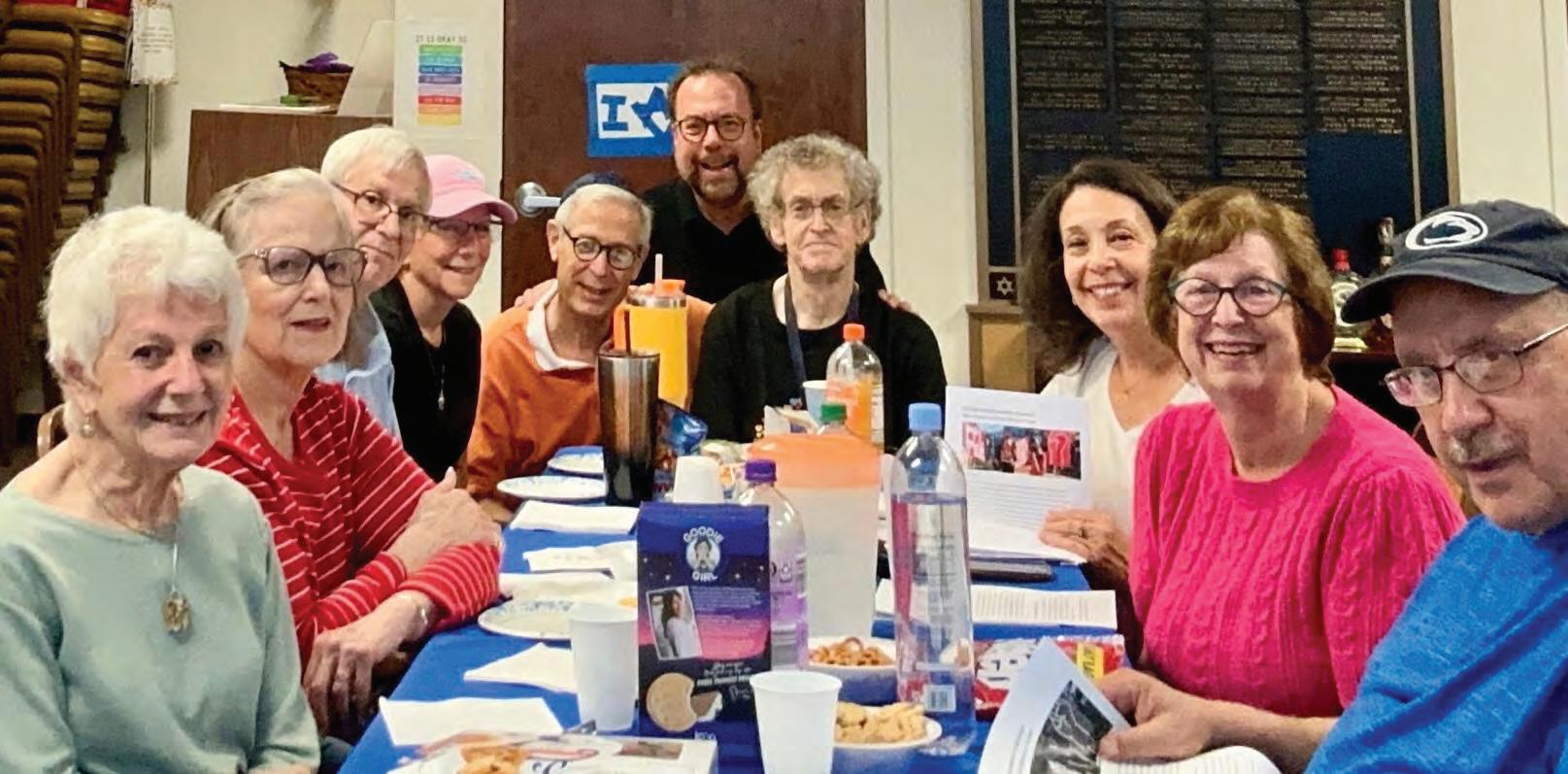

Relax and recharge
Observation is first step
Camp Hillel, a program of Hillel Academy of Pittsburgh, brought campers to Frick Environmental Center for a day of exploration. The activity introduced scientific principles and enabled campers to see outdoor beauty.
Friendship Circle Pittsburgh hosted Mom’s Night. The program offered participants a chance
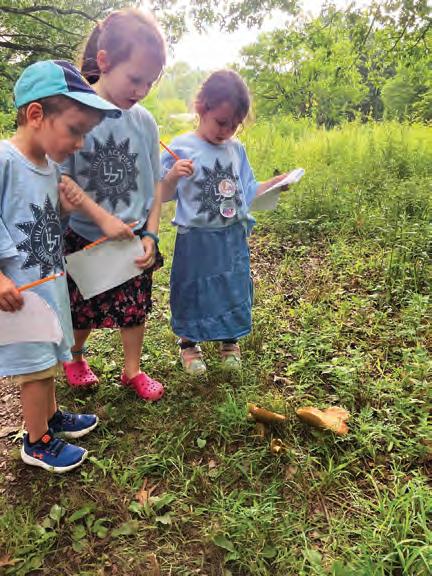
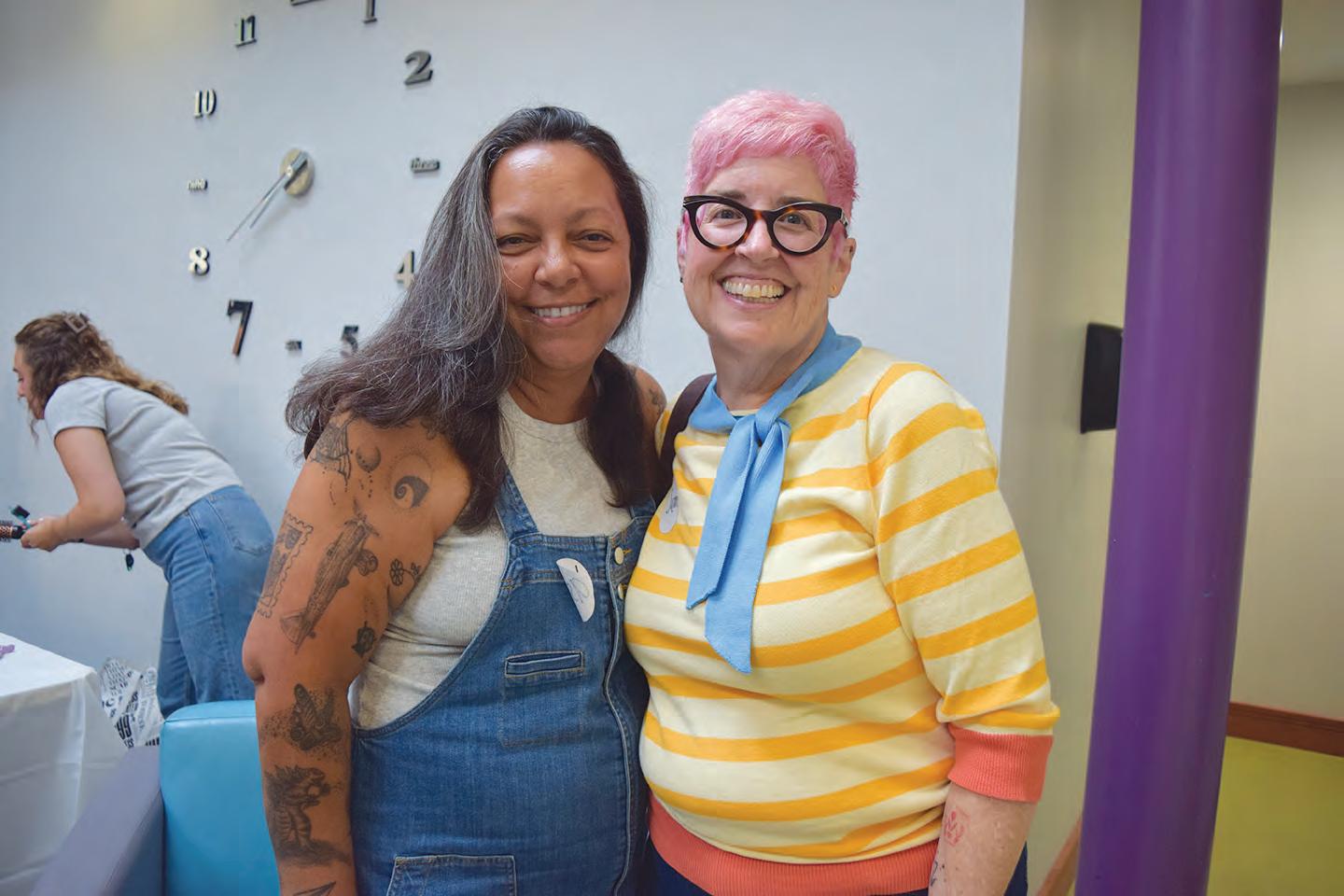
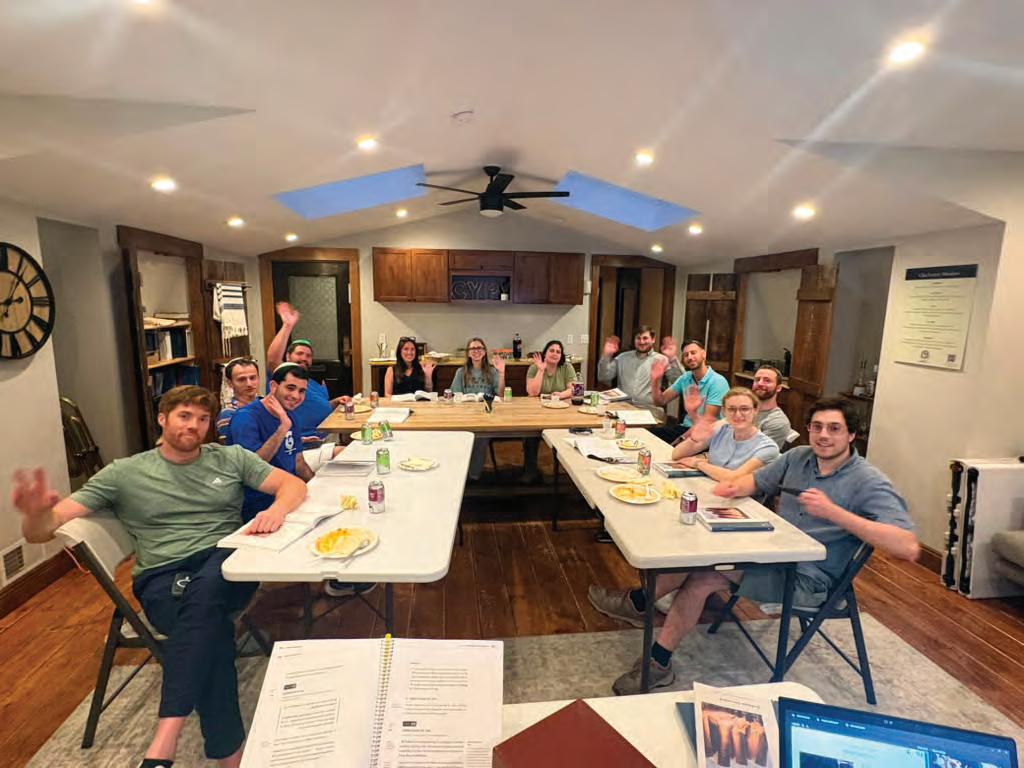
The air up there
Camp

While traversing aerial obstacles, campers demonstrated