The Jewish Federation of Greater Pittsburgh joined Jewish Federations from throughout North America in Washington, D.C. on May 18 and 19 to lobby for security funding.
Several Jewish Pittsburghers joined the twoday mission, including David Knoll, Federation’s associate vice president of public affairs.
“The Pennsylvania contingency met with Sen. Fetterman and Sen. McCormick,” he said. “We were well received. They know our needs.”
Knoll said two sources of funding were discussed. The first is the Nonprofit Security Grant Program, designed to support nonprofit organizations that are at high risk of terrorist or extremist attacks. The grants provide funding for facility hardening and other security measures.
The budget for the program, Knoll said, is approximately $350 million for all nonprofits across the United States. The Jewish community alone, he noted, spends nearly $750 million nationwide on security annually.
“There’s a real need to up that pool,” he said. “We’re asking the federal government to up the grant to $1 billion, which is still not enough but will definitely help.”
Not so sweet: Kosher certification ends at Squirrel Hill Dunkin’
By Adam Reinherz | Senior Staff Writer
FWhile meeting with government officials, the Federation representatives also lobbied for passage of the Jewish American Security Act.
Introduced in May, the bill addresses the rising threat of antisemitism in the United Sates and has received backing from several organizations, including the Anti-Defamation League, the American Jewish Committee, the Jewish Council for Public Affairs and the Jewish Federations of North America.
The legislation would authorize up to $1 billion annually for the NSGP; strengthen protections in K-12 schools and universities by establishing a dedicated antisemitism coordinator at the Department of Education; mandate that social media platforms with at least 50 million U.S. users publish biannual reports detailing their moderation of antisemitic content; and call for a coordinated assessment of domestic and transnational antisemitic threats by the FBI, Department of Homeland Security and National Counterterrorism Center.
The bill would buttress the NSGP’s funding, which now pays for just 50% of security personnel costs, which, Knoll said, presents a hardship for organizations.
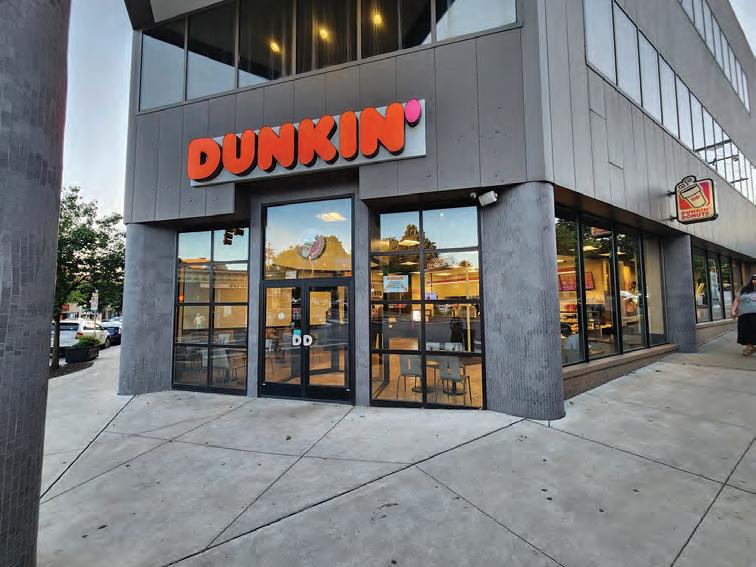
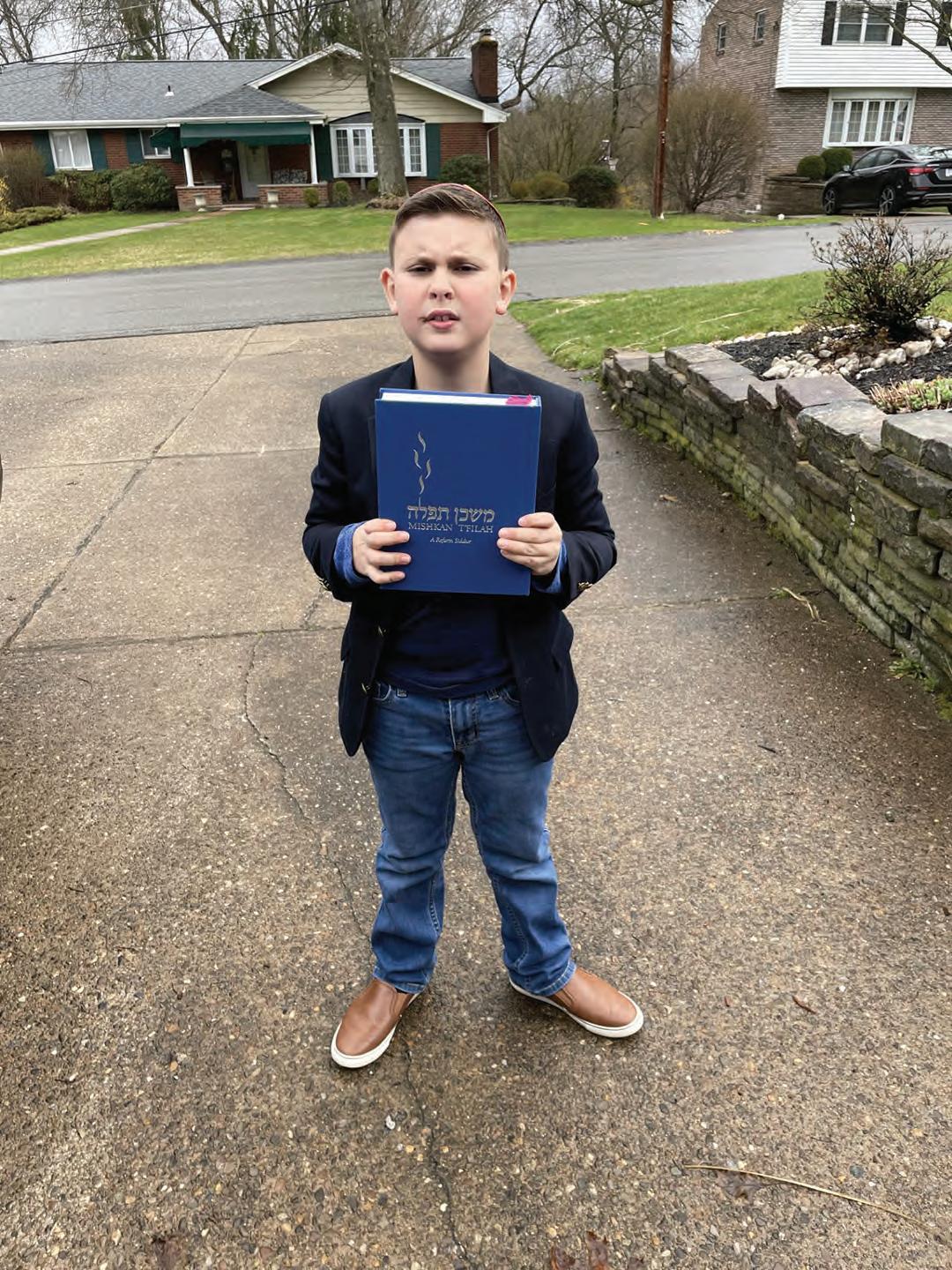
or Naomi Martel, most mornings began the same way: She and her siblings would go with their dad to Dunkin’ for breakfast. Menu items at the Squirrel Hill-based fast-food restaurant range from neatly packaged hash browns to avocado toast. Sandwiches include tuna salad, grilled cheese and sweet black pepper veggie bacon. Patrons, like the Martels, could order customized drinks, assorted doughnuts and other treats. Squirrel Hill is lined with coffee shops and restaurants; what distinguished this haunt — more than its spacious seating — from nearly every other local eatery was the laminated sheet hanging near the register. Signed by local rabbis, the paper indicated Squirrel Hill Dunkin’ was a kosher-certified establishment. On May 31, the sheet was removed.
The loss of Dunkin’s kosher certification does more than limit dining options; it removes a central gathering place that has long connected members of Pittsburgh’s Jewish community. “Where else am I gonna hang out and get food?” Naomi, 13, said. “It’s big. It’s fun. The vibes are just so fun.”
Miri Shaw, 15, described the change as an end to “normality.”
“It felt good to have a mainstream brand like Dunkin’ be kosher in our neighborhood,” she said. “Our community felt seen and supported that we had this place to go to.”
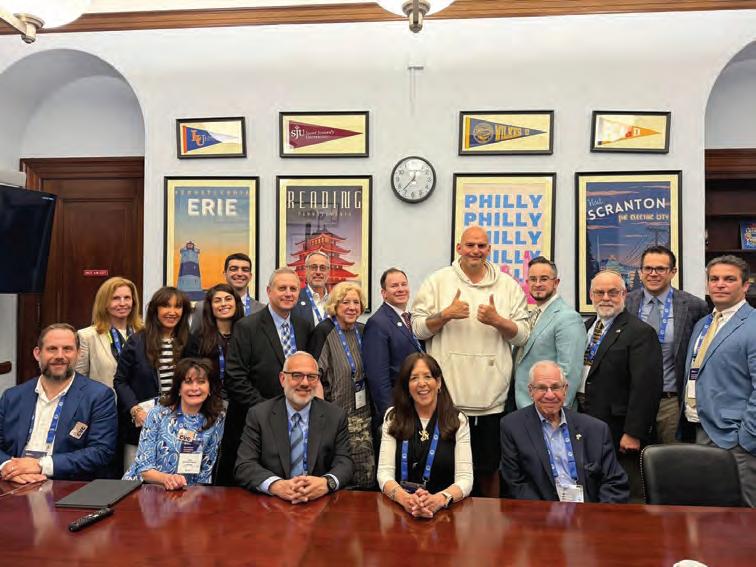
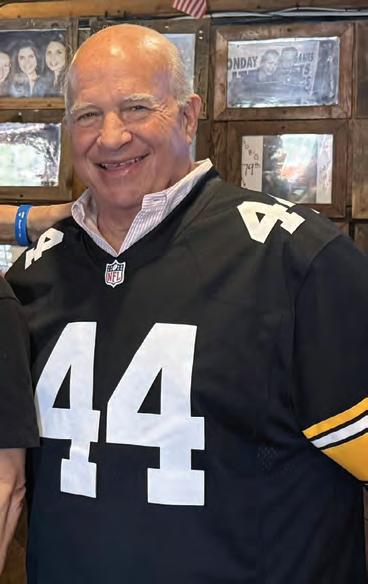
p Pennsylvania Sen. John Fetterman met with Jewish Federation of Greater Pittsburgh representatives and other Jewish Pittsburghers during their trip to Washington, D.C.
Photo courtesy of Rick Wice
Headlines
For Lenny Silberman, the recipe has always been community
By Adam Reinherz | Senior Staff Writer
Arecipe Lenny Silberman first learned more than 50 years ago at his parents’ Squirrel Hill bakery continues producing sweet results.
“It’s all about family, it’s all about the community, it’s all about community building, and it’s about Squirrel Hill,” Silberman said. Speaking with the Chronicle by phone from Scottsdale, Arizona, the former East Ender described a “rinse and repeat” method that led to developing top-notch basketball programming at the Jewish Community Center in Squirrel Hill, revitalizing Emma Kaufmann Camp, strengthening the Maccabi Games, and leveraging gaming and social media usage for Jewish pride.
Silberman is the founder and CEO of Lost Tribe, a digital community of 300,000 young Jews who share Jewish and Israel-positive social media. He formerly served as CEO of Henry Kaufmann Campgrounds in New York City, continental director of the JCC Maccabi Games, director of Emma Kaufmann Camp and athletic director of the Jewish Community Center of Greater Pittsburgh. Silberman is retiring from Lost Tribe on June 30. While remaining an adviser to the group, he is aiming to replicate past successes through a volunteer position with the International Jewish Sports Hall of Fame.
Having spent a lifetime partnering with others to bolster Jewish peoplehood, Silberman is now focused on rebranding the International Hall of Fame by streamlining its social media for greater marketing purposes.
Established more than 40 years ago, the organization honors “Jewish individuals, worldwide, who have accomplished extraordinary achievements in sports.” It also honors those who “have made significant contributions to society through sports.”
ilberman’s involvement with the group — he is a vice president of the board — largely began in 2017 when he was honored for decades of enriching the lives of Jewish youth through athletics. At the award ceremony, Silberman noticed the organization was ripe with opportunity.
“There’s so many organizations out there, hundreds of them, that are dealing with fighting antisemitism and fighting Jew-hatred,” he told the Chronicle. “There’s not too many people that play in the sports space, in the athletic space, so we have the opportunity to do that.”
Over the years, while leading Lost Tribe, Silberman increased his volunteer involvement with the International Hall of Fame, developing new relationships throughout the Jewish world and helping others recognize sports as a Jewish educational tool.
Jewish athletes worldwide have achieved incredible marks. Whether at the Olympics, at national competitions in the U.S. or Israel, or as professionals working in the field, Jews have pushed the limits of what’s possible in sports, he said. “We need people to understand.”
Silberman’s fervency dramatically increased during the past two years.
“Post-Oct. 7, I said, ‘I’m not done yet,’ and we need to engage and continue to re-engage the Jewish community,” he said.
Silberman, 71, pointed to deepening disconnection from Judaism and heightened antipathy toward Israel as two of the primary issues facing the community.
A Jewish Voter Resource Center poll released May 21 found that 47% of Jews over 65 felt strongly attached to Israel; the rate was 25% among Jews ages 18-24.
In 2014, 35% of Jewish Americans told Pew Research Center religion was very important in one’s life. Nearly a decade later, the number waned to 27%.
The American Jewish Committee’s State of Antisemitism in America 2025 Report noted that following violent attacks the previous year, 91% of American Jews said they felt less safe as a Jewish person in the United States.
“With all this antisemitism, and with all this Jew-hatred, we need to be able to help build proud Jews, joyful Jews, build a Jewish community,” Silberman said.
Sports and social media are mechanisms for achieving that aim, he continued.
Through the assistance of familiar partners, including Pittsburgher Andrew Exler, Silberman began sharing stories online about Hank Greenberg, Lenny Krayzelburg, Aly Raisman and other Jewish athletes. Doing so, Silberman said, was predicated on not only telling young Jews about the past but the possibilities ahead.
“Some of those kids, they need to know there’s a pathway,” he said.
Articulating a thoughtful message is critical. Equally important, he continued, is dissemination.
There’s an approach the late Buddy Sapolsky, a “legendary Jewish communal professional,” adopted, Silberman said. “He said, ‘Lenny, if you want to be successful with teens you got to meet them where they’re at and give them
Fifty years ago, young people were at the “pizza parlors, the ball fields and the street corners. They were not at the JCC,” Silberman said. Bringing them to the latter required making clear that whatever was going to happen there was going to be “cool, fun, competitive and social.”
Times obviously have changed, but “if you can make what you’re doing cool, fun, competitive and social, you’re going to win,” Silberman said.
Data shared by the International Hall of Fame points to a promising future.
Prior to January 2025, the group lacked a digital presence and social media strategy. Following a full rebrand, including a new logo and website, regular video usage across various platforms, and multi-week storytelling campaigns, the International Hall of Fame has built a social media audience of 3,963, resulting in 1,123,762 impressions, 59,166 engagements and 284,923 video views.
The group anticipates its audience growing by 25% this year.
The rates are digital, but the concept is rooted in old-fashioned personal connections, Silberman said, reflecting on Silberberg Bakery and the example set by his parents, Herbert and Marianne Silberman.
“I remember my dad always wanted to make people happy at the bakery, my mom always wanting to make people happy, always being community-minded,” he said.
The former Squirrel Hill resident hopes the International Hall of Fame inspires young people to increase involvement with Judaism and Israel. And when they do so, he said, it’ll be because of where the project started. “I came from Pittsburgh, and that will always be with me.” Considering the impact it’s made and continues to, “we can lead the way for other communities.”
PJC
Adam Reinherz can be reached at areinherz@pittsburghjewishchronicle.org.
5915 Beacon St., 5th Floor Pittsburgh, PA 15217 Main phone number: 412-687-1000 Subscriptions: 412-687-1000, ext. 2
Published every Friday by the Pittsburgh Jewish Publication and Education Foundation 5915 Beacon St., 5th Floor Pittsburgh, PA 15217
Phone: 412-687-1000
POSTMASTER: Send address change to PITTSBURGH JEWISH CHRONICLE, 5915 BEACON ST., 5TH FLOOR PITTSBURGH, PA 15217
(PERIODICAL RATE POSTAGE PAID AT PITTSBURGH, PA AND AT ADDITIONAL MAILING OFFICES)
USPS 582-740
Manuscripts, letters, documents and photographs sent to the Pittsburgh Jewish Chronicle become the property of this publication, which is not responsible for the return or loss of such items.
The Pittsburgh Jewish Chronicle does not endorse the goods or services advertised or covered in its pages and makes no representation to the kashrut of food products and services in said advertising or articles. The publisher is not liable for damages if, for any reason whatsoever, he fails to publish an advertisement or for any error in an advertisement. Acceptance of advertisers and of ad copy is subject to the publisher’s approval. The Pittsburgh Jewish Chronicle is not responsible if ads violate applicable laws and the advertiser will indemnify, hold harmless and defend the Pittsburgh Jewish Chronicle from all claims made by governmental agencies and consumers for any reason based on ads appearing in the Pittsburgh Jewish Chronicle
Proudly from Pittsburgh, Lenny Silberman looks ahead.
Headlines
From Pittsburgh to Reykjavik, David Heyman promotes running
the organization behind the Pittsburgh Marathon, said.
By Adam Reinherz | Senior Staff Writer
Shadyside resident David Heyman is using his voice to follow his feet. Following a newly announced partnership between DICK’S Sporting Goods Pittsburgh Marathon and Íslandsbanki Reykjavík Marathon, Heyman was named an ambassador.
The role, he said, enables him to work with both races, create content and promote newly established international ties.
Heyman, 64, has run the Pittsburgh and Reykjavik half marathons multiple times and said he’s looking forward to encouraging runners to explore vastly different settings.
“Driving from the airport to Reykjavik, you’re driving through lava fields that look like a moonscape. There are glaciers, there are waterfalls, there are black sand beaches,” the Jewish Pittsburgher said. “It is just geographically a stunning place to visit.”
While Pittsburgh’s rivers are prominently featured in the marathon — runners need to traverse three city bridges — water is also a key element of the Icelandic course.
Apart from starting and finishing near Tjörnin (The Pond), nearly three quarters of the marathon course follows the Atlantic Ocean coastline.
The Pittsburgh-Reykjavic partnership stemmed from a mutual appreciation for possibilities, Troy Schooley, CEO of P3R,
“We were talking to several different marathons around the world, and when we jumped on a call with Reykjavik for the first time, within the first 10 minutes, we knew that these were our people.” Given both races’ commitment to attracting newcomers from diverse backgrounds, welcoming spectators, maintaining “operational excellence,” showcasing their city’s potential and using race weekend to increase charity, the bonds were clear, Schooley said. “It’s always great when big events can kind of bring together different people with one main objective.”
“We are so grateful and thankful that we’ve got connected to David through the Pittsburgh team. He knows the similarities. He knows both cities. He knows both cultures, so I think he’s like the greatest option and a big add-on to this collaboration and partnership,”
Hrefna Hlín Sveinbjörnsdóttir, race director of the Íslandsbanki Reykjavík Marathon, said. “This is a partnership that is going to benefit both cities, and not only the cities but also the participants from both cities. We’re building up a new community together. I think we’re opening doors. We’re opening opportunities.”
Heyman adds to the overall goal because he’s able to speak to the “inclusivity” of both races, Schooley said. “That is massive.”
In several weeks Heyman will be headed back to Reykjavik for his thirteenth trip.
“My wife and I are in love with Iceland. It is
our happy place,” he said.
Given his love of travel and running, Heyman has competed in races beyond Iceland as well; he’s run half marathons in Canada, Cuba,
Hungary and Portugal. He’s never raced in Israel, and — given its climate — doesn’t plan to do so anytime soon.
“The Cuba race was in November, and even that was hotter than my liking,” he said.
With sights set on promoting Reykjavik and Pittsburgh, Heyman is focused on the task ahead. He hopes others visit the two cities and use running to achieve similar derstanding.
Running, whether as a social endeavor or personal quest, is “part of being a well-rounded individual who has a number of interests,” he said. “It gets you involved in community and groups, and to me that’s important.”
“Running isn’t just running. If you have been to a running event, there’s so much inspiration, there’s so much gratitude, it’s a whole new experience. You don’t have to set a personal best or be an elite athlete to go and run, you can just start with small goals in life — like I’m gonna get through the finish line f a 5K or a 10K,” Sveinbjörnsdóttir said.
“I think the people that have taken the step to be a part of this community know that running starts with a small step then all of a sudden you’re part of this whole community and it gives people more than they expected.”
PJC
Adam Reinherz can be reached at areinherz@pittsburghjewishchronicle.org.
“It’s
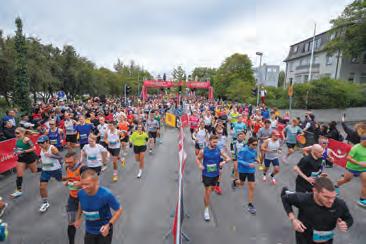
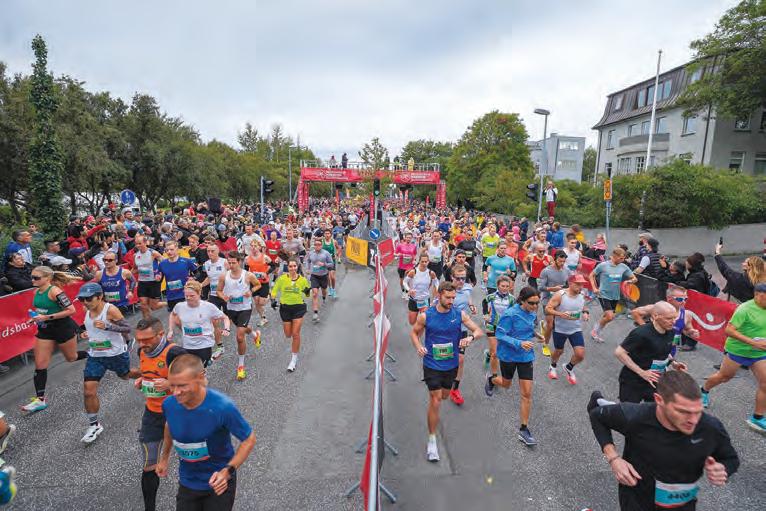
p Runners join the Íslandsbanki Reykjavík Marathon. Photo courtesy of Íslandsbanki Reykjavík Marathon
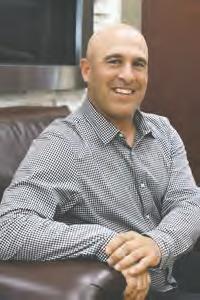
p David Heyman completes the 2026 UPMC Health Plan Pittsburgh Half Marathon. Photo courtesy of P3R
Supporters launch petition, fundraiser for man accused of antisemitic vandalism and bomb-making
— LOCAL —
By David Rullo | Senior Staff Writer
Mohamad Hamad, who is facing a slew of federal charges related to allegedly vandalizing a synagogue and building bombs, doesn’t believe he should be held in detention as he awaits trial.
Arrested in October 2024 in connection to antisemitic graffiti painted at Chabad of Squirrel Hill and the Jewish Federation of Greater Pittsburgh, Hamad was originally released on house arrest. He was remanded to prison following a superseding indictment by a federal grand jury in April 2025.
During a May 2025 hearing where he sought his release before trial, prosecutors said Hamad identified as a “Hamas operative,” and that he “shared violent militant pro-Hamas, proHezbollah content, including from the Oct. 7 attacks of multiple murdered individuals. When he shared these videos, he stated things like ‘Us Muslims never surrender or back down’ and ‘Lebanon just smoked they ass.’”
Hamad and his supporters have created two online appeals. The first seeks signatures for a petition calling for his release. The second asks for donations to be used for his “legal fees, court costs, and other essential expenses.”
The petition for release, titled “Release Mohamad Hamad back onto house arrest,” is hosted by the site Action Network — a digital platform used by various groups, including Black Lives Matter, MoveOn and the AFL-CIO
Collins, who is awaiting trial, is the daughter of Chad Collins, a pastor at Valley View Presbyterian Church in Garfield and a national organizer with Friends of Sabeel North America, an organization the Anti-Defamation League says is “a driving force behind various Boycott, Divestment and Sanctions campaigns.”
The petition for Hamad’s release is addressed to District Justice Christy Criswell Wiegand.
were “pressured into testifying against me.”
In the document, Hamad also decries the “abandonment” he says he felt from progressive groups and the Muslim community.
After complaining of his treatment in prison, Hamad addresses the Jewish community, claiming not to be a threat. He doesn’t mention the bombs he allegedly built or the antisemitic graffiti.
— and has a goal of 800 signatures. More than 600 people have signed the petition since it was created by someone identifying themselves as Kal Reginold.
The petition labels Hamad a “nonviolent Palestinian rights activist.” But in the superseding indictment — filed against Hamad and alleged co-conspirators Tayla A. Lubit and Micaiah Collins — the government alleges that Hamad conspired with Collins to “manufacture and possess a destructive device and discussed the potential use for the device that they were building and testing.” The indictment goes on to state that Hamad “built additional destructive devices, including two pipe bombs, and detonated those as well.”
Lubit was sentenced in September 2025 to five years of probation and ordered to pay $10,534 in restitution after pleading guilty to conspiracy to commit an offense against the United States and damaging or defacing religious property.
In the plea asking for signatures, Reginold attempts to paint Hamad’s prosecution and his subsequent detention as anti-Islamic and “part of the alarming crackdown on civil liberties.” It does not mention Hamad’s alleged attempts to build bombs or his alleged lies to the government when he sought top secret clearance during his time with the Pennsylvania Air National Guard.
Hamad is quoted on the webpage, accusing the government of attempting to “scare the Jewish community, and use their fear against them.”
Hamad’s brother, Ali, created the fundraising page on Chuffed, a crowdsourcing website that hosts campaigns for Lebanon, Gaza and anti-Israel activist Mahmoud Khalil, among others.
Ali claims Hamad is “awaiting trial for charges related to his loud and unapologetic advocacy for Palestinian rights,” and makes no mention of the charges against him.
The page includes a plea by Hamad in which he attempts to paint his prosecution as harassment against him and his family. It also includes a link to an 11-page screed written by Hamad, in which he refers to his prosecution as an “over blown case.” He labels the charges against him as “trumped up,” and writes that “Arab and Muslim friends and community members”
He goes on to claim that “so much of this damn case is a bunch of old farts trying to and completely failing to understand harmless gen z humour and slang from college students … ”
He ends the letter with a call for support, labeling himself as “your favorite A-rab Mohamad.”
Links to the site can be found on the local chapter of the No Appetite for Apartheid campaign created by the Palestinian Solidarity Working Group, which identifies itself on the campaign’s website as a “Palestinian-led, anti-zionist formation of revolutionary socialists.”
The BDS campaign encourages businesses to boycott food “produced in israel, are culturally-appropriative, and/or are made by mega-conglomerates that financially uphold the Zionist occupation of Palestine.” It has recruited a handful of Pittsburgh businesses, mostly in the city’s East End neighborhoods, to sign on to the campaign.
The NA4A website also features a link to the Pittsburgh chapter of the Democratic Socialists of America. PJC
David Rullo can be reached at drullo@ pittsburghjewishchronicle.org.
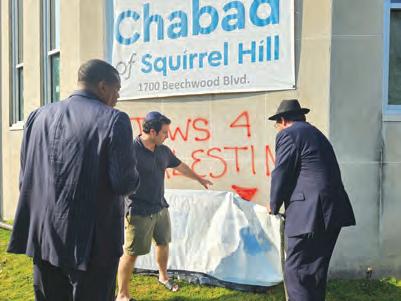
p David Knoll points out the red inverted triangle spray painted on Chabad of Squirrel Hill’s building in July 2024
Photo by David Rullo
Headlines
NY Democratic stalwarts show support for Israel even as Mamdani skips parade
By Grace Gilson | New York Jewish Week
Hundreds of Jewish leaders and New York politicians gathered early Sunday morning ahead of the annual Israel Day Parade to voice their support for the Jewish state, even as anti-Israel rhetoric has proliferated in elections across the United States.
“I stand before you as a proud Jew and a proud Zionist, and those of us who feel that way can never waver,” Rep. Dan Goldman, who is trailing primary challenger Brad Lander in the polls, said to a chorus of cheers. “It should not be momentous to say that, but unfortunately, in many ways, today it is.”
The annual pre-parade Met Council breakfast included a demonstration by New York Gov. Kathy Hochul of state power that will better defend Jewish institutions from anti-Israel protests that critics say have at times veered into antisemitism.
Sitting on stage at a desk flanked by a host of New York elected officials and Jewish nonprofit leaders, Hochul signed a statewide law establishing a 50-foot security “buffer zone” around houses of worship. The legislation is more expansive than a city-level law insulating houses of worship from protests that was passed without New York City Mayor Zohran Mamdani’s signature and was watered down after he expressed concerns about the bill.
Mamdani declined to participate in Sunday’s parade.
“We will not just march today in an act of defiance against those who say we have no right, we’ll also sign legislation that says no, we have the power, we have leaders in government who can make changes happen,” Hochul said.
Hochul, who is running for reelection, was not the only non-Jewish politician to join the pre-parade event hosted by the Met Council, a Jewish-run antipoverty nonprofit. Democratic New York Attorney General Letitia James and Republican Rep. Mike Lawler, both of whom are also running for reelection, spoke at the event.
James vowed that “antisemitism will not be tolerated in the state of New York as long as I am the attorney general.” She added, “It is not just the responsibility of the Jewish community to respond, it requires all of us to respond. To stand shoulder to shoulder, arm in arm with the Jewish community.”
Lawler took aim at antisemitism on the
political left and right during his remarks, calling out Tucker Carlson, Marjorie Taylor Greene, Candace Owens and Hasan Piker by name.
“It is imperative, as elected officials, and there are a lot of elected officials in the room today, not just to be here, not just to say that we support a strong U.S.-Israel relationship, not just to speak out against antisemitism, but to root it out, to root it out by exposing the people in our own parties,” Lawler said.
Eric Goldstein, the outgoing CEO of the UJA-Federation of New York, thanked the public officials who showed up for joining in the Israel parade. He stressed, “We need to be open and public at this apolitical gathering to show our love for the one and only Jewish homeland.”
Mamdani’s refusal to participate, in contrast, has drawn condemnation from many Jewish leaders. Goldstein issued a scathing condemnation on Friday, writing in an open letter that the mayor’s absence is “simply the latest in a pattern of demonizing anti-Israel rhetoric and actions that continue to place the Jewish community of New York at greater risk.”
“Mr. Mayor, you cannot close your eyes to the deadly impact of this incendiary rhetoric that is playing out in Jewish communities across the world, from Bondi Beach to Boulder to Washington, D.C.,” Goldstein wrote.
Later Sunday morning, the organizer of the parade said that what really counted was those who did choose to come.
“Let’s give it up for all of our allies and supporters who are here, because that’s what matters, those who actually do show up,” Mark Treyger, the CEO of the Jewish Community Relations Council of New York, which organizes the parade, told the crowd as Jewish leaders and politicians gathered on a podium overlooking the parade route on Fifth Avenue.
“We march because of our unwavering, unflinching connection to the Jewish state of Israel,” he declared.
Senate Minority Leader Chuck Schumer also gave remarks from the podium before politicians including Hochul, James and New York City Council Speaker Julie Menin began marching down Fifth Ave to speakers blaring Israeli music.
“The Jewish people have yearned for a state of Israel, whilst experiencing the constant anxiety of knowing the place where they live could violently expel them at any moment, as happened again and again,” Schumer said. “We cannot, we must not go back to that era. I believe in the state of Israel. I support the state of Israel.” PJC
Federation’s Jewish Community Foundation.
JUNE 30, JULY 7 TUESDAYS 7:00-8:15PM ZOOM $36 / 2 SESSIONS
JULY 8, 15, 22, 29 WEDNESDAYS 7:00-8:00PM ZOOM
JULY 16, 23, 30 AUGUST 6 THURSDAYS 7:00-8:00PM ZOOM $65 / 4 SESSIONS $65 / 4 SESSIONS
The Gefsky Community Scholar position is endowed by the H. Arnold and Adrien B. Gefsky Endowment Fund of the
p JCRC New York CEO Mark Treyger, UJA-Federation of New York CEO Eric Goldstein, City Council Speaker Julie Menin, Gov. Kathy Hochul and other New York politicians march in the annual Israel Day Parade on May 31, 2026.
Photo by Grace Gilson
Calendar
Submit calendar items on the Chronicle’s website, pittsburghjewishchronicle.org. Submissions also will be included in print. Events will run in the print edition beginning one month prior to the date as space allows. The deadline for submissions is Friday, noon.
q SATURDAY, JUNE 6
Bishop Mark Eckman will join the Tree of Life at the next Torah Studio. The bishop will discuss the parsha with Rabbi Jeffrey Myers in Beit Kulanu’s Levy Hall, 4905 Fifth Ave. 9:45 a.m. treeoflifepgh.org
q SUNDAY, JUNE 7
Beit Kulanu presents “Yiddish Day: Music, Language, and Activism for All.” Attend any or all of the free classes and workshops — from songs, to language, to social action organizing, to dance. No Yiddish
experience necessary. Yiddish Day is a pilot outreach program sponsored by the Workers Circle and the Yiddish Book Center. 10 a.m. Free. 4905 Fifth Ave. rodefshalom.org/events-1/yiddish-day
q SUNDAYS, JUNE 7–DEC. 20
Join Chabad of Squirrel Hill for its Men’s Tefillin Club Services and tefillin are followed by a delicious breakfast and engaging discussions on current events. 8:30 a.m. 1700 Beechwood Blvd. chabadpgh.com
Join a lay-led online Parashah study group to discuss the weekly Torah portion. No Hebrew knowledge needed. The goal is to build community while deepening understanding of the text. 8:30 p.m. For more information, visit bethshalompgh.org/online-parashah.
q MONDAYS, JUNE 8–DEC. 21
Join Congregation Beth Shalom for a weekly
Talmud study. 9:15 a.m. For more information, visit bethshalompgh.org.
Join Temple Sinai for an evening of mahjong every Monday (except holidays). Whether you are just starting out or have years of experience, you are sure to enjoy the camaraderie and good times as you make new friends or cherish moments with long-term pals. All are welcome. Winners will be awarded Giant Eagle gift cards. All players should have their own mahjong cards. Contact Susan Cohen at susan_k_cohen@yahoo.com if you have questions. $5. templesinaipgh.org
q TUESDAYS, JUNE 9–DEC. 22
Join Beth El’s Rabbi Alex Greenbaum and his Bible/ Talmud Adult Education class for a thought-provoking weekly session of Bible and Talmudic study. This program is available both in person and virtually. Call the office at 412-561-1168 to receive the Zoom link or to
make an in-person reservation. 10:30 a.m. 1900 Cochran Road. bethelcong.org
q WEDNESDAY, JUNE 10
Join Chabad of the South Hills for its monthly Senior Lunch and a presentation on levels of care at senior care facilities. Wheelchair accessible. $5 suggested donation. 1701 McFarland Road. For more information or to RSVP call 412-278-2658. chabadsh.com
q TUESDAY, JUNE 16
Join the National Council of Jewish Women Pittsburgh for “Repairing Together (Tikkun Yachad): Practicing Humanity in a Time of Division,” an evening of shared meal, meaningful conversation, somatic reflection, and collective action as they explore what it means to practice humanity in this moment. Free but registration is required. 6:25 p.m. 1620 Murray Ave. act.ncjwpgh. org/a/tikkun-yachad-june PJC
No future in US for seminary ordaining anti-Zionists, Rabbi Ammiel Hirsch says in ‘Re-Charging Reform Judaism’ keynote
in a keynote address opening the two-day conference last week.
By JNS Staff
No rabbinic seminary has a future in the United States if it ordains anti-Zionist clergy, Rabbi Ammiel Hirsch, senior rabbi at the Stephen Wise Free Synagogue, a Reform congregation in New York City, said at the third “Re-Charging Reform Judaism” conference.
“We have an obligation to discuss what we mean by ‘Zionism,’” the rabbi, who is president of the New York Board of Rabbis, said
“We have an interest to establish the biggest possible tent. I am a liberal pluralist, and I believe in big tents, but even liberal pluralists have boundaries,” the rabbi said at the event. “If you believe everything, you believe nothing.”
“A Diaspora community that disengages from Israel, where half of the remnants of our people lives, has no future,” he said in an address, during which he often raised his voice and shook his finger. “Such a community will eventually wither away and, at best, constitute a footnote in the annals of Jewish civilization.”
The rabbi added that “any seminary that either in word or deed, in principle or impression, acquires the reputation of being hostile to Zionism — a seminary that ordains anti-Zionist clergy has no future in America.”
“If we marginalize ourselves from the mainstream of our people, the Jewish people and the Jewish state will continue without us,” he said. “It is we who will be remembered only in books and learned articles, a testament to a good idea gone awry, a haunting psalm to what might have been.”
At the event, attendees adopted four resolutions, including one that states that Zionism and “living relationship with the state of Israel are essential expressions of Reform Judaism and central to Jewish identity and covenantal responsibility.”
Hirsch told attendees that “in the lead-up to the New York City mayoral elections, those of us from Orthodox to Reform, who defended Israel in the face of an onslaught of obnoxious opprobrium, found much more common ground, worked much more closely with each other, and had much greater affinity one with the other than with those in our own
The Pittsburgh Jewish Chronicle invites you to join the Chronicle Book Club for its July 12 discussion of “A Guide for the Perplexed,” by Dara Horn.
From Amazon.com: “Software prodigy Josie Ashkenazi has invented an application that records everything its users do. When she visits the Library of Alexandria as a tech consultant, she is abducted in Egypt’s postrevolutionary chaos with only a copy of the philosopher Maimonides’ famous work to anchor her, leaving her jealous sister Judith free to take over her life.
A century earlier, Cambridge professor Solomon Schechter arrives in Egypt, hunting for a medieval archive hidden in a Cairo synagogue. Their stories intertwine in this spellbinding novel of how technology changes memory and how memory shapes the soul.”
Your hosts
Toby Tabachnick, Chronicle editor
David Rullo, Chronicle senior staff writer
How it works
We will meet on Zoom on Sunday, July 12, at 1 p.m.
What to do
Buy: “A Guide for the Perplexed.” It is
movements, who promoted the anti-Zionist mayor of New York City.”
“What we often forget, but ignore at our peril, is that while our movement is a religious body devoted to God and Torah, much of the Jewish world expresses their Jewish identity in secular form, through a fierce commitment to the Jewish people and the state of Israel, the Jewish people’s most eloquent expression of peoplehood in our times,” he added.
In his remarks, Hirsch suggested that defending Israel and Zionism could be part of tikkun olam, a value that many Jews articulate as repairing the world.
He also said that there are “worrying signs of a narrowing particularism in some quarters of the Jewish world and the Jewish state.”
“Those elements of the Israeli government that represent a close-minded, chauvinistic particularism are an embarrassment to Israel and world Jewry,” he said. “The hooligans who violently assault Palestinians on the West Bank are a disgrace.”
The event drew more than 300 North American leaders to the Upper West Side synagogue, organizers said. PJC
available from online retailers, including Amazon and Barnes & Noble, and through the Carnegie Library system.
Email: Contact us at drullo@pittsburghjewishchronicle.org, and write “Chronicle Book Club” in the subject line. We will send you a Zoom link for the discussion meeting.
Happy reading! PJC
— NATIONAL —
Headlines
Yad Vashem chooses Germany for first overseas education centers
For the first time in its 73-year history, Yad Vashem, Israel’s Holocaust memorial museum and archive, is establishing educational centers outside the Jewish state, JTA reported.
The institution announced that the first centers will be in Germany — one in Munich, and a subsidiary in Leipzig.
The sites will be shaped in consultation with partner organizations in Germany, Yad Vashem added. A brainstorming meeting is tentatively planned for early next year, with programming expected to begin in three years.
“Working together with our German partners, this center will help ensure that the truth of the Holocaust is preserved and passed on to future generations,” said Yad Vashem Chairman Dani Dayan.
German Education Minister Karen Prien, who has Jewish roots, said that one of the goals of the centers is to help “combat antisemitism across Germany and Europe.” She added that many young people in the country “still know too little about the Shoah.”
‘We are done with this UN secretarygeneral,’ Danon says, after Israel put on sexual violence ‘list of shame’
U.N. Secretary-General António Guterres is “disconnected from reality” after his office made the “political” decision to place Israel on a “list of shame” of parties suspected
of committing sexual violence in conflict, according to Danny Danon, Israeli ambassador to the global body, JNS reported.
D anon said last week that the Jewish state is freezing relations with the secretary-general’s office.
“We are done with this U.N. secretarygeneral,” he said.
The global body putting Israel on the list is “a moral disgrace that proves that Guterres has lost all credibility,” the Israeli envoy added.
The list includes Hamas and Islamic State — “the most depraved terrorist organizations in the world,” Danon said.
The Israeli envoy said that the Jewish state submitted evidence and detailed responses to U.N. allegations and invited representatives of the global body to examine the situation on the ground. The United Nations declined the invitation, he said.
Stéphane Dujarric, spokesman for Guterres, told JNS that “we’ve seen the comments.”
“For our part, the secretary-general’s door remains open,” Dujarric said.
He downplayed Danon’s announcement, which he characterized as “more symbolic than anything,” and told JNS that “we will continue to work with the Israeli mission, as we do with the other 192 missions.”
California Assembly passes bill barring protesters from 100-foot buffers around houses of worship
The California State Assembly voted 61-2 last week to pass a bill that would create 100-foot, protest-free buffer zones around entrances and
Today in Israeli History
June 8, 1971 — First El Al 747 takes off
1967.
June 5, 1967 — Six-Day War begins
Israel launches a pre-emptive strike on the Egyptian air force at 8:15 a.m., destroying 204 aircraft within an hour. Ground troops roll into the Sinai, and the Six-Day War quickly pulls in Jordan and Syria.
June 6, 1967 — Israel’s Eban explains war to U.N.
Foreign Minister Abba Eban addresses the U.N. Security Council to explain the preemptive Israeli attack on the Egyptian air force the previous day at the start of what proves to be six days of fighting.
June 7, 1981 — Israel destroys Iraqi reactor
Eight Israeli F-16s fly a 2,000-mile round trip to bomb Iraq’s Osirak nuclear reactor. Operation Opera draws condemnation but destroys the French-built reactor, which Israel fears is meant to develop weapons.
exits to houses of worship, JNS reported.
The bill now heads to the state Senate. Last week, 17 Assembly members did not record a vote.
David Bocarsly, CEO of Jewish California, stated that the vote was a “powerful statement that California stands with every person of faith and their constitutional right to worship.”
“Jewish community members already navigate metal detectors and armed guards just to enter a synagogue,” he stated. “That is not normal, and it shouldn’t be.”
“We need de-escalation strategies” like the bill for “all faith communities that are facing rising animosity,” he added.
Rome’s Pride parade bars Jewish LGBTQ float over refusal to call Gaza war ‘genocide’
Organizers of Rome’s annual Pride parade have barred Italy’s only Jewish LGBTQ+ organization from marching with a float at this year’s June 20 parade, although they are still allowed to participate in the march itself, JTA reported.
In a statement that came out last week, Roma Pride said Keshet Italia had failed to endorse its political manifesto, which characterized Israel’s military campaign in Gaza as a genocide. It also accused the organization of making an “unacceptable lexical distinction,” by refusing to use the word “genocide” to describe Israel’s military campaign in Gaza in the aftermath of the Hamas Oct. 7, 2023, attack on Israel.
Keshet Italia, which has no affiliation with the
The first El Al flight using a Boeing 747 jumbo jet departs Lod for London and New York. The flight carries 400 passengers. Nicknamed “The Flying Elephant,” the plane had arrived June 2 from London.
June 9, 1856 — Labor advocate
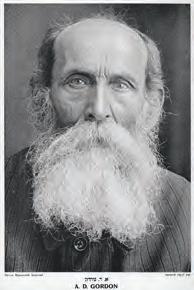
A.D. Gordon is born
Aharon David (A.D.) Gordon is born in Ukraine. He moves to Ottoman Palestine in 1903 and becomes a farmworker. A proponent of Jews working the land, he is a founder of the Hapoel Hatzair labor movement.
June 10, 1964 — National Water Carrier starts pumping
The 81-mile National Water Carrier begins pulling water from the Sea of Galilee for drinking and agriculture. The system of pipes, canals, tunnels, reservoirs and pumping stations can carry 19 million gallons per hour.
June 11, 1945 — Haganah founder
Eliyahu Golomb dies
Eliyahu Golomb, who organized Jewish defenses in pre-state Palestine, dies at 52. A native of Belarus, he helped found the Haganah in 1920 and developed responses to rising Arab violence in the 1930s. PJC
Israeli government or the state of Israel, called the move antisemitic in a Facebook message.
“Roma Pride has dropped the mask,” the statement read. “In an unprecedented act of exclusion, Keshet Italia, the only Italian Jewish LGBTQIA+ organization, was first denied access to the coordination and then even the possibility of marching with its own float. Our crime? Being Jewish.”
While Keshet Italia members could still march on foot with flags and banners, the group said that was not a viable option due to safety concerns in the wake of Oct. 7, which is why they had requested a float.
While anyone can march in the parade, a float requires a formal request.
The decision comes one year after Keshet members were attacked at the parade by marchers who called them terrorists and murderers, made Nazi salutes and attempted to rush the float. Police were forced to evacuate the group before the end of the parade.
The Union of Italian Jewish Communities wrote in a statement, “No one should be required to pass an ideological test to participate in a space born with the goal of inclusion.”
Roma Pride’s political manifesto also draws an explicit parallel between the Palestinian cause and Italy’s anti-fascist Resistance, stating, “The Resistance gave life to our country and our Republic,” and that “to deny the Palestinian people the right to resist and exist would be to deny our own history.” PJC
— Compiled by Toby
Tabachnick
p Egyptian warplanes are destroyed without ever taking off June 5,
Israeli Government Press Office, CC BY-SA 3.0
p A.D.
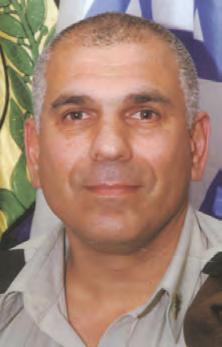
Brig. Gen. (Res.) Nitzan Nuriel is the former Director of the CounterTerrorism Bureau at Israel’s Prime Minister’s Office (2007–2012). He served in the IDF for over 30 years, primarily in the Golani Brigade, holding senior positions including Deputy Division Commander in both the West Bank and the Gaza Strip. He played key roles in Israel’s withdrawal from southern Lebanon and in operational planning along the northern border. From 2001 to 2004, he served as Military Attaché to the United States, acting as liaison between the IDF and U.S. defense agencies. For his service, he received the Legion of Merit from the U.S. President. Following his military career, he joined Israel’s National Security Council, where he led national crisis management and counter-terrorism strategy, including cyber security, border protection, and international cooperation. He holds degrees in political science and national security from Tel Aviv University and the University of Haifa.
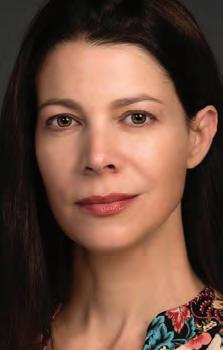
Dr. Shira Efron is the distinguished chair for Israel Policy at RAND. A leading expert in Israeli and Middle Eastern affairs, Dr. Efron has also advised Israel’s Ministry of Defense and its National Security Council. In 2020-2022, Dr. Efron was a consultant for the UN, specializing in Gaza and working closely with newly appointed High Commissioner under the Board of Peace, Nikolay Mladenov. She holds a doctorate and master’s degree in policy analysis from the RAND School of Public Policy, a master’s degree in international relations and international business from New York University, and a bachelor’s degree in biology with a minor in computer science from Tel Aviv University.
YISRAEL KLITSNER, SERIES MODERATOR
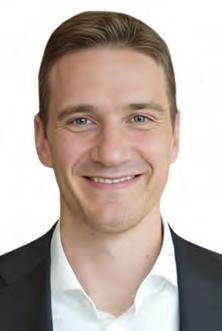
Klitsner is a fellow at the Jewish People Policy Institute (JPPI) who has deep connections to our community. He and his family lived in Squirrel Hill but returned to Israel after October 7 so he could rejoin his IDF unit. Klitsner, who has served as Diaspora Affairs Advisor to Prime Minister Naftali Bennett, and worked for AIPAC in Israel, is passionate about educating and building community around the state of Israel and its relationship with the United States.
Israel’s Geopolitical Outlook
Tuesday, June 16 • 7 pm
JCC Squirrel Hill • Katz Theater $36/person
Participants will gain valuable insights into the strategic dilemmas that Israeli decision-makers encounter, as well as the prospects for regional normalization and renewed peace efforts, alongside the challenges they face in achieving these goals. With varying assessments and analyses, Nuriel and Efron will illuminate this critical topic, offering a deep and nuanced understanding of Israel’s most pressing concern: security.
“What
—Yisrael Klitsner, Series Moderator
For more info: Fara Marcus • fmarcus@jccpgh.org
NITZAN NURIEL
SHIRA EFRON
Home Improvement
5 tips for gardening with kids
By Feature Impact
Gardening is a simple way to bring families together while simultane ously teaching kids hands-on lessons about nature, responsibility and healthy living. Whether you have a backyard garden, a few containers on the patio or are looking for a starting point, getting your children involved in planting and caring for plants can spark curiosity and create lasting memories.
To get started, consider these familyfriendly tips:
1. Start small
Begin with a manageable project, such as a few containers, a small garden bed or a single planter box. This helps keep the experience fun rather than overwhelming and allows children to see progress quickly.
2. Let kids choose the plants
Giving your children a say in what goes into the garden can help build excitement and a sense of ownership. Ask them to pick
a few colorful fruits, vegetables or flowers that grow quickly, such as sunflowers, cherry tomatoes, mint, sugar snap peas or marigolds.
3. Give them their own space
Kids feel proud when they have something that’s their own. Consider assigning each child a small plot, container or row in the garden. Let them be responsible for watering, planting and checking on their plants.
4. Use kid-sized tools
Little hands typically work best with tools designed just for them. Small watering cans, lightweight trowels and child-sized gloves help kids participate safely and comfortably.
5. Encourage creativity
Gardens don’t have to be all work. Add some fun to the process by adding artistic touches. Projects such as decorating pots, painting plant markers or creating a fairy or butterfly garden can keep imaginations engaged as well. PJC
From the first tiny sprout to the final harvest, find more family-friendly gardening advice at eLivingtoday.com.
Wasan/Adobe Stock
Photo by Ulza via iStock
Home Improvement
A healthier, greener home: Eco-friendly cleaning hacks
By Feature Impact
Keeping your home clean doesn’t have to mean filling your cabinets with harsh chemicals or single-use cleaning products. In fact, some of the most effective solutions may already be in your pantry.
By swapping a few everyday products for simple, eco-friendly solutions, you can clean effectively, save money and make your home a little greener. If you’re looking to reduce waste, cut back on toxins and simplify your cleaning routine, natural ingredients like vinegar, baking soda and lemon can deliver results while also being safer for your home — and the environment.
Make your own all-purpose cleaner
Instead of buying multiple cleaners for different surfaces, try a DIY solution that works in many areas of the home. In a spray bottle, combine 1 cup white vinegar, 1 cup water and 10 drops of the essential oil of your choice — such as lemon, lavender or tea tree — then use it on countertops, sinks, glass and other surfaces to curb grease and
grime. Avoid using vinegar-based cleaners on natural stone like granite or marble, however, as its acidity can cause damage.
Let baking soda do the scrubbing
One of the most versatile eco-friendly cleaners around, baking soda acts as a gentle abrasive that helps lift stains without scratching surfaces. Simply sprinkle baking
soda onto sinks, bathtubs, cookware, stovetops or tile grout then scrub with a damp sponge or cloth for a sparkling clean finish.
Freshen carpets naturally
Carpets and rugs can trap odors, but a DIY deodorizer made of 1 cup baking soda and 10-15 drops of the essential oil of your choice can replace chemical sprays
and keep floor surfaces smelling fresh. Just sprinkle across the carpet, let sit for 15-20 minutes then vacuum.
Use lemon to cut grease and stains
Lemon juice is a powerful natural cleaner due to its acidity and antibacterial properties. It can leave behind a fresh scent when used to clean cutting boards, remove soap scum and water spots or deodorize garbage disposals. For stubborn grime, mix lemon juice with baking soda to create a paste that can tackle tough surface stains.
Naturally deodorize drains
If your kitchen sink smells unpleasant, skip the harsh chemical drain cleaners. Pour 1/2 cup baking soda down the drain then add 1/2 cup white vinegar. Let the mixture fizz a few minutes then flush with hot water to help loosen buildup while neutralizing odors.
Polish stainless steel with pantry staples
Remove grimy fingerprints and give stainless steel appliances a streak-free shine with a simple mixture of 1 tablespoon white vinegar and 1 tablespoon olive oil. PJC
Find more DIY, eco-friendly cleaning tips and tricks at eLivingtoday.com.
Home Improvement
Heavenly hardware
Functional hardware like drawer pulls and doorknobs can be replaced without much effort or money. Secondhand stores, online marketplaces and even furniture boutiques
By Feature Impact
Making changes to a bedroom doesn’t have to break the bank.
Simple swaps, a little DIY and some inexpensive purchases can go a long way toward freshening up the place you lay your head.
Better bedding
If you can’t remember the last time you bought a new comforter, it may be time to snag one. Think beyond the luxury home stores and check out discount home decor retailers and even thrift stores, where you can often find new, unopened bedding at a fraction of the cost. A fluffy throw blanket in a dynamic new color might be the perfect way to rejuvenate your bed.
Playful pillows
Few things spruce up a bedroom more than new throw pillows. Available in a myriad of sizes and shapes – from squares to rectangles to asymmetrical – there is no
Home Improvement
Simple ways to make at-home recycling more effective
— RECYCLING —
By Feature Impact
Recycling is a simple way households can reduce waste and help protect natural resources. While many communities offer curbside recycling programs, some people still wonder if they’re doing it correctly or if they’re missing opportunities to recycle more.
To create a more eco-friendly household, consider these practical tips to help you reduce waste, stay organized and make recycling part of your everyday routine.
Know what your local program accepts
Recycling rules vary depending on your city or waste management provider. Most curbside programs include items like cardboard, paper, aluminum cans and plastics, but others — such as glass — may require drop-off recycling. Review your community guidelines so recyclables don’t accidentally end up in the regular trash.
Create a simple sorting system
Set up clearly labeled bins — separated for paper, plastics and metals — in a
high-traffic area like the kitchen, garage or laundry room.
Rinse before you recycle
Food residue can contaminate other recyclables and may cause entire batches of materials to be rejected during the recycling process. Quickly rinsing yogurt cups, jars or soup cans of leftover residue helps keep recycling streams clean and more likely to be processed properly.
Break down boxes
Cardboard boxes are among the most commonly recycled household materials. Flattening boxes before placing them in the recycling bin saves space and allows collection trucks to hold more.
Compost food scraps
Not everything belongs in the recycling bin, particularly food waste. Composting fruit peels, vegetable scraps, coffee grounds and eggshells is an easy way to reduce the amount of trash your household produces. Finished compost can be used in gardens, flower beds or houseplants, turning kitchen waste into a valuable resource.
Find more ideas for making recycling a natural part of your household routine at eLivingtoday.com.
Photo by LightFieldStudios via iStock
Headlines
Continued from page 1
“We’re saying that people of all faiths have to be able worship freely without fear and shouldn’t have to bear the burden of securing their own safety or paying for added protections,” he said. “It’s an added tax for people to simply practice their faith.”
The First Amendment, Knoll noted, enshrines the fundamental right to pray safely and freely, and shouldn’t require a tax on people of faith.
Pittsburgh resident Rick Wice attended the trip. He assists with security, both in the community at large and at his congregation,
Kosher:
Continued from page 1
Another hill to climb
There are approximately 47,000 Jews in greater Pittsburgh. For 100 years, Squirrel Hill has been the region’s geographic Jewish hub. Buttressed by Schenley and Frick parks, the walkable neighborhood, complete with schools, synagogues and locally owned shops, boasts about 28,105 residents — nearly 40% are Jewish — according to the Squirrel Hill Urban Coalition.
Almost 80 restaurants are in Squirrel Hill. Only a handful are certified kosher. Attaining that status requires approval from the Vaad Harabonim of Pittsburgh, an organization founded more than 50 years ago by Orthodox rabbis. Led by volunteers, including Shaare Torah Congregation’s Rabbi Yitzi Genack, the Vaad utilizes halacha (Jewish law) to “strengthen and maintain the institutions of a Torah community.”
Along with overseeing kosher certification, the rabbinic group manages the eruv (a neighborhood boundary enabling observant Jews to carry or push items outdoors on Shabbat) and adjudicates religious legal disputes.
Genack said he began meeting “recently” with Dunkin’ about continuing its status as a kosher-certified restaurant. “Unfortunately, despite good faith efforts on both sides, we were unable to reach an arrangement that worked.”
Squirrel Hill Dunkin’ is one of 80 locations operated by Heartland Restaurant Group, a Dunkin’ franchisee with sites in Pennsylvania, Ohio and West Virginia.
Anthony Braun, Heartland’s former CFO and COO, told the Chronicle he serves as a strategic adviser to Heartland’s leadership team and had “quite a few conversations” with Genack and Rabbi Chaim Itkin, a kosher administrator at the Vaad.
“This was not an easy decision for us,” Braun said. “We worked hard to meet both objectives.”
Squirrel Hill Dunkin’ was kosher-certified for nearly 17 years; however, “new products are continually coming down the pipeline, with a bunch of promotional offerings, of which none are kosher-certified,” Braun said. “The brand invests heavily in influencers, both social media and television, and spends a lot of money on electronic media, as well as other medias, advertising these new products, featured products, and what we’ve been running into, and we have for quite a while, is we have quite a few guests that visit, and we can’t provide the offering that they would love.”
and agreed with Knoll that the funding is desperately needed.
While meeting with Sen. John Fetterman, the Pittsburgh coalition not only pushed for funding but also expressed gratitude, which Wice said was equally important.
“He’s supportive. He didn’t need convincing. He knows the story and has been an ally of the community,” Wice said.
The senator has a strong sense of right and wrong, Wice said, and seemed puzzled by the animus directed at the Jewish community.
Wice said that the time the group spent with Fetterman’s staff was also important. One younger staff member asked Wice if he could recall a time when the level of antisemitism in the United States was as high as it is now.
“I told him, ‘No. When I was your age there were no thoughts of having guards or having to carry personal protective devices.’ I said, ‘This is a whole different world.’”
Wice considered the trip a success, both because of his interaction with Fetterman and for the opportunity to meet with Federations from across the U.S.
“It was good networking and, for me, was a shot in the arm to continue doing what I’m doing. It’s important. We’re not alone. We have to fight and we have to be loud and proud,” he said.
Knoll noted that Federation’s work isn’t strictly limited to the Jewish community. Community Security Director Shawn Brokos assists with security at all types of houses of worship and religious schools, and
Proposals were made by both sides and “the result ended up being that when we finished our call up, we just couldn’t figure out a way for both sides to really make that work.”
Genack agreed and said, “Ultimately we were unable to find a solution that met both our standards and their operational needs.”
The way we were
Countless relationships end in breakups; teenagers know that better than most. Seeking possible reunification between the parties, Hillel Academy of Pittsburgh students collected hundreds of signatures — in print and online — from those hoping Squirrel Hill Dunkin’ would remain kosher.
“I feel like if we get a bunch of people, then we could probably make them see what we’re seeing,” Adina Goldberg, 15, said.
At least once a week, Adina frequented Dunkin’. Sometimes it was after workouts. Other times it was to meet up with peers. During most visits, Adina was there for more than an hour.
“A few years ago, I used to do homework or study there with a friend,” she said.
More recently, her engagements changed. Going to Dunkin’ became a social endeavor.
“I just like hanging out, discussing random topics under the sun, over food,” she said. “Just sitting there and hanging out was nice.”
“Me, my family, my friends, and definitely a lot of the Jewish community love going there,” Naomi said. “It’s literally like the best hangout spot.”
“There’s not usually a big crowd, and even if there is, there’s a bunch of tables spread out, everywhere, so you could just chill,” Adina said. “This place was a place for everybody, including Jews.”
“We’d go there — even for just a lunch break — you could walk there,” Miri said. Given its location and kosher-certified status, it was a “space to go and know everything’s approved” for her and her friends to eat.
Before the law
Kosher cognizance is a source of Pittsburgh pride. More than a century ago, Heinz Vegetarian Beans became the first packaged food to receive formal certification from the Orthodox Union. In Pittsburgh, and other kosher-conscious communities, a mashgiach, kosher supervisor, works with companies and food service professionals to ensure products and venues comply with halacha. At kosher-certified establishments, a mashgiach observes operations and ensures that various practices, such as the separation of dairy and ritually slaughtered meat, are observed.
For years, stickers and signage noted Squirrel Hill Dunkin’s commitment to kashrut. On a wall near the pick-up counter, one printout read, “Dunkin’ We are proud to be Kosher Certified by the Vaad Horabanim of Greater Pittsburgh.” An adjacent sign stated, “Our mission: To ensure every guest leaves happy & completely satisfied.”
Squirrel Hill resident Lindsey Strassman said the June 1 change negatively impacts her work and family. Strassman is the senior finance analyst at the Jewish Federation of Greater Pittsburgh. She and colleagues often met at Dunkin’.
Federation helps non-Jewish organizations identify security vulnerabilities and apply for NSGP grants, Knoll said.
“We’ve helped mosques, churches and Hindu temples receive this money in the past few years,” he said. “We’re here for the Jewish community, but we’re here for all communities in Greater Pittsburgh, as well.”
Fetterman told the Chronicle that it’s always an honor to receive members of the Jewish community.
“Despite a deteriorating political climate, I’m always proud to stand with the community and affirm my unbreakable commitment to Israel,” he said. PJC
David Rullo can be reached at drullo@ pittsburghjewishchronicle.org.
There are plenty of affordable options. A bagel and cream cheese costs $3.53. Tuna melts are $4.89. A “$6 meal deal” includes a medium coffee, veggie bacon, egg and cheese sandwich, and hash browns.
Strassman, 34, keeps kosher. Her parents and siblings do not. “For us, Dunkin’ Donuts has always been an even playing field, and a place where we can all go and eat comfortably, quickly, affordably,” she said.
The Squirrel Hill resident, with a penchant for economic insight, noted calculations require dollars and sense.
“It doesn’t always cost money, but there is a cost to making a decision based solely on finances,” she said. “It’s also about the people. It’s also about the place. It’s also about the community. That costs too.”
Forget about the price tag
Squirrel Hill resident Robert Itskowitz, 48, said he bought coffee about twice a month from Dunkin’. His teenage kids, on the other hand, frequented the venue multiple times per week. Itskowitz called it a “shame” to see Dunkin’ lose its kosher certification. “It’s a wonderful place to gather: for kids to get food before school, for individuals to meet up for study breaks. It’s really unfortunate to lose that anchor.”
On May 27, the Vaad issued a statement that Squirrel Hill Dunkin’ would no longer be kosher-certified post-May 31: “The store will be introducing non-kosher products and should be treated as non-kosher. The Vaad thanks the community for their continued partnership in kashrus awareness.”
Itskowitz wishes there had been more time between announcement and execution, to inform decision makers about Dunkin’s communal significance.
More than 30 years ago, sociologist Ray Oldenburg coined the term “third places” to describe spaces outside the home (the first place) and the workplace (the second place) where people relax, talk and connect with community. The value of “third places,” according to University of Chicago researchers, is they not only offer sites to gather with friends or acquaintances, but there’s the possibility of meeting people “you have never encountered before.”
With Dunkin’ losing its kosher certification, Adina questioned where her peers would go. Strassman wondered too. “This is not what Pittsburgh is about,” she said. “Pittsburgh is about inclusion.”
Dunkin’s newest product line is slated for launch the first week of June. Though reluctant to detail specific menu changes, Braun said the line will likely include bacon, non-kosher
Separated from the intersection of Forbes and Shady avenues by floor-to-ceiling windows, Dunkin’ occupies the ground floor of a nearly 20,000-square-foot property. Movable seating covers portions of the store’s almost 6,700 square feet. Across the street is a Starbucks. Down the road are other coffee shops.
Dunkin’ is different.
“It’s an easier, fast-food type of place with a much more casual vibe, and it’s a bigger setting, so it’s more comfortable for newer or prospective donors,” she said. There are plenty of nearby places to get a cup of coffee, but if it’s “also your breakfast time, or you’re meeting at lunchtime, you could grab lunch at Dunkin’.”
Kosher-conscious consumers have dietary needs. When there’s an inability to comfortably meet alongside others without judgment or awkwardness, the challenge becomes clear, Miri said. “You need to work hard for what you want, so if you want something to happen, you have to put the work into it.” PJC
Adam Reinherz can be reached at areinherz@pittsburghjewishchronicle.org. Security:
Photo by Adam Reinherz
Shared histories, shared purpose: Jews and Pride
Guest Columnist
David Knoll
As Pittsburgh prepares for its annual Pride parade, it is worth remem bering that LGBTQ+ Jews are not on the margins of Jewish life — they are an integral part of it. They are our family members, friends, congregants, educators and leaders, helping to shape the Jewish commu nity in all its diversity.
With that understanding, the Jewish Federation of Greater Pittsburgh stands in partnership with the LGBTQ+ commu nity, not out of trend or obligation, but out of responsibility. Supporting the LGBTQ+ community is essential to who we are as a Jewish community and to how we show up in the world.
At its core, Pride is about affirming human dignity. It creates public space where individuals can live openly and without fear. It is also about joy. Pride celebrates being seen, embracing identity and coming together in community. For many Jews, this aspiration feels deeply familiar. Jewish history is a story of striving to live openly and authentically in societies that too often demanded concealment.
Since Oct. 7, 2023, Jews around the world have experienced a renewed sense of vulnerability. In cities across the United States and beyond, Jewish individuals have quietly removed visible symbols of their identity. Stars of David are tucked inside shirts. Mezuzot are taken down from doorposts. Yarmulkes are replaced with hats. Names and affiliations are softened or concealed. This is a modern expression of an old fear: that being visibly Jewish can make someone a target.
This reality closely parallels the lived experience of LGBTQ+ individuals. For generations, members of that community faced the same dilemma. They had to choose whether to be seen as their authentic
elves or to hide in order to stay safe.
The Jewish community understands that choice because we have faced it ourselves.
The connection between the Jewish and LGBTQ+ communities is rooted in shared experience. Both communities have been targeted and threatened simply because of who they are. That is not abstract. It is lived history.
When Jewish institutions support Pride, we are standing with others. Just as importantly, we are standing up for members of our own community. We are affirming that LGBTQ+ Jews belong fully and without condition.
For many LGBTQ+ Jews, Pride is one of the few spaces where they can publicly express all aspects of their identity. Here in
As Pittsburgh gathers for Pride, the Jewish community will stand alongside our neighbors with purpose and joy.
During the Holocaust, Jews and LGBTQ+ individuals were persecuted side by side. They were imprisoned, marked and murdered by the Nazi regime because of their identities.
In 2016, the LGBTQ+ community was attacked in a horrific act of hate when a gunman opened fire at the Pulse nightclub in Orlando, killing 49 people. The massacre served as a stark reminder of how quickly hatred can turn deadly when people are targeted because of their identity.
The Jewish community knows this pain as well.
On Oct. 27, 2018, one of the darkest days in our community’s history unfolded in Pittsburgh. An antisemitic white supremacist entered the Tree of Life building and murdered 11 worshipers from three congregations, simply because they were Jewish. While the violence occurred in one city, its impact was felt across the country. For many American Jews, it shattered a long-held sense of safety and replaced it with a sobering realization that even here, even in our houses of worship, we are not immune from hatred.
These acts of violence are connected by the same root: hatred directed at identity. Both took place in spaces where people were gathered as their full selves, in spaces of authenticity, community and belonging.
These incidents remind us why Jewish support for the LGBTQ+ community is not optional. It is necessary.
Pittsburgh, we are proud that our Pride parade has been a place where Jewish individuals and organizations are welcomed, visible and able to participate fully as members of both communities.
That local reality makes our support even more important in a broader context.
Around the world, Jewish LGBTQ+ groups have increasingly found themselves questioned, marginalized, or excluded from Pride spaces. In some cases, participation comes with expectations to distance from core aspects of identity or adopt a particular worldview.
No one should be required to pass an ideological test to participate in a space built on inclusion.
A Pride movement that cannot make space for Jewish participants risks losing the very values that shaped it.
That is why Jewish engagement matters.
In this moment, visibility carries weight.
For LGBTQ+ individuals, Pride has long been about reclaiming space and declaring that fear will not define identity. For Jews, particularly in the aftermath of Oct. 7 and rising antisemitism, visibility has once again become complicated. The decision to be visibly Jewish in public spaces is no longer simple.
That is exactly why showing up matters.
When the Jewish community participates in Pride, we send a clear message. Identity should not have to be hidden. Communities
should not have to shrink themselves to feel safe. People deserve to be seen fully.
For young people especially that message is critical. LGBTQ+ youth need to know they have allies. Jewish youth need to know their identity is something to embrace, not conceal. And those who live at the intersection of both communities need to know they do not have to choose.
Supporting the LGBTQ+ community strengthens the Jewish community. It reinforces that our community stands for dignity, safety and belonging. It builds relationships. It creates a stronger, more resilient Pittsburgh. It ensures that when any group is targeted, they do not stand alone.
History has shown that hatred does not remain contained. It spreads.
That is why solidarity is essential.
There are moments when communities are called not just to speak, but to act visibly.
This is one of those moments.
The Jewish Federation of Greater Pittsburgh supports the LGBTQ+ community because doing so is also necessary to protect our own community, to support those within it, and to build the kind of society we want to live in.
We support Pride because people should not have to hide.
We support Pride because we know the cost of silence.
We support Pride because inclusion must be real, not conditional.
And we support Pride because it reflects a vision of society where people can live openly, safely and with dignity.
As Pittsburgh gathers for Pride, the Jewish community will stand alongside our neighbors with purpose and joy.
Because supporting one another is how communities endure and thrive.
And because in a world where too many are still asked to question whether they belong, our answer must remain clear: You do. PJC
David Knoll is the associate vice president of public affairs at the Jewish Federation of Greater Pittsburgh.
Did Justice Wecht issue an improper public statement upon changing party registration?
Guest Columnist
Bruce Ledewitz
Recent years have witnessed several instances of judges rendering inappropriate comments about political events.
In 2016, U.S Supreme Court Justice Ruth Ginsburg apologized for critical comments she voiced about Donald Trump, who was then a presidential candidate.
More recently, in April, Justice Clarence Thomas publicly issued a blistering critique of progressivism. While Thomas did not name the Democratic Party, the implication in the
urrent political context was clear.
Then, in early May, Pennsylvania Supreme Court Justice David Wecht made a public announcement that he was changing his voting registration from Democratic to independent because “the Democratic Party has changed. ... Nazi tattoos, jihadist chants, intimidation and attacks at synagogues, and other hateful antiJewish invective and actions are minimized, ignored or even coddled.”
Even if the charge is true, was Wecht’s public statement proper for a sitting judge?
The rules of judicial conduct, as well as the First Amendment, generally permit judges to make statements about issues of public concern, especially when they involve matters that affect the judiciary.
On the other hand, Rule 4.1 of the PA Code
of Judicial Conduct specifically prohibits a judge from engaging “in any political activity on behalf of a political organization or candidate for public office ... . ” This would appear to bring Wecht right up to the line of a judicial ethics violation. His statement certainly benefited the Republican Party, but Wecht did not issue his statement “on behalf of” the Republican Party.
Wecht felt that, if he was going to change his registration, he had no choice but to issue a public statement. As he later put it: “When I was elected, I was registered as a Democrat. I am not registered as a Democrat. We live in an elected judicial system, and the voters are entitled to know that.”
Wecht’s argument is reasonable, but it raises another troubling issue. If the people of Pennsylvania were entitled to know why Wecht
was changing his party registration, then this was also the kind of information the voters were entitled to know before the November 2025 retention election, when Wecht was returned to the court.
Although nominally non-partisan, the 2025 retention election represented a determined partisan effort by both Republicans and Democrats to gain control of the Pennsylvania Supreme Court. As America’s key swing state, this is the court that will decide any Pennsylvania election law issues affecting the 2028 presidential election. Three Democrats — Wecht, along with Christine Donohue and Kevin Dougherty — were candidates for retention, which both parties assumed would determine the partisan
Please see Ledewitz, page 15
Chronicle poll results: Local Jewish programs and services
Last week, the Chronicle asked its readers in an online poll the following question: “How satisfied are you with the Jewish programs and services available in Pittsburgh?” Of the 141 people who responded, 43% said “very satisfied”; 27% said “somewhat satisfied”; 16% said “neither satisfied nor dissatisfied”; 10% said “somewhat dissatisfied”; and 4% said “very dissatisfied.” Comments were submitted by 42 people. A few follow.
There’s a wide variety of activities for all denominations of Judaism. I could be busy 24/7/365!
There are few activities or places for secular Jews who still have a strong Jewish identity. Almost all of the resources are related to religious institutions.
The services are most likely adequate. I don’t use any of them.
I’d love to see programs distributed
Ledewitz:
Continued from page 14
composition of the seven-member court. Both the Republican and Democratic parties spent large sums of money to influence the outcome of that election.
That was when the voters needed to know of Wecht’s change of party registration. Democratic Party voters might not have wanted to retain an independent. Republican voters might have reconsidered their opposition to Wecht’s retention.
Wecht did not suddenly decide in May that antisemitism in the Democratic Party is a problem. In 2019, Wecht referred to the Democratic Party response to the Pittsburgh synagogue shooting as “disgraceful” and “timid.” One could look at Wecht’s public announcement a mere six months after the retention election as political opportunism — a kind of bait and switch in which Wecht benefited from his connection to the Democratic Party to gain retention and only then changed his party registration and voiced his criticisms.
around to some of the less targeted areas rather than just Squirrel Hill/Shadyside and South Hills. I’d also like to see programs that feel more welcoming to the non-Orthodox. I sometimes feel “not Jewish enough” at
However, there is another possible explanation for the timing of Wecht’s announcement. Wecht may only recently have concluded that the party crossed a line that made it impossible for him to remain a Democrat.
There is a hint in his public statement that this is what happened. Wecht’s reference to “Nazi tattoos” tolerated by the Democratic Party was universally understood, as Wecht must have known it would be, as a reference to the Senate candidacy in Maine of Graham Platner, who, in October, revealed he’d gotten a tattoo of a Nazi symbol while serving in the U.S. military in Croatia. Platner denied knowledge of the symbol’s Nazi connection.
Even though Wecht has no judicial connection to the state of Maine, he certainly should not be telling people to oppose a candidate for political office. That is the very mistake that Ginsburg had to apologize for. If Wecht was so incensed that he made the reference anyway, Platner may have been the last straw. That would mean Wecht did not decide to leave the Democratic Party until the retention election was over or nearly over.
Shavuot issue reflects timeless Jewish values
some events.
Pittsburgh has always been known as a somewhat intimate big city, or a larger-feeling mid-sized town. As such, there is a niche for every type of Jewish program experience, from Reform to Orthodox, and a wide swath of services, from liberal Reconstructionist to strict Lubavitch.
The eastern suburbs are often neglected.
Given the age of the Jewish population in Pittsburgh, I am astounded that more attention hasn’t been given to facilities for independent living for seniors. Other religious denominations have done this, and other Jewish communities in the United States are fulfilling this need.
There are few, if any, programs for older singles, especially in the South Hills. I’m not talking bingo games or mahjong.
Wishing for more opportunities in the northern suburbs — North Hills, Ross
Wecht’s public announcement of his party registration change also raises the issue of his future recusal in political cases. Wecht criticized the Democratic Party specifically, including the damning accusation that the party ignores “attacks at synagogues.” If Wecht had said the same thing about an individual, he would certainly be expected to recuse himself in any case involving that person.
Wecht raised the recusal issue in a later interview about his announcement: “If anybody has any problem, they can always make a motion for recusal.’”
Wecht was being coy in this comment. He could be confident that the Democratic Party would never move for his recusal because, despite Wecht’s criticisms, Democrats would feel that Wecht would retain the same views on election law issues that he had previously held. In the past, those views have tended to favor Democratic Party arguments in court about expanding voting options.
But the accusation of bias in recusal is a double-edged sword. A party in court may move for recusal on the ground that a judge has shown
— LETTERS —
All your readers surely appreciated the richness of your Shavuot edition (May 15). Three articles in particular deserve special mention regarding our Season of the Giving of the Torah. Tim Miller’s piece on “The agricultural origins of Shavuot” puts the festival in perspective within the evolving Jewish civilization we can all recognize. Not a rigid and unchanging trail, but a path through the centuries and experiences that have brought us to our generation. Time is not our enemy, but our partner in discerning the values that our ancestors bestowed and we have inherited. The anniversary of Revelation is perhaps the best season at which to affirm that revelation is continuous and eternal.
Guest columnist Rabbi Daniel Greyber’s opinion piece is a contemporary expression of our Jewish values for which we owe him special thanks. His exposition of “what it means to be a Zionist today” is a courageous challenge to recognize the innate humanity of all children, and perhaps especially those who can benefit from the Gaza Children’s Village he describes
Township and Shaler, for example. More outreach is needed for unaffiliated Jews and children of mixed marriages. The high ideals of purity and exclusiveness in Judaism cannot and will not be able to continue given how quickly the blending of race, religion and culture is occurring.
I would like to see a combined mailing list for all Jewish community services, programs and events. As someone who isn’t a synagogue member, it would be helpful to know where I might become part of the community.
What more could we want? PJC
— Compiled by Toby
Tabachnick
Chronicle weekly poll question: Is Benjamin Netanyahu the right leader for Israel at this time? Go to pittsburghjewishchronicle.org to respond. PJC
bias against it. However, opposing counsel may also move for recusal, on the ground that a judge who might be viewed as biased against a party would bend over backward to favor that party in order to show there is no bias.
In other words, although Wecht was criticizing the Democratic Party, it could in the future be the Republican Party that successfully moves for his recusal in political and election law cases.
Recusal protects the integrity of the justice system. But it is not an optimal solution. The people of Pennsylvania elected, and then retained, David Wecht as a justice on the Pennsylvania Supreme Court. The people want, and have a right to, his judgment. They expect him not to engage in conduct that might force his recusal in important cases. Wecht should have thought of that before issuing his public statement. Even if he was right, he was not prudent. PJC
Bruce Ledewitz is professor of law emeritus at the Thomas R. Kline School of Law of Duquesne University.
so lovingly — not at the expense of security for Israel, but helping chart the kind of future its citizens might enjoy if indeed we can create the partners it will need for peace. This is surely the Zionist ideal in its proudest expression.
And finally, the Torah column by Rabbi Mendel Rosenblum, who goes out of his way to teach us that even as we read the Torah text of early chapters in Sefer Bamidbar, we see that God’s goal was “never for everybody to become the same.” The individuality of the 12 tribes of Israel was celebrated by each tribe marching “beneath its own banner, with its own symbol and identity.”
What a timely and valuable lesson for all of us, that Judaism is neither monolithic nor binary; that our traditions provide fertile soil for all that is unique and eternal within our Jewish hearts and heritage.
Rabbi Stephen E. Steindel Pittsburgh
We invite you to submit letters for publication. Letters must include name, address and daytime phone number; addresses and phone numbers will not be published. Letters may not exceed 500 words and may be edited for length and clarity; they cannot be returned. Send letters to:letters@pittsburghjewishchronicle.org or Pittsburgh Jewish Chronicle, 5915 Beacon St., 5th Floor, Pittsburgh, PA 15217
We regret that owing to the volume of correspondence, we cannot reply to every letter.
Life & Culture
Jewish author Michael Lowenthal sits with complexity in new book ‘Place Envy’
— BOOKS —
By Emma Riva | Special to the Chronicle
It’s not every day that a writer coins a new phrase, but Michael Lowenthal does just that with “Place Envy.” Lowenthal spent his early life in Lima, Peru, then Princeton, New Jersey, and then most of his teen years outside of Washington, D.C., but he and his family never truly “settled” anywhere.
“I was so envious of people who were, like, eighth-generation farmers, or let’s say someone who has a strong Yinzer accent, or Scottish people who had clan tartans, or even people who had summered at the same cottage in Maine every year,” Lowenthal said. He termed this feeling of jealousy toward the tethered “place envy,” and it’s the subject of a new collection of essays Lowenthal compiled about his years traveling in search of his Jewish identity, his sexuality and his deeper sense of self.
The author will host a free launch event for the book on Thursday, June 11, at 7 p.m. at the Carnegie Library Lecture Hall. Lowenthal’s grandparents were Holocaust refugees from Germany but rarely spoke about their experiences. When Lowenthal visited Germany, he expected to have a
profound experience, but didn’t expect to find something that would trigger inspiration to write a book. In a Jewish cemetery, he saw the gravesite of two young men who died within a couple of days of each other, with long poems written on their headstones.
“I was trying to figure out who they were and what these were about, and the
translator seemed reluctant to say anything,” he recalled. “I asked him what the poems were about, and he was like ‘well … friendship. They were really close friends.’ All my Spidey senses and gaydar went off.”
That moment allowed Lowenthal to begin working through a question he’d had since his adolescence: “If I’m gay, does that mean I’m betraying my Jewish identity?”
Around the same time that Lowenthal came out, a cousin he was close to became baal teshuva and moved from more secular Conservative Judaism to Orthodoxy. “He and I are in our own personal way played out this conflict — or seeming conflict — between religiosity and queerness,” Lowenthal said. The thought that Jews of the past may also have had same-sex relationships moved him, and he delved into research about the two young men’s lives, which make up one essay in “Place Envy.”
“As a writer, I have some worries about memoir, that at its worst, it can be an exercise in navel-gazing. I really wanted parts of this book to be outward looking as well, looking at other people’s stories and other people’s lives,” Lowenthal said.
For people whose stories are culturally, nationally, or religiously multifaceted, it can be tempting to simplify parts of the story.
“Place Envy” embraces complexity and rejects a single identity or single narrative.
The book also doesn’t wrap up Lowenthal’s feelings of placelessness with a neat bow.
Writing “Place Envy” forced Lowenthal to reflect on his years of traveling and ask himself what he was searching for. He lived in Amish country and played jazz with Sun Ra, but none of those experiences provided him the rooted sense of place he was searching for. In the end, it’s a void that no amount of introspection can truly fill, and Lowenthal has tried to be honest about that in his work. Rather than fight it, he embraces sitting at the intersection of multiples.
He calls “Place Envy” a book about “orientation” in reference to the parlance of referring to sexuality as “sexual orientation.” When he taught orienteering in the woods,
he would ask his students to triangulate and orient themselves, and he’s now done the same with his identity, starting at one place and orienting himself around it.
Though he’s explored many of the same questions in the five novels he’s published, “Place Envy” is his first work of nonfiction.
“I really loved the challenge of writing a memoir. In a way, it was a relief after writing fiction,” Lowenthal said. “One of the hardest parts about fiction to me is making choices that have no definitive right answer. If you’re imagining the character and the character has to decide to quit their job, get married, those choices can be paralyzing. Writing memoir, what happened is what happened.” It’s also easier to write about the past because it’s in the rearview mirror.
“I have a great life, I have a great relationship with my family, I’ve been happily openly queer for 40 years. They’re not raw wounds anymore. The interesting thing for me was relaxing into enjoying my various experiences. I still love traveling, I love meeting different people and cultures, but I don’t feel like I have that franticness I did then,” he said.
After all of this traveling, Lowenthal ended up in Pittsburgh for love — as many people do — after meeting a ceramic artist living and working in the city. He’s still a relatively new Pittsburgher, but Pittsburgh has a chance to get to know his work, when he debuts “Place Envy” at the Carnegie Library Lecture Hall event.
“I would hope that readers are challenged and inspired to go through the ‘orientation’ process in their own life and really examine who they are and how they acted,” Lowenthal said.
“My own orientation to the world is that I like to seek out different places, different people and different experiences, and that’s how I make sense of my own identity and my own story. I’m never going to arrive at a place and say that’s it. Storytelling itself is where I really belong.” PJC
Emma Riva is a freelance writer living in Pittsburgh.
p Michael Lowenthal
Photo by Scott Heim.
p Book cover
Celebrations
B’nai Mitzvah
Sara Chester, daughter of May (Pawanya) and Ari Chester, will become a bat mitzvah at Congregation Beth Shalom during Shabbat services on Saturday, June 6, 2026. Her proud grandparents are Andrea and Joseph Chester, and Payong and Kittipat Sokuma. Sara is named in loving memory of her greatgrandmother, Sarah B. Caplan, of blessed memory.
, son of Erik Richman, will become a bar mitzvah at Beit Kulanu on Saturday, June 6, 2026. Owen is a seventh grade student at Riverview Middle School in Oakmont. He loves sports and is a member of the basketball team and football team. Owen has always embraced his Judaism and loves to learn all about our history
Torah
As a Jewish mindfulness meditation teacher, I often see Torah as shining a light on my own inner landscape. It helps me navigate my own habits of heart and mind, and see how I might cultivate them to serve life better. An early meditation lesson is to notice how often our thoughts are filled with wanting something, with cravings — large and small. This week’s parsha gets right to the heart of that lesson.
about. In a feat of selective memory, forgetting about being freed from slavery, the “riffraff” had an intense craving and whined about missing the “free” fish they had back in Egypt, the cucumbers, the melons. They see nothing to eat but manna (as if manna is nothing).
Uncertainty is really uncomfortable. From the time we are children, we learn to soothe ourselves with something familiar — a blanket, a snack, a routine. The Israelites turned unthinkingly toward a selectively remembered “known” rather than sitting with the discomfort of uncertainty, even when that “known” was food eaten while in literal slavery.
It is with great joy that Simone and Dr. Daniel Rubin of Squirrel Hill announce the . They share the joy with Jody’s parents,
Parshat Beha’alotecha takes place in the wilderness — by definition, a place without a map. It is, in the most literal sense, the middle of nowhere — nothing familiar, nothing to hold onto. Again and again, the Israelites are called to pay close attention to what is right in front of them: to travel or camp depending on whether they saw a pillar of cloud or fire, to carefully listen for short or long blasts of silver trumpets in order to know which group of their whole assembly should move first. Each signal carries a specific instruction that you wouldn’t want to get wrong — move, camp, wait, gather. But they are people in an extraordinary time of upheaval, of uncertainty about what comes next. They have seen and survived plagues in Egypt, seen a sea split just for them to cross, and experienced the sights and sounds as they stood at Sinai. They have been recipients of miracles so overwhelming that the mind can barely hold them. And now they are wandering in the wilderness, in the inbetween, the not-yet. Their entire world had been upended — turned upside down, or perhaps right side up for the first time. In the midst of it, they couldn’t tell the difference.
That is a lot for a human nervous system to process — without the familiarity of routine that even the most mind-numbing work provides. Do you remember moments of sensory overload like the first time you drove on a busy freeway, or navigated the confusing terrain of a new job?
It is hard to stay on an even keel, to just feel OK, when so much is new. The discomfort is real and we do all kinds of things in order not to feel it.
So one might understand when the Israelites begin to complain. But we’re told it’s an “evil” complaining. Rather than naming their fear or perhaps their feeling of powerlessness, they find something to complain
We do the same. In times of uncertainty and confusion we might find ourselves bound in a kind of slavery to our phones, to stress-eating, doom-scrolling, complaining and fault-finding — unable to tolerate even a few minutes of uncertainty or boredom. We pick fights with the people closest to us when what we’re actually feeling is uneasy or scared.
In the end, the Divine gives them what they thought they craved by providing meat for the Israelites to gorge themselves. They got what they thought they wanted. And it made many sick, killing them. The place where they are buried is known as Kivrot HaTa’avah — the burials of ta’avah, craving — the same word that set the whole story in motion.
And if we read closely, we can see that the craving alone is not the problem. It’s not a problem to miss good food, or to want nice things, or to wish things were different. The problem is when we don’t know what that craving is attached to — when we act on it unthinkingly, unaware that the reason we’re picking up the phone or heading back to the pantry is because we’re anxious, worried, or afraid. The Israelites didn’t recognize their fear for what it was, so it became a story: On second thought, maybe Egypt was pretty great. When we can recognize discomfort for what it is, we have a chance to make a different choice — to sit with the wanting without being driven by it, to reach for something other than our most familiar bad habits. That is the beginning of freedom. PJC
Cantor Julie Newman is the founder of Tiferet Project, and a fellow of the Institute for Jewish Spirituality’s Marbeh Fellowship, Cultivating Senior Jewish Mindfulness Meditation Teachers. This column is a service of the Greater Pittsburgh Jewish Clergy Association.
Obituaries
CHETLIN: Martin B. Chetlin, a Pittsburgh native, died on Saturday, May 30, 2026. He was 98. He is survived by his spouse of 70 years, Sorlee Chetlin, and his two children, Susan and Robert, and extended family. Martin, known to his friends as Marty, was a prominent Pittsburgh architect and practiced in the city for over 50 years. He received his undergraduate and master’s degrees in architecture from Carnegie Tech, now Carnegie Mellon. Martin was a Korean War veteran having served as an Army officer in Korea in the Combat Engineers Branch. Martin will be missed by so many, but his imprint is all around Pittsburgh in the buildings he designed. Services were held at Temple Emanuel of South Hills. Interment Mount Lebanon Cemetery/Temple Emanuel section. Arrangements entrusted to Ralph Schugar Chapel, Inc. schugar.com
GOLDENSON: Dennis Robert Goldenson, age 82, of Mt. Lebanon, passed away Sunday, May 31, 2026. Surrounded by his loving family. Born in Chicago to the late Herbert and Florence Goldenson. Beloved husband of 51 years to Jennifer Goldenson. Loving father of Naomi Goldenson. Dennis is survived by his brother Fred (Sandy) Goldenson. Uncle to Jeff (Melissa) Goldenson, Janet (Steve) Aug. Dennis received a bachelor’s degree from Northwestern University, then went on to receive his master’s and Ph.D. in political science from the University of Minnesota. During his career, Dennis spent over 30 years at Carnegie Mellon University in the Software Engineer Institute. Dennis served as the president of the Men’s Club at Beth El Congregation. He also served as a past president of the South Hills chapter of B’nai B’rith. In lieu of flowers, donations can be made to Beth El Congregation, 1900 Cochran Road, Pittsburgh, PA 15220. Arrangements entrusted to William Slater II Funeral Service, 1650 Greentree Rd. Scott Twp., 15220. (412)563-2800.
Dr. Marina Kameneva passed away on May 28, 2026. Marina was a lifelong scientist, teacher, inventor and innovator who never lost her passion for working and sharing her curiosity about the natural world. Born in the Soviet Union at the end of the Second World War, she and her older brother, Igor, were raised in Moscow by their single mother. Though Marina studied and played the violin throughout her early years, a broken arm from a physical education injury cut her musical aspirations short in high school. Undeterred, Marina shifted her focus toward science. She enrolled in the engineering program at the prestigious Moscow State University (MSU), where she earned both her bachelor’s and master’s degrees in fluid mechanics. Around this same time, she also welcomed her first child, daughter Yulia. Balancing motherhood and academics, Marina pursued postgraduate studies at MSU while working as a junior research fellow at the Institute of Mechanics. She earned her Ph.D. in mechanical engineering in 1972, shortly before the birth of her second child, son Alexander. Marina continued her research at the university until 1989, when she immigrated to the United States with her husband, Boris Kushner, and their children. Overcoming significant language and cultural barriers, Marina secured a position as a visiting scientist at the University of Pittsburgh in 1991. She dedicated the remainder of her career to Pitt, eventually rising to the rank of full professor in the Bioengineering Department before retiring in 2022 as professor emerita. Over the course of her distinguished career, Marina published more than 170 scientific papers, received numerous awards and secured multiple patents. As a dedicated graduate student adviser, she also proudly guided many Ph.D. candidates through to the successful defense of their doctoral theses. Marina became a widow in 2019 when she lost her husband, Boris Kushner. She is survived by son Alexander, daughter Yulia, granddaughter Susanna, grandson-in-law Patrick, and great-grandson Aaron. Services were held at Ralph Schugar Chapel, Inc. Interment Homewood Cemetery. Marina was a lifelong animal lover. In lieu of flowers please consider making a donation to a local animal shelter in her name. schugar.com
LASDAY: Louis C. Lasday, Oct. 15, 1937 – May 26, 2026. Louis C. Lasday of Pittsburgh and Sarasota, Florida, died on May 26, 2026. He was a man of honor, wisdom and cheer. With a dynamic spirit, he was remarkably inspiring and possessed a wonderfully engaging connection to family and close friends. A graduate of Penn State, he was president of Phi Epsilon Pi (now ZBT), publisher of the University magazine, and, as an alumnus, executive editor of the fraternity’s national magazine. Years later, he was elected to the board of directors of Penn State of the Gulf Coast. Lou started his 40-year marketing career in Pittsburgh at Jay Reich Advertising and quickly won accolades for client promotions that delivered record-breaking sales results. He became the subject of numerous trade articles and won dozens of industry awards. After a series of advancements, Lou became president and partner by the age of 35. He was honored as “Entrepreneur of the Year” by the Pittsburgh Executive Association and “Man of the Year” by the Pittsburgh JCC. He served as president of the American Marketing Association of Western Pennsylvania and later as president of the American Marketing Association of Tampa Bay. High professional recognition came with consecutive wins in the healthcare category at the Telly Awards. In his initial acceptance, he remarked, “The real creative awards are not won at black-tie ad association banquets … They are really won at the client’s cash register.” The firm eventually merged with Pittsburgh’s Hallmark Advertising, where Lou served for 18 years as executive vice president and partner. Over a single five-year period, he facilitated the acquisition of eight companies in Pittsburgh, Orlando and Tampa, helping place the combined agency on the national listing of the “100 Largest Advertising Agencies in America.” In semi-retirement on Longboat Key, his Lasday Group advised franchise headquarters, and he served as marketing editor at the Gulf Coast Business Review, authoring the column “Street Smart Marketing.” The publication’s media kit described him as the “Gulf Coast marketing guru.” Most of all, Lou lived each day for his family. He enriched the confidence, aspirations and joy of his adored artist wife, Linda (deceased), whose racehorse paintings grace a number of racetrack club rooms and private residences. Surviving family who revered him include his devoted son Stephen (DPM), Sarasota podiatrist; loving daughter-in-law Renae (RN); grandsons Spencer (J.D., Fort Lauderdale) and Max (MS, medical student, Orlando); brother and best friend Ron of Tampa; brother-in-law Bill Berger (J.D., Allentown, Pennsylvania); and four nieces and nephews. A receiving was held
at Sarasota Bay Club, Sunday, May 31. Private burial for immediate family. The family requests remembrances in Lou’s honor to the Jewish Federation of Sarasota-Manatee, 580 McIntosh Road, Sarasota, FL 34232.
LEDERER: Jeffrey Lederer, on Friday, May 29, 2026. Beloved Husband of Ilene Winn-Lederer. Loving father of Joshua Benjamin (Lisa) Lederer and Ira Stephan Lederer. Predeceased by cherished brother, the late Dr. William Lederer. Devoted grandfather of Jonah Martin Lederer. Jeffrey is also survived by nieces and nephews: Pamela (Michael) Helman, Dr. David (Serena) Lederer, Joel Lederer (Claudia Rincon), the late Dr. Howard (Lisa) Lederer, and Gabriel (Robin Malkus) Davis. Jeffrey is also survived by many greatnieces, -nephews, cousins and friends. Jeffrey was born and raised in Pittsburgh. He attended Taylor Allderdice High School, before moving to Chicago and receiving his diploma from South Shore High School. Attending the University of Chicago, he received his undergraduate degree in physics before attending the University of Pittsburgh for his master’s degree in computer science. In the early 1980s, Jeffrey wrote the software for the Jarvik-7 artificial heart, pioneering a new field of healthcare solutions, and wrote the software that allows the Cathedral of Learning’s organ to play on its own, earning him a spot on the front cover of Byte Magazine. Jeffrey had an entrepreneurial spirit, founding Calyx Systems, a software consultancy, and working with several technology start-ups as well as the Gulf Oil Company. At Penn State New Kensington, Jeffrey taught the next generations of computer scientists. Jeffrey finished his career at UPMC, where he spent many years working and consulting as a software architect. Along with his passion for technology, Jeffrey was an involved member of the Frick Park Lawn Bowling Club, and attended many tournaments around the United States. Jeffrey’s greatest passion, however, was his family. Jeff and Ilene married in Chicago, beginning their 55-yearlong marriage. The two traveled to Europe, Israel and the U.K. together. Jeff adored spending time with his kids and grandson. He would attend juggling conventions around the United States and Canada with his son Ira, and would take his other son, Josh, to the Pittsburgh Vintage Grand Prix. He also loved going to Pirates games with his kids. Later in life, he cherished playing chess and poker with his grandson, Jonah. Jeffrey’s family would like to thank the staff at Carla’s Caring Heart, particularly Angela, Heather and Kenya, the staff at UPMC Shadyside Hospital, the Home Health and Your Care teams, Nina Butler, Bikur Cholim, and all of the wonderful volunteers who were so helpful during this difficult time. Graveside service and interment were held at Homewood Cemetery. Contributions in Jeffrey’s memory may be made to the Frick Park Lawn Bowling Club, 7300 Reynolds Street, Pittsburgh, PA 15208, Congregation Beth Shalom (bethshalompgh.org/donate/), or Bikur Cholim of Pittsburgh (bikurcholimof pittsburgh.org). Arrangements entrusted to Ralph Schugar Chapel, Inc. schugar.com
Please see Obituaries, page 20
Jewish Association on Aging gratefully acknowledges contributions from the following: A gift from ... In memory of...
Contact the Development department at 412-586-2690 or development@jaapgh.org for more information. THIS WEEK’S YAHRZEITS —
Sunday June 7: Hyman Berkowitz, David J Cohen, Lawrence Stephen Fisher, Ada Gilles Frank, Herbert S Goodman, Rae Horovitz, Milton Klein, Rebecca Leff, Sarah Mollie Lewis, Louis Meyers, Harold Middleman, Abraham N Miller, Rose Morgan, Molly Moskovitz, Rae Rader, Harry Recht, Ben Sussman, David Howard Weis
Monday June 8: Rachel Americus, Isadore Becker, Clara Bluestone, Florence Fredericks, Esther Lang Glick, Julius Goldberg, Rose Goldstein, Fannie Goltz, Goldie Graff, Rose Azen Horewitz, David Rosenfield, Libby Silberblatt, Rae Solomon, Phillip Weiss, Morris Zinman
Tuesday June 9: Howard J Friedman, Benjamin Horne, Julie Katzman, Minnie Reich, Ida S Segal, Nathan Shaer, Ethel Silver, Irene Feldman Weiss
Wednesday June 10: Nathan Baum, Frank Bennett, Della B Berman, Marine Private Alan Bernstein, Sarah Bernice Fine, Judith Friedberg, Ike Friedken, Ida S Frieman, Samuel Gordon, Milton Samuel Horowitz, Evelyn Letwin, Morris I Lieberman, Isaac Lincoff, Janet Gutkowska Mirow, Sara Pollack, Barney Snyder, Eva Coon Solomon, Bertha Weinberg
Thursday June 11: Eugene Bernard Barovsky, Norman L Berger, Bertha Broudy, Louis Cohen, Hyman Danovitz, Hattie Kaufman, Dr J Kalman Leon, Emanuel Samuel Levin, Miriam Levin, David Levine, Esther Levine, Julius Moskovitz, Ruth Perlmutter, Fred Rosen, John J Roth, Louis Siskind, Clara S Sniderman, Mollie Weiss
Friday June 12: Mollie Apter, Erwin Becker, Barry Birner, Lena Caplan, Lea E Davidson, Abraham Fink, Sarah Friedman, Sarah "Sandra" Goldberg, Arthur Klein, Eva Miller, Hyman Moravitz, Donald L Samuels, Louis Shapiro, Barbara Lucille Solomon
Saturday June 13: Rosella Brenner, Libbie Cohen, Benjamin Friedlander, Harold Goldstein, Diane Golbitz Hamilton, Louis Klein, Frank Kopelson, Lilian Miriam Krasik Kurtz, Max Marcovsky, Jean Smolevitz Marshall, Ethel Miller, Saul Oliver Neft, Maurice A Nernberg, Ethel Riesberg, Nathan Roth, Sarah Turk, Lawrence S Williams
D’Alessandro Funeral Home and Crematory Ltd.
“Always A Higher Standard”
Dustin A. D’Alessandro, Supervisor • Daniel T. D’Alessandro, Funeral Director 4522 Butler St. • Pittsburgh, PA 15201 (412) 682-6500 • www.dalessandroltd.com
Obituaries
Obituaries:
Continued from page 19
RESNICK: Daniel Philip Resnick died peacefully in his home at Vincentian Schenley Gardens on May 30. He was 93. He and his younger sister Jeanette were raised by immigrant shopkeeper parents Harry and Celia in Greenwich, Connecticut. He recalled being surrounded by Yiddish, Russian, and mispronounced English around the kitchen table. He was the first in his family to attend college. After graduating from Wesleyan, he spent a Fulbright year in Paris, which kindled a lifelong love of French language and culture first sparked by a memorable high school teacher. He studied history at Harvard, earning a Ph.D. in 1962. While at Harvard, he met Lauren. It was the beginning of a 68-year marriage. Travel was central to their partnership. They sang in a choir in southern France and showed off their dance moves to Chinese colleagues shortly after the end of the Cultural Revolution. They visited every continent but Antarctica, frequently bringing back art with a story of whom they had purchased it from. Dan didn’t seek leadership roles but they sought him, in both professional and communal life, perhaps because of his lifelong commitment to serving others quietly and caring for institutions that he felt were special. Carnegie Mellon University was one of those institutions. After retiring from the Carnegie Mellon faculty, he served almost a decade as a special assistant to the president and the university’s trustees. For several years in the 1980s, he was executive director of the Centre Mondial de Informatique, a French Government agency. He held leadership roles in Congregation Dor Hadash (twice), his beloved Glade Spring Association in Bedford County, and most recently the residents’ council at Schenley Gardens. He had a lifelong devotion to learning, both his own and that of everyone around him. His children remember encyclopedias and an Oxford English Dictionary strategically placed in the dining room, and that a family meal rarely passed without a consultation. He participated in Dor Hadash Torah study on Saturday mornings, even past his 90th birthday. When Dan and Lauren moved to Pittsburgh in 1966, they purchased a house on Andover Terrace. In his last two years, he lived a few hundred yards away, admiring the same views overlooking Oakland. He was very grateful for the care he and Lauren were receiving from Marie Gaestel and all of the staff at Schenley Gardens. Dan spent his last days surrounded by his wife, children and grandchildren, and the music of Haydn. He is survived by his wife, Lauren, sons Jeremy (janera solomon) and Paul (Caroline Richardson), grandchildren Sarah (Ran Rotem), Aliza (Steven Allen), Caleb, Max, Jacob and Mira, great-grandchildren Yael Rotem, Dafna Rotem and Elliot Resnick-Kaplan, brother in-law Don Brown (Susan Shimmerlik), niece Amy Benjamin, and nephew Michael Fishkow (Leslie Stein). He was predeceased by his sister Jeanette. Charitable donations may be made in Dan’s memory to Congregation Dor Hadash, 4905 Fifth Ave, Pittsburgh, PA. 15213. Professional services trusted to D’Alessandro Funeral Home & Crematory Ltd., Lawrenceville. dalessandroltd.com. PJC
D EBORAH S. P RISE Licensed Jewish Funeral Director
Life & Culture
Lee Chottiner’s ‘Talking to Irwin’ explores grief, legacy and the life that might have been
By Toby Tabachnick | Editor
“Talking to Irwin”
Lee Chottiner Kelsay Books, 2026
Through 20 accessible, deeply resonant poems unfolding over just 58 pages, “Talking to Irwin,” the debut chapbook from journalist Lee Chottiner, is a thoughtful exploration of loss, rebirth and the imagined life of the uncle whose name the author carries.
The book is dedicated to Irwin Lee Moskowitz, Chottiner’s uncle, who “died tragically in 1929 in Clairton, Pennsylvania, when he was 4.”
The poems are personal — yet relatable — and take shape as a one-sided conversation between the author and his Uncle Irwin.
As Chottiner — a former Chronicle editor — writes in his dedication, the poems are Irwin’s “unfinished story.”
Both the responsibility and anxiety the author feels in his role as a namesake for
his mother’s brother is revealed in the three-line prologue: “Being named for a dead child is like living for two souls, fearing the fate of both when you, too, finally die.”
photo of young Irwin appears at the beginning of the book, depicting a curlyhaired moppet barely beyond toddlerhood. We learn through the book’s first section the general circumstances surrounding the child’s tragic death after being struck by a truck, and that the author’s mother was conceived as a “replacement life” — a prescription from the doctor treating Irwin’s grieving mother. In the opening poem, “Blank Space,” Chottiner writes:
“Your mother’s hair turned white overnight, they say, so her doctor prescribed another child, a replacement life, to be so blunt, who grew up, had me, gave me your name to wear like a tarnished ring.”
Chottiner’s writing in “Talking to Irwin” moves from the simple and conversational to
the profound. In “I Won’t Talk About How You Died,” for example, he writes:
“I heard your brother held your hand before the end. Either he let go, or you did. Time drops curtains like this.”
It is customary for Ashkenazi Jews to name a baby after a relative who has died. In most cases, that relative died in adulthood, so their life story becomes part of their namesake’s legacy. But when the person being honored in death is a child, their story has barely begun. Chottiner delves into the questions and meanings and imaginings of a life cut short, and its effect on future generations.
One of the most poignant outcomes of Irwin’s early death is Chottiner’s mother’s birth — and therefore Chottiner’s own. Her realization that but for her brother being killed, she wouldn’t be alive, is simultaneously bone-chilling and sweet.
In “The Price to Pay,” Chottiner writes this to his uncle, about his mother:
“She knew well growing up why she was alive in your house when she heard her mother say how a son was her price to pay for the daughter she always wanted.”
Readers, particularly those of a certain generation, may be especially moved by Chottiner’s awareness of his own mortality and his commitment to ensuring Irwin is not forgotten.
“Talking to Irwin” will likely keep Irwin’s memory alive for years to come. PJC
Toby Tabachnick can be reached at ttabachnick@pittsburghjewishchronicle.org.
A
p Lee Chottiner Photo courtesy of Lee Chottiner p Book cover
Preaching to the masses
California love
Eighth graders from Community Day School traveled to California as part of an end-ofyear learning experience. Included on the itinerary was a stop at Los Angeles’ Skirball Cultural Center.
Beit Kulanu’s Rabbi Daniel Fellman delivered the invocation at Carnegie Mellon University’s Commencement Ceremony on May 10. He referenced the seventh day of creation and prayed that “each of us knows the blessings felt by God on that first Sabbath, a sense of pride and progress, a commitment to relish these moments of rest, and an insatiable thirst to continue to learn, grow, understand, explain, enhance and engage in the sacred work of creation.”
p California knows how to party.
Photo courtesy of Community Day School
Bunny Bakes representatives join Giant Eagle staff. Photo courtesy of Friendship Circle of Pittsburgh
p Students Ayelet Knoll and Bella Reinherz join Principal Yikara Levari on a boat. Photo courtesy of Hillel Academy of Pittsburgh
Macher and Shaker
Rabbi Mark Asher Goodman received an honorary doctor of divinity degree from the Ziegler School of Rabbinic Studies at the American Jewish University. Goodman was recognized for
p Rabbi Mark Asher Goodman, third from left, receives an honorary doctor of divinity degree.
Photo courtesy of Rabbi Mark Asher Goodman
Be a host for an international camp counselor this summer
We are excited to welcome camp staff from places far and wide, including England and Israel.
JCC Day Camps
Hosts get training and support and enjoy a shabbat dinner, outings and a Pirates game.
• Host for 3–11 weeks, June 9–August 16
• Open to families in Pittsburgh, South Hills and Fox Chapel
Contact J&R Day Camp: Kari Vissichelli kvissichelli@jccpgh.org 412-697-3538
South Hills Day Camp: Emma Litwak elitwak@jccpgh.org 412-419-7824
Emma Kaufmann Camp
At EKC, our amazing staff spend their summer creating unforgettable experiences for campers, and our international staff need a place to stay during their well-deserved breaks.
• Days-off blocks are Wednesday-Friday; Friday-Sunday and Sunday-Tuesday
• Potential dates to host: June 10 and June 23-August 4.