
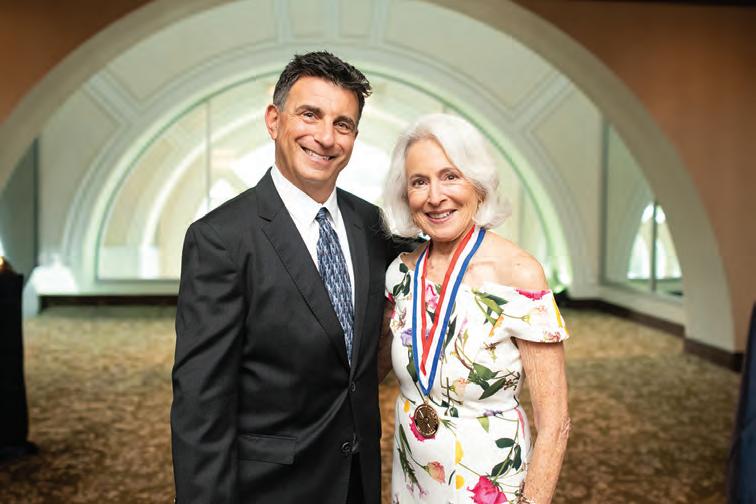
Thirty-five years of Jewish communal leadership have given Karen Wolk Feinstein countless memories. For Pittsburghers, Feinstein’s near double chai atop the Jewish Healthcare Foundation delivered an even greater impact.


When the Squirrel Hill resident steps down from her role as president and CEO of JHF on July 1, she’ll have overseen the metamorphosis of a nascent local organization into an international model. Along with expanding a staff of hree into 47, Feinstein furthered regional and global interests and advancements in patient safety, aging-related care, HIV/AIDS treatment, women’s health issues, teen mental health and workforce development.
Staying true to those foci, granting autonomy to senior staffers and investing in relationships, she told the Chronicle, have been the hallmark of her tenure. That combination, along with persistence and clarity of vision, enabled Feinstein to not only bolster an organization built from the sale of a Jewish hospital but to transform herself from an academically trained professional into a socially conscious thought leader.
Where the tall corn grows
The seeds of Feinstein’s growth began in Iowa. Her father, Norman Sandler, was a Navy pilot from Des Moines. Shortly before the end of World War II, Sandler returned home for a furlough. Months later, he was shot down over Tokyo. At the time of Sandler’s death, his wife, Geraldine, was pregnant.
Geraldine gave birth to Feinstein and nearly four years later married Leonard Wolk, a clothing wholesaler. Geraldine and Leonard raised their blended family in a Squirrel Hill home on Northumberland Street. Feinstein attended Winchester Thurston School before majoring in American intellectual history at Brown University. As a college student, she joined the Civil Rights Movement and worked with the Urban League to secure voting rights and desegregate schools and housing.
With an awareness of social responsibility, Feinstein earned a master’s degree from Boston College School of Social Work and a doctorate in economics from The Heller School for Social Policy and Management at Brandeis University. Early in her career, she administered Head Start programs in Worcester, Massachusetts, and held faculty positions at Boston College and Carnegie Mellon University.
While teaching at CMU, Feinstein became a senior vice president at the United Way of Allegheny County and oversaw allocations, policy work and volunteerism — even the United Way’s helpline. When Montefiore Hospital was sold to UPMC for $145 million in 1990, Feinstein’s career path forever changed. Start of something new
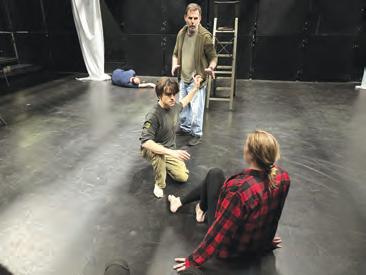
Myers said, “continues the message that has been part of the fabric of Pittsburgh: that we are all in this together and that we work together, and that’s how we build a better society.”
Along with caring for all “regardless of race, ethnicity or background,” Montefiore had, according to the Heinz History Center’s Rauh Jewish Archives, delivered both “culturally sensitive” treatment to Jewish patients and “professional opportunities for Jewish
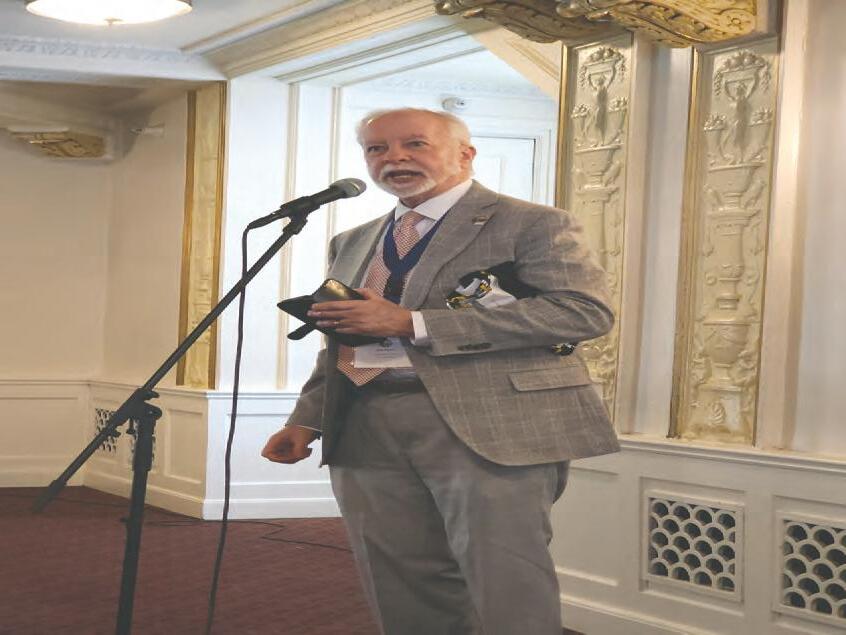
Speaking with the Chronicle, Myers, Tree of Life Congregation’s rabbi and president of the Cantors Assembly, described multiple events — including the “Psalm Enchanted Evening” concert — tied to a June 7-11 Cantors Assembly convention.
Some events, such as a roundtable discussion with thought leaders exploring the profession’s evolution and future were closed to the public. Other programs, such as several evening

By David Rullo | Senior Staff Writer
Those hoping to buy some kosher ribs this week might be out of luck. The same is true for steak, wings, ground beef and brisket.
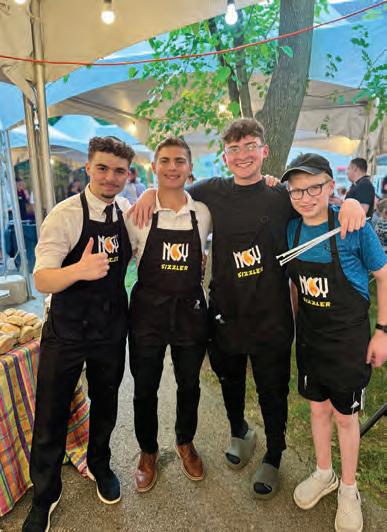
That’s because Nina and Dan Butler are hosting the 35th annual Garden Sizzler June 24 — and they serve a lot of food.
“Last year we went through 900 ribs,” Dan Butler said. “I just went down to Murray Avenue Kosher and told them we should probably plan on a few more people.”
More than 300 invitations were sent to Jewish community members, local poli ticians, young families and others for the event, held in the Butlers’ backyard.
It’s been an organic growth for what is now a large fundraiser for NCSY, an orga nization that has played a pivotal role in t he lives of Jewish teens across the globe for nearly three-quarters of a century, and one that is close to the Butlers’ hearts: The two met at an NCSY event, as did their daughter and son-in-law, and several of their married friends.
Nina Butler recalled the genesis of the Sizzler.
“We knew many young couples who were very mobile, and in the summer our friends were leaving town,” she said. “We made a barbeque for them. After a few years, I realized that as an educator, I’m positively reinforcing negative behavior. So, the next year, I made a barbeque for the people staying in Pittsburgh.”
Butler said that after several summers, she decided the barbeque should become a fundraiser for a cause her family cared about.
“ That was the origin of the NCSY Sizzler,” she said.
The Sizzler has now been replicated in four other cities and has raised millions of dollars for NCSY.
“It’s all a result of these couples leaving Pittsburgh,” joked Dan Butler, who is
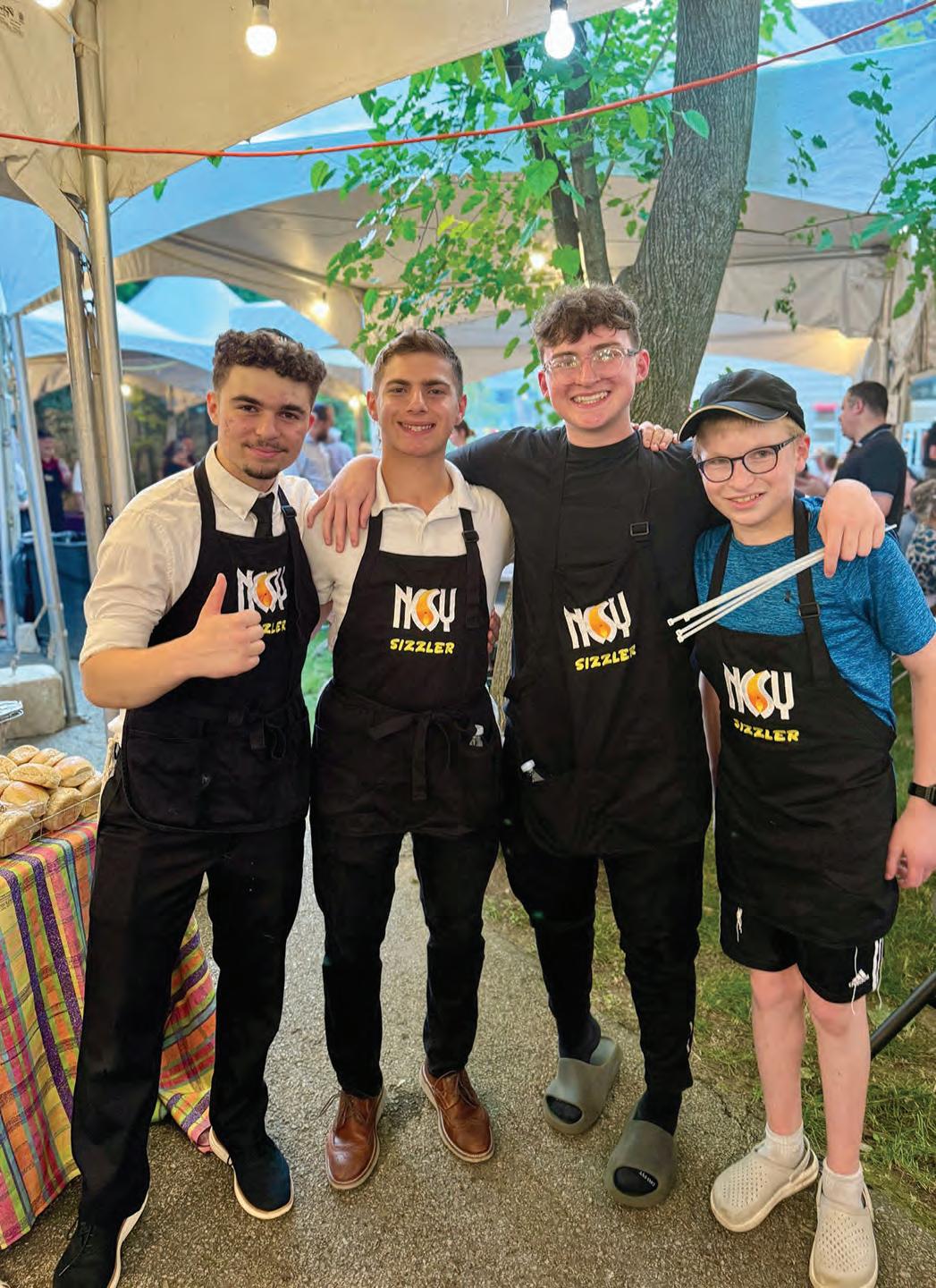
friends of the Butlers, people who cook, grill and smoke the food purchased for the event, as well as local youth.
“Kids who are involved in NCSY want to help, and there are a whole lot of other kids who are friends of the family who come and help during the day and do different things,” Nina Butler said. “We have a whole list of tasks that need to be done.”
Once those tasks are completed, the teens leave as the event is adults-only.
“And then they come back at the end to help clean up. They might even get some
Food preparation begins weeks in advance, including appetizer selection, meat
Dan Butler mentioned one particular volunteer — Jason Small, whom he calls the event’s “grill master” — who takes time off from work and spends several days and
“[Small] claims that he’s been doing it for
And while leftovers aren’t too common after the Sizzler has ended, Nina Butler has
She is the director of Bikur Cholim, a nonprofit that provides for the material and spiritual needs of Jews in Pittsburgh who are facing medical challenges, and their families.
“ There’s little left over, but I’m on the calendar the next day for any patient who’s hospitalized in Pittsburgh to bring that family dinner,” she said. “And we try to use it for someone we need to thank, as well.”
Rabbi Tzali Freedman, NCSY’s director of Central East Region, said that NCSY reaches

SUBSCRIPTIONS subscriptions@pittsburghjewishchronicle.org 412-687-1000, ext. 2
TO ADVERTISE advertising@pittsburghjewishchronicle.org 412-687-1000, ext. 1
EDITORIAL DEPARTMENT
Email: newsdesk@pittsburghjewishchronicle.org
BOARD OF TRUSTEES
Evan H. Stein, Chair
Evan Indianer, Vice Chair
Derek Smith, Treasurer
Gayle R. Kraut, Secretary
Gail Childs, Dan Droz, Malke Steinfeld Frank, Karen Gal-Or, Seth Glick, Judith Kanal, Cátia Kossovsky, Charles Saul, Lynn Zelenski
GENERAL COUNSEL
Stuart R. Kaplan, Esq.
Jim Busis, CEO and Publisher 412-228-4690 jbusis@pittsburghjewishchronicle.org
EDITORIAL
Toby Tabachnick, Editor 412-228-4577 ttabachnick@pittsburghjewishchronicle.org
Adam Reinherz, Senior Staff Writer 412-687-1000 areinherz@pittsburghjewishchronicle.org
David Rullo, Senior Staff Writer 412-687-1000 drullo@pittsburghjewishchronicle.org
Octavia Liku, Staff Writer oliku@pittsburghjewishchronicle.org
ADVERTISING
Amy Weiss, Account Executive (412) 613-0697 aweiss@pittsburghjewishchronicle.org
about 30,000 teens and sends more Jewish children to Israel for a gap year of study than any other group — about 500 children annually.
NCSY is a leading provider of Jewish summer programs worldwide, reaching about 2,000 teens in the United States, Europe and Israel across the Jewish spectrum, from children with no Jewish background to those who are wholly observant.
Dan Butler said that NCSY empowers teens to become future Jewish leaders and helps build Jewish identity.
The Garden Sizzler is part of the fundraising necessary to keep these programs operating.
Evidence of the event’s popularity — and NCSY’s impact — can be found in the number of people who donate to keep it afloat. Last year that number rose to more than 200 individuals.
After more than three decades of hosting the Sizzler, Nina Butler said there’s a whole host of people who return each year, including someone who flies in from Los Angeles just to attend the event.
Because the date changes each year, she said, some couples plan their vacations around the dinner.
Nina Butler said weather is always a concern, but large tents erected throughout the yard keep everyone as dry as possible.
“One year it rained hard,” she recalled, “and [former Allegheny County Executive] Richard Fitzgerald was here. He said, ‘Nina, this year wasn’t only memorable. It was biblical.’”
And while the Garden Sizzler provides much needed funding for NCSY, Nina Bulter said it accomplishes something even more important: It builds relationships.
“There’s such a warm communal vibe in the room, and that enables me to go and have a conversation with potential donors,” she said. Tickets for the 35th Annual Garden Sizzler are available at centraleast.ncsy. org/sizzler. PJC
David Rullo can be reached at drullo@ pittsburghjewishchronicle.org.
5915 Beacon St., 5th Floor Pittsburgh, PA 15217
Main phone number: 412-687-1000
Subscriptions: 412-687-1000, ext. 2
PRODUCTION
Jeni Mann Tough Production Manager
Carl Weigel
Art/Production Coordinator Subscriptions subscriptions@pittsburghjewishchronicle.org 412-687-1000, ext. 2
Published every Friday by the Pittsburgh Jewish Publication and Education Foundation 5915 Beacon St., 5th Floor Pittsburgh, PA 15217
Phone: 412-687-1000
POSTMASTER:
Send address change to PITTSBURGH JEWISH CHRONICLE, 5915 BEACON ST., 5TH FLOOR PITTSBURGH, PA 15217
(PERIODICAL RATE POSTAGE PAID AT PITTSBURGH, PA AND AT ADDITIONAL MAILING OFFICES)
USPS 582-740
Manuscripts, letters, documents and photographs sent to the Pittsburgh Jewish Chronicle become the property of this publication, which is not responsible for the return or loss of such items.
The Pittsburgh Jewish Chronicle does not endorse the goods or services advertised or covered in its pages and makes no representation to the kashrut of food products and services in said advertising or articles. The publisher is not liable for damages if, for any reason whatsoever, he fails to publish an advertisement or for any error in an advertisement. Acceptance of advertisers and of ad copy is subject to the publisher’s approval. The Pittsburgh Jewish Chronicle is not responsible if ads violate applicable laws and the advertiser will indemnify, hold harmless and defend the Pittsburgh Jewish Chronicle from all claims made by governmental agencies and consumers for any reason based on ads appearing in the Pittsburgh Jewish Chronicle
By David Rullo | Senior Staff Writer
Karsh doesn’t identify as an “Oct. 8 Jew.”
“I didn’t wake up on Oct. 8 [2023] and realize there was antisemitism in the world,” the six-time Emmy-nominated Los Angeles television reporter said.
Karsh, who moved to California from New York, said her children attend Jewish day school and she serves on the board of the Jewish Federation of Los Angeles, as well as being involved in other Jewish organiza tions in the city.
“I’m very, very embedded in Jewish life,” she said. “So, I was well aware of antisemitism and how it was brewing. Honestly, it’s been on the rise since 2021.”
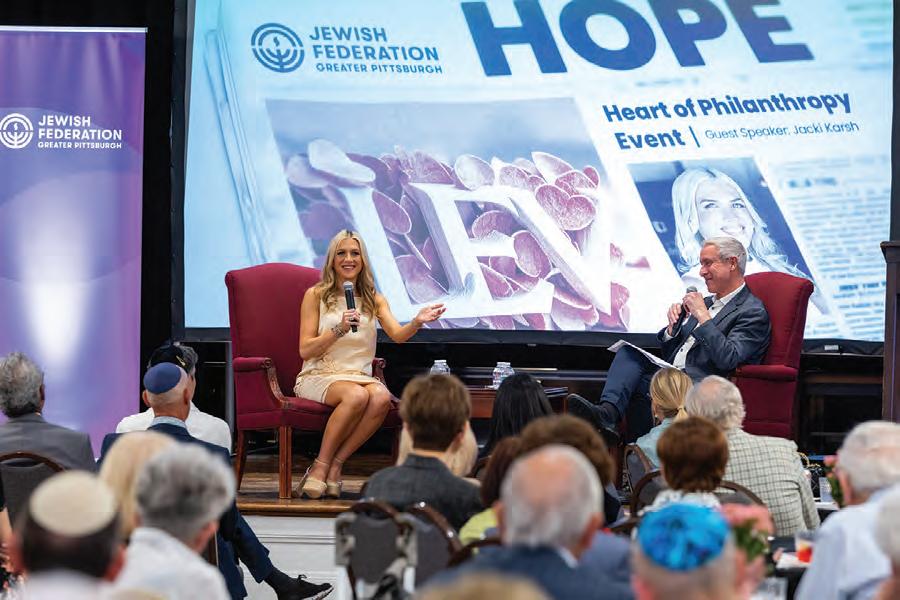
Karsh decided to do something about the rising tide of antisemitism by creating the Jacki and Jeff Karsh Journalism Foundation with her husband which, according to the organization’s website, “equips journalists to report with depth, rigor, and clarity on Jewish issues in the United States and around the world.”
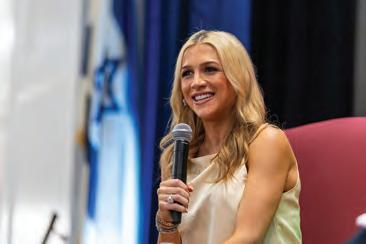
Karsh was in Pittsburgh on June 10 for a conversation with the Jewish Federation of Greater Pittsburgh’s H. Arnold and Adrien B. Gefsky Community Scholar Rabbi Danny Schiff as part of its Heart of Philanthropy event, honoring Lev Society members.
After Hamas’ Oct. 7, 2023, terror attack in Israel, Karsh said she felt the need to be a
“Jewish journalist” and find a way to use her skill set to “correct the dangerous path we were heading on.”
“After Oct. 7, we saw a real problem in newsrooms all across the country — and frankly, around the world — in how they were understanding what was happening,” she said. “News gathering was complicated to the point where we were trusting sources that we shouldn’t have, and what was coming out of real stalwarts of journalism was borderline propaganda from terrorist organizations.”
Conceived in November, 2023, Karsh said the first cohort of 12 journalists was selected from 144 applications received from newsrooms across the United States, including ABC, NBC and NPR.

“We wanted to equip journalists who might not be reporting on that subject with the tools, resources, network, and with the mentors, to be able to do so and be an effective voice in the newsroom,” she said.
The hope, Karsh explained, is that when a story needs a Jewish voice, the Karsh Fellows will be able to explain why Jewish Voice for Peace doesn’t represent all Jews, for example, and instead promote a group like StandWithUs, which supports Israel and fights antisemitism.
Likewise, Karsh believes that journalists who have completed the fellowship will be able to explain the nuances of Judaism — for instance, explain why a Hasidic Jew might not be the right source for a story about







modern Orthodox Judaism.
e model has worked, Karsh said. And the fellowship is accepting applications, due Sept. 1, for its next class.
“We have worked with incredible, talented journalists that have published work since being a part of the program that clearly shows they have learned, grasped and understood the nuance that we were hoping them to,” she said. “It’s really been a rewarding process that, for me, brings us back to fact-based journalism, which seemed like a lost art.” hile in Pittsburgh, Karsh met with Mayor Corey O’Connor who, she said, “is very committed to the Jewish community and its security and safety.”
This was her first time in the city, and Karsh said that before her trip, she wasn’t aware of what a “wonderful, robust Jewish community” was in Pittsburgh.
She was particularly moved by meeting with community members whose families, like hers, go back generations.
“To me that is the true story of the American Jews, not just to isolate and live alone but to expand, build, grow and contribute. To be a part of the city and to move it forward,” she said. “That’s who we are as American Jews. We’re builders. It’s been wonderful to meet leaders here that are proud of who they are, not just in the Jewish community but in the greater Pittsburgh community, as well.” PJC
David Rullo can be reached at drullo@ pittsburghjewishchronicle.org.






When FBI agents searched Owens’ phone, they found searches related to antisemitism and the term “Pittsburgh Jews.”
By David Rullo | Senior Staff Writer
Edward Arthur Owens Jr., 30, of Elizabeth, Pennsylvania, was sentenced in federal court to 30 months of incarceration, followed by three years of supervised release, on charges related to his threatening a local public official and making false statements to other government officials.
O wens pled guilty to the charges in January and was sentenced by U.S. District Judge Nora Barry Fischer on June 9.
The sentence follows a May 20, 2025, incident in which Owens targeted an unnamed Pittsburgh public official with antisemitic threats through the Facebook messenger app.
“We’re coming for you [emoji of person raising right hand] [German flag emoji] be afraid. Go back to Israel or better yet, exterminate yourself and save us the trouble. 109 countries for a reason. We will not stop until your kind is nonexistent,” Owens wrote to the official, using the alias “Casey Jones.”
The number 109 is based on an antisemitic conspiracy theory that Jews have been expelled from 109 countries.
Owens also sent a text message to a friend asking if he was ready to “hunt down Jews for extermination.”

Owens told authorities he wasn’t violent but said he was “rage baited” to send the threats to the official, whom he assumed was Jewish.
At his plea hearing, FBI Special Agent Abigail Patcher testified that Owens searched the internet for New York City synagogues as well as the phrase “dancing Jews,” a reference to a conspiracy theory that five Israeli men were seen dancing in the streets of New York in the wake of Al Qaeda’s 9/11 attack on the World Trade Center, and were arrested and later released without being charged.
Owens’ girlfriend at the time said he told her, “Jews control everything,” and “Jews control the news.”
When the FBI asked Owens about various weapons he owned — a .22 caliber rifle, an AR-15 rifle, and a 9 mm pistol — he lied, saying they were all at his mother’s home; however agents found a 9 mm pistol and hundreds of rounds of ammunition when they searched his truck.
In a statement to the court, the elected official said their life had changed as a result of the threats, detailing precautions they were forced to take and a sense of anxiety at public events and on social media.
“Only days after a Jewish couple was executed in front of a museum in Washington,
D.C. From my perspective, there was no reason to think ‘Casey Jones,’ now known to the court to be Edward Owens, wouldn’t come to hurt or kill me.”
The victim called Owens a “ticking time bomb,” writing that he was “obsessed with Jews and wants to inflict harm on others. He remains a safety threat to me personally, the Jewish community, and the broader public.”
U.S. Attorney Troy Rivetti said that Owens’ sentence sends two strong messages: “Our community remains stronger than hate”; and law enforcement will work to ensure that individuals who commit crimes driven by hate “will be accountable to the fullest extent of federal law.”
FBI Pittsburgh Special Agent in Charge Richard Evanchec said the threats Owens made go beyond hate-fueled words.
“It is an attack on the very principles of the United States,” he said. “Hatred and deception have no place here.”
O wens’ sentencing occurred after other unrelated antisemitic incidents were reported in the Pittsburgh area.
A Franklin Regional Senior High School graduating senior was found to have included antisemitic Holocaust denial conspiracy theories in the school’s 2025-26 Panther yearbook, including “271k or not enough.”
The number 271,000 is regularly cited by
Holocaust deniers, who claim it is the actual number of Jewish people killed during World War II — not 6 million.
Franklin Regional spokesperson Deana Callipare told the Chronicle the school was made aware of the statement after the yearbook was distributed and immediately launched an investigation.
The yearbook adviser, Callipare said, was unaware of the meaning behind the statement.
“ The district obviously does not condone this type of behavior and there is no room for hate speech in our community,” she said. “While the district cannot comment on the specific student’s discipline, the administration took action in alignment with t he district discipline policy and student code of conduct.”
Callipare said the district is reviewing its yearbook development and approval procedures “to determine what additional safeguards might be necessary moving forward.”
Two unrelated incidents also occurred at Kennywood Amusement Park.
A group of teenage Jewish boys was harassed by another group of teenagers, who made derogatory comments and knocked off some of the boys’ kippot.

Our summer support campaign is upon us! We’re launching a 36-hour crowdfunding campaign – only on Sunday, June 21 and Monday, June 22.
In a world of many voices and many paths, it’s the shared stories, values and traditions that keep us united. When we come together, we strengthen not just ourselves, but the entire Jewish future. For over 60 years, the Pittsburgh Jewish Chronicle has stood as the trusted, independent news source for Jewish Pittsburgh thanks to readers and supporters like you. We report what other media outlets do not. And we are committed to crafting local journalism based on truth, depth and insight – the ways only a true community publication should.
When you give to the Pittsburgh Jewish Chronicle, you don’t just support a news organization. You protect an essential community institution. You create informed citizens. You keep Jewish Pittsburgh strong.
We hope we can count on your support.
https://causematch.com/pjc


By Octavia Liku | Staff Writer
The Jewish Association on Aging has announced a new pilot program in collaboration with RubyWell, a digital healthcare technology program, to provide “support, training and compensa tion” to family caregivers in Allegheny and Westmoreland counties.
Funded by a $573,000 grant from the Richard King Mellon Foundation, the program aims to give family caregivers the resources they need to support the well-being and comfort of their loved ones.

education sometimes takes place for the f irst time — that’s very valuable to the community.”
compensation or support.
“There is not a program like this right now for Medicare-eligible patients and caregivers — only Medicaid,” Vlakancic said. “This would support Medicare patients, as well as millions of older adults that could potentially benefit from this.”
recognize them for the care that they’re giving, and to help them navigate it.”
“Oftentimes, caregivers are providing all this work, and there’s no compensation for it,” Lisa Vlakancic, director of professional services at the JAA, told the Chronicle. “Home health is really what keeps our patients out of hospital. It’s where
Antisemitism:
Continued from page 4
The incident was reported to the Jewish Federation of Greater Pittsburgh several days after it occurred. Because park officials were not notified at the time, they were unable to respond to or address the matter when it happened.
Nearly 63 million Americans serve as home caregivers, according to the AARP. About 25% of caregivers report accumulating debt due to the financial burden of providing for a loved one. Medicare does not provide caregivers with financial
In a separate incident, a man displaying white power and swastika tattoos was observed waiting in line for a ride. No one reported the man to park officials.
Shawn Brokos, the Federation’s community security director, spoke with Kennywood’s security director, who told her that no hate symbols are allowed in the park and the individual with the racist tattoos most likely wore clothing over them when entering.
for discovering the three-dimensional structure of two subunits of ribosomes, which make proteins in cells.
Over the span of 16 months, 50 homebound adults on Medicare and their family caregivers will receive free access to instructional videos, as well as weekly virtual support from both a peer cohort of local family caregivers and a JAA-employed social worker. The program will also provide caregivers with a pathway to flag early warning signs before they escalate into a medical emergency, as well as a monthly stipend of $300 for 12 months of participation.
“We [the JAA] provide great care to the people already in our community,” Vlakancic said. “This partnership with RubyWell adds value — not only to help people in their homes, but to compensate them and
Kennywood, Brokos said, has QR codes throughout the park allowing people to report incidents quickly, easily and anonymously.
Brokos noted that Kennywood is a popular destination for the Pittsburgh Jewish community.
“If something happens, report it right away,” she said. “I can call the head of security right then and there, or they can

Items are provided by the Center for Israel Education (israeled.org), where you can find more details.
June 19, 1967 — LBJ outlines 5 principles for peace
President Lyndon B. Johnson presents five principles for Middle East peace: justice for refugees; maritime rights; recognized borders; the end of the regional arms race; and the right of all nations to live in peace.
June 20, 1914 —
Poet Zelda is born Zelda Schneurson Mishkovsky, the poet known as Zelda, is born in Russia. She makes aliyah in 1928 and takes up poetry in 1950. Her poem “For Every Person There Is a Name” is a Yom HaShoah standard.
June 21, 1882 — Filmmaker Ya’acov Ben-Dov is born
Filmmaker and photographer Ya’acov Ben-Dov is born in Ukraine. He makes aliyah in 1907 and is introduced to moviemaking in 1911 at the Bezalel School. He shoots documentaries, including the British arrival in 1917.
June 22, 1939 — Nobel Prize winner Ada Yonath is born Biochemist Ada Yonath is born in Jerusalem. She shares the 2009 Nobel Prize in chemistry
June 23, 2011 — Israel promotes 1st female major general
Orna Barbivai is promoted to major general, the first woman to hold the second-highest rank in the Israel Defense Forces. The 30year IDF veteran and mother of three heads

June 24, 2007 — Israel holds 1st pro baseball game
The Israel Baseball League launches with a 9-1 win by the Modi’in Miracle over the Petah Tikvah Pioneers in front of more than 3,000 fans. The six-team professional league folds after one season.
June 25, 2006 — Hamas abducts Gilad Shalit
Hamas militants using a tunnel from Gaza disable a tank on patrol in Israel, kill two soldiers, and capture a third, Gilad Shalit. Shalit isn’t released until Oct. 18, 2011, in exchange for Yahya Sinwar and 1,026 other Palestinians. PJC



The data collected from the program — claims data, caregiver observations and clinical records — will be evaluated by a third-party consulting firm. Additionally, hospitalizations, emergency department visits and skilled nursing facility visits that occur during the duration of the program will be tracked and compared to matched populations
The JAA intends for the program to “complement — not replace — home health agencies, primary care providers, and health plan care management teams,” acting as a “betweenvisits care layer” that can support the needs and comfort of patients and caregivers alike. Participants in the program are still being selected. Potential candidates can check their eligibility through RubyWell’s website. PJC
Octavia Liku can be reached at oliku@ pittsburghjewishchronicle.org.
go directly to security.”
C alls to Kennywood were not returned before this story was published.
Any suspicious activity should be reported by calling 911 and filing an i ncident report at jewishpgh.org/form/ incident-report. PJC
David Rullo can be reached at drullo@ pittsburghjewishchronicle.org.









Submit calendar items on the Chronicle’s website, pittsburghjewishchronicle.org. Submissions also will be included in print. Events will run in the print edition beginning one month prior to the date as space allows. The deadline for submissions is Friday, noon.
q SUNDAYS, JUNE 21–DEC. 20
Join Chabad of Squirrel Hill for its Men’s Tefillin Club. Services and tefillin are followed by a delicious breakfast and engaging discussions on current events. 8:30 a.m. 1700 Beechwood Blvd. chabadpgh.com
Join a lay-led online Parashah study group to discuss the weekly Torah portion. No Hebrew knowledge needed. The goal is to build community while deepening understanding of the text. 8:30 p.m. For more information, visit bethshalompgh.org/online-parashah.
q MONDAYS, JUNE 22–DEC. 21
Join Congregation Beth Shalom for a weekly Talmud study. 9:15 a.m. For more information, visit bethshalompgh.org.
Join Temple Sinai for an evening of mahjong every Monday (except holidays). Whether you are just starting out or have years of experience, you are sure to enjoy the camaraderie and good times as you make new friends or cherish moments with long-term pals. All are welcome. Winners will be awarded Giant Eagle gift cards. All players should have their own mahjong cards. Contact Susan Cohen at susan_k_cohen@yahoo.com if you have questions. $5. templesinaipgh.org
q TUESDAYS, JUNE 23–DEC. 22
Join Beth El’s Rabbi Alex Greenbaum and his Bible/
Talmud Adult Education class for a thoughtprovoking weekly session of Bible and Talmudic study. This program is available both in person and virtually. Call the office at 412-561-1168 to receive the Zoom link or to make an in-person reservation. 10:30 a.m. 1900 Cochran Road. bethelcong.org
q WEDNESDAY, JUNE 24
Join the Holocaust Center of Pittsburgh for an evening of celebration and reflection on the past year of the Reckoning with Antisemitism as Christians project. Hear from Christians who have been reckoning with antisemitism and from Jews who have taken part in their efforts. A published book of sermons written by local Christian clergy who have engaged their congregations and communities in conversations about antisemitism, from the pulpit and beyond, will also be shared. Free. 7 p.m. Beit Kulanu, 4905 Fifth Ave. eventbrite.com/e/reckoning-with-antisemitismas-christians-reflections-at-one-year-tickets1988560210119
q THURSDAYS, JUNE 25, JULY 16, AUG. 20, SEPT. 3
Rendezvous in Beit Kulanu’s Biblical Botanical Garden with drinks and hors d’oeuvres for free live musical performances. Apps start at 6:30 p.m. and music at 7 p.m. The concert is free but registration is required. 4905 Fifth Ave. BeitKulanu.org
q FRIDAY, JUNE 17
Looking for a low-stress, high-fun way to ease into Shabbat with your little ones? Join Beit Kulanu every third Friday for Tot Shabbat, a joyful evening designed for families with children 5 and under — older siblings and friends are always welcome, too. Enjoy activities, a short musical Shabbat service and dinner. 5 p.m. Free. 4905 Fifth Ave. BeitKulanu.org PJC


Guest Columnist
Brian Eglash
Since Oct. 7, the relationship between Israel and the Diaspora has fundamentally changed. What was once viewed primarily as a matter of communal connection or continuity must now be understood as a strategic imperative. At a time of rising antisemitism, growing pressure on Israel globally and weakening Jewish engagement among parts of the next generation, the Jewish world must make a far greater investment in Jewish identity, education and meaningful connection to Israel. The need to strengthen this relationship is no longer aspirational — it is existential.
Diaspora Jews are facing a surge of antisemitism, Israel faces growing isolation, and Jewish identity among some of the next generation is weakening. At the same time, a small but vocal anti-Zionist fringe distorts the
broader conversation. This moment demands not handwringing, but strategy: a serious, well-funded effort by both philanthropists — through a concerted, coordinated approach — and local communities, with increased investment to revitalize Jewish education, strengthen pride and deepen connection to Israel, especially in the United States.
This is not about assigning blame for past shortcomings. It is a call to act before the window narrows further.
The central challenge is not dealing with the fringe. It is the majority in the middle — Jews who feel a connection to Israel in their gut, who reject the idea that Israel is an evil actor but who lack the education, language, or confidence to express that connection. Many young adults care deeply but stay silent — whether from fear, fatigue, or uncertainty. That is the audience that will shape the future and where investment will have the greatest return.
What’s needed is a reset of priorities — one that treats Jewish identity, Israel connection and a deeper understanding of Jewish peoplehood as core communal investments, not peripheral ones. This will require sustained funding, coordination and a long-term view.
A few areas stand out.
Education: We need a comprehensive approach to Jewish and Zionist education across multiple stages of Jewish life. That includes developing age-appropriate curricula for day schools across denominations, while significantly upgrading supplemental education — where a significant number of non-observant Jewish children are — through better training, compensation and professionalization of teachers.
Hebrew language education is another underutilized bridge. Expanding Hebrew offerings in public and private high schools, particularly in communities with significant Jewish populations, would strengthen cultural and emotional ties to Israel in a tangible way.
On college campuses, the response to antisemitism must be coordinated, continental and proactive — not reactive. The scale of the challenge demands it.
Jewish camp: Jewish summer camps remain one of the most powerful engines of identity formation and connection. While they are a form of informal education, their immersive nature and intensity set them apart. Expanding access through scholarships,
increasing the number of Israeli counselors, and more intentionally integrating Israel education and experiences — including opportunities such as Israel travel for counselors-in-training — can deepen their already profound impact.
Israel travel: Programs like Birthright, BBYO, youth movements and longer-term initiatives such as Onward Israel are transformative. Gap year programs and opportunities for higher learning in Israel also play a critical role in deepening Jewish identity, strengthening long-term connections to Israel and cultivating future communal leaders through immersive educational and cultural experiences. Expanding both funding and recruitment for these programs and experiences should be a top priority.
Young adult engagement: Jews in their 20s and 30s are not lost. Most do not reject Israel; many simply lack meaningful opportunities to engage. Investment in this cohort — through peer-based programming, direct engagement with Israelis, and credible voices in both traditional and digital spaces — is essential.
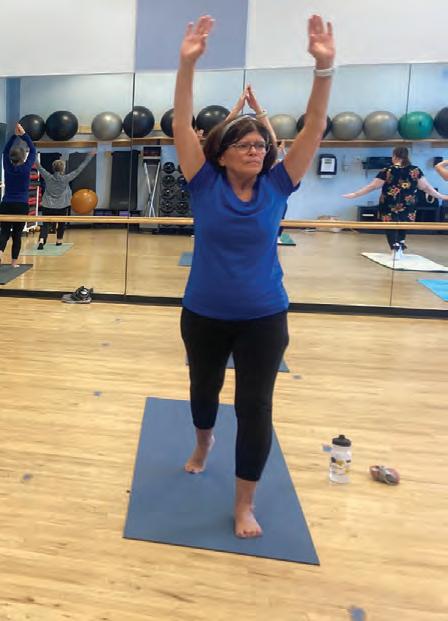
25,572 personal training sessions

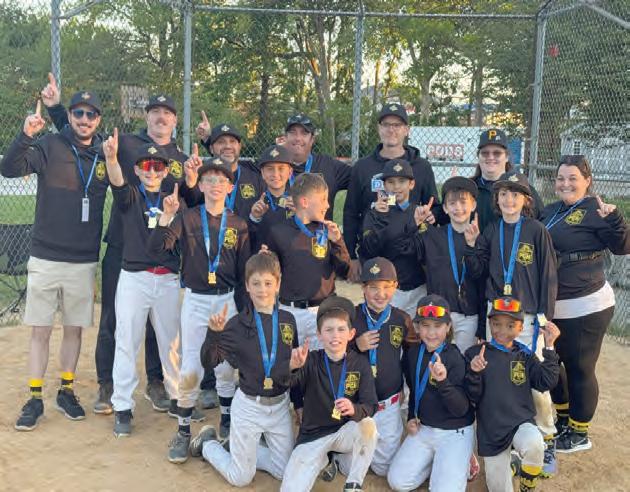
47 local athletes went for the first time to the Mini Maccabi Games and won 16 medals
738 children enjoyed the magic of camp at EKC.
Over 1,000 registrations for our new Israel Engagement Series
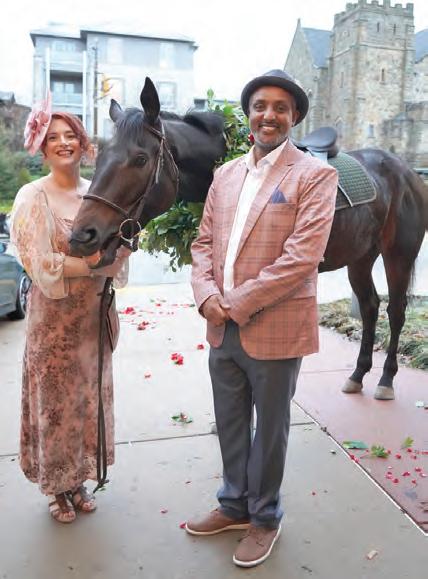
$1,042,000 raised at Big Night Derby March 2026
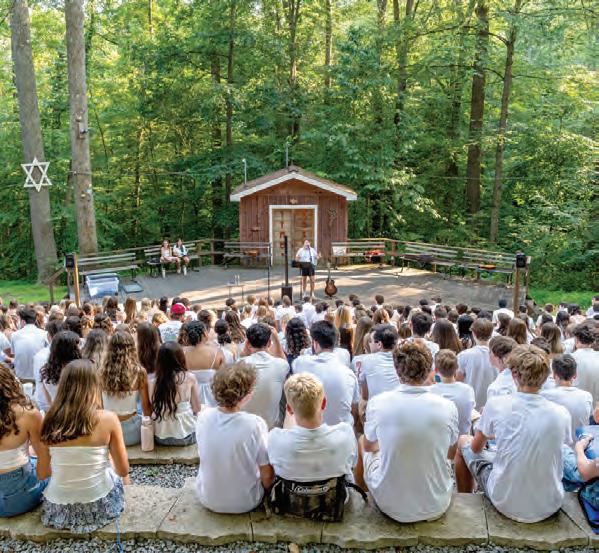
children created lasting memories at JCC day camps

More than 4,000 fitness classes and activities this year at the JCC South Hills
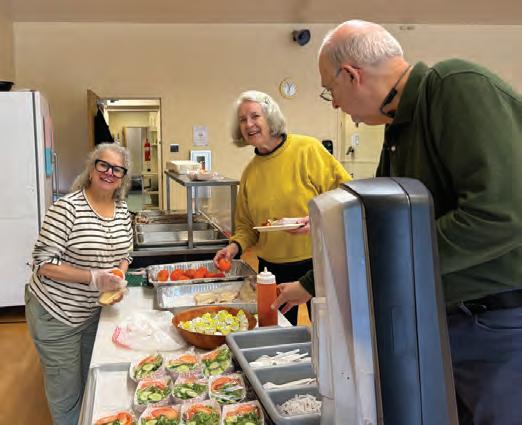
37,693 kosher meals served over the past year to senior adults
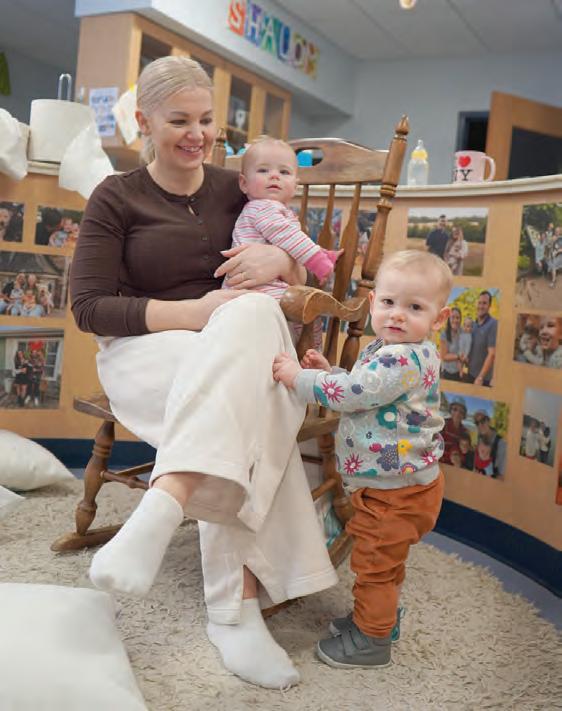
More than 4,500 kids participated in early childhood, children and teen programs
Eglash:
Continued from page 7
Informal Jewish education: If we are serious about reaching the majority of non-Orthodox Jews, informal education is not supplementary — it is the frontline. For many, it is the primary, and often only, entry point into Jewish life.
Unlike formal settings, informal frameworks meet people where they are: socially, culturally and developmentally. They create moments of belonging before expectation, and connection before fluency. This is where identity is often first sparked — and where it can either be nurtured or lost.
This ecosystem extends well beyond camps and Israel travel. It includes Shabbatonim and retreats, youth groups and movements, experiential and service-based learning, Jewish social justice initiatives, cultural arts and music, and pop-up communal experiences built around food, conversation and accessible learning (such as OneTable and similar models). These are not peripheral experiences; they are scalable, low-barrier, high-impact platforms for building Jewish identity, community and connection to Israel.
If the goal is to engage the broad middle — the many who feel connected but not yet anchored — then informal education is where the greatest return on investment will be found.
The bottom line is simple: This is a moment for decisive investment in our shared future.
Diaspora–Israel relations are not broken, and the next generation is not disengaged beyond reach. On the contrary, the conditions are ripe for deeper connection. Israel’s growing isolation globally only heightens
the importance of a strong, confident Diaspora — one that can serve as both partner and advocate.
In fact, the data tells a far more nuanced — and hopeful — story. Recent research from the Jewish Federations of North America shows that while only about a third of American Jews, and even fewer young adults, identify with the label “Zionist,” nearly 90% still believe Israel has the right to exist as a Jewish and democratic state, and a strong majority feel an emotional connection to Israel.
In other words, the gap is not one of rejection — it is one of language, education and understanding. Many young Jews are distancing themselves from a term they perceive as politically loaded, not from Israel itself. This only reinforces the urgency of meeting this generation where they are, with clarity, confidence and deeper engagement.
We are, whether we choose to acknowledge it or not, one people. A strong Israel depends on a strong Diaspora, and vice versa. Our shared sense of Jewish peoplehood — of collective responsibility, mutual destiny and unity across geography and ideology — is not just a value; it is a strategic necessity in this moment. The next phase of this conflict will not be fought only on physical battlefields, but in the arenas of public opinion, education and political influence — where the Diaspora plays a decisive role.
The question is not whether we can afford to invest in this relationship. It is whether we can afford not to. PJC
Brian Eglash is the senior vice president and chief development officer at the Jewish Federation of Greater Pittsburgh. This column first appeared on The Times of Israel
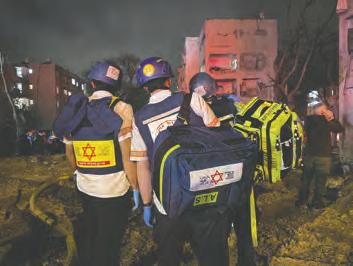
IsraelisdependonMagenDavidAdom. AndMDA dependsonAmericanslikeyou!
MDA medicsrespond toarocketattackin Israel.AnMDA team isdispatched every22seconds savinglivesevery day.

Pointyourphone cameraatthisQR codetodonatewitha creditcard,orgoto theURL below!
AFMDAholdsa4/4 starratingfrom CharityNavigator.

Our Mission: The Jewish Cemetery & Burial Association of Greater Pittsburgh is dedicated to preserving our precious heritage and preventing the future abandonment of Jewish cemeteries. The JCBA is the community’s response to a vital need—providing dignified burials to Jews in need and preserving Jewish cemeteries in accordance with our laws and customs. It is also dedicated to serving the Jewish community’s truly needy by providing for their burials and final resting places in our Chesed Shel Emeth Cemetery.
Did You Know:
*There are 80 Jewish cemeteries in Western Pennsylvania! Fifty (50) of these cemeteries are currently in the care of the JCBA of Greater Pittsburgh. Many more are expected to follow.
* As Jews, we make a promise to those who pass before us that each will be remembered, respected, and never abandoned – and we will maintain the sanctity of their graves in perpetuity.
*Because it is a “true act of loving kindness” –a chesed shel emet—the type of kindness that expects nothing in return. When we bury someone with dignity, or tend to the grave, or ensure the cemetery remains protected and sacred, we do so knowing that the person can no longer thank us or repay us. It is the purest form of mitzvah, free of ego or benefit.
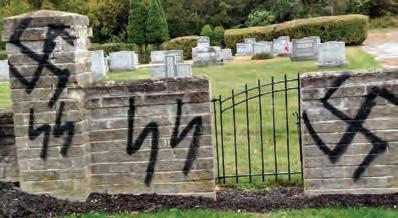
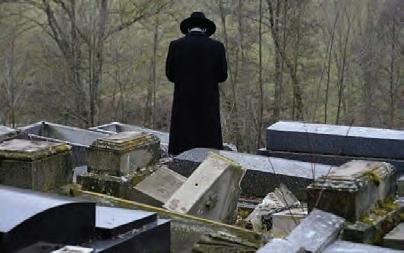
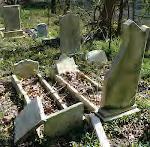
Our Jewish cemeteries are vulnerable and will always be at risk of vandalism, neglect, and abandonment without your continued support. Your foresight today will safeguard our cemeteries (and our promise) for decades to come. Ways to make a legacy gift:
• Bequest in a Will or Trust
Include JCBA in your will or trust by leaving a specific amount, percentage, or asset to help ensure every Jewish soul is cared for with dignity—now and for generations to come.
• Beneficiary Designations
Name the Jewish Cemetery & Burial Association as a beneficiary of your IRA, 401(k), pension, life insurance policy, bank account, or donor-advised fund. A simple form can leave a lasting legacy.
• Gift of Retirement Assets
Reduce taxes on your estate and support sacred burial traditions by designating JCBA as a beneficiary of your retirement plan.
• Donor-Advised Funds (DAFs)
Continue your family’s giving tradition by recommending a grant now or naming JCBA as a future beneficiary of your DAF.
For more information on leaving a legacy gift, contact the JCBA office at 412-553-6469.
Tizku l’mitzvot—may you merit many mitzvot.

Guest Columnist
Fara Marcus
Many of us think of Torah as a collec tion of traditions, rituals and rules to follow for reasons of faith, cleanliness and community. But if we look deeper, sometimes we get a glimpse of the type of people God wants us to be.
In Leviticus 19, in Parshat Kedoshim, we are instructed: When harvesting a field, do not reap all the way to the corners, and do not collect what falls behind. Leave it for the poor and the stranger.
At first glance, it is an agricultural law, rooted in an ancient economy. But look more closely and it becomes something far more enduring. It is not just about farming; it is about generosity, dignity and responsibility to one another. It is about building a society where care for the vulnerable is not an afterthought, but a built-in expectation.
that model, and profound respect.
This precept challenges the persistent and harmful stereotype that Jews are insular, that we take care of our own and little else. In truth, generosity is not optional in Judaism; it is commanded. Giving is not simply charity; it is obligation. And not just giving when it is convenient but giving as part of who we are.
It was my husband who helped shift that perspective. Through his lens, I began to see Judaism not just as something we inherit, but something we actively live; something that asks more of us than observance alone. It asks for intention.
Recently, we were discussing how much of the Torah is framed as instruction — what to do, what not to do. But within those laws are deeper invitations, moments where the “rules” reveal a vision for the kind of people we are meant to become.
One particular commandment has resonated with me — not because it is complex, but because it is profoundly human and one that I carry out in both my professional and personal life.
What strikes me most is how this mitzvah is structured. It does not say who the recipient should be. It does not require recognition or gratitude. It does not even define the size of the “corner.” Instead, it creates space, literal and figurative, for everyone to act with intention. Some may leave a small corner, others a larger one. The Torah trusts us to understand the spirit of the law: Take what you need, but always leave enough for someone else. It is a mitzvah that preserves the dignity of the recipient and ensures the gift is given without ego. While public acts of giving are praised and inspire others to give, anonymous giving is celebrated as the purest form of tzedakah (charity) in Jewish tradition. We do not know if the corners of the field were labeled or monitored; if they were simply left behind, quietly, for someone else to find, there is humility in
Living in Pittsburgh, I see this value come to life every day. It is reflected in the strength and compassion of our Jewish community and in the work I am privileged to do at the Jewish Community Center of Greater Pittsburgh. From infants to seniors, from those seeking connection to those in need of support, the JCC exists to ensure that no one is left out of the “harvest.” Our philanthropic partners help achieve this commandment.
This is what development work truly means to me. It is often described in technical terms: fundraising, campaigns, balance sheets. But at its core, it is about sustaining the ability to leave those corners. It is about ensuring that our community has the resources not only to meet today’s needs, but to grow, to innovate, and to care for the next generation.
In the nonprofit world, development is sometimes seen as a function. I see it as a responsibility and, even more, a privilege. It is the mechanism through which generosity becomes action, where values are translated into impact.
As we budget for the next fiscal year, there is, of course, a practical hope that the numbers will reflect stability, or even surplus. But beyond that is a deeper aspiration: that we have done our part to uphold this ancient teaching. That we have gathered what we need and intentionally left enough — enough access, enough care for those who rely on us and enough opportunity.
The JCC would not exist without its philanthropic partners, just as those partners would not be inspired without the life and energy of our staff and community. It is a full circle, much like the fields described in the Torah — sustained by those who cultivate, and those who are sustained in return.
Metaphorically, each of us determines whether our fields are perfectly squared or intentionally rounded, and how thoroughly we gather our harvest. In the modern world of business, where hard work and thoroughness are rewarded, let us not forget to leave the corners of our harvest for those less fortunate in our community. PJC
Fara Marcus is the chief development and marketing officer of the Jewish Community Center of Greater Pittsburgh. She offers thanks to the JCCA, Martin Pear Fellowship Program and the JCC of Greater Pittsburgh for continued inspiration and education.


Our Mission: The Jewish Association on Aging (JAA) honors and enhances the lives of older adults by providing a continuum of individualized quality care consistent with Jewish values and tradition. We help you confidently navigate the aging journey with a person-centered approach that provides clear, straightforward guidance on the services and support options available. As the only Jewish senior community in the City of Pittsburgh, we offer both residential and community-based services to meet a wide range of needs. To learn more about our residences and services and to find out how you can get involved, visit our website at www.jaapgh.org
• Leasing Now! Weinberg Terrace and Waterside Landing. Conveniently located in Squirrel Hill, JAA’s personal care residences offer a vibrant, active lifestyle for those who wish to maintain as much independence as possible, and provide access to JAA’s best-in-class care and services. Call 412-586-3292 or email twilburn@jaapgh.org for availability, tours, and information about summer move-in specials.
• Anathan Adult Day Memory Care is open! At Anathan Adult Day, participants enjoy engaging activities while caregivers gain valuable support and peace of mind. For details, call 412-586-3292 or email twilburn@jaapgh.org
• The JAA is proud to partner with RubyWell on a new program that will provide 50 family caregivers in the Pittsburgh area with personalized support from a Care Navigator and the opportunity to earn a monthly stipend. To learn more and see if you and the person you care for qualify, take the free quiz at rubywell.com/pa-program. This program is funded by a generous grant awarded to the JAA by The Richard King Mellon Foundation.
Contact: Ashley Crosby Senior Development Associate 412-586-2690 / acrosby@jaapgh.org


200 JHF Drive
Pittsburgh, PA 15217
412-420-4000 jaapgh.org
Year Established: 1906



Strengthening Jewish Life and Supporting Those in Need Give Today
jfedpgh.org/donate

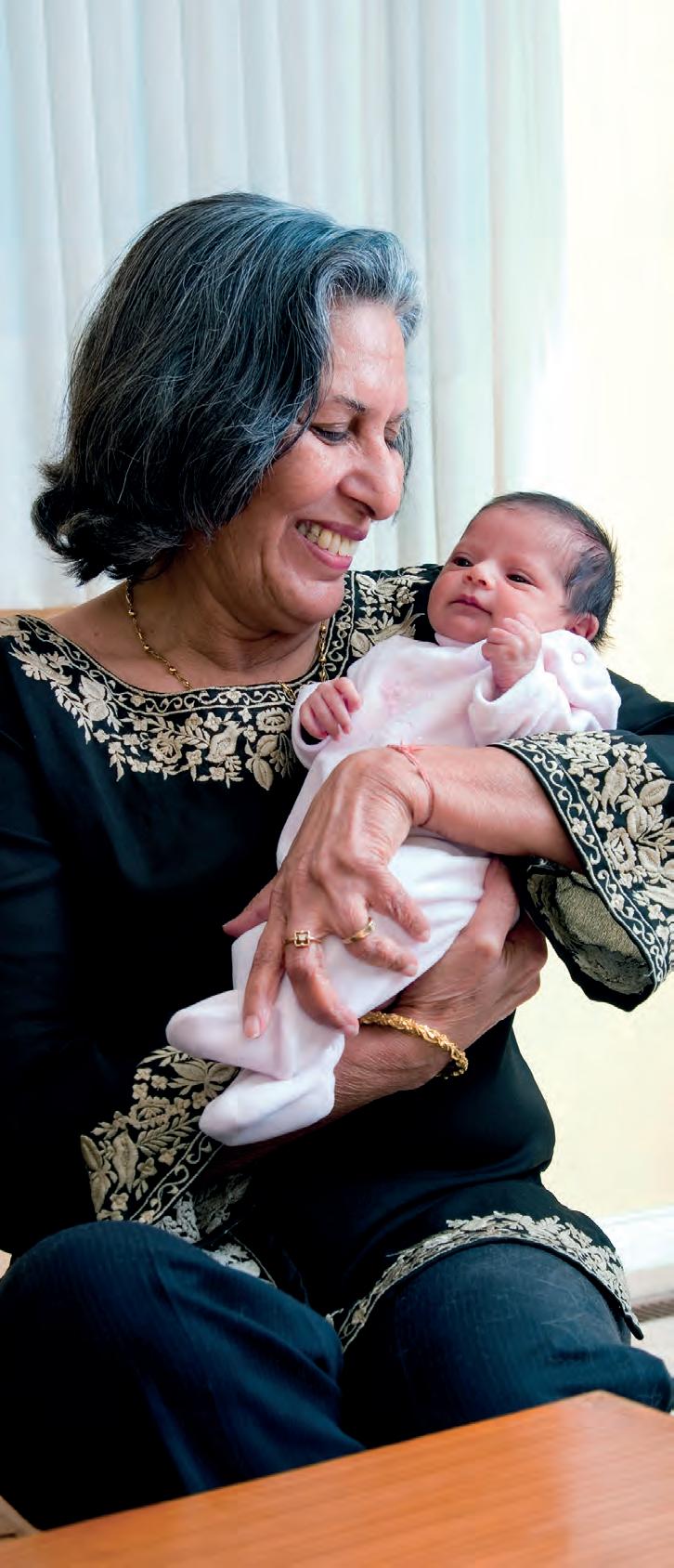


By Family Features
For the approximately 18 million veterans in the United States — roughly 6% of U.S. adults ages 18 and older, according to the U.S. Census Bureau — the return to civilian life can present challenges.
Because many veterans need assistance as a result of their military service, consider these impactful and meaningful ways to support veterans and ensure their sacrifices are honored and needs are met.
Engage in community outreach programs
By participating in community events, you can help bridge the gap between veterans and civilians, fostering a sense of understanding and appreciation. Events such as parades, public ceremonies and educational forums can be organized to highlight the contributions of veterans. Additionally, volunteer opportunities within your community can also provide support to veterans, such as helping with home repairs, providing transportation to medical appointments or simply spending time with veterans who may feel isolated.
Provide employment and career support
Gaining employment is an issue for many veterans transitioning back to civilian life. To help ease the transition, community members can support veterans by offering resume writing workshops, interview coaching and career fairs specifically targeted at veterans. Employers can also actively seek and hire veterans to
Our Mission: JFCS supports individuals and families through life’s changes and challenges, ensuring that no neighbor has to navigate these difficulties alone. Our network of innovative, supportive services provides coordinated, whole-person support, addressing a wide range of challenges with compassion. Through this work, we empower individuals with the support and tools they need to thrive and reach their full potential.
Career Services | Counseling Services | Guardianship Services | Immigration Legal Services | Older Adult Services | Refugee & Immigrant Services | Scholarships | Squirrel Hill Food Pantry | Youth Services
As individuals, families, and communities navigate uncertainty in a changing landscape, JFCS responds to their rapidly evolving needs with a steady hand and creative solutions. We work alongside those we serve as a trusted partner, meeting them where they are and supporting them at every step of their journey.
Grounded in Jewish values of justice, compassion, and dignity, we are dedicated to building a more just and compassionate world. We proudly serve job seekers, refugees and immigrants, individuals with disabilities, people experiencing food insecurity, those seeking mental health support, youth, and older adults. Through meaningful support and compassionate care, our goal is to help every person feel valued, empowered, and able to reach their full potential.
leverage their unique skills and experiences. Veteran-friendly hiring practices and mentorship programs can also be beneficial toward ensuring veterans find the financial stability and purpose they need to thrive.
Contribute to veteran-focused charities
Donating to veteran-focused charities can help provide essential services such as housing, health care and educational assistance. In addition to monetary donations, consider volunteering your time or skills. Many charities need volunteers to help with various tasks, from organizing events to providing administrative support.
Advocate for veteran healthcare initiatives
Many veterans require specialized medical care due to their service. Advocating for better healthcare policies and initiatives can help ensure they receive quality care. This includes supporting legislation that improves access to medical and mental health services for veterans. You can also work with local healthcare providers to develop programs specifically designed for veterans.
Promote mental health awareness & resources
Mental health is a critical aspect of overall well-being, and many veterans face unique mental health challenges, including post-traumatic stress disorder and depression. Promoting mental health awareness and providing resources can help veterans cope with these issues. This includes organizing mental health awareness campaigns, providing information on available resources and reducing the stigma associated with seeking help.
Find more ideas for supporting veterans in your community at eLivingtoday.com. PJC

individual. Last year, 8,900 volunteers supported our mission by donating their time in our Volunteer Engagement Center, at The Market, our onsite food pantry, or at one of our distributions. Visit pittsburghfoodbank.org/volunteer to learn more.
Become an Advocate: When you speak out, you use your voice to urge your elected officials to do their part to help end hunger. Decisions made by our elected officials have a huge impact both on the supply of food available to give to people in need and on the demand for charitable food assistance. Visit pittsburghfoodbank. org/advocate to learn more.
Charla Irwin-Buncher Chief External Affairs Officer
Greater Pittsburgh Community Food Bank
Membership is open to any legal professional who contributes a minimum of $1,800 to the Community Campaign.
To join the Cardozo Society, please contact Kim Flowers at 412-992-5255 or kflowers@jfedpgh.org

AINSMAN LEVINE LLC
David I. Ainsman, retired
ALLEGHENY COUNTY
Jason W. Manne
AMAZON.COM
Ruthie L. Goodboe
ANGEL INVESTMENT VENTURES
Neal Pollon
AR BUILDING COMPANY
A. Richard Nernberg
ARBONNE INTERNATIONAL
Susan Frischman
ATJUSTICE
David R. Cohen
BEGLER GROUP
Ann Begler
BERNSTEIN-BURKLEY, P.C.
Robert S. Bernstein
BLOCK & ASSOCIATES, LLC
Beverly A. Block
Zack Block
Marcie J. Solomon
BNY MELLON
Maxine Kisilinsky
BUCHANAN INGERSOLL & ROONEY PC
Jack J. Kessler
S. Howard Kline
BUNDE & ROBERTS P.C.
Reid Roberts
CAMPBELL & LEVINE, LLC
Stanley Levine
Philip Milch
CAROLE KATZ ALTERNATIVE DISPUTE RESOLUTION
Carole S. Katz
CLARK HILL PLC
Raymond N. Baum
James K. Goldberg
COFAL PARTNERS, L.P.
Anonymous
COHEN LAW GROUP
Daniel S. Cohen
Stacy Browdie Cohen
COZEN O’CONNOR
Peter J. Ennis
Gregg Kander
CREDIBLE OPERATIONS, INC.
Samuel Kline
DENTONS COHEN & GRIGSBY PC
Mark Baseman
David Kalson
Clifford B. Levine
Jonathan M. Schmerling
William R. Taxay
DUANE MORRIS LLP
Jeffrey Spear
ECKERT SEAMANS, LLC
Stuart R. Kaplan
Greg Weingart
EDGAR SNYDER & ASSOCIATES
Jason Lichtenstein
Richard Rosenthal, retired
Michael Rosenzweig
Edgar M. Snyder
ELLEN FREEMAN IMMIGRATION LAW
GROUP, PLLC
Ellen Freeman
FALK & ASSOCIATES PC
Charles P. Falk
FELDESMAN LEIFER LLP
Adam Falcone
FIRST CAPITAL CORPORATION
Terry A. Lerman
FOX ROTHSCHILD LLP
Robert S. Whitehill
FRAGOMEN
Lawrence M. Lebowitz
FRANK, GALE, BAILS, MURCKO & POCRASS, P.C.
Frederick N. Frank
FRIEDMAN & FRIEDMAN
Anonymous
FRISCHMAN & RIZZA, P.C.
Craig Frischman
GEFSKY LAW
H. Arnold Gefsky, retired
GIANT EAGLE
Joshua E. Shapira
GOLDBERG KAMIN & GARVIN
Robert J. Garvin
GOLDBERG, PERSKY, & WHITE PC
Theodore Goldberg, retired
GOLDBLUM SABLOWSKY, LLC
Anonymous
Philip A. Goldblum
Steven Sablowsky
GREENFIELD & KRAUT
Stanley W. Greenfield
HOWMET AEROSPACE INC.
Scott Seewald
HUSCH BLACKWELL LLP
Julie N. Friedman
JORDAN LAW FIRM
Louis B. Kushner
JOSHOWITZ FAMILY
James Joshowitz
K&L GATES
David Ehrenwerth
KOZUSKO HARRIS DUNCAN
Stanley Barg *
LANGE ACCOUNTING GROUP, LLC
James Lange
LAW OFFICE OF DAVID P. SIEGEL
David P. Siegel
LAW OFFICES OF ALAN H. FINEGOLD
Alan H. Finegold
LEECH TISHMAN FUSCALDO & LAMPL
Steven Irwin
David W. Lampl
LIEBER HAMMER HUBER AND PAUL, P.C.
James B. Lieber
Margie H. Lieber, retired
LOUIK LAW OFFICES
Howard M. Louik
LUTTNER FINANCIAL GROUP LTD.
Sanford Aderson
Meyer S. Grinberg
MICHAEL P. MALAKOFF, PC
Michael P. Malakoff, retired
MARCUS & SHAPIRA LLP
Estelle F. Comay
Richard I. Halpern
Elly Heller-Toig
Bernard D. Marcus
James F. Rosenberg
Daniel Shapira
MARGOLIS EDELSTEIN
Miles Kirshner
Charles H. Saul
MARKOVITZ LAW GROUP
Robert S. Markovitz
MCGUIRE WOODS LLP
Alan B. Gordon
METZ LEWIS BRODMAN MUST O’KEEFE LLC
David Jaffe, Member
Shanan Shriber
MEYER, UNKOVIC & SCOTT LLP
Maxwell Briskman Stanfield
MORGAN, LEWIS & BOCKIUS LLP
Elizabeth S. Goldberg
NATIONAL COUNCIL OF JEWISH WOMEN, PITTSBURGH SECTION
Carol S. Gross
NELSON MULLINS
Benjamin J. Sitter
NEW DAY FAMILY LAW, LLC
Beth H. Boroumand
Katie Warren Metosky
OXFORD DEVELOPMENT COMPANY
Grant Mason
PAPERNICK & GEFSKY, LLC
Alan Papernick
Stephen M. Papernick
PAUL J. LEVENTON & ASSOCIATES, PC
Paul J. Leventon
PAYPAL
Ms. Marjorie Manne
PNC FINANCIAL SERVICES GROUP, INC.
Mr. Jeremy Feinstein
Natalie C. Moritz: PNC
Sharon Werner
PNC INSTITUTIONAL INVESTMENTS
Susan L. Farrell
POINT LEGAL LLC
Mindy J. Shreve
POINT PARK UNIVERSITY
Hon. Nathan N. Firestone Commonwealth of Pennsylvania Senior Magisterial District Judge, retired
PROCOPIA CONSULTING
Andrea Kline Glickman
REED SMITH LLP
Ronald G. Hartman, retired
Brian Himmel
Paul M. Singer
ROSENBERG HEALTH LAW, LLC
Aviva Rosenberg
ROSS DEVELOPMENT COMPANY
Anthony J. Ross
ROTHMAN GORDON PC
Sandra R. Kushner, retired
SANDLER CAPITAL MANAGEMENT
Stacey Wruble Seewald
SAUL EWING LLP
David R. Berk
Jeffrey W. Letwin
SCHIFFMAN FIRM, LLC
Carl R. Schiffman
Roni S. Schiffman
SCHWARTZ MONTOYA LEGAL, LLC
Matthew F. Schwartz
SPILMAN THOMAS & BATTLE, PLLC
Bryan S. Neft
SQUIRREL HILL HEALTH CENTER
Susan Friedberg Kalson
STANTON D. LEVENSON, P.A.
Stanton D. Levenson
STEPTOE & JOHNSON, PLLC
Adam S. Ennis
STONECIPHER LAW FIRM
Eric A. Schaffer
STRASSBURGER MCKENNA GUTNICK & GEFSKY
Gerri Sperling
David A. Strassburger
E.J. Strassburger
THE GRAIL LAW FIRM
Efrem M. Grail
THE WEBB LAW FIRM
Frederick H. Colen
TUCKER ARENSBERG, P.C.
Irving Firman
Beverly W. Manne
UNION BEACH LP
David Tannenbaum, retired
UNION REAL ESTATE COMPANY
Jan Levinson
UNIVERSITY OF PITTSBURGH
Vivian Curran
Sharon W. Perelman
VIATRIS INC.
Erik Naft
Anonymous (3)
Alan L. Ackerman, retired
Louis Anstandig, retired
Stewart B. Barmen, retired
Jack L. Bergstein
Robin J. Bernstein
James B. Brown, retired
Magisterial District Judge
Daniel Butler
Carl A. Cohen
Harry S. Cohen
Deborah Comay
Saul Davis
Ilene Fingeret
Jay Fingeret
Mr. Mark Frank
Andrew Friedman
Judith L. Friedman
Karen Gal-Or
Alan A. Garfinkel, retired
Stephen A. Glickman
Louis S. Gold
Martin E. Goldhaber
Amy S. Himmel
Michael E. Katch
James E. Kopelman
Carl Krasik, retired
Gayle Kraut
Lawrence F. Leventon P.C.
Don A. Linzer, retired
Lorraine N. Mackler
Louise Malakoff, retired
Ira R. Mazer, retired
Donald I. Moritz
Mr. J. Kenneth Moritz
Caroline Naft
Eric Olshan
Barry J. Palkovitz *
Charles Perlow
Jeffrey Lawrence Pollock
David Posner
Nancy Rackoff, retired
Terri Reicher, retired
Harvey E. Robins
Lawrence J. Rosen, retired
Bryan Rosenberger, retired
Karen Ross
Edward Russakoff
Alan J. Scheimer, retired
Shelley Segal
James D. Silverman, retired
David L. Smiga, retired
Lynn J. Snyderman, Esq., retired
Amy R. Spear
Douglas Spear
Marilyn R. Swedarsky
Gene and Toby Tabachnick
Eva Tansky Blum, retired
Matthew Teplitz, retired
Dodi Walker Gross, retired
Dan Weisberg
Marcia J. Weiss, retired
Barbara Zimmer Kann
Michael Zunder
Paula Zunder
*Indicates new member
Membership is open to any healthcare professional who contributes a minimum of $1,800 to the Community Campaign. To join the Maimonides Society, please contact Kim Flowers at 412-992-5255 or kflowers@jfedpgh.org

(9)
General Dentistry
Dr. Rachel K. Eglash DDS
Dr. Moses Finder
Betty Jo Hirschfield Louik
Dr. Thomas Holber
Dr. William Z. Spatz
Dr. S. Rand Werrin
Oral Surgery
Dr. Marvin A. Dash
Dr. Sarah Davies
Dr. Marty Eichner
Orthodontics
Dr. David Pechersky
Periodontist, Orthodontist
Jane K. Segal D.M.D, M.D.S,F.A.C.D
General Health Professionals
Dr. Jon Adler
Sharon Ryave Brody, Funeral Director
Mrs. Elyse Eichner
Ms. Laura Ellman, Social Worker
Steven S. Hausman, Consultant
Margaret L. Fischer, Occupational Therapist
Mrs. Lynn R. Lebowitz, Life Coach
Arthur S. Levine, Senior Vice-Chancellor and Pitt Med Dean, Emeritus
Mrs. Nikol Marks, Physician Assistant
Michael Milch, Management
Ms. Mollie Neuman, Occupational Therapist
Mrs. Amy Pardo
Mrs. Cathy Schuster, Social Worker
Dr. Paul Wallach *
Ms. Sharon Zarembo Roth, Nurse
Health Insurance
Highmark Inc.
UPMC Health Plan
Allergy
Dr. Barry Asman
Dr. Ronald A. Landay
Dr. Lawrence Weber
Anesthesiology
Dr. Michael Kentor
Cardiology
Dr. Alan Bramowitz
Dr. Jared W. Magnani
Edward Szabo MD
Dr. Shawn C. West
Cardiovascular Medicine
Dr. Jeffrey S. Garrett
Dr. Rodney Lipman
Dr. Daniel A. Rubin
Dr. Saul Silver
Clinical Cardiology
Dr. Richard Russman, retired
Clinical Psychology
Dr. Marsha Marcus
Dermatology
Dr. Stuart Glasser
Dr. Douglas Kress
Susan Safyan M.D., retired
Dr. Judith A. Small
Emergency Medicine
Dr. Andrew Reibach
Endocrinology/Metabolism
Murray B. Gordon MD, FACE
Family Practice/Medicine
Dr. Barry G. Segal
Dr. Harvey Shipkovitz
Gastroenterology
Marcie Mitre
Robert E. Schoen, MD
Hematology/Oncology
Elana J. Bloom MD
Eric Safyan M.D.
Hospitalist
Dr. Leslie Hope Bondy
Infectious Disease
Dr. Micah Jacobs
Dr. Jennifer Rudin
Internal Medicine
Dr. David Brillman
Dr. Martin Fenster
Dr. Gary Fischer
Dr. David Harinstein
Dr. Barry Kisloff *
Dr. Marcia Nisenbaum
Chaim (Marc) Oster, M.D.
Dr. Bruce Rollman
Dr. Jamie Stern
Dr. Lee M. Weinberg
Dr. Adrienne Young
Dr. Erica Zimmerman
Internal Medicine/Pediatrics
Dr. Jonathan Weinkle
Maternal-Fetal Medicine
Dr. Jay Idler
Nephrology
Dr. David J. Levenson
Dr. Paul M. Palevsky
Dr. Allen Wolfert
Neurology
Stuart L. Silverman M.D., FAAN
Dr. Lawrence Wechsler
Dr. Richard A. Weisman
Neurological Surgery
Dr. Peter C. Gerszten
Nutrition
Dr. Barbara Weschler
Member listing updated as of June 1, 2026 • Dr. William Z. Spatz, Chair
Obstetrics/Gynecology
Dr. Judy Balk
Dr. Mark Caine
Dr. Stan Denver
Dr. Daniel Edelstone
Dr. Deanna Love Rutman
Dr. Harold Wiesenfeld
Oncology
Dr. Adam Brufsky
Dr. Robert Gluckman
Dr. Stanley M. Marks
Dr. Norman Wolmark
Dr. Dan P. Zandberg
Ophthalmology
Dr. David Baker
Dr. Marlene Behrman
Dr. Norman L. Edelstein
Dr. Andrew W. Eller
Dr. Henry Glick
Dr. Joseph N. Martel
Dr. Colin Prensky *
Dr. Pinchas Rosenberg
Dr. Boris Rosin
Dr. Jose-Alain Sahel
Dr. Edward M. Sorr
Optometry
Dr. Arthur S. Grossman
Dr. Zarky Rudavsky
Orthopedics
Dr. Marshall Balk
Dr. Arnold Broudy
Dr. Yram J. Groff
Dr. Robert G. Liss
Dr. Allan Tissenbaum
Pathology
Dr. Blima Mitre
Dr. Robert Swedarsky
Pediatrics
Dr. Nancy Brent
Matthew A. Keller, M.D.
Ken Levin
Mrs. Rosanne M. Levine, Nurse Practitioner
Dr. Ellen Mandel
Dr. Deborah R. Moss
Dr. Keith Somers
Pediatric Emergency Medicine
Dr. Jennifer Marin
Pediatric Hematology/Oncology
Dr. Michael Wollman, retired
Pediatric Infectious Diseases
Marian G. Michaels, MD MPH
Pediatric Radiology
Dr. Kerry Bron
Dr. Lynda L. Flom
Pharmacology
Dr. Sheree Lichtenstein
Betty Sue Rich
Physical Medicine
Dr. Marc Adelsheimer
Dr. Paul Lieber
Physical Medicine & Rehabilitation
Mr. Steven A. Hoffman
Dr. Milton J. Klein
Mrs. Charlene Tissenbaum
Podiatry
Dr. Arthur E. Goldberg
Psychiatry
Dr. David Brent
Dr. Gail A. Edelsohn
Dr. Martin Lubetsky
Dr. Eric D. Rickin
Dr. Loren H. Roth
Dr. James Schuster
Dr. Robert Slayton
Psychology
Dr. Susan G. Berman Kress
Mrs. Yael Idler
Dr. Robert Lebovits
Mr. William P. Pitts
Dr. Lorrie E. Rabin
Mrs. Sharon Saul
Pulmonary Disease
Dr. Peter D. Kaplan
Radiation Oncology
Dr. Kristina Gerszten
Radiology
Dr. Richard Daffner
Dr. Emanuel Kanal
Dr. M. Leon Skolnick
Research
Jeremy M. Kahn, MD MSc
Rheumatology
Dr. Burton H. Pollock
Stress Management for Mental & Physical Health & Longevity
Dr. Bruce S. Rabin
Urology
Dr. Benjamin J. Davies
Dr. Jay Lutins
Veterinary
Dr. Anthony Pardo
Retired
Anonymous (1)
Dr. Carol Congedo
Dr. Bernard Doft
Dr. Richard Finder
Dr. Elaine Gelb
Dr. Marcus Gottlieb
Dr. Robin G. Hausman
Dr. Howard Lang
Dr. Edward Leefer
Dr. Jorge Lindenbaum
Dr. Jerome L. Parness
Dr. Richard Paul
Dr. Sharon R. Roseman
Dr. Joseph Turner
Dr. Neal Zweig
*Indicates new member
Guest Columnist
Awar that began with immense ambition has ended with profound setbacks for both the United States and Israel.
With an emerging U.S.-Iran peace agreement, what initially appeared to be a historic demonstration of military dominance evolved into a vivid illustration of the limits of both Israeli and American power. The conflict also exposed profound failures in strategic competence within that alliance. Washington and Jerusalem planned effectively for the initial decapitation strikes, but were unprepared for the economic and geopolitical consequences that followed.
The result is a war that may ultimately strengthen the Iranian regime politically, despite the damage it suffered militarily; has weakened international perceptions of American military might; and has diminished both Israel’s own strategic circumstances and its most important alliance.
The opening phase of the war appeared spectacularly successful. Israeli intelligence and airpower decapitated large portions of Iran’s military and security leadership with astonishing speed, including by assassinating Supreme Leader Ali Khamenei. Key military infrastructure suffered major damage, and for a brief moment, it seemed plausible that the Iranian regime might genuinely face collapse or surrender on terms dictated by Washington and Jerusalem.
That perception proved short-lived.
Iran shifted the battlefield away from conventional military confrontation and toward economic coercion. Its closure of the Strait of Hormuz exposed the extraordinary vulnerability of the global economy to relatively inexpensive forms of pressure. Energy markets panicked almost immediately. Governments across Europe, Asia and the Gulf pushed
urgently for de-escalation.
The central strategic reality became impossible to ignore: The U.S. could not tolerate sustained economic disruption, and the Iranian regime has a strong stomach for suffering. The overwhelming military superiority of the U.S. and Israel effectively ceased to matter.
That asymmetry changed the balance of the conflict. And the resulting agreement appears to preserve much of Iran’s architecture of mischief, which the regime’s many critics had hoped to see dismantled.
nuclear deal over objections that it provided funds for the regime while allowing it to run riot. Now, he is settling for an effective reconstitution of that deal — except one with substantially less American leverage.
The implications extend far beyond Iran itself. The war demonstrated that Tehran can generate immediate global economic panic through relatively cheap tools and can leverage that panic into diplomatic concessions. Before the war, fears about Iran’s ability to blackmail the world economy remained somewhat theo-
With the Hormuz confrontation, the world watched the U.S. confront a regional adversary with vastly inferior capabilities and fail to control events.
Iran’s ballistic missile capabilities have been harmed but can be rebuilt; long-term reductions to that firepower are reportedly not on the table in a planned 60-day negotiation. The regime’s regional proxy network — including Hezbollah, the Houthis, Iraqi militias, Hamas and Islamic Jihad — survives, even though Hezbollah and Hamas have been battered.
And as Israel is not a party to the ceasefire, it cannot advocate for more stringent terms on this front.
The regime itself remains firmly in power and may receive enormous sanctions relief and renewed economic access. Demands for democratic reforms seem to have been set aside, as has any kind of punishment for the regime’s massacre of thousands — and by some reports tens of thousands — of domestic protestors in January.
The latter aspect is especially galling given that President Donald Trump was driven to intervene because of the January massacre, after he promised Iranians that “help is on its way.” Upon launching the war, he declared that it would enable Iranians to “take your country back.”
Ironically, Trump in his first term pulled out of former President Barack Obama’s 2015
Guest Columnist
More than 140 years ago, a group of rabbis met in Pittsburgh to discuss the future of Judaism in America.
Chaired by Isaac Mayer Wise, who thought of himself as the creator of American Judaism, the group adopted an eight-point platform transforming liberal Judaism to meet the needs of the current generation.
The Pittsburgh Platform, which emerged from that conference, reflected the thinking of Kaufman Kohler, who believed the time had come for Judaism to turn sharply from the particularistic practices of the Old World toward a more universal understanding. Gone were many of the traditions that defined Judaism for millennia, including both ritual practices and a deep connection to the land of Israel, replaced with a Judaism built on universal ethics rather than the historic core of God, Torah and Israel.
The shift defined a generation or two of American Jews, but by the 1930s things had
changed, and when the Reform movement gathered to reconsider American Judaism at a conference in Columbus, Ohio, in 1937, the gathering adopted a platform which, while recognizing the power of universal ethical understandings, also re-embraced the particularism and deep connection to the land of Israel hat has animated Jewry from Sinai onward. Fast forward to the early 21st century. Another group of Reform rabbis began to gather to reimagine Jewish life in America. Through countless Zoom meetings during the pandemic, a movement emerged. American Judaism had changed. Twentieth-century models needed to be reimagined. Spirituality, an embrace of God and our relationship with the Divine needed to be emphasized. Torah, understood broadly, deserved more attention, more deep study. And Israel, both the land and the people, needed to be reprioritized. The first Recharging Reform conference opened the debate more widely, and the third conference, just recently concluded, extended the conversation.
Just as before, events of the day have shaped our outlook as Jews. The growth of threats from both the far right and the far left, attacks on the North American Jewish community, the vociferous attacks along with bloody conflict in Israel and the continuing rise of assimilation combine to change Jewish life. Today’s Jews cry out for
retical. After the war, those fears became a demonstrated geopolitical reality.
There is little evidence that either the American or Israeli governments understood in advance the degree to which the global economy had become vulnerable to this form of coercion. This, even though the blocking of the Strait of Hormuz was completely predictable and indeed expected by every strategist I’ve spoken to for decades.
This outcome may be most devastating for the Iranian people themselves. Many Iranians who despise the regime interpreted the opening phase of the conflict as evidence that the dictatorship might finally face genuine collapse. Instead, the regime not only survived but also regained leverage. The machinery of repression remains intact.
But this result is damaging for every party to this war aside from the Iranian regime.
The war has transformed perceptions of American power. For decades, the U.S. has anchored a global system built on the assumption that Washington could manage regional crises with some strategy in mind. That strategy wasn’t always brilliant, but it was rarely clueless.
With the Hormuz confrontation, the world watched the U.S. confront a regional adversary
a new vision for 21st-century American Judaism. Modern Jews desire a stronger sense of connection and purpose. We crave a return to the core beliefs of God, Torah and Israel, not just as we move further along generationally into our American identities but as we grow as Jews. God, as we Jews understand, can be active or passive, followed or challenged. Today’s Jews desire a robust embrace of the sacred, encounters that are deeply spiritual, a willingness to wrestle with God.
Today’s Jews have more opportunities than ever to engage in study of Torah and Jewish text. The internet overflows with options, but our congregations and communities long for physical in-person learning experiences. Modern Jews recognize that Torah can be viewed as the Five Books of Moses or more expansively to the entire corpus of Jewish thought and text. And modern Jews are hungry to explore all that has been written. And Israel represents both the most pressing, most challenging, most consequential realm. We Jews have always understood that our connection to Israel includes both landedness and peoplehood. We know that our theological connections to Israel stand as an essential piece of our identity. The push for nationalism in the 19th century saw the growth of political Zionism, which helped to create the modern
with vastly inferior capabilities and fail to control events.
For Israel, the alliance Prime Minister Benjamin Netanyahu has spent years cultivating with the American right and with Trump personally has become dangerously fragile. As pressure mounted to stabilize energy markets and prevent wider regional escalation, Trump increasingly presented himself not as a partner coordinating with Israel but as a superior authority managing Israeli actions. He repeatedly framed Israeli military action as dependent on his approval. He cursed Netanyahu in public. He presented Israel as a vassal doing his bidding — something no U.S. president has previously done.
This will destabilize Israel, where much of the governing right previously viewed Trump as a uniquely reliable ally who would support Israeli military objectives without hesitation or conditions.
Previous American presidents pressured Israel privately while still preserving the outward presentation of a relationship between sovereign allies. Trump discarded much of that convention. The new perception weakens Israel’s deterrence dramatically. Plus, with bipartisan support for Israel in Washington even more completely collapsed than after the deleterious war in Gaza, and relations with much of Europe — Israel’s top trading partner — similarly deteriorated, Israel finds itself at a new peak of dangerous international isolation. This strategic shipwreck bears no resemblance to the sweeping regional transformation that supporters of the war — myself included — initially envisioned. I assumed, partly because of the first days’ successes, that Trump and Netanyahu had a plan. This is not a mistake serious people are likely to make again. PJC
Dan Perry is the former chief editor of The Associated Press in Europe, Africa and the Middle East, the former chairman of the Foreign Press Association in Jerusalem, and the author of two books about Israel. This story was originally published on the Forward. To get the Forward’s free email newsletters delivered to your inbox, go to forward.com/newsletters.
state of Israel. But at its heart, Zionism shines not as a political or divisive concept but rather one of theology, inclusion, togetherness and hope for all people.
At the Recharging conference, Rabbi Ammi Hirsch declared forcefully that Israel stands as a core element of our sense of Jewishness and demands a particular approach from our seminaries — namely that our movement schools refuse to admit or ordain students who proclaim their anti-Zionism. His words were met with an equally forceful response from President Andrew Rehfeld of the Hebrew Union College-Jewish Institute of Religion. Rehfeld argued that as an open liberal institution of higher learning, HUC-JIR was committed to open debates without litmus tests. He suggested the free market would respond, hiring or refusing to hire those with views deemed to be outside the boundaries.
In a sense, the discussion at Recharging returned the Reform movement to earlier debates. But in the post-Oct. 7 world, these debates carry different weight. A generation or more of Jews equates the policies of a particular administration as the essence of Jewish connection to the land. As Americans, we understand that the American ideal and the
Please see Fellman, page 19
Last week, the Chronicle asked its readers in an online poll the following question: “Do you believe AI will have a mostly positive or mostly negative impact on society over the next 10 years?” Of the 208 people who responded, 35% said “very negative”; 23% said “somewhat negative”; 19% said “somewhat positive”; 10% said “very positive”; and 13% said they weren’t sure. Comments were submitted by 50 people. A few follow.
Too many people have already stopped thinking for themselves and AI will only make it worse.
I have read that AI has given very wrong answers to health questions. That is very dangerous.
I fear that we are opening a Pandora’s box.
AI has a long, positive history — search, translation, text summarization, clustering and more were all once called AI, and were used to free people from tedious tasks to focus on ones requiring human judgment. This isn’t how the current so-called “AI” is being
Fellman:
Continued from page 18
American reality may be poles apart. But as Jews, too many of us miss this deep truth. We may disagree with a particular policy, party or administration, but our connection to the land stretches back thousands of years. And nowhere in the history of our connection to the land do we see a denial of the sanctity or security of anyone else who calls that land home or holy. We are called to be Zionists and also to recognize that other folks of other faiths also deserve safety, security and sanctity.
Prayer shared through song
Do you believe AI will have a mostly positive or mostly negative impact on society over the next 10 years?
used, unfortunately; people, and particularly companies trying to show profits, are using it where it is not suited, making the systems we all rely on unstable and sometimes causing actual harm to humans. I don’t see that trend changing any time soon.
The return to God, Torah and Israel provides a path forward, a vision for a new generation of American Jews. Our people long for a Judaism robust with exploration, a Judaism committed to tikkun olam, the repair of the world, as a Jewish ideal and not just a general act of social justice — a Judaism filled with joy, a Judaism which honors our history but encourages us to look beyond the walls of our synagogues to see how we can continue our sacred partnership with God to continue creation. This cry for reimagination rings particularly clearly in Pittsburgh, home to many significant advancements for American Judaism.
I thank Adam Reinherz for his thoughtful account of the interfaith, multi-choir concert, “Psalm Enchanted Evening,” held at Pittsburgh’s St. Paul Cathedral on Monday, June 8 (“‘Psalm Enchanted Evening’: Interfaith voices join in song at Cantors Assembly gathering,” online June 11; this issue, Page 1).
I have always felt at home in St. Paul Cathedral. I have attended holiday services there and been stirred by the liturgy and homilies. I have been there for both funerals and ordinations and, thereby, have known pathos and ethos in equal measure. I have even had the proud privilege of preaching from the cathedral pulpit. But, after a near psalter’s range of emotion in that sacred space, as I sat in St. Paul’s pews that night, for the first time, I kvelled.
To be sure, I was proud that choirs from two of the three congregations I serve were part of the program. And I was grateful that so many congregants, colleagues and friends from across the community were there. But those truths were not what made my heart most glad. The reason I kvelled was a private realization that, although the communal program contained no formal prayer, the occasion was prayerful, nevertheless.
Jewish tradition offers a delightful insight based on gematria, the ancient practice of assigning numerical values to Hebrew letters. Gematria teaches that the Hebrew words for prayer (tefillah) and song (shirah) share the same numerical sum. It happens to be 515, but the number is beside the point; it isn’t about the math. No. Our tradition’s insight is that prayer and song share the same value in our spiritual life, for both sincere prayer and pure song arise from the depths of the human soul. And so it was that evening.
Jews and Christians gathered not to engage in comparative theology, nor to blur the distinctions between our faith traditions, but to appreciate poetry sacred to us all.
Thus, as a diverse collection of choirs lifted ancient psalms heavenward through song, one sensed that all who were in that cathedral that night were doing much more
I work in the AI biotech field and I know it will have an incredibly positive impact on healthcare. More accurate and earlier diagnosis, new drugs tailored to specific diseases, and expanded drug access to population groups that are underrepresented in clinical trials like pregnant women and infants/children. This is not to say that there are no negatives of AI, such as job cuts and data center energy usage. However there are many benefits and I believe it will lead to huge advancements in modern medicine.
It’s 50/50. If we allow the evil part of society to control AI, then it will have a seriously negative impact. If a good portion of society manages it so that it benefits all people, then it can have a very positive outcome. It comes down to good vs. evil.
It’s too soon to say.
I think AI will continue to whittle away our human ability to problem-solve, think critically and communicate.
The creation of Beit Kulanu, a unified Reform congregation, represents a bold and fearless willingness to reimagine our Jewish lives, to commit to building anew, to rethinking and recreating a stronger, more inclusive, more engaged Jewish community.
As we embrace and celebrate the emergence of Beit Kulanu, we do so with a renewed commitment to sacred covenant, a shared understanding among ourselves and with the Almighty. That covenant includes land, people, text and God. To backtrack on any one piece is to weaken the entire covenant. Debate and argue we must. Honor our
I’m sure it will be great for some things, but I am worried how far this is going to go. I also fear that many jobs will be lost to AI.
AI won’t replace humans, but humans who use AI will replace those that don’t.
Inadequate attention by the public at large, coupled with government inaction and driven by big money, will have negative results to our existence and society overall.
I believe it will have a decidedly negative impact on society, which depends upon robust human interaction, even as it positively contributes to a wide variety of business and creative endeavors. The problem is the absence of any longterm strategy. PJC
— Compiled by Toby Tabachnick
Chronicle weekly poll question: Is the Trump administration turning its back on Israel? Go to pittsburghjewishchronicle.org to respond. PJC
history and traditions we must. Explore, learn, grow and change we must. Demand the best of our leaders — both political and religious — we must.
Our call today — and Beit Kulanu’s call — rings clear: Embrace an extraordinary opportunity to return, rethink, reimagine and redefine Jewish life in America as we re-engage with God, Torah and Israel. Our ancestors and our descendants demand no less. PJC
than simply appreciating a joyful sound. We were sharing sincere prayer in pure song. And this rabbi kvelled.
Shabbat’s celestial connection
Rabbi Aaron Bisno Pittsburgh
I write to question Tim Miller’s quoting Nahum Sarna regarding marking the Sabbath (“Gleanings from Shabbat,” June 12). I have run up against this wall a couple of times, and I can’t get over it or under it: If there is no connection between the Sabbath and the “movement of celestial bodies,” why do we bother with candle lighting times? And why do we consider evening the controlling moment of beginning and ending our days? We know it’s evening because we watch the celestial bodies appear and disappear from our sight, and we know these activities change depending on what time of year it is and where we are located geographically on our good Earth.
Reading Miller’s otherwise wonderful essay sent me back to Sarna and scripture, reading highlighted and underlined portions of text, studying it all yet again, and coming up again with the same question: What am I missing that will make this statement true: “ . . . the Israelite week has no such linkage and is entirely independent of the movement of celestial bodies”?
I continue to be hopeful for an explanation that will get me over the wall.
Shanda Buterbaugh Cherry Tree, Pennsylvania
Correction
In “Pittsburgh representatives visit Bondi Beach 6 months after terror attack” (June 12), Alain Hasson, the CEO of the Jewish Communal Appeal, was incorrectly referred to as the CEO of the Jewish Council of Australia. The Chronicle regrets the error. PJC
We invite you to submit letters for publication. Letters must include name, address and daytime phone number; addresses and phone numbers will not be published. Letters may not exceed 500 words and may be edited for length and clarity; they cannot be returned. Send letters to:letters@pittsburghjewishchronicle.org or Pittsburgh Jewish Chronicle, 5915 Beacon St., 5th Floor, Pittsburgh, PA 15217
We regret that owing to the volume of correspondence, we cannot reply to every letter.
Feinstein:
Continued from page 1
healthcare providers.” Proceeds from the hospital sale were split, with about half covering an existing bond and the other $75 million creating the Montefiore Foundation — later known as the Jewish Healthcare Foundation.
The newly established foundation needed a CEO.
Feinstein called herself a “somewhat convenient” choice.
Apart from being a United Way leader, she was tied to Montefiore. Her father was treasurer of the hospital, her brother served on its board, and her great-aunt Rachel Wolk was among the hospital’s founders. Feinstein had been a candy striper at Montefiore, “but I knew nothing about healthcare,” she said. “I couldn’t imagine why I would do it.”
Although others saw her bonds and experience as a boon, Feinstein considered her history detrimental.
“A lot of the people on the board had watched me grow up,” she said. “It was just too familiar.”
Additionally, the foundation was “in chaos.”
Community members were incensed about the sale of a historically Jewish hospital. “Everybody wanted to go in a different direction,” she continued. “I didn’t want the job at all.”
About a year after she was initially approached about the position, Sholom Comay, a Jewish communal leader, took Feinstein to lunch and told her the foundation was ready to hire someone else.
Comay said Feinstein was making “a big mistake” turning down the role.
“What do you want to do in life?” he asked her. “What would your dream be?”
Feinstein said she wanted to run a think tank. Comay replied, “Great, you’ll run a think tank with an endowment.”
“So that was it,” Feinstein told the Chronicle. “I said yes.”
After taking the job, Feinstein received considerable encouragement.
“There were these larger-than-life community leaders, and they just wrapped themselves around me and sort of said, ‘Go create the thing that you dream of, create a new thing, something that doesn’t exist,’” Feinstein recalled.
An initial project centered on HIV and AIDS.
It was an early choice because the diagnoses
Cantors:
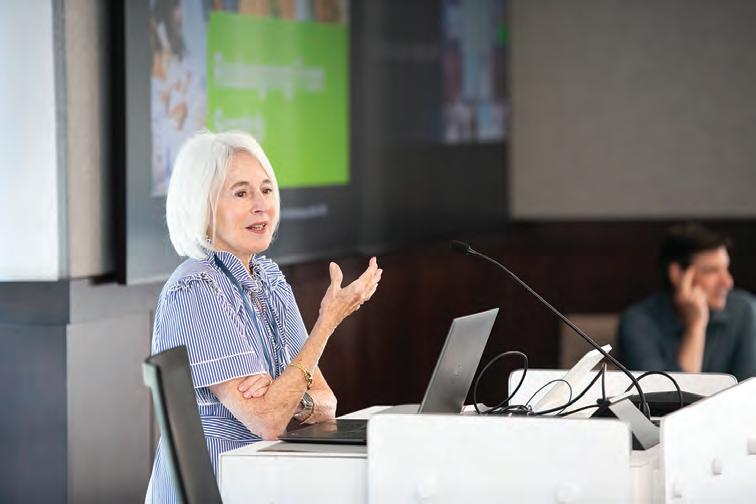
were a “death sentence in 1991,” Feinstein said.
She credited Rabbi Jamie Gibson of Temple Sinai with imploring the Jewish community to “not walk away from people who are being persecuted and discriminated against.”
“People were dying,” Feinstein continued. “Other foundations weren’t taking up the cause, so we did.”
JHF became Pennsylvania’s fiscal agent for the HIV/AIDS programs in southwestern Pennsylvania — a role JHF still holds. With time, the foundation’s portfolio expanded to other causes, including women’s health, aging-related issues and patient safety.
“People had a lot of confidence in us,” Feinstein said.
JHF’s early and continued success, she explained, was due to several factors. Through the development and furtherance of the foundation’s three operating arms — Pittsburgh Regional Health Initiative, Health Careers Futures and the Women’s Health Activist Movement Global — along with staffers’ expertise and government contracts, JHF has empowered healthcare professionals, strengthened communities and aided the public.
Four fellowships — focused on topics ranging from the impact of policy on health to improving conversations about death, dying and grief between patients and providers — have likewise proven valuable, helping more than 2,000 graduate students and young professionals improve outcomes.
Over the years, fellows have carried JHF’s mission well beyond Pittsburgh; all the while, the organization, according to representatives, has largely remained focused on its origins.
chair Chuck Cohen, committed themselves to continuing Montefiore’s mission. Recognizing medical needs among individuals from various cultural and religious backgrounds, JHF dedicated nearly three years to completing requisite paperwork and securing funding for what became the Squirrel Hill Health Center.
Upon SHHC’s 25th anniversary, Feinstein called the organization’s work “essential to all of us,” and said federally qualified health centers, like SHHC, ensure patients receive the “best care possible, as early as possible, at the entry level, not when the condition has already escalated.”
Diagnosing ailments and creating remedies weren’t just relegated to doctors’ offices. Almost three decades ago, after conducting a socioeconomic study, JHF discovered nearly 10% of Jewish families in the region were “living in poverty.”
JHF shared its findings, provided a threeyear grant to establish a food pantry and asked local organizations, including JFCS, Hebrew Free Loan Association, Jewish Association on Aging, Rabbinical Council of Pittsburgh, Greater Pittsburgh Community Food Bank and Rainbow Kitchen, to start planning.
Working together, those organizations created the JFCS Squirrel Hill Food Pantry.
Feinstein can point to numerous initiatives and contributions of JHF, including health campaigns addressing immunizations, breast cancer screening, HPV vaccination, maternal health and nutrition. When the pandemic led to an increased need for mental health support among teens, JHF partnered with JFCS to launch UpStreet, and Friendship Circle of Pittsburgh to create The Beacon. Both centers have
foundation’s commitment to patient safety, she said.
Nearly 30 years ago, she began partnering with Paul O’Neill, “The Safety CEO.” Then-CEO of Alcoa, O’Neill was widely regarded for his commitment to reducing workplace-related injuries.
Feinstein saw the value in O’Neill’s mission and worked with him to create PRHI, an initiative pushing providers to eliminate medical errors, meet patient needs and improve efficiency. Early efforts included convening infection-control practitioners and infectious disease physicians from 30 area hospitals to share best practices for preventing hospital-acquired infections.
The work, according to JHF representatives, spurred a 63% decline in hospital-acquired infections, and, after sending quarterly infection data to the Centers for Disease Control, led the government to publish guidelines based on the Pittsburghers’ efforts.
During her decades of leadership, Feinstein has received numerous accolades, including honorary doctorates from Carlow and Chatham universities, The National Board of Medical Examiners’ Edithe J. Levit Distinguished Service Award, Pittsburgher of the Year by Pittsburgh Magazine, the Women of Influence Impact Award from the Pittsburgh Business Times, and was named a Distinguished Daughter of Pennsylvania.
The exposure has enabled her to continue highlighting JHF’s work. In various environments — whether speaking at the White House Healthcare Safety Forum, in recognition of World Patient Safety Day, or alongside philanthropists and academic, medical and technological leaders on study trips to Japan, Italy, Norway, Finland, Singapore, New Zealand, Israel and Australia — Feinstein has sought to learn and teach. The lessons, which she’s disseminated through lectures, publications, podcasts, a TedX talk and countless interactions with thought leaders, colleagues, staffers, fellows and the public, have reflected seismic goals.
“The number one thing is interpersonal relationships,” she said. “Build them far and wide, and keep them alive.”
After all these years, Feinstein is well aware of who she is and the organization she helped grow.
Continued from page 1
performances, were enjoyed by thousands of Pittsburghers and visiting professionals
The Cantors Assembly convention, which organizers called “Repairing the World, One Bridge at a Time,” afforded multi-day opportunities for reflection, conversation and professional development, according to Myers. The June 8 concert, in particular, highlighted the power of “shared music” to foster greater understanding and social connection.
Pittsburgh Mayor Corey O’Connor echoed the sentiment and told the Chronicle that music’s ability to move people and tell stories cuts across “so many different backgrounds and religions.”
Having cantors from across the globe descend on Pittsburgh and sing alongside students and community members of different faiths, O’Connor continued, “shows the welcoming city that we are.”
For more than an hour on June 8, choirs performed pieces with lyrics inspired by the Book of Psalms. Included in the setlist was “Psalm 150” and “The Lord is My Shepherd,”

Pittsburgh Diocesan Choir; “Hinei Mah Tov” and “Psalm 23,” performed by Beit Kulanu; “The Harvest” and “Lift Every Voice,” performed by Pittsburgh Creative and Performing Arts; “Lord I Love Your House” and “Psalm 23,” performed by Calvary Episcopal Church; and “Nachon Libi” and “Shir Lama’alot,” performed by the
Feinstein is particularly proud of the
“I don’t believe in reading books on leadership. I don’t have an executive coach,” she said. “I have a very tight-knit senior team, and they
Please see Feinstein, page 24
praise to our God, the God of our fathers whom we love so deeply, and to build the bridges that we walk together, that join us together as people of faith, as neighbors, so that we can reflect in all that we do, the goodness and love of our God.”
Along with welcoming guests to Pittsburgh, City Controller Rachael Heisler credited concert organizers and participants, and said, “The opportunity to bring people together to sing songs from all traditions is just a really remarkable thing, particularly given what’s going on in the world.”
Demonstrating support for religious harmony is important, agreed Squirrel Hill resident David Levine. “I feel like it’s the right thing for us to do in Pittsburgh in this time.”
“There is a reason that music is called the language of the soul, never really able to be understood but deeply felt, embraced and lived,” Father Kris Stubna, pastor and rector of St. Paul Cathedral Parish, said. “In Pittsburgh, brothers and sisters in faith, companions on the journey, joined in our desire to give glory and
As notes from an organ nearly 200 feet above sounded, Greenfield residents Martin and Lenore Resick enjoyed the June 8 show. Martin Resick reminisced that, for about 20 years, he sang with the St. Rosalia choir.
Listening to so many similarly dedicated singers was a gift, he said. It’s a chance to “hear beautiful noise.” PJC
Adam Reinherz can be reached at areinherz@pittsburghjewishchronicle.org.
By David Rullo | Senior Staff Writer
For David Nackman, a fourth grade Purim spiel pointed the way to his future.
Portraying Haman provided Nackman with what he calls his first “serious acting gig.”
“There was an audience and I got a response,” he said.
It was the Jewish standard “Fiddler on the Roof,” in ninth grade, that cemented his decision to become an actor.
“I was playing Motel and I got a huge laugh,” he remembered. “At that point, I was a miserable kid and that experience of being able to not only get a laugh but control it, meant a lot. So I’ve been trying to replicate it ever since.”
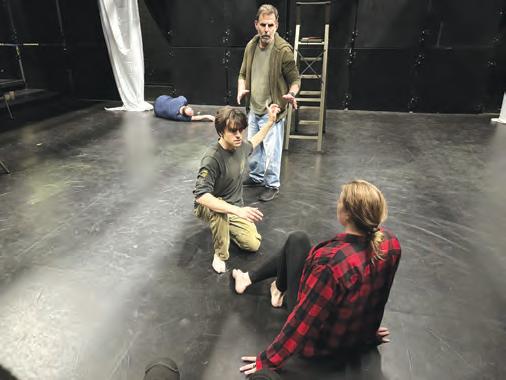
Nackman brings that love of acting to the Richard E. Rauh Studio Theatre at the University of Pittsburgh June 19-28 in a new production of William Shakespeare’s classic, “Hamlet: The Bad Quarto.”
“It’s the earliest version of ‘Hamlet’,” director Jeremy Seghers explained. “It’s from 1603 but wasn’t discovered until the 1800s, so there’s a lot of history around it, why it exists, how it exists, who actually wrote it, who transcribed it.”
While it’s still the story of Hamlet, Seghers said there are scenes, dialogue and character names than differ from the most familiar version of the tale.
“It toured at universities. That’s one of the
reasons I thought it would be cool to do at Pitt, even though it’s not directly affiliated with the university,” he said.
Segher’s take is a little different than what one might expect for a Shakespearean work. His interpretation involves a crime family because, he said, “people no longer have a reference” for the original.
Nackman is excited about “Hamlet” and working with Seghers. He has a passion for community theater. He’s performed in the oneperson work “Karloff,” playing Boris Karloff, and has performed at the Theatre Factory in Trafford and Little Lake Theatre in Canonsburg.
In 2022 he was in Prime Stage Theatre’s
production of “The White Rose,” presented in conjunction with the Holocaust Center of Pittsburgh. In 2024 he performed in the Prime Stage production of “Perseverance,” about a Holocaust survivor who moves to Squirrel Hill.
In “Hamlet,” Nackman plays multiple roles — Ghost and Grave Digger I — and shares the stage with Joanna Lowe.
Like Nackman, Lowe said her love of theater was immediate.
“As soon as I stepped on stage, I was like, ‘Oh, I’m doing this forever,’” she remembered.
Her passion for the art has led her to founding her own theater company, Cup-A-Jo Productions, with a goal of furthering “new and established works in an effort to focus on the artist by tackling a variety of subjects, exploring non-traditional venues and styles, and mixing theatre with film, dance, music and poetry.”
Because she is busy with her own company, Lowe only auditions for roles that excite her.
“So, doing ‘Hamlet’ with Jeremy is an exception,” she said. “I have a weak spot for ‘Hamlet’ and Gertred [whom she portrays in the production] has been on my bucket list. As soon as Jeremy said ‘Hamlet’ and Gertred, I was in.”
And while Nackman grew up in a traditional Conservative Jewish home, Lowe’s Jewish journey was different.
Her father is a retired Reformed Presbyterian minister but, she says, her ancestors are from the tribe of Levi. The household incorporated Jewish food and cultural elements into everyday life, including gefilte fish, matzo balls and

pickled herring. Yiddish phrases were liberally mixed in conversation. The family even traveled to Israel.
After retiring, her father taught courses on the Old Testament and Hebrew.
“I thanked him at one point when I realized how much of our whole life was infused in heritage,” she said.
For Nackman, getting to work in “Hamlet” is a passion he’s happy to revisit whenever the opportunity presents itself. In fact, he’s played Ghost before, so this is a reprise of the role, albeit differently framed. Working with Segher has been a great experience, he said, adding that the director’s delight in the stage shines through.
“I love it when people take the work seriously,” he said. “I like when they invest everything; that’s what I do. There’s a kindred spirit here. It’s really rewarding.”
Lowe, too, has an affinity for the production.
“I love the challenge of making Shakespeare exciting enough that people want to see it,” she said.
And she appreciates working with Segher on the production.
“He’s made it complex and nuanced, and it runs the gamut of human emotion. It’s profoundly powerful and universal,” she said.
Tickets for “Hamlet: The Bad Quarto,” can be purchased at eventbrite.com/e/hamlet-the-badquarto-tickets-1987011305303. PJC
David Rullo can be reached at drullo@ pittsburghjewishchronicle.org.







Sydney Megan Dennis, daughter of Jessica and Troy Dennis, will become a bat mitzvah on Saturday, June 20, at Beth El Congregation of the South Hills. Grandparents are Samuel and Karen Frank of Mt. Lebanon, and Marcella Meints from Lincoln, Nebraska.






Iwork closely with a physician who is deeply committed to her patients.
Staci (a pseudonym), 72, is running out of treatment options. She is married, has two children and an adored grandson who just finished his junior year of high school. The oncologist suggests a promising experimental therapy, mindful of what it might teach researchers and make possible for future patients.
rebellion as a coalition rather than a single cause. Korach’s grievance is not necessarily Datan and Aviram’s, yet they find common cause. Datan and Aviram carry old disappointments about status and leadership. The rebellion brings together people animated by different but similar concerns and wounds. What captures my attention is less the politics of the rebellion than the human dynamics of it.
Comparison has great power. It can transform service into status. It can turn gratitude into resentment. It can make a meaningful calling feel diminished simply because someone else has a different one.
Korach’s longing and desire for holiness may be real.
, daughter of Sean and Elizabeth Halfhill, will become a bat mitzvah on Saturday, June 20, at Temple Ohav Shalom in Allison Park. Grandparents are Bob and Sara Backman, and Michele Halfhill. Kinsey is an avid swimmer and swims for North Hills Aquatics and North Boros Tidal Waves. She also plays percussion in the middle school band. Kinsey is an active member of the Strong as Steel team at school that promotes positive behavior and helps
As I take part in their conversations, I find myself seeing two different horizons. The physician’s attention is drawn outward, toward what this treatment might make possible. My patient’s attention is drawn inward, toward the life she is living now: the decisions before her, the time she has, the people she loves.
The conversation leaves me wondering how easily even the worthiest striving can narrow our field of vision.
With this in mind, I am thinking differently about Korach this year.
Korach speaks in the language of holiness:
“All the community are holy, every one of them, and the Eternal is among them.” (Numbers 16:3)
I believe he means it.
What changes is the direction of his attention.
The Netziv, in his commentary “Ha’amek Davar” on the deaths of Nadav and Avihu, understands their actions as coming from a deep longing for closeness to God. Their yearning is genuine, yet it carries them beyond the boundaries God has set.
I wonder whether Korach’s story might contain a similar dynamic.
And somewhere along the way, something closer at hand begins to disappear from view. Religious communities need voices that ask difficult questions. The challenge of Korach is that his questions become inseparable from his ambition.





Religious communities need people who ask difficult questions. They need voices willing to challenge assumptions, examine authority and remind us that holiness belongs to the entire community.
Yet Moses hears something else beneath Korach’s argument
“Is it too little for you that the God of Israel has separated you from the community and brought you near to Him?” (Numbers 16:9)
This is a striking response.
Moses does not argue that Korach lacks holiness. Instead, he points to the holiness and responsibility Korach already possesses.
After all, Korach is already a Levite. He already serves in sacred space. He already occupies a role of privilege and responsibility. Yet Aaron stands closer to the center.
The moment we begin measuring ourselves against someone else, we can lose sight of ourselves.
Bamidbar Rabbah (18:3–4) portrays the
Then comes the punishment: The earth opens, the rebels disappear and fire consumes the 250 men who bring incense before God. The violence of the response is intense. The more I find myself understanding Korach, the less interested I am in deciding whether he was a villain. I find myself wondering what he could no longer see.
The Torah does not always give us protagonists we can comfortably admire. What it does give us is people we recognize. And sometimes it is God we struggle to understand.
I do not leave this story with a defense of Korach. I leave it with Moses’ question:
“Is it too little for you?”
And also with the violence that follows. This year it seems, neither one resolves the other.
PJC
Rabbi Kara Tav serves as the rabbi of spiritual care at Congregation Beth Shalom and as a chaplain at UPMC Magee-Womens Hospital. This column is a service of the Greater Pittsburgh Jewish Clergy Association.



ABRAMS: Eileen Abrams, of Pittsburgh, passed on Monday, June 8, 2026. Born the daughter of Samuel and Faith Abrams of Weirton, West Virginia. Eileen was the sister of the late Sharon (Philip) Harris, Nadine (Sheldon) Reck and William Abrams. Eileen worked at The Tonidale and Tambellini’s for over 35 years and also was a caregiver. Eileen loved animals, especially her dogs and cats. Eileen cherished her independent lifestyle. Memorial contributions may be made in her memory to Animal Friends or a charity of one’s choice. Her services were held privately at West View Cemetery. Professional services by D’Alessandro Funeral Home & Crematory Ltd., Lawrenceville. dalessandroltd.com.
BERGSTEIN: Jack Louis Bergstein, 86, of Monessen, Pennsylvania, and Boca Raton, Florida, passed away peacefully on June 14, 2026. Born and raised in Monessen, Jack was the son of the late Adolph and Magda Bergstein. After graduating from Monessen High School in 1957, Jack earned a bachelor’s degree from Penn State University, and a Juris Doctor from Duquesne University School of Law. While attending law school, Jack met his wife of 45 years, Fyrne Lois Pearlstein, who passed away in 2008. After his admission to the Pennsylvania state bar, Jack began practicing law in Monessen, initially at the then law firm of Ezerski and Shire. He had a long and distinguished career of public service in Monessen and western Pennsylvania, practicing law for over 63 years. Jack was a past president of the Westmoreland Bar Association, Westmoreland Academy of Trial Lawyers, Western Pennsylvania Trial Lawyers Association, Pittsburgh Jewish Family and Children’s Services, Monessen B’nai B’rith, Mon Valley Council of Governments and the Monessen Kiwanis Club. He served as chairman of the Westmoreland Bar Foundation and the Westmoreland County Trial Judge Nominating Committee. Jack served on the board of the Governors Pennsylvania Trial Lawyers Association, National Association of Jewish Family and Children Agencies, United Jewish Federation of Greater Pittsburgh, Westmoreland Bar Association and Academy of Trial Lawyers, Westmoreland Inns of Court, the BWMA Legal and Insurance Committee and the Laurel Legal Services. He has also been a special assistant to the Pennsylvania attorney general, as well as the solicitor of the Rostraver Township Airport Authority, Belle Vernon Borough, Monessen Redevelopment Authority and the Greater Monessen Historical Society. Jack also served as a Monessen councilman from 1970 to 1977. Throughout his life, Jack was recognized for his character and devotion to both his profession and service to others. He was a beloved friend, and a steadfast defender of those who faced injustice, harm, or discrimination. Jack was a world traveler, a lifelong Pittsburgh sports fan, and an avid golfer as a longtime member of Nemacolin Country Club, Centerville, Pennsylvania, and Boca West Country Club, Boca Raton, Florida. He had a tremendous passion for genealogy, and enjoyed researching and preserving family history, and maintained family connections in the United States, Europe and Israel. Jack was an active member of the former Temple Beth Am in Monessen, and served as a past president and board member of its cemetery. He was also a member of Bnai Torah
D’Alessandro Funeral Home and Crematory Ltd.
“Always A Higher Standard”

Dustin A. D’Alessandro, Supervisor • Daniel T. D’Alessandro, Funeral Director 4522 Butler St. • Pittsburgh, PA 15201 (412) 682-6500 • www.dalessandroltd.com
Congregation in Boca Raton. Jack is survived by his three children: daughter Cyndi Bergstein of Chicago, Illinois; son David (Maria) Bergstein and daughter Erynn Taitel, of Deerfield Beach, Florida; grandson, Jordan Ehrlich of Chicago, Illinois; granddaughter Morgan Taitel, of Mount Prospect, Illinois; and numerous beloved cousins. Funeral arrangements were entrusted to the Rhome Funeral Home, 1209 Grand Blvd., Monessen, Pennsylvania, where friends were welcomed on June 17. Burial followed at Temple Beth Am Cemetery in Rostraver Twp. In lieu of flowers, donations may be made in Jack Bergstein’s memory to the Jewish Federation of Greater Pittsburgh, 2000 Technology Drive, Pittsburgh, Pennsylvania, 15219, or a charity of the donor’s choice.
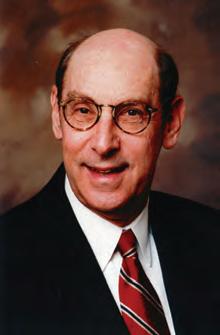
GUTTMAN: Barney C. Guttman, June 7, 1939 – June 14, 2026. Barney C. Guttman, beloved husband, father, grandfather, brother and friend to seemingly everyone he ever met, passed away on June 14, just a week after his 87th birthday. Barney was known to initiate every toast and wedding speech with “Friends who are family and family who are friends,” and no nine words could better capture how he lived. Born in Pittsburgh on June 7, 1939, to Morris “Moe” and Rosamond “Roe” Cohen Guttman, Barney grew up in Squirrel Hill, the first-born grandson of a close-knit clan that gathered every Friday night around Grandma Lena’s table. He attended elementary school at Linden School, high school at Mercersburg Academy and college at the Wharton School of the University of Pennsylvania. After university, and over his mother’s objections, Barney turned down law school to begin his career at Merrill Lynch & Company in New York City, periodically returning home to serve in the Pennsylvania Air National Guard. In 1963, when his father fell ill, Barney returned to Pittsburgh to run the family business, Pittsburgh Aluminum Alloys, growing it from a regional manufacturer into a firm with a national footprint, eventually orchestrating its sale to National Steel in 1970. It was during this time that Barney met Susie on a blind date, proposing after only six dates. They built a life and family together, joyfully married almost 60 years. A few years later, he began a new chapter. In 1974, armed with a phone, a yellow pad and a Wall Street Journal, he founded what became Barney C. Guttman and Associates and Vantage Financial Group, building one of Pittsburgh’s early fee-based investment advisory practices over four decades. He continued working well past the age most people consider retiring, because to Barney, work was always enjoyable. Once retired, Barney still loved to discuss “asset allocation,” “index funds” and “alternative investments,” especially with his grandkids. In addition to being a wonderful family man, Barney devoted much of his energy to civic engagement. He was passionate about supporting organizations focused on combatting antisemitism, advancing medical science and improving Pittsburgh’s neighborhoods. He served as president of the Concordia Club, treasurer of the Jewish Federation of Greater Pittsburgh and St. Edmund’s Academy, and as a board officer of the Jewish Healthcare Foundation, East Liberty Development Corporation, Rodef Shalom Congregation,
Please see Obituaries, page 24
Jewish Association on Aging gratefully acknowledges contributions from the
A gift from ... In
Anonymous
The Alman Family .Esther B Alman
Sherwin E Glasser .Harry Kurtz
Richard Glick .Cheri Glick Jak
Audrey Huber Z"L Isaac Glickman
Nadine Kruman
Rushie Leff
Linda Rattner Nunn
Estelle Kruman
Mel Leff
.Faye Bloom Rattner
Linda & Jeffrey Reisner and Family Lawrence Brodell
Richard, Mindy, & Logan Stadler
.Fannie S Lattanzio
Neil & Josette Rosenstein Norma Rosenstein
Sunday June 21: Oscar Bennett, Linnie R Caplan, Lucille Cohen Katz, Barney Drosnes, Esther Gross, Julius H Harris, Brian H Ibe, Louis Katz, Charles Paris, Estelle Schwartz, Bessie Cohen Silverberg, Joseph Swartz, Florence M Teitelbaum











Monday June 22: Clara Blatt, Jerome Cohen, Gerson Finkelstein, William R Finn, Charles Fischer, Charles Greenberg, Minnie Hyman, Estelle Kruman, Fannie S Lattanzio, Jacob M Levine, Mildred Mallinger, Tillie Rider, Harry Ruben, Rosella Herzberg Wanetick
Tuesday June 23: Samuel H Adler, Jesse Carl Devon, Jeanne Eisenberg, Millie Escovitz, Harry "Alter" Goisner, Marion Bergad Halfond, Curtis I Kossman, Fannie Kisilinsky Lindner, A L Mars, Sidney L Patz, Harry Santman, Ruth Marks Schenk, Belle G Schiff
Wednesday June 24: Sylvia Americus, Herman Margolis Buck, Ray S Freeman, Morris Glasser, Isadore Goldblum, Madeline A Harris, Joseph Herskovitz, Helen Hoffman, Bertha Jacobs, Fred Kaminsky, Irving Kart, Harry Kurtz, Leah Labovitz, Sarah Linder, Helen Marcosky, Julia L Miller, Rabbi Morris Moskowitz, Elizabeth Sack, Frances G Stewart
Thursday June 25: Helen K Davidson, Isaac Glickman, Marcella Cohen Goldberg, Edward W Harris, Morris L & Mary Ruth Jacob, Edith Liberman, Abe E Rosenfield, Lawrence Rudick, Jerome J Schwartz
Friday June 26: Miriam Bachrach, Mollie Harris Beck, Martin Bergad, Major Donald Broida, Anna R Fried, Sam Ginsburg, Meier Katzman, Emil Lebovitz, Mel Leff, Jacob Lerner, Sarah Litman, Charles J Loevner, Meyer Melnick, Rose Moritz, Jacob Rosenberg, Irving Siegel, Bessie Sigler, Josephine Silberman, Gertrude Stalinsky, Michael Joseph Wagner, Nathaniel I Walken
Saturday June 27: Lawrence Brodell, Edythe G Canter, Maurice L Caplan, Benno Dreifuss, Pearl Evelovitz, Fannie Greenstein, Norman Halpern, Rose Janavitz, Saul Lundy, Verna Goldstein Plung, Beatrice Pollock, David Schwartz, Gussie Golda Snyder, Jacob Stern, Gus Whitman, Henry Wolk

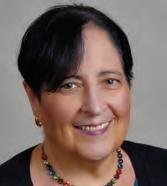





represent each of our areas of focus.”
For years, the organization has relied on personnel and partnerships to achieve an activist philanthropic model.
Doing so, Feinstein said, requires “a lot of people, a lot of board members supporting this.” Hopefully, “people take pride in what we shaped. We have had an enormous influence.”
Since 1990, JHF has improved health and healthcare through collaboration, education, research and advocacy by partnering with educators, healthcare providers, policymakers and researchers.
The foundation is proud to be more than an entity simply known for “giving out money,” Feinstein said. Similarly, “we don’t fundraise.”
Contracts cover educational and programmatic initiatives — in 2025, JHF secured about $30 million in outside public and private funding.
Feinstein hopes community members support Danny Rosen, the newly-named CEO, as he guides the organization ahead.
When Rosen assumes the helm, Feinstein will enter a new role — on July 1, she will become Alvin Rogal president and CEO emeritus — and focus on familiar endeavors, including the Longevity Hub and the Coalition to Advance Safety Healthcare.
For the first time in decades, Feinstein’s professional responsibilities will dramatically shift. Her demeanor and beliefs, however, will
remain intact. It’s an attitude and practice, she explained, that women and future leaders can learn from.
“Don’t be timid in how you speak up, or in the aspirations you set for yourself, or for the organization. Do it nicely. Make as few enemies as you can,” she said. “I know women who are afraid. They’ll go to a meeting with me, and they’ll say, ‘I wanted to say that.’ And my feeling is, why didn’t you? I don’t think there’s a penalty. I’ve been the first woman on the Allegheny Conference, the first woman on the Boy Scout board. The men are not afraid of women who have opinions — I mean, try and express them nicely. You don’t have to be rude and abrasive.”
Feinstein remembers a time when community members considered JHF a new entity and a “threat,” she said. But defining a group by the uncertainty of its early years can overlook its mission and its potential.
People should “look to a strong moral core,” and ask themselves, “what is going to make the world better, what will make our region better, what will make our city, our Jewish community, better,” she said. “Focus on that, and not, ‘Is this a threat?’ or ‘Do I agree with the way they’re doing it?’ If they’re doing the right thing for the right reasons, join in, support it.”
And remember, “everyone isn’t going to love you for what you think or where you want to go in life — and you have to live with it,” she continued. “When you have big ideas you can have people who fight you, who don’t like it. But I do think it’s so much more fun to go for the gold.” PJC
Adam Reinherz can be reached at areinherz@pittsburghjewishchronicle.org.









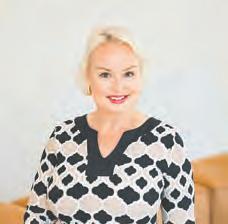

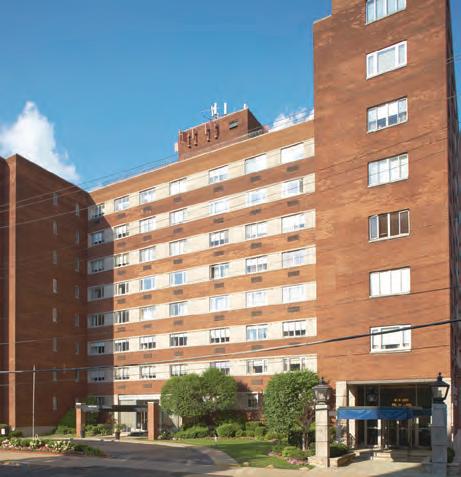





a petition for a referendum to the board.
By Toby Tabachnick | Editor
Following almost two years of controversy, the East End Food Co-op’s board of directors rejected a forced boycott of Israeli products at its June 15 meeting. The issue of banning Israeli products at the East End Food Co-op has been discussed since at least July 2024, when the store’s union, UE Local 667, voted to endorse the BDS movement against Israel. The union spent more than a year gathering 500 signatures required by the store’s bylaws to present
Obituaries:
The petition accused Israel of an “ongoing genocide against the Palestinian people and war in the Middle East.”
Since mid-2024, co-op board meetings were often beset with anti-Jewish and anti-Israel hostility, sometimes devolving into comparing Zionists to Nazis.
In February, the co-op’s board of directors approved a motion creating an advisory referendum asking its members if “Israeli sourced products” should be removed from the grocery store.
According to information distributed by the union, the co-op stocks five Israeli products: Field Day Tahini; Soom Chocolate
Continued from page 23
the Squirrel Hill Urban Coalition and the UPMC Hillman Cancer Center. In later years, Barney and Susie split their time between Pittsburgh and Delray Beach, Florida, where their home was rarely quiet or empty. Fifteen houseguests at a time was not unusual, and that was exactly how he liked it: golf, good food, family, great friends and a Belvedere vodka martini. Barney is survived by his wife, Susan Goldstein Guttman; his children, Harley and Eli Ungar (Englewood, New Jersey), Lissa Guttman (Pittsburgh), and Greg and Genna Guttman (Chicago); his sister, Patricia; and his eight adored grandchildren: Caleb, Maya and Eva Ungar; Oren, Dean and Alexa Guttman; and Ryan and Morgan Guttman, to whom he was simply Pop Pop. He chose as the epigraph for the final chapter of his memoir a line he believed with his whole heart: “To live in the hearts of those you love is not to die.” By that measure, Barney Guttman will be with us for a very long time. Services were held at Ralph Schugar Chapel, Inc. Interment West View Cemetery of Rodef Shalom Congregation. In lieu of flowers, the family suggests contributions to Hillman Cancer Center (hillman.upmc.com), a cause close to Barney’s heart. schugar.com
MORITZ: Surrounded by his loving family, Donald Moritz passed away peacefully on June 14, 2026, at the age of 98. Don was born in McKeesport, Pennsylvania, on Oct. 23, 1927.
Tahini; Manischewitz Gefilte Fish; Equal Exchange Extra Peaceful Olive Oil; Let’s Do Organic Gluten-Free Ice Cream Cones; and Four Season bell pepper varieties.
Ironically, the Extra Peaceful Olive Oil is produced by a nonprofit organization of Arab and Jewish women in Israel that “uses fair trade to foster educational and economic opportunities and model mutual respect and collaboration between Jews and Arabs. They’re inspired to be agents of change, building bridges between communities, setting a positive example for their children, and promoting peace for future generations,” according to the product’s website.
The co-op has more than 17,000 members.
“The board did the right thing in firmly rejecting a pressure campaign that has deeply fractured our community for two years,” said Julie Paris, Mid-Atlantic Regional director of StandWithUs. “Food co-ops are meant to be spaces of cooperation, diversity, and teamwork, open to everyone who walks through the door. We are grateful that this community-owned grocery store will not be co-opted by an extremist political agenda that fuels hatred and conflict, rather than building understanding and peace.”
PJC
Toby Tabachnick can be reached at ttabachnick@pittsburghjewishchronicle.org.
He was the son of the late Maurice and Rose Moritz (Klein), and brother of the late Shirle Goldstone and Norman Moritz. Don attended McKeesport High School, earned his undergraduate degree from the University of Pittsburgh and went on to graduate from the University of Pittsburgh School of Law in 1951. He married Janet Papernick the following year and they continued holding hands for the next 74 wonderful years. Don spent his career with Equitable Gas Company, beginning in the law department and ending as chairman and CEO for 16 years before retiring. He led the company’s transition from a local utility to the natural gas exploration and distribution now known as EQT. The Pittsburgh Symphony Orchestra and the Jewish Agency on Aging benefitted from his leadership as their board president. He also dedicated his time to the boards of other nonprofits including Carnegie Mellon University, Seton Hill College, Montefiore Hospital and UPMC. As a lifelong devoted Pitt fan, Don spent many happy (and unhappy) Saturday afternoons at Pitt football games and many hours watching whatever Pitt sport was being televised at the time. He was a lover of history, crossword and jigsaw puzzles and traveling the world with Janet and his family. Nothing made him happier than sharing life with his wife, children and grandchildren. His impact on their lives will be cherished forever. Don is survived by his wife Janet (Papernick), children Paula Spock (Robert), Laurie Moritz, J. Kenneth Moritz (Natalie), and grandchildren Elizabeth, Ben, Addie, Ian, Paige and Sophie. Services were held at Ralph Schugar Chapel, Inc . Interment private. Contributions may be made to the Jewish Agency on Aging or a charity of donor’s choice. For Zoom link information, please call Ralph Schugar Chapel, Inc. 412-621-8282. PJC

Heart of philanthropy
Jewish Federation of Greater Pittsburgh hosted “Heart of Philanthropy.” The June 10 event at Congregation Beth Shalom featured remarks from journalist Jacki Karsh.
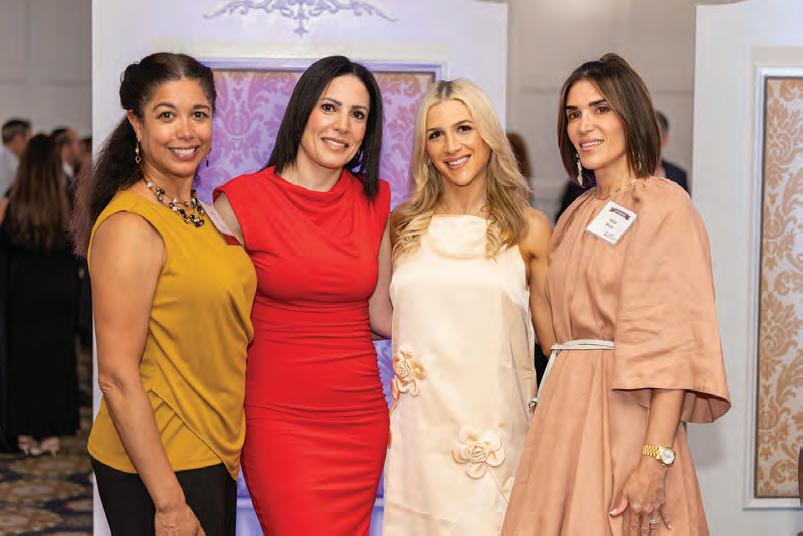
The great outdoors
The Sally and Howard Levin Clubhouse, Friendship Circle of Pittsburgh, Jewish Community