
was a “very cool and educational” experience. Day school students, she said, eracted with staffers and elected officials, and had the chance to see the Pennsylvania State Capitol Complex.
“Being with all the other schools was really nice,” Altein added.
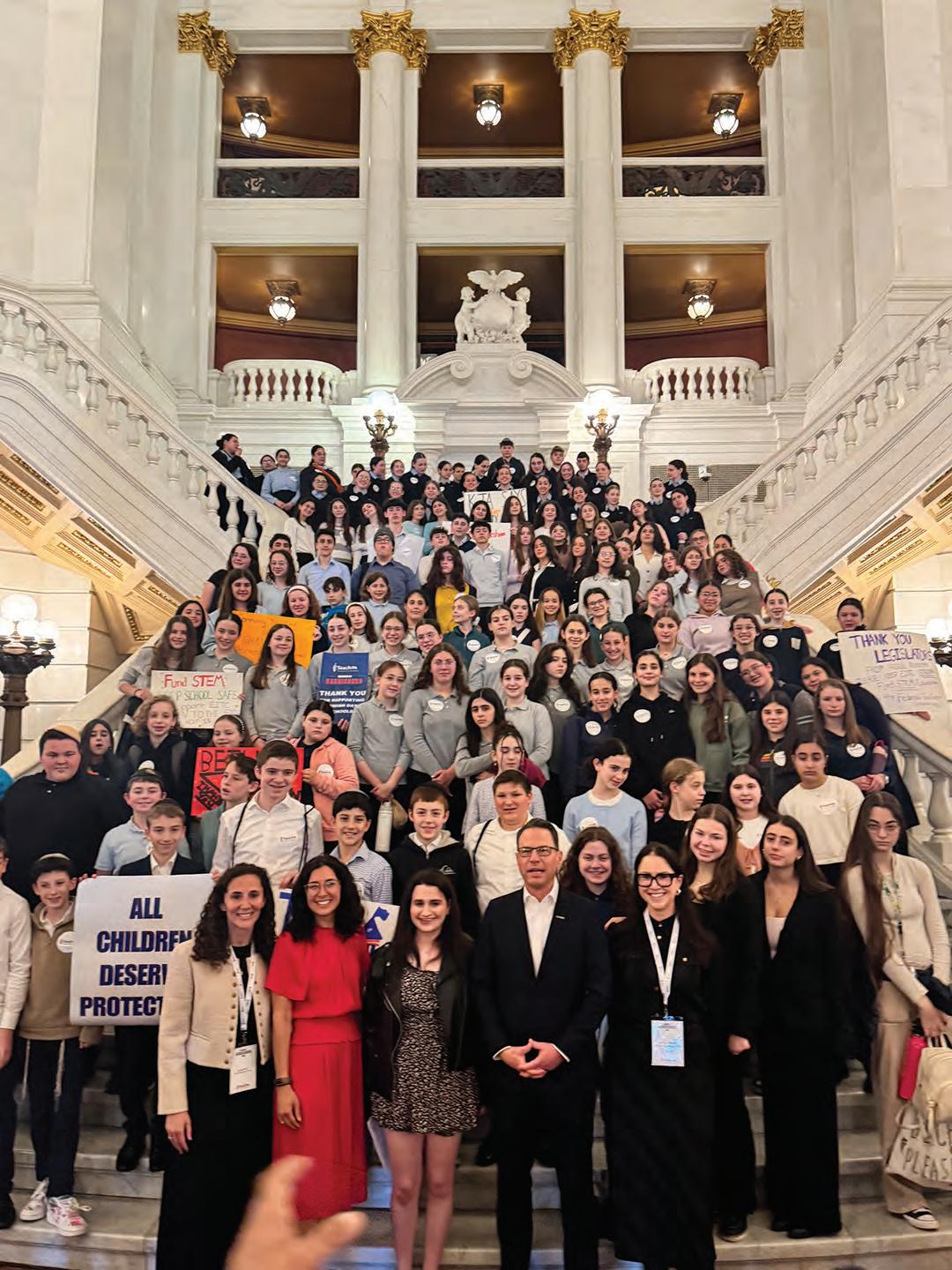
The Yeshiva Girls School seventh grader was part of an April 27 trip, organized by Teach PA, that brought more than 200 Jewish day school students to the state capital for the organization’s annual Advocacy Day.

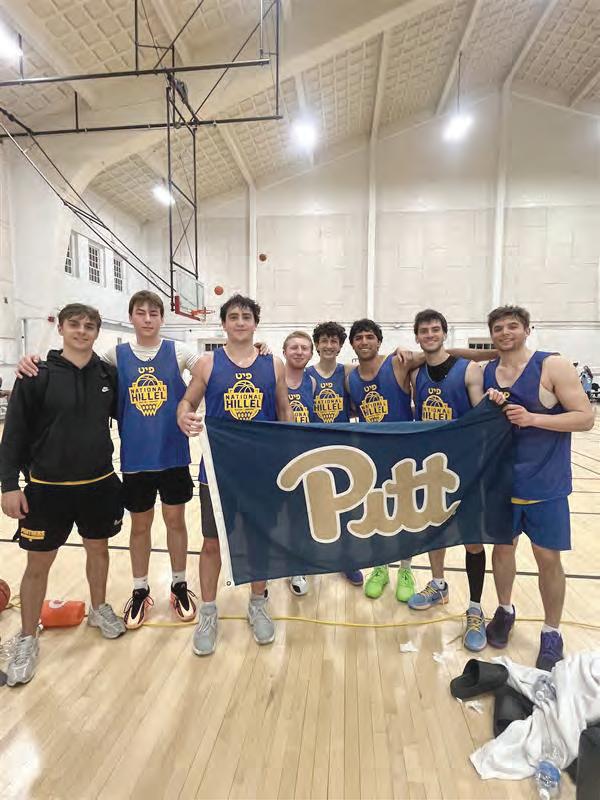
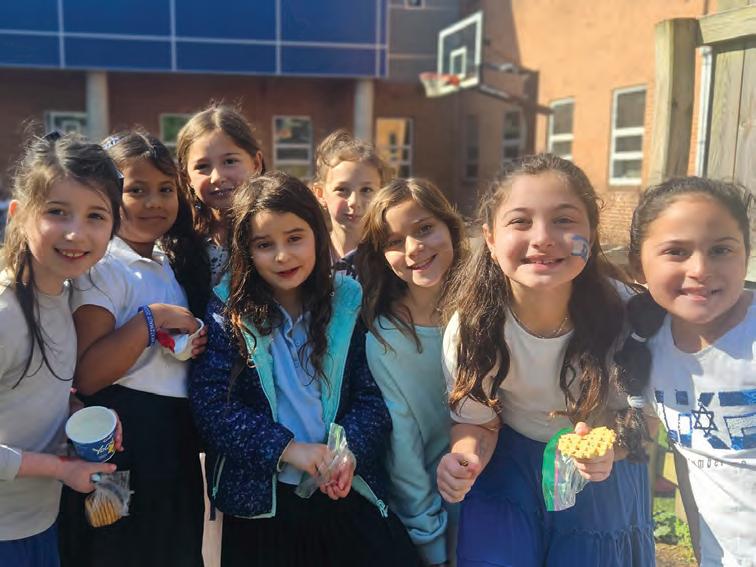
More than 50 fifth, sixth, seventh and eighth grade female students from Pittsburgh’s three Jewish day schools — Community Day School, Hillel Academy of Pittsburgh and Yeshiva Schools of Pittsburgh — traveled together for the event and spent time with local and state officials, including state Sen. Jay Costa, state Rep. Dan Frankel and Gov. Josh Shapiro, among others.
In addition to meeting with elected officials and the state’s judiciary, students and parents advocated for “stronger school security funding, greater access to scholarships and expanded educational opportunities,”
according to a statement released by Teach PA.
Etti Martel, a chaperone on the trip, said she learned about the opportunity from her daughter Naomi, an eighth grade Hillel Academy student.
“I went because I feel like every parent deserves to send their child to a day school with confidence and to know that they are safe,” she said. “I want my kids to be safe and supported and to be able to focus on learning.”
Martel said the Hillel girls were excited to spend time on the bus with students from other schools, and that after an initial period of nerves, the students were all confident when speaking with government officials.
“They had a whole conversation with Dan Frankel, which was nice to see,” she said. “They talked about how they feel about their school and what they want from their school.”
Yeshiva’s CEO Rabbi Yossi Rosenblum said the trip was a learning experience for the students.
“It was great for them to see how government works and to meet real people and engage in conversations, and to meet the governor,” he said.
Nosh
Special section begins on p. 9
By David Rullo | Senior Staff Writer
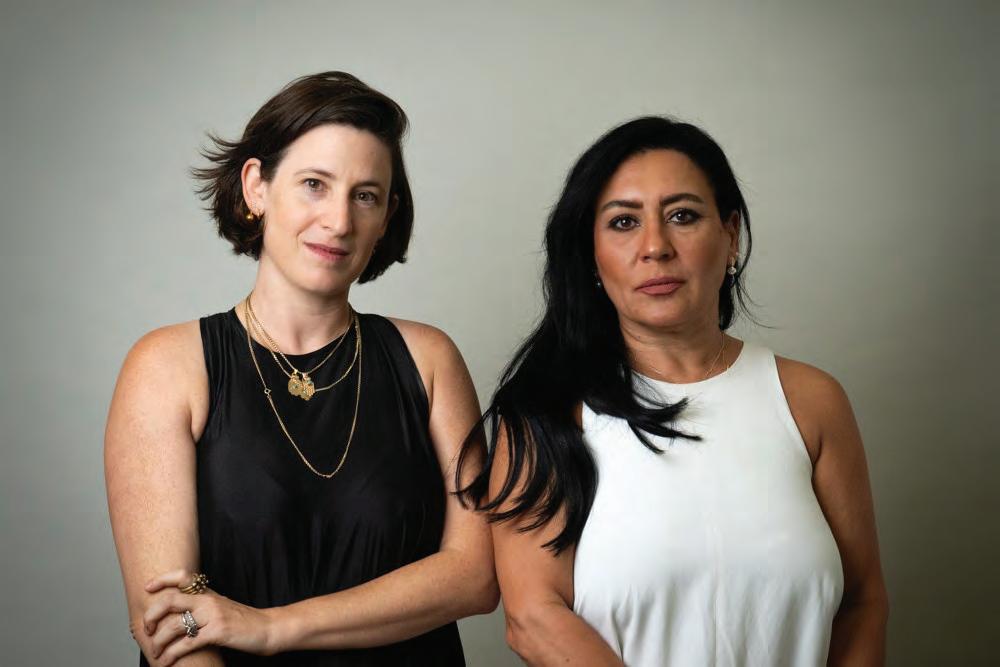
May Pundak and Rula Hardal have a vision of a two-state solution for the Israel-Palestinian conflict. It simply isn’t the one you may have in mind.
Historically, when there’s talk of an independent Israeli state and an independent Palestinian state, it is centered around two countries existing separately without much integration and coordination. That’s not the way Pundak and Hardal see it.
The two are co-directors of A Land for All, an organization whose members believe it’s possible for Israel and a Palestinian state to exist as “two sovereign states,” but “one shared homeland.”
Congregation Dor Hadash is bringing A Land for All to Pittsburgh on May 13 at 7 p.m. at Rodef Shalom Congregation.
A Land for All’s website envisions a “confederal model, grounded in international law, local needs and hard-earned lessons from failed negotiations.” It proposes a future “built with both peoples — not at the expense of either of them.”
Pundak, an Israeli human rights attorney who lives in Israel and is the daughter of historian and journalist Ron Pundak, one of the architects of the Oslo Accords, said the best example of the model is the European Union.
“Think about France and Germany,” she said. “There is no question that they are two separate, independent sovereign states. There are two different governments, two different legal systems, two different economies, two different internal issues to different states, but they work under a shared framework that takes into account that the issues that they share deserve attention to such a degree that it needs another layer of system of shared institutions.”

By Adam Reinherz | Senior Staff Writer
Teens interested in learning more about Israel and deepening their connections with the Jewish state may leave an upcoming afternoon program with not only knowledge, but with new AirPods as well.
Organized by the Jewish Federation of Greater Pittsburgh, “Explore & Engage Your Jewish Path,” a May 17 program at Community Day School, will bring young community members and parents together for an interactive session, resource fair and raffle.
Guiding the discussion, according to Carolyn Linder, Federation’s associate director of Jewish Life & Learning, will be staff from OpenDor Media, an organization committed to strengthening bonds between “young Jews and their peers to Judaism, Israel and the Jewish people.”

Also joining the program, Linder continued, will be “local Jewish youthserving organizations.”
The afternoon affair runs from 1 to 4 p.m. And, over several hours of engagement, teens will experience Israel education sessions “designed just for them,” Linder said.
“Explore & Engage Your Jewish Path” arrives on the heels of related findings.
A Harvard Youth Poll published last week reported that among 18-to-29-yearolds, 46% consider relationships with Israel burdensome. As opposed to the U.S.Canadian relationship, which 53% of young people considered positive, only 16% of respondents deemed ties between the U.S. and Israel to be beneficial.
The poll also noted that a majority (55%) of the 2,018 18-to-29-year-old respondents maintained that U.S. military action in Iran is not in the best interest of the American people.
Weeks earlier, Pew Research Center released a report finding that 60% of U.S. adults have an unfavorable view of Israel.
The sum, according to Pew, was up from 53% the previous year. Additionally, the share of U.S. adults with a very unfavorable view of Israel (28%) increased by nine points from last year and has nearly tripled from 10% in 2022.
Recognizing the demographic’s importance, Federation’s May 17 event, according to organizers, aims to educate participants by enabling teens to “explore their personal connection to Israel and Jewish
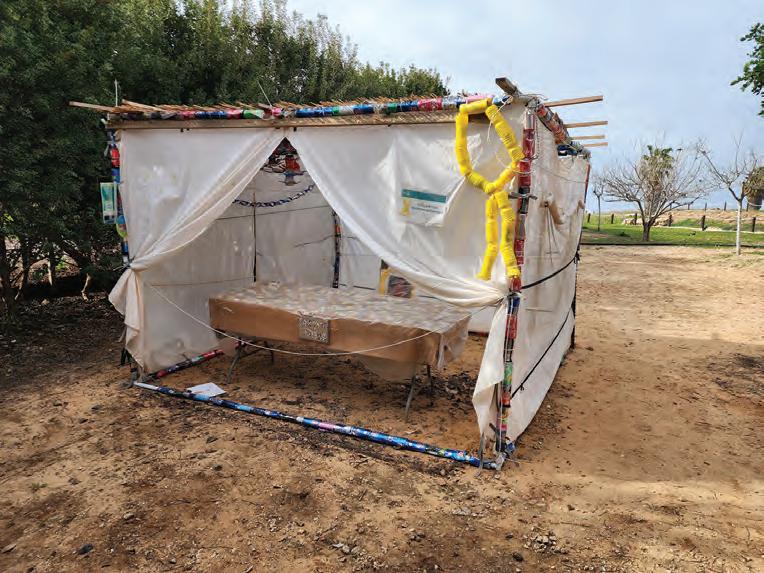
peoplehood through a creative vision board activity.” The exercise, which seeks to further expression, allows teens to illustrate and articulate a “wide range of Jewish thought and perspectives.”
The program aims to not only empower teens, but also offer parents valuable instruction, Linder said. A “vibrant teen resource fair” will feature information regarding local Jewish programs, leadership opportunities and community resources.
Though only one day, the program, according to organizers, seeks to deliver “meaningful ways to stay connected throughout the year.”
Linder credited local partners, including representatives from the Jewish Community Center of Greater Pittsburgh, Temple Ohav Shalom, Temple Emanuel of South Hills and

SUBSCRIPTIONS
subscriptions@pittsburghjewishchronicle.org
412-687-1000, ext. 2
TO ADVERTISE advertising@pittsburghjewishchronicle.org 412-687-1000, ext. 1
EDITORIAL DEPARTMENT
Email: newsdesk@pittsburghjewishchronicle.org
BOARD OF TRUSTEES
Evan H. Stein, Chair
Evan Indianer, Vice Chair
Derek Smith, Treasurer
Gayle R. Kraut, Secretary
Gail Childs, Dan Droz, Malke Steinfeld Frank, Karen Gal-Or, Seth Glick, Judith Kanal, Cátia Kossovsky, Charles Saul, Lynn Zelenski
GENERAL COUNSEL
Stuart R. Kaplan, Esq.
Jim Busis, CEO and Publisher 412-228-4690 jbusis@pittsburghjewishchronicle.org
EDITORIAL Toby Tabachnick, Editor 412-228-4577 ttabachnick@pittsburghjewishchronicle.org
Adam Reinherz, Senior Staff Writer 412-687-1000 areinherz@pittsburghjewishchronicle.org
David Rullo, Senior Staff Writer 412-687-1000 drullo@pittsburghjewishchronicle.org
ADVERTISING
Amy Weiss, Account Executive (412) 613-0697 aweiss@pittsburghjewishchronicle.org
PRODUCTION
Jeni Mann Tough Production Manager
Carl Weigel
Art/Production Coordinator
Congregation Beth Shalom with helping plan the May 17 program. And, along with offering participants mechanisms for connection, the event will feature a Bruster’s Real Ice Cream sundae bar and raffle for prizes, including Pittsburgh Pirates tickets, gift cards, AirPods and Lego bricks.
Whether arriving as a teen or adult, the goal, Linder said, is to experience an “afternoon that strengthens connection, elevates teen voices and highlights the many pathways to engage Jewishly here in Pittsburgh.”
Registration is available at jewishpgh.org/ event/j-path. PJC
Adam Reinherz can be reached at areinherz@pittsburghjewishchronicle.org.
5915 Beacon St., 5th Floor Pittsburgh, PA 15217
Main phone number: 412-687-1000
Subscriptions: 412-687-1000, ext. 2
Subscriptions subscriptions@pittsburghjewishchronicle.org 412-687-1000, ext. 2
Published every Friday by the Pittsburgh Jewish Publication and Education Foundation 5915 Beacon St., 5th Floor Pittsburgh, PA 15217
Phone: 412-687-1000
POSTMASTER:
Send address change to PITTSBURGH JEWISH CHRONICLE, 5915 BEACON ST., 5TH FLOOR PITTSBURGH, PA 15217 (PERIODICAL RATE POSTAGE PAID AT PITTSBURGH, PA AND AT ADDITIONAL MAILING OFFICES)
USPS 582-740
Manuscripts, letters, documents and photographs sent to the Pittsburgh Jewish Chronicle become the property of this publication, which is not responsible for the return or loss of such items.
The Pittsburgh Jewish Chronicle does not endorse the goods or services advertised or covered in its pages and makes no representation to the kashrut of food products and services in said advertising or articles. The publisher is not liable for damages if, for any reason whatsoever, he fails to publish an advertisement or for any error in an advertisement. Acceptance of advertisers and of ad copy is subject to the publisher’s approval. The Pittsburgh Jewish Chronicle is not responsible if ads violate applicable laws and the advertiser will indemnify, hold harmless and defend the Pittsburgh Jewish Chronicle from all claims made by governmental agencies and consumers for any reason based on ads appearing in the Pittsburgh Jewish Chronicle
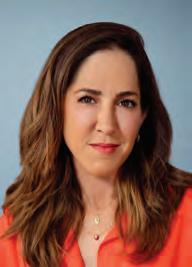
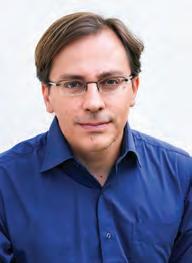
Tal Shalev is the a senior reporter for CNN’s Jerusalem bureau and former Chief Political Correspondent and Analyst for Walla! News. She covers Israel’s prime minister, government, and parliament as well as the country’s foreign and diplomatic affairs.
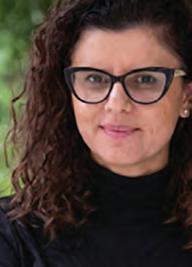
Dr. Nasreen Haddad-Haj Yahya is a researcher, lecturer, senior consultant and renowned expert on Arab society and majorityminority relations in Israel. She is a Board Member at the New Israel Fund.
Nadav Asher Eyal is a winner of the Sokolov Award—Israel’s equivalent of the Pulitzer Prize. He writes for Yediot Ahronot and Ynet, Israel’s most widely circulated newspaper and news website respectively. He is a senior research scholar with the Institute of Global Politics and teaches at Columbia University.
Yisrael Klitsner, Series Moderator
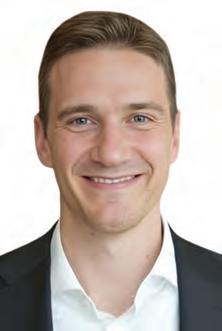
Klitsner is a fellow at the Jewish People Policy Institute (JPPI) who has deep connections to our community. He and his family lived in Squirrel Hill but returned to Israel after October 7 so he could rejoin his IDF unit. Klitsner, who has served as Diaspora Affairs Advisor to Prime Minister Naftali Bennett, and worked for AIPAC in Israel, is passionate about educating and building community around the state of Israel and its relationship with the United States.
Monday, May 18 • 7 pm
JCC Squirrel Hill • Katz Theater $36/person
Gain insight into the complexities of Israel’s political landscape in this timely conversation featuring leading specialists Tal Shalev, Nasreen Haddad-Haj Yahya and Nadav Eyal. From coalition dynamics and government leadership to Arab affairs and global influences, this panel will unpack the forces shaping Israeli politics today.

Israel’s Geopolitical Outlook
Rescheduled from April New Date: Tuesday, June 16
By Adam Reinherz | Senior Staff Writer
Justas Passover ended, Pittsburgher Rosanne Levine hurriedly left her Squirrel Hill home to visit Germany. The trip’s purpose, Levine said, was to speak about her late father’s experiences liberating LangensteinZwieberge concentration camp and to create new connections.
Now back in Pittsburgh, Levine said her April 10-12 trip offered new insights on the past.
Growing up, she knew that her father, Herbert Mandel, was a member of the 8th Armored Division 399th Armored Field Artillery Battalion – Battery C; even so, Levine didn’t know much else about his activities abroad. In her 30s, she discovered her father’s historic contributions.
Langenstein — at the time of its April 14, 1945, liberation — had 1,100 male prisoners, each weighing about 60 pounds. On a daily basis, 25-30 people died, dysentery was rampant, barracks were lice-infested and most prisoners were “stretcher cases,” according to military records.
Two years before his 2023 death, Mandel told the Chronicle about liberating Langenstein. At the time, he had connected with the descendant of a fellow liberator. Mandel used the virtual meetups to share stories about horror, heroism and retribution. Last month, a program for German youth offered students a chance to
see Langenstein and speak with descendants of liberators and former prisoners.
Levine said she’d long followed reports about “new Germany” and was deeply interested in the ways young Germans are “grappling with their history.” So, hours after Passover’s conclusion, the Squirrel Hill resident boarded a plane and headed overseas.
During her brief stay in Germany, Levine traveled to Langenstein and joined a panel with other descendants of liberators.
She said that while speaking to German students, she was asked questions about her late father, his thoughts on liberation and whether he referenced those he encountered.
Conversations with German students made clear “they feel like they have the responsibility to carry this knowledge forward,” she added.
The students, Levine noted, were participants in NESHAMA – Network for European Youth for Holocaust Remembrance — a yearlong project funded by the European Commission under the EU Strategy on Combating Antisemitism and Fostering Jewish Life (2021-2030).
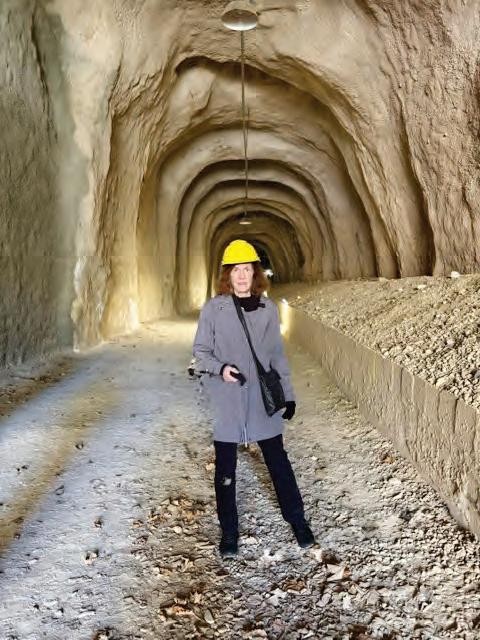
Along with participating on the panel, and spending time with German residents and dignitaries, Levine visited a nearby memorial telling the story of enslaved individuals from 23 countries.
The prisoners, Levine explained, were required to work on a 13-kilometer-long tunnel system. Located in the Thekenberge hills near Halberstadt, the tunnel was intended to be an “underground aircraft factory.”.
Between April 1944 and April 1945, more than 1,700 of the camp’s more than 7,000 prisoners died “as a result of the physical strain and inadequate nutrition” excavating the tunnel, according to museum records.
Entering the tunnel and imagining those enslaved there was an emotional experience, Levine said. “The Nazis were working people to death. It was extermination through labor.”
something that we really should be taking a stand against.”
Those interested in preserving the past should also consider the tunnel’s future, she said.
Pointing to a series of 2024 articles regarding a private developer with reported ties to “far-right figures,” Levine noted the developer is considering transforming the tunnel into “luxury bunkers.”
Protests have occurred, including one observed by Levine involving German students performing an “interpretive art piece,” she said.
Levine said she knew about the tunnel system from conversations with her father, but it wasn’t until she traveled to Germany that she heard about the area’s potential transformation.
Since returning to Pittsburgh, Levine said she put away her Passover dishes and has continued following updates about the German site.
There’s a thematic relationship, she explained, as the story of Passover recalls the enslavement of Israelites and “first incident of antisemitism.”
Having had the chance to think about the trip and the future of historic spaces, “remembrance and reconciliation go hand in hand,” Levine said. “You can’t just move on from things and just forget they ever happened.”
The questions demonstrated considerable depth, Levine said. “They really took this seriously.”
Witnessing the tunnel is critical to Holocaust remembrance, she continued. “It is evidence of slave labor, and that’s an aspect of the Holocaust that we really need to remember. In fact, it’s an aspect of the radical activities that continue to today in some places, and this is
Hopefully, Pittsburghers heed the message, she continued. “True reconciliation can only happen if we acknowledge what has happened in the past and we do everything we can to make sure that it doesn’t happen again.” PJC
Adam Reinherz can be reached at areinherz@pittsburghjewishchronicle.org. — LOCAL —
By Adam Reinherz | Senior Staff Writer
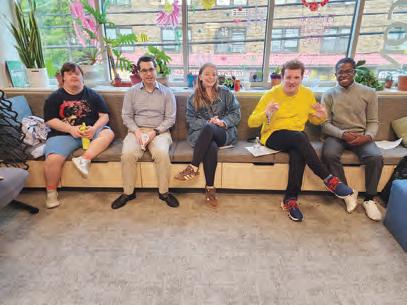
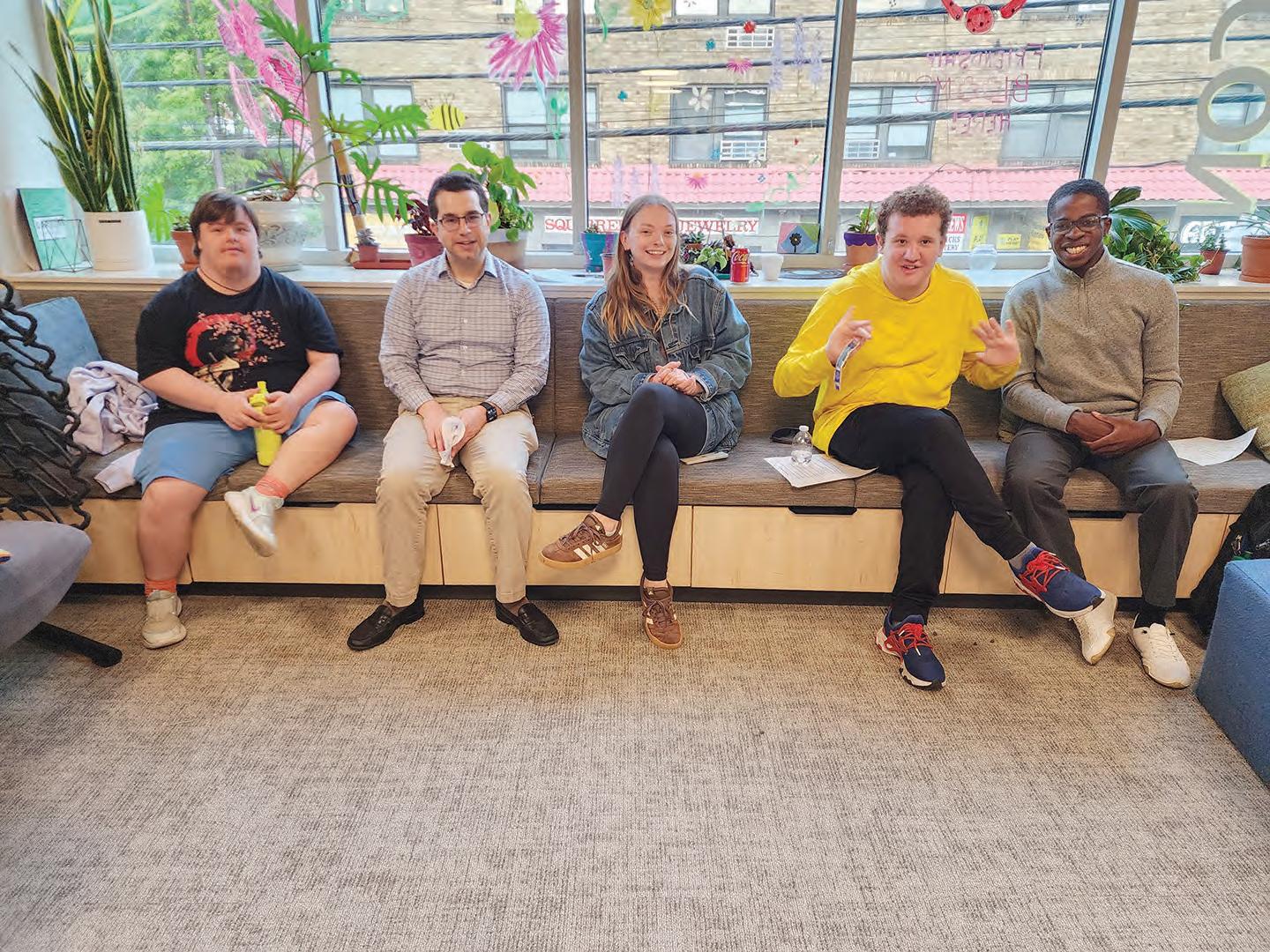
Apanel of Friendship Circle alumni offered community members advice on transitioning from high school to college, and college to the workforce. The speakers, who sat on gray cushioned seats inside The Beacon, shared strategies for building social networks, maximizing time and avoiding isolation.
After an introduction from Josh Platto, vice president of The Friendship Circle Pittsburgh’s Alumni Council, Reid Ringold, Ekow OpokuDakwa and Colton Vazquez — all members of the organization’s Alumni Council — responded to questions from Friendship Circle staffers Rachael Lynch and Masha Zaldoni.
Friendship Circle, a group that fosters friendship between teenage volunteers, chil dren and young adults with special needs, affords members an opportunity to build meaningful relationships.
Lynch, Friendship Circle’s teen member manager, asked what “real-life experience” looks like once a participant has graduated high school.
Leaving high school and starting college, “I was excited but a little nervous about meeting new people,” Ringold replied.
The Duquesne University sophomore recalled feeling slightly overwhelmed at orientation.
“I took some breaths and went on a walk,” he said.
Having made numerous friends in high school, Ringold decided he’d apply a similar tack: “I put myself out there.”
Opoku-Dakwa, a University of Pittsburgh freshman, adopted a similar strategy upon entering college. After arriving in Oakland he joined a religious club and traveled with members. As he worked to create new bonds, Opoku-Dakwa relied on old alliances.
“A lot of people from Dice [Pittsburgh Allderdice High School] go to Pitt,” he said. “Seeing them and talking to them really helped.”
That first week of college “you will meet so many people,” he continued. “So having a close circle is good.”
The two college students, and longtime friends, swapped favorite moments from their freshman year.
Opoku-Dakwa said he saw NBA Hall of Famer Shaquille O’Neal, also known as DJ Diesel, headline Bigelow Bash, a free concert for Pitt students.
“It was awesome,” Opoku-Dakwa said.
“My favorite memory from freshman year was taking Spanish,” Ringold said before demonstrating his love of the language. While attendees enjoyed snacks inside The Beacon, a Squirrel Hill-based teendesigned wellness center, Vazquez, a Duq uesne University alum, said that since graduating he’s worked at City Theatre Company and become a certified yoga instructor. The latter, Vazquez expl ained while decked out in colorful athleisure wear, led to becoming an
le Vazquez looks ahead to completing a photoshoot with Lululemon and serving as best man at a college friend’s wedding, he said the future can spark nervousness but having his “mom, cousins and friends supporting him” makes all the difference.
The commonality between the speakers, Lynch said, is that “everyone put themselves out there, and even though it was scary it worked out.”
Platto agreed and credited Friendship Circle with leading him to other Jewish groups, including Chabad Young Professionals, Moishe Pod and YAD at the Jewish Federation of Greater Pittsburgh.
Before concluding the April 28 program, Lynch and Zaldoni encouraged attendees to consider various Friendship Circle programs for individuals post-high school.
Whether it’s FC 2.0, an organizational chapter for 17-24 year-olds to meet up on campus or around the neighborhood, Friends on the Town — a program featuring movie nights, trips and wellness offerings — or the Alumni Council, which enables members to network and plan inclusive programs, like happy hours and panel presentations, “there are lots to look forward to,” Zaldoni said.
It’s true that as a younger teen, high school and Friendship Circle activities made it easier to socialize; still it’s “up to each person to find their own people,” she continued. “And, each one of our speakers showed that.” PJC
Adam Reinherz can be reached at areinherz@pittsburghjewishchronicle.org.

Submit calendar items on the Chronicle’s website, pittsburghjewishchronicle.org. Submissions also will be included in print. Events will run in the print edition beginning one month prior to the date as space allows. The deadline for submissions is Friday, noon.
q FRIDAY, MAY 8–SATURDAY, MAY 9
Join Congregation Beth Shalom for its Cultural Ambassador Weekend and learn from internationally known record producer Michael Goldwasser as he speaks about his career in reggae and how it relates to his Judaism. Free, but registration is required to attend the Shabbat potluck dinner. For a complete schedule, visit bethshalompgh.org/visiting-cultural-ambassador.
q SUNDAYS, MAY 10–JULY 26
Join Chabad of Squirrel Hill for its Men’s Tefillin Club. Services and tefillin are followed by a delicious breakfast and engaging discussions on current events. 8:30 a.m. 1700 Beechwood Blvd. chabadpgh.com
Join a lay-led online Parashah study group to discuss the weekly Torah portion. No Hebrew knowledge needed. The goal is to build community while deepening understanding of the text. 8:30 p.m. For more information, visit bethshalompgh.org/online-parashah.
q MONDAY, MAY 11
Pittsburgh Jewish Chronicle Senior Staff Writer David Rullo discusses his career as a Jewish journalist and the challenges that have accompanied his journey. Go behind the headlines for a personal look at the stories that shaped his career, the obstacles he has overcome and the unwavering commitment to truth that defines his work. This is more than a lecture; it is an opportunity to stand in support of independent journalism and the voices
that champion our community with resilience and integrity. Presented by StandWithUs, the Pittsburgh Jewish Chronicle, Beth El Congregation of the South Hills and Temple Emanuel of South Hills. 7 p.m. Free. Temple Emanuel, 1250 Bower Hill Road. Registration required. courageandtruth.planningpod.com
q MONDAYS, MAY 11–JULY 27
Join Congregation Beth Shalom for a weekly Talmud study. 9:15 a.m. For more information, visit bethshalompgh.org.
Join Temple Sinai for an evening of mahjong every Monday (except holidays). Whether you are just starting out or have years of experience, you are sure to enjoy the camaraderie and good times as you make new friends or cherish moments with long-term pals. All are welcome. Winners will be awarded Giant Eagle gift cards. All players should have their own mahjong cards. Contact Susan Cohen at susan_k_cohen@yahoo.com if you have questions. $5. templesinaipgh.org
q TUESDAYS, MAY 12–JUNE 30
Join Beth El’s Rabbi Alex Greenbaum and his Bible/ Talmud Adult Education class for a thoughtprovoking weekly session of Bible and Talmudic study. This program is available both in person and virtually. Call the office at 412-561-1168 to receive the Zoom link or to make an in-person reservation. 10:30 a.m. 1900 Cochran Road. bethelcong.org
q WEDNESDAY, MAY 13
Join Congregation Dor Hadash to learn more about A Land for All (ALFA), a joint Israeli-Palestinian political initiative that creates a practical framework for peace. Co-Directors May Pundak and Rula Hardal will discuss their model: two sovereign states connected through a confederation, grounded in equality, dignity, interdependence,

security and safety. Learn how the model was cocreated by Israelis and Palestinians, providing an innovative framework for resolving this conflict, and how the plan is being received in the region and internationally. Free. 7 p.m. In person and on Zoom. Rodef Shalom Congregation, 4905 Fifth Ave.congregationdorhadash.shulcloud.com/ form/ALFA2026
q WEDNESDAYS, MAY 13, 20
Join Chabad of the South Hills for the new JLI Course “Your Judaism Holds a Message the World Wants to Hear. It’s Time to Unlock it.” 7:30 p.m. 1700 Bower Hill Road. chabadsh.com
q THURSDAY MAY 14–SATURDAY, MAY 16
Pastor Eric Manning of Mother Emanuel A.M.E. Church of Charleston, South Carolina, is sharing the weekend with Tree of Life Congregation. Thursday evening, Rabbi Jeffrey Myers will be joined by moderator Michelle Wright (former WTAE anchor) as the two discuss Black/ Jewish relationships at Calvary Episcopal Church (315 Shady Ave.) Friday evening, Shabbat services will feature a sermon by Manning at Beit Kulanu’s Levy Hall. The weekend concludes with a special Torah Studio service at 9:45 a.m. treeoflifepgh.org
q SATURDAY, MAY 16
Carry Shabbat’s peace into the new week with a meditation and sound bath led by Cantor Julie Newman and Anitra Birnbaum. Havdalah Healing includes songs, Jewish ritual, and the soothing vibrations of crystal singing bowls and other instruments create a space to rest, reflect and restore. Open to all. 5 p.m. 4905 Fifth Ave., Cohen Chapel. tiferetproject.org/event/ havdalah-healing
q THURSDAY, MAY 21
Join your Pittsburgh community in person for a night of learning with well-known local rabbis and thinkers at Tikkun Leil Shavuot, sponsored by the Jewish Federation of Greater Pittsburgh. Free and open to the community. No registration necessary. Cheesecake and coffee; dietary laws observed. 10 p.m. to 1 a.m. Jewish Community Center of Greater Pittsburgh, Squirrel Hill, Darlington entrance. jewishpgh.org/occasion/tikkun
Join Chabad of Squirrel Hill and the Jewish Community Center of Greater Pittsburgh for all-night learning and refreshments with Rabbi Yisroel and Chani Altein. 10 p.m. at JCC, 11:30 p.m. at Chabad. chabadpgh.com
q FRIDAY, MAY 22
Join Chabad of Squirrel Hill for a Shavuot Dinner Party, including a reading of the Ten Commandments followed by a dairy dinner and ice cream bar. 5 p.m. 1700 Beechwood Blvd. chabadpgh.com/shavuotparty
q WEDNESDAYS, MAY 27 — MARCH 24, 2027
Explore the hows and whys of foundational mitzvot with Rabbi Yisroel and Chani Altein at Sushi and Study, a 12-part monthly class. Join all, some, even just one. 7:30 p.m. $15 per class/$150 per year. 1700 Beechwood Blvd. chabadpgh.com/ jewishstudy
q TUESDAY, JUNE 2
Chabad of Squirrel Hill presents The Sound of Jewish Music, an uplifting concert for women featuring music, dance and inspiration. 7 p.m. $18/$10 for students in advance; $25 at the door. Katz Performing Arts Studio, 5738 Darlington Road. soundofjewishmusic.com PJC
May 11, 1965 — The Israel Museum opens
Items are provided by the Center for Israel Education (israeled.org), where you can find more details.
May 8, 1936 — Haile Selassie arrives in Haifa
Ethiopian Emperor Haile Selassie reaches Haifa after fleeing Italy’s invasion of his country. He spends two weeks in British Mandatory Palestine. With Selassie back on the throne, Ethiopia recognizes Israel in 1956.
May 9, 1979 — Post-Shah Iran executes Jewish leader
Habib Elghanian, a Tehran businessman and leader of Iran’s Jewish community, is executed by the revolutionary Islamic government after his conviction of being a Zionist spy and “corrupter on Earth.” Jewish then emigration accelerates.
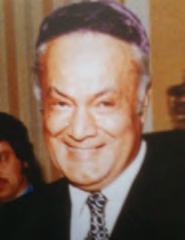
p Habib Elghanian was in the United States when the shah fled Iran, but he returned to Iran in March 1979 because he was confident he had nothing to fear.
May 10, 1994 — Arafat calls for jihad to free Jerusalem
In a secretly recorded, closed-door address at a mosque in Johannesburg, Yasser Arafat declares that the Oslo Accords, signed eight months earlier, are just a step toward Islam’s conquest of Jerusalem.
The Israel Museum opens in Jerusalem with more than 500,000 items. The museum was built with support from foreign benefactors, including the U.S. government, and through the efforts of future Jerusalem Mayor Teddy Kollek.
May 12, 1992 — First Israeli scales Mount Everest
Doron Erel, 33, the son of Holocaust survivors and a former member of the elite Sayeret Matkal commando unit, becomes the first Israeli to summit Mount Everest in an expedition with 13 other climbers.

May 13, 1934 — Archaeologist Ehud Netzer is born Archaeologist Ehud Netzer is born in Jerusalem. He enters the field by joining Yigael Yadin for summer digs at Masada. He devotes much of his career to Herodium, a desert fortress built by Herod the Great.
May 14, 1948 — Israel declares independence
David Ben-Gurion, the chairman of the Provisional State Council, reads Israel’s Declaration of Independence at the Tel Aviv Museum, tracing Jewish history and arguing for a Jewish state under international law. PJC
—
By Emma Riva | Special to the Chronicle
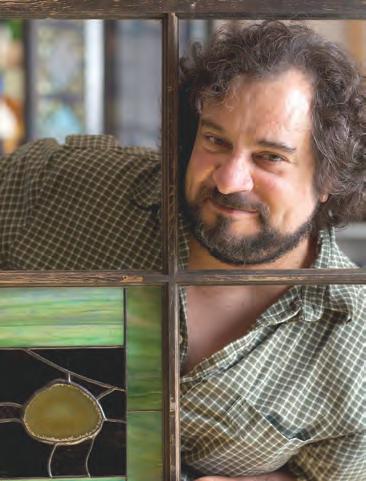
When Glenn Greene was a teenager in Cleveland, Ohio, he needed a new job. His gig as a busboy meant he had to “hitch, walk, or bus” to a far-off restaurant, and he was starting to hate it. His mother suggested he work for a family friend who owned a nearby stained glass studio. This was 47 years ago, and Greene has been a stained glass purveyor of “creations and restorations” ever since.
Greene started out doing menial work at the studio and worked his way up. “I can remember they were like ‘OK, you want to be a stained glass artist, here’s a broom,’” he said. But from there, he started making his own glasswork, and his supervisors encouraged him to create original pieces. His first original piece was an archshaped tableau of mountains and rays of sun, adorned with glass of every color. It sold the day he finished it.
He moved to Pittsburgh when organizers of a volunteer project to restore a church on Bellefield Avenue in Oakland reached out to him. “I’ve been in more than my fair share of churches for a Jewish boy,” he remembered.
However, he did create stained glass windows for his mother’s synagogue in Cleveland, as well as for Temple Ohav Shalom in Allison Park. “My mom gets naches points forever,” Greene quipped. The window he created for that synagogue is particularly striking: Interlocking Stars of David hover over the synagogue’s eternal flame.
Stained glass first appeared in the year 1099 in German churches. It’s easy to see how it captures peoples’ imaginations in houses of worship. The light filtering through the colored, textured glass conveys the majesty of spirituality and the big, all-consuming feelings beyond articulation that arise in these spaces. Particularly during the medieval era, when literacy was not as widespread and few worshippers could read the Bible, stained glass was a way to experience the sublime.
Later, synagogues adopted stained glass, but large glass windows would have been problematic for medieval synagogues. As Greene put it, “as usual, we [Jews] are just trying not to get slaughtered.” But many Reform synagogues in the 19th and 20th centuries made use of stained glass, and it’s now commonplace.
After working on the Bellefield church, Greene launched his glass business in Oakland, then moved to Regent Square to start a family. He’s developed a loyal customer base. When I visited him, he was working on a piece for a friend’s door. Their dog had bumped into it and shattered a corner. “Doors take the most abuse,” he said. “They’re the only pieces I do that ever come back.”
Greene does both restorations and original pieces for Pittsburgh clients.
“No town has windows like here,” Greene said of the city. “I think there’s more here than anywhere. I came here at 19 with a head full of steam and the city wouldn’t let me leave. There’s work everywhere I go. I do a little glass repair at a home here, and a little old Italian lady is like ‘come on and eat!’” He describes Pittsburgh as more “cozy and friendly” than Cleveland, and the abundance of stained glass windows is great for another one of his passions: repurposing glass.
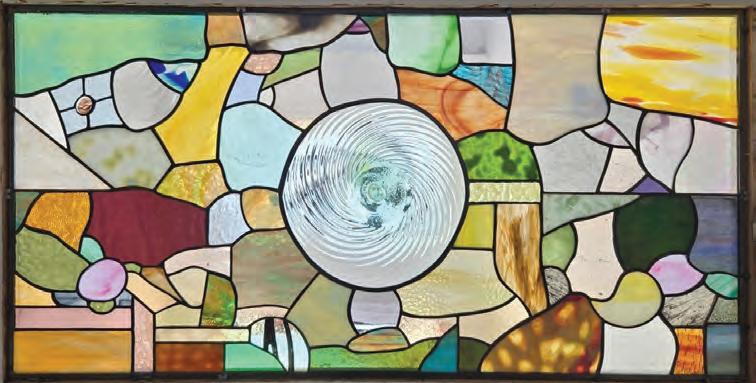
In the summer of 1995, a competitor said offhand that all his glass was old. “I thought, instead, ‘He’s right, I do have a lot of old glass; I should start using it to make art.’ And the
reaction was so positive,” Greene said.
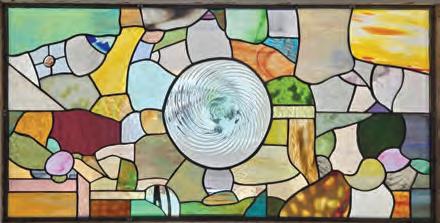
Some of his pieces like “Wabi Waste-Not, The Good and Hopeful Spirit,” and his “red, white, blue, and green” series engage with his enthusiasm about reuse and the environment. “Windows are our connection to the natural world,” Greene said. His pieces often include clear space in the center, encouraging viewers to look out at their yards or the street and see it differently.
What sets his glasswork apart is how expressive it is. He combines cathedral glass, opalescent glass, beveled glass, and many other textures and colors to create compositions that really breathe. While some stained glass is meant to be stagnant, Greene’s has a dynamism to it. No two pieces are the same, and some of the reused glass he works with is over a century old. He sometimes literally gets the glass out of the garbage, but also will take scraps from local glass companies. He often describes the glass as having “character” or personality. Each piece really does appear to have a life of its own. Even on gray Pittsburgh days, the glass shimmers.
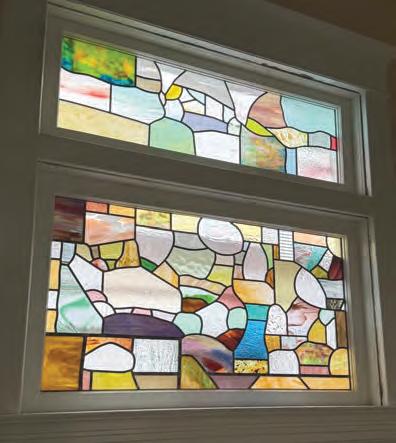
While most stained glass artists create from a pattern, Greene does it spontaneously. He draws mock-ups, but once he starts cutting the glass, he works intuitively. Each piece is infused with his intentions and feelings at the time.
Greene’s craft requires both artistry and technical skill. It’s meant to be shared with people in their homes, and to soak up light from the outside world.
“My art is a regular, functioning thing,” he said. “I think of it in terms of museum quality, but I’m not pretentious about it.”
What he enjoys most is when friends see his work out in the world and tell him about it. “I can excite myself up and down, but when other people get excited about it that completes
the circle.”
Greene produces work at affordable prices, including the “crate series” that ranges from $40-$100, or the “open-ended series,” glass panels with shapes extending beyond ordinary rectangles. He also does custom work, carefully considering each client’s home and the intended placement of the piece.
There’s a mesmerizing quality to stained glass — maybe it’s the magpie-like animal desire to pick up a shiny thing that might be important. “People can get totally seduced by the material,” he said.
There’s a meditative element to the glass that invites you to linger and keep taking it in.


It’s hard to leave Greene’s studio emptyhanded, and once people learn about Greene, they keep coming back. After 47 years, he feels he’s matured as an artist enough that he balances making work that resonates with viewers with not caring what anyone thinks.
“I’ve gotten my art to what I think is a pretty good place now,” Greene said. “I’m the best kept secret in Pittsburgh for buying art for your home.” PJC
Emma Riva is a freelance writer living in Pittsburgh.
FRIDAY, MAY 8 & SATURDAY, MAY 9, 2026
CONGREGATION BETH SHALOM 5915 BEACON ST., PITTSBURGH, PA 15217
JOIN US TO LEARN FROM INTERNATIONALLY-KNOWN RECORD PRODUCER MICHAEL GOLDWASSER AS HE SPEAKS ABOUT HIS CAREER IN REGGAE AND HOW IT RELATES TO HIS JUDAISM.
MAY 8 AT 7:30 PM - DUB SIDE OF THE JEW SAMUEL & MINNIE HYMAN BALLROOM

MICHAEL SPEAKS ON HIS PERSONAL JOURNEY AS A RABBI'S S ON WHO BECAME A SUCCESSFUL REGGAE PRODUCER.
NOTE: SERVICES AT6PM FOLLOWED BYPOTLUCK DINNER. (ONLINE REGISTRATION REQUIRED FOR POTLUCK BYSCANNING THIS QR CODE.)

MAY 9 SERVICES BEGIN 9:30 AM - THE MAKING OF “ASCENT” FAYE RUBENSTEIN WEISS SANCTUARY MICHAEL EXPLAINS HOW HE AND RECORDING ARTIST MATISYAHU COLLABORATED ON A SONG ABOUT ANTISEMITISM THAT WAS RELEASED IN THE WAKE OF OCT. 7TH.
NOTE: MICHAEL WILL BE SPEAKING DURING THE SERMON SLOT.

MAY 9 AT 1:00 PM - SHABBAT SHI’UR: LIONS OF JUDAH WEINBERG PAVILION
MICHAEL EXPLORES THE DEEP LITURGICAL, CULTURAL, AND HISTORICAL CONNECTIONS BETWEEN JUDAISM AND REGGAE MUSIC.
QUESTIONS? CONTACT SHARI WOLDENBERG AT SWOLDENBERG@BETHSHALOMPGH.ORG
5885 Forbes Ave. Pittsburgh, PA 15217
412-521-8100
Founded in 1993 by June, Charles and David, Pittsburgh Bagel Factory & Delicatessen is known for homemade bagels, breads, pastries, chocolate and cinnamon babka, rugelach and classic blackand-white cookies. They also serve homemade corned beef, pastrami and roasted turkey, plus breakfast, brunch, lunch and dinner catering for celebrations, bar/bat mitzvahs, shiva trays and funerals. Voted best Nova sandwich for 22 years — you haven’t had a bagel until you’ve had theirs! 412-521-8100





1926 Murray Ave. Pittsburgh, PA, 15217 bunnybakes.org
Bunny Bakes is an inclusive bakery and cafe where exceptional baked goods and coffee meet meaningful employment. We provide comprehensive training and career pathways for adults with disabilities, demonstrating that when workplaces are designed with accessibility and support in mind, everyone can contribute their unique talents and thrive. At Bunny Bakes, we’re more than a bakery — we’re a training ground for careers. We take pride in crafting specialty coffee drinks and delicious, house-made treats baked fresh daily in our Squirrel Hill location, using high quality ingredients. We offer gluten-free and dairy-free options, and all baked goods are certified as strictly kosher.









1731 Murray Ave. Pittsburgh, PA 15217 412-291-8927 casadeltequilaeatery.com
Casa Del Tequila on Murray Avenue in Squirrel Hill brings bold flavor, warm hospitality and a vibrant dining experience to the neighborhood. Enjoy authentic Mexican favorites made with the highest-quality ingredients, delicious margaritas and a welcoming atmosphere perfect for lunch, dinner or celebrations. With a focus on putting the customer first, Casa Del Tequila is ready to serve up a memorable meal right in the heart of Squirrel Hill.


THE CHOCOLATE MOOSE 5830 Forbes Ave. Pittsburgh, PA 15217 412-422-2208 thechocolatemoosepgh.com
The Chocolate Moose is Pittsburgh’s destination for true chocoholics! Enjoy gourmet truffles, chocolate bars from around the world, handdipped treats, Nutella-stuffed pretzels, jumbo peanut butter cups, chocolate-covered pretzels, almond bark, jelly beans, gummies and more. We also create fun gift baskets for every occasion. Visit us in person or online at thechocolatemoosepgh.com.





Enjoy



EIGHTY ACRES KITCHEN & BAR 1910 New Texas Rd. Pittsburgh 15239 724-519-7304 eightyacreskitchen.com
At Eighty Acres Kitchen & Bar, we offer a refined, modern approach to contemporary American cuisine with a strong emphasis on local, farmto-table products. We are a family owned and operated restaurant located in the Monroeville/ Plum area of Pittsburgh. Our passion is crafting contemporary, seasonally-based dishes complemented by homemade desserts, handcrafted cocktails, and carefully selected wines and craft beers.

Our head chef and owner, Don Winkie, has over 30 years of experience in critically acclaimed kitchens across the United States. He is committed to providing fresh, innovative dishes and memorable experiences for our neighbors, near and far. No matter the occasion, we look forward to seeing you at Eighty Acres Kitchen & Bar. EVERYDAY NOODLES 5875 Forbes Ave. 412-421-6668 everydaynoodles.net

CHOW’S KITCHEN 5829 Forbes Ave. 412-521-0261 Chowskitchenpgh.com




In Pittsburgh’s Squirrel Hill neighborhood, Everyday Noodles and Chow’s Kitchen showcase authentic Chinese cuisine. Everyday Noodles is famed for handpulled noodles and soup dumplings prepared fresh before diners’ eyes. Nearby, Chow’s Kitchen offers Shanghainese specialties in a warm, modern setting. Together, these sister establishments highlight traditional flavors, skilled preparation and Pittsburgh’s growing appreciation for regional Chinese dining experiences.





GIRASOLE
733 Copeland St.
Pittsburgh, PA 15232
412-682-2130
girasolepgh.com
An authentic Pittsburgh Italian restaurant tradition. Dine Italian-style surrounded by rustic stone walls as if you were in a villa’s wine cellar. A complete wine list and bar are available; check for live music nights. Fine dining with a traditional yet fun atmosphere — that’s Girasole! Check out our new spring menu — available for dine-in or take-out.

1114 Grandview Ave.
Pittsburgh, PA 15211
412-431-3100
lemontpittsburgh.com
Mother’s Day at LeMont is a family tradition!
Yes, LeMont has an amazing Mother’s Day Grand Buffet.
At LeMont, Mother’s Day is about tradition. LeMont’s staff enjoys serving families celebrating together year after year. Young mothers are now grandmothers. We look forward to seeing two, three and four generations of families return each year to celebrate at LeMont.
That’s the Mother’s Day tradition that we love.

Proud supporter of the Jewish Community “Look to us for your organization’s fundraising
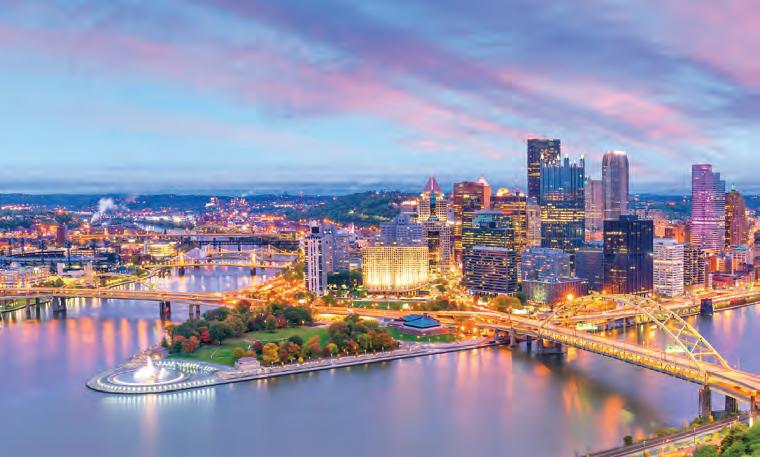

LeMont Restaurant is the perfect venue to host your celebrations - a private party, banquet, wedding, anniversary, retirement, bar or bat mitzvah, graduation or fundraiser. Contact Bill Laughlin, Banquet Manager, 412-431-3100 to plan your special events. LeMontPittsburgh.com/event-space
1916 Murray Ave.
Pittsburgh, PA 15217
412-421-1015
412-421-4450
Fax: 412-421-4451
Murray Avenue Kosher, located on Murray Avenue in Pittsburgh, is a trusted neighborhood destination for quality kosher foods and everyday essentials. Serving the community with care, Murray Avenue Kosher offers fresh meats, grocery items, prepared foods, holiday favorites, and specialty products for Shabbat, celebrations and daily meals. With friendly service and a strong commitment to tradition, it is a welcoming place for families and shoppers looking for quality, convenience and kosher choices in Squirrel Hill.


RISTORANTE
1200 Old Freeport Rd. Pittsburgh, PA 15238
412-781-2220 nancettasitalianresturant.com
Bongiorno!
Nancettas authentic Italian cuisine from Italy — totally different from Pittsburgh Italian. Thin-sliced chicken, veal, lamb chops and short ribs. Wild fresh fish, clams, oysters, scallops and shrimp. Eggplant and chicken parmesan. Prime cut steaks. Made in-house bread, pizza and pasta made from imported Italian flour. Ravioli made in-house: fresh pear, leek, spinach ricotta. Try our pillows of love, gnocchi. Stone, terra cotta tile and marble enhance the inside; featuring an outside lighted garden dining area, to create a memorable Italian experience.




NAPOLI PIZZERIA
SQUIRREL HILL
2006 Murray Ave. • Pittsburgh, PA 15217
412-521-1744 • napolipizzasqhill.com
reo-maintenance@hotmail.com
We are a family-run pizzeria serving Squirrel Hill since 1973, and winner of the 2026 Best Pizza in the Burgh contest on 100.7! We offer homemade pastas, sauces, dressings and pizza, with up to 10 different types of single-slice cuts daily. Our drivers will deliver anywhere within a two-mile radius, open to close. Beer delivery also is available with food purchase.




5839 Forbes Ave., Pittsburgh, PA 15217 412-521-2111 • orderpizzabellino.com
Pizza Bellino has been family-owned and locally operated since 2007, proudly serving the community with dine-in, pickup and free delivery. We use fresh ingredients, including locally grown Pennsylvania produce, and make our fresh dough in-house every other day. Our dedicated team has grown like family, with many of the same friendly faces serving you year after year. Order directly through our website — no third-party services needed! Free delivery within a 4–5 mile radius


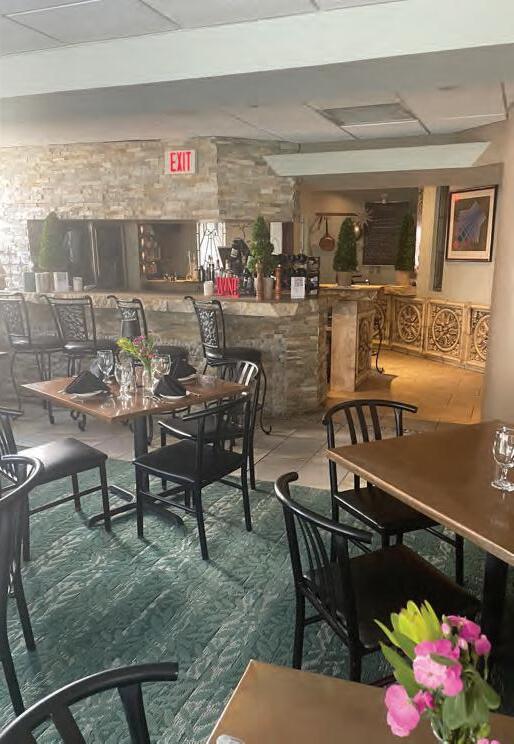






3473 Butler St., Pittsburgh, PA 15201 412-586-4347 • sentirestaurant.com
Senti Restaurant, located on Butler Street in Pittsburgh, offers a warm and elegant dining experience with authentic Italian flavors and a modern touch. Guests can enjoy beautifully prepared pasta, fresh seafood, seasonal specials, handcrafted cocktails, and a thoughtfully curated wine selection. Perfect for date nights, celebrations, or a relaxing dinner with friends, Senti brings charm, flavor and hospitality to every table. Visit Senti and enjoy a memorable taste of Italy in the heart of Lawrenceville.
Shadyside, PGH



TRIANGLE BAR & GRILL

2122 Monongahela Ave., Pittsburgh, PA 15218 412-271-9885 • trianglebarswissvale.com
Triangle Bar & Grill has been a Pittsburgh favorite since the 1940s. Founded by the Catezano family, the Crombies proudly carried it on after purchasing the establishment in 1982. Known for legendary oversized hoagies, Triangle also has its own bakery, baking fresh bread in-house for that unforgettable taste. With hearty portions, fresh ingredients and neighborhood charm, Triangle is perfect for lunch, dinner, takeout, fundraising, or any gathering worth making delicious and truly memorable.

Open Tuesday through Saturday 11:30am – 10:00pm Sunday 4:00pm – 9:30pm Spring Menu Available Now Shadyside 733


girasolepgh.com


















Monday, June 8
5:30-7 pm: VIP Reception
7-8:30 pm: Interview, Cooking Demo and Book Signing
JCC of Greater Pittsburgh • Squirrel Hill
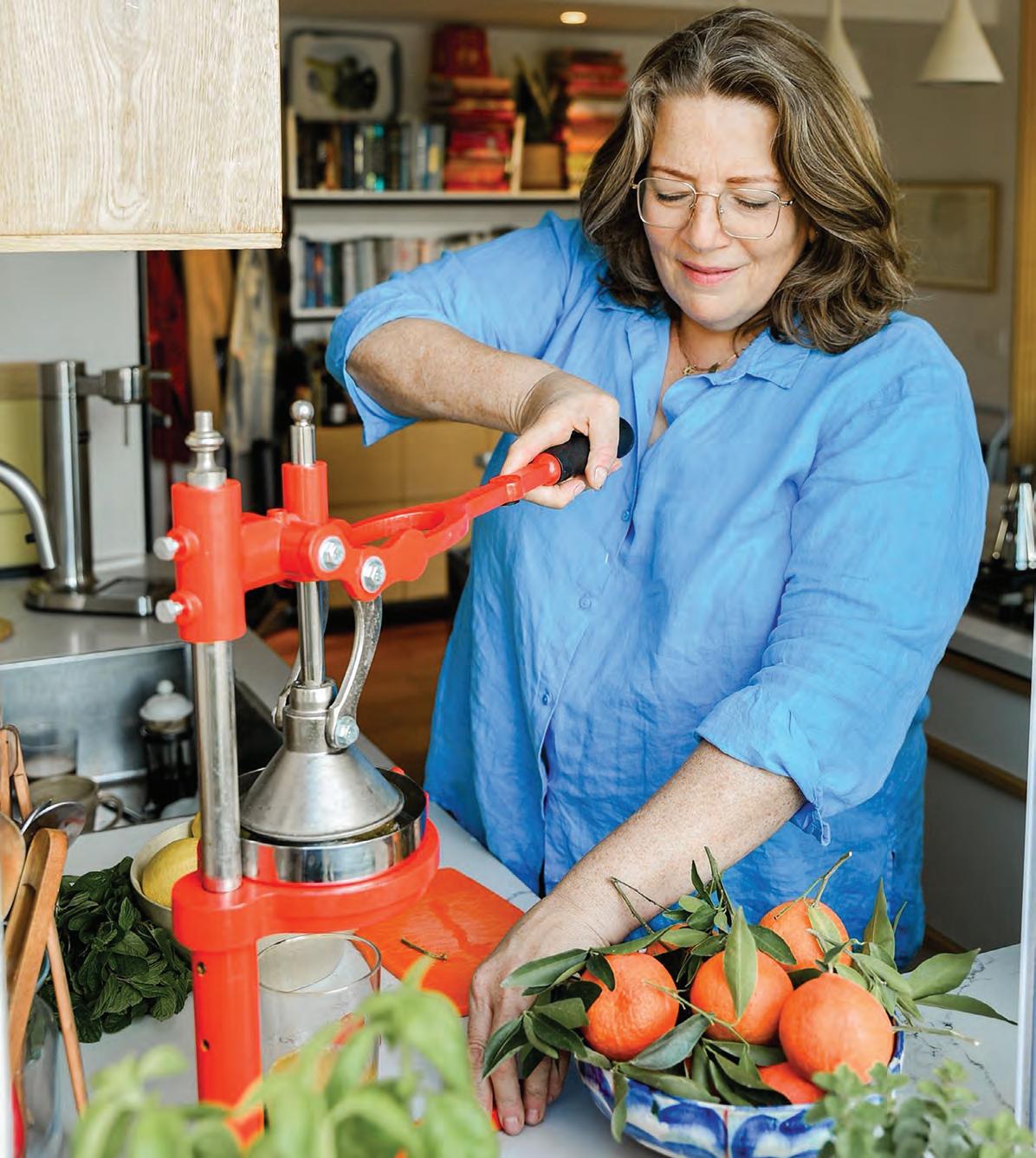
$54 Admission includes signed copy of Sussman’s newest cookbook, Zariz
$118 VIP intimate meet & greet with the 3 chefs featuring a special cocktail and light bites created by Adeena Sussman and Bill Fuller
Students:
Continued from page 1
Rosenblum said the trip was important because it allowed students to urge the governor to opt into a newly available federal tax credit. The state is a big supporter of the day schools, he added.
“They provide funding for security and the EITC [Educational Investment Tax Credit, which provides funding to eligible K-12 students]. You need to reach out to them and have a conversation about where their dollars are going and why it’s so important,” he said.
Yeshiva, he said, is dependent on the funding, not just to help with the cost of day school for families, but to provide security at all three schools.
“I think it was helpful,” Rosenblum said of the trip. “It was good to go, and I think it will become a yearly tradition.”
Community Day School Head of School Casey Weiss wasn’t on the trip, but she agreed with Rosenblum that the funding is vital to the day schools.
“All three of our schools benefit immensely from the EITC program,” she said.
Because of that funding, she said, CDS was able to give a one-time gift back to some families.
“To get an email that says, ‘As a result of fundraising for this program, your tuition is $4,000 cheaper,’ that’s a game-changer,” she said.
Weiss noted that financial insecurity is a significant issue for families and that Jewish life is expensive — b’nai mitzvahs, synagogue
Land For All: Continued from page 1
A Land for All, she explained, believes that Israelis and Palestinians have shared needs, including a strong economy and security.
“If Israel and Palestine have completely separate states and Palestine has a failed economy, there’s going to be no safety or security for Israelis,” she said. “You need to find mechanisms that ensure the shared interest of the stability and sustainability of a peace agreement.”
It starts with the 1967 borders and a shared Jerusalem, she said, but would grad ually grow to include a porous border with freedom of movement and residency.
“There will be a border, but it will hope fully move towards a porous border where people can move freely,” she said. “So, folks from Ramallah could visit Haifa.”
Hardal, a political scientist who lives in Ramallah, said the fate of Israel and the Palestinians is even more intertwined than France and Germany, on a much smaller piece of land. Both groups, she said, have an emotional connection to the land.
dues, kosher food and summer camp are costly, she said.
“I don’t think that people always think about what it means when we talk about affordability and day schools,” Weiss said.
CDS teacher Lindsey Vendetti said the unity on the bus was as important as the conversations with the various officials.
“I have been with CDS for 19 years and love when we get to combine with the other day schools,” she said.
The students, Vendetti said, enjoyed the ride, which included hanging out and singing, but understood the importance of the meeting, as well.
“I think it really sunk in with the girls when they met with a Jewish woman representative. She was talking to the girls, and it was all about girl power. They buzzed about that on the way back,” she said.
Izzy Rudolph, who has four children at Yeshiva Schools, helped promote the trip among the schools. He said it was a “good day for the students and the schools.”
Rudolph said it was important to push Shapiro to opt in to a new Federal Tax Credit Scholarship Program, which includes up to $3.1 billion in participation for the commonwealth, according to Teach PA.
Also vital, he said, is the educational opportunity of such a trip, showing the influence of the state capital.
“A lot of things that impact our daily lives happen in our capital, Harrisburg. A lot of programs at the state level happen in Harrisburg. We think it’s a small, little capital, but it’s not,” he said.
Jeremy Kazzaz also helped with the trip. When he learned about it from Teach PA Executive Director Jenny Sved, he reached out to Pennsylvania Supreme Court Justice David Wecht, who wasn’t in town on the day of the trip but helped arrange a tour of the Supreme Court chamber — something that is usually off-limits to both the public and members of the legislature.
Wecht also helped arrange meetings with a few judges, who explained to the students the work of the judiciary.
“I feel strongly that visiting capitals and city halls is an important educational activity for students and this should be a more common practice for schools everywhere,” Kazzaz said.
Teach PA is an initiative of the Orthodox Union, which advocates for government policies that support Jewish day schools across Pennsylvania.
Sved said Teach PA’s role in advocating for state dollars is important.
“EITC is about to celebrate its 25th birthday,” she said. “That program has grown tremendously, and we want to make sure it stays strong and gets bigger and better and helps our schools, as much as possible.”
This year, more than 4,300 students from across the state urged lawmakers to increase funding for the Targeted School Safety Security Grants for Nonpublic Schools from $19.4 million to $30 million annually and raise the per-school cap from $75,000 to $125,000. They also voiced support for the EITC and Opportunity Scholarship Tax Credits program, urged Shapiro to adopt the new Federal Tax Credit Scholarship program
and called for support for a new $1 million STEM teacher initiative.
Sved said that Teach New Jersey and Teach New York have already initiated the STEM program, which brings public school teachers into Jewish day schools, and is covered by the states.
Participation in the Pennsylvania trip was widespread, Sved said.
“We had representation from over 13 different schools,” she said. “That includes executive directors, teachers, parents, students and chaperones.”
One of the more poignant moments came when Shapiro addressed the students and talked about the importance of freedom of religion, practicing your faith and feeling strong and confident, Sved said.
The moment was poignant for Rosenblum, as well.
“He told them that one of the first things William Penn did when he came to the United States was talk about the freedom of religion,” Rosenblum said. “The governor said, ‘I’m not sure William Penn knew that one day there would be a Jewish governor talking to a group of Jewish kids at the capital.’”
For Leah Altein, hearing from the governor was one of the highlights of the trip, but so was traveling with other students from the different day schools. It’s an event she’d be happy to repeat.
“It was a nice experience and I’m happy I had the chance to do it,” she said. PJC
David Rullo can be reached at drullo@ pittsburghjewishchronicle.org.
“Our starting point is, yes, two separate sovereign states with shared institutions to take care of things that we jointly have to take care of, like the European Union. Then, also there’s a paradigm shift between separation and segregation and walls to partnership, shared interests and a sense of belonging to the whole land,” she said.
Hardal said A Land for All wanted to respect the history of the two peoples and the ongoing support of the international community when crafting their plan, and didn’t want to invent something new.
“We considered the framework of having a confederation and shared institutions between the two states and offering this creative freedom of movement and citizenship and residency,” she said. “All Jews and Palestinians will have the feeling — despite
their legal status in Israel and Palestine — of freedom and owning the whole land.”
Neither Israelis nor Palestinians, she said, are naive regarding the challenging nature of the task and the reality on the ground. They’re also aware that any two-state solution requires governing partners. Israel has a system in place, begging the question: Who would the Israelis work with in a Palestinian state?
Hardal said that both Hamas and the Palestinian Authority — groups she called “weak, “corrupt,” and “not professional” — are recognized by the international community as governing the Palestinians. The Palestinian Liberation Organization still has some sway, as well, she added.
“The Palestinian people will decide who are their leaders — if we like them or not. It’s the same conversation about the regime
in Iran,” she said.
Pundak said the response to their plan from many in Israel has been “shock” and “disbelief” that there is a viable option available, one in which they can help take ownership and agency over the situation.
“For many people, there is this feeling of like, ‘Wow.’ For others we’re perceived as moving from politically naïve to politically relevant. The transformation has been going on for the last few years. We’re backing it with research and policy and experts, with international support and Palestinian partners,” she said.
Hardal said the reaction has been similar among Palestinians — but she labeled Israel’s reaction to Hamas’ Oct. 7 terror attack a “genocide,” a claim widely disputed by genocide scholars and most mainstream Jewish organizations. According to the American
Jewish Committee, “few claims are more offensive and blatantly wrong.”
“The situation here in Israel, in Palestine, since Oct. 7, and the ‘genocide’ in Gaza and what’s going on with the ongoing violence and disposition of Palestinians in the West Bank. We don’t have any illusions. We live in our communities, and we know the different perspectives,” she said.
Still, she said, many Palestinians believe A Land for All’s plan is better than the alternative, classic two-state solution.
Pundak said the organization is building partners in the U.S. and international community.
Beyond borders and governments, individual opinions and beliefs will also need to be aligned, something Pundak said Hardal helped her with when she joined A Land for All.
Hardal said she doesn’t shy away from using words like “genocide” or “occupation” in conversation but, as a pragmatist, it’s more important to deal with the specific national interests of the people and the political vision that is needed.
“We can choose other words, nicer words, but the reality on the ground — and we live it every day, all of us Jews and Palestinians — is very hard,” she said.
In the end, Pundak said, it comes down to individuals willing to work for peace.
“We are an organization that offers something positive, but I am not a human rights organization. I do this for my family. I think that’s the strength and the authenticity of our work. We’re excited to build new partnerships and friends in Pittsburgh who are choosing to not give up and think outside of the box. We need to listen to the people on the ground who are doing the work and we need to find something that we can identify with on a pragmatic level,” she said. PJC
David Rullo can be reached at drullo@ pittsburghjewishchronicle.org.
Guest Columnist
The era of grant aid to Israel is closing — not because the alliance is faltering, but because Israel has succeeded.
The shift is bilateral, not an American imposition. In December, Israeli Prime Minister Benjamin Netanyahu announced a 350 billion shekel ($120 billion) domestic defense investment over the next decade.
In January, at Mar-a-Lago, he confirmed his intention to taper U.S. military aid to zero. On April 26, the Israeli financial daily Calcalist reported that Washington and Jerusalem will open formal negotiations next month on a successor framework that drives Foreign Military Financing to zero by 2038.
The architecture that has defined the U.S.Israel relationship for four decades is being replaced. The question is what that will look like.
In Washington, this transition is widely framed as a problem for the American pro-Israel community. Annual aid appropriation has been the primary legislative deliverable for 40 years; without it, one might ask, what is the lobby for?
That framing is wrong. This transition is the largest strategic opportunity in the alliance’s modern history, and the American Israel Public Affairs Committee is uniquely positioned to lead it.
Consider what Israel actually is in 2026.
Defense exports of $14.79 billion in 2024— the fourth consecutive record year. A combined order backlog at Israel Aerospace Industries, Elbit Systems and Rafael Advanced Defense Systems exceeded $80 billion by the first quarter of 2026. Iron Dome interceptors are now being manufactured in Camden, Arkansas, by an Israeli-American joint venture. Arrow 3 has been deployed to Germany as the apex layer of European Sky Shield. Trophy active protection systems have been installed on American Abrams tanks and Iron Fist on American Bradley fighting vehicles.
Israel’s economy — with a GDP near $712 billion and per capita output of nearly $70,000, according to the International Monetary Fund
— is among the highest in the world.
This is not a country that needs to be subsidized into existence. It is a tier-one defense power on whose technology American servicemembers now depend. The grant model was right for 1979. It is wrong for 2026.
What the post-aid alliance needs is architecture.
other organization has the same depth of access to the same number of relevant rooms.
Add the bipartisan operating model. The architecture questions split unusually well across the aisle. Conservatives aligned with U.S. President Donald Trump want a transactional alliance built on shared strategic competition with China and Iran, and the post-aid frame-
The architecture that has defined the U.S.–Israel relationship for four decades is being replaced. The question is what that will look like.
Five questions will define it: How big is the joint research envelope that replaces declining American subsidies? How does the United States fulfill its statutory obligation to maintain Israel’s Qualitative Military Edge when the financing instrument changes? How are Israeli technology transfers to China constrained? How are American export controls, particularly ITAR licensing, brought up to the speed at which Israeli and American innovation cycles actually run? And how is the political economy of the relationship rebuilt around American jobs producing Israeli systems for American customers, rather than American grants flowing to American contractors who happen to sell to Israel?
Each of these questions is technically demanding, politically complex and consequential. Each requires substantive American advocacy of a kind that the pro-Israel community has not focused on for a generation. And each plays directly to AIPAC’s institutional strengths.
Begin with congressional relationships. The successor framework will be shaped substantially through authorization legislation — the National Defense Authorization Act, foreign relations authorizations, trade and CFIUS legislation, and the rulemaking that follows each. AIPAC’s congressional footprint, built across decades and both parties, is the single most valuable advocacy asset in the pro-Israel ecosystem for exactly this kind of work. No
The worst pro-Israel
Guest Columnist
My kids think I am too old for social media. They might be right. Since the war started on Oct. 7, I have been posting on Facebook about Israel, antisemitism and the shifting dynamics across the Middle East. Nothing fancy. No strategy. No content calendar. Just a guy in Modiin with opinions, a keyboard and a need to say something when the world seemed determined to say nothing. Or worse, say the wrong thing. Then one day, a post went viral. And then the next one. And the one after that.
I stared at the screen showing 100,000 views on a single post and did what any normal person would do: I told my family. My kids responded with the kind of support only
work delivers that. Traditional Republicans want a Reagan-era internationalist alliance with allies who carry their share of the burden; the post-aid framework delivers that, too. Pro-Israel Democrats want an alliance grounded in democratic values and technology partnership rather than financial dependency; the post-aid framework, perhaps surprisingly, fits that frame as well as any other.
AIPAC operates fluently across all three constituencies. Most of the alternatives operate across one at most.
Add American industrial constituencies. Each successful U.S. procurement of an Israeli system builds a domestic constituency for the alliance — an industrial constituency rooted in specific congressional districts with the political durability of a Boeing or Lockheed program. This is the political economy of the post-aid era, and it is more resilient than the foreign aid model that preceded it. AIPAC’s natural role is to be the political organizing principle of that constituency.
Add the strategic logic of the China question. The post-aid framework will, almost cert ainly, codify treaty-level restrictions on Israeli dual-use technology transfers to Beijing: semiconductors, AI, advanced sensors, autonomous systems, hypersonic technology and defense-relevant biotech. This serves direct American interests. It also positions the U.S.-Israel alliance at the center
teenagers can offer. “Abba, you are literally the worst influencer ever. You are too old to do social media.”
Fair enough. But something was happening. People were reading. People were engaging. And then I looked at the comments.
5,000 comments and a mirror into madness
The engagement was staggering, and not in the way you might hope. Buried in those thousands of comments were messages directed at me that I never imagined I would read in my lifetime. I have been called a murderer. A baby killer. I have been accused of drinking Arab babies’ blood. Someone accused me of blowing up a Hatzolah ambulance in London for insurance money.
Read that last one again. A volunteer ambulance service. Insurance fraud. These are the kinds of accusations people type out, hit “post,” and go about their day.
So I did what seemed like a good idea at the time. I responded.
of the broader American strategic competition with China, rather than at its periphery.
AIPAC has long understood that the most durable case for the alliance is the case rooted in shared American interests, and the post-aid framework makes that case more concretely than the aid model ever did.
Finally, add the generational reset. Making the pro-Israel case for Americans aged 18 to 34 in the vocabulary of their parents has failed. The post-aid frame — democratic partnership, technology integration, opposition to a coalition of authoritarian states — could resonate better with this generation if made well. AIPAC has the budget, the infrastructure and the institutional reach to make it.
None of this happens automatically. The successor Memorandum of Understanding could be poorly designed. The China veto could be left informal. The ITAR system could remain calibrated to a different era. The American industrial constituency for the alliance could be built piecemeal rather than systematically. The generational case could be lost by default. Each of these failures is plausible. Each happens if the architecture work is done haphazardly rather than by design.
The successor MOU negotiations open in May. The framework will likely be signed by FY2027. In other words, the window for shaping the architecture is approximately 18 months. This moment requires American pro-Israel leadership to operate strategically — technical, sustained and unafraid of an unfamiliar room.
Critics on the left and the right have argued for years that the pro-Israel lobby is yesterday’s instrument. That argument has always been wrong, but it has been most obviously wrong when applied to a moment like this. The lobby that managed the patron-client era must become the lobby that architects the peer-alliance era — exactly what AIPAC is bestequipped to become.
The best chapter of the U.S.-Israel alliance is yet to come. The institutions that lead us there will define how good a chapter it turns out to be. PJC
Gregg Roman is the director of the Middle East Forum. He is the former director of the Jewish Federation of Greater Pittsburgh’s Community Relations Council. This article was originally published on JNS.
I gave facts. I called them out. I went down the rabbit hole, and every response of mine generated more comments, which generated more responses, which generated more hate, which generated more facts from me. It became a loop with no bottom.
The ignorance is the real story
What has amazed me most is not the hate itself. Hate is old. Antisemitism has been around longer than any of us. What gets me is the ignorance. The complete, unshakable, proudly held ignorance.
People post things that are factually, demonstrably, provably wrong, and they do it with total confidence. Today, someone commented that it is “fake news” that Israel sent Iron Dome systems and soldiers to help the UAE. Their evidence? Hypersonic missiles from Iran are “destroying Israel” and Iron Dome “does not work.” They shared videos from Twitter showing explosions, claiming Iran is leveling the entire country.
I am sitting in Israel. I can see outside my window. The country is standing.
But on social media, someone in another country watches a video with dramatic music and explosion footage and decides they know the ground truth better than the people living here. And this is the part that should concern all of us, on every side of every issue: Social media allows anyone to construct any narrative they want, package it with stolen footage or AI-generated content, and present it as fact. With AI improving by the day, the ability to fabricate convincing video and images is only accelerating. We are entering an era where seeing is no longer believing, and most people have not caught up to that reality.
When Sky News calls
One of my posts was recently picked up by a reporter at Sky News Australia. He built an entire segment around it. The post was about liberal musicians performing at festivals while ignoring what happened at the Nova music festival on Oct. 7. He
Please see Schoenfeld, page 17
Last week, the Chronicle asked its readers in an online poll the following question: "Is anti-Zionism a hate movement?” Of the 283 people who responded, 82% said yes and 18% said no. Comments were submitted by 90 people. A few follow.
Yes. Anti-Zionism is barely veiled Jew hatred with a more politically correct sounding name.
I wish people would stop talking about Zionism and anti-Zionism. Just because you do not support Israel in everything she does, does not mean you hate Israel.
This has been an active and premeditated movement beginning with education in our K-12 schools approximately 30 years ago. We’ve seen an entire generation indoctrinated and now many of them are teaching in our colleges and universities, and raising children of their own.
Yes and no! For some it is a hate movement. But I think for others it’s a complete lack of understanding of what Zionism means to Jewish people.
The new label of anti-Zionism is just a subterfuge for antisemites; it is another
Schoenfeld:
Continued from page 16
turned it into a pro-Israel segment that reached an audience I could never have accessed from my Facebook page.
I was proud. Genuinely proud. But I also learned something important from the experience.
For months, I had been asking myself the question that every person who posts about Israel asks: What difference does one post make? Who am I? I am not a journalist. I am not a politician. I am a marketing guy in Modiin who runs two nonprofits for soldiers and their families. Why would anyone care what I think?
The Sky News segment answered that
Anti-Americanism would be viewed as a hate movement against America or Americans. In contrast, anti-Zionism goes beyond being a hate movement directed against Israel and its supporters. It is a thinly veiled “socially acceptable” means of expressing hate for Jews everywhere. Notably, anti-Zionism isn’t directed at Arab, Muslim or Christian Israelis, only Jewish Israelis and supporters of Israel.
To combat antisemitism, people should be taught about Judaism and its unique fusion of a people, their religion and the land in which they are indigenous inhabitants. That fusion is why anti-Zionism is in fact anti-Judaism.
Zionist Jewish movement worldwide. Most Jews treated Zionism not only as a joke but as an insult to the deep and powerful culture Jews had developed in the Diaspora for thousands of years. Nationalism of any sort has been harmful to the Jewish people throughout history. The Jewish Bund was right then and is right now.
You can disagree with and question actions of the politics and policies of a country. Questioning the right of Israel to exist is anti-Zionism. Dressing up the old Jewish blood libel as “genocide” is antiZionism as a hate movement.
It is political. It is an effort to bring equality to everyone within Israel’s border.
in a long line of clever attempts to “put lipstick on a pig” and try to hide actual antiJewish motivation.
Being opposed to the current Israeli government and hating Jews are different. There are many Jews worldwide who dislike the policies of Israel’s leadership and are not in a “hate movement.”
If Zionism is for the land of Israel, then anti-Zionism is against the land of Israel. Israel is the only democratic country in the Middle East. It is a Jewish country that welcomes all people and religions. Any movement that wants to destroy a country and its people is a hate movement. AntiZionists want to destroy Israel, therefore it is a hate movement.
In the early 20th century, the Jewish socialist Bund completely dwarfed the
The answer is not silence. The answer is more voices.
question. Every post makes a real difference. You do not know who is reading. You do not know who is watching. You do not know which reporter, educator, activist, or undecided person is going to see your words and be moved to act, speak, or simply reconsider.
The math that matters
Yes, you will get hate. You will get trolled. Bots will follow you. People will call you names that would make your grandmother
cry. Someone will accuse you of crimes that exist only in medieval conspiracy theories. But for that one person you educate, it is worth all of it.
That is the math. Not the 100,000 views. Not the 5,000 comments. The one person who reads your post and thinks, “I did not know that.” The one person who sees your facts and checks them and finds out you were right. The one person who stops sharing a fabricated video because your post made them pause.
— LETTERS —
In response to “Does Pittsburgh’s 14th Ward Democratic Committee have a Jewish problem?” (March 30), as a proud Jew and Democratic committee member, I must respond to this vague but loaded question.
Is it understandable for some Jews to respond to the catastrophic explosion of Jew hatred, as well as pervasive ignorance about or indifference to Jew hatred, by forming an organization dedicated to combating it? Yes.
Are all their tactics constructive? No.
Does any group represent every Jew? We all know that answer.
Is the growing sense of alarm, alienation and political homelessness experienced by many Jewish Democrats in the face of antisemitism in our own party reasonable? Absolutely.
Is it rational to view the Republican party as a cataclysmic threat to democracy, women, children, immigrants, religious minorities, POC, the LGBTQ+ community, health, the planet? Again, absolutely.
So, it is natural for members of the 14th Ward Democratic committee to feel besieged
The empirical evidence is clear: Demonizing and delegitimizing Israel leads to attacks on Jews and Jewish institutions. PJC
—
Compiled by
Toby Tabachnick
Chronicle weekly poll question: Have you ever worked for a Jewish nonprofit? Go to pittsburghjewishchronicle.org to respond. PJC
We are in an information war, and the other side is loud, organized and shameless about making things up. The answer is not silence. The answer is more voices. More facts. More people willing to be called the worst influencer ever by their own children. So post. Comment. Respond. Share. Be loud. Be factual. Be relentless. Your kids will make fun of you. Post anyway. PJC
Aron Schoenfeld is the founder of SmilesfortheKids.com, a grassroots organization that provides support for the families of IDF soldiers, while at the same time supporting local vendors whose businesses are in shatters because of the war. This article was originally published by The Times of Israel.
when someone who publicly supports Republicans also aggressively recruits candidates for the committee. Involved, committed Democrats are among those who have been recruited for the committee, of course — the concern expressed is not an attack on those candidates. However, alarm that someone whose PAC also supports Republicans at odds with multiple deeply held and essential Democratic values is perfectly reasonable. I must acknowledge, however, that some of the response to the recruitment has been reactive and tone deaf. It’s an open secret that this candidate recruitment campaign is partly motivated by a ruthless effort to unseat Liz Healey as ward chair. While Liz and I often disagree on primary candidates, I have always felt listened to, respected and valued by her — as a person, as a committee member and as a Jew. Liz has spearheaded critical 14th Ward contributions to Democratic wins, including Biden’s and Shapiro’s, with commitment and humility. Not having her experienced leadership at this perilous juncture would be an incalculable loss.
We invite you to submit letters for publication. Letters must include name, address and daytime phone number; addresses and phone numbers will not be published. Letters may not exceed 500 words and may be edited for length and clarity; they cannot be returned. Send letters to:letters@pittsburghjewishchronicle.org or Pittsburgh Jewish Chronicle, 5915 Beacon St., 5th Floor, Pittsburgh, PA 15217
We regret that owing to the volume of correspondence, we cannot reply to every letter.

Benjamin Tkachev , son of Irina Spelktor and Roman Tkachev, will become a bar mitzvah on Saturday, May 9, at Beth El Congregation of the South Hills. Grandparents are Nina Gamarnik of Mt. Lebanon and Olga Tkachev of Greenfield. Also, in loving memory of Boris Spektor, Lubov Gamarnik, Leonid Spektor, Barry Roman, Elizabeth and Alex Shulkin. PJC
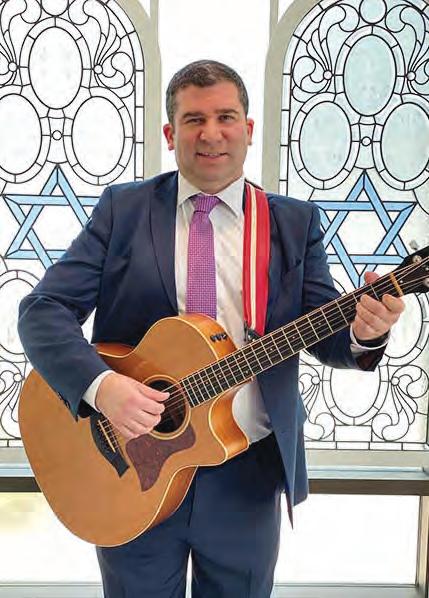

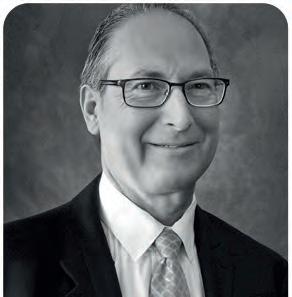










his week’s double parashah, B’harBechukotai, feels particularly resonant at this point in time. In just under two months, our country will celebrate its 250th anniversary, a remarkable milestone in our history. As we return to this parashah, with specific focus on the very beginning of Parashat B’har, the call to awaken our senses to the needs of our country and those who inhabit it is a reminder on this momentous occasion.
The portion begins with the law of the sh’mittah year, the periodic year of rest for the land:
“Speak to the Israelite people and say to them: When you enter the land that I assign to you, the land shall observe a sabbath of the Eternal. Six years you may sow your field, and six years you may prune your vineyard and gather in the yield. But, the seventh year, the land shall have a sabbath of complete rest, a sabbath of the Eternal: you shall not sow your field or prune your vineyard.”
(Lev. 25:2-4)
Rabbi Bradley Shavit Artson notes the poignance of this continued focus for the Israelites, noting that for a people who were often nomadic and landless, we have never turned our heads away from being mindful of the care and concern for the welfare of the land. The portion continues to count the sh’mittah years until arriving at the yoveil or jubilee year:
“You shall hallow the fiftieth year. You shall proclaim release throughout the land for all its inhabitants. It shall be a jubilee to you: each of you shall return to your holding and each of you shall return each to your family.” (Lev. 25:10)
We must provide for all our neighbors, and yet we know that modern economics often get in the way when we need to determine how we can do this and be economically sustainable. What if we began by saying — just as the Torah commands — “we are going to do this,” and then we found the way? The Torah repeatedly reminds us to not turn away from the widow, orphan, poor, or stranger. The Torah repeats itself, lest we forget, or worse over, choose to ignore its lesson.
The Liberty Bell, located on the other side of our commonwealth, uses a section of the same quote from Leviticus 25:10 with a slightly varied translation from the King James Bible, changing the word “release” to “liberty,” and is thus inscribed as:
“Proclaim Liberty Throughout all the Land unto all the Inhabitants Thereof.”
This portion is a call to action, where just one verse earlier it notes the call of the shofar, a sound always associated with an act of awakening to the moment.
And, so here we are in this American “jubilee” year. Could we see this as a call for all of us to think more deeply as to how we can respect and honor the sacred words that established our own country?
The words of the Declaration of Independence will only ring true on this 250th birthday if and when we can stand behind the fact that “all men” — and I’m going to interject “humans” — “are created equal, endowed with the unalienable rights to life, liberty, and the pursuit of happiness.”
I feel enlightened by the text of Parashat B’har and motivated to seek the wisdom of leaders who have inspired me throughout our history. I hear the words spoken by President John F. Kennedy nearly 65 years ago, and today they continue to echo prophetically: “Ask not what your country can do for you — ask what you can do for your country.” Ken Y’hi Ratzon. May this be God’s will for us all. PJC





The jubilee year was historically and notably a time of redistribution of wealth — one that was commanded, and not one of political debate. Imagine, if today in our own city, the ongoing and often heated discussions about the wide inequity and lack of affordable housing could be alternately viewed as a necessary provision for society.
Cantor David Reinwald is the cantor at Beit Kulanu (the unification of Temple Sinai and Rodef Shalom Congregation). This column is a service of the Greater Pittsburgh Jewish Clergy Association.








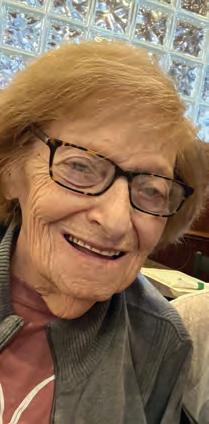
BECK: Marilyn Frances Beck. It is with deep sadness that we announce the passing of our mother, grandmother, great-grandmother and friend, Marilyn Frances Beck. Marilyn was born in Pittsburgh on Nov. 15, 1932, to the late Philip and Celia Solomon of Squirrel Hill and passed away peacefully, on the morning of April 27, 2026, surrounded by family, in her home in Delray Beach, Florida. In her journey of 93 years, Marilyn touched many people’s lives through her love, humor, understanding, and her ability to listen and remember everything. She enjoyed reading, cooking and, most of all, spending time with her family and beloved husband, Irv. Early alarm clocks to be at work at Daniels’ Discount as the owners there for over 50 years, traveling to New Philadelphia on weekends, family dinners with all the kids, and as snowbirds where they finally settled in Delray Beach, Florida. Marilyn’s legacy will be carried on by those closest to her, who will miss her dearly and remember her forever with loving memories. Survived by her brother Henry “Hank” Solomon (Janet) of Miami, Florida; sister of the late Sondra Coller. Children, Bill Beck (Darlene), Steve Beck (Randi), Ken Beck (Tara), Randi Whaley (Marty) and many grandchildren and great-grandchildren, whom she adored. Services were held at Ralph Schugar Chapel, Inc. Interment Ahavath Achim Cemetery in Kennedy Township. schugar.com
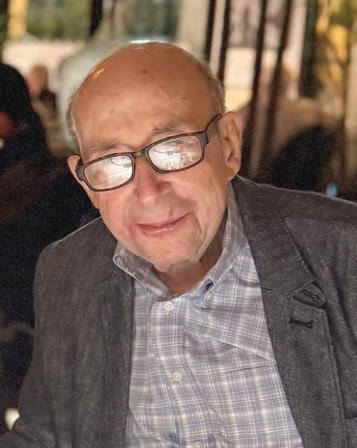
BERKOVITZ: Melvin Berkovitz. Beloved husband, father, grandfather and great-grandfather on April 30, 2026, in Delray, Florida, where he recently relocated. Mel was a month shy of his 97th birthday. Born in Pittsburgh on May 29, 1929, to Sadie (née Lookman) Berkovitz and Samuel Berkovitz, both immigrants from Russia and Hungary respectively. Mel was predeceased by his parents and siblings, Morris, Ben, Albert and William Berkovitz, Gertrude Berkovitz Hollander, Blanche Berkovitz Hoffman and Edith Berkovitz. Survivors include the love of his life, Carolyn Girson, to whom he was married two days shy of 73 years. Mel and Carolyn were married May 3, 1953, at the Margaretta Street Shul. He was the dearly loved father of Sam (Deborah) Berkovitz, Sandra Tepper and Cynthia (James) Goldstein. He was the proudest grandfather of Shaina (John) Anderson, Molly (Nick) Blicha, Eli Berkovitz, Noah Berkovitz, Lindsey (Steven) Shafer, Jordana Goldstein and Max Goldstein. Precious great-grandfather to Angelo Berkovitz, Norah Berkovitz, Quinn Anderson, and many grand-dogs. Mel served as a corporal in the U.S. Marine Corps, then went to business school. He worked at Gordon’s Furniture for several years until he decided to branch out on his own to open an art and frame gallery, which he started in 1972, in the basement of his Shady Avenue home. His idea of providing artwork to complement the furniture in people’s homes was ignited while at Gordon’s, but then Mel took a leap of faith that became Concept Art Gallery; first on Forbes Avenue in Squirrel Hill, then relocating to the current Regent Square Gallery. Mel was owner and CEO of Concept until his retirement. Mel loved the Squirrel Hill JCC, where he swam regularly for several years, and started an informal Friday lunch group with his swimming friends. When he couldn’t swim, he exercised in the gym with weights up until October, when he moved. He was disciplined in his exercise, diet and lifestyle, and we are all certain that it led to this incredibly long and active life. Services and interment were private. The family suggests donations in Mel’s memory be made to the Jewish Community Center of Greater Pittsburgh with the designation of either AgeWell at
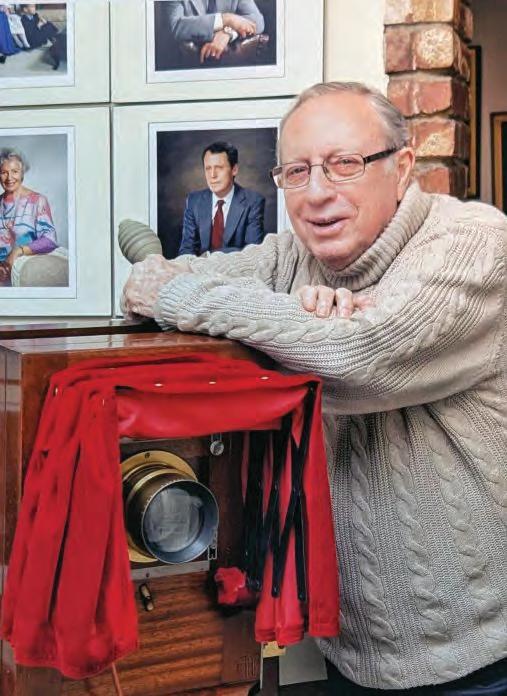
Hans Jonas was born on Dec. 25, 1926, in Vienna, Austria, to Sabina and Hermann Jonas. He came to Pittsburgh in the winter of 1939 with his mother and sister, Valerie. Later that year, when his father joined them, Jonas Studio was established with the financial assistance from the Hebrew Free Loan Association. As a third-generation portrait photographer, Jonas spent his life documenting ttsburgh’s society with grace and distinction. In May of 1967, he was enrolled as a Fellow in The Royal Photographic Society of Great Britain, and joined the Kodak Pro Team in the 1990s. He found great joy in sharing his knowledge and passion with others while practicing his craft for nearly 80 years. On May 1, 2026, as per his wishes, Jonas peacefully passed away in his home. Beloved spouse of the late June Jonas. Loving father of Carol (Gene Monesi) Jonas, Marla Jonas and Amy (Tim Platt) Jonas. Cherished grandfather of Julie Frye (Cameron), Jack Mangurten and Leo Berzon. Services were held at Ralph Schugar Chapel, Inc. Interment B’nai Israel Cemetery. Donations can be made hflapgh.org) schugar.com
Howard Lang, on Friday, May 1, 2026. Beloved husband of Carol (Eckstein), loving father of Joannie Lang Bezner, Naji (Ricky) Lang (Marcie Venter-Lang), proud grandfather of Eli, Anna and Saul Bezner. Howard was the son of the late Ann (Hershenson) Lang and Leonard Lang. He was born in Troy, New York, in 1935. He was a graduate of Cornell University and University of Pittsburgh Medical School. After graduation, he married Carol Eckstein and they enjoyed a wonderful life of family, careers and retirement for over 64 years. During his career, Howard spent two years as a captain in the U.S. Air Force, stationed in Plattsburgh, New York. Afterward, Howard practiced primary care medicine and allergy at the Brentwood Medical Group. He was the senior partner at the time of his retirement in 2002. During his career he was on the staff of Montefiore Hospital, Presbyterian Hospital and Jefferson Hospital. He served as director of medicine at Jefferson Hospital, and later as director of staff. He also served 12 years on the board at Jefferson Hospital. Howard was a wonderful photographer, capturing life’s best moments — his extensive travels with Carol and his family and friends, that will last forever. Graveside services and interment were held at Beth Shalom Cemetery. Please call funeral home for shiva information. Donations in Howard’s memory may be made to the Pittsburgh Symphony Orchestra, 600 Penn Avenue, Pittsburgh, PA 15222, Feeding America, 161 North Clark Street, Suite 700, Chicago, IL 60601, or Beth El Congregation of the South Hills, 1900 Cochran Road, Pittsburgh, PA 15220. Arrangements entrusted to Ralph Schugar Chapel, Inc., schugar.com
Please see Obituaries, page 20
Funeral Home and Crematory

• www.dalessandroltd.com





Audrey Huber Z"L
Denise E Kaiser
Sharon Knapp
Sharon Knapp
Aaron Krouse
Jeffrey Kwall
Jon Levenson
Michael Maas
Janice Mankin
Susan Melnick
Howie & Shelley Miller
Toby Perilman
Ross Rosen
Eileen Snider & Family
Sharon Snider







and OPERATED
SERVING Scott Twp., Greentree, Carnegie, Mt. Lebanon, Upper St. Clair and Bethel Park

Dr Susan Snider & Family
Susie Zohlman & Sally Close
Contact the Development department at 412-586-2690 or development@jaapgh.org for more information. THIS WEEK’S YAHRZEITS —
Sunday May 10: Myer D Berman, Ida Burns, Harry Davidson, Robert K Finkelhor, Henry Fried, Ernest Gartner, Elise K Goldman, Martin S Kaiserman, Arthur Seymour Markowitz, Sylvia Shaer, Meyer Weinberg
Monday May 11: Herman Barnett, Rae Rubin Farber, Jennie Gross, Adolph Hersh, Edward A Lenchner, Lizzie Lieberman, Helen G Match, Arnold Ivan Meyers, Mary Rotter, David Rubenstein, Rose Rudick Pinsker, Morris L Sands, Lillian Goodman Smith, Ed Snider, Edwin Snider, Fannie Rosenthal Weinberg
Tuesday May 12: Edna Ruth Goldberg Abelson, Gitel Busis, Morris Fivars, Herbert L Friedlander, Sol S Goldstein, Wolf Morris Kaiser, Clara Sigal Kwall, Jack H Lembersky, Louis Marcus, Mildred Greenwald Miller, Zalman Miller, Aaron Pattak, Hildegard Perlstein, Isadore Rosen, Nathan Sadowsky, Leo E Sattler, Anna Stein
Wednesday May 13: Ida Stern Cohen, Charles Friedberg, Emil Geminder, Samuel Goldberg, Irving Levenson, Sarah Holstein Lindenberg, Joseph Orlansky, Hyman Rogal, Ida Sacks, Helen Werner
Thursday May 14: Dr Henry H Black, Abe Bortz, Ida Eisen, Mollie Klater, Macy L Leuin, Sophia Meyer, Irwin Pariser, Betsy Sachs, Milton Sadowsky, Henry L Schutzman, Herman S Schwartz, Mary Sinaikin, Meyer J Slotsky, Benjamin Solomon, Harry Tyson, Bessie Chait Weinberg
Friday May 15: Henry M Abrams, Maurice D Azen, Joseph H Breman, Isadore Brody, Irving Caplan, Ralph Covel, Theodore T Davidson, Harry Feldman, Lawrence R Katz, Jennie Kramer, Donald W Levenson, Anna Levy, Eva Cohen Roth Levy, Martin Lewinter, Bertha Esther Miller, Raymond Rosenson, Samuel Schwartzman, Lillian Staman, Jeanette Stern, Clara Stevenson, Rebecca Zwibel
Saturday May 16: Gustave J Bloch, I Aleck Brand, Lillian Braun, Henry Cramer, Meyer M Diznoff, Pesach Aaron Katz, Shirley Kress, Dorothy Natterson Maas, Edward Pearlstein, Abe J Perlman, Mollie Reich, Emil Rosenthal, Rose Steinberg, Rose Stern, Esther Miller Swartz, Esther Weinberg, Milton Saul Weinberg, Rachel Dugan Weisberg, Elinor Young
“Nobody can do everything, but everybody can do something.”


Continued from page 19
Irving Phillip Rosenthal passed away on April 28, 2026, at the age of 93. Beloved husband of 70 years to Sorley Faye (Smith) Rosenthal. Loving father of Laurie (Victor) Mizrahi and Joel (Kate) Rosenthal. Proud Papa of Elan (Vanessa) Mizrahi, Hallie Rosenthal, Gilli Mizrahi and Kaylie (Will Mau) Rosenthal. Great-grandfather of Mia and Zoe Mizrahi. Also survived by his brother-in-law, Ira (Sandy) Smith, many nieces and nephews and lifetime friends. Predeceased by his parents, Meyer and Rae (Simon) Rosenthal, and his sisters, Ethel Corn and Selma Rosenthal. Irv grew up in Pittsburgh, graduated from Taylor Allderdice High School and received his Bachelor of Business Administration from University of Pittsburgh. The state of Pennsylvania awarded him the top score on the CPA exam in 1956. After working for another firm and acquiring his accounting license, he cofounded and led Alpern, Rosenthal & Company in 1961, building the practice into one of the largest regional accounting and advisory firms in western Pennsylvania. After retirement in 2000, Irv was involved in multiple entrepreneurial ventures, investment banking and financial services. He loved playing tennis and golf, traveling to over 50 countries, and most of all spending time with family — especially his grandchildren and grand-dogs. Services were held at Ralph Schugar Chapel, Inc. Interment Homewood Cemetery. Contributions may be made to JFCS Squirrel Hill Food Pantry (jfcspgh. networkforgood.com). Arrangements entrusted to Ralph Schugar Chapel, Inc. schugar.com
SISSELSKY: On Friday, April 3, 2026, Ethel Sisselsky of Longwood, Florida, formerly of Pittsburgh and Davie, Florida, just three months shy of her 100th birthday. Ethel was happily married for 55 years to her loving husband, the late Enoch Sisselsky. Beloved mother of Dr. Nancy Hoffman (Joel Harris) of Pittsburgh and Lee Sisselsky (Sharon) of Longwood, Florida. Cherished grandmother (aka “Greffel”) of Dana Gitell (Seth) of Natick, Massachusetts, Wendy Singer (Mitch) of Skokie, Illinois, and Dr. Carla Easter (Paul) of Gainesville, Florida. Great-grandmother of Max and Eli Gitell, Josie and Sophie Singer, and Miles and Sadie Easter. Ethel made many friends over her long lifetime. She was a lifelong avid reader and enjoyed playing mah-jongg, Rummikub and cards. She was a wonderful cook who left many recipes that will be handed down through the generations. Services and interment were in Florida. Donations may be made to the Jewish National Fund, where Ethel worked for several years, or to a charity of the donor’s choice. PJC

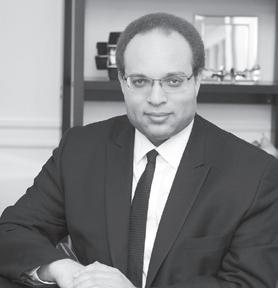



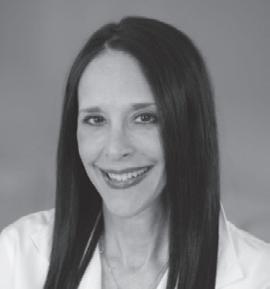
















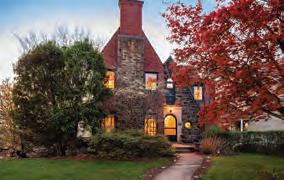

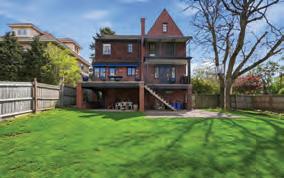





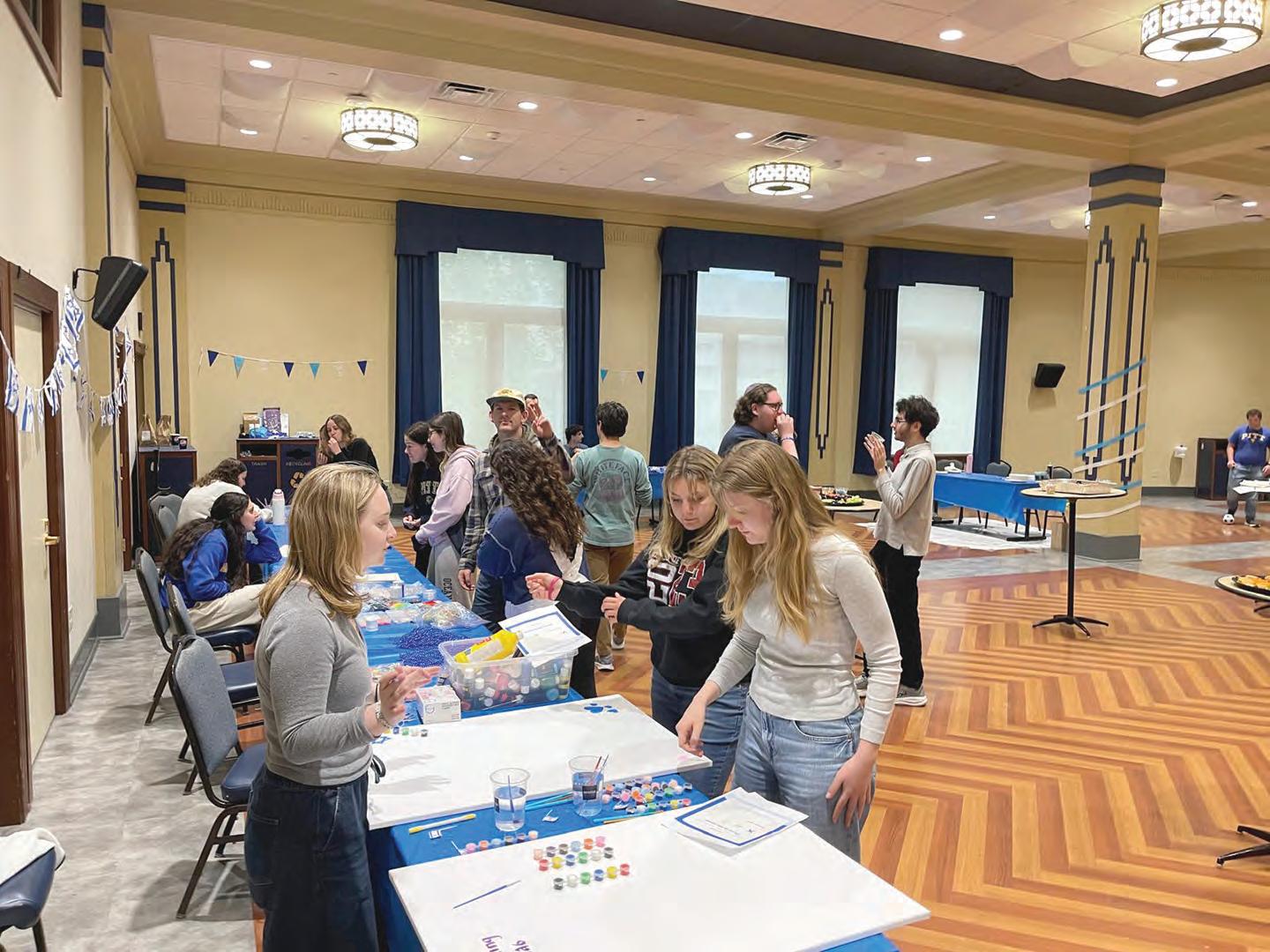
Playing nicely in the sandbox
the
Reading is fundamental Community Day School students demonstrated their favorite reads and love of literacy during
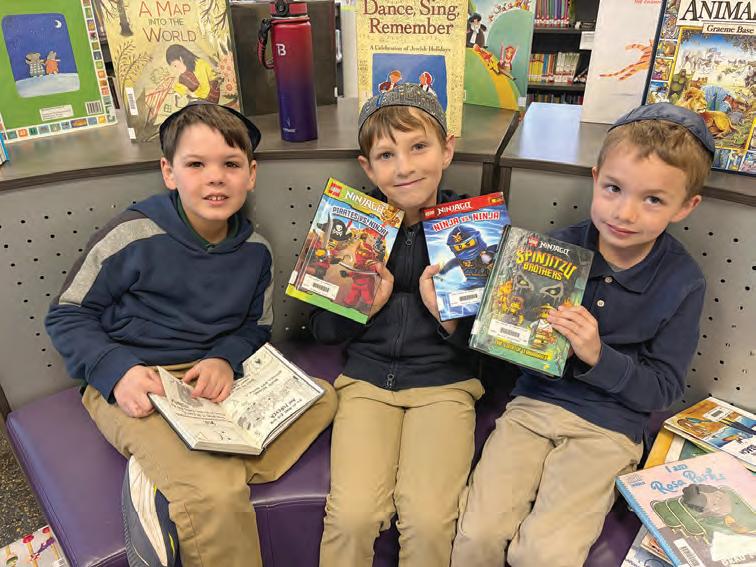
A team of students from Hillel at Pitt joined approximately 700 players and fans at the University of Maryland for the 15th annual National Hillel Basketball Tournament. Competitors spent days
support