




There’s a sweet new note in the Cantors Assembly history. For the first time in 79 years, the organization representing professional Jewish clergy will meet in Pittsburgh next month.
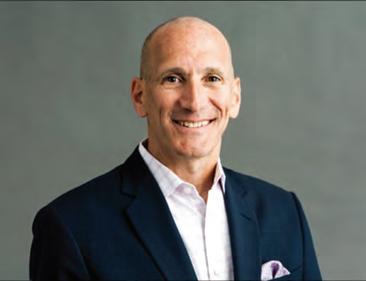
Bringing the party to western Pennsylvania is Rabbi Hazzan Jeffrey Myers, president of the Cantors Assembly, and rabbi and hazzan at Tree of Life Congregation. The organization typically meets for an annual convention in its president’s locale.
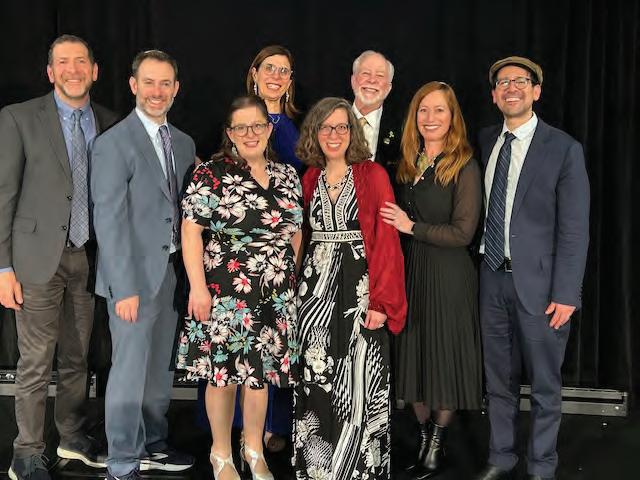
With nearly 200 cantors coming to town for the June 7-11 conference, Myers is eager to show off the city and his crew.
“Pittsburgh embraced me in the nearly nine years that I’ve been here, and I thought that one of the best ways to say thank you is to offer the gift of the music of the Cantors Assembly to all of Pittsburgh,” he said.
Myers pointed to two programs showcasing both local venues and the vocal visitors.
On June 8 at 7:30 p.m. at St. Paul Cathedral, the Cantors Assembly and the Diocese of the City of Pittsburgh will collaborate on “Psalm
Enchanted Evening.” On June 9 at 7 p.m. at Beit Kulanu in Shadyside, members of the Cantors Assembly will deliver “Jewish Notes in America’s 250-year Song.”
Both performances, as well as study sessions and meetups for visiting cantors, pay homage to a familiar theme.
Titled, “Repairing the World One Bridge at a Time,” the annual convention is an opportunity to gain “exposure to new music” and share innovative “programming ideas that each of us is doing,” Myers said. Even so, “we try not to monopolize everyone’s time.”
Myers said the schedule was designed to deliver professional development as well as opportunities to experience the city, and hopes attendees will make the most of what Pittsburgh has to offer.
Whether cantors stop by a local museum or simply speak with community members, time in Pittsburgh is instructive, Myers said.
“There are ways to take some of what I really think distinguishes Pittsburgh from so many other cities and perhaps bring elements of that back to their own cities.”
By David Rullo | Senior Staff Writer
Jarrett Buba has been sentenced for attacking two Jewish University of Pittsburgh students.
As part of a plea deal finalized on May 19 in Allegheny County’s Fifth Judicial District Mental Health Court, Buba, who has been in detention since being arrested shortly after the 2024 attack, will serve up to five years of probation and be remanded to a mental health facility until he completes a program supervised by Judge Beth Lazzara and deemed to no longer be a threat to the public.
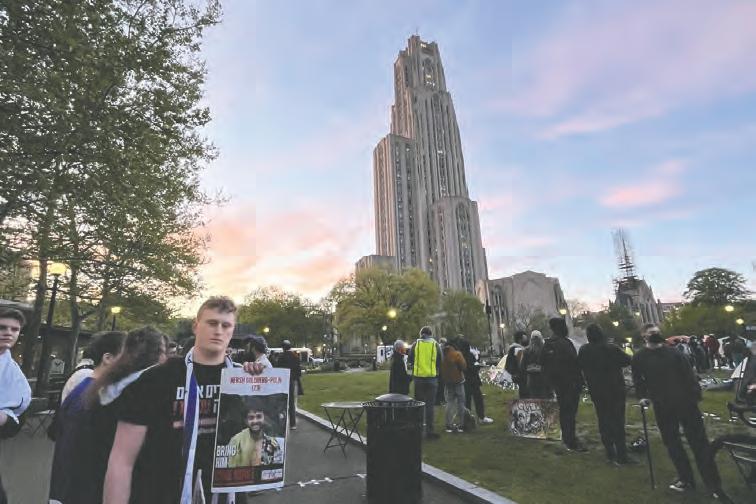
The attack occurred on Aug. 30, 2024, as students Asher Goodwin and Ilan Gordon made their way across the lawn of the Cathedral of Learning to attend a Hillel JUC of Pittsburgh event.
Both Goodwin and Gordon were wearing kippahs at the time of the attack. Buba donned a keffiyeh and brandished a glass bottle as a weapon.
The two students both suffered injuries as a result of the attack. Goodwin was cut by the bottle, suffering a laceration on his neck; Gordon experienced a concussion.
A day after the attack, Carla Panzaell, Pitt’s vice provost of student affairs, and Clyde Wilson Pickett, Pitt’s vice chancellor for equity, diversity and inclusion, issued a statement condemning the attack, but saying that “the assault was determined by law enforcement not to be targeted or directed towards any specific group.”
Despite that statement, part of Buba’s plea included four charges that included ethnic intimidation, as well simple and aggravated assault with a deadly weapon.
In his victim statement, read before the court, Goodwin, who has since graduated

By Adam Reinherz | Senior Staff Writer
The universality of infertility and infant loss is uniting denominationally divergent congregations for a weekend of conversation. Between May 30-31, Beit Kulanu and Shaare Torah Congregation will host multiple panels and presentations dedicated to “Understanding Fertility Journeys and Mental Health in Our Community.” During both days, community members are encouraged to meet, listen and discuss fertility, faith and social pressures.
Infertility affects approximately 17.5% of adults worldwide. Within the United States, rates are lower; still, nearly 11% of women and 9% of men experience infertility, according to the World Health Organization.
Regarding infant mortality, the WHO reports global rates at 25 per 1,000 live births. In the U.S., the number is 5.4 deaths per 1,000 live births.
These challenges are experienced regardless of ideology, and it behooves the community to approach the issue collectively, Beit Kulanu’s Rabbi Dan Fellman said.
“Part of building a strong Jewish community is making sure people feel seen, supported and cared for during difficult periods of life. This program reflects our commitment to strengthening Jewish

were looking forward to welcoming guest speaker Dr. Aimee Baron.
Founder and executive director of I Was
sees a New York-based nonprofit that provides various resources, including digital platforms, communal programs and support networks aimed at transforming “how the Jewish community cares for people struggling with fertility and loss.”
A panel dedicated to “mental health,

SUBSCRIPTIONS subscriptions@pittsburghjewishchronicle.org
412-687-1000, ext. 2
TO ADVERTISE advertising@pittsburghjewishchronicle.org 412-687-1000, ext. 1
EDITORIAL DEPARTMENT
Email: newsdesk@pittsburghjewishchronicle.org
BOARD OF TRUSTEES
Evan H. Stein, Chair
Evan Indianer, Vice Chair
Derek Smith, Treasurer
Gayle R. Kraut, Secretary
Gail Childs, Dan Droz, Malke Steinfeld Frank, Karen Gal-Or, Seth Glick, Judith Kanal, Cátia Kossovsky, Charles Saul, Lynn Zelenski
GENERAL COUNSEL
Stuart R. Kaplan, Esq.
community pressures and showing up for each other” will include Baron, psychologist Sharon Saul, and Stefanie Small, director of clinical services at JFCS Pittsburgh.
“Any opportunity we have to be open about these topics is one we need to grab with both hands,” Small told the Chronicle. Programs like these “bring things out of the shadows” and destigmatize topics people are reluctant to discuss.
Throughout the weekend, programs are slated to occur within local synagogues. Small is pleased by the venue choice.
Attacks in recent years have led many people to deem worship places dangerous; this program should remind Pittsburghers that synagogues are “safe places to have discussions about what’s bothering them, about personal issues, about worldwide situations, about local problems. The synagogue is the hub of Jewish life, and this is part of Jewish life,” she said.
Fellman is encouraging community members to show up, listen and learn. Doing so, he said, reflects the best of Jewish values.
“This is what community does: We put our arms around each other in times of challenge and sorrow, and also in times of celebration,” he said. “In many ways, one of the essences of being a Jew is that we are in community with each other, and we share, and we learn, and we encourage each other to share and learn.” PJC
Adam Reinherz can be reached at areinherz@pittsburghjewishchronicle.org.
5915 Beacon St., 5th Floor Pittsburgh, PA 15217 Main phone number: 412-687-1000 Subscriptions: 412-687-1000, ext. 2
Jim Busis, CEO and Publisher 412-228-4690 jbusis@pittsburghjewishchronicle.org
EDITORIAL
Toby Tabachnick, Editor 412-228-4577 ttabachnick@pittsburghjewishchronicle.org
Adam Reinherz, Senior Staff Writer 412-687-1000 areinherz@pittsburghjewishchronicle.org
David Rullo, Senior Staff Writer 412-687-1000 drullo@pittsburghjewishchronicle.org
ADVERTISING
Amy Weiss, Account Executive (412) 613-0697 aweiss@pittsburghjewishchronicle.org
PRODUCTION
Jeni Mann Tough
Production Manager
Carl Weigel
Art/Production Coordinator
Subscriptions subscriptions@pittsburghjewishchronicle.org 412-687-1000, ext. 2
Published every Friday by the Pittsburgh Jewish Publication and Education Foundation 5915 Beacon St., 5th Floor Pittsburgh, PA 15217
Phone: 412-687-1000
POSTMASTER: Send address change to PITTSBURGH JEWISH CHRONICLE, 5915 BEACON ST., 5TH FLOOR PITTSBURGH, PA 15217 (PERIODICAL RATE POSTAGE PAID AT PITTSBURGH, PA AND AT ADDITIONAL MAILING OFFICES) USPS 582-740
Manuscripts, letters, documents and photographs sent to the Pittsburgh Jewish Chronicle become the property of this publication, which is not responsible for the return or loss of such items. The Pittsburgh Jewish Chronicle does not endorse the goods or services advertised or covered in its pages and makes no representation to the kashrut of food products and services in said advertising or articles. The publisher is not liable for damages if, for any reason whatsoever, he fails to publish an advertisement or for any error in an advertisement. Acceptance of advertisers and of ad copy is subject to the publisher’s approval. The Pittsburgh Jewish Chronicle is not responsible if ads violate applicable laws and the advertiser will indemnify, hold harmless and defend the Pittsburgh Jewish Chronicle from all claims made by governmental agencies and consumers for any reason based on ads appearing in the Pittsburgh Jewish Chronicle

By David Rullo | Senior Staff Writer
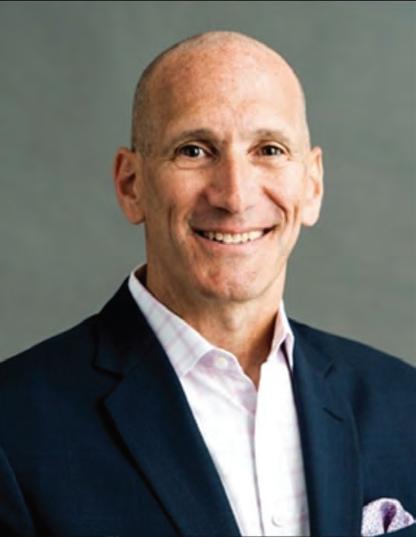
Fighting antisemitism in schools is akin to a game of Whack-a-Mole, according to David Bernstein.
Bernstein is the founder and CEO of NAVI — the North American Values Institute — which helps empower parents to promote American civic values and counter ideological extremism in K-12 schools.
“There’s a lot of antisemitism in K through 12 education that grows out of the oppressor/oppressed ideology and radical forms of DEI in schools,” Bernstein said. “In order to fight antisemitism, you have to be willing to counter the broader ideological extremism in schools.”
To be successful, Bernstein said, it’s important not only to combat antisemitism but to support “American civic values” that are “ideological conditions under which Jews have thrived in America and are now under duress.”
NAVI has developed a multi-pronged approach that includes training parents to advocate for reform in schools; driving outreach to legislators and officials; engaging parents with district administrators and school board members; fostering parent meetings with curriculum developers; developing strategic communications; and, providing cutting edge research and analysis on radical trends in education.
It’s an approach, Bernstein said, that has found success in the Philadelphia school system, where the program was developed.
“We’ve been able to identify bad actors and how they’re getting into schools,” he said. “We’ve been able to expose them in the media and alert members of Congress and other legislators to the involvement of these bad actors, and we’ve been able to get some of them suspended from the schools.”
That work, he said, created an opportunity for Philadelphia to move away from a “very radical” social studies curriculum.
Bernstein acknowledged that harmful ideologies are often entrenched in curricula, and problematic teachers can be protected by unions — which is why it is important to find parents and sympathetic educators willing to talk about what’s occurring in their schools.
That information, he explained, can then be taken to state and federal levels for intervention.
NAVI is now ready to build on the success
who sometimes don’t have a voice. This has inspired me so much, and now it’s heading west to Pittsburgh because we recognize that to make real change we need to do it at a state level.”
Rosenberg said the goal is to make clear to the state education secretary, governor and legislature that the issues NAVI advocates for extend beyond Philadelphia and Pittsburgh and affect communities across the commonwealth.
NAVI, he said, will empower and prepare Pittsburgh parents to meet and talk with teachers, principals and school board officials around what he calls “illiberal ideology and education.”
It will also work to create thought leaders as part of a regional advisory council made up of lawyers, communications professionals and people who are “involved in high-level thinking in their particular industry,” to meet quarterly, he said.
The council will serve as a resource for parents.
senator to take note of antisemitism in K-12 schools and do something about it.
In a Jewish Insider story about the meeting, McCormick is quoted as saying he won’t stay silent on the issue.
“I think part of the problem we’re seeing is people who aren’t antisemitic in public life are tolerating antisemitism,” McCormick told Jewish Insider. “It’s not that they’re antisemitic themselves. It’s just that they haven’t shown the courage and the moral clarity to fight it.”
Rosenberg believes Pittsburgh families can have the same type of influence. To that end, he’s already reached out to several local organizations, including the Beacon Coalition, StandWithUs and the Jewish Federation of Greater Pittsburgh’s Community Relations Council.
And while he believes NAVI can help parents, Rosenberg said the organization isn’t looking to be a “white knight”; several other organizations already are involved in fighting antisemitism in schools.
it found on the eastern side of the state and bring its program to Pittsburgh.
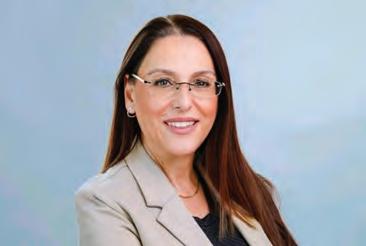
Steve Rosenberg, who has served as NAVI’s regional director in Philadelphia and is author of the book “Make Bold Things Happen: Inspirational Stories from Sports, Business and Life,” is leading the charge.
If his name sounds familiar, there’s good reason. Rosenberg is a Pittsburgh native with deep roots in the community. His brother is the market president and publisher of the Pittsburgh Business Times.
Rosenberg joined NAVI nearly two years ago believing it to be a three-to-sixmonth gig.
His original goal was to build a network of parents who, he said, had sent their kids to school to get an education, join a team sport, maybe take part in a music recital or other extracurricular activity, before graduating and moving on with the rest of their lives.
“But [the parents] had to become advocates in the fight because their kids were being tortured — literally and figuratively — in schools by teachers, administrators and school board members around this sort of indoctrination through this liberal ideology that’s taking place,” he said.
Rosenberg said he worked with Bernstein and NAVI to build a network of “thousands” of parents.
“The work is so inspiring to me,” he said. “These parents are fighting for their children,
NAVI advocates for schools to adopt policies of neutrality regarding the Middle East conflict, avoiding alignment with either claims that Israel is a colonial oppressor state or explicitly pro-Israel positions. Instead, the organization supports teaching about Israel, Gaza and the region’s history of conflict.
“Give the kids the information and let them make their own thoughtful determination,” Rosenberg said.
An example of NAVI’s work is a meeting earlier this month with Pennsylvania Sen. Dave McCormick. During the 45-minute Zoom meeting, four parents urged the
“We want to be helpful,” he said. “We want to energize and motivate parents and, if we can, add some missing pieces that might get ahead of the curve.”
Ultimately, he said, NAVI wants Pittsburgh schools to flourish as places of learning free from indoctrination.
“We want it to be a place where the highest and brightest can get into whatever college they want,” he said. “But, we have to get away from this illiberal indoctrination taking place across the United States.” PJC
David Rullo can be reached at drullo@ pittsburghjewishchronicle.org.












| Senior Staff Writer
or anyone questioning the value of biomedical engineering, Sarit Sivan offers a persuasive answer.
Sivan is the president of the Braude College of Engineering in Karmiel, Israel. A native Israeli, Sivan attended Techicon-Israel Institute of Technology, where she earned her doctorate. In 2006, she was awarded a Marie Curie Fellowship and conducted postdoctoral research at the Department of Physiology, Anatomy and Genetics at the University of Oxford.
While there, she helped develop material for herniated discs. She worked on other projects as well, bridging the gap between medicine and engineering, including projects to help those who have suffered aneurisms.
Sivan will be in Pittsburgh May 28 to June 2 to discuss her background, life as a Jewish mother with three sons in the IDF and the expansion of Braude College of Engineering, which will include a new 25-acre campus and a new biotechnology engineering building. The $100 million expansion is located in Karmiel. The college already has secured $80 million for the project through Israeli sources.
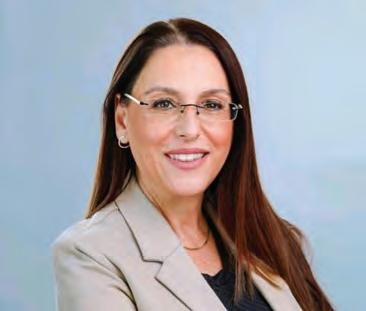
“When she finished, she met her future husband there while doing her PhD. And now, she’s going to give birth to her second child,” Sivan said.
That marriage might be unique, she said, but the intercontinental connection isn’t.



The expansion, which will increase Braude’s capacity by approximately 50% and further strengthen the Galilee as a center for innovation and economic growth, is of interest to he Pittsburgh Jewish community because of the city’s partnership with the KarmielMisgav region, through the Jewish Agency’s Partnership2Gether initiative.
Sivan said that the relationship between the two communities has included a student exchange program between Braude and the
“We’ve had about 35 students exchanged from both sides and we have a very, very warm
Students who took part in the program now work in Israel’s high-tech sector, including biotechnology and mechanical engineering, as well as the food tech industry, Sivan said.
And while the program’s effects can be felt in various fields in both America and Israel, it has also impacted at least one couple’s personal
shadchanit for a pair of students, one of whom — a female student — Sivan supervised while she did her internship
“Engineering is an international profession. So, we open our students to the world,” she said. “We have entrepreneurs working worldwide.” Part of the college’s expansion is a planned entrepreneur and innovation center, something Sivan hopes will connect Braude and Pittsburgh in larger ways.
Professional life aside, Sivan is also a mother whose children started serving in the IDF nearly a decade ago. She wrote about her experience as a mother with children serving on the Gaza and Lebanon borders earlier this year in a blog post on The Times of Israel.
“I can not express the fear that a mother has and the strength a mother needs to overcome that fear, wake up in the morning, put on nice clothes, go to work and act as if nothing has happened,” she said.
Work, she said, is the island that helps maintain normality.
And that work at the college, she said, is vital to Israel.
“It’s important to the Galilee, to the north, the resilience of the north, she said.
In some ways, Braude is a microcosm of Israel. Jews, Muslims, Druze and Christians are all enrolled in the school. More than 11,000 alumni have graduated from the college.
The model she said may point the way forward.
“We are very hopeful,” she said. “We are seeking peace. We are coming with the hope everyday that we can make good change, make life better, and that we can live together and be better people,” she said. PJC
David Rullo can be reached at drullo@ pittsburghjewishchronicle.org.
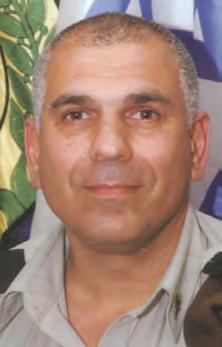
Brig. Gen. (Res.) Nitzan Nuriel is the former Director of the CounterTerrorism Bureau at Israel’s Prime Minister’s Office (2007–2012). He served in the IDF for over 30 years, primarily in the Golani Brigade, holding senior positions including Deputy Division Commander in both the West Bank and the Gaza Strip. He played key roles in Israel’s withdrawal from southern Lebanon and in operational planning along the northern border. From 2001 to 2004, he served as Military Attaché to the United States, acting as liaison between the IDF and U.S. defense agencies. For his service, he received the Legion of Merit from the U.S. President. Following his military career, he joined Israel’s National Security Council, where he led national crisis management and counter-terrorism strategy, including cyber security, border protection, and international cooperation. He holds degrees in political science and national security from Tel Aviv University and the University of Haifa.
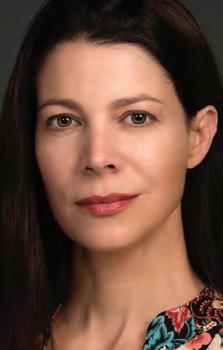
Dr. Shira Efron is the distinguished chair for Israel Policy at RAND. A leading expert in Israeli and Middle Eastern affairs, Dr. Efron has also advised Israel’s Ministry of Defense and its National Security Council. In 2020-2022, Dr. Efron was a consultant for the UN, specializing in Gaza and working closely with newly appointed High Commissioner under the Board of Peace, Nikolay Mladenov. She holds a doctorate and master’s degree in policy analysis from the RAND School of Public Policy, a master’s degree in international relations and international business from New York University, and a bachelor’s degree in biology with a minor in computer science from Tel Aviv University.
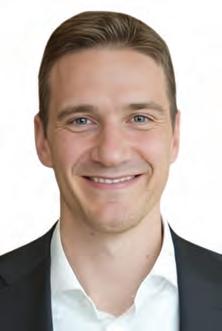
Klitsner is a fellow at the Jewish People Policy Institute (JPPI) who has deep connections to our community. He and his family lived in Squirrel Hill but returned to Israel after October 7 so he could rejoin his IDF unit. Klitsner, who has served as Diaspora Affairs Advisor to Prime Minister Naftali Bennett, and worked for AIPAC in Israel, is passionate about educating and building community around the state of Israel and its relationship with the United States.
Tuesday, June 16 • 7 pm JCC Squirrel Hill • Katz Theater $36/person
Participants will gain valuable insights into the strategic dilemmas that Israeli decision-makers encounter, as well as the prospects for regional normalization and renewed peace efforts, alongside the challenges they face in achieving these goals. With varying assessments and analyses, Nuriel and Efron will illuminate this critical topic, offering a deep and nuanced understanding of Israel’s most pressing concern: security.
“I learned so much from the panelists at each of the first two sessions, and look forward to the next discussion.”
For more info: Fara Marcus • fmarcus@jccpgh.org

Submit calendar items on the Chronicle’s website, pittsburghjewishchronicle.org. Submissions also will be included in print. Events will run in the print edition beginning one month prior to the date as space allows. The deadline for submissions is Friday, noon.
q SUNDAYS, MAY 31–JULY 26
Join Chabad of Squirrel Hill for its Men’s Tefillin Club. Services and tefillin are followed by a delicious breakfast and engaging discussions on current events. 8:30 a.m. 1700 Beechwood Blvd. chabadpgh.com
Join a lay-led online Parashah study group to discuss the weekly Torah portion. No Hebrew knowledge needed. The goal is to build community while deepening understanding of the text. 8:30 p.m. For more information, visit bethshalompgh.org/online-parashah.
q MONDAYS, JUNE 1–JULY 27
Join Congregation Beth Shalom for a weekly Talmud study. 9:15 a.m. For more information, visit bethshalompgh.org.
Join Temple Sinai for an evening of mahjong every Monday (except holidays). Whether you are just starting out or have years of experience, you are sure to enjoy the camaraderie and good
times as you make new friends or cherish moments with long-term pals. All are welcome. Winners will be awarded Giant Eagle gift cards. All players should have their own mahjong cards. Contact Susan Cohen at susan_k_ cohen@yahoo.com if you have questions. $5. templesinaipgh.org
q TUESDAY, JUNE 2
Chabad of Squirrel Hill presents The Sound of Jewish Music, an uplifting concert for women featuring music, dance and inspiration. 7 p.m. $18/$10 for student in advance; $25 at the door. Katz Performing Arts Studio, 5738 Darlington Road. soundofjewishmusic.com
q TUESDAYS, JUNE 2–JUNE 30
Join Beth El’s Rabbi Alex Greenbaum and his Bible/Talmud Adult Education class for a thoughtprovoking weekly session of Bible and Talmudic study. This program is available both in person and virtually. Call the office at 412-561-1168 to receive the Zoom link or to make an in-person reservation. 10:30 a.m. 1900 Cochran Road. bethelcong.org
q SATURDAY, JUNE 6
Bishop Mark Eckman will join the Tree of Life at the next Torah Studio. The bishop will discuss the parsha with Rabbi Jeffrey Myers in Beit Kulanu’s Levy Hall, 4905 Fifth Ave. 9:45 a.m. treeoflifepgh.org PJC
Garcia defeats Galindo in Texas Democratic runoff shaped by antisemitism allegations
By Grace Gilson | JTA
Sheriff’s deputy Johnny Garcia won the Democratic nomination Tuesday in Texas’ 35th Congressional District, defeating opponent Maureen Galindo following a race shaped by scrutiny over Galindo’s antisemitic rhetoric.
The runoff in the San Antonio race drew national attention after Galindo, a local housing activist and therapist, came under scrutiny for comments that included vows to turn a local immigrant detention center “into a prison for American Zionists” and claims that it was her “perception that Zionist billionaires run the world.”
Following Galindo’s surprise first-place finish in the March primary, national Democratic leaders and Jewish organizations condemned her rhetoric and urged voters to reject her candidacy, including Texas Senate candidate James Talarico, who revealed to JTA earlier this month that he would not back or campaign with Galindo.
The district, which stretches between San Antonio and Austin, was heavily affected by Republican redistricting this year, one of several factors that local political observers and Democratic Party leaders said contributed to Galindo’s earlier win.
The race also attracted outside spending, with Lead Left PAC, a newly launched super PAC apparently tied to a Republican donation platform, pouring over $900,000 on ads and mailers

“Do it now. Sometimes ‘Later’ becomes ‘Never’.”
promoting Galindo. Last week, the Democratic Congressional Campaign Committee launched a $35,000 ad buy against Galindo, an unusual step for the DCCC to take against a Democratic candidate.
“Republicans just spent weeks and almost a million dollars propping up an antisemite, and they should be ashamed and embarrassed — it was a disgrace,” the president of the Democratic Majority For Israel PAC, Brian Romick, told JTA in a statement. “Tonight is a victory for the voters of TX-35, for the Democratic Party, and for every Democrat who believes that antisemitism has no home in our coalition.”
Romick told JTA Tuesday night that he believed the results of the runoff signaled that Democratic primary voters “aren’t going to elect antisemitic candidates, and in the districts that we need to win,
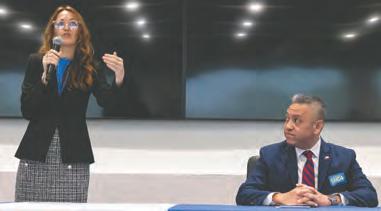
pro-Israel candidates are our best bet.” Garcia will now face Republican nominee Carlos De La Cruz, who defeated opponent John Lujan, in the Nov. 3 general election. PJC
The Pittsburgh Jewish Chronicle invites you to join the Chronicle Book Club for its May 31 discussion of “Kaplan’s Plot,” by Jason Diamond. The author will join us for the meeting.
From Amazon.com: “Elijah Mendes was hoping for a more triumphant return to Chicago. His mother, Eve, is dying of cancer, his business flamed out, and he has nowhere else to go. So he returns to Chicago feeling listless and shattered, worried about how he’s going to help his mother despite their chilly relationship. He finds some inspiration when he discovers that their family owns a Jewish cemetery and that a man he’s never heard of, his great-uncle Solomon Kaplan, is buried in a plot there. With a new sense of purpose and an excuse to talk more deeply with his mother, Elijah begins pursuing a family mystery of extraordinary proportions.
“Elijah discovers his grandfather Yitz, Eve’s father, was a powerful gangster in the 1920s. She was ashamed and never spoke about him to Elijah. As secrets unravel, the past and present become intertwined, and Yitz’s story forces Elijah and Eve to bond in ways they never have before and begin to accept each other, not as who they wish they were but as they both are.”
Your hosts
Toby Tabachnick, Chronicle editor
David Rullo, Chronicle senior staff writer
How it works
We will meet on Zoom on Sunday, May 31, at 1 p.m.
What to do
Buy: “Kaplan’s Plot.” It is available from online retailers, including Amazon and Barnes & Noble, in local Barnes & Noble stores and through the Carnegie Library system.
Email: Contact us at drullo@pittsburghjewishchronicle.org, and write “Chronicle Book Club” in the subject line. We will send you a Zoom link for the discussion meeting.
Happy reading! PJC

Pennsylvania’s Jewish governor, Josh Shapiro, faces Trump-backed challenger in reelection bid
The stage is officially set for Pennsylvania’s Jewish governor, Josh Shapiro, to vie for reelection against GOP opponent Stacy Garrity in November, JTA reported.
The matchup comes as no surprise, as the two candidates won their respective primaries uncontested last week.
Shapiro is seen as the strong favorite to win. But Garrity, who is popular among Republicans and endorsed by President Donald Trump, could mount a competitive challenge. She became the only person to earn more votes than Shapiro in Pennsylvania history when she was reelected as state treasurer in 2024.
The matchup could pose a hurdle for Shapiro’s potential 2028 presidential ambitions even if Garrity loses in November. A hard-fought race in a purple state will allow Republicans to test attack strategies against Shapiro.
Shapiro is a pro-Israel Democrat in a party where supporting Israel is an increasing liability. Garrity, too, has gone to bat for Israel. As state treasurer, she more than tripled Pennsylvania’s investment in Israel bonds. She invested $20 million following Hamas’ Oct. 7, 2023, attack on Israel, and another $25 million in July 2025.
Garrity is embracing her endorsement
from Trump, whom she has said she believes won in her state and nationally in 2020, when President Joe Biden prevailed.
Park Slope Food Coop votes for Israel boycott
Two-thirds of the famed worker-owned grocery store in Brooklyn’s Park Slope voted Tuesday night in favor of a boycott of Israeli products, the New York Jewish Week reported. The vote came after a yearslong battle that divided coop members and the Park Slope community.
Of the 6,772 votes cast at a meeting that lasted for hours, 67% voted in favor of the boycott, 31% voted against, and 2% abstained, according to immediate results of the vote.
Nearly 7,000 out of the 16,000 members of the Park Slope Food Coop signed on to participate in the vote, where two ballot questions decided the fate of under a dozen Israeli products sold at the neighborhood spot. Now, those Israeli products will be removed from the shelves.
The Boycott, Divestment and Sanctions effort has been a hot issue at the Park Slope Food Coop for more than a decade. But since the Oct. 7, 2023, Hamas attacks in Israel and the ensuing Gaza war, the coop’s stance on the sale of Israeli goods has become a flashpoint among its 16,000 members. Tuesday’s vote was so contentious that coop coordinators increased security measures around the coop itself and decided to hold the vote remotely.
Items are provided by the Center for Israel Education (israeled.org), where you can find more details.
May 29, 1911 — Poet Leah Goldberg is born
Poet Leah Goldberg is born in Königsberg, Prussia, now Kaliningrad, Russia. She begins writing poetry in Hebrew and Russian around age 12 and is a published writer before she moves to Tel Aviv in 1935.
May 30, 2009 — Former President
Ephraim Katzir dies
Ephraim Katzir, Israel’s fourth president, dies a t 93 in Rehovot. Born in Kyiv, Katzir and his family made aliyah when he was 9. A prize-winning scientist, he was elected president in May 1973.
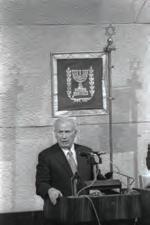
May 24, 1973.
CC BY-SA 3.0
May 31, 1936 — Politician Zevulun Hammer is born
National Religious Party politician Zevulun Hammer, elected eight times to the Knesset beginning in 1969, is born in Haifa. His Cabinet posts include welfare, religious affairs, and education and culture.
June 1, 1941 — Farhud pogrom strikes Iraq’s Jews
Two days of anti-Jewish riots known as the
The boycott will affect nine Israeli products, including a variety of bell pepper sold only in the winter, persimmons, olive oil, sesame products, Dorot frozen herb cubes and Osem Bamba, the popular Israeli peanut-flavored snack, according to Park Slope Food Coop Members for Palestine.
Israel has list of all Oct. 7 participants, aims to kill or arrest each one
Israel has created a list of all Palestinians who took part in the Oct. 7, 2023, Hamas-led attacks and is working to kill or arrest each one, the Wall Street Journal reported, according to The Times of Israel.
According to the report, the list includes all Gazans who were identified as having crossed the border on Oct. 7, as well as all Hamas leaders involved in orchestrating the massacre, during which some 1,200 people were killed and 251 taken hostage, mostly civilians, in the deadliest massacre of Jews since the Holocaust.
Israeli intelligence agents tasked with compiling the list of names did so by studying the plethora of video and photographic evidence of the attack posted online by terrorists on and after Oct. 7 and running the footage through facial recognition software, the report said, as well as the contents of intercepted phone calls from people who breached the border into Israel that day.
Israeli officials told Wall Street Journal that intelligence officials add people to

Farhud break out in Baghdad, Iraq, during Shavuot. The violence kills 180 Jews, wounds more than 240 others, destroys 100 Jewish houses and damages more than 500 businesses.
June 2, 1980 — Jewish underground bombs Palestinian officials
The Jewish Underground carries out its first terrorist operation, placing bombs on the cars of West Bank Palestinians. The mayor of Nablus loses both legs, and the mayor of Ramallah loses one leg.
June 3, 1948 — Ben-Gurion reports on first 3 weeks
David Ben-Gurion, serving as prime minister and defense minister of the provisional government, reports on the status of the War of Independence and peace talks and accuses the British of aiding the Arab war effort.
June 4, 1985 — Supermodel Bar Refaeli is born Bar Refaeli, a model known for her business investments and her romantic life with the likes of Leonardo DiCaprio, is born in Hod Hasharon. She is the first Israeli in Sports Illustrated’s swimsuit issue. PJC

the list once there are at least two pieces of evidence placing them at the scene of any of the atrocities that took place on Oct. 7.
The first-ever Jewish ritual bath, or mikveh, on an Israeli military base was inaugurated in central Israel last week, JNS reported.
The unusual addition to the Border Police base comes at a time when Israelis have drawn closer to faith and tradition following the Oct. 7, 2023, Hamas-led attack, a shift which, surveys show, is particularly notable among younger citizens.
The ritual bath, which was donated by the American filmmaker and philanthropist Cheryl Halpern in memory of her husband, Fred, was inaugurated at a small ceremony in the presence of Jewish and non-Jewish Border Police officers and a diverse array of rabbinical leaders just before Shavout.
Halpern cited the importance of “selfpurification and self-meditation” for the paramilitary police officers, irrespective of their faith, before going on a mission.
“I pray that when you go out on a mission with such danger, and you do not know if you will return alive, that when you immerse yourself, God will protect you,” she said. “What you are doing is giving life to the Nation of Israel both inside the country and outside of it.” PJC
— Compiled by Toby Tabachnick










Nick Schepis
Recently, we have had many customers ask us about oil changes on their vehicles, specifically newer model vehicles. While vehicle manufacturers state different milage recommendations for changing oil in their specific makes/ models, we are recommending changing your vehicle’s oil every 5,000 miles, especially on all newer makes and model vehicles.


While 0W-20 oil is a full synthetic, it is much thinner blend of oil than older cars take.
The newer cars also “burn oil” between oil changes, so the oil level will need to be checked and topped off more often. Most vehicle manufacturers say if your car burns one quart of oil every 1,000 miles, that is normal. However, when the oil gets dirty, the engine will burn more oil than usual.
As a result, every time the engine runs on low oil, the integral components of the engine wear down, possibly causing severe damage to the engine.
As we do a lot of engine rebuilds and repairs on vehicles, we see firsthand the damage that has been done to engines, and


engine components, of vehicles that have gone too long between oil changes.
Changing your vehicle’s oil every 5,000 miles promotes longevity to your vehicle, your vehicle engine, and could prevent costly engine repairs, or engine replacement down the road.
Some tips to help you know when your vehicle’s oil needs to be changed:
• Don’t ignore your oil light on the dashboard.
• Check the oil change sticker on your windshield. Most service centers will place a sticker on the upper left corner of the windshield that will tell you when your oil should be changed by the vehicle mileage listed.
• Preparing to take an extended drive, or driving to your vacation destination? It’s a good idea to have your vehicle checked before you embark on your adventure. Depending on the mileage reading of your last oil change, it may be a good idea to have the oil changed before your trip, or after you return.
• Just call your auto service center. Service centers should store all your vehicle’s maintenance records. They will be able to tell you when your vehicle needs an oil change or other maintenance, based on the vehicle’s maintenance history at the service center. PJC
Nick Schepis is service manager at Foreign Traffic Import Sales & Service.




Guest Columnist
Maureen Bailey
If you feel a knot in your stomach every time your gas gauge creeps toward empty, you aren’t alone. According to recent data from AAA, drivers in the Pittsburgh area are facing steep prices at the pump, with regular unleaded averaging $4.65 per gallon and premium sitting at $5.46.
occurs at 60 mph and above. Easing off the gas pedal on the highway is the easiest way to preserve your tank.
2. Keep it steady
Think of smooth driving as money in the bank. Try to accelerate gradually and avoid hard stops. According to automotive efficiency data, rapid acceleration and aggressive braking can reduce your gas mileage by up to 40% in stopand-go traffic. On the highway, use the cruise control to keep an even speed.
3. Smart A/C usage: Windows vs. air conditioning
If you want to maximize your savings, some routine maintenance can give your vehicle a massive efficiency boost. Here is what to ask for during your next service appointment:
Oil and filter change: Don’t skip your routine maintenance. Fresh oil reduces internal engine friction, allowing the engine to run more smoothly and consume less fuel. Always follow your manufacturer’s recommended oil change intervals.
Thinking of trading your gas guzzler?
If you are tired of the financial hit every week, it might be time to look at the numbers. Insurance companies generally use 12,000 to 15,000 miles per year as the benchmark for the average driver. Let’s look at a realistic scenario based on a driver hitting the sweet spot of 13,500 miles per year:
Those numbers add up fast. Filling up can easily cost $75 for a midsize sedan, $98 for a midsize SUV, and a staggering $120 or more for a luxury SUV. If you’re driving a fullsize pickup truck, prepare to part with more than $140 per tank.
While you can’t control global oil markets, you can control how efficiently your vehicle uses every drop. Here is a breakdown of what you can do behind the wheel today, and how a quick visit to a service department can save you hundreds over the course of the year.
4 things you can do immediately to improve fuel economy
You don’t need a mechanic to start saving gas. A few simple adjustments to your daily driving habits can yield immediate results.
1. Slow down
Vehicles are engineered to be most fuel-efficient at speeds under 50 mph. Once you push past that threshold, wind resistance builds drastically. The most significant drop in efficiency
How you cool your car depends entirely on how fast you are going.
• In stop-and-go traffic: Turn off the air conditioning. Running the A/C at low speeds puts a heavy load on the engine and drains fuel. Roll the windows down instead.
• At highway speeds: Turn the A/C back on and roll the windows up. At speeds over 50 mph, open windows create massive aerodynamic drag that hurts your mileage far more than the A/C does.
Pro tip from the Department of Energy: To stay cool without overworking your engine, start by using the “Max A/C” or recirculate setting to cool the cabin down quickly. Once the car is comfortable, switch to normal A/C to reduce the ongoing load on the engine.
4. Eliminate unnecessary cargo
Your car isn’t a storage unit. The DOE warns that every extra 100 pounds carried in your vehicle can reduce your fuel economy by about 1%. Clean out the trunk and remove heavy, unused items to lighten the load.
A nitrogen tire fill: At a bare minimum, ensure your tires are inflated to the manufacturer’s recommended PSI to reduce rolling resistance. However, if you want an extra edge, ask your service department to fill your tires with nitrogen. The National Highway Traffic Safety Administration notes that inflating tires with nitrogen can result in a 6% improvement in fuel efficiency because it maintains pressure longer than standard air.
Wheel alignment: If your wheels are misaligned, your tires are essentially dragging against the road — and pulling money out of your pocket. A proper wheel alignment keeps everything rolling smoothly and can improve fuel economy by up to 10%.
Fuel system cleaning: Over time, carbon deposits build up on your fuel injectors and intake valves. Asking your technician for a professional treatment, like Wynn’s Premium Fuel System Cleaner, will restore proper fuel atomization. This quick service improves fuel economy, lowers emissions and restores lost performance.
Trading your gas-powered vehicle for an Electric Vehicle (EV) would immediately eliminate your gasoline expenses entirely. However, making the leap to all-electric requires significant lifestyle adjustments regarding charging infrastructure and driving habits.
If going fully electric feels like too big of a commitment right now, a self-charging hybrid offers the perfect middle ground. Excellent options like the Subaru Forester Hybrid or the Mazda CX-50 Hybrid require zero plug-in maintenance — they charge themselves as you drive.
As shown in the table above, simply upgrading from a traditional midsize SUV to a similar-sized hybrid will save you nearly $80 per month at current prices. That is almost $1,000 kept in your wallet every single year. PJC
Maureen Bailey is general manager at Kenny Ross Subaru.


Trusted Automotive Service Since 1977





Family-owned and operated for 49 years, we proudly service all makes and models, specializing in European vehicles including Audi, BMW, Jaguar, Land Rover, Mercedes, Porsche, Ferrari and more. We also work on vintage and classic cars.
Our ASE and Master Certified Technicians provide expert, trustworthy care. We are ASE and AAA approved and a BBB Accredited Business.
Enjoy added peace of mind with our 3-year/36,000-mile warranty on most vehicle parts, plus free loaner vehicles available by appointment while your car is being serviced.
We also offer a Customer Buying Service through our Vehicle Sales Department, along with a monthly customer newsletter featuring helpful articles and valuable coupons.
Service Department Hours: Monday–Thursday: 8:00 AM–6:00 PM Friday: 8:00 AM–5:00 PM
Sales Department Hours: Monday–Friday: 9:00 AM–5:00 PM Saturday: 9:00 AM–3:00 PM






Free lifetime inspections
First oil change free
Free Subaru loaners with Subaru service
Rent a Subaru at discounted rates for vacations or other travel needs
Pet-friendly showroom including dog treats!
Comfy customer lounge with a wide selection of free drinks & snacks

We Give Back - Kenny Ross Cares
Serving the community for over 60 years!
Consumer Reports 2026 Best Overall Automotive Brand 2 years in a row Extra $500 discount off the advertised price of any new Subaru with a copy of this ad! Through September 30, 2026
2026 Subaru Trailseeker, Uncharted and Solterra EVs 0% for 75 mo.
Disclaimer: In stock new/untitled vehicles only. For well qualified buyers. With tier 1 credit approval through SMF. ALL OFFERS: Plus tax, title, license and Doc Fee of $490. EXPIRES 6/30/2026
2026 Subaru Impreza and Outback
3.9% for 75 mo.
Disclaimer: In stock new/untitled vehicles only. For well qualified buyers. With tier 1 credit approval through SMF. ALL OFFERS: Plus tax, title, license and Doc Fee of $490. EXPIRES 6/30/2026
2026 Subaru Ascent and Crosstrek
2.9% for 75 mo.
Disclaimer: In stock new/untitled vehicles only. For well qualified buyers. With tier 1 credit approval through SMF. ALL OFFERS: Plus tax, title, license and Doc Fee of $490. EXPIRES 6/30/2026
2026 Subaru Forester 0% for 75 mo.
Disclaimer: In stock new/untitled vehicles only. Excludes Hybrid. For well qualified buyers. With tier 1 credit approval through SMF. Rate buydown in lieu of discount. May not stack with other offers and may affect negotiated price. ALL OFFERS: Plus tax, title, license and Doc Fee of $490. EXPIRES 6/30/2026
Forester Premium Hybrid Lease for $379/mo for 36 months with $0 Cash Down
2026 Subaru Crosstrek Premium
Lease for $299/mo for 36 months with $0 Cash Down
Lease for $379/mo for 36 months with $0 Cash Down
Rates as low as 2.49% on Subaru Certified Pre-Owned Vehicles
Low-rate financing College Grad Program
S6F108351 MSRP $37,222. $0 Security Deposit. Total due at lease signing: $379/mo w/ $0 Cash down, aquisition fee of $650, tax, title, license and doc fee of $490. 7500 miles per year, excess miles charged at $0.15 per mile. Lease end termination fee $300. For well qualified buyers. With tier 1 credit approval through SMF. Prior sales excluded. Offer
Stock#: S6C773448 MSRP $32,869. $0 Security Deposit. Total due at lease signing: $299/mo w/$0 Cash Down, Plus First Payment, acquisition fee of $650, tax, title, license and doc fee of $490. 7500 miles per year, excess miles charged at $0.15 per mile. Lease end termination fee $300. For well qualified buyers. With tier 1 credit approval through SMF. Prior sales excluded. Offer Expires 06/30/2026.
tax, title, license and doc fee of $490. 7500 miles per year, excess miles charged at $0.15 per mile. Lease end termination fee $300. For well qualified buyers. With tier 1 credit approval through SMF. Prior sales excluded. Offer Expires 06/30/2026.

Subaru VIP Educator Program discount available to active classroom teachers, principals, vice principals, & school employees of PreK-12 schools

Subaru Military Discount Program available to Active Duty, Reserve Personnel, and Retirees of US Army, Navy, AirForce, Marines, Coast Guard, Space Force, or National Guard and Veterans within 24 months of their date of separation


Continued from page 1
The upcoming conference marks the halfway point in Myers’ two-year presidency. Having spent a year observing the cantorial landscape, the Pittsburgh-based spiritual leader said he’s learned much: “It continues to be challenging to be Jewish — and how much more so for rabbis and cantors — as the landscape continues to evolve and face unprecedented challenges that I think none of us have previously experienced in our lives.”
“The outburst of antisemitism, which really reached the start of a fevered strength beginning Oct. 7, 2023, has just continued unabated, and American Jews are for the most part unaccustomed to experiencing that. You’d have to go back to the Jews who lived in Nazi Germany to see a comparable type of experience,” he continued. “When you’re experiencing antisemitism to this degree, and you’ve never experienced it, we don’t necessarily have all the tools in our
Pitt attacker:
Continued from page 1
and moved to Philadelphia, said he experiences memories of the attack every day.
“I still see your eyes — wild and full of rage,” he said. “I feel my breath catch. My body tenses in those moments. I am right back in the fear you created.”
He said that a moment meant for “joy, reflection and unity” was turned to “fear and violence,” and noted that Buba chose “violence driven by prejudice and fear.”
Gordon, currently serving in the IDF, wrote a statement that was read into the court record by his father, Jared Gordon.
He noted that he was an “observant” Jew who wears a kippah, regularly dons tefillin and is the grandchild of Holocaust survivors. He went on to describe the way he perceived the atmosphere of the campus following Hamas’ terrorist attack in Israel on Oct. 7, 2023, and endured what he called “a year of university-sanctioned calls to ‘globalize the intifada.’”
Buba, Gordon wrote, “smashed a 40-ounce glass bottle on my right cheek, shattering it across my friend’s neck. There were others walking with us that evening; but he ran at us, selected us, chose us to attack two visibly Jewish students participating in Jewish student life.”
A catcher on the Pitt Club baseball team, Gordon said the injuries he suffered effectively ended his baseball career and forced him to have dental surgery.
Gordon laid some of the blame for his attack on the University of Pittsburgh, writing, “It’s unfortunate groups supported by the University of Pittsburgh were able to incite violence against Jews and Israelis with impunity prior to the attack. Our assault was inextricably linked to threatening rhetoric and a climate that normalizes bigotry.”
The statement concluded by noting that both the city and the university have an “obligation to create an environment where no person is discriminated against for who they are.”
Addressing the court, Buba said he was “truly sorry” and “remorseful,” and that he had stopped taking his mental health

toolbox to manage it, and I think it makes it even more imperative of the clergy in our
medication and had been “hallucinating” and “hearing voices.”
He said he hoped “to be forgiven.”
Following the sentencing, Goodwin said he suffered from bouts of anxiety following the attack and continues to feel “vulnerable,” but that he was even more “proud” of his Jewish identity following the attack.
The attack wasn’t the first time Goodwin experienced antisemitism on the university campus, he said, but described Pitt as “a very Jewish place.”
Goodwin said he reported the hate he experienced to the university, but “there was no follow-up.”
“The office for equity, diversity and inclusion doesn’t include Jews,” he said.
Goodwin also said he had several conversations with different Pitt administrators following Oct. 7 and “the dangerous political climate on campus.”
“They listened but they didn’t really act,” he said.
Jared Gordon told the Chronicle that his family and Goodwin’s family both believe it was important Buba “took responsibility for the ethnic intimidation” the two students suffered. “We’re comfortable with the fact that
communities to be able to help our congregants each navigate the external threats that they’re experiencing.”
Weeks after the upcoming convention, Myers will leave his post at Tree of Life Congregation. Though retiring from pulpit life, he’ll continue his role with the Cantors Assembly. What that brings, though, is yet to be determined.
“I’m still working on getting all that I need to get done here,” he said. “I haven’t turned the page to that chapter yet, it’s blank paper right now, so that’s going to be one to try to just think about and figure out along the way.”
What Myers is certain of, however, is the cantorial quality coming to Pittsburgh.
The 200 professionals arriving here from across the globe represent “some of the most talented, amazing people on this planet,” he said. “What an honor, privilege, it is to be their president.” PJC
Adam Reinherz can be reached at areinherz@pittsburghjewishchronicle.org.
action both before and after this attack is simply wrong,” the statement reads. “As we do for all students, faculty, and staff who experience traumatic or difficult incidents, we offered these students comprehensive support services. It was University of Pittsburgh police officers who apprehended the offender, who was not a member of our University community, and who worked in direct partnership with local law enforcement and the FBI to see the case through to its conclusion. In the aftermath of the attack, the University also increased security measures to better protect our students and campus community.”
he’s going to be monitored for five years and that he’s immediately going back to lockdown in a mental health facility that is safe for the community,” Jared Gordon said.
Ilan Gordon experienced antisemitism beginning during his first semester at the school, his father said. The family initiated conversations with the university, urging administrators to bring in the Brandeis Center for sensitivity training and include training against Jew-hatred as part of the university’s anti-hate curriculum, which already includes anti-Black and anti-Asian education.
“We had conversations up and down the chain of senior administration at Pitt for three-and-a-half years talking about the need to curb antisemitism on campus,”
Jared Gordon said.
He expressed frustration at the university’s statement issued the day after the attack, as it immediately ruled out hate as a motivating factor.
In a statement to the Chronicle, the University said there is “zero tolerance” for “violence and hate” on campus. It went on to condemn antisemitism and the “actions of the assailant.”
“To state that the University took no
Further, the Pitt statement said the university works closely with Jewish organizations, campus groups and law enforcement agencies to “create a campus environment that is safe and welcoming.” It noted expanded education and training in partnership with organizations including the American Jewish Committee, the Anti-Defamation League and StandWithUs, “focusing on Jewish identity and the historical and contemporary forms of antisemitism.”
“The University of Pittsburgh Police Department continues to offer the Walking Escort Program, a service in which students, faculty and staff can be escorted from Hillman Library and the William Pitt Union to their destinations upon request. This program offers support for members of our Jewish community who attend religious services and gatherings. The University also provides supplemental security support to Chabad and Hillel, and University administrators meet regularly with Jewish students to stay informed about safety concerns and address specific issues,” the statement continued.
The university also established a working group on antisemitism, engaging national experts, “students, faculty and staff across the university,” which is “designed to promote understanding empathy and respectful dialogue.”
A report from the working group, created in 2024, is expected sometime this year. PJC
David Rullo can be reached at drullo@pittsburghjewishchronicle.org.
Guest Columnist Julie Paris
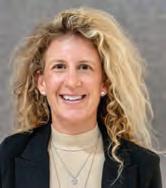
As we celebrate Jewish American Heritage Month, and as our nation approaches its 250th anniversary, I find myself reflecting on the extraordinary promise America has held for the Jewish people, and the growing threats that seek to undermine it.
The American dream has always been, at its core, a promise of equality — that no matter who you are, where you come from, or how you worship, you can build a life of dignity and purpose in this country.
For generations of Jewish Americans, that promise has been transformative. We fled pogroms and persecution, survived the Holocaust, and built thriving communities across this great nation. We have practiced our faith freely, contributed to every facet of American life, from science and medicine to the arts, business, law and public service, and participated fully in the democratic process that makes this country exceptional.
That dream is alive today. On May 15, representing StandWithUs, I accepted a proclamation for Jewish American Heritage Month from the office of Pittsburgh Mayor Corey O’Connor. We have strong support in Congress, including from our own Pennsylvania Sens. John Fetterman and Dave McCormick, who often work together to combat antisemitism, and support Israel and the federal government. Law enforcement stands guard outside our institutions. We have the freedom of speech and press to express our views. And we have the ability and the right to shape the future of American politics by actively participating in the political process, just as every American is entitled to do.
Yet as I write these words, I cannot ignore that this dream is under siege.
Recent primary elections across the country serve as a litmus test for the tolerance of institutionalized antisemitism in American politics.
On May 19, in Kentucky, we witnessed the rare primary victory by Ed Gallrein, who was endorsed by AIPAC, over an incumbent, Thomas Massie, a sitting representative who frequently invoked antisemitic tropes, was openly hostile to Israel, voted against aid to Israel, suggested that AIPAC register as a foreign agent and voted against a bipartisan bill condemning the rise of antisemitism. Massie’s concession speech opened with such hostility: “I would’ve come out sooner, but I had to call my opponent and concede, but it took a while to find Ed Gallrein in Tel Aviv.”
In Texas, Democratic House candidate Maureen Galindo made statements so vile they bear repeating only so we understand the depth of the hatred we are facing: In a since-deleted Instagram post, she proposed converting an ICE detention center into an internment camp for "American Zionists" and a "castration processing center for pedophiles, which will probably be most of the Zionists." These comments were widely condemned by prominent Democrats and Republicans alike. Notably, two Jewish Democrat Representatives, Jared Moskowitz of Florida, and Josh Gottheimer of New Jersey, unequivocally stated that they would move to immediately expel her from Congress if she were to win in November and would continue the effort until she is removed. She narrowly won her primary and then faced a run-off on May 26, where she lost to Johnny Garcia, but still garnered 40% of the vote.
In Pennsylvania, progressive state representative and openly anti-Israel candidate Chris Rabb, who made opposition to Israel and the pro-Israel community a focal point of his campaign, won his primary on Tuesday, May 19. Rabb shared a post claiming that the tragic terror attack on Jews at a Chanukah celebration at Bondi Beach, Australia, was a false flag by "Zionists.” He has since disavowed that post and claimed that a former staffer shared it, but his past rhetoric and actions nonetheless remain extremely concerning. He supports a complete embargo on arms sales to Israel and said he would co-sponsor a resolution to “recognize the Nakba and reaffirm Palestinian refugees’ right to return.” His likely victory means that
two of the largest districts in Pennsylvania will now be represented by figures who regularly amplify antisemitic tropes and seek to punish Israel for defending itself against existential threats.
In my role at StandWithUs, I work with families across the region whose children have been victims of antisemitic incidents, including in classrooms where TikTok has become a primary source of information. At the same time, we are witnessing extremists from groups like the Democratic Socialists of America pressure local businesses into not carrying Israeli products and discriminating against Israeli suppliers.
These are not fringe developments. They are warning signs.
What we are witnessing is the “horseshoe theory” in full effect: Extremists on both the far left and far right finding common ground in their hatred of Jews. Whether it is white supremacists marching with tiki torches or progressive activists calling Zionists “Nazis,” the antisemitic tropes are strikingly similar: accusations of dual loyalty, claims of shadowy control, conspiracy theories about Jewish power, and the demonization of the world’s only Jewish state.
Institutional antisemitism is becoming far too common in communities around the world. Global attacks against Jews are at record levels. Much of this is fueled by misinformation and demonization of Israel, a vibrant democracy and beacon of innovation that is forced to fight a horrific war against genocidal terrorists backed by Iran’s regime. While open criticism and debate about policies and military actions is legitimate and necessary in democratic societies, that is entirely different from the extremism and hate we are witnessing.
Even our own community is fractured, with disagreements on the best path forward to support Israel and combat the rising tide of antisemitism and anti-Zionism.
And yet, we are also living through miraculous times.
Israel stands strong, capable of defending itself, with a majority-Jewish army protecting its people against enemies on all sides. A startup nation continues to thrive and innovate under the most difficult circumstances. The
Abraham Accords have opened doors to peace that many considered impossible. And here in America, Jewish life flourishes in ways our grandparents and great-grandparents could scarcely have imagined.
This Jewish American Heritage Month, I commend my many friends and neighbors who have chosen to pick up the mantle of American democracy, including those who have run for office, knocked on doors and spoken directly with candidates about the issues most pressing to the mainstream Jewish community. That is the American dream in action. That is what this country was built for.
I also call on every American — Jewish and non-Jewish alike — to recognize that antisemitism is not just a Jewish problem. It is an American problem. History has shown us, time and again, that hatred that begins with the Jews never ends with the Jews. When antisemitism is tolerated in our political institutions, it corrodes the very foundations of democracy that protects us all.
As we celebrate 250 years of this American experiment, we must ask ourselves: What kind of country do we want for the next 250 years?
I hope and pray that common sense prevails. That extremists are pushed to the fringes of their respective parties. That sound policy takes precedence over partisan politics. And that the American dream remains alive and well, both for Jewish Americans and for all people who believe in the tremendous privilege, rights and freedoms of being an American.
Don’t be silent. Educate yourself and others. Stand up against hatred of Jews in all its forms. Participate in the democratic process. And if you witness antisemitism, report it and speak out.
The American dream has survived 250 years because ordinary people have fought for it.
This Jewish American Heritage Month, let us honor that legacy, not just by remembering how far we’ve come, but by committing to protect the promise for generations yet to come. PJC
Julie Paris is the Mid-Atlantic regional director of StandWithUs.
needs to fire Ben Gvir after his flotilla provocation, but of course he won’t
Guest Columnist David Horovitz

Back in ancient Israeli political history, in the run-up to elections in March 2021, Prime Minister Benjamin Netanyahu was asked in a TV interview whether the far-right Otzma Yehudit party leader Itamar Ben Gvir would be given a ministerial role in the coalition he was hoping to form after the vote. Netanyahu, who had brokered a deal under
which Ben Gvir and fellow far-right party leader Bezalel Smotrich would run on a joint slate to ensure both of their parties cleared the electoral threshold and made it into the Knesset, replied that he certainly wanted Ben Gvir in his coalition but would not be appointing him as a minister.
Pressed on why, he told his Channel 12 interviewer that Ben Gvir — who has multiple convictions for incitement to racism and support for the outlawed Kach terrorist organization — was “not fit” to sit in his cabinet. Asked if he considered Ben Gvir a racist, Netanyahu allowed, “His positions are not mine.”
Netanyahu lost those elections, so the matter was temporarily moot. But he won the
next race in November 2022 after again brokering a temporary deal to ensure both Ben Gvir and Smotrich’s parties safely cleared the electoral threshold.
Dependent on their support for his majority, the returning prime minister then gave each of the far-right lawmakers key ministerial posts. He appointed the theocratic, anti-Arab racist Smotrich to the central position of finance minister, and also gave him a powerful ministerial role in the Defense Ministry with sweeping authorities over West Bank policy. And he named Ben Gvir as the minister of national security.
This was not the metaphorical equivalent of placing a pyromaniac in charge of the fire
department. It was the actual appointment of a pyromaniac to head the fire department. And of the Border Police combat force. And the Prison Service. And the Israel Police
The harm Ben Gvir has done in this powerhouse position to Israel — its security, its reputation and its internal well-being — is incalculable. He has politicized the police force, corroded its values, promoted sycophantic officers and blocked the promotions of more qualified personnel. He has encouraged aggressive policing of anti-government demonstrations. He has presided over a staggering rise in deadly crime in the Arab sector
Last week, the Chronicle asked its readers in an online poll the following question:
“Should an elected official be obligated to call out antisemitism within their own party?” Of the 229 people who responded, 96% said yes and 4% said no. Comments were submitted by 57 people. A few follow.
I share the concerns raised by Justice David Wecht about the current Democratic party’s members and their positions.
We need to do everything we can to fight antisemitism and anti-Zionism in this country and globally.
Not only that, they should be obligated to call out any form of racism or discrimination.
They needn’t be on a constant crusade to root it out, but when confronted by antisemitism, they should have the guts to unequivocally denounce it.
Horovitz:
Continued from page 14
and an ongoing rise in youth criminality. He has flagrantly, frequently and delightedly breached the so-called status quo on the hyper-combustible Temple Mount, which forbids Jewish prayer at the disputed site, and had himself pictured there earlier this month holding an Israeli flag. He was posing alongside an MK from his own party who, after the day’s visit, declared in a Facebook post: “The time has come to get rid of all the mosques and work to construct the Temple.”
And then last week, Ben Gvir, escorted by officers in his house-trained police force, visited the installation where Israel has detained, pending deportation, several hundred international activists from the latest Gaza-bound f lotilla. Brandishing the national flag, he taunted the bound, kneeling men and women, one of whom had the temerity to stand up and
What’s happening now in both parties is just horrible and makes me wonder how much longer my family will be able to live rich Jewish lives in the U.S.
shout, “Free, free Palestine,” and was forced to the floor and roughly moved aside to clear his triumphalist path. Israel’s national anthem played in the background.
Israel has repeatedly denounced the flotillas as anti-Israel, Hamas-abetting publicity stunts, as indeed they are. It has also sought to minimize the frictions involved in thwarting their efforts to break the blockade Israel imposes on what is still — almost three years after Hamas invaded southern Israel, massacred 1,200 people, and abducted 251 — a substantially Hamas-run Gaza.
Many lessons were evidently learned from the 2010 Mavi Marmara confrontation, when Israeli Naval commandos boarding that flotilla vessel were attacked by thugs with clubs and bars, and opened fire with their personal weapons, killing 10. Last week, Netanyahu praised the Israeli Navy commandos who oversaw the latest, relatively smooth interceptions. “You are doing this with great success, and I must say also, quietly, and certainly with less publicity than our
Social experimentation has shaped Israel before
The recent lecture at Congregation Dor Hadash by Rula Hardal and May Pundak, and their interview by the Chronicle’s David Rullo, left me mulling over their idea of “A Land for All” (“A Land for All, coming to Dor Hadash, presents a new vision of the two-state solution,” May 8). It sound radical, but so was the kibbutz movement in the 1930s. It was the early kibbutz movement that took my father’s brothers and sisters to Palestine from Montreal.
The family wrote about their hard physical work and dangerous conditions while trying to make the land fruitful. They also built an environment of small socialist towns. These kibbutzim my family helped build still exist today but in a modified form.
As a sociologist, I can imagine a “A Land for All” evolving into a productive confederation of people and their culture, Palestinian and Israeli. Today’s kibbutzim are evidence of constructive social experimentation.
Honoring the past, embracing the future
Sarah Angrist Pittsburgh
I was unable to attend the May 15 farewell Shabbat service in the beautiful Temple Sinai sanctuary (“Rodef Shalom, Temple Sinai create ‘a house for all of us,’” March 13). As we
Of course they should call out and condemn antisemitism and hate wherever it’s found, even within their own party. Sadly, however, the overwhelming majority of politicians do this only if it’s politically expedient and serves their purposes.
Elected officials should do more than “call out.” They should demand that leadership (e.g., House speaker or minority leader, Senate majority or minority leader, and party chairs — national, state and local) “talk to” the offender and take appropriate action. The party leaders have many tools available to them to deal with antisemites.
We all know that politicians aren’t obligated to call the sky blue, so this is an unrealistic question. The more interesting question is whether news organizations should be obligated to call out antisemitism by individuals that the media is generally otherwise aligned with and may even promote.
enemies expected,” Netanyahu said.
Then, two days later, came Ben Gvir’s deliberately incendiary performance, video of which he himself posted with the message, “This is how we receive the supporters of terrorism. Welcome to Israel.”
A premeditated act of anti-Israel political terrorism, this, for Ben Gvir, was a routine provocation — a characteristic act of Jewish supremacism, also designed to bolster his support among the growing ranks of Jewish extremists ahead of elections set for this fall.
For Israel, it was a hugely damaging spectacle, predictably igniting a global firestorm, with real consequences for Israel’s already dire international reputation, practical potential legal consequences for Israeli soldiers abroad, and the potential to still further raise hostility to all Israelis, Jews and those who identify with Israel.
As this writer and so many others who care for Israel have stressed repeatedly, Netanyahu should never have legitimized Ben Gvir, much less partnered with him in a coalition, and least
Silence enables haters.
Yes, in the same way that any elected official should alert their constituents to fraud, graft, or any other heinous act that would adversely affect the citizenry.
There’s no point in calling it out in the opposing party (no one will listen); where it actually matters is within their own party.
Yes. But it would be even better if some of them stop promoting antisemitism themselves. PJC
— Compiled by Toby Tabachnick
Chronicle weekly poll question: How satisfied are you with the Jewish programs and services available in Pittsburgh? Go to pittsburghjewishchronicle.org to respond. PJC
of all granted him an acutely sensitive role in the governance of the country.
Netanyahu managed a mild condemnation of Ben Gvir’s performance: “The way that Minister Ben Gvir dealt with the flotilla activists is not in line with Israel’s values and norms,” the prime minister said. But appointed by Netanyahu, Ben Gvir has been assiduously corrupting Israel’s values and norms for the past threeand-a-half years.
Ben Gvir is “not fit” to serve as a minister, Netanyahu correctly stated in 2021. He should, of course, never have shifted from that position. He should, of course, have fired Ben Gvir long ago. And he should, of course, fire Ben Gvir now. But although Ben Gvir is exactly the same racist thug he always was, Netanyahu is not the Netanyahu of 2021, who was sometimes still capable of prioritizing Israel’s well-being over his own political needs. PJC
David Horovitz is the founding editor of The Times of Israel, where this was first published.
watched the livestream from our home outside of Philadelphia, I was filled with deeply heartfelt emotions.
My family came to Temple Sinai — ironically, from Rodef Shalom Congregation — in 1962 as I entered sixth grade. My parents wanted me to become a bar mitzvah, which wasn’t yet offered at Rodef Shalom. It felt like family from the beginning as I became entrenched in the religious school, PAFTY, and then taught there for 45 years.
Three generations — I, my children and granddaughter — have experienced every one of our life cycle events on the Temple Sinai bimah. Temple Sinai is more than my congregation; it is my identity.
And our story is not unique. The Temple Sinai “Family of Families” is the heart and soul of the congregation. As Rabbi Jamie Gibson stated so eloquently, this feeling will not be left behind as we move to Beit Kulanu in the former Rodef Shalom building.
We will take our hearts and souls with us to build a new congregation, a new family of families. As I look forward to an exciting future in a new spiritual home, I will always carry the past with me. Temple Sinai will always be who I am.
Harold Marcus Bala Cynwyd, Pennsylvania
We invite you to submit letters for publication. Letters must include name, address and daytime phone number; addresses and phone numbers will not be published. Letters may not exceed 500 words and may be edited for length and clarity; they cannot be returned. Send letters to:letters@pittsburghjewishchronicle.org or Pittsburgh Jewish Chronicle, 5915 Beacon St., 5th Floor, Pittsburgh, PA 15217
We regret that owing to the volume of correspondence, we cannot reply to every letter.
By Linda Gradstein | JNS
The Negev desert is famous for its vast stretches of sand and roads that seem to go on forever. While it makes up 60% of Israel’s land area, most Israelis know it mainly as the region they drive through on the way to Eilat.
But now Israeli winemakers are hoping the Negev will become internationally known for wine after the region was recently designated a unique wine region, or “appellation.” It joins the Judea appellation in Israel and is believed to be the first desert appellation in the world.
“In a landmark development for Israel’s wine industry, the Negev has officially received recognition as a protected Geographical Indication (G.I./Appellation) under the name ‘Negev.’ The designation places Israel’s southern region and its ancient winemaking heritage firmly on the global wine map,” the Ministry of Tourism confirmed in a press release.
The ministry noted that the recognition was based on extensive professional research conducted by leading Israeli experts, “demonstrating that wines produced in the Negev possess a distinct and identifiable profile unique to the desert terroir.”
The initiative was led by the Merage Foundation Israel, a private philanthropic foundation dedicated to strengthening the Negev, which has spearheaded efforts to

position the Negev as an internationally recognized wine tourism destination. The process took approximately four years and has now resulted in the formal designation of a new Israeli wine region stretching from Kiryat Gat in the north to Eilat in the south, the ministry said.
“It indicates that there is an actual wine region in the Negev,” Nicole Hod-Stroh, the executive director of the Merage Foundation, told JNS. “There is a unique terroir (a French agricultural concept of a ‘sense of place’ based on climate and soil and other factors) and it’s the first desert wine appellation in

the world. It comes as the winemaking world, like everywhere else, is dealing with climate change.”
The Negev wine region currently includes more than 60 wineries and vineyards, producing more than 1 million bottles annually.
“The designation also revives a winemaking tradition dating back thousands of years; the Negev was renowned for its wines as early as biblical times, though modern winemaking in the region resumed only in the 20th century,” the Tourism Ministry said. “Today, using advanced agricultural and irrigation technologies, local growers are demonstrating that vineyards can successfully thrive in desert conditions, even amid global warming and extreme climate challenges.”
Strengthening Israeli wines
The new recognition is expected to significantly strengthen the international positioning of Israeli wines by combining a compelling story, distinctive flavors and cutting-edge agricultural innovation, the Tourism Ministry said.
“With this achievement, the Negev becomes the second wine region in Israel to receive official appellation status, joining the Judea Wine Region, which paved the way several years ago,” it said. “This designation places the Negev alongside globally recognized wine regions such as Champagne, Chianti, Bordeaux and Napa Valley.”
It took a while to get the appellation recognized by the Israeli Justice Ministry, which oversees Israel’s participation in the Lisbon Agreement. The international treaty allows producers of agricultural products, including wineries, to create and protect appellations of origin, such as the word “champagne.”
“Let’s say you’re standing in the store and you’re trying to buy a bottle of wine for your dinner tonight,” Guy Haran, who consulted with the Merage Foundation and runs winethemed trips around the world, explained to JNS. “You see two bottles at the same price. One says champagne and the other says sparkling wine. Ninety-nine percent of the people around the world will choose the champagne.”
In fact, he said, several years ago, an Israeli company bottling mineral water released a campaign calling its product “the champagne of nature.”
French growers in Champagne sued, saying the appellation “champagne” was unique to them, and the Israeli company was
forced to drop the campaign. Even in France, wine regions outside the Champagne appellation must use the term “sparkling wine,” as the term “champagne” refers to a specific area in France.
In Israel, the first appellation dates back to the 1960s for Jaffa oranges. In terms of wine, Judea is the country’s first wine appellation, divided into two separate areas — the Judean Hills and Judean Foothills.
Haran said getting the Negev defined as an appellation was a long process that took several years, beginning in 2020.
“We had to prove that we have a specific style of wine in the Negev,” he said. “We prepared a 150-page report describing the soil, the climate, the history, the geography, the topography and the agriculture of the region, all proving that we have something unique in the Negev.”
He said that when the process began, there were 12 wine producers in the Negev, and now there are 60. Of these, 40 are actual wineries, while the others grow and sell grapes. He said new wineries are continuing to open in the area, while longtime growers are also establishing wineries of their own.
The Negev region’s unique terroir also affects the way wine is produced there. Because of the heat and dryness, growers need to use fewer pesticides on the grapes to prevent mold. The heat also causes the grapes to ripen more quickly, making them among the first harvested in Israel each summer.
‘Wonderful taste and aroma’
The wines also have a distinctive flavor profile.
“The white wines have a wonderful taste as they are grown with a lot of sun and harvested much earlier,” Jonathan Livny, a wine writer for the online magazine E-food, told JNS. “I also think the aroma is different from the aroma of regular wines. You are drinking wines that are not something you can drink in the rest of the country.”
When it comes to the Negev’s red wines, Livny said the Syrah is peppery with strong spice notes, while the merlot is much lighter than varieties grown elsewhere in Israel. The Negev is also well-suited to varietals less common in Israel, such as Malbec, which is widely grown in Argentina.
He said wineries in the Negev are also experimenting with an ancient grape called Syriki, using seeds discovered in the Negev desert that were historically used to make wine in Greece and Lebanon.
The forces behind the Negev appellation hope it will also foster a greater sense of community among wine producers in the region, while encouraging tourism from both Israel and abroad.
The COVID pandemic sparked an increase in domestic wine tourism, as many Israelis, unable to travel overseas, began visiting wineries, taking picnic baskets and bottles of wine into the vineyards, especially on weekend mornings.
Israelis are not major wine drinkers, consuming just 7 to 8 liters per person annually. But wine producers say younger Israelis are increasingly interested in wine and are willing to spend more on a quality bottle. There are now more than 300 wineries in Israel, including the 40 in the Negev. Those Negev wineries are growing rapidly and organizers hope the new appellation will give the entire region a major boost.




Monday, June 8
5:30-7 pm: VIP Reception
7-8:30 pm: Interview, Cooking Demo and Book Signing
JCC of Greater Pittsburgh • Squirrel Hill
$54 Admission includes a copy of Sussman’s newest cookbook, Zariz
$118 VIP intimate meet & greet with the 3 chefs featuring a special cocktail and light bites created by Adeena Sussman and Bill Fuller
For more info, contct Fara Marcus: fmarcus@jccpgh.org



Colton Zachary Rumbaugh, son of Randi and Nick Rumbaugh, will become a bar mitzvah on Saturday, May 30, at Beth El Congregation of the South Hills. Grandparents are Cheryl and James Snyder of Pittsburgh, and Karen and the late Rodney Rumbaugh of Irwin, Pennsylvania.
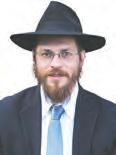
TScott and Tracy Eichner of Portland, Maine, joyfully announce the birth of their daughter, Marley Cooper Eichner, on May 1, 2026. Proud grandparents are Elyse and Marty Eichner of Squirrel Hill, and Edward and Virginia Young of Parkville, Missouri. Marley Cooper is named in loving memory of Scott’s maternal grandmother, Claryne Cooper Berman, and Tracy’s grandfather, Edward Merle Young. Marley is the great-granddaughter of the late Claryne and Sanford Berman of Steubenville, Ohio, the late Sidney and Sally Eichner of Akron, Ohio, the late Janina and Theodore Stoepel of Hobe Sound, Florida, and the late Nancy and Edward Young of West Orange, New Jersey. PJC





4:21 – 7:89
his week’s Torah portion, Naso, continues the instruction to Moshe to take a census of the Jewish people. The previous portion discusses the census of the general population as well as the beginning of the count of the tribe of Levi, while this week’s portion continues with the remaining families of Levi.
The words the Torah repeatedly uses for taking the census are “naso es rosh,” literally, “lift up the head.” Some commentaries translate the phrase as “receive” the count of the people, while others understand it as “tally the heads.” Yet the simple meaning of the word naso is “to lift.” Why would the Torah describe a census as lifting the heads of the people?
In society, numbers can often make a person feel anonymous. A person becomes a statistic, another file, another face in the crowd. Large organizations and systems can unintentionally reduce human beings to numbers on a page.
The Torah teaches the opposite.
“Naso es rosh” means that when you count a Jew, you lift them up. You help them recognize their worth, dignity and unique mission. A census in the Torah is not about reducing individuality; it is about affirming it.
This is the task of Jewish leadership: to uplift people.
This also explains another fascinating detail about the census itself. Who was Moshe instructed to assist with the counting? The leaders of each tribe. One might think that for the simple task of taking a census, anyone could have done the job. That would make sense if the goal were merely to count people. But if the purpose is to uplift them, to help each person recognize their unique place in the world and understand that they matter, then the leaders themselves must be present to “lift their heads.”
Two of my favorite stories of the Rebbe express this idea beautifully.
Rabbi Yosef Weinberg, a venerable Chassid and community leader, once related how late one night an acquaintance called him with an extremely urgent matter that needed to be brought to the Rebbe. Rabbi Weinberg hurried to 770 Eastern Parkway — Chabad
Lubavitch headquarters — hoping to catch the Rebbe’s secretary before the Rebbe left for home. When he arrived, the secretary was inside the Rebbe’s room finishing up for the night. Because of the urgency, Rabbi Weinberg slipped the note into the door jamb, hoping the secretary would notice it.
To his dismay, the secretary walked out, the paper fell to the floor, and Rabbi Weinberg watched as the Rebbe himself bent down to pick it up.
Rabbi Weinberg felt terrible. He later wrote another note apologizing profusely for having caused the Rebbe to bend down to retrieve the letter. The Rebbe responded with a short but powerful message: “This is my whole purpose — to uplift, especially what others overlook.”
One of my fondest childhood memories is attending the Lag B’Omer parades with the Rebbe in the streets of Crown Heights. Thousands of children participated, alongside beautiful floats and lively marching bands. Rabbi JJ Hecht was the driving force behind organizing these massive events.
Before the 1987 parade, Rabbi Hecht was deeply anxious about whether everything would succeed and shared his concerns with the Rebbe.
After the parade concluded successfully, Rabbi Hecht turned to the Rebbe and said he hoped the Rebbe was satisfied with the event. “Very much,” the Rebbe replied. Then he added, “What is with you? Why were you so worried about how the parade would turn out?”
Rabbi Hecht answered that the Rebbe had “schlepped me out” of my worried state.
“Schlepped you out?” the Rebbe responded. “Uplifted!” The Rebbe raised his hand high above his head and repeated, “Uplifted!”
That is the message of Naso.
Our task is not merely to count people, but to uplift them. To notice those whom others overlook. To help people recognize their value and potential. Sometimes all it takes is a kind word, encouragement, or simply making someone feel seen.
Let us all take the message of this week’s parsha to heart and strive to uplift every person we encounter, especially those whom others may overlook. PJC
Rabbi Yisroel Altein is the spiritual leader of Chabad of Squirrel Hill. This column is a service of Vaad Harabonim of Greater Pittsburgh.















Please support our advertisers, and mention that you saw their ad here.

We depend on them, and they depend on you!
ARENT: Charles B. Arent, on May 18, 2026. Beloved twin brother of the late Paul S. Arent. Preceded in death by his parents, Phyllis and Herbert Arent. Survived by aunts, uncles, cousins and numerous good friends. Mr. Arent was a sales representative for 18 years with Gipson Bearing Co., followed by a partnership with his brother in Arent Office Supply Co. of Murrysville for 21 years. He retired in 2013 after working for 50 years. During part of that time he was a 21-year volunteer with Wilkins-Churchill Reserve One Ambulance Association, and was grateful to have been awarded life membership status. Chuck was a proud veteran of the United States Army, having served our country with distinction in the Vietnam War. He was awarded two purple hearts for wounds received in combat action, and two air medals for over 100 hours of sustained aerial combat. His exemplary military service was also recognized with other honors, including The National Defense, Republic of Vietnam Service and “Tet” campaign medals. After his mili tary service, Chuck attended Point Park University, mornings, evenings and summers while working full time. He graduated Point Park with a degree in journalism and public relations in 1973. Services were held at Ralph Schugar Chapel, Inc. Interment Temple Sinai Memorial Park, Plum Boro. In lieu of flowers, contributions may be made to Woodland Hills EMS, 2071 Ardmore Blvd., Pittsburgh, PA 15221 or to Wilkins Township Volunteer Fire Companies, P.O. Box 150, Turtle Creek PA, 15145. schugar.com
GOLDBERG: In loving memory of Arthur Lewis Goldberg. Arthur Lewis Goldberg, a man of seeking and sharp intellect, passed away on Wednesday, May 20, at the age of 87. Born in the Bronx, he was the younger son of the late Rachel and George Goldberg. Art grew to treasure the family he created and discovered. He spent the last eight years married to his devoted wife, Renée Ramo. He was the loving father of his daughter, Debi Gilboa, and a proud grandfather to his four grandsons: Ari, Nadav, Oren and Gavri. He valued Renée’s children Jaci, Bill (Emily) and Seth, and their children Daphne, Jake, Ethan and Noah. Arthur highly prized his conversations and intellectual connections with his grandchildren, always taking a genuine interest in their lives and thoughts, and insisting on regular updates. Alongside his commitment to his family, Arthur built a highly distinguished professional life. He pursued an extensive academic path, earning a B.B.A. from the City College of New York, an MBA from the University of Chicago, and both a J.D. and LL.M. from the New York University School of Law. As a Certified Public Accountant, Arthur spent decades as a senior executive, corporate board member, and trusted business consultant, earning widespread respect for his sharp intellect and integrity. He finished his last professional obligation to the corporate board on which he served just this past Sunday, from the hospital, exactly as he desired. Arthur was preceded in death by his parents and his brother, Ralph Goldberg. His memory will be held in the hearts of his wife Renée, his daughter Debi, his grandsons, and the family and friends who valued his wisdom and surprising humor. Service and interment were held at Beth Shalom Cemetery. In lieu of flowers, donations may be made in Art’s memory to Young Judaea Midwest (cyjmid.org/donatenow/scholarships/). Arrangements entrusted to Ralph Schugar Chapel, Inc. schugar.com

late David and Paula Horwitz. Brother of Roberta Horwitz. He designated himself as an organ donor — which is consistent with his generous spirit. Because of his blood type, and the marvelous team at Presby’s cardiac-ICU, he will keep helping people the best that he can. We know that he would like that. This final act will be like the rays of sun shining through the dark clouds. Services and interment private. In lieu of flowers, contributions may be made to a charity of your choice. Arrangements entrusted to Ralph Schugar Chapel, Inc. schugar.com
Betty Klein, on Wednesday, May 20, 2026. Beloved wife of the late Donald Klein. Loving mother of Diane Klein and Susie (Larry) Mondry. Sister of the late Shirley Mikita. Grandmother of Drew, Emily and Carly Mondry. Betty was a real estate agent for 45 years with Kellywood and Northwood Realty. Services were held at Ralph Schugar Chapel, Inc. Interment Adath Jeshurun Cemetery. In lieu of flowers, contributions may be made to the Animal Shelter of Martha’s Vineyard, POB 1829, 1 Pennywise Path, Edgartown, MA 02539, animalshelterofmv.org. schugar.com
It is with deep sadness that we share the passing of Burton Lawrence Lieberman, affectionately known by his grandchildren as “Puppy,” who passed away peacefully on May 15, 2026, at the age of 100 years and 3 months. Born in 1926 in Pittsburgh, he s preceded in death by his parents, Manny and Dina (Rogow) Lieberman; his wife, Barbara (Bluestone d. 2003); and his sisters, Greta Katz and Marilyn Schwartz. Burton proudly served in the United States Navy during World War II in both the Atlantic and Pacific theaters. He loved sharing stories from his year in Japan, where he was assigned to “light duty” as an entertainer for the troops. He spent much of his career in sales and continued working well into his later years, driven by his genuine love for staying active and connecting with others. A consummate storyteller, he could strike up a conversation with anyone, making everyone feel comfortable and included. He was a true gentleman and a mensch — kindhearted, generous, honorable, humble and deeply respected. He lived with eternal optimism and found great joy in life’s simple pleasures. To Burton, every day was an adventure. He preferred the path less traveled, embracing every new experience with curiosity and enthusiasm. He just had a presence that was special; he was loved by everyone who met him. We were privileged to have had him in our lives. He is survived by his children, Judith Foner, Marc Lieberman, Please see Obituaries, page 20
HORWITZ: Steve Horwitz, on Monday, May 18, 2026. Steve has always been a generous person who loved helping people. He had a definite zest for life. He shared his time, resources and his network of people to help those that he could. One of his longtime friends said of him: “Steve knew everybody, and everybody liked Steve. No matter what you needed, Steve would offer to introduce you to someone who could help you.” Steve held on to his closest friends, was fiercely loyal to them and showed up for them no matter what. Loving son of the

Morton S Alman
Marc Bilder
Nancy Bowytz
Susan Cohen
Pauline Dobkin
Edward M Goldston Z"L
Idelle Hoffman
Denise Kaiser
Nadine Kruman
Michael Levin
Karen K Shapiro
Marlene Terkel
Susan Weiner
Edris C Weis
David Howard Weis
David Wolfson Lillian Handmacher
Susie Zohlman & Sally Close .Elise K Goldman

















Contact the Development department at 412-586-2690 or development@jaapgh.org for more information. THIS WEEK’S YAHRZEITS —











Sunday May 31: Lillian Amper, Beatrice K Barnett, Dr Milton Bilder, Meyer M Braun, Yetta Elinoff, Belle Farber, Ida A Friedman, Leonard Hyman Gettleman, I Max Greenfield, Charles L Jacobs, Stella Leedy, Carl Lipson, Ralph Leon Markowitz, Cele Monheim, Alta M Orringer, Morris Shakespeare, Sarah Teplitz, Sara Weinberg, Barry Yahr
Monday June 1: Sybil B Berkman, Florence Boodman, Herman Braunstein, Sherman B Golomb, Michael David Levine, Louis Rider, Cecelia M Schmidt, Libbie R Seiavitch, Hilda Z Silverman, Gertrude Simon, Irving Spolan, Sara Titlebaum, Abraham Weiner, Chava Wekselman
Tuesday June 2: Jennie Bleier, Jacob Garber, Mayme Gerson, Morris B Green, Lillian Handmacher, Leah Kramer, Helen Langer, Robert Langer, Samuel A Lichter, Abe Mazer, Abraham Rothenstein, Morris A Schwartz, Betty Silberblatt
Wednesday June 3: Israel A Brahm, Howard Finkel, Tillie L Gallagher, Dr Harold Saul Kaiser, Leroy A Klater, Jack Masloff, Fannie Miller, David Reubin, Anshel Rosen, Sylvia Rosenblum, Minnie Schilit, Benjamin B Sklar, Sidney Whitman
Thursday June 4: Sylvia Barmen, Barney B Dobkin, Stanley Flansbaum, Belle Goldman, Saul Goldstein, Fanny Kurfeerst, Jacob Landay, Max H Leib, Esther Littman, Joseph Morantz, Max R Morgan, Geraldine Sadowsky, Jennie Santman, Margery L Selkovits, Helen P Suttin, Bertha Weisberger
Friday June 5: Casper Alman, Dr Fredrick Amshel, Leah Bloom, Louis Bowytz, Mary Segal Eger, Sadye Klee Gardner, Oscar Green, Sarah Haltman, Rae Kreger Hepps, Rose Kramer, Jack Kenneth Kruman, Shirley F Levenson, Joseph Pickholtz, Hyman Shapiro, Mollie Silverblatt
Saturday June 6: Edith S Adler, Sarah Bass, Benjamin Block, Dr Mortimer Cohen, Usher Z Cohen, William Congress, Suzanne Dolgin, Hyman Elovitz, Louis Fienberg, Ida Leah Hurwick, Cheri Glick Jak, Dorothy Levine, Jessie Levine, Fannie Lipsich, Dr Theodore Lundy, Dorothy Glickman Mandelblatt, Erwin Lawrence Rubenstein
Obituaries:

Howard Lieberman and Sharon Cudaback; his grandchildren, Eli Foner (Katheryn), Samuel Foner (Frances), Max Foner (Tiffany), Neila Lieberman and Jaime Lieberman; and his greatgrandchildren, Natalie Winland and Ethan Winland. Graveside services were conducted
Sweet, beautiful, funny and talented, Laurel Anne (Smoliar) Metzler died on May 8, 2026, of metastatic breast cancer. She was only 41, but fought hard against cancer for 11 years, facing each new challenge with courage and poise. Laurel was a loving mother, wife, sister, daughter and friend. Her husband of nine years, Alex Metzler, began dating Laurel shortly before her initial diagnosis, and loved, nurtured, and made her laugh ever since. She leaves behind their ener getic and precocious 4-year-old son, Kai. Laurel and her twin ster, Rachel White, were as close and affectionate as sisters could possibly be, even taking a special trip together to cele brate their 40th birthday. Rachel’s children, Lizzy and Ben, adored their Aunt Lala, especially hen they baked scrumptious desserts together. A skilled chef, Laurel loved cooking delicious meals and treats for everyone she cared about, and she delighted in teaching her son to love cooking and baking alongside her. She was stylish and loved color, always looking incred ible — even while chasing a toddler. Born and raised in Pittsburgh, Laurel graduated from ew York University Tisch School of the Arts and often joked that she must have been born with an “inner New Yorker,” wondering how she had ever survived without a 24-hour deli. She went on to become a successful video and commercial editor in New York City before returning to Pittsburgh in 2024, much to the great joy of her family. She will be dearly missed by her parents, Harold and Ginnie Smoliar, along with a host of relatives and friends. There will be a celebration of Laurel on Sunday, June 7, from 11 a.m. to 3 p.m., with her family. For further details, please contact hsmoliar@gmail.com. Arrangements entrusted to Ralph Schugar Chapel. schugar.com
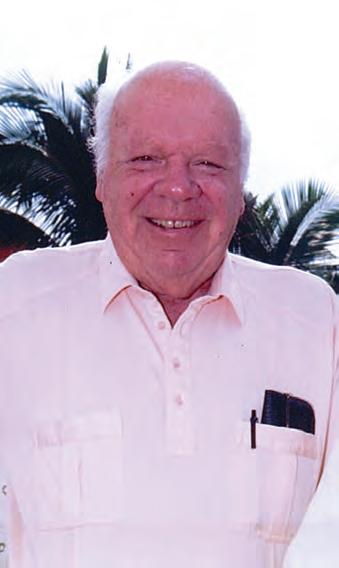
Pincus. Also survived by many nieces and nephews. Dr. Pincus was a beloved doctor in the Monroeville area where he operated his own practice for over 30 years, making house calls nd delivering babies. Through one of his deliveries, he delivered a baby girl whom he adopted as his daughter, Carole. He lso adopted Steven and Ronald, creating a loving family. He was a Jewish War veteran of World War II, before attending Pitt for medical school. An avid Pittsburgh sports fan, Jack never wanted to miss any games. He had a love for golfing and singing. It was not unusual for him to grab a microphone at a restaurant and start singing a Frank Sinatra song. He also loved traveling with his wife, Joanne. Together, they went on cruises, to casinos, and their yearly snowbird trip to Florida. After the passing of Joanne, Jack formed a special relationship with the late Adeline Tomey, with whom he spent the later years of his life. Dr. Pincus did not only help people through his work, he helped everybody by his positive demeanor, infectious smile and happy heart. He saw the good in everything. Jack’s unshakable spirit will stay with all of those who he knew and loved. He will be deeply missed. Services at Ralph Schugar Chapel, Inc., 5509 Centre Avenue, Shadyside on Thursday, May 21, 2026, at 11 a.m. Visitation one hour prior to services (10 to 11 a.m.). Interment Temple Sinai Memorial Park. In lieu of flowers, contributions may be made to AHN Hospice “Healthcare at Home” (AHN Office of Development, PO Box 535604, Pittsburgh, PA 15253-5604). www.schugar.com
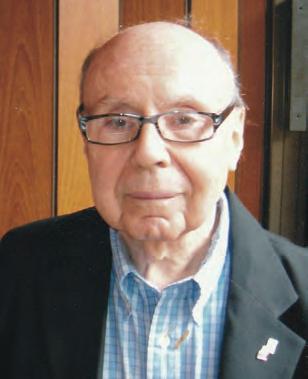
NAUHAUS: Kerry Nauhaus, on Friday, May 8, 2026. Beloved partner of Albert Elovitz. Loving mother of Adam Prudoff and wife Danielle Prudoff, Rebecca Britt and wife Celeste Janssen. Sister of Eric and Lester Nauhaus. Grandmother of Emma and Alexa Prudoff, Max and Luca Gornik, and Jasper Janssen-Trull. Kerry Nauhaus was a jovial, kind and loving woman. She brought joy and companionship to her partner, Albert, warmth and acceptance to all of her grandchildren, respect and compassion to her children, and appreciation and humor to everyone else in her life. She has close friends that date back to her earliest years of life and strong bonds with family members across the country. She was known for her huge laugh, great spirit and easygoing demeanor. She was a pleasure to be around and made sure people felt welcomed and ved. May her memory be a blessing! Contributions may be made to your favorite charity.
Dr. Jack H. Pincus, on Monday, May 18, 2026, at the age of 99. Beloved husband of the late Joanne L. Pincus. Preceded in death by his loving parents, Abraham and Celia Pincus. Beloved father of Steven (Clara) Pincus, the late Carole F. (Timothy) Troup, and the late Ronald H. (Susie) Pincus. Brother of the late Merle (Irving) Bennett. Grandfather of Nathan


REICHMAN: Milton “Milt” Reichman, of Squirrel Hill, passed away on Saturday, April 18, 2026, after a long battle with Parkinson’s disease, at the blessed old age of 99. He passed away at home, surrounded by his family. Milton was the beloved husband of Sara Reichman, and devoted father of Jonathan Reichman and Miriam Reichman, all of Pittsburgh, and an adoring grandfather of Gabriella Reichman of Herzliya, Israel. Milton was born on Nov. 21, 1926, at West Penn Hospital to Samuel and Dorothy (Cottler) Richman. He was raised on Penn Avenue in the Garfield section of the city, at the home of his grandparents. While a student at Peabody High School, the U.S. entered World War II, and like many young men who were keen to serve, Milt signed up to serve his country in the Navy. After graduating from the Naval Training Academy in Illinois, Milt was stationed in Florida and California for the remainder of the war as a gunner on the PB2Y planes. After an honorable discharge, Milt studied at the University of Pittsburgh. He was proud to be the first in his family to graduate from college. He was also an active member of the Sigma Alpha Mu (SAM) fraternity. From his youth, Milt was involved in Zionist organizations. His dream to visit Israel came to fruition when he spent a year at Kibbutz Maleh Hachamisha. In 1968, he traveled again to Israel where he met his wife, Sara. They married in Pittsburgh and raised a loving family here. Milt was active with SAM alumni, the local Jewish War Veterans and American Legion and was a 14th Ward Democratic committeeman. If you asked Milt what he would want to be remembered for, he would have said that he was most proud of: 1) His time in the Navy, serving during the war; 2) His time spent at the University of Pittsburgh and his involvement with the SAM fraternity; 3) His support and love of Israel and the Jewish people. But most of all, Milt was proud of and loved and cared about his family. Milton will be missed greatly by his family and friends. Services were private. Burial took place at Eretz Hachaim Cemetery in Beit Shemesh, Israel. Arrangements entrusted to Ralph Schugar Chapel, Inc. schugar.com PJC























By Adam Reinherz | Senior Staff Writer
Melinda Strauss, a content creator known for explaining modern Orthodox Jewish life to 1.5 million TikTok followers, is coming to Pittsburgh for a June 1 book signing hosted by the Jewish Federation of Greater Pittsburgh.
Speaking with the Chronicle by phone from Long Island as a lead-up to the Hannah Kamin Annual Lion of Judah event, Strauss said although as she’s looking forward to discussing “Eat Jewish,” her 2025 cookbook, and sharing insights from her work as a food blogger and influencer, “my favorite part is hearing people’s stories.” Whether those she engages with are followers or not, “being able to connect with the old and the new, and being able to share my story and also hear theirs is my favorite part about this.”
On both Instagram and TikTok, Strauss, 43, is a familiar presence. Her videos range from Trader Joe’s kosher hauls to celebrating her dog Louie’s bark mitzvah. While aiming to offer insight on the quirks of modern observant life, Strauss often reminds followers that neither Orthodoxy nor Judaism are monolithic. Instead, the multitude of opinions and practices shape a collective experience.
For Strauss, living in accordance with halacha (Jewish law) often plays out in two-minute explainers. Whether detailing her family’s approach to swimming on Shabbat — halachic concerns include squeezing out wet clothing, submerging oneself in water and creating a flotation device — or why she has two beds in her guestroom (in deference to comfort and ritual purity laws), Strauss treats everyday experiences as opportunities to inform. She called her audience “curious people,” and said they are individuals “who want to learn more about Judaism, whether they’re Jewish or not Jewish.”









Though it’s nearly impossible to gauge exactly who makes up the 1.7 million people following her on TikTok and Instagram, Strauss said she’s fairly certain the group represents a range “from tweens and teenagers, to men and women in their 80s.”
Regardless of who her demographic is, “the biggest thing is that they’re all curious in some way or another about the way I’m living my Jewish life.”
Strauss grew up in Seattle, Washington, in what she called a “really good, stable, wonderful home.”
As a freshman at Yeshiva University Stern College for Women, she experienced a “pretty intense time,” she recalled. Months after Sept. 11, 2001, she was diagnosed with Type 1 diabetes.
Strauss graduated college and moved to the Upper West Side. She worked in





recruiting at a law firm, got married and moved to Queens. With a baby in tow, she and her husband later moved to Long Island.
After leaving New York City, “I quit my job and I’m like, ‘I’m going to be a stay-at-home mom,” she said. The decision was prompted by a realization that it “was actually more expensive for me to go to work than it was for me to stay home.”
With a daughter who “just napped,” Strauss found herself with newfound time.
“I was bored,” she said. “I didn’t want to wake her up to go to Mommy and Me. And I started just playing with recipes at home.”
Strauss created an album on her Facebook page where she tested recipes. A friend suggested converting it into a blog. Despite not knowing what a blog was, Strauss gave it a go.
“That’s what I do. Tell me to do it. I’ll try it. I figure what’s the worst that’s gonna happen? It’s not gonna succeed. I’ll find something different,” she said. “Thank God, it worked out pretty darn well.”
Strauss’ blog, “Kitchen Tested,” captured attention and about a year later Strauss began organizing a conference for fellow kosher food bloggers, an effort that helped forge connections across the Jewish world. After about 10 years, COVID arrived. Like nearly everyone she knew, Strauss joined TikTok.
“I had no idea what I was sharing,” she said. “I was just sharing because my daughter wanted to be on the platform. And I’m like, if she wants to be on here, I’ll be on here.”
Strauss noticed frequent questions about her ritual practices. Whether inquiries concerned being offline throughout Shabbat or only eating kosher food, Strauss realized
“there’s this whole world of people who don’t know anything about Judaism.”
She said she “started sharing and answering questions, and it really took off from there.”
TikTok offered a platform to leverage various interests, including, food, inspirational speaking, Israel advocacy and Jewish education.
Her cookbook, she continued, represented a way of “combining it all.”
Complete with recipes, memories and insights into Jewish practice, “Eat Jewish” is another step in Strauss’ journey. Where she lands she isn’t certain.
“The one thing about me is I never know what’s next, and I kind of like it,” she said. “I’ve always just thrown things out and seen what’s next and had fun.”
The process is relatively carefree but not careless, she explained.
“My biggest thing that I want for people is to let them know that their voice is important too — however they’re using it,” she said.
Whether it’s having a conversation, creating content, or even liking content, every action matters.
“People don’t realize how much of an impact they can make with the tiniest little moment,” she said. “Like when someone’s running a marathon, and people are on the sidelines clapping, they’re making an impact even when they don’t realize they are. And it’s a huge impact. So I just want people to know that however you’re doing something, you are doing something, don’t ever feel like it’s not enough.” PJC
Adam Reinherz can be reached at areinherz@pittsburghjewishchronicle.org.
Two communal professionals were recognized by the Pittsburgh Business Times for driving organizational and community change.
Karen Wolk Feinstein, president and CEO of the Jewish Healthcare Foundation, was named the 2026 Women of Influence Impact Award winner by the Pittsburgh Business Times.
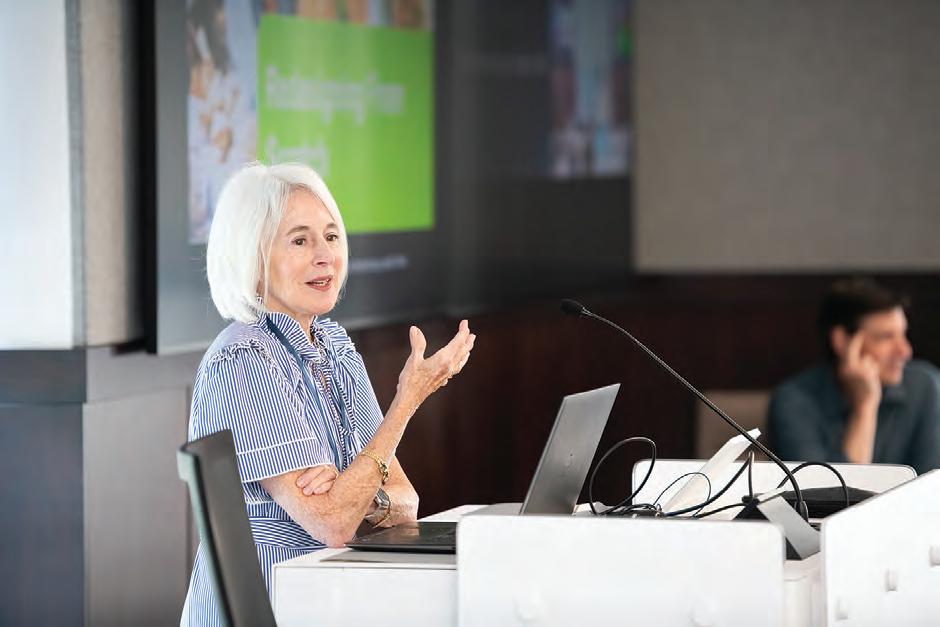
Congregation Beth Shalom hosted a retreat for 18 families with a child in 5th or 6th grade. The May 15-17 gathering was held at Emma Kaufmann Camp.
Community Day School students prepared for Shavuot by learning about the Jewish tradition of eating dairy on the holiday. Jewish day school students paired the educational lesson with an opportunity to make cheesecake.
Dana Gold, COO of Jewish Family & Community Services of Pittsburgh, was named a 2026 Woman of Influence by the Pittsburgh
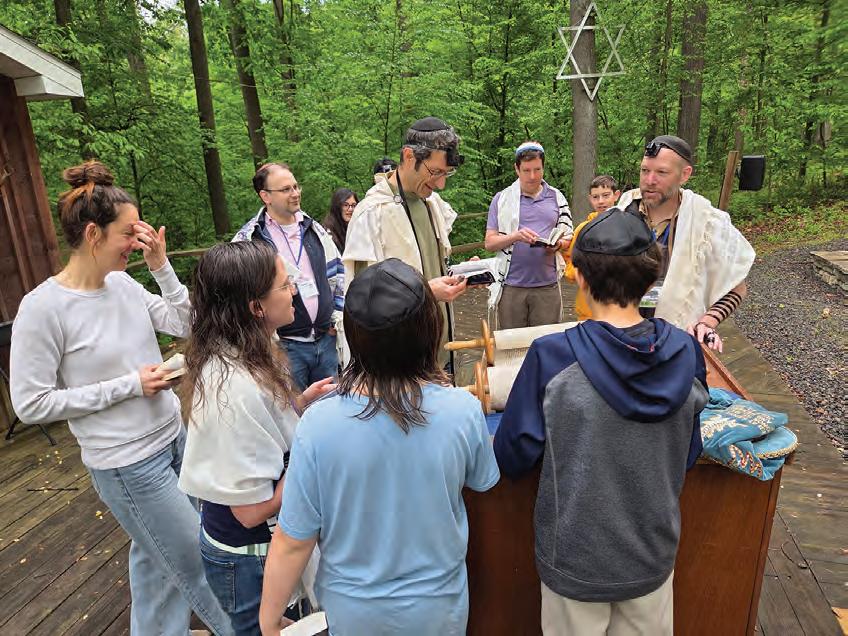


Beit Kulanu: The Unification of Rodef Shalom Congregation & Temple Sinai hosted a deli night. Members of the sandwiched congregation enjoyed an evening of conversation and cuisine.
Jewish Healthcare Foundation convened an invitation-only working session at Carnegie Mellon University focused on reimagining home-delivered meals for homebound seniors in Southwestern Pennsylvania. The May 18 workshop included leaders across aging services, healthcare, technology, logistics, nutrition and community organizations to explore what a next-generation model could look like amid mounting workforce, funding and operational pressures.
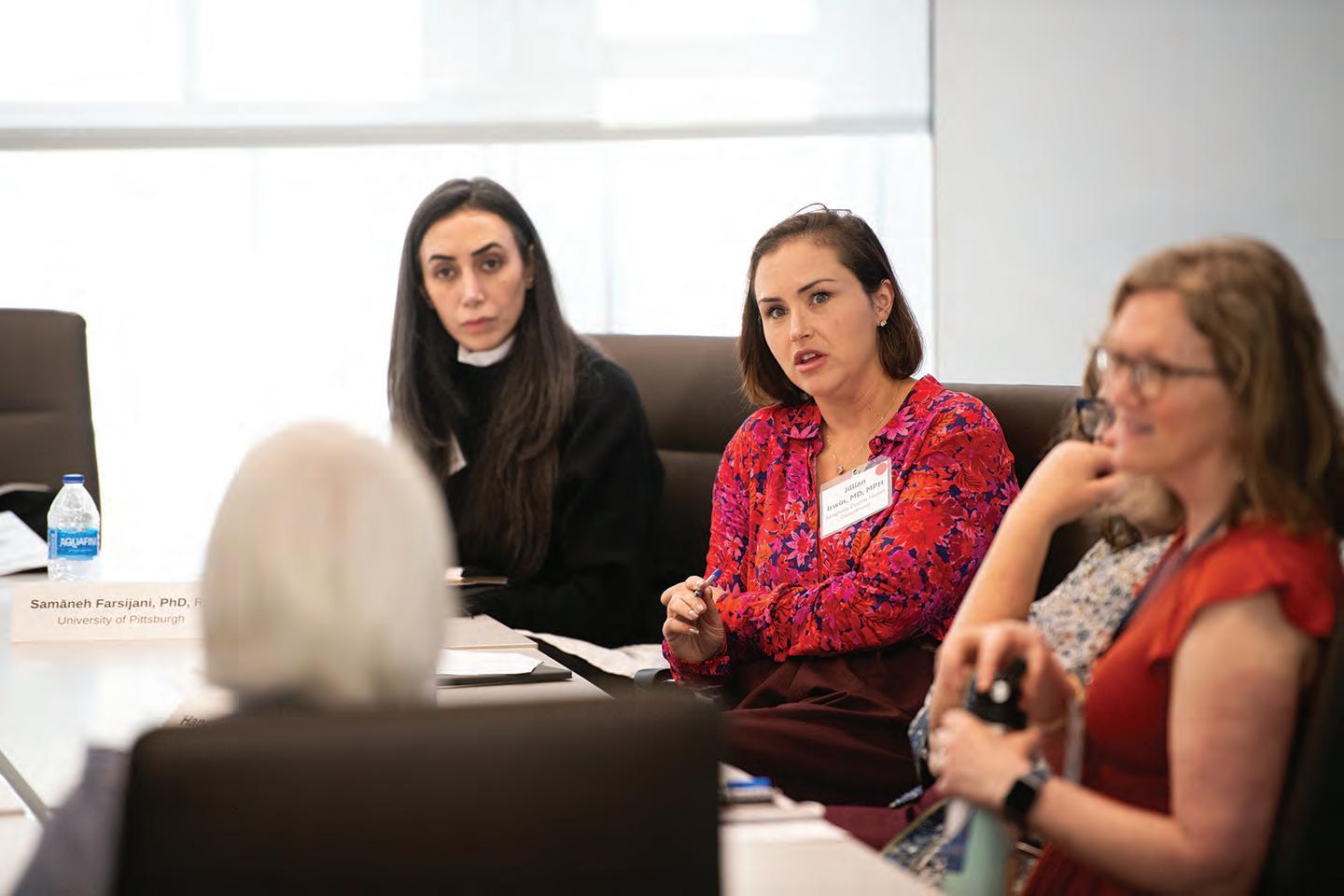

CDS Summer Clubs offer fun, engaging, and enriching activities for children and families all summer long! Register for all clubs!
Register for Camp Lion (2s-4 Grade) by the week ! th