Aexplained by figures nationally celebrated for their athletic and civic contributions, demands patience, perseverance and using sports as a model for social progress.
Speaking to local student leaders from the Black and Jewish communities on April 22, Robert Kraft, owner of the New England Patriots, Pennsylvania Gov. Josh Shapiro and two-time Super Bowl champion Charlie Batch invoked a common trope.
“Sports is the one thing that builds community and builds those bridges,” Kraft said.
At games, fans sit together and “don’t really focus on how they worship, or whether they went to college or what their job is,” Shapiro said. “You are rooting for your team — or if you’re an Eagles fan like me, you’re rooting against the other team.”
With the NFL draft drawing an estimated 805,000 visitors to Pittsburgh, Batch saw more than a celebration of football. The former Steelers quarterback urged students to treat the moment as a starting point for lasting social change — not an endpoint.
“What are the lessons that you’re learning here, when everybody leaves Pittsburgh and now it’s up to us to continue what we’re trying to do?” he asked.
Hosted by Kraft’s Blue Square Alliance Against Hate, the fireside chat and dinner was held in partnership with the NFL, Hillel International, UNCF (United Negro College Fund) and the Steelers.
Organizational representatives, including NFL Commissioner Roger Goodell, Hillel
International President and CEO Adam Lehman, Stillman College President Yolanda Page, and Jim Rooney, son of the late Steelers Chairman and President Dan Rooney, attended the program and reinforced the panel’s central message of perseverance and unity.
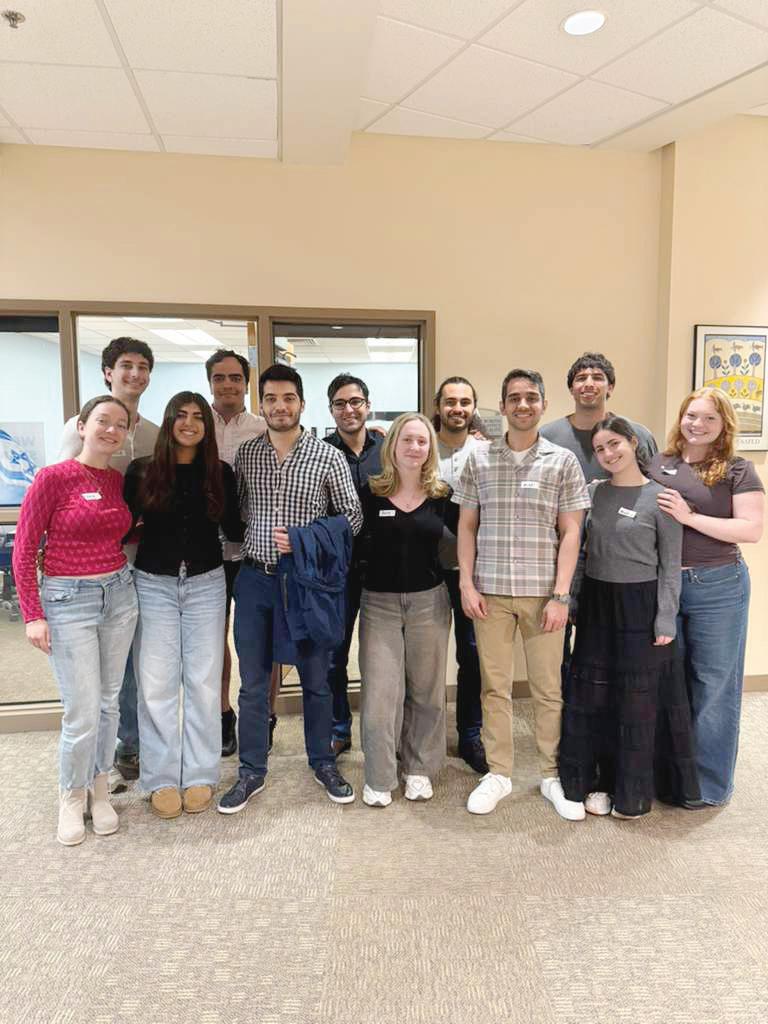
Encouraged by the directive, student leaders sat together inside an ornamented dining room at the Henry Hornbostel-designed club, ate a kosher catered dinner and shared experiences, worries and hopes for a better future. The exercise sparked both intimate table discussions and larger group presentations.
“I know how hard it can be to stand up against hate on campus,” Molly Peters, 20, said. “Each community can be even stronger if we come together and work together.”
“Sometimes it’s easy to feel alone in this world with everything that’s going on; but when you see all these people in this room here for one same goal, I think that just goes such a long way in reassuring me that we’re all going to be OK,”
Jonah Geisner, 22, said.
Students told the Chronicle the event fostered meaningful connection between peers.
“I grew up in a place where there was a lot of Jewish individuals, but I never really knew a lot about their experiences and their culture,” Temi Oladeji, 20, said. “Being able to talk about it with them today and learn more about it was really amazing.”
“This is something that I don’t get to do enough,” Avery Brown, 20, said.
Reflecting on the event the following day, Goodell praised the gathering and said, “Respect for everyone is really important in today’s world — appreciating our differences and appreciating what we can do together.”
By Adam Reinherz | Senior Staff Writer
With the NFL draft welcoming an estimated 805,000 people, the National Football League and community members used Pittsburgh as a platform to promote unity, grit and care for others.
“We like to believe in the National Football League that we can bring communities together,” NFL Commissioner Roger Goodell said.
Speaking on April 22 at a unity dinner in Oakland, Goodell told community members, including a group of Jewish student leaders, the draft could be a mechanism for avoiding distractions and creating “commonality outside of maybe our daily lives.”
Pennsylvania Gov. Josh Shapiro, who attended the dinner, said that tikkun olam (repairing the world) is the “very essence of what my parents taught me, what my faith teaches me, that leads me to doing this work for you as governor.”
Hearing those words was an impetus to telling peers to “be more open and willing to go into spaces that they may not think is for them,” University of Pittsburgh student Noa Solomon, 19, said. “You never know what you’re going to learn, or what people will learn about you, and there’s no harm in just going and having a new experience.”
Hit music producer hits Beth Shalom Page 2
A
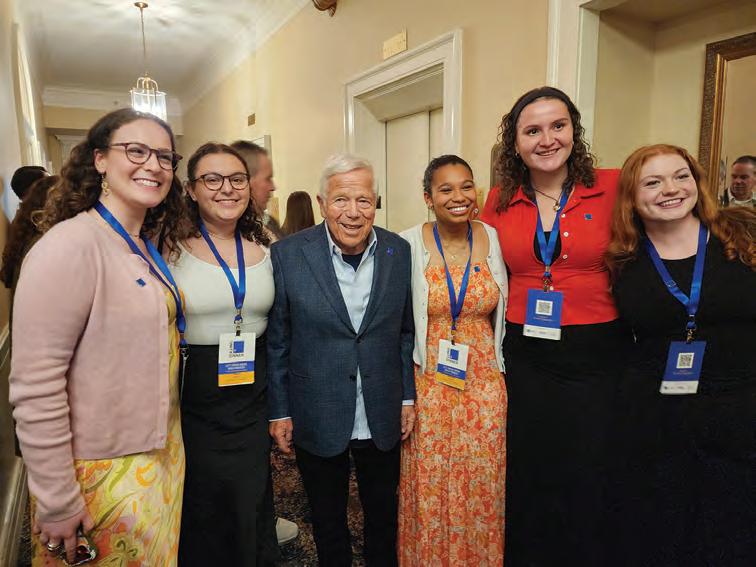
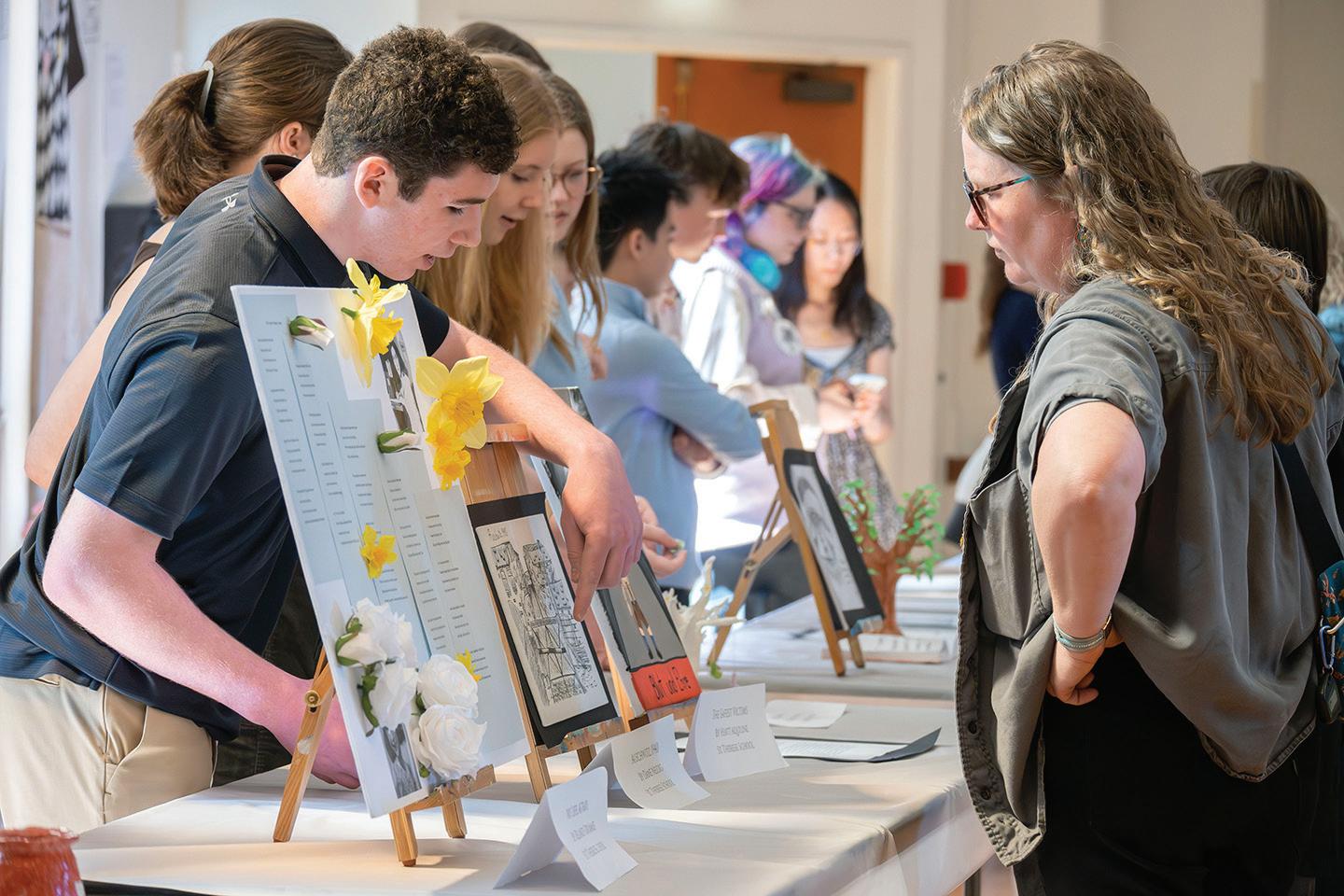
England Patriots owner, Robert Kraft, meets with student leaders on April 22.
Photo by Adam Reinherz
work of Dr. Jeffrey Cohen
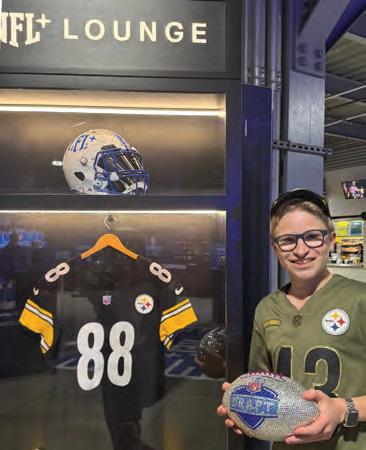
p Mikey Karoll holds a diamond encrusted football at the NFL draft on April 23.
Photo courtesy of Mikey Karoll
Headlines
Hit music producer Michael Goldwasser presents ‘From Moses to Marley’ during Beth Shalom’s Cultural Ambassador Weekend
By David Rullo | Senior Staff Writer
For Judy Adelson, Michael Goldwasser is more than a hit-making producer who has worked with the likes of Jason Mraz, Janelle Monae, Kelly Clarkson and Yoko Ono — he’s a friend.
“He showed up in Great Neck, where my husband was the associate rabbi, at a tot Shabbat,” she said. “Our kids sort of grew up together. It’s rare when, as an adult, you meet someone and decide right away you’re going to be friends with them, and that happened with us.”
Adelson described Goldwasser as a “great person” before adding that he’s a “talented and interesting” guy.
But those descriptors don’t tell Goldwasser’s whole story.
B esides his work with the artists already mentioned, he is a leading producer/mixer/ remixer in the reggae scene, producing the seminal work “Dub Side of the Moon” for his band Easy Star All-Stars. His most recent solo project, “Goldswagger” — a collection of R&B, soul and funk — went to the top of the UK Soul Chart. If that isn’t enough, his work has been heard on dozens of TV shows and feature films.
Not bad for a Jewish boy from Queens, who says he grew up in a “traditional” Jewish home, with a rabbi father, and strongly attached to “Judaism both as a religion and a culture.”
“I’m humbled and fortunate to have had this career,” he said. “It’s pretty amazing to me as a music fan that I have worked with artists that I grew up listening to.”
Goldwasser said he doesn’t take for granted that the music he’s created, both as a singer and producer, has been heard by millions of people, and that he’s had the opportunity to perform on stage in front of tens of thousands.
The Pittsburgh Jewish community will hear from Goldwasser on May 8 and 9 at Beth Shalom Congregation, when he serves as its visiting cultural ambassador. He’ll discuss a variety of subjects during a program titled “From Moses to Marley.”
Goldwasser will present “Dub Side of the Jew,” examining his journey as a rabbi’s son who became a successful music producer. During the Saturday morning service he’ll present “The Making of Ascent,” explaining how he and recording artist Matisyahu collaborated on a song about antisemitism that was released in the wake of Oct. 7. Following Saturday’s service, Goldwasser will present “Shabbat Shi’ur: Lions of Judah,” examining the deep liturgical, cultural and historical connections between Judaism and reggae music.
“Reggae is heavily influenced by the Rastafari movement,” he said. “They don’t like to call themselves a religion, but the Rastafari movement shares a lot of concepts, iconography and even liturgy with Judaism. They took many things from Judaism, filtered through Christianity. They focused on many parts of the Tanakh that are sacred to us as Jews.”
Goldwasser credits his parents for exposing him to all forms of music, but said he was drawn to reggae because many of the lyrics focus on social inequality, injustice, the plight of the downtrodden and the oppressed — all things he saw as Jewish issues.
Adelson said that despite Goldwasser’s success and deep understanding of both reggae and Judaism, the musician was uncomfortable with the title “scholar in residence,”
which is why a different title is being used uring the weekend.
“Michael kept saying, ‘I’m not a scholar.’ He suggested we use the term ‘cultural ambassador,’” she said.
Make no mistake, though. Goldwasser has the chops to hang the term scholar around his neck.
Adelson noted he attended Hunter College High School in New York, a selective school for high achieving students. In addition to his student accolades and music career, Goldwasser is also a teacher. He is an adjunct professor at Marymount Manhattan College, teaching the course “The Art and Business of Record Production.”
He’s spoken extensively about the subjects he’ll discuss during the weekend, but speaking on Shabbat presents one unique challenge different than lecturing at a college.
“I can’t use any multimedia,” he said. “Normally, when I’m talking about this, I would play musical examples and use PowerPoint showing the various things that I want to talk about. I’m certainly capable of doing it, but it’s an interesting challenge.”
While in Pittsburgh, Goldwasser will also present a lecture at Pastor Tim Smith’s Center of Life nonprofit in Hazelwood. The lecture is adapted from Goldwasser’s college courses on the holistic life of a record producer. He’ll discuss the real-world skills required to succeed
SUBSCRIPTIONS
subscriptions@pittsburghjewishchronicle.org
412-687-1000, ext. 2
TO ADVERTISE advertising@pittsburghjewishchronicle.org 412-687-1000, ext. 1
EDITORIAL DEPARTMENT
Email: newsdesk@pittsburghjewishchronicle.org
BOARD OF TRUSTEES
Evan H. Stein, Chair
Evan Indianer, Vice Chair
Derek Smith, Treasurer
Gayle R. Kraut, Secretary
Gail Childs, Dan Droz, Malke Steinfeld Frank, Karen Gal-Or, Seth Glick, Judith Kanal, Cátia Kossovsky, Charles Saul, Lynn Zelenski
GENERAL COUNSEL
Stuart R. Kaplan, Esq.
Jim Busis, CEO and Publisher 412-228-4690 jbusis@pittsburghjewishchronicle.org
as a producer, including relationship building, discipline, time management, career planning and navigating the business side of the music industry.
Adelson said the talk at Center of Life was a natural fit.
“Pastor Tim Smith has spoken at Beth Shalom on a few occasions,” she said. “He’s a good friend to the community. We’ve wanted to see how our two communities can work more closely together.”
Regardless of which event you attend, Adelson said she wants people to feel like “they’ve discovered something new” and “had their curiosity sparked with a sense of hope.” Judaism, she noted, has many different doors — the sanctuary doors which lead to connection through prayer, acts of loving kindness, and cultural activities are only a few examples.
For Adelson, the larger question is, “How do we shine our light as Jews on the wider world?” Goldwasser, she said, is an example of the different ways Jews can interact with that world.
“He has a rich and wide, varied circle of professional and personal friends. We should all find ways to widen our circle,” she said. “Over the last few years, because of the trauma happening in the world, we’ve all retrenched. It’s a natural, protective response to take sanctuary amongst ourselves, but that’s not good for Jews. We’re only .2% of the world population. We won’t survive if we isolate ourselves.”
For Goldwasser, there’s a North Star for all of his work and relationships.
“The Jewish people and Israel are very central to my life,” he said.
And music, he said, adds joy and meaning.
“Music is meaningful to most people,” he said. “It’s really an honor to be able to participate in bringing meaning to people.”
To register for Beth Shalom’s “From Moses to Marley,” go to bethshalompgh.org/visiting-cultural-ambassador. The program is free; however, Friday evening’s services are followed by a potluck dinner requiring a separate registration. PJC
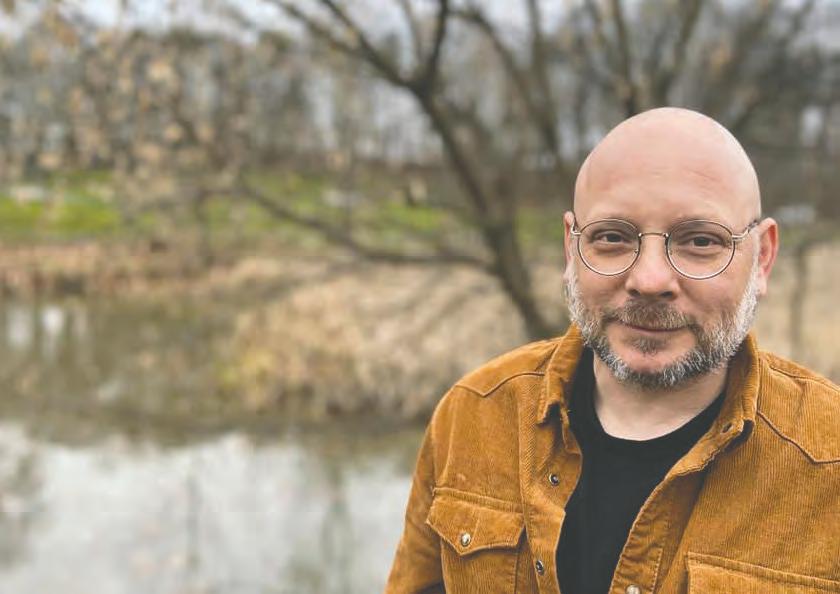
David Rullo can be reached at drullo@ pittsburghjewishchronicle.org.
5915 Beacon St., 5th Floor Pittsburgh, PA 15217
Main phone number: 412-687-1000 Subscriptions: 412-687-1000, ext. 2
Published every Friday by the Pittsburgh Jewish Publication and Education Foundation 5915 Beacon St., 5th Floor Pittsburgh, PA 15217
Phone: 412-687-1000
POSTMASTER: Send address change to PITTSBURGH JEWISH CHRONICLE, 5915 BEACON ST., 5TH FLOOR PITTSBURGH, PA 15217
(PERIODICAL RATE POSTAGE PAID AT PITTSBURGH, PA AND AT ADDITIONAL MAILING OFFICES) USPS 582-740
Manuscripts, letters, documents and photographs sent to the Pittsburgh Jewish Chronicle become the property of this publication, which is not responsible for the return or loss of such items.
The Pittsburgh Jewish Chronicle does not endorse the goods or services advertised or covered in its pages and makes no representation to the kashrut of food products and services in said advertising or articles. The publisher is not liable for damages if, for any reason whatsoever, he fails to publish an advertisement or for any error in an advertisement. Acceptance of advertisers and of ad copy is subject to the publisher’s approval. The Pittsburgh Jewish Chronicle is not responsible if ads violate applicable laws and the advertiser will indemnify, hold harmless and defend the Pittsburgh Jewish Chronicle from all claims made by governmental agencies and consumers for any reason based on ads appearing in the Pittsburgh Jewish Chronicle
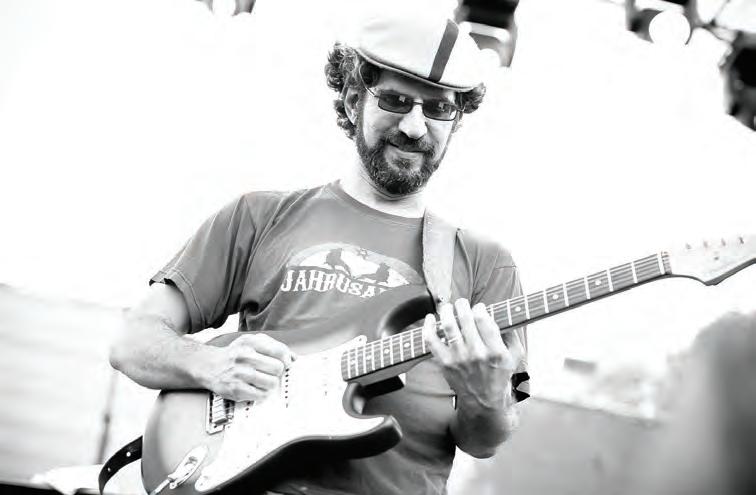
p
Photo courtesy of Beth Shalom
Headlines
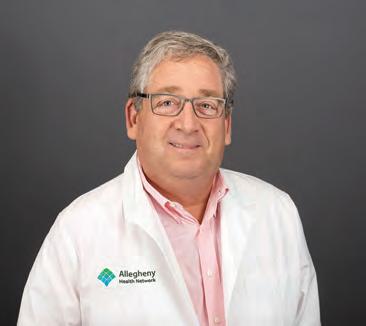
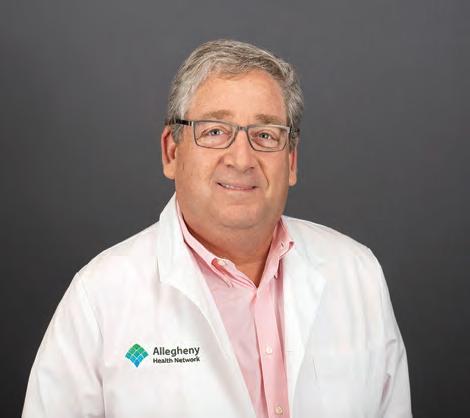
AHN’s Dr. Jeffrey Cohen receives Modern Healthcare’s 2026 Innovators Award
By David Rullo | Senior Staff Writer
Dr. Jeffery Cohen knows a thing or two about innovations in the healthcare industry.
The chief physician executive, commu nity development and innovation officer at Allegheny Health Network likes to call himself a “serial disrupter.” It’s a title he’s earned.
Cohen grew up in Port Jervis, New York, and attended Syracuse University for undergrad uate studies and medical school. He completed his residency at Case Western University in Cleveland, Ohio. After marrying his wife, Ellen — a native Pittsburgher — the pair moved back to the Steel City.
Cohen, who specializes in surgical oncology and urology, became the partner of another physician he met through his father-in-law, and the rest, as they say, is history.
In 2016, Cohen was named the president of Allegheny General Hospital. He served in the position for four years, steering the hospital through difficult times.
When he stepped down in 2020, Cohen said, his supervisor at Allegheny Health Network, James Benedict, asked him what he wanted to do next. His answer was simple.
“I said give me Suburban [General Hospital in Bellevue] and get the hell out of my way,” Cohen remembered.
Cohen, Benedict, AHN President and CEO
to repurpose the former Bellevue hospital as the headquarters of a new company: AlphaLab Health. Formed as a partnership between AHN and Innovation Works, the new company was billed as a hub for the region’s life sciences sector, cultivating promising medical technologies and making early-stage investments in promising companies.
The idea was to connect emerging companies in four fields — diagnostics, therapeutics, medical devices and health information technology — with a network of investors, mentors and other resources.
AlphaLab Health’s first cohort included 21 companies.
“There was a definite need to do this and it’s been a yellow brick road,” Cohen said. And while the idea of an incubator offering guidance and money isn’t new — think of the
TV show “Shark Tank” — what differed was Cohen’s intention.
The “serial disrupter” realized that the community where AlphaLab Health was based hadn’t recovered from the collapse of the steel mills, so he began asking fundamental questions.
“How do you keep entrepreneurs in the area? How do you start growing businesses and keeping people here? That’s the only way you’re going to get change,” he said.
The example of the steel industry was something Cohen took to heart, not just because f its effects on region, but also as a possible harbinger for the healthcare industry, especially in terms of consolidation.
“I didn’t want to see healthcare go through what was inevitably going to happen,” he said.
In an effort to prevent the healthcare industry from facing the same challenges as the steel industry, Cohen posed another basic question.
“How do I help change a bureaucracy that doesn’t want to change because they basically have unlimited federal funding?” he asked.
The goal, he said, is to control healthcare costs by doing things better, cheaper and faster. And, he said, you can’t ignore the community. He knew that to find answers to those questions he needed not only to innovate, but to find innovators.
AlphaLab Health, he said, finds those people.
“Being an innovator is a personality defect you’re born with,” he said. “They’re born that way. About 1% of the population fits into that category. They have three similar traits: One, they’re curious as hell. Number two is they’re
a pain in the ass to bureaucracies, and number three is they don’t care about being rich. They’d rather be right. That’s not a group that does commercialization well. It does inception and problem-solving well.”
That’s where AlphaLab Health comes in. Each company selected receives mentoring, support and an investment of up to $100,000 in exchange for 2% equity via a convertible note. As companies grow and monetize, returns are recycled back into the fund, ensuring longterm support for future healthcare innovators.
The organization supports companies working in several categories: software, hardware, life sciences and robotics startups.
“We’ve been very successful at attracting local companies and bringing more innovators to the area,” Cohen said. “I started talking with 412x972 program [which focuses on building ties between Pittsburgh and Israel to drive collaborative opportunities]. That was our first international outreach program.”
Cohen said there are now six countries that want to work with AlphaLab Health.
Its impact has grown in Bellevue. The former hospital now houses a pharmaceutical company, a software firm specializing in sleep apnea mask fitting, a manufacturer of biodegradable pill cases, a company producing specialized seating for people with spinal disorders, and a community catering incubator utilizing the former hospital’s commercial kitchen, among other ventures.
at rmezare@jfedpgh.org or
p Dr. Jeffrey Cohen was recently awarded Modern Healthcare’s 2026 Innovators Award. Photo courtesy of Allegheny Health Network
Headlines
Judges Roy Altman, David Wecht discuss ‘Israel on Trial’ May 5
in Pittsburgh
By David Rullo | Senior Staff Writer
U.S. District Judge Roy Altman remembered being shocked both by the violence of Oct. 7, 2023, as well as the reaction to that violence on college campuses, by the Western media and by many international institutions.
“I was shocked that these people were blaming the victims, that suddenly the Jews were the oppressors, that the Jewish women who were raped and their daughters who were raped were the aggressors. That the 251 Jews, including Holocaust survivors, infants and toddlers, who were taken from their homes and held in dungeons deep underground as part of the civil rights violations that were somehow being redressed,” he said. Altman, district judge for the Southern District of Florida, decided to do something about the anti-Israeli, anti-Zionist and antisemitic behavior he saw.
He traveled the country talking in churches and community centers, high schools, colleges and law schools, about the Jewish people’s ancient connection to Israel and the Jewish state’s “Herculean efforts” to comply with international law.
Altman said at each stop audience members — including federal judges — told him afterward that they would like to travel to Israel.
So, I started a program taking federal judges, who are mostly not Jewish and have never been to Israel before, to Israel” he said. “They come back transformed. They’re informed with real truths and facts on the ground, and they’re inspired because they see people who are resilient, who are willing to stand up and fight for Western democracy.”
Altman also decided to write a book.
He said that through the thousands of conversations he had with people he met on his travels, he realized there were really “only six main claims in the debate about Israel, and each of those six claims, when you peel back all
the diatribe and vitriol, is really a legal claim.”
The judge decided to apply the same legal methodology that juries, judges and lawyers apply every day in courtrooms around the country to the six arguments and “see what happens.”
Those conclusions formed the basis of “Israel on Trial: Examining the History, the Evidence and the Law.”
Altman will be in Pittsburgh on May 5 at 8 a.m. discussing his book with Pennsylvania Supreme Court Justice David Wecht at a program presented by StandWithUs.
Wecht called Altman’s travels around the country “highly valuable.”
“He brings a message of education to Jews and non-Jews alike,” Wecht said. “With respect to the Jews, the strength that he provides for Jews to stand by their people and defend the rights of fellow Jews and the Jewish state is critically important, and in all too short supply.”
Based on his travels throughout the United States, Altman said he believes about 30% of the country is pro-Israel. That group, he said, understands Israel’s geo-strategic importance and its historic relationship as a U.S. ally.
“They believe viscerally in Lincoln’s words, which is America is an ‘almost chosen people,’” Altman said. “Lincoln never used words by accident. He was purposeful. They understand that Jews are part of the American experiment. Our Founding Fathers saw themselves as following in the Judeo-Christian tradition
passed down for thousands of years.”
About 10% of the country, Altman said, is “virulently anti-Israel.”
“Many of them are antisemitic. They’ve been brainwashed over many years in college, in high school. This book is not for them,” he said.
He hopes the book will speak to the remaining 60%, who are in the middle.
“Who are these people? In college they go to class and want the football team to win. They want to get a good job when they leave school. In the workforce, they want to put food on the table and have good paying jobs. They want to get promoted and send their kids to safe and secure schools. They’re Americans with open hearts and open minds who use reason and common sense on a daily basis,” he said.
Altman knows about those in search of the American Dream. Born in Caracas, Venezuela, his parents immigrated to the United States when he was a child. He attended Columbia University, playing quarterback on the school’s football team and pitched for the university’s baseball team before earning his law degree from the Yale Law School. At 36, he became the country’s youngest federal district court judge.
Wecht said that a mutual friend connected the pair because of their shared love of Israel. He’s excited to introduce Altman to a Pittsburgh crowd, but doesn’t anticipate having to do much on stage.
Please see Judges, page 5
Federation approves $1M in Community Priority Grants
The Jewish Federation of Greater Pittsburgh has announced that its board of directors approved $1,043,500 in 2026–27 Community Priority Grants. Twenty local organizations were awarded a total of 34 grants, focusing “on strengthening teen mental health, engaging young adults and addressing antisemitism,” according to a Federation news release.
“These grants represent the values and priorities of our community,” said Judi Kanal, chair of the Federation’s Planning and Impact Leadership Committee. “Through a thoughtful and collaborative process, community members evaluated where our investments could have the greatest impact — supporting teens, young adults and educators while strengthening partnerships that help our community thrive.”
Much of the funding will support teen mental health initiatives in both school and community settings. Jewish Family and Community Services of Pittsburgh received the largest grant to support school-based mental health services. Other funding supports mentoring and wellness programming through the Jewish Community Center of Greater Pittsburgh, Tzohar Seminary, BBYO and Pittsburgh Zal, a yeshiva in Greenfield.
Several of the grants support programs “that connect young adults to Jewish life through social, cultural and leadership experiences,” according to the news release. “These include Hillel-led initiatives such as FreshFest at The Edward and Rose Berman Hillel Jewish University Center of Pittsburgh for new undergraduates, as well as initiatives for grad students via JGrads and the Jewish Graduate Organization.”
Additional grants went to initiatives
supporting young adults off campus, including Mem Global’s Moishe Pod and Moishe House’s small-scale and peer-led approaches, and OneTable, which funds Shabbat dinners. Grants also went to programs intended to engage young families, including those led by local Chabads and Community Day School.
“Innovative programming is also supported through the Rauh Jewish Archives at the Heinz History Center, Film Pittsburgh through its JFilm Festival, and leadership development at Penn State University Hillel,” Federation officials said.
Funding supporting education and community partnerships to address antisemitism went to initiatives including “a collaborative pilot between the Holocaust Center, LIGHT Initiative, and Rauh Jewish Archives to Build Allies in Butler County, and educator training efforts that help schools, community partners, and students understand, prevent and respond to antisemitism effectively.”
Youth leadership programs, such as the Student to Student program brought to Pittsburgh by the Federation, BBYO’s Rise & Respond initiative and the StandWithUs high school internship program expansion, were funded as well, as were various community collaborative efforts through the JCC and Chabad House on Campus.
“These Community Priority Grants reflect both urgent needs and long-term vision,” said Jeff Finkelstein, president and CEO of the Federation. “By investing in teen mental health supports, antisemitism education and meaningful engagement for young people, we are strengthening the foundation of Jewish life for today and for the future.” PJC
— Toby Tabachnick
p Judge Roy Altman
Photo courtesy of StandWithUs
Headlines
Rabbi Suzanne Offit brings suicide loss support and healing message to Pittsburgh
By Adam Reinherz | Senior Staff Writer
Editor’s note: This story includes discussion of suicide. If you or someone you know needs help, the national suicide and crisis lifeline in the U.S. is available by calling or texting 988. There is also an online chat at 988lifeline.org.
Medical professionals deliver various types of care. Rabbi Suzanne Offit specializes in postvention.
“People find me when they’ve lost a loved one,” Offit said, speaking by phone from Boston.
For years, the Massachusetts-based boardcertified chaplain has supported people navigating the “different kind of grief” prompted by suicide.
As for the “traumatic and tragic death,” Offit said the Jewish community could do more to care for people “who have lost a loved one to suicide.”
“We Jews are so good at our death practices,” she said. Whether it’s prioritizing prompt burial, attending a funeral or shiva, saying kaddish or marking a shloshim or yahrzeit, “we’re really good at that. But for some reason, that hasn’t been true for people with suicide loss.”
Offit, 64, will share her perspective on May 6 at 7 p.m. at The Friendship Circle of Pittsburgh. The talk, facilitated by Maggie Feinstein, director of the 10.27 Healing Partnership, will encourage listeners to learn “how we can take care of individuals who have had this horrible loss.”
The spiritual leader’s perspectives are fueled by myriad experiences. Offit applied to rabbinical school at age 40 and began her studies one day before her third child began kindergarten. After briefly undertaking congregational work, Offit became a hospital chaplain. Then, for eight years, she delivered palliative care.
“I worked with patients and families in dark and scary places,” she said. “My motivation for that work, as well as this work, is I don’t want anyone to suffer alone.”
Judges:
As a chaplain, Offit discovered the immense isolation experienced by hospital-bound individuals and those with “suicide loss,” she said. “This was somewhat familiar terrain to me.”
At the age of 16, Offit lost her best friend to suicide. As an adult, one of Offit’s best friends lost her son to suicide. Later, as a rabbi, Offit officiated at funerals of people who died by suicide.
Postvention, which promotes healing, support and reducing further trauma, is taxing. Along with in-person meetings, Offit hosts regular support groups on Zoom. She has a propensity for the job, but stressed the importance of keeping balance in her life.
“My work is full-soul, but it’s not full-time,” she said. “I don’t do this 40 hours a week. I cannot do this 40 hours a week. I try to make sure I do a few weddings a year, if possible, or a bris or a baby naming. I love to ride my bike and hike and kayak. I’m a gardener. I love to cook. I read novels. I have close friends — some of whom do the kind of work that I do, and some of whom have no idea how I do the work that I do.”
For those unclear how or why someone could do this work, Offit said she has the “character, personality, ability to do this,
Continued from page 4
“We have the opportunity to expose a large audience to Judge Altman,” he said. “I intend to simply tee up questions and, since he’s a baseball star, I know he’ll knock it out of the park.”
The conversation will center around the six claims against Israel that are most familiar: whether Israel is violating the laws of war; whether it is committing genocide; whether it is discriminating against Arab minority citizens; whether it is taking land that doesn’t belong to it; and whether Israel falsely imprisons Palestinians.
Julie Paris, StandWithUs Mid-Atlantic regional director, first saw Altman in 2024 at the Christians United for Israel summit, where he was the keynote speaker.
“After he spoke, I called my husband and said, ‘I just heard the best speaker I’ve ever heard in my life,’” Paris recalled. “When Judge Wecht called and told me about the opportunity to bring him to Pittsburgh I said, ‘Yes,100%.’”
Paris is “honored and thrilled,” she said, to have the pair appear on stage together, calling them “two of the greatest legal minds in history.”
The May 5 discussion, she said, provides the opportunity to “hear from those who are making a difference. Leaders who have the expertise, the knowledge and backbone to stand up for the community, to stand up for Israel, and to continue to share the truth when it really matters.”
The talk is free, but registration is required at israelontrial.planningpod.com. PJC
David Rullo can be reached at drullo@ pittsburghjewishchronicle.org.
www.pittsburghjewishchronicle.org
“Our souls are created in a way that when we are kind and good to other people, it makes us feel better and we want to do it again.”
–RABBI SUZANNE OFFIT
but I have a lot of life experience that enables me to go into dark places, and I don’t want people to be afraid of telling me anything, because I’m not afraid.”
While in Pittsburgh, Offit will continue thwarting fear and correcting misperceptions.
“Living things want to grow. Living things want to be alive. If someone’s brain is
telling them, ‘I’m in so much pain, I can’t do this anymore,’ that’s brokenness, that’s illness. Dying by suicide is a moment in time. It’s a moment of crisis — even if some people are planning it — it’s impulsive. There’s so many things going on,” she said. Still, “it’s stigmatized” and families are often made to feel “nothing but guilt or shame.”
When families feel this way, “they hide, they don’t tell anyone,” she continued. “When someone uses all their energy for hiding, there’s no energy for healing.”
Offit believes community members are capable of delivering “radical acts of kindness in the face of darkness.”
Those practices are possible and contagious, she continued. “Our souls are created in a way that when we are kind and good to other people, it makes us feel better and we want to do it again.”
The message is a familiar one, she continued. “When somebody has suffered a horrible loss, it’s important to show up. That’s what we do. We just show up. Don’t worry about saying the right thing or the wrong thing. Just show up. And when people lose a loved one to suicide, too often, no one shows up.”
PJC
Adam Reinherz can be reached at areinherz@pittsburghjewishchronicle.org.
David Rullo is a senior staff writer with the Pittsburgh Jewish Chronicle, and an award winning journalist, as well
MONDAY, MAY 11 AT 7PM
cost to attend. Registration required.
Israel Around The World
p Rabbi Suzanne Offit
Photo courtesy of Rabbi Suzanne Offit
Calendar
Submit calendar items on the Chronicle’s website, pittsburghjewishchronicle.org. Submissions also will be included in print. Events will run in the print edition beginning one month prior to the date as space allows. The deadline for submissions is Friday, noon.
q SUNDAYS, MAY 3–JULY 26
Join Chabad of Squirrel Hill for its Men’s Tefillin Club. Services and tefillin are followed by a delicious breakfast and engaging discussions on current events. 8:30 a.m. 1700 Beechwood Blvd. chabadpgh.com
Join a lay-led online Parashah study group to discuss the weekly Torah portion. No Hebrew knowledge needed. The goal is to build community while deepening understanding of the text. 8:30 p.m. For more information, visit bethshalompgh.org/online-parashah.
q MONDAYS, MAY 4–JULY 27
Join Congregation Beth Shalom for a weekly Talmud study. 9:15 a.m. For more information, visit bethshalompgh.org.
Join Temple Sinai for an evening of mahjong every Monday (except holidays). Whether you are just starting out or have years of experience, you are sure to enjoy the camaraderie and good times as you make new friends or cherish moments with long-term pals. All are welcome. Winners will be awarded Giant Eagle gift cards. All players should have their own mahjong cards. Contact Susan Cohen at susan_k_cohen@yahoo. com if you have questions. $5. templesinaipgh.org
q TUESDAY, MAY 5
Chabad of the South Hills presents a Lag BaOmer Community BBQ, including food, drinks and s’mores. 5:30 p.m. $18/person, $36 family max. 1700 Bower Hill Road. chabadsh.com/bbq
q TUESDAYS, MAY 5–JUNE 30
Join Beth El’s Rabbi Alex Greenbaum and his Bible/ Talmud Adult Education class for a thoughtprovoking weekly session of Bible and Talmudic study. This program is available both in person and virtually. Call the office at 412-561-1168 to receive the Zoom link or to make an in-person reservation. 10:30 a.m. 1900 Cochran Road. bethelcong.org
q WEDNESDAY, MAY 6
Rabbi Suzanne Offit, a board-certified chaplain from JF&CS Boston, will discuss “Transforming the Jewish Communal Response to Suicide.” Maggie Feinstein, director of the 10.27 Healing Partnership, will facilitate the talk. 7 p.m. Free. Friendship Circle, 1922 Murray Ave. RSVP to Kaitlin@beaconpgh.org.
q WEDNESDAYS, MAY 6–20
Join Chabad of the South Hills for the new fourpart JLI Course “Your Judaism Holds a Message the World Wants to Hear. It’s Time to unlock it.” 7:30 p.m. 1700 Bower Hill Road. chabadsh.com
q THURSDAY, MAY 7–SUNDAY, MAY 10
Film Pittsburgh’s JFilm Festival, the largest Jewish cultural event in the region, returns to theaters April 30–May 10, 2026. For 33 years, JFilm has showcased Jewish-themed, independent feature films from around the globe. $15 and up. filmpittsburgh.org
q THURSDAY, MAY 7
Join Chabad of Squirrel Hill for an Evening of Celebration honoring Karen Gal-Or, with a talk by guest David Nesanoff. 6 p.m. $75 (includes two guests). 1700 Beechwood Blvd. chabadpgh.com/eoc
Join Congregation Beth Shalom for the Pittsburgh Jewish Teen Challah Braid, a meaningful evening of braiding challah bread and contributing to a service project that benefits Pittsburghers. This will be the inaugural event by the Pittsburgh Jewish Teen
for more info: www.stnickspgh.org
Council, a group of Jewish teen leaders with the goal of creating fun and engaging programs open to all Pittsburgh-area Jewish teens. Come ready to meet some new friends in the Jewish community. Dinner will be provided. Transportation may be available for the suburbs; please indicate when you register if you would require transportation help to get to Squirrel Hill. 6 p.m. Congregation Beth Shalom, 5915 Beacon Street. docs.google.com/forms/d/e/1FAIpQLSfOhJrxV BAsYtbrhoFC01ON2ke8UYnz262H2wu4M3-jDpw8ig/ viewform?usp=dialog
q MONDAY, MAY 11
Pittsburgh Jewish Chronicle Senior Staff Writer David Rullo discusses his career as a Jewish journalist and the challenges that have accompanied his journey. Go behind the headlines for a personal look at the stories that shaped his career, the obstacles he has overcome and the unwavering commitment to truth that defines his work. This is more than a lecture; it is an opportunity to stand in support of independent journalism and the voices that champion our community with resilience and integrity. Presented by StandWithUs, the Pittsburgh Jewish Chronicle, Beth El Congregation of the South Hills and Temple Emanuel of South Hills. 7 p.m. Free. Temple Emanuel, 1250 Bower Hill Road. Registration required. courageandtruth.planningpod.com
q WEDNESDAY, MAY 13
Join Congregation Dor Hadash to learn more about A Land for All (ALFA), a joint Israeli-Palestinian political initiative that creates a practical framework for peace. Co-Directors May Pundak and Rula Hardal will discuss their model: two sovereign states connected through a confederation, grounded in equality, dignity, interdependence, security and safety. Learn how the model was co-created by Israelis and Palestinians, providing an innovative framework for resolving this conflict, and how the plan is being received in the region and internationally. Free. 7 p.m. In person
and on Zoom. Rodef Shalom Congregation, 4905 Fifth Ave.congregationdorhadash.shulcloud.com/ form/ALFA2026
q THURSDAY MAY 14–SATURDAY, MAY 16
Pastor Eric Manning of Mother Emanuel A.M.E. Church of Charleston, South Carolina, is sharing the weekend with Tree of Life Congregation. Thursday evening, Rabbi Jeffrey Myers will be joined by moderator Michelle Wright (former WTAE anchor) as the two discuss Black/Jewish relationships at Calvary Episcopal Church (315 Shady Ave.) Friday evening, Shabbat services will feature a sermon by Manning at Beit Kulanu’s Levy Hall. The weekend concludes with a special Torah Studio service at 9:45 a.m. treeoflifepgh.org
q SATURDAY, MAY 16
Carry Shabbat’s peace into the new week with a meditation and sound bath led by Cantor Julie Newman and Anitra Birnbaum. Havdalah Healing includes songs, Jewish ritual, and the soothing vibrations of crystal singing bowls and other instruments create a space to rest, reflect and restore. Open to all. 5 p.m. 4905 Fifth Ave., Cohen Chapel. tiferetproject.org/event/havdalah-healing
q WEDNESDAYS, MAY 27–MARCH 24, 2027
Explore the hows and whys of foundational mitzvot with Rabbi Sruly and Chani Altein at Sushi and Study, a12-part monthly class. Join all, some, even just one. 7:30 p.m. $15 per class/$150 per year. 1700 Beechwood Blvd. chabadpgh.com/jewishstudy
q TUESDAY, JUNE 2
Chabad of Squirrel Hill presents The Sound of Jewish Music, an uplifting concert for women featuring music, dance and inspiration. 7 p.m. $18/$10 for student in advance; $25 at the door. Katz Performing Arts Studio, 5738 Darlington Road. soundofjewishmusic.com PJC
Author Jason Diamond to join Chronicle Book Club
The Pittsburgh Jewish Chronicle invites you to join the Chronicle Book Club for its May 31 discussion of “Kaplan’s Plot,” by Jason Diamond. The author will join us for the meeting.
and afterwards.
From Amazon.com: “Elijah Mendes was hoping for a more triumphant return to Chicago. His mother, Eve, is dying of cancer, his business flamed out, and he has nowhere else to go. So he returns to Chicago feeling listless and shattered, worried about how he’s going to help his mother despite their chilly relationship. He finds some inspiration when he discovers that their family owns a Jewish cemetery and that a man he’s never heard of, his great-uncle Solomon Kaplan, is buried in a plot there. With a new sense of purpose and an excuse to talk more deeply with his mother, Elijah begins pursuing a family mystery of extraordinary proportions.
“Elijah discovers his grandfather Yitz, Eve’s father, was a powerful gangster in the 1920s. She was ashamed and never spoke about him to Elijah. As secrets unravel, the past and present become intertwined, and Yitz’s story forces Elijah and Eve to bond in ways they never have before and begin to accept each other, not as who they wish they were but as they both are.”
Your hosts
Toby Tabachnick, Chronicle editor
David Rullo, Chronicle senior staff writer
How it works
We will meet on Zoom on Sunday, May 31, at 1 p.m.
What to do
Buy: “Kaplan’s Plot.” It is available from online retailers, including Amazon and Barnes & Noble, in local Barnes & Noble stores and through the Carnegie Library system.
Email: Contact us at drullo@pittsburghjewishchronicle.org, and write “Chronicle Book Club” in the subject line. We will send you a Zoom link for the discussion meeting.
Happy reading! PJC
Headlines
By Zev Stub | The Times of Israel
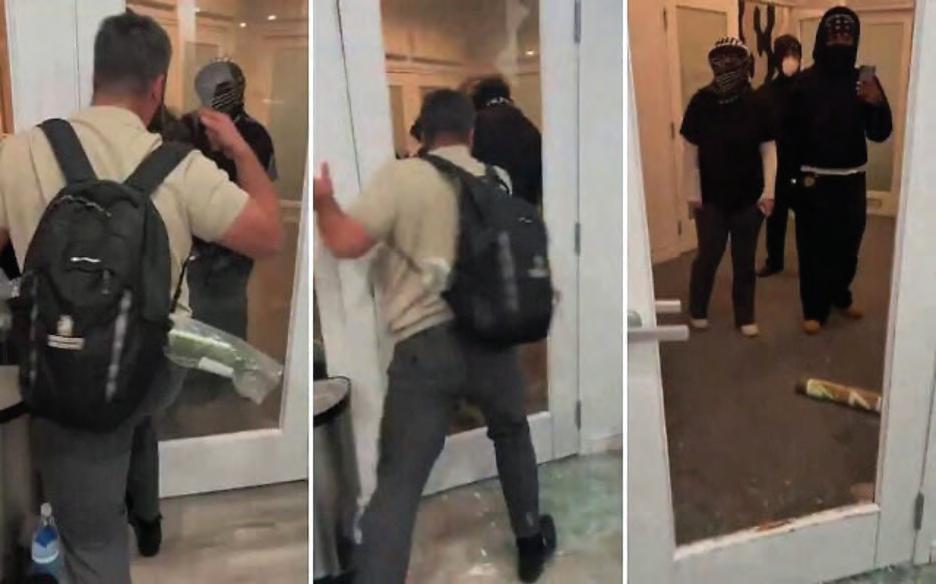
Antisemitic incidents in Canada reached a record high in 2025, with 6,800 acts of anti-Jewish hate reported nationwide, according to a report released by B’nai Brith Canada on Monday.
The report showed that antisemitism has “metastasized” throughout all aspects of Canadian life, the group said.
The vast majority (92%) of recorded incidents occurred in digital spaces, with 6,248 cases of online harassment. The survey recorded 10 incidents of violence, 299 cases of vandalism and 243 incidents of realworld harassment.
The figure was 9.3% higher than the previous record of 6,219 set in 2024, the organization said in its annual audit, which it has published since 1982. The 2025 numbers translate to an average of 18.6 incidents per day.
The report comes several days after Canada’s Senate Standing Committee on Human Rights published a series of recommendations to address rising antisemitism and hate-motivated extremism in the country. That long-awaited statement was welcomed by Jewish organizations such as B’nai Brith
Canada and the Centre for Israel and Jewish Affairs, which have complained that Canada’s government isn’t doing enough to combat the growing trend.
“Antisemitism is a national crisis and must be treated as such,” the B’nai Brith Canada report said. “[It] has become so normalized in our society that its incidence can no longer be tied directly to the war in Israel.”
The report said that while geopolitical tensions in the Middle East contributed to the spike, antisemitism has moved beyond the
“radical fringes” and is becoming increasingly normalized throughout Canadian society. The trend is particularly alarming on university campuses and in public schools, where Jewish students and faculty reported feeling increasingly vulnerable, it said.
Among the high profile cases cited in the report were the desecration of the National Holocaust Memorial in Ottawa by a former city lawyer; vandalism of two synagogues in Halifax in September; the spray-painting of “Kill all Jews” on a McGill University
building in Montreal; a physical assault in a Montreal park where a Jewish man’s yarmulke was thrown into a puddle; and the use of Nazi imagery to deface the campaign materials of Jewish candidates during the 2025 federal election.
Canadian security officials also disrupted a terror plot by supporters of the Islamic State group, inspired by the terror shooting that killed 15 at a Chanukah celebration at Bondi Beach, in Sydney, Australia, the report said.
The trend seems to be continuing in 2026, with several synagogues attacked in high profile incidents. Community leaders have warned that a larger-scale attack on the Jewish community seems on the horizon in the country with the world’s fourth-largest Jewish population, of some 400,000 people.
“Our review of the past year’s antisemitic incidents must be understood as a wake-up call,” said B’nai Brith Canada CEO Simon Wolle. “Hate and extremism are a threat to Canadian democracy and civil society, not only to the Jewish community.”
B’nai Brith is calling on all three levels of government and law enforcement to adopt a “whole-of-government approach” to combat the rise in extremism.
“Canada has vast tools at its disposal to address this crisis,” Wolle said. “The onus to act now falls on leaders.” PJC
Israeli
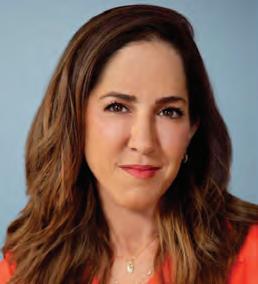
Tal Shalev Senior reporter for CNN’s Jerusalem bureau
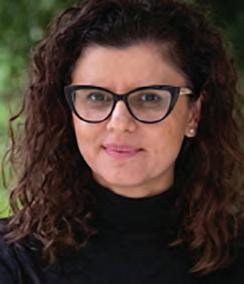
Dr. Nasreen Haddad-Haj Yahya Renowned expert on Arab society
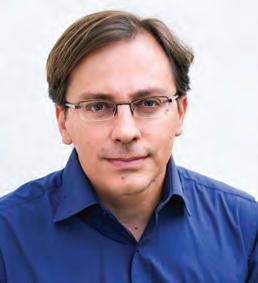
Nadav Asher Eyal Senior research scholar with the Institute of Global Politics
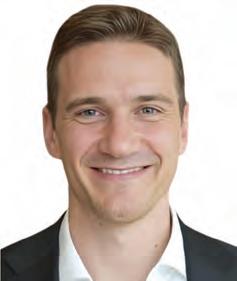
Yisrael Klitsner Series Moderator
p Anti-Israel activists disrupting a pro-Israel student event at Toronto Metropolitan University, Nov. 5, 2025 Video screenshot/X via The Times of Israel
Headlines
Nearly half of young Americans view US relationship with Israel as a burden, survey finds
Nearly half of young Americans, 46%, believe that the United States’ relationship with Israel is mostly a burden to the United States, according to a new survey from the Institute of Politics at the Harvard Kennedy School, JTA reported.
The Harvard Youth Poll, which polled 2,018 Americans aged 18 to 29, found that just 16% of those surveyed described the U.S. relationship with Israel as mostly a benefit.
Respondents were asked about their view of other U.S. alliances, including Canada, which 53% saw as beneficial, and Ukraine, which 21% saw as beneficial. Israel received the lowest perceived benefit of any country tested.
The survey also found that 55% of young Americans believe the U.S. military action in Iran is not in the best interest of the American people. It comes as attitudes about Israel among young Americans in recent years have grown sharply negative. Earlier this month, a Pew Research Center survey found that 70% of Americans aged 18 to 49 held a somewhat or very negative opinion of Israel. That view was split among partisan lines, with 84% of Democrats in that demographic holding a negative view of Israel, compared to 57% of Republicans.
Alan Dershowitz quits Democratic Party, calling it ‘most anti-Israel party in U.S. history’
Alan Dershowitz, the prominent pro-Israel attorney whose clients have included Donald Trump and Jeffrey Epstein, announced last week that he was leaving the Democratic party and registering as a Republican, JTA reported.
Describing himself as a “lifelong Democrat,” Dershowitz wrote in a Wall Street Journal op-ed that he had decided to “bite the bullet and register as a Republican,” citing Democratic support for an arms embargo on Israel last month and the Michigan Senate candidate Abdul el-Sayed’s anti-Israel rhetoric.
“There is no denying that the hard left, anti-Israel wing of the Democratic Party has moved from the fringe to the mainstream,” Dershowitz wrote, adding that “Republicans have their own antisemitic fringe, but for now it remains a fringe.”
Dershowitz — who has recently faced scrutiny over his ties to Epstein, and previously denied allegations of sexual misconduct made by one of Epstein’s accusers — panned the Democratic Party as the “most anti-Israel party in U.S. history” in the op-ed.
“I believe that the Democratic Party’s hostility to Israel represents a deeper and more dangerous shift away from the center and toward a radical approach that is bad for America and the free world,” Dershowitz wrote, adding that he intended to “work hard to prevent the Democrats from gaining control of the House and Senate.”
Teens in 2 states arrested over threat that shuttered Houston synagogue
Two teenagers were arrested last week for an alleged plot to drive through a Houston synagogue and “kill as many Jews as possible,” according to local authorities, JTA reported.
Angelina Han Hicks, 18, of Lexington, North Carolina, was arrested at her home on April 22 and charged with conspiring with two other individuals to commit an attack on Congregation Beth Israel, the oldest Jewish house of worship in Texas, according to the
Today in Israeli History
May 4, 1947 — Irgun blasts prisoners out of Acre
Davidson County Sheriff’s Office. She is being held in the Davidson County jail under a $10 million bond.
In Houston, a 16-year-old boy was also arrested in relation to “a threat directed towards certain Jewish institutions in our area.” It was unclear whether the second arrest was connected to Hicks, but the judge who ordered Hicks detained said she should be prevented from communicating with unnamed co-conspirators.
“At this time, there is no other known credible threat,” the Houston Police Department said in a statement.
Congregation Beth Israel, a Reform synagogue, and the Shlenker School, a preschool and elementary school that shares its campus, closed following the threats on April 22.
District Court Judge Carlton Terry said the alleged conspiracy was “to kill as many Jews as possible by driving through a congregation at a synagogue.” He said Hicks should remain in custody after her arraignment.
The arrests come one month after a man drove a fireworks-laden truck into Temple Israel in suburban Detroit. The attack, which left the assailant dead, also followed an arson attack on Beth Israel Congregation in Jackson, Mississippi, that left the synagogue’s library destroyed.
An Orthodox Jewish hooper famous for viral dunks will play basketball for Duquesne University
A yarmulke-wearing basketball prospect who gained online fans with highlight-reel dunks announced his next major leap last week: He’ll try to be the first Orthodox player to play four years of Division-I men’s college basketball, according to the Forward.
Chaim Galbut, a 6-foot-7 wing who played high school basketball for Miami Country Day School, a nondenominational K-12 school,
before graduating in 2025, announced in an Instagram post that he will attend Duquesne University in Pittsburgh in the fall.
A post from the basketball outlet DraftExpress reported that Duquesne, a Catholic university had discovered Galbut on social media.
Galbut said last year that his refusal to compete on Shabbat had meant turning down offers from other colleges.
“I’m like, I don’t play on Shabbos, they’re like, ‘Well, we don’t want you,’” Galbut told the Yeshiva League Pass Tip Off podcast in September. “It’s happened so many times, I can’t tell you. I’m like, ‘All right, that’s cool. Like, don’t worry, you’ll see me soon.’”
Largely unknown outside of the Orthodox world during high school, Galbut’s moment in the spotlight did not come until after he graduated, when video of him throwing down dunks on the summer travel circuit, posted by a popular basketball channel, received more than 100,000 likes on TikTok.
He spent the next school year studying at a yeshiva in Israel.
Galbut would join Naama Shafir, an Orthodox Jewish woman who plays basketball for the University of Toledo, in the Division I ranks. At least one other Orthodox hooper has played in Division I men’s basketball: Tamir Goodman, who started his career at Towson University in 2000 but left the program after two years.
And other Orthodox players have played for Christian schools in Division III or played in Division I in other sports.
Duquesne finished last season with 18 wins and 15 losses. The university last appeared in the NCAA Tournament in 2024, when they lost in the round of 32. PJC
— Compiled by Toby Tabachnick
Items are provided by the Center for Israel Education (israeled.org), where you can find more details.
May 1, 1943 — Bermuda conference is no help for Jews
A communiqué issued after a 12-day Allied refugee conference in Bermuda fails to announce any specific steps to help Jews facing extermination by the Nazis. Britain still refuses to open Palestine to Jewish immigration.
May 2, 1921 — Rioters kill writer Brenner
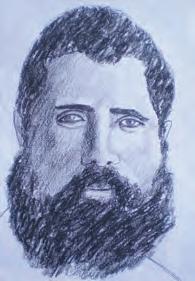
Writer Yosef Haim Brenner, a pioneer of modern Hebrew literature, a founder of the Histadrut and an advocate of Jewish labor, is among six people killed on the second day of Arab-Jewish rioting in and around Jaffa.
May 3, 1898 — Golda Meir is born Israel’s only female prime minister, Golda Meir, is born in Kyiv in the Russian Empire. She immigrates in 1906 to the United States and in 1921 to Palestine, where she becomes active in labor politics.
The Irgun carries out a complex operation to break 30 of its men and 11 Lehi members out of the British prison at Acre. Six of the 41 escapees are killed; eight are recaptured. In the chaos, 182 Arabs escape.
May 5, 1959 — Museum marks first official Yom HaShoah
Kibbutz Lohamei HaGetaot (the Ghetto Fighters) in the western Galilee welcomes 2,500 people to commemorate the first Yom HaShoah (Holocaust Remembrance Day) under a law passed four weeks earlier.
May 6, 1947 — Lehi teenager disappears
Alexander Rubowitz, 16, a member of the youth wing of the underground group Lehi (the Stern Gang), is chased, caught and forced into a car in Jerusalem’s Rehavia neighborhood and never seen again.
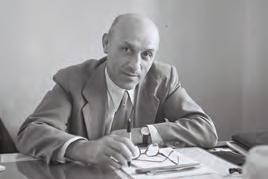
May 7, 1953 — Histadrut admits Arabs
The Histadrut trade union, launched in 1920 in part to protect Jewish w orkers against cheap Arab labor and covering 75% of Israeli workers by 1953, opens its membership to t he state’s Arab citizens. PJC
p This drawing of Yosef Haim Brenner is the work of actor Chaim Topol.
p Mordechai Namir, the general secretary of the Histadrut in 1953, believed in Arab-Jewish labor solidarity.
By Zoltan Kluger, National Photo Collection of Israel
Headlines
Connection:
Continued from page 1
A follow-up event on April 24 gave several student leaders the opportunity to travel through Pittsburgh with organizers and Anti-Defamation League representatives. After exiting a bus near a vacant lot in Squirrel Hill, the students were met by members of the Mallinger family and representatives of The Tree of Life, an organization committed to uprooting antisemitism by “remembering those taken from us and building relationships across difference to repair our world.”
“You’re standing on sacred ground,” Carole Zawatsky, The Tree of Life’s CEO, said over the sound of excavators. Rebuilding the site of the most violent attack on Jews in U.S. history has begun.
As workers cleared portions of The Tree of Life building several hundred yards
Draft:
Continued from page 1
For days, that trope was echoed throughout the city as Pittsburghers were encouraged to use sports as a catalyst for change.
An April 22 clinic connected young football players and local Special Olympics athletes with draft prospects. For nearly an hour, the Hazelwood-based program afforded opportunities to throw passes, tackle and talk.
Even with the draft one day away, Jeremiah Love — a running back who was selected third by the Arizona Cardinals — told the Chronicle that whether it’s an inquiry about faith, family or football, it’s a “great honor” to be asked questions by children.
“Kids are kids. They’re worried about things they got going on,” he said. “When a kid comes up to me with a question like that, or just a question in general, I take it very seriously because they mean it. Being able to answer a question like that means a lot. I want to make sure I’m giving them good advice, making sure that I’m telling the right things, so they can be a better version of themselves.”
Impacting others for the better is part of the draft’s beauty, former Pittsburgher Burton Morris told the Chronicle on April 22 at “Taste of the Draft,” a Downtown fundraiser to combat student hunger in Pennsylvania.
Hours earlier, the Jewish artist unveiled his NFL-commissioned installation in an area near Acrisure Stadium. Displayed in the Prospect Green Room, Morris’ work included 32 custom NFL helmet sculptures, with each piece built on steel to “represent the City of Pittsburgh,” he said.
Morris, whose art has represented the Olympics, FIFA World Cup, the U.S. Open and the MLB All-Star Game in Pittsburgh in 2006, said every setting reminds him what his parents,
Cohen:
Continued from page 3
And it has a partnership with the Northgate School District, providing students with handson workforce development opportunities and greater educational stability.
Cohen said this proves his theory that a project like AlphaLab Health can benefit the broader community where it operates. He pointed to progress at Northgate School District, as an example.
In 2020, only 30% of third graders read at grade level. By 2023, 80% of the third graders were reading at the fifth-grade level.
Since 2021, AHN Suburban’s partnership with AlphaLab Health has invested in 36
Rose Mallinger — a staple of the Tree of Life Congregation and one of 11 people murdered on Oct. 27, 2018 — and the efforts to heal and educate in the years after the Pittsburgh synagogue shooting.
Sonny and Bunny Morris, made clear years ago: “One thing you have to do is to give back and help those less fortunate.”
“And look, as a Jewish person, especially in today’s world, we have to help,” Morris added.
During an April 23 event at the Greater Pittsburgh Community Food Bank with NFL executives, members of the Pittsburgh Steelers and local students, the Food Bank’s president and CEO Lisa Scales said that distributing food isn’t an abstract endeavor: “It’s only nutritious if it’s eaten, and so for us to have culturally appropriate foods, whether it’s halal meat or kosher chicken, it’s really important that we have the food that people need so that they can lead healthy, active lives.”
Having spent five years in western Pennsylvania, “I truly understand the importance of this community that works together in so many different ways,” Goodell said.
Before joining volunteers to pack first-aid and hygiene kits, Goodell told the Chronicle, “What football’s so great at is bringing people together.” While numerous differences create social rifts, football brings fans “together as a team, and that’s what we need to do.”
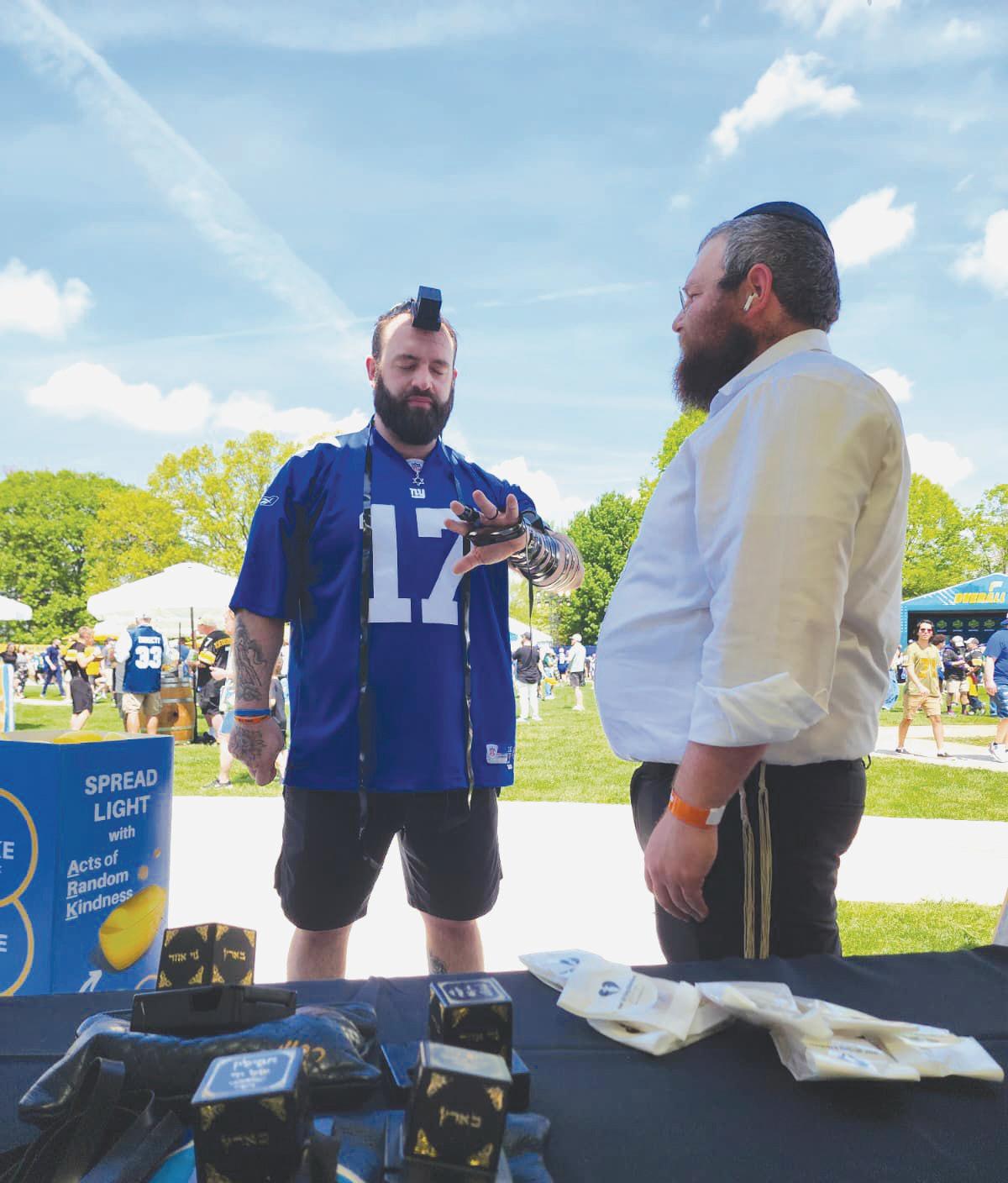
Hours later, thousands of people arrived for the start of the draft. Among those greeting visitors was Meir Levi Weinstein. Standing beneath a white tent in Point State Park labeled “Chabad,” Weinstein said he was there to help “anybody who wants to come and do a mitzvah.”
Beside him was a refrigerator full of kosher food, a pair of tefillin and take-home tzedakah boxes. The latter — yellow plastic boats, which Weinstein called “kindness arks” — allowed people to insert coins “and express some kindness in their own way, at home, and express some light.”
Closer to the stadium, Alex Freeman, director of sports engagement at the Anti-Defamation League, hoped to harness fandom for betterment. Along with colleagues and representatives
companies, securing more than $65 million in follow on funding and generated 114 direct jobs and 362 indirect jobs.
Housing prices and median incomes also are rising.
“People have started to move back to Bellevue,” he said. “It’s about how all these things combine.”
In the end, Cohen said, the community is moving from passive acceptance to active participation.
“This is as much an economic story as it is a healthcare story or education story,” he said. “It’s not just about starting businesses. It’s about change and how you manage that change in a first world economy system.”
For his work with AlphaLab Health, Cohen was recently selected by Modern Healthcare as
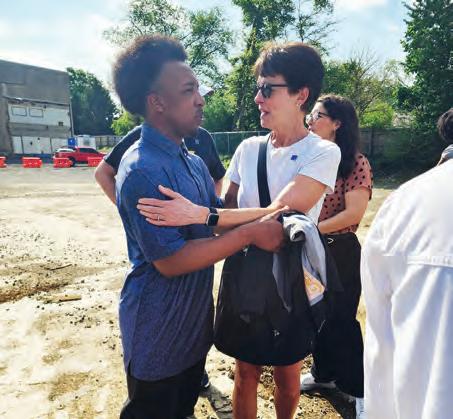
Andrea Wedner, Rose Mallinger’s daughter and a survivor of the attack, recounted the events of that Shabbat morning and sitting beside her mother during services.
Ron Wedner, Andrea Wedner’s husband, told students that when he speaks with younger people he often stresses communication, concern and responsibility.
“If you see someone going down a rabbit hole, report it to a trusted adult. Try to emphasize that,” he said. “You guys are our future.”
A focus on youth emerged as a common thread at the April 22 and 24 events, as organizers and speakers repeatedly pointed to the draft as a model for building a greater team through shared purpose.
After hearing about the murders of Joyce Fienberg, Richard Gottfried, Rose Mallinger, Jerry Rabinowitz, Cecil Rosenthal, David Rosenthal, Bernice Simon, Sylvan Simon, Dan Stein, Irving Younger and Melvin Wax, and communal efforts to persevere, student leaders
of The Tree of Life, an organization committed to uprooting antisemitism by “remembering those taken from us and building relationships across difference to repair our world,” Freeman encouraged passersby to step up to a 360-degree photo booth and join a “Same hope. Different jersey” campaign.
“What’s missing with a lot of our society today is that you’re not asking questions, you’re not seeing people from different communities come together and have conversations to learn more,” he said. “You have a ton of people here who are not familiar with the ADL or what’s been happening with the Jewish community.”
Along with distributing reading materials regarding antisemitism, Kelly Fishman, regional director of the ADL’s Cleveland office — which covers Pittsburgh — said the group’s goal was to “lift up the joy.”
“We’re all different, but we all want the same things,” Fishman said.
Several feet away, Clara Schwartz, director of partnerships and strategy at the Blue Square Alliance Against Hate, welcomed visitors to a “Unity Wall.”
This is an opportunity for people to “take a moment out of their sports fandom and grab one of our blue square sticky notes and write a message of what it means to stand up — a hopeful message — what does allyship mean to them,” she said.
headed toward the bus.
Jaden Weems, 22, paused and hugged Andrea Wedner.
Having participated in several events with Black and Jewish student leaders, Weems said next steps involve “reading more, definitely, and definitely talking about it more.”
Since Wednesday’s dinner with national figures, Weems has realized how significant the assignment is. Fulfilling its requirements may involve reconnecting with high school friends “and really bringing them in, in light of this situation, and helping them understand. I know we can all talk about it,” he said.
A commitment to moving forward together generates outcomes even greater than champi-
attending the draft.
For hours, Schwartz and colleagues engaged visitors in conversations about antisemitism.
“There continues to be an awareness gap with the majority of Americans, who are just not familiar with the alarming numbers of antisemitic attacks in this country,” Schwartz said. By creating dialogue and encouraging people to “take a small action to stand up to hate, to promote positivity, inclusivity and allyship, that’s really what the blue square stands for.”
As the draft’s first round unfolded on April 23, Squirrel Hill resident Mikey Karoll, 16, explored
a winner of one its 2026 Innovators Awards, which “recognizes individuals and organizations that drive meaningful innovation to improve care delivery, achieve measurable results, and advance both clinical and financial performance in the healthcare industry,” according to a statement released by AHN.
Modern Healthcare is one of the nation’s most influential sources of healthcare business and policy news.
Innovation Works President and CEO Ven Raju noted in the statement that Cohen looks beyond individual programs to “focus on how innovation can transform entire communities. His work at AHN Suburban shows how strategic investment in entrepreneurship and healthcare can drive economic growth, expand opportunity, and reimagine what
That emphasis on education was shared by David Bailey, who during a press conference after being selected by the New York Jets with the second pick in the draft, responded to the Chronicle’s question about earning a degree from Stanford University in three years and how it impacted him as a football player.
“Balancing my academic responsibility and also my football responsibilities taught me how to be mature and cognizant of my time,” Bailey said. “There’s really only so much time in each and every day, so I’m taking advantage of each moment to prepare.” PJC
Adam Reinherz can be reached at areinherz@pittsburghjewishchronicle.org.
a community can become.”
Mark Sevco, president of Allegheny Health Network, said in the statement that Cohen’s “commitment to leveraging innovation not only for medical advancement but for the holistic betterment of the community exemplifies the very best of healthcare leadership. AHN Suburban stands as a testament to what’s possible when we think beyond the hospital’s walls.”
For Cohen, the awards and accolades are nice, but his yellow brick road of innovation simply leads to the answer of one important question: “How do I take care of poor people that live in Pittsburgh?” PJC
David Rullo can be reached at drullo@ pittsburghjewishchronicle.org.
p Student leader Jaden Weems and Andrea Wedner embrace.
Photo by Adam Reinherz
p Artist Burton Morris stands in front of art designed for the NFL draft. Photo courtesy of Burton Morris
Thank You CDS United
Bracha $100,000+
Anonymous (6)
The Jewish Federation of Greater Pittsburgh
Matana Anakit $36,000+
Anonymous (2)
Beverly and Zack Block
Giant Eagle Foundation
Pennsylvania Department of Education
The Shapira Foundation
Mincha $18,000
Anonymous
Gary and Shelley Droz
Meyer “Skip” and Mary Grinberg
Micah and Beth Jacobs
Stuart and Laura Kaplan
Jason and Julie Lichtenstein
Robert and Toni Mallet
Lisa and Jonathan Marcus
Derek Smith and Nicole Evoy
Lois and Gary Weinstein
Sunny’s Community Garden/Sandi Lando Welch
Doron $12,000
May and Ari Chester
Jewish Women's Foundation
Marsha and Bernie Marcus
Bari and Mark Weinberger
Shay $6,000
Joshua Breslau and Elizabeth Miller
Barbara and David Burstin
Gary and Eva Friedman
Alan and Dana Himmel
Jewish Community Foundation
Gregg Kander and Anna Hollis Kander
Scott Leib and Cindy Goodman-Leib
Deborah and Matthew Graver
Michael and Anne Levin
Gina Levine
Jason and Beverly Manne
Yael and David Moses
Barbara and Lester Parker
Marlene Behrmann Cohen and David Plaut
Shoshana and Jerry Rosenberg
Evan and Tracy Segal
Stav and Emma Gil
Nancy and Gary Tuckfelt
Brian and Natalie Valen
Yana and Michael Warshafsky
Lou and Amy Weiss
Chesed $3,600
Alyson Cluck and Colin Prensky
Cathy and Dan Droz
Karen Galor and Ben Sitter
Ina and Lawrence Gumberg
Linda and Dennis Hurwitz
Michael Jolson and Shoshanna Barnett
Chesed $3,600
Samuel and Joan Kamin
Gil Schneider and Stefi Kirschner
James and Carmen Kossis
Caryl and Mike Levin
Dori and David Levine
Marjorie Manne and Dan Zandberg
Jill Millstone and Ezra Mirvish
Gabriel and Hayley Perlow
Pittsburgh Jewish Chronicle
Louis and Lori Plung
Andrew and Rita Rabin
Bruce Rabin and Estelle Comay
Debbie and Joshua Resnick
Bruce and Jane Rollman
James and Louisa Rudolph
Laura and Henry Schneiderman
Lindsey and Steve Wedner
David and Joan Weinbaum
Andy Weiss
Allan and Ruth Zytnick
Matana $1,800
Anonymous
Dan and Ronna Askin
Marian and Bruce Block
David and Esther Busis
Elisa Cavalier
Shiri and Joshua Friedman
David and Jessie Friend
Cathy and Mel Gold
Mallory Gold and Jeremy Rudkin
Dan and Sharon Greenfield
Merris and Yram Groff
Jerome and Rhoda Jacobs
Rosanne and Clifford Levine
Jan and Margaretha Levinson
Bruce and Judy Light Yaillen
Robert and Wendy Russman-Halperin
Bernadette Scheid
Arthur and Marlene Silverman
Barbara and Robert Thaw
Julie and Matthew Weinbaum
Alvin Weinberg Family Foundation
Suzanne Weiss
Casey Weiss and Doug Frisbee
Robert and Roelie Whitehill
Tzedaka $720
Rabbi Seth & Judith Adelson
Robert and Ann Albert
Carole Bailey
Stephanie and Peter Brown
Chap and Tracy Donovan
Amy and Gary Dubin
Andrew Eller and Andrea Solomom-Eller
Lynn and Lance Farber
Helen and Richard Feder
Rachel Firestone and Jason Binder
Esther and Mordechai Gal-Or
Lissa Guttman
Marla Guttman and Matthew Covey
Tzedaka $720
Vicky and Steve Hoffman
Evan and Adrienne Indianer
Adrienne and Frank Izaguirre
Avromi Kanal and Sara Shaw
Maxine and Macy Kisilinsky
Morris and Anita Kornblit
Carl Krasik
Yamit and David Levy
Lauren and Oren Lieberman
Robert and Celia Jane Liss
Cherie Maharam
David and Carole Maretsky
Sylvia Mendelsohn and Marc Pomerantz
Boaz Munro and Emily Silverman
Steven and Nancy Neudorf
Adam and Emily Perlow
Prizmah
Judy Richter
Molly and Jon Richter
Irina and Igor Ryabina
Linda Safyan and Thomas Holber
Wendy & Eddie Shaw/Shaw Marketing Group
Leonard Silk
Lisa and Stephen Steindel
Andrew Stewart
Joseph and Erma Tracht Endowment Fund
Ellen B. Sucov
Howard and Nicole Valinsky
Susie and Dan Zeidner
Terumah up to $719
Anonymous
Carl and Arlene Abramson
Eric Ackland and Tzipora Sachs
Rachel and Steve Albert
Aviva and Craig Alpert
James and Ruth Apter
George and Laura Arnold
Toby and Dana Ascherman
Harvey Auerbach
Zivi Aviraz and Leonardo Rosenfeld
Avi and Paul Munro
Michael and Jennifer Bails
Baird Foundation, Inc
Annelyn and Rick Baron
Radmila Bartos
Rena Becker and Bennett Goldstein
Hagai Ben Nun and Hilla Nehushtan
Neila and Daniel Bendas
Nancy and William Berkowitz
Ellen and Ed Betel
Sanford and Joani Binder
Erin Blache and Brandon Cohen
Blackbaud Giving Fund
Danielle and Chris Bond
Lisa and Steve Botos
Debra Boyd
Mark Bozzacco
Dan and Jennifer Brandeis
Samuel Bratton
Gary and Dotty Breitbart
United Campaign Donors!
Susan and Doug Berman Kress
Rebecca Brent
Beverly and David Brinn
Sandy and Leonard Browdie
Meredith and Dave Brown
Nicole Brynes and Samuel Hoffman
Charities Aid Foundation America
Marci and Eric Caplan
Nina Cardin
William Carpenter
Andrea and Joseph Chester
Lev and Marianna Chudnovsky
Christa Close
Eden Cohen
Julia Cohen
Judy and Bob Danenberg
Rebecca Daniels
Rachael Dizard and Joel Svensson
Rhoda Dorfzaun
Alexandra and David Droz
Rochelle Dueser
Charles Eisner
Janet and Julian Elbling
Rebecca and Dror Elhassid
Ami and Nurit Elis
Rafael Engel and Sandra Budd
Andrea Erven-Victoria
Alisa Fall
Fran and David Fall
Susan and Jeff Fass
Molly and Michael Feinberg
Ronda Fisch
Samuel Fisch
Molly and Michael Fisher
Ira Frank
Dan and Debbie Frankel
Robin and Zachary Freyberg
Rachel and Alex Friedman
Vita Friedman
Marc Garfinkel
Ellen and Robert Garvin
Arnold and Adrien Gefsky
Julie and Ed Gelman
Kerry Gettys
Sam Ginsberg
Dana Gitell
Andrea and David Glickman
Amy and Bob Gold
Debra and Harold Goldberg
Judy Goldman
Andrea and Ariel Goldschmidt
Wendy Greco
Alexandra and Joseph Greenberg
Janice and Louis Greenwald
Allan and Janice Gross
Marjorie Gross
Steve and Terrina Gross
Barney and Susan Guttman
Alan and Sandra Hammer
Mo and Seth Harris
Rachael Heisler
Tammy Hepps
Lindsey and Everett Herman
Margo Hinton
Sandra Hirsch
Michael Hoffman
Mark and Rhonda Horvitz
Lynn Hyde
Armand Ignelzi and Sarah Axelrod
Gilit and Pete James
Barbara and David Kalla
Judi and Emanuel Kanal
Stacey Kane
Bobbi and Richard Kann
Rochelle Katz and Steve Rudkin
Ilana and Jason Kohanbash
James Kitchen
Cheryl and Mark Klein
Kristin Klingenberg
Shonda Kroll
Jean Kwall
Mabels Labels
Lori and Steve Lawrence
Meryl Lazar
Paula Lessem
Harry Lever
Cheryl Levin
Ellie Levine and Shelly Levine
Sara Levine
Eric Lidji and Julie Weinrach
Anne Linder and Agustin Velazquez
Kathleen and Mark Lipsitz
Harry Litman
Edward Lowy
Jay and Kathy Lutins
Lillian and Alex Madrid
Alexis Maharam
Nancy Mannion
Leonard and Marcy Marcus
Sol Marcus
Stanley Marks
Nicole, Roi, Ben & Eitan Mezare
Weiner McClure family
Marina and Daniel Mednik
Yana Mednik
Vicki Meisenhelder
Gary Mendelson
Miles Mendelson
Bernice Meyers
MD Mattress / Brian Morrow
Eric and Molly Miller
Aron Minkoff
Layne and Brach Morgan
Rebecca Mueller
Jennifer and Ilya Murtazashvili
Edith and Jacob Naveh
Bryan Neft
Edna Neivert
Ellen Olshansky and Richard Pattis
America Online Giving
Stacey Parker and Michele Becker
Traci Parsons
Ronit and Michael Pasternak
Phillip Petrie
Frances Pischke
Adina and Aron Preis
Gail Prensky
Penney Read
Sally Rock
Maura Rosenfeld
Nancy and Alan Rosinger
Amy Rubinoff
Zarky and Laurel Rudavsky
Natalie Ryabina-Seyidov
(as of 4/23)
Stan and Merle Saft
Nadene Sales
Eileen Samberg
Lissa Scearce
Adam Schimel
Ethan Schneider
Myra Schnur
Marcia Schwartz
Haliel and Steven Selig
Benjamin Shaw
Linda Shensa and Steve Glickman
Mindy Shreve
Cara Shuckett and Alec Rieger
Nora Signer
Adrienne Simnock
Marc and Diane Simon
Wendy Singer
Eve Skirboll and Mark McGovern
Alan and Dassi Sklan
Pamela and Robert Slayton
Charles Smolover
Kerry and Joel Smooke
Aaron Smuckler and Elizabeth Chow
Marcia & Mel Solomon
Fern and Alan Steckel
Jeannina and Myrna Stein
Chaim Steinberg
Terry and Kenny Steinberg
Michelle Stern
Jack Stowers and Sayuri Inaba
Marty and Linda Supowitz
Melissa and Mark Sutcliffe
Steven and Jenny Swerdlow
Richard and JoAnne Talenfeld Rubinoff
Caryle Titlebaum
Claire Topal and Rob Lin
Kathleen Tristani
Marla Turlington
Joseph and Marilyn Turner
Rachel and Jordan Usdan
Andrew and Danni Valinsky
Eugene Vishnevetsky
Monica and Dennis Vissichelli
Bill and Cheryl Walter
Mark Warnick
Phyllis and Jordan Warshafsky
Melanie Weisbord
Merrille Weissman
Emily Wender
Maggie Whelan and Drew Feiner
Ilana Yergin
Susanna Yoffe
Rick and Michelle Young
Susan Zelicoff
Sissy Zoller
US politics — not Netanyahu — broke bipartisan support for Israel
Uriel Zehavi’s sweeping essay on the “sorting” of American politics and its implications for Israel advocacy, which I recommend reading in full, is unsettling precisely because so much of it rings true. His central argument is not that Israel lost Democratic support because of any one war, settlement announcement, or even because of Benjamin Netanyahu’s long and increasingly open alliance with Republicans. Rather, he argues that Israel became trapped inside the broader “great sort” of American politics, the decades-long process by which nearly every politically salient issue gets absorbed into partisan identity. Once that happened, a bipartisan consensus on Israel became structurally unstable.
Zehavi’s argument deserves serious attention because it explains trends that simpler narratives cannot. If the shift were only about Netanyahu, or only about Gaza, we would expect Democratic opinion to rebound whenever Israeli governments changed tone or policy. But as Zehavi notes, Democratic support for Israel had already been eroding for years before Oct. 7 or the current war. The same partisan polarization that transformed attitudes toward climate change, immigration and Ukraine increasingly transformed attitudes toward Israel.
Different vocabulary for different audiences
The logic is straightforward. In an earlier era, both parties contained ideological diversity. Liberal Republicans and conservative Democrats created overlapping coalitions. A pro-Israel organization such as American Israel Public Affairs Committee could appeal to shared Cold War assumptions, democratic solidarity, or common strategic interests. But modern American politics no longer functions that way. Party identity now acts as a master category through which voters interpret almost every issue.
Once progressive activists increasingly coded Israel as aligned with nationalism, militarism and American conservatism, many Democratic voters followed elite cues from their own ideological ecosystem. At the same time, evangelical Christians and conservatives embraced Israel even more strongly, making support for Israel increasingly identified with Republican identity. The result was a widening partisan gap that could not have been avoided regardless of Israeli policy choices.
If Zehavi is correct, then the implications for pro-Israel advocacy are profound. The old bipartisan “consensus politics” model associated with AIPAC becomes harder to sustain. Zehavi argues that organizations built for a consensus era are trying to defend ground that no longer exists. Instead of one message aimed at a unified political center, Israel advocates may need entirely different arguments, messengers, and vocabularies for Republican and Democratic audiences.
That conclusion will make many longtime pro-Israel activists uncomfortable, because bipartisan support has long been treated not merely as a strategy but as a moral imperative. Yet pretending the old coalition still exists may simply accelerate its collapse. Messages that resonate with conservative audiences, emphasizing alliance loyalty, shared civilizational values, or biblical ties, often alienate progressive audiences. Conversely, arguments centered on humanitarian law, minority rights, and democratic norms may resonate with Democrats w hile sounding defensive or apologetic to Republicans.
Room for optimism
Still, there are at least two reasons for cautious optimism that Zehavi underestimates.
First, many mainstream Democratic politicians have consciously framed their criticism around Netanyahu rather than around Israel itself. Figures such as Mark Kelly and Elissa Slotkin and even Bernie Sanders have often paired criticism of Israeli policy with criticism of Netanyahu personally. That distinction may partly reflect political convenience, but it also matters substantively. If Democratic elites still feel compelled to separate Israel from Netanyahu, that suggests the break is not yet complete.
A post-Netanyahu Israeli government that projects moderation, pragmatism, and distance from the populist right could potentially regain at least some Democratic goodwill.
Second, despite rising anti-Israel activism on parts of the far left, there remains overwhelming revulsion among mainstream
Sefirat HaOmer is too many things
We currently find ourselves in the middle of the 49-day period of the Jewish calendar known as Sefirat HaOmer (the Counting of the Omer). It’s somewhat obscure, so if you’ve never heard of it, don’t worry, you’re not alone. And, in my opinion, you’re lucky. Because for those of us who have heard of it, it is way too many things. Here are some of the things it is:
1. A math-based commandment
“You shall count for yourselves, from the day after Shabbat, from the day on which you will bring the Omer of the waveoffering, seven complete weeks they shall be.” (Leviticus 23:15)
It’s literally just a commandment to count days. According to Rabbinic tradition, Shabbat here refers to Passover. And after the 49-day count is the holiday of Shavuot.
By the way, the Sadducees argued that Shabbat means Shabbat (specifically the first Shabbat after Passover).
So, right off the bat, even the simplest aspect of this mitzvah is complicated. It doesn’t bode well.
2. An agricultural temple ritual
The Omer offering, which kicks off this 49-day count, consisted of barley, and the special offerings brought on Shavuot consisted of wheat. Thus, the Counting of the Omer serves as a set of agricultural bookends for the spring harvest.
According to Maimonides, even though the Temple rituals are no longer possible, the counting itself is still a mitzvah. Most other major opinions rule that the counting is only a Rabbinic obligation nowadays.
Either way, I’m not a farmer, so this explanation of the mitzvah always feels unrelatable for me. But don’t worry, there are 47,000 more (I’m rounding up).
Americans, including most Democrats, toward terrorism and overt antisemitism. After Oct. 7, many Americans were horrified not only by the massacre itself but by celebrations of the attacks on elite campuses and social media. When antiIsrael activists slide into open apologetics for groups such as Hamas or traffic in antisemitic rhetoric, they risk alienating precisely the moderate Democrats they hope to recruit.
Indeed, the more radical anti-Israel movements fuse themselves with excuses for terrorism, harassment of Jewish students, or conspiracy-laden rhetoric about Jews and power, the more they may repel the Democratic mainstream. Most Americans still distinguish between criticizing Israeli policy and celebrating mass murder. That distinction matters politically.
None of this means the old bipartisan consensus is likely to return in full. Zehavi is probably right that the age of uncomplicated consensus politics on Israel is over. But the future is not necessarily one of total polarization either. Political coalitions shift. Leaders change. Moral boundaries still exist.
The challenge for Israel advocates now is to recognize political reality without surrendering to fatalism. The great sort may have reshaped the battlefield. It has not yet determined every outcome. PJC
David E. Bernstein is a professor at the Antonin Scalia Law School, George Mason University, where he teaches constitutional law and evidence. This article was first published on The Times of Israel.
3. A period of mourning
According to the Talmud, 24,000 students of Rabbi Akiva died between Passover and Shavuot. By the Middle Ages, this became codified as a period of mourning, with restrictions regarding wedding celebrations, haircuts and listening to music.
Even if the source of this mourning feels very removed for most of us, we can all feel its impact today just by going to local kosher establishments and hearing nonstop a capella music. That’s enough to make anyone just a little bit sadder.
Of course, we Jews can’t even agree on when to be sad; there are several different customs
‘I’m tired of debating the encampments’: 2 years on, Jewish students need agency, not alarm
“I’m tired of debating the encampments,” said one student as others nodded.
Here I was, a fly on the wall, during an open-space dialogue about antisemitism, self-facilitated by Jewish college students from across North America.
“What I’d like to better understand is,” said a different student, “when we refer to antisemitism on campus, what do we actually mean? Is it antisemitism that happens to take place on campus, or is it something distinct?”
Students continued to share their nuanced stories and questions, without fear of saying the “wrong thing,” wrestling with complexity while demonstrating a sense of confidence made possible by a compassionate environment.
The students didn’t come to a consensus — nor was that the goal. What they, and I, left with was a deeper understanding of the variety of ways antisemitism manifests on campuses
and how differently students experience and respond to it. My work leading a program aimed at supporting pluralism for Jewish college students has reinforced for me that the pressures facing Jewish college students are uniquely heavy today, far beyond what I experienced a decade prior when I was in college. This kind of pressure requires a system-wide response that goes beyond simply investing in greater “protection"; Jewish students need a greater sense of agency to lead.
The study of Jewish college students conducted by the American Jewish Committee in February confirms that the state of
antisemitism on campuses in America is appalling and a real reason for concern. In 2025, four in 10 Jewish college students report experiencing antisemitism and 48% have experienced or avoided at least one behavior out of fear of antisemitism. Even then, the Jewish Agency’s new global report finds that 74% of young Jews (ages 18-28) believe that they have the power to positively influence the future of their communities.
These statistics underscore for me that while policy reform and strong administrative
Opinion
Chronicle poll results: NFL draft
Last week, the Chronicle asked its readers in an online poll the following question: “Do you plan to attend any events related to the NFL draft in Pittsburgh?” Of the 239 people who responded, 89% said no and 11% said yes. Comments were submitted by 55 people. A few follow.
Just the opposite; I’ll be steering clear of the craziness!
It’s a great event for Pittsburgh, but I’ll be out of town.
I have never been a big fan of huge crowds, and COVID only exacerbated my dislike of them.
I’m not interested in the draft. I do not know the players. Fans have no say in the choices. Everything will be on TV and I can watch it without all the crowds.
Taub:
Continued from page 14
regarding which subset of the 49 days are subject to the laws of mourning. Sad.
4. A period of personal growth
The Zohar describes the seven weeks of Sefirat HaOmer as a process of spiritual purification. Later Kabbalistic works associate Sefirah (counting) with Sefirot — 10 channels of Divine emanations. Specifically, each of the seven weeks corresponds to the lower seven Sefirot, known as the Middot (emotional attributes). But in Kabbalah, all spiritual entities are built with the same structure of Sefirot, even the Sefirot themselves. So, each day corresponds to one of the seven emotional attributes as it exists within one of the seven
Varon: Continued from page 14
leadership on campuses is essential, students must also be supported to build agency to focus on what is within their locus of control — and that includes forming relationships across difference. When student resiliency and agency is not prioritized, we risk increased burnout and apathy from this generation that can have dire consequences for leadership toward Jewish life in the future.
This is why in 2024 The Bronfman Fellowship launched the program I lead, Campus C ommons: Building Bridges with Jewish Wisdom. As director, I have worked closely with more than 100 students from 60 campuses so far. What inspires me most about these students is their moral courage in seeking out ways to break down silos.
Participants come to the program with questions about the viability of pluralism and describe how antisemitism has affected their campus experiences, ranging from leaving social spaces where they feel unwelcome, choosing
I hope it brings money and people to the city who will come back.
I’m sure that many doctors’ and other appointments were canceled due to the overwhelming traffic anticipated. My advice for
people not working? Stay home, turn on the computer and Amazon Music. Then spend the day singing along. Enjoy!
My only plan for this event is to hope that my beloved Pittsburgh shines and conveys a very positive impression to the world about our visit-ability, livability, friendliness and beauty.
Yes, it’s a once-in-a-lifetime chance, and I’m especially excited to go to the booth run by Chabad and watch them wrap tefillin.
We will watch around when the Steelers make their picks — otherwise it’s like watching paint dry.
I have zero interest in this, but I’m happy that my city is active and alive.
My original plan was not to attend the draft. Then, after thinking about it: It’s free, it’s a once-in-a-lifetime event, there
So, for those keeping track, Sefirat HaOmer is about math, agriculture, mourning and rigorous introspection.
emotional attributes, totaling 49. Confusing.
In Lurianic Kabbalah this was about repairing blemishes in Divine emanations that we created through our actions. Later, in Chassidic teachings, the focus shifted to the emotional attributes within our own souls.
So, for those keeping track, Sefirat HaOmer is about math, agriculture, mourning and rigorous introspection.
But there’s still more.
5. Preparation for receiving the Torah
The Torah doesn’t explicitly state that the holiday of Shavuot commemorates the giving of the Torah on Mount Sinai, but the dates match up if you do the math (more math!), and the Talmud makes the connection. Later commentaries expand on that and present Sefirat HaOmer as a time during which the Israelites — having just been miraculously
When we then asked, “What ignites your leadership as a bridge builder?” the answers were moving and strikingly consistent: love and community.
not to list Jewish activities on a resume, or avoiding talking with a roommate about topics that could be related to Judaism or Israel. It is easy to assume that the greatest obstacles facing Jewish students are beyond their control.
Yet something shifts. After our retreat which focuses on building confidence while wrestling with complex issues and acquiring skills rooted in relationship-building across difference, we observed a notable change in how students talked about their circumstances. In addition to naming external barriers to pluralism, students started to move productively inward — talking honestly and openly about personal
limitations that were holding them back from bridging divides.
When asked in a closing activity: “What holds you back in your bridge-building?” students named timidity, lack of courage and uncertainty about their Jewish or political knowledge. Naming these vulnerabilities does not lessen the external challenges faced, rather it shifts what can feel overwhelming to the factors within their influence.
When we then asked, “What ignites your leadership as a bridge builder?” the answers were moving and strikingly consistent: love and community. While students expressed
is free transportation, there is a lot to see and do ... Why not? So, I will attend one of the days.
I will watch TV coverage. As a senior citizen I don’t want to be in the crowds, but am delighted the draft is in Pittsburgh. It should help the local economy.
I don’t understand why this is supposed to be interesting to spectators. It’s not like they’re playing exhibition games. What’s to see? What’s the big deal? Smells like hype that some hope to profit from.
What draft? The weather is warm. At most a breeze. No draft at all here. PJC
— Compiled by Toby Tabachnick
Chronicle weekly poll question: Is anti-Zionism a hate movement? Go to pittsburghjewishchronicle.org to respond. PJC
freed from Egypt — prepared themselves for receiving the Torah.
I don’t know the source for this, but according to thousands of Shavuot sermons, this is a process that each one of us repeats each year.
See? I told you that Sefirat HaOmer is way too many things. And each of those things is way too many things.
But I guess it kind of makes sense. There is a famous Midrashic idea that there are “70 faces of Torah.” If this is the case, then it would stand to reason that the path to getting there couldn’t be just one thing. PJC
Dovid Taub is an artist and educator. He is the author of “The Sefirat HaOmer Field Guide,” which is available on Amazon. More of his work can be found on CreativeJudaism.com. He lives in Pittsburgh.
deep pain and worry for the Jewish future, they also shared that they are holding onto hope that community across difference is possible. Many believe what they are facing is driven not by inevitability, but by ignorance — and that it can be addressed.
With greater confidence and skills, students begin to take small but meaningful steps: initiating conversations, setting boundaries, building relationships and trying again when efforts fall short. This growing sense of agency enables students to recognize how their voice and presence can shape discourse, empowering them not only to respond to antisemitism, but also to build a more connected Jewish future.
If we continue to meet students where hope lives, we affirm that true support means equipping them to lead the way. Not only with tools to combat, but also with the confidence and vision to break down the silos in order to rebuild trust and community. PJC
Sophia Adler Varon is manager of strategic initiatives for The Bronfman Fellowship and directs its Campus Commons program. This article was first published on JTA.
We invite you to submit letters for publication. Letters must include name, address and daytime phone number; addresses and phone numbers will not be published. Letters may not exceed 500 words and may be edited for length and clarity; they cannot be returned. Send letters to:letters@pittsburghjewishchronicle.org or Pittsburgh Jewish Chronicle, 5915 Beacon St., 5th Floor, Pittsburgh, PA 15217
We regret that owing to the volume of correspondence, we cannot reply to every letter.
Life & Culture
Tender and flavorful chicken kebabs
By Miriam Szokovski | Chabad.org
The festive day of Lag BaOmer is approaching, when many people make bonfires and barbecues. Kebabs are delicious fresh off the grill, but you can easily make them in the oven on a regular weeknight.
Best of all, they only take 12 minutes in the oven, and you can prepare them in advance. So if you know you’ll be coming home late and rushing to get dinner on the table, prepare these the night before, line them up on a cookie sheet and cover with foil. As soon as you get home, heat the oven, and you can have them ready and on the table in a flash.
If you’ll be grilling, soak the skewers in water for 30 minutes before using. This will prevent them from catching fire. You can play around with the vegetables. Peppers, olives and mushrooms all work well, too.
Serve alone, or with rice, mashed potatoes or couscous. Or if you’re barbecuing, throw some corn on the grill – it’s delicious. Leftovers taste good either cold or reheated, and make a delicious and convenient taketo-work lunch. For a gluten-free version, use gluten-free soy sauce or an alternative.
Ingredients:
Yields 12 kebabs
1 pound chicken breast
2 zucchini
2 purple onions
1 box grape tomatoes
Skewers Salt
Marinade ingredients:
2 tablespoons olive oil
¼ cup fresh orange juice (juice from approximately half an orange)
3 tablespoons soy sauce
2 tablespoons honey
½ teaspoon oregano
½ teaspoon paprika
2 cloves garlic, crushed
Directions:
Mix all marinade ingredients in a bowl.
Cut the chicken into cubes and marinate for at least 1 hour.
Cut the onions into chunks, and cut the zucchini into thin rounds.
Thread the vegetables and chicken onto
May Nosh
Publish date: May 8th
the skewers.
Either grill on the barbecue or bake in the oven. To bake in the oven, place the kebabs onto a baking tray. Spray them with cooking spray (or very lightly drizzle with oil) and sprinkle with salt. Bake at 400 F for 10–12 minutes. PJC
Miriam Szokovski is a writer, editor and member of the Chabad.org editorial team. She also shares her cooking and baking on Chabad.org/food.
p
Photo courtesy of Chabad.org p Kebab ingredients
Photo courtesy of Chabad.org
A Land for All (ALFA) is a joint Israeli-Palestinian that proposes a framework for peace. On May directors, May Pundak and Rula Hardal, to discuss sovereign states connected through a confederation equality, interdependence, security and safety.
“A LAND FOR ALL”: A NEW VISION FOR ISRAEL-PALESTINE
Join us Wednesday, MAY 13, at Congregation Shalom building), 4905 Fifth Ave., Pittsburgh, on Zoom.
Learn how the model was co-created by Israelis providing an innovative conflict resolution framework; is receiving increased attention regionally and
A Land for All (ALFA) is a joint Israeli-Palestinian political initiative that proposes a framework for peace. On May 13, join its executive directors, May Pundak and Rula Hardal, to discuss ALFA’s model: two sovereign states connected through a confederation and based on equality, interdependence, security and safety.
A Land for All — Eretz L’Kulam / Balad li’l jamih’: https://www.alandforall.org/english/?d=ltr
Join us Wednesday, MAY 13, at Congregation Dor Hadash (Rodef Shalom building), 4905 Fifth Ave., Pittsburgh, at 7 PM – in person and on Zoom.
A Land for All (ALFA) is a joint Israeli-Palestinian political initiative that proposes a framework for peace. On May 13, join its executive directors, May Pundak and Rula Hardal, to discuss ALFA’s model: two sovereign states connected through a confederation and based on equality, interdependence, security and safety.
This program was organized by the Learning and Programming Committee of Congregation Dor Hadash, Pittsburgh’s Reconstructionist synagogue.
RSVP by May 10th to https://congregationdorhadash. shulcloud.com/form/ALFA2026
Learn how the model was co-created by Israelis and Palestinians, providing an innovative conflict resolution framework; and how the plan is receiving increased attention regionally and internationally.
Or use QR code
Join us Wednesday, MAY 13, at Congregation Dor Hadash (Rodef Shalom building), 4905 Fifth Ave., Pittsburgh, at 7 PM – in person and on Zoom.
A Land for All — Eretz L’Kulam / Balad li’l jamih’: https://www.alandforall.org/english/?d=lwtr
Learn how the model was co-created by Israelis and Palestinians, providing an innovative conflict resolution framework; and how the plan is receiving increased attention regionally and internationally.
A Land for All — Eretz L’Kulam / Balad li’l jamih’: https://www.alandforall.org/english/?d=ltr
This program was organized by the Learning and Programming Committee of Congregation Dor Hadash, Pittsburgh’s Reconstructionist synagogue.
This program was organized by the Learning and Programming Committee of Congregation Dor Hadash, Pittsburgh’s Reconstructionist synagogue.
RSVP by May 10th to: https://congregationdorhadash. shulcloud.com/form/ALFA2026 Or use QR code:
RSVP by May 10th to https://congregationdorhadash. shulcloud.com/form/ALFA2026
Or use QR code
Monday, June 8
5:30-7 pm: VIP Reception
7-8:30 pm: Interview, Cooking Demo and Book Signing
$54 Admission includes signed copy of Sussman’s newest cookbook, Zariz
$118 VIP intimate meet & greet featuring a special cocktail and light bites created by Adeena Sussman and Bill Fuller
Don’t wait. Secure your tickets now
Adeena Sussman
Photo Credit: Yael Hotomlanski
Photo Credit: Yael Hotomlanski
Celebrations
Miles Rigatti, son of Lora and Chris Rigatti, will become a bar mitzvah on Saturday, May 2, at Beth El Congregation of the South Hills. Grandparents are Larry and Marilyn Perl, Carol Drum, the late Bernette Perl and the late Joseph Rigatti. Great-grandmother is Ida Gottesman. PJC
How far can you jump out of your comfort zone?
How easily can you leap into action, leave your current place, or jump into a new career? The real question is: How can you make any great leap when you’re coming from a place of comfort and happiness?
This jump is accomplished easily during Passover, when we are in the Egypt of this world — when things are really dark and difficult, when we are enslaved and suffering. It is also much easier to leap when G-d reveals Himself to lead us out of our captivity.
However, on Pesach Sheini we are already free, already out of Egypt. Our constraints are now our own difficulties in navigating our emotions and environment. Things are good and life is smooth. Yet, we are still asked to make the jump.
This week we celebrate Pesach Sheini, the “second Passover.” In biblical times, those who couldn’t participate in the Passover sacrifice on the eve of Passover were given a second chance to bring it one month later — on the 14th day of the month of Iyar. Today, we commemorate Pesach Sheini by eating matzah.
The word Pesach, or Passover, means to jump or leap. This refers to how G-d jumped over the Jewish homes on the night of the Exodus. Rashi explains that all the services associated with the Passover sacrifice must be done in a manner of jumping and leaping. This means they must be done with alacrity, energy and added excitement. Passover and Pesach Sheini are a time to jump out of slavery and free us from the imprisonment of the norms and materialism of the world. We must jump into a world of matzah — humility and goodness.
Pesach Sheini teaches us that despite our comfort we can choose to make a sacrifice with alacrity and excitement, doing another mitzvah and helping another person. We know that even our personal constraints could be overcome. We must recognize that even when we are comfortable, someone else might be suffering, and we jump in to help. We must recognize that as long as Moshiach has not yet come and there is imperfection in our world, we are called to act.
We must jump off our couch, leap out of our home and do something to make the world better. Leap and catch another mitzvah — we need each one! PJC
Rabbi Elchonon Friedman is the spiritual leader of Bnai Emunoh Chabad. This column is a service of the Vaad Harabonim of Greater Pittsburgh.
Obituaries
HAMPTON: It is with heavy hearts that we announce the passing of Judy Hampton of Fox Chapel, formerly of Monroeville, on Sunday, April 26, 2026, three months shy of her 95th birthday. Beloved wife of the late Howard Hampton. Beloved mother of Jill (Richard) Myer and Jeffrey (Jill) Hampton. Beloved sister of Linda (Ronnie) Zatman. Adoring grandmother of Lindsay, Haley, Hannah and Brian (Spencer Solit). Born on July 28, 1931, Judy was the daughter of the late Rose and Harry Cohen. Raised in Oil City, Judy graduated from Lycoming College and moved to Pittsburgh upon graduation, where she met her husband, the late Howard Hampton. Together, they settled in Monroeville, where she spent the majority of her adult life. Judy loved interacting with people, and found great pleasure working as a receptionist at an eye doctor’s office for over 30 years. During her leisure, she was a devoted daily “Jeopardy” viewer, avid reader, and enjoyed the challenge of the New York Times crossword puzzle. Judy’s greatest joy came from her family and friends, who enjoyed the many wonderful stories she enjoyed sharing, her sharp wit, and the clever poems she wrote honoring various events in their lives. Services were held at Temple David. Interment Temple Sinai Memorial Park. Contributions may be made to the American Cancer Society (cancer.
Michael Tilson Thomas, famed conductor and scion
of Yiddish theater, dies at 81
By Penny Schwartz | JTA
One year ago, Michael Tilson Thomas lifted his baton to conduct a concert in San Francisco that he said would be his last.
The scion of Yiddish theater and luminary of contemporary classical music had been diagnosed with a recurrence of brain cancer, and he knew his days were numbered.
“We all get to say the old show business expression, ‘It’s a wrap,”” he said on his website after conducting Gustav Mahler’s Symphony No. 5 with the San Francisco Symphony, one of several orchestras he led during his storied career. He signed off: “Life is precious.”
Thomas died on April 22 at his home in San Francisco, four days short of the one-year anniversary of that concert. He was 81.
Among the many paying tribute to Thomas were those whose appreciation stretched back through his long career to his family roots in the thriving Yiddish theater scene of early 20th-century America.
“The grandson of Yiddish theater stars Boris and Bessie Thomashevsky, Michael was born and raised in Los Angeles and made incalculable contributions, not only to the music world, but through performances, recordings and curation documenting his grandparents’ musical legacy,” said UCLA’s Milken Archive of Jewish Music. “May his memory be a blessing.”
Born in 1944 in Los Angeles, Thomas showed both promise in and devotion to classical music from an early age. After graduating from the University of Southern California, he conducted a wide range of symphonies around the world, including in Israel, and
p Michael Tilson Thomas conducting the Boston Symphony Orchestra at Tanglewood, in Beethoven’s 9th Symphony, the Ode to Joy, on Aug. 28, 2022. It was Tilson Thomas’s last concert with the BSO, where he began his career in 1969, as its assistant conductor and pianist.
Photo
by Hilary Scott/Courtesy Boston Symphony Orchestra
became known as an ambassador for classical music to the masses.
He grew most associated with the Boston Symphony Orchestra, where he became assistant conductor in 1968, the San Francisco Symphony, and the New World Symphony in Miami, which he launched in 1987, with the help of the Israeli businessman Ted Arison, to aid young musicians.
Thomas’ career suffered a setback after he was arrested in 1978 and charged with carrying drugs into the country from London.
“People found out I was not the model of a nice Jewish boy,” he told the New York Times Magazine in 1995. “The event pushed me from wunderkind to desperado. It hurt, and I probably did not get some jobs I might have gotten, but hurt is important and instructive for a musician.”
org/donate) or Temple David (4415 Northern Pike, Monroeville, PA 15146). Arrangements entrusted to Ralph Schugar Chapel, Inc. schugar.com
WEISS: Howard A. “Howie” Weiss, also known as “Bubbie” and “Stush,” unexpectedly on Monday April 20, 2026. Beloved husband for 46 years of Fran Levenson Weiss; loving father of Rachael ( Jeff) Carlson and Allison (Leeland) Gotlieb, all of Pittsburgh; son of the late Evie and Ron Weiss; and son-in-law of the late Judy and Al Levenson. Cherished brother of Mitchel (Christie) Weiss and Elyssa Weiss. Brother-in-law of Nat and Jim Stillwagon and the late Marcia and Tony Lucente, and Mark and Andrea Levenson. Devoted Papa of Jake and Maddie Carlson and soon-to-be baby Gotlieb. Howie is also survived by many nieces, nephews, cousins and loving friends. Howie loved spending time with his treasured family and friends and will be deeply missed by all who were blessed to have known him and have had him in their lives. Graveside services and interment were at West View Cemetery of Rodef Shalom Congregation. Contributions may be made to a charity of the donor’s choice. Arrangements entrusted to Ralph Schugar Chapel, Inc., family owned and operated. schugar.com PJC
& Morton Cohen
Jean Horne
Lisa D Pollack .
Mr & Mrs Arthur Pollock & Family
Marc Rice
Schlesinger & Seed Families
Jerry & Ina Silver
Sharon Snider
(Bibe) W Schlesinger
Gutkowska
Contact the Development department at 412-586-2690 or development@jaapgh.org for more information. THIS WEEK’S YAHRZEITS —
Sunday May 3: Bernhardt Blumenfeld, Edward Harry Frankel, George Jaskol, Henry Kamin, Ida Lazier, Sophia Mallinger, Minnie Margolis, Samuel Novak, Israel Rosenberg, Jack E Ryave, Max Snider, Charles Ben Stewart, Max Unikel
Monday May 4: Allan Calman, Sonia Cohen, Abe Finegold, Dr Charles M Friedland, Sara Fay
Sachs Goodman, Pearl Greenberg, Goldie Lerner, Gusta Dickler Linett, Goldie Love, Abe Picovsky, Sam Portnoy, Goldie Prashker, William B Roth, Gertrude Routman, Rose M Rudov, Fannie Ann Samuels, Sherman Howard Schenk, Julius Stahl, Samuel E Swartz
Tuesday May 5: Cora G Barnett, Harry Berenfield, Benjamin B Chotiner, Lois Ruth Cohen, Leonard Frank, Shane Rose Gelman, Herman Greenstein, Paul E Gusky, Allan L Janowitz, P Fred Kamens, Anna T Kirkell, Ruth Klein, Morris Krasik, Sol S Kurtz, Minnie Latterman, Abe Leventon, Paul Mainzer, Evelyn Meyer, Max Rice, Rebecca Wesoky Robins, Dorothy Rosenthal, Sherman Howard Schenk, Sophia Silverman, Rubin Solomon, Max Weiss, Frieda W Wolff
Wednesday May 6: Hyman Louis Abrams, Rose Seiger Allen, David Busis, Harry Faberman, Anna K Farbstein, Anna Feivelson, Philip Grossman, Sanford C Kramer, William Samuel Landau, Beatrice (Bibe) Schlesinger, Mayme Skirboll, Charles Teper, Yetta H Wheeler
Thursday May 7: Alexander Bardin, Anna Bourd, Abraham Mitchell Caplan, Bernard Carlton, Jerome Gelman, Leah M Greenberg, Bessie N Harris, Betty York Joseph, Benjamin Kellman, Rose Levin, Joseph J Martin, Mark Milchman, Samuel Saul Morris, Sylvia Rosenberg, Phillip Ruben, Abraham Saville, Amelia K Silver
Friday May 8: Alice G Eisner, Marion Feldman, Anna E Ginsburg, Harry Goldberg, Hilda Goldberg, Bertha B Levy, Harold Liptz, Theodore Mervis, Ethel A Miller, Samuel Myer Roth
Saturday May 9: Lena Davidson, Irwin J Harris, William Kempler, Edna F Levine, Judith Gutkowska Mendelsohn, Saul M Morris, Saul Schein, Ada M Shepard, Abraham Shiner, Maurice A Steinberg, Samuel Stoller, Rosalee Bachman Sunstein, Celia S Wedner
Association on Aging gratefully acknowledges contributions from the following:
Obituaries
Despite the incident, Thomas continued touring and racking up roles, as well as recording albums. He earned 11 Grammys for recordings of orchestras he conducted.
In the course of his career, Tilson Thomas embraced his Jewish roots and identity through a diverse array of compositions including “From the Diary of Anne Frank,” commissioned in 1969 by UNICEF for the actress Audrey Hepburn.
In 2018, he composed and conducted “Grace,” an 80th-birthday tribute to his mentor and colleague, Leonard Bernstein, another Jewish wunderkind to whom he was often compared. He conducted the narrated piece with the BSO, at Tanglewood in Western Massachusetts.
Thomas’ most well known project with Jewish themes is “The Thomashefskys: Music and Memories of a Life in the Yiddish Theater.”
It’s an homage to his immigrant grandparents, Boris and Bessie, who, in the early years of the 20th century became trailblazing performers and producers of Yiddish theater on New York’s Lower East Side.
“My grandparents became megastars, in their new country. The Yiddish theatre was central to their lives,” Tilson Thomas wrote.
“The Thomashefskys,” performed internationally, expressed Tilson Thomas’s pride in his Jewish roots, according to Joshua Jacobson, founder and artistic director of Zamir Chorale of Boston and a scholar of Jewish music.
“He wasn’t hiding the fact that he is Jewish. In fact, he was doing programs about it,” Jacobson said.
Thomas was preceded in death by his husband, Joshua Robison, whom he met in a middle school orchestra program. The two became a couple in 1976 and were married in 2014. Robison died in February after a fall. He is also survived by his sister and nieces and nephews, according to a statement from his family. PJC
p Boris Thomashefsky, left, the grandfather of Michael Tilson Thomas, was, with his wife Bessie, a titan of the Yiddish theater; at right, Tilson Thomas with his mentor, Leonard Bernstein, in 1988 at Tanglewood, the summer home of the Boston Symphony Orchestra, where both musicians conducted and taught throughout their careers
Photo by Walter Scott/Courtesy Boston Symphony Orchestra
Life & Culture
‘Creativity is the basis of
Judaism’: Yaacov Agam, father of kinetic art, receives Israel Prize
By Jessica Steinberg | The Times of Israel
On April 20, two days before Independence Day, artist Yaacov
Agam — a pioneer of kinetic art who is known for his vibrant, abstract geometric shapes — entered the museum that bears his name.
Small, bearded, and wearing a colorful, graphic crocheted beanie that echoed the vivid artworks in the room, Agam arrived together with his family to receive the 2026 Israel Prize for Visual Arts.
The award is usually presented at the national Independence Day ceremony, which took place on April 22. However, the renowned artist will turn 98 in three weeks and is confined to a wheelchair. Unable to travel to Jerusalem to receive the award, a personalized ceremony was held in the Agam Museum in Rishon Lezion.
“I’d like to hold it in my hands,” said Agam, referring to the framed award, which had just been presented to him by Education Minister Yoav Kisch. “What does it say?”
His aide held it up, and this reporter read the inscription out loud to him.
“Mr. Yaacov Agam is one of the prominent
and influential figures in the international and Israeli world of art. His work clearly reflects the spirit of Israeli creativity, innovation, breaking barriers, the connection between tradition and modernity, and a broad universal vision,” says the first paragraph of the Hebrew text.
Agam asked about the use of the word “universal,” puzzled that the transliterated term was used — universali — instead of the Hebrew word, olami
“When I look around at my works, what I see is beyond the pieces themselves,” said
Agam. “I turn my head and see something different. Everything changes here. That’s the reality. Reality in other art is set and narrow, and here it isn’t — it’s open, and it changes and brings you closer to seeing the reality of Hebrew and Judaism.”
It’s an apt description of Agam’s kinetic art, which he has often described as art in motion, in which the art doesn’t move, but the viewer does.
“I grew up with an instinctive sense of creativity, and that’s the basis of Judaism, the sense of creativity, that nothing stands in one place, that change is based on the viewer’s position, and things look different every time,” Agam said.
The rabbi’s son
The artist, who was born Yaacov Gibstein and later changed his last name to Agam, was born in British Mandate Palestine, with a father who was a rabbi and a kabbalist.
He trained at the Bezalel Academy of Art and Design before moving to Zurich in 1949 for his studies, and then to Paris, where he lived for the next few decades.
Agam was quickly recognized for his kinetic art and sculptures, eventually showing his works at the first Biennale in Paris, New York’s Museum of Modern Art, the Guggenheim, Centre Pompidou, and a host of other institutions.
Agam became known for massive, colorful sculptures, including “Double Metamorphosis III,” the fountain at the La Défense district in Paris, and the Fire and Water Fountain in Tel Aviv’s Dizengoff Square.
When asked about the Dizengoff Square fountain, Agam recalled the dozens of angles visible every time it moved.
“The reality is what shifts, and that’s to open your thoughts and creativity and understanding and expression of the reality in another way,” he said of the fountain.
(The fountain was removed from Dizengoff Square in 2016 for renovations and returned two years later, but is still without its full color and water mechanism, something which Tel Aviv residents complain about regularly. Kisch said during his meeting with Agam that he would “look into it.”)
Agam’s second home
Agam and his family have more influence at the Yaacov Agam Museum of Art, which opened in 2019 after Agam proposed the idea to the city of Rishon Lezion, where he grew up in the 1930s and 1940s.
The museum has become a second home for Agam, housing his artwork and acting as the arbiter of his legacy.
Agam was heavily involved in its design, working with architect David Nofar to design the building’s sharp angles and spaces, including the outdoor pavilion filled with the 29 “Pillars of Clila,” named for his late wife.
His sculptural, raised “Agamograph” artworks line the walls, while the gallery floor includes the 72-foot-long Panoramagam that runs the winding length of the gallery. A “Jacob’s Ladder,” a blue, red and white pillar rises in the center of the gallery that is reflected with surrounding mirrors.
“I always say this place is like a water park of colors,” said Ruthi Maccabee, the museum’s director.
Maccabee and her staff, who run the museum for the municipality, are like an extension of Agam’s family, and were thrilled to see him in person as they each took selfies.
Maccabee, a self-described “Agamophile,” related that Agam wasn’t much of a student and would run away from school to Rishon Lezion’s dunes, back when the shifting hillocks of sand were a visible part of the landscape.
It was there that Agam noticed how the wind changed the dunes’ shapes, making them look different at all times.
That wind was the source of his inspiration, said Maccabee, and he ascribed it to the Torah, saying God created the dunes and humans, who can also create.
One of Agam’s more recent pieces hanging in the museum, “Desert and Bloom,” 2010, looks like tan dunes from one angle, but appears in the bright green of plants and grasses from another viewpoint.
“Reality changes all the time, too, and so does one’s outlook,” said Agam. “Judaism was always the basis of my work because my father was a rabbi; it was always about values, about the worldview of Judaism.” PJC
p Pioneering kinetic artist Yaacov Agam receiving the Israel Prize from Education Minister Yoav Kisch on April 20, 2026, at the Yaacov Agam Museum of Art Photo by Jessica Steinberg/Times of Israel
p The Pillars of Clila at the Yaacov Agam Museum of Art on April 20, 2026
Photo by Jessica Steinberg/Times of Israel
Community
Essential education
Students from St. Therese, Aquinas Academy, Christ the Divine Teacher School, Geibel Catholic and Canon-McMillan High School exhibited their works as part of the inaugural Isadore M. and Ida D. Pollock Annual Symposium on Art and the Holocaust. The April 26 event, which occurred at Seton Hill University, was themed “Young People and the Holocaust.”
Classroom memories
Yeshiva Schools of Pittsburgh dedicated a classroom in its Charles Morris Campus in Greenfield in memory of Stephanie Garbe. A devoted member of the Charles Morris Charitable Trust, Garbe supported Yeshiva Schools’ expansion into Greenfield. The dedication honors Garbe’s commit-
Take that Ohio
At draft, in uniform
Members of Chabad Young Professionals Pittsburgh helped NFL draft visitors lay tefillin. The practice boosted spirituality at Point State Park and Acrisure Stadium.
p
Hill University Associate Professor of Art Therapy Dani Moss.
Photo courtesy of Sarah Dudik
p From left: Zev Rudolph, Rabbi Yossi and Chanie Rosenblum, Anna Mae and Thomas Garbe, and Michael Labriola Photo courtesy of Yeshiva Schools of Pittsburgh
p
Photo courtesy of Chabad Young Professionals Pittsburgh
Hillel JUC welcomed Jewish student leaders and Iranian student leaders for a discussion on
p
Photo courtesy of Hillel JUC
Oh, what a night Community Day School held its annual gala on April 26. The event honored alum Michael Solomonov, educator Yamit Levy and City Controller Rachael Heisler.
From left: Michael Solomonov, Casey Weiss, Yamit Levy and Rachael Heisler