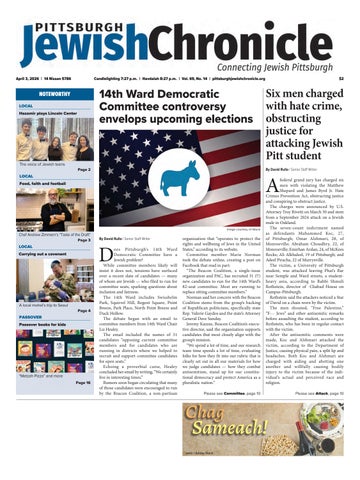
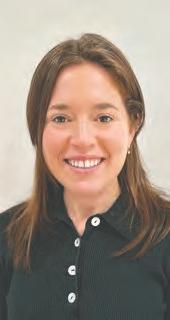
Does Pittsburgh’s 14th Ward Democratic Committee have a Jewish problem?
While committee members likely will insist it does not, tensions have surfaced over a recent slate of candidates — many of whom are Jewish — who filed to run for committee seats, sparking questions about inclusion and fairness.
The 14th Ward includes Swisshelm Park, Squirrel Hill, Regent Square, Point Breeze, Park Place, North Point Breeze and Duck Hollow.
The debate began with an email to committee members from 14th Ward Chair Liz Healey.
The email included the names of 31 candidates “opposing current committee members and for candidates who are running in districts where we helped to recruit and support committee candidates for open seats.”
Echoing a proverbial curse, Healey concluded her email by writing, “We certainly live in interesting times.”
Rumors soon began circulating that many of those candidates were encouraged to run by the Beacon Coalition, a non-partisan
organization that “operates to protect the rights and wellbeing of Jews in the United States,” according to its website.
Committee member Marie Norman took the debate online, creating a post on Facebook that read in part:
“The Beacon Coalition, a single-issue organization and PAC, has recruited 31 (!!) new candidates to run for the 14th Ward’s 82-seat committee. Most are running to replace sitting committee members.”
Norman said her concern with the Beacon Coalition stems from the group’s backing of Republican politicians, specifically state Rep. Valerie Gaydos and the state’s Attorney General Dave Sunday.
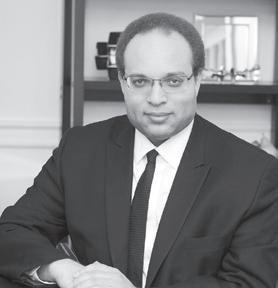
Jeremy Kazzaz, Beacon Coalition’s executive director, said the organization supports candidates that most closely align with the group’s mission.
“We spend a lot of time, and our research team time spends a lot of time, evaluating folks for how they fit into our rubric that is clearly set out in all our materials for how we judge candidates — how they combat antisemitism, stand up for our constitutional democracy and protect America as a pluralistic nation.”
attacking Jewish Pitt student
By David Rullo | Senior Staff Writer
Afederal grand jury has charged six men with violating the Matthew Shepard and James Byrd Jr. Hate Crimes Prevention Act, obstructing justice and conspiring to obstruct justice.
The charges were announced by U.S. Attorney Troy Rivetti on March 30 and stem from a September 2024 attack on a Jewish male in Oakland.
The seven-count indictment named as defendants Muhammed Koc, 27, of Pittsburgh; Omar Alshmari, 28, of Monroeville; Abraham Choudhry, 22, of Monroeville; Emirhan Arslan, 24, of McKees Rocks; Ali Alkhaleel, 19 of Pittsburgh; and Adeel Piracha, 22 of Murrysville.
The victim, a University of Pittsburgh student, was attacked leaving Phat’s Bar near Semple and Ward streets, a studentheavy area, according to Rabbi Shmuli Rothstein, director of Chabad House on Campus-Pittsburgh.
Rothstein said the attackers noticed a Star of David on a chain worn by the victim. The men shouted, “Free Palestine,” “F--- Jews” and other antisemitic remarks before assaulting the student, according to Rothstein, who has been in regular contact with the victim.
After the antisemitic comments were made, Koc and Alshmari attacked the victim, according to the Department of Justice, causing physical pain, a split lip and headaches. Both Koc and Alshmari are charged with aiding and abetting one another and willfully causing bodily injury to the victim because of the individual’s actual and perceived race and religion.
Headlines
Big stage, big takeaway: Hazamir delivers meaningful music and engagement for Pittsburghers
By Adam Reinherz | Senior Staff Writer
Disparate teenage Jewish voices became one at Lincoln Center’s David Geffen Hall. While standing atop the historic stage, Pittsburghers, alongside more than 100 peers from across the country, sang Hebrew songs and participated in Hazamir: The International Jewish Teen Choir’s annual concert and festival weekend.
The March 15 gala represented months of training, Pittsburgh conductor Cantor Laura Berman said. Teens came together with a goal of creating beautiful music and “Jewish community.”
Before traveling to New York City for several days of preparation, the Pittsburgh contingent practiced weekly at the Jewish Community Center in Squirrel Hill, Nera Akiva, 17, said. “We would work on the music every Sunday, and it was just a really nice community where we could also be connected with Israel.”
During typical years, the Manhattanbased concert and festival weekend features opportunities for high schoolers from across the U.S. and Israel to foster connections and promote pluralism through excellence in music. This year, however, due to war-related complications Hazamir was unable to welcome nearly 100 Israeli teens who had also spent months rehearsing, Berman said. “There was a lot of disappointment, but also a deep respect for what these Israeli teens were going through.”
Organizers, according to Berman, did
“It is about creating something extremely special, honoring our tradition and honoring our
potential
for the future.”
–CANTOR LAURA BERMAN
their best to create international connections by streaming performances and encouraging virtual meetups.
“It was sad to hear that they couldn’t come,” Pittsburgher Jordan Block, 17, said of the Israelis. Still, the mindset was “we have to make the most out of it.”
Despite noticeable absences, the gathering delivered meaningful Jewish engagement, Akiva told the Chronicle. The diversity of Jewish participants creates a
connection that “just can’t really be recreated in another space.”
“Hazamir is a very unique space, a unique experience, it’s something you can’t get in other youth movements,” Block said.
Growing up in Pittsburgh, there are “so many different forms of Judaism,” Akiva said. Hazamir’s commitment to pluralism ensures connections are created “between Jewish people that just can’t really be recreated in another space.”
TO ADVERTISE advertising@pittsburghjewishchronicle.org 412-687-1000, ext. 1
EDITORIAL DEPARTMENT
Email: newsdesk@pittsburghjewishchronicle.org
BOARD OF TRUSTEES
Evan H. Stein, Chair
Evan Indianer, Vice Chair
Derek Smith, Treasurer
Gayle R. Kraut, Secretary
Gail Childs, Dan Droz, Malke Steinfeld Frank, Karen Gal-Or, Seth Glick, Judith Kanal, Cátia Kossovsky, Charles Saul, Lynn Zelenski
GENERAL COUNSEL
Stuart R. Kaplan, Esq.
Berman agreed, and said it is no secret that this is a “time of great anxiety and division in the Jewish community.”
“Here, none of that stuff matters,” she continued. “It is about the music. It is about heritage. It is about creating something extremely special, honoring our tradition and honoring our potential for the future.”
Berman credited Matthew Lazar, creator of the Zamir Choral Foundation with setting expectations “at a very professional level.” Teens recognize the demands, “stretch themselves and achieve new heights.”
Akiva, whose three-year participation in Hazamir has resulted in performances on New York City’s biggest stages, said the payoff is well worth the prep. “It’s amazing being able to sing at such amazing venues so young. Singing at Carnegie Hall or Lincoln Center is something that people dream of.”
Along with Maestro Gerard Schwarz, Pittsburgher Rabbi Hazzan Jeffrey Myers served as gala co-chair this year.
Before arriving in New York, Myers said the event is for a “wonderful and unique cause,” and that through the “highest level Jewish music” Hazamir connects and supports Jewish teens from across the U.S. and Israel.
Berman agreed, and said Hazamir enables teens to “make new connections and deepen their understanding.” Participants broaden their “Jewish experiences and deepen connections with kids across the Jewish spectrum. Really, there’s so much to be said for it.” PJC
Adam Reinherz can be reached at areinherz@pittsburghjewishchronicle.org.
5915 Beacon St., 5th Floor Pittsburgh, PA 15217
Main phone number: 412-687-1000
Subscriptions: 412-687-1000, ext. 2
Jim Busis, CEO and Publisher 412-228-4690 jbusis@pittsburghjewishchronicle.org
Published every Friday by the Pittsburgh Jewish Publication and Education Foundation
5915 Beacon St., 5th Floor Pittsburgh, PA 15217
Phone: 412-687-1000
POSTMASTER:
Send address change to PITTSBURGH JEWISH CHRONICLE, 5915 BEACON ST., 5TH FLOOR PITTSBURGH, PA 15217
(PERIODICAL RATE POSTAGE PAID AT PITTSBURGH, PA AND AT ADDITIONAL MAILING OFFICES)
USPS 582-740
Manuscripts, letters, documents and photographs sent to the Pittsburgh Jewish Chronicle become the property of this publication, which is not responsible for the return or loss of such items.
The Pittsburgh Jewish Chronicle does not endorse the goods or services advertised or covered in its pages and makes no representation to the kashrut of food products and services in said advertising or articles. The publisher is not liable for damages if, for any reason whatsoever, he fails to publish an advertisement or for any error in an advertisement. Acceptance of advertisers and of ad copy is subject to the publisher’s approval. The Pittsburgh Jewish Chronicle is not responsible if ads violate applicable laws and the advertiser will indemnify, hold harmless and defend the Pittsburgh Jewish Chronicle from all claims made by governmental agencies and consumers for any reason based on ads appearing in the Pittsburgh Jewish Chronicle
p Pittsburghers participate in Hazamir: The International Jewish Teen Choir’s annual concert and festival weekend.
Photo courtesy of Cantor Laura Berman
Headlines
By Adam Reinherz | Senior Staff Writer
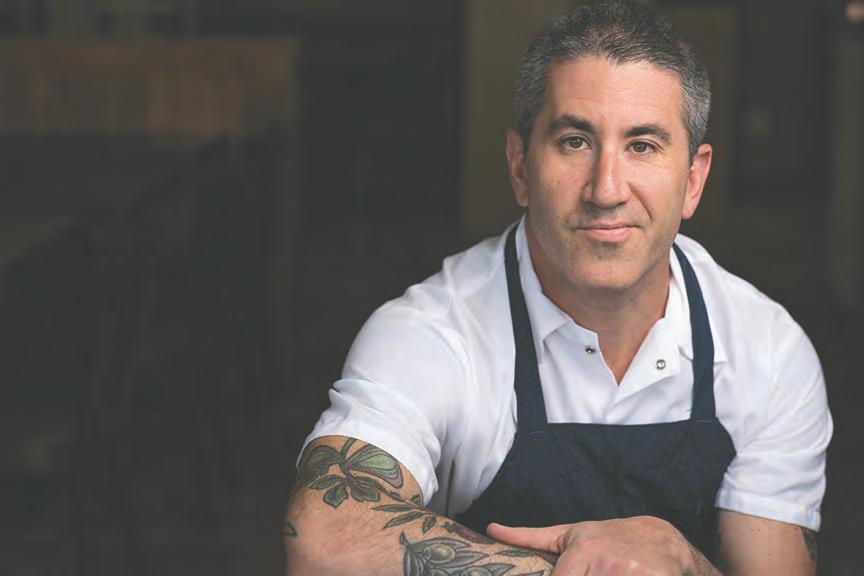
In a room full of eaters, Chef Andrew Zimmern hopes to take a bite out of hunger and leave people craving change. An Emmy winner and four-time James Beard Award recipient, the television personality, author and food equity activist is set to host “Taste of the Draft” at PNC Plaza on April 22. Occurring one day before the NFL draft, the food-filled fundraiser will support grants for school nutrition equipment and NFL FLAG-In-School kits for western Pennsylvanian schools.
Before arriving in Pittsburgh, Zimmern, a Jewish Minnesotan known for popular programs, including “Bizarre Foods,” “Family Dinner” and “The Zimmern List,” spoke with the Chronicle by phone and described the importance of tackling hunger, calling out hatred and promoting Passover.
The topics, which Zimmern moved through like a choreographed meal, reflect a commitment to speaking one’s truth, he explained.
For more than a decade, Zimmern, 64, has worked with GENYOUth, a nonprofit helping students live well-nourished and physically active lives. The organization’s “Taste of the Draft” is a “party with a purpose,” he said.
Attended by celebrity chefs, NFL players and community leaders, the event is an opportunity to better area youth. Funds raised will aid more than 50,000 western Pennsylvanian students and expand access to nearly 13 million school meals, according to GENYOUth representatives.
Zimmern holds the cause close to heart.
“I happen to believe very strongly that food and housing is something that no American should ever have to worry about, and in fact, no person globally should ever have to worry about,” he said. “This issue should be front and center of our political discussions in this country — this is not red or blue or left or right. We’ve been unable to address childhood hunger in America since World War II, regardless of the administration in power. I say this from a civic standpoint, not a political one, despite the fact that the final resolution of this needs to be a political decision.”
Zimmern is outspoken about his views and the solutions he believes are necessary to address current problems.
Months ago, as Chanukah approached, Zimmern took to social media and noted that in lieu of posting a holiday-related message with pictures of latkes and other dishes, he needed to decry the senseless murder of 15 people at an Australian Chanukah gathering.
Alongside a nearly 90-year-old photo of a menorah placed on a window ledge overlooking a German building draped with Nazi flags, Zimmern wrote, “The horrific shooting at Bondi Beach, so many dead, so many wounded, all because they, like me are Jewish. This violence, this senseless violence, has to stop. The global rhetoric normalizing racism of any kind has to stop.”
Zimmern, whose shows have been broadcast in nearly 170 countries, told the Chronicle that when his fame rose years ago he quickly recognized his responsibilities.
“I literally found myself, overnight, being gifted with a platform, and I had a decision
to make to either use it for positive change and speak my mind or not to,” he said. “And I was raised to speak my mind, and I’ve just continued to do that. I’m not going to ignore who I am, and what my experience is, and what my thinking and feelings are.”
Born to Caren and Robert Zimmern, Andrew Zimmern grew up in New York City with significant Jewish exposure.
Though he didn’t attend Hebrew school or have a bar mitzvah, his father was “raised in a very formidable Conservative household,” Zimmern told podcaster Margarita Lyadova.
Zimmern said his paternal grandmother, Henriette — whom he described as an “observant Jew” — played a key role in shaping his upbringing and tastes.
Along with serving as president of the Mount Neboh Synagogue Sisterhood on West 79th Street in Manhattan, Zimmern’s grandmother regularly cooked traditional dishes, like poached and roasted tongue with mustard sauce, chopped liver and roasted chicken.
“I can’t smell a properly roasted chicken or a simmering brisket without being transported back to my grandmother’s kitchen,” Zimmern said.
He planned to serve some of those staples at his seder.
“We don’t keep kosher at our house, but I do everything the traditional way,” he said. “The word ‘seder’ means order, and the meal rolls out in an order. I make a mean charoset. We have all of the official trappings at the table. We go through a really great Haggadah that moves us through the meal itself. I make my matzah ball soup. We have our chopped liver at the table. We have our matzah. I do a brisket, and I usually poach a salmon.”
Zimmern wasn’t sure how many people he would be hosting — “final numbers are not in,” he said before the holiday began — but the chef knew the message he’d convey. “You have to be other-centered. You have to, every time you can, try to put other people before yourself.”
That sentiment is one to be shared at seder tables, on television programs and at fundraisers, he continued. “Doing for others is at the center of what we all need, especially because there’s so many who don’t have a lot in our country.”
Within Pittsburgh, about 1 in 5 children are food insecure, according to the Greater Pittsburgh Community Food Bank. Data from the Department of Agriculture notes that in 2022, 17% of households with children (13.4 million kids) nationwide grappled
with food insecurity.
Whether it’s combatting hunger or hatred, change requires more than a mere mindset, Zimmern said.
“There is a very old saying, ‘faith without works is dead,’ and I have found that very much to be my personal experience,” he said. “If you have a daily spiritual practice, and you try to be other-centered, and you try to put other people ahead of yourself, and you try to back that up with some kind of action each day, and if you put all that together, you will find over the course of years, that not only does your life improve, but the lives of
others around you improve.”
It’s a time-honored recipe, that like his grandmother’s roasted chicken, Zimmern will keep reusing and sharing.
“Do something that backs up your faith and hopefulness,” he said. “Whether it’s calling your friend, whether it’s spreading awareness, whether it’s volunteerism, whether it’s getting involved with an organization, whether for some people it’s just writing a check, whatever it is, do something.” PJC
Adam Reinherz can be reached at areinherz@pittsburghjewishchronicle.org.
p Chef Andrew Zimmern offers Pittsburgh fresh insights.
Photo by Madeleine Hill courtesy of Andrew Zimmern
p Chef Andrew Zimmern’s family favorite roast chicken with ratatouille.
Photo by Stephanie Meyer
Headlines
From Squirrel Hill to Seoul, military mohel makes global trip for bris
By Adam Reinherz | Senior Staff Writer
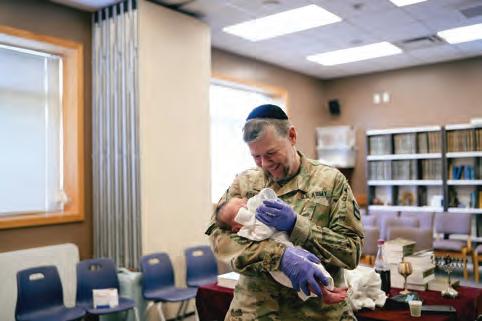
Commitment to a covenant led Rabbi Elisar Admon 6,800 miles from home. After receiving news that a military pilot’s son needed a bris, Admon, a mohel and chaplain major in the U.S. Army Reserve, flew from Pittsburgh to Seoul, South Korea, to perform the ritual.
Now back in Pittsburgh, Admon described a whirlwind journey filled with clearances, kashrut concerns, dateline quirks and renewed appreciation for the U.S. military’s regard for religious observance.
The story began, Admon said, nearly three months ago when he was informed that a pilot and his wife were expecting a child.
Stationed at Camp Humphreys, the largest U.S. Army garrison in Asia, the Jewish family quickly discovered “there was no military mohel in the area.”
After the pilot submitted a request for religious accommodation, and received approval from his command, Admon, a mohel who also volunteers as a municipal, state, police, prison and FBI chaplain, was asked whether he’d be able to help. The Pittsburgher agreed, and received approval
from his command to do the mission.
“When the baby was born I got the orders,” Admon told the Chronicle.
Circumcision, which serves as a sign of the covenant between God and the descendants of Abraham according to the Bible, is traditionally performed eight days after a baby’s birth.
Given the timing of this baby’s birth, Admon said, the eighth day was a Friday.
Admon is Sabbath-observant, which
meant that not only did his travel itinerary require arriving in time for the bris, but he needed to remain in the country afterward and find a place for Shabbat.
The mohel communicated these needs, and said, “The Army was very excited and supportive of the religious accommodation.”
Admon left Pittsburgh Wednesday morning, March 18, and flew to Chicago, then Seoul. After about 19 hours, Admon
arrived in South Korea on Thursday afternoon, March 19.
“I got a ride to the base and slept there overnight,” he said.
Camp Humphreys, according to the U.S. military, is the “Army’s home in Korea.” Along with serving as the headquarters for the Eighth U.S. Army, the Second Infantry Division and the Army’s “most active airfield in the Pacific,” Camp Humphreys is the hub of U.S. Forces Korea.
The base is also home to Four Chaplains Memorial Chapel, where Shabbat services are held on Friday evenings.
A room within the chapel building is designated as the synagogue, Admon said. The room contains an ark, Torah, several chumashim (printed and bound copies of the Pentateuch) and other Jewish books, including a complete set of the Artscroll Talmud Bavli. A kosher kitchen is nearby, with separate areas for meat and milk.
The baby’s grandmother, Admon said, traveled to the base for the bris and helped prepare a meal with traditional foods, including bagels, cream cheese, cake and kugel.
Following a millennia-old tradition of
p Rabbi Elisar Admon, a mohel and chaplain major in the U.S. Army Reserve, tends to a baby post-bris in South Korea. Photo courtesy of Tovi Admon
Headlines
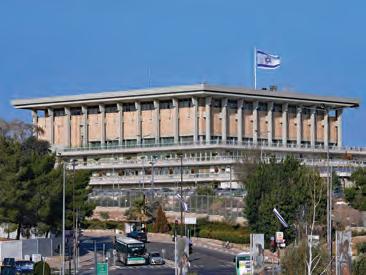
Knesset passes death penalty law for Palestinians convicted of deadly acts of terror
By Ariela Karmel, Reuters and Jeremy Sharon The Times of Israel
The Knesset passed a highly controversial law mandating the death penalty for West Bank Palestinians convicted of carrying out deadly terror attacks on Monday.
Lawmakers voted 62-47 to mandate death by hanging as the default punishment for West Bank residents convicted of deadly terrorist acts by military courts. While judges can opt for life imprisonment under vaguely defined “special circumstances,” the death penalty would otherwise be mandatory and be carried out within 90 days of sentencing.
The vote marked a major victory for far-right National Security Minister Itamar Ben Gvir, whose Otzma Yehudit party has long championed the legislation and who immediately handed out champagne as members of the coalition celebrated its passage following nearly twelve hours of debate.
“This is a day of justice for the victims and a day of deterrence for our enemies. No more revolving door for terrorists, but a clear decision. Whoever chooses terrorism chooses death,” said a jubilant Ben Gvir, sporting the golden noose-shaped lapel pin he and other advocates of the measure have donned to symbolize their campaign for the death penalty.
The sentence would require a simple majority of judges rather than a unanimous decision, while eliminating any right of appeal.
Despite being promoted by its supporters as a response to the Oct. 7 attacks, the law would not apply retroactively, including to the perpetrators of that 2023 Hamas-led onslaught, whose prosecution will be covered in a separate bill being advanced through the Knesset.
The law effectively enshrines capital punishment for Palestinians alone, as it explicitly excludes Israeli citizens or residents, and only Palestinians are tried in military courts. Israelis are tried in civilian courts.
Though a separate provision allows courts to impose the death penalty on anyone, including Israeli citizens, it applies only to those who “intentionally cause the death of a person with the aim of denying the existence of the State of Israel” — a definition designed to exclude Jewish terrorists.
While the death penalty formally exists in Israeli law, it has been carried out only once — the 1962 execution of Nazi war criminal Adolf Eichmann. Until now, Israeli courts could impose capital punishment only under extremely narrow circumstances and only with a unanimous decision from a panel of judges, a threshold that has never been met in terrorism cases.
Supporters of the law argue that the measure
will strengthen deterrence against terrorism and reduce the incentive for terrorist organizations to abduct Israelis.
But senior security officials have long disputed that claim, arguing there is no evidence that capital punishment deters terrorism and warning that it could instead fuel retaliation and escalate violence. Representatives of the IDF, Shin Bet intelligence agency and government ministries voiced such opposition throughout months of Knesset National Security Committee deliberations on the legislation.
“We are not bloodthirsty and do not seek to kill; we are a people that sanctifies life, and precisely for that reason, we cannot allow ourselves to abandon lives,” said Otzma Yehudit MK Tzvika Fogel, who chairs the National Security Committee, before the plenum.
“This is a day on which the state of Israel chose life,” said Otzma Yehudit MK Limor Son Har-Melech, who spearheaded the law, calling it an example of “true Jewish morality.”
The legislation has been a personal crusade for Son Har-Melech, whose husband was killed in a 2003 terror attack. She tearfully thanked Prime Minister Benjamin Netanyahu — who previously expressed reservations — in the plenum for backing the measure.
Right-wing opposition party Yisrael Beytenu also supported the law after party chair Avigdor Liberman conditioned his faction’s backing on Netanyahu and ultra-Orthodox Shas party leader Aryeh Deri voting for it in person, which they did in the final moments of the debate.
Ultra-Orthodox United Torah Judaism’s Degel HaTorah faction also voted in favor despite earlier reports that it would oppose it after its spiritual leader Rabbi Dov Lando warned the legislation could endanger Diaspora Jewry. UTJ’s Agudat Yisrael faction voted against it.
‘An immoral law’
Following the bill’s passage, several opposition parties, including Yair Lapid’s Yesh Atid, Arab-majority Hadash–Ta’al, and the left-wing Democrats party, along with several human rights organizations, announced they would petition the High Court of Justice to nullify the law.
“ This is an immoral law that contradicts the foundational values of the state of Israel as a Jewish and democratic state, and the provisions of international law that Israel has undertaken to uphold,” said Democrats MK Gilad Kariv, who is on the Knesset National Security Committee and has been among the law’s fiercest opponents.
Rabbis for Human Rights, which is petitioning the court alongside Kariv, said, “A death penalty policy runs contrary to the spirit of Jewish law and to the principle of the sanctity of life at its core. It ignores warnings from senior security officials who cautioned that the law would not deter but rather escalate violence, and it harms the Jewish and democratic character of the state.”
Kariv has also argued the law could complicate future hostage negotiations by restricting the government’s ability to consider prisoner releases.
The Arab-majority Hadash–Ta’al said in a statement, “This law is not merely a punitive measure — it is an official declaration of the institutionalization of apartheid and racism, and the transformation of the legal system into yet another tool in the violent political repression of the Palestinian people.”
The Association for Civil Rights in Israel also announced that it would petition the court, arguing that the Knesset does not have the authority to pass legislation that applies to the Palestinian population of the West Bank since Israel does not formally hold sovereignty there, and because under the relevant international laws, which Israel largely recognizes, legislative authority lies with the military commander.
“While the Knesset has previously legislated to apply Israeli law to Israeli settlers, this law is categorically different: it applies to the protected Palestinian population,” ACRI said in a statement.
“The military’s own legal advisors warned the committee that this amounts to de facto annexation,” the organization added.
An international outlier
The law has also generated international condemnation. The Palestinian Authority, which nominally governs day-to-day affairs in parts of the West Bank, readily condemned the law, calling it a “dangerous escalation.”
In a post on X, the PA’s Foreign Ministry said that “Israel has no sovereignty over Palestinian land,” adding, “This law once again reveals the nature of the Israeli colonial system, which seeks to legitimize extrajudicial killing under legislative cover.”
Earlier on Monday, ahead of the vote, the foreign ministers of Germany, France, Italy and Britain urged Israeli lawmakers to abandon the measure.
“We are particularly worried about the de facto discriminatory character of the bill.
Chronicle nominated for 12 Golden Quill awards
Chronicle Senior Staff Writers Adam Reinherz and David Rullo, and Chronicle freelance writers Emma Riva and Deborah Weisberg, are finalists for this year’s Golden Quill awards, an annual competition sponsored by the Press Club of Western Pennsylvania that recognizes professional excellence in journalism. Reinherz is a finalist in the category News Feature for his stories “Five years since
pandemic hit, Pittsburghers look back and ahead” and “Shiri Bibas, and sons Ariel and Kfir, memorialized at Squirrel Hill gathering.” He is a finalist in the Traditional Feature category for “B’nai Israel ends with dignity, extends legacy through Torah donation to CDS.” In the Medical/ Health category, Reinherz is a finalist for “JHF initiative empowers Pennsylvanians to address teen mental health.” In the Education category, Reinherz is a finalist for “With eye to future, educators aid ‘COVID kindergarteners’” and “CMU architecture
The adoption of this bill would risk undermining Israel’s commitments to democratic principles,” the ministers said in a statement shared by the German Foreign Office.
After the law was passed, the US notably refrained from issuing a condemnation, something that would have been expected under most previous administrations.
“The United States respects Israel’s sovereign right to determine its own laws and penalties for individuals convicted of terrorism,” a State Department spokesperson said in a statement sent to querying reporters.
“We trust that any such measures will be carried out with a fair trial and respect for all applicable fair trial guarantees and protections,” the statement added.
Amid concerns that the law would harm and isolate Israel diplomatically, the legislation underwent significant revisions in the last month following pressure from Netanyahu’s office, with the support of the National Security Council, the Shin Bet and the Foreign Ministry, which warned that earlier versions were harsher than U.S. capital punishment standards and risked legal challenges abroad.
The revisions included removing a clause mandating the death penalty without judicial discretion, allowing judges a “special circumstances” option to choose between capital punishment and life imprisonment, removing the requirement that trials take place in military courts and allowing them to be held in civil courts, and dropping language defining terror victims as “Israeli citizens,” which would have applied the death penalty differently based on the victims’ citizenship status. However, even after the revisions, representatives from the Attorney General’s office, the Shin Bet, the Foreign Ministry and the Justice Ministry appeared before the Knesset National Security Committee to express their continued opposition to the bill.
The Knesset’s legal advisers to the National Security Committee repeatedly warned that the legislation may not be constitutional and could run afoul of international law, noting that it would deny those convicted in the West Bank the ability to seek clemency — a safeguard required under the Geneva Conventions and other international agreements Israel has signed — and could expose Israeli soldiers and political leaders to potential criminal liability abroad.
Fifty-four countries around the world permit the death penalty, including a handful of democracies such as the United States and Japan, according to Amnesty International. The group says that the global trend on the death penalty is toward abolition, with 113 countries having outlawed it for all crimes. PJC
Reuters and Charlie Summers contributed to this report.
students design with vision for legally blind artist.” Reinherz is also a finalist for his story “At the edge of the pool Coach Al Rose delivers perspective” in the category of Sports.
Rullo is a finalist in the category of Spot/ Breaking News for his stories “Hamas sympathizer Mohamad Hamad denied bail” and “Rodef Shalom, Temple Sinai boards approve unification plans.” In the category of Public Affairs/Politics/Government, Rullo is a finalist for “City Council introduces legislation to blunt Not on Our
Dime’s BDS referendum.” Weisberg is a finalist for her story “Tree of Life and Calvary Church celebrate faith, festivals and friendship” in the category of Traditional Features. Riva is a finalist in the History/Culture category for “Local Girl Scout creates patch honoring Holocaust resistance.”
Winners will be announced during the annual Golden Quills dinner on Monday, May 18, at the Rivers Casino. PJC
— Toby Tabachnick
p Knesset
Photo by peterspiro via iStock
Calendar
Submit calendar items on the Chronicle’s website, pittsburghjewishchronicle.org. Submissions also will be included in print. Events will run in the print edition beginning one month prior to the date as space allows. The deadline for submissions is Friday, noon.
q SATURDAY, APRIL 4
Join Congregation Bet Tikvah for their annual Passover seder, led this year by Elaine R. The seder will take place on the fourth night of Passover. $25 suggested donation per adult or teenager is requested to help cover the cost of the meal; however, no one will be turned away due to an inability to pay. Children under 12 attend free. 6 p.m. Rodef Shalom, 4905 Fifth Ave. Register at my.cheddarup.com/c/passover-seder2026-april-4th-5-8pm/items.
q SUNDAYS, APRIL 5–JULY 26
Join Chabad of Squirrel Hill for its Men’s Tefillin Club. Services and tefillin are followed by a delicious breakfast and engaging discussions on current events. 8:30 a.m. 1700 Beechwood Blvd. chabadpgh.com
Join a lay-led online Parashah study group to discuss the weekly Torah portion. No Hebrew knowledge needed. The goal is to build community while deepening understanding of the text. 8:30 p.m. For more information, visit bethshalompgh.org/ online-parashah.
q MONDAYS, APRIL 6–JULY 27
Join Congregation Beth Shalom for a weekly Talmud study. 9:15 a.m. For more information, visit bethshalompgh.org.
Join Temple Sinai for an evening of mahjong every Monday (except holidays). Whether you are just starting out or have years of experience, you are sure to enjoy the camaraderie and good times as you make new friends or cherish moments with long-term pals. All are welcome. Winners will be awarded Giant Eagle gift cards. All players should have their own mahjong cards. Contact Susan Cohen at susan_k_cohen@yahoo.com if you have questions. $5. templesinaipgh.org
q TUESDAYS, APRIL 7–JUNE 30
Join Beth El’s Rabbi Alex Greenbaum and his Bible/ Talmud Adult Education class for a thought-provoking weekly session of Bible and Talmudic study. This program is available both in person and virtually. Call the office at 412-561-1168 to receive the Zoom link or to make an in-person reservation. 10:30 a.m. 1900 Cochran Road. bethelcong.org
q MONDAY, APRIL 13
q FRIDAY, APRIL 17–SUNDAY, APRIL 19
Join Keshet’s one-of-a-kind Shabbat retreats for LGBTQ+ and ally Jewish teens, ages 13-18 and in grades 7-12, to learn, grow and celebrate who you are in a warm and vibrant community. Created by and for LGBTQ+ Jewish teens, Keshet Shabbatonim bring together young LGBTQ+ and ally Jews from across the country to build community and celebrate Shabbat and their Jewish and LGBTQ+ identities. $54. keshetonline. org/shabbaton
q TUESDAY, APRIL 21
Enjoy a delicious Seniors Lunch with Chabad of the South Hills and learn about “Safe Driving Through the Ages.” Wheelchair accessible. 1 p.m. $5 suggested donation. 1701 McFarland Road. chabadsh.com
q WEDNESDAY, APRIL 22
Enjoy a delicious lunch while exploring timeless wisdom for the month of Iyar at Chabad of Squirrel Hills’ Ladies’ Lunch and Learn. Noon. $18. 1700 Beechwood Blvd. chabadpgh.com/lunch
q THURSDAY, APRIL 30–SUNDAY, MAY 10
Film Pittsburgh’s JFilm Festival, the largest Jewish cultural event in the region, will return to theaters April 30–May 10, 2026. For 33 years, JFilm has showcased Jewish-themed, independent feature films from around the globe. $15 and up. filmpittsburgh.org
q WEDNESDAY, MAY 13
Join the Holocaust Center of Pittsburgh on April 13 for its annual Yom HaShoah Commemoration. Yom HaShoah, or Holocaust Remembrance Day, is the day set aside to remember the approximately 6 million Jewish victims of the Holocaust. The Holocaust Center has been holding a communitywide commemoration every year since the establishment of the Center in 1980. This year’s program will feature music played by students from Pittsburgh Youth Symphony Orchestra, poetry readings, filmed testimony from Holocaust survivors, a candle-lighting ceremony and other traditional elements. 7 p.m. Free. Rodef Shalom Congregation, 4905 Fifth Ave. eventbrite.com/e/2026-yom-hashoah-commemorationregistration-1983897619184?aff=oddtdtcreator&keep_ tld=true
q THURSDAY, APRIL 16
Join Chabad of Squirrel Hill for Loaves of Love, a challah bake for men and women. 7 p.m. $15 per person. 1700 Beechwood Blvd. chabadpgh.com/lol
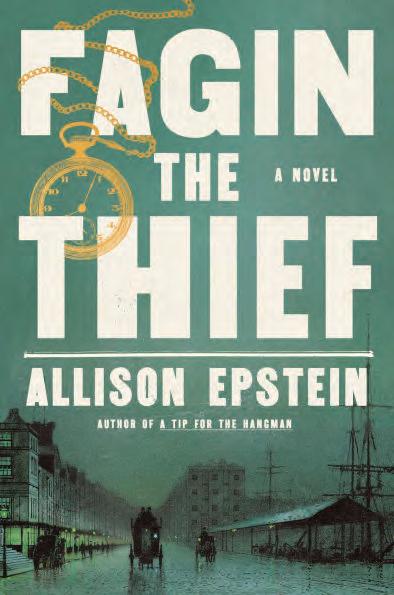
The Pittsburgh Jewish Chronicle invites you to join the Chronicle Book Club for its April 19 discussion of “Fagin the Thief,” by Allison Epstein, the winner of the 2025 National Jewish Book Award for Fiction. The author will join us for the meeting.
From Amazon.com: “A thrilling reimagining of the world of Charles Dickens, as seen through the eyes of the infamous Jacob Fagin, London’s most gifted pickpocket, liar, and rogue. Long before Oliver Twist stumbled onto the scene, Jacob Fagin was scratching out a life for himself in the dark alleys of nineteenth-century London. Born in the Jewish enclave of Stepney shortly after his father was executed as a thief, Jacob’s whole world i s his open-minded mother, Leah. But Jacob’s prospects are forever altered when a light-fingered pickpocket takes Jacob under his wing and teaches him a trade that pays far better than the neighborhood boys could possibly dream.
“Colorfully written and wickedly funny, Allison Epstein breathes fresh life into the teeming streets of Dickensian London — reclaiming one of Victorian literature’s most notorious villains."
Your hosts
Toby Tabachnick, Chronicle editor
David Rullo, Chronicle senior staff writer
How it works
We will meet on Zoom on Sunday, April 19, at 1 p.m.
Join Congregation Dor Hadash to learn more about Land for All, a joint Israeli-Palestinian political initiative that creates a practical framework for peace. Co-Directors May Pundak and Rula Hardal will discuss their model: two sovereign states connected through a confederation, grounded in equality, dignity, interdependence, security and safety. Free. 7 p.m. Rodef Shalom Congregation, 4905 Fifth Ave. congregationdorhadash.shulcloud.com/form/ ALFA2026 PJC
What to do
Buy: “Fagin the Thief.” It is available from online retailers, including Amazon and Barnes & Noble, and in some local Barnes & Noble stores. It is also available through the Carnegie Library system.
Email: Contact us at drullo@pittsburgh jewishchronicle.org, and write “Chronicle Book Club” in the subject line. We will send you a Zoom link for the discussion meeting.
Happy reading! PJC
Headlines
Summer Lee to appear with controversial streamer Hasan Piker at Michigan rallies
By Grace Gilson | JTA
Toby Tabachnick | Chronicle Editor
U.S. Rep. Summer Lee, who represents Squirrel Hill, is scheduled to appear alongside Twitch streamer Hasan Piker at Michigan State and the University of Michigan on April 7 at rallies for U.S. Senate candidate Abdul El-Sayed.
Piker has a history of antisemitic and anti-Zionist rhetoric. He has justified Hamas’ Oct. 7, 2023, attack on Israel, said that Orthodox Jews are “inbred,” and called a Jewish person a “bloodthirsty pig dog.” In November 2024, U.S. Rep. Richie Torres of New York called out Piker for downplaying or denying “the significance of sexual violence by Hamas” during the Oct. 7 attacks.
Piker has falsely stated that Hamas does not use civilians as human shields. He also has declared that America deserved 9/11.
Since starting his daily online broadcasts in 2018, Piker, 34, has amassed a devoted online fanbase, including 3 million followers on Twitch and 1.85 million on YouTube.
Regarding Lee’s appearance alongside Piker at the rallies for El-Sayed, the president
of moderate Democratic think tank Third Way, Jonathan Cowan, told Politico: “Anyone eager to campaign with Hasan Piker is, at best, comfortable overlooking his antisemitic and anti-American extremism and, at worst, endorsing it.”
“It is morally repugnant and strategically self-defeating for Democrats like Abdul El-Sayed and Members of Congress like Summer Lee to cozy up to antisemitic extremists like Hasan Piker,” Cowan said
Rep. Brad Schneider, an Illinois Democrat, delivered a forceful condemnation of Piker last week, warning his fellow Democrats against embracing figures he says traffic in hate.
“Hasan Piker is an unapologetic antisemite,” Schneider, who chairs the New Democratic Coalition, wrote in a post on X. “Democrats risk losing our credibility to condemn those on the right who traffic in bigotry, antisemitism, & hate when our
own Members of Congress & candidates are celebrating or, worse yet, platforming those who espouse hate of any kind.”
While Schneider added in a separate post that he was “proud” that the party welcomes “a broad diversity of opinions and priorities,” he stipulated that the Democratic tent must “reject those who champion ideologies of exclusion and demonization.”
Schneider’s remarks come as the Republican coalition has faced deepening rifts over the vociferously anti-Israel, and increasingly antisemitic, rhetoric emanating from prominent online figures in its movement, including Tucker Carlson and Nick Fuentes.
But as top conservatives wrestle with the growing prominence of far-right voices within the party, an adjacent battle is emerging on the Democratic side, as support for Israel among its base has reached a record low and political candidates increasingly engage with far-left, anti-Israel voices, including Piker.
As one of the most prominent leftist commentators in the United States, Piker’s streams in recent years have often featured sharp critiques of the Democratic party, Israel and U.S. foreign policy in the Middle
Please see Rallies, page 11
BREAKING DOWN THE WALLS 2026
A fundraiser for The Branch
April 30, 2026 from 6-9 p.m.
Children’s Museum of Pittsburgh
Cornerstone Sponsors
Robert Levin and Kerry Bron, M.D.
2026 Krause Award Honorees
Susan Friedberg Kalson & David Kalson
An eveninginclusiveofdinner,dance,play,and purpose!
Judy Ryave McGuire and Andrea Solomon Eller & Andy Eller, M.D.
2026 Wendell Hogan Awardee
Paul Terry Event Co-Chairs
SCAN THE QR CODE FOR TICKET AND SPONSORSHIP INFORMATION
p Hasan Piker attends a press conference at the Web Summit Qatar 2026 at the Doha Exhibition and Convention Center in Doha, Qatar, on Feb. 3, 2026.
Photo by Noushad Thekkayil/NurPhoto via Getty Images
Inside the ancient Christian theology driving modern antisemitism
— NATIONAL —
By Mira Fox | Forward
Christian influencers like Candace Owens and Tucker Carlson are rallying their followers against Israel — and Jews. And to do so, they’re also weaponizing a centuries-old concept that underlies many strains of Christianity.
It’s called supersessionism, and it’s the idea that Jesus’ existence supersedes all commands, laws and beliefs that came before it. Christians often say that Jesus’ death “fulfilled” God’s commandments, meaning that everything God said to Jews in the Hebrew Bible, all of the covenantal promises and laws, are obsolete.
These views on Israel, and their theological interpretation, collide with a Christian Zionist movement that deeply supports Israel for its own scriptural reasons, believing that Jews must return to Israel to fulfill a prophecy and herald Jesus’ own return.
Yet supersessionism has become a theme in Christian opposition to Israel. We hear it in the words of Carrie Prejean Boller, a recent Catholic convert and a now-former member of the Religious Liberty Commission, a Trump administration council on religious protections. After she used a panel on fighting antisemitism as a platform to declare that her religious convictions prevented her from supporting Israel — and was removed from the commission as a consequence — she doubled down. “The Catholic Church is the True Israel,” Prejean Boller declared in a post on X. “Christians are the spiritual Semites. We are the new people of God.”
Candace Owens, a Christian podcaster who often refers to Judaism as Satanist; avowed white supremacist Nick Fuentes; and right-wing commentator Tucker Carlson have all similarly said that their Christianity prevents them from supporting Israel because Jesus has obviated the need for a holy land. “As Jesus says plainly in the Gospels, I am the Temple. I am the Temple now,” said Carlson in a recent video, explaining his religious opposition to Israel.
These supersessionist Christian influencers have expressed support for Gaza and criticized Israel on political and moral grounds; that part is not religious. But they have also insisted that they must oppose Israel from a religious perspective, because its very existence goes against their belief that Jesus has taken the biblical place of Israel.
In their hands, supersessionism fuels not only opposition to Israel, but explicit antisemitism — Prejean Boller has said that she is incapable of being antisemitic because, she argued, since Catholics are the true Semites, she would have to be discriminating against herself. Owens repeatedly refers to Judaism as the “synagogue of Satan,” an age-old accusation that in rejecting Jesus, Jews have rejected God and become evil.
This ancient and controversial piece of theological history is increasingly becoming a bludgeon against Israel, and Jews more broadly.
The roots of supersessionism
In the supersessionist understanding of Christianity, now, Jesus’ followers — Christians — are the chosen people of God, overriding and replacing the Jews in covenant with God.
Scholar Susanna Heschel has referred to supersessionism as a form of colonization. “Christianity colonized Judaism theologically,” she writes in an essay on supersessionism in Mel Gibson’s “The Passion of the Christ,” arguing
logical concepts while “denying the continued validity of those ideas for Judaism.”
The reasons supersessionism emerged as a dominant belief in Christianity are rooted in a complicated history. Christianity arose from Judaism, and Jesus was a Jew. So early Christians put a lot of work into differentiating themselves and their new religion from Jews and Judaism.
“Paul, you know, he did not want Christians to adopt Judaism,” Marcia Kupfer, an independent scholar who researches and writes about supersessionism, particularly in medieval art, told me over the phone. “It would mean that they are turning to the law when they should be just putting their faith in Jesus.”
Much of that differentiation involved rejecting the continued validity of Judaism. While Christians do consider the Hebrew Bible to be part of their holy texts, there’s a reason they refer to it as the “Old Testament” — because, now, it is obsolete, making anyone who continues to follow its teachings in some way backward and no longer in active relationship with God.
“It is this problem of having, in a way, consumed Judaism,” Kupfer said. “It’s part of their Bible. But it has to be preparatory, prophetic, some anticipatory stage to something more complete and true. More spiritual. So it’s at the same time taken over and rejected.”
Who believes in supersessionism?
Today, it can be tough to definitively say what movement thinks what, due, in large part, to the stratospheric rise of Christians who consider themselves non-denominational — and to the linguistics around supersessionism, which some consider to be a negative term, even as others embrace it.
But, in general, the more doctrinally focused the church — Catholicism, Orthodox, Calvinism — the more likely it is to have historically preached supersessionism; the more experiential churches, such as the non-denominational charismatic movement, are less attached to the ideology and often lean toward endorsing Israel.
Among the sects that have historically preached supersessionism, however, the ideology has been a topic of hot debate since the Holocaust. In recent years, these churches — especially the Catholic church — have made moves to reject the ideology, due to supersessionism’s antisemitic undertones.
R ev. Russell McDougall, director of ecumenical and interreligious affairs at the United States Council of Catholic Bishops, told the Forward that “the church has repudiated” supersessionism “quite clearly,” and admonished Catholic influencers like Owens, Prejean Boller and Fuentes in a letter from the USCCB. He pointed to a 2015 Church document titled “The Gifts and Calling of God Are
rrevocable,” released on the 50th anniversary of another groundbreaking document about Jews, Nostra Aetate.
Nostra Aetate, a portion of the revolutionizing Catholic council known as Vatican II, is lauded for improving church views on Jews. It rejects the belief that the Jewish people bear responsibility for Jesus’ death, and also affirms Christianity’s roots in Judaism. But, while Nostra Aetate sought to improve Catholic respect for Judaism, it still affirms some supersessionist ideas. “Although the Church is the new people of God,” it says, “the Jews should not be presented as rejected or accursed by God.” Jews, in other words, are not hated by God — still, Christians have replaced them as God’s favored children.
The 2015 treatise grapples with this issue at far greater length. It admits that rejecting supersessionism undermines the central beliefs of the Church. “The theory that there may be two different paths to salvation, the Jewish path without Christ and the path with the Christ,” the document says, “would in fact endanger the foundations of Christian faith.” How to excise supersessionism without undermining the church, it concludes, “remains an unfathomable divine mystery.”
The idea that salvation is given by God exclusively through Jesus is so central to church teachings that rejecting supersessionism poses clear contradictions — which is perhaps why modern Christian influencers are returning to it.
The Christian movements that do not preach supersessionism — the charismatic non-denominational movements, Pentecostal Christians, and fundamentalist evangelicals such as Mike Huckabee, the current U.S. ambassador to Israel — don’t resolve the contradictions either.
Many Christian Zionists focus, in part, on a line in Genesis, 12:3, in which God says that those who love Israel will be blessed and those who oppose it will be cursed; Ted Cruz cited this verse to Tucker Carlson in explaining his support for Israel. Others reference prophetic books in the Bible that point to God’s promises around Israel. But they do not necessarily engage with other lines in the New Testament that imply support for supersessionism.
“They’re reading the Bible in a very helterskelter way,” said Taylor of the charismatics.
Why does any of this matter?
While supersessionism is core to Christian theology, it might seem like a niche debate best left to pastors and rabbis. But, looking at statements from Carlson, Prejean Boller and others, it’s clear that it informs and justifies their politics regarding Israel and Jews at large — even though it has officially been rejected by many churches.
“They’re in many ways rebelling against the
past 60 years of Catholic theology, and trying to hearken back to something that they view as more authentic,” said Taylor of the influencers. “So I think that the supersessionist piece is signaling something significant because it’s part of the broader distaste for some of the modernizing shifts within Roman Catholicism.”
Supersessionist beliefs have, for years, driven antisemitism. It is woven into centuries of artistic and cultural portrayals of Jews as backwards, lesser or even Satanic, based on the idea that Jewish practice is defunct and has rejected God. Synagoga, a symbolic representation of Judaism throughout medieval art, is often depicted as blind. The theological precept has also driven attempts to evangelize and convert Jews for centuries, something Christians might not understand as antisemitism but which many Jews see as an attempt to erase Judaism. Many church leaders — Catholic and otherwise — support Israel. Christian Zionists like Huckabee or John Hagee, a preacher who runs the Christian Zionist advocacy group Christians United For Israel, are a major force in the U.S. Some of these groups lean even philosemitic, appropriating Jewish rituals such as blowing the shofar or wearing a tallit into their Christianity. (This is also seen by many Jews as a form of supersessionism and cultural appropriation.)
Still, a growing number of Christians are embracing antisemitism in the name of supersessionism. This theology undergirds the increasingly common argument that some antisemitic beliefs are a fundamental part of Christianity — and therefore that asking Christians to fight antisemitism infringes on their freedom of religion.
Former congresswoman Marjorie Taylor Greene refused to vote for the Antisemitism Awareness Act, saying it would restrict Christian beliefs. Prejean Boller, in the Religious Liberty Commission hearing on antisemitism that resulted in her removal, accused the Jews on the panel of calling all Catholics antisemites. Since then, she has repeatedly rejected accusations of antisemitism and said that they are infringing on her own religious liberty.
This debate — whether or not Christianity embraces or rejects Jews, and how either choice operates theologically — has become a core conflict in American Christianity, and among the right wing in the U.S.
But even the more philosemitic side isn’t really embracing Jews for their own sake or on their own terms. Though politicians like Mike Huckabee and Ted Cruz cite scripture to justify their support for Israel, it’s an uneasy alliance rooted in Christianity, not Judaism.
For these Christian Zionists, Jews operate as a way to access and experience a form of Christianity that feels ancient and authentic — think Paula White-Cain, Trump’s former spiritual advisor, being wrapped in a Torah by a messianic Jewish “rabbi,” an act of supposed Judaism that no Jew would ever do. For many of them, support for Israel springs out of a scriptural hope for the end times, and the need to gather Jews in Israel to trigger the apocalypse.
“On the American far right, this bifurcation into philosemitism and antisemitism are not opposites,” said Taylor. Instead, he said, they’re “two sides of the same coin — they’re often instrumentalizing Jews for Christian purposes.” PJC
This story was originally published on the Forward. To get the Forward’s free email newsletters delivered to your inbox, go to forward.com/newsletters.
p Western Wall
Photo by kavram via iStock
Headlines
NYC Council approves ‘buffer zone’ legislation insulating houses of worship from protests
The New York City Council passed legislation last week aimed at protecting synagogues from disruptive protests, marking a decisive victory following a monthslong push by Jewish and local leaders to strengthen safeguards around houses of worship, the New York Jewish Week reported.
The “buffer zone” legislation for religious institutions, which was introduced by Council Speaker Julie Menin following a pro-Palestinian demonstration outside of Park East Synagogue in November, was passed with a vote of 44-5, reaching a super-majority that makes it immune from a potential veto by New York City Mayor Zohran Mamdani.
The bill, which was altered from its initial format to exclude any mention of distance following concerns from the NYPD, will require NYPD Commissioner Jessica Tisch to “establish a plan to address and contain the risk of physical obstruction, physical injury, intimidation and interference in places of religious worship, while preserving and protecting the rights to free speech, assembly and protest,” Menin said during the introduction of the legislation.
“The increase in hateful acts around the city is absolutely abhorrent, and we have to do something about it,” Menin said.
Another measure included in the package of legislation, which would establish buffer zones
for protests outside of schools, was also passed with a majority of 30 to 19, making it subject to a potential veto from Mamdani.
Mamdani has not confirmed whether he will pass the legislation. Ahead of the vote, Dora Pekec, a City Hall spokesperson, told the Jewish Telegraphic Agency in a statement that the mayor “wants to ensure both the right to prayer and the right to protest are protected here in New York City.”
On the steps of city hall ahead of the vote, roughly three dozen protesters gathered as part of a demonstration organized by Jewish Voice for Peace NYC, Jews for Racial & Economic Justice and the New York Civil Liberties Union to object to the legislation.
Milwaukee rabbi, son sentenced in vandalism of Hamas supporter’s anti-Israel mural
A Milwaukee rabbi and his son, who destroyed a mural that displayed a swastika over a Star of David and stated “the irony of becoming what you once hated,” were sentenced last week, JNS reported.
Peter Mehler, 74, pleaded no contest, and his son, Zechariah Mehler, 43, pleaded guilty to a reduced misdemeanor charge of criminal damage to property as a party to a crime. The charge had originally been filed as a felony.
The building is owned by Ihsan Atta, a Palestinian American.
Milwaukee County Circuit Judge Jack Davila sentenced the elder Mehler to a $50 fine. Mehler’s son received six months of probation and 25 hours of community service, and both
Today in Israeli History
April 6, 1948 — Ben-Gurion outlines keys to Independence War
April 3, 1949 — Israel, Jordan sign armistice Israel signs an armistice with Jordan, the third of four such agreements it signs with Arab states to end the War of Independence. The war leaves the city of Jerusalem divided and the West Bank in Jordan’s control.
April 4, 1948 — Joint Chiefs advise Truman on trusteeship
The Joint Chiefs of Staff report to President Harry Truman that a truce under the U.N. partition plan for Palestine could require 100,000 U.S. troops to monitor, supporting Truman’s new preference for a trusteeship.
April 5, 1974 — British Zionist Richard Crossman dies British politician Richard Crossman, a member of the Anglo-American Committee of Inquiry on Palestine in 1946, dies at 66. The 1939 White Paper and his experience on the commission made him pro-Zionist.
were ordered to pay $1,000 in restitution to Atta.
During sentencing, the judge reportedly said that the decision was “about the actions of the destruction and the taking down of private property” and not about political disagreement.
According to local outlet Fox 6, Atta expressed “support for Hamas and support of the destruction of Israel” while speaking at the sentencing. The judge interrupted him, and Atta left the courtroom. Deputies brought him back.
Atta apologized to the judge. “However, please understand that I didn’t feel and I still don’t feel that I was saying anything wrong,” he said.
At the sentencing, Zechariah Mehler told the judge that he submits to the rule of law, but at the time of the incident, he was convinced “that it would eventually escalate into violence against my community” and that, two years later, he does not believe he has been proven wrong.
The Justice Department’s Oct. 7 task force is unraveling, report says
A Justice Department task force meant to investigate the perpetrators of the Oct. 7, 2023, Hamas terror attacks has shed much of its staff and resources as the Trump administration has upended the federal judiciary, according to a new report in the Washington Post, JTA reported.
The task force, convened by U.S. Attorney General Pam Bondi shortly after she took office, has struggled to deliver results despite the administration’s stated priority to fight antisemitism. Only one individual has been charged under its auspices so far, a man from Gaza living in Louisiana who allegedly had a
David Ben-Gurion presents the Zionist General Council a five-step plan to prepare for victory after the State of Israel declares independence. He emphasizes military mobilization and unified army and government leadership.
April 7, 1967 — Israel downs 6 Syrian MiGs in dogfight
Israeli Mirage fighter jets shoot down six Soviet-supplied Syrian MiGs over Damascus in an air battle involving 130 planes that follows Syrian shelling of unarmored Israeli tractors in the demilitarized zone between the countries.
April 8, 2006 — Competitive international ballroom dancing waltzes into Ashdod
Israel’s growing interest in ballroom dancing, driven by Russian immigration, is rewarded with the country’s first international competition in the sport, the Ten Dance European Cup, before 3,000 spectators in Ashdod.
April 9, 1980 — Saudi prince hints at recognition of Israel
In a White House meeting that includes Egyptian President Anwar Sadat, Prince Bandar bin Sultan, Saudi Arabia’s foreign minister, says the time will come when the Saudis will recognize Israel within the pre-1967 borders. PJC
hand in planning the attacks.
According to the Post, the task force’s struggles are due at least in part to its top staffers being caught up in Trump’s broader purge of Justice Department officials.
One task force member, who had traveled to Israel to gather evidence against Hamas, was later fired because she had participated in special counsel Jack Smith’s investigations of President Trump. Another was fired for declining to bring charges against Trump targets James Comey, the former FBI director, and New York Attorney General Letitia James.
J Street and Muslim Public Affairs Council, decry Jew-hatred, Islamophobia
J Street, which identifies as “pro-Israel, pro-peace, pro-democracy,” and the Muslim Public Affairs Council released a joint statement decrying hatred against Jews and Muslims last week, JNS reported.
The two said that they are “deeply concerned by rising antisemitism and anti-Muslim hate in the United States at a moment of escalating tensions in the Middle East, including the growing confrontation involving Iran.”
“Periods of heightened conflict abroad too often coincide with increased fear, discrimination and violence at home, putting both Jewish and Muslim Americans at risk,” they said.
The two also said that the United States should be engaging Iran diplomatically rather than through military action. PJC
— Compiled by
Toby Tabachnick
Items are provided by the Center for Israel Education (israeled.org), where you can find more details.
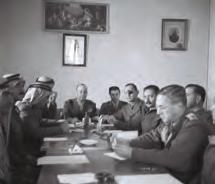
p Israeli Col. Moshe Dayan and Jordanian Col. Abdullah El Tel meet at the American School in Jerusalem on Dec. 5, 1948.
Photo Collection of Israel
p Haganah troops train in October 1948.
Headlines
Committee:
Acknowledging support from the Beacon Coalition’s PAC for Gaydos, Kazzaz said the group actually supported Sunday’s opponent, Eugene DePasquale, a Democrat.
“All of us were knocking doors for Eugene DePasquale,” Kazzaz said. “Then Attorney General Dave Sunday asked us to serve on his transition team, which we did.”
Peg Whelan, a 14th Ward committee member, is disappointed by the controversy.
She said this is the first time she can remember alternate candidates running for committee seats, which is “a little hard for people who have been around for a long time and like to see cohesion. And there is a lot of cohesion in the 14th Ward.”
Both sides, she said, need to hear the other.
“I’ve spoken to Rebecca [Elhassid, of the Beacon Coalition] and I’m convinced what they’re doing is not undemocratic at all,” she said. “It seems the opposite, but it is untraditional in our ward.”
An important focus of the Democratic Committee, Whelan said, is endorsing candidates. So, she understands why groups like the Beacon Coalition would want to work with committee members who support its mission.
“If the endorsement goes to someone like Summer Lee or Bethany [Hallam], who are people the Beacon Coalition — and I agree with them — don’t think are fit to hold office, are endorsed, they’ll probably get elected, because people just don’t know enough about these candidates. I think they’re trying to get people on the committee who will not endorse these people who are a danger to the Jewish community,” Whelan said.
Not voting for a candidate because they
may or may not have the support of the Beacon Coalition is a double standard, Whelan said, given that unions and other issue-advocacy organizations often support candidates from both major parties and encourage their supporters to get involved in local politics.
“You can be a member of any number of groups and still be a Democratic Committee member, as long as you’re a Democrat,” she said. “I can be a member of a union that supports Democrats and Republicans and
this low level, grassroots, small time kind of committee or bringing in the kind of money that could potentially be brought into this race to sway it,” she said.
That’s a charge Kazzaz refutes, saying that Beacon is not financially backing candidates; candidates usually engage in these hyperlocal campaigns by knocking on doors and talking with their neighbors.
Norman said it’s not her intention to demonize any group, especially one that fights antisemitism. Instead, she simply
“The way to make a difference democratically is to get involved. We encourage everyone to register to vote and to vote in every race, including the very, very local ones.”
–REBECCA ELHASSID
still be a Democrat.”
Norman told the Chronicle that she has an issue with that, as well.
“I have a problem with unions and other groups financially supporting candidates, Republican candidates. I absolutely do,” she said.
The Beacon Coalition is simply interested in quality candidates, Kazzaz said.
“Of the many things that we do, we are trying to find good candidates that are interested in good governance to be in state and local politics and that includes on committees,” he said.
Norman expressed concern that the Beacon Coalition is using its influence in the race.
“I’ve never heard of somebody targeting
wants voters to have the information to vote conscientiously.
That’s what 14th Ward Democratic Committee candidate Lynda Wrenn wants, as well. She fears, though, that the controversy and her inclusion on the list distributed by Healey will prevent that from happening.
A former board president of the Pittsburgh Public Schools, Wrenn has long been involved in local politics. She said she wasn’t encouraged or recruited by the Beacon Coalition to run for the committee. In fact, she said, Healey asked her if she would like to be appointed to fill a seat on the committee when a former committee person died and then, presumably, run in the next election.
And while she didn’t take Healey’s offer
for a host of reasons, Wrenn didn’t back out of politics.
“I worked really hard to get judges and local officials elected,” she said. “I moved here and got involved in politics. That was 30 years ago.”
When the seat again became available in 2024, Wrenn became interested.
She responded to Norman’s Facebook post about the Beacon Coalition writing, “The idea that I am some kind of rightwing plant or some unwitting newbie is deeply insulting.”
Wrenn said she isn’t running to represent any group.
Instead, she said, “I am running to represent my friends and neighbors in 14-11. They know me well and know that I have a deep and longstanding commitment to local Democratic politics and will serve them well as their committeewoman. To insinuate otherwise is disingenuous.”
Whelan said the controversy now surrounding the 14th Ward is unfortunate because the Ward historically has done some incredible things.
“People on this committee work really hard and they get a huge turnout, and they support all sorts of good things. Liz Healey has been terrific,” she said. “I’m really torn by this.”
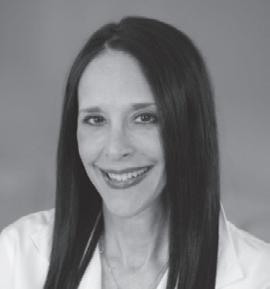
Rebecca Elhassid, of the Beacon Coalition, said all elections matter.
“The way to make a difference democratically is to get involved,” she said. “We encourage everyone to register to vote and to vote in every race, including the very, very local ones.”
Healey did not respond to the Chronicle’s interview requests. PJC
David Rullo can be reached at drullo@ pittsburghjewishchronicle.org.
The attackers discussed the incident through social media messaging and group chats later that day and throughout the following months, according to the Justice Department. During the discussions, Alshmari identified himself and Koc as the two individuals listed on a University of Pittsburgh crime alert about the attack. Both Alshmari and Koc admitted to being involved in the attack during the messaging.
The defendants conspired to obstruct the investigation by agreeing to falsely align their testimony about the attack and providing false and misleading information before the federal grand jury, according to the Justice Department. As part of the misleading information testified before the grand jury, several of the defendants “testified falsely as to whether they or others struck the victim, whether the attack was related to the victim’s Jewish identity and Star of David necklace and whether they had discussed with any others what to say to the grand jury.”
Rothstein said he was happy to learn that law enforcement hadn’t abandoned or forgotten about the case.
“I think there are certain things that
need to be seen through the end,” he said. “There are certain non-negotiables. Hate is a non-negotiable.”
The University of Pittsburgh issued a statement saying the University of Pittsburgh Police Department assisted the Pittsburgh Bureau of Police and the FBI in responding to a reported off-campus hate crime following the incident, and that the UPPD supported the FBI during the subsequent investigation.
“We are grateful to our law enforcement partners for their collaboration, which resulted in the arrests and arraignments announced today,” the statement concluded.
The Jewish Federation of Greater Pittsburgh said in a prepared statement that it is grateful to the FBI, Pittsburgh Bureau of Police and the UPPD for their work.
“Their commitment to holding perpetrators of hate-motivated violence accountable sends a clear and necessary message: attacks targeting people for their Jewish identity will not go unanswered. We thank our law enforcement partners for standing with the Jewish community,” the statement read.
“Antisemitism has no place in our country,” said Assistant Attorney General Harmeet
K. Dhillon of the Justic Department’s Civil Rights Division. “The Department of Justice will continue to investigate allegations of violence against people of faith and will work to ensure the safe exercise of religious practices — whether that be through wearing religious symbols or visiting houses of worship.”
FBI Pittsburgh Special Agent in Charge Richard Evancee said that violence targeting someone because of their religious beliefs is unacceptable.
“Freedom of religion is a fundamental principal at the core of many communities across our nation,” he said. “FBI Pittsburgh and our local, state and federal partners are committed to protecting faith communities from acts of hatred and intimidation. Incidents such as this will be met with a swift, decisive law enforcement response as we will pursue those believed responsible with the full force of the law.”
For the hate crimes and obstruction of justice counts, the maximum sentence is up to 10 years in prison, a fine of up to $250,000 or both.
For the conspiracy to obstruct justice count, the law provides a maximum sentence of up to five years in prison, a fine of up to $250,000 or both. PJC
David Rullo can be reached at drullo@ pittsburghjewishchronicle.org.
Photo by nito100 via iStock
Headlines
Continued from page 4
performing the service eight days after the baby’s birth, a “kosher bris was held bo bayom” (on that day), Admon said.
After tending to the baby and celebrating with the family and fellow military personnel, Admon headed to a Chabad in Seoul.
“There were a lot of Israelis there for Shabbat,” Admon said. “Most of them were stuck and couldn’t get to Israel because of the war.”
Although meals were provided, Admon still brought a suitcase full of holiday-related goods for the community.
A 2022 Report on International Religious Freedom from the Department of State notes South Korea’s Jewish population is “approximately 1,000, almost all expatriates.”
Before traveling to Seoul, Admon stopped at Murray Avenue Kosher and bought about 70 pounds of kosher for Passover items, including charoset, matzah ball mix, matzah meal, marshmallows and other snacks.
While the Army distributes matzah to soldiers at Camp Humphreys, Admon said he came prepared with more.
Schlepping kosher staples overseas was the least he could do, he continued. “We live in a community where there’s food, restaurants and everything. These people do holy work for us. We should help them.”
With a similar mindset, Admon, who is a member of Pittsburgh’s Chevra Kadisha (Jewish Burial Society), spent time in Seoul aiding local Jewish leadership with burial-related instructions.
Before departing South Korea on
Rallies:
March 23, Admon toured Seoul on March 22 with a guide.
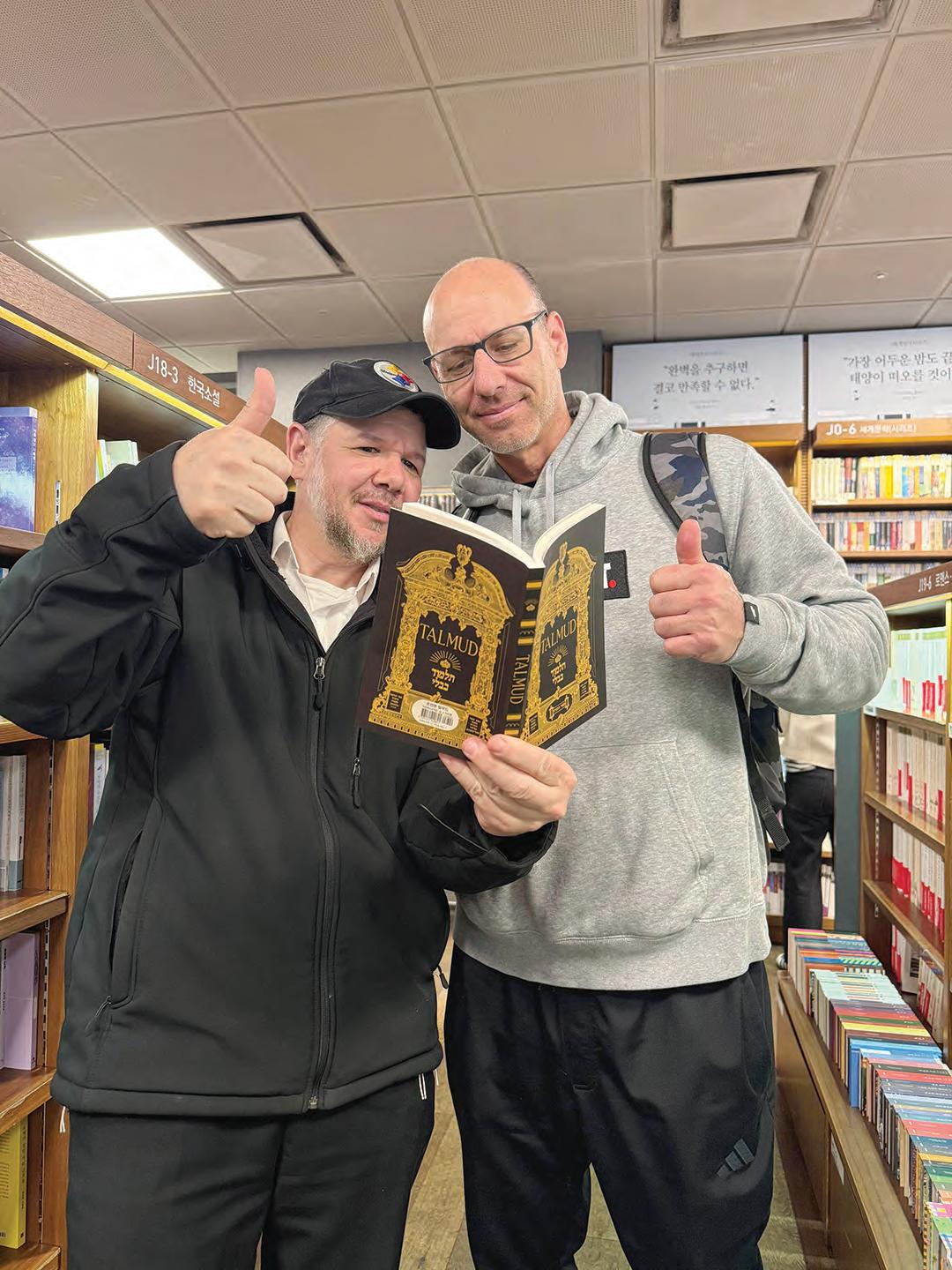
Of note, Admon said, was a trip to a downtown bookstore that was “three times as large as Barnes & Noble.”
Inside the store, Admon saw a copy of
to say that Israel played a significant role in how Oct. 7 took place.”
Continued from page 7
East, positions that have increasingly drawn scrutiny.
Piker previously compared Israelis to the Ku Klux Klan and defended Hamas, writing in a post on X in January that the terror group is “a thousand times better than the fascist settler colonial apartheid state.”
On one of his shows aired days after Oct. 7, Piker told off a listener who condemned the massacre, saying “Bloodthirsty violent pig dog, suck my d–-k.” In a May 2024 stream, Piker also minimized reports of the prevalence of sexual assault during the Oct. 7 attacks, saying “It doesn’t matter if rape happened on October 7th. It doesn’t change the dynamic for me.”
While speaking at a conference in Qatar last month, Piker said that he lost viewers in the wake of Oct. 7 for his commentary, explaining, “People were not ready, especially in Western audiences, for someone
In response to a CNN article last month that noted the joint U.S.-Israeli strikes on Iran coincided with Purim, Piker wrote, “This is jewish supremacy. it’s what netenyahu said after oct7.”
the Babylonian Talmud in Korean. He purchased a volume for what he estimates was $3. The book, he said, wasn’t the only thing he brought back to Pittsburgh, as the trip home offered new appreciation.
Admon left Seoul Monday morning,
with using his platform to “spread antiJewish tropes, amplify propaganda from a designated terrorist group, and promote toxic anti-Zionism.”
Despite the volley of criticism, Piker has dismissed allegations that he is antisemitic.
“These last two years, I’ve been called
“Anyone eager to campaign with Hasan Piker is, at best, comfortable overlooking his antisemitic and anti-American extremism and, at worst, endorsing it.”
–JONATHAN COWAN
Piker’s incendiary commentary has earned him a nomination for “Antisemite of the Year” in 2024 from a watchdog group and drawn the condemnation of Jonathan Greenblatt, the CEO of the Anti-Defamation League. Greenblatt charged the streamer
antisemitic. I abhor antisemitism, and I’ve spent my entire professional media career combating it. I just happen to be anti-Israel, and that makes me a far greater threat than the likes of Nick Fuentes because they know he’s a Nazi,” Piker told Variety last
March 23. Before departing, he prayed Shacharit (the morning service) at his hotel. After boarding the plane, and while en route to San Francisco, Admon prayed Mincha (the afternoon service) and Maariv (the evening service). Because he traveled eastward across the International Date Line, Admon arrived in San Francisco on Monday morning, March 23.
Though he had already prayed Shacharit on March 23 in Seoul, Admon prayed the morning service again in San Francisco on March 23 because he “had the experience of sunset and nightfall,” which constituted a new day according to Jewish law, he said.
Meeting the wrinkles of time-bound observance was just part of an incredible experience, he told the Chronicle.
“I’m taking the chizuk (strength) that these people gave me. They were of the opinion that no matter where they are in the world they want to keep the traditions, even if it meant working hard to have a mohel come and do a kosher bris,” he said.
Additionally, what this experience reaffirmed was an understanding that “it’s not someone’s fault if they are stationed somewhere far away,” he continued. “It is our obligation to answer their needs and provide religious support.”
The military made clear that “we need to support people and show them that if you want to serve the country and keep your religion, we will support you. That’s an important message,” Admon said. “Supporting our people means supporting our soldiers and their families wherever they are.” PJC
Adam Reinherz can be reached at areinherz@pittsburghjewishchronicle.org.
November. “I don’t find kinship with the right because I think there are some on the right that just use Israel as a new opportunity to cut through the noise.”
Piker has also increasingly hosted leftwing politicians on his platform in recent years, drawing derision from critics, including Schneider, who argue that officials risk legitimizing his commentary by appearing alongside him.
Piker previously interviewed Vermont Independent Sen. Bernie Sanders and New York Democratic Rep. Alexandria OcasioCortez, California gubernatorial candidate Tom Steyer and New York City Mayor Zohran Mamdani.
For many politicians, Piker is a conduit to the much coveted younger voter. Twitch, originally designed for video games, is now widely used for music, creative content and political commentary from hosts like Piker. PJC
Toby Tabachnick can be reached at ttabachnick@pittsburghjewishchronicle.org.
p Rabbi Elisar Admon (left) and a local resident read a Korean copy of the Talmud while in Seoul, South Korea.
Photo courtesy of Tovi Admon
Community is our middle name—We
TRIPLE CROWN
PRESENTING SPONSOR
Nancy and Steven Cohen
WINNER’S CIRCLE
Anonymous
A&L BMW, Jaguar, Land Rover & The Lamfrom Family
Giant Eagle Foundation
PNC Bank
S&B USA
Joshua Shapira and Family
Lori and Bob Shure
Linda S. Simon
University of Pittsburgh
SECRETARIAT
Sandra Block and John Suhrie
Elior
Highmark® Blue Cross Blue Shield
Cindy Goodman-Leib and Scott Leib
Stacey and Scott Seewald
The Wilson Group
GARLAND OF ROSES
Anonymous
Bev and Zack Block/ Block & Associates, LLC
Ceeva, Inc.
Debbie and Bill Demchak
Erica and Billy Goodman
Paula Garrick Klein
Dana and Jason Kunzman
Dory and David Levine
Lisa and Jonathan Marcus
NuGo Nutrition
Nancy and Woody Ostrow
Hilary Tyson and Charles Porter
Lori and Jimmy Ruttenberg/ Equilibrium Wealth Advisors
Nancy Bernstein and Rocky Schoen
Leonard Silk
UPMC and UPMC Health Plan
Nancy and James Wolf
THOROUGHBRED LEAGUE
Anonymous
Deborah and Sam Berkovitz
Nancy and David Brent
Ellen and Jack Kessler
Lamar Advertising
Oxford Development Company
Jeffrey Markel and Carol Robinson
TABLE Magazine
CHURCHILL DOWNS
Anonymous (3)
Lauren and Scott Americus
Deborah and David Baron
BNY Mellon
Buchanan Ingersoll & Rooney, PC
Clark Hill, PLC
Dickie, McCamey & Chilcote
The Donald and Sylvia Robinson Family Foundation
Elyse and Martin Eichner
Elite Media Installations
Andrea and Andrew Eller
Julie and Josh Farber
Stefani Pashman and Jeremy Feinstein
Mary Pat and Eric Friedlander
Chip Ganassi
Caryle Glosser
Jen and Joe Goldston
Meyer “Skip” Grinberg
Merris and Yram Groff
Huntington Bank
Alison and Brad Karlin
KeyBank
Dana and Michael Laidhold
Marcie Mitre and Ken Levin
Kerry Bron and Robert Levin
Marsha and Bernie Marcus
Elie Aoun and Justin Matese
Pittsburgh Jewish Chronicle
Pittsburgh Business Times
Pittsburgh Roots Endodontics | Laura & Jeffrey Parker
The Pittsburgh Steelers
S&T Bank
Suzanne and Brian Schreiber
ServiceMaster PBM Co.
Trust-Franklin Press Co.
Marcie and Matthew Weinstein
Elizabeth Goldberg and Michael Weisberg
Martha and John Wolf Jr
Hilary Wolfe and David Stone
Yellow Bridge Digital
Rachel and Steve Zoffer
MINT JULEP CLUB
Anonymous (3)
A. Martini & Co.
B&R Pools & Swim Shop
Valerie and Paul Bacharach
big Burrito Restaurant Group
Kate and Mac Booker
Cathy Reifer and Samuel Braver
Elizabeth Miller and Joshua Breslau
Besty and Marc Brown
Common Plea Catering
Dean Damick
Marion Damick
Dentons Cohen & Grigsby
Entertainment Unlimited
Event Source
Exceptional Exteriors and Renovations, Inc.
Barb Murock and Carl Fertman
First Student, Inc.
Eva and Gary Friedman
Karen and Jack Friedman
Deborah and Matthew Graver
Ina and Larry Gumberg
Rebecca Pomerantz and Lucas Heller
Henderson Brothers, Inc.
Hens and Chicks
Heritage Seubert Financial
Jewish Healthcare Foundation
Jones Day
Carole and Jerry Katz
Sue Berman-Kress and Doug Kress
Liquid Screen Design
Lobos Management
Marbury Group
Amy and Grant Mason
Mosaic Linens
Ellen Olshansky and Rich Pattis
Pittsburgh Pirates
The Plung and Resnick Families
PRISM
Geri and Steve Recht
Rivers Casino
Rothschild Doyno Collaborative
Schneider Downs
Signarama Pittsburgh
Silk & Stewart Development Group
Dr. Stuart Silverman
Shari and Rick Sweet
Natalie and Brian Valen
Lee Wolf
Lynn and Marc Zelenski
RIDERS UP
Anonymous (2)
Anonymous in honor of Chancellor Joan Gabel
Almanac/Observer Reporter
Cheryl Gerson Americus
Sharon Dilworth and Dr. David Baker
Amy and Michael Bernstein
Rachel Firestone and Jason Binder
Amanda and Aaron Cantor
name—We couldn’t do it without you!
Rachel and Bryan Clark
Erica and Hal Coffey
Donner Family
Fragasso Financial Advisors
Megan and Robert Glimcher
Beth Goldstein and Jeremy Goldman/ Goldstein Tax Advisors
Lori and Richard Guttman
Susie and Barney Guttman
Cynthia and John Halicky
Jan and Mitchell Hoffman
Kathy and Stuart Horne
Hyman Family Foundation
Invitations Plus
Mardi and Bill Isler
Anna and Gregg Kander
Laura and Jonathan Kessler
In Memory of Elaine Belle Krasik (z”l)
Susan and Michael Kurtz
Susan and Louis Leff
Larry (z”l) and Claire (z”l) Levine
Patty and Stanley Levine
M & J Electrical Contracting, Inc.
Rachel H. Marcus
Nikol and Stanley Marks
Sharon Werner and Eric Olshan
Louisa and James Rudolph
Laura and Henry Schneiderman
David and Cindy Shapira
Darlene Cridlin and Robert Shreve
Julie and Bob Silverman
Marcia and Melvin Solomon
Rachael and Alex Speck
Sterling Paper Company
Tucker Arensberg P.C.
Vigliotti Landscape and Construction, Inc.
Walnut Capital
Dr. David Zubrow
Susan and Howard Zwillinger
STARTING GATE
Anonymous (5)
Agency Group
Allegheny Roofing and Sheet Metal Company, Inc.
Debra and Stewart Anderson
Marshall and Karen Balk
Baptist Senior Family
Laurie Moser and Stewart Barmen
Liza and Adam Baron
Rachel and Henry Blaufeld
Eva Tansky Blum
Bolten
Brandywine Agency
Katy and David Caliguiri
Maurice S. Cerul, MD
Chase Bank
Gail and Norman Childs
Citizens Bank
Clerici Family
Maria and Josh Cohen
Community Day School
Dollar Bank
Dodi Walker Gross and Daniel Edelstone
Andrea Ehrenreich and Michael Regan, in loving memory of Marc Ehrenreich (z”l) and in honor of Ron Heyman, JCC Grief Support
Ivan Lee Engel
Federated Investors Foundation
Matthew J. Feigel, DMD LLC
Fireman Creative
Fort Pitt Capital Group
Debra and Rep. Dan Frankel
Rosalind Chow and Jeffrey Galak
Ruth and Alan Garfinkel
Julie and Ed Gelman
The Glickman Family
Amy and Bob Gold
Marcie Solomon and Nathan Goldblatt
Ellen and Michael Goldstein
Susie and Don Gross
Lissa Guttman
Linda and Steve Halpern
The Hanover Insurance Group
Harry S. Cohen & Associates, P.C.
Vicky and Steve Hoffman
Jennifer and Larry Honig
Teddi and David Horvitz
Rebecca and Aaron Hurowitz
Lynne and Blair Jacobson
Nancy and David Johnson
Susan Farber and Scott Kallick
Kamon Family
Dr. Leslie and Steven Latterman
Lynn and Lawrence Lebowitz
Evelyn Levine
Ina and Jeffrey Levinson
Tracy Prizant and Jon Levy
Julie and Jason Lichtenstein
Lieber Hammer Huber & Paul PC
Littles
Catherine Loevner
Kathleen and Jay Lutins
Fara and Andy Marcus
Mary McFadden
McKnight Realty
Jane and Mark Mendlow
Kimberly and Jim Meyers
Morgan, Lewis & Bockius LLP
Alex Musicante
Iris Nahemow
Marni and Jon Pastor
Stephanie Weinstein and Amit Patel
Pittsburgh Penguins Foundation
PJ Dick Incorporated / Trumbull Corporation / Lindy Paving
Rita and Andrew Rabin
Melissa and Peter Rackoff
Nancy and William Rackoff
Terri and Oscar Reicher
Jane and Bruce Rollman
Michele Levine and Jim Rosenberg
Rachel Golden and Josh Royston
The Rubinoff Company and Rubinoff Realty Services
Sara and Kenneth Segel
Sitko Bruno
Carol and Joshua Smith
Caren and Howard Sniderman
Kyle, Noa and Mason Solomon
Jennifer and Josh Steiman
Marsha Zuckerman and Mike Tobias
Traction Rec
TWIN Capital Management, Inc
Yana and Michael Warshafsky
Arlene and Richard Weisman
Winchester Thurston School
Carol and Michael Yahr
Carrie and Doran Young
Zelenkofske Axelrod LLC
OUR PARTNER AGENCIES
The Jewish Federation of Greater Pittsburgh
Jewish Healthcare Foundation
United Way of Southwestern Pennsylvania
*as of 3/8/2026
We are tired, but we endure: Inside Israel’s unbreakable resilience
Israelis are a remarkably resilient people. In the face of the horrors of Oct. 7, we came together and volunteered in extraordinary ways: helping farmers harvest their crops, cooking for reservist families, guarding our communities.
That same resilience is visible in the current conflict with Iran, Operation Roaring Lion. It lives in bomb shelters where children play ping-pong and board games, in songs — playful and surreal — sung by children about Iranian attack drones, in weddings held underground so as not to delay a simcha, in babies born in underground hospitals, and in the quiet determination of parents doing everything they can to keep their children safe and steady. Israelis also have a habit of downplaying their own hardship — “I had two sirens last night, but my friend in Tel Aviv had four and no shelter, so I can’t complain.” That instinct is part of what makes us resilient.
But this time, that resilience is a heavier lift … because we are exhausted.
I have three children — 14-year-old twins and a 10-year-old. In just six years, they’ve lived through COVID, Operation Guardian of the Walls, Oct. 7 and the Swords of Iron war, the 12-day war with Iran in June 2025, and now Operation Roaring Lion. Altogether, they’ve missed roughly 140 days of school —
playing the long game. A short-term mindset would demand an end to the war at any cost. But Israelis understand that braving hardship now — running to shelters, living under constant threat of missile fire — is the price of removing a far greater danger: the threat posed by the Islamic Republic of Iran, the world’s leading state sponsor of terrorism, and its proxies. We take their chants of
We take their chants of “Death to America; Death to Israel” seriously.
more than a month each year — as we and other parents juggle work and child care, and two hours of Zoom learning a day proves a weak substitute for real classroom time.
So yes, we are exhausted. Sirens at 1 a.m. and again at 4 a.m., followed by explosions, make a good night’s sleep hard to come by. All the more so, of course, for the hundreds of thousands of brave IDF soldiers — pilots, intelligence officers, tank commanders and more — and their family members who lie awake at night concerned for their well-being. And still, we endure. Because Israelis are
“Death to America; Death to Israel” seriously. That is why, despite all the challenges, 93% of Israeli Jews continue to support this war.
Resilience, however, doesn’t sustain itself. It must be strengthened. Since Oct. 7, the Jewish Federation of Greater Pittsburgh’s Israel emergency fund has done just that — supporting small businesses forced to close due to the war, assisting reservists’ families, helping victims of terror rebuild their lives, providing midwives for pregnant women whose partners are in the reserves, funding
programs that give children and their parents moments of relief and normalcy in neighborhood bomb shelters, and placing bomb shelters throughout our Partnership2Gether region of Karmiel and Misgav.
In fact, last week, two children playing soccer ran into one of those shelters when a siren sounded. Moments later, shrapnel struck nearby. That shelter saved their lives. And nearly as important, its very presence made it possible for them to be outside playing soccer at all — to experience a normal moment of childhood in an anything-but-normal time. To be resilient.
So yes, we are struggling. We are sleep deprived. We are on edge. Our homes are messy. Our anxiety is high. Our Pesach plans have been canceled. And most of all, we are worried for our loved ones.
But we are resilient — and we will get through this, and we will continue to play soccer. With the support of Jewish communities like Pittsburgh’s standing beside Israel, we will continue to be resilient, and we will emerge from all this stronger — determined to build a safer, brighter future for our children. PJC
Kim Salzman is the director of Israel and Overseas Operations at the Jewish Federation of Greater Pittsburgh.
Jews need — and deserve — more seats at the table in local politics
Guest Columnists
Bryna Siegel Finer and Aviva Lubowsky
The Allegheny County Democratic Committee is a grassroots party organization that shapes endorsements and supports Democratic candidates. Individual committee members — each representing just a handful of blocks — serve as the link between voters and the party by advising
Jews around the world gathered this week at the seder table to retell the story of the Exodus from Egypt. For more than 3,000 years, this story has been passed from generation to generation, reminding us not only of where we came from but of the values that continue to shape who we are today.
The story of Passover begins in slavery and in the yearning for freedom. Pharaoh may have been the first to seek the destruction of the Jewish people, but he was certainly not the last. That is what gives Passover its
constituents, mobilizing support and representing their district’s preferences within party decision-making.
Recently, the chair of the 14th Ward Democratic Committee circulated a list of largely Jewish ACDC candidates she urged the party to oppose. This follows a broader pattern: Over the past two years, voters in the 14th Ward have received repeated communications from committee members dismissing concerns about antisemitism and encouraging support for candidates whose rhetoric and associations have raised unease within parts of the Jewish community. Regardless of intent, these actions have contributed to a growing sense among many Jewish voters that their perspectives are not reflected or welcomed within the local party structure.
Despite representing a county with a
enduring power. It is both a warning and a promise: a warning that every generation will face adversity, and a promise that even in our darkest moments, we must remain hopeful. Redemption will come.
If we overcame Pharaoh, Haman and Hitler, we will overcome whatever challenges lie ahead. Today, those challenges include the threat posed by the Iranian regime and the network of proxies it supports across the region. Yet Israel continues to demonstrate remarkable strength and resilience. We see it in the courage of men and women in uniform, in the determination of citizens and in a society that continues to build, innovate and strive for a better future even from bomb shelters.
Passover is, at its core, a story about freedom. It reminds us that the longing for
significant population of Jewish Democrats, the ACDC has not used its platform to meaningfully address antisemitism. In addition, particularly in the 14th Ward, many committee people have declined to endorse candidates who have overwhelming support within their own districts, signaling a disconnect between committee leadership and the voters they represent.
For example, in last year’s Democratic primary, 14th Ward voters made their preference unmistakable: Mayor Corey O’Connor earned nearly twice as many votes as former Mayor Ed Gainey (7,067 to 3,730). Yet within the ACDC, the endorsement came down to just four committee votes (274 to 270). That gap demonstrates the disconnect and shows why it’s so important to elect committee members who carry their community’s voice into the room.
dignity and self-determination is universal, and we hope that the Iranian people will soon experience the freedom they have been denied for nearly half a century.
But Passover also teaches another essential lesson.
In Deuteronomy 24, we are commanded: “You shall not subvert the rights of the stranger or the orphan, nor take a widow’s garment in pledge.” The following verse explains why: “Remember that you were a slave in Egypt.”
The memory of slavery serves as a moral compass, reminding us to act with compassion toward the most vulnerable among us: the stranger, the orphan and the widow. The injustice once inflicted upon the Jewish people should deepen our ability to recognize suffering in others.
Democratic Jewish voters and our allies deserve to have tangible representation in the organizations that represent the neighborhoods in which they live. Beacon Coalition, a local nonpartisan organization, is pushing back against the normalization of anti-Jewish, anti-pluralist and anti-democratic rhetoric by helping more people participate in the political process. That means educating voters about available roles like committee seats to allow more voices to be included in decisions about endorsements and the direction of the party. Beacon is encouraging community members who are active Democrats and who want to make an impact to run for ACDC seats because engaging new voices on the ACDC can increase transparency, broaden participation and reduce
Please see Finer and Lubowsky,
Throughout history, this principle has shaped Jewish action in many ways. It was evident when American Jews stood alongside those fighting for civil rights. It was reflected in Israel’s daring airlifts, such as “Operation Moses,” in 1984-85, which brought Ethiopian Jews to freedom. It can be seen when Israeli search-and-rescue teams are among the first to arrive at disaster zones around the world, and in humanitarian medical programs that bring patients to Israel for life-saving treatment.
These are not merely strategic decisions; they are moral choices rooted in a shared historical memory. They reflect the legacy of a people whose story began in slavery. Passover therefore calls on us not only
Chronicle poll results: Seder themes
Last week, the Chronicle asked its readers in an online poll the following question: “Does the seder you attend blend in present-day themes and concerns, or does it adhere closely to the traditional Haggadah?” Of the 153 people who responded, 54% said they blend in presentday themes and concerns, and 46% said they adhere closely to the traditional Haggadah. Comments were submitted by 24 people. A few follow.
It’s too controversial in our multigenerational family seder to discuss contemporary political issues. We want to enjoy being together, not argue.
We adhere to the Haggadah curated by Rabbi Maxwell House in 1932 (5692).
Even though my father-in-law is 88, he still runs the seder with aplomb. In spite of his age, he does allow input from the
Finer and Lubowsky:
Continued from page 14
insular decision-making. More diverse participation will strengthen party processes by bringing in new voters, improving accountability and ensuring that local party structures better represent the communities they serve. This type of organizing is not new or unusual; it is how American politics was designed, so that all people have an opportunity to be heard.
Across the country, marginalized communities have long organized so they would have representation within party structures. In 1970s San Francisco, LGBTQ activists formed the Alice B. Toklas Democratic Club to build power within the Democratic Party, ultimately helping elect leaders like Harvey Milk. In the 1980s in Chicago, the multiracial coalition behind
Getsztain:
Continued from page 14
to remember, but to recommit ourselves to the values the story represents: resilience, responsibility, courage and empathy.
Does the seder you attend blend in present-day themes and concerns, or does it adhere closely to the traditional Haggadah?
younger attendees, so our Pesach observance each year does include some timely and topical additions.
Harold Washington mobilized neighborhood-level organizations to reshape city politics. Women have been organizing through groups like the National Organization for Women to
Not only does our seder incorporate some “issues of the day,” but it fortunately has evolved to be far shorter than I recall enduring as a child!
Freedom — and how we achieve and sustain it — is such a timeless topic. And, given our current environment with an obscene wealth gap that is only growing along with a wannabe Pharoah, the themes of Pesach couldn’t be more relevant.
It’s important to maintain our lovely history the way our ancestors did it.
We usually invite more non-Jews than Jews to our seder, so I want them to have a more traditional experience.
No matter the theme, no matter the attendees, no matter the venue: Every seder is always a poignant reminder of “They tried to kill us; we survived; let’s eat!”
participation among immigrant communities. These organizations ran coordinated slates, built coalitions and ensured that their communities had representation in governance.
Democratic Jewish voters and our allies deserve to have tangible representation in the organizations that represent the neighborhoods in which they live.
gain representation in party leadership since the 1970s. Latino organizers built movements like La Raza Unida to influence policy priorities. In New York, groups like the MinKwon Center for Community Action expanded civic
Empathy remains one of our greatest strengths. It enables us to see one another more clearly and to care more deeply. In a world often marked by division and recrimination, choosing empathy is both meaningful and necessary.
Deluzio falls short on national security judgment
One hallmark of the Democratic Party is making space for marginalized constituencies.
Beacon Coalition’s organizing among Jewish voters and allies follows that tradition. The fight against antisemitism is inseparable
Every seder concludes with the words, L’shanah haba’ah b’Yerushalayim—“Next year in Jerusalem.” None of us can know what the future holds, particularly in uncertain times. Yet for more than three millennia, this hope for continuity, unity and return has sustained
— LETTERS —
Congressman Chris Deluzio cannot seem to discern the difference between friend and committed foe (“Deluzio cites Iran war concerns in supporting limits on U.S. weapons sales to Israel,” March 20). First, he fails to appreciate that Iran constitutes a threat to the U.S. and its regional neighbors, if not Western civilization. The notion that after almost five decades of terror, the U.S. would need an imminent threat of attack to justify military action should be rejected. This does not mean that the American public should provide a blank check to an unprepared administration lacking strategic vision. However, congressional review can be affected through the conventional oversight process without needing to resort to questionable authorities under the War Powers Act.
Second, the congressman should recognize that Israel is involved in an asymmetric struggle with Hamas, Iran and others who reject the idea of a Jewish homeland in Eretz Israel.
Keeping to the traditional order, my family constantly adds current themes and concerns. We have not had children at our seders for many years now, so it is important to keep our young adults involved.
The whole point of Passover is to tell the story of our freedom and to remember that liberation is a collective endeavor. To me, the seder would be a missed opportunity without bringing in modern themes.
I attend several different family’s seders, each with different traditions and levels of adherence. Some services are long and some are abbreviated. Remember to eat before you attend the “all-nighters!” PJC
— Compiled by Toby Tabachnick
Chronicle weekly poll question: How closely do you follow news about Israel? Go to pittsburghjewishchronicle.org to respond. PJC
from the fight for a healthy, representative democracy. When any group is pushed out of the process, democracy itself is weakened. Despite recent conspiratorial rhetoric about Beacon’s work, the goal of this type of community organizing is straightforward: to bring more people into the rooms where decisions are made and to ensure those rooms reflect the communities they serve.
Representation is not given. It is built. Now is the moment for Democratic voters in Allegheny County, particularly Jewish people and our allies in the 14th Ward, to engage in the primary: vote, participate in local committees, and support candidates who believe in inclusion and accountability. PJC
Bryna Siegel Finer lives in Swisshelm Park and Aviva Lubowsky lives in Squirrel Hill South.
the Jewish people, and it will continue to do so as long as we carry the memory and values of Passover forward. PJC
Hadassa Getsztain is chairperson of the World Jewish Congress Israel.
The state of Israel has the right to combat these enemies. The IDF has rules of engagement comparable to the U.S. military, and while it is appropriate for these rules to be reasonably observed, it is important to recognize that Hamas and Iran observe no such rules. Therefore, while any civilian casualties are lamentable, it is unacceptable for the congressman to point solely at Israel, particularly when Iranian ballistic missiles and drones rain down on civilian neighborhoods in Israel. While we expect such behavior from Rep. Summer Lee, it is beyond disappointing to see Chris Deluzio buying into the tropes of left-wing radical ideologues.
These perilous times require thoughtful leadership which apparently the congressman is unable to provide.
Michael Schwartz Pittsburgh
We invite you to submit letters for publication. Letters must include name, address and daytime phone number; addresses and phone numbers will not be published. Letters may not exceed 500 words and may be edited for length and clarity; they cannot be returned. Send letters to:letters@pittsburghjewishchronicle.org or Pittsburgh Jewish Chronicle, 5915 Beacon St., 5th Floor, Pittsburgh, PA 15217
We regret that owing to the volume of correspondence, we cannot reply to every letter.
Life & Culture
Tropical fruity salad with citrus avocado dressing
By Miriam Szokovski | Chabad.org
You know that awesome creaminess that you get when you add chunks of avocado to a salad? It’s almost like a dressing in and of itself. So I figured, why not really make it into a dressing?
You can use this dressing on a variety of salads, but here I’ve paired it with lettuce, strawberries, oranges, purple onion and almonds. You can also add in some mango chunks if you like. To turn this salad into a full meal, throw in some diced chicken. The avocado dressing makes it very filling.
To make the dressing, you’ll need a food processor or high-powered blender.
Blend the avocado, purple onion, lemon juice, orange juice, salt and sugar together until smooth and creamy.
You can store the dressing in an airtight
container in the fridge for a couple of days, but not much longer, or it will turn brown. Make sure you use a really, really airtight container.
You can also prepare the salad a day or two in advance. Just cut up the lettuce, onion, orange and strawberries and put them in a zip-top bag in the fridge, with all the air squeezed out. Dress the salad and add the nuts only immediately before serving, or else it will become soggy.
This recipe serves eight to 10 people.
Salad ingredients:
3 heads romaine lettuce, chopped
2 oranges, sliced 20 strawberries, sliced
1 small purple onion, sliced ¼ cup almonds, chopped
Dressing ingredients:
1 avocado
½ small purple onion
2 tablespoons fresh lemon juice
½ cup fresh orange juice
1 teaspoon sugar
1 teaspoon. kosher salt
Directions:
Lightly toss the salad ingredients together. You can also add some mango, pomegranate seeds, or other fruit.
Put the dressing ingredients in the bowl of a food processor and blend until smooth and creamy.
Dress the salad immediately before serving. Store dressing in an airtight container. Dressing lasts a couple of days in the fridge. PJC
Miriam Szokovski is a writer, editor and member of the Chabad.org editorial team. She also shares her cooking and baking on Chabad.org/food.
Matzah pizza, Miriam and a ‘HUG-gadah’ star in new children’s books for Passover in 2026
By Penny Schwartz | JTA
Welcoming the stranger — and opening one’s home to guests at the seder — is a defining theme of Passover, the eight-day spring holiday known as the Festival of Freedom.
That idea echoes through several of this year’s new Passover children’s books, many of which also highlight the prophetess Miriam and feature a lively cast of animals — from hopping frogs to chatty parrots — alongside family-centered holiday scenes.
“My Passover Seder”
Claire A.B. Freeland; illustrated by Aviel Basil Green Bean Books; birth to age 3
Claire Freeland’s rhyming board book about a Passover seder celebrated with guests will tickle the youngest ones. The story follows kids as they dip veggies, hear the story of Passover, crunch on matzah and hunt high and low for the hidden afikomen. Aviel Basil’s colorful, cartoon-like illustrations bring the rituals to life.
“My First Passover”
Karen Katz
Godwin Books/Henry Holt and Company; ages 4-8
Karen Katz’s brightly colored, joyful picture book follows a boy as he teaches about the Passover seder. Seder means order, the boy tells his readers as he guides them through the haggadah, from reciting the blessings to dipping the greens, hiding the afikomen, retelling the Exodus story — and eating and singing. The book centers on a multigenerational, diverse group gathered around the holiday table.
“Talia and the Passover HUG-gadah”
Linda Elovitz Marshall; illustrated by Francesca Assirelli
Kar-Ben Publishing; ages 3-8
In Linda Elovitz Marshall’s charmer of a Passover story, a spunky young girl named Talia misunderstands the word haggadah — the book that’s read aloud at the Passover seder. She thinks the word starts with “hug.” Talia waits patiently through
the Four Questions, the retelling of the Exodus story and singing the lively song, “Dayenu” — but where are the hugs? At seder’s end, Talia’s beloved grandmother clears up her confusion — and offersTalia the best hug ever.
“All Who Are Hungry, Come and Eat!: A Passover Story”
Leslie Kimmelman; illustrated by Alyssa Russell Harper Publishing; ages 4-8
A young boy who loves large, noisy Passover seders is worried that there are no guests at his family’s seder. When his mother sets one extra place setting, she reminds him of the passage from the haggadah — “Let all who are hungry, come eat.” As the family — and their poodle – begin their seder, a surprise awaits; a neighbor, grandparents and other relatives knock at the door, bringing Passover food to share. Even a kitty, a hen and a hungry bear are invited to join. Alyssa Russell’s lively illustrations capture the growing crowd. A haroset recipe is included.
“The Miracle of Matzah Pizza: A Biblical Tall Tale”
Ann Diament Koffsky
Intergalactic Afikomen; ages 4-10
By the third day of Passover, Sammy is bored of eating matzah. No more, he proclaims to his Zayde. His grandfather responds with a tall tale that imagines Sammy among the ancient Israelites as they fled Egypt through the desert. Before kids can say abracadabra, a series of light-hearted “miracles” yields the first matzah pizza. The story unfolds alongside a real-life cooking project, with a recipe included.
“The Passover Pet Surprise”
Ana María Shua; illustrated by Ángeles Ruiz North South Books; ages 4-8
A young girl from Florida named Jordanita travels to Mendoza, Argentina, with her family to celebrate Passover with their relatives. Their lively home is filled with pets including a dog, a cat and a pair of parrots named Tic and Toc, who live in a cage. As the kids listen to the Exodus story that recalls the sweetness of freedom, Jordanita quietly opens the cage and her aunt’s beloved parrots fly free. In a touching scene, Jordanita admits that she wanted them to be free, just like the other pets. Ángeles Ruiz’s vivid illustrations are sprinkled with some Spanish words.
“Miriam and Her Dancing Shoes”
Sandy Eisenberg Sasso; illustrated by Joani Rothenberg Apples & Honey Press; ages 3-6
When the ancient Israelites fled slavery from Egypt, they were frightened and complained. Moses scolded them, but his wise sister, the prophetess Miriam, took up her tambourine and dancing shoes, a sparkling pair of reed sandals. She lifted their spirits in song and dance, and the Israelites followed Moses through the miraculously parted waters of the Red Sea. Rabbi Sandy Eisenberg Sasso and Joani Rothenberg bring Miriam’s joyful story to life, complete with luminous collagestyle illustrations.
“Woman of Valor: Heroines of our History”
Compiled by Rabbi Yosef Marcus; illustrated by Lia Baratz
Kehot Publication Society; ages 12 and up
This ornately designed volume, published by a Chabad-Lubavitch imprint, features Miriam among 24 Biblical-era Jewish heroines interpreted through the verses of Eyshet Hayil, Woman of Valor, an ancient acrostic poem written by King Solomon. PJC
p Tropical fruity salad with citrus avocado dressing Photo courtesy of Chabad.org
Collage by Grace Yagel
Life & Culture
By Menachem Wecker | JNS
When Edward J. Lewith emigrated to Charleston, South Carolina, from Europe in the late 19th century, he brought with him a copy of the Prague Haggadah, printed by Gershom Cohen in 1526.
“It was clearly a cherished family treasure,” Jesse Abelman, curator of Hebraica and Judaica at the Museum of the Bible in Washington, D.C., told JNS. “They recorded family births and deaths for three generations in it in both English and Yiddish.”
Lewith, whose wife, Nena Lewith, corresponded with President Teddy Roosevelt in 1902, passed it down to relatives and in 1947, the family donated the Haggadah to Kahal Kadosh Beth Elohim, the synagogue in Charleston, which is one of the nation’s oldest and where Lewith family members were active leaders.
In so doing, they connected “the Haggadah to the history of American Jews, in addition to its own storied history as one of the most significant editions of one of the most popular Jewish books ever printed,” Abelman told JNS.
The 1526 Prague Haggadah, a copy of which Kestenbaum and Company sold for $120,000 in April 2009, was “the first complete illuminated Haggadah to be printed by Jews,” according to the Israel Museum, which owns a copy, a gift of John D. Herring and family. (John and his twin brother Paul built up an important collection.)
“Some of its woodcut illustrations were inspired by Christian sources,” the Israel Museum states. “Others originated in earlier Haggadot that had been written and illustrated by hand.”
Abelman told JNS that “first of all, it’s genuinely beautiful with gorgeous type and distinctive woodcuts.”
“It may be the first, and is certainly among the first, printed illustrated Haggadot, and its illustrations created the mold from which Haggadot would be illustrated for years to come,” he said. “It is a paradigmatic print Haggadah, from the early days of printing, and its influence is still imprinted on Haggadot being published today.”
JNS asked if the Bible Museum curator figured it would still be studied and cherished half a millennium from now.
“I hesitate to predict what will be in 500 years,” Ableman said. “I think I can confidently say that as long as people are talking about the history of the Haggadah, and they have access to the Prague Haggadah of 1526, they will be talking about it.”
“It’s foundational to the development of the book,” he said.
As the Prague Haggadah celebrates its 500th birthday, Abelman thinks the particular volume that the Lewith family preserved, which is now in the museum’s collection, has timely things to say.
“The Haggadah tells us that in every generation, we must see ourselves as if we participated in the Exodus. We must put ourselves in the story of the Haggadah,” he told JNS. “The Lewith family did this in a very
literal sense, recording their family milestones on the very page where God’s personal action brought the Israelites out of Egypt, ‘Not by the hand of an angel. Not by the hand of a seraph. Not by the hands of an agent, but the Holy One, in His glory and by Himself.’”
“I think there’s something powerful in the way that the Lewiths did this on the page, inscribing themselves in pen on parchment into the eternal narrative,” he said. “It speaks to the present, I think, not in any direct way, but as a reminder that the present and the past are always tied together. A 3,000-year-old story, a 500-year-old book, a birth 150 years ago and our lives today, all present on the same page.”
Sharon Liberman Mintz, curator of Jewish art at the Library of the Jewish Theological Seminary and international senior Judaica specialist at Sotheby’s New York, told JNS that the 1526 Haggadah “is one of the most exciting books that I have ever had the pleasure to turn the pages of.”
The Prague Haggadah, which is the “first complete illustrated printed Haggadah,” marks “a pivotal moment in the development of the text used by millions of Jews around the world at the Seder,” she said.
Liberman Mintz noted that several pages from an earlier Haggadah, printed around 1510 in Istanbul, were found in the Cairo Genizah, but no complete surviving volume of that Haggadah is known.
“The Prague Haggadah is profusely illustrated with woodcuts commissioned by the printers who wished to enliven the text, but these images were not merely decorative,” she said. “They functioned pedagogically, guiding participants through the ritual and reinforcing memory.”
and emerged, as the hares of Augsburg remind us, on the other side.”
“The Augsburg Haggadah offers a corrective to the more somber vision of its Prague predecessor, articulating in images what the Haggadah itself declares,” he told JNS, “that ’though more than one has risen against us to put an end to us, the Holy One has saved us from their hand.’”
When Kestenbaum, a New York City auction house, sold a copy of the Prague Haggadah in 2009, it called the book the “most celebrated printed book in the history of Hebrew printing.”
“The magnificent Prague Haggadah served as a prototype for all future illustrated Haggadahs for centuries,” it said.
With the invention of the printing press and early print technology, the costs of making a beautiful text decreased dramatically, according to Liberman Mintz. That also “enabled a broader audience to engage with the Haggadah, both visually and textually,” she said.
“ This important Haggadah reflects the vibrant Jewish printing culture of early 16th-century Prague, one of the most important centers of Hebrew printing in Ashkenaz,” she told JNS. “It stands at the intersection of Jewish and Christian artistic traditions and is a fascinating witness to cultural exchange, as well as to the ways Jewish printers and patrons shaped the visual language within the possibilities of print.”
Marc Michael Epstein, professor of religion and visual culture and director of Jewish studies at Vassar College and author of several books on medieval Haggadot, told JNS that the Prague Haggadah is the first place that the motif of the hare hunt appears in print. “In that iteration, the hares are being driven into a net,” he said. “Just eight years later, in Augsburg in 1534, the second printed Haggadah to feature this image appears, and something has shifted: the hares have escaped.”
Often, dogs chase hares in Haggadah depictions, even though hares are not kosher and there isn’t an immediate connection to the Exodus story.
“What are we to make of this?” Epstein said. “There are moments in which the net feels as if it is closing around us. Moments in which the darkness is not merely felt but must be named, and yet it is worth remembering that we have passed through such moments before,
It added that only five complete paper copies of the Prague Haggaadah are recorded — at Oxford’s Bodleian Library, Copenhagen’s Royal Library, New York’s Jewish Theological Seminary, Jerusalem’s Schocken Library and the Klagsbald Collection in Paris. The book that Kestenbaum was auctioning came from the estate of a Swiss family, it said.
“This magnificent work, with its superb borders, poised lettering, stately initials, marginal cuts and decorations and its assured balance, is among the most distinguished productions of the 16th-century press,” the celebrated historian Cecil Roth wrote of the book in 1965.
“The beauty of the work lies above all in the superb disposition of the type and the exquisite balance of the pages,” he added. “Words cannot convey the full beauty of this work— every page of which justifies a long, detailed and affectionate description.”
The Haggadah has more than 50 woodcut illustrations in it, including knights in armor, angels and Jews observing the holiday. The evil son is depicted as a soldier with a sword and ax, and on a page alongside text about nakedness, a semi-nude woman is illustrated. Another illustration depicts the Midrashic story, in which Pharaoh’s advisers tell him that he must bathe in Jewish infant blood to cure his leprosy.
Abelman told JNS that whenever the Bible Museum has displayed the Prague Haggadah owned by the Lewiths, it has been well-received.
“The significance of the printing combined with the personal connection to the Lewith family is compelling to people,” he said. “I hope it helps them better understand the place of the Haggadah in Jewish history as well as Jews’ place in American history.”
p Prague Haggadah, Bohemia, 1526, letterpress and woodcuts on paper
With much love and joy, Dani Lyon Zionts and Rachel Parker of Portland, Oregon, announce the birth of their baby girl and first child, Leni Kaplan Zionts , on March 14, 2026. Proud grandparents are Nancy and Leon (z”l) Zionts (Pittsburgh), Melissa and Jeff Grudin (Ashland, Oregon) and Tim Parker (Scott’s Valley, California). Leni is named for her late grandfather, Leon Zionts, and for her maternal great-grandfather Kalman Kaplan (z”l). She is welcomed by many aunts and uncles, great-aunts and great-uncles, cousins, friends and dogs! PJC
Torah
In a special treat this year, Passover features a Shabbat in the intermediary Chol HaMoed days. And when that happens, we read the extraordinary haftorah of “The Dry Bones.”
In this prophecy, G-d takes the prophet Ezekiel (Yecheskel in Hebrew) and flies him to a huge valley filled with miles upon miles of human bones. G-d asks Ezekiel if he thinks these bones could ever live again. And sure enough, they do. G-d commands Ezekiel, “Prophesy over these bones and say to them: O dry bones, hear the word of G-D! Thus says G-d to these bones: I will cause breath to enter you and you shall live again.”
There is much written and said about this sublime vision. The Talmud discusses the identity of the skeletons and records a debate between the sages as to whether this was an actual event or only a prophetic vision shown to Ezekiel.
But there is a powerful and crucial message to us today that we should reflect upon as we hear these words in shul this Passover.
This communication from G-d to Ezekiel took place during a terrible Jewish exile. Things were very difficult for the Jewish people. Life was hard, the situation was bleak, the Jews were far from home, and many of them were discouraged and in despair. Many a Jew was bereft of hope and faith, having been squeezed dry of any optimism by the challenges of the day. They remained like skeletons with no sense of life, no sense of joy. Bone dry.
G-d sent Ezekiel to remind them: Don’t give up. You are not done. You are not too far gone. Hope remains and I shall revive your spirits for you.
And wonder of wonders, He does. Whether the story is literal and G-d resurrected the dead, or it is only a prophetic vision and G-d breathed hope into hopeless hearts — either is a monumental miracle. It would be hard to tell which is a greater achievement, if something like that can be said of G-d.
Today, many Jews are greatly discouraged. One need not describe all that is weighing on Jewish spirits. Many Jews feel despondent. When will the hate run out? When will the sickly patterns finally end? Will they ever?
Divine Providence has ordained for us to hear the haftorah of the Dry Bones this year. And if we find ourselves in shul listening to the words of the Prophet, we are from the hopeful ones. Our presence in shul attests to our hope and faith, a thankfully warm connection to everything we hold dear and sacred. We are, then, not the dry
bones being addressed and revived. Rather, as we hear the haftorah, we ought to know that we are the prophets.
As G-d called to Ezekiel then to help Him breathe life into the despairing Jews of his time, G-d calls upon each and every one of us now to help Him do the same for the Jews of our time. This prophecy is in our souls, percolating in our hearts and minds, begging to be shared with our exhausted and defeated brothers and sisters.
With deeply felt love and true devotion, we need to speak to our fellow Jews, and especially to the most assimilated and distanced among them. With faith in G-d and faith in the glowing embers of the eternal Jewish spirit present in each Jew, we are called upon to say to them, “O dry bones, hear the word of G-d! Thus says G-d: I will cause breath to enter you and you shall live again.”
Notably, Ezekiel is told to speak to the Jews now — even as they are dry bones. There is no time to wait, and there is no need to wait. A fellow Jew may have the appearance of being bone dry, devoid of any interest or receptiveness to talk of a spiritual revival, but a prophet of G-d is not fooled by appearances. Speak words from the heart and they will pierce even the most hardened heart.
Finally, it is important to hold dear this particular line from the story: “I prophesied as I was commanded. The breath entered them, and they came to life and stood up on their feet, a vast multitude.” Ezekiel testifies that he couldn’t truly understand how it might be worthwhile to speak to dry bones, but he did as he was commanded. And as a result, he revived a vast multitude and brought them back to life, back to joy, back to hope and back to faith.
Even when it appears utterly hopeless, never give up on your fellow Jew. Open your mouth with humility and faith in G-d’s abilities, and you will see wonders and miracles unfold.
As the director of The Aleph Institute, and having worked with some of our most discouraged brethren, I can tell you firsthand: It works.
My mother’s Yartzeit is during Passover, and I dedicate these words to her. Our Yiddeshe Mamas never gave up on us, even when we seemed hopelessly impossible. They answered G-d’s call to be His messengers of unconditional love and unconditional faith in their children. We can only pay the favor forward, and treat one another like family; and you never give up on family.
Chag sameach, good yom tov to one and all. PJC
Rabbi Moishe Mayir Vogel is executive director of The Aleph Institute – North East Region. This column is a service of the Vaad Harabonim of Greater Pittsburgh.
BENNETT: Shayna Maya Bennett, on March 26, 2026, passed away. Shayna was currently attending Duquesne Law School. She graduated cum laude in May 2025 from Hofstra University. Shayna, since she was a young child, had an infectious laugh, a smile that lit up a room and a heart that cared for all those around her. She aspired to give children a voice with her law degree and leave no child behind. She wanted to make a difference by being an attorney. Shayna’s love for family was abundant and strong. Her favorite time was that spent with her aunts, uncles and cousins. Her sisters were her best friends and her role models. They all supported each other through different times in their lives. Shayna’s strong connection to her Jewish faith guided her path in life. She was a proud member of BBYO, the Jewish Law Association at Duquesne University, The Women’s Law Association and a member of Hillel at Hofstra University. Shayna is survived by her parents, Nate and Jamie Bennett, her sisters, Bailey and Eliana Bennett, her aunt Haliel Selig and uncle Steven Selig, and cousins Yishai, Jonah and Sivia. Shayna is also survived by uncles David (Mindy) Bennett and Steven (Terri) Bennett. Shayna is preceded in death by her grandparents, the late Don and Judie Selig and the late Tilden Bennett and the late Judy Spahr. Services were held at Ralph Schugar Chapel, Inc. Interment Agudath Achim Cemetery, Forest Hills. Contributions may be made to JusticeWorks YouthCare (justiceworksyouthcare.com/). schugar.com
GOMBERG: Geraldine Estelle “Jerry” Marks Gomberg, in her 102nd year, on Wednesday, March 25, 2026. Beloved wife of the late Clarence “Cody” Gomberg. Loving mother of Susan Gordon of Pittsburgh and Barbara Lynn (late Tom) Buckley of Pompano Beach, Florida. Sister of the late Stanley Marks, Bernard Marks and Louis (late Fannie) Marks. Sister-in-law of Judith Marks and DiDi Marks. Grandmother of Leann Nicole Gordon. Also survived by nieces and nephews. Jerry was a volunteer for Meals on Wheels for over 25 years and West Penn Hospital for 15 years. Jerry was a chauffeur for over 72 years for her beloved husband, driving as far as California, Florida and Rhode Island among other places. Services and interment were private. Contributions may be made to Project Healing Waters, Pittsburgh Chapter (projecthealingwaters.org) or JCBA, P.O. Box 81863, Pittsburgh, PA 15217. Arrangements entrusted to Ralph Schugar Chapel, Inc. schugar.com
GREENBERGER: Marjorie Cohen
Greenberger, on Friday, March 20, 2026, of Squirrel Hill. Beloved wife of the late Sidney Greenberger. Loving mother of Nancy Shapera (Robert) Barbach and Todd David Shapera. Devoted grandmother of Erin Barbach (Scott) Silver, Jordan M. (Guly) Barbach, and Emma Florence Shapera. Great-grandmother of two great-grandchildren, Reid and Skylar Silver; and soon to be great-grandmother of a third, Eva Barbach. Marjorie was born in Pittsburgh on Nov. 18, 1929, to Rose Malamud Cohen and William Cohen. She attended Colfax Elementary School, Taylor Allderdice High School and the University of Pittsburgh, majoring in liberal arts. Theatre (dancing and singing) was her joy. She was a lifelong ballet and
tap dancer (into her 70s), finding her love for the art while taking her first tap lessons from Gene Kelly prior to his move to Hollywood. She was also an accomplished piano player. She loved tennis, skiing and ice skating. Marjorie was a proud supporter of Pittsburgh arts and culture, volunteering on many boards in support of theatre, dance, the Symphony, Carnegie Museum, Phipps Conservatory and WQED. She was an invited contributor to the drama department at CMU and a lifelong member of Rodef Shalom Congregation. Marjorie also enjoyed collecting contemporary art as a means of self-expression. Through all of these ventures, Marjorie wove herself in to the fabric of Pittsburgh, befriending some of the most formative people in the city’s modern history. Marjorie was divorced from Richard P. Shapera, MD, and married Sidney Greenberger, both now deceased. Services and interment are private. Contributions may be made to the Pittsburgh Cultural Trust (give.trustarts.org/in-memory). Arrangements entrusted to Ralph Schugar Chapel, Inc. schugar.com
PETTLER: David W. Pettler passed away at the age of 97 in his home in Naples, Florida, on March 30, 2025, surrounded by his loving family. David was born in Beaver Falls, Pennsylvania, the son of the late I.W. and Eleanor (Wolk) Pettler. He resided in Beaver Falls, Sewickley and Naples. David was dearly loved and known widely to be honest, loving and kind to all living things. David graduated from Beaver Falls High School and the University of Pittsburgh before joining the family business, P. Pettler Company, broker and processor of industrial steel scrap. The company was founded in 1886 by his grandfather, Peter Pettler, and closed upon David’s retirement in 2003. Community service was
Please see Obituaries, page 20
Jewish Association on Aging gratefully acknowledges contributions from the
gift from ...
Gertrude M Adams Z"L
Linda G Ehrenreich
Edward M Goldston Z"L
Edward M Goldston Z"L
Susan Neuwirth Johnson
Denise Kaiser
Amy R Kamin
Lamfrom Family
Elaine M McNeill
Simma & Lawrence Robbins
Marder
Labovitz
Kamin
S Melnick
Nadler
Contact the Development department at 412-586-2690 or development@jaapgh.org for more information. THIS WEEK’S YAHRZEITS —
Sunday April 5: Harry Ellanovitz, Jennie Friedman, Bertha Kaiser, Phillip K Landau, Dr Edwin Sheldon Protas, Hannah R Rubinoff, William Taper, Norman Weinberg, Helen Jaffe Wolk
Monday April 6: Fannie Ackerman, Harry Birnbaum, Julius H Cohen, Ben Fleischer, Anne M Flitman, Lillian H Goldfield, Edward L Gordon, Rachel Haltman, Sidney Lawrence, Jack Lundy, Fannie Pollock, Herman Aaron Rosenblum, Jacob Rubenstein, Matilda S Strauss, Ferd N Taub, Rose Tick, Bessie Rebecca Traub
Tuesday April 7: Isaac Abramovitz, Sarah Balkman, Merle N Berger, David D Bernstein, Helen Lorinczi Braunstein, Philip Golden, Beatrice Hollander, Harry Kornstein, Harry Melnick, Edna Gertrude Rothman Richman, Tillie Pechersky Serbin, Joseph Sherwin, Andrew H Spitz, Saul Stein, Harry Stevenson, Pearl Wishnovitz, Albert Abraham Wolk
Wednesday April 8: Nellie Baker, Solomon Balfer, Jennie Bergstein, Richard W Brown, Joseph Cook, Sophie Glick, Philip Goldberg, Rev Solomon Horwitz, Jennie Ruttenberg Joseph, Leona Kaminsky, Fanny Kaufman, Esther Kohn, Frank Leff, Alex G Levison, Regina Margolis, Max Neiman, Ruth Paris, Diann Taxay, Mollie Wikes
Thursday April 9: Sadie Gelb Braunstein, Max Fischman, A Morris Ginsburg, Edith Glosser, Celia Greenberg, Bruce Herron, Abraham Horowitz, Hannah Kamin, Isador Klein, Samuel Klein, Abraham Jacob Kwall, Bernard David Levine, Mattie Goldie Levine, Michael Liff, Rose H Lowy, David Myers, Isaac W Pettler, Max Pretter, Nettie Rosenthal, Dr Zanvel Sigal, Myer Solomon, I Weinbaum
Friday April 10: Marvin Adams, Lillian Ethel Brown, Samuel Feldman, Anna Goldman, Sidney M Levine, Florence Rosenfeld Myers, Lillian Rogoff, Sylvia Rosenfeld, Jennie R Rush, Jacob Sadwick, Solomon Stalinsky, Edith G Steiner
Saturday April 11: Sarah Alpern, Benjamin Americus, Alter L Baker, Morris Benjamin, Morris Bergstein, Sherry Hilda Berkowitz, Sadye Burnkrant, Arthur R Cohen, Robert M Colnes, Myer Farber, Louis Freedman, Abraham Goldberg, Ida Cohen Hahn, Pfc Lee Robert Katz, Benjamin Paul Krause, Harry Levine, Fannie Mayer, Sadie Nadler, Sol Niderberg, Edward J Pearlstein, Anita Closky Rothman, Ida K Samuels, Dorothy Z Sandson, Julius Schwartz, Freda Ferber Thorpe, Emma Winer
Obituaries
Obituaries:
Continued from page 19
important to David. He was a district governor of the Pennsylvania Jaycees, member and president of the Beaver Falls Rotary Club, board member and legislative chairman of the Pittsburgh chapter of the Institute of Scrap Iron and Steel, and was associated with numerous civic and industrial associations in Beaver County. He was a member of the Naples Jewish Congregation and previously served on the board of directors at Beth Samuel Jewish Center in Ambridge, Pennsylvania. David was preceded in death by his adored wife, Marti, his son Ted (Corinna), and his sister Joan. He leaves behind his sons Steven and Jim (Sasha), grandchildren Josh (Carrie), Levi (Angela), EvanTillie and Jesse, and two great-grandchildren, Juniper and Shoshanna. A celebration of his life was held at his home in Florida. David rests alongside his beloved wife, Marti, in Agudath Achim cemetery, Beaver Falls, Pennsylvania.
SCARANO: Adrienne Gelman Scarano passed away peacefully on Wednesday, March 25, 2026, leaving behind a legacy of strength, love, and unwavering devotion to her family and community. She was the beloved wife of Peter Scarano and a loving mother to Elyse Lipovsky, Donna Cutruzzula and Dov ben Zion (Lynette) Gelman. Adrienne was an adoring grandmother to Silas and Alitzah Gelman, Casey Lipovsky and Molly Rossetti, and a proud great-grandmother to Ellie Lipovsky. Adrienne was a woman of remarkable character — strong, resilient and deeply compassionate. Like an oak tree, she stood firmly rooted in her Jewish values, offering strength and support to
Belle Gutman, Deceased October 22, 2023, of Pittsburgh, Pennsylvania No. 02-24-0696
Yehuda Leib Gutman, Administrator D.B.N.C.T.A.; 5980 S. W. 40th Ave. Apt. #1, Fort Lauderdale, FL 33314 or to Bruce S. Gelman, Esquire, Gelman & Reisman, P.C., Law & Finance Bldg., 429 Fourth Avenue, Suite 1203, Pittsburgh, PA 15219
all who leaned on her. As a single mother, she worked tirelessly to provide for and nurture her family, instilling in them the importance of perseverance, kindness and integrity. She was a proud Zionist and dedicated much of her life to helping others, especially through her work with children with special needs and her volunteer efforts. Adrienne had a deep love for people and an innate ability to make others feel seen and valued. In her earlier years, Adrienne was known as a disco queen, bringing joy, laughter and energy wherever she went. Her quick wit, sharp humor and infectious personality left a lasting impression on everyone fortunate enough to know her. Above all,
Adrienne was the heart of her family — an unshakable matriarch whose love will continue to guide future generations. Her legacy lives on in the lives she touched, the family she cherished and the memories that will be treasured forever. She will be deeply missed and lovingly remembered by all who knew her. Services and interment were held at Temple Sinai Memorial Park. In lieu of flowers, contributions may be made to My Brother’s Keeper International ( mbki.org/ ) Arrangements entrusted to Ralph Schugar Chapel, Inc. schugar.com PJC
Life & Culture
Reese’s Pieces are now kosher pareve. Carnivores rejoice.
By Louis Keene | Forward
Antisemitism is on the rise. There’s a war raging in the Middle East. Passover is bearing down on us and gas prices are higher than ever.
And yet one morsel of good news came to Jewish faithful last month: Reese’s Pieces are now certified kosher pareve.
OU Kosher, the largest kosher certifier in the U.S., announced March 12 that the candycoated peanut butter candies are no longer considered dairy despite packaging that labels them as such.
The implications for kosher consumers are as momentous as they are simple: Reese’s Pieces can be eaten immediately after meat — or for the deeply adventurous stomach, alongside it — without the hourslong period Orthodox Jews wait before eating dairy again.
The status change unfolded over the last year, when Reese’s parent corporation, the Hershey Company, informed OU Kosher that it was changing the candy’s ingredients.
“Reese’s decided on their own that there are a lot of consumers that don’t like the fact that it’s dairy,” explained Rabbi Moshe Elefant, OU Kosher’s chief operating officer. “Once they decided that they’re removing the dairy from Reese’s, it became a great possibility for them to be OU-Pareve.”
Reese’s Peanut Butter Cups and other Reese’s brands remain dairy, and Elefant said the Reese’s Pieces packaging, which currently
For those concerned about any old bags lying around, the OU said to check the ingredient list or allergen statement — if it doesn’t include milk, you’re good.
The change occurs amid wider changes in Hershey, Pennsylvania, where the company that makes Reese’s is headquartered. Some Reese’s products, like the Reese’s Mini Hearts and Peanut Butter Eggs, are no longer being made with milk chocolate due to the rising cost of cocoa, inciting controversy and drawing criticism from the Reese’s family. (Those candies remain certified dairy because they contain other milk ingredients, the OU said.)
Reese’s Pieces, on the other hand, never had chocolate in them to begin with.
Meanwhile, the OU Kosher hotline had fielded countless phone calls in recent weeks from home chefs about the change — some to verify the update, and some just to say thanks.
The last time there was this much excitement over a status change, Elefant said, was when Oreos became kosher. (The cookies contained animal fat until the late 1990s.)
The Forward reached out to the Hershey Company for comment.
Elefant said there had been some debate within OU Kosher — which is a branch of the Orthodox Union, a leading umbrella organization for Orthodox Judaism — about whether to announce the candy’s pareve kosher status before the candy’s packaging itself could be updated. The organization’s advisory essentially instructs consumers to temporarily ignore the “D” on the packaging.
His team considered whether it would undermine the OU’s authority or confuse people to practice disregarding the certification printed on the product. But on some level, the decision was made for them.
“This is one of the situations where we
had to think about the welfare of the Jewish people,” Elefant said. “And the welfare of the Jewish people was that they need Reese’s to be pareve.”
Kosher consumers typically wait between three and six hours after eating meat to have dairy; now one could get a hamburger on the way to the movies and then house fistfuls of the classic peanut-butter candy in the theater. Watching E.T.: The Extraterrestrial, perhaps. (I’m not saying this is healthy. Just that it’s kosher.)
But the impact will likely be received most gratefully on Shabbat, when meat-based meals force dessert makers to get creative. And while the bite-sized brown, orange and yellow rounds have always been kosher, Reese’s Pieces becoming pareve means Jews who observe cholov yisroel restrictions — only consuming milk that was milked by a Jewish person — can enjoy them now, too.
Time will tell whether the update truly transforms kosher baking — or turns Reese’s Pieces into a de facto pareve chocolate chip — but a new, easy-to-find garnish for any confection was sweet on the ears of OU Kosher’s Instagram followers.
“YESSSSS! This is a win for the non-dairy queens like me!!!” wrote one.
Said another, using a Jewish name for God: “This is how I know Hashem loves me.” PJC
This story was originally published on the Forward. To get the Forward’s free email newsletters delivered to your inbox, go to forward.com/newsletters.
NOMINATIONS NOW OPEN
Nominees should be successful in making a difference in southwestern Pennsylvania’s Jewish community; have taken an active role in the community, whether through a nonprofit organization, volunteer group or professional endeavor; and demonstrate “mensch-like” characteristics, those of honor and integrity. Each nominee’s application should include a maximum of 300 words to explain why that person is a difference maker.
p It’s gonna be weird having these after a burger
Photo by Louis Keene
Community
As a lead-up to Passover, Community Day School welcomed Rabbi Eli Wilansky for a
Macher and Shaker
With help from the Bunny Bakes Training Program and the Pennsylvania Office of Vocational
Saralyn Tabachnick will receive the 2026 Meritorious Service Award from University of Alaska Southeast. Tabachnick has spent decades addressing domestic violence and sexual assault in Alaska. Over 38 years with AWARE, she led major initiatives including Kaasei Satu’ plaza, healing (totem pole) and screen, established the Kaasei transitional housing for survivors and
p
Photo courtesy of Community Day School
p
Photo courtesy of The Friendship Circle of Pittsburgh
p
Photo courtesy of University of Alaska Southeast p
Photo courtesy of Chabad Young Professionals Pittsburgh
At CDS, we raise proud Jews, confident leaders, and accomplished learners who strive for excellence and prioritize community.
Join us as we celebrate the CDS United Campaign that makes our mission possible.
Sunday, April 26, 2026
Sunday, April 26, 2026
5:00-9:00 PM
5:00-9:00 PM
Rodef Shalom | 4905 Fifth Ave 15213
Rodef Shalom | 4905 Fifth Ave 15213
Gala Ticket: $125 | RSVP by April 5
Gala by
OUR HONOREES
ALUM
EDUCATOR HONOREE
A phenomenal day school education is the antidote to antisemitism. At CDS we are more than a school.
A phenomenal day school education is the antidote to antisemitism. At CDS we are more than a school.
We are a kehillah, a true community.”
We are a kehillah, a true community.”
-Dr. Casey Weiss, Head of School
-Dr. Casey Weiss, Head of School
Scan QR code to purchase gala tickets and to sponsor and see the current sponsors of the CDS United Campaign.
Michael Solomonov Michael Solomonov Rachael Heisler Rachael Heisler
Yamit Levy Yamit Levy
HONOREE COMMUNITY HONOREE
In memory of David Solomonov z’l and Evelyn Solomonov z’l CDS Hebrew Teacher and Parent Pittsburgh City Controller