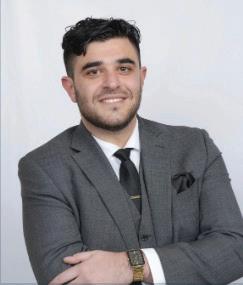
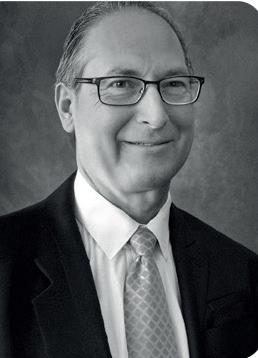
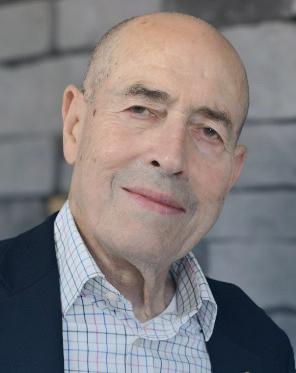
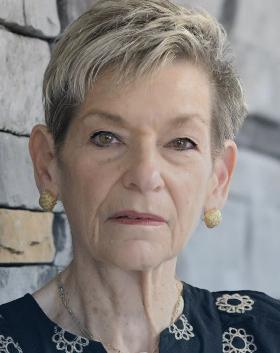
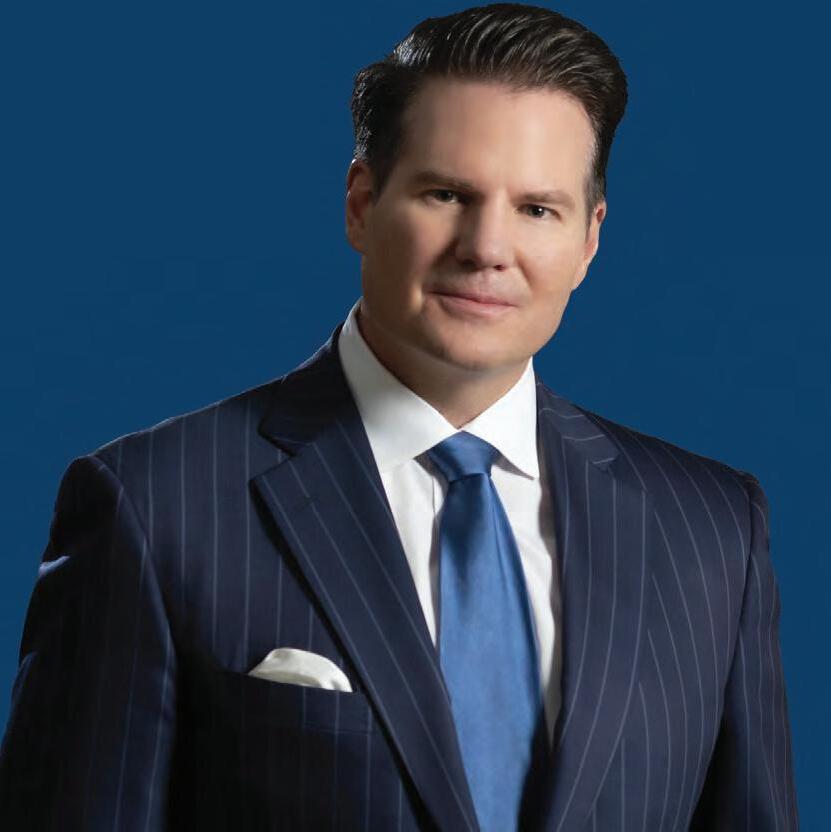
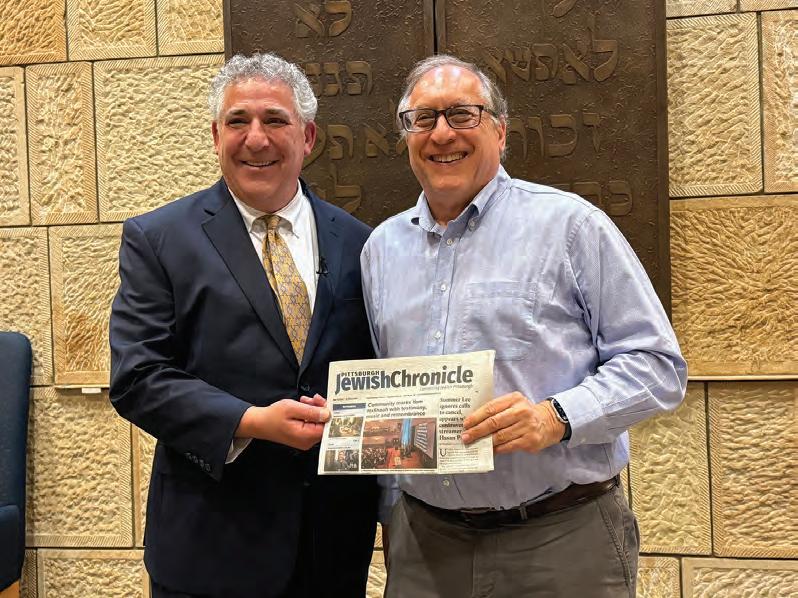
Street founder and President Jeremy Ben-Ami was in Pittsburgh last month participating in the Jewish Community Center of Greater Pittsburgh’s inaugural “Come Curious. Leave Wiser” series. He appeared alongside New York Times opinion columnist Bret Stephens.
While the JCC event was not open to the press, Ben-Ami recently spoke with the Chronicle about some of the topics raised during his conversation with Stephens, as well as other issues relevant to Pittsburgh’s Jewish community.
This interview was edited for length and clarity.
Rep. Summer Lee recently appeared with Hasan Piker at a campaign event in Michigan for Senate hopeful Abdul el Sayed. I’m wondering what your thoughts were about the event.
Well, I’ll just say that in the Senate race in Michigan, J Street is publicly endorsing Mallory McMorrow. We’re happy to make that clear. We are very excited by her candidacy, and think she really represents J Street’s values. So that’s who we’re supporting in that particular race. And you know, I think I’ve also said publicly … that it is so unhelpful
to have these polarizing media figures like Piker who are not helping our politics and not helping our country in coming together. The way in which he operates is not helpful. I don’t think that candidates need to avoid going on his show, but I do question when they appear on the campaign trail publicly with him. I think those are two different things.
J Street has endorsed Summer Lee in the past. That is not the case now. Why?
Well, it’s mutual. It’s our whole endorsement process. Every cycle is mutual. And you know this was a mutual parting of the ways, because we’re not as aligned as we might have thought.
Where is the line? Lee has said Israel is committing genocide, but so has McMorrow. I think you came out and said you believe that, as well. So, can you clarify?
The specific thing I said on the genocide issue is that I’m not going to argue against people who say it is. And you know, J Street as an organization doesn’t unendorse
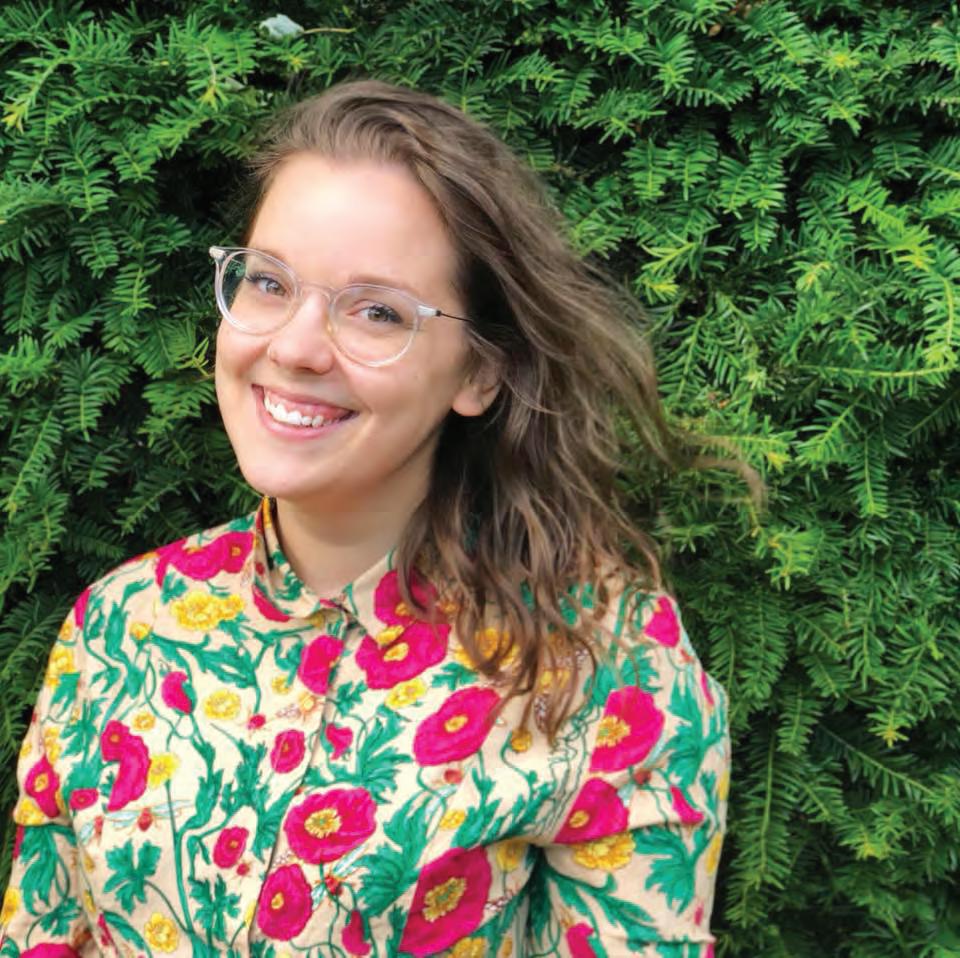
Rabbi Erika Purdy-Patrick may be new to the rabbinate, but she isn’t new to working with the Jewish community.
“Before rabbinical school, I was already a Jewish professional,” she said. “I worked at IKAR and the Jewish Emergent Network from 2016 to 2018, and then I worked at Temple Emanu-El in Dallas as a program director.”
She had rabbinic internships with congregations in California, Illinois and Mississippi, which provided the opportunity to lead Shabbat and holiday services, provide pastoral counseling, teach young and adult learners, and engage with interfaith families.
Purdy-Patrick will be ordained by the Hebrew Union College-Jewish Institute of Religion in Los Angeles on May 17, and then she will be making a cross-country trip to become the assistant rabbi at the new Beit Kulanu congregation.
The soon-to-be rabbi said she’s excited about working at the new congregation, formed when Rodef Shalom Congregation and Temple Sinai unified this year.
“I’ve seen people unifying in other parts of the country where it’s out of fear,” she said. “That’s not what’s happening here. I feel there’s a lot of joy and excitement, and really a lot of care. People are deeply invested in this process and are making it a really special place for everyone from both legacy institutions.”
A seventh-generation Texan, Purdy-Patrick said her family goes back to the 1700s in America and the 1800s in the Lone Star State. She and her husband, Mason Patrick, live in Los Angeles with their dog Quinn, while she finishes school.
Studying to be a rabbi has meant that she’s lived in several locales. She spent the first year
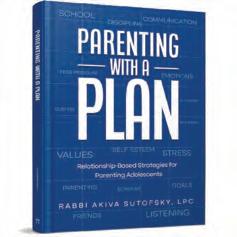
Rabbi Akiva Sutofsky’s
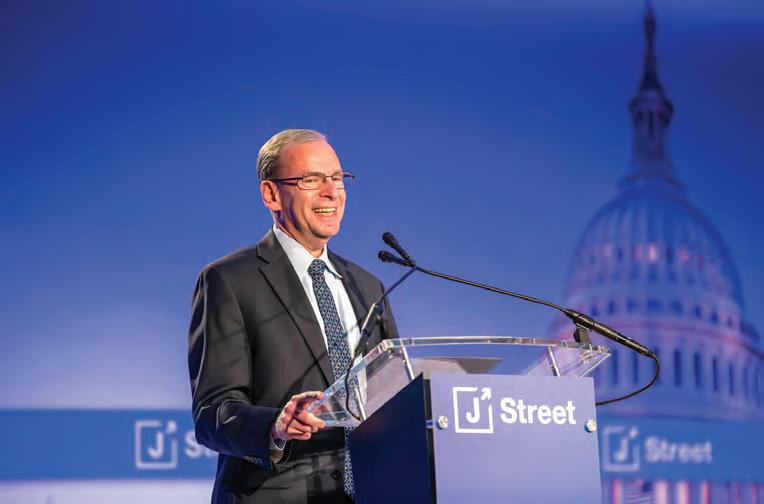
p J Street President Jeremy Ben-Ami at J Street’s 2022 national conference in Washington, D.C. Photo courtesy of J Street
Headlines
‘Parenting with a Plan’ delivers years of insight shaped in Pittsburgh
By Adam Reinherz | Senior Staff Writer
Achallenge of small-town Jewish living is creating separation between one’s personal and professional lives. For therapists, the difficulty is often even greater as clinical guidelines encourage space between practitioner and client.
“It makes sense,” Rabbi Akiva Sutofsky said. For the protection of all parties, work requires establishing clear boundaries, “but when you live in a smaller community, you’re kind of forced to reckon with the fact that there are overlapping roles.”
Sutofsky, a Squirrel Hill-based thera pist, school counselor at Hillel Academy of Pittsburgh, father and active commu nity member, has negotiated those roles for more than a decade. In doing so, he’s learned that mishmashed responsibilities may actu ally be a boon.
“It’s not simple,” he said. “But sometimes, in small communities it’s advantageous to have overlapping roles.”
There are times, he said, when “I know a kid, and I know their family as well, I know their siblings, and it adds to the help I can give. Now if someone is not into that, that’s fine for sure, obviously, and I get that. But I think it adds a lot in a small community.”
Sutofsky has spoken about his work with adolescents to groups in Pittsburgh and across the country. Days ago, those reflections appeared in print after Menucha Publications released “Parenting with a Plan.” Authored by the New York-born educator and Jewish professional, the 239-page text includes vignettes, exercises and suggestions solidified by more than 20 years of conversations with adolescents and their parents. The material showcases Sutofsky’s several hats and represents a life forged by his surroundings, he said. “My whole experience and my writing is based on this environment
What about “regular kids,” Sutofsky asked. “They’re in school, they have friends, and they also have struggles.”
Similar approaches should be taken with
— sometimes a situation isn’t fixable — but that relationship has to feel real to a kid, even if that child isn’t at-risk.”
Writing a book about parenting doesn’t mean he’s a perfect one, he said.
After the text was finished, Sutofsky said his daughter turned to him and said, “You wrote a book called ‘Parenting with a Plan.’ I want to write a book called ‘Parented without a Plan.’”
The son of educators, Sutofsky said his book offers numerous lessons, but one of the biggest is realizing the preciousness of connection.
“A lot of kids will tell me how something is hurting them or difficult for them and that they want to tell their parents, but because of how their parents may react or deal with the situation, they feel they can’t open up. They don’t feel safe,” he said. “I want parents to know that your kids want that relationship so badly. They want to be able to talk to you. They want to be able to apologize to you, they want to be able to feel safe with you. But sometimes when we deal with things in a default manner, we kind of shut that
He hopes people can use this, and other sections of the book, to “improve their parenting,” he said. “That’s my mission. I’ve been blessed to do this for 20 years, and I feel like I’ve learned a lot.”
Sutofsky’s book is dedicated to the memory of his late son, Yitzy Sutofsky, a “wunderkind who gave us endless nachas in his life, and also in his heartbreakingly beautiful acceptance of Hashem’s will.”
“Parenting with a Plan” offers decades of instruction and opportunities for improvement. Writing the book was a way to “give people something they could have in their house, to look at, to read through, to give to others,” Sutofsky said. “I just want to help.” PJC
Adam Reinherz can be reached at areinherz@pittsburghjewishchronicle.org.
5915 Beacon St., 5th Floor Pittsburgh, PA 15217
Main phone number: 412-687-1000
Subscriptions: 412-687-1000, ext. 2
Manuscripts, letters, documents and photographs sent to the Pittsburgh Jewish Chronicle become the property of this publication, which is not responsible for the return or loss of such items.
Carl Weigel Art/Production Coordinator Subscriptions subscriptions@pittsburghjewishchronicle.org 412-687-1000, ext. 2
Published every Friday by the Pittsburgh Jewish Publication and Education Foundation 5915 Beacon St., 5th Floor Pittsburgh, PA 15217
Phone: 412-687-1000
POSTMASTER: Send address change to PITTSBURGH JEWISH CHRONICLE, 5915 BEACON ST., 5TH FLOOR PITTSBURGH, PA 15217 (PERIODICAL RATE POSTAGE PAID AT PITTSBURGH, PA AND AT ADDITIONAL MAILING OFFICES) USPS 582-740
The Pittsburgh Jewish Chronicle does not endorse the goods or services advertised or covered in its pages and makes no representation to the kashrut of food products and services in said advertising or articles. The publisher is not liable for damages if, for any reason whatsoever, he fails to publish an advertisement or for any error in an advertisement. Acceptance of advertisers and of ad copy is subject to the publisher’s approval. The Pittsburgh Jewish Chronicle is not responsible if ads violate applicable laws and the advertiser will indemnify, hold harmless and defend the Pittsburgh Jewish Chronicle from all claims made by governmental agencies and consumers for any reason based on ads appearing in the Pittsburgh Jewish Chronicle
p
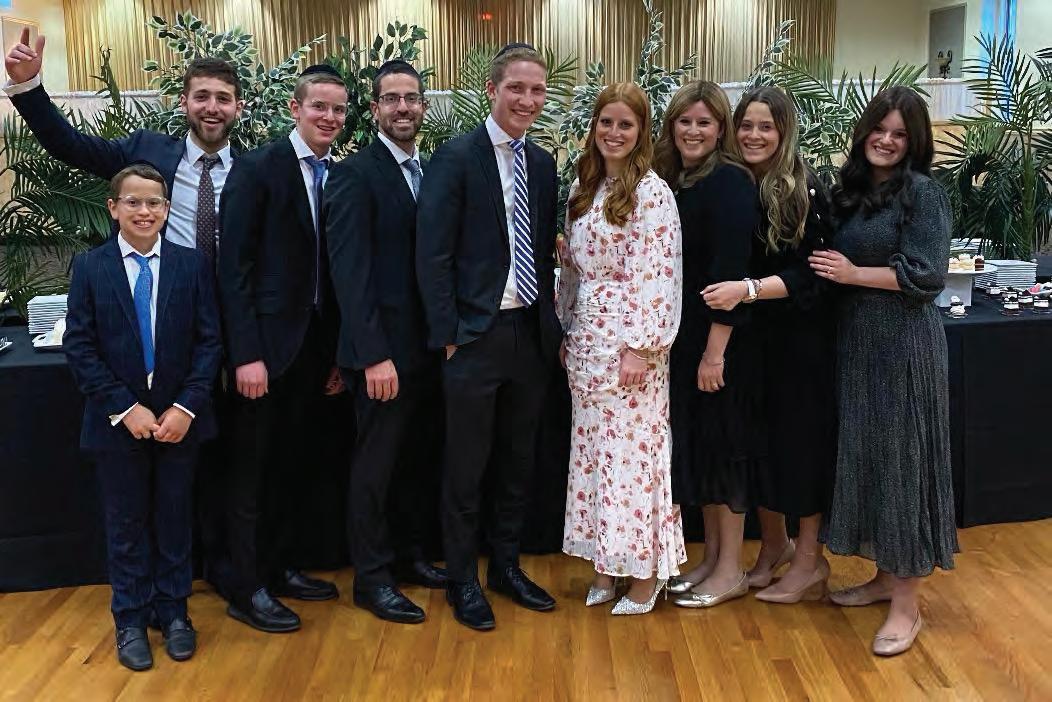
Photo courtesy of Rabbi Akiva Sutofsky
Headlines
Lights, camera, action: JFilm returns to the big screen
By Adam Reinherz | Senior Staff Writer
Apopular film festival is returning for its 33rd installment. JFilm, operated by Film Pittsburgh, will kick off April 30 at Row House Hollywood with a showing of “Ethan Bloom,” a coming-of-age tale involving a young man’s bar mitzvah preparation.
The festival, which runs through May 10, includes multiple opportunities for in-person and virtual involvement and celebration. For starters, explained Film Pittsburgh Executive Director Shanna Carrick, opening night attendees are invited to join a stylish post-film dessert reception.
The shtick, she said, is that everyone is encouraged to “wear their old bar and bat mitzvah gear — if you still have it.” Whether it’s monogrammed T-shirts, hoodies or yarmulkes, “bring that celebration into Row House for our opening night.”
Part of what’s driving this year’s program is a desire to foster “Jewish joy,” Carrick said. “We understand that we also can’t have the light without the dark — because not every film in our lineup is going to be joyful — but we’re hoping to really touch everyone through this multicultural lineup.”
The slate includes 40 films varying in length and subject — seven films are available for at-home viewing via the JFilm 2026 Virtual Festival. And new this year, Carrick said, is an audience-choice award for Best Short Film.
Named after Harvey Sloan, a former chief operating officer and senior vice president of the Jewish Federation of Greater Pittsburgh, the award recognizes a dedicated communal professional, Federation CEO Jeffrey Finkelstein said. “Harvey Sloan served many positions within the Jewish Federation of Greater Pittsburgh. Through them all, he was a champion of JFilm, believing that the community could engage more people in Jewish life through cultural arts.”
The award, Finkelstein added, is a “beautiful tribute to an individual who would be so proud of the staying power of this effort through Film Pittsburgh.”
Similar to prior festivals, JFilm will occur at multiple venues (Row House Hollywood in Dormont; McConomy Auditorium in Oakland; and The Lindsay Theater in Sewickley) and pair several movies with talkbacks and collaborations.
On May 3, a screening of “Disposable
Humanity” will be followed by a conversation between Randall Halle of the University of Pittsburgh and Daniel Singleton of the Holocaust Center of Pittsburgh. The Carnegie Mellon University-based program, which is co-presented with Achieva and the Holocaust Center of Pittsburgh, addresses the history of the Aktion T4 program, a state-sanctioned effort resulting in the murder of more than 300,000 disabled people between 1939 and 1941.
On May 2, also at CMU’s McConomy Auditorium, JFilm will welcome Grammynominated concert pianist Mona Golabek for a performance preceding “Hold on to your Music,” a film charting the story of Golabek’s mother, Lisa Jura, a child prodigy pianist, who was one of 10,000 unaccompanied Jewish children rescued from Nazi-occupied Europe and brought to England on the Kindertransport in 1938.
Golabek’s performance, which is presented by Classrooms Without Borders and Teen Screen, is one of several ways the festival creates personal and communal meaning, Carrick explained.
As a lead-up to this year’s event, Carrick learned a related mantra: “JFilm is the synagogue of the unaffiliated.”
That sentiment “really speaks to me,” she said. Being in a theater when the lights go
down, with community members seated nearby, creates a “really peaceful, almost virtual experience.”
Carrick, who took Film Pittsburgh’s helm last year, hopes festivalgoers use JFilm to spark substance within their own lives and support a program that’s served thousands of Pittsburghers for decades.
Sustaining this festival for 33 years is “really
a great testament to the support that we have,” she said. “I hope that under my leadership, people still want to come to JFilm and experience the films that we’re programming.” Tickets, and a schedule of films, are available at jfilm26.eventive.org. PJC
Adam Reinherz can be reached at areinherz@pittsburghjewishchronicle.org.
DEFENDING
MONDAY, MAY 11 AT 7PM
p Still from “Ethan Bloom”
Photo courtesy of Film Pittsburgh
Courtesy of Film Pittsburgh
“Bravery is not being fearless, it’s being scared and doing it anyway.”
face as CRC board chair Headlines
Jewish Federation of Greater Pittsburgh names a
familiar
By David Rullo | Senior Staff Writer
The Jewish Federation of Greater Pittsburgh has announced a new board chair for its Community Relations Council, and the name will be familiar to many: Rabbi Jamie Gibson.
Gibson is the rabbi emeritus at Temple Sinai, where he served for more than three decades before retiring in 2020.
The rabbi holds the Rabbi Jason Edelstein chair at St. Vincent College in Latrobe in Catholic-Jewish Dialogue, and teaches undergraduate and seminary courses on interfaith engagement. He serves as a commissioner on Pittsburgh’s Human Relations Commission, is a senior rabbinic fellow at the prestigious Shalom Hartman Institute in Jerusalem, and is also a rabbinic fellow at the Institute for Jewish Spirituality.
Gibson has a history of interfaith outreach, including leading a mission to Israel with the East Liberty Presbyterian Church and Temple Sinai in 2019.
The rabbi pointed to his work both in and out of the Jewish community as one of the reasons he was named board chair.
“I’m honored that Federation recognized the 38 years of interfaith and interracial work that I’ve done to try to get people to go beyond the limitations of their communities to work for common goals and values,” he said.
Gibson is the first rabbi to hold the position, but he doesn’t necessarily think the title alone affords him special merit.
“I stand in the shadows of the great lay leaders who have taken this position in the past,” he said. “The position of rabbi is only as good as the person who is advocating from that place. I’ve tried really hard to use my position to create new relations across all boundaries throughout the city of Pittsburgh and the region.”
The rabbi title, Gibson noted, can open doors for some people, but for others it may be an obstacle. In that case, he hopes the work he’s done will prove his sincerity.
“I’ve spent more than four decades trying to build relationships, so hopefully they can trust me, even if they don’t trust the word ‘rabbi,’” he said.
And while the safety of the Jewish community is paramount to Gibson, he said that the CRC can’t stop there. In fact, he said, the security of the community is a result “of our investment in relationships with others who feel connected to
Gibson said that while the direction and priorities of the CRC are coordinated with David Knoll, the Federation’s associate vice president of public affairs, he hopes to use his experience to help with its mission.
He also hopes to “find new, younger people who are willing to take up the mantle of asking ourselves the hard questions like, how do we promote well-being in our community, based on our understanding as Jews that we are committed to a larger community?”
Knoll, who is the CRC’s immediate past chair, said the council is focused on building relationships with other communities, while promoting understanding and responding to issues affecting the Jewish community. “People think that community relations is just about crisis response, but in actuality, it’s about long-term relationship building, and that’s across races and all neighborhoods of Pittsburgh,” Knoll said. “This approach strengthens not only the Jewish community, but the entire region. It’s not only about us; it’s about everybody.”
In Pittsburgh, he said, communities are interconnected, meaning that Jewish safety and prosperity is inseparable from the health of the broader “civic fabric.”
Gibson, he noted, comes to the CRC with more than four decades of work in this area and has shown a consistent commitment to dialogue, coalition building and standing with vulnerable communities.
“It’s those kinds of relationships that are essential in this moment when we’re so polarized,” Knoll said.
As for the rabbi title, Knoll said, it means nothing without doing the work required — something Gibson has shown time and again.
“He has a track record of doing this work and being successful,” Knoll said. “It’s more important now than ever before with what’s going on with world. He has a track record of bringing people together, and that’s what we need.”
For Gibson, the work of the CRC is vital and something that must continue, no matter what’s happening in the world.
“Even in times of great stress — and I think we’re in a time of great stress — opportunities arise for building relationships, for communities that we have not been so close to in the past, such as the Indian community and the Jain community, and other communities that we have not necessarily looked to as partners and allies. Maybe now that door can be opened, even in the midst of the crises we face,” Gibson said. PJC David Rullo can be reached at drullo@ pittsburghjewishchronicle.org.
— LOCAL —
p Rabbi Jamie Gibson
Photo by Dale Lazar
Headlines
Meat out of the pot
By Eric Lidji | Special to the Chronicle
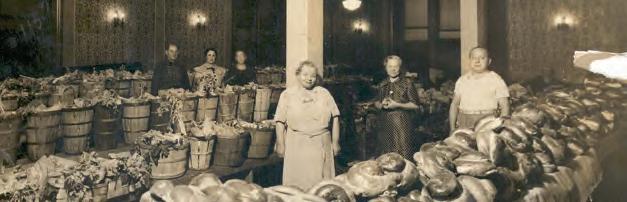
If you want to see abundance, there is an incredible photograph of the Lechem Aniyum Society. In a large room, likely the basement of the old Beth Jacob synagogue in the Hill District, six people stand between benches lined with newspaper. The benches are packed with overflowing bushels of leafy produce and piles of gorgeous challahs.
The photograph is dated Dec. 27, 1936. “Lechem Aniyum” means “Bread for the Poor.” It began in an informal capacity in the Hill District around 1917 and expanded its efforts in late 1920s and early 1930s, as the economy worsened. At its peak, it delivered some 200 boxes of kosher food every Thursday, for Shabbat. Each box contained “meat, bread, sugar, flour, rice or beans, tea or coffee, candles, potatoes, onions, carrots, cabbage, and sometimes fish,” as one member explained to a donor in late 1932. The motto of the organization was “He who saves one life, is as he saved the entire world.”
For nearly a century, Lechem Aniyum volunteers made pre-dawn visits to the produce yards in the Strip District, spent long hours packing and delivering boxes, and expended much energy pleading for funds.
Lechem Aniyum was still operating in some capacity into the 21st century, but its scope gradually declined decade by decade.
Bess Feingold took over in the mid-1960s, after the death of previous organizer Ben Edelstein. “We used to give it every week when
Ben was living,” she said in 1985, in a National Council of Jewish Women oral history. “Then we started every two weeks. Then we went to every three weeks. Now it’s once a month because finances are low. See: for soliciting, we have a file. We have the names that we send the letters to twice a year, to the same people. And they send in money. Well, they’re not sending it in as good as they used to. Because things are rough. And that’s why we go once a month now.”
By “rough,” Feingold likely meant the regional economy, which was slogging through the depths of deindustrialization. She also blamed overseas giving, feeling that many who gave to Israel couldn’t afford two causes. And she cited cultural changes in giving, recalling how people with pushkes once walked Murray Avenue seeking support.
There was a related cause, one that comes into clearer focus today. Through its Great Society legislation in the late 1960s, the Johnson administration made new money available for social needs. These funds were channeled through local governments and existing charitable
agencies. The United Jewish Federation created the Council on the Elderly to better coordinate local communal efforts around seeking funds. A string of elder care projects followed, including new housing projects and recreation programs.
The Older Americans Act of 1965 is sometimes overlooked among the many consequential pieces of legislation from that era. It created a national funding network for elder care. An expansion of the law in 1972 created the Senior Nutrition Program, including grants for meal deliveries to the elderly. Lutheran Service Society had launched its first MealsOn-Wheels program in the Pittsburgh area in 1968. With the Senior Nutrition Program, the Lutherans and other food delivery groups could seek federal aid.
On a visit to Israel in early 1971, Jewish Home for the Aged Executive Director Leon Kalson learned about the meal deliveries of Malben, a social service agency created by the American Jewish Joint Distribution Committee and the United Jewish Appeal and
May Nosh
later absorbed into the Israeli government. He wanted to bring the idea to Pittsburgh. Kosher Meals-On-Wheels began in spring 1972. Jewish Family & Children’s Service handled the intake of clients. The Jewish Home for the Aged prepared the meals in its kosher kitchen. B’nai B’rith Women oversaw volunteer delivery drivers. The program continues today as Mollie’s Meals, named for longtime volunteer Mollie Dugan.
At the same time, interfaith clergy from Squirrel Hill met with an adviser from Lutheran Service Society to create a neighborhood Meals-on-Wheels. The project stalled for three months until two Temple Sinai members made a surprise announcement: Minnie Litman had raised almost $1,000, and Jackie Unger said the Temple Sinai Sisterhood would lend its kitchen to the group. Squirrel Hill-Greenfield Meals-On-Wheels began deliveries on July 31, 1972, and later expanded to Shadyside, Point Breeze and Oakland.
Using funding from Allegheny County, the Council on the Elderly began offering hot, non-kosher lunches at Murray Towers in June 1977. A few months later in September, the Council on the Elderly helped organize daily kosher lunch service at the Jewish Community Center in Squirrel Hill, prepared by Prime Kosher. The cost of the kosher program surpassed the $1.10 per meal allowance offered by the county, and so the Federation provided supplemental funding through its Louis Engelberg Endowment Fund. The program allowed the Jewish Community Center to serve
Calendar
Submit calendar items on the Chronicle’s website, pittsburghjewishchronicle.org. Submissions also will be included in print. Events will run in the print edition beginning one month prior to the date as space allows. The deadline for submissions is Friday, noon.
q SUNDAYS, APRIL 26–JULY 26
Join Chabad of Squirrel Hill for its Men’s Tefillin Club. Services and tefillin are followed by a delicious breakfast and engaging discussions on current events. 8:30 a.m. 1700 Beechwood Blvd. chabadpgh.com
Join a lay-led online Parashah study group to discuss the weekly Torah portion. No Hebrew knowledge needed. The goal is to build community while deepening understanding of the text. 8:30 p.m. For more information, visit bethshalompgh.org/online-parashah.
q MONDAYS, APRIL 27–JULY 27
Join Congregation Beth Shalom for a weekly Talmud study. 9:15 a.m. For more information, visit bethshalompgh.org.
Join Temple Sinai for an evening of mahjong every Monday (except holidays). Whether you are just starting out or have years of experience, you are sure to enjoy the camaraderie and good times as you make new friends or cherish moments with long-term pals. All are welcome. Winners will be awarded Giant Eagle gift cards. All players should have their own mahjong cards. Contact Susan Cohen at susan_k_cohen@yahoo.com if you have questions. $5. templesinaipgh.org
q TUESDAYS, APRIL 28–JUNE 30
Join Beth El’s Rabbi Alex Greenbaum and his Bible/Talmud Adult Education class for a thoughtprovoking weekly session of Bible and Talmudic study. This program is available both in person and virtually. Call the office at 412-561-1168 to receive the Zoom link or to make an in-person reservation. 10:30 a.m. 1900 Cochran Road. bethelcong.org
q WEDNESDAY, APRIL 29
Join Temple Ohav Shalom for My Grown Up & Me, a joyful, hands-on experience for children ages 18 months to age 3 with their grown-up. Each class includes multi-sensory explorations, art experiences, a story and more. 9:30 a.m. $5 per family. 9:30 a.m. Temple Ohav Shalom, 8400 Thompson Run Road. forms.gle/ ZcAgWBLaKdsxSxuL9
q THURSDAY, APRIL 30–SUNDAY, MAY 10
Film Pittsburgh’s JFilm Festival, the largest Jewish cultural event in the region, will return to theaters April 30–May 10, 2026. For 33 years, JFilm has showcased Jewish-themed, independent feature films from around the globe. $15 and up. filmpittsburgh.org
q WEDNESDAY, MAY 6
Rabbi Suzanne Offit, a board-certified chaplain from JF&CS Boston, will discuss “Transforming the Jewish Communal Response to Suicide.” Maggie Feinstein, director of the 10.27 Healing
Partnership, will facilitate the talk. 7 p.m. Free. Friendship Circle, 1922 Murray Ave. RSVP to Kaitlin@ beaconpgh.org.
q THURSDAY, MAY 7
Join Congregation Beth Shalom for the Pittsburgh Jewish Teen Challah Braid, a meaningful evening of braiding challah bread and contributing to a service project that benefits Pittsburghers. This will be the inaugural event by the Pittsburgh Jewish Teen Council, a group of Jewish teen leaders with the goal of creating fun and engaging programs open to all Pittsburgh-area Jewish teens. Come ready to meet some new friends in the Jewish community. Dinner will be provided. Transportation may be available for the suburbs; please indicate when you register if you would require transportation help to get to Squirrel Hill. 6 p.m. Congregation Beth Shalom, 5915 Beacon Street. docs.google.com/forms/d/e/1FAIpQLSfOhJrxVBAs YtbrhoFC01ON2ke8UYnz262H2wu4M3-jDpw8ig/ viewform?usp=dialog
q MONDAY, MAY 11
Pittsburgh Jewish Chronicle Senior Staff Writer David Rullo discusses his career as a Jewish journalist and the challenges that have accompanied his journey. Go behind the headlines for a personal look at the stories that shaped his career, the obstacles he has overcome and the unwavering commitment to truth that defines his work. This is more than a lecture; it is an opportunity to stand in support of independent journalism and the voices that champion our community with resilience
and integrity. Presented by StandWithUs, the Pittsburgh Jewish Chronicle, Beth El Congregation of the South Hills and Temple Emanuel of South Hills. 7 p.m. Free. Temple Emanuel, 1250 Bower Hill Road. Registration required. courageandtruth. planningpod.com
q WEDNESDAY, MAY 13
Join Congregation Dor Hadash to learn more about A Land for All (ALFA), a joint Israeli-Palestinian political initiative that creates a practical framework for peace. Co-Directors May Pundak and Rula Hardal will discuss their model: two sovereign states connected through a confederation, grounded in equality, dignity, interdependence, security and safety. Learn how the model was cocreated by Israelis and Palestinians, providing an innovative framework for resolving this conflict, and how the plan is being received in the region and internationally. Free. 7 p.m. In person and on Zoom. Rodef Shalom Congregation, 4905 Fifth Ave.congregationdorhadash.shulcloud.com/ form/ALFA2026
q SATURDAY, MAY 16
Carry Shabbat’s peace into the new week with a meditation and sound bath led by Cantor Julie Newman and Anitra Birnbaum. Havdalah Healing includes songs, Jewish ritual, and the soothing vibrations of crystal singing bowls and other instruments create a space to rest, reflect and restore. Open to all. 5 p.m. 4905 Fifth Ave, Cohan Chapel. tiferetproject.org/event/ havdalah-healing PJC
Author Jason Diamond to join Chronicle Book Club
The Pittsburgh Jewish Chronicle invites you to join the Chronicle Book Club for its May 31 discussion of “Kaplan’s Plot,” by Jason Diamond. The author will join us for the meeting.
From Amazon.com: “Elijah Mendes was hoping for a more triumphant return to Chicago. His mother, Eve, is dying of cancer, his business flamed out, and he has nowhere else to go. So he returns to Chicago feeling listless and shattered, worried about how he’s going to help his mother despite their chilly relationship. He finds some inspiration when he discovers that their family owns a Jewish cemetery and that a man he’s never heard of, his great-uncle Solomon Kaplan, is buried in a plot there. With a new sense of purpose and an excuse to talk more deeply with his mother, Elijah begins pursuing a family mystery of extraordinary proportions.
“Elijah discovers his grandfather Yitz, Eve’s father, was a powerful gangster in the 1920s. She was ashamed and never spoke about him to Elijah. As secrets unravel, the past and present become intertwined, and Yitz’s story forces Elijah and Eve to bond in ways they never have before and begin to accept each other, not as who they wish they were but as they both are.”
How it works
We will meet on Zoom on Sunday, May 31, at 1 p.m.
What to do
Buy: “Kaplan’s Plot.” It is available from online retailers, including Amazon and Barnes & Noble, in local Barnes & Noble stores and through the Carnegie Library system.
Email: Contact us at drullo@pittsburghjewishchronicle.org, and write “Chronicle Book Club” in the subject line. We will send you a Zoom link for the discussion meeting.
Happy reading! PJC
Your hosts
Toby Tabachnick, Chronicle editor
David Rullo, Chronicle senior staff writer
Headlines
In major shift, all but 7 Senate Democrats vote to block weapons sales to Israel
A record number of Senate Democrats voted last week to block the sales of certain weapons to Israel, marking a sharp rise in the number of senators backing the move, JTA reported.
It was the third time in as many years that the Senate voted on resolutions to limit weapons sales to Israel, introduced and promoted by the Vermont independent and progressive leader Bernie Sanders.
In 2024, 19 Democrats voted for at least one of the “Block the Bombs” resolutions on the table at the time. Last year, 24 senators endorsed the move.
Now, 40 senators — all but seven Democrats — voted for at least one of the two resolutions they faced on April 15, more than doubling the support in two years. The new backers include several Jewish moderates who describe themselves as pro-Israel as well as multiple senators who are seen as likely 2028 presidential candidates.
All three measures fell short in the Republican-led Senate. Still, the vote on the weapons sales resolution in particular offered a powerful demonstration of shifting sentiment in the party about Israel. A survey released this week found that 80% of Democratic voters hold an unfavorable view of Israel, up sharply over the last three years. The findings correlate with a growing number of polls showing rising opposition to Israel in both parties, with a steeper rise among Democrats.
The Democrats who voted to oppose the resolutions were: Senate Minority Leader Chuck Schumer (D-NY) and Sens. Kirsten Gillibrand (D-NY), Jacky Rosen (D-NV), Catherine Cortez Masto (D-NV), Richard Blumenthal (D-CT), John Fetterman (D-PA) and Chris Coons (D-DE). He was barred from holding Shabbat services in his house. Could the Supreme Court take up his case?
Orthodox Jewish groups urged the Supreme Court to take up the case of an Orthodox Jewish man ordered by officials in University Heights, Ohio, to stop hosting prayer services in his home without a permit, JTA reported.
The amicus brief, which was filed earlier this month by the National Jewish Advocacy Center alongside the Orthodox Union and the National Council of Young Israel, comes years after Daniel Grand, a resident of the suburb of Cleveland, invited a group of Jewish men to his home for Shabbat services starting in January 2021.
At the time, University Heights, citing zoning laws, issued a cease-and-desist order blocking Grand from using his home for prayer.
Grand initially applied for a special use permit to use his home as “a place of religious assembly” in 2021, but later withdrew the application, saying he did not “wish to operate a house of worship as is defined under the zoning ordinance.”
According to the NJAC, the former mayor of University Heights, Michael Dylan Brennan, then encouraged Grand’s “neighbors to watch his home and report any sign of Jewish worship to the authorities.”
Today in Israeli History
April 27, 1955 — Uzi is unveiled during parade
find more details.
April 24, 1950 — Jordan annexes West Bank, East Jerusalem
A joint session of the newly elected Jordanian Parliament, featuring equal Jordanian and Palestinian representation, formally annexes the areas west of the Jordan River that the country captured during the 1948-49 war.
April 25, 1982 — Israel completes Sinai’s return to Egypt
Two days after razing the last Israeli settlement in Sinai, Israel executes the final handover of the peninsula to Egypt under the terms of their 1979 peace treaty despite domestic political resistance.
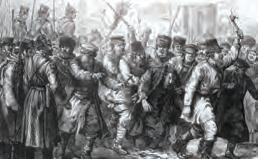
April 26, 1881 — Pogrom hits Kyiv
Anti-Jewish violence across the Russian Empire since the assassination of Czar Alexander II in March sweeps into Kyiv. Rioters loot and destroy Jewish shops and homes.
In September 2022, Grand filed a lawsuit against the city and Brennan, alleging that the former mayor was motivated by “animus against Orthodox Jews.” He maintained that the actions blocking him from conducting services in his home were part of a “systematic campaign” to prevent the Orthodox community from growing in University Heights, according to the Cleveland Jewish News.
In October 2024, the U.S. District Court of Northern Ohio ruled in favor of University Heights, and the Ohio 6th District Court of Appeals later upheld the ruling in November 2025.
A petition for Supreme Court review is currently pending, and a decision on whether it will be heard is expected in the coming months, according to NJAC.
JD Vance heckled over Middle East policy at Turning Point USA event
Vice President JD Vance was interrupted by antiwar hecklers during a Turning Point USA event last week, underscoring growing backlash over U.S. policy in the Middle East among young Republicans, JTA reported.
“Jesus Christ does not support genocide,” one person shouted out during the event at the University of Georgia. Shortly after, a voice yelled out, “You’re killing children! You’re bombing children!”
“I agree,” Vance responded. “Jesus Christ certainly does not support genocide, whoever yelled that out from the dark.”
But he said the audience should be thankful for the Trump administration’s negotiation of a ceasefire between Israel and Hamas.
“You know who’s the person who got a peace agreement in Gaza? Donald J. Trump,” Vance said. “So if you want to complain
about what happened in Gaza, why don’t you complain about Joe Biden and the last administration? We’re the administration that solved that problem.”
Australian court strikes down protest restrictions enacted after Bondi Beach attack
The highest court in the Australian state of New South Wales has struck down protest restrictions enacted following the deadly terrorist attack at Bondi Beach, JNS reported.
The Court of Appeal ruled last week that expanded police powers allowing authorities to block public demonstrations in parts of Sydney were unconstitutional, finding that they burdened the implied freedom of political communication under Australia’s constitution, according to the Australian Broadcasting Corporation.
The legislation was introduced during an emergency parliamentary session on Dec. 24, 2025, 10 days after an antisemitic mass shooting at a Chanukah gathering in Bondi Beach in which 15 people were murdered and dozens wounded.
Under the law, police were empowered to declare zones in which public assemblies could not be authorized, effectively preventing protests in large parts of Sydney for nearly two months. The restrictions were renewed multiple times before expiring on Feb. 17.
Chief Justice Andrew Bell, Justice Julie Ward and Justice Stephen Free ruled in a joint judgment that the provisions discouraged protest activity regardless of purpose, rendering them constitutionally invalid. PJC
— Compiled by Toby Tabachnick
The Uzi submachine gun makes its public debut as an IDF weapon during a Yom HaAtzmaut parade. The Uzi was first used in the field two months earlier during a paratrooper raid on Egyptian forces in Gaza.
April 28, 1918 — AJC weakly endorses Balfour Declaration
Six months after the Balfour Declaration, the British government’s backing of a Jewish homeland in Palestine, the American Jewish Committee offers tepid support, reflecting ambivalence among U.S. Jews.
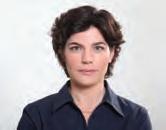
April 29, 1976 — Politician Tamar Zandberg is born Progressive politician Tamar Zandberg is born in Ramat Gan. An urban environmentalist and social democrat k nown for women’s advocacy, she is first elected to the Knesset in 2013 and becomes the Meretz leader in 2018.
Authorities warned Kyiv’s Jews on April 25 to stay inside.
April 30, 2003 — U.S., partners issue map to peace
The Quartet of the United States, Russia, the European Union and the United Nations issues its Roadmap for Peace, a framework for talks to achieve a permanent two-state Israeli-Palestinian resolution. PJC
Items are provided by the Center for Israel Education (israeled.org), where you can
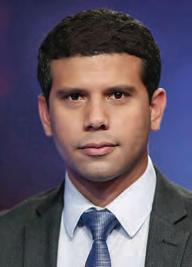
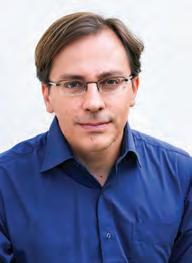
Tal Shalev is the a senior reporter for CNN’s Jerusalem bureau and former Chief Political Correspondent and Analyst for Walla! News. She covers Israel’s prime minister, government, and parliament as well as the country’s foreign and diplomatic affairs.
Mohammad Majadli is Israel’s leading Arab affairs political analyst. He frequently provides insights and analysis on Israel’s leading Channel 12 News, and is host to radio shows in Arabic and Hebrew.
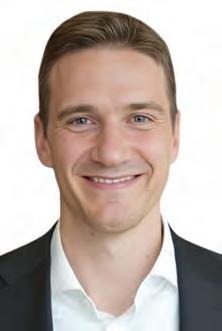
Nadav Asher Eyal is a winner of the Sokolov Award—Israel’s equivalent of the Pulitzer Prize. He writes for Yediot Ahronot and Ynet, Israel’s most widely circulated newspaper and news website respectively. He is a senior research scholar with the Institute of Global Politics and teaches at Columbia University.
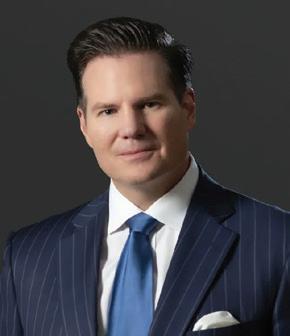
Klitsner is a fellow at the Jewish People Policy Institute (JPPI) who has deep connections to our community. He and his family lived in Squirrel Hill but returned to Israel after October 7 so he could rejoin his IDF unit. Klitsner, who has served as Diaspora Affairs Advisor to Prime Minister Naftali Bennett, and worked for AIPAC in Israel, is passionate about educating and building community around the state of Israel and its relationship with the United States.
Understanding Israeli Politics
Monday, May 18 • 7 pm
JCC Squirrel Hill • Katz Theater $36/person
For more info: Fara Marcus • fmarcus@jccpgh.org
Gain insight into the complexities of Israel’s political landscape in this timely conversation featuring leading journalists Tal Shalev and Mohammad Majadli, along with noted journalist and commentator Nadav Eyal. From coalition dynamics and government leadership to Arab affairs and global influences, this panel will unpack the forces shaping Israeli politics today.
Israel’s Geopolitical Outlook
Rescheduled from April New Date: Tuesday, June 16
Yisrael Klitsner, Series Moderator
Legal Affairs
DUI: Know your rights
As criminal defense attorneys, one of the most common questions we hear — from clients, friends and even family — is whether someone should refuse a chemical blood test during a DUI arrest. It is usually framed in absolutes: “I’ve heard you should always refuse,” or “Isn’t it my right to refuse?” The short answer to both is more nuanced than people expect. You do have the right to refuse chemical testing. But whether you should exercise that right is a very different question. Under Pennsylvania law, by choosing to
drive you have also agreed to what is known as implied consent. That means you can refuse a chemical test, but that refusal carries immediate civil consequences, separate and apart from any criminal case. Specifically, the Pennsylvania Department of Transportation has the authority to impose a license suspension — typically one year — for a refusal. That suspension proceeds through a civil, administrative process, entirely independent of what happens in the criminal DUI case.
This distinction between civil and criminal proceedings is critical, and often misunderstood. A DUI arrest triggers two parallel tracks. The first is the criminal prosecution, where the commonwealth must prove beyond a reasonable doubt that you were driving under the influence. The second is the civil license suspension imposed by PennDOT, which is governed by a lower burden of proof and focuses narrowly on a handful of elements: whether the officer had reasonable grounds to believe you were driving under the influence; whether you were placed under arrest; whether you were asked to submit to chemical testing; whether you
Last year, Michael Marks and Marks Elder Law P.C. joined Abernethy and Hagerman LLC of Allison Park, continuing a strong commitment to elder law while serving both longtime and new clients.
Mazel tov! Then, Abernethy and Hagerman joined forces with Slade Miller and his firm to form ABERNETHY, HAGERMAN, AND MILLER P.C. Afterwards, the firm moved to 3960 Wm. Flinn Hwy (Route 8), north of the Zoo and the Highland Park Bridge, 10 minutes closer to Pittsburgh.
The firm has 8 lawyers and practices.
• Elder Law
• Estate Planning
• Estate Administration
• Elder Law Strategic Long Term Care Asset Protection • Business and Succession Planning
were properly warned of the consequences of refusal; and whether you in fact refused. These cases are typically litigated in a summary appeal setting in the Court of Common Pleas, and the scope of the hearing is far more limited than a criminal trial.
What makes this dual system particularly challenging is that success in one forum does not guarantee success in the other. A driver could be acquitted of DUI in the criminal case — because the commonwealth cannot meet its burden beyond a reasonable doubt — and still lose their license in the civil proceeding, where the standard is merely a preponderance of the evidence. In practical terms, that means a judge only needs to find it more likely than not that the refusal elements were met to sustain the suspension. This lower burden, combined with the narrow issues involved, makes civil license suspension appeals difficult to win.
For that reason, the advice I give most often is that refusing chemical testing is usually not in a person’s best interest — particularly for first- or second-time offenders. A refusal can transform what might otherwise lead to no suspension or
a short license suspension — no suspension for lowest BAC tier, 30 or 60 days — into a mandatory one-year suspension, often followed by an additional period depending on the grading of the DUI offense. In contrast, if a driver submits to testing and their blood alcohol content falls within the lowest tier, they may avoid a suspension altogether through participation in Pennsylvania’s Accelerated Rehabilitative Disposition program.
The ARD program is a pretrial diversionary program designed for first-time, non-violent offenders. It allows eligible individuals to avoid a criminal conviction, complete a period of supervision, and ultimately have the charge dismissed and expunged. From a reputational standpoint, this can be extremely valuable. Many clients — particularly professionals, students, or individuals with security clearances — are concerned not just with penalties, but with how a DUI will appear on background checks. ARD offers a path to minimize that long-term impact.
Guest Columnists
Phillip DiLucente and Anthony Donofrio
Legal Affairs
Consult an attorney when considering a slander or libel lawsuit
By Shannon Mortland | Cleveland Jewish News
It may be difficult to hear someone say mean or inappropriate things about another, or even spread rumors and lies. The question is whether those words qualify as libel or slander, and if they could be successfully challenged in court.
Whether the words are spoken (slander) or written (libel), the words must be more than an opinion, which is generally protected under the First Amendment, according to Colin R. Ray, principal at McCarthy, Lebit, Crystal & Liffman Co., LPA, in Cleveland.
A person cannot sue for slander or libel just because they do not like something someone said about them, he said.
“In practice, there is a triangle of things we look for,” Ray said.
The words would need to have caused harm; there must be a chance for economic damages; and that money must be collectible, he said.
“We turn down a very large percentage of
defamation cases,” Ray said. “It’s very common for people to lie. It’s less common to find big economic damages. It’s usually economic damages and collectability that kick the legs out from under the stool.”
He recommended calling a lawyer if one thinks they have been a victim of libel or slander to determine if a case could stand up in court.
“A perfect defamation case, for example, is in the neighborhood of being falsely accused of a heinous crime in a provably false way that results in you losing your job,” Ray added. “For a ‘regular person,’ it has to have really, really hurt you economically and it has to be collectible. You can’t get blood out of a stone.”
Social media has made slander and libel
cases a little easier to prove because it provides evidence that the words were written or said on video, he said. It can be easy to prove a false statement, he added.
However, social media providers enjoy a high degree of immunity under federal law, Ray said, so they cannot be sued easily for libel or slander.
The rules are different for public officials and public figures. He said it is very difficult to defame anybody who is holding public office or is a household name because people talking about them is part of the job that they chose.
“Citizens need to be able to speak out against their public officials,” Ray said.
If a person is considering suing for slander or libel, it is best to seek the advice of an attorney who is trained in that type of law.
People must also consider how much of their lives they want to go public, he said.
“Cases can get nasty during litigation,” Ray said. PJC
Shannon Mortland is a freelance journalist. This story first appeared in the Cleveland Jewish News and at cjn.org. Reprinted with permission.
Photo by seb_ra via iStock
Headlines
Ben-Ami:
Continued from page 1
not a standard for us, but it’s not a word that I use. I don’t use that word. I’m very uncomfortable with it, and J Street doesn’t proactively call it that either, but we’re not unendorsing people who do use that, who are on our list. So that was not the issue. This is a new [election] cycle and Summer Lee did not ask for our endorsement. We didn’t offer our endorsement, and it was a mutual parting.
In the last week, J Street has come out and said the United States should end its financial support for arm sales for Israel, correct?
Yes. When the MOU (the Memorandum of Understanding, signed in 2016 and ending in 2028, in which the U.S. pledged $38 billion to Israel) ends, then there’s got to be a new arrangement. And our view is that it’s a good thing for Israel to take this issue out of the political maelstrom. It’s a wealthy enough and prosperous enough country, it can afford to buy the weapons that it needs, and that specifically includes Iron Dome. I mean, I want to make
Purdy-Patrick:
Continued from page 1
of rabbinic study in Israel and then served as a student rabbi in Temecula, California, before spending time in the same position with congregations in Billings, Montana, as well as two more in southern California.
Beit Kulanu is her first stop in the Northeast.
“When people took me around the city, I saw that Pittsburgh was a place where I could be myself and grow as a person and in my rabbinate,” she said. “I instantly connected with the ethos of the city, the ambience. It feels comfortable. People are genuinely and authentically themselves. They’re hard workers with a good sense of humor. It already feels like home in a really beautiful way.”
Purdy-Patrick said that before she was a rabbi her “bread and butter” was working with young adults who didn’t “have a seat at the traditional table of Judaism.”
“I think a lot of my young adults didn’t feel that they had agency in creating and building the Judaism they wanted and were excited about, so that really motivates me,” she said.
She said that she also “loves” leading services and text study, which she approaches from a “conversational point of view.”
“I don’t believe I have all the answers, but I can find most of them,” she said.
that clear. We really value Iron Dome and think that it’s important, and it was jointly developed, and it’s just that Israel can now pay for it.
So you have no problem with the United States selling weapons to Israel?
No.
I think the statement I saw was that the United States should treat Israel the same way it does other allies. But that seems to beg the question: Doesn’t the U.S. fight many wars for its allies? Are you afraid of the consequences of how it might turn out if the U.S. treats Israel like it does all of its other allies?
I think that there’s a range of very important relationships that the U.S. has with industrialized and developed nations all over the world, whether it’s Japan or South Korea or Australia or NATO, and Israel’s relationship with the U.S. should be the same as those relationships. It should be a very solid security relationship — military cooperation, intelligence sharing, sales,
technology development. That’s how other countries operate with the U.S., and that’s the way Israel should operate with the U.S.
J Street has pivoted from talking about a two-state solution between Israel and the Palestinians to a 23-state solution. Given the events of the last few years in the Middle East, do you believe that’s a viable option?
I hope so. It’s the most important and significant positive development that has happened in the course of Israel’s history. And one hopes that this government of Israel hasn’t pursued a path that makes it hard to get back to. That opportunity is so important. So, you know, there’s an election coming up in Israel in October, and hopefully these wars are winding down. And my hope, as somebody who cares deeply about Israel, is that there is going to be an opportunity with a new government of Israel to pursue full regional normalization.
And how does the 23-state solution that J Street is promoting differ from the Abraham Accords?
states is the state of Palestine. The process of completing regional normalization has to include the development and creation of a successful Palestinian state. And that’s a condition on the side of the Arab countries at this point, as well. You know that they are not going to proceed any further with normalization until the fundamental conflict here, which is between Israelis and Palestinians, has a pathway to being resolved.
Do you believe the 23-state solution will end the existential threat to Israel?
I think the real existential threat to Israel as a Jewish and democratic state, and Ehud Barack said this about 20 years ago, is the failure to figure out what to do about the Palestinians. You know, if you continue to have more Palestinians living between the river and the sea than Jews, and you don’t give them rights, you are really putting the whole project of Israel at existential risk. So, that is the existential risk, and the only way to solve that is for Palestinians to have a state of their own. PJC
The key difference is that one of the 23
David Rullo can be reached at drullo@ pittsburghjewishchronicle.org.
rabbinical school. IKAR is as cutting edge as you get, so to have someone who worked in two of the most impressive synagogues in the country, it means we’re getting somebody who’s got a great background and great potential,” he said.
Beit Kulanu acting President Bill Battistone, too, said he is excited to have Purdy-Patrick join the congregation.
“We knew we needed the right person to come and support our community in this role and Rabbi Purdy-Patrick is going to be a terrific fit for our us,” he said. “Our congregants will really be excited to learn and work with her.”
Purdy-Patrick will begin serving the congregation on July 1. Until then she’s getting to know the city.
“It’s like a little city, big town,” she said. “It’s quirky. I love the fact that it has over 90 neighborhoods.”
The rabbi already has some passions that align with the city and its residents.
Purdy-Patrick said it’s a 360-degree view of the rabbinate, where she’s interested in all parts of the job. that I’m really excited to do. I’m going to look forward to doing it every day.”
DUI:
Continued from page 9
However, a refusal can complicate eligibility for ARD in meaningful ways. ARD will still typically be offered to those who refuse; however, a refusal triggers a mandatory one-year license suspension that cannot be avoided through the program. By contrast, a non-refusal DUI in the lowest tier may result in no suspension or a significantly shorter one, making ARD far more beneficial in those cases.
There is also a persistent misconception
Beit Kulanu Senior Rabbi Daniel Fellman said that Purdy-Patrick is “smart, capable, has a really fascinating background and history and is the exact kind of partner that we’ve been looking for to help create Beit Kulanu. I’m excited to welcome her and get to work with her.”
that refusing testing somehow deprives the commonwealth of evidence or makes the case easier to defend. In reality, the opposite is often true. A refusal does not prevent prosecution, and it may be introduced in the criminal case as evidence of consciousness of guilt.
Combined with officer observations — such as driving behavior, field sobriety testing (if performed), and physical signs of impairment — the commonwealth can still build a viable case without a chemical test result.
None of this is to say that the right to refuse is meaningless — it is an important legal protection.
There are circumstances, albeit limited,
Fellman said he’s “profoundly grateful” to the members of the congregation who served on the search committee, noting they did “hours
He said that Purdy-Patrick’s work history belies the fact that she’s only graduating from HUC this year.
“She worked at Temple Emanu-El in Dallas, which is really one of the nation’s best Reform synagogues, and at IKAR with Rabbi Sharon Brous in Los Angeles before she even went to
where refusal may be strategically considered. But those situations are the exception, not the rule, and they require a careful, fact-specific analysis that is rarely possible in the moment of an arrest on the side of the road. Finally, regardless of whether you choose to submit to testing or refuse, how you conduct yourself during the encounter matters. You can assert your rights calmly and clearly without being confrontational. Remaining respectful and composed not only reduces the risk of escalation, but also avoids creating additional evidence that could later be used against you in either the civil or criminal proceedings.
In the end, the decision to refuse chemical
“I’m a huge hockey person,” she said, noting that she was able to join Temple Sinai’s Brotherhood for a game when she came to town for an interview.
“They picked me up at the airport and we drove straight to PPG. It was the perfect welcome for me,” she said.
Hockey aside, Purdy-Patrick said she’s eager to begin her time as rabbi.
“I’m really excited about serving Beit Kulanu,” she said. “This is a unique opportunity.” PJC
David Rullo can be reached at drullo@ pittsburghjewishchronicle.org.
testing is not simply about exercising a right — it is about understanding the full scope of the consequences that follow. The interplay between civil penalties, criminal prosecution, and long-term reputational considerations makes this one of the most important decisions a driver can make in a DUI investigation. In any case, find a lawyer who will sit down with you for a free consultation to discuss your rights. PJC
Phillip DiLucente is managing partner of Phillip DiLucente & Associates, LLC. Anthony Donofrio is an attorney at Phillip DiLucente & Associates, LLC.
p Rabbi Erika Purdy-Patrick is anxious to begin serving as assistant rabbi at Beit Kulanu. Photo courtesy of Erika Purdy-Patrick
Drawing the line: At a time of rising antisemitism, leadership demands moral clarity
Guest Columnist
At a time when antisemitism is rising across the country, in our schools, our communities, on campuses and online, the moral clarity of our elected officials is being tested.
The question is simple: Will they draw clear lines against antisemitism, or will they cross them?
That is why it is so concerning that Rep. Summer Lee and Michigan Senate candidate Abdul El-Sayed recently chose to campaign alongside online personality Hasan Piker, whose rhetoric has repeatedly been called out as antisemitic, dehumanizing and harmful.
Moreover, their collaboration is not a one-off event. Lee appeared alongside Piker at campaign rallies in Michigan, including events at Michigan State University and the University of Michigan, where the two shared a stage with El-Sayed. Additionally, El-Sayed actively campaigned with Piker across multiple college events, drawing both attention and criticism for the association. Other political figures also have engaged with Piker through interviews or appearances on his platform, including candidates like Tom Steyer, reflecting a broader trend of elected officials and public figures leveraging Piker’s large online audience despite ongoing controversy and concern surrounding his rhetoric.
This is not an isolated incident or a matter of partisanship. It reflects a broader pattern
of whom elected officials choose to associate with, and whether antisemitism is treated as unacceptable, tolerated, or even elevated, when it is politically convenient.
Piker’s record goes far beyond legitimate political critique. He has used dehumanizing and antisemitic language about Jews and Zionists, including referring to Zionists as Nazis and calling Orthodox Jews “inbred.” Following the horrific Oct. 7 attacks by Hamas, Piker stated that “it doesn’t matter if rape occurred” and downplayed documented atrocities.
“unapologetic antisemite,” and Michigan Democratic leader Mallory McMorrow has cautioned that elevating voices like his risks “fan[ning] the flames and stoke[ing] division.”
For Jewish Americans, this is not abstract. It is about safety, dignity and belonging, values that rhetoric like this undermines. Elected officials should not contribute to a climate where such language can escalate into real-world harm.
This is especially relevant considering recent claims that condemning Piker’s rhetoric
Leadership is not just about what one says. It is about what one does and the ideology one chooses to legitimize.
This rhetoric reflects a pattern many Jewish Americans recognize: language that erases, distorts and undermines Jewish identity. Choosing to campaign alongside someone with that record risks normalizing and excusing antisemitism. Antisemitism must not be tolerated or excused by anyone, especially those elected to represent all their constituents, including Jewish and Zionist communities.
When elected officials identify rhetoric like this as antisemitic, it should not be controversial to say, “This is a line that must not be crossed.” Rep. Ritchie Torres has warned of the “amplification of antisemitism” tied to Piker’s content, pointing to a broader and deeply troubling trend. Rep. Brad Schneider has described him as an
constitutes censorship of criticism of Israel, reflects anti-Arab bias, or demonstrates a lack of empathy toward Lebanese and Muslim communities.
To be clear, death is always tragic, and every community impacted by the conflict deserves compassion and support. Empathy is not a finite resource, nor is it contingent on ignoring harmful rhetoric. Condemning antisemitism does not come at the expense of empathy for others; it is part of ensuring that all communities are treated with dignity. At the s ame time, rhetoric that goes beyond political criticism to dehumanize and target a community cannot be dismissed as legitimate discourse. Regardless of intent, language like that used by Piker can be
perceived as reinforcing bias against members of the Jewish and Zionist communities.
The fact that elected officials are now being asked to choose between condemning antisemitism and maintaining political alliances, and that some fail to distinguish between the two, shows we are at a political crossroads.
Elected officials are not passive participants in public discourse. They are amplifiers. The people they stand with, and the voices they elevate, help define what is acceptable. At a time of rising antisemitism, those choices carry real consequences.
Leadership is not just about what one says. It is about what one does and the ideology one chooses to legitimize.
That is why this moment cannot end with concern alone.
Contact elected officials and demand accountability. Urge them to publicly condemn antisemitic rhetoric, to call on colleagues to distance themselves from it, and to make clear there is no place for legitimizing hate within public leadership.
This is what this moment requires.
Because silence is not neutral.
And ambiguity is not leadership.
If elected officials will not draw the line themselves, then constituents must demand that they do.
Call your representative. Speak out. Make it clear that antisemitism, no matter how it is framed, no matter who it comes from, has no place in our politics.
Public leadership drawing the line must never be optional when it comes to promoting hate. It is the minimum we should expect. PJC
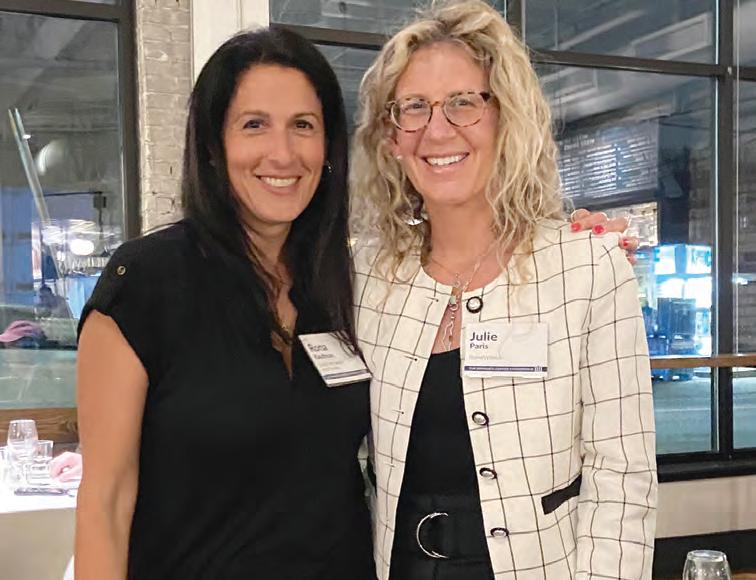
Julie Paris is the Mid-Atlantic regional director of StandWithUs.
Two memorial days, two nations: One shared responsibility
Guest Columnist
Hadara Ishak
The siren sounds, and an entire country stops.
Cars freeze in the middle of the highway. Drivers step out. Conversations end mid-sentence. For two minutes, Israel stands still.
Thousands of miles away, in the United States, flags are placed carefully beside rows of white headstones. Families gather. Names are read. A different kind of silence settles in. Two nations. Two memorial days. Two ways to remember, each reflecting what is valued most.
How a country honors its fallen shows what it values. It reveals how it understands sacrifice, community and responsibility.
In the United States, Memorial Day comes at the end of May, marking the unofficial beginning of summer. There are parades,
ceremonies at veterans’ cemeteries, and moments of reflection woven into long weekends spent with family and friends. For many Americans, it is a day of gratitude, a pause to honor those who gave their lives in service to the country.
A siren sounds in the evening and again in the morning. Across highways, offices and homes, life pauses. For two minutes, the nation stands in silence, together.
What makes Yom Hazikaron uniquely profound is that it honors not only fallen
Remembrance is not measured in minutes of silence. It is measured in what we carry forward after the silence ends.
For military families, the day is not symbolic. It is personal. The loss does not end when the ceremonies do. The empty seat remains. The name is spoken so it is not forgotten.
In Israel, Yom Hazikaron — Israel’s Memorial Day — is different. There is no long weekend. No celebratory undertone. The country stops.
soldiers of the Israel Defense Forces, but also victims of terror. The remembrance is not confined to the battlefield. It includes civilians, children, parents and grandparents whose lives were taken in acts of violence.
In Israel, the line between soldier and civilian is thin. The grief is not distant. It is shared.
Military service is mandatory. The army
is part of society. Sons, daughters, brothers, sisters and parents serve. When a life is lost, the loss is felt by the nation.
Behind every name is a family that doesn’t move on when the siren ends. A mother who still sets the table the same way. A sibling who measures time in “before” and “after.” A child who grows up knowing someone not through memory, but through stories.
Yom Hazikaron is not only about history. It is about immediacy. Names are read aloud. Stories are told across television and radio. Families gather at gravesites. The country carries the weight together.
Then, in one of the most striking transitions in the world, Yom Hazikaron ends and Yom Ha’atzmaut, Israel’s Independence Day, begins.
This shift is intentional.
The joy of sovereignty cannot be separated from the cost of sustaining it. Celebration and sacrifice are both real. They exist together.
Please see Ishak, page 13
Julie Paris
Chronicle poll results: Elected officials appearing with those linked to antisemitism
Last week, the Chronicle asked its readers in an online poll the following question:
“How important is it for elected officials to avoid public appearances with individuals linked to antisemitism?” Of the 287 people who responded, 92% said “very important”; 4% said “somewhat important”; and 4% said “not important.” Comments were submitted by 80 people. A few follow.
Elected officials need to distance themselves from anyone who spews hate.
You can tell a lot about a person by the company they keep.
Whether it is Summer Lee or Donald Trump, it is critical to avoid associations and/or appearances with antisemites. I will never forget or forgive the president’s welcome to the White House for dinner of virulent antisemite Nick Fuentes, and his later statement about Fuentes: “He gets me.”
Public appearances are a statement of support. The Jewish community has been
Ishak:
Continued from page 12
In America, Memorial Day reflects a nation whose wars have often been fought far from home. In Israel, Yom Hazikaron reflects a reality where the front line has often been just outside the front door. Both days are sacred. Both are rooted in gratitude. The experience is different because the
for elected o cials to avoid public appearances with
far too passive in the fight against antisemitism. It is very disturbing to hear some of these officials wish us a hollow “Happy Passover,” then go out to support or endorse obvious antisemites.
realities are different.
Still, there is something shared. Both days remind us that freedom is not abstract. It’s carried by families. It is defended by sons and daughters. It is sustained by sacrifice that does not end with the ceremony.
For military families in both nations, remembrance is not limited to a date. It is daily. It is lived. It is carried forward in quiet ways.
For the rest of us, these memorial days are more than moments to reflect; they are
Northern Israel’s 'quiet' has always been temporary
In “When home feels far away: The ghost towns of my heart” (April 17), Dorit Sasson expresses the pain she feels for the residents of northern Israel, who have been under almost constant bombardment from Lebanon since Oct. 7, 2023. She recounts the peaceful time of years past, when she and her family lived in the north.
She might have lived there during a lull in the fighting, but the region has been under attack since before the founding of the state of Israel. In 1982 I spent a few weeks living on Kibbutz Adamit. The kibbutz is located directly opposite the border fence with Lebanon. Kibbutz children proudly showed me their collection of katyusha rocket fragments gathered from the kibbutz fields after an attack. These children knew war before they were able to walk.
Birds of a feather flock together is the perfect way to describe why elected officials have to be extremely careful, as every association sends a strong message to the masses.
Normalizing antisemitism happened in the early 20th century and we all saw the result of that. It must be condemned by every elected official, and those who would promote it should be ostracized.
I will never support a candidate or incumbent who fails to publicly repudiate an antisemitic Jew-hater. No middle ground. And that most certainly includes progressive “anti-Zionists.”
Summer Lee does not seem willing to work with her own constituents and colleagues who condemn antisemitism, and she chooses to promote Hasan Piker, who is known for his repeated, hateful online rhetoric and comments against Jews.
The question is not well-defined. What counts as antisemitism? I do not think that
invitations. Invitations to pause and to pay attention. To teach our children that liberty and sovereignty are not guaranteed. They are secured by ordinary people who made extraordinary sacrifices.
Remembrance is not measured in minutes of silence. It is measured in what we carry forward after the silence ends.
Two memorial days, two nations. One shared responsibility: to honor the fallen and the families who carry their
criticism of the current government of Israel is antisemitic, or that favoring a one-state solution is antisemitic. I think it is important for elected officials to avoid public appearances with individuals who make hateful comments about Jews.
If an elected official has no choice but to share a stage with an avowed or widely known antisemite, the very least they should do is find an opportunity to call that person out on their bigotry in order to put some optical distance between them.
Appearing with individuals linked to antisemitism is a tacit endorsement of their antisemitic views and a statement of shared antisemitic views. When it comes time for re-election, you need to decide if you want to vote accordingly. PJC
— Compiled by Toby Tabachnick
Chronicle weekly poll question: Do you plan to attend any events related to the NFL Draft in Pittsburgh? Go to pittsburgh jewishchronicle.org to respond. PJC
legacy, to speak their names, to tell their stories and to live remembrance every day, not just once a year. How we embrace memorial days as a shared obligation defines how we value service, responsibility and each other. This shared remembrance is what defines us.
PJC
Hadara Ishak is the president and chief operating officer of Jewish Future Promise. This article was originally published by JNS.
In 1989 I spent a couple of days as a guest on Kibbutz Manara, another kibbutz right on the Lebanese border. In the kibbutz dining room, a kibbutz member approached our table and greeted us warmly. In the 1940s, as a young kibbutz member, she repelled attacks from Lebanon. Still alive at 100 years of age, she and other members had to evacuate Manara, which has been almost completely destroyed by rocket fire. That kibbutz member is Rachel Rabin, the sister of Yitzhak Rabin.
So, don’t be fooled by the short stretches of peace and quiet in northern Israel. It never lasts long.
Mitchell Nyer Pittsburgh
We invite you to submit letters for publication. Letters must include name, address and daytime phone number; addresses and
Life & Culture
Two tasty side dishes
By Miriam Szokovski | Chabad.org
Toasty roasted cauliflower
Ingredients:
1 large cauliflower
1 teaspoon turmeric
1 teaspoon garlic powder
1 teaspoon smoked paprika
1 teaspoon sumac
½ teaspoon chili powder
½ teaspoon salt
4 tablespoons olive oil
To serve:
Hummus
Tahini paste (mixed with water and lemon juice)
Mint leaves (or other herbs like parsley or cilantro, if you prefer)
Pistachios (salted, roasted)
Flaked salt (such as Maldon)
Directions:
Cut the cauliflower into florets. Wash and check for bugs (or use frozen cauliflower). Mix the spices and oil in a small bowl. Pour over the cauliflower and toss until well coated.
Spread the cauliflower out over a baking
sheet. For best results, use glass or metal (even an oven-safe skillet will work); try to avoid disposable foil pans — they do not cook evenly and won’t get you crispy bottoms.
Bake uncovered at 425 F for 20 minutes.
To serve: Smear a generous amount of hummus across the bottom of the platter. Scatter cauliflower on top. Drizzle with prepared tahini sauce (mix paste with water and lemon juice). Garnish with roughly chopped herbs and pistachios, and a sprinkled of flaked sea salt. Serve warm or at room temperature.
Arbes: Traditional Ashkenazi chickpeas
Arbes is essentially a chickpea snack — chickpeas cooked until extra tender, seasoned liberally with salt and black pepper, and is a regular Shabbat staple in many households. You can definitely add other spices, like cumin, sumac, cinnamon, but the traditional Ashkenazi dish includes just salt and pepper (and sometimes a pinch of sugar).
Ingredients:
1 cup raw chickpeas (garbanzo beans)
Salt Pepper
Directions:
Soak chickpeas overnight. Make sure to cover with plenty of water and leave space for them to grow.
Drain and transfer to a pot and fill with water.
Cook for 3-4 hours, until soft and creamy, but still holding their shape.
Drain the chickpeas and spread them out on a clean kitchen towel. Season heavily with salt and black pepper. Roll the towel around the chickpeas like a candy wrapper, hold both ends and roll the chickpeas around inside. This helps the seasoning distribute evenly while the towel absorbs any remaining cooking water on the chickpeas.
Transfer to a bowl and serve at room temperature. PJC
Miriam Szokovski is a writer, editor and member of the Chabad.org editorial team. She also shares her cooking and baking on Chabad.org/food.
p Arbes
Photo courtesy of Chabad.org
p Toasty roasted cauliflower
Photo courtesy of Chabad.org
Adeena Sussman
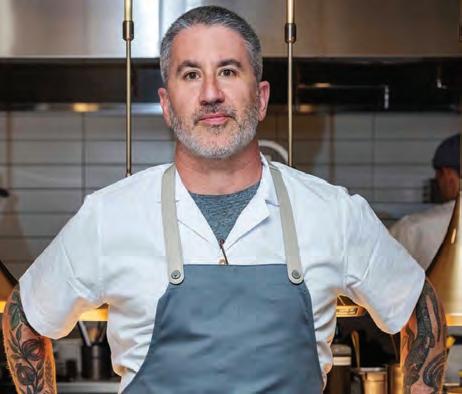
Acclaimed cookbook author Michael Solomonov Award–winning chef and restaurateur
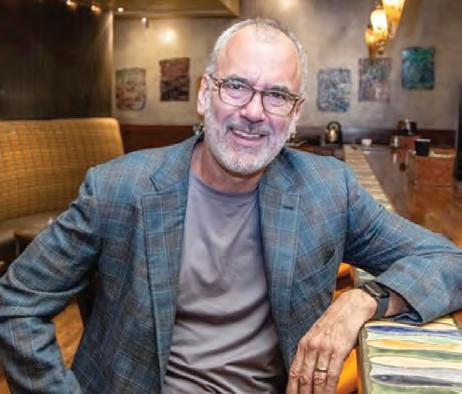
Special guest VIP Reception: Bill Fuller, President of big Burrito Restaurant Group
Monday, June 8
5:30-7 pm: VIP Reception
7-8:30 pm: Interview, Cooking Demo and Book Signing JCC of Greater Pittsburgh • Squirrel Hill
$54 Admission includes signed copy of Sussman’s newest cookbook, Zariz
$118 VIP intimate meet & greet featuring a special cocktail and light bites created by Adeena Sussman and Bill Fuller
Join us for an unforgettable evening with acclaimed cookbook author Adeena Sussman joined by special guest Michael Solomonov, James Beard Award–winning chef and restaurateur, returning to his hometown of Pittsburgh for this one-of-a-kind conversation. Together, they’ll explore the vibrant world of Israeli-inspired cuisine,
Tickets and more information: fmarcus@jccpgh.org or call 412-697-3535
sharing stories of life, culture and cooking in Israel, and how food can bring comfort, connection, and joy even in challenging times.
Experience it all live as Adeena takes the stage for a cooking demo, bringing the bold, fresh flavors of her newest book, Zariz: 100 Easy, Breezy, Tel Aviv-y Recipes, to life.
Adeena Sussman
Michael Solomonov
Bill Fuller
p Comedian Zach Margolin is coming to Pittsburgh.
Photo by Valerii Sentiakov @valera.raw
Life & Culture
‘Paintable Pittsburgh’ to showcase Jewish artist Henry Koerner’s industrial paintings
By Emma Riva | Special to the Chronicle
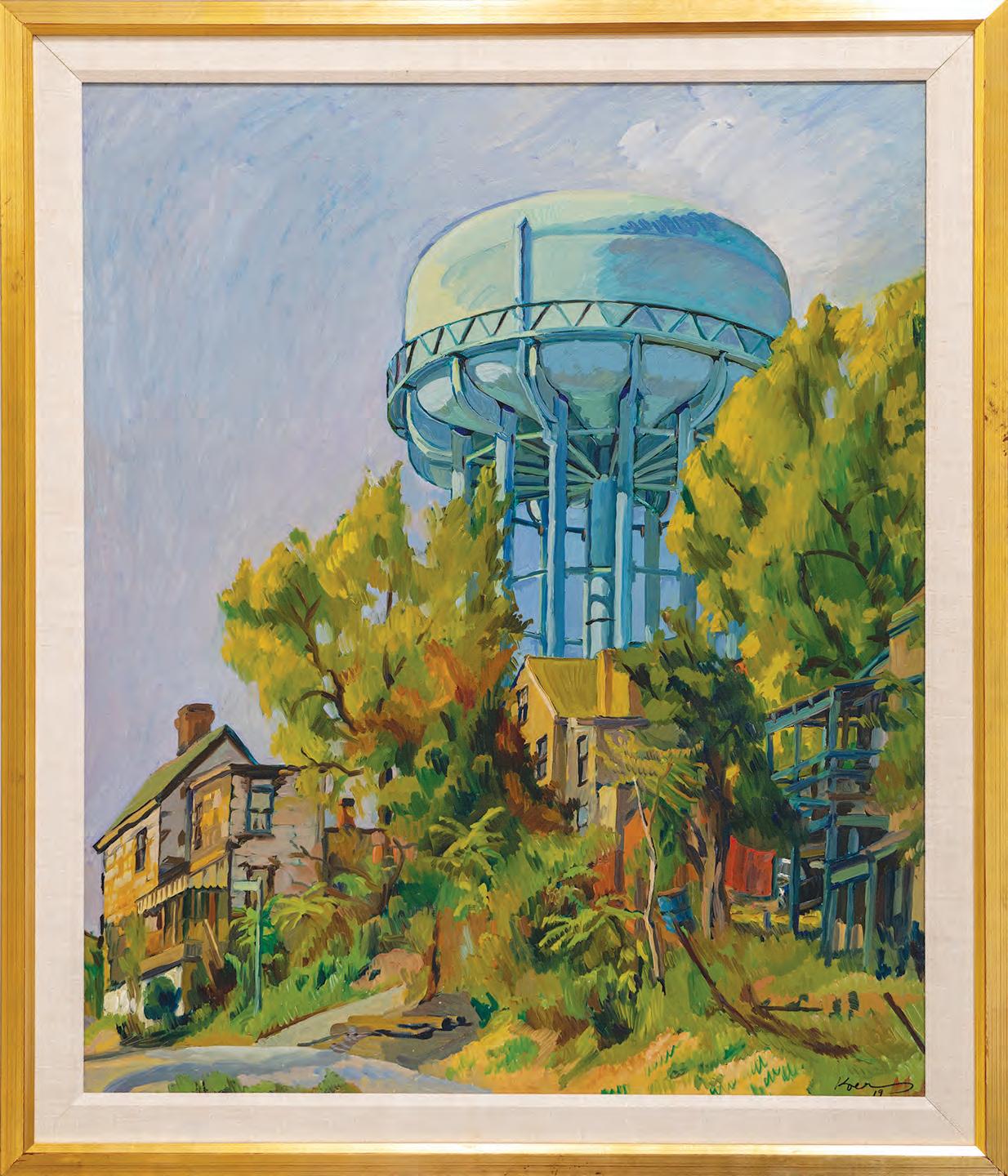
Too often, new owners move into a quirky old house and strip it of its character. Not so for Caroline Boyce. When she moved into a stately old home in Squirrel Hill, she soon learned it belonged to renowned Austrian-Jewish painter Henry Koerner. Boyce, whose background is in historic preservation, has made her residence into a historic landmark and become one of the stewards of Koerner’s legacy, including as a co-curator of “Paintable Pittsburgh,” a new exhibition of Koerner’s work opening April 24 at Rivers of Steel.
“I have a great deal of respect for the work Rivers of Steel is doing and how they are integrating art programming into their work,” B oyce said. “Paintable Pittsburgh” focuses on Koerner’s paintings of the “grittier” side of the city. He found beauty and intrigue in Pittsburgh’s industrial structures and the omnipresent visuals of labor here. In fact, it reminded him of home.
“He traveled the country and settled in Pittsburgh because it reminded him of Vienna,” Boyce said. “It had this juxtaposition of beautiful churches and buildings and this gritty side as well.” Koerner’s home, designed by architect Richard Righter, has echoes of the baroque in it, too — Juliet balconies, statuettes, and floor-toceiling windows so Koener could work on his paintings in the best light.
But even when he wasn’t in his own house, Koerner felt he belonged in Pittsburgh. Boyce recalls asking Joseph Koerner, Henry’s son, whether his father considered himself Austrian or whether Pittsburgh became his identity. “No doubt about it, he said his father found Pittsburgh to be home,” Boyce said.
Koerner is best known for his Time maga zine covers, book covers and portraiture, so “Paintable Pittsburgh” shows a different side of his work. Most of the industrial paintings are from earlier in his career, as he reckoned with the pain of fleeing Austria and the murder of his family by Nazis. Though the paintings show his affection for his new home, they also show the artist figuring out how to piece together his understanding of the world in the wake of tragedy.
Part of what makes Koerner’s work so inter esting is that it holds its own at a time when most artwork grappling with World War II did so in abstraction. Koerner showed that an artist could still demonstrate subtlety and emotional complexity through figurative painting.
Joseph Koerner is the director of the Art History and Architecture program at Harvard University and holds his father’s archives, so some of the paintings come from that supply. However, the work in “Paintable Pittsburgh” also comes from private collec tions, including Boyce’s own, and from the Westmoreland Museum of American Art. Savvy viewers will notice, though, that there’s one piece that isn’t Koerner’s in
associated with public monies.
assistant Kathleen Zimbicki created an image of him at work in Brownsville painting a bridge.
“Koerner didn’t drive, so people remember him riding his bicycle around Pittsburgh with his artwork. Kathleen would drive him if he had to go any distance,” Boyce recalled. “She had taken him out to Brownsville to paint that bridge — he didn’t really like to be painted, so she stood behind him and painted him.”
Zimbicki, who is now 92, had a gallery called Studio Z on East Carson Street where Koerner was a frequent guest. Boyce worked nearby at one point and knows she must have met Koerner himself in the ’80s without knowing who he was — or that she would be living in his house four decades later.
Though Boyce grew up in Squirrel Hill and recognized the quirky old house, she gained a new appreciation for it by connecting with the Koerner family and learning more about Koerner’s work.
“He painted Pittsburgh as he saw it. Pittsburgh was his home. He painted Pittsburgh
that is really special,” Boyce said. “He was prolific. He painted and was out every day painting some scenes in Pittsburgh. We titled the exhibit ‘Paintable Pittsburgh’ because that’s how he felt about it.”
Rivers of Steel is staging “Paintable Pittsburgh” at the Bost Building in Homestead, near many of the sites Koerner painted. Boyce hopes the exhibition gives Koerner’s work more exposure and helps more viewers understand what a rich art history Pittsburgh has. She plans to write a book about Koerner and to host more programming at the house in the future.
“Henry was such a fixture in Pittsburgh,” Boyce said. “It feels like it’s time for the next generation to be introduced, and those who know of him to be reintroduced.”
“Paintable Pittsburgh” is on view at the Bost Building, 623 E. Eighth Ave., April 24 through July 31, with an opening reception on April 24 from 6 to 8 p.m. PJC
Emma Riva is a freelance writer living in Pittsburgh.
Continued from page 5
anyone over 60 in Allegheny County, which meant kosher residents of other wards could come for meals.
Throughout these changes, Lechem Aniyum remained independent. Feingold said the organization didn’t want to mess with the paperwork
Publicly funded programs greatly expanded the number of Jewish elderly being fed in our community. The public funding structure also put more distance between giver and receiver. Your tax dollars meander through federal, state and local treasuries, and trickle into agency budgets, before landing on the plate of an elderly person.
In moments like the present, it can be easy
to forget that the hope of public money is not to replace personal giving — it is, after all, still your tax dollars — but to make the most out of private money. When public funding is tightened, we remain responsible.
Feingold felt obligated to feed the hungry because her family had turned to Lechem Aniyum when she was a child. In those rough years, she recalled a moment when a man came to the door one night, asking for food. “[My
mother] took the meat out of the pot and gave him. We didn’t have enough for ourselves, but she made sure he had some. She said, ‘As long as they ask for food, you’re not allowed to turn them down.’” PJC
Eric Lidji is the director of the Rauh Jewish Archives at the Heinz History Center and can be reached at rjarchives@heinzhistorycenter. org or 412-454-6406.
— ART —
p “New Diamond Market,” 1969, oil on canvas Image courtesy of Caroline Boyce
p “The Water Tower,” c. 1967, oil on canvas Image courtesy of Joseph Koerner
Birth Announcements
With much love, Leslie and Lester Frischman of Greensboro, North Carolina, formally of Pittsburgh, are delighted to announce the birth of their granddaughter, Gefen Sunny Frischman, on Sept. 26, 2025. Proud parents are Max Frischman and Inbar Shuv-Ami. Proud big sister is Leni Frischman. The growing family resides in Carmel, Indiana. We share the joy of Gefen’s birth with her grandparents Orly and Gadi Shuv-Ami of Netanya, Israel, and with great-grandmother Nechama Mazor of Netanya, and the late Yusuf Mazor, the late Sara and Aharon Shuv-Ami, the late Pauline and Leo Kroll, and the late Rosalyn and Milton Frischman.
Leslie and Lester Frischman of Greensboro, North Carolina, formally of Pittsburgh, joyfully and lovingly announce the birth of their granddaughter, Drew Paige Titlebaum, on March 23, 2026. Drew and big sister, Cory, are the daughters of Charlotte and Jake Titlebaum of Greensboro, North Carolina. Drew is the granddaughter of Michelle and David Titlebaum of Greensboro, North Carolina, and is the great-granddaughter of Phyllis Titlebaum of Naples, Florida, and the late Allan Titlebaum, Robert Weissman of Stuart, Florida, and the late Carol Weissman, the late Cynthia Weissman, the late Pauline and Leo Kroll and the late Rosalyn and Milton Frischman. Drew is named in memory of her great-grandmothers, Cynthia Weissman and Pauline Kroll. PJC
Torah
Holiness in every choice: Lessons from Parshat Kedoshim
Parshat Kedoshim, part of this week’s Torah reading, contains the most essential mission statement of the Torah and the Jewish people: “Kedoshim tihyu, ki kadosh ani Adonai Eloheikhem. You shall be holy, because I, your God, am holy” (Vayikra / Leviticus 19:2). Our job here on Earth is to be holy creatures, and we must remind ourselves constantly that we have work to do every moment of every day, and that is the work of kedushah, holiness.
be understood as a finite list of behavioral mores, but rather a set of principles which, when stitched together, suggest a much larger guide book for how to live and be holy people. This is an idea described in our tradition as, “lifnim mishurat hadin” — going beyond the letter of the law. To be holy is to see our behavior as never isolated from the people around us. Every choice we make will affect others, from the food we eat and the clothes we wear, to using our turn signals properly, to shoveling the snow off the sidewalks in front of our homes. “ Lo ta’amod al dam re’ekha / Do not stand by the blood of your fellow” (19:16) is an elastic imperative: We are not only obligated to pursue a livelihood which does not
What does being holy require of us?
According to Chapter 19 of Vayikra, which scholars refer to as the Holiness Code, it is a series of essential mitzvot: honoring your parents, leaving some of your harvest for the needy, not swindling your neighbor and so forth. These mitzvot are the foundation of society built on trust and respect. And then there are mitzvot which seem to be in the same vein, but perhaps a little too specific: paying a day laborer on the same day, neither insulting the deaf nor placing a physical obstruction before a blind person, not hating your neighbor in your heart. It seems that it might be just as important, for example, to pay an employee a fair wage as it is to pay it in a timely manner, so why is only the latter mentioned here? And Rashi suggests that placing a stumbling block before the blind is not literally about one who cannot see, but rather about a person who is “blind” in a variety of possible ways, expanding the applicability of this mitzvah.
The Holiness Code is therefore not to
hurt others, but also we must help people in physical distress when possible.
Furthermore, Maimonides tells us in the “Guide for the Perplexed” (3:54) that actually the end goal is not the performance of the mitzvot themselves, but ultimately those actions which are lifnim mishurat hadin , in the spirit of the law. That is, the mitzvot are designed to train us to live within those behavioral guardrails; honoring our parents teaches us to honor all people; not stealing teaches us to respect everybody else’s property in every way. The mitzvot then become not distinct items to check off, but rather a system designed to create a world in which we are all committed to each other’s kedushah, to ensure that every action we take elevates the holiness between people. And would that not be a better world than the one we have? PJC
Rabbi Seth Adelson is senior rabbi at Congregation Beth Shalom. This column is a service of the Greater Pittsburgh Jewish Clergy Association.
On Monday, April 20, 2026, Marshall Cherner passed away at home surrounded by his family. Marshall is survived by his loving wife, Lynn, of 34 years and three beloved children, Alexis (Carlos), Laura (Mollie) and Marshall. He is preceded in death by his parents, Ralph and Esther Cherner, and his siblings Natalie and Bruce. Marshall taught advanced mathematics in the Pittsburgh Public Schools for 31 years, was a department chair and an advocate for giving students the best education possible, evidenced by the many students who kept in touch after graduation. He also taught for a short time at Mt. Lebanon High School and CCAC. He was himself a lifelong learner, an avid follower of politics and a news junkie. He was the heart of his family and leaves them with countless wonderful memories of time spent on vacations and just being together. His greatest enjoyment came from spending time with his wife and children. He had the most wonderful sense of humor. He will be sadly missed by all who knew him. Services were private. Please make all memorial contributions to either the Muscular Dystrophy Association, American Cancer Society, or the American Heart Association. Professional services trusted to D’Alessandro Funeral Home & Crematory, Ltd.,
Melvin Hackman, on Saturday, April 18, 2026. Beloved husband of the late Barbara Hackman. Loving father of Jennifer (Raymond) Dunlap, James (Melissa) Hackman and Jill (Gregg Schulemson) Wilson. Cherished brother of the late Judy Engel. Devoted grandfather of Justin Hackman, Samantha Hackman, Bryan (Carlie) Wilson and Eric Wilson. Mel was born and raised in Pittsburgh to the late Samuel and Jeannette Hackman. Mel was a baker who approached his craft with precision and dedication and loved to bake for people. He was the bakery manager for The Gazebo, Fox Chapel Giant Eagle, and later a bakery technician for Rich’s Food Service. Mel was also a lifelong and dedicated fan of the Pittsburgh Pirates. The biggest priority in Mel’s life was his family. His passion and devotion for his children and grandchildren was the very core of Mel as a person. Services were held at Ralph Schugar Chapel, Inc. Interment Temple Sinai Memorial Park. In lieu of flowers, jfcspgh.org/pantryappeal) or
Nathan M. Young, on Wednesday, April 15, 2026. Born on May 15, 1937, in Pittsburgh to Anna and Joseph Young of blessed memory. Nathan was predeceased by his beloved wife of over 50 years, Elinor Young. He was a treasured father to Mindy (Nicolas) and Jeff (Laura). Cherished Zaide to Jake and Isabella Secunda, and Adeline and Evan Young. Dedicated brother to the late Leonard (Susan) Young, with whom he ran Young Insurance Agency for nearly 50 years. Nathan loved music, sports, reading, and above all, his family. His humor, wisdom and love will never be forgotten. Services were held at Ralph Schugar Chapel, Inc. Interment Homewood Cemetery. In lieu of flowers, contributions may be made to UPMC Hillman Cancer Center. schugar.com PJC
Contact the Development department at 412-586-2690 or development@jaapgh.org for more information. THIS WEEK’S YAHRZEITS —
Sunday April 26: Stanley Friedlander, Isadore Gerber, Ida Ginsburg, Penina Reva Goldberg, John J Klein, Sam Klein, Samuel Mermelstein, Hymen Oawster, Rachel Racusin, Marcus Schwartz, Fay L Sidler, Rita W Silverman, Milton Snyder, Esther Supowitz
Monday April 27: Isaac Adler, Paul Beerman, Pearle G Conn, Fred Gluck, Michael N Lutsky, Rose Mannison, Max Neustein, Fannie Rapoport, Morris Rosenberg, Dr Herman A Saron, Albert Schwartz, Florence Simon, George Simon, Philip Sugerman, Jay Weinthal, Norman Leonard Weissman
Tuesday April 28: Hilda Parker Cohen, William Feivelson, Max Geltner, Lena Gescheidt, Samuel Goldblum, M .D , Albert Lawrence Jacobs, Grace Lebovitz, Samuel H Miller, Elva Hendel Perrin, Mary Evelovitz Rom, Andrea Sue Ruben Serber, Florence Specter, Morris Stern, Cecelia Tepper, Louis E Walk, Bernard Weiss, Maurice Wilner
Wednesday April 29: Jeanne Gettleman Cooper, Isadore Cousin, Louis Diamond, Regina Friedman, Bennie M Granowitz, Sam Greenberger, Isadore Gutkind, Solis Horwitz, Hyman Kramer, Anna Finestone Levit, Renee Malt Hart, Samuel Monheim, Louise Plotkin, Leonard J Singer, Jewel Weiss
Thursday April 30: Larry Abelson, Rosella Lillian Barovsky, Rita Marcus Faberman, Paul M Fierst, Fannie Glick, Sarah Viola Heller, Saul I Heller, Anne Marks, Samuel Mendlow, Ruth Nusin, Harry Sandson, Dr Joseph R Simon, Benjamin Weinberg
Friday May 1: Joseph Harry Berger, Jacob Brody, Greta Glasser, Dora Greenberg, Lewis E Hainick, Frances Shiner Miller, Nathan Neiman, Abraham Pincus, James Henry Podolny, Bella Ratowsky, Philip Rogers, Manuel Wilner
Saturday May 2: Anna Blitz, Ruth Pearlman Browarsky, Ruth Coltin, Jacob Gould, Martha Stern Green, Samuel C Levy, Ferne Meadowcroft, Isadore Irwin Schaffer, Ruth Solomon, Shirley Solomon, Louis Wilder
Funeral Home and Crematory Ltd. “Always A Higher Standard” Dustin A. D’Alessandro, Supervisor • Daniel T. D’Alessandro, Funeral Director 4522 Butler St. • Pittsburgh, PA 15201 (412) 682-6500 • www.dalessandroltd.com
Life & Culture
Margolin maintains he’s always been quickwitted. What’s changed, he said, is that he started treating his mind like a muscle.
“When I first started doing it, I was very rushed. I would quickly try and get a laugh and then move on,” he said. “I’ve learned to relax a little bit more.”
Patience has its payoffs, he continued. “Things just happen.”
The perspective shows a maturity where punchlines aren’t simple zingers but critical narrative pieces. Margolin, whose Vegas visit was scheduled to align with WrestleMania 42, sees comedy through the prism of storytelling and sports entertainment as an instructive vehicle.
“Wrestling is some of the greatest storytelling ever,” he said. “I loved it as a kid. I never lost that love of escapism, of just going to a big event and watching it and experiencing that story.”
Fueled by drama, promos and personalities, “some of wrestling is the funniest stuff I’ve ever seen,” he continued. “My friends still laugh today about things that we used to watch.”
Peers who serve as comedic barometers are part of why Margolin is at this stage of his life. Before becoming a viral sensation with nearly 300,000 Instagram followers, Margolin, who goes by Zach Margs online, had regular employment in London.
“I was working in a real estate job that I hated, in a dark office, 9-to-5,” he said.
During a trip to Israel, Margolin was sitting on a Tel Aviv beach with his friends. The group
“When I started getting into this world of comedy and social media, instantly she was like, ‘All right, I’m gonna help you through his.’ And she now essentially is my manager or agent, so everything that I do — any bookings or tours or shows — she is the producer and she negotiates all the contracts,” he said. “She’s been an incredible sense of support and help to me. I probably wouldn’t be anywhere near where I am without her. So yeah, super grateful
e extended similar praise to other family
“I’m blessed, absolutely blessed, to have the most supportive family, a loving family. I couldn’t ask for more,” he said. “I absolutely love what I’m doing, and I hope that comes across.”
Before the call with the Chronicle ended — and he headed off to lay tefillin with a rabbi in Sin City — Margolin stressed that his comedy isn’t measured by views but purpose.
“I’m so blessed and feel so honored and proud to do what I do. It’s given me a whole new lease on life,” he said. “I’m traveling the world, meeting different communities and being a voice for my people. Bringing joy and laughter is everything I ever wanted. I’m so grateful to be in this position.”
Tickets for “Zach’s Back” — which promoters are also billing as “Laugh Through The Heartbreak presents: Zach Margs, also starring Menachem Silverstein and Erez Safar” — are available at citywinery.com. Code “swu” from promotional partner StandWithUs saves purchasers 15%.
Julie Paris, Mid-Atlantic regional director of StandWithUs, said she hopes to “see the community come out in full force to support Zach for a fantastic night of comedy.”
Additionally, in observance of the laws of kashrut, food will not be served at the event, Paris continued. “A selection of kosher wine and soft drinks will be available for purchase. Also, as is standard for City Winery events, there is a two-drink — including coffee, tea, wine, soft drinks — minimum per patron.” PJC
Adam Reinherz can be reached at areinherz@pittsburghjewishchronicle.org.
p Creating laughs and content in Israel.
Photo by Valerii Sentiakov @valera.raw
Life & Culture
By Jackie Hajdenberg | JTA
Anew U.S. law removing a deadline for laying claim to art looted during the Holocaust has gone into effect after President Donald Trump signed it last week.
The 2025 Holocaust Expropriated Art Recovery Act, or HEAR Act, expands on a 2016 law, signed by President Barack Obama, that permits victims and descendants of victims of the Holocaust to lay legal claim to works of art looted by the Nazis or sold to the Nazis under false pretenses.
That law included a controversial “sunset clause” that required all claims of artwork looted by the Nazis to be filed by the end of this year. That clause has been removed, and the revised act permits families to file a lawsuit within six years of the discovery of looted artwork.
p A judge ruled in 2026 that Amedeo Modigliani’s “Seated Man with a Cane,” shown here in part, must be returned to the family of the man who owned it before the Holocaust. Image courtesy of Sotheby’s
seek due process without the pressure of time and deadlines.”
Hundreds of thousands of pieces of fine art were looted from their Jewish owners by the Nazis, often by forced sales in the early years of the Nazi regime. Efforts to reunite the works with their owners or their descendants have been guided by an array of laws governed by an international compact including nearly two dozen countries. Restitution claims frequently ignite extensive legal battles.
sunset period ended,” Greenberg said. “Now, that change and the other provisions ensure claims will be heard and decided on the merits and means that the commitment Congress made to survivors ten years ago when they first passed the HEAR Act is finally being honored.”
Both the original law and the new revision received bipartisan support. But the Republican Jewish Coalition credited Trump with its enactment, saying in a statement, “President Trump has consistently proven to be the best friend of the Jewish people ever to occupy the Oval Office, and his signature today ratifies the truth: the passage of time can never diminish the injustice of crimes committed by the Nazis and their collaborators during the Holocaust.”
“For years, the sunset clause cast a shadow over every survivor and family whose stolen art is still missing,” Joel Greenberg, president of Art Ashes, a nonprofit that helps families recover their looted art, said in a statement to the Jewish Telegraphic Agency. “Now they can
The law also further protects those seeking to retrieve their family’s looted property by preventing the current holders from using certain legal tactics unrelated to the subject matter — such as requesting to switch courts — during proceedings.
The family of the cabaret artist Fritz Grünbaum, who was murdered in the Holocaust, for example, was able to recover works by Viennese Expressionist artist Egon Schiele that were in Grünbaum’s vast personal collection in 2018 after decades of efforts. The family has since continued to file legal action to reclaim Grünbaum’s works under the HEAR Act.
Watchdogs say the sunset clause may have caused those owning looted works to obscure them from public view.
“It was extremely important that Congress eliminated the sunset clause because it incentivized museums and others holding looted art to keep those works under wraps until the
THE INAUGURAL PITTSBURGH
Nominees
NOMINATIONS NOW OPEN
The revision goes into effect just days after one of the most significant recent rulings in the restitution space. Earlier this month, a judge ruled after a decade-long legal battle that a painting by Italian artist Amedeo Modigliani, once valued at around $25 million, must be returned to the descendants of its original owner, who was forced to sell the painting to the Nazis. The painting had been in the possession of a prominent New York-based real estate and art dealer family since 1996. PJC
Community
Friends all around
Sticking to an idea Jewish Community Center of Greater Pittsburgh shaliach Dean Aseef joined Community
That’s the news
Remembrance and celebration
Pittsburgh Jewish Chronicle CEO and Publisher Jim
Machers and Shakers
Rona Kaufman (co-founder of the Center for Jewish Legal Studies) and Julie Paris (Mid-Atlantic regional director of StandWithUs) appeared as panelists at the Brandeis Center’s “AntiSemitism, Civil Rights, and the Law” conference at Harvard University. Members of the April 16 panels examined the rise of antisemitism on college campuses and federal responses.
Bnei Akiva of Pittsburgh held its annual Yom HaZikaron tekes (ceremony) at Shaare Torah