

By Adam Reinherz | Senior Staff Writer
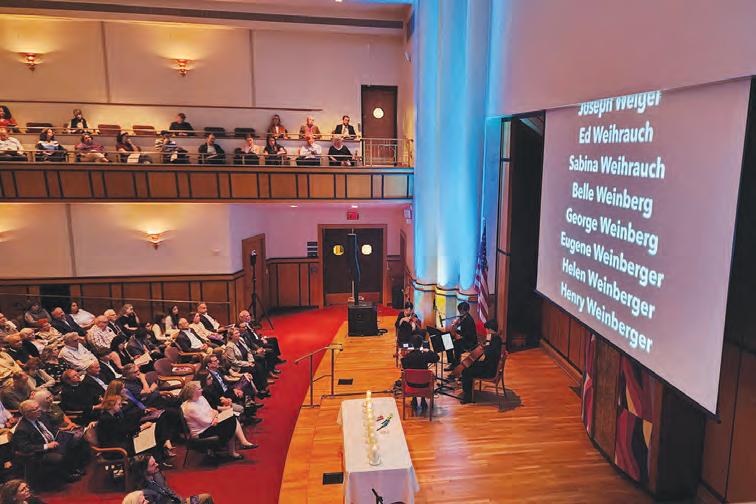
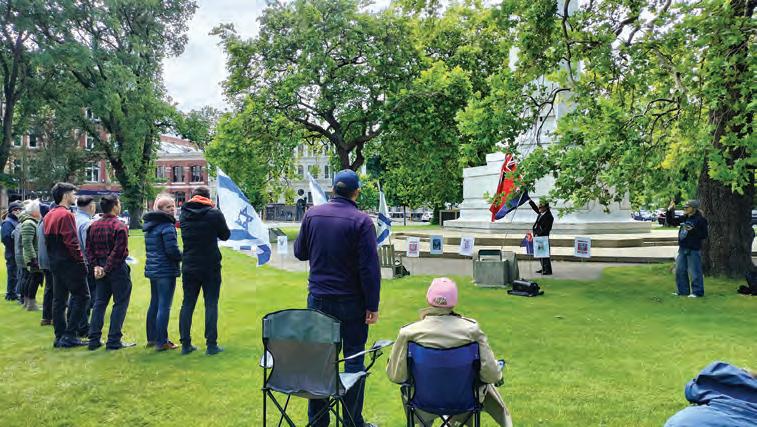
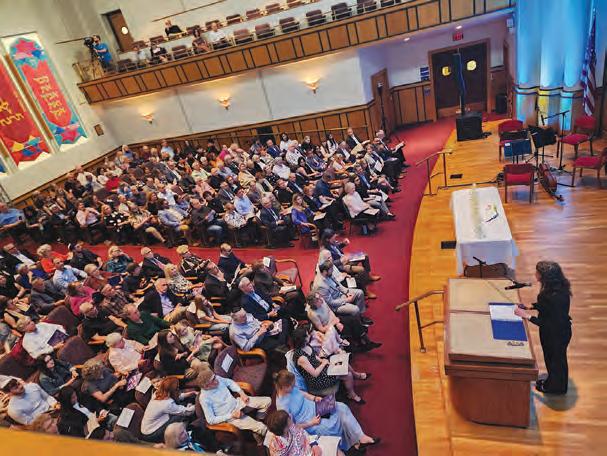
Community members commemorated Yom HaShoah by listening, observing, singing and remembering. With the aid of video projections, live music and candle lighting inside Levy Hall at Beit Kulanu (the building formerly housing Rodef Shalom Congregation, now home to the unified congregation of Temple Sinai and Rodef Shalom), nearly 200 Pittsburghers marked Holocaust Remembrance Day on April 13.
Holocaust Center of Pittsburgh Director Emily Loeb framed the program as one dependent on testimony.
Despite a dwindling survivor community, their voices must still be heard; commemorating Yom HaShoah, with reliance on survivors, is “one of our most enduring traditions,” she said.
“For years, survivors have stood at this podium and shared their experiences with our community,” said Veronica Rocher Schmerling, a member of the Yom HaShoah Planning Committee. “With the passage of time, those of us who are children and grandchildren of survivors now have the responsibility of helping to ensure that the survivors’ stories continue to be heard.”
For more than an hour, testimonies, poetry and reflections were shared.
Taped remarks from survivors Sarah (Luel) Brett, Leon Brett, Harry Drucker, Elka Kolski and Moshe Kolski, Jack Sittsamer, Ilona Weiss and Jerry Guttman addressed faith, humanity and resolve.
“God wanted us to live, so I lived,” Elka Kolski said.
“Be a decent person, that’s all. Be good to everybody,” Harry Drucker said.
“But life, you accept I guess,” Sarah Brett said.
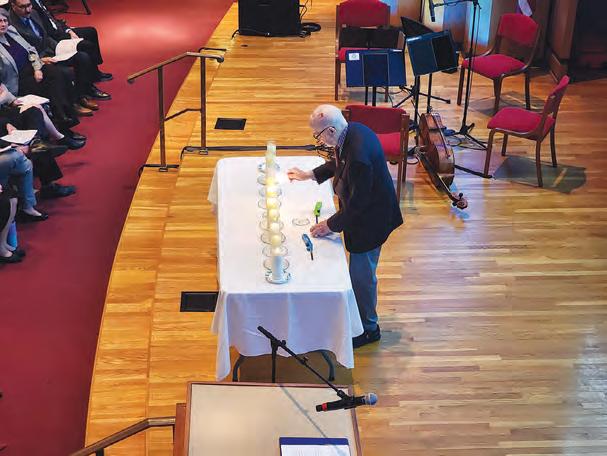
D escendants of the survivors lit six candles for the 6 million Jews who died in the Holocaust.
Holocaust educator Michele Russo read “Music is Life,” a poem written by her student Aubri Holland. Local poet Valerie Bacharach read her poem “Begin Again.”
Cantor David Reinwald of Beit Kulanu sang “Ani Ma’amin,” a song whose lyrics stem from 12th-century philosopher and sage Maimonides’ 13 principles of faith.
Eric Lidji, director of the Heinz History
By David Rullo | Senior Staff Writer
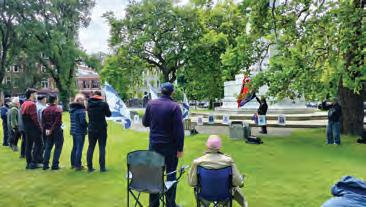
U.S. Rep. Summer Lee, who represents Squirrel Hill, appeared at campaign rallies for Abdul El-Sayed, a Michigan Democratic candidate for the U.S. Senate, on April 7 at the University of Michigan and Michigan State University.
Lee appeared alongside Hasan Piker, a far-left social media influencer who has over 3 million followers on Twitch.
Piker has a history of antisemitic and anti-Zionist rhetoric including justifying Hamas’ Oct. 7, 2023, attack on Israel; saying that Orthodox Jews are “inbred”; and calling a Jewish person a “bloodthirsty pig dog.” U.S. Rep. Richie Torres of New York has accused Piker of downplaying or denying “the significance of sexual violence by Hamas” during the Oct. 7 attacks.
StandWithUs, an international and non-partisan Israel education organization, urged Lee’s constituents to call her office and voice their concern about her appearance with Piker. State Rep. Dan Frankel and state Sen. Judy Schwank, founders of Pennsylvania’s Jewish Legislative Caucus, issued a statement condemning Lee’s plans to campaign a longside Piker, whom they called “a commentator who has repeatedly trafficked in antisemitic statements.”
Public officials, they said, “have an obligation to be unequivocal about the voices they elevate and the company they keep.”
Referencing the 2018 Pittsburgh synagogue shooting, the statement added that “Dehumanizing language creates an environment where hatred is emboldened and
By Adam Reinherz | Senior Staff Writer
Aprogram predicated on collective restoration is inviting community members to join and heal. Tikkun Yachad, organized by NCJW Pittsburgh, is hosting “Nurturing as Resistance: Tending Life in the Midst of All We’re Facing” on April 21 at Anathan House in Squirrel Hill.
The program, according to organizers, will enable participants to “slow down, share a meal, reflect and reconnect to what helps us keep going.”
Tikkun Yachad, which translates to “repairing together,” is a near-monthly series that brings people together and allows for “connection, conversation, selfcare and action,” Rachel Martin Golman, NCJW Pittsburgh’s senior director of social impact, said.
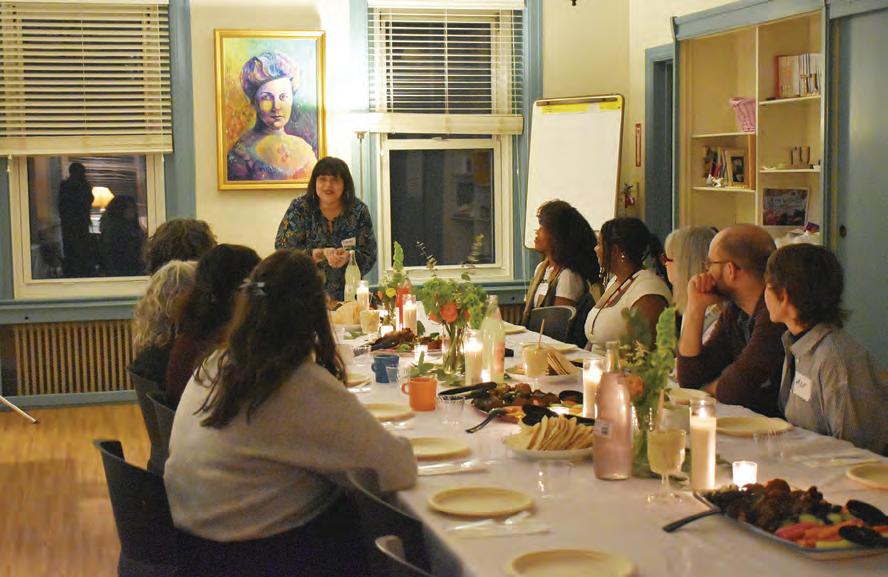
“We really wanted to think about how we sustain social justice work,” she continued. The goal is not to ask people to undertake “individual, isolated action, but that we’re really building community, that we’re building trust and connection, that we’re ensuring people are nourished and resourced as they enter into work, or as they continue their social justice journey.”
Erika Gold Kestenberg, an NCJW Pittsburgh board member, has participated in several Tikkun Yachads, and called the experience a “really beautiful program and one of the many that NCJW has.”
What distinguishes Tikkun Yachad, though, is that the program “creates a
beautiful space of community, of care, of connection,” she said. “It’s a nice respite from the business of life and the current chaos that we’re experiencing in the world.”
Each meetup follows a similar format, organizers explained.
The program begins with a light meal and conversation, followed by a self-care practice such as stretching or guided meditation and occasional remarks from a guest speaker.
“It’s kind of a multi-dimensional experience, where our bodies, minds and spirits are all fed, and you feel connected in community
in ways that I really appreciate,” Kestenberg told the Chronicle.
NCJW Pittsburgh, according to its mission statement, is “inspired by the Jewish value of Tikkun Olam” and “promotes increased equity through the empowerment of women.”
The organization is guided by three pillars: economic equity, inclusive democracy and reproductive freedom and access.
Discussion, whether with a guest speaker or among participants, aligns with those pillars, Kestenberg said.
“The conversation moves as it moves,” she said. “And every time I’ve been there, I’ve met

SUBSCRIPTIONS
subscriptions@pittsburghjewishchronicle.org
412-687-1000, ext. 2
TO ADVERTISE
advertising@pittsburghjewishchronicle.org
412-687-1000, ext. 1
EDITORIAL DEPARTMENT
Email: newsdesk@pittsburghjewishchronicle.org
BOARD OF TRUSTEES
Evan H. Stein, Chair
Evan Indianer, Vice Chair
Derek Smith, Treasurer
Gayle R. Kraut, Secretary
Gail Childs, Dan Droz, Malke Steinfeld Frank, Karen Gal-Or, Seth Glick, Judith Kanal, Cátia Kossovsky, Charles Saul, Lynn Zelenski
GENERAL COUNSEL
Stuart R. Kaplan, Esq.
different people, and it’s been really beautiful every time.”
Q uestions and topics at past programs have addressed child raising or common values, Golman said. “It’s very open-ended, and with the intent of allowing people to really think about their motivations, what sustains them, and to be able to find connections with other people based on those values and motivations and purpose.”
Founded in 1894, NCJW Pittsburgh was the fourth chapter of the national organization. Known until 1906 as the “Columbian C ouncil,” NCJW Pittsburgh focused on welcoming and aiding recent immigrants to the United States. As the years progressed, the organization evolved, according to the Rauh Jewish Archives, and undertook various initiatives “designed to improve the lives of women and families.”
NCJW Pittsburgh remains “rooted in Jewish values,” Kestenberg said. “It is also rooted in understanding that those of us who are also working to repair the world need a place of care and healing and grounding ourselves so that we can be able to continue to do that work in the world.”
Participation in Tikkun Yachad is open to everyone, Golman said.
Past programs have featured a “very broad mix of people from all parts of the community, and that’s actually really added to the richness,” she continued. “Everyone is welcome. Come as you are.”
Registration for the April 21 program is available at ncjwpgh.org. PJC
Adam Reinherz can be reached at areinherz@pittsburghjewishchronicle.org.
5915 Beacon St., 5th Floor Pittsburgh, PA 15217
Main phone number: 412-687-1000
Subscriptions: 412-687-1000, ext. 2
Jim Busis, CEO and Publisher 412-228-4690 jbusis@pittsburghjewishchronicle.org
EDITORIAL Toby Tabachnick, Editor 412-228-4577 ttabachnick@pittsburghjewishchronicle.org
Adam Reinherz, Senior Staff Writer 412-687-1000 areinherz@pittsburghjewishchronicle.org
David Rullo, Senior Staff Writer 412-687-1000 drullo@pittsburghjewishchronicle.org
ADVERTISING
Amy Weiss, Account Executive (412) 613-0697 aweiss@pittsburghjewishchronicle.org
PRODUCTION
Jeni Mann Tough Production Manager
Carl Weigel Art/Production Coordinator Subscriptions subscriptions@pittsburghjewishchronicle.org 412-687-1000, ext. 2
Published every Friday by the Pittsburgh Jewish Publication and Education Foundation 5915 Beacon St., 5th Floor Pittsburgh, PA 15217
Phone: 412-687-1000
POSTMASTER: Send address change to PITTSBURGH JEWISH CHRONICLE, 5915 BEACON ST., 5TH FLOOR PITTSBURGH, PA 15217 (PERIODICAL RATE POSTAGE PAID AT PITTSBURGH, PA AND AT ADDITIONAL MAILING OFFICES)
USPS 582-740
Manuscripts, letters, documents and photographs sent to the Pittsburgh Jewish Chronicle become the property of this publication, which is not responsible for the return or loss of such items.
The Pittsburgh Jewish Chronicle does not endorse the goods or services advertised or covered in its pages and makes no representation to the kashrut of food products and services in said advertising or articles. The publisher is not liable for damages if, for any reason whatsoever, he fails to publish an advertisement or for any error in an advertisement. Acceptance of advertisers and of ad copy is subject to the publisher’s approval. The Pittsburgh Jewish Chronicle is not responsible if ads violate applicable laws and the advertiser will indemnify, hold harmless and defend the Pittsburgh Jewish Chronicle from all claims made by governmental agencies and consumers for any reason based on ads appearing in the Pittsburgh Jewish Chronicle
By David Rullo | Senior Staff Writer
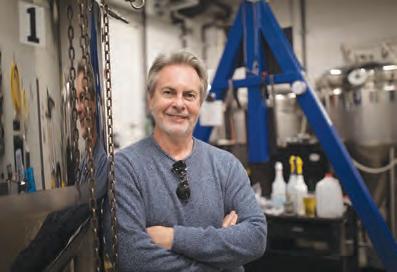
An April 1 post on the Jewish Pittsburgh Facebook page announcing Mondays Brewing Company’s recent kosher certification might easily have been mistaken for an April Fool’s joke.
After all, the notion that a non-Jewish professor of web and mobile app develop ment would seek kosher certification for his brewery, set in the former Hough’s Taproom — a neighborhood hub for nearly two decades — seemed almost laughable.
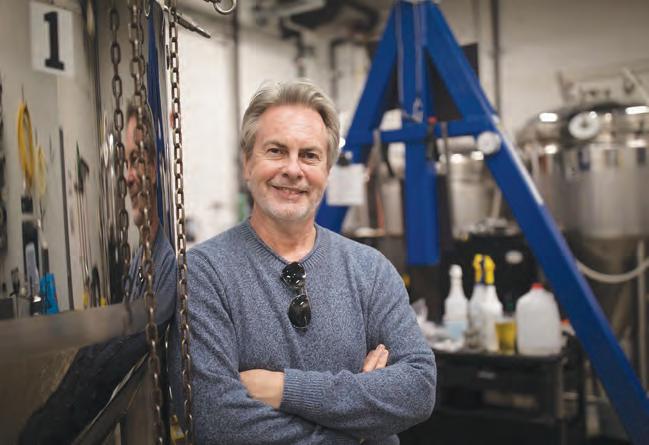
And yet, that’s exactly what Sam Fee did with Mondays Brewing Company.
The first Mondays Brewing Company location opened in Peters Township in 2020 as the world was beginning to grapple with the COVID pandemic.
Fee said the company brews most of the beers it serves at the South Hills site, but it also collaborates with other breweries and serves a variety of Pennsylvania-made drinks — wines, seltzer, whiskey, rum and more.
After some tough early days, the brewery was doing well enough for Fee to begin thinking about a second location. His eyes soon turned to Greenfield.
“We opened it in late 2024, around Thanksgiving, primarily because we wanted a second taproom,” he said. “And, of course, everyone knows about Hough’s. The location was incredible. It was a good way to open a second taproom that was different from what
we were doing in Peters.”
The idea to brew kosher beer came to Fee after a conversation with some customers in Greenfield while he was tending bar.
“They were saying they like to drink beer because it’s kosher,” he remembered. “I explained that not all beer is kosher. That’s when I started learning more about becoming kosher certified.”

Once the ingredients were verified as kosher, Fee said they had to make sure the brewing process was kosher.
is an attached kitchen; in Peters Township, guests are invited to bring their own food to Collaborations with other breweries won’t
“Whenever we do a collaboration with someone, we’re probably canning it on their canning line. So, it won’t be kosher,” Fee
Knowing if a beer is kosher is simple. Mondays’ menu has been updated to include a “K” next to the beers that are kosher, leaving
Fee said he’s excited to provide the South Hills with a kosher option, something its
“I feel like we can provide a real option, especially in the South Hills. We always have growlers, so you don’t have to drink in the taproom. If you want to pop in, get some kosher beer and go, you can do that,” he said. “That’s something you couldn’t say before, especially in the South Hills.”
Fee knew there was a large Orthodox community in both Greenfield and Squirrel Hill, and viewed getting certified as kosher as an opportunity to better serve the community.
Of course, it wasn’t quite as simple as coming up with the idea and executing it.
Fee said he worked with Rabbi Chaim Itkin from the Vaad Harabonim of Pittsburgh and did a lot of work to ready Mondays Brewing for certification.
The first step was making sure everything in the space was certified kosher.
The result is that all the beer brewed by Mondays Brewing is kosher. The certification is at both the Peters Township and Greenfield locations, with a few caveats.
Mondays is still working through some of its previously brewed beer, so not everything on offer is kosher — yet.
“In Greenfield about eight of the 12 taps are kosher,” Fee said. “We’ll probably have everything kosher by the time we hit the summer.”
The certification applies only to the beer brewed by the brewery and doesn’t extend to any food. At the Greenfield location, there
The Vaad’s Rabbi Yitzi Genack said the Vaad is “very excited” to have a brewery certified as kosher in Greenfield.
“We’re very interested in thinking out of the box,” he said. “We’re looking forward to working with a lot of different businesses.”
For Fee, having Mondays’ beer certified as kosher made sense.
“I felt that being certified kosher would be a real service to people,” he said. “I’m interested in serving the community and this struck me as the best way to do it.” PJC
David Rullo can be reached at drullo@ pittsburghjewishchronicle.org.

By Zev Stub | The Times of Israel
Areport published Monday by Tel Aviv University found that 2025 saw a sharp rise in violent attacks against Jews, with antisemitic incidents claiming more Diaspora Jewish lives than at any point in the past 30 years.
While total counts of antisemitic activity, including vandalism, verbal threats and harassment, fell in many countries during 2025 compared to 2024, violent incidents, such as beatings or stone-throwing, became more commonplace, according to the annual report on antisemitism in the world published by TAU’s Center for the Study of Contemporary European Jewry and the Irwin Cotler Institute for Democracy, Human Rights and Justice.
In every Western country, the total number of antisemitic incidents remained dozens of percentage points higher than in 2022, the year preceding the Oct. 7, 2023, massacre that sparked the war in Gaza, the report noted.
Twenty Jews were murdered in four incidents across three continents during the year as Jew hatred became a “normalized reality,” said Prof. Uriya Shavit, the study’s editor-in-chief.
The last year that more Jews were killed in the Diaspora was 1994, when a suicide bomber drove a bomb-laden van into the Asociación Mutual Israelita Argentina


building in Argentina, killing 85 people and injuring hundreds more.
Australia and Canada saw their highest yearly numbers of antisemitic incidents ever.
“The steep increase in the number of cases of severe violence is not surprising,” Shavit said. “The rule that applies to all types of crime applies here as well: When law enforcement authorities are indifferent to small crimes, the result is big crimes.”
Part of the reason it is so difficult to prevent antisemitic attacks is that many antisemitic attacks are carried out by “lone wolf” attackers
who are not operating within any organizational framework, a separate study published alongside the report found.
The TAU report is based on data originating from dozens of law enforcement authorities around the world, as well as specialized commissions, Jewish communities, reports in the media, and interviews and fieldwork by the researchers, it said.
Australia had some of the most alarming data, the report found, with a total of 1,750
attacks during 2025, compared to 1,727 in 2024, culminating in the Chanukah massacre at Bondi Beach in which 15 Jews were murdered. This compares with 1,200 incidents in 2023 and 472 in 2022. Attacks continued to rise even after Israel and Hamas agreed to a ceasefire in October: There were 588 incidents recorded in October–December 2025, compared to 492 in the same period of 2024, the study said.
In Canada, the total number of incidents grew from 6,219 in 2024 to 6,800 in 2025, more than three times the number in 2022. The year’s most serious physical assaults included the Aug. 27 stabbing of a Jewish woman in her 70s while she was shopping at an Ottawa grocery store, and the Aug. 8 beating of a 32-year-old Hasidic Jewish father in front of his children in a park in Montreal. There were also numerous attacks on synagogues.
In the United States, reported incidents varied across regions. In New York, the largest Jewish city in the world, the number of incidents declined from 344 in 2024 to 324 in 2025. Los Angeles, home to the country’s second-largest Jewish population, was the only major city in the U.S. unable to produce data on anti-Jewish hate crimes for the second straight year. The worst attacks of the year included the May 21, 2025, killing of two Israeli Embassy staff members, Yaron Lischinsky and Sarah Milgrim, outside the Capital Jewish Museum in Washington, D.C., and the killing of Karen Diamond on
Please see Attacks, page 11








Submit calendar items on the Chronicle’s website, pittsburghjewishchronicle.org. Submissions also will be included in print. Events will run in the print edition beginning one month prior to the date as space allows. The deadline for submissions is Friday, noon.
q FRIDAY, APRIL 17–SUNDAY, APRIL 19
Join Keshet’s one-of-a-kind Shabbat retreats for LGBTQ+ and ally Jewish teens, ages 13-18 and in grades 7-12, to learn, grow and celebrate who you are in a warm and vibrant community. Created by and for LGBTQ+ Jewish teens, Keshet Shabbatonim bring together young LGBTQ+ and ally Jews from across the country to build community and celebrate Shabbat and their Jewish and LGBTQ+ identities. $54. keshetonline.org/shabbaton
q SUNDAYS, APRIL 19–JULY 26
Join Chabad of Squirrel Hill for its Men’s Tefillin Club. Services and tefillin are followed by a delicious breakfast and engaging discussions on current events. 8:30 a.m. 1700 Beechwood Blvd. chabadpgh.com
Join a lay-led online Parashah study group to discuss the weekly Torah portion. No Hebrew knowledge needed. The goal is to build community while deepening understanding of the text. 8:30 p.m. For more information, visit bethshalompgh.org/online-parashah.
q MONDAYS, APRIL 20–JULY 27
Join Congregation Beth Shalom for a weekly Talmud study. 9:15 a.m. For more information, visit bethshalompgh.org.
Join Temple Sinai for an evening of mahjong every Monday (except holidays). Whether you are just starting out or have years of experience, you are sure to enjoy the camaraderie and good times as you make new friends or cherish moments with long-term pals. All are welcome. Winners will be awarded Giant Eagle gift cards. All players should have their own mahjong cards. Contact Susan Cohen at susan_k_cohen@yahoo.com if you have questions. $5. templesinaipgh.org
q TUESDAY, APRIL 21
Enjoy a delicious Seniors Lunch with Chabad of the South Hills and learn about “Safe Driving Through the Ages.” Wheelchair accessible. 1 p.m. $5 suggested donation. 1701 McFarland Road. chabadsh.com
q TUESDAYS, APRIL 21–JUNE 30
Join Beth El’s Rabbi Alex Greenbaum and his Bible/ Talmud Adult Education class for a thoughtprovoking weekly session of Bible and Talmudic study. This program is available both in person and virtually. Call the office at 412-561-1168 to receive the Zoom link or to make an in-person reservation. 10:30 a.m. 1900 Cochran Road. bethelcong.org
q WEDNESDAY, APRIL 22
Enjoy a delicious lunch while exploring timeless wisdom for the month of Iyar at Chabad of Squirrel Hills’ Ladies’ Lunch and Learn. Noon. $18. 1700 Beechwood Blvd. chabadpgh.com/lunch
q WEDNESDAYS, APRIL 22-29
Join Temple Ohav Shalom for My Grown Up & Me,
a joyful, hands-on experience for children ages 18 months to age 3 with their grown-up. Each class includes multi-sensory explorations, art experiences, a story and more. 9:30 a.m. $5 per family. 9:30 a.m. Temple Ohav Shalom, 8400 Thompson Run Road. forms.gle/ZcAgWBLaKdsxSxuL9
q SUNDAY, APRIL 26
Don’t miss an unforgettable night celebrating Community Day School and the CDS United Campaign that makes their mission possible. 5 p.m. $125. 4905 Fifth Ave. comday.org
q THURSDAY, APRIL 30–SUNDAY, MAY 10
Film Pittsburgh’s JFilm Festival, the largest Jewish cultural event in the region, will return to theaters April 30–May 10, 2026. For 33 years, JFilm has showcased Jewish-themed, independent feature films from around the globe. $15 and up. filmpittsburgh.org
q WEDNESDAY, MAY 6
Rabbi Suzanne Offit, a board-certified chaplain from JF&CS Boston, will discuss “Transforming the Jewish Communal Response to Suicide.” Maggie Feinstein, director of the 10.27 Healing Partnership, will facilitate the talk. 7 p.m. Free. Friendship Circle, 1922 Murray Ave. RSVP to Kaitlin@beaconpgh.org.
q
THURSDAY, MAY 7
Join Congregation Beth Shalom for the Pittsburgh Jewish Teen Challah Braid, a meaningful evening of braiding challah bread and contributing to a service project that benefits Pittsburghers. This will be the inaugural event by the Pittsburgh Jewish

Teen Council, a group of Jewish teen leaders with the goal of creating fun and engaging programs open to all Pittsburgh-area Jewish teens. Come ready to meet some new friends in the Jewish community. Dinner will be provided. Transportation may be available for the suburbs; please indicate when you register if you would require transportation help to get to Squirrel Hill. 6 p.m. Congregation Beth Shalom, 5915 Beacon Street. docs.google.com/forms/d/e/1FAIpQLSfOhJrxVBAs YtbrhoFC01ON2ke8UYnz262H2wu4M3-jDpw8ig/ viewform?usp=dialog
q WEDNESDAY, MAY 13
Join Congregation Dor Hadash to learn more about Land for All, a joint Israeli-Palestinian political initiative that creates a practical framework for peace. Co-Directors May Pundak and Rula Hardal will discuss their model: two sovereign states connected through a confederation, grounded in equality, dignity, interdependence, security and safety. Free. 7 p.m. Rodef Shalom Congregation, 4905 Fifth Ave. congregationdorhadash.shulcloud. com/form/ALFA2026
q SATURDAY, MAY 16
Carry Shabbat’s peace into the new week with a meditation and sound bath led by Cantor Julie Newman and Anitra Birnbaum. Havdalah Healing includes songs, Jewish ritual, and the soothing vibrations of crystal singing bowls and other instruments create a space to rest, reflect, and restore. Open to all. 5 p.m. 4905 Fifth Ave., Cohan Chapel. tiferetproject.org/event/ havdalah-healing PJC



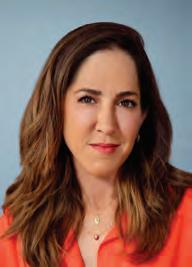
Tal Shalev is the a senior reporter for CNN’s Jerusalem bureau and former Chief Political Correspondent and Analyst for Walla! News. She covers Israel’s prime minister, government, and parliament as well as the country’s foreign and diplomatic affairs.
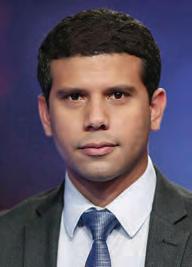
Mohammad Majadli is Israel’s leading Arab affairs political analyst. He frequently provides insights and analysis on Israel’s leading Channel 12 News, and is host to radio shows in Arabic and Hebrew.
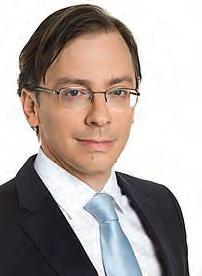
Nadav Asher Eyal is an Israeli journalist and commentator who served as a foreign news editor for Channel 13. He currently resides in New York and teaches at Columbia University. He is the author of the book Revolt: The Worldwide Uprising Against Globalization (2021).
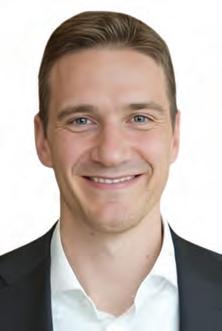
Klitsner is a fellow at the Jewish People Policy Institute (JPPI) who has deep connections to our community. He and his family lived in Squirrel Hill but returned to Israel after October 7 so he could rejoin his IDF unit. Klitsner, who has served as Diaspora Affairs Advisor to Prime Minister Naftali Bennett, and worked for AIPAC in Israel, is passionate about educating and building community around the state of Israel and its relationship with the United States.
Monday, May 18 • 7 pm
JCC Squirrel Hill • Katz Theater $36/person
For more info: Fara Marcus • fmarcus@jccpgh.org
Gain insight into the complexities of Israel’s political landscape in this timely conversation featuring leading journalists Tal Shalev and Mohammad Majadli, along with noted journalist and commentator Nadav Eyal. From coalition dynamics and government leadership to Arab affairs and global influences, this panel will unpack the forces shaping Israeli politics today.

Rescheduled from April New Date: Tuesday, June 16
By Joseph Strauss | JTA
Anew group opposing AIPAC is backing anti-Israel candidates across party lines. Some of its endorsees have blamed Israel and Jews for 9/11 and the Charlie Kirk assassination. Its founder claims Hamas’ Oct. 7 attack was a “false flag” operation and has referred to Jewish people as “the Synagogue of Satan.”
This is the Anti-Zionist America PAC, or AZAPAC.
With a stated aim to “de-Zionize” the American government and end military aid to Israel, AZAPAC is unlike the other PACs that have recently popped up as a counterweight to AIPAC, the pro-Israel lobby that has poured millions of dollars into political races across the country.
Those groups — including American Priorities, PAL PAC and Citizens Again AIPAC Corruption — are rallying their support around a brand of pro-Palestinian progressives in line with Congress’ left-wing “Squad” members. Michael Rectenwald, AZAPAC’s founder and a self-described libertarian, is taking a different approach.
“We’re not like leftist anti-Zionists, calling for ‘from the river to the sea’ and all this

nonsense,” said Rectenwald in an interview.
“We are not trying to say the State of Israel should not exist. That is not our concern. Our concern is the U.S. government only, and what it’s doing.”
To that end, Rectenwald’s group, which was founded last summer, has endorsed fringe candidates across the political spectrum, from both Republican and Democratic parties as well as independents. The primary criteria for endorsement, Rectenwald said,

is that candidates will vote against aid to Israel and do not take money from proIsrael lobbying groups.
AZAPAC’s spending has been relatively minimal (it had raised $111,556 by the end of 2025, according to FEC filings) but it taps into an ascendant set of sentiments, including a rising anti-Israel faction of Republicans, as well as the conspiracy-theory mindset increasingly occupying Americans of all stripes.
Some of the candidates it has endorsed have promoted conspiracy theories about Jews. Multiple AZAPAC-endorsed politicians believe that Jews were responsible for 9/11 and that Israel was behind the assassination of Charlie Kirk.
Meanwhile, Rectenwald himself has taken to social media (and tried courting avowed antisemite Nick Fuentes) in an attempt to broaden the group’s reach, leaning into antisemitic tropes about Jews and Israel himself in the process.
“Don’t die for ‘israel’. Don’t die for the Syn@gogue of S@t@n,” he wrote in a since-deleted tweet in March about the war in Iran.
In another tweet, he wrote that “The Synagogue of Satan refers to those who are genetically Jewish but have rejected Christ and thus utterly forfeit the heavenly Jerusalem.”
He wrote that Hamas’ Oct. 7 attack on Israel was a “false flag” operation, and suggested that 9/11 was, as well.
In the group’s launch video, Rectenwald, narrating, called pro-Israel politicians “puppets” whose “strings are pulled by donors loyal to the modern nation state of Israel.”
Rectenwald’s gripe, he says, is the control that the pro-Israel lobby has over U.S. politicians. “Every zionist in the U.S. government should be tried for treason,” he wrote, adding in a reply that those politicians are more loyal to Israel than to America.
But his theories about Jews controlling governments have exceeded the bounds of the United States and Israel.
“Once you study England beginning with Cromwell, you know it wasn’t the British empire to follow but the Jewish empire,” he wrote last year. “That’s not antisemitism. It’s just history.”
Rectenwald acknowledged that AZAPAC has faced accusations of antisemitism.
“Every once in a while we get somebody coming along and saying we’re antisemites — ‘This is Hitler’s playbook,’ or something like that,” Rectenwald said. “We just answer by saying this: It’s nothing to do with antisemitism. We have Jewish supporters. Listen, if Max Blumenthal [a journalist who writes critically about Israel] wanted to join our board, we would welcome him with open arms, for example. So there’s nothing about discrimination.”
Opposition to AIPAC and U.S. aid to Israel have become increasingly normative positions among Democrats. The bulk of AZAPAC’s candidates, however, are Republicans running on “America First” platforms against proIsrael, AIPAC-endorsed incumbents, such as Reps. Randy Fine and Keith Self, who the group sees as being “Israel-first.”
The challengers are part of a growing anti-Israel movement within the Republican Party, along with personalities including Tucker Carlson and Fuentes, that opposes Donald Trump’s Israel alliance and is considered by some Republicans to pose a threat to the party’s future. Like Carlson and Fuentes, candidates have espoused conspiracy theories about Jews.
Mike Wilnau, a Republican congressional candidate in Florida, was endorsed by GOP gubernatorial candidate James Fishback in addition to AZAPAC. Wilnau, who has been vocally opposed to the war in Iran, claimed that “Israel killed Charlie Kirk for war in Iran,” and wrote on X, “Don’t forget, the Jewish messiah is the Christian antichrist.” Wilnau isn’t the only AZAPAC endorsee pushing Charlie Kirk conspiracy theories.
Michael Faris, who is running for Mitch McConnell’s Senate seat in Kentucky with AZAPAC’s support, posted a poll on X, asking his followers, “Was Charlie Kirk assassinated because of his shifting views on Jewish billionaire donors?” 79% of the 299 voters said “Yes.”
In February Faris reposted an AI-generated video dramatizing a conspiracy theory in which a Jewish real estate mogul orchestrated 9/11. He also wrote that until “about 18 months ago, I had never even heard the word Zionist,” adding that it was time to “wake up.” And in response to billionaire Robert Kraft’s Super Bowl ad about antisemitism, Faris wrote, “I will not be posting a blue s quare. Thanks anyway. That’s a fake, manufactured crises.”
S o far in this midterm election cycle, AZAPAC has not picked winners.
Endorsee Mark Newgent lost his Texas Republican primary against Self in early March, 80.2% to 19.8%. Newgent repeatedly challenged Self to support the release of the Epstein files rather than “continue to protect pedophiles for AIPAC.”
Zeeshan Hafeez — an AZAPAC-backed Democrat — received the fourth-most votes in Texas’ 33rd district primary, with 8.5%. Colin Allred won with 44% of the vote.
DNC committee rejects resolution condemning pro-Israel lobby AIPAC specifically
The Democratic National Committee decided not to vote on a resolution that condemns the pro-Israel lobby AIPAC specifically, after a sub-committee rejected the resolution last week during the DNC’s annual meeting in New Orleans, JTA reported.
The DNC’s Resolutions Committee instead advanced a resolution condemning “dark money” more broadly in electoral politics. AIPAC is one of several lobbies that have flooded elections with millions of dollars of spending, along with technology and real estate PACs, but it was the only one mentioned specifically in the proposed resolution.
Proponents of the resolution said AIPAC’s $14 million spend during Illinois’ primaries last month made it worth calling out specifically. But its critics — including some who are themselves critical of AIPAC — said the resolution’s singling out of AIPAC carried an “undercurrent of antisemitism.”
Chair Ken Martin said the DNC had opted to take the more inclusive approach. “We had various resolutions that focused on different industries and groups, and instead of going one-by-one, we passed a blanket repudiation,” he tweeted. “I have made my position on this clear from day one: We must end the influence of dark money in our politics and restore power back to the people.”
The DNC’s rejection of the resolution comes as a new poll finds that about 80% of Democratic voters say they have an unfavorable view of Israel, up sharply over the last three years. The
Resolutions Committee also declined to adopt two resolutions supporting the Palestinians and opposing the war in Iran, instead referring them to the party’s year-old Middle East Working Group, which is also meeting this week.
EU-backed ‘Josephus’ archive opens digital access to centuries of Greek Jewish history
A recently-launched E.U.-backed digital archive documenting the history of Greek Jews is offering free public access to more than 212,000 documents and over two million digital records, the European Jewish Congress said last week, according to JNS.
The Iossipos (“Josephus”) project, named after the first-century Jewish historian Flavius Josephus, has been implemented by the Jewish Community of Thessaloniki with approximately €4 million ($4.3 million) in funding from Brussels’ National Strategic Reference Framework 2021–2027 program.
Described by its developers as a landmark effort in cultural preservation, the website brings together archival material chronicling more than three millennia of Jewish presence in Greece, including Romaniote (Greek-speaking), Sephardic and Ashkenazi communities.
Thessaloniki, once known as the “Jerusalem of the Balkans” following the arrival of Sephardic Jews expelled from Spain in 1492, became a major center of Jewish life before the Holocaust devastated its population. Beginning in March 1943, more than 50,000 Jews were deported from the city to Nazi destruction camps, with fewer than 2,000 surviving.
Much of the community’s archives were lost in the Great Thessaloniki Fire of 1917, which destroyed most of the city, or later stolen by Nazi Germany. Portions were recovered after WWII
April 20, 1953 — First Israel Prizes are awarded
and held in institutions including Russia’s state archives, the YIVO Institute for Jewish Research and the U.S. Holocaust Memorial Museum, before being digitized and consolidated in the new repository.
The Iossipos initiative is centered around an online platform featuring historical documents, photographs, oral testimonies and audio materials, alongside interactive tools such as maps, augmented reality exhibits and a 3D reconstruction of interwar Thessaloniki.
Israeli restaurant targeted in suspected Jew-hatred attack in Munich
Unidentified assailants hurled incendiary devices into an Israeli restaurant in Munich last week in what authorities suspect was an antisemitic attack, JNS reported.
No injuries were reported, but the attack caused damage worth several thousand euros after three devices were thrown through the restaurant’s windows, according to dpa, the German Press Agency. Police said the type of devices used remains under investigation.
The Central Council of Jews in Germany wrote in a social media post that now was a “good moment to display solidarity.”
Gady Gronich, CEO and chief of staff to the president of the Munich-based Conference of European Rabbis, stated that “this attack is not an isolated incident, but part of a dangerous trend we have been seeing since Oct. 7, 2023: growing hatred against Jews — open, aggressive, and uninhibited.”
“What’s needed is a clear line: zero tolerance against antisemitism, with harsh punishments that do not lead to repeat incidents, and no room for those who sow hate in our society,” Gronich said.
Long Island town ordered to pay $19M after blocking Chabad synagogue construction
After nearly two decades of legal sparring, a town on Long Island has been ordered to pay a local Chabad center $19 million, settling claims that officials unlawfully blocked the construction of a synagogue on its rabbi’s property, JTA reported.
Rabbi Aaron Konikov and Lubavitch of Old Westbury sued the Village of Old Westbury in 2008, after the village passed a law in 2001 governing places of worship as Konikov sought to build a synagogue on his property.
Local officials enacted the law two years after Konikov planned a ceremony to announce a new building on the land where he already operates a synagogue. They decreed that houses of worship could be built only on plots of 12 acres or more. Konikov owns a 9-acre plot.
In October, U.S. District Judge Gary Brown ruled that the 2001 ordinance “unconstitutionally discriminates against the free exercise of religion and is therefore facially invalid.”
Old Westbury agreed to pay the plaintiffs in the suit $19 million as part of a consent decree, which was signed by Brown on March 18, Newsday reported last week.
Konikov will soon be switching into construction mode for his long hoped-for synagogue, for which preliminary plans show a 20,875-square-foot building and an adjacent parking lot.
The $19 million payment will be made by the village’s insurance providers, and Lubavitch of Old Westbury has until Jan. 15, 2027, to apply for a special-use permit from the village to build a synagogue, according to Newsday. PJC
— Compiled by Toby Tabachnick
Items are provided by the Center for Israel Education (israeled.org), where you can find more details.
April 17, 2006 — “Zionist Idea” author Rabbi Hertzberg dies Rabbi Arthur Hertzberg, a Jewish communal le ader perhaps best known as the author of “The Zionist Idea,” dies at 84. A native of Poland who grew up in Baltimore, he embraced Labor Zionism in his teens.
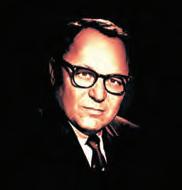
p Rabbi Arthur Hertzberg, shown in 1972, recognized in 1949 that the Diaspora’s challenges were more complex than those of the state of Israel.
Initiated by Education Minister Ben-Zion Dinor, the government presents the first nine Israel Prizes as part of the Yom HaAtzmaut (Independence Day) celebrations. The recipients range from writers and an artist to historians and a doctor.
April 21, 1984 —
Dada artist Marcel Janco dies Marcel Janco, a founder of the Dada art movement, dies at the Sheba Medical C enter at 88. A native of Romania, he immigrated to the Land of Israel in 1941 and later founded the Ein Hod artists village.
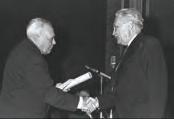
By Stsparky, own work, public domain, via Wikimedia Commons p Education Minister Zalman Aran presents the Israel Prize for art to Marcel Janco on May 15, 1967. By Fritz Cohen, Israeli Government Press Office, CC BY-SA 3.0
April 18, 1933 — YMCA dedicates new home in Jerusalem
Gen. Edmund Allenby, who led the British offensive that captured Palestine from the Ottomans during World War I, delivers the keynote address at the dedication of the YMCA’s new complex in Jerusalem.
April 19, 1949 — American Zionist leader Stephen Wise dies Rabbi Stephen Wise, a founder of the U.S. Federation of Zionist Societies and the American Jewish Congress whose leadership positions included the presidency of the American Zionist Movement, dies at 75.
April 22, 1978 — U.S. sympathizes with security concerns tied to Palestinian state
U.S. Assistant Secretary of State Roy Atherton, amid Middle East trips to advance Israeli-Egyptian peace talks, acknowledges U.S. sympathy for Israel’s security concerns about an independent Palestinian state.
April 23, 1963 — President Yitzhak Ben-Zvi dies Israel’s second president, Yitzhak Ben-Zvi, dies of cancer at 78 after a decade in office. He was a signer of the Declaration of Independence and served in the Knesset until Chaim Weizmann died in 1952. PJC

Continued from page 1
“Every story matters because every person matters,” he said. “More so, every story matters for the encouragement that it gives to the next person.”
Rabbi Hazzan Jeffrey Myers, of Tree of Life Congregation, recited “El Maleh Rachamim,” a prayer typically reserved for funerals and remembrance periods.
Rabbi Aaron Meyer, of Temple Emanuel of South Hills, led attendees in the Mourner’s Kaddish, a prayer sanctifying God’s name.
Lynne Rosenbaum Ravas, a 2024 Righteous Among the Neighbors Honoree, lit a candle for the Righteous Among the Nations.
Christine and Robert Pietrandrea, children of World War II veterans, lit a candle for the liberators of the concentration camps.
Jonathan Kessler, of PNC Bank, lit a candle for World War II veterans.
Kannu Sahni, of Highmark Health and a 2025 Righteous Among the Neighbors Honoree, lit a candle for Holocaust survivors.
After 10 candles were lit, Nancy Zionts sang “Hymn of the Partisans,” first in English then in Yiddish.
Musicians from Pittsburgh Youth Symphony Orchestra closed the program with a
Continued from page 1
The statement also referenced a 2024 Council on American Islamic Relations Philadelphia engagement Lee was slated to appear at that included individuals who had engaged in antisemitic and homophobic rhetoric. Lee canceled that appearance, Frankel and Schwank noted, writing that, “It is not too late to make that same choice again.”
The pair concluded by noting that the site of Lee’s appearance with Piker was just an hour away from Temple Israel in West Bloomfield, Michigan, where Ayman Ghazali, a 41-year-old naturalized U.S. citizen, was arrested for allegedly ramming his truck into the synagogue, in a Hezbollahinspired act of terror.
“We urge Rep. Lee to reconsider and to stand firmly against antisemitism in all its forms,” they wrote.
10-minute selection of pieces, while names of more than 300 Holocaust survivors who settled in the Pittsburgh region, and are now deceased, scrolled on a screen.
After exiting the building, Reinwald told the Chronicle that preserving survivors’ voices requires more than safeguarding mere words.
“A lot of people don’t always know a
As was mentioned during the program, “many of these victims have died double deaths: once when they actually physically passed away, and once when their names were forgotten. It’s kind of up to us to try to keep that second death from happening,” he said.
Sonja Wimer, who lit a candle for her grandparents Sarah Brett and Leon Brett,
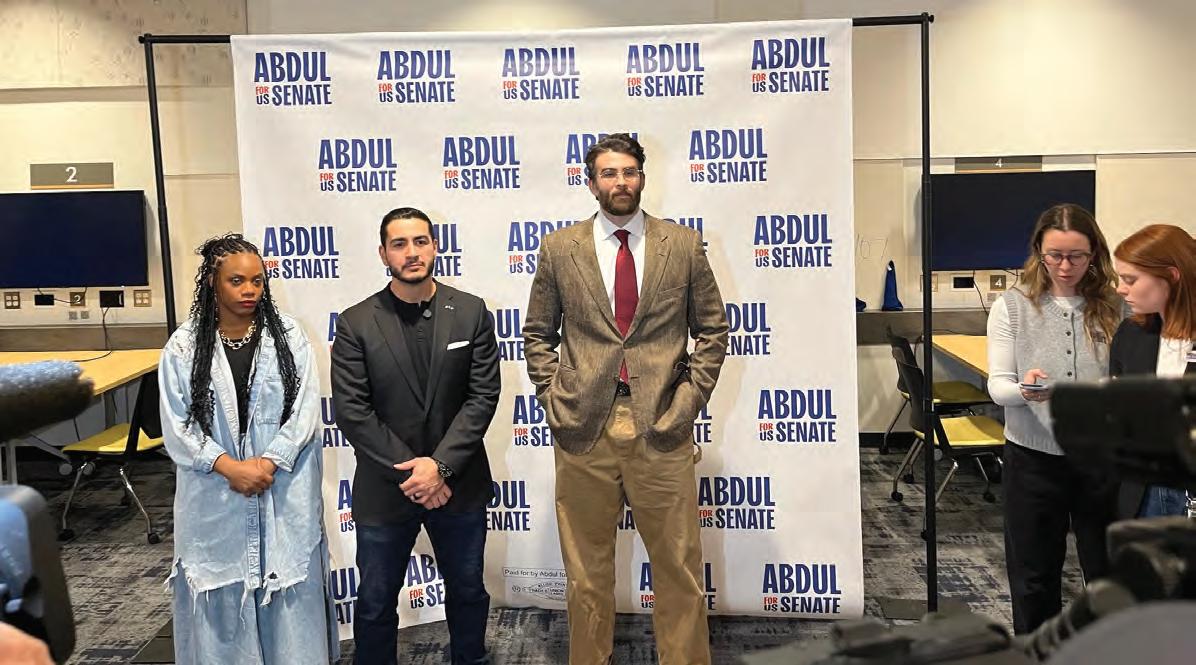
Lee ignored the criticism, and appeared at the campaign events less than a week after she wished a happy Passover to the Jewish community on social media.
In 2024, Lee co-authored a widely criticized statement with then Pittsburgh Mayor Ed Gainey and Allegheny County Executive Sara Innamorato on the one-year anniversary of Hamas’ Oct. 7 attack on Israel.
The controversial statement included the remarks: “Our hearts ache for the tens of thousands of Palestinians who have been killed, for the Israelis still held hostage, for the millions of displaced Palestinians, Lebanese and Israelis who have seen their communities destroyed …
“Our grief is compounded by the fact that it didn’t have to be this way. Over the past year, we’ve seen how continued escalation, a lack of diplomacy, and a drive for power by
right-wing leaders have pushed the region to the brink of regional war. … We can’t afford to spend more money on bombs when healthcare remains out of reach for so many and our infrastructure has been neglected for a generation.”
Lee has accused Israel of committing genocide in its war against the terrorist organization Hamas. She is a co-sponsor of the Block the Bombs Act, supported by CAIR and the anti-Israel group Jewish Voice for Peace, which would prohibit the United States from selling or transferring several types of defensive arms to Israel in the absence of a specific law passed by Congress.
In an interview with the Chronicle after Lee’s appearance with Piker, Frankel, who is Jewish and represents Squirrel Hill, called the congresswoman’s decision to appear
in Michigan “disappointing.”
He noted that he and Schwank weren’t the only voices expressing concern, saying that “Jewish organizations around the country” raised objections, “and she decided to proceed.”
“She chose that as a venue to platform a guy that has a consistent record of antisemitic remarks and hateful speech that create an environment that puts our community in jeopardy,” Frankel said.
Julie Paris, StandWithUs’ Mid-Atlantic regional director, said that at a time when antisemitism is rising to record levels, “it has never been more important for our elected officials to take a firm stance against any figures who may be promoting or amplifying antisemitic and anti-Zionist messaging.”
the stories — not just of the horrors, which we need to acknowledge, but of the resilience of the people I descend from, the resilience of all the people that were honored,” she said. “That is something that is incredibly meaningful, beautiful and powerful about the Jewish people then and the Jewish people now. They have instilled within us that tradition, and we will not let that go.” PJC
Adam Reinherz can be reached at
Lee’s decision to campaign alongside Piker, Paris said, “sends a message to her constituents that she does not represent all of us. In her role as a leader in Congress, she has a responsibility to represent her Jewish, Zionist and Israeli constituents just as she
Paris encouraged people to sign StandWithUs’ campaign against hate at standwithus.quorum.us/campaign/160046.
“Stand with your Jewish friends and Lee is running for reelection this year. She is facing perennial long-shot candidate William Parker in the Democratic primary. It’s a race she’ll run without the endorsement of Frankel, who said that he endorsed Lee’s primary opponent, Steve Irwin, in 2022. He subsequently supported her in that year’s general election, but didn’t do so in 2024.
“In the last election, in 2024, I did not endorse her or endorse against her. That will be my posture in this election,” he said.
It may be the start of a trend. In an April 12 press release, the 14th Ward Independent Democratic Club wrote that “In the race for U.S. Representative in the 12th Congressional District, members voted to make no endorsement.”
The Chronicle reached out to Pittsburgh City Council member Erika Strassburger, whose district includes Squirrel Hill, and Allegheny County Council member Dan Gryzbek, who represents the South Hills, home to Greater Pittsburgh’s second largest Jewish community. Both are listed as having endorsed Lee on her reelection website. Neither responded to requests for an interview before press time.
Lee did not respond to the Chronicle’s request for an interview. PJC
David Rullo can be reached at drullo@ pittsburghjewishchronicle.org.
Attacks:
Continued from page 4
June 1 in Boulder, Colorado, after a man shouting “Free Palestine” threw incendiary devices at participants in a pro-Israel march.
In Britain, the total number of incidents increased from 3,556 in 2024 to 3,700 in 2025, compared with 4,298 in 2023 and 1,662 in 2022. Four incidents of extreme violence were recorded during the year, the most grievous being the October 2025 terror attack on the Heaton Park Synagogue in Manchester on Yom Kippur in which two people were killed. As in Australia, a rise in incidents was recorded post-ceasefire, from 741 in October-December 2024 to 1,078 in the parallel period of 2025.
In France, the country with the third-largest Jewish population after Israel and the United States, the total number of incidents declined from 1,570 in 2024 to 1,320 in 2025. However, the number of incidents involving physical violence rose from 106 in 2024 to 126 in 2025.
In Germany, 5,729 antisemitic incidents were reported in 2025, compared with 6,560 in 2024. In Belgium, the number of incidents increased from 129 in 2024 to 232 in 2025, and the number of physical assaults increased from 27 to 32.
Data from smaller Jewish communities
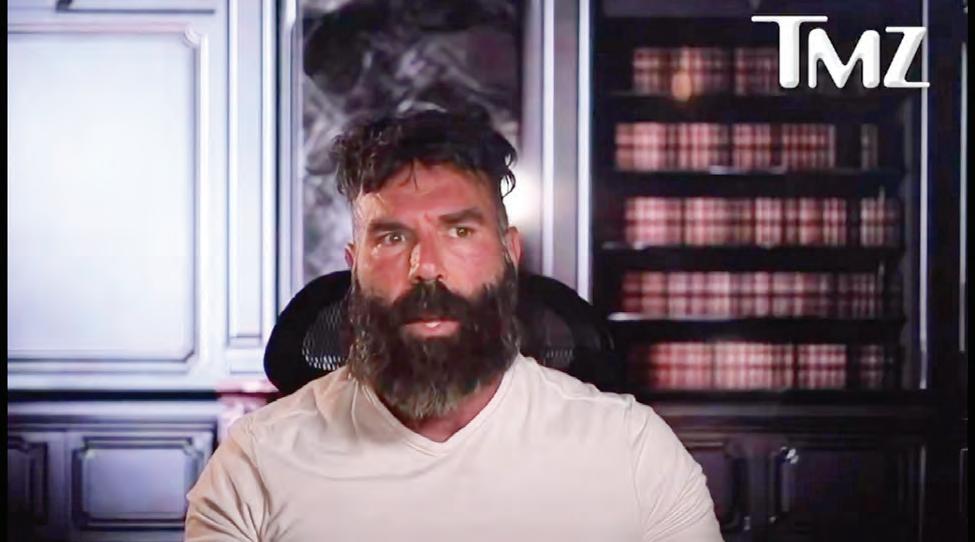
Bilzerian:
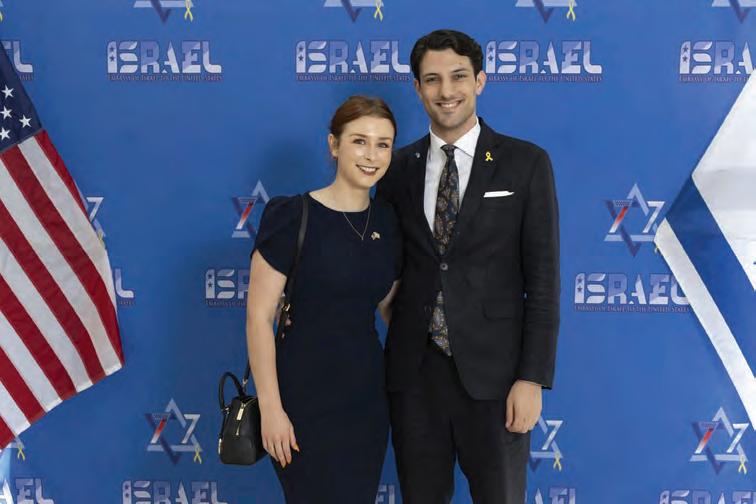
showed complex trends as well, the report found. In Mexico, 70 incidents were recorded in 2025 compared with 53 in 2024. In South Africa, 95 incidents were recorded in 2025 compared with 128 in 2024. In Italy, 963 incidents were recorded in 2025 compared with 877 in 2024, including 11 cases of physical assault compared with eight, respectively. In Chile, 27 incidents were recorded compared with 51. In Spain, 207 incidents were recorded
voting for the multiple-choice option “16 million Jews.”
Continued from page 5
when he was the “king of Instagram,” posting photos of himself surrounded by scantily clad women, sports cars and with large guns.
In June 2015, Bilzerian said he would be running for president, though by December he’d gotten behind the candidacy of Trump.
Before that, he’d served four years in the U.S. Navy starting in 1999, and dropped out of the University of Florida to play professional poker. His father, Paul Bilzerian, is a businessman who, as a corporate takeover specialist, was sentenced to four years in prison for federal crimes including fraud and criminal conspiracy.
In the months after Hamas’ Oct. 7 attack and the ensuing war in Gaza, Bilzerian’s social media presence began taking its current shape of focusing predominantly on Israel and, eventually, Jews.
“Do you think the Israeli attacks on Gaza are justified or f–ked up?” Bilzerian asked his followers on Nov. 6, 2023. By 2024, the occasional surveys he took of his followers became pointedly focused on Jews.
“Who causes the majority of the worlds problems,” he asked, with users overwhelmingly
PAC:
Continued from page 8
Cynthia McKinney, a former Democratic congresswoman who was running with the Green Party in Georgia, would have been an AZAPAC pick except that she suspended her congressional campaign because it did not raise enough funds for the state’s filing fee. “We were asked to provide the funds but with insufficient time in which to do so,” Rectenwald wrote in an email.
McKinney tweeted back in 2021 that “Zionists did” 9/11, and includes a complimentary quote
In January 2025, Bilzerian asked his followers whether Hitler was a “good person,” a “terrible person,” or if they didn’t know. A third of the 178,000 voters said Hitler was a “good person,” and another 23% said they didn’t know.
compared with 193. In New Zealand, there were 143 incidents in 2025 compared with 131 in 2024, of which five were physical assaults compared with two, respectively. In Bulgaria, 55 incidents were recorded compared with 50 theprevious year.
A separate study analyzing dozens of indictments and court rulings shows that
Jews he believed died in the Holocaust.
“I don’t know, but I would bet my entire net worth that it was under 6 million,” Bilzerian said.
According to FEC filings, Bilzerian’s campaign treasurer is Patrick Krason. Krason was also the treasurer for the short-lived presidential campaign of Ye, formerly known as
Bilzerian has promoted the “Great Replacement” conspiracy theory, claiming that Jews control the media and are using that position to push an “anti-white agenda” and replace whites with non-white immigrants.
Bilzerian laid out his views on Jewish people in a 2024 interview with conservative commentator Patrick Bet-David, during which he said Jews “knew about 9/11” and “had JFK assassinated.”
Later that year, conservative media personality Piers Morgan asked Bilzerian how many
from Louis Farrakhan, the Nation of Islam leader who has a history of antisemitism, on her website. She is now pivoting to run for governor of Georgia, according to her website.
The group has also endorsed Republicans Tyler Dykes, who was arrested for assaulting law enforcement during the Jan. 6 Capitol attack; and Nick Hankins, whose positions include banning “Islamic followers from immigrating” because “Islam is not compatible with the Constitution or American values.”
Casey Putsch, who is running for governor of Ohio, had been endorsed by AZAPAC,
many attacks are carried out by “lone wolves” who come mainly from two entirely different political extremes — white Christians devoted to “white supremacy” on the one hand, and anti-Zionist Muslims on the other.
“The attackers represent a wide variety of ages, geographical areas, and ethnic backgrounds,” said Dr. Carl Yonker, the director of the research. “Among them is a high proportion of unemployed people and, more generally, of people to whom life has not smiled.”
The penetration of blatant antisemitism, including admiration for Hitler and Holocaust denial, into the mainstream currents of the Republican Party is cause for existential concern, Yonker noted. Social media makes the fight against this phenomenon especially difficult, and perhaps impossible, he added.
The report harshly criticized the Israeli government’s role in the global fight against antisemitism, saying that “the government did not carry out even a single significant and effective action and often caused harm.”
Israeli politicians at the highest levels steadily “expanded the scope of the term ‘antisemitism,’ including through cynical and hasty declarations, drained it of meaning, and damaged the struggle against Jewhatred,” the report’s authors said. PJC
“It started with the jewish owned news stations telling us ‘white supremacy is the greatest threat to America,’” Bilzerian wrote last year. “Whites were replaced in movies & streaming networks. Then the Jewish exec run Blackrock forced DEI on all major corps.”
Bilzerian often cites passages from the Talmud to make claims about Jewish beliefs, such as that Jews approve of stealing and raping as long as the crimes are committed against non-Jews. Other figures like Candace Owens have similarly taken passages from the Talmud, but rabbis have criticized those figures for using quotes that are mistranslated and often taken out of context from the text, which includes centuries of rabbinic debates and is not a formal code of laws.
During a stream with the influencer Sneako, who has also spread antisemitic conspiracy theories, Bilzerian said he supports “exterminating Israel” and that he “would sign up tomorrow and go f—king put boots on the ground and go f—king kill Israelis.”
Kanye West, another public figure who’s spread conspiracy theories about Jews.
Bilzerian has promoted the “Great Replacement” conspiracy theory, claiming that Jews control the media and are using that position to push an “anti-white agenda” and replace whites with non-white immigrants.
but the group has since removed his name from its website. Putsch drew accusations of dog whistling to Nazis when he advertised an upcoming “beer hall rally,” which, combined with his last name, evokes the name of the “beer hall putsch,” a failed coup attempt led by Adolf Hitler. He had also made a YouTube video in which he asked the AI tool Grok to name Hitler’s “good” qualities. AZAPAC did not provide an explanation for its withdrawn endorsement, referring questions to the Putsch campaign. The campaign did not respond to request for comment.
Rectenwald, who is Catholic, said he was
“Give me a rifle and send me the f–k over there,” he said, adding, “I truly believe that the majority of that country is evil.”
On Morgan’s show, Bilzerian said Judaism innately promotes “Jewish supremacy,” and pointed to the state of Israel as being the result of that ideology.
“Israel is a manifestation of that religion,” he said. “And I think that religion is terrible.” PJC
raised in a predominantly German and Italian neighborhood in Pittsburgh, and that he “didn’t know what a Jewish person was until I was an adult, frankly.” Since then, he has lived near a predominantly Jewish Pittsburgh neighborhood and said his kids have made a number of Jewish friends in school.
Though Rectenwald denies being a purveyor of antisemitism, he has also not been one to denounce it online. Leo Terrell, the often-tweeting leader of the Justice Department’s antisemitism task force, wrote last year, “We will eliminate antisemitism!!” Rectenwald responded, “Antisemitism is free speech.” PJC
Guest Columnist
An Instagram reel for N12 News Israel tells the story of a well-known resi dent in Kiryat Shmona, a town near the Lebanese border, on the verge of tears. His 8-year-old daughter cannot ride her bike for fear she’ll have to duck an oncoming missile or run to a safe room. His 10-year-old son’s hair is falling out. His grown sons tell him they won’t come back. “What do they have to come back to?” he asks — and breaks into tears.
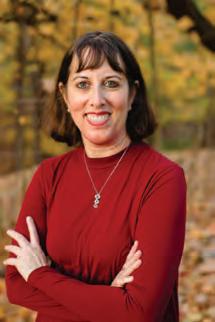
the north before we left Israel. Children rode their bikes along the Jordan River until dusk, laughter stretching across open spaces without interruption. There was a quiet confidence then — a belief that life, though never simple, was steady. Our kibbutz, not far from Kiryat Shmona, held that same sense of belonging for me. It was where I first understood what it meant to build a life with someone, where I became a mother,
Kibbutz Misgav Am, where I spent the last year of my military service and Kibbutz Malkiyyah, founded by my uncle and aunt in 1949. You would never know that beyond the beauty of these landscapes, their proximity to the border has become a constant threat to their daily existence.
Through this father’s lens, I see the fear I have carried silently: my family displaced, my friends scattered, lives upended while I sit
In Pittsburgh, I get a chance of sharing my pain and heartache, offering a small relief of being seen.
I want to weep for him and for every displaced and angry resident of Israel’s north, especially the Galilee Panhandle communities that have nearly been ignored and abandoned.
I keep watching this reel, trying to understand why. Is it heartbreak for the father?
The denial that this once-thriving town has become a ghost town? The longing to return to our kibbutz nearby, where I met my Israeli-born husband and had my son? Or is it the ache of being unable to go home, with the backdrop of uncertainty against canceled flights leaving Instagram as my only window?
I remember a different rhythm of life in
where ordinary moments — shared meals, familiar paths, the hum of community — felt enduring. Watching that father unravel, I realize I grieve not only for him, but for a version of home that no longer exists, for the innocence that allowed children simply to be children without calculating the distance to a shelter.
Since Oct. 7, I’ve been tracking news from Israel because U.S. headlines rarely capture what’s happening along the northern border. From my Pittsburgh home, I follow almost every day the news of this neglected yet stunning region of Israel, zooming in on two of my favorites that have been nonstop targets:
in quiet Pittsburgh for many years, my heart torn. Now these bordering communities live in constant fear. Kiryat Shmona — empty, silent, haunting. Most days, I walk the streets of Squirrel Hill carrying these images and memories of happier days. Headlines lodge themselves somewhere deep in my body, a sense of home suspended across oceans.
I remember being a young mother during the 2006 Israel-Lebanon war, fleeing our kibbutz, Sde Nehemia, just a few kilometers from Kiryat Shmona, only to travel hours to sleep on the beaches of the outskirts of Tel Aviv. The fear that our kibbutz home and
community might be destroyed resurfaces these days again and again, as real as it is now for those I love. In Pittsburgh, I get a chance of sharing my pain and heartache, offering a small relief of being seen.
But from afar, I am angry. Frustrated. As an Israeli expat, this anger simmers beneath every headline. I see the Galilee Panhandle communities — once vibrant, now emptied, their children learning fear before they can ride their bikes — and it breaks something in me. I cry into my husband’s arms, but the relief is just temporary.
Many families in the north like this resident of Kiriyat Shmona are losing hope not only for their own lives, but for the futures of their children, for the possibility that these towns could ever again be home. I feel powerless, exiled in both distance and circumstance, carrying grief that refuses to settle because few notice what is being lost.
“Why does one choose to have children?” one man asks the reporter. “For continuity, for hope in their future — not just to say I have children.”
And that is the heartbreak of home from afar: the hope that once sustained generations now hangs in the balance, fragile, urgent and too easily overlooked. PJC
Dorit Sasson is the award-winning author of “Accidental Soldier: A Memoir of Service and Sacrifice in the Israel Defense Forces” and its sequel, “Sand and Steel: A Memoir of Longing and Finding Home.”
My family and friends questioned why I wanted to visit
That’s why I wanted to go.
Guest Columnist
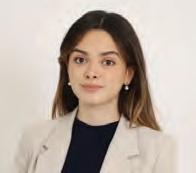
to turn that hesitation into motivation. I wanted to prove that reporting on Israel and on antisemitism, past and present, should not be seen as a career risk.
If anything, it is both a journalistic responsibility and part of the job to report on a country firsthand and hear directly
WARSAW — As a non-Jewish college student, I felt both excitement and trepidation when I got the call that I had been accepted into a newsmaking tour of Israel.
Was I really ready to go to Israel to witness, report and write from a country reeling from war — given that the mere mention of Israel can be deeply polarizing on campuses, including my own?
The program, organized for aspiring Hispanic journalists through Fuente Latina, offered a chance to report on a story dominating global headlines. But when I shared the news with friends and family, the reactions were mixed.
“Are you sure you want to do this?” some friends asked. “Are you really going to risk your future career opportunities to report on Israel, right when this crisis is happening?”
They had reason for concern. On many campuses, indicating concern about Israel and antisemitism draw immediate backlash.
After thinking it through, I decided
University, of Spanish and Dominican heritage, I live in a city that is home to the largest Jewish population outside of Israel. I have often wondered why a city celebrated for its ethnic diversity has also become one of the most polarized places for Jews in the United States.
I have come to believe that without a deeper understanding of the history and the reality of discrimination against Jews today, such hatred will continue to grow, especially amid ongoing conflicts involving Israel.
from people living through history. This is especially true now, as Jews on campus and in cities around the world face isolation, boycotts and attacks at levels not seen in decades. Too often, opinions are shaped on social media by people with no direct connection to these places, who have never visited them or spoken to the people they write about.
As a journalism student at New York
Since starting school in early 2024, I have witnessed antisemitism firsthand. Numerous headlines echo the same narrative: “Columbia University leaders face scrutiny over antisemitism on campus” or “3 Jewish students sue NYU, claiming the college failed to protect them from antisemitism.” I have come to believe that without a deeper understanding of the history and the reality of discrimination against Jews today,
such hatred will continue to grow, especially amid ongoing conflicts involving Israel. That realization brings me back to our trip to the Middle East. Unfortunately, because of the Iran war, Fuente Latina postponed our travel to Israel and instead took our group of student journalists from across the United States and Mexico to Poland.
There, we learned how a country once home to Europe’s largest Jewish population saw about 3 million Jews, roughly 90% of its prewar community, systematically murdered by the Nazis and their collaborators during the Holocaust. In total, 6 million Jews were killed, destroying roughly one-third of the world’s Jewish population.
I could not imagine a more powerful way to place current events in a historical context — one I hadn’t fully grasped until that moment.
Our group spent five days in Warsaw and Kraków, tracing a past we had only begun to understand. It came into sharp focus at Auschwitz-Birkenau, the largest Nazi concentration and extermination camp. We interviewed Holocaust survivors and scholars. Irene Shashar described how she escaped the Warsaw Ghetto as a child through the sewer system. After the war, she moved to Peru before eventually rebuilding her life in Israel. Ofer Laszewicki,
Last week, the Chronicle asked its readers in an online poll the following question:
“Would you support legislation to set limits on how close demonstrators can gather near entrances to synagogues and religious schools?” Of the 276 people who responded, 96% said yes and 4% said no. Comments were submitted by 64 people. A few follow.
I think this is a good idea and would help with security at synagogues and provide additional protection.
The commitment to free speech does not say where the speech should take place.
We need to be very careful to not allow our very real concerns about antisemitism to be hijacked by those who want to destroy free speech in America and call it “good for the Jews.”
I would support legislation to limit how close demonstrators can get to any community service organization, including synagogues, schools of all types, churches, playgrounds, etc.
the grandson of survivors, reflected on his family’s Holocaust history and the discrimination he faces as a Spanish-Israeli journalist. Historian Yoel Schvartz offered insight into how antisemitism has evolved over time. What surprised me most were the connections I formed with my fellow student journalists and our local guides. Many shared deeply personal stories. Our guides spoke not only about the Holocaust, but
Why not? We do it for abortion clinics.
Demonstrators should not be allowed close enough to disturb, frighten, or
about how the devastation Poland experienced in the 20th century continues to shape the country today.
What struck me was that not all of them were Jewish. Their perspectives made clear that antisemitism does not affect only Jewish communities but reverberates far beyond them.
As a student journalist, this experience strengthened my confidence in covering complex global issues. In a short time, Fuente Latina provided us with a profound historical foundation, the opportunity
What does it mean to be democratic, pluralistic, and to embody Jewish values?
In response to “14th Ward Democratic Committee controversy envelops upcoming elections” (April 3): As a proud Jewish Pittsburgher who grew up in Squirrel Hill and is raising proud Jewish children in Squirrel Hill now, I know that I am more privileged than I am marginalized. I believe that being pluralistic and democratic means standing up for my immigrant neighbors and supporting the efforts of organizations like both Casa San Jose and JFCS. I believe that in a democratic pluralistic society, that has strong free speech rules, both pro-Palestinian and pro-Israeli voices should be allowed and respected. When I think about who to vote for, antisemitism is one topic on my mind, but also on my mind are reproductive rights, voting rights, environmental justice and gun violence prevention. I realize that my safety is tied to the safety of my neighbors — Black and brown; Jewish, Christian, Muslim
intimidate those that are going to worship. They should absolutely not be allowed near any schools! The Constitution allows freedom of speech, but I do not believe that should include intimidation or allow it to affect freedom of religion or education.
We shouldn’t infringe on the First Amendment right to protest — regardless of our positions on the issues. But reasonable people agree there are (and should be) limits, like when speech or action present a clear and present danger, or infringe on the rights of others. Blockading or making it hard for congregants or students to enter facilities qualifies.
Yes, but it should be equally applicable to all religious houses (not only Jewish) and all schools (not only religious). Legislation like this should be compatible with the First Amendment and its modern interpretation by the courts.
to experience firsthand sites of immense tragedy, and the chance to speak with those still affected by its aftermath.
As someone living in New York City who has observed rising antisemitism over the past two years, this trip opened my eyes to perspectives often absent from college campuses and the media. The rise in antisemitism since the Oct. 7, 2023, attack on Israel is something I believe everyone needs to understand.
As I return to my daily life, I am committed to sharing what I learned through Fuente Latina and standing up against
It is not an oxymoron to believe in the First Amendment while still wanting there to be reasonable guiderails to protect innocent worshippers/students from intimidation and threats.
It depends on the distance and degree of interference with people who want to enter. It’s fine to demonstrate but not to obstruct. I’d have to vote “maybe.”
I do not feel that it is inconsistent to honor our Bill of Rights while simultaneously protecting vulnerable populations: Evil thoughts become threatening words, which then beget violent actions. PJC
— Compiled by Toby Tabachnick
Chronicle weekly poll question: How important is it for elected officials to avoid public appearances with individuals linked to antisemitism? Go to pittsburgh jewishchronicle.org to respond. PJC
religious discrimination in all its forms. My friends had real reason to be concerned. Speaking up about antisemitism in today’s environment can quickly draw condemnation. But journalists have a responsibility to go beyond the headlines, to report the full story and to show how the past continues to shape the present. PJC
Lucía Alonso is a journalism student at New York University. This article was first published on JTA.
and non-religious; and all genders and sexualities. The Beacon Coalition, whose definition of pluralism and democracy highly emphasizes support for Israel, does not speak for me. And I am confident that I am not the only Jew in Pittsburgh who feels this way.
Correction In “Mollie’s Meals caught in county funding squeeze, but support holds for now” (April 10), the Chronicle incorrectly stated that the Jewish Association on Aging is not accepting new clients for Mollie’s Meals. In fact, the JAA is accepting new clients for home-delivered meals. The Chronicle regrets the error. PJC
We invite you to submit letters for publication. Letters must include name, address and daytime phone number; addresses and phone numbers will not be published. Letters may not exceed 500 words and may be edited for length and clarity; they cannot be returned. Send letters
We regret that owing to the volume of correspondence, we cannot reply to every letter.
By Miriam Szokovski | Chabad.org
sweet vinaigrette dressing if you prefer. This recipe serves 4-6.
Salad
1
2
3-5
seeds
Dressing ingredients:
¼ cup peanut butter
2 tablespoons sugar
2 tablespoons vinegar (1 rice, 1 white)
1 tablespoon soy sauce

Directions:
Wash the bok choy well (it’s often sandy) and pat dry.
Slice into whatever size you prefer, and place in a salad bowl.
Thinly slice the apple and celery, roughly chop the dill, and add to the bowl.
To make the dressing, start with the peanut butter in a small bowl. Add the sugar, salt, and garlic powder, and mix until it’s a sandyish texture.
Add the liquids a little at a time, mixing in one direction until incorporated. This will keep the dressing smooth, instead of piecey. (If you prefer, you can also stick it all in a small blender and make it that way.)
Pour dressing over salad. Toss to coat. Sprinkle peanuts and toasted sesame seeds over the top. PJC
Miriam Szokovski is a writer, editor, and member of the Chabad.org editorial team. She also shares her cooking and baking on Chabad.org/food.














By Olivia Haynie | Forward
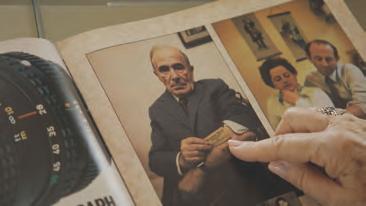
Growing up in Israel as the daughter of Holocaust survivors, Judith Richter was taught not to discuss the Shoah. While her mother was very open about her experiences, Richter’s father was more reserved, and Israeli society at the time looked down on European Jews for, as they wrongly assumed, not fighting back. It wasn’t until Richter was an adult that she learned her father had played a critical role in protecting children at Auschwitz-Birkenau — a secret she gleaned not from her father himself but from an article on Josef Mengele in a LIFE magazine that her husband happened to spot in a grocery store.
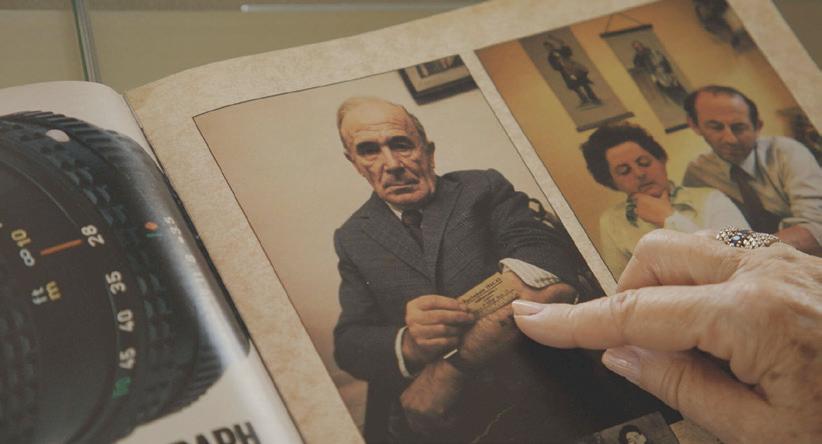
Photo by Matthew O’Neill via the Forward
even your freedom can be taken away from you, the single asset that cannot be taken away from you is your knowledge,” she said.
After Auschwitz was liberated, Spiegel led the kids on an arduous journey through Eastern Europe helping them return to their homes — or at least, to what was left of them.
misinformation of the Holocaust,” O’Neill said, “it’s an essential time for journalistic work based entirely on indisputable truths to come out.”
Erno “Zvi” Spiegel was 29 years old when he was deported from Hungary to Auschwitz along with other members of his family, including his twin sister Magda. As a twin, Spiegel was selected to be a subject for Mengele’s scientific experiments, where he injected subjects with diseases and cancer cells to study their effects on the human body; due to their shared genetics, one twin could serve as a control for the experiment. If one died from the procedure and the other didn’t, the surviving twin would still be killed and subject to an autopsy to understand why they lived.
Mengele also charged Spiegel with looking after the other kids he was experimenting on, whose lives Spiegel would end up saving multiple
times. The PBS documentary “The Last Twins,” directed by Perri Peltz and Matt O’Neill, captures the deep and unexpected relationship Spiegel had with his charges through interviews with the surviving sets of twins from Mengele’s lab along with Spiegel’s family. Uncle Spiegel, as the twins called him, was the only adult that many of the kids trusted during their imprisonment.
When SS physician Heinz Thilo ordered the extermination of all sets of twins, Spiegel was able to intervene by telling Mengele that his subjects were at risk. Sometimes siblings were mistakenly brought in as twins, but Spiegel lied about their birthdays so they wouldn’t be sent to the gas chambers. Many recounted how he would teach them math and geography to distract them from their horrific conditions.
When she heard these stories for the first time, Richter told me, she was not surprised her father had put such an emphasis on education, even in the camps.
“My father taught me since I was very young that while your material possessions, home,
Although Spiegel, who died in 1993, never told his own children what he had done during the war, he spoke with LIFE Magazine for its1981 article on Mengele’s experiments. The LIFE piece didn’t just cause revelations for Spiegel’s family; one of the survivors, Peter Somogyi, saw the issue, prompting him to contact Spiegel. The two reunited for the first time in almost four decades in Boston, and after that, Spiegel arranged meetings with a number of the other surviving twins.
Richter began researching her father’s story and the lives of those he had saved for an academic project. However, when director Peltz’s mom, who had known Richter for years, connected the two women, Richter realized the importance of turning her father’s story into a movie.
Directors O’Neill and Peltz, who had previously worked together on the documentary “Can’t Look Away: The Case Against Social Media,” knew the project was time sensitive given how few living survivors are left. Since they first started shooting the film almost a decade ago, all but one of their interview subjects has died. O’Neill added that today’s political climate contributed to the urgency of getting the film to the public.
“At a time of rising antisemitism, of
Peltz noted that Spiegel’s heroism wasn’t embodied in one grand act, but “in the step by step, day by day.” Although Mengele’s horrific experiments get a brief mention, the filmmakers chose to focus on the uplifting story of how people came together and protected each other in the midst of tragedy.
“Right now, many of us feel overwhelmed by world events, by things that feel out of control,” O’Neill added. “This is a story of hope in a time of horror and of a man who took the small space that he could control and did good within it.”
In 2017, Richter organized a reunion of the survivors in Israel, where they dedicated a plaque to Spiegel and the twins in Jerusalem. Richter said her father’s strong sense of social responsibility had a profound effect on her life. She noted that in the homes of some Holocaust survivors, the “children grow up with a very strong sense of revenge.” Instead, her father taught her that the best response to hatred was to ask herself how she could help other people.
“Erno was a fighter in his own way,” O’Neill said. “He fought the Nazis by teaching the kids to call each other by their names. He fought the Nazis by teaching them geography. He fought the Nazis by giving them humanity in darkness.” PJC
This story was originally published on the Forward. To get the Forward’s free email newsletters delivered to your inbox, go to forward.com/newsletters.
By Julia M. Klein | Forward
“The Last Woman of Warsaw”
Judy Batalion Dutton, 336 pages, $30
Don’t be misled by the title of this debut novel by Judy Batalion, nor by her previous book, “The Light of Days,” about the role of Polish-Jewish women in the anti-Nazi resistance.
Though the specter of the Holocaust looms over “The Last Woman of Warsaw,” the novel is not really Holocaust fiction. It does not portray a final female survivor of that embattled city. Its subject is instead the odd-couple friendship of two young Jewish women embroiled in the artistic and political ferment of pre-World War II Warsaw.
For Batalion, recreating the atmosphere and quotidian life of this cosmopolitan city, which once elicited comparisons to Paris, was a major aim. “In our contemporary minds, historical Warsaw conjures images of gray and death,” she writes in a lengthy author’s note. But that shouldn’t negate its more vibrant past. “Long before Vegas,” Batalion writes, “Warsaw was the capital of neons, its night skyline dotted with glittering cocktail glasses and chefs carrying platters of roasts. Much of this artistic production was Jewish.”
Even this brief excerpt shows that Batalion isn’t much of a prose stylist. But awkward locutions and diction mistakes aside — including the repeated use of “cache” when she means “cachet” — Batalion generally succeeds in immersing readers in Warsaw’s lively urban bustle and heated street politics. Here, skating on the edge of catastrophe, Polish Jews of varying ideologies and backgrounds face off against antisemitic persecution and violence.
Batalion’s handling of the historical backdrop is defter than her fledgling fictional technique. The narrative of “The Last Woman of Warsaw” is a plodding and repetitive affair that ultimately turns on an improbable coincidence.
The plot involves the sudden disappearance of a photography professor with communist ties and the halting efforts of the novel’s two protagonists to find and free her. The pair, whose initial antagonism mellows into friendship, are Fanny Zelshinsky, an upper-middle-class Warsaw University student, and Zosia Dror, who hails from a religious shtetl family. Her adopted surname references the Labor Zionist group that now claims her loyalty. Despite their differences, the two women have in common a desire to shake off the past and forge new lives. They also share an attraction to a single man, Abram, who can’t seem to decide between them.
When the story begins, Fanny is engaged to the perfectly nice, highly suitable Simon Brodasz, whom she’s known since her teenage years. Her mother is pushing the match. But Fanny is not in love and dreads the loss of freedom marriage entails. Her true passion is photography — in particular, fashion photography, to which she brings an
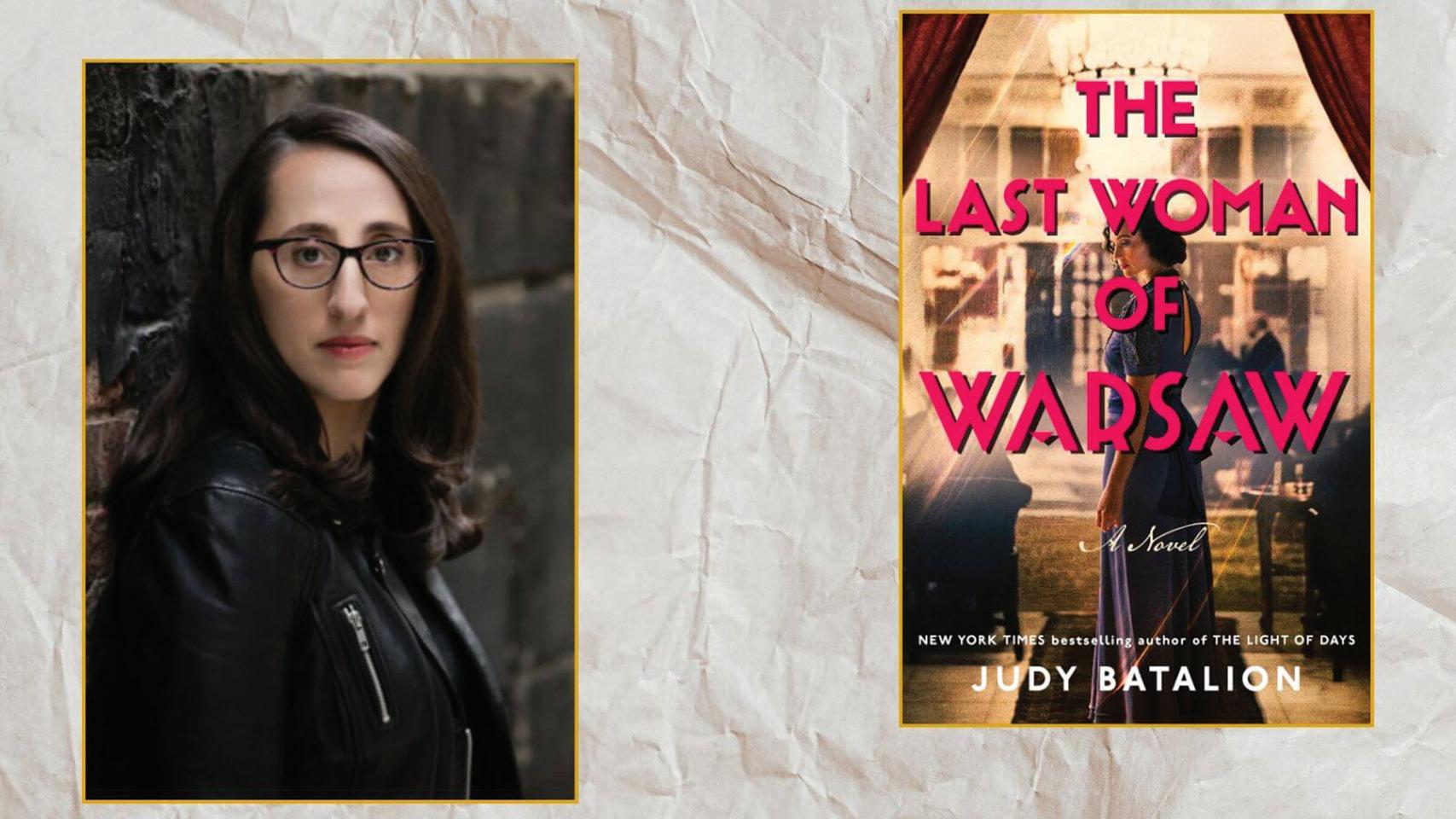
idiosyncratic, modernist flair.
Zosia’s passion is political activism, and she aspires to a more prominent leadership role in Dror. Like Fanny, she is at odds with her mother, who is urging her to return to the shtetl for the festivities preceding her sister’s wedding. What brings these women together is the arrest of the famous photographer Wanda Petrovsky, to whom both are connected. Wanda is one of Fanny’s professors, and Fanny needs her help to enter a potentially career-making exhibition. Wanda also happens to be a political activist, a leader of Zosia’s Zionist group, and Zosia hopes she’ll provide her with a visa for Palestine.
As Batalion’s narrative alternates between their perspectives, the antisemitic fervor in Warsaw mounts. Polish right-wing groups have started terrorizing Jews. Police invade clubs where Jewish comedians are mocking antisemitism. At Warsaw University, where Jewish students already have been subject to admissions quotas, the humiliation of being consigned to a “Jew bench” in class comes as a humiliating shock to Fanny.
Zosia, by contrast, has seen far worse. She and her family were victims of one of the murderous pogroms that periodically roiled the Polish countryside. She has been traumatized by the burning of her home, her father’s injuries and the refusal of her neighbors to offer refuge from the catastrophe.
In late 1930s Warsaw, Polish Jews are fighting back — with protests, hunger strikes and more. But what will any of this accomplish? Will Wanda attain her freedom, with or without the help of her protegees? Will Zosia and Fanny successfully defy their families and find meaningful lives? Which woman will Abram ultimately choose? And will any of this matter as both Poland and Polish Jewry hover on the brink of destruction?
Batalion answers these questions in an epilogue describing the fate of both women and of Fanny’s photographs, which eventually take a political turn, and in her author’s
note. In the note, she reveals that all four of her own grandparents “spent their young adulthoods in interwar Warsaw.” That heritage helps account for her own passion: “to memorialize Warsaw’s golden age of creativity and the Jewish art and culture that, along with six million lives, was also
decimated in the Holocaust.” A worthy endeavor, however clumsily executed. PJC
This story was originally published on the Forward. To get the Forward’s free email newsletters delivered to your inbox, go to forward.com/newsletters.
NO ONE SAVES MORE LIVES IN ISRAEL IN TIMES OF CRISIS.


Eli Fidler , son of Joseph and Leah Fidler, will become a bar mitzvah on Saturday, April 18, 2026, at Beth El Congregation of the South Hills. Grandparents are Michelle and Samuel Markovitz, and Irv and Diane Fidler. PJC
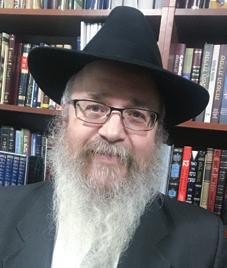








SRabbi Yossi Rosenblum Parshat Tazria–Metzorah Leviticus 12:1 – 15:33
ix weeks ago, my daughter returned from Israel together with the girls of our Yeshiva high school. What should have been a routine flight turned into something far more memorable.
Midair, the pilot announced that there were engine issues and that the plane would need to make an emergency landing at London Heathrow Airport.
As you can imagine, there was a moment of fear. My daughter later shared that her first instinct was to panic. She began saying Tehillim (Psalms), like so many of us would. In that moment, her sense of vulnerability was very real.
And then she had a second thought.
She asked herself a simple question: “Who was I relying on five minutes ago, before the pilot made that announcement?”
The answer, of course, was the same as it always is.
Not the plane. Not the pilot. Not technology.
Hashem.
And if that was true before the problem, it was no less true now.
With that realization, she said, a certain calm set in. The situation hadn’t yet changed, but her perspective had. The fear didn’t disappear entirely, but it was held within something deeper: trust.
There’s a famous line often attributed to Vince Lombardi: “Act like you’ve been there before.”
In sports, it means that when you reach the big moment, you don’t lose yourself in it. You carry yourself with composure, humility and professionalism during success, treating achievements as expected rather than surprising.
For the Jewish people, this idea runs much deeper.
We have, literally, been here before.
We have faced uncertainty, fear and upheaval. We have lived through moments when the future felt unclear. And yet, across generations, there has been a quiet, enduring response: We steady ourselves, we turn to Hashem and we move forward together.
Not because we are unaware of the danger, but because we know something even more fundamental: The One who carried us until now is still carrying us.
This idea resonates deeply with the month of Nissan.
Nissan is the month of redemption — not only the redemption from Egypt, but the mindset of redemption. The Jewish people left Egypt not just physically free, but with a new internal orientation: a relationship of trust in
Hashem that would define us forever.
That trust was not born in a moment of calm. It was forged in uncertainty. At the edge of the sea, with the Egyptian army behind them, the people could have given in to panic. Instead, they moved forward.
In a sense, they too were “acting like they had been there before,” trusting in a reality deeper than what they could immediately see.
This idea also sheds light on a subtle theme in Parshas Tazria–Metzorah.
These Torah portions deal with states of impurity and the process of restoration. At first glance, they seem distant from our daily lives. But at their core, they describe something very human: moments when a person feels unsettled, disconnected, or vulnerable and the path back to stability and wholeness.
The Torah does not deny those experiences. It gives them structure. It reminds us that even in moments of disruption, there is a process, there is meaning, and there is a way forward. You are not lost. You are in a stage.
Perhaps that is the deeper message.
Fear may come. Uncertainty may come. That is part of the human experience.
But beneath it all, there is something steady. The same Hashem we relied on before the “announcement” is the One we rely on after. The circumstances may shift, but the foundation does not.
And when we remember that — when we “act like we’ve been there before”— we access a strength that is not loud or dramatic, but deeply rooted.
A calm that allows us not only to endure, but to move forward with confidence, faith, and connection to one another.
Ultimately, Parshiot Tazria reminds us that Hashem is attentive to every person, and, when needed, guides a person to recognize their shortcomings while offering a path toward correction and spiritual improvement. In a truly similar way, the missiles falling in Israel have caused destruction and, sadly, the loss of life. But they serve as a wake-up call to strengthen our Jewish commitment. At the same time, they make us aware of Hashem’s Divine Providence and protection.
Over 3,000 missiles have been fired at Israel. Yet time and again, 40-foot “fragments” have struck empty buildings and open fields; 400-kilogram warheads hit the ground but did not explode. Suicide drones exploded in mid-air thanks to Israeli ingenuity.
The point is, Hashem is watching. Hashem is in charge. And Hashem is good. PJC
Rabbi Yossi Rosenblum is CEO of Yeshiva Schools of Pittsburgh and rabbi of Congregation Kesser Torah. This column is a service of the Vaad Harabonim of Greater Pittsburgh.




GOLEMAN: Gail Goleman, on Thursday, April 9, 2026. Cherished sister of Judith (Neal Bruss) Goleman. Loving aunt of Julia (Grady) Campion and great-aunt of Bennett and Elliott. Cousin of Lynn (Kirk) Warner and children, Hayley (Jake) and Brooke (Luca); Ted (Marsha) Goleman and children, Andrew (Chelsea) and Jesse. Also survived by many loving cousins on the Shall side. Gail passed away after a brief illness. A successful retail buyer for many years, Gail retired in 2013 and returned to Pittsburgh. Services and interment private. Arrangements entrusted to Ralph Schugar Chapel, Inc. schugar.com
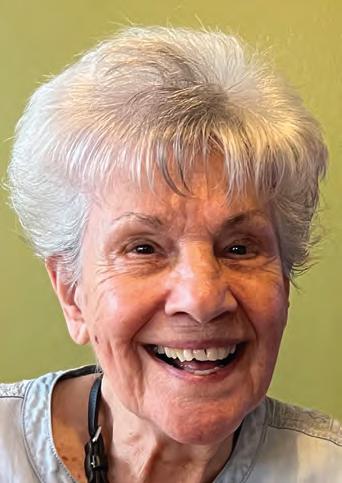
SCHWARTZ: Phyllis H. Schwartz. It is with heavy hearts that we announce the passing of Phyllis H. Schwartz, a beloved mother, grandmother, great-grandmother and friend, who passed away on April 11, 2026, at the age of 96. Phyllis was born on July 26, 1929, in Philadelphia and adopted by her loving parents, Freda and Alec Shusett. Her life was a testament to warmth, kindness and an enduring spirit that touched all who had the privilege to know her. Phyllis was predeceased by her husbands, Bernard (Buddy) Schwartz and Marvin Isack, and stepson Mark Isack. She was a devoted mother to her children, Rhona Morgan (Bob), Marlene Ambrose (Joey), and Louis Schwartz (Arlene Cullen), and to her stepchildren, Marsha Lester and Ron Isack. Her nurturing spirit extended to her grandchildren, Jaime Rigdon (Lee), Ali Morgan, Michael Schwartz, David Schwartz, and her great-grandchildren, Ben, Walter, Molly and Claire Rigdon, who brought her immense joy and pride. Phyllis had an unparalleled ability to make everyone around her feel valued and appreciated. Her laughter and ever-present smile were infectious. She will be dearly missed, but her legacy of love and laughter will forever remain in our hearts. May her memory forever be a blessing. Services were held at Ralph Schugar Chapel, Inc. Interment Beth Shalom Cemetery. The family kindly requests that donations be made in her memory to the Jewish Association on aging, 200 JHF Drive, Pittsburgh PA 15217. schugar.com PJC
Sylvia
Sunday April 19: Elias Bloomstein, William Bowytz, Samuel Broffman, Mollie Goisner Dugan,
Saul Feldman, Milton E Golanty, Anna Goldblum, Celia Greenfield, Eva Korobkin, Reba Lazar, Anna Miller, Sarah Offstein, Rose Orringer, Martha Rosen, Bella Siegal, William H Whitman, Eva Grossman Willinger
Monday April 20: Louis Americus, Isadore Berman, Hyman Caplan, Isadore Abraham Frand, Lea S Golomb, Ida Greenberg, David L Gusky, Arthur Samuel Herskovitz, Max Hochhauser, Dora Berman Horwitz, Sam Lurie, Celia Marcus, Sadie Mullen, Jack Offenbach, Lee Calvin Plevin, Dolores K Rubin, Philip L Silver, Helen Strauchler, Gertrude W Supowitz, Phillip Tevelin
Tuesday April 21: Bella H Cohen, Edith Pichel Davis, Sheila Dobrushin, Sarah Lebenson, Paul Leipzig, Abe I Levinson, Saul Mandel, Louis M Myers, Morris B Pariser, Wolf Shoag, Joseph M Swartz, Louis Wolf, George Zeidenstein
Wednesday April 22: Max Azen, Gilbert Bernstein, Sonia Firestone, Herman Frankel, Lena Sanes Goldman, Barbara Gross, Solomon Hahn, Shirley Lebovitz, Donald Lester Lee, Harriet Berkowitz Linder, Harold Leo Lippman, Sam Littman, Moss A Ostwind, Hilda Stern Press, Samuel Raphael, Dr William Reiner, Carl Rice, Goldie Rosenshine, Scott Samuels, Rev Meyer Schiff, David Shussett, George Teplitz
Thursday April 23: Harry Broff, Katie Elpern, Lottie Fleisher, Arthur Goldsmith, Jack Goldstein, Joseph Goldston, Sam Goldston, Yosef Goldston, Beate Gruene, Pearl Katz, William Kliman, Selma Neiman, Imre Neubauer, Jacob Schulman, Sidney Yecies, Rose C Zapler
Friday April 24: Pauline Schlesinger Americus, Louis Berlow, Ida Rose Diamond, Julius Goldberg, Dr Joseph Irwin Greenberger, Samuel Judd, Rose Markowitz Klein, Jerome J Levenson, Rose Marks, Melvin Murman, John Rothman, Freda B Saltsburg, Sol Sieff, Yetta Weinberger, Minnie Gertrude Wolf, Harry Yecies
Saturday April 25: Harry Auerbach, Joseph Braun, James A Eckstein, Lena Fish Freedman, Sidney Friedman, Samuel Laskowitz, Louis P Rosenberg, Vivian Baltin Rosenthal, Ruth E Sherman, Dina Stark, Morris Zeff





















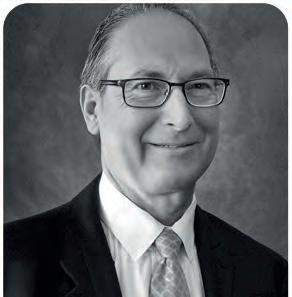




















By Grace Gilson | JTA
Eliot Engel, a Jewish New York Democrat who served more than three decades in Congress and became one of the most prominent pro-Israel voices on Capitol Hill, has died at 79.
Serving in the House of Representatives beginning in 1989, Engel’s decades-long career ended in 2021 when he lost the Democratic primary to Jamaal Bowman, a defeat that underscored a broader turning point in the Democratic Party’s shifting views on support for Israel.
“If we want to effectuate change in the world, if there are things we want to see in the world, if we are going to be the world leader, there are responsibilities that come with that,” Engel told The Washington Post in a December 2020 interview. “We are the leaders, and we should act like it.”
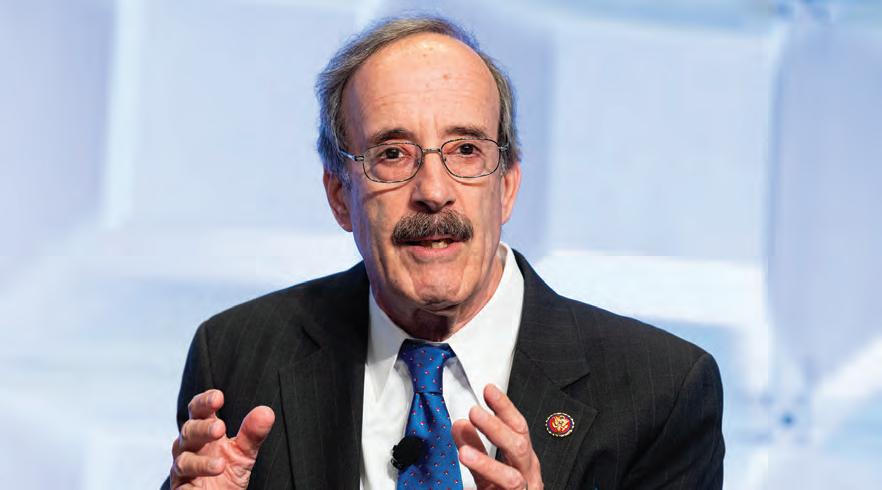
Born on Feb. 18, 1947, in the Bronx to Jewish parents, Engel worked as a teacher and guidance counselor for New York City public schools before earning his law degree and serving in the New York State Assembly from 1977 to 1988.
“All four of my grandparents were



immigrants, Jewish immigrants from what’s now Ukraine, who fled the pogroms of the early 20th century, looking for a safe haven and opportunity. And guess what? They found it in America,” Engel told The Jerusalem Post in 2021. “They came here before World War I. If they hadn’t come here,


they almost certainly would’ve perished in the Holocaust. This country has been a refuge to people who are hurting for many, many years, and I’m grateful for it.”
Representing parts of New York including Westchester County and the Bronx, Engel’s time in office was marked by a consistent focus on foreign policy, including support for the NATO-led intervention in Kosovo in 1999 against Serbia and activism to protect Syrian civilians. He chaired the U.S. House of Representatives Foreign Affairs Committee during the last years of his tenure.
In Congress, Engel also built a reputation as a committed pro-Israel lawmaker, regularly supporting strong U.S.-Israel ties and maintaining relationships with Jewish and pro-Israel groups throughout his tenure.
“I’ve been proud to stand with our ally Israel, our closest friend in the Middle East and, I would argue, in the world throughout my career,” Engel told the Jerusalem Post. “I believe that the United States and Israel share an incredibly important partnership. And the cornerstone of this relationship is the support it receives from both sides of the aisle … No one should play partisan politics with America’s relationship with Israel.”

Engel’s time in Congress ended in 2021 after he lost to Bowman, a progressive educator who was openly critical of the Israeli government and said that U.S. assistance to Israel should be conditioned on its behavior.
Engel’s defeat drew national attention and marked a broader turning point in the Democratic Party’s longtime consensus on support for Israel.
“Jewish Republicans have had plenty of disagreements with Rep. Engel during his 32 years in Congress, but his defeat is a blow to the historically bipartisan support for Israel in the US Congress,” the Republican Jewish Coalition said in a statement at the time.
The pro-Israel lobby AIPAC eulogized Engel in a post on X Friday, describing him as a “steadfast friend of the pro-Israel community and an unabashed champion of the U.S.-Israel relationship.”
“Throughout his distinguished 32-year career in Congress, including as chairman of the House Foreign Affairs Committee, Congressman Engel worked tirelessly to strengthen and deepen the strategic alliance between the United States and Israel,” the post read.
New York Governor Kathy Hochul also memorialized the late lawmaker in a post on X, writing, “The son of Ukrainian-Jewish immigrants, Eliot Engel brought the best of the Bronx to Congress.”
New York Democratic Rep. Ritchie Torres, who serves the Bronx and is one of the most outspoken pro-Israel voices in his party, called Engel “one of the greatest champions the Bronx has ever had in Congress” in a post on X.
“He served for more than three decades with unyielding dedication, fighting for his constituents and standing up for democracy around the world,” Torres wrote. “He was a trailblazer for the Bronx in Washington, and a fierce advocate for Kosovo and the Albanian community at a time when few others were paying attention.”
Engel is survived by his wife, Patricia; his daughter, Julia; his sons, Jonathan and Philip: his sister, Dori Kaplan; and three grandchildren. PJC




















By Andrew Lapin | JTA
Dozens of anti-Zionist and non-Zionist
Jewish authors are criticizing the Jewish Book Council, a historic literary group, for what they said was a “bias toward centering Israeli and Zionist voices” and “narrowing its vision to a Zionist approach to Jewish culture.”
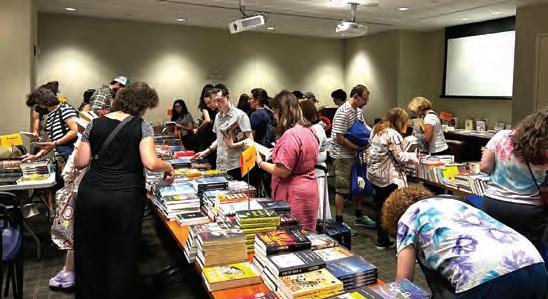
A new open letter signed by 42 authors argues that the council, which was founded in 1925, should commit itself more to spotlighting Jewish voices who disagree with traditional Zionism and should not have showcased Israeli and Zionist voices after Hamas’ Oct. 7, 2023, attack on Israel.
“Because the JBC is our most visible and longstanding Jewish literary institution, its focus on Zionist authors and books gives both Jewish and non-Jewish readers the false impression that Jewish books are inherently Zionist,” the open letter, published Thursday by “a Concerned Group of Jewish Writers,” argues.
Notable signatories include Israeli-Dutch novelist Yael van der Wouden, whose 2024 debut “The Safekeep,” a Jewish LGBTQ romance set in postwar Amsterdam, was shortlisted for a Booker Prize and won an award from the Jewish Book Council; memoirist Qian Julie Wang, whose book “Beautiful Country” was a New York Times bestseller, recommended by former President Barack Obama and winner of an award given by the council; novelist Adelle Waldman, author of “Help Wanted”; and Michael David Lukas, a professor
at San Francisco State University and past winner of both the National Jewish Book Award and Jewish literature’s prestigious Sami Rohr prize for his 2018 novel “The Last Watchman of Old Cairo.”
The Jewish Book Council was founded to support and award Jewish authors and topics. In addition to handing out the annual National Jewish Book Awards, the council also connects authors with Jewish speaking engagements, publishes reviews of Jewish books, and provides other forms of support. In 2024, after a list purporting to expose “Zionist” authors circulated online, the council launched a hotline to report antisemitism in the books world.
The council’s CEO, Naomi Firestone-Teeter, told the Jewish Telegraphic Agency the letter represented a “difference in expectations” about what the institution can stand for.
The authors said they initially contacted the council’s leadership in private last year, engaging in a dialogue over a list of specific concerns. Those included the council’s failure to define antisemitism in its reporting tool,
as well as its stated support of Israel and Israeli authors in recent awards ceremonies.
The authors also urged the council to state that criticism of Israel “is not inherently antisemitic,” and to “create programs and content in the coming year that reflect a more genuine diversity of Jewish views on Israel/Palestine and create spaces for Jews and cultural workers engaged with Judaism to have these difficult conversations.”
When the council didn’t follow up on their requests, the authors claimed, they decided to take their letter public. “We were—and remain— concerned that the institution’s apparent bias toward centering Israeli and Zionist voices is not only exclusionary but harmful, contributing to the dehumanization of Palestinians and advancing a system of cultural apartheid,” they wrote.
The open letter was the latest salvo in a series of dust-ups about Jews and Israel throughout the book world. Literary free-speech organization PEN America, after months of protest over its perceived Zionist tilt, this year replaced its leadership and retracted a statement standing in solidarity with an Israeli comedian whose performances had been canceled. Bestselling authors have called to boycott Israeli literary institutions, and Guernica magazine experienced an internal upheaval after publishing an essay about the Gaza war by an Israeli writer arguing for coexistence.
The Jewish Book Council, however, had not experienced much public pushback from within its ranks of authors, until now.
“What the open letter is reflecting is a difference in expectations about our role as

an institution, not a lack of engagement,” Firestone-Teeter told JTA. “Our role is to be a platform for literary exchange. We’re not a political advocacy group.”
Firestone-Teeter said that, contrary to the authors’ claims that the council had failed to follow up on their requests, she had “engaged in good faith” and made the council’s position clear to them. She said she disagreed with their assessment that the council deprioritizes Jews who are critical of Israel.
“You will see the diversity of the Jewish community represented, including some of these voices,” she said. “Jews are not a monolith. Our writers write with a lot of nuance, a lot of complexity.”
She also defended the council’s decision not to narrowly define antisemitism for its hotline, noting that they received hundreds of antisemitism reports and that different authors have different ideas of what constitutes antisemitism. The council intends to analyze the data it received. “We have not used the tool to take punitive action,” FirestoneTeeter said.
In addition, she said, it was appropriate for the council to spotlight Israeli authors after Oct. 7. “We are an organization that supports Jewish authors in America, Israel and beyond. Israel is a key part of our efforts to support the Jewish community,” she said. “Our Israeli authors represent a very wide range of views, politically and otherwise.”
Despite the authors’ objections, FirestoneTeeter told JTA, the council still considered them part of its constituency: “These are Jewish authors.” PJC
Nominees should be successful in making a difference in southwestern Pennsylvania’s Jewish community; have taken an active role in the community, whether through a nonprofit organization, volunteer group or professional endeavor; and demonstrate “mensch-like” characteristics, those of honor and integrity. Each nominee’s application should include a maximum of 300 words to explain why that person is a difference maker.
Dr. Jeffrey Cohen was honored by Modern Healthcare magazine with its 2026 Innovators Award. Cohen, who is Allegheny Health Network’s Chief Physician Executive, Community Health and Innovation, was recognized in the Individual Honoree category for “reinventing
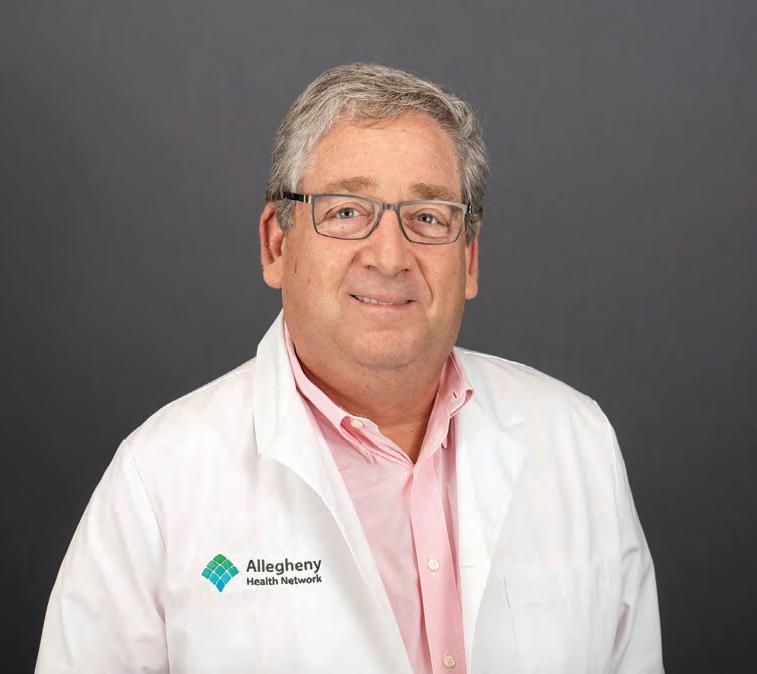
Dr. Stanley Marks received the 2026 PNC Elsie Hillman Distinguished Scholar Award, honoring his decadeslong impact on cancer care and research. Marks, who is chair of UPMC Hillman Cancer Center and chief medical officer of UPMC Hillman, received the award on March 26 at the BeSpoke Bash, held in conjunction with the 4th annual Rush to Crush Cancer, a community centric walk and cycling event that supports innovative cancer research at UPMC Hillman.

Friendship Circle teens spent April 5 in the Crosby Charity Suite watching the Pittsburgh Penguins defeat the Florida Panthers 5 . The suite, which was gifted by the Pittsburgh Penguins Foundation, enabled teens to cheer on the Penguins, share in excitement and create new connections.
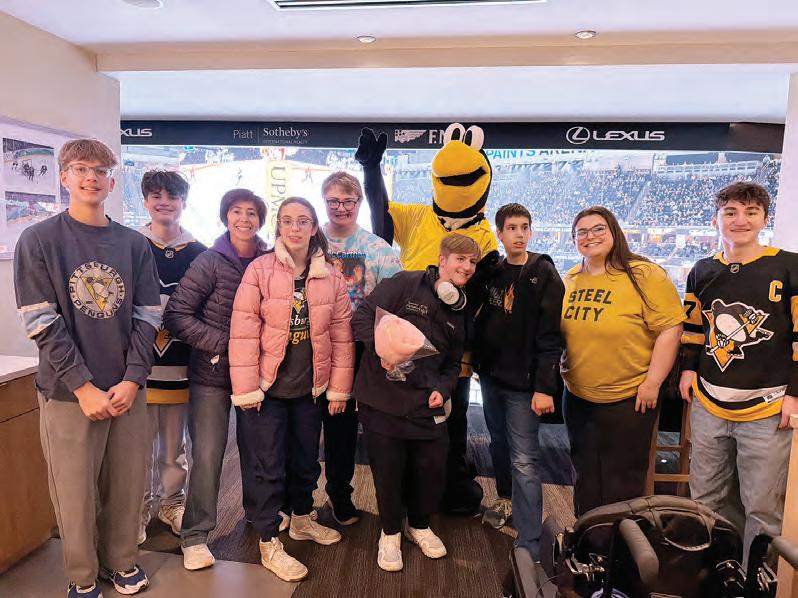
Beware of bots
Community Day School welcomed FBI Supervisory Intelligence Analyst John Pulcastro and former Assistant United States Attorney Jessica Lieber Smolar for a discussion on cybersecurity and the dangers of unfettered internet use.
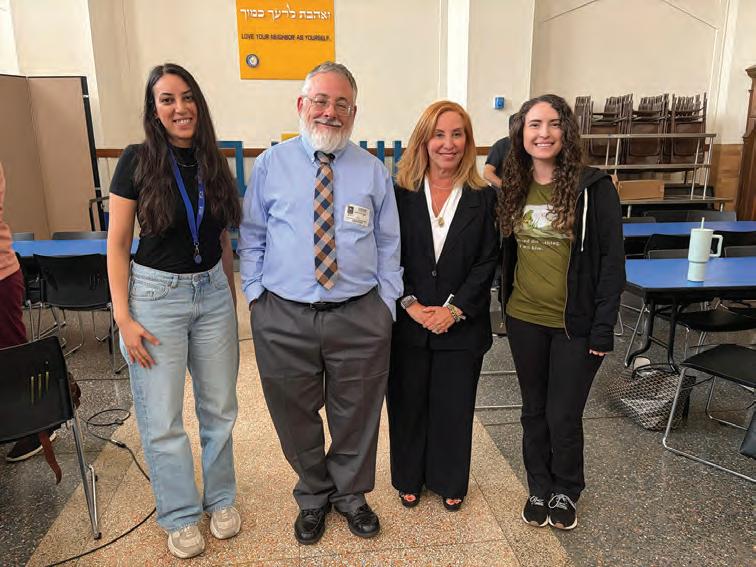
out the leaven
Throughout Pesach, Chabad House on Campus welcomed more than 75 students for kosher togethers ensured students had space for matzah, meaning and making memories.