

By Adam Reinherz
Since accepting a role with Hillel JUC a decade ago, Jennifer Poller has continually articulated the critical nature of her work. Speaking with the Chronicle weeks before the organization celebrates a milestone anniversary, Poller repeated that trope when describing an influential perspective she heard from a donor: Jewish life is a continuum functioning similarly to a school bus. The first stop may involve Jewish preschool. The next stop may be summer camp. Other stops can exist, but the “last best chance to reach Jewish youth on that continuum before they go out into the world is college.”

If talented staffers meet Jewish students at that “last stop on the bus,” then there’s a chance to deeply impact the Jewish future, Poller, Hillel JUC’s director of development, said.
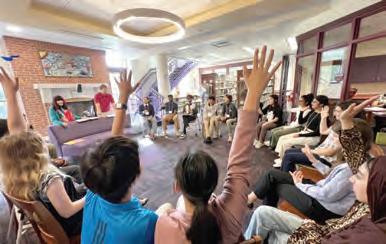
On April 12, community members will be reminded of the message when Hillel JUC marks 25 years since dedicating the Edward and Rose Berman Hillel-Jewish University Center building.
Located in Oakland neatly between Carnegie Mellon University and the
University of Pittsburgh, this “wonderful space and facility has allowed thousands of students to enjoy meaningful Jewish campus experiences and go on to be leaders in Jewish communities across the country,” Hillel JUC Executive Director and CEO Dan Marcus said.
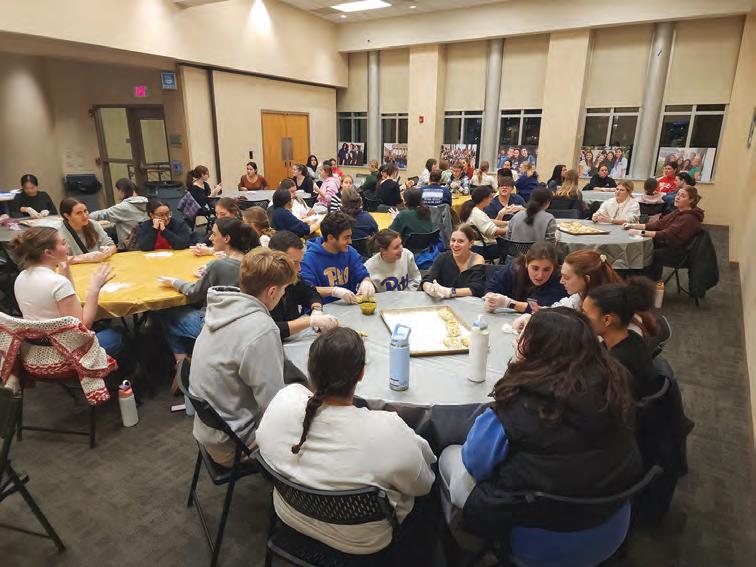
Dedicated in 2001, the building is home to routine programming, including Challah for Change, Shabbat dinners and guest speakers.
At its core, Hillel JUC is a gathering place, Poller explained.
In 2018, after the Pittsburgh synagogue shooting, it’s where students congregated.
After the events of Oct. 7, “that’s where students wanted to gather again,” she said. “It sounds cliché to say it’s a safe space, but there’s really nothing else like it on the university campus.”
Hillel JUC board chair, Adrienne Indianer, told the Chronicle that the past few years on college campuses have underscored the need for the building.
“A safe place, whether it’s the idea of a safe place or coming to that safe place, is really important for Jewish students right now,” she said.
By David Rullo | Senior Staff Writer
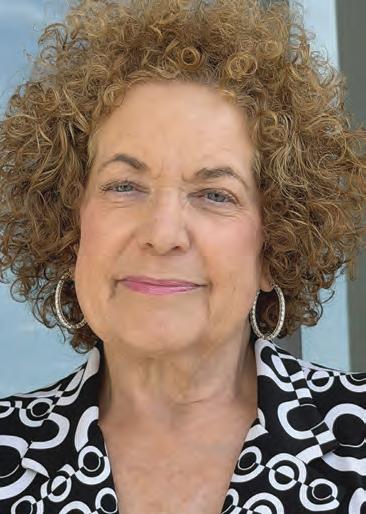
ebbie Resnick learned several important lessons from her parents.
“We were taught three things,” she said. “Appreciate what you have, help those who can’t help themselves and leave a piece of yourself for others to look back upon.”
That simple advice has helped lead her to a lifetime of service.
Resnick grew up in Squirrel Hill before attending the University of Pittsburgh for graduate and undergraduate studies. A speech therapist and special education teacher, she worked at the Pittsburgh Mt. Oliver Intermediate Unit for 32 years.
“I dealt with all the non-public schools in the city,” she said. “So, I dealt with all the parochial, all the Jewish, all the private schools.”

By Toby Tabachnick | Editor
Following Hamas’ brutal Oct. 7, 2023, attack on Israel, not all of Pittsburgh’s faith leaders offered support to Jewish colleagues experiencing shock, trauma and grief.
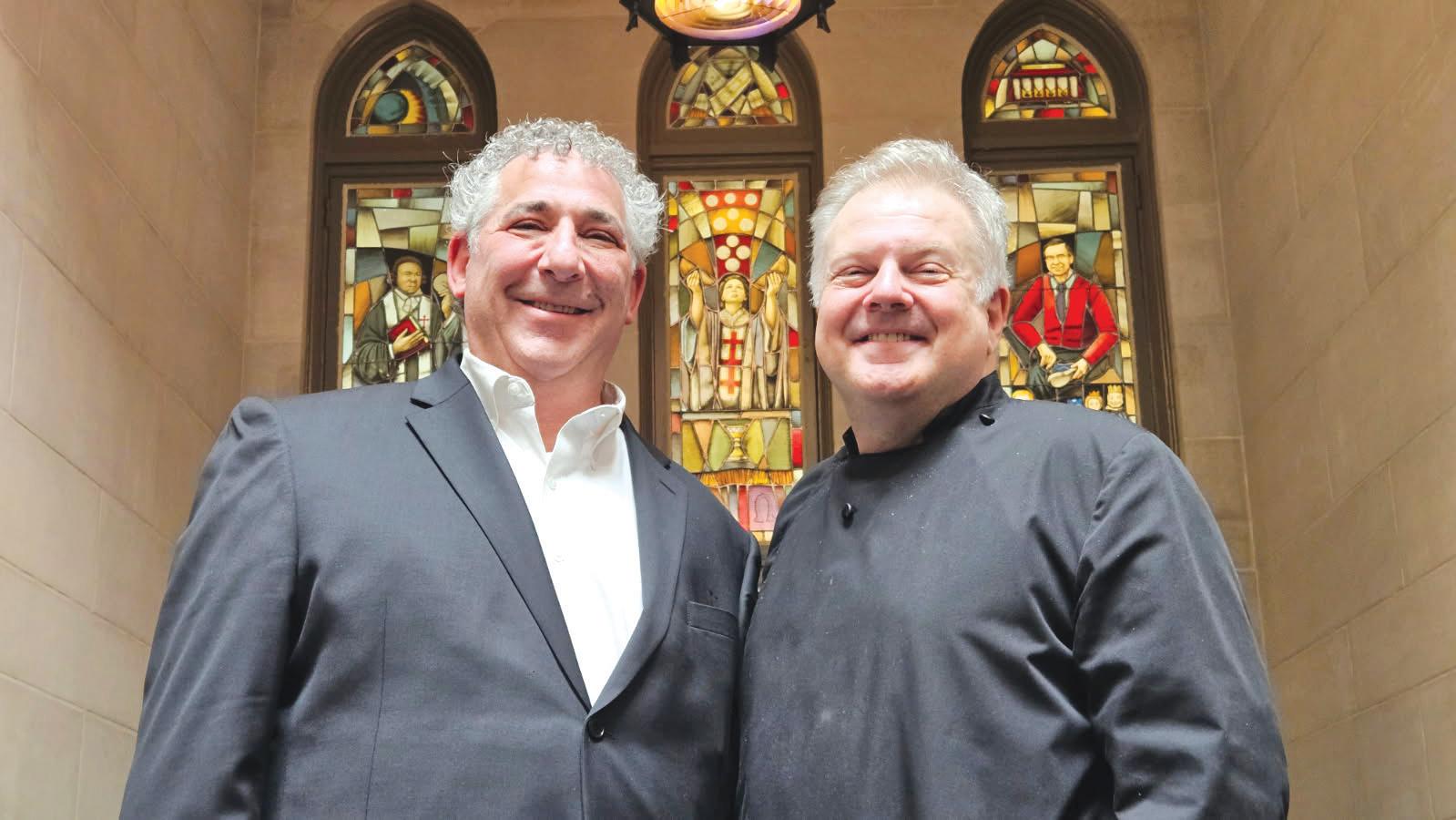
One of the several who did was the Rev. Jonathon Jensen of Calvary Episcopal Church.
Jensen and his congregation have modeled time and again what loving your neighbor actually looks like. From inviting the Tree of Life Congregation to hold High Holiday services in Calvary’s sanctuary after the Pittsburgh synagogue shooting, to partnering with Rabbi Aaron Bisno on interfaith programming, Jensen and his flock have nurtured relationships with generosity and sincerity.
After Oct. 7, many Jewish clergy “lamented the fact that they didn’t feel that their longtime interfaith partners understood them or were available or extended themselves,” recalled Rabbi Aaron Bisno of Temple Ohav Shalom in Allison Park. “That wasn’t my experience at all, because the relationship here is just such a natural part of our interactions and extension of friendship that it was incongruous to me.”
Following Bisno’s departure from Rodef Shalom Congregation in 2022, where he served 18 years as senior rabbi, Jensen and his congregation offered him an office at Calvary and the title of rabbi-in-residence. The two faith leaders founded the Center for Interfaith Collaboration that year. Since then, the center has hosted several interfaith programs, including recent talks by Rabbi Danny Schiff exploring ethical challenges and religion in a digital age.
Jensen incorporates Jewish-related
programming at Calvary frequently. For example, Bisno delivers Sunday sermons several times a year, and has been teaching a weekly class along with Jensen called A Priest and a Rabbi Walk Into a Classroom. The first year, the course focused on the parables of Jesus and the second year on the book of Genesis.
“This year is Exodus, and it’s meant to be, by design, a Christian and Jewish perspective or approach, and the idea of being, each of us — both traditions — ratified and learning from one another,” Jensen said.
About 25 or 30 people attend the Sunday morning classes, Jews and Christians.
Jensen views the classes as “another extension of our work with the community, with specifically the interfaith community.”
Calvary’s first outreach to its Jewish neighbors was in 2019, when it invited Tree of Life to hold High Holiday services in its building.
The relationship between the two congregations continues to be strong.
“They still come here for their High Holidays each year, and will for probably, I would say most likely two more times until they move into the new building,” Jensen said.
Members of Calvary and Tree of Life have established friendships and now gather for reasons less lofty than studying scripture — like mahjong.
Is mahjong “going to save the world? Probably not, but it gets people to know each other and become friends and sit in with one another in a physical proximity rather than Zoom,” Jensen said. “There’s a relationship built.”
Tree of Life members even participate in Calvary’s annual Christmas pageant and Calvary members join Tree of Life congregants for their Chanukah party.
Interfaith relations are “so normalized

SUBSCRIPTIONS subscriptions@pittsburghjewishchronicle.org 412-687-1000, ext. 2 TO ADVERTISE advertising@pittsburghjewishchronicle.org 412-687-1000, ext. 1
EDITORIAL DEPARTMENT
Email: newsdesk@pittsburghjewishchronicle.org
BOARD OF TRUSTEES
Evan H. Stein, Chair
Evan Indianer, Vice Chair
Derek Smith, Treasurer
Gayle R. Kraut, Secretary
Gail Childs, Dan Droz, Malke Steinfeld Frank, Karen Gal-Or, Seth Glick, Judith Kanal, Cátia Kossovsky, Charles Saul, Lynn Zelenski
GENERAL COUNSEL
Stuart R. Kaplan, Esq.
here,” Jensen said. “We forget how unbelievably rare that is — both the depth of the relationship, and that Jews participate in a Christian service and Christians participate in Jewish services and life — because we’re friends.”
Likewise, Bisno maintains an office at the church and “is a beloved, expected now, part of life at Calvary,” Jensen said.
“It’s become so normative,” Bisno said. “It may strike someone as unusual to read the church bulletin and see my name in among the others, but for folks that are here on the regular, it’s just part of how Calvary does church, how Calvary makes real its commitments to God and neighbor.”
Calvary often goes the extra mile to accommodate their Jewish friends — like in September 2022, when Rosh Hashanah fell
Please see Jensen, page 13
5915 Beacon St., 5th Floor Pittsburgh, PA 15217
Main phone number: 412-687-1000 Subscriptions: 412-687-1000, ext. 2
Jim Busis, CEO and Publisher 412-228-4690 jbusis@pittsburghjewishchronicle.org
EDITORIAL Toby Tabachnick, Editor 412-228-4577 ttabachnick@pittsburghjewishchronicle.org
Adam Reinherz, Senior Staff Writer 412-687-1000 areinherz@pittsburghjewishchronicle.org
David Rullo, Senior Staff Writer 412-687-1000 drullo@pittsburghjewishchronicle.org
ADVERTISING Amy Weiss, Account Executive (412) 613-0697 aweiss@pittsburghjewishchronicle.org
PRODUCTION
Jeni Mann Tough
Production Manager
Carl Weigel
Art/Production Coordinator
Subscriptions subscriptions@pittsburghjewishchronicle.org 412-687-1000, ext. 2
Published every Friday by the Pittsburgh Jewish Publication and Education Foundation 5915 Beacon St., 5th Floor Pittsburgh, PA 15217
Phone: 412-687-1000
POSTMASTER:
Send address change to PITTSBURGH JEWISH CHRONICLE, 5915 BEACON ST., 5TH FLOOR PITTSBURGH, PA 15217 (PERIODICAL RATE POSTAGE PAID AT PITTSBURGH, PA AND AT ADDITIONAL MAILING OFFICES)
USPS 582-740
Manuscripts, letters, documents and photographs sent to the Pittsburgh Jewish Chronicle become the property of this publication, which is not responsible for the return or loss of such items.
The Pittsburgh Jewish Chronicle does not endorse the goods or services advertised or covered in its pages and makes no representation to the kashrut of food products and services in said advertising or articles. The publisher is not liable for damages if, for any reason whatsoever, he fails to publish an advertisement or for any error in an advertisement. Acceptance of advertisers and of ad copy is subject to the publisher’s approval. The Pittsburgh Jewish Chronicle is not responsible if ads violate applicable laws and the advertiser will indemnify, hold harmless and defend the Pittsburgh Jewish Chronicle from all claims made by governmental agencies and consumers for any reason based on ads appearing in the Pittsburgh Jewish Chronicle

By Joseph Strauss | JTA
The Democratic National Committee was set to consider a resolution at a meeting this week that “condemns the growing influence” of AIPAC.
The resolution also condemns large-scale outside spending in elections generally but calls out only the pro-Israel lobby specifically, even as other lobbies are pouring similar sums into trying to influence election outcomes.
The meeting is being held during an election cycle in which rejecting AIPAC support has become a defining issue in Democratic races. It also comes amid concerns from some Jewish Democrats — including ones critical of AIPAC — that the group’s emergence as a bogeyman in American politics is inappropriate or even antisemitic.
“I do think there is an undercurrent of antisemitism in the degree to which AIPAC seems to be vilified,” Rep. Dan Goldman told the Jewish Telegraphic Agency last month. Goldman has accepted an endorsement from AIPAC as he seeks a third term, but says he won’t take money from corporate PACs in this election.
The resolution, which is subject to amendments before it is voted on, specifically names AIPAC and its super PAC, United Democracy Project, as having been “one of the largest outside spenders in Democratic contests” in 2024. It also refers broadly to other “corporate money PACs” and sources of “dark money,” though it does not name any specific groups.
Committee member Allison Minnerly, who introduced the resolution, told the Intercept, a left-wing outlet, that formally distancing the Democratic party from AIPAC “could be one step toward” winning back voters who “might really not have felt represented or seen when it came to Gaza or seeing their party support Palestinian rights or stand against military conflict.” Minnerly also introduced a resolution last August calling for an arms embargo on Israel, which was defeated.
A recent NBC poll found that 57% of Democratic voters have a negative view of Israel, compared to 13% who have a positive view of the country.
Meanwhile, a growing number of the party’s congressional candidates — and politicians thought to be seeking its 2028 presidential nomination — are swearing off AIPAC, and crossing its red line of supporting conditions on military aid to Israel.
The group has also spawned opposition online. Track AIPAC, the social media watchdog that posts politicians’ pro-Israel lobbying campaign donation numbers, has amassed 442,000 followers on X since 2024.
At town halls and candidate forums, politicians on the campaign trail are often being asked whether they would accept an endorsement or donations from the group.
Alana Zeitchik, an Israeli-American advocate and writer, said she understands that candidates might be asked about AIPAC in those types of settings, and said that she personally “would love to hear candidates” reject all special interest and corporate dollars. But when they hone in on AIPAC “on their own accord,” she said, she views it as “a political strategy to feed the beast, this hyper-obsession with AIPAC.”
The proposed DNC resolution voices concern over “massive outside spending” on candidates based on their foreign policy positions, pointing specifically to AIPAC’s $14 million spend in

a single Illinois primary. The threat of those expenditures “raises concerns about undue influence over democratic debate and policymaking,” the resolution reads, and in “shaping Democratic party positions.”
The resolution condemns “the growing influence of dark money and corporate-backed independent expenditures in Democratic elections.”
AIPAC has remained a major spender in this year’s midterm elections. The group, which is operating with the aim of electing a majority pro-Israel Congress, recently shelled out around $22 million in support of four Illinois candidates, three of whom it backed through shell PACs under different names. Two of its four preferred candidates won.
While it narrows in on AIPAC, the DNC resolution does not address other types of highspending special interest groups, such as real estate lobbying groups or the burgeoning landscape of pro-AI PACs.
New Jersey Sen. Cory Booker, who has previously received AIPAC donations but is rejecting all PAC money this year, told Politico last week that the particular attention paid to AIPAC has been “problematic.”
“There are Iranian Americans that bundle money. There are Turkish Americans that bundle money. There are a lot of ethnic groups that bundle money, and often for things that I don’t agree with. But somehow AIPAC seems to be drawing a lot of attention, and that’s problematic to me,” Booker said. “[AIPAC] is not the problem in America. The problem in America is money in politics.”
Adam Carlson, head of the progressive polling form Zenith Research, poked fun at Booker’s comments with a facetious tweet that dismissed Booker’s concerns, and pointed out the lack of an AIPAC-sized group for Iranian and Turkish Americans.
“Cory’s right. I am sick and tired of the mainstream media refusing to report on PERSIAPAC and TURKPAC spending hundreds of millions of dollars meddling in primaries to boost their preferred candidates,” wrote Carlson, who is Jewish. “It’s an antisemitic double standard, and he’s a hero for pointing it out.”
Goldman, like Booker, says he isn’t taking corporate PAC money in this election, but he did accept AIPAC’s endorsement. Goldman is currently facing a primary challenge from Brad Lander, a Jewish progressive whose attacks against Goldman have centered the congressman’s AIPAC endorsement.
While the DNC’s proposed resolution suggests that AIPAC is shaping Democratic party positions, Goldman asserted that his views are independent from his endorsements.
“I have personally pushed AIPAC very much to recognize that it is an organization that
supports first and foremost the State of Israel and the U.S.-Israel relationship, but that does not mean that they should be unwavering in their support for the Israeli government,” he said.
He added, “I am going to continue to operate independently, based on my own understanding and nuanced view of the situation, and work towards a peace in the region and two-state solution and security for Israel.”
Other Democrats have said they turned down AIPAC because of foreign policy disagreements.
In Illinois, Rep. La Shawn Ford said he met with UDP but did not receive its endorsement because he was unwilling to meet its requirement of supporting unconditional military aid to Israel.
Zeitchik said she is not a fan of AIPAC’s “really dirty” tactics, which have included spending on
attack ads against pro-Israel politicians because they are open to conditioning military aid — but she, too, has concerns about the particular attention paid to it.
“I think that the hyper-obsession with AIPAC amongst progressives, and making AIPAC the bogeyman, the problem, has an undercurrent of what I’d call an antisemitic worldview, or an antisemitic reaction,” Zeitchik said.
Joel Petlin, the school district superintendent in the heavily Jewish village of Kiryas Joel, outside New York City, wrote that the DNC’s proposed resolution “singles out AIPAC for doing precisely what many other lobby groups are doing every day.”
He added, “If this resolution passes, the DNC can finally stop calling themselves ‘the big tent party,’ because it clearly isn’t large enough for American Jews.”
Similar accounts to Track AIPAC have popped up online, though none have taken off in the same way. Oil PACs Tracker was founded in 2021 and has 43,000 followers. An account called Melt ICE, which tracks candidates’ stance on ICE, has garnered 3,000 followers since being created in January.
Zeitchik said she appreciates how congressional candidates such as Jack Schlossberg, who is running in New York’s 12th Congressional District, have approached the issue by rejecting all special interest money without harping specifically on AIPAC.
“When I see Israel become a wedge issue, and politicians continue to push and make it a wedge issue — that, to me, is alarming,” she said. PJC









By Hannah Feuer
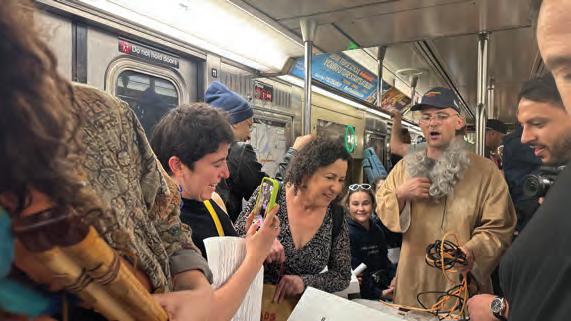
It was one of those only-in-New-York moments: Roughly 60 Jews packed into a muggy subway car, grape juice sloshing with every bump, preparing to hold a Passover seder on the ride from Union Square to the Bronx.
Given the tight quarters, the meal was surprisingly comprehensive, complete with a rabbi, seder plate, the Four Questions, and spirited renditions of “Dayenu” while Yiddish singer Riki Rose played guitar. The only crucial component missing was the hunt for the afikoman, which was a blessing — no one seemed on board with going head-to-head with Pizza Rat for the prize.
This was the third annual “Subway Seder,” a stunt organized by the rapper Kosha Dillz, whose real name is Rami Even-Esh. The event doubled as both a social media spectacle and something more meaningful. Attendees told the Forward the seder offered a chance to be loudly and proudly Jewish in the most public of spaces, at a time when being visibly Jewish can feel scary. As the seder unfolded, a few plainclothes volunteer security guards stood watch.
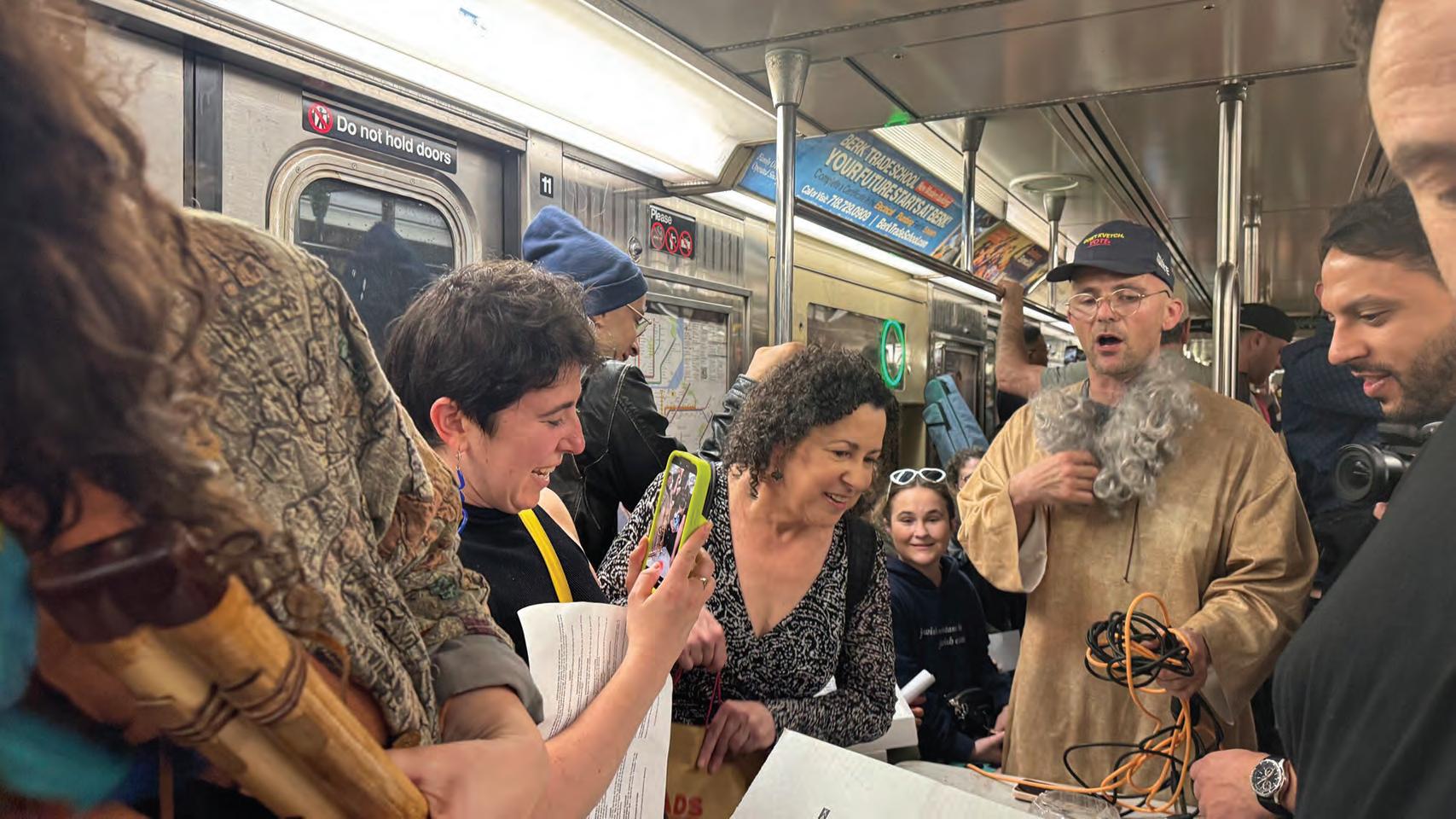
Dillz came dressed as Moses, wearing a tan tunic, long white beard and a backwards baseball cap that read “Don’t Kvetch, Vote.”
Attendees referred to their “Ten Minute Seder” Haggadah by Rabbi Yonah Bookstein as they followed along with the prayers.
“Matzah ball soup spills and antisemitic comments, I suppose, are the range of concerns,” said Elizabeth Weinstein, who attended the subway seder with her husband,

The evening began outside the subway at Union Square Park, where Dillz and the rapper Princess Superstar led the crowd in song.
The group then descended underground, chanting “Subway! Seder!” in call-and-response format, while commuters looked on.
Inspire your teen through the power of leadership and diplomacy at Luminari Camp. Register now for I Want to Be an Ambassador!
This one-of-a-kind seven-day summer camp helps teens build leadership, diplomacy, communication, and critical thinking skills through hands-on learning, cultural exploration, public speaking, and a trip to Washington, D.C. to meet real ambassadors and foreign diplomats.
Register now and inspire your teen to lead locally and globally! www.luminari.org/teens-learn-the-vital-art-of-diplomacy
PROGRAM DETAILS
DATES: June 9-17, 2026
June 9-12 in Pittsburgh | June 15-17 in Washington D.C.
TIME: 9:00 am – 3:30 pm (excluding weekends)
TARGET AUDIENCE: Rising 8th – 12th graders
LOCATION: Winchester Thurston Upper School, 555 Morewood Ave, Pittsburgh, PA 15213, and various embassies and historical sites in Washington D.C. MusicMakers!
Camp Delicious!
Teens will spend five days cooking with Pittsburgh chefs, learning kitchen skills, exploring global cuisines, and creating delicious dishes through hands-on culinary experiences.
www.luminari.org/teens-gainskills-and-confidence-in-the-kitchen
Teens will create, produce, and record original music while learning about the music industry, record labels, and global marketing — all while sharing their voices with audiences near and far.
www.luminari.org/teens-learnfrom-leaders-in-the-music-industry



Some logistics proved challenging. At one point, the folding table collapsed. The subway car lacked working air conditioning. Attendees packed in shoulder to shoulder, while social media influencers jostled for the best camera shot. With all the shvitzing and sloshing, few seemed eager to touch their matzah ball soup from Katz’s Delicatessen. Organizers apparently did hide the afikomen, but they forgot to direct participants to search.
But a little balagan didn’t kill the good vibes. Soon people were dancing, chanting prayers and tapping out rhythms on Manischewitz matzah boxes.
“Judaism needs to meet the people where they’re at, and this is a fabulous way to do it,” said Rabbi Arielle Stein, who typically leads above-ground services at Congregation Rodeph Sholom on Manhattan’s Upper West Side. “It’s fun, and it also provides people some education, culture and adventure.”
Nor did the sticky environment deter sedergoers from eating non-soup foods. Attendees chowed down on matzah, gefilte fish and kosher-for-Passover seven-layer cake from the Orwashers Bakery.
Officially, using the subway for “non-transit” activities can result in a $50
Authority’s rules of conduct. But in practice, MTA employees who witnessed the seder mostly shrugged; one politely turned down an offer of matzah.
“Just consider us street performers,” Dillz told the Forward.
Beyond transit authorities, Dillz knew the seder had the potential to provoke passengers. During the inaugural subway seder in 2024, he said a passerby yelled “Free Palestine” at the group. Just a few weeks ago, Dillz said, he was assaulted and briefly arrested after he tore down a sign for Ayatollah Khomeini at a vigil for the Iranian Supreme Leader.
But Dillz wasn’t about to let fear for his safety spoil a good meal. After all, who could really hate a subway seder?
“People are here to see me and do something cool. It’s not like a rally,” Dillz said. “They don’t know what to make out of it, even very antisemitic people.”
As the train pulled into the Bronx, the seder concluded with the final cup of grape juice. Participants began to disembark, but with a hope: Next year on the Q train. PJC
This story was originally published on the Forward. To get the Forward’s free email newsletters delivered to your inbox, go to forward.com/newsletters.

By Mike Wagenheim | JNS
Australia has launched a pilot program in the country’s schools to help educators identify and address antisemitism in the classroom.
The initiative, developed by the U.N. Educational, Scientific and Cultural Organization in partnership with the Australian government, was formally rolled out on March 17 at a policy dialogue focused on a national approach to antisemitism in education.
The program is being piloted over six months in New South Wales and Victoria, with plans for a nationwide expansion. It brings together federal and state education authorities, as well as public, independent, Catholic, Jewish and Islamic school systems, officials said.
The effort follows the terrorist attack at a Chanukah celebration on Sydney’s Bondi Beach on Dec. 14, 2025, where a father and son killed 15 people and wounded dozens in what authorities described as an antisemitic, Islamic State-inspired assault.
Australian officials said the attackers acted alone but were motivated by extremist ideology, marking the country’s deadliest mass shooting in nearly three decades.
In the wake of the attack, Australian Prime Minister Anthony Albanese announced the creation of an antisemitism education task force to strengthen prevention and response efforts in schools.
The UNESCO program aligns with that initiative, Jillian Segal, Australia’s special envoy to combat antisemitism, told JNS, describing it as a key component of the government’s broader strategy.
The training is designed to deepen educators’ understanding of both historical and contemporary antisemitism, while equipping them with practical tools to respond to incidents and manage sensitive classroom discussions.
It also emphasizes recognizing antisemitic tropes and improving media literacy to counter misinformation, with curriculum materials embedded in existing subjects such as history, civics and literature.
Heather Mann, a project officer in UNESCO’s Global Citizenship and Peace Education section, told JNS that the program had been in development for more than two years following the Hamasled terrorist attacks in southern Israel on Oct. 7, 2023, and the subsequent rise in antisemitic incidents in Australia.

The Bondi Beach attack accelerated its rollout.
“We’ve really had to speed up the timeline and engage with more partners, but we had both us and the government, especially the special envoy on combating antisemitism, committed to this program of work ahead of the attack and now it’s just intensified the amount of work and the urgency to roll this out nationally,” said Mann, who coordinates UNESCO’s program on combating antisemitism.
The pilot is “going very well,” Mann told JNS, with 10 schools “that are fully engaged.”
She said UNESCO has “already delivered training for the relevant staff in both departments of education. And this is currently being evaluated by external evaluators, and the initial feedback is very, very positive.”
‘Incredibly powerful’
Recent data released by the Executive Council of Australian Jewry shows 1,654 antisemitic incidents were reported nationwide between October 2024 and October 2025, which is nearly five times higher than the average before the Israel-Hamas war. The incidents ranged from verbal abuse to threats against Jewish institutions. (JNS sought comment from the council.)
The task force’s work, folded into the federal government’s response to the previous plan released by the office of the special envoy to combat antisemitism, is to consider actions to “help the Australian
education system prevent, tackle and properly respond to antisemitism,” according to a government release.
UNESCO is running similar training programs in Europe. Of the 30 or so countries Mann has worked with on antisemitism training initiatives, Mann said Australia’s overall commitment is stronger than that of any other country.
“To have that full commitment and engagement, both at the public level, but also in the faith school system, is incredibly powerful,” she told JNS.
There has been an effort in some countries led by left-wing governments to either justify the rise in antisemitism by pointing to Israel’s military actions against Hamas in Gaza or by completely ignoring the link between Judaism and Israel.
Mann told JNS the training program instituted in Australia “reflects the reality of incidents that are taking place in schools across Australia. And the reality is that there has been a huge rise in incidents since the 7th of October 2023, and these incidents are connected to Israel.”
“We cannot avoid dealing with what we’re calling Israel-related forms of antisemitism,” Mann said. “We’ve been trying to do that with more historic forms of antisemitism, so that the teachers present in these training programs have a really comprehensive view of the different forms that antisemitism takes and how it adapts to different situations.”
That includes training on common
stereotypes, such as Jewish power, connections between Jews and money, and the original blood libel, but also “raising their understanding of why we’re seeing a specific rise in antisemitism in this current moment,” including what Mann calls “anti-Zionist forms of antisemitism.”
Mann conceded that it’s difficult, if not impossible, to bring together a whole teacher force from different parts of the political spectrum and get everyone in the same place.
“But we can move the needle a little bit, or raise their understandings or bring new perspectives so that they’re focused more on the harm that these incidents are bringing, particularly to Jewish students and Jewish teachers, but then also on school communities as a whole,” she told JNS.
Mann said the partnership is working with an evaluation team that is measuring changes in knowledge and attitudes among program participants and conducting in-depth interviews with participants “about the steps that they’ve taken because of our program to address antisemitism and the change that they’re seeing in their schools.”
Separately, the Australian Curriculum, Assessment and Reporting Authority has been tasked with identifying ways to strengthen the curriculum on antisemitism and Jewish history through 2026.
“It will strengthen antisemitism education, create a deeper understanding of Jewish Australians’ history and an understanding of Australian values,” Education Minister Jason Clare said. PJC

Submit calendar items on the Chronicle’s website, pittsburghjewishchronicle.org. Submissions also will be included in print. Events will run in the print edition beginning one month prior to the date as space allows. The deadline for submissions is Friday, noon.
q SUNDAYS, APRIL 12–JULY 26
Join Chabad of Squirrel Hill for its Men’s Tefillin Club. Services and tefillin are followed by a delicious breakfast and engaging discussions on current events. 8:30 a.m. 1700 Beechwood Blvd. chabadpgh.com
Join a lay-led online Parashah study group to discuss the weekly Torah portion. No Hebrew knowledge needed. The goal is to build community while deepening understanding of the text. 8:30 p.m. For more information, visit bethshalompgh.org/online-parashah.
q MONDAY, APRIL 13
Join the Holocaust Center of Pittsburgh on April 13 for its annual Yom HaShoah Commemoration Yom HaShoah, or Holocaust Remembrance Day, is the day set aside to remember the approximately 6 million Jewish victims of the Holocaust. The Holocaust Center has been holding a communitywide commemoration every year since the establishment of the Center in 1980. This year’s program will feature music played by students from Pittsburgh Youth Symphony Orchestra, poetry readings, filmed testimony from Holocaust survivors, a candle-lighting ceremony and other traditional elements. 7 p.m. Free. Rodef Shalom Congregation, 4905 Fifth Ave. hcofpgh.org/events
q MONDAYS, APRIL 13–JULY 27
Join Congregation Beth Shalom for a weekly Talmud study. 9:15 a.m. For more information, visit bethshalompgh.org.
Join Temple Sinai for an evening of mahjong every Monday (except holidays). Whether you are just starting out or have years of experience, you are sure to enjoy the camaraderie and good times as you make new friends or cherish moments with long-term pals. All are welcome. Winners will be awarded Giant Eagle gift cards. All players should have their own mahjong cards. Contact Susan Cohen at susan_k_cohen@yahoo.com if you have questions. $5. templesinaipgh.org
q TUESDAYS, APRIL 14–JUNE 30
Join Beth El’s Rabbi Alex Greenbaum and his Bible/Talmud Adult Education class for a thought-provoking weekly session of Bible and Talmudic study. This program is available both in person and virtually. Call the office at 412-561-1168 to receive the Zoom link or to make an in-person reservation. 10:30 a.m. 1900 Cochran Road. bethelcong.org
q WEDNESDAYS, APRIL 15–29
Join Temple Ohav Shalom for My Grown Up & Me, a joyful, hands-on experience for children ages 18 months to age 3 with their grown-up. Each class includes multi-sensory explorations, art experiences, a story and more. 9:30 a.m. $5 per family. 9:30 a.m. Temple Ohav Shalom, 8400 Thompson Run Road. forms.gle/ ZcAgWBLaKdsxSxuL9

Together,
Let’s
Lee Oleinick
Financial Advisor
Managing Director–Wealth
q THURSDAY, APRIL 16
Join Chabad of Squirrel Hill for Loaves of Love, a challah bake for men and women. 7 p.m. $15 per person. 1700 Beechwood Blvd. chabadpgh.com/lol
q FRIDAY, APRIL 17–SUNDAY, APRIL 19
Join Keshet’s one-of-a-kind Shabbat retreats for LGBTQ+ and ally Jewish teens, ages 13-18 and in grades 7-12, to learn, grow and celebrate who you are in a warm and vibrant community. Created by and for LGBTQ+ Jewish teens, Keshet Shabbatonim bring together young LGBTQ+ and ally Jews from across the country to build community and celebrate Shabbat and their Jewish and LGBTQ+ identities. $54. keshetonline.org/shabbaton
q SATURDAY, APRIL 18
Join Shalom Tots and PJ Library North Hills as Temple Ohav Shalom celebrates Israel’s Independence Day with Family Paints and Dip, including painting, hummus making, singing, dancing and story time. 10 a.m. Free. Temple Ohav Shalom, 8400 Thompson Run Road. forms.gle/vVPUhvqkMDJ5ne9u7
q TUESDAY, APRIL 21
Enjoy a delicious Seniors Lunch with Chabad of the South Hills and learn about “Safe Driving Through the Ages.” Wheelchair accessible. 1 p.m. $5 suggested donation. 1701 McFarland Road. chabadsh.com
q WEDNESDAY, APRIL 22
Enjoy a delicious lunch while exploring timeless wisdom for the month of Iyar at Chabad of Squirrel Hills’ Ladies’ Lunch and Learn. Noon. $18. 1700 Beechwood Blvd. chabadpgh.com/lunch
q SUNDAY, APRIL 26
Don’t miss an unforgettable night celebrating Community Day School and the CDS United Campaign that makes its mission possible. 5 p.m. $125. 4905 Fifth Ave. comday.org
q THURSDAY, APRIL 30–SUNDAY, MAY 10
Film Pittsburgh’s JFilm Festival, the largest Jewish cultural event in the region, will return to theaters April 30–May 10, 2026. For 33 years, JFilm has showcased Jewish-themed, independent feature films from around the globe. $15 and up. filmpittsburgh.org
q WEDNESDAY, MAY 6
Rabbi Suzanne Offit, a board-certified chaplain from JF&CS Boston, will discuss “Transforming the Jewish Communal Response to Suicide.” Maggie Feinstein, director of the 10.27 Healing Partnership, will facilitate the talk. 7 p.m. Free. Friendship Circle, 1922 Murray Ave. RSVP to Kaitlin@beaconpgh.org.
q WEDNESDAY, MAY 13
Join Congregation Dor Hadash to learn more about Land for All, a joint Israeli-Palestinian political initiative that creates a practical framework for peace. Co-Directors May Pundak and Rula Hardal will discuss their model: two sovereign states connected through a confederation, grounded in equality, dignity, interdependence, security and safety. Free. 7 p.m. Rodef Shalom Congregation, 4905 Fifth Ave. congregationdorhadash.shulcloud. com/form/ALFA2026 PJC
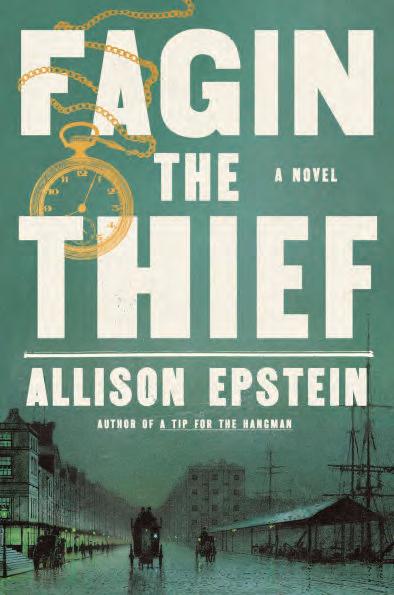
The Pittsburgh Jewish Chronicle invites you to join the Chronicle Book Club for its April 19 discussion of “Fagin the Thief,” by Allison Epstein, the winner of the 2025 National Jewish Book Award for Fiction. The author will join us for the meeting.
From Amazon.com: “A thrilling reimagining of the world of Charles Dickens, as seen through the eyes of the infamous Jacob Fagin, London’s most gifted pickpocket, liar, and rogue. Long before Oliver Twist stumbled onto the scene, Jacob Fagin was scratching out a life for himself in the dark alleys of nineteenthcentury London. Born in the Jewish enclave of Stepney shortly after his father was executed as a thief, Jacob’s whole world is his open-minded mother, Leah.
But Jacob’s prospects are forever altered when a light-fingered pickpocket takes Jacob under his wing and teaches him a trade that pays far better than the neighborhood boys could possibly dream.
“Colorfully written and wickedly funny, Allison Epstein breathes fresh life into the teeming streets of Dickensian London — reclaiming one of Victorian literature’s most notorious villains."
Your hosts
Toby Tabachnick, Chronicle editor
David Rullo, Chronicle senior staff writer
How it works
We will meet on Zoom on Sunday, April 19, at 1 p.m.
What to do
Buy: “Fagin the Thief.” It is available from online retailers, including Amazon and Barnes & Noble, and in some local Barnes & Noble stores. It is also available through the Carnegie Library system.
Email: Contact us at drullo@pittsburgh jewishchronicle.org, and write “Chronicle Book Club” in the subject line. We will send you a Zoom link for the discussion meeting.
Happy reading! PJC
Connecticut Catholic school punishes students who targeted ‘Jew Canaan’ rivals on social media
A Connecticut Catholic school has issued punishments in connection with a series of antisemitic social media posts about the school’s hockey rivals last month, The New York Times reported, according to JTA.
Posts associated with fans of Fairfield College Preparatory School disparaged the New Canaan Rams ahead of their March 23 game, which the Rams won.
“Win or lose we booze, and at least we’re not Jews. Hail Fairfield,” read one of the social media images, according to the New York Times, while another depicted a New Canaan player wearing a kippah and an Israel jersey. Some used the epithet “Jew Canaan.”
The school informed families about the posts and told the New York Times that the posts did not reflect Fairfield Prep’s values.
Many Jewish high school students say casual antisemitism is common at their schools, and the Anti-Defamation League recorded a sharp rise in reported incidents of antisemitism in K-12 schools in recent years, noting that independent schools, which vary in their accountability processes, may have fewer safeguards than public schools.
Pro-Palestinian rally at Buchenwald memorial is shut down by German authorities German authorities have shut down a planned pro-Palestinian vigil at the Buchenwald Nazi concentration camp
memorial after a fierce outcry, JTA reported.
The rally was slated for April 12, marking the 81st anniversary of Buchenwald’s liberation by U.S. troops. But the city of Weimar said on Monday it would ban the event on the memorial grounds and offered a square downtown as an alternate location.
Kufiyas in Buchenwald, the group behind the campaign, announced it was challenging the ban in court. The group said it aimed to “commemorate victims of genocide and fascism” and “uplift the fundamental duty to fight against all genocides, particularly the genocide currently taking place in Palestine.”
The planned event had been heavily criticized by German leaders, such as federal antisemitism czar Felix Klein. In an interview with the Jüdische Allgemeine, Klein said he viewed the rally as “disrespectful self-promotion and a perfidious attempt to relativize the murder of over 11,000 Jews in the Buchenwald concentration camp by comparing it to Israel’s actions in the recent Gaza war.”
The campaign was also protested in a joint statement by a coalition of 17 organizations, including several Jewish communal and academic groups. They accused the organizers of “instrumentalizing the Buchenwald memorial site as a platform for anti-Jewish agitation.”
Kufiyas in Buchenwald had support from the International Jewish Anti-Zionist Network and the German group Jewish Voice for a Just Peace in the Middle East.
The event originated as a protest against a German court’s decision that Buchenwald could refuse entry to visitors who wear a Palestinian keffiyeh. Kufiyas in Buchenwald also said the memorial had suppressed other voices that criticized Israel. They cited the treatment of Israeli philosopher Omri Boehm,
the grandson of Holocaust survivors and a critic of the Israeli government, who was disinvited from giving a commemoration speech at Buchenwald after pressure from the Israeli embassy in Berlin.
Argentina designates Iran’s Revolutionary Guard a terrorist organization
Argentina announced last week that it had designated Iran’s Islamic Revolutionary Guard Corps as a terrorist organization, a move that was quickly praised by Israeli Foreign Minister Gideon Saar, JTA reported.
The move stems from Argentina’s decadeslong investigations into the 1992 bombing of the Israeli Embassy in Buenos Aires, which killed 29 and injured more than 200, and the 1994 attack on the AMIA Jewish center, which left 85 dead and 300 injured in what remains the deadliest terrorist attack on Argentine soil.
In a statement, President Javier Milei’s office described the attacks as “two of the most serious terrorist attacks in history, carried out in the 1990s by the IRGC’s operational arm in the region, the organization Hezbollah.”
The Argentine government will now include the IRGC in the Public Registry of Persons and Entities Linked to Acts of Terrorism and its Financing, triggering financial sanctions and operational restrictions intended to curb its ability to operate in the country and safeguard Argentina’s financial system from illicit use.
The announcement by Milei, who has stood out as one of Israel’s staunchest international supporters, comes months after his office also designated the Quds Force, the foreign arm of the IRGC, as a terrorist organization in January. In recent years, Argentina has also designated Hamas and Hezbollah as terror groups.
Fourth suspect arrested in connection with London Hatzola ambulance arson
A fourth individual was arrested on Saturday in connection with the arson attack targeting Hatzola Northwest ambulances in Golders Green, north London last month, JNS reported.
The Metropolitan Police stated that Met officers at Westminster Magistrates’ Court arrested a 19-year-old man in relation to the ongoing investigation into the incident that took place on March 23.
The suspect was apprehended while attending the hearing in court of the three other suspects linked to the firebombing, the Met said.
“He was arrested for arson with intent to endanger life and taken into custody,” the police noted.
The three suspects already in custody were named as Hamza Iqbal, 20, Rehan Khan, 19 — both British nationals from Leyton — and a dual British and Pakistani national, 17, from Walthamstow.
The three were charged with arson being reckless as to whether life would be endangered, and remanded in custody to appear at the Old Bailey on Apr. 24, the Met added.
Prosecutor Emma Harraway told the court, “There is significant evidence that this was a premeditated and targeted attack against the Jewish community,” according to Sky News.
The Islamist group Harakat Ashab al-Yamin al-Islamiya has claimed responsibility for the incident, as well as several attacks since March 9 on Jewish institutions in Belgium and the Netherlands. PJC
Compiled by Toby Tabachnick
Items are provided by the Center for Israel Education (israeled.org), where you can find more details.
April 10, 2005 — NATO holds first workshop in Israel
NATO holds its first event in Israel — a conference on medical preparedness for mass casualty events. Belgium, the Czech Republic, Finland, Germany, Italy, Jordan, Portugal, Turkey, the United Kingdom and the United States attend.
April 11, 1961 — Eichmann trial begins in Jerusalem
A special panel of three judges in Jerusalem opens the war crimes trial of Adolf Eichmann, the Nazi officer who organized and executed the “Final Solution” to the problem of Jewish existence in Europe.
April 12, 1984 — 4 terrorists hijack bus 300
Four men hijack
Egged Bus 300, carrying 41 passen gers from Tel Aviv to Ashkelon. The hijacking turns into a chase toward Egypt. The IDF frees all but one hostage and kills the Arab terrorists, two by execution.
April 13, 1971 — Black Panthers
meet with Meir
Prime Minister
Golda Meir meets with leaders of the Black Panthers, a group of Mizrahi activists protesting social injustice and discrimination. She later calls them “not nice people.”

April 14, 1976 — Ex-IDF chief of staff Elazar dies
Lt. Gen. David “Dado” Elazar, the IDF chief of staff during the Yom Kippur War, dies of a heart attack at 50, two years after he resigned in disgrace over the failures of the October 1973 war.
April 15, 1940 — Munich victim
Yossef Romano is born
Weightlifter Yossef Romano, one of the 11 Israelis murdered at the 1972 Munich Olympics, is born in Libya. He makes aliyah in 1946. A nine-time national champion, he is killed fighting off the Munich terrorists.
April 16, 1988 — Commandos
assassinate Abu Jihad
Khalil al-Wazir, the planner behind multiple terrorist attacks on Israelis and an organizer of the First Intifada as the Fatah co-founder known as Abu Jihad, is assassinated in Tunis by IDF commandos. PJC



Mollie’s Meals caught
but support holds for now
imminent danger of losing services, according to JAA President & CEO Mary Ann Foley.
By Deborah Weisberg | Special to the Chronicle
Belt-tightening by Allegheny County has sparked concerns about the future of home-delivered meals for seniors, including those provided by Mollie’s Meals through the Jewish Association on Aging.
As of early April, the county had cut at least four Mollies Meals’ recipients from the program, and informed JAA that new applicants for home-delivered meals were being waitlisted, according Sharyn Rubin, JAA’s director of Jewish communal aging services.
Although she did not know why the cuts were made, she said, “I suspect it was an issue with income.”
Rubin said she assured all four recipients that JAA would continue to serve them, regardless of the county’s actions. “I reached out to them. Two were OK with being dropped, and two wanted to continue.”
Although JAA is not accepting new clients for Mollie’s Meals, none of the 110 individuals currently enrolled in the program is in
“We will not cut anybody if we possibly can. We will figure out a way even if it means clients who are able to pay will pay something,” Foley said, noting that a private benefactor wishing to remain anonymous has stepped up with funding.
The philanthropic community may be called upon to provide even more support depending on what happens with the county, Foley said.
The county Area Agency on Aging is working through planning now, said spokesperson Cydney Cooper, and may be better prepared later this month to discuss its budget and how funding constraints could further affect services, including home-delivered meals.
“Unfortunately, due to reduced federal and state funding to the Area Agency on Aging we are facing a significant budget reduction. As of March 9, we enacted a temporary waitlist for home delivered meals.”
“In the meantime, older adults are still encouraged to call the SeniorLine at 412-350-5460 so they can be assessed for eligibility and directed to alternative food assistance resources.”
About 2,300 county residents receive home-delivered meals “that exceed federal and


Comprehensive Estate Planning services addressing a full range of legal issues: •Estate Planning •Elder Law •Wills •Powers of Attorney (POA) •Long Term Care and Asset Protection Planning •Guardianships •Special Needs Trusts
• Probate and Estate Administration
• Living Wills
Carol Sikov Gross, Certi ed Elder Law Attorney Sikov and Love, P.A.

310 Grant Street, Suite 1110, Pittsburgh, PA 15219
412-261-4202 • www.sikovandlove.com
email: csikovgross@sikovandlove.com

state standards,” Cooper said, indicating that five older adults are currently waitlisted and none are in the kosher meal delivery zip code.
Meals on Wheels programs are largely funded through the Older Americans Act, and are intended for adults age 60 and up who have difficulty preparing nutritious food for themselves. There are no income eligibility requirements. Donations or sliding-scale contributions are encouraged but not mandatory.
Mollie’s Meals is unique among “meals on wheels” programs in the type of food it delivers, said Foley.
“Our model is different than any other program. We don’t serve pork or shellfish. During Passover, we replace leavened stuff with matzah.”
The kitchen is certified kosher by the Vaad.
Non-Jews and Jews are served.
Foley said JAA subsidizes meals at a loss of $3 to $7 per meal.
Mollie’s Meals was founded as a kosher food delivery service in 1972 with support from the Edith Pichel Davis Fund. Originally called Kosher Meals on Wheels, it began as a partnership among three organizations, with Jewish Family and Children’s Service referring clients, the Jewish Home and Hospital for the Aged
preparing the meals in its kitchen, and B’nai Brith Women making the deliveries.
Initially, the program provided 12 weekly hot and cold meals for $10.
In the mid-1990s, the program was renamed Mollie’s Meals after Mollie Dugan, a long-time volunteer coordinator of the program.
Her 2008 obituary indicates that Dugan managed the program for 25 years.
Besides providing sustenance, Mollie’s Meals enriches the lives of home-bound seniors in other ways, Rubin said.
“The volunteer who delivers the meal may be the only person they see during the day. The socialization they get from that five-minute visit is very meaningful. And it lets us eyeball recipients to determine what else they might need. It’s often the entry into wrap-around services.”
Mollie’s Meals is a way to keep older adults at home and provides respite to family members often burdened by caregiving, said Foley.
This is the first time a waitlist has been implemented for the program, said Rubin. “I think the county is trying to figure this out, too.” PJC
Deborah Weisberg is a freelance writer living in Pittsburgh.

By Deborah Weisberg | Special to the Chronicle
Although she came to Pittsburgh to hone her fluency in English, Mukadef Gund will return to her native Germany having gained so much more.
Living the past two months in Squirrel Hill and volunteering with the Jewish Association on Aging inspired Gund, 22, to tap into her Jewish roots in a way not possible back home in tiny Marenbach — a village “with more cows than people,” Gund said.
“I live in the countryside, where there’s no chance to be part of a Jewish community. Even in the cities, Jewish life is not as open as it is here. You rarely see a person wearing a kippah or a Star of David. That made Jewish life in Squirrel Hill very special to me.”
Working toward a master’s degree in English and history at the University of Bonn requires Gund to spend extensive time in an Englishspeaking country. She decided to come to Pittsburgh because an aunt and uncle reside in Squirrel Hill and she had visited them in 2022.
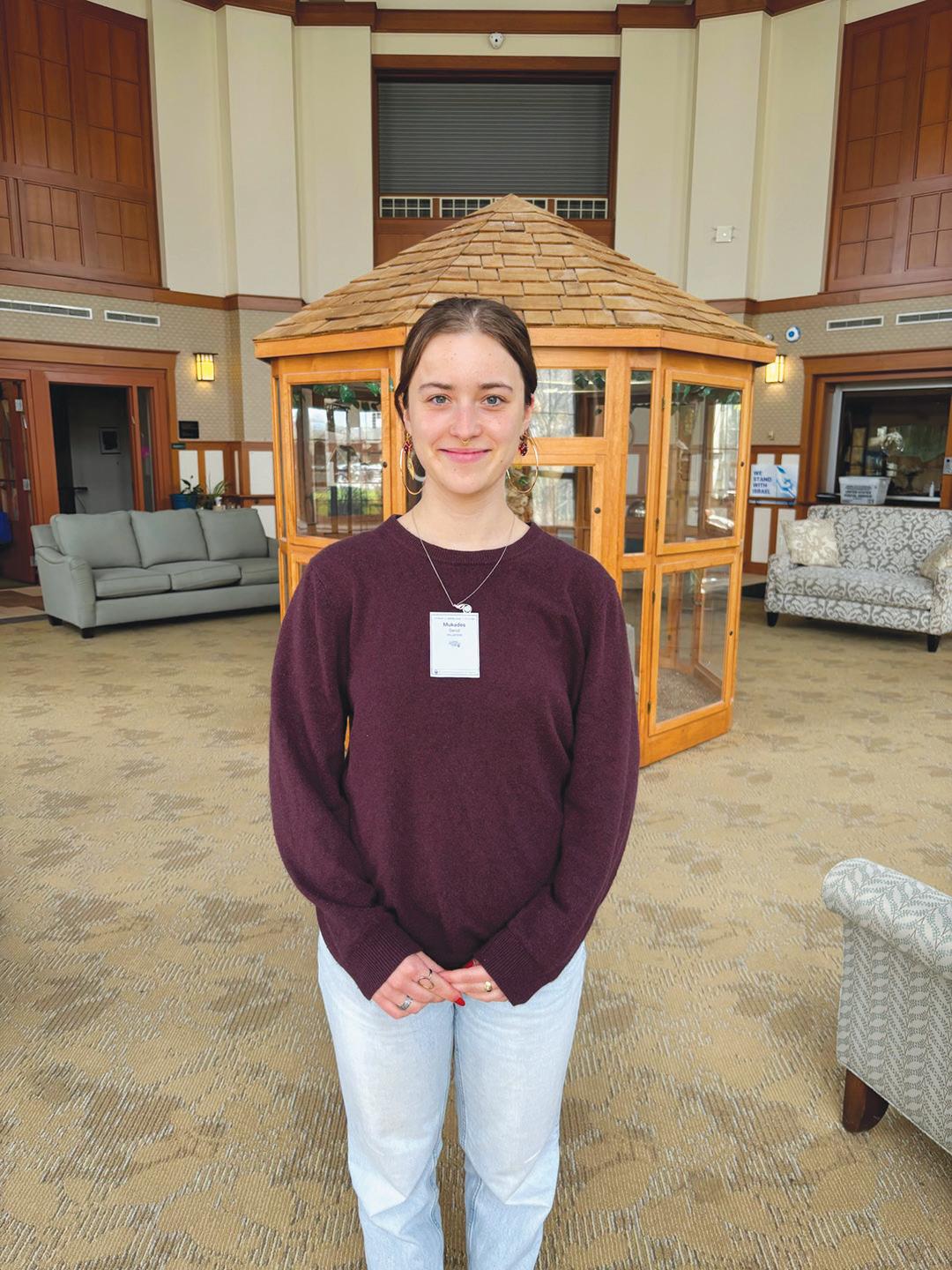
enriching experience.”
Although she is not religious, Gund’s paternal great-grandparents were Jewish, and her family is into ancestry research, so the prospect of immersing herself in a Jewish environment “really spoke to me,” she said.
“It’s about wanting to feel the tradition and culture of my ancestors. I feel like so much got lost over time because of the Diaspora;
Rubin recalls screening Gund, which began with an application and background check and culminated with a phone call.
“Everything, including references, came out positive,” Rubin said. “Talking with Muki sealed the deal. She captivated us within 30 seconds.”
Gund divides her time between seniors with dementia at Anathan Adult Day Care Memory Care Services, and Weinberg Terrace assisted living.
“Weinberg is a little tougher crowd,” Rubin said. “They can be feisty and their filters aren’t always working well. But Muki bonded with the residents quickly.”
Gund also delivers Mollie’s Meals to seniors in their homes.
“She’s energetic and she loves hearing people’s stories,” Rubin said. “It’s really a match made in heaven — a love story.”
Older adults have been eager to share tips about aging well and are an inspiration, Gund said. “They have lived such long lives. Even the people with dementia — they remember things from their childhood. They remember with emotion.”
She also was moved, she said, by the caring culture at JAA, which reflects Jewish values.
“That’s something I will take back home — how the staff treats the residents with such dignity, like when they need to be helped with eating. And the staff treats each other well. It’s a very friendly atmosphere.”
Gund participated in a seder for the first time and was a regular at the Jewish Community Center of Greater Pittsburgh, particularly the pool.
Because she is focusing on Eastern European and Holocaust studies in her master’s program, Gund was especially interested in visiting the Holocaust Center of Pittsburgh. It surprises her that Holocaust teaching is not a mandatory part of the curricula in Pennsylvania’s public schools. “In Germany, we learn a lot about it, focusing on both the perpetrators and the victims,” she said. The Holocaust has come up in discussions at
SPONSORED CONTENT
Weinberg Terrace, and with two survivors she met while delivering Mollie’s Meals. “People have told me about their relatives. One woman told me she can’t look at chimneys,” said Gund, whose great-grandparents lived through the Holocaust while more distant ancestors perished.
She and her family have participated in the Stolpersteine Project, a decentralized memorial that involves placing small concrete cubes inscribed with the names of Holocaust victims at the last place they willingly lived.
“We placed 19 stolpersteine in Berlin, at the homes of distant ancestors,” Gund said.
Before returning to Germany April 10, Gund planned to visit the site of the Pittsburgh synagogue shooting. She was in Germany when it occurred and remembers feeling shocked and speaking frequently with her Squirrel Hill relatives. At Weinberg Terrace, meeting the survivor of two victims was “truly heartbreaking,” she said.
Gund planned to return home with a small mezuzah for her door, and with many stories for her father, who is on his own heritage journey.
“He reads the German Jewish newspaper and is trying to learn Hebrew,” she said. “I believe if he practiced any religion, it would be Jewish.” Gund will return to Pittsburgh for five weeks next spring to complete her internship. In the meantime, she said she is hoping to connect with Jews in Germany, despite the logistical challenges of living in a rural area.
“Muki will be a great ambassador for the Pittsburgh Jewish community,” Rubin said. PJC Deborah Weisberg is a freelance writer living in Pittsburgh.
Like everything else in life, our estate planning needs change as we grow older. I define Estate planning as making plans and arrangements for the future, in case anything bad happens to me, like becoming disabled or dying. It’s about determining who I want to help me if I can no longer take care of business myself, and what I want them to do to assist me, either during my lifetime, or to wind up my affairs after I’m gone.
The tools of estate planning include both simple, non-legal steps like using joint accounts or beneficiary designations, or life insurance; and more legally oriented steps such as Powers of Attorney, Wills, and trusts.
Estate planning is not just for the wealthy. If you own anything, or if you have a family, spouse, children, an unmarried partner, or if you might possibly ever get sick or die someday, then estate planning is for you.
Estate planning involves making clear decisions about who will act on your behalf, what responsibilities they will carry out, and formalizing those instructions in a legally enforceable manner. ESTATE PLANNING AT DIFFERENT AGES: Young adults after age 18 need estate planning as they begin to accumulate financial interests or family ties. Not many college students have them, but a Power of Attorney given to parents on a standby basis, would be very helpful if a young person became disabled.
For young families, it becomes extremely important to make arrangements to provide for and protect spouse, children, and property interests, such as perhaps a new home. There will be an increased need for more formal tools such as Powers of Attorney and a Will, including provisions for Guardians and trustees for minor children. (Without a Will, state law decides who will inherit my property and it may not be what I would have wanted.) Preparing for educational costs for children also becomes a concern.
Any special needs child or other family member or dependent also deserves appropriate planning to help secure their future. In addition, a life partner who is not a married spouse may create particular planning needs because they lack the legal protections and decision making authority of a legal spouse.
In the middle phase of life, people often accumulate more wealth and new and different kinds of problems. Thinking ahead about the transfer of wealth to the next generation or others, and strategies to minimize tax costs, require thoughtful attention . Owning business interests creates both need and opportunity to shape future transition arrangements.
When people marry, especially in second or subsequent marriages, a prenuptial agreement may be the opposite of romantic, but extremely practical. Sometimes parents want to protect the future inheritance for their own children against the risk of divorce related claims against their adult child/ beneficiary by a son- or daughter-in-law. Also, securing future access to my digital assets and online activities by others on my behalf can prevent otherwise foreseeable headaches.
As we continue to age, our planning focus may shift toward retirement and medical decisions, including
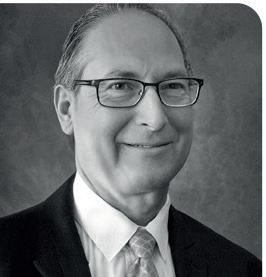
At Abernethy Hagerman and Miller, we help people every day with issues like these. I invite your questions and feedback. Please let me know how I can help you and your family.

healthcare directives naming our own preferred surrogate decision-makers if needed, as well as the cost of long term care and asset protection planning.
All such planning is, by definition, an imperfect exercise. What’s the saying? Man plans and God laughs. There is ordinarily no perfect answer, or one-size-fits-all solution. We make the best choices we can, to make it most likely that our successors will accomplish our goals.
When should we review and revise our estate planning? Whenever there’s any significant change in the people, property, places, or the public laws that apply. Additional examples include: If you move to a different state, if your property interests and wealth change significantly, or if there are changes in the laws that will affect handling or winding up your affairs. It’s never to late to start!
What is the cost of this kind planning? Is it worth it? In the long term, planning saves money by limiting uncertainty, disputes and the need for future legal work. We can’t afford to fail to plan for our own future, our finances and our families. All that’s at stake is everything we’ve ever worked and saved for, and the people we love.
When you consult an attorney for estate planning help, always ask in advance what the fee or fee arrangement will be, what’s included, what’s extra, etc. When I choose a lawyer or a doctor, I want someone with a good head and a good heart.
mhm@a-h.law
NEW FIRM MAIN OFFICE
3960 William Flinn Highway (Route 8) Allison Park, PA 15101
10 minutes closer to town! (412)486-6624 • We make house calls
































By Family Features
As you age, your doctor’s interest in your cholesterol level is likely to increase. That’s no coincidence. High cholesterol and age are two significant risk factors for heart disease, which is the leading cause of death in the United States.
You may not be able to slow the hands of time, but elevated low-density lipoprotein (LDL) cholesterol, also known as “bad” cholesterol, is one of the most significant addressable risk factors for the development of cardiovascular disease. Uncontrolled high LDL-C can lead to death, heart attack, stroke or the need for a coronary revascularization.
While statins are considered firstline treatment for people with high LDL cholesterol, an estimated 29% of patients stop taking their statin within the first year, based on findings published in the American Journal of Cardiology. Up to 30% of people have some degree of statin intolerance, according to research published in the Journal of Clinical Lipidology.
Test your heart health knowledge and learn more about managing your risk factors, including high cholesterol, with this quick quiz:
1. Do cardiovascular diseases, including heart disease and stroke, claim more lives in the U.S. than all forms of cancer and accidental deaths (the Nos. 2 and 3 causes of death, respectively) combined?
Yes. Cardiovascular disease is the No. 1 killer of men and women in America and worldwide, killing more people than both cancer and accidents each year.
2. According to the American Heart Association, which of the following are true?
• Men are more likely to have heart attacks at a younger age than women.

• Women experience different symptoms indicating potential heart disease.
• Women have a higher risk of fatality because their symptoms are frequently misunderstood or misdiagnosed, leading to delayed treatment.
All are true. While many factors are at play, one major underlying issue is historically, women simply haven’t been well represented in clinical trials of heartrelated conditions. However, Harvard Health reports that culture is slowly changing and some of the gaps are starting to close.
3. Does statin intolerance mean statins are not effective?
No. On the contrary, statins are the standard of care to lower LDL cholesterol. However, some people cannot take statins at any dose because of statin intolerance symptoms such as muscle pain, while others may have their LDL cholesterol remain uncontrolled because they are not able to take higher doses.
4. Are women more likely to be statin intolerant than men?
Yes. According to the National Institutes of Health, being female is a risk factor for statin intolerance.

5. If a person is statin intolerant, are there other treatments available to help lower their uncontrolled LDL-C?
Yes. Alternative treatments are available for people with statin intolerance. A health care provider can help explain what options are available if you experience potential statin-associated side effects.
6. Are muscle-related symptoms typically the most common side effect of statins?
Yes. Muscle pains or cramps (myalgias) are the most common symptoms people experience. Your health care provider may run tests or change your medication to address these symptoms.
For more information on statin intolerance, talk with your health care provider or visit statinalternatives.info.
How to lower bad cholesterol
LDL cholesterol, commonly referred to as “bad” cholesterol, leads to plaque in your arteries, reducing blood flow and potentially damaging your cardiovascular system.
If your bloodwork shows elevated LDL cholesterol levels, you can take steps to reduce it.
1. Eat a healthy diet low in saturated and trans fats and high in fiber, with an emphasis on fruits, vegetables and whole grains.
2. Get at least 30 minutes of exercise daily, and if you carry extra weight, work to lose it.
3. Talk to your health care provider about cholesterol-lowering medications, which can help lower bad cholesterol and reduce the risks associated with heart disease. PJC








Hillel:
Continued from page 1
“As has always been the case over the last 25 years — but brought into sharper focus over the last few years, particularly since the tragedy of the Tree of Life massacre, Oct. 7 and even the current days we are living in — having the safe dedicated space, knowing that
Resnick:
Continued from page 1
As a result, she said, her background is one of inclusiveness.
That’s something Resnick will bring along to her next role: board chair of the Jewish Federation of Greater Pittsburgh, which she assumes in September.
The position builds on the ongoing contributions Resnick and her family have made to the Jewish community.
Her brother, Lou Plung, chaired both the Jewish Association on Aging and the Jewish Federation of Greater Pittsburgh. Her father also was very involved in Federation life.
Resnick is currently vice chair of Federation’s board and serves on the board of Classrooms Without Borders. She previously chaired the Federation’s Community Campaign and, alongside her husband, Joshua, served as chair of Partnership2Gether in Pittsburgh, a Jewish Agency for Israel network focused on fostering ongoing, meaningful engagement rooted in shared Jewish identity and collaboration. She also served as board chair at Community Day School and on key Federation committees overseeing planning and allocations.
Her work doesn’t stop in Pittsburgh, however.
Resnick serves on the Jewish Federations of North America board and is an international Lion of Judah, a philanthropic program that empowers women to make significant contributions to the Jewish community.
If that isn’t enough, Resnick also has participated in more than a dozen Federation
Jensen:
Continued from page 1
on a Sunday and Calvary canceled its three morning services so that Tree of Life could use the sanctuary.
“There was almost no discussion about it,” Jensen recalled. “I went to my board and said, ‘Hey, the High Holidays are going to go on a Sunday morning, and they have to be there at certain times. And what are we going to do with church? I recommend we not have any of the Sunday morning services and only have one at five o’clock. Everybody was fine, and it wasn’t even, as I say, a discussion. I brought it up and they said, ‘Yeah, let’s do that.’”
Jensen then invited Rabbi Jeffery Myers of Tree of Life to deliver a sermon to Calvary at the evening church service. Myers agreed, and shared one of his two Rosh Hashanah sermons.
The rabbi was moved by the response.
“The moment that was so powerful to me is that at the conclusion [of the service] there is a recessional and then a greeting line,” Myers
every Jewish student can gather in and create community in, is essential,” Marcus said.
Staffers and volunteers hope the community recognizes that having a building has not only created a sense of place but engendered a wider sense of purpose.
“This has a broader impact than just the students of Pittsburgh,” Poller said.
“If we want our campuses to be attractive to students from all over we have to
show them that this is an amazing place to be,” Indianer said.
Celebrating 25 years is a chance to look back, but also ahead, Marcus said. Along with “honoring the legacy and the vision of the community members who made Hillel JUC possible,” there should be an awareness of the vital work required to “engage every Jewish student.”
“Aside from being a beautiful building
“If somebody in our community has any kind of issue, the Federation is the first call they should make.”
–DEBBIE RESNICK
missions to Israel, and chaired the most recent Federation Solidarity Mission.
“I’m inspired by my family’s legacy of involvement and Federation,” she said.
And while her family’s legacy may have inspired her involvement, it’s Federation’s work that speaks to her.
“I don’t get involved in a board unless I’m passionate, committed and truly believe in an organization’s mission and its core values,” she said.
Resnick said she hopes to build on the accomplishments of current board chair, Jan Levinson.
“I sort of followed in his footsteps,” she said. “We were both board chairs at Community Day School, we were both chairs at Partnership2Gether and now I’m following him at Federation.”
While their steps might be similar, Resnick said she’s not attempting to mirror Levinson.
“People ask me how I’m going to fill his shoes and all I can say is, I’m not going to try. I’m going to put my shoes next to his and use his as a guide, a model and an inspiration,” she said.

said. “Here’s what got me: As I’m sitting in line, person after person came up, shook my hand and said to me, ‘L’shana tova.’”
Jensen had taught his congregation how
Her desire, she said, is to make a difference and help ensure that Federation’s work continues long after she is gone.
To do that, Resnick believes it’s important to reach out to younger generations who don’t view philanthropy the way her generation did.
She plans on spending plenty of time listening to the next generation and creating pipelines to Federation leadership, which she hopes will inspire engagement.
Additionally, she said she wants to ensure Federation remains inclusive to all members of the Jewish community.
“It’s the conduit for everything that’s Jewish in our community and we need to continue with our partnerships and engagements, and our connections with all the other organizations that do business in the Jewish world and in our community,” she said.
Resnick said she will spend times with those organizations and discuss how Federation can be a better partner and support the community to the best of its ability. Information, she said, is vital to the work of Federation and its board.
While Federation supports many organizations within the Jewish community, Resnick believes participation should be driven by
to share a High Holiday greeting in Hebrew.
“He models this, so it’s from the top down,” Myers said. “And it saturates the entire institution in terms of the attitudes that his parishioners have, because it comes f rom him.”
In another act of solidarity with their Jewish neighbors, Calvary will host an Interfaith Service of Remembrance and Healing on April 12, at 4 p.m. Members of the three congregations targeted in the Pittsburgh synagogue shooting have been invited.
The service, which will be rooted in the Anglican tradition of sung Evening Prayer, “will remember in particular the lives taken and harmed in the Tree of Life, Dor Hadash, and New Light congregations on October 27, 2018, and will acknowledge the continuing reality of antisemitism in our society,” the invitation reads. “Prayers will name antisemitism plainly, offer intercession for those who continue to live with its wounds, and ask for courage and faithfulness in our shared life as neighbors. … The intention of the service is not dialogue or explanation, but prayerful solidarity and remembrance,
and a wonderful space, it’s important that people understand that for many students, Hillel is the center of their Jewish life,” Indianer said. “It is a place. It’s not just an idea, it’s not just an organization. It is a place. It is a home away from home.” PJC
Adam Reinherz can be reached at areinherz@pittsburghjewishchronicle.org.
more than philanthropy alone.
“I don’t believe that finances or financial insecurity should be a barrier for anyone that wants to be involved with Federation,” she noted. “I came from a background of inclusivity and I very much think that Federation, being the conduit of everything Jewish, should be from birth to death. If somebody in our community has any kind of issue, the Federation is the first call they should make.”
Federation President and CEO Jeff Finkelstein said Resnick brings the experience, insight and dedication that the role of board chair demands.
“She understands the Federation’s unique role as a connector and catalyst in Jewish life and she is deeply committed to strengthening that impact for the future. I look forward to working closely with her as we continue to build a vibrant and resilient community,” he said.
Resnick is impressed by the work Finkelstein, Levinson and other Jewish leaders have done. She said the organization has developed practices and programs — especially since the Pittsburgh synagogue shooting and following Oct. 7 — that have made it a national leader. That’s why its work is so important, she said, as are its collaborations with the Jewish community, organizations, lay leaders and professional staff.
In the end, she said, “It’s not my Federation. It’s not your Federation. It’s our Federation and we have to do what’s best for the community.” PJC
David Rullo can be reached at drullo@ pittsburghjewishchronicle.org.
offered with humility and respect.”
Some of the Oct. 27 first responders, civic leaders and representatives from the Islamic Center of Pittsburgh also were invited, Jensen said, not only to thank them for supporting the Jewish community following the Pittsburgh synagogue shooting, but “also to mourn and grieve together.”
Myers said it’s “tragic” that the bond between his congregation and Jensen’s arose from the Pittsburgh synagogue shooting, but added, “I’m also grateful for the unexpected, positive outcome of the relationship I have with him.”
And that relationship extends beyond the confines of the church, Myers said. Every year Jensen comes to PNC Park on Jewish Heritage night to take in the Pirates game. Myers and Jensen sit together at the game, “neither of us in any, shall we say, formal attire,” Myers said. “We’re just, you know, dressed down. We sit next to each other, just two guys at a baseball game and just talking baseball.” PJC
Toby Tabachnick can be reached at ttabachnick@pittsburghjewishchronicle.org.
Liking a post that calls Oct. 7 rape a ‘hoax’ isn’t free speech. It is complicity.
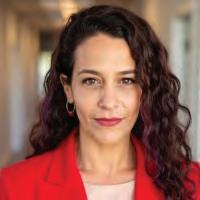
When I read that Rama Duwaji, the wife of New York City Mayor Zohran Mamdani, had liked an Instagram post calling an investigation into sexual violence against women in southern Israel on Oct. 7, 2023, a “mass rape hoax,” I, as co-founder of The Dinah Project, a group dedicated to securing justice for survivors of conflict-related sexual violence, felt a visceral revulsion watching the erasure of documented atrocities in real time.
That this news about Duwaji’s social media support of Hamas broke just as the United Nations began its 70th session of the Commission on the Status of Women — the largest annual convening by the United Nations on gender equality, and whose main theme this year was ensuring access to justice for all women and girls — underscores how grotesque the act is.
What kind of justice is available to women whose rapes are denied not by their attackers, but by public figures who dismiss the evidence with a casual tap on a screen? What kind
of justice exists when survivors summon extraordinary courage to tell the world what happened to them, only to have their suffering dismissed as a hoax?
Ask Amit Soussana, the first freed hostage to speak publicly, who described being sexually assaulted at gunpoint by her Hamas captor so the world would know the kinds of horrors hostages in Gaza endured.
the U.N.’s Special Representative on Sexual Violence in Conflict found “reasonable grounds to believe” that rape and gang rape occurred on Oct. 7 and that hostages were sexually abused.
In today’s political culture, guilt by association is instinctively applied when someone is perceived as too close to pro-Israel voices.
Ask Romi Gonen, held for 471 days, who spoke of repeated sexual assault and her terror of becoming a “sex slave.”
Ask Ilana Gritzewsky, kidnapped from Kibbutz Nir Oz, who testified before the U.N. Security Council that she was sexually assaulted during her abduction and had to beg her captors not to rape her. “I came back to be the voice for those still in hell,” she said.
These are not anonymous claims. These women relived their trauma by telling the world at great personal cost about what happened to them in the Gaza Strip.
Their accounts are corroborated by investigations at the highest levels. In March 2024,
The Dinah Project documented accounts from hostages who experienced or witnessed sexual violence. In August 2025, the U.N. Secretary-General placed Hamas on the global blacklist of organizations that weaponize sexual violence, a landmark recognition. The facts are not in dispute.
When someone endorses a post calling this evidence “fabricated,” they are not just exercising harmless free expression. They are gaslighting survivors like Amit, Romi and Ilana. They are telling the world that Jewish women cannot be trusted. And they are sending a message to every perpetrator of sexual violence: If the victims are the right kind of victims, you will face no moral reckoning.
The core issue isn’t a single Instagram post. It’s the troubling pattern of Mamdani surrounding himself with people who harbor intense hatred of Jews. His wife liked posts glorifying the
deadliest day for Jews since the Holocaust — not in response to a military operation, but as a massacre of 1,200 people happened. This was a celebration of terror against civilians; Jews, Arabs, Thai workers and people of other nationalities and all ages were murdered that day.
In today’s political culture, guilt by association is instinctively applied when someone is perceived as too close to pro-Israel voices. Clearly, the same standard is not being applied when the association in question involves people who dismiss the rape of Jewish women as fiction.
The Commission on the Status of Women has concluded. What continues to happen outside the walls of the United Nations cannot be ignored: the systematic denial of wartime sexual violence against Jewish women, enabled by people in positions of influence.
Under international law, rape in armed conflict is a war crime and a crime against humanity. Denying it allows its recurrence. Every survivor of sexual violence deserves better.
A like is not nothing. It is a choice. And choices have moral weight. PJC
Ayelet Razin Bet Or is an Israeli women’s rights expert, former director for Israel’s Authority for the Advancement and Status of Women in the Ministry of Social Equality, and co-founder of The Dinah Project. This article was first published on JNS.
In 2010, I said something I thought was unremarkable — that the government of Israel’s actions directly affect me as a Jew living in London. “When they do good things it is good for me; when they do bad things, it’s bad for me,” I said, noting that Israel lies at the heart of my identity.
My comments ignited a firestorm. Some called me a self-hating Jew or said I was giving succor to Israel’s enemies. More maddening, both then and now, were those who told me, in private, that they agreed but that such things should not be said in public. I have heard every variation of this refrain for over 15 years but have continued to speak out. If Israel were something only Israelis can comment on, it would not be the Nation-State of the Jewish People — but just a state like any other.
Two years ago, I co-founded The London Initiative with Mike Prashker to give structure to our feedback. Our goal was to strengthen partnerships between Israelis, both Jewish and Arab, and Diaspora Jews who share a commitment to what we call the Triangle — mature liberal democracy, societal fairness for all Israel’s citizens, and the pursuit of secure peace. These are neither fringe propositions nor partisan policies. They are the values of our Jewish state as laid out in its Declaration of Independence. They are Israel’s operating system.
When these foundational values come under threat, we believe that Diaspora Jews have a responsibility to speak out, in partnership with
likeminded Israelis asking for our support.
In August last year, The London Initiative sent a letter to Prime Minister Benjamin Netanyahu, signed by over 6,300 Jews from 20 countries.
We raised urgent concerns about humanitarian aid, the hostages, Jewish-extremist violence and incitement from within his own government. It was measured, principled and rooted in Zionist values. And it was ignored. The Diaspora, it seemed, was expected to keep its wallets open and its mouths shut.
Last week, in the face of unprecedented levels
the partnership between Israel and Diaspora Jewry, recognized that Jewish-extremist violence damages both Israel and Jews around the world, and thanked Diaspora Jews for engaging. He validated that Diaspora Jews not only have a right to speak, but a duty. President Herzog’s response — principled and courageous in the fractured political climate he navigates — is an outstanding act of leadership.
This seminal moment should encourage Diaspora Jews to engage constructively with Israel, with humility for the challenges Israelis
When we stand up for our values, confident in who we are, we will be stronger in facing our myriad challenges.
of violence by Jewish extremists in the West Bank, we wrote to President Isaac Herzog. We cited the IDF chief of staff’s condemnation of Jewish-extremist violence as a strategic threat and called on the president to demand an end to this terror and the impunity that enables it.
Almost 4,000 have signed so far.
Then something remarkable happened.
The president neither ignored nor scorned us but replied, sharing the conviction that such violence “contradicts Jewish ethical tradition and the values upon which Israel was founded.” He confirmed he has demanded that all available means be used to bring perpetrators to justice. He acknowledged that this violence “plays directly into the hands of Israel’s detractors, fuelling hatred that weakens us as a nation and jeopardises Jews everywhere.” And he thanked the signatories for their concern and mutual responsibility.
Israel’s head of state publicly acknowledged
face but clear-eyed too that Israel’s direction of travel affects Jews everywhere.
I have defended Israel against those who delegitimize it. We cannot be quiet when Israel’s enemies demonize it and our connection to it. But nor should we remain silent when the actions of some of Israel’s politicians run counter to our values and its own founding ideals. When we speak out, we are not using the language of our enemies, but voicing the call of an ancient people for justice and fairness. We should never flinch from doing so. It strengthens us.
In contrast, when violent Jewish extremists carry out attacks on Palestinians, when their protectors in the Knesset turn a blind eye, while passing outrageous legislation like the death penalty law, it weakens Israel and weakens all of us. And it does more damage to the reputation of Israel and the Jewish people than a thousand protest letters ever could.
Sadly, many communal leaders we
approached to sign either ignored the request or explained why it was not convenient or why the timing was wrong.
We know all too well that there is an explosion of antisemitism facing our communities. But staying silent when we see our values violated, in this instance by thugs rampaging in the West Bank, does nothing to help the fight against antisemitism at home. We also understand that Israel is at war, Israelis are again under fire and our solidarity is with them. But here’s the thing: If our Israeli friends and colleagues can stand up for their democratic values even as they shelter from Iranian missiles, we should be able to muster the courage to sign a letter. When we stand up for our values, confident in who we are, we will be stronger in facing our myriad challenges. Diaspora Jewry needs the confidence to work in partnership with Israelis for the Israel envisaged in the Declaration of Independence. That confidence must be underpinned by forthright leadership from our communal institutions. Staying silent when things are going wrong is not protecting the community — it is abandoning it.
Israel’s president showed moral courage — many of our own communal leaders need to find theirs. The “keep your wallets open and mouths shut” era is over. The stakes are too high, the values too precious, and the partnership too important to be surrendered to silence. Our own leaders should realize that when faced with a moral crisis speaking up is not an inconvenience, but an obligation, and now is the time. PJC
Mick Davis is co-founder of The London Initiative and former chairman of the Jewish Leadership Council and UJIA. This article was first published on JTA.
Last week, the Chronicle asked its readers in an online poll the following question:
“How closely do you follow news about Israel?” Of the 237 people who responded, 59% said “very closely”; 34% said “somewhat closely”; 7% said “occasionally”; and no one said “not at all.” Comments were submitted by 44 people. A few follow.
I find the news very distressing but follow it anyway.
Is there such a thing as too closely? My ever-ascending blood pressure, nascent ulcer and disturbed sleep patterns prefer that I pay less close attention to these stress-inducing events.
I live it.
We need to be aware of everyday happenings in Israel and surrounding areas. As a Jew we are part of Am Yisrael and they are part of us.
How closely do you follow news about Israel?
Following news about Israel requires reading Israeli publications, preferably more than one. I continue to be amazed at how much I learn from these sources
Another perspective on 14th Ward politics
As a longtime Jewish Democratic Committee member in the 14th Ward, I would like to add some context to the opinion piece published in the April 3 issue (“Jews need — and deserve — more seats at the table in local politics”). Bryna Siegel Finer and Aviva Lubowsky state that Corey O’Connor’s four-vote endorsement victory was out of proportion to the 2-to-1 support O’Connor enjoyed in our ward. The vote total of 274 to 270 included all Pittsburgh city wards, not just the 14th Ward. With 42 precincts, the 14th Ward can contribute 84 endorsement votes. As endorsement votes are secret, it is not possible to know how 14th Ward committee folks voted. Therefore, we cannot extrapolate that 14th Ward committee members are “disconnected” from their community.
I believe, as my friend the late Barbara Daly Danko said, that competition is good for the democratic process. I did not realize how much I wanted to be a committeewoman until I was challenged years back. Anyone who supports the mission of supporting Democratic candidates and is helping to build Democratic engagement and participation is welcome to the process. I do not know what percentage of the 14th Ward Committee is Jewish, but I do know that we do not vote as a monolith. In fact, my husband ( who is the committeeman in our precinct and a mohel) and I do not always agree. This makes for spirited dinner conversation. So I am perplexed when the authors state that the committee is insular, as that has not been my experience at home or at meetings.
I would also like to respond to the authors’ assertion that Liz Healey, chair of the14th Ward, “circulated a list of largely Jewish ACDC candidates she urged the party to oppose.” The authors suggest that Ms. Healey is going after Jewish opponents and insinuate antisemitism, a portrayal that misrepresents who Liz Healey is. She has tirelessly worked to support Democratic candidates both Jewish and non-Jewish.
Terri Klein Pittsburgh Participation strengthens, not threatens, democracy
My name is Catherine Blauvelt, and I am running for Democratic Committee member in the 14th Ward, 11th District. After reading “14th Ward Democratic Committee controversy envelops upcoming elections” (April 3), I am concerned that some readers may come away with the impression that I was recruited to run.
I chose to run for the open committee member seat of my own accord. I believe in the power of local government because it’s where real change happens in people’s everyday lives. For years, I’ve knocked on doors, made phone calls, driven voters to the polls and collected signatures. I’m a mom of three fourth-generation Pittsburghers, a member of the Historic Review Commission, and a proud neighbor on Kinsman Road. I want to listen to my neighbors and address their concerns, for us and for the next generation.
I also want to say plainly that I reject antisemitism. I am involved in the Jewish community and raising my children to be Jewish. Jewish residents of our ward deserve the same respect, safety and participation in civic life as anyone else.
Local Democratic politics should welcome participation, not treat it as suspect. More people getting involved in these races is not a threat to democracy; it is democracy. I hope
about U.S. news, in addition to what’s happening in and around Israel.
Lately I often have to grit my teeth while reading it.
With family and friends in an active war zone in Israel and deployed to the Middle East in U.S. military forces, it’s natural to monitor it closely.
I check every day to see if the Israeli government has decided to do what is moral and lawful by leaving both Gaza and Lebanon and letting the Palestinians in the West Bank live in peace.
I’d follow it more closely if I weren’t so overwhelmed by all the news coming out of the country of my birth and citizenship!
I subscribe to The Times of Israel; listen to its daily news; and listen to some of its podcasts.
I follow it on TV, radio and in newspapers every day.
I follow news from all sources, including reports from informed friends from various backgrounds living in various parts of Israel.
I have read the Pittsburgh Jewish Chronicle cover-to-cover for decades as my go-to method to keep abreast of all the issues that affect our homeland.
I watch news that is broadcast from Israel to get the inside story. PJC
— Compiled by Toby Tabachnick
Chronicle weekly poll question: Would you support legislation to set limits on how close demonstrators can gather near entrances to synagogues and religious schools? Go to pittsburghjewishchronicle.org to respond. PJC
voters will evaluate every candidate, including me, based on character, judgment and commitment to the community.
Talk to your candidates before you vote
Catherine Blauvelt Pittsburgh
Regarding “14th Ward Democratic Committee controversy envelops upcoming elections” (April 3), it behooves every voter to hold at least a brief conversation with any candidate for any office, as much as possible. That begins with committee members (for the coming election in May) and goes through legislators, judges and executives, as high as they are accessible to meet.
Organizations which vet candidates in terms of their positions on certain issues are not new. Certainly the (late, lamented) Gertrude Stein Political Club was one longstanding such organization, similar to the Beacon Coalition. The candidates are only endorsed based upon those certain issues and each candidate’s eagerness and ability to learn. It is incumbent upon voters to discuss any other issues that they deem important — and by the way not to be single-issue voters.
Your committee candidates are right there, in your eight-block district! They are in your stores, walking their dogs, sitting on their porches. Some run as husband and wife for the male and female positions, and you should consider whether that is the best representation for your interests. Talk with them all, and find someone who represents you best. And by all means, always vote!
Audrey N. Glickman Greenfield
The Torah column “*Click.* *Tap.* *Scroll.*” (March 27) on Parshat Tzav by Rabbi Mark Asher Goodman was problematic as the rabbi uses The Smiths’ verse “There is a light and it never goes out” to refer to the fire of the Torah given to Moses.
Couldn’t the rabbi find any other poem, saying, quote, verse or song to compare to the fire of the Torah?
The former lead singer of The Smiths, Morrissey, has spewed views that have garnered accusations of racism and fascism.
I like The Smiths’ music. I own several of their releases, as well as a Morrissey solo CD (The Smiths broke up decades ago) titled “Viva Hate.” However if I were a DJ on a local indie radio station, I would not choose to play them.
Leni Riefenstahl was Hitler’s Nazi propaganda filmmaker. She instituted many innovative techniques and was an influential artist. Her work is still studied and admired for its skill and creativity. This is the Leni dilemma. How do we — can we — separate the great work of an artist from their personal life or public proclamations without becoming censors and totalitarian? I don’t know the answer. I listen to Morrissey in my own house, up loud. But I would not quote, promote or cite his work when there is a world of choices.
Harriet Stein Pittsburgh
We invite you to submit letters for publication. Letters must include name, address and daytime phone number; addresses and phone numbers will not be published. Letters may not exceed 500 words and may be edited for length and clarity; they cannot be returned. Send letters to:letters@pittsburghjewishchronicle.org or Pittsburgh Jewish Chronicle, 5915 Beacon St., 5th Floor, Pittsburgh, PA 15217 We regret that owing to the volume of correspondence, we cannot reply to every letter.
By Toby Tabachnick | Editor
Pittsburgh Jewish Chronicle Senior Staff writer David Rullo has launched a new podcast, “Gen X Pgh.”
Hosted by Rullo and Valerie GatchellChristofel, “Gen X Pgh” takes a fond look back at Pittsburgh in the late ’80s and early ’90s, when “MTV ruled the television, grunge topped the charts and Pittsburgh was transforming from an industrial powerhouse to a center of technology, education, medicine and the arts,” according to a prepared statement from Rullo and Gatchell-Christofel.
Guests include artists, musicians, politicians, entrepreneurs and thought leaders who helped shape the times.
The first episode features comedian and former WDVE morning show host Jim Krenn. Future episodes include former Pittsburgh Mayor Bill Peduto; Marco Cardamone, entrepreneur and former



board chair of Pittsburgh Community Broadcasting Corporation; musicians Kelsey Friday of Brownie Mary, Harvey Coblin of The Affordable Floors and Rusted Root founding member Jenn Wertz; Melissa Lenos, co-author of the book “Generation X: The Popular Culture that Defined the


MTV Generation”; Pittsburgh Film Office’s Executive Director Dawn Keezer; and Mary Murrin, River of Steel’s president and CEO.
Rullo is the author of the bestselling book “Gen X Pittsburgh: The Beehive and the 90s Scene.” With a long background in media, including roles at KDKA and KQV radio, his work also has been featured in many local publications in addition to the Chronicle.
A graduate of the Art Institute of Pittsburgh, Gatchell-Christofel was one of the original coffee slingers at the Beehive Coffeehouse and has worked as a hair and makeup artist on productions for MTV, VH1 and “The Jon Stewart Show.” She has produced, written and directed television shows, commercials and films.
Rullo and Gatchell-Christofel record “Gen X Pgh” live before an audience at the Potomac Station Coffee House in Dormont.
A list of upcoming guests can be found on the podcast’s Facebook page.
Rullo said he’s eager to tell the stories of those who played key roles in creating today’s Pittsburgh.
“After the collapse of the steel mills, Pittsburgh could have been stuck in a post-industrial morass like Detroit or Cleveland. It’s because of the forward-thinking artists, entrepreneurs, government officials and innovators that it wasn’t. I’ve been thrilled to help share their stories,” he said.
Gatchell-Christofel agreed.
“This podcast is a love letter to Gen X in Pittsburgh — the music, the grit, the creativity and the stories that never got enough airtime,” she said. “I couldn’t be more excited to finally bring it to life.”
“Gen X Pgh,” Rullo said, is not only an homage to the city — it’s a byproduct of it.
“Valerie and I both have deep Pittsburgh roots. Our team is rounded out by producer Kim Rullo and video editor Brent Isaac, both natives of the region. The music on the podcast was created by Pittsburgh band Neostem. The podcast features the T in the background of our shots. Our guests all have inspiring stories of how they and the city helped shape one another. You can’t help but see, hear and feel the yinzer-ishness coming from the show.”
The first episode of “Gen X Pgh” is available to stream now on YouTube and Spotify. PJC
Toby Tabachnick can be reached at ttabachnick@pittsburghjewishchronicle.org.
By Miriam Szokovski | Chabad.org
Step 1: Marinate
1.5 pounds London broil
⅓ cup extra virgin olive oil
⅓ cup honey
2-3 tablspoons balsamic vinegar
4 cloves garlic, crushed
1 teaspoon kosher salt
1 tablespoon gojuchang paste (optional)
Mix all ingredients together and pour into a zip-top bag with the meat. Refrigerate overnight.
Step 2: The veg
3 bulbs fennel (more if desired)
Optional: handful of grapes

Note: London broil really needs to be kept to rare or medium-rare at the most.
2 tablespoons extra virgin olive oil
1 teaspoon kosher salt
Generous black pepper
Cut the fennel into wedges. Toss with the olive oil, salt and pepper, and spread across the bottom of a glass or ceramic baking dish. Roast uncovered for 15 minutes at 425 F.
Step 3: Sear the meat
Remove the meat from the marinade (save the marinade for step 5), and sear in a hot, wide pan for 2 minutes on each side.
Step 4: Bake
Remove the fennel from the oven and place the seared meat on top. Return to the oven for approximately 15 minutes (use internal temp for best results). Let the meat rest at least 15 minutes before slicing.
Step 5: Reduce sauce
2-3 star anise
1 teaspoon Dijon mustard
Pour the rest of the marinade into a small saucepan. Add a couple of dried star anise. Simmer until the marinade reduces by about half. Add in a teaspoon of Dijon mustard and whisk to emulsify. Season to taste.
Step 6: Serve
Slice the meat against the grain. Serve with the fennel and a drizzle of the sauce. PJC
Miriam Szokovski is a writer, editor and member of the Chabad.org editorial team. She also shares her cooking and baking on Chabad.org/food.
By Benjamin Ivry | Forward
The television entertainment person ality Gene Shalit, who celebrated his centenary on March 25, sema phored a Jewish appearance for decades to viewers of NBC’s early morning gabfest “The Today Show.”
With his Jew-fro hairstyle that fascinated celebrity interviewees and his abundant mustache that outdid Groucho Marx’s mere greasepaint simulacrum, Shalit was one of a kind. Born in New York City in 1926, he clearly aimed to be recognizable even through half-opened bleary eyes of halfasleep viewers. And audible too. Shalit’s precise pronunciation, always at a vigorous decibel level, sought to be comprehensible even during voiceovers. The Canadian comedian Eugene Levy, transfixed by this persona, imitated him on SCTV roaring at high decibel levels.
In one skit, Levy embodied Shalit with haimish affection, hawking a remedy for a migraine presumably caused by his own bellowing. In another, Levy spoofed Hollywood celebrities who were notorious fressers at local restaurants, including the American Jewish actress Shelley Winters
(born Shirley Schrift). In still another lampoon, Levy-as-Shalit danced and also kibitzed with the late Catherine O’Hara as the Jewish gossip columnist Rona Barrett (born Burstein).
Shalit apparently kvelled at the notion that he was prominent enough in media culture to be affectionately kidded like other Jewish noteworthies Levy imitated, including Howard Cosell, Henry Kissinger, Menachem Begin, Milton Berle, Judd Hirsch, Jack Carter, James Caan, Lorne Greene, Norman Mailer and Neil Sedaka.
Years later, Levy recalled that when the SCTV comedy troupe was invited to appear on “The Today Show,” before the segment was filmed, chairs were arranged so that Catherine O’Hara was seated next to Shalit. Suddenly Shalit exclaimed: “Wait a minute, shouldn’t the person who [imitates] me be sitting beside me?” Another Jewish comedian, Jon Lovitz, would likewise attempt to imitate Shalit on “Saturday Night Live,” but without the zest of Levy’s indelible incarnation.
Shalit once told showbiz reporter Eileen Prose that at first, his looks limited him to radio jobs in more conventional times for TV talent. By the more liberated late 1960s, when long hair and a hirsute upper lip were more common, he was hired as quasi-permanent house Jew on “The Today Show.” Although his mustache fit the counterculture in the mode of Jewish activist Jerry Rubin’s, Shalit as an aspiring journalist may have grown his facial hair more in tribute to earlier literati like the
playwright William Saroyan or the eminent humorist Mark Twain.
At times, Shalit’s appearance could be clown-like or cartoonish, so it was natural that characters inspired by him would appear on animated series such as “SpongeBob SquarePants” and “Family Guy” as well as “The Muppet Show.”
Famous interviewees like Peter Sellers were plainly at ease with Shalit’s persona. A conversation filmed shortly before Sellers’ untimely death was cordial, with the sometimes tetchy actor on his best behavior, acknowledging Shalit as a fellow entertainer. And with Mel Brooks in 1987, Shalit looked to be in paradise.
A warm-hearted empathizer and enthusiast, Shalit was more suited to promoting films than criticizing them. In 1989, a tzimmes occurred when a memo drafted by Bryant Gumbel, a “Today Show” colleague, deemed Shalit a “specialist in gushing over actors and directors” and added that Shalit’s interviews “aren’t very good.” To his credit, Shalit minimized the controversy, telling The Los Angeles Times that Gumbel’s disses were “not big whacks.”
“Listen, I’ve been interviewing people on the show for 17 years,” Shalit said. “I must be doing something right.”
Please see Shalit, page 22


Ruth Carmela Garcia, daughter of Allison Faye Berger and Daniel Alonso Garcia, will become a bat mitzvah at Adat Shalom during Shabbat services on Saturday, April 11, 2026. Her proud grandparents are Howard “Chip” Berger and Cindy Berger, and Silvia Garcia and the late Daniel Garcia.
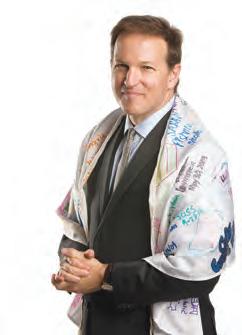
Jenna Elizabeth Goldberg, daughter of Aaron and Liza Goldberg, will become a bat mitzvah on Saturday April 11, 2026, at Temple Sinai. Jenna is the sister of Fenix Goldberg. Jenna’s grandparents are JoAnn Goldberg and the late Marc A. Goldberg, and Charles Dollins and the late Anabeth Dollins.
ome see nonsense. I see care and thoughtfulness and intentionality.
arshat Shemini opens with details korbanot, the sacrifices offered to God. There is much talk about the fat, the kidneys, the protuberance of the liver. There is the dashing of blood and turning the offering into smoke.
Later there is a long list of foods Jews can eat and cannot eat. Locusts, crickets and grasshoppers are in. Seagulls, pelicans and bats are out.
for them to walk away from the Temple feeling connected, that they accomplished their very best to show attention to God. The details are interesting but the satisfaction from a job well done is the larger point. It’s the same thing with all the animals. Put yourself back in a world where you personally get your own food. It’s completely believable that you could be wandering about and see some bird (or insect) and make it your lunch. But now you have a list of birds (or insects) and you show attention and intentionality as you decide to capture or not. It’s not about the bird (or insect). It’s about you and your decision to abide by the rules of the community and show attention to God.
Benny Liam Rovner, son of Slava and Elena Rovner, will become a bar mitzvah on Saturday, April 11, 2026, at Temple Emanuel of South Hills. His grandparents are Luba Istomina of Suffern, New York, and Viktor and Mila Rovner of Richmond, Virginia. PJC
A lot of Jews throw their hands up at all this. It seems out of touch with reality, picayune, hopelessly ancient. The problem with dismissing all this is that we stop ourselves from accepting a challenge. The challenge here is to figure out why in the world these details are here in the first place. Now, we could drill down into the specifics to tease out a metaphor or some historical context. Millions have done that over thousands of years.
But if we zoom out a bit and look at this from a distance, what I see is care and attention. Let’s look at the korbanot. I am not the first to suggest that if God really is God then what we offer should make no difference. If God is truly God, what does the Divine need with the dashing of blood and turning the offering into smoke? The answer is that God does not need this. We need this. We need some way to show attention to God and at the time, offerings were au courant. I like to imagine how the Cohanim and Levites and all the Israelites felt, not during the ceremonies, but after they were done. How satisfying



The National Aviary’s signature event space offers two large and connected gathering areas: The Garden Room, and its spacious lobby. Alongside flexibility for indoor-outdoor gathering, it’s the perfect, unique setting for live entertainment, in-house catering, and photo opportunities for celebrations big and small!




Last week you all joined a seder, I hope. There are long seders and short seders, intense seders and jovial seders. All kinds of seders. The only real rule is to accomplish those 15 steps. The real goal is to show attention and intentionality to what you are doing. Some will say you are not doing it right. What they really mean is that they have a different goal with their attention and intentionality and they are little too judgy. The only thing wrong is if you mock the seder. That’s not nice and mocking erodes the intentionality of others. So I say to you, indulge the details of this parasha if you wish. They are fascinating. But if not that, be impressed by the effort, the attention, the intentionality of doing something for a greater purpose. When it comes to living as a Jew, where do you put in your effort, your attention, your intentionality? And when you do, do you feel a sense of satisfaction? PJC
Rabbi Freedman is the director of the religious school of Congregation Beth Shalom and the newly unified Beit Kulanu. This column is a service of the Greater Pittsburgh Jewish Clergy Association.





BASTACKY: Mark Bastacky, on Wednesday, April 1, 2026. Beloved son of the late Simon and Dorata Bastacky. Brother of the late Shulamit Bastacky. Survived by many relatives and friends who loved him dearly. Graveside service and interment were held at Workman’s Circle Cemetery, Branch #45. Arrangements entrusted to Ralph Schugar Chapel, Inc. schugar.com
ESTNER: Milton Estner, on Sunday, April 5, 2026. Beloved husband of Shirley (Citron) Estner. Loving father of Joshua (Suzan) Estner. Stepfather of Kimberly Dugan (Dalal) and Mitchell Dugan (Valerie Wislo). Brother of Ida (late Al) Gottesman, the late Sidney Estner, Esther Farber, Aubrie Estner and Seymour Estner. Zaydie to Jessica Givens (Matthew Galando), Maggie Dugan, Liam Dugan, Finn Dugan and Dakota Lieberman-Dugan. Greatgrandfather of Anna and Genevieve Givens. Also survived by many nieces and nephews. Milton was born in McKeesport, Pennsylvania. He was a CPA for over 50 years and owner of Milton Estner, P.C. He was a huge Pitt fan. He loved being retired, as well as walking and playing golf. He enjoyed going out to dinner with his favorite spots being Johnny’s in Wilmerding and the Penn Avenue Fish Market. Graveside services and interment were held at Beth Shalom Cemetery. Contributions may be made to Congregation Beth Shalom Children’s Fund, 5915 Beacon Street, Pittsburgh, PA 15217. Arrangements entrusted to Ralph Schugar Chapela, Inc. schugar.com
FELSER: Harold “Chick” Felser passed away on April 1, 2026, at the age of 94. Beloved husband of 69 years to Annette. Loving father of Jill, Alan (Mary) and Jeffrey (Ilene). Proud Papa of Stephen (Dani), Evan (Megan), Matthew, Ben, Alex (Carolyn), Scott (Becky), Sam and Daniel; and his great-grandsons Ari, Ezra and Leon. Brother of Florinne Friedken (late Ronald) and predeceased by his siblings Edward (late Aimee), Alfred (late Mollie), Mildred Loundy (late Joe), Selma Luterman (late Lou) and Stanley (late Elaine). Brother-in-law of Sandra Hynds (late Edward). Also survived by many nieces and nephews who were loved by their Uncle Chickie. Chick had a long career in the commercial printing industry and was a proud veteran of the Korean War. Graveside services and interment were held at Homewood Cemetery on Monday, April 6, 2026 at 11 a.m. Contributions in his memory may be made to Beth El Congregation of the South Hills, 1900 Cochran Road, Pittsburgh, PA 15220, or a charity of choice. Professional services trusted to D’Alessandro Funeral Home & Crematory Ltd., Lawrenceville. dalessandroltd.com
KORNBLUM: David Alan Kornblum died on March 30, 2026, with his sister by his side. He was born on June 19, 1956, in Ann Arbor, Michigan, to Sylvan Kornblum and the late Elizabeth (Falkenberg) Kornblum, who preceded him in death in 1965. David was a talented musician and ceramicist, with a bachelor’s degree in studio art from Kalamazoo College. He lived briefly in Kalamazoo, Washington D.C., and California, but spent most of his life in Lansing, Michigan, where he worked for many years as a luthier for Elderly Instruments. David’s mental health was precarious, and for decades he struggled to maintain his equilibrium. In 2023, David was diagnosed with cancer, leading to a cascade of related conditions that eventually caught up with him. When he took his last breath, his sister was holding his hand and singing a song that their mother used to sing to them. David is survived by his father, Sylvan Kornblum, his stepmother Elizabeth (Humes) Kornblum, his sister, Karen Kornblum (partner Paul Andrew Pangaro), his nephews Jacob Kornblum Berntsen and Charles Kornblum Berntsen, his niece Molly Kornblum Zacharias (Robert Kornblum Zacharias) and their children, Ruth Olive and Miriam Eve. David also had many devoted friends, most of whom played folk music with him over the years. May David’s memory be a blessing to everyone who knew him. PJC
Belle Gutman, Deceased October 22, 2023, of Pittsburgh, Pennsylvania No. 02-24-0696
Yehuda Leib Gutman, Administrator D.B.N.C.T.A.; 5980 S. W. 40th Ave. Apt. #1, Fort Lauderdale, FL 33314 or to Bruce S. Gelman, Esquire, Gelman & Reisman, P.C., Law & Finance Bldg., 429 Fourth Avenue, Suite 1203, Pittsburgh, PA 15219

Bernice & Jack Meyers, Z"L
Joan Privman
Sunday April 12: Isadore Ash, Jennie Breakstone, Sam Dizenfeld, Robert F Glick, Zelda Glick, Sarah Harris, Celia Jacobson, Margaret Green Kotovsky, Sam Labovitz, Mildred Levine, Ethel Mallinger, Beatrice Blumenfeld Nathan, Morris Perelstine, Marcia Ripp, Louis Rubin, William Sacks, Bess H Strauss, Bertha Swartz
Monday April 13: Sara Altman, Zachary Caplan, Lester Wolf Cohen, Philip M Colker, Joseph M Epstein, Isabel Glantz, Adel Horwitz, Maier Krochmal, Joseph M Lazier, Hyman Lederstein, Ben Levick, Nathan Levy, Isadore Mendelson, Rae Pariser, Leah Simon, Norma Stockman, Earl Roy Surloff, Isidor Weiss
Tuesday April 14: Shirley Bernstein, Fannie Caplan, Irene Elenbaum, Pearl Rebekah Friedman, Julia R Goldsmith, Louis L Goodman, Betty Shermer, Beatrice P Smizik, Leroy Supowitz, Myrle Thomashefsky Spiegel, Frieda Troffkin, Lawrence Martin Wallie, Jacob Young
Wednesday April 15: Israel Blinn, Morris D Canter, Clara Esther Choder, Bennie Chotiner, Mollie S Davis, Rebecca Fineberg, Lillian Forman, Rachel Hodes, Max Kalser, Albert Katzman, Sarah Kramer, Julian H Rozner, Ida Schmidt, Henry Singer, Benjamin William Steerman, Irving M Stolzenberg, Sylvan B Sunstein, Belle Treelisky, Sara H Udman, Morris S Unger, David Whitman, Leroy L Williams
Thursday April 16: Joseph Abraham Abady, Jacob Ash, Joseph A Block, Selma Winograd Cohen, Max Felder, Mollie Fiman, Abraham Friedman, Jacob Goldman, Clarence Gomberg, Harry Hertz, Bella Hostein, Pearl Janowitz, Fae Greenstein Klein, Rose Lebowitz, Jacob Levinson, Morton (Bud) Litowich, Bessie Mallinger, Anna M Oppenheim, Morris Pearlman, Evelyn M Perlmutter, Meyer Schlessinger, Alvin Silverman, Ethel Weiss
Friday April 17: Shirley Bilder, Ruth Fleser Coplon, Blanche Epstein, Edward Goldston, Alfred Gordon, Harry Greenberg, Fannie Horowitz, Tillie G Kubrin, Joseph Lederer, William Lewis, Edward Mermelstein, Hannah W Pink, Albert Silverberg, Annabelle M Topp, Florence P Wedner, Louis Zacks
Saturday April 18: S Abel Alterman, Louis Berman, Florence Cohen, Lillian Finn, Bertha Goodman, Harry M Greenberger, Sidney Greenberger, Sadie Klein, Frederick Knina, Stanley Slifkin, Karl Zlotnik












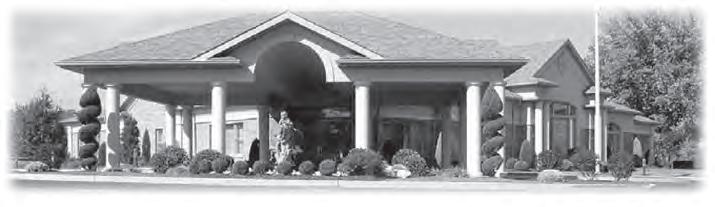


By Shira Li Bartov | JTA
As World War II raged in Europe, Friedrich Torberg, an Austrian Jew who fled for the United States in 1940, imagined what was befalling the Jews he left behind.
Torberg recorded his image of a German concentration camp in “Mein ist die Rache,” or “Vengeance is Mine,” a novel published in 1943. It was one of the earliest pieces of fiction about the Holocaust, written while the Final Solution was being carried out and decades before the capitalized “Holocaust” entered common parlance.
But Torberg, a budding star on Vienna’s literary scene, was estranged from his destroyed continent when the book came out in Los Angeles. Though acclaimed in his small circle of German emigrés, the book was never published in English. It soon went out of print and fell into obscurity.
That is until now. The first English translation of “Vengeance is Mine” was published last week by Boiler House Press, based at the University of East Anglia, as part of a series dedicated to forgotten books. It was translated by Stephanie Gorell Ortega.
“When I came across it, I thought, ‘My gosh, this sounds so fascinating,’” said Brad Bigelow, who edits the “Recovered Books” series. “How is that this book never got translated and it just got overlooked?’”
Torberg’s novella, set in November 1940, opens with a nameless narrator waiting on a New Jersey pier for a ship carrying friends from Europe. For the fourth time, he sees a haggard man who waits there each day and leaves each day alone. That man explains he is waiting, not for one or two people, but for 75 Jews who never arrive.
As they speak at a bar, this man becomes the second narrator. He tells of his time in the fictional Heidenburg concentration camp, where the commandant, Hermann
Wagenseil, tortures Jewish prisoners one by one. Wagenseil’s method is to isolate a prisoner, philosophically lay out his reasons for liquidating the Jews, and physically and mentally drive each man to the point of taking his own life.
In the “Jew Barracks,” the prisoners debate their own philosophies about how to respond to their systematic destruction. They ask whether God intends them to surrender to their fate, leaving vengeance in His hands, or to attempt saving themselves.
Torberg himself was never in a concentration camp. He was in Prague when the Germans marched into Austria in 1938. He continued to evade them in France, and then, when France surrendered to Germany, fled through Spain and Portugal. He obtained a visa for the United States through the Emergency Rescue Committee, a U.S. organization that saved thousands of artists and intellectuals, and ended up in Los Angeles.
For his novella, Torberg could consult reports from eyewitnesses who escaped camps in the 1930s. But his fictional camp predicted what would not be fully understood until later — how Nazi ideology

produced a system of mass extermination, not only through what came to be known as an “industrial” genocide of gas chambers, but also through the immense repetition of personal, intimate murders.
“Torberg saw the logical end of where the Nazis were going with their repression of the Jews,” Bigelow said. “It did go that way, but he didn’t know that it was going that way. Nobody knew that it was going to be 6 million, that it would be such a massive program, sucking up Jews all over occupied Europe.”
The unease of the narration, refracted through secondhand accounts, was more than a fictional device. Like the man waiting for the ship that never comes, Torberg could not know who would survive. While he was writing the book, he was losing at least 15 members of his family, including his mother and sister.
“Mein ist die Rache” was first published by Pazifische Presse, a small German exile press in Santa Monica that existed from 1942 to 1948. Pazifische Presse published authors who were persecuted by the Nazis, among them international giants such as Thomas Mann, Franz Werfel and
Alfred Döblin.
Torberg’s book was lauded by other exiled intellectuals. Erich Maria Remarque, the author of “All Quiet on the Western Front” and a friend of Torberg’s, called it “electrifying.” Alma Mahler-Werfel, the Austrian composer and socialite, said she read it “with feverish excitement and, at the end, with great satisfaction.” But its circulation dwindled around 2,000 copies.
In 1947, a Viennese publisher released it for the first time in Europe. Again the book was praised by critics, but readers showed meager interest and it fell out of print.
The years after World War II saw the genre of Holocaust literature emerge as a complex outgrowth of survivor testimonies. Nearly two decades after “Vengeance is Mine,” Elie Wiesel’s “Night” — a blend of memoir and novel by the Auschwitz and Buchenwald survivor — was published in the United States in 1960. Wiesel, too, failed to find a wide readership, with the English edition at first selling only 3,000 copies. It was only decades later that “Night” sold millions of copies and became a cornerstone of Holocaust education in U.S. schools.
Torberg returned to Austria in 1951, and he wrote little for the next 20 years. He would become best known for a collection of stories about the vanished Jewish world of his childhood, “Tante Jolesch or The Decline of the West in Anecdotes,” published in 1975. These anecdotes were full of eccentric characters who shared a distinct Jewish humor. Torberg called it a “book of melancholy.”
“Vengeance is Mine” is wholly unlike the Tante Jolesch stories and the rest of Torberg’s oeuvre, according to Bigelow. But he hopes that now, through an English translation, the book will finally have its moment to resonate with American readers.
“I think in the context of what’s going on in the United States right now, it’s an important book in raising that question about resistance to oppression,” said Bigelow. PJC



























Shalit:
Continued from page 17
Part of his inspiration was a sincere appreciation for humor, Jewish and otherwise. His 1987 anthology, “Laughing Matters” featured contributions by Jewish wits such as Dorothy Parker, S. J. Perelman, Woody Allen, Fran Lebowitz, Samuel Hoffenstein, Philip Roth, Mel Brooks, George S. Kaufman, Milt Gross, Arthur Kober, Leo Rosten, Allan Sherman, Max Shulman, Calvin Trillin, Rube Goldberg, Sam Gross, Roz Chast, B. Kliban, Robert Mankoff, J. B. Handelsman, Jules Feiffer and George Burns. The volume was dedicated to, among others, the Jewish screenwriter Samson Raphaelson, who was Shalit’s instructor at the University of Illinois at Urbana-Champaign.
His visceral reaction to Jewish parody was such that during one commuter train ride, Shalit admitted in a preface, Perelman’s story “No Starch in the Dhoti, S’il Vous Plait” caused a conductor to lean down with concern, stating: “A passenger says you’re
crying.” To which Shalit retorted, choking and rubbing away tears: “I’m laughing.”
The subliminal message of Shalit’s book was that without Jews, America would have distinctly fewer tears of laughter. And he regretted not being able to include funny
the time nor presumably the inclination to subject new items to analysis of Freudian intensity. He clearly preferred boosting things to panning them, and when a film displeased Shalit, he could be uncomfortable saying so.
When Shalit finally retired from broadcasting at age 84, with the Yiddish-inflected declaration:
“It’s enough, already,” he left behind admiring viewers and decades of bonhomie as one of morning television’s most genial protagonists.
Jews like Jack Benny and Ed Wynn, whose performances could not be transferred to the printed page.
Shalit also reviewed books for years. Sticking firmly to the content of cultural products with a few brief hints of value judgment, Shalit seemed to have neither
One occasion when Shalit raised hackles was his response on “The Today Show” to the 2005 film “Brokeback Mountain.” Shalit described one of the gay characters as a “sexual predator.” The LGBTQ media group GLAAD objected to Shalit’s characterization as a homophobic stereotype. Shalit’s

son Peter wrote an open letter to GLAAD, identifying himself as a gay physician with a Seattle practice helping the gay community. Peter Shalit admitted that his father “did not get” the film in question, but was “not a homophobe.” He might have added that his father had even included an excerpt from Harvey Fierstein’s “Torch Song Trilogy” in the aforementioned humor collection.
Shalit followed up with his own apology, stating in a mensch-like way that he did not intend to cast “aspersions on anyone in the gay community or on the community itself.”
When Shalit finally retired from broadcasting at age 84, with the Yiddish-inflected declaration: “It’s enough, already,” he left behind admiring viewers and decades of bonhomie as one of morning television’s most genial protagonists.
Mazel tov, Gene Shalit. Biz hundert un tsvantsik (May you live until 120)! PJC
This story was originally published on the Forward. To get the Forward’s free email newsletters delivered to your inbox, go to forward.com/newsletters.
Nominees should be successful in making a difference in southwestern Pennsylvania’s Jewish community; have taken an active role in the community, whether through a nonprofit organization, volunteer group or professional endeavor; and demonstrate “mensch-like” characteristics, those of honor and integrity. Each nominee’s application should include a maximum of 300 words to explain why that person is a difference maker.

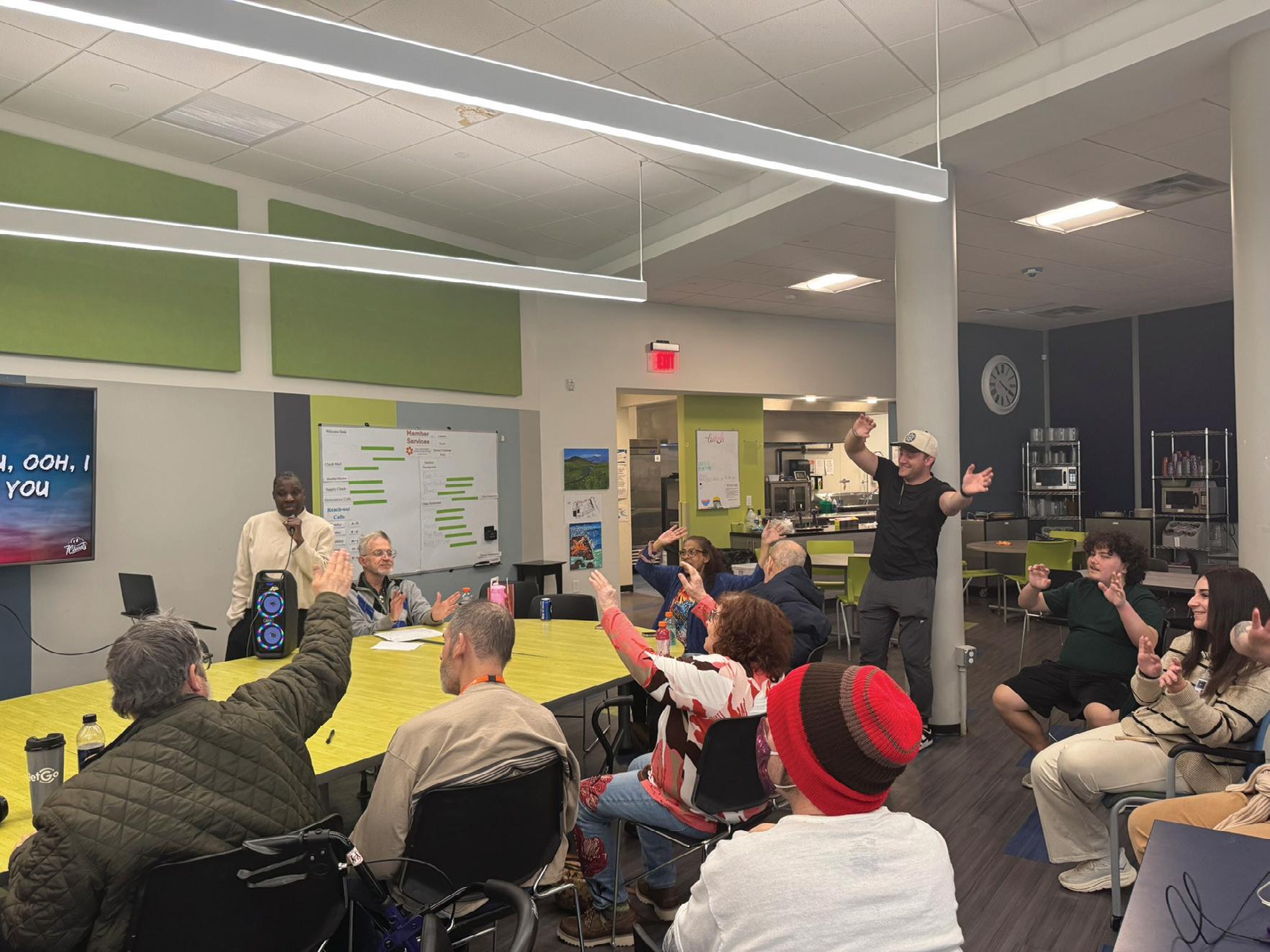
Macher and Shaker
Abigail Weinstein competed at the 2026 PTFCA Indoor State Championship. Held March 1 at Penn State University, the indoor track and field event welcomed athletes from across Pennsylvania. Weinstein, who finished 17th at the state meet, is the first female distance athlete from Winchester Thurston School to qualify for the PTFCA Indoor State Championship. She had an indoor track personal best mile time of 5:07.39 during the season and also qualified for New Balance Nationals
Planning ahead
Teach them to your children
Community Day School hosted a model seder. The in-school activity prepared students for meaningful seders at home.

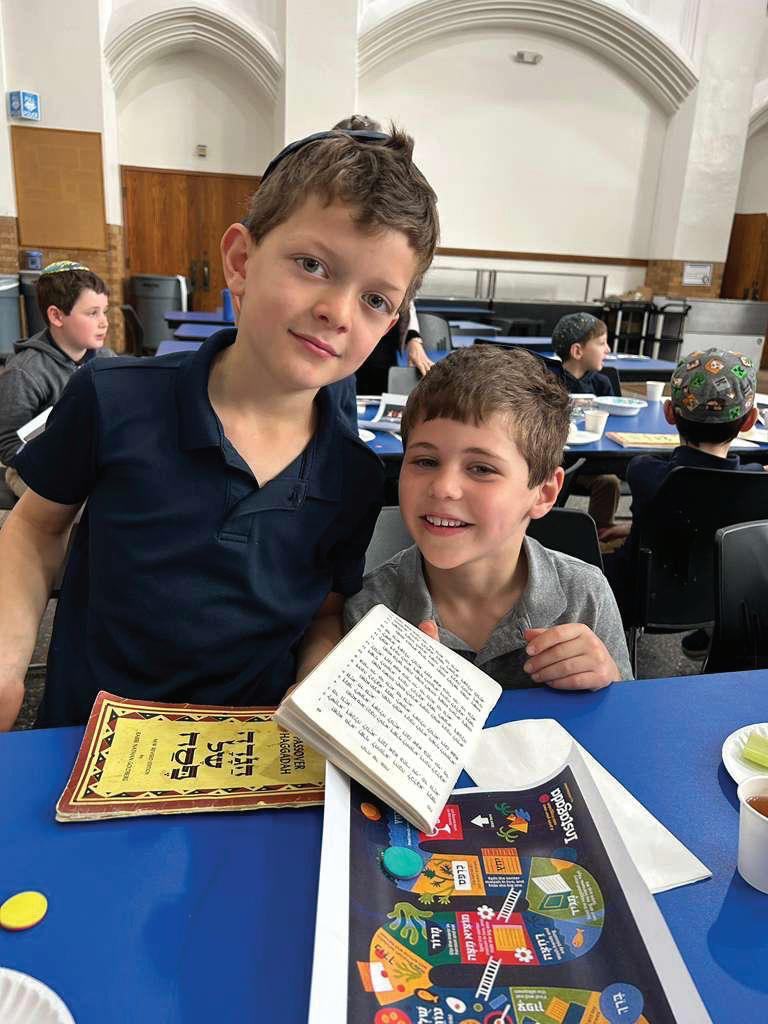
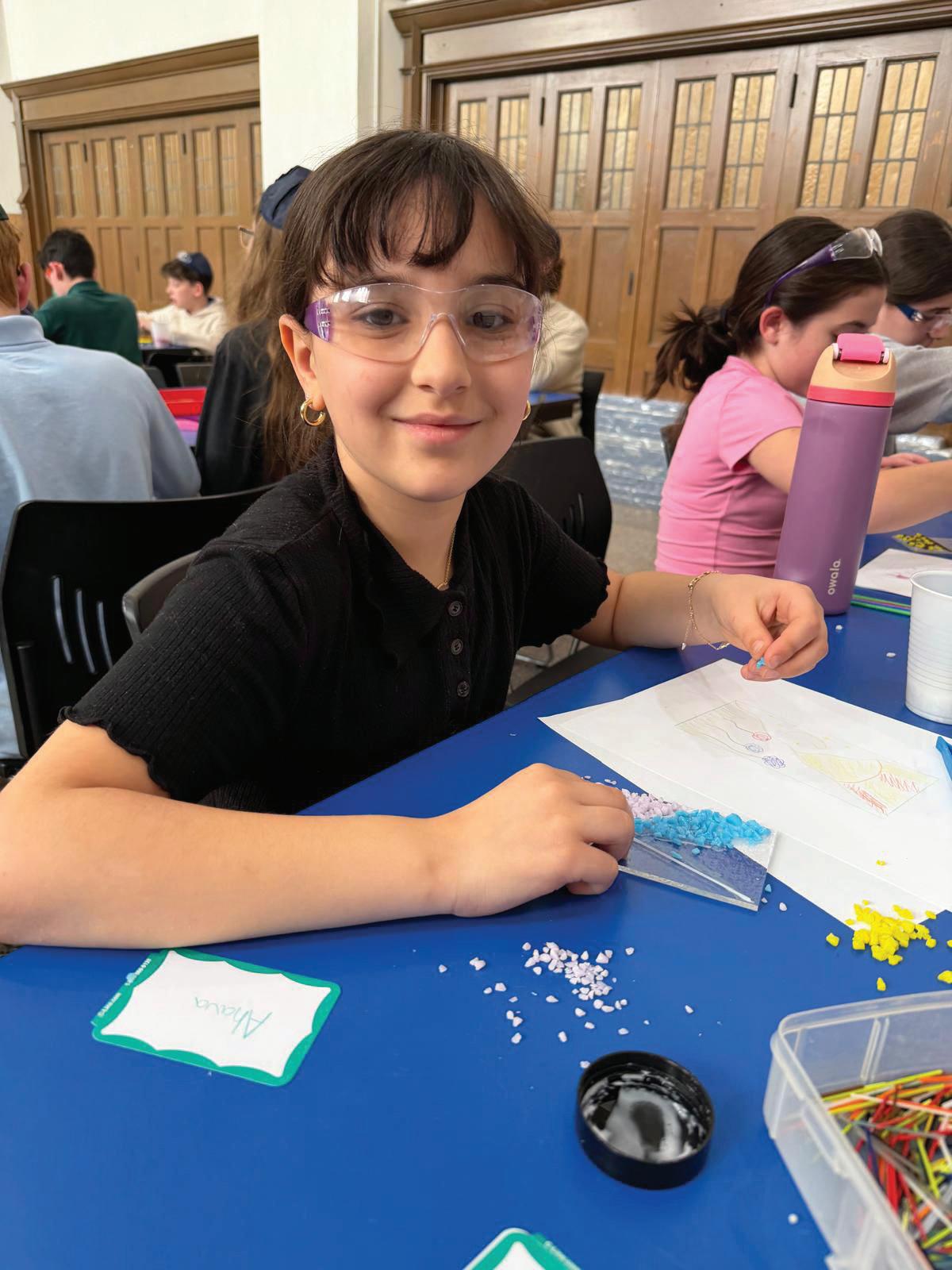
Chabad House On Campus at Pitt hosted a Pittsburgh Gala Campaign kickoff. The March 23 event at the University Club at the University of Pittsburgh signaled Chabad House on Campus’ desires to grow campus life through a new building and offerings.
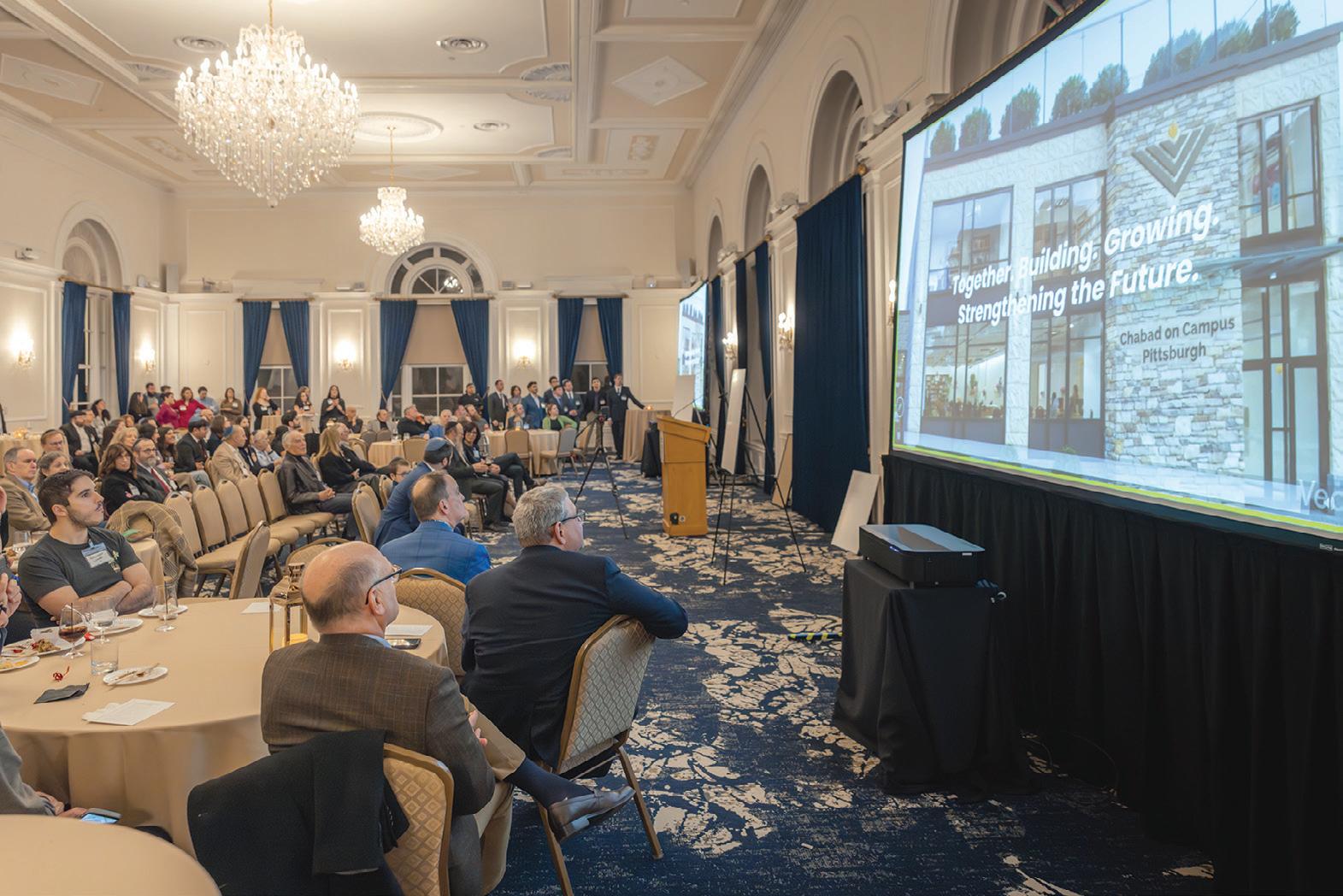
Macher and Shaker
Pittsburgh Jewish Chronicle Senior Staff writer Adam Reinherz was profiled in Squirrel Hill Magazine’s “Writers and Their Worlds.” Reinherz was featured among writers whose words “present the news, history, and cultures of Squirrel Hill.”