


By Grace Gilson| JTA
Toby Tabachnick | Editor
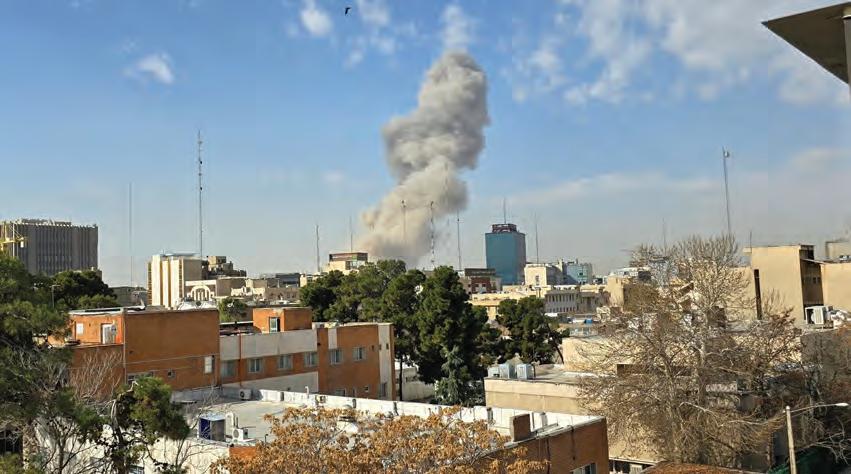
Major American Jewish groups quickly backed the U.S.-Israel strikes on Iran Saturday morning, while urging heightened security at Jewish institutions amid fears of retaliation.
The strikes, which were billed by both President Donald Trump and Prime Minister Benjamin Netanyahu as an effort to topple the Islamic Republic regime that has long targeted Israel, follow weeks of stalled diplomacy between the United States and Iran over its nuclear program that failed to produce an agreement.
The American Jewish Committee quickly threw its support behind the United States and Israel Saturday morning, writing in a statement that the “responsibility for this crisis lies entirely with Tehran.”
“The world will be a safer place when the threat of the Iranian regime’s illicit nuclear and missile programs, along with the IRGC, is dismantled once and for all,” the AJC said.
“We hope today’s military action is a decisive step toward fulfilling that vital mission.”
In a post on X, the Anti-Defamation League wrote that it “stands with the United States, Israel and the Iranian people, who deserve dignity and freedom from a regime that murders its own citizens.”
The strikes also follow large-scale nationwide
protests in Iran in January over its economic crisis and widespread calls for political change, which were met by a violent government crackdown.
The World Jewish Congress also came out in support of the strikes, calling on the international community to “stand behind this historic effort and support further measures that end the ability of theocratic tyrants to inflict harm on the Iranian people and the world at large any longer.”
The Jewish Federations of North America wrote that it will “pray for the success of the joint United States and Israeli actions in Iran,” simultaneously urging Jewish communities in the United States to maintain security protocols.
“All security protocols in North America should be fully observed. May this moment bring a renewed understanding of our shared responsibility for the future of the Jewish people and the free world,” Eric Fingerhut, the CEO of the Jewish Federations of North America, said in a statement.
Likewise, the Jewish Federation of Greater Pittsburgh stressed in a statement that it “stands with the people of Israel at this critical moment. We are working closely with our partners to provide emergency support where it is most needed.”
As the holiday of Purim approached, the Federation assured Pittsburgh’s Jewish community that its security team was “coordinating
By David Rullo | Senior Staff Writer
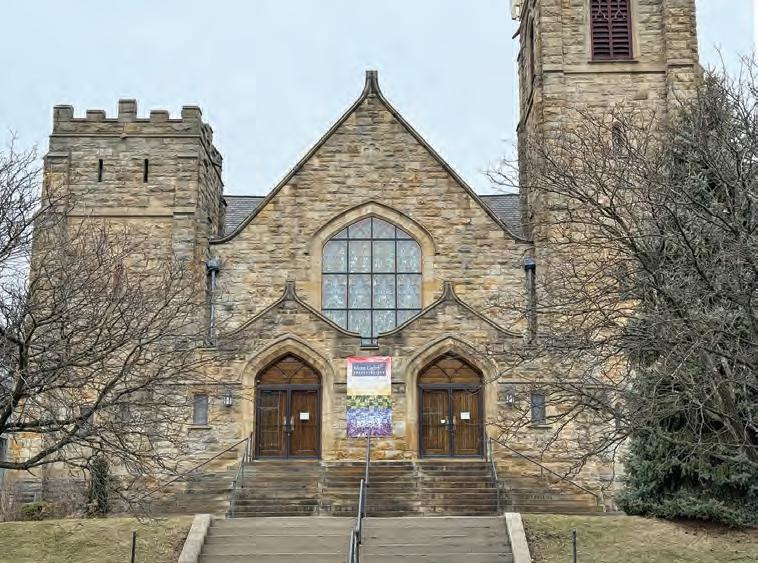
Pittsburgh Presbyterian churches have approved motions demanding the United States enact a “full trade embargo on Israel.”
The overture, approved at a Feb. 12 Pittsburgh Presbytery meeting, now goes to a vote at the church’s General Assembly meeting this summer.
Sixth Presbyterian Church in Squirrel Hill and Valley View Presbyterian Church in Garfield introduced the overture titled “Recognition that Israel has Violated the International Law Prohibiting Genocide.” Comprised of two motions, the overture seeks to:
“1. Direct the PC(USA) Stated Clerk and Office of Public Witness to demand the US Congress and the President to enact a full trade embargo on Israel until the United Nations determines the following conditions are met: (a) the Israeli military occupation of Palestinian territory has ended, (b) Israel’s apartheid policies are abolished, (c) Israel’s illegal separation barrier is demolished, and (d) Palestinian refugees are granted the right to return to their homeland.
2. Encourage Presbyteries, congregations, and individual clergy and laypeople to call upon their Congressmembers and President to impose a full trade embargo on Israel until the United Nations determines the conditions listed above are met.”
According to The Pittsburgh Presbytery general minister, the Rev. Jessica McClure Archer, the two motions will be presented to the General Assembly by the Presbytery of the Redwoods, in Northern California, and the Presbytery of San Francisco. Pittsburgh’s presbytery will “concur” with those two presbyteries, meaning it will sign on to but won’t present the overture.
The rationale for the overture, as presented to The Pittsburgh Presbytery, is the PCUSA’s commitment “to non-violent solutions to internal conflicts, including that between Israel and Palestine.”


By Adam Reinherz | Senior Staff Writer
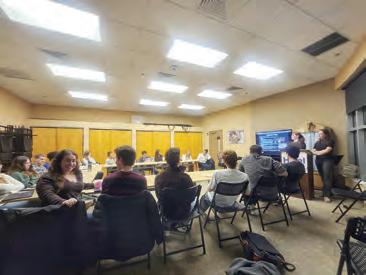
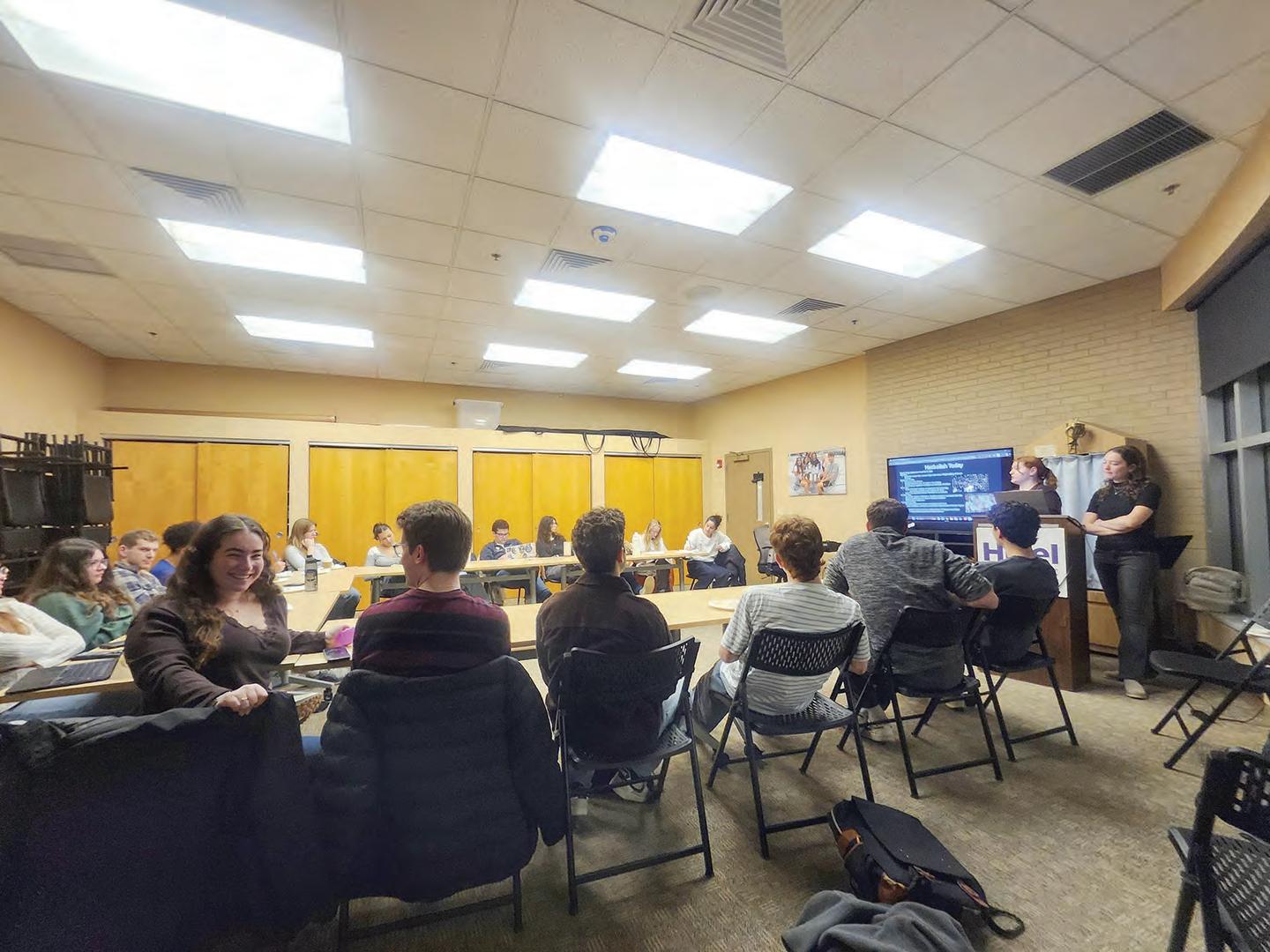
Afive-week learning opportunity at Hillel JUC is fostering an exploration of domestic policies and geopolitical affairs affecting the Jewish state. Led by University of Pittsburgh students Eden Brunner and Tamar Franbuch, Inside Israel welcomes students from Pitt and Carnegie Mellon University for lectures, meaningful discussion and dinner.
The student-led offering, which occurs on Tuesday evenings, enables participants to “debate the social, political and cultural issues facing Israel,” according to Dan Marcus, Hillel JUC’s executive director and CEO.
Each week, Brunner and Franbuch prepare materials to help spur conversation and new understanding.
“We’re trying to teach it from the perspective of two students that are both Israeli, or our parents are from Israel,” Brunner said.
Materials include those derived from research and personal experience, and address topics including regional affairs, U.S.-Israel relations and the Axis of Resistance.
Though the student-leaders integrate anecdotes and experiences within each meetup, statistics and other findings are culled from established publications, Brunner said. “Everything is being cited.”
What differentiates Inside Israel from other campus-based learning opportunities is the program is designed to not only bring people “up to speed on what is going on in the current landscape,” but focus on “what is the potential future of
p Students participate in Inside Israel.
Israel in the region, and other countries in the region as well,” Franbuch said.
Apart from serving as co-leader of Inside Israel, Franbuch is studying psychology with a minor in law. Brunner is studying mechanical engineering and computer science. Having students with different professional interests — and coming from different campuses — has added a richness to the learning experience, the student leaders explained.
Marcus credited Brunner and Franbuch, Hillel JUC staff and the more than 20 participants for creating a framework to “engage with Israel in a highly sophisticated
and challenging way.”
Franbuch returned the praise and said, “Without Hillel JUC, we wouldn’t have the opportunity to be able to lead this course.”
Brunner said she’s pleased to see so many people interested in the topic.
Despite their workload, classes and other commitments, students are “making time to attend these sessions and be a part of this community,” she added.
With the program culminating in the coming days, organizers have takeaways in mind.
Having seen the growth that’s transpired over recent weeks, the hope is that

SUBSCRIPTIONS
subscriptions@pittsburghjewishchronicle.org 412-687-1000, ext. 2
TO ADVERTISE advertising@pittsburghjewishchronicle.org 412-687-1000, ext. 1
EDITORIAL DEPARTMENT
Email: newsdesk@pittsburghjewishchronicle.org
BOARD OF TRUSTEES
Evan H. Stein, Chair
Evan Indianer, Vice Chair
Derek Smith, Treasurer
Gayle R. Kraut, Secretary
Gail Childs, Dan Droz, Malke Steinfeld Frank, Karen Gal-Or, Seth Glick, Judith Kanal, Cátia Kossovsky, Charles Saul, Lynn Zelenski
GENERAL COUNSEL
Stuart R. Kaplan, Esq.
Jim Busis, CEO and Publisher 412-228-4690 jbusis@pittsburghjewishchronicle.org
EDITORIAL Toby Tabachnick, Editor 412-228-4577 ttabachnick@pittsburghjewishchronicle.org
Adam Reinherz, Senior Staff Writer 412-687-1000 areinherz@pittsburghjewishchronicle.org
David Rullo, Senior Staff Writer 412-687-1000 drullo@pittsburghjewishchronicle.org
ADVERTISING
students refrain from seeing “everything at face value” and begin understanding that “not everything is black and white,” Franbuch said. “Especially now with the current climate on campuses, it’s really important to have these discussions and understand that at the end of the day, we can have different opinions of these discussions — we can disagree respectfully, of course — but when we leave the room, we’re still all students and we’re all peers.” PJC
Adam Reinherz can be reached at areinherz@pittsburghjewishchronicle.org.
Amy Weiss, Account Executive (412) 613-0697 aweiss@pittsburghjewishchronicle.org 5915 Beacon St., 5th Floor Pittsburgh, PA 15217
Main phone number: 412-687-1000
Subscriptions: 412-687-1000, ext. 2
PRODUCTION Jeni Mann Tough Production Manager Carl Weigel Art/Production Coordinator Subscriptions subscriptions@pittsburghjewishchronicle.org 412-687-1000, ext. 2
Published every Friday by the Pittsburgh Jewish Publication and Education Foundation 5915 Beacon St., 5th Floor Pittsburgh, PA 15217 Phone: 412-687-1000
POSTMASTER: Send address change to PITTSBURGH JEWISH CHRONICLE, 5915 BEACON ST., 5TH FLOOR PITTSBURGH, PA 15217 (PERIODICAL RATE POSTAGE PAID AT PITTSBURGH, PA AND AT ADDITIONAL MAILING OFFICES) USPS 582-740
Manuscripts, letters, documents and photographs sent to the Pittsburgh Jewish Chronicle become the property of this publication, which is not responsible for the return or loss of such items.
The Pittsburgh Jewish Chronicle does not endorse the goods or services advertised or covered in its pages and makes no representation to the kashrut of food products and services in said advertising or articles. The publisher is not liable for damages if, for any reason whatsoever, he fails to publish an advertisement or for any error in an advertisement. Acceptance of advertisers and of ad copy is subject to the publisher’s approval. The Pittsburgh Jewish Chronicle is not responsible if ads violate applicable laws and the advertiser will indemnify, hold harmless and defend the Pittsburgh Jewish Chronicle from all claims made by governmental agencies and consumers for any reason based on ads appearing in the Pittsburgh Jewish Chronicle
By David Rullo | Senior Staff Writer
Ziporah Reich wasn’t surprised when Yael Canaan reached out to The Lawfare Project alleging that she experienced antisemitism while a student at Carnegie Mellon University’s School of Architecture.
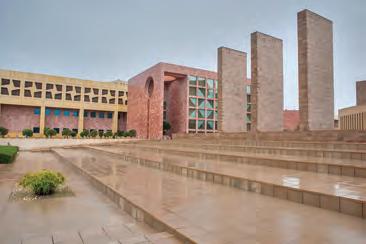
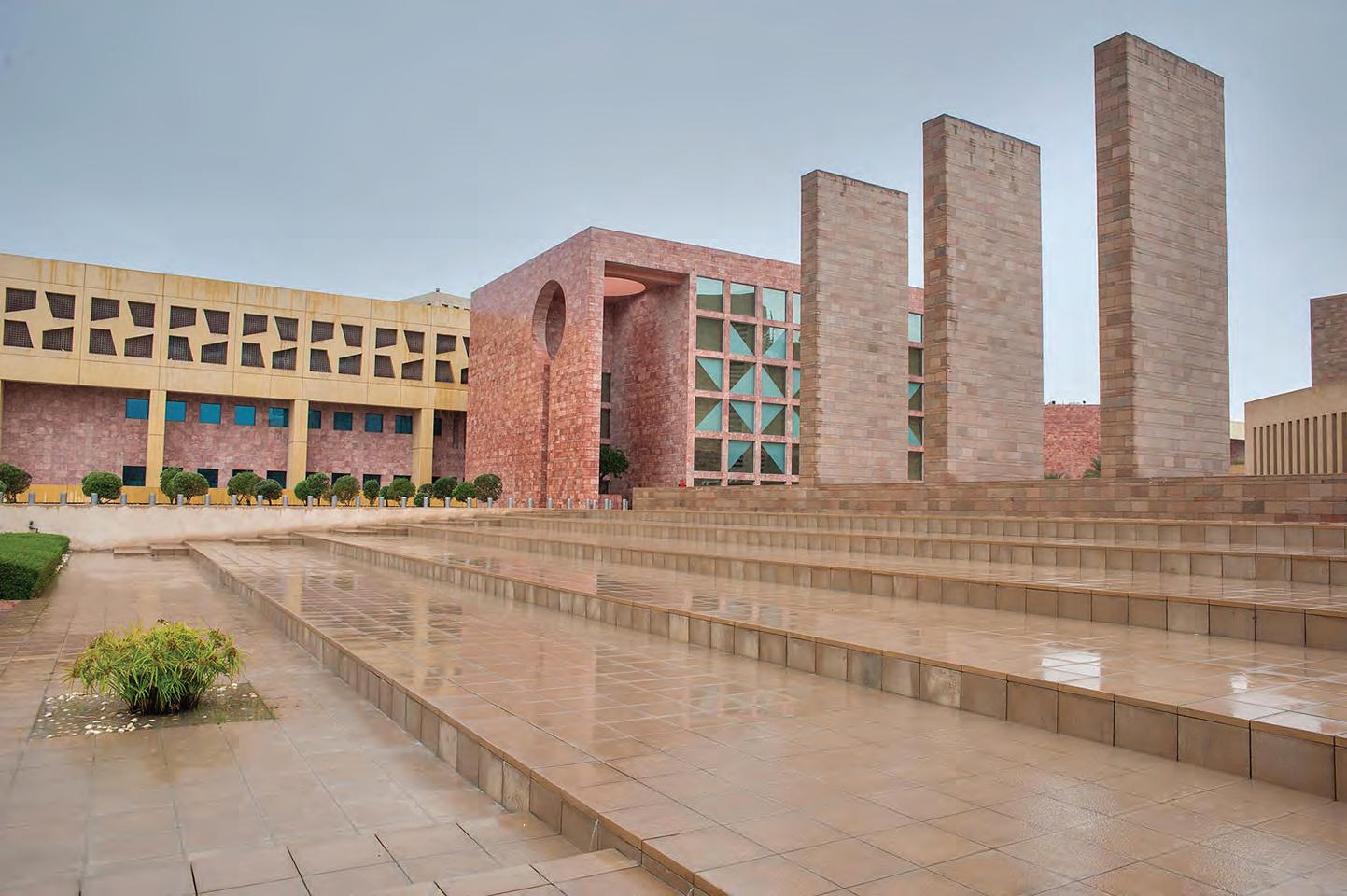
“Carnegie Mellon is the single largest university recipient of funding from Qatar and there have been ample studies to show the higher funding on a campus from Qatar, the higher the antisemitism,” Reich said. “There’s a direct relationship.”
Reich is The Lawfare Project’s director of litigation and is working with Canaan on her lawsuit against CMU. The Lawfare Project bills itself as “the legal arm of the Jewish community,” providing pro bono legal services “to protect the civil and human rights of the Jewish people worldwide.”
Canaan’s case centers around Mary-Lou Arscott, who was a School of Architecture professor and associate head of design fundamentals while Canaan was a student at the university.
The alleged abuse began when Arscott purportedly denied Canaan a homework assignment extension so she could attend an Oct. 29, 2018, memorial service for the victims of the Oct. 27 Pittsburgh synagogue shooting.
The complaint further alleges that in 2022, Arscott commented on a project Canaan was working on, saying it looked like the wall Israel uses “to barricade Palestinians out of Israel.” The professor, Canaan contends, told the student that she should focus on “what Jews do to make themselves such a hated group.”
Canaan claims she reported Arscott’s behavior to her studio professor, who told her not to worry because Arscott wouldn’t be grading her.
The lawsuit alleges that Arscott sent Canaan links to the “violently antisemitic blog” The Funambulist, and copied Elizabeth Rosemeyer, CMU’s chief diversity officer and the vice provost of diversity, equity and inclusion and Title IX coordinator, on the email.
The complaint details the reports Canaan allegedly made to various school administrators, who either ignored her pleas, failed to take any action to protect her or punish her abusers, or in the case of Rosemeyer, “aggressively discouraged Canaan from filing a formal complaint, which would have triggered an investigation of Arscott, the DEI’s failure to address the misconduct and the systematic culture of antisemitism.”
As a result of the purported behavior, Canaan has brought six claims against CMU, including three counts of violations of Title VI of the Civil Rights Act; breach of contract; and intentional infliction of emotional distress.
As part of the proceedings, Canaan filed a motion seeking discovery on information
concerning CMU’s relationship with Qatar, the Qatar Investment Authority and the Qatar Foundation for Education, Science and Community Development.
United States District Judge W. Scott Hardy issued an opinion last month, granting Canaan’s request for discovery, writing that “Qatar and its affiliates could be a source of antisemitic influence upon CMU. Indeed, the largess of Qatari funds supplied to CMU may permit a reasonable juror to infer, in light of logic and common experience, that significant amounts of money and the reliance on such funds serves to motivate CMU to abide by expectations and wishes of its generous donors.”
Reich said that evidence has been discovered showing that Qatar is paying part of Rosemeyer’s salary, calling it a “smoking gun.”
“Meaning the person in the highest position in the office that is charged with enforcing civil rights for Jewish students and gay students and women is being paid essentially by Qatar,” Reich said.
The Qatari government, she said, is hostile to Jews and Israel.
“So, it’s no surprise when our client, Yael Canaan, came to Elizabeth Rosemeyer, who’s the woman that heads the DEI office, whose salary has been, in large part, funded by Qatar, did everything she could to dissuade our client from filing an antisemitic complaint,” Reich said.
Reich said Rosemeyer and the university did everything they could to defend Arscott and her behavior.
“They were angry at Yael for trying to stop it, stop the teacher from recognizing what she did was wrong, apologizing and making sure it doesn’t happen again, which is all she [Yael] was asking for,” Reich said.
To make matters worse, Reich alleged,
landmark,” she said. “Lawsuits have tried to get this type of discovery involving schools and lost. We’re the first to get this kind
According to the Department of Education’s Foreign Gift & Contract Reporting dashboard, CMU receives the second highest amount of foreign funding of any university, second only to Harvard University. It has received nearly $2 billion
person for CMU said the funding it receives from Qatar “has no impact on how we protect the safety and well being of all of our students, including our Jewish students.”
The spokesperson noted that CMU has operated its campus in Qatar for more than
cable U.S. laws and that 90% of the funding received from the country goes to operating the CMU-Q campus. They further said that Reich is incorrect in her claim that Qatar
In the email, CMU “emphatically” denied “that funding provided to operate our campus in Qatar influences our treatment of members of our community, including
CMU secretly recorded Canaan, which is a violation of Pennsylvania law.
“The reason we know this is that it came up in discovery,” she said.
Reich alleged that in order to receive money from Qatar, CMU had to agree to follow and respect the country’s customs.
Canaan’s lawsuit, she suggests, may be the reason for the lack of mass protests on the campus following Oct. 7, 2023, noting that both Canaan and other students interviewed for the lawsuit have all claimed that “students are extremely radicalized against Israel.”
“The school is being very careful, or as careful as they can be,” she said. “In comparison to other universities, they are being very careful because they were already sued.”
Reich said she’s thrilled with Hardy’s decision, noting that CMU fought the discovery request and lost.
“It’s important to note that this is really a




As to the discovery granted by Hardy, the university said that “many judges provide wide latitude to examine a range of topics.” That, CMU said, doesn’t mean an “acceptance of the premise of the lawsuit” and that information from discovery may not be “ultimately admissible.”
“The court has made no ruling with respect to the admissibility of evidence concerning CMU’s relationship with Qatar,” the email said
The university’s spokesperson said CMU does not radicalize students against Israel and that it has no political viewpoints.
CMU, the email noted, began annual training with a specific focus on combating antisemitism in 2019 and is working to build relations with the Foundation to Combat Antisemitism. It also began the series “Deeper Conversations” in 2024, starting with a focus on combating hate and the







Adam Reinherz | Senior Staff Writer
Afellowship for teens is purposefully raising more questions than answers.
She’elot, which is administered by the Jewish Community Center of Greater Pittsburgh and supported by the Jewish Federation of Greater Pittsburgh, provides students with a regular opportunity to sit, eat, study and discuss pressing matters, including approaches to addressing antisemitism, issues of faith and communal dynamics.
Maria Carson, JCC’s director of Jewish education and arts, teen division, said the fellowship is driven by motivated teens seeking greater insight on challenging topics. By meeting regularly throughout the school year, and studying Jewish texts with peers, teens are broadening understanding and creating community, she said.
She’elot, which means “questions” in Hebrew, was created nearly four years ago in an effort to provide “innovative Jewish learning experiences,” Rachael Speck, JCC’s chief program and innovation officer, said. The program relies on “experiential learning that supports the teens’ curiosity about Jewish life,” Speck continued. “It’s all about asking questions, and engaging in dialogue around those questions, based on their own Jewish identity and experiences.”
Azi Knoll, a participant in the fellowship

p She'elot gives local teens a chance to work through texts and discuss big questions.
and Hillel Academy of Pittsburgh student, said the program’s strength is its ability to encourage young people to ask questions and “hear from kids your own age.”
Along with Azi, nearly 25 other local teens meet regularly at the JCC in Squirrel Hill to eat a kosher dinner, read Jewish texts and inquire. Participants hail from across the area and represent various denominational backgrounds and schools.
Carson said she’s pleased to see young
people from different Jewish streams sitting together, studying, discussing and learning from one other.
“As an Orthodox Jew it’s nice to hear other people’s perspectives,” Azi said. And for people who are “not so familiar with Orthodoxy, it’s nice to show them how Orthodox Jews act and to answer any questions they have.”
While the JCC values the fellows’ diversity, the program’s beauty is that it “creates
a very unique environment where teens can feel connected to other teens — not only in a Jewish setting but through this Jewish learning experience,” Speck said.
Creating a “relational network” rests at the core of the JCC’s approach to teen engagement, she continued. “We are not at a time anymore where we can just simply deliver content. It has to be relevant and it has to be meaningful to their lives. And again, for us, it really starts and ends with those relationships.”
Though the endgame may be creating a stronger Jewish community, program organizers know that desired outcome requires investment. Each participant is awarded $250 for successfully completing the fellowship.
After watching multiple cohorts move through the program, Carson takes pride in the meaningful conversations sparked and the lasting connections formed. With this cohort wrapping up in May, she hopes people appreciate that “high-level Jewish thought is happening in Pittsburgh, and students want to have high-level Jewish thought.”
As an example, each cohort tends to fixate on something different; for those curious what this year’s group is most curious about, she said, it’s the “umbrella question of ‘How should we interact with people we don’t agree with?’” PJC
Adam Reinherz can be reached at areinherz@pittsburghjewishchronicle.org.
Ivo Dylan Stjepovic is required to spend
30 hours volunteering at a Jewish institution and to have no contact with Deena Blumenfeld or her family as part of a Feb. 24 plea deal.
Stjepovic was arrested earlier this year after cutting an Israeli flag Blumenfeld had on her property in the Mexican War Streets neighborhood.
The vandalism was the fourth time
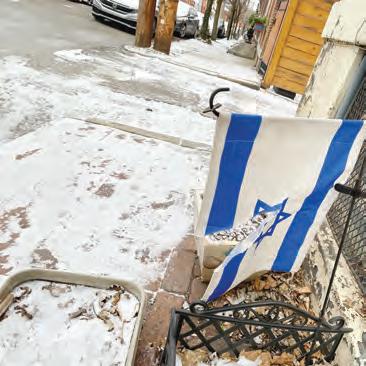
Blumenfeld’s house was targeted in less than two years.
In 2024, a vandal spray-painted the antisemitic phrase “For blood and soil” outside of her home and left antisemitic literature. Another individual stole the Israeli flag Blumenfeld placed in her yard and threw it into a nearby trash can. A third individual, Michael Lawlor, was arrested after continually spitting on her flag.
Most recently, a fifth person targeted Blumenfeld, shouting obscenities and
leaving threats at her home. He is scheduled to be arraigned on March 30.
Blumenfeld said she was pleased with the “swift, straightforward resolution” to the Sjtepovic case.
The perpetrator, she said, was “appropriately conciliatory and understood why his actions were problematic.”
“The plea is appropriate to the degree of crime, and I am satisfied with it,” she said. PJC
— David Rullo
Antisemitic messages, Nazi music and a threat toward Pittsburgh Mayor Corey O’Connor were broadcast over public radio safety channels on Monday, March 2, beginning at approximately 2 p.m. The messages were broadcast over EMS
scanners and included Nazi-related songs, messages praising Hitler and a threat toward the mayor of Pittsburgh.
According to reports, an unknown user was able to access the analog radio system and transmit the messages. Allegheny County officials said the radio system was not hacked.
O’Connor was aware of the messages, saying they wouldn’t change his daily routine
or that of city officials. He said he was most concerned for the safety of his family.
“For me, priority was kids and my wife, and now, you know, we’re going to go on our daily business and continue,” he said outside the City-County Building Tuesday morning.
Allegheny County Emergency Services, Allegheny County Police and federal law enforcement partners are investigating the incident.
Jewish Federation of Greater Pittsburgh Security Director Shawn Brokos is confident in their work.
“We have full faith in our law enforcement officers to investigate this,” she said.
Anyone with relevant information is asked to call the County Police Tip Line at 1-833-ALL-TIPS. PJC
— David Rullo
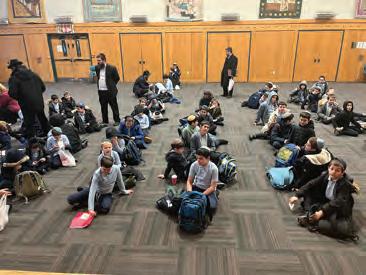
By Adam Reinherz | Senior Staff Writer
Asingle-syllable imperative has delivered 50 years of instruction: Teach. In 1976, the Lubavitcher Rebbe, Rabbi Menachem Mendel Schneerson, organized a campaign encouraging a year of education. Called “Shnas HaChinuch,” the campaign identified education as a primary mechanism for Jewish survival.
As one of 10 campaigns introduced by Schneerson to bolster Jewish observance and identity, Shnas HaChinuch centered on education. The campaign urged adults to recommit to educating others while also affirming that children, too, can serve as educators.
“As the Rebbe said, ‘If you know an aleph, teach an aleph. If you know a beis, teach a beis,” recalled Chabad of Squirrel Hill co-Director Rabbi Yisroel Altein.
The concept, Altein noted, was driven by a belief that it’s essential — for individuals of all ages — to “impart and share with someone else information that you have.”
From classroom to beyond
Each day, both in Pittsburgh and across the country, children are exposed to various schoolbased lessons. Chabad’s pedagogical mission, according to Yeshiva Schools of Pittsburgh Elementary School Principal Rabbi Mannis Frankel, is that children leave class “comfortable talking to someone they meet — whether it’s a neighbor, whether it’s someone who goes to a different school, whether it’s a child who maybe is not as aware of Torah — and will be open and comfortable sharing things that they learn with them.”
The objective, Frankel explained, is for children not only to learn, but to understand that knowledge is meant to be shared, because the “ultimate learning is when we teach.”
That belief, pioneered by Schneerson, marked an educational innovation, according to Altein: No matter where one falls on the Jewish landscape, everyone — even children — bears a responsibility to teach others.
Press Forward Southwestern Pennsylvania and the Pittsburgh Media Partnership have teamed up to launch a regional public awareness campaign highlighting the strength and collaboration of more than 40 news organizations across southwestern Pennsylvania, according to a news release.
The campaign — “40+ newsrooms. At Work. Every Day. For You.” — will run through May on paid social media, streaming audio and YouTube.
Press Forward “is a national coalition designed to strengthen communities by supporting local news and information,” according to the news release. “Press Forward
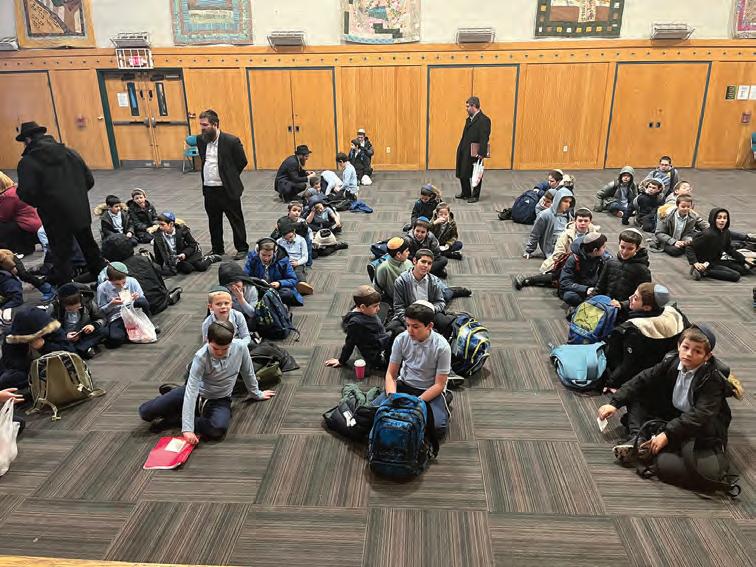
During Shnas HaChinuch, Schneerson identified 12 passages to further the campaign. Called the 12 Pesukim, the collection includes two sets of six verses: Two verses come from the Torah, two from rabbinic literature and two from the Tanya, an 18th-century Chassidic philosophical work.
Together, Schneerson explained, the 12 Pesukim provide a framework for constant study, teaching and growth.
Once taught these verses — which contain ideas regarding God’s oneness, the Exodus from Egypt and the importance of fulfilling biblical precepts — the expectation was that children would teach the verses to others.
Promoting the 12 Pesukim reflected an idea “the Rebbe called ‘chinuch al taharas hakodesh,’ education that’s based on a pure and holy foundation,” Altein said. As a tool, the verses offered a model for Jews worldwide, of all ages, to tap into Jewish wisdom and disseminate its lessons.
Each morning at Yeshiva, students recite the same verses identified by Schneerson 50 years

Southwestern Pennsylvania convenes regional funders and stakeholders to support local
ago. Since the start of this school year, Yeshiva’s Head of School Rabbi Yossi Rosenblum has also worked to further integrate those 12 verses within curricula and programming.
Rosenblum cited the 12th verse, a passage from the Tanya, which reads, “The Jews should rejoice in their Maker. Every Jew should share in God’s joy, who rejoices and is happy in His dwelling in this world.”
Along with titling this year’s fundraising campaign “Fuel the Joy,” Rosenblum has stressed the theme in weekly reels. In the 60-second clips, which focus on education and parenting, he frequently highlights the importance of joy in learning, connection and friendship.
Most educators recognize a duality of instruction where lessons are taught for both immediate gains and delayed returns: Teaching someone vocabulary, for instance, helps with an upcoming quiz and also fosters eloquence after the test’s completion. Shnas HaChinuch continues operating with a similar understanding, Frankel explained.
news that values collaboration, connection and community across 10 counties in the region.”
The Pittsburgh Jewish Chronicle was one of 205 media outlets — and the only Jewish outlet — across the country to be awarded a grant from the Press Forward foundation’s first open call for funding in 2024. The Chronicle received $100,000 over two years.
“Press Forward and the Pittsburgh Media Partnership make southwestern Pennsylvania better connected and more resilient to changes in our local news ecosystem,” said Andrew Conte, director of the Center for Media Innovation, which administers the Press Forward Southwestern Pennsylvania chapter. By working together, he said, including on this awareness campaign, foundations and newsrooms “are making the case that Pittsburgh is
“There’s a connection between Jewish children studying and reciting words of Torah, and bringing strength and protection to the Jewish people,” he said. Communal landscapes reflect attitudes toward education. When instruction is seen as something beyond finite school-based lessons, but a vehicle for collective improvement, the question becomes, “How can I contribute to the Jewish people? How can I contribute to my community? How can I contribute to my children?”
Even 50 years later, a lasting idea of Shnas HaChinuch is “we all have families. We all have kids in our communities,” Rosenblum said. That campaign challenges “everybody to participate in educating ourselves and educating people.”
Schneerson’s efforts advanced societal regard for education. In 1978, Congress touted the Jewish leader’s undertakings and noted a “need for the Nation to set aside on the calendar a day devoted to the importance of education to the lives of its citizens and to the general well-being of the Nation.”
Marking April 18 of that year “Education Day, U.S.A.,” Congress acknowledged Schneerson’s campaign and said the date coincided with the “seventy-sixth birthday of this celebrated spiritual leader.”
Since then, the day has been celebrated annually by Congress and the last eight U.S. presidents on a Gregorian date coinciding with Schneerson’s Hebrew birthday. In 1992, while promoting education as well as moral and ethical behavior, the name was adapted to “Education and Sharing Day, U.S.A.”
Fifty years since Shnas HaChinuch was launched, Altein isn’t surprised the campaign has continued fetching interest while spurring others to learn and teach.
Education is the means of ensuring “Jewish continuity,” he said. “The foundation of Judaism is the education that we have.” PJC
Adam Reinherz can be reached at areinherz@pittsburghjewishchronicle.org.
not a news desert, but one with a strong, local news ecosystem.”
Jim Busis, co-chair of the PMP, and CEO and publisher of the Chronicle, agreed.
“The Pittsburgh Media Partnership strives to strengthen the local news ecosystem in our region,” Busis said. “The announced closure of the Pittsburgh Post-Gazette and the closure of the Pittsburgh City Paper have sharpened everyone’s awareness of the crisis here in our region.
“The PMP hopes that our partnership with Press Forward to educate the public on the need for and the availability of quality local news will be a first step in strengthening the connection between local readers and news outlets,” he added. PJC
— Toby Tabachnick
Submit calendar items on the Chronicle’s website, pittsburghjewishchronicle.org. Submissions also will be included in print. Events will run in the print edition beginning one month prior to the date as space allows. The deadline for submissions is Friday, noon.
q SUNDAYS, MARCH 8–JULY 26
Join Chabad of Squirrel Hill for its Men’s Tefillin Club. Services and tefillin are followed by a delicious breakfast and engaging discussions on current events. 8:30 a.m. 1700 Beechwood Blvd. chabadpgh.com
Join a lay-led online Parashah study group to discuss the weekly Torah portion. No Hebrew knowledge needed. The goal is to build community while deepening understanding of the text. 8:30 p.m. For more information, visit bethshalompgh.org/online-parashah.
q MONDAYS, MARCH 9–JULY 27
Join Congregation Beth Shalom for a weekly Talmud study. 9:15 a.m. For more information, visit bethshalompgh.org.
Join Temple Sinai for an evening of mahjong every Monday (except holidays). Whether you are just starting out or have years of experience, you are sure to enjoy the camaraderie and good times as you make new friends or cherish moments with long-term pals. All are welcome. Winners will be awarded Giant Eagle gift cards. All players should have their own mahjong cards. Contact Susan Cohen at susan_k_cohen@yahoo.com if you have questions. $5. templesinaipgh.org
Join Chabad of the South Hills for Lift Your Life, a Rosh Chodesh Society series. This month’s topic
is “The Art of Managing Food and Munching for Meaning.” 7 p.m. 1700 Bower Hill Road. For more information or to RSVP, email batya@chabadsh.com. chabadsh.com
q TUESDAYS, MARCH 10–JUNE 30
Join Beth El’s Rabbi Alex Greenbaum and his Bible/Talmud Adult Education class for a thoughtprovoking weekly session of Bible and Talmudic study. This program is available both in person and virtually. Call the office at 412-561-1168 to receive the Zoom link or to make an in-person reservation. 10:30 a.m. 1900 Cochran Road. bethelcong.org
q THURSDAY, MARCH 12–MONDAY, MARCH 30
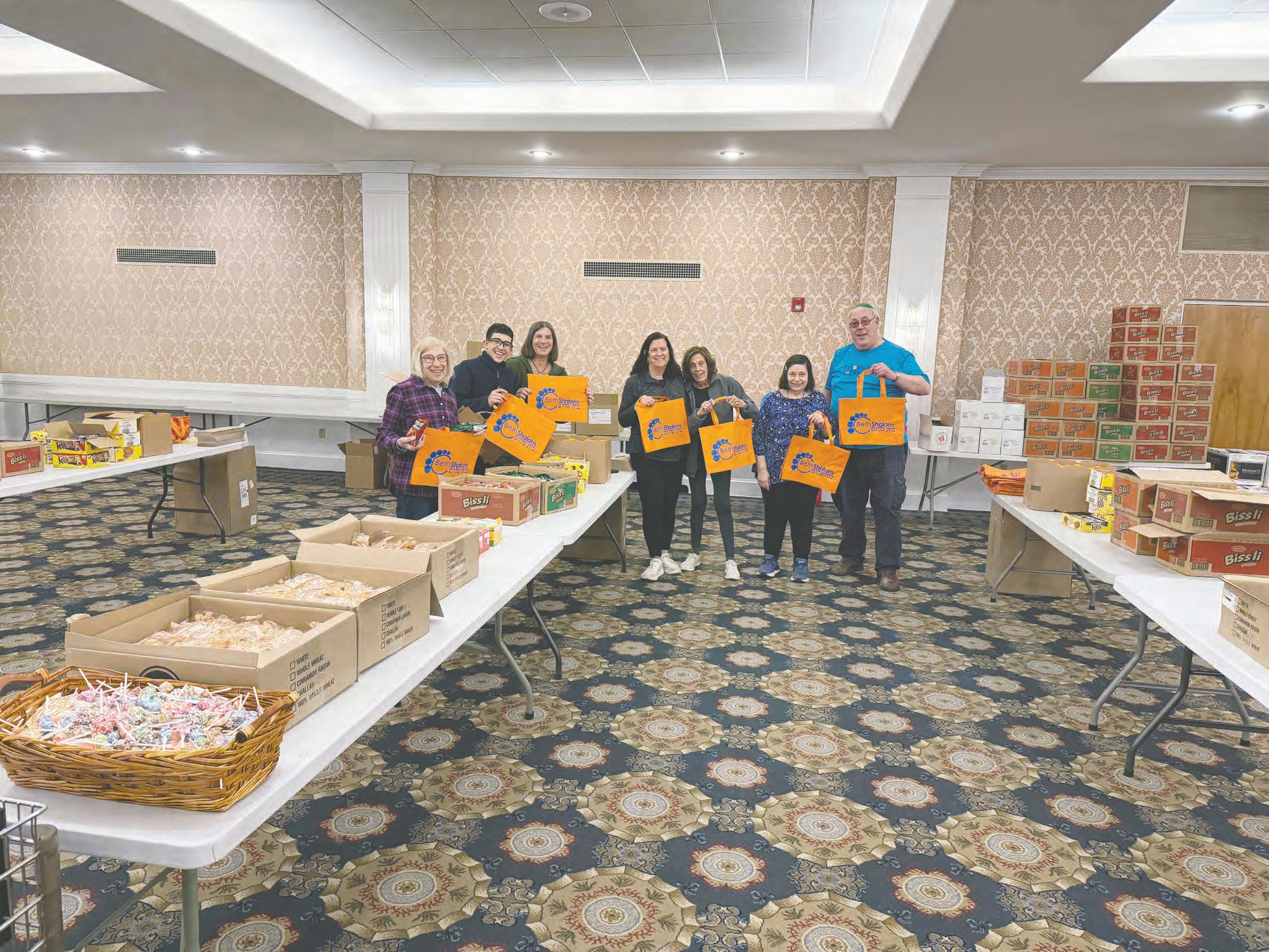
Join Passover2Go in making a difference for homebound seniors by providing them with thoughtful Passover Kits, ensuring everyone enjoys this special holiday. Sign up today to volunteer and lend a helping hand. giftpgh.org/passover
q SATURDAY, MARCH 14
Join Congregation Beth Shalom for their Sisterhood Shabbat honoring Rhoda Judd, Barbara Kaiserman and Yvonne Stein. Erica Zabusky, a creative and effective arts and entertainment industry professional, will be the featured speaker. 9:15 a.m. 5915 Beacon St.
Help Beth Samuel Jewish Center celebrate the 65th anniversary of its synagogue building, and all the prayer, simchas, learning and socializing that has happened in this building. Enjoy a pasta dinner and elegant dessert reception, while listening to the memories and pictures of longtime members through the years. The 2025-26 Pillar Donors will also be honored. RSVP required. 5:30 p.m. $18/adults and teens (13+); kids 12
and under free. 810 Kennedy Drive. bethsamuel. org/65anniversary
q MONDAY, MARCH 16
Anika Walke delivers “Memorial Complexes, Rayzebilder, Testimony: A spatial approach to Holocaust memory in Belarus,” the Third Annual Renee Sachs Memorial Lecture in Holocaust Studies. The lecture introduces works by the Yiddish writer Hirsh Reles and memorials created by architect Leonid Levin to explore how legacies of systematic violence shape the natural and built environment in the former Soviet Union. 5:15 p.m. Free. Cathedral of Learning, Room 501, Fifth Avenue. calendar.pitt.edu/event/prof-dr-anika-walke-talk q THURSDAY, MARCH 19
(Re)Building the Bridge: a conversation about the Black–Jewish relationship will center on a conversation between Center of Life’s Rev. Tim Smith and Avi Dresner, son of Rabbi Israel “Sy” Dresner, and will trace the history of the African American-Jewish relationship during the Civil Rights Movement and explore ways to collaboratively address racism and antisemitism today. Moderated by Emily Loeb of the Holocaust Center of Pittsburgh. 6 p.m. Free. Hazelwood Brew House, 5007 Lytle St., 15207. eventbrite.com/e/rebuilding-the-bridgea-conversation-about-the-blackjewish-relationshiptickets-1981372097280?aff=ebdssbdestsearch
q SUNDAY, MARCH 22
GIFT’s Intergenerational Mock Seder is a unique program that brings together students, university faculty and seniors for an interactive Passover experience focused on education, connection and community. The initiative began after GIFT student ambassadors assembled hundreds of Passover care kits for seniors and discovered
that many students had never learned about the holiday they were helping support. 4 p.m. Free. giftpgh.org/seder
q WEDNESDAY, MARCH 25
Weaving in reflections from Jill Joshowitz’s recent trips to Syria, “Reflections on the Dura Europos Synagogue Paintings” will explore the incredible biblical subject matter in the Dura synagogue paintings and their later reception in both Damascus and Pittsburgh. 5:30 p.m. Free. Cathedral of Learning, Room 332, Fifth Avenue
q THURSDAY, APRIL 2
Join Beth Samuel for a family-friendly Pesach seder, complete with a kosher-for-Passover brisket dinner. 5 p.m. $45/adult; $25/kids 6-17; free, kids 5 and under ($125 family max). Registration required by March 27 at bethsamuel.org/seder.
q FRIDAY, APRIL 17–SUNDAY, APRIL 19
Join Keshet’s one-of-a-kind Shabbat retreats for LGBTQ+ and ally Jewish teens, ages 13-18 and in grades 7-12, to learn, grow and celebrate who you are in a warm and vibrant community. Created by and for LGBTQ+ Jewish teens, Keshet Shabbatonim bring together young LGBTQ+ and ally Jews from across the country to build community and celebrate Shabbat and their Jewish and LGBTQ+ identities. $54. keshetonline.org/shabbaton
q THURSDAY, APRIL 30–SUNDAY, MAY 10
Film Pittsburgh’s JFilm Festival, the largest Jewish cultural event in the region, will return to theaters April 30–May 10, 2026. For 33 years, JFilm has showcased Jewish-themed, independent feature films from around the globe. $15 and up. filmpittsburgh.org PJC



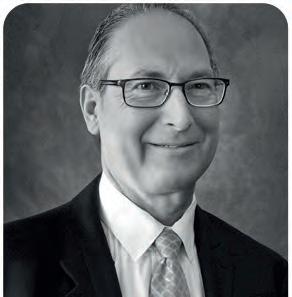












The Pittsburgh Jewish Chronicle invites you to join the Chronicle Book Club for its April 19 discussion of “Fagin the Thief,” by Allison Epstein, the winner of the 2025 National Jewish Book Award for Fiction. The author will join us for the meeting.
From Amazon.com: “A thrilling reimagining of the world of Charles Dickens, as seen through the eyes of the infamous Jacob Fagin, London’s most gifted pickpocket, liar, and rogue. Long before Oliver Twist stumbled onto the scene, Jacob Fagin was scratching out a life for himself in the dark alleys of nineteenth-century London. Born in the Jewish enclave of Stepney shortly after his father was executed as a thief, Jacob’s whole world i s his open-minded mother, Leah. But Jacob’s prospects are forever altered when a light-fingered pickpocket takes Jacob under his wing and teaches him a trade that pays far better than the neighborhood boys could possibly dream.
“Colorfully written and wickedly funny, Allison Epstein breathes fresh life into the teeming streets of Dickensian London — reclaiming one of Victorian literature’s most notorious villains."
Your hosts
Toby Tabachnick, Chronicle editor David Rullo, Chronicle senior staff writer
How it works
We will meet on Zoom on Sunday, April 19, at 1 p.m.
What to do
Buy: “Fagin the Thief.” It is available from online retailers, including Amazon and Barnes & Noble, and in some local Barnes & Noble stores. It is also available through the Carnegie Library system.
Email: Contact us at drullo@pittsburghjewishchronicle.org, and write “Chronicle Book Club” in the subject line. We will send you a Zoom link for the discussion meeting.
Happy reading! PJC
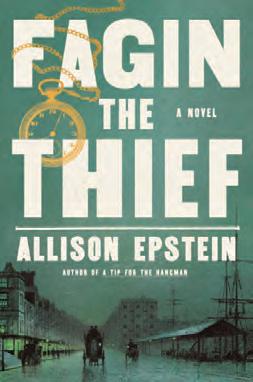

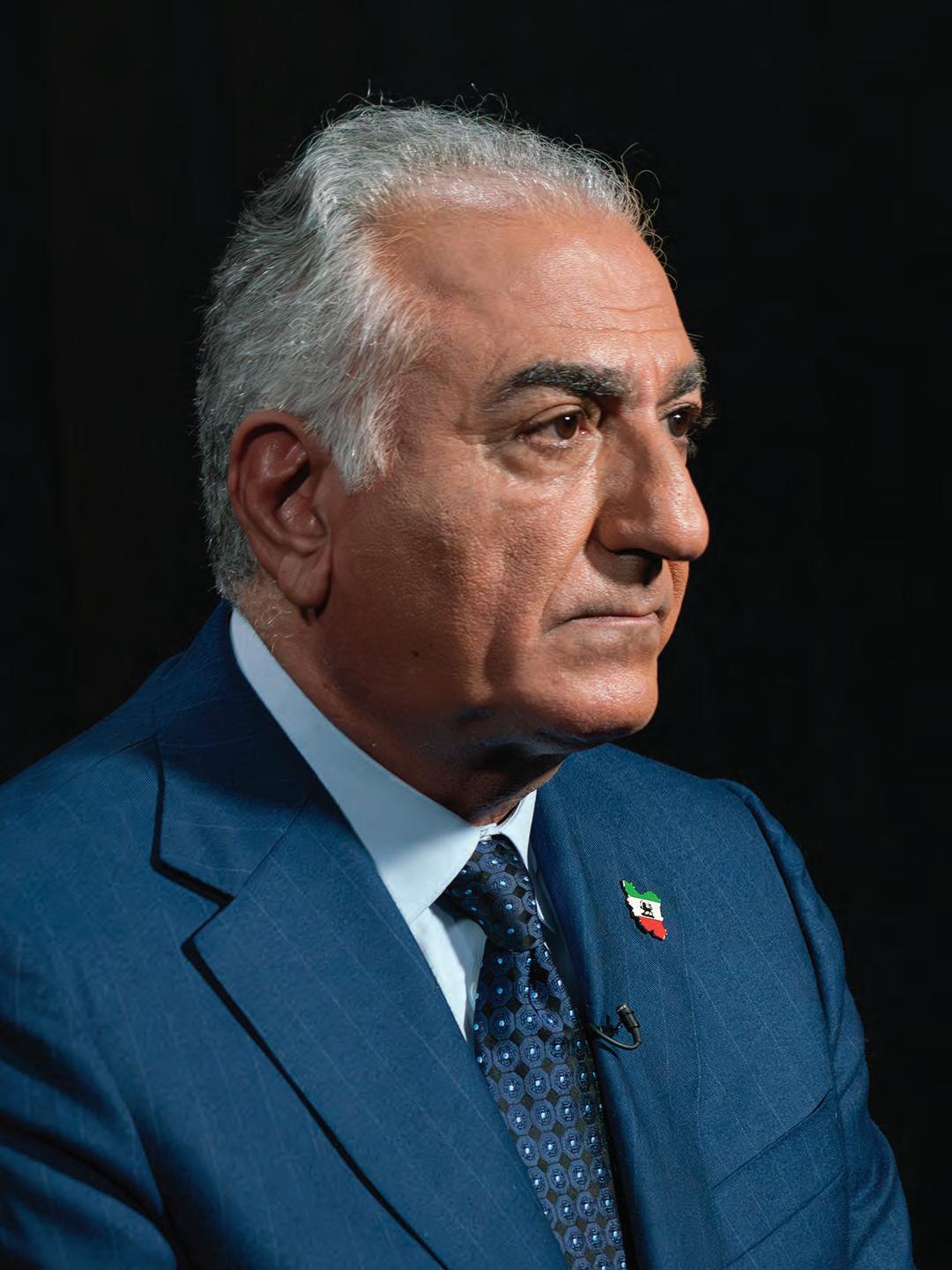
Reza Pahlavi, Iran’s exiled crown prince, has a plan for his people’s future — if they’ll have him
With a U.S.-Israel bombardment underway and President Donald Trump and Prime Minister Benjamin Netanyahu openly pressing for regime change, related questions now loom large: What are the Iranian people prepared for — and who, exactly, is positioned to lead them if the Islamic Republic falls?
Since late 2025, anti-regime protests have spread across Iran, resulting in mass arrests, imprisonments, and thousands killed in crackdowns by regime forces. On Jan. 14, following massive demonstrations, Trump posted on Truth Social, addressing Iranian protesters: “KEEP PROTESTING – TAKE OVER YOUR INSTITUTIONS!!!… HELP IS ON ITS WAY.”
At the time, expectations were high for a U.S. strike on Iran, and thousands of protesters were killed in the streets, hoping that help would come. Now, over a month later, Trump appears to have made good on that promise.
Early on Feb. 28, U.S. and Israeli forces began operating across Iran in what the IDF described as a “close and unprecedented cooperation between the IDF and the U.S. military.” Trump and Netanyahu both made statements indicating that the objective of the joint operation extends b eyond military deterrence and toward regime change.
Since the start of the operation, the U.S. and Israel have targeted several sites that
go far beyond the aims of the 12-Day War, which primarily focused on degrading Iran’s nuclear and ballistic missile capabilities. In this round of strikes, regime assets and figures have been targeted, including Supreme Leader Ali Khamenei, who was killed by an Israeli strike. During the 12-Day War, the U.S. reportedly instructed Israel not to target the supreme leader.
Israeli officials said they killed several other top officials, including the commander of the Islamic Revolutionary Guard Corps, the commander of the Iranian Armed Forces, the Iranian Minister of Defense, and the head of Iranian Intelligence.
Videos have circulated on social media showing Iranians cheering on the attacks, even as reports indicate that the regime has shut down the internet and is jamming satellite signals from diaspora news channels that would otherwise provide critical information about the strikes.
Chants heard across Iranian cities have included “death to Khamenei” and “long live the Shah.” Other videos display Iranians honking their cars and chanting “Azadi,” the Farsi word for freedom, dancing in the streets, and gleefully laughing while watching a plume of smoke rise from Khamenei’s residence.
Still, the killing of senior officials — even the supreme leader — does not automatically translate into regime change. Even if Ali Khamanei’s death and that of other senior Iranian officials destabilize the clerical regime, there remain 1 million members of

CHOPPED LIVER
GEFILTE FISH (COOKED)
DILL SALMON
SOUPS
CHICKEN SOUP
MATZO BALL
VEGETABLE SOUP
SALADS
CHAROSES
COLE SLAW
CUCUMBER SALAD
ISRAELI SALAD
CARROT SALAD
HEARTS OF PALM SALAD
MATZO KUGEL
POTATO KUGEL
MATZO FARFEL W/MUSHROOMS
OVEN BROWN POTATOES
MATZO STUFFING TZIMMES
LEG
APRICOT BREAST
SHERRY MUSHROOM CHICKEN
BONELESS BREAST
ROAST TURKEY BREAST HALF
ROAST TURKEY LEG (DRUM & THIGH)
BRISKET SINGLE
BEEF MEATBALLS
SWEET ’N SOUR
STUFFED CABBAGE
BBQ CHICKEN BREAST
BBQ CHICKEN THIGH

By Andrew Lapin | JTA
In the lead-up to the 2024 presidential election, Jeffrey Lax, a descendent of Holocaust survivors who has lobbied against antisemitism at the college where he teaches, criticized liberals who compared Donald Trump to Hitler.
Now Lax, a law professor who defines himself as center-right and appears frequently on Newsmax and Fox News, is rethinking the idea of modern-day Hitler comparisons. In fact, he’s ringing that bell on a key Trump ally: Tucker Carlson.
“I never, ever, thought this day would come, but for the first time in my life, I am going to compare a human being to Adolph Hitler,” Lax tweeted on Friday. “Understand that I am the grandchild of 4 Holocaust survivors. I’ve spent a lifetime urging people NOT to compare anyone to Hitler. But… Tucker Carlson’s views, rhetoric, and influence remind me of Adolph Hitler.”
Lax was responding to Vice President JD Vance’s favorable comments about the interview Carlson, a far-right pundit, did last week with Mike Huckabee, the U.S. ambassador to Israel. The interview ignited new allegations of antisemitism, but Vance did not suggest any concern. That, Lax says, is a big problem.
“This situation is as dead serious as a heart attack and with @JDVance now expressly and abhorrently legitimizing Carlson’s views, we are in a national Antisemitism State of Emergency,” Lax continued.
It was a dramatic outlay of angst about antisemitism on the right for a figure who has campaigned against left-wing anti-Israel activism at the City University of New York, where he teaches. But Lax said in an
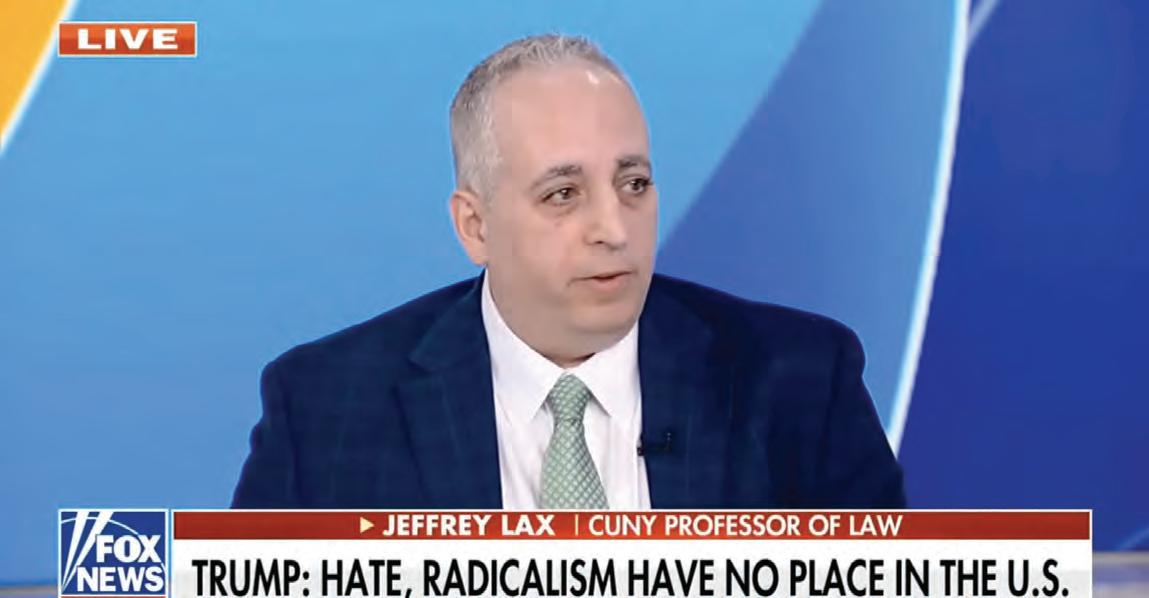
interview that he could not remain silent.
“For me to get to this point, it had to be something that was so deeply disturbing on many levels,” he said. Carlson’s call for genetics testing for Jews, he said, crossed that line. “If anything I’ve ever heard is Hitleresque, when you talk about Jews having to prove that they’re Jews with DNA — if DNA testing was available in the days of Hitler, do you not think that Hitler would have used it?”
Lax emphasized that he was speaking specifically of “early Hitler, the early years, before he took power, before he actually, physically caused anybody to be killed. I’m talking about the rhetoric. He could’ve been stopped at that point. People didn’t take Hitler seriously.”
While Lax has criticized Carlson before,
he has in the past refrained from extending those critiques to Vance — despite a mounting record of the vice president minimizing antisemitism on the right. “I’ve had suspicions about Vance for a long time,” Lax said. “I wanted to be sure.”
Vance’s defense of Carlson’s interview provided the certainty he needed.
“Is he out of his mind?” Lax said. “By saying something like that, you are saying that what Tucker is saying is legitimate and needs to be discussed, including that Jews should have genetic testing done to be sure that they’re Jewish and have right to the land.”
He described such a belief as “brain rot.”
Lax joins a growing line of other Jewish conservatives who have expressed alarm about Vance and his closeness to the White

House. They include far-right activist Laura Loomer; conservative columnist and Newsweek editor Josh Hammer; Israeli conservative luminary Yoram Hazony; Orthodox right-wing pundit Ben Shapiro; Rep. Randy Fine; pro-Israel activist groups StandWithUs and StopAntisemitism; and publications with a conservative-friendly pro-Israel bent including Tablet, The Free Press and Commentary.
Their alarm comes as Carlson builds a formidable political network of his own ahead of the midterms, made up of figures with growing sway over young voters. He has given friendly interviews to several outsider GOP candidates, including Florida gubernatorial candidate James Fishback, lover of antisemitic memes; Texas congressional candidate and pardoned Jan. 6 rioter Ryan Zink; U.S. Senate candidate Paul Dans, who is challenging pro-Israel Sen. Lindsay Graham; and Iowa gubernatorial candidate Zach Lahn, who used his Carlson interview to disparage nonChristian elected officials.
Influential figures identified with the left are also increasingly coming to Carlson’s side on Israel and Jews. “Hey bitch, the goyim are waking the f--k up. Deal with it,” Ana Kasparian, a co-host on the progressive online network The Young Turks, tweeted as part of an extended defense of Carlson this week.
Amid a backlash, the next day Kasparian doubled down: “I do not regret this comment. I don’t apologize,” she tweeted. “Israel is evil, genocidal and has destroyed our country. They’re about to drag us into another war and all we hear from Israelis and their braindead supporters is ‘ANTISEMITE’ if you disagree with Israel’s agenda.” (Kasparian’s Young Turks colleague, Cenk Uyghur, is a regular Carlson guest.)
While antipathy toward Carlson has been all but fully cemented for Jews on both sides
San Francisco mayor Daniel Lurie condemns ‘Tax the Jews’ chant heard during protest
Jewish leaders and California elected officials condemned an antisemitic chant that was audible during a protest last week against the repeal of a local San Francisco tax ordinance, JTA reported.
During a news conference addressing a new housing construction development plan hosted by San Francisco mayor Daniel Lurie and San Francisco District 5 Supervisor Bilal Mahmood, protesters with the Democratic Socialists of America chanted “tax the rich.”
According to videos, one woman on the scene can be clearly seen and heard chanting “tax Israel” and “tax the Jews.”
Lurie, who is Jewish, condemned the chants, which he said had come from a group of people.
“At an event this afternoon, a group of individuals that were chanting ‘tax the rich’ began to shout ‘tax the Jews,’” Lurie tweeted. “Suggesting that Jews are wealthy is a tired trope, and targeting our community at an event focused on creating economic opportunity for San Franciscans is decidedly antisemitic. I will never accept hate directed at the Jewish community or any community in our city. Those are not San Francisco values — we’re better than that.”
The DSA, the largest socialist organization in the country, distanced itself from the chants, saying that only a single person was involved and that she was not a DSA member.
The incident comes as the DSA, which
endorses the Boycott, Divestment, and Sanctions movement and opposes economic and military aid to Israel, has both notched major wins and drawn repeated allegations of antisemitism. After Oct. 7, it broke with one of its political stars, New York Rep. Alexandria Ocasio-Cortez, following her appearance on a panel where she condemned antisemitism. More recently, one of its members, Zohran Mamdani, was elected mayor of New York City. There, a DSA member last week challenged a DSA-affiliated elected official for condemning Hamas during an open meeting.
France indicts five for sending Hamas $47 million disguised as ‘aid’
Prosecutors in France have indicted five people for financing Hamas to the tune of at least $47 million through at least two associations described as focused on humanitarian aid, according to French media reports, JNS reported.
The suspects, who have not been named, are linked to the Humani’Terre and Soutien Humani’Terre associations, Le Journal du Dimanche newspaper reported. Last year, France’s Interior Ministry said it was freezing the funds of that association and people linked to it, including a Jordan-born attorney named Khaled al-Shouli, 60.
Al-Shouli was among the lawyers representing alleged victims of Israel in a petition submitted in August 2024 to the International Criminal Court, arguing it had jurisdiction to issue a warrant for the arrest of Israeli Prime Minister Benjamin Netanyahu. That action and others resulted in an arrest warrant issued by
March 9, 1914 — Ruppin buys land for Hebrew U.
the ICC against Netanyahu in November 2024.
The Hamas-affiliated Quds News Network quoted Al-Shouli as saying in June 2023 that an earlier appeal to the ICC against Israel was a form of “resistance” to the “occupation.” This “justified all forms of the Palestinian resistance,” he said, using a formulation that is widely understood to be a euphemism for violence.
Le Journal du Dimanche quoted sources at France’s National Anti-Terrorism Prosecutor’s Office, who said the defendants had sent funds to Hamas under the cover of humanitarian aid.
Humani’Terre announced it was suspending donations, citing recent events and multiple administrative and banking obstacles.
In major shift, poll shows Americans now more sympathetic to Palestinians than Israel
Americans are now more sympathetic to Palestinians than Israelis, according to a new Gallup poll, a marked reversal after decades in which U.S. citizens were overwhelmingly more supportive of Israel, according to The Times of Israel.
Asked “In the Middle East situation, are your sympathies more with the Israelis or more with the Palestinians?” 36% of respondents say Israel, versus 41% more sympathetic to the Palestinians.
A year earlier, 46% of poll respondents had favored Israel while 33% were more sympathetic to the Palestinians.
The only age group to favor Israel is Americans over 55, while those between 35-54 and 18-34 support the Palestinians.
HarperCollins to publish book of conversations with Rabbi Eli Schlanger, Chabad emissary slain in Sydney
A book featuring testimony from Rabbi Eli Schlanger, the Chabad emissary who was killed in December in an antisemitic terror attack in Sydney, will be published this spring, HarperCollins Publishers announced, according to JTA.
Schlanger, who moved to Bondi Beach as an emissary of the Chabad movement 18 years ago, was the father of five children, including a newborn son. On Dec. 14, Schlanger was hosting the Chabad of Bondi’s Chanukah celebration when two gunmen opened fire on the festivities, killing Schlanger as well as 14 others.
The book, titled “Conversations With My Rabbi: Timeless Teachings for a Fractured World,” was written by Nikki Goldstein, a Jewish author who first encountered Schlanger during a hospital stay in 2022.
Last January, Goldstein and Schlanger began recording their conversations together for a book, but weeks before finishing its final chapter, Schlanger was killed.
“I was devastated, shocked, and grieving. But I knew that Eli’s legacy, his mission to bring light and love to the world, would not die with him,” Nikki Goldstein said in a statement. “Eli saved my life those years ago, and it’s my honor and privilege to ensure that his voice, memory, and mission are not silenced by terror and continue to work miracles.”
PJC
— Compiled by Toby Tabachnick
Items are provided by the Center for Israel Education (israeled.org), where you
March 6, 1975 — PLO attacks Savoy Hotel
An eight-man PLO raid hits the beach in Tel Aviv and attacks the Savoy Hotel. Sayeret Matkal commandos kill seven terrorists and capture the eighth. Three Israeli soldiers and eight civilians are killed.
March 7, 1965 — Egypt discusses captured spy
Egyptian authorities release often inaccurate details about the arrest Feb. 22 of Israeli spy Wolfgang Lotz and his wife, Waldrud. Lotz is implicated in the sending of letter bombs to foreign scientists working in Egypt.
March 8, 1969 — War of Attrition begins Egypt launches a major offensive against Israeli positions on the eastern bank of the Suez Canal, starting the War of Attrition, which lasts until August 1970. Egypt aims to strain Israel’s resolve and economy.
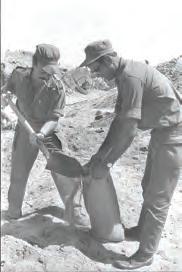
Arthur Ruppin, the head of the World Zionist Organization’s Palestine Office, purchases the estate of Sir John Gray Hill atop Mount Scopus to serve as the future campus of the Hebrew University of Jerusalem.
March 10, 1960 — Ben-Gurion visits Eisenhower
Israeli Prime Minister David Ben-Gurion and U.S. President Dwight Eisenhower meet for more than two hours at the White House on a range of issues while American Nazis and Arabs protest outside.
March 11, 1911 — Justice Haim
Herman Cohn is born
Haim Herman Cohn, who serves on Israel’s Supreme Court for 21 years, is born in Lubeck, Germany. He combines Jewish, Ottoman, Roman and British traditions to create Israel’s legal system in 1948.
March 12, 1947— Truman delivers his doctrine
President Harry Truman lays out the Truman Doctrine: The United States will assist any democratic nation under threat from totalitarian forces. It helps justify U.S. recognition of Israel 14 months later. PJC
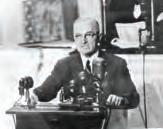
p President Harry Truman urges Congress to provide aid to Greece and Turkey to block the spread of communism into the eastern Mediterranean on March 12, 1947
By Grace Gilson | JTA
The U.S. State Department urged American citizens on Monday afternoon to urgently depart from over a dozen Middle Eastern countries amid the escalating conflict in Iran.
The list includes Israel, which halted all commercial air travel when U.S. and Israeli forces jointly attacked Iran on Saturday.
“The @SecRubio @StateDept urges Americans to DEPART NOW from the countries below using available commercial transportation, due to serious safety risks,” wrote Mora Namdar, the State Department’s assistant secretary for consular affairs, in a post on X.
In addition to Israel, the countries listed in the advisory were Bahrain, Egypt, Iran, Iraq, the West Bank and Gaza, Jordan, Kuwait, Lebanon, Oman, Qatar, Saudi Arabia, Syria, United Arab Emirates and Yemen. Several of the countries have been targets of Iranian fire as the regime there has sought to widen the conflict in the Middle East.
While Namdar’s advisory urged Americans

El Al plane is seen at Schiphol airport in Amsterdam, Netherlands, on Oct. 16, 2025.
to “depart via commercial means,” there is currently no commercial air travel in or out of Israel. Israeli airlines El Al, Air Haifa and Israir announced plans to launch rescue flights to bring stranded Israelis abroad back home once authorities reopen Ben Gurion Airport, but it is not clear when that could happen. Some Israelis are making their way to Taba, Egypt, for passage into and out of Israel, but flights there are limited. Taba is about a 20-minute drive from Eilat, in southern Israel.
President Donald Trump warned on Monday that the largest U.S. strikes on Iran were yet to come. PJC
with local, state and federal law enforcement to help ensure our community’s safety.”
Following Saturday morning’s attacks, the Secure Community Network “urged continued vigilance across Jewish communities.” In the wake of Israel’s strikes on Iranian nuclear sites last June, Jewish security groups also warned Jews abroad to remain vigilant, as Iran has a track record of violence against Jewish and Israeli targets abroad following military setbacks on its home turf.
A different perspective
But while major national and international Jewish groups rallied behind the military intervention, some progressive Zionist Jewish political groups condemned the strikes.
“Americans are waking up to the deeply unsettling news that President Donald Trump and Prime Minister Benjamin Netanyahu chose to start a war with Iran,” wrote New Jewish Narrative, a progressive Zionist Jewish organization, in a post on X. “This is wrong. It needs to stop.”
Jeremy Ben-Ami, the president of J Street also voiced opposition to the strikes, writing in a statement that the group was “appalled by President Trump’s reckless decision to launch a war of choice against Iran explicitly seeking regime change.”
“The Iranian government’s nuclear and missile programs, support for proxy groups throughout the Middle East and brutal repression of its own people represent a real national security challenge for the United States and its allies, including Israel. We would be pleased to see this government replaced with one that is a responsible international actor and responsive to the needs and demands of its people,” Ben-Ami wrote. “However, Iran does not present an imminent threat that requires launching a ‘preventive’ war.”
Pennsylvania politicians weigh in
There was no consensus among Pennsylvania’s elected officials regarding the strikes on Iran. While several offered unequivocal support, others roundly criticized Trump for taking unilateral action.
Pennsylvania Gov. Josh Shapiro, in a statement, called out Trump for acting “unilaterally — without Congressional approval and outside of the guardrails set up by our founders in Philadelphia nearly 250 years ago.”
“In going to war with Iran, the President has not adequately explained why this war is urgent now, what this military campaign may look like, or what the strategic objective is. Until a few days ago, he was seeking a deal to dismantle Iran’s nuclear program that the President himself claimed just a few months ago was completely destroyed. But today he declared that this is a war for regime change, something he said he would not pursue.”
While Shapiro acknowledged that “the Iranian regime represses its own people and is the leading state sponsor of terrorism around the world” and “must never be allowed to possess nuclear weapons,” he accused Trump of “putting our brave servicemembers at greater risk and undermining our national security interests.”
Both Pennsylvania senators, however, offered support for the strikes on Iran.
Calling the Iranian regime “the world’s number one sponsor of terror,” Republican Sen. Dave McCormick said, “The president has given the ayatollahs a chance for a deal, and they have rejected a path to peace and prosperity. I am praying for our brave troops and our steadfast allies who stand with us during this challenging and noble mission.”
Likewise, Sen. John Fetterman, one of only a handful of congressional Democrats to support the strikes, wrote on X: “President Trump has
— which includes Squirrel Hill — was markedly different from that of the state’s senators.
“Trump’s words make it clear he doesn’t care about the safety of Americans and his actions make clear he doesn’t care about the safety of the Iranian people. If he did, he wouldn’t be risking the lives of American troops for the sake of another endless war or trying to turn Iran into a war zone,” Lee said in a statement. “From day one Trump has shown us his corruption and desire for regime change in multiple countries that he has no business being in.
“This is an insanely unpopular, dangerous, and illegal act of war. Congress must pass a War Powers Resolution immediately and hold this lawless president accountable.”
Iraq War veteran Rep. Chris Deluzio, a Democrat who represents District 17, which includes Mt. Lebanon, likewise criticized Trump.
“Let’s be clear: Donald Trump is ordering other people’ kids to risk their lives in an unauthorized war the Congress and the American people have not approved,” Deluzio said in a statement. “Congress should reconvene immediately and put an end to this before the region is further destabilized and precious American lives are lost. To every hawk cheerleading this war — answer a simple question: how many American troops should die for this?”
Curiously, Allegheny County Councilman Dan Grzybek, who represents District 5 (Mt. Lebanon, Bethel Park, Dormont and Upper St. Clair) weighed in on the war, laying blame on the “Epstein class.”
On X, Gryzbek wrote: “Trump and the Epstein class are murdering innocent civilians and putting American soldiers in danger without going through Congress or providing any coherent explanation to the American people.”
noted similarities between the story of Purim and the U.S./Israel strikes on Iran. Commenting on the impact of the assassination of Ali Khamenei, Schiff wrote Sunday on Facebook that “the echoes of Jewish history are palpable in these fateful days.”
“Yesterday was Shabbat Zakhor — the day on which we are commanded to remember to wipe out the vestiges of Amalek from the world. If anyone qualified as the spiritual descendent of Amalek — an individual who envisioned and planned for a world without Jews — it was surely Ali Khamenei. How extraordinary that we should eliminate his evil on the very day that our tradition calls upon us to recall the threat of those of his ilk.”
But there is “an even more striking parallel,” Schiff wrote.
“ Tomorrow night, Purim begins. Purim takes place in ancient Persia, where Iran is today. And here’s what it says towards the end of the megillah: ‘And so, on the thirteenth day of the twelfth month — that is, the month of Adar — when the king’s command and decree were to be executed, the very day on which the enemies of the Jews had expected to get them in their power, the opposite happened, and the Jews got their enemies in their power.’”
A megillah “written for our own times,” Schiff wrote, “would report precisely the same inversion of expectations: ‘And so, on the seventh of October, the very day on which the enemies of the Jews (Hamas, joined by Hezbollah, the Houthis, and Iran) had expected to get them in their power, the opposite happened, and the Jews got their enemies in their power. …’”
“In the end,” Schiff continued, “the megillah records that once the enemy was vanquished ‘the Jews enjoyed light and gladness, happiness and honor.’ Let us pray that we will be privileged to see the same result in our own day.” PJC
Several Jewish commentators online, including Rabbi Danny Schiff, the Gefsky community scholar at Pittsburgh’s Federation,
Non-violent solutions, the rationale argues, are “more pressing than ever in Israel/Palestine in the wake of the deadly attacks by Hamas and its allies on Oct. 7, 2023, which killed more than 1,000 Israelis” and “Israel’s response” which “has killed at least 67,0000 Palestinians, including at least 20,000 children.”
The resolution’s cited figure for Palestinians allegedly killed by Israel was sourced from reports issued by an agency within the Hamasadministered government in Gaza, and it does not distinguish between combatant and civilian deaths or account for fatalities caused by Hamas’ actions.
The rationale goes on to claim Palestinians have been suffering “under a brutal Israeli military occupation, a crippling blockade on Gaza, more than seven decades of forced exile, apartheid policies and a barrier that separated Palestinians not only from Israelis but also their own land and fellow people.”
The rationale ignores the fact that Israel disengaged from Gaza in 2005. Its claims of apartheid, a term created and used to explain the racial segregation in South Africa from 1948 to the early 1990s, are refuted by the integration of Arab citizens into Israeli life —including serving in the Knesset and maintaining professional careers such as doctors, lawyers and judges in Israel. It also ignores the thousands of Palestinian terror attacks that have necessitated a variety of seurity measures.
Overtures, McClure Archer explained, come from individual congregations in what is
session then votes on those matters which are presented to the local presbytery and, if approved, go to the General Assembly, made up of commissioners from presbyteries from across the United States, for a vote.
Pastor Chad Collins of the Valley View Presbyterian Church — one of the two local churches to introduce the overture — has been a vocal critic of Israel and Zionism. He has served as a national organizer for the Friends of Sabeel North America which, according to the Anti-Defamation League, is a “driving force behind various Boycott, Divestment and Sanctions campaigns against Israel, including those initiated by mainline Protestant churches in the U.S.”
In October 2023, following Hamas’ Oct. 7 attack on Israel, Sabeel published a statement referring to Hamas and other terror organizations as “armed Palestinian
Members of the Collins family have been arrested for their involvement in anti-Israel and antisemitic events.
In 2025, his daughter, Nesta Collins, was arrested and charged with obstructing law enforcement and disorderly conduct stemming from her behavior at an anti-Israel encampment outside the University of Pittsburgh’s Cathedral of Learning.
Another daughter, Micaiah Collins, was charged with conspiracy, defacing and damaging religious property, making false statements and possession of destructive devices in a superseding federal indictment. She was charged along with Mohamad Hamad and Tayla A. Lubit, who were initially arrested for vandalizing Chabad of Squirrel Hill’s building and a sign at the Jewish Federation of Greater Pittsburgh.
Last month, Chad Collins spoke at an East End Food Co-op meeting, urging its members
to vote to cease selling Israeli products at the grocery store.
Toby Tabachnick can be reached at ttabachnick@pittsburghjewishchronicle.org. Presbyterian: Continued from page 1
David Knoll, Jewish Federation of Greater Pittsburgh associate vice president of public affairs, called BDS a “discriminatory and divisive campaign that advances an anti-Israel agenda, undermines inclusivity and obstructs the pursuit of peace.”
The Rev. Charissa Howe has been the pastor of Sixth Presbyterian Church — which introduced the overture with Valley View — since May, 2025. She previously served as the director of chaplaincy at the Allegheny County Jail. Knoll said the Federation is committed to dialogue with The Pittsburgh Presbytery.
“After a challenging decade in our relationship with the Presbyterian community, we have made significant progress in rebuilding mutual respect and understanding,” he said. “We will continue to cultivate friendships, deepen dialogue and strengthen community with the many within the Presbyterian community who are committed to open conversation, genuine friendship and greater understanding of our Jewish community.”
It is a message with which McClure Archer agrees.
“We remain committed to ongoing conversation with our Jewish partners,” she said. “We have been intentional about developing community and mutual respect, and mutual understanding.”
The 227th Presbyterian General Assembly will take place June 22-July 2, 2026, in Milwaukee, Wisconsin. PJC
David Rullo can be reached at drullo@ pittsburghjewishchronicle.org.
Continued from page 3
Israeli-Palestinian conflict.
The university’s representative pointed to several other CMU events centered on combating antisemitism, including lectures, community gatherings and fundraisers in
Pahlavi:
Continued from page 7
the Revolutionary Guard militia and 200,000 members of the IRGC who play a vital role in propping up the government.
Reza Pahlavi, potential leader?
Former Iranian Crown Prince Reza Pahlavi, who lives in the United States, has emerged as one of the most visible opposition figures. Since January, videos have surfaced on social media showing Iranian protesters calling for the return of the Pahlavi dynasty, which ruled Iran until the 1979 Islamic Revolution. Videos show demonstrators chanting pro-monarchy slogans or displaying the pre-revolutionary Iranian flag. After Pahlavi publicly called for mass mobilization of protestors earlier this year, the demonstrations escalated, with some protestors holding up photos of him in the streets.
The son of the former Shah, Pahlavi was born in Tehran in 1960. He was formally named crown prince at age 7 during his father’s coronation. At 17, he became one of the youngest licensed pilots in Iran before leaving for the U.S. to pursue advanced flight training. While he was abroad, the 1979 Islamic Revolution overthrew his father and abolished the monarchy, turning what was meant to be a temporary study into
Continued from page 8
of the aisle, not every Jewish conservative has turned on Vance.
Matt Brooks, director of the Republican Jewish Coalition, harshly criticized Carlson and his defenders last fall after the pundit interviewed white nationalist Nick Fuentes, and the group’s most recent conference was marked by repeated denunciations of Carlson. Yet RJC has refrained from publicly pointing the finger at Vance, and its posts about him to date are uniformly complimentary — as last week, when the group retweeted a speech from the vice president’s X account about Democrats and affordability.
remembrance of the Pittsburgh synagogue shooting, and hosting the Violins of Hope project with the Jewish Federation of Greater Pittsburgh and the Holocaust Center.
It also highlighted the recent B grade it received on ADL’s Campus Antisemitism Report Card, which the organization defined as “better than most.”
“Standing up against hate and prejudice is
permanent exile. He has not returned to Iran since.
Today, Pahlavi lives in Maryland with his wife and three daughters, one of whom married a Jewish businessman last summer. He has positioned himself not as a monarch-
an ongoing imperative,” the email said.
CMU said it looked forward to defending the specific allegations raised in the lawsuit in court.
Reich, too, looks forward to litigating the case, calling what happened to Canaan “shocking.”
“She had a problem, went to a person to complain. That person not only didn’t fix
years promoted regime change in Iran with Pahlavi’s support. Under NUFDI, Pahlavi and his team developed the Iran Prosperity Project, a governance blueprint intended to guide the country through a post-Islamic Republic transition.
[Reza Pahlavi] has positioned himself not as a monarch-in-waiting, but as a potential transitional leader.
in-waiting, but as a potential transitional leader. He has repeatedly stated that he does not seek to restore the monarchy, instead advocating for a secular, democratic system. U.S. officials have taken notice: Following renewed unrest in January, he reportedly met with Steve Witkoff, top Middle East adviser to Trump.
B ehind Pahlavi is a network of advisers drawn largely from the Iranian diaspora, including academics, private sector executives, and professionals with experience in U.S. government institutions. Some serve in formal roles, while others function as informal advisers. His main organizational platform is the National Union for Democracy in Iran, a Washington-based organization that has for
A request for comment to the RJC was not returned.
“That is outrageous that the RJC would not criticize Vance,” Lax said. “That is selfdestructive. That is insane.”
Also treading carefully on Vance are many establishment Jewish groups. Neither the Anti-Defamation League nor its CEO, Jonathan Greenblatt, has publicly criticized the vice president since February 2025, when the ADL’s X account docked him for meeting with the head of Germany’s far-right AfD party. The American Jewish Committee, similarly, has critiqued Carlson’s rhetoric in the past but remained muted on Vance as he’s increasingly clarified that he believes the pundit is a valuable part of the Republican coalition. Comments to representatives for the two organizations were not returned.
On the eve of the joint U.S.-Israeli operation, Pahlavi unveiled an updated version of his transitional plan. The document outlines Iran’s urgent priorities during the first six months following a potential regime collapse.
About two hours after the initial strikes in Iran, Pahlavi posted a video to X, encouraging Iranian forces to abandon the regime and telling the Iranian people that he will “announce to you precisely” when t hey “can return to the streets for the final action.”
His prospects remain contested. Analysts have long questioned whether a figure who has lived outside Iran for nearly five decades can command broad domestic
Because Lax runs a registered nonprofit, the Zionist group S.A.F.E. Campus, he said he was hesitant to comment too specifically on electoral politics. But he said he believes Jews on the right are “coming around” to the problem of antisemitism on their side. And he’s deeply concerned about Vance running for president in 2028 without having distanced himself from Carlson.
“I could never support a candidate who says we need to have a conversation about genetically testing Jews,” Lax said. “What Vance said, I think people’s eyes popped out of their heads.”
And, despite his earlier defenses of Trump, he said the president must more forcefully condemn Carlson and Vance’s rhetoric now.
“He can’t have his vice president say that it is an important conversation that we
it, they retaliated. She went to every single office and was stonewalled again and again, told a bunch of BS about what they’re going to do to try and help her and said she should not file an official complaint,” she said. “They gaslighted her, essentially.” PJC
David Rullo can be reached at drullo@ pittsburghjewishchronicle.org.
legitimacy. Reliable polling inside Iran is difficult, but Dutch pollster Ammar Maleki has found that roughly one in three Iranians expresses confidence in Pahlavi based on large-sample surveys conducted in recent years. At the same time, a similar proportion strongly oppose him. Nonetheless, Maleki asserts, no other opposition figure approaches his level of name recognition.
Pahlavi is also openly pro-Israel. He has traveled to Israel, prayed at the Western Wall, met with Netanyahu, and advocates for expanding the Abraham Accords into what he calls “Cyrus Accords” between Israel and a future Iran, describing the two nations as the “only two countries on this planet that can claim to have a biblical relationship.” Because of his pro-Israel stance, some detractors frame his potential leadership as aligned more with Western and Israeli interests than with those of the Iranian people.
However, in recent months, experts have increasingly framed him as a viable option — or at least as an integral part of the current protest movement that should not be ignored. PJC
This story was originally published on the Forward. To get the Forward’s free email newsletters delivered to your inbox, go to forward.com/newsletters.
talk about genetically testing Jews to see if they come from Abraham,” Lax said.Vance himself once compared Trump to Hitler, prior to being chosen as his running mate. Lax is also reflecting more on his 2024 piece decrying Trump-Hitler comparisons. If the president doesn’t issue a more forceful condemnation of his party’s antisemitic wing in the next month, the professor said, ”I may very well change my mind.”
By Friday afternoon, he had drawn a possible line in the sand, tweeting a call for Trump to demand Vance’s immediate resignation.
“Enough. This is a National Antisemitic State of Emergency. Only Trump can end it. And he must do so now,” Lax wrote. “It starts by booting JD and cutting Tucker out from all conservative and Republican orgs.” PJC

Guest Columnist
Jennifer Brick Murtazashvili
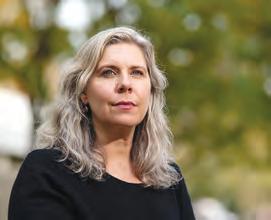
Getting to Israel felt like a victory in itself. The historic snowstorm and bitter cold delayed our departure from Pittsburgh, but in late January we finally stepped off the plane. My husband and I are both professors of public policy at the University of Pittsburgh. We came to Israel because I have a Fulbright fellowship at Tel Aviv University to study the Abraham Accords and regional integration.
In a remarkably short time, the kids adjusted to new schools and new friends. Colleagues welcomed us. It already felt like home.
And then the war started.
The war started on our moving day. Our task was simple: Get suitcases from one apartment to another across Tel Aviv. Anyone who has spent time in this city knows that parking here should be a sport in the Maccabi Games. But moving day during a war meant stopping the car every time the sirens sounded and rushing into the nearest shelter or random apartment building. Strangers waved at me and offered places to park, often quite illegally, and escorted a complete stranger inside. They didn’t ask me questions. They didn’t care.
When I returned to our first apartment to pick up the family after I had moved the suitcases to the new building, air sirens went
off. The favor was easy to return. We saw strangers on the street scrambling to find miklat (shelter) and we pulled them into our place, sat with them and waited it out. We made new friends. Tel Aviv is an incredibly diverse city, and in those moments, all anyone did was celebrate a shared humanity.
Wars for something carry meaning. They sustain people. The willingness to sacrifice, even personal safety, for the prospect of Iranian freedom is not something most outside commentary captures. But that hope is real and it seems to be sustaining people through this war. There is a hope
Iran bet that the region would fracture as a result of its aggression. Instead, the coalition Iran feared is the coalition Iran created.
The grocery stores in Tel Aviv are slowly reopening. People are walking outside again. Every few hours, sirens send people running to the shelters, and then life resumes. My kids have turned the sprint downstairs into a game. They watch how other Israeli children handle it: Purim costumes on and laughter somehow intact. They are taking their cues from the resilience of the children they see. Babies on hips, parents playing cards, kids comparing candy stashes in the stairwell. This is what resilience looks like. It is seemingly ordinary and thus quite extraordinary. What is most striking about this war is not the fear. It is the clarity. Israelis talk about this conflict not as a war against the ayatollahs but as a war for something: for a better future, for a better region, for the freedom of the people of Iran.
That distinction matters. Wars against something are defensive and exhausting.
that the changes the war will bring will allow this region to flourish as never before.
For years, the Israeli-Palestinian conflict defined how Israelis understood their place in the region: permanently embattled, permanently apart. The Abraham Accords began to change that.
For the first time, there was something bigger on the horizon: a region Israel could be part of, rather than apart from.
That shift in imagination is what gives this moment its promise despite all the risks and what can go horribly wrong.
Iran badly miscalculated. By attacking Arab countries, Tehran hoped to drive a wedge between Israel and its neighbors. It hoped to force Arab states to pressure the United States and Israel to stop and thus to fracture the emerging regional architecture.
Guest Columnist
Ken Glick
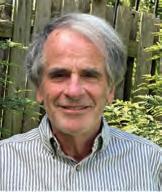
For the past few years, I have become a regular reader of obituaries. It is not out of a morbid curiosity or to confirm that I am still kicking, but it is a daily source of reflection and celebration of lives simply and well lived. I’m not interested in celebrities whose exploits or scandals are fodder for every social media outlet, but those thousands who tell stories of their education, military service and daily lives, and commemorate family and friends. In Pittsburgh, these most common citations are enhanced with one’s work experience, loyalty to our sports teams, religious affiliation and service — all reflective of the unique ethos of the ‘Burgh.
Each death is a reminder of the finite nature of our existence and something that cannot be avoided. So it comes down to a personal choice of how to confront or accept it. For many, an established philosophy or religion provides understanding and solace. The Latin root for obituary is obire, meaning “toward” or “to go.” In a physical sense, we
all know where we are headed, but in many listings, a more spiritual destination is mentioned. That is a concept completely foreign to me, but I'm glad that it is a source of comfort to others.
Earlier this year I was shocked to read of the death of a very close friend and classmate from Taylor Allderdice High School.
someone who loomed large not only in my life, but in thousands of others. His job title was the director of a summer camp, but his impact was much greater. Camp Comet was established in 1962, and keeping with the ethos of the day, was unique in that it was labelled a Space Age Camp. Along with the expected sports and nature activities, it also
Each death is a reminder of the finite nature of our existence and something that cannot be avoided. So it comes down to a personal choice of how to confront or accept it.
He was one of three friends with whom I shared countless hours at the movies, riding trolleys into town, and with whom I attended summer camp as campers and counselors. Danny was special with an amazing sense of humor and talent as he starred as Harold Hill in the school’s production of “The Music Man.” I lost touch with him, like so many others from high school, college and graduate school, but his death was a real kick in the gut, and a clarion call for some reckoning.
More recently I learned of the death of
At least for now, the opposite seems to have happened. Rather than pushing countries away, the aggression of Iran drew them closer. Military and technical cooperation that would have been unthinkable a decade ago is unfolding in real time.
At least for me, it is hard to analyze geopolitics when you are living inside of it. I came to Tel Aviv to study regional cooperation and did not expect to be an eyewitness to it taking shape this fast.
Iran bet that the region would fracture as a result of its aggression. Instead, the coalition Iran feared is the coalition Iran created.
Whether that holds is an open question. But the trajectory is clear.
It is Purim in Israel and Israel is at war with the regime in Persia’s successor, Iran. Last night, my husband and daughter went to pick up a book from a new school friend nearby. The sirens rang. They ran into a shelter and found a kehillah reading the Megillah. They fulfilled the mitzvah in a random shelter in Tel Aviv. In the Book of Esther, Mordecai challenges Esther as she hesitates to approach the king on behalf of her people, “Who knows whether you have come to your position for such a time as this?” She acts and a people facing destruction from Persia find the agency to survive. What is visible from Tel Aviv right now is exactly that. Not just resilience but real agency for such a time as this. PJC
Jennifer Brick Murtazashvili is the founding director of the Center for Governance and Markets and a professor at the University of Pittsburgh School of Public and International Affairs.
featured ham radio, photography, a science lab and rocketry.
Cabins were named for planets, and were distanced (appropriately) from the main office, known as the Sun. The youngest campers were Cosmonauts, and older groups named Astronauts, Gemini and Luna. The dining hall was the Galaxy, and a recreation facility was the Moon. You get the idea. What made they campers’ experiences unique were not the activities but the man who was the heart and soul of the operation. His name was Harry, a figure tall in stature and in
compassion and leadership. He recently died just three weeks shy of his 98th birthday, and left a legacy to his family, community and all of us who were under his tutelage. At a celebration of his life, all in attendance learned how he imparted a love of nature, wrote yearly letters to each of his children and grandchildren, celebrating their accomplishments, and offering advice and encouragement. What struck me was how his love for each family member never diminished or was diluted by the addition of another grandchild or great-grandchild, but rather grew exponentially, and only stronger. And when I listened to his children’s and grandchildren’s eulogies, I was overwhelmed by how Harry’s advice, encouragement, love and even criticism made each of them feel they were the most important one. This was a revelatory moment for me, suddenly understanding the true power of and expanse of one’s love.
During Harry’s memorial service, the Jewish expression of condolence, “May his name be a blessing,” was frequently recited. Recited not to comfort one’s survivors, but to carry forward the energy of a life in service and in love. His name certainly has been that for all of us lucky enough to
Last week, the Chronicle asked its readers in an online poll the following question: “What is your favorite aspect of Purim?” Of the 140 people who responded, 34% said, “Festive eating and drinking; 23% said, “Megillah reading”; 23% said, “Purim carnival, costumes and spiel”; 10% said, “Giving food or money to those in need”; and 10% said, “Exchanging food baskets with friends and family.” Comments were submitted by 34 people. A few follow.
The unique tradition (seemingly worldwide in almost every house of worship) of Jews being creative in their respective spiels when the Megillah is read is something I always cherish.
I love the hamantaschen. I used to cook these with my mother and I now buy them from the Orthodox synagogue where I live. Nice memories.
Glick:
Continued from page 12
have known him, and for me in particular: a challenge to live so that my memory, flaws and all, might serve all whom I hold dear, in good stead.
Each spring, Harry would write a note celebrating its onset, richly describing in detail the visible colorful changes in the natural world and even the “beauty hidden in twigs, weeds, and over-crowded growth.” He was always grateful for the regrowth and beauty of that season, especially because he knew it would not last. These notes were titled “Once again … One last time.” Very prophetic and a call for his readers to appreciate how regularly that beauty returns, but
Elders can help fight antisemitism
“Mishloach manot” is a singular Jewish concept: to think about providing for others while expressing gratitude for managing to survive yet another existential crisis.
also to acknowledge that, for all of us, that will occur one last time.
Being almost 76, I have tried to organize all the financial and other information for my wife and sons to make it easier to manage my estate after my death, but decided to go one step further by writing my own obituary. This was not to minimize any shortcomings or failures (of which there were many), or to pad my resume, but to reflect on what matters to me now, and hopefully for what I might be remembered. It gave me a chance to reflect on relationships, my career, and especially how my education provided outlets to pursue interests after retirement by celebrating and sharing Pittsburgh’s art and history.
It can certainly be argued that my selfreflections are not shared by others. We
Purim is a nice time for children and families to have fun in a Jewish context.
Victory of light over darkness — just as I hope to envision it again soon!
Purim is another opportunity to give to others.
I take great joy in seeing the Purim plays that my grandsons appear in.
The memories of celebrating Purim with my family as a child. Singing holiday songs with my dad and siblings, and eating my mother’s and grandmother’s hamantaschen.
Too bad there was no option for all the above! Purim is the unique combination of pure fun and joy, and deeply profound spiritual meaning, something for grown-ups and something for kids. Well worth participating
all have gaps in our self-assessment. I can’t control how I am seen by others and they will make their own judgments, faulty or not. That’s not what really matters. Maybe writing my obituary is just an attempt to come to grips with what good I accomplished, and to confront my mistakes and lost opportunities. To put it more graphically, as I recently read in a novel, “I’m at an age now when in the early mornings I’m often revisited by all my own mistakes, stupidities, and unintended cruelties. They sit around the edges of the bed and look at me and say nothing. But I see them well enough” (Niall Williams, “This Is Happiness”).
And yes, there are regrets, and I have tried to make amends. And fortunately there is much to balance these considerations. All it
Elders can help take back our colleges and fight the pervasive antisemitism on campus described so often in your pages, as by Jackie Hajdenberg in “At US Commission on Civil Rights hearing, Jewish students warn against politicizing campus antisemitism” (online, Feb. 23). Here’s how: Elders can audit courses at all state colleges at no charge (in their state of residence). We can be in the classrooms, read the course materials and be part of the discussions. We can provide perspective and counterpoint as may be appropriate. I’ve done this several times and the need is great. Many courses are remote, especially over the summer. The application process is a bit bureaucratic but not difficult. For details, check with the registrar’s office of the college of your choice. Start now, registration opens now or soon for summer courses.
Yehuda Wiesen Scarsdale, New York
Boycotts of Israel are problematic, but so is blaming the Israeli government for the Gaza war
I salute Marlene Marcus in her protest of a food store’s potential boycott of Israeli goods (“Co-op vote crosses the line into antisemitism,” Feb. 27). But I feel she is incorrect in her feelings about Israeli Prime Minister Benjamin Netanyahu and the recent war in Gaza.
Hamas’ charter plainly states that the Jewish state will exist until Muslims destroy it. And
in every single aspect and opportunity of this joyous day!
My favorite part about Purim is the complicated story and our community’s response to it. We don’t minimize or bury the complexities. We study it, detangle it, acknowledge its strengths and shortcomings (and our own), and ultimately, gain wisdom and light. The spiels, delicious food, costumes and joviality make it so much sweeter!
I like everything about our holiday of Purim! PJC
— Compiled by Toby Tabachnick
Chronicle weekly poll question: Do you support U.S. military strikes against Iran at this time? Go to pittsburghjewish chronicle.org to respond. PJC
takes is to hear my grandchildren’s laughter or to reflect on the men my sons have become. Maybe that’s enough. An obituary, by common practice, is rarely, if ever, read by one for whom it is written. None of us are like Tom and Huck who can return home after their “fatal” adventures and hear how they were remembered.
Instead, with this project, I can reflect on a life well or poorly lived, reminisce over past loves, opportunities and travels, and gain some insight where I have been; something much more important than where I’m going. PJC
Ken Glick is a native Pittsburgher and retired physician. He is a docent at the Carnegie Museum of Art and leads a variety of city tours at Walk The Burgh.
Hamas has been working to make good on this threat ever since it was elected to administer Gaza in 2007. While claiming that an Israeli blockade prevented Hamas from developing the enclave’s economy, Hamas spent $1 billion building an extensive network of underground tunnels, embedded so deeply amidst the Gazan populace that any Israeli response to Hamas’ attacks on Israel would have to result in some casualties among people living under Hamas (mis)rule, despite Israel’s exemplary efforts to avoid harming civilians.
The IDF warned civilians to move away from areas that were going to be attacked; Hamas stored explosives in areas where the Gazans had been told to seek shelter. Homes, mosques and schools were connected to tunnels and used for storing munitions. Hamas held strategic planning sessions in hospital basements and fired missiles from schoolyards. Gazans were denied shelter in tunnels where Hamas fighters were hidden. Hamas stole Israeli-supplied food, intended for the Gazans, and gave that food to the fighters or sold it to the people at black market prices.
Hamas’ vow to inflict a thousand October 7s on Israel was, nonetheless, cheered by the people in Gaza, who were being used as human shields by Hamas. Israel was attempting to demilitarize Gaza and deradicalize the Gazans. Yet, the IDF strictly obeyed the rules of warfare, and achieved the lowest ratio of civilian deaths to combatant deaths ever seen in the annals of modern urban warfare, as attested by Major John Spencer, director of Urban Warfare Studies at West Point’s Modern Warfare Institute.
We invite you to submit letters for publication. Letters must include name, address and daytime phone number; addresses and phone numbers will not be published. Letters may not exceed 500 words and may be edited for length and clarity; they cannot be returned. Send letters to:letters@pittsburghjewishchronicle.org or Pittsburgh Jewish Chronicle, 5915 Beacon St., 5th Floor, Pittsburgh, PA 15217
We regret that owing to the volume of correspondence, we cannot reply to every letter.
By Miriam Szokovski | Chabad.org
Sabich is falafel’s younger, less wellknown cousin — a popular pita sandwich in Israel, brought there by Iraqi immigrants. The warm pita is stuffed with slices of hard-boiled egg, soft fried eggplant, Israeli salad, pickles, hummus, tahini, and amba — a savory pickled mango sauce. It might sound like too much going on at once, but somehow it all works.
In this version, I’ve used eggplant as the base and loaded it with the rest of the sabich fixings, giving you all the same flavors and textures in a slightly different format than traditional sabich. I won’t say it’s better than the original, but if you’re looking to switch things up it’s a great alternative.
Serves 4
2 large eggplant
Olive oil
Kosher salt
Black pepper

Pre-heat the oven to 400 F. Cut the eggplants in half lengthwise and score them deeply without breaking the skin. Drizzle half the olive oil over the cut
salt and black pepper. Place cut-side down on a baking sheet (use real, not disposable, if possible). Drizzle the remaining oil over the peels.
Roast uncovered for 30 minutes. Then gently flip the eggplants over and roast for another 10-15 minutes until the flesh is very soft (cooking time will vary depending on which type of pan you use. Disposable foil pans always take longer).
Boil the eggs using your preferred method. I cover the eggs with cold water and bring to a boil. As soon as the water boils, remove the pot from the heat and keep the cover on. Set timer for 10 minutes. After 10 minutes, run the eggs under cold water until fully cooled. Slice and set aside.
Finely dice the cucumbers and tomatoes. Squeeze the fresh lemon over the vegetables and add salt to taste. Set aside.
To assemble: Carefully transfer the roasted eggplant halves to plates. Use a fork to mash the eggplant a little. Top with sliced egg, Israeli salad, pickles, tahini and amba. Eat immediately. PJC
Miriam Szokovski is a writer, editor, and member of the Chabad.org editorial team. She also shares her cooking and baking on

Documentary
By Shira Li Bartov | JTA
Adocumentary about the murder of five Jews in a Polish town is being threat ened with a ban in Poland — not because they were killed in the Holocaust, but because they weren’t.
The Jews at the heart of “Among Neighbors,” from California-based filmmaker Yoav Potash, died six months after the end of Nazi occupa tion. They were among a handful of survivors from Gniewoszów, a town where about 1,500 Jews made up half the population before World War II. When they returned home in 1945, they were killed by their Polish neighbors.
Since premiering at the Warsaw Jewish Film Festival in November 2024, “Among Neighbors” has been screened in six countries and qualified for Academy Award consideration. But its release on TVP, the Polish public broadcaster, has prompted uproar from right-wing politicians and a national investigation.
Potash stumbled into making “Among Neighbors” on a 2014 trip to Gniewoszów, where he planned to document a modest rededication ceremony for the Jewish cemetery. As he began talking with the oldest residents, one woman, who has since died, told him that Jews were killed there well after the war.

“That just really struck me as a very different kind of story, because it was not the Germans doing the killing, it was the Poles,” said Potash. “It was not during the war, it was well after, when it should have been a time of peace.”
When “Among Neighbors” appeared on televisions across Poland in November 2025, it was hit with backlash from the office of Polish President Karol Nawrocki, a rightwing historian who led nationalist efforts to rewrite Poland’s Holocaust history. His Law and Justice party, which governed Poland from 2015 to 2023, promoted historical narratives about Polish victimhood and resistance to the Nazis while delegitimizing research on Polish antisemitism or Poles who killed Jews.
Prime Minister Donald Tusk now leads the Polish government with a centrist coalition, but Nawrocki has been a counterweight to Tusk since he was elected last year.
Six days after “Among Neighbors” aired on TVP, Agnieszka Jędrzak, a minister in Nawrocki’s office, attacked the broadcaster on X. Calling the documentary “historical antiPolish manipulation,” she said “a television station that has ‘Polish’ in its name should not be broadcasting it.”
Jędrzak oversees state awards and Polish diaspora relations. Before joining the president’s office, she spent 15 years working at the Institute of National Remembrance — previously headed by Nawrocki — which gained a reputation for advancing nationalist narratives about the Holocaust. According to Jędrzak’s government profile, she led the IPN as it “responded to defamatory statements which damaged the reputation of Poland and the Polish nation.”
A probe into “Among Neighbors” launched after the Ordo Iuris Institute, a far-right
“Among Neighbors” confronts the simultaneous intimacy and violence woven through small towns, where Poles lived and worked with Jews, where their children played with Jewish children, and where some Poles also killed their Jewish neighbors.
Catholic think tank, filed a complaint with the National Broadcasting Council, comparable to the Federal Communications Commission in the United States.
“The narrative presented in the documentary film ‘Among Neighbors’ clearly undermines values important to Poles, such as historical truth,” the institute said in November. “Above all, the film creates a false image of Poles as a nation co-responsible for the German genocide of Jews during World War II. What is particularly outrageous is the fact that the production was released by Polish Television.”
The National Broadcasting Council responded by opening an investigation into the film.
“Among Neighbors” was made over the course of a decade that largely spanned the Law and Justice regime. In 2018, the country passed a law that outlawed accusing Poland or the Polish people of complicity in Nazi crimes. The infraction has since been downgraded from a crime punishable with prison time to a civil offense, but the law remains in effect.
For Potash, reactions to the film from right-wing nationalist officials were “not surprising at all.”
“They have adopted this mindset where there’s an almost sacred sense that Poles during World War II were either victims or heroes,” he said. “Any story that anyone tells that contradicts that, or that adds that some Poles were
perpetrators, is anathema to that.”
TVP has stood by the film and continues to air it. The network has been backed by the Jewish Historical Institute of Poland and the POLIN Museum of the History of Polish Jews, whose representatives sent a letter of support to the TVP Program Council’s chair, Barbara Bilińska.
“Among Neighbors” unfolds around a man and a woman who grew up in Gniewoszów. In the last breaths of their lives, they seek to answer questions that have possessed them for 80 years — he as the Jewish child of Holocaust survivors who were killed in their hometown, and she as a Polish eyewitness to the murders.
In a statement, TVP said the reckonings of these two people were neither “anti-Polish” nor “a judgment of the entire Polish nation.”
“We are open to dialogue regarding historical memory and believe that even difficult topics allow society to understand the fuller context of past events,” said TVP. “As a public broadcaster, we have a duty to facilitate such conversation and not shy away from presenting those fragments of history that require reflection and civic courage.”
Beyond Gniewoszów, “Among Neighbors” touches on a wave of murders that struck Jews returning home to cities and towns across Poland after liberation from the Nazis. In the most notorious instance, 42 Jews in the southeastern town of Kielce were killed by a mob of Polish residents, soldiers and police officers
in July 1946. The Kielce pogrom convinced many survivors they had no future in Poland, spurring an exodus.
A film dramatizing the Kielce pogrom drew protests from Polish Americans, and the Berlin office of its Jewish producer was destroyed by an arson in 1996, the same year the Polish government formally apologized for the pogrom.
“Among Neighbors” confronts the simultaneous intimacy and violence woven through small towns, where Poles lived and worked with Jews, where their children played with Jewish children, and where some Poles also killed their Jewish neighbors. That complex relationship still rests under the surface of skirmishes over Poland’s history.
Konstanty Gebert, a journalist interviewed in the film, compared the relationship between Poland and its Jews to the phenomenon of phantom limbs — the sensation that a body part remains attached after it has been amputated.
“Poland is still suffering from its Jewish phantom pains, and Jews are suffering from their Polish phantom pains,” said Gebert. “Until those two amputated hands can actually shake — and I don’t know how you do that to amputated limbs — but I know that if you don’t, we’ll be still standing there, swallowing painkillers for a pain that cannot be relieved, because the amputated limb is gone and it still hurts.”
By Toby Axelrod | jTA
BERLIN — They stood outside Berlin’s Babylon theater, bundled against the cold, laughing and dragging on ciga rettes: the Cunio twins David and Eitan, and their younger brother Ariel.
David and Ariel were among the last Israeli hostages released in October from Hamas captivity, after 738 days. Their presence in Berlin — for a screening of a film about them, now recut with a redemptive ending — felt almost like an apparition. On the other side of two heavy glass doors were hundreds of theatergoers, people who had long waited for this moment.
The brothers and their extended family were in Berlin for a second premiere of Tom Shoval’s film “Letter to David.” The original film, shown in 2025 at the Berlin International Film Festival, or Berlinale, dove deep into the struggles of a family whose members had been abducted from Kibbutz Nir Oz on Oct. 7, 2023. By then, six kidnapped members of the family, including three children, had been freed. But David and Ariel remained in captivity.
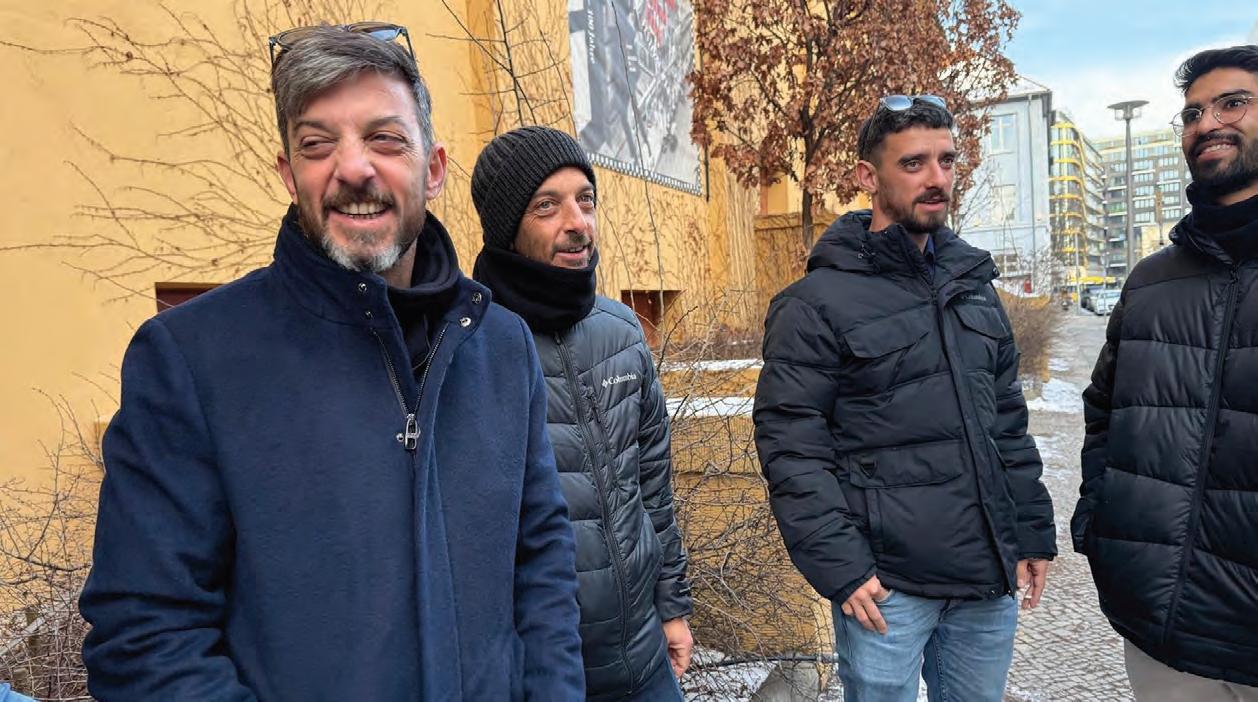
“Last year I was standing before the screening with a poster of David and Ariel. I was determined, every time I showed the film, to say that it’s an unfinished film,” Shoval told the sold-out audience at the theater in former East Berlin.
“And now I’m standing here. I have David in the audience, and I have Ariel in the audience,” he continued. “This is a precious, precious moment.”
The film “is a testament to love, hope and all the people who did not give up during the two years I was in captivity,” David Cunio said in Hebrew, standing on the stage with his extended family. “You gave me a voice when I could not be present. You were there for me.”
The film’s second showing came as tensions over the war in Gaza and Germany’s support for Israel roiled the Berlinale. After the jury’s president, director Wim Wenders, brushed off a journalist’s exhortation for the festival to take a stand against Israel, the Indian author Arundhati Roy announced she would not attend, and some 80 filmmakers and stars signed an open letter of protest.
Festival director Tricia Tuttle issued a statement saying that “artists should not be expected to comment on all broader debates about a festival’s previous or current practices over which they have no control. Nor should they be expected to speak on every political issue raised to them unless they want to.”
Journalists and filmmakers continued to raise the issue, even on the festival’s final weekend, when some award winners — including the Syrian-Palestinian director Abdullah Al-Khatib, who won best debut film — swatted back at the festival jury, criticizing what they see as Germany’s general support
for Israel. Al-Khatib’s allegation that Germany has been “partners in the genocide in Gaza by Israel” prompted a German minister to walk out of the awards ceremony on Sunday.
Friday’s screening of “Letter to David” was by contrast a love fest, and the two police cars out front and uniformed officers circulating inside appeared to have little to do. The audience gave the entire family a standing ovation before the screening.
“I think this is a piece of history,” audience member Nirit Bialer, an Israeli who has lived for years in Berlin, said in an interview. “Just seeing the family, and just following the story about this family on the media, going to the Hostages Square in Israel every time I was there in the last two years: Wow, I’m speechless.”
The film’s original ending showed twins David and Eitan Cunio as actors, grappling with each other in an embrace that is both tender and violent, in a scene from Shoval’s feature film, “Youth,” screened at the Berlinale in 2013.
That ending now segues into a new conclusion, in which the reunited Cunio family embraces. They also view the film together, and Shoval captures their faces as the projector beams from behind.
Shoval said in an interview that he had not changed anything in the first part of the film. “I wanted to leave it as a time capsule, in a way, of how we perceived it back a year ago,” he said.
Though he had been invited to be with the family at their reunion, he chose not to, explaining, “I thought it’s a moment that belongs to them and not to me.”
But he spoke with David soon after he was
released. And shortly afterward, he visited Sharon and David Cunio at their home. “I came in the morning and we sat until sunset together and we talked. Even when I’m thinking about it now, I’m getting emotional, because it was really…” He paused. “You’re waiting for a moment for this for so long.”
The Friday screening was not an official part of the Berlinale, but the beleaguered festival director Tuttle made a point of taking the stage herself. The film has been “finished in the way that Tom only hoped and dreamed and believed that he would be able to finish it,” she told the audience.
“We were horrified along with the world and all of you when David Cunio and many members of his family were abducted by Hamas,” she said. And on their release “we rejoiced with everyone as well.”
Saying that the new version was completed too late to be included in the festival schedule, Tuttle thanked two co-production companies that work closely with Israeli artists for backing Friday’s screening: the Israel-based Green Productions and the Berlin-based Future Narrative Fund.
Audience members seemed loath to leave the theater after the screening, lingering over what some described as mix of happiness and worry.
“The fact that David is able to see the movie makes us see the movie in a different way,” commented Konstantin, who had seen the original version last year. A young Jewish actor who lives in Berlin, he asked that his full name not be used, out of concerns about antisemitism. “With the ending, it’s
like a full circle, completed.”
Seeing the film again with the Cunio family present “was very uplifting and very happy,” said Berliner Julia Kopp, who also saw the film last year. “But at the same time, it’s not a happy ending … I also have a bit of a heavy heart,” worrying about “how life will go on for them.”
Both brothers have indicated that reentry into everyday life has been challenging after two years of captivity for them and two years of traumatized advocacy by their loved ones. And Ariel Cunio and his partner Arbel Yehud, who was held in captivity until January, have raised nearly $1.8 million since launching a crowdfunding campaign last week aimed at allowing them the time and space to “come back to life.”
A crowdfunding campaign launched on behalf of David and Sharon Cunio and their twin daughters, also former hostages, says, “The family not only has to deal with the trauma that follows being held hostage and the events that transpired on October 7th, but also needs to rebuild their entire lives from scratch.”
Shoval said the film — and the screening — offered a vision for what a more settled future might look like.
“For me, the film is about the unification of the brotherhood, and what that means to be torn apart from each other, but also to get back,” Shoval said. “They can sit in the theater and they can see themselves. They can see what they missed, what happened. They can project about the past, about the present. This is a power of cinema, I feel. It felt natural for me to do that: to bring them back.” PJC
Rembrandt has been hailed for his love of the Jewish people — was it all a myth?
— ART —
By Noah Hirsch-Rechter | Forward
In a preface to the 1932 Hebrew edition of the painter Leonid Pasternak’s study of Rembrandt, Russian-Jewish poet Hayim Nahman Bialik observed that although the Dutch artist was not Jewish, we “must consider him as ‘a Jew of honor,’ for his love and empathy towards the Jews.”
Bialik was not alone in his admiration. Rembrandt’s close ties to his Jewish neighbors in mid-17th century Amsterdam — to say nothing of his sensitive portraits of them — were held up for generations as a model of philosemitism.
Recent scholarship, however, has shown that Rembrandt’s affection for Jews has been generally overstated. He had, for example, perhaps a couple of Jewish sitters, but nothing like the dozens once ascribed to him.
Yet a new Rembrandt exhibit at Boston’s Museum of Fine Arts, entitled “Reality and Imagination: Rembrandt and the Jews in the Dutch Republic,” embraces not only the hard facts of the Rembrandt-Jewish relationship, but the myths, too.
Co-curators Michael Zell and Simona Di Nepi have juxtaposed the real with the imagined, introducing visitors to the artist’s known Jewish interactions — the “reality” — as well as his so-called imagined encounters: that is, the biblical Jews he often painted. The result is a fine overview of the Dutch maestro’s associations with Amsterdam’s Jews, as well as a fascinating window onto the relative freedoms enjoyed by Dutch Jews at large in the 17th century Dutch Republic.
Importantly, neither Zell nor Di Nepi was all that interested in proving, at least explicitly, Rembrandt’s alleged special affinity for Jews. “We just concentrated on the evidence that we have for relationships, commissions, interactions,” said Zell, professor of Baroque and 18th Century Art at Boston University.
The exhibit, which runs until December of this year, is a collaboration between the MFA’s Center for Netherlandish Art (CNA), and art history undergraduate and graduate students at Boston University; the students were involved in every curatorial decision. “It’s a really unprecedented experiential learning and professional development opportunity,” said Zell. (This is the fifth such partnership between the CNA and an academic institution. Previous partners include Yale and Brown).
Perhaps the most striking piece in the gallery’s “reality” section is a 1647 portrait of the artist’s neighbor Ephraim Bonus, a Sephardi physician, and the only securely identified portrait of a Jewish sitter by Rembrandt. The portrait is the gallery’s “linchpin,” Zell said: an etching of a Jewish subject for which Rembrandt had only to depict what was in front of him, instead of conjuring up a mix of stereotype and theology (more on that later).
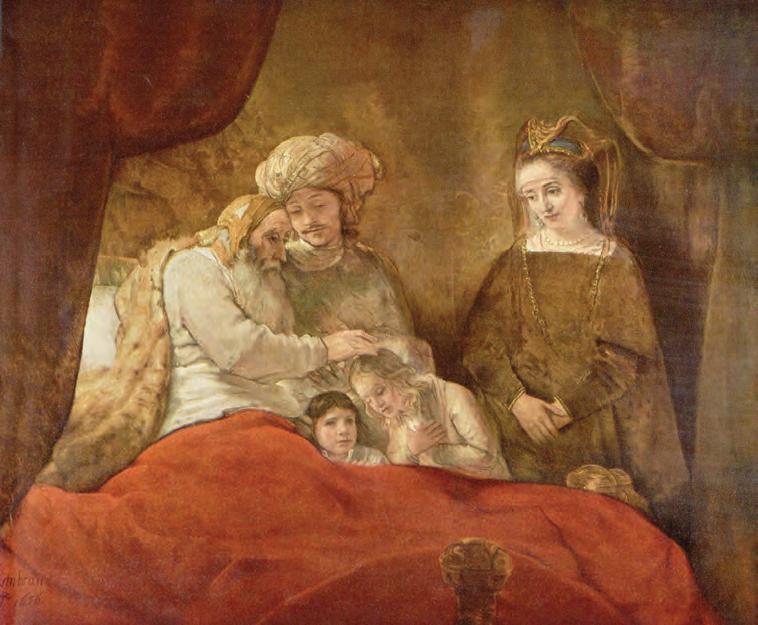
To portray what he understood to be a representative Jewish figure, Rembrandt produced a blend of ancient Israelite and 17th-century Dutch Jew, a formulation he repeated across his other so-called Jewish portraits.
Next to the Bonus portrait are four images Rembrandt drew for Menasseh Ben Israel, a hugely influential Dutch Rabbi and scholar. Ben Israel would go on to use the sketches as visual representations of key biblical stories in his treatise “Piedra Gloriosa” (“The Glorious Stone”).
Rembrandt, often very precious about his work, agreed to alter two of the prints after the Rabbi insisted they did not align sufficiently with the biblical text. And though scholars have puzzled over the nature and extent of Rembrandt’s relationship with Ben Israel, it’s the images’ very existence that Zell wants to highlight. “This moment of interfaith collaboration is just remarkable,” he said.
The Ben Israel prints, however, are not only evidence of Rembrandt’s dealings with Amsterdam’s Jews. By calling attention to such a towering figure as the Rabbi, they underscore the exhibit’s other defining motif: the Jewish community’s considerable — relative to their European counterparts, at least — freedom and influence in the mid-17th century Dutch Republic. (Established in 1581, the Republic was a confederation of seven Dutch provinces that had broken away from Catholic Habsburg rule. Notionally Calvinist, it was renowned for its enlightened attitude toward religious and
ethnic minorities and its patronage of the arts and sciences.)
And so also on display are several pieces of Judaica that testify to the Dutch Jewish community’s vibrancy in Amsterdam — a city so full of Jewish life that author Israel Zangwill later called it the “Jerusalem of the West” — and further afield, too. There’s a brilliantly detailed map of the so-called Holy Land, with the names and places written in Hebrew; a brass Hanukkah lamp in the Dutch-Jewish style; a Sephardi ketubah, with engraved still-lifes that climb up the side of the document like ivy; and an 18thcentury copy of a portrait depicting the 1675 opening of Amsterdam’s Grand Sephardi synagogue, the world’s biggest at the time.
What caught my attention most of all was a pair of silver Torah finials, whose conical shape, intricate flower engravings and tinkling bells were inspired by Dutch architecture and Christian reliquaries, said Di Nepi, who’s the MFA’s Charles and Lynn Schusterman Curator of Judaica. Made in 1649 in Rotterdam, a port town whose trade activity attracted scores of Jews, the finials are the oldest surviving in the United States. And given that they were crafted by a Christian silversmith — the Dutch Republic may have been atypically tolerant,
but Jews still were not allowed into its guilds — they are an excellent shorthand for both the achievements and difficulties of 17thcentury Dutch Jewry.
The power of imagination
Though the physician Bonus is today accepted as Rembrandt’s only undisputed Jewish sitter in a surviving work, the artist, like many of his contemporaries, was fond of depicting biblical stories — and not just from the New Testament. According to the museum, scenes from the Hebrew Bible were painted more often in the Protestant Dutch Republic than anywhere else in Europe, and inventories of Jewish households at the time revealed that these depictions often were collected by Dutch Sephardim.
The “imagination” section of the exhibit, then, features Rembrandt’s take on biblical episodes like Abraham’s sacrifice and Abraham’s Casting out Hagar, as well as two iconic pieces that scholars once held up as proof of Rembrandt’s philosemitism (“The Jewish Bride,” notably) but which have since been re-assessed.
Taken together, a portrait emerges of how Rembrandt understood Jews; of the influence of 17th-century Amsterdam and the importance of the artist’s solidly, immovably Christian worldview.
The prints, generally speaking, are heavy on stereotype. “This is an imagined version of the biblical characters of the ancient Jews,” Di Nepi told me. “There is this mixture of a look that evokes the Middle East, which was at the time run by the Ottoman empire. A lot of turbans, very lavish silk with gold and silver embroidery, and sashes that probably came from Persia.”
The 1648 sketch “Jews in the Synagogue,” for instance, depicts a huddle of Jews in floppy hats, long robes and turbans. To portray what he understood to be a representative Jewish figure, Rembrandt produced a blend of ancient Israelite and 17th-century Dutch Jew, a formulation he repeated across his other so-called Jewish portraits. This, Zell said, “is Rembrandt’s Christian perspective shaping the way that the Old Testament scenes are portrayed.”
Far from indicating a special affinity for Jews, these Old Testament works help illuminate Rembrandt’s response to the minority groups he mingled with in diverse 17th-century Amsterdam. Jews, Zell said, were part of the “vast, undifferentiated realm” of the biblical past, separate from Christianity.
Still, even if his outlook was traditionally Calvinist — which, at its heart, aimed to convert Jews and all other non-Christians — this need not overshadow the fact that Rembrandt, to paraphrase one reviewer, could paint in three dimensions. “He possessed a gripping naturalism,” Zell said. “And so he created these unprecedentedly lifelike figures.” PJC
This story was originally published on the Forward. To get the Forward’s free email newsletters delivered to your inbox, go to forward.com/newsletters.
Leike Weissman-Howe , daughter of Sarah Weissman and Rush Howe, will celebrate becoming a bat mitzvah on March 6, 2026. Leike has two brothers, Rush Weissman-Howe and Isaac Weissman-Markovitz. Leike is the granddaughter of Merrille Weissman and Harvey Weissman, and Barbara and Rush Howe. Leike attends Community Day School. She holds a black belt in Tang Su Do, is a member of the Killer Whales swim team and runs cross-country and participates in running club at school. She loves creating art, reading fantasy and spending time with her friends. She attends Camp Ramah in Canada in the summer. PJC




Jack was young and carefree. He enjoyed life and he enjoyed people. Relaxed, wellliked — all wonderful. Except.
On the road, he was also carefree.
One day, Jack was rounding a bend while glancing at his phone.
SMASH!!
He woke up in the emergency room six hours later to be informed that although his car was no longer, he was fine, thank G-d, aside from a minor concussion.
people. He entered the camp and saw what had happened. Without hesitation, he cast the Tablets to the ground before the eyes of the entire Jewish people.
SMASH!!
It seemed as if everything was lost. The covenant lay broken. The purpose for which they had left Egypt now hung in the balance. Their continued existence was uncertain.
In the 40 days that followed, the people repented. They took responsibility. They recognized that the catastrophe was of their own making.
Our Sages teach that G-d agreed with Moshe’s decision. Rashi, citing the Talmud at the very end of the Torah, explains that Moshe received Divine praise for this courageous act of leadership.



In the weeks that followed, as he recovered (and searched for a new car), Jack made a decision he has held onto for 10 years: Never touch his phone while his car is in drive. The law required it, but he recognized he needed self-enforcement.
that commitment, he gained a profound sense of responsibility — for his own life and for others.
because he survived — but because he crashed. He needed to be stopped. Someone needed to hit the brakes in Jack’s life for Jack to become Jack.
Even more remarkable: The spiritual level the Jewish people ultimately achieved through the Second Tablets was greater than what might have been possible through the First. The second covenant was deeper —

to crash.

Upsets in our lives can become the keys to our greatest growth. An “upset” doesn’t need to be dramatic. It can be any moment that forces us to pause, to reflect, to reconsider
stood trembling at the foot of Mount Sinai, having heard, “I am Hashem your G-d … Do not fashion for yourself an idol,” they were dancing around a golden calf.
mountain holding the Two Tablets — the covenant between G-d and the Jewish
Sometimes the SMASH is not destruction.
Look for this pattern in your own life. You may discover that the moments you would never have chosen were the very moments

May the reading of this dvar Torah serve as a merit for the safety of the Jewish
Rabbi Moshe Levy is the dean of the Kollel Jewish Learning Center. This column is a service of the Vaad Harabonim of




ADLER: Joseph (“Joe”/“Jofie”) Wayne Adler of Squirrel Hill, Pittsburgh, died of Parkinson’s disease on Feb. 5, 2026, at the age of 85. Born in Sharon, Pennsylvania, to Natalie (“Nettie”) and Isaac Edward (“Bim”) Adler on July 13, 1940, Joe grew up in Sharon, East Pittsburgh and Squirrel Hill. At 9, he was struck in the forehead with a baseball; the injury wound up saving his life when doctors treating him discovered a fast-growing brain tumor that likely would have killed him within a year. A series of experimental surgeries in New York City and Boston removed the tumor but cost him his left eye — he would wear an eye patch for the rest of his life. He went on to graduate from Taylor Allderdice High School (class of 1958), where he played the clarinet, was in the Sigma Kappa fraternity, served as president of the Key Club, and made many lifelong friends, including Sheldon Liebman, Chuckie Kalson and Bob Nassau. He subsequently received a bachelor’s degree in English from the University of Pittsburgh. A young man of prodigious charm, plus a burgeoning passion for culture (especially jazz), sports, community organizing and social justice, Joe met his first wife, Diane Litman, in 1956 at a St. Patrick’s Day party. They dated through high school and summer camps before getting married with a luncheon at the Carlton House in Pittsburgh. They lived on Beechwood Boulevard and then Alderson Street, and they welcomed a daughter, Jennifer, into their lives on Christmas Eve of 1962. After they divorced, Joe met his second wife, Nancy Ferrari, in West Virginia while they were counseling draft resisters on how to evade the Vietnam War. They had two sons, Jofie and Scott, before divorcing in 1982. Joe was shaped by — and did his part to help shape — the anti-war counterculture era of the 1960s and ‘70s. According to family lore, in April 1968 he was one of the hundreds of young men who handed their draft cards to folk singer Joan Baez for burning at an anti-draft demonstration in New York City’s Central Park. In that same turbulent period he worked in civil rights and anti-poverty offices in the cities of Grand Rapids, Muskegon and Saginaw, Michigan, and Charleston, West Virginia. After several years of living simply on the land on a farm in remote Wind Ridge, Pennsylvania, he moved back to Pittsburgh in the late 1980s and bought a home on Ebdy Street in Squirrel Hill. He then spent more than 20 years furthering his commitment to social justice as an investigator of workplace discrimination for the Pittsburgh office of the state of Pennsylvania’s Equal Employment Opportunity Commission. After his retirement, Joe continued to serve others by teaching classes on classic films for the Osher Lifelong Learning Institute at the University of Pittsburgh and Carnegie Mellon University. When he sold his home and moved to the Riverview senior living apartments, he continued to look for ways to shine light on others, including as a correspondent for the Pittsburgh Jewish Chronicle. (See “The secret life of a century-old Scrabble queen.”) Joe was a man of many passions — for progressive politics and human rights; for culture and the arts in all their forms; for friends, family, romantic partners, and even complete strangers; and for sports and other outdoor activities, especially swimming and golf, which he pursued religiously. He passed these passions along to his children, grandchildren, great-grandchild and nephews, whom he adored and took enormous pride in. He is survived by a vast network of friends and family that includes his brother and sister-in-law, Rich and Leone Adler, and their daughter and son-in-law, Dawn and Matt Minegar, and their sons Benjamin and Oliver; his brother and sisterin-law, Bob and Riane Adler; his daughter and son-in-law, Jennifer and Carl Freed, and their son, Trevor, and their daughter and son-in-law, Savannah and Noah Simon, and their son, Eli; his son Jofie Ferrari-Adler, and his daughter, Mabel, and his son, George; his son and daughter-in-law, Scott and Christine Ferrari-Iksic, and their daughter, Tallulah. A celebration of Joe’s life will be held at 12 p.m. on Monday, April 20, 2026, at the Arnold Palmer Learning Center at the Bob O’Connor Golf Course (formerly known as the Schenley Park Golf Course) at 5370 Schenley Drive in Squirrel Hill. All are welcome, and more information, including how to RSVP, can be found here: jofieadlermemorial.rsvpify.com. In lieu of flowers, please consider a donation to The Parkinson’s Foundation: parkinson.org. May his memory be a blessing.
ANGERMAN: Ronald S. Angerman passed away on Feb. 22, 2026. Beloved husband of the late Nancy Hertz Angerman for 60 years; cherished father of Iris (Dr. Laurence) Friedman and
Michael (Michele Godwin); incredibly proud grandfather of Dr. Elizabeth Friedman and David Friedman; brother of Jerry (Anne) Angerman of Denver, Colorado; and the member of a caring extended family. After growing up in McKeesport with his parents, Jack and Thelma, Ron graduated from Penn State University and served in the Navy. Over the course of the next 47 years, he was the owner of R & J Furniture Company. Ron took great pride in treating his customers with fairness and respect, which inspired trust from several generations of customers. He especially took a caring interest in the lives and families of his employees. He continued to be in touch with them over the years, and their friendship and devotion was very special to him. Ron was preceded in death by his best friend and love of his life, Nancy. They loved to play tennis, golf and bridge, enjoyed the Pittsburgh Symphony, and took years of classes through Osher at Carnegie Mellon University and Naples Council of World Affairs. After Nancy experienced the death of her mother at a young age, she realized the importance of not waiting to do things. For 60 years, Ron meticulously planned adventures as they loved traveling the world together. In later years, beach trips with family, especially their grandchildren, were a cherished memory. Throughout Ron’s life, he always put others before himself. His kindness, empathy, big heart, humbleness and willingness to help others was truly inspiring. Upon his retirement, Ron enjoyed reading the Wall Street Journal, following the stock market, playing bridge, cheering on Penn State football and supporting charities. Ron’s remarkable relationship with his son-in-law Larry, his nightly conversations with his grandson David, and his friendship with his first cousin Robert Levin gave extra light to the last seven years of his life. He felt thankful and blessed to have lived such a healthy and happy life. Most of all, Ron loved spending time with his family, who will miss him dearly. His unconditional love will remain in our hearts forever. Arrangements entrusted to Ralph Schugar Chapel, Inc. schugar.com
CARTIFF: Sherry Cartiff, 77, of Penn Hills, passed away peacefully in her home. She was Jewish and committed to her heritage. Sherry built a respected career as a real estate agent and had a lifelong love of dogs, travel and distinctive jewelry. Known for her practicality and independence, Sherry was very much her own person. She will be missed by her family and friends. Interment was private. Arrangements entrusted to Ralph Schugar Chapel, Inc. schugar.com

Korenman
Jan & Edward Korenman
Jan & Edward Korenman
Charlotte & Evan Reader
Linda & Jeffrey Reisner and Family
Wagner
Contact the Development department at 412-586-2690 or development@jaapgh.org for more information. THIS WEEK’S YAHRZEITS —
















Sunday March 8: Freida Alper, Mollie Chamovitz, Frances Light Feinberg, Philip Friedman, Morris
Greenberg, Nathan H Gross, Rebecca Marks, Ethel Miller, Hattie H Rapoport, Jacob M Rose, Rose Roth, Harry Scott, Arthur J Stern, Ruth Stern, Sadie Weiss, Robert S Yecies, Joseph Ziner












Monday March 9: Anna Bernfeld, Morris J Bialer, Estelle H Braver, Rose Cohen Calig, Frank R Cohen, Goldie Davis, Anne S Debroff, Ike Diamond, Pearl M Feinberg, William Fried, Rebecca Friedberg, Nathan Glosser, Sadie C Heller, Sophie Hersh, Leonard B Jacobson, Lena Kaufman, Albert C Kramer, Samuel Linetsky, Payce Lipkind, Joseph M Orringer, Rae Venig Rubin, Florence Schorin, Leonard L Schugar, Leonard Schwartz, Hyman Shalansky, Ben Shanker, Fannie Siegel, Elvin Teitelbaum, Isaac Weis
Tuesday March 10: Samuel L Alpern, Sarah Dorothy Cohen, Leo Gitelman, Gerald B Greenwald, Harry Greenwald, Jacob L Gropper, Lily June Kanarek, Morris Klein, Saul A Kwall, Earl Lebovitz, Sam Lewinter, Carl Lieberman, Julius Jakob Maas, Harry Margolis, Fannie Melnick, Abe Miller, Sally Miller, Darlene Robinowitz, Ethel Bodek Rogers, Clara Saltman, Max Samuels, Birdie H Schwartz, Manuel Wikes, George Wintner
Wednesday March 11: Bella Bilder, Sidney Bilder, Henry Bloch, Bailie Anna Cohn, Sedalia Ekker, Rita M Friedman, Charles Gilles, Clara Goldhammer, Frances H Gordon, Joseph Greenwald, Hyman L Hausman, William Hinkes, Haimen Kauffman, Abe Kirshenbaum, Edward Lewis, Abraham Pervin, Al N Plung, Jack Sarbin, Hannah Rae Shapira, Benjamin Siegal, Vera Silverman, Fannie G Tavernise, Henry Weinberger, Samuel N Whiteman, Joseph Wilkofsky, Manuel Zapler
Thursday March 12: Rose Bahm, Fay Seiner Cohen, Robert Davis, Edna Foster, Herman Frank, Hyland Gefsky, Mollie Gutkind, Bernice M Israel, Carl Katz, Lena Brodie Lebovitz, Dora Leiber, Gershen Liepack, Harold Meyers, T/Sgt Sherwyn W Meyers, Paula Ruth Mitchel, Esther Rider, Isaac Rosenberg, Bella Rosenzweig, A Max Schmuckler, Lena G Schwartz, Jack Isadore Slomoff, Paul Tabor
Friday March 13: Joanne Brodell Alpern, Ann Goldstein Beck, Marvin Berman, Matilda Helfgott Brand, Herman B Cohen, Benjamin B Crone, Rabbi Abraham Feinberg, Jennie Fisher, Esther Gottlieb, Albert Gross, Joseph Harris, Yolan Katz, Sadie Klein, Kathryn Levenson, Lena Levinson, Dr Herman Meyers, Mischa Mueller, Oscar Paris, William Rosen, Sarah Rothstein, Herman Samuels, Jennie Schoen, Frank Shapiro, Eugene Silverman, Isadore Smalley, Nathan Louis Stearns, Sarah Verbin, Albert Weinberg, Esther Wolovitz
Saturday March 14: Gertrude Alpern, Grace Bahm, Samuel Barres, Joseph Bleier, Belle Finkel, Fannie Friedman, Mary Gordon, Audrey Brown Green, William Horwitz, Edward J Levine, Matthew Marcus, Herbert Meyers, Emanuel Morris, B .J Mundel, Samuel Rosenfeld, Herbert Rothman, Audrey M Seigworth, Bernard Beryl Sirota, Rosalind C Solomon, Sophie Warmstein, Tillie Rosenberg Westerman, Dora D Wilson, Harry Ziff
By Shira Li Bartov | JTA
Jews in Ireland reported over 100 antisemitic incidents through a communal reporting system within six months after it launched, according to a new report.
The findings published early Monday by the Jewish Representative Council of Ireland constitute the first attempt to document antisemitic incidents in Ireland.
Irish Jews, a small community of about 2,200, reported 143 incidents between July 2025 and January 2026. These were domi nated by verbal abuse, vandalism, threats, exclusion or discrimination and direct digital hate messages. Physical assault was less common, with only three instances reported.
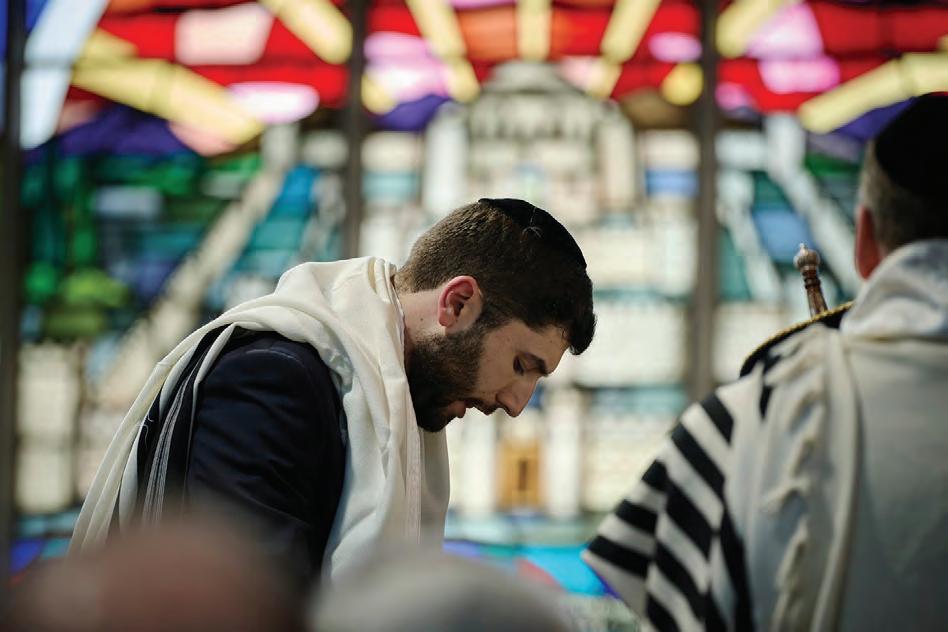
All incidents were self-reported to the JRCI, which cannot independently investigate or adjudicate them. Ireland does not have an official state mechanism for recording antisemitic incidents, the group said. And while the police record hate crimes based on nationality, ethnicity or religion, they do not isolate crimes motivated by antisemitism.
The JRCI said that 30% of incidents were triggered by cues of Jewish identity or Israeli origin, such as a Jewish symbol, an accent or
crossed the boundaries of hate driven by nationality, ethnicity and religion.
“ These dynamics cannot be adequately addressed through generalized anti-racism frameworks alone,” JRCI chair Maurice Cohen said in a statement. “Antisemitism presents distinct characteristics requiring targeted policy responses.”
Cohen called for “a dedicated, standalone national plan to combat antisemitism in Ireland.”
Of the reported incidents, 25 included “Holocaust distortion” or antisemitic conspiracy theories. These findings add to a Claims

“Use your smile to change the world but don’t let the world change your smile.”
9% of Irish adults believed the Holocaust was a myth, while another 17% believed the number of Jews killed had been greatly exaggerated.
Half of Irish adults did not know that 6 million Jews were killed in the Holocaust.
At the same time, a November 2025 survey by the European Commission surfaced broad recognition of antisemitism in Ireland. 41% of respondents said that antisemitism was a problem in the country and 47% said it had increased over the past five years.
At a ceremony for International Holocaust Remembrance Day in January, Ireland’s taoiseach (or prime minister) Micheál Martin said, “I am acutely conscious that ourJewish community here in Ireland is experiencing a growing level of antisemitism. I know that elements of our public discourse has coarsened.”
Martin has strenuously criticized Israel’s actions in Gaza, saying at the United Nations last year that Israel committed genocide and demonstrated “an abandonment of all norms, all international rules and law.” Catherine Connolly, a socialist politician who has faced backlash for saying Hamas is “part of the fabric of the Palestinian people,” was elected as Ireland’s president in October.
Ireland has historically supported the Palestinians, a stance often linked to the country’s own history of British imperial rule, and formally recognized a Palestinian state in 2024.
In Martin’s Holocaust commemoration speech, he also condemned the most recent
Obituaries:
“I am acutely conscious that our Jewish community here in Ireland is experiencing a growing level of antisemitism.”
–MICHEÁL MARTIN
event to inflame the Irish Jewish community. Late last year, a proposal to rename Herzog Park in Dublin — named for Chaim Herzog, the son of the first Irish chief rabbi who became Israel’s sixth president in 1983 — was decried by Irish Jews who said it would erase Irish Jewish history. The proposal was later tabled.
Martin, who also denounced the proposal when it was active, said the Jewish community “has every right to be deeply concerned and to express that concern.”
Gideon Taylor, president of the World Jewish Restitution Organization and an Irish Jew who grew up in Dublin, said the JRCI report showed a picture of antisemitic incidents that were separate from “a debate about the policies of Israel or a debate about the Palestinian state.”
“When you have discontinuation of service because somebody is heard speaking Hebrew, or has a Jewish-identifying symbol on them, that’s not about a political position on the spectrum towards Israel,” said Taylor. “That’s something that crosses into antisemitism.”
Ireland’s chief rabbi Yoni Wieder said the report reflected experiences he already heard from his congregants.
“The report does not claim that antisemitism has become a daily reality for all Jewish people in Ireland — it has not,” said Wieder. “What it does show is that antisemitism surfaces often enough, and in ordinary enough settings, that it cannot be dismissed as rare or confined to the margins of society. This means that for many, Jewish belonging in Ireland feels more fragile than it should.” PJC
Continued from page 19
CHOTINER: Shanna H. Chotiner, on Wednesday, Feb. 25, 2026. Beloved wife of the late James Chotiner. Mother of Robyn Chotiner and Todd Chotiner. Daughter of the late Charles and Gertrude Whitman. Cherished sister of Clifford (Claudia) Whitman. Devoted grandmother of William (Alexandra), Jacob and Katelyn. Proud great-grandmother of Wesley and Theodore. Also survived by nieces, nephews and cousins. Shanna treasured her years as a stay-at-home mom before becoming a real estate agent. Her career in real estate spanned over 35 years. She loved traveling, shopping and game shows. Services were held at Ralph Schugar Chapel, Inc. Interment private. In lieu of flowers, contributions may be made to the ALS Association, 1300 Wilson Boulevard, Suite 600, Arlington, VA 22209 or a charity of the donor’s choice. schugar.com PJC
Francis M. Yesko, Deceased May 14, 2025, of Pittsburgh, Pennsylvania No. 02-25-05118
FrancineA.Yesko, Executrix; 794 Hazelwood Ave., Apt. 2, Pittsburgh, PA 15217 or to Bruce S. Gelman, Esquire, Gelman & Reisman, P.C., Law & Finance Bldg., 429 Fourth Avenue, Suite 1203, Pittsburgh, PA 15219

Contact me today to discuss all of your real estate needs!
Sherri Mayer, Realtor Squirrel Hill Office C: 412-760-0412 O: 412-421-9121x225 sherrimayer@howardhanna.com HowardHanna.com






Smith-Rosenthal Team
Jason A. Smith & Caryn Rosenthal
Jason: 412-969-2930 | Caryn: 412-389-1695 Jasonasmith@howardhanna.com Carynrosenthal@howardhanna.com

www.kaminrealty.kamin.com
5125 Fifth Ave. 2 & 3 Bedrooms Corner of Fifth and Wilkins Spacious 1500-2250 square feet ”Finest in Shadyside” 412-661-4456 www.kaminrealty.kamin.com













By Sharon Altshul | JNS
For nearly 2,200 years, it lay hidden in a cave above the Dead Sea.
Now, for the first time since 1968, the Great Isaiah Scroll has been unrolled to its full 24-foot length and placed on public display at the Israel Museum in Jerusalem, a rare exhibition museum officials are calling a once-in-a-generation opportunity.
“A Voice from the Desert: The Great Isaiah Scroll” is a highlight of exhibitions marking the museum’s 60th anniversary. The manuscript will be presented in its entirety for only four months. Strict conservation requirements allow 25 visitors at a time to enter the temperature-controlled Scroll Gallery for 10 minutes.
“ This is the only complete biblical manuscript ever found so far,” curator Hagit Moaz told JNS following a media tour. “It contains all 66 chapters of Isaiah. It is a unique opportunity, once in a generation, to come and see this magnificent scroll.”
Designated 1QIsaa, the scroll is widely considered the crown jewel of the Dead Sea Scrolls. Of the thousands of fragments discovered in the Judean Desert beginning in 1947, including multiple versions of Isaiah, this is the most complete biblical manuscript ever recovered and one of the most consequential archaeological finds of the 20th century.
The modern story began in 1947 when a young Bedouin shepherd entered a cave near Qumran while searching for a stray goat. Inside clay jars, he found ancient manuscripts wrapped in linen. The accidental discovery led to the recovery of more than 900 texts from 11 caves along the northwestern shore of the Dead Sea.
Displayed at the museum’s Shrine of the Book, dedicated in 1965, the original scroll is normally kept under highly controlled conditions, with only small portions shown at a time. A facsimile has been displayed in the central dome for decades.
Visitors to the current exhibition first pass pottery jars resembling those in which the scrolls were discovered. A short introductory film traces the manuscripts’ journey from the caves of Qumran to Jerusalem before guests enter the stark white Scroll Gallery,
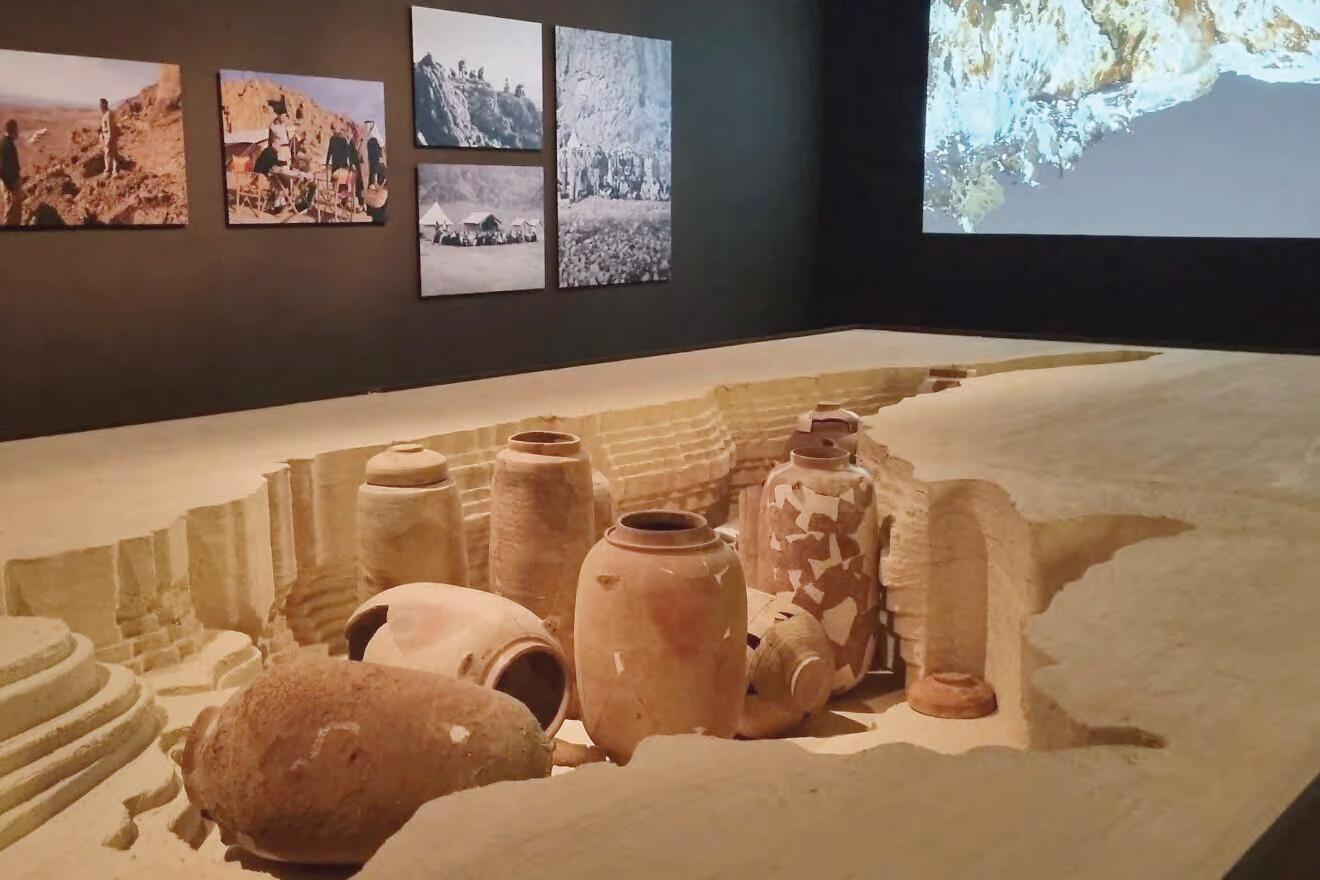
where the parchment stretches across a specially designed case.
Column after column of Hebrew script flows across 17 sheets of stitched parchment measuring approximately 734 centimeters — more than 24 feet in length.
Radiocarbon dating and paleographic analysis place the Isaiah Scroll at approximately 125 BCE, roughly 1,000 years older than the previously known complete Hebrew manuscripts of Isaiah from the medieval Masoretic tradition.
Before the discovery of the Dead Sea Scrolls, the oldest complete Hebrew biblical manuscripts dated to the 10th century CE. The Great Isaiah Scroll allowed scholars to compare the Book of Isaiah across a full millennium of transmission.
Professor Noam Mizrachi of the Hebrew University’s Orion Center for the Study of the Dead Sea Scrolls noted that the ancient
manuscript corresponds overwhelmingly to the version used today.
Textual comparison shows the scroll is approximately 95–98% identical to the Masoretic Text in modern Hebrew Bibles. Differences are largely spelling variations or minor grammatical shifts. There are no significant theological additions or deletions.
In academic circles, the implications were profound. At a time when some scholars suggested substantial alterations to the Hebrew Bible over centuries, the scroll demonstrated remarkable textual stability.
Written in Hebrew in a Herodian script, the manuscript preserves all 66 chapters of Isaiah with only minor damage, making it the only nearly complete biblical book among the Dead Sea Scrolls.
Marginal corrections and scribal notations reflect active engagement with the text. Recent
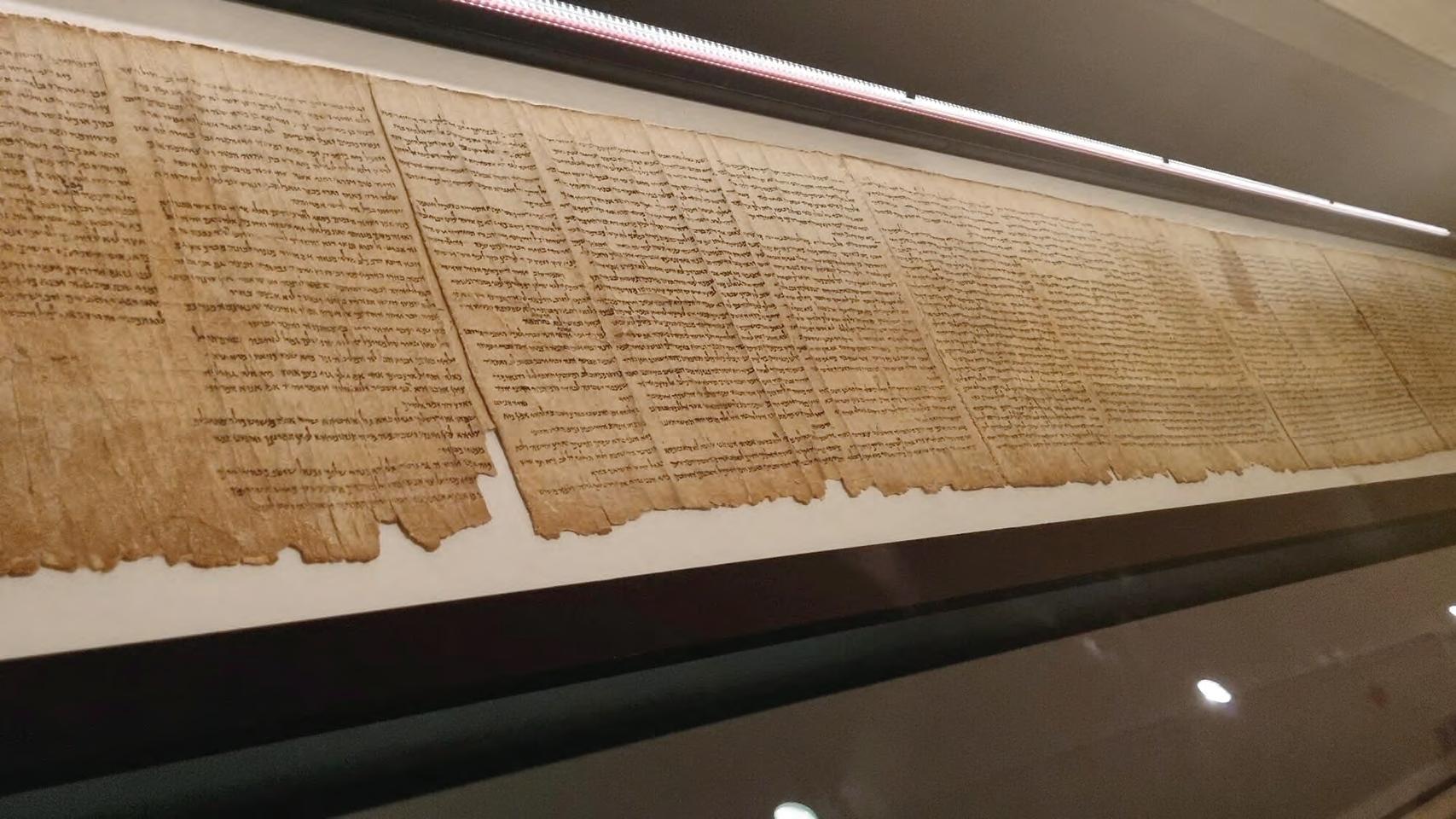
technological analysis, including artificial intelligence-assisted handwriting comparison, suggests two scribes were involved. Additional research proposes it remained in circulation for decades before being stored in the Qumran cave.
Scholars associate the Qumran manuscripts with a sectarian Jewish community, often identified as the Essenes, who emphasized prophetic themes of redemption, divine judgment and the “End of Days.”
Enduring message
Isaiah’s passages, including “Comfort, O comfort My people” and the vision of nations beating “their swords into plowshares” and “The wolf shall dwell with the lamb,” resonated deeply in the religious atmosphere of the late Second Temple period.
Isaiah would later become one of the most frequently cited prophetic books in the New Testament, underscoring the shared scriptural heritage of early Judaism and Christianity.
Because parchment is highly sensitive to light and environmental change, the scroll can rarely be displayed in full. Carefully calibrated lighting and climate systems now protect the manuscript during this limited exhibition.
Discovered in the Judean Desert just months before the establishment of the state of Israel, the scroll has become more than an archaeological treasure. It stands as tangible testimony to continuity, linking the Jewish people of the Second Temple period to a sovereign Jewish state more than two millennia later.
From a cave near Qumran to a climate-controlled hall in Jerusalem, the Great Isaiah Scroll has endured conquest, exile, rediscovery and scrutiny. Its parchment bears the marks of age. Its words, however, ring out across the ages and its message remains relevant today: “Shout for joy, you who dwell in Zion!” An ancient voice from the desert now lies fully unrolled and speaking once again. PJC
Real recognize real Community Day School student Ender Lin was recognized by Pittsburgh Mayor Corey O’Connor with a proclamation. The eighth grade student was celebrated after helping secure a 19,000-pound donation from
Make it take it
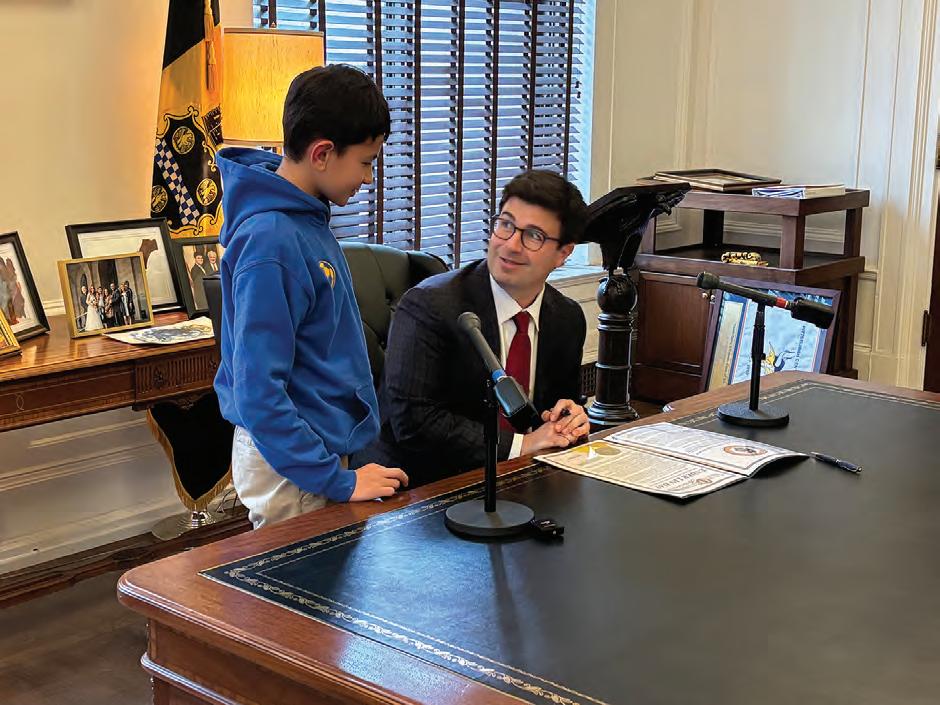
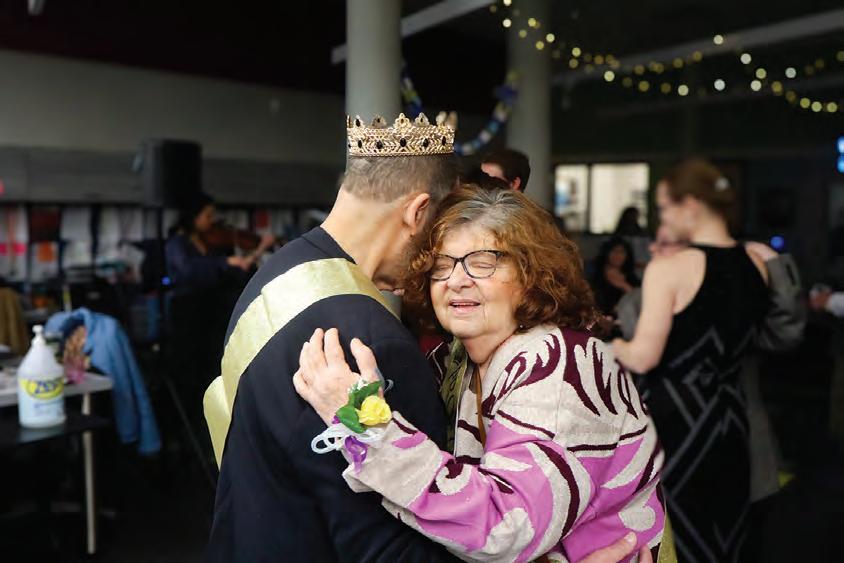
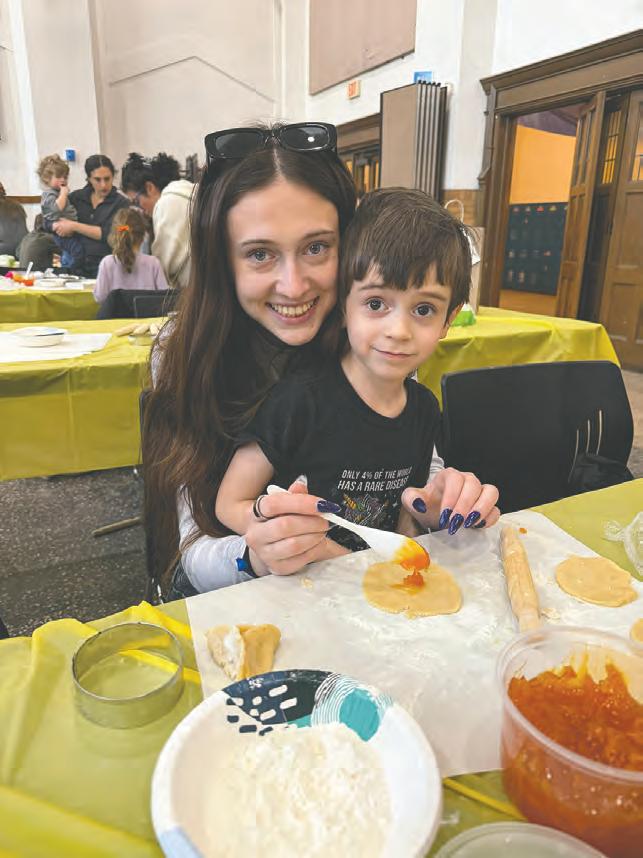
Students, parents and community members prepared for Purim by joining Community Day School’s Make & Take Hamantashen event. The March 1 program enabled participants to create Purim treats and holiday-themed crafts.