




By Adam Reinherz | Senior Staff Writer
As Pittsburghers clean, shop and determine seating arrangements for upcoming seders, local rabbis and spiritual leaders are contemplating themes tied to the holiday. Whether delivered to congregants from pulpits, via emails or in conversation, the lessons reflect a desire to tie the ancient Israelites’ Exodus from Egypt to today’s turmoil.
With Operation Epic Fury now nearing a month, Passover is arriving at a precarious moment. Many people are experiencing a “mixture” of thoughts, Chabad of Squirrel Hill’s Rabbi Yisroel Altein said.
A Passover-related teaching by the Lubavitcher Rebbe Rabbi Menachem Mendel Schneerson simplifies the complexity, Altein said.
Within the Haggadah, the passage beginning “Ha lachma anya” (“ This is the bread of affliction”) concludes with “Hashta avdei; l’shana habah bnei chorin” (“Now we are slaves; next year we shall be free”).
Those bookended words promote “balance,” Altein said. Recognizing one’s current situation — even if difficult — is important, however, remembering the “big picture” is imperative, he said. “We’re on the way to full redemption.”
“Passover is one of the great Jewish resilience stories,” Temple Emanuel of South Hill’s Rabbi Aaron Meyer said. “We gather in our homes, we gather together with family and friends, not only to remind ourselves of our ancestors’ plight — and hopefully through that to remind ourselves that we can navigate through hard times to better days ahead but we imagine as if we ourselves were there, internalizing this lesson in a more than intellectual way.”
Passover practices began millennia ago. One challenge this year is that “as Americans, we’re currently trapped in a debate about how great evil has to be before it demands to be confronted or demands resistance,” Meyer said. Both Purim and Passover are seasonal indicators that “sometimes a strong hand is needed for redemption more often than our modern sensibilities might like.”
The Passover story, in particular, “encourages us to not give into despair, but to embrace the idea that things can change and that we can go towards liberation and justice,” Congregation Dor Hadash’s Rabbi Amy Bardack said.
With Passover beginning April 1, Pittsburghers will look to a familiar tale of slavery and freedom for inspiration.
By David Rullo | Senior Staff Writer
Each year, Jews around the world traditionally gather with family at the seder table to retell Passover’s enduring story of freedom from slavery. But if you can’t celebrate with family this year — or simply want to join a larger community — there are many options across Pittsburgh. Local congregations and other Jewish organizations are hosting seders, and the Chronicle has assembled a guide to help you find one.
Beit Kulanu — the combined Rodef Shalom and Temple Sinai congregation — will host its first community seder, led by Rodef Shalom Congregation’s Rabbi David Young. The seder will take place at Rodef Shalom, 4905 Fifth Ave., beginning at 6 p.m. To register, or to learn more about the seder, visit rodefshalom.org/ events-1/congregational-passover-seder-1-3.

By David Rullo | Senior Staff Writer
What difference does a name make?
If you ask Sara Weinstein, co-director of Chabad House on Campus, she’ll tell you that a name doesn’t mean much. Instead, it’s the work that matters — and she’s been impressed by what she’s seen from Rabbi Shmuli Rothstein.
Rothstein is the director of Chabad at Pitt, where he has served since 2015 with his wife, Chasi Rothstein.

“Rabbi Rothstein and his wife, Chasi, have already shown the difference they’ve made in the more than 10 years they’ve been here,” Weinsten said. “Shmuli is a rock star on campus. The students love him and Chasi.”
The pair have grown the organization and the number of students with whom they interact each year. Every week they engage with more than 700 students and host Shabbat dinners for hundreds. And now, they’re at the center of changes taking place on campus.
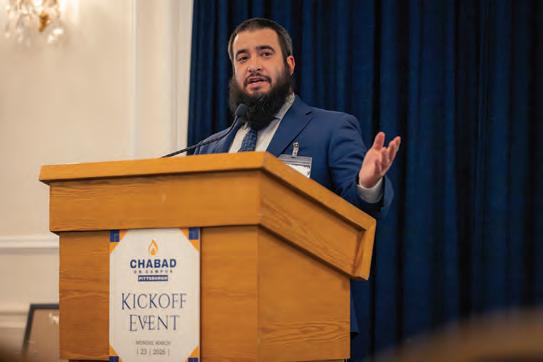
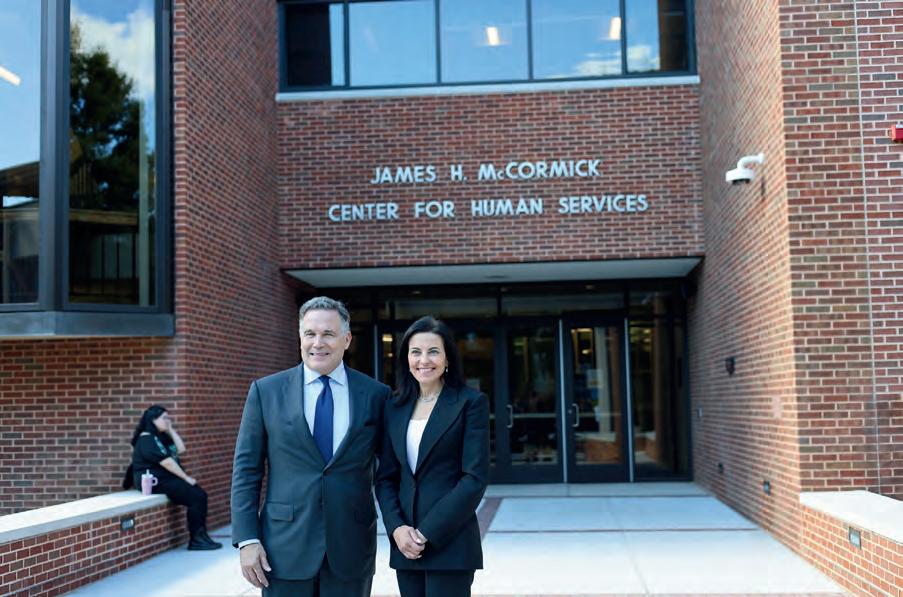
Shmuli Rothstein has been named the new head of Chabad House on Campus, which oversees several local campus Chabad centers. And the organization is changing its name to Chabad House on Campus-Pitt.
While Weinstein and her husband — Rabbi Shmuel Weinstein — will no longer serve as directors of the organization, “no one’s going anywhere,” Rothstein said.
“It’s not like a new CEO is coming on,” he said. “We’re using the term ‘emeritus’ very lightly.”
The Weinsteins, he said, will still teach classes, and are still invested in all of the programming and activities, as well as development and fundraising. They will continue to reside in their Shadyside home and will still come to the same office every day.
The reasons for the changes are two-fold.
The first is branding, Rothstein explained.
“It’s more of a branded term that Chabad International is trying to get everyone to use,” he said.
And while the name might suggest that
Chabad House on Campus-Pitt oversees all of the interactions that take place on the different campuses across the Pittsburgh region, that isn’t quite right.
Chabad House on Campus-Pitt has, and will continue to have, relationships with students from Point Park University, Duquesne University, Chatham University and Robert Morris University; it doesn’t, however, administer Chabad of Carnegie Mellon University.
“The Silvermans [Rabbi Shlomo and Chani Silverman] take care of Carnegie Mellon as an independent Chabad House,” Weinstein noted.
The second reason for the changes is generational.
The Weinsteins began Chabad House on Campus nearly four decades ago after Shmuel completed graduate school.
“We weren’t that much more older than the students,” he said.
And while the Weinsteins say it was exciting to build the program and expand its reach, they acknowledge that it might be time for the next generation to take the reins.
“Everyone has their talents and abilities,” Sara Weinstein said. “We did what we could and will continue to do that, but it’s very clear that this is a new generation of younger kids. There’s a lot going on in the world and both Shmuli and Chaisi can meet those challenges with the students.”
Most changes will be gradual, Rothstein said, but one immediate impact will be at the organization’s location.
Chabad House on Campus-Pitt is working to buy the building in which it’s currently housed, and plans to convert it into a new 12,000-square-foot center by 2028, providing a secure location for students, ample space for Shabbat and holiday meals, and the opportunity to conduct multiple programs simultaneously. The facility will have a commercial kitchen, provide a safe place for the organization’s growing mental health services, and perhaps most importantly, imbue students with pride to stand up to antisemitism.
“You fight darkness by bringing in more light,” Rothstein said. “That’s what the building is going to look like — a beacon of light shining in the middle of campus.”
The updated building will also be home to JGrads, a program for graduate students at the University of Pittsburgh run by Rabbi Shua Hoexter and his wife, Shoshana Hoexter.
Chabad House on Campus-Pitt’s new home, Rothstein said, will not only provide ample opportunities for Jewish students to explore their heritage, but will also be a welcoming place for non-Jewish students.
“That’s important,” he said, “because I think the next generation is going to need to have light everywhere. We’re going to focus on

SUBSCRIPTIONS
subscriptions@pittsburghjewishchronicle.org 412-687-1000, ext. 2 TO ADVERTISE advertising@pittsburghjewishchronicle.org 412-687-1000, ext. 1
EDITORIAL DEPARTMENT
Email: newsdesk@pittsburghjewishchronicle.org
BOARD OF TRUSTEES
Evan H. Stein, Chair
Evan Indianer, Vice Chair
Derek Smith, Treasurer
Gayle R. Kraut, Secretary
Gail Childs, Dan Droz, Malke Steinfeld Frank, Karen Gal-Or, Seth Glick, Judith Kanal, Cátia Kossovsky, Charles Saul, Lynn Zelenski
GENERAL COUNSEL
Stuart R. Kaplan, Esq.
Jim Busis, CEO and Publisher 412-228-4690 jbusis@pittsburghjewishchronicle.org
EDITORIAL
Toby Tabachnick, Editor 412-228-4577 ttabachnick@pittsburghjewishchronicle.org
Adam Reinherz, Senior Staff Writer 412-687-1000 areinherz@pittsburghjewishchronicle.org
David Rullo, Senior Staff Writer 412-687-1000 drullo@pittsburghjewishchronicle.org
ADVERTISING
Amy Weiss, Account Executive (412) 613-0697 aweiss@pittsburghjewishchronicle.org
making sure that we bring a lot of joy, light and pride into this campus.”
Rothstein hopes Chabad House on Campus-Pitt will continue to grow and the mission started by the Weinsteins nearly 40 years ago will continue to provide a space for Jewish students.
As for the Weinsteins, they’ll continue to be a presence on campus as well as spend time on the road visiting alumni.
“I explain to students all the time, when you graduate, you’re still a part of the family. Whether it’s a wedding, a bris, a simcha, or something that’s not quite as simple, like a funeral, it’s not ‘you’re here for four years and it’s over,’” Shmuel Weinstein said.
The connection to Judaism and the Chabad community, he said, generally grows over the years.
“We need to be there for them,” he said, “so we’ll be on the road, going to Florida and California and New York. Wherever they go, we’ll go.”
That lesson, he said, is evident not just at Pitt but across Chabad’s various centers.
“Chabad is seen in dynamic, favorable ways,” he said. “It starts with preschools, works with teens, is here on campus, and then as young professionals. There are community and other specialized Chabads. It used to be that we had to introduce Chabad to people, but now they know who we are before they ever get here.”
Rabbi Yisroel Rosenfeld, head shaliach of western Pennsylvania and rabbi of the Lubavitch Center of Pittsburgh, said the Weinsteins have done a “phenomenal job” over the last four decades and the Rothsteins are “picking up and moving forward with everything they’ve accomplished.”
Chabad House on Campus-Pitt’s growth, Rosenfeld said, was more than he ever expected, adding that he is confident it will continue with the Rothsteins at the helm.
“It’s beautiful to see and it’s exactly what we need in today’s age,” he said. “We need to bring more light into the world.” PJC
David Rullo can be reached at drullo@ pittsburghjewishchronicle.org.
5915 Beacon St., 5th Floor Pittsburgh, PA 15217
Main phone number: 412-687-1000 Subscriptions: 412-687-1000, ext. 2
PRODUCTION
Jeni Mann Tough Production Manager
Carl Weigel
Art/Production Coordinator
Subscriptions subscriptions@pittsburghjewishchronicle.org 412-687-1000, ext. 2
Published every Friday by the Pittsburgh Jewish Publication and Education Foundation 5915 Beacon St., 5th Floor Pittsburgh, PA 15217
Phone: 412-687-1000
POSTMASTER: Send address change to PITTSBURGH JEWISH CHRONICLE, 5915 BEACON ST., 5TH FLOOR PITTSBURGH, PA 15217
(PERIODICAL RATE POSTAGE PAID AT PITTSBURGH, PA AND AT ADDITIONAL MAILING OFFICES) USPS 582-740
Manuscripts, letters, documents and photographs sent to the Pittsburgh Jewish Chronicle become the property of this publication, which is not responsible for the return or loss of such items.
The Pittsburgh Jewish Chronicle does not endorse the goods or services advertised or covered in its pages and makes no representation to the kashrut of food products and services in said advertising or articles. The publisher is not liable for damages if, for any reason whatsoever, he fails to publish an advertisement or for any error in an advertisement. Acceptance of advertisers and of ad copy is subject to the publisher’s approval. The Pittsburgh Jewish Chronicle is not responsible if ads violate applicable laws and the advertiser will indemnify, hold harmless and defend the Pittsburgh Jewish Chronicle from all claims made by governmental agencies and consumers for any reason based on ads appearing in the Pittsburgh Jewish Chronicle

By David Rullo | Senior Staff Writer
The Anti-Defamation League released its 2026 Campus Antisemitism Report
Card earlier this month, again grading two Pittsburgh universities.
Both Carnegie Mellon University and the University of Pittsburgh received “C” grades on the ADL’s third annual report. For Pitt, that’s consistent with the grade it received last year, the first year it was graded. CMU dropped from a “B” to a “C,” the same grade it received in 2024.
The report card is a “jumping off point to better understand the big picture of what’s happening on campuses,” explained Kelly Fishman, the ADL’s regional director serving Ohio, Kentucky, West Virginia and western Pennsylvania.
Several areas of concern at CMU are highlighted in the report, including: the lack of research to assess Jewish campus community experiences; lack of a Jewish studies program, Jewish alumni group, a group supporting Jewish employees or an active pro-Israel group; and, concern over the level of severe antisemitic and anti-Zionist incidents.
Pitt has some of the same issues, according to the report, including: the lack of an official position on BDS; mandatory antisemitism education for students, faculty and staff; the level of severe antisemitic and anti-Zionist incidents; the level of hostile anti-Zionist student government activity; the level of hostile anti-Zionist student groups; and, the level of hostile anti-Zionist staff and faculty activity.
While the overall grade a university earns is important, Fishman said, it is only one part of the picture. She urged people to read the full report.
“The thing people should really be drawn to is looking at what’s Jewish life on campus like,” she said. “Both Pitt and Carnegie Mellon have excellent Jewish life on campus.”
The report, she said, is influenced by things like a lawsuit filed by a former CMU student that is currently being litigated. That takes time, she added, which isn’t the fault of
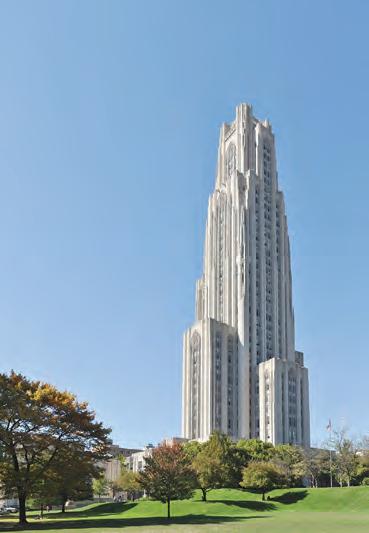
the university.
Fishman said she has met with administrators at both universities “and they are interested in figuring out how to improve their grade.”
Both universities told the Chronicle they strive to create a space free from antisemitism.
CMU spokesperson Chuck Carney said the university was surprised by the ADL’s findings. He noted that the report is a combination of objective data and subjective impressions.
“As such, these results should be taken seriously and read cautiously,” he said.
The ADL, he noted, provides a 30-day period for universities to respond to the report and “correct the record,” something he said CMU is doing.
“Until then, we cannot comment on additional questions,” Carney said.
Pitt spokesperson Jared Stonesifer said the university is “always looking for ways to strengthen support for Jewish students, faculty, staff and alumni and to further foster a campus climate where Jewish life is visible, valued and protected.”
He noted that the ADL graded Pitt’s Jewish life on campus as “excellent.” He credited that to robust Jewish student organizations, a Jewish studies program, kosher dining options, a Jewish alumni group and partnerships with Jewish-allied organizations.
Stonesifer pointed to Pitt’s Working Group on Antisemitism, created in March 2025, as one of the mechanisms by which it is addressing issues on campus.
The Working Group is charged with making recommendations to the university on ways to “prevent and respond” to antisemitism, he said, adding that the university is committed to a “deliberate rollout and implementation process” of the group’s forthcoming recommendations.
Pitt has non-discrimination polices in place and is working with groups like the American Jewish Committee and StandWithUs to offer education and training, Stonesifer added.
“These efforts engage students, faculty and staff across the university and are designed to promote understanding, empathy and respectful dialogue.”
As for BDS, he said that while the university doesn’t have an official position against it, the state does, and as a public university, Pitt complies with and honors Pennsylvania requirements.
Stonesifer said the university takes the report card seriously and is “always looking for ways to improve.”
“[T]he University can do more and we will,” he said.
Chabad House on Campus-Pitt Director Rabbi Shmuli Rothstein disagrees with the ADL’s assessment of Pitt. The ADL, he said, didn’t speak with either Chabad or Hillel Jewish University Center, but instead asked them to complete a flyer.
“The flyer wouldn’t give them a feeling for what’s happening on campus,” he said.
The report card, Rothstein said, amounted to an “insult” against his community, friends and family, and isn’t reflective of Jewish life at Pitt. Moreover, he added, it ignores the close relationship Chabad has with Pitt administrators.
Daniel Marcus, executive director and CEO at Hillel JUC of Pittsburgh, shared Rothstein’s concerns, saying that “Jewish campus life is thriving at Pitt and CMU.”
“These grades do not reflect our perspective and daily experiences of being partners with the campuses,” Marcus said. “We appreciate the senior leadership who have been receptive and supportive when we do highlight



concerns. These grades don’t indicate that.”
Released with the report card was the survey “Campus Crossroads, Non-Jewish Student Perceptions of Jews and Israel,” analyzing how non-Jewish college students perceive Jews and Israel, based on a January-February 2026 survey of 1,007 U.S. undergraduates.
“I think it really fills in a gap that we’ve had,” Fishman said. “The report card has looked at the Jewish students experiences, but Jewish students are engaging predominantly with non-Jewish students.”
The survey finds that anti-Jewish bias is widely visible on campus, but that students support “institutional action and inclusion.”
According to the survey’s executive summary, 48% of non-Jewish students reported witnessing or experiencing antiJewish behavior on campus or in digital campus-related spaces. Fifty-two percent said anti-Jewish prejudice was at least “a little prevalent.”
Despite the findings, only 5% reported receiving antisemitic training.
More shocking, nearly 48% of students surveyed “endorsed at least one anti-Jewish attitude” and almost 20% expressed more sympathy for Hamas than Israel, although 69% said Jews had the right “to an independent country,” and large majorities of students “are comfortable with Israeli academic participation.”
There is still strong support (85%) among those surveyed for universities to address anti-Jewish behavior, but the report highlights tensions within the current campus climate: Students believe peers would defend Jewish classmates but think expressing support for Israel carries risk.
“This is an important survey to understand because it really looks at the attitudes of young people,” Fishman said.
Both the Campus Antisemitism Report Card and survey are available to view on the ADL’s website.
The Chronicle reached out to Chabad of Carnegie Mellon University but was unable to reach director Rabbi Shlomo Silverman before press time. PJC
David Rullo can be reached at drullo@ pittsburghjewishchronicle.org.

By Adam Reinherz | Senior Staff Writer
Aprogram predicated on repairing relationships offered a simple, clear directive: listen.
“(Re)Building the Bridge: a conversation about the Black–Jewish relationship,” hosted by the Holocaust Center of Pittsburgh and Center of Life, featured dialogue between Center of Life’s the Rev. Tim Smith and Avi Dresner, a Massachusetts-based writer and filmmaker whose father was civil rights activist Rabbi Israel “Sy” Dresner. Moderated by the Holocaust Center’s Emily Loeb, the March 19 event included reflections on the African American-Jewish relationship and advice on using those bonds to thwart hate, racism and antisemitism.

For nearly 90 minutes, Smith, a self-described “baby boomer,” and Dresner, 56, answered questions from Loeb in front of about 120 attendees at Hazelwood Brew smashed the building’s windows, vandalized its sanctuary and set it on fire.
Dresner began his comments by showing a sizzle reel from “The Rabbi and The
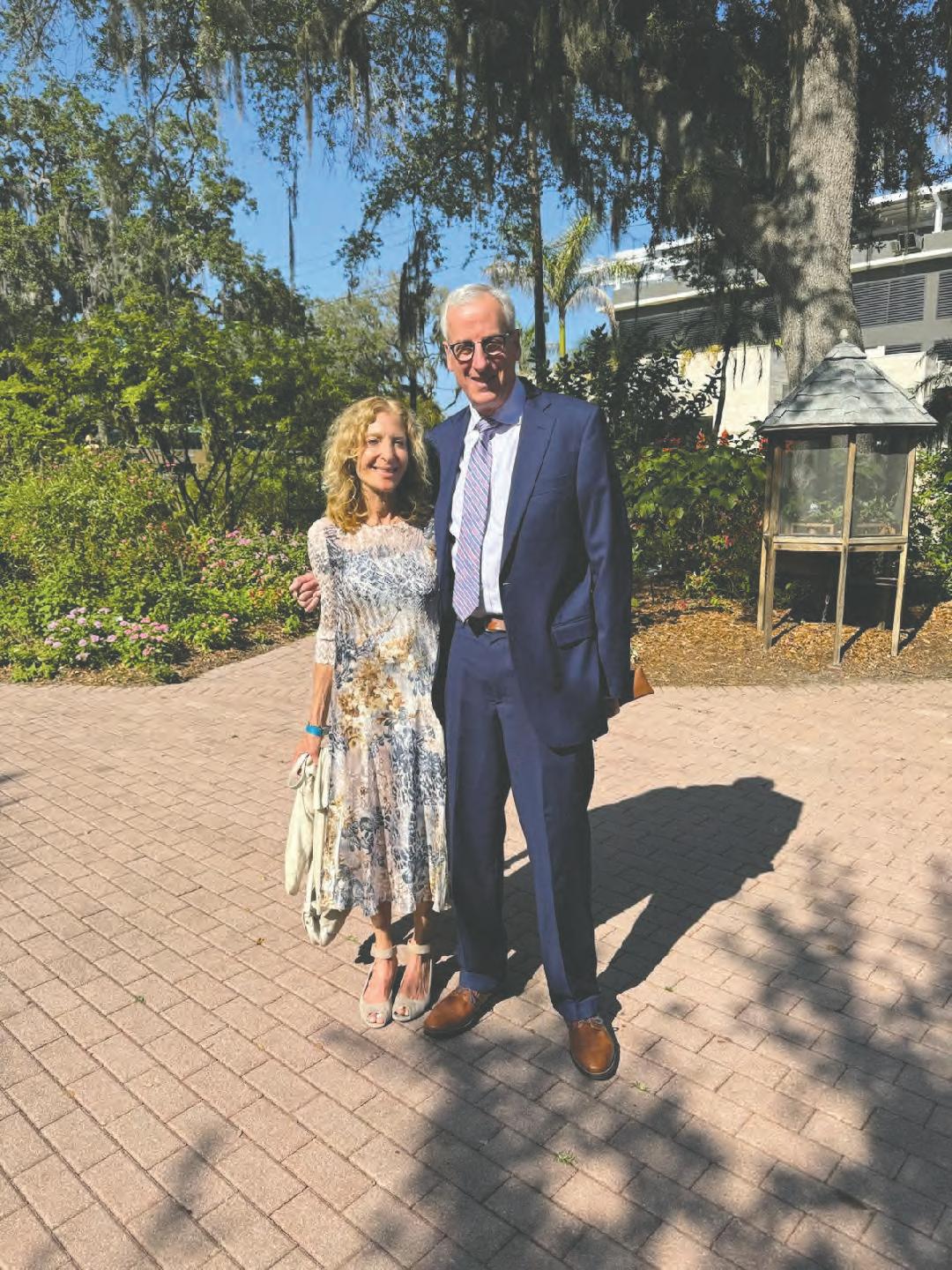
said, is the need to understand movements and individuals.
“Dr. King, without a movement, would have gotten nowhere; and the foot soldiers in the movement without Dr. King wouldn’t have gotten anywhere either,” he said. “It takes both.”
Throughout the program, Smith and Dresner implored attendees to share stories, listen and learn.
Tonight’s goal, Dresner said, is for people to chat, exchange contact information, eventually meet for coffee and build interpersonal bonds.
“That’s how it starts,” he said.
“I think it’s good for us to be reminded — good for us to pause and reflect on who we are as people — and then begin to ask ourselves, or as people, to begin to come together to learn more and build genuine relationships,” Smith said.
But fraternization is only so valuable.
“You have to be more willing to listen than to talk. That’s how we learn,” Smith said. “You ask questions, but we learn by listening and observing.”
The documentary, a work in progress, is produced by Dresner and describes the relationship between his father and the Rev. Dr.
Israel Dresner, according to his son, was the “most arrested and jailed rabbi during the Civil Rights Movement.”
King first spoke at Israel Dresner’s synagogue, Temple Sha’arey Shalom, following kiddush during Friday night services on
Dresner’s visit to Pittsburgh, Loeb told attendees, was part of the writer and filmmaker’s national project, “Black–Jewish Reconciliation: (Re)Building the Bridge.”
The endeavor, which promotes community-based dialogue about the value of the Black-Jewish alliance, is supported by the Ford Foundation.
Shadyside resident Amy Singleton, 66, attended Thursday’s program and said she vividly remembers both King’s murder and

From Dan and Debbie Frankel
Over the years, Avi Dresner said, King and Israel Dresner’s friendship grew, with Dresner becoming an interfaith partner of King and the Southern Christian
In 1965, Israel Dresner not only joined King and more than 2,000 people in a march to the Edmund Pettus Bridge, but, following King’s request, delivered a public prayer, while protesters knelt on the bridge and prayed, according to Stanford University’s Martin Luther King, Jr. Research and
Numerous lessons can be learned, but one takeaway from those years, Avi Dresner
“protests” from decades ago.
Although progress has been made, “a lot of ugliness” remains and “it’s pulling us apart,” she said.
People should see this event as a tool, Squirrel Hill resident Bill Isler, 79, told the Chronicle shortly before exiting Hazelwood Brew House. “Getting out into the community, getting people together, talking about the issues — people aren’t afraid to talk, we just have to give them the opportunity to do it. And that’s what happened tonight.” PJC
Adam Reinherz can be reached at areinherz@pittsburghjewishchronicle.org.

By Adam Reinherz | Senior Staff Writer
Aprogram aimed at filling gaps in Jewish life is helping Pittsburghers deepen their spirituality and create new communal connections. JParent, a cohort-based experience for individuals with children ages 1-7, meets regularly at the Jewish Community Center of Greater Pittsburgh. The get-togethers feature text study, adult-centered conversation and crafting.
Most importantly, Greer Donley, 38, told the Chronicle: “There’s free child care.”
“People with this age kids need child care,” she said. “If you want us to engage and be able to really connect with other adults, we need child care to do that.”
Between November and February, Donley and fellow cohort members came to the Squirrel Hill JCC for various programs. During one meetup, the group made Shabbat candles. On another occasion, they described their Jewish journeys.
Since formally wrapping that cohort last month, the JCC has encouraged participants to remain active through Shabbat dinners and even a spa and spirituality event.
“It was kind of like after hours at the JCC,” Donley said.
Led by Cantor Kalix Jacobson, of Temple Emanuel of South Hills, the program focused

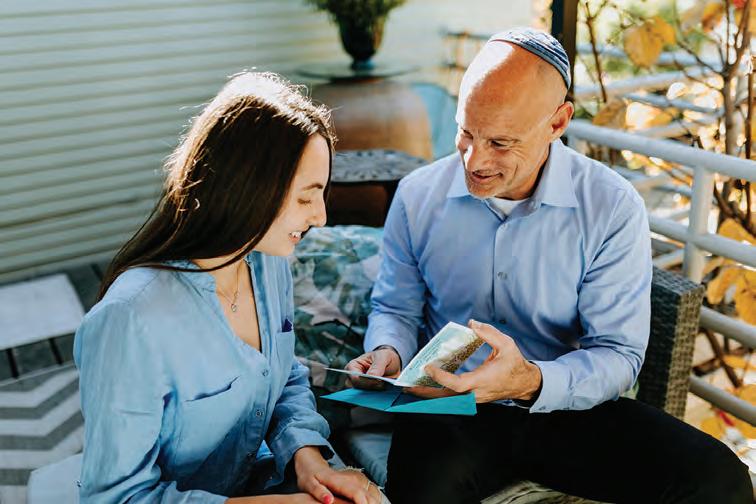
on text study and self-care.
“Everyone did the steam room, sauna, hot tub, and hung out,” Donley said. “It was really nice.”
Funded by the Tepper Foundation with a $1.9 million grant, the initiative — referred to by the Foundation as the Early Childhood Parent Engagement Program — is offered at several JCCs nationwide.
Aimed at fostering social and educational benefits, the program seeks to meet critical needs.
“We know that many young Jewish families would like to become more involved in
their community, but they may not have the time or resources to prioritize this in their day-to-day life,” Randi Tepper, CEO of The Tepper Foundation, said. “For parents who don’t have a babysitter to get time away to engage in their faith, for parents that want to engage their local Jewish community more but don’t know where to start — we hope they can see the Parent Engagement Program as an avenue that makes Jewish life more accessible.”
Rachael Speck, chief program and innovation officer at Pittsburgh’s JCC, praised the initiative for addressing the realities facing Jewish communities. “Parents are seeking ways to connect to Jewish life on their own terms,” she said. “And, as we are seeing in our community and in many North American Jewish communities, parents are less likely to join congregations or enroll children in
intergenerational formats don’t appeal to every parent.
“Some people like that. I don’t personally want to do that. That’s not interesting to me,” Donley said. “I want to go to synagogue to feel something or learn something for me. I don’t want to sit with my 2-year-old and clap hands and sing a song. I would like them to do that while I can get something out of it for grown-ups.”
JParent “hits on very specific deliverables that parents are looking for,” said Speck, who not only oversees the program but is also a cohort member.
“Parents want to be able to build real connections with other Jewish families who are in a similar place in life,” she said. “I think what resonates for myself, and what resonates for other parents, is that right now those conversations are about family life and parenting.”
About 46,000 Jews live in Greater Pittsburgh, according to the 2025 Community Pulse Survey. Funded and led locally by the Jewish Federation of Greater Pittsburgh in partnership with the Jewish Federations of North America and the research firm Burson, the survey does not offer age-related demographic breakdowns, but notes that “enhancing the convenience and quality of Jewish learning resources is crucial for stimulating increased engagement and translating interest into action.”
Donley hopes communal decision-makers recognize current realities.
“It’s not just about us individually,” she said. “It’s also about ensuring that this religion remains sustainable over time, and that requires young families to be invested.”
JParent, which welcomes 12-15 people per cohort and is seeking new participants, is

religious schools than they once were.”
Donley said JParent fills a communal
“Who wants to go to services where your children are going to cry and scream, and then you’re going to be looked at for being loud and difficult,” she said. Creating spiritual and social connections “when you are actively caregiving your children” is challenging. “It just means you’re parenting in an uncomfortable space.”
Although several local congregations offer Tot Shabbat or other parent-child programs,
predicated on an awareness, Speck said.
“Most importantly, regardless of being engaged or connected to the JCC, the real hope is that they are creating a vibrant Jewish life for their families in whatever way that looks and feels like for them,” she said. “JParent is not meant to tell them how to do that. It’s meant to help them figure out what that looks like for them in a way that is meaningful and resonates.” PJC
Adam Reinherz can be reached at areinherz@pittsburghjewishchronicle.org.
By Eric Lidji | Special to the Chronicle
Aletter appeared in the American Jewish Outlook on Feb. 24, 1939. It read, “A set of Jewish Encyclopedias is needed as a gift for a college library near Pittsburgh. Will you donate yours? It does not have to be new. For particulars, call S. A. T. …”
Beneath was a note: “The requester of the above has been doing yeoman’s work in placing Jewish books and encyclopedias in many local and surrounding libraries and institutions. Any reader in position to cooperate is urged to call Mr. S. A. T.”
Anyone who followed local Jewish affairs at the time might have quickly identified the author of this letter. The most famous S. A. T. in the Jewish community was undoubtedly Sidney A. Teller, who ran the Irene Kaufmann Settlement House.
A few issues later, the Outlook broke the story. For two years, Teller had been secretly donating Jewish books to libraries throughout the city and across the region. He began by sending nine copies of the 12-volume Jewish Encyclopedia to three branches of the Carnegie Library of Pittsburgh and the libraries of six area colleges: Carnegie Institute of Technology (now Carnegie Mellon), the University of Pittsburgh, the Mount Mercy College for Women (now Carlow), the Pennsylvania College for women (now Chatham), Duquesne University and Westminster College. That last one was the outlier, a United Presbyterian college in New Wilmington, Pennsylvania, up in Lawrence County.
In a thank you letter, Westminster College Librarian Mildred A. Ailman told Teller the reference set would “fill a need in our library collection and I hope it will lead students to a knowledge and appreciation of the Jewish race which is too often lacking.”
This was the purpose of Teller’s campaign, as he explained at the time: “The placing of these Jewish Encyclopedia in the various libraries has been a great help in giving factual information as regards our people. And the value of these gifts has been increased with the situation which has developed since we started two years ago.”
The developing situation was Nazism. Germany had annexed Austria in March 1938 and then coordinated Kristallnacht in November 1938. Jewish deportations were underway. War was inching closer. All this overseas turmoil was reverberating back to the United States, rattling the ground beneath the feet of American Jews through the antagonism of Father Coughlin, Charles Lindbergh and the German American Bund.
Teller planned to keep his work private. He only went public because Funk & Wagnall’s ran out of copies of the Jewish Encyclopedia. He needed to find used ones.
The coverage helped. Teller found a copy, which he sent to the State Teacher’s College in Slippery Rock, now Slippery Rock University. Requests soon came from St. Vincent’s College in Latrobe and Grove City College in Grove City. With help from local Jewish organizations, Teller was more easily able to find and buy encyclopedias.
Following each donation, the Outlook printed thank you letters. From St. Vincent College’s Rev. Valentine J. Koehler: “Much of the printed matter today on the Jewish
people is tainted and colored so as to produce only intolerance and breed animosity. We are confident that the Jewish Encyclopedia will go far in dispelling false ideas and help many to realize the many contributions made in diverse fields by the Jewish people.”

From Grove City College Librarian Isabel Forbes: “You may tell the donor that here Jews, Protestants and Catholics mingle and are accepted on equal standing. The students seem to judge each other by ability, character and personality, irrespective of creed. The attitude of the students reflect in a great measure the attitude taken by the faculty.”
In addition to encyclopedias, Teller raised money for the Carnegie Library of Pittsburgh to acquire introductory volumes about Judaism. He branded his effort “The Goodwill Collection.” By early 1940, he had placed 58 books into the library system.
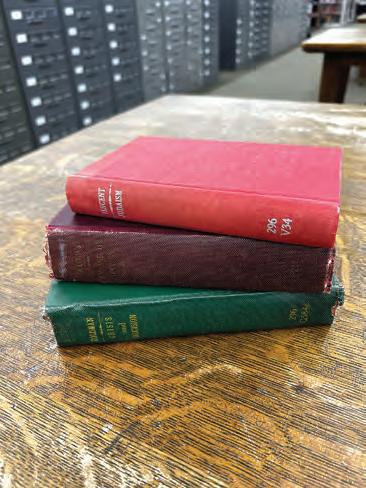
As I was researching this story, I realized that some of these books might still exist. After a long catalog search, I found that the main branch of the Carnegie Library in Oakland still held at least three of the original 58 volumes. All three were kept in the closed stacks, beyond the reach of the inquisitive browser, available only by request.
When the books were brought to the reading room, they gave the impression of a dozing shopkeeper awaking at the sound of the front door opening, groggy but ready to make a sale. These books were archaic, written in a gust of mechanically precise 50-word sentences ill-suited to our impatient age. I was saddened that none bore a special bookplate announcing the Goodwill Collection but delighted to find a donor name hidden in the gutter of two of the volumes: “Presented by Leon Falk Jr.” The third read, “Anon.”
One was titled, “Judaism.” It was written by a Catholic theologian from a German university. In the introduction, he notes, “This work is not polemical: its purpose is only to give information. We have studied Judaism with the greatest sympathy.” Not terrible, but not great either. The book still had its original library card, showing regular use between March 1937 and October 1942. The other two books were from author Rabbi Solomon Goldman, a pulpit rabbi in Chicago and a national Zionist leader at the time.
Teller came to settlement work with a deep faith in the humanities. As an idealistic young man in Chicago at the turn of the century, he founded a group called

The Butterfly Association. It took its name from a Hawthorne story. Its purpose was agement of all that is good and beautiful.” It produced a journal of poetry and essays yearning to help humanity reach high ideals. Our era leans toward data, and so everyone will want to know whether the Goodwill Collection worked. Well, if effectiveness is defined by the elimination of bigotry, then, no, it didn’t, unfortunately. Thankfully, other metrics exist. The project
didn’t so much create goodwill as build upon existing goodwill. The important part of the story is the four small-town librarians who called Pittsburgh, seeking Jewish books. One wonders if these relationships were maintained after the Jewish Encyclopedias arrived. PJC
Eric Lidji is the director of the Rauh Jewish Archives at the Heinz History Center and can be reached at rjarchives@heinzhistorycenter. org or 412-454-6406.



FIRST SEDER NIGHT: WEDNESDAY, APRIL 1, 2026

SECOND SEDER NIGHT: THURSDAY, APRIL 2, 2026


















By Jewish News of the United Kingdom
Counter-terrorism police are leading the investigation into an arson attack on four Jewish community ambulances in a London neighborhood.
The incident in Golders Green, northwest London, is being treated as an antisemitic hate crime by the Metropolitan Police but not as terrorism at this stage, the force said.
Speaking near the scene on Monday, Detective Chief Superintendent Luke Williams, who leads policing for the area, said investigators are aware of a group apparently claiming responsibility for the attack online, but have not yet verified whether this is true.
A video has allegedly been posted on Telegram by an Islamist group called Harakat Ashab al-Yamin, showing a map of the location where the ambulances were kept and footage of them on fire.
Williams said: “While this has not been declared a terrorist incident at this stage, the investigation is now being led by Counter Terrorism Policing with all the specialist expertise they bring, and all lines of inquiry remain open.
“We are aware of an online claim from a group taking responsibility for this attack. Establishing the authenticity and accuracy of this claim will be a priority for the investigation team, but it is not something we can confirm at this point.”
CCTV shows three people in hoods pouring accelerant on the vehicles, which belong to Jewish community ambulance service, Hatzola, before setting them on fire and running away.
The government has pledged to fund replacements for the ambulances as well as immediate health support.
Health Secretary Wes Streeting, who visited the scene on Monday, said: “The aim of these attackers is clear.
“They want Jewish people in this country to live smaller lives, to live less Jewish lives, to be less visible as Jewish people, to fear going about Jewish life.”
He added: “I know that the Jewish community will not be cowed by this despicable act of evil, but it is the responsibility of the rest of us not to be bystanders.
“Every decent person in this country needs to stand up and speak up against this vile antisemitic hatred.”
Gas cannisters kept in the ambulances exploded after they were set alight at the site in Highfield Road, Golders Green, northwest

London Mayor Sir Sadiq Khan said
it was a “cowardly attack on the Jewish community” and insisted “Londoners will never be cowed by this kind of hatred and intimidation”.
London, around 1:45 a.m. on Monday, but no injuries have been reported.
Nearby homes were evacuated as a precaution.
The Chief Rabbi said in a statement on X: “The deliberate arson attacks against Hatzola ambulances in London are a partic ularly sickening assault – not only on the Jewish community, but on the values we share as a society.
“Our Hatzola volunteer ambulance corps is an extraordinary service, whose sole mission is to protect life, Jewish and nonJewish alike.
“The targeting of Hatzola by people so committed to terror, hatred and the desecra tion of life is a most painful illustration of the ongoing battle between those who sanctify life and those who seek to destroy it.
“At a time when Jewish communities around the world are facing a growing pattern of these violent attacks, we will meet this moment with shared resolve and stand together against hatred and intimidation.”
Hatzola, which was established in 1979





These promises of G-d are your destiny, and they will not go unfulfilled!

“And this day shall be unto you for a memorial, and ye shall keep it a feast to the L-RD; throughout your generations ye shall keep it a feast by an ordinance for ever.” — Exodus 12:14
“And I will place My eyes upon them for good, and I will return them to this land, and I will build them and not destroy, and I will plant them and not pluck them.” — Jeremiah 24:6
“Hear, O Israel, today you are approaching the battle against yo ur enemies... you shall not be terrified because of them. For the L -rd, your G-d, is the One Who goes with you, to fight for you against your enemies, to save you.” — Deuteronomy 20:3, 4
“...behold days are coming, says the L-rd, when they shall no longer say, ‘As the L-rd lives, Who brought up the children of Israel from the land of Egypt,’ but, ‘As the L-rd lives, Who brought up and Who brought the seed of the house of Israel from the northland and from all the lands where I have driven them, and they shall dwell on their land.’” — Jeremiah 23:7-8



We encourage you to cherish your everlasting promises and the role you will play in blessing all “nations of the world.” Please visit our website to review again the solid basis of these promises and your hope.
“Embrace Your Jewish Heritage”
“Israel’ s Land Rights: Biblical, Historic and Legal”
These non-proselytizing booklets are Free to download at: www.IsraelsDestiny.com
Or Email to receive Free booklets & videos by Postal Mail: IsraelsDestiny@gmail.com
Bible Students are non-proselytizing friends of the Jewish people.

Birthright travelers look different after Oct. 7 — but the effect remains the same, study shows

By Andrew Lapin | JTA
Len Saxe, a researcher at Brandeis University, has been studying the impact of Birthright trips to Israel since the initiative launched in 1999. Last year, he noticed something unusual in the data.
At a rate far outpacing anything he’d ever detected before, people who signed up for Birthright in summer 2025 but did not participate became less connected to Israel and less connected to their own Jewish identity in the months after.
Nonparticipants — whether their trips were canceled because of the June war with Iran, or they opted out on their own — reported a declining sense of connection to Jewish values, Jewish history, Jewish tradition and a “worldwide Jewish community.”
The study did not attempt to explain the change, but Saxe has a theory about what happened.
“Many of the applicants live in communities where they hear frequent criticism of Israel,” Saxe said. “Unlike the period on campuses pre-COVID, when Birthright was taking 35,000 North Americans a year to Israel, students don’t know many others who have experience in Israel and know Israelis.Their perspective on the conflict lacks context.”
The organization said 7,300 North Americans took a Birthright trip last summer, out of 10,000 total. (War with Iran disrupted some trips and canceled others.) Of the total, 65% were college-aged.
The survey detected other changes for Birthright since 2023, when Hamas’ Oct. 7 attack on Israel triggered the Gaza war and anti-Israel sentiment around the world.
More than half of last year’s participants, 54%, had already participated in some variety of Israel programming, up from 38% in 2023, according to Saxe’s report. (Birthright loosened its eligibility requirements in 2014 to allow students who had visited Israel in high school to go again.)
About 1 in 5 participants were Orthodox, a more than threefold growth from summer 2023, the last trips before the start of the Gaza war. And 38% of participants attended Jewish day school, up from 23% two years prior.
The survey also detected a rightward political shift among Birthright participants.
Forty-two percent of 2025’s Birthright participants identified as conservative, and 34% as liberal, a dramatic shift from 2023, when 20% identified as conservative and 57% as liberal.
Those who do participate in Birthright still report that it deepens their connection to Judaism, and there is mounting evidence that connection is long-lasting. According to a recent survey by the Jewish Federations of North America, millennial Jews — the demographic where Birthright had the greatest penetration — were the only age group to have a majority identify as “Zionist.”
The analysis found that for self-identified liberals who did go on Birthright, the trip’s most important impact was on their conception of what it means to be Jewish.
Liberals reported large upswings in their sense of being Jewish as “extremely important to their identity” after their trips, the authors wrote — 48% after the trip, compared to 29% beforehand. Even Birthright participants who had to be sent home early due to fighting still overwhelmingly reported that the trip had made a difference in their understanding of their Jewish identity.
In other words, Saxe said, Birthright is still fulfilling its intended purpose: strengthening its participants’ Jewish identities more generally.
“Among those with the least prior connection to Judaism and Israel, including those politically liberal, they showed the largest increase in their connection to Israel, as well as other facets of their Jewish identities,” he said.
In statements accompanying the report’s release, Birthright’s leadership trumpeted the program as a necessary antidote to declining Jewish engagement.
“ The cultural headwinds facing young Jews are real, and they are pushing Jewish connection and pride downward,” Gidi Mark, international CEO of Birthright Israel, said in a release. “But what this research makes unmistakably clear is that Birthright Israel moves participants in the opposite direction. The decline occurred only among those who did not go.”
Elias Saratovsky, president and CEO of the Birthright Israel Foundation, painted the situation in even starker terms.
“We are at a crossroads. If our community does nothing, we risk losing the younger generation,” Saratovsky said. “But if we invest in an effective intervention — Birthright Israel — we can win them back.” PJC


NO ONE SAVES MORE LIVES IN ISRAEL IN TIMES OF CRISIS.
Submit calendar items on the Chronicle’s website, pittsburghjewishchronicle.org. Submissions also will be included in print. Events will run in the print edition beginning one month prior to the date as space allows. The deadline for submissions is Friday, noon.
q FRIDAY, MARCH 27–MONDAY, MARCH 30
Join Passover2Go in making a difference for homebound seniors by providing them with thoughtful Passover kits, ensuring everyone enjoys this special holiday. Sign up to volunteer and lend a helping hand. giftpgh.org/Passover
q SATURDAY, MARCH 28
Join Temple Ohav Shalom for a Passover playdate for families with children ages 0-5. Children will engage in a dramatic play matzah factory, set up a pretend Passover seder, and enjoy a story time and songs. Event is free and open to any Jewish or interfaith family in the North Hills and surrounding areas. Free. 10 a.m. 8400 Thompson Run Road, 15101
q SUNDAYS, MARCH 29–JULY 26
Join Chabad of Squirrel Hill for its Men’s Tefillin Club. Services and tefillin are followed by a delicious breakfast and engaging discussions on current events. 8:30 a.m. 1700 Beechwood Blvd. chabadpgh.com
Join a lay-led online Parashah study group to discuss the weekly Torah portion. No Hebrew knowledge needed. The goal is to build community while deepening understanding of the text. 8:30 p.m. For more information, visit bethshalompgh.org/online-parashah.
q MONDAY, MARCH 30
“Theodore Bikel: In the Shoes of Sholom
Aleichem” is a portrait of two beloved icons — Sholom Aleichem and Theodore Bikel — woven together in this enchanting new documentary narrated by Alan Alda. The screening will be followed by a dramatic reading of Sholom Aleichem’s work “Ink” by special guest Moshe Sadofsky. Free. 7 p.m. 4905 Fifth Ave. rodefshalom. org/documentary
q MONDAYS, MARCH 30–JULY 27
Join Congregation Beth Shalom for a weekly Talmud study. 9:15 a.m. For more information, visit bethshalompgh.org.
Join Temple Sinai for an evening of mahjong every Monday (except holidays). Whether you are just starting out or have years of experience, you are sure to enjoy the camaraderie and good times as you make new friends or cherish moments with long-term pals. All are welcome. Winners will be awarded Giant Eagle gift cards. All players should have their own mahjong cards. Contact Susan Cohen at susan_k_cohen@yahoo.com if you have questions. $5. templesinaipgh.org
Join Chabad of the South Hills for Lift Your Life, a Rosh Chodesh Society series. This month’s topic is “The Art of Managing Food and Munching for Meaning.” 7 p.m. 1700 Bower Hill Road. For more information or to RSVP, email batya@ chabadsh.com. chabadsh.com
q TUESDAYS, MARCH 31–JUNE 30
Join Beth El’s Rabbi Alex Greenbaum and his Bible/ Talmud Adult Education class for a thoughtprovoking weekly session of Bible and Talmudic study. This program is available both in person and virtually. Call the office at 412-561-1168 to receive the Zoom link or to make an in-person reservation. 10:30 a.m. 1900 Cochran Road. bethelcong.org

q WEDNESDAY, APRIL 1
Join Chabad of the South Hills for a Passover seder in a warm and inviting atmosphere with gourmet Passover cuisine, handmade shmurah matzah and a meaningful and interactive seder. No one will be turned out for lack of funds. 7 p.m. 1701 McFarland Road. chabadsh.com/seder
Join Chabad of Greenfield for a warm and meaningful Community Passover Seder and relive the story of freedom together with great food, inspiring insights and lively discussion. 7:45 p.m. chabadofgreenfield.com
q THURSDAY, APRIL 2
Join Beth Samuel for a family-friendly Pesach seder, complete with a kosher-for-Passover brisket dinner. 5 p.m. $45/adult; $25/kids 6-17; free, kids 5 and under ($125 family max). Registration required by March 27 at bethsamuel.org/seder.
q SATURDAY, APRIL 4
Join Congregation Bet Tikvah for their annual Passover seder, led this year by Elaine R. The seder will take place on the fourth night of Passover. $25 suggested donation per adult or teenager is requested to help cover the cost of the meal; however, no one will be turned away due to an inability to pay. Children under 12 attend free. 6 p.m. Rodef Shalom, 4905 Fifth Ave. Register at my.cheddarup.com/c/passover-seder-2026-april4th-5-8pm/items.
q MONDAY, APRIL 13
Join the Holocaust Center of Pittsburgh on April 13 for its annual Yom HaShoah Commemoration Yom HaShoah, or Holocaust Remembrance Day, is the day set aside to remember the approximately 6 million Jewish victims of the Holocaust. The Holocaust Center has been holding a communitywide commemoration every year
since the establishment of the Center in 1980. This year’s program will feature music played by students from Pittsburgh Youth Symphony Orchestra, poetry readings, filmed testimony from Holocaust survivors, a candle-lighting ceremony and other traditional elements. 7 p.m. Free. Rodef Shalom Congregation, 4905 Fifth Ave. eventbrite. com/e/2026-yom-hashoah-commemorationregistration-1983897619184?aff=oddtdtcreator&k eep_tld=true
q FRIDAY, APRIL 17–SUNDAY, APRIL 19
Join Keshet’s one-of-a-kind Shabbat retreats for LGBTQ+ and ally Jewish teens, ages 13-18 and in grades 7-12, to learn, grow and celebrate who you are in a warm and vibrant community. Created by and for LGBTQ+ Jewish teens, Keshet Shabbatonim bring together young LGBTQ+ and ally Jews from across the country to build community and celebrate Shabbat and their Jewish and LGBTQ+ identities. $54. keshetonline.org/shabbaton
q THURSDAY, APRIL 30–SUNDAY, MAY 10
Film Pittsburgh’s JFilm Festival, the largest Jewish cultural event in the region, will return to theaters April 30–May 10, 2026. For 33 years, JFilm has showcased Jewish-themed, independent feature films from around the globe. $15 and up. filmpittsburgh.org
q WEDNESDAY, MAY 13
Join Congregation Dor Hadash to learn more about Land for All, a joint Israeli-Palestinian political initiative that creates a practical framework for peace. Co-directors May Pundak and Rula Hardal will discuss their model: two sovereign states connected through a confederation, grounded in equality, dignity, interdependence, security and safety. Free. 7 p.m. Rodef Shalom Congregation, 4905 Fifth Ave. congregationdorhadash.shulcloud. com/form/ALFA2026 PJC
The Pittsburgh Jewish Chronicle invites you to join the Chronicle Book Club for its April 19 discussion of “Fagin the Thief,” by Allison Epstein, the winner of the 2025 National Jewish Book Award for Fiction. The author will join us for the meeting.
From Amazon.com: “A thrilling reimagining of the world of Charles Dickens, as seen through the eyes of the infamous Jacob Fagin, London’s most gifted pickpocket, liar, and rogue. Long before Oliver Twist stumbled onto the scene, Jacob Fagin was scratching out a life for himself in the dark alleys of nineteenth-century London. Born in the Jewish enclave of Stepney shortly after his father was executed as a thief, Jacob’s whole world i s his open-minded mother, Leah. But Jacob’s prospects are forever altered when a light-fingered pickpocket takes Jacob under his wing and teaches him a trade that pays far better than the neighborhood boys could possibly dream.
“Colorfully written and wickedly funny, Allison Epstein breathes fresh life into the teeming streets of Dickensian London — reclaiming one of Victorian literature’s most notorious villains."
Your hosts
Toby Tabachnick, Chronicle editor
David Rullo, Chronicle senior staff writer
How it works
We will meet on Zoom on Sunday, April 19, at 1 p.m.
What to do
Buy: “Fagin the Thief.” It is available from online retailers, including Amazon and Barnes & Noble, and in some local Barnes & Noble stores. It is also available through the Carnegie Library system.
Email: Contact us at drullo@pittsburgh jewishchronicle.org, and write “Chronicle Book Club” in the subject line. We will send you a Zoom link for the discussion meeting.
Happy reading! PJC

PETERSEN EVENTS CENTER
5:30 PM


Strolling Dinner & Drinks Auction & Program
Dressy Casual

RSVP, purchase a raffle ticket, and preview the auction at onecau.se/faa2026








Joe Kent, now under investigation, insinuates to Tucker Carlson that Israel might have killed Charlie Kirk to stoke Iran war
After resigning last week over what he said was Israel’s manipulation of President Donald Trump into war with Iran, former national counterterrorism director Joe Kent insinuated Israel may have also killed Charlie Kirk as part of its pressure campaign, JTA reported Kent made the comments on a March 18, evening appearance on Tucker Carlson’s podcast, as the FBI launched an investigation into whether Kent shared classified material. He was also scheduled to appear at a “Catholics for Catholics” gala featuring podcaster Candace Owens, who has promulgated antisemitic conspiracy theories and praised Kent.
“When one of President Trump’s closest advisers, who is vocally advocating for us to not go to war with Iran and for us to rethink, at least, our relationship with the Israelis, and then he’s suddenly publicly assassinated and we’re not allowed to ask any questions about that, it’s a data point,” Kent told Carlson about the 2025 murder of the rightwing pundit. “It’s a data point that we need to look into.”
He did not provide specifics to what he described as “unanswered questions,” beyond referencing texts between Kirk and pro-Israel donors that have already been made public.
Yet Kent’s comments, which also insinuated a potential link between Israel and the 2024 attempted assassination of Trump in Butler, Pennsylvania, provided further grist for
figures like Carlson and Owens.
And they came on the heels of his accusations, in his resignation letter, that Israel had also “manufactured” the war in Iraq and the Syrian civil war — claims he defended further in his Carlson interview. Kent’s remarks have fueled further concern among American Jews across the aisle who fear that such comments will drive antisemitism.
Israel ranks eighth in World Happiness Report, despite ongoing war
Israel has once again ranked among the world’s happiest countries, placing eighth in the 2026 World Happiness Report, even as the country continues to grapple with war, instability and national trauma, JNS reported.
The data, published on March 19, highlight a striking paradox: While Israelis face ongoing emotional strain, trauma and uncertainty, overall life satisfaction remains among the highest globally.
One of the most notable findings is the strong showing among young Israelis. Those under 25 rank as the happiest age group within the country and place third worldwide, far ahead of their peers in many Western nations. In the United States, for example, young people rank around 60th.
According to Anat Fanti, a happiness policy researcher at Bar-Ilan University in Ramat Gan, the findings reflect the enduring strength of Israeli society’s underlying social fabric.
“These figures suggest that even under the strain of prolonged war, deeper sources of resilience — family ties, community, faith and a strong sense of belonging — are
March 30, 1976 — 6 Israeli Arabs are killed in land protests
helping large parts of Israeli society remain well above the global average,” she said.
At the same time, Fanti cautioned that the report does not capture the full emotional reality on the ground.
“Israel’s result in this year’s World Happiness Report does not erase the psychological and social cost of the war,” Fanti said. “On the contrary, it highlights the gap between the resilience of Israeli society and the difficult emotional reality of daily life.”
The World Happiness Report measures overall life evaluation based on long-term structural factors such as economic stability, health care, social support and charitable giving. It relies on a three-year average, meaning that the immediate psychological impact of war may be only partially reflected.
All six anti-Israel candidates seen as potential ‘Squad’ members lose Illinois primaries
Six progressive, anti-Israel candidates running for Congress in Illinois, all of whom AIPAC reportedly sees as potential members of the “Squad,” lost their primaries in the 2nd, 7th, 8th and 9th Districts last week, JNS reported.
Most drew endorsements from the Democratic Socialists of America, members of the “Squad” in Congress or a combination of the two.
Marc Rod, of Jewish Insider, wrote on March 16, the day before the primaries, that “a source close to AIPAC says the group’s main goal in Chicago is stopping who it sees as six potential Squad members: Robert Peters, Kina Collins, Junaid Ahmed, Yasmeen Bankole, Kat Abughazaleh and Bushra Amiwala.”
“We’re encouraged by the results from last night, and we’ll continue to closely watch these primaries and engage on our side where and when necessary,” Sam Markstein, national political director at the Republican Jewish Coalition, told JNS.
The U.S. Labor Department launched a “center for faith” website last week that includes federal guidance on Jew-hatred and religious discrimination in the workplace, part of a Trump administration push to expand faithbased initiatives across agencies, JNS reported.
The website links to civil rights resources and states that federal protections extend to bias based on “shared ancestry or ethnic characteristics,” including against individuals who are “Jewish, Muslim or Sikh.”
The department notes that these protections cover workplace harassment and unequal treatment tied to religious identity or ancestry, including antisemitism.
The new hub provides workers with information on filing discrimination complaints and outlines accommodations for religious observance. It also offers guidance for faithbased organizations seeking federal grants and retirement plan options for employees.
“Our new center for faith website offers helpful guidance for American workers and faith organizations interested in competing for grants at the Department of Labor,” stated Lori Chavez-DeRemer, the U.S. labor secretary. PJC
— Compiled by Toby Tabachnick
Items are provided by the Center for Israel Education (israeled.org), where you can find more details.
March 27, 1839 — Iranian Jews are forcibly converted
A mob attacks the Jewish district of the Iranian city of Mashhad. The rioters kill 30 to 40 Jews, burn the synagogue, loot homes and abduct children. Nearly 2,400 Jews are forced to convert to Islam.
March 28, 1932 — 1st Maccabiah Games open
The first Maccabiah Games begin with athletes from 18 countries (some sources say 14 or 21) in Tel Aviv. The Maccabi World Organization grows out of a federation of Zionist sports clubs established in 1903.
March 29, 1967 — Sholem Aleichem’s translator dies
Writer Yitzhak Dov Berkowitz, who trans lated the work of his father-in-law, Sholem Aleichem, into Hebrew, dies at 82. In his own writing, he mixed tradition and modernity and helped bring realism to Hebrew.
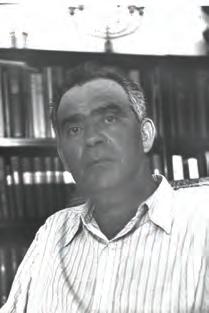
By Zoltan Kluger,
Protests over the planned government seizure of Arab land in the Galilee turn into deadly riots that are commemorated annually as Land Day, the first widespread Arab demonstrations in Israel.
March 31, 2002 — Sharon condemns Arafat after bombings
Prime Minister Ariel Sharon declares Palestinian Authority President Yasser Arafat the enemy of Israel and the free world after two suicide bombings in one day, including a Hamas attack that kills 16 in Haifa.

p A Hamas lunchtime bombing at Haifa’s Matza restaurant killed 16 Israelis on March 31, 2002.
April 1, 1997 — Knesset enhances environmental protection
The Knesset passes the Environmental Enforcement Law. Environment Minister Raphael Eitan says the goal is to “make the polluter pay” with fines of up to 600,000 shekels (more than $190,000) after years of lax oversight.
April 2, 2011 — Mosquito-killing biologist Margalith dies Yoel Margalith, a biologist whose discovery of a bacterium toxic to mosquitoes and black flies has saved millions of lives, dies at 78. He was a native of Yugoslavia who survived two Nazi concentration camps as a boy. PJC
March 29 • 8
March
April 1 • 8 a.m.-1
April 2 • CLOSED Friday, April 3 • CLOSED Sunday, April 5 • 8 a.m.-6 p.m.
April 6 • 8 a.m.-6 p.m.
March 7 • 8 a.m.-3 p.m. Wednesday, April 8 • CLOSED Thursday, April 9 • CLOSED Friday, April 10 • 8 a.m.-3 p.m.

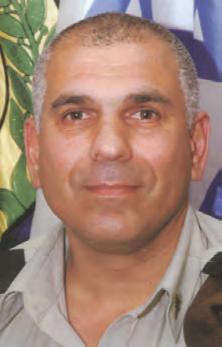
Brig. Gen. (Res.) Nitzan Nuriel is the former Director of the CounterTerrorism Bureau at Israel’s Prime Minister’s Office (2007–2012). He served in the IDF for over 30 years, primarily in the Golani Brigade, holding senior positions including Deputy Division Commander in both the West Bank and the Gaza Strip. He played key roles in Israel’s withdrawal from southern Lebanon and in operational planning along the northern border. From 2001 to 2004, he served as Military Attaché to the United States, acting as liaison between the IDF and U.S. defense agencies. For his service, he received the Legion of Merit from the U.S. President. Following his military career, he joined Israel’s National Security Council, where he led national crisis management and counter-terrorism strategy, including cyber security, border protection, and international cooperation. He holds degrees in political science and national security from Tel Aviv University and the University of Haifa.
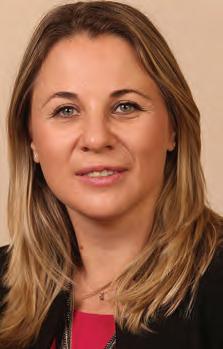
Ksenia Svetlova is an Israeli politician, journalist, associate professor at the Hebrew University of Jerusalem and policy fellow at the Israeli Institute for Regional Foreign Policies. She served as a member of the Knesset for the Zionist Union. Born in Moscow, Svetlova immigrated to Israel in 1991. In her capacity as a journalist, she has interviewed Yasser Arafat, Ahmed Yassin and Mahmoud Abbas. As a Knesset member, she headed three parliamentary caucuses: for the protection of the heritage and culture of Jews from Arab and Islamic countries, a caucus for freedom of speech and expression, and a caucus that supports strengthening the ties between Israel and the Kurdish nation.
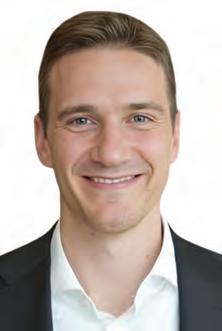
Klitsner is a fellow at the Jewish People Policy Institute (JPPI) who has deep connections to our community. He and his family lived in Squirrel Hill but returned to Israel after October 7 so he could rejoin his IDF unit. Klitsner, who has served as Diaspora Affairs Advisor to Prime Minister Naftali Bennett, and worked for AIPAC in Israel, is passionate about educating and building community around the state of Israel and its relationship with the United States.
From Gaza to Iran and Lebanon to Yemen, this session will provide a comprehensive analysis of Israel’s regional security landscape.
Participants will gain valuable insights into the strategic dilemmas that Israeli decision-makers encounter, as well as the prospects for regional normalization and renewed peace efforts, alongside the challenges they face in achieving these goals.
With varying assessments and analyses, Nuriel and Svetlova will illuminate this critical topic, offering a deep and nuanced understanding of Israel’s most pressing concern: security.

Passover:
Continued from page 1
Bardack hopes takeaways involve realiza tions regarding domestic affairs.
“We are living in a unique moment when our obligation to support and protect those who seek refuge and safety is being under mined by our government,” she said. “There’s fear and intimidation, violence, against our own citizens and our own residents. The hopeful story of liberation, of overthrowing tyranny and moving from slavery to liberation, is very resonant now — even if we’re not the ones being threatened and enslaved.”
Another holiday message, Bardack said, is derived from the Haggadah’s words “ dor vador omdim aleinu l’chaloteinu” (“In every generation they rise against us to destroy us”).

“I don’t think it’s helpful for us to get stuck in that narrative — to get stuck in everybody hates us and we are victims. I think it’s important for us to challenge ourselves to look at Jewish history more positively. Jewish history is also a story of incredible resilience. Jewish history is also about overcoming tremendous obstacles, and flourishing, and thriving in all sorts of settings despite antisemitism.”
Temple David’s incoming spiritual leader Cantor Kalix Jacobson has been thinking “a lot about antisemitism, for obvious reasons, with what’s been going on in the world, not just here in America, but also in the Netherlands.” Jacobson, who currently serves as Temple Emanuel’s cantor, said a recent experience
Seders:
Continued from page 1
“I am extremely excited about the seder,” said Executive Director Drew Barkley. “Anytime we can have the two communities together is always a great thing.”
Temple Emanuel of South Hills invites the South Hills community to join Rabbis Aaron and Emily Meyer, and Cantor Kalix Jacobson and their partner Mickey Benson, at the congregation’s second night seder on April 2 at 6 p.m. The celebration will include craft projects, snacks before the meal, and a fully transliterated Haggadah. For more information and to register, visit templeemanuelpgh. org/event/temples-2nd-night-passover-seder.
Rabbi Aaron Bisno will lead Temple Ohav Shalom’s seder on April 1. The North Hills congregation will begin the celebration at 6 p.m. For more information, contact Jackie Leicht at jleicht@templeohavshalom.org.
For those looking to celebrate in the eastern suburbs, Temple David will host a second day seder on April 2 led by Rabbi Robert Jacobs.
may prove one remedy to the hate-filled plight. While visiting a New York City-based pizza shop, and studying Talmud with a friend, Jacobson was approached by a non-Jewish young man who asked to sit beside them.
After 45 minutes, the stranger “kind of got emotional and was like, ‘Thank you for letting me join you.’ And then he left,” Jacobson said. The episode affirmed a conviction the cantor has long held: “The only way that we combat antisemitism is by opening our doors.”
While doing so may feel counterintuitive — and safety precautions are necessary — opening the door for others may be the best approach this season, Jacobson continued.
For more information, call the synagogue’s office at (412) 372-1200.
Reform/Conservative
Billing its theological approach as somewhere “along the Reform-Conservative spectrum,” the Beth Samuel Jewish Center in Ambridge will host a second night seder on April 2 at 5 p.m. The celebration will be led by spiritual leader Cantor Rena Shapiro. To register, visit the synagogue’s website at bethsamuel.org/seder.
Conservative
Rabbi Seth Adelson will lead Congregation Beth Shalom’s second night seder on April 2 beginning at 6 p.m., in what is being billed as “good food, good stories, good company, joyous singing, and meaningful ritual.” To register for the Squirrel Hill congregation’s seder, visit bethshalompgh.org/2026secondnightseder.
Chabad
Chabad Centers across the Pittsburgh region will celebrate Passover with community seders open to all.
Chabad of Squirrel Hill will host two seders. The first, on April 1, begins at 7:15 p.m. The second, on the following night, starts at 8 p.m.
“Right now, it’s tempting to turn inward. And I think that for that precise reason, we should be turning outward.”
Days from now, seder celebrants worldwide will open their homes for Elijah the Prophet.
“One of your friends might be Elijah, you just don’t know,” Jacobson said. “Open that door for them — not just for the symbolic figure of Elijah that comes to our Passover seders, but for the real people who would benefit from learning something about Jews in real life.”
Even with “rising antisemitic activity” and “heartbreaking attacks on synagogues,” it is essential to remember that “as Jews, we have survived for this long by leaning into our traditions, not hiding from them,” Congregation
Those interested in either, or both, of the seders can register at chabadpgh.com/templates/ articlecco_cdo/aid/5069383/jewish/Seder.htm.
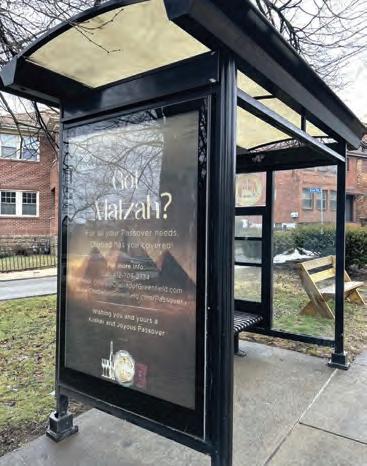
You may have seen the bus stop ads that Chabad of Greenfield recently put up around the city. Featuring the slogan “Got Matzah?”, the campaign aims to inspire Jewish pride, according to Rabbi Yitzi Goldwasser. He noted that while it’s wonderful if the ads bring people to his Chabad center’s seder, it’s equally meaningful if they simply encourage individuals to celebrate their Jewish identity in any setting.
“We hear people saw it and got excited,” he said. “Kids got excited on their way home from school. It creates something in the air.”
The message, he said, is that no matter what is happening in the world, “we’re going to be celebrating more than ever. People are invited and encouraged to join us.”
Those who would like to join the rabbi on April 1 for Chabad of Greenfield’s first night seder beginning at 7:45 p.m. can find out more at chabadofgreenfield.com/templates/section_ cdo/aid/5433233/jewish/Pesach.htm.
Chabad of the South Hills promises a meaningful and interactive seder in “a warm and inviting atmosphere with gourmet
eth Shalom’s Rabbi Seth Adelson said. “The reason that Am Yisrael Chai, that the Jewish people lives and thrives, is that we continue to tell our stories, to pray in sacred community, to observe the mitzvot and to understand that our framework gives our lives meaning and purpose.”
According to Adelson, recounting the journey from “freedom to slavery” is important; but the “greater message,” he continued, is “God took us out of Egypt so that we could receive that framework of Torah, inherit our land and maintain our holy covenant as a people. That is why we are still celebrating Pesach more than three millennia after the Exodus from Egypt.”
Passover, and the Haggadah itself, are tools for “knowing our own story,” Parkway Jewish Center’s spiritual leader Cantor Laura Berman said. “We retell the story every year, and every year we get something else out of it because life itself keeps changing.”
The Haggadah is a mechanism for telling a “foundational story,” but the narrative’s point is “self-determination,” she said. “Yes, it’s about God coming to our aid and splitting the sea, but it’s also with the assistance of humanity.” Moses’ leadership and the people’s movement are models, Berman said. “As we travel through to a new potential, we more and more need to get rid of old ways of thinking and understand that there is a new potential out there, and we have to help build it.” PJC
Adam Reinherz can be reached at areinherz@pittsburghjewishchronicle.org.
Passover cuisine and handmade Shmurah Matzah.” It takes place on April 1 at 7 p.m. To learn more, visit chabadsh.com/seder.
Rabbi Mendy Schapiro said he is “ecstatic” to be celebrating Passover at the Chabad Jewish Center of Monroeville’s new location at 2520 Mosside Blvd. The seder begins on April 1 at 7 p.m. More information can be found at jewishmonroeville.com/ templates/articlecco_cdo/aid/3619539/jewish/ Passover-Holiday-Calendar.htm.
Non-denominational
Bet Tikvah, Pittsburgh’s queer-centric, independent minyan will host a seder on the fourth night of Passover, April 4, at 6 p.m. at Rodef Shalom Congregation. Register at cheddarup.com/c/passover-seder-2026april-4th-5-8pm/items.
Deadlines to register for some of the seders have passed, while others may have reached capacity. Check with an organization to ensure space is available. PJC
David Rullo can be reached at drullo@ pittsburghjewishchronicle.org.

Guest Columnist
Casey Weiss
Last week I had the privilege, along with many members of our Pittsburgh Jewish community, to attend a wedding.
In Chabad tradition, the chuppah stood outdoors. In a very Pittsburgh moment, the mid-March sky began to flurry. Snow fell softly around us, settling into what felt like a scene out of “Fiddler on the Roof.” Men stood on one side, women on the other. The groom waited. The bride emerged on the arm of her mother, both wrapped in furs, composed and radiant. Around them, prayers continued.
Two things stayed with me. The first was the cross-section of our community gathered in one place. Secular Israelis stood
beside Lubavitch rabbis. A track coach spoke with educators from our day schools. People unaffiliated stood alongside those who fill our synagogues every week. Children moved easily between groups. It felt like a
The rabbi then shared that the bride’s mother has a favorite niggun, “Ani Ma’amin.” He reminded us that Jews sang this melody in cattle cars on the way to Auschwitz. There, in a parking lot near the airport, as openly
It is one thing to learn Jewish history. It is another to feel it in real time.
living portrait of Jewish Pittsburgh, layered and connected, held together by something deeper than sameness.
The second moment came beneath the chuppah. We all know about the breaking of the glass. We’ve heard that even in our greatest joy, we hold memories of sorrow. This time, we paused before it. A full moment of silence. Together, we prayed for Am Yisrael. For the chayalim. For those fighting not only for Israel, but for something larger in a world that feels increasingly unstable.
proud Jews, we sang: “Ani ma’amin b’emunah shleimah b’viat hamashiach. I believe with complete faith in the coming of the Messiah.”
Standing there, with snow falling around us, the moment carried weight. It is one thing to learn Jewish history. It is another to feel it in real time. The moment held both fragility and strength. It acknowledged what is broken without surrendering to it.
Moments later, the glass shattered and we shouted “mazel tov.” Shattered glass and simcha, side by side. Not a contradiction,
but a truth that has shaped Jewish life across generations.
We are in a time of shattered glass. War in Israel. Rising antisemitism. Violence that feels closer than it should. The memory of the Pittsburgh synagogue shooting is not distant. It remains present in the way we come together and in the care we show one another.
Yet life continues to unfold in the most human ways. We gather. We sing. We marry. We bring children into the world and teach them who they are.
Soon, we will sit at our Pesach tables and tell a story that insists, in every generation, that survival alone is not the goal. We are here to live with purpose, to carry memory forward and to hold onto hope. That night, under a snowy sky, offered a quiet reminder of something enduring.
This is who we are. We remember. We rebuild. We continue to rejoice. PJC
Casey Weiss is head of school at Community Day School.
Guest Columnist
Cantor Kalix Jacobson

Of all the places I expected to meet Elijah the Prophet, the corner of 92nd Street and Broadway on Manhattan’s Upper West Side would not have been my first guess.
I was in New York for the Hadar Rabbinic Yeshiva Intensive, a gathering of clergy from across the Jewish denominational spectrum to spend several days studying Torah and Talmud purely for the sake of learning. Hadar comes from a traditional egalitarian perspective — and in that spirit they were egalitarian about titles as well. Though I am a cantor rather than a rabbi, I was welcomed as a full participant.
On the first morning I was paired in chevruta, the traditional study partnership, with Rabbi Ilan Emanuel of Syracuse. The
study hall was full and noisy, and the weather outside was unseasonably beautiful — 60 degrees and sunny in early spring. So we did what many students have done before us: We
of G-d’s name. The first day focused mostly on the negative: what it means when someone’s behavior brings dishonor to G-d. We debated, analyzed and wrestled with the
Sometimes the sanctification of God’s name does not come through grand gestures. Sometimes it happens when we simply study and share our tradition openly, act with integrity and invite someone else to pull up a chair
took our learning out of the building and down the street. We settled at a small pizza shop a block away, opening our binders over some sodas.
Our assignment that day was to study a set of passages about chilul Hashem and kiddush Hashem, the desecration and sanctification
texts for about an hour and a half before returning to the classroom.
The next morning we picked up where we had left off. Another beautiful day — close to 70 degrees — so once again we returned to the pizza shop with our binders. This time our focus was on the opposite idea: kiddush
Hashem, sanctifying God’s name through the way we act in the world.
About 20 minutes into our study, just as we began reading a passage from the Jerusalem Talmud, we heard a hesitant voice beside us.
“Excuse me,” a young man said. “I’m so sorry to bother you. But I was wondering what you were studying … and whether I might be able to join you?”
He looked to be about 24 or 25. His bag was in a chair and his pizza was half-eaten on the table next to us.
As someone who believes the wisdom of Talmud belongs to everyone, I immediately said yes. Rabbi Ilan, a bit more cautious, asked a few questions. Had he grown up religious? No. Was he religious now? Not really. Satisfied, we pulled up a chair. His name was Tyler.
The text in front of us could not have been more fitting for the moment; dare I say it felt divinely inspired. The passage tells several stories about Jews interacting ethically with
Guest Columnist
Dena Udren
What’s it like living in Israel under Iranian missile fire?
It’s exhausting.
Lately, when I’m jolted awake in the middle of the night by the jarring alert from my “Home Front Command” app, I know a siren may follow within minutes. If it does, the blaring wail soon fills the air outside, echoing the same discordant sound from
my phone. As I jump out of bed, my first instinct is to make sure everyone in my family gets to the safe room as quickly as possible. We gather on the two beds in our safe room with pillows and blankets, and try to cuddle amid the loud booms of rockets being intercepted and blown up.
Those who don’t have a safe room inside their house must head to the closest bomb shelter in their building or neighborhood. My son’s best friend doesn’t have a safe room in his house, so each time the siren sounds, he and his family must run to the local bomb shelter, a Sephardic synagogue. The benches are arranged there so families can sleep if they are too tired to go back and forth between sirens.
Can you imagine multi-generational sleepy strangers huddling together, in a concrete walled room, scrolling on their phones, schmoozing with neighbors, dealing with over-tired kids, and trying to keep their sanity? It’s the togetherness with family and neighbors that allows us to get through this experience.
The sirens not only sound at night; they can occur any time of day as well. Recently my husband and I were grocery shopping when a siren blared. We left our cart unattended and walked 10 seconds to the nearby preschool bomb shelter. We watched the grocery store manager recite verses of Psalms before he updated us on the missiles all over the country. In that tiny room, I noticed the
familiar drill of strangers — random shoppers and grocery store staff — enduring the disruption together.
Can we come out yet? People inside wanted to know. About 10 minutes later we got the all-clear from the app and walked back to our shopping cart as if nothing unusual had happened.
That’s what we do here: We go on living. We must be resilient to maintain our sanity. It’s as if God is forcing us together to support each other through the fear, uncertainty and anxiety.
We understand the current Iranian war is not just about backing our government’s
Last week, the Chronicle asked its readers in an online poll the following question:
“Are you concerned that the Republican Party’s center is turning away from supporting Israel?” Of the 262 people who responded, 57% said yes and 43% said no. Comments were submitted by 83 people. A few follow.
I’m concerned that everyone is turning away from Israel.
There are many things about the Republican party that concern me, but its position on Israel does not feature in the top 10 list of problems that the GOP has created. This is in large part because its primary job, as the party in power, is to take care of the American people and they are failing miserably at that task. Additionally, the entire issue is flattened when Jewish people believe that “support for Israel” is altruistic or because there is care and concern for Jews when, in fact, the Christian Right’s agenda has a little regard for us, or worse.
If Tucker Carlson is a microcosm of this problem, then Jews no longer have a “home” in either party as both mainstream parties appear to prefer to placate their fringe elements.
Jacobson:
Continued from page 18
non-Jews. In one story, a rabbi buys a donkey and later discovers a pearl tied around its neck. The debate begins: Does the pearl belong to the buyer, or must it be returned?
The man who wishes to return the pearl gives a striking reason for doing so: In his act of kindness, he wants to hear, “Praised be the G-d of the Jews.”
Another story tells of money discovered hidden in a pile of wheat and returned to its owner. The owner of the money gives the same reaction the previous rabbi desired: “Praised be the G-d of the Jews.”
For 45 minutes the three of us studied together. Tyler asked thoughtful questions. He pushed back on interpretations. He
Udren:
Continued from page 18
military campaign. It’s also about recognizing that we are like a country of exhausted parents of a newborn baby, knowing that a full night’s sleep probably won’t happen for months, but we nonetheless manage to adapt and (mostly) function.
Sirens now sound every two to four hours, like a wailing baby pulling us from sleep. But unlike a real baby, this cry sends us running to shelters, where we hear missiles intercepted overhead. In a way, it feels like these alarms mark a rebirth — our nation rising again after generations of hardship, from
Are you concerned that the Republican Party’s center is turning away from supporting Israel?
The longer the operation takes in Iran, the more concerning the impact on the U.S. economy will likely affect the GOP.
I’m concerned that Democrats and Republicans are turning away from supporting Israel. I blame Netanyahu. And frankly I’m concerned that Netanyahu is turning the world against Israel — and
engaged the text with curiosity and seriousness. He might not have been a Talmud scholar, but he certainly acted like a chacham with us. Eventually he had to leave, thanking us for letting him join.
A few minutes later, after I had briefly stepped away, he came back to Rabbi Ilan alone. He told him how beautiful he found the ideas we had been studying and how moved he was that two strangers had shared their time with him.
When Rabbi Ilan told me this when I returned, something clicked. Without realizing it, we had stepped directly into the story we had just read. By studying openly and inviting a stranger into the conversation, we had participated in our own small act of kiddush Hashem. His words were just a breath away from the ones recorded in the
the Exodus to pogroms, the Holocaust, and decades of war and terror.
But what started as a run for cover with each falling rocket has turned into family bonding. We band together like the nuclear family that gathers at every seder to tell our national birth story in dramatic detail.
When we tell the story of Passover, we tell of the sheep’s blood on the doorpost of the Israelite homes so that God would know there were Jews there, and He would “pass over” those houses and not afflict them with the plague of the firstborn. But why couldn’t God already know which houses were Jewish? God is omniscient! The answer is that the Israelites did not paint their
increasing antisemitism everywhere. I have no good solutions and I am worried.
I think Trump and Netanyahu are very close friends; as long as that relationship continues Trump will continue to support Israel and will also continue to send U.S. funds. No worry.
Beware the wolf in sheep’s clothing. The GOP has mainstreamed Christian Nationalism, which is predicated on Armageddon II.
As long as this current Israeli government is in place I’m glad that both American parties are reevaluating our military/political relationship.
There’s no doubt they are doing a complete 180-degree turn from Israel now.
I think with gross antisemitism in our world, it all comes down to politics and what game is the most promising for the politician.
I’m confident the Republican Party will do the right thing, unlike the Democratic Party, which would gladly abandon Israel.
Talmud: Praised be the G-d of the Jews. Only later, walking back to the classroom, did I realize how deeply the moment affected me.
We are living through a time when antisemitism again feels frighteningly present. In moments like these, the instinct can be to retreat — to close doors, to hide Jewish symbols, to keep our traditions private and protected.
But the story we lived that morning suggested another path.
Soon, Jews around the world will open their doors at the Passover seder to welcome Elijah the Prophet, the mysterious herald of redemption. Tradition teaches that Elijah appears unexpectedly, in ordinary places, reminding us that a better world is still possible.
doorposts with blood to inform God, but to remind themselves of who they were. In fact, according to the Biblical commentator Rashi, the Israelites painted the inside of their doorposts with blood, not the outside, since it was actually for them alone.
In ancient Egypt, we marked our doorframes with blood to remind us of our Jewish identity. Now, we close the thick door of a bomb shelter, sealing ourselves inside a protective “womb.” As missiles fall, we wait, hoping to be passed over once again.
Unfortunately, we are not always secure; sometimes people don’t make it to the bomb shelter. There have been serious casualties in this war. But by and large, the Iron Dome
There are many polls indicating a negative shift from both Democrats and Republicans.
There is a small segment of the Republican Party that is very disappointing, but overall they have been the best supporters of Israel and fighting antisemitism. The Democratic Party has been a disgrace, and as a Jew, I had to leave the party. I never thought I would.
I’m deeply concerned. They were our staunchest allies — if for the wrong reasons.
I am a registered Democrat that votes primarily Republican. Why? Because I think both parties are turning away from Israel! We need to vote the best candidate, not on party lines. PJC
— Compiled by Toby Tabachnick
Chronicle weekly poll question: Does the seder you attend blend in presentday themes and concerns, or does it adhere closely to the traditional Haggadah? Go to pittsburghjewishchronicle.org to respond. PJC
Perhaps Tyler really was just a young New Yorker curious about what two clergy were studying.
But in that moment, he also felt like Elijah. Rabbi Emanuel and I had opened the door — literally — to our learning. And for a brief moment on a busy Manhattan sidewalk, someone stepped in.
Sometimes the sanctification of G-d’s name does not come through grand gestures. Sometimes it happens when we simply study and share our tradition openly, act with integrity and invite someone else to pull up a chair.
You never know who might walk by. It might even be Elijah. PJC
Cantor Kalix Jacobson is the cantor at Temple Emanuel of South Hills.
defense shield has intercepted about 90% of the rockets launched by Iran.
Just as parents of newborns know they eventually will regain their sleep, so too Israelis know that eventually they will reclaim their slumber. But in the meantime, they will gather together in the womb-like bomb shelter to wait out the end of the Plague of Missiles with a yawn and an eventual sigh of relief of Biblical proportion.
And we will finally be able to say: Mazel tov! It’s an ancient nation reborn! PJC
Dena (Stein) Udren lives in Beit El, Israel. She grew up in Point Breeze.
We invite you to submit letters for publication. Letters must include name, address and daytime phone number; addresses and phone numbers will not be published. Letters may not exceed 500 words and may be edited for length and clarity; they cannot be returned. Send letters to:letters@pittsburghjewishchronicle.org or Pittsburgh Jewish Chronicle, 5915 Beacon St., 5th Floor, Pittsburgh, PA 15217
We regret that owing to the volume of correspondence, we cannot reply to every letter.
a few seconds before combining with the other ingredients.
By Adeena Sussman | The Nosher
Lasagna for Passover? You bet. After days of preparing two (probably meatbased) seders, this dairy dish will be a welcome change — especially on a holiday where pasta is strictly forbidden.
Matzah makes a suitable replacement for lasagna noodles, and the moisture released by the marinara sauce and the cheese softens the stiff, unleavened boards, resulting in a tender lasagna with layers just as delicious as one made with conventional, wheat-based noodles.
I decided to keep this recipe simple, using frozen spinach and store-bought marinara sauce. If the inspiration strikes you, by all means make your own sauce. One cup of sautéed mushrooms would also be a welcome addition, but the goal here was to liberate cooks from hours in the kitchen.
Since ricotta cheese is difficult to find with kosher-for-Passover certification, cottage cheese is substituted. If you want a more ricotta-like consistency, whir the cottage cheese in the blender or food processor for
Note: This recipe constitutes gebrochts, the Yiddish word for “broken” which refers to matzah products that have come into contact with liquid. Some Ashkenazi Jews do not eat gebrochts on Passover, believing that liquid causes the matzah to rise, rendering it unfit for Passover consumption.
Ingredients: Serves 4-6
8–9 whole boards matzah (regular or whole wheat)
2 jars (about 6 ½-7 cups) marinara sauce
¼ teaspoon black pepper
¾ teaspoon salt
¼ cup chopped parsley
½ cup shredded parmesan cheese
3 cups (¾ pound) shredded mozzarella cheese
3 cups (1 ½ pounds) small-curd cottage cheese
1-pound package frozen spinach, completely defrosted
Instructions:
Preheat oven to 400 F.
Combine cottage cheese, 1½ cups



mozzarella, parsley, salt and pepper in a bowl and stir to incorporate. Reserve.
Using your hands, squeeze excess moisture from spinach and separate spinach until it is no longer clumped (you should end up with about 3½-4 cups spinach). Reserve.
Spoon ¾ cup marinara sauce into the bottom of a disposable, high-sided lasagna pan. Fit matzah to cover as much of the bottom of the pan as possible, breaking into pieces where necessary. Pour 1½ cups sauce on top of matzah and distribute evenly.
Spoon about 1 cup of the cheese mixture onto the matzah and distribute evenly. Sprinkle about 1¼ cups of the spinach on top of the cheese, then sprinkle 2 tablespoons parmesan cheese. Repeat matzah-saucecheese-spinach-parmesan process two
more times, then cover with a fourth layer of matzah.
Pour remaining 1½ cups sauce on top of matzah.
Let lasagna rest for 15 minutes before baking to allow matzah to moisten slightly. Cover lasagna with foil and bake for 35 minutes.
Remove foil and sprinkle remaining 1½ cups mozzarella on top of lasagna.
Reduce oven temperature to 350 F and bake lasagna an additional 30 minutes, until cheese is bubbly and browned around the edges.
Remove from oven, let rest for 5 minutes and serve hot. PJC
This story originally appeared on The Nosher.




By Emma Riva | Special to the Chronicle
The seder presents something of a challenge for wine pairings because you’re tasting so many wildly disparate things. Hard-boiled egg? Matzah? Charoset? Each of those on its own has a perfect pairing, but most of us don’t want to buy four bottles of wine to pair with specific foods you’ll only be eating for a few minutes.
One constant throughout all eight days of Passover, though, is matzah, which is another wine pairing challenge because it tastes like, well, nothing.
OK, that isn’t exactly true. But you don’t want to be drinking the cabernet sauvignon you’re opening to sip with your brisket and then drinking it with matzah, unless you want the result to be cabernet-soaked matzah crumbs in your mouth. The wine you drink during the seder itself is typically red — the symbolism of blood doesn’t work quite as well if you’re looking at a Chablis — but that doesn’t mean every glass you drink during dinner has to be.
Also, as a note, there is a specific kosher for Passover certification for wine. All the wines recommended here are designated kosher for Passover.
Photo by Nataliia Mysak courtesy of iStock
To make matzah go down easier, the best pick would be an acidic white wine that will cut through the dryness of the matzah. You do want something with some unique flavor notes beyond the acidity, so a good choice might be a Goose Bay sauvignon blanc ($21.99, Mevushal). This is a structured, youthful wine that will soften the mouthfeel of the brittle, crunchy matzah. The Gendraud Patrice Chablis
2022 ($34.99, Mevushal) is another good choice for a matzah pairing. Chablis is one of the best acidic white wines, in my opinion, and will bring out some of the flavors that matzah does have.
For the red wine to pour during the seder, I tend to go for wine with a deep color and an intense flavor. The wine is meant to symbolize suffering and sacrifice, so there’s an opportunity to do a little personification exercise. There are technical and scientific elements to wine that you can learn in a sommelier or WSET course and geek out over indefinitely, but at the end of the day, wine wasn’t included in the seder because the ancient Israelites were interested in fermentation science. Wine has spiritual power. So you can ask yourself: What you are bringing, spiritually and emotionally, to the seder this year? Has it been a year of abundance and plenty since the last one, or one of austerity? How can the wine reflect the emotions the guests are bringing to the experience?

There are also several very high quality French reds that are designated kosher for Passover. For a splurge, there is a kosher for Passover Gevrey-Chambertin, one of the most complex expressions of pinot noir in the world, from the renowned Burgundy village. This wine is powerful and multi-layered. The bottle is Rene Lacariere Gevrey-Chambertin Le Fourneau 2019 ($149.99, not Mevushal). If you’re celebrating something at your seder in addition to Passover — maybe somebody graduated college or somebody got married — this might be a good one to break out for your four glasses. By the end of the seder, four or more glasses of wine usually leave people a little sauced. But maybe at the end you want to break out something sparkling for a toast after singing “Eliyahu,” and for a kosher for Passover champagne the Barons de Rothschild Brut Champagne Non-Vintage is a good option ($102.99, Mevushal). The Drappier Brut Champagne Cart D’Or ($59.99, Mevushal) is another potential choice. But after four glasses and the whole Passover story, nobody would blame you if you just fell asleep on the couch. PJC
Emma Riva is a freelance writer living in Pittsburgh.
My pick would be a red from Georgia like the Shimon & Co Mukuzani 2021 ($24.99, not Mevushal). Georgia is one of the oldest winemaking cultures in the world, going back 8,000 years, and has a rich Jewish history. Saperavi, one of its indigenous grapes, is earthy and intense. Drinking Georgian wine always reminds me that wine is a part of history, and when you drink wine, you drink the fruits of a land that carries memory in its soil.

By Miriam Szokovski | Chabad.org
Passover brownies can be difficult to cut — often they’re an “eat by the spoon” consistency. Those can be delicious too, but if you’re looking for something you can cut and plate, this recipe will give you that.
Ingredients:
1 ½ cups sugar
¾ cup oil
3 eggs
¾ cup potato starch
⅔ cup cocoa powder
⅛ teaspoon salt
Optional: Handful of chocolate chips
Directions:
Note: You can make this recipe with a spoon and a bowl. No mixer needed.

Mix the oil and sugar together.
Add eggs one at a time, mixing after each until well incorporated.
Sift in potato starch, cocoa powder, and salt. Mix until combined.
Optional: Add in some chocolate chips (or nuts, or both).
Pour into a 9-inch-by-9-inch baking pan lined with parchment paper.
Bake at 340 F for approximately 40 minutes

varies depending on what kind of baking dish you use (disposable foil pans take notably longer).
Wait for the brownies to cool completely before cutting into squares. Store in an airtight container or zip-top bag. Freezes well. PJC
Miriam Szokovski is a writer, editor, and member of the Chabad.org editorial team. She also shares her cooking and baking on Chabad.org/food.
Join Us!
PGHJGS membership is only $18/year and includes free access to regular programming, help sessions, past program recordings, and more.
Learn more and sign up at pghjgs.org/membership
SUN, April 19, 2026
“Lessons in Jewish DNA - A Journey Worth Taking” with Israel Pickholtz
1-2:30pm/Virtual on Zoom/$5
SUN, MAy 17, 2026
SUN, JUNe 14, 2026
“A Family’s Journey: Pittsburgh to Bisbee Arizona” with Janette Silverman
1-2:30pm/Virtual on Zoom/$5
“Professional Genealogy for Non-Professionals” with Suzanne Hoffman
1-2:30pm/Virtual on Zoom/$5
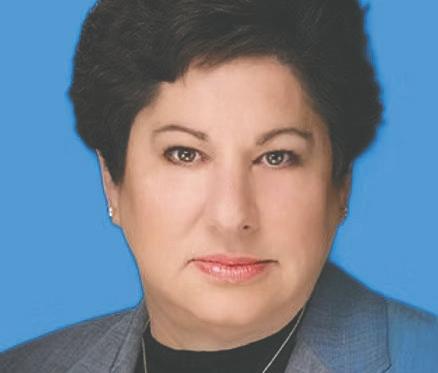
Learn more about these and other programs at pghjgs.org/programming.

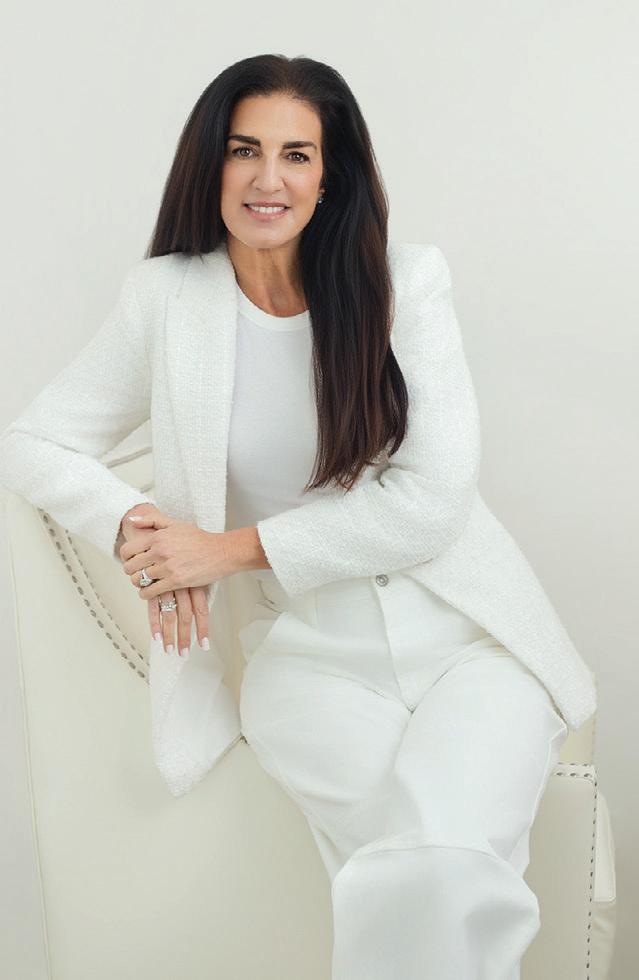
Honoring Tradition. Planning for Generations.
Wishing you and your family a meaningful Passover. Chag Sameach.
Jodi M. Amos, MBA, AIF®, CDFA® Managing Partner 4Rivers Wealth Management



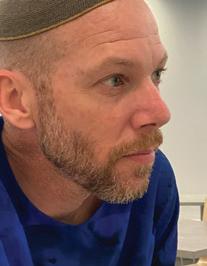
“Global oil prices are soaring after yet another overnight bombing …” *Scroll.*
“Denmark has deployed troops to Greenland, in fear of a US invasion …” *Scroll.*
“ICE raid on Las Palmas in Brooklinethree are sent to a detention facility.” *Click.*
“Measles is back in the news.” *Scroll.*
“The SAVE Act would require …” *Click.*
“A bill in Knesset would make praying at the Western Wall punishable with 7 years in prison.” *Scroll.*
“The Pentagon has requested an additional $200 billion for the war in Iran.” *Click.* *Click.* *Click.* *Snap.*
“The fire on the altar shall forever be kindled; it shall not be extinguished.”
(Leviticus 6:6)

“Polling shows that antisemitism in the US is at an all-time high.” *Scroll.*



“Settlers in the West Bank today …” *Tap.*
“The senator replied that the pre-emptive strike on Iran was necessary because there was an imminent threat …” *Click.*
“An inquiry into the DOJ’s release of the Epstein Files shows that …” *Scroll.*
“A Polymarket trader made $553,000 betting on the exact date of Ali Khameni’s death.” *Click.*
“Another strike on a Venezuelan boat in the Gulf of Mexico killed six men …” *Click.*
“Tucker Carlson said …” “Josh Fetterman was quoted …” “Chairman Jerome Powell explained …” “Summer Lee released a statement …” *Click.*
“The explosion in Central Beirut targeted …” *Scoll.*
“Police are investigating after a man was rushed to the hospital after having been shot in the abdomen in Homewood South on Wednesday.” *Click*.
“Rabbi Phineas in the name of Rabbi Simeon ben Laqish said: ‘The Torah which the Holy One, Praised Be, gave to Moses, was white fire engraved in black fire. It was fire mixed with fire; hewn from fire, given from fire.’” (Jerusalem Talmud Shekalim 6:1)
“There is a fire on which the offering is aflame, and it is in the heart of a person on account of the great inward awakenings of their soul.” (Sfat Emet, Tzav)
“There is a fire that consumes and it burns and devours, and upon it is a white fire.” (Zohar v.1 50b-51a)
“Oh, there is a light and it never goes out There is a light and it never goes out There is a light and it never goes out There is a light and it never goes out”
(The Smiths) PJC
Rabbi Mark Asher Goodman is rabbi of Brith Sholom in Erie, Pennsylvania, and associate rabbi of Congregation Beth Shalom in Pittsburgh. This column is a service of the Greater Pittsburgh Jewish Clergy Association.








ACKERMAN: Justin D. Ackerman, on Friday, March 20, 2026. Adoring husband of Alli Ackerman. Loving father of Jonah and Nathaniel Ackerman, and Dylan and Sarah Mayer. Son of the late Mark and Kathy Ackerman. Nephew of Richard (Elaine) Ackerman and the late Jeffrey (surviving spouse Lyn) Ackerman. Also survived by his English bulldog, Rubble. Justin grew up in McKeesport. He is a graduate of McKeesport High School. He attended Penn State University and graduated in 1998. He received his JD from the University of Pittsburgh and his MBA from Carnegie Mellon University. Services were held at Ralph Schugar Chapel, Inc. Interment Tree of Life Sfard Cemetery, N. Versailles Borough. Contributions may be made to UPMC Hillman Cancer Center, 5115 Centre Avenue, Pittsburgh, PA 15232. schugar.com
GOLDSTEIN: Morris (Morry) Goldstein passed away on March 8, 2026, peacefully at home in the arms of his beloved wife, Candis, and under the four paws of his best friend, Paco. From the time he was born on Feb. 2, 1945, in Pittsburgh, Morry pursued and achieved a life of peace, joy, adventure, compassion, prosperity, empathy and genuine humanity. Where others found impassable brick walls and obstacles, Morry always discovered and opened gateways and traveled pathways for himself and for those around him that led to opportunity, connection and love. Morry graduated from Peabody High School, received a Bachelor of Science from Carnegie Institute of Technology, and earned a Master of Business Administration from The Wharton School of Business before embarking on a career as an esteemed and coveted executive. His contributions to the world took him on a journey from Pittsburgh to New Jersey to Kentucky to New York to California and finally to Nevada. He is preceded in death by his parents, Clara and Irving Goldstein; by his brother, Howard Goldstein; and by his newborn son, Jason Eric. Though Morry has departed the constraints of his illnesses and broken body, his generous and soaring spirit will continue to flourish in the universe, and his vision and grace will continue to touch and guide those he left behind. Morry is survived by his wife, Candis, who will remember him every day as her “greatest love”; by his children, Jonathan Goldstein and Julie (Brett) Parker; his grandson Christopher Parker, and grandson and namesake, Devon Morris Parker; by his beloved extended family and countless friends and associates around


the world; and, of course, Paco. In lieu of flowers please make a donation to your favorite charity in Morry’s name. Service for Morry will be private. dignitymemorial.com/obituaries/ las-vegas-nv/morris-goldstein-12775958
GREENBERG: Abraham (Abe) Greenberg passed away on March 21, 2026, at the age of 92. He grew up in Brooklyn, New York, with his late parents, Harry and Dora (Levitt) Greenberg, and late brother Leonard. Beloved husband of Geraldine (Moschinsky) Greenberg for 60 years, residing in the North Hills of Pittsburgh since 1971. Loving father of Neil (Mary Kay), David (Tracy), and Andrea (Lee) Zimmerman; devoted Grandpa to Nathan (Brooke), Kayle, Sarah, Zoey, Samuel and Julia. Abe received an associate’s degree from New York City Community College in industrial sales and then went to Buffalo State Teacher’s College before enlisting in the U.S. Air Force with the 6th Weather Squadron in Oklahoma for four years. This led him to a career as a specialist with the Public Health Service and the National Weather Service for 30 years . After retirement he was a committed volunteer escort at North Hills Passavant Hospital for 30 years. He enjoyed gardening, reading, watching baseball and listening to ’40s big band and klezmer music. He felt very grateful to have lived a long life where he was able to celebrate the life achievements of his children and grandchildren. A special thank you to Abe’s devoted caregivers from DCI dialysis clinic. Services were held at Temple Ohav Shalom in Allison Park, Pennsylvania. Interment at the National Cemetery of the Alleghenies in Bridgeville, Pennsylvania. Memorial contributions may be made to Temple Ohav Shalom or to the National Kidney Foundation. Arrangements Entrusted to Ralph Schugar Chapel, Inc. schugar.com
HEIT: Daniel S. Heit, visionary founder and president of JusticeWorks YouthCare and a nationally respected leader in behavioral health and youth services, passed away peacefully on Friday, March 20, 2026, with loved ones by his side after an extremely hard fought and courageous battle with pancreatic cancer at the age of 78. Born on Sept. 28, 1947, in Ellenville, New York, to Rose (Green) and Morris Heit, Dan lived a life defined by purpose, leadership, and an unwavering commitment to helping vulnerable youth and families. He was predeceased by his parents, his former spouse Sandy Loevner, and his brother Steve Heit. Dan’s incredibly distinguished career spanned decades and was marked by
Please see Obituaries, page 26












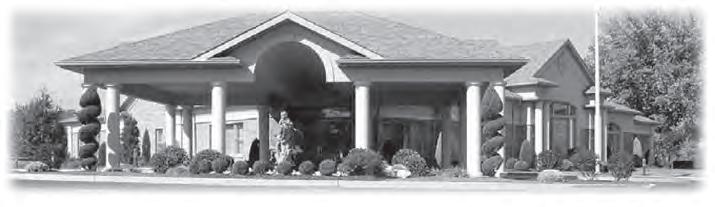

Obituaries:
Continued from page 25
both executive leadership and public service at the highest levels. Early in his professional life, he served as a senior executive at Abraxas, where he earned recognition for his work in developing effective programs for at-risk youth. Building on that experience, he founded JusticeWorks YouthCare in Pittsburgh in 1999 — an organization that would grow to become a nationally recognized model for innovative, community-based behavioral health services. A leading voice in his field, Dan was widely acknowledged for his expertise in designing and managing programs for troubled youth. His work was grounded in a deeply held philosophy of doing “whatever it takes” to make a meaningful and lasting difference in the lives of young people, their families, and their communities. His leadership extended well beyond his own organization. He was appointed by President George H.W. Bush to serve on a 24-member Presidential Commission focused on model legislation. As president of a national trade organization, he met with President Bill Clinton and contributed to subcommittees on health care reform. He was also a founding member of The National Alliance for Model State Drug Laws and served two terms as president of the Therapeutic Communities of America, helping to shape policy and best practices nationwide. Colleagues remember Dan as a man of conviction and vision — someone who combined strategic insight with compassion and an unyielding sense of responsibility. He was deeply engaged in his community and generously gave his time and expertise to numerous organizations, always with the goal of strengthening systems of care and expanding opportunity for those most in need. Above all, Dan was devoted to his family, who were the absolute joy of his life. He is survived by his tremendously loving and devoted daughter, Morgan Wilks (Thomas); his son, Alex Heit (Harris Blum); his sister, Susan Heit (George Dionne); and his cherished grandchildren, Saylor, Lola and Devin. He took immense pride in their lives and accomplishments and remained closely connected to them throughout their lives. Daniel S. Heit’s legacy is one of impact, integrity, and enduring compassion. Through the organizations he built, the policies he helped shape, and the countless lives he influenced, his honest and hard work will continue to carry on a lasting legacy for generations to come. Services were held at Ralph Schugar Chapel, Inc. Entombment was private at Homewood Cemetery. A private memorial service will be held at a later date. In lieu of flowers, the family encourages contributions to causes supporting youth and families, reflecting Mr. Heit’s lifelong mission. schugar.com



HERRING: B. (Chuck) Charles Herring, Jan. 5, 2026 — rabbi, educator, community builder. Born Jan. 26, 1939, in McKeesport, Pennsylvania, to Lucille and Dr. A. Alan Herring, Chuck Herring grew up in Squirrel Hill and attended Wightman Elementary and Taylor Allderdice High School. He earned his degree at the University of Pittsburgh (finishing one credit short) and was a member of Pi Lambda Phi Fraternity. He studied at Hebrew Union College (HUC) –Jewish Institute of Religion (Cincinnati). Ordained May 28, 1965, at Plum Street Synagogue in Cincinnati. Chuck met his lifelong love, Barbara Levin, of McKeesport in Temple Youth Group (MAFTY) during high school; they married on Aug. 27, 1961. After HUC, he served as a chaplain in the U.S. Air Force (stationed at Tachikawa, Japan), then began his rabbinic career in 1968 at Temple Beth Israel (Phoenix, Arizona), where he built a vibrant youth program, created a contemporary Friday night service, and fostered a welcoming community. He later became the founding rabbi of Temple Kol Ami (Scottsdale, Arizona), creating a warm and welcoming congregation. A tireless advocate for tikkun olam, Chuck championed Soviet Jewry, supported migrant farmworkers, and helped establish Mitzvah Corps/Camp Swift. After 9/11, he partnered with the Muslim community to promote conversation and the sharing of cultures. His “Divine Messages” were his hallmark. He officiated the bnai mitzvah of hundreds and remained active in SWFTY & NFTY, inspiring countless youth and families over the years. He received the Samuel Cook Award for Lifetime Service in Youth in 2003. Chuck loved cooking, gardening, travel, history, enjoying and creating art, reading and telling stories to anyone who would listen. Chuck’s greatest joy was his family: wife, Barbara; daughters Laura (Paul) Greenland, Wendy Herring (Scott Ambrose), and Debbie Rovin (Scott); and the best Bubba to Alison (Alex), Jorey (Alex), Ross, Zack, Max and Gabrielle.
NYDES: Lynn “Larry” Frank Nydes, born in 1946, passed peacefully at UPMC on Saturday, March 16, 2026. Larry was well known in the East End and East Liberty. He worked at Rosen’s grocery store along with the store’s kosher butcher. The store was located on Mellon Street.
Obituaries:
Continued from page 26
Larry also worked at Ralph’s Texaco gas station. He became a bar mitzvah at the Margaretta Street Shul known as Adath Jeshurun Congregation. Larry was always friendly and would help many of his friends through all of their issues without thinking of himself. The family would like to thank UPMC, the doctors and nurses for the care that Larry received when he was dealing with his respiratory issues and the help he received from friends and several Jewish organizations through his life stages. Graveside services and interment were held at Shaare Torah Cemetery. Arrangements entrusted to Ralph Schugar Chapel, Inc. schugar.com
SMITH: Edward Smith, a beloved husband and loving father and grandfather, died at his home in Mt. Lebanon, Pennsylvania, on Tuesday after a battle with cancer. He was 78. He loved the simple joys in life — a good breakfast, great weather and catching a compelling ballgame. His later years featured some of his greatest memories, including seeing his kids graduate from college, dancing with his daughter at her wedding and taking in Pirates games at Fenway Park, Yankee Stadium and PNC Park. Born in post-war Pittsburgh, Edward grew up in Squirrel Hill and was a proud member of the Taylor Allderdice High School class of 1965. He later graduated from the University of Pittsburgh’s Graduate School of Public Health, earning a Doctor of Science in Hygiene in 1973. Edward would spend more than three decades working to improve the environment throughout the Ohio River Valley with the U.S. Army Corps of Engineers. He worked on many projects aimed at restoring ecosystems and waterways in the region that were badly damaged by the effects of heavy industry, like acid mine drainage. He took great pride in these efforts and saw immense value in helping people and wildlife through his work. In 2004, he was awarded the Department of the Army’s Commander’s Award for Civilian Service. Col. Raymond Scrocco wrote that Edward earned the award “for his exceptional performance,” adding that his “career of excellence” had “enhanced the reputation of the Corps of Engineers.” In 1991, Edward met his dear wife, Charlotte Smith, née Dickstein, after walking into an open house she hosted in Squirrel Hill. Then a real estate agent, Charlotte told The Pittsburgh Press in March 1992 that she knew she met her man as soon as she saw him. “It was a dismal, dreary day,” Charlotte told The Press. “And no one had come in. About 3 p.m., a man stopped in. I took one look at him and said, ‘That’s the man for me.’” (Edward confirmed the marital plans to The Press but requested anonymity at the time because he had yet to share the news with friends and family.) The two married later that year and spent the next 34 years together. They share two children: Allan Smith, a journalist at NBC News in New York, and Dara Carroll, née Smith, a marketing technology specialist in Tampa. Edward and his family enjoyed beachside vacations, cruises and many, many trips to New York City. Edward and Dara, who attended multiple father/daughter dinners together, enjoyed trying new restaurants and watching movies together while he and Allan bonded over a passion for current events and a mutual love of sports. And Edward really loved sports. He played high school baseball and later grew to become a skilled golfer and avid bowler — the pins shook in fear when they saw his powerful windup approaching. He was also a dedicated fan of the Pirates, Penguins and Steelers. He delighted in telling stories of meeting some of his favorite athletes or of the best sports moments he got to experience first-hand. None were bigger than in 1960 when he attended the greatest baseball game of all time: Game 7 of that year’s World Series in Pittsburgh. He was sitting in the right field stands at Forbes Field with his mom when Bill Mazeroski hit his famous series-ending home run. Edward was preceded in death by his mother, Rose L. Smith, and his father, Allan I. Smith. He is survived by his wife Charlotte, 71, son Allan, 32, daughter Dara, 31, son-in-law Cameron Carroll, 33, and granddaughter Grace Carroll, 1, both of Tampa, and brother-in-law Zev Dickstein, 77, of Linden, New Jersey. Services and interment were private. In lieu of flowers, donations may be made in his name to the LUNGevity Foundation(www.lungevity.org) or the Western Pennsylvania Conservancy (waterlandlife.org). Arrangements entrusted to Ralph Schugar Chapel, Inc. schugar.com PJC
Belle Gutman, Deceased October 22, 2023, of Pittsburgh, Pennsylvania No. 02-24-0696
Yehuda Leib Gutman, Administrator D.B.N.C.T.A.; 5980 S. W. 40th Ave. Apt. #1, Fort Lauderdale, FL 33314 or to Bruce S. Gelman, Esquire, Gelman & Reisman, P.C., Law & Finance Bldg., 429 Fourth Avenue, Suite 1203, Pittsburgh, PA 15219
Jewish Association on Aging gratefully acknowledges contributions from

Lynne Gottesman & Debra Ritt
Maxine & Larry Myer
Maxine & Larry Myer
Arthur J Pollock
Arthur J Pollock
Rita H Reese
Richard, Mindy, & Logan Stadler
Robert Rosenstein
Rosenstein
L Solomon Z"L
& Larraine
Sunday March 29: Beatrice Alter, Celia Apple, Annette L Smith Bergsman, Helen Harris Berman, Eva Diamond, Mervin B Feldman, Florence Glick, Gertrude N Hoffman, Nathan H Isaacs, Sophia E Israel, Dora Jacobson, David Kalson, Louis Meyer, Marlene Pearl Rosen, Morris Schwartz, Nettie Silverberg, Leon Spiegel
Monday March 30: Steven Beck, Goldie R Broida, Irving Cowen, Nathan A Davis, Abraham Glanz, Ruben Heller, George Lurie, Jr , Ruth G Martin, Hyman Miller, Roberta Morrison, Catherine Neiman, Louis Plesset, Jennie Volkin
Tuesday March 31: Freda Berkovitz, Dr Albert B Berkowitz, Ida Cohen, Freda Gordon, Milton Kelsky, Rosa Klawansky, Esther Kramer, Rosalind Light Kraus, Isadore M Pollock, Ruth Rosenstein, Julius A Rudolph, Jacob Segal, Leonard Herbert Shiner, Mel Weinberg, Meyer Young, Helen Zeff
Wednesday April 1: George Apple, Sam Astrov, Morris A Berman, Gerda Bloch, Nathan Breakstone, Dorothy L Fisher, Bennie Ginsburg, David Philip Gold, Morris H Goldenson, Saul Katz, Louis K Landau, Sara Gluck Lewinter, Abe Mallinger, Jan Steuer Mandell, Eva Perlow, William Wolf Shamberg, Ida R Thompson
Thursday April 2: Jacob Barniker, Gary Allen Braunstein, Rubin Dafner, Ida Dobkin, William Glick, Esther Gottesman, Sara R Levy, Louis Nathan Morris, Rose Myers, Harry Saxen, Rebecca Schulman, Melvin Sherman Shapiro, Libby Sherman, George Simon, Freeda Solomon, Robert Charles Solomon
Friday April 3: Rae E Abady, J Bernard Block, Cernie Caplan, Sol Fox, Philip Hanauer Sr , Herbert E Hirsh, E Abe Keizler, Samuel L Krauss, Edith Tanzer Levendorf, Luella Mattes, Louis N Miller, Esther Unitan, Harry Weisberger, Aaron Weiss
Saturday April 4: Bertram I Adler, Pearl Braun, Louis Cohen, Samuel Cohen, Joseph Cooper, Samuel Davidson, Adolph Edlis, Erwin R Glick, Bernard Gold, Saul Goldberg, Mildred Winer Grossman, Flora Klein, Jennie Peetler Kliman, Julius Lebovitz, Sophie Ida Meyers, Oscar Radin, Sadie Reznik, Marcus P Rose, Ben Rothman, Jacob C Tanur, Dora C Weiss, Mollie Weiss, Mary Zoni

By Ann Levin | Forward
By Lore Segal Melville House, 128 pages, $19
In one of the stories in Lore Segal’s posthumous collection, “Still Talking,” a group of women in their 80s and 90s agree without the need for discussion “that they were not going to pass, pass away, and under no circumstances on. They were going to die.”
It is characteristic of these tough-minded women, who have graced the pages of the New Yorker and taken a star turn in Segal’s 2023 collection “Ladies’ Lunch,” to renounce one of the most annoying euphemisms of modern life.
Like the stories in the earlier collection, this book also features the “Ladies Lunch,” a literary device that Segal’s longtime friend Vivian Gornick describes as “a group of very intelligent Upper West Side women (Lore and her friends)” who get together regularly to talk.
“Aging is the condition at the heart of all their musings, a development that has not made them any less interesting than at any other stage of their lives,” Gornick says in a warm introduction, calling Segal’s writing “one of the small

glories of American literature.”
At one such meeting, a character named Farah suggests a discussion topic: “forgetting as an Olympic sport” because names, dates, events — almost everything — won’t stick in their minds.
At another get-together, Ruth, the “bona-fide retired activist” of the group, regrets not going to a dinner she was invited to, not because she missed the food or conversation, but because “it makes it easier to not go the next time.” And
in “Left Shoulders,” a character wonders if she is losing the very capacity for speech. “There’s something I want to say, but my mouth doesn’t open to say it, or not in the moment when there is a gap in the conversation.”
Segal’s life and work are now the focus of a new exhibit at the Center for Jewish History’s Leo Baeck Institute, an archive and research library for the history and culture of Germanspeaking Jews. The show, which opened in January and closes April 15, features photographs, documents and artifacts that trace Segal’s personal and literary journey from prewar Vienna to New York.
Born into a Jewish family in Vienna in 1928, Segal escaped Nazi-occupied Austria on the Kindertransport when she was 10. She grew up in England in a series of foster homes, material that she mined for her first autobiographical novel, “Other People’s Houses.” Eventually she was reunited with her parents in Britain, then







emigrated to New York with her mother in 1951. Her father died in the final days of the war. Some of this historical trauma in reflected in the story “Ilka,” in which the eponymous character tells her friends that her daughter applied for and received her Austrian citizenship. When they ask whether she considered doing the same, she says, “I did not. I was remembering my parents’ desperation assembling the papers that were required for our emigration.”
At first, the story has a light-hearted tone as Ilka describes going back to Vienna for visits when she was younger, dropping her bags at the hotel and racing off in search of a remembered tower or palace. Then it takes a darker turn as she reports on her daughter’s efforts to find out what happened to relatives who didn’t manage to escape, including a beloved, “immensely overweight” aunt who was killed at Auschwitz.
“Ilka tries not to imagine Tante Mali, who needs help getting up from her chair, forced to run to the right, turn and run left. To imagine the men? Not Dante, not Milton, not Shakespeare has anatomized their human hearts, and about what she cannot imagine she cannot think and I cannot write,” Segal says in a metafictional twist at the end that shifts from the third to the first person, shedding light on Segal’s distinctive storytelling method.
Segal elaborates on that technique in another story, “In the Mail,” in which a writer character named Bridget compares the act of writing fiction to the transporter in “Star Trek,” a device that dematerializes people into energy so they can be reassembled elsewhere. “I turn us into the words that would allow [others] to imagine us,” she says. PJC
This story was originally published on the Forward. To get the Forward’s free email newsletters delivered to your inbox, go to forward.com/newsletters.






Smith-Rosenthal Team

Jason A. Smith & Caryn Rosenthal
Jason: 412-969-2930 | Caryn: 412-389-1695
Jasonasmith@howardhanna.com
Carynrosenthal@howardhanna.com

5501 Baum Blvd. Pittsburgh PA 15232 Shadyside Office | 412-361-4000

Sherri Mayer, Realtor Squirrel Hill Office
C: 412-760-0412
O: 412-421-9121x225 sherrimayer@howardhanna.com HowardHanna.com
5125 Fifth Ave. 2 & 3 Bedrooms Corner of Fifth and Wilkins Spacious 1500-2250 square feet
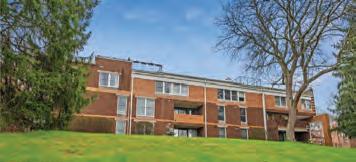


”Finest in Shadyside” 412-661-4456
412-661-4456
at $399,500. –SOLD–
www.kaminrealty.kamin.com
www.kaminrealty.kamin.com

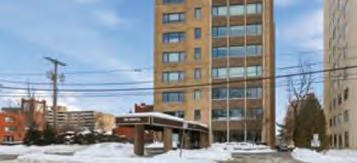

OAKLAND











INAUGURAL PITTSBURGH JEWISH CHRONICLE 2 0 2 6 PRESENTS
Honoring 18 individuals making invaluable contributions for the betterment of our Jewish community and recognizing those who embody tikkun olam (repair the world).
Nominees should be successful in making a difference in southwestern Pennsylvania’s Jewish community; have taken an active role in the community, whether through a nonprofit organization, volunteer group or professional endeavor; and demonstrate “mensch-like” characteristics, those of honor and integrity. Each nominee’s application should include a maximum of 300 words to explain why that person is a difference maker. EMAIL NEWSDESK@PITTSBURGHJEWISHCHRONICLE.ORG AND WRITE “DIFFERENCE MAKERS” IN
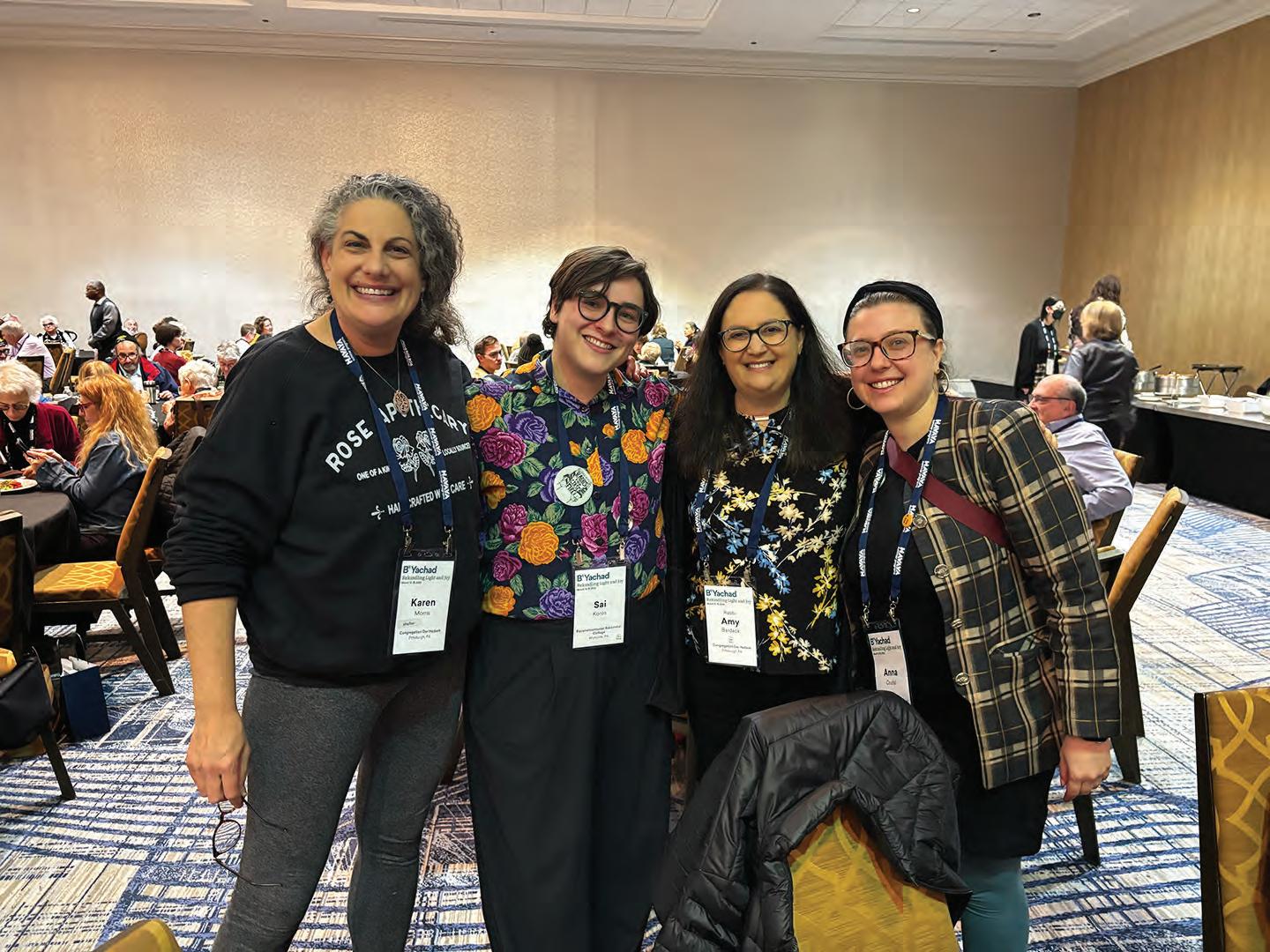
Making more with matzah Community Day School welcomed parents and guests for a schoolwide pre-Passover event. The March 20 program enabled participants to sing holiday songs, create matzah covers and enjoy seasonal staples.

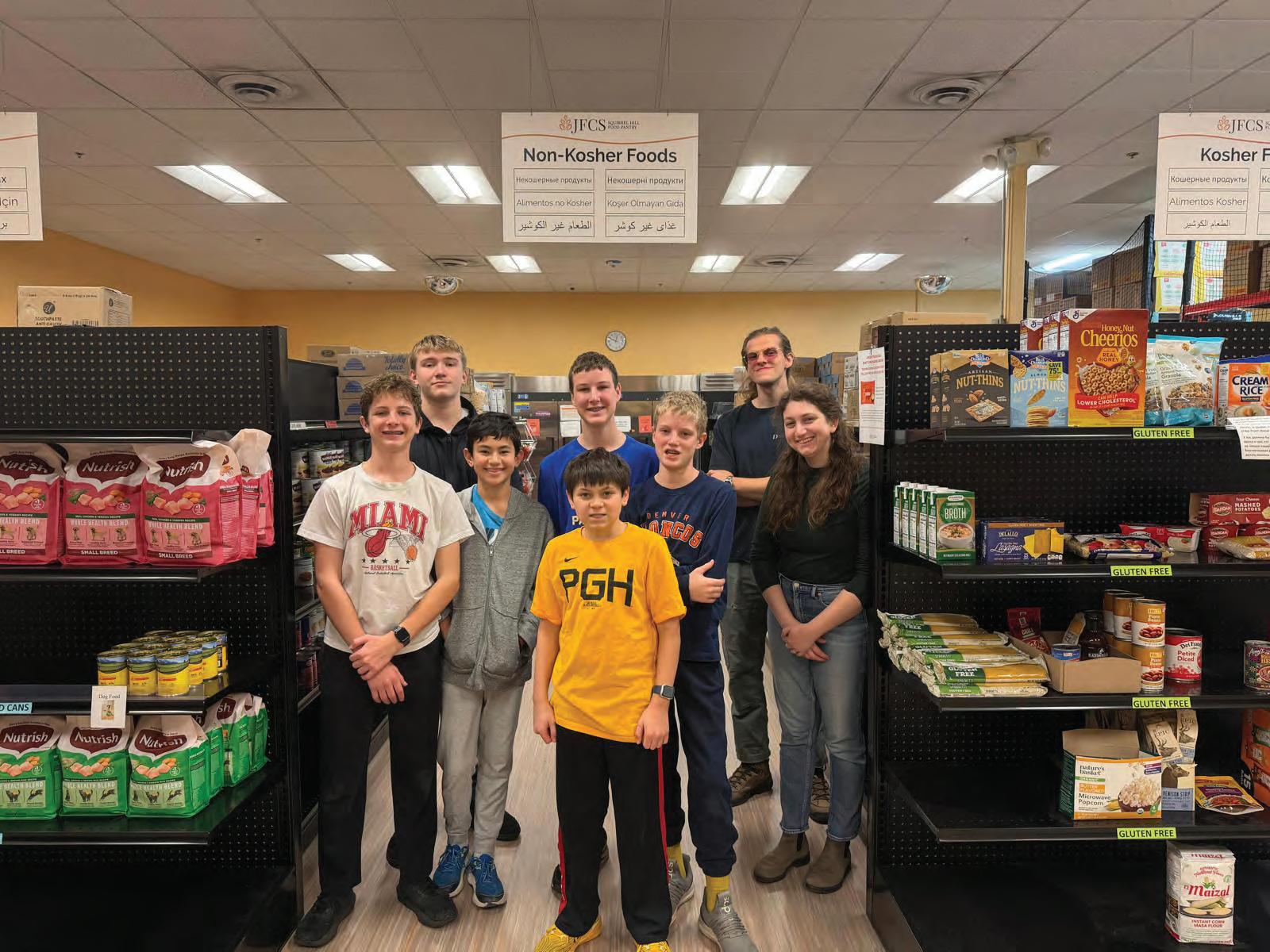
event. Made possible through the support of Hillel Academy, Achieving Community Together and the SteelTreeFund, the March 16 program enabled Beacon Place residents and Hillel
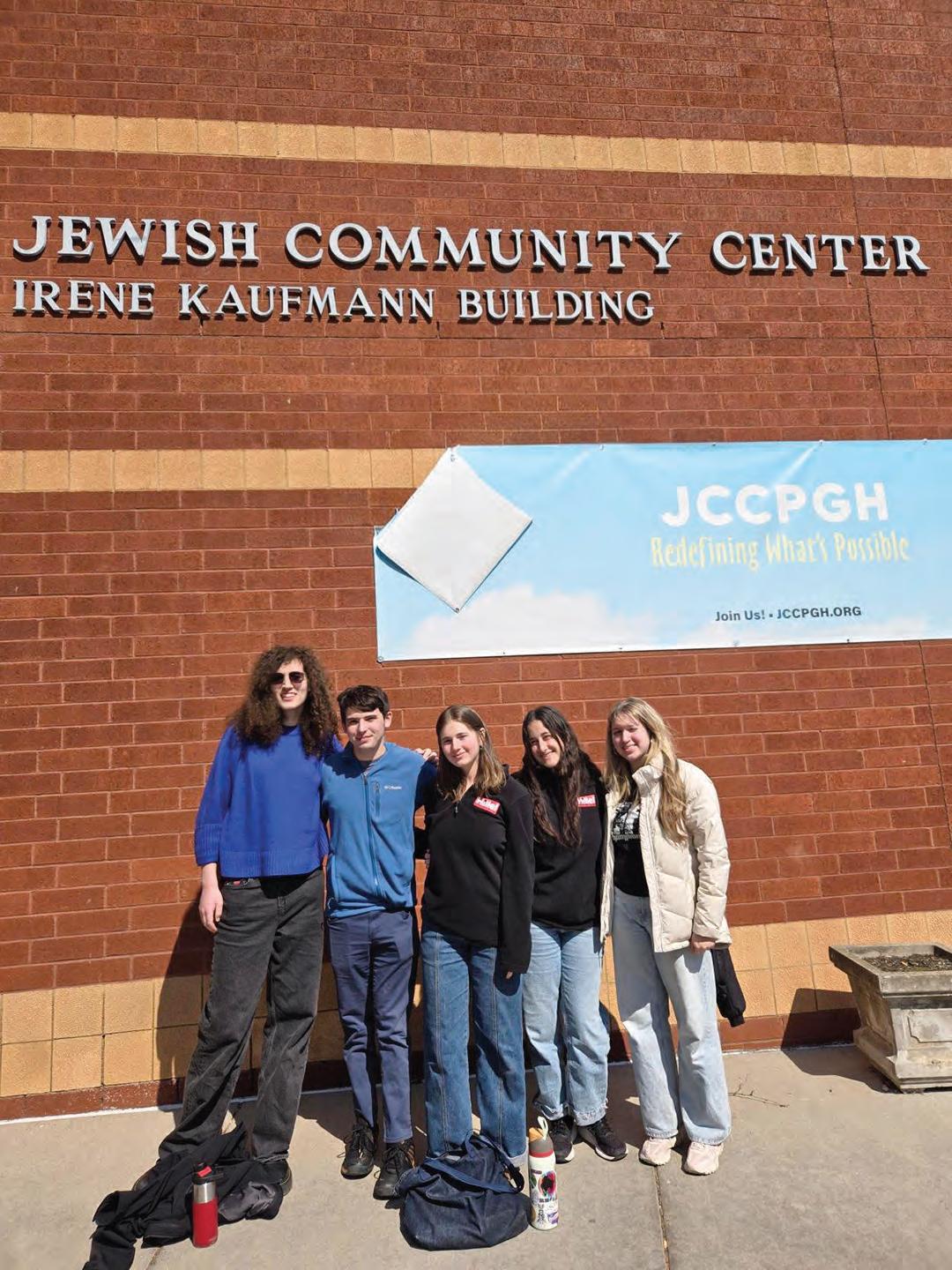
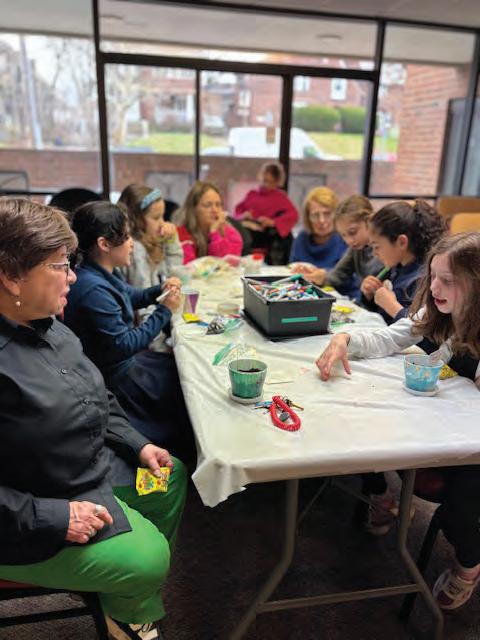
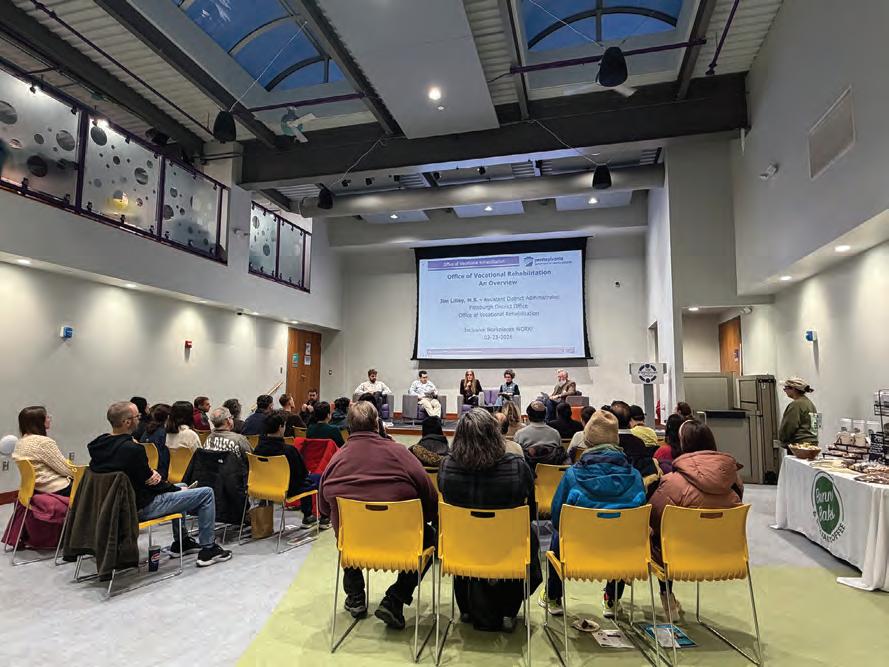
At CDS, we raise proud Jews, confident leaders, and accomplished learners who strive for excellence and prioritize community.
Join us as we celebrate the CDS United Campaign that makes our mission possible.

Sunday, April 26, 2026
Sunday, April 26, 2026
5:00-9:00 PM
5:00-9:00 PM
Rodef Shalom | 4905 Fifth Ave 15213
Rodef Shalom | 4905 Fifth Ave 15213
Gala Ticket: $125 | RSVP by April 5
Gala by
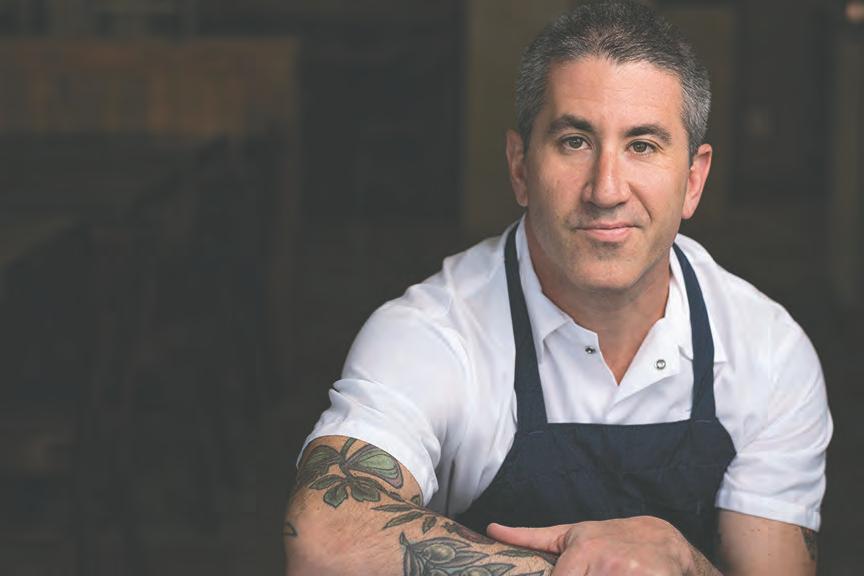
ALUM
EDUCATOR HONOREE
A phenomenal day school education is the antidote to antisemitism. At CDS we are more than a school.
A phenomenal day school education is the antidote to antisemitism. At CDS we are more than a school.
We are a kehillah, a true community.”
We are a kehillah, a true community.”
-Dr. Casey Weiss, Head of School
-Dr. Casey Weiss, Head of School
Scan QR code to purchase gala tickets and to sponsor and see the current sponsors of the CDS United Campaign.