Pittsburgh Jewish organizations awarded more than $1.7 million in state security funding Adam Forgie drops out of District 12 Democratic primary



By David Rullo | Pittsburgh Jewish Chronicle
The Josh Shapiro-Austin Davis administration has announced nearly $11 million in funding to combat hate crimes and enhance security at 191 nonprofit and faith-based organizations in Pennsylvania.
The funding was awarded through the Pennsylvania Commission on Crime and Delinquency, which Davis, the state’s lieutenant governor, chairs.
“The Shapiro-Davis administration remains dedicated to creating a Pennsylvania where everyone feels safe, valued and able to access services free from hate or violence,” Davis said.
He added that the strong demand for the program makes it clear that the need for the funding is ongoing and that the PCCD is proud to continue “this critical support to communities across the commonwealth.”
In a statement announcing the funding, the PCCD noted that this is the eighth cohort of the Nonprofit Security Grant Fund Program and that it has provided $35 million in support to more than 600 unique organizations across Pennsylvania.
Over the last three years, the Shapiro-Davis
administration has more than doubled the amount of state funding available each year in the program.
It is estimated that more than 7 million people have been impacted by the grants.
The funding was awarded to nonprofits, including faith-based institutions, community centers and other organizations and facilities that principally serve individuals, groups or institutions included within a “bias motivation category for single bias hate crime incidents, as identified by the FBI’s Hate Crime Statistics publication,” according to the statement.
The money will be used for security enhancements including safety and security planning and training, the purchase of safety and security equipment and technology, upgrades to existing structures that enhance safety and security, as well as vulnerability and threat assessments.
“All Pennsylvanians deserve to worship peacefully, no matter what you look like where you are from or who you pray or do not pray to,” Shapiro said. “That’s why we have more than doubled the Commonwealth’s investment
By David Rullo | Senior Staff Writer
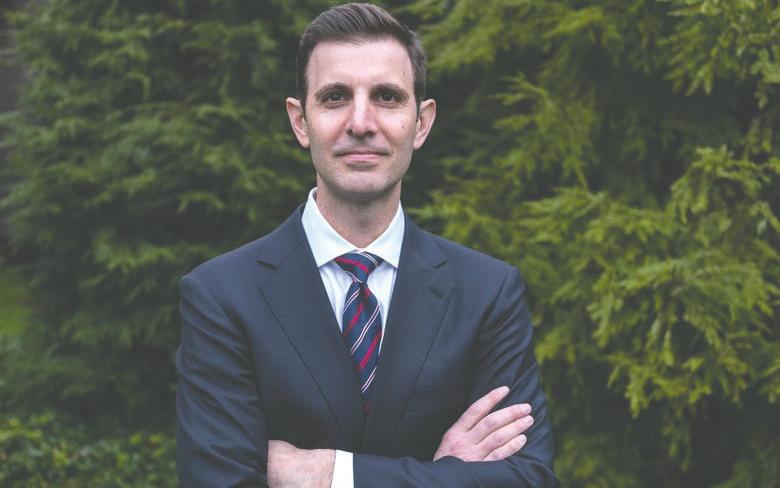
Congressional hopeful Adam Forgie has dropped his challenge to Rep. Summer Lee in Pennsylvania’s 12th Congressional District.
Forgie, who called himself a “traditional blue-collar Democrat,” entered the race nearly a year ago, telling the Chronicle that Lee had taken the Democratic party “so far to the left it doesn’t represent what it is to be a true Democrat.”
The now-former congressional candidate is the mayor of Turtle Creek and teacher in the Woodland Hills School District. He had pledged to visit all 47 communities in Allegheny County and 16 in Westmoreland County that are part of the district.
During the last year, Forgie became a staple at Jewish events, including the Jewish Community Center’s Big Night earlier this month, in contrast to Lee, who has been absent from local mainstream Jewish gatherings and who has not responded to requests to speak with the Chronicle.
Forgie also visited Poland with Classrooms Without Borders. He said the experience led to his belief that Holocaust education should be taught in every school and should be federally funded.
He also has stated that Israel has an absolute right to defend itself.
“I am 100% committed to standing with Israel, whether I’m elected or not,” he said. “That’s who I am.”
In the statement announcing his withdrawal from the race, Forgie expressed regret about his decision, but also said he was grateful for those who supported his campaign.
“Many circumstances have brought me to this decision,” he said.

Deluzio signs on to Block the Bombs
Photo by pixinoo via iStock Honoring
Headlines
Deluzio cites Iran war concerns in supporting limits on U.S. weapons sales to Israel
By Toby Tabachnick | Editor
U. S. Rep. Chris Deluzio recently signed on to two pieces of legislation that, if passed, would put limits on U.S. weapons sales to Israel.
Deluzio, an Iraq War veteran who represents Pennsylvania’s 17th District — which includes several of Pittsburgh’s South Hills suburbs — is one of 25 original cosponsors of the Ceasefire Compliance Act of 2026 (H.R.7645). The bill was introduced by Rep. Sean Casten of Illinois in February with the aim of banning “the use of US-origin weapons in Gaza and the West Bank if Israel violates the October 10, 2025, ceasefire agreement and 20-point plan, annexes the West Bank, or fails to combat settler violence against Palestinians,” according to Casten’s website.
applied to other U.S. aid recipients. It also lacks an emergency waiver that would permit the administration to proceed with transfers if Israel came under attack.
did in bypassing Congress with selling new bombs to the Israelis. And the legislation here would stop that, to make clear that Congress has to make those decisions and give our assent or not to those kinds of sales.”
Deluzio said he is “very frustrated” with the State Department “having gone around the Congress,” and shares the Foreign Affairs Committee Ranking Member [Gregory] Meeks’ concerns around that.”
While asserting that President Donald Trump has “taken a very expansive view of his powers,” Deluzio acknowledged that “he’s not the only president who has done that. And so these concerns of mine around war powers are not unique to Donald Trump and not unique to just this president, even in this moment.”
retaliation for Hamas’ own violations of the ceasefire deal, nor mention its targeting of individual Hamas leaders,” Jewish Insider wrote.
The legislation does contain language, however, that appears to ensure that U.S. defensive aid to Israel, intelligence cooperation with Israel and the supply of missile-defense systems are not subject to the stated conditions.
The Ceasefire Compliance Act, Deluzio stressed, is limited to offensive weapons and “is tied to performance of the peace deal and the different phases of the peace deal that came from the ceasefire agreement.”
Last week, Deluzio also signed on to the Block the Bombs Act (H.R.3565), which was introduced in May by Rep. Delia Ramirez of Illinois, with 21 original cosponsors, including Rep. Summer Lee, who represents Pittsburgh’s 12th District. The Block the Bombs Act now has 63 cosponsors, all Democrats.
Block the Bombs would impose unprecedented conditions on arms sales to the Jewish state, including requiring specific authorizations from Congress for every transfer of many types of weapons and guarantees from Israel about their use.
Under the proposed legislation, the administration would be prohibited from transferring or selling various arms to Israel — such as several categories of bombs, bomb guidance kits, and tank and artillery ammunition — without a separate act of Congress approving each specific transfer.
The measure, which is not expected to pass in the current Republican-majority Congress, would go further than any prior conditions proposed for U.S. arms sales to Israel or those
Deluzio has been clear in his condemnation of Hamas’ Oct. 7, 2023, atrocities, and also has implored the Jewish state to increase efforts in fighting hunger and illness in Gaza. He did not sign onto the Block the Bombs Act, however, until almost 10 months after its introduction.
The reason he signed on now, he said, is because of the war with Iran.
“I am very concerned around this war with Iran, which I think has certainly been deadly,” Deluzio told the Chronicle. “There’s already been seven Americans back coming back home in flag-draped caskets — which is the last thing I ever want to see — and others wounded. I worry that this war is going to even further destabilize the region. It’s a war I don’t think we should be fighting. And the Congress, frankly, I think, has failed to assert its war powers. The Congress hasn’t authorized this war. The War Powers Resolution vote failed in both the House and the Senate, and my point of view is that we should not be funding this war, either directly — if a supplemental request to continue Defense Department funding for the war would come to us — or indirectly, as the State Department
The congressman stressed that he thinks “Congress should put a stop to this war before it further destabilizes the region and we see further loss of life from our troops and the precious treasure that we spend to keep our military armed.”
While the Block the Bombs Act was introduced in response to the war in Gaza, Deluzio said the legislation would apply to the current conflict with Iran and the weapons that “the State Department just bypassed Congress to sell.”
“My view here is pretty straightforward,” he said. “I don’t think the Congress should be funding and supporting this war. In fact, I think we should put an end to it, and that includes the State Department’s efforts to supply the Israelis in a process that should have gone through Congress.”
Deluzio is also a cosponsor of the Ceasefire Compliance Act, introduced in February. That act “would require the administration to assess and report to Congress every 90 days on whether Israel is complying with the October 2025 ceasefire agreement in Gaza, including halting military operations and bombing campaigns,” according to Jewish Insider.
“The legislation does not appear to contain exceptions for the strikes Israel has taken in

SUBSCRIPTIONS
subscriptions@pittsburghjewishchronicle.org 412-687-1000, ext. 2
TO ADVERTISE advertising@pittsburghjewishchronicle.org 412-687-1000, ext. 1
EDITORIAL DEPARTMENT
Email: newsdesk@pittsburghjewishchronicle.org
BOARD OF TRUSTEES
Evan H. Stein, Chair
Evan Indianer, Vice Chair
Derek Smith, Treasurer
Gayle R. Kraut, Secretary
Gail Childs, Dan Droz, Malke Steinfeld Frank, Karen Gal-Or, Seth Glick, Judith Kanal, Cátia Kossovsky, Charles Saul, Lynn Zelenski
GENERAL COUNSEL
Stuart R. Kaplan, Esq.
Deluzio said he is concerned that the war with Iran “could complicate the success, or potential success [of the ceasefire], which already is quite fraught. I worry about the continued commitment of the Gulf and Arab states to see this through, alongside us and the Israelis, and what I hope might be for a Palestinian state alongside an Israeli one.”
The Ceasefire Compliance Act would impose several requirements upon Israel, some of which could be interpreted as being beyond its control. For example, the act states that Israel must ensure that:
“(i) no civilians are forced to leave Gaza Strip against their will;
(ii) civilians who wish to leave the Gaza Strip are free to do so; and
(iii) civilians who have left since October 7, 2023, or will leave the Gaza Strip are free to return ... ”
Deluzio said he does not interpret the bill as requiring conduct of Israel beyond its control.
“I think this is about conduct that the Israelis can control, rather than conduct that Hamas is responsible for or any other actor in Gaza,” he said.
J Street is backing the Ceasefire Compliance Act along with New Jewish Narrative and Foreign Policy for America, according to Jewish Insider. PJC
Toby Tabachnick can be reached at ttabachnick@pittsburghjewishchronicle.org.
5915 Beacon St., 5th Floor Pittsburgh, PA 15217
Main phone number: 412-687-1000
Subscriptions: 412-687-1000, ext. 2
Jim Busis, CEO and Publisher 412-228-4690 jbusis@pittsburghjewishchronicle.org
EDITORIAL Toby Tabachnick, Editor 412-228-4577 ttabachnick@pittsburghjewishchronicle.org
Adam Reinherz, Senior Staff Writer 412-687-1000 areinherz@pittsburghjewishchronicle.org
David Rullo, Senior Staff Writer 412-687-1000 drullo@pittsburghjewishchronicle.org
ADVERTISING Amy Weiss, Account Executive (412) 613-0697 aweiss@pittsburghjewishchronicle.org
PRODUCTION
Jeni Mann Tough Production Manager
Carl Weigel
Art/Production Coordinator
Subscriptions subscriptions@pittsburghjewishchronicle.org 412-687-1000, ext. 2
Published every Friday by the Pittsburgh Jewish Publication and Education Foundation 5915 Beacon St., 5th Floor Pittsburgh, PA 15217
Phone: 412-687-1000
POSTMASTER: Send address change to PITTSBURGH JEWISH CHRONICLE, 5915 BEACON ST., 5TH FLOOR PITTSBURGH, PA 15217 (PERIODICAL RATE POSTAGE PAID AT PITTSBURGH, PA AND AT ADDITIONAL MAILING OFFICES) USPS 582-740
Manuscripts, letters, documents and photographs sent to the Pittsburgh Jewish Chronicle become the property of this publication, which is not responsible for the return or loss of such items.
The Pittsburgh Jewish Chronicle does not endorse the goods or services advertised or covered in its pages and makes no representation to the kashrut of food products and services in said advertising or articles. The publisher is not liable for damages if, for any reason whatsoever, he fails to publish an advertisement or for any error in an advertisement. Acceptance of advertisers and of ad copy is subject to the publisher’s approval. The Pittsburgh Jewish Chronicle is not responsible if ads violate applicable laws and the advertiser will indemnify, hold harmless and defend the Pittsburgh Jewish Chronicle from all claims made by governmental agencies and consumers for any reason based on ads appearing in the Pittsburgh Jewish Chronicle
— LOCAL —
p Chris Deluzio Photo courtesy of Chris Deluzio’s campaign
Headlines
Abby Mendelson named Aleph Institute’s Chaplain of the Year
By David Rullo | Senior Staff Writer
Abby Mendelson has lived his life by a simple maxim: “Any day that I can help another human is a good day.”
Mendelson has held true to the edict, whether it’s serving as part of the Chevra Kadisha, leading study groups for commu nity members or volunteering with the Aleph Institute as a chaplain in both the Allegheny County Jail and the State Correctional Institution in Fayette County.
The Squirrel Hill native is being honored as the Aleph Institute’s Chaplain of the Year at the organization’s 16th annual Second Chance Symposium on May 11.
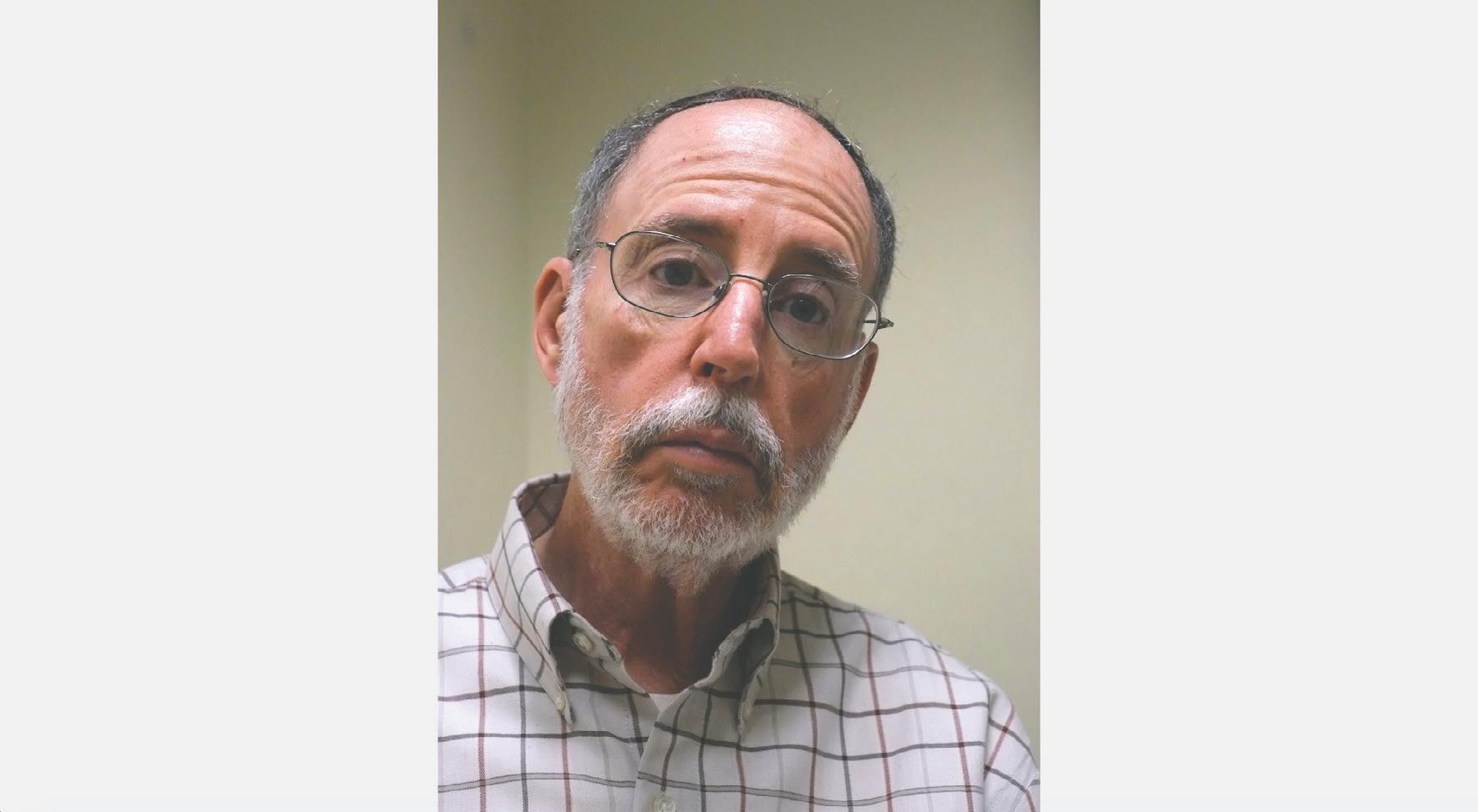
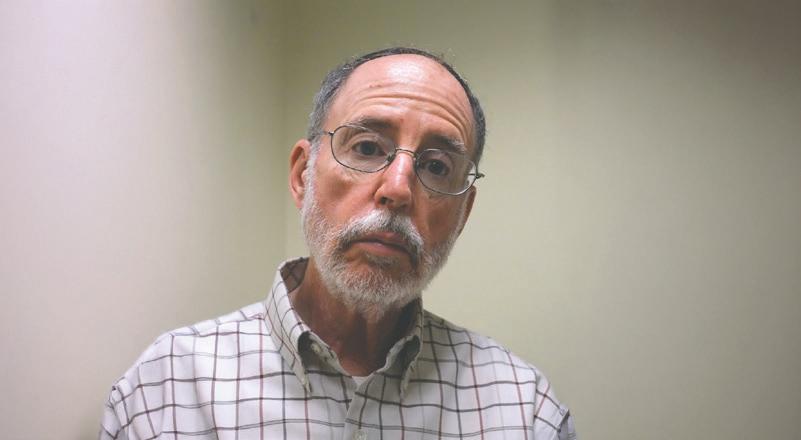
Mendelson, 78, an author and writer, said he first became interested in prison life nearly 45 years ago when he interviewed an inmate at Western Penitentiary for a story he was writing.
“I visited him regularly,” Mendelson recalled. “He was transferred to a different prison. I would visit him regularly and, like a lot of relationships, it faded over time, but the life and outlook of inmates was very different than anything I imagined, and very fascinating.”
Fast forward to 2004 and one of Mendelson’s friends was volunteering with Aleph, visiting Jewish inmates at a minimum-security prison in West Virginia. Mendelson took over the visits from his friend, driving the 85 miles each way, weekly, before his schedule changed and he rotated out of volunteering.
In 2022, Mendelson retired from what he called “working for money” and began thinking about volunteering with Aleph again, for a simple reason: Quoting Rabbi Moishe Mayir Vogel, the organization’s Northeast Region executive director, Mendelson said, “They give us far more than we give them.”
Mendelson “gladly” went back to visiting inmates in 2023, he said, first at Fayette and then adding the county jail.
He now spends two days a week visiting inmates — Tuesdays at the state prison, Thursdays at the county jail.
To get to the Fayette correctional institution, Mendelson leaves at roughly 7:20 a.m., explaining that it’s not just the 75-minute drive that takes time.
“I have to go through metal detectors. I have to get keys because there are a number of things to unlock, and I walk across the yard to the chapel. The full-time chaplains are there before me,” he noted.
Mendelson’s role, he said, was made clear by one of the full-time chaplains, Rabbi Elisar Admon.
“He said, ‘I am D.O.C. [Department of Corrections], you are the rabbi,’” Mendelson said.
As the rabbi, he spends the first part of his day visiting inmates, splitting his time with them into thirds.
“There’s always a concern about holidays
and kosher meals, and what they do and what they can’t do,” Mendelson said. “Then we look at texts like ‘Strive for Truth!’ [by Rabbi Eliyahu Eliezer Dessler], and then we spend the last third of our time studying Mishna.”
Broken up this way, he said, 90 minutes fly by.
He then “makes rounds,” meaning he visits the infirmary. Some of the patients there, he explained, are severely handicapped, while others are terminally ill.
He next heads to those in RHU — Restrictive Housing Units, or as it’s colloquially known, “the hole.”
“These are guys who are locked in with a glass panel in a cell,” he said. “There are 192 units I walk by every Tuesday. I say ‘Hello, how are you doing?’ Some want to hear about my trips to Israel, some have the most profound questions about Torah I’ve heard.”
Mendelson will then take a brief break for a cup of coffee before starting another 90-minute session, much like the first part of his day visiting with inmates.
Leaving the facility is another process of walking across the yard, putting away the keys and then departing the premises.
It’s a process that leaves him both physically and mentally exhausted, he said. So exhausted, that Tuesdays are the only evenings besides Shabbos that he does not participate in any sort of organized learning session. Instead, he visits with friends, either online or in person.
“By the time I’m home on Tuesdays, I’m drained,” Mendelson said. “It takes awhile to get used to being inside, to seeing people in 23-hour lockdown, to seeing the guys in the infirmary. You’ve got be strong. You have to take the proverbial deep breath, but I’m the rabbi. I have to, and I have to pick them up. That’s what I have to do.”
On Thursdays, he spends 90 minutes at the Allegheny County Jail seeing inmates who request a visit.
“I leave my house around noon,” Mendelson said. “I go through metal detectors, get a chaplain badge with an alligator clip that I put on my collar, and I go to the chapel and see if there are any new requests to see me.”
During each visit, Mendelson spends time with regulars in their pod. One person, he said, is studying Tanakh, so he usually has some questions.
“I always tell them I’m there for them, so whatever they want to talk about, we do,” Mendelson said.
Sometimes that means spending a few minutes discussing the Steelers or the Pirates; inevitably, though, it ends with some talk about a Jewish text — sometimes it’s Pirkei Avot, a musar work, the weekly parsha or something else.
Mendelson said he’s “amazed” at what some of the inmates have learned. One person, he said, is writing a prisoner’s commentary on Pirkei Avot. Another is studying the Zohar, and another is learning the Gemara.
“I walk in and he says, ‘This is what I’m reading and here’s my question.’ He always isolates the central question of the Gemara portion he’s reading,” Mendelson noted.
It’s not only the inmates who benefit from the visits, Mendelson stressed.
“I told one particular fellow, ‘This was the highlight of my week,’ just talking to him. He was so receptive. It was so profound that we would talk about these really nifty concepts and why the Torah works this way. I should
be paying for this,” he said.
It’s part of what keeps him motivated. The other two things are the belief that he can help people and his understanding that there are good people in jail who made some errors in their lives.
“The mistake is not the total sum of their lives,” Mendelson said. “Maybe I can help them see a better path in life and take the proverbial next step.”
The Aleph Institute’s Vogel, concurs.
“Show me a person that hasn’t failed,” Vogel said. “We make mistakes, we mess up. Some more, some less. Some get caught, some don’t.”
Vogel said the system is made to break prisoners. Mendelson, he noted, sits down and talks with them, giving them tools to prepare for the rest of their lives, which is crucial because there is an 83% recidivism rate. The Aleph Institute provides hope to inmates and their families that they can break that cycle, Vogel said.
“Rabbi Mendelson’s devotion goes far beyond routine chaplaincy,” Vogel said. “His weekly visits, personal care and deep compassion embody the very essence of what it means to serve. He brings light into environments that are often dark and forgotten.”
For his part, Mendelson said he’s “humbled and honored” to be a part of an organization as prestigious as the Aleph Institute.
“The work we do is so meaningful to so many people, and it’s a great privilege to be recognized for all my efforts,” he said.
While Mendelson’s efforts are unique, Vogel said the Aleph Institute is always looking for more volunteers. He urged anyone interested in becoming involved to reach out. And, if someone needs motivation to volunteer, he said, Mendelson provides that, too.
“He provides a lot of warmth, a lot of encouragement, a lot of truth because Torah is truth and that’s what anchors him,” Vogel said. PJC
David Rullo can be reached at drullo@ pittsburghjewishchronicle.org.

p Abby Mendelson
Photo courtesy of Abby Mendelson
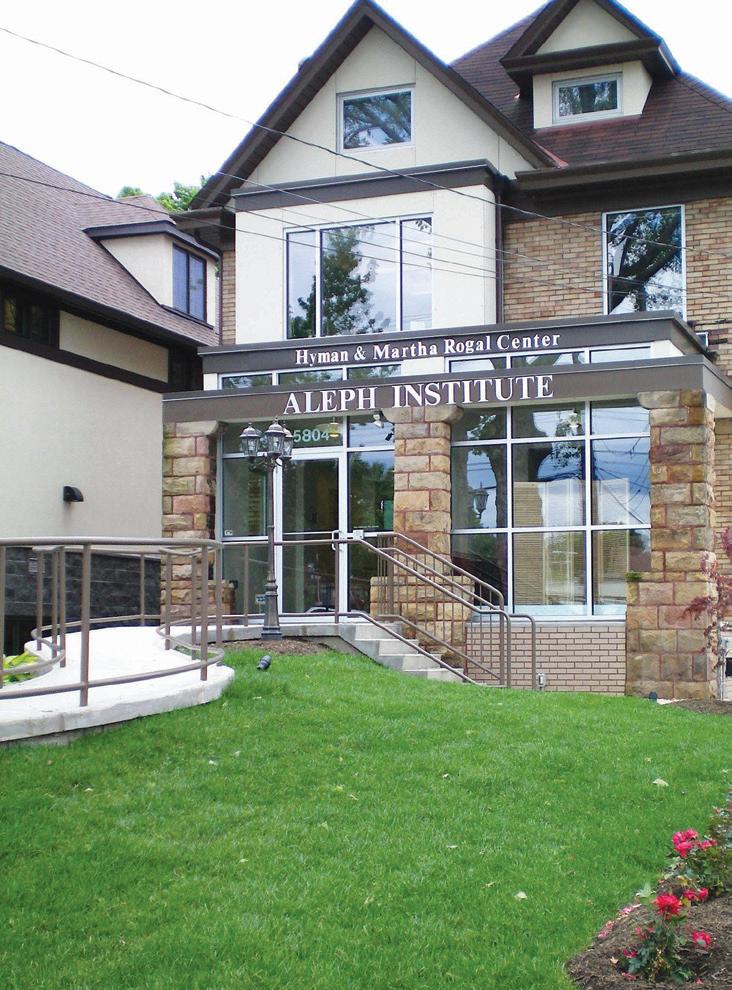
p Aleph Institute Photo courtesy of Aleph Institute
Headlines
Mock seder at Pitt brings students, elders together through food, story and tradition
By Deborah Weisberg | Special to the Chronicle
Multiple ages and cultures will join in celebrating Passover when GIFT (Giving It Forward Together) holds an experiential mock seder at Chabad at the University of Pittsburgh Sunday, March 22.
The event was inspired by GIFT’s annual Passover2Go program which delivers meal and gift kits prepared by university students to hundreds of elderly residents throughout Pittsburgh.
Those students as well as faculty, members of Osher Lifelong Learning Institute, and others will be seder guests, said GIFT founder and executive director Rochel Tombosky, who expects an “eclectic” mix.
“A lot of the student ambassadors who curate our kits every year are not Jewish. Some are from other countries and may not know about, or have ever experienced, Passover. We realized we needed to create a learning opportunity and fuel a kinship.”
The gathering will include traditional seder plate items, matzah ball soup, kugel and other fare, as well as a matzah making station, and a charoset bar that reflects how Jews in various parts of the world prepare the fruit-and-nut mixture symbolic of Passover.
“Food is one of the best ways to bring college students together,” said Susan Baida, vice-president of GIFT’s board and former
executive director of the Center for Applied Research on Targeted Violence at Carnegie Mellon University and Pitt. “But what happens once they’re there — the exchange of ideas, stories, and perspectives across generations and common ground — is where the real value lies.”
Cards with talking points will be distributed among guests to spark conversation about the Passover story and associated elements of freedom, grief, kindness and humility, said Tombosky, who is working with half a dozen other women to create the cards.



“A big part of the Passover seder is having young people ask questions.”
Madison Jean, a graduate level physical therapy student at Chatham University and a GIFT volunteer, said she’s “excited to attend.”
“One of the great things about living in Pittsburgh is that it opened my eyes to other cultures, which I didn’t experience much in my small town,” said Jean, 24, who is from Williamsport, Pennsylvania. “The Jewish culture seems super interesting to me, and I want to learn more about it.”
To prepare for the seder, Jean watched “The Prince of Egypt,” an animated movie adaptation of the Book of Exodus, and read a tutorial about Passover provided by Tombosky.
Envisioning her career in health care, Jean believes that becoming familiar with other cultures, and not just Judaism, will enhance her professional development.
“In terms of future patients, respecting and appreciating their differences will help me in my practice,” she said.
Jean and other volunteers from Chatham curated gift bags for distribution with the Passover2Go meal kits by the beginning of the holiday April 1. Working within a budget they selected comfort items such as pill organizers, lip balm, notebooks, heart-shaped hot-and-cold packs, and crocheted sunflowers with an inspirational message.
Meal kits, which will include Haggadahs, are being prepared in partnership with the nonprofit Our Giving Kitchen.
This is the ninth year for Passover2Go, which is supported by UPMC and other donors, said Tombosky, former owner of a home health care agency.
“We’re providing healthy food that taps into food insecurity but we’re also helping seniors to feel seen and heard. Our meal kits are the only way that some can celebrate the holiday. They’ll tell us it reminds them of when their house was full.”
Some kits have gone to Holocaust survivors, whose diminishing numbers have given the home-delivered seders a poignant meaning.
“It could have been their last seder,” said Tombosky. “I know that sounds dark, but it’s also beautiful that they got to celebrate Passover one last time.”
She recalled one survivor who died a
week after receiving a kit. “He passed away knowing that a younger generation did not forget about him. For the students who put time and effort into making the kits, learning this left them speechless,” she said.
Noting the need for better education around the Holocaust and other historical events, Baida said interactions with elders and exposure to Jewish traditions, like a mock seder, foster understanding in ways that textbooks and coursework alone cannot.
“In the United States, studies indicate that more than 1 in 10 young adults may not have heard of the Holocaust and about 1 in 5 believe it is a myth or exaggerated,” she said.
“Even more striking, nearly two-thirds of young adults are unaware that 6 million Jews were killed.”
Experiential learning is also an antidote to misinformation promulgated on social media, Tombosky said.
“We want young people to be culturally aware, but we don’t want them getting their information from Instagram and TikTok. Sitting at a seder and breaking matzah together and tasting charoset for the first time is a very different and valuable learning opportunity.”
Positive interactions like these, she said, enable people to respond to messages of antisemitism with “That’s not my experience.”
GIFT was founded to help foster a culture of empathy and meaningful intergenerational connections, said Tombosky, noting the nonprofit is non-denominational and performs many different acts of kindness. Besides Passover, meal kits are delivered at Thanksgiving and during the winter. Other GIFT initiatives include packaging food and diapers for community distribution centers, making toys for dogs and cats in animal shelters, and creating snack packs for guests of Pittsburgh Family House, whose loved ones are being treated at area hospitals.
One of GIFT’s latest projects is arranging bouquets for women who have lost their babies by partnering with Pittsburgh Doula Bereavement.
“We go where the need is,” Tombosky said. PJC
in Pittsburgh.
Federation approves $225,000 for Israel emergency response
The Jewish Federation of Greater Pittsburgh’s Board of Directors approved $225,000 in emergency funding to assist Israelis impacted by the recent attacks connected to Operation Roaring Lion, according to a news release. The funds will support the Jewish Agency for Israel’s Operation Roaring Lion Fund.
The Jewish Agency has reported “significant needs across affected communities” since the beginning of the war against Iran on Saturday, Feb. 28, and its Operation
Roaring Lion Fund provides “immediate financial assistance, trauma support and long-term recovery services to individuals and families affected by terror attacks.”
“In moments like these, our community stands with the people of Israel,” said Jeff Finkelstein, CEO of Pittsburgh’s Federation. “Through the Jewish Agency’s Operation Roaring Lion Fund, this support will provide individuals and families with urgent care immediately and help them to begin to rebuild. Our collective Federation approach enables this vibrant response.” PJC
— Toby Tabachnick
Deborah Weisberg is a freelance writer living
p A GIFT Passover2Go kit
Photo courtesy of Rochel Tombosky
Headlines
Anniversary brings rebrand and recommitment to Hebrew Free Loan Association
By Adam Reinherz | Senior Staff Writer
Hebrew Free Loan Association is touting its past while ensuring a future. In recognition of its storied history, the group is welcoming current and past board members, supporters and staff for a private event March 18.
The program, HFLA Executive Director Amanda Hirsh said, is an opportunity to celebrate collaborations and the importance of supporting interest-free loans while “being part of our community.”
Since 1887, the organization has been a microlender to individuals across Pittsburgh.
HFLA’s origins, Hirsh explained, trace to the Hill District and congregants who possessed extra money following an event.
“They knew about a woman, a recent widow, in their synagogue who needed some money to buy a sewing machine. They tried to give it to her as a gift, but she said she would only take the money if it was as a loan,” Hirsh said. As the woman repaid the interest-free loan, “folks were able to make new loans as a result.”
The pattern has followed for 139 years with a slight organizational change in 1926.
At the time, community needs had changed, Eric Lidji, director of Rauh Jewish History
Program & Archives, said.
“The 1920s were a dynamic time in Jewish Pittsburgh,” Lidji said. “The community was growing and spreading out and interacting with its neighbors in new ways. It had pockets of great wealth, as well as persistent poverty.
Amid these changes, Hebrew Free Loan reorganized. It took an English name, expanded its mission to include non-Jewish clients and restructured its board with the goal of getting younger members.”
Lidji will share more about the group at the upcoming event, and said he believes
HFLA’s changes in 1926 “may have helped the group survive the extreme demands of the 1930s and beyond.”
One century since those changes, it’s important to both look back and ahead, Hirsh said.
Much like the group rebranded a century ago — when it formally changed its name from the Gemiluth Chasodim Society of Pittsburgh to the Hebrew Free Loan Association of Pittsburgh in 1926 — similar efforts are now underway, Hirsh said.
A new logo, website and videos with
Chronicle introduces 18 Difference Makers
Do you know someone who is making invaluable contributions to the betterment of the Jewish community? Maybe you’re that person.
The Pittsburgh Jewish Chronicle introduces “18 Difference Makers,” a spotlight on 18 individuals who embody tikkun olam — repair of the world — and encourage it among others.
The inaugural recognition is being created to recognize those who are making a difference in southwestern Pennsylvania.
The community is encouraged to submit nominations. Honorees will be notified by June 26 and will be announced on August 14.
“We are blessed to live in a community filled with a plethora of talented, giving and gifted individuals who make invaluable contributions to our society,” said James Busis, the Chronicle’s publisher and CEO.
“We take great pride in celebrating 18 of these individuals as nominated by our own community, and are pleased to recognize them for the impact they are making on Jewish Pittsburgh.”
Nominees must be at least 18 years old by April. 26, 2026, and have ties to southwestern Pennsylvania.
Nominees should be successful in making a difference in southwestern Pennsylvania’s Jewish community; have taken an active role in the community, whether through a nonprofit organization, volunteer group or professional endeavor; and demonstrate “mensch-like” characteristics, those of honor and integrity.
Nominees need not be Jewish, but the nominee’s efforts must help better southwestern Pennsylvania’s Jewish community.
Nominations must be received by April 26, 2026, at midnight. Late nominations

will not be considered.
To nominate a person, email newsdesk@ pittsburghjewishchronicle.org, and write “Difference Makers” in the subject line. Each nominee’s application should include a maximum of 300 words to explain why that person is a difference maker.
Winners will be featured in the Chronicle in print and online.
For opportunities to recognize the honorees and other information, please contact Amy Weiss, account executive, at 412-613-0697 or aweiss@pittsburghjewishchronicle.org.
FAQs
What are the Pittsburgh Jewish Chronicle’s 18 Difference Makers awards?
The Chronicle created the 18 Difference Makers awards to honor and celebrate individuals making invaluable contributions for the betterment of our Jewish community. Southwestern Pennsylvania’s Jewish community is known the world over for its leadership, but what some may not realize is that the next generation of leaders is already here. The future is now, and the Chronicle believes it’s incredibly important to recognize those who embody tikkun olam (repairing the world) — a tenet of Judaism — and encourage it among others.
What are the qualifications?
Qualified nominees must be 18 years of age
as of April 26, 2026, and have ties to southwestern Pennsylvania. A panel of judges will consider the following: a nominee’s success in making a difference in southwestern Pennsylvania’s Jewish community; active involvement in the community, be it through nonprofit organizations, volunteer groups or professional endeavors; and a nominee’s “mensch-like” characteristics, including, of course, honor and integrity. Nominees do not need to be Jewish, however, their efforts to better the Jewish community will play a central role in the judges’ decision.
When do nominations open?
Nominations for the 2026 Chronicle Difference Makers open Friday, March 20, 2026.
How can I nominate someone?
Nominations can be submitted at newsdesk@pittsburghjewishchronicle.org.
When is the deadline for nominations?
The nomination deadline is 11:59 p.m. EDT on Sunday, April 26, 2026. Any nominations received after that date will not be considered.
Can I just call you with the name of the person I’d like to nominate?
Only nominations submitted online via email will be accepted.
I want to nominate someone, but can I remain anonymous?
borrowers will be unveiled, she continued. The mission, however, remains the same. Interest-free loans are made on a nonsectarian basis to residents of Allegheny, Westmoreland, Washington, Butler, Beaver and Armstrong Counties who have a source of income and may not qualify for assistance through other institutions, according to HFLA representatives.
Loans can be up to $10,000 and are typically paid back within 24-36 months, Hirsh said.
Possible loan uses include college tuition, home improvements, fertility treatments, debt consolidation and family emergencies. Loans are not provided for utility bills, car payments or cash flow.
Hirsh said HFLA offers people loans “when they need a hand up for something, as opposed to a handout.”
Both now and since its inception, the organization has remained “focused on finding all the ways that we can be a valuable resource to help people in our community when they have an expense that they might not be able to take care of,” Hirsh said. “We want to celebrate that we’ve been part of this community for 139 years, and that we plan to be here another 139 years, and we’ll keep doing the same thing to help make everyone in our community strong and connected.” PJC
Adam Reinherz can be reached at areinherz@pittsburghjewishchronicle.org.
Nominator information will not be shared, but the Chronicle still needs to know who is making the nomination.
Can I nominate myself?
Yes. You can nominate anyone, including yourself.
Can I submit a resume, extended biography or other additional information?
The selection committee is looking for 300 words of concise information to describe how candidates are making a difference in southwestern Pennsylvania’s Jewish community. Additional information will come from selection committee research and other sources during the selection process, including a nominee’s LinkedIn and other social media pages.
How will the Chronicle 18 Difference Makers be selected?
A panel of judges from the Chronicle leadership team and select members of the community will comprise the selection committee that chooses the Chronicle 18 Difference Makers. The committee’s selections will be based on the available nominating criteria as outlined above.
Can I call or email during the selection process for an update on my nominee?
Status updates will not be provided during the selection process.
How will I know whether I have been chosen or whether the person I nominated has been chosen? What can I expect if I am chosen?
All Chronicle 18 Difference Makers will be notified of their selection in June 2026. PJC
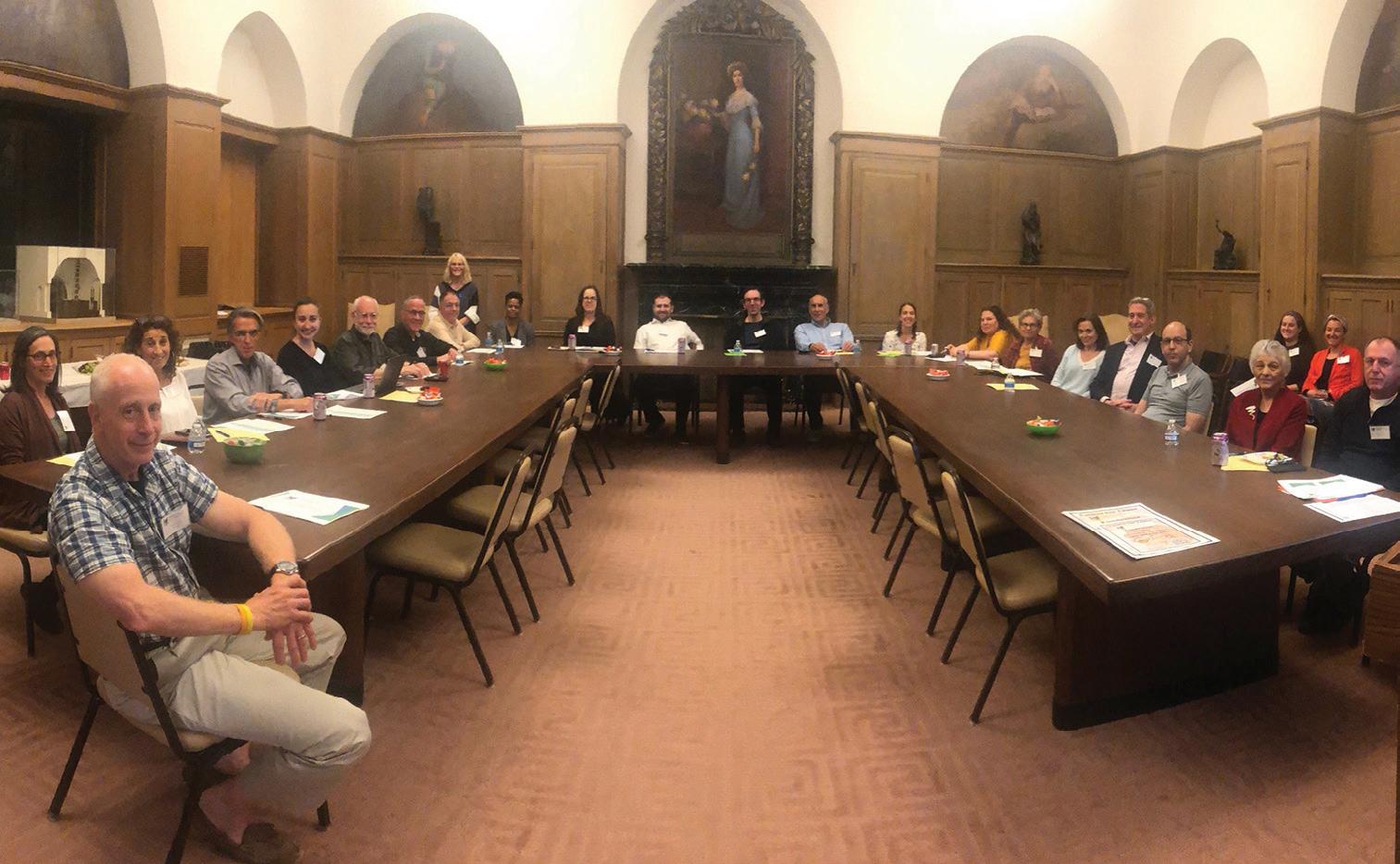
p HFLA's board of directors gather at Rodef Shalom Congregation in 2023. Photo courtesy of Amanda Hirsh
Calendar
Submit calendar items on the Chronicle’s website, pittsburghjewishchronicle.org. Submissions also will be included in print. Events will run in the print edition beginning one month prior to the date as space allows. The deadline for submissions is Friday, noon.
q SUNDAY, MARCH 22
GIFT’s Intergenerational Mock Seder is a unique program that brings together students, university faculty and seniors for an interactive Passover experience focused on education, connection and community. 4 p.m. Free. giftpgh.org/seder
q SUNDAYS, MARCH 22–JULY 26
Join Chabad of Squirrel Hill for its Men’s Tefillin Club. Services and tefillin are followed by a delicious breakfast and engaging discussions on current events. 8:30 a.m. 1700 Beechwood Blvd. chabadpgh.com
Join a lay-led online Parashah study group to discuss the weekly Torah portion. No Hebrew knowledge needed. The goal is to build community while deepening understanding of the text. 8:30 p.m. For more information, visit bethshalompgh.org/online-parashah.
q MONDAYS, MARCH 23–JULY 27
Join Congregation Beth Shalom for a weekly Talmud study. 9:15 a.m. For more information, visit bethshalompgh.org.
Join Temple Sinai for an evening of mahjong every Monday (except holidays). Whether you are just starting out or have years of experience, you are sure to enjoy the camaraderie and good times as you make new friends or cherish moments with long-term pals. All are welcome. Winners will be awarded Giant Eagle gift cards. All players should have their own mahjong cards. Contact Susan

Cohen at susan_k_cohen@yahoo.com if you have questions. $5. templesinaipgh.org
Join Chabad of the South Hills for Lift Your Life, a Rosh Chodesh Society series. This month’s topic is “The Art of Managing Food and Munching for Meaning.” 7 p.m. 1700 Bower Hill Road. For more information or to RSVP, email batya@chabadsh.com. chabadsh.com
q TUESDAY, MARCH 24
Join Tree of life Congregation as we share the 14 steps and 10 plagues of Passover with a pre–Passover ice cream seder. Come taste 24 different flavors in Rodef Shalom’s Freehof Hall. Ice cream is kosher and supplied by Bruster’s. Some vegan options are available. $5 for members of Tree of Life Congregation and Parkway Jewish Center; $7 for guests, and $10 at the door. 6:30 p.m. treeoflifepgh. org/event/icecream
q TUESDAYS, MARCH 24–JUNE 30
Join Beth El’s Rabbi Alex Greenbaum and his Bible/ Talmud Adult Education class for a thoughtprovoking weekly session of Bible and Talmudic study. This program is available both in person and virtually. Call the office at 412-561-1168 to receive the Zoom link or to make an in-person reservation. 10:30 a.m. 1900 Cochran Road. bethelcong.org
q WEDNESDAY, MARCH 25
Join Temple Ohav Shalom for My Grown-Up and Me for children ages 18 months to 3 years of age and their grown-up. Each class includes multisensory explorations, art experiences, a story and more. Reach out to center@templeohavshalom. org with any questions. Register at: forms.gle/ Us1YwHmd4MJjyhRf8
Enjoy good food and company at Chabad of the South Hill’s senior lunch. Learn how to





improve balance. Wheelchair accessible. 1 p.m. $5 suggested donation. 1701 McFarland Road. For more information or to RSVP call 412-278-2658. chabadsh.com
Weaving in reflections from Jill Joshowitz’s recent trips to Syria, “Reflections on the Dura Europos Synagogue Paintings” will explore the incredible biblical subject matter in the Dura synagogue paintings and their later reception in both Damascus and Pittsburgh. 5:30 p.m. Free. Cathedral of Learning, Room 332, Fifth Ave.
q THURSDAY, MARCH 26–MONDAY, MARCH 30
Join Passover2Go in making a difference for homebound seniors by providing them with thoughtful Passover kits, ensuring everyone enjoys this special holiday. Sign up today to volunteer and lend a helping hand. giftpgh.org/passover
q SATURDAY, MARCH 28
Join Temple Ohav Shalom for a Passover playdate for families with children ages 0-5. Children will engage in a dramatic play matzah factory, set up a pretend Passover seder, and enjoy a story time and songs. Event is free and open to any Jewish or interfaith family in the North Hills and surrounding areas. Free. 10 a.m. 8400 Thompson Run Road, 15101
q WEDNESDAY, APRIL 1
Join Chabad of the South Hills for a Passover seder in a warm and inviting atmosphere with gourmet Passover cuisine, handmade shmurah matzah and a meaningful and interactive seder. No one will be turned out for lack of funds. 7 p.m. 1701 McFarland Road. chabadsh.com/seder
Join Chabad of Greenfield for a warm and meaningful Community Passover Seder and relive the story of freedom together with great food, inspiring insights and lively discussion. 7:45 p.m. chabadofgreenfield.com
The Pittsburgh Jewish Chronicle invites you to join the Chronicle Book Club for its April 19 discussion of “Fagin the Thief,” by Allison Epstein, the winner of the 2025 National Jewish Book Award for Fiction. The author will join us for the meeting.
From Amazon.com: “A thrilling reimagining of the world of Charles Dickens, as seen through the eyes of the infamous Jacob Fagin, London’s most gifted pickpocket, liar, and rogue. Long before Oliver Twist stumbled onto the scene, Jacob Fagin was scratching out a life for himself in the dark alleys of nineteenth-century London. Born in the Jewish enclave of Stepney shortly after his father was executed as a thief, Jacob’s whole world is his open-minded mother, Leah. But Jacob’s prospects are forever altered when a light-fingered pickpocket takes Jacob under his wing and teaches him a trade that pays far better than the neighborhood boys could possibly dream.
“Colorfully written and wickedly funny, Allison Epstein breathes fresh life into the teeming streets of Dickensian London — reclaiming one of Victorian literature’s most notorious villains."
Your hosts
Toby Tabachnick, Chronicle editor
David Rullo, Chronicle senior staff writer
How it works
We will meet on Zoom on Sunday, April 19, at 1 p.m.
q THURSDAY, APRIL 2
Join Beth Samuel for a family-friendly Pesach seder, complete with a kosher-for-Passover brisket dinner. 5 p.m. $45/adult; $25/kids 6-17; free, kids 5 and under ($125 family max). Registration required by March 27 at bethsamuel.org/seder.
q MONDAY, APRIL 13
Join the Holocaust Center of Pittsburgh on April 13 for its annual Yom HaShoah Commemoration Yom HaShoah, or Holocaust Remembrance Day, is the day set aside to remember the approximately 6 million Jewish victims of the Holocaust. The Holocaust Center has been holding a communitywide commemoration every year since the establishment of the Center in 1980. This year’s program will feature music played by students from Pittsburgh Youth Symphony Orchestra, poetry readings, filmed testimony from Holocaust survivors, a candle-lighting ceremony and other traditional elements. 7 p.m. Free. Rodef Shalom Congregation, 4905 Fifth Ave. eventbrite.com/ e/2026-yom-hashoah-commemoration-registration1983897619184?aff=oddtdtcreator&keep_tld=true
q FRIDAY, APRIL 17–SUNDAY, APRIL 19
Join Keshet’s one-of-a-kind Shabbat retreats for LGBTQ+ and ally Jewish teens, ages 13-18 and in grades 7-12, to learn, grow and celebrate who you are in a warm and vibrant community. Created by and for LGBTQ+ Jewish teens, Keshet Shabbatonim bring together young LGBTQ+ and ally Jews from across the country to build community and celebrate Shabbat and their Jewish and LGBTQ+ identities. $54. keshetonline.org/shabbaton
q THURSDAY, APRIL 30–SUNDAY, MAY 10
Film Pittsburgh’s JFilm Festival, the largest Jewish cultural event in the region, will return to theaters April 30–May 10, 2026. For 33 years, JFilm has showcased Jewish-themed, independent feature films from around the globe. $15 and up. filmpittsburgh.org PJC
What to do
Buy: “Fagin the Thief.” It is available from online retailers, including Amazon and Barnes & Noble, and in some local Barnes & Noble stores. It is also available through the Carnegie Library system.
Email: Contact us at drullo@pittsburgh jewishchronicle.org, and write “Chronicle Book Club” in the subject line. We will send you a Zoom link for the discussion meeting.
Happy reading! PJC

Headlines
Israel says slain brother of Michigan synagogue attacker was a Hezbollah commander
By Philissa Cramer | JTA
The man who attacked a Michigan synagogue on Thursday was the brother of a Hezbollah commander who oversaw efforts to shoot rockets into Israel before being killed earlier this month, the Israel Defense Forces announced on Sunday.
The mayor of Ayman Ghazali’s city, Dearborn Heights, said in a statement following his attack on Temple Israel in West Bloomfield, Michigan, that members of Ghazali’s family had recently been killed “in an Israeli attack on their home in Lebanon.”
Israel is targeting Hezbollah, an Iranian proxy in Lebanon that attacked Israel in retaliation against the U.S.-Israel war on Iran, in a conflict that escalated on Monday into a ground operation. Ghazali’s family members were killed in a Hezbollah stronghold where Israel had recently warned civilians to evacuate.
But while images purporting to show Ghazali’s brother in Hezbollah garb circulated on social media almost instantly after attack, the IDF’s announcement marked the first official allegation tying him to the terror group.
“Hezbollah commander Ibrahim Muhammad Ghazali was responsible for managing weapons operations within a specialized branch of the Badr Unit. The
unit is responsible for launching hundreds of rockets toward Israeli civilians throughout the war,” the IDF said in a statement on Sunday, adding, “Ibrahim was eliminated in an IAF strike on a Hezbollah military structure last week.”
An unnamed Hezbollah official denied the allegation to The New York Times.
The IDF’s statement did not suggest that Ayman Ghazali was affiliated with Hezbollah.
The New York Times reported that he attended a memorial service for those killed in the strike, who included Ibrahim’s young children, at a Dearborn Heights mosque on March 8 that was attended by hundreds of people, many from the Ghazalis’ town.
Ghazali’s ties to Lebanon have prompted a sharp discourse about news coverage of the Michigan attack, with some alleging that focusing on his brother’s death, especially without any confirmation of his brother’s Hezbollah affiliation, runs the risk of
Today in Israeli History
March 20, 1917 — General, archaeologist Yigael Yadin is born Yigael Yadin is born in Jerusalem. After becoming the second IDF chief of staff in 1949, he retires from the military in 1952 and turns to archaeology. His excavations include Masada, Hatzor, Megiddo and the Dead Sea caves.
March 21, 2016 — 17 Jews airlifted from Yemen
The Jewish Agency secretly brings 17 Yemeni Jews to Israel, completing an effort in recent years to sneak out roughly 200 Jews amid a civil war. About 50 Jews are all that remains of a 2,500-year-old community.

By
March 22, 1988 — Gay ban is abolished
The Knesset repeals a never-enforced, British Mandate-era law banning sex between people of the same gender and thereby legalizes homosexuality in Israel. The repeal is the culmination of a 10-year legal struggle.
March 23, 2016 — Writer Aharon Megged dies Aharon Megged, who won almost every literary prize in Israel, dies in Tel Aviv at age 95. He wrote 35 books, as well as plays, skits and articles, and nurtured such writers as A.B. Yehoshua.
March 24, 1966 — Israeli TV goes on air
An instructional program in math targeting seventhand ninth-graders in 32 schools becomes Israel’s first TV broadcast, 10 years after Jordan and six years after Egypt launched domestic television channels.

March 25, 2019 — Israel-Gaza violence flares
A rocket destroys a house in Mishmeret, so the IDF bombs suspected Gaza military locations. Thirty rockets then are fired from Gaza into southern Israel. Egypt brokers a ceasefire to prevent an all-out war.
March 26, 1979 — Egypt, Israel sign peace treaty
Six months after signing the Camp David Accords, Egyptian President Anwar Sadat, Israeli Prime Minister Menachem Begin and U.S. President Jimmy Carter sign the Egyptian-Israeli peace treaty. PJC
suggesting that attacking a Jewish institution in the United States is an appropriate response to grief during wartime.
Dearborn Heights Mayor Mo Baydoun rejected that notion during a press conference alongside the local police chief on Friday.
“We do know that the individual had recently suffered a devastating and personal loss overseas due to an Israeli airstrike on his family’s home in Lebanon, leaving two children dead. The grief is real and it’s heartbreaking, but let me be clear: That is not an excuse,” Baydoun said. “There is never an excuse for violence, especially violence directed at a sacred space.”
Meanwhile over the weekend, authorities in Michigan said Ghazali had died from a self-inflicted gunshot wound after driving his fireworks-laden truck into Temple Israel. They had previously indicated that the synagogue’s security staff, which worked immediately to neutralize the threat, might have fired the fatal shot.
Temple Israel held Shabbat services in multiple locations over the weekend, including at the Chaldean country club, Shenandoah, that welcomed children evacuated from its preschool and at a nearby Jewish country club, Tam-O-Shanter, where a bat mitzvah took place as planned. The synagogue announced on Sunday afternoon that extensive damage to the building meant it would be “closed to us for the immediate future.”
The Jewish Federation of Greater Pittsburgh
issued the following statement following the March 12 attack: “Our hearts are with the Detroit Jewish community following today’s attack at Temple Israel in West Bloomfield. We stand with our colleagues at the Jewish Federation of Detroit and offer our support in any way we can.
“Even before the 2018 Pittsburgh synagogue shooting, the Jewish Federation of Greater Pittsburgh has worked to strengthen security at Jewish institutions so our community can gather safely and proudly to celebrate Jewish life. We continue to work closely with our own security professionals and with law enforcement to prepare for incidents like the one that occurred today, and we commend Temple Israel’s security team for their response.
“We have also received assurances that the City of Pittsburgh will further enhance its already strong protection of Jewish spaces during this heightened threat.”
Rabbi Jeffrey Myers of the Tree of Life Congregation and a survivor of the 2018 Pittsburgh synagogue shooting, shared his reflections and offered a word of caution: “The tragedy of today’s events in West Bloomfield demonstrates what happens when we let H[ate] take over: it leads to violence. We lose our humanity when we seek violent means as a solution. No one should dwell in fear because of who they are.” PJC
Toby Tabachnick contributed to this report.


p Jewish immigrants from Yemen arrive in Israel in March 2016.
Arielle Di Porto, Jewish Agency for Israel
p Israeli television broadcasts a test
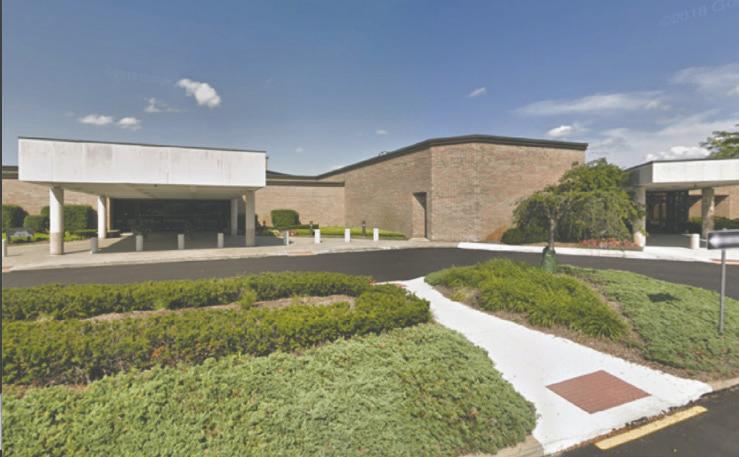
p Temple Israel Photo courtesy of Google Maps
Summer Camp Guide


Mokey Business/Adobe Stock
Summer Camp Guide
Preparing for camp: A parent’s guide to knowing when your
child is ready
Guest Columnist
Tali Cornblath
One of the most common questions we receive is, “How do I know if my child is ready for overnight camp?” Here are a few guidelines that can help you decide.

In general, any typically-developing child who is 8 or older is probably ready for camp. Even if they never had a sleepover, they are generally mature enough to be successful at camp. There might be a little home sickness at first, but the beauty of camp is in the growing: By experiencing the challenge of being away and figuring out how to have fun regardless, kids learn that they are capable and believe in them selves. Many children younger than 8 are ready too, but that may be on a more indi vidualized basis.

To have a successful experience at any overnight camp, a child must have reached certain developmental milestones. These apply mostly for our younger campers, but are good guidelines for everyone.
First, can your child shower and reliably toilet on their own, including communicating to someone when they need to go? Most of our activities at Falcon Camp, for example, are approximately a threeminute walk from a restroom. If your child still needs to be reminded to go to the bathroom, they might not be ready for camp yet.
Second, can your child dress and undress themself? Staff are always happy to help with a particularly difficult button, but your child should be able to get dressed without assistance.
Third, can your child follow two- or three-step directions? We train our staff to give accessible and straightforward instructions using different methods, but it is important that a camper can remember two or three steps at a time. This helps support their ability to follow a schedule and make activity choices.
Finally, does your child sleep in their own bed, and can they generally fall asleep without support? Each cabin creates a unique bedtime routine that frequently involves cabin chats, singing and reading, and staff remain just outside the cabin as
Spending the time leading up to camp discussing the fun, acknowledging the challenge and reiterating your child’s abilities can help set them up for success.
campers fall asleep. However, if your child is used to falling asleep with you in bed, or while you rub their back for 20 minutes, that is going to create some unnecessary stress for them at camp.
Your attitude and preparation also has a huge impact on whether or not your child is ready for camp. Spending the time leading up to camp discussing the fun, acknowledging the challenge and reiterating your child’s abilities can help set them up for success. It might not feel obvious, but when you tell your child that you’ll pick them up if they are homesick, the message your child ultimately receives is that you think they can’t do this. Instead, we need to prepare future campers by talking about the hard things, and reminding them that we know they’ll be OK. You can also provide tools, like reviewing who your camper can approach if they are struggling (their counselor, a director,
the camp nurse). Having your child participate in packing can also help set them up for success. They will feel more secure because they know what they are bringing, where belongings are, and it provides a great opportunity to talk about fun activities.
I started off by saying most typicallydeveloping 8-year-olds can likely be successful. So what about a more neurodivergent child? The same developmental skills apply (toileting, dressing, following instructions), but there are a few others we might look for. What general level of support does your child have for everyday activities? What accommodations or modifications does your child use at school to ensure success? How is your child’s social development? Are they interested in interacting and playing with others? What about behavior? Camp staff are well-trained, but they still are
mostly college students. They competently handle many different behaviors, but if your child has a one-on-one aide or is in a behavior classroom at school, they might not be ready for the excitement of camp yet. That is not to say they can never go to camp! There are many camps designed for children who need more support if you’re considering camp right now, or wait a year or two and see where things stand. The truth is, your child probably is ready! It is most often parents who are not ready to send their children to camp, rather than a child who is not ready to go. But sending your child to camp is a difficult decision, and one you shouldn’t make lightly. If you are questioning your child’s readiness, reach out to a camp director and talk it over. PJC
Tali Cornblath is a psychologist and the assistant director at Falcon Camp.

Photo by Angelov/Adobe Stock






Summer Camp Guide
Adjusting to cabin life requires at-home preparation
— CAMP—
By Ed Carroll | Cleveland Jewish News
For many kids, camp means spending time with friends, exploring the outdoors and experiencing common camp activities for the very first time. However, many campers will also experience sleeping somewhere away from their home and parents for the first time, too.
Speaking with soon-to-be campers and talking with them about the differences between home life and a sleepaway camp is a great first step to making a fun summer experience, said Abby Solomon, camp director at Camp Livingston, which operates in Bennington, Indiana, during the camp season and has winter offices in Cincinnati.
“If they share a room at home, maybe it’ll be a little easier to understand, but of course [other campers are] not your family,” she said. “So, discussing what that looks like is different. I think just that first open conversation and then seeing what questions the child has, that maybe camp can help with, or the parent can help with, would be the next step. Some of those topics could be generally sharing space, how to ask permission to use other people’s things, how to ask permission for others to be in their space, how to say ‘no’ if you don’t want to share or you don’t want someone to sit on your bed or touch your stuffed animal

or something like that. ... I think just opening the conversation on a few of those [topics] is the first step.”
According to Zachary Yanof, director of summer camp operations at Hiram House Camp in Moreland Hills, Ohio, the best way to avoid having a child experience their first overnight stay away from home at camp is to make sure it’s not their first experience.
“My suggestion is don’t make camp the first experience a child has with overnight experience,” he said. “So, even if it’s going to sleep at a relative’s house or an uncle’s house, but make sure that they have
experience sleeping away from home. ... We encourage it. Sleepovers with buddies are ideal, because it’s a situation where they don’t even know the person they’re going to be with – just like camp. You’re in an unfamiliar setting with people that you’re not unfamiliar with, but you’re not totally familiar with, that is the ideal situation. Where you have a camper who’s had a variety of sleepovers with different people and is used to what that would be like.”
Aaron Cantor, director of Emma Kaufmann Camp in Morgantown, West Virgina, which is operated by the JCC of
Greater Pittsburgh, said its about mirroring skills already developed at home.
“One of the best tips is to lean into what already works at home,” he said. “If your child has a system they use successfully during the school year or for sleepovers, try to mimic that approach at camp as much as possible. Familiar routines help kids feel grounded in a new environment.”
But, ultimately, adjusting to sleepaway camp and cabin life doesn’t need to be complicated — just don’t overpack, Cantor added.
“One of the most important pieces of staying organized at camp is not overpacking,” he said. “It is very tempting to send extras ‘just in case,’ but too much stuff often makes cabins harder to manage. Sticking closely to the camp provided packing list sets campers up for success and makes keeping track of belongings much more manageable. At the end of the day, organization at camp is less about having the right gear and more about creating a system that feels doable for your child. When kids feel ownership over their space, they are more likely to take pride in it, even in a busy cabin full of friends.” PJC
Ed Carroll is a freelance journalist. This story first appeared in the Cleveland Jewish News. Reprinted with permission.


Photo courtesy of Picryl


Headlines
that help places like mosques, churches, and synagogues equip themselves with security measures.”
Under Davis’ leadership at PCCD, Shapiro said, the administration is working to ensure “that every Pennsylvanian has the real freedom that comes when you walk down the street in your community without worrying about violence.”
Shapiro’s residence was set on fire in an arson attack last year on the first night of Passover.
The Pittsburgh Jewish community continues to operate under an elevated threat level that was raised following the Oct. 27, 2018, shooting that targeted three congregations: Dor Hadash, New Light and Tree of Life.
Tensions have continued since Hamas’ terrorist attack in Israel on Oct. 7, 2023, and the Jewish state’s response. There have been frequent antisemitic incidents in and around the city.
The threat level has continued to rise, both locally and nationally, since the start of the United States’ and Israel’s military strikes on Iran last month. Michael Masters, national director and CEO of the Secure Community Network, said there was a more than 100% increase in violent online posts directed
And while he didn’t elaborate on what those circumstances were during an interview with the Chronicle, he did talk about the campaign in positive terms.
“I’ve made dozens of new friends and people,” he said. “I have a new apprecia tion of what the problems are that people are experiencing across the district. I’m really thankful for the people who wanted to help.”
Asked if he would consider a bid for the seat during the next election cycle, Forgie said that “anything is possible.”
For now, he’s content to focus on work in Turtle Creek.
“There’s a lot of good things happening in the borough and a lot of good things that are going to be happening. There are some new trails we’re trying to get in and some improvements for the parks, litter clean ups, that sort of thing. And I’m going to be active in the Turtle Creek Bike Connector from Rankin to Turtle Creek,” he said.
–AUSTIN DAVIS
against the Jewish community in the first six days following the start of the mission.
Locally, someone broke into police emergency radio equipment earlier this month to broadcast antisemitic and neo-Nazi rhetoric, and threats against Pittsburgh Mayor Corey O’Connor. That breach is still being investigated.
So far in 2026, the Jewish Federation of Greater Pittsburgh has logged 54 antisemitic incidents in the region.
Shawn Brokos, community security director for Pittsburgh’s Federation, said that Federation worked with Jewish organization and other interfaith groups to assist with the grant applications. She noted that three of the interfaith groups and 30 Greater Pittsburgh Jewish organizations received funding. In total, the Jewish groups were
awarded more than $1.7 million in funds that will be used for target hardening and security enhancements.
“We’re grateful to the state of Pennsylvania for this grant,” Brokos said, noting that over the last five years Federation has helped 108 organizations secure more than $5.7 million in state security funding.
“Here in Allegheny County, support from PCCD has strengthened safety at synagogues, day schools, community centers and partners including the JCC, Hillel Academy, Tree of Life and many others,” she said.
“These grants are a lifeline for nonprofits that face real security concerns.”
After the announcement by the ShapiroDavis administration, state Rep. Dan Frankel, whose district includes Squirrel Hill, also issued a news release, announcing
Lee will now face William Parker, a perennial candidate who previously ran for Allegheny County executive and Pittsburgh mayor, in the Democratic primary. James Hayes, who challenged Lee for the seat two years ago, has qualified for the Republican ballot. Both Benson Fechter and Arnold Santos have announced their intention to challenge Hayes, although it is unclear if they qualified for the ballot.
Any Republican candidate faces a stiff challenge, as the majority of voters in District 12 are registered Democrats. In 2018, the previous 12th district was redrawn and renamed District 17. Since
2018, District 12 covers much of the old 10th district and includes Pittsburgh, much of Allegheny County and some of Westmoreland County. In the 2020 presidential election, District 12 voted in favor of Joe Biden for president 59%-39%. In 2024, the district went to Kamala Harris by nearly the same percentage. In 2024, Lee beat Hayes, winning nearly 57% of the vote.
Pennsylvania’s primary election is May 19, 2026.
The Chronicle reached out to Lee’s campaign for a reaction to Forgie’s withdrawal, but did not receive a response. PJC
David Rullo can be reached at drullo@ pittsburghjewishchronicle.org.
that more than $1.3 million dollars from the Nonprofit Security Grant Fund was directed to 22 organizations in his district.
“The institutions that bring neighbors together — places of worship, community centers and services organizations — should never have to choose between their mission and basic security,” Frankel said. “It’s in all our interests to keep these locations protected.”
Frankel worked with state Sen. Jay Costa after the 2018 Pittsburgh synagogue shooting to create the grant program.
A partial list of Jewish organizations that were awarded funding include the Aleph Institute, Community Day School, Congregations Beth Shalom, Dor Hadash, Poale Zedeck, the Lubavitch Center, Chabad of Carnegie Mellon University and Squirrel Hill, Our Giving Kitchen, Rodef Shalom Congregation and The Tree of Life.
Over the past five years, the PCCD has provided more than $886 million in funding through nearly 6,000 grants across Pennsylvania to address violence. Shapiro’s proposed 2026-27 budget invests $68.3 million for the Violence Intervention and Prevention program and $12.5 million for the Building Opportunity through Out of School Time program. PJC
David Rullo can be reached at drullo@ pittsburghjewishchronicle.org.



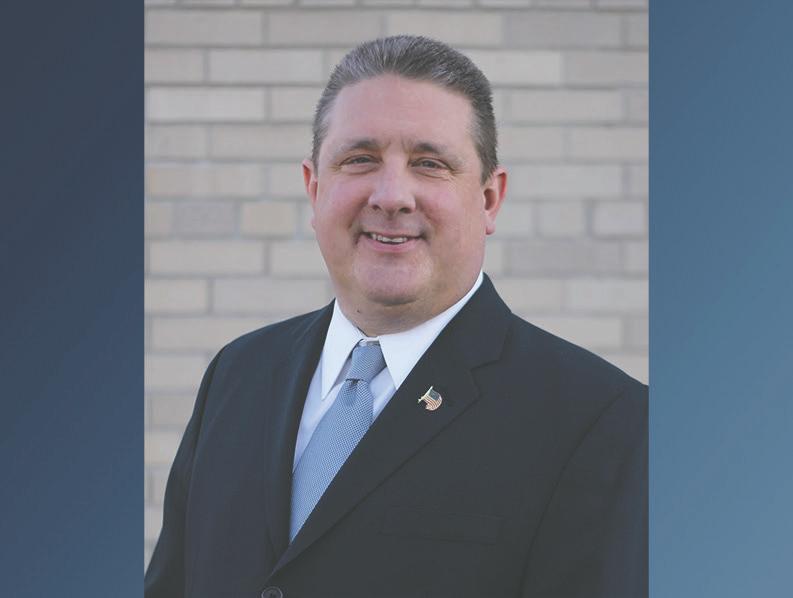
p Adam Forgie Photo courtesy of Adam Forgie
This isn’t normal
Guest Columnist
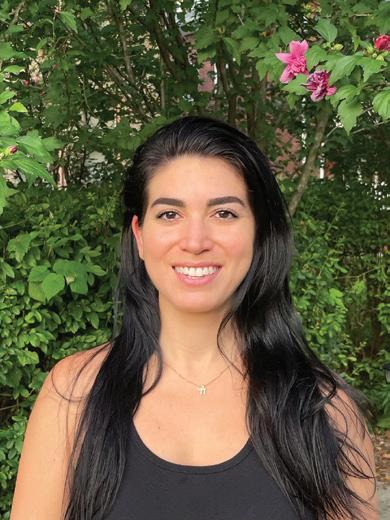
Sarah Kendis
Last Thursday, another attack on the Jewish community occurred. Another in what has become a regular series of attacks on Jewish institutions, and another in a series of missing a greater truth.
And so now we have another round of increased patrol cars outside our Jewish establishments. Another round of superficial thoughts offered by politicians, minus deeper reflection. Another pause before it’s business as usual for the rest of the country … while our own community is left wondering how long until the next.
As a Jew in Pittsburgh, this hits home. However, this attack hits home for any Jew, as this external pattern and internal worry has become the norm for all of us.
But to state the most obvious truth of our time: This isn’t normal.
Many have already written off this latest violence, as this time no one was killed who shouldn’t have been, choosing to ignore the deadly intended outcome. But we cannot lose sight of the goal: a massacre of over 100 children and their nearly 50 teachers, by a barbarian who placed his bigoted narcissism over the lives of the most innocent.
So, yes, the prepared safeguards thankfully worked to prevent such horror. But why should all of them have to be standard practice?
Why does every Jewish institution need at least one armed guard? Why have guards been standard practice for decades?
Why should any place of worship need training for an assault like this, by a Jewish
organization created for it?
Why do security costs for Jewish institutions across the country need to total $765 million?
Somehow 2% of the national population has to deal with nearly 70% of all religiousbased hate crimes. That’s not normal.
(Hezbollah) brothers would make him feel the need to take out his anger on innocent children” vying for best spin.
Worse, if that’s possible, is that in this case the blame has been almost completely lifted from the man who intentionally drove a vehicle full of weapons into an American preschool to every-
Too many ignore that antizionist radical Islam has the agency to breed and promote a terrordriven purpose, while too few truly believe that Jews have the agency to ensure a secure future for themselves.
Neither is it for so many to go to bat for the perpetrator of such a heinous crime.
In the case of any other attack on any other group, there is typically a uniform outpouring of support for the victims and their community … not the victimizer. That individual is rightfully and unequivocally condemned, never excused or defended.
Yet in the past week, that norm has been lacking to missing. At best, there has been passive downplaying; at worst, active revision of the entire narrative.
Media has gifted this monster with softened coverage bordering on eulogistic, with focus shifted from the community dealing with a horrific intended child massacre to his past and the current state of his family’s community.
A sympathetic — to the point of deranged — online chorus has gone even further, with contesting angles of “can’t believe such a nice guy had this happen to him” and “it’s understandable that the tragic death of his
one’s favorite fixation — Israel.
The narrative: Israel, which took action against this man’s terrorist brothers in Lebanon, forced him to take action against unrelated kids in America.
The Jews, who dare to defend their lives in Israel, must have theirs ended here.
Humanize the criminal, and therefore dehumanize the victims. But really, what other lunacy can be expected after years of our synagogues stained as evil Zionist centers, while their terrorists are lionized as freedom fighting activists?
This isn’t normal.
It should never be considered as such for people to go to such lengths to excuse and absolve an entire demographic … to ritually infantilize a population, to both others’ and their own demise … to accept as ordinary that one can have so much ingrained hate for another.
It isn’t normal. But the insidious truth is that a concerning amount of society views it as so.
What we’ve been witnessing is not simply
a “rise in antisemitism” or “wave of Jew hate.” To label it as such is to diminish into transience an already existing virus of hate which has fed off of complacency for ages. These escalating attacks here and around the world are the direct result of allowing appeasement and low expectations to reign over responsibility and accountability, due to an inability or flat out refusal to address the true core of the problem: Too many ignore that antizionist radical Islam has the agency to breed and promote a terrordriven purpose, while too few truly believe that Jews have the agency to ensure a secure future for themselves.
Because when it comes down to it, too many simply expect this situation for Jews, both in Israel and abroad. Whether it is kids in Israel running to bomb shelters because of incoming explosions, or kids here running from an explosive-laden truck that rammed their school; whether it is a numbness to jihadist violence, now genuinely believed to be a tolerated part of culture, or perhaps an assumption that Jews just must have had it coming. Jews are simply not seen as full-fledged people deserving of the complete and equal empathy, security and liberty that others assume for themselves.
None of these ridiculous assumptions are normal, and should never be considered as such; but the world both accepts and expects them to be, and each day that they become more tolerable is a step further that modern society has sunk.
Our society needs to have a serious and vital conversation, not just about why it continues to deem this acceptably normal, but what this truly means for itself and its future. The reality is stark: Doing nothing can be deadly. PJC
Sarah Kendis is a musician living in Pittsburgh.
Flawed federal bills at the worst possible moment
Guest Columnist
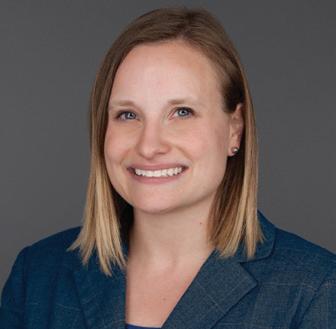
Karen Gal-Or
Ihave spent much of my career reading legislation — regulatory law, statutory interpretation and legislative drafting. Lawyers are trained to do something very specific: find the gaps in a legal framework and identify when a statute will create more problems than it solves.
I approached two recently proposed bills — the Ceasefire Compliance Act of 2026 (H.R. 7645) and the Block the Bombs Act of 2026 (H.R. 3565), cosponsored by Rep. Summer Lee — with that same analytical lens. These bills would place new and dramatic restrictions on U.S. security assistance to Israel — requiring Congress to approve individual munitions transfers and allowing arms sales and use to be cut if the administration does not certify certain requirements tied to Gaza and the West Bank.
While I understand the humanitarian impulse behind them, I have serious concerns about how these bills are written — concerns that feel especially urgent given that one of the sponsors is Congressman Chris Deluzio, who has traditionally supported a strong U.S.–Israel relationship and who represents Pennsylvania’s 17th district.
Singling out Israel: A double standard that endangers the region
Before examining those flaws, it is important to clarify the nature of the U.S.–Israel relationship.
Israel is one of America’s most capable and battle-tested partners in one of the world’s most volatile regions. The relationship is deeply reciprocal. Israeli companies support more than 250,000 American jobs; Israel is the third-largest source of foreign companies on the NASDAQ; and in 2024, the U.S. exported approximately $15 billion in goods to Israel. Much of the security assistance provided to Israel is spent here, supporting American manufacturing and our defense industrial base. Israel spends nearly 8% of its GDP on defense — more than double the NATO benchmark. Its missile defense architecture, co-developed with the U.S., is informing our domestic Golden Dome initiative. Israeli counter-drone technology is in use by the U.S. military. The Israeli Emergency Bandage is standard issue for American soldier. U.S. Cyber Command conducts annual joint exercises with the IDF’s Cyber Defense Directorate.
Israeli intelligence has disrupted terrorist plots that threatened both American civilians and American troops abroad. Meanwhile, Iran — the primary adversary confronting Israel — is a direct threat to the United States. Iranian proxies have killed more than 1,000 Americans in the Middle East, and Iran continues to pursue aggressive partnerships with Russia,
China and North Korea. Israel is not simply a regional ally. It is one of our most capable partners in countering a shared adversary.
Which makes it all the more troubling that these bills single Israel out in a way applied to no other U.S. security partner. The United States arms dozens of nations — including countries with far more contested human rights records and far weaker commitments to international law — yet none face per-transfer congressional authorization, vague presidential certifications, or conflict-specific compliance conditions. Only Israel — a democracy under sustained rocket fire and terrorist attack — is subjected to this framework. That asymmetry normalizes a posture of hostility toward Israel that would be unthinkable if applied to any comparable ally. And it is strategically reckless: When Iran, Hamas and Hezbollah observe the United States legislating doubts about its commitment to Israel, it signals that terrorism and missile attacks may succeed in eroding American support — rewarding aggression and making the region more dangerous, not less.
The context these bills enter
The timing of this legislation makes this worse. Just two months ago, the Iranian regime was massacring its citizens in the streets. According to Time magazine, as many as 30,000 people may have been murdered on Jan. 8 and 9 alone — a death toll so staggering it overwhelmed the regime’s capacity to dispose of the dead.
Since Feb. 28, the United States and Israel have been conducting joint military operations against Iran, which has launched sustained waves of missiles and drones at Israeli population centers and U.S. allies across the region. Legislation that injects legal ambiguity into arms-transfer decisions right now is not an accountability measure. It is a national security risk.
Structural problems in H.R. 3565 H.R. 3565, would prohibit the transfer of certain munitions to Israel unless Congress first passed a separate authorizing law for each transfer. During a military conflict, that means Israel could not receive resupply of key weapons unless Congress completed the entire legislative process: committee review, floor debate, amendments, reconciliation and presidential signature. There is no expedited procedure and no emergency exception. That is not oversight. It is a legislative veto over routine security assistance.
The bill also requires written assurances “satisfactory to the President,” but it never defines what “satisfactory” means. Another provision requires weapons to be used in accordance with “international humanitarian law” and “international human rights law.” These are important legal frameworks, but they are not self-executing in U.S. domestic law. The bill provides no agency responsible for making compliance determinations,
Please see Gal-Or, page 15
Chronicle poll results: Democratic Party's support for Israel
Last week, the Chronicle asked its readers in an online poll the following question:
“Are you concerned that the Democratic Party’s center is turning away from supporting Israel?” Of the 460 people who responded, 60% said yes and 40% said no. Comments were submitted by 174 people. A few follow.
At this point, I don’t think the Democratic party has a “center” when it relates to Israel and Jewish issues.
I’m politically homeless. I’m a moderate liberal and have always voted Democratic, but the anti-Israel feeling is disgusting to me. On the other hand, I loathe Donald Trump and most Republican domestic policies.
As a Jew who is also LGBTQ+, it is terrifying to be around anyone of any political affiliation right now.
Until last week when Gov. Gavin Newsom disparaged Israel, AIPAC and any Jewish money as anti-U.S., I had been a supporter of Newsom in ‘28 for president.
I’m actually quite pleased. The safest stance for American Jews, and for Israelis, is to establish room for legitimate critique of the Israeli government.
Gal-Or:
Continued from page 14
no adjudicative process and no standard of proof.
One provision is particularly self-defeating. The bill restricts JDAM guidance kits — technology that converts unguided bombs into precision weapons. Restricting precision guidance does not reduce strikes. It makes them less accurate, increasing civilian casualties. If the goal is humanitarian protection, restricting precision technology directly undermines it.
Drafting failures in H.R. 7645
H.R. 7645 operates differently but compounds the problem. It would condition U.S. arms transfers on certification by the executive branch that Israel is complying with requirements tied to the October 2025
Good luck, District 12 voters
Are you concerned that the Democratic Party’s center is turning away from supporting Israel?
It is amazing to me that any Jews in the USA who support Israel are still Democrats. Not only has the Democratic Party stopped supporting Israel, but the Republican Party is clearly very supportive of Eretz Israel. I know several Dems who are now leaning more Republican as a result, but the fact that there are any Zionists who still align with the Democratic party is a mystery to me.
Thank G-d for Fetterman.
I am not. I am concerned with the far left but I do believe that the party will
ceasefire. If the certification cannot be made, the bill would prohibit the sale, export, or use of U.S.-origin defense articles in those territories.
The bill never defines “United Statesorigin defense articles,” implicitly sweeping in the entire U.S. Munitions List — including spare parts, software updates and training. Routine logistical support for systems already in the field could fall within the prohibition.
The bill also bars the use of U.S. defense articles “in Gaza or the West Bank” without clearly distinguishing between offensive operations and defensive or counterterrorism activities. Although the legislation includes language preserving assistance for defensive systems such as missile defense, that language creates discretionary authority rather than a clear statutory exemption.
I am glad that I do not reside in Pennsylvania’s 12th Congressional District. Its voters will have a horrible choice to make in this year’s general election. The presumptive candidates will be Democratic incumbent Summer Lee and Republican James Hayes (“Adam Forgie drops out of District 12 Democratic primary,” online, March 16; this issue, Page 1). Rep. Lee has been tone-deaf to concerns of the Jewish community, if not openly antisemitic. She displays public defiance, bombast and belligerence, yet does not have the courage to allow an interview by Chronicle staff.
A Rep. Hayes would almost certainly be more responsive and sensitive to our community, but he is a Republican, one who would join what is currently a House majority that has provided a reckless, impulsive, infantile, divisive and hateful president to do whatever he wishes with no oversight, enabling him to take actions which bring down our country and its people. We are suffering the result of Trump’s second reign and we will continue to.
still support its relationship with Israel. I have bigger concerns with the corruption and leadership from the Republicans for our country.
Unfortunately the Democratic Party abandoned Israel a long time ago and it’s getting worse after every election cycle.
I am more concerned that the Republicans are feigning interest in Israel to use the Jews as pawns and leverage the Jewish vote to promote their anti-gay, anti-science, anti-immigrant agenda.
This isn’t news. It’s been true for a long time. The Iran war has simply added fodder to their so-called pro-Palestinian ideology — which of course, isn’t pro-Palestinian, because getting rid of Hamas entirely would be pro-Palestinian. But it is anti-Israel, and that’s what the Dems are all about. And, no, I am not a Republican nor, G-d forbid, a Trumpian. I’m a registered Democrat, about to withdraw from my own party.
I’m very concerned. Where does that leave pro-Israel moderates? Options of an anti-choice Republican who supports Israel, or a Democrat spouting, “From the river to the sea?”
Several certification requirements are similarly vague. The secretary of state must certify that Israel has not violated the ceasefire, yet the bill never defines what constitutes a violation or who determines it. It requires certification that negotiations are being conducted “constructively,” but again leaves that term undefined. It requires that civilians be free to leave and return to Gaza, even though the Rafah crossing is controlled by Egypt, not Israel. Israel could fail a certification standard based entirely on conditions outside its control.
The bill also bars support for “permanent occupation” without defining the term or addressing its interaction with the Oslo Accords framework, which established interim arrangements pending a final negotiated settlement.
Without clear definitions, the certification requirement becomes legally unworkable.
I’m not so much concerned as convinced that the DNC is not a friend of Israel. I long ago became Republican, with support of Israel being one of the factors in my decision.
Mainstream Democrats have not turned away from supporting Israel, but many have turned away from unconditional lockstep support. Support for Israel sometimes comes in the form of critical examination of policies, which ultimately will result in the isolation of Israel from the civilized world.
The vast majority of Democratic voters and politicians still support Israel and condemn antisemitism. There’s a difference between supporting Israel and supporting Bibi Netanyahu. There is growing criticism of him, and he’s doing real harm.
I am concerned, but, at this time, I cannot support the Republican party. PJC
— Compiled by Toby Tabachnick
Chronicle weekly poll question: Are you concerned that the Republican Party’s center is turning away from supporting Israel? Go to pittsburghjewishchronicle.org to respond. PJC
The national security stakes
Members of Congress understandably want to respond to humanitarian concerns about Gaza and the war in Iran. Those concerns are real and deserve thoughtful engagement. But thoughtful engagement requires legislation that is carefully drafted, clearly defined and consistently applied.
These bills fail on both counts. They are legally flawed, operationally unworkable, and strategically harmful. In the midst of an active conflict involving the U.S., Israel, and Iran — with Israel under sustained attack and serving as a linchpin of regional deterrence — introducing uncertainty into this partnership does not advance peace. It undermines it. PJC
Karen Gal-Or is an attorney with 15 years of experience in regulatory law and statutory interpretation. She lives and practices in Pittsburgh.
Even if Mr. Hayes wished to challenge the president, he, as a freshman, would be unlikely to persuade any member to join him and he would be ostracized.
Good luck, 12th Congressional District voters. You are going to need it!
Oren Spiegler Peters Township
Correction
In the March 13 Chronicle story “Rodef Shalom, Temple Sinai create a ‘house for all of us,’” Cantor David Reinwald was named as the writer of the congregations’ Purimspiel. It was, however, written by Jennifer Bett along with Susie Hauptman and Reinwald. PJC
We invite you to submit letters for publication. Letters must include name, address and daytime phone number; addresses and phone numbers will not be published. Letters may not exceed 500 words and may be edited for length and clarity; they cannot be returned. Send letters to:letters@pittsburghjewishchronicle.org or Pittsburgh Jewish Chronicle, 5915 Beacon St., 5th Floor, Pittsburgh, PA 15217
We regret that owing to the volume of correspondence, we cannot reply to every letter.
Life & Culture
Banana bread matzah brei
By Hannah Paperno | The Nosher
There’s something about the comfort of a warm slice of banana bread with some butter that never gets old. If there are a million ways to consume the flavors of banana bread, I can assure you I’ll find them. During Passover, when we’re meant to be reflecting on our liberation from slavery in Egypt and avoiding hametz, I find myself craving my favorite comfort food — banana bread. Though I love some of the standard Pesach fare like matzah ball soup and spoonfuls of charoset, the decadence of banana bread is something I yearn for.
I have fond memories of waking up to the smell of matzah brei wafting from the kitchen downstairs as a child. Last year, I finally decided to set out to learn how to make matzah brei myself. Admittedly, this was a dangerous choice because now it means I can have my favorite kind of pancake any time of year, but I digress. After several rounds of my standard favorite (plain matzah brei topped with a mound of butter and sugar), I looked at the slowly browning bananas in my kitchen and decided to do some experimenting. With the power of sheer hunger and willpower on my side, banana bread matzah brei was born.

It’s a simple matzah brei recipe that you can whip up in under 20 minutes, with the addition of all the flavors that make banana bread so great. Overripe mashed bananas paired with cinnamon and butter make for a Passover breakfast that I’ll be coming back to for years. I traded out my standard butter and sugar for butter and maple syrup to make it a more traditional pancake experience, however, you’re welcome to top them in whatever way you see fit. However you choose to enjoy them, I hope they bring all who try them the same comfort that they bring me.


Ingredients:
Yield: 20 pancakes
10 sheets of matzah hot water
3 overripe bananas, mashed
2 eggs
1 teaspoon vanilla
1 teaspoon cinnamon pinch of salt
1 stick of butter, for cooking
To top: cinnamon-sugar walnuts
sliced bananas maple syrup
Instructions:
In a large bowl, crush matzah and soak in hot water for 15 seconds before draining excess water.
In a separate bowl, combine the bananas, eggs, vanilla, cinnamon and salt.
Into the large bowl of drained matzah, add the egg and banana mixture, and stir to combine.
In a small pan over low heat, melt about 1 tablespoon of butter (per pancake), then use a 1/2 cup to measure out your pancakes. Flatten with a spatula and fry until golden brown on each side, about 3-5 minutes. Repeat with remaining batter.
Top with cinnamon sugar, walnuts, bananas and maple syrup. PJC


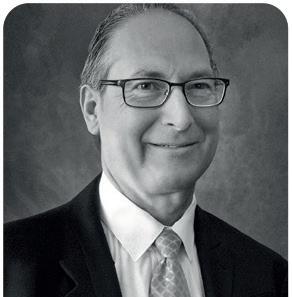






We provide expert help with long term care planning, powers of attorney, wills, trusts and special needs. We help you implement legal and tax strategies to protect your wealth during your life and afterwards.



mhm@ahmpc.com 4927 William Flinn Highway Allison Park, Pennsylvania 15101 We make house calls!

Photo courtesy of The Nosher
Life & Culture
Viral creator Chloe Hechter to encourage Jewish pride at Hillel JUC event
By Adam Reinherz | Senior Staff Writer
An influencer known for parodying sorority sister spats and summer camp memories is coming to Hillel JUC in an effort to promote Jewish pride. Chloe Hechter, a New York City-based content creator with 182,000 followers on TikTok will speak to college students on March 23.
The program, she told the Chronicle by phone, will enable students to learn more about her past, posts and aspirations.
A self-described “major theater kid,” Hechter, 24, grew up in New York City. She worked as a professional child actor and spent summers at theater camp before attending LaGuardia High School for acting. During her teenage years, Hechter recognized her preference for creating material versus following someone else’s.
“I’m somebody who always wanted to write my own scripts and be my own boss,” she said.
Hechter began working toward that goal at Syracuse University, where along with majoring in writing and communications she served as editor-in-chief of University Girl Magazine, a student-run fashion and lifestyle magazine.
The rush of overseeing 100 college students proved an early model for future activities.
“I always loved being that, quote, unquote, influencer, I guess, for the younger girls on campus,” she said. “I loved trend forecasting. I loved writing about dating.”

nism, fashion and pop culture. She envisioned working at Vogue and accepted internships with Modern Luxury and other publications.
Despite several magazine bylines, breaking into the industry proved challenging.
“I kind of felt like I had to take matters into my own hands and create my own destiny,” she said.
Hechter started sharing recorded sketches of herself in character. The content hit. With personas varying from Gen Z Bat Mitzvah planner to the mean girl at camp who “gives you a makeover,” Hechter portrayed roles
“I grew up Jewish, very Reform, but my father was born in Tel Aviv. He came to the States when he was 10,” she said. “My mom grew up in Queens. Her dad is a Holocaust survivor. He’s still alive. Love him to death.”
Hechter said she grew up learning from her father “a lot about Israel, and from my mom’s side of the family a lot about the Holocaust.”
“While I was never super religious — not kosher, not going to a Jewish day school — I was

always very culturally and spiritually Jewish,” she continued. “I always understood our values and found that I always felt a sense of peace when I was with other people in our community.”
Hechter, an increasingly familiar Jewish voice on campus — she recently spoke to a conglomerate of Hillels in Ontario and to another in Atlanta — said she hopes to bring a message of positivity.
“I don’t want students to feel scared to be openly Jewish. I don’t want them to be afraid of antisemitism. I don’t want them to feel like they have to hide their Jewish star,” she said. “It’s obviously scary, but I always try to portray a message of hope.”
Dan Marcus, Hillel JUC’s executive director, said Hechter’s visit is the perfect program prior to Passover: “I hope that Jewish students feel an increased sense of Jewish pride and community.”
Held in partnership with the University of Pittsburgh’s Jewish sororities and fraternities, the event is a critical reminder that “being Jewish is something to celebrate at Hillel,” Samantha Shell, Ezra Springboard Fellow at Hillel JUC said.
“Our goal is to create spaces where students can feel proud, connected and supported in their Jewish identity,” Shell continued. “Chloe’s work encourages people to lean into that pride. And we’re excited for students to hear her story.” PJC
Adam Reinherz can be reached at areinherz@pittsburghjewishchronicle.org.
p Influencer Chloe Hechter is looking to spark Jewish pride in Pittsburgh. Photo courtesy of Chloe Hechter
Celebrations

, daughter of Steven and Casey Drucker, became a bat mitzvah during Shabbat morning services at Adat Shalom on Saturday, March 14, 2026. Her grandparents are John and Sherry Greenberg and the late

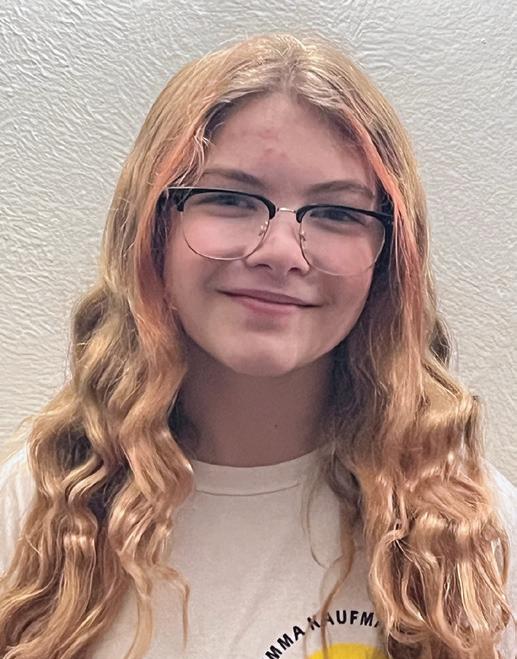

became a bat mitzvah on Saturday, March 14, 2026, at the Jewish Community Center of Greater Pittsburgh. Eliana is the daughter of Fara and Andy Marcus, sister of Levi Marcus, granddaughter of Ron Marcus, the late Leslie Marcus (B’’H) and Hinda
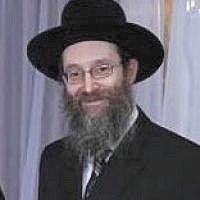
“Yeast (leavening) or honey, you shall not burn as an offering …” “With every offering you shall offer salt.”
The various commentaries offer explanations for these instructions. Rambam (“Guide for the Perplexed”) is cited, explaining that the pagans would add yeast and honey to their offerings. Hashem wanted Israel to do things differently. On the other hand, the reason given to add salt is to enhance the flavor. This appears to be contradictory.
One can live without it. The improved leavened product satisfies the additional desire for physical pleasure. The same is true of honey. In addition, leavening is added to change the product — from matzah to chametz. It is not there to add flavor to matzah. Even honey does not simply enhance the flavor. It adds a sweetener. This is something new that was not there in the original mixture.
, son of David and Laura Pechersky, will become a bar mitzvah during Shabbat morning services at Adat Shalom on Saturday, March 21, 2026. His grandparents are Mark and Debra Pechersky, and the late
, daughter of Lisa and Matthew Stahlman, will become a bat mitzvah on Saturday, Mar. 21 at Beth El Congregation of the South Hills. Grandparents are Anita and Marc Alop of Phoenix, Arizona, and Linda and Paul Stahlman of Clarion County, Pennsylvania. PJC
The basic notion of a korban, offering, is hiskarvus, becoming close to Hashem. One really wants to place himself on the altar, but Hashem has instructed Israel to offer animals, flour, etc. to represent the human. This phenomenon of bringing the two sides close is paradoxical. Hashem is pure spirituality, totally metaphysical. The human is pure materiality, physical. How can the two become close? In reality, material human has a spiritual side. When a human approaches the mizbaiach, holy altar, he offers up his holy spiritual side, and he burns the material. The physical turns into metaphysical. And so, the human is able to draw close to Hashem. Accordingly, when offering something physical and material, it makes sense to offer the very best material. This might be the reasoning behind the pagan ideal of offering yeast and honey; they wanted to raise the most material items to the spiritual realm. Yeast, or leaven, is the highest level of processed food. Not only is it cooked or baked, but prior to the cooking a process of leavening takes place. The raw material is processed again and again. Wheat is ground into flour. It is then kneaded into dough, then left to rise and leaven, and finally baked into a beautiful bread. Honey adds a new sweeter flavor to the food. Both are the most wonderful examples of a super-material food. However, yeast is not a necessity. It is an addition to the basic material dough.





The Torah says: When you wish to come close to Hashem by raising the physical to the metaphysical, the point is to refine the material. It is not to add even more material. Pagans tended to view their idols as a duality; physical, material beings like themselves, while at the same time, some kind of spiritual power. By adding more material, they felt that they were improving the bond through the offering.
By contrast, salt is not food, nor an agent to change the physical makeup of the food, for the most part. Salt brings forth the flavor that already exists in the food. The salt does not become a separate ingredient in the mixture. Rather, it becomes a part of the main ingredient. It turns into the item being salted. This enhances the item inherently. Even in the ketoress incense, a tiny amount of salt was added to bring out the best in the rest. Salt can even enhance the scent. It is not an added ingredient in a mixture. It is there to enhance the existing ingredients.
This can certainly improve spiritual closeness. It can lead to enhanced intimacy with Hashem. The purpose of salting the korban is to bring forth the strengths inherent within humans. One wishes to show how he can harness his entirety, using all his strengths. These include strengths within the physical as well as spiritual, and to refine and spiritualize the physical strengths. He should be looking to enhance those existing strengths by “salting” them, just a little. This will serve to bring forth the deeply hidden qualities within his body and soul. PJC
Rabbi Shimon Silver is the spiritual leader of Young Israel of Greater Pittsburgh. This column is a service of the Vaad Harabonim of Greater Pittsburgh.





Rabbi Shimon Silver Parshat Vayikra Leviticus 1:1 – 5:26
Obituaries
ALI: Sylvia Jean Freeman Ali was born on April 11, 1933, and grew up in Pittsburgh. Her parents were Louis and Irma Freeman. She was the oldest of three children. Her younger brother, Alfie, died at the age of 4. Her younger sister, Ruth, died in 2023. Sylvia was a true lifetime learner. She attended Liberty Elementary School and graduated from Peabody High School in 1951. She obtained a bachelor’s degree from the University of Pittsburgh and a master’s degree in education from the University of Western Maryland. Later, as a senior citizen, she took classes for many years at the University of Pittsburgh through the Osher program. Sylvia raised her five children in Pittsburgh and later in Maine. She spent most of her working life as a teacher and as a librarian. In 1990 she gave up her position at the Baxter School for the Deaf in order to return to Pittsburgh and help to take care of her 87-year-old mother. Sylvia especially loved classical and folk music and she played violin, viola, piano, recorder and tin whistle. She played in several community orchestras and a string quartet. She was also a talented artist and poet. Sylvia loved exploring places and cultures. She worked briefly for the State Department in Washington D.C. in the 1950s and in later life she was eventually able to visit Canada, England, Ireland, Scotland, France, Germany and China. She also loved studying languages: Latin, French, German, Sanskrit, Bengali, sign language, Irish, Yiddish and Chinese. She translated several works by her great-uncle Jakob Elias Poritzky from German to English. Sylvia was very devoted to her family and friends. She loved life. She was a free thinker and a true bohemian. She had many quirky and unique ways of thinking about things and doing things, and she was always supportive and never judgmental of other people. Sylvia is survived by her five children, Robbie, Roshida, Rahim, Sheila and Liana, her niece Cheri and her nephew Michael, her seven grandchildren, Irma, Abraham, Sylvia, Eliza, Jacob, Elias and Natalie, and her grand-niece Clio. Graveside services were held at Shaare Torah Cemetery. schugar.com
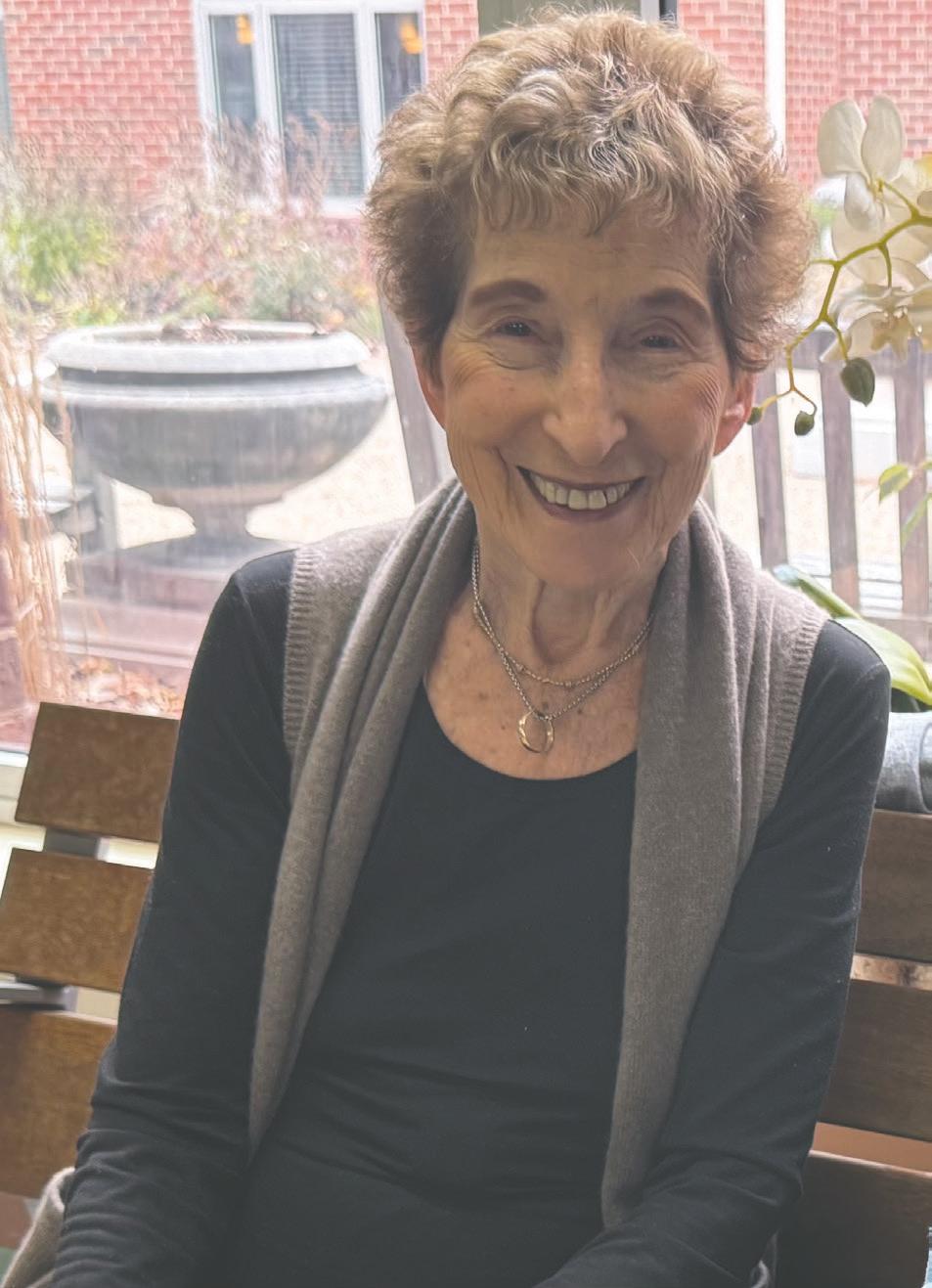
BRETTON: Gerda S. Bretton, of Scott Township, left this world peacefully in her 90th year on March 15, 2026, surrounded by her family. Gerda was born Nov. 17, 1935, in Pittsburgh’s Squirrel Hill, the devoted daughter of Anna (d. 1977) and Irving Stein (d. 1971) and the adored little sister of Morton (d. 2002) and Harry (d. 2006) (Judy). Gerda began life as a figure skater and tennis player. She received her Jewish education at Congregation Beth Shalom and graduated high school at Taylor Allderdice. Gerda went to the local outdoor rinks to practice her figures. She and her parents put stars in the window and awaited Morty’s and Harry’s return from the war. Then an oft-reported deal with dad was struck — one year at Ohio State followed by degree completion at Pitt. Gerda commuted to school earning a bachelor’s degree and a teaching certificate in elementary education. Later would follow a master’s with a reading teacher specialization from Slippery Rock University and a decades-long career in the New Castle, Reynolds and Neshannock Township public schools. At Pitt, Gerda met Abe L. Bretton (d. 2023) of Ellwood City, Pennsylvania. She and Abe married in 1957 and settled in New Castle. They had five children and fostered lifelong relationships with friends, colleagues and extended family. In time, they celebrated 66 years of marriage. In 2003, Gerda and Abe moved to Cherry Hill in Nevillewood, and since 2024 Gerda resided at Providence Point. As a working mom, Gerda made a home and filled it with beauty and love. She took materials at hand and made them look good. Trips to Pittsburgh to see Harry and Judy and their children were kept up. On holidays, Gerda regaled her family with delicious traditional fare and always set a place for the playful Mort. Her movements through the demands of work and family were not frenetic but measured and sure. And because her love radiated outward, the children’s friends knew the glow of her welcome. In Lawrence County, Gerda earned a reputation as an amateur tennis champion. Her employment at Neshannock included experience as girls varsity tennis coach. Gerda is survived by five children, Pam Pearlman (Seth) of Pittsburgh, Rachel Pavilack (Stuart) of Wheeling, West Virginia, Jeff Bretton of Pittsburgh, Brian Bretton of Cleveland, Ohio, and Philip Bretton (Melissa) of Lincolnshire, Illinois; grandchildren, Isaac Pearlman (Laura Stein), Julian Pearlman (Ana Cordera), Jacob Paviliack, Eli Pavilack, Nathan Bretton and Anna Bretton; and two great-grandchildren, Andrew and Gabriel Pearlman. A graveside service was held at the Beth Shalom Cemetery. Contributions can be made to Beth El Congregation of the South Hills, 1900 Cochran Rd, Pittsburgh, PA 15220. Arrangements entrusted to William Slater II Funeral Service, Scott Twp., 412-563-2800. slaterfuneral.com
ERLICH: Ruth Erlich, an entrepreneur who was often described as ahead of her time, passed away March 12, 2026, leaving behind a legacy of independence, curiosity and intellect. Ruth began her entrepreneurial journey in the 1970s, starting her own business during a period when few women were doing so. Her determination, creativity and willingness to forge her own path defined much of her life and inspired those who knew

her. Outside of her work, Ruth embraced life with enthusiasm. She had a deep love of food and was always eager to try new flavors and share meals and recipes with family and friends. She also enjoyed cars, had an affection for animals, and took a keen interest in media, pop culture and the changing world around her. Those close to her often remarked on her forward-thinking perspective and how naturally she seemed to stay ahead of the times. Ruth will be deeply missed by her son, Brad Jones; her daughters, Barbara Erlich and Michelle Light; and her two granddaughters, Zoe and Valerie Light. Her family remembers her as a strong, curious, and loving presence whose influence will continue to be felt for generations. Graveside services and interment were held at Shaare Torah Cemetery. schugar.com
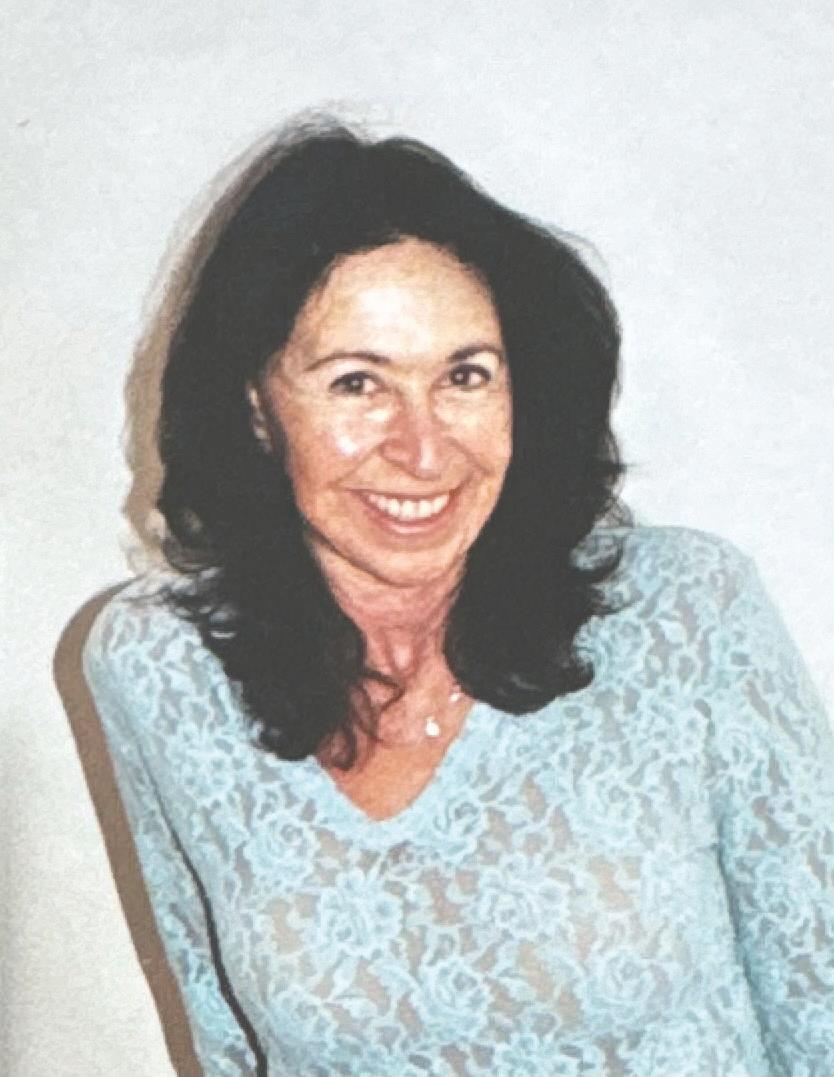
RABNER: Barbara Rabner, on Tuesday, March 10, 2026. Beloved mother of Monte Rabner, Fred (Nicole) Rabner and Kim (Adam) Snyder. Cherished sister of Marla Armstrong, Evelyn Simon and the late Rolene Granata and Lisa Polansky. Adored grandmother of Jordan and Jake Rabner, Jesse and Georgina Rabner, Andrew and Noah Meyers, and Maya Snyder. Also survived by several cherished nieces, nephews and countless treasured friends and colleagues. Barbara’s life is reflective of her undeniable tenacity, zest for life and truly kind-hearted nature. While raising her three children, Barbara worked her entire life. Starting her career as a court stenographer and spending the remainder of her professional life as licensed real estate agent at Coldwell Banker. Barbara filled her free time with the things that brought her so much joy — gardening, cooking, dancing, listening to Benson Boone, and even sharing her love of golf with children, volunteering at Schenley Park golf course. Despite her varied passions and successes, nothing brought her more fulfillment than spending time with her beloved grandchildren. The love she showered them with will be felt forever. There is no way to fill the gap in our hearts Barbara leaves behind. We will see her and feel her love of hummingbirds and butterflies every time we see one. Services were held at Ralph Schugar Chapel, Inc. Interment Homewood Cemetery, Star of David Section. Contributions may be made to Rebuild Beeri, Grow Pittsburgh, or Chabad of the South Hills. schugar.com
Please see Obituaries, page 20

Jewish Association on Aging gratefully acknowledges contributions from the following: A gift from ... In memory of...
Anonymous Isadore Berenfield
Anonymous
Anonymous
Anonymous
Stewart Barmen
Turk
Robert Bogdan Alice Bogdan
Sherwin E Glasser Clara Goldhammer
Marlene Goldstein
Amy R Kamin
Carl Krasik
Merrianne Leff
Merrianne Leff
Paul Lipkind
Carole Neiberg
Linda Rattner Nunn
Nathaniel S Pirchesky
Sylvia Pearl Plevin
Sandra Wortzman
Stephanie & Nicole Zinman
I Herbert Rudick
Marvin Kamin
Earl Belle
Mildred S Moss
Florence Stein
Payce Lipkind
Frances Lurie
Shirley Rattner Lieberman
Louis Caplin
Betty Pearl
Sgt Sherwyn Meyers
Gary Edward Zinman
Contact the Development department at 412-586-2690 or development@jaapgh.org for more information. THIS WEEK’S YAHRZEITS —
Sunday March 22: Elliott Alber, Sanford Berman, Joseph Brody, Elizabeth Cousin, Sara Goldstein Davis, Marvin G Elman, Phillip Fenster, Freda Foreman, Marvin Kamin, William Katz, Ida E Keller, Samuel Levinson, Nathan Malt, Sarah Markowitz, Jack Marks, Samuel Miller, Samuel Mines, Albert Schwartz, Harry Schwartz, Kania Sigman, Joseph Viess, Jacob Weiner, Sally Louise Weisman, Joseph M Zasloff, Gary Zinman
Monday March 23: Alice Serbin Bogdan, Louis Caplin, Harold Erenstein, Aaron Friedland, Jacob Richmond, Rose Shrager, Irwin Silverman, Lazarus Simon, Esther Dena Stein, Jacob Steinberger
Tuesday March 24: Matilda Beck, Sarah S Berman, Anna F Davidson, Sadie Farkas, Bertram Green, M Emanuel Heller, David T Horvitz, Myer Klevan, Sidney H Lebovitz, Bessie Lundy, Philip Singer, Sarah Sontag, Sam Vixman, Bernard Winer
Wednesday March 25: Allen Stein Amdur, Isadore Berenfield, Louis Farkas, Saul Guttman, Max Handelsman, Julia Hepps, Morris J Klein, Arthur Kramer, Mildred Lebovitz, Helen Mermelstein, Rose Beck Nathanson, Isadore M Peril, David Pollack, Shirley Rattner Lieberman, Kenneth Joel Rosen, Anna L Rosenberg, Edward S Sheinberg, William Shussett, Dr Sidney A Silverman, Tillie N Sirocca, Abe Turk, Harry Weinberger, Louis Zamore
Thursday March 26: Sol Bennett, Bernard Berry, Samuel L Case, Ralph Herny, Mollie Liff, David A Myer, Leah J Rosenberg, Rose Rosenthal, Max Rotter, Louis A Schwartz, Allan Robert Shine, Sam Stein, Samuel J Weiss
Friday March 27: Harry Balber, Julia Baroff, Louis Cohen, Morris Cohen, Eva Cooper, Harry Fisher, M D , David Frank, Steven David Harris, Jean Katzman, Larry J Klein, Anna Leff, David Levy, Charles E Rosenthall, Pearl Baskind Sadowsky, Rody S Verk
Saturday March 28: Milton Alderman, Benjamin Geduldig, Dora Himmel, Dorothy Leah Katz, Anne R Levy, Betty Pearl, Israel Pick, Adele Prizant, Fannie Serbin, Ida Shrut, Sidney A Uram
Headlines
Jewish security watchdogs
warn of ‘most elevated and complex threat environment’ in recent history
By Joseph Strauss, Jackie Hajdenberg | JTA
Astring of recent synagogue attacks across North America and Europe has left security officials sounding the alarm bells.
“We are in the midst of the most elevated and complex threat environment the Jewish community and this country has seen in modern history,” said Kerry Sleeper, chief of threat management and information sharing for the Secure Community Network, a Jewish security organization.
Sleeper’s comment came during an SCN webinar on Friday, March 13, held in response to the previous day’s attack on Temple Israel in West Bloomfield, Michigan, where an assailant rammed into the synagogue armed with rifles and smoke bombs.
Though the attack was successfully thwarted by existing security measures, Mitchell Silber, executive director of the Community Security Initiative, said in an interview that Jewish institutions may now need additional layers of protection.
“This might be a bit of a tipping point where we’ve gone to a new level, where really what’s required to secure a Jewish institution in the U.S. starts to look like almost a Europeanization of security,” Silber said.
That would include posting multiple armed guards outside entrances and requiring
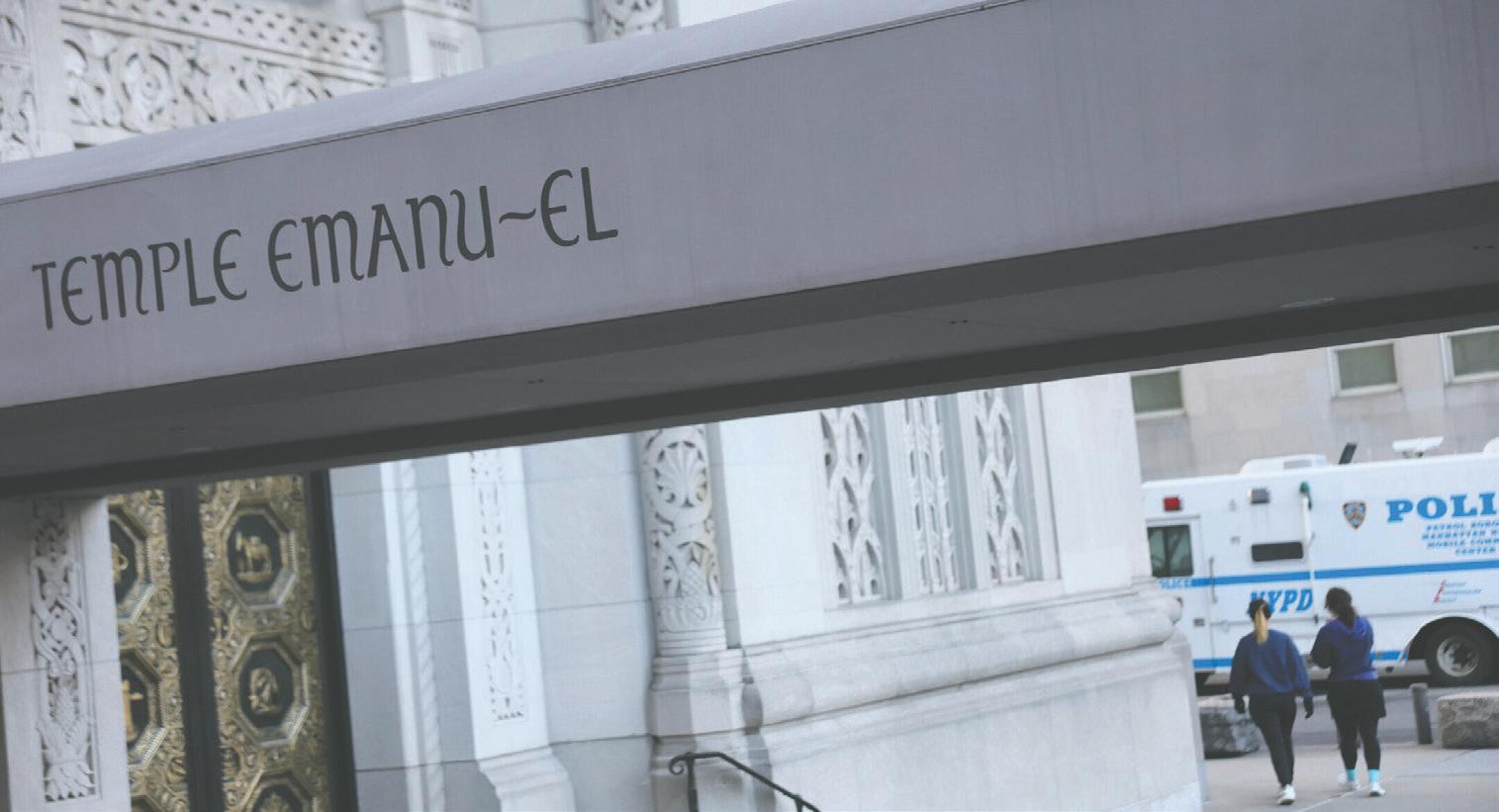
increased screening before entry, he said. Many European synagogues also require attendees to go through security screening at some distance from the building, rather than at their doors.
“Unfortunately that seems to be where we are right now — the Jewish community has to up its game in terms of the external security of its locations,” he said.
Currently, a shutdown at the Department of Homeland Security since Feb. 14 is halting the review of millions of dollars in security funding for nonprofits, constraining the ability of Jewish institutions and other vulnerable groups to upgrade their security infrastructure.
The Temple Israel attack came within two weeks of attacks in Austin, Texas, and at Old Dominion University in Virginia. Those other

“Confuse them with your silence and amaze them with your actions.”
attacks were not on Jewish institutions, but Sleeper, a former FBI assistant director, said the “various motivations of the attackers appear to be affiliated with the war between the U.S., Israel and Iran.” He added that the assassination of Ayatollah Ali Khamenei in Iran, and President Donald Trump’s stated desire to facilitate a regime change, have “contributed to the extremely high threat environment.”
Meanwhile, things have escalated outside the United States. Three Toronto-area synagogues were hit with gunfire over the last couple of weeks, and a synagogue in Rotterdam was targeted by an arson attack early Friday morning, allegedly by a group that has also claimed credit for an explosion at a synagogue in Belgium.
The flurry of attacks had the entire Jewish world on edge going into Shabbat — and some watchdogs say things could soon get worse.
“It is not entirely shocking to those of us who’ve watched this space for a long time,” said Mike Jacobson, a senior fellow at the Washington Institute for Near East Policy who served in the State Department’s Counterterrorism Bureau. “I would think things would continue to ratchet up again, at least in the short term.”
He pointed to the Iranian Revolutionary Guard Corps’ activation of sleeper cells — their agents lying in wait until called to action to commit an attack — across the West, as a danger to vulnerable targets, which includes Jewish communities.
Another source of danger, Jacobson said, comes from copycat attacks.
“There’s also this mix that makes it really hard to sort out in the initial stages, where you’ve got people, not only who may be directly tied to Iran, but people who are so-called ‘inspired’ by this,” Jacobson said. “Those are often really hard for law enforcement to get advance notice on.”
Not always does the threat come from direct orders from Iran, he said. “It’s often difficult to tell: Is this something that is directly tied to the organization, or is this something that is more by someone inspired [by the IRGC]?”
He added, “They are trying to inflict pain in as many directions as they can.”
As security organizations encourage increased caution and awareness of suspicious activity, they are also emphasizing that those measures shouldn’t come at the expense of gathering in communal Jewish spaces.
“We’re not going to let the terrorists take away our confidence or the ability to embrace our religion,” said Michael Masters, SCN’s national director, during the Zoom webinar. Masters’ sentiment is also shared by congregational leaders like Rabbi Adam Roffman, of Congregation Shearith Israel in Dallas.
“Sure, security is something we think a lot about, and we’ve done our best to protect ourselves,” Roffman said. “And at the same time, the life of this community goes on.”
At Temple Israel, Shabbat services were streamed from the nearby country club that served as a reunification center for families after the attack. The synagogue wrote on Facebook: “We’re so glad you’re joining us tonight as our community comes together to welcome this much needed Sabbath.” PJC

from page 19
VENIG: Ilene Kramer Venig, on Tuesday, March 10, 2026. Beloved wife of the late Alex Venig. Loving mother of Ellen (Steven) Wagman of Blue Bell, Pennsylvania, and Holly (Elliott) Levenson of Fox Chapel, Pennsylvania. Devoted Memaw of Evan, Allison and Margo. Graveside services were held at Tree of Life Memorial Park, Franklin Park, Pennsylvania. Contributions may be made to the Hillman Cancer Center, 5115 Centre Avenue, Pittsburgh, PA 15232. Arrangements entrusted to Ralph Schugar Chapel, Inc. schugar.com PJC






























p NYPD Mobile Command Center trucks are stationed near Temple Emanu-El on March 13, 2026, in New York City.
Photo by Michael M. Santiago/Getty Images





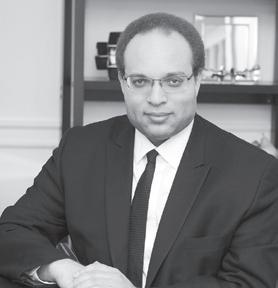



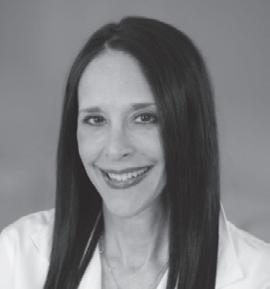


pittsburghjewishchronicle.org


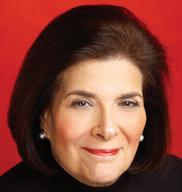
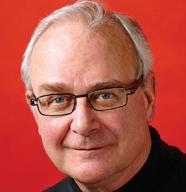










Life & Culture
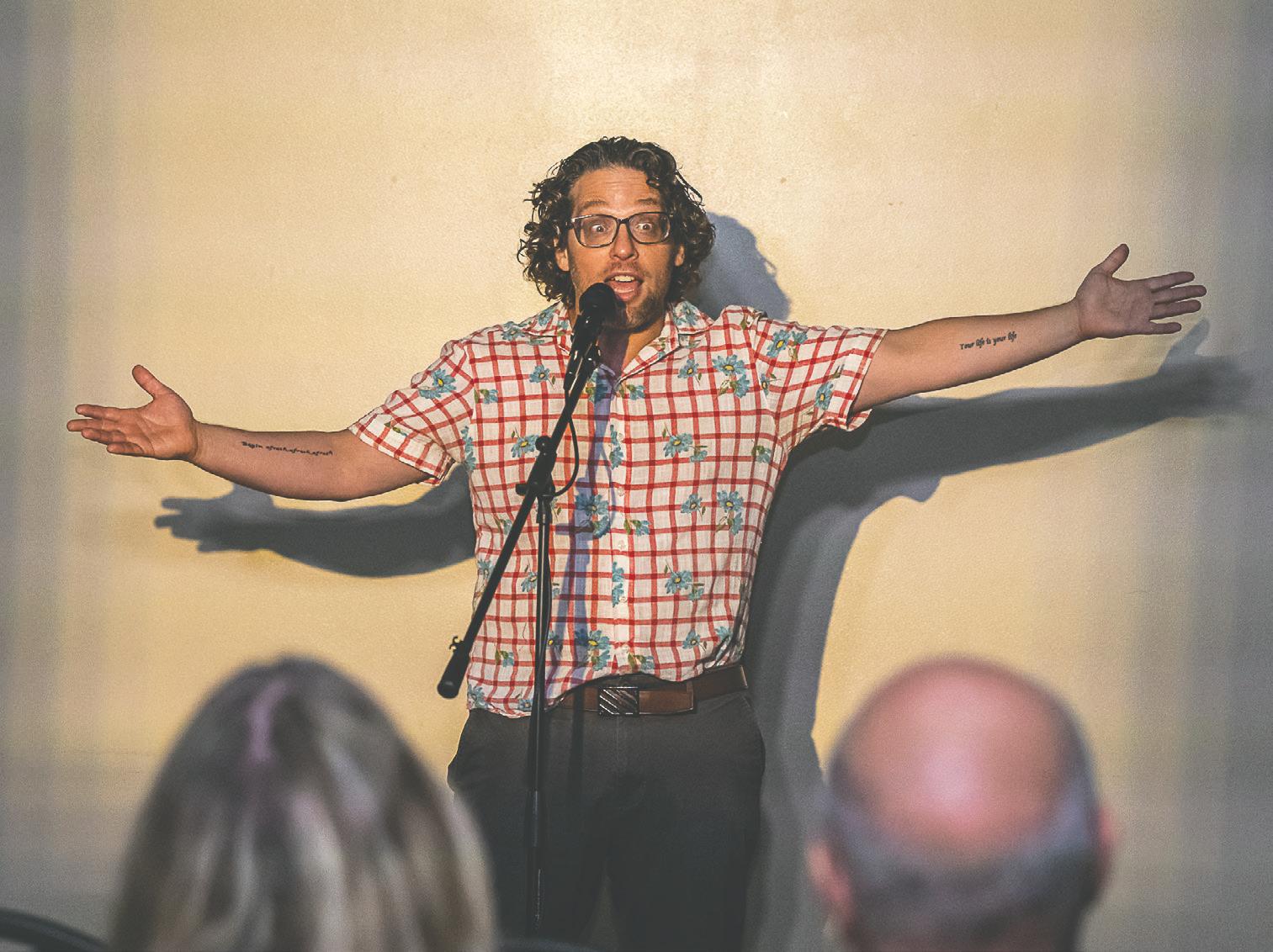
As a child, Noam Osband used to bury foreskins beneath the “Orlah tree” near his Brookline, Massachusetts, garage. It wasn’t until arriving at college and mentioning the practice to others that Osband recognized its oddity.
The son of a mohel, physician and Torah teacher, Osband, 45, addresses the story in “Circumscribed: A True Tall Tale of One Father, Two Sons, and Thousands of Foreskins,” but the anecdote is just a bit of what the Philadelphia-based writer, producer and documentary filmmaker seeks to convey in his live performance.
Speaking with the Chronicle by phone, Osband said the show is “fundamentally about somebody just reckoning” with pieces of their life.
Osband’s father died almost 25 years ago. The former chief of Pediatric Hematology and Oncology at Boston Medical Center, Dr. Michael Osband was a “respected member of the community,” his son said. Along with helping Boston “get an eruv, he was on the Chevra Kadisha.”
Digital tributes and memories showcase the late physician’s role in the community, but Osband said that only reflects part of the picture.
“He also was known for having this very good sense of humor — and it’s part of him that I totally take after — like crossing the line as far as he could without making people unhappy.” For example, Osband said, his father would “anonymously write and self-distribute a satirical newspaper called ‘Not the Torah World.’” Published before Purim, hundreds of copies would be “put in all the Orthodox shuls in the Boston metro area.”
That irreverence created an impression.
It’s enjoyable “pushing people a little bit out of their comfort level, without making people actually feel bad,” Osband said.
“Circumscribed: A True Tall Tale of One Father, Two Sons, and Thousands of Foreskins,” is a perfect vehicle for doing so.
“It’s very moving for me to have a show where I get to celebrate that part of him,”
Osband said. “It’s not generally the part that when we get together on his yahrzeit that we’re all necessarily celebrating. But for who I am as a person, that’s very much the part of him that really lasted with me, resonated with me, and that I hold very dear.”
In the years since his father’s death, Osband graduated college, earned a doctorate in anthropology and worked as a media producer, musician, teacher and street performer.
Creating “Circumscribed” was spurred in part by his own entrance into fatherhood, Osband said.
“In many ways, it’s less a show about circumcision, and it’s much more a show about family and family relationships.”
Such is the reason for its broad appeal — “Circumscribed” received the Audience Choice Award at the 2025 New York Fringe — he continued. “We all have eccentric relatives, and we all wrestle with dealing with family expectations for us, and maybe choosing not to be exactly who our parents thought we were going to be.”
Growing up, Osband’s personality so closely matched his father’s he was often called “Mini Michael.” As an adult, however, Osband chose not to be religious — a central quality of his father’s life.
The choice is one example of a universal experience, Osband said.
“We all have relatives who we love dearly, and maybe served as role models for us, but not completely, and there are parts of their life that you choose not to incorporate, and that can be difficult,” he said. “We try to reckon with what the parts you want, the parts you don’t want, and how that feels.”
The show is deeply personal, yet offers a singularly relatable quality, Osband continued. “How do we reckon with the memory of somebody who you really love, even though they’re not around, and even though you’re in a very different place than you were when you knew them?”
“Circumscribed: A True Tall Tale of One Father, Two Sons, and Thousands of Foreskins,” runs March 20-21 at Bloomfield Garfield Activity Center. Tickets are available at Pittsburghfringe.org. PJC
Adam Reinherz can be reached at areinherz@pittsburghjewishchronicle.org.
Photo by Jim Whetston courtesy of Noam Osband
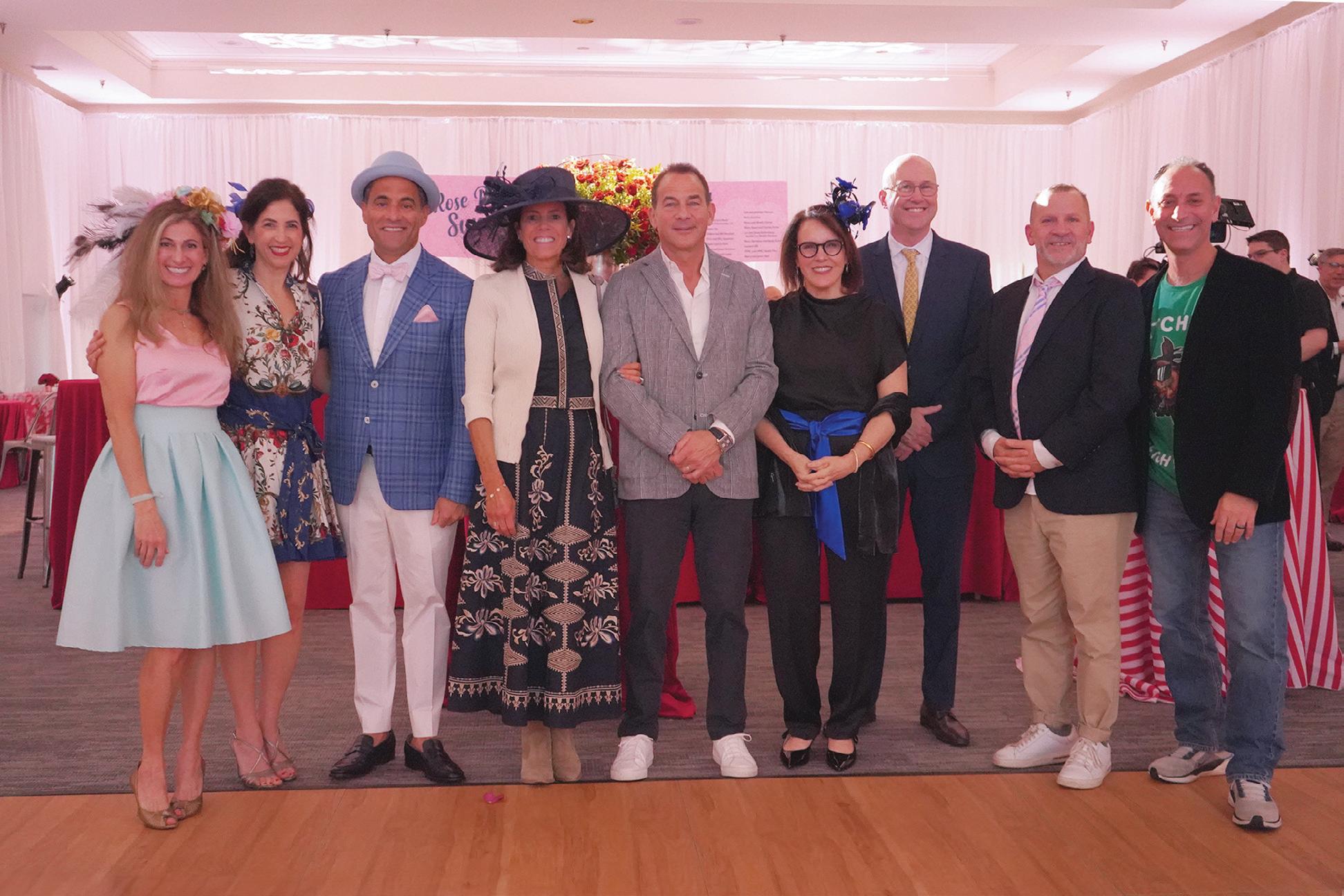
Reaching higher REACH Speakers Bureau met with Pittsburgh Mayor Corey O’Connor at the Eradicate Hate Student Summit on March 9.
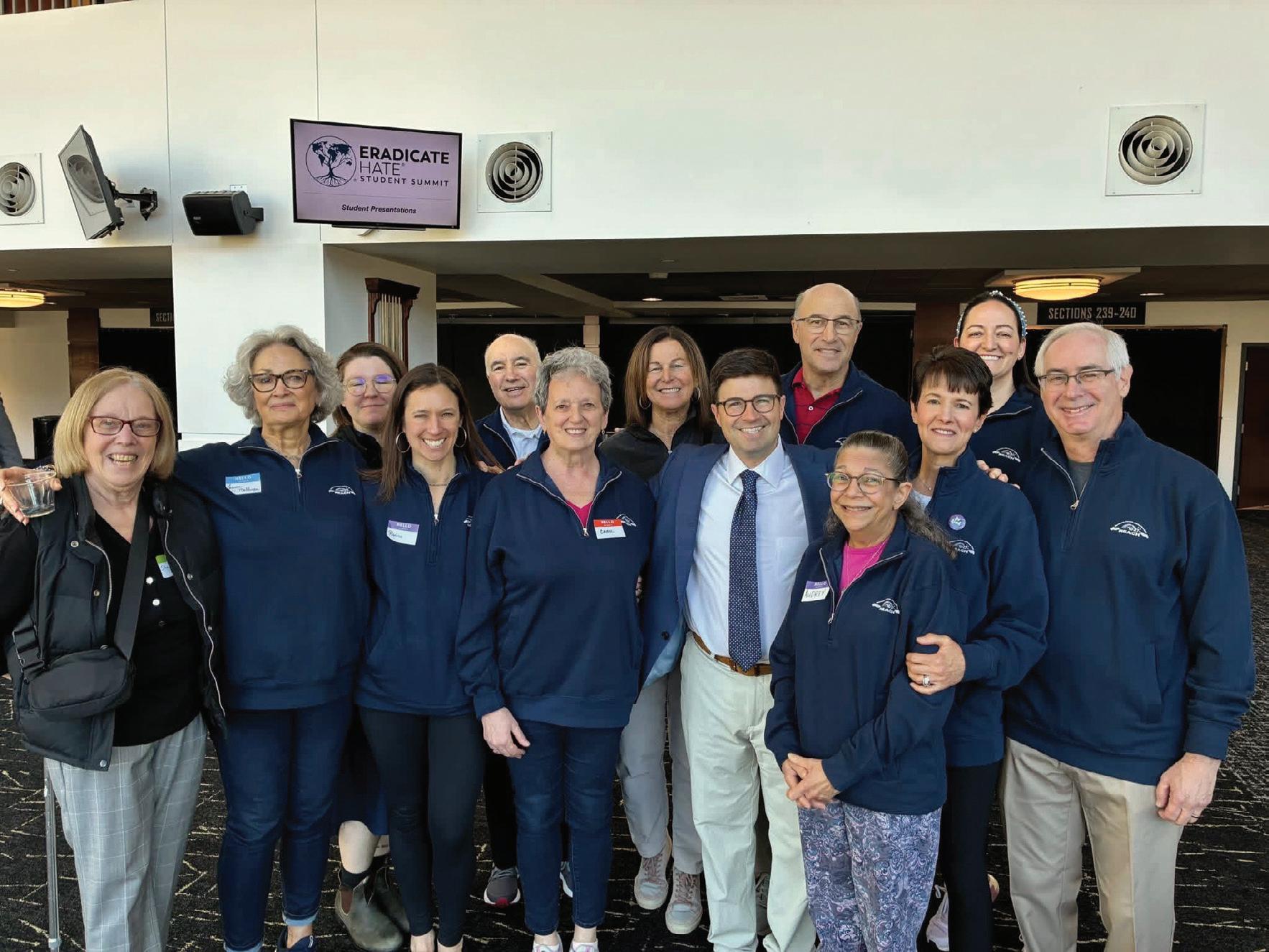
Celebrating together
Filling bowls and hearts

The Jewish Community Center of Greater Pittsburgh hosted Big Night on March 7. The annual fundraiser raised more than $1 million for programs, services and scholarships serving the commu-
On March 15, Beit Kulanu’s (the unification of Rodef Shalom Congregation and Temple Sinai) youth group held its annual bake sale during Empty Bowls. The group raised $700
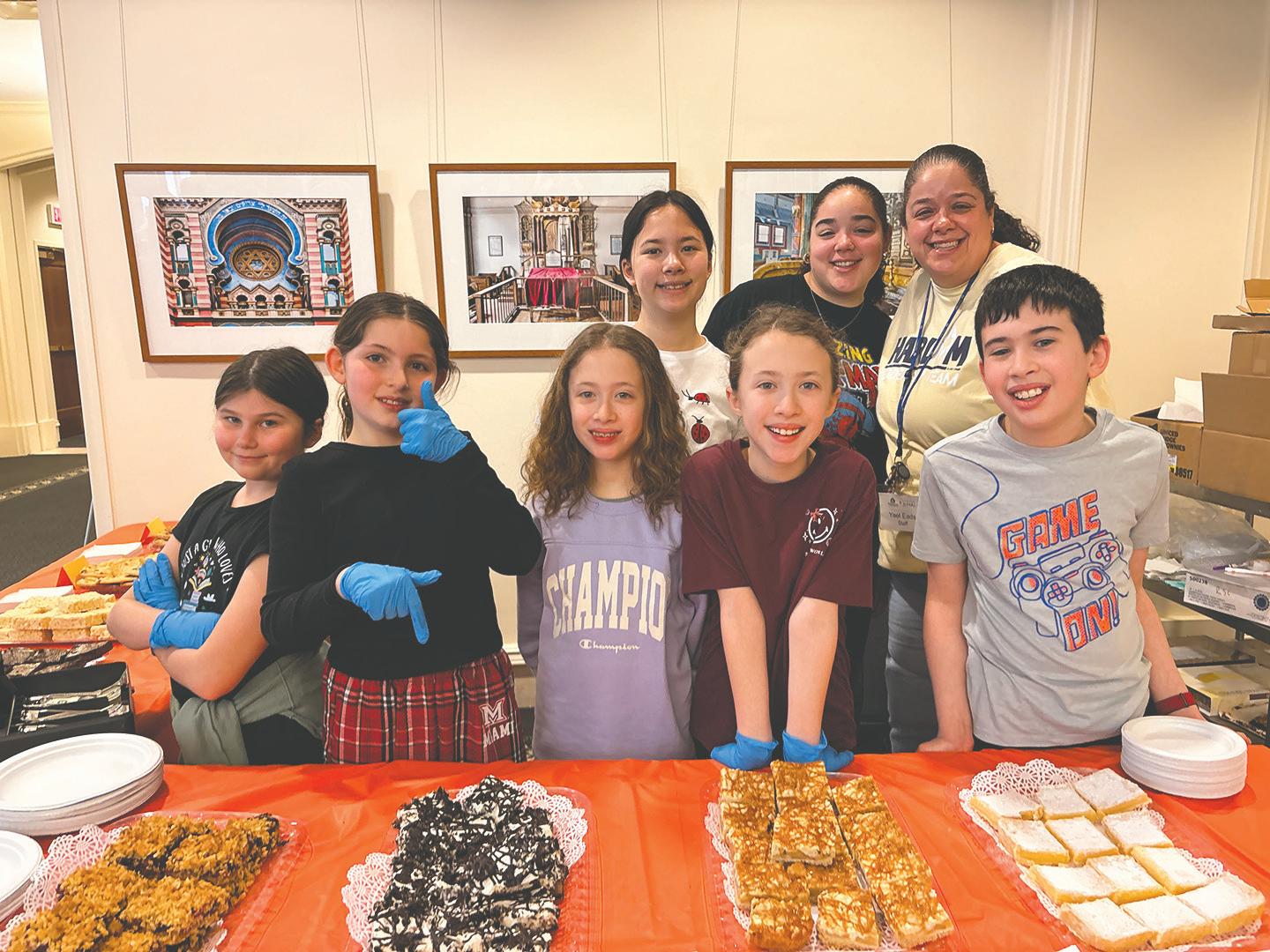
Pittsburgh’s Jewish and Hindu communities held an interfaith celebration in Monroeville. The March 15 event, organized by StandWithUs, enabled participants to enjoy Passover and Holi traditions through food, music, dance, storytelling and crafting thanks to a grant from the Jewish Federation of Greater Pittsburgh.
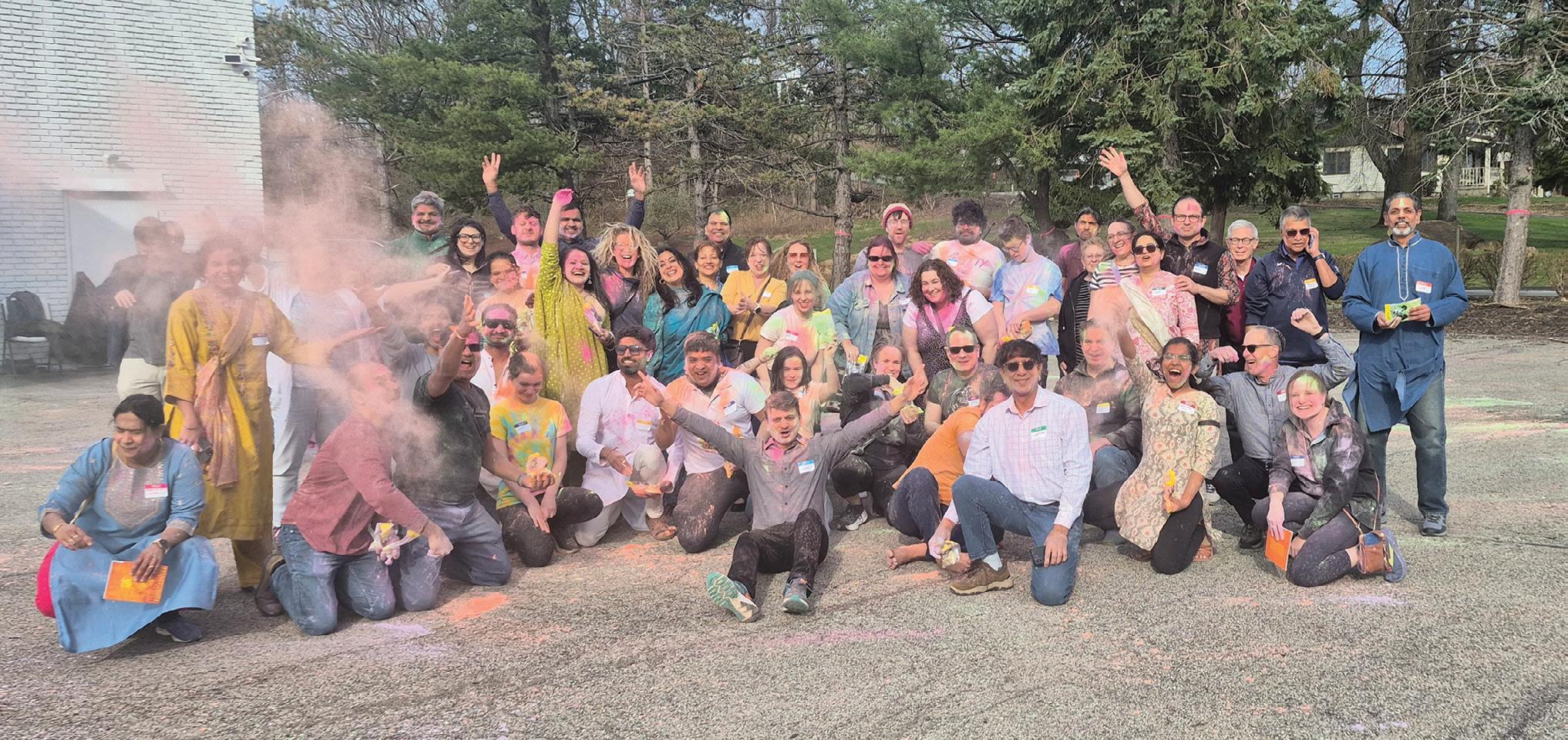
and members
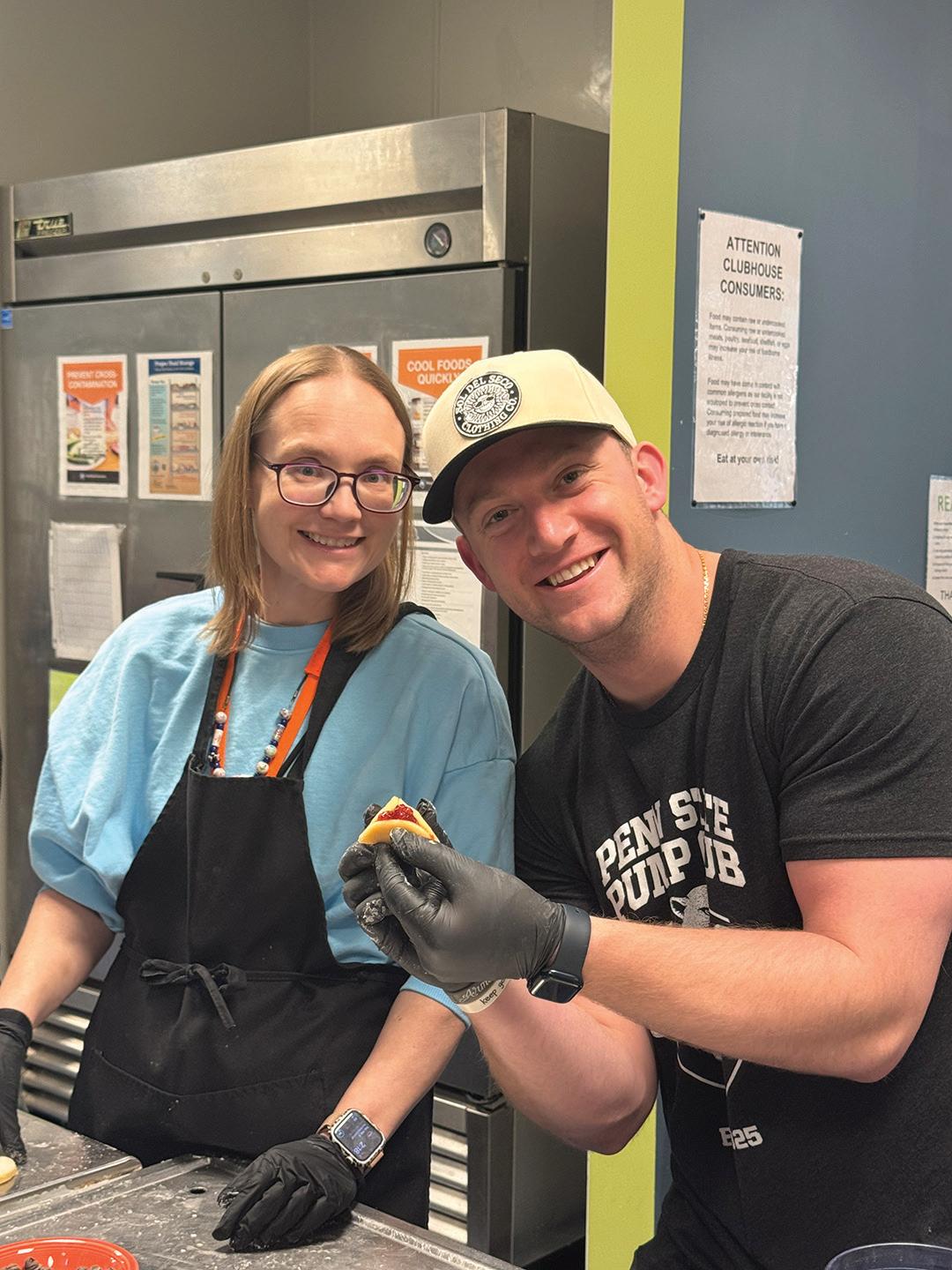
p
Pittsburgh Mayor Corey O’Connor and University of Pittsburgh Chan cellor Joan Gabel Photos courtesy of Jewish Community Center of Greater Pittsburgh
p Old traditions, new friends
Photo courtesy of Julie Paris
p
Still sweet Staff
of the Sally and Howard Levin Clubhouse, a program of The Branch, baked hamantaschen for Purim.