
CMU’s relationship with Qatar examined in federal lawsuit



By David Rullo | Senior Staff Writer
Carnegie Mellon University’s relationship with Qatar has come under scrutiny in a federal lawsuit.
Qatar’s financial contributions to the university have been spotlighted as part of a 2023 lawsuit filed by Yael Canaan, a former CMU School of Architecture student alleging she was subjected to “pervasive anti-Jewish discrimination” during her time at the university. Canaan claims that at least some of that discrimination is related to the school’s relationship with Qatar. And now, a federal judge has said that the Middle Eastern nation may be exerting influence on the university.
In a 30-page opinion issued in December, United States District Judge W. Scott Hardy wrote that “Qatar and its affiliates could be a source of antisemitic influence upon CMU. Indeed, the largess of Qatari funds supplied to CMU may permit a reasonable juror to infer, in light of logic and common experi ence, that significant amounts of money and the reliance on such funds serves to motivate CMU to abide by expectations and wishes of its generous donors.”
CMU receives the third highest amount
of foreign investment of all U.S. univer sities — more than $2.9 billion annually — surpassed only by Harvard and Cornell, according to the U.S. Department of Education’s Foreign Gift and Contract Public Transparency Dashboard.
Qatar invests the most money of all foreign countries in American universities — nearly $6.6 billion. CMU, the lawsuit alleges, has received more than $5.9 billion between the years 2004 to 2019 and has a campus in Doha, Qatar.
The lawsuit alleges that an agreement between the university and Qatar limits CMU’s “full operational control” and requires it to “recruit at least two-thirds of the Doha faculty from CMU’s Main Campus to serve in Qatar for terms of at least three consecutive years.”
JFCS CEO says immigration crackdown is shaking Pittsburgh’s immigrant
By Adam Reinherz | Senior Staff Writer
Canaan’s case centers around School of Architecture professor and associate head for design fundamentals, Mary-Lou Arscott,
ittsburgh is known for spells without sun, but the current view from Jordan Golin’s vantage point is especially bleak. In recent months the president and CEO of JFCS Pittsburgh has watched the closure of nearly all legal pathways for immigrants into the U.S.
“It’s been really tough,” Golin said. “We

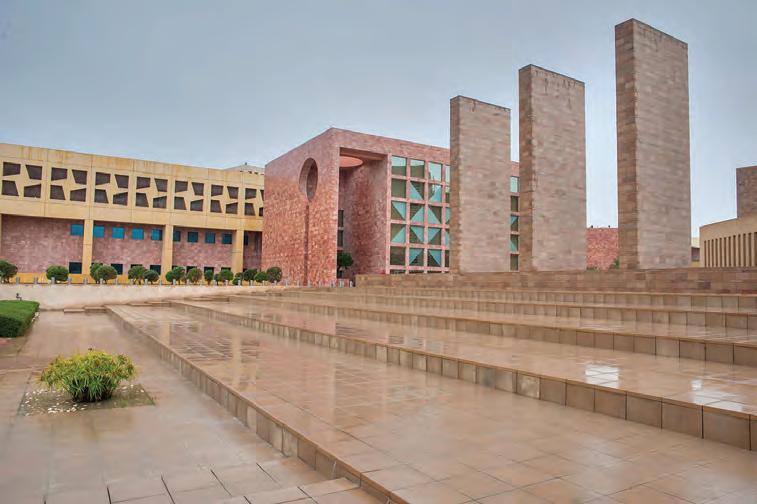
p Part of Carnegie Mellon’s Education City campus in Qatar
Photo by Alex Sergeev, CC BY-SA 3.0, via Wikimedia Commons
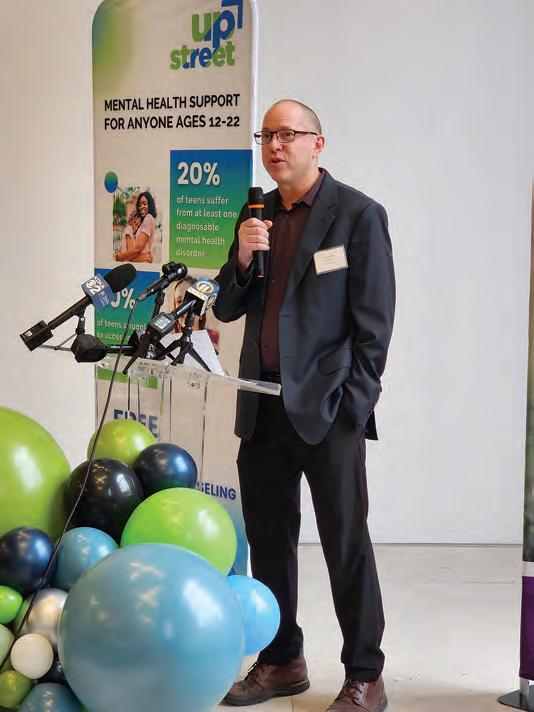
p JFCS Pittsburgh CEO Jordan Golin speaks at the ceremonial groundbreaking of UpStreet in 2022. Photo by Adam Reinherz
Headlines
Snow days, Zoom lessons and community efforts: How day schools weathered Fern
By Adam Reinherz | Senior Staff Writer
In a world of scant surprises, few unexpected announcements deliver such joy as “Snow day.” Though the hallowed declaration from Jewish day school leaders last week sent scores of children outside to shovel vanished sidewalks, sled down Frick Park’s slopes and make the most of winter, the decision to disrupt regular classroom learning was hardly whimsical. With Winter Storm Fern delivering conditions unseen in Pittsburgh for nearly 15 years, school leaders relied on a familiar communication strategy, consulted with local officials and determined school specifics with students and families in mind.
Whether to close
As news of Fern’s arrival grew, Community Day School forecasted a possible shuttering. On Jan. 22, members of the administration asked teachers to send home Chromebooks and other materials with students “in the event that we had to have a flexible learning day,” Head of School Casey Weiss said.
On Sunday, Jan. 25, CDS called a “traditional snow day” for Monday, but told families to prepare for a likely “flexible learning day” Tuesday.
Items sent home Jan. 22 — including Chromebooks and chargers with assignments posted on Google Classroom, as well as paper-and-pencil work for pre-K through third grade — helped ensure continuity of instruction on Jan. 27 and signaled an intent to return all students to in-person learning on Jan. 28, Weiss said.
At Hillel Academy of Pittsburgh, addressing the storm required a more “unique” approach than usual, Principal Yikara Levari explained.
With Jan. 26 slated to be the first day of school post-winter break, Levari and fellow administrators recognized a significant portion of students and staff would likely attempt to return to Pittsburgh from vacations on Jan. 25.
On Friday, Jan. 23, Hillel “decided to be proactive,” and let families know there wouldn’t be school on Monday, she said. “We just didn’t want to create extra stress or risks by having people rush back if we were 95% sure we were going to cancel anyway.”
Hillel declared a snow day for Jan. 26, but knew the rest of the week presented other challenges; with Fern arriving immediately after “our winter break we weren’t prepared for Zoom instruction,” Levari said. “If we would have been in school last week, perhaps we would have sent kids home with their devices, like we had for COVID.” Reflecting
on the pandemic, she said the lack of uniform access to suitable devices meant “some kids would do the work and some wouldn’t, and it wouldn’t really be fair to everybody.”
With temperatures on Jan. 26 hovering in the teens, but feeling closer to 0 degrees at points, Hillel declared another snow day for Jan. 27.
Yeshiva Schools of Pittsburgh faced its own predicaments. Given that its Mesivta — a program for boys high school students — operates on Sundays and nearly 40 boys live in Yeshiva’s dorms, school administrators felt compelled to continue operations on Jan. 25, CEO Rabbi Yossi Rosenblum said.
One wrinkle, however, was ensuring teachers’ arrival.
On Jan. 25, 26 and 27, Rosenblum and others drove throughout Squirrel Hill and Greenfield to transport educators.

SUBSCRIPTIONS subscriptions@pittsburghjewishchronicle.org 412-687-1000, ext. 2
TO ADVERTISE advertising@pittsburghjewishchronicle.org 412-687-1000, ext. 1
EDITORIAL DEPARTMENT
Email: newsdesk@pittsburghjewishchronicle.org
BOARD OF TRUSTEES
Evan H. Stein, Chair
Evan Indianer, Vice Chair
Derek Smith, Treasurer
Gayle R. Kraut, Secretary
Gail Childs, Dan Droz, Malke Steinfeld Frank, Karen Gal-Or, Seth Glick, Judith Kanal, Cátia Kossovsky, Charles Saul, Lynn Zelenski
GENERAL COUNSEL
Stuart R. Kaplan, Esq.
Jim Busis, CEO and Publisher 412-228-4690 jbusis@pittsburghjewishchronicle.org
EDITORIAL
Toby Tabachnick, Editor 412-228-4577 ttabachnick@pittsburghjewishchronicle.org
Adam Reinherz, Senior Staff Writer 412-687-1000 areinherz@pittsburghjewishchronicle.org
David Rullo, Senior Staff Writer 412-687-1000 drullo@pittsburghjewishchronicle.org
ADVERTISING
PRODUCTION
Jeni Mann Tough
Production Manager
Carl Weigel
Art/Production Coordinator
Subscriptions subscriptions@pittsburghjewishchronicle.org 412-687-1000, ext. 2
Published every Friday by the Pittsburgh Jewish Publication and Education Foundation 5915 Beacon St., 5th Floor Pittsburgh, PA 15217
Phone: 412-687-1000
POSTMASTER: Send address change to PITTSBURGH JEWISH CHRONICLE, 5915 BEACON ST., 5TH FLOOR PITTSBURGH, PA 15217
(PERIODICAL RATE POSTAGE PAID AT PITTSBURGH, PA AND AT ADDITIONAL MAILING OFFICES) USPS 582-740
Though Yeshiva managed to operate the Mesivta on a relatively routine schedule, Yeshiva closed its other buildings on Jan. 26 — some departments maintained Zoom rooms for students to daven (pray) and hear words of inspiration. Purposefully light on academics, the virtual sessions, Rosenblum said, were intended “just to give students some structure to the day.”
Yeshiva offered similar virtual opportunities to students on Jan. 27, as well as an optional in-person gathering from 10 a.m. to 2 p.m. for Girls High School students to pray and learn together as well as prepare for future programming.
The rooms where it happens
While school leaders told the Chronicle their institutions made decisions based on constituents’ needs, a broader conversation was underway.
Weiss, Levari and Rosenblum use a WhatsApp group to communicate various school and communal matters.
Frequent texts ensure “we’re all on the same page and know what each other is doing,” Levari said.
Weiss said she maintains similar communication with heads of other Pennsylvania independent schools, and when a consortium of members organized a Zoom call for Jan. 26 with representatives of Pittsburgh Mayor Corey O’Connor’s office, she invited Levari and Rosenblum to join.
The conversation, according to participants, concerned best practices for addressing the storm and recommendations from the City.
Following the Jan. 26 call, Dan Gilman, chief of staff to Mayor Corey O’Connor, told the Chronicle, “We are committed to providing all our school partners as up to date information as possible.”
Please see Fern, page 11
Amy Weiss, Account Executive (412) 613-0697 aweiss@pittsburghjewishchronicle.org 5915 Beacon St., 5th Floor Pittsburgh, PA 15217 Main phone number: 412-687-1000 Subscriptions: 412-687-1000, ext. 2
Manuscripts, letters, documents and photographs sent to the Pittsburgh Jewish Chronicle become the property of this publication, which is not responsible for the return or loss of such items.
The Pittsburgh Jewish Chronicle does not endorse the goods or services advertised or covered in its pages and makes no representation to the kashrut of food products and services in said advertising or articles. The publisher is not liable for damages if, for any reason whatsoever, he fails to publish an advertisement or for any error in an advertisement. Acceptance of advertisers and of ad copy is subject to the publisher’s approval. The Pittsburgh Jewish Chronicle is not responsible if ads violate applicable laws and the advertiser will indemnify, hold harmless and defend the Pittsburgh Jewish Chronicle from all claims made by governmental agencies and consumers for any reason based on ads appearing in the Pittsburgh Jewish Chronicle
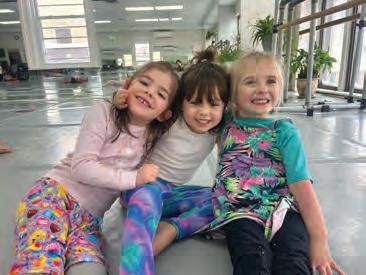
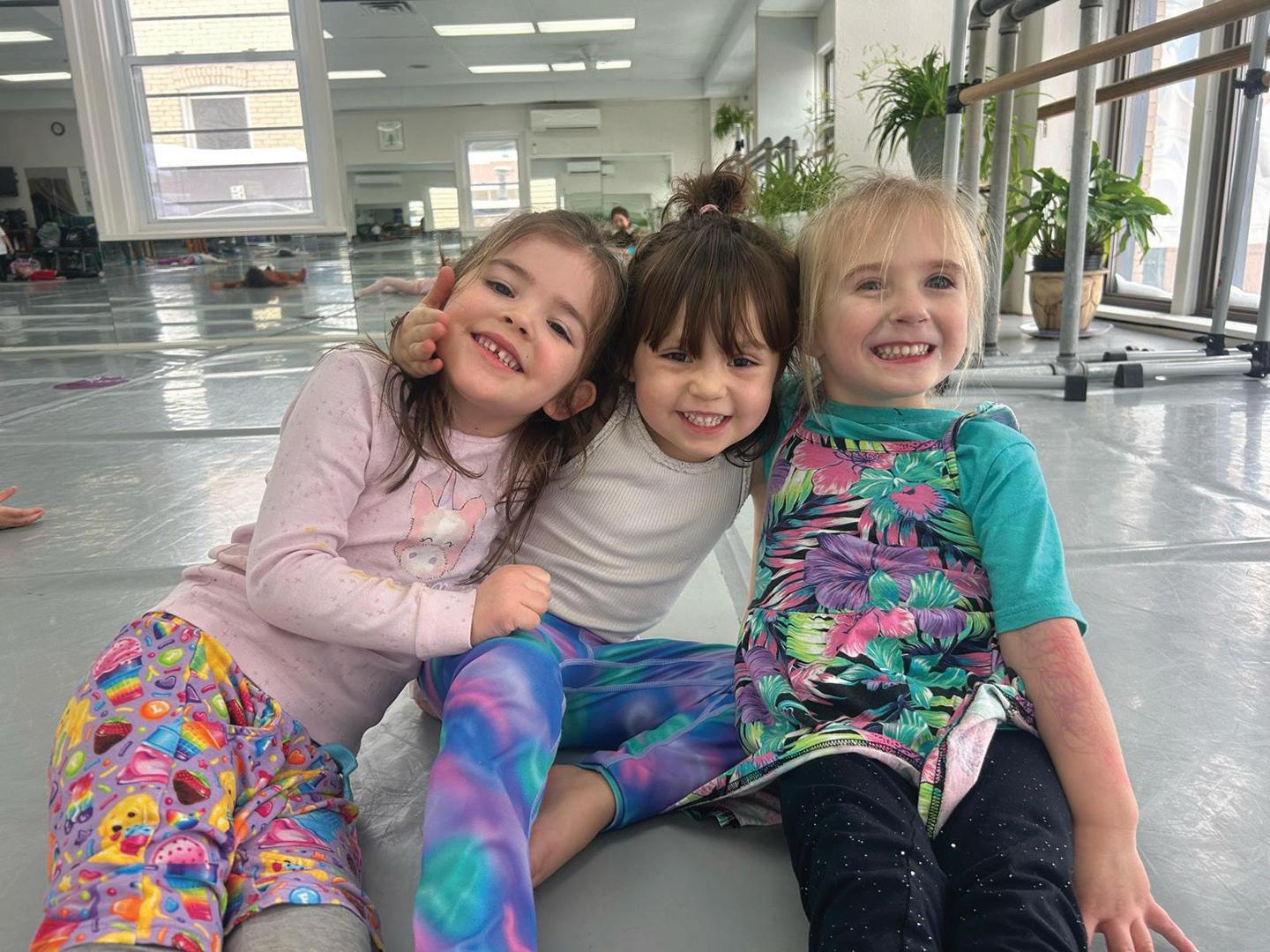
p time at Bodiography on Jan. 27.
Photo courtesy of Community Day School
Headlines
Federation teams with FBI to present seminar about online risks for kids
By David Rullo | Senior Staff Writer
Shawn Brokos was stunned when she heard FBI Supervisory Intelligence Analyst
John Pulcastro discuss the dangers for young people online at a December presentation by the Department of Homeland Security at Soldiers and Sailors Memorial Hall and Museum.
“The room was largely comprised of current or former law enforcement, and we were shocked by what we heard,” said Brokos, director of community security for the Jewish Federation of Greater Pittsburgh. “We realized that we needed to wrap our heads around what’s happening with the current threats online as it relates to our youth.”
Brokos said that at the conclusion of the meeting she asked Pulcastro to do a community presentation. The result is the Feb. 26 seminar “What Every Parent Needs to Know: Understanding Online Risks for Our Kids,” at 7 p.m. at Rodef Shalom Congregation, sponsored by the Federation.
Topics will include what type of online behaviors are gaining traction among youth; how to recognize that a young person may be struggling in unsafe digital spaces; practical steps families can take to encourage healthy online habits; how to prevent harmful situations; and

strategies for responding calmly and confidently if concerns arise.
The message, Brokos said, is important and one that is often hard to get across.
“Even in law enforcement we are struggling to get this message to parents,” she said. “They don’t fully understand what is happening online and how the grooming and solicitation of minors and adolescents is leading to violent behavior to include self-harm, suicide, prompting of violence and mass shootings.”
Bolstering Brokos’ point, the National Center for Missing and Exploited Children confirmed it received more than 500,000 reports of online enticement in 2025. It also received nearly 1,100 reports of sadistic online enticement, more than 23,500 reports of financial sextortion and nearly 63,000 reports of child sex trafficking.
Similarly, the website Enough is Enough reported that the parental control tool Bark analyzed more than 3.4 billion messages in 2021 across texts, emails and more than 30
apps and social media platforms. It found that 85% of teens experienced bullying as a victim or witness; 32% of tweens and 85% of teens engaged in conversations about depression; 43% of tweens and nearly 75% of teens were involved in conversations or situations involving self-harm or suicide; and 80% of tweens and more than 94% of teens expressed or experienced violent subject matter and thoughts.
Brokos said it’s critical for parents to recognize how fast the online world is changing and how criminals are exploiting it to specifically recruit children for violent purposes.
“That could be through doxing or swatting or animal cruelty or violent acts,” she said. “This is not just a child stumbling into the wrong chat room.”
Instead, she said, it’s an orchestrated effort by groups to desensitize youth to violence and to then groom them and finally prompt acts of violence.
“Whether that’s asking them to cut themselves, or a video of them doing a violent act, it almost sounds hard to believe but this translates to the world of security where we are seeing school shootings and mass shootings being conducted by individuals who have fallen prey to this solicitation online,” Brokos said.
FBI Public Affairs Officer Bradford Arick said the information presented at the seminar is important to everyone — parents, children, families, school administrators, and religious, civic and social groups.

“Everyone needs to be aware that this is happening and that there are signs and symptoms of it, and where to go to get help to, at least, report it to law enforcement,” he said.
Arick said it’s crucial for parents to become educated about the digital landscape because the danger is across platforms and devices.
“I don’t think parents know or understand the level of technology that very young children have access to and that they are very adept at handling, day in and day out,” he said. “That’s where the value is in an event like this, that knowledge component. It can literally save somebody’s life.”
Brokos agreed, adding that parents should know that the need for this seminar is not an indictment on their parenting.
“We have seen the most diligent and caring of parents have children who fall victim to this. This is not a reflection on their parenting,” she said.
Instead, she explained, the seminar is another tool to help parents understand the risks online for their children.
“We want parents to have these resources because intervention is essential,” she said.
To register for “What Every Parent Needs to Know,” go to jfedpgh.org/event/ understanding. PJC
David Rullo can be reached at drullo@ pittsburghjewishchronicle.org.



Photo by Motortion via iStock
Headlines
Jewish Pittsburghers react to return of final hostage, Ran Gvili, from Gaza
By David Rullo | Senior Staff Writer
For Karen Gal-Or, the return of Ran Gvili’s remains was a powerful reminder of why the state of Israel is so important to the Jewish people.
“My grandparents’ families were killed in Auschwitz, and some were shot in the streets of Europe. Their bodies were never recovered,” she said. “It was powerful for me because it was a really strong representation of what it looks like when we are not powerless anymore and are able to recover those taken from us, and not depend on others to do it.”
Gvili was the last hostage returned after being abducted by Hamas during its Oct. 7, 2023, terrorist attack in Israel. He was a member of the Yasam police unit and had been awaiting surgery for a broken shoulder when he heard about the terror group’s invasion. He traveled from his home in Meitar to Kibbutz Alumim, a 50-minute drive, where he battled terrorists for hours before he was killed.
He is believed to have rescued around 100 people fleeing the Nova music festival and killed 14 Hamas members before he was killed and his body was taken. He was brought back to the Jewish state 843 days after his murder.
Gvili was recovered in his uniform, a fact that Gal-Or, a Squirrel Hill resident who attended and helped organize various vigils in honor of the hostages, found significant.
“It’s super meaningful,” she said. “It’s the ultimate symbol of our independence and our ability to defend ourselves.”
Adding levels of meaning to Gvili’s recovery, Gal-Or said, is the fact that, with his body’s return to Israel, there are no Jewish hostages left in Gaza.
“That’s the first time this has happened since 2014,” she noted. “I think the entire Jewish people have breathed a sign of relief.”
Julie Paris, Squirrel Hill resident and StandWithUs Mid-Atlantic regional director, agreed with Gal-Or, noting that the hostage crisis didn’t begin on Oct. 7
“For over a decade, Israeli families have been forced to wait while Hamas held their loved ones as leverage. No family should ever have to fight that long just to bury their son,” she wrote on Facebook.
Paris said Gvili’s recovery “brings a profound sense of closure.”
And yet, she expressed the sadness the Jewish community also feels in the wake of his return.
“My heart goes out to Ran’s family,” Paris wrote. “He died a hero, and while nothing can fill that void, I am so grateful to the IDF and the endless sea of people who never stopped fighting to bring him home.”
Alice Sahel-Azagury — along with David
“I think we have been completely changed by Oct. 7, and not just because of what has happened to our brothers and sisters in Israel, but because of what has happened to us here in Pittsburgh.”
–KAREN GAL-OR
Dvir and others — helped organize recurring vigils in Squirrel Hill in support of the hostages. She calls herself “one of many” who helped to create the public events, committed to ensuring the hostages weren’t forgotten.
A community was formed, comprised of a diverse collection of people, all united with one goal — freeing the hostages.
“We had politicians, elected officials, people from different churches — it built awareness outside of the Jewish community,” she said.
It’s her hope that sense of community can be preserved. There’s an active WhatsApp group that she would like to see utilized for other events, and an archive of hundreds of photos of the vigils.
It was because of that sense of community and the work done to fight against antisemitism that Sahel-Azagury decided to leave her job as a corporate lawyer to become the senior development officer at the Jewish Federation of Greater Pittsburgh.
Like Paris, she said Gvili’s return brought a “sense of relief, but I wouldn’t say joy.”
“In Pittsburgh, our motto was ‘Bring them all back home.’ We said that every time and we didn’t stop. So, it’s relief, but let’s
not forget he was murdered when he came back,” she said.
David Knoll, too, said there’s an “overwhelming” sense of relief now that all the hostages are home.
“But your heart is still filled with compassion for them and their families because you know it’s not over,” he said. “There’s still so much trauma and a long journey of healing that’s taking place, and they will need our help and our thoughts and prayers.”
Knoll, who was a regular attendee of the vigils in honor of the hostages, is the newly appointed associate vice president of public affairs at the Jewish Federation of Greater Pittsburgh and director of the organization’s Community Relations Council.
He placed Gvili’s return in a historical context, noting that it is the closing of a “painful chapter” in Jewish history.
“Like all other painful chapters, we stand shoulder to shoulder with Jewish communities across the globe, as we’ve done through time and eternity, and work toward the next chapter,” he said.
With Gvili’s return, Gal-Or said thoughts should turn inward.
“We can now take an accounting of what
has happened to us over the last two years and what we need to do to fix it,” she said. “I think we have been completely changed by Oct. 7, and not just because of what has happened to our brothers and sisters in Israel, but because of what has happened to us here in Pittsburgh.”
She said the Jewish community was shaken to learn that some in the broader community “turned out not to be our friends but our enemies.”
That was a jarring awakening for Gal-Or, who grew up in Pittsburgh having never witnessed antisemitism during her childhood.
“I was a proud and open Jew, and it was only after Oct. 7 that I saw how much anti-Zionism and antisemitism had taken hold in some of our institutions, political spheres and academia,” she said.
The need for the future, she said, is to “focus our attention on that.”
Paris, too, is looking to the future. She said she prays for the day Hamas is truly dismantled and “we can finally find lasting peace.” PJC
David Rullo can be reached at drullo@ pittsburghjewishchronice.org.
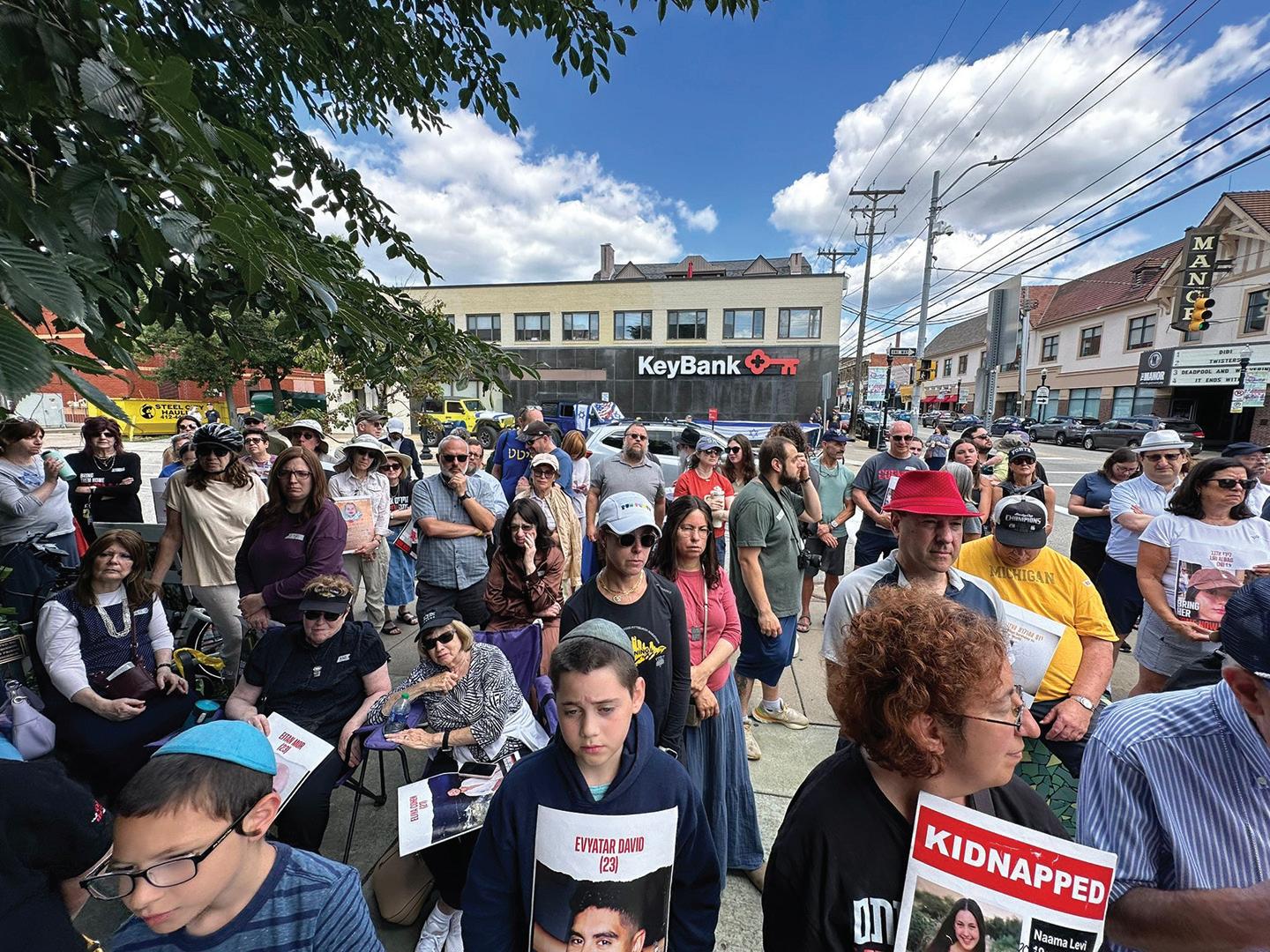
p Community members stand in solidarity with the hostages at a vigil in Squirrel Hill in 2024
Photo by Sandy Zell
Headlines
2,000-year-old Pilgrimage Road to Temple Mount opens to public after years of digging
—
By Rossella Tercatin | The Times of Israel
For Michael Ganeles and his wife, visiting the City of David in Jerusalem was a must when they took their three children to Israel for the first time from West Hempstead, New York, to celebrate their middle daughter’s bat mitzvah.
When the family learned that the site known as the “Pilgrims’ Path” or “Pilgrimage Road,” a roughly 2,000-year-old stepped street that led up to the Temple Mount from the southern part of the city, would open to the public during their stay, they wanted to be part of it.
“We were looking into the City of David, and when we saw they were offering a first tour [of the Pilgrimage Road] we told ourselves that we had to do it,” Ganeles told The Times of Israel last month. “My kids kept on asking when we are getting to see the street.”
On Jan. 20, the Ganeles family was among a group of roughly 30 people to take an inaugural walk up the road. Starting from an area where the archaeologists believe the ancient Siloam pool stood at the entrance of the ancient city, in what is today the East Jerusalem neighborhood of Silwan, the largely subterranean road runs underneath modern infrastructure for several hundred meters to the Jerusalem Archaeological Garden adjacent to the Western Wall.
Occupying a slope just to the south of the Old City, the predominantly Palestinian

neighborhood of Silwan sits on what archaeologists understand to be the most ancient part of the 3,000-year-old city, much of which is today part of the City of David archaeological park. Over the years, excavations across different areas of the site have uncovered extraordinary finds
spanning the history of Jerusalem, including the First Temple Period (1000-586 BCE), when a significant portion of the biblical narratives took place, and the Second Temple Period, which lasted until 70 CE.
“This is one of the most magnificent archaeological discoveries in Jerusalem in

the last decades,” Amit Re’em, IAA chief archaeologist for the Jerusalem District, told The Times of Israel via telephone ahead of the tour. “For the first time, you can see this direct link between the Siloam Pool and the Temple Mount, and the street was sealed under the modern city for thousands of years.”
Uncovering the road has not come without controversy. The East Jerusalem site is in an area considered by Israel to be an integral part of the capital but recognized by much of the international community as under Israeli occupation.
The archaeological park is supported by the City of David Foundation, or ELAD, which operates with the controversial mission of strengthening Jewish presence in the city’s Palestinian neighborhoods.
The excavation itself was opposed by many Palestinian residents living in the houses above the underground site, as they charged that it would damage the buildings, an accusation firmly rejected by the archaeologists, the City of David and ELAD.
In 2019, then-U.S. ambassador David Friedman symbolically sledgehammered open an ersatz wall to mark the opening of a portion of the road, drawing criticism for the act that many saw as illustrative of the first Trump administration’s attitude toward the city’s disputed status.
Today, the street is enclosed by a tunnel of concrete and metal to support the houses and streets above. While experts estimate
— ISRAEL
p The Ganeles family join the inaugural tour of the 2,000-year-old Pilgrimage Road in Jerusalem leading from the City of David to the Western Wall on Jan. 20, 2026. Photo by Rossella Tercatin/Times of Israel
p The 2,000-year-old Pilgrimage Road leading from the City of David to the Western Wall in Jerusalem opened to the public on Jan. 20, 2026.
Photo by Rossella Tercatin/Times of Israel
Calendar
Submit calendar items on the Chronicle’s website, pittsburghjewishchronicle.org. Submissions also will be included in print. Events will run in the print edition beginning one month prior to the date as space allows. The deadline for submissions is Friday, noon.
q SATURDAY, FEB. 7
Join Congregation Beth Shalom for Clues and Schmooze (with some booze), a fun trivia event, including an open bar and snacks. There will be a 50/50 raffle, so bring cash to participate. Trivia will be played with teams of three to six. Bring your own team or be matched up at the door. Must be 21 or older to participate. 7 p.m. $30. 5915 Beacon St. bethshalompgh.org/clues-and-schmooze-2026
q SUNDAYS, FEB. 8–JULY 26
Join Chabad of Squirrel Hill for its Men’s Tefillin Club. Services and tefillin are followed by a delicious breakfast and engaging discussions on current events. 8:30 a.m. 1700 Beechwood Blvd. chabadpgh.com
Join a lay-led online Parashah study group to discuss the weekly Torah portion. No Hebrew knowledge needed. The goal is to build community while deepening understanding of the text. 8:30 p.m. For more information, visit bethshalompgh.org/online-parashah.
q MONDAYS, FEB. 9–JULY 27
Join Congregation Beth Shalom for a weekly Talmud study. 9:15 a.m. For more information, visit bethshalompgh.org.
Join Temple Sinai for an evening of mahjong every Monday (except holidays). Whether you are just starting out or have years of experience, you are sure to enjoy the camaraderie and good times as you make new friends or cherish moments with long-term pals. All are welcome. Winners will be awarded Giant Eagle gift cards. All players should have their own mahjong cards. Contact

Join Chabad of the South Hills for Lift Your Life, a Rosh Chodesh Society series. This month’s topic is “The Art of Managing Food and Munching for Meaning.” 7 p.m. 1700 Bower Hill Road. For more information or to RSVP, email batya@chabadsh.com. chabadsh.com
q TUESDAYS, FEB. 10–JUNE 30
Join Beth El’s Rabbi Alex Greenbaum and his Bible/ Talmud Adult Education class for a thought-provoking weekly session of Bible and Talmudic study. This program is available both in person and virtually. Call the office at 412-561-1168 to receive the Zoom link or to make an in-person reservation. 10:30 a.m. 1900 Cochran Rd. bethelcong.org
q WEDNESDAYS, FEB. 11, 18
Join Chabad of South Hills for its new JLI course, Captivating Cases in Rabbinic Responsa, a course on the real-life questions Jews asked sages across history. 7:30 p.m. In person or online. 1700 Bower Hill Road. chabadsh.com
Join Chabad of Squirrel Hill for its new JLI course, Captivating Cases in Rabbinic Responsa, a course on the real-life questions Jews asked sages across history. 7:30 p.m. $90. 1700 Beechwood Blvd. chabadpgh.com
q WEDNESDAYS, FEB. 11, 18, 25
Join Temple Ohav Shalom Center for Early Learning for My Grown Up and Me, a joyful, hands-on experiences for children 18 months to 3 years of age and their grown up(s). Each class includes multi-sensory explorations, art experiences, a story and more. Come make memories, meet other families, experience the magic of our center while learning all about our programs and the Reggio Emilia approach. 9:30 a.m. $45/three-week series. Temple Ohav Shalom, 8400 Thompson Run Road. centerforearlylearning.org
q THURSDAY, FEB. 12

a project of the Holocaust Center of Pittsburgh that honors non-Jewish Pittsburghers who support the Jewish community and take action to uproot antisemitism. 7 p.m. Free. Jewish Community Center of Greater Pittsburgh, 5738 Forbes Ave. ran-25.eventbrite.com
q SATURDAY, FEB. 14
Carry Shabbat’s peace into the new week with Havdalah Healing, a meditation and sound bath led by Cantor Julie Newman and Anitra Birnbaum. Healing songs, Jewish ritual, and the soothing vibrations of crystal singing bowls and other instruments create a space to rest, reflect and restore. This event is free and open to all, but RSVP is required. 5 p.m. Free. Rodef Shalom Congregation, Cohen Chapel, 4905 Fifth Ave. tiferetproject.org/event/havdalah-healing
q SUNDAY, FEB. 15
Join Chabad of Greenfield for The Purim Patisserie, a joyful, hands-on family hamantasch bake where children become pastry chefs and families step right into Purim mode together. Kids will bake and decorate hamantaschen, create beautiful Purim crafts and make a gragger to take home. 11 a.m. $10 per baker. Chabad of Greenfield, 4315 Murray Ave. chabadofgreenfield.com/purim
Chabad of the South Hills presents Jewish Comedy Night with Ami Kozak. Kozak’s show will blend stand-up, spot-on impressions and music. 7 p.m. $54. Address provided upon RSVP. Sponsored by Chabad of the South Hills, Jewish Federation of Greater Pittsburgh, StandWithUs and the Pittsburgh Jewish Chronicle. Chabadsh.com/comedy
q WEDNESDAY, FEB. 18
“The Final Final Solution” is a fearless, hour-long stand-up cabaret that takes on Oct. 7, 2023, and its aftermath with biting wit and raw humanity. Fresh from a smash run at Estonia’s Freedom Festival and now on a U.S. tour, this performance transforms unimaginable pain into something incisive and deeply human. 7:30 p.m. $18 per ticket; $5 per student. Beth Shalom Congregation, 5915 Beacon Street. cwbpgh.org/event/the-final-final-solution




q THURSDAY, FEB. 19
Religious people are coming together across religious and non-religious differences to change the food system. In the lecture “Jewish Farming and Religious Alternative Food Movements in the United States,” Adrienne Krone will provide insights into these religious communities from her new book “Free-Range Religion: Alternative Food Movements and Religious Life in the United States.” 5 p.m. Free. Cathedral of Learning,
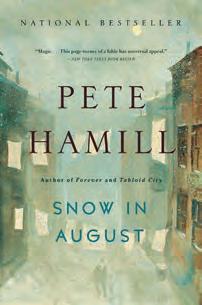
The Pittsburgh Jewish Chronicle invites you to join the Chronicle Book Club for its March 1 discussion of “Snow in August,” by Pete Hamill.
From Amazon.com: “Brooklyn, 1947. The war veterans have come home. Jackie Robinson is about to become a Dodger. And in one close-knit working-class neighborhood, an eleven-year-old Irish Catholic boy named Michael Devlin has just made friends with a lonely rabbi from Prague.
“'Snow in August’ is the story of that unlikely friendship — and of how the neighborhood reacts to it. For Michael, the rabbi opens a window to ancient learning and lore that rival anything in Captain Marvel. For the rabbi, Michael illuminates the everyday mysteries of America, including the strange language of baseball. But like their hero Jackie Robinson, neither can entirely escape from the swirling prejudices of the time. Terrorized by a local gang of anti-Semitic Irish toughs, Michael and the rabbi are caught in an escalating spiral of hate for which there’s only one way out — a miracle ... .”
Your hosts
Toby Tabachnick, Chronicle editor
David Rullo, Chronicle senior staff writer
501 Fifth Ave. calendar.pitt.edu/event/book-talk-jewishfarming-and-religious-alternative-food-movements-inthe-united-states
q SATURDAY, FEB. 21
Get ready for Purim with Temple Ohav Shalom with Shalom Tots: Make Some Noise for Purim. Make masks, crowns and noisemakers for Purim. Costumes are encouraged. Children aged 0-5. 10 a.m. Free. Temple Ohav Shalom, 8400 Thompson Run Road. facebook.com/search/top?q=shalom%20tots
q SUNDAY, FEB. 22
Join Chabad of Squirrel Hill for a Kids’ Hamantash Bake. Make your own hamantaschen with entertainment by juggler Howard Mincone. 2:30 p.m. $10/child. 1700 Beechwood Blvd. chabadpgh.com/kidscooking Join Chabad of the South Hills for its Family Hamantash Bake, a sweet, hands-on Purim adventure for the whole family. 3 p.m. 1700 Bower Hill Road. chabadsh. com/hamantash
q WEDNESDAY, FEB. 25
Join Chabad of the South Hills for its Seniors Luncheon This month’s topic is “Safe Driving Through the Ages.” 1 p.m. Suggested donation, $5. 1701 McFarland Ave. RSVP at 412-278-2658.
q THURSDAY, FEB. 26
Join Rodef Shalom Congregation for “Understanding Online Risks for Our Kids – What Every Parent Needs to Know,” an informative and empowering session that helps parents understand the online behaviors and trends impacting today’s teens and young adults. John Pulcastro, supervisory intelligence analyst, FBI Pittsburgh, will provide a clear, accessible overview of emerging digital risks so you can better support and protect the young people in your life. 7 p.m. Free. Rodef Shalom Congregation, 4905 Fifth Ave. jewishpgh.org/ event/understanding-online-risks-for-our-kids-whatevery-parent-needs-to-know
q
SATURDAY, FEB. 28
Join Temple Ohav Shalom for Purim Royale, an evening of fun, live music, and community. 6 p.m. $85/ticket. Temple Ohav Shalom, 8400 Thompson Run Road. Register at templeohavshalom.org.
q TUESDAY, MARCH 3
Join Chabad of Greenfield for Purim at the Draft, a joyful experience with great food, amazing entertainment, fun for all ages and a meaningful message that stays with you long after the costumes come off. 5 p.m. $10 per child, $15 per adult. Chabad of Greenfield, 4315 Murray Ave. chabadofgreenfield.com/purim PJC
How it works
We will meet on Zoom on Sunday, March 1, at 1 p.m.
What to do
Buy: “Snow in August.” It is available from online retailers, including Amazon and Barnes & Noble, and in some local Barnes & Noble stores. It is also available through the Carnegie Library system.
Email: Contact us at drullo@pittsburghjewishchronicle.org, and write “Chronicle Book Club” in the subject line. We will send you a Zoom link for the discussion meeting. Happy reading! PJC
Headlines
In 92NY talk, Bret Stephens urges ‘dismantling’ ADL and investing more in Jewish identity
By Andrew Silow-Carroll | JTA
In a speech that described antisemites as an “axis of the perfidious, the despotic, the hypocritical, the cynical, the deranged and the incurably stupid,” Bret Stephens asserted that supporters of the Anti-Defamation League and other Jewish defense groups should largely abandon their current strategy for combating antisemitism and instead redirect their resources toward strengthening Jewish life itself.
Stephens, the conservative New York Times columnist and founder of the Jewish thought journal Sapir, said antisemitism is largely impervious to appeals to tolerance, reminders of Jewish and Israeli accomplish ments, or mandatory Holocaust education.
Instead, he called for large-scale investment in Jewish day schools, cultural institutions, philanthropy, media, publishing and religious leadership, arguing that the infrastructure already exists but lacks sufficient scale and coordination.
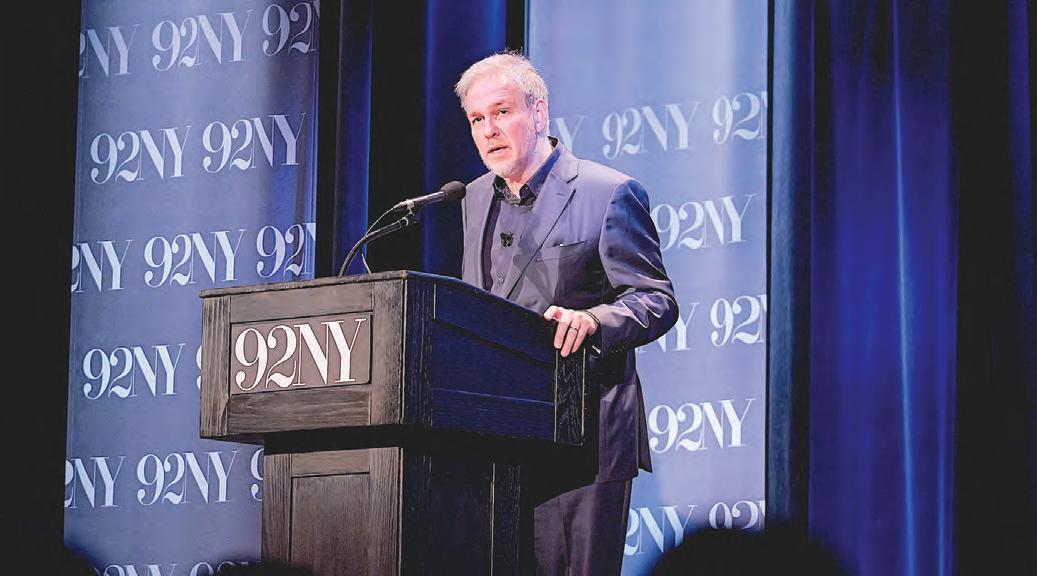
“What we call the fight against antisemitism, which consumes tens of millions of dollars every year in Jewish philanthropy and has become an organizing principle across Jewish organizations, is a well-meaning, but mostly wasted effort,” Stephens said, delivering the annual “State of World Jewry” address at the 92nd Street Y in Manhattan on Sunday. “We should spend the money and focus our energy elsewhere.”
In an on-stage conversation after the talk, Stephens told Rabbi David Ingber, the Y’s senior director for Jewish life, that if it were up to him, he would “dismantle” the ADL, the leading Jewish group fighting antisemitism.
“That’s not how Jewish money should be spent,” Stephens told Ingber, acknowledging that the ADL’s CEO, Jonathan Greenblatt, was in the audience. “That’s not helping raise a generation of young Jews who are conscious of their Jewishness as something other than the fact that they saw ‘Schindler’s List’ and they visited the Holocaust Museum. That cannot be the locus of Jewish identity. If we’re going to survive, victimization cannot be at the heart of our identity.”
Reached the next day, Greenblatt said he considered Stephens a friend and described his thoughts on Jewish identity as “powerful and provocative,” but found Stephens’ critique of efforts to combat antisemitism “misguided.”
Greenblatt said the ADL’s functions include collecting data on hate crimes, training synagogues and other Jewish institutions in security and a Center on Extremism that gathers intelligence that has been used to “intercept and prevent plots from unfolding that literally could take the lives of people in our community.”
Greenblatt said he agreed on the value of investing in Jewish education and centering identity. “I profoundly agree that the best defense against antisemitism is a good offense, and yet you cannot deny the necessity of defense, that you will not have a strong Jewish community if you don’t have a safe
Jewish community,” he told JTA. “You cannot have what Bret called a thriving Jewish people if they’re constantly under threat. So I just don’t agree that it’s a binary choice.”
Stephens’ remarks about the ADL come at a time when the organization has been under fire from the left and right. While many on the left object to its Israel advocacy and accuse it of cozying up to the Trump administration, right-wing critiques have included accusations that it has supported “woke” policies and that its advocacy has been ineffective in countering antisemitism on the far left and far right.
Asked about these critiques, Greenblatt said that the ADL, as one of the oldest antihate organizations in the country, has become a convenient target for partisans, inside and outside the Jewish community, who are frustrated by the persistence of bigotry and eager to discredit their ideological opposites. “I think this blame game is bad for America, and I think it’s lethal for our Jewish community,” he said.
The State of World Jewry speech has been a tradition at the influential New York cultural center since 1980, and has been given by, among others, Israeli diplomat Abba Eban, Nobel laureate Elie Wiesel and the French philosopher Bernard-Henri Lévy.
For the third year in a row it has been delivered by a prominent center-right pundit. Like Stephens, author and podcaster Dan Senor (2025) and journalist Bari Weiss (2024) suggested that the strongest response to a community reeling from antisemitism in the wake of the Oct. 7 attacks is for Jews to turn inward and invest in their own institutions rather than seeking inclusion or protection within broader coalitions.
Elsewhere, writers on the Jewish left, including Eric Alterman in the Forward and The New Republic and Michelle Goldberg of the New York Times, have focused on what they see as a gap between a conservative Jewish establishment and a liberal Jewish majority troubled by the extent of the war in
Gaza. While condemning the Hamas attacks and antisemitism on the left and right, they argue that anti-Zionism is not necessarily antisemitism, and Jewish groups should prioritize liberal, democratic values over unconditional defense of Israel.
“I don’t think that we made an ideological choice,” Ingber told JTA, when asked about the recent lineup of speakers. “It’s where the center of gravity is at this moment. Voices like [Stephens’ and] Bari’s and Dan’s are seriously engaging with the complexity of this situation, and in some ways mirror a little bit of what’s happening more broadly in Israel” and beyond.
“I don’t think it means that we endorse their worldview, but it means that the Jewish community is benefitting from their platform,” he continued.
Stephens, who told Ingber that he was a “gadfly” on the typically liberal opinion pages of the New York Times, laid out four arguments in his talk: that the fight against antisemitism is largely ineffective; that antisemitism functions as a perverse compliment rooted in resentment; that Jews should stop trying to disprove hatred through achievement or moral suasion; and that Jewish survival depends on building independent institutions rather than seeking acceptance from broader society.
Stephens questioned whether decades of investment in education, advocacy and monitoring — the core strategies of organizations such as the ADL and campus advocacy groups — have produced measurable results, even as antisemitic beliefs and incidents have increased.
“Does anyone think the fight against antisemitism is working?” he asked.
As evidence, Stephens pointed to polling data showing that “one in five millennials and Gen Zs believe the Jews caused the Holocaust,” as well as the persistence of antisemitic rhetoric in media, politics and academia during a period when Jewish institutions are, he said, more engaged and
In this, Stephens joined a number of observers who have been questioning the cost and effectiveness of efforts to combat antisemitism, which have surged
“The mistake we make is this: We think that antisemitism stems fundamentally from missing or inaccurate information. We think that if people only had greater knowledge of the history of Jewish persecution, a uller grasp of the facts of the Israeli-Arab conflict, a finer understanding of all the ways antisemitism manifests itself, a deeper ppreciation of the Jewish contribution to America’s success and to human flourishing worldwide, that the hatred of us might dissipate or never start in the first place,” he said.
Stephens framed antisemitism as a response to Jewish distinctiveness, which acts as a counterculture in authoritarian or conformist societies, and resentment, especially when Jewish communities flourish.
“ They do not hate us because of our faults and failures,” Stephens said. “They hate us because of our virtues and successes.”
Stephens criticized what he described as a persistent Jewish impulse to seek validation through their contributions to the wider society — citing Jewish participation in progressive movements and Israeli peace initiatives as examples that failed to reduce hostility.
“Constantly seeking to prove ourselves worthy in order to win the world’s love is a fool’s errand,” he said.
That argument led to Stephens’ fourth and final point: that Jews should invest in building and expanding their own institutions rather than seeking inclusion or protection within broader coalitions.
Quoting composer Philip Glass, Stephens said, “If there’s no room at the table, build your own table.”
“We have superb Jewish day schools, but we need many more of them,” he said. “We have astounding and vibrant cultural institutions… We have extraordinary Jewish philanthropies, but they need to become a primary locus of Jewish giving.”
Just as Senor did in his 2025 talk at the Y, Stephens framed the current moment — marked by rising antisemitism and social alienation — as an opportunity for Jewish renewal and not merely a period of crisis. Referring to “Oct. 8 Jews,” a term he popularized after Hamas’ Oct. 7 attack on Israel, Stephens said he had come to rethink his own definition of traumatized Jews in more positive terms.
“What I should have said was that the ‘Oct. 8 Jew’ was the one who woke up trying to remember who he or she truly is,” he said.
Stephens’ conversation with Ingber was twice interrupted by hecklers, who were promptly escorted out by security. Before the talk, a group of demonstrators outside the venue waved Palestinian flags and chanted, “Free, free Palestine.” Ingber said demonstrators taunted him and others who attended the talk as they exited the building. PJC
p New York Times columnist Bret Stephens delivered the “State of World Jewry” talk at the 92nd Street Y in Manhattan, Feb. 1, 2026. Photo by Peter Jamus/Michael Priest Photography
Headlines
TikTok
deal fuels rise of UpScrolled, whose founder conceived it as a haven for Palestinian activism
— NATIONAL
By Grace Gilson | JTA
Spooked by the deal finalized last week to sell part of TikTok to a U.S. investor group, some users have sought alternatives to the wildly popular social media platform.
Many are turning to UpScrolled, an app founded last year by a Palestinian tech entrepreneur who has promoted it as an alternative to mainstream social media outlets that he claims have silenced pro-Palestinian voices.
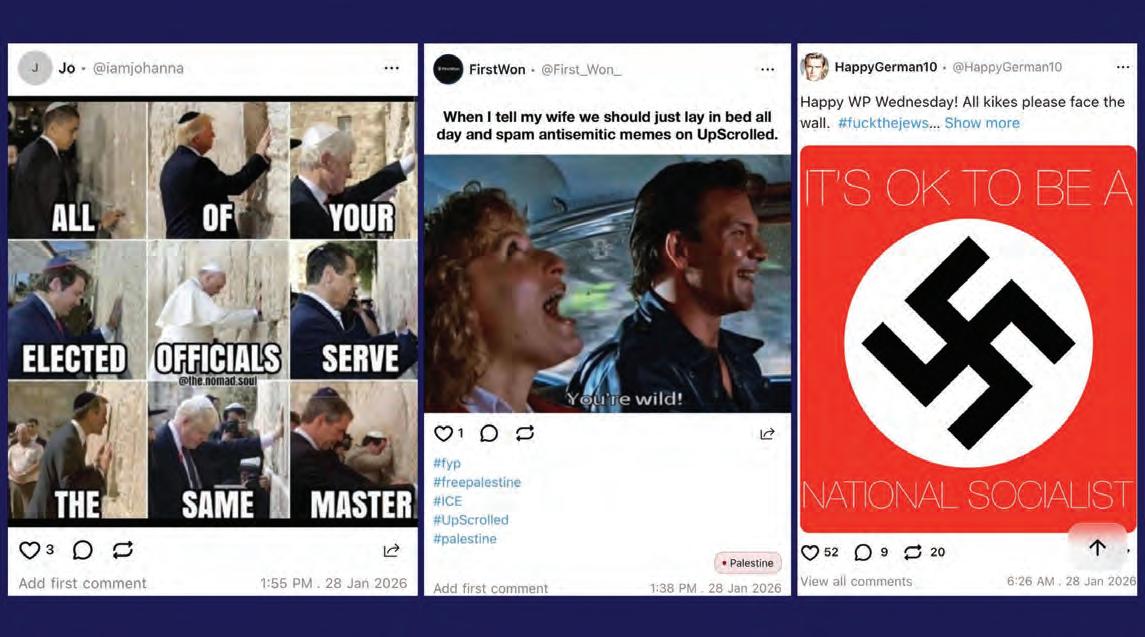
UpScrolled has surged to become the most-downloaded social media platform in Apple’s app store — and it has also been flooded with antisemitic and anti-Israel content, including expressions of gratitude that it permits such material.
“Thanks for this app. Let’s hope it continues to grow. It is terrifying how much control zionists have over all of our media. We are rapidly losing our freedoms,” wrote one user in the comments of UpScrolled’s post announcing it had reached 1 million users.
The app’s creator, Issam Hijazi, was born in Jordan and lives in Australia. He says 60 members of his family died in the Gaza war, which he said had changed his perspective on his work nearly two decades into his tech career.
“Since the genocide happened, and is still happening, it changed everything in me: my perspective to life, to work, to what I want to look for, and I felt I was complicit by working for these big techs,” Hijazi said in September at ArabCon, a conference held by the AmericanArab Anti-Discrimination Committee in Dearborn, Michigan.
Echoing allegations made by some human rights NGOs and activists, Hijazi said he believed “shadow-banning,” or suppressing the visibility of accounts, was common for pro-Palestinian social media users on multiple platforms.
“I was one of those users. I was posting about what’s happening in the genocide,” he said. “I’ve got friends all over Europe, the U.S., and everywhere [and I was] asking them, do you see this content? They say, what content?”
Social media independence, Hijazi said, was essential for the Palestinian cause. “It’s great to go out in the street and protest; it’s great to gather and talk and share and all that,” he said. “But if we don’t become independent, digitally, speaking with platforms, with products, and then help one another to grow these platforms, we will not be able to get far.”
That message is resonating now that an investor group led by Larry Ellison, a prominent pro-Israel entrepreneur, has reached a deal to purchase the U.S. operations of TikTok. The deal was forced under U.S. law and supported by major Jewish organizations including Jewish Federations of North America, which cited antisemitism on the platform as a reason that change was needed.
An increasing number of users are
“We’re working with digital rights experts to grow our Trust & Safety team and are beefing up our content moderation to prevent this.”
downloading UpScrolled, which said last month that it had about 90,000 regular users. Last week, Hijazi announced the platform had reached one million users.
Also last week, UpScrolled ranked second among overall AppStore downloads on Apple devices behind ChatGPT. Among social networking apps, it ranked first.
“Now that Tiktok has fallen officially under control of Zionist billionaire and MAGA oligarch Larry Ellison, who bought this app on behalf of Israel to censor pro Palestinian speech and speech criticizing the US and Israeli regimes. I need you guys to switch apps,” said the controversial pro-Palestinian TikTok influencer Guy Christensen in a post on TikTok. “At least download this app called UpScrolled, it’s a new social media platform, no censorship, no ownership by billionaires who put their interests and biases onto you to control you.”
Within minutes of downloading UpScrolled, a social media platform that has rocketed to popularity this week following a deal to sell part of TikTok to a group of U.S. investors, users are likely to see antisemitic and anti-Israel content.
“This is a safe space to openly say, I stand with Khamenei, Hezbollah, Houthis, & Hamas #ResistanceIsNotTerrorism,” read one post featured last Wednesday on the app’s “discover” page, which allows users to find new accounts to follow.
“Happy WP Wednesday! All kikes please face the wall. #fuckthejews,” wrote another.
Elsewhere, users promoted Holocaust denial and alleged that Israel carried out the
–GABRIELLA BORD
9/11 terror attacks.
One user with a photo of Hitler as their profile picture responded to the announcement that UpScrolled had reached 1 million users by saying, “Thank you for allowing free speech without censorship. F—k Tiktok and Twitter.”
Even as UpScrolled markets itself as “creating an environment that is authentic, unfiltered, and equitable for all,” it also claims that it is not a “free-for-all.”
“UpScrolled does not tolerate hate speech, propaganda, or bad-faith behaviour, but it also refuses to silence voices quietly or without explanation,” reads a blog entry on the UpScrolled website. “It is not a free-for-all; it is a space built on dignity, accountability, and respect.”
How content is moderated on social media has been a longstanding concern for Jewish watchdogs on alert for antisemitism online. Last week, the group CyberWell released its annual State of Online Antisemitism report which found that roughly half of antisemitic content was removed across the platforms it analyzed. The platform with the lowest rate of removal was X, whose owner Elon Musk has pledged a hands-off approach to moderation; the highest was on TikTok, which took down nearly 90% of antisemitic posts.
UpScrolled’s website says the platform prohibits certain material, including “violence,” defined as “threats, glorification of harm, or support for terrorist/violent groups,” and “harassment and hate,” which included “bullying, targeted abuse, or attacks based on
race, religion, gender, sexuality, disability, or similar traits.”
The platform also has an in-app reporting button to flag posts, profiles, or messages, according to UpScrolled’s rules and policies page.
In response to a request from the Jewish Telegraphic Agency for information on how the platform monitors hate speech, UpScrolled spokesperson Gabriella Bord said its moderators were unable to keep up with the influx of content last week.
“Our content moderation hasn’t been able to keep up with the massive rise of users this week,” wrote Bord in a statement. “We’re working with digital rights experts to grow our Trust & Safety team and are beefing up our content moderation to prevent this. We apologise to all impacted users, thank you for being part of Upscrolled.”
For some on the site now — and for Hijazi — the relative paucity of moderation could be a boon, not a bug.
“We are no longer depending on unethical social media platforms,” Hijazi wrote in a November post on Instagram. “UpScrolled is a platform where your activist content will not be censored. No matter if you speak about Palestine, Sudan, climate, inclusivity or any other topic.”
Or as a new user said in response to the latest post, about the surge in downloads, “In this app, I feel right at home. I can write and speak freely and comfortable without using symbols, wordplay, or circumvention tools to bypass Zionist algorithms.” PJC
p Antisemitic and anti-Israel content found on the social media platform UpScrolled
Headlines
Suspect in Chabad HQ ramming charged with hate crimes; had previously attended event there
The suspect who allegedly rammed a vehicle into Chabad’s world headquarters in New York City was charged with hate crimes on Thursday, Jan. 29, a day after the incident, according to The Times of Israel.
NYPD Chief of Detectives Joseph Kenny, at a briefing in Manhattan, named the suspect as Dan Sohail, 36, from Carteret, New Jersey.
Sohail allegedly smashed his Honda Accord into an entrance of the synagogue five times at around 8:45 p.m. There were no injuries and the suspect was arrested at the scene.
Sohail was charged with attempted assault, reckless endangerment, criminal mischief and aggravated harassment. All the charges were filed as hate crimes, a stipulation that increases the potential penalty in the case of a conviction.
Sohail had previous contacts with Chabad, attending a “social gathering” at the same location around 10 days ago, Kenny said.
A Chabad spokesperson, Motti Seligson, said in a statement the suspect had attempted to enter Chabad sites in New Jersey but was rebuffed and in at least one incident, had the police called on him.
“We believe that he was in Brooklyn last night to continue his attempt to connect with the Lubavitch Jewish community,” Kenny said.
S ecurity camera footage showed the suspect parking a few blocks away from the scene of the incident, walking to the synagogue entrance, removing bollards from the
sidewalk, and returning to his car.
He drove to the synagogue, exited his car again, removed snow from the driveway, then smashed into the entrance, Kenny said.
The building at 770 Eastern Parkway, known as “770” is likely the most famous and recognizable Jewish site in New York City.
The ramming took place during an annual celebration marking the 75th anniversary of the late Chabad rebbe, Rabbi Menachem Mendel Schneerson, taking on the leadership of the movement.
Father of former Israeli hostage joins Columbia as a Jewish history professor
Jonathan Dekel-Chen, the father of a former Israeli hostage, has been appointed to join Columbia University as a professor of history with a course load that includes instruction about modern Israel, JTA reported.
Dekel-Chen’s son Sagui spent 498 days in captivity in Gaza after he was taken by Hamas from Nir Oz, a kibbutz in southern Israel, on Oct. 7, 2023. Dekel-Chen became a persistent advocate for a ceasefire deal and a critic of Israel’s prosecution of the war in Gaza.
Sagui, who like his father is a dual Israeli and U.S. citizen, was released during a temporary ceasefire in February 2025.
Dekel-Chen, currently a history professor at the Hebrew University of Jerusalem, will join Columbia’s School of International and Public Affairs in July. He will teach courses on Jewish history in Eastern Europe and the Russia-Ukraine War, Russia’s engagement in the Middle East and modern Israeli history. His appointment comes as the school faces pressure to diversify the attitudes of faculty teaching about the Middle East. The fourth
Today in Israeli History
Feb. 9, 1953 — Soviet embassy is bombed
and final report from the school’s antisemitism task force, released in December, said that students had little access to academic expertise on the Middle East that did not come from an “explicitly anti-Zionist” perspective. It urged the school to move “quickly and energetically” to add expertise on Jewish and Israeli topics that did not take an anti-Israel stance.
The task force formed in the wake of turmoil at Columbia as it became an epicenter of the pro-Palestinian student movement that swept the United States in 2024.
Most Europeans say Israel affects views of Jews
In an E.U. survey published last week, 69% of some 25,000 respondents said that events in Israel shape how Jews are perceived in their country, JNS reported.
The poll, published on International Holocaust Remembrance Day, showed an increase in the perception that Israel influences how Jews are thought of: In a similar poll from 2018, 54% indicated there was a link to the Jewish state.
Forty-seven percent of respondents said a rise in antisemitic sentiment had occurred in their country over the past five years — an increase of 11 percentage points over 2018.
The answers varied considerably between E.U. member states, with respondents in Western European countries displaying greater concern about rising antisemitism and a more prevalent belief that it is connected to Israel.
In Estonia, 9% of respondents said antisemitism was a problem, followed by Finland, Latvia, Malta and Slovakia (16%21%). In France, Italy, Sweden, Germany and
the Netherlands, the share of respondents who said antisemitism was a problem ranged between 71% and 74%.
In Spain, where local Jews reported a massive increase in antisemitic hatred amid a government-led effort to isolate Israel and accuse it of genocide in Gaza, only 33% said antisemitism was a problem—a smaller share than in Croatia, Lithuania and Hungary, where antisemitic incidents are rare.
In Ireland, where many local Jews say the government’s anti-Israel policies have driven up the levels of antisemitism, 40% of respondents said that hatred was a problem — a 20 percentage point increase over the 2018 poll.
Israeli troops find weapons in UNRWA aid sacks
Israeli troops operating in the southern Gaza Strip recently found over 100 mortar shells, several rockets and other weapons hidden inside blankets and sacks marked as UNRWA humanitarian aid, the Israeli military said on Tuesday, according to JNS.
The munitions were discovered by forces from the 7th Brigade under the Gaza Division while clearing areas east of the so called Yellow Line of underground and surface level terrorist infrastructure, according to the military.
Israel’s Foreign Ministry on Tuesday accused UNRWA of aiding Hamas after the IDF found the aid sacks with weapons.
“Weapons don’t end up in humanitarian aid bags by accident,” the ministry said in a post on X. PJC
— Compiled by Toby
Tabachnick

Feb. 6, 2001 — Israelis directly elect
Sharon Israelis vote directly for prime minister for the third and last time and the only time without also electing the Knesset.
Likud’s Ariel

p A sign in Jerusalem calls for Ariel Sharon to be elected prime minister Feb. 6, 2001.
By Ya’acov
The Soviet Union’s embassy in Tel Aviv is bombed, injuring three people, in an attack blamed on the Kingdom of Israel terrorist group. Despite Israeli apologies, the Soviets break off diplomatic relations.
Feb. 10, 1913 — Air Force builder
Charles Winters is born
Charles Winters is born in Massachusetts.

Sharon wins with more than 62% of the vote against Labor incumbent Ehud Barak.
Feb. 7, 1999 — King Hussein dies
3.0
Jordan’s King Hussein, the second Arab leader to sign a peace treaty with Israel, dies of complications from non-Hodgkin’s lymphoma at 63. He became king at 18 in 1953 after the assassination of Abdullah I, his grandfather.
Feb. 8, 1878 — Philosopher
Martin Buber is born
Philosopher Martin Buber is born in Vienna. He becomes involved with the Zionist movement while a student at the University of Leipzig, makes aliyah in 1938 and becomes a noted professor at Hebrew University.
Winters, who runs a Caribbean air transport service, purchases and helps secretly deliver three surplus U.S. B-17s, Israel’s only heavy bombers in the War of Independence.
p Charles Winters was convicted of violating the U.S. Neutrality Act but was posthumously pardoned.
Feb. 11, 1986 — Refusenik
Sharansky reaches Israel
After eight years in a Siberian labor camp, refusenik Anatoly Shcharansky is released to American custody in Berlin and flies to Israel, where he arrives under his new Hebrew name, Natan Sharansky.
Feb. 12, 1958 — First Basic Law is enacted
The Knesset votes 96-0 for the first of a series of Basic Laws that fill the role of a constitution under a compromise known the Harari Resolution. Basic Law: The Knesset outlines election procedures and parliamentary functions. PJC

Items are provided by the Center for Israel Education (israeled.org), where you can find more details.
Sa’ar, Israeli Government Press Office, CC BY-SA
Headlines
Continued from page 1
assignment extension so she could attend an Oct. 29, 2018, memorial service for the victims of the Oct. 27 Pittsburgh synagogue shooting.
The complaint further alleges that in 2022, Arscott commented on a project Canaan was working on, saying it looked like the wall Israel uses “to barricade Palestinians out of Israel.” The professor, Canaan contends, told the student that she should focus on “what Jews do to make themselves such a hated group.”
Canaan claims she reported Arscott’s behavior to her studio professor, who told her not to worry because Arscott wouldn’t be grading her.
According to the complaint, Arscott sent Canaan a link to a “violently antisemitic blog,” the The Funambulist, and copied Elizabeth Rosemeyer, CMU’s chief diversity officer and the vice provost of diversity, equity and inclusion and Title IX coordinator, on the email.
When Canaan complained, she said, other professors turned on the student, telling her to stop “acting like a victim” and that they would not “be an advocate for the Jews.”
The lawsuit details the reports Canaan allegedly made to various school administrators, who either ignored her pleas, failed to take any action to protect her or punish
Immigrants:
Continued from page 1
Following the Jan. 20, 2025, “Securing Our Borders” executive order from President Donald Trump, the U. S. Citizenship and Immigration Services announced it was pausing acceptance of Form I-134A.
Created for prospective sponsors, the form enabled individuals to “request to be a supporter and agree to provide financial support to a beneficiary and undergo background checks as part of Uniting for Ukraine; the Processes for Cubans, Haitians, Nicaraguans, and Venezuelans; or the family reunification parole processes.”
Earlier last year, the government suspended the Refugee Resettlement Program.
The move, Golin explained, struck one of JFCS’ central tasks.
Since 1980, JFCS has worked with HIAS, one of nine U.S. government-authorized agencies to resettle refugees through the U.S. Refugee Admissions Program of the State Department.
While the U.S. Congress created USRAP in 1980, “we have, of course, been resettling refugees through other programs prior to that,” Golin said.
JFCS origins date back more than a century.
Before assuming “its present form and structure” in 1937, according to JFCS representatives, the organization’s predecessors long helped welcome people to Pittsburgh.
That work, Golin said, resulted in “tens of
her abusers, or in the case of Rosemeyer, “aggressively discouraged Canaan from filing a formal complaint which would have triggered an investigation of Arscott, the DEI’s failure to address the misconduct and the systematic culture of antisemitism.”
a motion seeking discovery on information concerning CMU’s relationship with Qatar, the Qatar Investment Authority and the Qatar Foundation for Education, Science and Community Development, leading to Hardy’s opinion.
The Chronicle contacted CMU seeking an
“Carnegie Mellon University is committed to the safety and security of our Jewish faculty, staff and students and our friends and neighbors who are part of Pittsburgh’s vibrant Jewish community.”
–CMU MEDIA RELATIONS DEPARTMENT
As a result of the behavior, Canaan has brought six claims against CMU, including three counts of violations of Title VI of the Civil Rights Act; breach of contract; and intentional infliction of emotional distress.
In December 2024, the United States District Court for the Western District of Pennsylvania denied CMU’s motion to dismiss the lawsuit.
As part of the proceedings, Canaan filed
interview with a university official. CMU’s media relations department responded with a written statement saying, “Antisemitism and other forms of discrimination have no place at our university. Carnegie Mellon University is committed to the safety and security of our Jewish faculty, staff and students and our friends and neighbors who are part of Pittsburgh’s vibrant Jewish community.”
Further, the university said it was aware

thousands of refugees” being resettled here.
Stopping the Refugee Resettlement Program — which resulted in decreased federal funding for JFCS totaling “several million dollars” — sparked organizational concern and warrants wider attention.
Within the Jewish community, particularly, there is an “intimate relationship with immigration,” he said. “Most of us are not very far, generation-wise, from being immigrants ourselves,” and ideas such as welcoming neighbors and strangers are central to “our culture and our religion.”
of a Jan. 28, 2026, Wall Street Journal opinion piece written after Hardy’s opinion was released, examining the school’s relationship with Qatar. CMU said it took issue with several aspects of the piece, including that fact that the writer, Kenneth L. Marcus, didn’t seek a comment from the university.
The university also said it has operated a campus in Qatar, at the invitation of the Qatar Foundation, for more than two decades and is in “full compliance with all applicable U.S. laws.”
The relationship, CMU said, is part of an effort by the Qatar Foundation to bring leading global universities to Qatar and that it was encouraged by the U.S government.
Qatar, the school’s statement continued, reimburses CMU for Qatar-related work performed by CMU staff based in Pittsburgh. It does not, however, grant them “the right to approve or consult on the hiring of individuals who perform that work.”
“Simply put,” CMU said, “the University was not required to consult — and did not consult — on the hiring of the individual [Rosemeyer] referred to in the opinion piece.”
CMU, the statement concluded, “looks forward to an opportunity to refute these allegations through the judicial process, where we will present the full facts.” PJC
David Rullo can be reached at drullo@ pittsburghjewishchronicle.org.
Alexander Conejo Arias, on Jan. 20 by federal immigration agents.
“I know for a fact right now behind our high school in the park, there are ICE agents looming,” Stenvik said, “and they’ve been circling my schools again this morning, parked outside of my middle school.”
Golin said he and his staff are hearing from refugees in Pittsburgh who entered the country through legal pathways and who are “reading about these things in the news and are wondering, ‘Is that going to happen to me?’”
Those worries affect all Pittsburghers, Golin said. “When immigrants are at risk, and are living in fear, it has reverberations throughout the community and impacts all of us: It impacts our tax base, it impacts our economy, it impacts the culture of our region, and it also challenges us with how we think of ourselves as neighbors, and how we care for the people living next door to us.”
On Jan. 29, Zena Stenvik, superintendent of the Columbia Heights School District in suburban Minneapolis, told Here & Now, a live production of NPR and WBUR Boston, that earlier that morning three of her high school students’ cars were surrounded and stopped by Immigration Customs and Enforcement vehicles.
The students all attend the same district as Liam Conejo Ramos, a 5-year-old who was detained with his father, Adrian
Lest Pittsburghers be lulled into believing the situation is fait accompli, a possibility of improvement remains, Golin said. “If people believe that immigrants have a valuable role to play in our community then they should speak up and let their public officials know. The public officials are the ones who have the ability to set public policy about how immigrants in our community are treated, and they need to hear from their constituents.” PJC
Adam Reinherz can be reached at areinherz@pittsburghjewishchronicle.org.
Golin said he and staff have followed news reports from Minnesota.
p ICE logo and Homeland Security seal, with the American flag in the background Koshiro K/Adobe Stock
Headlines
Fern:
Continued from page 2
Looking ahead, back and around Frigid temperatures are expected to remain for days, as are many heaps of snow in Squirrel Hill.
And despite CDS, Hillel and Yeshiva all offering in-person classes on Jan. 28, no institution has fully escaped the storm.
School leaders said that while they remain committed to providing the best possible education and prioritizing safety, the pandemic continues to influence current decisions.
“I lived through COVID as an employee of Pittsburgh Public Schools and I saw the harm and the detriment that years of remote learning did to students and their wellbeing,” Weiss said. “If we can be in person and have that continuity of learning, that’s the most important priority — our children.”
“We recognize our families are, thank God, quite large, so you have five, six, seven, eight kids in the house, and it’s hard on
Road:
that based on the exposed end of the road adjacent to the Temple Mount, the original street was about 8 meters (26 feet) wide, only a portion of it has actually been uncovered.
In some places, the remains of the stores lining the street are still visible. Among other things, the archaeologists uncovered a small mikveh, or Jewish ritual bath, and a podium that might have been used for announcements or ceremonies, such as the reading of a Torah scroll.
parents, and it’s hard on kids, to get serious learning done at home,” Rosenblum said.
“I do think that some of our families are still traumatized by COVID,” Levari said. “Especially families that have multiple children in the school.” If operating remote instruction means telling parents to oversee four to six devices at once, “we don’t really want to put that stress on our families.”
Education must be broadly understood because there’s a balance, school leaders said, between absolutely abandoning instruction and trying to teach 18 first graders sight words on Zoom.
For Yeshiva, learning during Fern and administering the annual fundraiser were “very much linked,” Rosenblum said.
In lieu of running an in-person program Jan. 25-26, Yeshiva asked participants to primarily participate virtually. Some activities were communicated through social media; other undertakings involved running call centers — such as one at Rosenblum’s house — where students and adults gathered to communicate the value of Jewish
day school education to potential donors, he said. The storm forced Yeshiva to transition, but “we used this time in a productive way, and there was a great, great, energy, where everybody contributed.”
CDS encouraged families to safely assist neighbors and send in photos of their best “Winter Fern Service Snap,” with winners receiving a Bunny Bakes gift basket, Weiss said.
Additionally, CDS partnered with Bodiography on Forbes Avenue to offer open play for students in grades four through eight on Jan. 27.
Weiss called the collaboration a “huge win,” as parents were able to get a reprieve and “students were able to be social and get some of their energy out.”
We’re all in this together
Levari said she and fellow administrators remain in active discussion regarding future days: As the situation evolves “we are prioritizing safety and making sure with every effort that learning continues.” Reaching this point has required considerable
Continued from page 5 Jewish and historical sources describe how, toward the end of the Second Temple Period, millions of pilgrims would flock to Jerusalem for the annual festivals of Passover, Shavuot and Sukkot, as the city and the Temple reached the apex of their splendor after Herod renovated and expanded them.
Jewish and historical sources describe how, toward the end of the Second Temple Period, millions of pilgrims would flock to Jerusalem for the annual festivals of Passover, Shavuot and Sukkot, as the city and the Temple reached the apex of their splendor after Herod renovated and expanded them.
Part of the Pilgrimage Road is paved with massive Herodian stones that are still intact, while in other parts, the archaeologists were unable to locate the 2,000-year-old stones.
“It is possible that the reason why they are so well preserved is that actually the road was not in use for such a long time,” explained tour guide Ariana Ohayon. “In the year 70 CE, Jerusalem was destroyed [by the Romans]. The road was covered.”
Originally from New Jersey, Ohayon moved to Israel 11 years ago and has been working as a guide at the City of David for six years.
She described the experience of leading
her first group as exciting and “a bit nervewracking” as she walked with a Hebrew Bible in her hands, conveying the deep meaning that she felt in going through the site as a Jew, two millennia after the destruction that sent her people into exile.
Joining the group were tourists from abroad, mainly from the United States, such as the Ganeles family, as well as local Englishspeaking Israelis. Additional tours were organized in Hebrew and other languages.
Leah Cohn, a resident of the settlement of Efrat, was pleasantly surprised to learn that the tour, which she joined to celebrate her 52nd birthday, was the first to be open to the public.
“It’s my first time at the City of David, even though I have been wanting to come for a long time. It’s a miracle,” she said.
Even before it was open to the public, the
Pilgrimage Road was traversed by foreign dignitaries interested in understanding more about the connection between Jerusalem and the Scriptures.
Notably, in September, U.S. Secretary of State Marco Rubio attended the site’s inaugural ceremony.
Visitors who pay an entrance fee for the City of David can now book tours or explore a section of the road by themselves.
To see the road in its entirety, visitors must purchase a ticket that also includes entry to the Davidson Center, which manages the Jerusalem Archaeological Garden next to the Western Wall.
According to Ohayon, the tour aroused great interest.
“The first English one filled up, so they opened a second one for today that also filled up,” she said.
participation, including involvement from the City of Pittsburgh, “and we feel really supported.”
On Jan. 27, CDS informed parents that “hot, complimentary lunch” would be provided for all CDS students Jan. 28-30. The goal is to make “parents’ lives a little bit easier,” Weiss said. “We know that this has been a really hard time, and that folks might not have been able to make it to the grocery store.”
Calling a “snow day” isn’t always the easiest decision. Doing so during the last week, while braving conditions, reflects a communal climate, Levari said. “It’s nice to be able to consult with other people and to realize that we’re all kind of doing this together.”
“I’ve seen countless neighbors helping neighbors, and that’s a beautiful thing to see,” Weiss said. “I’m proud to be a Squirrel Hill Pittsburgher, and proud of all of us for working together to get through this.” PJC
Adam Reinherz can be reached at areinherz@pittsburghjewishchronicle.org.
Also among those who joined was Jonathan Rouz, a Swiss native who has been living in Jerusalem for the past four years.
“It’s a very exciting moment to go to this pilgrimage road, which [feels] like the Bible, and to connect to the ancient remains we find,” he said.
Rouz described himself as “of a Protestant background.”
He said that as a Christian, he felt a strong connection with Jewish history.
“Everything in the New Testament is from the Jews,” he said. “We love the Jews, we love the state of Israel, and we are happy to be here.”
At the end of the path, which is about 600 meters (roughly 2,000 feet) long, the group emerged next to the southern part of the Western Wall, beyond the plaza, in an area currently being excavated.
Many took time to look at the archaeologists digging and sifting through the dirt, and witnessed with excitement as the workers found some pottery shards to preserve.
“It was just the biggest honor to be among the first people to rewalk these steps,” said Shira Greenspan, a resident of the central Israeli city of Modiin. “I thought it was just like a perfect blend of experiential, funny, and meaningful. It did not feel dry; it felt alive and real. You’re suddenly connected across thousands of years. It’s just breathtaking.”
“To be here with Jews and non-Jews from all over the world makes you feel like you are a little stone in a big story,” she added. PJC

When the hallowed turns hollowed
Guest Columnist
Sarah Kendis
On Jan. 25 — ironically, just two days before International Holocaust Remembrance Day —Minnesota Gov. Tim Walz stood at a press conference and committed a travesty of a blunder, adding yet another entry to his already extensive repertoire: invoking the story of Anne Frank to advance a personal political agenda.
of accepted hyperbole that has transformed the most serious human offenses into political barbs. The rotten cherry on top is that Jews are by no means immune to participating in this sloppy behavior, making such historical manipulation even more grotesque.
As a result, a Nazi has diminished into a label for anyone who dares to disagree with the perpetually offended. So Immigration and Customs Enforcement becomes the Gestapo. Illegal immigrants are now in the same situation as Jews in the 1930s. Detention facilities are analogous to concentration camps. Legal war or regulations are resultingly genocide. “Never again” is hashtagged and plastered onto any cause du jour.
appears to have only been a memorization of when and who, while crucial takeaways of why and how have been lost. Stark truths of depth of hate and enormity of destruction have either not been properly conveyed or sufficiently ingrained, so hard realities have waned into soft metaphors.
The objective reality of the Nazi Party is watered down to a subjective concept of personally abhorred politics. Naturally, a Holocaust widens to perceived injustice against any vague group, versus the industrialized extermination of a very specific one. Anne Frank is mercilessly tokenized to a generic darling of victimhood and quoted for emotional effect without respect to the circum-
significant on their own. One only needs to look at the Blue Square campaign to see this in action: Once a campaign strictly for fighting Jew hate soon became one that included fighting all hate. Or that fascinating pattern of how often antisemitism just cannot be uttered without “Islamophobia” in the same breath. Why wouldn’t Jews be expected to not only accept sharing their targeted trauma, but to move out of the way entirely?
His particularly pathetic performance put a glaring spotlight on a problem that has been growing for quite some time, and one that has now been allowed to manifest publicly in a government official.
It’s a swastika in a political sticker on a pole, out in the open, placed intentionally for all to see. An occurrence by no means unique, as one can easily pass by at least three of them any given day.
It’s the inevitable label of “Nazi” issued to many, Jews included, for simply having the gall to defend basic realities in the world.
And it’s the corrupted confidence to post the nauseatingly false equivalence of Alex Pretti with The Last Jew in Vinnitsa.
How did we get to a point where evoking symbols loaded with death has become vernacular? How did we get to a point where such macabre mockery is not only second nature, but seen as righteous?
Everyone knows about classic Holocaust denial from the right and the modern Holocaust inversion of the left.
But there’s another phenomenon taking place that is potentially worse, as it has crept into and become normalized in mainstream society, not simply spewed from the fringes. This is the gradual and grave dilution of the Holocaust through universalism: an insidious process of belittlement, with harm that is far from trivial.
Let’s start by stating what should be obvious: There is never an appropriate time to call someone a Nazi unless one is an actual Nazi. To do so is egregiously wrongful in both facts and morals, ensuring a dual disservice to both past and present, as careless belittlement dilutes meaning and reality.
Yet the grotesque glossing over and perversion of Holocaust rhetoric has become alarmingly endemic, through a skyrocketing
Toleration for the continued misuse of language will lead to the abuse of what it represents for other purposes until society simply has no use for it any longer.
With this pervasive overuse and abuse, it isn’t difficult to understand how drawing swastikas in public became acceptable.
Yet none of this is acceptable or comparable. Someone who holds a different set of beliefs or political registration does not a Nazi make. A pompous politician or United States president is not equivalent to Hitler, no matter how much one dislikes him. Deporting noncitizens is not in the same universe as rounding up Jewish citizens. Detention facilities are not for the deliberate extermination of their inhabitants. Retaliation against terrorist aggressors will never be in the realm of a genocide. Ironically, those against the sin of appropriation are seemingly A-OK with co-opting Jewish history for their own purposes. But if one’s personal cause has merit, it should be able to stand by itself, not sloppily propped up by another. Disrespecting a nearly unmatchable horror of history brings no respect to anything else — especially not the individual attempting such moral fraud.
So why is it that the Holocaust does not receive the respect it deserves?
The societal failure of universalizing the Holocaust has proven that Holocaust education has not been universally successful, assuming it has been attempted at all. For too many who experienced any education, it
stances referenced. The oft parroted, “it didn’t start with gas chambers,” factual yet diminutive, tends to only demonstrate a serious lack of understanding for how and why it did truly start, frequently becoming simply a vehicle to lead into a completely inappropriate analogy. And with the consistent equalization of other demographics slaughtered by Hitler’s regime, it’s been far too easy to lapse into an egalitarian fantasy of targeting that no longer centers Jews in their own genocide — all sadly proving that any shallow homage afforded is often covering a deep lack of respect to the subject.
But it isn’t just that education has seemingly failed. It was an inevitability of a society providing it whose standards have as well. When crimes of humanity become colloquial, we’ve got a real problem: the exposure of the depth of human narcissism and entitlement to cheapen one of the worst events in history by weaponizing it for political grievances.
Given second-to-none Jewish determination and success at rising above the victimization thrust upon us, Jewish trauma of the past is all too often viewed as acceptable to passively diminish or actively exploit in the present.
On one hand, things that are specific to Jewish experience are often expected to share their uniqueness and importance with other groups, instead of being recognized as
And with hallowed-turned-hollowed definitions as up for grabs as integrity, it makes sense that others would actively steal such trauma to manipulate for their own movements and agendas, as it’s infinitely easier to push such irrationality and immorality when warping reality has already become standard practice.
This historical and moral vandalism shouldn’t just register as offensive; it should be acknowledged as darkly reckless.
Such fast and loose cosplay isn’t just degrading to what the Nazis’ victims lived through and died from. When sacrosanct events are allowed to be diminished from their essential singularity, not only is permission given for continued disrespect of the past, but the bar is dangerously lowered for the future. If any person can be a Nazi, a Nazi now means nothing. If anything can be the beginning of a Holocaust, or the Holocaust itself, the actual Holocaust fades into nothing. So do its unique lessons. And that might be the real point.
Toleration for the continued misuse of language will lead to the abuse of what it represents for other purposes until society simply has no use for it any longer.
Stripping the core from the historical event also strips its promised assurances. Guilt can be minimized along with safeguards. And when past and present antisemitism don’t have to be taken more seriously than a metaphor, future repetition of its crimes becomes more than one.
But the Holocaust will never be a metaphor for anything else. It was a horror of horrors singular in itself, deliberate in its destruction, and ages in the making. So much in society is up for discussion, but this cannot be without losing more than we can afford of our grip on both reality and humanity. As survivors fade and we are left with words for memory, the world must honor its promise to never forget the desecration it once allowed by refusing to allow tolerate any further desecration. PJC
Sarah Kendis is a musician living in Pittsburgh.
With the last hostage released, is American Jewish unity over?
Guest Columnist
Rob Eshman
When the remains of the last Israeli hostage in Gaza returned to Israel last week, Scott Spindel, a lawyer in Encino, California, finally took off the thick steel dog tag he had put on after the Hamas attack of Oct. 7, 2023.
His friend Lauren Krieger, an orthopedic surgeon, did the same. And he pulled down the last of the names of the hostages remaining in Gaza that his wife, Jenn Roth
Krieger, had placed in the window of their Santa Monica home.
During the nearly 28 months that Israeli hostages remained in captivity in Gaza, Krieger, 61, and Spindel, 55, consistently argued over Israel’s war in the strip.
“Lauren would say that we probably were a little too extreme,” Spindel, whose daughter serves in the IDF, told me in a telephone interview. “I don’t think we blew up enough buildings.”
But those differences paled beside their mutual concern over the fate of the hostages.
“Unfortunately,” said Spindel, “it took tragedy to pull us together.”
So it was across the American Jewish landscape. Then, the body of Staff Sergeant Ran Gvili, the 24-year-old Israeli police officer
killed on Oct. 7 and taken by Hamas terrorists back into the enclave, was returned to Israel — the last of the hostages to come home.
Jews from across the political spectrum unpinned yellow ribbon buttons from their lapels, removed the hostage posters from their synagogues, and folded up and put away the blue-and-white flags displayed as a symbol of the missing Israelis.
The marches and vigils American Jews held on behalf of the hostages — small but meaningful echoes of the mass rallies that roiled Israel — came to a quiet halt.
Jewish unity is forged in adversity. Without it, we are apt to find enemies among ourselves. And as painful as the hostage saga was, it unified an otherwise fractious American Jewish community in a
time of crisis.
Without that common concern, are even deeper rifts our future?
“As committed and connected as we were,” said Spindel, “it doesn’t change the fact that we also were still divided about solutions.”
A family in distress
Across the United States, synagogues of all religious and political bents regularly joined in the same Acheinu prayer for the release and return of the hostages.
“Our family, the whole house of Israel, who are in distress,” the prayer begins — a wholly accurate summation of the totality of Jewish concern.
Please see Eshman, page 13
Chronicle poll results: Intermarriage
Last week, the Chronicle asked its readers in an online poll the following question: “Is intermarriage a threat to Jewish continuity?” Of the 295 people who responded, 52% said yes and 48% said no. Comments were submitted by 105 people. A few follow.
My interfaith marriage has yielded a conversion to Judaism and a grown child fully committed to the religion.
Jewish continuity depends on Jews choosing to build Jewish families. While intermarried couples can produce strong families, such families typically do not preserve Jewish identity across generations, posing a longterm challenge to the survival of the Jewish community. It depends on the intermarriage.
Intermarriage will continue regardless of the opinions of rabbis or families. Either the Jewish community finds a way to embrace these marriages or lose members of the community. One thing is certain, we lose if we don’t welcome them.
How is this even a serious question? Of course it’s a threat. You can pretend it’s not and do a bunch of interfaith stuff but it’s not authentic Jewish identity.
I do not know. I have two daughters-in-law that are not Jewish, but they do celebrate all the Jewish holidays. I am happy that my grandchild
Eshman:
Continued from page 12
Surveys showed that the hostages unified American Jews even when Israel’s Gaza campaign divided them. An October 2025 Washington Post poll found that a plurality of American Jews disapproved of Israel’s military actions in Gaza — but a whopping 79% said they were “very concerned” about the hostages.
There have been other moments in recent Jewish history when calamity created unity. The 1995 assassination of Prime Minister Yitzhak Rabin, for instance, brought together the vast majority of American Jews in mourning, even those who opposed his policies.
And, of course the brutal Oct. 7 attack, which claimed almost 1,200 lives, created a near-universal sense of shock and sorrow.
But the hostage crisis may have had an even deeper emotional — and perhaps political — impact.
“Even for people who were not affiliated Jewishly, those hostages struck a deep,
knows about being Jewish. They even say the prayers for Sabbath and Chanukah.
It’s a threat but can’t be helped in today’s society.
It’s a reality. We need to learn how to best deal with it and adapt to it while preserving Judaism.
Not necessarily. A couple can decide on how to raise their children (hopefully, Jewish) and can embrace both traditions (let’s say, Christian and Jewish). As the children get older, they can (and hopefully, will) continue to live in the Jewish faith. This is how we decided to have our marriage and raise children, and all of them continue in the Jewish faith. In fact, even I, the non-Jewish partner, decided to convert to Judaism after the children’s bar/bat mitzvahs.
I have had an interfaith marriage for 53 years. We celebrate and respect each other’s faith, the differences and similarities. What was destructive was clergy responses to the marriage, stating that, “You’ll lose your values and morals.” My rabbi ostracized me from my faith!
I’m in an interfaith marriage and my sons have strong Jewish identities. One joined the IDF and made aliyah. My husband was supportive.
marriages have increased almost every year according to several reliable studies.
Make intermarried couples welcome and you can keep them — and their children — in the Jewish fold. Both of my daughters married non-Jewish men who are totally on board with raising the children as Jews.
I am less concerned about Jews who are married (to Jews or non-Jews) than I am about those who are not. Our Jewish institutions fail to include people who are single, divorced and widowed. That is the real threat to Jewish continuity.
I married a girl who wasn’t Jewish. You can’t help who you fall in love with. She agreed to raise the kids Jewish. I was grateful. My three daughters were bat mitzvahed. However, we live in the suburbs and are “assimilated.” All three of my daughters married Italians and aren’t really Jewish. My grandchildren have no religion.
Find true love wherever you can! PJC
— Compiled by Toby Tabachnick Is intermarriage a threat to Jewish continuity?
Intermarriage improves understanding between Jews and our surrounding communities (which is desperately needed at this point in American history). And if the non-Jewish partner converts, then we directly enrich our own community.
deep chord,” Krieger told me. “It felt personal. I don’t think we’ve had that level of collective trauma in our lifetimes in that same way.”
We must encourage in-marriage while embracing those who have already married out.
Current approaches with respect to interfaith marriages have not been sufficiently successful and the percentage of interfaith
against the war at college campuses — in which many Jewish students participated, and to which many others objected — created even deeper divisions over support
The hostage crisis provided something history unfortunately bestows upon Jews with regularity: an external enemy that transcended ideological differences.
And a family divided
The hostage crisis bonded American Jews to one another, and to their Israeli counterparts, at a time when enormous political rifts were opening within their communities.
In the U.S., as in Israel, there were sharp disagreements over Prime Minister Benjamin Netanyahu’s conduct of the war and whether he was even prioritizing the hostages’ safety.
And the encampments and protests
for the Jewish state.
But if the hostage issue didn’t erase such differences, it muted them. Krieger and Spindel could frustrate each other in conversations about the conduct of the war, or American support for it. But in the end, they were both in that 79% that the Washington Post poll identified.
What will hold them — and the rest of us — together, now?
The hostage crisis provided something
Chronicle weekly poll question: Should Jewish funders prioritize building Jewish infrastructure over fighting antisemitism? Go to pittsburghjewishchronicle.org to respond. PJC
history unfortunately bestows upon Jews with regularity: an external enemy that transcended ideological differences. With it gone, American Jews return to what they’ve always been — a community bound by tradition, and riven by politics.
Krieger and Spindel have already resumed their arguments. But even though the dog tags are gone, they’re both still wearing Jewish stars on silver chains around their necks. When someone admires Krieger’s, he takes it off and gives it to them. He buys his metal stars in bulk on Amazon, and has given away dozens since Oct. 7.
“I want people to feel like I do,” he said, “like we’re a peoplehood worth cherishing.”
Worth cherishing — even though we can’t agree on much else. PJC
Rob Eshman is a senior columnist for the Forward, where this article was first published. To get the Forward’s free email newsletters delivered to your inbox, go to forward.com/newsletters.
We invite you to submit letters for publication. Letters must include name, address and daytime phone number; addresses and phone numbers will not be published. Letters may not exceed 500 words and may be edited for length and clarity; they cannot be returned.
Send letters to:
letters@pittsburghjewishchronicle.org or Pittsburgh Jewish Chronicle, 5915 Beacon St., 5th Floor, Pittsburgh, PA 15217
We regret that owing to the volume of correspondence, we cannot reply to every letter.
Life & Culture
Banana peanut butter loaf cake
By Miriam Szokovski | Chabad.org
Although I do not understand (or condone) the practice, it seems commonplace to call banana cake “bread” when it’s baked in a loaf pan, but “cake” when it’s in any other shape. You could go so far as to call it one of my pet peeves, along with calling anything baked onto flat dough a “pizza” (yes, I’m looking at you “pastrami pizza” people!) and calling anything layered “lasagna.” (Apparently “chocolate lasagna” is a thing. Look it up.) In the spirit of integrity, I’m going to call this banana peanut butter loaf cake. (If, however, you insist on calling it banana peanut butter bread in the security of your own home, I suppose I am fairly powerless to stop you.) Also, use browning, overly ripe bananas.
Ingredients:
• 1½ cups sugar
• ⅓ cup oil
• 2 eggs
• ⅓ cup creamy peanut butter
• 1 cup mashed bananas (2-3 whole bananas)

½ cup milk (dairy or non-dairy)

Directions:
Note: You can use a mixer if you prefer, but this recipe works well with just a spoon, too. When using a spoon, mix in one direction so that the batter comes together after each addition.
1. Mix the sugar and oil. Add the eggs one at a time, and then the peanut butter, mixing after each addition.
2. Mash the bananas well and measure out



1 cup. Add to the batter with the milk (nondairy works well) and mix until combined.
3. Add the flour, baking powder, baking soda and salt together. Mix until all the dry ingredients have been incorporated. Stir in the chocolate chips.
4. Grease two loaf pans and pour half the batter into each. Bake at 350 F for 30-40 minutes, until a skewer comes out clean.
5. Freezes well. PJC
Miriam Szokovski is a writer, editor and member of the Chabad.org editorial team. She also shares her cooking and baking on Chabad.org/food.



p Banana peanut butter loaf cake
Photo courtesy of Chabad.org
Life & Culture
Comedian and musician Ami Kozak looking to make some noise and laughs with Chabad of South Hills
By Adam Reinherz | Senior Staff Writer
Acomedian often known for mimicking other people’s voices is seeking to share his own. Ami Kozak, a New Jersey-based musician and stand-up, is aiming to delight Pittsburghers with a night of laughs at Chabad of the South Hills on Feb 15.
The upcoming event, Kozak’s Pittsburgh debut, will showcase the performer’s talents.
Likening the show to a “full-range experience,” Kozak said attendees can expect a “combination of stand-up, commentary, impressions and a little bit of music, too.”
Speaking by phone from New Jersey, the entertainer acknowledged that parts of the program might feel like “inside baseball,” since his material often draws on Jewish life and politics. Still, he said, even audiences unfamiliar with those references — or his recurring online riffs — can expect “a good time.”
Kozak, host of the 20,000-subscriber podcast “Ami’s House,” skillfully blends thoughtful commentary with playful humor in both his episodes and social media posts. Recent episodes of “Ami’s House” have touched on why Vice President JD Vance refrained from mentioning “Jews” when commemorating International Holocaust Remembrance Day, what’s transpiring in Iran and what to make of famine in Gaza.
Through various social media channels, Kozak — who boasts 500,000 followers between Instagram and TikTok — routinely shares his impersonations of Tucker Carlson, Candace Owens, President Donald Trump and Prince Harry. The gags are typically 90-second spurts mocking each figure.
Less a dichotomy between earnestness and flippancy, Kozak said his approach is intended to inform. “I find satire to be a pretty effective tool in exposing what’s going on.” And while he’s known for parodies, Kozak said he’s happy to “make fun of anything and everything that comes to mind.”
For instance, a YouTube sketch dropped about a month ago featured Kozak as the host of “Jewish Jeopardy” and included barbs against stereotypical members of Jewish denominations.
Whether it’s poking fun at recognizable tropes within the Jewish world or calling out political “villains,” laughter is a useful tool, Kozak said. “You can always make a point and say something, and people may or may not agree with it; but when people laugh at something, it’s kind of inherently a signal of agreement.”
When people laugh, the subconscious is

revealing what’s “going on in a situation,” he continued. “It’s like a show, not a tell.”
Understanding an audience, and its reactions, is nothing new for Kozak, 39.
The Berklee College of Music graduate is a member of the band Distant Cousins and has created music for national advertising campaigns, as well as films and television. In 2024, Kozak and the group toured with artist Matisyahu and were praised by the Jewish Journal, which called Distant Cousins’ songs “catchy and give off a feeling of spiritual cleansing even if you’re an atheist.”
Though similarities exist within Kozak’s comedic and musical worlds, the differences may be most interesting.
“Musical challenges have to do with actually really learning music, which is really difficult, learning how to play an instrument, perform, sing, connect with other musicians.” Those activities, Kozak said, take years, “but once you can do those things, playing live becomes a lot easier, no matter what happens in the room. Comedy is the other way around, where it’s pretty easy to just pick up a mic and get on stage
and actually start doing it, but to do it well, you have to fail in front of people over and over again, and that’s something you never have to do with music.”
“Your goal in comedy, with an audience, is laughter. Your goal in music is silence,” he continued. “In a sense you want a crowd to be rowdy after the song is done, but you want their focus and attention. And that can be true in certain comedic instances, but you are working with a frequency of laughter, which is the currency in comedy, whereas the currency of music is like attention and silence and focus and engagement. So a silent room feels amazing when you’re playing music, and a silent room when you’re doing comedy for too long can start to feel pretty tense.”
Kozak, who’s been a musician longer than a comic, admits he’s still mastering the art of comedy. And while he’s confident Pittsburghers will enjoy his upcoming show, he’s also looking forward to sharing a bit more about his background.
After growing up in Englewood, New Jersey, in a Modern Orthodox household and attending yeshiva day schools, Kozak
studied in Israel for a year before attending Berklee. He moved to Los Angeles for nearly a decade, where he worked in advertising and started a band.
Stuck at home during COVID, Kozak said he began posting impressions on TikTok. After the events of Oct. 7, he decided to use his platform to shed light on his “personal experience as a Jew, as a Zionist Jew, as somebody who knew a lot about this one topic that became the center of pop culture.” The endeavor developed, and while he began speaking out about politics, he also became a “sort of part-time side hustle advocate for Israel and the Jewish people,” he said.
Though Kozak admitted he doesn’t know much about Pittsburgh or its Jewish makeup, he’s eager to learn more and welcome Pittsburghers to a community he’s “creating in this social media space.”
More than a fan base, Kozak is striving to build a dedicated collective: a strong community with “1,000 true fans,” he said. It’s what “every artist is trying to do.” PJC
Adam Reinherz can be reached at areinherz@pittsburghjewishchronicle.org.
p Comedian and musician Ami Kozak entertains an audience.
Photo courtesy of Daniel Landesman Photography
Life & Culture
Her ancestors were expelled from Spain. Now she’s bringing bagels to Madrid.
By Shira Li Bartov | JTA
MADRID — Until recently, a Jew could wander all day in Madrid without finding a bagel.
But now, in a sea of tomato toasts and potato omelettes, a trail of people hovers every weekend outside the Mazál bagel restaurant. Behind it is Tamara Cohen, a Philadelphian who became Spanish through a law granting citizenship to Sephardic Jews whose ancestors were expelled during the 1492 Inquisition.
When Cohen moved to Madrid, she could not track down the bagels she craved from home. Since opening Mazál in 2020, she has seen the distinctly Jewish food grow more familiar to Madrileños, with other new bagel shops following suit — but none, so far as she knows, that are also run by Jews.
“I like to think we started it,” she said.
Cohen, who is 34, didn’t have a business plan or a culinary background when she arrived in 2015. She was a recent college grad uate unsure about what to do next. She had never been to Europe and decided to teach English in Spain, thinking she would take the chance to travel and study the native language of her mom, a Cuban Sephardic Jew. (Her dad is American-born Ashkenazi.)
Soon after Cohen arrived, her mom alerted her to Spain’s new Sephardic ancestry law. Between 2015 and 2019, the measure awarded citizenship to descendants who could prove their medieval Sephardic origins. Some 72,000 people have obtained citizenship this way, most of them from Latin America.
Cohen’s mom quickly applied, not to move to Spain herself, but to affirm a lineage treasured in her family for centuries. She had documents showing her family’s travels from Spain to Turkey to Cuba, along with death certificates of ancestors buried in Sephardic cemeteries. She also had tapes of her parents singing in Ladino, the nearly extinct language that Sephardic exiles carried with them to the Middle East, North Africa, Latin America and other corners of the world.
After her mom received citizenship, Cohen followed. In the process, she discovered threads that tied her to what had seemed like a foreign land. Some 300,000 Jews lived in Spain before the Inquisition, constituting one of the largest and most cultivated Jewish communities in the world. After 1492, they were forced to convert to Catholicism, flee or be killed. Between 40,000 and 100,000 went into exile.
By the early 20th century, a small community of Jews had returned to Spain. About 6,000 lived there at the dawn of the Spanish Civil War in 1936, including prominent intellectuals such as Max Aub and Margarita Nelken. Many fell on the Republican side of the war, forcing them to flee when the Nationalists led by Francisco Franco prevailed. Franco rooted his regime in Catholicism, banning Jewish rites, shuttering synagogues and sending expressions of Jewishness into hiding.
A new era of Sephardic life began to take shape only in the 1960s. In 1967, Spain
passed a religious freedom law that allowed non-Catholic communities to practice in public. Meanwhile, Middle East tensions surrounding the 1967 Arab-Israeli War drove a wave of Jews from Arab countries to Europe, according to Esther Bendahan, a writer and cultural director of the Centro SefaradIsrael in Madrid. Her family arrived from Morocco in the 1960s.
“The return is complex, because it is the only European country where Jews do not have a long history, since it was interrupted,” said Bendahan.
Remnants of Sephardic history, like the Jews themselves, are still resurfacing. As recently as 2024, restoration work on the Santa Maria la Blanca church in Seville exposed a medieval synagogue ark behind the altarpiece. In 2023, archaeologists uncovered a 14th-century synagogue beneath a nightclub in the Andalucían city of Utrera, one of only five such buildings in Spain. And in 2012, the construction of a sewer in Segovia revealed a Jewish cemetery from 500 years ago.
“Whenever we travel to a small town and there’s a judería, I always feel like we have to see it,” said Cohen, using the word for the historic Jewish quarters that once dotted Spain.
“We have to go and stand there — even if there’s nothing to see — go and stand there, and I feel a connection to it,” she added.
“Spain had a huge population of Jews, and you say, ‘Wow, they’re all gone. But look, I’m back. I have a passport. I can stay here forever if I want to.’”
Sephardic memory traveled down Cohen’s family line, as in many others, through food. Her mom sustained Sephardic recipes and traditions, like making rice on Passover. But even as Cohen identified traces of her family’s Sephardic past, she missed American and
Ashkenazi foods.
She was hosting a Thanksgiving dinner with her roommates when she realized that she couldn’t find a pumpkin pie. So she made one — and then she made more. She listed her pies, cakes and cookies on a website for people to buy. Then she started making bagels.
“I basically used this website as a platform to make and sell foods that I love but that I couldn’t find here,” said Cohen. “And so I made bagels, because I grew up in a bagelson-the-weekend family.”
Thus Mazál was born, and with it appeared a new world of Jews in Madrid — a living, breathing and eating one. Local visitors who knew little about Jewish food flocked to Mazál for its “American” menu, listing pastrami and buffalo chicken along with bagels. But just as quickly came the diners who knew the word “mazal,” or “luck” in Hebrew.
Cohen discovered how many Jews had been waiting for Mazál through her challah sales. She didn’t know how many would be sold, only that she wanted to recreate “the warmth of family” on Shabbat. Roughly 15,000 Jews live in Madrid out of 45,000 in the whole country. (Both Ashkenazi and Sephardic Jews eat challah, while bagels are not part of Sephardic tradition.)
“We have sold challah every single Friday for our entire existence,” she said. “When we first opened, we had something like 10 challahs a week. Now we make 90 to 150 challahs a week. We’re sold out.”
No haven for Jews in Spain has been unaffected by the country’s intense scrutiny of Israel since 2023. The Spanish government is one of Europe’s most outspoken about Israel’s killing of Palestinians in Gaza, with Prime Minister Pedro Sánchez becoming the most senior European leader to say that Israel was
committing genocide last year. In 2024, Spain joined Norway and Ireland in recognizing a Palestinian state.
At times, the anti-Israel sentiment in Spain has turned on local Jews. Spain saw a 60% increase in antisemitic hate crimes in 2024, despite a drop in overall hate crimes, according to the Ministry of the Interior.
Cohen has family members in Israel. After the Hamas attack on Oct. 7, 2023, she raised money for Israeli humanitarian organizations through the delivery apps Uber and Glovo, calling the push “Bagels for Israel.” But after a few months, as Israel’s campaign in Gaza intensified and Spanish sentiment hardened against the country, she shut it down.
Now she is wary of exposing Mazál to the fall-out from anger against Israel. In 2025, she had to paint over a swastika and other graffiti sprayed on the restaurant’s shutters.
“I’m more tense about saying anything about Israel,” she said. “We’re actually opening a new bakery in the next couple of months, and the plan is it’s going to be an Israeli, Middle Eastern bakery. But when people ask, ‘What is it going to be?’ I’m like, ‘You know, Middle Eastern.’”
She wants Mazál to remain a place where Jews like her feel comforted. There are pieces of her life in the bagels, the challah and the American classics. On Thanksgiving, she sells “Mom’s sweet potato casserole,” her own mom’s recipe. And a staple on the menu is “Allen’s pancakes,” named for her dad.
“Mazál, to me, feels like my little corner of Judaism here in Madrid,” said Cohen. “It’s a way to create a home for people who are looking for that. It’s not kosher, and we’re open all year, but it’s my type of Judaism — bagels on Sunday morning, challahs on Shabbat.” PJC
— WORLD —
p Tamara Cohen, founder of the Mazál bagel restaurant in Madrid, immigrated from the United States through Spain’s Sephardic ancestry law.
Photo by Shira Li Bartov
Come curious. Leave wiser.
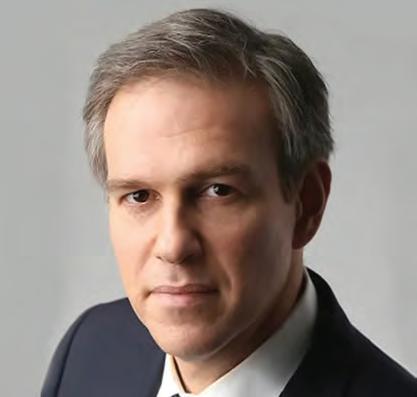
Wednesday, March 25 • 7 pm JCC Squirrel Hill • Katz Theater • $36/person For more info: Fara Marcus • fmarcus@jccpgh.org

bit.ly/comecuriousmarch25
JCCPGH ISRAEL ENGAGEMENT SERIES
This new series, developed by the JCC of Greater Pittsburgh, invites participants to go beyond the headlines through dialogue and multiple perspectives featuring leading voices and meaningful community discussion. The series is grounded in the belief that the antidote to polarization is not disengagement, but deeper, more informed engagement. There will be three sessions in the spring and three in the fall.
The series will “cover everything under the sun related to Israel, including politics, culture and history,” says Yisrael Klitsner, the moderator of the series. He is a fellow at the Jewish People Policy Institute (JPPI) with deep connections to our community. He and his family lived in Squirrel Hill but returned to Israel after October 7 so he could rejoin his IDF unit. Klitsner, who has served as Diaspora Affairs Advisor to Prime Minister Naftali Bennett, and worked for AIPAC in Israel, is passionate about educating and building community around the state of Israel and its relationship with the United States.
Randi and Ellis Weinstein are the proud grandparents of Charlie Arthur Weinstein , born on Aug. 29, 2025, in St. Louis. Charlie is the son of Ellie and Jared Weinstein, brother of Rosie Lee Weinstein, niece of David Weinstein and Sarah Salky, and grandson of Molly and Kenny Salky. Great-grandparents are the late Leslie and Arthur Spiegel, the late Lee and Burny Salky, and Virginia Byrum and Pat and

Karen and Don Morris joyfully announce the marriage of their daughter, Jessica, to Hannah on Jan. 10, 2026, in Rockville, Maryland. Jessica’s grandparents are Marilyn and David (z”l) Morris, and Ruth (z”l) and Al (z”l) Nayhouse. Hannah is the daughter of Rebecca and Steve Weisman of Gaithersburg, Maryland. Hannah’s grandparents are Adiva and Harry (z”l) Sotzsky, Leah and Stanley (z”l) Weisman, and Carol and Stan Tickton. Jessica is a middle school English language arts teacher, and Hannah runs high-risk clinical trials. The couple met while Israeli dancing at University of Maryland and currently reside in Rockville, Maryland. Rabbi Ariella Rosen officiated the ceremony, which was preceded by a ketubah signing ceremony led by Rabbi Jacob Blumenthal and Rabbi




In June 1815, a young boy in Pittsfield, Massachusetts, digging in a field owned by local farmer Joseph Merrick made a strange discovery: a leather box with an attached strap. After a few days, Merrick examined the find, and found it contained four small parchments inscribed in a foreign language, which a local minister identified as Hebrew, and as the Jewish ritual artifact called tefillin. In a short time, this discovery became a small sensation, and was interpreted by many excited New Englanders as evidence of a strange but not uncommon belief of the time that Native Americans were in fact descendants of ancient Jews.
In 1823, Vermont Congregationalist minister Ethan Smith published “View of the Jews,” which featured the Pittsfield tefillin as a key argument for the “Hebraic Indian” theory. More intriguingly for the history of American religion, these tefillin were later cited by LDS Church founder Joseph Smith as proof for the Book of Mormon’s somewhat different claims of Hebrew Indian origins.
Even at the time, cooler heads suggested a more likely theory. During the War of 1812, Joseph Merrick employed British and Hessian prisoners of war held locally. Perhaps one of them was a Jew, and it was his tefillin, lost on other side of the world only to resurface in the field. One way or another, the find underscores the attachment to this mitzvah held by a Jew very far from home.
When thinking about our ancestors at Sinai, the narrative that dominates our parsha, we often miss the reality that we were a nation of the homeless. The Jewish people emerged into the world as a clan of nomads, and in the stories of Genesis, we find the patriarchs as tent dwellers rather than living in permanent homes. It is a great irony that notwithstanding the suffering of the Egyptian period, it was in Egypt that we are first described as living in houses.
Our tradition celebrates the ability of the Jews in Egypt to maintain elements of culture — language, traditional names, distinctive clothing — even against the backdrop of


a host culture that was profoundly hostile to both the Jews and the beliefs and mores they had inherited from the patriarchs and matriarchs.
The ability to nurture a counterculture is profoundly tied into the home. It was the houses, the stability that we had in Egypt that allowed the transmission of these values against all odds, and it’s not surprising the night of Pesach focuses on the house.
The blood of the Korban Pesach (Paschal Sacrifice) was daubed on the doorways of the houses, the Jews were instructed that they were not to leave their homes during that dramatic night, and the meat of the sacrifice would be invalidated if it left the confines of the house. What better place to celebrate the merits that survived long decades of slavery than the homes that nurtured them.
After all that, one of the challenges of the Exodus was the need to abandon those beloved homes and the psychological security they represented, and enter into a long period of rootlessness. When they arrived for the great day of revelation , the medieval exegete R’ Avraham Ibn Ezra (Shemos 25:5) suggested that temporary structures had to be erected at the foot of Sinai by deforesting an oasis of acacia trees. With their future homes in the Land of Israel still unrealized dreams, one can only imagine that our ancestors would have felt that fundamental instability of their homelessness as a major challenge to being able to create an environment that would ensure the transmission of the Torah to a new generation.
The answer to this challenge is hidden in the mitzvah of tefillin. Jewish tradition refer to the leather cubes of the tefillin that house texts of the Torah itself as batim — literally, houses. Tefillin teaches that Torah can survive, and indeed, even thrive, even during periods of literal or metaphoric homelessness, and can in fact itself provide that sense of security and rootedness. Tefillin are a portable home.
When we think of the anonymous Jew who left his tefillin behind in the wilds of Massachusetts more than 200 years ago, the notion of the portability of Torah across time and space is driven home. PJC
Rabbi Daniel Yolkut is the rabbi of Congregation Poale Zedeck. This column is a service of the Vaad Harabonim of Greater Pittsburgh.

Rabbi Daniel Yolkut Parshat Yitro Exodus 18:1 – 20:23
Obituaries
BALK: Rosalyn Balk. Vibrant, sharp and loving until the very end, Rosalyn Balk died Thursday, Jan. 29, 2026. Defying the odds, battling cancers and a host of other ailments, Rosalyn lived a full, joyous life for 97 years. Rosalyn was born in Pittsburgh. During the Depression, she moved in with her large extended family in Mount Pleasant, Pennsylvania; however, she lived her most important formative years in Pittsburgh’s East End. Rosalyn was a graduate of Peabody High School and the University of Pittsburgh. While working at Carnegie Library, Rosalyn was introduced to David Balk. They celebrated 65 years of blissful marriage before David’s passing in 2019. Moving to Latrobe, Pennsylvania, early in their marriage, Rosalyn helped her husband run the Hollywood Shop, a ladies’ and children’s clothing store, for 20 years. She also was an integral part of Latrobe’s Beth Israel Congregation, serving many roles such as sisterhood president. Rosalyn . Her reputation as an excellent cook and baker was unmatched. Always there to lend a helping hand, Rosalyn embraced everyone with a warm, welcoming home, unconditional love and acceptance. Above all, Rosalyn was an extremely open and approachable person with an empathetic ear. She will be truly missed. Rosalyn is survived by her children Ellen, Brian (Carol) and Harold (Ingrid). She is also survived by her four grandchildren Dalya, Ellie, Macey and Jessica, and 20-plus nieces and nephews. Services were held at Beth El Congregation of the South Hills. Interment Mount Lebanon Cemetery, Beth El section. Arrangements entrusted to Ralph Schugar Chapel, Inc. schugar.com

BERNSTEIN: Jennie Bernstein, on Jan. 30, 2026. Beloved wife of the late Joel G. Bernstein. Loving mother to Jaron M. (Alison Colman) Bernstein. Daughter of the late Joseph and Clara Ida Shapiro. Cherished sister of Bernard Shapiro of Pittsburgh and the late Manuel (surviving spouse Gloria) Shapiro. Bubbe to Shoshana Clara and Misha Louis Bernstein. Aunt of Julia Shapiro (Ram Jambunathan) and Ali Shapiro (Carlos Queiros). Great-aunt of Eca Queiros. Mrs. Bernstein grew up in Pittsburgh, and spent most of her adult life working as an office manager at Temple Beth Israel in Steubenville, Ohio. After retirement, Jennie moved back to Pittsburgh and was a beloved and good friend to many. Services were held at Ralph Schugar Chapel. Interment private. In lieu of flowers, contributions may be made to the JCBA (jcbapgh.org ) or Bridges Hospice (bridgeshospice.org ). schugar.com
the outdoors (as long as it wasn’t too hot or “buggy”), fishing and hunting at his cottage in Warren, Pennsylvania, horses, both jumping and racing, and traveling wherever he could to see and be among wildlife. Binoculars were kept on his desk for the occasional deer. His greatest pleasures, however, were his grandchildren and great-grandchildren, who he said were the reasons he woke up every morning, making his apartment a library of their pictures. A special thank you to Dr. Agha and his team at the Mario Lemieux Center for Blood Cancers, Hillman Cancer Center. From the ladies who greeted us every Tuesday and Friday morning to the parking attendants in the valet service, the kindness of the staff always made a difference. A very special thank you to caregivers Annie, Kitty and JJ. Your unwavering support and exceptional care allowed Dad to be in the place he loved the most: in his home, in his Lazy Boy chair, watching sports or “Netflick” on his 75-inch TV. Thanks also to the wonderful care from Bridges Hospice. Per Eliott’s wishes, services were private. Donations in his memory may be made to the Mario Lemieux Center for Blood Cancers, Hillman Cancer Center, 515 Centre Avenue, Pittsburgh, PA 15232. Arrangements entrusted to Ralph Schugar Chapel, Inc. schugar.com
KRUMAN: Harriet N. Kruman, born in 1927, of Teaneck, New Jersey since 2014, formerly a life-long resident of Pittsburgh, on Saturday, Jan. 31, 2026. Beloved wife of 60 years to the late Julius (Jules) Kruman; loving mother of Nathan and mother-in-law of Charlotte; Bubbi of grandchildren, Esther, Gavriel, Naftali and Eliora Kruman; sister of the late Sylvia (Edward) Wittlin, Pearl (Harry) Salz and Irwin Willie (Fran) Newman; sister-in-law of the late Dr. Bernard and Shirley Fisher, and the late Estelle and Jack Kruman. Also, Aunt Honey, Aunt Harriet, Hench and even Mrs. Aunt, to many loving nieces and nephews. She was the daughter of the late Esther and Nathan Newman. Harriet was a trailblazer in women’s roles, as one of the two first female presidents of a United Synagogue of American region 1977 to 1980, and the first female president of a major Conservative congregation, Congregation Beth Shalom of Pittsburgh, 1980 to 1982. She was also active in other community organizations. At age 80 Harriet wrote and had published a book, “The Huddled Masses: the History of Jews in the Former Soviet Union”; in 2016 “Five Star Residents’ Memoirs and Life Stories,” and two children’s books. In her current Five Star Independent Living residence, she was chairperson of its library, and active in its choral group. Graveside services and interment were held at Beth Shalom Cemetery. Contributions may be made to Congregation Beth Shalom, 5915 Beacon Street, Pittsburgh, PA 15217 or to a charity of your choice. Arrangements entrusted to Ralph Schugar Chapel, Inc., family owned and operated.
Eliott Calig: “Gettin’ old ain’t for sissies,” he would often say. It was by courage, strength and determination to be with his family that Eliott, according to one of his doctors, outlived most MDS patients “by a country mile.” Eliott was born June 25, 1939, to parents Sam and Mabel Calig. He was the brother to Sandy Philips and the late Rhoda Mendelson Barovsky. At 18, Eliott married his childhood sweetheart, the late (February 2016) Ellen Israel Calig, and together they raised their three children, Debbie (Kevin) Brode, Lynda (Greg) Theiler and Jeff (Lauren) Calig. Eliott was Grandpa to Danny (Alyssa), Matthew (Hannah), Michael and Andrew Brode; Sarah (Jordan) Stich and Rachel Theiler; Gillian (Steven) Bold and Ethan (Michaela) Calig. He was a very proud great-grandpa to eight great-grandchildren. Before retiring, Eliott was a third-generation owner of the Calig Steel Drum Company in McKees Rocks. He enjoyed clean cars,
MASSOF: Michael Massof, on Thursday, Jan. 29, 2026. Beloved son of the late William and Faye Massof. Brother of Eileen Massof-Barney (Joel) and Mark Massof. Uncle of Gwenn Barney-Goldstein (Jonathan) and Lauren Barney-Rosenstein (Yossie). Great-uncle of Tzvi “Harrison” and Ronen “Jordan” Rosenstein. Nephew of Sarah Castelli. He will be missed by his many loving cousins. Services were held at Ralph Schugar Chapel, Inc. Interment West View Cemetery of Rodef Shalom Congregation. The family of Michael gratefully thanks Judy Frazier and Doreen Hermann as well as all of the other staff from the Barber Center. Contributions may be made to The Barber Center, 100 Barber Place, Erie, PA 16507-1863 or a charity of the donor’s choice. schugar.com
Please see Obituaries, page 20





























Jewish Association on Aging gratefully acknowledges contributions from the following: A gift from ... In memory of... Anonymous . . . . . . . Miriam F . Kopelson
Edward M Goldston Z"L .Norman "Hemmy" Stern
Dena Taylor, Mitchell Krasnopoler, Bonita Krasnopoler, & Aron Krasnopoler Irving Krasnopoler
Amy C . Lowenstein . . . . . .William Lowenstein
Andee & Mike Lowenstein .William M Lowenstein
Maxine & Larry Myer Oscar Zeidenstein
Lois & Ira Rubin . . . . . . . Max Elinoff
Joyce Unitan .Rose Zwick
Contact the Development department at 412-586-2690 or development@jaapgh.org for more information. THIS WEEK’S YAHRZEITS —
Sunday February 8: Rose Avner, Jacob E Canter, Gerald Lee Goldman, Lena Gutkind, Aaron Hirschman, Irving Krasnopoler, Samuel Pasekoff, Edward Schultz, Bella M Sherman, Isaac Wolovitz, Oscar Zeidenstein
Monday February 9: Mary Americus, Phillip Caplan, David Cohen, A L Davidson, Sara R Kitay, Miriam F Kopelson, William M Lowenstein, Melvin Morgan, Esther Phillips, Abraham Ripp, Sylvia Rosen, Pauline Salkovitz, Milton Sapir, Benjamin Silberman, Abraham Silverberg, Frances Simon, Jacob I Slotsky, Norman "Hemmy" Stern, Wilma J Tumpson, Herman Weisberger, Harry A Wilkofsky, Rose Zwick
Tuesday February 10: Irwin Alper, Dorothy Buckdrucker Lewinter, Harry N Cohen, Jacob Gerber, Harry Glick, Belle Green, Joseph Hirsh, Benjamin Horvitz, Vivian S Hyman, Hyman Koss, Sarah Liebman, Eli London, Abe Markowitz, Esther Rice, Sophie Rosen, Cele Rosman, Jack Weber, Anna Witt
Wednesday February 11: Ida S Barron Hochberg, Morris Marvin Berger, Max Coffee, Frieda Feinberg, Reuben Goldstein, Rose Goldstein, George Kalb, Rae G Labovitz, Bertha Lieber, Meyer Maglin, Anna Myers, Lillian W Rothman, Benjamin Sachs, Sara Stuart, Jacob D Titlebaum, Tillie T Udman, Eli G Weinthal, Fannie Williams, Ruth Zaremberg
Thursday February 12: Leonard Chasick, Israel Fineman, Harry Frank, Rachel Goodman, Lena Gordon, Louis Kantor, Esther Lehman, Freda Levine, Sarah Lurie, Herman Ryave, Rose Schwartz, Anna E Shapiro, Tillie Shillit, Samuel Toker, Jack Wagner, Jeffrey S Weiss, Sylvia Wittlin
Friday February 13: Isaac Apple, Fannie Binstock, Morton Blumenfeld, Alfred Devon, Josephine Handmaker Feldman, Reva Hankin, Albert F Klein, Joseph G Lazear, Moishe Ofshinski, Serrae Roberts, Ben Simon, Louise S Sobel, Ida J Wilner, John Wirtzman, Annette Wolk
Saturday February 14: Anna Friedman, Louis Friedman, O Hicks Friedman, Fanny Gitelman, Jack Morris Glantz, Anne R Hendel, Milton B Krupp, Joseph Lewinter, Celia Lipsitz, William Mintz, Ruth Brill Moldovan, Celia Rofey, David M Rosenberg, Samuel Earl Schugar, Rose Sherry, Bennie Silverman, Henry Singer, Tillie Tex

Obituaries
“Your inner peace is non-negotiable.”
Continued from page 19
POBER: David Joel Pober, 74, on Tuesday, Jan. 27, 2026. Survived by partner Deborah Weisberg, sister Elaine (Mark) Pattak, nieces, nephews, grandniece and grandnephew, and numerous dear friends. Preceded in death by parents Leona and Harry Pober. Dave grew up in Eastmont and moved to Squirrel Hill in ninth grade. He graduated from Taylor Allderdice High School, and the University of Pittsburgh, where he earned a degree in business. Fresh out of college, he wrote a column for Steel City Sports called Steel City Scraps. Dave built a career in insurance and investments, earning great respect from many clients in the sports world. Business relationships morphed into lifelong friendships, including those with former NBA and NFL players, some of the country’s most esteemed basketball coaches, and members of the media. Dave was a lifelong Pittsburgh Pirates fan and longtime season ticket holder, with the best seats in the park. He successfully brought to Pittsburgh for the first time the Summer Pro Classic NBA exhibition basketball games, featuring Julius Erving, Moses Malone and Maurice Lucas, from 1977 to 1984. He was inducted into the Pittsburgh Basketball Club Hall of Fame as a contributor in 2013, and served on the Jewish Sports Hall of Fame board for many years. Dave was very involved with Sonny Vaccaro, Pat DiCesare and the promotion of the Roundball Classic during its 43-year run, and for 20 years co-chaired, with Ken Horoho, the Pittsburgh YMCA Scholar-Athlete Banquet, which was the largest event of its kind in the country at that time, providing hundreds of scholarships to Pittsburgh athletes. Dave approached everyone he met with warmth, genuine interest and a spirit of acceptance — qualities that earned him a vast network of acquaintances, and a circle of close friends to whom he was deeply loyal. A man of unwavering integrity and strong character, he consistently did what was right, guided by timeless values and a quiet inner strength. Although a man of few words, when he spoke it was often to share a good story — of which there were many — rich with humor and the wisdom of a life well-lived. People were drawn to his authenticity and kindness. While he will be greatly missed, his memory will endure as a blessing to all who knew him. Services were held at Ralph Schugar Chapel, Inc. Interment private. Contributions may be made to the Western Pennsylvania Jewish Sports Hall of Fame in memory of David J. Pober, 5738 Forbes Avenue, Pittsburgh, PA 15217. schugar.com
RICE: Burton “Burt” Rice, on Thursday, Jan. 29, 2026. Beloved husband of AnnE Rice. Loving father of Michael (Priscella) Rice, Steacy Rice and the late Cheryl Rice. Cherished brother of the late Carl, Murray and Morton Rice. Brotherin-law of Ira (Susan) Mazer. Uncle of Matthew (Danielle) Mazer, Lindsey (Bob) Monahan and Erin (Ravi) Wilcher. Great-uncle of Madison and Alyssa Monahan, Chase and Maxton Wilcher, and Riley Mazer. Services were held at Ralph Schugar Chapel, Inc. Interment Shaare Torah Cemetery. Arrangements entrusted to Ralph Schugar Chapel, Inc. schugar.com
SIMON: Harry Marvin Simon, on Wednesday, Jan. 28, 2026. Beloved husband of Barbara Simon. Beloved father of Howard (Regina) and the late Marcy. Also survived by grandchildren, William (Jessica), Brian and Benjamin; and greatgrandchildren, William, Isabella, Madelyn and Gabriella. Also survived by sister-in-law Judy (late Ron) and the Silverman nephews. Harry was an avid fan of Pittsburgh sports. Graveside service and interment were held at Torath Chaim Cemetery in Gibsonia, Pennsylvania. Contributions in Harry’s memory may be made to the American Cancer Society (donate.cancer.org) or the American Heart Association (heart.org). Arrangements entrusted to Ralph Schugar Chapel, Inc. schugar.com PJC
Real Estate

Contact me today to discuss all of your real estate needs!
Sherri Mayer, Realtor Squirrel Hill Office C: 412-760-0412 O: 412-421-9121x225 sherrimayer@howardhanna.com HowardHanna.com

5125 Fifth Ave. 2 & 3 Bedrooms Cor ner of Fifth and Wilkins Spacious 1500-2250 square feet ”Finest in Shadyside” 412-661-4456 www.kaminrealty.kamin.com










Smith-Rosenthal Team
Jason A. Smith & Caryn Rosenthal
Jason: 412-969-2930 | Caryn: 412-389-1695 Jasonasmith@howardhanna.com Carynrosenthal@howardhanna.com

5501 Baum Blvd. Pittsburgh PA 15232 Shadyside Office | 412-361-4000






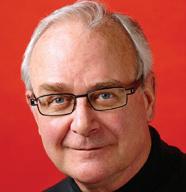

Life & Culture
Stories of ghosts, grief and Shabbat gladness win top prizes in Jewish children’s literature
By Penny Schwartz | JTA
Anna is a misunderstood sixth grade girl who communicates with the ghosts of her Jewish ancestors. Teased by her classmates and worried-over by her family, she finds comfort and understanding with her Bubbe and her beloved Jewish traditions.
“Neshama,” Marcella Pixley’s lyrically written novel-in-verse, won the gold medal for Jewish children’s literature for middlegrade readers from the Association of Jewish Libraries. Its Sydney Taylor Book Awards were announced last week in a virtual livecast from Chicago.
The award committee called Pixley’s “a lyrical, deeply Jewish story about identity, grief, and resilience.”
The annual award, named in memory of Sydney Taylor, the author of the “All-ofa-Kind Family” series, “recognizes books for children and teens that exemplify high literary standards while authentically portraying the Jewish experience,” according to the award committee’s announcement.
Other winners include “D.J. Rosenblum Becomes the G.O.A.T,” a coming-of-age mystery by Abby White, which won in the young adult category, and “Shabbat Shalom: Let’s Rest and Reset,” a lively board book written and illustrated by Suzy Ultman, which won the picture book award.
The Sydney Taylor committee named Uri Shulevitz, whose 2008 book “How I Learned Geography” drew on his boyhood experiences fleeing Poland after the Nazi invasion in 1939, as the winner of its Body-of-Work award. Shulevitz, a multiaward winning storyteller and illustrator, died last year.
In addition to the top winners, the Sydney Taylor committee named five silver medalists and nine notable titles of Jewish content.

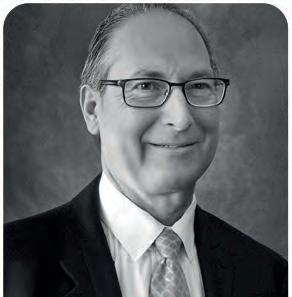






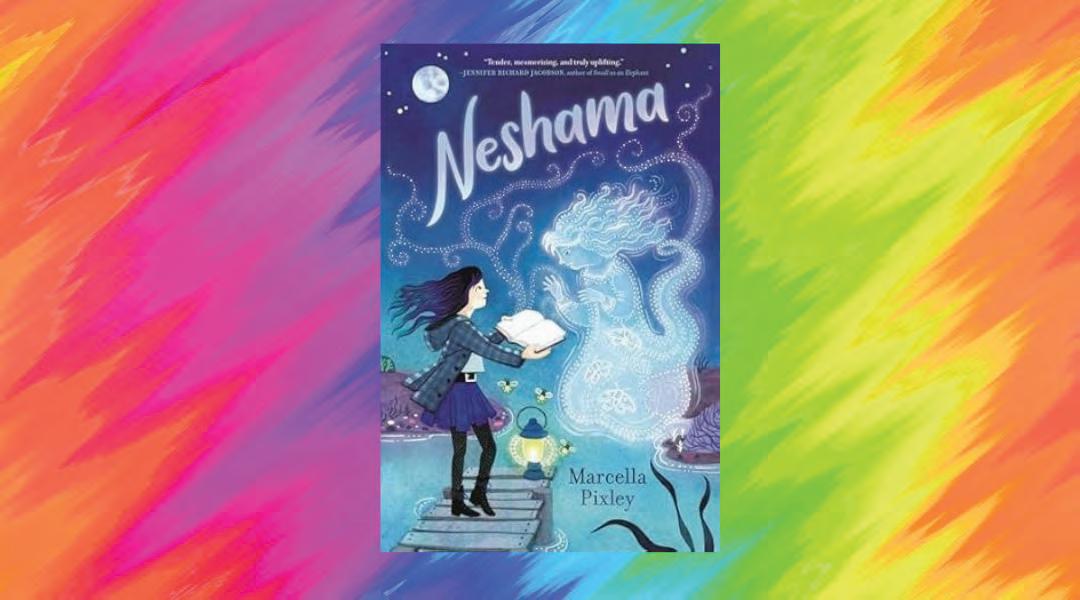
p “Neshama,” Marcella Pixley’s novel-in-verse, won the gold medal for Jewish children’s literature for middle-grade readers from the Association of Jewish Libraries.
“This year’s winners and honorees exemplify excellence in Jewish children’s literature through vibrant storytelling and rich perspectives that foster empathy, understanding, and a deep appreciation for culture and community.”
–MELANIE KOSS
“This year’s winners and honorees exemplify excellence in Jewish children’s literature through vibrant storytelling and rich perspectives that foster empathy, understanding, and a deep appreciation for culture and community,” said Melanie Koss, chair of the award committee.

PLAN AHEAD:
Protect Yourself and Your Loved Ones – Your Way
We provide expert help with long term care planning, powers of attorney, wills, trusts and special needs. We help you implement legal and tax strategies to protect your wealth during your life and afterwards.



mhm@ahmpc.com 4927 William Flinn Highway Allison Park, Pennsylvania 15101 We make house calls!

Winners will receive their awards in June in Evanston, Illinois, at the AJL’s annual conference.
In “D. J. Rosenblum Becomes the G.O.A.T,” an about-to-be bat mitzah-age girl is determined to prove that her beloved cousin did not die by suicide. Abby White lightens the emotional subject with a teen’s authentic, humorous voice.
“She wrestles with her Torah portion and faith, finding strength to face loss and begin moving forward,” the committee noted.
“Shabbat Shalom” may be the first board book to garner the award, Heidi Rabinowitz, a long-time podcaster about Jewish children’s books, told the Jewish Telegraphic Agency.
“The sophisticated board book combines succinct text with playful art,” the committee wrote in its release.
In awarding its Body-of-Work award to Shulevitz (1935-2025), who lived with his family in Israel before settling in New York, the committee recognized him as a “foundational voice in Jewish children’s literature.”
His books “illuminate Jewish culture and reflect universal experience,” the committee wrote.
Many of Shulevitz’s titles reflect his Jewish roots, including “The Golem,” by
Isaac Bashevis Singer and “The Travels of Benjamin of Tudela,” an illustrated travelogue for children based on the real-life voyages of the 12th-century Jewish traveler who visited Rome, Constantinople, Baghdad and Jerusalem. Shulevitz garnered the Caldecott medal, children’s literature’s top honor for illustrated books, for “The Fool of the World and the Flying Ship.”
Earlier, the AJL announced that Jessica Russak-Hoffman, a journalist for Jewish media outlets, won the organization’s new manuscript award for “How to Catch a Mermaid (When You’re Scared of the Sea),” a novel set in Israel for ages 8-13.
Last week, the AJL named Jason Diamond as the 2026 winner of its Jewish Fiction award for his novel, “Kaplan’s Plot.” At Tuesday’s event, the Youth Media Awards hosted by the American Library Association, the winners were also announced for the Caldecott, Coretta Scott King, Newberry and Printz awards, among others. The Asian American Picture Book award went to “Many Things All At Once,” by Veera Hiranandani and illustrated by Nadia Alam, the story of a girl with a Jewish mother and a South Asian father. PJC
Photo courtesy of Candlewick
Community
Lunch and lift
Congregation Beth Shalom Men’s Club Sports Luncheon occurred on Feb. 1. The annual event, which raises money for special needs children and adults in the Pittsburgh area, welcomed 500 guests, including 200 individuals from 13 special needs organizations. Participating athletes included members of the Pittsburgh Riverhounds, Pitt Football, Pitt Women’s Lacrosse, Pitt Women’s Soccer and Pitt Wrestling, Carnegie Mellon Football, Carlow Univer sity athletics and Pittsburgh Passion Women’s Football.
Head to head in Houston
Community Day School Head of School Casey Weiss and Hillel Academy of Pittsburgh Principal Yikara Levari joined colleagues at Prizmah’s Head of Schools Retreat in Houston. The three-day gathering afforded participants opportunities for peer-to-peer learning and a chance to explore topics, including the shifting landscape of AI in schools, while bolstering a network of educational leaders.
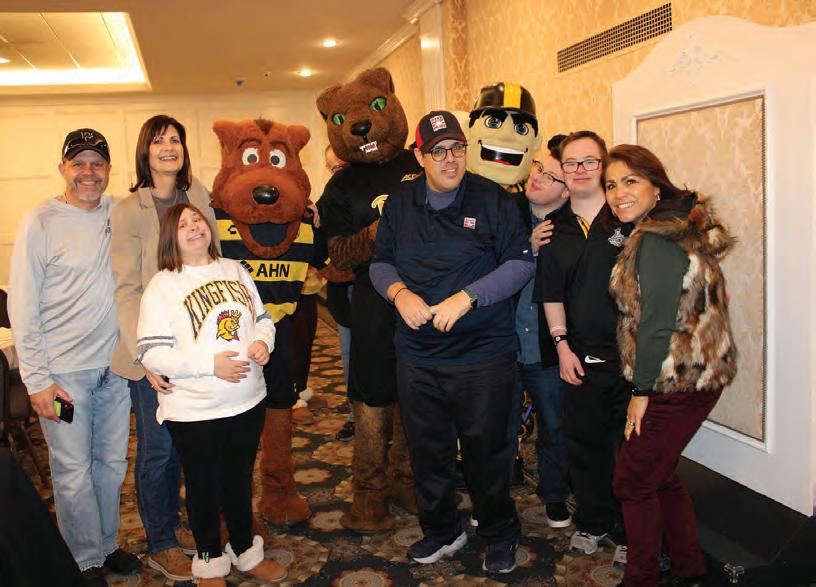
Happy new year trees
Community Day School students celebrated Tu B’Shvat, the new year for trees, by eating fruits and grains associated with the land of Israel and learning about the importance of respecting agriculture. Occurring on the 15th day of Shevat, Tu B’Shvat began the evening of Feb. 1.
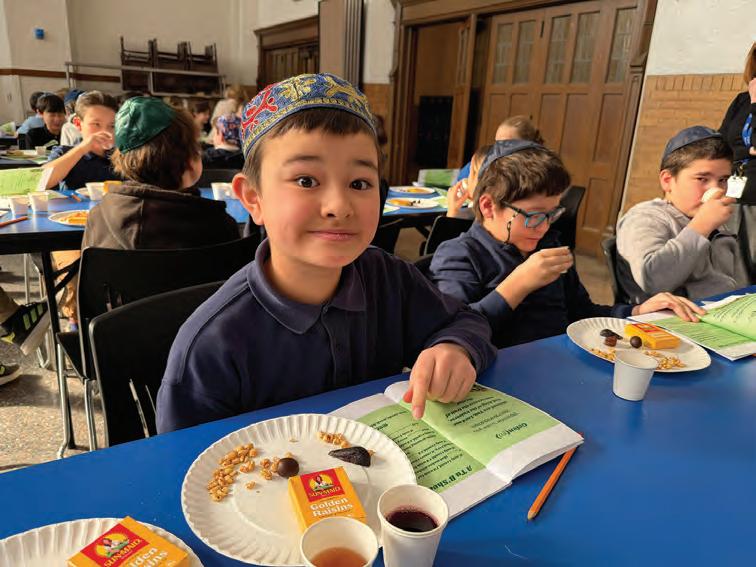
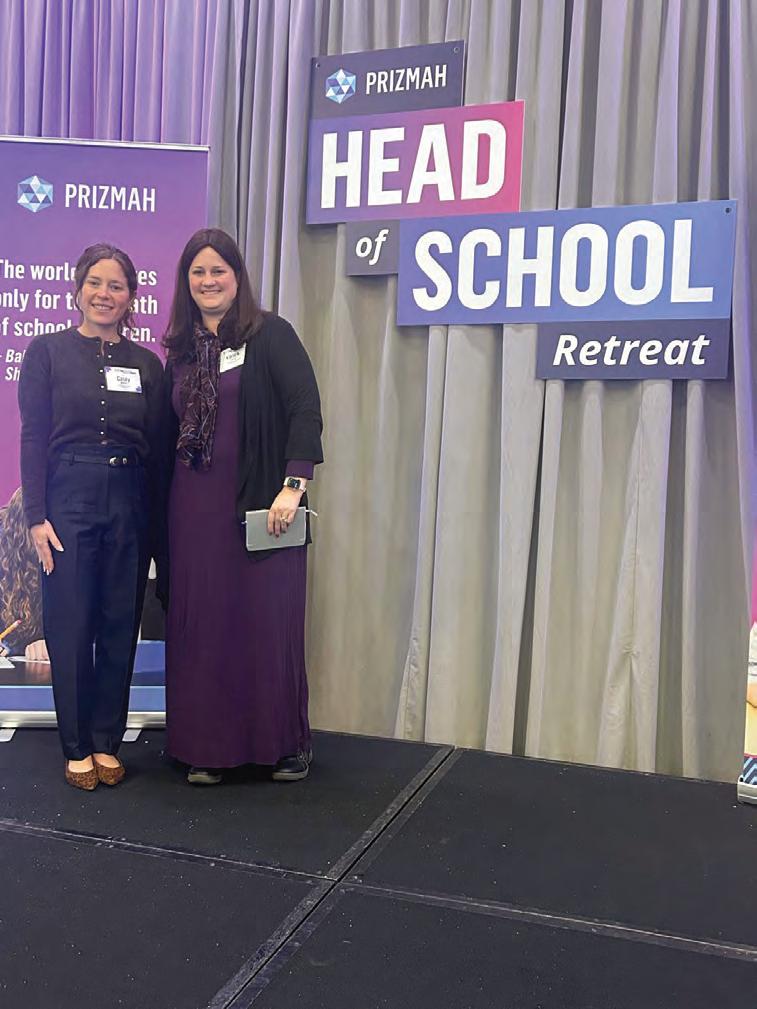
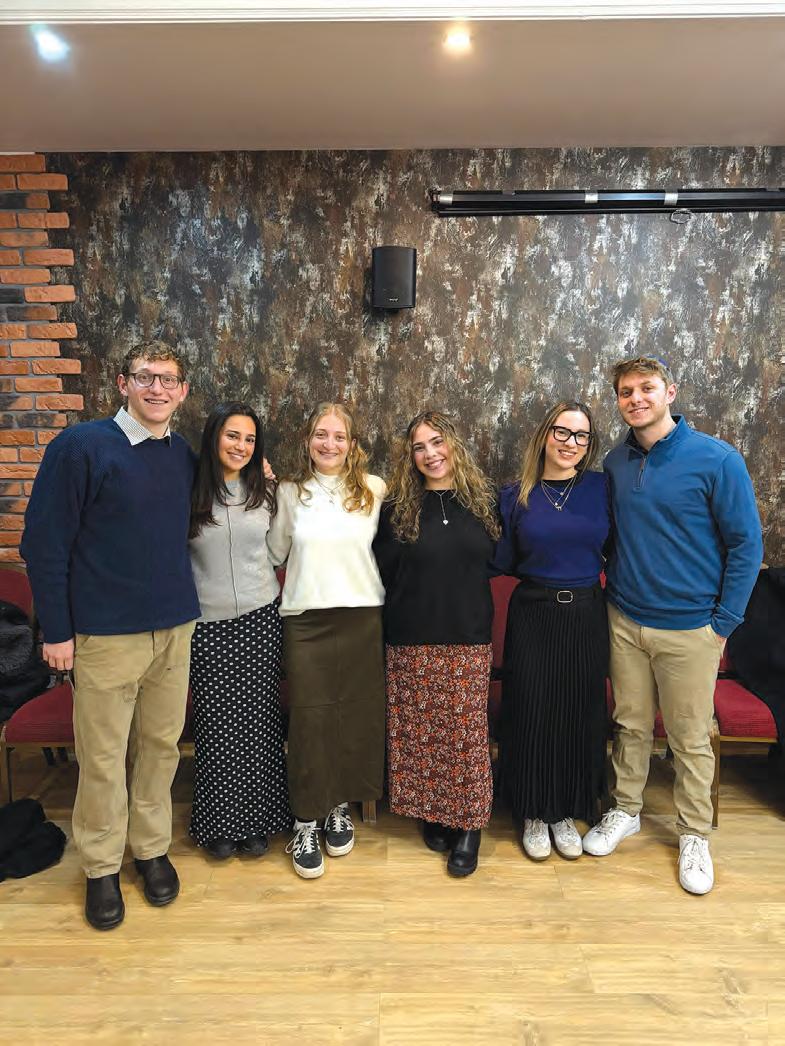
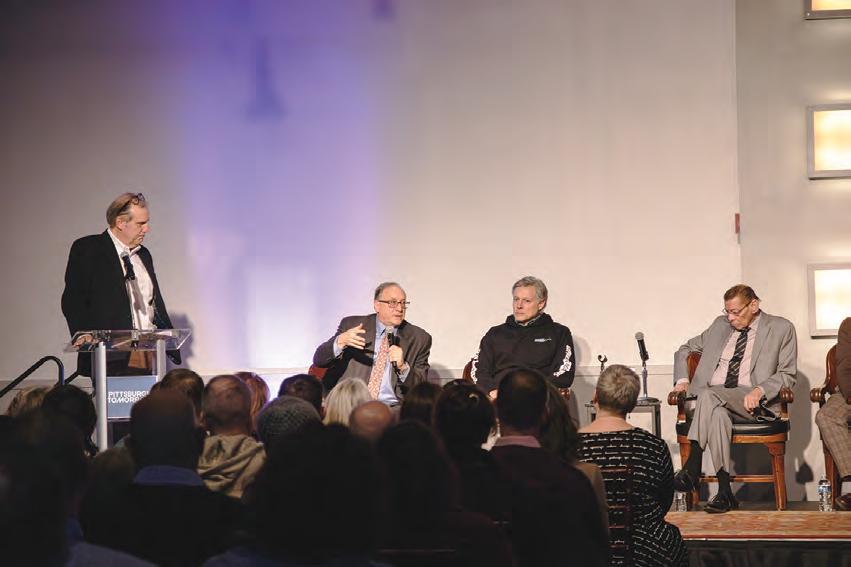
Macher and Shaker
Pittsburgh author Lee Goldman Kikel was presented with a commemorative Mid-Atlantic Regional Emmy® by PA Cyber Charter School on Jan. 29. Kikel’s father,
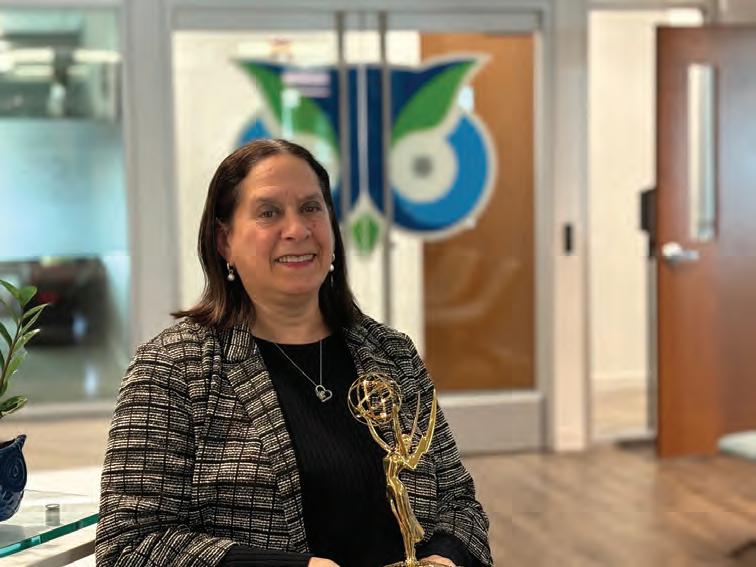
p
Photo courtesy of Community Day School
Holocaust survivor
Melvin Goldman, was featured in the award-winning film.
p Lee Goldman Kikel
Photo courtesy of PA Cyber Charter School
News of the future
p From left to right, Doug Heuck, Pittsburgh Tomorrow; Jim Busis; Andrew Conte, Center for Media Innovation, Point Park University; and Rod Doss, New Pittsburgh Courier.
Photo by Scott Fox, Pittsburgh Tomorrow
TRIPLE CROWN
PRESENTING SPONSOR
Nancy and Steven Cohen
WINNER’S CIRCLE
Anonymous
A&L BMW, Jaguar, Land Rover & The Lamfrom Family
Giant Eagle Foundation
PNC Bank
S&B USA
Joshua Shapira and Family
Lori and Bob Shure
Linda S. Simon
University of Pittsburgh
SECRETARIAT
Sandra Block and John Suhrie
Highmark® Blue Cross Blue Shield
Cindy Goodman-Leib and Scott Leib
Stacey and Scott Seewald
The Wilson Group
GARLAND OF ROSES
Anonymous
Aladdin Food Management Services LLC
Bev and Zack Block/ Block & Associates, LLC
Ceeva, Inc.
Debbie and Bill Demchak
Erica and Billy Goodman
Paula Garrick Klein
Dana and Jason Kunzman
Dory and David Levine
Lisa and Jonathan Marcus
NuGo Nutrition
Nancy and Woody Ostrow
Hilary Tyson and Charles Porter
Lori and Jimmy Ruttenberg/
Equilibrium Wealth Advisors
Nancy Bernstein and Rocky Schoen
Leonard Silk
UPMC and UPMC Health Plan
Nancy and James Wolf
THOROUGHBRED LEAGUE
Anonymous
Deborah and Sam Berkovitz
Nancy and David Brent
Ellen and Jack Kessler
Lamar Advertising
Oxford Development Company
Jeffrey Markel and Carol Robinson
CHURCHILL DOWNS
Anonymous (3)
Lauren and Scott Americus

Deborah and David Baron
Thanks to Our Big Night Sponsors!
HONORING UNIVERSITY OF PITTSBURGH
CHANCELLOR JOAN GABEL
HONORARY CHAIR: EVA TANSKY BLUM
CHAIRS: NANCY AND STEVEN COHEN • JOSHUA SHAPIRA
Pittsburgh Pirates
Buchanan Ingersoll & Rooney, PC
Clark Hill, PLC
Dickie, McCamey & Chilcote
The Donald and Sylvia Robinson Family Foundation
Elyse and Martin Eichner
Andrea and Andrew Eller
Julie and Josh Farber
Stefani Pashman and Jeremy Feinstein
Mary Pat and Eric Friedlander
Chip Ganassi
Caryle Glosser
Meyer “Skip” Grinberg
Merris and Yram Groff
Alison and Brad Karlin
Dana and Michael Laidhold
Marcie Mitre and Ken Levin
Kerry Bron and Robert Levin
Marsha and Bernie Marcus
Elie Aoun and Justin Matese
Pittsburgh Jewish Chronicle
Pittsburgh Roots Endodontics |
Laura & Jeffrey Parker
The Pittsburgh Steelers
S&T Bank
Suzanne and Brian Schreiber
ServiceMaster PBM Co.
TABLE Magazine
Trust-Franklin Presss Co.
Marcie and Matthew Weinstein
Elizabeth Goldberg and Michael Weisberg
Martha and John Wolf Jr
Hilary Wolfe and David Stone
Yellow Bridge Digital
Rachel and Steve Zoffer
MINT JULEP CLUB
Anonymous (3)
A. Martini & Co.
B&R Pools & Swim Shop
Valerie and Paul Bacharach
big Burrito Restaurant Group
Kate and Mac Booker
Cathy Reifer and Samuel Braver
Elizabeth Miller and Joshua Breslau
Besty and Marc Brown
Common Plea Catering
Dean Damick
Marion Damick
Dentons Cohen & Grigsby
Elite Media Installations
Entertainment Unlimited
Event Source
Exceptional Exteriors and Renovations, Inc.
Barb Murock and Carl Fertman
First Student, Inc.
Eva and Gary Friedman
Karen and Jack Friedman
Jen and Joe Goldston
Deborah and Matthew Graver
Ina and Larry Gumberg
Rebecca Pomerantz and Lucas Heller
Hens and Chicks
Huntington Bank
Jewish Healthcare Foundation
Jones Day
Carole and Jerry Katz
Sue Berman-Kress and Doug Kress
Liquid Screen Design
Lobos Management
Marbury Group
Amy and Grant Mason
Mosaic Linens
Ellen Olshansky and Rich Pattis
PRISM
Geri and Steve Recht
Rivers Casino
Rothschild Doyno Collaborative
Schneider Downs
Silk & Stewart Development Group
Dr. Stuart Silverman
Shari and Rick Sweet
Natalie and Brian Valen
Lee Wolf
Lynn and Marc Zelenski
RIDERS UP
Anonymous (2)
Anonymous in honor of Chancellor Joan Gabel
Almanac/Observer Reporter
Cheryl Gerson Americus
Sharon Dilworth and Dr. David Baker
Rachel Firestone and Jason Binder
Amanda and Aaron Cantor
Rachel and Bryan Clark
Erica and Hal Coffey
Donner Family
Fragasso Financial Advisors
Beth Goldstein and Jeremy Goldman/ Goldstein Tax Advisors
Lori and Richard Guttman
Susie and Barney Guttman
Cynthia and John Halicky
Jan and Mitchell Hoffman
Hyman Family Foundation
Mardi and Bill Isler
Laura and Jonathan Kessler
In Memory of Elaine Belle Krasik (z"l)
Susan and Michael Kurtz
Susan and Louis Leff
Larry (z"l) and Claire (z"l) Levine
Patty and Stanley Levine
M & J Electrical Contracting, Inc.
Nikol and Stanley Marks
Sharon Werner and Eric Olshan
Louisa and James Rudolph
Laura and Henry Schneiderman
David and Cindy Shapira
Darlene Cridlin and Robert Shreve
Julie and Bob Silverman
Marcia and Melvin Solomon
Rachael and Alex Speck
Yvonne and Barry Stein
Sterling Paper Company
Vigliotti Landscape and Construction, Inc.
Walnut Capital
Dr. David Zubrow
Susan and Howard Zwillinger
STARTING GATE
Anonymous (4)
Agency Group
Allegheny Roofing and Sheet Metal Company, Inc.
Debra and Stewart Anderson
Marshall and Karen Balk
Baptist Senior Family
Laurie Moser and Stewart Barmen
Liza and Adam Baron
Eva Tansky Blum
Brandywine Agency
Maurice S. Cerul, MD
Gail and Norman Childs
Citizens Bank
Clerici Family
Maria and Josh Cohen
Community Day School
Dodi Walker Gross and Daniel Edelstone
Andrea Ehrenreich and Michael Regan, in loving memory of Marc Ehrenreich (z”l) and in honor of
Ron Heyman, JCC Grief Support
Ivan Lee Engel
Federated Investors Foundation
Matthew J. Feigel, DMD LLC
Fireman Creative
Fort Pitt Capital Group
Debra and Rep. Dan Frankel
Rosalind Chow and Jeffrey Galak
Ruth and Alan Garfinkel
Julie and Ed Gelman
The Glickman Family
Amy and Bob Gold
Marcie Solomon and Nathan Goldblatt
Ellen and Michael Goldstein
Susie and Don Gross
Lissa Guttman
The Hanover Insurance Group
Harry S. Cohen & Associates, P.C.
Henderson Brothers, Inc.
Vicky and Steve Hoffman
Jennifer and Larry Honig
Teddi and David Horvitz
Rebecca and Aaron Hurowitz
Lynne and Blair Jacobson
Nancy and David Johnson
Dr. Leslie and Steven Latterman
Lynn and Lawrence Lebowitz
Evelyn Levine
Julie and Jason Lichtenstein
Lieber Hammer Huber & Paul PC
Littles
Catherine Loevner
M&D Properties, Inc.
Fara and Andy Marcus
Mary McFadden
Jane and Mark Mendlow
Kimberly and Jim Meyers
Alex Musicante
Iris Nahemow
Marni and Jon Pastor
Stephanie Weinstein and Amit Patel
Pittsburgh Penguins Foundation
PJ Dick Incorporated / Trumbull Corporation / Lindy Paving
Rita and Andrew Rabin
Melissa and Peter Rackoff
Nancy and William Rackoff
Terri and Oscar Reicher
Jane and Bruce Rollman
Michele Levine and Jim Rosenberg
Josh Royston
The Rubinoff Company and Rubinoff Realty Services
Sara and Kenneth Segel
Sitko Bruno
Carol and Joshua Smith
Caren and Howard Sniderman
Kyle, Noa and Mason Solomon
Jennifer and Josh Steiman
Marsha Zuckerman and Mike Tobias
Traction Rec
TWIN Capital Management, Inc
Yana and Michael Warshafsky
Winchester Thurston School
Carol and Michael Yahr
Carrie and Doran Young
Zelenkofske Axelrod LLC
*as of 1/22/2025