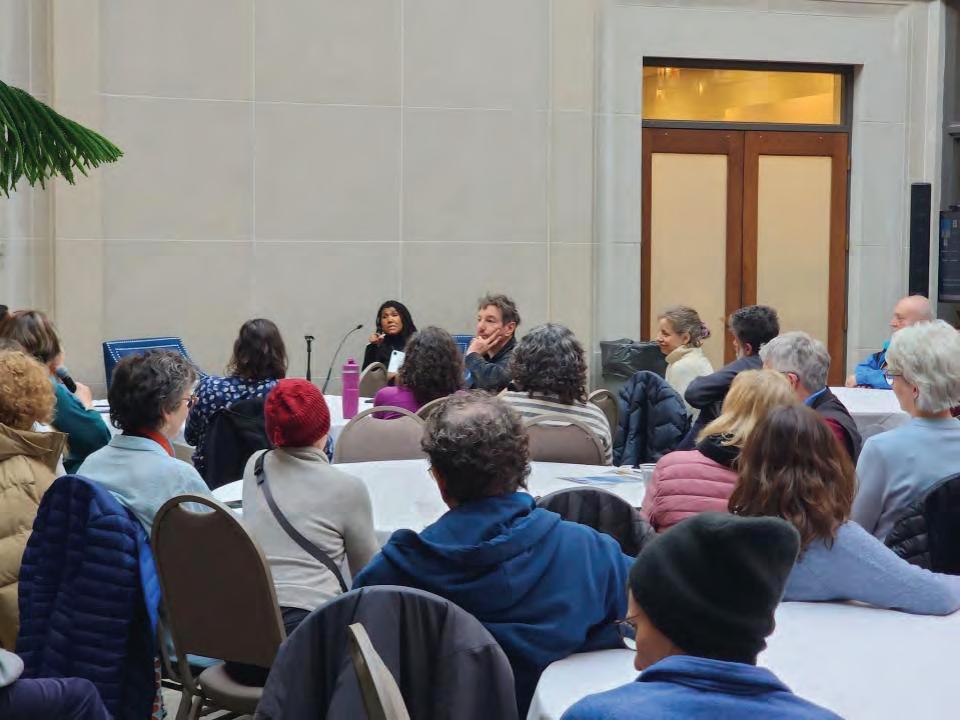
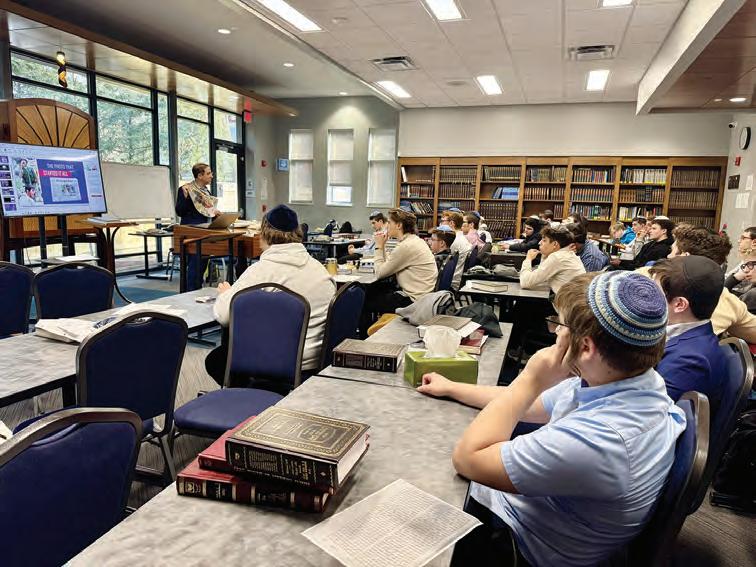
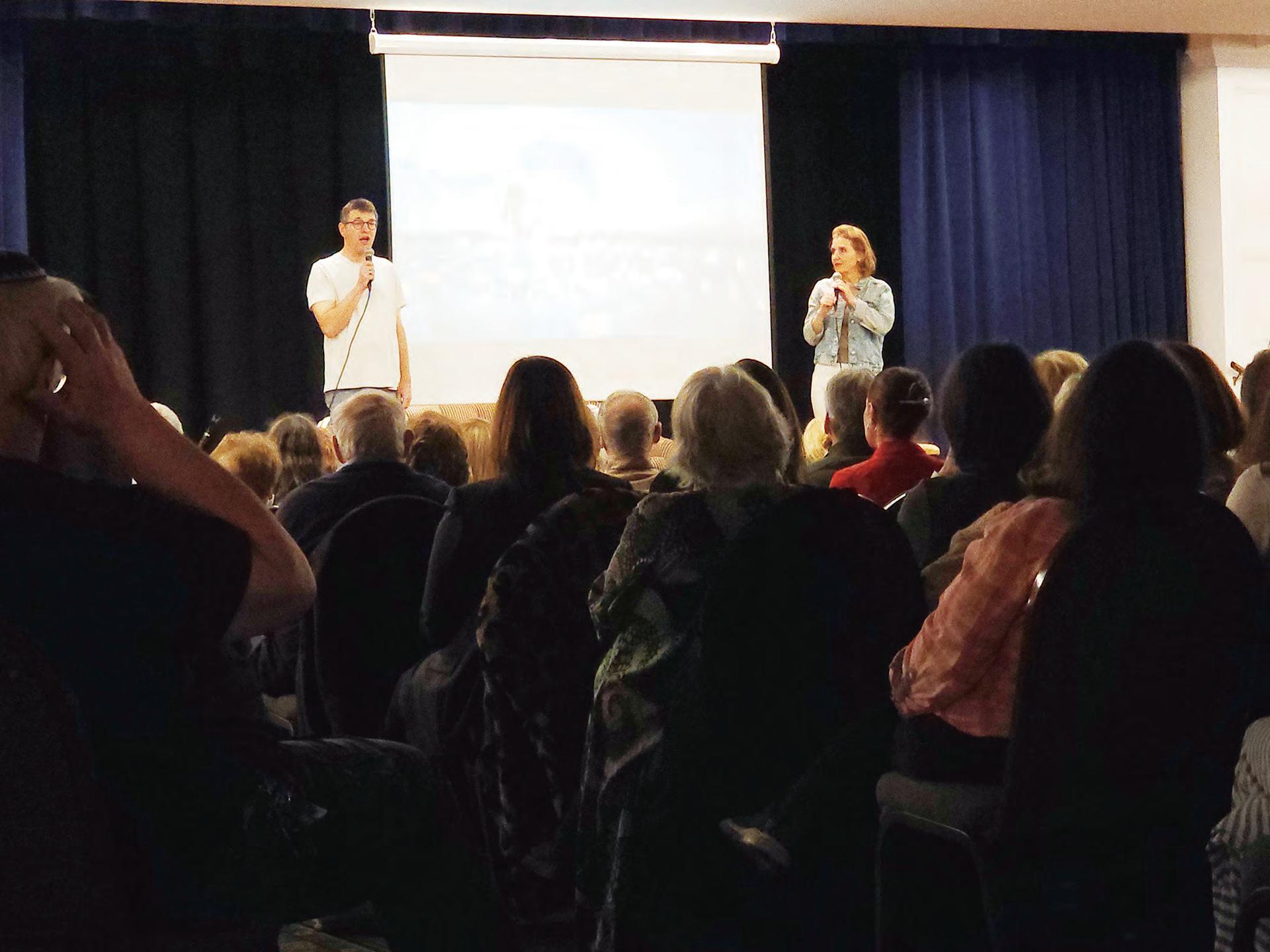
HonestReporting’s Gil Hoffman makes a stop in Pittsburgh to discuss ‘Israel and the Media Landscape’
il Hoffman is clear on what motivated him to join HonestReporting.
“I got a chance to fight for Israel on the media battlefield,” he said, before noting, “I had no idea how serious it would become.”
Before his time as executive director at HonestReporting, Hoffman worked for nearly a quarter century at The Jerusalem , where he covered politics. He also hosted the podcasts “Inside Israel Today” and
It was a comfortable position for the
“I really liked my job,” he said. “I watched history as it happened. I had my name on a chair in the front row of the gallery of Knesset. We got to know our presidents and prime ministers. I could have done it forever.”
somewhere, where an intern would bring it to an editor smoking a cigar, and he’d decide whether to put it on page 12 or 13, with no context whatsoever,” he said. “It doesn’t work like that anymore.”
HonestReporting, Hoffman explained, has eight categories of media bias for which it searches: misleading terminology, imbalanced reporting, opinions disguised as news, lack of context, selective omission, using true facts to draw false conclusions, distortion of facts and lack of transparency.
Rather than a team of intrepid reporters reading, watching and listening to various news sites to find those eight categories of bias, HonestReporting is operating firmly in the 21st century.
Rep. Summer Lee endorsed by new proPalestinian PAC
By David Rullo | Senior Staff Writer
U
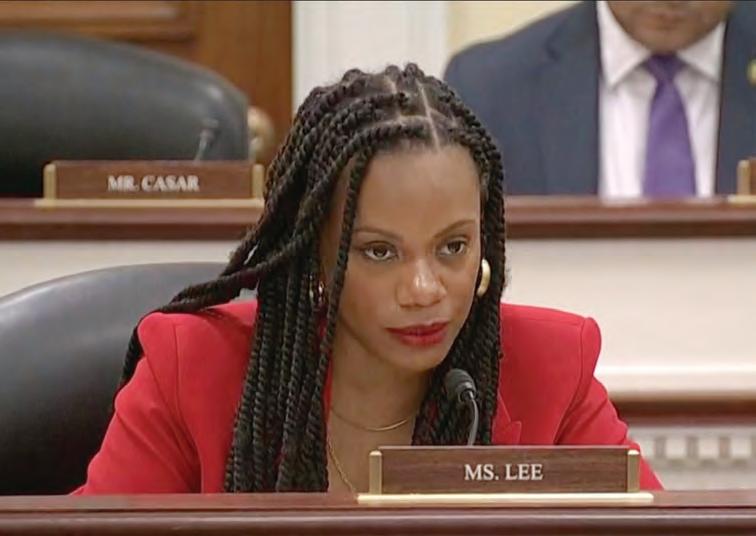
.S. Rep. Summer Lee, who represents Squirrel Hill, has been endorsed by PAL PAC, a new political action committee “committed to supporting champions for Palestinian rights running for Congress,” according to an email distributed by the PAC.
PAL PAC also endorses Rep. Ilhan Omar, Rep. Delia Ramirez and Rep. Rashida Tlaib.
The endorsement coincides with the withdrawal of support from JStreetPAC, a political action committee affiliated with J Street that was created in 2008 “to explicitly promote American leadership to resolve the IsraeliPalestinian conflict.”
JStreetPac first endorsed Lee in her 2022 Democratic primary run for Congress against Steve Irwin, Jerry Dickinson, Jeff Woodard and William Parker, then against Republican Mike Doyle in the general election.
A spokesperson from JStreetPAC was unavailable to speak with the Chronicle, citing preparations for J Street’s upcoming national convention.
In a written response to the Chronicle, however, the JStreetPAC representative said that endorsements are a “2-way street” and said that “Congresswoman Lee did not seek J Street’s endorsement for the 2026 cycle.”
The organization added that it continues to share a “fundamental belief” with the representative that “both the Israeli and Palestinian people deserve a better future,” but noted that “our approach differs from hers in key ways.”
JStreetPAC also said that it looks forward to working with Lee in the legislative session.
HonestReporting is a digital media company that, according to its website, “analyzes stories, articles, opinion pieces and images that appear in the media’s coverage of Israel, exposing and responding to inaccuracies or bias.”
For Hoffman, the company is the modern version of how one used to respond to biased reporting.
“We used to take out a typewriter and some Wite-Out, write a letter to the editor, put it in an envelope and then in a box and hope a pigeon would take it to a newsroom
“We’ve trained AI to find these automatically,” Hoffman explained, “which flags it for us, and then we can get it changed online within minutes before anyone has a chance to see it.”
The AI was developed by a company in Tel Aviv.
Of course, sometimes, a sledgehammer rather than a laser is needed, in which case, he said, “We shame them on social media or write a longer-form article to educate people.”
As an example of HonestReporting’s work, Hoffman cited an incident when NBC was talking about Palestinian terrorists detained by Israel. The network called them “captives.”
JStreetPAC’s website lists seven criteria for candidates seeking its endorsement:
• “Support for a strong U.S.-Israel relationship and for U.S. security assistance to Israel that adheres to U.S. law.”
• “Support for a diplomacy-first approach to foreign policy and for the rules-based international order that has prevailed since WWII.”
• “Support for a negotiated peace agreement between Israel and neighboring Arab states that results in security for the State of Israel,
Bringing The Beatles to the Book of Esther
Photo provided by Julie Paris
Headlines
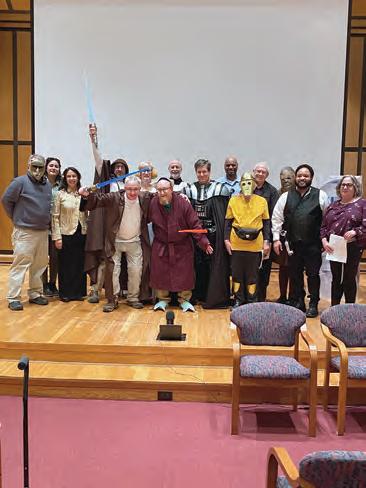
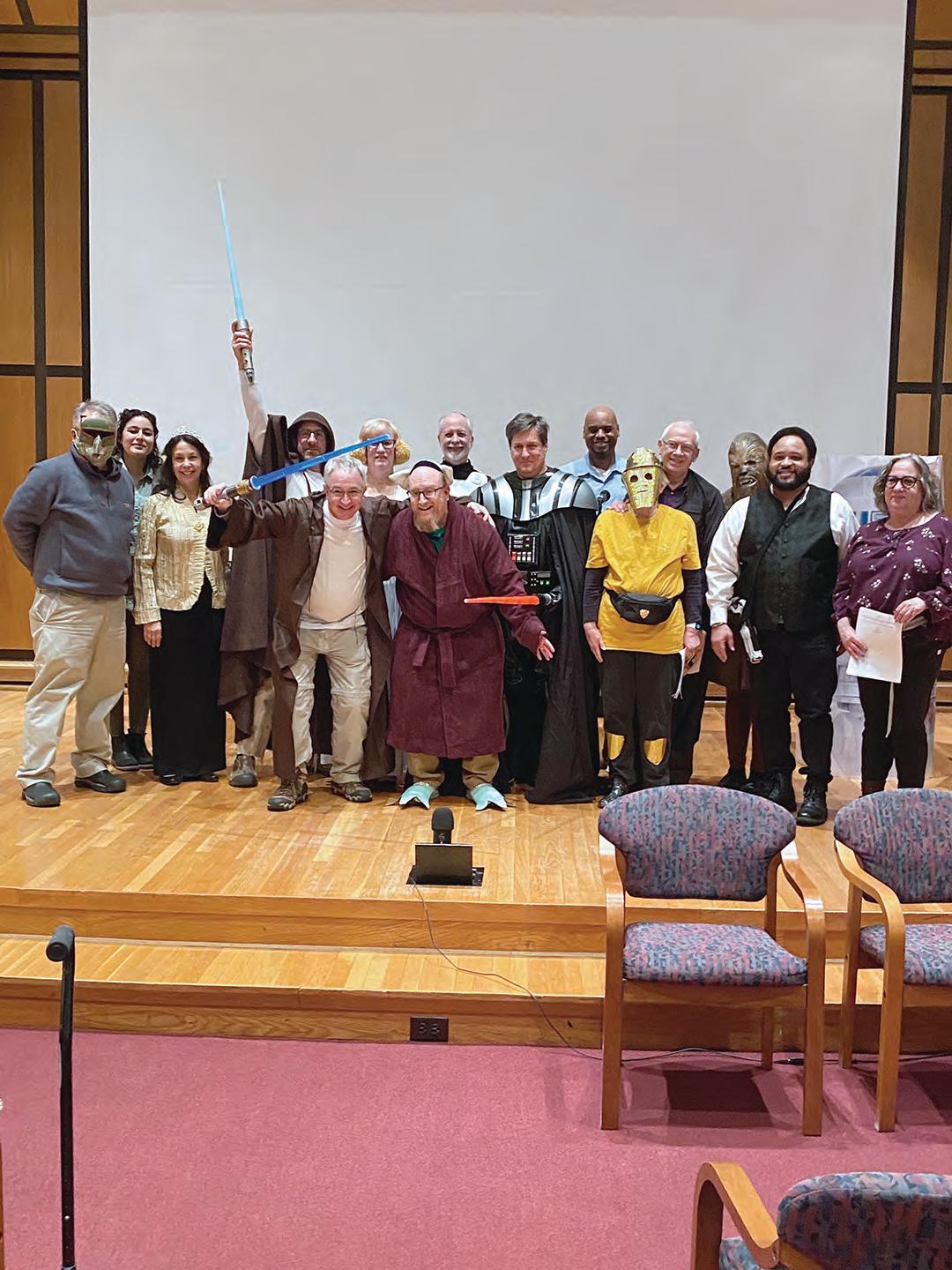
‘A Hard Night’s Megillah’ brings The Beatles to the Book of Esther in Rabbi Myers’ farewell spiel
By Toby Tabachnick | Editor
For more than four decades, Rabbi Hazzan Jeffrey Myers has made a ritual of reinvention, crafting Purim spiels that spoof the biggest names in popular culture with music and wit.
While “A Hard Night’s Megillah” — a Beatles parody that will be performed on March 2 at Rodef Shalom Congregation at 7 p.m. — will not necessarily be Myers’ final spiel, it will be the last one he showcases in Pittsburgh. Myers, who has served Tree of Life Congregation since 2017, will be leaving his pulpit and moving to the New Jersey Shore this summer to be closer to family.
Myers has parodied everything from “Star Trek” to Harry Potter, but he’s particularly excited about “A Hard Night’s Megillah,” for which he’s repurposed 20 well-known Beatles’ tunes to retell the story of Esther, Mordechai, Achashverosh and the evil Haman.
The Beatles’ discography was fertile ground for a Purim score, Myers said. Some songs didn’t even need much reworking to fit the story.
“If you remember in the Purim story, the Book of Esther, Achashevrosh holds a beauty pageant selecting the queen, and he picks Esther,” Myers said. “So, ‘When I’m Sixty-Four,’ right? Perfect song.”
Other songs — including “Eleanor Rigby,” “Yesterday” and “Yellow Submarine” — needed a bit more revising, but when it comes to spiel writing, inspiration comes naturally to Myers. An idea for a parody of Harry Potter, for example, hit him while in the sanctuary of Calvary Episcopal Church, where Tree of Life has been holding High Holiday services since 2019. (Tree of Life’s building on the corner of Shady and Wilkins avenues was closed immediately after the Pittsburgh synagogue shooting on Oct. 27, 2018. Representatives from The Tree of Life, Inc. have said rebuilding will start this year and the new building will house a memorial to those who were killed, a museum, an educational center and a synagogue. )
stopped — literally stopped — the spiel in the middle, and had the dragon come on for the dragon dance, which is just so elegant and beautiful to see live right there. And there was our dragon.”
Likewise, “A Hard Night’s Megillah” will feature not only Tree of Life congregants, but some special guests as well, Myers said, including five local “important political leaders,” although he declined to name them.
Having politicians participate in the spoof, he said, fits perfectly with the Purim story for two reasons.
“Number one: The Book of Esther is about palace intrigue. It’s a political story, so who better than political leaders? Number two: It’s a way to grow that relationship that Tree of Life has with our elected leaders and to just express
gratitude for their leadership and continued
Other special Purim guests include Myers’ son Aaron on keyboard, and Hazzan-Rabbi Penny Myers, from Buffalo, New Yok, chanting some of the Megillah before the spiel. Several area clergy members will participate as well, including Jensen, Pastor Vincent Campbell from Ebenezer Baptist Church, and the Rev.
“I think it’s important to expose our Christian friends to what Purim is about,” Myers said. “To say, ‘Well, look, we sort of let our hair down and celebrate a bit as well and have this really fun, unusual gathering, which I
Hall, who, like Jensen and Campbell, has been a steadfast ally of the Jewish community, is looking forward to being part of the spiel, as Purim holds special meaning for her.
“When pastors get ordained, you get to choose your scripture texts,” she explained. “And in the Christian church, there is a Hebrew scripture, a psalm, there is a Gospel text and an epistle. And my particular Hebrew scripture text was from Esther. It was from Chapter 4, and it was probably the central piece of Esther, which is Chapter 4, verse 14.”
That passage reads: “And who knows, but perhaps you’ve come to this position for a time such as this.”
“That’s been the guiding light for all of my ministry,” Hall said. “Everything that I have done is based on what Esther communicates.”
She expressed gratitude for Myers’ contributions to the community, and said she is “grateful
“It’s a gift,” she said, to participate in Tree of Life Purim’s celebration.
“I want to be part of what it means to narrate freedom, and to narrate freedom in a way that I think the Book of Esther communicates, which is, Esther is trying to figure out what it looks like to flourish in a place that she was not designed to flourish,” Hall said. “I think that’s so important for everyone here in Pittsburgh right now. You know, we’re just living in a really complex time. We’re living in a difficult time. And so I just wonder how is it that we are going to support neighbors that feel like they’re not able to flourish. I feel like the Jewish community is out in front, trying to figure out what it is to communicate, what it is to have a life when life is constantly complicated by people that want to limit your life.”
In the next few months, Myers will be leaving Pittsburgh. Dubbed “America’s rabbi” following the Pittsburgh synagogue shooting, he is unsure what the future will hold for him professionally. And his feelings are “mixed” as he processes his thoughts on leaving Pittsburgh and Tree of Life.
“I’ve regularly said half-jokingly, but halfrealistically, that ever since Oct. 27, Rod Serling has lived in my coat closet,” Myers said. “And because it’s the reality mixed with the unrealness all in one, and that my expectation is, I come home that last day, and Rod’s going to come out of my closet and say, ‘Jeffrey Myers, you’ve been in an extended play version of ‘The Twilight Zone.’ The episode is now concluded. You can go home.’”
But for now, the rabbi is focused on producing a special spiel, which will be free and open to the public for “an evening of fun,” and during which its audience can leave the tensions of the day behind.
“Let’s come have this moment of just joy together, because it’s healthy for us to be able to do that,” Myers said. “We all need it — not just the Jewish community — we all need moments to escape from the realities of the world and just take the time to do that.” PJC
Toby Tabachnick can be reached at ttabachnick@pittsburghjewishchronicle.org.
5915 Beacon St., 5th Floor Pittsburgh, PA 15217
Main phone number: 412-687-1000 Subscriptions: 412-687-1000, ext. 2
Published every Friday by the Pittsburgh Jewish Publication and Education Foundation 5915 Beacon St., 5th Floor Pittsburgh, PA 15217
Phone: 412-687-1000
POSTMASTER: Send address change to PITTSBURGH JEWISH CHRONICLE, 5915 BEACON ST., 5TH FLOOR PITTSBURGH, PA 15217
(PERIODICAL RATE POSTAGE PAID AT PITTSBURGH, PA AND AT ADDITIONAL MAILING OFFICES)
USPS 582-740
Manuscripts, letters, documents and photographs sent to the Pittsburgh Jewish Chronicle become the property of this publication, which is not responsible for the return or loss of such items.
The Pittsburgh Jewish Chronicle does not endorse the goods or services advertised or covered in its pages and makes no representation to the kashrut of food products and services in said advertising or articles. The publisher is not liable for damages if, for any reason whatsoever, he fails to publish an advertisement or for any error in an advertisement. Acceptance of advertisers and of ad copy is subject to the publisher’s approval. The Pittsburgh Jewish Chronicle is not responsible if ads violate applicable laws and the advertiser will indemnify, hold harmless and defend the Pittsburgh Jewish Chronicle from all claims made by governmental agencies and consumers for any reason based on ads appearing in the Pittsburgh Jewish Chronicle
Headlines
The origins of Purim
By Tim Miller | Special to the Chronicle
What is a holiday like Purim doing on the Jewish calendar? What is a book like Esther doing in the Tanakh? Was the holiday really established the way that the book of Esther describes, following intrigue at the Persian court and the last minute intervention of a Jewish queen that saved her people from massacre? (And let’s not forget the massacre of Persians that happens instead.)
The story itself belongs to a genre that stretches back to Joseph’s time in Egypt, that of the Jewish courtier ensconced in a foreign court, and it is a genre that continues today wherever a Jew is portrayed as a fish out of water in the Diaspora and ends up in a position of influence. Another early story of this type, Daniel, has its protagonist trying to survive in the court of Babylon, and some scholars have guessed (because we can only guess) that the story of Esther began circulating around the same time as Daniel, perhaps during the fourth century BCE. The author of Esther was also familiar with the conventions of Greek literature at the time, which are replete with disguised identities, rivalries at court, and depictions of the Persians as decadent and ridiculous. However one understands the historical dimensions of the story of Esther, it has been retold in ways that Jewish audiences at the time would have recognized, and been buried under comedy and the carnivalesque.
Some scholars suggest that a spring festival involving intoxication and excess was probably already popular in the Persian Empire in the sixth or fifth centuries BCE, and Jews living there took part in it. Over t ime, these Jews may have added their own touches to it, and at some point modified an existing story associated with the festival — or created their own — that included Jewish protagonists.
Perhaps the downfall of the Persian Empire in 331 BCE at the hands of Alexander the Great was an impetus to Jews living in formerly-Persian lands to truly make the festival their own. Whatever the case, modern historians of Persia are divided over whether anything like the story told in Esther ever happened, even as they readily admit that whoever did write the story got many of the Persian details correct. The author also got the essence of Jew-hatred down correctly, too, and it is still astonishing to see Haman, in Esther 3:8, basically laying out the accusations against us that still appear on social media today.
There is no direct reference to Purim and its observance on the 14th of Adar until the time of the Maccabean War in the mid-second century BCE. Following the war, a holiday was instituted called Nicanor Day, which celebrated the victory of the Maccabean general, Nicanor, over the forces of Antiochus. 2 Maccabees 15:36 says that
Just as we might imagine the original version of the story developing in the hands of something like a comedy troupe, with different people adding more outlandish details and double entendres, so the later retellings were embellished with more piety.
Nicanor Day was to be observed on “the thirteenth day of the twelfth month — which is called Adar in the Syrian language — the day before Mordecai’s day.” Since the writing of 2 Maccabees can probably be dated soon after the war, this passage tells us that the observance of Purim on the 14th of Adar must have been widespread in Judea at the time.
Just as Chanukah came to focus on the miracle of the oil and downplay the holiday’s militaristic context, it is assumed that Nicanor Day was looked down upon for the same reason. Eventually Nicanor Day’s proximity to Purim allowed the latter holiday to overshadow it, and it no doubt helped that, unlike the Maccabean War, the story of Esther took place in a foreign land far in the past, and that whatever was potentially subversive about it was undercut by its tone. By the eighth century CE, the 13th of Adar was given over to the Fast of Esther, and Nicanor Day disappeared from our calendar altogether.
The immediate afterlife of the story and the festival is just as fascinating: As we all know, the book of Esther never mentions God, and perhaps for this and other reasons it is the only Biblical book not found among the ascetics at Qumran. In the midrash, we
are assured that Esther’s marriage to a gentile was never actually consummated, and in the Greek and Aramaic versions of the story (which are more retellings than translations), Esther makes sure to keep kosher, and mention is made of God, prayers and even circumcision. Just as we might imagine the original version of the story developing in the hands of something like a comedy troupe, with different people adding more outlandish details and double entendres, so the later retellings were embellished with more piety.
The rabbis, then, had misgivings about Purim, and yet in the century before the destruction of the Second Temple they became fastidious in its observance.
According to the Talmud (Megillah 3a), the priests of the Temple were instructed to “cancel their service in the Temple and come to hear the reading of the Megillah,” and the reading of the Megillah even took precedence over the reading of the Torah. It is in the Talmud, too (Megillah 7b) where we are told to get so drunk on Purim that we no longer know the difference between “cursed be Haman” and “blessed be Mordecai.”
The Purim spiel seems to have grown out
of public reenactments of the story during or just after the Roman period. These performances ended with the hanging of Haman in effigy, which often got Jews in trouble during the Middle Ages when Christian rulers assumed it was a covert way of mocking the crucifixion of Jesus. The tradition of giving food and other gifts to the poor was there from the beginning (Esther 9:22), while Hamantaschen, groggers, and much else came later, but the entirety seems to have become a proper prelude to the seriousness of Pesach, and a counterpoint to always mourning the destruction of the Temple.
Most moving of all, a midrash to Esther 9:28 (“these days are recalled and observed in every generation: by every family, every province, and every city…”) goes so far as to say that this verse means that “all the festivals will one day cease, but the days of Purim will never cease.” In other words, while the Messianic Age will have no need for Pesach or even Yom Kippur, no limit can be placed on our need for Purim. PJC
Tim Miller is a poet and writer living in Pittsburgh. He is online at wordandsilence.com.
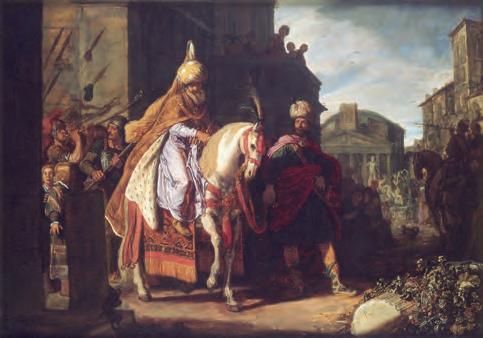
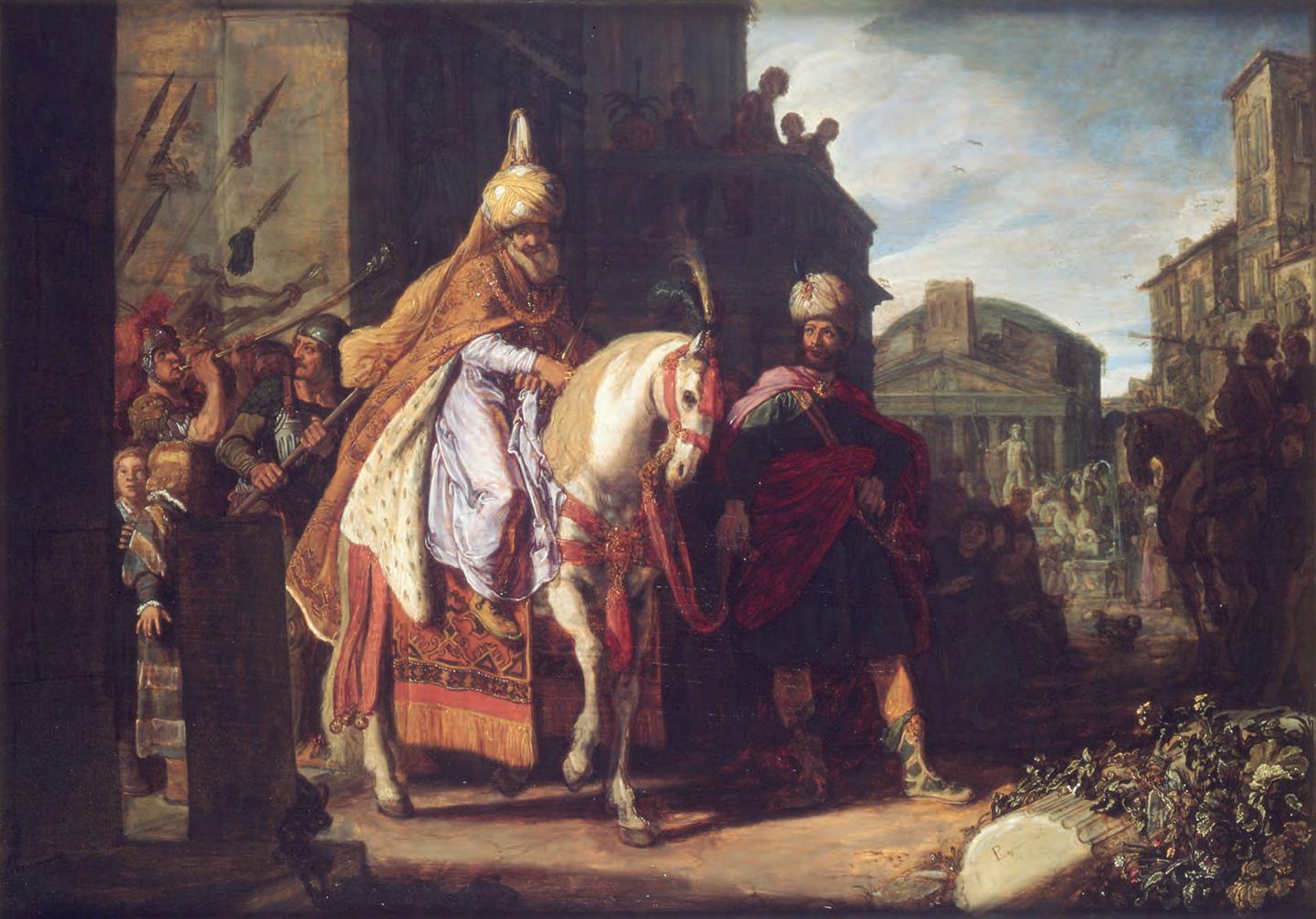
p “The Triumph of Mordechai” by Pieter Lastman
Public domain, via Wikimedia Commons
BIG NIGHT AUCTION
goes Live Friday, February 27 at 12:30 pm
#42 CHURCHILL DOWNS SUPERFECTA PACKAGE
Entertain in high style and take in the panoramic view of Churchill Downs from an exclusive suite. Superfecta package includes the use of a Private Jockey Club Suite including 24 admission tickets and 24 racing programs. Terms and conditions apply.
Value: $1,150
BID NOW bit.ly/bignight26 or scan here
#40 ONE WEEK STAY IN CONDO ON MARCO ISLAND, FLORIDA
Escape to paradise with a one-week stay in a beautiful 2-bedroom, 2-bath condo at the Grandview on the south end of stunning Marco Island, Florida.
Value: $1,500
#91 ‘LA PRIMA COFFEE
ROASTERS’ SIGNED AND FRAMED PRINT BY ILLUSTRATOR MARK BENDER
Celebrate Pittsburgh flavor and artistry with this beautifully signed and framed print by renowned illustrator Mark Bender, created for La Prima Coffee Roasters. Matted and framed print. Framed size is 21 ½ inches wide x 28 ¾ inches tall.
Value: Priceless
Bidders do not need to be present at Big Night to bid on items.
#1 ULTIMATE BAKERY SQUARE SHOPPING SPREE
Enjoy a fun-filled day of shopping and indulgence at the Bakery Square. Includes gift cards to Golden Gai, Clean Your Dirty Face, Tako Torta, City Kitchen, Alta Via Pizzeria, Fleet Feet, Free People, Anthropology, and West Elm.
Value: $1,000
Headlines
Jewish activist and organizer visits Pittsburgh, promotes empathy and respect
By Adam Reinherz | Senior Staff Writer
Threats to U.S. and Israeli democracy may be best countered by practicing empathy and respect, an activist known for working in progressive Jewish circles told Pittsburghers.
Speaking at Rodef Shalom Congregation on Feb. 22, Ginna Green, founder and principal of Horizon Philanthropy and a member of Bend the Arc’s board and its former chief strategy officer, described a current period filled with divisive rhetoric and behavior within the U.S. and Israel as a moment ripe for communal betterment.
“We have never needed all of us more than we have needed all of us right now,” Green said during the Bend the Arc: Jewish Action Pittsburgh event, which was co-sponsored by Congregation Dor Hadash. “I don’t see a scenario where Israel is able to do and be the very best that everyone in this room wants it to be, if the United States also doesn’t be the very best it can be.”
Moving past this time of “authoritarianism” and creating solidarity and a beneficial future will require particular tactics, Green said. An inability to see people “for what they bring to our relations and communities forecloses on that possibility of changing the conversation.”
Too often, people wish to “be right” rather than “win,” Green continued. Success today is not necessarily within the confines of ensuring election outcomes; rather, “I mean
winning the future where all of us are safe and where all of us are free.”
Certain “barriers” are plaguing that outcome, Green explained.
“I think it’s important for us to recognize that the division within the community along the axis of Israel-Palestine isn’t going anywhere anytime soon, and it behooves us to be willing to assess and interrogate and speak to that,” Green said.
The Sunday afternoon talk, which was titled “Building Bridges Against Fascism: Strengthening Relationships for the Battle Ahead,” decried presentism while promoting consideration of prior debate in an effort to effectuate communal healing.
Consensus around Zionism has never existed “anywhere in Israel, in the United States, around the world,” Green said. “There’s always been folks who have different opinions about what Zionism means, what Zionism constitutes, what the needs there and here constitute, and what it’s
all about.” People should recognize “this is not the first time that we’re having conversations about what it should look like, what a Jewish state should look like, how it should operate ... these are old conversations, actually.”
Moving forward as a community will require challenging conversations and restraint, Green explained.
Relationship building sometimes requires refraining from addressing contentious matters, Green said. Focusing on what’s agreed between parties is a “key strategy for keeping people at the table.”
Bend the Arc member Jonathan Mayo said welcoming Green back to Pittsburgh — the Jewish professional visited in solidarity after the Pittsburgh synagogue shooting — offered a chance to model “shared space and shared language.”
The program’s purpose, he explained, was neither to hear people’s takes on Israel nor to solve matters 6,000 miles from Pittsburgh;
rather, it was “to build a momentary community where people felt like we could kind of approach the subject.”
“I do think that the threats that we are facing here at home are very, very real, and we are not prepared or equipped to really deal with them, because we’re not willing to sit at a table with someone just because they think X, Y or Z, and I think that’s true across the political spectrum,” Mayo said.
Dor Hadash’s Rabbi Amy Bardack, who, like Mayo, helped facilitate the Sunday conversation, said the program was a reminder “that we cannot avoid needing to talk to each other about the elephant in the room, which is very emotional disagreements about Israel.”
“We need to admit that that’s there, because it’s not going to go away, and we need to have unity and solidarity beyond that.” Only by “naming the divisions, and sitting and having those uncomfortable conversations,” Bardack said, “will we be able to join together and fight antisemitism, fight inequity and authoritarians. We can’t just avoid it and hope it will go away.”
University of Pittsburgh student Shobi Wise called Green’s remarks another reminder to “go outside into the real world, talk to more people, connect.”
Citing Green, Wise noted that “building trust and fellowship doesn’t happen if you stay in your home.”
“The first step of action — action that does anything, not just reactionary and senseless,” Wise continued, “starts with conversation and from a place of love.” PJC
Adam Reinherz can be reached at areinherz@pittsburghjewishchronicle.org.
Ari Lightman’s guide to slaying organizational ‘monsters’
By Adam Reinherz | Senior Staff Writer
Ari Lightman believes in monsters. The Carnegie Mellon University professor even thinks they have enough power to spur organizational and self-improvement.
Lightman, 58, is co-author of “Monster Transformation: Conquer Your Digital Fears, Be AI Ready, and Focus on What Matters to Your Organization.” The 352-page text, published in December by Wiley, melds case studies, illustrations and action items in an effort to promote readers’ transformations.
For nearly 15 years, Lightman, a digital media and marketing professor, has taught students why transformation efforts “fail to meet expectations.” What he learned from research, and by speaking with colleagues, he said, is that companies “really need to reset their expectations.”
Seeing obstacles such as silos, the need for consensus, and organizational complexity as monsters makes it easier to identify a way forward.
“Monsters provide some sort of psychological response. We’re afraid of them. We want to avoid them,” the Jewish Squirrel Hill resident said. But in the same way monsters exist, so do “monster slayers.” These individuals have “superpowers” that must be harnessed. For companies and organizations, the question becomes “how do you elevate these employees with unique competency to actually reduce the power that these monsters have in terms of stopping transformation efforts or grinding
them to a halt?”
Lightman’s text provides stories, delightful drawings and exercises intended to foster increased “monster slaying.”
The work, which is co-written with Rafeh Masood and Gary Hirsch, represents one of Lightman’s areas of expertise. Another, which he is often asked to speak about, is the current state of information.
“A lot of information that gets construed as disinformation is actually misinformation. It’s people that are not putting context onto information. They’re purposely leaving out information,” Lightman said. Ideas that have been disproven, “that information is not being taken down. There’s no retraction associated with it. It just remains out in the internet universe forever.”
Part of what’s occurring today is that information is widely disseminated and it leads to “inadvertent” results. With the advent of artificial intelligence propelling a deluge of content
the stakes become clearer, he continued.
When a person receives something from someone deemed trustworthy, the material is considered to have a “different sort of gravity.”
The challenge — for well-meaning people — is what to do with so much potentially questionable content.
“I believe very wholeheartedly in the First Amendment, but we also have to recognize that there’s a cost associated with free speech. We have to, unfortunately, understand how that speech can be manipulated, how it can be misconstrued,” Lightman said.
Society isn’t devoid of responsibility: “We have to be better associated with providing the right context, the right background associated with why we’re saying what we’re saying.”
Doing so requires having “your radar up,” he said. “Things that are being sent to you might not be real. They might be designed to steal stuff from you, and you got to think about that with everything.”
The academic acknowledged that maintaining focus and exhibiting rational behavior are more difficult during stressful periods. Still, he continued, “we got to be better informed. We have to have a variety of radar up.”
With that said, being a judicious person doesn’t mean distrusting everything, he continued, “but you kind of have to have those sorts of protective barriers and guardrails associated with what you read, what you send along, what you’re engaged with.”
Both on a macro level and when making the smallest personal change, improvement is possible; people just need to see themselves as having the power to slay a formidable foe, he explained. “You’re never going to transform either yourself, your community or your organization, until you start thinking about the barriers that impede transformation.” PJC Adam Reinherz can be reached at areinherz@pittsburghjewishchronicle.org.
Courtesy of Ari Lightman
p Illustrations by Gary Hirsch. Image courtesy of Ari Lightman
p Ari Lightman. Photo courtesy of Ari Lightman
p Ginna Green, center, speaks during a Feb. 22 program at Rodef Shalom Congregation.
Photo by Adam Reinherz
Calendar
Submit calendar items on the Chronicle’s website, pittsburghjewishchronicle.org. Submissions also will be included in print. Events will run in the print edition beginning one month prior to the date as space allows. The deadline for submissions is Friday, noon.
q SATURDAY, FEB. 28
Join Temple Ohav Shalom for Purim Royale, an evening of fun, live music and community. 6 p.m. $85/ticket. Temple Ohav Shalom, 8400 Thompson Run Road. Register at templeohavshalom.org.
q SUNDAY, MARCH 1
Join Beth Samuel Jewish Center as they read from the Megillat Esther and present a Purim Spiel from the religious school followed by a rollicking Purim Carnival. Play games and win amazing prizes, while enjoying a kosher-style hot dog meal – with home-made hamantaschen, of course. 10 a.m. $10 adults, $5 kids - $1 off if wearing a costume. 810 Kennedy Drive, 15003. bethsamuel.org/events/2026/3/1/ purim-carnival
Join the Chronicle Book Club as they discuss “Snow in August” by Pete Hamill. 1 p.m. Email drullo@pittsburghjewishchronicle.org for Zoom link.
q SUNDAYS, MARCH 1–JULY 26
Join Chabad of Squirrel Hill for its Men’s Tefillin Club. Services and tefillin are followed by a delicious breakfast and engaging discussions on current events. 8:30 a.m. 1700 Beechwood Blvd. chabadpgh.com
Join a lay-led online Parashah study group to discuss the weekly Torah portion. No Hebrew knowledge needed. The goal is to build community while deepening understanding of the text. 8:30 p.m. For more information, visit bethshalompgh.org/online-parashah.
q MONDAY, MARCH 2
Tree of Life Congregation presents “The Purim Shpiel: A Hard Night’s Megillah.” The evening service and reading of Megillat Esther will occur before the shpiel featuring the Not Ready for Purim Band and many special guests. 7 p.m. Free. Levy Hall, Rodef Shalom Congregation, 4905 Fifth Ave. treeoflifepgh.org
q MONDAYS, MARCH 2–JULY 27
Join Congregation Beth Shalom for a weekly Talmud study. 9:15 a.m. For more information, visit bethshalompgh.org.
Join Temple Sinai for an evening of mahjong every Monday (except holidays). Whether you are just starting out or have years of experience, you are sure to enjoy the camaraderie and good times as you make new friends or cherish moments with long-term pals. All are welcome. Winners will be awarded Giant Eagle gift cards. All players should have their own mahjong cards. Contact Susan Cohen at susan_k_cohen@yahoo.com if you have questions. $5. templesinaipgh.org
Join Chabad of the South Hills for Lift Your Life, a Rosh Chodesh Society series. This month’s topic is “The Art of Managing Food and Munching for
Meaning.” 7 p.m. 1700 Bower Hill Road. For more information or to RSVP, email batya@chabadsh.com. chabadsh.com
q TUESDAY, MARCH 3
Join Chabad of Greenfield for Purim at the Draft, a joyful experience with great food, amazing entertainment, fun for all ages and a meaningful message that stays with you long after the costumes come off. 5 p.m. $10 per child, $15 per adult. Chabad of Greenfield, 4315 Murray Ave. chabadofgreenfield.com/purim
Join Chabad of the South Hills for Purim at the Stadium. Enjoy halftime entertainment, a “concession stand” dinner, sports-themed fun, animated Megillah reading and more. 5:15 p.m. Adults $18/Child, $12/Family, max $54. 1700 Bower Hill Road. chabadsh.com/stadium
q TUESDAYS, MARCH 3–JUNE 30
Join Beth El’s Rabbi Alex Greenbaum and his Bible/Talmud Adult Education class for a thoughtprovoking weekly session of Bible and Talmudic study. This program is available both in person and virtually. Call the office at 412-561-1168 to receive the Zoom link or to make an in-person reservation. 10:30 a.m. 1900 Cochran Road. bethelcong.org
q WEDNESDAY, MARCH 4
The Second Annual De-Ice Ball supports Casa San Jose’s Bond Fund, which aids those detained by ICE in the Pittsburgh area. Sponsored by Dor Hadash, Casa San Jose, Bend the Arc Pittsburgh, Rodef Shalom, Temple Sinai and LCLAA. 6:30 p.m. $18 and up. Location given with registration. casasanjose.salsalabs.org/ de-ice2026
q SATURDAY, MARCH 14
Join Congregation Beth Shalom for their Sisterhood Shabbat honoring Rhoda Judd, Barbara Kaiserman and Yvonne Stein. Erica Zabusky, a creative and effective arts and entertainment industry professional, will be the featured speaker. 9:15 a.m. 5915 Beacon St.
The Pittsburgh Jewish Chronicle invites you to join the Chronicle Book Club for its March 1 discussion of “Snow in August,” by Pete Hamill.
From Amazon.com: “Brooklyn, 1947.
The war veterans have come home. Jackie Robinson is about to become a Dodger. And in one close-knit working-class neighborhood, an eleven-year-old Irish Catholic boy named Michael Devlin has just made friends with a lonely rabbi from Prague.
“'Snow in August’ is the story of that unlikely friendship — and of how the neighborhood reacts to it. For Michael, the rabbi opens a window to ancient learning and lore that rival anything in Captain Marvel. For the rabbi, Michael illuminates the everyday mysteries of America, including the strange language of baseball. But like their hero Jackie Robinson, neither can entirely escape from the swirling prejudices of the time. Terrorized by a local gang of anti-Semitic Irish toughs, Michael and the rabbi are caught in an escalating spiral of hate for which there’s only one way out — a miracle ... .”
Your hosts
Toby Tabachnick, Chronicle editor
David Rullo, Chronicle senior staff writer
Help Beth Samuel Jewish Center celebrate the 65th anniversary of its synagogue building, and all the prayer, simchas, learning and socializing that has happened in this building. Enjoy a pasta dinner and elegant dessert reception, while listening to the memories and pictures of long-time members through the years. The 2025-26 Pillar Donors will also be honored. RSVP required. 5:30 p.m. $18/ adults & teens (13+), Kids 12 & under Free. 810 Kennedy Drive. bethsamuel.org/65anniversary
q MONDAY, MARCH 16
Anika Walke delivers “Memorial Complexes, Rayzebilder, Testimony: A spatial approach to Holocaust memory in Belarus,” the Third Annual Renee Sachs Memorial Lecture in Holocaust Studies. The lecture introduces works by the Yiddish writer Hirsh Reles and memorials created by architect Leonid Levin to explore how legacies of systematic violence shape the natural and built environment in the former Soviet Union. 5:15 p.m. Free. Cathedral of Learning, Room 501, Fifth Avenue. calendar.pitt.edu/ event/prof-dr-anika-walke-talk
q THURSDAY, MARCH 19
(Re)Building the Bridge: a conversation about the Black–Jewish relationship will center on a conversation between Center of Life’s Rev. Tim Smith and Avi Dresner, son of Rabbi Israel “Sy” Dresner, and will trace the history of the African American-Jewish relationship during the Civil Rights Movement and explore ways to collaboratively address racism and antisemitism today. Moderated by Emily Loeb of the Holocaust Center of Pittsburgh. 6 p.m. Free. Hazelwood Brew House, 5007 Lytle St., 15207. eventbrite.com/e/rebuilding-the-bridgea-conversation-about-the-blackjewish-relationshiptickets-1981372097280?aff=ebdssbdestsearch
q WEDNESDAY, MARCH 25
Weaving in reflections from Jill Joshowitz’s recent trips to Syria, “Reflections on the Dura Europos Synagogue Paintings” will explore the incredible biblical subject matter in the Dura synagogue paintings and their later reception in both Damascus and Pittsburgh. 5:30 p.m. Free. Cathedral of Learning, Room 332, Fifth Avenue. PJC
How it works
We will meet on Zoom on Sunday, March 1, at 1 p.m.
What to do
Buy: “Snow in August.” It is available from online retailers, including Amazon and Barnes & Noble, and in some local Barnes & Noble stores. It is also available through the Carnegie Library system.
Email: Contact us at drullo@pittsburghjewishchronicle.org, and write “Chronicle Book Club” in the subject line. We will send you a Zoom link for the discussion meeting. Happy reading! PJC
Headlines
Truck ramming at Australian synagogue prompts hate crime charges as antisemitism commission opens
An Australian man is facing hate crime charges after he allegedly rammed his truck into a historic synagogue in Brisbane, in an attack that has spurred calls for increased security from the synagogue’s rabbi, JTA reported.
Matthew De Campo, 32, of Sunnybank, was arrested on Feb. 20 after he allegedly backed his pickup truck into the Brisbane Synagogue in Queensland, Australia, narrowly missing a person as he struck its gates. He has been charged with willful damage, serious vilification or hate crime, dangerous driving and possession of a dangerous drug.
The ramming comes two months after gunmen opened fire on a Chanukah celebration in Sydney, killing 15 and injuring dozens more. Last month, Australian Prime Minister Anthony Albanese announced the launch of a Royal Commission inquiry, the country’s highest level of inquiry.
In the wake of the attack, the Australian government also tightened gun ownership laws and introduced legislation to curb hate speech, efforts that have been echoed by Queensland Premier David Crisafulli, who earlier this month introduced a package of legislation to combat antisemitism.
“This is another signal as to why we have to put strong laws before parliament to protect all people where they worship,” wrote Crisafulli in a post on the social platform X following the attack.
Libby Burke, the vice president of the Queensland Jewish Board of Deputies, said
that the local Jewish community had been “deeply distressed” by the incident, according to the Australian Broadcasting Corporation.
“A synagogue is a sacred place, a place of prayer, reflection and community,” said Burke. “To see its gates viciously rammed is profoundly devastating and is not dissimilar to what we have seen throughout the globe, vehicles used as weapons to kill and harm Jews.”
North Brisbane District acting Superintendent Michael Hogan said that police did not consider the ramming a “terrorist act,” though he added that it was “definitely a targeted attack against the Jewish synagogue.”
During an appearance on Feb. 21 before the Brisbane Magistrates Court, De Campo, who represented himself, claimed that he “did not do any hate crime or anything like that” and said that he was a “man of good faith,” according to The Courier Mail.
“Last night was a bit of a brain snap and I believe there is something more sinister going on behind the scenes,” De Campo said.
Rabbi Levi Jaffe of the Brisbane Synagogue told The Australian that the attack had “shaken” his community, which had concluded Shabbat services shortly before the ramming.
“Friday night’s ramming of a synagogue, when prayers usually take place, seems to me like a pretty direct attack on a Jewish institution,” said Jaffe. “Lives could have been lost.”
Vanderbilt launches inquiry into instructor after math question about Israeli occupation draws criticism Vanderbilt University has launched an inquiry into a mathematics lecturer whose classroom exercise about Palestinian territory drew criticism from the activist group StopAntisemitism, JTA reported.
Tekin Karadağ, a senior lecturer at the
Today in Israeli History
March 2, 1983 — Doctors Begin 4-Month Strike
university’s department of mathematics, drew the ire of the antisemitism watchdog after it obtained a slide from one of his lectures that used a proPalestinian protest slogan and suggested that Israel was shrinking the Palestinian territory.
“Assume Palestine as a state with a rectangular land shape. There is the Mediterranean Sea on the west and the Jordan River on the east,” read the slide. “From the river to the sea, Palestine (…) was approximately 100 km. in 1946. The land decreases by 250 sq. km per year, due to the occupation by Israel. How fast is the width of the land decreasing now?”
Karadag, a Turkish national who received his Ph.D from Texas A&M University in 2021, included the question under “examples related to the popular issues” in a survey of calculus class, according to StopAntisemitism, which wrote in a post on the social platform X that Karadag was “bringing his anti-Israel, antisemitic bias into his classroom.”
In a statement shared with the Jewish Telegraphic Agency, Vanderbilt said that the content had been removed and that an inquiry had been launched into Karadağ.
“The university has received reports alleging a member of the faculty engaged in unprofessional conduct related to content shared during course instruction,” the school said. “The content in question has been removed, and a formal inquiry has been initiated consistent with relevant university policy.”
German anti-Zionist group’s plan to protest at Buchenwald memorial over keffiyeh ban sparks outrage
An anti-Zionist group in Germany has drawn condemnation after it announced plans for a protest against the Buchenwald concentration camp memorial in response to a ban on pro-Palestinian symbols at
the site, JTA reported.
The group Kufiyas in Buchenwald claims that the memorial has become a place of “historical revisionism and genocide denial.” It announced a demonstration for April 11, the anniversary of the liberation of the Nazi concentration camp.
“Instead of honoring the persecuted and resolutely opposing every genocide, the memorial spreads Israeli propaganda and provides the ideological ammunition for the ongoing genocide in Palestine,” the group says on its website.
Buchenwald, one of the first concentration camps built by the Nazis and one of the largest in the country, was the site of the murder of roughly 56,000 male prisoners, including 11,000 Jews, from 1937 to 1945.
Last year, a German court ruled that the concentration camp had a right to refuse entry to visitors who wear a keffiyeh, a traditional Palestinian headscarf that has been adopted by pro-Palestinian protesters. The ruling stemmed from a lawsuit by a woman who attempted to wear the scarf to an event commemorating the concentration camp’s liberation.
The woman, who was only identified by her first name, Anna, posted a testimony about her actions on the Kufiyas in Buchenwald Instagram page in which she said she was inspired by the resistance of Buchenwald prisoners.
“Our fundamental principle is this: criticism of the Israeli government’s policies, settlement policy, or actions in the Gaza Strip is legitimate,” said the Buchenwald Foundation’s director Jens-Christian Wagner in a statement outlining the memorial’s protocols. “However, it becomes antisemitic when used to relativize the Holocaust and discredit its victims as perpetrators. We will not tolerate this at the Buchenwald Memorial.”
–Compiled by Jarrad Saffren
Items are provided by the Center for Israel Education (israeled.org), where you can find more details.
Feb. 27, 1928 — Ariel Sharon Is Born
Ariel Sharon, Israel’s 11th prime minister, is born in K’far Malal. He serves in the army from the War of Independence through the Yom Kippur War and oversees the first war in Lebanon as defense minister.
Feb. 28, 1942 — Justice Dorit Beinisch Is Born
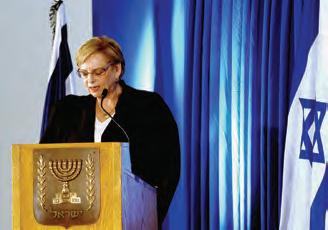
Dorit Beinisch, who in 2006 becomes the ninth president of Israel’s Supreme C ourt and the first woman in the post, is born in Tel Aviv. She also be-comes Israel’s first female state attorney in 1989.
The Israel Medical Association launches a lengthy strike to protest the government’s refusal to grant doctors a substantial pay raise. Before a settlement June 26, the labor action escalates to a hunger strike.
March 3, 1939 — Mufti Rejects Majority-Arab State
Opposing any permanent Jewish presence in Palestine, the mufti of Jerusalem, Hajj Amin al-Husseini, rejects a British proposal to severely limit Jewish immigration while establishing a majority-Arab
March 4, 1996 — Hamas Suicide Bomber Strikes on Purim Eve
A Palestinian from Ramallah detonates a 45-pound bomb packed with nails outside Tel Aviv’s Dizengoff Center on the eve of Purim, killing the Hamas bomber and 13 Israelis, five of whom are 13 or younger.
March 5, 1891 — Blackstone Petitions President for Jewish Home
March 1, 1922 — Yitzhak Rabin Is Born
Yitzhak Rabin is born in Jerusalem. He leads the defense of the city in 1948, heads the IDF in the June 1967 war, serves as ambassador to Washington, twice is prime minister, and achieves the Oslo Accords and Jordan peace treaty.
William Blackstone, an American Methodist lay leader, submits a petition to President Benjamin Harrison that calls for creating “a home for these wandering millions of Israel” in Palestine. PJC
p Justice Dorit Beinisch speaks at her swearing-in ceremony as the Supreme Court president Sept. 14, 2006.
By Avi Ohayon, Israeli Government Press Office,
3.0 p William Blackstone believed that restoring the Jewish people to the Land of Israel would help usher in the return of Jesus.
Luxury wedding & event planning designed with intention. Executed with precision. Remembered forever.
Shari Zatman
Party Planning
Ceremonies and service deliver pathway to Jewish adulthood
By Adam Reinherz | Senior Staff Writer
The entrance to Jewish adulthood has been marked for centuries. An inter pretation of the Midrash, a nearly 1,800-year-old biblical commentary, notes that, upon Isaac’s 13th birthday, his father Abraham organized a feast attended by global dignitaries.
While coming of age in Judaism has shifted from parent-centered — centuries ago, a father simply delivered a blessing offering thanks for no longer being responsible for his son’s transgressions after age 13 — to child-focused, where young people often read from the Torah, deliver speeches and even undertake additional activities, the idea remains that the beginning of Jewish adulthood is a period for consideration and celebration.
Across Pittsburgh, spiritual guides and educators routinely meet with area youth, and parents, to prepare for the occasion.
Rabbi Yisroel Altein, co-director of Chabad of Squirrel Hill, has enjoyed numerous conversations with families as they approach the milestone.
What’s essential to understand, he explained, is that according to Jewish law, the child — a bar mitzvah is typically celebrated at age 13 and a bat mitzvah at age 12 — is becoming an adult.
The sense of “responsibility” that arrives with this transition should be reflected in associated actions, he said. Jewish life is maintained communally and personally through repeated engagement.
“There should be a recognition that becoming a Jewish adult isn’t a single event,” Altein said.
An awareness of something greater than a ceremony is critical, agreed Cantor Kalix Jacobson of Temple Emanuel of South Hills. “When you meet with a young person, who’s 11, 12 or 13 years old, depending on the timing itself, you’re catching them in a very vulnerable spot,” Jacobson said. “The first thing that actually goes through my head has nothing to do with the bar/bat/b’mitzvah. I care more about making them feel comfortable with their Jewish identity.”
While the prescribed age for marriage
to make a difference in this world as adults, so this is merely the first part of that lifelong journey of doing good things for not just the Jewish people, and hopefully the Jewish people, but also the entire world,” Jacobson said.
For more than a decade, Yael Eads, a youth director who serves Rodef Shalom Congregation and Temple Sinai, has worked with students on b’nai mitzvot and corresponding projects.
“Our priority is chanting from the Torah, being called to the Torah,” she said. A mitzvah project is “recommended and suggested,” but that doesn’t mean every student will perform one. What’s most important is that the child experiences a process “they come out feeling positive about, feeling proud of, feeling accomplished at the end. The last thing we want is someone coming out feeling frustrated and stressed out and sad and saying, ‘I never want to do that again.’”
Eads has seen students undertake projects tied to a parsha or a specific Jewish principle, like showing compassion to animals. She’s also seen young people address global issues, such as hunger, through local efforts, including encouraging others to support JFCS Squirrel Hill Food Pantry or Our Giving Kitchen.
“Wherever the kid is, we’ll meet them where they are,” she said. “This whole process is about becoming a Jewish adult.”
Facilitating a successful entrance to Jewish adulthood requires all parties — children, parents, clergy and educators — to cling to a common idea about specificity.
“Every kid is different,” Eads said. “If you are willing to meet a kid where they are, you’re going to see an outcome that is going to be greater than if you go in with an assumption of what you want this kid to do or be.”
PJC
Adam Reinherz can be reached at areinherz@pittsburghjewishchronicle.org.
With unique indoor & outdoor space and on-site catering, the Hotel Indigo Pittsburgh University Oakland is perfect for your next event. 329 Technology Drive | Pittsburgh, PA 15219 412-297-4098 www.hotelindigo.com/pittsburghuni Let Your Child be a Conservation Hero with a National Aviary Birthday Party! A party for them. Less stress for you. A National Aviary birthday party offers interactive fun for every child (and adult!), so you can spend less time planning and more time celebrating! Featuring: • National Aviary Admission • Private Room and Play Spaces • Customizable Catering Options The Birthday Kid will Get: • A Conservation Hero certificate • A plush & photo card about that real life animal at the Aviary!
Now at
— PARTY PLANNING —
LIGHTFIELD STUDIOS/Adobe Stock
Celebrate Beautifully at Cucina Alfabeto
Picture this: your favorite people gathered around the table—glasses clinking, laughter flowing, and an unforgettable meal shared long after dessert. Whether you’re planning an intimate cocktail hour, a lively hors d’oeuvres reception, or an elegant multi-course plated dinner, Cucina Alfabeto offers the perfect setting for your celebration.
With warm hospitality, thoughtful service, and a team that makes planning feel effortless, we’ll help bring your vision to life with style and ease.
Private Parties & Events
Host your next gathering in The Word Cellar, our elegant and fully customizable private dining room, comfortably accommodating up to 30 guests. It’s the perfect space for:
• Rehearsal Dinners
• Bar and bat mitzvah celebrations
• Corporate luncheons
Large Parties
• Birthdays & anniversaries
• Book clubs
• And any occasion worth celebrating in style
Planning a gathering for up to 16 guests? Our main dining room offers a refined yet welcoming atmosphere. We also feature a charming semi-private space alongside the City of Asylum Bookstore, creating a uniquely literary and sophisticated dining experience.
Full Dining Room Buyouts
For larger celebrations, full dining room buyouts are available for parties of approximately 30 to 120 guests. Every event is thoughtfully customized to your vision, with pricing that is fair, transparent, and tailored to your needs.
Let’s create a celebration your guests will talk about long after the last toast.
40 W North Avenue • Pittsburgh, PA 15212
info@cucinaalfabeto.com • (412) 435-1111
Reserve by phone or online. For parties of 5+, please call to reserve a table.
Planning
More than a wedding day: Lessons from behind the clipboard
Guest Columnist
As a luxury wedding planner, I know that a wedding is never just a party. Long before the band strikes its first note or the chuppah comes into view, the planning process becomes a delicate negotiation of expectations, emotions and identities — between couples, parents, grandparents, and often across generations. After more than two decades working as a planner, coach, mentor, educator and occasional crisis manager, I have put those lessons into my first book, “From Behind the Clipboard: Lessons from a Wedding Planner.” Here are some pro tips that I share in the book.
Work big to small.
It is natural to think of all of the things you feel you need to do at once, but thinking about it all at the same time is intimidating. Rather, break items down individually by
you can explain why you want something, you are far less likely to regret it later.
Create a wedding day timeline with a seamless event flow.
Avoid choppy and disjointed timing. When any moment feels like an abrupt or awkward interruption, it has the potential to create a poor experience. For example, make
A wedding is not a performance to be judged but a moment to be lived.
creating a list. I love to make lists and have the satisfaction of being able to check things off as evidence of what I have been able to accomplish. Isolate the big items first and work your way down to small details.
Make decisions with intention. Luxury, despite what many believe, is not about excess. It is about clarity and purpose. Some of the most elegant weddings are not the most expensive; they are the ones where couples can clearly articulate why something matters to them — why a particular ritual should be included, why a certain song is chosen, or how the guest list was created. If
Establish a “spend threshold” before beginning any planning. Decide what the maximum dollar amount is that you are comfortable dedicating to your wedding costs. Also determine in advance how much you’re comfortable exceeding that amount, if necessary. Work toward making decisions that will allow you to stay within the set parameter. The “wiggle room” you have added should give you some peace of mind if you encounter any unforeseen expenses or want to make some decisions that increase your spending.
sure the ceremony flows directly into the reception without a long delay or time gap.
Batch toasts together so several can be done consecutively when you have asked guests to be attentive, rather than trying to get their attention over and over again during the reception.
Expect your wedding to be “perfectly imperfect.”
Nothing is perfect and that needs to be OK. This is the best mindset to bring with you to any wedding or event. Your own wedding will not be flawless, either. While we certainly want it to be, there will be
unanticipated things that arise and we have to adjust expectations and accept imperfection. Long after the dishes are cleared and the centerpieces are removed, what remains are the feelings and the memories. Don’t get so caught up in wanting everything to go perfectly on your wedding day that you forget to be present and enjoy it. Being present is what creates the be remembrance for a lifetime.
A wedding is not a performance to be judged but a moment to be lived. The budgets, timelines and carefully chosen details exist to support something far more meaningful: the joining of lives and families, with all the beauty and complexity that entails. If couples can hold onto that perspective — setting thoughtful parameters, making intentional choices, and embracing the perfectly imperfect — they will discover that the true success of a wedding is not measured by flawless execution, but by how present they felt in it and how deeply they connected with the people around them. Years later you will remember the laughter, the tears and the quiet realization that, for one day, everyone gathered in the same place for the same reason: love. PJC
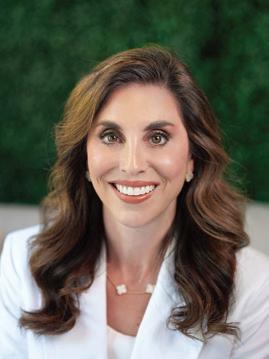
Perfectly Planned By Shari is a fullservice event production company based in Pittsburgh. perfectlyplannedbyshari.com
Shari Zatman
Owner
Party Planning
How to host a college hoops watch party
Take a seat
By Family Features
It soon will be tournament time, and that’s the perfect reason to gather with your fellow fans and watch both the top-seeded teams and Cinderella stories shoot their way to the top.
Get ready to host this season’s most memorable college basketball watch party with these tips:
Show your colors
Celebrations WITH A VIEW
LeMont Restaurant is the perfect venue to host your celebrations - a private party, banquet, wedding, anniversary, retirement, bar or bat mitzvah, graduation or fundraiser. Contact Bill Laughlin, Banquet Manager, 412-431-3100 to plan your special events. LeMontPittsburgh.com/event-space
Get your house game ready and show your team spirit by decorating in the colors of the team you’ll be cheering to victory. Since the tournament spans multiple rounds, you don’t need to go all out; just grab some simple decorations like streamers, balloons and disposable tablecloths to add some energy. If you’ll have guests cheering on both sides of the court, mix and match your decor and let guests pick their plate and cup color to root for their favorite team.
Break out the brackets
The entire tournament hinges on brackets, so be sure your guests have a chance to fill out their own bracket to predict the winning teams. You can find printable versions online and make copies for everyone. For a little extra fun, have everyone chip in a set amount to play, and the person who predicts the most winning teams wins the pot.
When the game is underway, gathering everyone around the screen can get crowded. Make sure everyone is comfortable by offering additional seating. You can use stools, chairs from other rooms and even folding chairs or camping chairs if you need to create more space. If you need to resort to floor space for seating, make it extra comfy with some pillows or blankets for padding.
Multiply the screen time
Chances are high your guests will scatter throughout your home, spilling out of the living room into your kitchen and dining spaces, or maybe even outdoors. Set up extra screens to show the game in multiple rooms, whether that’s extra TVs, monitors or laptops. That way, even if someone steps away from the main screen, he or she won’t miss any of the excitement.
Make snacks a slam dunk
Every party needs a menu, but you can keep it simple for a watch party. Guests typically want quick bites they can grab during timeouts and commercial breaks, so stick to finger foods and apps guests can self-serve quickly. Wings are a party staple, and chips and dip are always a hit. Be sure to offer some indulgent options, as well as foods for those who have special dietary needs. You can also make your food game easier by asking everyone to bring a dish to share instead of taking it all on yourself.
Find more entertaining tips and advice at eLivingtoday.com. PJC
Standing with Israel and our community: Why the Co-op should be a bridge, not a barrier
Guest Columnist
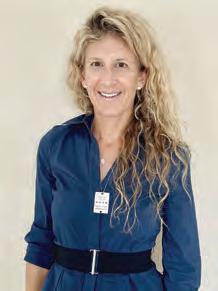
Julie Paris
For more than 20 months, the East End Food Co-op has been the focal point of a campaign that targets Israel and, by extension, our local Jewish community.
In July 2024, the EEFC Union 667 voted to “endorse the Boycott, Divestment, and Sanctions movement and commit to transforming the EEFC into an ‘Apartheid Free Zone,’” and began collecting petition signatures to force the board to act. Since that time, the union has galvanized segments of the Co-op community into a singular, relentless focus on delegitimizing Israel and its supporters.
At monthly board meetings, within the aisles of the Co-op and across social media, Jewish members have faced hostile rhetoric and damaging misperceptions. This is not merely a policy disagreement; it is a direct challenge to the safety and inclusion of our community. Locally and globally, we are seeing a deeply troubling rise in hate crimes and harassment, with incidents targeting Jewish students and community members because of their identity reaching an all-time high.
In November 2025, the Co-op’s union submitted the petition with the required signatures to force the board to vote on the BDS referendum targeting Israel. While BDS groups often claim their goal is to support human rights, in reality their movement seeks to shut down Israeli-Palestinian cooperation and eliminate Israel. Along the way, BDS campaigns often fuel hatred,
harassment and even violence against Jews around the world.
Many Jewish Co-op members have devoted significant time speaking out against these boycott efforts in the EEFC. They have written letters, attended meetings and engaged with the board to explain the deep harm a BDS referendum causes — not just as a matter of international trade, but to the sense of belonging for Jewish member-owners and shoppers. Throughout
preserving a space where vendors are engaged on fair terms, and staff can work without the burden of discrimination. Our local economy thrives when we spend our money at places that reflect shared values of transparency and respect.
I want to thank the three board members who voted against a referendum for taking a principled stand, and recognize the many community members who fought this fight with resolve. This discussion has under-
For those who want to support Israel and a truly inclusive economy, the choice is simple: Prioritize purchasing Israeli products and shop where you feel valued as a customer.
this process, our community has endured numerous meetings marked by rhetoric that isolates rather than fosters dialogue. This debate has ultimately become about the right of every member to participate in public life free from intimidation. Ironically, the Co-op carries only a handful of Israeli products — including an olive oil produced by a joint peace initiative of Israeli and Palestinian women.
At its Feb. 16 board meeting, the board had an opportunity to vote against moving this referendum forward. Instead, the majority of the board, in a vote 5-3, voted to hold a “non-binding” referendum. While technically symbolic, this action keeps the door open for further escalation.
I am deeply disappointed by the board members who voted for this. A responsible process should center on facts and civility,
scored the need for governance that protects all customers and maintains a neutral, inclusive environment for the entire community.
It is important to understand what is at stake. According to the New York Times, the committee that coordinates BDS campaigns globally includes Hamas and other U.S.designated terrorist groups. And the BDS movement called the massacre, torture, rape and kidnapping of civilians in Israel on Oct. 7, 2023, a “powerful armed reaction.” Even in the form of a “non-binding” measure, this violent extremism posing as human rights activism has no place in our neighborhood food co-op.
The strongest defense against this kind of polarization is an informed and engaged community. We must ground our response in the facts: Israel is a vibrant democracy
with a diverse population, including Arab citizens who participate at every level of government and business. On Oct. 7, Israel was attacked by thousands of Hamas terrorists and even some Palestinian civilians, who dragged Israel into an extended existential war in which it was forced to fight genocidal enemies across Iran, Lebanon, Gaza, the West Bank, Yemen, Syria and Iraq. The war in Gaza was so horrific mainly because Hamas and other terrorists with ties to the BDS movement spent 16 years ruthlessly militarizing civilian areas across the entire territory.
For those who want to support Israel and a truly inclusive economy, the choice is simple: Prioritize purchasing Israeli products and shop where you feel valued as a customer. Supporting retailers that uphold inclusive policies reinforces the principle that commerce should be a bridge, not a barrier. We can choose to support businesses that respect Jewish and Israeli people and stop shopping at a grocery store that has failed to protect its Jewish customers and allowed an environment of discrimination and hostility to flourish, as many have already done. For those who choose to remain members of the Co-op, please vote “no” on the upcoming non-binding referendum and encourage others to do the same.
At a time when communities are reexamining how they treat their neighbors, our choices matter. The best way to counter the extremism and hate that has taken hold in the EEFC is to stay informed, respectful and unyielding in our commitment to and demand for inclusion. PJC
Julie Paris is Mid-Atlantic regional director of StandWithUs, an international nonpartisan education organization that supports Israel and combats antisemitism.
So much for the two-state solution: PA proves to be its own worst enemy
Guest Columnist
Gary Rosenblatt
Eighty percent of the nations in the world support a Palestinian state, endorsing a vision of Israel and Palestine living in peace, side by side. I share that ultimate goal but view it today as aspirational, as I do the coming of the Messiah. But based on the just-released draft of the Palestinian Authority’s constitution, a detailed plan for a Palestinian state, I think it’s more likely that the Messiah will show up before a two-state solution comes to pass. The draft should be a must-read for the 157 countries that recognize a Palestinian state. They’ll find that their perception of a future Palestinian democracy ready to accept the state of Israel next door is a fiction.
There is no talk of living alongside Israel. Instead, the draft asserts that Jerusalem will be the capital of Palestine and that Islamic and Christian holy sites will be maintained and protected. No mention is made of the Jewish connection to Jerusalem and the land
Islamic Shariah law. It legalizes terror by promising to continue the PA’s “pay-for-slay” policy, calling for providing “protection and care for the families of martyrs, wounded and prisoners, and those released from the occupation prisons and the victims of geno-
So much for a spirit of compromise or confidence-building required to prepare both Arabs and Jews to live as neighbors.
since the days of the Bible; no recognition that Judaism is rooted in the Holy Land and that for thousands of years Jewish prayer has been deeply and inextricably linked to it. In effect, the 53-page document erases Israel and Jewish history. It proposes a state that rejects “colonial settlement occupation … ethnic cleansing … and continued genocide,” to be governed not by democracy but
cide.” So much for a spirit of compromise or confidence-building required to prepare both Arabs and Jews to live as neighbors.
Reading the draft, with its emphasis on victimhood, I was reminded of Abba Eban’s most oft-quoted comment. Two months after the 1973 Yom Kippur War, Eban, as Israel’s U.N. ambassador and golden-toned orator, noted that Arab leaders “never
miss an opportunity to miss an opportunity.” He was referring to frustratingly stalled peace efforts.
More than half a century later, the PA, created by the Oslo Accords three decades ago, continues a long tradition of rejecting attempts at diplomatic solutions to produce an independent state. Made up of the Palestine Liberation Organization and other terror groups, the PA has consistently rejected Israeli and U.S. peace initiatives, often inciting violence against Israeli citizens, and teaching children from an early age to hate Jews. It has been a highly unpopular failure among its own people politically, financially and lacking in legitimacy. Ninety-year-old Mahmoud Abbas, elected to a four-year term 21 years ago, has not held elections since 1995 because he knows he would lose. He rules by executive decree, cracking down cruelly on critics
see Rosenblatt, page 15
Chronicle poll results: Defending Israel
Last week, the Chronicle asked its readers in an online poll the following question: ”Do you defend Israel on social media or in traditional media?” Of the 162 people who responded, 60% said yes and 40% said no. Comments were submitted by 46 people. Comments were submitted by 46 people. A few follow.
I am pro-Israel in all my online or personal discussions.
It gets harder to defend Israel every day Bibi remains in power.
Although it raises my blood pressure to address the world’s misconceptions, I have no choice but to stand up for Israel and try to educate anti-Zionists. It is probably futile, but if I can get through to just a few clueless haters, then it may be worthwhile.
I don’t post anything on social media. I have defended Israel in personal conversations with friends and acquaintances.
Rosenblatt:
Continued from page 14
and dissidents. His government is seen as corrupt on many levels, including nepotism and embezzlement, by more than 80% of Palestinians.
The details of the new draft of a PA constitution are particularly problematic at a moment when international calls for a Palestinian state are growing louder. The U.S. and other Western countries, well aware of the PA’s weakness and incompetence, have
Do
you defend Israel on social media or in traditional media?
I defend Israel where and when it needs defending, and criticize it when criticism is due.
I am often the lone voice on the WAPO website as well as other places, but it’s vital to hear from those who support Israel.
based their hopes, in part, for resolving the postwar Gaza crisis on bolstering a reformed PA that could have a key role in bringing stability to the area. “Gaza and the West Bank should be reunited under a single governance structure, ultimately under a revitalized Palestinian Authority,” President Joe Biden wrote in The Washington Post in November 2023. But that would mean new elections and a wholesale revamping of the government, leading to more freedom and rights for Palestinians and more security for the region.
Co-op vote crosses the line into antisemitism
I support Israel but am disgusted with its government, whose leaders and policies I cannot defend — much as I feel about the current U.S. government and its policies. They are two sides of the same coin.
The last time that I wrote something defending Israel I received so many unbelievably nasty responses that I never posted anything again.
I do not defend the corrupt and Trumpaligned and betrayer of Zionism, Netanyahu, but I do publicly and in writing defend Israel and Zionism. I am a leftist Zionist atheist … as were my grandmother and great-grandmother.
The amount of antisemitism posted on Facebook alone is appalling. The bigoted posts are very often memes, so that the person posting is using things they’ve seen on antisemitic websites that support their beliefs. I have several rebuttals that I use to make it nearly impossible for the bigot to
The fact that the draft calls for the opposite — more Islamic fundamentalism and refusal to coexist with or even recognize Israel — not only dashes the hopes of solving the Gaza situation but strengthens the Israeli right, which has long insisted that the two-state solution is a fantasy. As Nachum Kaplan, an Israeli-based journalist, wrote in his Substack newsletter, Moral Clarity, “the draft doubles down on erasure, grievance and theological supremacy … It also reveals that the PA has no intention of living peacefully alongside Israel. And anyone who
— LETTERS —
My husband and I are Jewish. We shop at the East End Food Co-op. I am stunned by the antisemitic vote to remove Israeli products (East End Food Co-op board advances advisory vote on removing Israeli products,” Feb. 20.) We are not religious Jews, but are spiritually connected to being Jewish. We did not support what happened in Gaza by the Netanyahu administration; we abhorred what this criminal administration did to the Palestinian people. But this vote reeks of antisemitism. We are truly upset by this vote. Unfortunately, we will most likely keep shopping at the Co-op because they carry goods we can’t find elsewhere. Shame on those that voted to remove Israeli products. This is reminiscent of Nazi Germany.
Marlene Marcus Pittsburgh
Selective outrage, selective boycotts
Do the Democratic Socialists of America and the East End Food Co-op board — who appear to be Zionophobic* — really think they can boycott all Israeli products and services? (“Groups attempt to force BDS initiative in Pittsburgh,” Feb. 13; “East End Food Co-op board advances advisory vote on removing Israeli products,” Feb. 20).
In fact, the “boycotting” of Israeli products and services represents the greatest hypocrisy of our time.
Let’s start with food. Many fruits and vegetables are only on supermarket shelves because of drip irrigation, which was invented by Israeli scientists. Only a BDS hypocrite would buy fruits and vegetables grown through Israeli drip irrigation.
The DSA and EEFC boycotters also should throw away all their smart phones and computers since critical components of both were invented by Israeli scientists.
Medical devices and services that every DSA and EEFC boycotter and their family members
refute or answer. Unfortunately, sometimes their answer is name-calling and ridiculous conjecture, which I report.
While getting into online flame wars is likely a losing battle, particularly when there are hordes of dedicated antisemitic and anti-Israel activists out there, it is essential for those of us who love and support the state of Israel to make sure our voices are heard. Otherwise, the haters win.
I don’t use social media, but I do read the local newspaper online. When I see unfair or inaccurate articles or editorials about Israel, I write letters to the editor.
I do, but the reality is that it’s a losing proposition on either platform. PJC
— Compiled by Toby
Tabachnick
Chronicle weekly poll question: What is your favorite aspect of Purim? Go to pittsburghjewishchronicle.org to respond. PJC
believes otherwise is part of the problem.”
In this latest version of missing an opportunity, the PA has shown its true colors. The only ones who benefit, at least in the short term, from this diplomatic disaster are those in Israel who want to claim Gaza and the West Bank free of Palestinians forever. Or at least until the Messiah arrives. PJC
Gary Rosenblatt, a Pulitzer Prize finalist, is the former editor and publisher of The Jewish Week of New York. Follow him as a free or paid subscriber at garyrosenblatt.substack.com.
must boycott include the flexible stent, which has become critical for many cardiology procedures and was invented by Israeli scientists. Obviously those DSA and EEFC boycotters must demand that their doctors not use the flexible stent, which is tainted by its Israeli invention, and have their doctors search dusty medical warehouses for hard stents, which have not been used in years.
Regardless of the exigency of a medical situation, DSA and EEFC boycotters and their families must demand that EMS first responders never use pressure bandages, which were invented by Israeli scientists. Ditto for PillCam usage by their doctors, which violates their commitment to never use Israeli products.
Also should DSA and EEFC boycotters or their families unfortunately suffer from multiple sclerosis, they must demand that their doctors never use Copaxone — the most widely used drug for MS — because it was invented by Israeli scientists.
Similarly should DSA and EEFC boycotters or their families suffer from Parkinson’s disease, they must demand that their doctors never prescribe Azilect, which was developed by Israeli scientists, even though it is one of the most widely prescribed drugs for Parkinson’s.
So the next time one hears a BDS or EEFC Zionophobe* claiming they are boycotting Israel, go through this list (and this is just a partial list of the many goods and services that all Americans use that have been invented and/or created by Israelis), and see if they are really boycotting Israel, or are they another among the legions of BDS “ boycotting” hypocrites?
*Zionophobia is a condition described by Professor Judea Pearl, director of the UCLA Cognitive Systems Laboratory and the late journalist Daniel Pearl’s father, as “the denial of the Jewish people’s right to self-determination anywhere in the Middle East.”
Richard Sherman Margate, Florida
We invite you to submit letters for publication. Letters must include name, address and daytime phone number; addresses and phone numbers will not be published. Letters may not exceed 500 words and may be edited for length and clarity; they cannot be returned. Send letters to:letters@pittsburghjewishchronicle.org or Pittsburgh Jewish Chronicle, 5915 Beacon St., 5th Floor, Pittsburgh, PA 15217
We regret that owing to the volume of correspondence, we cannot reply to every letter.
Headlines
Continued from page 1
“I called up someone I knew at NBC in New York, he got it, and we were able to have it changed within 15 minutes of it being online,” he said.
Hoffman said that in today’s world, speed has become more important than accuracy, all in the name of SEO, search engine optimization, or increasing a website’s visibility and clicks.
“It used to be that we’d go to a press conference at 10 in the morning with a print deadline of 8 at night,” he said. “Nowadays, you go to a 10 a.m. press conference and you better have the story online by the time the press conference is over. You’re live tweeting the entire press conference and taking photos for Instagram and videos for TikTok.”
Ironically, Hoffman said that often it’s the case that “the more inaccurate your article is, the more likely it is that it will be read.”
SEO, he said, is important, especially as organizations like Al Jazeera become more sophisticated and imbedded on sites like Reddit and Wikipedia.
Hoffman is quick to say that Al Jazeera should be treated like a media source controlled by Vladimir Putin in Russia or Iranian television.
“Al Jazeera is a propaganda tool of Qatar,” he said. “People shouldn’t go to Al Jazeera. They don’t know what they’re getting. It’s very, very dangerous. Qatar was very much involved in the war on both the military and media battlefields, and people don’t realize
an independent, demilitarized Palestinian state and normalization of Israel’s relations with its neighbors.”
• “Opposition to unilateral actions that undermine the chances of conflict resolution, including: Terrorism, incitement, annexation of West Bank or Gaza territory, entrenchment of occupation, actions that further hostilities in Gaza, and settlement expansion.”
• “Support for robust humanitarian aid and other forms of economic assistance to the Palestinians and to the UN and other agencies that serve Palestinian refugees.”
• “Support for diplomacy as the preferred means of preventing Iran from acquiring a nuclear weapon and for dealing with other Iranian policies hostile to US interests, regional security and stability.”
• “Support for pluralistic, non-discriminatory democracy and the rule of law in the United States and Israel, and opposition to efforts to undermine and weaken democratic norms.”
Lee continues to be endorsed by Bend the Arc Jewish Action PAC, which identifies as “the voice for progressive American Jews in the political arena.”
Bend the Arc Jewish Action lists its goals as: defeating white nationalism, fighting antisemitism and realizing Black liberation; expanding Democratic power and building a deeper bench of progressive champions; and, redefining the narrative about what motivates Jewish political giving to include raci al justice, economic justice, civil rights, health care access and immigrant justice.
In 2022, JStreetPAC donated $38,194 to Lee’s campaign; Bend the Arc Jewish Action donated $3,600. In 2024, JStreetPAC donated $34,182 to her campaign while Bend the Arc Jewish Action contributed $2,520, according to the website Open Secrets.
the harm they’re doing.”
Instead, Hoffman urged consumers to watch news with a critical eye. Those same eight biases, he said, can be used to determine what sources are trustworthy and which aren’t in the “new media” landscape — TikTok, Twitter and other social media companies that platform individuals with little or no media training.
Too often, Hoffman said, media sources are reporting lies about the Jewish communities.
“It’s a modern-day blood libel no more truthful than saying Jews killed Christians to get their blood for Passover, and yet they’re believed by reasonable people who have
In the end, Hoffman proffered, as Israel’s war with Gaza winds down, the narratives will continue, and one will win — either Israel will “become an anathema, like apartheid South Africa,” or the war will be remembered as the time “Israel saved the world from genocidal terrorists and Islamic fundamentalists with nuclear weapons.”
If it’s the former, he said, antisemitism will continue to spin out of control, United States college campuses will become “very difficult for Jews,” Israelis will no longer be able to travel and terror will grow around the world, even to places where there are no Jews.
terror will go down in the United States, and the world will be a safer place,” he said.
Hoffman was in Pittsburgh for a series of events sponsored by StandWithUs. He spoke at Hillel Academy of Pittsburgh, did an interview with StandWithUs Kenneth Leventhal High School Intern Sam Stavchansky for the Taylor Allderdice High School newspaper and presented a collaborative community event — Israel and the Media: Is the World Against Us? — at Community Day School, presented in cooperation with CDS, Classrooms Without Borders, Pittsburgh Jewish Chronicle and Shaare Torah.
StandWithUs Mid-Atlantic Regional Director Julie Paris said that with his deep expertise and leadership at HonestReporting, Hoffman showed those that attended the different events that combatting lies in the media landscape isn’t about arguing but “mastering the algorithm, holding media outlets accountable and ensuring the truth isn’t drowned out by a biased narrative.”
She urged community members to be active participants in the fight and said StandWithUs is working to provide the “literacy to dismantle bias.”
Bringing Hoffman to Pittsburgh was part of that work, she noted.
“We are incredibly grateful Gil came to Pittsburgh to share his expertise,” she said. “Having someone with his deep background in both journalism and advocacy was a rare opportunity for our community to learn from one of the best in the field.” PJC
JStreetPac was Lee’s largest donor in 20232024.
Lee has long made an issue out of her political opponents receiving donations from PACs, including her 2022 primary opponent Steve Irwin, who received support from the United Democracy Project, which is affiliated with AIPAC.
In 2024, Lee raised $1,817,233 from funders outside of Pennsylvania, accounting for more than 72% of the donations she received. During the same time period, she raised, $2,085,569 from donors outside of her congressional district, accounting for more than 82% of her fundraising.
The congresswoman has a history of anti-Zionist rhetoric and votes opposed to Israel.
E arlier this month, she said on X that anti-Israel protestors Mahmoud Khalil and Leqaa Kordia “continued to be persecuted for speaking out against genocide,” and said she was “glad” to have met Khalil.
On the one-year anniversary of Oct. 7, Lee issued a statement with Pittsburgh Mayor Ed Gainey and Allegheny County Executive
“If the world realizes the truth, Israel will face a post-war economic boom compounded by being post-pandemic, antisemitism and
David Rullo can be reached at drullo@ pittsburghjewishchronicle.org.
and accusing her of using “divisive rhetoric” that at times they “have perceived as openly antisemitic.”
On PAL PAC’s website, Lee is quoted as saying, in part, “At a time when our communities are struggling to afford basic necessities, we cannot afford to keep funding violence and injustice abroad. We’re proud to support a movement that cuts U.S. complicity in Israel’s human rights violations and invests in our communities at home.”
The Congresswoman has also attempted to influence hyperlocal politics.
On Jan. 31, a text was sent from someone identifying themselves as “Aiden from Summer Lee’s” campaign, urging Ward 14 Club officers to vote against Jeremy Kazazz, who ran uncontested for the vice president of fundraising position.
Sara Innamorato that made no mention of Hamas’ terrorist attack on Israel. Seemingly placing blame for the war on the Jewish state, the message said: “Our grief is compounded by the fact that it didn’t have to be this way,” and “We can’t afford to spend more money on bombs when healthcare remains out of reach for so many and our infrastructure has been neglected for a generation.”
In September 2025, Lee posted photos of herself with pro-Palestinian activists Dr. Adil Husain, Cynthia Nixon and Morgan Spector on X and Facebook. She wrote: “Israel is committing a genocide, and there is no excuse to continue sending them bombs. I urge my colleagues to support our bill.”
Lee is a co-sponsor of the “Block the Bombs” bill, which would ban the United States from selling Israel certain types of weapons.
In 2024, the representative was one of only 37 House Democrats to vote against providing military aid to Israel.
The same year, more than 40 rabbis and cantors in Pittsburgh signed an open letter voicing their disappointment with Lee
The text accused Kazazz of “staging a campaign to overturn the progressive mission of the club,” and of supporting Stacy Garrity during her successful run for state treasurer.
“Someone who does not support the founding principles of the club must not be given the important job of fundraising,” the message concluded.
Kazazz is the executive director of the Beacon Coalition, a nonprofit focused on Jewish well-being.
During the 2024 election, Beacon Coalition evaluated each of the candidates running for office. Its assessment of Lee said that: “Summer Lee, the incumbent in this race, has a long track record of divisive language and votes despite the numerous conversations she has had with concerned Jewish residents and leaders in her district. We strongly support Bhavini Patel in this race.”
Lee is facing Turtle Creek Mayor Adam Forgie and William Parker in the May primary election. Her campaign did not respond to the Chronicle’s request for an interview. PJC
David Rullo can be reached at drullo@ pittsburghjewishchronicle.org.
Hoffman:
Lee:
Continued from page 1
p Gil Hoffman, executive director of HonestReporting, met with Hillel Academy of Pittsburgh students during a recent trip to Pittsburgh.
Photo provided by Julie Paris
p Rep. Summer Lee
Photo courtesy of summerlee.house.gov/press
Life & Culture
By Miriam Szokovski | Chabad.org
Deblas — also called fazuelos or fijuelas — are fried pastry roses dipped in a sweet syrup, popular among Jews from North African coun tries like Libya, Algeria and Morocco. Traditionally made for Purim (and other special occasions, like Chanukah when it’s traditional to eat fried food), they are a time-consuming labor of love, made easier if you have multiple hands on board.
Ingredients
Yields: 12 roses
2 cups flour
2 eggs
2 tablespoons neutral oil
2 tablespoons water
2 tablespoons lemon juice
2 tablespoons orange blossom water (optional; replace with water/lemon juice if not using)
¼ teaspoon kosher salt (⅛ teaspoon if using regular salt)
Oil for frying
Sesame seeds and/or crushed pistachios for garnish
Syrup ingredients
1 cup water
1 cup sugar
1 teaspoon orange blossom water (optional) OR 1 tablespoon lemon juice
Zest of 1 orange (optional)
Directions
1. Place the first 7 ingredients into the bowl of a stand mixer with the dough hook, and mix until a soft but not sticky dough forms. If it’s too dry, add water in tiny increments until it comes together. If it’s too wet
or sticky, add small amounts of additional flour. Let the machine knead the dough for five minutes, cover in plastic wrap, and set aside to rest for an hour. (Can also be done by hand.)
2. Meanwhile, to make the syrup, bring water and sugar to a boil. Reduce to a steady low simmer and cook uncovered for 20-25 minutes, until syrup has reduced to about ⅔ cup. Add orange blossom water (or lemon juice) and orange zest. Set aside to cool.
3. Heat the oil in a small saucepan, until a piece of dough dropped in immediately bubbles.
4. Prepare a work area. I use a large piece of parchment paper to roll my dough, which helps prevent it from sticking. You’ll also need a rolling pin and a sharp knife.
5. Divide the dough into 3 pieces, and roll out the first one. Roll it as thin as you can, and then thinner. Dust with flour to prevent it from sticking. Cut into long strips, 10-12 inches long, and 1-1 ½ inches wide.
6. Pick up the
other end of the strip in your other hand. Lower the fork into the oil, and the dough should immediately start to bubble. After about 15 seconds, turn the fork adding another layer to your rose. Continue until all the dough is wrapped around and in the oil. Hold the rose against the side of the saucepan at the end, to help secure the loose end of the dough.
7. Rose should be very light, just golden on the tips, definitely brown. Remove from the oil and place on a plate lined with paper towels.
8. Repeat with remaining dough.
9. Dip each rose into the warm syrup, and top with sesame seeds and/or crushed pistachios.
10. Serve fresh. PJC
Miriam Szokovski is a writer, editor and member of the Chabad.org editorial team. She also shares her cooking and baking on Chabad.org/food.
first strip, and wrap one end around the tines of a fork. Hold the
p Deblas
Photo couresty of Chabad.org
Celebrations
B’nai Mitzvah
trained to help
Birth Announcement
Deborah and David Baron of Squirrel Hill are overjoyed to announce the marriage of their , daughter of Beth and Charles Shulman of Delray Beach, Florida. They were married last month by our friend Lee Levitt. Jonah’s grandparents are Drs. Iris and the late Martin Nahemow, Ph.D., of Squirrel Hill, Joyce and the late Dr. Michael Altman of Evanston, Illinois, and the late Saundra and Dr. Jacobo Baron of Milwaukee, Wisconsin. Abby’s grandparents are Bonnie and the late Stephen Wener of Franklin Lakes, New Jersey, and Carole and the late Larry Shulman of Boynton Beach, Florida. The wedding took place in late January in Delray Beach, Florida. Abby and Jonah live
“Yyour brother Aaron, for honor ( kavod ) and glory ( tiferet ).”
Exodus 28:2
“ In the third year of his reign, [Achashverosh] made a banquet for all his princes and his servants, the army of Persia and Media, the nobles, and the princes of the provinces [who were] before him. When he showed the riches of his glorious (kavod) kingdom, and the splendor (tiferet) his excellent majesty, many days, one hundred and eighty days.” (Esther 1:3-4)
It is fitting that we read Parshat Zachor on the Shabbat before Purim (which begins Monday evening, March 2).
The Torah portion of Tetzaveh describes in detail the garments of the Kohanim and of the Kohen HaGadol (High Priest).
With great joy and happiness, Cindy Goodman-Leib and Scott Leib of Pittsburgh (Squirrel Hill), Pennsylvania, and Vida and Kourosh Kohanteb of Mission Viejo, California, are excited to announce the Elena Leib and . Elena’s grandparents are Marsha and the late Dennis Goodman and Miriam and the late Jim Leib. Omead’s grandparents are the late Ehteram and Eshagh Refah and the late Zinat and Baghi Kohanteb. The wedding took place in Dana Point, California, in June 2025, and was officiated by cousins Max DuBoff and Mike Radparvar. The couple resides in Berkeley,
were meant to inspire awe in the hearts of all who came and to bring them closer n the beginning of the Megillah (Book of Esther) we read of King Achashverosh celebrating the supposed downfall of the Jewish people. Convinced that the prophecy of Jeremiah that the Jewish people would be redeemed after 70 years of the Babylonian exile did not happen, Achashverosh made a feast for 180 days, displayed the holy vessels of the Temple and wore the garments of the High Priest himself. Far from bringing them closer to G-d, Achashverosh mocked G-d and erroneously believed he was now secure in his kingship.
Of course, he was wrong. As we will read in the Megillah this week, Jeremiah’s prophecy was fulfilled. Achashverosh and his evil Vizier Haman (boo) would be replaced. As the prophet Samuel said: “Netzach Yisrael, lo yishaker” (1 Samuel:15:29), “The Eternal One of Israel will neither lie nor change His mind.”
We celebrate that the Jewish people were redeemed in the days of Mordechai and Esther, and we faithfully believe that we will again be redeemed. May that blessed day come soon.
Shabbat Shalom and Purim Sameach! PJC
The “rank and file” Kohanim wore four special garments, while the Kohen Gadol wore those garments, plus four others. All of them symbolized qualities that we most value, including love of G-d, unity and atonement. The Sefer ha-Chinuch (“Book of Education”) says that they
Rabbi Eli Seidman is the former director of pastoral care at the Jewish Association on Aging. This column is a service of the Greater Pittsburgh Jewish Clergy Association.
Obituaries
ENGEL: Jean “Edie” Engel passed away peacefully on Feb. 20 shortly after celebrating her 100th birthday with four generations of her family and treasured friends in attendance. A beloved wife and mother, she was preceded in death by her first husband, Phillip Lynch, a navigator killed in battle in World War II. Her second husband, Robert Engel, a respected member of the legal fraternity, and their son David Engel also predeceased her. She is survived by her son Phillip Lynch Jr., devoted daughter-in-law Lila, granddaughter Maggie Sterling (Craig) and two great-grandsons, as well as niece Ellen Retting (Dan) and cousins Dick and Susan Nernberg. Her final years were facilitated and enriched by a close bond with her aide, Kathleen Jackson. A lifelong Pittsburgh
Francis M. Yesko, Deceased May 14, 2025, of Pittsburgh, Pennsylvania No. 02-25-05118
FrancineA.Yesko, Executrix; 794 Hazelwood Ave., Apt. 2, Pittsburgh, PA 15217 or to Bruce S. Gelman, Esquire, Gelman & Reisman, P.C., Law & Finance Bldg., 429 Fourth Avenue, Suite 1203, Pittsburgh, PA 15219
resident, Edie graduated from Taylor Allderdice High School and studied at the University of Michigan prior to her first marriage. She devoted time to many civic organizations including the Pittsburgh Symphony, the Council of Jewish Women and the Heart Association. She enjoyed collecting from local artists and while on European travels. An accomplished cook, she loved to entertain family and friends in her home. Known by all for her extraordinary warmth, kindness and grace, she will be greatly missed. Services were held at Ralph Schugar Chapel, Inc. Interment Homewood Cemetery. Contributions may be made to charity of donor’s choice. schugar.com
KUBITZ: Morris Kubitz, on Feb. 17, 2026, at the age of 93. Beloved husband to the late Selma Kubitz; son of the late Nathan and Dora Kubitz; and brother of the late Saul Kubitz. Loving father of Ronald (Charlene) Kubitz, Nancy (Rodney) Matheson and Robert (Ryan) Kubitz. He is also survived by two stepchildren, David (Tracy) Muskal and Helen Muskal. Morris was a loving grandfather and will be missed by Dan, Zachary and Zoe Kubitz; Ilana Matheson; Ryan Muskal; and Katie Minor. Also survived by three great-grandchildren. The family wishes to acknowledge the loving care provided by his caretaker, Nancy Peters, who has been like family since she began caring for Selma, z”l, 14 years ago. Morris served in the Army during the Korean War and went on to have a long and fulfilling career as a CPA and comptroller. Services were held at Ralph Schugar Chapel, Inc. Interment Beth Abraham Cemetery. Contributions may be made to a charity of the donor’s choice. schugar.com PJC
D EBORAH S. P RISE Licensed Jewish Funeral Director
NEWEST FUNERAL HOME
• Serving the Pittsburgh Jewish Community with Traditional Jewish funerals • Specially Developed Taharah Room with Mikva facilities for Chevra Kadisha • Accommodations for Shomer • Guaranteed advanced funeral planning
LOCALLY OWNED and OPERATED 1650 GREENTREE ROAD • PITTSBURGH, PA 15220 412.563.2800 • FAX 412.563.5347
SERVING Scott Twp., Greentree, Carnegie, Mt. Lebanon, Upper St. Clair and Bethel Park
D’Alessandro Funeral Home and Crematory Ltd.
“Always A Higher Standard”
Dustin A. D’Alessandro, Supervisor • Daniel T. D’Alessandro, Funeral Director 4522 Butler St. • Pittsburgh, PA 15201 (412) 682-6500 • www.dalessandroltd.com
Marion & Alan Reznik
Sunday March 1: Isadore Bergstein, Joseph H Braemer, Ida Dektor, David L Ekker, Jack Elkovitz, Anna Finer, Rebecca (Baron) Greenberg, Marvin L Gusky, Earl Herman, Harry I Horwitz, Harriet Isaacson, Elinor Kann, Ida Kramer, Edward Oring, William Oskie, Pearl Wintner Rosen, Maurice F Sadowsky, Kenneth S Samowich, Milton Weisenberg, Samuel Yanks
Monday March 2: Samuel Cohen, Harry Davis, Mary Farber, Eva Fingeret, Emanuel B Friedberg, MD, Belle S Friedman, Gary Lee Kress, Anna Kuperstock, Ben Leshney, Samuel Lewis, William A Lubarsky, Steven L Ochs, Lena Pavilack, Cecelia F Rosen, David Rosenthal, Bessie S Schulman, Frances L Shaeffer, Malie Silverman, Dorothy Sloan, Myer Solomon, Miriam W Steerman, Silvia Stuhl, Lea S Teplitz, Helen Tepper, Sidney M Wolk, Martin Zamore, Sarah Lea Ziner
Tuesday March 3: Dorothy Adler, Arlene Y Apter, Israel Backer, George Bonder, Daniel M Emas, Anna Feinberg, Mollie F Ganelin, Minnie Gottesman, Maurice Greenberg, Hyman Greenspan, Rose Harris, Melvin W Helfant, Max Janavitz, Harry M Kamin, Jack Lebovitz, Lewis Levick, Julius Markley, Leonard Nadel, Freda R Selkovits, William H Silverman, Esther K Stutz, Nellie Swartz, Isadore Winerman, Phillip Zamsky
Wednesday March 4: Pearl Auslander, Max L Bluestone, Merle Blumenfeld, Dr Paul Cramer, Philip Ellovich, Pearl Erenstein, Max Freedel, Samuel M Gordon, Betty I Greenwald, Joseph Honig, Winifred Joyce Hynes, Lena Kline, Jacob Kunst, Louis Lawrence, Howard Mamolen, Samuel Marcovsky, Gertrude Robinowitz, Isabelle I Sachs, Irwin J Schultz, Becky Schwartz, Harry Swimmer, Ida Valinsky, Sidney Weisberger
Thursday March 5: Dr Simeon Allen, Bella Bonder, Ida Sisser Bortz, Malvina Chotiner, Clara Cohen, Isidor Davis, Mildred Cohen Feldman, Sadie Fink, Anna Fireman, Dr Ben Greenberger, Alexander Handmacher, Miriam Keilly, Bessie Kempler, Ella Klein, William Lederer, Ella Miller Lewine, Abe Albert Lewis, Adolph Lobl, Helen Miller, Louis Pechersky, Lucille Pollock, Aaron Pretter, Evelyn Rebb, Esther Ruben, Ralph Rubinoff, Jean Y Shapera, Mollie Silverman, Minnie L Sokole, Sadie M Speer
Friday March 6: Rebecca Adler, Marjory S Eiseman, Dorothy Friedken, Ida Goldberg, Rachel E Goldberg, Dr Norman Golomb, Lillian Hellman, Gerhart M Horewitz, Edwin Langue, Ida Levy, Jennie Lewis, Isaac Marcus, Bessie Michelson, Mildred S Moss, Albert Rapport, Sylvia L Samuels, Hyman David Segal, Manuel Selker, Edna M Siegal, Goldie R Siegel, Genevieve Stern, Nathaniel Stutz, Isaac Young
Saturday March 7: Joseph Abravanel, Louis Cohen, Solomon Evelovitz, Esther S Finkelhor, Mollie Friedman, Nisan Gilboa, Sophie Goldman, Harry H Green, Johanna Halle, Harold M Harris, Martin A Hepps, Ruth Kaplan, Samuel Katz, Rosia Kauffman, Rose Kertman, Helen S Latterman, Edward Lewis, Samuel Lichtenstein, Shirley F Little, Philip Mallinger, Judith Moritz, Jennie Ostrow, Benjamin Rambach, Max Reifman, Sam Rosenberg, Sarah Schwartz, Marvin Sniderman, Mayme Sukolsky, William Taylor, Sara Weiner
Jewish Association on Aging
Life & Culture
‘Time and the River’ is a historical poetry
collection for the ages
By David Rullo | Senior Staff Writer
As a genre, historical poetry has an uphill battle.
It’s not often placed in bookstore endcaps or featured in magazines and podcasts unless it’s tied to a specific event, like Black History Month or the Fourth of July, for instance.
By most readers, it’s considered the red-headed stepchild of modern and romantic poetry. The former is a favorite of academics who enjoy spending time contemplating their navels, the latter bought by husbands and boyfriends to be gifted accompanying a box of chocolates. Historical poetry often gets a bum rap, seen as too subjective and impersonal to
be of much use in the current world.
That, however, didn’t stop poet Tim Miller from crafting an entire collection of historical poetry.
“Time and the River: From Columbine to the Invention of Fire” is comprised of 52 poems, covering various historical guideposts, including Iron Age burials, Israelite prophets, the Cold War, Columbine, Michelangelo and Shakespeare, to name a few.
Taken as a whole, the collection accomplishes what Thomas Wolfe’s main character attempts in a novel sharing a title with Miller’s work: It finds meaning, belonging and direction in the world. The search crosses millennia and epochs, identifying new ways to connect with topics one might more often expect to find in Ph.D. dissertations than poetry collections.
Miller opens the book with “Dylan Klebold’s Crush,” and while many might have trouble
““You may be one person in this world, but to one person you may mean the world.”
identifying with a mass shooter, most readers will have no problem making a connection with a high school girl who was the crush of a boy whose two paths have taken vastly different turns in life.
Similarly, in “Merlin,” Miller twists the camera’s focus from Camelot or Guinevere, recycled so often in myth and fantasy, to a man contemplating the passage of time and his body.
“Time and the River” ends with “Fire,” the oldest subject contemplated by the poet. The work touches on several familiar themes, like the use of the subject to cook or stay warm, but also some less discussed notions:
“When did a flood of first engulf
A place where we lived, met, or just loved”
Or, later:
“When was the first hearth, like some landed star
That lit up the night and kept us all warm, Extending our time together and giving Us the excuse to fill it with stories?”
Scattered throughout the collection are several poems with Jewish themes.
In “Europe, 1941-1945”, Miller writes about the Holocaust, and the writing is as plaintive and filled with emotion as much of the work written in literature that has contemplated the tragedy and human expense of the 6 million murdered.
“Ezekiel” takes a personal look at the prophet, who is “broken-hearted at forty-three.”
“I am white-chested at forty-three.
I am forty-three and tired of memory.”
Thoughts more expected to be spoken by a father who has weathered the storms of everyday life than one of the most significant biblical prophets.
Moses, Jacob and Abraham are all portrayed in similar ways — as men and people rather than religious patriarchs who may be difficult
for some to identify.
And that, perhaps, is the hidden trick of Miller’s book and poetry: He makes us identify and care about subjects and people far outside our current lens.
In “Time and the River”, Miller hasn’t written a collection of poetry that will be pulled out for specific holidays and then tucked away for the remaining 364 days each year. Instead, he’s done what good poets do: crafted interesting poems that make one ponder the state of man and his or her place in the world. It’s a worthy read that deserves to be added to anyone’s poetry shelf. PJC
David Rullo can be reached at drullo@ pittsburghjewishchronicle.org.
We provide expert help with long term care planning, powers of attorney, wills, trusts and special needs. We help you implement legal and tax strategies to protect your wealth during your life and afterwards.
mhm@ahmpc.com
4927 William Flinn Highway Allison Park, Pennsylvania 15101
5125 Fifth Ave. 2 & 3 Bedrooms Corner of Fifth and Wilkins Spacious 1500-2250 square feet ”Finest in Shadyside” 412-661-4456 www.kaminrealty.kamin.com THE BEST OF THE IN YOUR EMAIL INBOX
Jewish Federation of Greater Pittsburgh hosted YAD Casino Night on Feb. 22 at Mansions On Fifth Hotel. The program served as the Young Adult campaign launch event and awards ceremony for YAD leadership.
p Moshe Luzer and YAD Person of the Year Awardee Beth Boroumand
Moshe Luzer and Philanthropy Person of the Year Rebecca Gruener
Photos by Joshua Franzos
p Chair of SteelTree Jason Barash; Chair of Weschler Daniella Eglash; and Chair of Cabinet (NYLC) Maxwell Cahn
HAMANTASCHEN
Take & Bake Take & Bake
MARCH 1ST | 5-6PM
FREE & OPEN TO THE COMMUNITY CDS
Celebrate the holiday of Purim with us as we make Hamantashen and do a Purim craft.
A Do Jewish program sponsored by the Jewish Federation