


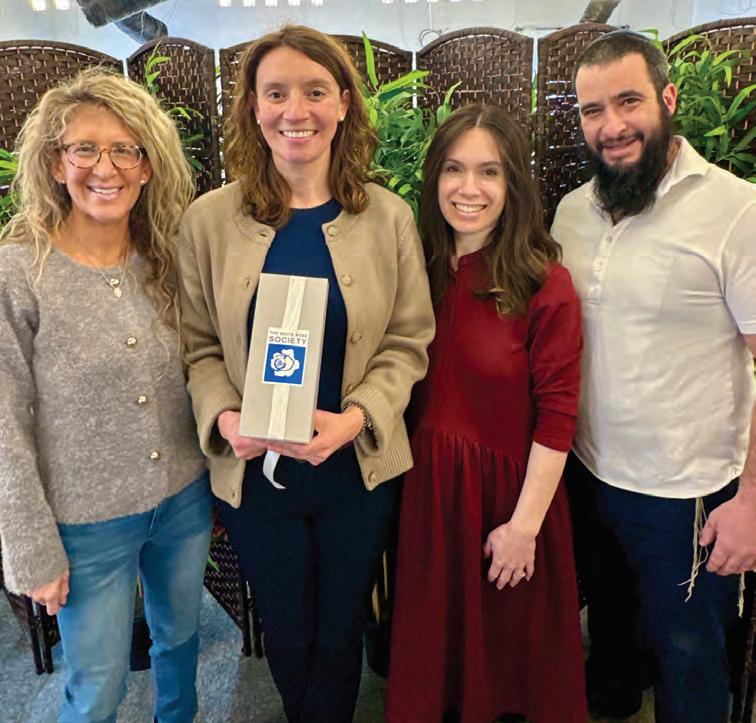
Rfor a Jan. 30 Shabbat dinner expecting to talk with students about her experiences as a friend of the Jewish community and her work as Pittsburgh’s city controller.
But when she opened the door to the Chabad house and saw her friends Julie Paris, Abby Rubin, Rabbi Shmuli Rothstein and hundreds of University of Pittsburgh students, she knew something different was happening.
“Rabbi Shmuli said there’s a special announcement. At that point, I hadn’t put everything together, so I was very confused,” Heisler recalled. “And then I realized what was happening and I just started crying.”
Unbeknownst to Heisler, her friends had nominated her for membership in The White Rose Society, an organization that honors non-Jewish individuals who have become “beacons of hope for the Jewish people.” They used a public dinner to surprise her with the award and present her with her rose.
“There’s no one more deserving,” said Julie Paris, Mid-Atlantic regional director
of StandWithUs. Paris has witnessed Heisler fight for the Jewish community — battling two attempts to have the city divest from Israel, and advocating more broadly for the Jewish community, with whom she has many deep relationships.
In fact, Heisler attended many Shabbat dinners at Hillel JUC while a student at Pitt.
When Paris spoke with The White Rose Society and learned that she and Rubin could design the ceremony themselves, holding it at the university seemed like a natural fit.
“I felt that it would be really powerful to do on campus,” Paris said. “[Heisler] has been a tremendous ally to the Jewish students and has really found her place as an ally of the Jewish community in college.”
Rothstein had already invited Heisler to
By David Rullo | Senior Staff Writer
After its failed attempt to force the city of Pittsburgh to divest from Israel, the Pittsburgh chapter of the Democratic Socialists of America is trying a new tack to boycott and isolate the Jewish state.
At the end of January, Pittsburgh DSA launched the “No Appetite for Apartheid” campaign.
Part of a multi-city program, the campaign “promotes the boycott of food products that are produced in israel, are culturally-appropriative, and/or are made by mega-conglomerates that financially uphold the Zionist occupation of Palestine,” according to Pittsburgh DSA’s Instagram page.
And while the group claims it has already collected pledges to avoid Israel products from 250 consumers and from seven local stores — mostly in the East End — those numbers may be suspect.
One store listed in the initial rollout, Bloomfield’s Baby Loves Tacos, told the Chronicle that it was a “huge mistake” to sign onto the campaign. In an email, owner Zack Shell said that the restaurant previously donated to several nonprofits that provide free meals to those in need, including “the group of people who brought this to us.”
Shell said the restaurant was in the middle of its lunch rush when organizers stopped by asking if Baby Loves Tacos carried items from a list of products. The restaurant did not carry the food on the list. Baby Loves Tacos signed onto the campaign, but Shell admits they “didn’t realize what exactly this was.”
When the nature of the campaign was brought to their attention, Baby Loves Tacos representatives asked to have its name removed from the list, something

By David Rullo | Senior Staff Writer
Kunzman isn’t interested in creating safe spaces for conversations.
“We’re done with safe spaces. Safe spaces are ‘Come and hear what you want to hear.’ We’ve done that,” he said.
Instead, the president and CEO of the Jewish Community Center of Greater Pittsburgh said it’s time for something new.
“We are now in the business of creating brave spaces where you can come with your thoughts, your beliefs, your perspective and hear things you may not agree with,” he said.
The JCC, Kunzman said, has an obligation to promote civil discourse and thoughtful reflection as a means of helping the community move forward.
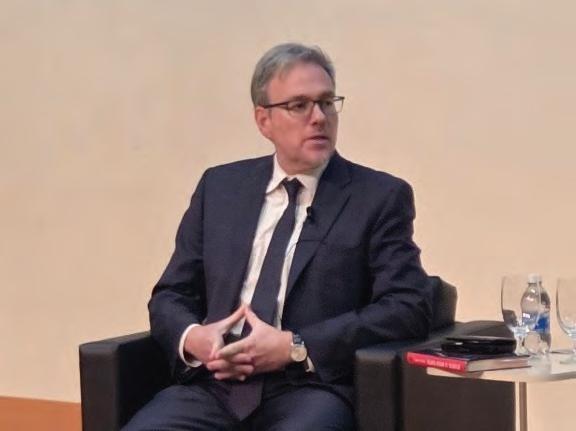
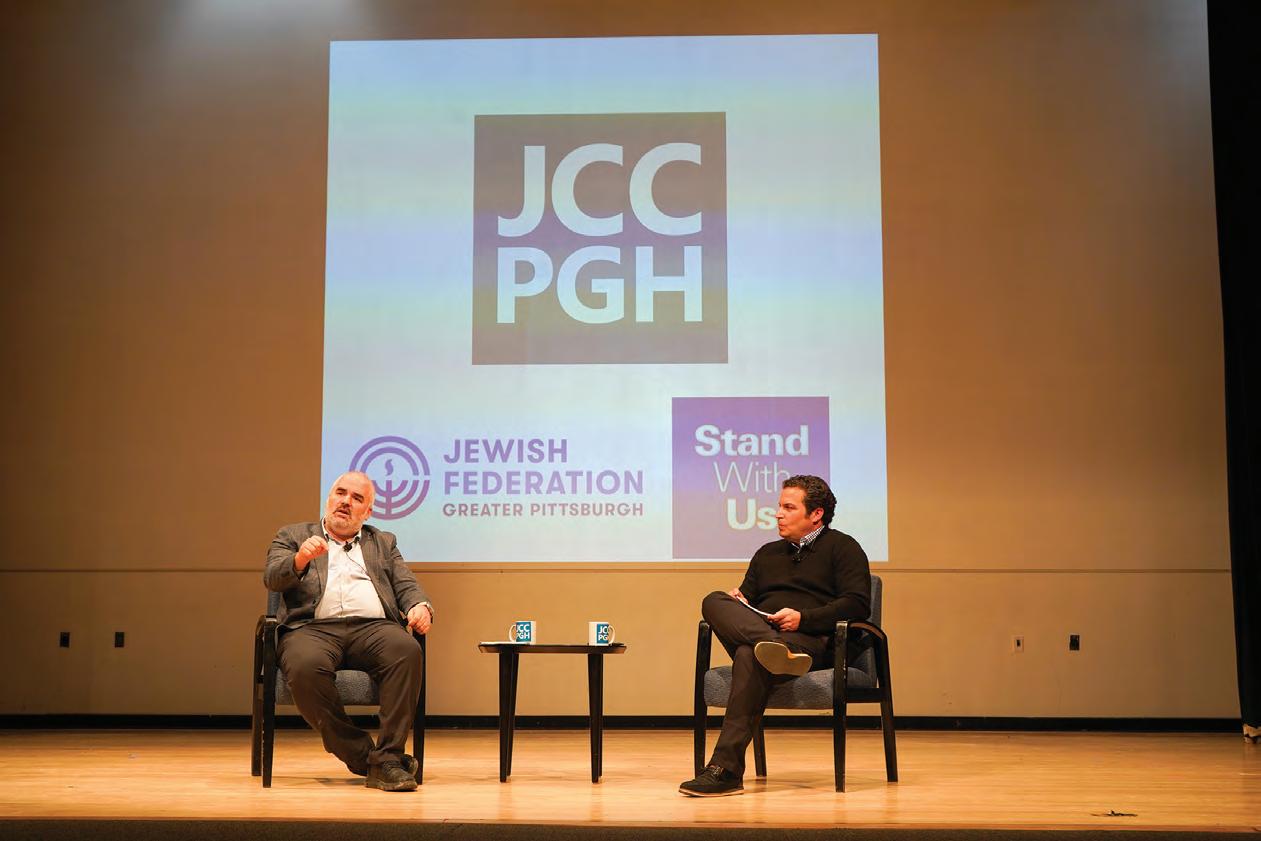
Kunzman is putting those principles into action by launching the six-part JCCPGH Israel Engagement Series, positioning the organization as a forum for diverse viewpoints that may challenge community members’ perspectives on Israel.
“Society is pretty polarized right now, and a particular area of interest of ours is the polarization around Israel,” he said. “Our goal is for every single person who walks out of one of these engagements to say, ‘What just happened? I thought I knew what I need to know.’”
If the JCC can create these kinds of conversations centered on Israel, Kunzman said, then “we can do that around race, we can do that around politics, we can do that around affordable housing and trans rights and so on, down the line.”
The series will require “bravery,” he said, because it will challenge preconceived assumptions and notions, and will chip away at echo chambers.
The first conversation in the series will be held on March 25 and will feature New York Times opinion columnist Bret Stephens and J Street President Jeremy Ben-Ami. It will be moderated by Yisrael Klitsner.
Klitsner is a fellow at the Jewish People Policy Institute and was the Diaspora affairs adviser to former Israeli Prime Minister Naftali Bennett. He is a former Pittsburgh resident, who lived in Squirrel Hill while he attended Carnegie Mellon University studying public policy, and his wife worked with the University of Pittsburgh’s Dr. José-Alain Sahel.
The Israeli native returned to the Jewish state to serve in the IDF after Hamas’ terrorist attack on Oct. 7, 2023.
It was at dinner with Klitsner, during a March 2025 trip to Israel, that the idea of the series first came to Kunzman.
“We got to talking and exploring what it would look like to push the envelope on what folks in Pittsburgh are thinking and doing and saying around the topic of Israel,” Kunzman said.
The idea interested Klitsner. When Kunzman returned to the States he spoke to Fara Marcus, chief development and marketing officer at the JCC, who is participating in the JCC Association of North America’s Martin Pear Israel Fellowship. Fellowship cohorts are tasked with creating a project that “brings Israel to your community.”
Marcus said she had been working with
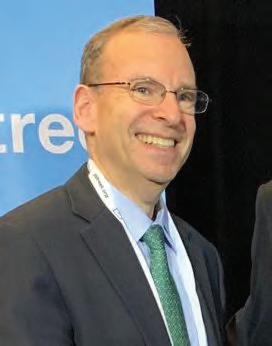
Kunzman to come up with something that “really pushed us to go further into our learning.”
It was from those beginnings the Israel Engagement Series was created.
A statement from the organization said the JCC is committed to creating a brave, welcoming space for hard conversations about Israel and related issues, and noted that the initiative is educational and nonpartisan.
Kunzman is clear: The JCC is a Zionist organization that firmly believes Israel has the right to exist as a free, democratic Jewish state. He’s also just as clear that no speaker or program the JCC hosts implies endorsement of any political party, candidate, policy or single viewpoint.
JCC Chair Merris Groff said the goal is for people to hear different points of view.
“When you listen, you can’t help but care,” she said. “That foundational belief is that my platform of listening and hearing and being compassionate when it’s uncomfortable makes us better people. I think the speaker series does that. We at the JCC are fulfilling that moral obligation.”
The JCC, she said, is in a unique position to bring together community in a space that allows for different points of view, “get

SUBSCRIPTIONS subscriptions@pittsburghjewishchronicle.org 412-687-1000, ext. 2
TO ADVERTISE advertising@pittsburghjewishchronicle.org 412-687-1000, ext. 1
EDITORIAL DEPARTMENT
Email: newsdesk@pittsburghjewishchronicle.org
BOARD OF TRUSTEES
Evan H. Stein, Chair
Evan Indianer, Vice Chair
Derek Smith, Treasurer
Gayle R. Kraut, Secretary
Gail Childs, Dan Droz, Malke Steinfeld Frank, Karen Gal-Or, Seth Glick, Judith Kanal, Cátia Kossovsky, Charles Saul, Lynn Zelenski
GENERAL COUNSEL
Stuart R. Kaplan, Esq.
Jim Busis, CEO and Publisher 412-228-4690 jbusis@pittsburghjewishchronicle.org
EDITORIAL
Toby Tabachnick, Editor 412-228-4577 ttabachnick@pittsburghjewishchronicle.org
Adam Reinherz, Senior Staff Writer 412-687-1000 areinherz@pittsburghjewishchronicle.org
David Rullo, Senior Staff Writer 412-687-1000 drullo@pittsburghjewishchronicle.org
PRODUCTION
Jeni Mann Tough Production Manager
Carl Weigel
Art/Production Coordinator
Subscriptions subscriptions@pittsburghjewishchronicle.org 412-687-1000, ext. 2
Published every Friday by the Pittsburgh Jewish Publication and Education Foundation 5915 Beacon St., 5th Floor Pittsburgh, PA 15217
Phone: 412-687-1000
POSTMASTER: Send address change to PITTSBURGH JEWISH CHRONICLE, 5915 BEACON ST., 5TH FLOOR PITTSBURGH, PA 15217
(PERIODICAL RATE POSTAGE PAID AT PITTSBURGH, PA AND AT ADDITIONAL MAILING OFFICES)
USPS 582-740
us talking,” and to, hopefully, learn from the conversation.
Klitsner said the series presents an opportunity to “get to some granular truth” of why people should care about Israel.
The conversations, he said, will break through echo chambers and allow for nuanced conversation, conducted in a sensitive way, that will have an educational value beyond the typical sound bites and snippets with which people are typically inundated.
“It’s engagement for the sake of engagement, for the sake of breaking through these very problematic tendencies that we see happening and plaguing our communities,” he said.
That engagement, Kunzman and Marcus said, isn’t only for the general community.
Each talk in the series will be accompanied by an opportunity for Jewish professionals to hear from the speakers during a private learning session.
“That’s a really important component to the overall vision,” Kunzman said. “We’re looking to provide our Jewish communal professional network with something a lot deeper and more meaningful.”
And while each conversation will be meaningful, to help community members truly “come curious, leave wiser,” Kunzman hopes people will attend all six sessions, which will present the entire vision of the series.
In the end, he noted, the new series is in line with the JCC’s mission of enriching the community by “cultivating an inclusive, dynamic environment built upon Jewish values, heritage and culture.”
Or, to state it another way, the conversations will tie into the JCC’s vision of a stronger, more inclusive Jewish future.
“It’s the right place at the right time. We’re activating community,” Kunzman said. “But we can’t do it alone. We can only do it together.”
Tickets for the first conversation are available at donate.jccpgh.org/event/comecurious-leave-wiser-march-25/e765062. PJC
David Rullo can be reached at drullo@ pittsburghjewishchronicle.org.
ADVERTISING Amy Weiss, Account Executive (412) 613-0697 aweiss@pittsburghjewishchronicle.org 5915 Beacon St., 5th Floor Pittsburgh, PA 15217 Main phone number: 412-687-1000 Subscriptions: 412-687-1000, ext. 2
Manuscripts, letters, documents and photographs sent to the Pittsburgh Jewish Chronicle become the property of this publication, which is not responsible for the return or loss of such items.
The Pittsburgh Jewish Chronicle does not endorse the goods or services advertised or covered in its pages and makes no representation to the kashrut of food products and services in said advertising or articles. The publisher is not liable for damages if, for any reason whatsoever, he fails to publish an advertisement or for any error in an advertisement. Acceptance of advertisers and of ad copy is subject to the publisher’s approval. The Pittsburgh Jewish Chronicle is not responsible if ads violate applicable laws and the advertiser will indemnify, hold harmless and defend the Pittsburgh Jewish Chronicle from all claims made by governmental agencies and consumers for any reason based on ads appearing in the Pittsburgh Jewish Chronicle
Hadassah’s Evolve: The Next Generation, of which the Evolve Leadership Fellows program is part, are both a way for younger Jewish women to connect with each other and to connect to the culture more broadly.
“As an Evolve Leadership Fellow,” Greenwald said, “it will be my responsibility to spread the word about Hadassah’s mission and to support it financially, to advocate in the U.S. for Israel and for women, and to create connections and community in Pittsburgh through activities that build connections and inspire women to be their best selves.”
Greenwald is also an advocate for women in the workforce through the Professional Women’s Network, a Pittsburgh-based organization that helps women thrive both personally and professionally. Women make up only 22% of the cybersecurity workforce, so Greenwald has direct experience of being in a male-dominated industry. She stays up to date on national conversations about her field, and makes sure the

By Emma Riva | Special to the Chronicle
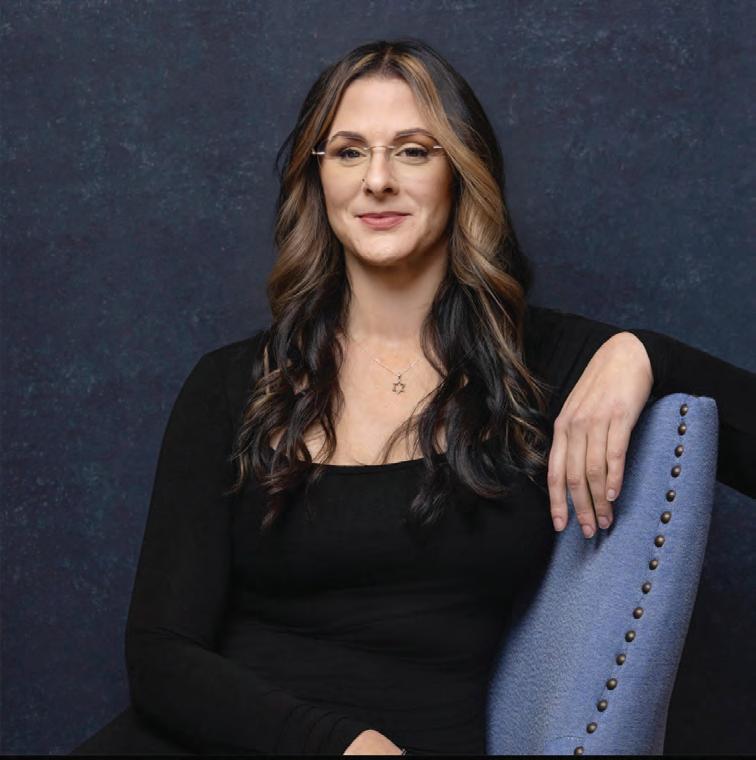
Pittsburgh’s Ellie Greenwald has been chosen as a 2026 Evolve Leadership Fellow with Hadassah. This marks the fourth year Hadassah has selected a class of Jewish women representing its values of supporting Israel, health care, advocacy and youth development, and Greenwald is among a diverse cohort of women in their 20s, 30s and 40s, ranging from health care professionals to full-time homemakers.
Greenwald is a cybersecurity analyst focusing on compliance and auditing for Duquesne Light Company and leads the Pittsburgh branch of Evolve Hadassah: The Next Generation, a development group for younger women. She originally heard about the fellowship at the 2025 Midwest Chicago conference Hadassah puts on every year and felt her drive to serve the Jewish community aligned with its values.
“I was inspired by the strength, vision and leadership of Hadassah and the Evolve members,” Greenwald said.
As someone with C-PTSD (Complex Post-Traumatic Stress Disorder) who has experienced a number of traumas, Greenwald is committed to helping others cope with trauma.
“I want to take this personal growth,
learning and experience to build a supportive and engaging Evolve community in Pittsburgh [through which] other women can find connection and support regardless of their life phase,” she said.
“We all have our purpose in the world. Mine has to do with trauma and heartache … and providing support to those who don’t know how to ask for help. Hadassah provides every kind of practical and psychological support to the residents of its Youth Alliyah villages. I look forward to learning more about that when I visit for the first time on the Evolve Leadership Fellows trip to Israel in March.”
The two youth villages in Israel that Hadassah sponsors are home to vulnerable Israeli students from all backgrounds — Jews, Druze, Muslims, Ethiopians, Russians, Bedouins — and from places in the world where it’s no longer safe to be Jewish. In addition to a community, a home, an education and wraparound support services, Hadassah offers programming of all kinds, like audio workshops, animal therapy, pre-army preparation, carpentry and vocational training. During wartime, youth villages like Hadassah Neurim and Meir Shfeyah are an important resource for giving young people the tools to cope with the violence around them.
At a time when many Jewish organizations struggle to connect with the Gen Z and millennial demographic, programs like
Duquesne Light Company is consistent with best practices through her involvement with two national governing bodies around cybersecurity and energy, ISACA (Information Systems Audit and Control Association) and EUCI, and taking compliance courses through the latter.
Carol Ann Schwartz, Hadassah national president, expressed excitement about the new class of fellows, saying that she was “delighted to see younger Jewish women eager to take up the mantle of leadership to help advance Hadassah’s mission.”
In the next year, Greenwald and her peers will meet with Hadassah leadership to discuss how they can best serve their community through the fellowship. In the second year of the fellowship, fellows pair up with a Hadassah mentor and take on a leadership position in their local Hadassah chapter — in Greenwald’s case, that will be Hadassah of Greater Pittsburgh. PJC
Emma Riva is a freelance writer living in Pittsburgh.







Most US Jews do not identify as ‘Zionists,’ even when they support Israel, JFNA survey finds
By Andrew Lapin | JTA
Only one-third of American Jews say they identify as Zionist, even as nearly nine in 10 say they support Israel’s right to exist as a Jewish and Democratic state, according to a new survey conducted by Jewish Federations of North America.
The findings of the survey reveal that American Jews do not have a mutually agreedupon definition of Zionism — with those identifying as anti-Zionist and those identifying as Zionist ascribing sharply different meanings to the term.
For example, about 80% of anti-Zionist Jews say “supporting whatever actions Israel takes” is a tenet of Zionism, while only about 15% of self-identified Zionists share the belief, according to the survey.
The survey marks the most detailed assessment of the sentiments of American Jews about Zionism by a major Jewish organization in the United States, finding that 14% of Jews ages 18 to 34 identify as anti-Zionist and that the only demographic with a majority of self-identified Zionists was millennials between 35 and 44.
The survey comes as tensions following the Oct. 7 attack, Israel’s war in Gaza and the election of New York City Mayor Zohran Mamdani have put a sustained spotlight on the tenor of American Jewish support for Israel — and divided Jewish communities.

The divisions, JFNA is concluding based on the data, are real but often overstated — a matter of concern as Jewish communities and institutions decide whether and how to engage with Jewish critics of Israel.
“If we misread the trend about ‘Zionism’ to mean that large numbers of Jews, especially young Jews, are turning against the existence of Israel itself, we will draw the wrong conclusions and take the wrong actions,” Mimi Kravetz, JFNA’s chief impact officer, wrote in an essay about the survey’s findings. “We risk responding with anger when the moment calls for steady leadership, pulling away when the moment calls for connection, and defensiveness when the moment calls for listening and understanding.”

Kravetz’s comments add JFNA, the umbrella organization of hundreds of local Jewish federations in the United States and Canada, to an emerging group of Jewish leaders calling to open dialogue with Jews who have recently taken stands against Israel or in support of its opponents. JFNA would continue to define itself as Zionist, Kravetz noted, “in large part because we adhere to the historic definition,” but she conceded that the term had undergone “definition creep.”
Conducted in March 2025 by the research firm Burson, the survey posed a variety of questions to more than 1,800 Jewish and more than 4,100 total respondents about their relationship to Israel and Zionism, as well as about their beliefs about the definition of Zionism.
It was new territory for studies of American Jews. While a major 2021 survey of American Jews by the Pew Research Center had polled Jews on their relationship to Israel, that survey had avoided the use of the word “Zionism.”
Other major Jewish groups that conduct population surveys have in the past typically avoided closely interrogating Jewish opinions about Zionism. JFNA’s venture into this territory came as part of the umbrella group’s series of post-Oct. 7 Jewish trend studies, which have also revealed what the group has termed a “surge” of Jewish engagement.
Overall, more than 70% of Jewish adults who responded to JFNA’s survey agreed that “I feel emotionally attached to Israel,” and 60% said Israel made them proud to be Jewish. At the same time, nearly 70% also agreed that “I sometimes find it hard to support actions taken by Israel or its government.”
One of the survey’s big sticking points emerged around self-identified Zionists. Only 37% of Jews surveyed said they identified as Zionist, while 7% labeled themselves anti-Zionist and another 8% said they were non-Zionist. Another 18% said they weren’t sure, while 30% said none of the labels described them.
At the same time, 88% of surveyed Jews believed that “Israel has the right to exist as a Jewish, Democratic state” — traditionally one of the most historically accepted definitions of Zionism. Seven percent of Jews disagreed with that sentiment, equal to the number who consider themselves anti-Zionist.
Respondents were also quizzed on what views they believed constituted “a part of Zionist beliefs.” Among Jews, 36% said Zionism only meant “the right of the Jewish people to have a Jewish state.” More than one in four Jewish respondents said they thought Z ionists were expected to be “supporting whatever action Israel takes,” and 35% said Zionism meant “believing Israel has a right
to the West Bank and Gaza Strip.”
Smaller numbers of Jews indicated that they thought “believing Palestinians are a made-up population” and “believing Jews are superior to Palestinians” were also core Zionist tenets.
To Kravetz, these results indicate that some Jews “are not rejecting Israel’s existence or the idea of a Jewish state. They are reacting to an understanding of Zionism that includes policies, ideologies, and actions that they oppose, and do not want to be associated with.”
That is especially true for younger Jews, according to the survey, which shows stark differences along age lines. Less than half of Jews under 44 agreed that “in general, Israel makes me feel proud to be Jewish.” The lowest share of Jews who agreed that Israel has a right to exist as a Jewish and Democratic state came from the same age group — though even then about three in four, a sizable majority, agreed with the statement.
Uneasiness in describing oneself as Zionist held true across nearly every age range, with only around 35% of Jews in most demographics using the term to describe themselves.
Of t he Jewish respondents, 37% were Reform, 17% were Conservative, 9% were Orthodox and 30% identified as other or as no particular denomination. Survey results shared with JTA broke down respondents by age range, but not by other factors such as denomination; individuals were randomly assigned to receive certain questions.
The debate over Zionism remains fraught. The last few years have seen increased demonization of “Zionists,” alongside shifting definitions of the term, among progressives and far-right figures on social media and college campuses. At the same time, new advocacy groups like The Jewish Majority and the Movement Against Antizionism have called for shunning those expressing anti-Zionist or anti-Israel sentiment from Judaism’s big tent.
Still, more Jewish researchers are looking to better understand the intra-Jewish divide over Zionism and the various ways Jews understand the term.
For The Sake of Argument, an organization that promotes “healthy arguments” and works with several mainstream Jewish groups including JFNA, recently undertook its own interview series with Jewish anti-Zionists. Co-directors Robbie Gringas and Abi Dauber Sterne plan to soon publish findings from their conversations with about 30 participants.
“It’s great that people are starting to talk about the elephant in the room,” Gringas told JTA from Israel. “We, the Jewish world, don’t yet know what to do with this. And in the meantime, we have to find a way to not break each other’s hearts as much as we have been.”
The pair’s main takeaway from their interviews, Gringas said, was that Jewish anti-Zionists were “sad, if not brokenhearted, about the ways in which they not only find no expression for their Judaism, but also find the Judaism that they’re meeting very challenging.” He added, “The people we met were very knowledgeable about Israel and about Judaism. They were rich human beings.”
The fact that more institutional Jewish groups are interested in learning about what motivates Jewish anti-Zionism is a positive step, Gringas said, adding that it fits the current challenges of the Jewish moment.
“We need to recognize that the world’s changed. We’re in a different time,” he said. “We’re not in a transition. We’re in a rupture. And we need to confront it and think about it carefully.”
Canadian Jewish groups decry axing of antisemitism envoy in favor of ‘rights, equality and inclusion’ advisory council
Canadian Jewish groups are denouncing a government decision to replace the country’s antisemitism and Islamophobia envoys with a new “Rights, Equality and Inclusion” council, JTA reported.
The new advisory council is billed in a press release as aiming to “foster social cohesion, rally Canadians around shared identity, combat racism and hate in all their forms, and help guide the efforts of the Government of Canada.”
The announcement comes more than six months after the country’s last antisemitism envoy, Deborah Lyons, resigned abruptly, saying she was exhausted by “the fact that it was hard to get people to speak up” about antisemitism in Canada. The antisemitism role also included responsibility for Canada’s official Holocaust remembrance.
Richard Robertson, B’nai Brith Canada’s director of research and advocacy, said in a statement that the new advisory council “must prioritize combating antisemitism,” adding that “urgent action is required to confront the problem head-on and without delay.”
In 2024, B’nai Brith Canada reported that there had been 6,219 reported cases of antisemitic incidents in Canada, an all-time record for the country. Canada is home to approximately 393,000 Jews with the majority residing in Toronto, according to the 2022 American Jewish Year Book.
The restructuring comes nearly a year into the tenure of Prime Minister Mark Carney, a liberal elected amid a backlash against U.S. President Donald Trump. It comes amid broad concerns about whether Jewish interests can be accommodated adequately within a general inclusion framework.
Palestine Action activists acquitted in Israeli defense firm break-in, drawing criticism from British Jewish leaders
A British jury acquitted six activists from the British group Palestine Action who were charged with breaking into the U.K. site of an Israeli defense company, eliciting criticism from British Jewish groups and leaders, JTA reported.
The defendants — Charlotte Head, 29, Samuel Corner, 23, Leona Kamio, 30, Fatema Rajwani, 21, Zoe Rogers, 22, and Jordan Devlin, 31 — were accused of driving a prison van into Elbit Systems’ factory, an Israeli-based military technology company, on Aug. 6, 2024, and causing damage to the building’s property and using sledgehammers as weapons.
After deliberating for 36 hours and 34 minutes, the jury said last week that it was unable to reach verdicts for criminal damage charges against all six defendants.
The jury was also unable to reach a verdict for charges faced by Corner, who was accused of causing grievous bodily harm with intent for hitting a police sergeant with a sledgehammer.
The incident took place nearly a year before the defendants’ organization, Palestine Action, was banned under the Terrorism Act in July after its activists broke into a Royal Air Force base and spray-painted two planes to protest Britain’s support for Israel. Now, people
Items are provided by the Center for Israel Education (israeled.org), where you can find more details.
Feb. 13, 1931 — British PM rejects White Paper
In a letter to Chaim Weizmann, British Prime Minister Ramsay MacDonald disavows the threats posed in Palestine by the 1930 Passfield White Paper, which calls for restricting Jewish immigration and land purchases.
Feb. 14, 1896 — Herzl publishes “The Jewish State”
Theodor Herzl’s “ Der Judenstaat ” (“The Jewish State”) is first published in Vienna with a run of 500 copies. The pamphlet calls for Jews to organize themselves to gain a territory and eventually form a state.
Feb. 15, 1975 — Ex-Cairo Jewish leader Salvator Cicurel dies Salvator Cicurel, a former leader of Cairo’s Jewish community, 1928 Olympic fencer and department store magnate, dies at 81. He was forced to sell his store after the 1956 Suez war and left Egypt in 1957.

Czernowitz, then part of Romania and now in Ukraine. He escapes a concentration camp at 10, joins the Soviet army as a kitchen boy in 1944 and makes aliyah in 1946.
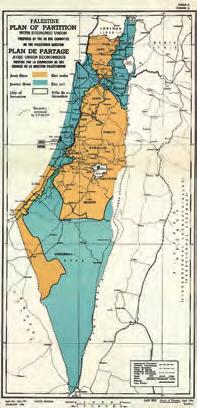
Feb. 17, 1948 — State Department tries to stop partition
The State Department’s policy planning staff sends a memo to President Harry Truman and Secretary of State George Marshall that argues against implementing the U.S.-backed U.N. partition resolution for Palestine.
Feb. 18, 1947 — Britain asks U.N. to sort out Palestine
Amid rising intercommunal violence, the British government asks the United Nations to decide the future of Palestine, leading to the partition plan the U.N. General Assembly approves Nov. 29, 1947.
expressing support for Palestine Action or participating in its activism can be charged with terrorism.
In an op-ed published in The Telegraph titled “The Palestine Action acquittals are telling British Jews they have no future here,” Britain’s former Jewish Chronicle editor Stephen Pollard argued that “the message of the case is this: you can smash the spine of a police officer and so long as you are doing it because of ‘Palestine’, you can walk home free.”
North Carolina neo-Nazi gets five years for threats to kill Jewish state rep, rabbi
Ariel Collazo Ramos, 32, of High Point, North Carolina, was sentenced to five years in prison — the statutory maximum — and then three years of supervised release last week for threatening to kill Georgia state representative Esther Panitch and the rabbi of Temple Beth Israel in Macon, Georgia.
“Both women publicly backed the passage of Georgia House Bill 30, the state’s first legislation defining antisemitism,” the U.S. Justice Department said.
Rabbi Elizabeth Bahar, of the Reform congregation Temple Beth Israel, testified in front of the Georgia Senate Judiciary Committee to support HB 30, which Panitch cosponsored, in January 2024. The prior June, neo-Nazis had gathered outside the temple on Shabbat, as the congregation worshiped inside.
The morning that the bill was signed into law, Jan. 31, 2024, Ramos sent Panitch an antisemitic postcard, and he sent another antisemitic card to Bahar the following day, according to the Justice Department.
The postcards that he sent to Bahar’s and Panitch’s homes referred to “gas the Jews,”
Zyklon B (which the Nazis used to murder Jews) and Jews being rats, per the department. Israeli-founded ‘SpaceX of weather’ raises $175m to send next-gen satellites into orbit
Israeli-founded Tomorrow.io, a weather intelligence platform, said last week that it has secured $175 million in fresh capital to launch the next generation of weather-monitoring satellites into space to forecast where storm clouds are gathering as well as help businesses and countries manage fast-evolving climate threats, according to The Times of Israel. The funding round, led by private equity firms Stonecourt Capital and HarbourVest, gives the company a valuation of over $1 billion. It takes Tomorrow.io’s total funding to more than $500 million.
Billing itself as the SpaceX of weather, Tomorrow.io’s bold endeavor is to tackle the decades-old challenge of getting weather forecasts right as extreme weather events are ranked as the top long-term risk, according to a survey by the World Economic Forum. In 2024, natural disasters wiped $320 billion from the global economy, with weather and climate change-related catastrophes, such as floods, wildfires, hurricanes, and tropical cyclones, responsible for 93% of overall damages.
Formerly known as ClimaCell, Tomorrow. io was founded in 2016 by Israeli Air Force veterans Shimon Elkabetz, Rei Goffer, and Itai Zlotnik. The three founders teamed up to develop weather forecasting intelligence software and observation solutions that go beyond traditional meteorological systems, and rely on a patchwork of ground-based radars and stations. PJC
— Compiled by Toby Tabachnick
Feb. 16, 1932 — Writer Aharon Appelfeld is born
Author Aharon Appelfeld is born near
Feb. 19, 2009 — Yemeni Jews secretly are flown to Israel
Facing terrorist threats, 10 of the fewer than 300 Jews in Yemen are secretly airlifted to Israel. Most of Yemen’s Jews, numbering 50,000 in 1948, left during Operation Magic Carpet in 1949 and 1950. PJC

Submit calendar items on the Chronicle’s website, pittsburghjewishchronicle.org. Submissions also will be included in print. Events will run in the print edition beginning one month prior to the date as space allows. The deadline for submissions is Friday, noon.
q SATURDAY, FEB. 14
Carry Shabbat’s peace into the new week with Havdalah Healing, a meditation and sound bath led by Cantor Julie Newman and Anitra Birnbaum. Healing songs, Jewish ritual, and the soothing vibrations of crystal singing bowls and other instruments create a space to rest, reflect and restore. This event is free and open to all, but RSVP is required. 5 p.m. Rodef Shalom Congregation, Cohen Chapel, 4905 Fifth Ave. tiferetproject.org/event/havdalah-healing
q SUNDAY, FEB. 15
Join Chabad of Greenfield for The Purim Patisserie a joyful, hands-on family hamantasch bake where children become pastry chefs and families step into Purim mode together. Kids will bake and decorate hamantaschen, create beautiful Purim crafts and make a gragger to take home. 11 a.m. $10 per baker. Chabad of Greenfield, 4315 Murray Ave. chabadofgreenfield.com/purim
Join the Jewish Genealogy Society of Pittsburgh for “Clued-In: More Case Studies from Sherlock Cohn, the Photo Genealogist,” with Ava Cohn. 1 p.m. $5 for general public/free for members. Zoom. pghjgs. org/event-details/clued-in-more-case-studies-fromsherlock-cohn-the-photo-genealogist-with-ava-cohn
Chabad of the South Hills presents Jewish Comedy Night with Ami Kozak. Kozak’s show will blend stand-up, spot-on impressions and music. 7 p.m. $54. Address provided upon RSVP. Sponsored by Chabad of the South Hills, Jewish Federation of Greater Pittsburgh, StandWithUs and the Pittsburgh Jewish Chronicle. Chabadsh.com/comedy
q SUNDAYS, FEB. 15–JULY 26
Join Chabad of Squirrel Hill for its Men’s Tefillin Club. Services and tefillin are followed by a delicious breakfast and engaging discussions on current events. 8:30 a.m. 1700 Beechwood Blvd. chabadpgh.com
Join a lay-led online Parashah study group to discuss the weekly Torah portion. No Hebrew knowledge needed. The goal is to build community while deepening understanding of the text. 8:30 p.m. For more information, visit bethshalompgh.org/ online-parashah.
q MONDAYS, FEB. 16–JULY 27
Join Congregation Beth Shalom for a weekly Talmud study. 9:15 a.m. For more information, visit bethshalompgh.org.
Join Temple Sinai for an evening of mahjong every Monday (except holidays). Whether you are just







starting out or have years of experience, you are sure to enjoy the camaraderie and good times as you make new friends or cherish moments with long-term pals. All are welcome. Winners will be awarded Giant Eagle gift cards. All players should have their own mahjong cards. Contact Susan Cohen at susan_k_cohen@yahoo.com if you have questions. /$5. templesinaipgh.org
Join Chabad of the South Hills for Lift Your Life, a Rosh Chodesh Society series. This month’s topic is “The Art of Managing Food and Munching for Meaning.” 7 p.m. 1700 Bower Hill Road. For more information or to RSVP, email batya@chabadsh.com. chabadsh.com
q TUESDAYS, FEB. 17–JUNE 30
Join Beth El’s Rabbi Alex Greenbaum and his Bible/Talmud Adult Education class for a thoughtprovoking weekly session of Bible and Talmudic study. This program is available both in person and virtually. Call the office at 412-561-1168 to receive the Zoom link or to make an in-person reservation. 10:30 a.m. 1900 Cochran Road. bethelcong.org
q WEDNESDAY, FEB. 18
Aidan Jelinek participated in a Global Activism fellowship in Israel and the West Bank with partners in the pro-Israel, pro-peace movement. He will share his experiences and reflections, which include meetings with Israelis and Palestinians who are working together to build a shared future, as well as settler violence. 6:30 p.m. Free. Carnegie Library of Pittsburgh, Squirrel Hill Branch, Forbes and Murray avenues, Meeting Room B. jstreet.org
Join Chabad of South Hills for its new JLI course, Captivating Cases in Rabbinic Responsa, a course on the real-life questions Jews asked sages across history. 7:30 p.m. In person or online. 1700 Bower Hill Road. chabadsh.com
Join Chabad of Squirrel Hill for its new JLI course, Captivating Cases in Rabbinic Responsa, a course on the real-life questions Jews asked sages across history. 7:30 p.m. $90. 1700 Beechwood Blvd. chabadpgh.com
“The Final Final Solution” is a fearless, hour-long stand-up cabaret that takes on Oct. 7, 2023, and its aftermath with biting wit and raw humanity. Fresh from a smash run at Estonia’s Freedom Festival and now on a U.S. tour, this performance transforms unimaginable pain into something incisive and deeply human. 7:30 p.m. $18 per ticket; $5 per student. Congregation Beth Shalom, 5915 Beacon Street. cwbpgh.org/event/the-final-final-solution
q WEDNESDAYS, FEB. 18, 25
Join Temple Ohav Shalom Center for Early Learning for My Grown Up and Me, a joyful, hands-on experiences for children 18 months to 3 years of age and their grown up(s). Each class includes multi-sensory

We provide expert help with long term care planning, powers of attorney, wills, trusts and special needs. We help you implement legal and tax strategies to protect your wealth during your life and afterwards.


explorations, art experiences, a story and more. Come make memories, meet other families, experience the magic of our center while learning all about our programs and the Reggio Emilia approach. 9:30 a.m. $45/three-week series. Temple Ohav Shalom, 8400 Thompson Run Road. centerforearlylearning.org
q THURSDAY, FEB. 19
Religious people are coming together across religious and non-religious differences to change the food system. In the lecture “Jewish Farming and Religious Alternative Food Movements in the United States,” Adrienne Krone will provide insights into these religious communities from her new book “Free-Range Religion: Alternative Food Movements and Religious Life in the United States.” 5 p.m. Free. Cathedral of Learning, 501 Fifth Ave. calendar.pitt. edu/event/book-talk-jewish-farming-and-religiousalternative-food-movements-in-the-united-states
q SATURDAY, FEB. 21
Get ready for Purim with Temple Ohav Shalom’s Shalom Tots: Make Some Noise for Purim. Make masks, crowns and noisemakers for Purim. Costumes are encouraged. Children aged 0-5. 10 a.m. Free. Temple Ohav Shalom, 8400 Thompson Run Road. facebook.com/search/top?q=shalom%20tots
q SUNDAY, FEB. 22
Join Chabad of Squirrel Hill for a Kids’ Hamantash Bake. Make your own hamantaschen with entertainment by juggler Howard Mincone. 2:30 p.m. $10/child. 1700 Beechwood Blvd. chabadpgh.com/kidscooking
Join Chabad of the South Hills for its Family Hamantash Bake, a sweet, hands-on Purim adventure for the whole family. 3 p.m. 1700 Bower Hill Road. chabadsh.com/hamantash
q WEDNESDAY, FEB. 25
Join Chabad of the South Hills for its Seniors Luncheon. This month’s topic is “Safe Driving Through the Ages.” 1 p.m. Suggested donation, $5. 1701 McFarland Ave. RSVP at 412-278-2658.
q THURSDAY, FEB. 26
Join Rodef Shalom Congregation for “Understanding Online Risks for Our Kids – What Every Parent Needs to Know,” an informative and empowering session that helps parents understand the online behaviors and trends impacting today’s teens and
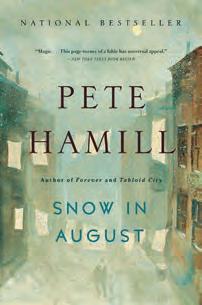
The Pittsburgh Jewish Chronicle invites you to join the Chronicle Book Club for its March 1 discussion of “Snow in August,” by Pete Hamill.

mhm@ahmpc.com 4927 William Flinn Highway Allison Park, Pennsylvania 15101 We make house calls!

young adults. John Pulcastro, supervisory intelligence analyst, FBI Pittsburgh, will provide a clear, accessible overview of emerging digital risks so you can better support and protect the young people in your life. 7 p.m. Free. Rodef Shalom Congregation, 4905 Fifth Ave. jewishpgh.org/event/understanding-onlinerisks-for-our-kids-what-every-parent-needs-to-know
q SATURDAY, FEB. 28
Join Temple Ohav Shalom for Purim Royale, an evening of fun, live music, and community. 6 p.m. $85/ticket. Temple Ohav Shalom, 8400 Thompson Run Road. Register at templeohavshalom.org.
q TUESDAY, MARCH 3
Join Chabad of Greenfield for Purim at the Draft, a joyful experience with great food, amazing entertainment, fun for all ages and a meaningful message that stays with you long after the costumes come off. 5 p.m. $10 per child, $15 per adult. Chabad of Greenfield, 4315 Murray Ave. chabadofgreenfield.com/purim
q WEDNESDAY, MARCH 4
The Second Annual De-Ice Ball supports Casa San Jose’s Bond Fund, which provides assistance to those detained by ICE in the Pittsburgh area. Sponsored by Dor Hadash, Casa San Jose, Bend the Arc Pittsburgh, Rodef Shalom, Temple Sinai and LCLAA. 6:30 p.m. $18 and up. Location given with registration. casasanjose. salsalabs.org/de-ice2026
q MONDAY, MARCH 16
Anika Walke delivers “Memorial Complexes, Rayzebilder, Testimony: A spatial approach to Holocaust memory in Belarus,” the Third Annual Renee Sachs Memorial Lecture in Holocaust Studies. The lecture introduces works by the Yiddish writer Hirsh Reles and memorials created by architect Leonid Levin to explore how legacies of systematic violence shape the natural and built environment in the former Soviet Union. 5:15 p.m. Free. Cathedral of Learning, Room 501, Fifth Avenue calendar.pitt.edu/event/profdr-anika-walke-talk
q WEDNESDAY, MARCH 25
Weaving in reflections from Jill Joshowitz’s recent trips to Syria, “Reflections on the Dura Europos Synagogue Paintings” will explore the incredible biblical subject matter in the Dura synagogue paintings and their later reception in both Damascus and Pittsburgh. 5:30 p.m. Free. Cathedral of Learning, Room 332, Fifth Avenue. PJC
From Amazon.com: “Brooklyn, 1947. The war veterans have come home. Jackie Robinson is about to become a Dodger. And in one close-knit working-class neighborhood, an eleven-year-old Irish Catholic boy named Michael Devlin has just made friends with a lonely rabbi from Prague.
“'Snow in August’ is the story of that unlikely friendship — and of how the neighborhood reacts to it. For Michael, the rabbi opens a window to ancient learning and lore that rival anything in Captain Marvel. For the rabbi, Michael illuminates the everyday mysteries of America, including the strange language of baseball. But like their hero Jackie Robinson, neither can entirely escape from the swirling prejudices of the time. Terrorized by a local gang of anti-Semitic Irish toughs, Michael and the rabbi are caught in an escalating spiral of hate for which there’s only one way out — a miracle ... .”
Your hosts
Toby Tabachnick, Chronicle editor
David Rullo, Chronicle senior staff writer
How it works
We will meet on Zoom on Sunday, March 1, at 1 p.m.
What to do
Buy: “Snow in August.” It is available from online retailers, including Amazon and Barnes & Noble, and in some local Barnes & Noble stores. It is also available through the Carnegie Library system.
Email: Contact us at drullo@pittsburghjewishchronicle.org, and write “Chronicle Book Club” in the subject line. We will send you a Zoom link for the discussion meeting. Happy reading! PJC

Guest Columnist
Kira Sunshine
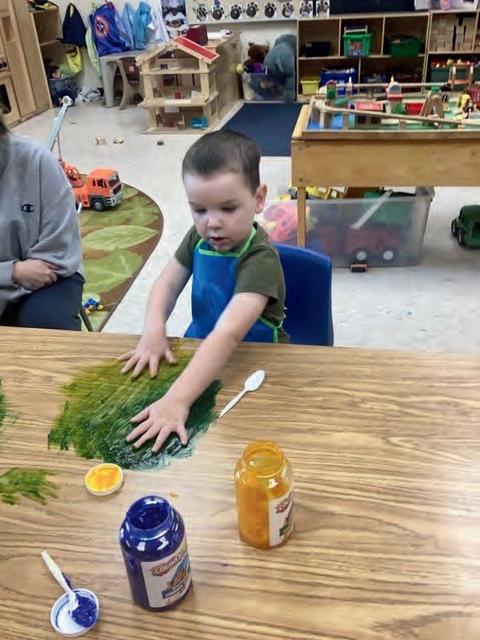
Jewish education is more than a curric ulum; it is a lens through which to see the world. A Jewish day school education offers a built-in support system and teaches children that their Jewish identity is a part of their everyday life — not just a hobby or an afterthought left to High Holidays or the occasional synagogue visit. When we intentionally instill Jewish values into everyday life, we give children a moral and spiritual framework to navigate the modern world, a connection to their ancestors through our shared ancient texts, and allow them to discover the joy of tradition. Jewish learning becomes a lived experience, shaping how children think, act and engage with others. In the early years, education is about sensory experiences and establishing a foundation. This is where the “feeling” of being Jewish is formed. Through songs, hands-on projects

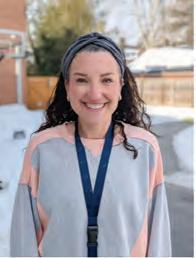
and storytelling, children learn the cycle and rhythm to the week building toward Shabbat and the holidays. By internalizing this cycle, children gain a sense of stability, predictability and belonging. Before they can even read a prayer, they understand that they belong to a specific time and place. These early years mark the baseline for identity formation. Let us give children a joyful, nurturing structure to their Jewish identity — one rooted in pride, warmth and connection.
As children grow, the shift focuses on character development and skill acquisition. This is the “how-to” phase of Jewish life. Children transition from passive listening to active doing. They gain skills to navigate a prayer book, understand the meaning behind the holidays and their customs, and learn to perform mitzvot with confidence and intention. This stage creates a safe space to explore ethics and values. It isn’t just about learning facts — though Jewish day school education provides that in abundance — but learning how to be a mensch, a person of integrity who views the world through a Jewish lens. Children feel their own heritage come to life through action, learning and personal responsibility.
The teenage years are critical for spiritual
At Beth Shalom Early Learning Center, we recognize the importance of the early years in a child’s development and acknowledge the impact that a quality early education experience can have on a child’s future success. We believe that each child is a unique individual, who is continually shaped by their social and cultural environments.
development and self-discovery. As students prepare to leave the nest, Jewish education pivots to focus on their place in the wider world and as members of the greater Jewish community. Teens begin to explore who they are, not just as their parents’ children but as independent thinkers and emerging adults. A strong Jewish day school education will prepare kids to maintain their practice when they leave home. They will develop skills to be lifelong learners capable of asking questions and seeking meaning. The analytical skills used to grapple with the ancient biblical and Talmudic texts will power them forward into every other academic and professional aspect of life, and not just in their Judaic studies. A Jewish day school education will help our youth develop the knowledge, history and pride necessary to identify, face and ultimately dismantle antisemitism, should they encounter it on college campuses or beyond.
Choosing a Jewish day school education fosters deep, meaningful love and connection to the land of Israel, not just as a political entity but as the homeland to their people. Learning modern Hebrew alongside ancient biblical texts gives students the keys to unlocking our culture and peoplehood. They aren’t just



learning to pray but learning a communal language. Students begin to understand that Israel is the center of Jewish creativity and life. When our students eventually make it to Israel — whether on an organized group trip or for a family visit — they don’t feel like tourists, but rather members of a global family returning to a familiar home.
We get one chance to educate our youth — one window of time to show them Jewish values in action. Choosing a Jewish day school education is a powerful statement to community and continuity. It connects Jews to one another, strengthening the fabric of Jewish life across generations. Most importantly, it ensures Jewish continuity. Jewish education teaches that being a good friend, being a diligent student and being a responsible citizen are all Jewish activities. By planting these roots deep and early, we ensure that the next generation does more than just survive; they thrive, carrying on our tradition forward with pride. PJC
Kira Sunshine is the director of admissions, enrollment and operations at Hillel Academy, a 10-year veteran of the school’s administration, and the proud parent of three Hillel students.

By Adam Reinherz | Senior Staff Writer
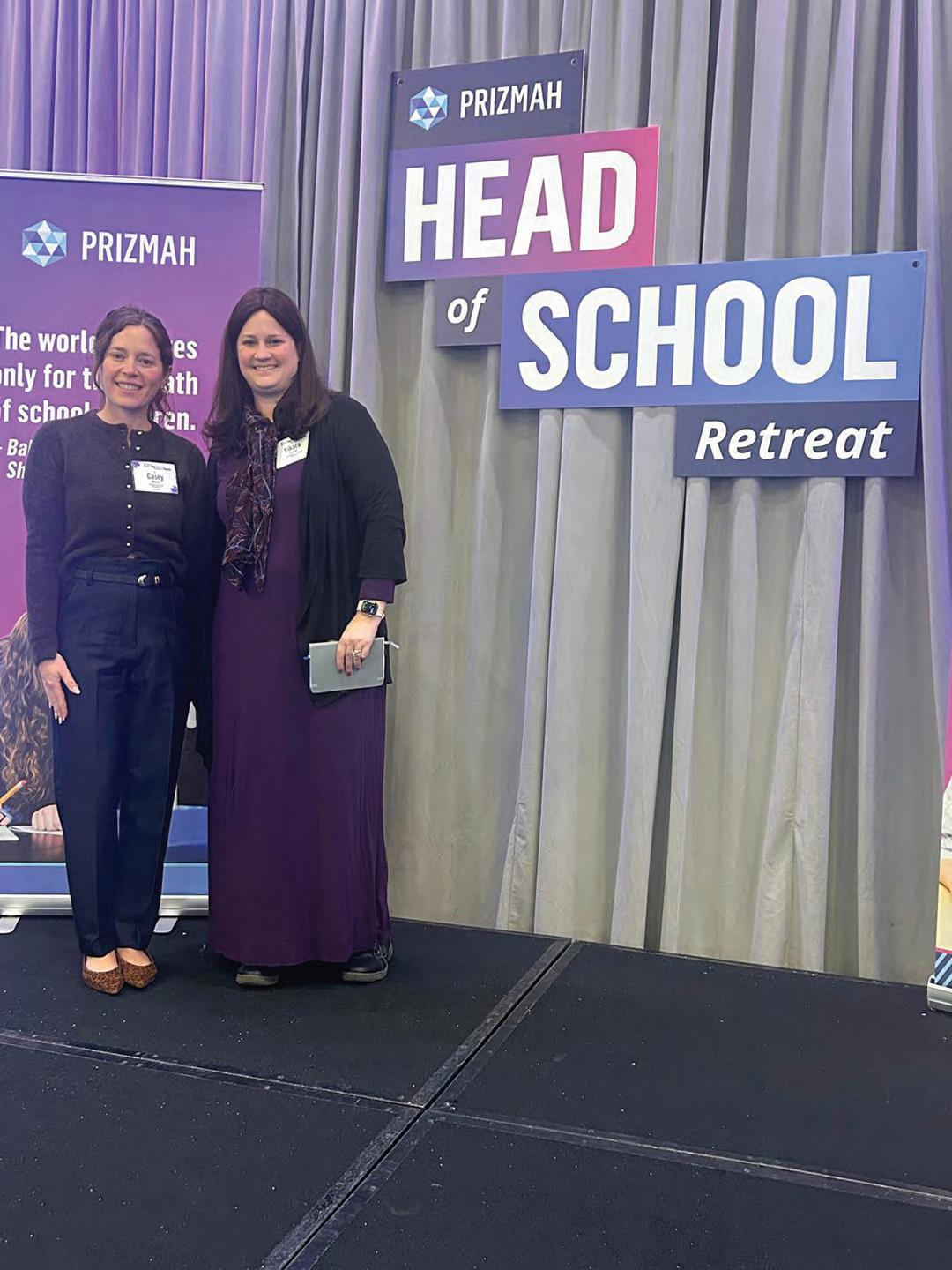
Two local school leaders made new connections and saw Pittsburgh through the prism of the larger Jewish world thanks to a national conference. Based in Houston, the Prizmah Head of School Retreat enabled Yikara Levari, Hillel Academy of Pittsburgh’s principal and educational director, and Casey Weiss, Community Day School’s head of school, to learn alongside more than 100 Jewish educators. Topics covered at the biennial gathering included approaching difficulties with nuance and intention, grappling with artificial intelligence and wrestling with affordability.
“What was fascinating to me is that no matter the size of the school — the religious observance level, the demographic, the area, location — we’re all going through pretty much the same challenges,” Levari said.
Prizmah, a New York-based organization, serves as a network for North American Jewish day schools and yeshivas. The organization offers conferences for Jewish day school staff and heads of school on alternating years.

participated in Prizmah, this was her first time with the group since being named Hillel’s principal in November.
grow in it,” she said. “Prizmah has become a meaningful professional home for me.”



“What I found there was so much support and networking and validation,” Levari said.
Weiss said that one of the reasons she encouraged Levari to attend was because of the organization’s ability to foster connection and growth.
“Head of school work is a niche role, and, at times, a very lonely one,” Weiss said. “Being in genuine fellowship with other heads, learning together, thinking aloud and grappling honestly with the complexities of this work has been invaluable.”
Before officially taking the reins of CDS, Weiss attended Prizmah’s heads of school retreat in 2024.
That experience, along with traveling to last year’s Prizmah National Conference with fellow CDS administrators, “shaped how I entered this role and how I continue to
While Levari and Weiss expanded their networks, the two ensured Pittsburgh was well represented. In conversations with others, Levari and Weiss frequently shared the realities of Jewish life in western Pennsylvania.
“I felt really proud of our Pittsburgh representation. People knew Pittsburgh,” Levari said.
As much as the Pittsburghers shared a communal story nationally, they also spent time developing local approaches.
“We are both female heads of school. And even though our schools are different, we have a lot of the same challenges,” Levari said.
It’s a partnership that’s cherished, Weiss said. “Being in relationship with peers who truly understand the role is something I do not take for granted.”


WHERE THE LOVE OF LEARNING GROWS
• PRESCHOOL FOR CHILDREN AGES 2 - 6
• All children & families welcome inclusive of all backgrounds and abilities
• Half-day program: 9AM - 12PM, with optional afternoon enrichment
• Reggio Emilia-inspired approach encouraging curiosity, creativity, & collaboration
• Play-based learning in small class sizes that supports imagination and exploration
• Social-emotional and problem-solving focus for confident, capable kids
• Financial support available

Now back in Pittsburgh, Levari and Weiss’ goals remain the same: aid students, promote learning and effectuate communal growth.
Those responsibilities are born not only by the two participating Pittsburgh educators, but Jewish day school leaders around the country, according to Paul Bernstein, Prizmah’s CEO.
“Heads of school are at the forefront of ensuring we have excellent, growing and
increasingly affordable schools,” he said. “In a complex world with many challenges, they carry the burden of ensuring the success of each school, creating the best environments for their students, faculty and the entire school community.”
Having traveled to Houston, the mission appears ever clearer, Levari said. “Sometimes you need to leave the four walls of a classroom to see the bigger picture.” PJC
Adam Reinherz can be reached at areinherz@pittsburghjewishchronicle.org.

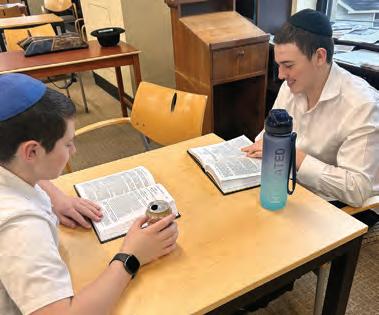
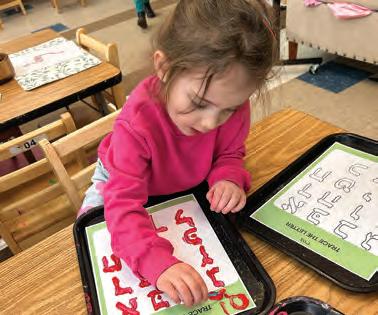
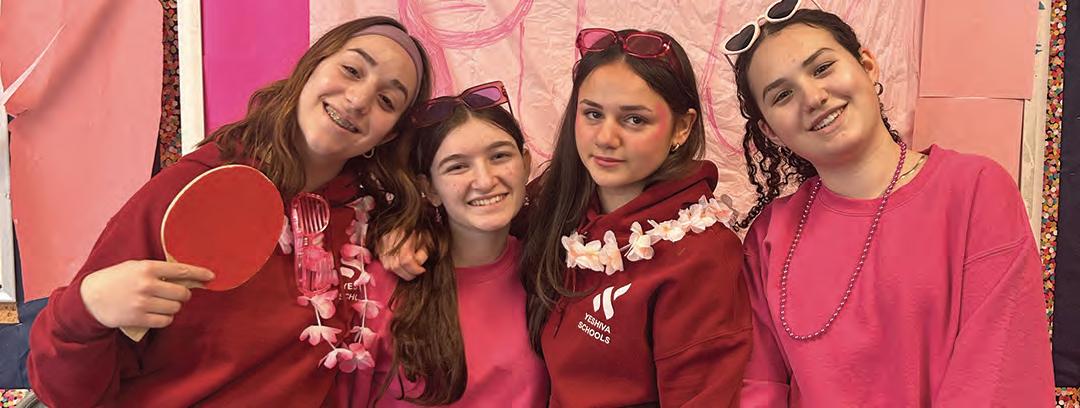
At Yeshiva Schools of Pittsburgh, we believe every child is entrusted to us by Hashem. Rooted in Chabad philosophy, our mission is to help each student develop a love of Torah, connection with Hashem, refined character traits, and the academic and life skills to thrive.
Partnering closely with parents, we build a nurturing environment where creativity, self-esteem, and refined character grow alongside excellence in Judaic and general studies, giving every student a strong sense of purpose.


By Adam Reinherz | Senior Staff Writer
Dirtying her hands in a field by weeding, harvesting and strengthening agricultural ties is appealing to Adrienne Krone. Doing so and sharing her findings with others, however, is the more meaningful choice, she said.
The Jewish ethnographer who serves as associate professor of Environmental Science & Sustainability and Religious Studies at Allegheny College, and also chair of Jewish Studies, is slated to talk about her work, and her book “Free-Range Religion: Alternative Food Movements and Religious Life in the United States,” on Feb. 19 at 5 p.m. in Room 501 at the University of Pittsburgh’s Cathedral of Learning.
The Oakland-based event, Krone told the Chronicle, will shed light on her discoveries while offering insight into her research.
“As an ethnographer, I go to places and I do whatever the people there are doing,” she said. “If I’m going to a farm, that means I’m out in the fields: I’m weeding, I’m watering, I’m harvesting.”
Not to get lost in the weeds, but Krone’s work requires conducting interviews and field work in a literal field. Occasionally, she has conversations with subjects in “comfier chairs.”
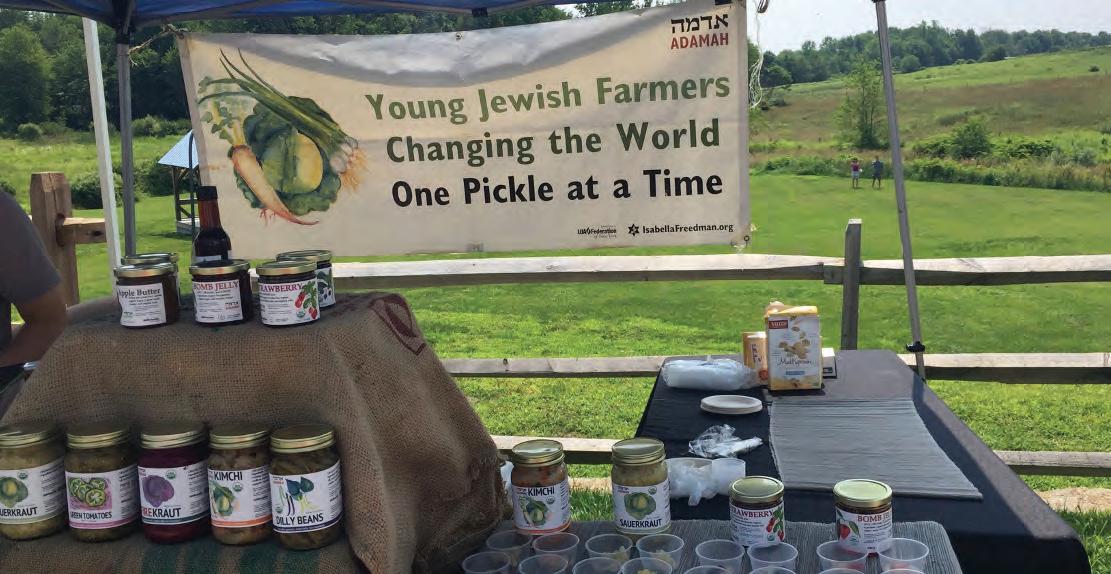
Krone’s approach to understanding religious farming, she said, has taken her around the country and introduced her to Jewish spaces and people who are working to “change how Jews see the environment and how Jews see food.”
Whether adapting the laws of shemitah — the biblically mandated sabbatical year observed every seven years in Israel — to a North American context, or teaching younger generations about orlah, the prohibition on benefiting from a tree’s fruit during its first three years, Jewish farms and farmers have embraced creative approaches.
During the 2014-15 shemitah cycle, Pearlstone, a 182-acre site in Reisterstown, Maryland, paused its annual food production
and adopted shemitah-inspired tactics.
Though staff didn’t leave the field barren, and instead elected to plant a cover crop and “do some soil restoration,” Krone said, the idea was to dedicate resources to sustainability while giving workers a chance to “rest and do volunteer work and other things, because people need some time away as well.”
At Coastal Roots Farm in Encinitas, California, Krone continued, staff planted crops in “soil socks, which sit on top of the ground, so that they weren’t planting in the ground during the shemitah year, but rather on top of it.”
Through her writing and teaching, Krone seeks to educate people about the importance of connections to food systems.
“Having some sense of the ways that we do not control — and cannot control — everything about our world, is an important part of what it means to be human and is an important part of what it means to be Jewish,” she said.
It’s an educational process, she continued, that requires appreciating biblical writings and religious undertakings.
“Religion is so connected to how people shape their own food practices,” Krone said. “If we’re not paying attention to the ways that religion is informing how people make decisions then we’re missing key pieces of the conversation and we can’t change the food system and make it better.”
Since starting her professional and educational journey nearly a decade ago, Krone has met numerous Jewish farmers and visited multiple Jewish sites.
Those experiences, which she plans on describing during her upcoming talk, demonstrate a dedicated Jewish corps who are “part of efforts to change the food system,” she said. The people who are invested in food, and environmental and climate justice activism, are “doing it in Jewish community.”
That detail is essential for students and readers to know, she continued. “I think it’s a really helpful thing for understanding contemporary American Judaism.” PJC
Adam Reinherz can be reached at areinherz@pittsburghjewishchronicle.org.

Developing Jewish Identity & Responsibility
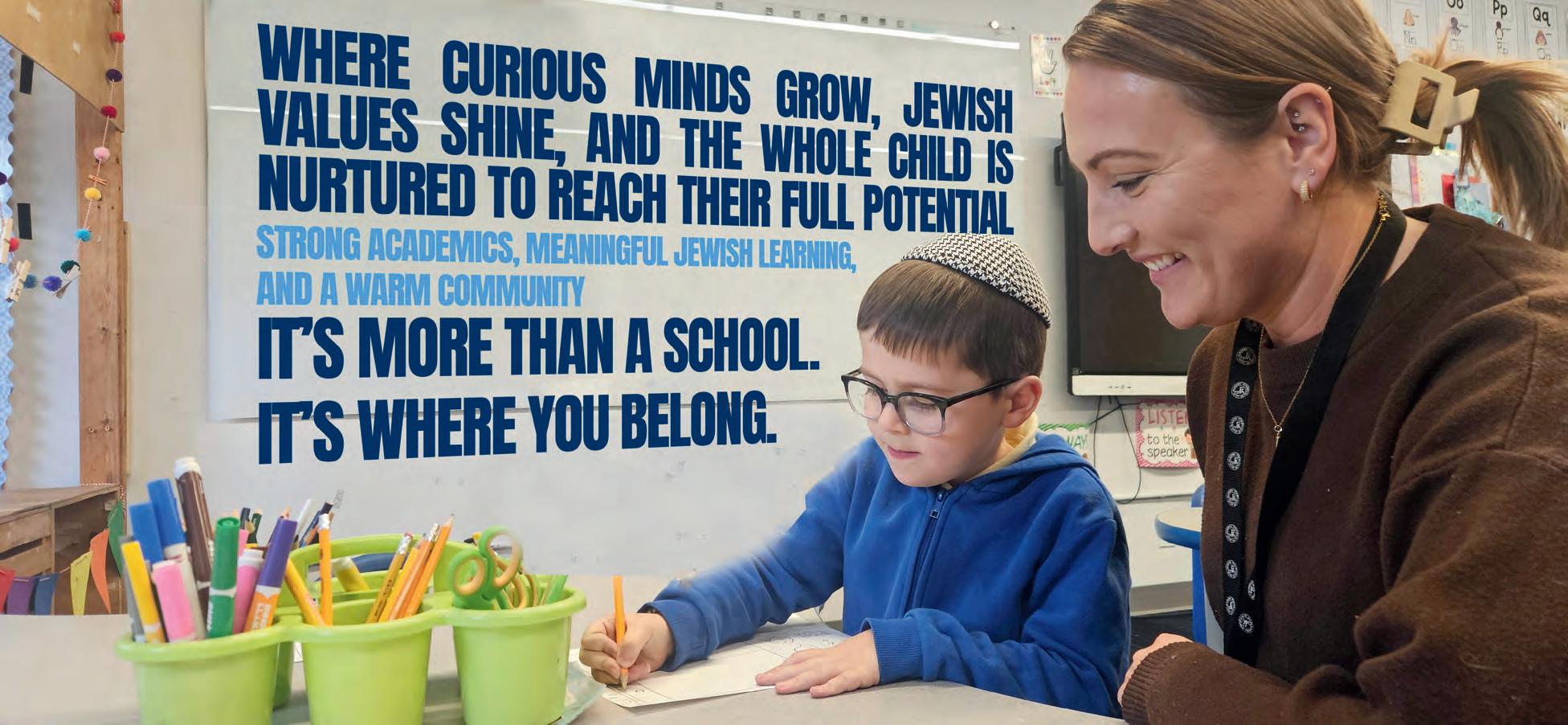
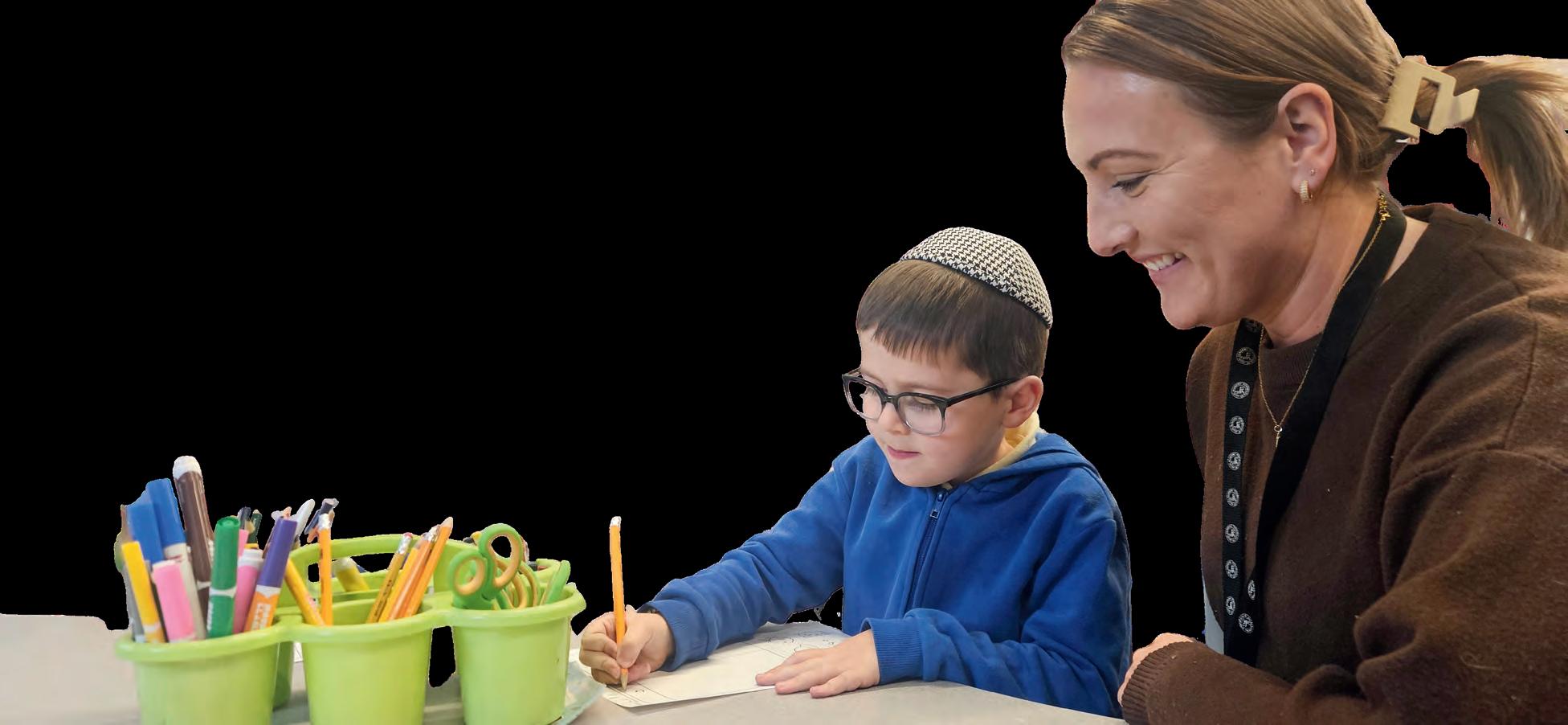
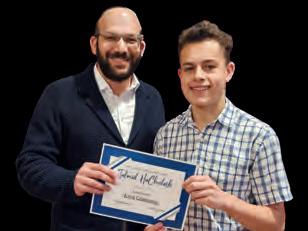
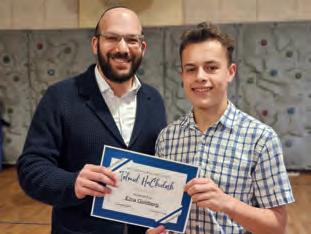
From early childhood through high school graduation, students build a strong and joyful Jewish identity through immersive experiences. ECC and elementary school musical shabbos onegs, shabbatons, Israeli shlichim and bnot sherut, the YU MaFTEACH fellowship program, Purim family megillah readings, chidon and model beit din competitions, and more, bringing Torah learning to life and connecting students to Jewish values, community, and Am Yisrael.
Personalized Growth & Development
Every child is supported as an individual. Our dedicated student services team provides academic and social-emotional support, including Wilson Reading specialists and comprehensive behavioral health services through Connection Counseling & Consultation. As students grow, they benefit from AP and college-credit opportunities, one-on-one college guidance, and admissions test preparation, ensuring they are prepared for success beyond graduation.

Outstanding Teaching & Learning
Students benefit from dedicated Judaic and general studies educators, low student-to-teacher ratios, and innovative resources, including a state-of-the-art STEM lab. Learning extends beyond the classroom through enriching extracurriculars such as our award-winning mock trial team, girls’ and boys’ middle and high school basketball, and cross-country programs, fostering confidence, teamwork, and leadership.
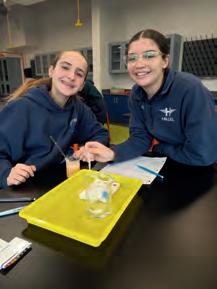

Hillel Academy of Pittsburgh offers a warm, values-driven education where students from six weeks through twelfth grade are known, supported, and inspired to grow. Through a rigorous dual curriculum of outstanding general studies and meaningful Torah learning, students develop academic confidence, a strong Jewish identity, and a lifelong love of learning. Enrichment in STEM, the arts, athletics, and leadership allows every child to discover and develop their unique strengths in a nurturing environment. At the heart of Hillel Academy is a close-knit community where families partner with dedicated educators who care deeply about every student’s success. Graduates leave prepared for higher education and for life beyond the classroom, grounded in strong Jewish values, resilience, and a commitment to community.

& EMPOWERING

At a moment when op-eds and headlines raise alarms that American Jews — especially young Jews — are turning away from Israel, the data tell a different story.
Across national studies of American Jews conducted by the Jewish Federations of North America over the past several years, alongside those of many research and organizational partners, one finding has remained remarkably consistent: Jews of all ages continue to feel deeply connected to Israel and to Israelis. In fact, emotional connection to Israel across all age groups has increased since 2020.
In addition, nine out of 10 Jews strongly support Israel’s right to exist as a Jewish democratic state, with only a modest drop among young adults ages 18 to 34.
Yet at the same time, just over a third of Jews positively identify as “Zionists,” with a similar number saying they are not sure or don’t identify with any of the options. Only a small minority — 14% among adults aged 18-34, and just 7% across the Jewish community — identify as anti-Zionist, and about 8% said they were “non-Zionist.”
What does this mean? At first glance, these findings appear irreconcilable. How can support for Israel as a Jewish democratic state remain so strong while identification with Zionism declines?
The answer lies in how Jews today understand what the term “Zionism” means. When we asked Americans, both Jews and non-Jews, what Zionism means, most correctly identified its core definition: the right of the Jewish people to have a Jewish state. That definition has been
affirmed by virtually every major Jewish organization and is reflected in standard dictionary definitions.
But our data also revealed something important that gets at the heart of why so many are reluctant to use the term today. Only about a third of Jews believe that the definition of Zionism stops at Jewish self-determination. Many believe the term also means supporting the policies, decisions and actions of the Israeli government, including actions they strongly disagree with. Others
To be sure, the relatively small percentage of Jews who identify as anti-Zionist largely reject Israel’s right to exist as a Jewish state. That is something we must grapple with, but it would be a mistake to respond as though any individual who doesn’t identify as Zionist opposes the Jewish state.
If we misread the trend about “Zionism” to mean that large numbers of Jews, especially young Jews, are turning against the existence of Israel itself, we will draw the wrong conclusions and take the wrong actions.
of the United States and Canada while, at times, criticizing and even opposing their countries’ governments and policies. Similarly, we know that the overwhelming majority of American Jews can stand together in support of Israel and Israelis even as they wrestle with serious concerns that matter enormously to them and that Israelis themselves wrestle with as well.
In recent years, we have seen this capacity for unity firsthand. Across differences in politics and ideology, Jews came together to advocate for the release of the hostages, support their families, and stand with Israelis in moments of profound grief and uncertainty. That shared commitment did not require uniformity or the suspension of concerns — only a willingness to act together around what people broadly agreed on: Israel’s future and care for its people.
believe it entails claiming exclusive Jewish rights to the West Bank and/or Gaza, endorsing inequality between Jews and Palestinians, or embracing specific political ideologies.
The word Zionism has undergone what might be called “definition creep” over time, shaped by a mix of political agendas, public discourse and broader social forces. It has come to be understood as encompassing ideas that go far beyond its once-standard meaning.
This helps explain why some Jews who feel deeply connected to Israel nevertheless resist or reject the Zionist label. They are not rejecting Israel’s existence or the idea of a Jewish state. They are reacting to an understanding of Zionism that includes policies, ideologies and actions that they oppose, and do not want to be associated with.
This distinction matters enormously.
We risk responding with anger when the moment calls for steady leadership, pulling away when the moment calls for connection, and defensiveness when the moment calls for listening and understanding. We risk isolating a growing segment of our community, especially young adults, when this moment could instead open pathways for learning and belonging.
At the Jewish Federations of North America, and across most of the organized Jewish community, we continue to proudly call ourselves Zionists, in large part because we adhere to the historic definition. For us, Zionism means supporting the state of Israel and the Israeli people and uniting the Jewish people behind this shared commitment. It is clear from our research that this is what much of the Jewish community continues to believe today.
North American Jews can be proud citizens
I’ve been to Madrid twice, both times to perform ritual circumcisions, and both trips overlapped with some of the saddest yearly Jewish commemorations: Tisha B’av and, this year, International Holocaust Remembrance Day. The timing gave both visits a somewhat somber tone.
On my outbound journey last month, I
was stopped by Israeli security to check t he contents of my bag. My brit milah tools often raise questions. “I’m a mohel ,” I informed the security personnel, although the additional information seemed to have little effect.
It’s been a while since I’ve had one of these inspections. I developed a system through experience that usually averts complications — don’t try to hide them, take the tool boxes out so they’re visible on the conveyor belt.
“They can’t be opened because they’re sterilized,” I warned the guard who paced, frantically searching for his superior.
When the manager arrived, I began to
show him cell phone images to ensure none of the contents were sharp. “I don’t need that,” he said with a smile. “What’s the purpose of your trip?” I explained that two families needed brises in Spain.
I wondered if this was the beginning of a longer interrogation. I was subject to such scrutiny once in Bulgaria when purchasing a last-minute return ticket. Airline security didn’t see a traveler; they saw a red flag.
However, on my way to Madrid, the conversation took a different turn. “What an amazing mitzvah you’re doing!” he exclaimed. I thanked him, even though I was still unsure where all this was headed.
As the ceasefire largely holds in Gaza, and the remains of the last hostage have been returned to his family for burial, we face a historic opportunity to strengthen Jewish unity once again. Taking full advantage of that opportunity requires listening c arefully to one another — not only to the words people use, but with curiosity about the values they are trying to express when they use them.
We must be more intentional about initiating these conversations in our community and ensuring that people who want to engage more fully with the Jewish community feel welcome.
Hillel the Elder taught us to listen carefully to the other side, and even restate their position, before making the case for our own view. With respect to the language of Zionism in the American Jewish community today, this teaching has never been more important. PJC
Mimi Kravetz is chief impact officer for Jewish Federations of North America. This article was first published on JTA.
“Where were you born?” he continued. “Philadelphia,” I told him. “It’s amazing to see people like you, who’ve chosen to live in Israel. Best of luck,” he said as he handed me my tools. I finally exhaled, knowing I was on my way.
It felt strange being cheered on while headed toward a political lion’s den hostile to the Jewish state. This past September, diplomatic tension reached a surreal fever pitch when Prime Minister Pedro Sánchez — while announcing a suite of sanctions against Israel — lamented that his country lacked the nuclear leverage
Last week, the Chronicle asked its readers in an online poll the following question: “Should Jewish funders prioritize building Jewish infrastructure over fighting antisemitism?” Of the 183 people who responded, 43% said yes, 36% said no, and 21% said they weren’t sure. Comments were submitted by 76 people. A few follow.
Infrastructure will improve the quality of Jewish life but antisemitism could destroy it all practically overnight.
Focusing on antisemitism (a problem that will never go away) makes us look like whiners who don’t do anything positive. Building Jewish infrastructure strengthens us, and a strong Jewish people is better able to resist attacks. Time to think strategically.
Antisemitism is as old as our people. The miracle of our still being here is due to Divine protection and intervention. What is in our control is the strengthening of Jewish knowledge, practice, involvement and engagement. That is the secret of our survival and the key to our thriving as a people.
Leiter:
Continued from page 12
necessary to halt the offensive in Gaza. “Spain, as you know, doesn’t have nuclear bombs,” he said. The retort from Jerusalem was swift: “Apparently the Spanish Inquisition, the expulsion of the Jews of Spain, and the systematic mass murder of Jews in the Holocaust are not enough for Sánchez.”
There was a profound irony in the timing. While some European leaders speak of Israel as a problem that needs solving, others are still choosing to bind their fate with Am Yisrael. Both of these brises were for conversion. Since neither was bound to the traditional eighth day, a troubling question arose: Was International Holocaust Remembrance Day an appropriate time for such an occasion? I once asked a colleague a similar question regarding Yom Hashoah. His response was unwavering: “I can’t think of a better day to make another Jew.”
As beautiful as the Spain brises were, they were held in private residences. It gave them a subdued feeling, as if being hidden from
Should Jewish funders prioritize building Jewish infrastructure over fighting antisemitism?
Both must be done simultaneously. It is not a choice.
They are interconnected! If you are building infrastructure, fighting antisemitism should be included in that.
Fighting antisemitism and all forms of hatred is of utmost importance.
public view. It was much like the warning I received from close friends in the area.
“Do you have a hat?” the couple checked as I left their home. “It’s one of the most frustrating parts of living here, but
Fighting antisemitism is basically useless. It’s a centuries-old problem that will never go away. Just wear your Judaism openly and proudly. Worrying about how others feel is a waste of your time.
It’s a polarity, not a binary choice. Both need support and there’s just an ebb and flow between which is higher and which is lower in funding at one particular time.
At this point, nothing is more important than fighting antisemitism!
Survival of the Jews in the 21st century and beyond is dependent of the survival of the state of Israel. You can give the Jew haters of the world the middle finger by helping Israel grow stronger by prioritizing donations that help build Israel’s military and infrastructure.
Antisemitism will not go away. Infrastructure is enduring.
How can our children tell their story if they don’t know it? They can’t fight against antisemitism when they don’t
“Thanks,” I replied. He leaned in with a smile. “Sababa.” It was the most impactful word of my trip. This tiny interaction didn’t repair the Spanish government’s hostility, but it
This tiny interaction didn’t repair the Spanish government’s hostility, but it shattered the isolation. It was a reminder that even in the most unfriendly places, there are individuals who wish to bridge the gap — even if their leadership is intent on widening it.
it’s necessary.” Although in my heart I only donned the hat for rain protection, it still made me feel like a hiding Jew.
Later, when speaking to the hotel concierge, I realized I had taken the hat off.
“Does he know I’m Jewish? Does he care?” I wondered.
“You’re on the fifth floor,” he instructed me.
shattered the isolation. It was a reminder that even in the most unfriendly places, there are individuals who wish to bridge the gap — even if their leadership is intent on widening it.
No matter how unjustly countries treat Israel and their local Jewish populations, we traveling mohalim must make the
know the entire history of its evolution and the stories of our people. It’s important to build community so we can fight back together.
I really want more Jewish infrastructure, but the level of antisemitism is so off the charts it needs serious attention.
If the Jewish funders want a civilized America where the Jews can thrive, they must continue and creatively reform the Shoah education and anti-antisemitism campaign.
While both goals are important, at the end of the day, we can’t control antisemitism; we can, however, continue to empower and serve our own communities, strengthening them for times of future peril and need. PJC
— Compiled by Toby Tabachnick
Chronicle weekly poll question: Does a foreign country’s stance on Israel affect your decision to travel there? Go to pittsburghjewishchronicle.org to respond. PJC
journey to ensure our most sacred tradition continues — even on the hardest days, even to the coldest locations.
As I headed to the airport, Madrid’s rare January snow — the first signs of Storm Kristin — began to fall. I was able to escape just before the worst of the blizzard hit, shutting down the city behind me.
Tractate Yoma describes how, during the Temple period, a crimson thread was used in the Yom Kippur service. If it turned white like snow, it was a sign that the nation’s sins were forgiven. The snowfall in Spain did not serve this ancient purpose; there’s still a long way to go. But I pray that it’s an indication of things changing — that all of Europe will finally learn from its past and embrace the Jewish community, both at home and abroad, so we can soon see a better day. PJC
Rabbi Hayim Leiter is a rabbi, a wedding officiant and a mohel who performs britot (ritual circumcisions) and conversions in Israel and worldwide. Based in Efrat, he is the founder of Magen HaBrit, an organization protecting the practice of brit milah and the children who undergo it. This article was first published on JTA.
We invite you to submit letters for publication. Letters must include name, address and daytime phone number; addresses and phone numbers will not be published. Letters may not exceed 500 words and may be edited for length and clarity; they cannot be returned.
Send letters to: letters@pittsburghjewishchronicle.org or Pittsburgh Jewish Chronicle, 5915 Beacon St., 5th Floor, Pittsburgh, PA 15217
We regret that owing to the volume of correspondence, we cannot reply to every letter.
Heisler:
Continued from page 1
“I felt so bad. I thought we were going to have a bad turnout,” Paris said. “When she opened the door though, there was just a sea of students. Hundreds of Jewish and non-Jewish students came. About 20% weren’t Jewish. It was beautiful.”
Heisler and Rubin have been friends for nearly 20 years, since their time together as Pitt students. Since then, Rubin has been living in Philadelphia but reconnected with Heisler when Rubin decided to run for school board. She was only too happy to brave the cold and honor her friend, calling the dinner and ceremony a “wonderful surprise.”
“It warmed my heart to see this real community,” Rubin said. “When we walked into the room, [Heisler] was shocked. She saw me first, then Julie. She was confused but it was a wonderful ambush.”
Heisler said that having the ceremony at Pitt was especially meaningful.
“Everything I have done and said over the last 2 ½ years goes back to the fact that I have known and loved Jewish people and my Jewish classmates my entire life,” she said.
Even in the glow of receiving the white rose, when Heisler spoke with the Chronicle she wanted to talk about Pittsburgh’s Jewish community rather than herself.
Boycott :
Continued from page 1
organizers said they would do, although as of press time, Baby Loves Tacos was still listed as one of the seven business signatories on Pittsburgh DSA’s Instagram account.
“We really apologize for the misunderstanding and mistake on our part,” Shell wrote to the Chronicle. “We have always been prone to supporting our local neighborhood aid groups in providing meals/ food. This clearly is something else and is a big learning lesson for us.”
The six other establishments that signed onto the No Appetite for Apartheid campaign are Bloomfield’s Big Idea Book Store, brothmonger and Khalil’s restaurant; Bantha Tea Bar and Kindred Spirit Tattoo Company in Garfield; and Novaria Coffee Company in the Strip District.
Of the six, Big Idea Book Store and Kindred Spirit Tattoo Company are not restaurants, which would limit their interaction with foods from Israel.
The Chronicle reached out to all the businesses on the list but received no responses to emails and calls.
“I believe wholeheartedly that Jewish safety is vitally important,” she said. “Everyone’s safety is important, but right now, what’s happening to my Jewish neighbors shouldn’t be tolerated. The language, the rhetoric, the behavior that incites violence, it’s wholly irresponsible.”
something to help,” Rau said. “She gathered leaders from the Jewish community here in Atlanta — leaders of our foundations, some of the synagogues — and they sat around her dining room table and came up with The White Rose.”
Rau said that Rubin first nominated
“Everyone’s safety is important, but right now, what’s happening to my Jewish neighbors shouldn’t be tolerated. The language, the rhetoric, the behavior that incites violence, it’s wholly irresponsible.”
–RACHAEL HEISLER
That is an expression of the feelings and attitudes of many who have been inducted into The White Rose Society, according to the organization’s Executive Director Julie Rau.
The White Rose Society, Rau explained, was started shortly after Oct. 7, 2023. It takes its name from the White Rose, a non-Jewish resistance group founded by students at the University of Munich in 1942.
“Our founder, Linda Selig, wanted to do
Heisler for the honor, and after vetting the Pittsburgh nominee, White Rose leaders were thrilled to induct her into the society that continues to grow.
“We’ve honored over 180 people across 22 states and 11 countries,” Rau said.
Heisler will be added to the White Rose Society’s website alongside other members, where their photos and stories are featured along with videos. There’s even a trip to Israel being planned, something they’ve

According to the campaign’s website, volunteers will be canvassing in Oakland and Lawrenceville over the next few weeks attempting to get more consumers to sign its pledge.
Products that No Appetite for Apartheid and Pittsburgh DSA are attempting to boycott include Israeli produce such as dates, avocados, potatoes, figs and herbs;
beverages from several companies including Coca-Cola, Carmel Winery and Golan Heights Winery; hummus from Sabra, Tribe and Athenos; and Mighty Sesame and Soom Foods tahini. The list also includes various exporters it is urging businesses not to support.
No Appetite for Apartheid was not the only local organization recently promoting
done before with previous inductees, who met with Israel President Isaac Herzog and U.S. Ambassador to Israel Mike Huckabee. Heisler’s induction ceremony and dinner was just one White Rose Society event Paris was involved with in recent weeks.
She also inducted musician Joshua Washington into the society at a Feb. 5 concert at Temple Emanuel of South Hills. Washington is the director of the Institute for Black Solidarity with Israel. His late wife, Olga Meshoe Washington, was also a White Rose Society inductee.
For Paris, the ceremony at Pitt was a “beautiful and powerful” recognition of Heisler’s efforts, but its impact was felt by more than the inductee and her immediate friends and family.
“It really meant something to the students, as well,” Paris said. And that is a message that Heisler hopes to amplify.
“I said to the students, you have to be proud Jews because for every non-Jewish person sitting next to you in class, you’re influencing them and teaching them about your values and your community. There’s a Rachael Heisler sitting next to you. I am who I am because I made a ton of Jewish friends at Pitt and those relationships are so meaningful,” Heisler said. PJC
David Rullo can be reached at drullo@ pittsburghjewishchronicle.org.
a BDS agenda in Pittsburgh.
Sumud, a group of pro-Palestinian protestors, interrupted a University of Pittsburgh Board of Trustees meeting last week. The group demanded the university disclose details of its endowment and divest any financial ties it might have with Israel.
University police officers carried out one protester and escorted four others from the meeting.
“The protesters in attendance at the Board of Trustees meeting did not follow repeated requests to cease their disruption of the meeting,” University of Pittsburgh spokesperson Jared Stonesifer told the Chronicle in an email. “After several warnings, they were escorted out of the room so the meeting could proceed.”
Sumud is not a registered student group. Its harassment of university officials is a continuation of behavior of various anti-Israel groups that began following Hamas’ Oct. 7, 2023, terrorist attack. Disruptions have included two encampments, protests outside of Pitt Chancellor Joan Gabel’s home, as well as other protests. PJC
David Rullo can be reached at drullo@ pittsburghjewishchronicle.org.

Did you get your ticket yet for everyone’s favorite event of the year?
TICKETS $150
Winner’s Circle Dining
Derby Day Sips
Live Music and Dancing
Horse Race (Fantasy) & Betting
High Stakes Silent Auction
Kentucky Derby Attire

By Adam Reinherz | Senior Staff Writer
In a war of narratives, two Israeli actors are hoping to conquer with punchlines. Roy Horovitz and Hadar Galron, creators of “The Final Final Solution,” a play exploring life’s complexities post-Oct. 7, are bringing their work to Pittsburgh on Feb. 18 for an evening of laughs and tears.
Less an emotional dichotomy than a singular expression of attitude, the show speaks to the Jewish spirit, the artists told the Chronicle by phone from Israel.
“Laughter is a psychological survival mechanism,” Horovitz said. Whether it “makes it more bearable or makes it make a bit of some sense,” laughing helps people not only confront horror but move beyond.
“Throw anything at us — the Holocaust — and we find the punchline,” he said. “This is very typical to our way of surviving.”
“The Final Final Solution” features staged vignettes and songs, performed by Galron and Horovitz, interspersed with documentary footage from Oct. 7.
Written by Galron, the work, which oscillates between caustic, chilling and hysterical, represents her immediate reaction to Hamas’ assault on Israel.
“It hit me at the core,” the Israeli academic, stand-up comic and award-winning writer said of the attack. “When something so violent breaks out, the first thought of any parent is, ‘How am I going to take care of my kids?’” As

parents, an unspoken covenant is established from “the day they’re born that our love will keep them safe, and even we get to believe in that.” However, after the events of Oct. 7, “I suddenly felt that I’d failed my kids — that we’d done something really wrong — and that I can’t promise them what I wanted for them.”
Fear ignites various responses; for Galron, the first was physical, she said. “My body knew before my mind that I was really stressed in the motherhood way, because my menstruation stopped on the seventh of October, 2023, and did not come back since.”
The next response partnered mind and body, she said. “For a very long time, I did not

Markets may be shifting, but we’re here to help. With insightful advice that’s focused on your goals, we’ll guide you through the uncertainty. And with the strength and stability of UBS, you’ll have the power of 160 years of wealth management
Together, we’ll find the solutions you need.
Let’s talk.
Lee Oleinick
Managing Director–Wealth Management 412- 665 -9914
Jack Greenberg
Vice President–Wealth Management 412- 665 -9911
Final Final Solution” is headed to Chicago. By the time it reaches the American stages, more than two years will have elapsed since Oct. 7. Still, Horovitz isn’t worried that material concerning the war’s beginning feels dated.
“Oct. 7 is what triggered it, but we went way beyond this point to dealing with antisemitism and boycotting, and the hypocrisy and double standards of the world, and the ignorance and people getting their information just from TikTok,” he said. As for the play’s material, “I count on the antisemites to keep it relevant. For as long as they exist, I think it’ll stay relevant.”
Another mechanism for keeping things fresh is revision. Since the initial drafting, Galron and Horovitz have added jokes, tweaked barbs and introduced new means for sounding alarms.
After President Donald Trump came to Israel in October, Horovitz and Galron inserted a quip about his visit to the Jerusalem Biblical Zoo.
eat any meat or even fish because there was something so terrifying in the way the people were butchered.”
Consumed by thoughts, Galron turned to a familiar outlet: composition.
“Since the seventh of October I’ve been writing myself out of my mind or into my mind more,” she said. “That’s my way of exploring myself and trying to understand what’s going on with me, what’s going on with me in all the senses.”
Galron called her mind a “bit crazy,” and said her writings post-Oct. 7 were often comedic. “My protection is humor.”
Horovitz knew this about his Bar-Ilan University colleague, so when an opportunity arose to develop a new work about Oct. 7 he reached out.
The offer, Horovitz said, came during an Albanian theater festival in 2024. While he was there, directors of an Estonian festival that welcomes shows from conflict zones worldwide approached him and said they’d never featured an Israeli production. They asked him, he said, whether he had anything in mind.
Horovitz returned to Israel, reached out to Galron and told her they had six months to assemble a production because he’d already “sold it.”
Galron used the opportunity to pair earlier compositions with new writing. She began practicing alongside Horovitz, who served as director. Once complete, they brought the show to Estonia, then Hungary.
Welcoming “The Final Final Solution” to Pittsburgh was imperative, Classrooms Without Borders founder and executive director Tsipy Gur told the Chronicle. She worked with the Jewish Federation of Greater
The joke, as Horovitz recounted for the Chronicle, begins with Trump leaving the site and a new cage being erected. What’s more impressive than the cage, though, is what’s inside: a lamb and a wolf. Given the unusual nature of the pairing, people ask Trump how he did it. The president replies, “It’s very simple. Every day a new lamb.”
The countless jabs and jests filling “The Final Final Solution” aren’t intended to obfuscate the work’s depth, the Israelis said.
The show is a “dark comedy” that fuses hilarity with heartrending pain. If an attendee isn’t certain whether to laugh or cry “then we’ve done it,” Galron said, because sometimes those reactions “can really be on the same spot.”
Still, complexity and confusion are not the same.
“In a way, this is a war of narratives because so much of it is on social media, and so much is out there,” she said. “There are things that you can argue about. You don’t know what river and what sea; you don’t know where this space is. But there are things that are true, and the only things that are very, very, clear are the people who are dead, are the people who are injured, are the people who have no homes left. How are we telling ourselves this story in order to be stronger? How are we telling ourselves the story of this past, and connecting the dots right back to at least 80 years ago — if not further back — so that we understand where we’re headed?”
Like the play itself, the questions should lead to a conclusion that extends beyond comedy., Galron said. “Don’t be afraid to speak your truth. Don’t be afraid to be who you are.”
To register for the Feb. 18 performance, go to cwbpgh.org/event/the-final-finalsolution. PJC
Reinherz can be reached at

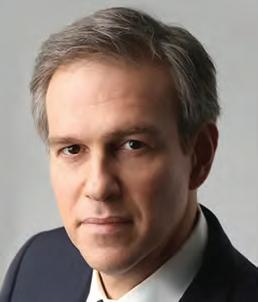
Bret Stephens
A Pulitzer Prize–winning opinion columnist for The New York Times and the founder and editor-in-chief of SAPIR, a new quarterly devoted to issues of Jewish concern, Bret Stephens is former editor of The Jerusalem Post and a Wall Street Journal editorial writer. He is the author of three books.
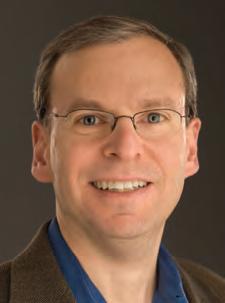
Jeremy Ben-Ami
President and Founder of J Street, Jeremy Ben-Ami is the grandson of a founding family of Tel Aviv and son of an Irgun leader who fought for Israel’s independence. He has worked on seven presidential and numerous local political campaigns and served as Deputy Domestic Policy Advisor to President Bill Clinton.
Wednesday, March 25 • 7 pm
JCC Squirrel Hill • Katz Theater $36/person
For more info: Fara Marcus • fmarcus@jccpgh.org

Yisrael
Klitsner Series Moderator
Klitsner is a fellow at the Jewish People Policy Institute (JPPI) who has deep connections to our community. He and his family lived in Squirrel Hill but returned to Israel after October 7 so he could rejoin his IDF unit. Klitsner, who has served as Diaspora Affairs Advisor to Prime Minister Naftali Bennett, and worked for AIPAC in Israel, is passionate about educating and building community around the state of Israel and its relationship with the United States.
This opening panel of the Israel Engagement Series will delve into the foundational pillars of bipartisan support for the U.S.–Israel relationship, while addressing the emerging threats it faces from both American and Israeli political landscapes.
The discussion will also explore strategies to preserve this vital alliance in an increasingly polarized environment. Ben-Ami and Stephens, bringing a wealth of knowledge and experience along with their differing ideological perspectives, will contribute to what promises to be a dynamic and enlightening conversation.
This new series, developed by the JCC of Greater Pittsburgh, invites participants to go beyond the headlines through dialogue and multiple perspectives featuring leading voices and meaningful community discussion. The series will “cover everything under the sun related to Israel, including politics, culture and history,” says Yisrael Klitsner, the moderator of the series.
We encourage you to come all the sessions if possible Session 1
U.S.-Israel Relations • March 25 Session 2
Israel’s Geopolitical Outlook • April 15 Session 3
Understanding Israeli Politics • May 18 Session 4
October 7 The Day that Changed Everything Session 5
Minority Voices—Arab Citizens of Israel After October 7 Session 6 Is Israeli Democracy in Jeopardy?
The JCC of Greater Pittsburgh is committed to a brave, welcoming space for hard conversations about Israel and related issues. This series is educational and nonpartisan; no speaker or program implies endorsement of any political party, candidate, policy, or single viewpoint.
Over the course of the 6-part series, participants will be presented with a wide range of perspectives, some of which they may agree with, and some they may strongly disagree with. That tension is part of the intended learning and ideally will strengthen our communal muscle for constructive dialogue across differences.
If your goal is simply to have your current views reaffirmed, this series may not be for you. If you are willing to engage with new ideas, sit with discomfort, and leave with deeper understanding - and perhaps more questions than answers - we invite you to join us: come curious, engage respectfully, and be open to complexity.

Virginia Helen Davis and Jean Rose Davis, daughters of Lenny and Amanda Davis, will become b’not mitzvah at Adat Shalom during Shabbat morning services on Saturday, Feb. 14, 2026. Proud grandparents are Marian Ungar Davis and Stanford Davis, and Bruce and Maureen Longenecker.
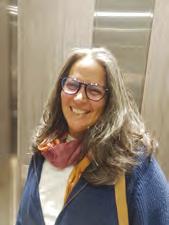
Sidney and Molly Lieberman will be called to the Torah for their b’nai mitzvah on Saturday, Feb. 14, 2026. They are the children of Lauren (Droz) Lieberman and Oren Lieberman, and the grandchildren of Shelley and Gary Droz (Pittsburgh), and Bernie and Batia Lieberman (Atlanta). Sid is a dedicated Boy Scout and enjoys outdoor adventures. He also likes climbing, gaming and singing. Molly is a swimmer and also enjoys dance. Both Sid and Molly enjoy volunteering at Our Giving Kitchen and spending time at Friendship Circle, and count down the weeks each year until their summers at EKC. Both Sid and Molly attend Shady Side Academy.
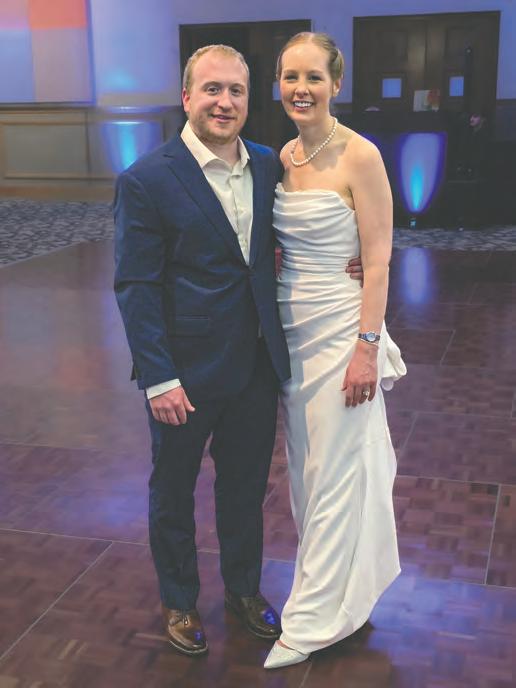
Emily Chavatzelet James and David “Doogie” Levine were married on Tu B’Shvat 2026 by Rabbi Henoch Rosenfeld of Chabad Young Professionals of Pittsburgh, at whose Chanukah party they met. He is a business consultant and she is a vestibular audiologist. Parents Dr. Michael and Donna Levine, and Sandy and Barb Zelekovitz live in Pittsburgh, and Dr. Michael James and Dr. Chris and Carrie Harvey in Florida. PJC





Each Shabbat, during the Musaf Amidah, there is a line that always slows me down. I know it’s coming, and still I pause.
I say it deliberately, word by word: “ : Purify our hearts to serve You in truth.”

I linger over in be’emet, in truth. Not because I am sure what it demands, but because I am not. I think about what it means to approach God with honesty rather than certainty, with presence rather than polish; to serve God by standing within my reality, rather than by escaping it. Parshat Mishpatim insists on this kind of truth.
It begins with law: “And these are the statutes that you shall place before them.” Rashi understands “place before them” as more than teaching the law; it is laying it out clearly, like a set table. Justice must be accessible. Livable.
The statutes that follow are concrete and often difficult. They address injury and responsibility, power and vulnerability. Mishpatim faces harm directly. It assumes that people will hurt one another, and insists that covenantal life includes accountability and repair.
And then, suddenly, the parsha carries us back to the mountain.
Moshe ascends with Aaron, Nadav and Avihu, and the 70 elders. And the Torah tells us: “They saw the God of Israel. Under His feet was something like a pavement of sapphire, like the very sky for purity. Yet God did not stretch out His hand against the leaders of the Israelites; they saw God, and they ate and drank.”
They saw God and lived.
This moment is unsettling. God had told Moshe that no human can see God and live. Our commentators notice the tension. Some suggest that the elders gazed too casually, even while eating and drinking, and that they merited punishment, though it was delayed so as not to overshadow the revelation.
Earlier, the people had said, “ Na’aseh v’nishma — We will do and we will listen.” The covenant begins with listening — with attentiveness, with commitment, with readiness to live within the demands of relationship.
As a chaplain, I know that my work requires both listening and seeing. I listen to words — and to what cannot yet be said. I notice breath, posture, silence. In moments of pain or fear, joy or awe, seeing without listening can feel invasive; listening without seeing can miss what is right in front of us. Only after the people commit themselves to listening and to covenantal life, do they ascend and see. And what they see is not God’s essence, but what lies beneath God’s feet: clear sapphire stone. The Mekhilta d’Rabbi Yishmael connects this image to the bricks of Egypt — the symbols of suffering that once weighed the people down, now transformed into a holy foundation beneath God. The pain is not erased. It becomes part of what holiness rests upon.
This is where sorrow and joy meet.
In pastoral moments, holiness often emerges when feelings are named without being rushed; when fear is acknowledged, when grief is allowed its full presence. In those moments, there can be a quiet steadiness, a sense of being accompanied. Joy opens us in similar ways. Gratitude, connection, even relief ask for honesty in order to be fully received. Sacred life is sustained through shared responsibility, through what we contribute and build together, through the recognition that holiness rests on what we collectively bring. Holiness takes shape in small, material acts — by showing up.
The Torah underscores this with a final, grounding detail: “They ate and drank.” Encounter with God does not pull us out of life. It brings us back into it. Holiness does not distance us from the body; it sanctifies lived experience.
Parshat Mishpatim teaches that revelation is found in truthfully lived relationship with God and one another. When we listen deeply, when we see clearly, when we stand honestly in both sorrow and joy, we may glimpse something of the divine.
Be’emet PJC





But the Torah draws our attention elsewhere: “God did not stretch out His hand against them.” There is a way of seeing that does not destroy.
Rabbi Kara Tav is a Pittsburgh-based educator, chaplain and counselor. This column is a service of the Greater Pittsburgh Jewish Clergy Association.

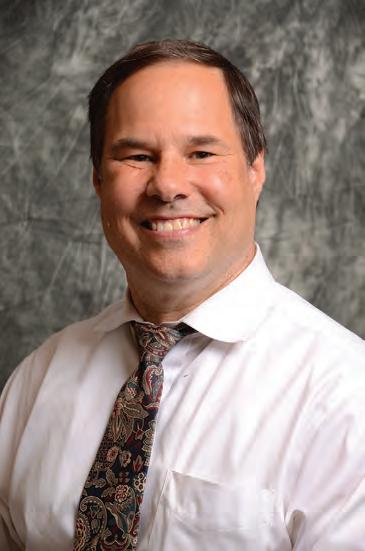
ACKERMAN: Kurt David Ackerman/Dovid ben Ephraim haLevi passed away on Jan. 14, 2026, after a two-and-a-half-year struggle with a glioblastoma. While he dearly wanted to live in order to be there with/for beloved family and friends and to continue his work with treasured colleagues, he accepted his situation with remarkable courage and grace. He is survived by his mother, Maude Feist (Palm Beach Gardens, Florida), his sister, Azriela Jaffe (Stephen Jaffe; Highland Park, New Jersey), his brother Joel Ackerman (Terri Ackerman; Commack, New York), his children Sadie (Pittsburgh) and Nathan (Marion Kellogg; Pittsburgh), his grandchildren Erica Sarah (21 months) and David James (on the way), as well as his wife of 38 years, Jane/Shoshana Ackerman (Pittsburgh). He is deeply missed. His family always felt that he put them first, while his colleagues and patients felt that he put them first. Somehow, it seems, he managed to make both true. His love of the Jewish community, as well as other friends, was profound. He was there for everybody in his life, and he strove to make the world a better place. His obituary on Pitt’s Department of Psychiatry Memoriam: Kurt Ackerman, MD, PhD | University of Pittsburgh Department of Psychiatry. May his memory be for a blessing. Arrangements were entrusted to Gesher HaChaim. Contributions may be made to Congregation Kether Torah in Pittsburgh.
BARLOW: Betty Barlow passed away on Sunday, Feb. 1, 2026. Born in McKeesport, Pennsylvania, on April 13, 1935, to immigrant parents, Theodore and Ethel (Lefkowitz) Braslawsce, Betty was the third of their six children. She was artistic, creative, a fantastic cook and baker who had a passion for gardening. She was one of the founding family members of Congregation Dor Hadash in Pittsburgh in 1963. Betty outlived her five siblings, Hilda Landis, Harry Barlow, Zelda Braslawsce, Paul Braslawsce and Joe Braslawsce, z”l. She is survived by her beloved husband of 26 years, Alan Balsam, her three children, Jeffrey Podolsky, Rabbi Cheryl Klein and Michelle Landerman, as well as numerous grandchildren, great-grandchildren, nieces, nephews and cousins. The funeral took place at the Homewood Cemetery (Star of David/ Dor Hadash Section) on Monday, Feb. 2, 2026. In lieu of flowers, donations may be made to Congregation Dor Hadash in Pittsburgh or a charity
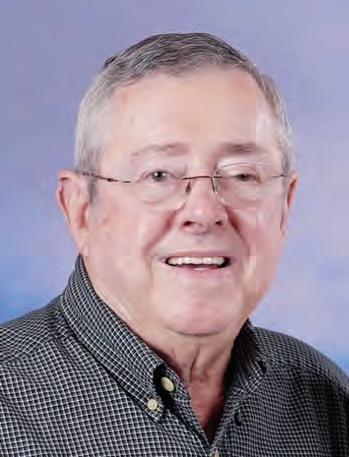
BENDORF: Robi H. Bendorf, Dec. 26, 1944 – Feb. 8, 2026, 81 years well lived
Robi H. Bendorf was born on Dec. 26, 1944, in an attic in Holland while his family was in hiding. A Holocaust survivor, he immigrated to the United States at 2 ½ years old, first settling in Crandall, Texas, and later moving to Breckenridge, Texas, at age 11. Robi lived a life defined by curiosity, generosity, resilience and an enduring belief that life itself is the greatest classroom. Though never a teacher by trade, he was always teaching — through his work, service, creativity, humor and unwavering encouragement of others.
Never Stop Learning-or Teaching Others: An Eagle Scout, Order of the Arrow, with two palms, Robi learned early the value of service and leadership. He graduated from Breckenridge High School and earned degrees in physics and mathematics from the University of Texas at Austin, where he met the love of his life, Mary. Married for 59 years and friends for 61, their partnership was one of his greatest lessons. Robi spent 27 years with Westinghouse, living in many states and embracing new challenges. He later earned a master’s degree in counseling from Penn State University and volunteered at Contact Pittsburgh’s suicide crisis hotline. After retiring, he became an independent consultant in purchasing and supply chain management, traveling globally and developing training programs. His teaching continued through tutoring at Peabody High School, teaching CPR, helping establish the Tri-County South EMS Department, volunteering as an EMT, and training nurses at Shadyside Hospital in therapeutic touch. His curiosity led him to metaphysical sciences, where he became a Reiki healer and was certified in therapeutic touch.
Creativity Heals the Soul: An artist at heart, Robi loved painting. His artwork lives on in the homes of family and friends, lasting reminders of his creativity and thoughtfulness.
Family Is the Greatest Classroom: Above all, Robi was a devoted husband, father, and grandfather. He was endlessly proud of his children and four granddaughters, encouraging them to think critically, solve problems and believe in themselves. His favorite advice — “If you don’t like it, fix it!” — was his loving lesson in confidence and independence. He was also a Scout leader, Indian Princess song leader and a steady source of humor and wisdom.
Attitude Matters — Choose “Fantastic”: Robi battled cancer for five years with remarkable positivity, supported by the extraordinary team at UPMC Hillman Cancer Center and Shadyside Hospital, who will always hold a special place in his family’s hearts. Known for his “creative denial,” he famously answered “Fantastic!” whenever asked how he was doing — no matter the circumstances.
Robi is survived by his beloved wife, Mary Bendorf; his children, Emily Fischer (Ted) and Tim Bendorf (Nancy); his grandchildren, Alissa Paolino (Nick), Jayne Bendorf, Corinne Fischer and Colette Fischer; his sister, Fanny Watts (Mike); his brother, Allen (Petrice)
Bendorf; many nieces and nephews; and three very lucky grand-dogs. Services were held at Temple David. Interment Homewood Cemetery. In lieu of flowers, donations may be made in Robi’s memory to the Mario Lemieux Center for Blood Cancers at UPMC Hillman or Temple David, Monroeville, PA. Robi H. Bendorf taught us — by example — that a life well lived is one filled with learning, service, creativity, humor, and love. And by every measure, his was truly ... fantastic. Arrangements entrusted to Ralph Schugar Chapel, Inc. schugar.com
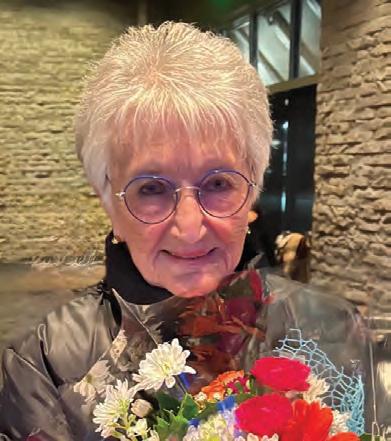
FRIEDMAN: Muriel Friedman, Feb. 5, 2026. Beloved wife of the late Max Friedman, loving mother of Joel Friedman (Viviane) of Scottsdale, Arizona, and Lois Kopolow (Alan); proud grandmother of Amy Jenkinson (Mike), Andrea Cassis (Noah), Adam Kopolow (Hannah), Alexa Eskow (Brian), Chloe Friedman and Max Friedman; adoring great-grandmother (GG) of Mason Jenkinson, Carter Jenkinson, Quinn Kopolow and Jacob Cassis; sister of the late Lillian Winfield (Sidney). Muriel was born in the Bronx, March 12, 1926, to Israel and Yetta Yudien. Married to Max Friedman May 30, 1950. Lived in Flushing, Queens, and worked as a bookkeeping and office manager for a patent attorney law firm in Manhattan. She had an amazing ability for numbers. Moved to California in 1976 and was so happy to live near the beach. She was suddenly and unexpectedly widowed in 1978 at the age of 52. Years later she enjoyed traveling with friends, including to China and many parts of Europe. Loved opera, theater, movies, politics and music. She was an avid reader. She worked in an entertainment law firm as office manager in Los Angeles and then worked as controller at a prominent clock and watch company until retiring in 1994 and moving to Pittsburgh to be near her daughter
.David Brown
Ilene Trachtenberg Iskoe .Martha Trachtenberg
Sylvia & Norman Elias .Ruth B Moldovan
Sylvia & Norman Elias .Geraldine A Tyson
Yetta Joshowitz .Samuel Burke
Amy R Kamin .Samuel Kamin
Falk Kantor .Louis Kantor
Shirley Kurtz Z”L
Michael Maas
Janice E Mankin, Lee & Greg Levine
Simma & Lawrence Robbins
Sharon S Snider
Pat Spokane
J Maas
Nadler
Schneirov
Marc Tepper Gertrude Tepper
Ronald M Tepper Gertrude Tepper
Eileen Snider & Family Belle (Rosenberg) Harris
Sunday February 15: Abraham B Amper, Philip Anolik, Sophie Auerbach, Gertrude Brody, Samuel Burke, Leah Canter, Esther Covel, Anne M Darling, Harry Friedman, Mendel Helfand, Morris Herr, Samuel Horelick, Samuel Kamin, Julius Skigen, Mary Davis Solomon, Esther Spiro, David Zytnick
Monday February 16: Meyer Borofsky, David Brown, Morris Goldberg, Gertrude Grossman, Edward Haims, Leeba Hausman, Lillian Hoffman, Abram Katkisky, Helen Klein, Sam Lavine, Jacob Levine, Max Malkin, Morris Malt, Minnie Rosenberg, Rachel Sheffler Shuklansky, Abe Weiner, Louis Weiss, Gussie Wolf
Tuesday February 17: Bessie Taback Americus, Louis Cohen, Isadore Dektor, Rachel Eisenberg, Dora Feldman, Sarah R Fineman, Ida Goldberg, Adolph Graff, Jacob Horewitz, Joseph R Kaufman, Isadore Libson, Milton Emanuel Linder, Morris T Mason, Ben Neiman, Anna Goldie Pearlman, Gertrude Tepper, Martha Trachtenberg, Anna H Wolfe, Ann Yecies
Wednesday February 18: Milton Abes, Max H Barnett, Harry Cohen, Joseph Cohen, Sarah Finkelstein, Leonard M Friedman, Norman B Goldfield, Sadye Goldstein, Minna Hohenstein, David Kaplan, Dr Edward Kaplan, Sarah Kaufman, Rose G Klein, Charlotte Reiter, Isaac Rosenberg, Bertha B Rosenfeld, Joseph Rosenthal, Freda Rosenthall, Blanche Schultz, Celia Soloman, Samual Spokane, Ruth Steiger, Isaac Zuckerman
Thursday February 19: Samuel Barasch, Henrietta Caplan, Ida Danenberg, Morris Finkelstein, Milton I Freedman, Abe I Friedman, Rose Goldenberg, Dorothy Goldstein, Carl Gussin, Sadye Judd, Jack Leff, Lena Lefkowitz, Aaron Mallinger, Bella W Marks, Solomon Neustein, Betty F Paull, Emanuel Perlow, Lee Radbord, Bertha Rosenfeld, Alice Shapiro, Miriam Silberman, Julius Silverman, Janina Winkler, Pauline Zalevsky
Friday February 20: Lewis Amper, Sarah Louise Bernstein, Esther Eisenstadt, Maurice Finkelpearl, Dorothy Frankel, Lena Friedman, Hyman Gerson, Alice Goodstein, Elizabeth Green, Ilse Halle, Ephraim Hurwitz, Gizella Kovacs, Saul Kurtz, Rose S Levine, Orin J Levy, Tillie Lipson, Max A Loevner, Jane Margowsky, Lucille R Mermelstein, Thelma Newman Racusin, Sam Osgood, Rev Samuel Rattner, Pearl R Rosenberg, Ida R Roth, Edward Schlessinger
Saturday February 21: Joel Baum, Helen Buck, David Canter, Leonard Chotiner, Yetta Cohen, Raymond Friedman, Samuel Gescheidt, Joseph Goldstein, Saul I Heller, Emanuel Horewitz, Gus Kline, Elliott Kramer, Anna Kurtz, Jeannette G Kurtz, Ethyl Sapper Levenson, Lynette A London, Rose Mendlow, Charles Mervis, Solomon J Metlin, Yitzhak Nadler, Milton D Patz, David C Pollock, Lena Robin, Pincus P Rosenthal, Edward Schugar, Martha Shapira, Jack Steinfeld, Anna Tarshis, Donna Mae Zimring












• Serving the Pittsburgh Jewish Community with Traditional Jewish funerals
• Specially Developed Taharah Room with Mikva facilities for Chevra Kadisha • Accommodations for Shomer • Guaranteed advanced funeral planning
LOCALLY OWNED and OPERATED 1650 GREENTREE ROAD • PITTSBURGH, PA 15220
412.563.2800 • FAX 412.563.5347
SERVING Scott Twp., Greentree, Carnegie, Mt. Lebanon, Upper St. Clair and Bethel Park
D’Alessandro Funeral Home and Crematory Ltd.
“Always A Higher Standard”

Dustin A. D’Alessandro, Supervisor • Daniel T. D’Alessandro, Funeral Director 4522 Butler St. • Pittsburgh, PA 15201 (412) 682-6500 • www.dalessandroltd.com

Obituaries:
Continued from page 19
and family. While in Pittsburgh, she discovered family members that she did not know lived there and was then able to spend holidays together. She volunteered at Family House and Na’amat. Always enjoyed playing mahjong, bridge and canasta with friends. Following her daughter and son-in-law, she moved to Baltimore in 2007 and made many wonderful friends while attending Beth Am Synagogue, where she was affectionately known as “Mom.” Moved back to Pittsburgh in 2016 as her daughter did. Her greatest joy was spending time with her family — especially the grandchildren and four great-grandchildren. She loved playing cards and other games with them. She lived a very full, vibrant and healthy life for one month shy of 100 years. She will be sorely missed. Graveside services and interment were held at Cedar Park Cemetery, Paramus, New Jersey. Contributions in her memory may be made to Bridges Hospice 4130 Monroeville Blvd., Monroeville, 412-380-0711; Presbyterian Senior Care Network 1215 Hulton Rd, Oakmont 412-828-5600; or Congregation Beth Shalom 5915 Beacon St, Pittsburgh 412-421-2288. Arrangements entrusted to Ralph Schugar Chapel, Inc. schugar.com
GREEN: Edythe Green was born on Nov. 25, 1923, and passed peacefully in her sleep on Feb. 4, 2026, two months after her 102nd birthday. She was the beloved wife of Herbert S. Green; the beloved mother of Wendy Green Kail, Keith Green, Larry Green and Richard Green; the beloved grandmother of Rory Tahari, Nicole Greene, Thomas Kail, Marisa Green, Josh Green, Kathryn Belle and Samantha Green; and the beloved great-grandmother of Jeremy Tahari, Zoe Tahari, William Greene, Charlotte Greene, Jamie Greene, Grace Belle, Noah Green, Brendan Belle, Barrett Green, Hart Kail, Dov Kail and Lais Kail. She was loved beyond measure and will be missed more than words can say. May her memory be a blessing and may she rest in eternal peace. Services and interment private. In lieu of flowers, please make a donation to your favorite charity. Arrangements entrusted to Ralph
KADOSH: Sylvia “Shanee” Kadosh, on Saturday, Feb. 7, 2026. Beloved wife for 66 years of Edward Kadosh; loving mother of David (Heidy O’Connor) Kadosh of Pittsburgh and Alan Kadosh of Camp Hill, Pennsylvania. Daughter of the late Hyman and Esther Kadosh. Sister of the late Alvin Kingsley. Devoted grandmother of Erin and Emily Kadosh. Also survived by nieces and nephews. Shanee was a devoted mother and teacher. She taught preschool, Hebrew school and Sunday school throughout the city and at Hebrew Institute. Services were held at Ralph Schugar Chapel, Inc. Interment Poale Zedeck Memorial Park Cemetery. In lieu of flowers, contributions may be made to Jewish Federation of Greater Pittsburgh, 2000 Technology Drive, Pittsburgh, PA 15219. schugar.com
NOTOVITZ: Anna Notovitz, on Saturday, Feb. 7, 2026. Beloved wife of Jacob A. Notovitz. Beloved mother of Sharon Notovitz of Pittsburgh and William Notovitz of Rochester, New York. Sister of Eileen Fox of Cleveland, Ohio. Grandmother of Jordan Notovitz and Aryn Notovitz. Also survived by nieces and nephews. Anna was a graduate of Peabody High School. Services and interment were held at Cneseth Israel Cemetery. Contributions may be made to The Branch (thebranchpgh.org) or New Light Congregation (newlightcongregation.org). schugar.com PJC




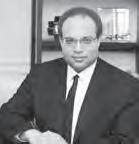


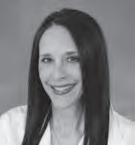


Smith-Rosenthal Team
Jason A. Smith & Caryn Rosenthal
Jason: 412-969-2930 | Caryn: 412-389-1695 Jasonasmith@howardhanna.com Carynrosenthal@howardhanna.com
5501 Baum Blvd. Pittsburgh PA 15232 Shadyside Office | 412-361-4000

Sherri Mayer, Realtor Squirrel Hill Office C: 412-760-0412 O: 412-421-9121x225 sherrimayer@howardhanna.com HowardHanna.com
www.kaminrealty.kamin.com
5125 Fifth Ave. 2 & 3 Bedrooms Corner of Fifth and Wilkins Spacious 1500-2250 square feet ”Finest in Shadyside” 412-661-4456 www.kaminrealty.kamin.com






pittsburghjewishchronicle.org









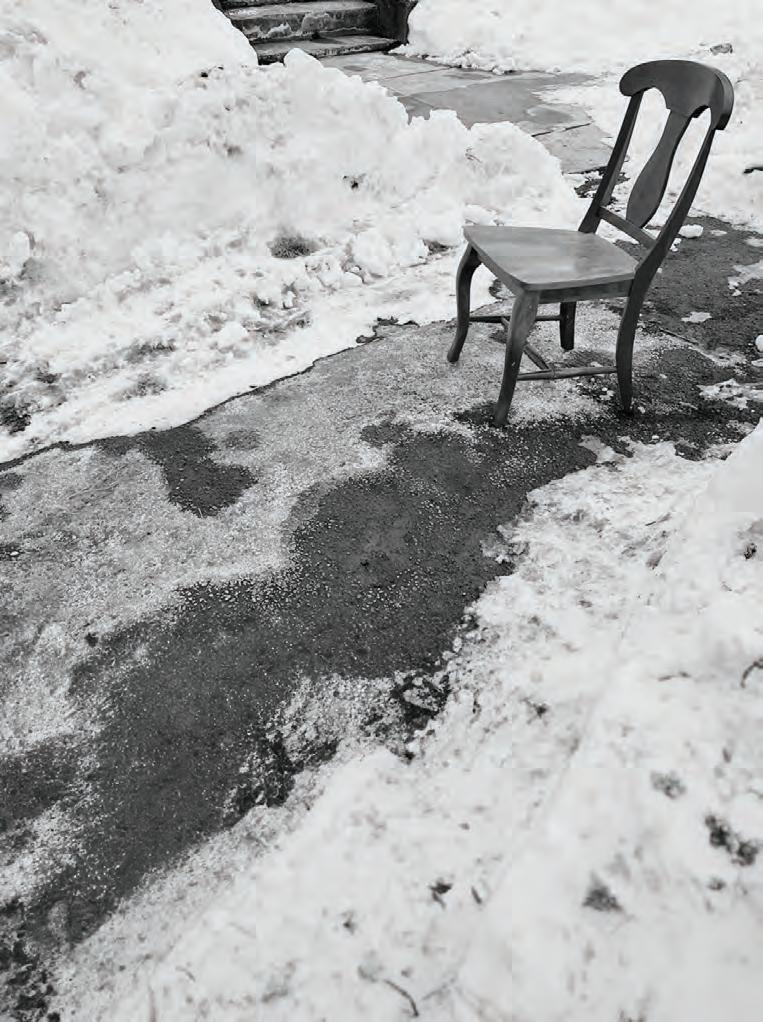
By Miriam Szokovski | Chabad.org




Family Fun at The Friendship Circle of Pittsburgh kicked off February with joy, creativity and connection. The Feb. 1 event featured a drum circle, reading of “The Very Hungry Caterpillar” and a friendship snack mix-making activity.
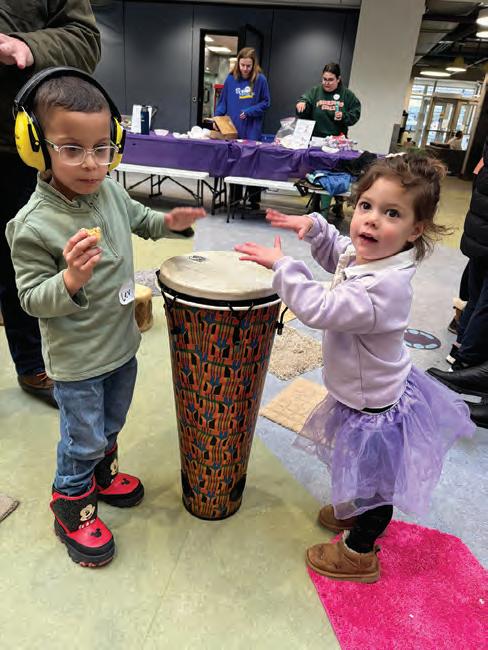
A cohort of Pittsburghers joined Jewish women from around the globe in front of the Chabad-Lubavitch World Headquarters in the Brooklyn borough of New York on Feb. 6. The women were among thousands of leaders who attended the International Conference of Chabad-Lubavitch Women Emissaries, an annual event aimed at strengthening global Jewish awareness and practice.
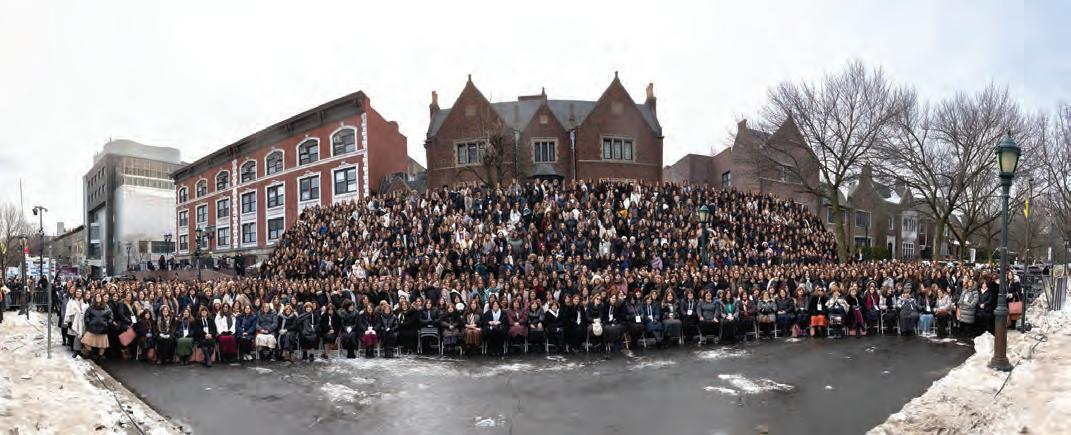
Parkway Jewish Center joined with Tree Of Life for a Tu B’Shvat seder. The Feb. 1 program, which celebrated the New Year of Trees, included foods associated with Israel’s seven species: wheat, barley, grapes, figs, pomegranates, olives and dates.
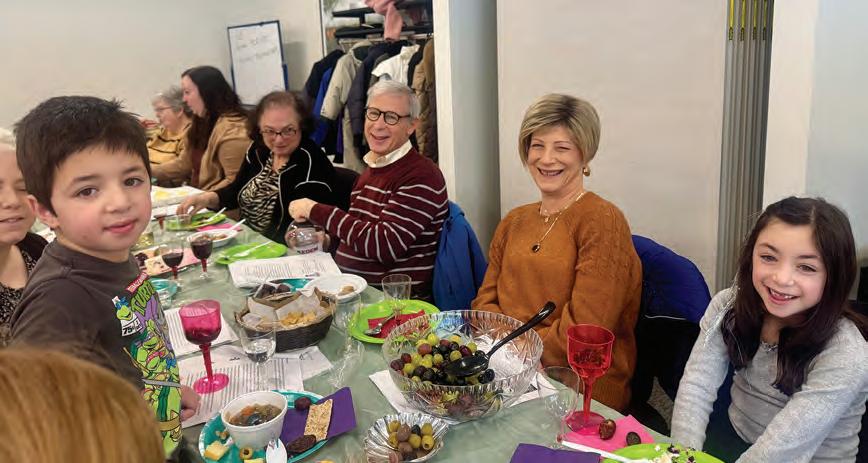
Community Day School students excelled at the Pennsylvania Junior Academy of Science. Designed to promote greater participation in science, technology, engineering and mathematics among Pennsylvania youth, the fair welcomes participants to compete at an early winter regional meet before proceeding to the state meet in May.