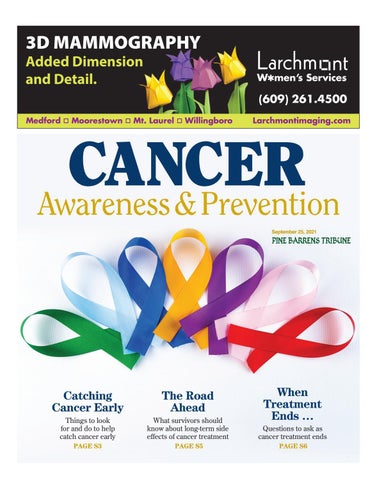
3D MAMMOGRAPHY Added Dimension and Detail.
Larchm nt *
W men’s Services
(609) 261.4500 Medford
Moorestown
Mt. Laurel
Willingboro
Larchmontimaging.com
September 25, 2021
When Treatment Ends …
Catching Cancer Early
The Road Ahead
Things to look for and do to help catch cancer early
What survivors should know about long-term side effects of cancer treatment
Questions to ask as cancer treatment ends
PAGE S3
PAGE S5
PAGE S6
Page S2 ♦
N
WWW.PINEBARRENSTRIBUNE.COM
Saturday, September 25, 2021
Food’s Important Role in Overall Health
utrition is a popular topic of conversation, particularly among those embarking on a weight loss or maintenance plan. Individuals carefully study food macros and pore over various diets to get the most out of the foods they eat. When the end goal is simply looking good, it may be easy to forget about the other benefits of nutritious diets, including their link to overall health. A close relationship exists between nutritional status and health. Experts at Tufts Health Plan recognize that good nutrition can help reduce the risk of developing many diseases, including heart disease, stroke, diabetes, and some cancers. The notion of “you are what you eat” still rings true. The World Health Organization indicates better nutrition means stronger immune systems, fewer illnesses and better overall health. However, according to the National Resource Center on Nutrition, Physical Activity, and Aging, one in four older Americans suffers from poor nutrition. And this situation is not exclusive to the elderly. A report examining the global burden of chronic disease published in The Lancet found poor diet contributed to 11 million deaths worldwide — roughly 22 percent of deaths among adults — and poor quality of life. Low intake of fruits and
whole grains and high intake of sodium are the leading risk factors for illness in many countries. Common nutrition problems can arise when one favors convenience and routine over balanced meals that truly fuel the body.
Improving nutrition
Guidelines regarding how many servings of each food group a person should have each day may vary slightly by country, but they share many similarities. The U.S. Department of Agriculture once followed a “food pyramid” guide, but has since switched to the MyPlate resource, which emphasizes how much of each food group should cover a standard 9-inch dinner plate. Food groups include fruits, vegetables, grains, proteins, and dairy. The USDA dietary guidelines were updated for its for 2020-2025 guide. Recommendations vary based on age and activity levels, but a person eating 2,000 calories a day should eat 2 cups of whole fruits; 21⁄2 cups of colorful vegetables; 6 ounces of grains, with half of them being whole grains; 51⁄2 ounces of protein, with a focus on lean proteins; and 3 cups of low-fat dairy. People should limit their intake of sodium, added sugars and saturated fats. As a person ages he
or she generally needs fewer calories because of less activity. Children may need more calories because they are still growing and tend to be very active. Those who are interested in preventing illness and significantly
We Offer Expert Advice & Care Health & Wellness Programs Free Dietitian Services Pharmacy Department
We care about your
h t . s l s e a n e l l h & we learn more here
ShopRite of Medford
www.zalliesfreshkitchen.com
reducing premature mortality from leading diseases should carefully evaluate the foods they eat, choosing well-balanced, low-fat, nutritionally dense options that keep saturated fat and sodium intake to a minimum.
AD HOTLINE: (609) 801-2392
Saturday, September 25, 2021
C
How to Catch Cancer Early
ancer is most treatable and beatable during its earliest stages. But how does a person detect cancer early, when he or she may not even realize cancer is present? There are a few steps to take.
Screening tests
Scheduling screening tests for common cancers, even if there are no symptoms present, is an effective way to detect cancer in its early stages. The American Cancer Society recommends the following tests. • Breast cancer: Women between the ages of 40 and 44 can begin to schedule annual breast cancer screenings if they so choose. The ACS recommends women between the ages of 45 and 54 schedule annual screenings, after which mammograms can occur every two years. • Colorectal cancer: Regular screenings for colorectal cancers can begin at age 45 with stoolbased or visual exams that look for signs of cancer. • Cervical cancer: This cancer screening should begin at age 25 and continue until women are 65. Pap tests and human papillomavirus tests are recommended at various intervals, typically between three and five years for healthy women. • Skin cancer: All people regardless of age are advised to check their skin regularly for any changes that may indicate the presence of skin cancer. Screenings for prostate cancer, lung cancer, endometrial cancer, and some others may be important for those with a family history of these cancers or those who are at higher risk due to various behaviors. People are urged to speak with their physicians about cancer screenings and any additional steps they can take to lower their risk for cancer.
Looking for microvesticles
To detect cancers earlier, doctors may employ blood tests that examine the presence of microvesticles in the blood. Harvard Medical School says cells shed microvesticles, but the amount shed by tumors is substantial. However, finding these very small particles requires a powerful device and complicated lab process. Newer innovations at the Center for Systems Biology at Massachusetts General Hospital have led to the development of a handheld device that uses a nanotechnology sensor to detect tumor microvesticles in a drop of blood in roughly two hours. This technology has the potential to diagnose cancer much earlier, according to Dr. Ralph Weissleder, director of the center and developer of the technology.
Feeling “off”
Individuals are their best advocates for early cancer detection. Any symptom that is out of the ordinary and persists should be treated as a red flag. Lumps, pains, the presence of blood in stool or urine, persistent coughs, fatigue, abnormal vaginal discharge, sores that do not heal, and a loss of appetite all could be early signs of cancer. People are urged to schedule appointments with their primary care doctors to discuss any abnormalities. As cancer spreads, it can affect the effectiveness of treatment. This also may affect chances of survival. The earlier one detects cancer, the greater his or her chances of surviving the disease.
♦ Page S3
Experts Emphasize Importance of Continuing Cancer Treatments
W
hen the COVID-19 virus took the world by storm in early 2020, individuals already battling health problems, including the approximately 15 million Americans currently living with cancer, had many difficult decisions to make. Health officials continue to urge people to take precautions when going out in public and to limit close contact with others outside of their family units. Medical care systems across the country have been overwhelmed by coronavirus patients. Many people undergoing cancer treatments and maintenance regimens for other conditions canceled or postponed their appointments. Doctors postponed surgeries and other procedures for thousands of patients with cancer. Many also canceled screening appointments, resulting in serious disruptions in care. The National Cancer Institute reports that, through May 2020, breast cancer screenings dropped by 89.2 percent and colorectal cancer screenings fell by 84.5 percent. The NCI estimates there will be 10,000 more deaths attributed to these two cancers over the next 10 years as a direct result of the pandemic. Delays in treatment for many different types of cancer can lead to worse outcomes for patients. However, each time a patient goes to a medical center to receive care, he or she may perceive an increased risk of contracting COVID-19. That’s especially so for those who have not yet been vaccinated. Many health experts, including Harvard Medical School, advise against delaying cancer treatments during the pandemic, noting that the risk for adverse outcomes
due to cancer overwhelm the risk of coronavirus contraction. In fact, even a short delay in treatment may lead to deadly outcomes, according to a review of 34 studies published by the British Medical Journal. Even a fourweek delay was associated with a 6 to 8 percent greater liklihood of dying during the study period. While hospitals and health clinics cannot remove every danger of infectious disease contraction, safety is the top priority for cancer patients. Many organizations are working closely with infection prevention and infectious diseases teams to provide cancer care in safe environments. Some of the procedures implemented may include: • Reducing the number of people allowed into cancer facilities. • S taggering appointment times to space out patients effectively. • S creening all patients for COVID19 symptoms every time they enter facilities. • Designating firm triage plans for those who have positive screenings. • Offering telehealth appointments for consultations and when in-person treatments are not necessary. • Sanitizing high-touch areas and common surfaces repeatedly. • Requiring COVID testing prior to entering facilities. Cancer patients should discuss their cancer treatment plans with their care teams, especially if there is concern about pandemic safety. The goal should be to continue treatment with minimal disruption.
#1 rsey’s e J w Ne
ZERO START-UP COSTS! Custom Business/Personalized Candles Own a Retail Store? Sell Spanky's Candles! No Investment Needed!
Contact: spankyscandles@yahoo.com Online Specials: www.spankyscandles.com (732) 849-5649 Business • (609) 284-3142 Cellular
Page S4 ♦
WWW.PINEBARRENSTRIBUNE.COM
How to Care for Yourself After Cancer Treatment
Saturday, September 25, 2021
Eagleswood Township 25th Annual
& Craft Fair Saturday Oct. 2nd 10-4pm Rain Date Oct. 3
Division & Railroad Ave., West Creek
Compliments of Eagleswood Recreation Committee
Games provided by
C
ancer survival rates have improved dramatically over the last half century. According to data from the Journal of the National Cancer Institute, five-year survival rates for all cancers in the United States increased from just over 50 percent between 1970 and 1977 to 67 percent between 2007 and 2013. The improved survival rates mean more and more people are living five years or more after being treated for cancer. Some patients have trouble readjusting to life after diagnosis as they wonder how to care for themselves after overcoming their disease. In fact, the National Cancer Institute notes that many cancer survivors acknowledge having lots of information and support during their illness while also noting that life after treatment posed some new questions and concerns. Life after successful cancer treatment may require an adjustment period, but the following are a handful of strategies that can improve quality of life and pave the way for a smooth transition into life as a cancer survivor. • Ditch the bad habits. Even if a survivor’s bad habits were not believed to be contributors to their disease, that does not mean they should continue to be a part of life after treatment. The NCI notes that researchers have long since linked smoking tobacco and alcohol consumption to cancer. If you quit these habits during treatment, stay the course even after you’ve beaten cancer. Doing so may reduce your risk for cancer recurrence and will lower your risk for other diseases, including heart disease and diabetes. • Eat healthy. The American Cancer Society urges cancer survivors to
eat at least 2.5 cups of fruits and vegetables every day. Fat also is vital to overall health, but the ACS urges survivors to consume healthy fats like omega-3 fatty acids, which can be found in fish such as salmon and some nuts. When choosing proteins, opt for those that are low in saturated fat, such as fish, lean meat and eggs. Choose healthy carbohydrates, such as whole grain breads, over processed products. Processed carbs like white bread have most of their fiber, vitamins and minerals removed during processing. If your carbs are primarily processed foods, you may suffer from nutrient deficiencies.
Inflatable Adventures Pumpkin & Cookie Decorating & Crafts Pony Rides by Ponies for Parties Face Painting Leah Morgan Art Works Freckles the Clown Music by DJ Delight Classic Cars/Trucks Food Vendors For Vendor and General Information kwells@eagleswooodtwp.nj.us 609-296-3040 ext. 14
Crafters Wanted – Karen 609.296.0993
& Craft Fair
• Get back to a healthy weight. The Mayo Clinic notes that many people lose or gain weight during cancer treatment. Regardless of which way you went, it’s vital to get back to a healthy weight, which can reduce your risk for various illnesses. • Exercise regularly. Take it slow when returning to physical activity after cancer treatment, but know that staying active has myriad benefits. According to the NCI, recent reports suggest that staying active after cancer can help reduce the risk for recurrence. In addition, the Mayo Clinic notes that evidence overwhelmingly supports the notion that exercise benefits the heart, lungs and other systems of the body. Caring for yourself after successful cancer treatment may be marked by some new challenges. Various strategies can help people who have overcome the disease live long, healthy lives after treatment.
at the BEST Prices!
We install Stone Pads!
We Move Sheds!
Email Us Today at info@AmishCountrySheds.com! 609-284-8776• AMISHCOUNTRYSHEDS.COM NJHIC#13VH09843900
Saturday, September 25, 2021
AD HOTLINE: (609) 801-2392
♦ Page S5
What Survivors Should Know About Long-Term Side Effects of Cancer Treatment What are some common late effects of cancer treatment?
C
ancer is a complex disease that affects people from all walks of life. Millions of people across the globe have survived the disease, and millions more are currently in treatment. No two people will experience cancer in the same way, and some may even find themselves confronting side effects of the disease long after undergoing successful treatment. According to the American Society of Clinical Oncology, many people who have undergone cancer treatment are at risk of developing long-term side effects. These side effects may
occur within months or even years of concluding treatment.
What are late effects of cancer treatment?
The Mayo Clinic describes late effects of cancer treatment as those side effects that become apparent after treatment has ended. These side effects can occur after undergoing various forms of treatment, including chemotherapy, hormone therapy, surgery, targeted therapy, and immunotherapy.
ASCO® notes that different treatments can cause different late effects. Late effects may even be linked to the type of cancer a person had. So someone who had surgery for one type of cancer may experience a late effect related to that surgery that differs entirely from the late effect associated with a different surgery employed to treat another type of cancer. For example, ASCO® notes that people who underwent radiation surgery to remove lymph nodes may develop lymphedema, a condition in which swelling and pain develop due to a buildup of lymph fluids. Others who had surgeries to their pelvis or abdomen as part of their cancer treatments may be unable to have children in the future. Even though they are very different, each of these are considered late effects associated with cancer surgeries. Heart problems are another potential late effect of cancer treatments. Cancer survivors who underwent both chemotherapy and radiation therapy may have a higher risk of coronary artery disease, arrhythmia and congestive heart failure after treatment ends. In addition,
ASCO® notes that drugs administered as part of cancer treatments may cause heart problems. Cancer patients are urged to ask their physicians if their treatments may affect their hearts, both in the near future and down the road. If so, doctors may recommend certain behaviors designed to reduce that risk. Hormonal changes are another potential late effect of cancer treatments. For example, ASCO® notes that the symptoms of menopause caused by cancer treatment may be worse than the natural symptoms of menopause. This is because the decrease in hormones resulting from certain cancer treatments happens more quickly than it naturally would. So women undergoing hormonal therapy may have lighter and fewer menstrual periods, while women older than 40 who underwent hormonal therapy are less likely to have their menstrual periods return at all. Late effects can catch some cancer survivors off guard, especially when they appear years after successful treatments have ended. Cancer patients are urged to speak to their physicians about potential late effects during or upon the conclusion of their treatments.
Page S6 ♦
WWW.PINEBARRENSTRIBUNE.COM
How Avoiding Tobacco Greatly Lowers Cancer Risk
I
Why tobacco is so unhealthy
mproving personal health is a goal many individuals share. One of the most effective ways for a person to be healthier while greatly reducing his or her risk of cancer is to avoid or immediately stop using all tobacco products. Carcinogens are substances that are linked to cancer causation. Tobacco smoke alone has at least 70 carcinogens, according to the Centers for Disease Control and Prevention. The CDC also indicates that 40 percent of cancers diagnosed in the United States are likely linked to tobacco use, and tobacco products are responsible for at least 12 types of cancer.
Whether it’s the tar, nicotine and acetone in cigarettes or the chemicals used when growing and preparing tobacco for commercial use, these substances can wreak havoc on an individual’s health. In addition to carcinogens, the American Lung Association says cigarettes contain about 600 ingredients total, some of which also can be found in cigars and hookahs. When these ingredients burn, they generate thousands more chemicals, many of which are poisonous. Ingredients in tobacco affect many areas of the body, from the central nervous system to the respiratory system to the skin that covers the body. Tobacco also can damage the cardiovascular system by tightening blood vessels and restricting the flow of blood. Smoking increases blood clot formations and blood pressure, which can raise the risk of stroke.
Cancers linked to tobacco
There is no safe form of tobacco, and even smokeless products, such as snuff and chewing tobacco, have been found to cause cancer, advises the National Cancer Institute. Tobacco use can increase a person’s risk for the following cancers:
Added dangers
• Lung cancer
Tobacco use does not only affect the person who is using tobacco. Exposure to secondhand smoke makes nonsmokers vulnerable to cancer and other conditions. Developing fetuses exposed to tobacco chemicals when their mothers smoke during pregnancy may have brain and lung tissue damage, states the Mayo Clinic. Carbon monoxide in tobacco smoke can prevent fetuses from getting enough oxygen and adversely affect the delivery of nutrients. Smoking also raises a baby’s risk for birth defects, such as cleft lip and palate, and contributes to low birth weight and issues with placenta. Quitting tobacco greatly improves one’s chances of avoiding a cancer diagnosis. It’s an important step to take to improve overall health.
• Esophageal cancer • Pancreatic cancer • Bladder cancer • Urinary cancer • Kidney cancer • Ureter cancer • Stomach cancer • Liver cancer • Cervical cancer • Ovarian cancer • Oral cancers • Tracheal cancer • Colorectal cancer • Laryngeal cancer • Acute myeloid leukemia GUTTER
S
G
Saturday, September 25, 2021
Questions to Ask as Cancer Treatment Ends T
he number of people who can say they survived cancer is growing worldwide. According to the American Cancer Society, in 2018 there were approximately 44 million cancer survivors diagnosed within the previous half decade. Those figures are a glowing testament to the tireless efforts of cancer researchers and cancer specialists across the globe. Patients tend to have lots of questions after being diagnosed with cancer. Asking questions about everything from treatment options to prognosis to the expectations for daily life can be vital to patients who not only want to understand their disease, but also do everything they can to overcome it. Questions also are important upon the conclusion of treatment, when patients who have survived a cancer diagnosis are looking to return to life as they knew it before being told they had cancer. It’s understandable if cancer patients feel a little uncertainty or even anxiety at the conclusion of treatment. After week or months of focusing their every effort to overcoming their disease, cancer survivors may be a little scared about what comes next. Asking the right questions can calm those fears and help cancer survivors take that first step toward the rest of their lives. The National Cancer Institute recommends cancer survivors ask the following questions at the conclusion of their treatments. • How long will it take for me to get better and feel more like myself? • W hat kind of care should I expect after my treatment? • W hat is the chance that my cancer will return? • W hat symptoms I tell you about?
should
• W ho do I call if I develop these symptoms?
• W hat can I do as healthy as possible?
to
• W hat tests do I need after treatment is over? How often will I have the tests? • W hat records do I need to keep about my treatment? • C an you suggest a support group that might help me?
Additional questions
Patients who have concluded their cancer treatments should not hesitate to ask any question that comes to mind, even if the question does not appear on the list recommended by the NCI. The American Society of Clinical Oncology notes that many people who have had cancer treatment are at risk of developing long-term side effects, which can appear months or even years after treatments have concluded. Both ASCO® and the NCI urge cancer survivors to discuss their risks for such side effects, which are often referred to as late effects, at the conclusion of treatment. Patients also are urged to ask if there is anything they can do to prevent such effects from occurring and if there are any particular specialists they should see to watch for late effects. At the conclusion of cancer treatment, survivors also can ask for a full rundown of their treatments, including the names of medications they were administered during treatment. Such information can help doctors address any late effects that may arise in the months and years to come. Questions are a weapon that all cancer patients should keep in their arsenal before, during and after treatment.
ter Helm
et Ro
1SALE
ofin
g
Limited Time Ends 9/30
$ • Installs Over Existing or New Gutters • Triple Lifetime Performance Warranty, Transferable • Keeps Leaves, Debris, and Animals Out • Direct Rain Water Where You Need It
Installation
*
+ 0%
of
Interest
Until 2023† or Payments To Fit Any Budget†
40
YEARS
Get Your FREE Estimate
609-631-3420
Handles
22” RAIN
Senior/Military Extra 10% OFF
/hr
Since 1821, Medford United Methodist Church has been LOVING GOD, SERVING PEOPLE, and TRANSFORMING LIVES. Come see why at our In-Person Services being held after Labor Day at 8:15 am | 9:30 am | 11:00 am | Facebook Live
FOR GUTTER PROTECTION
*Expires 9/30/21. Valid initial visit only. Cannot be combined with any other offers. Discount is towards installation/labor cost of job only. Min. purchase is required. †Subject to credit approval. Monthly payments required during promotional period. Financing for GreenSky® consumer loan programs is provided by federally insured, equal opportunity lender banks. NMLS #1416362. Licensed, Bonded, Insured. See website for state licenses and more details © 2021 Lednor Corporation.
be
• W hich doctor(s) should I see for my follow-up care? How often should I see them?
Never Clean Your Gutters Again!
ut
®
2 Hartford Road • Medford, NJ • 609/654-8111 • medfordumc.org • Like us on Facebook/@MedfordUMC
AD HOTLINE: (609) 801-2392
Saturday, September 25, 2021
Coping With Cancer Loss
A
positive attitude, a skilled team of oncologists and some supportive family members can blend together to give cancer patients the best fighting chances against their disease. The five-year relative survival rate for all cancers combined increased
from 39 percent to 70 percent among whites and 27 percent to 64 percent among blacks between 1960 and 2020, according to the American Cancer Society. Researchers and doctors are hopeful that those numbers will continue to improve across all
genders, races and demographics in the decades to come. Just about everyone has been touched by cancer in some shape or form, and many have had to contend with the death of a loved one. The people surviving those who have lost their battles to cancer may be left with grief and uncertainty about what’s next. Some people may not know how to cope with no longer being a caregiver. The American Society of Clinical Oncology says grieving a loved one comes with intense feelings that may last a year or more. There are strategies that can help people adapt and process their loss. • Allow yourself to feel the pain of loss. When a loved one gets a cancer diagnosis, people may recognize the stakes are serious. Fears about a loved one’s wellbeing are often put on the back burner when treatments begin and a positive, supportive attitude takes over. But it’s natural to grieve and feel hurt when a loved one loses his or her battle. Whether you cry, scream or take other actions, there is no wrong or right way to work through the pain. • Ignore timelines. The National Cancer Institute says that grief has stages, but not everyone experiences those stages in the same way. Bereaved people usually have grief pangs and
♦ Page S7
bursts. Recognizing that this process will not be the same for you as it was for another frees you from the pressure of conforming to a schedule. • Talk to someone. Knowing your feelings are valid and talking with someone outside of the family for a fresh perspective and support, such as a grief therapist, can help you work through the emotions you are experiencing. The medical team who helped your loved one may recommend a survivor’s group or a therapist who specializes in cancer loss. • Put yourself first. If you lost a spouse to cancer and have children, you may want to address the children’s needs immediately. But you cannot care for the kids effectively without also caring for yourself. Take the time to work through your issues before trying to make sense of what a child or another relative might be experiencing. No one ever imagines losing a loved one to cancer, and such a loss can catch anyone off-guard. When confronted with such a loss, it’s important that people recognize working through grief is a process that is different for everyone.
A Peaceful Resting Place to Honor the Ones You Love South Jersey’s Only New State-of-the-Art Cemetery Open to All Faiths
Now Is an Excellent Time to Secure a Beautiful Location in Our New Community Family Mausoleum! Please Think About Your Family and Plan Ahead! & Cemetery ours yT Cremator Daily Available uest. Upon Req ead. Phone Ah 25 FOSTERTOWN ROAD, MEDFORD, NJ 08055 • (609)
654-8150
Follow Us on • parkviewcemeterynj.com • MAUSOLEUM OPEN EVERYDAY 9 A.M. TO 5 P.M. Located in Medford on Fostertown Road between the Flying W Airport and Historic Kirby’s Mill. DEVELOPED BY MEDFORD CEMETERY ASSOCIATION, INC. PROUDLY SERVING SOUTH JERSEY FOR OVER 130 YEARS.
Page S8 ♦
WWW.PINEBARRENSTRIBUNE.COM
Did You Know?
Saturday, September 25, 2021
Saving a Life EVERY 11 MINUTES*
I’m never
alone Life Alert® is always there for me at home and on-the-go.
A
ccording to the American Cancer Society, recent research has found that sleeping problems associated with cancer treatment persist in almost 40 percent of cancer survivors for up to five years after diagnosis. The 2019 study, published in the journal Sleep Medicine, also found that one-fifth of cancer survivors reported poor sleep quality at nine years after diagnosis. In fact, high sleep disturbance was reported by 51 percent of long-term cancer survivors. The researchers studied more than 1,900 long-term cancer survivors nine years after diagnosis, and participants had one of 10 common cancers, including cancers of the breast, prostate, bladder, kidney, and lung. It’s especially important for cancer survivors to recognize the potential for sleep problems after successful treatment, as the Mayo Clinic notes that sufficient rest is a vital component of patients’ recovery. Survivors experiencing difficulty sleeping after successful cancer treatments can discuss their issues with their physicians, who may recommend certain sleep aides or strategies to increase patients’ chances of getting more restful sleep.
T
hough there may not be a cancer vaccine, that does not mean that vaccinations cannot play a role in cancer prevention. According to the Centers for Disease Control and Prevention, some cancers, including cervical cancer and cancers of the vulva and oropharynx, are caused by the human papillomavirus, or HPV. The CDC notes that the HPV vaccine protects people against the types of HPV that most often cause cancers. Adults can discuss the benefits of HPV vaccinations with their physicians, as the CDC notes that adults between the ages of 27 and 45 may have already been exposed to HPV, meaning the HPV vaccination will provide less benefit. Parents should know that the CDC recommends the HPV vaccination for preteens aged 11 to 12 years.
with
GPS !
HELP AT HOME
FALL
HELP ON THE GO
SHOWER
ON-THE-GO
One press of a button sends help fast, 24/7, for: • medical • fall • shower • on-the-go emergencies even when you can’t reach a phone anywhere in the USA. ®
BATTERIES NEVER need charging!**
For a FREE brochure call:
1-877-662-2418
*Life Alert defines a life saved, where a subscriber activated the system, had an actual emergency, was home alone, was unable to get to the phone for help, and Life Alert dispatched help. **Batteries never need charging and last up to 10 years.