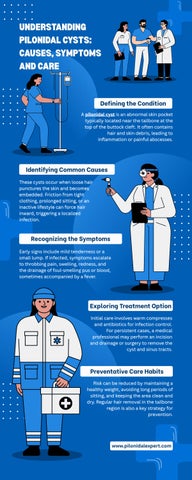

pilonidal cyst is an abnormal skin pocket is an abnormal skin pocket typically located near the tailbone at the typically located near the tailbone at the top of the buttock cleft It often contains top of the buttock cleft It often contains hair and skin debris, leading to hair and skin debris, leading to inflammation or painful abscesses inflammation or painful abscesses
Identifying Common Causes
These cysts occur when loose hair
These cysts occur when loose hair punctures the skin and becomes punctures the skin and becomes embedded Friction from tight embedded Friction from tight clothing, prolonged sitting, or an clothing, prolonged sitting, or an inactive lifestyle can force hair inactive lifestyle can force hair inward, triggering a localized inward, triggering a localized iinfection nfection
Recognizing the Symptoms
Early signs include mild tenderness or a Early signs include mild tenderness or a small lump If infected, symptoms escalate small lump If infected, symptoms escalate to throbbing pain, swelling, redness, and to throbbing pain, swelling, redness, and the drainage of foul-smelling pus or blood, the drainage of foul-smelling pus or blood, sometimes accompanied by a fever sometimes accompanied by a fever
Exploring Treatment Option
Initial care involves warm compresses
Initial care involves warm compresses and antibiotics for infection control and antibiotics for infection control For persistent cases, a medical For persistent cases, a medical professional may perform an incision professional may perform an incision and drainage or surgery to remove the and drainage or surgery to remove the cyst and sinus tracts cyst and sinus tracts
Preventative Care Habits
Risk can be reduced by maintaining a Risk can be reduced by maintaining a healthy weight, avoiding long periods of healthy weight, avoiding long periods of sitting, and keeping the area clean and sitting, and keeping the area clean and dry. Regular hair removal in the tailbone dry Regular hair removal in the tailbone region is also a key strategy for region is also a key strategy for prevention. prevention
www.pilonidalexpert.com