Mila Mendoza Planning Specialist Arbor Memorial Inc.
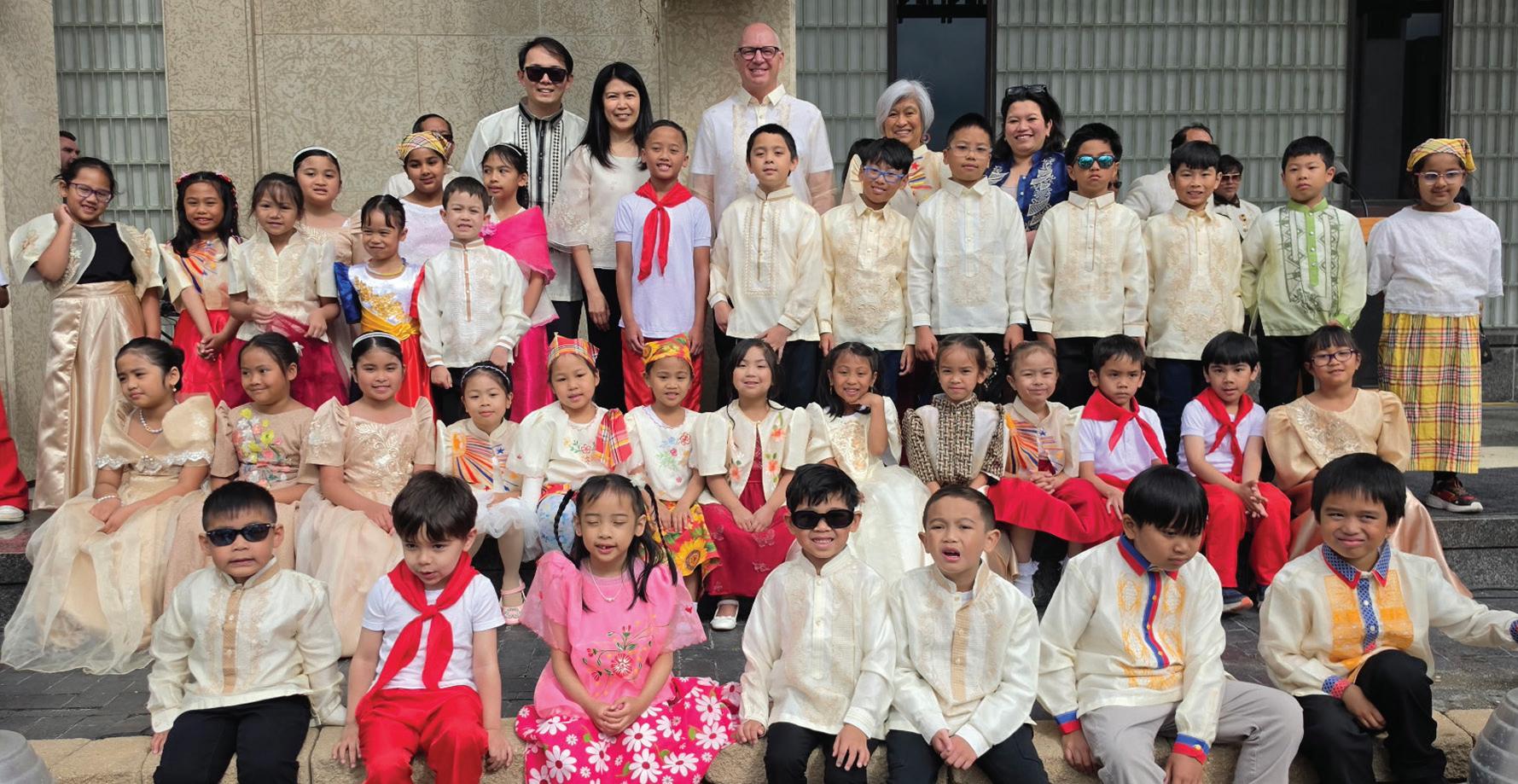
Students from the Winnipeg School Division’s Filipino bilingual program at Meadows West School proudly attended the Philippine Independence flag raising ceremony at Winnipeg City Hall on June 12, 2026, celebrating Filipino heritage, culture, and community. Back row: Vice Principal Paul Ong; Loreta Genota, teacher; Mayor Scott Gillingham; Rowena Hernandez, intercultural support worker; and Wendy Diaz, teacher. Story on p15. Photo by Nonie Manalili Photography.
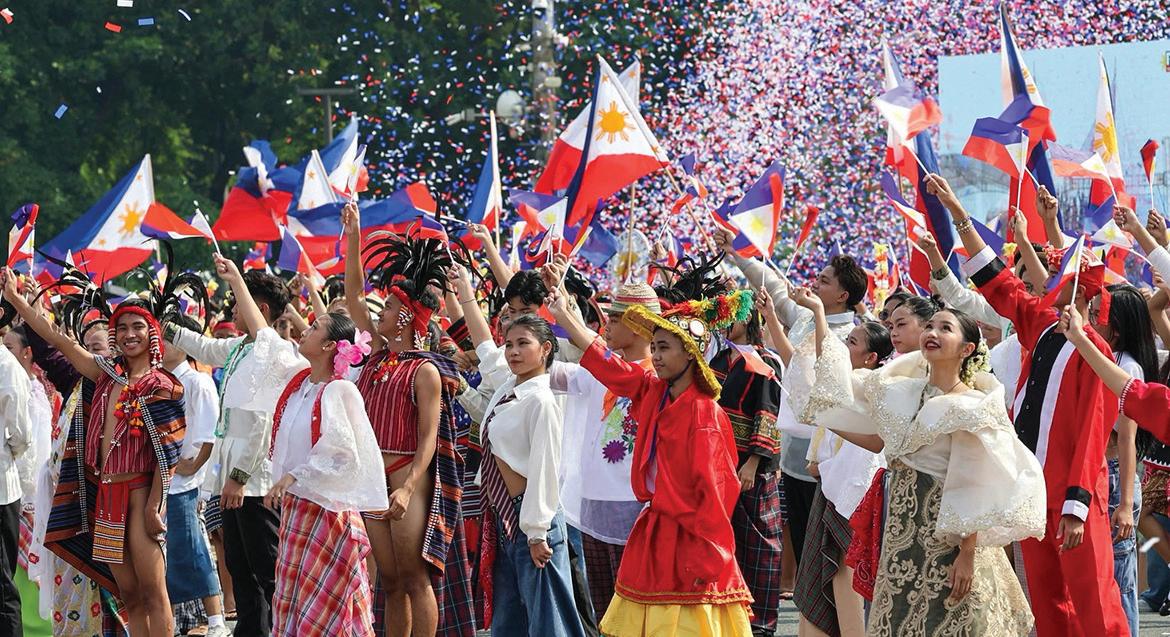
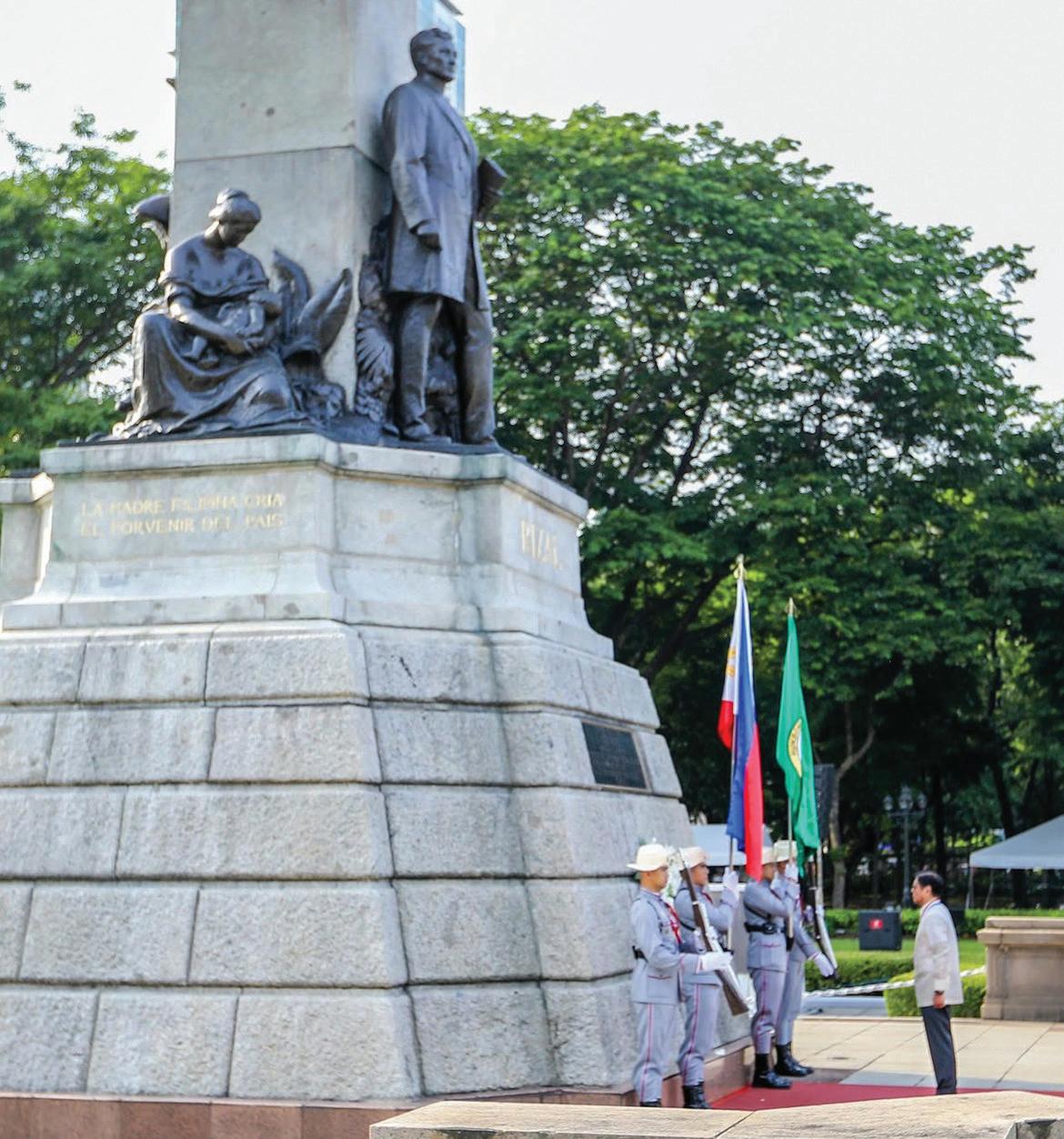
President Ferdinand R. Marcos Jr. led the 128th Philippine Independence Day celebrations on June 12, 2026, at Rizal Park and the Quirino Grandstand in Manila. The event featured the traditional flag-raising, a wreathlaying ceremony at the Rizal National Monument, vibrant colourful floats, and civic parades. Photo: PIA
It is June 2026 and a good time to take stock of the Manitoba Provincial Nominee Program.
The MPNP has long been one of the most active provincial nominee programs and continues as such to this day. In a recent article of Canada Immigration News, Caroline Minks presents a review of Manitoba’s 11th immigration selection round of 2026 and provides an update on the current practice of the MPNP. Her observations are timely and provide applicants and observers both with food for thought.
Manitoba’s 11th provincial
immigration draw of 2026 took place on June 4, 2026. The MPNP issued 104 Letters of Advice to Apply (LAAs) under the Skilled Worker Stream rather than the general Expression of Interest (EOI) submission. The 104 LAAs were distributed as follows: Employer Services 40 invitations, Temporary Public Policy 39 invitations, Francophone Community 17 invitations, Ethnocultural Communities six invitations, and Regional Communities. two invitations.
The LAAs issued explain much about the assessment of online
Letters of Advice to Apply: Some nominated and others refused
submissions as well as the steps the process takes. It is important for users and interested parties to understand the process and the way in which MPNP fulfills its responsibilities to administer the program for the benefit of the province and to maintain a high level of professionalism and due diligence to their task of selecting the best applicants for Manitoba.
The LAAs were issued from the existing inventories of Expressions of Interest from both pathways of the Skilled Worker Stream: Skilled Workers in Manitoba and Skilled
Workers Overseas. Applicants were required to list if they had received an invitation through a recruitment mission overseas or through the Temporary Public Policy to Facilitate Work Permits for Prospective Provincial Candidates (TPP). Of the LAA letters, 38.5 per cent were chosen from the Employer Services Initiative and 37.5 per cent came from the TPP.
The MPNP clarified that 15 of the 104 LAA’s issued came from candidates who declared a valid Express Entry number and a job seeker validation code. Some candidates who listed an approved third-party English or French language in their EOI profiles failed to provide evidence or their language results had already expired. The MPNP also confirms that others who were excluded had been issued a strategic initiative but failed to provide a valid invitation number. The MPNP also confirmed that TPP work permit holders required Manitoba Support Letters that were approved after June 30, 2025, may not have received an LAA yet. As of June 4, the MPNP had issued 1,709 LAAs this year from the Skilled Worker Stream. Applicants must heed the need to include all required documents in their submission and to comply within the time frames required.
The MPNP provincial immigration program activity can be measured by EOI draws, nominations issued, nomination applications received, nominations not resolved but currently in assessment or pending assessment, and finally nominations refused. EOI monthly draws, which included an invitation to apply, from the first five months of the current year, include January, 102, February, 101, March, 60, and April, 340. The total EOI issued to date is 603; Manitoba has made a number of nominations to date. The numbers would be taken from the 6,239 allocations from the federal government. The monthly breakdown of nominations include: January 484, February 425, March 389, and April 445. The total nominations issued to date is 1,743;
The MPNP received the following number of applications
by month: January, 292; February, 237; March, 105; and April, 109. The year-to-date total of applications received is 743; Some applications have been issued to an assessment officer but have not progressed to a final decision. Based on the monthly number the applications in assessment, or pending assessment, include the following: January, 2,605; February, 2,355; March, 2030; and April, 1,014. The number total of applications under active assessment is 8,004.
No overview would be complete without a report of nominations refused. A number of applicants who received an LAA and responded were refused. The actual numbers of nomination refusals reported by the MPNP include: January, 95; February, 38; March, 35; and April, 95. The total of refused nominations for the first four months is 263.
Our hope is that this overview helped explain the MPNP assessment process to clear up some confusion and misunderstandings. My sympathies for those who placed their hope in their submission but suffered a refusal at the end. It is unfortunate for applicants to go through the system for several months and yet end in a refusal. Effort and time are not the key factors. It is important for each refused applicant to understand what they did not do correctly and why they were refused. There was something done incorrectly or something missed or something misunderstood. The fault is not bad luck but an error in what was done or not done by the applicant themselves. They need to understand the sage advice of the English playwright William Shakespeare, who explained in his play Julius Caesar: “The fault dear Brutus is not in our stars, but in ourselves.”
Michael Scott is a Regulated Canadian Immigration Consultant (RCIC, R525678) who has 30 years of experience with Immigration Canada and the Manitoba Provincial Nominee Program. He currently works as a licensed consultant with Immigration Connexion International Ltd. Contact him at 204-691-1166 or 204-227-0292. E-mail: mscott.ici@gmail.com.
The ASEAN Centre for Energy (ACE) and the UN Environment Programme recently published the Roadmap for Extreme Heat Protection through Passive Cooling in ASEAN Region. Philippine cities face intensifying heat, exacerbated during the dry season and the shifting humidity of the Amihan and Habagat wind patterns. Relying entirely on massive mechanical air-conditioning units to cool buildings strains the national energy grid and drives up local electricity costs.
The roadmap establishes a clear policy framework to address this crisis. It mandates a “passive first” approach, directing the industry to optimize building orientation, shading, and envelope performance to block heat before it enters. The goal is up to a 40 to 60 per cent reduction in cooling energy consumption, scaling toward carbon-neutral buildings by 2050. It recommends fundamental strategies like better thermal insulation, optimized
window-to-wall ratios, and natural ventilation to drastically reduce reliance on mechanical cooling.
This roadmap establishes exactly what the region needs to survive extreme heat. However, executing it requires precise engineering. The Passive House Standard takes these highlevel strategies and turns them into measurable, guaranteed performance metrics.
Take ventilation, for example. The roadmap encourages natural ventilation to cool spaces. While beneficial under the right conditions, opening a window in Metro Manila often introduces 35°C heat, severe humidity, urban dust, and noise. The Passive House standard addresses this by demanding an extremely airtight building envelope. The standard seals the building tight, verifying it with a strict pressurization test result of no more than 0.6 air changes per hour. Instead of relying on unpredictable winds, the standard utilizes
Extreme heat protection through Passive House
mechanical ventilation with humidity recovery systems. This equipment provides a continuous supply of filtered, dehumidified air, mitigating mould risks and maintaining a comfortable indoor climate without losing the cooling energy already paid for.
Furthermore, the roadmap calls for improved envelopes and high-performance glazing. The Passive House standard executes this by requiring thermal-
bridge reduced design, which eliminates the hidden bypasses where exterior heat infiltrates a building. Performance is not left to guesswork. The Passive House Planning Package (PHPP) software is used to accurately model exact solar heat gains, shading coefficients, and thermal loads for our specific tropical climate. This data-driven approach allows the specification of right-sized cooling equipment,
cutting upfront capital costs and slashing monthly utility bills.
The ASEAN roadmap sets the regional target for extreme heat protection. The Passive House standard provides the technical execution engine to reach that target.
Norman Garcia is a certified Passive House Consultant with AllClimate Passivhaus and founder of Passivhaus Philippines.
OUR HEALTH
High blood pressure can happen at any age Expert shares prevention tips
High blood pressure, also known as hypertension, can develop at any age, and its prevalence among younger and middle-aged adults has been increasing worldwide. According to Bianca Bandarra, M.B.B.S., a general practitioner and executive health physician at Mayo Clinic Healthcare in London, early prevention and treatment are essential to avoiding serious health complications.
A silent but serious condition
Hypertension occurs when the force of blood pushing against artery walls remains consistently
too high, causing the heart to work harder to pump blood. Left untreated, it can increase the risk of heart attack, heart failure, stroke, kidney disease, eye problems, dementia and metabolic syndrome, a group of conditions that raises the risk of diabetes.
One of the challenges with hypertension is that it often develops without noticeable symptoms.
“High blood pressure can be a silent disease,” says Dr. Bandarra. “If it isn’t treated, it can damage blood vessels and organs over many years.”
Because of this, regular blood pressure checks are important, especially for people with diabetes, kidney disease or a family history of hypertension. Those with one or both parents affected by high blood pressure may benefit from discussing home blood pressure monitoring with their healthcare provider.
Watch for warning signs
Although hypertension is often symptom-free, very high blood pressure can sometimes cause headaches, pressure behind the eyes, blurred vision, chest pain, palpitations, nosebleeds, shortness
Grant Park Shopping Centre
350-1120 Grant Avenue Tel.: 204-475-7522 • Fax: 204-284-9212
a1nutrition@live.ca
COME AND SEE YOUR FRIENDLY AND RELIABLE HEALTH ADVISORS We are here to help you
of breath, fatigue and a general feeling of being unwell.
Dr. Bandarra advises seeking medical attention if these symptoms are new or severe.
Lifestyle matters
Lifestyle choices can significantly affect a person’s risk of developing hypertension. Risk factors include excess weight, tobacco use, alcohol consumption, high stress levels, excessive salt intake, insufficient potassium and lack of physical activity.
On the other hand, maintaining a healthy weight, exercising regularly, eating a diet rich in fruits, vegetables and whole grains, managing stress, avoiding tobacco and limiting alcohol can help reduce the risk. Getting adequate sleep is also important.
“Some people may do all the right things and still develop hypertension,” Dr. Bandarra notes. “That’s because genetics also play a role. We can take steps to prevent it from getting worse.”
Prevention and treatment
Treatment usually combines healthy lifestyle habits with medication when necessary.
Doctors may also order blood tests, urine tests and an electrocardiogram to assess overall health and check for organ damage or related conditions.
Dr. Bandarra encourages
Omega-3s (EPA and DHA) may help reduce blood pressure. Check with your doctor before use.
people to monitor their blood pressure at home in addition to routine medical checkups.
“Use a validated device with the correct cuff size and follow proper technique,” she says. “Raising awareness about high blood pressure for yourself, your friends and your family can make a real difference.”
Courtesy: Mayo Clinic News Network. Our Health is brought to you by A1 Nutrition at Grant Park Shopping Centre in Winnipeg.
Janice Palmer, Certified Health Instructor and Trainer; Jupinder Brar, Sales Associate; Felly Grieve, B. Comm., LPN, Proprietor, Certified Natural Product Advisor; Anzhelika Bashanova, Sales Associate; and Rose Bigornia, B.S.E., A.N.C., Manager, Certified Natural Product Advisor, Applied Nutrition Specialist.
The workers who built their lives in Canada shouldn’t be forced to leave
by Kyle Duque, RCIC, Duque Immigration Services
As a licensed immigration consultant, I speak with workers and employers every day who are facing the same concern. Many temporary foreign workers are getting closer to the expiry of their work permits, leaving them unsure about their future in Canada. At the same time, employers are worried about losing workers they’ve depended on for years.
For decades, Canada has relied on temporary foreign workers to help fill labour shortages. They work in many industries, such as healthcare, transportation, manufacturing, hospitality, agriculture, and construction. These workers help keep businesses running in Canada.
Now, many of these workers are reaching the end of their work permits. With constant changes to immigration policy, only some qualify for permanent residence or a work permit extension, but many do not have a clear pathway to stay. This is happening to people who have worked here for years, paid taxes, followed the rules, and built their lives in Canada.
When workers run out of status, they are not allowed to work. Overnight, families suddenly have no income while rent, groceries, and bills continue to pile up. Children are hit the hardest. Many have grown up in Canada. They go to school here, have friends here, and see Canada as their home. When parents lose work authorization, families may be forced to leave the country. For children, it means leaving the life they’ve always known.
This isn’t just a problem for the workers. Employers are feeling the impact as well. Many businesses have spent significant time and money recruiting, training, and retaining these employees. In many regions, especially rural areas, finding replacement workers is extremely difficult.
Beyond the workplace, these people are members of our communities. They rent or buy homes, support local businesses, volunteer, contribute to our economy and pay taxes. Many have strong roots in Canada and want to continue building their futures here. Some have Canadian family members, have connections within their communities, and are raising children who attend our schools. For many of these families, Canada is not just a place of work, it is home.
Canada needs immigration to support economic growth. While keeping the integrity of our immigration system is important, we also need solutions for these workers who have already proven their commitment to this country. After years of contributing to Canada’s economy, they deserve a fair opportunity to continue building their future here.
SHOWBIZ SHOWBUZZ
Bianca Umali at MEGA Ball 2026
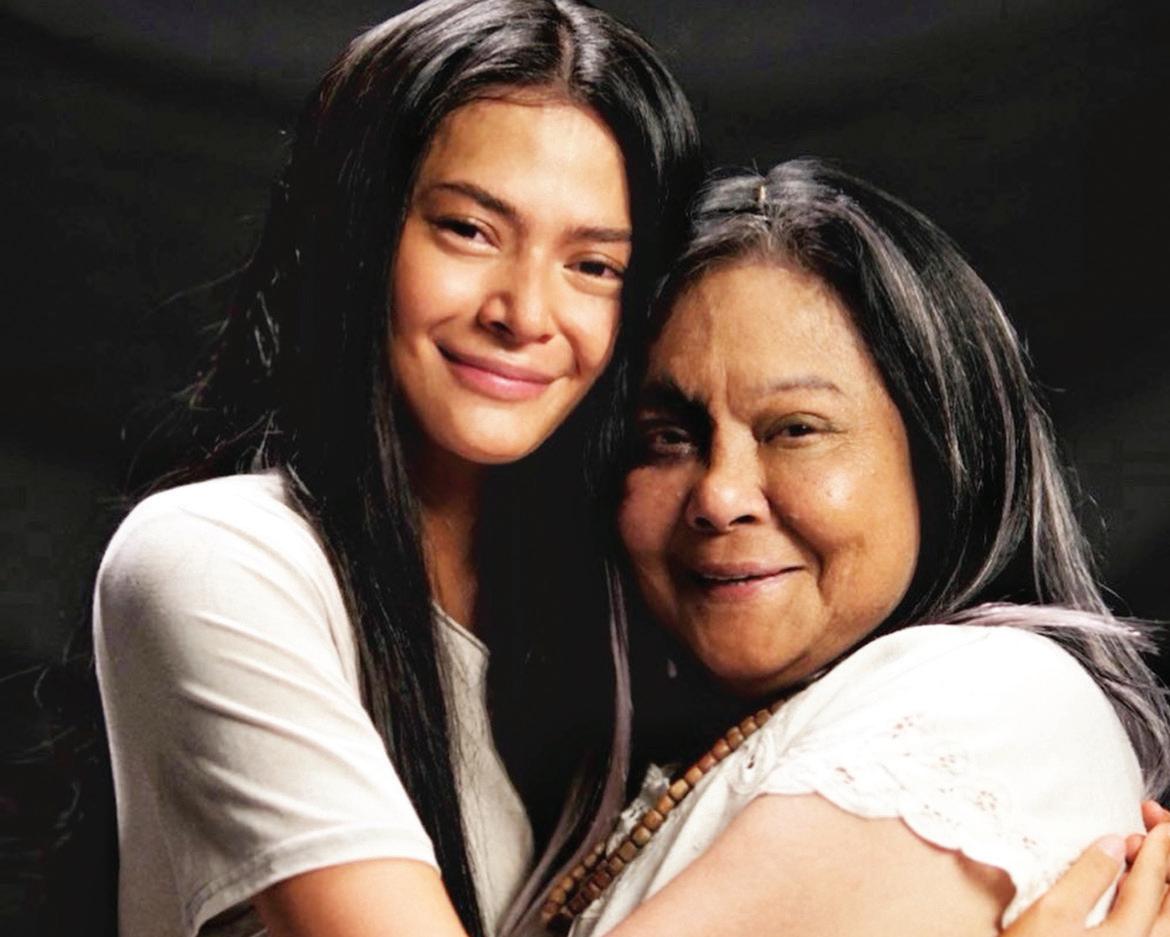
Bianca Umali took to Instagram to share her creative look for MEGA Ball 2026. Held on Friday, June 12, this year’s prestigious event celebrated the intersection of style and cinema with the theme Fashion + Film, which also called for an elegant black and white dress code.
The gala honours and celebrates the vital role that women play in the art of creative storytelling and in shaping the landscape of Philippine cinema.
In her post, Bianca shared a series of photos showcasing her stunning white ensemble. The actress also revealed that her look for the evening was far more than just high fashion, it was a tribute to a cinematic journey that completely transformed her career.
“#Mananambal. Para sa pagdiriwang ng #MEGABall2026 ngayong gabi, suot ko ang isang kuwentong malapit sa aking puso,” Bianca wrote in the caption.
According to the actress, her ensemble for the evening drew inspiration from her folk-horror film Mananambal. She also took the opportunity to honour the late Philippine National Artist for Film and Broadcast Arts, Nora Aunor, who co-starred with her in the film.
“Isang pagpupugay sa Mananambal – ang pelikulang
nagbigay sa akin ng pagkakataong makatrabaho ang ating Philippine National Artist for Film and Broadcast Arts, si Ms. Nora Aunor, sa isa sa kaniyang mga huling obra sa pelikula,” she said.
Bianca shared that the film holds a deeply special place in her heart, as it served as the vehicle that earned her a best actress recognition for her stellar performance.
She further noted that this particular character served as the catalyst for a whole new chapter in her professional journey.
“Isang pelikulang nagbigay sa akin ng karangalang tanghaling Best Actress, at isang karakter na naging simula ng panibagong yugto sa aking paglalakbay,” she expressed.
The actress also beautifully bridged her past work with her highly anticipated next project.
Moving on from her role in Mananambal, she is officially stepping into the supernatural world of Ella Arcangel, the titular character from the acclaimed Pinoy horror-fantasy comic series created by Julius Villanueva
“Mula sa pagganap bilang isang mambabarang sa Mananambal, hahakbang naman ako sa mundo ni Ella Arcangel – isa na namang batang mambabarang, ngunit sa
pagkakataong ito, siya naman ang lalaban sa mga halimaw ng Brgy. Masikap,” she wrote. She continued, “A full-circle moment. A story that continues beyond the big screen.”
Bianca closed her statement by reaffirming her dedication to local artistry and Philippine cinema: “Isang karangalang dalhin, ipagdiwang at ipagmalaki ang ganda at husay ng pelikulang Pilipino.”
Technically, siya ang first kiss ko! Bimby and Ryzza reunite
Fans were treated to a heartwarming blast from the past when Bimby Aquino Yap made a surprise appearance during Ryzza Mae Dizon’s 21st birthday celebration on Eat Bulaga on June 12.
The unexpected reunion instantly brought back memories of the beloved child-star duo who charmed audiences more than a decade ago in the 2013 Metro Manila Film Festival family
comedy My Little Bossings
Their chemistry was as natural as ever as they reminisced about their time together on the film set, sharing funny stories and playful banter that quickly became one of the highlights of the show.
The audience erupted in cheers when Bimby revealed a sweet childhood memory.
“Alam n’yo mga Dabarkads, technically, si Ryzza ang first kiss
ko,” Aquino confessed. (“You know, Dabarkads, technically, Ryzza is my first kiss.”)
The crowd’s reaction only grew louder when Bimby jokingly expressed his hopes for their future friendship.
“Sana maibalik natin ang dati. Our friendship dati. Kasi, di ba, kung hindi man maging tayo, if we don’t end up together, kailangan ako ang ninong sa
Bianca Umali. Photo credit: Bianca’s IG
Bianca Umali and Nora Aunor. Photo credit: Bianca’s IG
Ryzza Mae Dizon and Bimby Aquino Yap then and now
BIMBY...
From page 10
kasal niya,” he added.
(“I hope we can bring back what we had before, our friendship. Because if we don’t end up together, I must be the godfather at her wedding.”)
The two admitted that they had lost touch after filming My Little Bossings. However, fate brought them together again in 2019 when they unexpectedly crossed paths in Japan.
Adding to the nostalgic atmosphere, the pair performed a duet of Pusong Bato, a song they fondly sang during their younger years.
For Bimby, the reunion stirred cherished memories.
“Those were one of the happiest times in my life talaga,” he said, recalling his experience filming with Ryzza.
The emotional highlight of the
celebration came when Bimby presented Ryzza with a necklace and personally placed it around her neck onstage, drawing smiles and applause from the audience.
The touching moment transformed a simple birthday celebration into a memorable trip down memory lane for fans who have watched both stars grow up in the public eye.
Their reunion also renewed interest in My Little Bossings, which starred Bimby and Ryzza alongside veteran host and actor Vic Sotto. Released in 2013, the family film introduced the young tandem to a wider audience and remains one of the memorable family movies of its time.
More than a decade later, Bimby and Ryzza’s friendship continues to delight fans, proving that some childhood connections never truly fade.
With files compiled by Pilipino Express
ANG ABOGADO MO, Atty. Rachelle L. Punzalan
Areas of practice
• Residential Real Estate
• Corporate • Last Wills
• Family Law
Fort Garry Place Unit 210B - 10 Fort St., Winnipeg, MB, R3C 1C4
Phone: (204) 594-5181 Fax: (204) 594-5186
www.punzalanlaw.ca
Email address: legal@punzalanlaw.ca
Office Hours: Mon-Fri: 8am to 4:30pm
Ryzza Mae, Bossing Vic Sotto and Bimby
EH KASI, PINOY! KAPALARAN
Sa pagtatapos ng Hunyo, paalalahanan natin ang ating sarili na hindi lamang trabaho at responsibilidad ang mahalaga. Ang mabuting kalusugan, sapat na pahinga, at mga relasyong puno ng pagmamahal ang tunay na yaman na hindi matutumbasan ng anumang materyal na bagay. Alagaan ang sarili at pahalagahan ang mga mahal sa buhay.
Huwag abusuhin ang iyong katawan. Maganda ang Hunyo 18 at 27 para magsimula ng bagong exercise routine o healthy habit. Iwasan ang Hunyo 21 at 29 dahil maaaring makaramdam ng pagod o iritasyon. Sa pag-ibig, magiging mas maayos ang samahan kung babawasan mo ang pagiging mainitin ang ulo. Iwasan ang selos.
Taurus (Abril 20 - Mayo 20)
Panahon ito para pakinggan ang sinasabi ng iyong katawan. Favourable ang Hunyo 17 at 25 para sa wellness activities at relaxation. Mag-ingat sa Hunyo 20 at 28 dahil sa sobrang stress. Matulog at kumain ng tama. Sa relasyon, mas magiging matatag kung magiging ok ka sa tapat na pag-uusap. Sino ang may sekreto, ikaw o siya?
Gemini (Mayo 21 - Hunyo 20)
Busy ang isip mo kaya mahalagang ng oras para magpahinga. Lucky ang Hunyo 19 at 30 para unahin mo muna ang pag-aalaga sa sariling mental health. Iwasan ang Hunyo 22 at 26 dahil posibleng magkaroon ng emotional exhaustion. Sa pag-ibig, ang simpleng pakikipagkumustahan ay maaaring magpalalim ng koneksyon.
Cancer (Hunyo 21 - Hulyo 22)
Habang papasok ang iyong birthday season, mas magiging sensitibo ka sa emosyon ng iba. Maganda ang Hunyo 21 at 29 para sa selfcare at family bonding. Mag-ingat sa Hunyo 18 at 25 dahil baka ka maapektuhan ng kalungkutan. Kalimutan na ang nakaraan. Sa pag-ibig, huwag matakot ipakita ang iyong tunay na nararamdaman.
Leo (Hulyo 23 - Agosto 22)
Kailangan mong balansehin ang pagiging aktibo at ang sapat na pahinga. OK ang Hunyo 17 at 28 para sa outdoor activities o fitness goals. Iwasan ang Hunyo 20 at 24 dahil may posibilidad ng minor stress o pagkapagod. Sa relasyon, mas magiging masaya ang samahan kung hindi mo laging kailangang ikaw ang masunod.
Virgo (Agosto 23 - Setyembre 22)
Magandang panahon ito para ayusin ang mga health routines na matagal mo nang ipinagpapaliban. Lucky ang Hunyo 18 at 27 para sa medical checkups. Mag-ingat sa Hunyo 22 at 30 dahil maaaring ma-stress sa maliliit na bagay. Sa pag-ibig, huwag masyadong maghanap ng kapintasan, mas piliing makita ang maganda.
Libra (Setyembre 23 - Oktubre 22)
Mas magiging magaan ang pakiramdam mo kapag balanse ang yong oras para sa sarili at sa ibang tao. Maganda ang Hunyo 19 at 26 para sa relaxation at romantic moments. Iwasan ang Hunyo 21 at 28 dahil maaaring magkaroon ng emotional confusion. Sa relasyon, ang pagiging tapat ay magdadala ng kapayapaan.
Scorpio (Oktubre 23 - Nobyembre 21)
Mas magiging maayos ang kalusugan at damdamin kung kalmado ka. Maayos ang Hunyo 17 at 25 para sa healing activities o pag-aayos ng unhealthy habits. Mag-ingat sa Hunyo 20 at 29 dahil may tendency kang kimkimin ang problema. Sa pag-ibig, tiwala at respeto ang susi sa mas malalim na samahan. Iwasan ang magduda.
Sagittarius (Nobyembre 22 - Disyembre 21)
Masaya at magaan ang iyong enerhiya, ngunit huwag kalimutang magpahinga. Lucky ang Hunyo 18 at 30 para sa travel, outdoor fun, o quality time kasama ang mahal sa buhay. Iwasan ang Hunyo 22 at 27 dahil maaaring maging padalos-dalos sa emosyon. Sa pag-ibig, ang pagiging present ay mas mahalaga kaysa magagarbong plano.
Capricorn (Disyembre 22 - Enero 19)
Panahon ito para seryosohin ang iyong wellness goals. Maganda ang Hunyo 17 at 26 para magsimula ng bagong diet o exercise. Magingat sa Hunyo 21 at 28 dahil maaaring makaapekto ang sobrang trabaho sa iyong kalusugan. Sa relasyon, huwag hayaang puro trabaho ang laman ng iyong araw. Kailangan ka niya.
Aquarius (Enero 20 - Pebrero 18)
Makabubuti sa iyo ang mga aktibidad na nagpapasigla sa isip at katawan. Favourable ang Hunyo 19 at 27 para sa hobbies o sports. Iwasan ang Hunyo 20 at 29 dahil maaaring mawalan ng focus o motivation. Sa pag-ibig, mas magiging matibay ang samahan kung magiging emotionally available ka. Kaya mo bang mawala siya sa iyo?
Pisces (Pebrero 19 - Marso 20)
Kailangan mo ng tahimik na panahon para mag-recharge. Lucky ang Hunyo 18 at 25 para sa meditation o simpleng pahinga. Mag-ingat sa Hunyo 22 at 30 dahil madali kang ma-drain ng emosyon ng ibang tao. Sa pag-ibig, ang lambing at pag-unawa ang magpapalalim ng inyong koneksyon. Makinig ka sa sinasabi ng iyong puso.
ANNE CAPRICE B. CLAROS
ETHEL CLEMENTE FERNANDEZ
BRO. GERRY GAMUROT
NORMAN ACERON GARCIA
MICHELE MAJUL-IBARRA
NOEL LAPUZ
JON MALEK
PAHALANG
1. Nanganak
8. Gapas 10. Hinto 12. Abuloy 14. Ikokopya 15. Batik
17. Nalutong bigas 19. Isang insekto 21. Kulay ng dugo 23. Lango
26. Ikinagagalak 27. Sipit
28. Babag 29. Hamak 31. Ilalaban
PABABA
2. Tahol
3. Wika
4. Hulapi
5. Babaling
6. Panghalip
7. Bubong
9. Maalat na butil 11. Lutuin
13. Ilabas
16. Ipatalo
18. Iyari
20. Malusog
21. Silbato
22. Ayos
24. Bahagi ng taon
25. Kumbida
29. Simbolo ng arsenic
30. Tipo ng dugo
Phone: 204-956-7845
E-Mail: info@pilipino-express.com
Website: www.pilipino-express.com
Publisher: THE PILIPINO EXPRESS INC.
Editor-in-Chief:
EMMIE Z. JOAQUIN
Associate Editor: PAUL MORROW
Art Director: REY-AR REYES
JP SUMBILLO: Graphic Designer/Photographer
ALEX CANLAPAN: Contributor/Photographer
Columnists/Contributors: LEVY ABAD DALE BURGOS JB CASARES
MALAYA MARCELINO
ALONA C.
Contributors
Ng Ating Kabataan (ANAK)
SAGOT SA NO. 490
Aries (Marso 21 - Abril 19)
Community, collaboration, and climate action mark Earth Day at Garden City
by Ann Evangelista
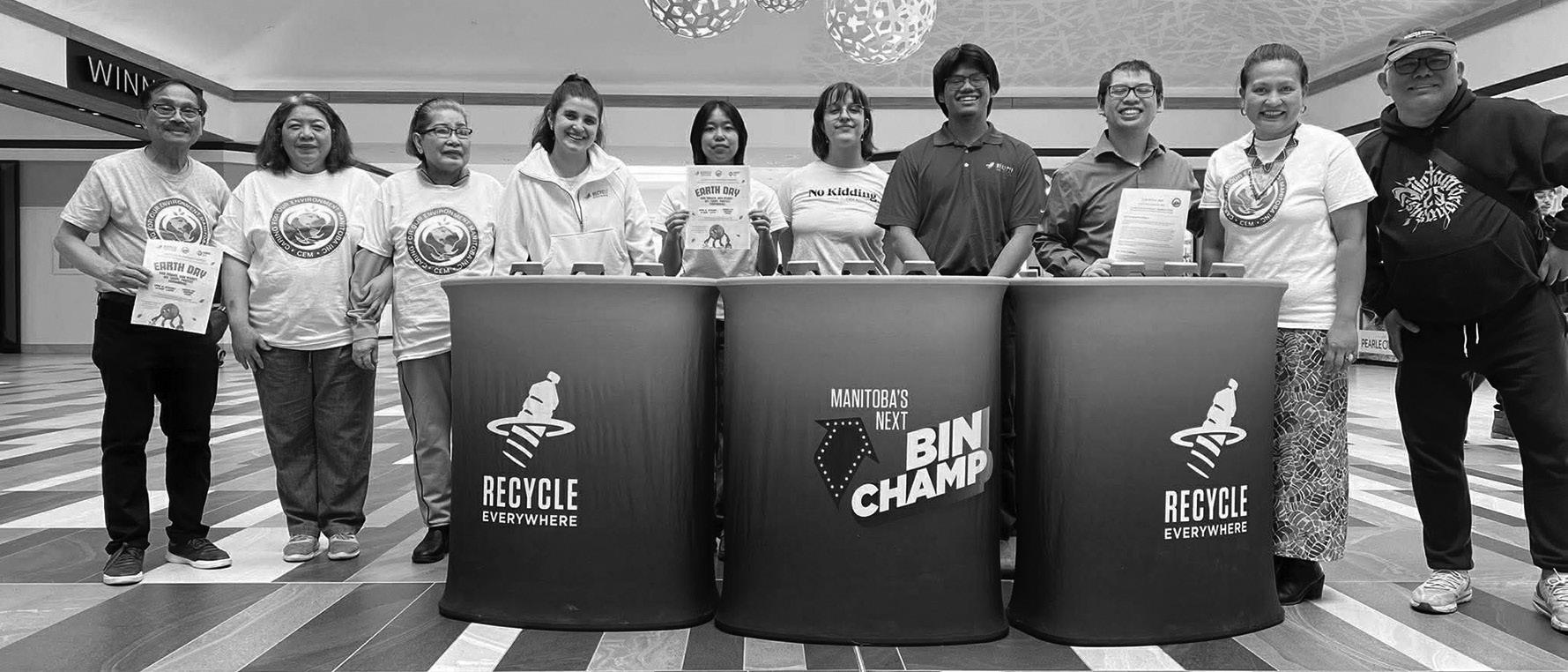
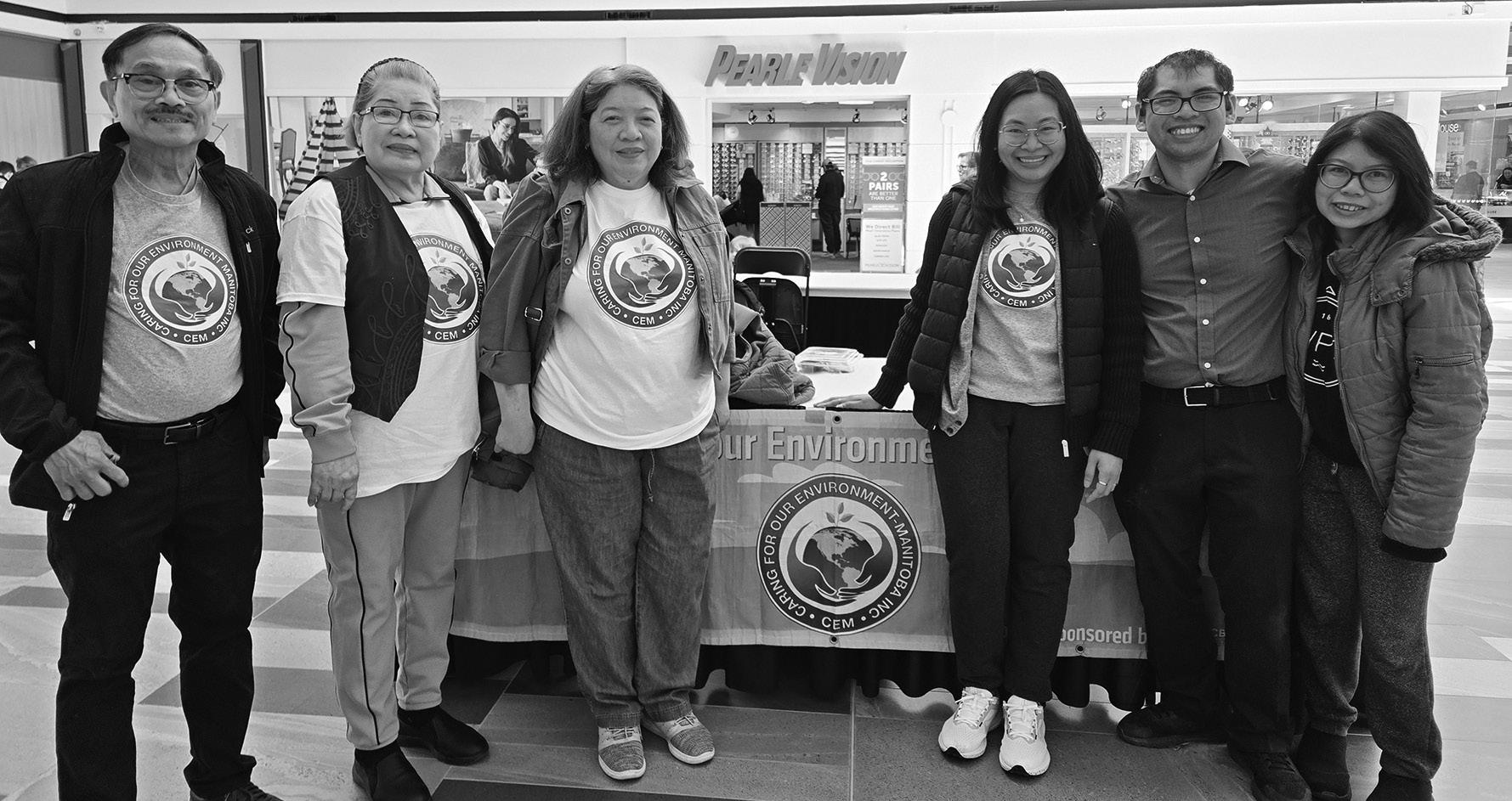
In the lead-up to Earth Day on April 22, community spirit and environmental stewardship were on full display at Garden City Shopping Centre, where Caring for Our Environment Manitoba (CEM) partnered with Recycle Everywhere to host an engaging and educational celebration.
Under the theme Our Power, Our Planet: Act Today, Protect Tomorrow, the April 18 event brought together volunteers, families, and shoppers for a day of awareness-building and practical action. With support from the Recycle Everywhere Brand Ambassador team, volunteers distributed bin bags and connected with community members of all ages, sparking meaningful conversations about recycling habits and environmental responsibility.
The event emphasized that sustainability is not limited to large-scale initiatives; it begins with everyday choices. Children and adults alike participated in discussions about waste reduction, proper recycling, and the collective impact of small actions. Organizers noted that these face-to-face interactions are key to building long-term behavioural change.
“This event reflects what community-driven environmental action looks like,” said Ramon “Jun” Sales. “When people come together with a shared purpose,
even simple conversations can lead to lasting impact. We are proud to see our community take ownership of protecting our environment.”
For younger participants, the event also served as a platform for engagement and leadership. Chris Clacio highlighted the importance of youth involvement.
“It’s inspiring to see young people curious, asking questions, and stepping up. Environmental responsibility starts early, and events like this empower the next generation to become advocates for change.”
Communications efforts played a key role in amplifying the event’s message and reach. Ann Evangelista emphasized the importance of storytelling in sustainability work.
“Sharing these moments helps extend the impact beyond the event itself. When people see their community taking action, it encourages others to reflect, participate, and commit to more sustainable practices in their daily lives.”
The collaboration between CEM and Recycle Everywhere highlights the strength of partnerships in advancing environmental education across Manitoba. By combining grassroots volunteerism with established recycling programs, the initiative successfully created an accessible and inclusive space for learning and engagement.
Organizers hope the momentum from Garden City will
continue to inspire Manitobans to take action, whether by recycling more consistently, reducing waste, or encouraging others to do the same.
The message was clear: caring for the environment is a shared responsibility that extends beyond a single day.
Let’s continue to care for our
Earth, not just on Earth Day, but every day.
Ann Evangelista is the Information and Communication Committee Chair, CEM
Cultural gathering highlights Filipino-Canadian artists and immigrant stories
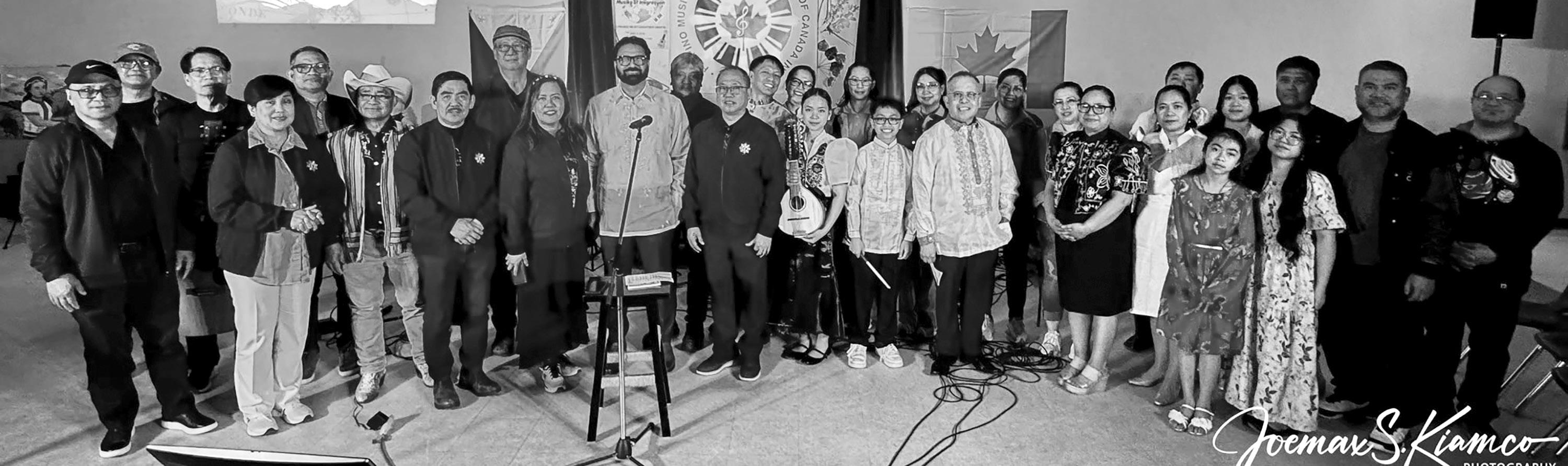
The Filipino Music and Arts Association of Canada Inc. (FMAACI) held Ang Pagtitipon: Musika at Imigrasyon (The Gathering: Music and Immigration) on May 9, 2026, at the Philippine Canadian Centre of Manitoba (PCCM) in Winnipeg.
The event brought together Filipino-Canadian musicians, composers, visual artists, writers, performers, and other cultural workers to share their experiences through music, storytelling, and visual arts.
The program opened with emcee Ana Daniella
Ilagan, followed by a land acknowledgment in English and Tagalog delivered by Susan Dimayuga. FMAACI President Ernesto Ofiaza Jr. welcomed attendees, including Manitoba Minister of Public Service Delivery Mintu Sandhu, by performing an excerpt from his original composition, Pinoy Ca (Pinoy sa Canada). FMAACI Secretary and Event Chair Jeanette Perez then introduced the evening’s program. Featured presentations included:
• Milmar Abella and Family
– Carrying the Melody Across Borders and Generations
• Alex Oyas – Musical Journey of a Filipino-Canadian Benguet Cowboy
• Levy Abad – A Guitar, A Homeland, A New Beginning
• Jeanette Perez – Saturday with U (Ukulele)
• Ernesto Paasa – Lead Me, Lord: A Life Carried by Faith and Song
• Nueva Mabilen and Family
– Himig ng Pag-ibig: A Melody That Carried Me Through
The Winnipeg Wild Flowers performed during the intermission,
while veteran artist Jun Llanos led the closing musical number.
In addition to the stage presentations, the event featured a mini-painting exhibit by Jogin Tamayo and a comics display by Giboy Trillana. Networking opportunities were also provided for artists, community leaders, and professionals interested in future collaborations.
Attendees Alvin and Dessa Narciso described the event on Facebook as an opportunity to hear stories of immigration and how music and the arts helped Filipino Canadians adjust to life
in a new country.
The event was sponsored by Duque Immigration Services and Experior Financial Group with Sarah Voluntad. Media partners were Pilipino Express and CKJS 92.7 FM. Supporting organizations included QPAM, BIBAK, Tropang Guardians, PCCM, Kangen Manitoba, and Aroma Filipino Restaurant.
Organizers said the gathering was intended to support cultural preservation, encourage artistic collaboration, and provide a platform for Filipino-Canadian voices and experiences.
Ramon Sales, Carolina Legaspi, Bing Medrano, Atasha Abquilen, Recycle Everywhere Ambassadors, Chris Clacio, Ann Evangelista, and a community member
A nation rich in everything except justice
by Diwa Marcelino
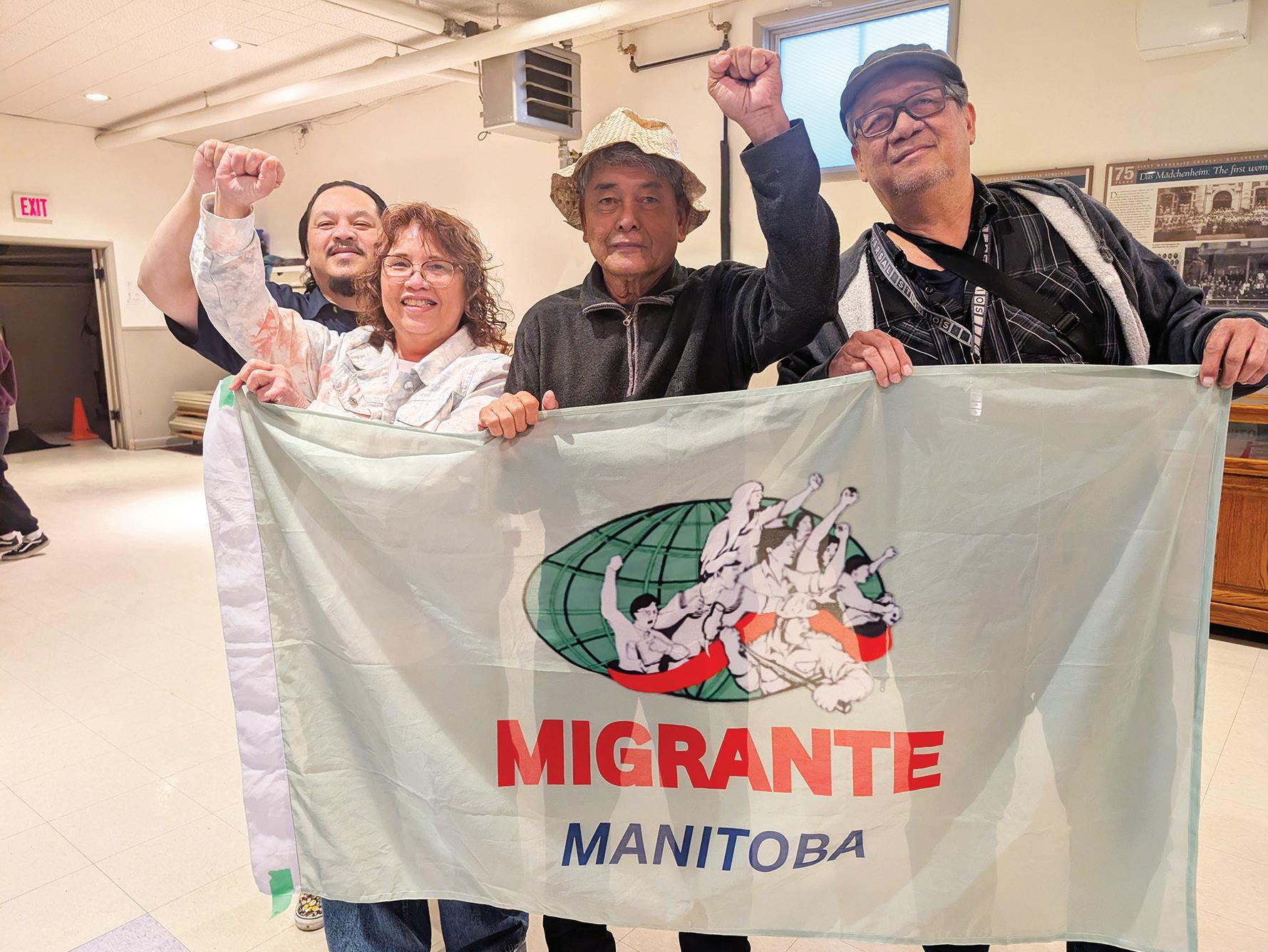
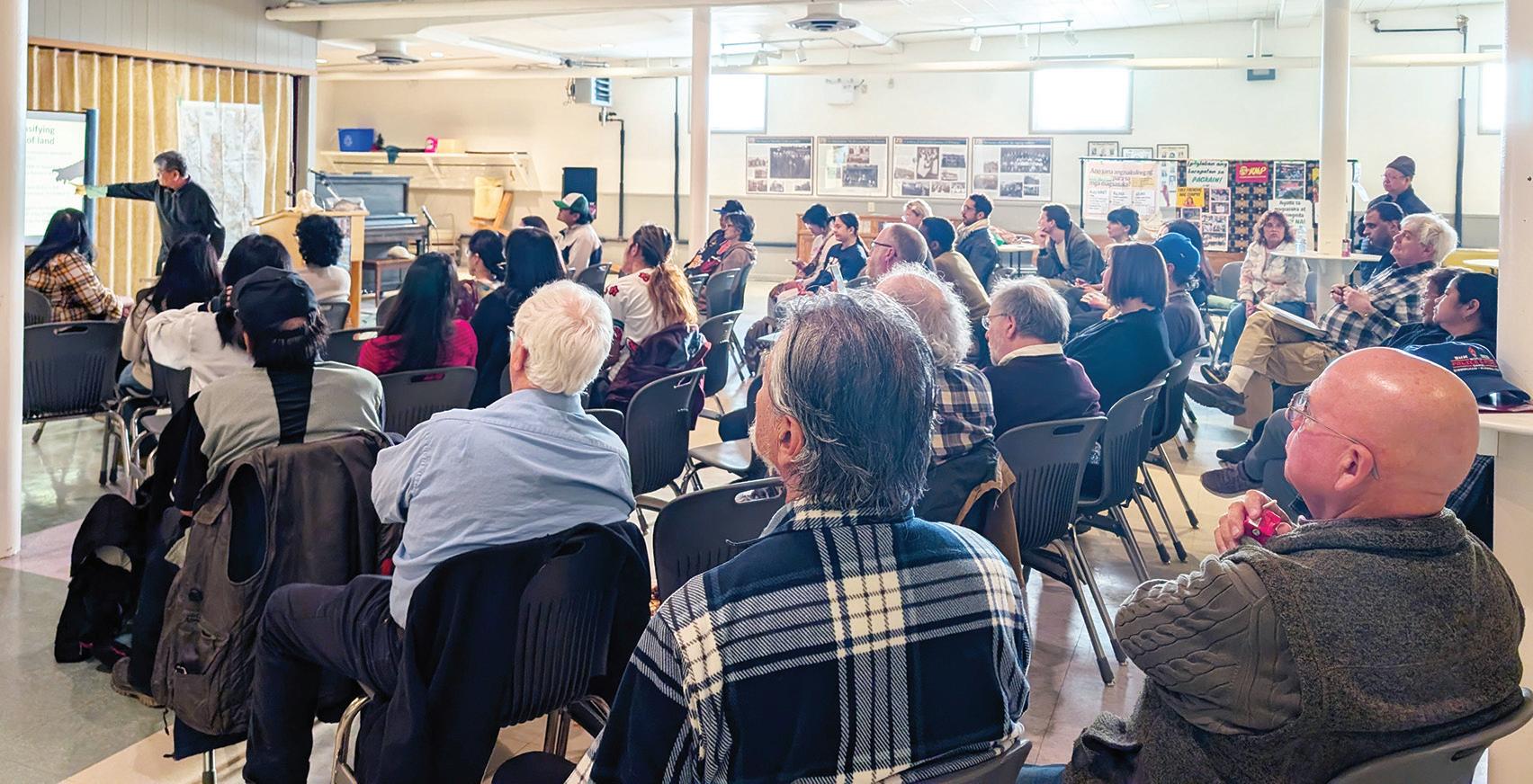
On April 21, in a church basement in Winnipeg, Danilo “Ka Daning” Ramos delivered a message most Canadians will never hear. As chairperson of Kilusang Magbubukid ng Pilipinas (KMP), one of the Philippines’ largest farmers’ organizations, Ka Daning travelled across the Pacific Ocean to tell us a story: the Philippines is rich, but its people are poor. And Canada, he made clear, is not a bystander. It is a beneficiary.
The Philippines is rich in land, minerals, and labour. Its people are not. That contradiction is not a development failure; it is the result of a system designed to keep the country open for foreign extraction while preventing the industrialization that would let Filipinos benefit from their own resources.
Ka Daning named one consequence that captures the whole picture: according to the Philippine Daily Inquirer, the Philippines – once a riceproducing nation – is now the world’s largest importer of rice. Laws like the Rice Liberalization Law opened Philippine markets to cheaper foreign rice, wiping out local farmers who could no longer compete. The people who grow the food cannot afford to eat it.
This did not happen without the Philippine government’s approval. Ghost infrastructure projects divert billions in public funds into private hands while roads, irrigation systems, and rural services go unbuilt. Government agencies are captured by the corrupt officials who run them. Officials who sign away mining rights, weaken labour protections, and pass liberalization laws do so knowing they will be rewarded.
This corruption is not an error in the system; it is how the system works. A political class enriched by foreign capital has every incentive to keep the economy deindustrialized and dependent on resource extraction, on imported goods, and on the remittances of workers forced abroad because there is no dignified work at home. The Philippines stays poor not because it lacks resources, but because its institutions are designed to ensure those resources flow outward to foreign corporations, including Canadian ones.
When indigenous peoples resist displacement from their ancestral lands, when farmers
fight back against the landlords who exploit them for generations, when journalists report on abuses or unionists demand fair wages, the state’s answer is red-tagging –branding organizers as communist terrorists, a designation that functions as a warrant for arrest, harassment, and killing.
Journalist Frenchie Mae Cumpio was arrested in 2020 on fabricated weapons charges widely understood as retaliation for her human rights reporting.
Victoria Tauli-Corpuz, the UN Special Rapporteur on the Rights of Indigenous Peoples, was placed on a Philippine government terrorist list. Targeted, she said, in retaliation for documenting the killings and displacement of indigenous communities. If a journalist or a UN official is not safe from red tagging, no one is.
Under the Status of Visiting Forces Agreement between Canada and the Philippines, some 600 Canadian troops rotate through the Philippines conducting military exercises in the West Philippine Sea, exercises that displace farmers and fisherfolk from their livelihoods.
That military presence is not a peacekeeping gesture. It is the enforcement arm of the same economic system that wrote the Rice Liberalization Law. It protects Canadian mining interests and keeps Filipino wages low enough to make foreign investment attractive.
Ka Daning was direct: “Canadian military troops are harming farmers and fisherfolk who have to stop making a living when the military exercises are taking place on the land they till and the waters they fish.”
The effect is disastrous. “The farmers, peasants and fisherfolk who produce the food for the Philippines are the ones who grow hungry.”
On April 19, 2026, 19 people were killed in Toboso, Negros Occidental – peasant advocates, student leaders, and journalists organizing and documenting struggles where injustice and poverty runs deep and resistance is met with force. The military called it an armed encounter.
BAYAN Canada and other organizations call it a massacre of civilians killed for their political work.
This is the system Ka Daning laid out in that Winnipeg church basement: neoliberalism opens the country to foreign extraction, corrupt officials lock those policies in place, and the
Philippine security forces crush those who fight back. Filipinos are left with two choices: resist and face the consequences, or leave and build someone else’s country.
The people killed in Negros stood with those who chose to resist. Their deaths are not separate from Canadian foreign policy. They are a consequence of it.
Diwa Marcelino is a community and labour organizer based in Treaty 1 territory. He is a co-founder of Health Care for All Manitoba, a longtime organizer with Migrante Manitoba, and currently serves as interim Chairperson of the Council of Canadians and board member of KAIROS. He has spent more than 25 years working at the intersection of migrant rights, worker justice, and grassroots organizing.
Diwa Marcelino
A few days ago, I was invited by Migrante Manitoba to join one of the panels for the 12th Annual Conference of the Canadian Association for Work and Labour Studies (CAWLS). The conference was from June 3rd to 5th with the theme: Solidarity Unbound, Work and Labour in an Age of Intersecting Crises. It was part of the Labour Studies Program of the University of Manitoba.
CAWLS was founded on April 20, 2013, at what is now Toronto Metropolitan University, primarily to further labour research and
workers’ rights in Canada and around the world (https://cawls.ca/ en/about-cawls/).
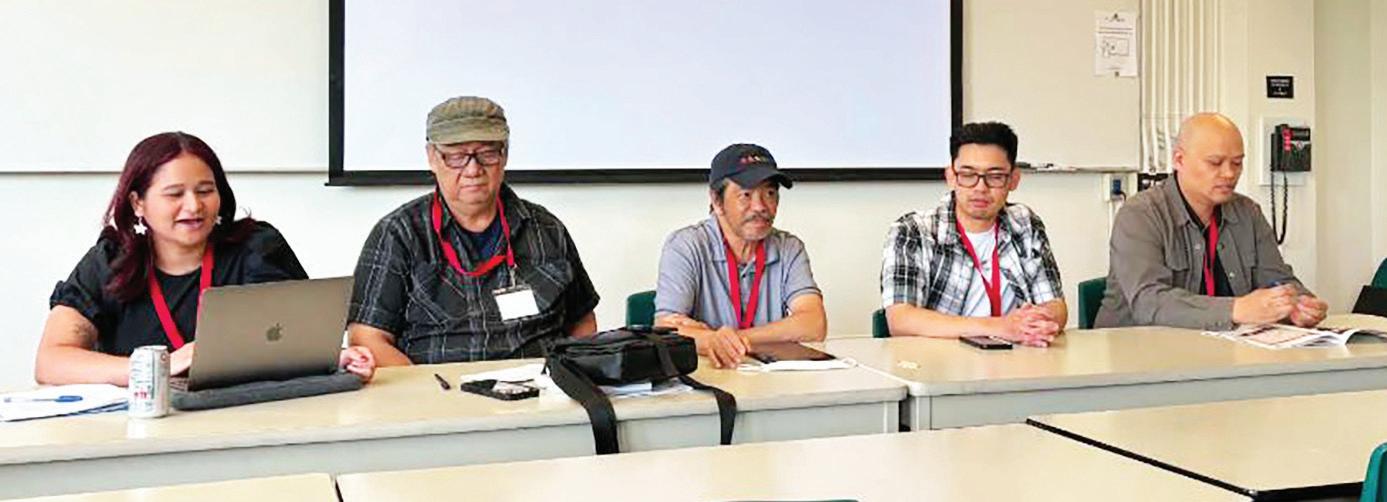
The conference was a great opportunity to discuss my research on the Filipino Labour Leaders of Winnipeg 1968-1998, Giving Back Paying Forward. The panel that I was part of was titled, Filipino labour organizing in Çanada: Collective power towards Migrant Justice amidst Precarity. Other panel members were Chris Sorio (York University/ Secretary General -Migrante Canada), Diwa Marcelino (Migrante Manitoba),
CAWLS: Pathways to empowerment
Lawrenz Decano (York University and Chair of the Panel), and Angela Gail Ciceron (University of Manitoba). There were a number of relevant labour-related topics lined up for the three-day conference. Unfortunately, I was only able to attend two panels on the first day.
It was also an opportunity for me to ask Chris Sorio about the importance of CAWLS. Chris shared his thoughts: “As a community activist and activistscholar, I see the value of the CAWLS in its potential to create a space where scholarship remains connected to workers’ lived experiences, collective struggles, and aspirations for social change, rather than becoming detached from them. At its best, labour studies are not simply about studying workers. It is about engaging with the realities they have and contributing to efforts to build collective power and social justice.” Reflecting on this idea of Chris’ brings me back to my book, which, aside from my archival research, is coupled with actual immersion in the community that lived the labour narrative from 1968-98. This period saw the community’s engagement with
labour issues through collective struggles by forming associations like the Filipino Garment Workers’ Association and joining labour unions (Amalgamated Clothing and Textile Workers Union Local 459, CUPE, CAW, UFCW, USW, Unite, UNITE HERE, UNIFOR) to expose labour issues and advocate for policy changes.
Chris Sorio added, “Participating in CAWLS raises an important question. How can labour studies become more accountable to workers themselves, particularly precarious, migrant and racialized workers whose experiences are often researched and analyzed, but whose voices remain marginalized, within both academia and organized labour? As researchers, educators, and activists, we must continually reflect on whom our work serves, whose knowledge is valued and how our scholarship can contribute to the struggle for dignity, equity and worker empowerment.” Chris’s comments are reflective of the actual situation in the community, where there is a dearth in organic activists’ scholarship. What we have are archival materials like community newspapers and
community narratives in the First Filipino Immigrants of Manitoba (1959-1975) (G. Dalayoan, L. Enverga-Magsino, & L. Bailon, 2005). It is hoped that in the future, the community will produce more than synthesizing community struggles and further advance migrant (labour) rights and welfare.
Chris concluded, “For me, the challenge is not only to produce knowledge about workers, but to produce knowledge that is useful, accessible and accountable to the communities and movements that inspire it. In this sense, CAWLS offers an important opportunity to bridge the worlds of scholarship and struggle, rooted in the experiences of the working people and relevant to the challenges they face daily.” Having the information is important, but as Chris pointed out, the information should also be accessible. Labour scholarship should reflect the lived experiences of the Winnipeg Filipino diaspora labour community, rather than sounding too academic or technical. By being accessible, this knowledge is like the proverbial mustard seed that will grow to bear the fruits of empowerment.
Honouring freedom, facing the future Philippines marks 128th Independence Day
President Ferdinand R. Marcos Jr. led the nation in commemorating the 128th anniversary of the proclamation of Philippine independence during ceremonies held at Rizal Park and the Quirino Grandstand in Manila on June 12.
“As we honour this day, we are reminded that freedom is not merely a legacy we inherit but a responsibility we must uphold. While our forebears fought colonial oppression through revolution, reform, and intellectual resistance, we face challenges of a different kind today,” President Marcos said in his Independence Day message.
“May this occasion deepen our understanding of the past and inspire a renewed sense of duty to our country,” he added.
Together with the first family, President Marcos led the flag-raising and wreath-laying ceremonies in honour of national
hero Jose Rizal and the countless Filipinos whose sacrifices secured the country’s freedom and sovereignty.
The celebration also featured a grand civic-military parade showcasing the capabilities and equipment of the Armed Forces of the Philippines, the Philippine National Police, the Bureau of Jail Management and Penology, and the Bureau of Fire Protection.
The program concluded with colourful cultural presentations
by bands, ensembles, and dance troupes from various regions of the country, highlighting the richness, diversity, and enduring spirit of Filipino culture.
As the Philippines looks to the future, Independence Day serves as both a celebration of past achievements and a reminder of the work that lies ahead. The nation continues to face significant challenges, including corruption, the spread of misinformation and fake news, persistent poverty, and
the increasing impact of natural disasters such as earthquakes, typhoons, and floods. Yet amid these difficulties, Filipinos have repeatedly demonstrated resilience, unity, and optimism.
Guided by the lessons of history and inspired by the sacrifices of past generations, the country moves forward with hope and determination toward a stronger and more prosperous future.