

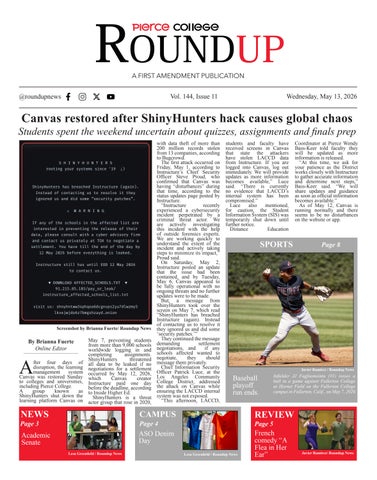
By Brianna Fuerte Online Editor
Afterfour days of disruption, the learning management system Canvas was restored Sunday to colleges and universities, including Pierce College.
A group known as ShinyHunters shut down the learning platform Canvas on
May 7, preventing students from more than 9,000 schools worldwide logging in and completing assignments.
ShinyHunters threatened all data to be leaked if no negotiations for a settlement occurred by May 12, 2026, which Canvas creator Instructure paid one day before the deadline, according to Inside Higher Ed.
ShinyHunters is a threat actor group that rose in 2020,
with data theft of more than 200 million records stolen from 13 companies, according to Bugcrowd.
The first attack occurred on Friday, May 1, according to Instructure’s Chief Security Officer Steve Proud, who confirmed that Canvas was having “disturbances” during that time, according to the status updates page posted by Instructure.
“Instructure recently experienced a cybersecurity incident perpetrated by a criminal threat actor. We are actively investigating this incident with the help of outside forensics experts. We are working quickly to understand the extent of the incident and actively taking steps to minimize its impact,” Proud said.
On Saturday, May 2, Instructure posted an update that the issue had been contained, and by Tuesday, May 6, Canvas appeared to be fully operational with no ongoing threats and no further updates were to be made.
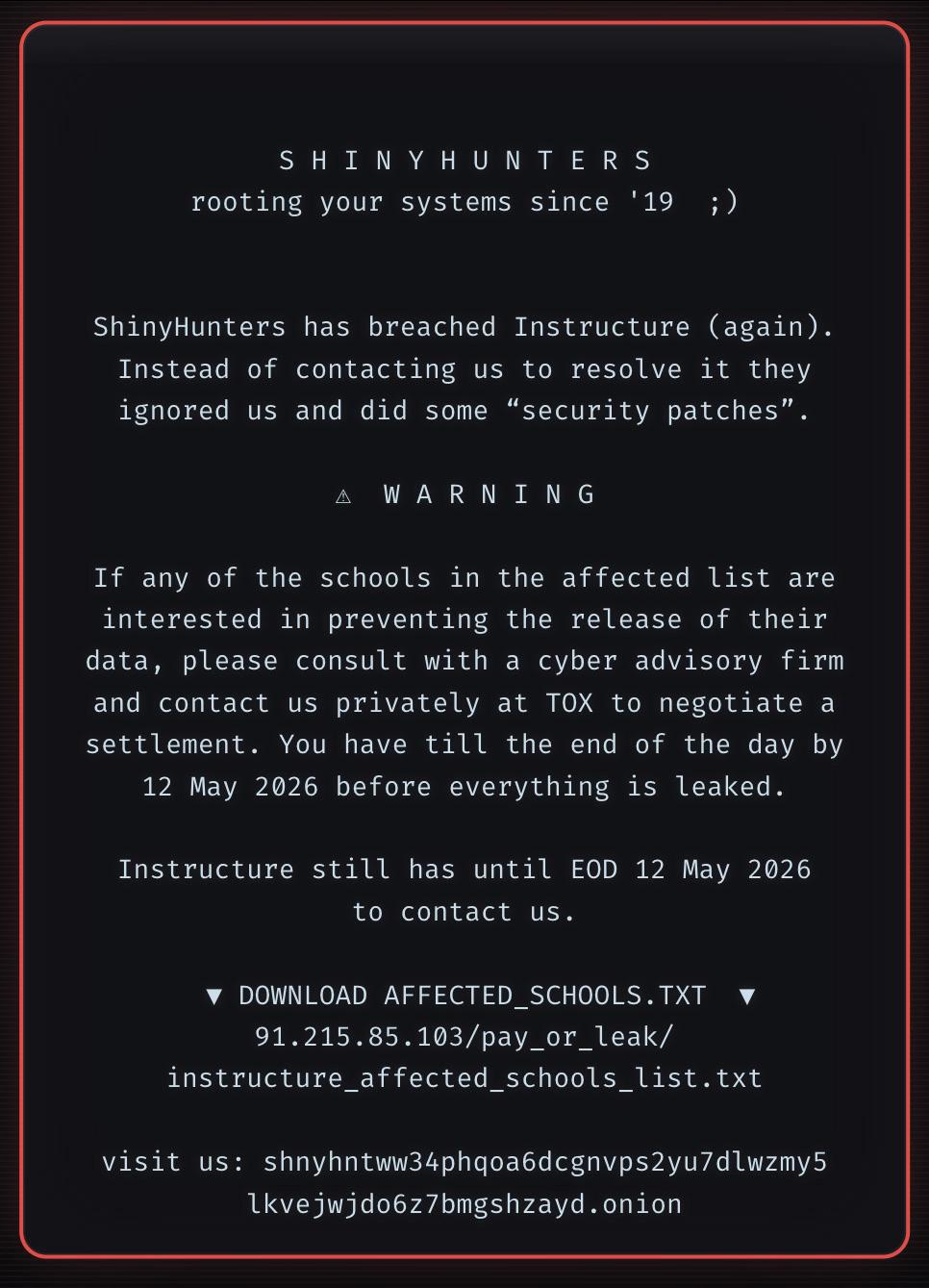
But, a message from ShinyHunters took over the screen on May 7, which read “ShinyHunters has breached Instructure (again). Instead of contacting us to resolve it they ignored us and did some ‘security patches.’”
They continued the message demanding settlement negotiations, and if any schools affected wanted to negotiate, they should message them privately.
Chief Information Security Officer Patrick Luce, at the Los Angeles Community College District, addressed the attack on Canvas while ensuring the LACCD internal system was not exposed.
“This afternoon, LACCD,
students and faculty have received screens in Canvas that state the attackers have stolen LACCD data from Instructure. If you are logged into Canvas, log out immediately. We will provide updates as more information becomes available,” Luce said. “There is currently no evidence that LACCD’s internal system has been compromised.”
Luce also mentioned, for caution, the Student Information System (SIS) was temporarily shut down until further notice.
Distance Education
Coordinator at Pierce Wendy Bass-Keer told faculty they will be updated as more information is released.
“At this time, we ask for your patience as the District works closely with Instructure to gather accurate information and determine next steps,” Bass-Keer said. “We will share updates and guidance as soon as official information becomes available.”
As of May 12, Canvas is running normally and there seems to be no disturbances on the website or app.




6201 Winnetka Ave.
Woodland Hills, CA 91371
Room: Pierce College Village 8211
Website: www.theroundupnews.com
Email: newsroom.roundupnews@gmail.com


Editor-in-Chief..............Daisy Aguinada
Managing Editor.........Abraham Elizalde
Opinion Editor...............Gabriella Carlos
News Editor..................Natalie Baharian
Photo Editor.......................Josue Aguilar
Photo Editor........................Calvin Henry
Photo Assistant.................Alissa Nguyen
Photo Assistant..................Sandra Mazas
Campus Life Editor...........Olivia Muñoz
Entertainment Editor.....Chris Rubinstein
Entertainment Assistant...........Joy Mellk
Sports Editor....................Bryce Edwards
Newsletter Editor................Emily Garcia
Online Editor....................Brianna Fuerte
Social Media Editor........Zamourad Iqbal
Reporters
Anthony Adams
Mia Greer
Gisele Donan
Elizabeth Santana-Zavala
James Mondares
Ina campus where students are often in and out just for their classes, a good way to unite them is ironically the quietest.
Some events such as film screenings or game nights may not have the expected ability to connect the way that organizers hoped, and they do not have a good turnout. The concept of silent discos in addition to their rarity, however, may be enough for curious students to raise an eyebrow, and its process inevitably brings everyone together through one song in the moment.
Pierce should host monthly silent discos, with a studentrun board organizing the themes of the events.
According to Day by Day Project and Australian Catholic University, researchers found that when holding silent discos for seniors with dementia,
Photographers
Nick Crabtree
Lesa Greenfield
Jake Gregory
Javier Ramirez
Advisers
Jill Connelly
Jeff Favre
Tracie Savage
Sean McDonald
Morgan Keith
For advertising, call: (818)710-2960
Corrections? Email us at newsroom. roundupnews@gmail.com
Scan the QR code below to subscribe to our weekly newsletter

their interactive experience with music improved their rhythmic engagement, their ability to perceive their surrounding environment and their group engagement when dancing with others. If it’s got so much success among seniors, why not bring it to active college students?
To prevent Pierce from spending loads of money on equipment exclusively for silent discos, all students would have to do is bring their desired listening device and a phone. The board could also provide spare listening devices such as headphones for those who don’t have a pair.
According to The Conversation, “silent disco started back in the 1970s as a convenient way to get around noise restrictions.” By keeping the organization as simple as possible and making the entry free, more
students are likely to attend.
To connect students into one stream of music, the board could find some sort of software that syncs participants. The Spotify Jam model is a solid example of what the software would look like, where anyone can queue what they wish in the one session they are all sharing.
But rather than having students queue songs in the moment, participants can submit their music recommendations based on the theme prior to the silent discos so the board can review them, and students can feel like they’ve personally contributed to the event.
According to Dean College, which has successfully held silent discos on it’s campus, they helped bring a community of students together, especially for those with sensory overload. Their method involved headphones that changed
color “depending on your music choice, so you can easily identify fellow listeners of the same song selections.”
Though Pierce may not have the fancy headphones, having one song that everyone dances to would encourage connection , especially as students look around to examine how others physically interact with the music.
The Conversation publication reports that “people seem to like each other more when moving in sync,” and this is based on naturalistic silent disco studies where synchronization “may be the active ingredient in their social bonding effects.”
If Pierce facilitates these events, they will likely unite students in ways they would’ve never expected through music, movement and synchronization.
By Brianna Fuerte Online Editor
Socialmedia has taken over the way communities receive news or entertainment. Hours are spent scrolling through videos and seeing constant negative news updates can cause anxiety with every scroll.
Almost every night, I find myself going down a rabbit hole of negative news content for long periods of time. It starts with one post and then another, and before I know it, I’ve spent hours scrolling on TikTok with little to no break from seeing distressing content back to back, such as the affordability crisis, ICE raids, the genocide in Gaza
and the war in Iran, just to name a few.
I didn’t notice it at first but I started to feel extremely anxious every time I would swipe to see a new crisis emerge. I would feel my heart drop and I would start to worry as negative ideas would fill my head quickly. And since I had spent a while on that video, the algorithm sees that as a sign to continue showing more videos of the same topic, repeating the cycle of anxiety and dread.
Constantly seeing these types of videos repeatedly has caused me to be worried about what the next disaster might be. I don’t know what direction we’re heading in but it feels like with every scroll, something worse comes up.
This anxious feeling has a name and is known as doomscrolling, which the Merriam-Webster Dictionary has described as “excessive time scrolling through online content (especially news) that makes one feel sad, anxious, angry, etc.”
Many people have been affected by this, as the Crisis Text Line reports that “74% of those with problematic news consumption reported mental health problems,” and doomscrolling has been linked to existential anxiety.
It doesn’t help that content creators have used fearmongering tactics to gain more attraction to their videos. I have seen countless videos of content creators over-exaggerating situations to the point that it’s become misinformation.
For example, when the Trump administration decided to implement a new system that would automatically register young men into the Secret Service program when they turned 18, TikTok was filled with videos of content creators stating that we’re heading into World War 3 and the draft was starting again. I fully believed this and didn’t understand what the system was meant to do until a professor explained it in class.
This is just one example, but there are countless other videos of the same nature all over TikTok.
Social media is full of misinformation and it’s easy to believe something online if not given the right details.
It’s true that social media is a powerful tool that can benefit society. I don’t have enough time throughout the day to watch a news channel and TikTok has provided me with an easy and quick way to catch up.
But while it is important to
stay informed of everything happening in the world, it’s also just as important not to get lost in the negative content posted. I’ve found that taking a break from scrolling by watching a non-serious YouTube video or playing a video game has helped me not feel as hopeless as I was before. It’s not a perfect solution but it’s there and it works.
Reporting by Daisy Aguinada Crime Log
A catalytic converter was stolen in Parking Lot 7 on May 8, 2026.
Pierce College Sheriff’s Office General Information 818-719-6450
Emergency 818-710-4311
PRO: Campuses should enforce notechnology use during class
By Elizabeth SantanaZavala Reporter
Recentstudies have pointed toward technology inhibiting students’ ability to think deeply, focus consistently and develop the discipline needed for academic growth.
For a place where the mind is supposed to be challenged and pushed to critically think, schools should create an environment that helps students accomplish that.
Constant access to phones and digital devices does the opposite. It interrupts thought, fragments attention and creates a dependency that many students struggle to break.A study by
technology directly benefits learning outcomes for students.
One study by the National Bureau of Economic Research examined a Florida school district found significant improvement in test scores after implementing a two year phone ban. Another study in Belgium examined first year university students that had a positive impact in testing after limiting phones.
Psychology professor Phil Reed at Swansea University who studies internet addiction notes that the way excessive screen use disrupts a person’s life resembles substance abuse. The constant urge to check notifications, the withdrawal-like discomfort when separated from a device and the need for increased stimulation to achieve the same dopamine effect mirror additive behavior.

Common Sense
Media and C.S. Mott
Children’s Hospital found the average person received 237 notifications per day with about a quarter of them being seen.
Depending on how active a student is online, that number can be even higher. By the time a student sits down to study or pay attention to a class, a single notification can easily derail their focus.
Banning technology in schools can help rebuild discipline. When students are not allowed to rely on their devices or become distracted they must learn to manage boredom and the discomfort of thinking hard.
A tech free environment forces students to strengthen their internal focus building skills that are essential in life.
Several studies have suggested reducing access to
CON:
By Anthony Adams Reporter
should allow students to use technology during class for taking notes and recording lectures.
Students having access to technology in the classroom are learning and acquiring another life skill that can be used in and outside the classroom, especially given today’s landscape in the work force.
or not to assist them.
The University of Texas Permian Basin reports that, ”Estimates show that seven million students living with disabilities are attending public schools in the United States, and individuals with specific learning disabilities or speech or language impairments make up the majority of these students. Technology in special education can help these students keep up with their peers to the extent possible and prepare for future success.”

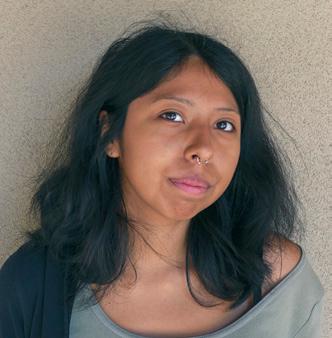
What’s your favorite way to take notes and why?
Even many tech pioneers recognize these dangers. According to Business Insider, Steve Jobs and Sundar Pichai have restricted or limited technology use for their children. With Pichai revealing he struggled with screen time. If the people who design and profit from these devices are cautious about exposing their children to them, that should be a warning for the rest of us.
Banning technology in schools is not about punishment. It is about stimulating students’ minds to think, learn and grow into disciplined and capable adults. Technology will always be a part of their lives, but schools should be a space where distractions are limited and have a place to develop without interference.
Grand Canyon University reports that, “Tech can have a particularly significant impact when used in classrooms characterized by a large percentage of socioeconomically disadvantaged students. Digital tools have the power to bridge those socioeconomic gaps, creating more opportunities for students who might not have access to technological tools at home. By becoming more tech-literate, students are also taking important steps towards preparing for higher education and the modern workforce.”
Educators can use technology as a guide when teaching students. Whether the technology device is a smart phone, laptop or tablet, it keeps the students engaged especially, with how-to instructions with the device or software on the device will keep learning interesting and fun.
Technology in the classroom is crucial to the success of students outside the classroom. It’s an aid to enrich the students’ learning process. It’s also a tool that will ultimately help them succeed in life and in the job

market.
Students greatly benefit from having access to technology in the classroom.
“My preferred method is just writing it down on a piece of paper. and if I have a test the next day or a quiz coming up, I usually just go over the notes. If a professor let’s just make a cheat sheet, then I’ll do that too.”
MaxineVelasquez-Communications
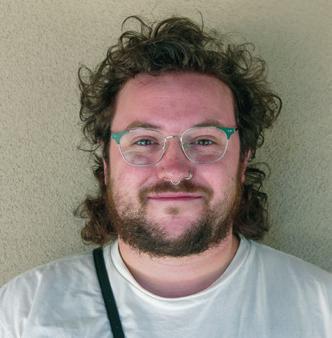
“I hate taking notes. Notoriously. I don’t really take notes,I really participate in the class. I raise my hand a lot, I ask questions and I engage with my classmates. Pen to paper is just not my method”
JaredMenschel-AmericanSign
LanguageMajor
Chief Executive of the Consortium for School Networking Keith Krueger told the New York Times, “Educational technology allows teachers to differentiate instruction and access students’ understanding in real time.” Educators can customize and tailor the learning experience based on the student’s individual needs.
Being able to use technology to help with note taking and recording class lectures helps give students with disabilities a sense of independence whether they have aide’s assistance present
Drexel University School of Education reports, ”Technology provides instant accessibility to information, which is why its presence in the classroom is so vital. Smart phones, computers, and tablets are already an omnipresent element of everyday life for students and teachers alike. It’s only natural that the use of technological devices in the classroom are explored to create meaningful learning experiences for students of all ages.”
Educators and parents need to be diligent about educating students about the benefits and dangers of having access to technology. The how and what to look out for as safety precautions are just as important as having access to technology.
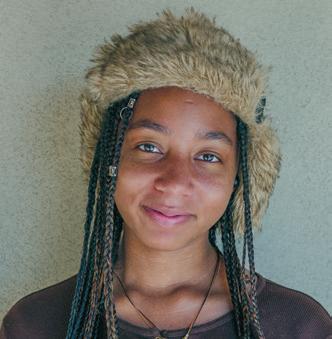
“My preferred method is really just to write it all down on a notebook in pencil. It’s just quicker for me and it’s just easier for me to write in pencil”
Jordin Martinez -Studio Arts/ BusinessMajor
Interviews by Javier Ramirez
Javier Ramirez
By Mia Greer Reporter
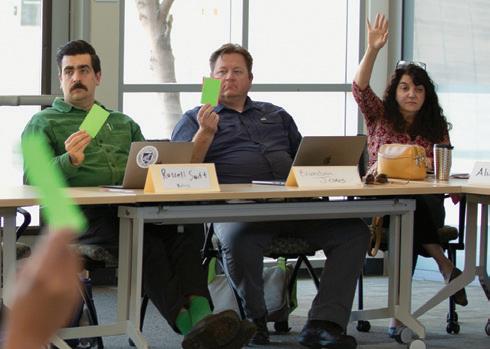
Talkof the Canvas breach dominated the May 11 Academic Senate meeting, where faculty leaders raised concerns after a period of uncertainty and confusion. The outage, which disrupted access to course materials, grades and communication tools, left instructors scrambling to adjust deadlines and contact students.
The meeting made it clear that the disruption exposed deeper concerns about the district’s dependence on the system. Instructors said the outage displayed vulnerabilities in the system, from the platform’s instability to the district’s lack of data backups. It raised questions about whether Canvas can still be trusted with instructional materials at a critical point in the semester.
Instructure, Canvas’ parent company, confirmed that the outage was tied to a security incident but released few details about the source or scope of the breach. The disruption halted access to assignments, quizzes,
grades and messaging tools, freezing many courses. For instructors who rely on the platform as their primary way of instruction, the sudden shutdown showed how deeply embedded Canvas has become in the district’s academic operations, and how disruptive a system failure can be when there is no back up plan.
Jennifer Moses, chair of the Psychology, Addiction Studies and Statistics department, said she trusted her department to adapt quickly but was alarmed to learn that Canvas data had not been backed up.
“Finding out that we, in fact, weren’t backing up our data, and I’m like, what the heck, district?” Moses said.
“To lose all those grades would have been pretty devastating because I don’t keep a separate grade book for my Canvas grades.”
Alma Cortez, professor of child development, said her first concern was reaching out to students to inform them of the breach and reassure them that instructors were aware of the issue because many students were emailing from their personal emails.
“I was concerned about
how to contact my students and let them know what was going on, many students weren’t checking their district emails,” Cortez said. “I worried about the panic for a student, because we’re in the thirteenth week of classes.”
Distance Education Coordinator Wendy BassKeer also shared her criticism at the meeting, arguing that Instructure, Canvas parent company, had shifted its priorities in ways that left the school vulnerable.
“One of the reasons Canvas got hacked is because they let go of so many of their developers. It’s all about profit now,” she said. “When you let go of all the really important developers because you think AI is gonna do everything for you, you let go of people who could have been policing and making sure stuff like this doesn’t happen.”
Bass-Keer said the district should not feel locked into the platform.
“If we had to, we could switch again,” she said. “We need to work with a company that wants to work with us and is going to put in the effort to keep our content safe.”
By Emily Garcia Newsletter Editor
Pierce College adjunct psychology professor
Maryam Tahmasebi is still being detained by Immigration and Customs Enforcement (ICE), along with her husband Seyed Eissa Hashemi and their 10-yearold son on April 11, 2026. As of May 12, Tahmasebi is still listed at the Dilley Immigration Processing Center in Texas. According to NewsNationnow.com, Hashemi is the son of Masoumeh Ebtekar, an English-speaking Iranian politician and reformist for women and environmental rights.
Ebtekar was a spokesperson for a group called “Muslim Student Followers of the Imam’s Line.” Between 1979 to 1981, the group occupied the U.S Embassy in Tehran and held 52 Americans hostage for 444 days.
Tahmasebi and her family came to the United States on a visa in 2014, and were given permanent residency in 2016 under the Diversity
Immigrant Visa Program.
Due to Hashemi’s family relation, federal immigration officers revoked their green cards.
Tahmasebi began working for Pierce in 2020, and in 2025 she was awarded the Adjunct Professor of the Year.
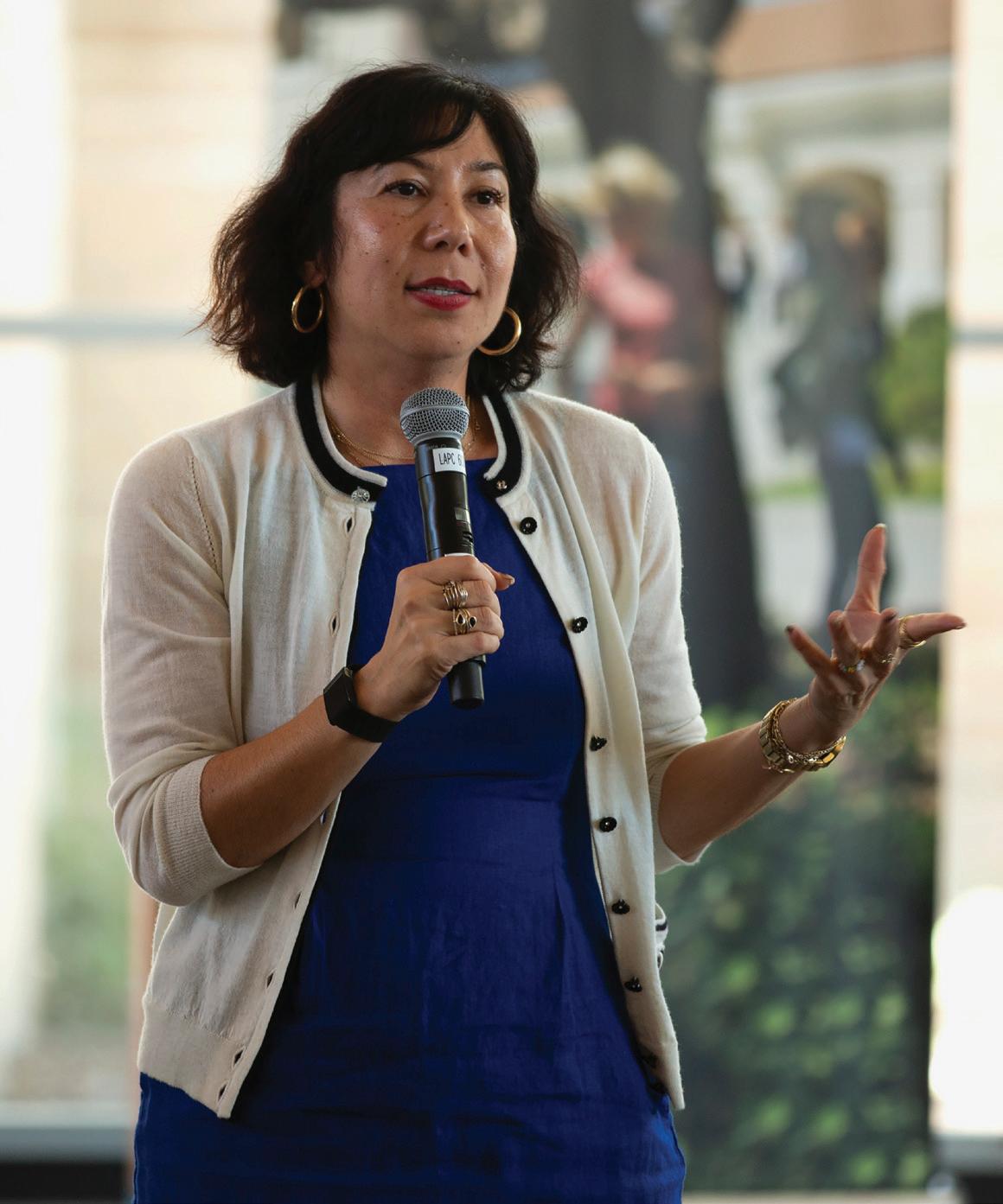
Pierce College President Aracely Aguiar said the situation was heartbreaking to hear that it happened to someone that was part of the Pierce community.
“It’s sad that it happened to someone from our community, and someone that has been a faculty member that is well liked by students and her colleagues,” Aguiar said. “It’s a circumstance that is really outside of our control, and all we can do is try to provide any information if requested. But let’s just hope and pray that things will work out well for her.”
Tahmasebi has classes scheduled during the summer, but due to not being able to get into contact with Tahmasebi, Aguiar is unsure if Tahmasebi will be able to teach the class. Aguiar will follow protocol because Tahmasebi is entitled to teach the class, and Pierce will honor that contract.
Political Science professor Denise Robb, after hearing about Tahmasebi’s detainment, contacted other professors from the union to ask what could be done. She was informed that immigration lawyers were handling the case legally.
Robb and other professors have written letters on her behalf, but it is unknown if she has received them.
“It seems very obvious to me that the fact that she chose to live here with her husband and not make a lot of money as a part time professor, instead of living in Iran, where they probably could have had a luxurious life,” Robb said. “His mom is connected to the government, the fact that they chose to live here and live a very meager, financial existence already tells you that they’re not connected to terrorism or to the government of Iran.”
Robb explained that the impact of Tahmasebi’s detainment goes beyond the normality of ICE raids because it happened to a faculty member at Pierce. “You read about the horrible things the Trump administration is doing, but
for some people, it might seem far away, like ‘Oh well that’s never gonna happen to me,’ and now it’s happened to one of us,” Robb said. “These detention centers often don’t have enough water, they don’t have enough food, they don’t have enough blankets. They don’t have enough medical care. These are like torture centers.”
On April 1, El País, an online news source, shared an article describing the conditions from within Dilley Detention Center. Detainees inside the Center said there’s a lack of medical care, the food is spoiled and conditions are unsanitary.
Secretary of State Marco Rubio wrote on the social media platform “X” Ebtekar’s family should not have been allowed in the U.S. “Her family should never have been allowed to benefit from the extraordinary privileges of living in our country,” Rubio wrote. “America can never become home for antiAmerican terrorists or their families – and under the Trump Administration, it never will.”
Psychology major Coreen Tzur said Tahmasebi should
not be held responsible for the actions of her family.
“It’s really unfortunate that we group people together, because nobody should be grouped together,” Tzur said. “Most of us immigrated here, some legally, some illegally, either way, not everyone can afford the luxury to immigrate here legally. I can’t blame anyone who wants to do better for their life and their family.”
Psychology major Jaden Tretter recalled Tahmasebi’s comments in the beginning of the semester regarding her political views.
“She was for feminist rights and against everything she grew up being around,” Tretter said. “I think she was a really good professor.”
Psychology major Jess Tlatenchi said she hopes Tahmasebi is back soon to finish off the school year with her students.
“I hope that where she’s going now she’ll be okay, and that she’ll make it back as soon as she can, because I miss her and that she’ll go by her morals to always fight for what’s right,” Tlatenchi said.
By Gisele Donan Reporter
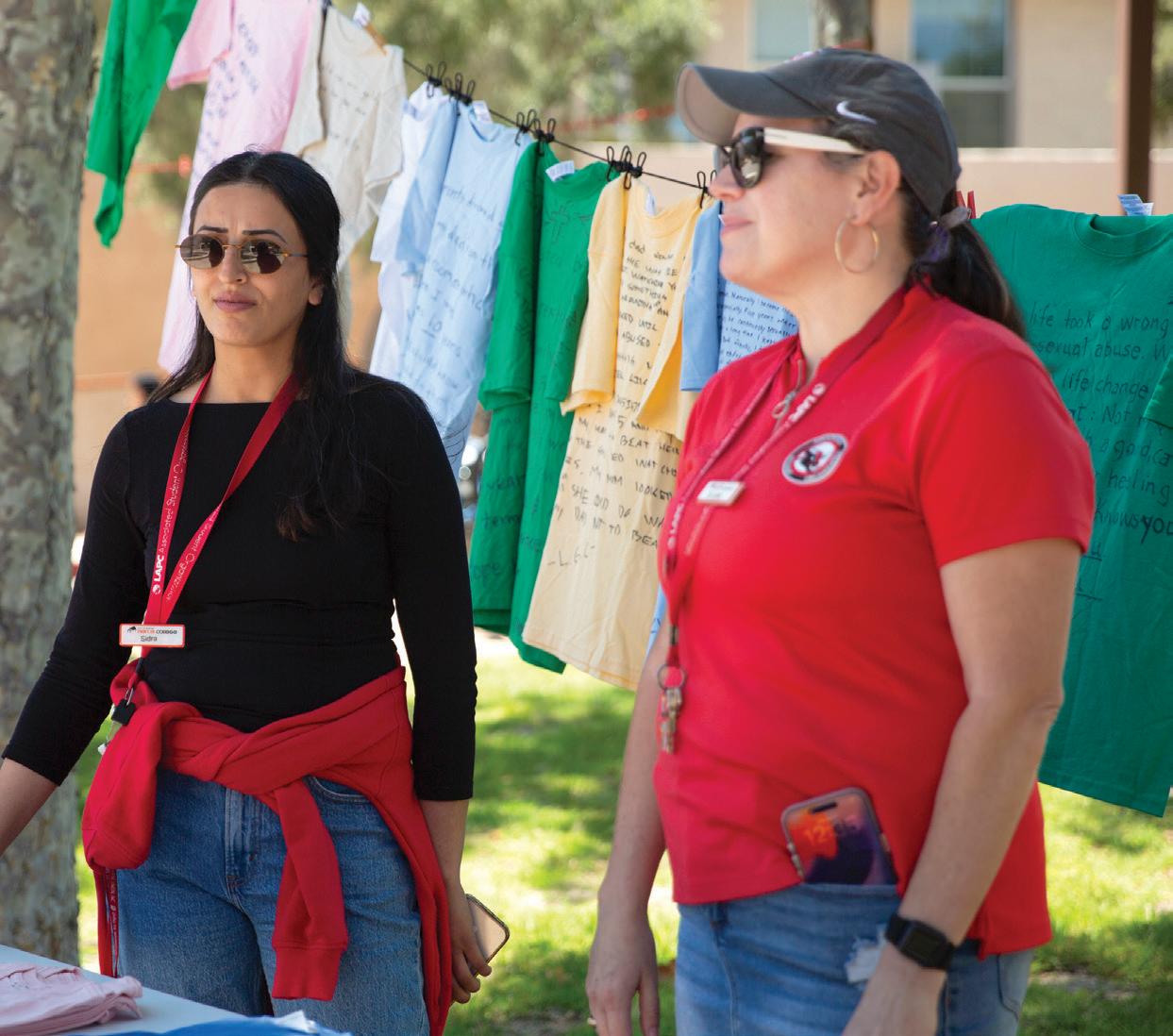
Asstudents quietly stood reading accounts from survivors of sexual assault, the importance of Denim Day echoed through the Associated Student Organization’s (ASO) Clothesline Project event on April 7, at Rocky Young Park.
Denim Day is an internationally recognized event that began during protests of an Italian supreme court hearing in 1999, where a rape conviction was overturned because of the victim’s tight jeans that they believed required help to take off, leading the jury to believe the violent act was consensual. Women around the world were outraged by this and wore denim jeans in solidarity and as a way to deconstruct harmful narratives that blame the victim.
In recognition of the day, ASO created the Clothesline project, where T-shirts of coordinated colors with hand-written messages from anonymous survivors are hung on a clothesline for anyone to observe. Students were also able to pick a shirt and pen to write their thoughts or personal anecdotes to later hang up.
Engagement coordinator,
counselor and ASO adviser Lara Conrady Wong has supervised the event for 11 years. Wong said that the event helps survivors tell their stories through its anonymity, along with welcoming connection and education about sexual abuse and what it might look like.
“It’s a cathartic thing for someone to write, and it’s also a way to show support for survivors,” Conrady Wong said. “Some people just want to look at the shirts, some want to make a shirt, some may be a little uncomfortable, but that’s why we have these events to really make these conversations a little easier to have.”
On the tables were markers and stacks of shirts differing in colors, each signifying a marginalized community and what act of sexual violence they endured. Black was for those attacked for political reasons. Red, pink and orange were for survivors of rape and sexual assault. Blue and green had represented survivors of incest and sexual abuse.
Biology major Julian Sandoval observed the hanging T-shirts and read some of the survivors’ stories. Sandoval said each message helped spread awareness on the importance of consent and appreciated the vulnerability from survivors.
“The shirts start off with
Vasquez acknowledged the event as heartbreaking but very important to engage with.
“Using this outlet to express something that would otherwise be internalized, is a great way to be able to speak your truth and have a newfound sense of strength and empowerment,” Vasquez said. “Above all, this is a loud message where everyone can see that abusive behavior should never be tolerated.”
While the Clothesline project is interactive for students for an afternoon, Conrady Wong hopes to bring more shirts next year and turn the project into a week-long art installation to continue the conversation surrounding consent and survivors around campus.
the aspect of saying no while the other person doesn’t understand what no means,” Sandoval said. “It shows how real these situations are, and you can’t avoid it or pretend it doesn’t exist when it’s on these shirts.”
With no accompanying music or snacks, the event welcomed silence and
reflection, allowing students to sit with the heaviness of the words written on each shirt.
While some chose to write, most came to acknowledge the project and ask questions about Denim Day or the significance of the clothing pieces.
Adjunct faculty member with Adult Education Rodolfo
“Every year, I grab a different box of these historical shirts. I have over 40 years of shirts in these boxes that have different messages but the same theme,” Wong said. “That just shows you the consistency of what’s happening and how it isn’t changing and hopefully, it will and we can make a difference through this project.”
By Jake Gregory, Olivia Munoz Photographer, Campus Editor
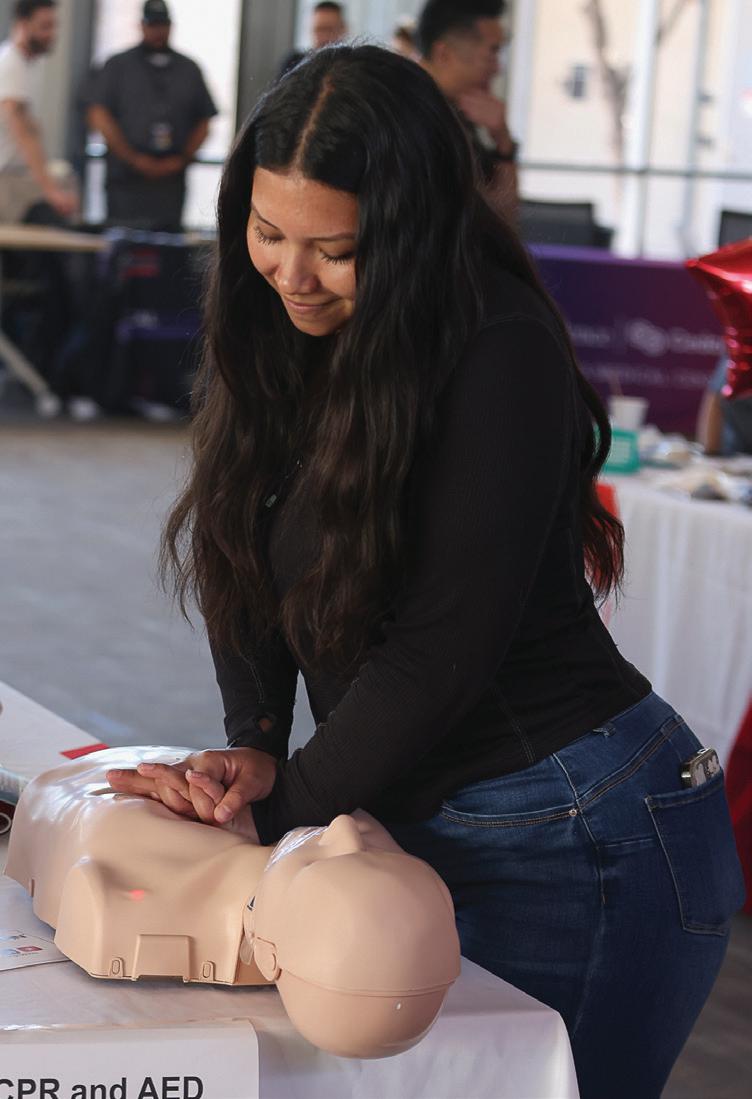
MedicalInstitutions from across the San Fernando Valley came together to give students a hands-on demonstration of the medical field during the Foster Youth and Student Health and Wellness Fair on May 6, 2026, in Building 600. The Pierce College Health Center hosted the event, which brought together students from different colleges across the Los Angeles Community College District to give them information on health insurance, HIV Testing, CPR training and prizes. Students were given a bingo card when they first arrived, which encouraged them to visit every table to fill it out.
Pierce College showed off some of its services, such as the Brahma Bodega, which provides free food to students on campus, and the Next Up program that seeks to support
currently and formerly enrolled foster youth students.
The booths gave students and attendees knowledge on the next steps they needed to take to gain medical insurance, and the training needed to work in the medical field. Nursing students presented to students who are figuring out the next steps in their careers.
Student Health Center Assistant Loralyn Fredrick said the event helps students be aware of resources they may not know about in their field.
“We believe working together is important, where it’s not only just about us, but collaboration together so that we are all informed,” Fredrick said.
“It connects students and our community members to the resources that they did not know they were aware of.”
Director and Instructor for nursing services at West
Valley Occupational Center Catherine Eredia brought her students to the event, as she felt it would help them make connections with Pierce so they can transfer into the nursing program once they complete the Certified Nursing Assistant program.
Eredia said that this event helped her be aware of the services that Pierce offers for her students.
“There are some clinics that are here, and my students have to get physicals when they go into their program,” Eredia stated. “So I spoke to the young lady, and she told me I could refer them so they could get those physicals and immunizations that they need.”
Pierce College invited multiple colleges to bring in their students for information about
different college nursing programs, which included California State University, Northridge and Santa Barbara City College.
Next Up Program Coordinator Oswaldo Portillo stated there were multiple vendors and forms of communication to help get the word out to other colleges, including emails, calendar invites and by word of mouth.
Portillo said that events like the fair help build community for populations that historically have had difficulty creating one.
“It’s important for students and faculty and staff on campus, and any other community member, to know what resources are out there, especially for populations such as former and current foster youth,” Portillo said. “There are some time limits on resources, sometimes there’s some urgency involved. So it’s good to get the word out and it’s also good to have an event that helps the community connect within itself.”
By James Mondares Reporter
Hopefully, you’re feeling frisky and mischievous when you watch the Pierce College Theatre Department’s new and final play of the semester, “A Flea in Her Ear,” which is playing until Sunday, May 17.
Play director Esdras Toussaint put his unique spin on David Ives’s English translation of the classic French farce of the same name originally written by Georges Feydeau in 1907.
The story follows Raymonde Chandebise and her friend Lucienne as they attempt to catch Raymonde’s husband, Victor, cheating on her after rousing her suspicion. But what the girls didn’t know was the whole whirlwind of mayhem and miscommunication that was headed their way at the “Frisky Puss Hotel.” Mistaken identities and infidelities filled the air at the appropriately named establishment.
The play was marketed to be a hilarious comedy, and on that front it delivers.
With an ensemble of around 20 performers and a runtime of roughly three hours, this three act play packs a punch, delivering funny moments one
after another. Each character got their time to shine and got laughs.
The physical humor displayed by the performers is the highlight of the show and well-executed. There is nearly always something to laugh at: one character’s walk, another character’s mannerisms and even prop gags that caught much of the crowd by surprise.
Actor of both Victor and bellboy Poche, Tobin Chapman delivers two distinctly different yet similarly comical performances. Considering this is Chapman’s first leading role, he did a great job in both his performance as an emotionally distressed Victor and drunkard bellboy Poche.
Tori Swick and Haley Anglin, who play Raymonde and Lucienne respectively, also deliver standout performances. Swick excels in her portrayal of Raymonde’s complex yet extremely animated emotions and dialogue. Whereas Anglin stands out with her physicality, her walk and audience interactions being notable comedic beats.
Another outstanding performance comes from Rocco Perdenza, who plays Camille, Victor’s nephew.
The set design and stagework for the play is also impeccable, styled with cozy atmospheres and elaborate

roomwork that allows the chaos to continue. In the second act, there’s a room that switches walls with the press of a button. This bit continues for the whole act and elicits laughter with each character’s growing confusion and forgetfulness.
The third act of the play greatly accelerates the pace, which leads to a ridiculously
climax. The stagework also contributes to this climatic moment, featuring a scene with flashing lights (in tandem with the performers) that creates an exhilaratingly busy scene in slow motion.
All in all, the performances and stagework collaborated with no infidelity to create a marriage of comedy and
chaos.
“A Flea in Her Ear” runs until Sunday, May 17, in the Performing Arts Mainstage Theater. Performwnces are on Fridays and Saturdays at 7:30 p.m. and Sundays at 2 p.m. Tickets can be purchased online at LAPCtheatre.org.
By Calvin Henry Photo Editor
Framesof war, violence and trauma illuminated the rows of students sitting together engrossed in the movie screen. Pierce College Film Club hosted a screening of “Full Metal Jacket” and a panel discussion on Thursday, May 9, in the Great Hall to spark a discussion of the film and its anti-war themes.
The event attracted more than 30 students and offered complementary snacks. The event began with a brief welcoming speech from Film Club President Shaaliz Shadroo before transitioning to the movie.
“Full Metal Jacket” is a 1987 war film directed by Stanley Kubrick, who also co-wrote the screenplay with Michael Herr and Gustav Hasford. The film is split between two main storylines. The first half of the movie focuses on recruits James T. Davis and Leonard Lawrence, who
are subjected to an 8-week military training program at Marine Corps Recruit Depot Parris Island in South Carolina. The latter half of the film focuses on James and other Marines’ experiences of the Tet Offensive, a military campaign launched during the Vietnam War.
The panelists discussed the dehumanization of the soldiers during their training, the depictions of the Vietnamese and the effectiveness of the movie’s anti-war messaging.
Film Club faculty adviser and cinema professor Ken Windrum said “Full Metal Jacket” is a great movie.
“The necessity of removing everything decent about yourself to be effective in war is covered here so effectively,” Windrum said. “I think this is the best critique of the U.S. military in terms of their internal policy that I’ve ever seen.”
Windrum adds that one of the film’s issues is the focus on Americans.
“I do think that there are problems with any American movie because it’s going to be more about Americans and
our suffering, and we identify with these young dudes,” Windrum said.
Pre-veterinarian major Alice Pinto, who was one of the panelists, said it is disingenuous to label the film as “anti-war” because it mainly focuses on the American soldiers and less on the Vietnamese people.
“It doesn’t humanize them in any way, shape or form,” Pinto said. “The most we get is the sniper at the end, where she’s praying.”
Panelist Ryan Aguiar said he has watched the movie several times since he was 10 years old, and as he grew older, he developed a deeper understanding of it.
“When you watch it as many times as I have, you start to stop laughing at certain moments, and you start to really reflect on, oh my God, these kids, these are kids,” Aguiar said.
Shadroo said she hopes students gained a new perspective from seeing the film, particularly on the glorification of war on social media.
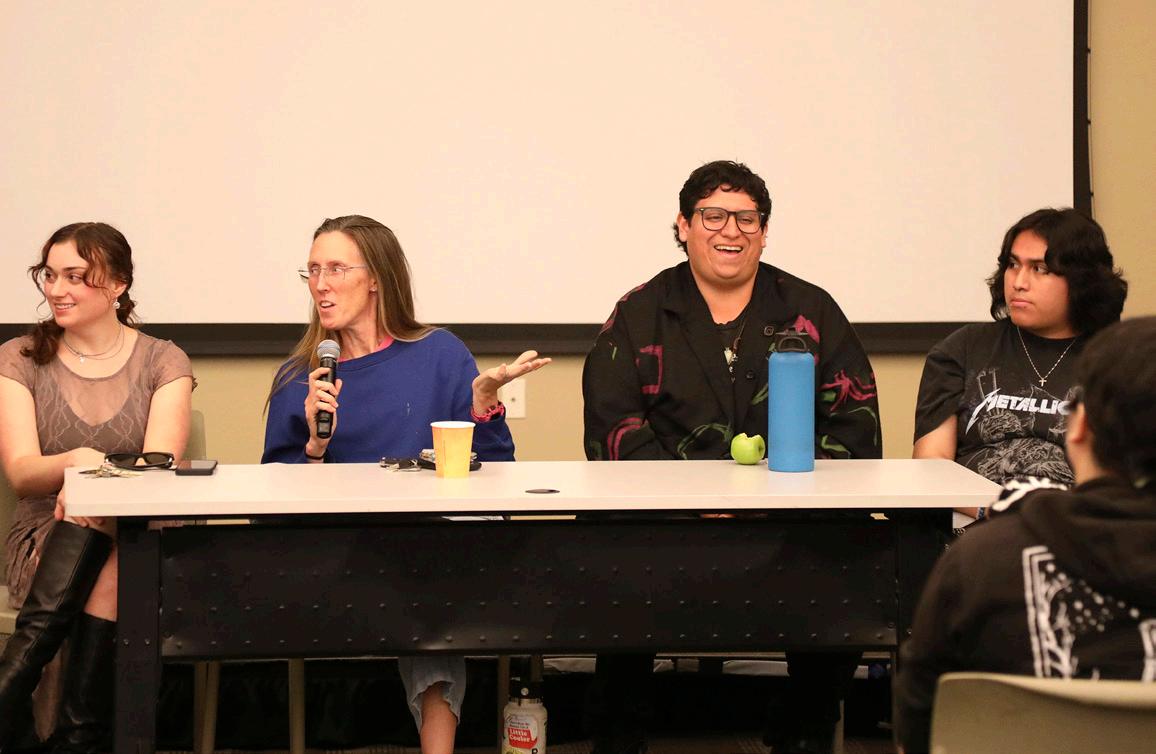
(Left to Right) Panelists Morgan Kieth, Cara Gillis, Ryan Aguiar and Alice Pinto speak about the film Full Metal Jacket after a screening hosted by the Film Club inside the Great Hall at Pierce College in Woodland Hills, Calif., on May 8, 2026.
Film Club will host another screening of the war film
“Johnny Got His Gun” and a panel discussion on Wednesday, May 18, from 11 a.m. to 2:30 p.m.
“I remember people would make jokes on Instagram and TikTok, they would be like I’m getting drafted to the war and this and that, and I’m like ‘hey, so that’s not a funny thing,’” Shadroo said. “There’s a lot of horrible things that come with that, and this is not necessarily an easy thing that you can joke about.”
Story By Daisy Aguinada Editor-In-Chief
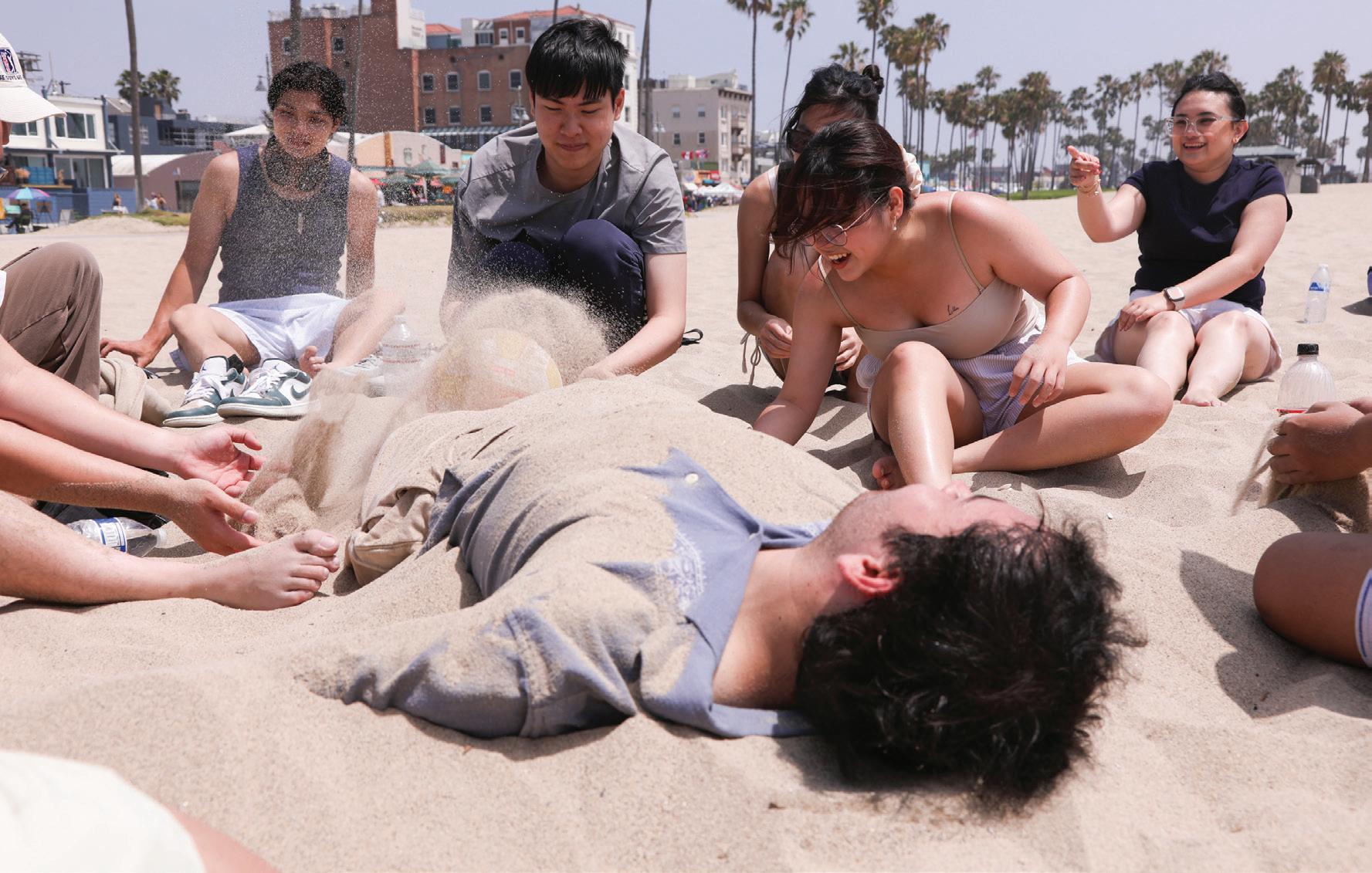
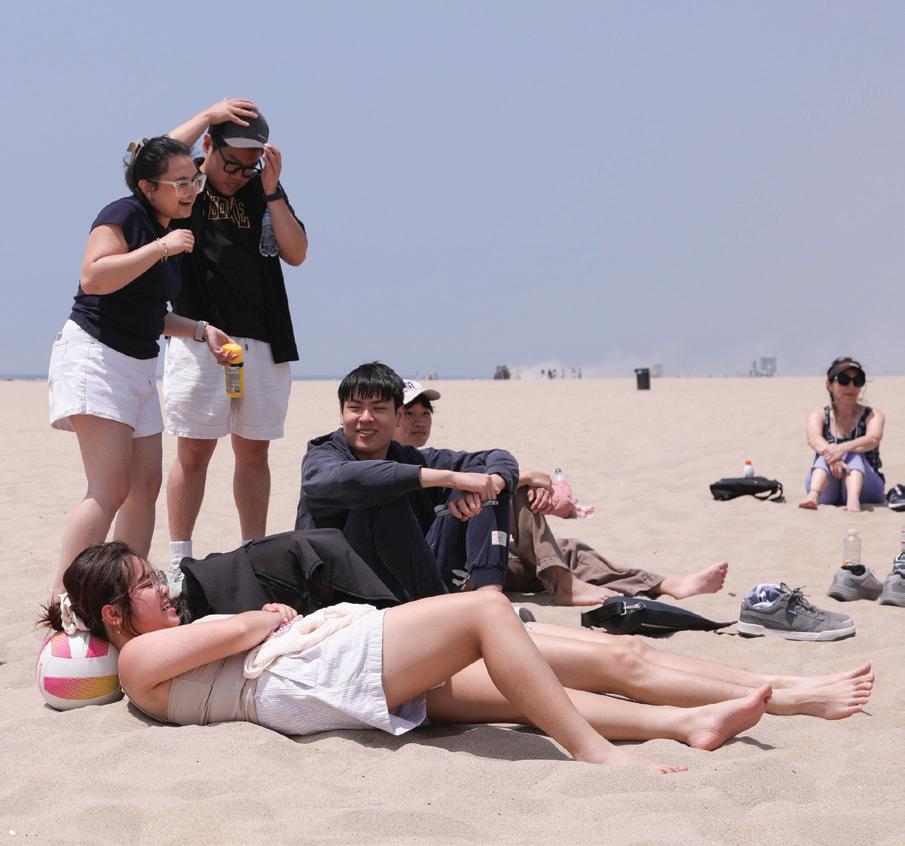
Brahmashit the sand for a day of sun and student connection on May 9 for a community-building trip to the Venice Beach Boardwalk organized by the International Student Society.
Club members met at the Pierce College Welcome Center before departing for Venice Beach. Once there, students walked along the boardwalk, participated in games and spent time socializing along the shoreline.
On the sand, students played volleyball, football and Frisbee. Others relaxed in groups, talked with peers and playfully covered each other in sand. Between activities, they explored nearby shops and vendors, later stopping at a market for ice cream to cool off.
Donna Covarrubias, an international admission adviser at Pierce, said the outings help students build connections after arriving in the United States to pursue their education without an established support system.
“A lot of students come here not knowing anyone and are without family or friends nearby,” Covarrubias said.
“Providing field trips gives them the opportunity to meet people and experience L.A. culture. They get to talk to students who grew up here in California or in the U.S.”
She said the experiences also help students connect in ways that campus life often does not allow.
“Just getting to know them a little more outside the academic presence, whereas when you’re on campus, they may not open up as much to you. But when you’re on a field trip, you kind of learn more about them as a person and not just what they’re studying, what they’re doing, where they’ve visited, what their families like and things they look forward to,” Covarrubias said.
Liam Doan, president of the International Students Society and an applied mathematics major, said the club has grown into a closeknit community since he became president a year ago.
“The club has become a very energetic vibe with great people,” Doan said. “It creates a whole new fun community of international students and regular
Photos By Calvin Henry Photo Editor
students of international background, which is a dream come true for me.”
Doan said experiences such as the Venice Beach trip help students adjust to life in Los Angeles by encouraging them to engage with the city beyond the classroom.
“I want to share the experience with other international students as well because they come here not just to study, they come here to experience L.A,” he said.
He said his transition from Vietnam highlighted the importance of those opportunities.
“I experienced culture shock when I moved here, because it is a very different culture from Vietnam,” Doan said. “And by going out like this, experiencing people, experiencing life, experiencing the vibe around the area, it makes me more connected to L.A., to the people around here, and it helps me feel more comfortable whenever I go outside.”
Justin Brubaker, treasurer of the International Students Society and political science major, said students took part in a variety of activities during the Venice Beach trip.
“Some of the activities I participated in were beach volleyball, football, getting buried alive, napping and just exploring Venice,” Brubaker said. “The thing that stood out the most about the atmosphere was how relaxed it was despite all the people. I feel like everyone was comfortable enough to be a big group or do their own thing.”
He said the structure of the trip allowed students to move freely between group activities and individual exploration. Brubaker said the Venice Beach outing gave students a more relaxed space to interact freely outside of the campus.
“Sometimes it can be hard to be forced into a big group all day, so being able to splinter off or go explore at your own pace is something we wanted everyone to have,” he said.
Brubaker said those moments help students build a stronger sense of belonging in the city.
“It makes me feel like they become more like locals a little bit every day,” he said. “Every time we hang out, every time we do something, every time I show them a new spot, it becomes their spot too.”

LEFT: Los Angeles Pierce College International Student Society members Lilla Doan, Matthew Villegas and Olivia Wong play volleyball at Venice Beach Boardwalk during a field trip in Los Angeles, Calif., on May 9, 2026. “I made up a really good team, very good team work on the plays on the volleyball,” said Liam Doan, president of the International Student Society. “I didn’t expect that from our club members”
BOTTOM: Los Angeles Pierce College International Student Society members cover political science major Justin Brubaker in sand during a field trip at Venice Beach Boardwalk in Los Angeles, Calif., on May 9, 2026.

By Jake Gregory Photographer
TheBrahmas battled against the Fullerton College Hornets in their three-game series at Hornet Field in Fullerton, Calif. on May 7, 2026, losing in the win-or-go-home game three.
Pierce College had faith in pitcher Brayden Briscoe, starting on the mound for the Brahmas, according to head coach Bill Picketts. Briscoe started the game strong by shutting down the Hornets in the first two innings.
“Whenever we have Brayden Briscoe out there, we feel very comfortable, he can beat anybody”. Picketts said.
The Brahmas started the 3rd inning aggressive, scoring 2 runs before loading the bases for Ethan Granillo, who hit a grand slam to left field to give the Brahmas an outstanding 6-0 lead.
Fullerton was slowly starting to fight back as they scored one run in the bottom of the third inning. The Brahmas answered right back in the top of the fourth inning with a three-run home run by Braden Sellz, giving the Brahmas a 9-1 lead.
Briscoe began to struggle as he got later into the game. Giving up three runs in the fourth and fifth innings as the Hornets started to chip away at the lead. This was slowly stopped in the top of the seventh inning as the hits started to come back. Isaiah Chaves homered to left field, giving the Brahmas another two runs.
“So I knew I had to come in and just grind one out for the team. I knew I had to probably go pretty deep. I knew I had to go and attack early.” said Chaves.
Fullerton would not give up so easily as they doubled and homered to cut the lead to 1210. This gave the Brahmas a 1-0 lead in the series as they came back next day to play game two of the three-game series.
Coming off a nailbiter 1210 victory over Fullerton yesterday, Pierce College was in the driver’s seat to advance to the next round of the Super Regionals if they get a win today. The Brahmas were led by Pitcher Hunter Zanki, who had a rough day on the mound. Zanki went three and twothirds innings with six hits and five earned runs. Pierce continued to be plagued by errors and wild pitches, which led to Fullerton scoring four runs by the second inning. The Brahmas scored only one run from a sacrifice fly to right field in the second inning. Jeremy Jones scored two out of the four runs for the Brahmas.
“I’m just trying to get the next guy up, especially being down pretty early, just any base runners to just get us going.” Jones said.
The Hornets ended up winning the game 15-4, forcing a game three where Fullerton put on a show in front of their home crowd, giving the Brahmas a two-run lead before scoring seven runs of their own during the rest of the game and allowing the Brahmas one more, ending the season for Pierce.
The Brahmas finished off their season 26-21 including playoff matches, 13-11 in their conference.




College
Thursday,
solid contact and hits a home run off the
MIDDLE LEFT: Pierce College Head Coach Bill Picketts gives a pep talk to his players and gives critiques to work on going further into game two of a three game series, against Fullerton College at Hornet Field on the Fullerton College campus in Fullerton, Calif., on Thursday, May 7, 2026. Photo by Nick Crabtree.
MIDDLE RIGHT: Pierce College Infielder Ethan Granillo (#7) rounds third headed to home, after he hit a Grand Slam, in a game against Fullerton College at Hornet Field on the Fullerton College campus in Fullerton, Calif., on Thursday, May 7, 2026. Photo by Nick Crabtree.
BOTTOM: #16 Brayden Briscoe pitching against Fullerton College during their game against Fullerton College in Fullerton, Calif. on May 7, 2026. Photo by Jake Gregory.