Spotlight on the Academic Power of Piedmont


The work of three forensic science students, including Haley Bolt ’20, may have solved a murder. Pg.8
“Determine that the thing can and shall be done, and then we shall find the way.” — Abraham Lincoln
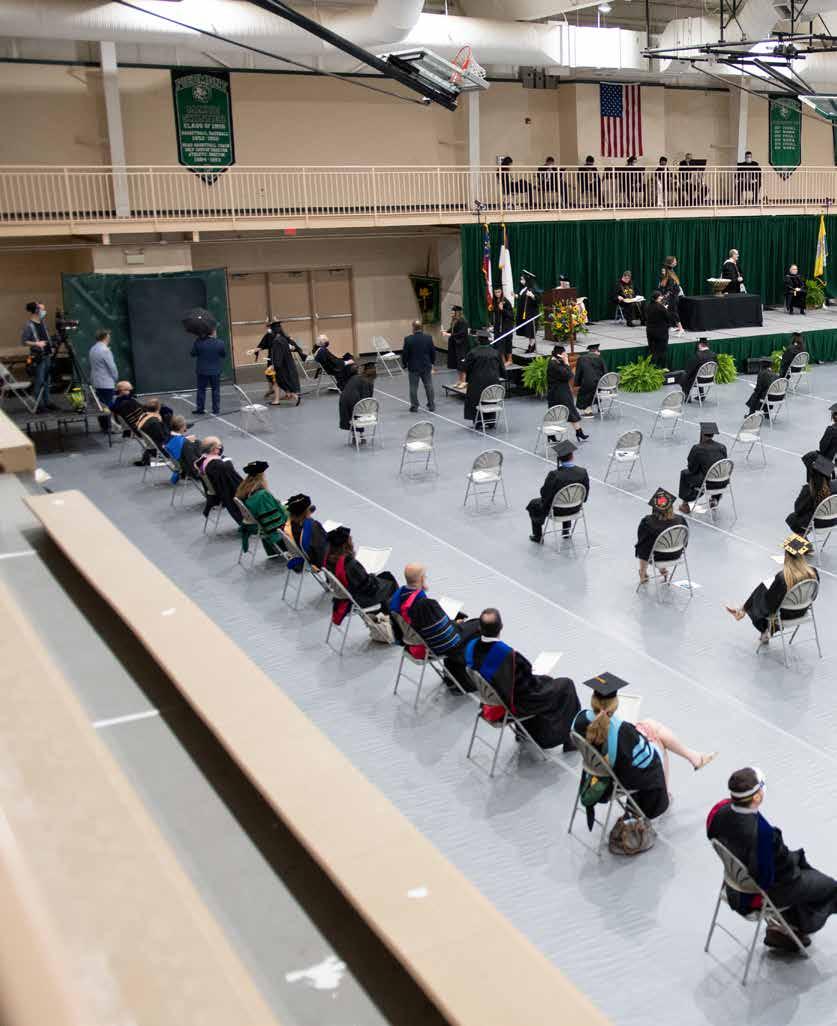
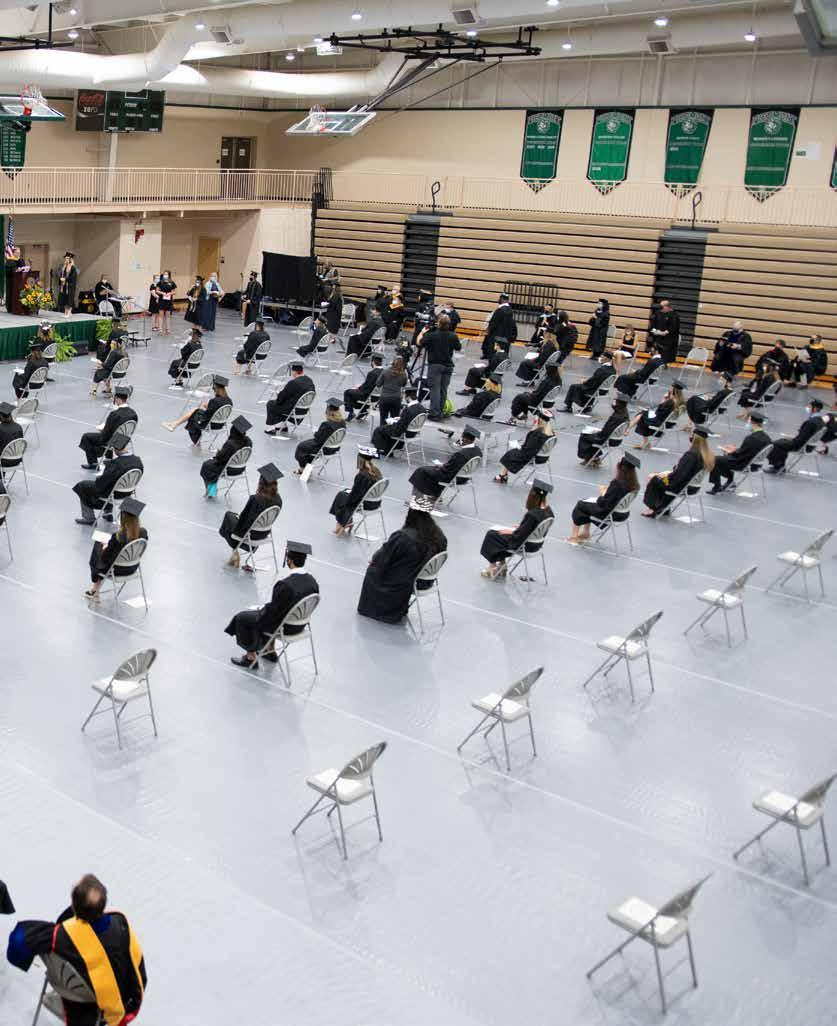
Piedmont College hosted Commencement ceremonies on July 24 in the Johnny Mize Athletic Center. More than 200 undergraduate and 400 graduate degrees were celebrated in two separate ceremonies. Due to COVID-19, participants had their temperature taken before entering the building and were required to wear face coverings. Inside, the seating arrangement allowed for social distancing.


Piedmont College is poised to rename itself “Piedmont University” this Spring, a move that reflects the college’s growth as well as the vitality of both its graduate and undergraduate academic programs.
Although the COVID-19 pandemic created unforeseen challenges for Piedmont this year, we are weathering them well and even seeking where possible to seize opportunities created by the disruption.
Most notably, the Spring 2020 semester saw our faculty move incredibly swiftly to a fully online course format when the college shifted to distance learning in mid-March. With the intensive help of our office of academic technology, even faculty members who had little or no prior experience with online teaching were able to transition to the new format, and our students were broadly appreciative of their efforts.
The speed with which our entire society has embraced the online format also led us to the strategic decision to move the majority of our graduate-level programs to a permanent online format. As of Fall 2020, graduate programs in our School of Education are online, and our MBA program in the Walker School of Business will adopt a hybrid format. Although the great majority of our undergraduate population will participate in face-to-face courses, specific online programs at the undergraduate level are also being created as convenient options for working adults seeking to complete a college degree.
Despite the unprecedented impact of COVID-19, we are especially pleased that so many of our students, faculty, and staff were able to continue to pursue meaningful academic research and creative work throughout the year. For example, although many events that had been planned for the latter half of the Spring 2020 semester had to be canceled, we were very proud to be able to showcase the talents and achievements of over 130 Piedmont students at our second annual Piedmont
Symposium, which was held virtually on April 15. Hundreds of members of the Piedmont community attended the event.
This issue of FOCUS highlights a number of additional research projects undertaken by Piedmont College students, faculty, and staff during the 2019-20 academic year. In its pages, you will learn about a student’s work cataloging and photographing artifacts at the Sautee Nacoochee Cultural Center history museum for a new app and historical guide to the area.
Also of note is the investigative work conducted by three forensic science students who took part in a cold case murder investigation and whose analyses of case evidence will be used by authorities who continue to work on solving the murder. We are proud that these forensic science students, who graduated in May, have all been accepted to graduate school.
We are also pleased to feature Erika McKinney ’20 Ed.D., assistant professor of nursing and health sciences, who received her Ed.D. degree in July for a dissertation about the effectiveness of high-fidelity manikins in athletic training clinical simulations. Dr. McKinney’s original study applies manikinbased simulations, which have previously been used in other health care fields, to the specific types of health emergencies and injuries to which athletic trainers often have to respond.
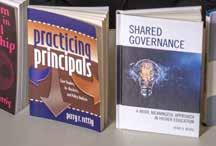
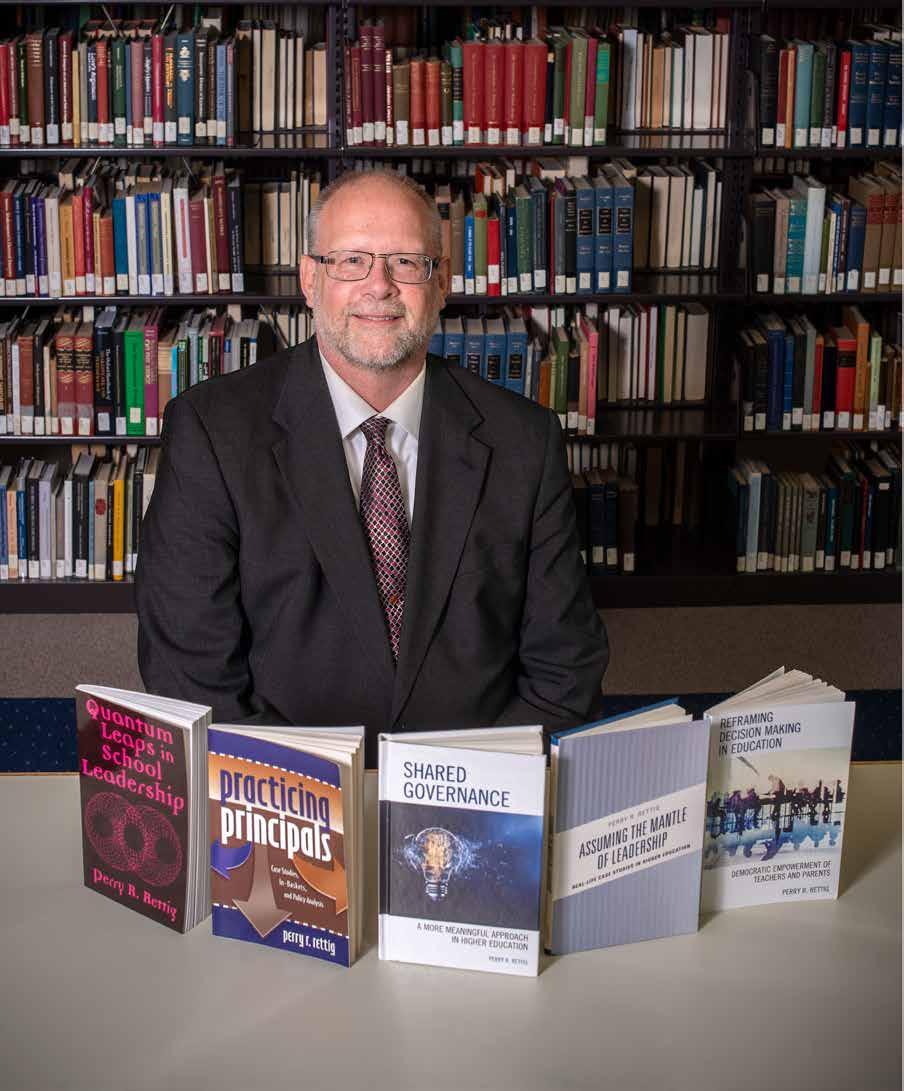
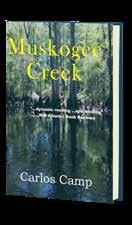
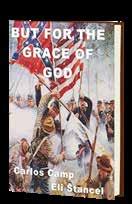
Also featured are two faculty and staff authors, Dr. Perry Rettig and Dr. Carlos Camp. Dr. Rettig, vice president for enrollment management and student affairs, has a forthcoming book about college enrollment that explores the workings of college admissions, financial aid, and registration. Dr. Camp, professor of biology, has published two novels, Muskogee Creek, a murder mystery, and But for the Grace of God, a Civil War spy tale.
I hope you enjoy reading this issue of FOCUS and look forward to sharing our academic community’s future accomplishments.
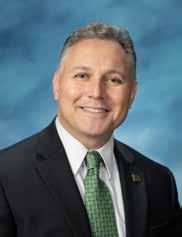
Daniel K. Silber, Ph.D. Senior Vice President for Academic Affairs & Provost
By John Roberts
Last spring, Dr. Perry Rettig, Piedmont’s Vice President for Enrollment Management and Student Affairs, had just wrapped up a board presentation when a Trustee pulled him aside.
During his two-hour team talk, Rettig, who has a gift for breaking down difficult concepts into simple, easyto-understand terms, had discussed the complexities of higher education admission and financial aid. He talked numbers — discount and graduation rates, net tuition revenue, and student retention — and how those benchmark numbers illustrate the strength of an institution.
Heads nodded.
“You know, Perry,” the Trustee said, “you should write a book about enrollment management.”
At first brush, Rettig, who joined Piedmont in 2013, dismissed the notion.
But later he realized there would be a market for such a work. Colleges and universities routinely onboard trustees and volunteers. But few of them understand the challenges of higher education. Why is enrollment declining? How are demographic changes impacting student recruitment? Why do some small private, rural colleges close while others (like Piedmont) thrive?
Rettig had authored six highly acclaimed books that focused on education leadership, governance, decisionmaking, and policy analysis. A book about higher education enrollment management and student affairs would be a departure from his past works, but certainly not a stretch.
Since transitioning to his current role (Rettig served as Piedmont’s Vice President of Academic Affairs from 2013 to 2018), he has been immersed in both issues and had also served as a leader in the college’s strategic planning efforts with consulting firm partners Credo-Higher Education and Ruffalo Noel-Levitz.
During a time when many small private colleges are struggling, Piedmont has recently put in place several strategies and initiatives that have advanced the institution in student retention, recruiting, and enrollment.
“After some consideration, I came to the conclusion that we have a really good story at Piedmont, and it needed to be told,” said Rettig. “And I wanted to do that.”
And who better to help tell the story, he mused, than the people who made it.
Rettig reached out to 12 colleagues — some past, most present — and asked them to contribute essays to the book, the working title of which is Enrollment Management: Practitioners Describe Student Success. They all agreed.
Rettig said the contributed chapters will include success stories, challenges, and advice. It will include segments on financial aid, admissions, student success, student life, data management, and enrollment planning. Rettig will author the introduction chapter and introduce each successive chapter, and two essays himself.
The authors include: Lisa Danielson (Registrar at the University of Wisconsin Oshkosh), David McMillion ‘05 MBA ‘10 (former Director of Financial Aid at Piedmont and current Associate Director of Financial Aid at the University of North Georgia), Jody Anderson ‘97 (Director of Institutional Research), Cindy Peterson (Associate Vice President for Undergraduate Enrollment Management), Kathleen Carter (Associate Vice President for Graduate Enrollment Management), Cat Wiles (Administrative Assistant to the Vice President for Enrollment Management and Student Affairs), Dr. Kim Crawford (Dean of Student Life and Leadership), Jim Peeples (Director of Athletics), Dr. Julia Schmitz (Professor of Biology and Coordinator of the Quality Enhancement Program), Dr. Melissa Tingle (Professor of Mass Communication and QEP Fellow), PJ Woolston, (Vice President for Enrollment Management and Admissions at the University of Texas Permian Basin and Associate Consultant for Ruffalo Noel-Levitz), Jenni Walsh (former Executive Director of the Wisconsin Campus Compact at the University of WisconsinExtension), and Dr. Petra Roter (former Vice Chancellor for Student Affairs at the University of Wisconsin Oshkosh).
“These contributors are held accountable every day, they know the literature, they have practical experience, they are wise, and they know what they’re doing,” he said. “Each will provide a lay of the land for their area and explain the unique endeavors they developed and implemented. They will also share their successes, lessons learned, and what they would do differently.”
The work should be available next summer.


By Terrie Ellerbee ’95
Haley Bolt ’20, Veronica Cappas ’20, and Breanna Kramer ’20 may have helped solve a murder that happened when they were in kindergarten. Their work is evidence of Piedmont’s powerful forensics program, one that takes students like them outside the laboratory and into real-world investigative work.
Bolt, Cappas, and Kramer helped develop fresh leads in the murder case while completing a semester-long internship with the rural North Georgia sheriff’s office in the county where the victim’s body was found. Despite the work of local and state investigators, and with even the cause of death in question, the case had gone cold.
The students and Piedmont Professor of Forensic Science and Criminal Justice Bruce Willis, who has decades of criminal justice experience and deep ties to law enforcement agencies in Georgia and beyond, worked alongside investigators to examine all the evidence gathered in the case, including witness statements.
as thrilling as popular television shows make it out to be, though one did lead to multiple arrests for drug trafficking.
“You have to lower your expectations a little bit with what the investigation actually offers,” Bolt said. “Some of the cases we dealt with didn’t have a whole lot of anything to go on.”
What impressed Willis most about the trio was their willingness to do more than was required. Bolt and Cappas volunteered to process evidence. Kramer assisted a county coroner’s office with everything from administrative file work to examining crime scene photographs.
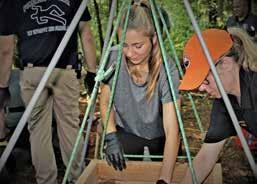
They combed through the autopsy report, and using technology unavailable in 2005, created a map similar to a spider web to illustrate the connections of geomapping details from text messages and phone records. The case file went from slim to plump with possibilities.
Now the students and Willis believe they know who murdered the victim. Willis said the three are “chomping at the bit” for an arrest to be made. He has promised to text them as soon as he knows. “It was cool to be part of a real investigation,” Kramer said. “We weren’t just interning. We got to do what everybody else was doing. It definitely opened my eyes to a lot more of what happens in the field.” They worked on other cases, too, and found it is not always
“They’re volunteering their time because they’re inquisitive. They want to know how to do it,” Willis said. “Outside of that, if you called them right now, they would come to help, which is really uncommon.”
All three students conducted independent research on medicolegal death investigations while at Piedmont and are pursuing master’s degrees. Kramer will attend the University of Memphis and plans to become a forensic anthropologist. At Piedmont, she researched the effects of diabetes and hypertension in post-mortem changes.
Bolt is headed to Marshall University for its forensic science graduate program and plans to be a crime scene investigator. She examined the effects of moisture, sunlight, and shade on tissue in post-mortem intervals for her research.
Cappas’ ultimate goal is to work for the U.S. Army Crime Lab. She will continue her groundbreaking research on microbiology present on decedents at Pennsylvania State University, a school she chose because “it felt like Piedmont to me. I wouldn’t be just another number there.”
Her groundbreaking work may lead to a field test kit that could determine the time of death faster than is now possible.
By John Roberts
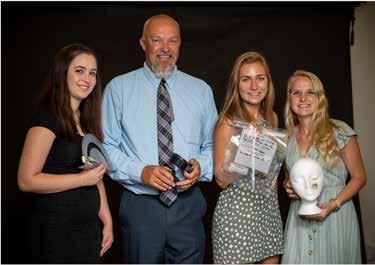
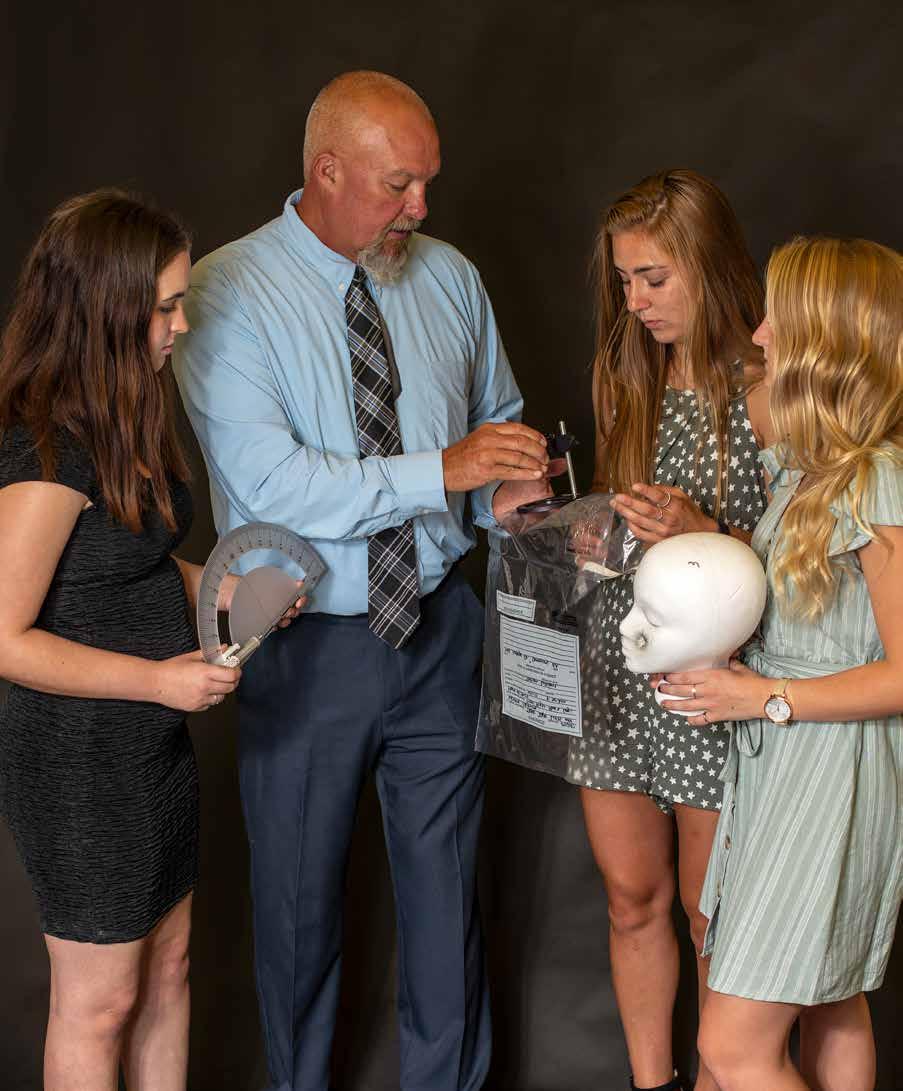
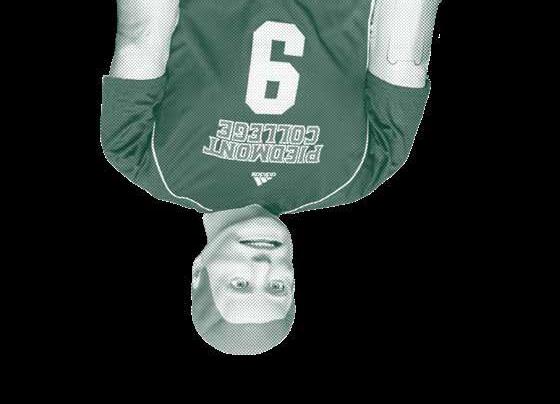
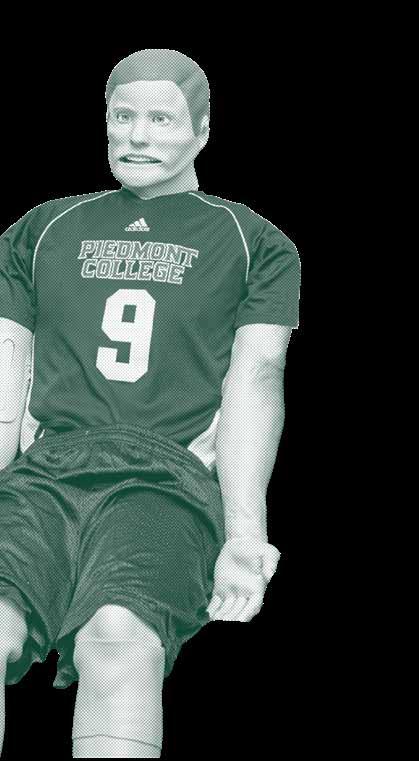
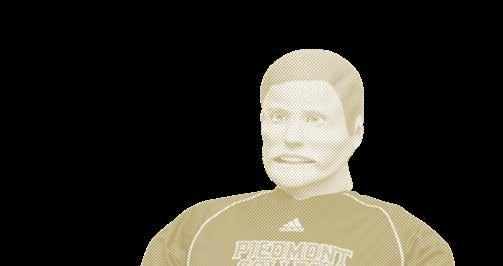
For nearly a decade, Bob has been prodded, poked, and cared for by Piedmont students. He’s been diagnosed with cancer, had hundreds of strokes and heart attacks, and has endured death many, many times.
Bob, a high-fidelity medical manikin, takes it in stride. It’s for a good cause. He teaches nursing students. His symptoms and even language (yes, he can talk) are controlled by faculty behind a one-way privacy window.
Bob’s dress code is casual. Mostly, he wears a loosefitting hospital robe and spends much of his day relaxing on the fourth floor of Daniel Hall. About a year ago, Dr. Erika McKinney ’20 Ed.D., an assistant professor of health sciences in the R.H. Daniel School of Nursing and Health Sciences, forever changed Bob’s routine.
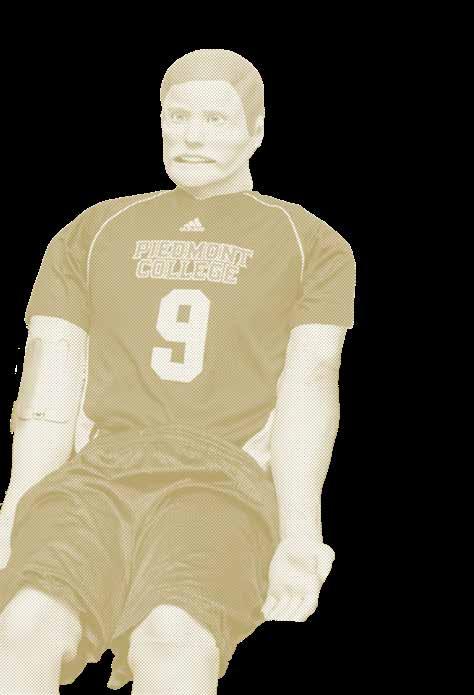
She dressed him in a Piedmont soccer uniform, put cleats on his feet, and changed his room. Workers installed an aluminum bench and turfgrass, and erected a large image of a stadium crowd and scoreboard. Then Bob’s head began to hurt. Really bad. He felt nauseated. And his speech became muddled.
Then a different set of students began treating him. He had never seen them before. They were studying to be athletic trainers.
McKinney says athletic training students see plenty of sprains, breaks, and strains while shadowing certified athletic trainers on the court and field. But few are confronted with a head injury case. McKinney also programed Bob to suffer asthma attacks, dehydration, and diabetic seizures.
“During a career, our athletic trainers will be confronted with many of these issues,” she said. “But because they occur less frequently, they don’t see them during their clinical training.”
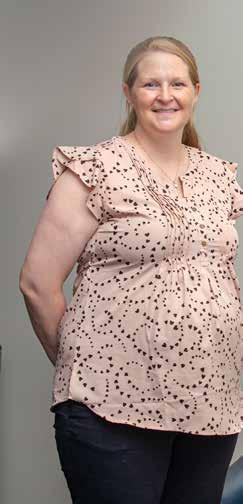
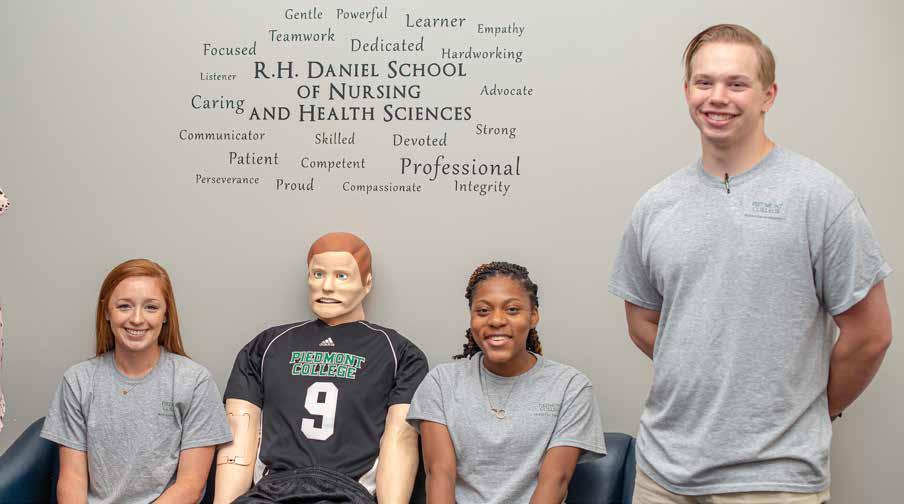
McKinney’s simple idea introduced a new dimension of learning for Piedmont athletic training students. And its impact was the subject of her doctoral dissertation, “The Effects of High-fidelity Manikin Simulation on Athletic Training Students’ Perceived Self-efficacy in Caring for Traumatic Brain Injuries.”
Practicing on Bob, she discovered through research, was far superior to learning about how to treat a brain injury through standard lectures and presentations.
“The active learning really resonates with students,” she said. “They learn by doing.”
Through surveys, she found that working
with Bob helped students to think on their feet. It boosted both their confidence and knowledge.
McKinney, an Ohio native who has served on the Piedmont faculty since 2013, earned her bachelor’s degree from Otterbein University (Westerville, Ohio), master’s degree from Marshall University (Huntington, West Virginia) and doctoral degree in Education from Piedmont.
She hopes her 187-page dissertation, the findings of which are likely to be published in the Athletic Training Education Journal, encourages Athletic Training programs at other institutions to use high-fidelity manikins when they are available.

By Terrie Ellerbee ’95
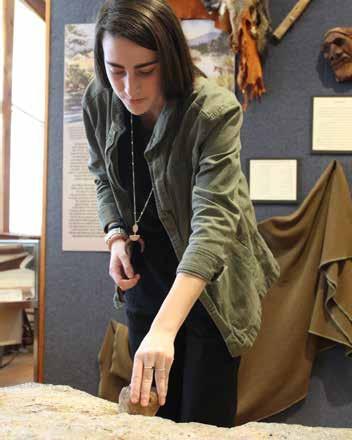
“Grinding stones were used in pulverizing acorns and other nuts, to be made into something like grits,” said Max White, Piedmont professor of anthropology, who was contacted when the grinding shown in the photo was spotted in an area creek. It is now housed in the SNCC history museum.
As a preteen, Madison Hatfield ’21 wanted to take a “fun family weekend trip” to Andersonville, a tiny Georgia town once home to a prisonerof-war camp. Thousands of Union soldiers died of scurvy and dysentery in the 14 months the Southern forces operated the camp during the Civil War.
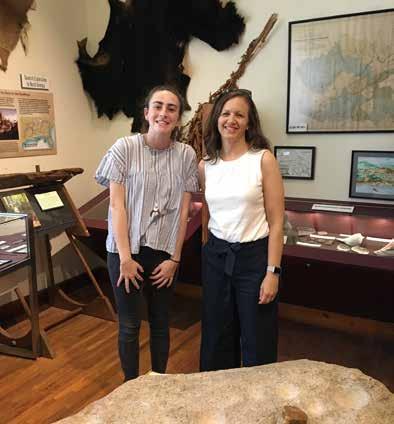
Dr. Beth Lovern, associate professor of anthropology at Piedmont and a mentor to the senior, would not be surprised by that story. Lovern took note of Hatfield’s “intellectual curiosity, motivation, and organizational skills” when she received news of an internship at the Sautee Nacoochee Cultural Center (SNCC) history museum. Executive Director Patrick Brennan was seeking help with digitizing the museum’s collection.
“Early on, Madison had expressed an interest in museum studies as a way to combine her interests in history, sociology, and anthropology,” Lovern said.
Hatfield photographs and numbers pieces in the collection. The work is critical to the launch of the center’s first app as well as a new written guide highlighting historical and cultural resources in White County. The North Georgia county is home to the Nacoochee Valley, unincorporated Sautee Nacoochee, and the cities of Cleveland and Helen, an Alpine Village-themed tourist destination.
Hatfield’s work is historic in itself and has resulted in waves of gratitude from locals.
“People from the history museum committee who have wanted this project done for years come up to me and say, ‘you don’t know how much this means to us that you are doing this,’” Hatfield said. “It’s just very rewarding.”

The experience likely will guide her life’s direction. She may pursue a master’s and possibly a Ph.D. She could teach or go into law. She could practice public history and apply it to real-world issues. She will also have a minor in social justice as a participant in the Lillian E. Smith Scholars Program.
According to Brennan, municipal leaders have seen the light around historic preservation and heritage tourism as moneymakers. Hatfield’s work will help provide the authentic experience visitors seek.
More than 189 historical sites have been identified in and around the Nacoochee Valley thanks to students. It marks the beginning of what will surely be a long process as just 18 sites will comprise the first heritage tour. Hatfield prioritizes artifacts that relate to those sites, bringing history to life as she goes.
“She’s been able to associate Indian pottery from amateur archeology at the Stovall House, which is one of our three [National Register of Historic Places] sites in the county,” Brennan said. “When you go onto the app, there is a carousel at the top of the page. There is an image for the John Stovall House, so you can push through and see a picture of the Stovall family on the porch, a picture of the house as it was on an early map of White County.”
The Stovall House today is a bed and breakfast, and a clear link between history and modern-day tourism and commerce.
The SNCC uses a gazebo as its marketing icon and with good reason. There is one nearby just off State Route 75 that is well known to locals and tourists alike. Built around the turn of the 20th century, the gazebo sits atop what appears to be a burial mound that has for decades been wrongly associated with the Cherokee.
The gazebo is considered either an insult to native peoples or a protectant that saved the mound from further destruction. It will take the work of people like Hatfield to tell the area’s truth.
“It’s important to highlight our accomplishments in history, but we don’t highlight the times we failed as humans, and that is why I love studying history,” Hatfield said. “It’s like flipping a switch when you get into college. This is the real world. This is what happened. You’ve got to deal with it and move on and build off of that knowledge.”

By Terrie Ellerbee ’95
In his Stewart Hall office at Piedmont, biology professor Dr. Carlos Camp has an eclectic collection.
There is a framed front page of a London newspaper printed in 1814, a diorama with hand-painted toy soldiers depicting a pivotal moment in the Battle of Waterloo, and a “Jinx and Jasper” film cell from an animated short that was the precursor to “Tom and Jerry.”
They share the common trait of authenticity. If it isn’t genuine, he is not interested.
That is one reason why he wrote Muskogee Creek. It takes a Southerner to write about Southerners. Readers will find no characters sullied by an outsider’s pen in the novel published in March. Eleven-year-old Randy Youngblood, the main character, brings the reader along for this murder mystery set in 1960s Alabama. Camp draws upon his outdoorsy youth for imagery and bountiful family for characters. The son of two parents who each have eight siblings, Camp has 45 cousins.
Camp at a snake hunt on campus. They hit it off.
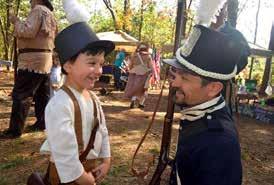
“One of the advantages to being in a place like Piedmont that worked out so well for me was to have that cross-disciplinary interaction. I’m probably as close to him as I am to any professor, but I never actually had a class with him,” Stancel said. “It was one of those experiences that can only happen at a liberal arts college like Piedmont.” Stancel went on to Arkansas State to achieve a master’s in history. Today, he is manager of engineering for Norfolk Southern. His passion for American history is reflected in his hobby as a War of 1812 reenactor. Camp reached out to see if he would be interested in working on the book. They collaborated remotely as the work progressed, with Stancel providing “heavy underpinnings of fact.” The authors tell a story that fits so accurately into the period that it could almost be true.
“His imagination for crafting the story prompted my historical knowledge. We would work through some real people, real stories, and then weave the narrative,” Stancel said.
Camp said, “It was very meticulous in making timelines and having characters at the right place at the right time and with the right units.”
Within a day of sending in the proposal with the first three chapters of the book, Camp had an email from a publisher requesting the rest of it. A contract arrived the next day. Once it was signed by both authors and faxed to the publisher, only about an hour had passed when the cover appeared in Camp’s inbox. The book was pushed out in a matter of weeks. Both works are available on Amazon.
“And that’s just first cousins. I’m not counting all the seconds and thirds and once-removeds,” he said.
Camp’s father was a Southern Baptist preacher, and that no doubt also colors young Randy’s observations.
Right on the heels of Camp’s first novel came the publication of his second, But for the Grace of God. Written with Eli Stancel ’00 and published in May, it centers on a plot to kill Union generals William Tecumseh Sherman and Ulysses S. Grant to diminish President Abraham Lincoln’s chances at a second term.
At Piedmont, Stancel majored in history and minored in anthropology. A fellow student introduced him to
Camp is well known for his research and work with reptiles and amphibians, and more specifically with salamanders. He has edited and written textbooks about the critters and penned a column for the local newspaper, The Northeast Georgian, about nature and wildlife for several years.
He now has a textbook at the printers on scientific research entitled The Way of Science he co-authored with Dr. Jessica Wooten, associate professor of biology at Piedmont.
Those items in Camp’s office—the military history, the cartoon slide, books about amphibians—are about more than an appreciation for authenticity.
“Think about my age cohort and what little boys played with outside: animals like frogs and toy soldiers and toy ships,” Camp said. “I guess you could say I never grew up.”
Dr. Hugh Davis
Associate Professor of English and Chair of Humanities
Dr. Jeff Bruns
Professor of Business and Associate Dean
and Dr. Ed Taylor
Dean of the Walker School of Business (retired)
Presented “The Transformative Effects of Student-Centered Learning: Turning Grade-seekers into Knowledge-seekers” at the Accreditation Council for Business Schools and Programs Region 3 Fall Conference in Pigeon Forge, Tennessee, Nov. 1-3, 2019.
Dr. Carlos Camp
Professor of Biology
Co-authored with Piedmont College alumnus Eli Stancel ‘00 the novel But for the Grace of God, which was published by W&B Publishers in May.
Authored the novel Muskogee Creek, which was published by W&B Publishers in March.
Dr. Carlos Camp
Professor of Biology
and Dr. Jessica Wooten
Associate Professor of Biology
Authored the textbook, The Way of Science: A Primer for the Beginning Scientist, which was published by Kendall Hunt in July.
Dr. Steve Carlson
Professor of Business
Published book review of Northouse, Peter G. (2016). Leadership: Theory and Practice (7th ed.) in Applied Management Journal, 19; 151-166 (2019), in September 2019.
Presented and published “Strategy and Marketing: Measuring Alignment,” at the 2019 American Marketing Association International Collegiate Conference in Asheville, North Carolina, Sept. 26-28, 2019.
Presented “‘Tidmore and the Negro’: An Unpublished Chapter from Let Us Now Praise Famous Men” at the South Atlantic Modern Language Association Annual Convention in Atlanta, Georgia, in November 2019.
Presented “Faith and Philosophy in Little Miss Sunshine” at the Popular Culture of the South Annual Convention in Wilmington, North Carolina, in September 2019.
Presented “How to Read a Movie” at the TomeCon Student Literacy Conference in Gainesville, Georgia, in March 2019.
Dr. Jaydn DeWald
Assistant Professor of English and Director of Creative Writing
Published a pamphlet of poems, Voyage, Out, with UK’s Broken Sleep Books in February.
Published an essay-in-vignettes, “One Take After Another: A Notebook,” in Entropy, in March.
Published a chapbook, A Love Supreme: fragments & ephemera, winner of the 2019 Quarterly West Chapbook Contest, in May.
Wrote the introduction for My Love for the Going: Athens Anthology, Volume 1, a chapbook anthology of Athens poets, in July.
His essay, “In Praise of Constraints: Inciting the Unexpected,” was reprinted in the anthology Far Villages: Welcome Essays for New and Beginner Poets (Black Lawrence Press) in July 2019.
Published a prose poem, “GRID (11),” in Issue 8 of The Scores in July 2019.
Published a suite of six stories from a manuscript entitled “GRID,” in the 2019 and 2020 issues of Sou’wester.
Dr. Kate Guthrie
Assistant Professor, Qualitative Research Methodologist
Published “Contemplative qualitative inquiry: A review” in The Qualitative Report in June.
Published “Exploring Kerr and McKay’s beehive of smart girls: Understanding the challenges facing gifted adolescent females” in Gifted Child Today in April.
Presented “Cultivating creative connection: The role of empathy in creativity” at the Georgia Association for Gifted Childrens annual conference in March.
Presented “Contemporizing teaching ‘training’: Understanding the transformation of teachers to teachers of the gifted” at the Georgia Association for Gifted Childrens annual conference in March.
Published “The weight of expectations: A thematic narrative of gifted adolescent girls’ reflections of being gifted” in Roeper Review in January.
Presented “Writing a three-article dissertation: Breakthrough strategies and lessons learned from bridging three fields of study using qualitative methodology” at The Qualitative Report’s annual conference in January.
Presented “Cultivating creativity: A deeper look at the TTCTs and suggested classroom applications” at the National Association for Gifted Children’s annual conference in November 2019.
Presented “Helping gifted teens and pre-teens understand giftedness: Topics and activities” at the National Association for Gifted Childrens annual conference in November 2019.
Published “‘Nothing is ever easy’: Parent perspectives of intensity in gifted adolescents” in The Qualitative Report in August 2019.
Dr. Randy Hollandsworth
Associate Professor of Education and Coordinator, Graduate Program in Instructional Technology (retired)
Judged fifth- and sixth-grade students in Digital Game Design for the virtual statewide Georgia Technology Student Competition, a project of the Georgia Educational Technology Consortium, in May.
Served by request on the Georgia Professional Standards Commission Instructional Technology Task Force in March.
Dr. Nathan Holt
Assistant Professor of Physics
Presented “The Muon and the (Piedmont) Lion: A Tale of Research at a Teaching College” at Cyclotron Institute, Texas A&M University, Oct. 29. 2019, in College Station.
Dr. Beth Lovern
Associate Professor of Anthropology
Presented “Critical Thinking and Information Literacy for Public Engagement: The Use of Op-Ed Exercises” at the International Society for Exploring Teaching and Learning 50th Annual Conference on Innovative Higher Education Pedagogy in Charlotte, North Carolina, in October 2019.
Awarded 2019 Boy Scouts of America “Scouter of the Year” for the nine-county Cherokee District of the BSA Northeast Georgia Council, on June 4, 2019.
Erika McKinney
Assistant Professor of Nursing and Health Sciences
Published dissertation: “The Effects of High-Fidelity Manikin Simulation on Athletic Training Students’ Perceived Self-Efficacy in Caring for Traumatic Brain Injuries” on June 16.
Dr. Keith Nelms
Professor of Business
Presented “Devils and Details: How LMS Choice May Enable or Impede Effective Instructional Practices” at the University of Georgia College of Education Innovation in Teaching Conference in Athens on Oct. 25, 2019.
Presented “Carrot & Stick Micro-Motivation and Student Engagement Using Advanced Learning Management System Techniques in a Content-Rich Freshman Business Technology Course” for the Accreditation Council for Business Schools and Programs Region 3 Fall Conference in Pigeon Forge, Tennessee, in November 2019.
Dr. Julia Schmitz
Associate Professor of Biology and Director of Quality Enhancement Plan
Presented “Implementing a Showcase of Undergraduate Research and Creative Inquiry Projects” at the Southern Association of Colleges and Schools Commission on Colleges Annual Meeting, Houston, Texas, on Dec. 8, 2019.
Jerry Sullivan
Professor of Business
Published “Supportive Leadership and its Relationship to ROA within Community Banks During Three Economic Time Periods” in the Journal of International Business and Economics Volume 20, No. 1, 2020, in January with two other authors.
Dr. Matthew Teutsch
Director of the Lillian E. Smith Center
Curated an online forum on Milestone Comics on the Black Perspectives blog and published “‘I’m just a kid’: Representation in Milestone Comics” in the forum on Oct. 11, 2019.
Presented “Luke Cage, Stagolee, and the Importance of Myth” at the Society for American City and Regional Planning History in Arlington, Virginia, on Oct. 31, 2019.
Published “The Taproot Remains: On the Life and Legacy of Ernest J. Gaines” on Black Perspectives, on Nov. 7, 2019.
Presented “‘Everywhere there were ghosts wandering through our everyday lives’: The Gothic in Lillian E. Smith and Ernest J. Gaines” at the Sixth Biennial Interdisciplinary Conference on Race: Race, Memory, and Identity at Monmouth University on Nov. 15, 2019.
Published “Holloway House and the Black Literary Underground” on Black Perspectives on Dec. 5, 2019.
Published “Frank Yerby and Lillian Smith: Challenging the Myths of Whiteness” in The Bitter Southerner on Jan. 9.
Interviewed by Leah Fleming for Georgia Public Broadcasting on “How Lillian Smith ‘Seared the Conscience of White America’” on Jan. 16.
Discussed Lillian Smith, Frank Yerby, and comics in an interview for Keri Leigh Merritt’s “Merritocracy” podcast on Feb. 10.
Presented “Everett K. Ross ‘The Emperor of Useless White Boys’: Narrative Point of View in Christopher Priest’s Black Panther” at the Planet Deep South conference in Atlanta, Georgia, on Feb. 10.
Published “Rediscovering Frank Yerby: Critical Essays,” with University Press of Mississippi on April 20.
Published “For those in the ‘ghetto torture chambers’: Iceberg Slim’s Impact on Hip Hop” alongside Jason Oakes, lecturer at the New School, in the Oxford Handbook of Hip Mop Music on June 15.
Mike Adams ’20
English and Anthropology & Sociology major
Presented “House Lannister: Byronic to Ironic Heroes” at the Popular Culture Association of the South Annual Convention in Wilmington, North Carolina, on Sept. 27, 2019. Adams also organized and chaired the Game of Thrones roundtable on which the paper appeared.
Presented “Los Santos: Social and Literary Minefield of American Culture” at the South Atlantic Modern Language Association Annual Convention in Atlanta, Georgia, on Nov. 17, 2019.
Keaton Benfield ’20
English major
Presented “The Femme Fatale’s Subversion of the Male Gaze in Resident Evil 2” at the South Atlantic Modern Language Association Annual Convention in Atlanta, Georgia, on Nov. 17, 2019.
Veronica Cappas ’20
Biology and Forensic Science major
Accepted into the master’s program in forensic science at Pennsylvania State University.
Stephanie Hamrick ’21
Religion and Philosophy major
Accepted into the Young Scholars Program at the Howard and Edna Hong Kierkegaard Library, St. Olaf College (Northfield, Minnesota) for her research project “The Love of Wisdom and the Wisdom of Love.”
Cassidy Heflin ’20
Biology major
Accepted into the physician assistant studies program at the Philadelphia College of Medicine.
Olivia Lane ’20
Biology major
Accepted into the master’s program at Drexel University.
Allyson McCollum ’20
English major
Presented “Cannibalism as Cultural Critique in Fruit Chan’s Dumplings” at the South Atlantic Modern Language Association Annual Convention in Atlanta, Georgia, in November 2019.
Dalton Patterson ’20
Biology major
Accepted into master’s program at the University of Alabama Birmingham.
Lauren Smith ’21
English major
Presented “Choice Where There is None: Patriarchy and Power in The Witch” at the Popular Culture Association of the South Annual Convention in Wilmington, North Carolina, in September 2019.
Imani Vincent ’23
Forensics Science major
Selected as a Spring 2020 Hawkes Learning Student Ambassador.
Ann Wallace ’20
English major
Presented “Gothic Sensibility in Shirley Jackson’s We Have Always Lived in the Castle” at the South Atlantic Modern Language Association Annual Convention in Atlanta, Georgia, in November 2019.
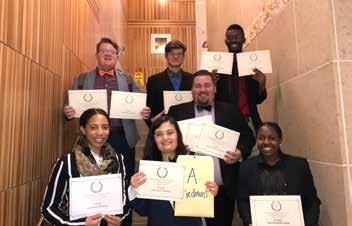
Jaela Dodson ’23, Noah Irwin ’23, Brett Loftis ’23, Angel Rucker ’23, Dakota Stockton ’21, Nicole Thomas ’20, and Dante Wilson ’23
Earned 11 individual awards and placed third overall at the 2020 Georgia Intercollegiate Forensics Association (GFIA) State Championship in February.
Maggie Belle Hudson ’21 and Dakota Stockton ’21
Placed second in dramatic interpretation and fourth in extemporaneous speaking, respectively, at the Cleveland State Community College Forensics Classic in Tennessee on Feb. 29.
Bradach ’20
Women’s Cross Country
Named to the 2019-20 Second Team Academic All-America Team by the College Sports Information Directors of America.
Jordan Abbott ’20, Morgan Calhoun ’23, and Carson Weiner ’23
Women’s Golf
Named Women’s Golf Coaches Association All-American Scholars.
Josh DeSain ’20 and Matthew Leemann ’21
Men’s Golf
Named Srixon/Cleveland Golf All-America Scholars by the Golf Coaches Association of America.
Miles Riley ’20, Evan Easton ’21, and
Men’s Basketball
Named to National Association of Basketball Coaches Honors Court.
Bottom left: Piedmont College Speech and Debate Team members include, front, from left, Angel Rucker, Nicole Thomas, Jaela Dodson; second row, Dakota Stockton; and top, Brett Loftis, Noah Irwin, and Dante Wilson.
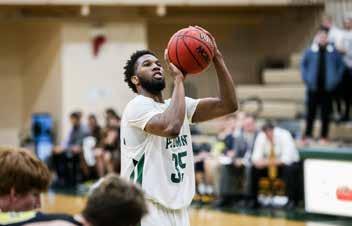
Below: Jordan Foote ’21 on the court.
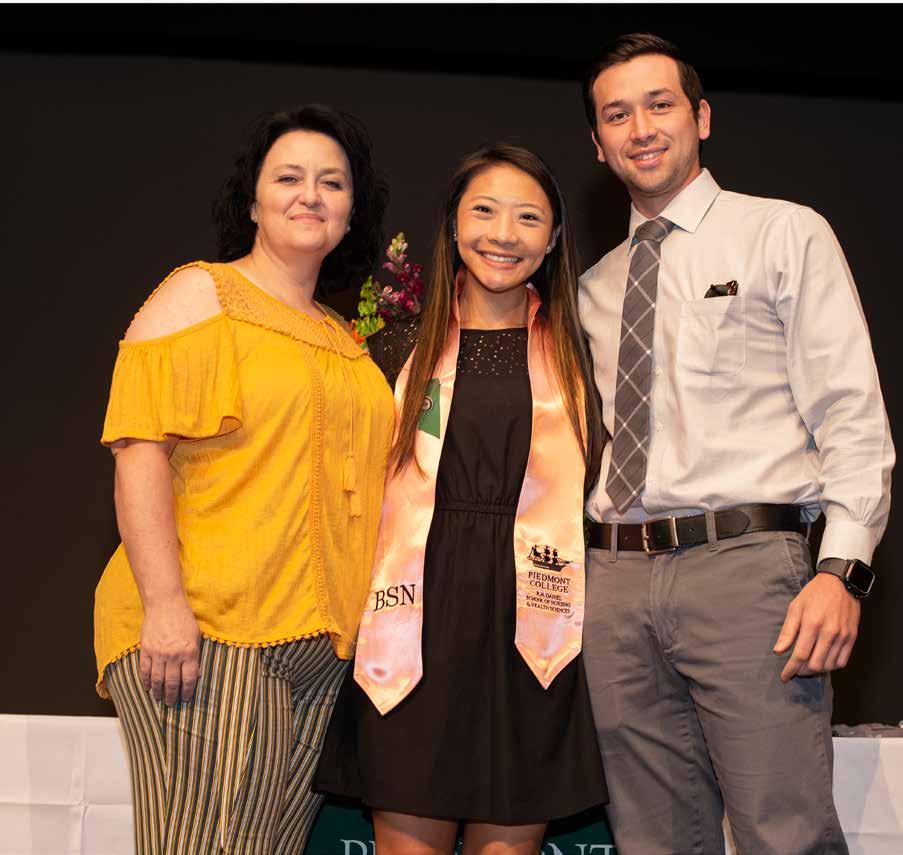
Wendi Tseng ’20 is flanked by her mother-in-law-to-be
Beverly O’Kelley and fiancé
Corey Nguyen at the R.H. Daniel School of Nursing & Health Sciences Pinning Ceremony in Demorest on July 25.