Spotlight on the Academic Power of Piedmont College
04
Dr. Phillip Furman
An alum whose “never give up” spirit has changed –and saved – lives
06
Dr. Angela Humphrey Brown
A professor whose ability to connect the dots inspires a new generation of teachers
08
Faculty Achievements
Colleagues making a name for themselves – and Piedmont – in the academic arena
12 Alex Thomlinson
A student whose affinity for the “right notes” is applauded – and honored
14
Student Research
Daring to tackle the unknown – to make discoveries and to prove points
16
The Compass Program
Hitting a hammer, hitting the stage and more to learn from experience
18
Student-Athletes
Sports team members who never forget academics play a big part in their futures
Dr. James F. Mellichamp
Vice President for Academic Affairs
Dr. Perry Rettig
Dean of the School of Arts & Sciences
Dr. Steve Nimmo
Dean of the Walker School of Business
Dr. Ed Taylor
Dean of the School of Education
Dr. Donald Gnecco
Dr. Julia Behr
Welcome to FOCUS
Of
all the attributes that add
up to a classic college experience at Piedmont College, there is one core strength that carries the most weight. Since 1897, our academic power has been the consistent force that makes Piedmont, Piedmont.
Is the word “power” really applicable here? Absolutely. How better to describe an academic atmosphere – both in and out of the classroom – that has the vitality to excite minds, spark creativity, build confidence, drive exploration, and embrace challenge.
Which brings us to the 2016-2017 edition of FOCUS. The people you are about to meet – alumni, faculty and students – on the following pages; the stories you are about to read; and the scholarly and research achievements you are about to discover illustrate that power.
Enjoy – and be prepared to be impressed.
Perry R. Rettig, Ph.D. Vice President for Academic Affairs
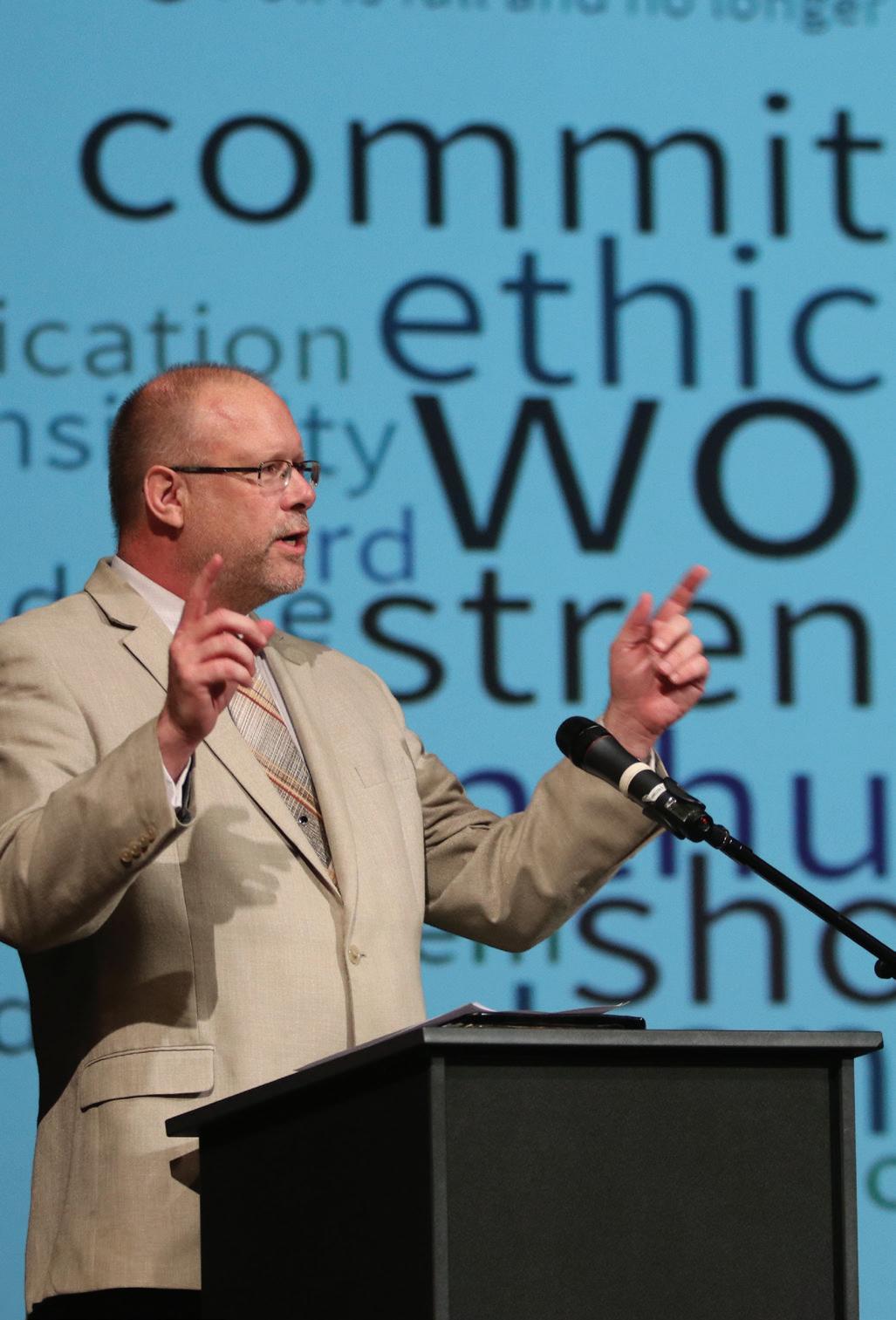
Dr. Phillip Furman
An explorer celebrated for his discoveries
Whether searching for Native American artifacts, angling for redfish near his home in St. Augustine, Florida, or developing antiviral drugs to cure some of mankind’s most feared diseases, Dr. Phillip Furman (’68) says it is the thrill of the hunt that interests him.
“They are kind of related,” Furman says of his 40-year career in biotechnology and, since his retirement in 2012, his newer hobbies. “There is that thrill when all your searching and patience pay off,” he said.
Furman is a co-inventor of Retrovir (AZT), the first effective treatment for AIDS, developed while at Burroughs Wellcome & Company in Durham, North Carolina. Also at Burroughs, he was on the team that developed Acyclovir, an antiviral drug to treat herpes simplex infections. Furman later co-founded a biotech company, Triangle Pharmaceuticals, and served as Vice President of Biology at Pharmasset, which developed Sovaldi, a drug that revolutionized the treatment of hepatitis C. He is a former president of the International Society for Antiviral Research (ISAR).
In April 2017, Furman received the Piedmont College Alumni Association’s Distinguished Alumni Award. At the award ceremony, he reflected on the impact Piedmont had made on his career path. “All in all, it began here at Piedmont College,” he said. “If it wasn’t for Piedmont taking me in, helping me to grow, I wouldn’t be standing here today.”
Q: You grew up in upstate New York and Tarpon Springs, Florida. Were you always interested in science?
A: Yes, ever since I can remember. An uncle gave me a microscope and my parents gave me a chemistry set—remember the big Gilbert chemistry sets? And I spent summers out in the garage with that. After high school, I went to St. Petersburg Junior College and then transferred to the University of South Florida to study chemistry.
Q: So how did you come to Piedmont?
A: My senior year at USF, I wanted to live on campus and got caught up in “college life”—my study habits were not the best— and well, I flunked out. A friend from Georgia suggested I apply to Piedmont.
Q:
What was your experience at Piedmont like?
A: When I first got here I thought, “Oh my god! It’s small! I had already taken all the chemistry courses that were offered, so I changed my major to biology. That is when I had the good fortune to meet Dr. Lopez. [Dr. Ruperto Lopez had fled Cuba after the Revolution of 1959 and taught biology at Piedmont from 1964–83.]
“Boy,” he said. He always started that way: “Boy, they can take everything away from you except what’s in your mind.” He emphasized that we should learn all that we possibly could.
Dr. Lopez always had a cigar—never smoked it, he chewed it. One thing I well remember, he invited me and my suite mate, both in biology, over to his house for dinner. “Boy,” he said. He always started that way: “Boy, they can take everything away from you except what’s in your mind.” He emphasized that we should learn all that we possibly could.
Mary Griggs is another professor I remember. I took calculus at South Florida and did not do well. It was designed for math majors and was all about deriving equations. When I took the class from her, it all made perfect sense. We still derived formulas, but you could see the applications.
Q: How did you get interested in microbiology and research?
A: I took microbiology from Dr. Lopez, and I thought, “This is a great thing—this is what I want to do.” After the fall of 1967, my last semester at Piedmont, I worked in a hospital laboratory doing bacteriology. I was interested in clinical microbiology, but felt I needed to get a master’s degree. I felt like I needed to further my education. I went back to the University of South Florida and earned a master’s degree and then a Ph.D. from Tulane, where I became interested in virology. I did my postgraduate work at Duke before joining Burroughs Wellcome in 1975.
Q: How did your team at Burroughs discover AZT as a treatment for AIDS?
A: AIDS as a disease had just been identified, and it was our belief that it involved a virus, from how it appeared to spread from person to person. Later, HIV (human immunodeficiency virus) was identified as a retrovirus [a type of virus that utilizes RNA and an enzyme, reverse transcriptase, rather than DNA to infect a host].
We knew that AZT was active against E. coli bacteria, whose DNA polymerase, under special circumstances, has a reverse transcriptase activity, so the thinking was it might have an effect against retroviruses. When we tested it against a mouse retrovirus, it was the most active compound in an antiviral assay I had ever seen. We were able to quickly bring AZT to market in 1987.
Dr. Angela Humphrey Brown
Teaching from a big-picture perspective
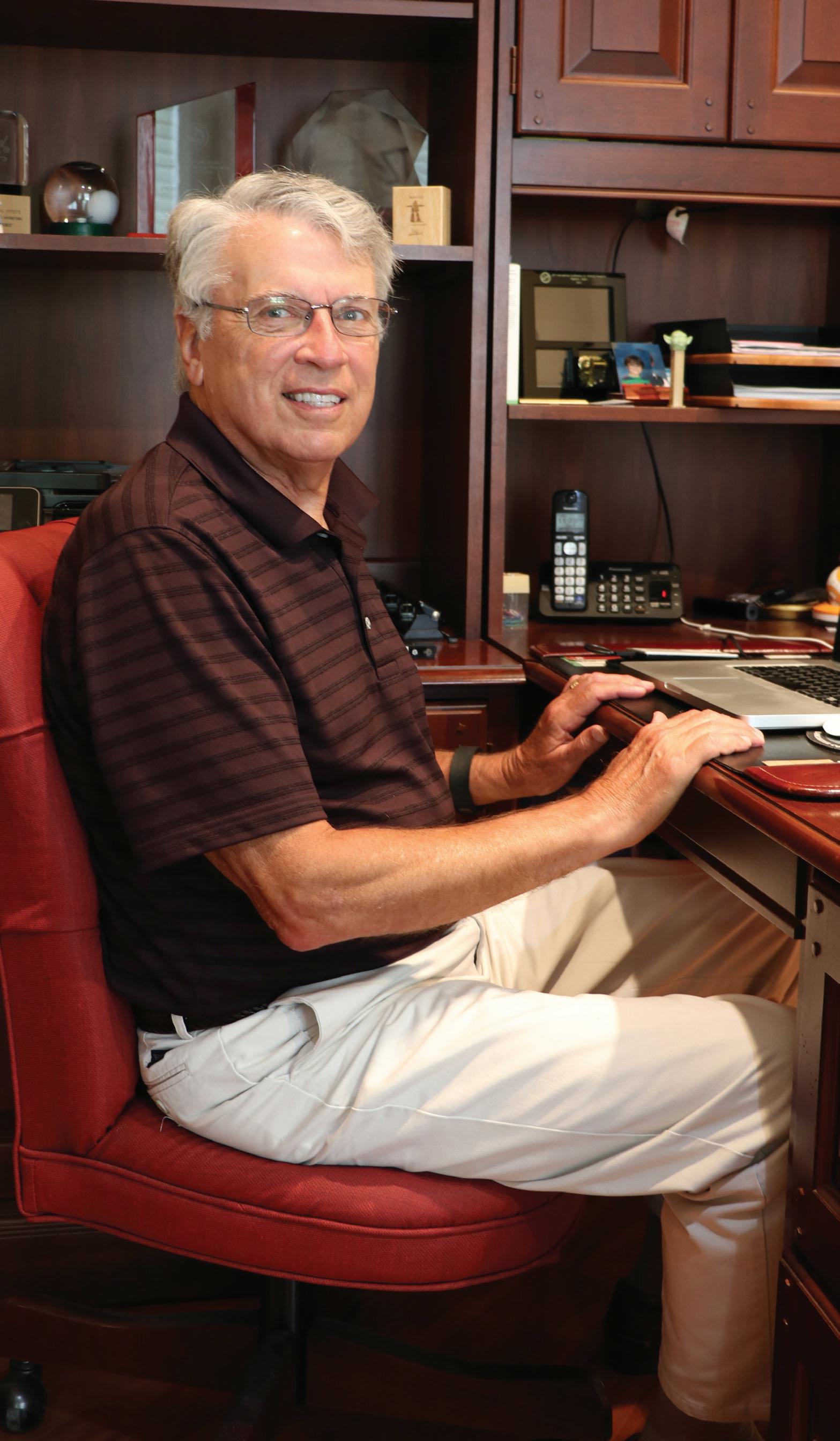
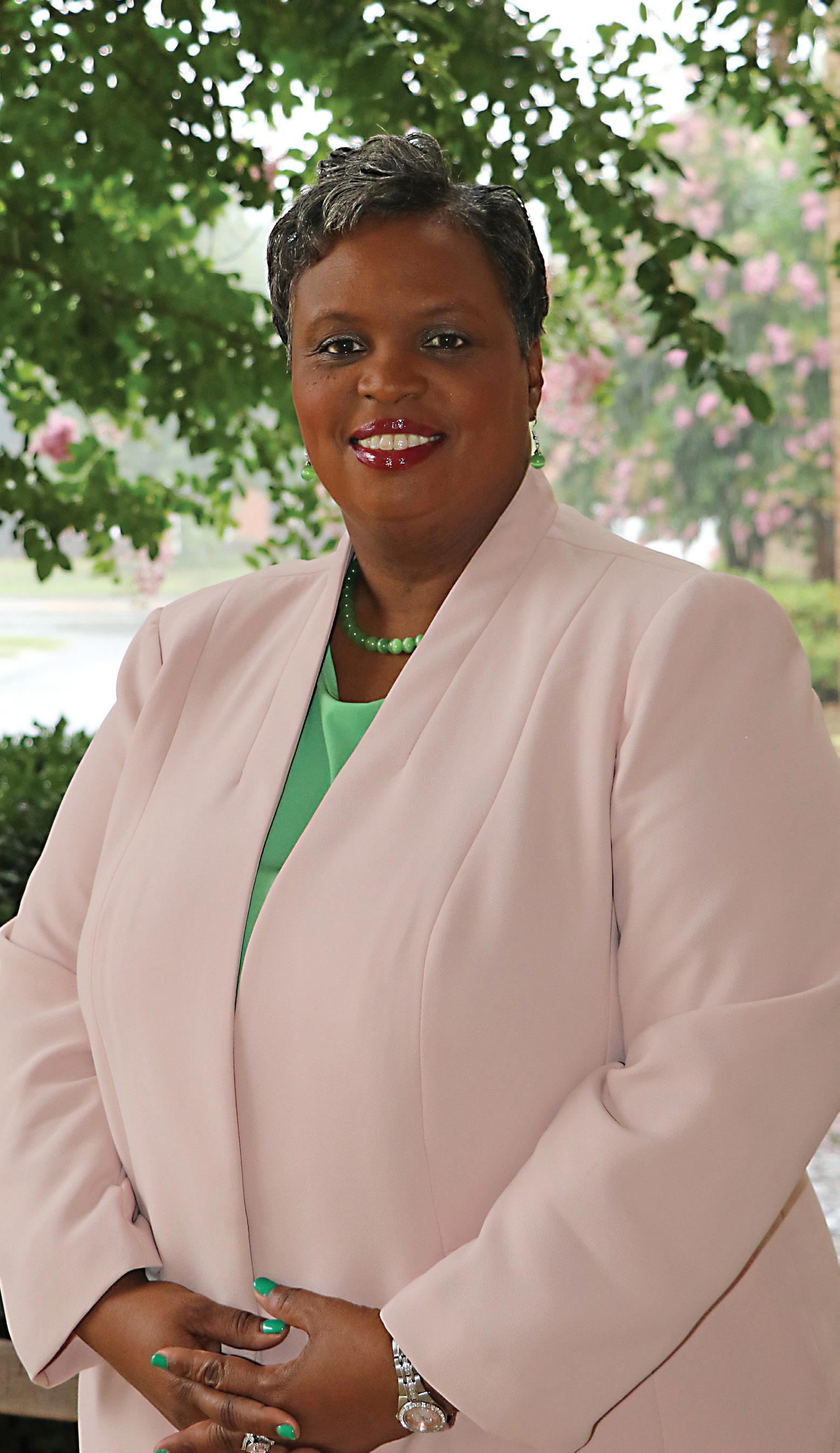
For Dr. Angela Humphrey Brown, being an educator means “connecting all the little things we do that make you feel a part of something bigger.”
Dr. Brown is a professor of education and coordinator of the secondary education program at the Athens campus. Originally from Greensboro, Georgia, Brown graduated from Greene-Taliaferro Comprehensive High School and earned undergraduate and graduate degrees in mathematics education from the University of Georgia, including a graduate certificate in women’s studies and an education specialist degree. She began her career in education at Clarke Central High School, where she taught mathematics for seven years. In 1997, she earned a doctorate in adult education from UGA and was selected as the first full-time professor at the newly opened Piedmont Athens campus. Brown is the immediate past president of the AthensClarke County Literacy Council, which partners with community groups to help promote adult literacy.
Q: Why did you make the transition from teaching high school to teaching
teachers?
A: When I was growing up in Greensboro, I enjoyed being outdoors, but I was always a bookworm and loved learning. When I was teaching at Clarke Central, I also taught mathematics at Athens Tech as an adjunct. That was fun, and it’s why I went back and got my doctorate. I liked teaching adults, people who are motivated to learn. That’s not always the case in high school. There is also more freedom in how to put lessons together.
Q: What type of classes do you teach at Piedmont?
A: I started teaching mathematics education, but I am more of a generalist now, able to work effectively with students majoring in history, science, and even elementary education. I teach metacognition, or how to think about thinking. I’ve taught differentiated instruction—which is about how to use different learning techniques with different students—critical thinking, and classroom management. Right now, most of my advisees are MAT (Master of Arts in Teaching) students, which means they will be teaching for the first time. Most are also MAT in secondary education. I’m currently the chair for one doctoral student’s dissertation committee.
Q: In the last two decades, how have the ways that educators teach changed?
A: Technology allows teachers to be more knowledgeable instantly, which provides great opportunities to expand their creativity. In one of our area counties, each student has a Chromebook to study outside the classroom and do more collective work at school. That’s the “flipped classroom.” Something else in the last 20 years is the diversification of the population, which has changed in so many ways. Students have many different needs and abilities. Teachers need to be open to new methods that match student needs.
Q: What was your recent presentation to the International Society for Exploring Teaching and Learning about?
A: It was about “Habits of Mind,” which is about the thinking habits that people, including teachers, get into. I shared what I am doing with my students to help them think interdependently and how to create, imagine, and innovate. Teachers like to teach the way they were taught, but we try to show them that there are many tools in the tool box. It may take a hammer or a screwdriver, and sometimes it takes a bolt cutter.
Q: How else have you been involved in adult education?
A: I’ve been a member of the Athens-Clarke County Literacy Council since 2011 or 2012, because it matches my goals and is one of the things I’m passionate about. The ACLC works with providers of adult literacy training, and we provide scholarships for people who have earned their GED and want to go on in their education.
Q: What do you see as the best part of your job?
A: I think it is the impact you can have as a teacher of other teachers. Each of those teachers may have 180 students, so the impact is multiplied. I get to work with a lot of non-traditional students—most are not coming straight out of college. These include doctors, lawyers, clergy, and business executives, and it is exciting to see them come in and then gain the mindset of an educator. When you see a teacher who is starting off, and you see the light bulb come on, you think, “I had a part in that!” There is a connection because of what I did with my student at Piedmont.
And the beauty is that Piedmont gives you space to be peopleoriented. The environment is open for you to say, “I have an idea— let’s talk about it and see what we can do.” That is a strength of Piedmont that trickles down to the students.
And the beauty is that Piedmont gives you space to be peopleoriented. The environment is open for you to say, “I have an idea—let’s talk about it and see what we can do.”
Faculty Achievements
Yes, they are teachers (among the best in the business). They are also authors. Speakers. Performers. Researchers. Travelers. Scholars. Leaders. Creators. Award winners. They are the faculty of Piedmont College and, as you can see, their out-of-theclassroom accomplishments during the 2016-2017 school year were, for lack of a more accurate word, remarkable.
Dr. Stephanie Almagno
Professor of English
Author
“Rubrics: Undervalued Teaching Tool” (February 2016) and “Participation Points: Making Student Engagement Visible” (March 2017) in Faculty Focus online magazine.
Elaine Bailey
Associate Professor of Chemistry and Chair of the Department of Natural Sciences
Presenter
“POGIL versus Lecture: A Look at the Effect on Final Exam Scores” to the Conference on Higher Education and Pedagogy in Blacksburg, Virginia, February 2017.
Dr. Caroline Bartunek
Instructor of English
Author
“Dance Revolution ’72” in The Big Round Table online magazine, February 2017.
Author
“The Waste Land Revisited: William Faulkner’s First year in Hollywood” accepted for publication in 2017 by South Atlantic Review, a publication of the South Atlantic Modern Language Association.
Presenter
“Manly Sentimental is the Worst Kind of Sentimental: Gendered Emotion in The Sun Also Rises at the South Atlantic Modern Languages Association Conference in Jacksonville, Florida, November 2016.
Dr. Barbara Benson
Professor of Education
Presenter
“Innovative Instructional Techniques in Early Childhood Teacher Education,” and “Raising and Inspiring the Profession: The Southeastern Regional Association of Teacher Educators (SRATE) Report” to the Association of Teacher Educators (ATE) Annual Conference in Orlando, Florida, February 2017.
Dr.
Angela Humphrey Brown
Professor of Education
Presenter
“What’s Your Habit? Exploring Thoughtful Behaviors that Promote Thinking in the College Classroom” to the 46th Annual Conference of the International Society for Exploring Teaching and Learning in Salt Lake City, Utah, October 2016.
Dr. Carlos Camp
Professor of Biology
Presenter
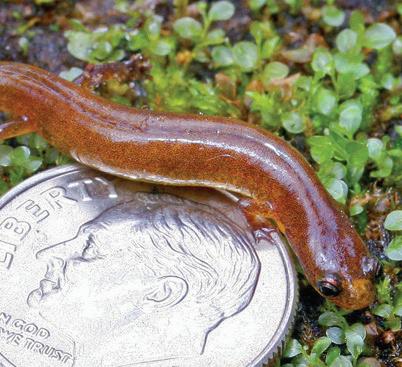
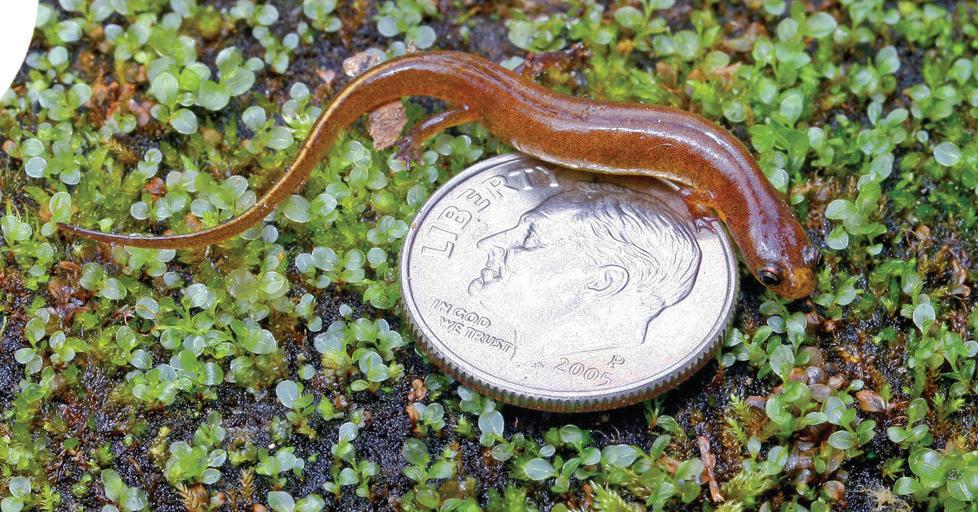
“Genetic Interaction Between Two Cryptic, Parapatric Species of Two-Lined Salamander (Eurycea bislineata complex) Along their Zone of Contact” to the annual meeting of the Association of Southeastern Biologists in Charlotte, North Carolina, March 2017.
Author
Co-authored a paper “Evolution of Dentition in Salamanders: Relative Roles of Phylogeny and Diet” with faculty and students from Centre College published in the Biological Journal of the Linnean Society, December 2016.
Dr. Stephen Carlson
Director of Undergraduate Programs and Senior Fellow in Business
Presenter
“Personal Selling and the Internet Age: Is the ‘Trusted Advisor’ Obsolete?” to the Atlantic Marketing Association Conference in Charleston, South Carolina, September 2016.
Presenter
“Student Research and Social Media: Using Digital Tools to Enhance Marketing Projects” to the American Marketing Association International Collegiate Conference in New Orleans, Louisiana, March 2017.
Dr. Hugh Davis
Associate Professor of English and Chair of the Department of Humanities
Author
“’As If Admonished from Another World’: Wordsworth’s Prelude, Schopenhauer, and Let Us Now Praise Famous Men,” in Let Us Now Praise Famous Men at 75: Anniversary Essays, by the University of Tennessee Press, January 2017.
Presenter
“’The Still Subtly Living Presence’: Agee’s Turn in the South” to the St. George Tucker Society Annual Meeting in Asheville, North Carolina, July 2016.
Presenter
“Like a Nail Through the Head: Exorcising Africa’s Witch Children in The Cursed Ones” to the Popular Culture Association of The South Annual Convention in Nashville, Tennessee, October 2016.
Dr. Wallace Hinson
Professor of Music, Associate Dean of Fine Arts, and Chair of the Music Department
CollAborAtion
Studied with Czech conductor Hynek Farkač and conducted Mozart’s Requiem with the Prague Chamber Choir, Pragenses Virtuosi Orchestra, and soloists from the Prague National Opera at the Prague Conservatory and Smetana Hall in Prague, May-July, 2016.
Brian Hitselberger
Assistant Professor of Art
exhibition
Presented a solo exhibition, “Seeing in the Dark,” at the Carlos Gallery of the University of the South in Sewanee, Tennessee, October 2016.
Author
Artwork in Dialogist (Vol. IV, Issue I), an online quarterly for poetry and art.
Dr. Randall Hollandsworth
Associate Professor of Education
Author
Co-authored an article, “Digital Citizenship: You Can’t Go Home Again,” in TechTrends, published by the Association for Educational Communications & Technology, May 2017. Dr. Mary Welch (EDS ’11, EDD ’15) and Dr. Judy Donovan, Ashford University, San Diego, California, were the co-authors.
Brian Hitselberger’s Drop at the Carlos Gallery of the University of the South. Dr. Carlos Camp presented and co-authored papers on Southeastern salamanders.
Dr. Kelly Land
Assistant Professor of Education
AwArd for reseArCh
Received the Scholar Award at the annual conference of the Association of Independent Liberal Arts Colleges of Teacher Education (AILACTE). This national award provides funding for a research study that Dr. Land will conduct titled, “Super Vision: How Supervising Clinical Experiences Impacts the Practices, Pedagogy, and Professional Contributions of College Faculty.” March 2017, Tampa, Florida.
Dr. James F. Mellichamp
President and Professor of Music
ConCert
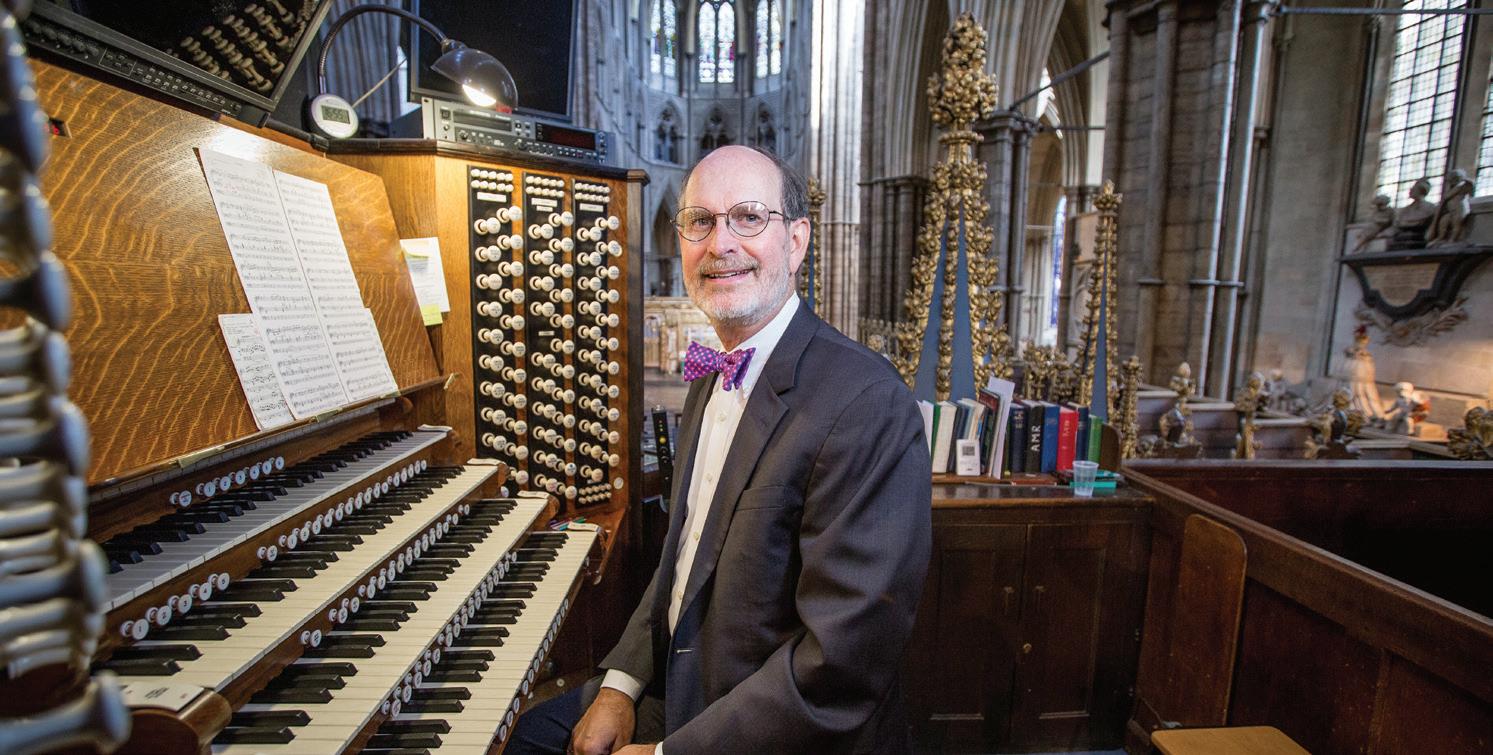
Solo concert on the Harrison and Harrison Organ at Westminster Abbey in London, July 2016.
ConCert
Solo organ concert at Claremont United Church of Christ in Claremont, California, January 2017.
Dr. Casey Nixon
Assistant Professor of Education
Presenter
“Graphical Aids in Middle School Mathematics: Impacting the Achievement Gap for English Learners” to the 2016 Annual Meeting of the American Education Research Association in Washington, D.C., April 2016.
Dr. Timothy O’Keefe
Assistant Professor of English
Author
Three poems, “Bellwether Song,” “Careening Song,” and “Mercy Song,” as the featured author in The Offending Adam and in Mary: A Journal of New Writing, Spring 2016. His upcoming book, You Are the Phenomenology, was selected as the winner of the 2017 Juniper Prize for Poetry by the University of Massachusetts Press and the University of Massachusetts Amherst MFA Program.
Dr. Lynn Rambo
Associate Professor of Education
Presenter
“A Challenge to Change Teacher Preparation: The Piedmont College Woodrow Wilson Georgia Teaching Fellowship Program— Reflections after Year One,” to the Annual Conference of the Georgia Association of Teacher Educators, Young Harris, Georgia, October 2016.
Dr. Betty Rogers
Professor of Mathematics Education
Presenter
“Art as a Pedagogical Innovation That Can Provide a Multicultural Dimension to the K-12 Classroom” to the National Joint Mathematical Societies Annual Conference, Atlanta, Georgia, Jan. 2017.
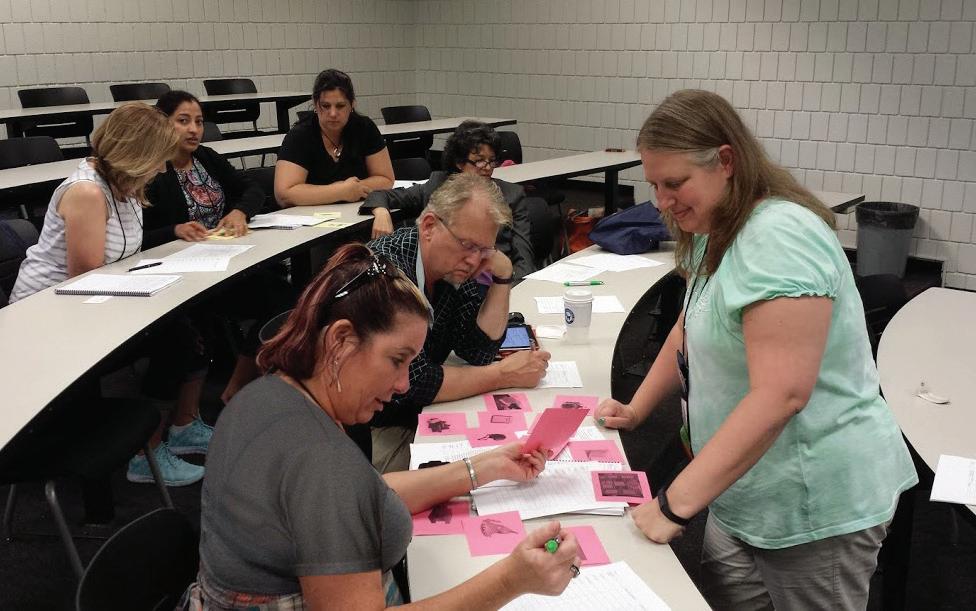
Dr. Julia Schmitz makes a presentation to the Human Anatomy and Physiology Society Conference.
Dr. Mellichamp performs at Westminster Abbey.
Dr. Julia Schmitz
Associate Professor of Biology
Presenter
“Using Fun Activities to Learn About the Function of the Organelles” to the Human Anatomy and Physiology Society Conference in Atlanta, Georgia, May 2016.
Dr. Hilton Smith
Professor of Education
Dr. Sara Alice Tucker
Associate Professor of Education
Dr. Wilma Hutcheson-Williams
Associate Professor of Education
Authors
Contributed chapters to a new book, The Foxfire Approach: Inspiration for Classrooms and Beyond. Dr. Smith is co-author of the book with Dr. Cynthia McDermott, Antioch University, Los Angeles. (Sense Publishers, Rotterdam, 2016.)
Dr. Candice Southall
Associate Professor of Education
boArd MeMber
Named to the editorial board of Teaching Exceptional Children, a publication of the Council for Exceptional Children in Arlington, Virginia.
Dr. Ed Taylor
Dean of the Walker School of Business and Professor of Business
Presenter
“New Role for the Alumni Survey in Assessment” to the Southern Association of Colleges and Schools in Atlanta, Georgia, December 2016.
Dr. Douglas A. Torrance
Assistant Professor of Mathematics
Author
“Generic Forms of Low Chow Rank” in the Journal of Algebra and Its Applications, January 2017.
Dr. Cynthia Vance
Professor of Psychology
Presenter
“Using Monopoly to Teach Prejudice and Discrimination” to the National Institute on the Teaching of Psychology Annual Conference in St. Pete Beach, Florida, January 2017.
Dr. Stephen Whited
Professor of English
Presenter
“Reacting to the Past in the College Literature Survey Classroom,” to the South Atlantic Modern Language Association Conference in Jacksonville, Florida, November 2016.
Dr. Kerry Waller
Associate Professor of Economics
Presenter
“Student Learning Outcomes Have Been Assessed…Now What?” at the Accreditation Council for Business Schools and Programs Conference in Montgomery, Alabama, October 2016.
Alex Thomlinson
Giving words new life through music
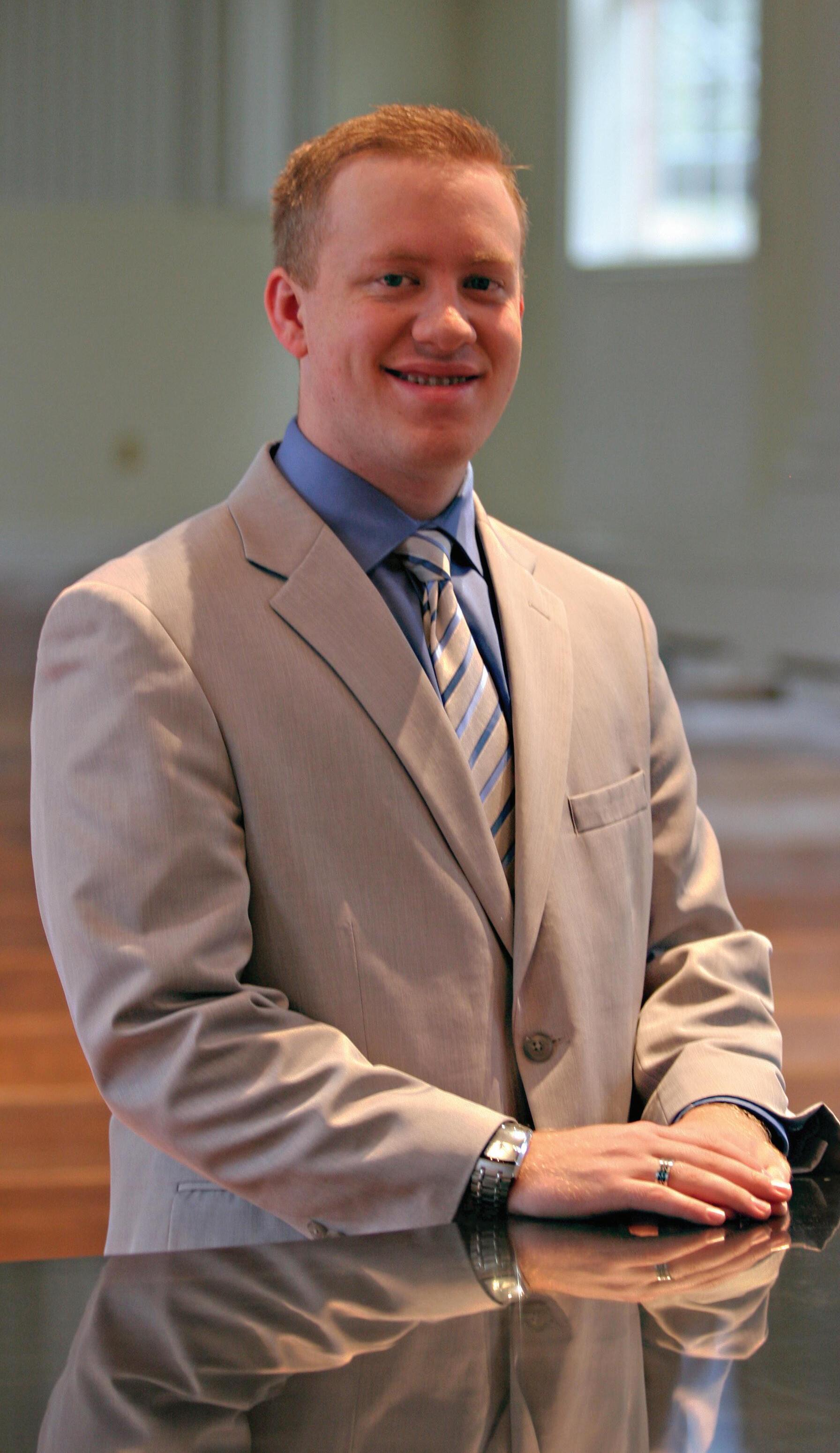
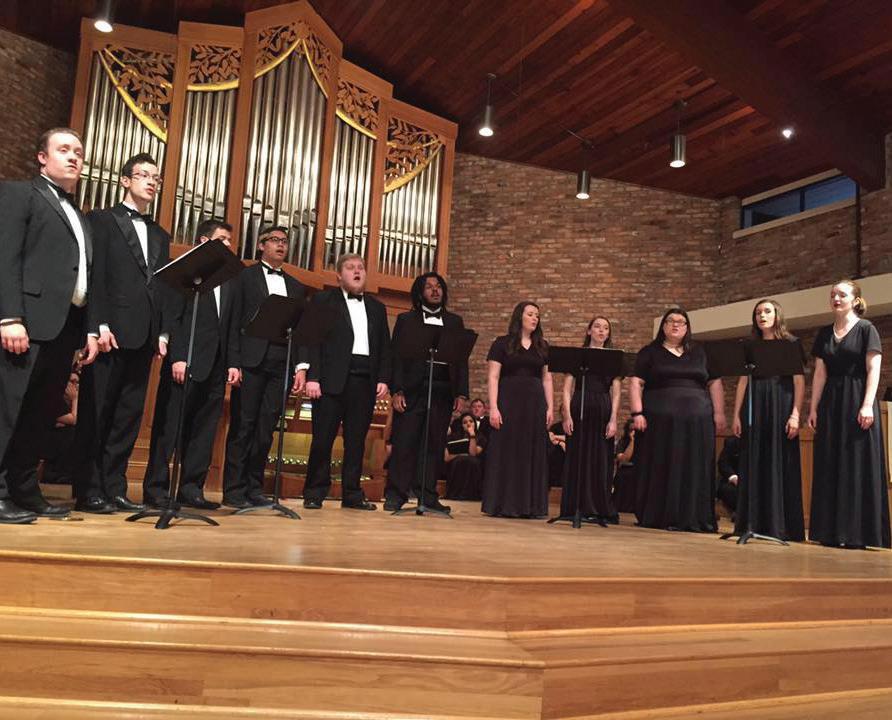
Alex Thomlinson (’17) of Dahlonega sang with the Piedmont Singers all four years while at Piedmont and was a member of Cantabile his senior year. He graduated in May 2017 with a degree in music vocal performance. In January, Thomlinson won the Georgia Music Educators Association’s Composition Competition for the second year in a row.
“Alex is a very dedicated and motivated composer,” said James Geiger, instructor of music theory at Piedmont. “I’ve never taught anyone who had numerous compositional projects going on at the same time with all of them getting performed. It is no surprise that he won the GMEA Composition Competition two years in a row.”
Q: How did you get interested in composing?
A: My junior year in high school, we moved to Dahlonega. I had not been interested in classical music until I joined the choir at Lumpkin County High School and developed an appreciation for it. I did a little bit of writing then, but not much. The senior song at graduation was my first original piece to be performed. During my senior year, the Piedmont Singers came to our school to perform. I fell in love with the group and thought it was awesome—that’s why I wanted to come to Piedmont. While I was with the Singers, we made trips to New York, North Carolina, Minnesota, and Florida.
Q: What was your winning composition about?
A: It is a musical setting of a poem by James Agee, “Sure on this Shining Night.” I submitted the score and a midi recording. I was at a singing competition and professor James Geiger texted
During my senior year, the Piedmont Singers came to our school to perform. I fell in love with the group and thought it was awesome—that’s why I wanted to come to Piedmont.
me, “Congratulations, you won again.” It was a kind of nice surprise. He has been a great professor to work with. At the conference in January, you can only have eight singers in the performance, so some of my friends from Piedmont came and we performed it. (The performers included Amin Abraham-Quiles, Isabella Brown, Diana Cleland, Kristen Ellison, Chance Passmore, Aubrey Peat, and Adam Weisheit.)
Q: When you won the competition last year, which composition did you enter?
A: Last year it was “Ave Maria,” based on the Latin text of “Hail Mary.” I’d always wanted to put that text to music, which hundreds of other people have.
Q: What is your creative process like?
Writing a choral piece is different from writing an instrumental piece. For choral, I look for the text first before working on any notes. I’ll try to speak it and see if it is something that will flow if set to music. Sometimes it can be too lengthy. Edgar Allen Poe’s The Raven is a great poem, but it would be difficult to set it to music. Once I do that, I sit down at the piano and play a few notes and try to sing the notes with the words. When I find a melody that is “catchy,” I can base the whole piece off that. My goal is for someone to leave the auditorium and hum the melody—to have it stuck in their head.
Thomlinson (left) with Cantabile singing at First Congregational UCC in Sarasota, Florida.
For an instrumental piece, I can focus a lot more on the melody, you have a little more freedom. When you have a text, you can’t lengthen a phrase, and voices are not as flexible as instruments.
Q: What is it like to hear one of your compositions for the first time live?
A: I know a lot of other composers have used this analogy, but it is kind of like having a kid. You put weeks and months into this and have no idea what it will sound like live. Same for instrumental music. It’s always amazing to finally hear it performed. Sometimes you are surprised—parts that may sound stagnant when you hear them played on a computer, but then when it is live, it works very well. It’s always unexpected, but very relieving.
Q: What are your future plans?
In late August, I am going to Westminster Choir College in Princeton, New Jersey, for a master’s in music composition. I’ll be studying under Joel Phillips. I’d like to pursue a doctorate to learn as much about composing as I can. I’d love it if I can make a living doing just that, commission work. And later I’d like to teach as well. It’s something I really enjoy.
Student Research
STUDENT RESEARCH
Imporeiur, odis disit, inus sinis autem vernatur sediandit asintur quate explautemod escit quam eiunt dolore et. ecerchi
llitate ctibus etur re consequunt mo to eium fuga. Itas ipiciat inissit esti nonsequ idestrum simus enditia venimaio venet repel minihictia doluptat. Imporeiur, odis disit, inus sinis autem vernatur sediandit asintur quate explautemod escit quam
One view: Students sit in class, listen, ask questions, take notes, pass tests – and they’re done. Our view: That’s just the beginning. Happily, it is a view shared by many of our students who are excited by the idea of digging deeper – often in collaboration with faculty partners – into sophisticated, independent research projects widely admired in academic circles.
Tristian Bailey (’17)
Current MBA student
Cleveland, Georgia
Presented “Student Satisfaction and Academic Advising” to the American Marketing Association International Collegiate Conference in New Orleans, Louisiana, March 2017. (Dr. Susanna Warnock)
McKynsey Douglas (’16)
Chemistry Major Newnan, Georgia
Completed an Honors Research Project, “Comparison of Effects of Kombucha Tea Against Prescribed Antibiotics on Pseudomonas aeruginosa and Salmonella enteric.” (Dr. Julia Schmitz)
Andrew Duitsman (’18)
Senior Biology Major
Lena, Illinois
Senior project, “Effect of Acid Strength and Temperature on the Activation Energy for Mutarotation of Sucrose Using Polarimetry,” won the Outstanding Poster Award for Undergraduate Research at the Georgia Academy of Sciences Annual Meeting in Young Harris, Georgia, March 2017. Published in the Georgia Journal of Science (Vol. 75, 2017). (Dr. Sean Carrigan)
Jordin Ellingson (’16)
Biology Education Major Cornelia, Georgia
Presented a research poster, “The Effects of Caffeine and Alcohol on Development in Drosophila melanogaster” at the annual meeting of the Association of Southeastern biologists in Charlotte, North Carolina, April 2017.
J. Sumner Gantz (’15, MBA ’17)
Business Administration Major Ball Ground, Georgia
Dr. Susanna Warnock
Assistant Professor of Business
Published “Does Gamification Offer Relief from Survey-Taking Torture? In Quirk’s Marketing Research Review, October 2016.
Published “Gaming for Respondents: A Test of the Impact of Gamification on Completion Rates” in the International Journal of Marketing Research (Vol. 59, No.1, p. 117-138) in January 2017.
Kayla Jones (’17)
Business Administration Major Newnan, Georgia
Dr. Susanna Warnock
Assistant Professor of Business
Presented “Retention of Word of Mouth? Using the Net Promoter Score in Higher Education” to the American Marketing Association Higher Education Symposium in Orlando, Florida, December 2016.
Stephen Owensby (’16)
Biology Major
Current MAT student
Cornelia, Georgia
Kristina Coggins (’16)
Biology Major
Tallapoosa, Georgia
Presented a research poster, “A Test of Ecological Character
Displacement Between the Larvae of Two Cryptic, Sympatric Species of Two-Lined Salamanders, Eurycea wilderae and Eurycea cirriger,” to the Annual Meeting of the Association of Southeastern Biologists in Charlotte, North Carolina, March 2017. (Dr. Carlos Camp)
Harley Palmer (’17)
English Major
Toccoa, Georgia
Chaired a panel on “Gazing Upon America” at the Popular Culture Association of the South Annual Convention in Nashville, Tennessee, October 2016. (Dr. Hugh Davis)
James Keelan Passmore (’17)
Biology Major
Gainesville, Georgia
Presented a research poster co-authored with students from Centre College, “Genetic Analysis of Paedomorphic Eurycea from the Foothills of the Appalachian Mountains of Georgia,” to the Special Highlands Conference on Plethodontid Salamander Biology in Highlands, North Carolina, August 2016. (Dr. Carlos Camp)
Passmore has been awarded a Dr. J. Harold Harrison Scholarship to attend the Medical College of Georgia at Augusta University.
Giovanni Ramos (’16)
Biology Major
Athens, Georgia
Completed a Senior Research Project, “Examining Bacteria in Unpasteurized Milk vs Pasteurized Milk.” (Dr. Julia Schmitz)
William Skidmore (’16)
Mathematics Education Major
Current MA student
Cumming, Georgia
Completed a research project, “Predicting NFL Quarterback Passing Yards.” (Dr. Douglas A. Torrance)
Brittany Stancil (’17)
English Major
Toccoa, Georgia
Presented “Female Binaries and the Male Gaze in Martin Scorsese’s Taxi Driver” to the Popular Culture Association of the South Annual Convention in Nashville, Tennessee, October 2016. (Dr. Hugh Davis)
Presented “Feminist Subjectivity and the Male Gaze in Jean-Luc Godard’s Breathless” to the Literature and Psychology Panel of the South Central Modern Language Association Annual Convention in Dallas, Texas, November 2016. (Dr. Hugh Davis)
Emma Stanley (’18)
Senior English Major
Buford, Georgia
Presented “Brett Ashley: Master of Modernist Masculinity” to the Popular Culture Association of the South Annual Convention in Nashville, Tennessee, October 2016. (Dr. Hugh Davis)
Alex Thomlinson (’17)
Music Major
Dahlonega, Georgia
Won first place in the Compositions Competition of the Georgia Music Educators Association with a choral setting of Sure on this Shining Night. Thomlinson also won the competition in 2016. (James Geiger)
Compass Program
The Compass Program is Piedmont College’s experiential learning component designed to take our students beyond the walls of the classroom –into the real world for real experiences that put what they’re learning to real use. (In case you didn’t notice, the key here is “real.”)
To put it a bit more formally, it is a distinctive program that promotes interdisciplinary learning, civic engagement, career development, cultural awareness, leadership, and other professional and intellectual skills.
It allows – make that encourages – students to take initiatives, make decisions, and be accountable for the results. Over the course of their college career at Piedmont, students design and manage projects structured to address core competencies identified by employers, including critical thinking and teamwork.
Possibilities include job shadowing, co-curricular internship opportunities, volunteering, individual research projects, mission work, travel abroad, and on-campus leadership activities.
Opportunities are limited only by the students’ imagination. And as you can see from these 20162017 examples, they have lively imaginations!
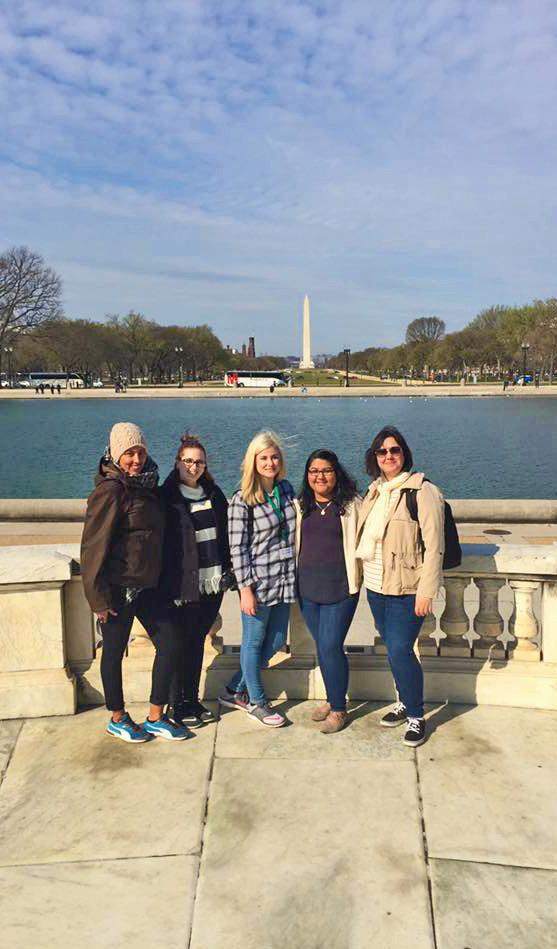
Spring 2017: The Compass Program co-sponsored “Career Expedition: D.C.”, a five-day trip to Washington, D.C., in which 12 Piedmont students explored museums, visited local alumni and volunteered at So Others May Eat (SOME), a local non-profit agency. Participants included (left to right): Jacky Linnemann, Leah Pugliese, Makayla Kennedy, Lizbeth Aguilera, and Alena Hanson.
Out & About
An Aha Moment
Jazmine Dunnavant (’20)
Education Major
Athens, Georgia
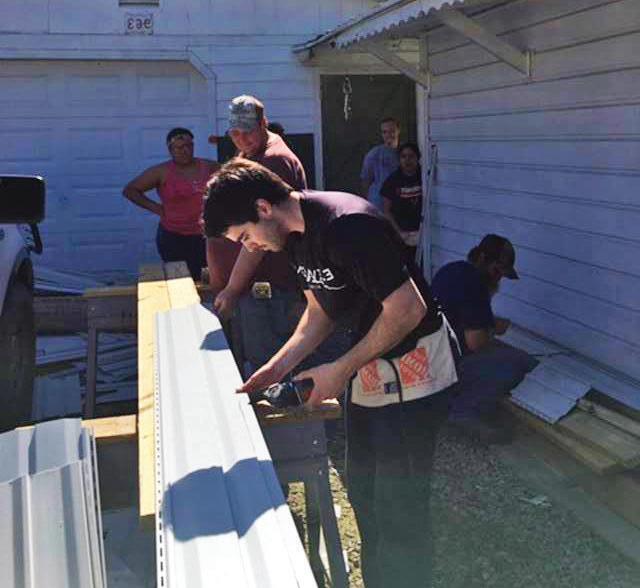
“I participated in the Alternative Spring Break Morgan Scott mission trip. We traveled to Deer Lodge, Tennessee, to volunteer, to serve the community, and to help others. I was enlightened by this experience. I learned new skills, such as how to put siding on a house and how to work together in a group to accomplish a large project. It was very rewarding. Moreover, this trip sparked something in me that led me to be interested in pursuing a new career path to be a teacher. I realized that if I want to directly help people, I should begin with children and help to mold their minds and encourage them to be the very best they can be no matter what their economic background. This realization helped to reveal a new direction in serving children during their early development. This experience also taught me that sometimes being a leader means to follow when needed.”
Curtain Up
Milner Martin (’19)
Theatre Major
Inman, South Carolina
“I participated in directing a 45-minute abbreviated version of William Shakespeare’s, “The Taming of the Shrew,” produced by The Crumhorn Players. My goal was to learn what it’s like to direct a show with people your own age, your own friends, and then seeing how good the outcome would be. In addition to directing, I also acted within the show. In the end, I learned how to work with my peers. I was able to put together a theatrical production as a result of the total commitment from the entire cast and crew. I learned how to communicate with an entire cast to make sure they were all on the same page. I plan to continue The Crumhorn Players in the future and produce one show per semester, using the skills I learned from my first experience.”
Community Spirit
Lanae Ramos (’18)
English Major
Demorest, Georgia
“As a member of the Clarkesville Junior Main Street Board, I worked with members of the board to plan community events that benefited the beautification of the downtown area as well as draw new businesses to the square. I used my social, organizational, and promotional skills to assist other board members in executing each event, such as a Glow Run and Mardi Gras Fundraiser. I contacted possible sponsors for the events, distributed promotional flyers, and worked with other Junior Board members the days of the events. This endeavor taught me how to work well with my peers as well as with my superiors. I learned how to efficiently communicate with my supervisor and how to communicate with members of the community while volunteering at an event. I believe these skills can be used in any profession I pursue in the future.”
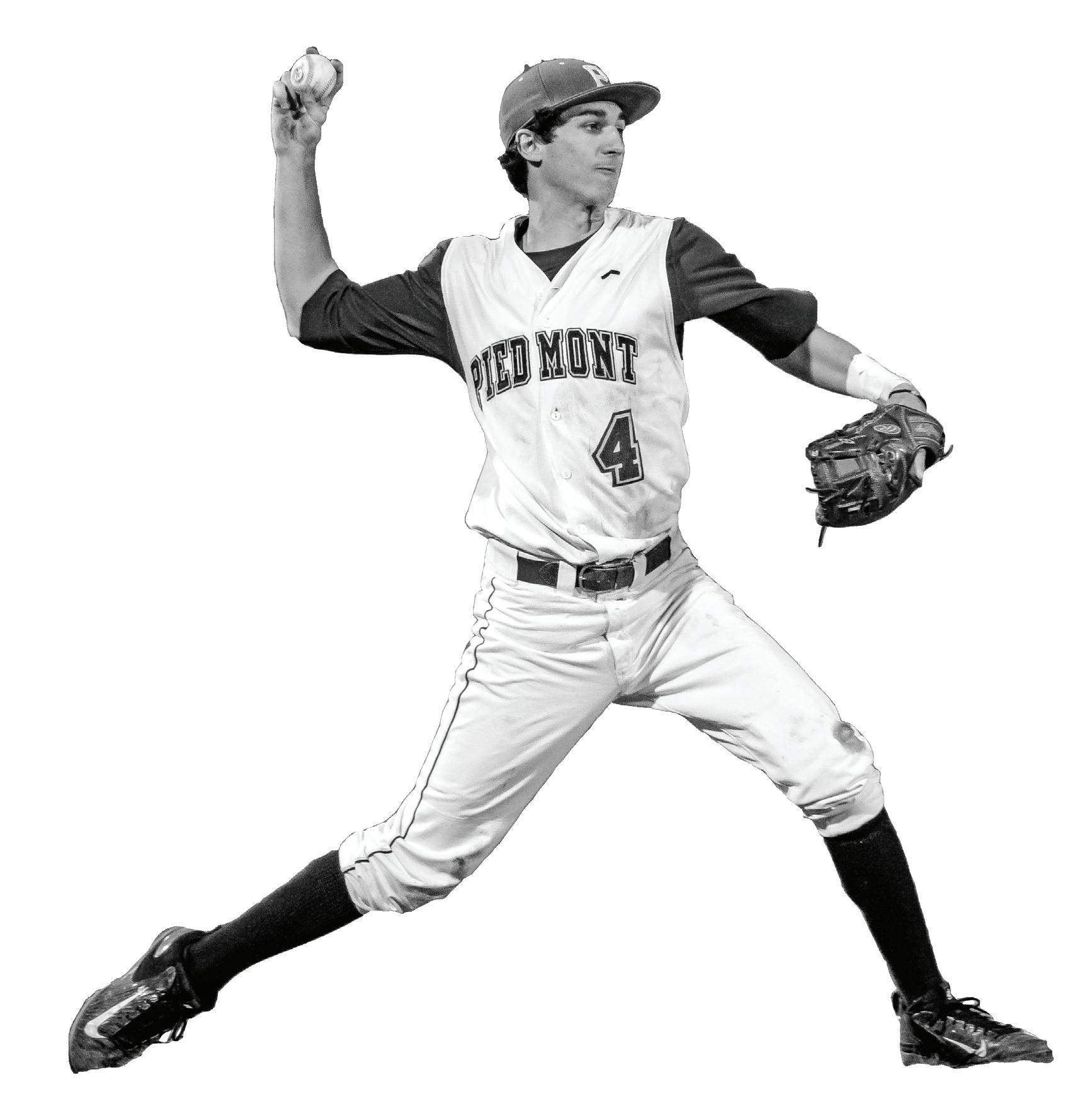
Student Athletes
STUDENT RESEARCH
Imporeiur, odis disit, inus sinis autem vernatur sediandit asintur quate explautemod escit quam eiunt dolore et. ecerchi
llitate ctibus etur re consequunt mo to eium fuga. Itas ipiciat inissit esti nonsequ idestrum simus enditia venimaio venet
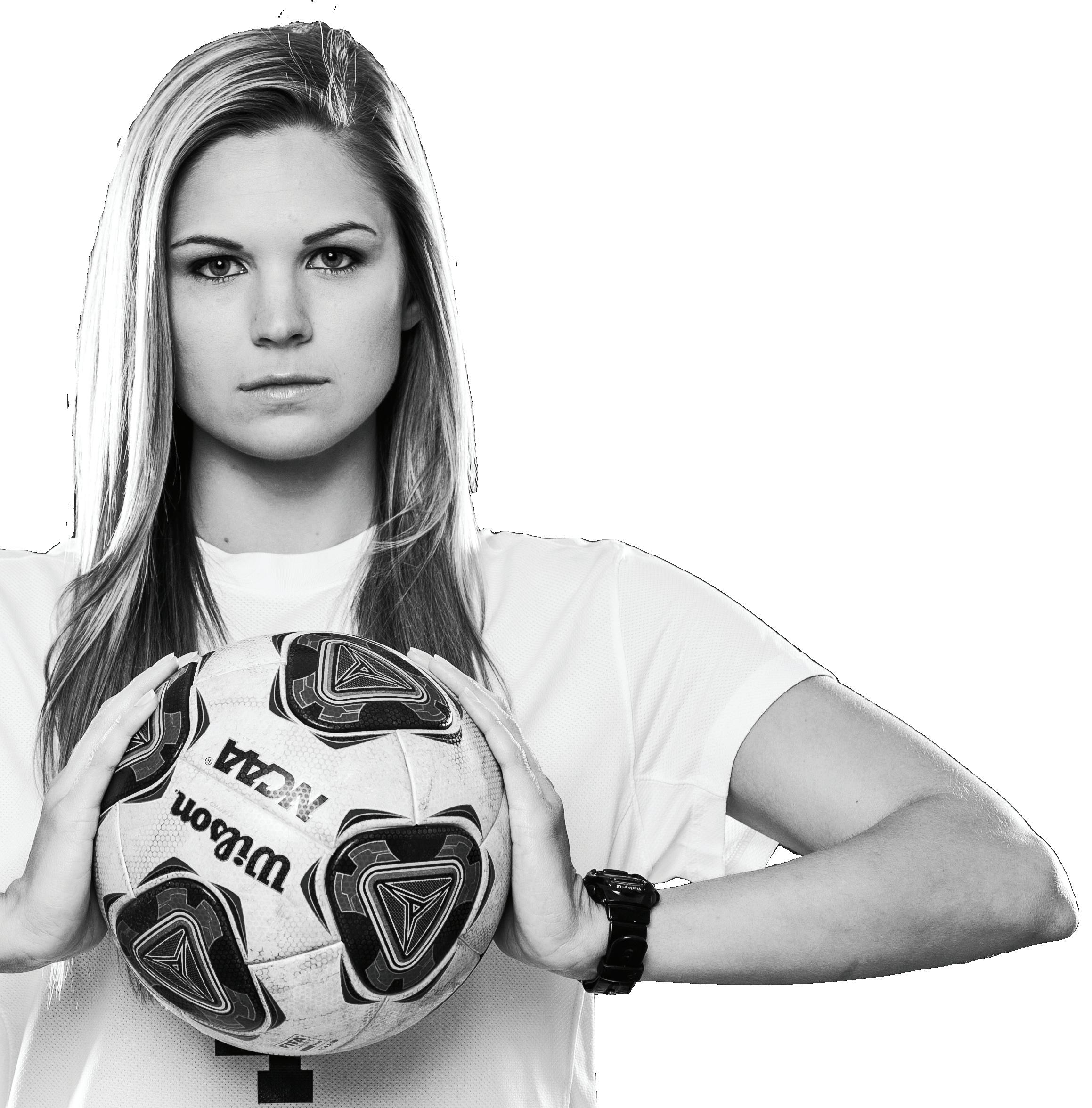
We’d like to point out two things here. First, we call them student-athletes. Second, student comes first. Our players are well known for hitting the fields, the courts and the trails with a competitive, winning spirit. It is
ACADEMIC ALL-AMERICA TEAM
Savannah Castles ’17
Senior Exercise and Sport Science Major Soccer
Helen, Georgia
Castles is a six-time Dean’s Scholar at Piedmont and also has earned USA South Academic All-Conference honors three times.
Current MBA Student
Baseball
Lilburn, Georgia
Langley has earned USA South Academic All-Conference honors for three seasons.
Current MBA Student
Baseball
Lula, Georgia
Olson has earned USA South Academic All-Conference honors for three seasons.
Art and Graphic Design Major
Soccer
Watkinsville, Georgia
Kane is a three-time Athletic Director’s Honor Roll member and earned USA South Academic All-Conference honors this past year as well.