




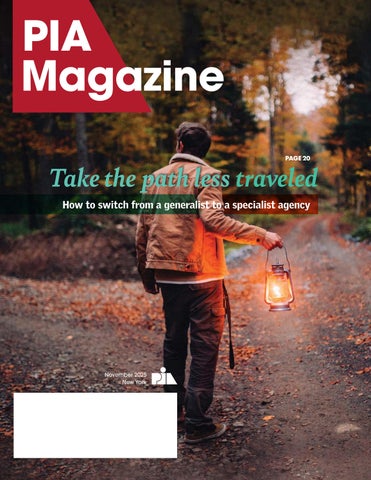
By specializing in a niche market, you can increase your value to your prospective and current clients and in your insurance market. Additionally, you can make your work more interesting for you and your employees.
Plus, you can grow your business by cross-selling niche-related insurance products, since people in specialized fields tend to be interested in protecting their investments with insurance products that are designed specifically for them.
The benefits of developing a niche:
• You can avoid competition in a larger market.
• You can develop closer relationships with your clients (and understand them better) when they see you as an expert in their specific field.
• You can implement targeted marketing strategies that are more likely to resonate with your prospective clients and result in a sale.
So, you want to develop a niche for your insurance agency.
Where do you start? Look at your existing client base. Do you have a lot of clients who are focused on a particular industry? Is there a high need for a specific insurance coverage in your area?
While that’s a good starting point, do you need more direction? Here’s a look at some popular niche markets to consider for your agency:
There are roughly 33 million small businesses in the United States. Even larger businesses can struggle to find the right insurance policies (e.g., commercial, liability, cyber, health) for their businesses— imagine the stresses smallbusiness owners feel. You can be the insurance agent who lifts that heavy burden.


Gig economists (e.g., freelancers, ride-share drivers, food-delivery drivers, dog walkers) are in industries that traditional insurance policies don’t cover. And, while some of their companies may provide some insurance coverage, there can be gaps. You can be the insurance agent who educates them about these gaps and helps them get the additional insurance coverage that should protect them.

People who are willing to start their own businesses are willing to take chances. However, they need to know the importance of separating their personal and business assets. You can be the insurance agent who stresses the importance of being prepared to meet their changing needs.

Trucking and transportation are high-risk jobs. Those in these industries should consider insurance policies including life insurance and disability coverage. You can be the insurance agent who is with them for the long haul and who helps them identify the coverage they need to protect themselves and their families.

The COVID-19 pandemic changed the way a lot of businesses do business. Now that many of them have established remote-work protocols, there are new insurance options to consider (e.g., equipment coverage, cyber security protection, home-office liabilities). You can be the insurance agent who helps bridge the gap between what employees want and what employers need.

Big life changes happen when people get married and start having families (e.g., mortgages, college savings, life insurance). You can be the insurance agent who could safeguard their future with specialty insurance products.

Beyond the fact that many high-value property items are not covered by standard homeowners insurance policies, this population tends to focus on estate planning and wealthpreservation techniques. You can be the insurance agent who could preserve their bigticket items and provide them with peace of mind.

Military families are used to having all their services provided in one space by one provider (the U.S. government). When they retire, some of their benefits may not carry over to their civilian life. You can be the insurance agent who thanks them for their service by being of service to them.

Take your agency to the next level
Insurance goes beyond selling insurance policies, it’s about solving your clients’ real-life problems, and being someone they can trust to advise them. By developing a niche, you can establish your agency as the go-to place to find information about specific insurance needs.
Be the agency that people go to when they want to start a conversation about protecting their niche.


Developing a niche for your insurance agency works if you have relationships with enough insurance carriers that write a wide range of insurance policies to offer your clients choices to fit their unique needs.
That is why it’s vital to have the right carrier appointments. However, you should have a plan in place before you start your outreach.
If you are developing a niche for your agency, don’t assume that your current carriers will have the insurance products you need to be successful in your new niche.
Look for carriers that have experience in your niche. Be mindful of how long they have been writing insurance in this marketplace. Have they been providing insurance to this sector for decades, or have they noticed the trend in this niche and have they added this coverage to their portfolio? Before you pick up the phone or send an email, do your research.
Get to know the intended carrier. Make sure it has enough products and policy options to provide the clients in your new niche with options and the coverage they need to help ensure they have the proper protection. Does the carrier share similar philosophies and goals as your agency?
Likewise, carriers will examine your agency: They will want to know your objectives and how you plan to achieve them. To find compatibility, it’s important that both sides understand each other’s expertise, strengths and weaknesses.
Preparing for a presentation for an agency-appointment meeting is a great way to gather and analyze information about your agency. It will help you gain insight into your agency’s expertise, and its opportunities and obstacles. It also will help you identify and articulate your goals.
Make sure the presentation is detailed enough so that it will not require follow-up meetings or phone calls, and concise enough so that it is not overwhelming, which will increase the likelihood that it will be reviewed.
The following elements should be included in your agency’s company-appointment presentation:
Agency profile. Your agency profile should include:
• a history of your agency;
• your premium size;
• an overview of your agency’s structure; and
• your agency business profile, which includes a percentage breakdown of your agency’s lines of business. Remember, an agency’s past performance can be a good indicator of its future success.
You should include information about your business, marketing and perpetuation plans. A carrier doesn’t need to know all the details but just knowing that your agency has these plans in place will show that you’ve given thought to your agency’s future, and that you are prepared to handle any issues that might arise.
Overview of the business plan. This can include your agency’s mission statement, the strategy you plan to use to achieve your agency’s goals, and how you plan to act on those goals. Don’t forget to take stock of your internal resources (e.g., agency flowcharts, inventory, automated systems), and any external factors that may affect your ability to do business (e.g., economic conditions, industry trends).
Reason for the relationship. When you are detailing your plan, don’t forget to state clearly your purpose for wanting to establish a relationship with the carrier (e.g., you are creating a new niche in your agency).
Make sure the carrier understands what your agency is offering it, and how the carrier will benefit from the relationship.
Once you’ve made your pitch and the carrier agrees to an appointment, your work is not over.
Review your agreement to ensure that it is accurate, that the goals are achievable; and that results are measurable. Make sure you understand the aspects of your agreement, and that you get it in writing. Does it include all that you discussed and agreed upon? Do you understand your agency’s responsibilities?
Double check to make sure nothing was added, and that you agree to the carrier’s terms and conditions. The time for additional negotiations is before you sign the contract.
Remember, as part of your PIA Northeast membership, PIA does offer a contract review service. For more information, call (800) 424-4244 or email resourcecenter@pia.org.
For more information on how to prepare for a carrier-appointment meeting—including a business plan checklist—PIA Northeast members can access How to present your agency to a company for appointment (QS90035) in the PIA QuickSource library.









•Grow
•Increase



•Build

Bradford J. Lachut, Esq. Director of government & industry affairs, PIA Northeast
I’m fascinated by the process of evolution. As a kid, I was a dinosaur fanatic, and I was perplexed by the thought of a Stegosaurus (my favorite dinosaur) evolving into a bird. Luckily, I have since wrapped my brain around that.
I’ve always thought of evolution as a slow process affecting species over millennia. However, I was reading a book recently that applied the process of evolution to how countries change over time. That broadened my perspective. Now, I see evolution in other areas too, like the insurance industry’s shift toward pet insurance.
Pet Insurance 2.0
In recent years, pet insurance has undergone a quiet transformation. Once a niche product that was limited to basic emergency coverage, it now has evolved into a dynamic, fast-growing sector that is shaped by shifting cultural values, new technology and rising veterinary costs. While traditional policies once focused narrowly on accident and illness coverage, today’s offerings have evolved into broader and more customizable policies—often embedded in digital ecosystems designed for convenience and care. The result is Pet Insurance 2.0: a new generation of products that reflect how modern consumers view their pets—not as property, but as beloved family members.
This evolution has been largely driven by millennials and Gen Z, who now make up most pet owners in the U.S. These younger generations bring different expectations to the table. They’re more likely to budget for preventive care, explore wellness alternatives and demand personalized, tech-enabled services. They’re also delaying homeownership and starting families later, but they’re not waiting to adopt pets. For many, a pet is their first serious caregiving relationship—and they want insurance coverage that honors that role.
This evolution has been largely driven by millennials and Gen Z, who now make up most pet owners in the U.S. These younger generations bring different expectations to the table. They’re more likely to budget for preventive care …
In response, insurers are expanding coverage to include not just medical emergencies, but also wellness visits, vaccinations, dental cleanings, spay/neuter services, prescription diets and behavioral therapy. Some carriers are exploring options for chronic disease management and emotional wellness support—including stress-related conditions and end-of-life care decisions (e.g., hospice services and cremation coverage). These are benefits that would have seemed outlandish a decade ago, but now are fast becoming expected by consumers.
What’s changed isn’t just what policies cover—it’s also how they’re accessed and managed. Today’s pet insurance plans often are managed entirely through mobile apps, where policyholders can submit claims, upload invoices, receive reimbursement and chat with customer service in real time. Some of these apps also offer integrations with wearable pet tech—such as fitness trackers and GPS-enabled collars—which allows for data-driven insights that can support early diagnoses or chronic-condition monitoring.
Televeterinary services have become another defining feature of the modern pet insurance experience. Just as human health care has shifted toward telemedicine, pet care is embracing virtual consultations for triage, post-operative care or behavioral check-ins. These services offer peace of
mind, reduce unnecessary vet visits and may support earlier intervention—potentially reducing complications and costs. The value proposition is clear: faster care, fewer complications and stronger relationships between policyholders and their providers.
The pet insurance marketplace may be evolving but why should insurance producers care?
Behind this evolution is a rapidly expanding market. According to the North American Pet Health Insurance Association, the U.S. pet insurance sector grew by more than 20% in 2024 alone, with total premium volume in the U.S. exceeding $4.5 billion! This growth shows no signs of slowing—yet market penetration remains surprisingly low.
According to the American Veterinary Medical Association, there were 163.5 million dogs and cats kept as pets in 2024 in the United States.1 Yet, only about 6.5 million pets currently are covered by an insurance policy.2 This accounts for less than 5% of U.S. pets owned. That leaves enormous room for expansion—particularly as newer products meet the needs of previously uninterested demographics.
For independent agents, this growing niche presents both a challenge and an opportunity. Pet insurance may not offer the same commission structure or premium volume as traditional personal lines—at least initially. However, it holds strategic value in deepening client relationships. It allows agents to engage with younger consumers who may not yet need homeowners or commercial insurance, but who are looking for expert guidance and trust-

worthy advice. Pet insurance also opens the door to cross-selling opportunities with renters, umbrella or even specialty liability policies—especially for clients with high-value or exotic pets.
To succeed in this space, agents must stay informed about rapidly changing product features, carrier offerings and customer expectations. Building partnerships with local veterinary clinics, pet groomers or shelters can help raise awareness and generate referrals. Understanding how app-based policy management works—or how televet consultations are covered—can help position the agent as a knowledgeable resource in a growing and emotionally charged market.
More importantly, engaging with pet insurance is a way for agents to stay relevant in a landscape that’s being reshaped by digital disruption and changing consumer values. Younger
clients aren’t just looking for transactional service—they want connection, convenience, and agents who share their priorities. For many of them, that includes caring for the animals that are central to their households and identities.
Looking ahead, the future of pet insurance likely will include even more integration with health tech, AI-based diagnostics and wellness-driven care models. We may see insurance policies explore grief counseling, support for service animals with long-term disabilities, or even home modifications for pets with mobility challenges. As veterinary medicine becomes more advanced and more expensive, insurance will play an increasingly central role in making care accessible and affordable for more families.
Pet Insurance 2.0 isn’t just about adding new bells and whistles—it’s about recognizing that the relationship between people and their pets has changed, and that insurance must evolve in turn. For agents willing to learn and adapt, the field is wide open. And for clients—especially those navigating the joys and challenges of pet parenthood for the first time—having the right coverage in place can make all the difference.
After all, peace of mind shouldn’t be limited to people—our pets deserve it, too. Especially if that pet is a Stegosaurus.
1 American Veterinary Medical Association (tinyurl. com/bdcpm6r3)
2 North American Pet Health Insurance Association (tinyurl.com/72yxdxwy)
Thursday, Jan. 29, 2026
Sheraton NY Times Square

Rick Race, Highstreet H.G. Ellis Agency
“It has been a true pleasure to work with Donna Nygard, Cecelia Cospito and the rest of the team at Friedlander Group. We have worked together on a few “challenging” accounts and they have been more than “up to the task”! It’s a very confident feeling to introduce a client to Donna and her group, knowing that they have both that client and our agency in their best interest. THANK YOU Donna, Cecelia and the rest of the group for everything you do. I hope to find more accounts that fit the safety groups that Friedlander Group manages.”
Financial
Maria Thomas | 631-834-9829 mariat@friedlandergroup.com (LI, Manhattan, Queens, Brooklyn, Bronx, Staten Island)
Donna Nygard | 914-844-2195 donnan@friedlandergroup.com (Remainder of NY, NJ, and CT)


Building
By Adam Friedlander Now
Justin Guerra Creative director and loss prevention specialist, PAK Programs
Follow your passion. It’s a saying we hear all the time in the insurance industry and beyond. However, can following work that you love translate to better business results and growth?
In the insurance industry, where agents can serve a comprehensive range of specialties and lines of business, there is an opportunity to mix passion and work. And, expertise within these niches can pay dividends in finding business growth.
When people are excited about their work, they will want to be in that environment. A passionate agent may be more likely to conduct on-site visits, be more likely to speak with insureds more frequently, and be more likely to conduct extensive research on the niche of interest.
Long-term interest in a topic can yield more knowledgeable agents, providing a distinct advantage. Specializing in a niche in which an agent has expertise can make learning the ins and outs of that specialty much easier.
Specializing in a niche that an agent knows can lead to more frequent and genuine connections. When agents have a passion for their specialty, that interest can help build trust with potential insureds. Knowing your niche can lead to much stronger client retention.
Almost any interest or passion can coalesce with a career in insurance as well. There are different avenues of specialization to consider. For example, I visited a legacy winery in the Southeast where the owner was a rock guitarist from the 1970s, and who still likes to play. He had an impressive collection of signed guitars from many legendary musicians. An agent with a love for rock music and guitars could even focus on insuring this collection as a fine art collection. In insurance, there is a specialty or a niche for almost all interests, and it is worth the time for agents to connect their passions with the work. However, it’s not as simple as deciding to build your book of business in a new niche. There are some challenges.
Insurance can be a complex field and there are several angles within a specialty that can be challenging for an agent new to that niche. These could include:
Geography. Passion is a great first step to specializing, but there’s more to working in a niche. If an agent is an avid winery enthusiast, and he or she wants to pursue the winery insurance market but is based out of Manhattan without much ability to travel, it would be difficult to find and connect with clients. Location matters and should be considered.
Multifaceted risk. Passion does not always equal expertise in a sector. Again, consider the winery space. Agents serving the winery industry must think about production, hospitality and farming risks. They need to understand the nuances of each component of the business beyond the perspective of an enthusiast. Agents who want to shift focus to a niche should invest the time to truly understand the risk profile businesses within that niche.
Cultural fit. Some niches, such as wine, are best served through frequent travel and site visits for risk assessments. An agent who is not interested in the groundwork it requires to build these relationships through travel and other time investments would not be a strong fit for specializing. Agents looking to specialize should seek out a company culture that fits them rather than just the best job on the market.
Of course, specializing and investing in talent with unique interests also can pay dividends for an insurer from a different perspective.
As the insurance industry continues to navigate the talent gap, recruiting individuals from nontraditional or different backgrounds can help fill the talent pool.
My experience in content and travel has helped my company grow its marketing business and add new dimensions to our risk mitigation process. Similarly, hiring talent from nontraditional backgrounds can help bring outside-the-
box thinking to the insurance industry. It can help our industry move past the stale reputation and bring fresh ideas to break through some of the stagnation we have faced—including specializing in new niches.
What can the industry do to recruit this type of talent? Consider this example: A CEO identified a need to hire someone who was a good storyteller, and who had a passion for the company’s work. He wanted to create a brand image and team that cares about the products it insures, and he wanted to show that it is more than simply an insurance company.
Agents looking to recruit new, nontraditional talent can examine these best practices:
Consider your business. Agents need to have a clear understanding of their goals and audience. Seek people out who understand your insureds, their
business sector and their needs. This will help convey expertise and strength to potential and current insureds.
Think creatively. It would be easy to just look at risk management schools and programs to find talent. While these are great avenues for recruiting, casting a wide net can help bring in a variety of skills to an agency.
Emphasize culture. An agency specializing in winery insurance may be an inherently attractive employer for a wine enthusiast looking to work in insurance, but to retain that talent, an agency needs a strong company culture. Build an organization that people want to be a part of, whether through benefits, having values that align with the people you’re looking to attract or other measures.
consider Today’s prospective employees want
to work at businesses that prioritize initiatives, such as philanthropy and sustainability. Investing in your specialty’s community can help support the people and businesses behind the niche while also supporting a stronger company culture.
Our industry has a range of niches and specialties available that allow agents to tap into their hobbies and interests while supporting insureds with risk mitigation counsel. Using your passion can lead to better business results for an agency and improved performance for agents.
Guerra is loss prevention specialist and creative director at PAK Programs (pakprograms.com), which provides insurance programs for wineries, vineyards, breweries, wine and liquor retailers, cideries, meaderies, distilleries, liquor and wine importers and distributors. Reach him at justin@pakprograms.com.

• Brokers - No minimum premium volume requirements to place business in this program
Partner with Aon Today!
45+ years serving the travel industry
• Recognized industry partner with top national travel associations
•Custom policy specifically designed for the travel industry
Professional Liability Insurance for:
• Travel Agents and Travel Agencies
•Standard Tour Operators
•Student Tour Operators
•Adventure Tour Operators
•Receptive Tour Operators


•Destination Management Companies
•Meeting Planners (Corporate)
Policy Includes:
•Worldwide Territory
•General Liability
•Errors & Omissions
•Non-owned & Hired Auto
•Personal Injury
• Industry specific endorsements
Learn more at www.aontravpro.com/broker




Group 534: Almost all construction classes eligible
Group 533: Woodworkers, lumberyard, and building material dealers
Group 501: Plumbing, heating, cooling, and steamfitting contractors
New to NYSIF prospects may qualify for an enhanced discount
50% of the service fee paid to brokers for the first three policy terms!*
Unbroken string of dividends since group’s inception!
Hamond Safety Management included service checklist
Knowing your client’s business and exposure
Assisting with payroll audits
Assisting employers with claim filing
Working with the carrier to assure proper claim handling
Hearing and testimony support including prehearing interviews with witnesses
Support with underwriting and billing issues
Assisting with OSHA issues and training
Safety audits and risk management
Development of safety programs, both corporate and site-specific


h ile most independent insurance agencies tend to specialize in either personal or commercial lines of insurance—and offer a wide array of insurance products within those spheres—some agents have decided to specialize in a specific niche. If you are thinking about switching your general agency to one that is more niche-centric, do you know how to go about repositioning your agency to make that change?
PIA Magazine spoke with Justin Sloan, property & casualty insurance, client executive of OneDigital. He also is president of the Connecticut Young Insurance Professionals. Most of this interview occurred when his then agency, Nesso Insurance, transformed from a generalist agency to one that specializes in offering p/c insurance tailored specifically for nonprofit organizations and human services organizations. The changeover was such a success that the agency was acquired by OneDigital—an insurance, financial services and HR platform—in August of 2025. In his new role, Sloan still focuses on this niche market, which has expanded OneDigital’s insurance offerings.
What types of insurance do you offer and to what kind of clients?
We specialize in providing property/casualty insurance tailored specifically for nonprofit organizations and human services organizations. We focus primarily on business in Connecticut, but our reach extends throughout the Northeast, which allows us to offer services to a broader range of clients who share similar missions and values. By concentrating on this niche, we ensure that our clients receive highly specialized and relevant insurance solutions that address their unique needs and challenges.
Why did you pick this niche?
As our business grew, we recognized that nonprofit and human services organizations aligned perfectly with our values and expertise. This realization led us to identify those in these sectors as our ideal client base. To fully commit to this focus, we made the strategic decision to sell our generalist insurance agency to another independent agency in Connecticut. This allowed us to dedicate all our resources and energy to serving this niche.
A significant catalyst for this decision was our in-house 501(c)(3) nonprofit organization, the Vanni Foundation. The Vanni Foundation supports other nonprofits by handling essential back-office tasks, such as social media marketing, bookkeeping and more. This enables these organizations to concentrate on their missions and maximize their impact in the communities they serve. Our firsthand experience with the challenges nonprofit organizations face inspired us to become a trusted partner in their success.
Why do you like this niche?
We are passionate about this niche because it allows us to make a tangible difference in the lives of local organizations and the communities they serve. By helping nonprofits
navigate the complexities of the insurance marketplace, we ensure they are protected adequately, and that they are positioned for long-term success.
In addition to providing these organizations with insurance products, we offer loss control services to help them maintain best-in-class standards. For example, we conduct cyber awareness training for staff members to reduce the risk of cyberattacks, which is a growing concern for nonprofits. Many people don’t realize that nonprofit organizations often are targeted by cybercriminals due to their limited resources for cybersecurity. By addressing these vulnerabilities, we help safeguard their operations and reputations.
What made you decide to switch from a generalist agency to an agency that focused on a niche?
The current insurance market is highly competitive and challenging, which makes it difficult for agencies to be everything to everyone. We realized that by narrowing our focus to a specific client base, we could provide more value and expertise. Partnering with carriers that specialize in this space has allowed us to offer tailored solutions that truly meet the needs of our clients.
Additionally, we identified nonprofit and human services organizations as a growing and underserved vertical in the insurance industry. By dedicating ourselves to this niche, we’ve positioned our agency as a leader in this space, providing specialized services that often are hard to find elsewhere.
What advice would you offer an agent who is interested in creating a niche?
For agents considering a niche, my advice is to start small and build it out as part of your generalist agency. Developing a niche requires significant effort, research and creativity, but the rewards are well worth it. It’s important to understand the unique needs of your target market and to position yourself as an expert in that space.
I also recommend reaching out to other agents who have successfully developed a similar niche. Learning from their experiences can save you time and effort, as there’s no need to reinvent the wheel. Collaboration and knowledge-sharing within the industry can be incredibly valuable as you establish your niche.
From the idea to the implementation, how long did the transformation take?
The transition to a niche-focused agency was relatively
smooth for us because we already had the necessary resources in place. Our agency management system, customer relationship management system, and insurance market appointments were all set up to support this shift. However, the process of fully committing to the niche and building out our expertise took time and careful planning. We had to ensure that our team was aligned with our new focus, and that we had the right partnerships in place to serve our clients effectively. While the groundwork already was laid, the transition required a strategic approach to ensure a seamless crossover.
Is there anything that took you by surprise with the change?
One of the most surprising discoveries during this transition was the significant gap in insurance knowledge within the nonprofit and human services sector. Many smaller organizations operate under the misconception that their nonprofit status offers them some inherent protection from risks. Unfortunately, this is far from the truth. In reality, nonprofit organizations often are more vulnerable than for-profit entities due to their limited resources, smaller budgets and lack of dedicated risk management teams.
For example, many nonprofits are unaware of the potential liabilities they face, such as cyberrisks, employment practices claims or even property damage. This lack of awareness can

leave them exposed to significant financial and operational risks. It’s been eye-opening to see just how much education and guidance is needed in this space, and it has reinforced the importance of our role in helping these organizations understand and mitigate their risks.
Tell us a little about the acquisition.
The acquisition by OneDigital was a natural next step in our journey. At Nesso Insurance, we spent years refining our approach to serve nonprofit and human services organizations, a niche that demands deep understanding, tailored coverage and a consultative mindset. That specialization proved to be a powerful differentiator in the marketplace.
When OneDigital saw the impact we were making, it recognized the opportunity to integrate our expertise into its broader platform, which spans insurance, financial services and human resource consulting. The acquisition in August 2025 wasn’t just a business transaction; it was a strategic alignment. Now working with the OneDigital team, I continue to lead with the same passion for serving nonprofits, but with expanded resources and reach.
Thanks for taking the time for this interview. Thank you.
Recent market conditions have inspired many insurance agency owners to consider developing a niche for their agencies. If this is something that interests you, start by looking at your existing client base. Like the Nesso Group, you already may focus on a particular industry, and you can build from there.
Choose your niche wisely. Your research may suggest that there is a need for a specific type of insurance in your area. However, if you don’t find that market engaging, you will be less likely to pursue it with the energy you need to be successful at it.
Once you’ve identified your specific niche, make sure there are insurance products available from enough insurance carriers to help you find the right coverages for your clients. And, don’t forget about the excess and surplus lines marketplace.
After you’ve done your homework you can start the transition from a generalist to a specialist insurance agency.
Czupryna is PIA Northeast’s publications manager and PIA Magazine’s editor-in-chief.

Business intelligence results in informed decisions. That’s why SIAA provides its independent agency members access to industry leading information systems. Having actionable data means more sales and revenue, operational efficiencies, and meaningful processes. It’s another way we provide our member agencies with the tools they need to enhance their success.
Wherever you are on your journey as an independent insurance agent, or your journey to become one, you owe it to yourself to check out the benefits of becoming a SIAA member. There’s a reason over 5,000 independent agents are availing themselves of the tools, knowledge, and support provided by The Agent Alliance.
Learn how joining our community can make the difference in your long-term success.
siaa.com info@siaa.com



Adams, CPCU, CIC, CPIA Vice president of underwriting, Pennsylvania

If there’s one thing we know for sure, it’s that independent agents are remarkably resilient. Despite the ongoing pressures of the hard market, the independent insurance agency channel has certainly shown signs of improvement over the past year.
As agency owners shift their focus from survival to growth, many are asking if this is the right time to enter a niche market. While there is no universal answer, specialty lines offer boundless possibilities for agents and brokers willing to put in the work and commit themselves to becoming experts in new market segments.
The benefits of adding a specialty line extend far beyond growing premiums and increasing revenue. Specialization gives agents and brokers an edge by helping them become trusted advisers for a specific group of clients who value their insight. Instead of trying to stand out on price alone, agents and brokers can offer meaningful advice tailored
to their clients’ unique risks and exposures. This kind of outreach builds credibility and improves client retention. Specialization also makes agencies more efficient. When staff members understand a niche inside and out, they can speed up the quoting, underwriting and claims processes, improving service and response times. They also can detect emerging claims patterns quickly and provide actionable risk mitigation tips to their insureds. This proactive approach strengthens the client relationship and positions the agency as a strategic partner.
Starting from scratch in a new specialty is challenging. When insurance agents jump into a new high-severity risk, they run the risk of burning out staff, damaging existing carrier relationships and turning a growth opportunity into an agency burden.
To avoid these pitfalls, agents should start from a position of strength by choosing a niche they already know. For
example, a new producer with past expertise covering clients in the construction industry may represent a natural path for growth. Similarly, a past positive experience with a niche carrier—such as one that helped place an expanding restaurant client with a specialist in craft brewery coverage—could signal another prime opportunity.
Agents also should find niches that give their agencies room to grow. Expanding into an oversaturated market may be tempting due to high demand. However, if only a finite number of potential clients exist within that niche, it will restrict an agency’s ability to scale.
The best niches combine current opportunity with longterm potential, so seek out emerging industries with a favorable growth trajectory. Also, consider niches in which value-added services will bring the biggest upside. Agents who can help companies improve their insurance program and their operations will be in demand, no matter which industry they serve.
Some of the most promising niches are those with complex and rapidly changing risk profiles. The trucking and
transportation industry is a prime example. New types of trucks—such as electric and autonomous vehicles—are creating new coverages and exposures, including an increased fire risk. Accordingly, fleets need savvy brokers who can identify coverage gaps and provide ongoing, tangible advice to protect drivers, reduce auto-related claims and keep premiums reasonable.
Another area attracting significant interest is cyber security risk. While it’s moved from niche to mainstream in recent years, the need remains great—especially as companies grow increasingly reliant on data and technology. Agents who stay current on the latest threat trends, coverages and mitigation techniques—such as preventing phishing emails, protecting a company’s third-party vulnerabilities, and fending off artificial intelligence deepfakes—will set themselves apart from the crowd.
Longstanding industries (e.g., lumber and building materials) offer another potential area for agency growth. Wood-related products represent a mature market with a bright future. While lumber is a high-severity industry, brokers can partner with specialty carriers that can keep them abreast of emerging risks and essential safety practices.

Once agents and brokers choose a niche, they need to start building their expertise and network. The goal isn’t to become just another agency selling policies. It’s to become respected by clients as a peer who also happens to offer the right insurance solutions.
To make this happen, agents need to look both internally and externally. Start by learning as much as possible about the niche. Industry groups and associations offer ideal launching pads. Most will offer educational opportunities to help insurance professionals expand their knowledge and networks.
Next, develop a marketing plan to attract the largest number of potential clients. Try sending targeted emails, participating in industry events and trade shows, sharing helpful content, or teaming up with key industry players. The goal is to position the agency as a trusted resource, with messaging that reflects clients’ individual risks.
Internally, agents must assess their current staffing and technology mix and determine whether they will need more resources to handle specific tasks. For example, agents who move into wood products may extend coverage to artisan cabinet makers. These professionals require certificates of insurance almost daily as they meet with potential new clients, unlike professionals in other industries, like restaurants, that require certificates annually. To meet the increased demand, agents may need to hire more back-office staff or explore solutions that can process and deliver certificates to insureds faster.
In all these areas, finding the right carrier partner is a game-changer. Specialty carriers can offer agents and brokers products tailored to their insureds’ unique needs, along with deep expertise in underwriting and claims processing within that niche.
Yet, not all carriers are created equal. Some jump into a new niche without doing their homework. Then they struggle to price policies accurately and bow out because the niche is unprofitable, which can leave the agency and its insureds in a bind. That’s why agents and brokers should seek carriers with a proven track record of success and profitability in a niche. Not sure which ones fit the bill? Ask professionals within a chosen specialty to recommend carriers they trust. Partnering with a specialty carrier that embraces an open brokerage model can pay dividends as well. Open-brokerage carriers can partner with producers regardless of their book size or prior experience in the niche. Brokers can rely on open-brokerage carriers to help them understand a spe-
cialty’s nuances, such as the severity of risks and the dollar amounts of typical claims. In some niches—such as wood products and building materials—accounts can have clean loss records for years, only to suffer a multimillion-dollar loss from a fire days later. Knowing this type of information ahead of time helps agents and brokers decide whether a high-severity niche is right for them.
Some niche carriers also provide referrals to brokerages, helping them grow their books and establish a foothold in the specialty. These referrals generate new opportunities while showing the carrier is invested in the broker’s longterm success.
Choosing to insure a niche market is like joining a tight-knit community. The companies within a specialty are competitors and colleagues, and they talk constantly. If they have a positive experience with an agent or broker, they will recommend them to others. However, if the experience is negative, they will share that with their business partners, too.

For these reasons, agents who are expanding into new niches must work hard to establish trust and protect their reputation. Building a trusted relationship starts with providing white-glove service. Today, clients expect a near-instant response from the businesses they engage with, whether through email, phone or text message, and agents must be ready to respond.
One way to accomplish this: share information about how to prevent emerging claims with insureds in real time. For
instance, recently we saw an uptick in claims associated with the improper disposal of oily rags, which are highly combustible. The problem has an easy solution: dispose of oily rags in a metal trash receptacle. We shared this information with our clients so they could implement this best practice in their businesses immediately.
Along with providing constant communication, agents can gain credibility with insureds by giving back to the industry associations they join. Host in-person seminars or webi-


nars focused on loss control strategies, claims prevention techniques or updates on regulatory changes. These types of outreaches demonstrate that agents and brokers understand their clients—and the daily risks they face—and are sincere in wanting to help them.
Achieving industry certifications and designations also builds trust, showing potential clients that those individuals in an agency have invested time and money to continue to grow their skills and expertise. Agents also should share their successes with other industry professionals. This can generate valuable wordof-mouth referrals, helping an agency expand its presence and reach in a niche.
With hard market conditions starting to loosen, niche markets represent a viable growth channel for many independent agencies. But finding the right specialty takes time and intention. Agency owners who educate themselves and aim to become true business partners with their insureds will pave the way toward a bright future.
Adams is the vice president of underwriting of Pennsylvania Lumbermens Mutual Insurance Co. He has been in the industry for over 30 years. PLM is an industry leading mutual insurance company that has served the woodworking and building materials industries since 1895. From sawmills to warehouses, PLM offers insurance products that cater to the unique property, liability and workers’ compensation needs of the woodworking industry. Email Adams at dadams@plmins. com or learn more about PLM at plmins.com.

Your
shop for everything you need to communicate with your clients Design








Utica National Insurance Group E&O Risk Management
Insurance agents are using virtual assistants in their agencies more frequently. These services can be advantageous, but there are coverage and risk management concerns, too. In this article we will discuss both traditional virtual assistants and artificial intelligence virtual assistants.
Also referred to as a third-party resource, outside resource or back-office support, a virtual assistant service is an organization an agency contracts with to perform services that typically slow agencies down, such as:
• checking policies, comparing expiring to renewal forms and edition dates, and alerting agency personnel to changes;
• issuing certificates of insurances;
• policy processing;
• data entry;
• new business support; and
• sending auto responders.
Having a virtual assistant allows agency personnel to focus more on selling—improving the customer experience, eliminating backlogs and growing the agency. Depending on the scope and services the agency contracts for, the provider may assign several individuals to work on that business. These individuals may only perform services for your agency, or they may work with several agencies. This could be adjusted as contracted services change or the agency grows. Typically, virtual assistants do not have direct contact with agency customers as agency personnel continue to be the public face of the agency.
Does the Utica National Agents’ Errors & Omissions Policy cover virtual assistants? If the agency is named in a claim otherwise covered by the E&O policy, Utica National may provide defense to the agency and, if the agency is found
Having a virtual assistant allows agency personnel to focus more on selling …
liable, indemnification. (The facts of a claim determine the application of coverage and any exclusions. This response does not alter, modify or change any of the terms, conditions or exclusions of the Utica Mutual E&O policy. Utica Mutual Insurance Company reserves all rights and does not waive any rights contained in the E&O policy.)
The vendor for the virtual employee would not have coverage under the policy. Whether the coverage would extend to the employee of the vendor would depend on the contract in place with the vendor and how state laws define these employees. Typically, a claim will be brought against the agency rather than the vendor or a specific employee of the vendor.
Does the E&O carrier have recourse against the virtual assistant if it was determined that its error resulted in the E&O claim? It’s possible. Make sure the virtual assistant maintains its own E&O coverage. However, the recourse and recovery would depend on the terms of the contract in place between the agency and the virtual assistant, including any limitation of liability.
If you are considering using virtual assistants, you should protect yourself by:
• Obtaining references and following up on them. Reputation is important.
• Having your attorneys review the contract.
• Requiring the virtual assistant to carry its own E&O policy and provide you with proof of coverage.
• Checking its work regularly to ensure it is meeting your expectations.
• Contacting your E&O carrier. Advise the carrier of the vendor you are using, what services it is performing, and the staff equivalency for those services. Not all E&O policies are the same—so there may be conditions or exclusions for claims arising from wrongful acts caused by the virtual assistants.
What is an AI virtual assistant? It is a software program that uses natural language processing, machine learning and automation technology to perform tasks and provide support typically handled by human employees. Sometimes, this software can be embedded in hardware and integrated with multiple systems.
How does this differ from a traditional chat bot? While a non-AI-driven chat bot typically will follow a script, an AI virtual assistant can understand context, learn from interactions and offer personalized responses.
What are some of the ways that AI virtual assistants are being used? They are being used for:
• customer support—available 24/7 to handle customer queries about basic policy and billing information;
• renewals—sending notifications and reminders, helping clients navigate the renewal process, identifying cross-selling opportunities and suggesting them to clients;
• employee support—providing quick access to information, such as guidelines and compliance information; and
• lead generation.
Here are some points you should take into consideration before you integrate an AI virtual assistant into your workflow:
Privacy and security. Given an AI assistant’s access to sensitive customer information, data breaches and privacy violations are a concern. Users should have robust encryption and multilayered cybersecurity. It should be reviewed for adherence to ever-evolving privacy regulations regularly. Access to data should be restricted to only what is necessary for the tasks being undertaken.
Data quality. AI tools are only as good as the data from which they learn. How accurate and complete is the data the tool is accessing? Data clean-up may be necessary. Also keep in mind that models are trained on historical data and they should be audited to avoid bias.
Disclosure. Clients should be aware that they are interacting with an AI assistant and have the option to work with a human agent.
Authority. Avoid allowing AI to make final decisions. AI assistants are ideal for support roles, but final decision-making should be done by a human after review of the AI output.
Training. Staff should be trained on how the AI assistant operates, how to supervise it and the potential flaws in data that can occur.
Compliance. AI assistants should adhere to state and federal regulations. Keep informed of any AI-specific legislation that could impact your use of an AI assistant.
Don’t let this happen to you
AN EXAMPLE: An agency entered a service contract with a virtual assistant service. One of the tasks performed by the service on behalf of the insured agency involved the creation and distribution of certificates of insurance for the agency’s customers. The claim against the agency involved an alleged error on a certificate issued by the virtual assistant.
The certificate indicated that an underlying commercial general liability policy was written with Products Completed Operations Coverage. This was not the case, and the carrier denied coverage for an underlying claim since the policy was not written to afford coverage for this exposure. The client filed a lawsuit against the agency for issuing a defective certificate. A subsequent third-party action was pursued on behalf of the agency against the virtual assistant service. The E&O and underlying claims were resolved for $165,000.
LESSON: When using a virtual assistant, be aware that its errors may result in an E&O claim against your agency.
Utica National Insurance Group and Utica National are trade names for Utica Mutual Insurance Company, its affiliates and subsidiaries. Home Office: New Hartford, NY 13413. This information and any attachments or links are provided solely as an insurance risk management tool. They are derived from information believed to be accurate. Utica Mutual Insurance Company and the other member insurance companies of the Utica National Insurance Group (“Utica National”) are not providing legal advice or any other professional services. Utica National shall have no liability to any person or entity with respect to any loss or damages alleged to have been caused, directly or indirectly, by the use of the information provided. You are encouraged to consult an attorney or other professional for advice on these issues. © 2025 Utica Mutual Insurance Company
PIA technical staff
Have a question? Ask PIA at resourcecenter@pia.org
Q. If there are individuals traveling as passengers in a church bus, taxi or limo, and they are injured in a car accident, who would pay for their medical expenses? I believe personal injury protection benefits would be excluded under the personal auto policy in New York state.
A. You are partially correct. The personal auto policy will not pay personal injury protection benefits for an injury to a passenger if the vehicle has a seating capacity of less than 15 passengers. However, for vehicles with a seating capacity of 15 or more passengers, the personal auto policy will provide the PIP benefits.
The personal auto policy and the commercial auto policy have PIP endorsement provisions that are mutually consistent regarding coverage for bus passengers. These provisions are designed to comply with New York state’s no-fault law.
See the exclusion found in the ISO New York personal injury protection PP 05 87 endorsement on the personal auto policy:
(c) The named insured or relative while occupying, or while a pedestrian through being struck by, a motor vehicle in New York state, other than the insured motor vehicle, with respect to which the coverage required by the New York Comprehensive Motor Vehicle Insurance Reparations Act is in effect; however, this exclusion does not apply to personal injury sustained in New York state by the named insured or relative while occupying a bus or school bus, as defined in Sections 104 and 142 of the New York Vehicle and Traffic Law, unless that person is the operator, an owner, or an employee of the owner or operator, of such bus or school bus.
See the exclusion found in the ISO New York personal injury protection CA 22 32 endorsement on the commercial auto policy:
(d) Any person in New York state while occupying the insured motor vehicle which is a bus or school bus, as defined in Sections 104 and 142 of the New York Vehicle and Traffic Law, but only if such person is a named insured
or relative under any other policy providing the coverage required by the New York Comprehensive Motor Vehicle Insurance Reparations Act; however, this exclusion does not apply to the operator, an owner or an employee of the owner or operator, of such bus or school bus.
Consequently, the personal auto policy is intended to be the first responder for PIP benefits when applied to passengers of a bus. For the no-fault law and Vehicle and Traffic Law definition of a bus, see Ask PIA 310084 in the Ask PIA library.
Since every vehicle with a 15 or greater seating capacity that transports persons is a bus defined by Section 104, then PIP benefits are provided by the personal auto policy for these vehicles. Conversely, PIP benefits are provided by the commercial auto policy for vehicles having lesser seating capacities. This result also applies to a “school bus” defined by Section 142. PIP coverage for this vehicle is discussed in Ask PIA 310279–PIP coverage for school-bus passenger.—Dan Corbin, CPCU, CIC, LUTC
Q. I am trying to get comprehensive coverage for some classic vehicles—specifically a ’48 Packard, ’64 Corvette, ’72 Cadillac and ’82 Oldsmobile. The usual antique car markets have turned down this risk due to the driving record. This leaves the New York Automobile Insurance Plan. Does the NYAIP afford actual cash value coverage for classic cars (as opposed to book value)?
A. According to Section 9.B.1: Eligibility: Physical Damage Coverage, the NYAIP does not provide any type of physical damage coverage for autos that are 25 years old or older, whether classic, antique or otherwise.—Joseph Patterson
Q. From a coverage standpoint is it better to rely on the silence of a commercial general liability policy for professional coverage if it is not excluded? The exposure is a health/athletic club. No exclusions apply. Or is it better to purchase a miscellaneous professional liability policy?
A. For health clubs classified under general liability codes 44311 or 44315, the ISO rules instruct the insurer to exclude professional liability by attaching endorsement CG 22 76. However, if the insurer does not add this endorsement, there will be coverage for the professional liability exposure.—Dan Corbin, CPCU, CLU, LUTC
Q. We insure a publisher who sends out book copies by auto for layout off-premises. If the material is damaged in transit, the publisher could suffer a major loss of income. How do we cover him for his resulting time-element exposure?

A. Although the publisher’s work has insurable value and it is subject to loss, the significant loss potential is with the missed deadline—resulting in thousands of dollars of lost revenue. The ISO business income policy restricts its application to physical damage to property by a covered peril “at the premises described in the declarations, including personal property in the open (or in a vehicle) within 100 feet.” There is no in-transit coverage.
However, it is likely that time-element coverage can be added by manuscripted wording in the inland-marine market. Other situations in which this type of coverage might be needed could include shipments of new computer systems or production machinery to the insured’s business. Loss in transit of such items could result in a time-element loss, just as surely as if the property were installed and operating at the time of loss.—Dan Corbin, CPCU, CLU, LUTC
Q. Our insured was in an auto accident. The family dog, which was riding in the car, was hurt. Are the veterinarian’s bills covered under the medical payments coverage?
A. No. The medical payments coverage applies to any “family member,” but the policy definition of this term refers only to a person.
The 2018 ISO Personal Auto Policy introduced an optional PP 33 31 endorsement that pays without application of a deductible the reasonable veterinary expenses incurred because of injury to a family-owned pet or cremation or disposal expenses incurred because of the pet’s death. Limits available are $500, $1,000 and $2,000, and they are the maximum per loss regardless of the number of pets. Comprehensive and collision coverage must be applicable to at least one scheduled vehicle.—Dan Corbin, CPCU, CLU, LUTC

OFFICERS
President
Jason E. Bartow, AAI, CPIA, TRA
Bartow Insurance Agency & Jebb Brokerage Inc. Deer Park, NY
President-elect
Michael A. Loguercio Jr. Belfor Property Restoration Middle Island, NY
First Vice President Jorge Hernandez North Franklin Brokerage Inc. Hempstead, NY
Vice President Eric Cohen Benefit Quest Inc./Eric Cohen Insurance New York, NY
Treasurer Ed Chadwick Jencap Specialty Insurance Services Buffalo, NY
Secretary
Justin Fries, CIC, CPCU, CPIA Garber Atlas Fries & Associates Inc. Oceanside, NY
Immediate Past President
Richard Andrews, LUTCF Andrews Agency Inc. Ithaca, NY
NATIONAL DIRECTOR
Michael J. Skeele, CIC, CPIA Skeele Agency Inc. DeRuyter, NY
DIRECTORS
Dina Bruno, CPIA Trucordia Long Beach, NY
Peter Buccinna XS Brokers Quincy, MA
Marshall Glass, CPIA Ironpeak Astoria, NY
Leslie C. Rogoff Madison Avenue Brokerage Corp. New York, NY
Richard Signorelli AZBY Brokerage Inc. Bronx, NY
NY-YIP REPRESENTATIVE
Peter Conte, CPIA, MSRE Honig Conte Porrino Insurance Agency Inc. New York, NY
ACTIVE
PAST PRESIDENTS
Tim Dean, CIC, CRM Marshall & Sterling Inc. Poughkeepsie, NY
David Dickson Fairport, NY
Jamie A. Ferris, CIC, CRM, AAI, CPIA P.W. Wood & Son Inc. Ithaca, NY
Lynne R. Frank, CPCU Williamsville, NY
Jeffrey H. Greenfield NGL Group LLC Lynbrook, NY
Fred Holender, CLU, CPCU, ChFC, MSFS Lawley LLC Buffalo, NY
John C. Parsons II, CIC, AAI, CPIA Parsons & Associates Inc. Syracuse, NY
Gene L. Sandy, CIC Highstreet Insurance Partners Millennium Alliance Group LLC Melville, NY
Richard A. Savino, CIC, CPIA Broadfield Group LLC Trucordia Warwick, NY
Gary Slavin, CIC, CLTC, LUTCF Massapequa, NY
John Tomassi, CPCU Open Coast Surety Agency LLC New York, NY
J. Carlos “Shawn” Viaña Marshall & Sterling Inc. Scotia, NY
COMMITTEE VOLUNTEERS
Matthew Davoult AFCO Direct Lake Forest, IL
Jennifer P. DeCristofaro Lancer Management Co. Inc. Long Beach, NY
Jeffrey Dende, CIC, CPIA, CRM P.W. Wood & Son Inc. Ithaca, NY
Christina Kager Piper Insurance Agency Inc. Painted Post, NY
Scott Richards Hilltop Strategies Huntington Station, NY
Frances A. Scott
F.A. Scott Insurance Agency Goshen, NY
Ian Sterling Sterling Risk Woodbury, NY
Derek Stork, CIC Stork Insurance Agency Penn Yan, NY
electronically General pia@pia.org Conference conferences@pia.org

Design + Print design.print@pia.org
Education education@pia.org
Government & Industry Affairs govaffairs@pia.org
Industry Resource Center resourcecenter@pia.org
Member Services memberservices@pia.org
Publications publications@pia.org
Young Insurance Professionals yip@pia.org


Today driving distances on tour are over 320 yards.
In 1985 driving distances averaged 256 yards.
Luke Donald knows the game has evolved. As a winning Ryder Cup Captain, he chooses his players carefully.
At United Risk, we unite elite capability backed by proven results. A magnet for apex underwriting professionals committed to free enterprise and success.