BLOSSOM
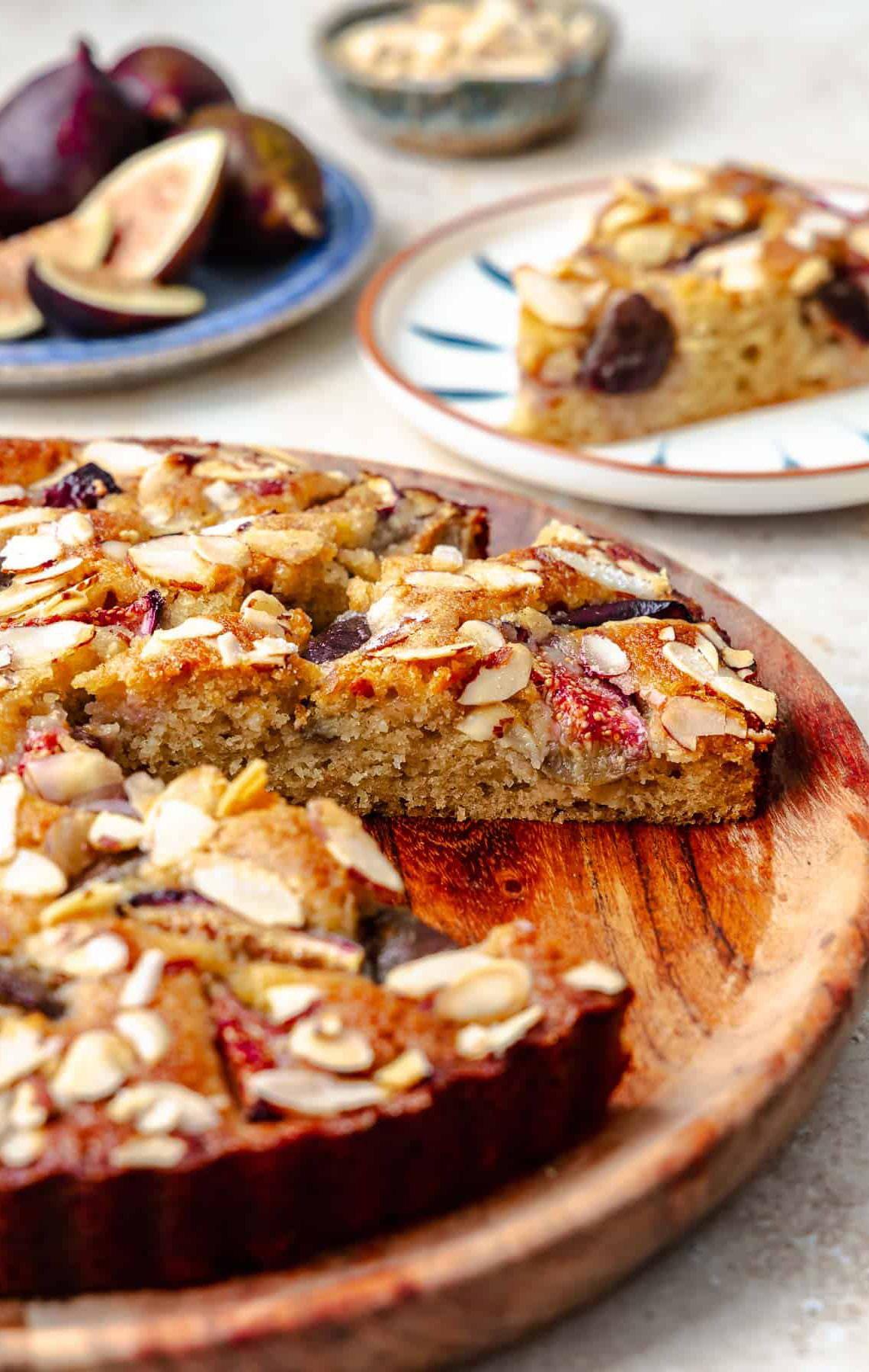
Featuring: Fig with Almond and Honey Cake


Featuring: Fig with Almond and Honey Cake
Temperature, Acclimation and Sand to Heavy Clay Distinct Characteristics and Plant Production Protection, Cuttings, and Growth Conservation, Nitrogen, and Growing Season Varying Degrees Threats, and Harvest
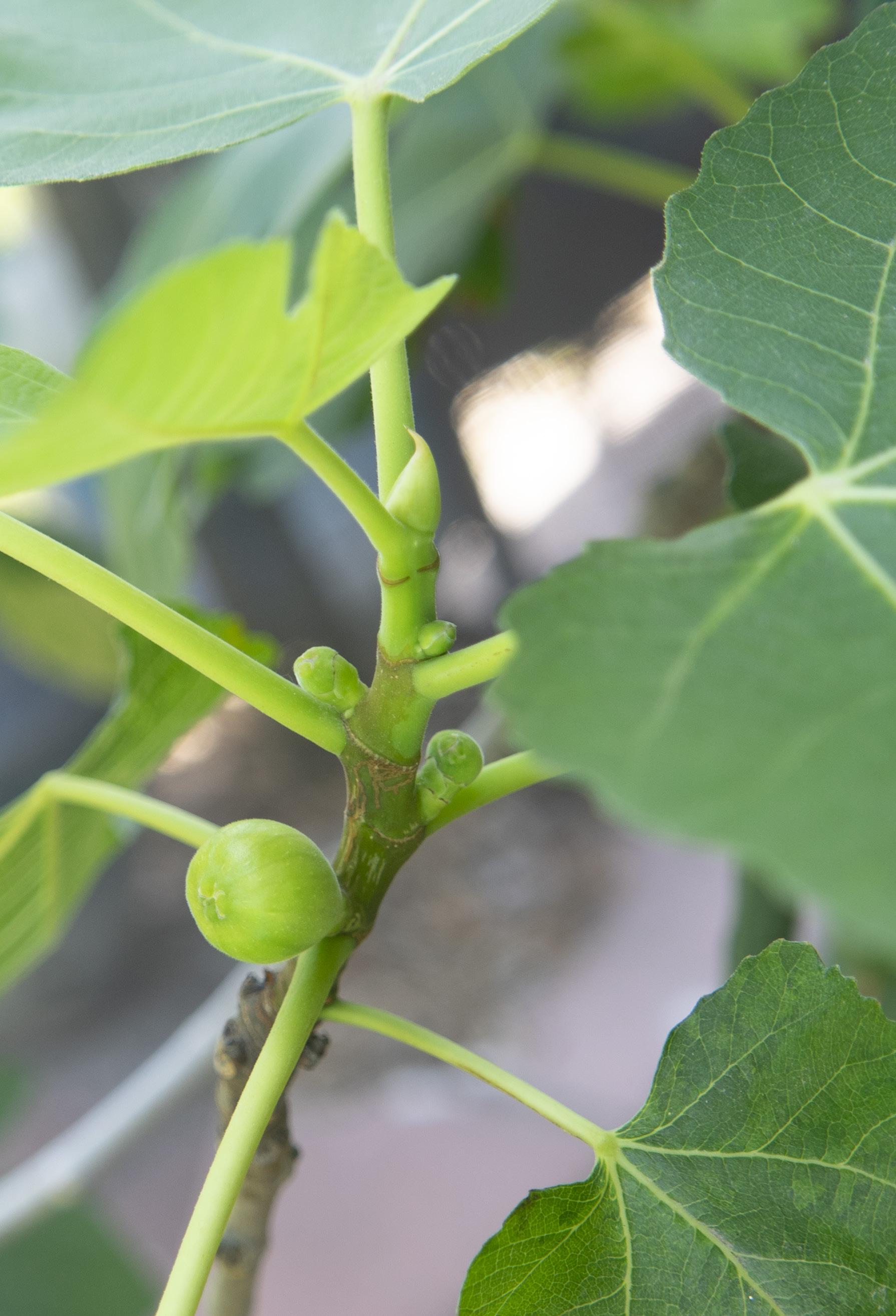
Photo by: Gina Gonzalez
Jim Kamas, Monte Nesbitt, and Larry Stein Extension Fruit Specialists, the Texas A&M AgriLife Extension Service
FIGS are one of the most problem-free fruits that can be grown in areas with mild winters.
Prized since ancient times, figs are believed to be native to western Asia.
They were brought to California from Spain in the mid-1700s and then spread to the warmer growing regions east of the Rocky Mountains.
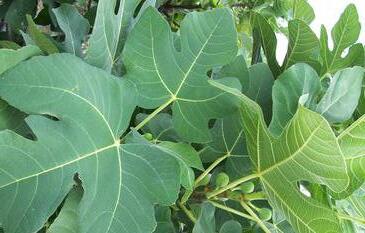
Common figs are generally grown as spreading, multi-trunked trees that can grow to 20 feet tall (Fig. 1). They have shallow, fibrous root systems and are relatively sensitive to drought stress.
“Prized since ancient times, figs are believed to be native to western Asia.”
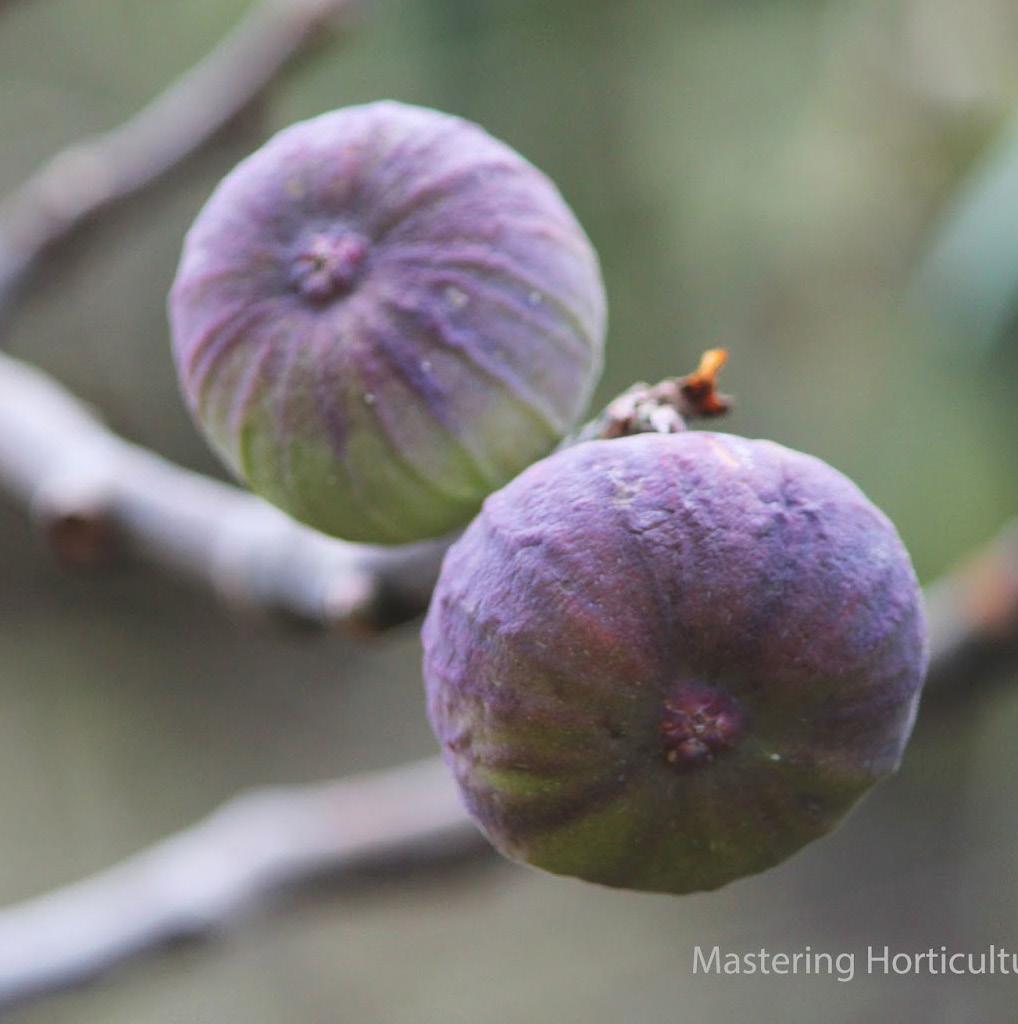
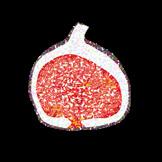
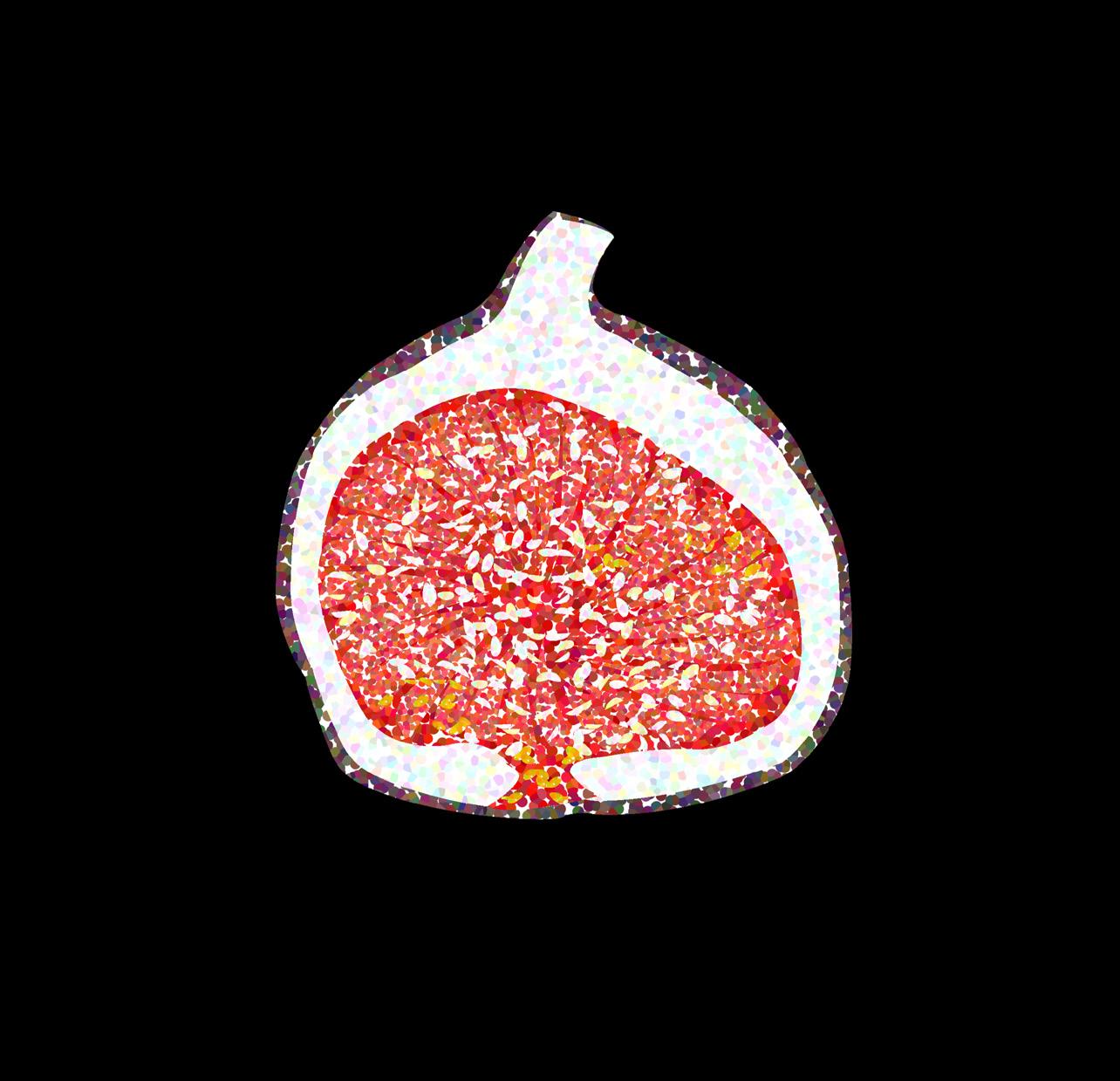
The “fruit” of common figs are formed without fertilization (parthenocarpic) and are actually fleshy stem tissue with no seeds. The gelatinlike interior is unfertilized flower structures.
Although commercial fig cultivation in Texas has been largely unsuccessful, small dooryard plantings can meet a family’s needs and provide some limited income from local sales. Because figs must be ripened on the tree and are quite perishable, even modest commercial ventures must have well-planned marketing strategies.
Figs are generally limited to areas where temperatures do not drop below 5°F, although the stem tissues can be injured at much higher temperatures. In winters with sustained cold, mature trees can survive temperatures in the low teens. However, trees can sustain severe damage during dry winters or if they are not properly acclimated. Because of the wide swings in winter temperatures, figs commonly suffer mild to severe winter injury in all but the warmest parts of Texas.
When fig trees are frozen to the ground in severely cold winters or more northern areas, some varieties produce a crop on the current season’s growth; others return to production the next year.
Plant figs in well-drained soil. Although they will grow in soils ranging from coarse sands to relatively heavy clay, they can suf- fer extensive damage from root knot nematodes in sandy soils.
“In winters with sustained cold, mature trees can survive temperatures in the low teens.”
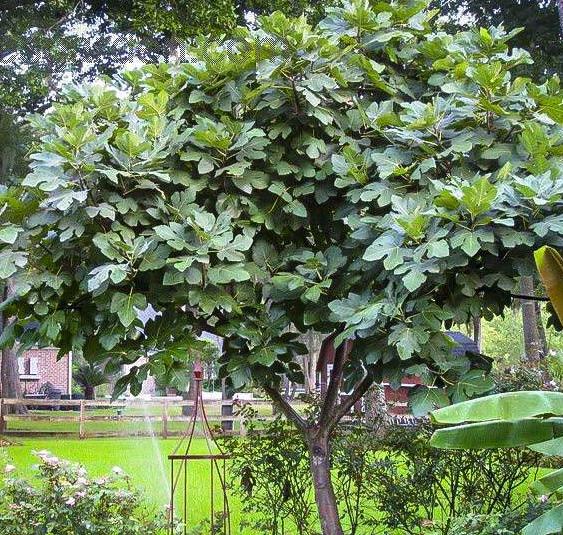
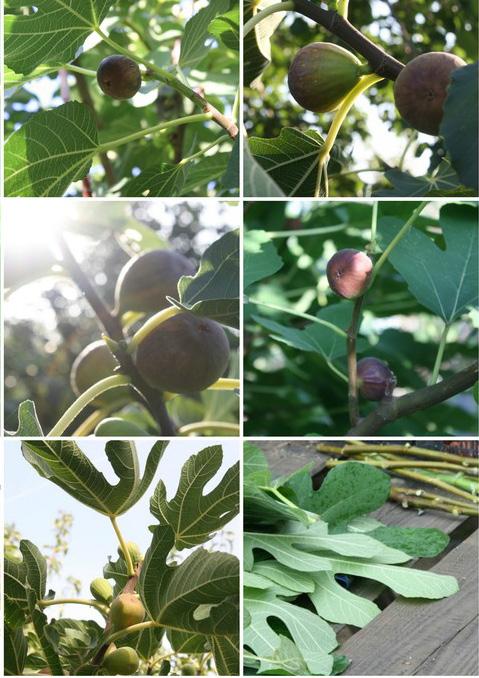
“The common fig is produced in Texas and other Gulf Coast states.”
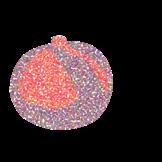
Of the four distinct horticultural types of figs, only the common fig is produced in Texas and other Gulf Coast states. Three standard fig varieties have been grown throughout the South and are reliable choices for home or limited commercial production: ‘Alma’, ‘Celeste’, and ‘Texas Everbearing’. A major consideration in variety choice is the characteristics of the fruit “eye.” Varieties with an open eye may be susceptible to feeding by the dried fruit beetle or souring when rain enters the interior of the fruit. Research has identified additional promising varieties that are suggested for trial plantings. They are ‘Blue Giant’, ‘Bournabat’, ‘Lemon’, and ‘LSU Purple.’
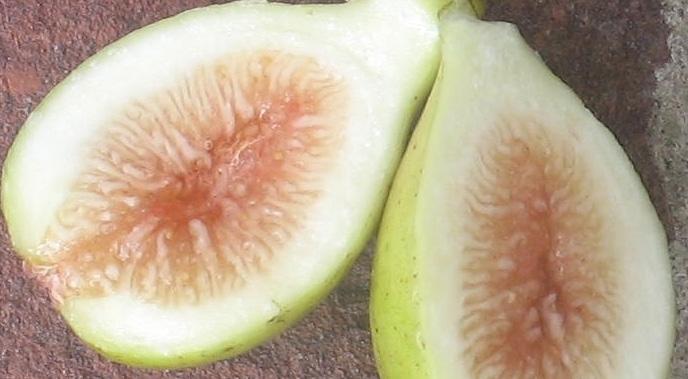
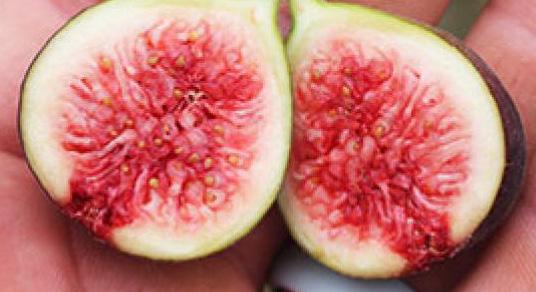
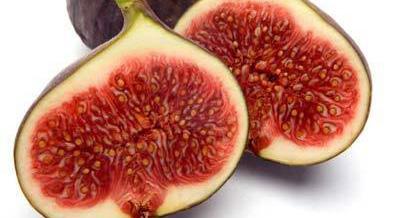
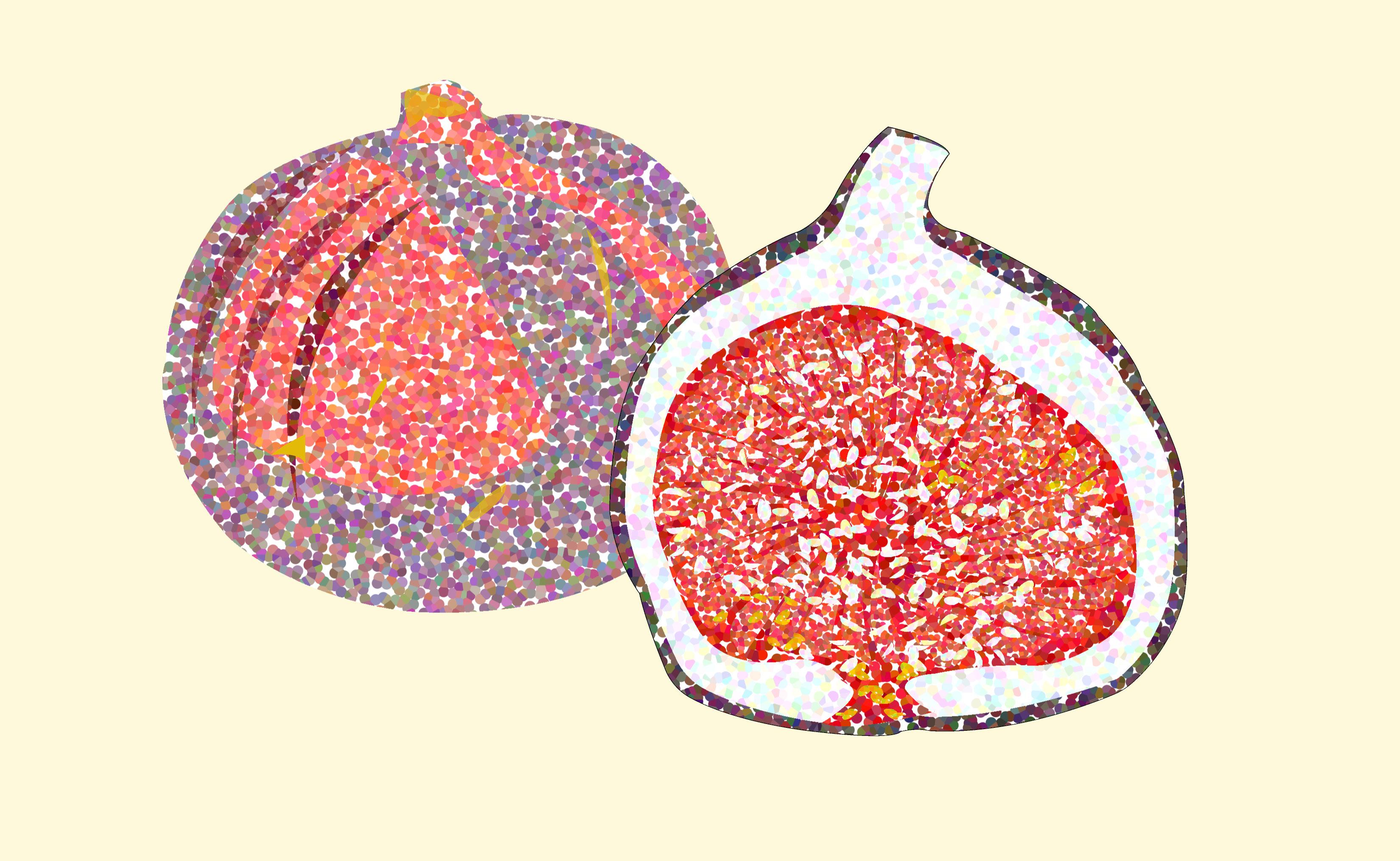
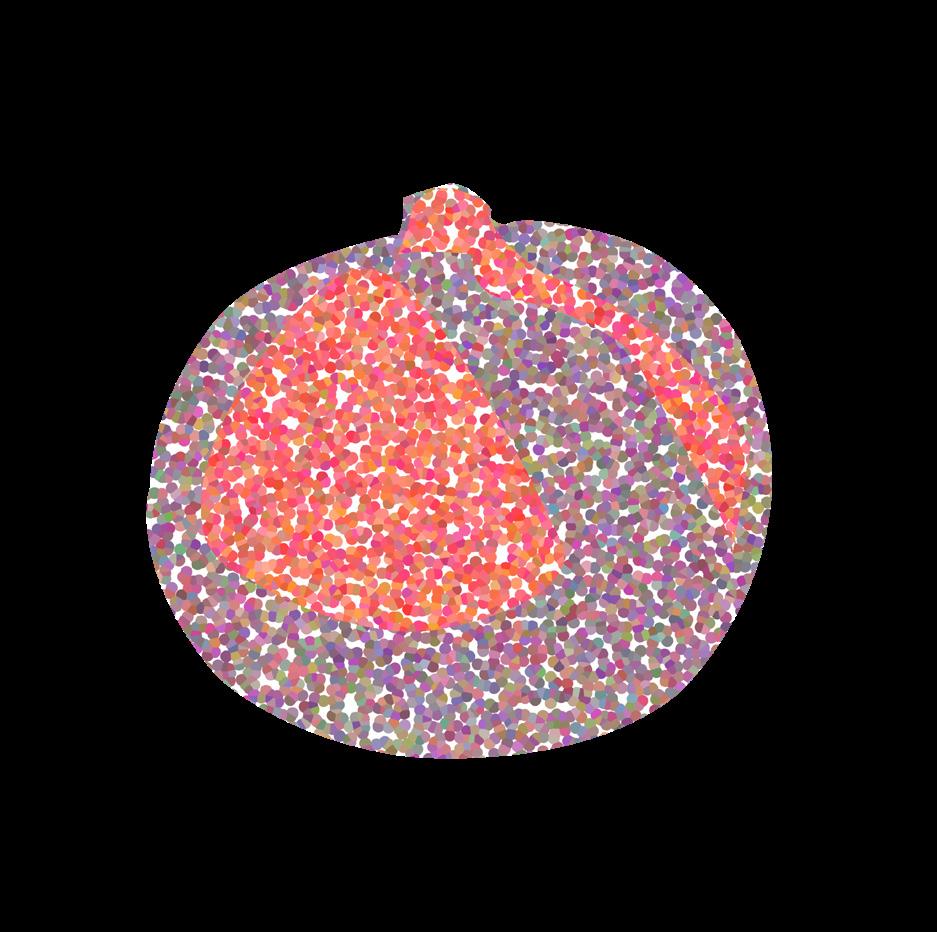
Fig Varieites with Graphic Illustration
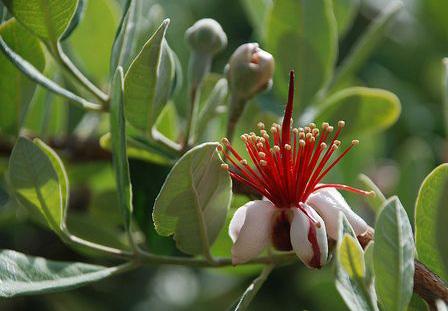
Clips from Timelapse of Figs and Flowers Growing in a Greenhouse: https://youtu.be/d9zOOMyJFvI?feature=shared
“For every tree is known by its own fruit” Luke 6:44-45
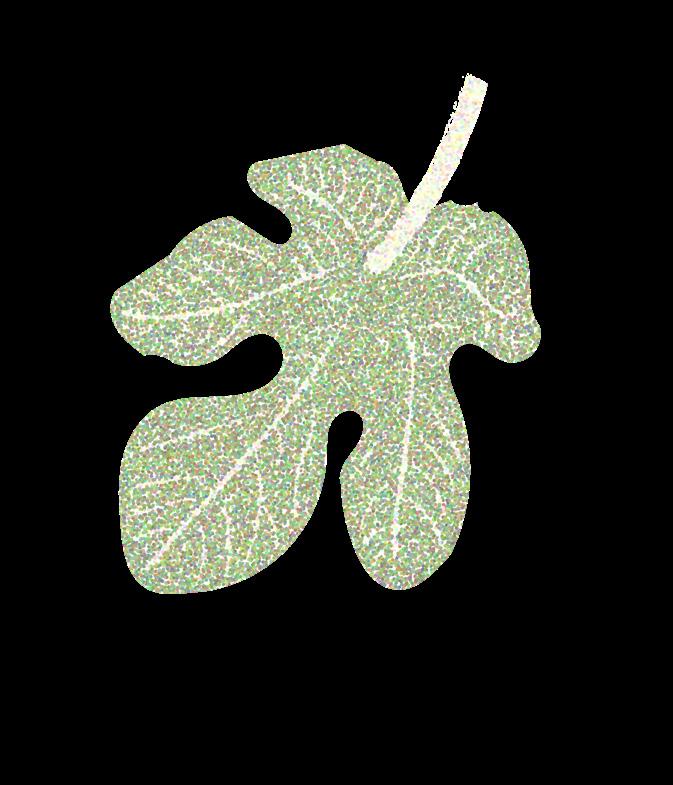
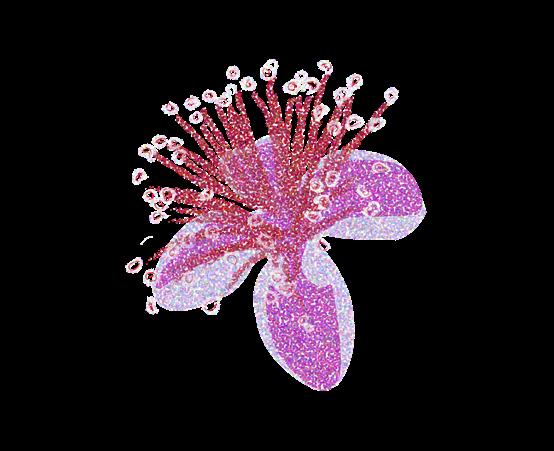
Table 1: Standard fig varieties for home or limited commerical production in Texas
Everbearing
Full length article with tables: chrome-extension://efaidnbmnnnibpcajpcglclefindmkaj/https://aggie-horticulture.tamu.edu/fruit-nut/wp-content/ uploads/sites/6/2015/04/figs_2015.pdf
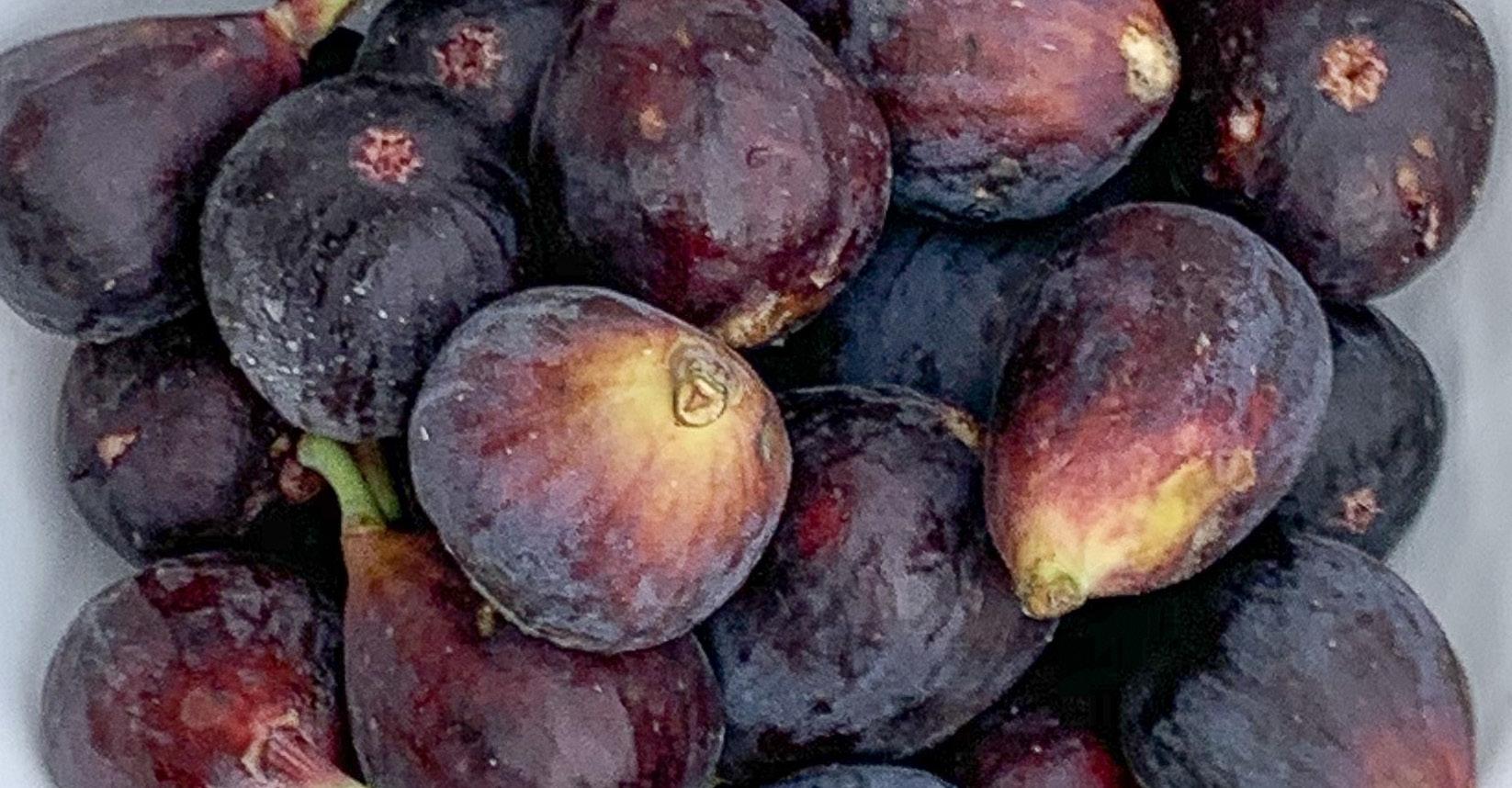
PROPAGATION HARDWOOD CUTTINGS
ENCOURAGE ROOT AND SHOOT FORMATION
Successful Plant Production
Figs are one of the easiest fruit crops to propagate. Hardwood cuttings that are taken when the plants are fully dormant will readily root and are most commonly used to propagate figs.
The cuttings should be 6 to 10 inches long and about ½ to 1 inch in diameter. To encourage callus formation, place the cuttings in a warm, humid environment such as in a
moist paper towel placed in a plastic bag for 10 to 14 days.
Plant the cuttings in pots in commercial potting media to encourage root and shoot formation.
Although softwood cuttings can also be used for propagation, they usually need a mist system for successful plant production.
“Figs are one of the easiest fruit crops to propagate. “
Protection, Cuttings, and Growth
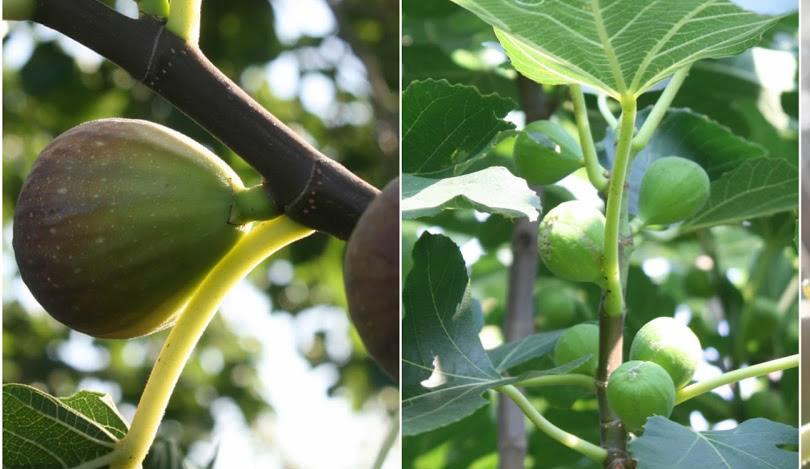
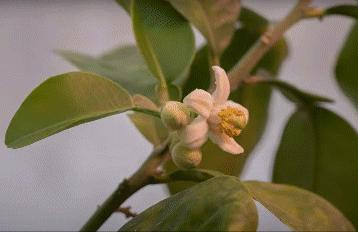
Fig trees are traditionally planted in late winter or early spring as dormant rooted cuttings. Plant them 2 to 3 inches deeper than they were grown in the nursery. Because the trees can reach 20 feet tall, plant them no closer than 16 feet apart.
Dig a hole deeper and wider than necessary for the root sys- tem. Place the tree upright at the proper depth. Crumble the soil around the roots, and pack it down several times
during the fill- ing operation to bring all roots into contact with moist soil. After planting, water the tree to settle the soil firmly around the roots.
Do not fertilize at planting. The initial growth of the young fig tree will come from stored carbohydrate reserves in the young trunk and roots. Cut back the dormant trunk by about a third at planting to help compensate for root loss when the tree was dug up in the nursery. Even dormant potted plants should be cut back to encourage vigorous growth the first season.
“The
morning sun helps the fruit and foliage dry quickly after an evening rain.”
Figs perform best when planted in locations that receive full sun exposure. It is common to see figs planted on the south or east side of a home or barn to help protect from cold winter weather and to make sure that morning sun helps the fruit and foliage dry quickly after an evening rain.
Conservation, Nitrogen, and Growing Season
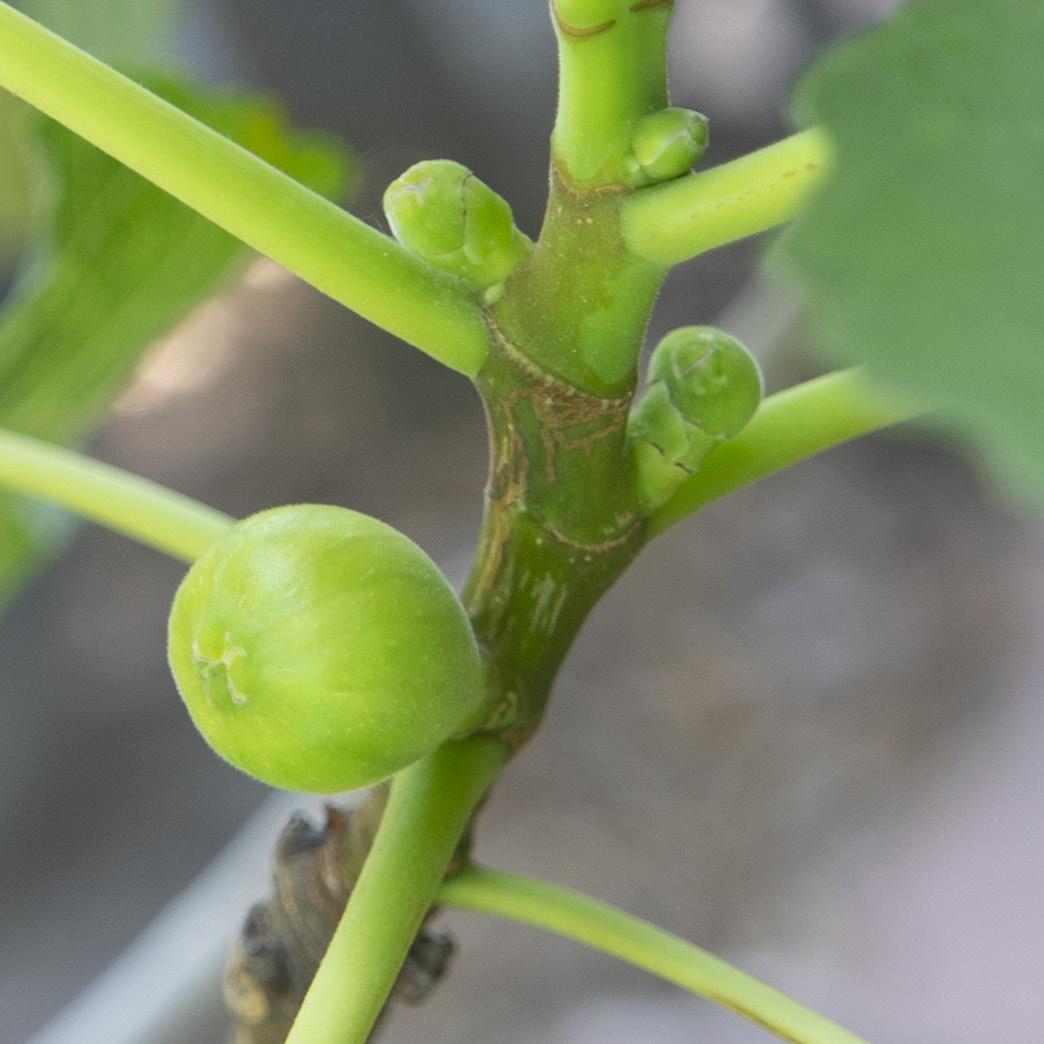
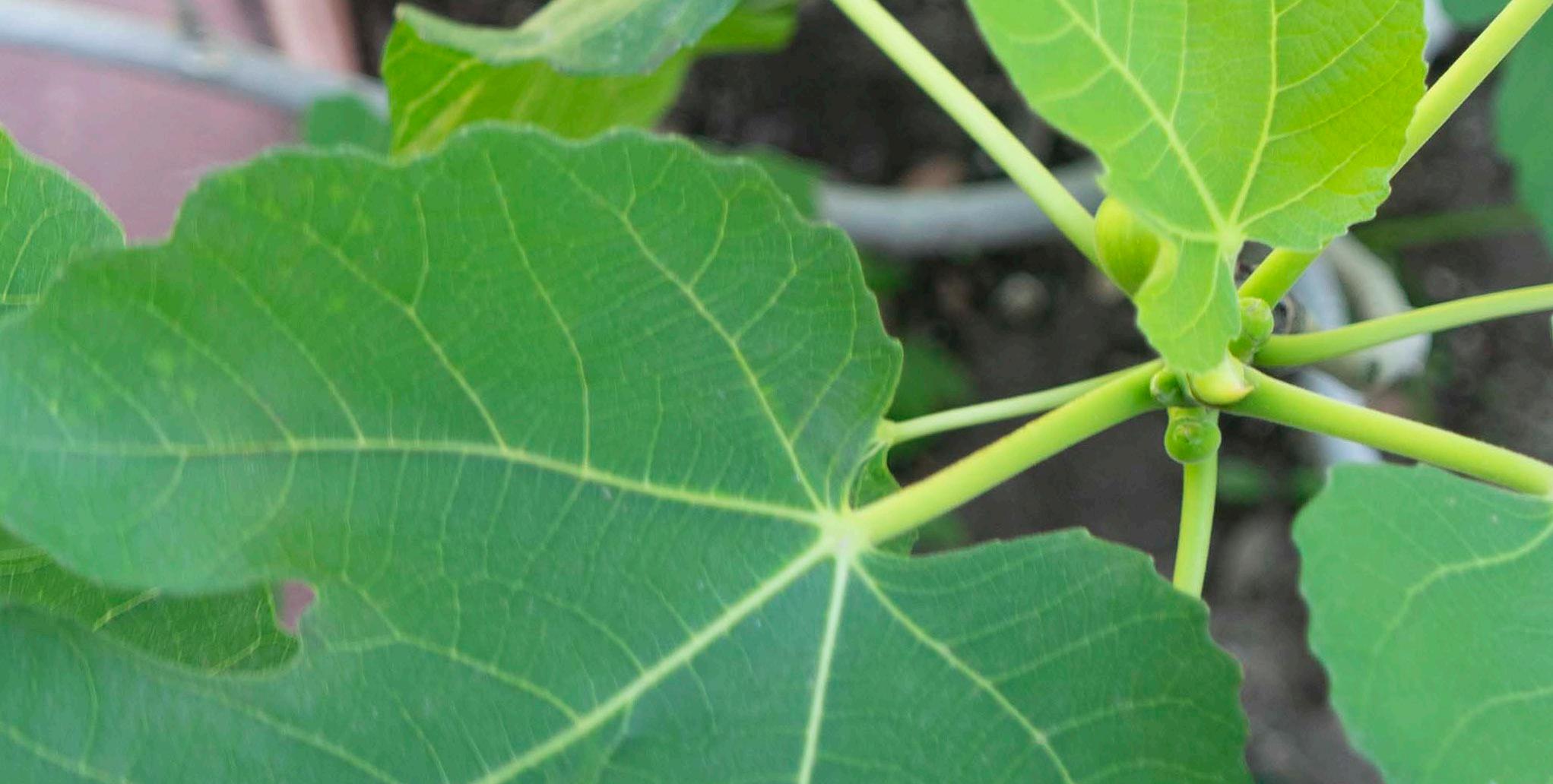
Because their roots are shallow, figs will benefit from organic mulch. The mulch will conserve soil moisture and improve the soil structure.
Small, frequent applications of nitrogen will benefit both young and mature fig trees.
“Once shoots are about 2 feet high, select five or six strong shoots to be kept as new trunks.”
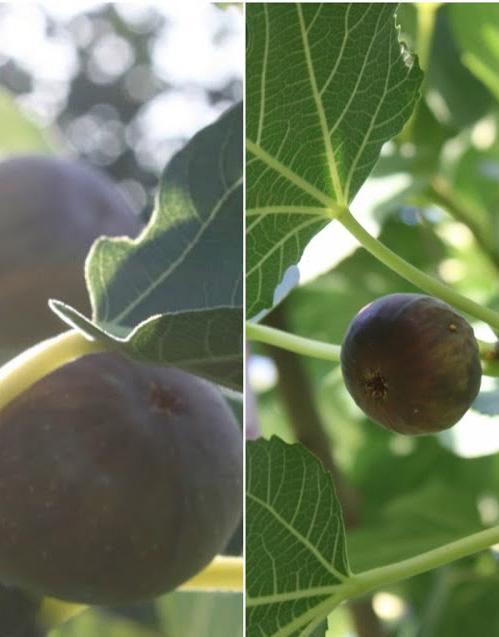
In subtropical locations, figs can be grown as single-trunked trees. But they are commonly grown as multi trunked plants in more temperate parts of Texas.
In years when figs are frozen to the ground, they typically respond by sending up a multitude of new shoots. Once shoots are about 2 feet high, select five or six strong shoots to be kept as new trunks.
To lessen the shock of leaf area loss, consider reducing the number of new shoots over a 2- to 3-week period. In a single growing season, a fig tree that was frozen to the ground can rebound, perhaps bear fruit late that summer, and be positioned to be in full production the following year.
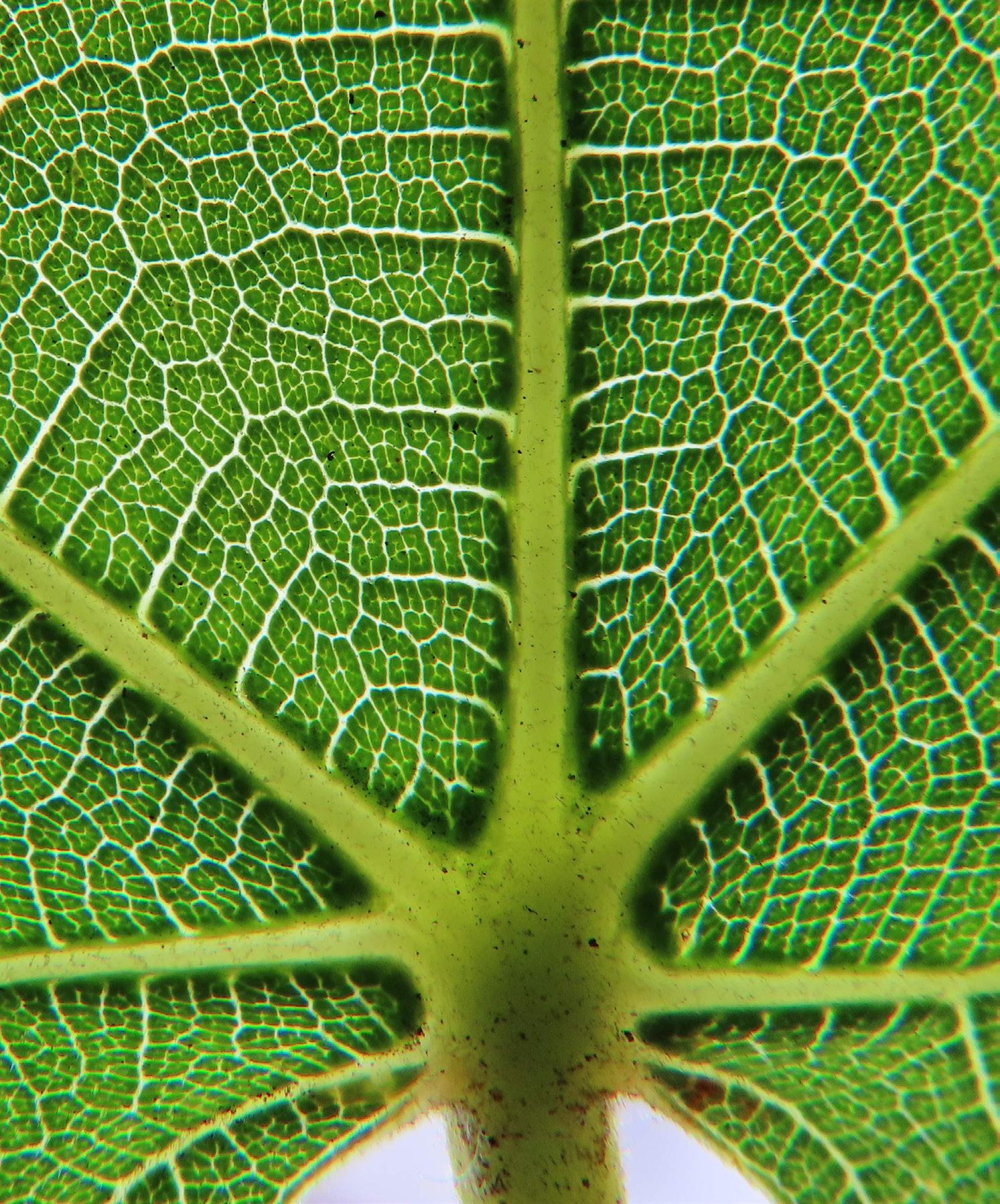
Figs can withstand varying degrees of subfreezing temperatures. The degree to which they can avoid cold injury depends on the variety, the amount of moisture in the soil moisture, and the trees’ level of conditioning for the cold.
To minimize freeze injury during dry falls and winters, thoroughly water the fig trees a few days before a hard freeze. Figs can usually tolerate sustained temperatures to 17°F, but young plants and young, tender trunks are more susceptible than are older, mature trunks.
Some growers mound spoiled hay 2 to 3 feet above the ground line of mature trees for insulation. Young plants can similarly have wire cages placed over them at the onset of winter.
These cages can be stuffed with organic matter such as hay, lawn clippings, or leaves for protection.
After the risk of spring frost has passed, remove the cages from both old and new plants. The organic mat- ter can be pulled back from the trunk and be used as organic mulch for weed control.
The greatest disease threat to fig production in Texas is fig rust (Cerotelium fici). Fig rust is more severe in rainy areas and seasons. Infected leaves turn brown and develop orange fruiting struc- tures on the lower part of the leaf. Severely affected leaves fall prematurely, leaving the tree weakened and unable to adequately ripen the crop.
To control the disease, rake and destroy the infected leaves. No conventional fungicides are approved to control fig rust. Organic materials containing copper are generally effective at controlling fig rust if applied at the onset of the disease.
Another disease is fig mosaic virus, which is thought to be caused by
a complex of viruses that invade fig trees. The disease first appeared in California but has now spread to most areas in the United States where figs are grown.
The leaves on infected fig trees become mottled, usually in the heat of midsummer. The trees bear fewer, smaller, misshapen fruit. There is no control for fig mosaic virus other than to carefully inspect nursery material before purchase.
“Copper is generally effective at controlling fig rust if applied at the onset of the disease.”
The only insect pest that typically affects the quality of ripen- ing figs is the dried fruit beetle. To limit injury, plant varieties with closed eyes.
Although no conventional insecticides are approved to control this beetle, elemental sulfur can deter it from colonizing fig trees with ripening fruit. Because
the registration of organic materials.changes often, refer to the National Organic Program or Organic Materials Review Institute for current registration information.
Root-knot nematodes, Meloidogyne sp., are microscopic worms that attack and feed on roots, causing them to swell or gall. They disrupt the roots’ ability to take up water and nutrients. These galls are easily seen on root samples.
Nematode problems may go unnoticed for several years. As a heavy population builds up, the tree loses vigor and declines gradually. Nematodes contribute to premature fruit drop.
To prevent root-knot nematodes in figs, obtain nematode-free plants and plant them in nematode free soil.
Figs bear their first crop in late spring, but many varieties produce a larger crop in late summer through fall. When frozen to the ground, the fall crop may be smaller, delayed, or in some varieties, absent.
This rich but fluffy snacking cake with honey, cinnamon, and Greek yogurt is baked in a tart pan to keep it nice and light (a 9-inch pan works if you don’t have one). The simple cake perfect for a light and rustic dessert or an afternoon snack. If you can’t get your hands on ripe figs, stir 1 cup of chopped dried figs right into the batter in their place. Other sliced seasonal fruits like persimmons, cherries, or pears also work well as a substitute.
For the Cake
• 1 cup (100g) almond flour
• ½ cup (60g) all-purpose flour (standard or gluten free)
• ½ teaspoon ground cinnamon
• ¼ teaspoon baking soda
• ¼ teaspoon kosher salt
• 1/3 cup Greek yogurt, plus more for serving
• 1/3 cup extra virgin olive oil
• ½ cup honey, plus more for serving
• 2 large eggs
For the Topping
• 8 fresh figs, quartered, plus more for serving
• ¼ cup sliced almonds
• 1 tablespoon granulated sugar (optional)
INSTRUCTIONS:
1. Get ready. Arrange a rack in the center of the oven and preheat to 350°F. Lightly oil a 9-inch fluted tart pan (or a 9-inch round cake pan) and line the bottom with a round of parchment paper.
2. Combine the dry ingredients. Whisk together the almond flour, all-purpose flour, cinnamon, baking soda, and salt in a medium mixing bowl. Use the whisk to break up any clumps in the almond flour.
3. Combine the wet ingredients. In a separate large mixing bowl, whisk together the Greek yogurt, olive oil,
honey, and eggs until fully combined.
4. Make the batter. Add the flour mixture to the yogurt mixture and fold with a silicone spatula until combined and smooth.
5. Add the toppings. Scrape the batter into the prepared pan and smooth the top with a spatula. Scatter the figs over the top of the cake, lightly pressing them into the batter. Sprinkle the top with the sliced almonds and granulated sugar (if using).
6. Bake. Set the tart pan on a baking sheet and bake for 35 to 40 minutes, or until a wooden skewer inserted into the center of the cake comes out clean. The top of the cake will be golden brown and the sides should pull away from the edge of the pan slightly.
7. Cool. Allow the cake to cool completely in the pan on a wire rack. If your tart pan has a false bottom, push the bottom of the pan to separate the cake from the edge of the pan, then carefully slide the cake onto a plate. If you used a cake pan, run a butter knife along the side of the cake, and carefully transfer the cake onto a plate.
8. Serve. When the cake has cooled completely, slice and serve at room temperature with extra figs, a dollop of Greek yogurt, and a drizzle of honey.
Gina Gonzalez
The University of Texas Rio Grande Valley
Arts 3337-90L – Fall 2024
Reference:
e-Magazine Research
Magazine article contents: chrome-extension://efaidnbmnnnibpcajpcglclefindmkaj/https://aggie-horticulture.tamu.edu/fruit-nut/wp-content/ uploads/sites/6/2015/04/figs_2015.pdf

Images/Video: https://www.nativeplantproject.com/ https://commons.wikimedia. org/wiki/File:Ficus_elastica_-_K%C3%B6hler%E2%80%93s_ Medizinal-Pflanzen-206.jpg https://en.wikipedia.org/wiki/Fig https://masteringhorticulture.blogspot. com/2016/03/have-you-really-seen-figflower.html
https://www.linkedin.com/pulse/digfig-essential-guide-all-you-need-knowfigs-ficus-paul-alfrey/ https://www.themediterraneandish. com/fig-cake/#wprm-recipe-container-71065
https://www.themediterraneandish.


Typography – II
Dr. Clara Choi, Assistant Professor
Topic: Horticulture, Fig Fruit
Design Concept: Scientific e-magazine that informs with organic elements and pointalism illustrations makeup the design.
com/fig-cake/#h-how-to-pick-the-perfect-figs-for-baking
https://elektrobild.org/photo-filter/pointillism

https://fineartamerica.com/featured/vintage-black-fig-fruit-wreath-on-bokeh-dotpattern-n0074-holy-rock-design.html https://www.federalregister.gov/ documents/2016/07/12/2016-16434/ gathering-of-cer-
tain-plants-or-plant-parts-by-federally-recognized-indian-tribes-for-traditional https://www.nps.gov/articles/000/gardening-for-wildlife-with-native-plants.htm https://www.permaculture.co.uk/articles/ all-you-need-to-know-about-figs-ficuscarica/
https://www.figboss.com/ https://www.mortellaros.com/plant/Ficus-carica-Celeste
http://figs4fun.com/Thumbnail_LSU_ Golden_Celeste.html
https://helpx.adobe.com/illustrator/using/ graphs.html https://culinarybutterfly.com/recipe/med-
iterranean-fig-and-walnut-jam/ https://mountainfigs.net/varieties/varieties-a-l/alma/ https://ohioline.osu.edu/factsheet/hyg1439
https://www.yarden.com/product/texas-everbearing-fig-tree https://www.southernliving.com/author/coastal-living https://www.youtube.com/watch?v=nwXDZAJB8X8 https://theeucharist.wordpress.com/ work-of-human-hands/ https://www.youtube.com/@Boisefruit https://www.youtube.com/ watch?v=d9zOOMyJFvI https://www.guacalina.com/fig/texas-everbearing-fig https://commons.wikimedia.org/wiki/ File:Reticulate_veins_in_leaf_of_Ficus_carica_IMG_9202s.jpg