SM
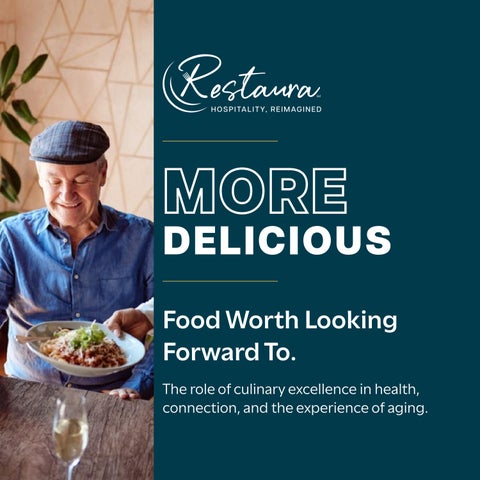
MORE
DELICIOUS Food Worth Looking Forward To. The role of culinary excellence in health, connection, and the experience of aging. 1
2
DELICIOUS IS NOT A LUXURY For decades, senior living dining has been asked to satisfy a complicated set of requirements. Nutrition. Dietary restrictions. Cost. Consistency. Safety. Efficiency. Somewhere along the way, delicious became optional. We believe that is the wrong tradeoff. Food is one of the few experiences residents encounter every single day. It nourishes the body, but it also creates anticipation, sparks memory, brings people together and provides something increasingly important as we age: joy. The future of senior living dining should not ask residents to choose between food that is good for them and food they genuinely want to eat.
They deserve both.
3
LIVING LONGER IS ONLY PART OF THE STORY The longevity movement has transformed how we think about aging. Technology, wellness, clinical interventions and preventive health increasingly focus on adding years to life.
But what about adding life to those years? For Restaura, food belongs at the center of that conversation. Nutrition matters, but so does “joy span”: how those additional years are filled with happiness, social connection and celebration.
It’s not just enough to live longer. It’s what you’re doing with those years that matter. Richard B. Schenkel Founder & Executive Chairman Restaura
4
5
6
THREE MEALS. EVERY DAY. One of the Most Frequent Resident Experiences. Residents typically eat three times a day. That makes dining one of the most consistent opportunities a community has to influence health, well-being, and quality of life.
NOURISH.
Scratch cooking gives culinary teams greater control over ingredients, including sodium and sugar, while helping them accommodate individual resident needs and preferences.
CONNECT.
Food creates shared experiences with friends, families, and the community around the table.
REMEMBER.
For residents experiencing cognitive decline, familiar foods can create a multisensory connection to traditions and experiences from their past.
DELIGHT.
Dining can be an experience in its own right, shaped by food, music, ambiance, and the character of each venue.
Food doesn’t just support life - it is part of what makes life worth savoring. 7
8
RETHINKING HEALTHY More Flavor. More Choice. Too often, senior dining begins with subtraction. Less sodium. No gluten. Remove the protein. Modify the texture. Restrict the portion. Those needs are real. But residents should not experience them as punishment. The better question is: How do you use what you know about a resident to create something delicious that they’ll actually want to eat? Scratch cooking makes that possible. Instead of simply removing ingredients from existing dishes, chefs can design meals inclusively from the start, control ingredients and give residents more agency over their experience.
We want to think creatively about how people can control their own experience without feeling as though it’s a punishment. Richard B. Schenkel Founder & Executive Chairman, Restaura
9
THIS IS WHAT MORE DELICIOUS LOOKS LIKE REAL INGREDIENTS. REAL TECHNIQUE.
Food prepared with intention rather than relying on shortcuts.
NUTRITIONALLY INTENTIONAL.
Menus designed around resident needs while protecting flavor, choice, and the experience of the meal.
PERSONALIZED.
Preferences, traditions, and dietary needs treated as inputs to creativity, not obstacles to it.
CHEF-DRIVEN.
Culinary professionals empowered to understand the people they serve and use their skills to create meals around resident needs, preferences, and expectations.
10
Every dish that leaves our kitchens starts the same way: with real ingredients, real technique, and zero apologies. We don’t do steam-table compromises. We do scratch-made, chef-driven food that is built around the nutritional needs of the people eating it.
11
MORE THAN A MEAL A favorite childhood dish. Coffee prepared exactly the way someone likes it. The aroma of something cooking before a resident ever reaches the dining room. A table filled with friends. A recipe that tastes familiar when other things no longer feel familiar. Restaura has seen firsthand how food can affect quality of life in memory care. Aroma, appearance, taste and other sensory cues can reconnect residents with traditions and experiences from their past. For culinary teams, that connection carries real responsibility. Every dish is an opportunity to create something memorable for the person being served.
Food really is a vehicle that helps make a connection with a resident who is struggling with cognitive decline. 12
Joseph P. Cuticelli Co-Founder & CEO, Restaura
13
14
COULD FOOD BE THE MISSING PIECE TO THE LONGEVITY MOVEMENT? iADVANCE SENIOR CARE | SEPTEMBER 29, 2026 This isn’t just marketing copy – it’s the core of Restaura’s culinary philosophy, as Chef Matthew Thompson, Chief Culinary Officer at Restaura, explained to Paige Cerulli in a feature in iAdvance Senior Care. He walked through his perspective on how food and the dining experience can support longevity, strengthen resident connections, and create more personalized and meaningful experiences. The interview places food within a broader conversation about healthy aging, arguing that senior living dining has the potential to support more than nutrition alone.
HEALTH SPAN.
EXPERIENCE.
Scratch cooking gives culinary teams more control over ingredients and creates greater flexibility to meet individual resident needs.
Food, music, ambiance, and venue design work together to create a dining experience rather than simply deliver a meal.
JOY SPAN.
CONNECTION.
Longer life has greater meaning when those years are filled with joy, connection, celebration, and experiences worth anticipating. For Matthew, food sits at the center of each.
Food can provide a multisensory bridge to memories, traditions and relationships, particularly for residents experiencing cognitive decline.
READ THE FULL ARTICLE
15
WHERE SENIOR LIVING DINING GOES NEXT The next evolution of senior living dining is personalization. In the retail marketplace, consumers routinely customize meals, remove ingredients they do not want, and order food around their individual preferences. Restaura believes senior living is beginning to catch up to that expectation. Getting there means bringing residents closer to the food production experience, strengthening collaboration between culinary and clinical teams, and moving away from production models centered on reheating frozen meals toward freshly prepared, scratch-made food. Clinical teams may understand a resident’s routines, needs and preferences. Culinary teams know how to translate those insights into food. Technology can help connect the information. Leadership can remove the barriers. The opportunity is to bring those disciplines together around the resident. 16
We’re thinking about crafting this experience comprehensively across every dining venue that we offer. Joseph P. Cuticelli Co-Founder & CEO, Restaura
The goal is not personalization for its own sake. It is giving residents greater control over one of the most frequent and meaningful experiences of their day. Restaura describes this evolution as one of the remaining frontiers in elevating the senior living experience, and an opportunity for the industry to rethink the role food plays in longevity, autonomy and quality of life. 17
MORE
DELICIOUS Expect More From Every Meal. More flavor. More choice. More personalization. More connection. More moments worth looking forward to. Because senior living dining should do more than meet a nutritional requirement. 18
19
SM
EXPECT MORE FROM HOSPITALITY
info@restaura.com | 833-573-7828 | restaura.com