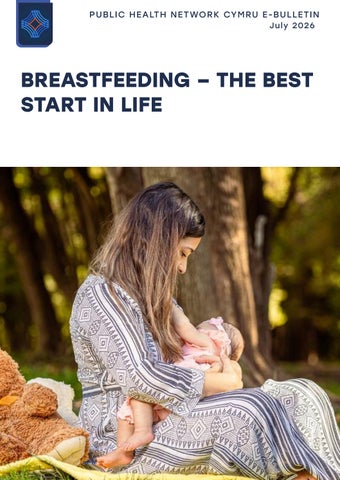

BREASTFEEDING – THE BEST START IN LIFE


Welcome
What is Public Health Network Cymru?
Public Health Network Cymru was established in 2015 for professionals working on improving the health and wellbeing of the population of Wales and combined four previous topic specific networks which were hosted by Public Health Wales.
The Network covers a broad spectrum of topics including prevention in healthcare, health-related behaviours, mental wellbeing and has a focus on the wider determinants of health – housing, education, employment, income and resources and the environment.
Getting to know our members
We are getting to know our members and would like to help our members to get to know each other.
If you would like to feature in a future edition, please complete this form.
5 Webinar - Breastfeeding Welcome Schemes: Real Stories, Real Impact
Public Health Network Cymru
6 When Support Matters Most: Listening to Women’s Breastfeeding Stories in Cwm Taf Morgannwg
Claire Turbutt, Principal Public Health Practitioner, Cwm Taf Morgannwg University Health Board
8 From Choosing to Continuing: What Shapes Infant Feeding Decisions in the UK?
Nessie Felicia Frennesson, Public Health Research Assistant, Health Improvement Division, Public Health Wales
Alaw Thomas-Davies, Senior Public Health Practitioner, Health Improvement Division, Health & Wellbeing, Public Health Wales
Rachel Bath, Consultant in Public Health, Health Improvement Division, Health & Wellbeing, Public Health Wales
Rochelle Embling, Senior Research & Evaluation Officer, Health Improvement Division, Public Health Wales
10 Exploring barriers and challenges to breastfeeding in Cardiff and the Vale of Glamorgan
Rhianon Urquhart, Principal Public Health Practitioner, Cardiff and Vale Local Public Health Team, Cardiff and Vale University Health Board
Next Issue: Adversity and Health: How Wales is
– Public Health Wales
Menna Thomas, Public Health Policy Officer, Public Health Wales
Jo Rees, Senior Policy Officer, Public Health Wales
Improve Your Wellbeing by Connecting with Nature Healthy Working Wales, Public Health Wales


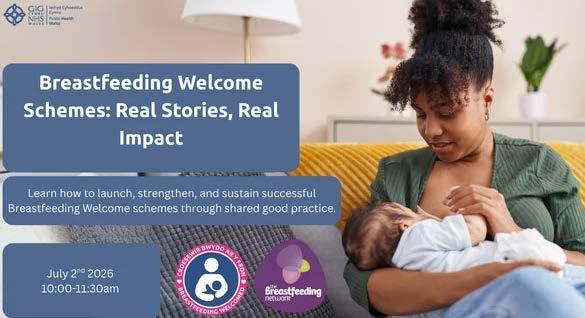
Webinar - Breastfeeding Welcome Schemes: Real Stories,
Real Impact
Public Health Network Cymru Breastfeeding offers significant health and wellbeing benefits for both babies and mothers, and Welsh Government acknowledges it as the most accessible and cost effective activity available to public health.
This inspiring and practical session was delivered in partnership with The Breastfeeding Network and explored why breastfeeding must be recognised and prioritised as a vital public health issue in Wales—and how local authorities and communities can play a powerful role in making this a reality.
When Support Matters Most: Listening to Women’s Breastfeeding Stories in Cwm Taf Morgannwg
Claire Turbutt, Principal Public Health Practitioner, Cwm Taf Morgannwg University Health Board
Women’s experiences of breastfeeding in Cwm Taf Morgannwg show that timely, trusted support can make the difference between continuing and stopping. By listening to 17 stories, we identified a practical gap: support was often missing at the exact moment women needed it most. That insight helped secure funding to extend the National Breastfeeding Helpline alongside peer support training and supervision, with 24-hour Welsh language support included.
In Cwm Taf Morgannwg, we used an appreciative enquiry approach to understand the experiences of women who had tried to breastfeed after giving birth. Infant feeding coordinators gathered and shared 17 stories, helping to build a clearer picture of what supported breastfeeding and what made it harder. Women who breastfed successfully
often described trusted advice and encouragement, particularly from online breastfeeding advocates. Women who did not achieve their breastfeeding goals often described a lack of peer support when difficulties arose. For some, this was linked to isolation during Covid restrictions; for others, it reflected being surrounded by friends and family members who had not breastfed. The key message was clear: women needed good-quality support at the point of struggle, including in the middle of the night and outside normal working hours. In Rhondda Cynon Taf, the collapse of the peer support network during Covid meant there were no physical support groups and fewer people available to help women who had recently given birth meet their breastfeeding ambitions.
These findings led us to
work with Aneurin Bevan University Health Board and Public Health Wales to secure funding to run a project with the National Breastfeeding Helpline including
- Training of peer supporters from the target community;
- Promotion of the National Breastfeeding Helpline and increase of Welsh language capacity;
- First Milk Matters training to increase breastfeeding knowledge among non-health staff.
The availability of advice overnight, and in Welsh, strengthened the support available to women when they are most likely to need immediate reassurance. Women who attended peer support training also reported greater numbers of cafes and restaurants that welcome breastfeeding mothers. This contributes to the public health ambitions of the
July 2026: Breastfeeding – the best start in life
regional strategy by helping to create more breastfeedingfriendly environments and supporting a gradual shift in local breastfeeding culture.
The strength of this approach was that it began with the stories of women who had direct experience of trying to breastfeed in CTM. Breastfeeding rates are particularly low in CTM, and previous public health work identified negative attitudes to breastfeeding, especially in public spaces. The stories connected those wider cultural barriers with practical gaps in support. Building supportive peer networks is therefore an important first step in a population-level approach to increasing breastfeeding rates, helping women feel more confident, less isolated
and more able to breastfeed in public.
If we want more women to feel able to breastfeed for as long as they choose, support cannot sit with health services alone. Families, communities, cafes, restaurants and public spaces all have a role to play in making breastfeeding visible, welcomed and supported across Cwm Taf Morgannwg.
For further Information contact Claire.Turbutt@ wales.nhs.uk

Research
From Choosing to Continuing: What Shapes Infant Feeding Decisions in the UK?
Nessie Felicia Frennesson, Public Health Research Assistant, Health Improvement Division, Public Health Wales
Alaw Thomas-Davies, Senior Public Health Practitioner, Health Improvement Division, Health & Wellbeing, Public Health Wales
Rachel Bath, Consultant in Public Health, Health Improvement Division, Health & Wellbeing, Public Health Wales
Rochelle Embling, Senior Research & Evaluation Officer, Health Improvement Division, Public Health Wales
Breastfeeding provides important health benefits for both babies and mothers (1). The World Health Organization and the United Nations Children’s Fund recommend exclusive breastfeeding for the first six months, followed by complementary foods together with continued breastfeeding up to two years or beyond (2).
Despite this, breastfeeding rates in the United Kingdom remain low (1). More than 80% of mothers initiate breastfeeding at birth, but by 12 months old, less than 1% of babies are still breastfeeding (1).
How can we support
breastfeeding in the UK?
To improve breastfeeding rates, it is important to understand the factors that influence infant feeding decisions. Public Health Wales recently reviewed qualitative research that explored UK mothers’ attitudes, beliefs, and experiences of infant feeding. The review included 26 studies and the findings showed that infant feeding decisions are influenced by a wide range of social, practical and emotional factors.
No decision is made alone
Many mothers described breastfeeding as something they wanted to do but also reported feeling unprepared for the challenges they
faced. Difficulties with positioning, concerns about milk supply, pain, and unrealistic expectations about breastfeeding were common barriers.
In the beginning I expected it to be easy, because when you go to the antenatal classes and you watch these videos and you think ‘oh yeah it comes naturally’, it looks so easy, but then when comes to the real baby, it’s not like that, you have to work at it”(3)
At the same time, having access to practical information and social support helped mothers feel more confident. Partners, family members, peers,
healthcare professionals, and breastfeeding support groups all influenced the mothers’ experiences. Positive support helped mothers feel reassured and confident, while criticism, conflicting advice, or a lack of support often hindered breastfeeding.
“Cos like when I was in hospital… I was gonna give up, but if it wasn’t for him [partner], I think I would of, but he was really encouraging, he kept me going” (4)
“I didn’t get much encouragement from my family... they said that my milk might not be good enough for the child and might not be providing it with the things the baby needs to properly develop”(5)
Building breastfeedingfriendly systems and environments
Mothers also spoke about difficulties finding places to breastfeed, feeling anxious about feeding in public, and struggling to balance breastfeeding with other responsibilities.
“I didn’t think I could do it because I didn’t want to go out and just breastfeed in front of everybody, I’m not comfortable that”(6)
Many mothers described feelings of guilt, pressure, embarrassment, or fear of being judged when breastfeeding. Social and cultural expectations also influenced decisions around breastfeeding.
I think quite a lot of people see boobs as more of a sexual thing instead of a natural thing”(6)
These findings highlight that breastfeeding is not just a personal decision, it is instead influenced by support, opportunities, and environments. Families, communities, healthcare services, employers, and policymakers all have a role to play in creating environments where breastfeeding is supported and accepted. Access to advice, practical support, peer networks, and breastfeeding-friendly spaces can help improve breastfeeding rates and give babies the best start in life.
1. Victora CG, Bahl R, Barros AJD, et al. Breastfeeding in the 21st century: Epidemiology, mechanisms, and lifelong effect. The Lancet, 2016.
2. WHO. Infant and Young Child Feeding. 2023. https:// www.who.int/news-room/ fact-sheets/detail/infant-andyoung-child-feeding
3. Fox R, McMullen S, Newburn M. UK women’s experiences of breastfeeding and additional breastfeeding support: a qualitative study of Baby Café services. BMC Pregnancy Childbirth. 2015.
4. L H, Magill-Cuerden J. Young mothers’ decisions to initiate and continue breastfeeding in the UK: tensions inherent in the paradox between being but not being able to be seen to be a good mother. EvidencedBased Midwifery. 2014.
5. Choudhry K, Wallace
LM. ‘Breast is not always best’: South Asian women’s experiences of infant feeding in the UK within an acculturation framework.
Matern Child Nutr. 2012.
6. Jamie K, McGeagh L, Bows H, O’Neill R. ‘I just don’t think it’s that natural’: adolescent mothers’ constructions of breastfeeding as deviant. Sociol Health Illn. 2020.

Research
Exploring barriers and challenges to breastfeeding in Cardiff and the Vale of Glamorgan
Rhianon Urquhart, Principal Public Health Practitioner, Cardiff and Vale Local Public Health Team, Cardiff and Vale University Health Board
Background
The 2024 Cardiff and Vale Director of Public Health Report - Prioritising the Early Years – Investing for the Future – focused on the health and wellbeing of children in the early years, emphasising the importance of early childhood development and the longterm benefits of investing in these years.
Evidence demonstrates the benefits to both parents and babies if breastfed and that these benefits last into adulthood – we commissioned research to support our understanding of the barriers to breastfeeding, learning from lived experience of mothers across Cardiff and the Vale, to help inform our future practice.
The Research Breastfeeding provides complete nutrition to a baby
and early protection against diarrhoea and respiratory infections, reduces the risk of hospitalisation and protects against middle ear infections in under 2’s. It also promotes healthy brain development and reduces the risk of obesity and chronic diseases and abnormal alignment of teeth in adulthood .In mothers, breastfeeding lowers the risk of breast cancer, ovarian cancer, cardiovascular disease and type 2 diabetes.
As part of our approach, we commissioned research to help us improve our understanding of the challenges and barriers to breastfeeding to inform our future work.
There were 2 key aims to the research:
- To explore how women in the Cardiff and Vale area perceived the known barriers and challenges to
breastfeeding -To explore potential recommendations for future practice regarding the promotion and practice of breastfeeding from the perspectives of women who have had children
We produced an infographic detailing the research and its outcomes.
Exploring the barriers and challenges to breastfeeding in the Cardiff and the Vale of Glamorgan area
The Centre for Health, Activity and Wellbeing Research (CAWR) at Cardiff Metropolitan University has undertaken two projects, commissioned by the Cardiff and Vale University Health Board (CAV UHB) focussed on understanding more about the barriers and challenges to breastfeeding
A I M S
To explore how women in the Cardiff and Vale area perceive the known barriers and challenges to breastfeeding; and
To explore potential recommendations for future practice regarding the promotion and practice of breastfeeding from the perspectives of women who have had children (who may or may not have breastfed their child/ren).
B A R R I E R S
Inadequate Support
Challenges establishing or maintaining breastfeeding
Shared care of baby
Lack of knowledge / expectations
Emotionally challenging
R E C O M M E N D A T I O N S
Health promotion messaging surrounding breastfeeding to be disseminated to mothers in a way which allows them to make informed choices without feeling ‘judged’
Additional emotional support, and advice for those experiencing difficulty, clinical complications or that required intervention to enable them to be able to breastfeed or make the best decision for them and their baby
Improving the clarity and messaging around the purpose and availability of support groups
Improved and early signposting to the various services and support available coupled with approved resources or networks would be beneficial in increasing engagement with support

e-survey responses

Interviews

Knowledge of benefits
Bonding
Health/immunity
Nutrition
Previous experience
Convenience
External support
Attitudes
Cost F A C I L I T A T O R S
Further support for mothers seeking to continue with breastfeeding, targeted at the 6-month stage, could be beneficial in supporting women further in their feeding choices and extending their feeding journey
Gaining a better understanding of the specific online sites/ organisations/ platforms women are using would be of use in helping to understand the quality of information they may be being exposed to, and what actions may or may not be needed
Focused educational content that could be created and disseminated, particularly online or via social media which appears to be the preferred mechanism of seeking information Providing recognised and reputable channels of information where ‘fact checking’ and ‘misinformation’ are of particular concern.
What difference has the project made
The research enabled us to identify some key challenges for breastfeeding but importantly, it is being used to improve the services offered to mums and babies. It was important to us to understand the lived experiences of the respondents, and it was encouraging that the responses were broadly positive with regards to the services and support they had received from the Health Board.
What are your key messages or learning to others?
Our key recommendations from this are outlined below, but reinforce the importance of investing in the early years to give our children the best start in life :
- Provide information to those who are pregnant earlier on breastfeeding, its benefits and the available support using social media channels where information is often sought - Increase opportunities to provide proactive support to breastfeeding mothers including those who may struggle with breastfeeding due to circumstances such as additional medical needs
- Further research with more mothers especially those that are less likely to breastfeed to include social and family influences and support networks.
Main links:
Prioritising the Early Years – Investing for the Future:
Director of Public Health Report, Cardiff and Vale UHB (2025):
https://cavuhb.nhs.wales/ files/board-and-committees/ board-2024-25/7-1b-directorpublic-health-report-2024eng-pdf/
https://cavuhb.nhs. wales/patient-advice/ local-public-healthteam/key-publications/ public-eng-exploring-thebarriers-and-challenges-tobreastfeeding-in-the-cardiffand-vale-of-glamorgan-areafinal-report-eng-sept-2024pdf/

Grapevine

Strengthening the Case for Healthy Homes in Wales – Public Health Wales
Menna Thomas, Public Health Policy Officer, Public Health Wales
Jo Rees, Senior Policy Officer, Public Health Wales
We are spotlighting health inequalities related activity from Strategic Priority 1 (SP1): Influencing the Wider Determinants of Health, with a focus on housing and health policy advocacy. Our work is building momentum by strengthening partnerships, amplifying voices, and shaping the national conversation on healthy homes.
Bringing people together to drive change
We’ve established a bimonthly internal Public Health Wales (PHW) Housing Stakeholder Group, improving coordination and aligning expertise across the organisation. Externally, we’ve built a strong and trusted network, positioning PHW as a key convener and catalyst for collaborative action.
Our engagement has been
extensive and meaningful. Through interviews with 63 stakeholders and participation in seven stakeholder forums, we’ve laid the groundwork for sustained collaboration. Crucially, we’ve also centred lived experience by speaking with 15 individuals affected by unhealthy housing to ensure real voices inform policy. A recent multi-sector event brought together 50 partners from Welsh Government, local authorities, people with lived experience, housing providers and community groups, further strengthening our collective commitment to healthier homes.
Turning evidence into influence
We’ve continued to strengthen our evidence base and share it widely. Publications such as “Shaping the future of healthy housing for children and families in
Wales” and “A place to thrive: Creating healthier homes for children and families in poverty across Wales” have generated significant interest across sectors.
Our insights have reached diverse audiences, from academic forums and universities to industry groups like the National Homebuilders Federation. We’ve also contributed evidence to key consultations and inquiries, ensuring health remains central to housing policy discussions.
Making an impact where it matters
This work is already creating tangible impact. Internally, we’ve improved coordination and strengthened relationships with Local Health Boards and partners. Externally, we’re helping turn ideas into action by connecting organisations
July 2026: Breastfeeding – the best start in life
to spark innovation. For example, linking Aneurin Bevan University Health Board with Seven Wye Energy Agency supported the development of a Warmth on Prescription pilot. Meanwhile, connecting Trivallis with WHIASU enabled a Health Impact Assessment on a social housing scheme.
We’re also shaping political and policy narratives. By presenting evidence to crossparty groups in both the Senedd and UK Parliament, and contributing to influential publications, we’re raising the profile of housing as a critical determinant of health.
What’s next?
Looking ahead, we’ll continue mobilising evidence into action, including a major stakeholder event in 2026. We’ll build relationships with the new Welsh Government to ensure health is embedded in future housing policy, particularly in tackling child poverty. Longer term, we’ll update our flagship Making a Difference report to reflect the latest evidence and strengthen the case for investment in healthy homes
Together, we’re helping create a future where everyone in Wales has a safe, warm, and healthy place to live.
For more information, contact: Joe.Rees@wales. nhs.uk or Menna.Thomas4@ wales.nhs.uk

Improve Your Wellbeing by Connecting with Nature
Healthy Working Wales, Public Health Wales
The Workplace Nature Wellbeing Calendar has been co-designed by RSPB Cymru and Healthy Working Wales following workshops with employers. Its simple activities are designed to support and improve your wellbeing, whilst helping you connect with nature.
Healthy Working Wales would love to see how you and your teams are using the wellbeing calendar.
Get in touch to share what activities you’ve been enjoying and share any feedback you have about the calenar.
Videos



Adversity and Health in Later Life: Insights from Research in Wales
This webinar highlighted the impacts of later life adversity on older people’s health and wellbeing, presenting key findings from recent studies undertaken by Public Health Wales.
Breastfeeding Welcome Schemes: Real Stories, Real Impact
This session was an opportunity to gain practical insights, be inspired by real stories, and connect with others committed to supporting breastfeeding-friendly communities.
Building Strong Foundations in Early Childhood
This webinar explored why the earliest years of life are critical for lifelong health, wellbeing, and opportunity.
Next Issue:
Adversity and Health: How Wales is Supporting Healthy Ageing
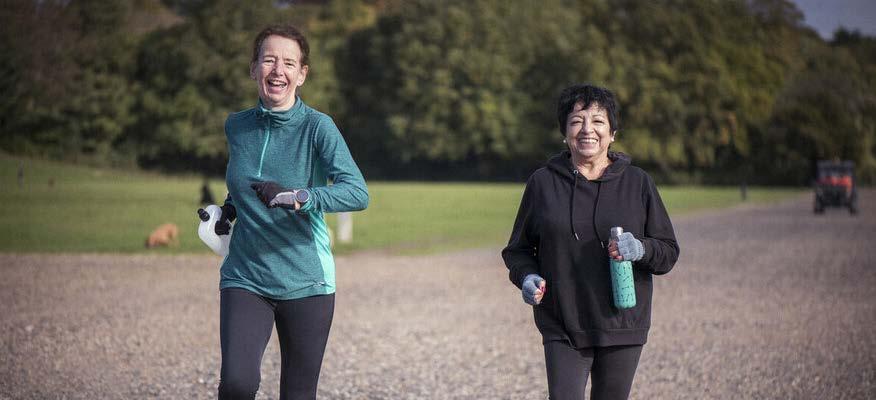
Wales is committed to creating an age-friendly society where people of all ages are valued and supported to live and age well. Preventing adversity in later life that can negatively affect health and wellbeing is central to this ambition. Recent research from Public Health Wales has highlighted the impact of experiences such as abuse, poverty, loneliness, social isolation, and living in cold homes on the health and wellbeing of older people in Wales.
Following our recent webinar, Adversity and Health in Later Life: Insights from Research in Wales, we are inviting colleagues from across all sectors to contribute to a forthcoming themed e-bulletin. We welcome submissions that showcase practical approaches, projects, resources, or evidence that help prevent or reduce adversity in later life and support healthy ageing.
This may include examples of work addressing social isolation and loneliness, financial insecurity, age-friendly communities, housing and warmth, safeguarding, social connection, or wider initiatives that improve health and wellbeing for older people at a national, regional, or local level.
Our article submission form will provide you with further information on word count, layout of your article and guidance for images.
Please send articles to publichealth.network@ wales.nhs.uk by 20 August 2026.