PUBLIC HEALTH NET WORK CYMRU E-BULLETIN Augus t 2026
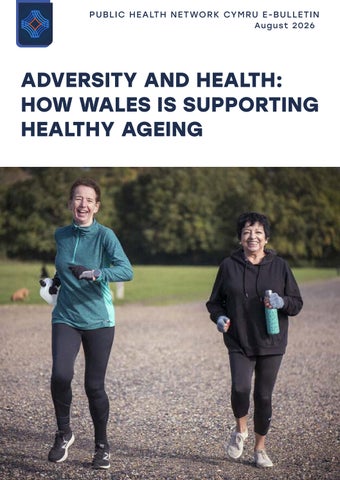
ADVERSITY AND HEALTH: HOW WALES IS SUPPORTING HEALTHY AGEING
August 2026: Adversity and Health: How Wales is Supporting Healthy Ageing
Welcome What is Public Health Network Cymru? Public Health Network Cymru was established in 2015 for professionals working on improving the health and wellbeing of the population of Wales and combined four previous topic specific networks which were hosted by Public Health Wales. The Network covers a broad spectrum of topics including prevention in healthcare, health-related behaviours, mental wellbeing and has a focus on the wider determinants of health – housing, education, employment, income and resources and the environment.
Getting to know our members We are getting to know our members and would like to help our members to get to know each other.
If you would like to feature in a future edition, please complete this form.
2
August 2026: Adversity and Health: How Wales is Supporting Healthy Ageing
2
Practice
Getting to know our members
16
Health improvement at any age – practical approaches to support healthy ageing
Articles
Stephanie Owen, Senior Health Improvement Practitioner,
Betsi Cadwaladr University Health Board Health Improvement Team
5
Adversity and Health in Later Life: Insights from Research in Wales Public Health Network Cymru
Research, Practice
18
Practice
Ageing well in action
Professor Wendy Dearing, Head of Centre for Social
6
parkrun: A Ready-Made Public Health Asset for Healthy Ageing in Wales Louise Ward, Senior Lecturer in Occupational Therapy,
Innovation, University of Wales Trinity Saint David
Research
Wrexham University and Event Director of Park in the Past parkrun
20
From Local Action to Lasting Change: Developing a Toolkit for Stronger Rural Communities
Policy
8
Mari Lewis, Research and Development Officer, Rural Health and Care Wales Anna Prytherch, Head of Rural Health and Care Wales, Rural Health and Care Wales
Oral Frailty and Healthy Ageing in Wales: Aligning Dental Reform, Health Equity and System Transformation Andrew Dickenson, Chief Dental Officer, Welsh Government Paul Brocklehurst, Consultant in Dental Public Health,
Practice
Honorary Professor Cardiff University & UCL, Public Health Wales
22 Supporting Healthy Ageing Through Befriending in Wales
Practice
Jayne Lewis, Engagement Manager, Volunteering Matters
10 Staying Connected: How Community Hearing Support Helps People Age Well
Practice
Joanne Hobson, Development Manager (Wales and North
24
Inclusive Cycling: A Practice and Effective Approach to Supporting Healthy Living and Ageing
England), RNID
Research
Gabe Taylor, Communications and Engagement Officer, Pedal Power Inclusive Cycling Charity Sam Farnfield, Director, Pedal Power Inclusive Cycling Charity
12
It’s Not Too Late to Quit: Supporting Healthy Ageing Through Smoking Cessation Services in Wales Nessie Felicia Frennesson, Public Health Research Assistant, Health Improvement Division, Public Health Wales Rochelle Embling, Senior Research & Evaluation Officer, Health Improvement Division, Public Health Wales Chris Emmerson, Consultant in Public Health, Health Improvement Division, Public Health Wales Rachel Howell, Principal Public Health Practitioner, Health Improvement Division, Public Health Wales Prof James Lewis, DECIPHer, Cardiff University
Grapevine Research
27
Public Health Intervention Responsive Studies Teams (PHIRST) - suggestions for local government intervention evaluationsNational Institute for Health and Care Research (NIHR)
Research
14
A Dementia Friendly Mid Wales : Reasons to be hopeful Michelle Symes, Research and Development Officer, Rural Health and Care Wales
Videos Next Issue: Gambling
3
August 2026: Adversity and Health: How Wales is Supporting Healthy Ageing
Articles
4
August 2026: Adversity and Health: How Wales is Supporting Healthy Ageing
Adversity and Health in Later Life: Insights from Research in Wales Public Health Network Cymru
Wales is committed to creating an age-friendly society where people of all ages are valued and can live and age well. Preventing adversity in later life that can harm health and well-being is central to this commitment and essential to enhancing the societal benefits of an increasing older population. This webinar highlighted the impacts of later life adversity on older people’s health and well-being, presenting key findings from recent studies undertaken by Public Health Wales.
5
August 2026: Adversity and Health: How Wales is Supporting Healthy Ageing
Practice
parkrun: A Ready-Made Public Health Asset for Healthy Ageing in Wales Louise Ward, Senior Lecturer in Occupational Therapy, Wrexham University and Event Director of Park in the Past parkrun
Parkrun is a global movement: free, weekly, timed 5km events open to walkers, joggers, runners and volunteers. In Wales, this global model is being shaped locally, with around 60 events now taking place across the country. At Park in the Past in Flintshire, parkrun was established by local GPs as a tool for social prescribing. Many still assume parkrun is only for the young or the fit, but as an Occupational Therapist and an Event Director, I have seen how this simple, community-led initiative can support older people to live and age well. Wales’ Strategy for an Ageing Society sets out a vision for an age-friendly Wales that supports people of all ages to live and age well, and parkrun reflects this directly. Its ethos of walking, jogging, running or volunteering supports the independence and
participation that the strategy champions. The strategy’s Healthy Ageing Programme calls for increasing activity levels and reversing physical decline in older people, while stressing that the social element matters just as much as the physical precisely the combination parkrun offers, pairing movement with community and encouragement. Most directly, the strategy commits to rolling out an all-Wales social prescribing framework to tackle isolation. Park in the Past parkrun was set up by local GPs aligning with this purpose, making it a live, working example of that commitment already in action. Its inclusive format of walking, jogging, running or volunteering, at any pace means no one is excluded on the basis of age or fitness. It is free and requires no 6
referral or equipment, making it accessible for many communities. This reflects a wider evidence base linking physical activity, volunteering, and social connection with improved mental wellbeing and reduced morbidity. At Park in the Past parkrun, this plays out in practice. Since launching, we have averaged around 200 participants each week, many new to parkrun. We have regular runners in their seventies, and walkers and volunteers in their eighties. A significant proportion of our volunteer team are retired, working alongside a regular intake of Duke of Edinburgh students, creating a genuinely intergenerational team. Volunteering has proven a valuable means of participation offering structure, purpose, and regular social contact,
August 2026: Adversity and Health: How Wales is Supporting Healthy Ageing
reflecting wider evidence that a sense of purpose supports positive ageing. Parkrun will not be the right fit for everyone, but for many, it offers a ready-made public health asset already sitting in local communities. Many professionals reading this may not have visited their own nearest event. Check www.parkrun.org.uk to find your local event, and consider it as something you could offer or suggest to people you support - it costs nothing to explore, and could open the door to genuine, lasting connection.
Welsh Government (2021) Age Friendly Wales: Our Strategy for an Ageing Society. Available from https://www.gov.wales/ sites/default/files/ publications/2021-10/ our-strategy-for-an-ageingsociety.pdf [Accessed 05.08.26]
7
August 2026: Adversity and Health: How Wales is Supporting Healthy Ageing
Policy
Oral Frailty and Healthy Ageing in Wales: Aligning Dental Reform, Health Equity and System Transformation Andrew Dickenson, Chief Dental Officer, Welsh Government Paul Brocklehurst, Consultant in Dental Public Health, Honorary Professor Cardiff University & UCL, Public Health Wales
Alice Jenner, PhD Student, University of Chester Wales has an ageing population, with increasing numbers of older adults living with frailty, multiple longterm conditions, and complex care needs. More people are retaining their natural teeth into later life, creating new challenges for health and social care services. Emerging evidence identifies oral frailty, the age-related decline in oral function, as an important determinant of nutrition, wellbeing, independence, and wider health outcomes (1,2). Despite this, oral health remains largely absent from frailty pathways and healthy ageing policy. Integrating oral health into ongoing dental reform and system transformation offers an opportunity to improve outcomes and reduce inequalities.
Reforms in NHS Wales dentistry are increasingly focused on prevention, population health, equity, and prudent healthcare. These priorities align with research demonstrating associations between poor oral health, sarcopenia, cognitive decline, hospitalisation, and mortality (1,2). Declining oral function can accelerate physical frailty, impair nutritional intake, and reduce quality of life among older adults. Welsh policy provides a supportive environment for reform. A Healthier Wales advocates a whole-system approach to prevention and integrated care, while the Well-being of Future Generations (Wales) Act 2015 and the Social Services and Well-being (Wales) Act 2014 emphasise prevention, wellbeing, and independence 8
(3-5). Gwen am Byth has demonstrated how oral health can be embedded within care settings for older adults (6) and recent research has shown the importance of sustained prevention (7). Wales has committed to becoming the world’s first Marmot Nation, placing health equity and action on the social determinants of health at the centre of public policy (8). Addressing oral frailty aligns to these principles and requires a focus on deprivation, disability, care dependency, and unequal access to services (9). NHS dental reform, sustained prevention programmes, and integrated care pathways for frail older people living at home or within a care home are practical examples of how Marmot principles can be translated into action (10).
August 2026: Adversity and Health: How Wales is Supporting Healthy Ageing
Growing research interest in oral frailty has positioned oral health alongside discussions on healthy ageing, health inequalities, and healthcare sustainability. It has encouraged greater engagement between dental services, public health practitioners, researchers, geriatricians, and policymakers around the role of oral health in supporting independent living and preventing avoidable deterioration. Emerging academic collaborations and policy discussions have identified opportunities to align dental reform with wider health and social care transformation. This includes consideration of oral health within frailty assessments, preventative care models, care-home quality improvement programmes, and population health planning. Collectively, these developments are helping build momentum for more integrated approaches to healthy ageing. Oral frailty should be recognised as a modifiable determinant of healthy ageing rather than solely a dental concern. As Wales continues to reform dental services and pursue wider health and social care transformation, oral health must be embedded within prevention, frailty, and ageing policy.
Oral health, frailty, and wellbeing are interconnected. Improving outcomes for older adults requires greater integration between dentistry, primary care, social care, public health, and academic research. As Wales becomes a Marmot Nation, oral frailty offers an important test of how health equity principles can be translated into practice. For further Information please contact: Andrew. Dickenson@gov.wales References 1. Watt RG, Daly B, Allison P, et al. Ending the neglect of oral health in older people: a call to action. Lancet Public Health. 2019;4(10):e507-e508. 2. Huang J, Li X, Zhang L, et al. Association between oral health status and frailty in older adults: a systematic review and meta-analysis. Front Public Health. 2025;13:1514623. 3.Welsh Government. Wellbeing of Future Generations (Wales) Act 2015. Cardiff: Welsh Government; 2015. 4. Welsh Government. Social Services and Well-being (Wales) Act 2014. Cardiff: Welsh Government; 2014. 5. Welsh Government. A Healthier Wales: Our Plan for Health and Social Care. Cardiff: Welsh Government; 2018. 6. Public Health Wales. Gwen am Byth: Mouth Care for Older People in Care Homes.
9
Cardiff: Public Health Wales; 2018. 7.Brocklehurst PR, McKenna G, Hoare Z, Jenkins A, Evans R, Syed SS, Harvey M, Chestnutt IG, Baker SR, Smith CJ, O’Neill C. Using role substitution to improve oral health of dependent older people residing in care homes and assisted living settings in the United Kingdom. Community Dentistry and Oral Epidemiology. 2026 Jul 22. 8. Welsh Government. Wales to become world’s first Marmot Nation to tackle health inequalities. Cardiff: Welsh Government; 2025. 9. Public Health Wales. Variations and inequity in access to ‘high-street’ dentist in Wales for older adults. June 2026. 10. Institute of Health Equity. Wales: A Marmot Nation. London: Institute of Health Equity; 2026.
August 2026: Adversity and Health: How Wales is Supporting Healthy Ageing
Practice
Staying Connected: How Community Hearing Support Helps People Age Well Joanne Hobson, Development Manager (Wales and North England), RNID
Hearing loss affects around one in three adults over the age of 65 and can have a significant impact on health, wellbeing and independence. Untreated hearing loss is associated with loneliness, reduced confidence, poorer mental wellbeing and an increased risk of cognitive decline. Through RNID Near You, trained volunteers provide free hearing aid support, information and practical assistance within local communities across Wales. By helping people maintain effective hearing, access services and stay connected to family, friends and community activities, the project helps prevent social isolation, maintain independence, strengthen community connections and support people to age well. Many older people experience difficulties managing their hearing aids and accessing audiology services when
problems arise. These challenges can lead to reduced hearing aid use, communication difficulties and withdrawal from social activities. RNID Near You is a community-based service delivered in partnership with NHS audiology, as well as libraries, community hubs, and voluntary sector partners. Trained volunteers provide practical support including hearing aid maintenance, battery replacement, cleaning, re-tubing, information, and signposting to other services. Hearing loss is often an overlooked public health issue. When communication becomes difficult, older people can withdraw from community activities, experience loneliness, lose confidence and become less able to access support. Addressing hearing loss is an important part of creating 10
age-friendly communities where people can remain active, connected and independent for longer. RNID Near You complements NHS audiology provision by providing support closer to where people live. Community locations enable individuals to seek help without needing a hospital appointment while also creating opportunities for social interaction and community engagement. Across Wales, RNID works with health boards, local authorities and community organisations to ensure support is accessible, particularly for people who may experience barriers related to transport, digital exclusion, poverty or living in rural communities. The project has enabled thousands of people across Wales to access practical hearing support within their local communities. Many
August 2026: Adversity and Health: How Wales is Supporting Healthy Ageing
service users report increased confidence using hearing aids, improved communication with family and friends and greater participation in everyday activities. The service also helps people resolve common hearing aid issues quickly, reducing unnecessary journeys and supporting more efficient use of health services. By helping people remain connected to their communities, the project contributes to improved wellbeing, independence and quality of life. RNID Near You reduces the strain on NHS audiology departments, allowing more time to support people and reduce waiting times.
more people can continue to participate fully in community life as they grow older. Further Information RNID Near You: https:// rnid.org.uk/informationand-support/local-supportservices/ RNID: https://rnid.org.uk Contact: Joanne Hobson, Development Manager (Wales and North England), RNID: Joanne.Hobson@rnid.org.uk
Healthy ageing depends on more than healthcare alone. Supporting people to remain connected, active and independent within their communities is equally important. Hearing health should be recognised as a key component of healthy ageing, age-friendly communities and preventative public health approaches. Communitybased hearing support demonstrates the value of collaboration between health, social care and voluntary sector organisations in reducing inequalities and improving wellbeing. We encourage organisations across Wales to consider hearing health in their planning, partnership working and community development activities so that
11
August 2026: Adversity and Health: How Wales is Supporting Healthy Ageing
Research
It’s Not Too Late to Quit: Supporting Healthy Ageing Through Smoking Cessation Services in Wales Nessie Felicia Frennesson, Public Health Research Assistant, Health Improvement Division, Public Health
Wales
Rochelle Embling, Senior Research & Evaluation Officer, Health Improvement Division, Public Health Wales
Chris Emmerson, Consultant in Public Health, Health Improvement Division, Public Health Wales Rachel Howell, Principal Public Health Practitioner, Health Improvement Division, Public Health Wales Prof James Lewis, DECIPHer, Cardiff University
Smoking remains the leading cause of preventable morbidity and mortality in Wales (1). In 2020–2022, an average of 3,845 smokingrelated deaths were recorded among adults aged 35 years and over, accounting for more than 10% of all deaths in this age group (2). While smoking prevalence has declined in recent decades, an estimated 9.6% of adults in Wales still smoke (3). Older smokers are an important group for smoking cessation services. Having often smoked for many years, they are at increased risk of cardiovascular disease, cancer, and a lower healthrelated quality of life due to physical limitations (4,5). Many smokers require several quit attempts before they successfully stop smoking,
highlighting the importance of providing ongoing support at all stages of life (6). Smoking Cessation Services in Wales Help Me Quit (HMQ) is the national smoking cessation service in Wales, providing free behavioural support and pharmacotherapy. Adults who use the service are up to three times more likely to quit smoking compared to receiving no treatment (7). Despite these benefits, many smokers who engage with the service do not successfully quit and do not return for further support. Between 2021 and 2024, this included more than 6,000 adults aged 55–74. Every Quit Attempt Counts It’s never too late to quit smoking, and it’s never too 12
late to access support. As part of HMQ, a new proactive reengagement approach is being developed to identify former service users and contact them directly, giving more people another opportunity to quit for good. To support this project, the Public Health Wales team are evaluating how the type of contact and message influences whether people return to the service. Messages focus on different motivations for quitting, including health benefits, financial savings, and information about newer stop-smoking treatments that may have been unavailable when individuals previously engaged with the service. The pilot intervention is now being rolled out across Wales, with approximately
August 2026: Adversity and Health: How Wales is Supporting Healthy Ageing
2,400 former service users expected to be contacted over a 10-month period. Key message Many smokers require several attempts before achieving long-term quit success (6). Proactive contact through routine service delivery could provide a practical way to help older adults quit smoking, improve health in later life, and support Wales’ ambition of being smoke-free by 2030 (1).
S.J., Selby, P., Philipneri, A. & Schwartz, R. (2016) ‘Estimating the number of quit attempts it takes to quit smoking successfully in a longitudinal cohort of smokers’, BMJ Open, 6(6), e011045. 7. Help Me Quit (n.d.) FAQs - Help Me Quit. Available at: https://www.helpmequit. wales/faqs/
For more information about Help Me Quit, visit the website: https:// helpmequit.wales/ 1. Welsh Government (2022) A Smoke-free Wales: Our Long-term Tobacco Control Strategy. 2. Emmerson, C., Cosh, H., Patterson, B. & Hughes, R. (2024) Smoking Attributable Mortality and Hospital Admissions for Wales, 2020– 22. 3. Welsh Government (2025) National Survey for Wales Headline Results: April 2024 to March 2025. 4. Geijer, R.M., Sachs, A.P., Verheij, T.J., Kerstjens, H.A., Kuyvenhoven, M.M. & Hoes, A.W. (2007) ‘Quality of life in smokers: focus on functional limitations rather than on lung function?’, British Journal of General Practice. 5. Mons, U., Muezzinler, A., Gellert, C., Schottker, B., Abnet, C.C., et al. (2015) ‘Impact of smoking and smoking cessation on cardiovascular events and mortality among older adults’, BMJ, 350, h1551. 6. Chaiton, M., Diemert, L., Cohen, J.E., Bondy, 13
August 2026: Adversity and Health: How Wales is Supporting Healthy Ageing
Research
A Dementia Friendly Mid Wales : Reasons to be hopeful Michelle Symes, Research and Development Officer, Rural Health and Care Wales
Rural Health and Care Wales (RHCW) undertook a review of services and support for people living with dementia and their carers across Mid Wales during 2024 - 2026, which included: - scoping of services and support across Ceredigion, Gwynedd and Powys - a Mid Wales combined report including lived experience The review was set against a backdrop increasing prevalence of dementia in Wales, with the Welsh Government estimating that 42,000 people aged 65+ currently live with dementia (WG, 2024), whilst Alzheimer’s Society Cymru predict this figure will rise by 37% by 2040 (Alzheimer’s Society and Carnall Farrar, 2024). The review included: 1) An extensive literature
review of 196 references and the identification of best practice identifying: Three overarching themes: - Difficulty defining “dementia friendly” and “dementia friendly communities” - Barriers and challenges to achieving dementia friendly communities - Innovations for overcoming the barriers and challenges i.e. Dementia Villages, engagement of people with dementia and their carers in decision making, improved transportation, access to built environments and outdoor spaces Seven barriers and challenges to dementia friendly communities: - Education, Training and Awareness Raising - Transport – for social & health connectivity - Role of, and impact on, caregivers - Rurality - Built environment & 14
outdoor spaces - Enhancement of assistive technologies - Shift from biomedical to community / person centred care models 2) Scoping of organisational service and support 68 individual organisations were found to offer support for: - people with dementia (n=35) - carers (n=13) - national helplines (n=3) - community car schemes (n=17) 3) Scoping of informal community-led services and activities across 720 locations, split as below, identified 168 community venues and in excess of 80 community led activities. - Ceredigion: 118 locations - Gwynedd: 287 locations - Powys: 315 locations Community events included
August 2026: Adversity and Health: How Wales is Supporting Healthy Ageing
coffee mornings, friendship groups, Yoga and other fitness groups, wellbeing sessions and other health need support, e.g. visual impairment groups, hearing aid support groups, specific dementia and related neurological condition groups, such as Parkinsons. Lived experience was collated through either an individual case study questionnaire and brief interview (n=5) or a focus group discussion (n=3), with 45 participants engaging with this stage of the review and providing insight into their experience of accessing
and using available services and support. The lack of signposting to available information and delays in assessment were the most concerning aspects for service users. The key message from this review is that there is good reason to be hopeful, as indicated in the poster shown as Fig. 1, that the population of Mid Wales can be adequately served and supported pre and post a dementia diagnosis. There is however room for improvement to meet the needs of those diagnosed and
15
their carers, as a minimum, through addressing: - the potential inequity of access to services and support for those living in towns in more rural locations - the promotion and advertising of services and support, e.g. using a local “dementia hub” to improve distribution of information, including a checklist to inform the carer journey and experience. For further Information please contact: Michelle. Symes@wales.nhs.uk
August 2026: Adversity and Health: How Wales is Supporting Healthy Ageing
Practice
Health improvement at any age – practical approaches to support healthy ageing Stephanie Owen, Senior Health Improvement Practitioner, Betsi Cadwaladr University Health Board Health Improvement Team
The Betsi Cadwaladr University Health Board (BCUHB) Health Improvement Team are a team of Health Improvement Practitioners with a range of skills and experience in nutrition, emotional wellbeing and physical activity. The aim of the team is to offer residents of Wrexham and Flintshire the opportunity to make healthier and sustainable lifestyle choices, helping to reduce health inequalities and improve health outcomes. All of the programmes that we deliver aim to increase social connection by reducing loneliness and social isolation, offering a range of lifestyle programmes that are inclusive to all and designed to improve the health and wellbeing of the local communities that we serve. As part of our service, we
offer low level physical activity sessions including seated Yoga, Tai Chi and Chi Me, which aim to improve strength, balance and mobility which in turn helps towards falls prevention. These sessions are offered free of charge on a regular basis in both Wrexham and Flintshire and are well attended by residents looking to improve mobility, strength and balance and at the same time meet new people. We are currently working in partnership with a local Community Agent who works with residents over the age of 50. They help provide a wide range of information to improve quality of life and help to bridge the gap between the local community and statutory and voluntary organisations. So far, we have delivered some physical activity sessions during an already established coffee 16
morning. The sessions have been well received with some participants going on to attend other programmes we are running. Off the back of these sessions the community agent has booked the team in to deliver ‘Batch cooking’ and ‘Stress Less’ programmes in the coming 6 months during their Wednesday coffee morning. Donna who is the Community Agent in Cefn Mawr in Wrexham describes why the partnership is a great opportunity for local residents to take part in health and wellbeing sessions to support healthy aging and reduce social isolation. “I’m really pleased to be working with you to bring health and wellbeing sessions to our Over 50s group at George Edwards Hall. I’m always looking for new opportunities and activities that will benefit the people who attend the group, and I
August 2026: Adversity and Health: How Wales is Supporting Healthy Ageing
think these sessions will be a great addition. I’m hoping the partnership will give local people the opportunity to learn more about looking after their health and wellbeing, try new activities and, at the same time, enjoy the social side of taking part together. For me, it’s important that opportunities like these are brought into the heart of the community, where people feel comfortable and supported. I’m looking forward to getting the sessions started and seeing the benefits they can bring to our group” If you would like to find out more about the BCUHB Health Improvement Team please contact the team on 03000 859 625 or bcu. healthimprovementteam@ wales.nhs.uk
17
August 2026: Adversity and Health: How Wales is Supporting Healthy Ageing
Research, Practice
Ageing well in action Professor Wendy Dearing, Head of Centre for Social Innovation, University of Wales Trinity Saint David
Early days: A tri-nation consortium from Wales, Malta and Japan has organically been growing into a robust collaboration to seek and develop meaningful solutions that will support Living joyfully, living well for longer in the safety of your own home. Life expectancy is rising, one in eight people globally will be aged 65 or older by 2050, studies are indicating that people overall wish to stay in their own homes. We aim, to turn global vision into practice, harness innovation, promote wellbeing and have courage to support this group of people for as long as possible, underpinned by applied research. Why dementia as the inaugural project? Coupled with the fact we are all living longer, a worrying prediction is that 139 million people could be living with dementia by
2050 compared to 57million in 2021. Rather than deploying traditional digital healthcare technologies that reactively alert authorities after an adverse event this consortium seeks to introduce a preventative, ambient framework focused on “Pre-Rehab” and “Microhappiness”. By identifying subtle behavioural and physiological deviations before a crisis occurs, we aim to evolve care in the community from reactive crisis handling to proactive, preventative care, enhancing the daily lived experience of older adults with cognitive decline. It wasn’t “just” due to the body of evidence across the globe but a topic all three “nations” were actively seeking to address during our webinars/visits and with the academic service evaluation built in, this will directly inform the future roadmap of sustainable, technology18
enabled social care provision in in all consortium countries. Field work research led by Japan will be undertaken in all three countries in September which will enable to start to compare and contrast, with a pilot of community living led by Wales and Welsh companies in Malta that will start by the end of 2026 As the main element of the project, the tri-nation research study still has to be undertaken, the tangible difference is limited, BUT it has already brought together over 16 Welsh companies, academics and specialist centres to participate in webinars, expand the collaboration and organise a jam-packed agenda, visiting two different areas of excellence in two countries seeking to answer one of current global “hot topic” highlighting that even with an new project that has had limited conversations to
August 2026: Adversity and Health: How Wales is Supporting Healthy Ageing
date, it is showing a shared understanding of urgency and the difference we can start to make. The old saying of “just do it” yes, somebody needs to lead but there is a recognition at this early stage that even without funding it’s highlighting the importance and benefits of collaboration, share experiences, expertise and to provide practical, effective proven solutions for today and to inform tomorrows prevention agenda. My call to action is for more accessible funding to support initiatives that have grown organically through conversations at local levels to address a key and urgent “global” problem that show real impact. For further Information please contact: w.dearing@ uwtsd.ac.uk
19
August 2026: Adversity and Health: How Wales is Supporting Healthy Ageing
Research
From Local Action to Lasting Change: Developing a Toolkit for Stronger Rural Communities Mari Lewis, Research and Development Officer, Rural Health and Care Wales Anna Prytherch, Head of Rural Health and Care Wales, Rural Health and Care Wales
Rural communities can appear well connected, yet loneliness and social isolation can remain significant, particularly for older and more vulnerable people. Other challenges, including limited transport, access to services and changing population needs, can affect wellbeing and independence. The Sustainable Communities project was developed in Lampeter to explore how a community-led, preventative approach could respond to these challenges. From February 2025 to March 2026, the project engaged with local residents and community organisations, ran regular social mornings and activities, gathered residents’ views through a survey, and worked with a local Steering Group. This practical experience became the foundation for developing the Sustainable Communities
Toolkit.
connection and wellbeing.
The toolkit was developed by bringing together three sources of learning: - academic research on community resilience and rural isolation - examples of best practice - practical experience from the Sustainable Communities pilot in Lampeter
The Lampeter pilot provided local evidence of how these principles could work in practice. Weekly social mornings, co-designed activities, day trips, partnership working and light-touch evaluation helped identify what worked, what needed adapting and where flexibility was essential.
Research highlighted the importance of local knowledge, inclusive participation and collective action. It also showed that rural isolation can be linked to transport difficulties and fragmented services, while community initiatives need to avoid placing unsustainable demands on volunteers. Examples such as Men’s Sheds, community dining and place-based social hubs demonstrated the value of informal, welcoming spaces that build confidence, 20
The resulting toolkit (“LiCoSS”) is deliberately not a fixed model. Instead, it provides a framework that communities can adapt to their own needs, assets and capacity. Its four central stages are Listen, Connect, Support and Sustain: understand local needs; create accessible opportunities for connection; provide light-touch support and signposting; and build partnerships and long-term sustainability.
August 2026: Adversity and Health: How Wales is Supporting Healthy Ageing
The toolkit turns the learning from Lampeter into something that can be used beyond one community. It provides practical guidance for community coordinators, local authorities, health and care organisations, voluntary organisations, community councils and funders seeking to develop similar initiatives.
what works and continue developing the approach together. By investing in relationships and prevention, communities can become more connected, resilient and sustainable. For further Information please contact: Mari.Lewis2@ wales.nhs.uk
Importantly, the toolkit reflects the reality that every community is different. The Lampeter experience demonstrated that meaningful engagement with residents and existing community groups is essential, and that activities should be shaped around what local people identify as important. The result is a flexible resource intended to support stronger connections, resilience and independence across rural Mid Wales. Our key message is simple: start with the community, not the solution. Listen to residents, understand local barriers, build on existing relationships and adapt your approach as you learn. The Lampeter experience shows that successful community resilience depends on trust, flexibility and local ownership. A toolkit cannot provide a one-sizefits-all answer, but it can provide a starting point and a structure for learning. It’s encouraged that rural communities and organisations across Mid Wales use the Sustainable Communities Toolkit, test its principles locally, share 21
August 2026: Adversity and Health: How Wales is Supporting Healthy Ageing
Practice
Supporting Healthy Ageing Through Befriending in Wales Jayne Lewis, Engagement Manager, Volunteering Matters
Wales has committed to becoming an age-friendly nation, where older people are valued, connected and supported to live well. Public Health Wales’ research shows that adversity in later life, including loneliness, isolation, poverty, abuse, barriers to care and cold homes, can seriously affect physical and mental health. Community-based prevention has an important role to play. Volunteering Matters’ befriending projects show how trusted relationships, shaped around local people and places, can reduce loneliness, build confidence and help older people remain independent. Our work Loneliness and social isolation are public health issues, not only social ones. For some older people, a regular call or visit from a trusted volunteer can
help rebuild confidence after bereavement, illness, retirement, caring responsibilities or poor health. Our model is deliberately simple and human. Volunteers are matched with older people according to interests, needs and geography. Support can include telephone calls, home visits, encouragement to attend groups or practical help to reconnect with community life. In Blaenau Gwent, Volunteering Friends supports people aged 50 and over experiencing loneliness and isolation. In one quarter, it delivered 220 calls, 110 hours of telephone support and 19 home visits. Welcome Friends provides home visits and telephone befriending in Merthyr Tydfil and Rhondda Cynon Taf. Between April 2023 and 22
March 2024, 68 matches were made and 48 volunteers provided support. Flintshire Befrienders combines one-toone befriending with opportunities to connect locally. In Pembrokeshire, Pivot Home from Hospital provides up to six weeks of practical and emotional support following discharge. Together, these projects demonstrate how communitybased support can help older people stay connected and independent. The difference it makes Befriending cannot solve every challenge older people face, but it can play an important preventative role. Volunteers provide companionship while helping people reconnect with activities, services and their wider community. The benefits are mutual.
August 2026: Adversity and Health: How Wales is Supporting Healthy Ageing
Older people are not only recipients of support. Many volunteers are older people themselves, contributing their experience, empathy and local knowledge. Evidence also points to stronger wellbeing benefits from volunteering for older volunteers compared with younger adults. As Welcome Friends volunteer Bob Hinton says: “I enjoy making a difference to people’s lives. It’s a privilege to be part or their routine.” What we are learning Our experience points to three things. Relationships are an important part of prevention. Local partnerships matter. And volunteering can benefit everyone involved. As Wales develops agefriendly communities, volunteering should be recognised and supported as part of the social infrastructure that helps people age well. Our call is for partners and funders to invest in communitybased approaches that create connection, support independence and enable older people to contribute their own skills and experience. For further Information please contact: info@ volunteeringmatters.org.uk
23
August 2026: Adversity and Health: How Wales is Supporting Healthy Ageing
Practice
Inclusive Cycling: A Practice and Effective Approach to Supporting Healthy Living and Ageing Gabe Taylor, Communications and Engagement Officer, Pedal Power Inclusive Cycling Charity Sam Farnfield, Director, Pedal Power Inclusive Cycling Charity
Pedal Power is a Cardiff-based charity established in 2000 to provide inclusive cycling opportunities for people who face barriers to cycling, mainly due to disability or age. The organisation was founded to ensure that disabled people and others who face barriers to cycling could access the physical, mental and social benefits of cycling. The charity receives no core funding and relies on self generated income, donations plus grants and funding pots. Over the past three decades Pedal Power has developed nationally recognised expertise in adapted cycling, operating from a purposebuilt facility in Cardiff. The charity maintains a large fleet of specialist adaptive cycles including trikes, handcycles, tandems, recumbent cycles, side-by-side cycles and e-trikes, enabling people
of all ages and with a wide range of abilities and health conditions to cycle safely. These cycles are available for hire to the charity’s circa 1,700 members, as well as the general public. Pedal Power delivers open sessions, supported group programmes and targeted partnerships with health and community services, including the Community Neuro Rehabilitation Service (CNRS). Whilst some projects specifically target older people, we believe that all our work supports healthy living and ageing through enabling rehabilitation, independence, social inclusion and long-term physical activity and mental wellbeing. ‘Bike & Brew’ is an example of a project we run with funding from Cardiff Met that specifically targets older 24
adults. Open to people aged 50+, this is a subsidised weekly social ride followed by a ‘cuppa’ in our café thereby encouraging physical activity and social interaction. These sessions are funding dependent and therefore do not run continuously. When available they prove to be very popular and are often over-subscribed, and with very positive feedback from participants, with many stating that it’s encouraged them to return to cycling after many years. Many go on to cycle regularly with us. The Community Neuro Rehabilitation Service is an example of a health-to-cycling pathway between Pedal Power and the Community Neuro Rehabilitation Service at Cardiff & Vale University Health Board. The pathway supports people with a range of neurological conditions including stroke, acquired
August 2026: Adversity and Health: How Wales is Supporting Healthy Ageing
brain injury and multiple sclerosis. Est. in 2024, it enables referral into adapted cycling as part of community rehabilitation. Participants attend up to 3 small-group sessions supported by NHS staff and Pedal Power’s specialist Cycling Officer. Participants receive individual assessment, adapted cycle fitting and supported cycling, improving mobility, confidence and independence. Families report improved quality of life and renewed hope. One participant stated: “[The experience] surpassed my expectations... it persuaded me to buy my own e-trike which has helped my feeling of independence”. Many continue cycling regularly with Pedal Power after completing the pathway. The programme supports secondary prevention by helping people remain active, slowing deterioration and reducing future demand on NHS/social care.
25
August 2026: Adversity and Health: How Wales is Supporting Healthy Ageing
Grapevine
26
August 2026: Adversity and Health: How Wales is Supporting Healthy Ageing
Research
Public Health Intervention Responsive Studies Teams (PHIRST) suggestions for local government intervention evaluationsNational Institute for Health and Care Research (NIHR)
We invite local government, and equivalent organisations, in England, Wales, Scotland, and Northern Ireland to submit an application to the NIHR Public Health Intervention Responsive Studies Teams (PHIRST) scheme. The PHIRST scheme was established to support the evaluation of non-NHS public health interventions that are commissioned or delivered by local government and equivalent organisations across the UK. The scheme provides such organisations with access to academic expertise to generate highquality, policy-relevant evidence on interventions that aim to improve population health and reduce health inequalities. The purpose of this opportunity is to find and select interventions commissioned by local
government (and equivalent organisations in the devolved administrations) that aim to improve population health and tackle inequalities, and are in need of robust evaluation. If the intervention is selected, a fully-funded PHIRST academic team would work in partnership with you to deliver a robust and timely evaluation. Applying organisations are not expected to design a full evaluation; under the PHIRST scheme’s co-production model, the academic team will collaborate with you and relevant stakeholders to develop and undertake the evaluation. Closing date: 15 September 2026 at 1.00pm Full details: https:// www.nihr.ac.uk/funding/ public-health-interventionresponsive-studies-teamsphirst-suggestions-localgovernment-interventionevaluations/97060 27
Details of all existing PHIRST evaluations can be viewed on the PHIRST website https:// phirst.nihr.ac.uk/ Queries should be sent to phirst@nihr.ac.uk
August 2026: Adversity and Health: How Wales is Supporting Healthy Ageing
Videos
28
August 2026: Adversity and Health: How Wales is Supporting Healthy Ageing
Adversity and Health in Later Life: Insights from Research in Wales This webinar highlighted the impacts of later life adversity on older people’s health and wellbeing, presenting key findings from recent studies undertaken by Public Health Wales.
Watch Breastfeeding Welcome Schemes: Real Stories, Real Impact
This session was an opportunity to gain practical insights, be inspired by real stories, and connect with others committed to supporting breastfeeding-friendly communities.
Watch Building Strong Foundations in Early Childhood This webinar explored why the earliest years of life are critical for lifelong health, wellbeing, and opportunity.
Watch
View all our videos
Explore our video library on our website
29
August 2026: Adversity and Health: How Wales is Supporting Healthy Ageing
Next Issue: Gambling-related Harms
Gambling-related harms can have a devastating impact on individuals, families and communities across Wales, affecting health, relationships, finances and wellbeing. Prevention is a shared responsibility that extends beyond treatment and support services. Our upcoming webinar will examine why a population-level public health approach is essential, how evidence and lived experience will continue to inform programme development, and the importance of partnership working in creating sustainable change. To support this important conversation, we are inviting colleagues from across all sectors to contribute to a forthcoming themed e-bulletin focused on gambling-related harms. We welcome submissions that showcase practical approaches, tools, or resources and could include examples of good practice that highlight innovative projects, collaborative approaches, or initiatives being delivered at national, regional or local levels.
Our article submission form will provide you with further information on word count, layout of your article and guidance for images. Please send articles to publichealth.network@ wales.nhs.uk by 17 September 2026.
Contribute
30