CONTENTS INTRODUCTION ........................................................................................................................ 6 PART ONE: QUESTIONS ABOUT THE BIBLE ............................... 10 1. 2. 3. 4. 5. 6. 7.
...........................................................11 ................................... 16 ...................................... 21 ......................................................................... 26 ................................. 31
Is there any structure to the Bible? How is the Old Testament relevant to today? Why do I find so much of the Bible boring? Has the Bible been changed? Was the universe created in a literal six days? How are we supposed to understand those long lifespans in Genesis? Does the Bible condone slavery?
............................................................................... 35 ................................................................ 40
PART TWO: QUESTIONS ABOUT GOD ................................................ 45 8. 9. 10. 11. 12.
..............................46 ........................................................................ 50 ................................................................................. 54 .................................................................................... 58 .............................................................................................. 62
If God created the universe, who created God? Why isn’t God more obvious? Do miracles occur today? Did Adam have a navel? Are we to fear God?
PART THREE: QUESTIONS ABOUT JESUS ..................................... 66 13. 14. 15. 16. 17.
.......................................................... 67 ............71
How can Jesus be the Son of God? Why did Jesus have to be born through a virgin birth? Why was Jesus baptised since he was perfect and didn’t need to repent? What does it mean to commit blasphemy against the Holy Spirit? Will people be condemned for not believing in Jesus even if they’ve never heard his name?
......................................................................................... 76
........................................................................................................81 ................................................... 86
PART FOUR: BEING MADE RIGHT WITH GOD ....................91 18. 19. 20. 21.
Does every human being have a sense of right and wrong? Do we choose God, or does he choose us? Can I lose my salvation? What does it mean to have faith in Christ?
9781912326525_Interior_152x234_212pp.indd 4
.................................................................................................................. 92 ..........................................97 ..................................................................................102 ......................................107
26/02/2026 09:15
PART FIVE: GOD AND GOD’S WORLD ........................................... 112 22. 23. 24. 25.
..................................................................................................... 113 ............................................................................. 118 ............................................................123 ............................................................128
Do ghosts exist? Can I believe in evolution? Why did God create mosquitoes? Was God responsible for COVID?
PART SIX: GOOD AND EVIL ...................................................................... 133 26. 27. 28. 29. 30.
......................................................................................................134 .......................................................................................................139 ..................................................143
Do angels exist? Is there a devil? Can we believe in the return of Jesus? How can we wage war on people when we are supposed to love even our enemies? Why are children born with disabilities?
.......................................................147 ............................................152
PART SEVEN: LIFE AFTER LIFE – THE FUTURE, HEAVEN AND HELL ........................................................................... 157 31. 32. 33. 34.
............................................................................... 158
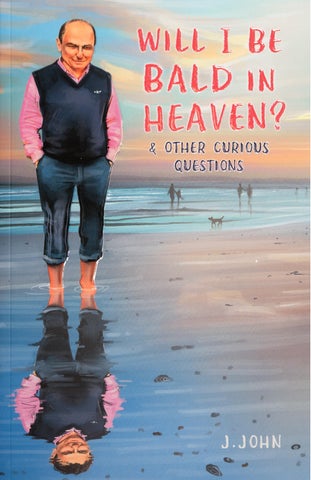
What will heaven be like? Will the existence of hell spoil the joy of heaven? Can those who commit suicide go to heaven? Will I be bald in heaven?
....................................................................................................................162 .................................166 ................................................................................ 171
PART EIGHT: THE CHURCH AND LIFE ........................................ 175 35. 36. 37. 38. 39.
Why can’t I find a local church that I’m comfortable with? Have I truly accepted Jesus? What happens if I continue to sin after accepting Jesus? If I’m converted, do I have to give everything away? Why can the Christian life be a struggle?
......................................................................................... 176 ........................................................................180
..................................................................................................... 185 ..................................................................................................190 .........................................195
THE LAST WORD ..................................................................................................... 200 40.
Is it just Christians who face tricky questions?
9781912326525_Interior_152x234_212pp.indd 5
............................201
26/02/2026 09:15
PART FIVE
GOD AND GOD’S WORLD
112 9781912326525_Interior_152x234_212pp.indd 112
26/02/2026 09:15
22
DO GHOSTS EXIST? Ghosts intrigue many people, are a preoccupation for some and a source of anxiety for others. But are they real? Let’s define a ghost as ‘the appearance of a dead person to the living’. When someone has a personal vision that no one else can see, is that a ghost? Surely, a ghost is more: an objective, ‘real’ appearance that, in theory, could be seen by several observers or recorded on video. Ghosts and ghost stories are incredibly popular. Sceptics argue that the obsession by Hollywood and the media with the ‘paranormal’ encourages people to see unexplained events in such supernatural terms. Others would say that our fascination with ghosts and the supernatural today is a rebellion against the all-embracing technology of our time.
Do ghosts exist? Let’s consider the view from both science and Christianity.
113 9781912326525_Interior_152x234_212pp.indd 113
26/02/2026 09:15
At least publicly, science is deeply sceptical towards ghosts. Scientists are troubled by the fact that it’s impossible to do laboratory experiments on ghosts and the frustratingly poor quality of the data on them. Understandably, when faced with a ghost few people choose to investigate closer. There are, too, logical issues with ghosts. If they are insubstantial ‘spirit’ creatures, how do they wear clothes and how do they speak? Sceptical scientists also propose alternative explanations, particularly where the encounter is confined to one individual. Some point to the many tricks the mind can play, such as the déjà vu experience of having a confident familiarity with someone or somewhere you have never before seen.
One other mental trick is pareidolia where we see patterns in such things as cloud shapes or rock formations. Science also points to the possible influence of fever, drugs or drink or, with the recently bereaved, the influence of grief and trauma. A powerful piece of evidence for sceptics is that, although for many years now people have carried phones capable of taking good photographs and video, there remains a remarkable lack of authenticated imagery of ghosts. Many Christians, particularly those who take the Bible seriously, are also cautious about ghosts. Although the cultural setting of the Bible was one in which people
114 9781912326525_Interior_152x234_212pp.indd 114
26/02/2026 09:15
believed in ghosts, we find little in the pages of Scripture that affirms them. Those who seek ghosts and spirits are condemned in Deuteronomy 18:10-11 and in 1 Samuel 28:7-20, when the desperate King Saul has a medium summon the dead prophet Samuel, it is unclear whether the subsequent apparition is actually Samuel. It’s notable that the resurrected Jesus says he is not a ghost and proves it by eating food and being touched (Luke 24:37-42). A strong Christian objection to the idea of ghosts as the returned dead is that there is no ‘spiritual niche’ for them. The New Testament is clear that there are only judgement and heaven or hell for the dead (see Hebrews 9:27) and the idea of any deceased individual ‘lingering around’ is ruled out.
So with scepticism from science and suspicion from Christianity, the case against ghosts seems firm. And yet. The idea of ghosts is universal, occurring in every global culture, past and present. Today, statistics suggest that 40 per cent of Britons and Americans believe in ghosts. That a view is popular is, of course, no guarantee it’s true. But these are striking figures. We must also remember that science does not know everything about everything, and in fact the universe is turning out to be a very unpredictable place indeed. And no Christian, with their belief in God, miracles and the resurrection, can deny a supernatural dimension to the universe.
115 9781912326525_Interior_152x234_212pp.indd 115
26/02/2026 09:15
So are ghosts real? It’s undeniable that people have experiences that they consider to be ghostly encounters. What lies behind these, however, is less clear. Perhaps a better question is, ‘How should we approach the idea of ghosts?’ This is an area where Christians should keep a safe distance. At very least it is a distraction. Christians are no exception to the attraction of the spectacular but our priority as believers is not seeking out sensational supernatural activity as ‘Ghostbusters for Jesus’ but the much less dramatic – and far more vital – matter of loving God and our neighbour.
In fact this area of supernatural manifestations may be a real danger. Although I am hesitant on ghosts, I have no such hesitancy about supernatural powers that are evil, and sometimes subtly so. There are too many stories, some well attested, of those whose curiosity and naivety led them down dark paths that ultimately betrayed them. An often-used image here sees the supernatural world as a spiritual zoo in which there are fierce and deadly creatures that, by virtue of Christ’s triumph, are locked away in cages. Blundering around may result in those cage doors being opened with unfortunate consequences. Now, there are those Christians, probably in church leadership, who may, out of duty, be called on to battle with supernatural manifestations of our enemy. But it’s not something that the curious or amateur should stray into. If you do find
116 9781912326525_Interior_152x234_212pp.indd 116
26/02/2026 09:15
yourself in some unsought encounter with ghosts or the like, then it is important to remember that the only source of victory over them is our relationship to Jesus Christ who, at the cross, triumphed over ‘powers and principalities’ (Colossians 2:15; Ephesians 1:19-21).
Finally, as an evangelist, let me point out a fascinating feature of supernatural manifestations which is that an encounter with them can force an individual to look beyond the closed, arid world of scepticism to God himself. To be so scared by a ghostly experience that you run into the arms of a heavenly Father may seem an awkward way to come into the kingdom of God. Nevertheless, it’s the destination you arrive at, not how you are brought there, that counts.
117 9781912326525_Interior_152x234_212pp.indd 117
26/02/2026 09:15
23
CAN I BELIEVE IN EVOLUTION? I find it troubling that some Christians are more likely to get worked up about the age of the earth or whether evolution took place than about how to live holy lives, feed the starving or witness to their friends. There’s a desperate need in the church to ensure that the main things remain the main things. Evolution is a hot topic so in thinking about it, I’ve picked the brains of Christians who are professional scientists. The result is the recognition of three separate and very different ideas of evolution which should not be confused. Let me call them Evolution 1, 2 and 3.
Evolution 1: This can be summarised as ‘The small-scale genetic shift of organisms over time.’ This is microevolution. It has been observed in both the laboratory and nature in everything from viruses to birds and, given that it allows organisms to adapt to changing environments, is an essential process. It is clearly scientific, a proven fact and has no conflict with Christianity.
118 9781912326525_Interior_152x234_212pp.indd 118
26/02/2026 09:15
Evolution 2: This can be summarised as ‘The gradual emergence of all living things through an unbroken succession from a common ancestor over several billion years.’ This is ‘geological’ or ‘historical’ evolution: the idea that, over countless generations, something like bacteria have progressively developed into all the complex multicellular plants and animals of our world. This definition of evolution is still science but not ‘observational science’: it happened in the past and cannot be tested in the lab. Nevertheless, the integration of vast amounts of data on fossils with DNA studies has given a generally consistent account of how plant and animal groups developed over time. Although this Evolution 2 is simply a description of events and says nothing about an ultimate cause, some might say it conflicts with religion. For a start it seems to replace God’s supernatural action by chance. But if you take the view, generally associated with Calvinism but in fact thoroughly biblical, that God oversees every event in the universe, then there is no such thing as real chance; it’s only apparent. (Note Proverbs 16:33, ‘The lot is cast into the lap, but its every decision is from the L ORD.’) Interestingly, God’s control of natural selection whereby ‘unfit’ animals or plants are removed is anticipated in Jesus’ comment in Matthew 10:29: ‘A re not two sparrows sold for a penny? Yet not one of them will fall to the ground outside your Father’s care.’ The fact that an event can be both natural
119 9781912326525_Interior_152x234_212pp.indd 119
26/02/2026 09:15
and supernatural is something we take for granted. So when a child recovers from a deadly infection, we don’t see any conflict between the doctor’s report that the antibiotics worked and the parent’s gratitude to God that their prayers were answered. A view of God working to bring the natural world into being through this strictly defined evolution could be termed either Theistic Evolution, Guided Evolution or, my preference, Continuous Creation.
For the Bible-believing Christian I think there are three issues here. The first is whether the Creation account in Genesis 1 demands six literal 24-hour days, something I discussed in Question 5, where I concluded otherwise. The second is whether it conflicts with Genesis 1, and here I would suggest that this is only the case if you see the Bible’s statements as some sort of scientific text. The third is how it fits with the scriptural emphasis that human beings are made in God’s image and thus, in some meaningful way, separate from the animal kingdom. Well, the physical links between humanity and the animal world are undeniable: humans and chimpanzees have something like 95-99 per cent of DNA in common. Nevertheless, the gulf between humanity and even the highest apes remains enormous. We alone have complex language, possess analytical thought, make advanced tools, have intricate social structures and engage in complex rituals. One image that may help is to remember that although a desktop computer today may look broadly similar to one
120 9781912326525_Interior_152x234_212pp.indd 120
26/02/2026 09:15
built thirty years ago, it is enormously more powerful in its ability and potential. In the same way, although we have similar biological ‘hardware’ to other apes, it could be said that God has given us vastly different and much more powerful mental ‘software’.
Evolution 3: This can be summarised as ‘Evolution is the only creating force in the universe. It is the mechanism through which all things have come into being. There is no supernatural God or higher powers, only evolution.’ Although rarely put so starkly, it is this view that underlies most of the many problems with the word evolution; here normally capitalised as Evolution and sometimes termed Evolutionism. It is a philosophical view of the purpose or mechanism behind the universe. Indeed, precisely because it pronounces – negatively – on the existence of God, it is a religious opinion and based on faith. Of course this is in total opposition to Christianity or indeed any other religion.
So where does this leave us? The limited microevolution of Evolution 1 gives no problems, whereas the third definition has nothing but problems and can instantly be rejected. Cautiously expressed and thoughtfully understood, the ‘historic evolution’ or ‘continuous creation’ of Evolution 2 seems reasonable. But in discussing it, we must always make clear our belief that running through it all is the supervising hand of God.
121 9781912326525_Interior_152x234_212pp.indd 121
26/02/2026 09:15
In making these definitions let me point out a trick, employed by sceptical atheists, which is to say that because Evolution 1 is proven and Evolution 2 is probable, therefore Evolution 3, Evolutionism, automatically follows. It doesn’t.
Can a Christian believe in evolution? My cautious verdict is that, carefully defined as an account of how God has worked, it’s a reasonable position. What is much less reasonable is for the non-believer to see the glory of the natural world and attribute it all to nothing more than the interaction of time and chance. The beauty and wonder of the creation point us to a creator.
122 9781912326525_Interior_152x234_212pp.indd 122
26/02/2026 09:15
24
WHY DID GOD CREATE MOSQUITOES? Mosquitoes are a nuisance far out of proportion to their tiny size. It’s easy to have some otherwise perfect summer meal with friends ruined by their whining nastiness, and although some people seem immune to mosquito bites, others suffer for days. Of course, the problem with mosquitoes is far more serious than irritating bites. They carry diseases and in taking blood from us can, in return, share bacteria, viruses and parasites – notably, malaria. It’s been estimated that each year around 700 million people acquire a mosquito-borne illness, with over 725,000 deaths as a result. With this comes a vast economic damage due to lost productivity. Some facts first. Mosquitoes are a family of small flies with a four-stage life cycle. Almost all of the 3,500 named mosquito species feed on plant nectar but in about 200 the females suck blood to give them protein to help make eggs. The problem for humans is that, in stopping our blood
123 9781912326525_Interior_152x234_212pp.indd 123
26/02/2026 09:15
from clotting, the mosquito pumps in saliva with an anticoagulant. As well as triggering those immune responses that result in the familiar irritation and swelling, this saliva may carry diseases. In answering why a good and wise God created mosquitoes let me first point out some positives about them.
Mosquitoes are truly extraordinary organisms. So, for instance, the notorious mosquito whine is because their wings beat between 450 and 600 times a second. From the point of view of mechanical engineering, that’s astonishing. No less remarkable is the way they sense the presence of humans, even selecting blood type (they prefer O) and gender (they prefer pregnant women). You may not like mosquitoes, but you’ve got to admire them. We Christians may struggle with them as the product of a good God but any thinking atheist should puzzle how such super-sophisticated organisms can be the product of nothing more than that ruthless formula of ‘time and chance alone’. Furthermore, mosquitoes play an important role in the amazing interlocking machinery of nature. Many animals, including birds, bats and fish, feed on them and the aquatic mosquito larvae take up organic waste, some of which is harmful. In addition, let’s not forget that mosquitoes can teach us. They are astonishing flying machines that make aircraft seem clumsy. They have amazing sensory abilities,
124 9781912326525_Interior_152x234_212pp.indd 124
26/02/2026 09:15
take blood samples almost painlessly and produce superb anti-clotting agents. There’s lots we can learn from them. Ultimately, however, faced with this and similar questions, I think three big responses are needed.
First, theological reflection. An important element in Christian thinking is that, in a way we do not fully understand, this world is not what it was intended to be. It is fallen. Some Christians hold that this fallenness is the result of the rebellion of Adam and Eve a few thousand years ago. Those who respect the scientific consensus of an earth billions of years old – in which blood-sucking mosquitoes have been preserved in amber from the time of the dinosaurs – often postulate a much earlier ‘cosmic fall’ that affected creation. This may be what Paul refers to in Romans 8:22 in talking about the ‘whole creation’ groaning ‘as in the pains of childbirth’. Was there a warping and twisting of the natural world that goes back to the fall of Satan himself? We don’t know – we haven’t been told.
Second, thorough reverence. As our Lord and creator, God is perfectly within his rights to refuse to give us an answer. After all, if we knew the answer to every question we would, in effect, be like him. As Deuteronomy 29:29 reminds us, there are secret things that belong to God. At the end of the book of Job, which focuses on why the innocent Job suffers, God speaks. What is fascinating is that he doesn’t
125 9781912326525_Interior_152x234_212pp.indd 125
26/02/2026 09:15
actually give Job any explanation. Instead, the thrust of God’s message seems to be ‘I am the Lord God, you are merely human and a bit of humility will not go amiss’. It’s a useful lesson.
Finally, thoughtful response. Sometimes our questions to God can boomerang back. We ask theoretical questions about such problems as mosquitoes, poverty, floods and earthquakes and I think any answer from God comes with the sharp riposte, ‘Yes, it’s a problem. Fine. So what are you going to do about it?’ After all, we must not neglect the human role in making the damage done by mosquitoes so severe. Reductions in mosquito-borne diseases could be easily achieved by improved sanitation in poor areas, providing free mosquito netting and health-care systems with cheap drugs for treatment and prevention. I have no doubt that if humanity devoted a fraction of what it spends on warfare to combating mosquitoes, the damage done by them would be enormously reduced. Let me offer here one fascinating and challenging response to a similar problem. The gruesome Guinea worm is a parasite which grows within the human host until finally, up to a metre long, it emerges through the skin with appalling pain. In 1986 it affected an estimated 3.5 million people in twenty-one countries in Africa and Asia. About then Jimmy Carter, a Christian, former peanut farmer and
126 9781912326525_Interior_152x234_212pp.indd 126
26/02/2026 09:15
a man who had just vacated the White House as President of the United States, decided to make his mission in life not just to reduce the impact of the Guinea worm, but to eliminate it totally. Largely through education, his Carter Centre has, at the time of writing, almost totally succeeded. A mere fourteen cases were reported worldwide in 2023 and, thanks to Carter’s determination, the worm is now on the verge of extinction.
Yes, like so much that is evil in the world, mosquitoes pose challenges for Christians. Yet paradoxically, they also offer enormous opportunities for doing good and for demonstrating Christian love in action. That’s always the best answer to evil!
127 9781912326525_Interior_152x234_212pp.indd 127
26/02/2026 09:15
25
WAS GOD RESPONSIBLE FOR COVID? In dealing with the COVID pandemic, we must tread delicately. Although for many it was no more than a weary, wasted year of frustration, fear and far too much screen time, for others it was a time of bitterest tragedy. It also raised complex medical and health issues, and the extent to which human beings were responsible for the beginning and spread of the pandemic is still debated. A reminder of the facts. The COVID pandemic was caused by the highly contagious SARS COV-2 virus which attacks the human respiratory system, sometimes severely enough to lead to death. Emerging in China in early 2020, the virus spread round the world in months, causing probably between 10 and 20 million deaths and striking severe blows to the economy, society and mental health. As the virus evolved and vaccines took effect, the pandemic waned and was declared over by the World Health Organization
128 9781912326525_Interior_152x234_212pp.indd 128
26/02/2026 09:15
in May 2023. It is, however, important to note that the virus has not gone away and continues to evolve.
Let’s here try to answer a first question: was God responsible for COVID? Here matters are complicated because there was certainly some human involvement and responsibility. So it seems likely that the transmission of the virus into humans occurred when some wild animals, perhaps bats or pangolins, were eaten as food. There is little doubt that the spread of the virus was enabled by the inadequate reaction of various medical and government services. Yet above these human factors stands the God of the Bible – sovereign, all-powerful and all wise – who, to use the modern term, ‘micromanages’ the universe. Indeed the way that a tiny virus wreaked such havoc across the world demonstrates exactly why God has to micromanage things. So God must have been involved in some way with the spread of COVID. Probably the wisest thing is to avoid such simplistic language as ‘God made the virus’ and instead say that he allowed it. But why? That’s the inevitable follow-up question. Let me suggest three possible responses – and do note that they are not mutually exclusive. One response is that we must view COVID as a mystery of God; an event where his purposes defy our comprehension. This
129 9781912326525_Interior_152x234_212pp.indd 129
26/02/2026 09:15
is hardly unexpected. An implication of having a God who is infinitely wiser than us is that, by definition, we are unable to fully comprehend all his actions. We see life as a board game on which we are playing draughts; the reality is that God is playing chess, and probably in at least three dimensions. While there is undoubtedly much truth in this view of COVID as ‘mystery’, the fact is that it feels unsatisfactory.
Another view is that the pandemic was a judgement by God. But on exactly who, or what, was it a judgement? If it was supposed to be on a specific community or individuals then there was, to use the phrase, an appalling amount of ‘collateral damage’. It’s also worth remembering that what we can call ‘ judgement’ may simply be the automatic result of human wrongdoing or stupidity. Is it ‘ judgement’ if a careless electrician gets electrocuted for neglecting to turn the power off before working with wires? If indeed the pandemic was due to the reckless eating of wild animals then the judgement was perhaps focused on the human tendency to treat the created world as no more than a resource to be looted, abused and, in every sense, consumed. Another focus of judgement might be the laziness, folly and neglect that prevented effective management systems from reacting as they should. Perhaps a more promising view is to see COVID as an event in which there were reminders sent by God. Through
130 9781912326525_Interior_152x234_212pp.indd 130
26/02/2026 09:15
COVID, God reminded us of three things that we often bury under our preoccupations of activity and pleasure.
First, in COVID we were reminded about our true vulnerability. Each of us was brought face to face with the fact that, within days, we could die. This is an important reminder in an age when most people operate on the principle that they are immortal. We need to recognise that our days are limited and so make the most of them. And, of course, we need to prepare for eternity. At the level of society and nations, God reminded us of the fragility of those structures of healthcare, commerce and administration that we take for granted. One message echoing through the various reports on COVID now emerging is the necessity of building ‘resilience’ into such structures.
Second, we were reminded about our true values. COVID made us appreciate much we took for granted: conversations with friends, shaking hands, having hugs, countryside walks. We saw how valuable families and friends were. We learnt the value of solid, careful medical science and careful, thoughtful and courageous decision. And, in contrast, we saw the triviality and inadequacy of so much political posturing and evasion.
Third, we were reminded of our true vision. Most of us rush through life in ‘crisis management mode’, never giving any real thought about what we are doing with our lives.
131 9781912326525_Interior_152x234_212pp.indd 131
26/02/2026 09:15
The enforced pause that COVID inflicted on most of us, offered us the opportunity to think about our actions and ambitions.
Why did God send COVID? While I see elements of both mystery and, in some way, judgement, I think there was also a wake-up call in reminders over who we are, what we are doing and what we are working for. As COVID hopefully retreats into history, we need to ask ourselves what we learnt from the lessons God sent with it. After all, it’s a universal wisdom that if you are given a lesson and don’t learn from it, then beware. It may be repeated.
132 9781912326525_Interior_152x234_212pp.indd 132
26/02/2026 09:15
9781912326525_Interior_152x234_212pp.indd 212
26/02/2026 09:15