P12
P18
P28
New Zealand delivers for community pharmacy
PGA’s Annual Parliamentary Dinner highlights
National Pharmacy Award winners from across Australia
ISSUE 105
| JANUARY — FEBRUARY 2026
Australia’s best value home care provider Every older Australian deserves to feel confident in their choice of aged care provider. HomeMade delivers affordable, flexible and quality in-home care backed by an expert team, with peace of mind that we’re compliant with the Aged Care Quality Standards*.
Scan here to learn more about HomeMade
*100% compliant with the Aged Care Quality Standards assessed the Aged Care Commission in 2024. Australasianas Pharmacy Issueby 105 | Jan – Feb 2026
FROM THE EDITOR
From the editor Welcome to this first edition of Australasian Pharmacy for 2026. In Chinese culture, 2026 ushers in the Year of the Fire Horse — a rare and spirited sign which begins on February 17. During my time working in Southeast Asia, most of it in Singapore, I came to appreciate how the Zodiac often reflects the collective energy of a year. The Fire Horse, with its fierce independence and dynamic momentum, feels especially fitting for community pharmacy in New Zealand and Australia right now. This sign embodies bold thinking, innovation, and the courage to shift gears — all qualities which continue to shape community pharmacy in this region — as our leaders navigate new scopes of practice, evolving models of care, and the expanding role of pharmacists across both countries. The year ahead invites us to channel the Fire Horse drive: to embrace change, accelerate progress in education and research, and pursue smarter, more agile ways of supporting the health and wellbeing of our communities. From page 28, discover some of the most outstanding individuals and teams shaping Australian community pharmacy. On page 14 we acknowledge the beginning of the Australian Government’s cut to the cost of PBS medicines, making better health more affordable for all Australians. Please join me and the wider team in welcoming this new year in — reflecting on and celebrating accomplishments of the year behind us — while looking ahead to a bright and bold 2026. Best,
sp
Sarah C Porter Editor
3
The Ultra-Fine Pen Needle is now part of embecta. TM
4
1
NDSS Code 97
3
5
2
5-BEVEL NEEDLE TIP
For more comfort and less pain.1#^
NDSS Code 266
in
atr Ul
ULTRA-THIN WALL l
al W
in
l
al W
Pen needle technology recommended by experts:4
4mm or 5mm needle length~ 5-bevel needle tip Ultra-thin wall technology
To increase flow and give confidence in dosage.2†§
COMPATIBILITY
Compatible with widely used insulin and GLP-1 pen injection devices.3
Learn more about the benefits of short pen needles.
Backed by 100 years of innovation.* BD has been a trusted name in insulin delivery for over 100 years.* Today, embecta is carrying on that legacy. We are offering the same Ultra-FineTM syringes and pen needles that your patients trust and rely on.
embecta, formerly part of BD ALWAYS READ THE LABEL AND FOLLOW THE DIRECTIONS FOR USE. # Compared to similar length 3-bevel pen needles studied. ^86 patients with diabetes used to evaluate differences between 5-bevel and 3-bevel pen needle tips across pen needles (PN) of equal length and gauge. The 5-bevel PN would be considered more comfortable if the 95% lower bound for the percentage of insertions was greater than the 95% upper bound. After subjects were informed, the 5-bevel PN was selected more often than the 3-bevel PN for greater comfort (p = 0.01) in-home use. When patients were blinded to the PN bevel designs, no differences were found for ease of insertion (37.1%, 36.8%), comfort (37.1%, 37.6%). %). † 198 patients with diabetes were included in this prospective, multicentre, randomised, open-label, 2-period, crossover study to evaluate differences in perceived thumb force and in confidence that the full dose of insulin was delivered, between the participants’ usual pen needle (PN) and the corresponding extra-thin wall (XTW) pen needle. Significant differences favouring XTW pen needles were seen for perceived thumb force and confidence that the full dose was delivered by 28.4mm (95% CI, 23.7-33.2), and 24.4mm (95% CI, 19.7-29.1), respectively; (all, P<0.001). § Ultra-Thin wall was introduced as an ISO standard for inner wall diameter in 2016. ~ A 5mm pen needle is an alternative/backup option4. *Since the invention of the first BD insulin syringe in 1924. References: 1. Hirsch L, Gibney M, Berube J, Manocchio J. Impact of a modified needle tip geometry on penetration force as well as acceptability, preference, and perceived pain in subjects with diabetes. J Diabetes Sci Technol. 2012;6(2):328-335. 2. Aronson R, Gibney MA, Oza K, et al. Insulin pen needles: effects of extra-thin wall needle technology on preference, confidence, and other patient ratings. Clin Ther. 2013;35(7):923-933. 3. Compatibility Confirmation for BD Pen Needles/1490TH-0004-20. 01 August 2024. 4. Klonoff DC, Berard L, Franco DR, et al. Advance Insulin Injection Technique and Education with FITTER Forward Expert Recommendations. Mayo Clin Proc. 2025. embecta, formerly part of BD. BD is the manufacturer of the advertised products. embecta and the embecta logo are trademarks of Embecta Corp. BD and the BD Logo are trademarks of Becton, Dickinson and Company. All other trademarks are the property of their respective owners. © 2025 Embecta Corp. All rights reserved. EMB-05564
IN THIS ISSUE
In this issue News
Global roaming
6
42
Learnings from NPCA - New Orleans
44
Community pharmacy across the world
48
Update: World Pharmacy Council
News in brief
Insight 8
President’s message PGA
10
President’s message PGNZ
12
PGNZ Pharmacy news
18
PGA Parliamentary Dinner
24
Question Time
Inside the regulations 50
The right to disconnect
52
What you need to know about set-off clauses
National Pharmacy Awards
Scope of practice
28
Australian National Awards
58
Australasian scope update
• Australian Capital Territory
63
Chronic illness care in Queensland
• New South Wales
Education and training
• Victoria • South Australia • Queensland
L
• Tasmania
66
Swimmer’s ear
72
Vaccination clinics
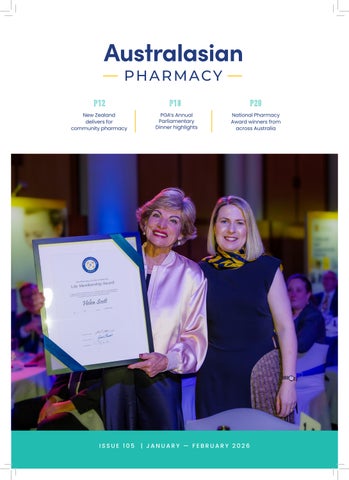
Our cover: Victoria pharmacy owner Helen Scott receiving her Life Membership Award with PGA’s Victoria Branch Director Rachel Obradovic at Parliament House in Canberra
A PUBLICATION OF
y
lower es e full 4mm
za K, et al.
e
Australasian Pharmacy is produced for pharmacy operators and their teams in New Zealand and Australia. The presence of the logo of the Pharmacy Guild does not constitute endorsement of a product. The Pharmacy Guild of Australia, Pharmacy Guild of New Zealand and Gold Cross, accept no responsibility for claims made by advertisers. Opinions and views expressed in articles do not necessarily reflect those of the publishers.
Circulation: 5,200 Printers: IVE Group - Australia Bluestar - New Zealand
EDITOR IN CHIEF
EDITOR
DESIGN
ADVERTISING
PUBLISHING HOUSE
Laureta Wallace
Sarah C Porter
Michelle Packwood
Marcela Araneda
The Pharmacy Guild of Australia PO Box 310, Fyshwick, ACT 2609 communications@guild.org.au
55
6
NEWS IN BRIEF
PGA to conduct 2026 member census The PGA will conduct its next member census in March 2026, the first since 2012. The survey will capture a national snapshot of community pharmacy operations, ownership, staffing and services. The data will be critical for workforce planning, remuneration discussions and advocacy ahead of Australia’s Ninth Community Pharmacy Agreement and upcoming elections. Responses will be de‑identified and securely protected, with pharmacies able to participate via phone interview or online survey. Prizes will be offered as a thank you for completing the process. PGA hopes this will be the largest census in its history, providing fresh insights to strengthen community pharmacy and support its long‑term 2035 goals.
News in brief
For more on these stories, please visit: australasianpharmacy.com.au
The PGA’s census will capture a national snapshot of community pharmacy operations
Nominations open in Australia for prominent intern award The Australasian College of Pharmacy has opened nominations for its 2025 MIMS / College Intern of the Year Award. The annual award recognises interns who excel during their training year, demonstrating commitment to patient care and the values of the profession. College CEO Amanda Seeto said the award highlights the next generation of pharmacists making a difference in their communities. Past winners include 2024 recipient Chloe Kappel, who organised charity fundraisers, promoted mental health awareness in schools and developed patient education resources. MIMS Group CEO Robert Best said the company is proud to continue its support. MIMS is Australia’s leading medicines information resource, providing trusted data to healthcare professionals for more than 60 years. Interns may nominate themselves or be nominated by colleagues, with entries closing January 23 2026. For more information: https://www.acp.edu.au/interns/ioty
PGA pays tribute to Fei Sim, welcomes new PSA leaders The PGA has paid tribute to Associate Professor Fei Sim for her outstanding leadership of the Pharmaceutical Society of Australia (PSA), while congratulating Professor Mark Naunton as President‑elect and Bridget Totterman as Vice President‑elect. Both will commence their roles in January 2026. PGA National President Professor Trent Twomey praised Associate Professor Sim, who has served as PSA National President since July 2022, describing her achievements as transformational. These include negotiating the acquisition of the Australasian College of Pharmacy, launching the Pharmacists in 2030 Roadmap and securing the first Strategic Agreement on Pharmacist Professional Practice. Professor Twomey said the leadership transition marks an exciting new chapter, with PGA committed to working closely with PSA’s new leadership team to advance shared priorities, including expanding pharmacists’ scope of practice and improving access to care for Australians.
Australasian Pharmacy Issue 105 | Jan – Feb 2026
NEWS IN BRIEF
PGNZ meets Minister of Health
From L to R: PGNZ’s board member Glenn Mills, PGNZ’s President Kesh Naidoo Rauf, and Health Minister, Chief Executive Andrew Gaudin
In November 2025, the Pharmacy Guild of New Zealand (PGNZ) met with Health Minister the Hon Simeon Brown to continue their strong working relationship and raise key sector issues. PGNZ thanked the Minister for his support in progressing work with Health New Zealand officials to fully mitigate the impacts of 12‑month prescriptions on community pharmacy. The discussion also focused on developing a sustainable funding model for 2026, including the need for a bid to address long‑standing shortfalls compared with general practice and inflation. PGNZ raised concerns about proposed pharmacy ownership changes, noting that official advice does not accurately present the benefits and risks. PGNZ said it will continue to advocate for reforms that ensure community pharmacy remains sustainable and able to deliver care. For more on this story, please visit: https://www.pgnz.org.nz
Proposed changes to employee leave in New Zealand The New Zealand Government has announced plans to overhaul the Holidays Act 2003, aiming to simplify leave entitlements and reduce compliance challenges for employers. For pharmacies, managing full‑time, part‑time and casual staff under the current Act has often been complex. The proposed reforms would see annual and sick leave accrue continuously in hours from day one, with sick leave earned in proportion to contracted hours. A single hourly pay rate would apply across all types of leave, based on the worker’s base wage for the day. Public holiday entitlements would be clarified through a new test to determine whether an employee would otherwise have worked. Legislation has yet to be introduced, and any changes are expected to be at least two years away. For more on this story, please visit: https://www.mbie.govt.nz/business-and-employment/ employment-and-skills/employment-legislation-reviews/ holidays-act-reform
PSA publishes new CPD standards for pharmacists
Prescription audit in NZ highlights risks in electronic prescribing
The Pharmaceutical Society of Australia (PSA) has launched the PSA Standards for Continuing Professional Development (CPD) for Pharmacists, marking a new era in CPD accreditation. The new framework replaces the Australian Pharmacy Council Accreditation Standards, which were retired on December 31 2025. Developed through extensive consultation, the PSA Standards provide contemporary guidance to ensure the quality and educational integrity of CPD activities. From January 5 this year, providers can apply for accreditation under the PSA-accredited CPD framework, with supporting materials and handbooks available online. Outgoing-PSA National President Associate Professor Fei Sim said the approval of the standards is a significant milestone, giving pharmacists confidence that their CPD is of high quality. She thanked all contributors to the consultation process for their input.
Community pharmacy groups in New Zealand’s Midland and Bay of Plenty conducted the Te Manawa Taki Regional Script Audit in September 2025, providing a one‑week snapshot of prescribing issues. Sixty‑eight pharmacies participated, identifying 1,257 problems with prescriptions. Dose errors were most common at 25.9%, followed by dispensing quantity, missing details and inappropriate medicines. Ten per cent of reports contained more than one issue, and 26% were deemed to pose high or significant potential for harm. Pharmacists recorded nearly 347 hours spent resolving script problems during the audit week. The findings confirm long‑standing concerns that electronic prescribing has introduced new risks, leaving pharmacists to manage errors. The preliminary report highlights the need for further research and system improvements to reduce prescribing mistakes and protect patient safety.
For more on this story, please visit: https:// www.psa.org.au/cpd/cpd-accreditation/
For more on this story, please visit: https://www.rnz.co.nz/ news/national/579547/pharmacists-pick-up-1257-mistakesin-prescriptions-in-a-week
77
8 8
FROM THE PRESIDENT
President’s message Professor Trent Twomey National President, Pharmacy Guild of Australia
Happy new year to all our members and the broader pharmacy community. This year began with a milestone which will make a real difference in the lives of our patients: from January 1 this year, Australia’s general Pharmaceutical Benefits Scheme co-payment drops to AUD25 from AUD31.60. No patient will pay more than AUD25 for PBS-listed medicines. This is more than a policy change — it’s a lifeline for families who have faced impossible choices between groceries, petrol, and essential medicines. This achievement was made possible through the joint advocacy of PGA and more than 20 health and patient groups, and it received bipartisan support.
A special parliamentary evening In November last year, PGA hosted its Annual Parliamentary Dinner in Canberra, welcoming more than 400 guests, including politicians, health advocates, pharmacy industry representatives, and community pharmacists from across the country. It was a powerful reminder of the strength of our sector and the respect it commands in the halls of Australia’s Parliament House. We were honoured to celebrate our new Life Members and acknowledge their enduring contributions. These events are not just about networking — they are about reinforcing the vital role community pharmacy plays in creating healthier communities.
Last year, Australia’s Prime Minister Anthony Albanese became the first sitting PM to attend the Australasian Pharmacy Professional Conference & Trade Exhibition (APP), where he announced this historic reduction — the second only in Australia’s PBS history. Together, we’ve delivered momentous change, and from now on, our patients reap the benefits.
The establishment of the First Nations Pharmacy Network which is to be led by former Australian Minister, the Hon Linda Burney, was announced at Parliament House in Canberra
First Nations Pharmacy Network On the evening of the parliamentary dinner, I was proud to announce the establishment of the First Nations Pharmacy Network, which is to be led by former Australian Minister, the Hon Linda Burney.
In 2025, Australia’s Prime Minister Anthony Albanese became the first sitting PM to attend APP
Australasian Pharmacy Issue 105 | Jan – Feb 2026
This initiative reflects our commitment to improving health outcomes for Aboriginal and Torres Strait Islander peoples. Linda’s leadership will ensure the First Nations Pharmacy Network drives community-centred pharmacy services and strengthens access for First Nations communities. For more on that special evening and for lots of photos, please turn to page 18.
FROM THE PRESIDENT
PGA’s parliamentary dinner in Canberra saw more than 400 guests attend including politicians and health advocates
Celebrating excellence
First census since 2012
Almost all states and territories have now selected their winners for the National Pharmacy Awards, with Western Australia to follow soon. These awards recognise the outstanding contributions of pharmacists and pharmacy teams who go above and beyond for their communities. Our overall winners will be announced at APP2026 on the Gold Coast in March — a highlight of our calendar. Read all about the state and territory awards we’ve held so far on page 28.
This year, PGA celebrates its 99th year — and an important part of 2026 will be PGA’s next census, which we will start in March. This will be the first census since 2012, and it comes at a critical time as we prepare for the Ninth Community Pharmacy Agreement (9CPA), the next federal election, and our ambitious 2035 goals.
In more news, the recent acquisition of the Australasian College of Pharmacy by the Pharmaceutical Society of Australia (PSA) marks a significant moment for our profession. This coming together of two powerhouses in education and training will minimise duplication and strengthen the quality of professional development available to pharmacists nationwide. We also acknowledge PSA’s leadership transition and pay tribute to Fei Sim for her outstanding contribution during her tenure as National President. Her work has advanced the profession and strengthened collaboration across the sector. We welcome Professor Mark Naunton as incoming PSA National President and Chair from January 2026. His leadership will guide PSA through its next phase of growth and collaboration.
The census is more than a data collection exercise — it’s a tool to shape the future of community pharmacy. Historically, it has delivered record remuneration, informed workforce planning, and supported positive industrial relations outcomes. With so much having changed since 2012, fresh insights are essential to ensure we continue to move forward together. We encourage every member to participate fully and complete the census for each of their pharmacies. Every pharmacy is unique, and this census will reflect that while focusing on the data we need to create healthier communities and go further together.
In 2026, let’s celebrate what we’ve achieved and look forward to what’s ahead. Together, we’ve delivered historic reforms, strengthened our profession, and set the stage for an even brighter future. Thank you for everything you do — every day, and especially during the times when Australians need you most.
Professor Trent Twomey National President, Pharmacy Guild of Australia PGA’s special parliamentary dinner celebrated new Life Members by acknowledging their enduring contributions
9 9
10 10
FROM THE PRESIDENT
President’s message Kesh Naidoo-Rauf President, Pharmacy Guild of New Zealand
Our purpose has always been clear: to support and advance the business and professional needs of community pharmacy. At the heart of this is our commitment to promote, protect, and strengthen the collective interests of our members, their teams, and the pharmacy profession.
Membership remains the foundation of everything we do. Retaining our current members and welcoming new ones will continue to be a key focus in 2026. Your trust enables us to advocate effectively, defend the sector, and shape a strong future for community pharmacy in New Zealand.
This prioritisation was confirmed during the October 2025 Guild Board strategy day, with further details to be refined in upcoming meetings.
Our priorities for 2026
The Guild Board has reaffirmed our advocacy approach, which has long underpinned our success. We take a relationship-based approach with Ministers, senior officials, and government decision-makers, supported by sound analysis and expert advice.
Looking ahead, and guided by our purpose, PGNZ’s key work priorities for 2026 are: • Ensuring the impacts of 12-month prescribing are fully and successfully mitigated • Developing and implementing a sustainable funding model with improved cost-pressure recognition • Retaining majority pharmacist ownership and effective control of pharmacies as the Medical Products Bill progresses • Developing a comprehensive community pharmacy workforce plan • Designing an impactful general election campaign to ensure pharmacy issues are front and centre • Advancing scope of practice expansion for community pharmacists and pharmacy teams. The workforce and extended scope work is led by the Community Pharmacy Leaders Forum (CPLF), which PGNZ chairs on behalf of the sector. We will continue to seek alignment and unity, because when we work together, we move further, faster.
Australasian Pharmacy Issue 105 | Jan – Feb 2026
Our advocacy approach
Our strategy is measured and deliberate: we work inside the system, with those directly responsible for decisions remaining relentlessly reasonable and constructive. This approach has positioned PGNZ as a trusted and respected voice — clear, solutions-focused, and outcome-driven. It is not always loud, but it is effective. The recent full mitigation of the financial impacts of 12-month prescribing is a strong example of what can be achieved through calm, consistent, and strategic advocacy. We will continue communicating openly with members, sharing what we’re doing, why we’re doing it, and how progress is tracking.
FROM THE PRESIDENT
Membership remains the foundation of everything we do. Retaining our current members and welcoming new ones will continue to be a key focus in 2026.
Constitution changes
Looking ahead
Following legislation changes and PGNZ’s re-registration as an Incorporated Society in September, our new Constitution requires the transition to a fully appointed Board structure by the 2027 AGM. This allows two appointment cycles to support a smooth shift from the current model.
This year will be an important one. It will demand focus, unity, and continued strong advocacy, but it will also bring opportunities to shape a more sustainable, future-proofed sector.
An Appointments Panel will be established in February 2026 to select and interview applicants and prepare recommendations for member voting at the AGM. Decisions are also needed around staggering term lengths and determining how many positions will be included in each cycle. Members will be kept updated as these decisions are made.
Business as usual
We look forward to sharing our progress and achievements with you as the year unfolds.
Your trust enables us to advocate effectively, defend the sector, and shape a strong future for community pharmacy in New Zealand.
While 2026 brings significant work and constitutional changes, PGNZ’s day-to-day support for members remains unwavering. PGNZ’s HQ team will continue providing expert advice, practice guidance, compliance support, business tools, and money-saving benefits. We will keep you informed through publications, updates, and practical resources tailored to running a modern community pharmacy. We will also continue representing members in ICPSA and other funding, contract, and service development discussions to secure better pricing, terms, and conditions. Advocating with ministers, officials, and decision-makers is part of our daily rhythm.
Kesh Naidoo-Rauf President, the Pharmacy Guild of New Zealand
11 11
12
PGNZ PHARMACY NEWS
PGNZ’s work delivers for community pharmacy Andrew Gaudin, Chief Executive, Pharmacy Guild of New Zealand
Following extensive advocacy from PGNZ, Health New Zealand agreed in November 2025 to funding adjustments which fully offset the financial impact of 12-month prescriptions on community pharmacy. PGNZ is delighted to resolve this issue.
The shift to 12-month prescriptions was announced in Budget 2025, taking effect in February 2026. This change allows prescriptions for up to 12 months for patients with stable, longterm conditions, improving access, convenience, and reducing pressure on general practice. However, the policy had negative funding consequences for community pharmacy, including reduced dispensing revenue and additional administrative tasks.
Guild actions
PGNZ worked closely with senior officials to ensure community pharmacy was not financially disadvantaged. This included detailed analysis on the financial impacts of the 12-month prescribing model and escalation through an Official Information Act request and complaint to the Ombudsman. Throughout this process, PGNZ raised concerns with Health New Zealand outside of the Integrated Community Pharmacy Services Agreement (ICPSA) national annual agreement review, demonstrating that pharmacies could not absorb the funding gap without compromising service or sustainability. Engagement with the Minister of Health ultimately secured a commitment to funding changes.
Australasian Pharmacy Issue 105 | Jan – Feb 2026
Health New Zealand agreement In early November 2025, senior Health New Zealand officials agreed to funding adjustments fully mitigating the financial impact of 12-month prescriptions. Pharmacies will be funded as if prescriptions were still dispensed under three-month pricing terms, ensuring financial security. Additional dispensing from this policy will not be funded by existing community pharmacy funding streams. The agreement recognises the essential role of community pharmacy and strengthens collaboration between PGNZ and Health New Zealand. Implementation of the IT and payment systems will follow in consultation with PGNZ.
This commitment will see pharmacies funded for 12-month prescriptions as if they were still delivering them under current three-month pricing terms, ensuring they are not negatively impacted by the policy change and can continue to provide essential services to their communities.
PGNZ PHARMACY NEWS
Benefits for pharmacies and patients • Financial stability: Pharmacies can
continue dispensing under the 12-month model without loss of income • Long-term support: Future additional dispensing will not be funded from existing funding streams • Operational certainty: Pharmacies can confidently plan staffing and workflow • Improved access: Eligible patients avoid extra GP visits for repeat prescriptions • Better collaboration: The agreement strengthens PGNZ-Health New Zealand relationships and ensures pharmacy concerns are heard. • PGNZ will continue to monitor implementation and represent member interests. For member resources and updates on 12-month prescriptions, visit: www.pgnz.org.nz/12-month-prescriptions
13
14
PHARMACY NEWS
Quick Facts General patients: AUD25.00 per PBS script Concession-card holders: AUD7.70 per script (unchanged)
Cheaper scripts ahead: major PBS co-payment cuts arrive on January 1, 2026 Community pharmacists across Australia are entering 2026 with welcome news for their patients’ hip pockets: the cost of many prescription medicines will fall thanks to a significant reduction to the Pharmaceutical Benefits Scheme (PBS) general co-payment.
From January 1, the maximum amount a general (nonconcession) patient can be charged for a PBS-listed medicine will drop from AUD31.60 to AUD25.00 per script. It is only the second time in PBS history the general copayment has been reduced, marking a milestone in the ongoing fight to keep essential medicines affordable. “Medicine should never be a luxury item,” PGA’s NSW Branch President Mario Barone said. “Over the past few years, far too many people have been forced into impossible choices — filling their script or paying the electricity bill, buying their tablets or buying groceries. “This change won’t solve every problem, but it gives families breathing room and the dignity of being able to look after their health. “This success was only made possible via collaboration,” he said. “We partnered with more than 20 health and patient advocate organisations through the Affordable Medicines Now campaign to advocate for the cut.
Every script a patient can afford to fill is a step toward preventing avoidable hospitalisations or complications.
The reduction arrives at a time when cost-of-living pressures are shaping nearly every aspect of household spending. Rising rents, higher grocery prices, and increasing utility costs have pushed many people living in Australia to reassess their financial priorities. For a growing number, this has included making difficult choices around medication — delaying scripts, rationing doses, or abandoning treatment altogether. Pharmacists, advocates and health groups have warned for years that, for many, medicine affordability has become a quiet but urgent public health crisis.
Why the reduction matters
“It will be incredible to see it come into action.”
While an AUD6.60 price drop per script may appear modest at first glance, the cumulative impact is substantial. Many people in Australia take two, three or even more regular medications to manage chronic conditions such as hypertension, diabetes, asthma, arthritis or mental-health disorders.
For concession-card holders, including pensioners, lowincome earners and eligible beneficiaries, the current AUD7.70 co-payment remains unchanged, continuing the freeze implemented in recent years to protect the most vulnerable.
For a person taking just two PBS medicines every month, the annual saving is around AUD160. For someone on multiple long-term therapies, the savings grow even more significant. In community pharmacies, the consequences of cost pressures
Australasian Pharmacy Issue 105 | Jan – Feb 2026
PHARMACY NEWS have been visible for years: patients quietly asking whether they can ‘stretch out’ a prescription; carers splitting doses for elderly relatives; or young adults with mental-health conditions skipping medication entirely because money simply wasn’t there. “These are conversations pharmacists hear every day,” Mr Barone said. “We do our best to help, but when someone genuinely cannot afford their medicine, it becomes a heartbreaking and sometimes dangerous situation. “This reduction means fewer people in Australia will have to make those desperate decisions.”
Did you know The Pharmacy Guild of Australia launched the Affordable Medicines Now initiative to advocate for more affordable subsidised prescription medicines (PBS) in Australia. The campaign focused on lowering patient copayments, helping to alleviate cost-of-living pressures and ensuring essential medications remain within reach for those who might otherwise struggle to afford them.
For many, this reduction will feel like a weight lifted. It’s a win for fairness, but also a win for compassion.
How the reduction could boost adherence
Health professionals have long emphasised adherence — or taking medicines exactly as prescribed — is one of the most important predictors of long-term health outcomes. When patients skip doses or abandon treatment, the consequences can be far more costly than the medicines themselves.
What stays the same
The AUD25 co-payment applies only to general patients. Concession-card holders continue to pay AUD7.70, with that price held steady for several years. Some medicines, particularly those with brand premiums, may still attract additional costs. Patients are encouraged to speak with their pharmacist about equivalent, lower-cost generics where available.
Hospital admissions, emergency presentations and worsening chronic conditions all place additional strain on the health system.
One practical implication of the reduced co-payment is it may take some general-patient households slightly longer to reach the PBS Safety Net threshold, which triggers cheaper or free medicines for the remainder of the year.
Affordable medicines, by contrast, improve continuity of care. Patients are more likely to stay on track, more likely to follow through with their GP or specialist’s advice, and more likely to maintain stable health.
The PGA has said however the upfront savings per script still represent a net benefit for the majority of patients.
“Better adherence means better health — and better health reduces pressure right across the system,” Mr Barone said. “Every script a patient can afford to fill is a step toward preventing avoidable hospitalisations or complications.”
A meaningful win
The 2026 co-payment reduction lands amid a broader conversation about equitable access to healthcare. Australia’s universal healthcare system is built on the principle that essential treatment should remain within reach for all — not only for those with financial security. The PBS reduction brings policy closer to that ideal.
For community pharmacists, the change is not just policy — it is personal. “We know our patients. We see them month after month, year after year,” Mr Barone said. “We see their triumphs and struggles, and we hear their stories. “For many, this reduction will feel like a weight lifted. It’s a win for fairness, but also a win for compassion.” As patients adjust to the new pricing from January 1, pharmacies across the country are preparing to support them through the transition. With lower medicine costs and greater room in strained budgets, many people will be in a stronger position to manage their health — not as a luxury, but as a basic right.
Australia’s Albanese Government introduced legislation to cap the price of PBS-listed prescription medicines in mid 2025
15
18
PHARMACY NEWS
A night to remember: How PGA’s annual parliamentary dinner highlighted community pharmacy’s future Chair of Netball Australia Liz Ellis AO was a special guest at the PGA’s parliamentary dinner. PGA and Gold Cross have teamed up with Netball Australia to support a bid to see netball included in the 2032 Brisbane Olympics
In late 2025, PGA hosted a special parliamentary dinner in Canberra where some 400 guests — including community pharmacists, industry leaders, and senior parliamentarians came together to celebrate the achievements of community pharmacists. The annual event showcased a vision for the future, providing an unmatched opportunity to reflect on the profession’s enduring role in shaping Australia’s health care landscape.
Welcoming the political champions
PGA’s National President Professor Trent Twomey welcomed top political figures, including Australia’s Minister for Health the Hon Mark Butler MP, Opposition Leader the Hon Sussan Ley MP, Shadow Health Minister Senator the Hon Anne Ruston, and Attorney-General the Hon Michelle Rowland. Their presence underscored the vital role community pharmacies play in primary care, providing trusted, accessible services across cities, suburbs, and regional towns. The speakers acknowledged the growing importance of community pharmacy in relieving pressure on hospitals and general practice — reinforcing the profession is not only a health service but also a vital community asset. Prof Twomey noted pharmacists are trained, trusted, and able to transform health care, creating healthier communities across Australia, saying together the profession can go further.
Australasian Pharmacy Issue 105 | Jan – Feb 2026
Launching a vision: First Nations Pharmacy Network A key highlight of the evening was the announcement of the First Nations Pharmacy Network, a landmark initiative aimed at improving culturally safe, communityled pharmacy care for First Nations Australians.
Prof Twomey said he was delighted to announce the Hon Linda Burney would be the inaugural chair of the network. Introducing Ms Burney, he described her as a proud First Nations woman who has dedicated her life to Indigenous affairs across two parliaments and two levels of government, courageously leading the push for reconciliation. He said she is a trailblazer, a friend, and PGA is proud to have her insight and wisdom as they work together to progress this important piece of work. The First Nations Pharmacy Network is designed to integrate lived experience, cultural leadership, and practical solutions into community pharmacy. By doing so, it will ensure community pharmacies are not just health services but also places of trust, healing, and connection for First Nations communities.
PHARMACY NEWS
Leader of the Opposition the Hon Sussan Ley MP addressing dinner guests
Australia’s Minister for Health and Aged Care, the Hon Mark Butler MP, delivering his third address to the PGA’s annual parliamentary event
Ngunnawal elder Aunty Violet Sheridan delivering the Welcome to Country
I am delighted to announce tonight the Honorable Linda Burney will be the inaugural chair of the First Nations Pharmacy Network. — Prof Trent Twomey
PGA’s National President Prof Trent Twomey with the recently appointed chair of the the First Nations Pharmacy Network, the Hon Linda Burney and Member for Corangamite, Libby Coker MP
19 19 19
20
PHARMACY NEWS
Member for Bennelong, Jerome Laxale MP, Attorney General, the Hon Michelle Rowland MP, Netball Australia Chair Liz Ellis AO and Emergency Services, Regional Development, Territories and Local Government Minister, the Hon Kristy McBain MP
Life Member Helen Scott, pictured with Victorian Branch Director, Rachel Obradovic
Life Member Laurie Broomhead, Member for Hawke, Sam Rae, wife Libby and daughter Sharyn
Australasian Pharmacy Issue 105 | Jan – Feb 2026 Life Member recipients, Noel and Annemarie Athea
PGA National Councillor Cate Whalan and Life Member John Moffat
PHARMACY NEWS
Member for Bruce, Julian Hill MP celebrated with new Life Members, Victoria’s Kathryn and Joseph Daggian
Richard and Phillip Walsh OAMs, flanking the Hon Matt Thistlethwaite MP (centre)
PGA National Coucillor Catherine Bronger, with Life Member Mary Bognar and her son Andre
Master of ceremonies Sarah Ison (centre) with Siobhan McKenna, Australia Post (left) and Netball Australia Chair Liz Ellis AO (right)
21
22
PHARMACY NEWS
PGA's life members were recognised individually during the parliamentary dinner and awards
Honouring pillars of PGA
The parliamentary dinner also recognised 28 new PGA Life Members — people who have served Australia and PGA as community pharmacy representatives for 40 years or more. Prof Twomey highlighted the enduring impact of PGA’s members, noting the new life members embodied the foundation of community pharmacy and PGA’s enduring legacy.
Charting the future: Towards 2035
Prof Twomey also highlighted PGA’s Towards 2035 strategic plan as a 10-year roadmap to create healthier Australian communities, saying the plan sets an ambitious target for 80 percent of pharmacists to be qualified as pharmacist prescribers and 80 percent of community pharmacies to provide these additional services by 2035, which would result in an annual AUD5.1 billion saving to Australia’s healthcare system. He emphasised the growing reach and effectiveness of community pharmacy services, noting pharmacists are now treating 6,000 uncomplicated urinary tract infections every month and the evaluation of Victoria’s Community Pharmacy prescribing pilot found zero safety concerns and a 97 percent consumer satisfaction, showing these services are safe, effective, and evidence based. Prof Twomey also stressed all pharmacy students should be given the opportunity to develop prescribing skills within their degree, not after it, explaining Australia’s education offerings for pharmacists must reflect the reality of modern patient care.
All pharmacy students should be given the opportunity to develop the skills within, not after their degree. Their education must reflect the reality of modern patient care. — Prof Trent Twomey
Australasian Pharmacy Issue 105 | Jan – Feb 2026
Supporting afforable medicines
Addressing medicine affordability, Prof Twomey highlighted when people can afford their medicine, they are more likely to take it, keeping them well for longer and reducing pressure on other parts of the healthcare system. He confirmed from the beginning of 2026, patients who do not have a concession card will pay no more than AUD25 for a PBS script. These changes will alleviate current cost-of-living pressures across the nation — and will help in some part future proof the health of all people in Australia.
Driving change through community pharmacy
Throughout his speech, Prof Twomey reflected on the evolution of the profession, saying Australia leads the world in maintaining a viable pharmacy sector through pharmacist-only ownership and location rules. These rules maintain professional accountability and community trust — while protecting access for regional and remote areas and preventing some of the pharmacy deserts seen in other countries. The dinner also highlighted PGA’s priorities in clinical services, First Nations health, and women’s health. Prof Twomey detailed community pharmacists are increasingly providing care where people live and work, ensuring essential services are accessible, safe, and culturally appropriate.
A symbolic and substantial moment
From the launch of the First Nations Pharmacy Network to the strategic roadmap Towards 2035 and the acknowledgment of life members’ service, the dinner combined recognition, reflection, and forward-looking initiatives. The annual event celebrated the legacy of community pharmacy while emphasising the profession’s pivotal role in building healthier Australian communities.
PHARMACY NEWS
Journalist and comedian Sarah Ison was the master of ceremonies for the evening PGA’s brand Glucojel is now supporting Netball Australia’s bid to see their game included in the Olympics
Pharmacists are trained, they are trusted, and they’re able to transform health care, creating healthier communities across Australia. And together we can go further — Prof Trent Twomey
The evening was an opportunity for ministers and MPs to connect with community pharmacists
Pharmacists Jess Burrey and Jenna Isaac hosted the women’s health stand to connect with dinner guests
23
24
QUESTION TIME
Question Time with... The Hon Dan Repacholi MP is the Federal Member for Hunter in New South Wales, Australia — and is currently also serving as the Special Envoy for Men’s Health. He is a former Olympic sport shooter and Commonwealth Games gold medallist who transitioned from a workingclass background into national politics, bringing with him practical experience and a focus on community, health and workforce issues.
Helping real people. Whether it’s getting someone cheaper medicine, fixing a local phone tower, or making sure blokes feel supported, those wins mean more to me than any headline.
The Hon Dan Repacholi says when he’s at home in the NSW Hunter, he drops into see the team at Cessnock Day Night Pharmacy
Australasian Pharmacy Issue 105 | Jan – Feb 2026
QUESTION TIME
Who’s your local community pharmacist and what memories do you have from home? Back home in the Hunter, I generally drop in and see Tim and the team at Cessnock Day Night Pharmacy. They’ve supported my family for years and have always been there when we’ve needed help. Their advice, steady presence and willingness to go the extra mile has made a real difference to us over a long period of time. There was even an incident involving burns from a hair-removal cream, but I think it’s best we don’t go into too much detail about that one.
What do think have been the biggest advancements in Australia’s healthcare landscape? The biggest shift has been the way healthcare has become more accessible and more affordable for everyday Australians. Cheaper medicines, increased bulk billing, expanding mental health support, and better digital health tools have all made a huge difference. We’ve moved towards a system where people can actually get the care they need without unnecessary stress or financial pressure.
What are the top three things which have changed for you since becoming Special Envoy for Men’s Health? More men reach out wanting advice or support about their health. I spend far more time listening to the concerns of families, community groups and health workers about men’s health issues. I’ve become more focused than ever on my own health habits and making sure I set a good example.
What feedback have you heard about the PBS co-payment reduction so far? People love it. Pharmacists tell me families are saving real money, and locals tell me they can finally afford all their scripts without playing ‘which one this month will hurt the least?’.
What more would you like to see happen with the PBS, especially for men? More access, more affordability, and faster listings, especially for conditions men avoid talking about until something falls off or stops working. We’ve still got work to do to make sure cost is never a barrier to getting help.
What’s in your cost-of-living health kit and what do you want to see happen sooner? The kit includes practical steps people can take right now, understanding PBS safety nets, checking bulk-billed services, talking with pharmacists about alternatives, and making sure they’re getting the best price available for medicines. What I want to see sooner is even easier access to care: shorter waiting times, less red tape, and simpler pathways for people to get the support they need. Healthcare shouldn’t feel like navigating a maze.
What keeps you up at night as Special Envoy for Men’s Health? Blokes not talking. That’s it. Not the issues, we can deal with those. It’s the silence that scares me.
Helping people get the help they need is just one thing the Hon Dan Repacholi is proud of
Do you feel responsible for modelling good health and what are your top three tips? Absolutely, though I’m definitely a ‘work in progress’.
My top tips: Move your body — even if it’s just chasing the dog or the kids or going for a quick stroll.
Talk to someone — mates, partners, professionals. Don’t bottle it up.
Get checked — especially the bits you’d rather not discuss. What do you bring to the political table from being an athlete, a miner, and a fitter and turner? Hard work, thick skin, and the ability to stay calm when something unexpectedly explodes, skills that are surprisingly handy in Parliament too.
What are you most proud of from your time in politics so far? Helping real people. Whether it’s getting someone cheaper medicine, fixing a local phone tower, or making sure blokes feel supported, those wins mean more to me than any headline.
25
26
SPONSORED
Key clinical and public health insights for community pharmacy owners Influenza remains a major global health challenge, driving millions of infections and a significant burden of illness every year. While people of all ages can be affected, the impact is not evenly shared. Older adults, particularly those aged sixty-five and over, experience the highest rates of hospitalisation and death from influenza¹. In Australia, this age group continues to shoulder the greatest risk, yet vaccination uptake has dropped to just 60.5 percent, the lowest since 2020, and remains well below international comparators such as the United Kingdom and Canada, where coverage in older adults is closer to 75 percent6. For community pharmacy owners, this widening gap presents both a challenge and an opportunity. Pharmacies are often the most accessible point of care, and pharmacists are well placed to influence vaccination decisions through timely conversations, reminders and trusted advice. As Australia prepares for future seasons, understanding how influenza disproportionately affects older adults — and how vaccine choice can meaningfully reduce that burden — is central to providing high-quality preventive care. This article explores why influenza outcomes differ by age, how seasonal patterns are evolving across hemispheres, what Australia’s current vaccination coverage tells us, and how high-dose and adjuvanted influenza vaccines fit within emerging evidence. It also looks ahead to the 2026 Southern Hemisphere season, and the strain recommendations pharmacy owners should plan for.
Why older adults face a higher risk of severe influenza Older adults experience more complications from influenza than any other age group. Globally, people aged sixty-five and over account for 50 to 70 percent of influenza-related hospitalisations and up to 85 percent of influenza-associated deaths each year¹. In Australia, ICU admissions in this age group have remained consistently elevated during seasons with intense activity². Several biological processes explain this increased vulnerability. Immunosenescence — the gradual decline of immune function with age — reduces the body’s ability to mount an effective response to both natural infection and vaccination³. T-cell function declines, antibody responses are weaker and slower to develop, and viral clearance is less efficient. At the same time, many older adults experience chronic low-grade inflammation (“inflamm-aging”), which increases the risk of severe complications such as pneumonia, myocarditis and secondary bacterial infections4. Influenza can also present differently in older adults. Fever may be absent, and symptoms such as fatigue, cognitive changes or gastrointestinal upset may be more prominent than the classic respiratory features. These atypical presentations can delay diagnosis, treatment and isolation, allowing the virus to progress before intervention occurs4. For pharmacy teams, recognising these subtler clinical cues — and understanding the underlying changes that drive poorer outcomes — can improve conversations with patients and reinforce the importance of early, annual vaccination. .
Strain composition for the 2026 Southern Hemisphere season Looking ahead, the Australian Influenza Vaccine Committee (AIVC) has released its recommended strains for the 2026 Southern Hemisphere season5. The formulations differ slightly between egg-based and cell-based vaccines:
Egg-based vaccines
• A/Missouri/11/2025 (H1N1)pdm09-like • A/Singapore/GP20238/2024 (H3N2)-like • B/Austria/1359417/2021 (Victoria lineage)
Cell-based vaccines
• A/Missouri/11/2025 (H1N1)pdm09-like • A/Sydney/1359/2024 (H3N2)-like • B/Austria/1359417/2021 (Victoria lineage) ATAGI currently does not express a preference between standarddose egg-based and standard-dose cell-based vaccines. However, for older adults, the evidence strongly supports the use of high-dose and adjuvanted influenza vaccines, which are designed to counteract the effects of immunosenescence. High dose is indicated for adults 60 years and older. Adjuvanted vaccines are indicated for 65 years and older and is on the NIP.
Australia’s vaccination coverage: what the numbers tell us Despite strong public health messaging and broad access to vaccination, uptake in Australia remains below target levels. Current vaccination coverage rates are7:
• Adults sixty-five and over: 60.5 percent (WHO target ≥75 percent) • Adults aged fifty to sixty-four: 32.3 percent • Children under five: 25.7 percent These figures reveal persistent challenges around awareness, accessibility and perceived need. Many older adults underestimate influenza severity or assume a single past vaccination provides ongoing protection. Others may defer vaccination until well into the season, reducing the benefit.
SPONSORED Community pharmacies sit in a unique position to influence these numbers. With high foot traffic, extended opening hours and longstanding patient relationships, pharmacy teams can initiate opportunistic conversations, deliver timely education and make vaccination a seamless part of routine care — especially during medicine pick-ups, medication reviews and chronic disease management discussions.
High-dose vaccines: what the evidence shows A high-dose influenza vaccine was developed to address the weaker immune response seen in older adults. They contain a higher antigen load, designed to produce a more effective immune response. Modern evidence consistently demonstrates that this approach reduces influenza-related complications in people aged sixty-five and over. The FLUNITY-HD study, published in The Lancet in October 2025, represents the largest individually randomised controlled trial on the effectiveness of influenza high dose vaccine to date8. What was unique about this study is that the primary outcome was on hospitalisations. Conducted across Denmark and Spain and involving 466,320 older adults, the study compared high-dose vaccines with unadjuvanted egg-based vaccines. The findings included:
• 31.9 percent additional reduction in laboratoryconfirmed influenza hospitalisations.
• 8.8 percent fewer pneumonia or influenza hospitalisations. • 6.3 percent fewer cardiorespiratory events. • 2.2 percent fewer all-cause hospitalisations. These results reinforce the value of the high-dose influenza vaccine for older adults and highlight their role in improving outcomes in a population most at risk of severe disease. For pharmacy owners, making the high-dose vaccine a routine recommendation for eligible patients can have a significant impact on community-level protection.
The evidence from the cluster randomized trial underscores the clinical value of adjuvanted influenza vaccines in long-term care settings.
Planning ahead: preparing for the 2026 season The 2026 influenza season will use trivalent formulations, as recommended by AIVC 5. Preparing early allows pharmacies to avoid supply bottlenecks, streamline workflows and maximise vaccination opportunities.
Key steps include:
• Confirming stock requirements based on historical demand and anticipated risk groups.
• Prioritising high-dose stock for older adults and those with chronic health conditions.
• Incorporating prompts into dispensing systems to
encourage opportunistic vaccination conversations.
• Promoting convenient access, such as walk-in
appointments and extended vaccination hours.
• Training staff so the entire team can confidently communicate vaccine differences, benefits and eligibility.
Planning ahead also means making space for broader preventative health conversations — including shingles vaccination for older adults and travel vaccines where relevant — which often provide natural pathways to raise influenza vaccination.
Action points for community pharmacy • Order stock early for the 2026 season in line with AIVC recommendations.
Adjuvanted influenza vaccines: what the evidence shows
• Prioritise enhanced influenza vaccines
Adjuvanted influenza vaccines were developed to enhance immune responses in older adults whose natural immunity weakens with age. These vaccines incorporate an adjuvant—a substance that stimulates the immune system to mount a stronger and more sustained response to the vaccine antigens. The MF59 adjuvant used in the vaccine has been extensively studied and shown to improve antibody production and cellular immunity, making it particularly valuable for people aged sixty-five and over who are at heightened risk of severe influenza complications.
• Educate patients on the importance of
A cluster randomized controlled trial, (McConeghy 2020 published in Clinical Infectious Diseases) provided evidence for the benefits of adjuvanted vaccines in the most vulnerable older adult population. This study was conducted in nursing homes across the United States, comparing MF59-adjuvanted trivalent influenza vaccine with standard-dose vaccines in nursing home residents over two influenza seasons. The cluster randomised design involved 823 nursing homes with over 53,000 residents. The researchers documented:
• 12.7 percent reduction in hospitalizations for influenza and pneumonia.
• 8.4 percent reduction in all-cause hospitalizations during influenza season. • 16.3 percent fewer influenza-like illness episodes requiring medical intervention.
for older adults to maximise protection.
annual influenza vaccination, especially those managing chronic illness. • Promote convenience — including walk-in clinics and integrated reminders at the point of dispensing. • Track vaccination uptake within your pharmacy and identify groups that may need targeted support.
1. Australian Influenza Surveillance Reports. Department of Health. 2. WHO Global Influenza Strategy. 3. Goronzy JJ, Weyand CM. Immunosenescence and influenza in older adults. Nat Rev Immunol. 4. High-risk influenza complications in elderly. Clin Infect Dis. 5. AIVC Recommendations for 2026 Vaccine Composition. Therapeutic Goods Administration. 6. Australian Immunisation Coverage Data, 2025. 7. Barriers to influenza vaccination uptake in Australia. Vaccine. 8. FLUNITY-HD Trial. The Lancet. October 17, 2025. This article was independently written by Australasian Pharmacy. Sanofi did not have input into the editorial content and has not influenced the clinical opinions expressed
27
28
NATIONAL PHARMACY AWARDS
The National Pharmacy Awards shine a spotlight on this vital role, reminding us pharmacy is not just about products on shelves, but about people — patients, families, and communities — whose lives are improved every day by dedicated professionals.
Australasian Pharmacy Issue 105 | Jan – Feb 2026
NATIONAL PHARMACY AWARDS
National Pharmacy Awards celebrate excellence across Australia The Pharmacy Guild of Australia’s National Pharmacy Awards have recognised winners across seven states and territories, with Western Australia to be celebrated in February 2026. The following pages introduce each story in detail, showcasing the innovation, leadership and community impact shaping the future of Australia’s community pharmacy landscape.
Every profession has defining moments, and for community pharmacy in Australia, the National Pharmacy Awards stand as one of the most significant. More than a ceremony, these awards celebrate the people and practices shaping the health of our nation. They recognise pharmacists who go beyond dispensing medicines, who innovate in patient care, who mentor the next generation, and who strengthen the bond between pharmacy and community. Pharmacy is often described as the most accessible health profession. From the Australian Capital Territory to the Northern Territory, pharmacists are the first point of contact for millions of Australian people seeking advice, reassurance, and treatment. The National Pharmacy Awards shine a spotlight on this vital role, reminding us pharmacy is not just about products on shelves, but about people — patients, families, and communities — whose lives are improved every day by dedicated professionals. These awards matter because they highlight excellence in a sector constantly evolving. With new medicines, digital health tools, and expanded scopes of practice, pharmacists are at the forefront of change. Recognising leaders in this space inspires others to push boundaries, adopt best practices, and embrace innovation. It also reinforces to the wider health system and the public that pharmacy is indispensable in delivering accessible, affordable, and high‑quality care. Equally important, the awards provide a national platform for stories of resilience and impact.
Each winner represents not only personal achievement but also the collective progress of the profession. Whether pioneering services in rural communities, advancing clinical care in metropolitan centres, or mentoring young pharmacists, these stories remind us of the breadth and depth of pharmacy’s contribution. This year’s awards have taken us across the country — from Canberra to Sydney in the ACT and NSW, through Victoria, Queensland, South Australia, and to Tasmania, and finally the Northern Territory. Each stop has revealed remarkable individuals whose work deserves recognition and celebration. Together, they form a mosaic of excellence reflecting the diversity and strength of Australian pharmacy. Western Australia will host its awards in February 2026, after this edition goes to print. The WA winners will be celebrated in a future issue, completing the national picture of achievement. As you turn the pages that follow, you will meet the winners in detail. Each profile spans two pages, offering a deeper look into their journeys, challenges, and triumphs. Authored by our lead contributor Miranda Cook and our wider team, taken together, these stories are not only a record of achievement but also a source of inspiration for the profession at large. They remind us pharmacy is more than a career — it is a calling, and one continuing to make a profound difference in the lives of people in Australia. And of course, all winners will be with us at APP2026 on the Gold Coast in March to celebrate their successes and to hear who will take the very top spots as the country’s National Pharmacy Award winners.
29
30
NATIONAL PHARMACY AWARDS
Australian Capital Territory
The ACT Branch announced the winners of its National Pharmacy Awards at a special annual branch dinner in Canberra on October 15.
The ACT’s Branch President Simon Blacker said their winners exemplified the dedication, commitment, and professionalism that underpinned the region’s community pharmacy landscape. “Community pharmacies are at the heart of healthcare in the ACT, providing accessible and trusted care for their patients every single day,” Mr Blacker said. “These award winners demonstrate the best of our profession — prioritising patient wellbeing, delivering innovative services, and supporting their local communities with compassion and expertise.”
Community Pharmacy of the Year
Led by community pharmacists and owners Sandra Ferrington and Caroline O’Keefe, Capital Chemist Kingston took out the Community Pharmacy of the Year award for the ACT. Judges said the team exemplified innovation and excellence in community pharmacy. From relocating to a new site beneath a busy medical centre to adopting advanced dispensing technology and expanding consultation spaces, the pharmacy has transformed the way it serves its community.
Caroline O’Keefe and Sandra Ferrington accepting their award in Canberra
Sandra Ferrington and Caroline O’Keefe lead the team at Capital Chemist Kingston
Australasian Pharmacy Issue 105 | Jan – Feb 2026
Our pharmacy team and customers have been so excited by us winning this award. - Sandra Ferrington and Caroline O’Keefe
NATIONAL PHARMACY AWARDS
From expanded scope to immunisation, preventive health and medication management, our impact is real, meaningful and only growing. — Bev Mistry-Cable Bev Mistry-Cable and the team Canberra’s Cooleman Court Pharmacy in Weston
“Our pharmacy team and customers have been so excited by us winning this award,” said Caroline. “They feel a great sense of pride to have us represent them at Nationals,” Sandra added. “It has really started a lot of positive conversations of what we do for the community and brought everyone together to celebrate our achievements.”
Community Pharmacist of the Year
Bev Mistry-Cable took out the ACT’s Community Pharmacist of the Year award having shown exceptional leadership and advocacy for community pharmacy in her region.
Student Pharmacist of the Year Taylor Dudley was awarded the ACT’s Student Pharmacist of the Year award in October, with judges noting her deep commitment to community health. The judges said Taylor, who works at Allure Pharmacy in Civic, in Canberra’s central business district, started her career in a regional pharmacy at 14, and had since grown into a national student leader, excelling academically and professionally. “Through advocacy, research, and inclusive health initiatives, Taylor continues to lead with compassion and vision, setting a strong example for the future of pharmacy,” judges said.
The judges said Bev, who works at Canberra’s Cooleman Court Pharmacy in Weston, continued to draw on her international experience with an embedded collaborative and service-driven approach. “Her ongoing efforts to expand pharmacists’ scope of practice and improve access to healthcare are exceptional,” the judges said. Bev said the award meant a lot to her and she was grateful to numerous colleagues, mentors and patients who had supported and shaped her journey. “It also reflects the commitment of our whole Cooleman Court Pharmacy team,” Bev said. “Community pharmacists and their teams play a vital role in improving health outcomes, easing pressure on the health system and supporting continuity of care,” Bev said. “From expanded scope to immunisation, preventive health and medication management, our impact is real, meaningful and only growing. “I’m excited for what’s ahead and the opportunities to continue to make an even bigger difference.”
Simon Blacker with Taylor Dudley and Minister for Health of the Australian Capital Territory Rachel Stephen-Smith
31
32
NATIONAL PHARMACY AWARDS
New South Wales
The NSW Branch celebrated the state’s most outstanding contributors to community pharmacy in October at Parliament House in Sydney, recognising pharmacists and pharmacies who are redefining patient care and community engagement.
Marcus Heiner (pictured) is a founding owner of Captial Chemist Bathurst, which was named NSW Community Pharmacy of the Year
Pharmacy Guild of Australia NSW Branch President Mario Barone said the awards evening brought together more than 50 parliamentarians from the two major parties and reflected the strength and diversity of pharmacy practice across the state. “The bipartisan support we saw tonight is a powerful recognition of the work our members do every day,” Mr Barone said. “It speaks volumes about the trust and respect community pharmacy has earned across the political spectrum. Our profession is evolving, with full-scope training empowering pharmacists to deliver even greater care and services.” He said he looked forward to partnering further with the NSW Government “to expand access to vital health services, strengthen preventative care, and ensure every community across NSW receives the support it deserves”.
The bipartisan support we saw tonight is a powerful recognition of the work our members do every day. — Mario Barone
Winning this award is obviously a big honour … but for me the most important thing is showing that what we’re doing can be replicated in other pharmacies. — Marcus Heiner, Capital Chemist Bathurst
Community Pharmacy of the Year Capital Chemist Bathurst was named NSW Community Pharmacy of the Year, recognised for its contribution to the community, as well as its innovation and collaboration. Led by pharmacist‑owners Marcus Heiner, Hannah Heiner, Jessica Morgan‑Thomas, Kyle Buckley and Spencer McTavish, the team has been celebrated widely by the community it serves for its win. Speaking with Australasian Pharmacy after winning the award, Marcus said the team had pioneered a Homecare and NDIS support model which could be replicated nationwide. They have also developed digital tools for care coordination, and built strong partnerships with GPs, hospitals, aged care providers, and veterans’ groups. With nearly 50 staff, their service‑driven model exemplifies clinical excellence and community spirit. “Before we had children, we were in the pharmacy at least 60 or 70 hours a week,” Marcus said. “We even skipped holidays for the first number of years because we wanted to get up and running before we finally, nervously went on our first holiday,” he said.
NATIONAL PHARMACY AWARDS “Then we decided to bring in some partners to help spread the load and that kept us from burning out.” Marcus said growing the partnership had also proved to he and his wife that pharmacy ownership didn’t have to be “a solo struggle”. “Winning this award is obviously a big honour, too, but for me the most important thing is showing that what we’re doing can be replicated in other pharmacies. “Winning gives us a platform to say: this benefits patients, it benefits home care providers, and it’s financially rewarding too,” he said. “We’ve had patients come in and say, ‘I’m not surprised — this is the best pharmacy I’ve ever seen.’ That’s been wonderful for the team, because they’re the ones who do all the work, and now they get to hear the praise directly.”
Student Pharmacist of the Year Jesyca Pearson, a Charles Sturt University student and proud Wiradjuri woman, was named NSW Student Pharmacist of the Year. The judges said Jesyca was an emerging leader in cultural safety and advocacy. “Through her work with the CSU First Nations Club and Orange Pharmacy Students Association, she is helping shape a more inclusive and culturally aware pharmacy profession,” they said. Jesyca, who hails from Molong, a small country town not far from Bathurst, told local media she was surprised with her win.
Community Pharmacist of the Year
“I’m still quite shocked that a girl from Molong, who went to a central school, can win an award like this,” Jesyca told the Central Western Daily.
Timothy Mizzi, Board Chair of the Capital Chemist group, was awarded NSW Community Pharmacist of the Year.
“It feels a bit random to be honest. I said to my parents ‘I’m not the smartest person’, I do good, but I’m not the best by any means at all.”
He is a leader in pharmacist prescribing trials and extended‑scope services. His ‘pharmacist on the floor’ model fosters meaningful clinical interactions, while his community work — including chairing the Port Stephens Family and Neighbourhood Centre and collaborating with Aboriginal health services — reflects his deep commitment to equity and care.
Jesyca’s focus on indigenous health was also noted by the judges. “It’s important to understand indigenous health doesn’t just mean physical health … it’s encompassing cultural wellbeing, family health, mob health,” Jesyca said.
The judges said Timothy’s contribution exemplified the qualities the award seeks to recognise. “Timothy has demonstrated innovation, compassion and professionalism — making a genuine difference in the lives of patients and setting a benchmark for quality care across NSW,” they said.
PGA’s NSW Branch President Mario Barone with award winner Jesyca Pearson and Shadow Minister for Regional Health Gurmesh Singh, at Parliament House, Sydney
NSW Minister for Health and Regional Affairs Ryan Park with award winner Tim Mizzi and partner
NSW award winners Timonth Mizzi, Marcus and Hannah Heiner, and Jesyca Pearson at Parliament House in Sydney
33
34
NATIONAL PHARMACY AWARDS
Victoria
The Victoria Branch celebrated the state’s leading contributors to community pharmacy in October at Parliament House in Melbourne, highlighting community pharmacy’s’ strong dedication to their local communities and the expanding responsibilities they carry in supporting the health of the people of Australia.
Camperdown Pharmacy winners with their award
Camperdown Pharmacy has always been involved in harm minimisation programs … we work closely with a visiting nurse on dose reduction and local appointments. — Sarah Baker, owner.
PGA’s Victoria Branch President George Tambassis said the awards highlighted the evolving role of pharmacists in keeping Australians healthy. “Regional pharmacies like Camperdown are doing far more than dispensing medicines — they’re delivering frontline healthcare, supporting aged care, managing chronic conditions, and stepping in when other services are stretched or unavailable,” Mr Tambassis said. “These awards recognise the deep commitment of pharmacists to their communities and the evolving role they play in keeping Australians healthy.” He also emphasised the importance of scope of practice reform. “Our regional community pharmacies show us every day why increasing the range of healthcare services in community pharmacy is so important. Patients trust us to meet their needs and pharmacists are ready and willing to do more.”
Bryony Forrest receiving her award
NATIONAL PHARMACY AWARDS
Community Pharmacy of the Year
Community Pharmacist of the Year
An independent rural pharmacy located 200 kilometres southwest of Melbourne, Camperdown Pharmacy exemplifies outstanding community engagement and professional innovation. The team has built strong partnerships with local nursing homes and medical clinics, delivering proactive care through an effective Aged Care Onsite Pharmacist program.
Ahmed demonstrates exceptional leadership, resilience, and innovation in pharmacy practice. As founder of an overseas pharmacist mentoring program, he has supported international graduates to integrate into Australian practice and created the popular YouTube series Pharmacist Opportunities in Australia.
Camperdown Pharmacy was named Victoria’s Community Pharmacy of the Year.
Owner Sarah Baker said the pharmacy’s commitment to harm minimisation and collaboration with visiting health professionals was central to its success. “Camperdown Pharmacy has always been involved in harm minimisation programs. We now have a visiting nurse who comes to town once a week, and we work closely with that nurse on dose reduction and getting our patients appointments locally, so they don’t have to travel.” She also highlighted the pharmacy’s investment in professional development and community engagement. “Camperdown Pharmacy really values professional development and creating bonds with our local schools. I myself was a recipient of a bursary from this pharmacy, and we often head up to the schools to talk about how pharmacy is a developing profession and a great place to work,” Sarah said. Innovation has been another driver of success. “We have decided to embrace technology and automate as many systems as we can so that our pharmacists can be forward‑facing,” she said. “Two years ago, we invested in a Rowa dispensing robot and did a fit-out that included a larger consult room and the addition of a second consult room. It means patients know they can come in here if something doesn’t feel right, and we can support them straight away.”
Ahmad Ibrahim receiving his award
Ahmed Ibrahim, of Pharmacy World East Fawkner, was awarded Victoria’s Community Pharmacist of the Year.
From lifesaving action in an emergency to implementing AI‑driven workflow automation, Ahmed’s courage and innovation continue to strengthen patient care and community safety. The judges said: “Ahmed Ibrahim’s leadership and innovation are strengthening patient care and community safety.”
Student Pharmacist of the Year
Bryony Forrest, of Blooms The Chemist Essendon, was named Victoria’s Student Pharmacist of the Year. A proud Aboriginal woman and pharmacy student, Bryony has shown exceptional academic achievement and leadership in culturally safe and equitable healthcare. “Through her research on medicine‑related transitions of care and her advocacy in rural health and gender‑affirming care, she exemplifies empathy, inclusion, and purpose — setting a strong example for the next generation of pharmacists,” the judges said. “Bryony exemplifies empathy, inclusion, and purpose — setting a strong example for the next generation.”
Prof Trent Twomey with Camperdown Pharmacy award winners
35
36
NATIONAL PHARMACY AWARDS
South Australia
South Australia’s PGA branch announced the winners of the National Pharmacy Awards at a special event on Wednesday evening October 29 at the Hilton hotel in Adelaide.
We want to be relatable — we are humans just like our patients. - Jono Gill The team at Adelaide’s Amcal St Clair Pharmacy are dedicated to creating a pharmacy which feels like family
South Australia Branch President Matt Gillespie said the awards reflect the shift moving pharmacists beyond dispensing into more clinical roles. “They’re managing chronic conditions, supporting aged care, and providing care when other services are stretched or unavailable,” Mr Gillespie said.
Community Pharmacy of the Year
Staff at Adelaide’s Amcal St Clair Pharmacy are dedicated to creating a pharmacy which feels like family. Jono Gill and Nam Nguyen, who have owned the metropolitan pharmacy since 2018, said personalised care is how they stay competitive in an area that is home to many community pharmacies. “We want to be relatable — we are humans just like our patients,” Jono said. “We want our patients to feel like they can approach us on any level. “I have two young children, and I know the challenges young families face when they come to us for help.”
Small things like prefilling safety net refund forms and instant webster changes build customer loyalty, he said. His team is proud of its ‘front-dispensing’ model where pharmacists are always visible and accessible. They work closely with GPs, aged care facilities, and local organisations to deliver services such as vaccinations, MedsChecks, UTIs and contraceptive care, and chronic disease support. Since purchasing the pharmacy, Jono and Nam have increased its turnover sixfold. But the real value lies in the people they are proud to work with. “Our team — they are everything,” Jono said. “I feel our store is special because we are a small family.” When asked about their hopes for the pharmacy profession, Jono said: “I hope pharmacists will be practising full scope nationwide”. Jono also said he hopes for a future where pharmacists, GPs, nurses and other allied health work genuinely in integrated teams. “It would lead to better patient outcomes, less fragmentation and a system that values each profession’s strengths.”
NATIONAL PHARMACY AWARDS
Community Pharmacist of the Year
South Australian Pharmacist of the Year Tim Siv credits much of his success to his father, who encouraged him to work hard and get an education. Tim arrived in Australia as a refugee aged just three, after his family fled the genocide in Cambodia under the rule of the Khmer Rouge. His father, who was a school teacher, taught Tim the importance of education in breaking the poverty cycle. Today, Tim owns five pharmacists across South Australia’s Clare and Barossa Valley regions, which service some 30,000 people, as well as another pharmacy in Tasmania. Early in his career, Tim discovered a passion for rural pharmacy, shaping services that meet the needs of agricultural workers who often face irregular and demanding hours. At TerryWhite Chemmart Clare Compounding Pharmacy, his forward‑thinking approach has introduced a suite of innovations: one of Australia’s first outdoor after‑hours medicine pickup terminals, advanced V‑motion screens, a dedicated mother‑and‑baby room, modern consulting spaces, a cutting‑edge compounding laboratory, an automated packing robot, and electronic shelf labels — each designed to elevate and transform the patient experience.
Student Pharmacist of the Year
Living with a chronic illness inspires Erin Fawcett to help others who have life-altering health conditions. “I’m drawn to pharmacy because it offers a unique blend of science and human connection,” Erin said. “Supporting people during some of their most vulnerable moments is incredibly meaningful to me.” Despite only being in her fourth year at the University of South Australia, Erin has already clocked up a long list of achievements. She won the 2025 PDL Student Grant and UniSA Vacation Research Scholarship, choosing to study the accessibility of medicine over the recent summer break. “I plan to move to a rural location for my internship, as my current research focuses on medication shortages, which directly relate to medication accessibility.” She has also served as president of the university’s association and an executive at the National Pharmacy Students’ Association, where she revitalised mentorship programs, lead charity fundraising, and developed AI-based study tools.
“Investing in technology addresses many of the challenges faced by both patients and staff,” he said.
One of her proudest achievements is resurrecting the Pharmacy Profession Awareness Day — which was attended by more than 300 students — after the event was cancelled for several years due to COVID-19.
“The biggest challenge of rural communities is opening hours and accessibility. I’ve got farmers who are on tractors and headers all day, they go 24-7 for about three months while they’re harvesting. And so, they can only get to the pharmacy at night,” he said.
Winning South Australia’s Student Pharmacist of the Year has been a humbling experience, she said.
“Another big challenge in regional areas is finding a safe place for mums to feed their babies.
“Living with a chronic illness myself has given me firsthand experience on the impact pharmacists can and do have on people’s lives.”
“I’ve created a feeding room with a play area next door, so that mums with multiple children have somewhere comfortable to feed their baby whilst watching their other children play.” Tim has also trained dozens of interns over this career, eager to pass on the same values he learnt from his father. “I believe in giving [interns] my time and encouraging them to keep striving to be better because of those values that I’ve always instilled.”
Nick Panayiaris received the Barry Shultz Medal Community Pharmacist of the Year Timothy Siv for his committment to community pharamcy in Adelaide
I’m drawn to pharmacy because it offers a unique blend of science and human connection. — Erin Fawcett
Erin Fawcett and partner, Chloe Weigall (left) enjoying the evening in Adelaide
37
38
NATIONAL PHARMACY AWARDS
Queensland
Queensland’s award winners were recognised at a special ceremony at Brisbane’s Parliament House in October 2025.
Managing Partner Ali Elfiky (left) and his team at TerryWhite Chemmart Cairns Central, in Far North Queensland
Queensland Branch President Chris Owen praised the winners for their innovation and compassion in caring for their communities. “They’re not just dispensing medicines; they’re delivering frontline healthcare, mentoring the next generation, and redefining what it means to be a pharmacist in today’s health system.”
Community pharmacist of the year Pharmacy owner and trained prescriber Molly McGuire never set out to be an industry innovator. Driven by her passion to stop patients falling through the gaps in healthcare, she has revolutionised many facets of pharmacy.
I strongly believe that pharmacies are at the frontline of preventative healthcare, and we can change lives by improving health literacy. — Ali Elfiky “My initiatives are driven by the same belief: care should be accessible, safe, and free from barriers for every person in our community.” She serves on several community health boards and is co‑founder of the Darling Downs Pharmacist Network, as well as the charity event It’s Cool to Talk Grief, which supports the Toowoomba Hospice. One of her biggest career achievements is becoming a pharmacist prescriber. “I’m currently reshaping the way I run my business, so I can spend more time consulting and less time behind the counter. That shift allows me to use my clinical knowledge more meaningfully and connect with patients in a way that truly changes outcomes.”
“Winning the award is humbling, but it doesn’t change what I do or why I do it,” Molly said. “It is a simple reminder that small, consistent acts of care make a big difference.” The mother of two sons — one with a rare disability — introduced Cerge, a communication platform improving the pharmacy experience for people living with a disability, at her TerryWhite Chemmart Wilsonton pharmacy in Toowoomba. “The platform allows people living with a disability to give us feedback on what they need from us in store to feel safe, before they arrive. QLD Pharmacist of Year Molly McGuire
NATIONAL PHARMACY AWARDS
Community Pharmacy of the Year
Student Pharmacist of the Year
Protecting public health is at the heart of this year’s Queensland Community Pharmacy of the Year. TerryWhite Chemmart Cairns Central, in the state’s far north, was ranked among the top five pharmacies for administering coronavirus vaccinations during the pandemic.
Queensland Student Pharmacist of the Year Abbey Marshall hopes to one day own a rural pharmacy to combine her love of community and country.
Shingles, whooping cough and influenza vaccination campaigns have also been a major focus. Managing partner and overseas‑trained pharmacist Ali Elfiky said he was humbled by the award, which recognises the pharmacist‑led care his team provides to the local area. “It made me proud to see how far our pharmacy has grown, from a traditional dispensary to a true healthcare destination for Cairns, where patients have easy access to a pharmacist,” Ali said. Having trained in Egypt before relocating to Australia in 2018, Ali completed his prescriber course last year. The pharmacy then embraced the Queensland Scope of Practice Pilot, launching a prescribing service to reduce GP wait times. Since March, the pharmacy has conducted 300 consultations for conditions such as otitis externa, eczema, psoriasis, impetigo, hormonal contraception and UTIs. “My passion is public health and improving community awareness,” he said. “I strongly believe that pharmacies are at the frontline of preventative healthcare, and we can change lives by improving health literacy.” Ali added that winning the award would not have been possible without the hard work of his staff, who go above and beyond to make a difference for patients.
“I am very interested in areas such as rural and remote health, Indigenous health and sexual health,” Abbey said. “I can’t wait to be a familiar face for the community, getting to know the locals better and provide them with better care.” In 2025, she graduated with a Bachelor of Pharmacy (Honours) at James Cook University. She is completing her internship at United Chemists NorthShore in Townsville, where she has worked since her third year at university. Despite being in the early stages of her career, Abbey has made it her mission to help patients struggling to access health and social services. Placements in isolated towns such as Alice Springs and Thursday Island have opened her eyes to the health inequities experienced by marginalised groups. “Sometimes, one size does not fit all, especially when it comes to delivering health services with a limited workforce. “I hope that with the extra training available and full scope of practice, pharmacists are able to deliver more services on a universal scale, and be brave enough to advocate for their own changes and what they believe in.” Abbey has held numerous leadership roles, including Rural and Indigenous (RANDI) Chair of the National Australian Pharmacy Students’ Association, Rural Youth Ambassador for the Northern Territory Rural Inspire Program, and President of the JCU Pharmacy Student Association, all while juggling work and study. “Winning this award really means a lot because I know all the hard work and extra activities have been recognised. “Pharmacy to me is not just a job, it is a career that I can take anywhere and hopefully one day make a positive change.”
Qld Pharmacy of Year winner Ali Elfiky
QLD Student Pharmacist of Year Abbey Marshall
39
40
NATIONAL PHARMACY AWARDS
Tasmania
The Tasmania Branch celebrated the state’s most outstanding contributors to community pharmacy on Wednesday November 19 at a special evening event held in Hobart.
TerryWhite Chemmart’s team receiving their award in Hobart
Tasmania Branch President Joe O’Malley said their awards evening reflected the strength and diversity of pharmacy practice across the state. “These winners exemplify the heart of community pharmacy in Tasmania — innovative, compassionate, and deeply committed to improving patient outcomes,” he said. “From student leadership and research to advanced clinical services and community outreach, they are setting new benchmarks for what pharmacy can achieve.”
Community Pharmacy of the Year
TerryWhite Chemmart in Sorell is Tasmania’s Community Pharmacy of the Year, recognised for the team’s commitment to full-scope services and strong community engagement. Owners Sam Garnham and Madeleine Bowerman have led the pharmacy for 17 years, embracing innovation and patient care. Madeleine said it was an exciting time to be in community pharmacy. “We’re excited to be able to offer full scope in our pharmacy,” she said.
We’ve always seen ourselves as a one stop destination, always tried to take on new opportunities whenever they’ve arisen. — Sam Garnham
“We’ve already embraced UTI consults and oral contraceptive resupply. It’s been positively received within the community and women are just so thankful that we offer the consult in a professional environment.” The pharmacy operates two consult rooms — one dedicated to vaccinations and the other for blood pressure checks, blood glucose testing, and health checks. Their approach ensures patients receive comprehensive care in one location. Sam said his pharmacy team aimed to offer up a holistic health hub. “We’ve always seen ourselves as a one stop destination, always tried to take on new opportunities whenever they’ve arisen,” Sam said. “We’ll continue to always do new opportunities so that people can come in and have everything from the one pharmacy. Recognition as a finalist and winner means a lot to the TerryWhite Chemmart team. “It brings the team together. It’s something we can all celebrate, and it’s recognition of that. It’s also something the whole community can get behind because we’re here for them,” Madeleine said.
NATIONAL PHARMACY AWARDS
Community Pharmacist of the Year
Monique Licht, Complete Care Pharmacy, in Rosny Park, took out Tasmania’s Pharmacist of the Year award for her unwavering dedication to patients and her profession. She began her pharmacy journey as a teenager on Tasmania’s northwest coast and worked across several pharmacies before finding her home at Complete Care. “My background in pharmacy started when I was a teenager,” Monique said. “I worked in several pharmacies throughout my degree and then I found my home at Complete Care Pharmacy in Rosny.” Co-owner of the pharmacy, Kristina Fox, praised Monique’s passion and problem-solving skills. “I had the pleasure of meeting Mon about six years ago when she came in as a really enthusiastic third-year pharmacy student, and we’ve worked with her ever since,” Kristina said. “Monique is so passionate about community pharmacy and knows the impact pharmacists can have on their patients and the health of their entire community.
Student Pharmacist of the Year Mia Shinkfield has been recognised as Tasmania’s Student Pharmacist of the Year for her resilience and leadership. But Mia said her pharmacy studies hadn’t been straight forward. “One of the biggest turning points was being diagnosed with specific learning disorder in my first year of university, so my journey through university has been rough,” she said. “It was a moment that could have made me feel defeated but in fact it was a catalyst. I learnt to advocate for myself — I kept going.” Mia’s determination has shaped her advocacy work and her role as alumni chair of the Tasmanian Association of Pharmacy Students (TAPS). Former TAPS Vice President Megan Potter said Mia “... had done great work in strengthening connections with current students and alumni to help foster that more supportive and engaged pharmacy community”. “Her research on benzodiazepine tapering and clinical placements in disadvantaged communities mark her as a future leader in pharmacy,” Megan said.
“She doesn’t just dispense medicines — she advocates for solutions, builds relationships, and ensures every patient feels supported.”
My background in pharmacy started when I was a teenager. — Monique Licht
TAS Student Pharmacist of Year Mia Shinkfield
It was a moment that could have made me feel defeated but in fact it was a catalyst. I learnt to advocate for myself — I kept going. — Mia Shinkfield TAS Pharmacist of Year winner Monique Licht
41
42
GLOBAL ROAMING
Learnings from New Orleans Professor Trent Twomey, PGA National President
From corporatisation to scope of practice, Professor Trent Twomey shares what Australia’s community pharmacy landscape can learn from America’s experience. Late last year, I was elected President of the World Pharmacy Council (WPC), succeeding American colleague Doug Hoey, who stepped down to become Vice President. Doug is well known in the United States as CEO of the National Community Pharmacists Association (NCPA), which represents independent pharmacy owners. Just ahead of my appointment, I was invited to present at the NCPA Annual Convention in New Orleans. There was strong interest in how the Australian pharmacy system has avoided some of the worst impacts of corporatisation which plague the US, and in our progress towards full scope of practice.
Corporatisation drives up costs
Did you know Pharmacy Benefit Managers (PBMs) were first established in the United States in the 1960s to help manage prescription drug programs. Today, three large PBMs — CVS Caremark, Express Scripts and OptumRx — handle the majority of prescription claims in the US. PBMs create formularies (list of prescription drug), process prescription claims, and manage pharmacy networks on behalf of insurers and employers. In New Zealand and Australia, there is no direct equivalent to PBMs — our systems are structured differently.
One of the biggest challenges in American healthcare is the rise of Pharmacy Benefit Managers (PBMs). These corporate intermediaries were meant to simplify drug pricing, but instead they have added layers of complexity while extracting enormous profits. By 2024, nearly 80 percent of prescription claims were processed by three PBMs: CVS Caremark, Express Scripts, and OptumRx. Their conflicts of interest are clear: • Rebates are opaque, with savings often kept by PBMs rather than passed on • Vertical integration steers patients into their own pharmacies and insurers • Spread pricing hides margins between what insurers pay and pharmacies receive • Formularies can favour higher‑priced drugs that generate bigger rebates. The result is higher costs for patients, independent pharmacies under pressure, and billions wasted for no added value. Australasian Pharmacy Issue 105 | Jan – Feb 2026
The NCPA Annual Convention is the premier national business show for independent pharmacists
GLOBAL ROAMING
Pharmacy Benefit Managers were meant to simplify drug pricing — instead they’ve added complexity and cost.
Government steps in on drug pricing
To tackle high drug prices, the US government has revived the Most Favoured Nation (MFN) policy. The principle is simple: Americans should not pay more for medicines than patients in comparable countries. Pharmaceutical companies are being pushed into MFN deals which lower prices for Medicaid patients and support a new direct‑to‑consumer platform, TrumpRx.gov, scheduled to launch in 2026. In September last year, the administration also announced a 100 percent tariff on imported branded or patented pharmaceuticals, though implementation has been paused while negotiations continue. Companies investing in US manufacturing have been granted exemptions. The global consequences are significant. If the US succeeds in ‘rebalancing’ costs, other countries may face higher drug prices, threatening healthcare budgets worldwide. Australia has its own lessons here. Our medicines supply chain has been identified as a national security concern, with calls to strengthen local manufacturing and reduce reliance on overseas production. The principle is the same: resilient supply chains and clear separation of drug budgets from pharmacy service funding are essential to protect patient access and system stability.
Scope of practice in the US, like in Australia, is authorised at the state level — but progress is slow. One of the biggest challenges in American healthcare is the rise of Pharmacy Benefit Managers
Scope of practice lessons
Scope of practice in the US, like in Australia, is authorised at the state level. Most states allow pharmacists to deliver preventive services such as screening for diabetes, cholesterol and blood pressure, smoking cessation, diet and obesity counselling, and a wide range of immunisations. But there are differences. In many states pharmacists need a collaborative agreement with a physician to administer vaccines. In larger states such as California, pharmacists can independently prescribe and administer all vaccines, including for children. The challenge is reimbursement. Physicians and other health professionals are paid under Medicare Part B for these services, but pharmacists generally are not. That limits uptake, even though pharmacies have become the number one provider of immunisations since COVID‑19. Progress is being made, but slowly.
The lesson from the US is clear: keep pharmacy patient‑focused, keep funding transparent, and keep pushing for full scope.
What this means for us
The New Orleans convention was a reminder of how fortunate we are in Australia to have avoided some of the worst corporate distortions in healthcare. It also reinforced the importance of continuing to expand scope of practice, while protecting the separation of drug budgets from pharmacy service funding. Our system is not perfect, but it is admired internationally. The lesson from the US is clear: keep pharmacy patient‑focused, keep funding structures transparent, and keep pushing for pharmacists to practice to their full scope.
Did you know In 2009, the US state of Maine, became the 50th jurisdiction to authorise pharmacists to administer vaccines — five years before the first state in Australia — which was Queensland. Now there are wide differences in the US between states in terms of what vaccines and age groups are included in the authorisation.
43
44
GLOBAL ROAMING
An around-the-world look at community pharmacy in 2025 Stephen Armstrong, Chief Economist, World Pharmacy Council
In his position as chief economist for the World Pharmacy Council, Stephen Armstrong compiles the organisation’s major annual update to members — the WPC’s Sector Analysis Report. In this special review, he outlines some of the report’s highlights.
The 2025 Sector Analysis Report has clearly shown two dominant, yet conflicting narratives are shaping community pharmacy worldwide: a rapid expansion of new services, and an urgent struggle for financial viability. Across the 14 World Pharmacy Council member countries, governments and citizens have learnt lessons from the COVID-19 pandemic and are finally leveraging pharmacies’ unique position to alleviate pressure on primary and emergency care. In Canada, where authorised pharmacist scope of practice is already amongst the highest in the world, national polling in late 2025 showed the strength of public support for an expanded pharmacy role. Seventy five percent of Canadians support expanding pharmacy services, and one in three actively chose pharmacy over another healthcare provider for broader healthcare needs beyond dispensing.
Public demand
Significant recent moves by Canadian provincial governments — the bodies responsible for healthcare regulation in each province — are responding to this public demand. For example, Ontario announced plans for pharmacists to prescribe for 14 new minor ailments (adding to the current list of 19) and to order specific laboratory tests and perform additional point-of-care tests, while Manitoba — a central Canadian province — is set to authorise prescribing for birth control and HIV medications. Nova Scotia — which now holds the status of the most advanced community pharmacy scope of practice authorisation in the world — continues to expand community pharmacy clinics which provide an extended suite of pharmacy primary care services at no charge to patients.
Australasian Pharmacy Issue 105 | Jan – Feb 2026
Alberta is a long-time global leader, having built a mature service model over 15 years. It recently saw its 1,700 pharmacies provide more than eight-million non-dispensing clinical services in 2023/24, an average of about 5,000 per pharmacy. These included comprehensive
Seventy five percent of Canadians support expanding pharmacy services
GLOBAL ROAMING
care plans (36 percent of the total), prescribing activities (31 percent) and vaccinations (25 percent). However, a step backward was seen in 2025 when Alberta discontinued public funding for most COVID-19 vaccinations in pharmacies, undermining a successful program which had administered more than 4.5 million doses.
Not only in Canada
The expansion in authorised and funded clinical services is a global phenomenon. In Ireland, a landmark 2025 Community Pharmacy Agreement — the first national agreement there since 1996 — introduced a Common Conditions Service for acute conditions like shingles and impetigo, alongside expanded vaccination and contraception services. Similarly, New Zealand has empowered community pharmacists to initiate treatments for gout prophylaxis and supply HIV prevention medication, embedding pharmacy firmly in public health prevention. England’s highly anticipated Pharmacy First service, launched in 2024, has started to prove its worth. In the year to March 2025, more than 2.4 million consultations for conditions like sore throat and UTIs were delivered, with recent research published by the UK’s Health Security Agency showing no increase in antibiotic resistance. Meanwhile, in Scotland, authorised community pharmacists have been able to independently prescribe NHS-funded medicines through the Pharmacy First Plus service since September 2020 — supporting patients and their families with acute common conditions which go beyond the standard Pharmacy First Scotland Service. In the last three years the proportion of the Scottish pharmacist workforce with independent prescribing rights increased from 23 percent to 51 percent. The economic argument for expanding government-funded pharmacy services is compelling. In 2025, researchers from University of York modelled a potential GBP1.2 billion of savings and other benefits from expanding community pharmacy’s role in medicines
optimisation — and a further GBP2.7 billion in health outcomes value. This adds to growing evidence from a large number of studies of community pharmacy’s current and potential economic and social value, many of which are highlighted in a feature section the public version of the Sector Analysis report. European Union nations are also integrating pharmacies more deeply into their healthcare systems. Portugal has fully implemented a system for community pharmacies to dispense hospital-prescribed medicines, benefiting 150,000 patients per year by saving them frequent hospital trips. Research in 2025 confirmed when community pharmacies began providing SARS-CoV-2 (COVID-19) testing in Portugal — shifting it from hospitals and specialised centres into local pharmacies — access improved dramatically, with the average distance to a test site reduced by half. This echoed earlier Portuguese findings showing similar gains in accessibility when pharmacies delivered the seasonal influenza vaccination program.
Under sever threat
Despite these advancements, the economic model of community pharmacy is under severe threat in several large countries. The most visible symptom is a wave of pharmacy closures which have been shown through research to disproportionately affect the most vulnerable communities. In England, the number of pharmacies has fallen for the seventh consecutive year, with 756 closures since 2021. Alarmingly, analysis by the UK’s National Pharmacy Association shows these closures are concentrated in the most deprived areas, worsening health inequalities. While a new 2025 funding framework offers a potential short-term lifeline with a significant baseline increase and debt relief, stakeholders warn it must be just the start of sustainable reinvestment. The situation is even worse in Germany, where 2024 saw a record net loss of 530 pharmacies — a 16th straight year of decline. A draft reform bill in 2025 aimed at expanding services was met with fierce opposition from WPC’s
Community pharmacies around the world are ready to do more, however, pharmacy’s own financial health must be secured. The expansion in authorised and funded clinical services is a global phenomenon
45
46
GLOBAL ROAMING
In Germany, 2024 saw a record net loss of 530 pharmacies
German member association for failing to address the ‘stagnation of dispensing remuneration’, leaving no room for service expansion. Extreme market pressures are also evident in the United States, where Pharmacy Benefit Managers dominate the market, influencing and controlling drug pricing, remuneration and market behaviours. Unsustainable payment models are driving closures, with national research from the University of Southern California showing the first neighbourhoods to lose their pharmacies are often predominantly Black, Latino, and low-income, creating ‘pharmacy deserts’. A similar theme emerges from Israel, where each of four privately-run Health Maintenance Organisations (HMOs) prohibit pharmacies from serving patients who are not insured through their organisations, creating an inefficient and inequitable system for patients and pharmacies. New Zealand faced a potential self-inflicted wound when a government plan to extend prescriptions to 12 months threatened to cut pharmacy income by more than the baseline annual uplift in remuneration. While the change does not alter dispensing frequency, it results in an increase in the number of repeat dispensings, for which New Zealand pharmacies receive a lower fee. After intense advocacy, in November 2025 the Pharmacy Guild of New Zealand secured a commitment to fully mitigate this loss. However, there remains a chronic underfunding issue where pharmacy funding has lagged almost 20 percent behind inflation over the last 18 years. In Denmark, a new economic reform has created internal inequities, disproportionately disadvantaging smaller pharmacies. The
In England, the number of pharmacies has fallen for the seventh consecutive year, with 756 closures since 2021
Australasian Pharmacy Issue 105 | Jan – Feb 2026
national association’s challenge is to secure more funding while managing difficult internal redistribution. Similarly, in Ireland, despite the new agreement there providing a welcome 10 percent average dispensing fee increase (the first in 17 years), further improvements are essential for long-term sustainability.
Global medicine crisis
Compounding pharmacy’s financial pressures — and diverting resources and attention away from standard care and new services — is the escalating global crisis of medicine shortages. This worldwide issue results in a daily struggle which consumes vast amounts of staff time without compensation, and highlights inefficiencies due to pharmacist’s limited authorised scope of practice to substitute — even where continuity of care is critical. A 2025 survey in England found 87 percent of pharmacies deal with supply issues daily, with 73 percent reporting direct risks to patient health. The problem is even more acute in bureaucracy-heavy Germany, where pharmacy staff spend an average of nearly 24 hours per week managing shortages. According to the Pharmaceutical Group of the European Union, the average time spent per pharmacy on shortages across the EU has tripled in a decade, to a new high in 2024.
Compounding pharmacy’s financial pressures — and diverting resources and attention away from standard care and new services — is the escalating global crisis of medicine shortages.
GLOBAL ROAMING
European Union nations are also integrating pharmacies more deeply into their healthcare systems
A wealth of research and success stories from across the WPC membership prove when properly integrated and funded — pharmacies deliver immense public value.
The future?
A wealth of research and success stories from across the WPC membership proves when properly integrated and funded, pharmacies deliver immense public value. Community pharmacies around the world are ready to do more; however, pharmacy’s own financial health must be secured. To ensure sustainable and equitable patient access and efficient healthcare systems, the community pharmacy sector must be recognised and supported as critical health and societal infrastructure, not merely as a cost centre.
APP2026 Pre-Conference Workshop
Inaugural Supplementary S c o p e Sy m p o s i u m Wednesday 11 March 2026 | 10am-5pm Step into a full-day, hands-on clinical skills experience with like-minded pharmacists, designed to help you expand into broader prescribing roles. With a dynamic mix of demonstrations, hands-on activities, and peer-led discussions, this workshop offers two tailored learning streams to ensure education tailored to your unique journey. Participants will engage in structured clinical scenarios covering sexual and reproductive health, otoscopy, respiratory and cardiovascular examinations, antimicrobial stewardship, abdominal assessments, wound care, and more.
Cost: $250 (College Members) $350 (Non-Members) Includes Lunch + Afternoon Tea N B : T h i s wo r ks h o p i s d e s i g n e d to co m p l e m e n t f u l l s c o p e u n i ve r s i ty t ra i n i n g a n d i s t h e re fo re o n l y ava i l a b l e to p h a r m a c i s t s w h o h ave co m p l e te d t h e i r f u l l s c o p e t r a i n i n g o r a re c u r re n t l y u n d e r t a k i n g t ra i n i n g .
Register Now! Limited Spaces
47
48
GLOBAL ROAMING
Professor Twomey sets out agenda as he takes helm of the World Pharmacy Council Australia could find certain everyday medications become unavailable if something such as a serious natural disaster happened
In an interview with the Cairns Post newspaper in Queensland, PGA’s National President Professor Trent Twomey outlined his agenda as the newly appointed head of the World Pharmacy Council, highlighting a key focus on strengthening sovereign medication supplies.
A Cairns local, Prof Twomey told the newspaper the new appointment would give Australia an opportunity to help shape international debates and policies on medication — and would help him address the nation’s healthcare shortcomings. “This opportunity gives me access to be able to talk to the heads of pharmacy from the developed world and to have conversations about benchmarking, so we can drive reform and increase accessibility for consumers right around the world,” he told his local newspaper. “When we look at Australians who are falling through the cracks, where when we look at situations where our healthcare system does not meet the expectations of the people it’s designed to serve, we can look overseas.” Prof Twomey also said a particular focus would be on ageing and how to help people in Australia age well, and at home.
It is unrealistic to promise that Australia alone is going to bring back manufacturing of all of the medications that it requires.
Australasian Pharmacy Issue 105 | Jan – Feb 2026
Just as we have defence, we need to ensure with our allies, we shore up manufacturing for the use of our sovereign need, of our joint citizens. “We can look to countries like Japan and Germany that have a higher average age than we do and learn from the entrepreneurialism, and learn from their mistakes,” he said.
Japan’s model
Prof Twomey told the newspaper he was also fascinated by the way Japan uses technology to help people age at home. “And community pharmacies in Japan have great programs where they work with families that are often busy ... help those families gear up for their loved ones that are ageing. “That is something this country is already starting to grapple with in the next five to 10 years in Australia, we do not have enough beds in residential aged care facilities for the number of people that are going to require one.”
GLOBAL ROAMING
Prof Twomey told the newspaper a lack of sovereign supply of medication would also feature among his conversations with World Pharmacy Council colleagues. “Just as we have defence, we need to ensure with our allies, we shore up manufacturing for the use of our sovereign need, of our joint citizens,” he said. “It is unrealistic to promise that Australia alone is going to bring back manufacturing of all of the medications that it requires. “Australians are all too aware of the fragility of our supply chains in the manufacturing space because of a handful of critical minerals. “And there is the exact same problem in the medication space,” he said. “If something happens either with a natural disaster or something happens with global instability such as a trade war or military war, we could find that certain everyday medications become unavailable because countries will restrict the supply of critical medicines just as they will restrict the supply of critical minerals. “And that is something that our allies are really struggling with because that is a national security issue not just the failure of a power grid or the failure of a water grid, but the failure of being able to supply medications for the management of chronic diseases is going to be something we will grapple with in the very near future.”
We can look to countries like Japan and Germany that have a higher average age than we do and learn from the entrepreneurialism, and learn from their mistakes
Prof Twomey says a particular focus of his will be on ageing and how to help people in Australia age well, and at home
Australia does not have enough beds in residential aged care facilities for the number of people that are going to require one, Prof Twomey says
49
50
INSIDE THE REGULATIONS
The right to disconnect: What pharmacy employers need to know Migali Ennis-Short, Legal Support Officer, Australasian Pharmacy
Australian employees in a defined small business now have a legal right to disconnect from work communications outside their contracted hours, unless it is unreasonable to do so.
The right to disconnect came into effect for small business employees in August 2025, regardless of when the employee commenced their employment, and is reflected in Australia’s Fair Work Act 2009. It is also embedded in Australia’s Pharmacy Industry Award 2020.It is designed to support employee wellbeing and work-life balance, while providing clarity for employers. The right to disconnect allows employees to refuse to monitor, read, or respond to work-related contact outside their working hours, unless such refusal would be unreasonable. This includes all forms of communication, for example phone calls, emails, text messages, and chat apps.
Reasonableness is assessed by considering:
• The reason for the contact (eg urgency, safety, or legal obligations) • The method and level of disruption caused • Whether the employee is compensated for being available outside hours
• The employee’s role and level of responsibility • The employee’s personal circumstances, such as family or caring responsibilities.
The right to disconnect is becoming increasingly standard practice overseas
Australasian Pharmacy Issue 105 | Jan – Feb 2026
INSIDE THE REGULATIONS
For example, a pharmacist-in-charge may be reasonably expected to respond to urgent medication safety issues, while a casual pharmacy assistant may not need to reply to a roster query sent after hours. Disputes should be first managed at the workplace level, however the Fair Work Commission has the power to make binding orders if required.
Practical steps for pharmacy employers To comply with and manage the right to disconnect, pharmacy owners and managers should take the following steps: 1. Limit contact to work hours where possible Review current practices and, where feasible, restrict workrelated communications to employees’ working hours. 2. Add a note to out-of-hours communications When it is necessary to send messages after hours (eg due to business demands), include a note stating no response is required outside working hours. 3. Review employment contracts Ensure contracts for relevant employees (especially those with higher responsibility or over-award pay) clearly outline expectations regarding out-of-hours contact and compensation. 4. Define responsible out-of-hours contact in policy Develop or update workplace policies to specify what types of out-of-hours contact are considered reasonable (e.g., emergencies, rostering, covering absences).
Trans-Tasman Comparison Notably, although the right to disconnect is becoming increasingly standard practice overseas, no such right currently exists in New Zealand. However, employees in New Zealand can still seek to enforce clear boundaries and are not generally required to be available outside of their contracted hours. For such a requirement to be lawful and enforceable, it should be recorded in writing in the employment agreement; the employee needs to be paid compensation for the availability (this can be included in part of a salary); and the employee must have a minimum guaranteed hours of work.
Why this matters in pharmacy Pharmacy professionals often work in high-pressure, communityfacing roles with extended hours. The right to disconnect provides a structured way to support mental health, reduce burnout, and foster a positive workplace culture. Embracing these changes will improve staff retention, morale, and operational clarity. The right to disconnect is not a barrier to business — it is a framework for fairness and sustainability. With thoughtful planning and open communication, pharmacy owners can implement these changes smoothly, ensuring compliance and supporting a healthier workplace.
5. Comply with the Pharmacy Industry Award Regularly review workplace policies and practices to ensure they remain aligned with the right to disconnect provisions in the Pharmacy Industry Award and monitor updates from the FWC.
Did you know
In Australia, under the Fair Work Act which regulates employment and workplace relations, a small business is one which employs fewer than 15 employees.
Embracing the right to disconnect changes will improve staff retention, morale, and operational clarity
51
52
INFORMATION SUPPLIED BY MERIDIAN LAWYERS
Set-off clauses: Are they still worth the paper they’re written on? Sharlene Wellard Principal Lawyer Workplace Relations & Safety Meridian Lawyers
Understanding set-off clauses Employers often rely on set-off clauses to offset wages paid against the award entitlements, or enterprise agreement if one applies. Meridian Lawyers regularly advises on set-off clauses, typically used when employees are paid a higher, all-inclusive set hourly rate or a salary. They provide a consistent regular wage, without separately applying overtime rates or penalty rates for all, or some, of the time worked. Sometimes set-off clauses are used as a fallback when award coverage is uncertain.
While not a defence to a technical breach of the award or the Fair Work Act 2009 (the FW Act), they have been useful in the defence of claims for unpaid wage entitlements. The usefulness of set-off clauses is now in question following the recent case of Fair Work Ombudsman (FWO) v Woolworths Group Limited & Ors [2025] FCA 1092. In that case, the Federal Court of Australia considered set-off clauses in contracts of employees receiving a salary and covered by the General Retail Industry Award. The set-off clauses were drafted to cover all award entitlements over a 26-week period. Justice Perram considered the set-off to be an “accounting abstraction” and determined that excess (over award) pay in one pay period could not be used to offset shortfalls in another pay period. Even if the salary was sufficient to match or better the award rates over the full 26 weeks, the set-off clause did not remove the employer’s obligation to pay the full amount under the award in each pay period. In reaching that decision, the judge noted the employer’s record keeping obligations and the requirement to comply with the FW Act. The FW Act requires employers to pay their award — or where applicable, enterprise entitlements — either weekly, fortnightly or monthly. Employers are also required to keep records of hours
An annualised salary made in compliance with an award clause may offer protection against underpayment claims. worked, including any hours where penalty rates, overtime, loadings, and similar entitlements apply.
Relying on a set-off clause now Set-off clauses now have extremely limited utility. They may still enable an employer to defend an underpayment claim for a specific entitlement in a given pay period. This is possible if the hourly rates paid during that period were sufficiently higher than the relevant award rate to cover the entitlement. Each pay period will stand alone.
Consider other options Employers in Australia relying on set-off clauses will need to consider whether they have any use for them at all. An annualised salary made in compliance with an award clause may offer protection against underpayment claims. It is a fixed yearly amount that includes compensation for ordinary hours, overtime, and penalty rates, calculated to ensure the employee is better off overall. An individual flexibility agreement can also offer similar protection if award-compliant. This is a written agreement between an employer and employee that varies certain award conditions to better suit individual needs and can include all-up rates. Both options require careful drafting and ongoing administrative review to ensure that records of hours are kept. It also helps demonstrate that the employee was better off (and paid the same or more) under the arrangement than under the award.
Did you know
A set-off clause is a common feature of employment contracts in Australia. It is a provision which enables an employer to apply any amounts paid to the employee towards any amounts owed to the employee under the relevant award.
DISCLAIMER: This information is current as of December 2025. This article does not constitute legal advice and does not give rise to any solicitor/client relationship between Meridian Lawyers and the reader. Professional legal advice should be sought before acting or relying upon the content of this article.
Australasian Pharmacy Issue 105 | Jan – Feb 2026
HEALTH ECONOMICS, POLICY & REGULATION
Employers must keep detailed records for each pay period, showing hours worked and the loadings and penalties payable for the relevant hours of work
Record keeping Employers must keep detailed records for each pay period, showing hours worked and the loadings and penalties payable for the relevant hours of work. Even when award-compliant annualised salary provisions are used, the employer must ‘do the maths’ and calculate in advance the total number of hours the annual salary will cover, including overtime. They must also keep a record of those calculations and share it with the employee. In the event the salary is not sufficient, the employer must pay the shortfall.
High income employees Another option, for award-covered employees earning over the high-income threshold ($183,100 as at 1 July 2025), is a guarantee of annual earnings. This must be provided in accordance with the requirements of the FW Act. A guarantee of annual earnings must be in writing, state the annual rate of the guarantee, and specify the period for which the guarantee applies.
An individual flexibility agreement can also offer similar protection if award-compliant. If a guarantee of annual earnings is properly drafted, the award will cease to apply. The employer must inform the employee of the effects of the arrangement. Although the award no longer applies to the employee under this arrangement, the employee remains covered by it. This means, amongst other things, the employee is not prevented from making an unfair dismissal claim, even if their salary exceeds the high-income threshold.
Key take-aways Employers can no longer rely on set-off clauses in contracts and should consider which salary options are best suited to their business needs. If you would like advice on employment law or contracts, please contact our team.
About Meridian Lawyers Meridian Lawyers advises employers across Australia on
employment contracts, award compliance, and workplace
entitlements. For more information about salary arrangements, set-off clauses, or other employment law matters, please contact:
Sharlene Wellard
Principal Lawyer | Workplace Relations & Safety Level 16, 25 Martin Place, Sydney NSW 2000 p: +61 2 9018 9939 | f: +61 2 9018 9900 swellard@meridianlawyers.com.au www.meridianlawyers.com.au Sometimes set-off clauses are used as a fallback when award coverage is uncertain
53
54
SPONSORED
How APP2026 can supercharge your pharmacy career Australia’s largest pharmacy event returns in 2026, offering CPD opportunities, expert insights and unrivalled networking.
In today’s fast‑evolving pharmacy landscape, staying informed and connected isn’t just important — it’s essential. The Australian Pharmacy Professional Conference and Trade Exhibition (APP2026), the largest pharmacy event in the southern hemisphere, is the ultimate opportunity to learn, network and future‑proof your career.
Innovation and professional growth
Pharmacy is changing rapidly, from the expansion of full scope of practice to the rise of artificial intelligence in healthcare. APP2026 offers expert‑led sessions that unpack these trends, giving pharmacists the knowledge and confidence to apply new approaches and deliver better patient outcomes. Professional development remains the backbone of pharmacy practice, and APP2026 provides CPD‑accredited sessions alongside practical workshops. These are designed not only to help you meet your requirements but also to equip you with skills that make an immediate impact in your day‑to‑day work.
Professional development remains the backbone of pharmacy practice, and APP2026 provides CPD‑accredited sessions alongside practical workshops.
Connections and inspiration Networking is another cornerstone of the event. Whether you are seeking mentorship, exploring new career paths or looking to collaborate, APP2026 is the perfect hub. Attendees will connect with peers, industry leaders and innovators from across the pharmacy spectrum — relationships that can open doors long after the conference concludes. Inspiration is never in short supply. Visionary leaders shaping the future of pharmacy will share insights that spark new ideas and reignite passion, whether you are aiming for leadership, considering a specialty or embracing emerging technologies.
APP2026 is not just another conference — it is
a launchpad for growth, learning and opportunity. By attending, you will gain cutting‑edge insights, earn valuable CPD points and build connections that propel your career forward. Secure your spot today and save up to AUD140 on full registrations with Tier 2 pricing.
To register and to view the full APP2026 program, visit www. appconference.com.
Whether you are seeking mentorship, exploring new career paths or looking to collaborate, APP is one of the best places to connect
Australasian Pharmacy Issue 105 | Jan – Feb 2026
SPONSORED EVENTS
APP2026 will also see final winners for the PGA’s National Pharmacy Awards announced
Excellence in community pharmacy is celebrated in style at APP every year
Event: APP2026 — Australian Pharmacy Professional Conference and Trade Exhibition Australia’s Prime Minister Anthony Albanese on stage with PGA’s National President, Prof Trent Twomey at APP2025
APP2026 is where innovation meets inspiration — helping pharmacists sharpen their skills, embrace new technologies, and build connections which shape the future of practice.
Where: Gold Coast Convention and Exhibition Centre When: March 12 to 14 2026 Why attend: CPD points, networking, innovation insights, career inspiration Savings: Up to AUD140 with Tier 2 pricing
55
56
SPONSORED
Program launched: 2026 Australasian Pharmacy Professional Conference and Trade Exhibition APP Conference Convenor, Kos Sclavos AM has announced the release of the official program for the 2026 Australasian Pharmacy Professional Conference and Trade Exhibition (APP2026). “This year’s theme, ‘Beyond the Script’, is a call to action for pharmacy professionals to embrace innovation, compassion, and collaboration,” said Mr Sclavos. “APP2026 will spotlight the evolving role of pharmacists in patient-centred care and showcase transformative technologies enabling this shift.” Held from 12—14 March 2026 at the Gold Coast Convention & Exhibition Centre, APP is the largest pharmacy conference in the southern hemisphere and is expected to attract over 7,500 industry professionals. The conference features a comprehensive education program, interactive workshops, and a vibrant trade exhibition with 450+ stands.
APP2026 conference streams include:
• Business, innovation, and leadership • Clinical pharmacy • Product updates • Rural pharmacy • Harm minimisation • Early career • Cultural engagement • Professional development
Program Overview The education program will run over four days, as follows: Pre-Conference Workshops: Wednesday 11 March Conference Sessions: Thursday 12 — Saturday 14 March
APP2026 will host 120+ speakers, including industry experts, thought leaders, and motivational presenters. • Networking & Social Events • Networking remains a cornerstone of APP2026, with the following events designed to foster connection and celebration: • Welcome Reception (trade area) — Thursday 12 March • Women’s Networking Lunch — Friday 13 March • Happy Hour (trade area) — Friday 13 March • Pharmacy Assistant Networking Lunch — Saturday 14 March • APP Street Fiesta — Saturday 14 March
Australasian Pharmacy Issue 105 | Jan – Feb 2026
Trade Exhibition With over 450 exhibition stands, APP is the largest pharmacy trade show in the southern hemisphere, bringing together leading suppliers, innovators, and service providers from across Australia and beyond. Whether you’re looking to upgrade your pharmacy, explore new revenue streams, or stay ahead of industry trends, the trade exhibition is your one-stop destination. “The trade exhibition is where ideas come to life. It’s a space for discovery, connection, and inspiration,” Mr Sclavos said.
Book now and save In 2026, three-tiered pricing was introduced in response to attendee feedback: • Tier 1: Save up to $250 (closed 31 October) • Tier 2: Save up to $140 (available from 1 November 2025) • Tier 3: Standard pricing (from 1 January 2026)
“We listened to delegates — affordability matters. This new model ensures more pharmacy professionals can access the biggest pharmacy event in the southern hemisphere,” Mr Sclavos added. “With a price difference of up to $140 between Tier 2 and Tier 3 it’s worth registering now.” To view the APP2026 program and secure your registration, visit Program — APP Conference Media Enquiries: Amanda Turner Marketing & Communications Manager 0447 722 225
Whether you’re seeking inspiration, collaboration, or a chance to unwind, APP2026’s social program delivers.
SPONSORED
Tier 2 pricing closes 31 January! Book now and go beyond the script at AP2026
Book now
Brought to you by Principal Sponsors
Major Sponsors
Program Sponsors
Official Destination Sponsors
Clinical & Business Session Sponsors
Supporting Sponsors
Media Partner
57
SCOPE OF PRACTICE
Current scope of practice across Australia and New Zealand Current as of 21/11/25 COMMUNITY PHARMACISTS ACROSS AUSTRALIA AND NEW ZEALAND
1
2
4
Acute conditions
Programs/ services
While there are jurisdiction-specific requirements for the delivery of these services, patients can now access them in community pharmacies Australia and New Zealand-wide.
Chronic conditions
58
Q
PE
NT
1
PERMANENT SERVICES:
1
2
4
9
13
17
PLANNED AND/OR PILOT
PI
SERVICES:
5
6
7
8
9
10
11
12
14
15
16
17
18
19 20 21
#
Practice/Condition
1
National Immunisation Program Vaccination in Pharmacy (NIPVIP)
2
Long-Acting Injectable Buprenorphine (LAIB)
3
Medicine Management (therapeutic adaptation, substitution, continued dispensing)
4
Uncomplicated Urinary Tract Infection (UTI)
5
PLANNED AND/OR PILOT SERVICES:
Acute exacerbations of mild plaque psoriasis
6
5
6
7
8
9
Acute minor wound management
14
15
16
17
18 20 21 22
7
Acute nausea and vomiting
8
Acute diffuse otitis externa (inflammation of external ear canal)
9
Acute otitis media (middle ear infection)
10
Allergic and non-allergic rhinitis (inflammation of the nose)
11
Gastro-oesophageal reflux and gastrooesophageal reflux disease (GORD)
SA
12
Herpes zoster (shingles)
PERMANENT SERVICES:
13
Hormonal contraception – initiation
14
Impetigo (school sores)
PLANNED AND/OR PILOT SERVICES:
15
Mild acute musculoskeletal pain
5
16
Mild to moderate acne
17
Mild to moderate atopic dermatitis
18
Oral health risk assessment and fluoride application
19
Travel health
20
Smoking cessation
21
Management for overweight and obesity
22
Asthma
23
Cardiovascular disease risk reduction (type 2 diabetes, hypertension, dyslipidaemia)
24
Chronic obstructive pulmonary disease (COPD)
Australasian Pharmacy Issue 105 | Jan – Feb 2026
22 23 24
WA PERMANENT SERVICES:
1
1
2
2
6
4
4
7
13
10
11
12
13
8
9
10
11
12
14 15 16 17 18 19 20 21 22 23 24
VIC PERMANENT SERVICES:
1
2
4
5
12 19
PLANNED AND/OR PILOT SERVICES:
6
7
8
9
10
14
15
16
17
18 20 21
22 23 24
11
13
22
SCOPE OF PRACTICE
QLD
NSW
PERMANENT SERVICES:
PERMANENT SERVICES:
1
2
3
4
5
8
1
2
4
5
10
11
9
10
11
12
13 14 15 16
12
14 15
17
7
16
6
7
17 18 19 20 21
19
PLANNED AND/OR PILOT SERVICES:
PILOT SERVICES:
6
22 23 24
8
9
20 21 22 23 24
ACT PERMANENT SERVICES:
1
2
4
PLANNED AND/OR PILOT SERVICES:
5
6
7
8
9
10
11
14
16
17
21 22 23 24
12
NZ PERMANENT SERVICES:
1
2
3
4 20
THIS ONLY COVERS SERVICES AVAILABLE NATIONWIDE, WITH MANY ADDITIONAL SERVICES AVAILABLE IN SELECTED AREAS.
+ Anti-coagulation management service + Erectile disfunction + Hepatitis C test and treat
TAS PERMANENT SERVICES:
1
2
4
13
PLANNED AND/OR PILOT SERVICES:
3
5
11
12 14 15 16 17 18
6
7
8
9 10
19 20 21 22 23 24
59
60
SPONSORED BY TERRY WHITE CHEMIST
Tahnee Simpson: leading with compassion and a new vision for women’s health Tahnee Simpson is reshaping women’s health in community pharmacy. From menopause consults to pelvic pain care and full scope services, her work at TerryWhite Chemmart Keperra, in Brisbane, Qld, shows how pharmacists can deliver clarity, compassion and accessible support at every stage of life.
At TerryWhite Chemmart Keperra, pharmacy owner and compounding pharmacist Tahnee Simpson has become a trusted name for women across Brisbane’s northwest. Her work spans every stage of a woman’s life.
Listening to patients, she saw how often women struggled to access support for hormonal changes, pelvic pain and other genderspecific health concerns. She recognised an opportunity to do more than supply medicines. She wanted to provide understanding.
She provides clear, compassionate advice for reproductive health, guides patients through complex pelvic pain diagnosis, and supports women navigating perimenopause. Tahnee is known for care that feels personal, thorough and deeply respectful.
This led her to establish a dedicated menopause consultation service. It helps women navigate symptoms that can be confusing or dismissed, and often subject to outdated practices. Her approach combines evidence-based support with time and space for honest conversation. Patients come to her with everything from vasomotor symptoms to genitourinary changes, and she helps them make sense of what they are experiencing.
Tahnee graduated from the University of Queensland in 2004 and has spent more than two decades in community pharmacy. Her purpose became clearer after taking ownership of TerryWhite Chemmart Keperra Compounding Pharmacy in 2018.
Women deserve time, clarity and someone in their corner. For many, that first safe conversation happens in a pharmacy.
Tahnee believes community pharmacy is entering a defining decade
Bringing full scope to life
Tahnee is part of a growing group of pharmacists practising at their full scope. She has integrated pharmacist prescribing and structured assessments into everyday care. For her, expanded scope is not only about capability — it is about access.
SPONSORED BY TERRY WHITE CHEMIST
Women need more touchpoints in their health journey. Pharmacists are perfectly placed to provide genuine continuity of care. Tahnee has spent more than two decades in community pharmacy
She offers same day appointments in private CareClinic spaces. Patients can access full scope pharmacist services available in Queensland including contraception initiation and resupply, UTI assessments, vaccinations and tailored health conversations. She sees these services as accessible support that complements care from GPs and specialists. Her training in compounding strengthens this work, allowing customised treatments for women experiencing pelvic or vulval pain — an area that remains significantly underserved.
Significant contributions One of Tahnee’s most significant contributions has been her development of personalised compounding options for pelvic and vulval pain. She works closely with pelvic health physiotherapists, gynaecologists, dermatologists and pain specialists. Together they have shown that compounded preparations can play a valuable role earlier in a patient’s journey rather than being held back as a last resort.
A mentor for the future Tahnee is also known for her commitment to developing the next generation of pharmacists. Her pharmacy is a supportive training environment for students and interns. They learn not only the clinical skills of full scope practice, but also the importance of communication, empathy and building trust.
Looking ahead With increasing national attention on women’s health and growing demand for accessible care, Tahnee believes community pharmacy is entering a defining decade. Warm, articulate and deeply committed, Tahnee Simpson is shaping what women’s health in pharmacy can look like. Her work shows how care can evolve through every consult, every conversation and every personalised treatment.
Her expertise has gained national attention. In 2025 she presented at several key events including the Pelvic Pain Foundation of Australia, the Queensland Pelvic Pain Foundation webinar series and the Faculty of Pain Medicine Symposium. These presentations highlighted how community pharmacists can contribute to multidisciplinary pathways and improve outcomes for women living with chronic pain.
Supporting women Across Keperra and surrounding suburbs, Tahnee’s pharmacy has become a destination for women seeking private, judgement free care in a welcoming environment. Whether they need help with contraception, menstrual concerns, menopausal changes, STI testing or preventive health, her team focuses on conversation first and treatment second. Online booking, telehealth connections and discreet consult rooms help women access care in ways that fit their lives. By keeping services flexible and approachable, her pharmacy reflects the broader shift occurring nationally. Pharmacists are becoming essential partners in women’s health.
Tahnee is also known for her commitment to developing the next generation of pharmacists
Unlock your full potential of pharmacist prescribing with TerryWhite Chemmart and take the next step in expanding your clinical scope.
61
Join the brand that cares about Pharmacist Prescribing Studying to become a prescriber has been challenging, yet incredibly rewarding thanks to the exceptional support and mentorship from TerryWhite Chemmart.
Molly McGuire, Network Partner
TerryWhite Chemmart Wilsonton
Speak to our team about joining the TWC Pharmacy Network today and ask about our Performance Promise. Richard Jensch Fiona McKenzie Peter O’Brien Jordan Hall
(QLD, NT) (ACT, NSW) (VIC, TAS) (WA, SA)
0401 560 712 0437 599 920 0427 352 902 0419 866 587
Scan to discover more ways in which TerryWhite Chemmart is here to support you Or visit dedicatedtocare.com.au
SCOPE OF PRACTICE
A new era in chronic illness care in Queensland
Queensland Health in Australia is leading a landmark transformation in healthcare through its Community Pharmacy Chronic Conditions Management Pilot — pharmacist Harriet Wright explains more.
The Community Pharmacy Chronic Conditions Management Pilot (the pilot) was developed out of Queensland’s Scope of Practice Pilot in July 2025 and will run through until the end of June this year. It’s designed to empower pharmacists who have undergone additional training, to prescribe and help patients manage their chronic conditions.
Why this matters
In 2022, approximately half the Australian population had at least one chronic condition. Almost 80 percent of all Australians also had one long-term health condition, further proving the necessity of increasing patient access to chronic disease primary care.
These conditions include type 2 diabetes, hypertension, hyperlipidaemia, asthma, and chronic obstructive pulmonary disease (COPD).
The expanded services from community pharmacies provides a range of benefits for Australian patients.
By supporting further work around pharmacists’ scope of practice, Queensland Health is unlocking the potential of one of the most accessible and trusted healthcare professionals.
These include wider access to primary healthcare and improved chronic disease management as pharmacists initiate, monitor and adjust treatments with patients.
There are more than 100 pharmacists in Queensland who are ready to meet the new scope requirements, with more undergoing additional training and getting ready to participate.
These extra services will also assist in improving greater health equity, especially in regional and remote communities which have decreased access to chronic disease management services.
What it involves
Pharmacists who have completed additional training are now able to help patients understand and manage their chronic illness through ongoing education and prescribing non-pharmacological and pharmacological medication where appropriate.
63
64
SCOPE OF PRACTICE
By supporting further work around pharmacists’ scope of practice, Queensland Health is unlocking the potential of one of the most accessible and trusted healthcare professionals.
Pharmacists in Queensland who have completed extra clinical training can offer consultations for the management of select chronic conditions
Pilot services in Queensland will be available at participating pharmacies until June 30 2026
Whether it be helping asthma patients manage their symptoms more effectively through treatment optimisation and developing asthma action plans, or to address risks for cardiovascular disease and diabetes, community pharmacies are continuing their transformation into primary healthcare hubs.
Significant advancement
How can pharmacists increase patient intake awareness Here are a few ways pharmacists can begin to identify and support patients with chronic conditions:
• Use PGA pharmacy signage positioned near the dispensary or
There are more than 100 pharmacists in Queensland who are ready to meet the new scope requirements, with more undergoing additional training and getting ready to participate. This change is one of the most significant advancements in Australian community pharmacy practice in decades. It redefines the pharmacist’s role from the dispenser of medicines to a primary healthcare provider, capable of initiating and managing treatment for chronic conditions and adding more patientdirected services to the communities these pharmacies serve.
waiting area promoting the chronic illness services
• Gauge whether a patient may be eligible through everyday
conversations such as, ‘I see you’re picking up your blood pressure medication — did you know we can now help manage your treatment in community pharmacy?’
For more information about the pilot scan the QR
• Train the whole pharmacy team to identify and refer patients who mention chronic conditions or come in for repeat prescriptions.
Australasian Pharmacy Issue 105 | Jan – Feb 2026
For scope of practice resources in QLD scan the QR
Designed for Impact. Built for Momentum. Bespoke packages available. Enquiries: Marcela Araneda | 0414 224 252 marcela.araneda@pharmacyguild.org.au
66 66
EDUCATION & TRAINING
Pharmacist care for swimmer’s ear Carolyn Clementson, Full Scope Pharmacist and Practice Support Manager, Clinical Educator in the Grad Cert in Advanced Practice and Prescribing for Pharmacists at James Cook University, B. Pharm, GCertAdvPracPresPharm.
Otitis externa (OE) which is an inflammation of the external auditory canal, most commonly caused by Pseudomonas aeruginosa or Staphylococcus aureus¹.
AUSTRALIA
Competencies addressed: .5, 2.2, 2.3, 3.1, 3.2, 3.5 Accreditation Expires: 30/11/2027 Accreditation Number: A2512AUP2
Learning objectives This activity has been accredited for 0.75 hr of Group 1 CPD
After completing this activity, pharmacists should be able to: 1. Understand the pathophysiology and causes of otitis externa (OE) 2. Identify signs and symptoms of OE 3. Conduct effective patient assessments in the pharmacy setting 4. Recommend appropriate treatment options including self-care and preventive strategies.
(or 0.75 CPD credit) suitable for inclusion in an individual pharmacist’s CPD plan which can be converted to 0.75 hr of Group 2 CPD (or 1.5 CPD credits) upon successful completion of relevant assessment activities.
NEW ZEALAND This article aims to equip you with the tools necessary to meet recertification requirements and actively contribute to the growth of your professional knowledge and skills. Effectively contribute to your annual recertification by utilising this content to document diverse learning activities, regardless of whether this topic was included in your professional development plan.
Australasian Pharmacy Issue 105 | Jan – Feb 2026
EDUCATION & TRAINING
Every summer, as the weather warms and the pools fill, community pharmacists start to see patients experiencing ear pain, often after swimming. The culprit is often acute otitis externa — otherwise known as swimmer’s ear— a painful, itchy inflammation of the ear canal which thrives on humidity and water. For pharmacists, these are moments to demonstrate the evolving role of pharmacy practice: combining clinical skill, patient trust and timely education to deliver real relief. Even in jurisdictions where pharmacists can’t yet prescribe, their accessibility and expertise make them the logical first stop for early assessment, self-care advice and safe referral. Otitis externa (OE) is an inflammation of the external auditory canal, most commonly caused by Pseudomonas aeruginosa or Staphylococcus aureus¹. Fungal infection occurs less often but is more common in humid conditions or after prolonged use of antibacterial drops². It can affect anyone, but the highest rates are seen among children and adolescents who spend hours in the water³. The pathophysiology is uncomplicated and helpful to explain to patients: the ear canal is thin, delicate skin, protected by a slightly acidic layer of cerumen or wax. When moisture, trauma
Figure 1. Features of the otis externa
from cotton buds or earbuds, or prolonged use of hearing aids disrupt this barrier, the environment becomes perfect for bacterial growth4. Within 48 hours, inflammation, swelling and pain appear. The environment a person lives, works and plays in can make all the difference when it comes to ear health. Warm, humid climates create ideal conditions for bacterial and fungal proliferation, and recreational habits such as daily swimming, surfing, or prolonged headphone or hearing-aid use can trap moisture and reduce ventilation. Behavioural factors contribute just as strongly, where vigorous ear cleaning utilising cotton buds or hairpins, strips away the protective wax barrier and causes micro-abrasions that allow pathogens to enter. Even hair products or sprays that reach the ear canal can change its pH and natural microbiome balance. Patients with eczema, psoriasis or seborrhoeic dermatitis affecting the outer ear are especially prone, as are those with diabetes, whose reduced immunity and slower wound healing can turn a minor irritation into infection. Patients usually describe sharp or throbbing pain, sometimes severe enough to disturb sleep. Itching, discharge, a sense of fullness and mild hearing loss are common. Pain on pulling the pinna or pressing the tragus is a classic sign5.
67
68 68
EDUCATION & TRAINING
Clinical presentation and diagnosis
While it’s tempting to leap straight to treatment, managing OE safely in a pharmacy starts with a thoughtful consultation. The quality of history taking, examination and reasoning directly affects whether the patient walks away with the right advice. A good consultation begins with listening to the patient. Pharmacists should invite patients to tell their story: What has brought you in today? When did this start? Is it affecting one or both ears? Have you experienced this before? Can you describe the pain or discomfort? Is there pain anywhere else? Have you been unwell? Exploring triggers like swimming, humidity, dust exposure, vigorous ear cleaning or device use provides valuable clues. Ask about fever, diabetes, immune compromise, trauma, hearing loss, any prior ear surgery or grommets, and recent antibiotic or antifungal therapy. Clarify what the patient has already tried, such as cotton buds, over-the-counter drops or home remedies. Always enquire if these treatments have been helpful, if the patient has noticed any improvement, or if their symptoms have worsened.7 Observing how patients describe their discomfort can also be diagnostic. If they point to pain in front of or behind the ear, think of mastoiditis or otitis media; if they focus on itch and fullness, it’s likely local canal inflammation.
Even hair products or sprays that reach the ear canal can change its pH and natural microbiome balance.
Australasian Pharmacy Issue 105 | Jan – Feb 2026
Physical examination
Once a comprehensive history has been considered, a physical examination can confirm or refute probability diagnoses. For pharmacists who have appropriate training, the examination should start with a general inspection of the patient and measurement of relevant vital signs followed by inspection of the eyes, nose and mouth and palpation of lymph nodes and the temporomandibular joint. Consider, sinus palpation if relevant. Following this, examine the outer ear for lesions, scars, redness or swelling, and press gently on the tragus, where sharp pain reinforces an Otitis Externa diagnosis8. Inspect behind the ear for tenderness or swelling, which may suggest infection spread or mastoiditis. The purpose of otoscopic examination is to evaluate the condition of the ear canal, tympanic membrane and the middle ear. An otoscope is a tool which shines a beam of light to help visualise and examine the condition of the ear canal and eardrum. Otoscopy, should start with the less painful ear. Note canal redness, oedema, debris or discharge. Identifying visible redness, swelling, or discharge supports the suspicion of otitis externa. A clear, pearly tympanic membrane is reassuring, but if the view is obscured or the patient cannot tolerate the exam, provide analgesia and refer rather than persist9. If concerned about hearing loss, a whisper test can be conducted.
The quality of history taking, examination and reasoning directly affects whether the patient walks away with the right advice
EDUCATION & TRAINING
From there, clinical reasoning ties the findings together. Acute otitis externa can generally be diagnosed when three things line up: 1. A rapid onset (within 48 hours), 2. Ear pain worsened by manipulation, and 3. Visible inflammation of the canal10. The key question for pharmacists is not just “What is it?” but “Is it safe for me to manage?” Red flags such as complete canal occlusion, spreading redness, systemic symptoms like fever or malaise, diabetes, immunosuppression, or suspected medium to large perforation of the tympanic membrane mean referral is essential¹¹. Differential diagnosis supports sound clinical reasoning. Deep ear pain with fever and a bulging tympanic membrane point toward acute otitis media. Recurrent itching and scaling may reflect chronic OE or seborrhoeic dermatitis. Fluffy white or black debris with intense itch suggests fungal OE. Persistent severe pain out of proportion to examination findings, especially in someone with diabetes, raises concern for necrotising OE which is a medical emergency¹². Recognising these patterns helps pharmacists triage confidently and practice safely. Even without formal prescribing or extended-scope training, pharmacists can still conduct a safe, structured visual and symptom-based assessment that provides valuable diagnostic clues. Start with careful observation. Simply looking at the ear, rather than into it, can reveal a lot. Check for swelling, redness or crusting around the outer canal, and ask the patient to gently move their pinna. Sharp pain on movement is a hallmark of acute otitis externa8. If otitis externa is suspected, the patient should be referred to a practitioner who can adequately assess and treat their condition.
Treatment options and product recommendations Once serious causes are excluded, management becomes straightforward and highly effective.
For uncomplicated OE, the priorities are to keep the ear dry, control pain and apply appropriate topical therapy¹³. AOE can affect people of any age but is more common in children and adolescents aged between five and 14 years. The treatment of children with otitis externa is no different to adults as long as safety of the prescribed ear drops is confirmed for the child’s age. In Queensland, where trained pharmacists are currently able to assess and treat otitis externa, eligibility criteria excludes children aged younger than two years from pharmacist care. Non-pharmacological advice is simple but powerful. Patients should avoid swimming and keep the affected ear dry until fully healed. During showers, a silicone plug or cotton ball coated with petroleum jelly can help. They should gently pat the outer ear dry afterward or use a hair-dryer on a low, cool setting held at arm’s length. Reinforce the golden rule: no cotton buds or foreign objects in the canal. These
remove protective wax and create micro-trauma that delays healing. Pain control is often underestimated. Following the Therapeutic Guidelines: Pain and Analgesia, paracetamol or an NSAID should be recommended, provided there are no contraindications14. For children, provide clear weight-based dosing and encourage caregivers to track timing and response. Topical therapy remains the foundation of management. The Therapeutic Guidelines: Antibiotic recommend antibacterial ear drops, with or without corticosteroids, for seven to ten days15.
For acute diffuse otitis externa
(when fungal infection is not suspected), the recommendation is to use:
• ciprofloxacin +hydrocortisone 0.2% + 1% ear drops, twice daily for seven days
or
• dexamethasone + framycetin +gramicidin 0.05% + 0.5% + 0.005% ear drops three times daily for seven days.
These act directly where infection occurs and usually bring relief within two to three days. Where the tympanic membrane is perforated or uncertain, pharmacists should recommend or ensure use of a non-ototoxic formulation e.g. ciprofloxacin. If there are signs of fungal OE such as persistent itch and characteristic debris, an antifungal, such as triamcinolone + neomycin + gramicidin + nystatin ear drops or flumetasone + clioquinol ear drops, may be required. Correct technique is vital. Patients should warm the bottle in their hand, lie with the affected ear facing up, straighten the ear canal (up and back for adults, down and back for children), instil the prescribed number of drops without touching the dropper to the ear, gently press the tragus to help the liquid flow, and stay in that position for about five minutes16 17. Most uncomplicated cases improve within 48—72 hours and resolve fully within two weeks18. If pain worsens, discharge persists beyond two weeks, or new systemic symptoms appear, they should seek medical review immediately. Clinical review is generally not required. The final often overlooked step in every ear consult is prevention. Explain that recurrence is common but preventable. Encourage swimmers to tip and dry after water exposure, keep earphones and hearing aids clean and dry, and avoid inserting objects into the canal. For those with recurrent infections and intact eardrums, drying drops (acetic acid with isopropyl alcohol) after swimming can restore the ear’s natural pH and reduce bacterial growth15.
Even without formal prescribing or extended-scope training, pharmacists can still conduct a safe, structured visual and symptom-based assessment that provides valuable diagnostic clues.
69
AD
Your pharmacy. Your future.
Your Guild. Membership provides exclusive benefits like:
• Expert workplace relations advice and support • Discounted access to national pharmacy events • Exclusive deals and discounts • And more! Learn more about how the Guild can help your pharmacy today.
guild.org.au/ membership
Australasian Pharmacy Issue 105 | Jan – Feb 2026
EDUCATION & TRAINING
70
70
EDUCATION & TRAINING
The environment a person lives, works and plays in can make all the difference when it comes to ear health
Case study
A 25-year-old presents with ear pain that has developed over the past two days. Her symptoms include a watery discharge after a weekend of swimming. There’s tenderness on tragal pressure and canal swelling, but no fever or systemic symptoms. The pharmacist recognises uncomplicated AOE, explains the condition, provides analgesic advice, and prescribes topical therapy. She’s counselled on ear-drop use and strict keep-dry measures. Although there is generally no need to clinically review the patient, two days later she reports significant improvement, and a week later the infection has resolved. The follow-up conversation with her focuses on prevention, avoid cotton buds, dry the ear after swimming, and consider drying drops if infections recur. These everyday cases illustrate why pharmacist involvement matters. Pharmacies are often the first and most accessible point of care. When pharmacists take a thorough history, perform focused observation, and apply structured reasoning, they can identify uncomplicated cases, manage symptoms safely, and recognise when referral is critical. Even without prescribing rights, pharmacists can deliver enormous value through assessment, education and preventive care.
Ultimately, managing swimmer’s ear well isn’t just about drops, it’s about dialogue. When pharmacists take the time to ask, look, think and teach, they transform a painful nuisance into a learning moment that prevents the next episode.
Warm, humid climates create ideal conditions for bacterial and fungal proliferation, and recreational habits such as daily swimming, surfing, or prolonged headphone or hearing-aid use can trap moisture and reduce ventilation.
Questions and References Submit your answers to earn CPD credits Australasian College of Pharmacy members and subscribers can submit answers online via the College CPD Library (formerly know as GuildEd) at www.acp.edu.au. Note: Pharmacists will be required to join the College as a member or subscriber to be able to submit answers to these assessments.
71
72 72
EDUCATION & TRAINING
Maximising impact and revenue: How to successfully run vaccination clinics Dr Sonal Patel (BPharm, PhD, GCPH)
Learning objectives After completing this activity, pharmacists should be able to: 1. Identify the strategic value of vaccination clinics in enhancing public health outcomes.
AUSTRALIA
Competencies addressed: 1.3, 2.1, 2.2, 2.3, 3.1, 3.2, 3.5, 3.6, 4.4, 4.5, 4.6 Accreditation Expires: 30/10/2027 Accreditation Number: A2512AUP1
2. Develop effective operational workflows that integrate into existing pharmacy operations including clinic design, staffing, inventory management and clinical procedures/protocols. 3. Recognise the legal, documentation and reporting obligations associated with administering vaccines in a pharmacy setting. 4. Develop promotional campaigns and billing practices that improve clinic visibility and profitability.
This activity has been accredited for 1.0 hr of Group 1 CPD (or 1.0 CPD credit) suitable for inclusion in an individual pharmacist’s CPD plan which can be converted to 1.0 hr of Group 2 CPD (or 2.0 CPD credits) upon successful completion of relevant assessment activities.
NEW ZEALAND This article aims to equip you with the tools necessary to meet recertification requirements and actively contribute to the growth of your professional knowledge and skills. Effectively contribute to your annual recertification by utilising this content to document diverse learning activities, regardless of whether this topic was included in your professional development plan.
Australasian Pharmacy Issue 105 | Jan – Feb 2026
EDUCATION & TRAINING
Vaccination represents one of the greatest advancements in modern medicine since it has significantly reduced the global burden of infectious diseases.1 Immunisation efforts globally have saved at least 154 million lives, or the equivalent of six lives every minute of every year, over the past 50 years.1 Additionally, over the past five decades, vaccination against 14 major infectious diseases (including diphtheria, Haemophilus influenzae type B, hepatitis B, Japanese encephalitis, measles, meningitis A, pertussis, invasive pneumococcal disease, polio, rotavirus, rubella, tetanus, tuberculosis and yellow fever) has been pivotal in reducing global infant mortality by 40 percent, and by more than 50 percent in the African region.1 In Australia, most vaccines are delivered through the National Immunisation Program (NIP), which provides publicly funded vaccines to protect people across all stages of life, with a focus on those at greatest risk (including infants and children, Aboriginal and Torres Strait Islander peoples, older adults, pregnant women and individuals with medical risk conditions).2 The continued elimination of polio, measles and rubella under the NIP demonstrates the effectiveness of the program, and the value of strong surveillance and outbreak response systems.2 Expert guidance on the implementation and delivery of the NIP is provided by the Australian Technical Advisory Group on Immunisation (ATAGI).3 At a national level, building on the achievements of the National Immunisation Strategy 2019—2024, the National Immunisation Strategy 2025—2030 aims to strengthen coverage rates and address recent declines in vaccination uptake. [NIS2025] The National Immunisation Strategy 2025-2030 highlights six priority areas2:
Pharmacists crucial contribution during the COVID-19 pandemic highlighted their ability to deliver large-scale vaccination services
The COVID-19 public health response demonstrated Australia’s capacity to deliver large-scale immunisation rapidly and effectively, while also exposing inequities in vaccine access, knowledge and confidence among diverse communities.2 The National Immunisation Strategy 2025-2030 prioritises reducing disparities, improving community engagement and co-designing immunisation initiatives to enhance vaccine acceptance and trust in preventive health systems.2 Pharmacists play an important role in improving access, confidence and vaccination coverage across the nation.
Evolving scope of pharmacist vaccination
Community pharmacists are at the forefront of Australia’s primary healthcare system, with more than 5800 community pharmacies nationwide delivering essential health services and advice at approximately 462 million individual patient visits annually.4-5 Pharmacists are consistently recognised among Australia’s most trusted health professionals, alongside doctors and nurses.5 Surveys show 84 percent of adults trust the advice and guidance they receive from pharmacists, reinforcing the profession’s fundamental role in delivering accessible, patient-centred care.5 The scope of pharmacist vaccination in Australia is expanding rapidly, reflecting a move toward greater national consistency and broader clinical authority.4,6 Recent reforms, such as the National Immunisation Program Vaccinations in Pharmacy (NIPVIP), have significantly increased public access to vaccines through community pharmacies.4 Furthermore, the minimum patient age for pharmacist-administered vaccines has also been lowered across most states and territories, with some jurisdictions now permitting vaccinations for children as young as five years old.4 Notably, South Australia leads nationally by allowing pharmacists to administer any vaccine to any age group, provided it aligns with the Australian Immunisation Handbook (AIH) and professional scope.7 The integration of the NIPVIP program from 1 January 2024 allows eligible patients aged five years and above to access NIP-funded vaccines at no cost in participating pharmacies, marking a significant milestone in accessibility and public health equity, while recognising the professional and operational contributions of pharmacists.4,8-9 The range of vaccine-preventable diseases covered by pharmacist immunisation has expanded dramatically from a limited selection such as influenza, pertussis and measles, mumps and rubella (MMR) prior to 2020, to now include vaccines protecting against 21 diseases.4
73
74 74
EDUCATION & TRAINING This expanded scope requires pharmacists to be vigilant in managing varying vaccine brands, dosing schedules, contraindications and age-based eligibility.4 Maintaining accurate documentation, ensuring cold-chain compliance and promptly recording all vaccinations in the Australian Immunisation Register (AIR) are critical for patient safety and regulatory adherence.4 It is important to note that the scope of practice varies between jurisdictions, with differences in the vaccines permitted, eligible patient age groups, funding arrangements and vaccine supply pathways, meaning pharmacists must navigate differences in government-supplied stock, private vaccine procurement and reporting requirements.4,6 These arrangements are updated regularly as legislation and public health priorities evolve. Ongoing efforts to achieve regulatory harmonisation, led by peak pharmacy bodies and the interim Australian Centre for Disease Control (CDC), aim to standardise pharmacist immunisation practices nationwide and reduce administrative variability between jurisdictions.4,6,8-9 Pharmacists crucial contribution during the COVID-19 pandemic highlighted their ability to deliver large-scale vaccination services and effectively support public health responses, particularly in rural and remote communities where access to general practitioners(GPs) is limited.4 Pharmacist immunisers are now recognised as essential contributors to both routine and emergency immunisation programs, as well as travel health and community education initiatives.4
Strategic value of vaccination clinics
Vaccination clinics in community pharmacies play a critical role in strengthening Australia’s public health infrastructure.4 Community pharmacies are amongst the most accessible primary health care points, with extended opening hours, walkin access and wide geographic reach making them ideal for vaccination services, especially for seasonal influenza, adult boosters, travel vaccinations and catch-up immunisations.4,10 Ability to get vaccinated in a pharmacy setting improves convenience and promotes equity to access, which is particularly beneficial to those in rural or underserved communities.4,10-11 Pharmacy involvement has been important in surge responses during COVID-19, seasonal influenza waves, 2022 Japanese encephalitis outbreak in Victoria and the ongoing outbreaks of pertussis across Australia.4 During the COVID-19 pandemic, pharmacists administered more than 11.6 million COVID-19 vaccine doses, accounting for around half of all vaccinations delivered nationally during peak rollout periods.4 Between March 1 2025 and October 5 2025, pharmacists administered approximately 2.6 million influenza vaccinations, representing roughly 29 percent of the total flu vaccine market during this period.12 These figures highlight pharmacists’ growing contribution to immunisation coverage and their vital role in reducing vaccine-preventable disease burden and strengthen herd immunity across the population.
Operational setup and workflow considerations Clinic design and infection control
Pharmacy vaccination services must be conducted in a dedicated private consultation area that ensures patient privacy, confidentiality and safety.3 The space should be designed to meet professional and regulatory standards, allowing for efficient workflow and patient comfort.3,13 This area must be large enough to accommodate the pharmacist, the patient and any accompanying carer, as well as the equipment and documentation required for vaccine preparation and administration.3 The vaccine preparation and administration areas must be separated from general pharmacy activities to minimise distractions and contamination risk.13 For vaccines such as COVID-19 multi-dose vials, preparation should occur in a controlled area that supports proper labelling, expiry tracking and error prevention measures (e.g. visual reminders, checklists and flowcharts).13 The vaccine administration area should meet hygiene and accessibility requirements, providing enough space for patients with disabilities and suitable space to conduct cardiopulmonary resuscitation (CPR) in the event of an emergency.3,13 Hand-washing facilities or medical-grade sanitiser must be readily available, and the layout should allow for effective infection control, clear visibility and ease of movement during vaccination.3,13 Pharmacies must also have protocols and designated equipment for the safe disposal of sharps and unused vaccines, to prevent needle-stick injuries and ensure compliance with infection control standards.3,13 A post-immunisation observation area should be available with adequate seating and space for patients to remain under observation for at least 15 minutes after vaccination.3,13 An in-date anaphylaxis response kit must be available at all times, containing essential items such as adrenaline 1:1000 ampoules and/or adrenaline auto-injectors, syringes, cotton swabs, a stopwatch and laminated emergency response protocols for recognising and treating anaphylaxis.3,13-14 The emergency protocol should also be clearly displayed in the immunisation service delivery area for quick reference.3
Cold chain and vaccine storage
Maintaining the cold chain is an important element of safe and effective vaccine management within pharmacy-based immunisation services.3,14 Vaccines are sensitive biological products that must be stored between +2°C and +8°C to preserve potency and prevent degradation.3,14 Pharmacist immunisers must ensure that all vaccines are stored in purpose-built vaccine refrigerators or approved coolers that meet cold chain standards, as outlined in the National Vaccine Storage Guidelines: Strive for 5.3,14-15 Temperature monitoring must occur at least twice daily, with both minimum and maximum readings recorded.3,13 Vaccine refrigerators should be used exclusively for medicines and vaccines, located in a secure area accessible only to authorised personnel, and clearly labelled to prevent accidental power disconnection.3
Australasian Pharmacy Issue 105 | Jan – Feb 2026
EDUCATION & TRAINING Each pharmacy must have a written cold chain management protocol, which designates primary and backup staff responsible for vaccine storage, monitoring and breach response.3,13 Staff should complete regular Cold Chain Management training to ensure they understand how to manage deliveries, perform temperature checks, rotate stock by expiry date and implement a back-up plan during power outages.3,13 Following Strive for 5 guidance, pharmacists must have a clear cold chain breach procedure, including isolating affected vaccines, documenting the incident and contacting relevant health authorities or manufacturers for advice.3,13-15 Vaccines exposed to temperatures outside +2°C to +8°C must not be used or discarded until official advice is received.14-15 Proper documentation and adherence to established processes ensure both audit readiness and patient safety.3,13
Staff training requirements
In Australia, only authorised immunisers are permitted to administer vaccines. This includes medical practitioners, pharmacists, nurses, midwives and Aboriginal and Torres Strait Islander health practitioners who meet the required qualifications and legislative criteria.3 To practise as a pharmacist immuniser, pharmacists must hold current registration with the Pharmacy Board of Australia under Australian Health Practitioner Regulation Agency (AHPRA) and complete an accredited vaccination training program approved by the Australian Pharmacy Council and/or their state or territory Department of Health.3 These courses align with the Standards for the Accreditation of Programs to Support Pharmacist Administration of Vaccines. [3] Pharmacists must also maintain a current first aid certificate (renewed every three years), CPR certificate (renewed annually) and complete anaphylaxis management training (renewed annually) such as that provided by the Australasian Society of Clinical Immunology and Allergy (ASCIA).3 The site to complete the training has changed in January 2025 and pharmacists are required to create an account on the new site to complete the training - https://traininghp.ascia.owwrg.au/.16 It is important to recognise that each state may have varying educational and training requirements for initial and ongoing immunisation provision, and it is important to be aware of the training requirements in your state. In addition, pharmacist immunisers must hold professional indemnity insurance appropriate to their immunisation practice and comply with local legislative authorisation requirements.3 Best practice also requires the presence of another appropriately trained staff member, holding current CPR and first aid certification, to assist with post-vaccination observation and emergency response if required.[13] Intern pharmacists can administer vaccines only in some states/territories, and only after completing approved training and under direct supervision of an authorised immuniser. Pharmacists should ensure that all pharmacy staff are appropriately trained and prepared to support the delivery of immunisation services within the pharmacy workflow.3 Staff training should cover integration of vaccination services into daily operations, emergency procedures, workflow or layout adjustments, off-site service delivery and building relationships with consumers and other health professionals.3
All team members must understand their specific roles, responsibilities and relevant policies, including procedures for consumer communication, documentation, cultural safety and privacy.3 Training should also include recognising and responding to medical emergencies such as adverse events, anaphylaxis and vasovagal episodes, with all staff encouraged to complete anaphylaxis training.3 Pharmacist immunisers must maintain current certification in CPR, first aid and anaphylaxis management, and engage in continuing professional development (CPD) to sustain competence and confidence in vaccination services.3
Clinical procedures and protocols
Pharmacist immunisers must adhere to standardised clinical procedures and protocols to ensure vaccinations are delivered safely, ethically and in accordance with national and jurisdictional requirements.3 Pharmacists should develop a comprehensive policy and procedure manual for immunisation services in collaboration with the authorised immuniser or service provider.3 For Quality Care Pharmacy Program (QCPP) accredited pharmacies, the QCPP vaccination service template should be used as the foundation for creating this document to ensure alignment with accreditation and best practice standards.3 The policy and procedure manual for immunisation services should clearly outline the purpose, workflow, roles and responsibilities of all staff involved, supported by defined training schedules and protocols for safe vaccine management in line with Strive for 5 cold chain requirements.3 It must include detailed procedures for pre-vaccination screening, consent, emergency management (including anaphylaxis response), adverse event follow-up and work, health and safety, particularly regarding sharps handling and exposure prevention.3 Additionally, it should address waste management, documentation and reporting processes, ensuring that all vaccinations are recorded to the AIR and consumer privacy is protected under relevant legislation.3 The manual should also outline procedures for handling consumer enquiries and complaints, maintaining continuous quality improvement through incident reporting, audit schedules and regular review.3 Before administering any vaccine, pharmacists should complete a comprehensive pre-vaccination screening using an approved checklist to identify contraindications and precautions.3 Screening should include questions on allergies (particularly to vaccine components), bleeding or clotting disorders, pregnancy or breastfeeding status, acute or recent illness, immune suppression and previous adverse events following immunisation.3 Pharmacists should also review the patient’s immunisation history and consider recommendations from the AIH regarding coadministration of vaccines and management of temporary deferrals.3 Before administering a vaccination, pharmacist immunisers are required to advise of any out-of-pocket costs and availability of free government-funded vaccines.13
75
76 76
EDUCATION & TRAINING
Legal and ethical considerations Documentation
Accurate and thorough documentation is a fundamental requirement of pharmacist-led immunisation services. Pharmacists must record key details for every vaccination, including the patient’s full name, date of birth, vaccine brand and batch number, dose, date and time of administration, injection site, immuniser’s name and the due date for any follow-up doses.3,13 Patient and primary healthcare provider contact details should also be included.3 Records of consent, screening forms and vaccination details must be securely stored for at least seven years in accordance with privacy and data protection legislation, ensuring easy retrieval and confidentiality.3,13 Documentation should also include evidence of verbal or written consent, adherence to screening protocols and compliance with clinical and legal requirements outlined in the AIH and jurisdictional health regulations.3 Pharmacists must ensure all vaccinations are accurately documented, whether in written or digital form, to maintain complete and auditable patient records in line with professional and legislative requirements.14 While written documentation provides a physical record, digital recording, such as direct entry into the AIR, has numerous benefits including improved accuracy and reduced errors, enhanced accessibility, real-time data sharing between healthcare providers, improved continuity of care and reduced administrative burden.14 Wherever possible, pharmacists should prioritise digital documentation while securely storing written records to meet privacy and retention standards under the Privacy Act 1988. Proper documentation of all clinical decisions, consent and vaccine details supports quality assurance, professional accountability and continuity of care across the healthcare system.3
Quality assurance and continuous improvement
Pharmacies should conduct regular internal audits to assess documentation accuracy (including consent forms, AIR submissions and vaccine batch details), verify compliance with cold chain protocols, ensure staff maintain current CPR, first aid and immunisation certifications and test emergency preparedness through mock anaphylaxis drills and refresher sessions, documenting all findings and corrective actions.3 Continuous improvement also relies on patient feedback, gathered through short digital or SMS surveys to evaluate satisfaction, communication, wait times and consent procedures.
Obtaining patient feedback and loyalty
Pharmacies should appoint a clinical lead immuniser responsible for maintaining policies, overseeing staff competency, managing incident reporting and ensuring regular updates to align with the Australian Immunisation Handbook and state and territory legislation.3 This proactive approach strengthens patient safety, regulatory compliance and public confidence in pharmacist-led vaccination services.
Financial considerations Establishing a vaccination clinic in a pharmacy involves several key cost components that must be carefully planned to ensure sustainability.3
Initial setup costs include:
Compliance
Compliance with immunisation legislation and professional standards is essential for safe and authorised vaccine delivery in community pharmacy.3 Pharmacies must be registered as immunisation providers with both the state or territory Department of Health and the AIR, ensuring that all immunisers practising on-site are appropriately authorised under jurisdictional regulations.3,13
Ongoing operational costs typically include:
Pharmacists must maintain access to up-to-date clinical references, including the AIH, National Vaccine Storage Guidelines: Strive for 5, and relevant state-specific vaccination program guidelines.3,13 The pharmacist-in-charge must also ensure adherence to protocols for vaccine storage, cold chain maintenance, anaphylaxis response and emergency procedures.3,13 Ongoing staff training, audit schedules and documentation of all policies and incidents further demonstrate compliance and support the delivery of a safe, highquality immunisation service aligned with PSA and QCPP standards.3
Australasian Pharmacy Issue 105 | Jan – Feb 2026
Digital tools for appointment scheduling and AIR reporting may also attract subscription fees. Pharmacists should also budget for marketing campaigns and community engagement to build patient awareness. These cost components vary based on state regulations and service scale but can typically range between AUD8,000— AUD15,000 for setup.
EDUCATION & TRAINING
Revenue streams
Pricing and margins
Pharmacy vaccination clinics generate income through multiple streams, combining both private and government-funded models. Under the NIPVIP, pharmacies receive per-dose administration payments for eligible NIP-funded vaccines (as of 1 July 2025, AUD20.05 per NIP or COVID-19 vaccination), improving accessibility for patients while supporting business viability.8
Pricing should reflect both market competitiveness and the true cost of service delivery.3
Additional revenue is derived from privately funded vaccinations, such as influenza, travel and occupational vaccines, for which pharmacies can charge both consultation and administration fees.8 Indirect financial benefits also accrue through increased store traffic, improved medication adherence and greater opportunities for overthe-counter sales and health service referrals. Additionally, broader patient engagement often increases prescription and over-thecounter sales, as vaccinated customers tend to revisit for ongoing health needs. Furthermore, leveraging digital bookings and workplace partnerships helps sustain consistent patient flow across seasons.
Many routine vaccines, including those for infants, children, adolescents and adults, are free for eligible individuals through the NIP. The vaccines themselves are provided free by the government for eligible patients and pharmacies receive a service fee (AUD20.05) from the government for each vaccine administered.8 The price for non-NIP vaccines varies by pharmacy, but patients can expect to pay for both the vaccine and the administration fee. For example, some pharmacies may charge around AUD59.95 for a whooping cough (pertussis) vaccine, while others may charge around AUD20 for an influenza shot and AUD43 for a whooping cough (pertussis) vaccine if not government funded. The whooping cough (pertussis) vaccine is only available as a combination vaccine (protecting against diseases such as diphtheria and tetanus).14 Margins are influenced by vaccine wholesale prices, supplier contracts and patient throughput. Pharmacies can optimise profitability by negotiating bulk vaccine purchasing arrangements, integrating efficient appointment systems to reduce staff downtime and maximising participation in funded programs such as NIPVIP. Transparent pricing, combined with clear communication about value-added care (eg safety, convenience and professional expertise), enhances patient trust and repeat visits.
Vaccination represents one of the greatest advancements in modern medicine
The COVID-19 public health response demonstrated Australia’s capacity to deliver large-scale immunisation rapidly and effectively
77
78 78
EDUCATION & TRAINING
Return on investments — A case study
A suburban Queensland pharmacy invested approximately AUD12 000 to launch a travel and occupational vaccination clinic offering hepatitis A, hepatitis B, typhoid and whooping cough vaccines. In the first year, 950 vaccines were administered at an average fee of AUD75, with vaccine costs averaging AUD38 each. This generated roughly AUD80 000 in revenue and an estimated gross profit of AUD35 000, recovering the initial investment within eight months. Additional benefits included a 15 percent increase in prescription sales and expanded relationships with local employers for workplace vaccinations. This case scenario highlights how diversified vaccine services can deliver rapid ROI while strengthening pharmacy visibility and community health outcomes.
Marketing and patient engagement
There are several strategies pharmacies can use to effectively reach priority groups and encourage patient attendance at vaccination clinics, including:
In-pharmacy promotion
Conclusion
Pharmacy-based vaccination clinics are now a cornerstone of Australia’s immunisation landscape, offering convenient, accessible and trusted care to patients, while supporting national public health goals. When implemented effectively, pharmacy vaccination services enhance vaccination coverage, improve community protection and strengthen the pharmacy’s reputation as a frontline health destination. Success depends on the integration of strong clinical governance, adherence to regulatory standards, careful financial planning, smart marketing and seamless operational workflows that ensure safety, efficiency and patient satisfaction. For pharmacies, long-term success comes from aligning quality care with business sustainability, and this includes investing in accredited staff training, maintaining cold chain integrity, ensuring timely AIR reporting and engaging patients through targeted marketing and clear communication. Participation in programs such as the NIPVIP, combined with transparent pricing and efficient workflow design, can drive both public health impact and financial growth. When guided by clinical excellence and a strong focus on patient-centred care, pharmacy-based vaccination clinics achieve tangible benefits for patients, strengthen community health outcomes and enhance the overall value of pharmacy practice.
Use of posters, digital screens and counter displays in high traffic areas to highlight available vaccines and eligibility (e.g. seasonal influenza, human papillomavirus, shingles). Additionally, pharmacists and pharmacy staff should proactively initiate conversations about vaccinations during dispensing and medication reviews.
Targeted patient reminders
Send SMS or email reminders to patients that are due for their routine vaccinations (eg influenza, pneumococcal or booster doses), using appropriate pharmacy software or loyalty program data. Where possible, link these reminders with booking links to allow patients to schedule their appointments online.
Digital marketing
Promote vaccination services via various digital platforms including on the pharmacy’s website, social media and Google business profile. It is important to ensure that clinic hours, pricing and online booking is included. Information provided should be evidencebased and credible to build trust and encourage vaccination.
Community engagement
Partner with local businesses, age care facilities, schools or workplaces to offer group vaccination days or on-site clinics. Participation in local public health events or community talks can also raise awareness of pharmacy vaccination services.
Collaborative healthcare promotion
Pharmacies can work closely with nearby GP’s, allied health professionals and local health networks to coordinate referrals for eligible patients, thereby ensuring continuity of care and improving public health outcomes.
Convenience and incentives
Offer extended hours, walk-in options and packaged health services (eg flu shot and medicine review) to attract patients seeking accessible and efficient care.
Australasian Pharmacy Issue 105 | Jan – Feb 2026
Surveys show 84 percent of adults in Australia trust the advice and guidance they receive from pharmacists
Questions and references The scope of pharmacist vaccination in Australia is expanding rapidly
Submit your answers to earn CPD credits Australasian College of Pharmacy members and subscribers can submit answers online via the College CPD Library (formerly know as GuildEd) at www.acp.edu.au. Note: Pharmacists will be required to join the College as a member or subscriber to be able to submit answers to these assessments.
*T&
GLU539241 P
LET’S GET NETBALL TO BRISBANE 2032! Your customers can win a year’s supply of beans, pair of Asics, Diamonds jumper and signed Diamonds dress*, just by scanning the pack and pledging their support. Stock your shelves today!
*T&C’s apply.
GLU539241 Pharmacy Daily full page ad x 2 102025.indd 1
23/10/2025 9:32 am
The Guild Census returns in 2026
Your Voice Shapes our future