Vol-19 Issue#5 Dec 2023Jan 2024
Vol - 18 Issue - 5 Dec. 2023 - Jan. 2024
C ONTENTS EXCLUSIVE
Dear Pharma Pals,
18
In recent years, changes in the healthcare market have forced the pharma sector to undergo painful transformations. In 2024, economic pressures are expected to increase competition and market expectations, while also tightening the global regulatory environment. The industry is also undergoing a rapid transformation that requires new skills and capabilities, such as digital and data literacy, agile ways of working, and an innovation mindset. In this issue the magazine focused on conventional training v/s Virtual training, Vendor management and Green Revolution for sustainability and survival.
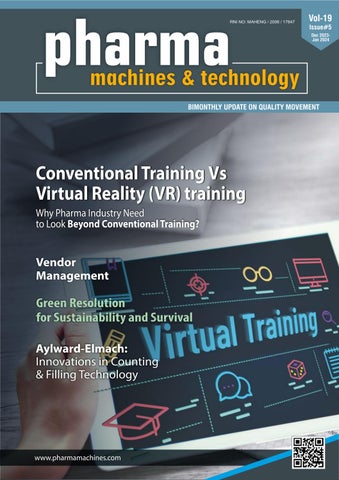
Conventional Training Vs Virtual Reality (VR) training Why Pharma Industry Need to Look Beyond Conventional Training? Exclusive on Conventional Training Vs Virtual Reality (VR) training - by Subrata Chakraborty, the Founder and CEO of INOVR
36
The conventional training methods such as self-study of SOPs or classroom training, which were once thought to be the cornerstone of pharmaceutical education, are now showing their limitations in addressing the complex problems encountered on the shop floor. The Virtual reality (VR) and simulation-based training, for instance, can create scenarios where learners actively engage with the material. This active participation, combined with a realistic and immersive environment, enhances knowledge retention. Further looking ahead today each organisation is responsible for ensuring their vendors provide consistent quality of services and materials which are fit for purpose throughout the product lifecycle from production development right through to commercial distribution. Vendor management is the process of working with vendors, controlling costs and increasing value whilst ensuring quality and managing mitigating risks. The Green Revolution is a movement aimed at advocating for sustainable practices and technologies within the industry. This encompasses the adoption of renewable energy, the implementation of eco-friendly manufacturing and packaging processes, and the application of green chemistry. Harjit Singh Dhaul
Publisher & Editor
DEPUTY EDITOR Byju Bhaskaran
EDITORIAL ASSISTANT Ravlin Kaur
PUBLISHER & EDITOR Harjit Singh Dhaul
Vendor Management PharmaLex's expertise shines as a beacon in the ever-changing pharmaceutical market An exclusive on accomplished professional in pharmaceutical chemistry and quality management - by Olena Chervonenko
INTERVIEW
Aylward-Elmach: Innovations in Counting & Filling Technology An interview with Mr. Frank Brown, the President and CEO of Aylward Enterprises,
Gateway to Liquid Processing & Packaging Solutions An interview with Mr. Maulik Dave, Managing Director of Harikrushna Machines Pvt. Ltd. (HMPL)
TECH ARTICLE
Navigating Technological Challenges in 46 Implementing Pharmaceutical Serialization By Lokesh Patel, Founder Director, URL Aseptic Automation Inc,
Green Revolution for Sustainability and Survival
Global Vision
An Article of Green Revolution by Mr. Prabir Das
Kandivli 400 101, E-mail:info@pharmamachines.com Advertisement/Circulation/ Subscription enquiries:
50
based on AI system
Editorial Office 26-B, Rebellow Cottage, Gaon Devi Road, Poinsur (E),
30
56
REVIEWS CPHI & PMEC India 2023 Sparks Collaborative Momentum
Mobile: +91 93 24 577012 / +91 77 15 957717
REGULARS
E-mail:info@pharmamachines.com
INDIA PHARMA
Website: www.pharmamachines.com
GLOBAL PHARMA
Printed & Published by: Harjit Singh Dhaul on behalf of Global Vision and printed at Hariom Printers, C/70, Akurli Industrial Estate, Akurli Road, Kandivali East, Mumbai 400 101, and published at 26-B, Rebellow Cottage, Gaon Devi Road, Poinsur (E), Kandivli 400 101. Editor Harjit Singh Dhaul.
08 14
58 DID YOU KNOW?
16
All rights reserved. Reproduction in any manner is prohibited. PHARMA Machines & Technology takes no responsibility for validity of claims in advertisement and articles published.
News & Updates
INDIA PHARMA predicts that domesticfocused companies are expected to achieve mid-teen growth in 2024 due to new product launches, increased volume growth, and growing demand for generics and branded products. The report highlights recent
India's healthcare industry gets $4.6 billion in transactions, driving Asia-Pacific development. According to Bain & Company's 13th annual Global Healthcare Private Equity and M&A study, India is developing as a major player in the Asia-Pacific healthcare sector, garnering large investments and driving expansion across a variety of industries. The AsiaPacific area saw agreements of around $14 billion, with India accounting for the majority of the disclosed deal value. The country is expected to host 22 healthcare agreements in 2023, with a total value of $4.6 billion, lagging the $4.7 billion recorded in 2022. The growing middle class in India is driving a large increase in healthcare spending, fueled by increased disposable incomes, the development of insurtech platforms, and the active participation of private payers. Private equity investors, including Advent International, Carlyle, and PAG, have seized opportunities in this growth, expanding
improvements in the pharmaceutical sector, including enhanced performance in the US generics market, robust performance in branded markets, moderation in raw material costs, and market share gains from recently launched products. Pharmaceutical companies have strategically increased their presence in chronic therapies, focused on new product launches, and ventured into new therapies to capitalize on market opportunities. Active Pharmaceutical Ingredient (API) companies undergoing capital expenditure are expected to contribute to top-line growth, with a healthy product mix and softened input costs sustaining 20-30% operating margins in 2024. The report also expects robust growth in US-focused pharma companies due to stabilizing base drug prices, expansion of sales teams, and the continuous acceleration of gRevlimid, a key blood cancer medication. The introduction of new products, gSpiriva for respiratory conditions and
into pharma services like Contract Development and
gPrezista for HIV treatment, adds diversification and
Manufacturing Organizations (CDMOs) and Active
potential revenue streams.
Pharmaceutical Ingredients (APIs). The emergence of biologics as impending generics indicates a potential shift in the sector, but China's dominance in generics, leveraging expertise in microbiology, remains a competi-
A research report from BP equities private limited BP Equities Private Limited predicts mid-teen growth for
tive edge for the region. In 2024, investors are expected
domestic-focused companies in 2024 due to new
to focus on the transformative potential of generative AI,
product launches, increased volume, and growing
new therapeutic modalities, and positioning India as a
demand for generics and branded products. The report
significant destination for deploying healthcare capital at
attributes this growth to improved performance in the
scale.
US generics market, robust performance in branded
Domestic-focused pharma firms aim mid-teen
markets, moderate raw material costs, and market share
growth in 2024
gains from recently launched products, contributing to
A research report from BP Equities Private Limited
strong earnings for domestic pharma companies.
8
PHARMA machines & technology
Dec. 23 - Jan. 24
News & Updates
INDIA PHARMA Experts demand for the rapid clearance of pharmaceuticals and medical devices bill Experts have called on the Indian government to pass the Drugs, Medical Devices, and Cosmetics Bill, 2023,
Fresh Covid Cases reports in India
which aims to regulate and supervise the import,
India has reported 756 new Covid cases and 4,049 active
production, distribution, and sale of drugs, medical
cases, with five deaths reported in 24 hours. The number
devices, and cosmetics. The bill aims to ensure standards in quality, safety, efficacy, and performance. It covers a wide range of drug products and is intended to replace the 83-year-old Drugs and Cosmetics Act of 1940. The bill
of daily cases dropped to double-digits until December 5, 2023, but increased again after the emergence of a new variant and cold weather conditions. A maximum increase in single day cases was reported on December 31, 2023, with 841 cases reported. Around 92% of active
introduces a precise categorization for medical devices,
cases are recovering under home isolation. The JN.1
covering a wide range of diagnostic tools and their
variant is not leading to an exponential rise in new cases
associated software. The bill also establishes the Medical
or a surge in hospitalization and mortality. India has
Devices Technical Advisor Board (MDTAB) and a
experienced three waves of COVID-19, with the peak
dedicated regulatory body, stating that medical devices
incidence of daily new cases and deaths during the Delta
will no longer be treated as drugs. The updated
wave in April-June 2021. Since the pandemic began in
recruitment rules for medical device regulators now
early 2020, over 4.5 crore people have been infected and
include relevant qualifications, such as engineering
over 5.3 lakh died. The number of people who have
graduates. The bill's promotion of innovation and
recovered from the disease is over 4.4 crore, with a
research and development (R&D) is expected to strengthen the country's quality management systems
national recovery rate of 98.81%. 220.67 crore doses of Covid vaccines have been administered in the country.
and elevate the industry's standards and practices. However, the bill faced a setback during the monsoon session of Parliament, where it did not even make it to
India orders new drug-making standards
the business agenda.
Indian pharmaceutical companies must meet new manufacturing standards this year, as the government
US FDA approvals bounce back for parking hopes of
aims to clean up the $50 billion industry. The notification
biotech recovery in 2023
requires manufacturers to take responsibility for the
US FDA approvals bounce back in 2023, sparking hopes of a biotech recovery agency approved several highprofile therapies such as Eli Lilly's obesity drug The U.S. Food and Drug Administration approved nearly 50% more novel drugs in 2023 than in 2022, putting it back on pace with historical levels, an improvement analysts and investors said could lead to increased investment in biotech firms.
quality of pharmaceutical products, comply with license requirements, and avoid placing patients at risk due to inadequate safety, quality, or efficacy. Companies must market finished products after satisfactory ingredient tests and retain samples for repeated testing. The health ministry found an absence of testing of incoming raw materials in 162 drug factories since December 2022. Large drugmakers must address these concerns within six months, while small manufacturers must do so within
FDA nods for innovative therapies containing an active
12 months. Small companies have requested an
ingredient or molecule not previously approved, rose to
extension due to their debt load. The WHO and other
55 in 2023, up from 37 in 2022 and 51 in 2021. Historical
health authorities have linked Indian cough syrups to the
data shows the FDA typically green lights about 45-50
deaths of at least 141 children in Gambia, Uzbekistan,
new drugs a year and hit a peak of 59 in 2018.
and Cameroon.
10 PHARMA machines & technology
Dec. 23 - Jan. 24
News & Updates
GLOBAL PHARMA Empty capsule sector to grow 7.4% till 2033
2024 challenging for pharma Cos. In recent years, changes in the healthcare market have forced the pharma sector to undergo painful transformations. In 2024, economic pressures are expected to increase competition and market expectations, while also tightening the global regulatory environment. Addressing these issues requires a shift to a new market-driven model, which will present significant challenges for pharma companies as they rethink old assumptions about their business model. One of these challenges is the growing consolidation of healthcare delivery, with just 1,500 of the over 6,000 US hospitals currently operating independently. This increase in mergers and acquisitions has resulted in fewer but bigger and more complex healthcare systems, shifting the power dynamics of drug purchase decisionmaking. Over the past few years, the power of various healthcare delivery stakeholders has been increasing, with drug purchase decision-making increasingly moving away from physicians. Significant transformations in pharma sector The pharma sector is facing significant transformations due to changes in the healthcare market, economic pressures, industry-wide competition changes, and intensifying global regulatory environment. To address these issues, pharma companies must shift to a new market-driven model. Major challenges include growing consolidation in healthcare delivery, with only 1,500 U.S. hospitals functioning independently. The rise in mergers and acquisitions (M&A) has created fewer but more complex and powerful healthcare systems, shifting the power dynamics of drug purchase decision-making. The influence of various healthcare delivery stakeholders has increased, with the power shifting away from physicians. Addressing these challenges requires a shift to a new market-driven model.
12 PHARMA machines & technology
Dec. 23 - Jan.24
It's interesting to note that the global advanced empty capsule industry is expected to expand significantly in the coming years. This growth is largely due to the rising prevalence of chronic illnesses and an aging population, as well as increased research and development efforts in the healthcare sector. In fact, experts predict that the industry will reach a value of US$ 905.6 million by 2023, with a projected CAGR of 7.4% over the next decade. One factor that is expected to contribute to this growth is the acceleration of technological advancements, as well as the growing demand for in-home care. However, it's important to note that there are also some challenges that the industry will need to overcome, such as restrictions on the availability of raw materials needed for manufacturing these capsules on the international market. Another potential challenge is the social stigma associated with raw materials sourced from animals, which could impact the sales of advanced empty capsules. Despite these challenges, with proper management and strategic planning, the industry can continue to grow and capitalize on its potential. Implementation and evolution of the Inflation Reduction Act (IRA) The pharmaceutical sector grappled with substantial challenges and uncertainties in 2023, and these are expected to extend into 2024, partly due to the implementation and evolution of the Inflation Reduction Act (IRA). Furthermore, states are gearing up to intensify their efforts to regulate drug pricing. Pharmaceutical manufacturers are set to face increased scrutiny during the 2024 campaign season. In the previous year, the Centers for Medicare & Medicaid Services (CMS) initiated the implementation of the Medicare price control program established by the healthcare law, impacting the negotiation of the initial set of drugs. By September 2024, CMS is slated to release the maximum fair prices for these drugs, as indicated in its 2023 execution guidance, where the agency emphasized its expanded powers under the healthcare law. Whether this assertive approach will be reflected in the published prices remains to be seen. Legal challenges against the healthcare law by several pharmaceutical manufacturers in 2023 are expected to persist throughout 2024. The redesign of Part D in the law and the upcoming manufacturer discounting program are anticipated to impact 2025 significantly.
News & Updates
GLOBAL PHARMA Regulation has disrupted functional complacency in large pharma enterprise Hospital consolidation has led to significant changes in customer engagement and management. The COVID-19 lockdowns forced sales teams to communicate through Zoom calls and email, which initially seemed temporary. However, staffing shortages and workload demands have placed a premium on physicians' time, forcing manufacturers to rethink their approach to customer engagement. Virtual engagements are now the norm, with 50-70% of customer engagement taking place virtually. This has led to the rise of omnichannel and digital marketing, but customer engagement remains challenging. Regulation has also disrupted functional complacency in large enterprise accounts and customer engagement. Price regulations in the Inflation Reduction Act (IRA) in the U.S. and regulatory industry reforms throughout Europe have forced manufacturers to re-examine core assumptions about R&D, market access, portfolio pricing, budgets, and underlying costs. Organizations are realizing that these regulations will have broad, downstream effects on their portfolios. While products may not be subject to the IRA in the near term, they will likely catch up in the negotiation process. Pharma organizations have filed court challenges to the IRA, but fallout from the law is already underway. The sector must brace for more pushback from lawmakers, other stakeholders, and regulators as they try to rein in big pharma.
Physicians are now the only voice in decision-making within large integrated delivery networks (IDNs). C-suite executives and population-based decision-makers (PBDMs) are now holding the clout, leading to a new approach to managing large enterprise accounts. Commercial leaders are building more experienced account teams led by National Account Managers, Strategic Account Directors, or Key Account Managers. These leaders bring advanced skill sets to engage IDN administrators and answer questions about pricing considerations, reimbursement assurances, product value relative to competitors, and evidence of improved clinical outcomes over the current standard of care. This new approach to strategic account management is a work-in-progress, as organizations struggle to sync internally on an optimal approach. One survey respondent expressed that this radical approach turns the entire organization upside down. European medicines agency looks to maximize the role of AI The European Medicines Agency (EMA) and the Heads of Medicines Agencies (HMAs) have jointly released a comprehensive plan outlining a collaborative and
The 340B Program The 340B program, enabling participating manufacturers to offer drugs to enrolled providers at discounted rates, is encountering growing uncertainty. A district court has invalidated the program's patient definition, and various manufacturer challenges are persisting into 2024. The Health Resources and Services Administration is actively seeking increased authority for program administration. States such as Arkansas have adopted state laws mandating 340B contract pharmacy, but legal challenges have emerged on the grounds of pre-emption and constitutional issues. States are also advancing their initiatives targeting the pharmaceutical industry, including drug pricing transparency laws and potential price controls akin to Colorado's Prescription Drug Affordability Review Board. These endeavors could indirectly impact federal programs, with legal disputes anticipated.
14 PHARMA machines & technology
Radical approach turns the entire organization down
Dec. 23 - Jan.24
coordinated approach to leverage the advantages of artificial intelligence (AI) in regulatory processes. Running until 2028, this work is designed to enable the European Medicines Regulatory Network (EMRN) to harness the potential of AI for enhanced personal productivity, process automation, insights generation from data, and facilitating informed decision-making to advance public and animal health. Developed by the Big Data Steering Group (BDSG), an initiative jointly established by HMA and EMA, the plan aims to ensure that the EMRN remains at the forefront of incorporating AI into medicine regulation. Notably, this document was officially adopted during the December EMA's Management Board meeting.
Facts & Figures
DYK
DID YOU KNOW? India is gaining prominence as a crucial participant in the healthcare sector of the Asia-Paci c region, drawing substantial investments and fueling expansion across diverse industries In the year 2023, private equity (PE) transactions continued to be highly concentrated in the global healthcare sector, with a notable buyout value amounting to $444 billion. Florida's request to import cheaper prescription drugs from Canada India's e-pharmacy market is expected to reach around $90 billion in 2027 with a CAGR of 22 percent. Over the next decade, pharmacy is ripe to change signi cantly…by 2030, overall pharmacy spend will exceed $1 trillion.” The pharmaceutical industry in India is expected to reach $65 Bn by 2024 and to $130 Bn by 2030 The world consumes 60 billion aspirin each year. A staggering 30% of participants discontinue trials due to an unsatisfactory non-clinical experience. Out of over 300,000 clinical trials, a mere 5-10% of eligible patients are informed about the studies. Scientists at King's College London (KCL) have discovered that fertilized chicken eggs present a cost-effective avenue for conducting cancer imaging studies and developing radiotracers. Deepcell has entered into a research collaboration with NVIDIA to accelerate the use of generative arti cial intelligence (AI) in single-cell research for cancer, stem cells, and cell therapies. Recent research investigation revealed that individuals encountering increased sleep disturbances during their 30s and 40s face a higher likelihood of developing memory and cognitive issues a decade later.
Traditionally, bipolar disorder has been viewed as a potential contributor to mortality, consistently examined within the context of other prevalent causes of death. Novo Nordisk has announced its plans to open a new, arti cial intelligence (AI)-based research facility to advance drug discovery operations. From November 2022 to October 2023, more than 2.9 million individuals underwent urgent cancer screenings, marking a rise of 147,960 people compared to the period from 2021 to 2022. The number of active Covid-19 cases in the country came down marginally to 4,334 from 4,423 Sleep-related brain rhythms, including oscillations and spindles, exhibit a connection with breathing, in addition to the established link between these rhythms and the retrieval of memory contents during sleep. The comprehensive restructuring of Part D in the law and the introduction of the new manufacturer discounting program are set to have a signi cant impact starting in 2025.
16 PHARMA machines & technology
Dec. 23 - Jan.24
P A C K A G I N G
HIGH SPEED BLISTER PACK MACHINE FLAT FORMING & FLAT SEALING
HIGH SPEED BLISTER PACK MACHINE FLAT FORMING & ROTARY SEALING
Virtual Reality Training
E XC LU S I V E
Conventional Training Vs Virtual Reality (VR) training Why Pharma Industry Need to Look Beyond Conventional Training? By Subrata Chakraborty The pharmaceutical industry stands at a crossroads, facing unprecedented challenges in an era marked by rapid technological evolution and stringent re g u l a t o r y l a n d s c a p e s. A s t h e industry grapples with the complexities of modern drug development, manufacturing, and co n t i n u o u s l y e vo l v i n g q u a l i t y standards, the role of its workforce becomes pivotal. According to a report by McKinsey1, the industry is undergoing a rapid transformation that requires new skills and capabilities, such as digital and data literacy, agile ways of working, and an innovation mindset.
18 PHARMA machines & technology
Dec. 23 - Jan. 24
Virtual Reality Training
E XC LU S I V E The pharmaceutical industry stands at a crossroads, facing unprecedented challenges in an era marked by rapid technological evolution and stringent regulatory landscapes. As the industry grapples with the complexities of modern drug development, manufacturing, and continuously evolving quality standards, the role of its workforce becomes pivotal. According to a report by McKinsey1, the industry is undergoing a rapid transformation that requires new skills and capabilities, such as digital and data literacy, agile ways of working, and an innovation mindset. Conventional training methods such as self-study of SOPs or classroom training, which were once thought to be the cornerstone of pharmaceutical education, are now showing their limitations in addressing the complex problems encountered on the shop oor. Despite substantial annual investments in training employees, the industry nds itself entangled in a web of people practice/competency issues on the shop oor. These issues, ranging from lapses in adherence to aseptic procedures to critical deviations in manufacturing protocols, underscore a glaring gap between theoretical knowledge and its practical application. The consequence of this gap is not only operational inefficiency but, more critically, compromising with established quality and regulatory standards and potentially causing a threat to patient safety. It is a testament to the shortcomings of conventional training in instilling the precision and application-oriented skills demanded by the industry's dynamic landscape. With these frequent failures at the shop oor, an unabated stream of regulatory citations, and the increased focus on people aspects in the recent regulatory guidance (e.g., new EU Annex -1)2, there's a growing recognition that a paradigm shift in training methodologies is imperative. It's an urgent need for a more effective, adaptive, and impactful approach to preparing its workforce. In this context, emerging technologies, particularly Virtual Reality (VR) and simulation-based training, are emerging as beacons of innovation capable of bridging the gap between theory and practice on the shop oor. In this article let us understand the limitations of conventional training, delving into the intricate
20 PHARMA machines & technology
Dec. 23 - Jan. 24
challenges faced by the industry, and learn about a forward-looking, technology-infused approach that promises to rede ne pharmaceutical training in the years to come.
The Static Nature of Training Conventional training methods in the pharmaceutical industry have long been characterized by a static and standardized approach. This rigidity poses a signi cant challenge in addressing the diverse and dynamic needs of a sector that is continually evolving due to technological advancements, regulatory updates, and shifting global health landscapes. Traditional training often adheres to a uniform curriculum, assuming a homogenous workforce with identical learning needs. In reality, the pharmaceutical industry encompasses a spectrum of roles, from laboratory technicians to regulatory affairs specialists. A singular, standardized training model fails to cater to the distinct learning requirements and job responsibilities of this diverse workforce. Static training models also lack adaptability to individual learning styles, paces, and preferences. Different individuals within the industry absorb information differently. Some may excel in a traditional classroom setting, while others may bene t more from interactive and hands-on approaches. A static model fails to tailor the learning experience to these varied needs. The pharmaceutical industry is witnessing a paradigm shift with the emergence of novel roles, say for example, those at the intersection of biology and technology. Conventional training, often designed years ago, may not align with the speci c skill sets required for these emerging roles. The static nature hampers the industry's ability to swiftly adapt to these changes. Further, the training content in conventional models With these frequent failures at the shop oor, an unabated stream of regulatory citations, and the increased focus on people aspects in the recent regulatory guidance (e.g., new EU Annex -1)2, there's a growing recognition that a paradigm shift in training methodologies is imperative.
Virtual Reality Training
E XC LU S I V E may become outdated as regulations evolve, technologies advance and global benchmarks rise. Professionals trained with outdated information may not be adequately equipped to navigate the current regulatory landscape or leverage the latest technologies, or current industry benchmarks, leading to potential inefficiencies and compliance gaps.
counteract this natural tendency. Traditional training often involves lengthy classroom sessions, PowerPoint presentations, and passive learning. These methods, while providing information, may not be optimized for long-term retention. The forgetfulness curve suggests that a signi cant portion of the material covered in such sessions may be forgotten rapidly.
Managing the Knowledge Retention
Beyond conventional training, the incorporation of interactive and immersive learning experiences addresses the forgetfulness curve. The Virtual reality (VR) and simulation-based training, for instance, can create scenarios where learners actively engage with the material. This active participation, combined with a realistic and immersive environment, enhances knowledge retention. Knowledge retention is signi cantly improved through repetition and reinforcement. Interactive modules that require learners to revisit and apply their knowledge in various scenarios provide the necessary repetition. This repetition strengthens neural connections and contributes to more enduring memory. All of this occurs without the need for additional time because of the intrinsic value of virtual reality, which speeds up the learning process by allowing trainees to absorb the contents more quickly.
In the realm of pharmaceutical training, where the stakes are high and precision is paramount, knowledge retention plays a pivotal role. The concept of the "forgetfulness curve" is a psychological principle that illustrates how information is quickly forgotten if not reinforced. In the context of pharmaceutical training, this phenomenon has signi cant implications for the competence and performance of professionals. The forgetting curve3, based on the pioneering work of psychologist Hermann Ebbinghaus, demonstrates that learners tend to forget the majority of what they've learned in a short period unless the information is reinforced. In the pharmaceutical industry, where adherence to protocols, knowledge of regulatory standards, and understanding of complex processes are crucial, the forgetting curve underscores the need for training methodologies that
22 PHARMA machines & technology
Dec. 23 - Jan. 24
Further a Continuous Assessments and Feedback
Virtual Reality Training
E XC LU S I V E throughout the training process which includes immediate feedback on performance allows learners to identify areas of weakness and reinforces correct responses. This iterative process contributes to ongoing learning and retention. Virtual reality (VR) training works by tailoring the learning paths to individual needs and roles. This customization ensures that trainees focus on areas directly relevant to their responsibilities, enhancing the effectiveness of the training and, consequently, the retention of critical knowledge. Professionals who retain and can readily apply knowledge contribute to a culture of excellence, reduce the likelihood of errors, and enhance overall operational efficiency in the pharmaceutical industry.
Regulatory Compliance vs. Practical Application and skill building In the pharmaceutical industry, training has traditionally been geared heavily towards ensuring regulatory compliance. While compliance is nonnegotiable and forms the bedrock of industry operations, an overemphasis on it at the expense of practical application can lead to a workforce that is adept at ticking boxes, but perhaps less skilled in navigating the real-world complexities of pharmaceutical processes. Conventional training often involves rote memorization of regulations and guidelines. Employees may memorize the required standards without truly understanding the underlying principles or their practical applications. A compliance-centric approach might not encourage employees to engage in critical thinking or problemsolving. The focus may be on adhering to established norms without necessarily understanding the rationale behind them. Practical application-oriented training emphasizes not just the “what” but the “why” and “how” of pharmaceutical processes. Employees gain a deeper understanding of the scienti c and operational Conventional assessments may not effectively measure the application of learned concepts. Knowing theories doesn't necessarily translate to the ability to apply them in complex, realworld situations—a critical skill in pharmaceutical settings.
24 PHARMA machines & technology
Dec. 23 - Jan. 24
aspects of their work. Training that encourages practical application hones problem-solving skills. Employees learn to apply their knowledge to address real-world challenges, fostering a proactive and solutions-oriented mindset. Also, a practical training equips employees to be adaptable. They are better prepared to handle unexpected situations, deviations from the standards, and the evolving challenges of the industry. Virtual Reality (VR) training represents a paradigm shift from conventional training methods. It offers an immersive and interactive learning experience that goes beyond textbooks and classroom settings. VR allows for the creation of highly realistic simulations of pharmaceutical environments. This realism provides employees with a virtual laboratory or manufacturing setting where they can apply their knowledge in a lifelike context. Unlike traditional training, VR offers a hands-on experience. Employees can interact with virtual equipment, conduct experiments, and navigate through processes, replicating the tactile and practical aspects of their work. VR creates a risk-free learning environment. Employees can make mistakes and learn from them without the potential consequences associated with real-world errors, enhancing skill-building in a safe space. VR platforms also adapt to the individual learning needs of employees. The technology can track progress, identify areas of strength and weakness, and tailor the learning experience to address speci c skill gaps.
Limitations of Training Evaluation Conventional training often rely on static assessment methods which lack depth and fail to provide a nuanced understanding of an employee's actual capabilities or the effectiveness of the training program. They may not capture the application of knowledge in real-world scenarios, which is crucial in industries like pharmaceuticals where practical skills on the shop oor are as important as theoretical knowledge. Conventional assessments may not effectively measure the application of learned concepts. Knowing theories doesn't necessarily translate to the ability to apply them in complex, realworld situations—a critical skill in pharmaceutical settings.
Ampoule Filling and Sealing Sterdy construction assures vibration free operation and servo or cam based lling assures ll accuracy Cam Based or Fully Servo based options available coupled with PLC based operation Smooth motion control of ampoules assures minimal to nil breakage and lling accuracy with speed Equipped with automation and ease of operation permitting quick change overs of size changes
Optional Features Customized Design SCADA & 21 CFR Part 11 Compliant
Vial Filling and Bunging Vial lling and bunging machine normally comes as a Monoblock type of construction. We offer two basic variants viz Rotary and Linear that lls and bungs the vials. Filling of vials is possible with rotary piston pumps or with peristaltic pumps.
Salient Features
Optional Features
Servo based lling with PLC HMI controlled operation couples with sturdy construction
Extended LAF
Valve less Rotary Piston Pumps are manufactured with high precision Bunging station facilitates half/full bunging
Customized Design for Filling by Peristaltic Pumps SCADA & 21 CFR Part 11 Compliant CRABS and Isolator Compatible design
Virtual Reality Training
E XC LU S I V E Further the traditional post-training evaluations are often one-time events. They miss the ongoing assessment needed for continuous improvement. Training effectiveness should be a dynamic process, adapting as employees apply their knowledge and skills over time. The in-depth understanding of an employee's advancements, areas of struggle, or evolving capabilities is often overlooked, hindering the ability to tailor training for continuous improvement. Another important area is a feedback loop. Without feedback, employees lack guidance on how to improve, and the organization misses valuable insights into the effectiveness of its training programs. Real-time feedback on the other hand introduces dynamic assessment methods. Continuous evaluation methods, such as scenario-based assessments, and interactive simulations, provide a more comprehensive and accurate measure of employee capabilities. It also offers a holistic understanding of performance. VR training go beyond mere facts, it assesses how well employees can apply their knowledge, problem-solve, and adapt to various scenarios, creating a more nuanced picture of their capabilities. Its Real-time feedback generates rich, actionable data. Leaders can make data-driven decisions, ensuring that training
26 PHARMA machines & technology
Dec. 23 - Jan. 24
investments align with organizational goals and contribute to ongoing success.
Digitalization of Training Conventional training modes usually need hard copy documentation or manual keying in of the training data. This reliance on physical paperwork not only consumes time but can also introduce errors and inefficiencies. In contrast, Virtual Reality (VR) training offers a transformative advantage in the realm of digitalization by seamlessly automating the generation of training records. VR platforms can automatically capture and record user interactions and performance. This eliminates the need for manual record-keeping, ensuring accurate and real-time documentation of each learner's progress and achievements. It integrates with digital platforms for streamlined data management. This not only reduces administrative overhead but also enhances the accessibility and security of training records. The digital nature of VR facilitates prompt updates in response to regulatory changes. VR training reduces the need for paper-based documentation. This aligns with sustainability goals, contributing to a greener approach to training and minimizing the environmental footprint associated with conventional modes.
Virtual Reality Training
E XC LU S I V E The adoption of VR training heralds a future where knowledge is not just imparted but embedded, where efficiency and compliance go hand in hand, and where the digital landscape converges with sustainable practices. Conclusion In the pharmaceutical industry's journey toward excellence, the adoption of Virtual Reality (VR) training is emerging as a transformative force, reshaping learning paradigms and fortifying organizational capabilities. VR transcends the limitations of conventional training modes, offering a comprehensive suite of bene ts that reverberate across efficiency, compliance, and sustainability. The unparalleled advantage of VR lies in its capacity to enhance knowledge retention, providing a dynamic and immersive learning environment. This not only empowers employees with a profound understanding of complex processes but also cultivates a culture of continuous improvement. Efficiency gains are evident on the shop oor, where VR acts as a guardian against human errors. By placing learners in realistic scenarios, it instils practical skills and judgment, reducing the likelihood of costly mistakes. Real-time feedback further ne-tunes performance, fostering a proactive approach to risk management. The digital prowess of VR extends beyond training modules. The automatic generation of training records eliminates the cumbersome reliance on hard copy documentation, streamlining data management. This not only ensures accuracy but also provides realtime insights for informed decision-making. In an era where environmental sustainability is paramount, VR stands as a champion. By signi cantly reducing paper usage, VR aligns with corporate responsibility goals, offering a green alternative to conventional training modes. In conclusion, the adoption of VR training heralds a future where knowledge is not just imparted but embedded, where efficiency and compliance go hand in hand, and where the digital landscape converges with sustainable practices. It's not merely a training evolution; it's a strategic investment for a
28 PHARMA machines & technology
Dec. 23 - Jan. 24
resilient, agile, and future-ready pharmaceutical industry. References: 1. Emerging from disruption: The future of pharma operations strategy, By Hillary Dukart, Laurie Lanoue, Mariel Rezende, and Paul Rutten. McKinsey & Company. 2. EU Annex-1, Manufacture of Sterile Medicinal Products. 3. Ebbinghaus's Forgetting Curve, By Hermann Ebbinghaus, The MindTools Content 4. What does virtual reality and the metaverse mean for training? By PwC.
About the Author
Subrata Chakraborty, the Founder and CEO of INOVR, a Virtual Reality-based educational platform, designed exclusively for the pharmaceutical industry. With 27+ years in Manufacturing, Quality operations, Validations, and Training, he's an expert in Aseptic Processing and contamination controls. Beyond his SME role, Subrata signi cantly impacted people and organizational development during his decadeplus leadership roles at P zer, Novartis, FreseniusKabi, and Cipla. Recognized for his expertise, he actively contributes as an author, speaker, and technical reviewer in global industry forums like PDA, ISPE, and SfSAP. Subrata's multifaceted career exempli es his commitment to advancing pharmaceutical education and industry standards. He can be reached at – subrata.chakraborty@inophar.in or https://www.linkedin.com/in/subratac/ Learn about INOVR at: https://www.inovr.org/
Counting & Filling
I N T E R V I E W
Aylward-Elmach: Innovations in Counting & Filling Technology
Founded in 1977, Aylward has become the world's leading supplier of specialized, solid dose packaging equipment. The original inventor of dedicated blister feed systems, the company continues to innovate and currently designs and manufactures 100% accurate counts for Tablet Counters, Blister Machines, Cartoners, and Custom Packaging Automation.
Mr. Frank Brown dedicated approximately 30 years of his career (1978-2007) to what eventually became Procter & Gamble Pharmaceuticals in the early 1980s. He was assigned as a project engineer to technology leader. He was responsible for the pharmaceutical packaging equipment processes for packaged products in countries like the USA (including Puerto Rico), Germany, France, Italy, and Austria. He developed equipment speci cations that led the procurement, testing, installation, and quali cation of the equipment from purchase to packaging of products. In 2007, he joined Aylward Enterprises in North Carolina as a product manager and was responsible for blister pack feed systems. After their acquisition by Elmach, he has been appointed as President and CEO of Aylward Enterprises, a part of Elmach Group.
It's fascinating to hear about the evolution of Aylward Enterprises from feeding systems to packaging solutions. Mr. Frank Brown, the President and CEO of Aylward Enterprises, shared the company's insights with Pharma Machines & Technology during Pmec India 2023. “He was known as a “Tinkerer” by locals. It seems like he had a knack for coming up with innovative solutions to the problems faced by local manufacturers. He was John Aylward, sole founder of Aylward Enterprises." The innovation begins in the early 1970s. A local manufacturer approached the founder, Mr. John Aylward, to develop an innovative feeder for their candy wrapping process. John Aylward's innovative idea for a better feeding system for candy wrapping came to life in his garage in New Jersey. Through research and after a series of trials, he developed the dedicated tube feeding system, which replaced the inefficient " ood feeding" method to supply candy drops to the vertical wrapping machines. The tube feeding system reduced waste wrappers. As the invention gained popularity in feeding systems and for further expansions, the company moved to North Carolina in 1980 where it still operates today. The dedicated tube lling feed system was introduced to the pharmaceutical world, which reduced waste, and its success led the company to become the
30 PHARMA machines & technology
Dec. 23 - Jan. 24
Counting & Filling
I N T E R V I E W leading supplier of dedicated tube lling feed systems worldwide. Various portions of the feed systems are still patented today. It is also impressive to learn that despite many copies by different OEMs in the market, none of them can claim to be able to feed every style of solid dose product. Aylward's customers include the world's leading pharmaceutical, consumer health, animal health, and contract packaging companies. Today, the company has expanded its sales and service facility in Riedlingen, Germany, and its headquarters remain in New Bern, North Carolina, USA. counts for the preset amount. In case of rejection, the product is taken out of the stream before it enters the bottle. A method referred to as “rejected on the y.” This gives 100% accuracy to ll the container.
Q. What are the technological advantages and key values that make Aylward the leader in tablet and blister feeding? A.
We can guarantee that only a single product is dispensed into the blister cavity at a time through the design of the Aylward blister feeding dedicated tube system. This is accomplished via a series of pins and pin plates that physically separate the product from each other, thus allowing only a single product to drop without any damage being done to the product. The feed system and tubes are designed using the customers' web layout and product speci cations. This design enables us to guarantee a feeding efficiency of 99.8%. We will demonstrate this to the customer during an onsite FAT (Factory Acceptance Test) at our facility in North Carolina using the customers preformed web and customer provided product. This leads to a seamless installation and start up for the customer at their facility.
Q. Being the inventor of blister feed systems, Aylward is now going to de ne the new era of bottle lling. What can we expect? A.
Aylward has introduced high speed bottle lling with speeds up to 350 bottles per minute and committed to a 100% count accuracy. This is accomplished through a series of sensor banks placed just before the bottle ll area. The speci c design of lling drums allows for single product movement throughout the lling process and allows the counting of every tablet individually. We bring the same rigor to this process, similar to the process of blister feeding systems. Our newest innovation is the TCM, launched at the PMEC India 2023 exhibition in Greater Noida, Delhi NCR. The equipment is designed to inspect and count the products that are currently unavailable in the market. The system inspects the product conditions and rogue colors and
32 PHARMA machines & technology
Dec. 23 - Jan. 24
How would your bottle lling line be different Q. from other systems in the industry? A.
The Aylward TCM is a revolutionary design that allows for the product to be inspected and counted at the same time before it enters the container. Both of these functions are built into the machine up front, so there is no need for additional equipment to perform the tasks. The product is held in place by a vacuum on the y and rests in a specially but versatile designed cavity of the product disc. This allows to inspect and count products on the y. The veri ed product is lled in the bottle, and the rejected product is dispensed into the staged container. The TCM efficiently identi es and rejects defective products before dispensing them into the product container, preventing the creation of reject bottles and enhancing overall productivity. Additionally, its design is conducive to accommodating environmental containment, making it suitable for handling potent substances like anti-cancer medications.
Counting & Filling
I N T E R V I E W Q. What are the opportunities you see in the bottle ling systems in India as well as globally? A. We believe that the Aylward TCM will be a game changer in the bottle lling arena for India. No other machine accomplishes inspecting and counting in the same footprint. As more and more companies move towards bottle lling, we believe our equipment will ll the void successfully. The TCM is designed for mid-range output speeds up to 60-70 bpm. Aylward also supplies high-speed bottle llers for output ranges up to 350 bpm. Our high speed bottle llers use a different method to transport the product from bulk hopper to bottle, although still applying vacuum to hold the solid dose in a cavity milled into a drum versus on the outside of a disc. These machines are installed and are running successfully at numerous pharmaceutical companies Globally for packaging solid dose products.
Whether track feeders, ood feeders, or dedicated tube feeding systems. The feeding system is the heart of the process. After acquisition, both companies will now represent customers in India and worldwide with complete world-class blister packing systems. Aylward will now have access to Elmach's network of sales resources. At the same time, Elmach will have access to markets that Aylward currently supports throughout the world. Aylward will bene t from cost effective machines manufactured by Elmach without compromising quality. Elmach will be able to take advantage of the technology transfer that Aylward brings to the table. Aylward-Elmach team will bene t the customers in India and worldwide. Q. What are the machinery and technology solutions would the Aylward-Elmach team offer to the pharma industry worldwide? What are the growth expectations globally as well as in India? A. Our newly formed partnership will provide pharma manufacturers worldwide with state-ofthe-art blister packing and bottle- lling machines. The Aylward bottle- lling technology offers customers a means of guaranteeing 100% count accuracy versus conventional bottle- lling technology. The newest innovation (TCM) offers the ability to provide product inspection for color, condition, or rogue products while verifying count accuracy. With Elmach's global presence, quality machines, and craftsmanship, the company's value will expand to the Western hemisphere markets and add value to its existing prominence, which is achieved through more than 4,800 machines running worldwide.
Q. How would the Indian pharma industry bene t from the Aylward-Elmach combination? What does the association with Elmach mean to Aylward? A. As a result of the Elmach acquisition of Aylward, we are now a full-service blister packing line manufacturer in India. Elmach has become one of the top blister machines & cartoning line manufacturer in their region. Blister machines always require solid dose feeding systems.
34 PHARMA machines & technology
Dec. 23 - Jan. 24
Q. Being part of Procter and Gamble for so many years would mean a vast experience in the eld of bottle lling lines. Would you be open to sharing this experience and knowledge with Indian companies who are moving towards setting up new bottle lling lines or upgrading their existing lines. A. I would be glad to assists and if anybody would like to reach out to me they can connect with me on my email address frankb@aylward-usa.com
Vendor Management
E XC LU S I V E
Vendor Management By Olena Chervonenko
Each organisation is responsible for ensuring their vendors provide consistent quality of services and materials which are t for purpose throughout the product lifecycle from production development right through to commercial distribution. Vendor management is the process of working with vendors, controlling costs and increasing value whilst ensuring quality and managing mitigating risks. A vendor in the pharmaceutical sector is an outside organization or provider who offers pharmaceutical businesses products, materials, services, or specialized knowledge. These suppliers are essential in supporting many facets of the pharmaceutical industry, from the production and distribution of pharmaceuticals to research and development. They contribute to the overall success of pharmaceutical operations and are an essential component of the pharmaceutical supply chain. Vendors might include a wide variety of organizations, each with a unique role and contribution to the industry. Raw Material and Ingredient Suppliers: Pharmaceutical manufacturers require a variety of raw materials and ingredients, which are provided by vendors in this area. Excipients, solvents, chemicals, Active Pharmaceutical Ingredients (APIs), and other raw ingredients required for the production and formulation of medicines can be among them. Contract Manufacturing Organizations (CMOs): Manufacturing and production services are offered by contract by Contract Manufacturing Organizations (CMOs). From formulation research and clinical trial
36 PHARMA machines & technology
Dec. 23 - Jan. 24
material production through commercial-scale production activities, pharmaceutical companies may collaborate with CMOs at various stages of the drugmaking process. Testing and Quality Control Laboratories: These companies are experts in carrying out thorough examinations and analyses of pharmaceutical items to guarantee their effectiveness, safety, and quality. They aid in verifying that goods adhere to set standards and regulatory criteria. Pharmaceutical labelling and packaging suppliers: Packaging vendors offer the resources and knowledge necessary to develop and create pharmaceutical labelling and packaging. Blister packs, vials, and bottles are examples of primary packaging materials, as are secondary packaging elements including cartons, labels, and inserts. Technology and Equipment Suppliers: Suppliers of cutting-edge machinery, equipment, and technological solutions for the production, research, and quality assurance of pharmaceuticals comprise this group of vendors. Suppliers can offer everything from pre-made, specialized production equipment and utilities to custom-made, off-the-shelf equipment for process automation and laboratory instruments. Logistics and Distribution Partners: These companies manage the distribution, storage,
Vendor Management
E XC LU S I V E and transportation of pharmaceutical goods. They make sure that medications are delivered to their destinations securely, in accordance with legal requirements, and in accordance with Good Distribution Practises (GDP). Pharmaceutical Consultants: Pharmaceutical consultants offer a wide range of specialised services to assist businesses in navigating the complicated world of pharmaceutical legislation or with knowledge in particular elds. Contract Research Organizations (CROs): CROs provide pharmaceutical businesses with research and development services, including preclinical investigations, clinical trial management, data analysis, and regulatory submissions. Specialized Service Providers: Vendors providing specialized services like clinical trial services, data management, statistical analysis, pharmacovigilance, market research, medical writing, and more fall under this broad area. Ensuring Quality Across the Vendor Spectrum: Accountability, Quali cation, and Oversight The responsibility of every organization is to maintain consistent quality in the services and materials provided by their vendors. This quality assurance process covers the entire lifecycle of the products, from the production stages to distribution. Effective vendor management is crucial for ensuring product quality, safety, and regulatory compliance. It involves working closely with vendors to control costs, add value, and uphold quality standards. At the same time, it requires diligently managing risks and optimizing the company's operations and value chain. The EUGMP guideline, speci cally Chapter 7 on "outsourced activities," designates the manufacturing authorization holder (MAH) as responsible for vendor quali cation. When outsourcing activities, there must be a contract in place that clearly de nes the duties of both the contract giver and the contract acceptor. It's important to note that the contract giver retains ultimate accountability for ensuring proper control of outsourced activities. This includes clearly stating, in the quality management system, how the quali ed person certifying each batch of product exercises their responsibility. Similarly, Annex 16, Section 1.5.4 of the EU-GMP guidelines outlines the pivotal role of the quali ed person (QP) in certifying drug products for the market. The QP, representing the MAH, must
38 PHARMA machines & technology
Dec. 23 - Jan. 24
ensure comprehensive documentation throughout the entire supply chain of the active substance and medicinal product, up to the point of certi cation. Chapter 2 on "personnel" within the EU-GMP guidelines states that the heads of quality control, production, and quality assurance jointly bear the responsibility of endorsing and overseeing vendor activities. They play a critical role in approving and continuously monitoring vendors to uphold robust quality standards. Fostering Excellence: A Comprehensive Approach to Vendor Selection, Evaluation, and Management The key stages of the product lifecycle are the ideal vendor selection, quali cation, and continuing evaluation. These steps ensure that high-quality pharmaceutical goods are delivered in accordance with stringent regulatory criteria. Both industry expectations and regulatory agencies stress the necessity of a thorough vendor selection, exposing any potential gaps and evaluating vendor capability. They both emphasise a risk-based strategy and open communication. A well-designed vendor management programme, a eld in which PharmaLex excels in working with organisations to build a value-driven vendor management programme, provides a thorough description of vendor management. This programme includes vital elements that are critical to its effectiveness: • Vendor Categorization: Depending on how they affect the quality, efficacy, and safety of the products, vendors must be classi ed speci cally based on the QRM principles. High-risk vendors are subject to strict quali cations and requirements, assuring a complete procedure that complies with high standards. Through careful vendor regulatory research, risk assessment, and appropriate quali cation processes, PharmaLex's knowledge assists organizations in determining priority levels.
Vendor Management
E XC LU S I V E • Informed Vendor Selection: Determining user requirements for the materials in question forms the basis for informed vendor selection. Critical and non-critical vendors have different selection criteria, re ecting the importance of their contributions and the risks involved. A comprehensive vendor management program goes above and beyond and takes into account elements like vendor capabilities, capacity, and backup plans. A diverse team carefully evaluates the data in the case of crucial vendors, producing a small pool of possible possibilities. • Comprehensive Evaluation: A well-structured programme requires a comprehensive assessment of possible vendors, based on a clear comprehension of their implications. Comparatively to non-essential suppliers, critical vendors go through a more thorough review procedure before being deemed to be accepted, ensuring that every aspect complies with high requirements. This procedure includes the entire vendor ecosystem because PharmaLex makes sure that every vendor complies with both organizational goals and legal standards. • Risk-Driven Approach: A vital component of a successful vendor management program is the incorporation of a risk-driven approach. PharmaLex equips businesses to negotiate the complexity of vendor management by thoroughly analyzing risk variables. Businesses can therefore form alliances with vendors who are in tune not only with quality standards but also with the product's inherent risks and the overall regulatory environment. A crucial phase of the product lifecycle is the choice of the vendor and ongoing evaluation. A Vendor Management Programme that successfully navigates the complicated interplay of risk assessment, vendor selection, and continuing evaluation is developed
40 PHARMA machines & technology
Dec. 23 - Jan. 24
thanks to the collaboration between PharmaLex and organizations, resulting in a harmonious union of organizational excellence and regulatory compliance. The Importance of Risk Assessment In order to ensure quality, regulatory bodies emphasize risk assessment. • Extending Risk Assessment: The principles of Quality Risk Management extend beyond excipients to include APIs, service providers, and equipment. A risk-based strategy allows for a thorough assessment of potential dangers, allowing organisations to commit appropriate resources to risk mitigation. Collaborative risk assessment activities ensure a comprehensive view, identifying hazards connected with each vendor and their associated procedures. • Vendor Quali cation and Risk Assessment: Vendor quali cation involves a comprehensive, proactive assessment of potential risks related to APIs, excipients, service providers, and equipment. The IPEC PQG GMP Guide and USP General Chapter 1078 are two established standards that can be used to de ne suitable risk assessment criteria. Numerous worldwide regulatory authorities have acknowledged the ICH Q9 "Quality Risk Management" [4] paper, which offers guidelines and illustrations of instruments for quality risk management that can be used to address various facets of pharmaceutical quality, including vendor management. Cross-functional teams ensure a comprehensive assessment by bringing a range of experiences to the table. Harmonizing Excellence and Efficiency: The Dance of Quality and Cost in Selecting Alternative Vendors Selecting and qualifying a vendor is a crucial chapter towards successful vendor management. It involves vigilance, collaboration, and continuous improvement, where quality and efficiency remain constant mantras. But this symphony doesn't end here; it's an ongoing process that demands continuous attention. Once a vendor is selected and quali ed, the real orchestration begins, and it is a delicate dance that requires continuous attention. Pharmaceutical companies and their vendors must maintain their collaboration after quali cation and even strengthen it further. The crossroad of selecting alternative vendors is critical as it requires striking a balance between maintaining quality and cost-
Vendor Management
E XC LU S I V E
effectiveness. The pursuit of excellence and cost management must be in harmony without either undermining the end product's integrity. Maintaining quality in the pharmaceutical industry is of utmost importance as it embodies patient safety, regulatory compliance, and the company's reputation. Hence, thorough due diligence before selecting an alternative vendor is essential to ensure that they adhere to good manufacturing practices (GMP) and have a robust quality management system. Although cost is a crucial factor in the equation, cost savings should never compromise quality. The transition to an alternative vendor requires a comprehensive risk assessment to evaluate their capabilities, track record, and alignment with the company's values and objectives. Cross-functional teams comprising experts from several elds must work collaboratively to choose the right vendor, and the idea of the total cost of ownership can be a useful tool in this decisionmaking process. Ultimately, the dance between quality and cost is a high stakes performance for the pharmaceutical industry, and it requires rigorous due diligence, collaboration, and a commitment to excellence to ensure uncompromised patient safety.
associated with the vendor. At Pharmalex, we are prepared to collaborate with organizations in developing customized vendor assessments that accurately re ect these risk pro les. Initiating this assessment early in the vendor selection process is of utmost importance and its integration into the overall risk assessment for the nal product is vital. For vendors classi ed as non-critical or low-risk, the quality assessment may focus on speci c sections of the vendor questionnaire or the submission of an ISO 9001 or equivalent certi cate. On the other hand, high-risk vendors, particularly those providing critical materials or services, require on-site audits. These audits are tailored to the nature of the vendor's services and their existing quality management system, adhering to standards such as GMP, GLP, GCP, or GDP. Importantly, when auditing nished products, we consider future potential markets to ensure alignment with diverse regulatory requirements within each jurisdiction. With our team of experienced auditors, Pharmalex is well-equipped to execute audits according to the relevant standards demanded by organizations, producing comprehensive and customized audit reports that provide all pertinent information. These reports facilitate the declaration of GMP compliance for API vendors. Lastly, it is crucial to perform a risk assessment to evaluate the potential impact of a vendor on the quality management system.
Elevating Quality Assurance: Tailored Evaluations and Rigorous Audits for Vendor Excellence
• Sustaining Risk Assessment in Vendor Management: As previously stated, including risk assessments into everyday operations and quality management systems is critical for long-term vendor management. Risk assessment pro les are reviewed on a regular basis and are updated in real time to ensure continual risk mitigation. The risk assessment process should be viewed as a supplement to regular audits, adding an extra degree of con dence.
Upon identifying a shortlist of potential primary or alternative vendors based on their market reputation and cost, it is essential to evaluate the quality system of these vendors. This evaluation is crucial in determining whether the vendors have sufficient control over their operational processes. By conducting a comprehensive evaluation, we can gain a deeper understanding of the vendor's performance and competency, which in turn highlights areas that may require improvement. The extent of this evaluation should align with the level of risk
Crucial to effective vendor management is the development of contractual Quality and Technical Agreements. Risk management should be integrated as a comprehensive control strategy within Quality and Technical Agreements between parties. These agreements function as a delineation of responsibilities, expectations, and quality processes, guaranteeing the consistent supply of products and services that meet established standards. In close adherence to section 7.14 of the EU-GMP guideline, Chapter 7 "Outsourced Activities", PharmaLex
42 PHARMA machines & technology
Dec. 23 - Jan. 24
Vendor Management
E XC LU S I V E collaborates with vendors to draft agreements that clearly outline roles and communication processes for outsourced activities. This proactive approach ensures that vendor comprehension of organizational expectations is precise, with exact details encompassing requirements such as Key Performance Indicators (KPIs). This, in turn, ensures an unwavering alignment of performance with expectations, continuous risk control and the seamless supply of quality products or services. Continuous monitoring After signing an agreement, it is crucial to continuously monitor and manage vendors. PharmaLex has established effective processes for evaluating vendor performance and addressing any issues that arise. This includes ongoing communication and collaboration to ensure vendors maintain the required standards and comply with regulations. Continuous monitoring, including assessments, audits, and performance reviews, is essential to identify and mitigate risks and nd opportunities for improvement. By maintaining open communication and monitoring approved vendors, pharmaceutical companies can deliver high-quality products consistently while minimizing disruptions and ensuring patient safety. Effective vendor management is a vital part of the success and reputation of any pharmaceutical business. In summary PharmaLex's expertise shines as a beacon in the everchanging pharmaceutical market, where external trustful alliances are the cornerstone of growth. PharmaLex, a partner committed to going above and beyond compliance, welcomes you to embark on a journey of excellence. PharmaLex's experienced professionals are ready to help you build up a vendor management programme, strengthen an existing vendor management procedure, or outsource the monitoring element within your organisation. With a CONTINUOUS MONITORING
44 PHARMA machines & technology
Dec. 23 - Jan. 24
proven track record of exceeding expectations, we urge you to contact with us and learn more about the services we provide. Discover the assurance that comes with PharmaLex's knowledge; a partner dedicated to your success. Harmonise with Selfassurance: Work with PharmaLex to leave an exceptional legacy in your pharmaceutical journey. References: 1. EudraLex Volume 4, Chapter 7 “Outsource Activities” – accessed via https://health.ec.europa.eu/system/ les/201611/vol4-chap7_2012-06_en_0.pdf 2. EudraLex Volume 4, Annex 16 “Certi cation by a Quali ed Person and Batch Release” – accessed via https://health.ec.europa.eu/system/ les/201611/v4_an16_201510_en_0.pdf 3. EudraLex Volume 4, Chapter 2 “Personnel” – accessed via https://health.ec.europa.eu/system/ les/201611/2014-03_chapter_2_0.pdf 4. ICH Q9 “Quality Risk management” – accessed via https://www.ema.europa.eu/en/documents/scienti cguideline/international-conference-harmonisationtechnical-requirements-registration-pharmaceuticalshuman-use_en-17.pdf
About the Author Olena Chervonenko is an accomplished professional in pharmaceutical chemistry and quality management. With a Bachelor's and Master's degree in Pharmaceutical Chemistry from Odesa I.I. Mechnikov National University, she began her career as a Chemist-Analyst. Olena progressed to become a Leading Specialist, implementing GMP principles and integrating quality assurance into drug development. Later, as the Head of QA and CMC RA Departments, she successfully managed quality assurance, registration processes, pharmacovigilance and business development activities. She played a crucial role in establishing a Quality Management System (QMS) and GMP certi cations. Currently, she serves as Associate Director Quality Management and Compliance at PharmaLex, where she continues to contribute her expertise in quality management and regulatory compliance.
Pharma Serialization
T E C H A R T I C L E
Navigating Technological Challenges in Implementing Pharmaceutical Serialization
dispensing. To address this challenge: • Implement Comprehensive Data Management
By -
Lokesh Patel Founder Director URL Aseptic Automation Inc
The pharmaceutical industry faces a multitude of challenges in ensuring the safety and integrity of its products, with one of the most signi cant being the implementation of pharmaceutical serialization. Serialization, the process of assigning a unique identi er to each pharmaceutical product, offers a robust solution to combat counterfeit drugs, enhance traceability, and comply with regulatory requirements. However, the successful implementation of serialization comes with its own technological hurdles. This article will explore these challenges and discuss strategies to overcome them.
systems capable of handling serialization data efficiently. • Interoperability: Ensure that different stakeholders in the supply chain can exchange serialization data seamlessly by adopting industry-standard data formats and communication protocols. Global Variability in Regulations Pharmaceutical serialization regulations vary widely from one country to another. This inconsistency poses a signi cant hurdle for multinational pharmaceutical companies. Strategies to tackle this challenge include: • Centralized Compliance Expertise: Establish a centralized team or system within the organization dedicated to monitoring and ensuring compliance with diverse global serialization regulations. • Standardized Serialization Processes: Develop
Data Management and Integration A core challenge in pharmaceutical serialization is managing the vast amount of data generated. Each serialized product requires a unique code, and this data must be integrated seamlessly across the supply chain, from manufacturing to distribution to
46 PHARMA machines & technology
Systems: Invest in advanced data management
Dec. 23 - Jan. 24
standardized serialization processes that can be adapted to meet speci c regional requirements while maintaining global consistency. Integration with Existing Systems Many pharmaceutical manufacturers have legacy
Pharma Serialization
T E C H A R T I C L E systems in place that may not be equipped to handle serialization requirements. The integration of serialization technology with existing systems can be complex. Solutions include:
with supply chain partners, such as wholesalers and pharmacies, to spread the nancial burden. Maintenance and Adaptation
• Phased Implementation: Implement serialization gradually, allowing time for systems to be updated or replaced as needed.
Serialization technology is not static; it must evolve to stay ahead of counterfeiters and meet changing regulations. To ensure the sustainability of serialization efforts:
• Consult with Experts: Seek guidance from experts in serialization technology integration to ensure a smooth transition.
• Continuous Training: Provide ongoing training to staff on evolving serialization technologies and regulatory updates.
Data Security and Cybersecurity
• Scalability: Choose scalable serialization solutions that can adapt to future needs without a complete overhaul.
Being sensitive and critical, serialization data is a prime target for cyberattacks and data breaches. To safeguard serialization data: • Encryption and Authentication: Implement strong encryption and authentication measures to protect data in transit and at rest. • Regular Security Audits: Conduct regular security audits and assessments to identify vulnerabilities and mitigate risks promptly.
Conclusion Pharmaceutical serialization represents a crucial step in ensuring patient safety, regulatory compliance, and supply chain transparency. However, the successful implementation of serialization technology comes with a range of technological challenges that must be addressed strategically. Pharmaceutical companies can overcome these obstacles by investing in robust data
Cost of Implementation Implementing serialization technology requires signi cant nancial investment. This includes the cost of acquiring and installing hardware, software and the training of personnel. To address the cost challenge: • Long-Term Cost-Bene t Analysis: Consider the long-term bene ts of enhanced safety, regulatory compliance, and supply chain efficiency that serialization offers when evaluating the initial investment. • Collaboration with Partners: Explore opportunities for cost-sharing and collaboration
management systems, standardizing processes, prioritizing data security, and reap the long-term bene ts of serialization. Furthermore, staying agile and prepared to adapt to evolving technologies and regulations will be key to continued success in the dynamic landscape of pharmaceutical serialization. URL Aseptic Automation Inc. [ www.urlautomation.com ] is an Engineering + Automation + Software company & hence end to end equipment like online/offline label/carton printing, inspection & aggregation units are readily available with line-level software integration for serialization requirements.
URL Aseptic Automation Inc We are leading service provider of industrial barcoding, product authentication and traceability solutions within compliance framework to combat counterfeit. With 12+ years of serialization experience today we comply to global guidelines like US DSCSA, EU FMD, Russia, China, Uzbekistan, Brazil, Saudi Arabia, Turkey, etc. by way of giving L1 to L5 solutions. Our product "Smart Track & Easy Trace" delivers Single Vendor solution for your business continuity.
48 PHARMA machines & technology
Dec. 23 - Jan. 24
Packaging Solutions
I N T E R V I E W
Gateway to Liquid Processing & Packaging Solutions based on AI system
Harikrushna Machines Pvt. Ltd (HMPL) is one of the most Preferred and trusted Solution Providers for Packaging Requirements. The company manufactures and exports “Advanced Liquid Processing and Packaging Machinery for Beverages, Cosmetics, Dairy, Distilleries, Edible Oil, Food, Lubricants, Pesticides, Pharmaceuticals, and other Allied Industries.” An ISO 9001-2015 Certi ed Organization & one of the rst organizations in India to supply a machine with CE Certi cation. The state-ofthe-art setup is equipped with an all-in-house manufacturing and R&D facility in Nadiad and Vatva in Ahmedabad.
Mr. Maulik Dave, Managing Director of Harikrushna Machines Pvt. Ltd. (HMPL), A Flagship Venture of Dave's Group of Companies, shared information on new-age arti cial intelligence & machine learning Technology with Pharma Machines and Technology during Pmec India 2023, how Harikrushna Machines are manufactured as per the regulatory requirements.
How is the pharma industry scaling up its operation through new-age arti cial intelligence & machine learning technology? Pharmaceutical companies worldwide are harnessing cutting-edge machine learning (ML) algorithms and AIpowered technologies to streamline the drug development process. These intelligent tools are adept at discerning intricate patterns within vast datasets and are crucial for addressing challenges related to intricate biological networks. This ability is helpful in researching the trends in various illnesses and determining which pharmaceutical combinations would best treat particular symptoms. Other than this, it is also being used in supply chain and logistics to avoid manufacturing and delivery bottlenecks by analysing vendor patterns.
50 PHARMA machines & technology
Dec. 23 - Jan. 24
Packaging Solutions
I N T E R V I E W Can you share some use cases where AI was successfully applied at Harikrushna Machines? At HMPL, we have successfully adapted the use of AI in the supply chain to analyze and maintain datasets with regard to vendor patterns in terms of quality, cost, and delivery time and managed to bifurcate them into different channels for faster procurement. What are some challenges to adopting AI in large organizations? Signi cant challenges of AI adaptation are mostly related to data security and the risk of IPR theft. AI can also be costly to adapt as AI is still underdeveloped in India, and therefore, it is hard to select what is suitable for your company. What are some of the challenges around data privacy, security, ethics, and transparency that organizations such as Harikrushna Machines are dealing with? Like I mentioned as we are in the business where our designs are our most precious IP, a lot of leaks happen sometimes despite having a robust IT infrastructure at our disposal, but these are human errors so it is unavoidable sometimes. How is the global regulatory environment impacting the pharma industry's adoption of AI? I don't see any regulations being applied in India apart from data privacy and participant con dentiality. What do you see as critical needs for workforce development around AI? I think education related to AI in the workforce is essential, along with manpower that can operate these AI tools. Packaging and labeling are critical components of the pharmaceutical product development industry in
52 PHARMA machines & technology
Dec. 23 - Jan. 24
India, where industry growth rates are some of the highest in the world, and the demand for pharmaceutical products and drug delivery systems is particularly elevated. Please shed light on product packaging and labeling challenges speci c to India. The major challenge India faces right now is the component lead time for imported quality boughtout items. Companies like Allen Bradley, Wipotec, Staubli, etc, do not have a manufacturing setup in India. Therefore, they have substantial lead times, which can sometimes cause delays in the manufacturing process. Could you also shed light on the potential of automation in the packaging process, which creates many bene ts for the packaging company? With regards to automation in a manufacturing company, I believe in the next 15 years, major assemblies will be done by robots, and subassemblies will be done by co-bots, so I think there will be a shift in the requirements of the skills in the manpower. Please shed light on some of the latest trends in the Indian pharmaceutical machinery segment. I think due to recent geopolitical events and COVID, the world is putting their faith in India, especially in the pharmaceutical eld, and therefore, manufacturing companies are going towards default EUGMP and USAFDA-compliant setups for their machines. What AI technologies are you most looking forward to in the coming years? I am excited about the machine component health diagnostics tool, which can be helpful for preventive maintenance and avoiding breakdowns resulting in minimum production loss for our end customers.
Pharma Serialization
A R T I C L E
New Year Resolution – Our Social Responsibility Green Revolution for Sustainability and Survival By Prabir Das The Green Revolution is a movement aimed at advocating for sustainable practices and technologies within the industry. This encompasses the adoption of renewable energy, the implementation of eco-friendly manufacturing and packaging processes, and the application of green chemistry. Apart from the industry, the concept has further expanded its horizon to other areas to encourage a mass impact on the environment. The Green Revolution for sustainability and survival adopts a comprehensive approach, considering not only enhanced productivity but also the enduring health of ecosystems, adaptability to climate change, and the wellbeing of society. By embracing this holistic perspective, people across the society can create the opportunity to diminish adverse impact on the environment and actively participate in the global initiative to construct a more sustainable future for the forthcoming generations. The struggle for existence and survival of the ttest is known to all of us. The question is, who is the ttest? One who can foresee and adopt the changes faster is proven to be the ttest. The growth and development of our civilization have seen many such changes where the intelligent remain ahead of the stronger by adopting changes quickly. Now, it is time to introspect and adopt something that can help the survival of the entire human race by maintaining harmony in the whole ecosystem.
years, it requires further boost with more vital infrastructure and network. We cannot display luxury by misusing or mishandling our resources. Circular Economy has evolved based on the R-Theory as one of the tools in a new package. It requires more consolidation to get the best result out of it. Grassroots-level awareness building is a must to understand its bene ts to sustain competence. Still, I personally feel it is restricted more to industry and business rather than the entire strata of society. It is an appropriate time to bring the next level of thought to glide into the next orbit from where the whole society can contribute. If we need to include the environment and ecology with the economy, we need to add Conversion, Circulation, and Conservation (C-Theory) to enlarge the horizon of our ecosystem. Only Plants on this planet are capable of converting natural resources (elements and compounds) to feed animals, including humans. This conversion process needs to be strengthened and scaled up with more plantations to ful ll future demands. Additional plantations will also maintain the atmospheric balance with the required oxygen level. Man made conversion processes are wholly dependent on plants. The circulation of resources does not require much explanation. Conservation of all natural resources (including all sorts of energy) is the promise to maintain some balance for the next few generations. Let us have a plan – 1 tree / person / month. The transformation which can
One of the recent buzzwords is sustainability. People improve the entire ecosystem are discussing it in every alternate forum in their area of work and expertise. The importance of this has Orbicular become more prominent after the post-pandemic Ecology ) le ecyc R , m r scenario. Almost all the people in society ) Refo tion fuse, serva ce, Re n, Con u d io are now aware of it and are taking t e R la u e, (Reus ersion, Circ nv Circular various steps to contribute directly or + (Co Economy indirectly. A lot of projects have been initiated to optimize resource With all these elements, the entire ecosystem can be revived utilization through the R-Theory (Reuse, and strengthened with contributions from all. Reduce, Refuse, Recycle, and Reform). Even though Let the two-dimensional Circular Economy ourish and become the multi-dimensional Orbicular Ecology. this existing R-Theory has been practiced for many
56 PHARMA machines & technology
Dec. 23 - Jan. 24
News & Updates
REVIEW CPHI & PMEC India 2023 Sparks Collaborative Momentum, Charting the Course for the New Era of Pharma Excellence
Informa Markets in India, the nation's leading B2B event's organizer, culminated CPHI & PMEC India 2023 between November 28-30, 2023, with resounding success at the prestigious India Expo Centre in Greater Noida, Delhi-NCR. Uhlmann India Pvt Ltd., Glenmark Lifesciences Ltd, Petals Engineers Pvt Ltd., Solara Active Pharma Science Ltd, Merck Life Science Pvt Ltd, Gufic Biosciences Ltd, Jubilant Pharmova Ltd etc joined for the first time to showcase cutting-edge products from AI-enhanced quality control to pioneering drug delivery systems and sustainable initiatives.
As the largest and most exhaustive pharmaceutical industry gathering in South Asia, CPHI and PMEC India expo, drew an overwhelming positive response, attracting over 48,000 attendees from 120+ countries in a vast 100,000 m2 exhibition space. This year's turnout exceeded previous editions, with over 1,500 exhibitors – a notable increase from last year. As the central hub of the pharma industry, the CPHI and PMEC India expo continues to grow in influence and scale. Across three dynamic days, the event served as a crucible for industry collaboration, hosting over 25,000 impactful buyer-seller meetings, fostering partnerships, and amplifying industry advocacy. From domestic powerhouses like Dr Reddy's and Biocon to global leaders like IMA and Fette, alongside rising stars like Piramal Pharma and Hetero Labs, CPHI & PMEC India Expo brought together a diverse range of notable exhibitors. Some of them such as Korber Pharma GmbH,
58 PHARMA machines & technology
Dec. 23 - Jan. 24
The 16th edition of the event received strong backing from key industry associations, including BDMA (Bulk Drug Manufacturing Association), FOPE (Federation of Pharma Entrepreneurs), KDPMA (Karnataka Drugs and Pharmaceuticals Manufacturers' Association), OPPI (Organisation of Pharmaceutical Producers of India), and PharmExcil, highlighting the collaborative spirit driving India's pharma growth. The event kicked off with a grand opening attended by industry leaders, including Dr. Veeramani S.V., ViceChairman PHARMEXCIL; Mr. Harish Jain, President FOPE; Mr. Raja Bhanu, Executive Director PHARMEXCIL; Ms. Margaret Ma, President & CEO - Informa Markets Asia; Mr. Chris Eve, Executive Vice President - Informa Markets Asia; Mr. Adam Anderson, Executive Vice President - Pharma, Informa Markets; Mr. Yogesh Mudras, Managing Director, Informa Markets in India; Mr. Rahul Deshpande, Senior Group Director, Informa Markets in India; and Mr. Ranjith Paul, Group Director, Informa Markets in India. Being at the heart of pharma and along with the business on the showfloor, The CPHI & PMEC India Expo transcended its core, melding seamlessly with the
News & Updates
REVIEW
prestigious 'India Pharma Week', a curated series of events meeting every requirement of the pharma professional. These included the Pharma Leaders Golf; Pre-Connect Congress; Pharma Leaders Roundtable; Women in Pharma; Pharma Talks; and India Pharma Awards, ushering in a select gathering of leaders of distinction and eminence. The closed-door Pharma Leaders' Roundtable underscored the critical importance of directing attention toward both incremental and revolutionary innovation. Noteworthy strategic discussions unfolded, encompassing the elevation of cost efficiency and the embrace of digital transformation to optimize operations and curtail expenses. The imperative to address the innovation funding gap emerged, with a call for strategic alliances with academia, biotech entities, and venture capital firms. Another pivotal theme was the establishment of innovation clusters, envisioned to nurture collaboration and facilitate the exchange of knowledge. A White paper report taking in the key tenets of the recommendation is being prepared to be served to the power corridors. Highlighting India's promising position within the global market, Mr. Yogesh Mudras, Managing Director, Informa Markets in India said, “India has earned its way to becoming a pharma super power with over 200+ countries served by Indian pharma exports. And yet, obstacles remain with nearly 30% of Indians lacking access to medicines. We are truly at an inflection point where we are finding innovative ways for seamless Geographical distribution of pharmaceutical access of quality supply. For 16 years, CPHI & PMEC India has been at the pulse of the pharma industry's meteoric rise, evolving from a trade show to a global hub for innovation and collaboration. We proudly represent the world's largest
59 PHARMA machines & technology
Dec. 23 - Jan. 24
pharma community, fueling India's domestic muscle, surging R&D, and government support. This remarkable growth is driven by cutting-edge technology, breakthrough drugs, and a patient-centric focus, positioning India as a major player in the global pharma landscape. CPHI & PMEC India remains dedicated to playing a vital role in India's journey towards pharma excellence through its platforms enabling collaboration, knowledge sharing, and innovation,” he added. Amidst the vibrant tapestry of the industry celebration at the expo, one of the eye-catching points of focus was the colossal cut-out replica of 'India Gate', reminding attendees that they were indeed at the 'Heart of Pharma', just as visitors pay homage to India Gate, revered as a national symbol, that is nestled in the heart of India, in New Delhi. As attendees ranging from influential leaders and seasoned experts to esteemed pharmaceutical executives, decision-makers, buyers, procurement managers, contract manufacturers, hospital administrators, representatives from National and State Regulatory Boards immersed themselves in the expo, the symbolic presence of the makeshift India Gate served as a powerful reminder, emphasizing the pivotal position of the expo at the very core of the pharmaceutical realm.
PM&T_AUG-SEPT-23