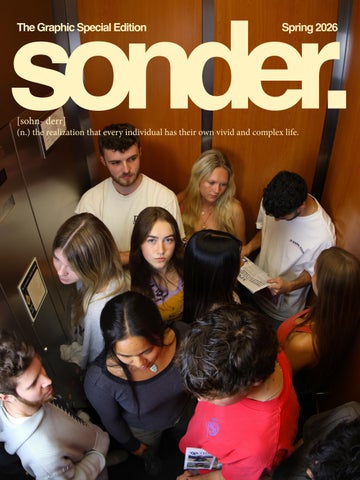
sonder.
[sohn- derr]
(n.) the realization that every individual has their own vivid and complex life.
Letter from the
EDITOR
My favorite place has always been an airport. At 3 years old, I remember walking through busy corridors lled with hundreds of souls trying to reach their destinations. Airports fascinated me. You see people from every walk of life — some excited, some exhausted, some nervous — yet all with a purpose to land somewhere important to them.
I recall seeing people sleeping on cold oors, rushing through terminals with suitcases in hand and standing in long lines for food. Beneath my quick observations, time seemed to slow down for strangers as they had meaningful, quiet conversations. A little girl with a vivid imagination and an excessive number of questions was somewhere in the middle of it all, constantly wondering about strangers’ daily lives.
at little girl’s curiosity was only heightened by growing up in several cities and countries. She started to see how everyone, even for a short time, impacts your life in some way. In life, an average person will get to meet thousands of people, and none will carry the same story. Perhaps life’s intricacy is what makes it so beautiful.
In another person’s world, you are merely a passing stranger, a classmate, a coworker or someone who is only ever remembered once. e uncertainty of connecting with one another is, in my opinion, the beauty of being human.
Our identities are shaped by the experiences people have together — the stories we read, the media we watch and the roles we ful ll on a daily basis. Humans are a spectacular mosaic of shared interests, borrowed colors and carefully aligned moments.
I’ve always believed we meet peo ple for a reason — whether they change us forever or only for a single moment. is idea is known as Sonder: the real ization that every individual lives a life as vivid and complex as your own. Understanding this brings with it a certain
knowledge — it increases your awareness, empathy and humanity.
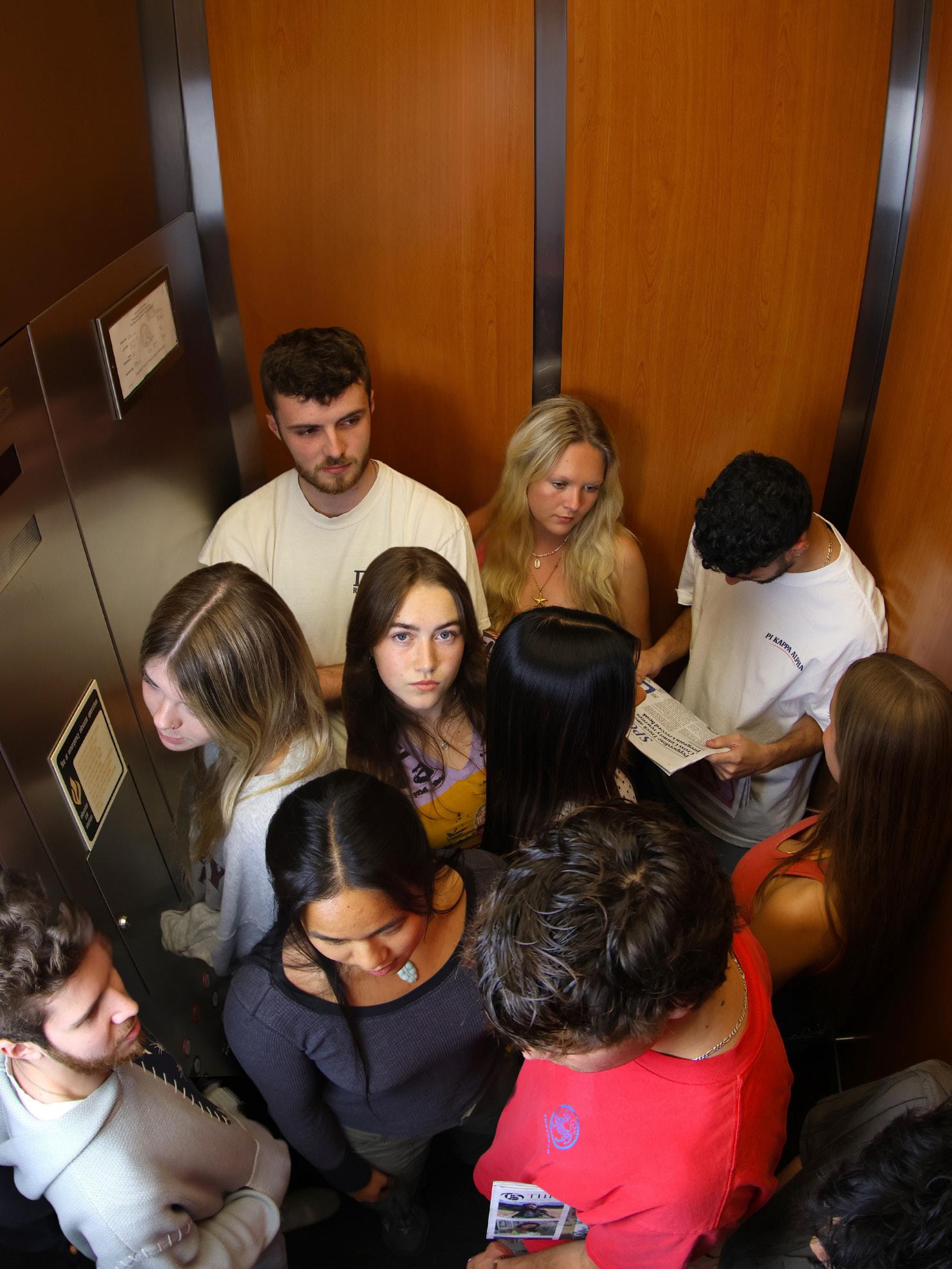
If you’ve never felt it, pause for a moment. Take a deep breath. Look up from whatev er you are doing. Notice your surroundings — the people moving, the pace of their steps, their facial expressions, the sky above you, the con versations hap pening around you. Countless narratives are unfolding at once.



e purpose of this Special Edition is to help you, the reader, see the world and the lives that are taking place in it. I encourage you to read the stories and see aspects of yourself mirrored within these pages, whether it is an instant connection through language, aesthetic, food, personality, family, art, celebrations and more.
We are all interlinked. So, feel intensely. Open up to others. Vive mucho y ama hasta que el corazón arda. And keep in mind, everyone is as alive as you are.

Soliel Lara Aponte Special Edition Editor

Special Edition Staff

Addison Thomas Staff Writer





Alicia Dofelmier Staff Writer Design Assistant
Nick Charkhedian Staff Writer

Melissa Houston Photo Editor
Amanda Monahan Creative Director
Nina Fife Assistant Editor
Tony Gleason Managing Editor
Isabella Pisciotta Copy Editor
Faith Siegel Copy Chief
Soliel Lara Aponte
Nina Fife
Soliel Lara Aponte
Alicia Dofelmier
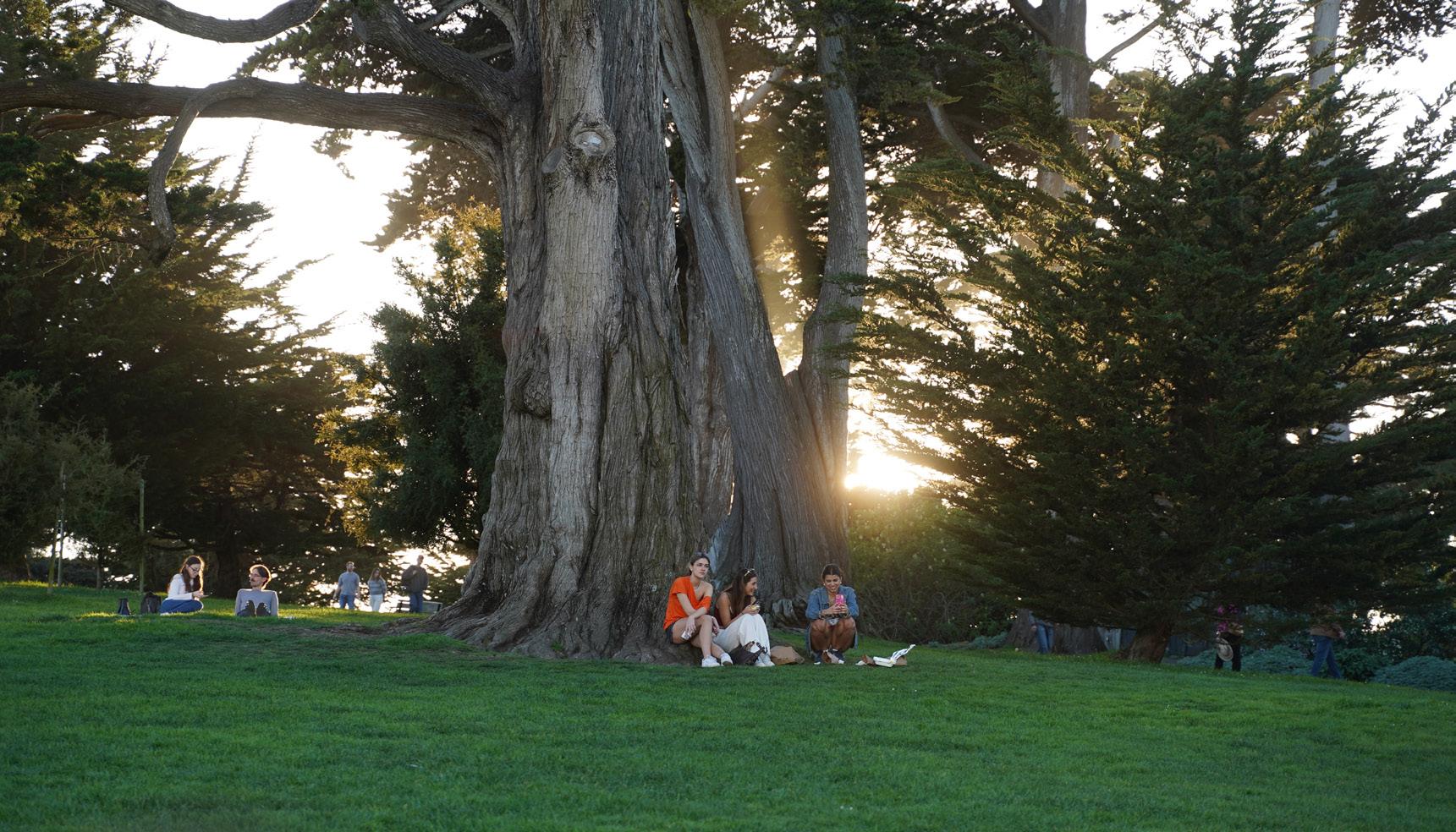


Threads of


story
by Haylie Ross
Through the lens of social media, Pinterest boards and curated photo dumps, humans have a natural obsession with the image they want to express out into the world. Yet, there is a beautiful complexity in the person behind the aesthetic.
Sophomore Annabelle Gentling said the human experience is art itself, and a lot of that personality shines through the style and curation each individual proposes out into the world.
“Every part of ourselves that we portray out into the world is a form of art in itself,” Gentling said.
e Inspiration
Whether it’s a parasocial admiration of an online in uencer or a deep connection with a beloved family member, one’s personal sense of self is in uenced by the impression others leave on our lives.
Sophomore Ella VanEvery said those closest to her have shaped her personal style.
“My friends and family have shaped who I am, so they de nitely have an e ect on how I want to present myself out into the world,” VanEvery said.
Gentling said the female in uences in her family have placed the building blocks in what she calls “her look.”
“I wear lipstick every day because my mom did when I was growing up,” Gentling said. “I wear the glasses that my grandma wore, and I wear ballet ats a lot because I was a dancer.”
Within the power of familial femininity, sophomore Nairi Keshishian said she also relates to the admiration she has for her mother and its later manifestation through her personal style and aesthetic.
“I’ve gotten a lot of style inspiration from my mom,” Keshishian said. “She always dressed me when I was younger, and I still ask for her fashion advice to this day.”
Creative inspiration is often a multistreet highway. Gentling said humanity thrives o of creating from the artwork of others.
Creators online have the ability to inspire young people all over the world with the press of a button. Gentling said that ability has inspired
her to share her creativity through the world in a way she sees t — through her social media platforms.
“I am constantly being inspired by beautiful women on my favorite apps,” Gentling said. “So, I wanted to share my form of art in hopes to inspire others.”
Behind the Aesthetic
At the end of the day, style and personal curation aren’t a surface level endeavor, but rather, who we are and how we carry our stories alongside us through the aesthetic we uphold, Gentling said.
For Keshishian, she said her Armenian culture plays a major role in how she portrays and carries herself.
“When I go back to Armenia every summer, I try to nd cool and unique pieces that re ect that side of my culture,” Keshishian said.
Everyday details within a person’s unique makeup are reminders that identity is layered. Gentling said the way someone dresses is not always about how others perceive them, but how they feel about themselves.
“ e way people perceive you isn’t always as important as your own personal con dence and the experience you bring to the table,” Gentling said. “As long as you love yourself, that’s all that really matters.”
For VanEvery, she said style evolves alongside personal growth.
“ e phases of my life have de nitely in uenced how I dress and how I present myself,” VanEvery said. “As I change, my style changes as well.”
Both Keshishian and Gentling said they carry their childhood passion for dance into who they are today.
Dance serves as a beautiful intertwine of Keshishian’s cultural background and maternal in uence.
“Growing up in dance, we used to wear a lot of traditional Armenian

clothing, and I think that has stuck with my style now,” Keshishian said. “My mom was always the one who encouraged me through it, so it still holds a special place in my heart.”
Re-writing the Narrative
Gentling said she acknowledges the misrepresentation of posting online, yet nds herself wanting to change the narrative. It isn’t always the toxic craving for the approval of others; rather, it’s an expression of beauty.
“It’s never about trying to show o ,” Gentling said. “It’s simply just people wanting to share what they nd beautiful in the world.”
VanEvery said she enjoys sharing moments she nds sweet in her mind, usually relating to her family members that she holds dear.
With Keshishian’s love for photography, she said she rarely posts for the approval of others but to keep a personal scrapbook of places and people that affect her personally.
“I love posting and taking photos of places or people that mean the most to me, even if it’s not necessarily picturesque or aesthetic,” Keshishian said.
VanEvery said she acknowledges the potential harm social media can cause, such as through the comparisons of another’s “highlight reel,” but she believes that with a healthy mindset, it can serve as a platform for art.
“I know there are some risks that can come with an obsession with social media,” VanEvery said. “But to me, I just really like seeing what other people nd cool or beautiful.”
Every part of ourselves that we portray out into the world is a form of art in itself.

photo by Soliel Lara Aponte
design by Amanda Monahan
Annabelle Gentling Sophomore

CULTURAL BONDS FORM THROUGH LANGUAGE
story by Nick Charkhedian
photo by Melissa Houston design by Christine Park
In a country where hundreds of cultures are constantly interacting and meshing, some students nd themselves connecting through a shared foreign language.
Over 80 countries are represented through Pepperdine’s international student body, making up 10% of the University’s student population, according to Pepperdine University. Additionally, the University is lled with second-generation Americans who share parts of their family’s culture with others on campus, including language.
“Culture is a big umbrella, and language is just a way to be able to express culture,” said Sharon Wakio, assistant director of Intercultural A airs for International Student Engagement.
Natalia Geller, a native Spanish-speaking senior at Pepperdine, found connections in a new country through her native language. Seniors Elen Arustumyan and Annie Markarian said they formed a friendship where they bonded over language and their shared culture.
An Armenian Bond
Arustumyan was born and raised in Armenia and moved to Massachusetts at the age of 10. Arustumyan said the Armenian population in Massachusetts sometimes doesn’t speak Armenian, but being a student at Pepperdine gave her a new opportunity to speak her rst language again.
“Coming to California was basically like the best decision I’ve made because I got the opportunity to meet people who speak the same language that I do — who speak the language that I grew up speaking,” Arustumyan said.
Aside from the language di erences, Arustumyan’s move to the West Coast brought her to a state that has a significant Armenian population. California has over 200,000 Armenians, while Massachusetts has an estimated 27,000, according to World Population Review. Los Angeles County has the largest Armenian population outside of Armenia, according to LA County.
Arustumyan and Markarian said they initially met each other in their rst year at Pepperdine. ey recognized their shared Armenian identity, but never had a conversation with each other — they shared smiles and waves but not words.
Toward the end of their sophomore
year, Arustumyan said she was looking for a roommate. She reached out to Markarian, beginning a new friendship.
Besides bonding over their shared heritage, the two also bonded over language.
“At times, when I didn’t know how else to explain myself, I would just switch into Armenian and talk to Annie in Armenian, and Annie would just respond in the same language,” Arustumyan said.
Wakio said when people have a shared language, there is an assumption of a basic understanding of the culture that is represented through those words.
“Both of us speaking the same dialect was de nitely a plus,” Markarian said. “Jokes were easier to understand, even just describing something or how our feelings were, how the day went, it made it funnier and more authentic or genuine.”
Markarian went on to say, “Saying something in your native language was just more freeing in some sense, because we were better able to understand each other.”
Markarian said she felt more at home at Pepperdine because of the Armenian community here. Both Markarian and Arustumyan are part of the Armenian Students Association (ASA) and said being around their fellow Armenian students feels like home.
Arustumyan discovered her connection wasn’t just limited to bonding over the Armenian language. She said she even formed a connection with another Armenian student through speaking Russian.
Rather than making a conscious e ort to speak the Armenian language with others, Arustumyan said she naturally nds herself speaking it whenever those around her can understand. Both she and Markarian said it was important to preserve their language in a country where it’s not the dominant language.
“Perserving your language — the Armenian language — is super important,” Arustumyan said. “ e language is what carries our traditions, our values, our humor and idioms.”
Navigating a New Country
Geller came to Pepperdine four years ago, embarking on a new chapter of life in a new country far away from her home in Lima, Peru.
Before coming to Malibu, Geller didn’t go to an international school. In her rst year at Pepperdine, she said she didn’t meet anyone that spoke Spanish, forcing her to learn a foreign language by jumping in with both feet.
She tried to advance her English by watching movies without subtitles. Geller said she also spoke a lot with her grandmother, who was from the United States.
In the following years, Geller formed multiple friendships at Pepperdine from hearing a familiar accent in class.
“It’s kind of like a really nice conversation starter,” Geller said. “People will always nd ways to talk to each other and kind of nd out [where they’re from].”
Wakio said there should be a good balance of expressing oneself through one’s native language — people can still practice their native language while also putting themselves in situations where they can learn and practice a new language.
Geller now nds a balance between her two languages. When she speaks in Spanish, she said she thinks in Spanish, but when she speaks in English, she thinks in English.
“It feels like you’re changing personalities when you’re speaking a di erent language,” Geller said. “I feel like English is more classy and then Spanish is more energetic.”
Geller’s biggest obstacle in learning English is the large amount of slang casually used in the language. She said if she’s in a one-on-one situation, she’ll inquire to understand the slang, but in a group setting, she doesn’t ask.
Geller said she came to Pepperdine undecided on a major, and eventually picked Integrated Marketing Communications (IMC). A Business Ethics class ignited her interest in Philosophy, and she took on the topic as a minor.
She then learned how to express herself better and argue logically, as well as becoming a better writer and speaker.
While English isn’t Geller’s rst language, she now feels that she is completely uent. Some of her best friends are English-speakers, and she said she’s able to jump that bridge and connect deeply, making profound connections.
Language, in the larger context of culture, can serve as an entryway for connecting with others, whether they’re international students, rst-generation Americans or second-generation Americans.
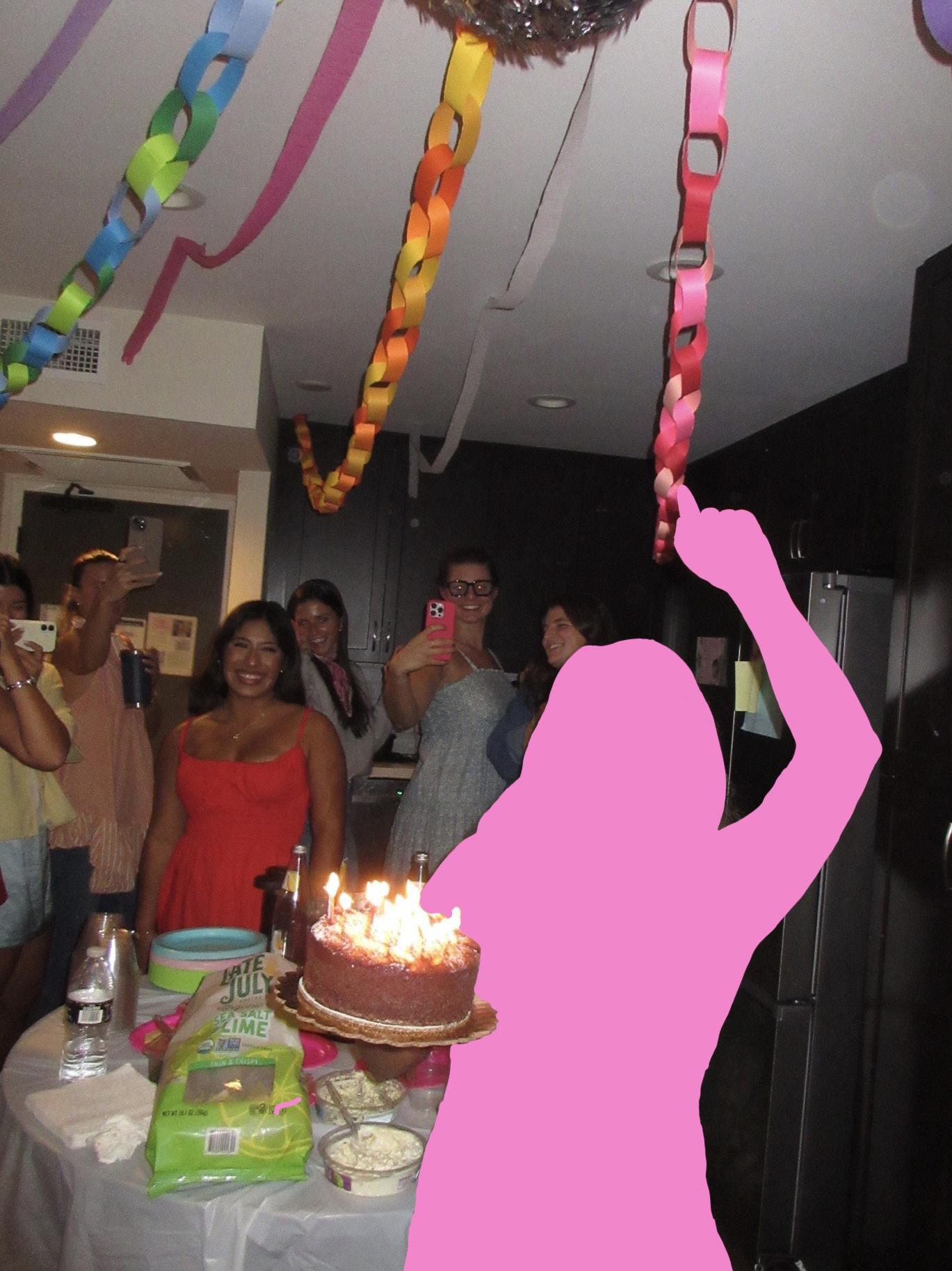
blowing out the CANDLES CANDLES CANDLES
story by Soliel Lara Aponte
design by Amanda Monahan
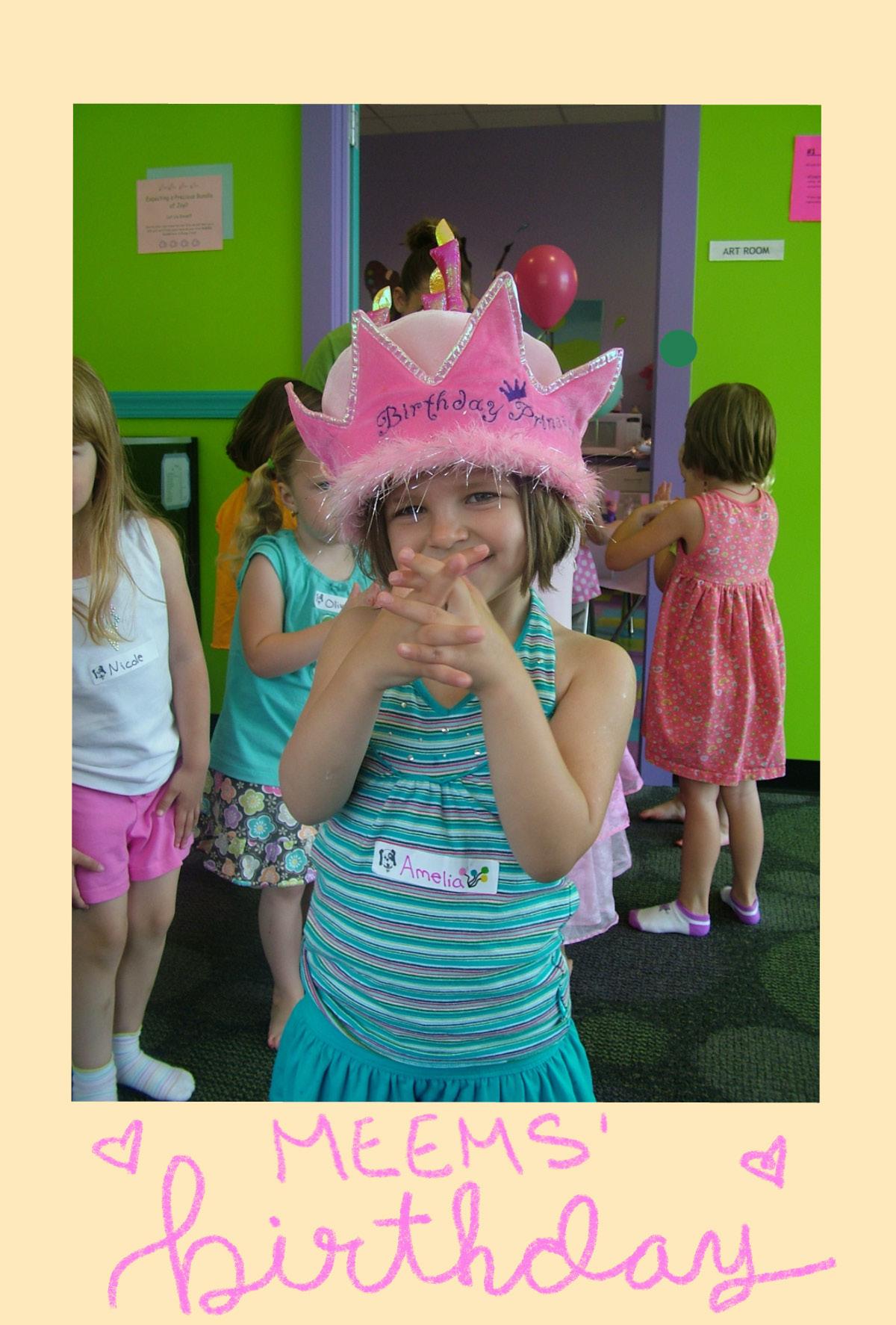
Streamers and balloons are scattered around the kitchen oor, making this day one like no other. e familiar room, now lled with presents and decorations, was ready to celebrate senior Amelia Mordan.
When she walked down the stairs of her house, she knew the special day that awaited her. From a treat for breakfast to a special dinner made by her Italian grandmother, Mordan always grew up with unique traditions made for her to recognize the love around her.
“Coming to college, I wanted to bring my family’s traditions to other people and celebrate their birthdays especially,” Mordan said. “Being away from family can de nitely be hard, so making somebody’s birthday special is just a super easy way to make people feel seen and loved.”
As I blow out my birthday candles each year, my wish is always the same: to be able to celebrate my birthday with the people who I care about.
For Mordan, senior Ruth Oppong and alumna Avery Vasquez, they said birthdays are a day when an individual realizes they’re not just another being on this earth, but someone worthy of appreciation.
“Because that’s where you know who truly loves you, people who show up for you — it’s not just a celebration for yourself, but it’s a celebration of life with friends around you,” Oppong said.
Growing Older
Growing up, the most important tradition in my household was having a candle to blow out — no matter the cake or the place, I would always have my family there.
My parents always made sure to sing the Mexican happy birthday song: “Estas son las mañanitas que cantaba el rey David; hoy por ser tu cumpleaños te las cantamos así. Despierta, Soliel, despierta; mira que ya amaneció, y ya los pajarillos cantan, la luna ya se metió.” ey sang the Puerto Rican version as well: “Feliz, feliz en tu dia, amiguita que dios te bendiga, que reine la paz en tu dia y que cumplas muchos mas.”
As children, birthdays are not just about growing older but growing up
and looking forward to another year of maturing.
For Mordan, Oppong and Vasquez, they said this annual celebration brings happiness, but it also validates a child’s worth, leaving cherished memories and the feeling of acknowledgement.
Simple gifts from loved ones can hold immense signi cance, particularly for Oppong. Every year, her dad writes a note card for her birthday — in it, a scripture that he hopes will represent her year.
“Every year I wait for that note,” Oppong said.
A hand-taped yellow brick road from her bedroom door to the front yard and onto the street is just one of the extravagant birthday celebrations Vasquez said she remembers from her childhood. Her mom spent countless hours carefully curating every detail, transforming the day into something magical her daughter would never forget.
“I was obsessed with ‘ e Wizard of Oz,’ and I had my little Dorothy costume,” Vasquez said. “She always went over the top, and that was so meaningful. It just shows how much my mom cares about making her kids happy, no matter if it costs her being up all night or spending a ton of money.”
Vasquez had other birthday parties, such as an all-pink party, a circus birthday, an ice cream parlor birthday and others. rough her mom’s e orts, Vasquez realized her love for planning and gift-giving.
Now working as a special events planner, it brings Vasquez so much joy to create events for people to interact with those they love.
“Jumping up to the grandest scale, like weddings, you get to be with people on the best day of their life,” Vasquez said. “You get to be in a room with literally everybody they’ve ever loved — it’s like the most ful lling thing ever.”
Struggles of Celebrating Birthdays
Expectations are real, and when birthdays come around, they intensify.
At a point in Vasquez’s life, she disliked her birthday. She said she felt as if the quantity of people acknowledging her birthday was important — it felt as though it was a sort of transaction. She coped with those feelings by downplaying the importance of her birthday and saying she didn’t care.
“No matter what, people love to feel seen, even if they say they hate being seen and hate having attention on them,” Vasquez said. “People want to be acknowledged on a day that means something to them.”
Since rediscovering her love for her birthday, Vasquez said she will go out of her way for friends to make them feel cherished — especially if they insist they don’t care.
Mordan said hoping for someone to wish you a happy birthday shows how much they a ect an individual’s life.
“It’s simple: true friends will make you feel special and those who don’t aren’t your true friend,” Mordan said. “People show their true colors on your birthday.”
Mordan said she is gracious with others, more so on their birthday. She said feeling loved and loving people are the two things to live for.
“It’s the rst thing that we learn and the rst thing we forget — to treat others how we would want to be treated,” Mordan said.
With busy schedules, frequently seeing loved ones gets harder. Oppong said birthdays are the best remedy to having everyone a person cares for in one room.
“It’s a kind of way to stay grounded and just take life little by little, making it seem more special,” Oppong said. “Even if it’s only for a certain hour or period of day.”
Living far from home and without family to celebrate my birthday instantly placed an expectation on others to do so. I often struggled with comparing myself to people’s birthday treatments and celebrations.
But then I realized I should be the one making my birthday unique and memorable. I learned not to leave the value of my special day to be determined by other people. Instead, it opened my eyes to seeing those who do care and show up.
Lasting Importance of a Birthday
Words turn into feelings once Mordan reads birthday texts and cards — a rmations she can return to when she needs them the most.
“Society doesn’t consistently appreciate the people in their lives enough,” Mordan said. “So your birthday is just a really special day to hold onto for the whole year if you’re needing a little pick-me-up.”
As people grow older, appreciating those around oneself becomes clearer. Mordan said birthdays re ect the season that a person is in and the people who surround them. For her, it’s more about celebrating another year you have with the people you love.
“When you grow up, it’s your family who celebrates it [birthday], and then when you’re in your 20s, it’s your friends,” Mordan said. “But then you create your own family, and you celebrate it with them.”
Aging doesn’t mean birthdays become less meaningful. Oppong said these celebrations change as a person matures.
“It changes because your friend group gets wider, your family too — you celebrate with di erent people that you love di erently,” Oppong said. “It’s never meaningless; it will always be meaningful, even if it was just you and God.”
Birthdays change with the seasons. Vasquez said that throughout every stage in life, birthdays are celebrated di erently. However, at the end of the day it’s not about the quantity but rather, the quality.
“As long as I’m just do ing something that I love with the people that I love, then that’s a good birthday to me,” Vasquez said.








Behind the Performance
Editor’s Note: Melissa Houston was a member of Dance in Flight (DIF) this past year.
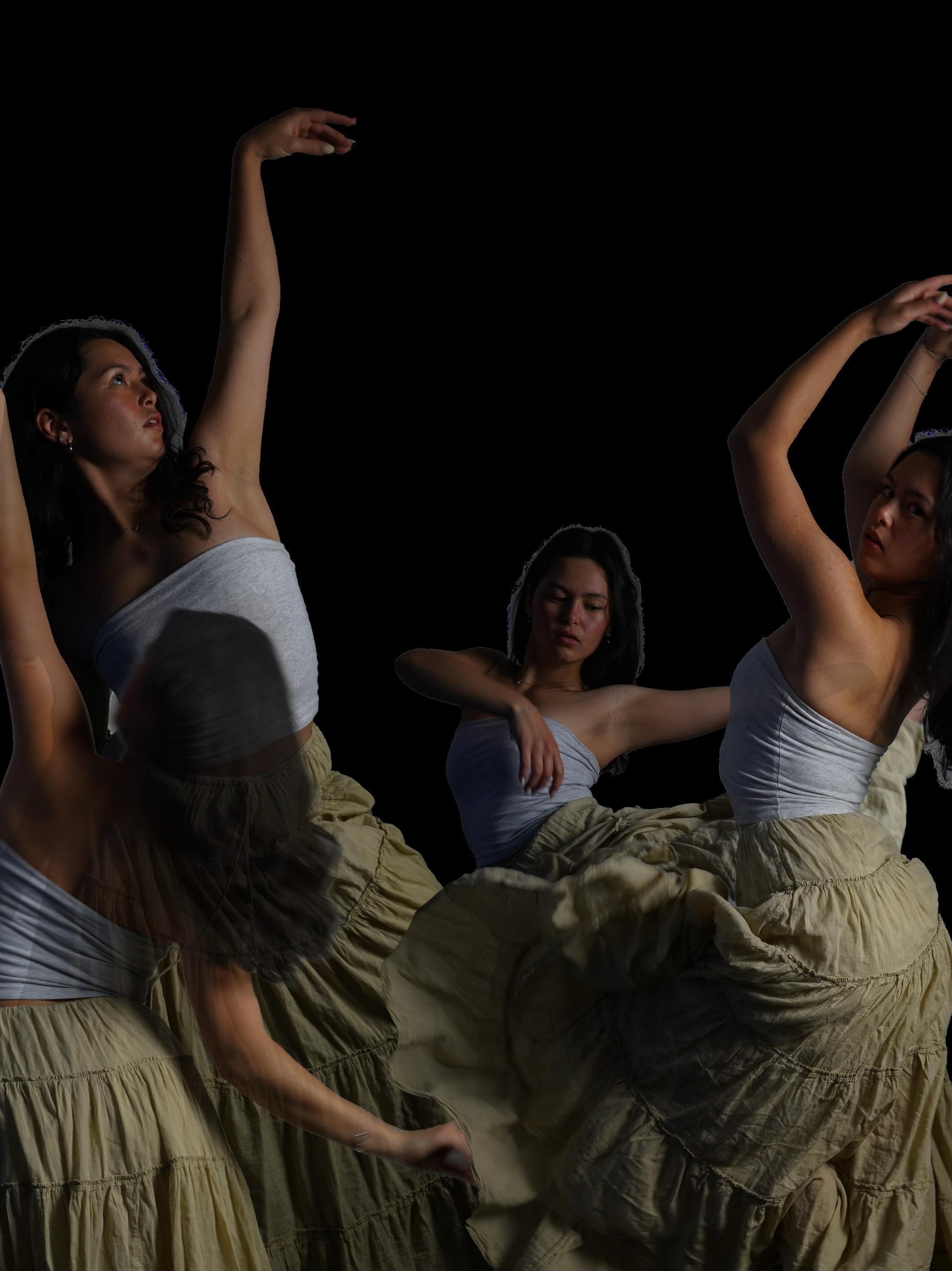
e lights come up, the curtain rises and the show begins.
From the outside, performing all looks the same. People go on stage, move, sing, dance and execute something they have practiced over and over again.
But behind every performance is a human being bringing an experience to the stage that is unique to them and makes the moment theirs.
“With any performance, you have the chance to become somebody else or to embody something else,” said Jaycee Cox, senior dancer at Pepperdine. “I feel like, in a sense, I do feel more connected with my own self too.”
Emotional Performing
For Cox, a member of Dance in Flight (DIF), she said her performance career started when she was young and continued into college. Performing had begun long before an audience was in front of her.
“Dancing to dance, even with no audience, I feel it even more deeply because it feels more personal,” Cox said.
Dance is internal — Cox said it’s a way to process emotions that don’t always have clear words or explanations. After stressful days, dance becomes a release and something that allows her to let go of what she is holding onto.
“Sometimes I’ll come in [to the studio], and I’m like ‘I’ve had such a bad day,’ but then after I dance, I feel a lot more free because I got to let that out,” Cox said.
Even on stage, that feeling remains the same for her.
During a show last year, Cox performed to “Silver Springs” by Fleetwood Mac and said she didn’t just dance, but she embodied the music. She described the feeling she had as fully stepping into the role of Stevie Nicks and becoming her emotions in the song.
“I felt her words and I felt like I was embodying her in that moment and taking on whatever emotions and frustrations that she felt,” Cox said.
For Cox, she said performing is not about recognition, but rather helping audience members resonate with the emotions she tries to convey.
“I perform because it gives me the power to share my own thoughts and emotions, and I always leave hoping somebody in the audience feels seen,” Cox said.
Expressive Performing
For dancer Genevieve Velarde, senior at Pepperdine and fellow member of DIF, she said performance is less de ned.
Her relationship with dance has never been linear. ere were moments such as when she did not make her high school dance team. She said she questioned the reason and then eventually came back to performing in college.
“When I think back to the times where I wasn’t dancing, I was always missing it,” Velarde said. “I guess I just couldn’t nd anything else to ll that void of expression.”
But even that sense of expression is still something Velarde said she is trying to gure out.
“I am trying to nd that still,” Velarde said. “ at is what is keeping my passion alive; I’m still on that search.”
Velarde’s relationship with performance is shaped by the exploration of her emotions. She said it is not a xed feeling, but rather something that she is still discovering.
“I love performing because it gives me a voice when I don’t know the right thing to say,” Verlarde said. rough her movement, she said she is able to communicate in a di erent language — one that doesn’t require words.
“Expressing myself through nonverbal activities — like dance or music — is how I feel the most comfortable,” Velarde said.
And for Velarde, she said her performances are not de ned by who is watching but rather by what it gives her personally.
“I would still dance if I knew no one was looking at me because I do that anyways,” Velarde said. “Performing is not about the people, it’s literally just for you.”
Vulnerable Performing
Zoe O’Donnell, Musical eatre major and senior at Pepperdine, said she approaches performances
di erently than Velarde and Cox.
O’Donnell said she feels like her truest self when on stage, as she is constantly learning how to blend her character with herself.
“‘What am I feeling, what am I processing or what am I doing in this moment as my character?’” O’Donnell said. “A lot of this is how can I melt them both together so that way I’m not pulling out of the show.”
at process does not end when she leaves the stage. O’Donnell said she usually nds herself re ecting after her performance — separating her own emotions with the ones she carried on stage.
“When the show ends, that’s when I can nally process my own emotions,” O’Donnell said. “And I’m able to step back and realize how it went.”
e senior uses her performances as a way to understand her own emotions and learn more about herself.
O’Donnell said she usually nds out more about herself than the character she is portraying. at self-awareness comes from a deeper part of her performance — vulnerability.
O’Donnell said learning how to be vulnerable and how much of herself to give on stage has been one of the most challenging parts of her performances.
“It’s about being vulnerable — that’s how you connect with people watching you,” O’Donnell said.
Balancing vulnerability with performing is not always easy. She said there is always this pressure she feels before she steps onto the stage — her desire to perform well, to be liked and to meet the expectations of her teachers, peers and family.
“But then you have to remind yourself that this is what you love,” O’Donnell said.
Although Cox, Velarde and O’Donnell all step onto the same Smothers stage to perform, their internal experiences are completely di erent.
For Cox, performance is a way to release her emotions. For Velarde, it is a tool to help her express what is hard to say out loud. For O’Donnell, it is about stepping into another life and sharing that experience with others.
From the audience’s perspective, none of it is visible. All they see is the performance.
story by Melissa Houston
photos by Melissa Houston design by Amanda Monahan

But behind every move, song and dance, there is something even deeper happening — something unseen and personal to each performer.
“And though that is not stage-ready performances, I still feel the most comfortable and most authentic when I’m either dancing at a wedding or a party or on stage,” Velarde said. “I think that there are di erent de nitions of performing.”
“ “
I love performing because it gives me a voice when I don’t know the right thing to say.
Genevieve Velarde Senior



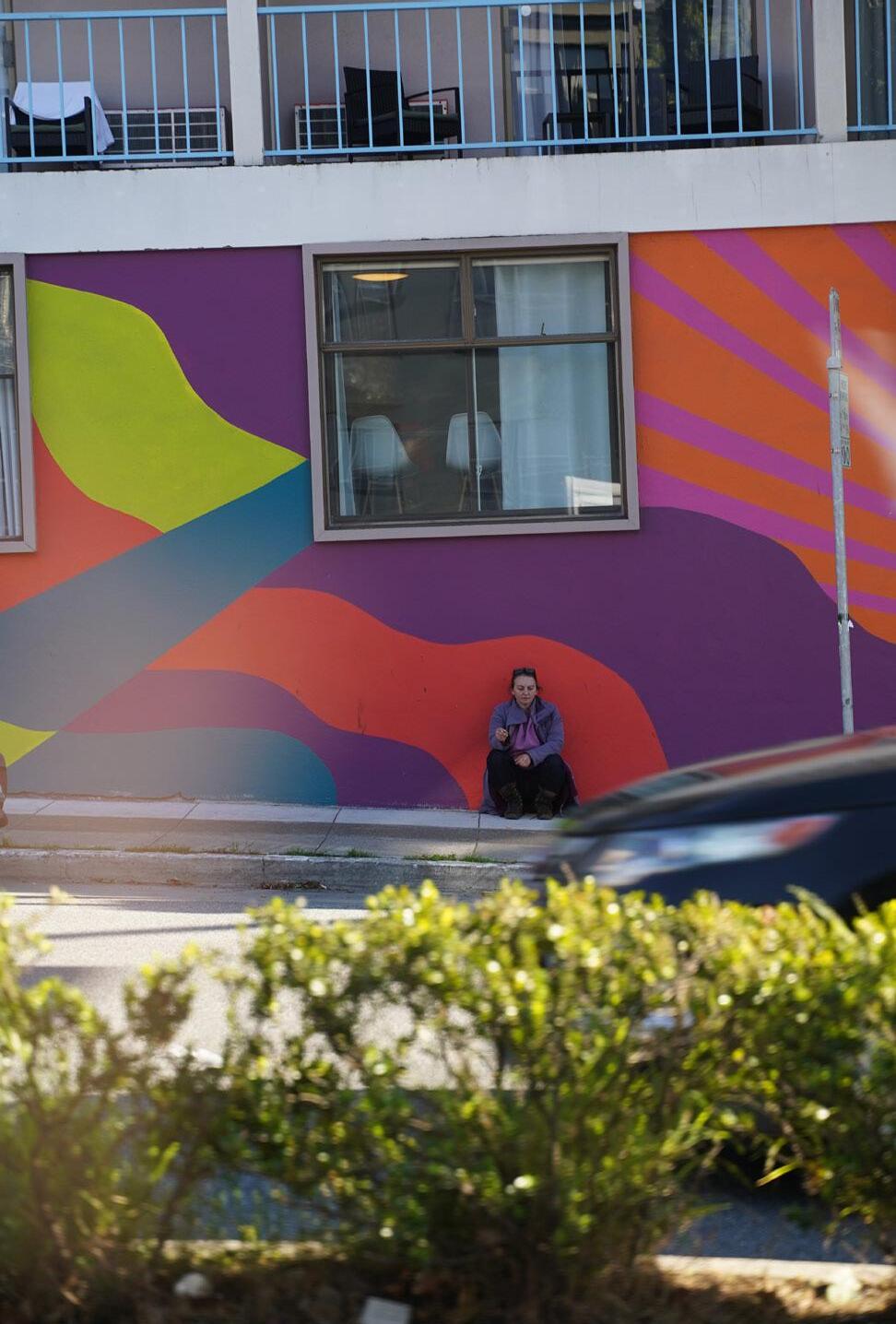
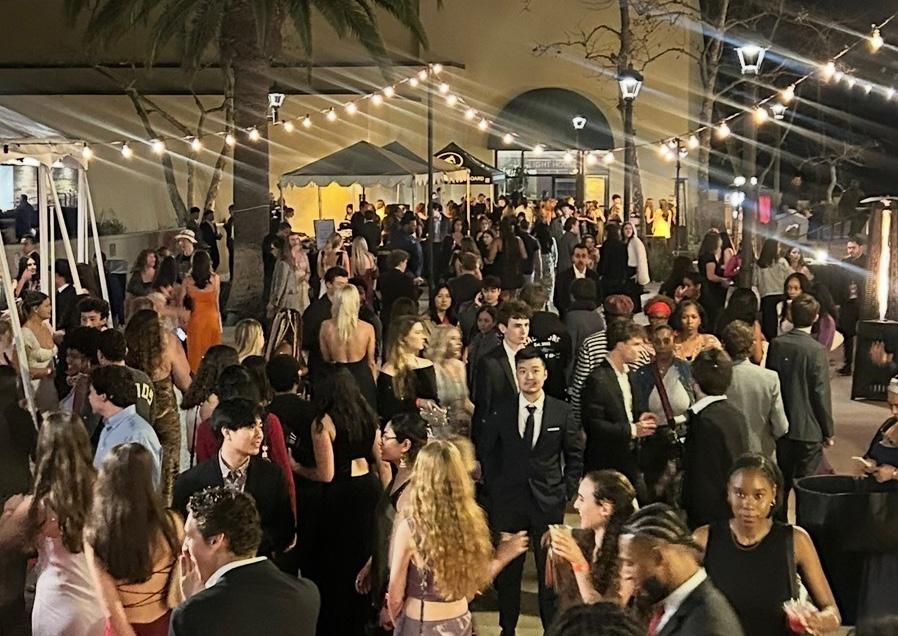
SONDER STILLS
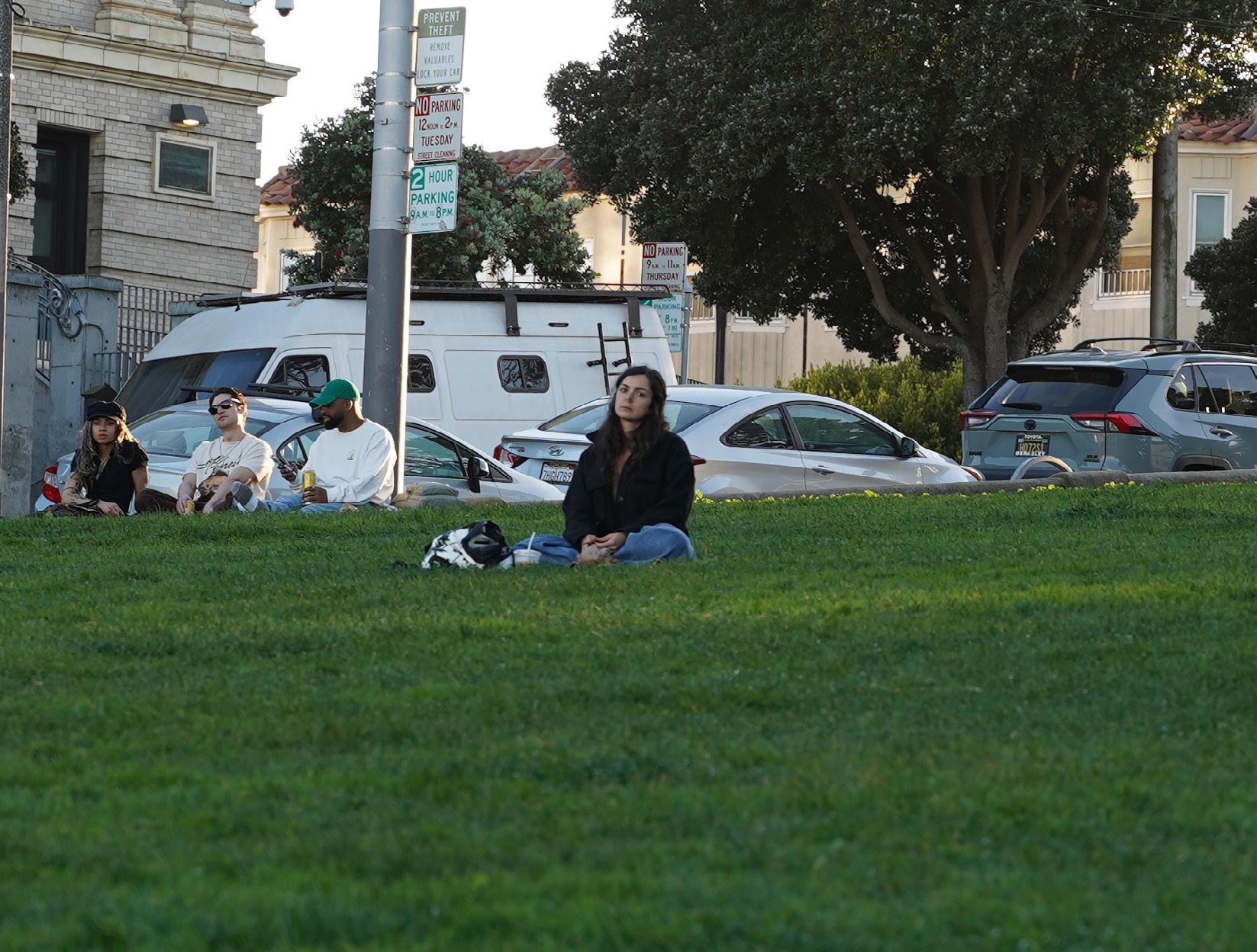

photos by Melissa Houston and Soliel Lara Aponte




The World Through a Soundtrack
Beyond mere background noise, music often acts as a lens through which people view both their own lives and the lives of those around them.
For many, that connection begins at a young age. roughout my childhood, Alfa 91.3, my favorite radio station, played music nonstop. When I was 7 years old, I received a pink iPod Shu e for Christmas. With performances by musicians like David Guetta, Shakira, Lady Gaga, Bruno Mars and the Glee cast, it introduced me to the expressive and creative possibilities of music. at small gadget made me more observant. I used to sit in bed and meticulously write down the words to the Shu e songs, attempting to learn all the lyrics immediately. I remember I would lie on my bed bunk, pull out my little red notebook and write lyrics from songs such as “Gitana” by Shakira and “Gives You Hell” by e All-American Rejects.

crossing on a two-day road trip from Monterrey, Mexico, to Miami. An ambulance with ashing lights and blaring sirens approached from behind us as the wooden barrier came down and the crossroad red lights blared, obviously in a hurry to help someone in need. barrier locked into place, forc ing it to stop its attempt to cross before the train arrived.
e sirens stopped a little while after.
e atmosphere in our car instant ly changed. Referring to the passing train as a “soul train,” my mother re quested my sisters and me to turn down the music and pray for who ever was inside the ambulance. It was a eeting moment, but it was signi cant — a recognition of a life I was never going to cross paths with again.
seen rhythms of others, whether they are in a moving vehicle, walking down the street, watching a sunset or transforming brief interactions into stories, even if only brie y.
At other times, I would lie still and listen to music while imagining my future. Taking long car rides made my daily experiences more re ective.
Music became a doorway to something greater on such drives: the understanding of others’ lives. It was natural to wonder where strangers were going and how they were feeling as I watched them walk by outside the window. Music told a story about those eeting moments rather than merely lling my empty mind.
My family and I halted at a railroad
I put my headphones back on and started playing “Dust in the Wind” by Kansas, once the train had passed and the moment was over. As I sat in the back seat, I couldn’t help but think about the people in that ambulance — the hurry, the uncertainty and how quickly their lives changed. I would never know the full story, but for a little moment, it seemed very near.
Such experiences demonstrate how music can increase awareness of moments, often things that could go disregarded. A song has the power to evoke introspection, transform ing everyday objects into remind ers that each individual has a life as complicated as my own.
In this way, music makes it pos sible for individuals to picture the un





story by Soliel Lara Aponte
photos by Soliel Lara Aponte
design by Soliel Lara Aponte
ning Pepperdine at
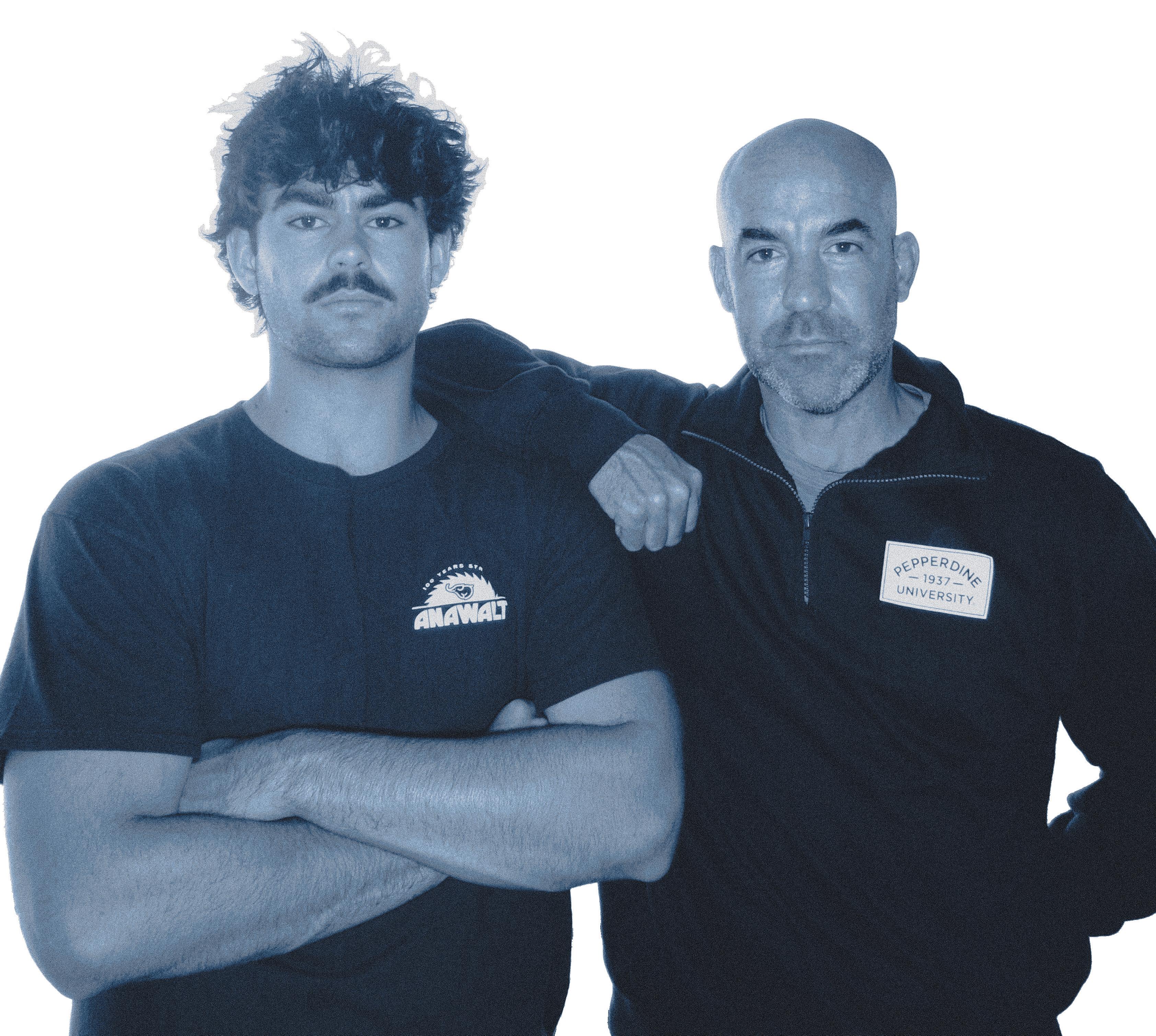


story by Christine Park photo by Soliel Lara Aponte design by Christine Park
Nestled up in the hills of Pepperdine lay the homes of many faculty and sta members. One family in particular, the Begins, put their roots down on Pepperdine soil more than a generation ago and continue the Pepperdine legacy as alumni, a student and a dean in a Waves family.
Connected by blood, each Begin walks the grounds of the Malibu campus daily, yet with a di erent purpose. Paul Begin (‘99) steps into his o ce each day as the Interim Senior Associate Dean for Seaver College. His son, rst-year Ethan Begin, continues to live on the campus he grew up on — now in a di erent era as he tries to de ne his adult life.
Similarly, Ethan’s cousins, rst-year Taylor Wooten and senior Braden Wooten, also attend Pepperdine, following in the footsteps of their Pepperdine alumni parents.
“Pepperdine is a family,” Paul Begin said. “Families have things they disagree on, and yet, you still love your family.”
Life on the Hill
For many Pepperdine students, the Malibu campus is a place of academia and a temporary home for their years of education. But just up the hill is a place of livelihood and community for the families of faculty sta members.
Malika Begin, a Graziadio alumna (‘21) and Paul’s wife, met her husband back in 2007 when she was director of International Programs and the two were planning the Madrid summer program
together. As time passed, Paul and Malika fell in love, and they married in 2011. Now, they have a family with Ethan and two younger sons, Jagger and Clanton.
On the Drescher Campus, the Begin family lives in a faculty condo where they have created a tight-knit community with their neighbors. For Malika Begin, she said growing up on a university campus has created a unique experience for their sons.
e Begin family is surrounded by a community full of families who embody the Christian faith and values.
e Begin family often welcomes neighbors and students to their home. Most notably, they have hosted a soup night for the neighborhood 12 times, leaving their home jam-packed. e neighborhood hosts Fourth of July bike parades, epic water balloon ghts, mom present-wrapping parties and Bunco nights.
“It really is such a gift,” Malika Begin said. “It’s a rare, rare gift and we’ve been really grateful for it.”
Roots in the Malibu Soil
Begin’s undergraduate experience. His grandfather, Miles Begin, attended Pepperdine when it was originally called Pepperdine College.
Miles Begin became a Christian and never nished school, leaving for a church in Arizona.
Paul Begin grew up in a small Church of Christ in Huntington Beach, and he said knowing people connected to Pepperdine led him here as an undergraduate. He remembers his own student experience being stress-free — working as an intern for campus ministry, studying Journalism and sur ng with friends.
“I can’t ever remember studying in Payson Library,” Paul Begin said. “I read in my room a lot, but I wasn’t worried about my grades.”
Paul Begin said he remembers enjoying his classes, professors and soaking up the Malibu experience.
In 1998, Pepperdine only o ered four international programs — Lyon, France; London, England; Florence, Italy; and Heidelberg, Germany. At the time, then-President David Davenport was committed to opening a program in Latin America, Paul Begin said.
us, in his senior year, Paul Begin said he experienced life abroad with the rst half of each semester in Madrid and the last halves in Costa Rica and Buenos Aires, respectively.
“I was on that experimental trip as the RA,” Paul Begin said. “My professor came to me the year before and said, ‘We’re going to run this trip. You need to do this so you can be a Spanish major, and I need somebody to be a spiritual life director on the trip.’”
Photos courtesy of Paul Begin
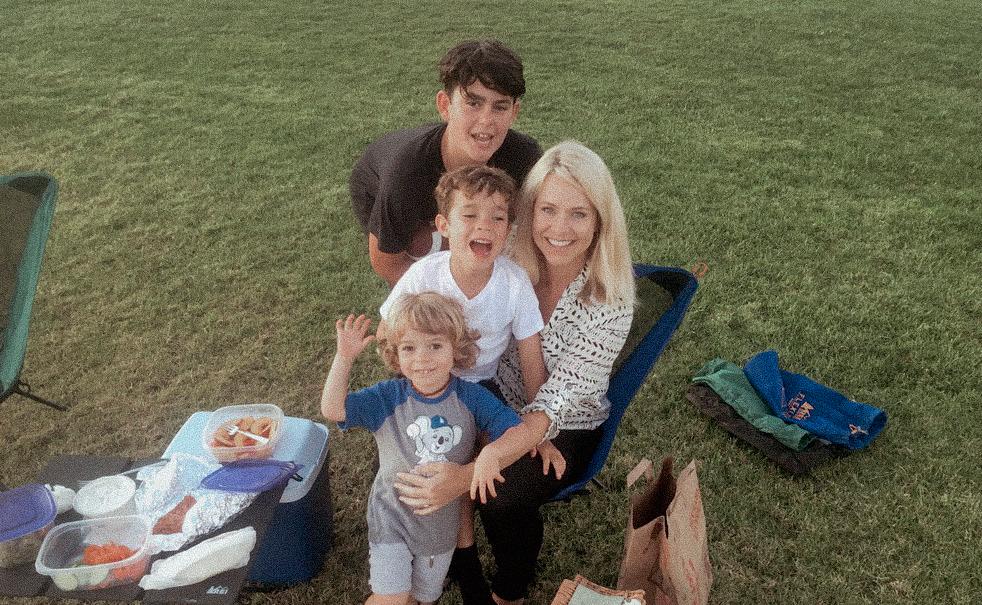
Paul Begin’s family — Ethan, Malika, Jagger and Clanton — spend time at Alumni Park.
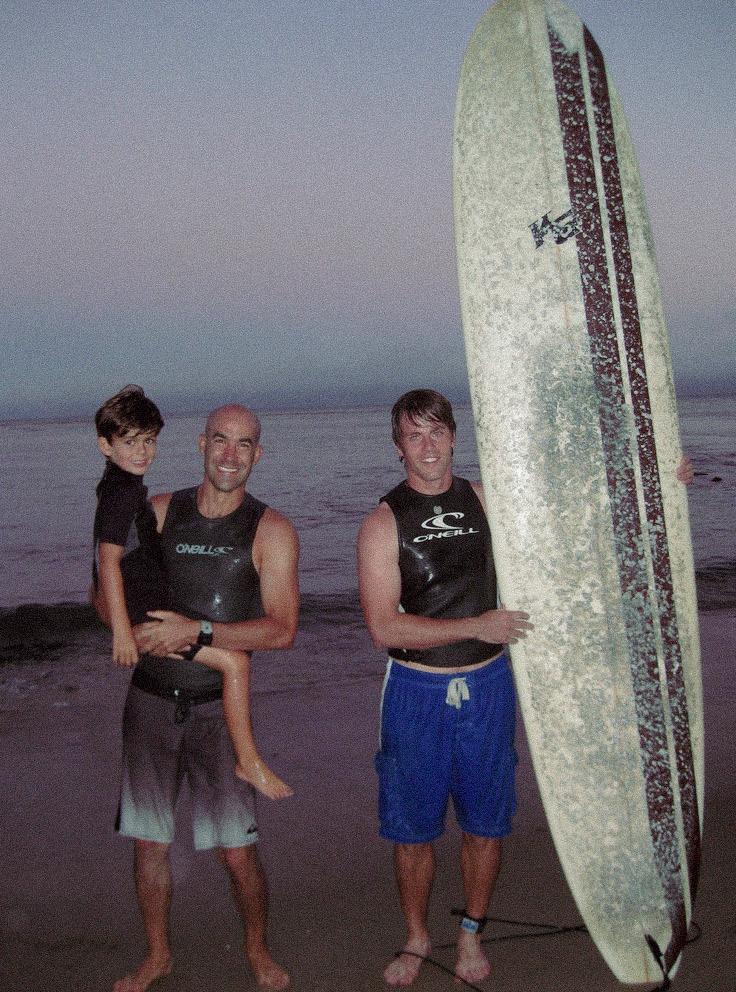
Paul Begin and Jagger surf with his brother-in-law at Latigo Beach.
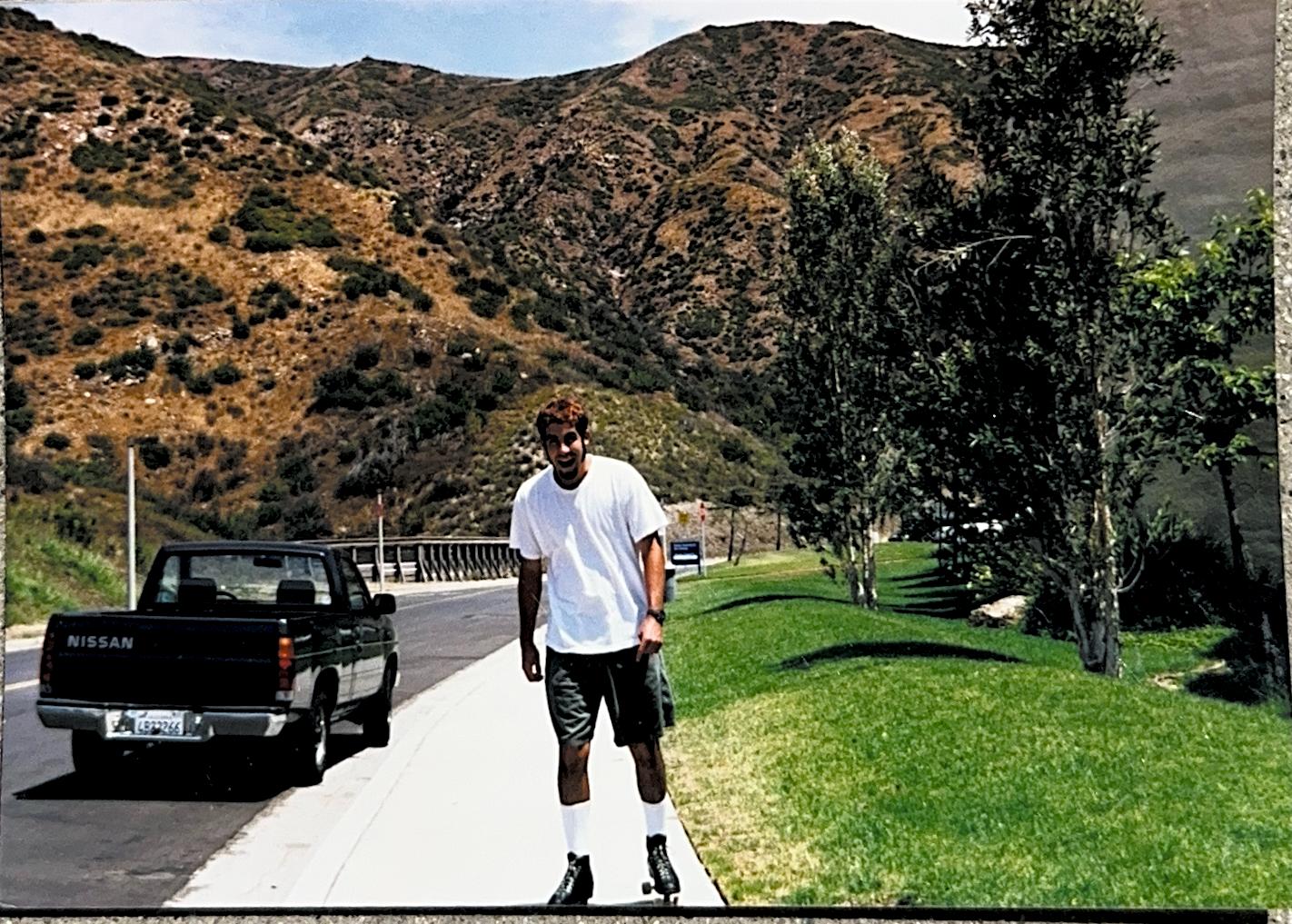
Paul Begin starts his Pepperdine legacy as an undergraduate in 1995.
strangers who encouraged him to have
out to him for a faculty position back
Church of Christ’s presence was felt very strongly on campus, contrasting to the current student body with only 4.5% identifying as Church of Christ followers, according to the O ce of Institutional E ectiveness.
Nostalgic, Paul Begin said he remembers every Wednesday night when the University church would host a gathering called “Care Group,” garnering around 350 to 400 people in Elkins Auditorium who sang devotional songs and prayed together.
Coming from a fairly sheltered cultural experience, Pepperdine provided a space where Paul Begin could think about Christianity on his own terms. Paul Begin said it was through open conversations with friends and professors that his faith grew to be more complex.
“I was really able to kind of make it my own, and di erent from my parents — not in a really radical way, but, de nitely, I was forming what I thought about God and church and how humans are supposed to live together,” Paul Begin said.
Paul Begin said he wanted to pursue being a professor as he enjoyed the life of the mind, leading him to attend the University of Virginia for his master’s degree and PhD in Spanish. It was his way of serving and living a thoughtful existence.
“I went as far away as I could,” Paul Begin said. “ at was one of the pieces of advice that they gave me, is to go as far as you can.”
In the fourth year of his PhD program, Paul Begin’s former Pepperdine adviser and the dean at the time reached
role as interim senior associate dean.
“I’ve grown up by the ocean my whole life, and when I think about going somewhere else, it’s hard for me to imagine nding a university that I feel so connected to is also in a place I feel connected to geographically,” Paul said. “So, this is my home.”
e Begin family has now built a life centered around the privileges of living on the Malibu campus.
“For my kids, they’re born into that, right?” Paul Begin said. “Like, they know Saturdays are beach days, and they like being able to take the shuttle around campus, and they love our neighbors because we work with and live with really amazing, smart, kind, Christian people.”
Campus Kid
Ethan’s childhood bedroom overlooked Pepperdine’s Malibu campus for all 18 years of his life. Taking advantage of the athletic facilities, his childhood included playing baseball down at Eddy D. Field Stadium with his dad, going to games in Firestone Fieldhouse to cheer on the Waves and hiking through the hills.
Ethan said growing up on a college campus felt normal to him. Being one of 10 kids in his neighborhood all born within the same six months, the group explored the graduate campus to hang out and eat at Heroes Garden, forming a tight bond.
“ ere were kind of phases for everything,” Ethan Begin said. “We’d have a few months where everyone’s super into biking, and then, a few months, everyone was all over basketball.”

On a regular day, Paul Begin would take Ethan Begin to his o ce. Ethan Begin said he remembers how it seemed like everyone knew who he was. Most notably, Ethan Begin would tag along to the beach to paddle board while his father would surf.
Ethan Begin said he learned about hard work and the balance of family and work by watching Paul Begin. Ethan Begin said his dad made sure to be present in moments such as family dinners and
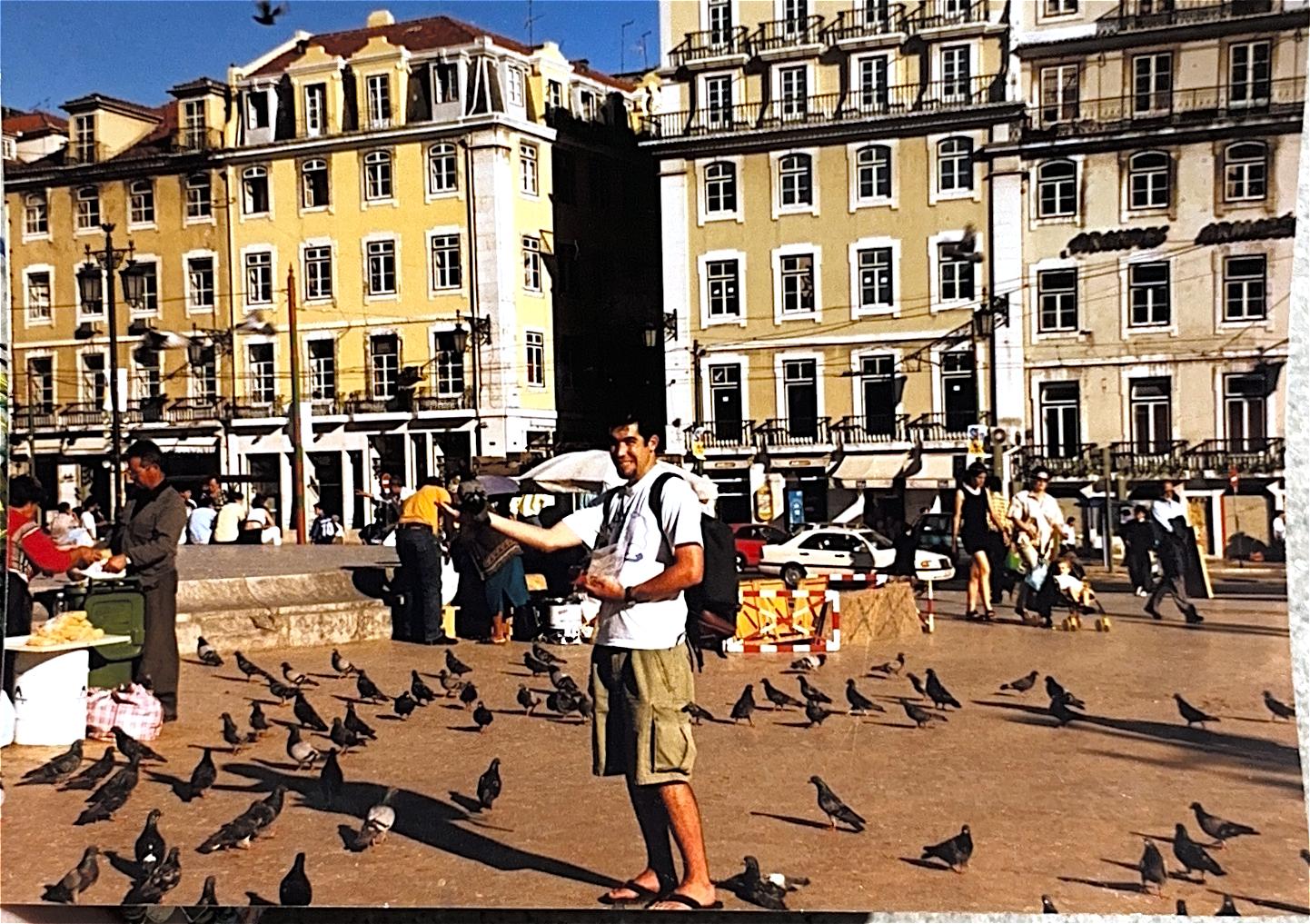
Paul Begin travels abroad as an undergraduate in Florence.
Paul Begin and Ethan Begin surf together.
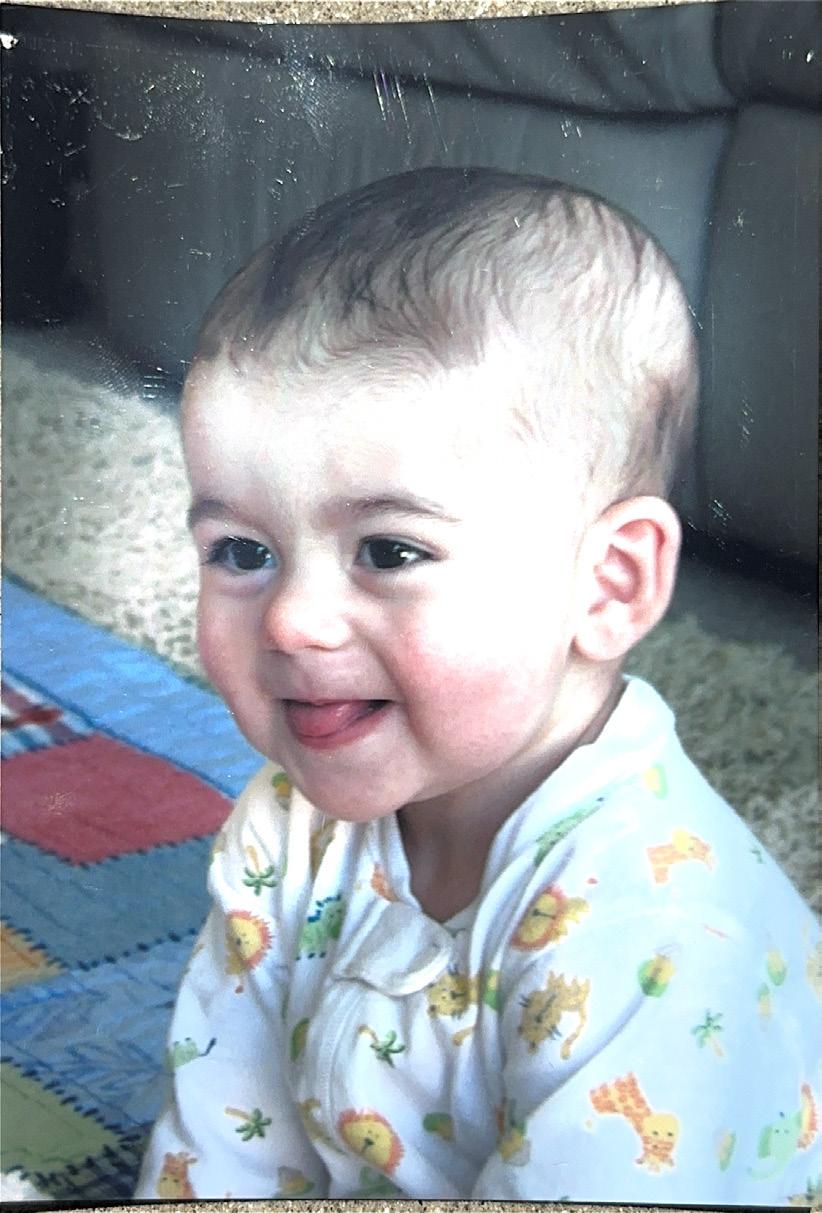
Young Ethan Begin grew up at Pepperdine.
breakfasts and taking him and his siblings to school in the morning.
Yet, there was a period of time in his upbringing, speci cally high school, where he was able to have some distance from Pepperdine. During this time, Ethan Begin lived with his mother in Agoura Hills and attended Agoura High School before graduating from Oaks Christian School.
When applying for colleges, Ethan Begin didn’t consider Pepperdine as one of his options. However, he said he decided last-minute to continue his family’s legacy and hasn’t regretted it since.
Ethan Begin said he began his rst year in the fall, majoring in Accounting — inspired by his uncle who works as an accountant.
He continues to build his rst-year experience, becoming a member of the Alpha Tau Omega (ATO) fraternity, being at the gym — either working or working out — and sur ng. Ethan Begin can be found alongside his fraternity brothers listening to a sermon down at Zuma Beach and enjoying e Well on campus.
“What I see in Ethan is a very conscientious person, somebody who wants to do the right thing,” Paul Begin said. “Maybe that’s from our family, but I think a big part of it is going to be having grown up in an ecosystem where you’re around really good, ethical people.”
To Malika Begin, she said being a Pepperdine family means embodying the mission of living a life of purpose, service and leadership.
“We learn so, so much from the students in the community, but, we are denitely here to serve with purpose and to really be a part of the community in an active way,” Malika Begin said.
“Pepperdine is a family. Families have things they disagree on, and yet, you still love your family.”
Paul Begin
Interim Senior Associate Dean for Seaver College
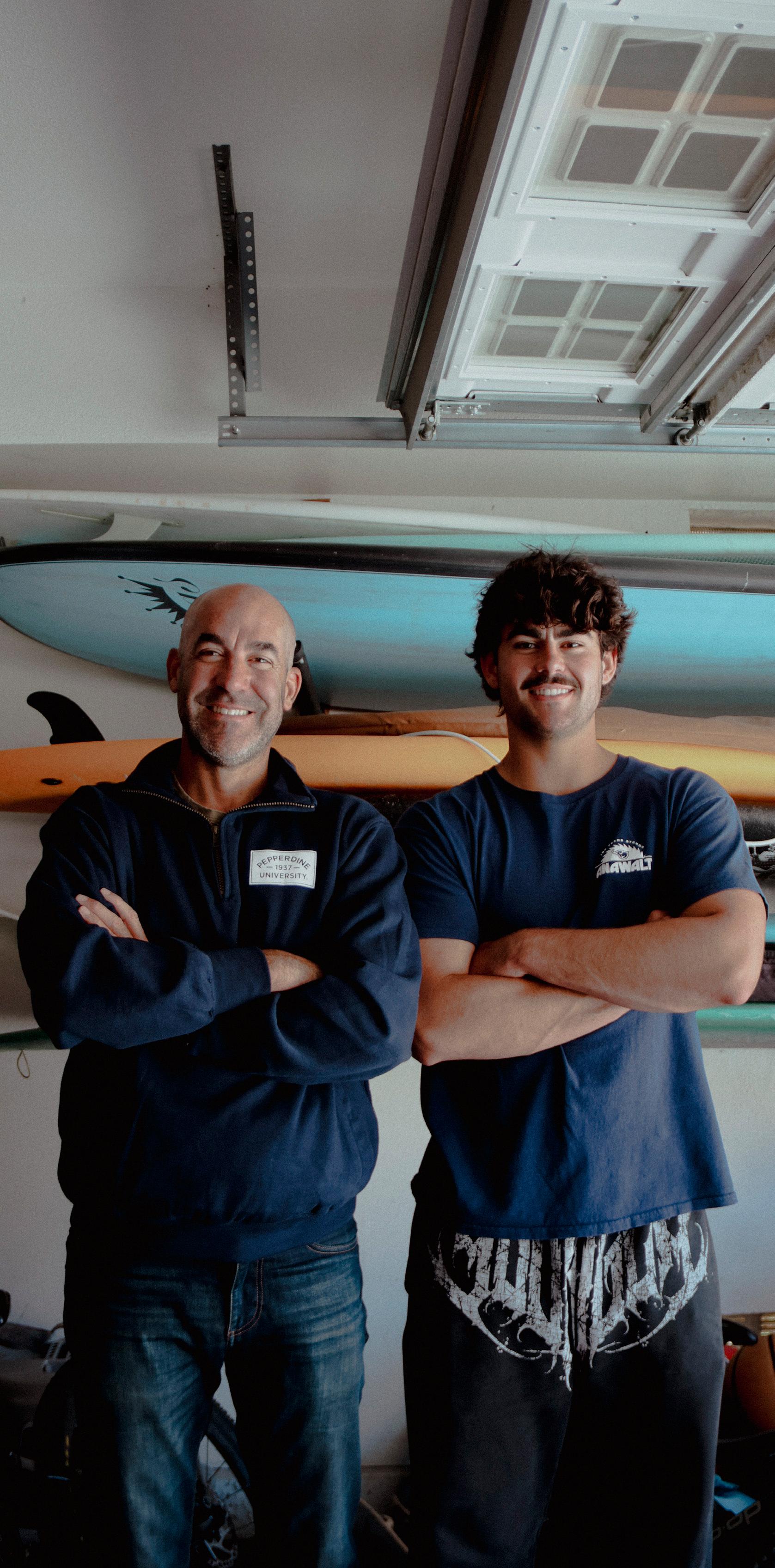
Paul Begin and Ethan Begin pose at their faculty home.
Photo by Soliel Lara Aponte
Through the Looking Glass
story by Nina Fife
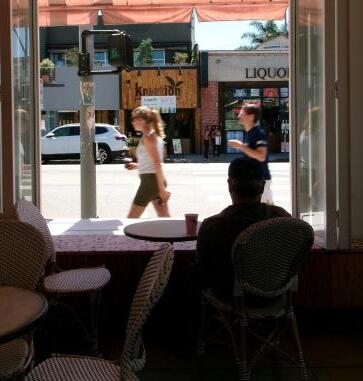
It is easy to people-watch in Los Angeles — an urban center of life that is home to almost 4 million people.
In such a populated city, millions of stories are waiting to be told by each person just trying to live their life.
Some of these stories aren’t told through verbal conversations, yet a lot can be learned about someone’s life through daily observations.
“I’m always people-watching,” junior So a Preston said. “I nd it really calming to see how people interact in day-to-day life. Instead of focusing just on myself, I realize that there’s an entire world of people interacting, and it just allows me to ground myself.”
Gaining Appreciation
Preston said immersing herself in the people around her and their ways of living — how they talk, eat, dress, act — allows the Pepperdine student to re ect on her own life.
“It reminds me of the beauty of life,” Preston said. “ ere is so much beauty that we tend to miss by focusing on ourselves and what’s going on in our life. If we take a step back and look at the bigger picture, we open up our eyes and perceptions to di erent people, which allows us to gain that empathy without actually speaking to somebody.”
e grounding Preston experiences from people-watching is one senior Ashley Eagan said she also feels through her daily observations. Eagan’s sense of grounding comes from the reminder that we only have what is right in front of us.
“Presence is everything — we only have the present,” Eagan said. “I’ve brought a lot more gratitude and presence into my life recently, or at least this year, based on what I’ve observed.”
Not only did Eagan say she appreciates the individuality of everyone’s life, but she said she starts to value the natural environment around her, as well. Being in Malibu, it is easy to take advantage of our surroundings, but people-watching reminds Eagan to take it all in while she can.
“It’s not just observing the people, it’s also observing the setting,” Eagan said. “I
get to witness other people around me in such a beautiful spot. I really have a high appreciation for just natural beauty, which I think as humans, we all do.”
People-watching allows Preston to truly appreciate all she has around her, as well. By seeing an interaction such as two friends laughing, Preston said she is able to remember all her own small moments of joy.
“Honestly, I try to nd meaning in everything I look at,” Preston said. “ ose little moments I see give me that nostalgic feeling that reminds me there’s more than just what I’m seeing.”
Junior Monica Rosso also said people-watching gives her a deeper sense of appreciation for all the world has to o er. As she tries to view life in a positive light, she loves seeing others experience their pockets of happiness.
“It’s just good to see people connecting,” Rosso said. “I love watching warm and friendly and just loving interactions, especially getting to see people interact with the people they love.”
rough these positive interactions, Rosso said she is able to see a piece of herself in every person she watches. Not only is Rosso able to enjoy what is happening in front of her, but she is also able to look forward to what she has in the future.
“Everyone is living their own day, and it always makes me realize, ‘Oh, that girl is sitting with her best friend, and they’re laughing and having so much fun,’ and that’s me and my best friend later in the day. It makes my heart warm,” Rosso said.
A Deeper Understanding
While people-watching allows Eagan to appreciate the life around her, she said it mainly gives her a reality check. By observing those that come from a variety of backgrounds and places, she is able to recount her own blessings.
“I think I appreciate life more than most people,” Eagan said. “I re ect on and think about how much I love being alive more than most people do. I’m constantly people-watching, and I’m constantly re ecting on that.”
Preston and Eagan’s shared interest in people-watching comes from their educational goals. With Preston being a Psychology major and Eagan a Sociology major, both said they enjoy observing how di erent individuals interact with
the world around them.
“I’m really interested in learning about the di erent types of individuals and the di erent brain types,” Preston said. “How a person presents themselves helps you see a little more into who they are as a person.”
For Eagan, people-watching is a form of entertainment. She said she hates when people are on their phones, as looking up and observing can provide the same sense of satisfaction.
“To me, it’s like when you have a Tiktok video and there’s Subway Surfers playing next to it,” Eagan said. “It’s like dinner and a show. You get to watch what’s happening, and it’s real life.”
Eagan likes to observe those around her using all her senses. Speci cally, Eagan said she pairs sight with her sense of hearing in an attempt to fully understand those around her.
“I’m also always listening to what’s around me,” Eagan said. “With that, you can observe how people live their lives di erently than you. So, I kind of ‘people-listen’ more so than just people-watching.”
A Tool of Self-Re ection
In Los Angeles, and Malibu more speci cally, it is very common to see a celebrity out and about going through their daily lives. Observing these high-pro le individuals gives a unique perspective on what they do behind the cameras.
“I really try to see everybody for who they are, regardless of where they come from or who follows them,” Preston said. “A lot of times, celebrities can be very performative, but if you watch them long enough, you can see their real mechanisms and you can see that they do really struggle, and that everybody struggles, just nobody wants to admit it.”
Preston said in this regard, people-watching brings her a sense of comfort. By observing those around her and noting their experiences, she is able to accept that everyone is much more similar than they may realize.
“I can see I’m not alone,” Preston said. “I experienced the same emotions as this kid playing with their dog and laughing or this girl crying on the phone — I am the same person.”
For Eagan, this feeling of empathy evokes a deeper state of re ection. Not only can Eagan observe the soft-
photos by Melissa Houston and Soliel Lara Aponte design by Amanda Monahan
er side of individuals, but she’s able to realize that there is always beauty hidden in her surroundings.
“All of it can make you grateful for your own life,” Eagan said. “When you think about other people’s problems, it makes your problem seem so much more insigni cant. You can see so much wherever you go if you just look at everything as something to re ect on.”
People-watching, especially on Pepperdine’s campus, can allow you to observe the highs and lows students go through daily, Rosso said. By seeing the di erent emotions in the people around her, Rosso is able to nd some familiarity through observation.
“It makes you build characters almost, and a community where you may not even know anyone around you, but you’re familiar with them,” Rosso said. “It humanizes the community here, and I think that’s really beautiful.”
ing someone’s vulnerable side come out, Preston said. is is especially vital when daily life is controlled by what appears on social media.
“If you watch somebody long enough, you can see their mask slowly start to fade,” Preston said. “Instagram doesn’t show you what life really is, it shows what you want your life to look like. But watching humans be humans reminds you that you are a human. You are not AI, you are not your perfectly curated post — you are a human being, and you have intrinsic worth just living your life.”
“You can see so much wherever you go if you just look at everything as something to re ect on.”
Ashley Eagan Senior
e empathy Preston feels from people-watching always invokes a deeper train of thought. rough this perspective, Preston said she is able to realize how simple life truly can be.
“Observing somebody naturally gives you that sense of deeper understanding and insight into who they really are as a person,” Preston said. “ en that way, you know they’re not perfect, and neither are you. ey’re awed as well, and that’s OK. We’re all human, and we all operate under the same wants and desires anyways.”
ere is a sense of beauty in watch-
In a world controlled by technology that is constantly evolving, Preston said people-watching reminds her to look up from her devices and take in the beauty around her. Whether she’s observing a chaotic family of ve or a high-pro le celebrity trying to blend in, there is always something to be grateful for.
“ ere’s so much diversity in this world that we don’t even recognize unless we actually get o our phone to look up and look around,” Preston said. “People are very di erent, but we’re all human, even though we present ourselves di erently. I think that is something you can only nd if you really pay attention to life.”

Put a Price on Expression

Ridiculous.” at is how senior Art major Julianna omas said she felt when she rst heard the news about the censorship of the Frederick R. Weisman exhibition “Hold My Hand in Yours.”
Pepperdine authorities censored the
Weisman Museum’s most recent exhibition Oct 8, which was scheduled until March 29. e University shut down the exhibition after publicly explicit political content was displayed, which the University said it avoids due to its nonpro t status. Over 20 artists removed their featured art in protest against the censor-
ship — this led to the Weisman removing the exhibition as a whole, according to previous Graphic reporting.
With only a few weeks until graduation, omas said she hasn’t let the censorship change the way she has created art at Pepperdine. If anything, the incident heightened awareness of how
story by Soliel Lara Aponte photos by Soliel Lara Aponte design by Soliel Lara Aponte
students’ artwork might be perceived.
“I’m not scared of the administration, but it’s also de nitely something that we think about more now,” omas said.
omas, fellow senior Art major Sebastian Gonzalez and Studio Art Professor Ty Pownall re ected on their initial emotions and how those feelings evolved into conversations surrounding freedom of expression in the community and the role Pepperdine plays in protecting student artwork.
Initial Shock
For Gonzalez, learning the news of the censorship came through a friend. At rst, he lacked knowledge of the situation, though once he pieced it all together, Gonzalez said he felt con icted.
Gonzalez raised the question of “whether the cost was worth it.” He expressed how the University worked hard to build a reputation within the artistic community, but now due to a disagreement over what should and shouldn’t be displayed in the museum, Gonzalez said the University’s credibility might be damaged.
“You want to be a space for people to show their creative endeavors, not the opposite,” Gonzalez said.
e thought of censorship had never crossed omas’ mind in her four years at Pepperdine. When she and other students in the art program tried to create a peaceful congregation to speak up about the censorship, Pepperdine Advancement quickly shut them down. “It just felt like we weren’t being taken seriously,” omas said. “ at was the most disheartening thing. People just kind of saw it as a non-issue — I think that factored even more into our anger.”
omas said no fear was instilled; instead, the art students found support from faculty and students in other programs, which was all they needed.
“ e sheer number of people who express their distaste makes the students feel really safe and really seen,” omas said.
Pownall said as a professor, he felt bewildered by the censorship. He explained seniors and students from other art classes met with art faculty to go over what had transpired. Pownall also stated his position on the matter during these conversations.
“I told them, ‘I’ll back you no matter
what,’ to help those students be the best artists they can be,” Pownall said.
Feelings at Linger
Simultaneously, the Weisman censorship has prompted more candid discussions about artistic freedom, and many art students feel worried — but not intimidated — and more driven to keep advocating for free speech on campus, according to Pownall.
“Concerned about being censored, maybe, but avoidant, no,” Gonzalez said. “It makes them [students] want to continue to start conversations.”
Pownall said he saw his students express anger, but now, mostly disappointment. He understands his students feeling “very powerless to make any sort of change.”
“ ey are mostly disappointed in a school that, for the most part, they love,” Pownall said. “With anything you love, you get really disappointed.”
Now, students and faculty are demanding ways for Pepperdine to prioritize its art students and honor their work as personal expression.
Pownall and faculty have advocated for structural reforms to the Weisman Museum’s management in the aftermath of the censoring, claiming that the mu seum’s existing position under the Uni versity’s fundraising arm, Advancement, contradicts its function as an artistic space.
under Advancement rather than un der the Provost’s O ical” and can result in circumstances like these, when artistic choices are impacted by outside interests.
He said the insti tution’s response has come in si lence.
one is
stopping by my o ce to tell me that they’re excited about my ideas,” Pownall said.
omas said she agrees with this proposed change of management, emphasizing the Weisman should be overseen by academics and not Advancement.
“It needs to be considered a part of the academic institution, as most museums are,” omas said.
omas stressed how museums are one of the few places in the larger art world where the signi cance and message of the piece are prioritized before nancial gain. erefore, for society as a whole, museums are of extreme value and almost sacred places.
“Pepperdine needs to just center the Art Department as something to be proud of, not something that they’re ashamed of,” omas said.
omas said that her senior exhibition, which was displayed at the Weisman on April 16 at 5 p.m., displays a piece called “Valley Girls” that will probably turn heads.
“It will be a lm about how we are constantly scrutinizing our bodies and of the current beauty standards,” omas said. “I’m naked in a display case, but

Senior Julianna Thomas posing with her piece “Valley Girls”
Di erent Traits of Personality


story by Alicia Dofelmier
Even as time moves on and people grow older, they remain the same at their core. Personality is one of the few things in life that cannot be fully changed.
Personality is a person’s usual thought patterns, feelings and actions, according to Letters and Science. It’s what makes everyone unique and is the foundation of who people are.
“A lot of people tend to read what the other person is comfortable with and they tweak some of their attributes, their language or mannerisms to match what is satisfactory to the next person,” rstyear Kayla Voskanian said. “People are still who they are to their core, though; you can never really change your whole personality.”
Shifting Personality Traits: Intentional or Unintentional?
More often than not, people shift certain traits of their personality based on surrounding situations, and it’s typically unintentional.
Dori Lansbach, assistant director of Relationship IQ, said changing oneself when it comes to relationships can be normal — to an extent.
“We all tend to bring di erent qualities to di erent relationships,” Lansbach said. “With friendships, we’re a bit more playful. Adaptability is healthy, but losing your core beliefs is not healthy.”
For people who have anxious attachment, Lansbach said they may feel the need to hide or change core parts of who they are. Moreover, people who are avoidant may have a core fear they might lose themselves in a relationship, so they may not bring their full self out in an effort to maintain some distance.
“At the core level, it gets dangerous when we try to change ourselves to gain connection,” Lansbach said.
Senior Brantley Holladay said she believes personality shifts are unintentional. Holladay said as someone grows closer to her, they begin to get a stronger
idea of her whole personality.
“It’s not a bad thing if di erent personality traits shine through at di erent times,” Holladay said. “I used to be so insecure about being so outspoken with certain groups and shyer with others, but I’ve accepted that about myself because it’s impossible for everyone to know my full personality.”
Lansbach said personality shifts are mostly inadvertent since they often have to do with a person’s sense of self-worth.
“A lot of it is unintentional, especially if it’s a romantic relationship,” Lansbach said. “It depends on people’s sense of who they are and knowing their selfworth.”

While it can sometimes depend on the person, personality shifts are often unintended, Voskanian said.
“It’s natural for me to change my mannerisms based on who I’m around,” Voskanian said.
Causes of Personality Shifts
Holladay said that as people grow, their interests naturally tend to change and develop, leading to shifts in their personality.
“My friends here know that I love, whereas even my family at home doesn’t know the extent of which I love Beyoncé,” Holladay said. “It’s because it’s a college development, because even a year ago Beyoncé wasn’t a huge part of my personality.”
Changing personality around others starts with just changing certain behaviors to feel more connected, Lansbach said. If someone continues to constantly change their behavior over time, it can be hard to not lose yourself entirely.
“It doesn’t have to be a drastic change, it can be a slow shift for sure,” Lansbach said. “But, if you have stable, healthy friendships, family relationships, a strong connection to your faith, therapy, people who know you or even just spending time with yourself and reconnecting with your core can help bring back your core self.”
Usually, there are speci c situations or people that cause individuals to shift personality traits. In a relationship, Lansbach said individuals who do not feel secure enough tend to match their partner’s opinion — this may also apply to unhealthy relationships or friendships.
“Not feeling fully accepted, they may tend to just agree with what that person believes — a lot of times it can be out of a fear of just not being accepted,” Lansbach said.
Voskanian said a situation that comes to mind for her is family versus friends.
“With your parents, your aunt, your grandma, you have more respectful mannerisms because you always have to respect them,” Voskanian said. “When you’re with friends, you can be as casual as you want to be. You change your mannerisms so it’s satisfactory to the other person.”
It’s natural that certain situations may cause people to shift their personality traits, Holladay said. In social settings, people may want to hide parts of their personality if they’re insecure about feeling accepted.
“We all have one personality, but di erent aspects of a person may shine through at di erent points of life,” Holladay said.
photos by Soliel Lara Aponte
design by Soliel Lara Aponte
THE CONNECTIONS SHARED AROUND THE TABLE

story by Nina Fife
photos by Melissa Houston design by Christine Park
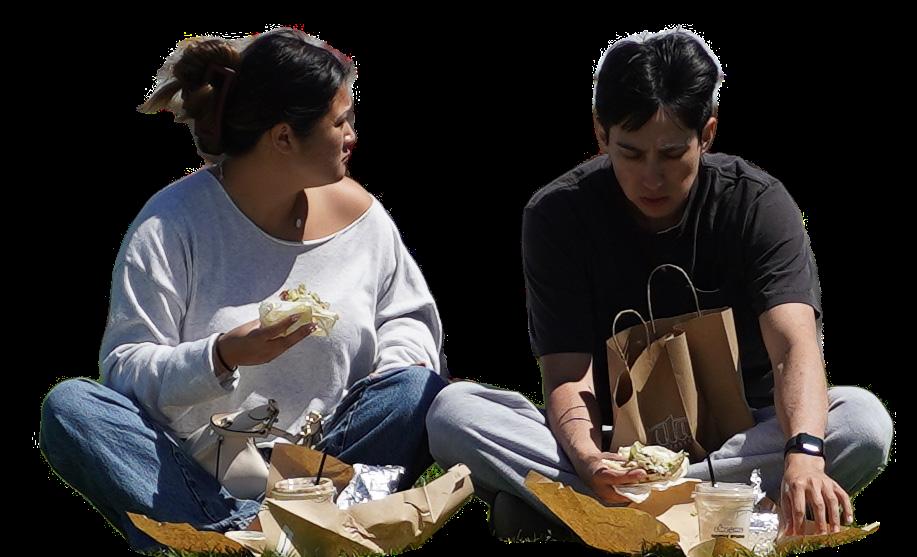
Ali De La Torre, a third-year student at UCSB, said even as a self-su cient adult, she can still recall the fond memories she shared with her grandmother in the kitchen.
As she prepares her own meals, De La Torre always thinks about the feeling of sitting on a little step stool next to her grandmother while she cooked frijoles or prepared chilaquiles. For as far back as she can remember, De La Torre used food as a means to connect with her family and the numerous loved ones in her life.
“It’s really, really heartwarming because all of that is just ingrained in my brain,” De La Torre said. “ ere’s almost a sense of comfort and warmth when I make those same things again that gets brought back up.”
People nd ways to connect through a variety of platforms. Music, conversation and similar interests are all ways individuals can be brought closer together through a shared bond.
But overarching all of these connective sources is the intimacy found through food.
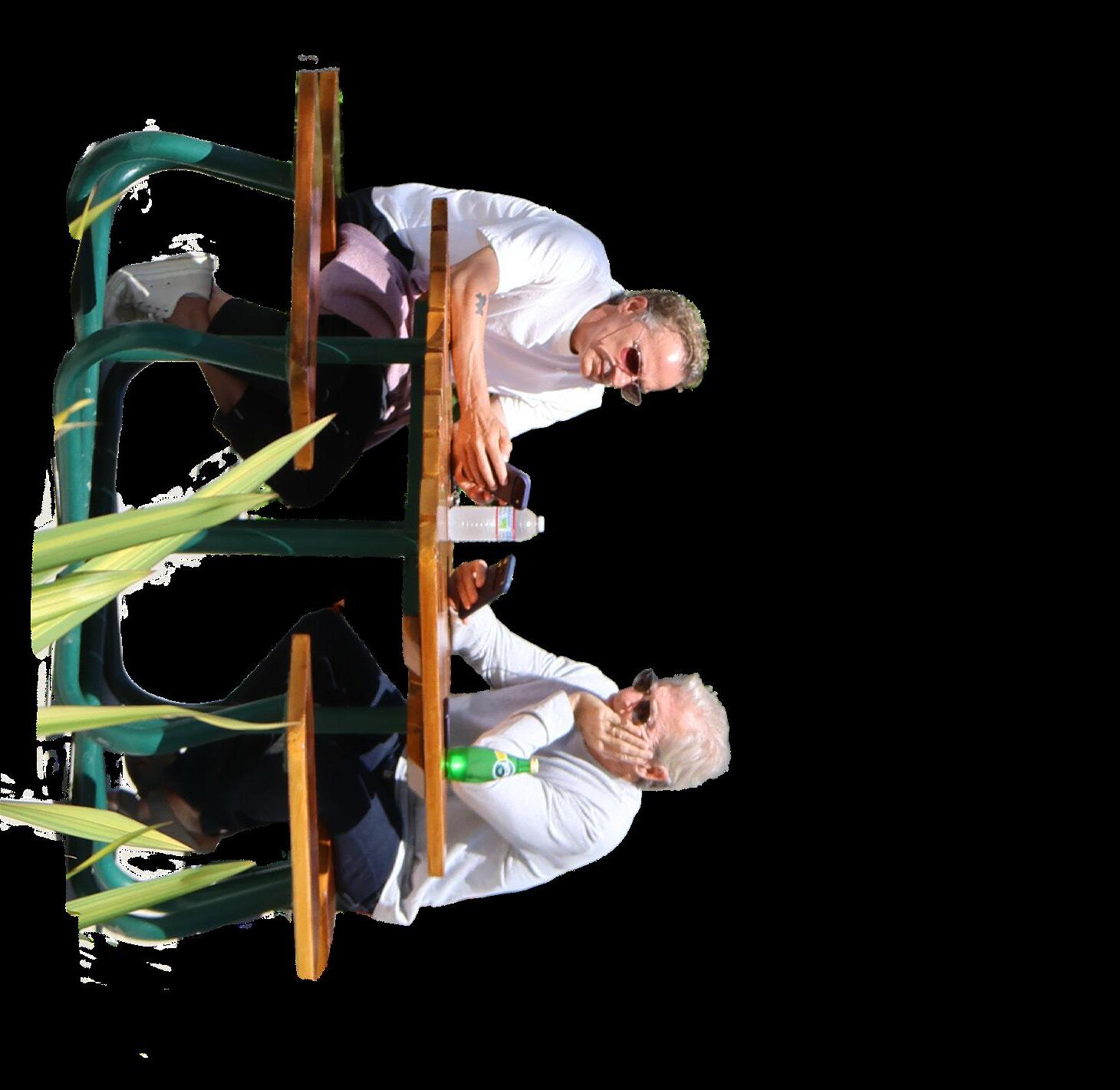
Having a meal with someone else can turn into a lifelong connection, as the simplicity of dining together can bring about an unknown world of pure friendship.
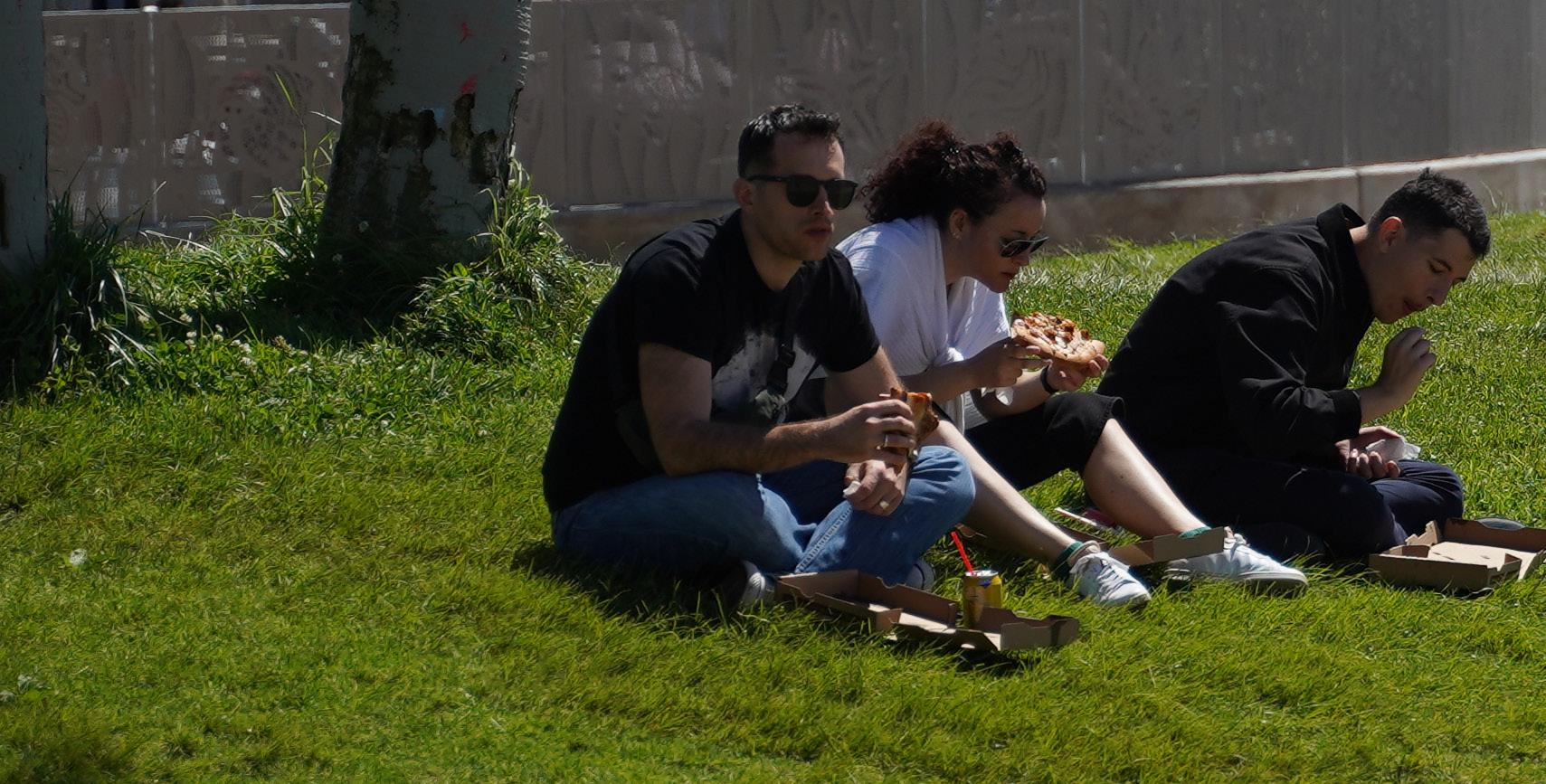
“People are their most honest and raw selves when they share a meal,” De La Torre said. “It’s something we’ve done since before we could even talk we were cavemen. We’ve always joined together in group settings and eaten meals together, so there’s something really cool about that.”
Building Community
De La Torre said a sense of honesty has helped her become closer to her community. While navigating the variety of opportunities o ered in Santa Barbara, she was able to build closer connections through food.
“When you do share a meal, you are in a very vulnerable state,” De La Torre said. “ ere’s a sense of comfortability that can be fostered over a meal.”
In smaller communities, such as that of Pepperdine, there is a unique intimacy shared over meals. Professors often invite students to their houses for dinner, allowing a closer relationship to form between teacher and student.
Hung Le, senior vice chancellor of the University, was positively impacted by this experience during his undergraduate time as a Wave.
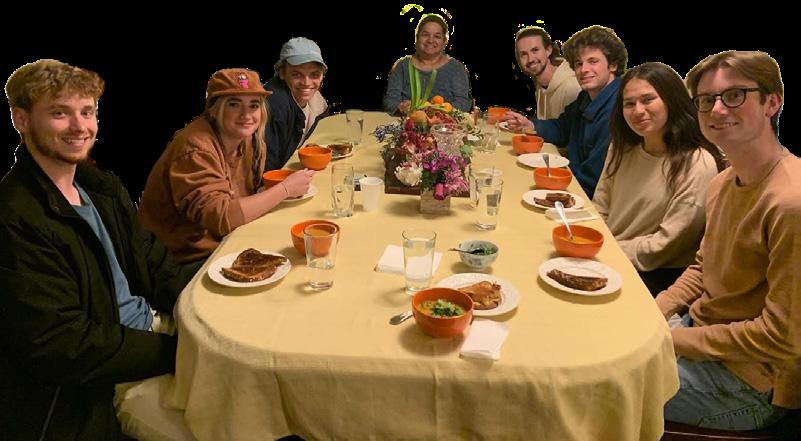
“It would be a rare thing for me to not be in someone’s home on a Sunday during the whole time I was a student,” Le said. “ at’s when I felt like I found a family here. It was so natural for me to have table fellowship with my faculty, my sta , my church, and that meant a lot to me.”
Now as a prominent leader on campus, Le said he likes to spread this joy to the current students. Although he was involved in a variety of groups on campus, he said he always felt like food was the way he was able to build his most meaningful connections.
“Food is a uniter,” Le said. “Often when we think of a meal, the food is the focus, but in our home, the focus is really on each other. Being in someone’s home — that’s a feeling that is so special but hard to describe. I want to give to our students what was given to me.”
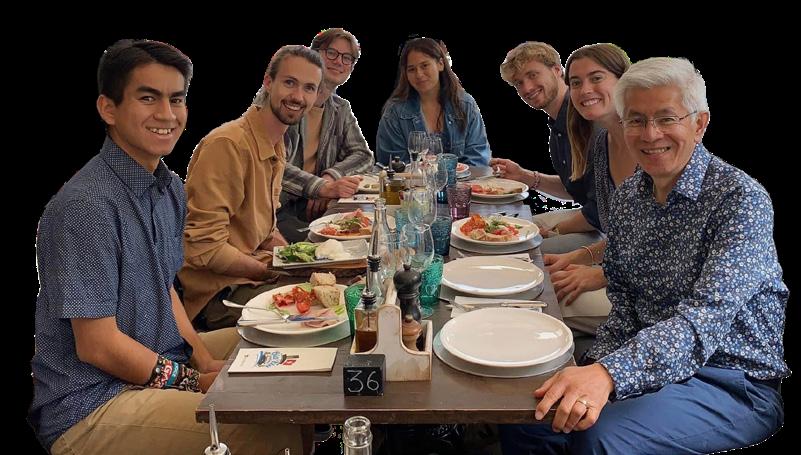
Lisette Isiordia, Seaver alumna of 2023, former sta member of the Graphic and now assistant director of Alumni Engagement, said her undergraduate experience was shaped by the Le family. Particularly in her senior year while navigating a world of chaos — nishing out college and trying to gure out what was in store for the future — Isiordia said she found a safe space in the dinners she had at the Le house.
“It was nice to have a common place to walk in and have dinner and just have shared time and shared space with people,” Isiordia said. “I always appreciated
the intentionality behind those small moments.”
Since Le began working for the University in 1990 as associate director of Campus Life, he has taken sharing meals to a whole new level. Each year, Le and his family open their house during the holidays for the Annual Le Family Christmas Desserts Party.
“It all comes from the desire to bring people together,” Le said. “It’s grown into a real community-wide thing where people feel very comfortable coming. People will come back — even if they’ve moved away, they’ll come back — and it’s a great reunion for so many friends from di erent walks of life. It’s a great celebration of community and family.”

Le said out of all the ways for people to connect, food is one of the most powerful tools — something represented throughout multiple eras of history. For Le, this historical context ties into his religious beliefs, making its power to connect especially meaningful.
“In scriptures, there’s so many examples of people gathering over meals — stories are told, traditions are passed down, lives are lived,” Le said. “It’s a basic human need, and it is a beautiful act of hospitality and an act of love. What is so special about a meal is that it’s tied to family.”
Eye of the Storm
As undergraduate students begin planning their life out and looking toward the future, the stress of becoming a full-time adult can weigh on those trying to navigate life. Isiordia said in these moments, sharing food helped take her mind o the busyness of everyday life.
“In those moments when I just felt very overwhelmed and really stressed, it was really sweet to be able to take a break from everything that was happening,”
photo courtesy of Lisette Isiordia
photo courtesy of Hung Le
photo courtesy of Lisette Isiordia
Isiordia said. “Setting aside time to step away from everything that’s happening and invest in sitting at the dinner table, chatting and building those relationships was so bene cial to my success and my well-being.”
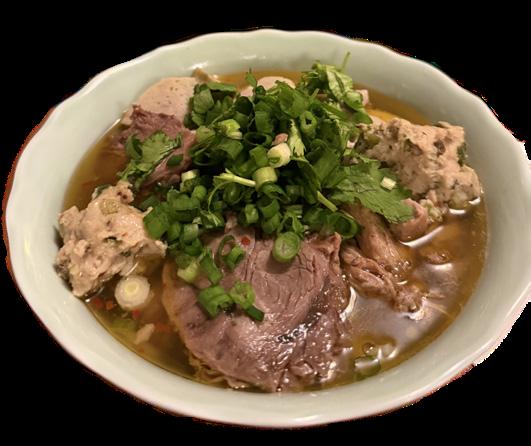
Le said it was these moments that make cooking for students worth all the work. Even though he hosts bigger events, he nds a lot of joy in the smaller meals he can share on weekends or weekdays.
“ at’s where the connections occur,” Le said. “It’s more informal and it’s familial. It strengthens the community.”
Everyday tasks would sometimes cloud Isiordia’s mind, and she wouldn’t be able to nd time to relax. When she would turn to those around her for support, she said their relationships blossomed over the shared meals they would have together.
“It was really just a good opportunity to nurture our relationships on a deeper level,” Isiordia said. “ ose moments were so authentic and lled with natural conversation that didn’t feel scripted that was very special to me.”
In larger communities, such as that in Santa Barbara with over 20,000 undergraduate students according to the University’s website, De La Torre said she used food to ground herself in a new place. When she started living on her own, De La Torre used food to nd community.
“I love that food brings people together,” De La Torre said. “At the end of the day, it isn’t even really about the food, it’s about the connection.”
During her time as an undergrad, Isiordia studied history and was always intrigued by the storytelling that could occur through shared meals. She said food, whether she was making or eating it, opened doors to many opportunities for her to learn more about those around her.
“ ere’s so much power in having a
shared meal or shared food,” Isiordia said. “Food is a unifying thing. It was really fun and really special to get to experience part of people’s cultures and part of their stories and life through food.”
Cultural Connections
Sharing meals is an important part of many cultures. De La Torre and Isiordia are both of Hispanic descent, and food has been a critical part of their families for their entire lives.
“Food is a very big part of Hispanic culture,” Isiordia said. “Food was always integral to my experience growing up.”
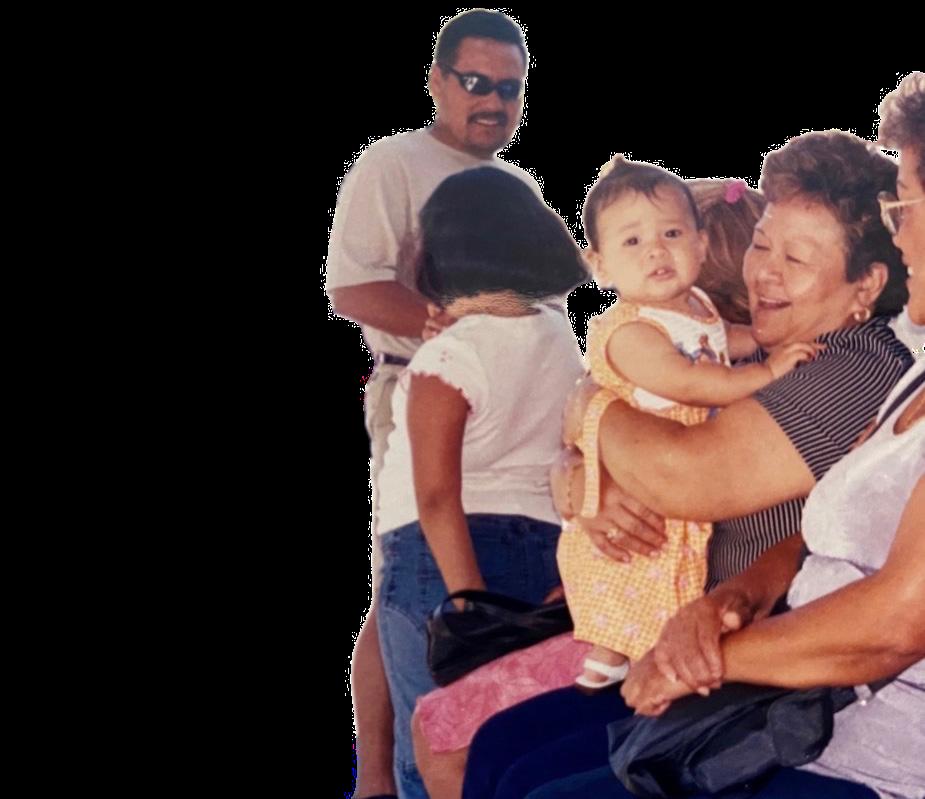
In a similar sense, De La Torre said she uses food to remind her of family while she’s away at college. Even as she made a multitude of friends, food always brought her back to her roots.
“Regardless of the meal, food can bring a lot of culture into a meeting,” De La Torre said. “It can really bring up a lot of memories and nostalgia. With friends, being able to share all our di erent cultures and normalities in what we eat helps us let our guard down.”
As Isiordia grew up, she used food to remain close to family members she wouldn’t see often, or even those that were no longer alive. Isiordia said food helps her remember her grandmother, the matriarch of her family who would pass down recipes and traditions through culinary practices.
“It was really sweet to get to see her

lead like my tias, cousins and I in the kitchen, whether it was me chopping or my aunts making food, that was really special to bonding us as a family,” Isiordia said. “We kept her memory alive through food, and those are memories I hold really close to my heart.”
With food being such a vital part of her experience growing up, De La Torre said cooking has become an integral part of her adult life. Sharing meals combines her two love languages of acts of service and gift giving.
“Cooking a meal is just a perfect blend of both of those,” De La Torre said. “I love that I’m able to show my appreciation and love for whoever I’m doing that with.”
As De La Torre has transitioned into a cook herself, pulling on the traditions she learned from her family, she has found that the best ingredient to use while cooking isn’t actually edible.
“ e most important thing to do when you cook is to have intention and to cook with love,” De La Torre said. “ at’s the second ingredient that a lot of people sometimes miss or forget.”
Love is the basis of all connections — love for the same music, love for the same food and love for the people around you. Le said sharing meals isn’t just about lling your stomach, it’s about lling your life experience as a human.
“Fill your soul, ll your heart, ll your mind — let the meal be the excuse,” Le said.
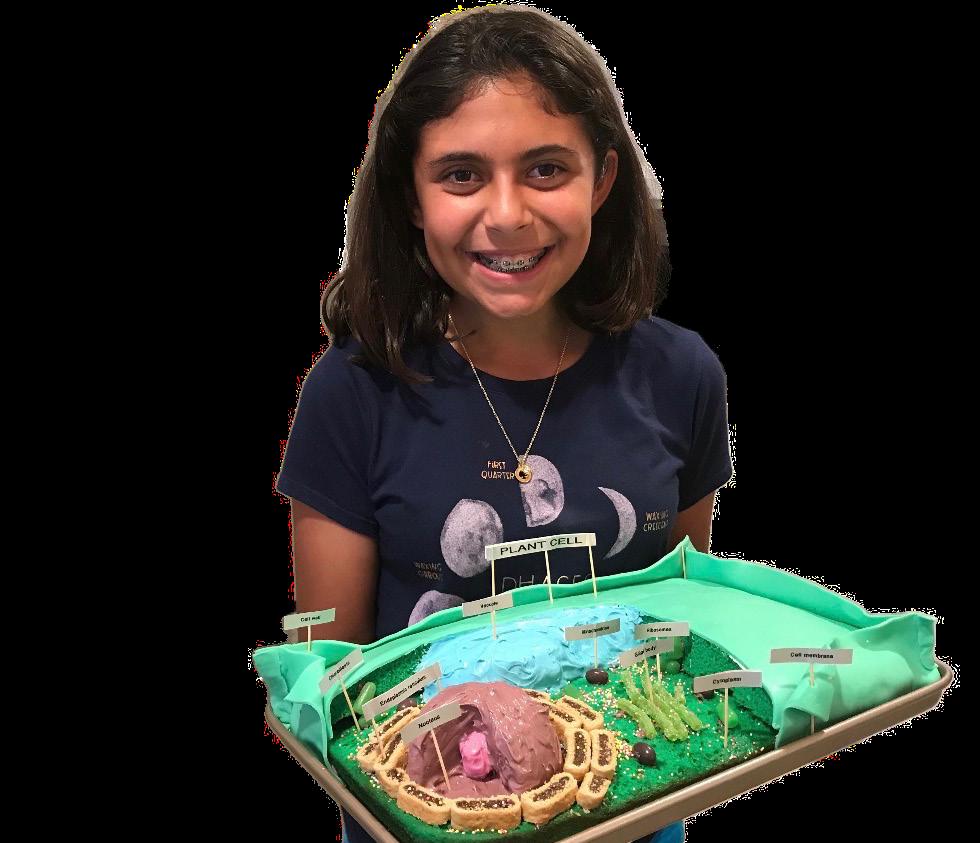
photo courtesy of Ali De La Torre
photo courtesy of Hung Le
photo courtesy of Lisette Isiordia
photo courtesy of Ali De La Torre
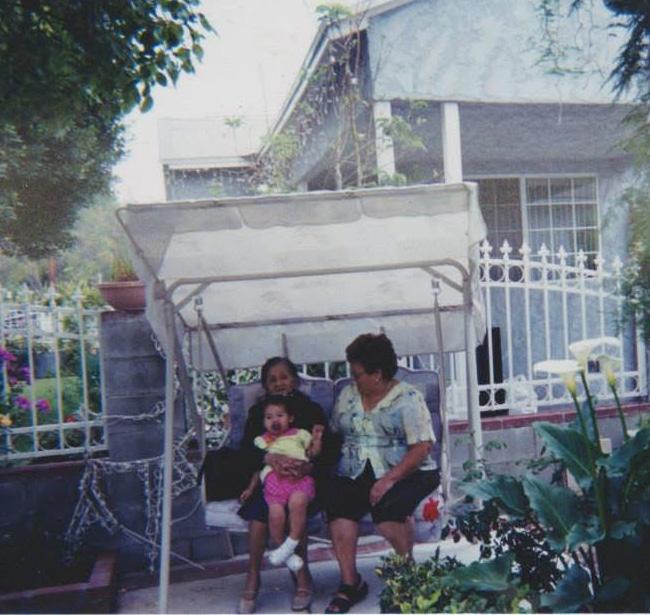
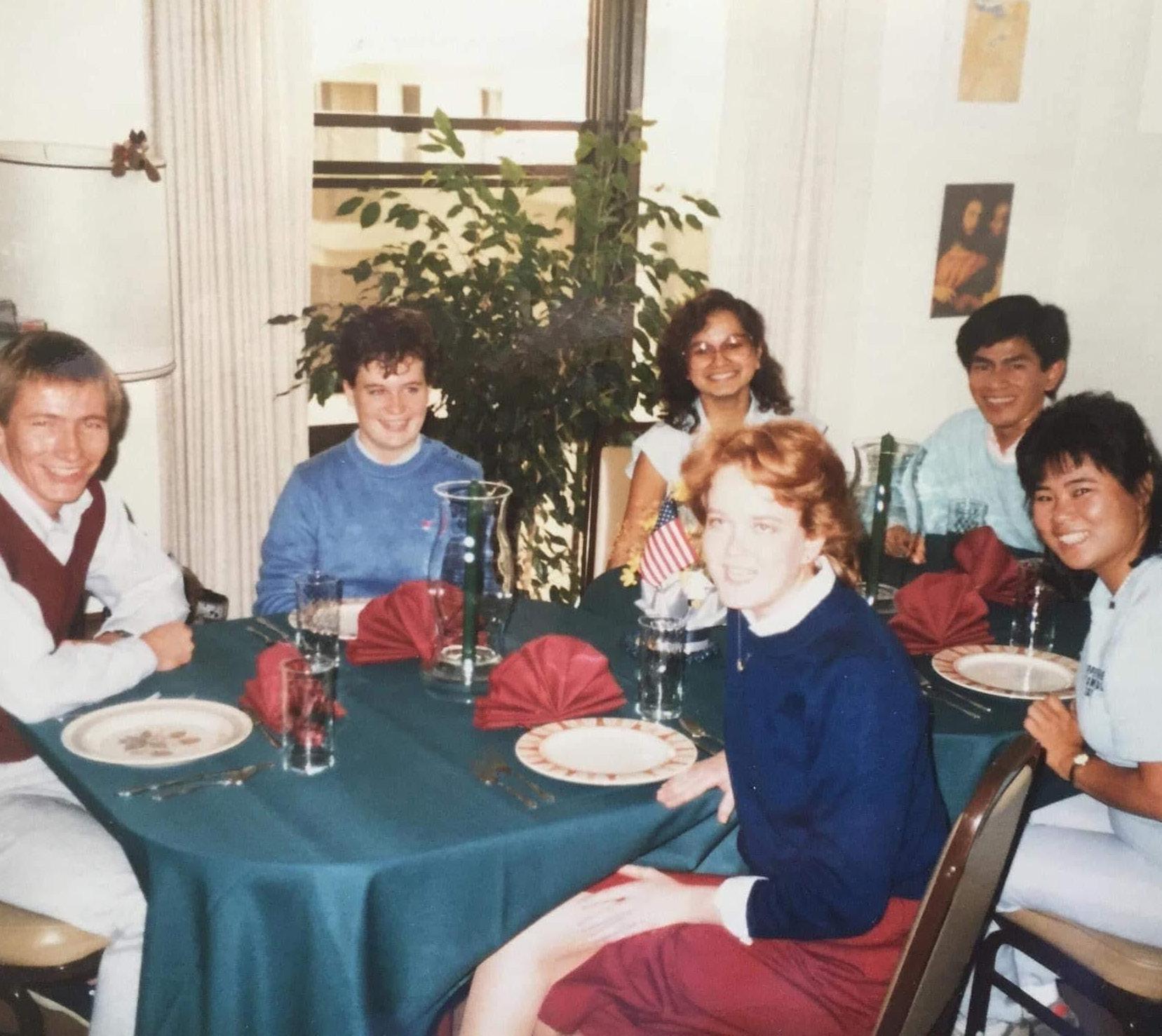
photo courtesy of Hung Le
photo courtesy of Lisette Isiordia
photos courtesy of


M odern
Dating:
The Hard and Soft Launch
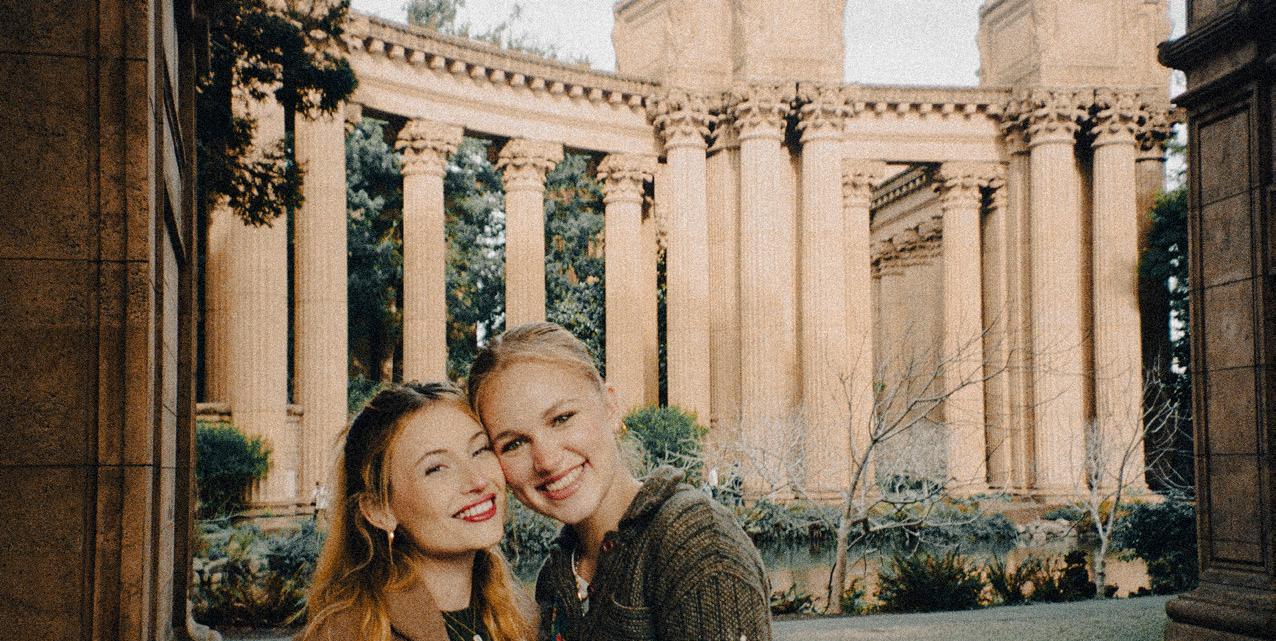
Julia Ryan Lola Herning Fiona van Otterloo
story by Addison Thomas
design by Christine Park
In the age of curated feeds and crafted captions, deciding just how to debut a relationship online is the new norm.
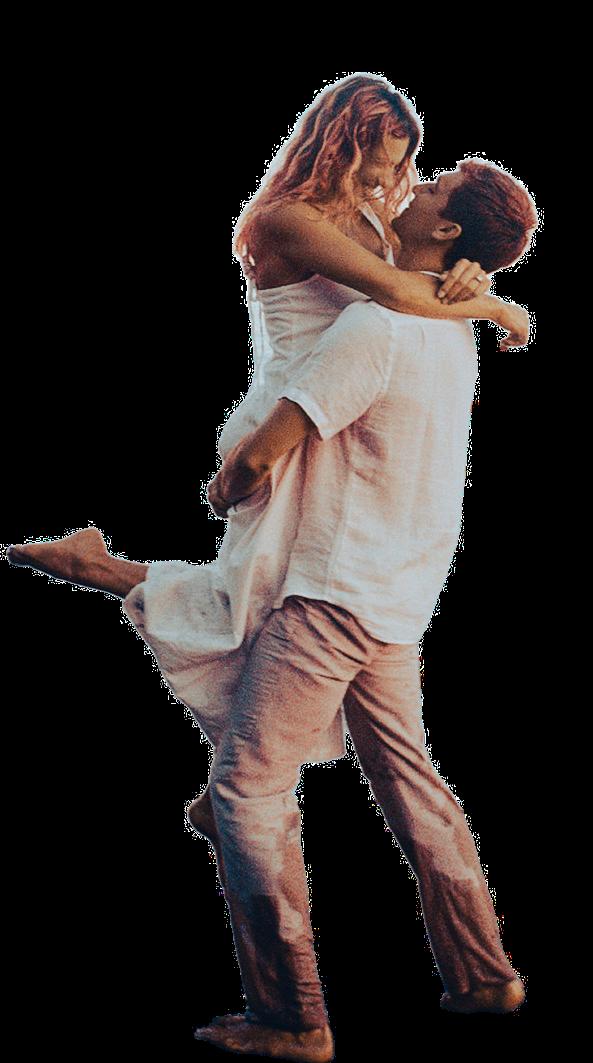
For Pepperdine students Julia Ryan, Lola Herning and Fiona van Otterloo, the choice between a “soft launch” and a “hard launch” has become something of a social media rite of passage.
“I think it’s [sharing relationships on social media] a great thing,” Herning said. “As long as everyone feels good doing it, then I think it’s a great way to connect with others.”
Hard Launch
Ryan said her recent engagement marked not just a major life event, but also a deliberate hard launch.
Ryan has been with her !ancé, senior Adam Kroeze, since their !rst year at Pepperdine. For the past three years, they have dated seriously. So while Ryan said she knew a proposal was coming eventually, the exact timing caught her o guard. On Valentine’s Day, Kroeze invited her to watch the sunrise by the shore and popped the question.
“I had no idea it was going to be that day,” Ryan said. “It was really sweet, but I was in sweatpants, totally unsuspecting.”
After the big question, Ryan said she had another, but equally important, one: How would she share the news?
Ryan opted for a hard launch. After calling a few close family members and friends !rst, she turned to Instagram the next day with a post that read: “the rest of my life with you? yes please!” e post featured a picture of her and Kroeze beaming with bright smiles and a ring on Ryan’s left hand held up with pride.
“I simply wanted to tell everyone all at once,” Ryan said.
Finding a perfect balance between slowly easing a relationship online and fully sending it is what most couples have begun to treat as a skill.
A soft launch might include a subtle photo of a cropped partner or a vague caption — leaving people asking, “Whose arm is that in the corner?” or “Who bought her those owers?”
A hard launch, on the other hand, leaves no room for questions. It’s sharing
the news with no deniability and without warning.
For Ryan, the choice felt natural, as she said she is accustomed to posting everything in her life on social media. is news was some of the most exciting for her to share, and the responses were overwhelming in the best way.
“I had a lot of people texting me the next day; I had to sit down and respond to people who were texting me for two hours or maybe more,” Ryan said. “So many people just saying, ‘Oh my gosh, this is crazy.’”
at ability to e ciently tell masses of people updates on your life is one reason why hard launching has become so appealing — as well as having a little bit of fun with the initial shock.
Because of that, Ryan said she is in favor of the approach.
“I love transparency on social media,” Ryan said. “ at’s kind of what you have it for, to show what’s going on in your life.”
Soft Launch
For !rst-years Herning and van Otterloo, their approach looked di erent from Ryan’s.
Like Ryan and Kroeze, Herning and van Otterloo said they met in the !rst semester of their !rst year at Pepperdine and have been together for !ve months now.
ose closest to the couple were aware of their relationship, so the soft launch route was more about telling those on the outside.
“All our closest friends already knew,” Herning said. “So it was more slowly telling random people we weren’t as close to or people from back home.”
eir soft launch phase didn’t last entirely too long, with matching Instagram stories well past plausible deniability posted on anksgiving. e pair said they loved playing coy on social media at !rst.
“We were excited for the little, cute, soft launch photos,” Herning said. “Even if it only really lasted a couple of weeks, we tried to have fun with it at !rst.”
Being a queer couple, it was easy for people to overlook their photos as merely friends. at is when the soft launch shifted into something more intentional.
“ at [unintentionality] was something that we began to try to avoid, because I’m proud of dating her
and I’m proud of being queer,” van Otterloo said.
Despite e orts to clear confusion, for some, it still goes over their heads, even though van Otterloo said she sought to make it clear that her and Herning weren’t just friends anymore.
“Even though our photos online are very obvious that we’re dating now, still people overlook it, especially as very feminine-presenting women,” van Otterloo said.
While Herning said she thinks the soft launch approach is fun, she also thinks it can only last so long.
“I wouldn’t wanna hide my partner, and I feel like when it goes on for a while, it’s like, ‘Why aren’t you proud to share your person?’” Herning said. “If you’re dating someone, chances are they’re gonna be a big part of your life, and the point of social media is to share elements of your life.”
Herning and van Otterloo’s experience highlights what soft launching can o er at its best. It was a way to enjoy the early stages of their relationship while controlling how gradually others found out.
ough, their story also shows the limits of subtlety — what began as fun eventually felt closer to concealment.
For some, like Ryan, her hard launch was an extension of her excitement and served as a way to celebrate with everyone at once. For others, like Herning and van Otterloo, a soft launch o ered a bu er before making things unmistakably clear.
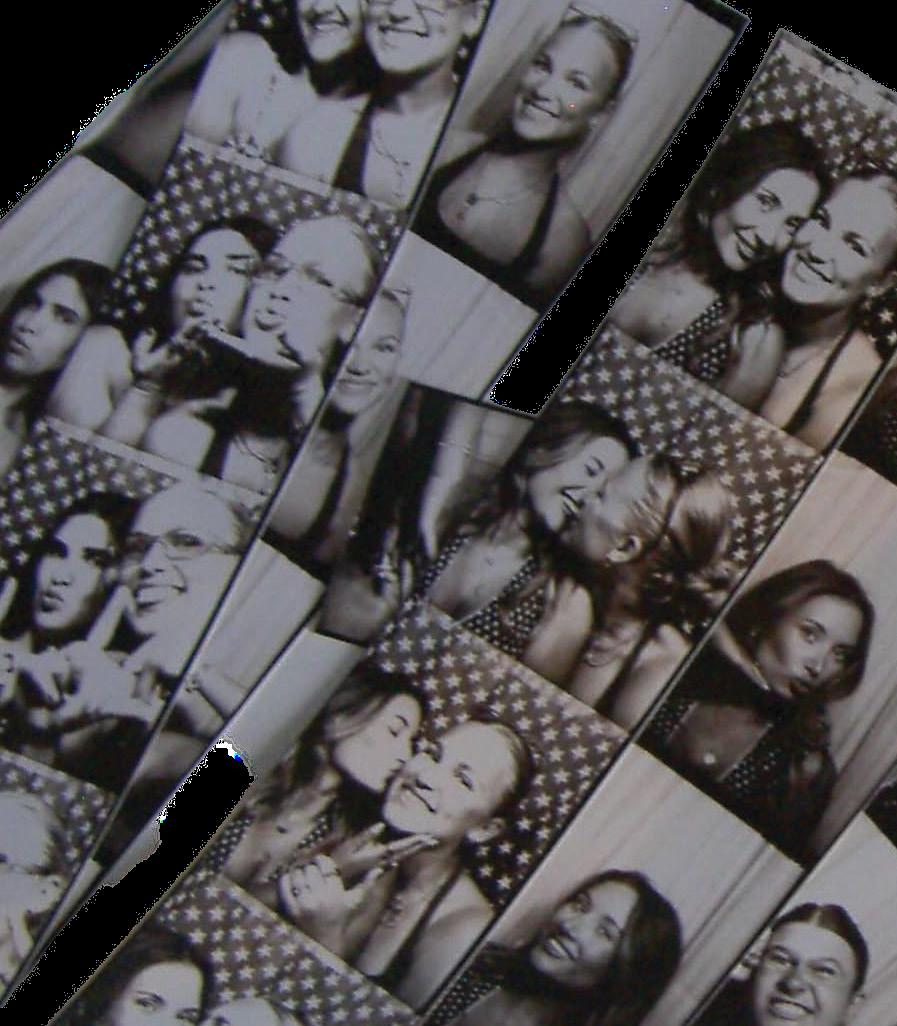
e art of the launch will likely cement its place in modern relationships.
“Social media is supposed to be fun, and so are relationships,” Ryan said. “Have fun trying to !nd a place where those overlap, whether it be sharing a little or a lot.”

Growing Up in Los Angeles
story by Nina Fife photo by Melissa Houston design by Amanda Monahan
The Hidden FOUND IN RAGEFUL Tra ic BEAUTY
Los Angeles, despite being a bustling urban city, can be thought of as a human being — unique and special with many stories to tell. One of my favorite questions to ask LA residents is a simple one, yet always makes people pause: What is your favorite freeway in the city?
I love my city, and I take a lot of pride in being a product of Southern California. I grew up on the 405, driving from my home in Long Beach down to see my grandparents in Seal Beach. e 710 is the highway I take to get to my favorite place — Dodger Stadium — ttingly called Blue Heaven on Earth.
When I decided to come to Pepperdine for my collegiate career, I became more familiar with LA freeways than I ever had before. Being from Long Beach, it has become ingrained in my brain to take the 405 to the 10 and connect with Paci c Coast Highway until I get to Malibu.
ese roads have become my safe space: a journey that always leads me home. Growing up on the coast has given me a deep appreciation for the ocean, so PCH has always held a special place in my heart.
But if you ask any true LA native, PCH doesn’t count as one of the city’s freeways. When you think about the tra c-clogged roads, you have to think
about which highways go through the heart of our home.
As a kid, the 405 was my favorite freeway. I always knew exactly where I was and where I was going — it was as familiar to me as my favorite childhood book. As I grew older, my favorite freeway became the 10, conveniently referenced in Kendrick Lamar’s song “dodger blue.”
When I ask residents which freeway is their favorite, I realize why these roads have been mine. While I get overly frustrated with the endless hours of tra c, as every driver in LA does, I have discovered that these roads are the storytellers of the city.
Although being stopped at a standstill trying to merge from the 10 to the 405 or vice versa evokes those passionate emotions rooted in anger and impatience, these slow moments remind me to look around at the city I have always called home.
Los Angeles isn’t only my home — it is also home for nearly 4 million other people, according to the United States Census Bureau. e large majority of these residents commute via the freeways, allowing a unique experience to be shared through a group of people that may never meet.
e rst time I heard the word “sonder,” I discovered why I had been so
familiar with the term: it was the exact feeling I felt each time I drove in LA. e moments where anger is bubbling to the surface because tra c is adding an extra hour or two to my drive are also the moments I realize everyone around me is stuck in the same tra c.
Sure, I have somewhere to be, but so does the Porsche next to me. Similarly, the minivan behind me holding a family of ve reminds me of my own upbringing, and I know they’re also o on their own journey.
As I try to keep my road rage in check, I remember that everyone else around me is going through the same experience, even if we have di erent destinations in the end.
ese small pockets of re ection also show me the beauty and fragility of life itself. In 2024, there were 58,659 reported crashes causing death or injury in LA, with 653 tra c deaths accounted for, according to Amendt Law.
Every number is a person. Every crash is a family changed forever. Although the tra c in Los Angeles is more than just a universal annoyance, it also reminds us to slow down, look around and appreciate what we have while we still have it — it may be gone before we can say goodbye.