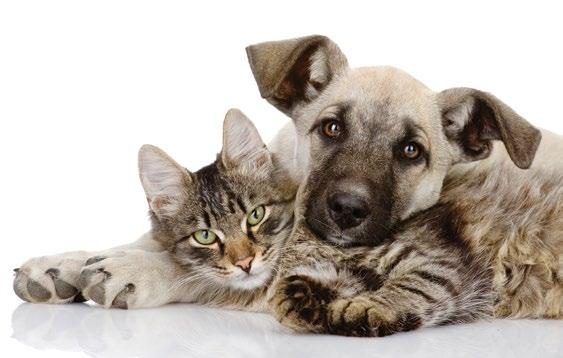
Washington Area Humane Society October is “Adopt a Shelter Dog” Month!
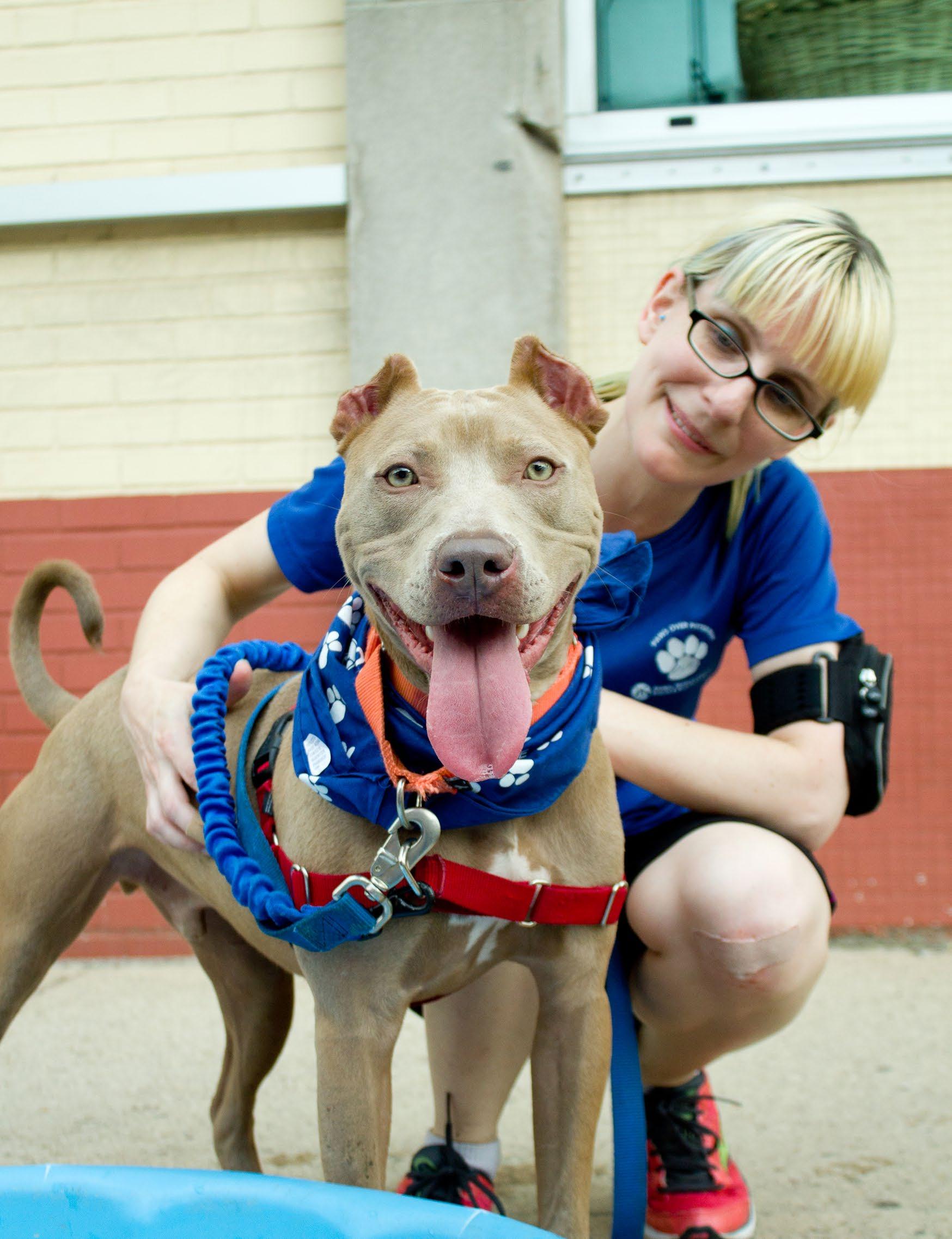
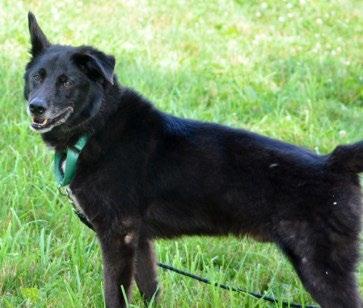
Hayes is a fun 2 -year old boy who loves people but does not always get along with other dogs Hayes loves walks and does well in car rides. We’re not sure of his opinion on cats, but he would do well in a home as the top dog. Stop out at the shelter today to say hi to him - he loves visitors!
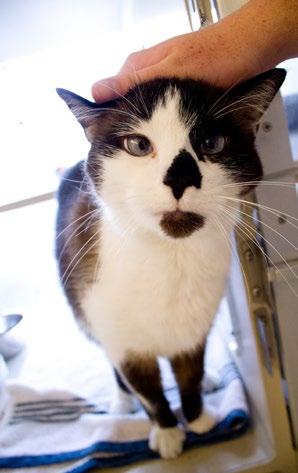
Hello, my name is 2 Toes! Named for the unique marking on my toes, I’m a shy and quiet 7-year-old
I get along well with other cats a nd really enjoy a quiet perch or a warm lap!
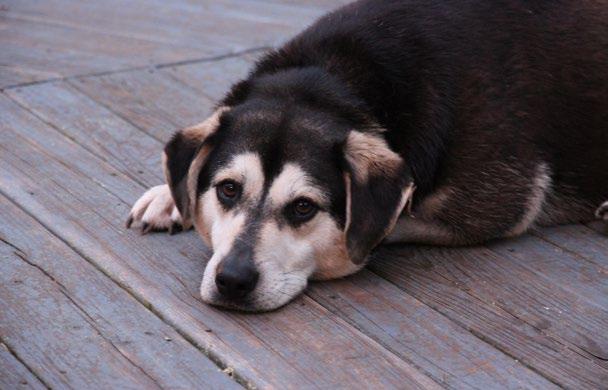
Harley is a 9-year-old lab/collie m ix who is looking for a new home He has done well with the other dogs here at the shelter but we are not sure about his feelings towards small children or cats. This senior dog really needs a loving home in which to spend his golden years!
Next Rabies Clinic: Sept. 21, 8am -12noon at WAHS All anima ls ha ve be en s paye d or ne ute red, microchipped and vaccinate
The Washington Area Humane Society (WAHS) is a 501(c)(3) no-kill shelter supplies. Our shelter takes in thousa nds of animals & 1527 Rte 136, Eighty Four, PA 15330 (724) 222-7387, www WashingtonPAShelter.org
Strip District, South Hills, Sewickley, COMING SOON! Monroeville
I am so very excited to be starting our third year in publishing PetConnections. We’ve had an excellent second year with our 2013 Excellence Award from the Dog Writers Association of America and being covered and recognized for the Women in Business Award from the Pittsburgh Magazine’s April issue.
I would like to thank everyone who has worked so hard to make PetConnections Pittsburgh’s #1 resource for everything pets! We owe so much of our success to all of our contributing writers, advertising sponsors, and readers as well as businesses that distribute the magazine!
So many new developments are in progress involving both the website and printed edition. Joe Hirsch, our sales manager, is establishing a pet-friendly real estate section both in print and online. We will also be opening up a pet career and employment section as well as announcing our PPC Best for Pets reader-favorite pet businesses and animal organizations. A photo-of-the-month contest and expanded blogs will also appear on our website.
reflect the position or policies of Pittsburgh
. All viewpoints are welcome...”
Pittsburgh PetConnections Monthly
Published By: Pittsburgh PetConnections, LLC. Pittsburgh PetConnections, LLC. was formed in 2012. Our mission is to publish a high quality, informative and Human-Animal Bond focused publication. We support local businesses and also assist local non-profit businesses for pets and people, to give back to our great Pittsburgh communities.
Magazine Publication Staff
This Issue:
September’s PetConnections cover photo and article feature the Animal Rescue League of Western PA. We are pleased to present ARL’s accomplishments including their over 100-year history of triumphs and heartaches, as well as its founding role in Pittsburgh’s establishment of animal welfare and rescue activities.
We have more of our informative press releases for Voices of the Volunteers, Pit Bull Awareness Day, Healthy Pet Products Pet Age Business of the Year Award, and Family Pet Expo. This month’s articles include “Veterinary Radiology” by Dr. Christopher Warrington and “Allergies” by Dr. Doug Kneuven, as well as upcoming October events, including the Family Pet Expo, Dogtoberfest, Barktoberfest, and Susan G. Komen Paws for the Cure.
We welcome all of our event advertisers and also new to PPC, The Dog Stop, and Petagogy! See our center Advertiser Map spread on ages 18 & 19.
Please also see our print and online directories on the home page of www.pghpetconnections.com.
Thank you for picking up PPC Magazine. Take care of yourself, as well as your animals and be well!
Warmly,
Carla Mader CEO & Publisher Pittsburgh PetConnections, LLC.
Contributing Writers: Our contributing writers have many years of combined experience and expertise in the fields of veterinary medicine and the Human-Animal Bond.
• PPC promotes your business at our events Welcome to our September 2014 - Volume 3 Issue 1 - Second Anniversary Edition!
Submit your business or rescue organization’s info for a FREE listing on our directory. No website for your small home-based pet or wellness business? Add a Featured Listing on the PPC online Directory for a small yearly fee and upload photos and detailed info about your business!
A Media Partnership with PPC includes: • Ad in print or online (free design)
• A Free Featured directory page on our website with your business info, photos and link to your website
• Your logo in our monthly newsletter
PETCONNECTIONS RESOURCE DIRECTORIES
Animal Educational Exhibits
North:
The Pittsburgh Zoo & PPG Aquarium pittsburghzoo.org
“I Will Care for You” The Energetic Aspects of the Human-Animal Bond
by Susan Wagner DVM, MS, ACVIM
It’s almost time for the annual American Holistic Veterinary Medical Association (AHVMA) conference. These meetings are always wonderful. Being surrounded by so many like-minded practitioners dedicated to combining the best of conventional and complementary veterinary medicine is very exciting. You may want to introduce your veterinarian to their website: www.ahvma.org. It has a wealth of information for animal professionals about integrative veterinary medicine. However, the best advocates for animal care are the two-legged guardians of our beloved patients.
I often give lectures at veterinary conventions about the energetic aspects of the human-animal bond. We talk about the ways in which animals can reflect the energy field of their human companions and also ways they teach us veterinarians. I know each of us has learned and grown because of the difficult cases that have come across our paths. There are no coincidences – we attract the cases we need to become better practitioners -- and better humans.
I would like to take a moment to clarify an aspect of this philosophy. When animals reflect a negative aspect of our life, it is not because we are making them sick or not caring for them adequately. They are reflecting problems that we have not resolved. So, by choosing to powerfully face the challenges in your life and being kind and compassionate to family, friends, and strangers, you help your pet. One of the best gifts humanity can give the animal kingdom is to take care of one another.
On that note, I want to show you a wonderful video, I Will Care For You. The words of the song were written by a client of Dr. Margo Roman, the founder of the Dr. Do More project. Dr. Do More is also dedicated to integrating complementary care into mainstream medicine. As I watch it, I wonder — who is singing, person or pet? Enjoy.
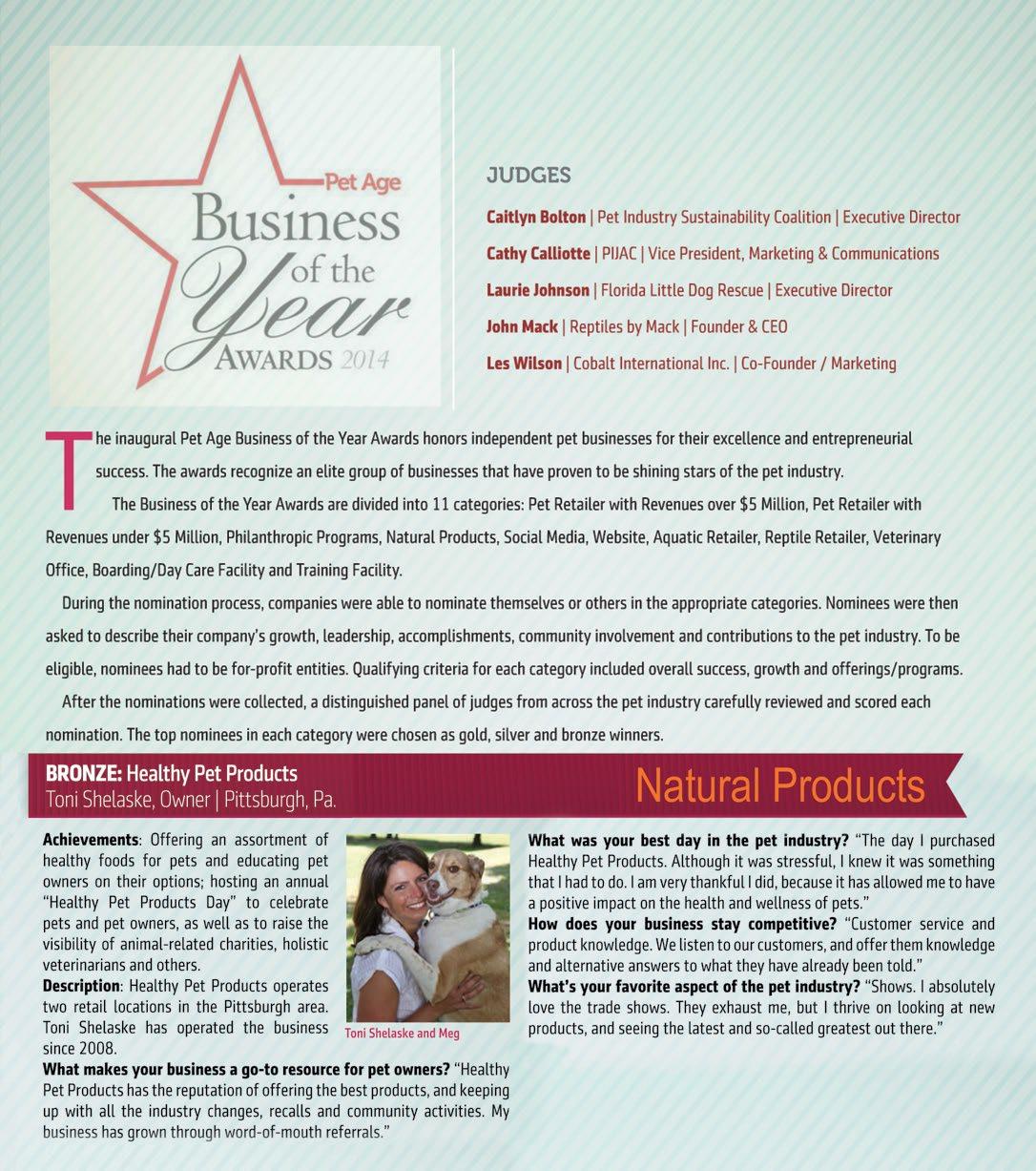
PITTSBURGH’S HEALTHY PET PRODUCTS NAMED A 2014 “BUSINESS OF THE YEAR”
Pet Age Award Recognizes Toni Shelaske’s Success and Commitment to Educating Pet Owners About Healthy Options
PITTSBURGH, PA, September 11, 2014 –Pittsburgh’s own Healthy Pet Products was proudly named a 2014 “Business of the Year.” The distinction comes from Pet Age, the defnitive trade magazine for retail pet supply outlets.
Healthy Pet Products received the Pet Age 2014 Business of the Year Bronze Award in the category of Natural Products.
Healthy Pet Products won for its wide selection of healthy pet foods and its commitment to educating pet owners about healthy options for caring for their beloved pets.
Additional achievements included outstanding customer service and raising visibility of animal charities and holistic veterinarians.
The inaugural Pet Age Business of the Year Awards judged independent pet businesses across a nearly $60 billion industry, including pet retailers, groomers, veterinarians, and more.
A distinguished panel of pet industry leaders judged nominees’ growth, success, leadership, accomplishments, offerings, community involvement, and contributions to the pet industry.
“It’s a great honor to be named a Business of the Year, and it’s particularly exciting to represent pet owners who strive to provide the best possible care for their pets through natural products,” says Toni Shelaske, the owner of Healthy Pet Products.
She adds, “Healthy Pet Products has been in business since 2008 and has earned a reputation for offering the best products, and keeping up with all the industry changes, recalls, and community activities.”
Pet Age’s 2014 Business of the Year Awards honors the pet businesses that are the best at what they do. Healthy Pet Products is proud to represent local Pittsburgh businesses among the nationwide winners.
For more information, visit: www.healthypetproducts.net www.petage.com/2014-pet-age-best-of-awards.
Or, visit the stores to see just why Healthy Pet Products was named a Business of the Year!
About Healthy Pet Products
Healthy Pet Products is an all-natural and organic pet food and supply store that specializes in outstanding customer service and product knowledge. Since 2008, owner Toni Schelaske and her team have scrupulously chosen the best brands of supplements, all-natural foods, USA-made treats and toys, and a wide selection of accessories for pets.
Two convenient locations are located at 9805 McKnight Road in McCandless and 1742 Washington Road in Upper St. Clair.
View resources, product information, store hours, events and more at www.healthypetproducts.net.
HAAWC is a 501(c)(3) organization that honors the Human Animal Bond as a source of wellness for individuals, families and communities. Guided by the belief that animals are a gateway to human healing, HAAWC intends to develop both urban programs and rural sanctuaries designed to impact community health, safety and wellness.
HAAWC is raising funds for upcoming animal-related programming. www.haawc.com
COMMUNITY NEWS
The Pittsburgh Family Pet Show
Debuts with Many Animal Attractions!
Exotic Animals, Dogs, Cats, Reptiles and Birds…oh my!
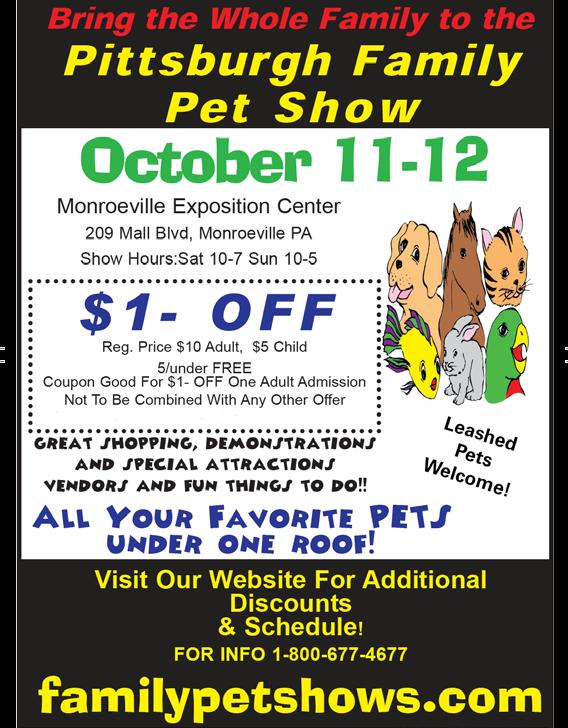
MONROEVILLE, PA, September 10, 2014 – The Monroeville Convention Center will be transformed into a pet lover’s paradise on Saturday and Sunday, October 11 and 12, 2014, with the debut of the frst annual Pittsburgh Family Pet Show! Fur will literally be flying with acts like the Disc Devil Dogs and the Splash ‘n Dash team of K9’s taking the floor, or air if you will!
The Pittsburgh Family Pet Show is designed to educate and entertain the public about the wonderful world of pets, featuring pet vendors, educational and entertaining performances, special attractions, a hands-on-petting zoo, pet adoptions, and shopping for pet lovers and their pets.
During the 2-day event, pet owners can bring their well-behaved, leashed dogs to the show and strut their stuff with their purebred dogs in the Parade of Breeds. Dog owners can also even participate in the Pet Costume Contest with their pooches! Attendees looking to adopt a new furry family member can visit the Adoption Area with local rescue groups on hand with adoptable pets at the show. Show highlights are as follows:
The Wild World of Animals – ever see a warthog, leopard cub, monkey, or African crested porcupine in person? Perfect for any age, the WWA will have all kinds of exotic animals to ‘edu-tain’ and wow the crowd!
Parrot Shows with John Lege – ‘That Guy with the Birds’ – his family friendly interactive Parrot program will ruffle feathers and delight bird afcionados. Bird lovers can even flock to have their pictures taken with John’s birds throughout the weekend.
The Jersey Disc Devils Dog Show – Fur flying fun of world class Frisbee dogs will be performing. Attendees can watch Frisbee and agility at its best and meet the K9 stars after the shows!
Splash ‘n Dash K9 Sports - flyball is one of the most incredible dog team sports – the blur of excitement these dogs have will make the crowd go nuts! See them in the dog ring – also demonstrating agility.
The Alpacas of Illusion Ranch - the softest, cutest, most cuddly critters! Guests will get to pet and learn about these lovely creatures.
Mr. Bill’s Petting Zoo – Llamas, pygmy goats, baby ducks, donkeys, turkeys, chickens and more! Included in the price of admission – perfect opportunity for kids to pet the zoo animals!
A perfect opportunity for film and video coverage of exotic and outrageously entertaining pets!
“We are excited to bring the family and pet friendly Pittsburgh Family Pet Show to the area! We highly endorse responsible pet ownership, have many edu-tainment animal attractions, acts, and exotic animals to see - it is perfect show for pet lovers at any age,” said show organizer Karen Garetano of Family Pet Shows.
Dennis and Karen Garetano, the show’s organizers, also allow animal rescue groups that are official notfor-proft organizations to have a free space at the event - offering the public information, education on responsible pet ownership, and even adoptable pets on site.
The Pittsburgh Family Pet Show will be held on Saturday, October 11, from 10 am to 7 pm and on Sunday, October 12, from 10 am to 5pm. Admission is $10.00 for adults and $5.00 for children ages 6 – 12, and children 5 and under are admitted FREE.
You can go to the website at www.FamilyPetShows.com for discount coupons or to purchase discount tickets online.
For additional information, vendor space, or how to become a sponsor, call us at (631) 423-0620 or email us at dennis@familypetshows.com or visit our website at www.FamilyPetShows.com.
About Family Pet Shows:
Family Pet Shows were formerly known as The Horse and Pet Expo, a family owned and operated company run by Karen and Dennis Garetano and their son Joe Garetano. In 1994, after years of publishing Horseworld USA Magazine, they thought of the idea to host a horse expo in Pennsylvania and held their first show in 1994 in Fort Washington, PA. After two years of successfully hosting the first horse expo, they expanded the show to include other pets and changed the name to Horse and Pet Expo and began adding new locations. The company now hosts seven different pet expos annually in New York, New Jersey, and Pennsylvania, drawing in crowds of thousands of pet lovers to each of their shows. Karen and Dennis have always been dedicated to making the shows educational, fun, and have stressed the importance of responsible pet ownership, entertaining with talent of various pet and human acts and having many pet vendors and rescue groups. They graciously offer free booth space to 501 c 3 rescue and adoption groups to help save many animals’ lives. Unlike some pet shows, the majority of the floor space is devoted to
entertainment and educational programs presented by their various acts. They strive to make this truly a family- and petfriendly pet show in every venue.
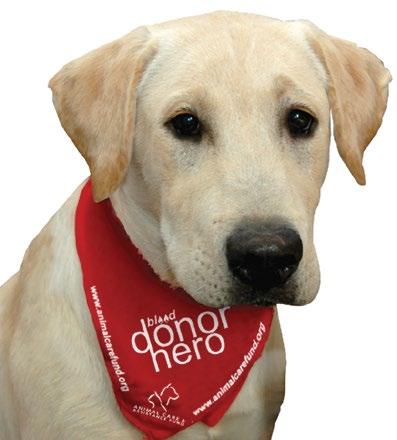
Please volunteer your dog to be a “Blood Donor Hero”
• Between 1 and 7 years of age
• Weight: 50 lbs. or more
• Healthy with a gentle temperament
• Current with vaccinations
• Never had a blood transfusion
• Tested negative for blood-borne diseases (free testing by blood bank)
• Must be on heartworm, flea and tick preventative
• Not pregnant or currently nursing
Read more about The Rogan Rexford Blood Bank at: www.animalcarefund.org
For questions, or to make an appointment call: 412-348-2588 or e-mail: AnimalBloodBank@pvs-ec.com
& ANIMAL HEALTH WELLNESS
If you have ever taken a sick pet to the veterinarian, he or she may have had some kind of imaging performed to try to diagnose your pet’s problem. This initial imaging was most likely done in the form of radiographs (also called “x-rays”), which were interpreted by the veterinarian. Most veterinarians are reasonably comfortable interpreting radiographs, but sometimes they need a second opinion about difficult images or they may recommend additional imaging, and a radiologist may become involved.
Veterinary radiologists receive additional training beyond a standard veterinary degree in order to specialize in the interpretation of imaging studies. Most veterinary radiologists are located in large specialty/referral hospitals, including those associated with veterinary colleges. Many who work in teleradiology can provide remote interpretation of digital images via the Internet from anywhere in the world.
Veterinary Radiology and Imaging Options for Your Pet
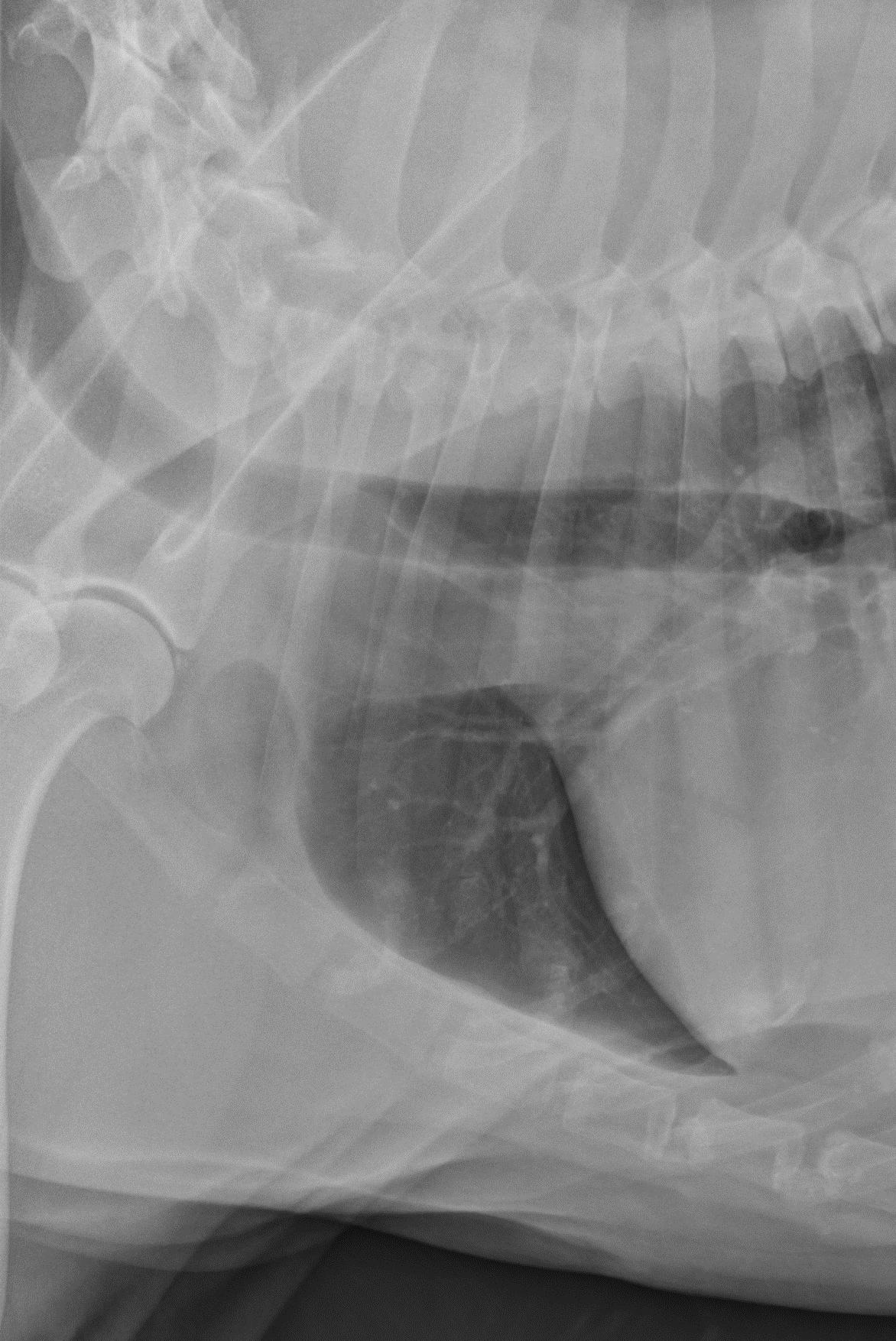
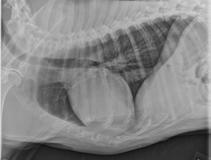
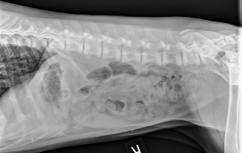
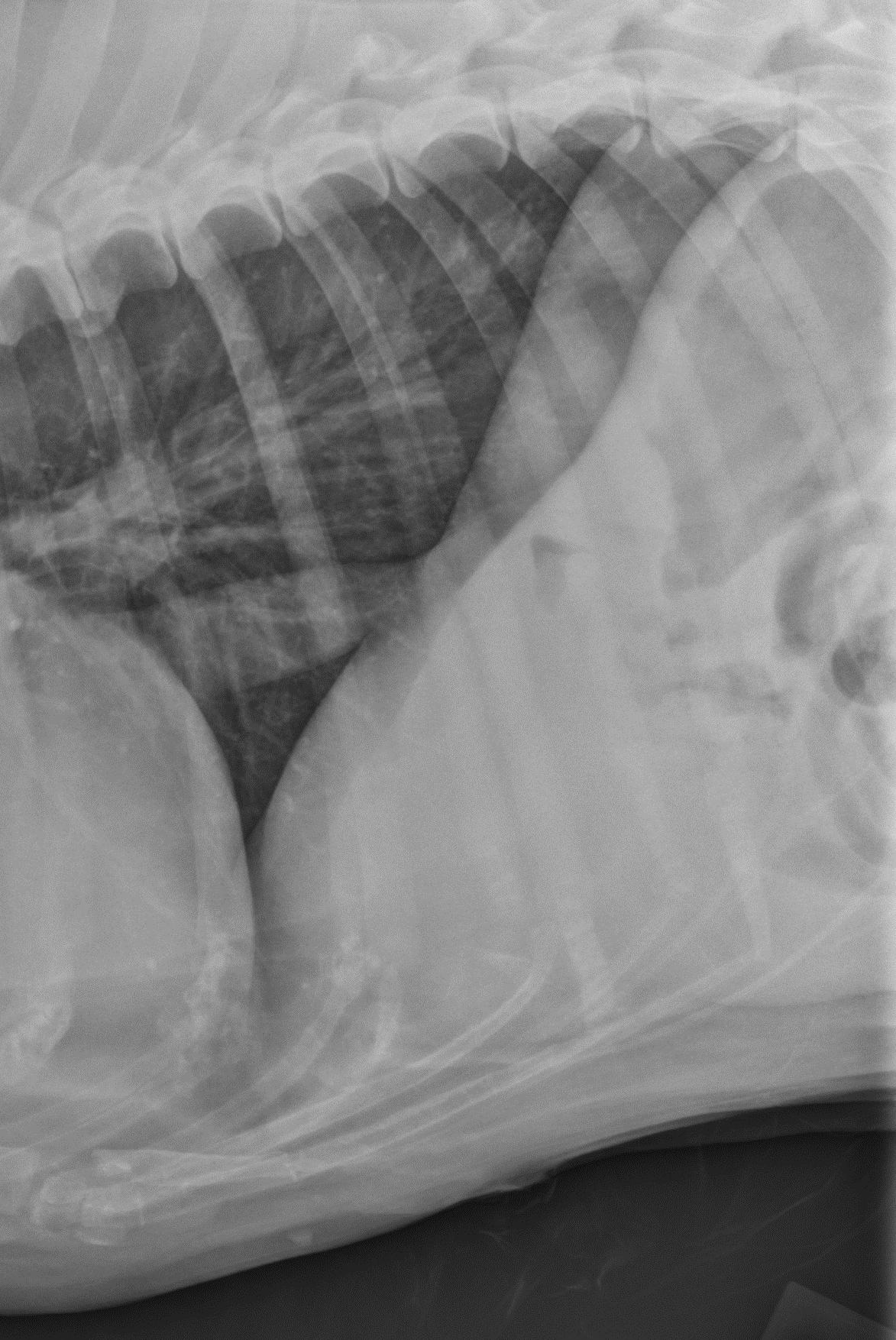
Radiography uses x-rays emitted by a machine positioned above a stationary table on which the pet is lying. These x-rays pass through the body and interact with an imaging plate located within the table, creating an image representing a collection of overlapping shadows. Images are gray-scale and twodimensional and can be stored either digitally or on film. Examples of normal thoracic and abdominal radiographs are shown in Figures 1 and 2, respectively.
Ultrasound
By Christopher D. Warrington, DVM Diplomate, American College of Veterinary Radiology
Basic descriptions of the most common imaging options – radiography, ultrasound, computed tomography (CT), and magnetic resonance imaging (MRI) – are included in this article, so that you will know what to expect if your veterinarian recommends one or more of these for your pet:
Radiography
Radiography is the primary imaging modality utilized in veterinary medicine and is readily available from small clinics to large hospitals. Because of its wide availability and lower cost than other imaging options, radiography is commonly used as an initial screening tool. The most common areas imaged with radiography include the chest (coughing or other breathing problems, heart disease/failure, evaluating for spread of cancer, etc.), abdomen (vomiting, diarrhea, discomfort, palpable masses, urinary stones, etc.), and limbs (pain, swelling, limping, etc.), but any area of the body can be imaged with radiography.
In many cases, ultrasound is the next imaging step after radiography, particularly for evaluation of the abdomen. Availability is more limited than radiography, since it takes additional training and experience to be comfortable with ultrasound, and the cost is also higher (typically 2-3 times the cost of a set of thoracic or abdominal radiographs). Ultrasound is very user-dependent, and studies are usually interpreted in real-time while scanning the patient, rather than after all of the images are acquired, as in radiography. Ultrasonography is a standard part of training for a veterinary radiologist and is typically performed in larger specialty/referral hospitals. If no radiologist is available in a given geographic area, other specialists, or even regular veterinarians, may take additional training courses to be able to offer this imaging option to their clients, but proficiency is far more variable.
Ultrasound uses highfrequency sound waves emitted by a hand-held probe, which is in contact with the pet’s body wall. The sound waves are reflected back to the probe from the body tissues being imaged, and the information collected is converted to an image displayed on a monitor. Real-time images can be saved as still images or video loops for later review. Ultrasound is primarily used for evaluation of soft tissues, such as abdominal organs, thyroid glands, and sometimes muscles, with limited uses for evaluation of
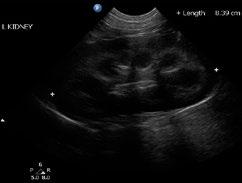
Figure 3
Figure 1
Figure 2
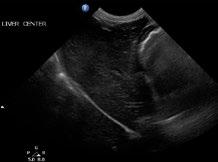
Figure 4
lungs and bones. Examples of ultrasound images of a normal kidney and liver are shown in Figures 3 and 4, respectively.
Computed Tomography (CT)
In veterinary medicine, patients are anesthetized for CT (also called “CAT scan”), since motion during the study will ruin the images, and we cannot ask our pets, unlike human patients, to hold perfectly still for the length of a typical scan (varies depending on scanner speed). Because of higher equipment and maintenance costs, as well as the need for specially trained technical staff, availability of CT is typically limited to larger specialty/ referral hospitals, and the cost is approximately 2-4 times the cost of an ultrasound. Studies are routinely interpreted by veterinary radiologists, either in-house or via teleradiology. The most common body areas imaged with CT include skull (nasal disease, trauma, regional masses/swelling, etc.), thorax (lung disease, masses, evaluating for the spread of cancer, etc.), bones/joints (trauma, developmental abnormalities, etc.), and abdomen (large or poorly defined masses, evaluating for spread of cancer, etc.).
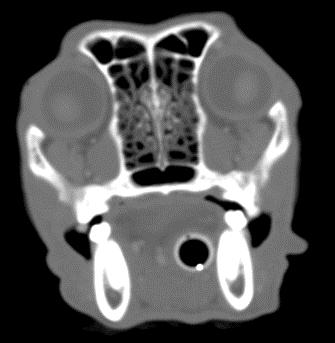
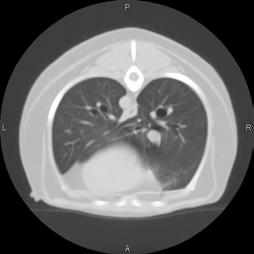
CT also uses x-ray radiation, but the x-ray source rotates around the pet as the table moves through the scanner, creating a sequence of cross-sectional images like slices from a loaf of bread. Unlike radiography, the resulting images do not represent overlapping shadows, allowing for better differentiation of small and closely associated structures. Examples of CT images of a normal skull and thorax are shown in Figures 5 and 6, respectively.
Magnetic Resonance Imaging (MRI)
Veterinary patients are also anesthetized for MRI scans, since motion during the study will ruin the images. Equipment and maintenance costs are higher than for CT, and scans are best when performed by a licensed MR technologist, so MRI is also typically limited to larger specialty/referral hospitals, and the cost is approximately 1.5-2 times the cost of a CT scan. Studies are routinely interpreted by veterinary radiologists, either in-house or via teleradiology. The most common body areas imaged with MRI are the brain (seizures, tumors, inflammatory disease, stroke, etc.) and spinal cord (disc herniation, tumors, inflammatory disease, etc.).
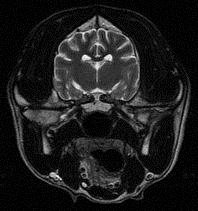
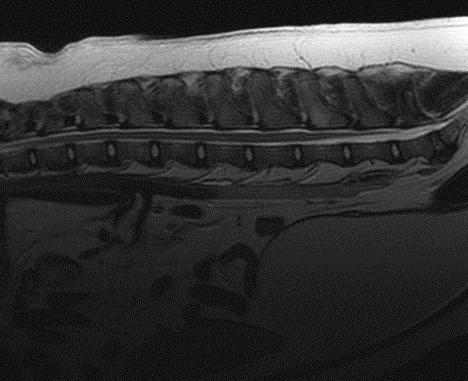
MRI uses a powerful magnet (e.g. 1 Tesla, which is 20,000 times the Earth’s magnetic field) to create images based on the hydrogen content of the tissues. It is primarily used to evaluate for subtle abnormalities in soft tissues that cannot be seen with other imaging modalities. A stronger (high-field) magnet will allow for shorter scan time and better image resolution, compared to a low-field scanner. Examples of MRI images of a normal brain and spinal cord are shown in Figures 7 and 8, respectively.
Christopher D. Warrington, DVM Diplomate, American College of Veterinary Radiology
807 Camp Horne Rd Pittsburgh, PA 15237
(412) 366-3400
Figure 5
Figure 8
Figure 7
Figure 6
ANIMAL BEHAVIOR
What do you do when you catch your dog putting his head in the trash or worse yet, the litter box? What do you do when you catch him counter-surfing? Most of us would be tempted to say “no,” but think about what you’re saying from the dog’s perspective.
Just Say No to NO
By: Lilian Akin, CPDT-KA, CBCC-KA Akin Family Dog Training
What does “no” mean to the dog? What do you want your dog to do? Are you giving your dog any information that he can use to do something appropriate rather than raid the trash or litter box?
I recently read an article that discussed the reality that toddlers do not have the ability to process “do not do that.” To process “do not do that,” toddlers first would have to figure out what it is they want to do and then the negative of that. That is pretty sophisticated processing. Young children do not have the ability to understand what “do not do that” means. What the authors recommended was to redirect the child. Tell children what you want them to do rather than what you do not want them to do. Telling children “do not go outside until your coat is on” is different from “I want you to put on your coat before you go outside.”
Many dog trainers, including myself, believe that dogs have processing abilities that are similar to that of a toddler. Therefore, rather than telling your dog “no, do not get into the garbage” or “no, do not get into the litter box” or “no, do not jump on the counter,” call his name and ask him to come to you. If he knows the cue “leave it,” you can tell him to “leave it.” Tell him what you want him to do and give him information that he can process rather than just saying “no” or “do not do that.” What does “no” mean anyway? No, do not look at the counter? No, do not breathe, or no, do not smell the garbage or kitty litter?
Why might your dog respond positively when you tell him/her “no”? One reason might be your tone of voice. You might be saying “no” in a really stern manner that to the dog ordinarily means that you are angry. It might make the dog stop. The dog also might interpret your body language as meaning “uh, oh, Mom is mad, better run and hide.” However, it does not tell the dog what you want him to do.
As I was writing this article, my one dog JJ was barking at my front window. My options were to say “JJ, stop” or “JJ, quiet” but I have never taught him what “stop” or “quiet” means. I could say “JJ, no,” but what does “no” mean? Do not look out the window, do not bark, do not protect the house? So, instead, I said “JJ, look,” which made him stop and look at me. Then, I called him over to me and asked him to lie down. I gave him instructions that he understood and he could process. I redirected him to an appropriate behavior.
“Leave it” is a particularly useful cue to teach your dog. When you find him going towards the garbage or going towards the cupcakes on the counter or licking his lips in front of the litter box, you can tell him something that means “back off from what you are doing and come to me.” To teach “leave it, ” I put treats in both hands and let the dog smell the treats from both hands. I then put one hand behind my back with the other one right in front of his face. I let the dog try to get at the treats in the hand in front of his face. I do not move the hand, I do not yell at the dog, but I simply say “leave it.” During this time, the dog might try nibbling on my hand, pawing at it, or licking my hand. I just let him do whatever he wants to try to get at the treats in that hand. Patience is a virtue! Once the dog becomes bored or frustrated, he will back off or turn his head. I reward any backing off or turning of the head with a click of a clicker or a “Good!” and then offer him a treat from the hand behind my back. What I am telling the dog is “back off from what you want, and I’ll reward you with another treat.” Once the dog is really good at “leaving it,” I might then put a treat on the ground or on the kitchen counter or on the coffee table. I am ready in an instant to cover it with my hand. As the dog tries to get the treat and I’m covering it, I say “leave it” and when the dog backs off, I click or say “good” and offer him another treat.
Next time you find yourself faced with a dog that is doing something obnoxious or naughty, think before you yell “no.” Is there something else you could be telling your dog that would give him more information as to what you want him to do?
■
■
■
■
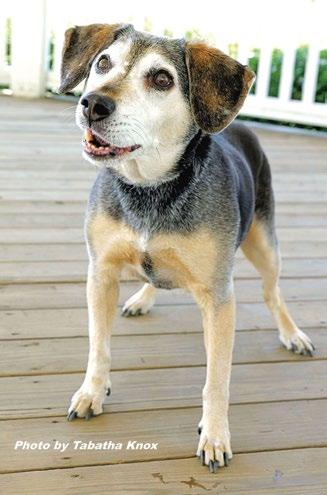
Take my picture and show me off. Let me express myself and make you smile. I am your forever friend, I am your pet. When you look at my picture, will you always remember that I love you. I am who I am because of you.
Photography by Tabatha Knox, a devoted animal and nature photographer Studio 2nd floor of Vibrant Images downtown Beaver, Pennsylvania Travel to
location
Advertisers
All Natural Hoof Care (see ad pg 34)
Animal Care & Welfare (see ad pg 21)
BelaCoop (see ad pg 17)
Burton’s Total Pet (see ads inside front cover)
The Canine Club (see pg 24)
Coventry Equestrian Center (see ad pg 33)
Dog Stop (see pg 2)
Dogtoberfest (see pg 9)
Dog Watch (see ad pg 34)
Family Pet Show (see ad pg 2)
Gentle Journey (see ad pg 13)
Holistic Care for Animals (see ad pg 27)
Jenny Karlsson Photography (see ad pg 19)
Judith Levy (see ad pg 8)
J & D Home Improvements (see ad pg 1)
Kara Jones Photography (see ad pg 34)
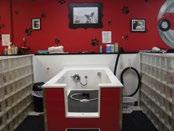
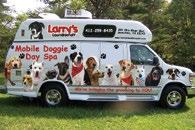
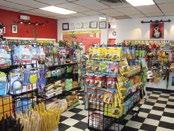
Larry’s Laundromutt (see pg 24)
Manning Chiropractic (see pg 21)
Nicole Begley Photography (see ad pg 19)
Paws Here Awhile (see ad pg 21)
Pets at Home (see ad pg 19)
Pugtoberfest (see pg 35)
The Rogan Rexford Blood Bank (see ad pg 13)
Success just Clicks (see pg 19)
Susan G Komen (see pg 30-31)
Vibrant Images (see pg 17)
Washington Area Humane Society (see pg 1)
The 2nd Annual “Voices of the Volunteers” Event
LOCATION:
DATE/TIME:
Western Pennsylvania Humane Society Sunday, September 21, 2014
1101 Western Avenue 10:00AM-5:00PM
Pittsburgh PA 15233
With Special Guest Band: 30REALM INCLUDES:
The Animal Rescue League Story...
By: Ann Yeager
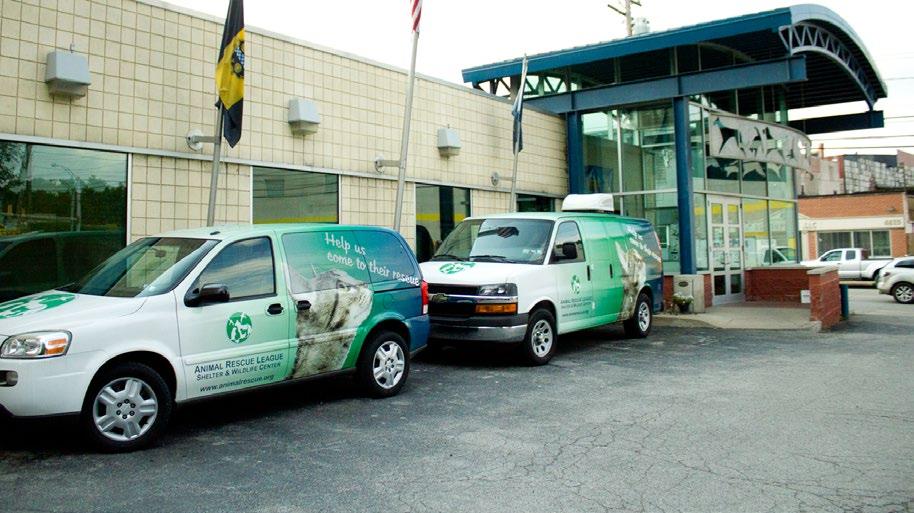
TheAnimal Rescue League Shelter & Wildlife Center has a rich history filled with many triumphs and heartaches, beginning in the early twentieth century. During all the events that have occurred throughout the years, there have been two common concerns that the Animal Rescue League has consistently stood for: the love and well-being of animals.
The founding of the Animal Rescue League goes back to the year 1909. On July 22, five animal- loving Pittsburghers had a brilliant idea. With a shared concern for both animal welfare and public health, these men and women came together to form an organization that would devote itself solely to the welfare of animals in the Pittsburgh area. These Pittsburghers sought to return lost dogs and cats to their owners while at the same time giving temporary shelter and food to lost and starving stray dogs and cats. In addition, their organization would secure a merciful and painless death for animals that were old, injured, diseased or dangerous. This group also desired to conduct a refuge farm for horses, dogs, and cats. So began the story of the organization that is now known as the Animal Rescue League of Western Pennsylvania.
Determined to reduce the suffering of all pets, the founders of the League sought to provide food, shelter, and homes for abandoned and stray pets. The founders, quickly faced with the reality of the current situation, realized that not all animals would be placed for adoption. Simultaneously, they were deeply distressed by the cruel disposal methods used by City of Pittsburgh officials at that time. Motivated to change the City’s ways, early League founders sought to contract with the City to perform this unpleasant task in the most humane way possible. The City felt that the Animal Rescue League had legitimate reason to defend
its devotion to animals, and on October 30, 1909, the charter for the Animal Rescue League was obtained.
The founders’ dream to have a shelter to house animals finally came true in May 1910 when the Animal Rescue League opened a small city shelter on lower Denniston Avenue in East Liberty. That same year, a generous benefactor donated a sixteen-acre farm to the League. The farm is located on Verona Road in Rosedale (six miles east of the League shelter). The League began to remodel a barn for use as a kennel. At the board meeting held on June 21 that year, it was revealed that the farm in Rosedale was housing nine dogs and twenty-five cats while the City shelter had six dogs and two cats. Seven kittens and one dog had been “humanely killed.” The meticulously kept financial records showed revenue for the League in its first six months of existence. The League’s revenue totaled $2,103 (including ten cents for the sale of a biscuit). At the end of 1910, The League contracted with Dr. Martin, a local veterinarian, for his services and City operations were moved to larger quarters at Euclid and Kirkwood Streets in East Liberty.
As the First World War ended, the Animal Rescue League began to progress again, and by the end of 1919, all animals were held at the Animal Rescue League’s shelter for a week. This was twice as long as the law required and emphasized the League’s dedication to the care of animals. Owners who lost their pets could go to the League and reclaim them by buying a license and paying the “poundage fee.” At this time, the fee was 15 cents a day!
Unclaimed animals were placed in “good homes” when possible or kept at the Rosedale Farm. At the end of the decade, the Animal Rescue League’s success was growing, but this was only the beginning of its expansion to accommodate the increasing number of animals. In addition to the League’s agents’ picking up some 4,000 animals, the facilities at the Rosedale farm were modernized by opening up boarding kennels, as well as establishing a pet cemetery on the grounds in Rosedale.
As the Animal Rescue League began to modernize, it continued to maintain its credibility as an organization dedicated to the love and proper treatment of animals in Pittsburgh. In the years that followed the First World War, the League saw many changes from the 1920s through the 1950s. When fur became a fashion statement in the early 1920s, the League became furious with the use of animal skin to follow fashion trends in American culture. The Animal Rescue League had been established to be an advocate for helpless animals, domestic or wild, and openly expressed its anger with the fashion industry’s promotion of furs for summer wear. In a statement presented to the Annual Convention of the American Humane Association, the Board pointed out that 107,698,927 skins had been sold in the last three years and that “the trapping and killing of these animals [involved] the grossest cruelty in practically every instance.”
became, the League still continued to offer services, especially comfort to disconsolate pet owners who were forced by economic circumstances to give up their pets. Despite the added demands and diminished contributions, the League managed –through resourcefulness and economical operations – to survive the Depression years without having to lay off employees and operated through those tough times without a deficit.
Members passed a resolution to discourage this practice and “protest against the foolish fashion of wearing furs in warm weather.”
They believed that wearing furs promoted the slaughter of fur-bearing animals only to give gratification to the wearer’s personal vanity.
As the nation faced the burdens of the Great Depression, the Animal Rescue League was faced with difficulties no different from those of any other organization. No matter how great the troubles
Looking to see what similar groups did for the animals of their communities, the Animal Rescue League Board members participated in the convention of the Pennsylvania Federated Humane Societies in 1952. After seeing what other Pennsylvania animal rescue leagues offered to their communities, the Animal Rescue League of Pittsburgh felt the desire to teach the proper treatment of animals to children in local schools. In 1953 they conducted a school-based education program, making in-school visits to schools in and around the Pittsburgh area. While visiting these schools, the Animal Rescue League distributed 41,000 pamphlets that were based on the care and training of household pets. As a result of these programs, children who already had pets learned how to train them, as well as maintain their care of the animals. Children who did not have a pet in the home learned the level of responsibility that is necessary to take an animal into one’s care.
Following a successful building campaign in 1963, the League moved from its Kirkwood Street location to a newly built facility located at 6620 Hamilton Avenue in East Liberty. The League was thankful to receive such generous grants from the Sarah Scaife Foundation and the Allegheny Foundation. Their donations made funding possible for a professional staff, new equipment, and an up-to-date spay and neuter clinic, as well as financing the spay/neuter surgery of all adopted pets.
A charter change in the 1970s expanded the scope of the League’s activities by changing its name from the “Animal Rescue League of Pittsburgh” to the “Animal Rescue League of Western Pennsylvania.” This change brought even more success to the Animal Rescue League, as it allowed for more people to become fully
aware of the services it had to offer, as well as continually showing love and devotion to the welfare of animals. At this time, the League felt that it should extend services beyond household pets and help all animals, including wildlife. In 1997, the League’s Board of Directors authorized the creation of a new division of the Animal Rescue League, The Pennsylvania Wildlife Center, which is located at the League’s facilities in Rosedale. Its purpose is to rehabilitate injured wildlife and release it into the wild.
While the League expanded its services to all animals and wildlife in 1997, the most recent change to the Animal Rescue League occurred in the year 2000. With the continuous desire to stay modernized, a major renovation project to the main facility in East Liberty was necessary to bring the Animal Rescue League into the twenty-first century. This renovation took place with the assistance of a $250,000 grant from the Scaife Family Foundation.
Even though the Animal Rescue League of Western Pennsylvania has experienced several struggles in the past, it has progressed into the successful organization that it is today. With the love and well-being of all animals as its most important concerns, the Animal Rescue League continues to maintain its open door
policy; to provide temporary shelter, food, medical attention and comfort to neglected and injured animals; to restore lost animals to their owners or seek new homes for them; and to educate the public about the humane care of animals.
• Daycare, Boarding, Grooming and Training
• Daycare, Boarding, Grooming and Training
Offering:
• 13,000 S/F indoors, 6,000 s/f outdoors
• 13,000 S/F Indoors, 6,000 S/F Outdoors
in store & mobile grooming
• Intimate boarding with Private and SemiPrivate Suites (no warehouse boarding)
• Intimate boarding with Private and SemiPrivate Suites (no warehouse boarding)
• Memberships and webcam access
• Memberships and webcam access
• From your car - Canine Curbside Service
• From your car Canine Curbside Service
548 Baldwin St. Bridgeville, PA 15017 412-220-8100 - www.thecanineclub.com
548 Baldwin St. Bridgeville PA 15017 412-220-8100 – www.thecanineclub.com
Become a member today and start enjoying savings and benefits
Become a member today and start enjoying savings and benefits
and supplies
Photos Courtesy of Devon Toy
HOLISTIC CARE
Is your pet itching, licking, and biting? Allergies are a very common problem for pets. The three main types of allergies are food allergies, inhalant allergies (pollens or dust mites), and flea bite allergies. All of these allergies tend to cause skin rashes that most commonly affect the tail base, groin area, arm pits, ears, and/or paws.
Allergies
Flea bite allergies are the most common pet allergies, and this is the time of year that flea populations are at their peak. The bite of just one flea can make an allergic pet scratch for two weeks. Therefore, it may be difficult to pin down the origin of the problem since your pet could have been a victim of a hit-and-run flea attack. Furthermore, most flea prevention medications only kill the flea after it bites, which is too late for the flea-allergic pet.
If your pet’s skin is inflamed year round, then he may have a food allergy. Pets can be allergic to just about anything in their food, but the most common culprits are beef, dairy, chicken, lamb, fish, chicken eggs, corn, wheat, and soy. The only reliable test for food allergies is to put the pet on a very restricted, unique-ingredient diet for eight weeks to see whether the skin clears. If a pet itches mostly in the winter, then a dust mite sensitivity is most likely. A house tends to be more polluted with dust in the winter when doors and windows are kept shut.
Dry pet foods are a complicating factor for allergies, as they are commonly inundated with grain storage mites. Even grain-free kibble is often contaminated, since these mites feed off any carbohydrates in the food. Many dogs with dust mite allergies are also sensitive to its grainy cousin.
Pollen allergies may occur in the spring, summer, and/ or fall, depending on the plants to which the pet is sensitive. Blood tests and skin tests can be used to determine which of these allergies a pet has.
It is sometimes possible to desensitize a pet to an inhalant allergy with special allergy vaccines, but the most common conventional treatment for any allergy includes either antihistamines or cortisone. Antihistamines tend to have fewer serious side effects (mostly drowsiness), but they are also less effective than cortisone. While almost always great at stopping the allergy symptoms, cortisone also suppresses the immune system, stresses the liver, and increases the animal’s thirst and appetite. In my view, a more holistic approach to treating allergies is preferable.
By: Dr. Doug Knueven, DVM, CVA, CVC, CVCH
Any allergy is a symptom of a sick immune system. Face it: A normal immune system does not react to foods, pollens, mites, or flea bites. Since allergies of all kinds are so common these days, you might wonder if we are doing something to over-sensitize our pets’ immune systems.
The outdated practice of yearly vaccination is one major stress on a pet’s immune system. Even the more recent 3-year distemper vaccine protocol is probably excessive for most pets. I recommend that vaccine titers replace the usual shots. A vaccine titer is a blood test that measures the antibody level and can show whether or not the pet already has adequate immunity to the disease.
The insecticides in topical and oral flea/tick medications also strain an animal’s organs. (Doesn’t it bother you that the label cautions against skin contact and yet that is how you apply it to your pet?) Toxins in the air the pet breathes, the water he drinks, and the food he eats can also compromise his - or any animal’s - bodily functions. Reducing the toxic load on your pet’s system can keep him healthy and allergy-free. Consider more natural methods of parasite control. Please see the previously published article for detailed information about ways to safely prevent and treat your pet and its environment at http://www.pghpetconnections.com/June-2013/ Natural-Flea-Prevention/.
Another factor is the balance of essential fatty acids in your pet’s food. Omega-6 fatty acids increase the inflammatory processes of the body, while omega-3s dampen inflammation. Pet diets are often lacking in omega-3 fatty acids and high in omega-6 fatty acids, a condition which means that such deficient diets promote inflammation.
A recent study concluded that 45 percent of dogs with seasonal allergies respond favorably to increasing the level of omega-3 fatty acids in the diet. The best source
of omega-3s for pets is fish oil as opposed to flax seed oil. Allergic pets often benefit from daily supplementation of 1000 mg. of fish oil per 20 pounds of body weight.
Other supplements that can be helpful when treating allergies are digestive enzymes. Digestive enzymes can increase the absorption of fatty acids in the diet by 71 percent. Adding them to a pet’s treatment will help the animal to get more bang for the buck out of the fish oil.
I have found that many pets with allergies respond favorably to balanced, raw diets. Processed foods tend to be pro-inflammatory, whereas the phytochemicals in whole, raw foods nourish the immune system.
Any time we want to positively influence the immune system, probiotics also can help. Probiotics facilitate the establishment of healthy bacteria in the animal’s intestine. Interestingly, 70 percent of an animal’s immune system is in the lining of the intestines. Studies show that supplementing with probiotics improves the health of the entire immune system.
In my opinion, Chinese herbal medicine is invaluable in the treatment of skin allergies. There are several conditions, from the Chinese perspective, that can
cause allergy symptoms. Seasonal allergies are often the result of an invasion of “wind.” Sometimes there is “heat” or “dampness” associated with the condition. Other times allergies are the result of a “blood deficiency.” These Chinese disease entities require the special skills of veterinarians trained in Chinese herbal medicine to determine the cause of allergies and treat them effectively.
From a Western herbal perspective, licorice root can be helpful in reducing allergy inflammation. Licorice has been shown to increase blood levels of the cortisol that the body naturally produces. Giving your pet licorice root is much better than giving him cortisone pills or shots. Besides, licorice has a sweet taste that dogs usually tolerate well. As safe as this herb is, however, I do not recommend giving it to pets suffering from heart, liver, or kidney disease unless prescribed by a veterinary herbalist. Be sure to use only herbs from reputable companies.
Allergies can take time to bring under control. Because there are many issues that contribute to the problem, a multipronged approach is needed to solve it.
legs curling up underneath her (knuckling), no steps, no sitting. Declining rapidly.
Knuckling is usually the result of a significant problem in the nervous system. Messages from the brain to the body are slowed and the paw literally curls under so the animal tries to walk on its “knuckles.” This symptom could be considered the beginning of the end by many.
River is 13. She was knuckling so badly that she wore her nails down. Her legs would cross and she would have severe problems getting up and climbing stairs. She did not sit up. The knuckling occurred for a whole year before she saw Dr. Savko, and the crossing started about 90 days prior to her first visit.
After one week, ONE WEEK, she was moving better. After two weeks she was getting up and down more easily with not as much help during the day AND doing a few steps..
After three weeks, she was holding up her back side more, and she was actually sitting up! She was happy!
Once we started working with River, we never looked back. River’s body has soaked up the improved neuromuscular function and we know so by her vastly improved condition.
Both River and her parents are overjoyed by the results. No drugs, no surgery, just working to remove interference and blockages in the body.
One year of progressive downslide vs. one visit with Dr. Savko = improving with no end in sight.
Not too shabby. Healing, not just treating.
Dr. Savko works with the following veterinary clinics: Meadowlands Veterinary Hospital, Washington, PA Suburban Animal Clinic, Butler, PA, Delmont Veterinary Hospital, Delmont, PA, Fox Run Equine Center, Apollo, PA DC, CCSP, CVCP
Over13Years Experience
Hind
KITTY KORNER
Cat Rescue Resource Guide
Low-cost Spay and Neuter Organizations and Programs
This is an ever-changing list of resources for cat owners in Pittsburgh and beyond though many of the listings, like the shelters, apply to dogs and other pets as well. It includes low-cost spay and neuter programs as well as TNR for community cats, pet-friendly rentals in Pittsburgh and across the US and links to shelters for adoption and other services. In the future we will also list clinic dates with the organizations below when they are available.
TNR And Low-Cost Spay/Neuter For The Pittsburgh Area
Homeless Cat Management Team: www.homelesscat.org
City of Pittsburgh Free Spay and Neuter for City Residents
City of Pittsburgh free spay/neuter: www.pittsburghpa.gov/animalcontrol/spay_neuter.htm
City of Pittsburgh residents can apply for free spay or neuter vouchers for up to five pets, including stray/feral cats.
Low-cost Spay/Neuter and TNR Programs at Allegheny and Surrounding County Shelters
Animal Friends: www.thingkingoutsidethecage.org
Animal Rescue League: www.animalrescue.org
Beaver County Humane Society: www.beavercountyhumanesociety.org
Washington Area Humane Society: www.washingtonpashelter.org - Colony Cat Project: faith.b2@verizon.net
Western Pennsylvania Humane Society: www.wpahumane.org
Low-cost Spay/Neuter Organizations in Allegheny and surrounding counties
Fluffyjean Fund for Felines, Allegheny and Washington Counties: www.fluffyjeanfund.weebly.com
Fix Ur Cat, Washington County: www.fixurcat.org
Catnip Acres, Greene County: www.catnip-acres.org
Snip-it.org, Westmoreland/Indiana Counties, Alle-Kiski Valley (Leechburg): www.snip-it.org
Low-cost Spay/Neuter and Veterinary Clinic
Spay Neuter Clinic, Penn Hills, 412-244-1202: www.spayaz.com/pittsburgh-pa
Find Local Low-cost Spay, Neuter and Veterinary Care on the Internet
Low-cost Neuter and Spay (search by zip): http://neuterspay.org
Love That Cat (online search): http://neuterspay.org
Spay USA: http://neuterspay.org
Pet-friendly Rentals
In the Pittsburgh area, visit this list on the FosterCat website: www.fostercat.org/friendly.html Nationwide (United States only): www.rent.com/pet-friendly-apartments
Western Pennsylvania Humane Society (WPHS): www.wpahumane.org
SURROUNDING COUNTIES
Beaver County Humane Society: www.beavercountyhumanesociety.org
Butler County Humane Society: www.butlercountyhs.org
Humane Society of Westmoreland County: http://members.petfinder.com/~PA83/about.html
Washington Area Humane Society: www.washingtonpashelter.org
Non-shelter Feline Adoption
FosterCat: www.fostercat.org
Kopy Kat Sanctuary, Westmoreland County (Delmont): www.kopykatsanctuary.org
Occasionally, I like to offer a local rescue one of my full pag e ar ticles so here is a little bit about a new rescue, The Proper Pit Bull.
T H E P R O P E R P I T B U L L
There is a ne w advoc ac y group in the area helping pit bulls and pit bull o wners c alled The Proper Pit Bull. Their Mission is to promote proper pit bull o wnership and responsible rescue through communit y partnerships, educ ation, and positive training.
The Proper Pit Bull is an all-volunteer and foster based organization Their Founding Members and Volunteers are located all over Western Pennsylvania; therefore, the y can cast a wide net in accomplishing their Mission in helping those in need. The y belie ve that placement is only one piece of the puzzle in helping these dogs, that is why their initial focus is predominantly on education, advocac y, outreach and community par tnerships Their Scholar Pit Program is a resource and ser vice to keep dogs that may be having training issues in their homes and out of shelters Their Pit Bull Direct and their Pit Bull Professionals are available as a resource for any thing and e ver y thing pit bull related. And their Outreach Program is there to create strong relationships with other rescues and organizations that have a comparable Mission and want to make their own “backyard” better for pit bulls and all animals And that is what makes them different and unique The y pride themselves on their par tnerships and together, with other like minded groups, the y will make a difference!
Their Founding Members bring years of e xperience
t o t he org aniz at ion, sharing t he ir v aluable sk ills in re sc ue , t raining , and v olunt e e ring whic h is t he foundation of their cause Through their effor ts, a solid organization has been created wor thy of the pit bulls the y aid. The y belie ve the only way an organization will sur v iv e and t hriv e is t hroug h building st rong relationships; therefore, the majority of work the y do is t hroug h out re ac h and par t ne rships wit h at t une d organizations willing to assist in our their back yard The y are dedicated to helping pit bulls because the y belie ve in keeping them out of the shelter system and in proper homes, because local dogs should meet their full potential as companions through positive training and proper ownership, because it is a privilege to make a difference in the life of e ven one dog and because it is the per fect way to honor the pit bulls that have touched their own lives
To learn more about The Proper Pit Bull, their programs and how to get involved, please visit www.TheProperPitBull.org www.healthypetproducts.net
The Proper Pit Bull and Biggies Bullies present THE Pit Bull Party, Celebrating Pit Bull Awareness Day 2014!
Upcoming e vent: The 3rd Annual Noelle Richards Memorial Walk, An annual e vent to celebrate the LI F E of Noelle Richards and her LOVE for animals
Join TPPB and BB for OUR favorite day of the year, Pit Bull Awareness Day, on October 25th from 3:00-7:00pm at Stay Tuned Distillery in Munhall. There will be food, tasty drinks, pit bulls, music and MORE! Details and tickets will be available soon at www.TheProperPitBull.org. You DO NOT want to miss this party!!!
Please join us on S aturday, September 13, 2014, 9:30am – 1:00pm to celebrate the life of Noelle at Twin Lakes Park, Hempfield Twp, Pavilion #3 with a dog walk and more! Registration is available at www TheProperPitBull org and for full e vent details please visit, https://www facebook com/TheNoelleRichardsMemorialWalk/info Proceeds benefit The Proper Pit Bull and Animal Friends of Westmoreland.
*Proceeds benefit The Proper Pit Bull and Biggies Bullies
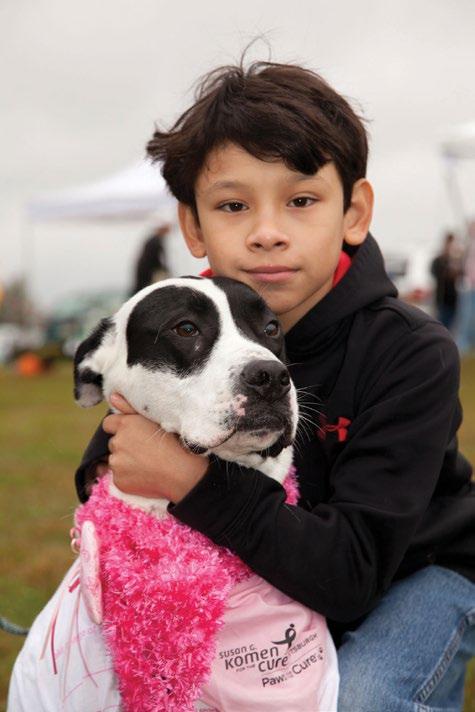
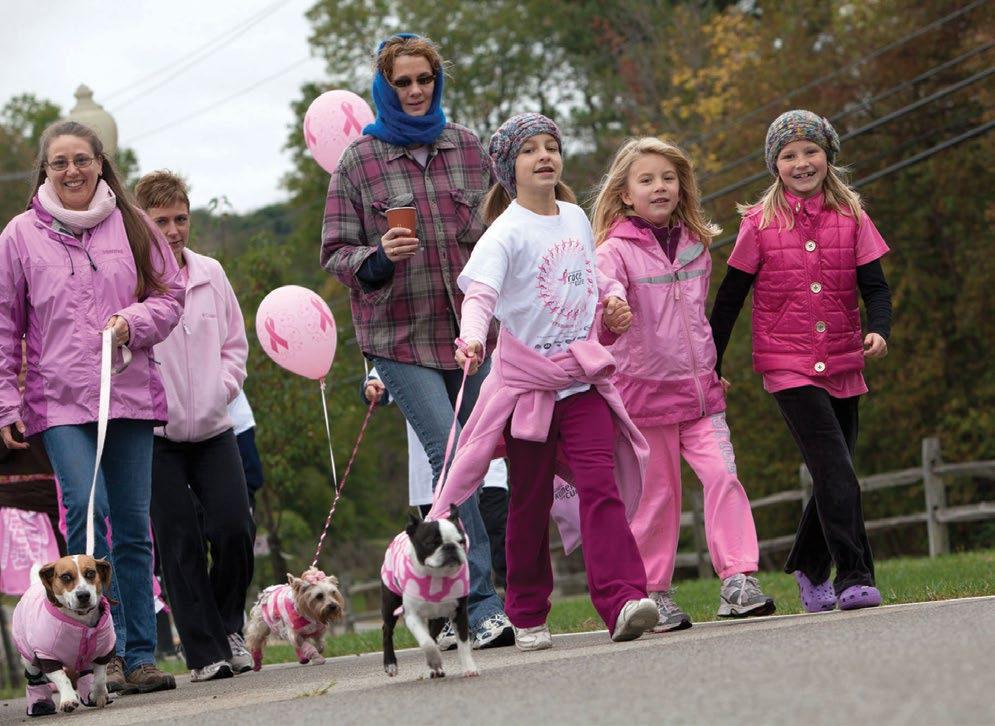
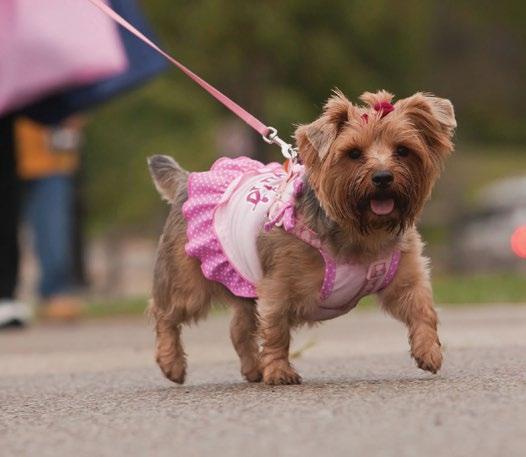
Join hundreds of four-legged friends and their owners for the 6th annual Paws for the Cure. There are costume contests, musical games, and an agility course, plus a scenic one-mile walk through Hartwood Acres! Get ready to raise the woof!
All proceeds benefit Susan G. Komen Pittsburgh, with 25% of the proceeds funding breast cancer research and 75% funding local education, screening, and treatment initiatives in Komen Pittsburgh’s 34-county service area of Western and Central Pennsylvania.
EQUINE AFFAIRS
The Guillotine Effect
Using Your Seat* or Core for Downward Transitions and Transitions Within the Gaits
By: Kristin Hermann
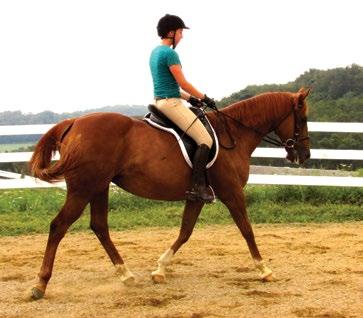
TheThis rider’s seat is going with the motion of the horse’s back and the horse is moving unconstrained, meaning, the rider is not interfering with the motion of the trot. Ideally, the horse should be taking a longer stride, but it still has a nice trot.
rider’s seat is the central connecting point of the rider’s and horse’s merging as a unified team. Simply, the rider is to sit upright on the sitting bones and not round the lower back and sit on the coccyx, or lower spine. The seat then follows the oscillations of the horse’s back by being what is called a “following seat.” The rider’s seat is to be like an upside down U that is to envelop the horse’s back and go with the motion. The rider’s legs are to hang down from the hips so as to not impede the horse’s muscles from coming “through” the seat. The rider’s leg then encourages forward movement by activating the horse’s abdominal muscles, which pull the hind legs forward. The rider’s seat can then be used to signal the horse for downward transitions and/or transitions with the gait. This whole process of riding and training is called the “ring of muscles” or the “ring of aids,” which were described in the November 2013 issue of Pittsburgh PetConnections.
When the rider develops following a seat and learns how to coordinate all three natural aids— the legs, seat, and hands— to work in unison with the horse’s three gaits, equestrian tact is then developed. If a rider’s seat is tight or stiff, it will not follow the horse’s motion but impede it! This action of using the seat or core to impede the horse’s movement, if used purposefully, can be used to ride downward transitions when needed — for example, when asking the horse to go from a trot to a walk or from a canter to a walk. When a rider can perform simple transitions with the seat between the gaits, eventually he/she can learn how to use the seat to ride what is called transitions within the gait, or slowing the horse’s motion while in a walk, trot, or canter.
Typically, an uneducated rider would simply use the reins to pull a horse up, and certainly this approach is needed at times. However, riding a horse with the seat and using the reins only for finesse is a more sophisticated way to ride. No horse really enjoys having its mouth hauled on; at least I would not think so. ( See Pittsburgh PetConnections July 2014 Edition article entitled “Chewing the Reins out of the Hands to Develop a Soft Mouth in Your Horse”).
The horse has a longitudinal or horizontal spine (back to front), and when it moves, the back muscles oscillate forward and backward under and/or through the rider’s seat. When the rider has a “following seat,” the horse actually moves the rider’s seat. As equine classicist Waldemar Seunig regularly mentions in his awesome book entitled Horsemanship, “The horse’s back should come up and massage the rider’s seat!” This is part of classical training:
Getting the horse’s back up so that it is rounded and lifted and not hollow because of the rider’s sitting in the middle of its back. A horse that brings the back up will also be more responsive to the rider’s seat, as opposed to a horse who is stiff in the back and hollow.
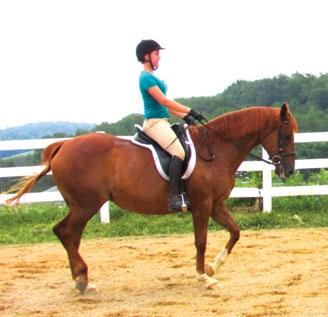
In this photo you can see how the rider has sat taller in the saddle. When the rider sits taller, lower back muscles and abdominal muscles tighten and cause the oscillations of the horse’s back muscles to slow. As a result, this action of her “seat” interrupted the horse’s stride and caused it to shorten. In the next moment, the horse will walk because the trot stride was interrupted by her “seat.” The average rider uses the reins to slow a horse, but you can see in the photo the horse still has full use of its neck and the reins were not used for a downward transition.
For teaching purposes, I often use catch phrases so riders remember. For this action of using the seat, I call it “The Guillotine Effect.” Using the seat in this way to “cut off” the motion of the horse’s back oscillations for
Pugtoberfest in PA 2014
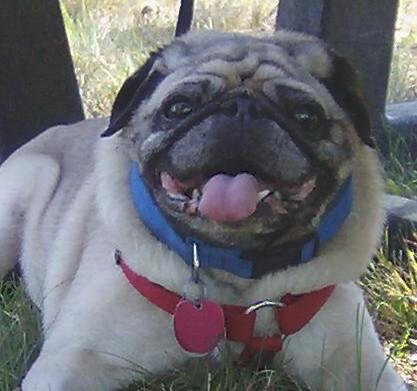
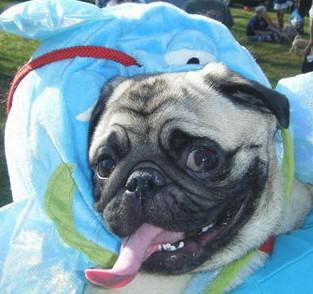
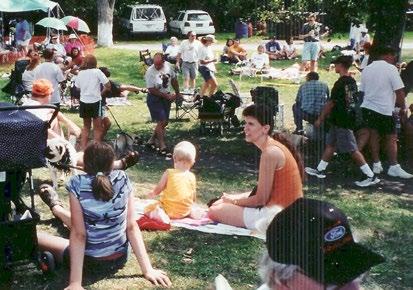
Pug Rescue Fundraising Festival
Saturday, October 11 th
11:00 am – 4:30 pm
Gates open at 11:00 am
Activities begin at 11:30 am
Location: Kunkle Park
285 Pine Run Church Rd.. Apollo, PA 15613
Contests
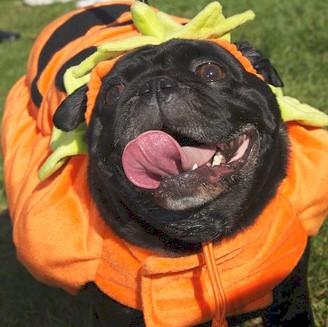
Including Curliest Tail, Best Trick, and many more, plus the always anticipated & creative Costume Contests.
Vendors Food Chinese Auction
Suggested $5.00 donation per person to attend, children under 12 are free. Proceeds benefit Southwest PA Pugs with Special Needs and Guardian Angels Pug Rescue to pay for medical & ongoing expenses for our rescued pugs.
All dogs attending must be up to date on shots, leashed and under owner control at all times. Non-pug breeds welcome to come join in for a day of doggie fun.
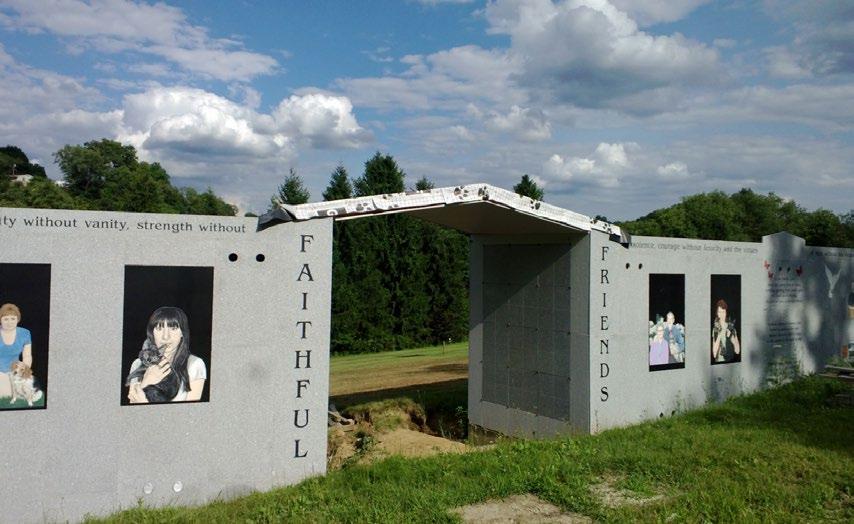
The Garden of Faithful Friends at Jefferson Memorial Cemetery unfolded in 2008. The garden allows for burial of just your faithful companion, or YOU and your pet; a unique feature that other pet cemeteries do not offer. There is also the Faithful Friends mausoleum, which houses crypt spaces for your pet or you and your pet. In that same building are niche spaces for pet and human cremated remains. The mausoleum is an elegant feature, for it expresses meaningful sayings and showcases persons with their pets. Most of the people are actually employees with their companions!
Jefferson also offers pet cremation services. The crematory performs individual cremations, a feature that is very important to Jefferson. We also offer visitation opportunities for pet families.
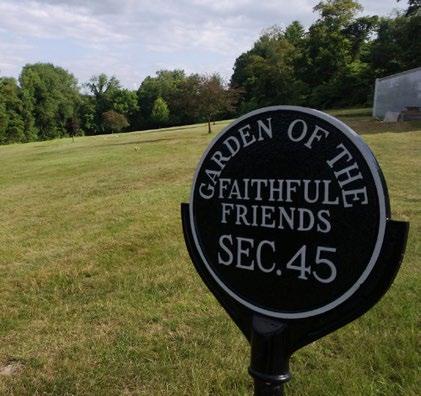
The Garden of Faithful Friends
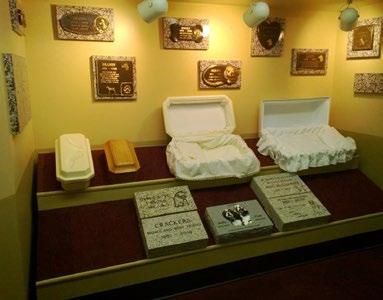
Jefferson’s distinctive ‘pet room’ consists of an arrangement room and display room (for casket, urn and memorial options) as well as a visitation room.
Presently, there are 88 pet burials in the Garden of Faithful Friends.
“Our before needs counselors and family service team aim to serve our pet families in every way we can. The death of a pet can be just as lifechanging and upsetting as the death of a human. Through education, we can help to create awareness and peace of mind within our community.”
Dagny VN Fitzpatrick Jefferson Memorial Cemetery, Funeral Home and Crematory 401 Curry Hollow Rd. Pittsburgh PA 15236
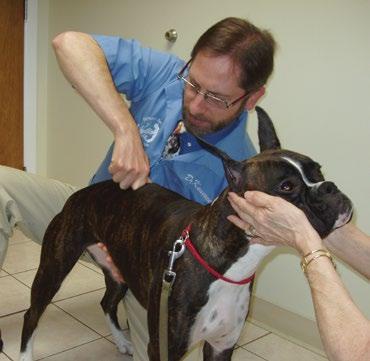
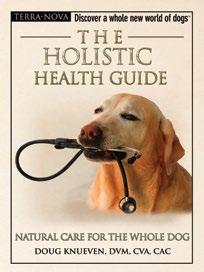
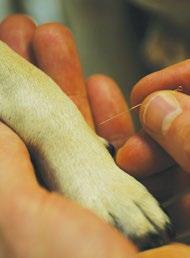
Dr. Doug Knueven practices an integrative approach to pet care. He is well versed in conventional veterinary medicine and has been licensed since 1987. He is also certifed in acupuncture, Chinese herbal medicine, and chiropractic. He is a member of the American Holistic Veterinary Medical Association and has advanced training in natural nutrition, massage therapy, homeopathy and a host of other alternative therapies.
• Full Service Animal Clinic
• Preventive Health Care
• General Surgery
• Radiology
• Dentistry
• Holistic Care
• Acupuncture
• Vaccine & Vaccine Counseling
• Nutrition Counseling & Natural Raw Diets
• Chinese Herbal Medicine
• Therapeutic Laser
• Healing Touch & Massage Therapy
We at Beaver Animal Clinic believe in the power of caring.
Caring for our clients as our friends.
Caring for each other as our family.
Pittsburgh Veterinary Specialty & Emergency Center
ANESTHESIOLOGY
Dianna Ovbey, DVM, MS, Practice Ltd. To Anesthesiology CARDIOLOGY
Eva Sikorska, DVM, DACVIM
Erin Anderson, VMD, MSc, DACVIM DENTISTRY
Krista Mendoza, DVM, DAVDC DERMATOLOGY
Sandra Sargent, DVM, DACVD EMERGENCY & CRITICAL CARE