PITTSBURGH PET EXPO 2014
























































































































































































ENTERTAINMENT SCHEDULE
Friday 11/14
Animal Arena
6:00p-6:30p..........Classic K9 Show
6:30p-7:00p..........Wildlife Defenders
7:00p-7:30p..........Operation Pit Bull Demo
7:30p-8:00p..........Classic K9 Show
8:00p-9:00p..........Groomers
Splash Dogs/Super Retriver Series Pool
5:00p......................Registration Opens
5:00p......................Open Practice Dock
6:00p......................Splash 1
Saturday 11/15
Animal Arena
10:15a-11:00a......Wildife Defenders
11:00a-11:30a......Classic K9 Show
11:30a-Noon........Operation Pit Bull
12:30p-1:00p........Dr. Dina Livolsi
1:00p-1:30p..........Classic K9 Show
1:30p-2:15p..........Operation Pit Bull
2:15p-3:00p..........Wildife Defenders
3:00p-3:30p..........Classic K9 Show
3:00p-4:00p..........Grooming
5:00p-5:30p..........Classic K9 Show
5:30p-6:00p..........Operation Pit Bull
6:00p-7:00p..........Wildife Defenders
7:00p-7:30p..........Classic K9 Show
Splash Dogs/Super Retriver Series Pool
10:00a....................Registration Opens 10:00a....................Open Practice Dock
11:00a....................Splash 2 1:00p......................Splash 3
3:00p......................Splash 4
5:00p......................Super Vertical
Sunday 11/16
Animal Arena
10:15a-11:00a......Wildife Defenders
11:00a-11:30a......Classic K9 Show
11:30-Noon..........Operation Pit Bull
1:00p-1:30p..........Classic K9 Show
1:30p-2:30p..........Wildife Defenders
2:30p-3:00p..........Pet Costume Contest
3:00p-3:30p..........Classic K9 Show 3:30p-5:00p..........Grooming Grand Parade
Splash Dogs/Super Retriver Series Pool
10:00a....................Registration Opens 10:00a....................Open Practice Dock 11:00a....................Splash 5 12:00p....................Super Retrieve 1:00p......................Splash 6 2:30p......................Finals
*Schedule subject to change*
A Different Breed Studio
Aaron Alvaretts- Photo Realism
About Cats & Dogs, LLC/Blue
Ridge Beef
Acadia Antlers
Adopt-a-Sato
ADT
AdVet Inc.
Angel Ridge Animal Rescue
Animal Care & Welfare
Animal Elegance
Animal Friends
Animal Rescue League
Animal’s Instinct Pet Food Warmer
Anne’s Pet Products
Arabian Rescue Mission
Avalon Veterinary Hospital
AVETS
Banfield Pet Hospital
Bark n Go
Barker Katz Creations
Bath Planet
Beyond Body Pads
Blue Buffalo
Boulder Designs
Brewscuit Inc
Bridgeville Animal Hospital
Buddies by Marlies, Inc.
Butch and Roo from Cleveland
Camp Bow Wow
Canine Caviar
CARMAA
Carriage Park Apartments
Cat Around Town
CATLITTERBUG.COM
Champion Window
Chic Doggie Attire
Cinnamon Roasted Almonds
Clinker Brick Murals
Cone Agency Pet Insurance
Cozy Inn Pet Resort
Crane Village Apartments
Creekside Distributing/ Ex-Cell Pro Pet Foods
Dachshund Delights
Dachshund Rescue of North America
Direct Buy of Pittsburgh
Direct TV – Satellite Connections
Dog Body
DoggerJogger
DogPacer
DogPoopBags.com
Dogs on Deployment
Dr. Chiro Vet – Holistic Care for All Animals Large and Small
Dr. Dina Livolsi, Doctor of Chiropractic
Dr. Gary’s Best Breed
Etched in Glass
EverDry Waterproofing
Ezee Visit Pet Vet Mat
Fabulous Homemade Cookies
Farmers Insurance
Florida’s Best
Frank Rowe & Son
Frankie’s Friends Cat Rescue
Fromm
Fur Angels Cookies & Designs
FurKid Rescue
General Nutrition
Corporation (GNC)
Gnawlers
Going Home Greyhounds
Golden Triangle Obedience
Training Club
Great Pyrenees Club of Western Pennsylvania Rescue
Greater Pittsburgh Joint and Muscle
Gutter Helmet
Gutwein K-9
Happy Feet
Healthy Pet Products
Hello Bully
Himalayan Dog Chew
Homeless Cat
Management Team
Home Solutions Design Center
Hurry Home Hounds
I Got Nipped It Works!
Jefferson Memorial Park
Jose Madrid Salsa
K9 Kingdom
Keystone Bulldog Rescue of Southwestern PA
Kickbox Audio
Kings Creek Plantation
Klein Cutlery
Konalu L.L.C
Leaf Filter
Legacy Remodeling
Lucys Dog Duds
Lynxbox
Mancuso’s Country Lane Pet Hotel & Pet Supplies
Manning Chiropractic & Wellness Center
Mary Kay Cosmetics
Merial
Mid-Atlantic Basements
Mid-Atlantic Waterproofing
Midwest Beagle Rescue, Education and Welfare, Inc- BREW Midwest
Mr.O’s Dog Training Place
MT&R Waterproofing
My Favorite Flip Flops
Nash Academy
Natural Inspirations Parrot Cages
Nature’s Logic
Nature’s Specialties
Nature’s Variety
Nittany Greyhounds
Nutri-Source
Oak Crest Pet Crematory
One Dog at a Time Rescue
Operation Pit Bull
Origami Owl
Pampered Paws-N-Claws
Pat’s Gifts
Patterson’s Groom N Zoom
Patti’s Pastries
Paw Prints Photography
Paws Barkery
Paws Here Awhile
PAWTREE, LLC.
Peaceful Valley Pet Supplies
Pet Duti
Pet Plenish
Pet Search
Petzlife
Perfect Fit Canines, Inc.
PJNY Dogwear
Pink Zebra
Pittsburgh PetConnections
Pittsburgh Post Gazette
Pittsburgh Veterinary Specialty and Emergency Center (PVSEC)
Pittsburgh Zoo
Plant Patterns
Poo Catcher
Poopbags.com
Poop N’ At
Premier Kitchen & Bath
Premier Laser Spa Of Pittsburgh
Proper Pit Bull
Puplight
Puppy Paws
Pure Air P.A. & Pet Products
Purr-Fect Paws Kitty Adoptions
Rainbow Cleaning Systems
Renewal by Andersen
Rollier’s Hardware
Sealy Dog Bed
Seven Fields Animal Hospital
Silvi’s Little Artists
Simply Sweet Shoppe
Sit Means Sit
State Farm
Steel City Pet Sitters LLC
Suburban Dog
Sundance Vacations
SV Distribution/PlaqueOff® Animal
The Crate Escape Pgh
The Dog Stop
Trib Total Media
Tuggo Dog Toys LLC
Tyler Mountain Water
Uncle Ulricks
Vacation Village Resorts
VCA Animal Hospital
Vector Security
Veronica’s Doggie Delights
Vibrant Pets
Wag-n-wear
Washington Area Humane Society
Western Pennsylvania
Humane Society
Wild Calling
Xcel Canine Traing Center
Xfinity
Zeigler’s Distributor Inc
Zuke’s
The 2014 Pittsburgh
Presented by
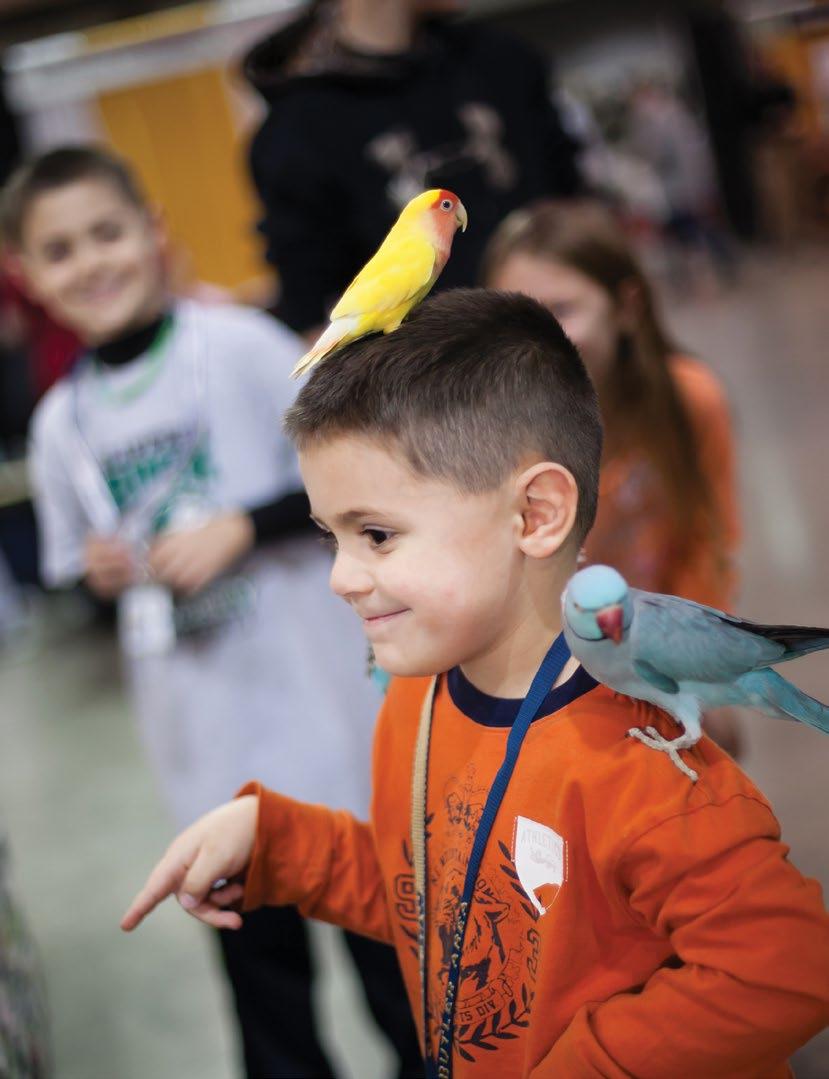
The 2014 Pittsburgh Pet Expo is back for November 14-16th. Sponsored by Healthy Pet Products - our local and premier healthy pet stores, this year’s show is packed full of fun!
The Pittsburgh Pet Expo is the largest consumer Pet Tradeshow on the East Coast! It is an unbeatable, locally produced, one-stop venue for pet products and services! In addition to the more than 200 exhibits of pet-related products & services there will be fun entertainment and hands-on attractions for the whole family, covering almost 2 acres of indoor space.
Pet Expo Pet Expo
The Pittsburgh Pet Expo is the region’s largest exposition for pets and is already established as an exciting Pittsburgh tradition and passionate about helping people grow their pet business and is looking forward to helping your business meet set marketing goals.
Featured entertainment and back from last year, includes Pet Pictures with SantaPaws and also the Pet Costume Contest.

Also back are the 2014 Pet Olympics which are pet Olympic-style competitions. Spectators can watch their favorite breeds of pets participate in numerous events sure to entertain the whole family.
Marvel at the skill of Splash Dogs! Compete or be a spectator as dogs from across the area participate in the water sports of Big Air, Extreme Vertical and Speed Retrieve.
The International Judges Association for Dog Grooming is back by popular demand -- only bigger and better than last year’s event.
In addition to producing The Pittsburgh Pet Expo, Show Founder, Rocco Lamanna manages and promotes other highly successful Consumer Trade Shows in and around the Pittsburgh Area. With over fourteen years in the trade show management business, his knowledge and attention to detail make for a profitable experience for vendors and a fun-filled time for attendees!
Nash Academy is proud to be back to host and sponsor the IJA sanctioned Rescue Me Dog grooming and creative competitions a part of the 8th Pittsburgh Pet Expo. For information to join in the competition visit:
http://www.petexpopgh.com/grooming-competition
Classic K-9 Dog Show ranks as the most memorable and enjoyable canine entertainment show for audiences of all ages. They have been producing the show for more than 20 events each year, entertaining well over 2 million spectators annually!

They will make their return to Pittsburgh, hosting events selected from more than 17 different dog sports segments. The Classic K-9 Show derives its canine allstars from cities across the United States and Canada. All participants belong to the world’s largest international organization of dog trainers, which has more than 18,000 members.
Sponsored by:
The Wildlife Defenders Program is a wildlife education outreach group run by the day program members of Bridges for Brain Injury Inc., all of whom are adult survivors of brain injuries. Sharing live native and exotic species, the Wildlife Defenders visit schools, youth groups, nursing homes, community events, and the Canandaigua Veterans Administration, and present formal and informal programs and displays.
At the Pet Expo, the Wildlife Defenders will make their Pittsburgh debut sharing these live native and exotic species while performing several formal Wildlife Education presentations throughout the weekend. They will provide interesting and stimulating information about their animal ambassadors and encourage environmental and wildlife conservation awareness. Their expert staff will be available for questions following each show while conducting a “Meet and Greet” with selected wildlife.
For more information visit: http://www.petexpopgh.com
Pet Expo












East End, Strip District, South Hills, Sewickley, COMING SOON! Monroeville
Welcome to our October 2014 - Volume 3 Issue 2
We are proudly the official print media sponsor for the 2014 Pittsburgh Pet Expo again this year! We are providing the Pet Expo Program and distributing it at the event. See our fourpage insert right inside the front cover!
We are looking forward to a great crowd and many vendors and featured shows this year. Sponsored by Healthy Pet Products - our local and premier healthy pet stores, this year’s show is packed full of fun!
This Issue:
We are having our 2nd Annual Thanks for Paws contest sponsored by Paws ‘n Claws Eyewear!!! See p. 21 for details!
We welcome new advertisers to PPC--Invisible Fence, Mike T’s Autos, and Vector Security. See our center Advertiser Map spread on ages 23 & 24.
Please also see our print and online directories on the home page of www.pghpetconnections.com.
Thank you for picking up PPC Magazine. Take care of yourself, as well as your animals and be well!
Please mark your calendars for this premier pet event of Pittsburgh on November 14-16 at the David L. Lawrence Convention Center downtown.
PPC sponsored and participated in the many fun-filled events of September, including Dogtoberfest and the Family Pet Expo in Monroeville.
reflect the position or policies of Pittsburgh PetConnections Magazine. All viewpoints are welcome...”
Pittsburgh PetConnections Monthly
Published By: Pittsburgh PetConnections, LLC.
Pittsburgh PetConnections, LLC. was formed in 2012. Our mission is to publish a high quality, informative and Human-Animal Bond focused publication. We support local businesses and also assist local non-profit businesses for pets and people, to give back to our great Pittsburgh communities.
Magazine Publication Staff
Warmly,
Carla Mader CEO & Publisher Pittsburgh PetConnections, LLC.
Managing
Content
Sales
Graphic
Photography
Contributing Writers: Our contributing writers have many years of combined experience and expertise in the fields of veterinary medicine and the Human-Animal Bond.
Subscribe, Submit, Upload! Submit your business or rescue organization’s info for a FREE listing on our directory.
No website for your small home-based pet or wellness business? Add a Featured Listing on the PPC online Directory for a small yearly fee and upload photos and detailed info about your business!
Become a Media Partner with PPC Magazine!
A Media Partnership with PPC includes:
• Ad in print or online (free design)
• A Free Featured directory page on our website with your business info, photos and link to your website
• Your logo in our monthly newsletter
• PPC promotes your business at our events
PETCONNECTIONS RESOURCE DIRECTORIES
Animal Educational Exhibits
North:
The Pittsburgh Zoo & PPG Aquarium pittsburghzoo.org
The National Aviary nationalaviary.org
Animal Behavior
Greater Pittsburgh Area:
Judith Levy, M,Ed., CEHP, RMT 412-521-5133 | judithlevywellness.com
Animal Communication
Greater Pittsburgh Area: Renee Takacs, M.A. intuitguide.com
Animal Reiki
East: Janet Jackson animalangellady.com
East End:
Judith Levy, M,Ed., CEHP, RMT 412-521-5133 | judithlevywellness.com
Animal-Related Art, Photography & Retail
North:
Nicole Begley Photography nicolebegleyphotography.com
Vibrant Images vibrant-images.com
WearWoof Shop
412-956-1788 | wearwoof.org
South: Kara Jones Photography kjones.smugmug.com
Paws ‘n Claws Eyewear PawsnClawsEyewear.com
Greater Pittsburgh Area: Portraits of Animals portraitsofanimals.net
Pet and Home Portraits petandhomeportraits.blogspot.com
Jenny Karlsson Photography jennykarlssonphotography.com
Animal Rescue Organizations
North:
Animal Friends
412-847-7000 | thinkingoutsidethecage.org
Beaver County Humane Society
724-775-5801
Pennsylvania Great Dane Rescue 724-869-9185
Hope Haven Farm Sanctuary 412-366-1187 | hopehavenfarm.org
Western Pa Humane Society
412-321-4625 | wpahumane.org
South:
Animal Care & Welfare
412-244-1372 | animalcareandwelfare.org
Washington Area Humane Society 724-222-7387 | washingtonpashelter.org
East:
Animal Rescue League
412-345-7300 | animalrescue.org
ARL Wildlife Center
412-345-7300 | animalrescue.org
SW PA Pugs with Special Needs 724-763-2790 | swpapug.org
West: CARMAA 412-780-4983 | carmaa-petadoption.com
Dog Training
Greater Pittsburgh Area: Molly’s Canine Academy 724-914-3214 | mollyscanineacademy.com
Success Just Clicks successjustclicks.com
North Shore: Western PA Humane Society 412-321-4265 | wpahumane.org
Dog Training Clubs
South:
Golden Triangle Obedience Training Club 412-653-6880 | gtotc.com
Keystone Canine Training 412-833-2211 | keystonecanine.com Xcel Canine Training Center 412-833-2504 | xcelcaninetraining.com
Equine Boarding, Lessons & Training Facilities
North: Rockin’ Horse Stables 724-601-4706 | rockinhorsestables.com
South: Coventry Equestrian Center 724-206-9902
Equine Holistic Care
Greater Pittsburgh Area: Dr. Michael Savko, DC, CCSP, CVCP 724-261-7915 | drchirovet.com
Equine Hoof Care
Greater Pittsburgh Area: All Natural Hoof Care Nancy Frishkorn 724-255-6465 | hooflady.org
Equine Tack Stores
South:
The English Horn 724-941-8088 | theenglishhorn.com
Lowry’s Western Store 724-228-1225 | lowryswesternshop.com
Equine Veterinarians
East:
Dr. Brian Burks, DVM Fox Run Equine Center 724-727-3481 | foxrunequine.com
Holistic Practitioners
Pet Chiropractor
North:
Dr. Doug Knueven, DVM Beaver Animal Clinic
724-774-8047 | beaveranimalclinic.com
South:
Dr. Astrid Manning, DC, CVCP 412-341-2505 | drastridmanning.com
East:
Dr. Dina Livolsi, Doctor of Chiropractic 412-824-6276 | drdinalivolsi.com
Greater Pittsburgh:
Dr. Michael Savko, DC, CCSP, CVCP 724-261-7915 | drchirovet.com
Holistic Veterinarians
Dr. Doug Knueven, DVM Beaver Animal Clinic
724-774-8047 | beaveranimalclinic.com
Pet Burial, Memorial & Cremation Services
South:
Chartiers Custom Pet Cremation 412-220-7800 | ccpc.ws
Jefferson Memorial Funeral Home 412-655-4500 | jeffersonmemorial.biz
Pet Fencing
Greater Pittsburgh Area: DogWatch 724-586-6555 | DogWatchPGH.com
Invisible Fence of Western PA 724-396-7231 | invisiblefence.com
J & D Home Improvements, Inc. 800-837-9379 | jdwaterproofing.com
Pet Stop Pet Fencing System of Western PA petstop.com
PETCONNECTIONS RESOURCE DIRECTORIES
Pet Friendly Restaurants
North:
Double Wide Grille - Mars
724-553-5212
South:
Double Wide Grille - Southside 412-390-1111
Pet Grooming
North:
5th Avenue Fido
724-772-5511 | 5thavenuefido.com
All About Dogs
724-925-1577 | allaboutdogsgrooming.info
K-9 Kingdom
724-935-3647 | k9kingdom.com
Larry’s Laundromutt
412-534-4052 | larryslaundromutt.com
Paw Prints Pet Retreat
724-903-0063 | pawprintspetretreat.com
South:
Brush Run Styling
724-942-6352 | brushrunpetstyling.com
Canine Club
412-220-8100 | thecanineclub.com
Grand Slam Grooming 412-221-5081 | grandslamgrooming.com
Grooming With Care
412-977-5961
Petsburgh Dog & Cat Grooming
412-885-4027
Pets At Home
412-655-7297
The Pet Salon
412-279-5331 | petsalonusa.com
Woody’s Dog Wash & Pet Boutique 412-714-4644 | woodysdogbath.com
Creative Canine Cuts
724-223-9020
West:
Paws Here Awhile Pet Resort
724-573-4665 | pawshereawhile.com
Greater Pittsburgh Area: Zoom N Groom (Sonya Patterson) 724-225-4827
Pet Grooming Schools
Golden Paws Pet Styling Academy 412-297-9383 | goldenpawspittsburghpa.com
Pet Massage
Greater Pittsburgh Area: Your Critter Sitters – Raylene Hoover 724-448-7330 | yourcrittersitters.com
Pet Ministries
South:
Christ United Methodist Church 412-277-1096 | christumc.net
Westminster Presbyterian Church
412-835-6630 | westminster-church.org
Pet Resorts - Boarding, Daycare, Grooming & Training
North:
5th Avenue Fido
724-772-5511 | 5thavenuefido.com
Camp Bow Wow - Ross Township campbowwowpgh.com
K-9 Kingdom
724-935-DOGS (3647) | myk9kingdom.com
Paw Prints Pet Retreat
724-903-0063 | pawprintspetretreat.com
South:
Camp Bow Wow - Castle Shannon campbowwowpgh.com
Grandma’s Dog Daycare
412-586-7094 | grandmasdogdaycare.com
Canine Club
412-220-8100 | thecanineclub.com
East:
Camp Bow Wow - Highland Park campbowwowpgh.com
Pittsburgh Pet Concierge
412-856-8505 | petconcierge.org
West:
Camp Bow Wow - Greentree campbowwowpgh.com
Paws Here Awhile Pet Resort 724-573-4665 | pawshereawhile.com
Pet Retail/Supply
North:
Healthy Pet Products
412-366-0700 | healthypetproducts.net
South:
Healthy Pet Products 412-831-3700 | healthypetproducts.net
Oddball Pets & Aquariums
412-884-2333 | oddballpets.com
Woody’s Dog Wash & Pet Boutique 412-714-4644 | woodysdogbath.com
East: Petagogy petagogy.com | 412-362-7387
Pet Sitters
North:
Little Piggies Pet Sitting littlepiggiespetsitting.com
South:
Chris’s Canine Club
724-746-3864 | chrisscanineclub.com
Your Critter Sitters– Raylene Hoover 724-448-7330 | yourcrittersitters.com
West:
Seraphina Pet Sitters
412-389-9735 | seraphinasitters.vpweb.com
Security Services
Greater Pittsburgh Area: Vector Security 800-756-9161 | vectorsecurity.com
Veterinary Hospice
Greater Pittsburgh Area: Nancy A. Ruffing, DVM 412-801-1071 | gentlejourneyvet.com
Veterinary Hospitals
North:
Beaver Animal Clinic
724-774-8047 | beaveranimalclinic.com
BelaCoop Animal Hospital 724-939-7062 | belacoopanimalhospital.com
Seven Fields Veterinary Clinic
724-742-4433 | sevenfieldsvet.com
VCA Northview Animal Hospital 412-364-5353 | vcanorthview.com
South:
All About Pets Veterinary Hospital 724-745-5503 | aapvet.com
Allegheny South Veterinary Services 412-257-0909 | alleghenysouthvetsvcs.com
Hickory Veterinary Service 724-356-1000 | hickoryvetsvcs.com
VCA Castle Shannon 412-885-2500
East:
Pittsburgh East Animal Hospital Monroeville - 724-325-2500 Greensburg - 724-205-6960 peah.vetsuite.com
The Big Easy 412-908-9301 | tbeah.com
West:
Avalon Veterinary Hospital 412-761-9149 | avalonvh.com
VCA MetVet West Animal Hospital 412-788-6400 | vcahospitals.com/met-vet-west
Veterinary Specialty & Emergency Services
Greater Pittsburgh Area: Pittsburgh Veterinary Specialty and Emergency Center, Inc. 412-366-3400 | pvs-ec.com
VCA Northview Animal Hospital Specialty Referral Center 412-364-5353 | vcanorthview.com
East
Allegheny Veterinary Emergency Trauma & Specialty 412-373-4200 | avets.us
THE HUMAN-ANIMAL BOND Elect Your Energy
by Susan Wagner DVM, MS, ACVIM
Did you know that the political process is a prime opportunity for spiritual advancement? If we truly understand the concept of oneness and unity, we know that those individuals from the opposite party are not our enemies but our teachers. They challenge us to find our own voice and to look into our hearts for what we believe in. It is our choice as to whether we are speaking with courage or whining a pathetic song. Do you think your dog or cat cares if you are liberal or conservative? Animals care about what’s in our hearts.
What most of us don’t understand is that our emotions surrounding the candidates and political process may be as important as our vote. Life is not what it seems. All that exists is made of energy, so it’s important to know what empowers us and what weakens us. Every situation we face is an opportunity to evolve as a human being. As each of us chooses to stay positive, all creatures are positively affected.

The political process is designed to divide us, but if this happens, nobody wins. Can we face our suffering, work toward what we believe in, speak our truth, and hold the space of non-judgment? I believe the answer is yes. We can come from completely opposite perspectives, yet we can have compassion and respect for one another. Do you see that you can work tirelessly to defeat candidates you believe will not benefit this country and hope they find joy and peace in their lives? This is where strength truly exists.
You’ll note that I haven’t mentioned any party affiliation because this philosophy works both ways! The wonder of energetic living is that none of us has to budge an inch concerning what we believe. We don’t even have to meet in the middle. If each of us powerfully chooses to live in a country that stands for peace, equality, and freedom, then we are energetically “setting an intention” for those principles to emerge. It doesn’t matter what our political affiliation is or who is “right”
and who is “wrong.” If this intention is done from a place of non-judgment and an open heart, the ideology is irrelevant. The intention must manifest.
However, if we come from the perspective that the other party is made of greedy, self-absorbed, ignorant morons, etc ., etc., then the underlying energy of negativity will create our new reality. The best way to keep our causes from manifesting is to hate those who don’t agree with us. We will stay divided and will manifest more division. This philosophy does not mean that we tolerate abuse and cruelty. We must act against it and view the perpetrators with compassion in order to completely end the cycle of violence on the planet.
I’m not saying this is easy! It’s difficult to watch the endless negative, inflammatory television commercials. But we must transform our anger into awareness and positive action. We don’t want to hide from our emotions, but we don’t want to hold onto bitter victimhood either. The best way for a party to lose an election is for the individuals to see themselves as victims of the evil bullies. If we play in that drama, we stay in that drama. There are no bullies when there are no victims.
Therefore, as we head down the wire into November, I ask that you value all people, no matter what they believe. It is through this space that activism is most effective and we ALL benefit.
HAAWC is a 501(c)(3) organization that honors the Human Animal Bond as a source of wellness for individuals, families and communities.
Guided by the belief that animals are a gateway to human healing, HAAWC intends to develop both urban programs and rural sanctuaries designed to impact community health, safety and wellness.
HAAWC is raising funds for upcoming animal-related programming.
www.haawc.com


COMMUNITY NEWS
31 Armstrong County Fire Departments
Receive Donation To Save Pets from Fires
Life-saving pet oxygen masks are custom-designed to administer the proper amount of oxygen to all sizes of pets who are suffering from smoke inhalation.
McGrann, PA - (September 3, 2014) First Responders of 31 local Armstrong County Fire Departments are now best-equipped to save pets’ lives during a fire, thanks to two local Invisible Fence® Brand dealers.
This donation is just a small part of Invisible Fence® Brand’s Project Breathe™ program, which was established with the goal of equipping every fire station in America and Canada with petappropriate oxygen masks. The Invisible Fence Company of Pittsburgh, located in Greensburg, and the Invisible Fence Company of Western PA have both been very active in their efforts to create awareness and fulfill the program for this part of Pennsylvania. To date, through these two dealers over 200 masks have been donated and over 10,000 are now nationally on first responder vehicles ready for use.
“When a family suffers the tragedy of a fire, lives are turned upside down,” said Albert Lee, Director of Invisible Fence® Brand. “Pets are valued family members, so we want families to know that their pets can be cared for if tragedy strikes.”
“These masks truly are blessings for the Armstrong County area,” said Lt. Luke Linnon. “We’ve seen residents running back into burning homes to save pets. It’s understandable but extremely dangerous. These masks will give residents comfort in knowing that we can save their pets if they are suffering from smoke inhalation.”
The donation event was held at the Manor Township Volunteer Fire Department and included instruction on how to recover a frightened pet, a first aid and pet CPR demonstration, and Pet Oxygen Mask training. “We are honored to be
working with pet professionals like CART and Pet Emergency Training and learning to fully equip and train first responders,” said Carolyn Mento, co-owner of Invisible Fence of Pittsburgh. “It is not easy to find, rescue, and treat a pet during the chaos of a fire. But this training gives first responders the tools to make a difference when they are out there.” A reported 120+ pets have been saved by the nationally donated masks so far, including a number of dogs and cats in our area.
Armstrong County is now joining the ranks of cities like Pittsburgh, Denver, Chicago, and Memphis, which have all received donated pet oxygen masks from the Project Breathe™ program.
“We still have a long way to go,” says Mento of the efforts to succeed in the program’s mission, “but every donation takes us a step further.” Invisible Fence® Brand has set up a website, www.invisiblefence.com/O2 where people or companies can assist with contributions.
About Invisible Fence® Brand
Invisible Fence® Brand is the original electronic pet containment system and offers a comprehensive family of containment, avoidance, and access products to keep pets out of harm’s way and prevent unwanted behaviors throughout both the home and yard. Owned by Radio Systems Corporation in Knoxville, Tenn., Invisible Fence® Brand solutions are sold nationwide by professional, authorized dealers who provide Perfect Start™ pet training and custom installation that have safely contained over two million pets. Invisible Fence® Brand has taken pet care beyond the home and started the Project Breathe™ program, which has donated more than 10,000 pet oxygen masks to fire departments and first responders. For more information on Invisible Fence® Brand or to find a local dealer, visit www.invisiblefence.com.






& ANIMAL HEALTH WELLNESS
Cranial Cruciate ligament (CCL) rupture is the most common cause of rear limb lameness in the dog. Repair of the canine cruciate ligament deficient stifle is a 1.1 billion dollar industry in the United States and is the single most common procedure undertaken at most veterinary referral hospitals.
both projections, osteoarthritis is usually seen in more chronic cases.
Ultrasound of the stifle is useful in identifying effusion in the joint and rupture of the CCL can be identified by the experienced examiner. MRI of the stifle may also identify a rupture of the CCL. Synoviocentesis with joint fluid cytological evaluation is helpful in cases where an immune mediated arthritis is suspected.
TPLO/Cranial Cruciate Ligament Disease
By John T. Payne DVM, MS, DACVS Pittsburgh Veterinary Specialty and Emergency Center (PVSEC)
Signalment
CCL tears can be seen in any size and any age dog. There is no gender predisposition. Common breeds include Retrievers, Rottweilers, Mastiffs and Shepherds. Dogs may be any age but it is relatively uncommon to diagnose in dogs less than one year of age.
Physical exam
The most obvious abnormality seen in dogs with CCL tears is a rear limb lameness of varying severity. On physical exam one can localize pain to the stifle and there may be palpable effusion noted in the stifle. There is generally anterior/posterior instability in the stifle that is palpable as either cranial drawer or cranial tibial thrust on a tibial compression test. Firm medial thickening over the medial collateral ligament is often noted in more chronic cases. The absence of cranial drawer does not exclude CCL tear since many dogs present with partial tears and a stable stifle.
Ancillary testing
Radiographs of the stifle are often helpful and may help to confirm the diagnosis especially in cases with no cranial drawer. A lateral and anterior-posterior view of the stifle is generally evaluated. In the lateral projection, one nearly always will note effusion in the stifle that presents as displacement of the infrapatellar fat pad and caudal displacement of the joint capsule. In
Procedures for repair of the CCL
The most common procedure for repair of the CCL is the lateral suture technique or some variation of this technique. Generally, these techniques employ a large permanent extracapsular suture material to simulate the function of the CCL. These procedures begin with the patient in lateral or dorsal recumbency. A lateral arthrotomy is made and the joint is opened and thoroughly explored. The stumps of the ruptured CCL are usually removed and the lateral and medial menisci are inspected. If a meniscal tear is identified, the torn portion of that meniscus is removed. If a partial tear of the CCL is identified, most surgeons recommend removal of the entire CCL for fear of repeat rupture if it is left behind. The joint is closed and stabilized by placing a suture around the fabella and then through a hole drilled in the most proximal aspect of the tibial tuberosity. This suture is tied and will eliminate the cranial drawer.
Advantages of this procedure are that it is less invasive and less costly than most of the other procedures. Disadvantages are that the lateral suture loosens following surgery causing laxity in the joint. This procedure is not ideal in large breed dogs and generally leads to more arthritis than the TPLO or TTA procedures.
A recent variation on the lateral suture technique is the tightrope repair. Tightrope repair uses a unique bone anchoring system that addresses many of the shortcomings of the standard lateral suture repair. The tightrope repair is designed to give a firm bone anchor at both ends of the suture to decrease failure by loosening. The suture material is a strong braided polyester material that is unlikely to break. Anchor
points of the suture are close to isometric meaning that the suture ideally remains tight throughout the entire range of motion. Advantages of the tightrope system are lower cost and ease of repair. Disadvantages of this procedure are that the braided suture material may become infected if not handled very carefully and the need to be very precise in placing the anchor holes.
The Tibial Plateau Leveling Osteotomy (TPLO) is the most commonly performed procedure in large breed dogs. The procedure begins with a medial arthrotomy with debridement of the stifle joint and removal of a torn meniscus as in the lateral suture repair. This procedure seeks to change the mechanics of the stifle rendering the CCL unnecessary. This is accomplished by creating a curved osteotomy of the proximal tibia that allows rotation of the articular surface of the tibia thus reducing the slope of the tibial plateau. The osteotomy is stabilized using a bone plate and screws.
Advantages of the TPLO are that it is more stable in large breed dogs and generally results in less osteoarthritis and disability in the patient. Disadvantages are that the TPLO is a more expensive procedure that can have serious complications if the owners do not follow the post-operative instructions. Surgeons at Pittsburgh Veterinary Specialty and Emergency Center (PVSEC) typically prefer the TPLO procedure because we feel it gives us the most consistent results.
The Tibial Tuberosity advancement (TTA) procedure is a newer procedure that mechanically accomplishes most of the same goals as the TPLO. The TTA begins with a medial arthrotomy and debridement of the stifle joint. In this procedure, the tibial crest is osteotomized and moved cranially until the patellar tendon pull is roughly 90o to the tibial plateau surface. The osteotomy is stabilized using a special plate and spacer. This procedure neutralizes cranial tibial thrust by increasing the lever arm of the quadriceps muscles.
Advantages of the TTA procedure are that it also creates a more stable repair in large breed dogs and can be performed bilaterally at the same time. Disadvantages are that it does not work well in dogs with slopes exceeding 30o of tibial plateau slope and serious complications can occur with patient non-compliance.
Aftercare
Following surgery, all dogs should be exercise restricted for 8-12 weeks. Sutures are usually removed in 10-12 days following surgery and follow up radiographs are generally taken following TPLO and TTA at 8 weeks post operatively. Most patients benefit from having physical therapy following CCL surgery.
Pittsburgh Veterinary Specialty and Emergency Center (PVSEC)
807 Camp Horne Rd Pittsburgh, PA 15237 (412) 366-3400

John T. Payne DVM, MS, DACVS
& ANIMAL HEALTH WELLNESS
Since I retired from teaching in 1998, I have found a whole new “career.” I knew early on that I would love to work with animals somehow and found my niche in fostering for three different animal rescue groups –Critter Care Adoptions, based in Evans City; the Animal Rescue League of Pittsburgh; and Pet Search of Washington County, respectively. Lucky for me, my husband is also a big-time animal lover and not only encouraged my involvement but also participated in saving the lives of many animals through fostering.
Fostering involves taking animals from local rescue groups or shelters into one’s home for a period of time to give the animals a chance to be “outside the cage.” Fostering gives animals a chance to interact with other pets, children, and all other members of the family. It gives the foster parent a chance to observe the animal’s behavior in all sorts of situations so that it can transition into its new home with as few problems as possible. Fostering is a godsend, not only to the rescued animal but also to the rescue groups and shelters that are overburdened by so many animals needing temporary housing. The unfortunate fact is that literally thousands of healthy, beautiful animals, including puppies and kittens, are euthanized annually simply because of space limitations. Fostering relieves the burden to the rescue groups and shelters and allows them to concentrate on rehabilitating their animals and finding permanent homes for them.
water, and a clean, safe place for the animal to play and to sleep. Will you be required to have a fenced yard or some other way of containing the animal? Will you be given the “option of adoption” if you decide that the animal fits into your household and you want to keep him? Will the rescue group or shelter have the right, according to the contract, to remove the animal from your home at any time and for any reason? All of these questions are usually, and should be, a part of any fostering contract. Regardless, for your own peace of mind, be clear on each of these issues.
Fostering –The Facts, the Frustration, and the Fun
By Carol Hirsch
Now, what about you and your property? Does the contract state anything about damage to your property or injury to your family or anyone visiting your household? Most contracts will stipulate a “hold harmless” clause stating that you will be taking the pet into your home at your own risk and that you will be responsible for any damage that the pet causes to either persons or property. Maybe not. Some groups may provide some sort of insurance to cover such problems. Ask. Also check your homeowner’s insurance policy to see what it covers – especially damage caused by fosters residing in your household.
…Not to say that there are not some frustrations to the foster family. First of all, if I have opened your mind to considering opening your home to a rescued animal in the first two paragraphs, think again. These are the pitfalls my husband and I have encountered along with some suggestions to avoid them:
INSIST ON A CONTRACT WITH THE RESCUE GROUP OR SHELTER.
You will feel much more comfortable if you have something in writing that spells out your responsibilities as a foster parent. Most contracts include your obligation to provide adequate food,
What about behavioral issues? Are you good with housebreaking a puppy? How about a dog that has been mistreated while it was in the process of housebreaking? By the way, the #1 reason that pets wind up in shelters and rescue groups is house soiling. If the animal has that problem, are you prepared to handle it? In the contract, is there any clause stating that you will receive any kind of support from the group to assist you if you are willing to stay the course?
Does the contract say anything about medical issues or administering medication? Is the medicine going to be provided and will you be shown how to give it? By the same token, will the rescue group provide food for the animal, or will you be expected to buy it yourself? Will there be someone you can turn to in a reasonable time if you run into a problem with either the animal’s
behavior or its health? Veterinary care costs and any subsequent supportive therapy should also be outlined in the foster agreement.
Once you have clarified your responsibility to the group and what the group is willing to do to support you and you decide to welcome the animal into your home, the fun begins. By the way, make sure EVERYONE in your household is on board with your decision to foster. It’s not fair to anyone – especially the animal – if that’s not the case. If you are accepting a dog into your household, do a meet-and-greet with the other pets in the household first. It may not be love at first sight because the house guest is coming in on your dog’s territory. You, as his owner, need to respect his feelings. More important, you don’t want anybody to get hurt. If you are fostering kittens, put them in a room by themselves for a few days. Take a towel or blanket that has the new animal’s scent on it and put it where your pets can smell it and put something of your pet’s in with the visitors. Half the battle, with either dogs or cats, is getting them used to the smell of other pets in the household. Doing so before integrating them should dispel problems with fighting and/or marking territory.

Having an enormous love of animals is not enough. Some people who are well-intentioned often end up as foster failures, but that won’t be you if you use some common sense and do your homework first. If you are animal savvy and are willing to take the risk, the rewards to your sense of self can be just as enormous as your love of animals. Consider this: You would not have read to this point in the article if you didn’t love animals! When you are crying tears of happiness as the family who has just adopted the pet you have fostered pulls out of your driveway and you have just saved a precious life, you will feel a sense of worth, perhaps as nothing you have ever felt before.
Carol Hirsch is the content editor for Pittsburgh PetConnections Magazine and also co-founder of Hearts and Paws Pet Ministry at Christ United Methodist Church, Bethel Park (see pp. 27-28). She has been involved in some form of animal rescue all of her life.

Contest Rules:
In 100 words or less, tell us why you are thankful for your pet or the shelter where you adopted your pet. Include a photo of your pet or you and your pet along with your entry to:
info@pghpetconnections.com
Contest submissions accepted November 1-15, 2014
Sponsored by:
Prizes:
First Place Winner: PAWS 803 AQ Eyewear Frame

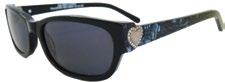
Second Place Winner: PAWS 624 SG Sunglass Frame
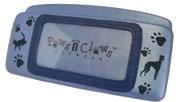
Third Place Winner: Paws Picture Window Case
Advertisers
All Natural Hoof Care (see ad pg 44)
Animal Care & Welfare (see ad pg 38)
Animal Friends (see pg 30)
BelaCoop (see ad pg 42)
The Canine Club (see pg 18)
Coventry Equestrian Center (see ad pg 24)
Creekside Distributing (see pg 28)
Dog Stop (see pg 7)
Dog Watch (see ad pg 20)
Fifth Avenue Fido (see pg 16)
Gentle Journey (see ad pg 26)
Grand Slam Grooming (see pg 33)
Holistic Care for Animals (see ad pg 33)
Invisibile Fence (see pg 16)
Jenny Karlsson Photography (see ad pg 24)
Judith Levy (see ad pg 33)
J & D Home Improvements (see ad pg 6)
Kara Jones Photography (see ad pg 44)
Larry’s Laundromutt (see pg 30)
Manning Chiropractic (see pg 14)
Mike T’s Auto (see pg 24)
Nicole Begley Photography (see ad pg 24)
Paws Here Awhile (see ad pg 7)
Pets at Home (see ad pg 24)
Pittsburgh Pet Expo (see ad inside front cover)
Portraits of Animals (see pg 38)
The Rogan Rexford Blood Bank (see ad pg 22)
Success just Clicks (see pg 24)
Vector Security (see pg 30)
Washington Area Humane Society (see pg 6)

Dogsand children go together like peanut butter and jelly. It makes me sad to hear folks in rescues and shelters say they will not place dogs in homes with children. Some of my fondest memories as a child are of my dog and me. However, children can be
ANIMAL BEHAVIOR Safe Interactions Between Dogs and Children
during this new mobility phase. Once the baby begins to walk, often the dog’s tolerance levels drop because they may find the way toddlers move and behave to be scary. Dogs should not be expected to tolerate rough handling, and children should be taught that this safe handling applies to all dogs. Dogs should never be left unsupervised with babies and young children and need a safe place to relax away from the children.
By: Lilian Akin, CPDT-KA, CBCC-KA Akin Family Dog Training
impulsive and may not understand when dogs feel uncomfortable. In addition, dogs can occasionally act defensively when pushed to their limit. I hope this article provides suggestions for keeping dogs and children safe.
If you are having a baby, invest in management tools. As the parent of a baby or a toddler, I can tell you that one can never have too many baby gates. The judicial use of baby gates, crates, and exercise pens can allow your dog to be in the same room as your baby or toddler but can prevent direct contact that might cause problems.
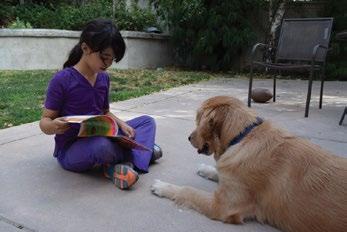
Babies make odd noises and they often smell interesting. In the early months, it is ideal to include family dogs by allowing them to observe daily routines while on leash or on an indoor tie down, crate, gate, or exercise pen. By so doing, your baby can be enjoying tummy time while the dog enjoys a yummy frozen food-filled toy or bone. Positive exposure is key especially during these early months. If you want them to have contact, hold the baby and invite your dog over. Permit the dog to smell the baby’s feet and always keep a human body between the baby and the dog.
As babies enter into the mobility stage, dogs may become uncomfortable. Preventing your crawling baby from approaching your dog is the best option. You will need to increase the use of gates and crates
For babies and toddlers, you always want to provide active, alert adult supervision. Do not read a book or work on your computer while your toddler plays in the same space as your dog. Take your dog with you when leaving the room. If you might become distracted, the best plan is to separate them. Have the dog behind a baby gate, exercise pen, or some other barrier. The best way to allow your toddler to interact with your dog is to have an adult guide the toddler and the dog. The best interaction is the use of “guided touch,” by which the parents hold and guide their child’s hand when making contact with the dog.
Be very careful of a baby who is in moving baby items, such as a swing. Some dogs can get very excited by the movement. Always fully supervise when your baby enjoys such baby equipment. Never leave dog and baby unattended.
As your child ages, here are some suggestions for safer dog-child interactions. During interactions between your child and the dog, describe what you are observing in your dog’s body language: “Look, he is panting.” “Oh, he has moved away.” Make sure the child knows the difference between what a safe-appearing dog looks like, for example, sitting calmly, wagging its tail, appears happy to see you, or its body is generally “soft” and “round.” Make sure your child learns that a dog that is not safe-appearing is one who is growling, showing teeth, has its fur raised up on its back, has a mouth that is closed, shows “whale eye,” meaning the whites are showing in its eyes, or the tail is low between the legs. Even a friendly dog will not enjoy inappropriate interactions. Learning to read dog’s
signals will help you to guide appropriate interactions between your dog and your child and to nourish the strongest possible bond between the two. Teach your child what to do if a dog becomes too frisky or is scary to the child: Stand still, hold arms in, and look at the ground, i.e., “BE A TREE.”
There are some behaviors children do that are downright dangerous and can lead to a dog’s feeling uncomfortable and communicating with a growl, or worse case, a bite. Such behaviors include hugging a dog, lying on top of the dog, and kissing a dog in the face, riding a dog and any others whereby the child is crowding a dog’s space. Dogs much prefer to have children sit beside them petting them. Again, use the guided touch as mentioned above.
Teach your child to play fun-filled, safe games with the dog that are supervised by a parent and can involve hide-and-seek, fetch, or teaching tricks versus playing games involving chasing or tug-of-war. Children should be encouraged not to run and shout when in the presence of a dog because their behavior could encourage the dog to chase them.
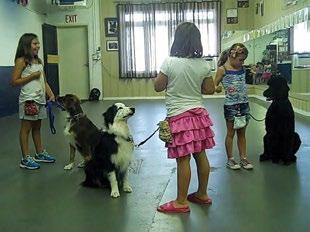
Teach children to respect a dog’s resting place, toys, food, and bones. As a general rule, children should be taught never to approach any dog whether or not it is sleeping, standing, or sitting. However, if the dog is sleeping, eating, has a toy or bone in its mouth, or has puppies, children should be taught to stay away from it. If children want to interact with dogs, they should be taught to wait for dogs to come to them and to interact with the dogs only if the dogs appear to be welcoming of attention: Soft eyes, wagging tails, open mouths and appearing to be happy about the interaction.
A child and a dog can be great together. Ensure that the needs of both are met and they can co-exist peacefully.
Lilian Akin, CPDT-KA, CBCC-KA is a local dog trainer and behavior consultant. She is a licensed presenter for Family Paws which provides support and guidance for families with infants and toddlers. For more information see: www.familypaws.com
Photos By:
Jennifer Shryock B.A. CDBC Founder & Director of FPPE Family Paws Parent Education Dog & Baby Safety Expert 919.961.1608
The American Veterinary Charitable Fund is a not-for-proft organization created to support veterinary practices in their charitable work.
For more information visit: www.avcfund.org
FEATURED ORGANIZATION
Christ United Methodist Church
– A Church with a Heart for People and Pets
By: Joe Hirsch, Chairman of Hearts and Paws Pet Ministry
Heartsand Paws Pet Ministry all started with Sue Irwin, children’s director at Christ United Methodist Church in Bethel Park, who attended a conference only to discover that other churches were beginning to include pets as a part of their children’s ministry. These churches found that interactions with dogs and cats not only pleased the children but also taught them respect for life. When Sue returned to our church, she presented the idea of offering a pet ministry to our congregation. When she had the senior pastor’s approval, she contacted me to ask if my wife Carol and I would like to become involved. We had a brief meeting, and suddenly I was chairing the pet ministry! We started gathering interested people, chose the name Hearts and Paws, and decided that our goal would be to provide assistance for church members who were entering the hospital and needed temporary care for their animals, offer grief support to those who had lost pets, and to be an educational resource for all things animal.
We are often asked why a church would be involved with pets. After all, aren’t there enough animal rights and rescue groups already in existence? Our answer is both simple and complex. Simply, for most of us, animals truly are a part of our family. They make a difference in our lives. They are there for us and comfort us when we are experiencing difficulties and they love us unconditionally. They are happy to be with us when we’re having a great day and accept us when we have not yet showered, our hair is a mess, when we’re grumpy, and when we’re downright unlikable. A pet’s love is the most God-like love we can experience. The more complex answer for us is that care for all animals is a biblical mandate. When God created the world, He gave man dominion over the other animals. We believe that God did not mean that we are commanded to dominate them, but rather that we are responsible for their care. “Dominion” and “domain” share the same root word, and when man “domesticated” animals, he created an obligation to provide a “dome” over their heads – in other words, to give them a home. Religious leaders throughout the ages have affirmed our responsibility for caring for the animals with whom we share the earth.
Today, 11 years later, we have far exceeded those goals and assisted churches across the country and the world from Canada to Australia in starting pet ministries of their own. In the process, we are consistently reminded that pets are more than just animals. To most of the people with whom we deal, pets are part of their families. In many cases the human-animal bond proves to be as strong as the human-human bond. The ministry has stretched far beyond the walls of the church to provide services to the entire community, regardless of faith expression.
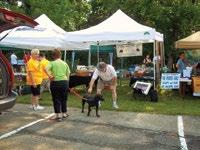
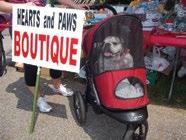
While our ministry started with the concept of providing care for our members and their pets, we have grown beyond what we ever envisioned initially. Our keystone event has become the annual Hearts and Paws Pet Care and Adoption Fair, held on the church grounds the third Saturday in June. The Fair evolved because we recognized that many rescue organizations needed a venue to be able to expose adoptable animals to the public. In keeping with our biblical mandate to care for all animals, we believed that the Fair helped to meet the need of the least of the animals, those who were homeless. We decided that we would not charge rescue organizations to participate, but in an effort to underwrite the cost, we would ask a small fee from the product and service vendors who attended. It started as an experiment and proved to be very successful. Today, the Pet Care and Adoption Fair is the largest adoption event in Western PA. There are approximately 40 rescue groups and 20
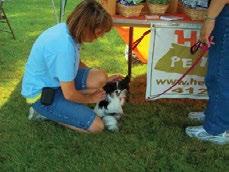
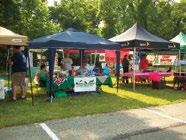
vendors showcased at the event each year, and it is attended by over 1,000 visitors. While state law prohibits the adoption of dogs directly from the church grounds, nearly 50 or more animals find fur-ever homes as a result of the Pet Fair. A secondary unseen benefit comes from the Fair: We can cite many stories of individuals who have decided to begin or return to a house of worship as a result of their experience with us.
Hearts and Paws has also developed a program to help individuals who cannot afford to feed their pets and, as a result, are in danger of needing to give them up. Food is donated by local pet food stores, groomers, veterinarians, and individuals and stored in a climate-controlled storage locker off-site. We have helped the unemployed, cancer patients, victims of flooding, and people in a variety of other difficult circumstances. We believe that part of our mandate is to ensure that people don’t have to give up their pets at the same time they are experiencing other tragedies.
We also developed a veterinary grant program (currently limited to church members only) so that those who were struggling financially and faced with a sudden veterinary emergency could have assistance in bearing the cost. The ministry has also become a resource for those with questions about finding a pet, managing a pet’s care or behavior, or other pet-related issues. Hearts and Paws provides grief support on an individual and on-going basis and assists those who are making end-of-life decisions for their pets. Our goal is to help people through their pets in any way we can.
Hearts and Paws Pet Ministry is open to all volunteers, regardless of faith affiliation. To volunteer or donate, call 412-277-1096 or contact Pastor Chris Morgan, Christ United Methodist Church, 44 Highland Road, Bethel Park, PA 15102.

BUSINESS
I’veseen it many times: People are at work and, for a variety of reasons, their home catches fire. The only ones in the house are the four-legged residents, and it’s impossible for them to call the fire department. As devastating as it may be, many times cats, dogs, and other animals fall victim to the fire because no one is home to make sure they get out. By the time a fire is discovered, it is often too late to prevent the deaths of the animals inside the house. Because they are frightened, both dogs and cats often hide where they cannot be found and the most frequent cause of death becomes smoke inhalation. Even though I had seen tragedies resulting from fires, I never really thought about protecting my own pets until recently when several days in a row I listened to newscasts about house fires in which many pets had been lost. My wife Carol and I have been fostering pets for over 15 years and have several of our own companion animals. We realized through the sad stories of others that it was our responsibility to protect our pets and those in our care in any way we could. That’s when we decided to take action.
different solution. Pet-appropriate oxygen masks are a standard on most fire and rescue trucks. The Mt. Lebanon Fire Department was among the first fire services in Pittsburgh to have pet-appropriate masks. Within days of putting the masks in service, they received a fire call for house that was burning. According to Lt. Ed Davies, the
Who Protects Your Pets When You’re Not Home?
By: Joe Hirsch
masks worked wonderfully and they were able to save the home owner’s cat.
The first thing we did was to begin researching fire alarms and sprinkler systems. Surprisingly, we discovered, a fire alarm system does not cost as much as we believed that it would. After a little bit of investigating, we found that Vector Security offered a system that would automatically notify us as well as the fire department if a fire were detected in our house. We now have four strategically placed, wireless smoke detectors that are monitored 24/7. If the monitoring center calls us and we don’t answer, the operator automatically notifies the fire department. The result is that, even in our absence, we will get a quick response from the police and fire services at a cost that is less than the cost of a daily cup of coffee! The peace of mind that we now get from knowing that we have given our animals every chance to survive a fire is worth every penny we pay.
Notifying the fire department is just one part of a plan to save the life of the pets we love so dearly, should a fire occur. For several years I worked as a paramedic and responded to many fire calls. We would frequently arrive to find that the fire fighters had pulled a dog or a cat out of the fire, only to discover that the animal was having a hard time breathing and needed oxygen. The difficulty was that the oxygen masks that we had on our ambulance, as well as the ones the fire fighters used, did not fit the animals’ muzzles and could not properly oxygenate dogs and cats. Today, rescuers have a
Today, Invisible Fence® Brand underwrites a program called “Project Breathe™.” The purpose of the program is to provide pet oxygen masks and donate them to local fire departments. Recently, several fire companies in Armstrong County were presented with a three-mask kit (containing small, medium, and large masks) by Carolyn Mento, of Invisible Fence of Pittsburgh , who explained, “We are in the business of protecting pets and we take that responsibility very seriously. We want to ensure that every animal has the best protection possible. We should never lose an animal because we are not able to give it the oxygen that it needs. The investment we make in order to supply pet- appropriate masks to the fire departments is a small price to pay for saving the life of a family’s precious pet.”
It is important that you take steps to protect your pets before there is a fire. Check with your local fire department to ensure that it has pet-appropriate masks on its fire trucks. If you have animals in the house and you have installed a security system, be sure that the system monitors know how many animals are in the house and the names of each.
This information will make it easier for emergency personnel to manage your animals, should you not be at home when tragedy strikes. Taking a few steps will not only keep your animals safe at home but will also give you a tremendous sense of relief.
Invisible Fence of Pittsburgh can be reached by calling 724-832-3134 or online at www.invisiblefence.com. To investigate how a fire security alarm might work in your home, call Vector Security at 1-800-756-9161.


HOLISTIC CARE
Everything in our world seems to be run by electricity. In our homes and businesses, electricity is an invisible force that we can plug into for light, heat, food preparation, information, and of course, entertainment. It is hard to imagine living without electricity. When the power lines go down, it’s “lights out” and nothing much is done. As I will prove, electricity is also an important factor in living organisms.
Cellular Life
Bioelectricity and Healing
By: Dr. Doug Knueven, DVM, CVA, CVC, CVCH
Life Force Energy
The cell is the unit of life. Death of the body results when its cells cease to function. Health is a reflection of the proper functioning of every cell of the body.
It has recently been estimated that the human body is made up of 37.2 trillion cells. Even the smallest dog is made up of over a trillion cells. Each cell contains ten thousand biomolecular machines (enzymes and organelles). The various equipment within a given cell allows it to complete 6,000 chemical reactions per second. It is hard to imagine the complexity of communications needed to coordinate all of the activities within cells, between cells, and between body systems.
Bioelectricity
Electricity is a force that results from the interaction between positive and negative charges. Like charges repel while opposites attract. In the body there are different atoms and molecules that have positive or negative charges associated with them. We call these charged particles ions. Bioelectricity (the kind of electricity used in the body) is generated by the movement of these ions.
It is the controlled flow of ions that allows signals to be carried by the nerves of our brains and nervous systems. That means that every thought we have is a result of bioelectricity. This same basic process is responsible for the contraction of our muscles. Therefore, every movement we make and every beat of our hearts is powered by electricity, but there are still deeper implications of bioelectricity.
The power source within every cell is an organelle called the mitochondrion. The average cell contains 1,000 mitochondria and they take up 1/10 of the cell’s total volume. The mitochondria convert glucose, fat, and protein from food and the oxygen from respiration into energy by creating adenosine triphosphate (ATP) which is the energy supply for many of the cellular, biomolecular machines.
Mitochondria fulfill their task by pumping protons (positively charged ions) from the inside to the outside of their organelle membranes. This creates a gradient of electrical charge where the inside of the mitochondrion is negative compared to the outside. Because positive and negative charges attract, an electrical field is created. In this way, the mitochondrion becomes a miniature bio-battery.
It is the electrical energy of these cellular batteries that powers the process of creating ATP. If the mitochondrial electricity were to fail, no ATP could be produced and the cellular machinery would stop. When this happens in the cells of the brain or the heart, bodily death results. So electricity is the ultimate energy of the life force.
Furthermore, the cells of the body actively transport positive, sodium ions out of themselves using pumps fueled by ATP. This creates another gradient of charge where the outside of the cell is positive compared to the inside. Similar to the mitochondria, the cells themselves function as batteries. When the cellular membrane allows certain ions in or out of the cell, a tiny current of electricity results. This current further powers the cellular machinery of life.
Recently a University of Michigan biophysical chemist used a tiny voltmeter to measure rat brain cells’ electrical potential and detected fields as strong as 15 million volts per meter throughout. This is actually a
tiny amount of electricity per cell, but when multiplied by trillions of cells, it becomes a huge force. In fact, assuming the rat measurements also apply to humans and pets, we all have the electrical power of a lightning bolt within us!
The Current of Injury
Another aspect of the difference in charge from the inside to the outside of the cell is something called the current of injury. When a cell membrane is ruptured, there is a very fast and unregulated flow of ions as they are attracted to ions of opposite charge. This current of injury alerts the body that damage has occurred and it is this signal that brings in the body’s healing response.
The current of injury also works on a larger scale. It turns out that skin cells have more sodium pumps on the side of the cell facing outside the body. As all of the cells of the skin pump together, the outer surface of the skin becomes relatively positive with respect to the inner surface. When the skin barrier is interrupted, as when there is a cut, a current of injury is created in the skin which signals the body’s repair system.
Thus, bioelectricity is responsible for bodily healing. Acupuncture in particular utilizes this powerful healing force. It has been documented that a distinguishing characteristic of acupuncture points is that they occur at areas of the skin where electricity flows more freely. Piercing those points with a needle causes a current of injury that is magnified by the decrease in electrical resistance.
The Bioelectric Body
The electrical forces generated by of the cells of the body set up a complex pattern of electrical fields. It is the summation and interaction of all the electrical activity of the body and mind that results in the overall bioelectric field which interpenetrates and is emitted by the body. This electrical field, which reflects the body/ mind, is part of what some people are able to sense as the body’s aura.
The bioelectric fields of both amphibian and chick embryos have been analyzed and found to be quite similar. According to several studies, changing the electrical fields of chick and amphibian embryos causes changes in their development. Further research has revealed that the bioelectric field guides the body’s formation.
Let me explain what this means. Scientists think they know everything because they’ve figured out the genetic code. We often think of the DNA as being the blueprint for the body, but this is not exactly right. Actually, the DNA codes for the protein building blocks for every cell in the body. Certain genes in the genetic code can be “turned on” and create a liver; other genes can be “turned on” and make a brain. The genetic code within every cell of the body is identical. It is the activation of specific genes that determine a cell’s organ system and function.
DNA does not turn off and on its own genes; therefore, DNA is not a blueprint for the body, so how is it that in the embryo, the brain always forms inside the skull while the liver develops inside the abdomen? How does the body know where to turn off and on the needed genes? According to the research mentioned above, it is the body’s electrical field that dictates the regulation of genes related to the appropriate development of the body. The embryo’s electrical field acts as a template for the forming body.
Bioelectrical Fields and Bodily Regeneration
Research done by Dr. Robert Becker in the 1960’s and 1970’s found some even more amazing effects of bioelectricity. Becker discovered that the electrical field at the stump of limb amputation was different in frogs as opposed to salamanders. He postulated that it was this difference in the electrical field that allowed the salamander to naturally re-grow a leg when it was severed while the frog could not.
In fact, Becker found that if a salamander’s leg is amputated and the frog’s electrical field is mimicked at the stump, the leg does not grow back. Incredibly, if a frog’s leg is amputated and the salamander’s electrical field is mimicked, the frog’s leg will grow back. In fact, this has also been proven to be the case in young laboratory rats as well.
Apparently, the body’s electrical field is not only a template for the formation of the body but is also responsible for the maintenance of bodily form. This fact highlights the potential for all healing modalities that manipulate the body’s bioelectric field.
As we can see, the electrical forces in the body are quite profound. Biologically speaking, it’s the electrical energy within the mitochondria that is the fundamental life force. The flow of electricity in our nervous and muscular systems makes possible our thoughts and
actions. Bioelectrical fields are a template for the formation, regeneration, and healing responses of the body. The interplay of positive and negative charges in biological systems is truly an expression of Divine power.
Grand Slam Grooming
Grooming Service & Dog Training available at:
168 Vanadium Rd. #A
Bridgeville, PA 15017 (412) 221-5081
www.grandslamgrooming.com
Please call for an appointment

Cat Rescue Resource Guide
Low-cost Spay and Neuter Organizations and Programs
This is an ever-changing list of resources for cat owners in Pittsburgh and beyond though many of the listings, like the shelters, apply to dogs and other pets as well. It includes low-cost spay and neuter programs as well as TNR for community cats, pet-friendly rentals in Pittsburgh and across the US and links to shelters for adoption and other services. In the future we will also list clinic dates with the organizations below when they are available.
TNR And Low-Cost Spay/Neuter For The Pittsburgh Area
Homeless Cat Management Team: www.homelesscat.org
City of Pittsburgh Free Spay and Neuter for City Residents
City of Pittsburgh free spay/neuter: www.pittsburghpa.gov/animalcontrol/spay_neuter.htm
City of Pittsburgh residents can apply for free spay or neuter vouchers for up to five pets, including stray/feral cats.
Low-cost Spay/Neuter and TNR Programs at Allegheny and Surrounding County Shelters
Animal Friends: www.thingkingoutsidethecage.org
Animal Rescue League: www.animalrescue.org
Beaver County Humane Society: www.beavercountyhumanesociety.org
Washington Area Humane Society: www.washingtonpashelter.org - Colony Cat Project: faith.b2@verizon.net
Western Pennsylvania Humane Society: www.wpahumane.org
Low-cost Spay/Neuter Organizations in Allegheny and surrounding counties
Frankie’s Friends Cat Rescue, Allegheny & Westmoreland Counties: www.sites.google.com/site/frankiesfriendsnatronaheights Fluffyjean Fund for Felines, Allegheny and Washington Counties: www.fluffyjeanfund.weebly.com
Fix Ur Cat, Washington County: www.fixurcat.org
Catnip Acres, Greene County: www.catnip-acres.org
Snip-it.org, Westmoreland/Indiana Counties, Alle-Kiski Valley (Leechburg): www.snip-it.org
Low-cost Spay/Neuter and Veterinary Clinic
Spay Neuter Clinic, Penn Hills, 412-244-1202: www.spayaz.com/pittsburgh-pa
Find Local Low-cost Spay, Neuter and Veterinary Care on the Internet
Low-cost Neuter and Spay (search by zip): http://neuterspay.org
Love That Cat (online search): http://neuterspay.org
Spay USA: http://neuterspay.org
Pet-friendly Rentals
In the Pittsburgh area, visit this list on the FosterCat website: www.fostercat.org/friendly.html Nationwide (United States only): www.rent.com/pet-friendly-apartments
Shelters and Shelter Services
ALLEGHENY COUNTY
Animal Friends (AFI): www.thinkingoutsidethecage.org
Animal Rescue League (ARL): www.animalrescue.org
Western Pennsylvania Humane Society (WPHS): www.wpahumane.org
SURROUNDING COUNTIES
Beaver County Humane Society: www.beavercountyhumanesociety.org
Butler County Humane Society: www.butlercountyhs.org
Humane Society of Westmoreland County: http://members.petfinder.com/~PA83/about.html
Washington Area Humane Society: www.washingtonpashelter.org
Non-shelter Feline Adoption
FosterCat: www.fostercat.org
Kopy Kat Sanctuary, Westmoreland County (Delmont): www.kopykatsanctuary.org
Feline
breast cancer is the third most common cancer among cats after lymphoma and skin cancer. In a 2005 study done at the University of Pennsylvania, “cats spayed prior to 6 months had a 91% reduction…those spayed prior to one year had an 86% reduction in the risk of mammary carcinoma development compared with intact cats.” Spaying between one and two years of age only reduces the risk by 11%, and after two years it
into heat the first time is the best way to avoid breast cancer, not to mention reducing the risks of injury and disease a cat faces while out carousing as well as other reproductive cancers and deadly uterine infections. So, for Breast Cancer Awareness Month, we also need to become attuned to breast cancer in our cats.
Check those rescued mom cats
For Breast Cancer Awareness Month, a Monthly Check for your Cats
By Bernadette E. Kazmarski, artist and writer
doesn’t reduce the risk at all. Actually giving birth to kittens doesn’t change the risk factors either. The average age of diagnosis is 12 years, and certain breeds such as Siamese and Persians are more frequently diagnosed--and at an earlier age--than other cats.
While breast cancer in cats is more common than in humans, it is far less common than it is in dogs, but cats have the highest malignancy rate and the lowest survival rate of all three because about 90% of all tumors are malignant, vs. about 50% for dogs. Early detection and treatment are keys to recovery and survival.
That myth that “it’s good to let a cat have a litter of kittens” has no basis in fact and can be a death sentence, since spaying your cat before she even goes
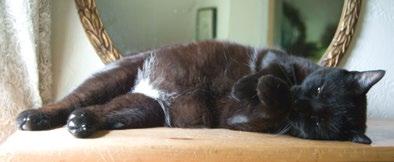
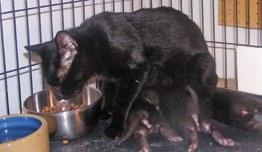
I frequently give my Mimi’s belly a little extra rub top to bottom, not because she likes it, but because I like her. Mimi arrived in my home in 2007 with four black fuzzballs who were three days old. To my knowledge, she was about four years old at the time and had had six litters of kittens, and this litter would be her last.
Most of the cats I’ve lived with came to me as adults, most of the females intact, and back in the day, if we didn’t know whether or not a cat or kitten had been spayed, we just waited until she went into heat to figure it out. Those of us who have rescued cats or adopted cats who have borne even one litter would be wise to keep an eye open for symptoms and perform regular breast exams on our female cats, just as we women should be doing on ourselves; in fact, we should plan it at the same time. Four of my females before Mimi—Kelly, who I knew had had kittens, and Cookie, Moses and Sophie—were all rescued as older kittens or adults. Kelly had been spayed by the time she reached me, but with the other three I waited until they went into heat to have them spayed, as was recommended at the time. That’s been a lot of mammary glands to check, and not always popular, but I’ve done it.
When I started this exam routine years ago, I found a small lump on my Sally’s belly and made a special appointment with my veterinarian to get what I was sure was a horrifying diagnosis. I wrung my cold and trembling hands as my veterinarian felt the area of Sally’s belly I had indicated, only to learn that it was scar tissue on her spay scar. I was too happy to be mortified at what a fool I seemed to be. The lesson is this: Get to know your kitty’s spay scar, which is usually tiny and often invisible but may contain a little hardened scar tissue. It may also be a site of cancerous growth, so check for changes.
Several years ago friends rescued a “tortie” kitty from a warehouse who was intact and had apparently had several litters of kittens and spent her life dodging forklifts and begging for food. A year or so after Callie joined their household, one of them felt lumps on her torso/belly when they picked her up and thought the lumps felt “different/odd/new/wrong.” A visit to the vet diagnosed her with feline mammary cancer. She received surgery and a course of chemotherapy, but she relapsed two years later and succumbed to the disease within a year of relapse, but they were glad to have found it in time to give her two more good years after her rescue.
During her yearly exam, our veterinarian felt near the bottom of her belly a little bit of a lump on one of Mimi’s mammary glands. I had noticed the lump as well. Mimi was a little lumpy to start with after so many litters and went into heat again just a few weeks after the four were born. Even after they were weaned and I had separated them for several weeks, she continued producing milk, some of which hardened in her mammary glands, so I soon learned that monthly exams can be puzzling and frightening. The solution is to keep examining and getting to know your cat’s mammary glands better so that you notice changes.
tomy_and_feline_mammary_carcinoma), and Mammary Cancer in Cats (http://www.veterinarypartner. com/Content.plx?P=A&A=2445&S=2), as well as Mammary Tumors in Cats (http://manhattancats.com/ Articles/mammary_tumors_in_cats.htm) on the Manhattan Cat Specialists website. And Breast Cancer in Pets (http://www.halopets.com/pet-education/petarticles/breast-cancer-in-pets.html) on the Halo website explains the monthly exam pretty thoroughly.
For other information and to join with a community of feline mammary cancer survivors, visit Sugar’s website, Sugar Rub, and read her story of her human’s home exam, finding a lump, diagnosis, surgery and the whole process. Her human set up the website and a Sugar Rub Facebook page to spread awareness of feline mammary cancer and information about breast cancer exams, treatments and support.
The monthly breast exam for your kitty
An overall monthly mini-exam is a good practice for any animal guardian to undertake. Just run your hands over your cat’s body while feeling for lumps or bumps or cuts or any abnormalities that have simply shown up so that you begin to know what is “normal.” And then for the girls, and many say even for the boys, as a few male cats have also been diagnosed with breast cancer, check for any changes in those eight mammary glands, which are usually completely symmetrical and slightly reduced in size from chest to hips. Look for changes in the nipples or any discharge or discoloration, uneven lumps, or swelling and tender spots. At least we humans only have two mammary glands to worry about!
For more information on the disease and treatment, reference these two articles: Association between ovarihysterectomy and feline mammary carcinoma (http://www.biomedexperts.com/Abstract. bme/16095174/Association_between_ovarihysterec-
When to spay, and early spay and neuter
It used to be that six months, the approximate age a cat reached sexual maturity, was the recommended time to spay a cat. There were two problems with this. First, cats often went into heat before this age to the surprise of their owners, who thought Fluffy’s biological alarm clock wasn’t set for four months. Second, people wanted to adopt young kittens and were sent home with an assurance that a free or low-cost spay for Fluffy included in the cost of adoption. Somehow, Fluffy wouldn’t get back in time, sometimes never. In cat rescue, we see the results of this every single day.
Many shelters now spay and neuter cats when they reach “two pounds and two months,” and they are not available for adoption until then. They recover quickly and are still cute kittens, frisky and full of fun, and no one needs to worry about their biological clocks.
Low cost spay programs at shelters in Pittsburgh and beyond
If you’ve taken in a stray or adopted a kitten who is not spayed or neutered, there’s no question that spaying or neutering is expensive. Here are a few options to help keep it affordable. A few programs have an application process with an income level that determines the final price of your cat’s surgery; others are simply a low flat rate. In many cases the surgery alone can be done for under $50.00.
EQUINE AFFAIRS
Pony Yoga
By: Kristin Hermann
Ponieswill capture the pony’s mind and keep it focused on the task at hand.
are notorious for having minds of their own. However, if we ride them on the aids and give them something to think about while under saddle, they will focus on the rider instead of thinking about the next devilish thing to do. Pony Yoga is here to keep your pony focused and you, the rider, actively engaging the pony’s mind and body Asking the pony to stay engaged mentally and physically will obviously keep it focused: The first requirement for pony yoga is to be able to have the pony relaxed, rhythmic and round on a circle.
A pony could never be trained without being relaxed. Rhythm on circle is a prerequisite for most training, and then an elastic contact would be the icing on the cake. An elastic contact, however, is rather elusive and requires a tactful rider. Pony yoga can be done without the pony’s being “on the bit,” and, as a matter of fact, doing these suppling exercises will assist the pony in becoming connected with a softer contact and maybe result in the pony’s accepting the bit.
Pittsburgh trainer Blaine Orris trains Annie with Pony Yoga. In this photo she is attentive and listens to Blaine’s requests to move forward. She has no time to think about any pony antics. Blaine is bending Annie onto the arc of a circle right, keeping her attention on the task at hand.
Pony yoga is just a simple way to supple the pony and keep its attention. Lateral bending or bending the pony on both sides of its body, both left and right, is one way. The other is longitudinal suppling or stretching from front to back. Suppling a pony or a horse requires it to be able to bend in both directions from side to side and from back to front. Engaging the pony to do such exercises
Asking the pony to bend on circle is the first basic exercise. Its whole body bends onto the arc of the circle by following the arc of it.. For example, if the pony is tracking left, its entire spine from tail to poll should be positioned left. The shoulders, including the head and neck plus the hind end, are in alignment on the arc of the circle. Horses and ponies do not just bend on circles on their own, this is part of the training the rider provides. When the rider can perform a decent circle in both directions, then more bending and suppling can be accomplished, thus making the pony even more attentive.
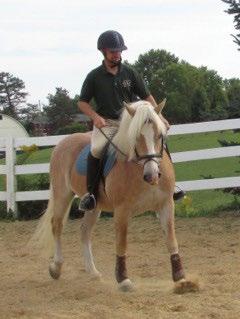
When the horse or pony tracks up, or moves from behind taking a full stride, this motion stretches the top line. These top line muscles carry the rider. Stretching the top line can be done in two basic ways. Asking the pony to go more forward lengthens the stride and allows the back to stretch or allows the pony to “chew the reins” out of the hands at a walk or trot. Stretching “down and out,” of course, is only allowed if the rider asks and gives permission to the pony to stretch. A pony or horse that just rips the reins away from the rider is naughty, and this is not acceptable behavior. Of course, smart ponies, even though they are small, know deep inside they are mighty and strong and can out muscle most riders on any given day!
Once again, training a pony keeps it respectful of its riding partner. Purposefully riding straight lines is another way to supple a pony and get its attention. Typically straight lines are trained on the quarter line in the arena. Just try walking your pony down a straight line to see if you can keep the pony straight. Usually the pony will drift to the right or left, and in each direction the pony will drift to a different direction. Typically, going right the pony will fall in and tracking left it will fall out. By purposefully riding straight lines, the rider can develop equal loading on both hind legs to make the pony more balanced in both directions. Pony yoga
Blaine is allowing Annie to stretch her whole top line by letting her stretch down. This is training. Annie is never allowed to pull the reins out of his hands.
in action! With Pony yoga, we are not doing standing poses but poses in action at the walk, trot and canter. Yoga for ponies or riders is a wonderful way to keep the muscles loose and pliable. Pony yoga is just another way to think about making your pony more flexible and responsive to the rider’s aids.
Developing flexibility is a key toward maintaining a healthy, sound pony, plus a good riding relationship and a deeper understanding of training.
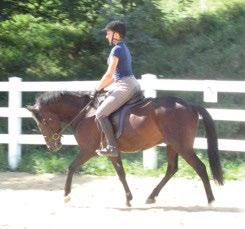
Thank you www.blaineorriseventing.com for demonstrating some Pony yoga!!
This Chincoteague pony in training at Coventry is very straight. The rider is about ready to let him “chew the reins” out of her hands. She just needs to open her fingers. and capture its mind. Practicing yoga does not mean you have to sit for hours like a pretzel and put more tension into the body, not that a pony could do that anyway!
Portraits of animals

EQUINE AFFAIRS
Veterinarians are often asked about treating colic. This is a little like asking how to treat a limp. There are many causes of colic, enough to fill volumes. Most simply, colic means abdominal pain, from whatever the cause in the immediate case. There are many misconceptions about colic.
• Rolling causes the colon to twist
second lumbar vertebrae at the site known as the “root of the mesentery.
Colic in the Horse (Part 1 of 3)
By Brian S. Burks, D.V.M., Dipl. ABVP, Board-Certified Equine Expert
• Passing manure means that the horse is getting better
• Trailer rides will fix the colic
• Horses colic with changes in weather
These misconceptions can lead to delays in treatment and possibly even death. The question, then, should be as follows: What is the diagnosis that is causing the colic? To answer this question, one must understand the anatomy and physiology of the equine digestive tract.
THE EQUINE GASTROINTESTINAL TRACT
The equine digestive tract is unique in its ability to digest cellulose and other structural carbohydrates. This process is known as fermentation, which requires a special and complicated digestive tract. Fermentation yields copious amounts of gas due to the microfauna (bacteria and yeasts) required for digestion and works well for what horses were meant to do-- range over many acres, but it does not translate well into being kept in stalls and fed meals twice daily.
The digestive tract begins in the mouth. Prehension and mastication are important aspects here. Very sharp teeth may affect mastication and cause injury to the inside of the mouth. Food must be taken in using small bites and chewed well to stimulate saliva production, beginning digestion. Saliva contains many digestive enzymes and buffers to break down food and buffer acids in the stomach. From the nose to the stomach is about one and a half meters; a three- meter endoscope is required to examine the stomach in its entirety. The stomach normally holds around three gallons and it exits, via the pylorus, into the small intestine which is around 80 feet. The small intestinal mesentery (ligamentous attachment of the intestine to the body wall) is connected to the top of the abdomen (toward the spine) near the first and
Within the root of the mesentery exists the large cranial mesenteric artery. The mesentery is wide and fanshaped and carries numerous vessels and nerves to the intestines. It is attached to the small intestine along its entire length, but because of its fan shape and singular attachment, it is highly mobile and permits the small intestine to move freely in the abdomen.
The small intestine exits into the cecum, a 3.5 foot appendix which holds around 5-7 gallons of ingesta. This is essentially a blind pouch, with an entrance and an exit lying in close proximity. The cecum mixes the ingesta, ferments feed material via microbial digestion, and absorbs water. Next comes the large colon which has several turns, including an upward hairpin curve. It is designed as a double stacked horseshoe. The large colon is about 15 feet long and varies greatly in diameter, from 8cm to as large as 50cm in the right dorsal colon.
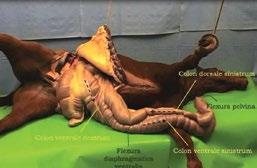
The sequence of the limbs and flexures of the ascending colon is as follows: Right Ventral Colon passes out of the cecocolic orifice on the right side of the abdomen and continues cranially to the xiphoid region; Sternal Flexure, passes across the midline from right to left, Left Ventral Colon, which has a diameter of about 20cm, runs caudally on the left ventral abdominal floor; Pelvic Flexure, which has a diameter of about 8cm, turns dorsally just cranial to the pelvic inlet and then runs cranially to the diaphragm, Left Dorsal Colon, runs cranially, parallel and dorsal to the left ventral colon; Diaphragmatic Flexure, turns caudally at the diaphragm; Right Dorsal Colon, with a diameter of 50cm, continues caudally on the right. It is the shortest limb of the ascending colon.
The transverse colon continues on from the right dorsal colon as the right dorsal colon turns medially.
The right dorsal colon is attached by a mesentery to the dorsal abdominal wall, the base of the cecum, the root of the mesentery, and the pancreas. This anatomical arrangement of mesentery allows the left ascending colon to twist and is a common cause of colic (colonic torsion).
The large colon in turn empties into the 10 foot long small colon, where fecal balls form before exiting the rectum and anus. All told, the equine digestive tract secretes and absorbs about 100 liters of fluid every day. All of the twists and turns of the equine GIT are to slow movement, cause mixing of the contents, and allow microbial digestion, making Volatile Fatty Acids the major source of energy in the horse.
SIGNS OF COLIC
BREAKING THE PAIN CYCLE
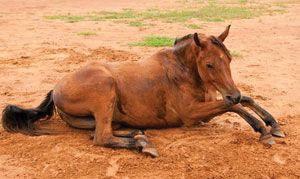
Many times, horses may recover quickly and on their own. They may colic in the night or when you are gone and you may never know that your horse had a mild belly ache. Where colic is identified, many resolve with time and an injection of flunixin meglumine, a potent anti-inflammatory and pain reliever; however, it is critical to understand what this medication may accomplish. For minor causes of colic it may be fine. For more severe forms of colic, it may take away the pain while the internal process continues, delaying diagnosis and treatment. It could even cost the horse its life. Never give any medication without consulting a veterinarian first. Some drugs may do irreversible harm if given in the wrong situation.
Horses are very sensitive to abdominal pain and may present differently from those of other species. Signs in horses range from mild to severe and include anorexia, lethargy, ‘ain’t doin’ right’, lip curling, teeth grinding (bruxism), flank watching, stretching as if to urinate, pawing, kicking at the abdomen, rolling, thrashing, and others.
CONDITIONS CAUSING COLIC
Colic signs may emanate from any point of disturbance in the gastrointestinal tract. It may be confused with pain from other areas of the body, for example chest pain.
There are many causes of colic, depending upon the site affected. Examples include the stomach with gastric ulceration or feed impaction; the small intestine can twist at the root of the mesentery (volvulus); the large colon may have gas, impaction of feed material, or may have a torsion. Any part of the intestinal tract may be affected by inflammatory diseases or bacterial infections. There are many other potential causes.
What is causing the pain experienced during colic episodes?
• Tension on attachments to the body wall (mesentery)
• Distention or muscular spasm of colic
• Irritation to the intestinal lining- gastric/colonic ulcers
• Loss of blood supply (ischemia) from mesenteric volvulus or colon torsion
Anything that blocks normal movement of ingesta from the stomach to the rectum may result in gas and/or fluid build-up, stretching the intestine, causing increasing amounts of pain as the condition worsens. Pain relief may stop this cycle in milder forms of colic. More severe forms of colic such as a twist, displacement, or impaction will require more aggressive forms of treatment, including surgery, especially in the former two causes listed here.
Simple observation is not enough to distinguish mild and severe cases, although more severe signs of pain that continues is more likely to be critical, but this is not always the case. An experienced veterinarian can identify the cause of colic based on signalment, history, physical examination findings, rectal palpation, and other diagnostic modalities such as abdominal ultrasound.
COLIC OCCURRENCE
Roughly 5-10% of horses will experience colic in a given year. This happens in all groups, herds, breeds, and geographic locations. There are specific conditions that are more common in certain age groups, i.e. Ascarid impactions and intussusceptions are more common in younger horses. Colon torsion is common in broodmares post foaling. Horses that are kept in stalls experience more colic than those with regular exercise and also those that are fed more concentrates than forage (hay or grass).
Dr. Brian Burks, Dipl. ABVP is the owner/veterinarian at Fox Run Equine Center, a 24-hour medical-surgical center near Pittsburgh, Pennsylvania. He is board certified by the American Board of Veterinary Practitioners (Equine Practice). This certifies him as an expert in all categories of equine practice. He enjoys the diagnostic and treatment challenges of internal medicine and intestinal disorders. Find out more and contact us at: www.foxrunrequine.com
need of paring. As long as his growth does not exceed his wear by more than an inch, he seems to do just fine-anything more and his frogs will no longer provide support to the back of the hoof and will slough off.
Over time, Jazz’s hooves have become more even, wider, and support his weight with more comfort. As you can see from his photos, his landings are not strained and he can tuck with the best of them!
Jazz’s owner has always done the best for him and their bond is strong. She made the conscious choice of allowing him to live a barefoot lifestyle and made necessary changes when she had to. Jazz is sound and happy, a credit he owes to his owner’s dedication and
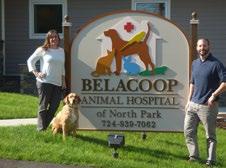
hard work. Should the day ever come that he becomes a candidate for shoeing again, I’m sure she will do what is best to keep him comfortable for the rest of his days. In the end, it’s about QUALITY of life, and it’s our belief that a healthy lifestyle that provides the benefits of preventative maintenance outweighs the costs of another ribbon on the wall.

Calendar will feature members of the Pittsburgh Penguins® organization with some adoptable animals from the Animal Rescue League Shelter and Wildlife Center.
Calendars will be available and ship mid-November. Just visit our website at www.animalrescue.org/penscalendar or contact Ann Yeager at 412-345-0346 or ayeager@animalrescue.org.
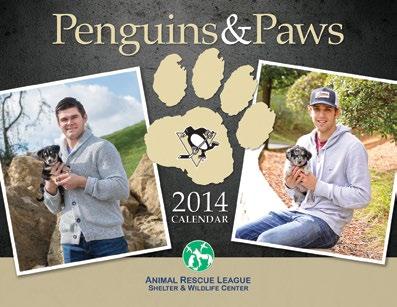
Proceeds from the calendar benefit the Animal Rescue League Shelter and Wildlife Center. * Plus shipping and handling. $5.95 per order in the United States, $19.95 in Canada and $24.95 in other countries. Only$20 each*
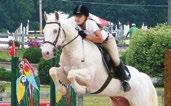



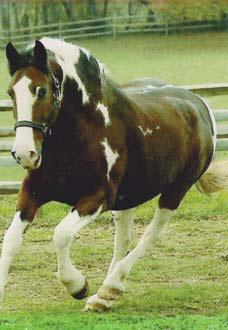
IN REMEMBRANCE
The Summer Without Our Angel
It all began when my son, Tristan, who was 14 years old at the time, went to Animal Friends with his father and grandmother to see the sheltered animals. My son called me from the shelter saying that he found a dog named “Angel” and that we HAD to have her! She was the last caged animal that he viewed and it was LOVE at first sight. I told him that I would go to the shelter to see her to decide whether we would adopt her. Angel was a scared, skinny, shaking, and beautiful little two-and-a-half-year-old beagle. As soon as I saw her, I knew that she would be ours.
Angel was so afraid of everything that we had trouble getting her to go outside to do her business. After trial and error, we bought a dog crate in order to “house train” her. I was tired of cleaning up the basement floor and smacking my head on the low staircase after which I would literally scream bloody murder!
After we had Angel for six plus years, we adopted a wild, high-spirited, three-legged beagle we named Ginger. Angel “tolerated” her, but I think she eventually liked having her around. Angel truly loved my son Tristan. She would not leave his side and he would “baby” her by covering her up with her blanket.
Angel’s favorite things to do in life were to sleep, eat, play, go for walks, and to “lick the dish.” Angel was very happy with her life and very protective of us. She is and was our best friend.
Angel turned 14 this past June. We had been giving her really good walks (weather permitting) even though she had slowed
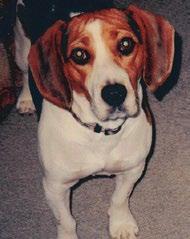
down considerably. We discovered lumps on her body that had us worried, so we took her to the vet to have her examined. The lumps were thought to be cancer. We really hoped we would have her with us at least for the summer, but the cancer grew rapidly and we were faced with putting her down instead of letting her suffer. It was one of the hardest decisions we ever had to make, but if we truly love our animals we have to let them go. We miss her and will never forget what a sweet, loving, and courageous dog she was.
By: Ruth Maloy-Carter
Do you have a special pet that you would like to honor?
Send submissions to info@pghpetconnections.com.
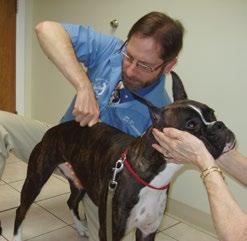
Dr. Doug Knueven practices an integrative approach to pet care. He is well versed in conventional veterinary medicine and has been licensed since 1987. He is also certi ed in acupuncture, Chinese herbal medicine, and chiropractic. He is a member of the American Holistic Veterinary Medical Association and has advanced training in natural nutrition, massage therapy, homeopathy and a host of other alternative therapies.
• Full Service Animal Clinic
• Preventive Health Care
• General Surgery
• Radiology
• Dentistry
• Holistic Care
• Acupuncture
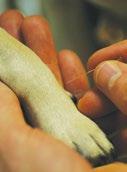
• Vaccine & Vaccine Counseling
• Nutrition Counseling & Natural Raw Diets
• Chinese Herbal Medicine
• erapeutic Laser
• Healing Touch & Massage erapy
at Beaver Animal Clinic