Pittsburgh PetConnections SPRING 2026 Digital Issue
PetVet365 CRANBERRY
20111 Rt. 19
Cranberry Twp., PA 16066
724-473-3730
PetVet365 FOX CHAPEL
1100 Freeport Road Pittsburgh, PA 15238 412-336.8222
PETVET365 NORTH FAYETTE
223 Summit Park Drive Lot F2
Pittsburgh, PA 15275
412-546-1022
PetVet365 ROSS PARK
7372A McKnight Road Pittsburgh, PA 15237
724-803-8885
PetVet365 SHADYSIDE
5247 Liberty Ave. Unit 202 Pittsburgh, PA 15224 412-912-8920
PetVet365 SOUTH HILLS
10 Old Clairton Road #4 Pittsburgh, PA 15236
724-252-2880
PetVet365 THE TERMINAL
1821 Smallman Street Suite 300 Pittsburgh, PA 15222
724-221-7414
PetVet365 WILKINS
3470 Wiliam Penn Highway Suite 400
Pittsburgh, PA 15235 412-219-9909
PetVet365
The New Age of Veterinary Service
trip to the vet can be a struggle for animals and most owners expect that. Cats hate going in their carriers, and dogs recognize pulling into the parking lot and begin cowering or need to be dragged into the building reluctantly. Acceptance that the visit will be awful for the pet is so widespread that it’s even the subject of social media memes and cartoons. So why choose this approach?
PetVet365 is working to change that. Designed from the ground up, PetVet365 makes things easier for pets and their owners under an umbrella that includes certified Fear Free methods.
Fear Free is a program created by Dr. Marty Becker, “America’s Veterinarian,” who has spent his life working toward better health for pets and the people who love them. Fear-free was designed to prevent and alleviate fear, anxiety, and stress in pets through education and behavior-led strategies, and compassionate handling techniques.
Founded in 2016, Fear-free is now a certification program and provides online education to veterinary professionals, pet professionals, animal welfare communities, and pet owners. The courses were developed and written by the most respected veterinary and pet experts in the world, including boarded veterinary behaviorists, boarded veterinary anesthesiologists, pain experts, boarded veterinary internists, veterinary technicians (behavior), experts in shelter medicine, animal training, grooming, boarding, and more.
PetVet365 has a care philosophy: happy pets are healthy pets. They give every pet one-onone attention, customized care, and tons of love
and attention through their extensive services.
Dr. Megan Garrison, one of the founding members and Pittsburgh POD owner (meaning she is part-owner of all PetVet365 hospitals in Pittsburgh) wanted to evolutionize what vet visits could be. “Fear Free is something you collaborate on with clients and the way you manage animals; it’s really a combination of both. We want our clients to understand what Fear Free is and how it is different from previous veterinary visits.” They do not use heavy restraint or other types of handling that can be difficult and frightening for the animals. When clients and their pets arrive, they are welcomed into a room designed to feel like a home, featuring couches and toys rather than the typical clinical atmosphere. “We examine our pets whether we’re sitting on a comfortable chair with them or on the floor, and we try to do as much as possible in those rooms so that they are in the comfortable living room setting,” explains Dr. Garrison. There are separate rooms for cats and dogs, and frosted windows to keep animals feeling safe and secure.
Dr. Garrison describes the process this way: “The entire practice is meant to be fear free and so we actually build all of our facilities from the ground up so that every aspect -from the very first thing when they’re entering the hospital until the time they leave the hospital - is a completely fear free experience.” PetVet365 currently has 8 locations and two more opening next year here in the Pittsburgh area. (See inset for listing of locations).
Megan grew up in Fox Chapel and went to veterinary school at the University of Sydney and Australia, moving back to the area where
on page 10
KITTY KORNER
Caregiving For Your Animal Companion, And For Yourself
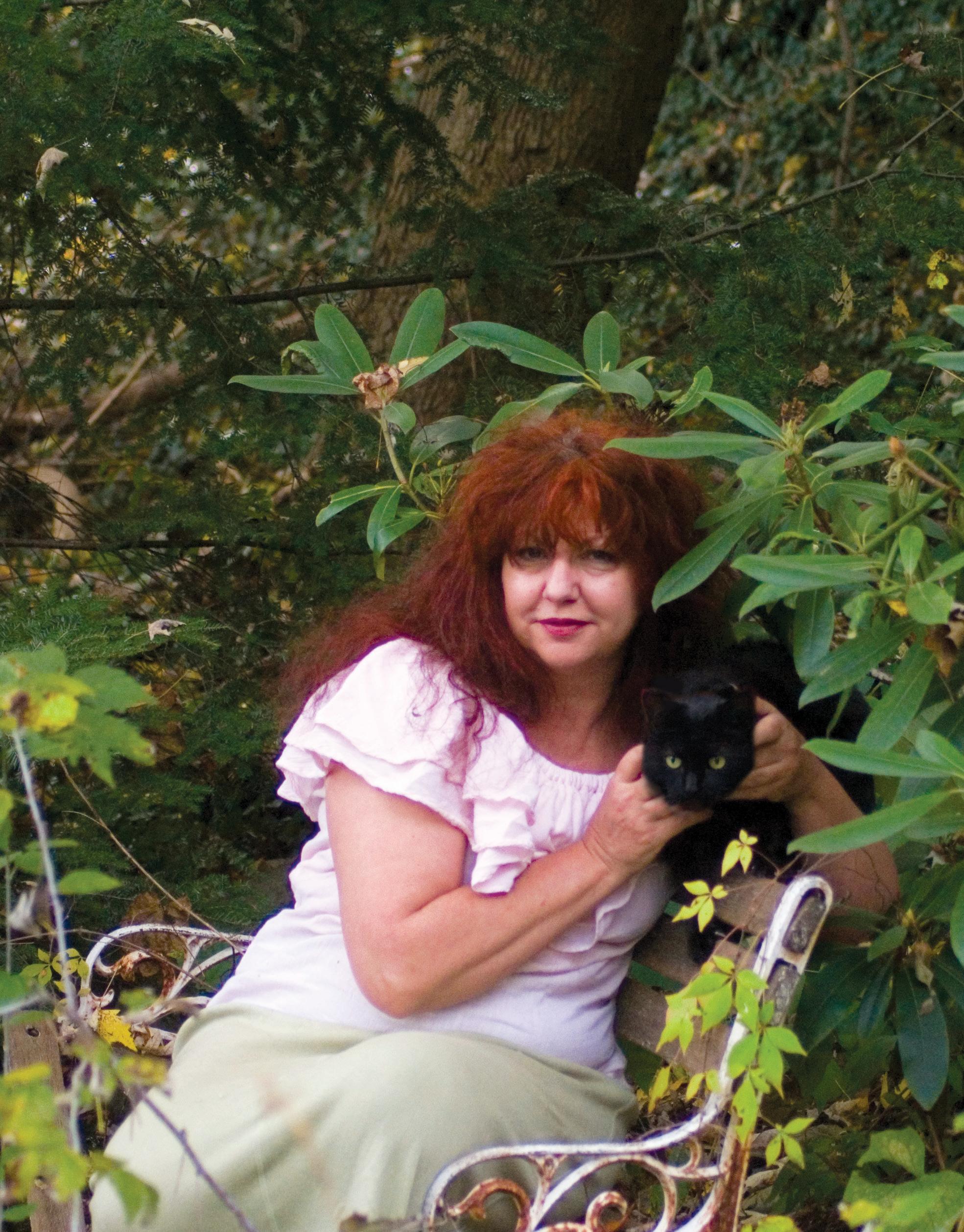
By Bernadette Kazmarski
Over the past several decades our pets have moved from being just “an animal that” shared our space without the intellect, emotion or response of humans to being “a companion who” responds in meaningful emotional and behavioral ways different from us but just as critical to their well-being. At the same time our study and understanding of their health has increased far beyond everyday care, given them more years of healthy life, and included us, their caretakers, in their caregiving.
Every positive opportunity introduces its burden of decision, though. Just because we can, should we? Can I do this? Am I able to treat them in the way that’s recommended? Emotionally? Financially? Would they change toward me because of this care? Does my animal companion really want this? Or is it just me?
Our experiences with human caregiving
While humans have faced these questions through the ages with human family with chronic or terminal illnesses, disabilities and mental health conditions, the advantages of modern medicine have made caregiving more effective but more complicated and the long-term physical and emotional toll is well documented.
Caregiving for our animal companions, downsides and upsides
I recently read an article by Zazie Todd, PhD, in her column “Fellow Creatures” in Psychology Today in which she discusses that while we extol the benefits of pets in our lives their presence also has downsides. Caregiving for our animal companions during chronic or terminal illnesses or behavioral issues can result in difficult financial decisions, time and social constraints,
and effects on our own health through stress, anxiety, and depression. We may also develop feelings of guilt and anger, all with little support available.
Yet studies show a positive side in pet caregiving compared to human caregiving that “finding meaning in the situation, feeling needed, and feeling confident and competent...were greater for companion animal carers.”
Caretaking can be especially difficult for cats
Todd is author of Purr: The Science of Making Your Cat Happy, and responded in an email, “Caring for a cat with a health or behavior issue can be really hard. It’s not just your own feelings of stress and worry about your pet, but also the very real aspects of finding time to take your cat to the vet (and the struggles of getting them there) and the financial aspects of affording care.”
She continued, “In some people, this can become caregiver burden, just like what can happen to someone who is caring for another person. It can be even more difficult if people say, ‘it’s just a cat,’ because they don’t understand. Luckily these days there is more awareness of the importance of the human-cat bond, but it’s a reminder to take care of yourself in order to take good care of your cat.”
Personal experience with caregiving
I have given care to human family members, but not to the extent of my feline family of rescues and fosters over the decades, sometimes more than one cat, all with different needs, simultaneously. One of my first veterinarians taught me the basics and supported me ongoing.
Being hands-on with an emergency, chronic or
terminal illness, knowing she was available, made me feel empowered, confident I understood the condition and the treatments, that I could give them in a timely way when symptoms changed or know it was time for emergency care, and that my cat was maybe not happy for the treatment but comfortable with me. When the inevitable loss would come there were always doubts and questions, but overall I would feel I had done all I could and that the time was right.
But caregiving was also stressful and frightening. The amount of time we spend can make us feel isolated as our lives focus on caring for our animal companion even though we love them deeply. It may require expenses we don’t have leading to difficult decisions and guilt and pain. All this can result in physical and mental health consequences. During a recent series of losses my morning blood pressure readings, even with medication, could be pretty scary and once sent me to urgent care.
The psychology of caregiving
“Caregiving is so much more than the things you actually do for your pet. It’s the constant monitoring of how they’re doing, making sure you’re keeping what they need on the proper schedule, even when that means curtailing or missing out on some things for yourself,” said retired LCSW, Elizabeth Babcock. She has some specialty in pet loss issues and is also a friend who I met through a Pet Memorial Sunday ceremony where she presented on the nature of grief.
Also a serial adopter of rescued felines and even a horse, she added, “How they’re doing becomes the mental backdrop for everything else you do and how you organize your own time. Then there is the mission creep of whatever treatment
you started with, then periodically having to add some new medication, or an additional dose, to where coordinating it all ends up taking much more bandwidth than you may have expected, and the caregiving itself can grow to occupy much more of your time as your pet’s needs evolve.
She added, “It’s so much more complex and demanding than it appears at first glance. I think few people realize how fully they have dedicated themselves to it until afterward, when they realize the many things they no longer have to do or think about, all combined with grieving the companion they loved enough to do all of that for.”
Ease your caregiver burden
Build a support network, from professionals like your veterinarian who can answer specific questions to friends you can message with your feelings in the moment, and try to keep yourself from becoming isolated.
And just take time to love your companion aside from all the treatments.
RESOURCES
Zazie Todd, PhD, https://www.companionanimalpsychology.com/ Managing Caregiver Burden for People with Pets, Zazie Todd, PhD
New PAD STANDARD Veterinary Tele-Health Plan Is Only $19.95 A Month Ends Needless After-Hours Trips to ER – and Related Stress, Wait Times & Costs
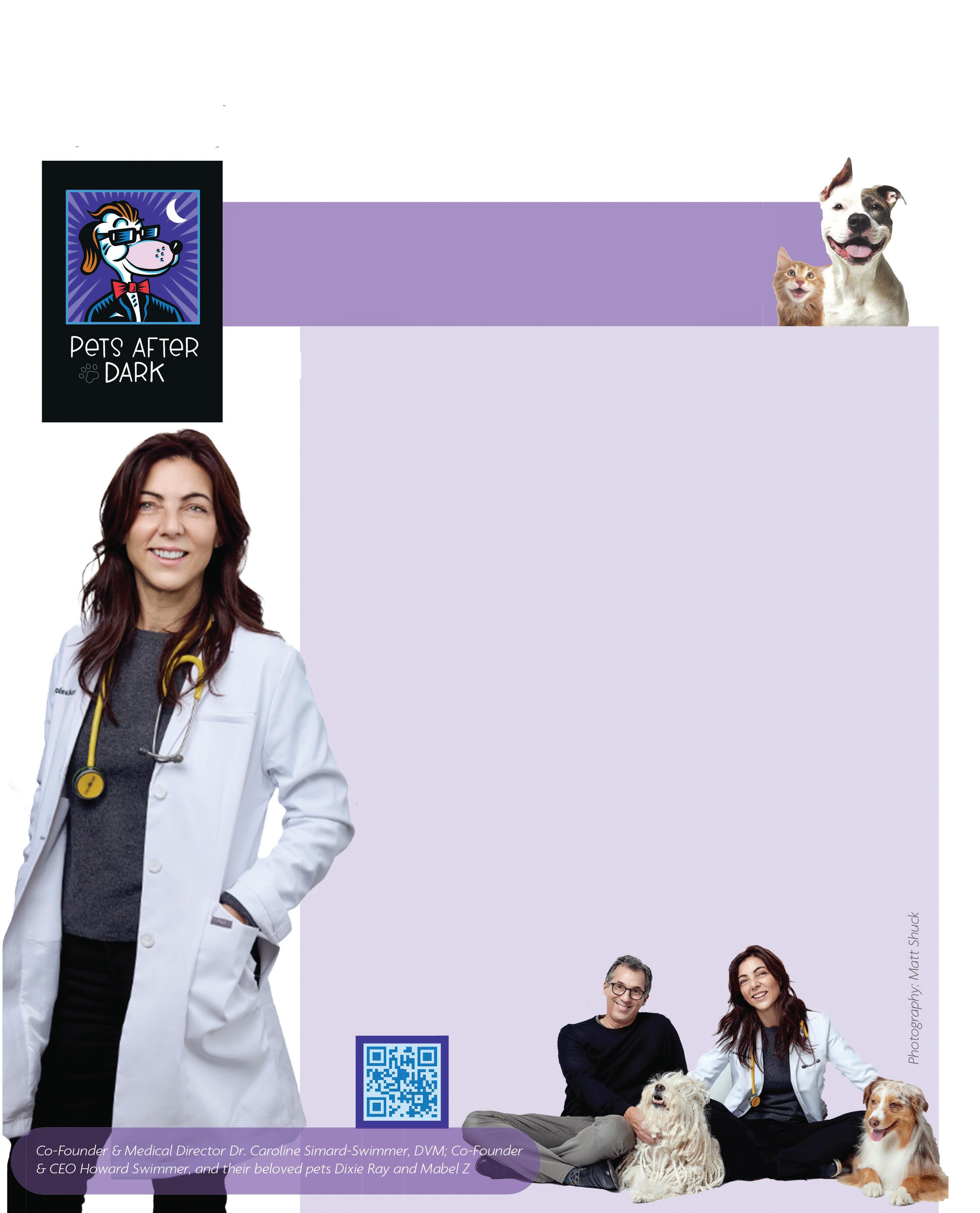
PETS AFTER DARK, the after-hours veterinary tele-health service that provides pet parents with expert answers and care recommendations during weeknights and weekends, announced the launch of PAD STANDARD, a breakthrough new subscription plan that makes expert after-hours veterinary care instantly available for only $19.95 a month. PAD Standard provides tele-health consultations Monday–Friday 7 PM–Midnight and during weekends 8 AM–Midnight.
How It Works: A PAD Standard subscription provides immediate after-hours connection to an expert Pets After Dark veterinarian, including video call and chat/SMS consultation options, and a consultation summary report for you and your regular veterinarian. Subscribers can add additional household pets for only $5 per pet, per month, up to three pets.
“No more needless visits to emergency clinics during weeknights and weekends,” said Pets After Dark CEO Howard Swimmer. “PAD Standard make expert after-hours veterinary tele-health more accessible to more people than ever before. At only $19.95 a month, it’s an easy, affordable way for pet parents to get expert answers to pet care issues and gain a powerful new sense of control and peace of mind.”
Expert studies show that up to 70-percent of veterinary emergency clinic visits are unnecessary or avoidable, and that the pet care issue at hand can be handled with a visit to your regular veterinarian during regular business hours – without the stress, wait times and high costs of a visit to a veterinary emergency clinic.
“Many pet parents default to an emergency clinic visit because it’s after-hours, they need answers and they feel they have no other choice,” said Pets After Dark Medical Director Dr. Caroline Simard-Swimmer, DVM. “Our PAD Standard plan gives them an easily affordable alternative.”
Visit WWW.MYPETSAFTERDARK.COM and subscribe to PAD Standard today.
HUMAN ANIMAL BOND
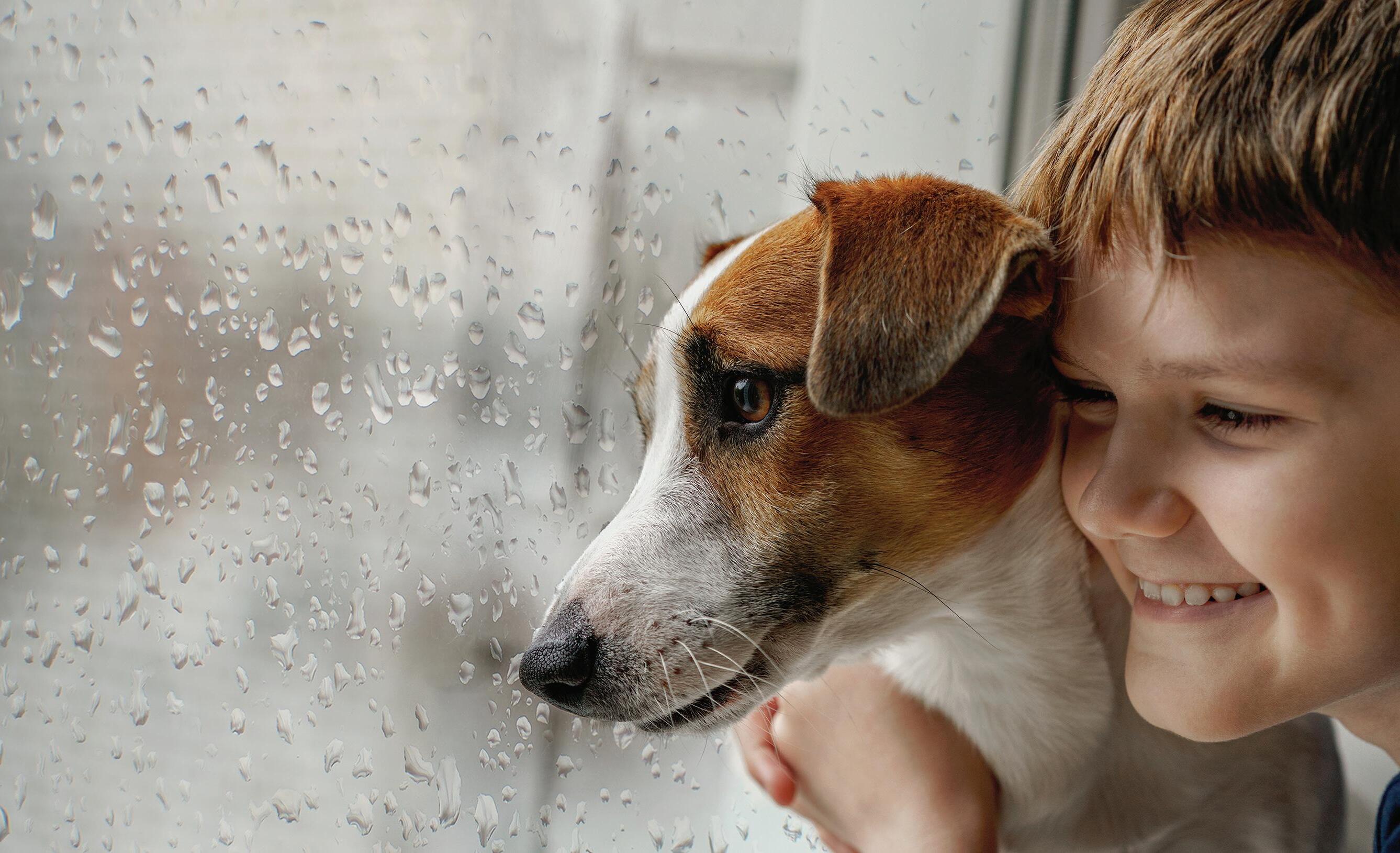
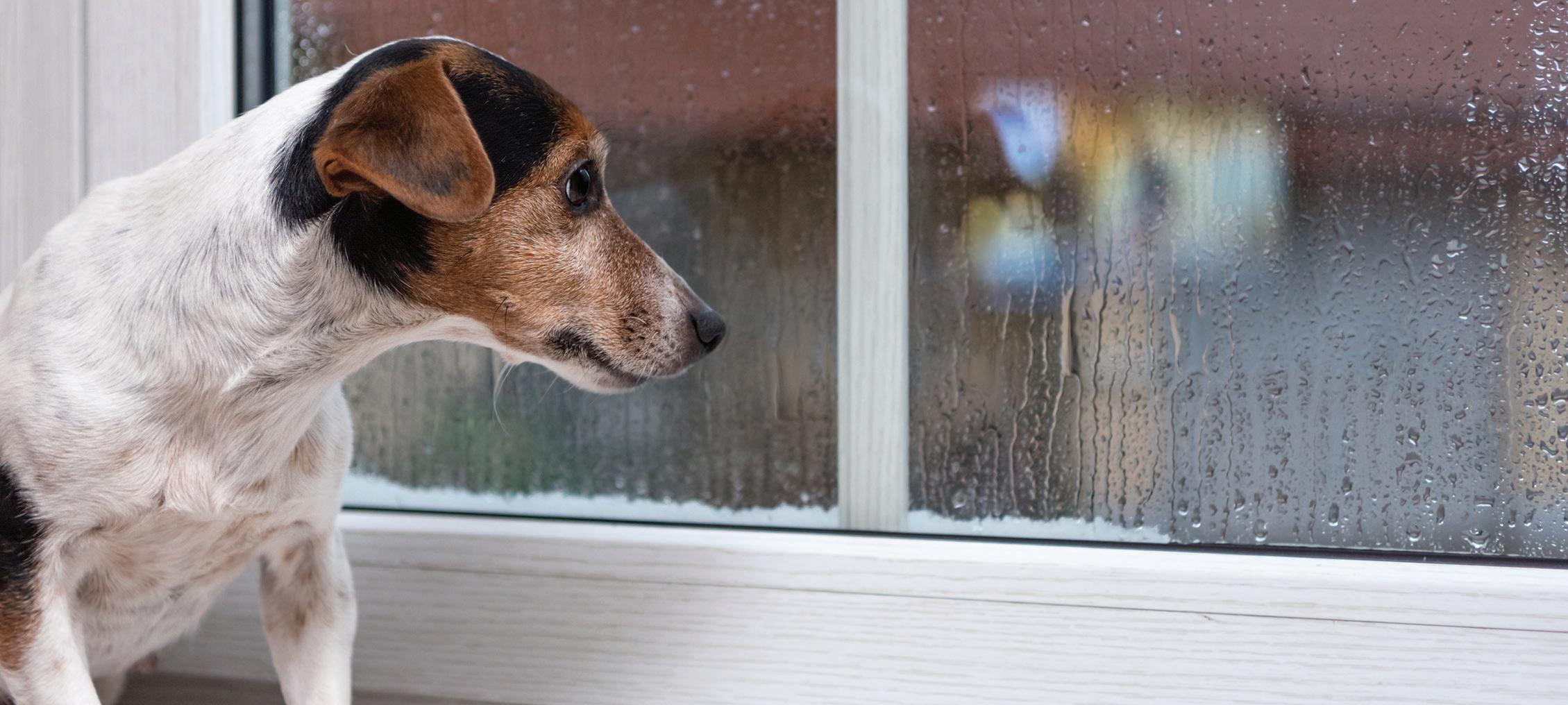
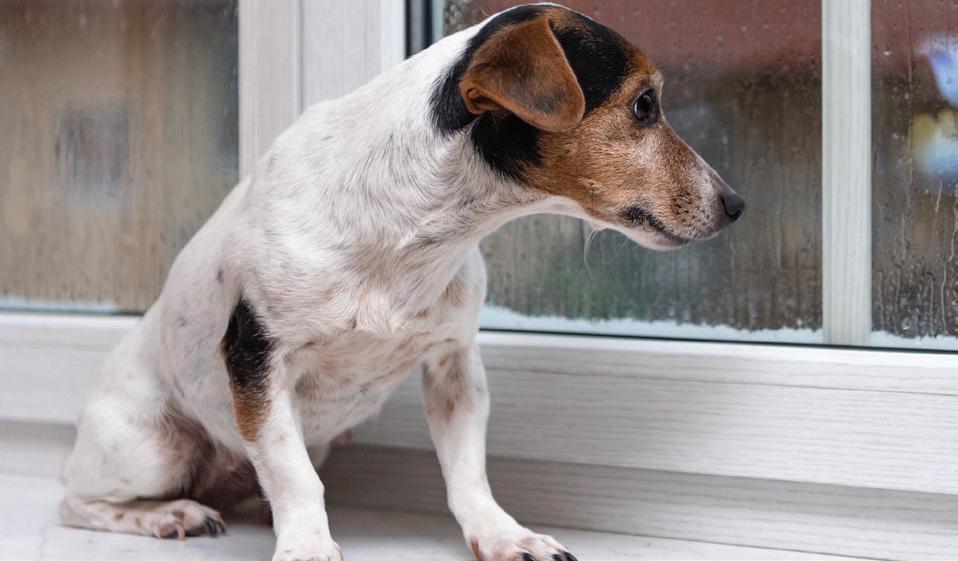
Why Does My Dog Hate Walking in the Rain?
By April Minech
If you’ve ever struggled to take your dog out for a walk in the rain, you’re not alone. Many dogs suddenly refuse to move, plant their feet, or run back into the house (like you’ve lost your mind!) And it’s not just Chihuahuas.
It’s easy to assume our dogs are being stubborn or dramatic. We often tell ourselves, “He just doesn’t like getting wet.” While that might be part of it, there’s usually much more going on.
Dogs experience the world very differently than we do. Their main concern is feeling safe, and they rely heavily on their senses to decide whether a situation feels familiar or worrying. When it rains, the world changes in ways that can be deeply uncomfortable—or even overwhelming—for some dogs.
Modern life is already full of confusing sights, sounds, and smells for dogs, especially those living in busy towns or cities. Traffic noise, machinery, crowds, and unfamiliar environments all take a toll. Rain adds another layer of unpredictability, and for sensitive dogs, that can be the tipping point.
Dogs don’t understand rain. They just experience it.
We know rain is temporary. Dogs don’t. When it’s raining heavily, your puppy may refuse to go outside to the yard to potty yet still trot eagerly to the front door when you pick up the lead—only to freeze when they realize it’s just as wet out there. That disappointment is very real.
Rain doesn’t just make dogs wet. It changes how the entire world feels to them. To understand why some dogs struggle so much, it helps to look at how rain affects their senses.
Smell
Smell is a dog’s strongest sense, and rain completely transforms it. Familiar scents are washed away or diluted, while new, stronger smells suddenly appear. Rainwater carries scents from drains, soil, plants, and hedges into places they wouldn’t normally be. Some dogs love this—it’s exciting and interesting. For others, especially more sensitive dogs, it’s unsettling. Walks that once felt familiar suddenly smell strange, which can make dogs feel unsure and unsafe.
Hearing
Dogs are very tuned in to sound, and rain changes how everything sounds. The steady noise of rainfall can block out quieter sounds your dog usually relies on, like footsteps or distant movement. At the same time, traffic sounds are louder on wet roads and can feel unpredictable. For dogs that are sensitive to noise, this can lead to anxiety and constant alertness. They may struggle to relax or feel comfortable while walking in the rain.
Touch
Rain also affects how things feel on the body. Raindrops hitting the face, eyes, and ears can be irritating or startling. While coats can help keep the body dry and warm, they don’t protect the head—and some dogs dislike wearing them altogether. There’s no right or wrong here. Some dogs feel much better in a coat; others find it adds to their stress. What matters most is how your dog feels.
Sight
Dogs don’t rely on vision as much as we do, but it still matters. Rainy days reduce contrast and make movement harder to see clearly. Wet roads and pavements reflect light, especially from car headlights, and raindrops, puddles, and dripping trees create a visually busy environment. All of this can make the world feel confusing and uncomfortable for some dogs.
Taste
Taste is closely linked to smell for dogs. Many dogs lick interesting scents to gather more information, but rain changes how smells behave. Wet scents may already be intensified or diluted, altering how dogs experience them.
Balance
Wet conditions can make dogs feel physically unsteady. Muddy grass, slippery pavements, and uneven ground feel very different underfoot. Dogs that already lack confidence—or older dogs—may worry about slipping, which can quickly reduce their willingness to walk. If your dog hesitates or slows down in the rain, it may be because they don’t feel secure on their feet.
Temperature
Most dogs, like most people, associate warmth with comfort. Wet fur makes dogs feel colder much faster, especially those who are short-haired, lean, elderly, or living with conditions like arthritis. A well-fitting coat can help if your dog is happy wearing one. After any wet walk, drying your dog thoroughly
and keeping them warm is important, as dampness continues to affect how cold they feel.
Pain
Cold, damp weather can worsen joint pain and stiffness. Dogs who are already uncomfortable are generally less able to cope with extra challenges. A dog who manages fine on a dry day may really struggle when it’s cold and wet. It’s worth remembering that dogs don’t need to go out in weather that causes them pain or distress. There are plenty of ways to meet their physical and mental needs indoors when necessary.
Time
Dogs have a strong sense of routine. While there’s no scientific explanation for this, many dogs seem to experience rainy walks as longer or more tiring—much like we do. If you’re out there wishing the walk were over, your dog may feel the same.
Every Dog Is Different
Some dogs love rainy walks. They enjoy the new smells, the puddles, and the novelty. Others find rain overwhelming—too many new sensations, too much noise, too much uncertainty, all at once.
If your dog struggles in the rain, it isn’t laziness or bad behavior. It’s communication.
Listening to your dog doesn’t mean avoiding walks forever. It might mean shorter outings, choosing quieter routes, using a coat if your dog is comfortable, or replacing a walk with indoor enrichment on particularly bad days.
When we understand how rain feels from our dog’s point of view, it becomes easier to respond with empathy rather than frustration. Sometimes, the kindest choice is simply to adapt—and that’s part of being a good pet owner.
Read more in depth on this topic with the article “Walking Dogs in the Rain – Why Some Dogs Need More Help” by Alison Campbell at customcaninecare.co.uk
Home Is Where They Are— Make the Move Easier on Your Pet
Moving is exciting — but for pets, it can feel confusing and overwhelming. At Animal Friends, we know thoughtful preparation makes all the difference — and working with a real estate professional who understands that pets are family can help ensure a smoother transition.
A little planning goes a long way in helping your four-legged family members feel comfortable in their new home.
Keep routines consistent. Feeding times, walks and bedtime rituals provide stability and reduce anxiety.
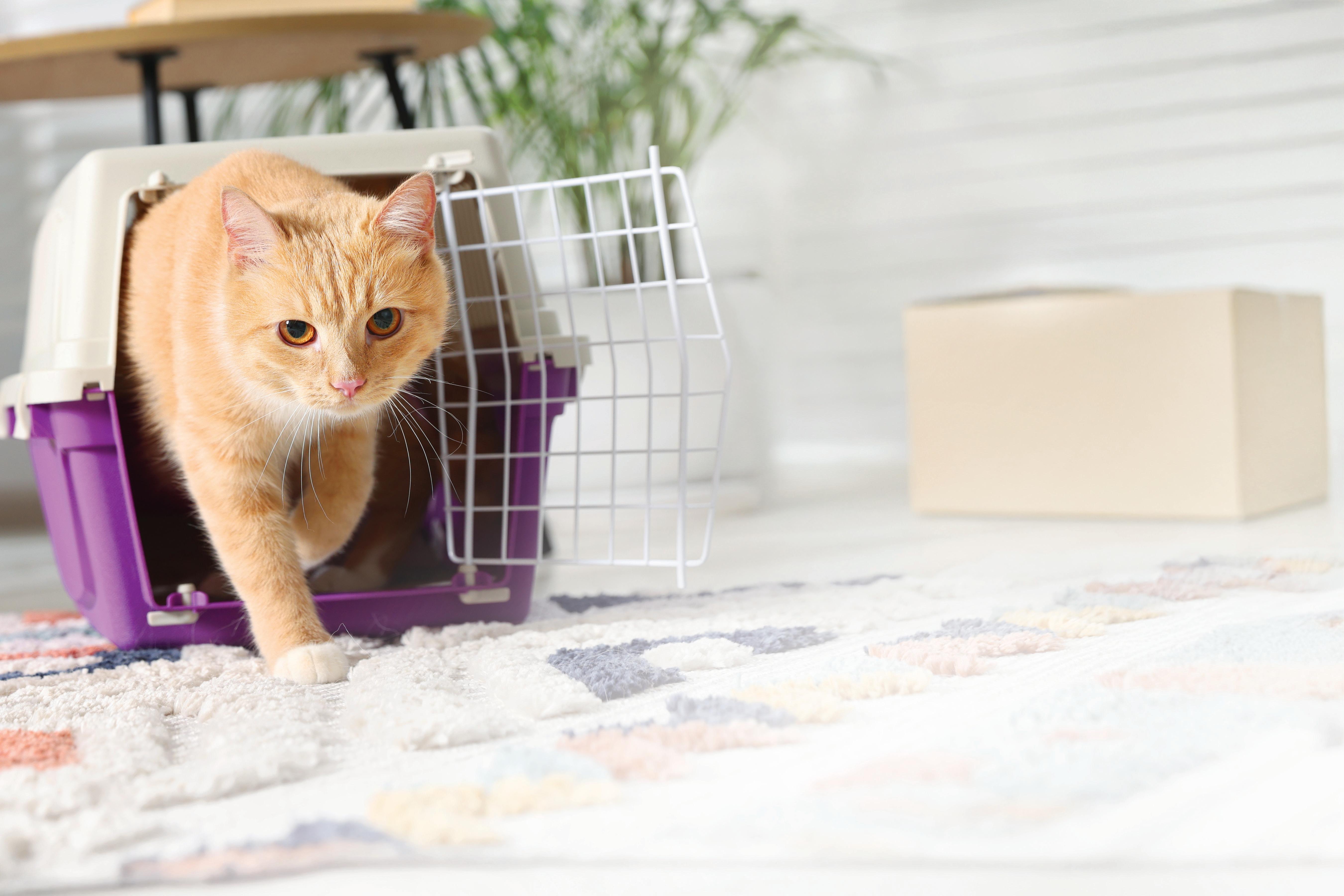
Make carriers familiar — not frightening. Leave them out before moving day with treats, blankets and toys so they feel like safe spaces.
Update identification. Ensure ID tags and microchip information reflect your new address and phone number. During the first few weeks, pets may slip out while adjusting — and clear identification helps them return home quickly.
Introduce packing gradually. Bring boxes out early so they’re not a sudden disruption.
Pack a “first night” kit. Include food, bowls, leash, litter, bed and medications so comfort items are immediately available.
Help them adjust to their new territory. Walk dogs around the neighborhood early. Indoors, allow pets to explore one room at a time rather than overwhelming them.
Some hiding, pacing or accidents are normal and temporary. Stick to routines, offer reassurance and give them time to settle in.
Choose a REALTOR® Who Understands Pets
Work with a REALTOR® who is comfortable around your animals and mindful of their needs during showings. A knowledgeable partner can advise you on pet guidelines for townhouses, condos and HOA communities, local leash and cleanup laws, help you locate a veterinarian and offer guidance for managing pets during home tours.
Love Moves In When You Adopt
At Animal Friends, our animal care and behavior experts support pet families through every life transition — including moves. And if your new home is ready for a new companion, visit our website to fill out an application and see all of our adoptable dogs, cats and rabbits who are waiting to find their new place too.
Because no matter the address, what truly makes a house a home… is them.
This message brought to you by
A Summer Full of Paws, Claws & Big Discoveries!
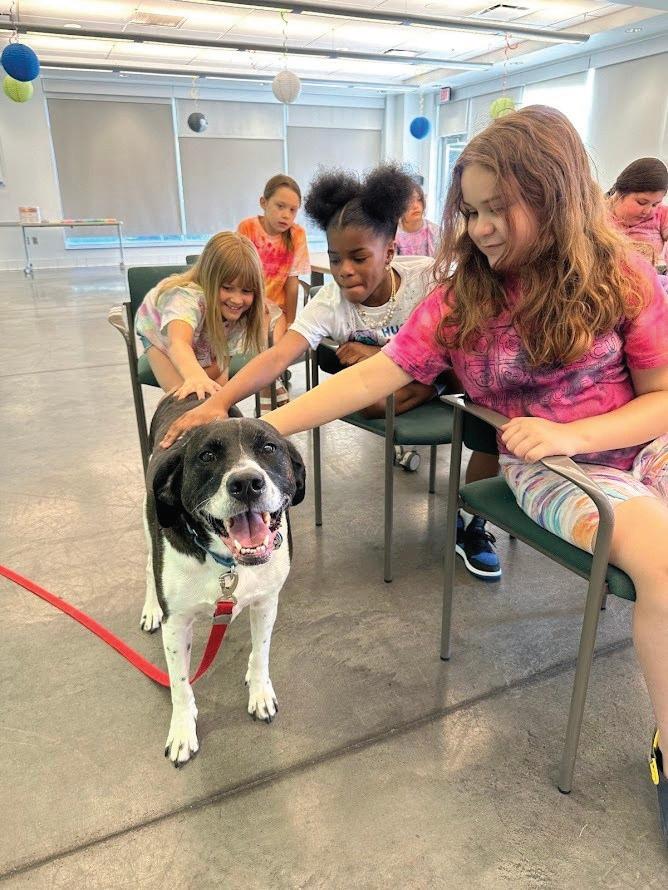
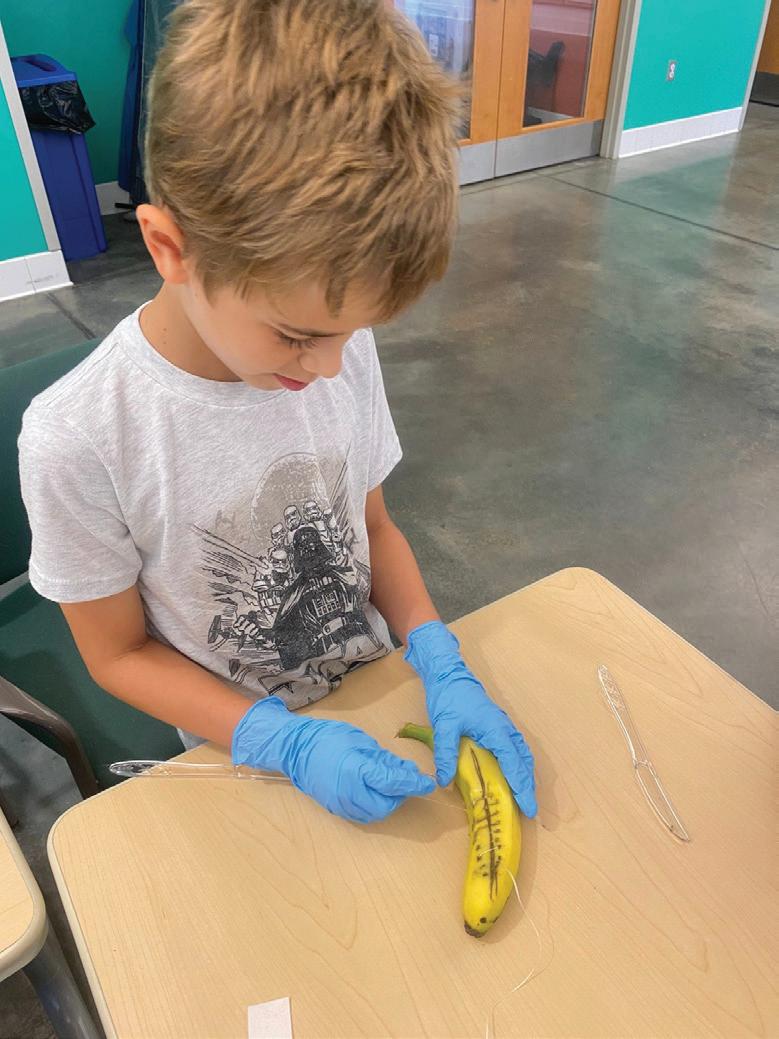
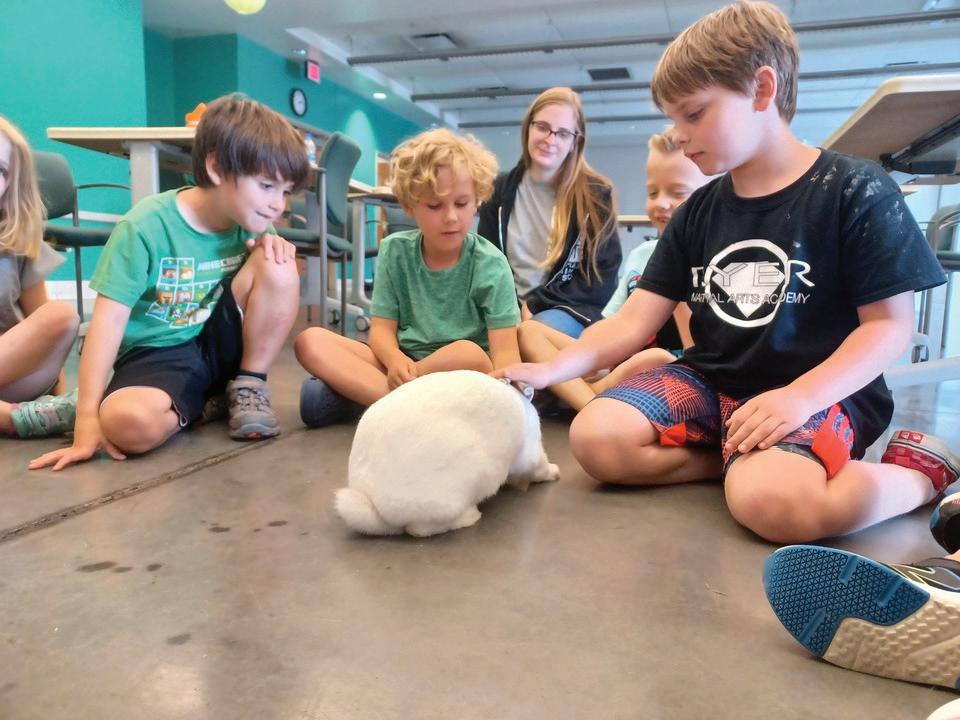
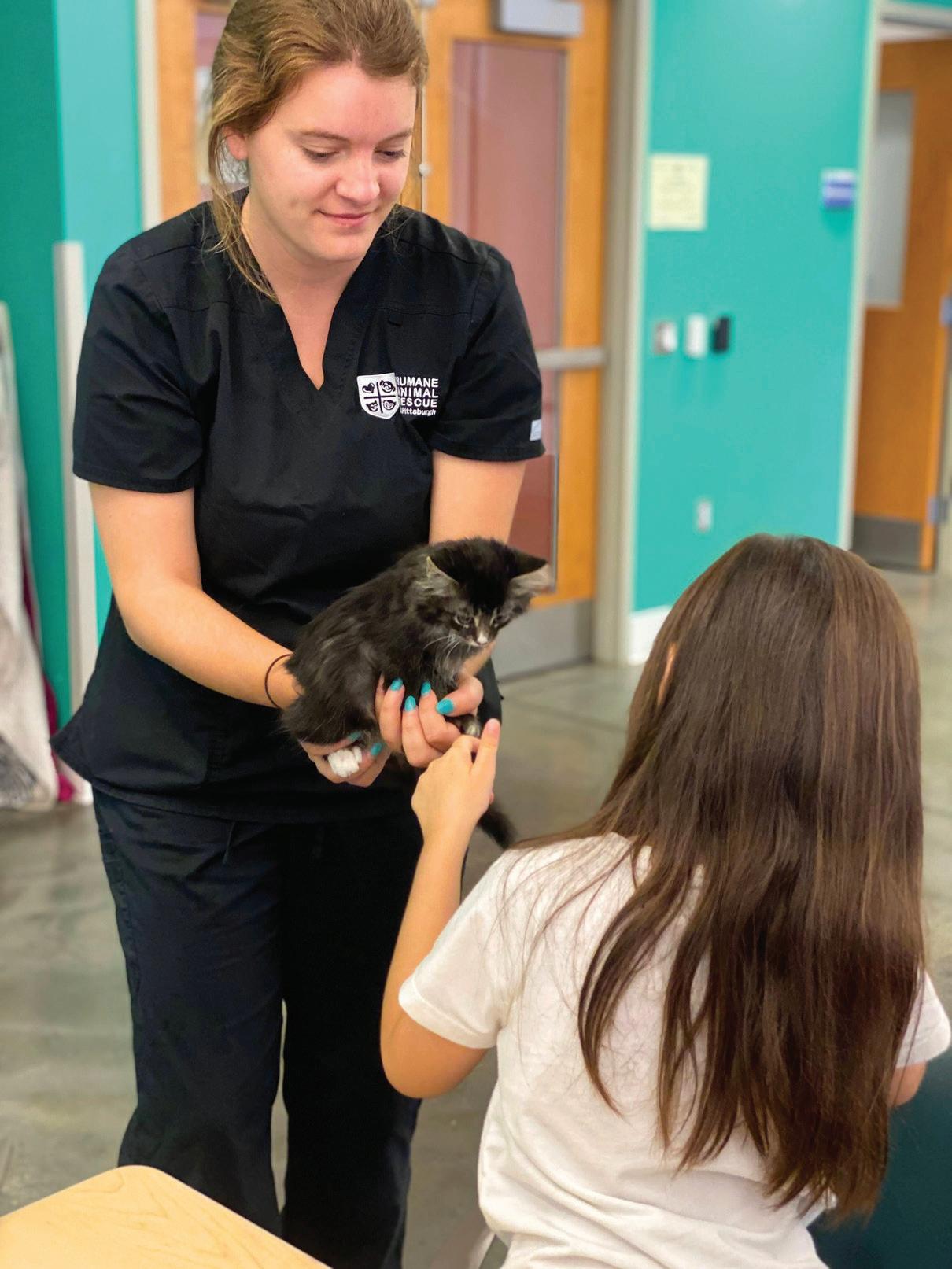
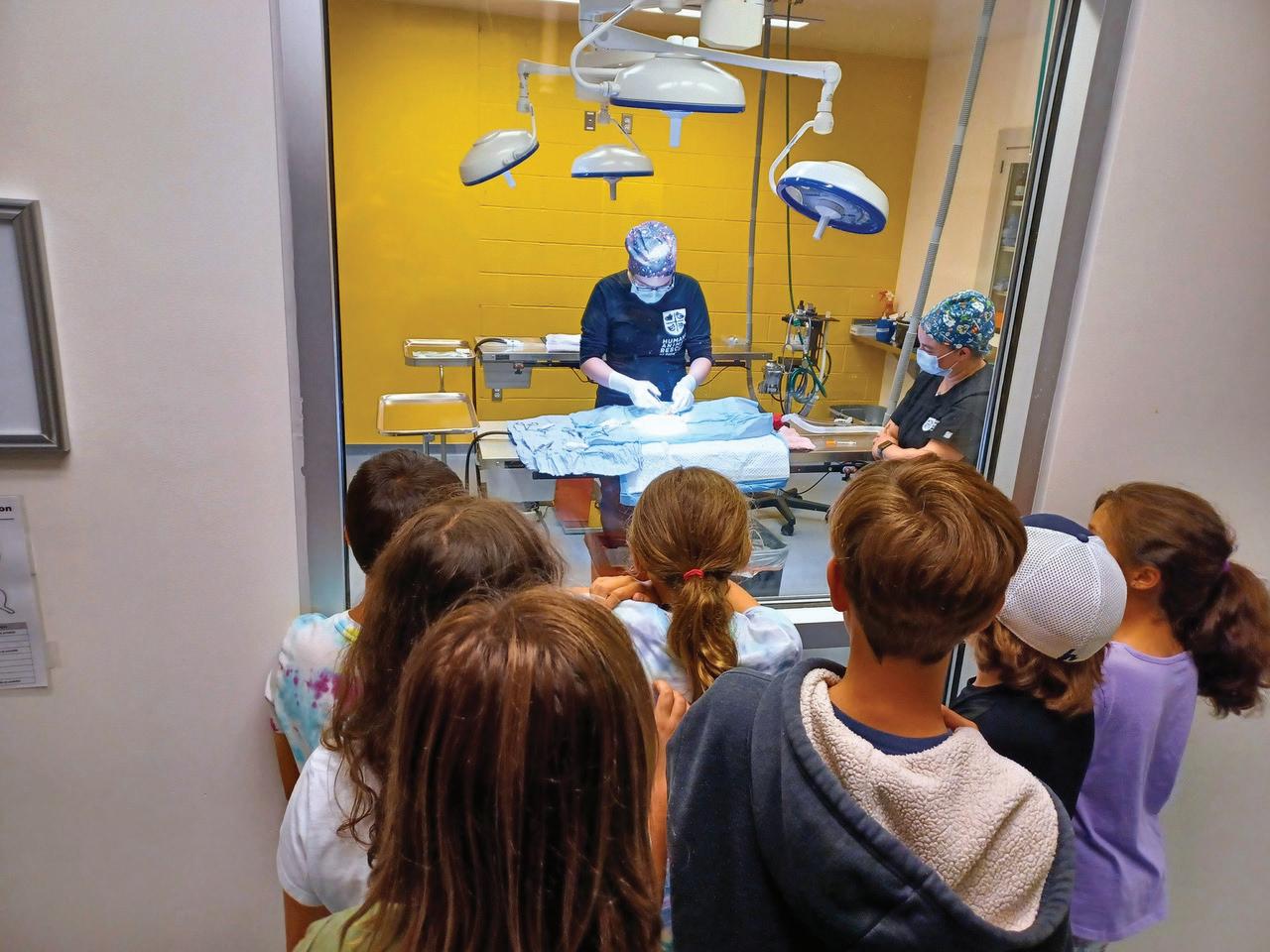
Looking for a summer camp your animal-loving child will never stop talking about? Humane Animal Rescue of Pittsburgh (HARP) is back with Camp Rescue (voted “Best Camp for Kids” in City Paper’s Best of Pittsburgh 2025) and a lineup of hands-on experiences that turn curiosity into compassion.
Held in person at HARP’s Wildlife Rehabilitation Center and domestic animal shelter, these unique summer camps welcome campers in grades 1–12 for a season packed with learning, laughter, and unforgettable animal encounters.
Camp Rescue
Campers Entering Grades 1–8
If your child loves animals, getting a little messy, and asking a lot of questions, this is their camp.
At Camp Rescue, young animal lovers spend their days surrounded by wagging tails, curious critters, and hands-on fun. Each week is filled with themed lessons, games, crafts, and select animal guests that bring the world of animal rescue to life.
Camps run Monday through Friday, 9:00 a.m.–3:00 p.m., with sessions designed for 1st–2nd, 3rd–4th, 5th–6th, and 7th–8th graders (based on the grade campers will enter in Fall 2026).
Junior Rehabber Corps (JRC) Teens Entering Grades 9–12
Teens ready to take their love of animals to the next level can join Junior Rehabber Corps,
Junior Rehabber Corps, is an immersive careerexploration program focused on wildlife rehabilitation, conservation, and animal care pathways.
Through expert-led lessons, guest speakers, animal ambassador encounters, and hands-on activities at HARP’s Wildlife Rehabilitation Center, teens gain real-world insight into what it takes to care for animals professionally.
Whether your child is discovering animals for the first time or dreaming about a career working with them, HARP’s summer camps offer something truly special: real experiences, meaningful learning, and memories that last a lifetime.
Registration is now open. Limited scholarships are available.
Scan to learn more, or visit HumaneAnimalRescue.org/camprescue26
Ad Locator Map
ANIMAL FRIENDS ad on page 8-9 / map A
ASGARD RAW PET FOOD ad on page 3 / map B
BARTMAN PLUMBING ad on page 25 / map C
BEAVER COUNTY HUMAN SOCIETY ad on page 11 / map D
CHARTIERS CUSTOM PET CREMATION ad on page 28 / map E
CHEYENNE VETERINARY WELLNESS & SURGICAL CENTER ad on page 15 / map F
COVENTRY STABLES ad on page 24/ map G
DENISE MARASCO HOWARD HANNA ad on page 15 / map H
GRIN RESCUE ad on page 15
HUMANE ANIMAL RESCUE ad on page 12-13 / map J
LARRY’S LAUNDROMUTT ad on page 15 / map K
PETS AFTER DARK ad on page 5 / map L
PORTRAITS OF ANIMALS ad on page 24
REBOUND PET REHABILITATION ad on page 3 / map M
UPSWING CANINE BEHAVIORAL SERVICES ad on page 25
DID YOU KNOW?
PetConnections has evolved into a full-service specialized pet media company, providing services for advertising in print and digital marketing platforms to help our sponsors grow their businesses.
Contact us for information on advertising or sponsoring! PetConnections is published quarterly as follows: March, June, September, and special Holiday issue in early December!
Our print copy distribution sites will be replenished every 6 weeks.
Our online presence has always been much greater than in print with now over a million impressions!
To subscribe to your own personal copy of PetConnections, please contact us.
stress, or energy level. The dog does not have access to that context; they only have access to what changes the environment. So, they negotiate by jumping. They watch your reaction and try it again later. If more intensity worked even once, they’ll try more intensity again. Not because they are dominant or challenging your authority, but because in their learning history, higher energy occasionally got a better response.
When people tell me their dog behaves beautifully in class but can’t do anything at home, I rarely see a memory issue. In structured environments, the terms are usually clear. Four paws on the floor always earns attention. Jumping does not. The outcome is pretty consistent and the dog doesn’t have to guess.
Meanwhile, at home, the outcome depends on whether someone is late, distracted, exhausted, entertained, or overwhelmed. Sitting politely works sometimes. Jumping works sometimes. Barking works sometimes. Persistence becomes logical for the dog to meet their social needs.
This is where the idea of disobedience falls apart. Disobedience implies a clear rule and a conscious decision to violate it. Most household rules are absolutely not clear for our pet dogs. They are flexible, emotional, and situational. Dogs are navigating constantly shifting social agreements.
something, then they observe the results; they then adjust as needed.
When behavior escalates, it often means the dog has discovered that stronger effort occasionally produces faster results. Louder barking. Harder jumping. More insistent pulling. The dog is not becoming worse; the dog is becoming more efficient at getting the need met.
Once you see behavior through that lens, the emotional charge changes. It stops being about respect. It stops being about whether your dog is blowing you off or not being accountable. It becomes about clarity. What has your dog learned works here? If jumping truly never produces the reaction they seek and calm feet on the floor consistently does, jumping fades. Not magically and definitely not overnight. But if sometimes it still works, it will not disappear.
Dogs do not stop negotiating because we are frustrated. They stop negotiating when the terms are obvious. Your dog is not plotting against you. They are navigating a system of consequences in the only way they know how. They try
When we realize that we are not fighting disobedience but shaping a contract, everything should shift. We can then stop asking why our dog is being bad and we start asking what behavior is being
reinforced, intentionally or not. When the contract becomes consistent and there is real clarity, the negotiation settles down. Not because the dog has been forced to comply, but because the expectations are finally clear.
PET RESOURCE DIRECTORY
ANIMAL EDUCATIONAL EXHIBITS
NORTH: GREATER PITTSBURGH AQUARIUM SOCIETY www.gpasi.org
THE PITTSBURGH ZOO & PPG Aquarium pittsburghzoo.org
THE NATIONAL AVIARY nationalaviary.org
ANIMAL-RELATED WRT, PHOTOGRAPHY & RETAIL
APRIL MINECH CUSTOM PORTRAITS /PET INSPIRED ART www.ladybugdelightz.etsy.com
PITTSBURGH VETERINARY SPECIALTY AND EMERGENCY CENTER, INC. 412-366-3400 724-809-2000 pvs-ec.com
BLUE PEARL PET HOSPITAL NORTH 412-366-3400
BLUEPEARL PET HOSPITAL SOUTH 724-366-3400
BLUEPEARL PET HOSPITAL EAST 412-810-6732
GREATER PITTSBURGH AREA: PETS AFTER DARK mypetafterdark.com 855-AFTRDRK (238-7375)
A Cat-Safe EasterHOW TO SPOT THE HIDDEN HAZARDS
Becky Morrow, DVM, MS, CAWA
Easter is one of the most cheerful holidays of the year with its pastel colors, spring flowers, and baskets that turn the home into a celebration. Between family visits, egg hunts, and sweet treats, there’s a lot happening and cats love being in the middle of it all. A few small precautions can help your cat stay safe while you enjoy every tradition that makes the day special.
If there is one Easter hazard that every cat owner absolutely must know, it’s this: Easter lilies are rapidly and often fatally toxic to cats. This is not a “they might feel a little sick” situation, it’s a life-or-death emergency. Every part of the Easter lily plant, including the petals, leaves, stems, and pollen, is toxic. Even a small taste of a true lily (including daylilies, tiger lilies, and Asiatic lilies), or exposure to pollen that gets on the coat and is licked off during grooming, can cause irreversible kidney damage. The earliest signs can be deceptively subtle, with vomiting, lethargy, and loss of appetite appearing within the first few hours. It may feel tempting to “wait and see,” but with lilies, time is everything. If there is even a possibility of exposure, immediate veterinary care is essential, and early treatment (including decontamination when appropriate) offers the best chance for survival. The safest course of action is simple: if you have cats, do not bring lilies into your home.
Another hazard can come in the form of Easter grass. Cats are naturally drawn to stringy, ribbon-like, crinkly items. So, when a basket lined with bright plastic or foil Easter grass sits on the floor or table, it can be an irresistible invitation. The problem is that when cats chew on long, string-like objects, the material can easily catch on the tiny backward-facing barbs on their tongue. That rough tongue is perfect for grooming, but it can also help guide a linear object straight
down the throat. From there, one end may ecome anchored under the tongue or at the entrance to the stomach, while the intestines continue their normal wave-like contractions and begin to gather along the string like an accordion.
The result can be intestinal bunching, tearing, and potentially life-threatening perforation. If intestinal contents leak into the abdominal cavity, the outcome can be a severe infection called peritonitis, which can become fatal without rapid treatment. Warning signs include vomiting (especially repeated vomiting that won’t stop), lethargy, loss of appetite, a hunched posture, snd abdominal pain. If you ever see a piece of string, grass, or ribbon hanging from your cat’s mouth or protruding from their rear end, do not pull it - it can cause serious internal damage.
Call your veterinarian, instead.
Although not specific to Easter, spring cleaning and decorating often introduce scented candles, reed diffusers, and essential oils into the home. Cats can be especially sensitive to concentrated fragrances and airborne compounds because they metabolize certain substances differently than people and even dogs. Exposure can occur through inhalation, and also when microscopic droplets from diffusers settle on the coat and are later ingested during grooming. If you choose to use a diffuser, keep the space well-ventilated, place the device securely out of reach to prevent spills, and follow an “open door” policy so your cat can leave the area if the scent is too strong. Watch for signs such as drooling, coughing, wobbling, vomiting, or labored breathing, and contact a veterinarian promptly if they occur.
Easter can still be magical and fun without putting your cat at risk. A little prevention can mean the difference between a happy holiday and a life-threatening emergency. Let’s keep the only surprises this Easter the happy kind.
Frankie’s Friends
740 5th Avenue, New Kensington, PA 15068 (724) 889-7011 clinic@frankies-friends.org
Spay/neuter for pet/feral cats
Spay-$80, Neuter-$70 includes Rabies Vaccination, Pain Medication, Advantage II Flea Treatment, Ivermectin Ear Mite Treatment, Antibiotic Injection Feral cat spay/neuter walk-ins— check for availability No appointment needed, one per person, cat must be in a trap. Monday-Wednesday Drop-off 9:30-10:00a.m.
Spay-$75, Neuter-$65 Includes rabies, flea treatment, ear mites if necessary. Other services and dog services also available.
For clinics in Ellwood City please call Wendi at 724-674-8297.
North Hills Spay/Neuter Clinic and Fixin’ Wagon (mobile unit) 3967 William Flinn Hwy, Allison Park, PA 412-213-7353
Open Monday-Friday. NO WALKINS: If you have trapped a cat that you would like to bring in, you must call our clinic ahead of time for approval to be seen the same day.
Pet/TNR Spay $105, Neuter $76, visit website for details and scheduling
Also offers low cost vaccinations and basic medical treatments https://spayaz.com/locations/ pittsburgh-north-hills/
Fixin’ Wagon (mobile unit) 4284 William Flinn Hwy, Suite 103, Allison Park, PA 15101 724-201-9413
Our mobile unit travels within a 2 hour radius of Pittsburgh, PA. We also host clinics at our office in Allison Park, PA. Basic package: $100
Friendly/rescue cats: includes Rabies 1 year vaccine, FVRCP vaccine, 1 dose of flea treatment (selamectin), 1 dose of ear mite treatment, Nail Trim (if friendly/ indoors).
Feral/outdoor cats: Rabies 1 year vaccine, FVRCP vaccine, 1 dose of flea treatment (selamectin), 1 dose of ear mite treatment, Ear Tip , Complimentary dose of Profender (topical dewormer)
*In order to receive the feral package, the patient must be in a trap or transfer cage and must receive an ear tip.
Feral walk-ins: Each trapper is limited to 3 cats in traps per day. There are NO exceptions to this policy. If you are caught circumventing this system by
having other people bring your ferals, you may lose access to our feral walk-in program. There is a limit of 10 feral cats per day, per location.
To find out when we’re going to be in your area, click on a county to find available dates and scheduling information.
https://www.fixnwagn.com/ wheresthewagn
https://www.facebook.com/ fixnwagn
Penn Hills Spay/Neuter Clinic 1644 Frankstown Rd Pittsburgh, PA 15235, 422-244-1202
Open Monday-Friday. No longer offering walk-in services for ferals Pet/TNR: Spay $105, Neuter $76, visit website for details and scheduling
Also offers low cost vaccinations and basic medical treatments https://www.spayaz.com/ locations/pittsburgh-penn-hills-pa/
Spay It Forward 533 Rugh St.. Greensburg, PA 15601 https://www.spayitforwardclinic. com/feline-spay-neuter
Spay $105, Neuter $90 Friendly/rescue cats: includes surgery, pain medication, rabies & FVRCP vaccination, flea & ear mite treatment as needed. Feral/outdoor: above and profender dewormer and ear tip. Additional services available.
LOW-COST SPAY/NEUTER AND TNR ASSISTANCE ORGANIZATIONS IN ALLEGHENY AND SURROUNDING COUNTIES
These are organizations that do not have clinic services onsite but organize mobile clinics or transport to clinics.
Cat Crusaders
Alle-Kiski Valley TNR support, rescue/adoption “Cat Crusaders” on Facebook, private group, ask to join https://www.facebook.com/ groups/721970658170977
Community Cats Networking Butler County Facebook: Community Cats Networking Mobile clinics, TNR support and rescue/adoption
Fixin’ Fayette Transporting cats to Fix ‘Ur Cat for spay/neuter surgery 724-600-9570
“Fixin’ Fayette” on Facebook https://www.facebook.com/ groups/404758481158215/
Fluffy Jean Fund for Felines (Washington PA) Packages at $65 and $85 female or male. Call Faith for Available Dates and Appointments (724)941-5683 press 1 E-Mail: faith.b2@verizon.net http://fluffyjeanfund.weebly.com/
Income-based spays and neuters for dogs and cats at participating veterinarians and mobile spay/ neuter unit.
Orphans of the Storm PO Box 838, 11878 Route 85 East Kittanning, PA (724) 548-4520
https://www.orphansofthestormpa.org/spay-neuter-program Monthly clinic dates, working with local veterinarians Spay/ neuter begins at $65, prices vary by income. (Includes surgery, pain meds, rabies booster & flea treatment, if needed. Other services such as wormings offered at discounted pricing. Other services and dog services also available.
Pet Search
P.O. Box 1653 Washington, PA 15301 http://www.petsearchpa.org/ Call 774-228-7335 for clinic information
SNIPP: Spay and Neuter Indiana PA Pets Westmoreland/Indiana Counties, Alle-Kiski Valley Low cost clinics $75 for females; $65 for males, check Facebook “Snipp Indianapa” for dates and availability https://www.facebook.com/ profile.php?id=61550868595306
Spay Neuter Your Pet—SNYP 720 Atlantic Avenue, Franklin, PA 16323 814-671-9827
Stray Solutions Animal Rescue Serving Butler County 724-290-4933
Sunshine Farm Cat Rescue 125 Crolls Mill Rd., Slippery Rock, PA 16057 724-944-9822
https://sunshinefarmcatrescue.org/ Works with local shelters veterinarians to provide spay/ neuter services
Tails of Hope 2450 Hoezle Road, Hermitage, PA 16148 724-646-1540
TNR of Warren
P.O. Box 2477, Warren, OH 44484 www.tnrofwarren.org Frequent TNR and pet cat clinics, low-cost with proof and other starting at $40 feral with eartip. Find Local Low-cost Spay, Neuter and Veterinary Care on the Internet Searchable indexes by state or region
MedVet Pittsburgh Emergency Veterinary & Specialty Care 2810 Washington Rd., McMurray, PA 15317 724.717.2273 https://www.medvet.com/ location/pittsburgh/
BluePearl Pet Hospital Pittsburgh North North Hills 807 Camp Horne Rd, Pittsburgh, PA 15237 412.366.3400 https://bluepearlvet.com/hospital/ pittsburgh-north-pa/
BluePearl Pet Hospital Pittsburgh South Washington PA 1535 Washington Rd. Washington, PA 15301 724.809.2000 https://bluepearlvet.com/hospital/ washington-pa/
Veterinary Emergency Group/ VEG Pittsburgh East End 6244 Penn Ave, Pittsburgh, PA 15206 412.690.0511 https://veterinaryemergencygroup. com/locations/pittsburgh-pa/
DAYTIME AND AFTER HOURS
URGENT VETERINARY CARE
Animal Urgent Care Center 4201 Wood St #1 Wheeling, WV 26003 304.233.0002
Check website for hours. https://animalurgentcarecenter. net/
Geary Veterinary Services 308 Bessemer Road Suite 300, Mount Pleasant, PA, 15666 (724) 542-4954
Check website for hours. https://www. gearyveterinaryservices.com/
Kalyani Indiana Emergency Veterinary Hospital 1540 Indian Springs Road, Building B, Indiana, PA 15701 724 471 2575
Check website for hours. https:// kalyaniindianaemergencyvet.com/
Rivers Veterinary Urgent Care 560 McNeilly Rd, P ittsburgh PA 15226 412-998-9030
McCandless 8872 Covenant Avenue McCandless, PA 15237 412-286-2255
https://urgentvet.com/location/ mccandless-pa/
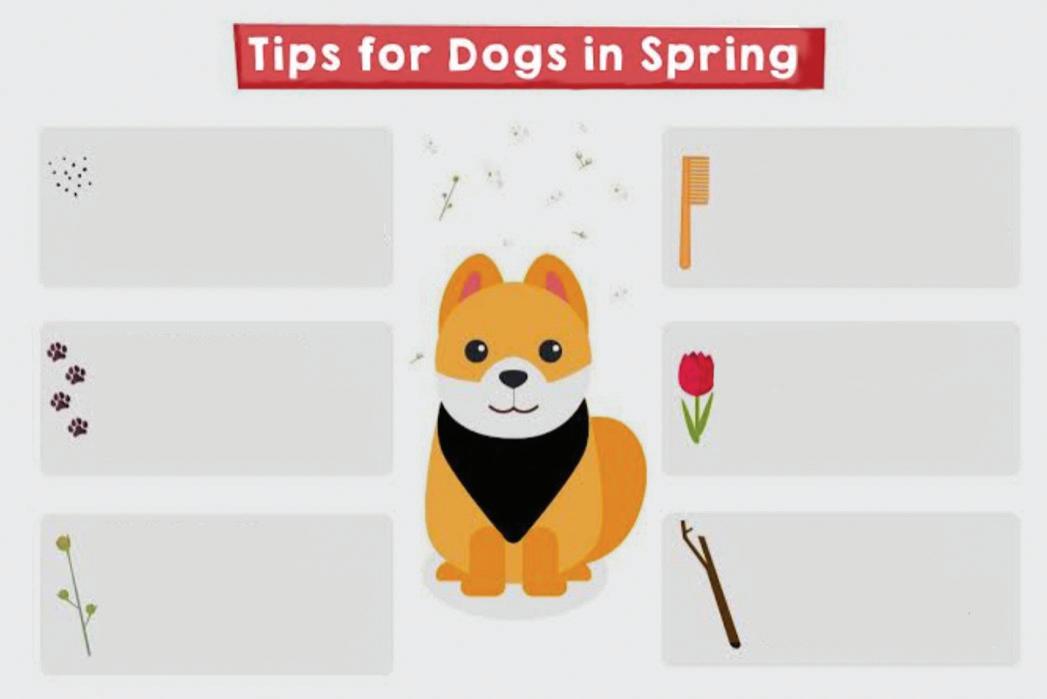
Tips for Dogs in Spring
Protect your dog from ticks and fleas
Groomers treat them with K9
Advantix that repels and kills disease-carrying fleas, ticks, and mosquitoes before they bite.
Keep your dog’s paws trimmed
On rainy days paws get muddy very often reduce the dirty feet by asking grromer for paw trimming.
Watch for Signs of Allergies
Some dogs are allergic to pollens but unlike humans the allergies ususally presents on skin and ears, that’s because pollen falls on them.
Today, I do pilates twice a week, and as an aged woman, I am still riding. lifting water buckets my whole life has wreaked havoc on my body! But hips, I have a posture aid when I sit to teach, and I adjust my back and point straight ahead when I walk, my shoulders lifted, and my head held Only when we have a correct posture can our arms and legs correctly move in harmony with the horse. Riding teachers cannot fix the aspiring
Schedule an In-Home Grooming
In Spring, your dog’s body starts releasing coat to make wat for a cooler body. Avoid those furballs floating around wiht a professional grooming.
Beware of toxic flowers
Some common toxic plants for dogs are azaleas, daffodils, hyacinths, tulips, lillies and foxglove.
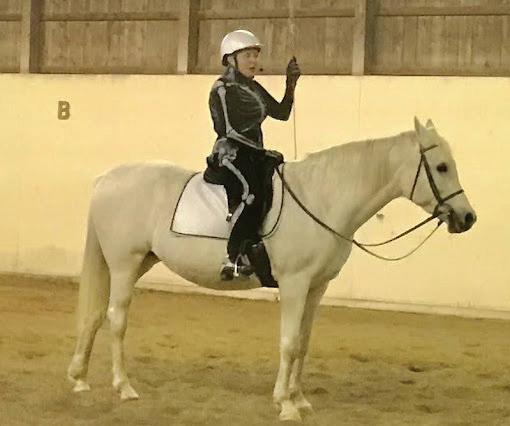
President of Centered Riding for many years and international clinician Peggy Brown came to Coventry Equestrian Center twice for clinics on riding position and biomechanics. She is well known for riding in a bone suit. As Sally Swift says, “you ride with your bones and feel with your muscles. “ These clinics were sponsored by
Avoid playing wih sticks
If pieces of wood are swallowed, it can cause intestinal blockage, also can cause mouth infections.
Learn how to ride & train with clarity. All horses & riders benefit utilizing simplified gymnastic training or ‘dressage’. Visit our Facebook page “Home School Your Horse” for training tips.
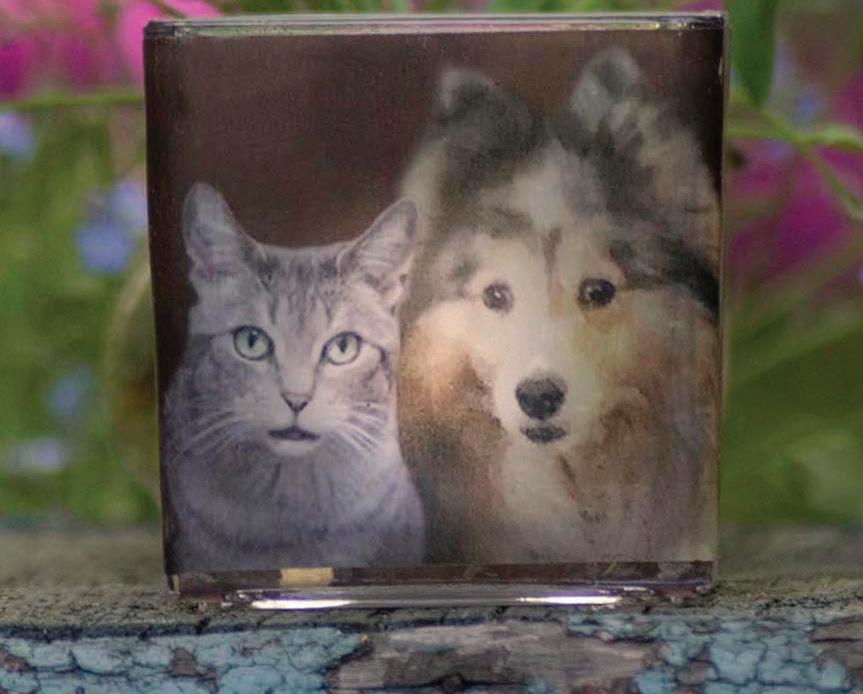
Using your photos I create a lasting gift for yourself or a loved one.
EQUINE AFFAIRS
BEGINNING LATERAL WORK
By Kristin Hermann
When we train our horses, we train them both laterally and longitudinally. Training or dressage is merely yoga for horses or the gymnastic training of the horse. We stretch our horses longitudinally from back to front and laterally or from side to side. Training the horse from back to front helps it stretch or seek connection with the bit while maintaining the rhythm from behind. The most challenging task in dressage is getting the horse to accept contact. This little gem of connecting the back end of the horse with the front end under the rider’s seat is referred to as “on the bit.” And, for any lateral work to be effective, the horse should be on the bit.
The training scale of dressage is Rhythm, Relaxation, and then Contact. Those are the first three things you need to train your horse in dressage. I call it the three R’s and use the word round instead of the word contact because it is easier to remember: Rhythm, Relaxation, and Round. Once we have established these basics, we can proceed with training. And before attempting lateral work, we learn to sustain the three R’s on straight lines (away from the wall), and then we start dabbling in lateral work. First, we train the horse to be balanced longitudinally (back to front) and laterally (side to side), so the horse carries equal weight on all four legs and does not lean in either direction. You always hear about the horse’s shoulders falling in or out. If this is allowed, the horse is not balanced side to side; learning to ride
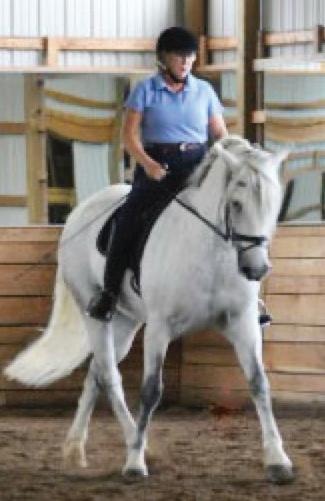
Leg yielding my horse BrachStar, you can see how he is straight and his hind end is stepping under and across his body. Rider also shows good form.
the horse straight is a prerequisite to lateral work. Once we have accomplished this basic training, which is referred to as Training Level, we start transferring the weight towards the hindquarters with lateral work. Transferring this weight toward the hindquarters is one of the purposes of training lateral work.
Lateral work consists of training the horse in sideways movements, such as leg yielding, shoulder-in, haunches-in, and half-pass. All these movements have a purpose in training the horse. The longitudinal work gets the horse to step under its long (longitudinal) body, working over its back into the bit. Once this is accomplished, we train the horse laterally. I have called
Tips to correct a crooked leg yield
There are several ways to correct a crooked leg yield, which is a topic for another article. But briefly, you can put the horse straight if the shoulders fall out, post on the wrong diagonal, which encourages the shoulders not to fall out, give it a slight counter bend to the outside to keep the shoulder’s in alignment, put both hands inside as you leg yield out, and/or think shoulder-fore or shoulder-in as you leg yield out. Training horses can be very complicated! How can I do a shoulder-in at the same time as I leg yield? The answer is that when you do it, you will then know how.
training the horse longitudinally and laterally, “four-way stretch.” I coined this phrase for training after they introduced four-way stretch jeans in 1978.
Starting with leg yielding after confirming that the rider can keep the three R’s ~ rhythmic, relaxed, and round, and now straight, we learn to add going sideways. Many riders think a horse is to be bent while leg yielding, but this throws the shoulder out and defeats the purpose of leg yielding. In leg yielding, the horse is to remain straight so the inside hind leg steps under and across the horse’s body. Doing straight leg yields helps to develop the horse’s carrying capacity on the inside hind leg and strengthens the hip area. If the shoulders fall out and the horse does not step under and across, then the purpose of the exercise is forfeited. The goal of leg yielding is to keep the horse rhythmic, relaxed, round, and straight, but now also sideways!
The first lateral movement of leg yielding is shown at the First Level. To train leg yielding, we typically ride down the quarter line, and when we can keep the horse rhythmic, straight, and on the bit, we add the sideways movement. Horses tend to gravitate toward the wall, so leg yielding from the quarter line to the wall is encouraging to the horse.
When the rider reaches First Level test three, the leg yield is from the wall to the center line. Leg yielding away from the wall is counterintuitive, and the rider has to adjust the slight bend or the horse’s positioning. Being able to leg yield in, rather than out, shows a better connection between horse and rider.
In all the dressage tests from Intro to Fourth Level, the third test is the most difficult and signals whether you are ready to move up to the next level.
Next is shoulder-in. This lateral movement has been called the “mother of dressage,” and when I was learning shoulder-in, I thought I would never figure it out! You point the horse’s head and shoulders toward the center of the arena, but keep it moving on a straight line. Riding a
horse at a 45-degree angle is confusing for both the horse and the rider. Yet the benefit of the shoulder-in is to engage the horse’s inside hind leg, under and up or underneath the horse’s barrel, to carry more weight. Practicing shoulder-in develops even more strength in the hind end of the horse and begins to develop the more uphill carriage we see in advanced horses.
Riding shoulder-in at first is not easy. It is best to understand why you do it and have a clear idea of what it is before trying. Thus, if you have the opportunity, learn shoulder-in on a horse that already knows it, or watch a horse do shoulder-in; this will make the undertaking easier. Yet, if you read about the shoulder-in or watch YouTube videos, you are likely to become confused. Put your inside leg here, your outside leg there, your hip there, and your hands there… In reality, all these aids are already in place, and more simply, you can just move the outside shoulder in with the outside rein. It is similar to neck reining. Sounds simple, yet it is not. But if you can learn on a horse that knows shoulder-in, it will be way easier.
The purpose of the shoulder-in is to continue developing the horse’s ability to strengthen its hind end for collection, which begins in Second Level. However, I do not wait until the second level to train the shoulder-in; I introduce it early on to my riders, once all the other basics are complete, to help develop the rider’s aid coordination and strengthen the horse for a more uphill canter.
Riding the shoulder-in is challenging because you are asking the horse to move the shoulders in while keeping it on the straight line. The horse is thinking, “Oh, she wants me to turn, but no, wait, I am still going straight…” So if your horse comes off the straight line, turn it onto a tenmeter circle and keep repeating until the two of you figure it out. First, we get the shoulders in as we learn to keep the horse on the straight line, and then we finesse the connection to maintain the horse on the bit. Of course, we want this all to happen at once, but it rarely does.
Haunches-in is another lateral movement that gets a lot more bend from the horse. The horse swings the haunches around the rider’s inside leg, like a letter J. Riding haunches-in gets the horse longer on the outside of its body as the inside shortens or contracts. The horse’s shoulders, head, and neck are supposed to stay straight. It is the opposite of shoulder-in. For the shoulder-in, the shoulders come in, and the haunches remain straight. Shoulder-ins are to be three
tracks, and haunches-ins are supposed to be four tracks.
Riding the haunches-in lengthens the outside muscles and shortens the inside muscles as the horse steps under its body, once again strengthening the hind legs and their ability to carry more weight from behind. Additionally, the shoulders begin to lift as the horse develops the ability to come more under and up. Often, in the haunches-in position, you can feel the horse lift up from the hind end as the poll gets higher.
After the lateral movements of shoulderin and haunches-in are achieved, the half pass is next. The half pass is a combination of shoulder-in and haunches-in. To ride a half pass, you should first be able to ride all the prerequisites: ten-meter circles, sitting trot, shoulder in, and haunches in. To set up for a half pass, you start with a shoulder-in and then add the haunchesin, and then ask the horse to move in the direction of the bend and, of course, on the bit. The horse is banana-shaped around your inside leg and moving in that direction. Half pass is unlike the leg yielding because in leg yielding, the horse is straight and moving away from the inside leg. For a half-pass, the horse is banana-shaped and moving toward the bend.
All lateral work can be confusing, but once you understand the concept, it becomes easier. Just moving the horse’s body parts with your aids while keeping the horse soft in the bridle, working over its back - rhythmic, relaxed, and round while the rider’s seat stays balanced is a huge achievement.
All of these lateral movements for the horse are not only gymnastic exercises to increase the horse’s athleticism, but for the rider, they teach aid coordination. At our farm, we do a lot of lateral work riding bareback because the hard part for the rider is to maintain a balanced seat while signaling the horse. It is common for a rider to signal the horse with a leg back or a rein aid, then lean or shorten the leg muscles, causing the seat to shift out of balance. A rider cannot do this bareback, as they may slip and fall off.
We train our horses both longitudinally and laterally. The value of lateral work is to get the horse to step over and/or under from the hind end and develop lifting strength, so the horse starts to carry more weight on its hind end. Gymnastic exercises, whether for a horse or a human, are great ways to stay supple and build strength.
Tips to ride the shoulder in
Ride a ten meter circle and then go into the shoulder in, if your horse starts to loose the angle go immediately back to the ten meter circle. The ten meter circle, sets you up for the shoulder in.
Allow yourself to get it and then loose it, get it and then loose it. We learn by making the corrections. If the horse tries to go to center of arena think ~ leg yield out as you attempt shoulder in.
Be sure the shoulder in not a nose in, “get off the inside rein”by offering it forward so you are not pulling horse’s nose in.
Check to see if the horse’s ears are level in shoulder in and horse is not over bending.
It is easier to train from a sitting trot, so at my school before we attempt shoulder in riders are proficient at the three R’s and sitting trot on a ten meter circles. Can’t build with training if the prerequisites are not established.
Lateral work
Here is a video of a student riding bareback and doing lateral work. The value of riding bareback is the rider learning how to keep a balanced seat while applying the aids. and keeping their balanced seat.
https://www.facebook.com/ reel/1357648508366935
REMEMBERING Albert bear
20th Year Anniversar y
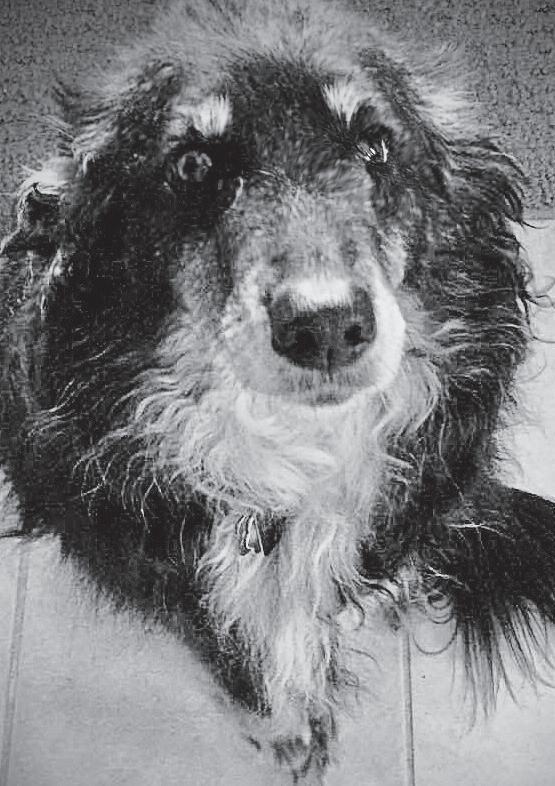
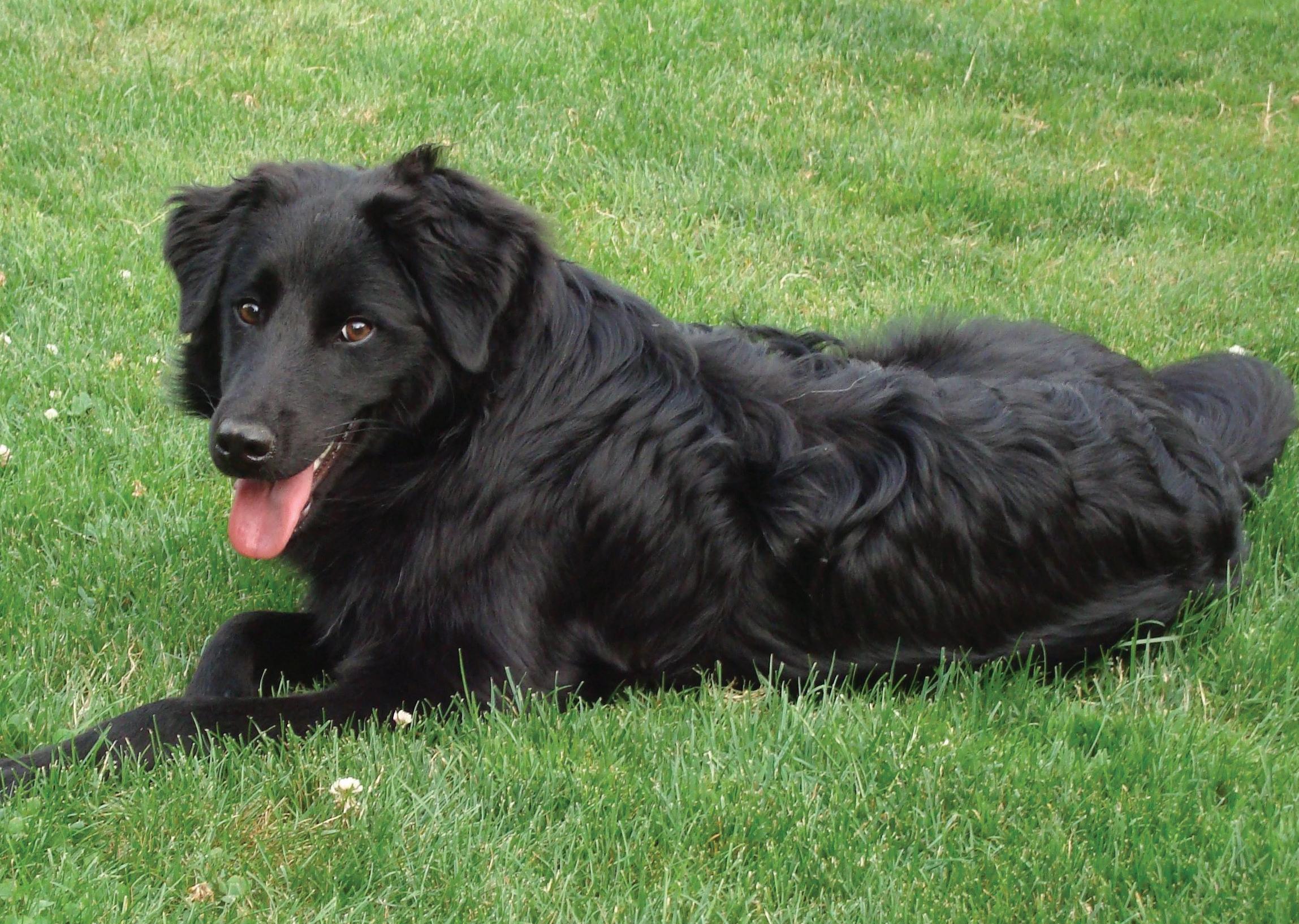
Goodbye, my Albert bear. From shy, scared shelter dog to the most snuggly teddy bear... I’ll miss resting my head on your soft coat and holding you like a big baby every night on the couch. I told you every day how much I loved you and what a good boy you were and you would slow wag your tail and perk up your ears. Thanks for helping train all my foster dogs how to act and helping me learn the value in being soft and patient.
BISCUITS BINGO
APRIL 11 (SATURDAY)
Animal Friends thinkingoutsidethecage.org
ICE CREAM SOCIAL
APRIL 15 (WEDNESDAY) at Jeni’s Ice Creams
Animal Friends
FOSTER SEMINARS
MARCH 29 (SUNDAY) APRIL 28 (SATURDAY) Beaver County Humane Society beavercountyhumanesociety.org