
By Susan Wagner DVM, MS, ACVIM
We may love the 4th of July, but it can be a nightmare for our canine companions. The rumbles and booms of fireworks often elicit mild to severe anxiety, causing signs such as drooling, pacing, panting and hiding. The Humane Society of the United States has offered great safety tips for the 4th. I’d like to add advice on easing the fear associated with all the noise and hoopla. Each individual tip may be enough for your pet, but in severe cases of anxiety, several may be necessary. They all work well together.
1. Allow your dog to go where he feels safe. This may be in the basement or under a table. Stay with him if you can.
2. Put one drop of therapeutic grade lavender essential oil in the palm of your hand, then rub it down your dog’s spine. Start at the top of the head and go all the way to the tail. Be sure to use pure lavender, not the perfume quality found at most bath and beauty stores. If he doesn’t completely calm in 3 to 4 minutes, repeat the application. You can re-apply a third time if he is still fearful. Young Living’s Peace & Calming is an effective blend that can be diffused in the pet’s living space. It has even been used effectively with domestic and wild large animals.
3. Play calming music at a low volume. There’s no need to overcome the loud fireworks — that will over stimulate your dog. I was proud to be the research coordinator for Through A Dog’s Ear: Music to Calm Your Canine Companion, so I stand by its effectiveness. This mu-sic has a physiologic calming effect. You can also play it in between anxiety events, when you and your dog are in a peaceful state. This will add a classical conditioning effect to the calming properties.
4. Some dogs respond to snug fitting jackets called Thundershirts. The tight fit gives them a sense of comfort. Calming caps gently cover their eyes, and help many pets.
5. Calm My Stress, Calm My Dog and Calm My Cat are sprays that can be applied directly to your pet. They have no odor, so pets don’t mind them a bit. They were developed by veterinarian Pamela Fisher. (www. CalmMyPet.com)
6. Flower Essences can be rubbed on the inside of the ear flap or given orally. Bach Rescue Remedy is the most
commonly used. I also find Perelandra ETS (Emergency Trauma Solution) very effective. (www.Perelandra-ltd.com)
7. Pheromone based products can also be helpful. Ever watch your cat rub their face against something? They are depositing pheromones that communicate safety and reduce fear. Pheromones can be used as a spray that is placed near your pet, diffuser, or as a long acting collar. Feliway and DAP (Dog Appeasing Pheromone) are supported by quality scientific research.
8. Stay calm! I know some pets exhibit destructive behaviors during these events, but don’t become angry. The fear associated with punishment will only worsen an already difficult situation.
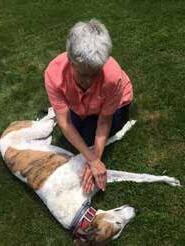
9. Energy therapies are also extremely effective in calming animals. You may want to consider taking a course in Healing Touch for Animals, animal Reiki, or massage so that you can assist your own pet.
Many cats are also frightened of fireworks, and will retreat to their own safe places. Cats are lucky enough to fit into tiny corners in far away closets! You can also use the above products for them. With lavender, use one drop one time only. If they are really excitable — frothing, shaking, hair standing on end (gee, that sounds like a trip to the vet) — you can apply another drop. NOTE: Some essential oils are not safe for cats, so please use only pure lavender.
These tips are helpful for any type of anxiety, whether it be thunderstorms, separation anxiety, veterinary visits or strangers coming into the home. The most important piece of advise I can give you, however, is to understand the energetics of animal anxiety. Animals naturally reflect our energy fields, so if we have a pet with anxiety, we must look at what we are anxious about. If it weren’t significantly affecting our lives, our pets wouldn’t be reflecting it. This doesn’t have to be the same type of anxiety. It may be a reflection of something that happened long ago, but the energy persists and continues to affect our lives in some way. Once the cause is identified, faced and overcome, the energy can dissipate.
The 4th is about independence, so why not face your fears and declare independence from them? Fear of any kind increases all fear. It often leads to self-absorption and judgement of ourselves and others. If each of us does our own work by choosing to overcome what we are afraid of, we can truly become One Nation, Undivided.
Happy 4th of July!


Thinkingoutsidethecage.org
Chase Away K9 Cancer
Twin Lakes Park, Greensburg, PA June 25th 2017 11am-4pm Pavilion 5 Upper Lake For more info: Bev Floom 724-875-1055 Facebook: ChaseAwayK9CancerTwinLakes $15

Saturday, September 23rd
11:00 am – 4:30 pm
Cooperstown Picnic Grounds
2541 Thomas Street, Latrobe, PA 15650 (picnic grounds located behind Cooperstown Event Center)
Gates open at 11 am Event runs until 5:00 pm.
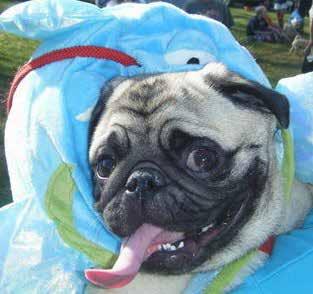
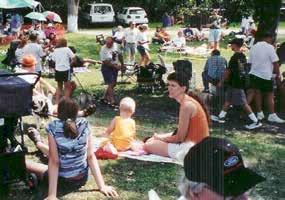
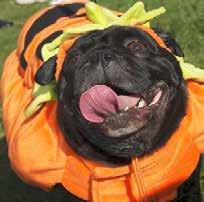
Vendors Chinese Auction Food Pug Rescue Fundraising Festival
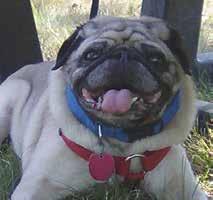
Including Curliest Tail, Best Trick, and many more, plus the always anticipated & creative Costume Contests.
Suggested $5.00 donation per person to attend, children under 12 are free. Proceeds benefit Southwest PA Pugs with Special Needs and Guardian Angels Pug Rescue to pay for medical & ongoing expenses for our rescued pugs.
All dogs attending must be up to date on shots, leashed and under owner control at all times. Non-pug breeds welcome to come join in for a day of doggie fun.
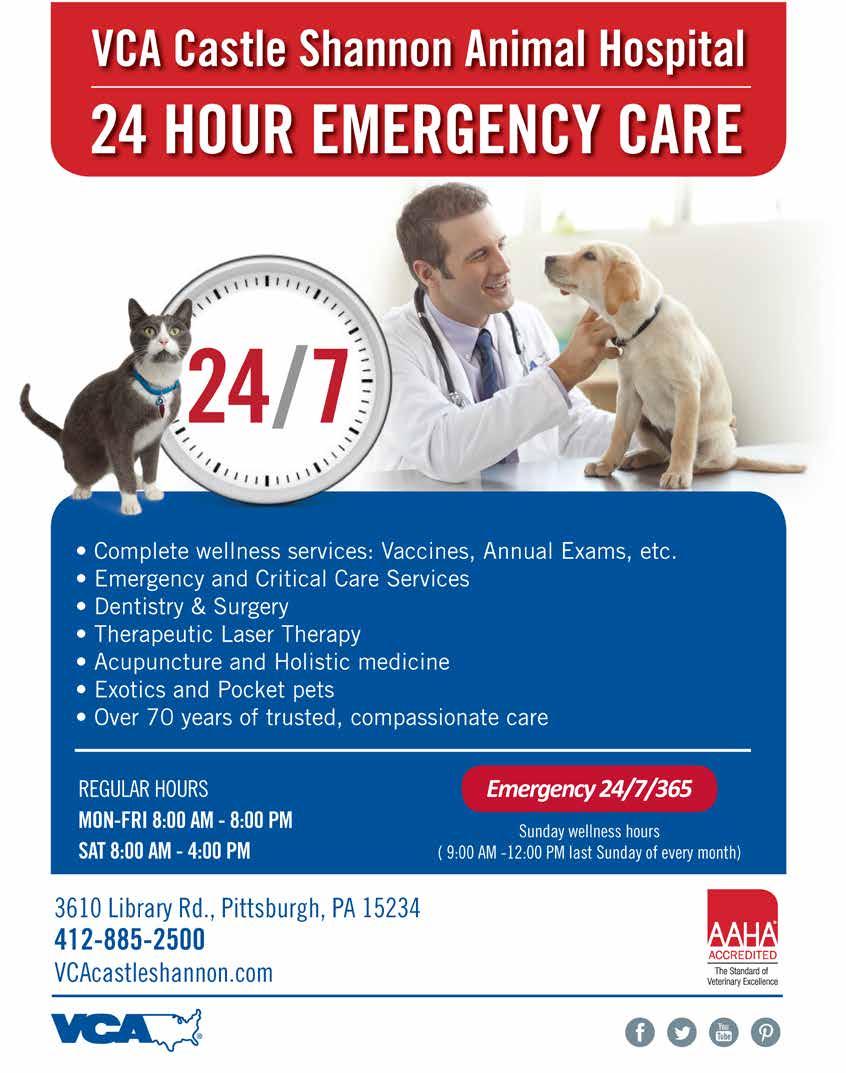
By: Dr. Jennifer Lauren Lopez DVM MBA | Medical Director VCA Castle Shannon Animal Hospital
Did you know that unlike human hospitals, not all animal hospitals are required to be accredited?
Accredited animal hospitals are the only hospitals that choose to be evaluated on over 900 quality standards that go above and beyond basic state regulations, ranging from patient care and pain management to staff training and advanced diagnostic services.
American Animal Hospital Association (AAHA) accredited hospitals are recognized among the finest in the industry, and are consistently at the forefront of advanced veterinary medicine. AAHA standards are continuously reviewed and updated to keep accredited practices on the cutting edge of veterinary excellence.
Pet owners look for AAHA-accredited hospitals because they value their pet’s health and trust the consistent, expert care provided by the entire healthcare team. At AAHA accredited practices, pet owners can expect to receive the highest quality care from well-trained, professional veterinary teams.
Only the top small animal hospitals in the US and Canada have achieved AAHA accreditation. There are many AAHA accredited hospital around the Pittsburgh area, one of which is VCA Castle Shannon Animal Hospital. To maintain accredited status, the hospital must continue to be evaluated regularly by AAHA.
We take great pride in being an AAHA accredited hospital. Not only does it mean that we practice excellent medicine and care but it shows that our entire team values consistency. The AAHA seal is one that you can trust. When you visit VCA Castle Shannon Animal Hospital you know that you are getting the highest quality of care for your pet.
Experience the difference that an AAHA accredited hospital can make by visiting VCA Castle Shannon Animal Hospital, located at 3610 Library Road or calling 412-885-2500 to schedule a FREE FIRST EXAM for your pet.
Excellence in veterinary care is not a one-time thing and is not determined by a shiny new building with fancy equipment. Being AAHA accredited takes incalculable hours of hard work, dedication from staff and doctors to provide pets with the
ability to lead long and healthy lives. Look for an AAHA accredited hospital, that little logo matters to both you and your pet.
For more information about accreditation, visit aaha.org/petowner. About VCA Animal Hospitals: VCA Animal Hospitals operates more than 650 small animal veterinary hospitals in the U.S. and Canada. The hospitals are staffed by more than 4,500 fully qualified, dedicated and compassionate veterinarians to give pets the very best in medical care, of which over 500 are board-certified specialists who are experts in areas such as Oncology, Cardiology, Emergency & Critical Care, and Surgery for animals. VCA Animal Hospitals provides a full range of general practice services to keep pets well and specialized treatments when pets are ill. For more information, please visit http://www. VCAhospitals.com or follow on Twitter @vcapethealth.
■
REGULAR HOURS: Mon-Fri: 8:00 AM - 8:00 PM Sat: 8:00 AM - 4:00 PM
EMERGENCY HOURS: Mon-FRI: 8:00 AM - 8:00 PM Sat & Sun: 4:00 PM (Sat.) - 8:00 AM (Mon.)



Two organizations with many wonderful tales begin their greatest adventure together.
The Animal Rescue League Shelter & Wildlife Center and the Western Pennsylvania Humane Society have joined forces to become Humane Animal Rescue – a name that best describes both what we believe in and what we do. Together, we’ll provide the greatest help to all animals in need – domestic and wild. Giving them the care they need, and the love they deserve.


Care they need. Love they deserve. Humane Animal Rescue Care they
By Eleanor Miller, Senior Animal Wellness Coordinator
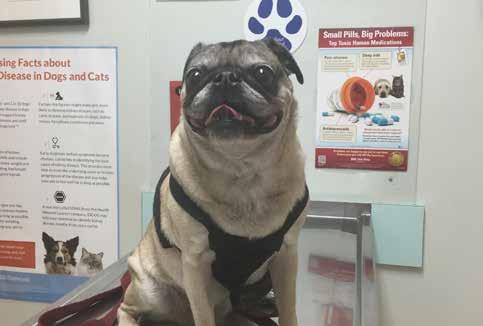
With the warm weather fully upon us, Animal Friends wants to be sure you have everything you need to protect your pets. Lyme disease can quickly become a serious issue not only for the animals in your life, but for you, too.
Lyme disease is one of the fastest growing diseases transmitted by insects or other organisms in the United States. As the summer months quickly approach, it’s important
to protect your pets against this debilitating disease. Lyme disease is more commonly found in dogs, but your cats, rabbits and other pets are also at risk of contracting it.
Because western Pennsylvania has plenty of densely forested areas and no shortage of wildlife living right in our backyard, it is among the areas where Lyme disease is the most prevalent. As the temperature climbs, larvae that have spent the winter months dormant grow into adults that can transmit Lyme disease through a bite. The tick must already be infected and remain attached for at least 48 hours for transmission of the bacteria to take place.
Once infected, animals may experience intermittent lameness, fever, swelling of joints, loss of appetite, swelling of lymph nodes and lethargy. In severe cases, animals
may even experience an acute onset of renal failure. While the symptoms can be managed medically, there is no cure.
The single most important thing you can do for your pet is to prevent Lyme disease by vaccinating. Although vaccines won’t prevent the disease from taking hold entirely, they can help to lessen the symptoms if the bacteria are introduced.
Animal Friends offers Lyme vaccines and flea and tick preventative treatments at our Low-Cost Vaccine Clinics. But, don’t wait until it’s too late! Because of the mild winter, flea and tick season is expected to be more severe and arrive sooner.
Protecting your pets now could save them (and you!) from a lot of pain and discomfort down the road.
Vaccine clinics are held every other Thursday right here at Animal Friends. And, we don’t just offer Lyme vaccinations! Starting at just $10, you can also get your pet’s rabies, DHLPP, bordetella, FVRCP and FeLV (just to name a few!) vaccinations as well as

Dahntahn | Roberto Clemente Bridge Registration 6 p.m. | Walk 7 p.m. | Costume Parade 8 p.m.
Don your black and gold and join us – because Bark in the Park is becoming Bark N’at!
This Pittsburgh-themed party has gone to the dogs! Our walk, concert, costume contest n’at are sure to leave your tail wagging. So no matter which neighborhood you’re from, redd up, grab your pooch and we’ll see yinz at Bark N’at. Check it aht at ThinkingOutside TheCage.org/BarkNat.
By Kenton D. Rexford, VMD PVSEC Emergency Service
As pet owners we all hope and wish that our pet will never have an emergency medical problem. Pet emergencies are stressful for pets and owners alike. Although there is no way to prevent all emergency situations, it is really good practice to control the things that are controllable and prevent the things that are preventable.
Many of the trauma cases that present to our emergency service are pets that were outside unsupervised. Pet owners, myself included, enjoy allowing their cats to explore outside or their dogs to go for a walk in the woods. That being said, pets who are outside and unsupervised are at risk for vehicular trauma, lacerations, bites from other animals, and many other sources of trauma. So, my recommendations for preventing trauma are:
1. Keep dogs in a fenced yard
2. Keep dogs leashed while walking
3. Keep cats inside your house
As a potentially unpopular addendum – also be leery of dog parks. Multiple dogs off leash is a recipe for fights. Dog parks are a great concept and I love them and use them myself. Nonetheless, just to be safe, my dogs will not be in the park at high volume times and my dogs will probably leave with me when a “new kid” shows up for the first time.
“The best way to manage an emergency is never to have an emergency.”
Most poisonings occur because a pet has access to something to which they should not have access. The most common substances that lead to pet poisonings are as follows: human medications, chocolate, grapes and raisins, pet medications, poisonous plants, illicit drugs, xylitol (an artificial sweetener), alcohol, antifreeze, and rodenticides. When any of these substances are ingested by a pet, this occurs because a human has allowed the pet to have access. It is our responsibility as pet owners to prevent access.
1. Keep all medications secure. Medications should be kept in a wall cabinet.
2. Take medications behind a closed door, then if you spill the medication your pet cannot access the pills that are on the floor.
3. Keep all sugarfree gum and candy out of reach. Sugarfree gum and candy should be in a wall cabinet. Purses, backpacks, etc… containing candy or gum must be placed in a secure location.
4. Keep all human food, alcohol and illicit drugs out of reach. And be sure to tell your friend, you know the one I mean, that it is not “funny” to see how the dog responds to alcohol or drugs.
Not all GI problems are preventable, but certainly GI problems arising from ingesting things not meant to be ingested, are preventable.
1. Maintain a regular feeding schedule
2. Always allow free access to water
3. Be boring – feed the same, or similar, food all the time
4. Secure the garbage
5. Don’t feed human food
6. OK, you’re going to feed human food –so be smart about it:
a. They love anything you give them.
b. Avoid spicy or fatty food.
c. Chicken meat (not skin) is tolerated by most pets.
d. Mild cheeses are tolerated by most pets.
e. Rice is well tolerated.
f. Raw vegetables or fruit are often a good choice (except for grapes).
Heat, humidity and extreme cold can all cause medical problems for animals. If it is hot and humid enough that you are uncomfortable with strenuous exercise, then it will also be uncomfortable and potentially dangerous for your pet. Similarly, if you have to wear winter boots and multiple layers due to cold, your pet will be uncomfortable as well.
1. During the summer always provide water and shade for your pet.
2. During the summer exercise your pet in the morning or evening because temperatures are usually milder at these times.
3. During the summer you may need to limit your pet’s exercise outside.
4. During the winter do not allow your pet to be outside for long periods of time.*
5. During the winter always provide insulated shelter.
6. During the winter be sure that water is changed frequently so it is not frozen.
7. Never leave your pet in a car.
*some breeds, like Siberian Huskies, Bernese Mountain Dogs, and others are more tolerant of cold of course. They should still have shelter or be encouraged to come inside periodically.
It is not possible to prevent all emergencies, but hopefully we can prevent many of them by being mindful.
By Dr. Doug Knueven, DVM, CVA, CVC, CVCH
Our bodies and those of all animals are intricately wired and I’m not just talking about the nervous system. There is a direct current (DC) system that sets up a complex pattern of electrical fields (EFs). Any time there is a movement of electrons, an electrical field is generated. It is the summation and interaction of all the electrical activity of the body and mind that results in the overall bioelectric field of an individual.
Much of the energy we consume in the form of food goes toward maintaining the electrical gradients across the cellular membranes of all the cells of the body. Scientists have long realized that cell membranes contain strong electric fields, but researchers have generally assumed that 99.9 percent of a cell’s volume was electrically dormant. However, a few years ago, a University of Michigan biophysical chemist used a tiny voltmeter to measure rat brain cells’ electrical potential and detected fields as strong as 15 million volts per meter throughout the cells. Assuming this translates to us, that means we all have the electrical power of a lightning bolt within us!
In fact, we are much more electromagnetic than we are physical. According to Einstein, “We may therefore regard matter as being constituted by the regions of space in which the field is extremely intense … There is no place in this new kind of physics both for the field and matter, for the field is the only reality.”
The bioelectric fields of both amphibian and chick embryos have been analyzed and found to be quite similar. According to several studies, changing the EFs of chick and amphibian embryos causes changes in their development. Further research has revealed that the body’s bioelectric field guides morphogenesis (the biological process that causes an organism to develop its shape).
Let me explain what this means. We think we know everything because we’ve figured out the genetic code. We often think of the DNA as being the blueprint for the body, but this is not exactly right. It is true that the DNA codes for the protein building blocks for every cell
in the body. Certain genes in the genetic code can “turn on” and create a liver, other genes can “turn on” and make a brain. But one puzzle that DNA does not solve is what causes the brain to always form inside the skull and the liver to develop inside the abdomen? According to research, it is the body’s electrical field that dictates the turning on and off of genes related the appropriate development of the body
Incredibly, it has been found that changing the EF changes the outcome of amputation in regenerators (animals that grow back an amputated limb) like salamanders versus non-regenerators (animals that do not grow back an amputated limb) like frogs. If a salamander’s leg is amputated and the frog’s electrical field is mimicked at the stump, the leg does not grow back. But, if the frog’s leg is amputated the salamander’s EF is mimicked, the frog’s leg will grow back. In fact, this has also been proven to be the case in young laboratory rats as well.
of materializing. This sounds strange until we take a closer look at Einstein’s famous equation: E=Mc2. The ultimate meaning of this equation is that matter can be converted into energy and energy can be converted into matter. In other words, matter and energy are two different forms of the same substance; that substance is Qi.
Furthermore, it has also been shown that when an incision is made in the skin, there is a change in the local bioelectric field before there is a biological response to the injury. This has led researchers to conclude that it is the change in electrical field that initiates the body’s healing response.
A recent study sums up the importance of the bioelectric field nicely when the researchers state, “Endogenous DC electric fields (EFs) are important, fundamental components of development, regeneration, and wound healing.”
The DNA codes for the building materials but the body’s electric field is the template for the structure of the body.
The EF of the body appears to be related to the acupuncture meridian system and points. It has been known since the 1950s that acupuncture points and meridians have high electrical conductance. In other words, electricity flows more freely at these areas than other spots on the surface of the body. Perhaps bioelectricity is related the Chinese concept of Qi.
Qi is the basis of Traditional Chinese Medicine (TCM). We sometimes think of Qi as being “life force energy.”
While this is true, the ancient Chinese had a deeper understanding of the concept. They see Qi as being matter on the verge of becoming energy and energy on the threshold
Qi is the substance from which the body is formed. It also is the energy that flows through the meridians of the body which allows the organism to function properly. According to the Chinese, disease is a result of an abnormal flow of Qi and health is an expression of a smooth, balanced flow of energy.
The acupuncture meridians are the conduits for the flow of Qi in the body. They are bilaterally symmetrical and they link the exterior of the body to the internal organs. There is a complex cross linking of the channels and they are named for their corresponding organs.
The acupuncture points are discrete spots on the skin where the Qi in the meridians can be accessed. They are like dimmer switches in an electrical system. These places are where a veterinary acupuncturist can tap into the energy system of the animal he is treating. Acupuncture changes the bioelectric field of the body and this may explain some of its amazing effects.
The body’s energy system can also be affected by the hands of an energy worker. Healing Touch for Animals (HTA) consists of energy field therapy that supports the body and encourages self-healing mechanisms. The techniques used will help balance the body’s energy systems allowing for optimal physiological responses. This stress-relieving energy work supports the organ systems and rids the body of unhealthy patterns to improve the animal’s overall well-being. It is gentle, noninvasive, painless, and stress-free. Animals can control their participation in the treatment, thus becoming leaders in their own process of healing.
Acupuncture and Healing Touch for Animals are two integrative veterinary medicine techniques for tapping into the body’s bioelectric field in order to aid in healing.

"No one could tell me what was wrong with him. Dr. Savko saved not only my partner, but my heart.”
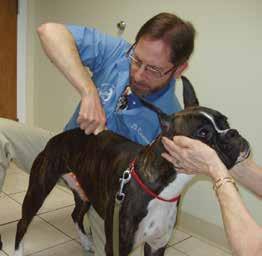
I was distraught. My K9 partner of 7 years was no longer able to jump or walk without pain. I called upon numerous vets and no one could tell me what was wrong and all wanted to do meds, and tests. Why? They had no idea what was even wrong with him. I called Dr. Savko. He was HONEST, he LISTENED. He even texted me when I had questions. He is a very supportive caring doctor.
Visit one
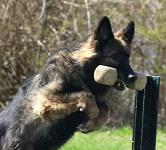
Visit two Duke jumped in the back of my car! For the rst time in over a month.
Visit three Duke was able to jump on the couch. It was the best nap I had in months. He was running again, I could see my partner coming back. Visit four Back to his normal self! No limping, pain or crying. My partner was back.
Duke met with Dr. Savko (in accordance with PA state law, under direct veterinary supervision at one of his locations in a veterinary hospital). Doc right away knew what was happening. He worked on him and explained that Duke may be a little sore, but should improve over the next week.

Plum PA
Greenfield Veterinary Hospital, Pittsburgh, PA
Suburban Animal Clinic, Butler, PA
Donovan Veterinary Hospital, Ligonier, Pa
Fox Run Equine Center, Apollo, PA
“miracle worker” "a very supporting and caring doctor" “best time/money we ever spent”
“you have given us hope”
"Dr. Savko has made a big di erence"
“my pet would not be here without Dr. Savko” “he really cares about the animals”
Page 20- A All About Pets Veterinary Hospitals
Page 36 - B Animal Elegance
Page 10- M Animal Friends
Page 8 - C Animal Rescue League
Page 21 - D Beaver Animal Clinic
Page 19 - Best Breed Pet Food
Inside Front Cover S VCA Castle Shannon
Page 34 - F Chartiers Custom Pet Cremation
Page 18 - Q Cheyenne Veterinary Wellness & Surgical Center
Page 27 - Close 2 Ur Heart Jewelry
Page 2 - W Country Lane Pet Hotel
Page 29- Costa Real Estate
Page 32 - G Coventry Stables
Page 36 - Dog Guard Pittsburgh Dog Fence
Page 37 - Dog Stop
Page 19 - H Fuzzy Paws Pet Villa
Page 5 - Gentle Journey Veterinary Hospice
Page 19 - Happy Tailz Spa
Page 1 - I Healthy Pet Products
Page 35 - J Jefferson Memorial
Page 2 - P Larry’s Laundromutt
Page 27 - Medical Frontiers
Page 28 - Mia Bella’s
Page 21 - K Murray Avenue Apothecary
Page 5 - Oxymagic Carpet Cleaning
Page 36 - Paws Here Awhile
Page 19 - Pampered Paw Resort
Page 5 - Petagogy
Page 18 - Pets at Home
Page 19 - Petsburgh Dog & Cat Grooming
Page 8 - Pinch’s Place
Page 31 - Pittsburgh Career Institute
Page 19 - Y Pittsburgh East Nissan
Back Cover - N Pittsburgh Veterinary Specialty and Emergency Center
Page 35 - Precious Pets Memorial & Cremation
Page 31 - O Rockin Horse Stables
Page 14 - Dr. Michael Savko
Page 19 - V Woody’s Dog Wash & Boutique
Page 27 - Sam’s Painting
Page 5 - Pittsburgh Pet Concierge
Page 33 - SydMor Equestrian Center
Page 35 - Thousand Hills Pet Crematory
Page 12 - U Washington Area Humane Society
By: Bernadette Kazmarski
Spring is the time for newborns. Even with short or mild winters, the lengthening days reach a point in February that send a signal to get ready for birth or to get about reproducing so youngsters can mature during the most plentiful and temperate time of year. Now, in spring, the first wave of kittens is tumbling into window wells as newborns and toddling into animal shelters as unintended litters surrendered with their unwanted mothers. Kittens are found in boats parked in your driveway, in the eaves of an old garage, under a pile of debris in the back yard, on the cushion of your deck chair when you lift up the cover to clean your porch furniture. Your neighbors found a litter in the dirt under their deck and someone who works with you said a cat snuck into their garage and had kittens on a shelf. Every back yard has its own litter of kittens. And they are found in trailer parks, parking lots and abandoned buildings, parks and picnic areas and campgrounds. They are found confused along a road near their mother who’s been killed by a car as she tried to lead them to safety. They are found taped into boxes left outside the shelter door. Yes, it starts out cute, oh, sweet little fluffballs with their Hello Kitty® ears, and the comical places these mom cats think are safe to give birth. But quickly the constant press of need, day after day, night after night, from people and cats is overwhelming. Cats and kittens need to be trapped. They need fos-ter homes. They need food. They need formula. They need veterinary care. Some of them struggle to live. Some of them die. Some mother cats are hostile, the feral offspring of a female cat abandoned last year, or traumatized by abuse or life on the streets. Some people who find kittens are willing to help, many only want someone to come and “take care of it”. In the end, many cats will die, some because adoptable kittens filled the shelters and the adults had to move out of their cages into eternity, and some mothers and kittens failed their temperament tests for adoptability, some because people considered them pests and called animal control or
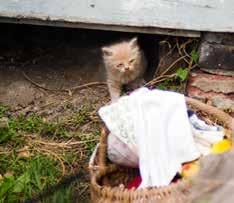
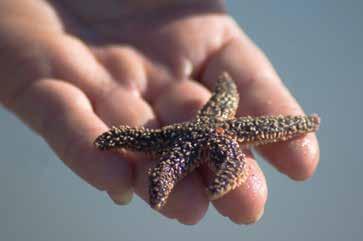
an exterminator which in many states are under no regulation to save them, some because the local pound doesn’t hold cats, some because there was no one who did anything at all. And somewhere in there, someone who already has more cats than they can feed and take care of is taking in yet more to be neglected and to inbreed and to starve because they think they can save them. One thing is a constant in all this: abandoned, feral or unsocialized, these cats didn’t run off to the wilderness to have their kittens, they came to humans. In the wild, natural conditions and predators keep populations under control. The animals whose genetic shift removed them from the wild and brought them to share our lives are our responsibility, and socialized or not, they come to us for help.
This overflow of kittens is preventable by something cats cannot do for themselves but we can easily do for them any day of the year: spay or neuter. Spay or neuter your own cats. Encourage people whose cats are not spayed or neutered to get them done. Encourage people whose cats have a litter of kittens to spay the mother and not give the kittens away to anyone without veterinary care. Find low-cost spay/neuter programs and offer to help people take advantage of it. Find the owners of cats you see outdoors or determine if they’ve been abandoned. Help rescue cats living outside and spay and neuter them too if they haven’t been, and help bring them in and find a new home if they are friendly. Work with a shelter or rescue, and create a network of people who can work together so it doesn’t all fall on a small group of people.
More cats than dogs live in homes as pets in the US but cats still receive only half as much health care as dogs1, they are euthanized at a higher rate than dogs2, and are often abandoned when they go into heat or are found to be pregnant, which brings us back to all those kittens popping out of the earth like mushrooms. I firmly believe that cats are often considered of so little value that a portion of our society has always thought that when you didn’t want your cat anymore it was okay to put it outside and leave it and not care what happened to it, that cats receive less care and treatment when kept as a pet and sometimes none at all, that some animal shelters don’t even hold cats in cages to wait for an owner to show up but euthanize them immediately, because there are so many cats that people either see them as disposable or that there are so many cats it would
be impossible to do anything for them all and so they do nothing for any of them.
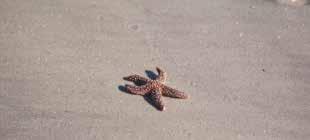
You’ve probably heard the story of the starfish: one person is walking along the sunrise beach as the tide goes out tossing one starfish after another back into the sea because the starfish can’t make it back into the water on their own and will die in the sun, and another person who comes along and claims that action is pointless because there are hundreds of starfish along the beach and not all can be saved.
But some were saved, and that made all the difference to the starfish who found themselves back in the waves and floating back out with the tide. And if that person who had called it pointless had started tossing starfish back into the sea instead of arguing about the validity of trying to save any in the face of such volume, even more could have been saved.
All those cats and kittens needing rescue right now are the many starfish that litter the beach. We can’t save them all, but we can save a lot of them if we work together. And those we save, who are spayed and neutered and sent to good homes where appropriate, won’t be out there next year, producing more kittens to be found under someone’s porch needing to be saved and starting the whole cycle all over.
But some of those starfish are people, and part of rescuing these cats is their education. Hopefully the people we help take the idea of spaying and neutering seriously and will in their turn spread the word, thereby saving even more metaphorical starfish. And to make it even better, those kittens and cats you saved and sent off to good homes will not only not be on the street living dangerously and reproducing, they will be the beloved companions of someone who will cherish them. Even saving one mom cat and litter prevents the potential birth of dozens next year. Go ahead and grab that starfish, toss it back in the ocean, and make a difference.
1Catalyst Council FAQ.
2“Pet Statistics”, ASPCA®, http://www.aspca.org/ animal-homelessness/shelter-intake-and-surrender/ pet-statistics
This is an ever-changing list of resources for pet owners in Pittsburgh and beyond including low-cost spay and neuter programs for pets as well as TNR for community cats, after-hours emergency care, help with veterinary bills, pet-friendly rentals in Pittsburgh and across the US and links to shelters for adoption and other services. This information is provided for reference only and subject to change without notice. Please contact the organization or agency before using their services.
TNR and Low-cost Spay and Neuter Organizations and Programs
Homeless Cat Management Team
http://www.homelesscat.org
City of Pittsburgh Free Spay and Neuter for City Residents
City of Pittsburgh offers five free spays/neuters to all city residents www.pittsburghpa.gov/animalcontrol/spay_neuter.htm
Low-Cost Spay/Neuter Programs at Shelters in Allegheny and surrounding counties Shelter Programs
PENNSYLVANIA
Animal Friends
www.thingkingoutsidethecage.org
Humane Animal Rescue
Please call each branch while the two shelters continue their merger.
East Liberty Shelter (formerly Animal Rescue League)
http://www.animalrescue.org/
North Shore Shelter (formerly Western Pennsylvania Humane Society) www.wpahumane.org
Clarion Paws
Serves Clarion, Forest and Jefferson County
Low Cost Spay / Neuter Clinic: spayneuterclinic@clarionpaws.org
Trap-Neuter-Return: tnr@clarionpaws.org http://www.clarionpaws.org/
PET & OUTDOOR OR FERAL CATS
Beaver County Humane Society
http://www.beavercountyhumanesociety.org
Butler County Humane Society http://www.butlercountyhs.org/FelineSpayNeuter.asp
Washington Area Humane Society http://washingtonpashelter.org/services/
EASTERN OHIO
Angels for Animals
http://www.angelsforanimals.org/snWhy.asp
Low-cost Spay/Neuter Organizations in Allegheny and surrounding counties
These are organizations which are not day-to-day clinics but organize, host, sponsor or otherwise provide access to spay and neuter services.
Catnip Acres (Greene County) http://www.catnip-acres.org/clinics.html
Fluffy Jean Fund (Washington County)
http://fluffyjeanfund.weebly.com/ Fund for Feral Cats of Pittsburgh
Reimburses partial funds to help spay/neuter feral cats (funds not always available)
412-521-5352
Lawrence County Animal Relief Fund (LCARF)
http://www.lcarf.com/ Operation Spay/Neuter Butler, PA (for Butler County residents only) http://operationspayneuter.com/ Pet Search
http://www.petsearchpa.org/
SNIPP: Spay and Neuter Indiana PA Pets Westmoreland/Indiana Counties, Alle-Kiski Valley (Leechburg)
http://www.snippindianapa.org/
Low-cost Spay/Neuter and Veterinary Clinics
These are independent clinics that offer services on site during regular business hours.
Fix ‘Ur Pet
http://fixurpet.org/
Frankie’s Friends
http://www.FrankiesFriendsCatRescue.org/ Penn Hills Spay/Neuter Clinic http://www.spayaz.com/Pittsburgh.html
Wexford Spay/Neuter Clinic
http://www.spayaz.com/wexford-pa/
Find Local Low-cost Spay, Neuter and Veterinary Care on the Internet
Low-cost Neuter and Spay (search by zip)
http://neuterspay.org/
Love That Cat (online search)
http://www.lovethatcat.com/spayneuter.html
Spay USA
http://www.spayusa.org/search.php
Spay and Neuter Early, a Humane Alliance Campaign
http://www.whentospay.org/get-your-pet-fixed
Get Your Fix.org
http://getyourfix.org/
ASPCA searchable map of low-cost clinics in US & Canada https://www.aspca.org/pet-care/general-pet-care/ low-cost-spayneuter-programs
Emergency and After-hours Care
Pittsburgh Veterinary Specialty and Emergency Center (PVSEC)
http://www.pvs-ec.com/
VCA Castle Shannon Animal Hospital
http://www.vcahospitals.com/castle-shannon
VCA Northview Animal Hospital Specialty Referral Center
http://www.vcahospitals.com/northview A-VETS http://www.avets.us/
Pet-friendly Rentals
In the Pittsburgh area, visit this list on the FosterCat website: http://www.fostercat.org/friendly.html
Nationwide (United States only) http://www.rent.com/pet-friendly-apartments
Shelters and Shelter Services
Adoption, surrender, low-cost clinics, pet food pantries, referrals, etc.
Humane Animal Rescue, North Shore (Western PA Humane Society) www.wpahumane.org
Humane Animal Rescue, East Liberty (Animal Rescue League) www.animalrescue.org
Animal Friends (AFI) www.thinkingoutsidethecage.org
Animal Advocates animaladvocates.net
Washington Area Humane Society www.washingtonpashelter.org
Butler County Humane Society www.butlercountyhs.org
Beaver County Humane Society www.beavercountyhumanesociety.org
Animal Cruelty Laws by State (United States) Animal Legal & Historical Center www.animallaw.info/articles/armpstatecruelty.htm
Animal Educational Exhibits
Nor th:
The Pittsburgh Zoo & PPG Aquarium pittsburghzoo.org
The National Aviary nationalaviary.org
Animal Communication
Greater Pittsburgh Area: Renee Takacs, M.A. intuitguide.com
Animal-Related Art, Photography & Retail
April Minech Custom Portraits | Pet Inspired Ar t www.ladybugdelightz.etsy.com
Nor th:
Nicole Begley Photography nicolebegleyphotography.com
Vibrant Images
724-774-1731 | www.vibrantimages.photography
South:
Kara Jones Photography kjones.smugmug.com
Paws ‘n Claws Eyewear PawsnClawsEyewear.com
Animal Rescue Organizations
Nor th:
Animal Friends
412-847-7000 | thinkingoutsidethecage.org
Beaver County Humane Society 724-775-5801 | www.beavercountyhumanesociety.org
Pennsylvania Great Dane Rescue 724-869-9185
or y at
Hope Haven Farm Sanctuar y 412-366-1187 | hopehavenfarm.org
Western Pa Humane Society 412-321-4625 | wpahumane.org
South:
Animal Care & Welfare
412-24 4-1372 | animalcareandwelfare.org
Droopy’s Basset Rescue 888-9 GET DROOL | www.droopysbassetrescue.com
Washington Area Humane Society 724-222-7387 | washingtonpashelter.org
Animals Against the Odds Rescue/Rehab www.aato.rescueme.org
East:
Animal Rescue League 412-345-7300 | animalrescue.org
ARL Wildlife Center 412-345-7300 | animalrescue.org
SW PA Pugs with Special Needs 724-763-2790 | swpapug.org
West:
CARMA A
412-780-4983 | carmaa-petadoption.com
Greater Pittsburgh Area: SPAAR www.seniorpetandanimalrescue.org
Bird & Supplies
Natural Inspirations Parrot Cages www.naturalinspirationsparrotcages.com
Dog Training
Nor th:
AKIN Family Dog Training (Lilian Akin) 412-732-8091 | akinfdt.net
Greater Pittsburgh Area: Happy Pets Training /Christine Flint 412-373-9583 | www.happypetstraining.com
Success Just Clicks successjustclicks.com
Nor th Shore: Western PA Humane Society 412-321-4265 | wpahumane.org
South:
Paula’s Professional Dog Services 412-818-2482
Dog Training Clubs
South:
Dogworks Training Center at The Canine Club Phone: (412) 220-8100 | www thecanineclub.com
Golden Triangle Obedience Training Club 412-653-6880 | gtotc.com
Keystone Canine Training
412-833-2211 | keystonecanine.com
Xcel Canine Training Center
412-833-2504 | xcelcaninetraining.com
Equine Boarding, Lessons & Training Facilities
Nor th:
Rockin’ Horse Stables
724-601-4706 | rockinhorsestables.com
South:
Coventr y Equestrian Center
724-206-9902
Manon’s Farm
724-705-7912 | 724-621-0260
SydMor Equestrian Center
724-969-0510 | www.sydmorstables.com
Equine Holistic Care
Greater Pittsburgh Area:
Dr. Michael Savko, DC, CCSP, CVCP
724-261-7915 | drchirovet.com
Equine Tack Stores
Nor th:
Shady Acres Saddlery
412-963-9454 | www.shadyacressaddlery.biz
South:
Lowr y’s Western Store
724-228-1225 | lowr yswesternshop.com
Equine Veterinarians
Dr. Brian Burks, DVM - Fox Run Equine Center
724-727-3481 | foxrunequine.com
Holistic Pet Practitioners
Pet Chiropractor
Nor th:
Dr. Doug Knueven, DVM
Beaver Animal Clinic
724-774-8047 | beaveranimalclinic.com
Greater Pittsburgh:
Dr. Michael Savko, DC, CCSP, CVCP 724-261-7915 | drchirovet.com
Holistic Practitioners for Guardians
East End:
Judith Levy Wellness Coaching /Energ y Modalities 412-726-2659 | www.judithlevywellness.com
Holistic Veterinarians
Dr. Doug Knueven, DVM Beaver Animal Clinic
724-774-8047 | beaveranimalclinic.com
Dr. Qiang Li VCA Castle Shannon 412-885-2500
Pet Burial, Memorial & Cremation Services
South:
Char tiers Custom Pet Cremation 412-220-7800 | ccpc.ws
Jefferson Memorial Funeral Home
412-655-4500 | jeffersonmemorial.biz
East End:
Precious Pets Memorial Center & Crematorium
412-351-PETS (7387) | preciouspetspgh.com
Greater Pittsburgh:
Car ved Stone by Serena 724-941-2664 | www.carvedstonebyserena.com
Thousand Hills Pet Crematory 724-355-8296 | www thousandhillspetcrematory.com
Pet Fencing
Greater Pittsburgh Area:
Dog Guard Pittsburgh Dog Fence 412-287-5820 | Pghdogfence.com
Pet Grooming
Nor th:
All About Dogs
724-925-1577 | allaboutdogsgrooming.info
Larr y’s Laundromutt 412-534-4052 | larryslaundromutt.com
Happy Tailz Pet Spa 412-759-7620
Happytailzpetspa.com
Healthy Pet Grooming 724-759-7567
Larr y’s Laundromutt 412-534-4052 | Larr yslaundromutt.com
South:
Candelore’s Barking Beauties 412-872-5550
Creative Canine Cuts 724-223-9020
Grand Slam Grooming 412-221-5081 | grandslamgrooming.com
Petsburgh Dog & Cat Grooming 412-885-4027
Pets at Home Dog Grooming 412-655-7297 (PAWS) The Pet Salon 412-279-5331 | petsalonusa.com
Woody’s Dog Wash & Pet Boutique 412-714-464 4 | woodysdogbath.com
East: Animal Elegance 412-361-1177 | www.animal-elegance.com
Candelore’s Barking Beauties Pet Grooming 412-872-5550 | candeloresbarkingbeauties.com

Vitamin C (ascorbic acid) is absolutely essential for optimal health. It is so important that most animals and birds produce their own ascorbic acid and the production increases many folds in the time of stress or illness and is essential for quick recovery. This surge of the ascorbic acid levels in some animals would be equivalent to intravenous (IV) administration of 75 - 100 Gm of Vitamin C for average human. Mysteriously, humans and most primate apes lost the ability to make ascorbic acid.
Meanwhile, official recommendations in the US for daily intake of Vitamin C is 65 - 90 mg - how pathetic!! Medical Frontiers recommends at least 1 - 4 Gm daily for prevention and as much as is tolerated by your stomach in the time of illness in divided doses daily.
Vitamin C is necessary in many metabolic reactions of the body and is essential for effective function of the immune, cardiovascular and neurologic systems and in the synthesis of collagen and connective tissues.
Vitamin C is one of the most powerful antioxidants and it is unique in a way that can be given intravenously in very high therapeutic doses, causing no harm to the patient. This property of makes Vitamin C an anti-oxidant of choice in clinical setting.
In our daily lives, we are constantly exposed to, oxidative stress. This oxidative stress produces free radical species (highly reactive oxygen molecules) that go into oxidation reactions with other molecules of proteins (enzymes, structural proteins, functional proteins), cells membranes, our DNA and lipids “stealing electrons” from these molecules - they are the bad guys. Anti-oxidants on the other hand are the good guys. They donate electrons to tissues and restore electrical balance in molecules.
We already talked about sources of oxidative stress in a previous article. Briefly, any chronic disease and specially cancer cause oxidative stress and all environmental pollutants are free radicals. Special mention here deserves cigarettes smoking and anticancer drugs.
Our cells are protected from the attack by free radical species by intracellular anti-oxidant systems such as glutathione, superoxide dismutase (SOD) and catalase (CAT). These systems, however, can easily become overwhelmed and depleted in today toxic environment.
Vitamin C and other anti-oxidants taken in therapeutic doses consume free radical species and not only prevents further depletion but also allow the cells to restore the intra-cellular anti-oxidants and bring cellular function back to normal.
Vitamin C can be safely administered in high doses by IV infusion and has powerful beneficial effects on many organs and systems. Below is a list of just a few:
1. Cardiovascular system:
Vitamin C protect endothelial cells (cells lining blood vessels) against free radicals. These cells control most of the functions of blood vessels, including dilatation and constriction. Dysfunction of the endothelial cells leads to:
• leakage from the vessels and edema,
• arterial hypertension,
• arterio-sclerosis (hardening of the arteries),
• coronary artery plaque formation and heart attack.
Vitamin C reverses unresponsiveness of small vessels which occurs in sepsis that leads to dangerously low blood pressure and sometimes death. Vitamin C increases nitric oxide level in blood vessels further normalizing blood pressure.
Recent study on critically ill septic patients who did not respond to intravenous antibiotics treatments showed improvement and recovery after receiving intravenous Vitamin C in high doses.
2. Vitamin C affects numerous genes controlling inflammation. Let’s remember that inflammation is the cause of hypertension, heart attack, arthritis and many neurologic conditions. Vitamin C also activates genes that regulate energy production in cells (ATP).
3. Brain and nervous system:
Vitamin C reaches high concentrations in the brain underscoring its importance in the brain health. It pays important role in:
• production of neurotransmitters: epinephrine, norepinephrine, dopamine, some peptide hormones.
• brain development in childhood - enhance maturation of synapses
• stimulates myelin production (lining around the nerves) - gaps in myelin sheaths lead to multiple sclerosis (MS). Intravenous Vitamin C brings dramatic improvements in MS patients.
• Vitamin C increases the level of acetylcholine

in the brain by inhibiting acetylcholinesterase.
Low level of acetylcholine is present in patients with Alzheimer disease who also have low level of Vitamin C in the brain. Vitamin C improved memory in Alzheimer disease animal model study.
• Vitamin C reduces severity of stroke by increasing glutathione level in cells. Low glutathione level is also responsible for liver failure in Tylenol poisoning.
4. Immune system:
Vitamin C is essential for normally functioning phagocytes and T-cells which the first responders of immune system for any infection.
5. Vitamin C IV in high doses is a chelating agent that bounds heavy metals and is a great for detoxification.
6. Cancer patients:
Cancer patients have very low levels of Vitamin C because of severe oxidative stress caused by cancer mass that consumes all anti-oxidants including Vitamin C. Recent research has shown that Vitamin C IV have powerful anti-cancer properties. Intravenous Vitamin C in high doses is toxic to cancer cells directly and this includes cancer stem cells which are responsible for cancer come back after “successful” chemotherapy or radiation. Please notice that neither radiation nor chemotherapy kill the cancer stem cells which make Vitamin C an excellent complementary addition to cancer treatment.
How much Vitamin C we can take orally? No more than 10 gm daily in divided doses, usually much less. This is due to the fact that higher doses of Vitamin C taken orally cause stomach irritation, nausea and diarrhea. Vitamin C in high therapeutic doses can only be given intravenously.
Indications for IV Vitamin C:
• General health improvement
• Cardio-vascular disease (hypertension, heart disease, peripheral vascular disease, swelling)
• Neuro-degenerative conditions (MS, Alzheimer disease, Parkinson disease)
• Chronic and acute infections (sepsis, and any bacterial injections, Lyme disease, hepatitis C, common cold, shingles, many other)
• Heavy metals exposure and toxicity
• Liver failure
• Chronic and acute wounds, trauma and surgery
• Treatment of cancer in addition to conventional therapies
Vitamin C can be combined in infusion with other vitamins or nutraceuticals depending on the problem treated.

•
•
•
•
•
•
•
•
•





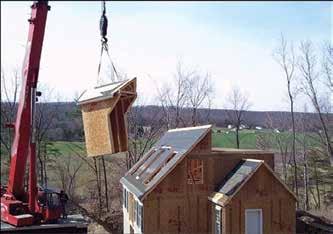



On 400 hundred sprawling rolling green acres in rural Greene County, fifty happy and healthy horses roam free on a farm dedicated to providing them a second chance at life. Save A Horse Stable/ Sanctuary (SAHS) founded in 1982 by Darlene and Kevin Moore, goal is to provide abused, neglected and slaughter house bound horses a second chance at a good life. For the founders of SAHS that means a chance for the horses to roam the hundreds of acres of rolling pasture in social groups just as their equine ancestors have done for thousands of years.
Although free roaming equine sanctuaries such a Madeline Pickens’ Mustang Ranch exist, the concept of allowing horses to roam free is a fairly new concept in the equine rescue community. In the late 1980’s the Pa Dept. of Agriculture included SAHS in a study to determine the health status of free roaming horses versus stabled horses. During the time period of the study, no cases of colic occurred at SAHS and blood work indicated healthy horses with a very low worm load.
However, it would be a mistake for the reader to interpret free roaming as a hands-off policy. On the contrary, SAHS provides their equine residents with
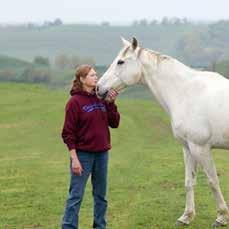
regular veterinary care, shelter, free choice hay, de-worming, vaccinations, dental and blacksmith care. Elderly, frail and horses requiring medical attention are relocated to the front pastures, stabled, provide special feed and needed veterinary care.
While the free roaming character of SAHS is unique in this area, the uniqueness of SAHS does not stop there. In July of this year SAHS will unveil two new programs: Equine Safaris and the Flicka Project.
Modeled after the concept of the African safari, equine safaris afford those who have never had the opportunity to view horses in their natural environment, an opportunity to observe them in their free roaming herd groups. While riding in hay wagons, visitors are given a tour of the farm, the opportunity to photograph the horses and enjoy the peace and serenity of rural Greene County. Tour guides accompany each safari and visitors to SAHS will enjoy learning about the different horses, their personal stories, and the makeup of the various social groups. Those wishing to schedule a safari should contact SAHS to setup an appointment.
In addition to the safari, SAHS will unveil the Flicka Project. Named after Mary O’Hara’s 1941 novel, My Friend Flicka, which focused on a Wyoming rancher’s son and his filly Flicka, the project is aimed at providing victims of domestic violence the benefits of equine facilitated therapy (EFT). The focus in EFT is building self confidence and addressing the propensity towards depression and posttraumatic stress that so many victims of domestic violence share through equine psychotherapy. Recent academic literature citing various qualitative studies suggests that equine therapy because of the unique ability of horses to read human emotions has a positive impact on victims of domestic violence. Studies also suggest that hands
Submitted by Faith Bjalobok Ph.D.
Assistant professor of Philosophy Duquesne University
Fellow Oxford Centre for Animal Ethics
Founder Fluffyjean Fund for Felines Outreach Coordinator Save A Horse Stable/Sanctuary
on interaction with a horse can cause endorphins to be released (Schroeder & Stroud 2015, Boyd 2013).
The Flicka Project also includes a program of equine bonding and motor skills improvement for individuals with cognitive impairments. SAHS recently received a grant from Greene Speak to help offset insurance costs associated with the project. SAHS is currently seeking funding in order to offer scholarships to the Flicka Project for women and children in Washington and Greene Counties. Anyone interested in donating to the Flicka Project scholarship fund should contact SAHS at 724 499-5709.
Contact Information:
Follow SAHS on Facebook at Save a Horse Stable or on the web at saveahorsestable.com
References: Boyd (2013), The Language of Equus: Exploring equineassisted psychotherapy, Schorworks.smith.edu/theses/587.
Schroeder & Stroud (2015), Equine Facilitated Group Work for Women Survivors of Interpersonal Violence, Journal for Specialists in Group Work. Vol 40 issue 4.

By Kristen Hermann
My Grandmother’s wisdom will live with me forever. At the dining room table she would say, “Bring the fork to your mouth not your mouth to the fork.” Etiquette goes a long way at the dinner table and when riding horses. You always hear the old timers talk about tradition, classical and old school. These are the qualities of equestrianism that we want to pass on to the new generation of riders. At this year’s PetCon Equine and Pet Symposium, we heard several of the equine speakers talk about the writings of the old masters. Yes, classical reading, classical riding, and table manners are all important and timeless!
Riding correctly is old school, and I don’t want to get into a history lesson here, but to talk about riding position. This is where we all begin as riders. If we have a good classical riding position, then the horse will better understand our aids. Our aids are our legs, seat, and hands: the three areas of our body that communicate to the horse. In the “old days” riders spent hours on the lunge line before they were allowed to ride on their own, but in modern society, we don’t have time for that. So instead, most riding schools provide
“school horses” or a trusted mount that won’t take off bucking. That’s fine. “The times they are a changing,” and evolution is ongoing.
At my Grandmother’s dinner table if your manners were not up to par you were asked to leave the table. I will never forget to going to a clinic, and a rider came into the arena with sawdust flakes in the horses tail. The European clinician asked them to leave the arena. Classical, old school and traditional. I would also think respect.
So what does any of this have to do with bringing the fork to your mouth not your mouth to fork? I have been teaching riding since 1899, no just kidding, but for over forty years. And I have all these catch phrases in my head that I apply to teaching riding, and that is one of the big ones. Why are riders told to look for the horse’s eye? So many riders I have coached over the years are leaning over their horses inside shoulder looking for the horse’s eye. Argh! Pet peeve number infinity! You do not lean over the horse’s shoulder and look for the eye any more than you lean over the dinner plate and bring your mouth to the fork. You sit up straight, and you bring the fork to your mouth, and or you sit up straight and position the horse to the inside without leaning in. You do not lean over and look for the eye; the eye is there. The rider brings the eye to her not you to the eye.
Leaning in is a bad habit for a rider, and a good way to break that is to learn to ride bareback. If you lean and look for that eye, you may just slide right off. The rider is to sit straight and if they are looking down or in, (where is that darn eye?), it unbalances the seat and a whole slither of basic riding position unravels.
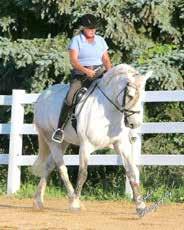
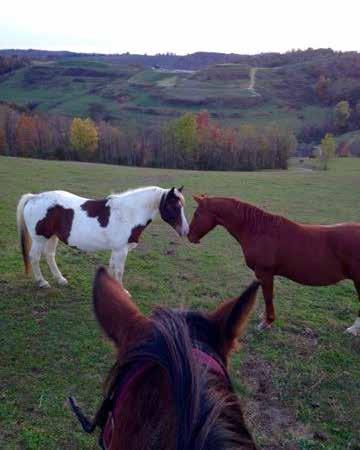
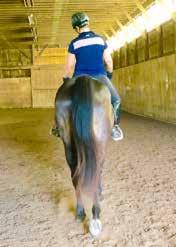
Rider is sitting in the middle of the horse and looking through the horse’s ears. She may be concentrating a little too much, but she is not leaning or looking down. Because she is aligned with the horse she knows if the horse is straight.
Keep your head balanced in the middle of your shoulders just like you want your horse’s head. When the rider is balanced in the center of the horse, it is way easier to keep the horse balanced and between the aids.
So whether you are riding your horse or eating dinner at Grandma’s, remember to “bring the fork to your mouth, not your mouth to the fork.” Tradition, old school and classical learning can go a long way in this millennium world. Trust me that horse’s eye is there, you do not need to go leaning over the horse’s shoulder looking for it any more than you need to lean over your dinner plate.

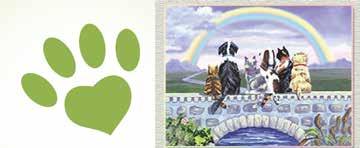
Just this side of heaven is a place called Rainbow Bridge.
When an animal dies that has been especially close to someone here, that pet goes to Rainbow Bridge. There are meadows and hills for all of our special friends so they can run and play together. There is plenty of food, water and sunshine, and our friends are warm and comfortable.
All the animals who had been ill and old are restored to health and vigor. Those who were hurt or maimed are made whole and strong again, just as we remember them in our dreams of days and times gone by. The animals are happy and content, except for one small thing; they each miss someone very special to them, who had to be left behind.
They all run and play together, but the day comes when one suddenly stops and looks into the distance. His bright eyes are intent. His eager body quivers. Suddenly he begins to run from the group, flying over the green grass, his legs carrying him faster and faster.
You have been spotted, and when you and your special friend finally meet, you cling together in joyous reunion, never to be parted again. The happy kisses rain upon your face; your hands again caress the beloved head, and you look once more into the trusting eyes of your pet, so long gone from your life but never absent from your heart.
Then you cross Rainbow Bridge together....